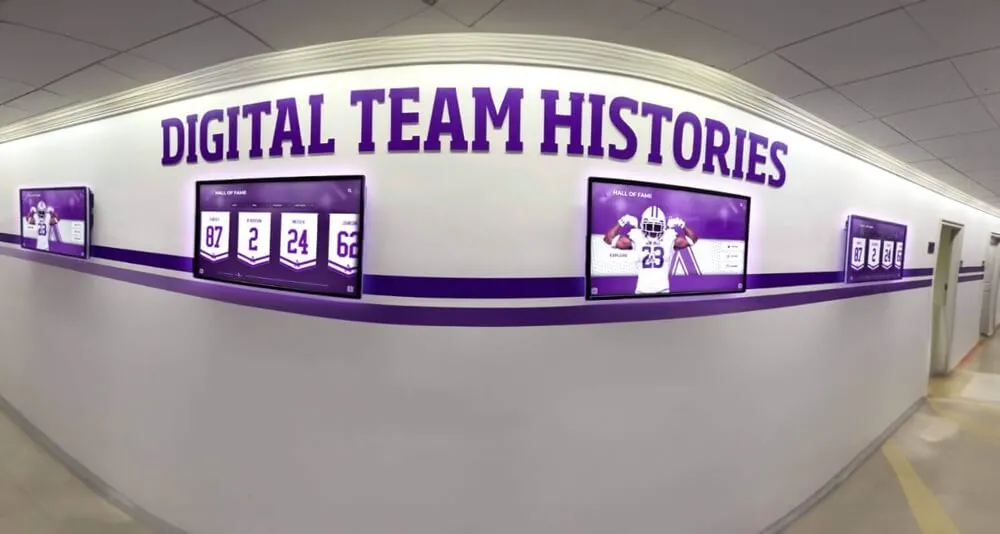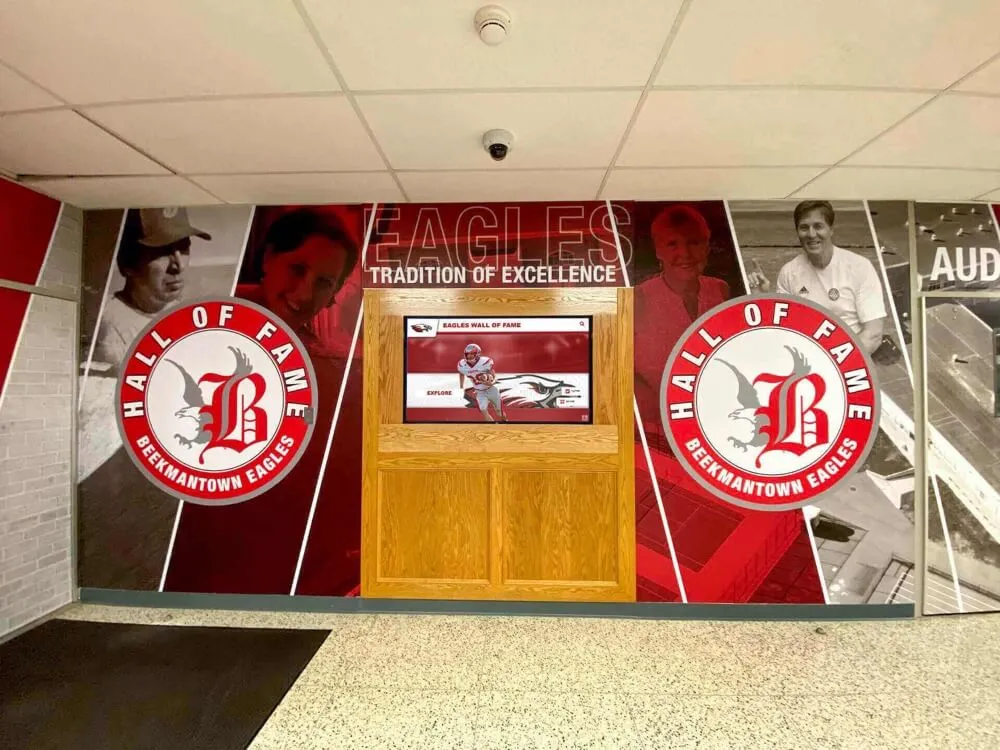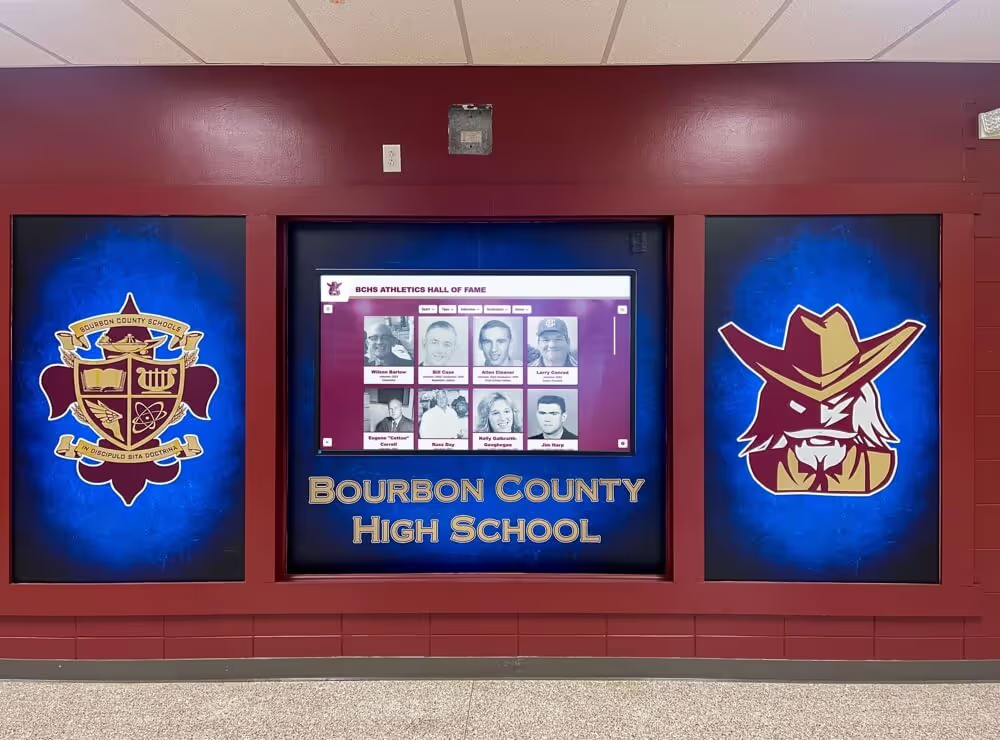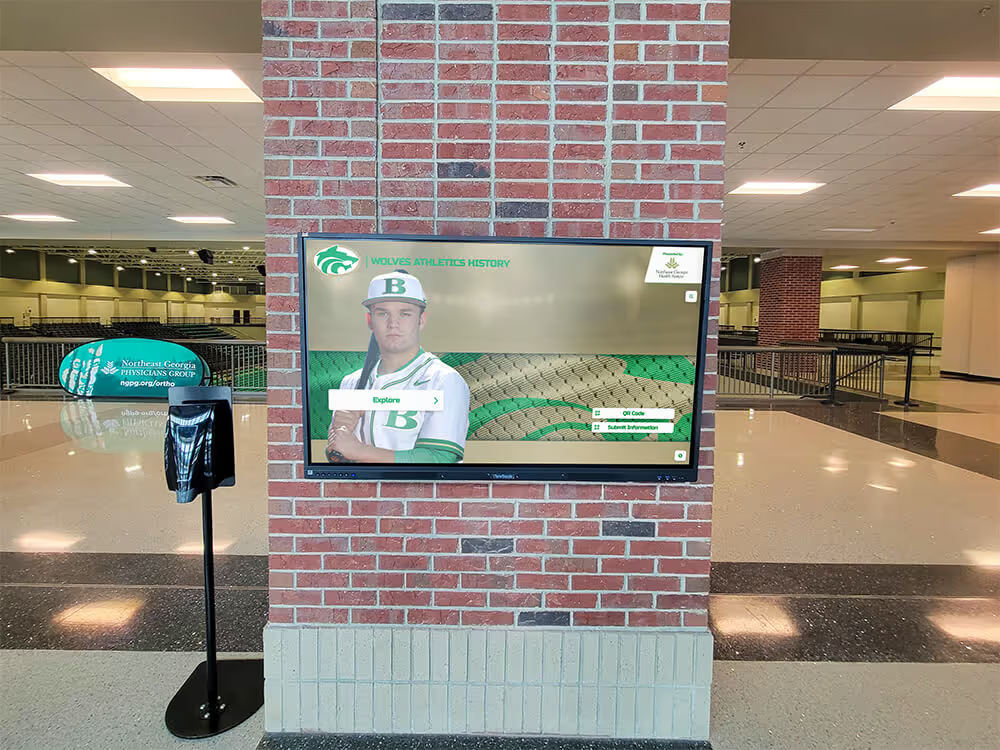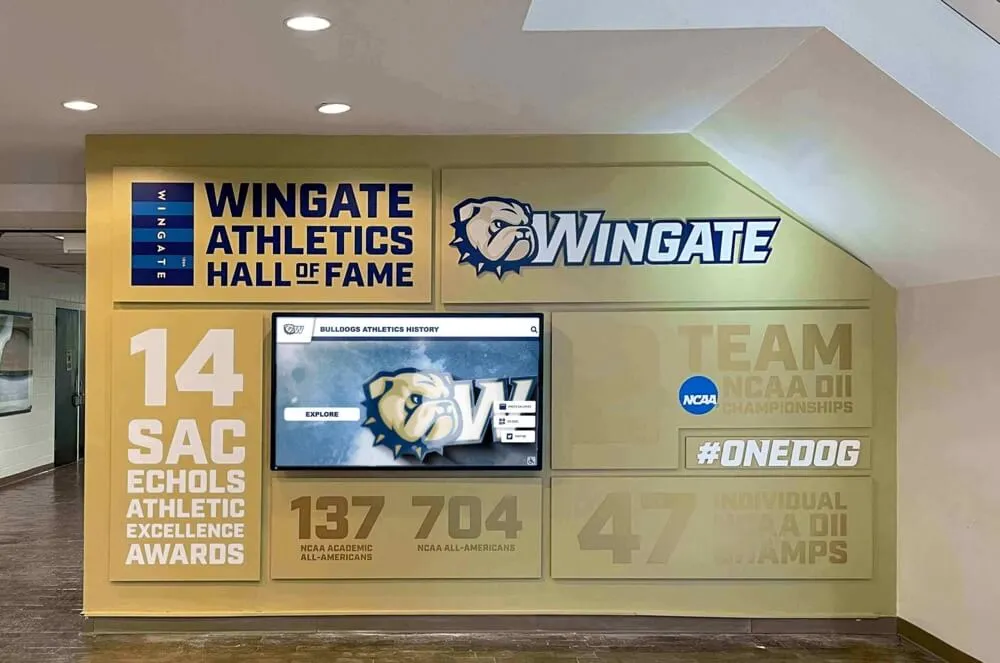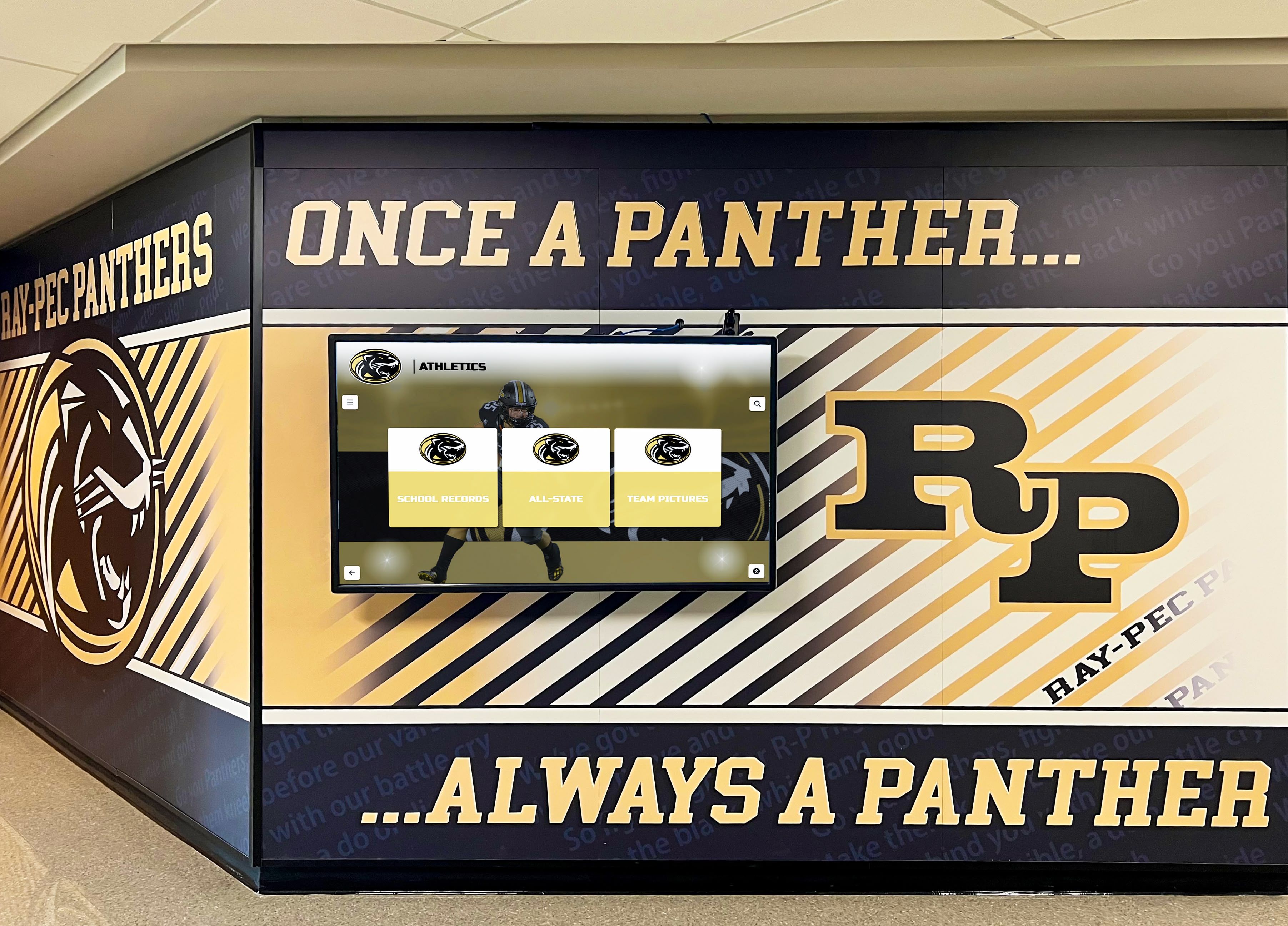




Walk through most high school gymnasiums during wrestling season and you’ll find photocopied rosters taped to the wall, hand-lettered signs tracking dual meet results, and maybe a battered trophy case crammed with decades of plaques nobody can read anymore. Wrestling is one of the most stat-rich individual sports a high school can offer—pins, career wins, takedown totals, fastest falls, unbeaten streaks, state qualifiers by weight class—yet recognition programs routinely fail to honor that depth. A well-designed wrestling team record board changes everything, giving athletes a tangible standard to chase, coaches a legacy to build on, and alumni a reason to stay connected.
Wrestling Record Boards: Honoring Every Weight Class and Career Milestone
This guide walks through creative wrestling team record board ideas for high schools—covering what to track, how to organize displays by weight class and career achievement, traditional board formats, and modern digital options. Whether you coach a powerhouse program or are building one from scratch, these ideas will help you create displays that motivate current wrestlers and preserve the history every competitor deserves to see.
Wrestling sits at the intersection of individual performance and team identity in a way few sports match. A basketball scorer contributes to a team total; a wrestler earns every point alone on the mat. That individual accountability produces a wealth of trackable records, from the obvious (most pins in a season, most career wins) to the granular (fastest pin in school history, most consecutive dual meet victories). A thoughtful record board captures that richness rather than reducing a program’s history to a shelf of undifferentiated trophies.

What Records to Track on a Wrestling Record Board
Before designing the board itself, athletic directors and coaches need to decide which records matter. Wrestling’s structure—individual weight classes, dual meets, and individual tournaments—creates several natural categories.
Individual Career Records
Career records are the backbone of any wrestling program’s history. These span a wrestler’s entire varsity tenure and represent the highest individual achievement a program can honor.
Career win records to display:
- All-time career wins (most wins in program history)
- Career wins by weight class
- Career win percentage (minimum match threshold recommended)
- Career pins (falls)
- Career technical falls
- Career major decisions
Career win totals are the most universally tracked stat in high school wrestling. Programs with long histories often see these records stand for decades before a new generation breaks them, making them powerful motivators. Displaying the top five or ten career win leaders—not just the all-time record holder—gives more athletes a visible place in program history.
Season Records
Single-season records recognize peak performance within one academic year and tend to change more frequently than career marks, keeping the board current and giving younger wrestlers realistic short-term targets.
Season records worth tracking:
- Most wins in a single season
- Most pins in a single season
- Best winning percentage in a season (minimum matches)
- Fastest pin in school history (down to the second)
- Most consecutive wins in a season
Fastest pin is a particularly compelling display category—it’s concrete, dramatic, and recognizes a type of dominance that win totals alone don’t capture.
Weight Class Records
Because wrestlers compete only against opponents in their own weight class, the most meaningful comparisons happen within divisions. A separate weight class record section honors the best performance at each of the NFHS’s standard competitive weight classes.
For each weight class, consider tracking:
- All-time season win record
- All-time career win record
- State qualifiers and state placers
- State champions
This structure lets a 106-pound wrestler see exactly who they’re chasing at their weight—not just a generalized program record set by a 182-pounder twenty years ago.
Team Records
Individual wrestling records dominate most boards, but team performance records reinforce the dual meet culture that gives the sport its unique weekly rhythm.
Team records to include:
- Best dual meet season record (e.g., 24-0)
- Most consecutive dual meet wins
- Most consecutive league championships
- State dual meet team championship years
- Largest dual meet margin of victory
The dual meet format and team scoring system creates a parallel recognition track alongside individual tournament achievements, and both deserve space on a wrestling record board.
State Championship and Tournament Records
State-level achievement is the pinnacle of high school wrestling, and programs that have produced state qualifiers and champions should display that history prominently.
State achievement records:
- All-time state champions (name, year, weight class)
- Most state championships in a single season
- All-time state qualifiers list
- State placers (top 1–8 depending on your state’s format)
- Regional and sectional championship history
For programs pursuing recognition that spans state championship tournament achievements, tracking qualifier counts alongside champion names gives a fuller picture of program depth than champion names alone.
Traditional Wrestling Record Board Formats
Traditional record boards remain cost-effective and broadly used. Understanding the format options helps programs choose the right physical structure before committing to materials.
Wood Plaque Boards
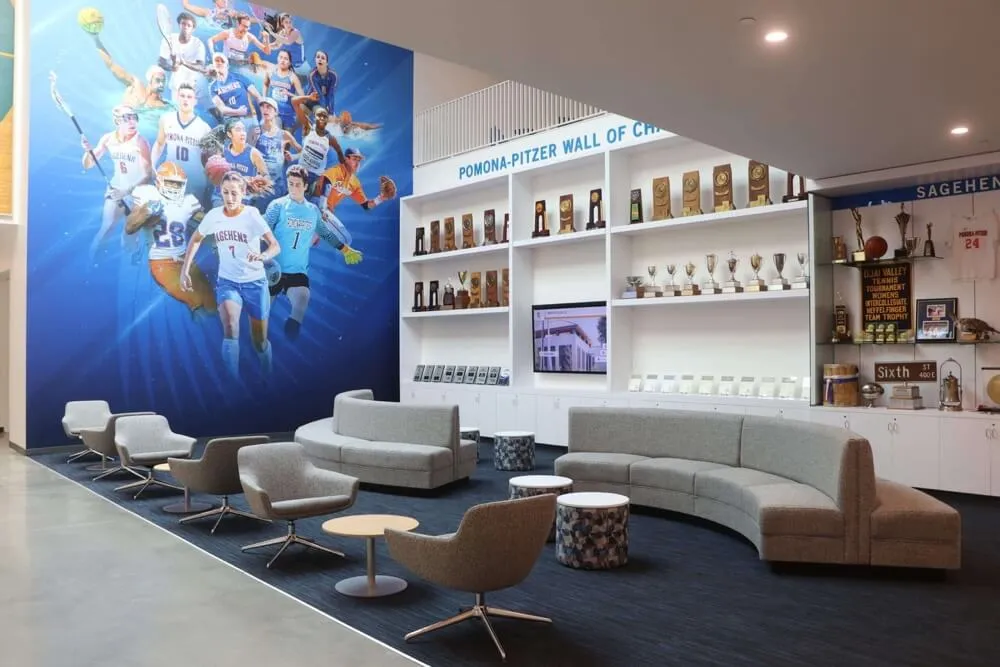
Engraved wood boards are the most common format for high school wrestling records. A classic layout places the program name and mascot at the top, followed by category labels on the left and engraved nameplates on the right. Wood offers a classic aesthetic that fits most gymnasium environments and requires no technology to maintain.
Limitations to plan around:
- Engraving takes time and budget each time a record falls
- Weight class records require separate sections or panels
- Space limitations force programs to choose between depth (top 10 in each category) and breadth (many categories, one record holder each)
- Records from discontinued weight classes become outdated as NFHS adjusts competitive divisions
Painted Wall Records
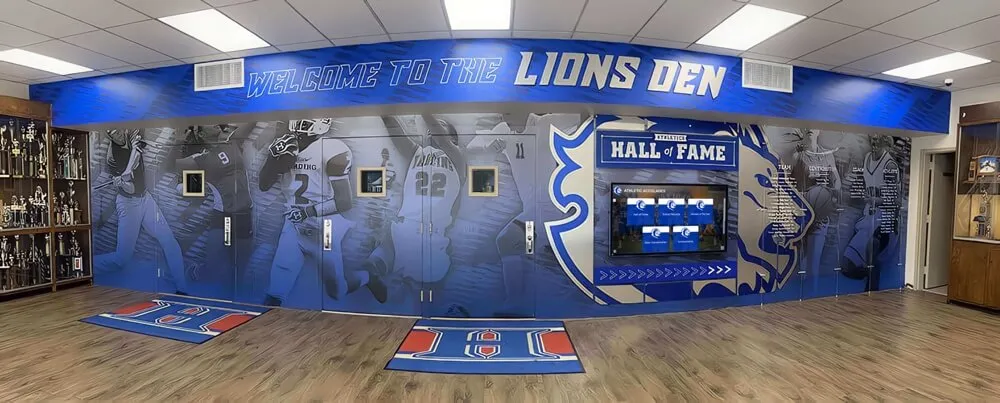
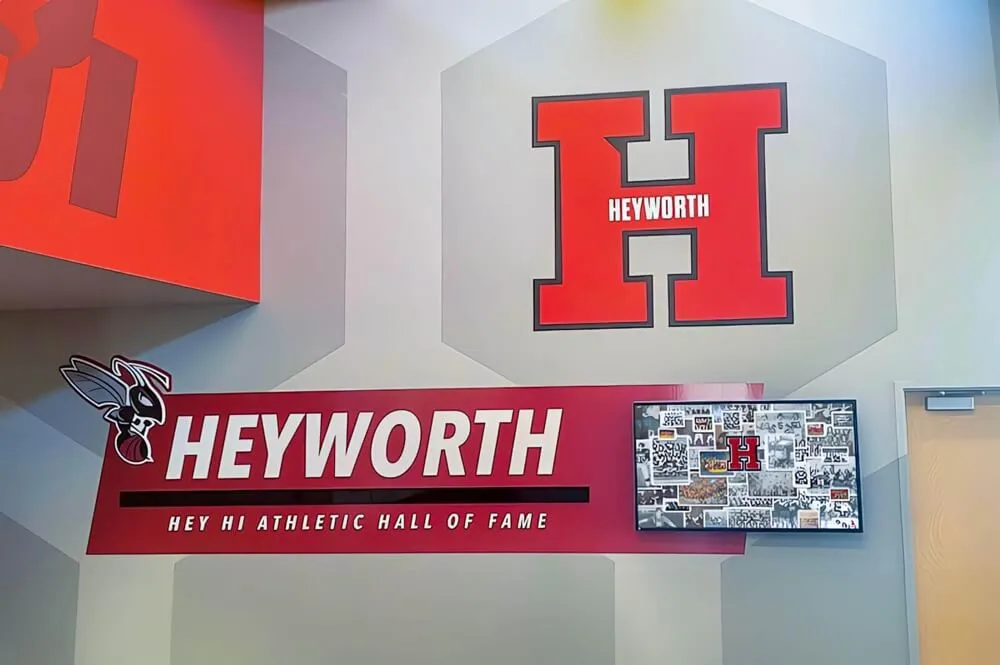
Some programs paint records directly onto gymnasium or hallway walls, often integrating mascot graphics and program colors. Painted displays create visual impact but require a skilled muralist and become expensive to update each time a record changes.
Painted formats work best for records that change rarely—state championship years, all-time career win leaders—rather than season records that update annually.
Combination Boards
Many programs combine a painted or permanently mounted header with swappable nameplate systems. The program name, mascot, and category labels are fixed; individual record-holder names and stats slot into changeable engraved or printed panels. This approach balances visual permanence with practical updateability.
Digital Wrestling Record Board Ideas
Digital record boards solve the core limitation of every traditional format: updating them is immediate, unlimited, and costs nothing per change.
Auto-Ranking Record Displays
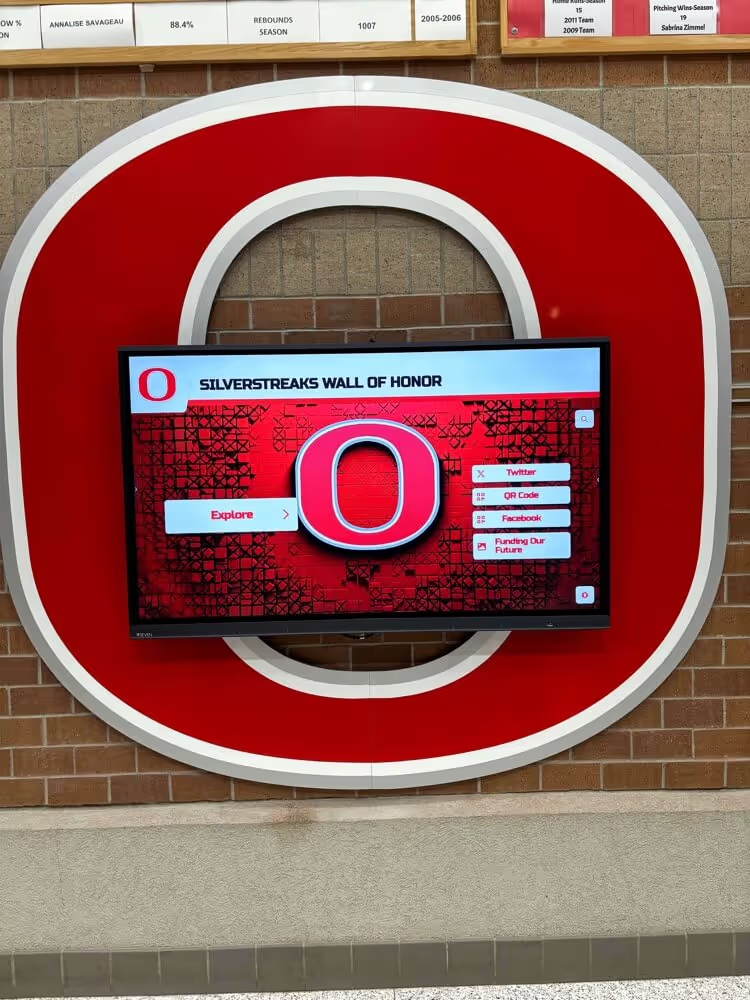
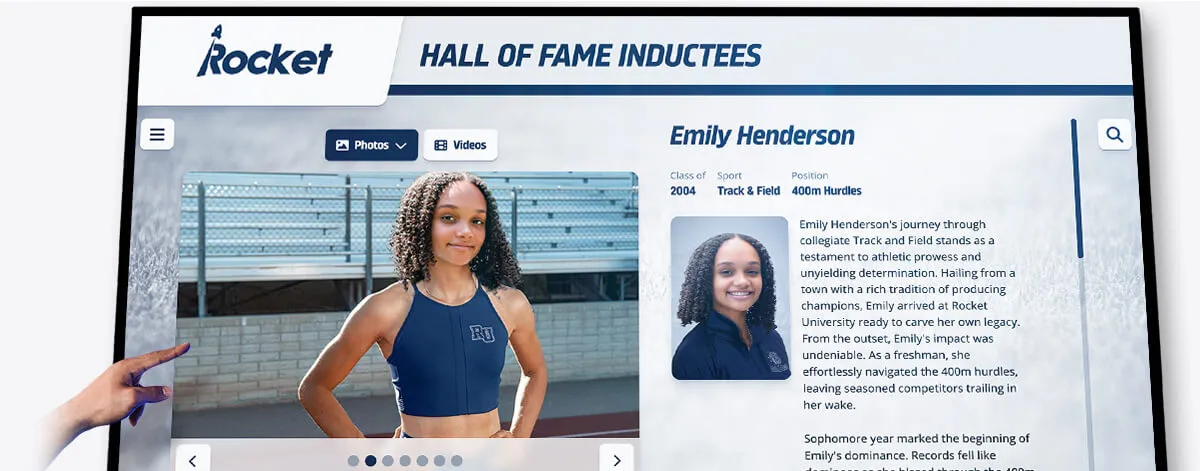
Modern interactive record board systems automatically reorder record holders when new data is entered. A wrestler breaks the season pin record midseason; the display updates that day. At the end of the year, career totals recalculate and the leaderboard resets for the next class. For wrestling programs with active competition, auto-ranking eliminates the lag between achievement and recognition that traditional boards create.
Platforms like Rocket Alumni Solutions are built specifically for this kind of dynamic athletic recognition—tracking individual records across multiple sports and weight classes, surfacing state qualifiers, and presenting program history in a format that students, parents, and alumni can actually navigate.
Touchscreen Weight Class Browsers
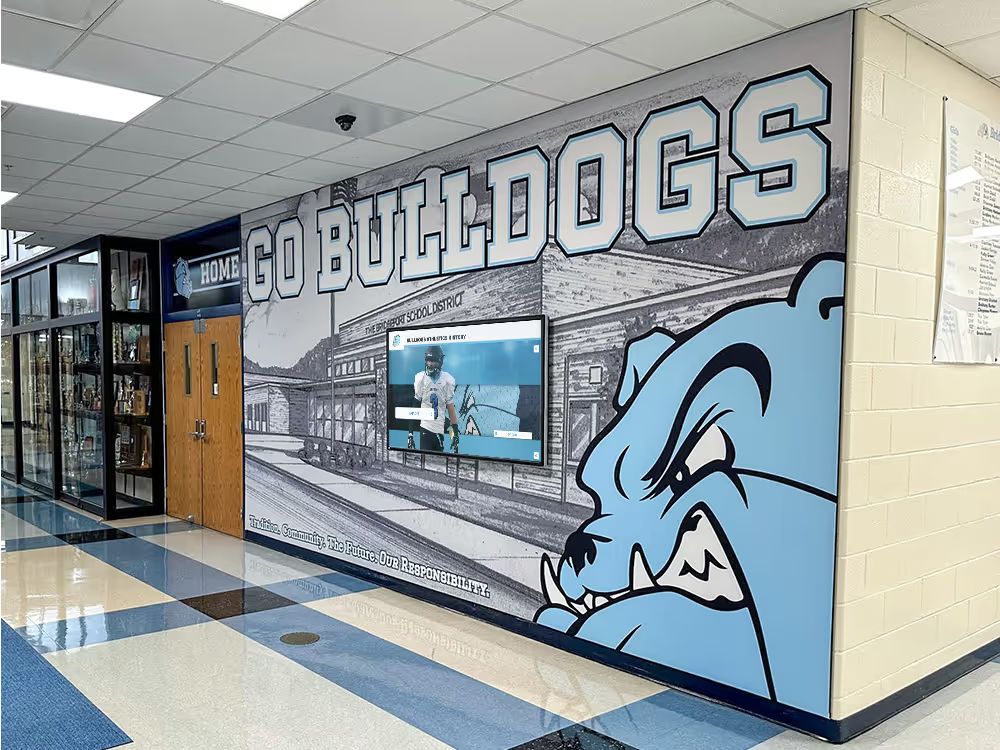
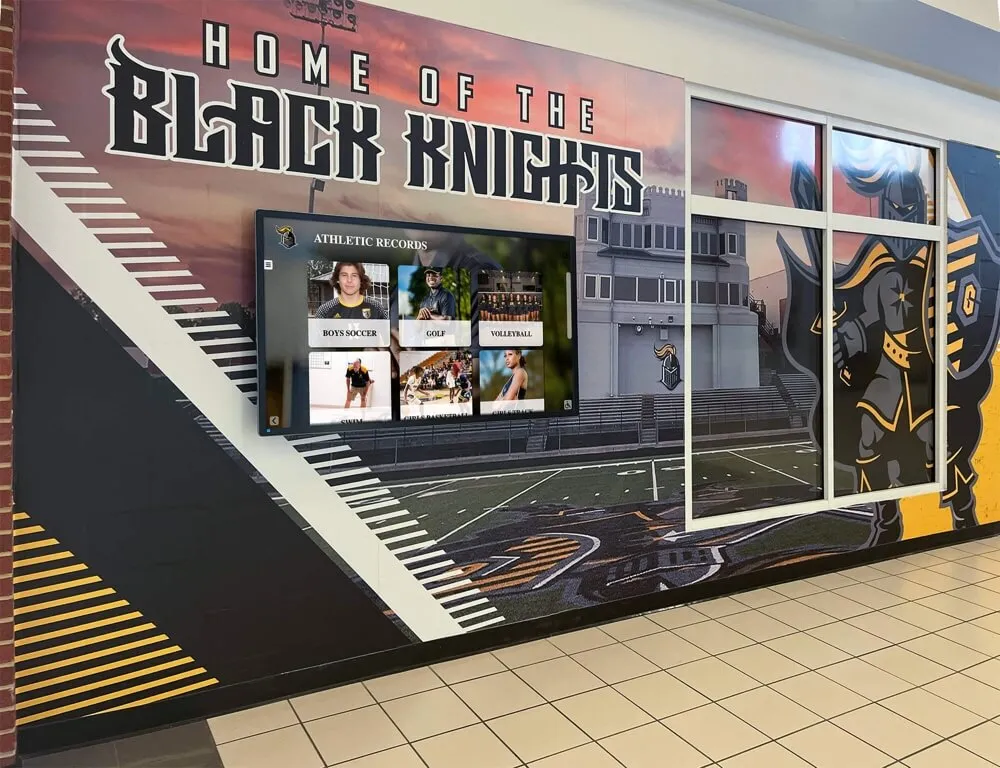
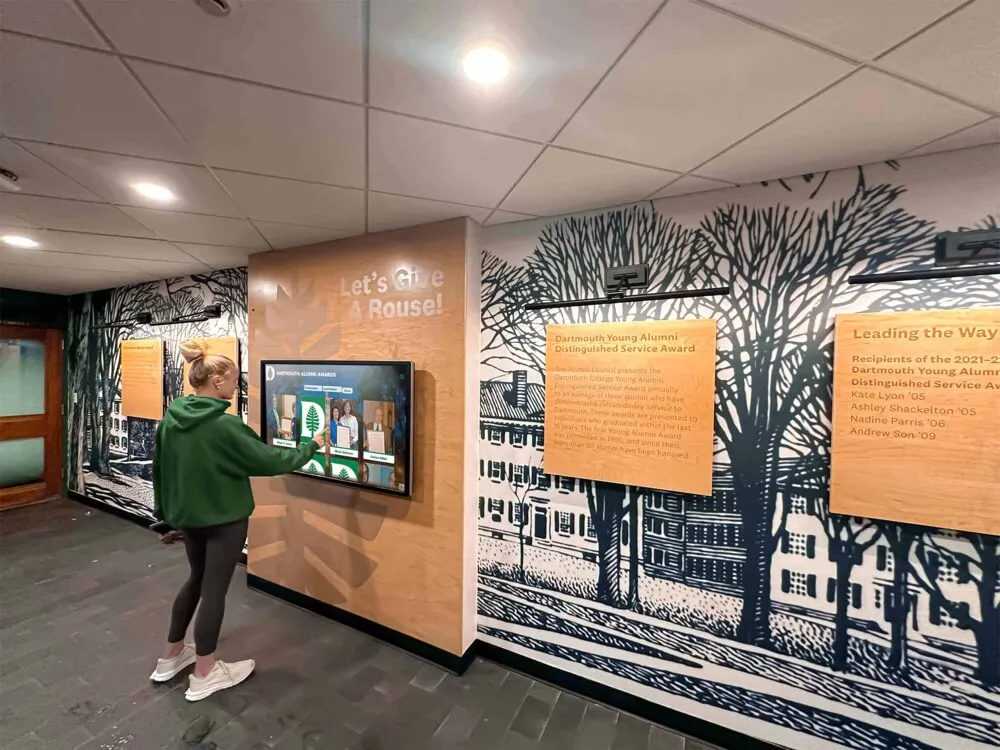
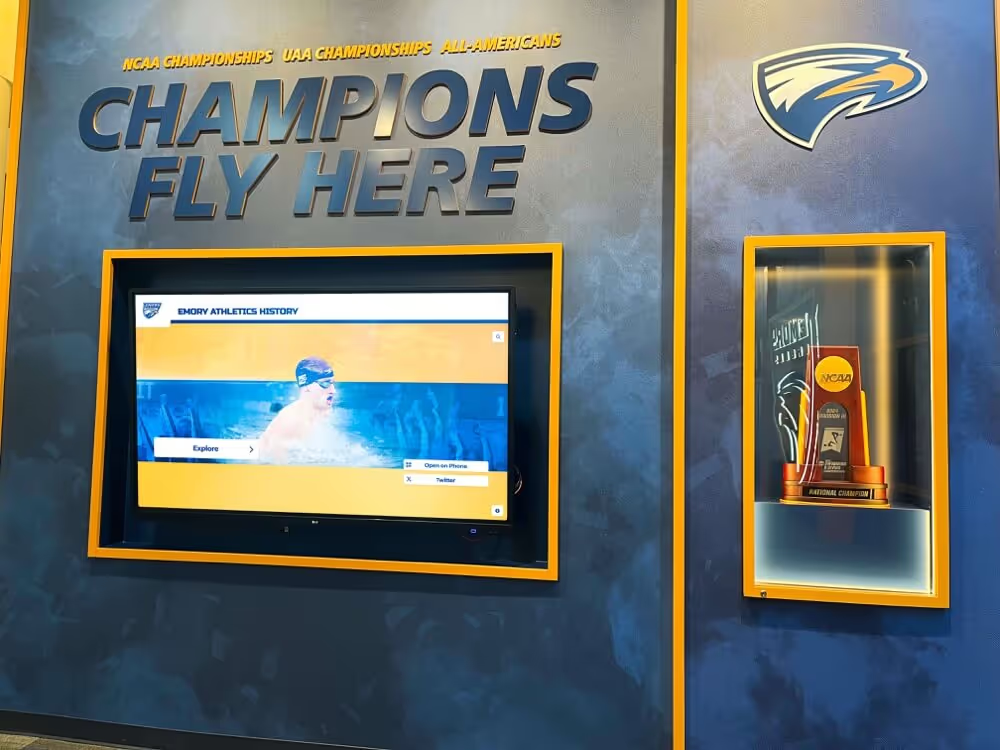
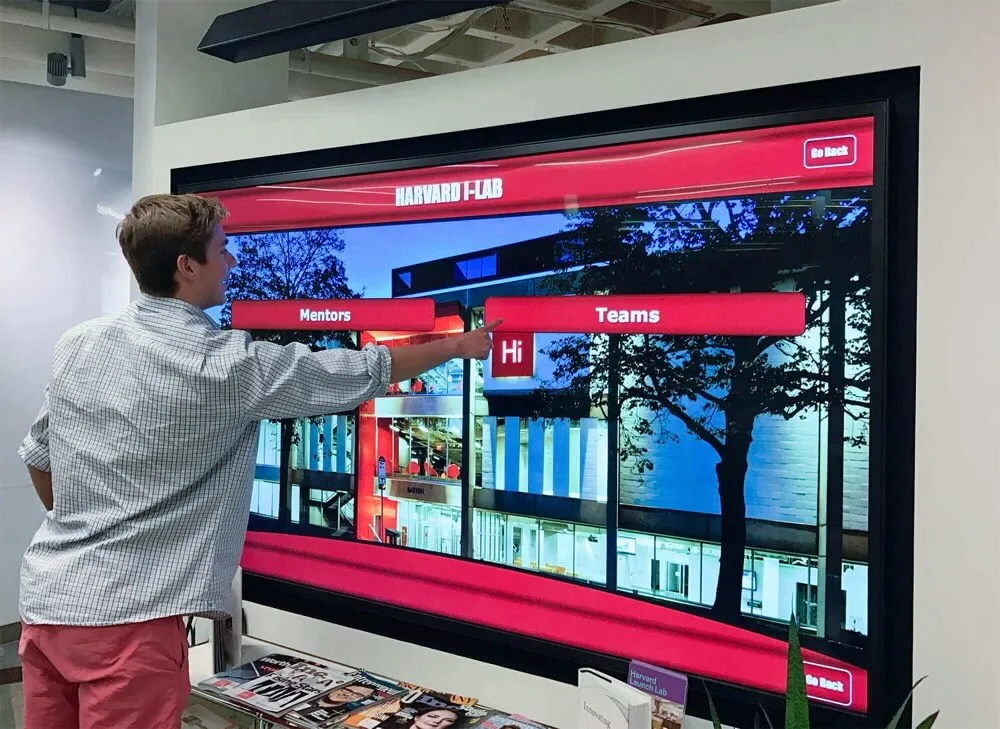
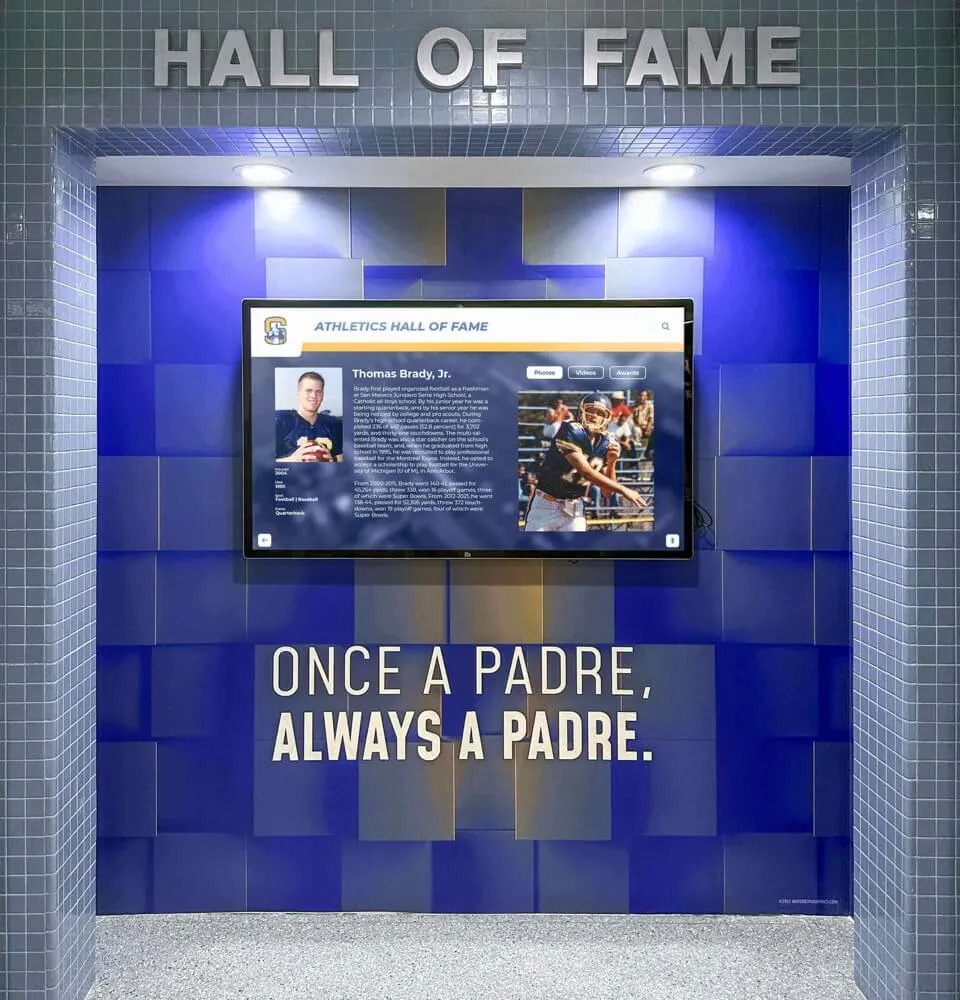
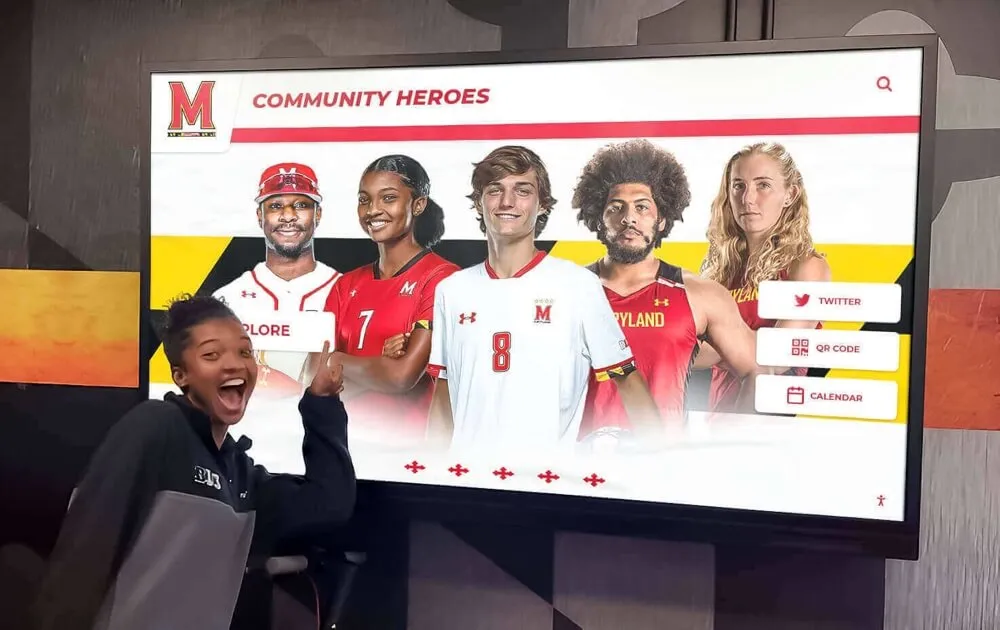
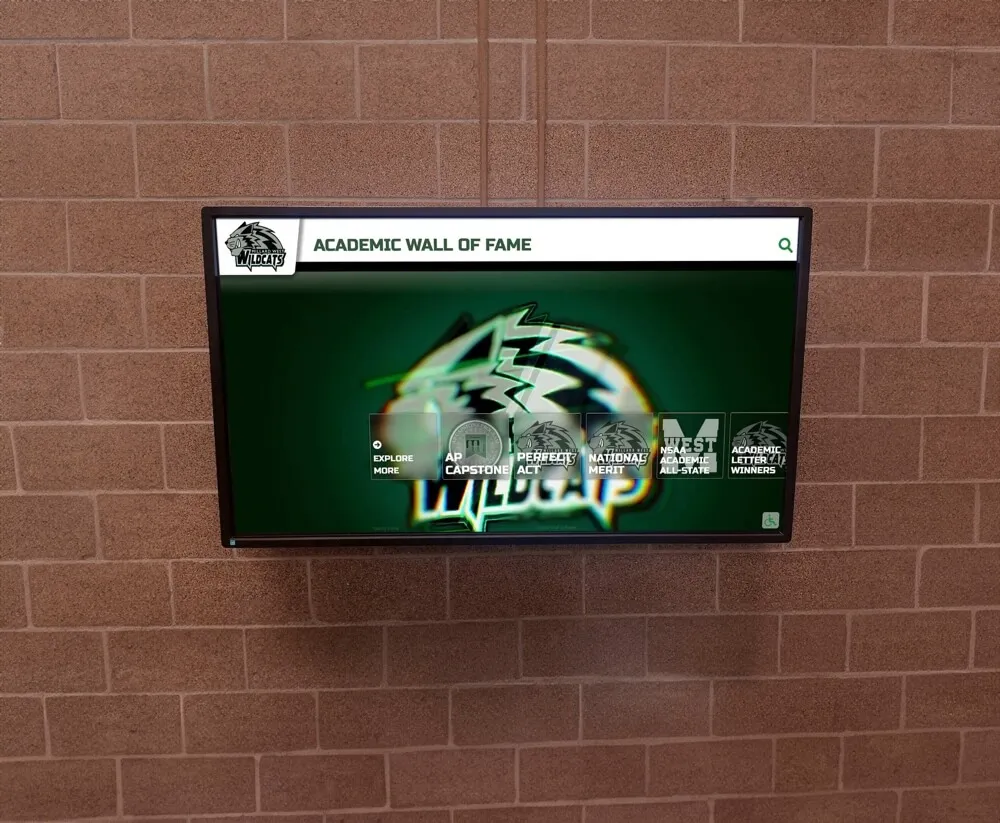
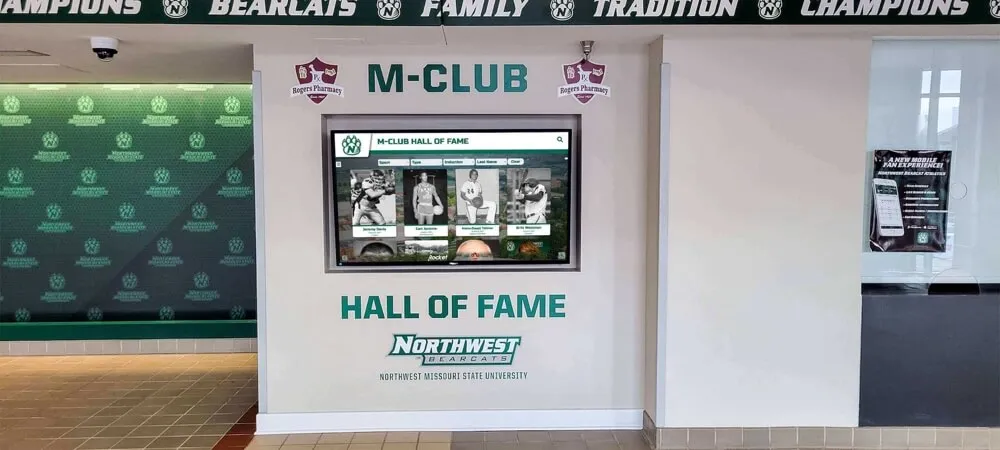
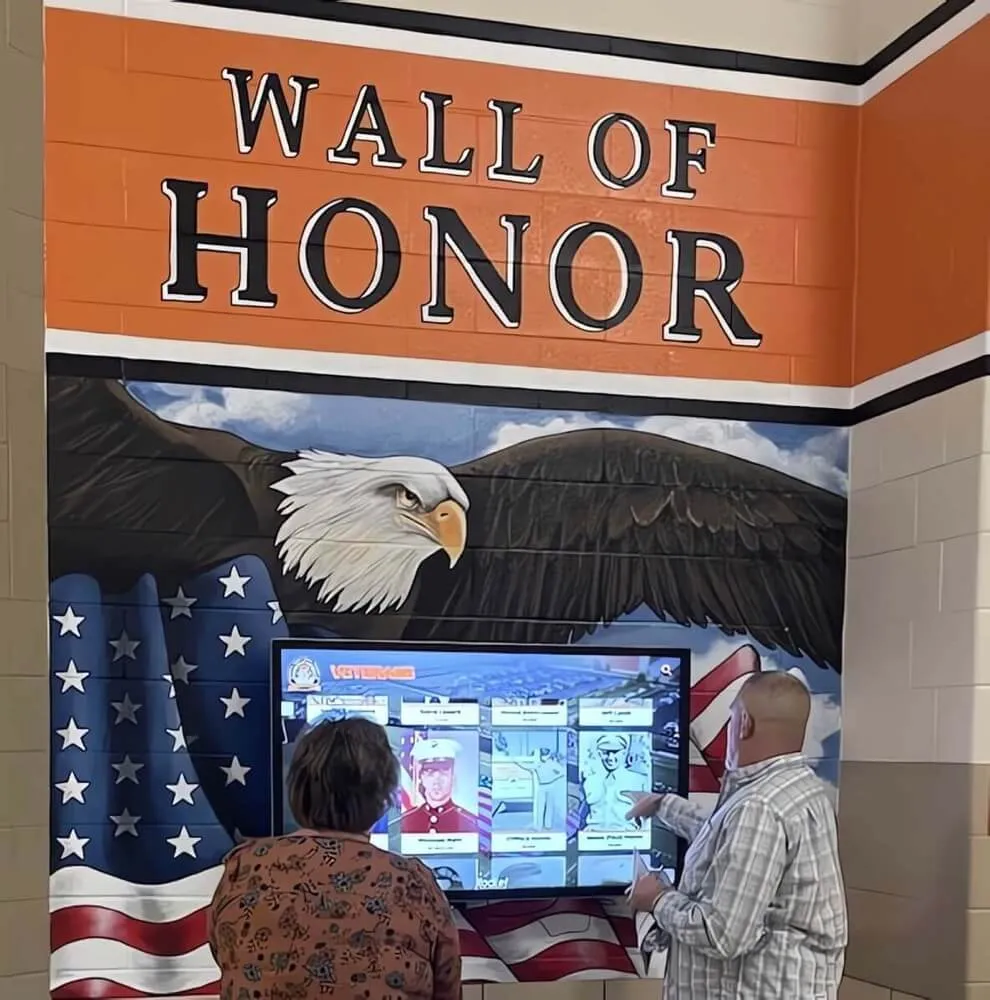
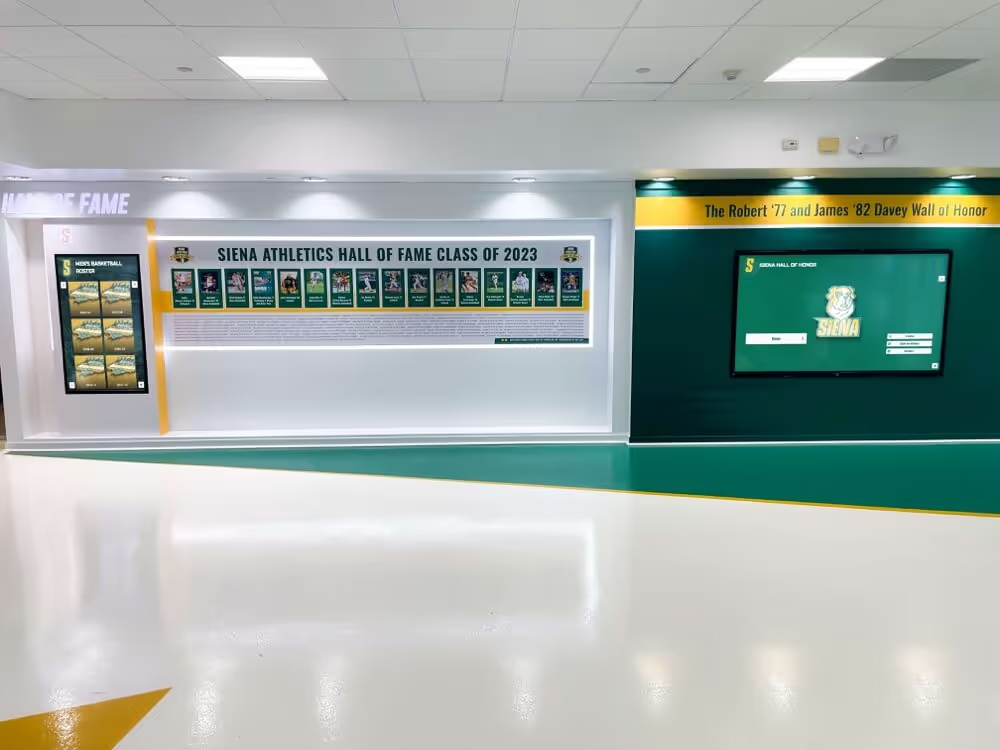
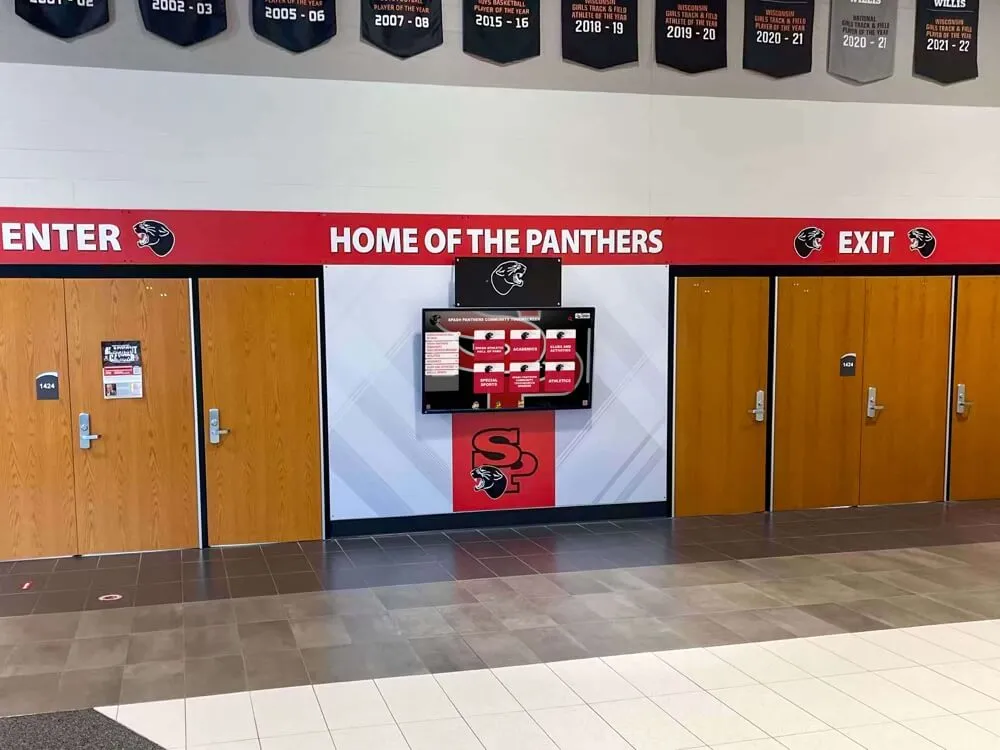
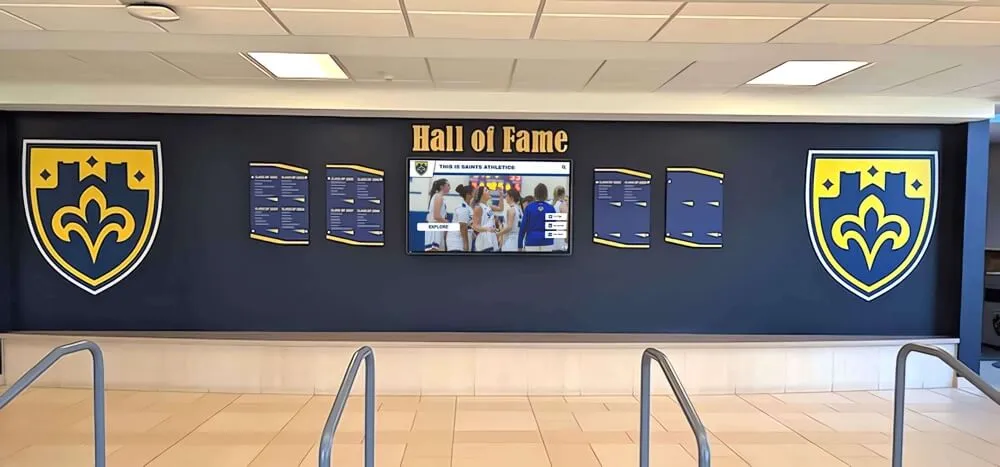
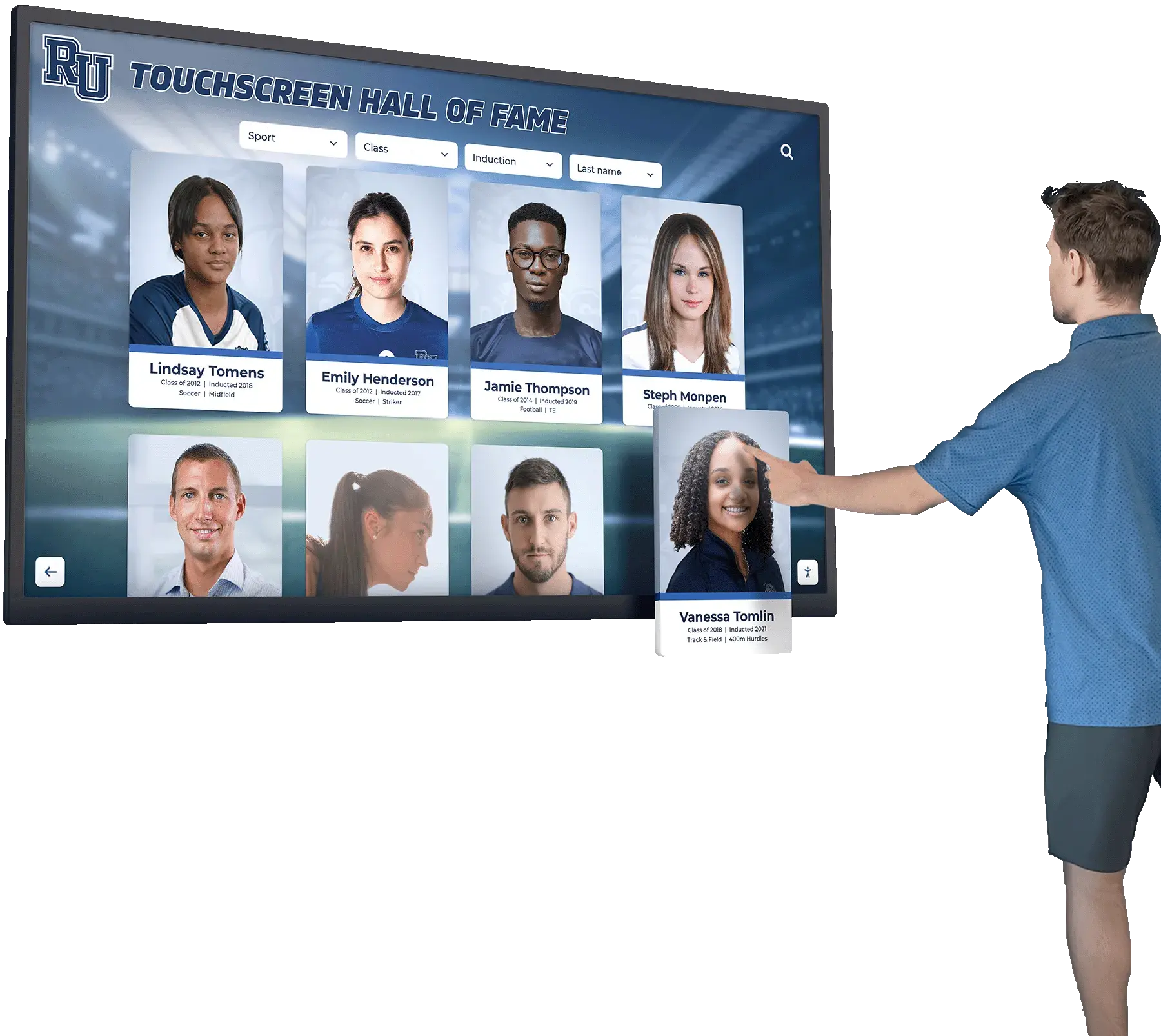
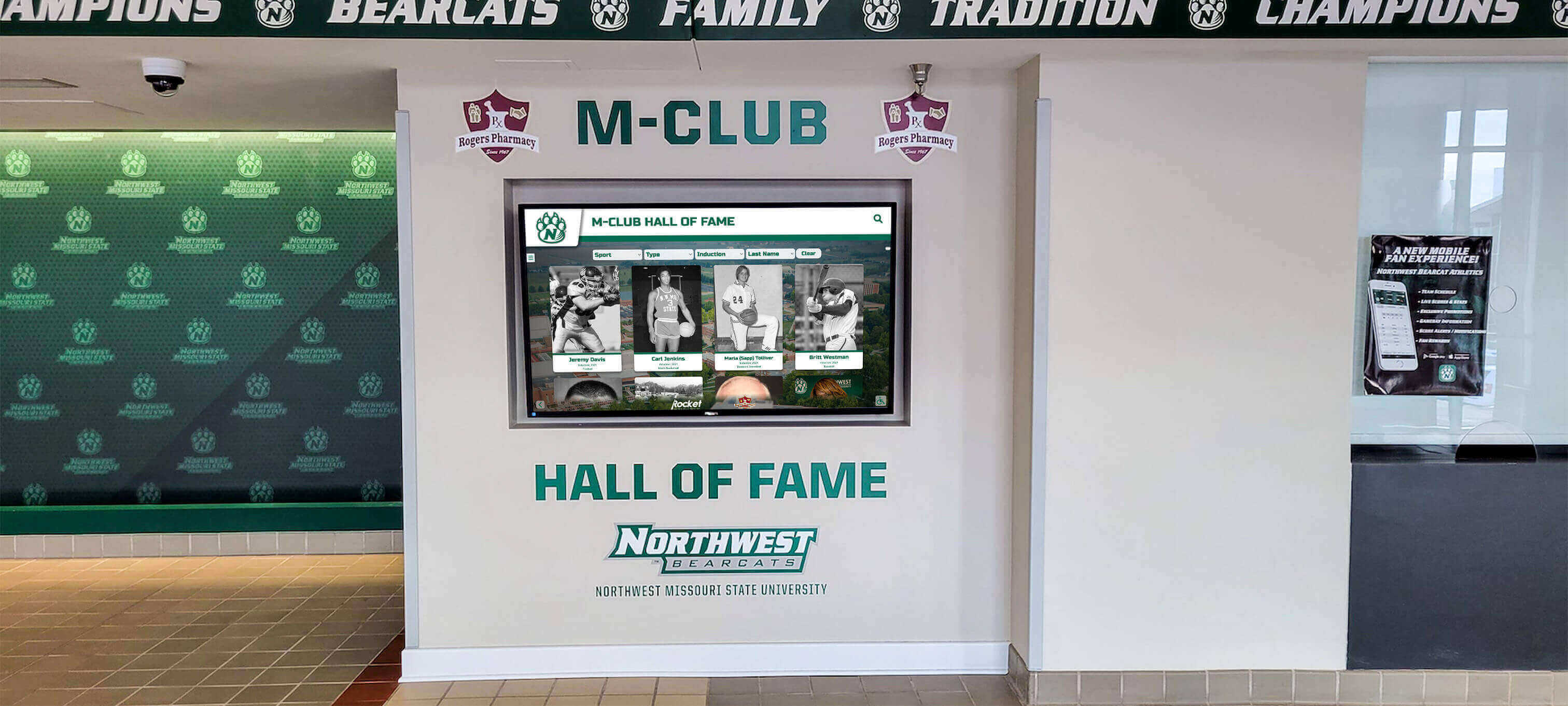
One of the most effective digital wrestling record board ideas is a weight class navigation interface. Visitors tap a weight (113, 120, 126…) and see the full record history for that division: season win leaders, career win leaders, all-time state qualifiers, and state champions. This kind of layered display is impossible on a static wood board but straightforward on a touchscreen wall.
The all-state recognition guide at touchhalloffame.us covers how schools build touchscreen displays that let visitors explore state-level achievements by sport and year—the same principle applies directly to wrestling weight class records.
Photo-Rich Athlete Profiles
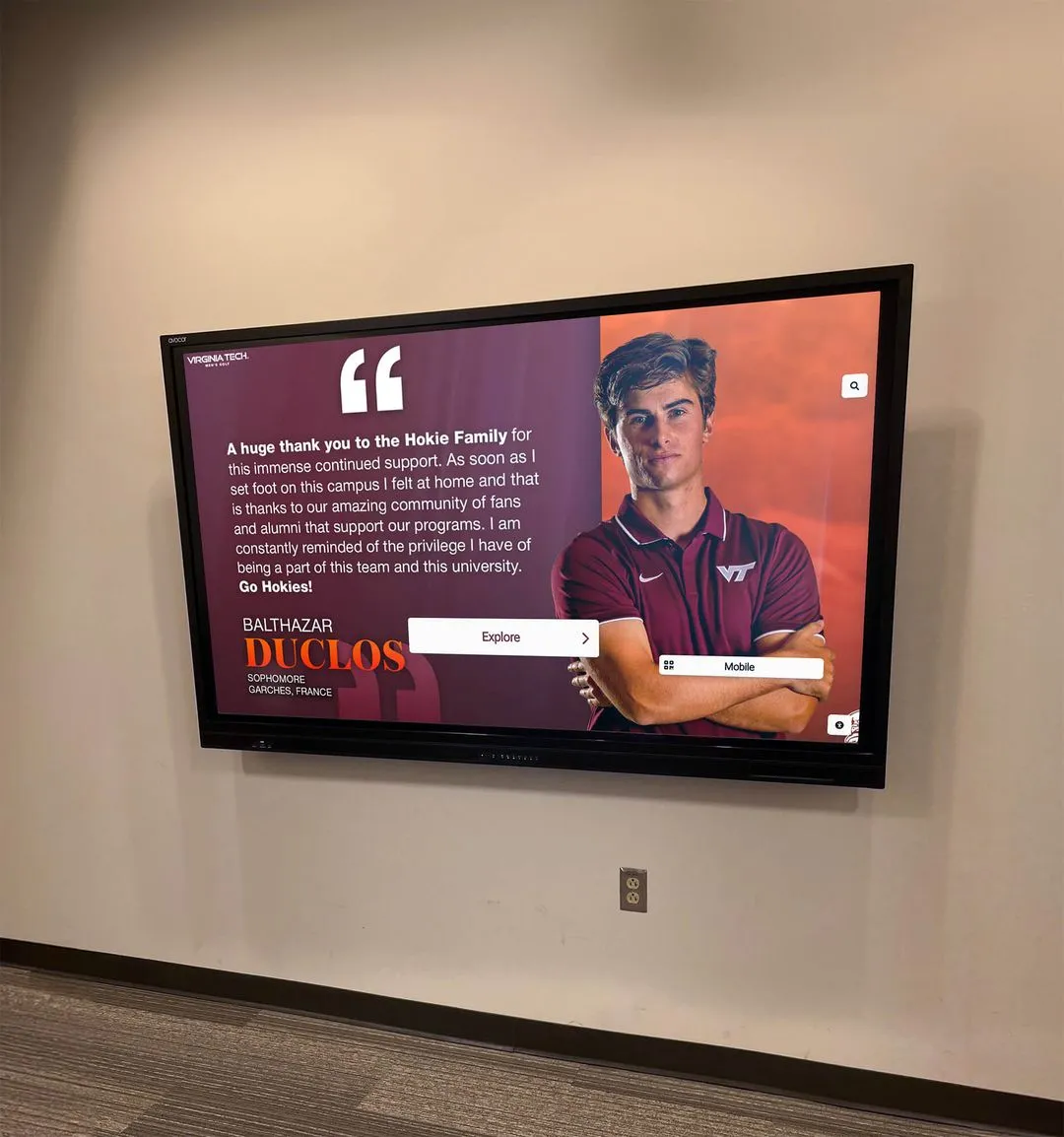
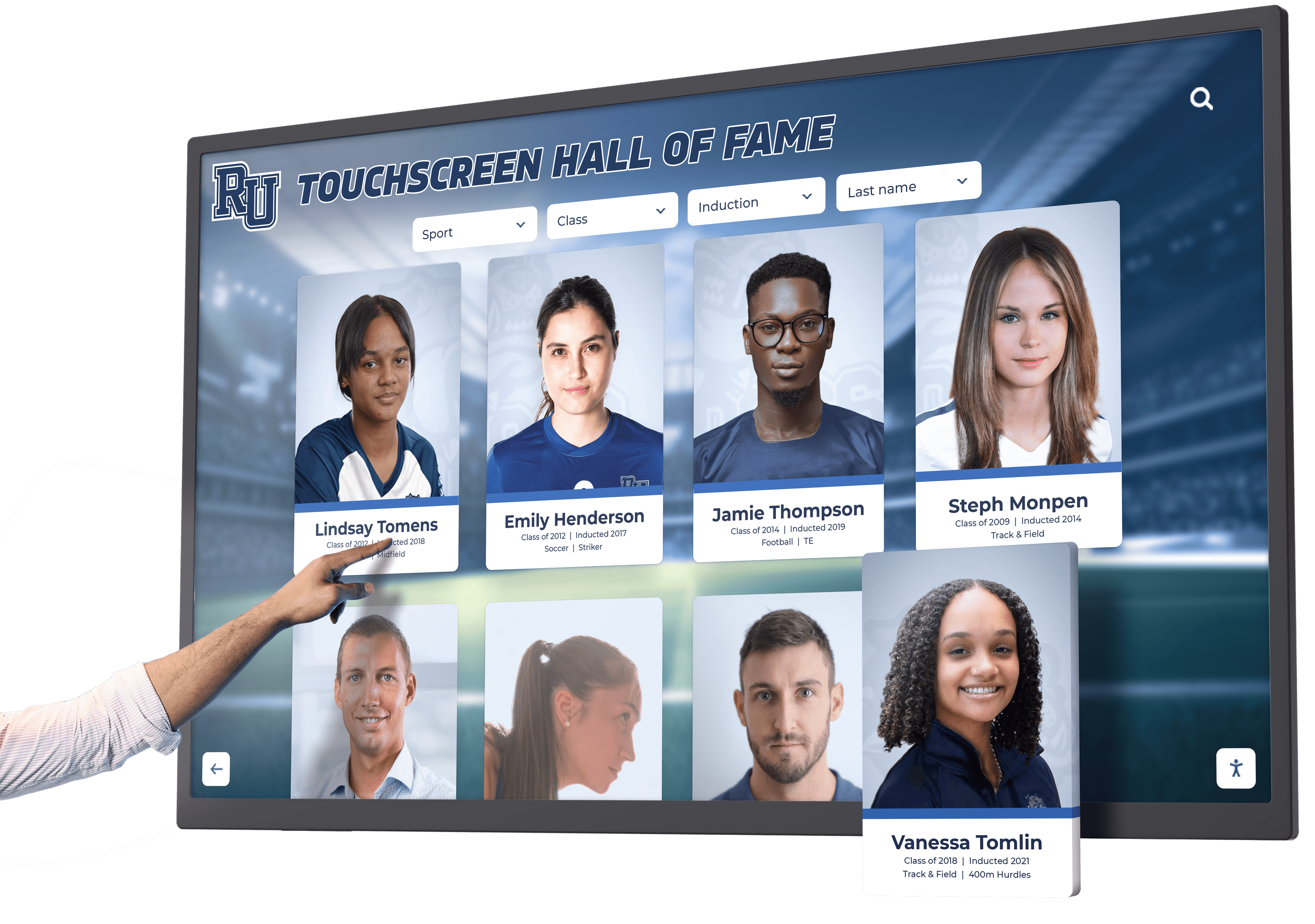
Digital displays can attach photos, action shots, and biographical context to each record. Rather than a name and stat line, visitors see a wrestler’s senior photo, their career statistics, the season they peaked, and the record they set. This depth of storytelling is what separates a recognition system from a scoreboard.
Lobby and Hallway Installations
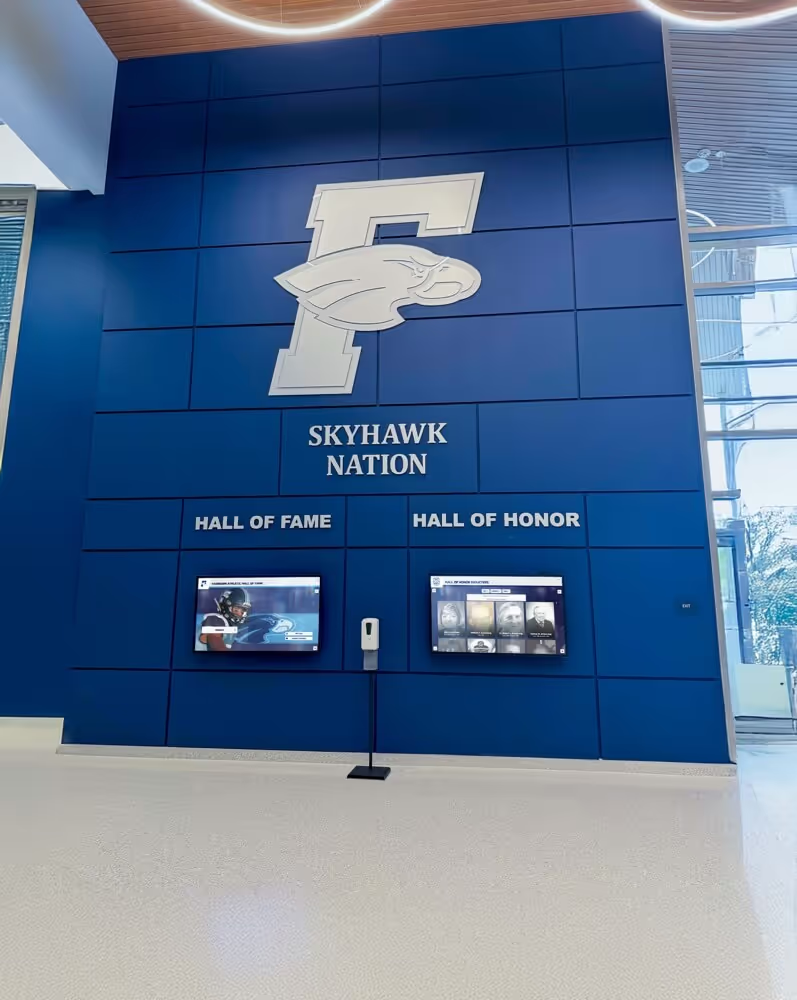
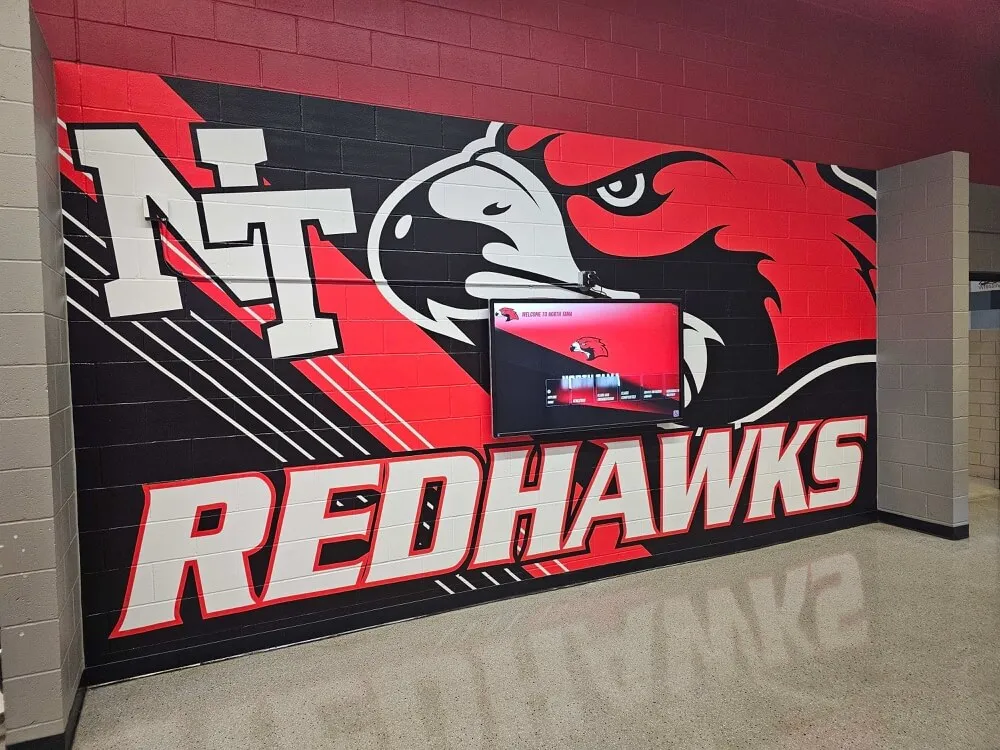
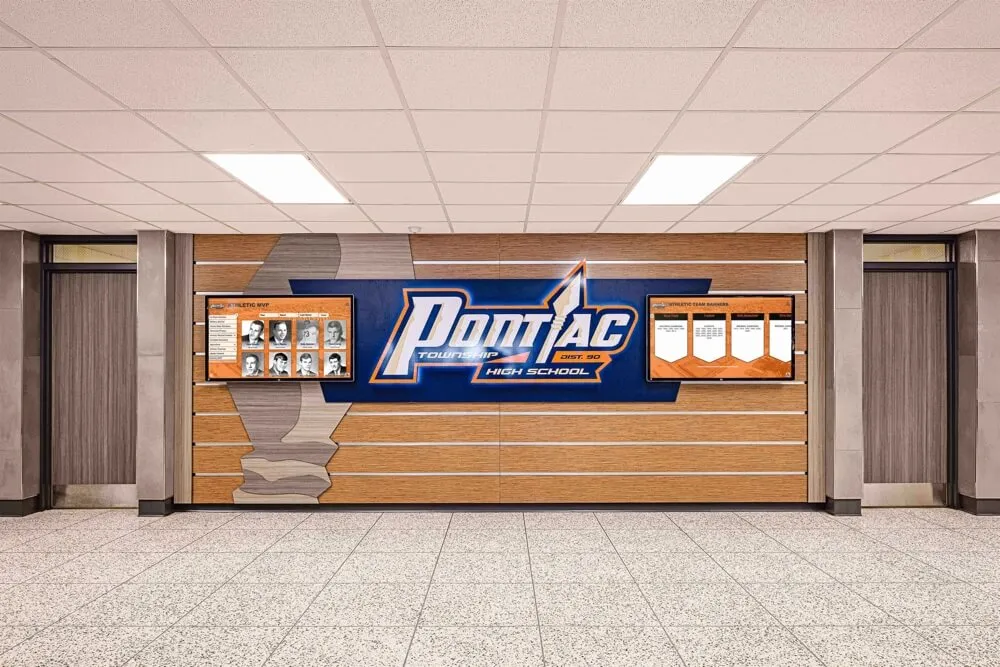
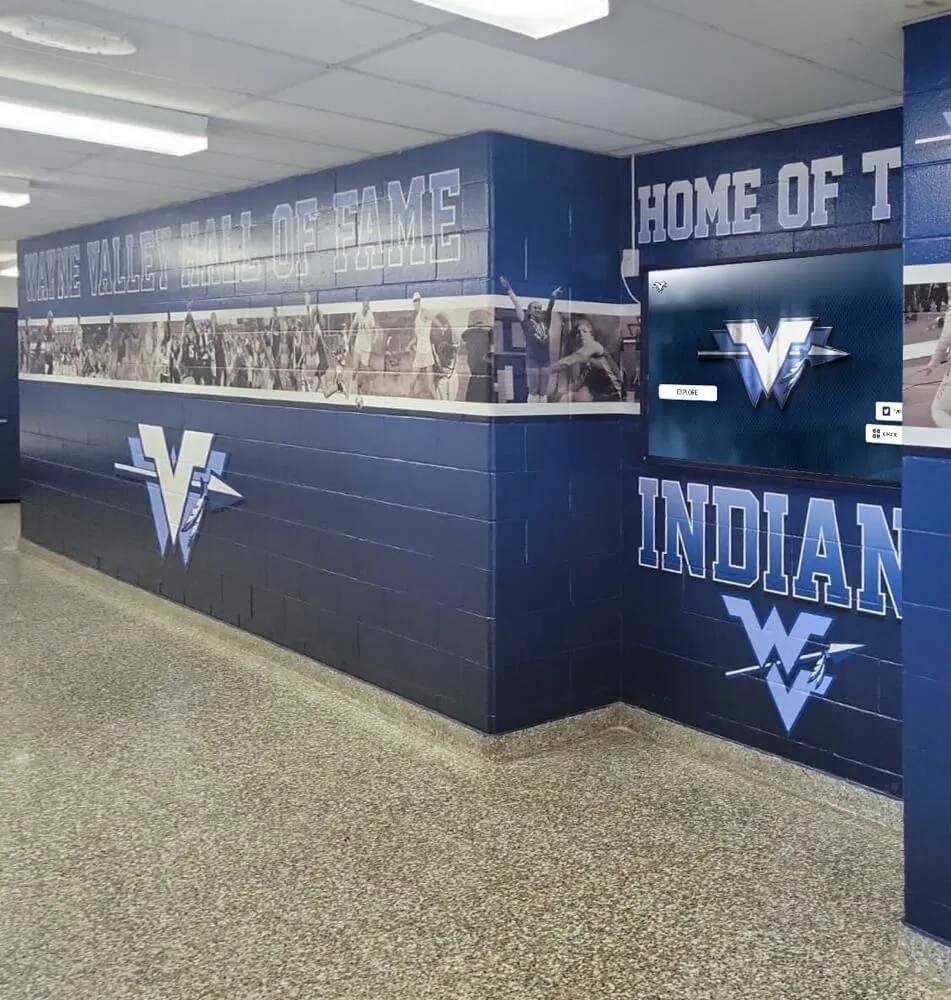
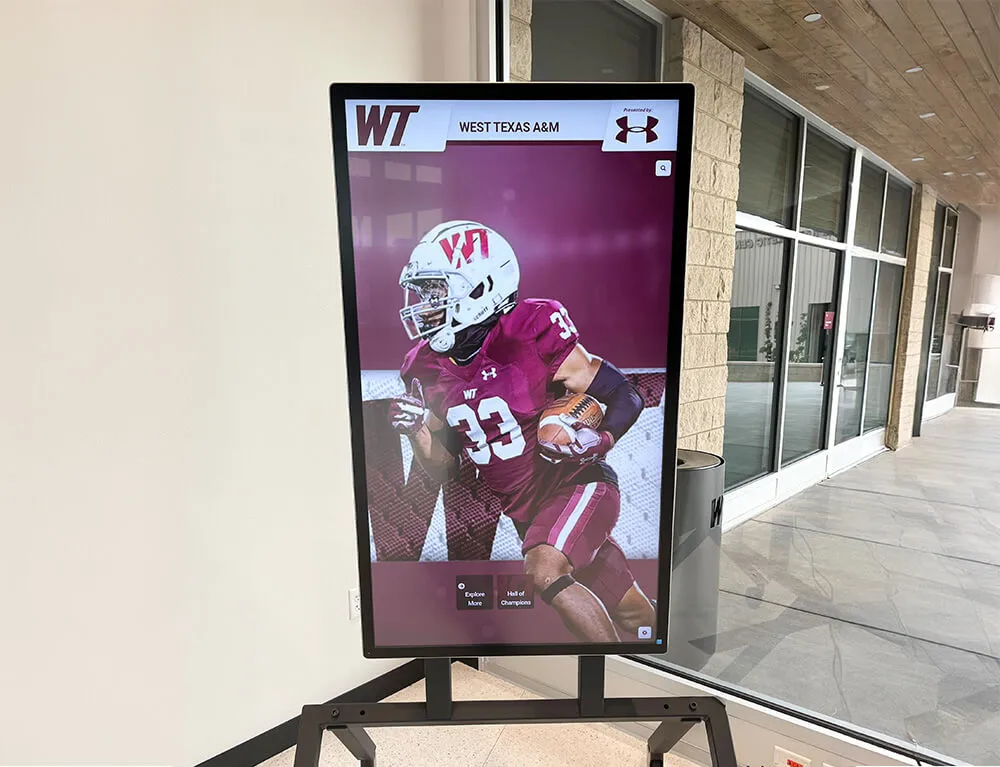
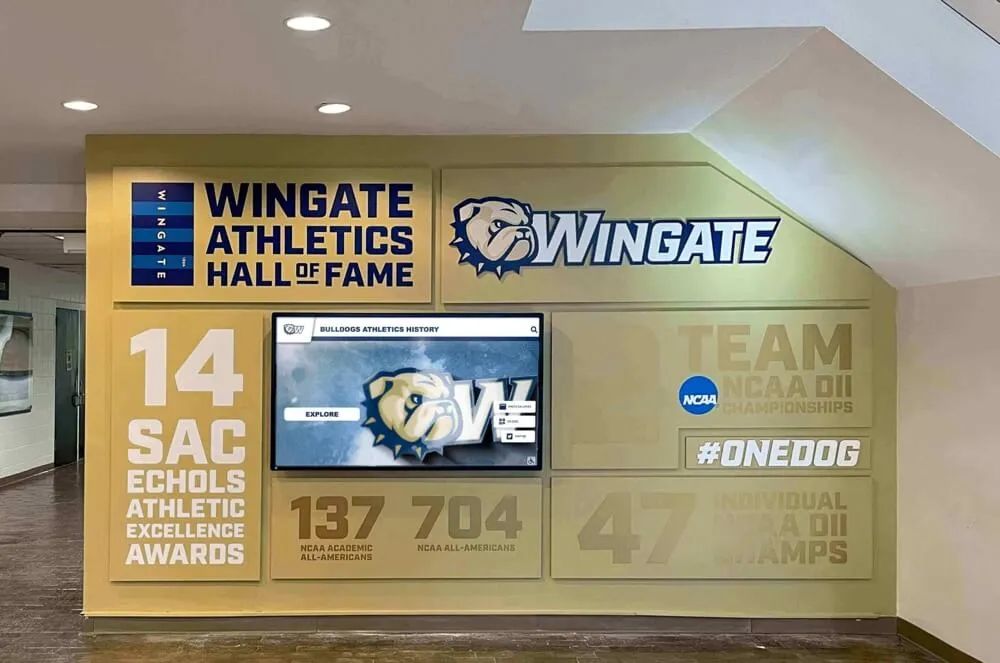
Wrestling record boards don’t have to live in the gym. A display in the main school hallway or front lobby reaches every student daily, not just the wrestling community. Programs using school lobby digital signage report that visibility beyond the athletic wing drives broader school pride and increased attendance at matches.
Design Ideas for Wrestling Record Boards
Beyond what to track and what format to use, the physical or visual design of a wrestling record board signals to wrestlers how much the program values their achievement.
Weight Class Grid Layout
A grid format places all weight classes along one axis and record categories along the other. At each intersection sits the record holder’s name. This compact design lets viewers scan the entire record landscape at once—every weight, every category—without navigating subsections.
Color-Coded Achievement Tiers
Use color to distinguish achievement levels: gold for state champions, silver for state placers, and the program’s primary color for school records that didn’t translate to state success. This visual hierarchy helps viewers instantly identify the program’s highest moments without reading every entry.
“Records in Range” Leaderboards
For active motivation, include a section showing current wrestlers’ career totals alongside the records they’re approaching. If a junior has 87 career wins and the school record is 112, displaying “87 wins — 25 from the record” makes that target visible and personal. This kind of dynamic comparison only works well on digital displays that update in real time.
Dedicated Coach Recognition
Wrestling coaches build programs across decades, and their records deserve space on the board. A section tracking head coach career records—dual meet wins, league championships, state qualifiers produced, state team titles—contextualizes the program’s history and honors the adults who built it. For guidance on honoring coaches alongside athletes, the coach appreciation recognition guide covers formats and best practices.
Integrating Wrestling Records with a Broader Hall of Fame
Many high school programs maintain a sport-specific record board alongside a broader athletic hall of fame. These two systems serve different purposes and work best when designed to complement each other.
The record board is a living document—it updates every season and reflects current achievement standards. The hall of fame is historical—it recognizes career excellence after it’s complete, often years after graduation. A wrestler might appear on the current season wins leaderboard for three years, then be inducted into the hall of fame a decade after graduation when the broader scope of their career and post-high school impact can be evaluated.
For programs building a digital hall of fame alongside their record board, the integration creates a complete narrative arc: you can follow a wrestler from their freshman wins to their state championship to their eventual hall of fame induction, all within one system.
Implementation Tips for Athletic Directors
Building a wrestling record board—digital or traditional—requires decisions on scope, data, and ongoing maintenance before installation.
Start with Data Inventory
Before designing any board, pull every record you can document. Interview retired coaches. Check archived game programs, local newspaper records, and state association archives. The records you can’t find are records you can’t display, so invest time in research before committing to a format that leaves known gaps.
Decide on Verification Standards
Decide how you’ll verify disputed records before displaying them. “School record” claims that can’t be verified should either be omitted or labeled as approximate. Inaccurate records erode trust in the entire display and create awkward conversations with wrestlers and alumni who remember history differently.
Plan for Annual Maintenance
Every season produces new record challenges. Build the maintenance workflow before installation: who enters new data, when, and what approval process exists before a record is officially updated? For traditional boards, who manages the engraving or reprinting? For digital displays, who has system access? These logistics determine whether the board stays current or quietly becomes outdated.
Combine with Recognition Programs
A record board gains power when it connects to active recognition events. Announcing new record holders at senior night, including record-board milestones in post-season banquet awards, and promoting record achievements on social media all amplify the display’s motivational effect. The fall sports state championships recognition guide covers end-of-season ceremonies that pair well with record board updates.
Consider Equity Across All Wrestling Records
A well-designed record board surfaces achievement across all weight classes, not just the heavyweights who tend to draw more attention. Dedicated per-weight tracking ensures that the most dominant wrestler at 113 pounds receives the same visibility as the most celebrated heavyweight. This equity in recognition matters for team culture and is a practice the high school athletics equity checklist recommends across all sports displays.
Wrestling Record Board Ideas: Quick Reference List
For programs looking for a starting point, here are 20 specific ideas to consider:
- Career wins leaderboard (top 10 all-time)
- Season wins record by weight class
- Career pins leaderboard
- Fastest pin in school history
- Most consecutive wins (season and career)
- Best single-season winning percentage
- State qualifiers list by year and weight class
- State champions banner with year and weight
- State placers (1st–8th) cumulative list
- League/conference championship years
- Dual meet season record holders
- Most consecutive dual meet wins
- Team state championship years
- Coach career dual meet win records
- Career technical falls leaderboard
- Academic All-State wrestlers recognition section
- “Records to beat” section showing current leaders vs. records
- Senior class state qualifier count by year
- Weight class program record holders grid
- Alumni wrestler college placement tracker
Conclusion: Building a Record Board That Lasts
A wrestling team record board is one of the most direct investments a program can make in its own culture. It tells current wrestlers that their effort is measured, valued, and preserved. It tells alumni that their achievements weren’t temporary. It tells recruits—and their parents—that this is a program that takes excellence seriously.
Traditional wood boards accomplish this at lower upfront cost but require ongoing maintenance and limit the depth of records that can be displayed. Digital record boards eliminate those constraints, enabling weight class navigation, auto-ranking, photo profiles, and real-time updates that keep recognition current all season long.
The most effective wrestling programs combine ambitious tracking—individual, team, weight class, and coaching records—with displays visible enough to actually change behavior. A record nobody can see doesn’t motivate anyone. A record displayed prominently in the gym hallway, updated the week it falls, and tied to a broader recognition system creates the culture of excellence that championship programs are built on.
Ready to Build a Wrestling Record Board That Updates Automatically?
Rocket Alumni Solutions builds interactive digital record boards designed for high school wrestling programs—tracking career wins, pins, weight class records, and state championship history with automatic reranking and zero per-update costs.
Schedule a Demo