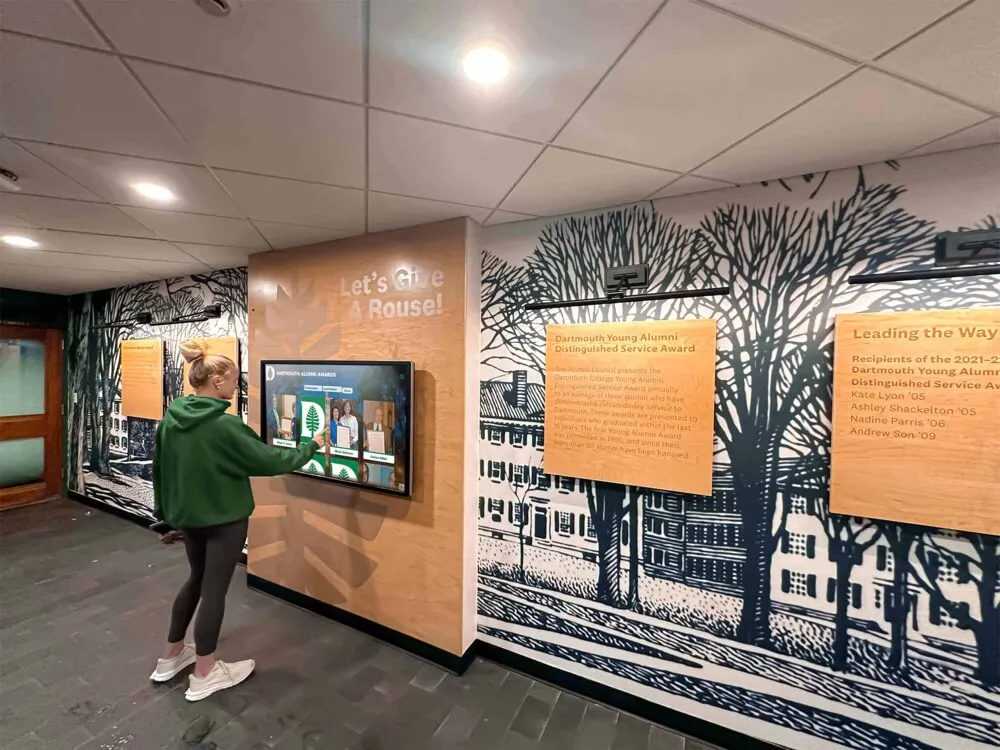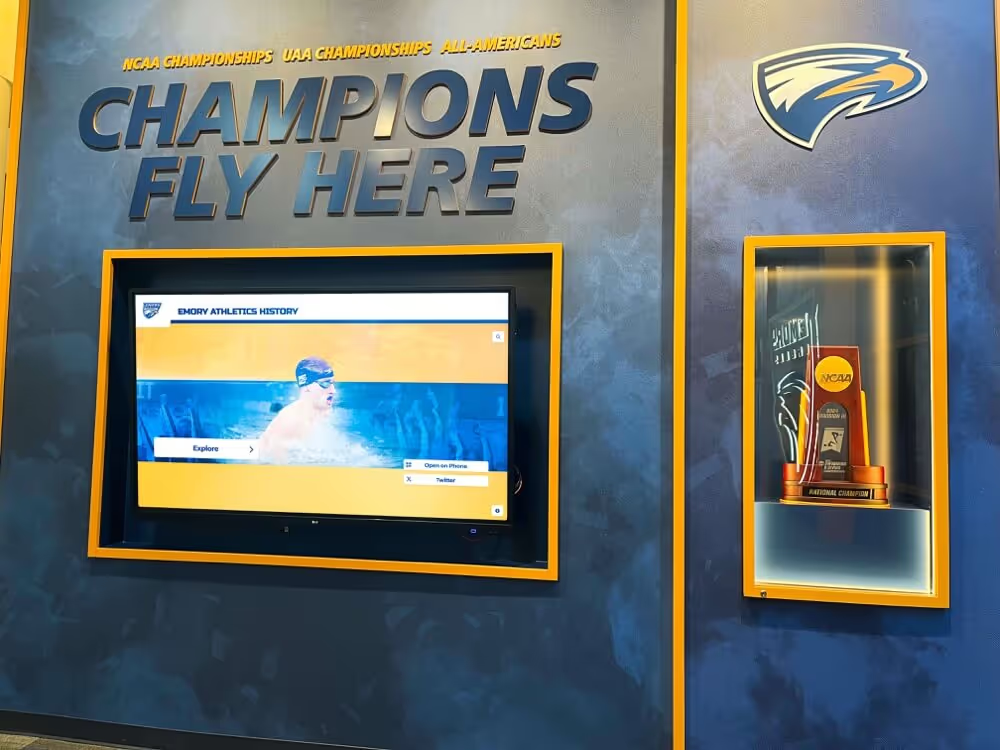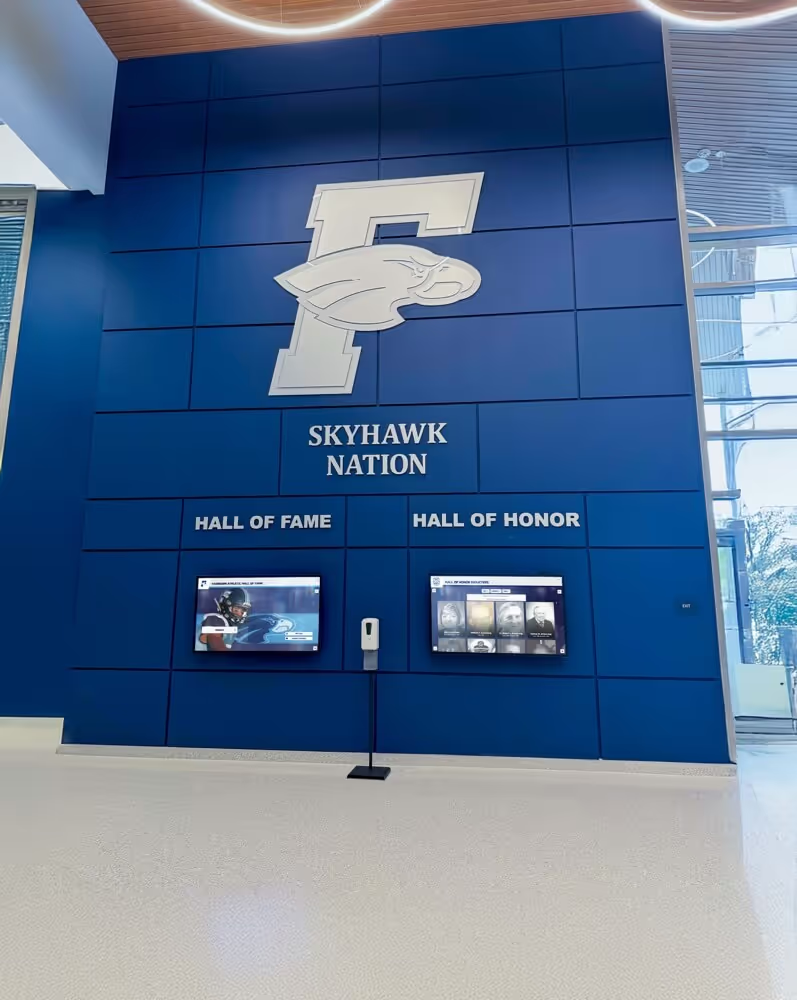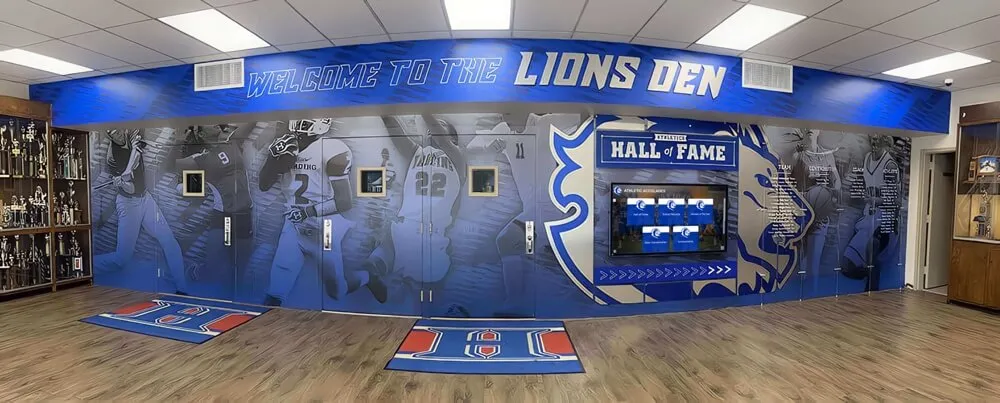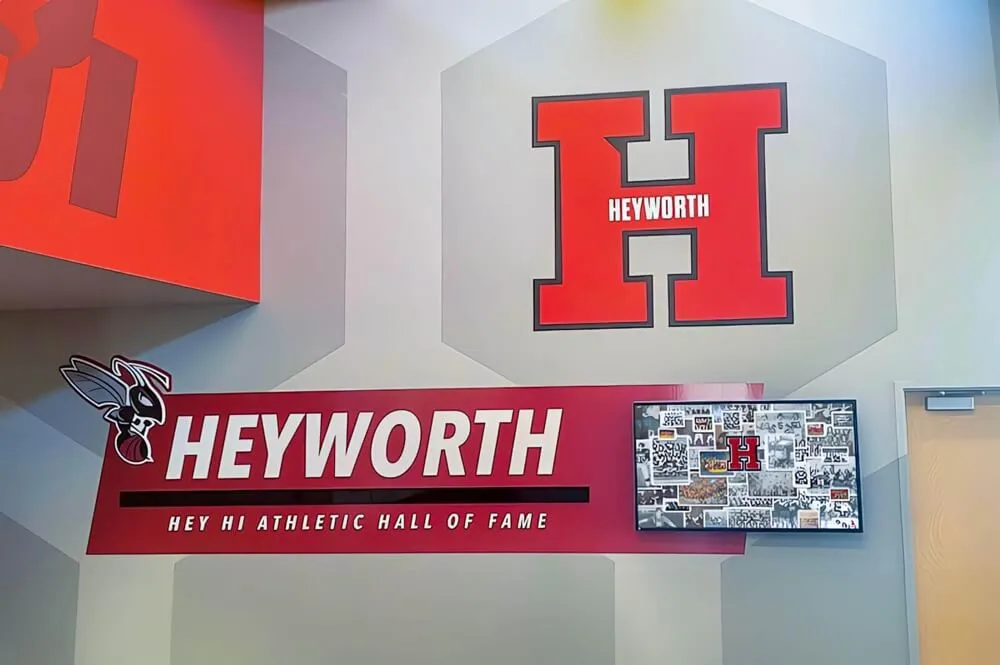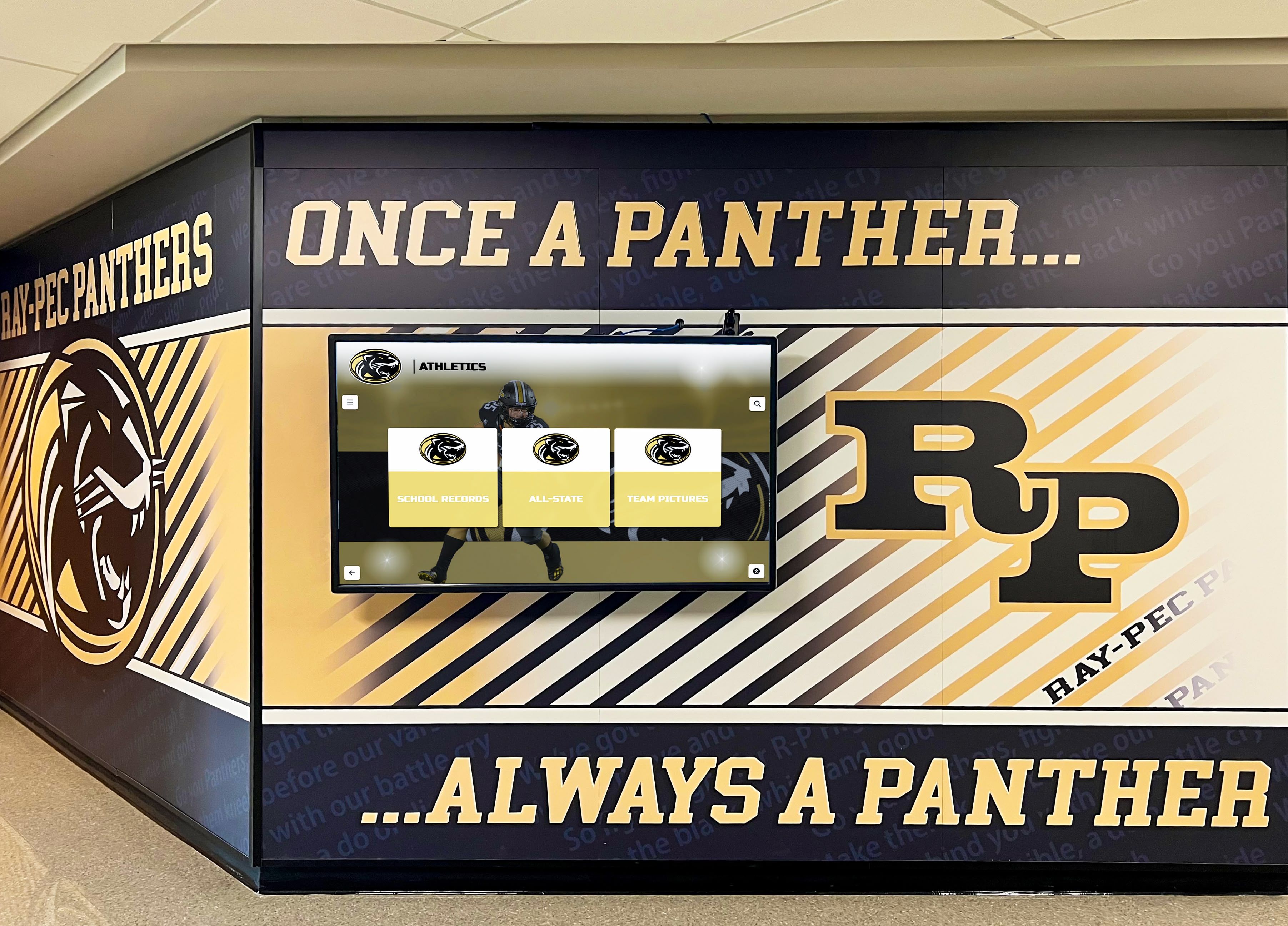




School hallways, athletic facilities, and common spaces shape daily experiences for thousands of students moving through buildings every academic year. Wall wraps—large-format vinyl graphics adhered directly to walls—have emerged as popular environmental design solutions transforming plain surfaces into branded spaces celebrating school identity, athletic achievement, historical milestones, and academic excellence. Yet administrators researching wall wrap options face practical questions about design effectiveness, material durability, installation complexity, maintenance requirements, and total ownership costs spanning multi-year lifespans.
Physical education directors considering weight room murals wonder whether vinyl graphics withstand humidity from athlete workouts and frequent equipment contact. Principals evaluating hallway installations question how designs balance aesthetic appeal with practical considerations like lighting variations, architectural irregularities, and future content update requirements. Athletic directors comparing recognition options examine whether static wall graphics or dynamic digital displays better serve evolving programs regularly producing new accomplishments deserving visibility.
Modern School Recognition Systems Beyond Static Wall Wraps
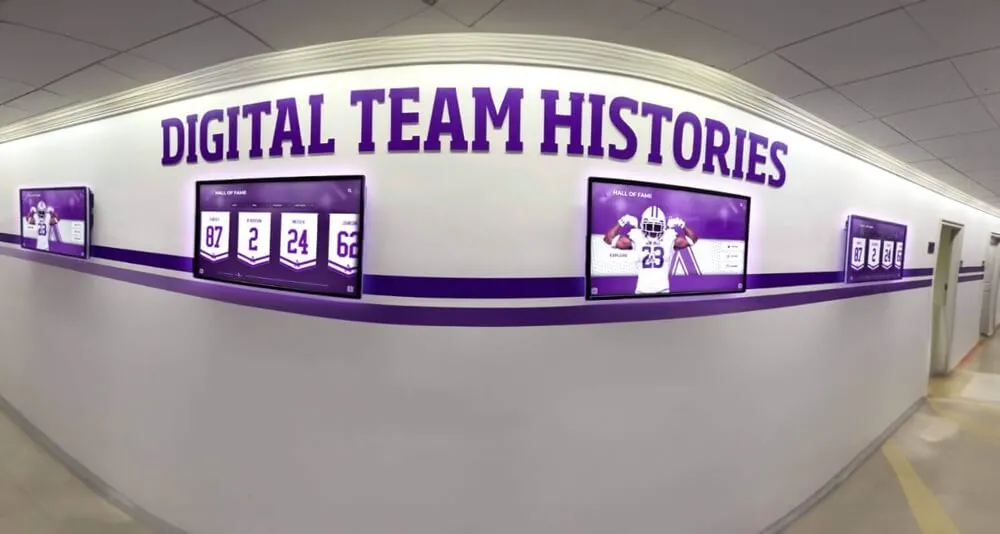
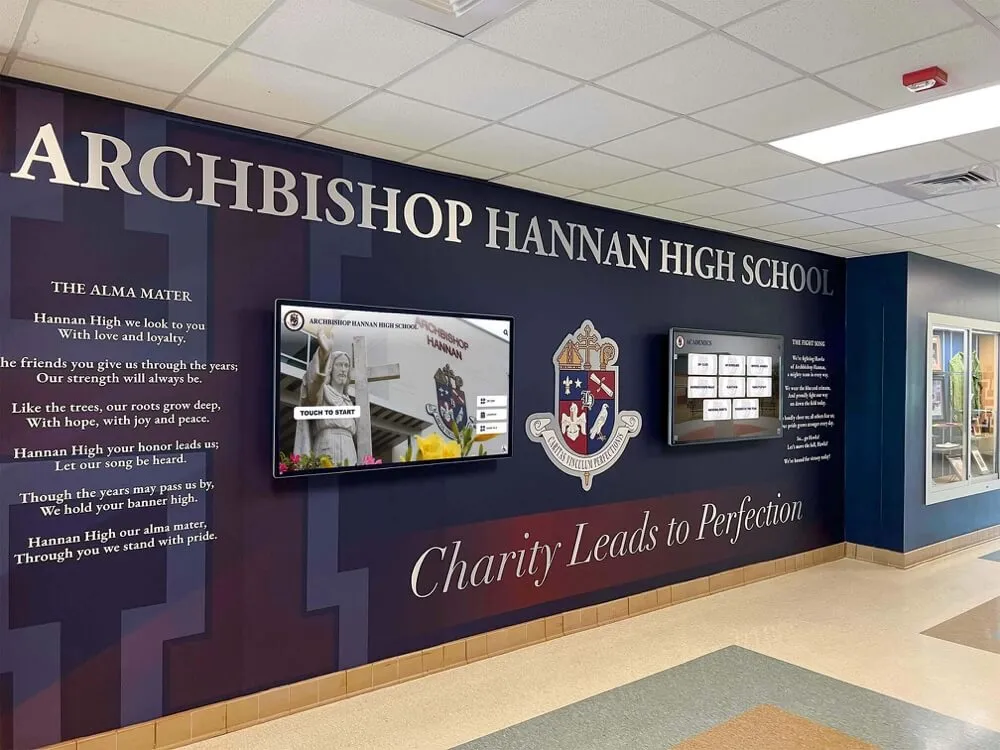
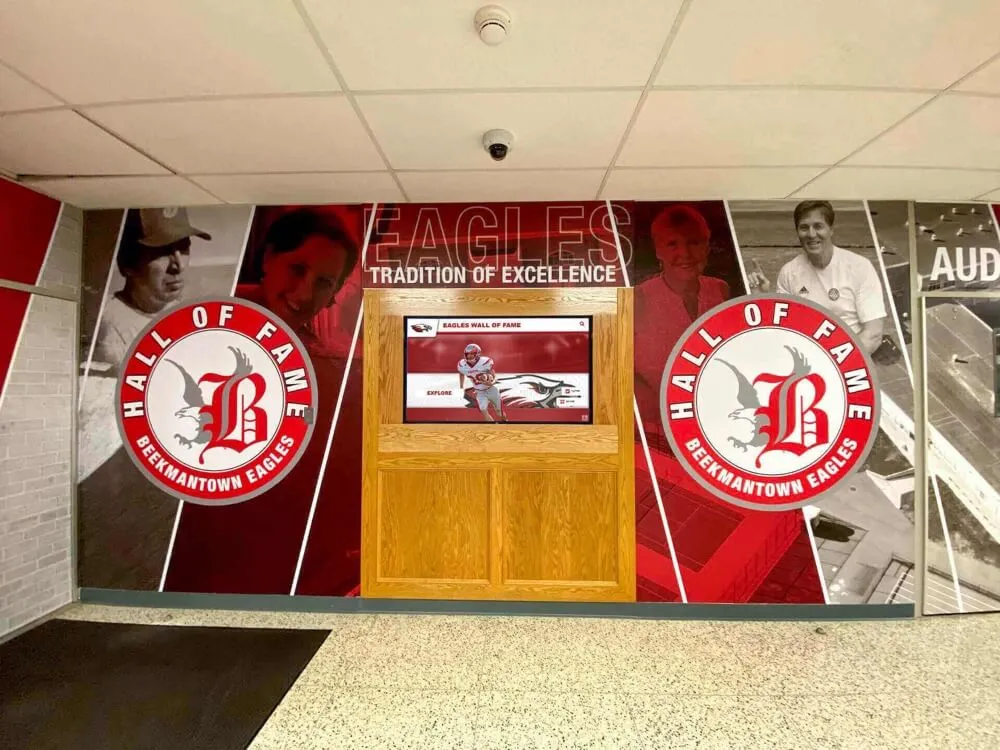
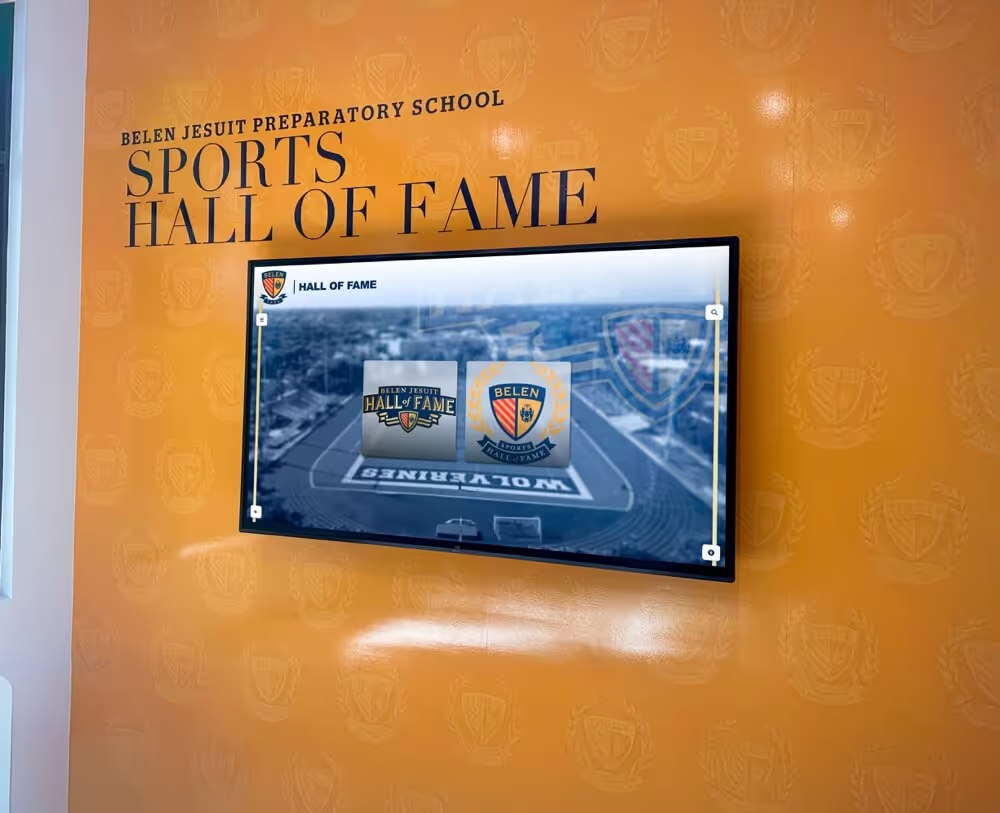
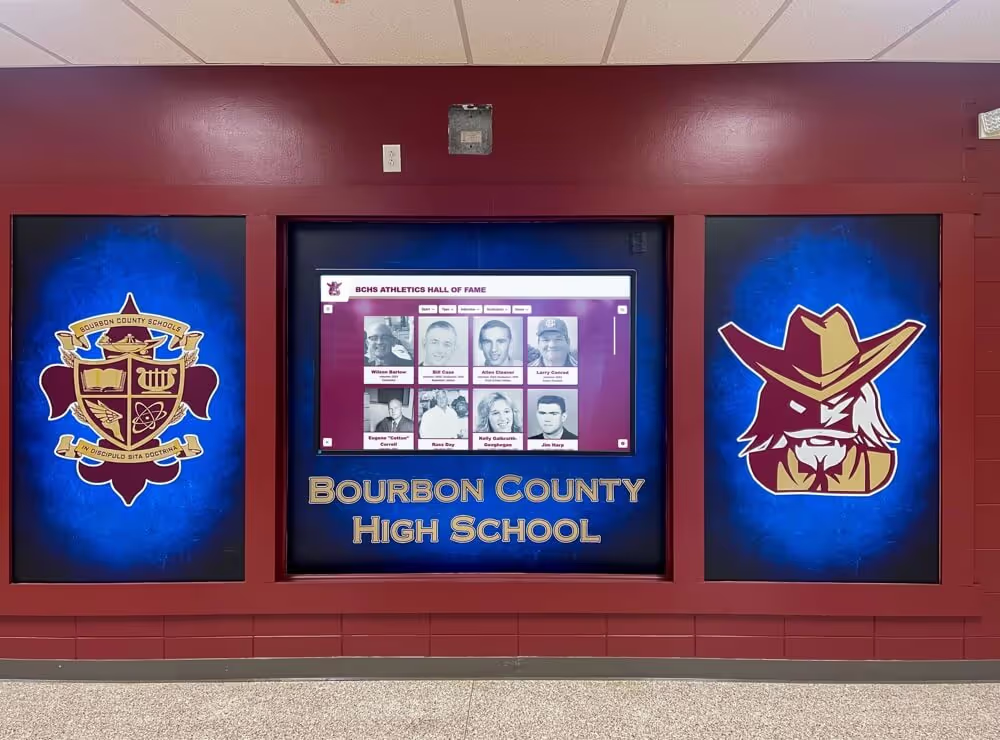
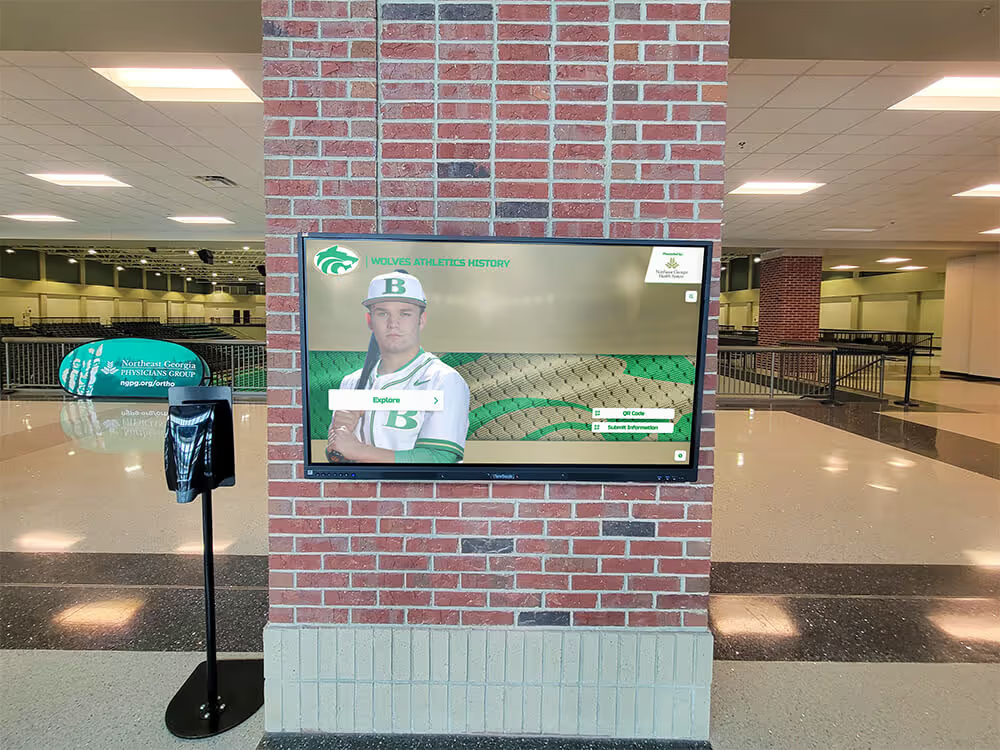
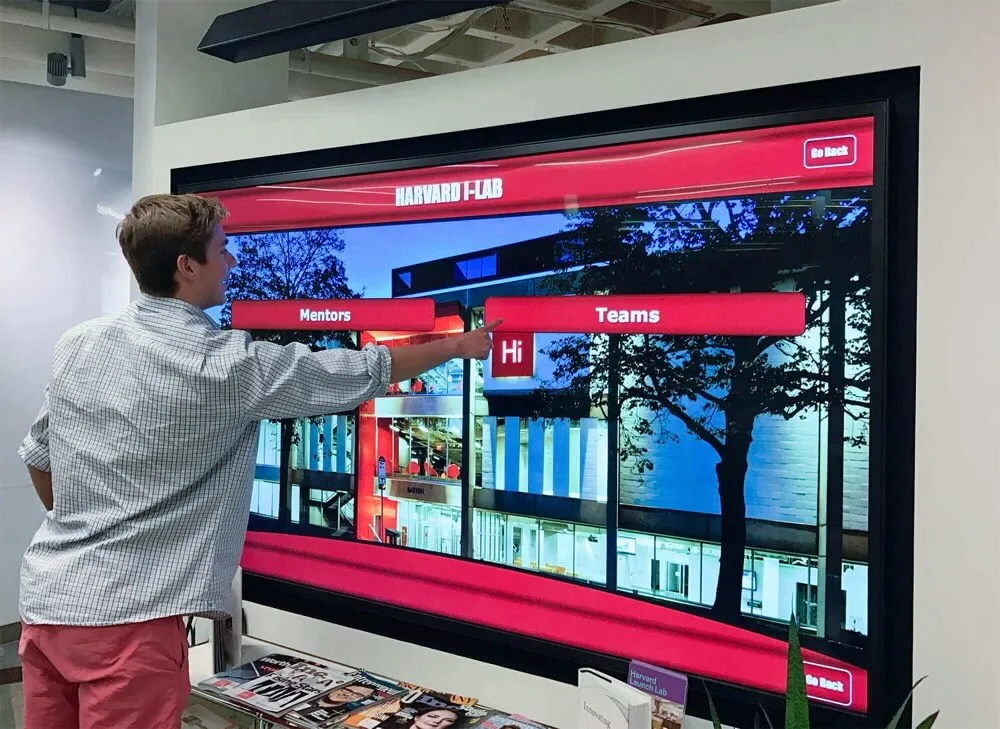
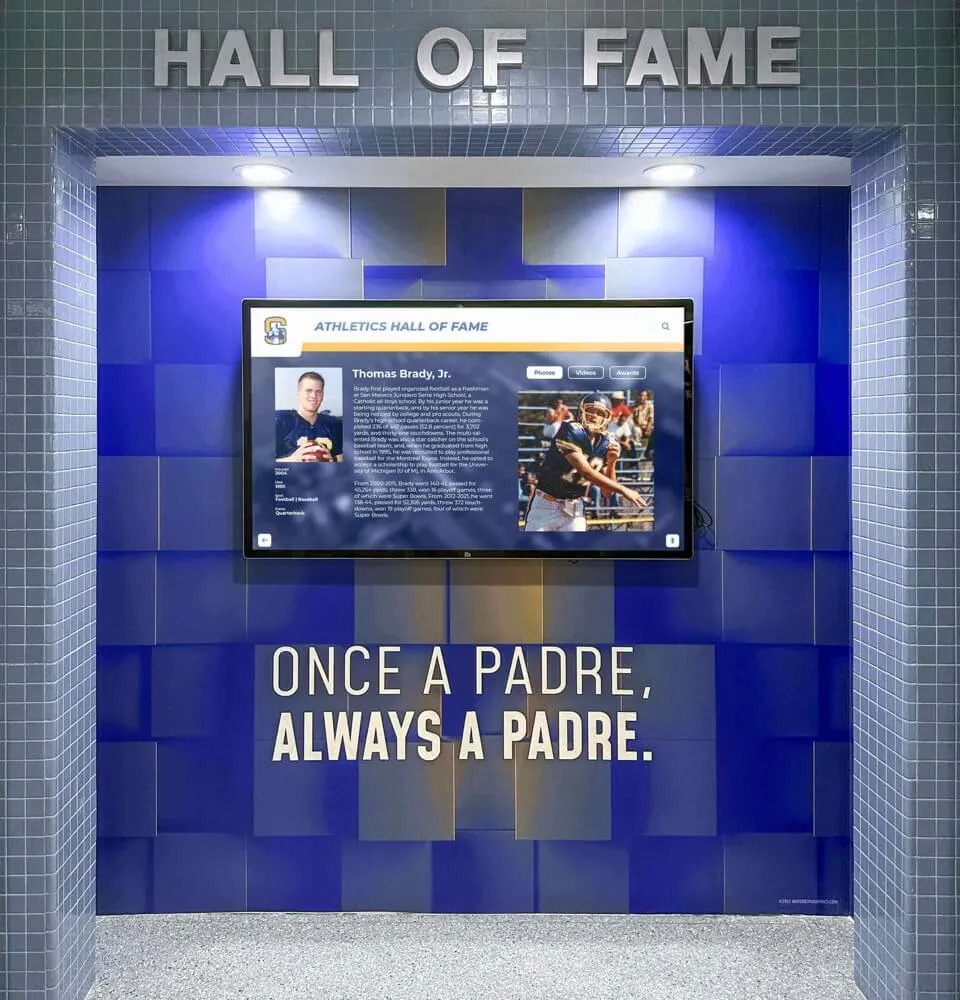
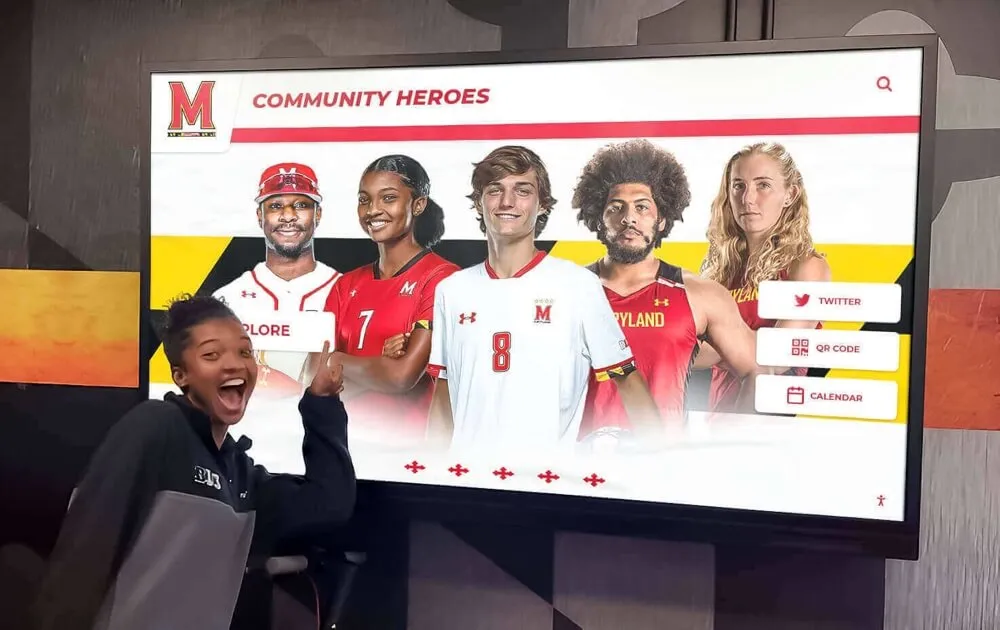
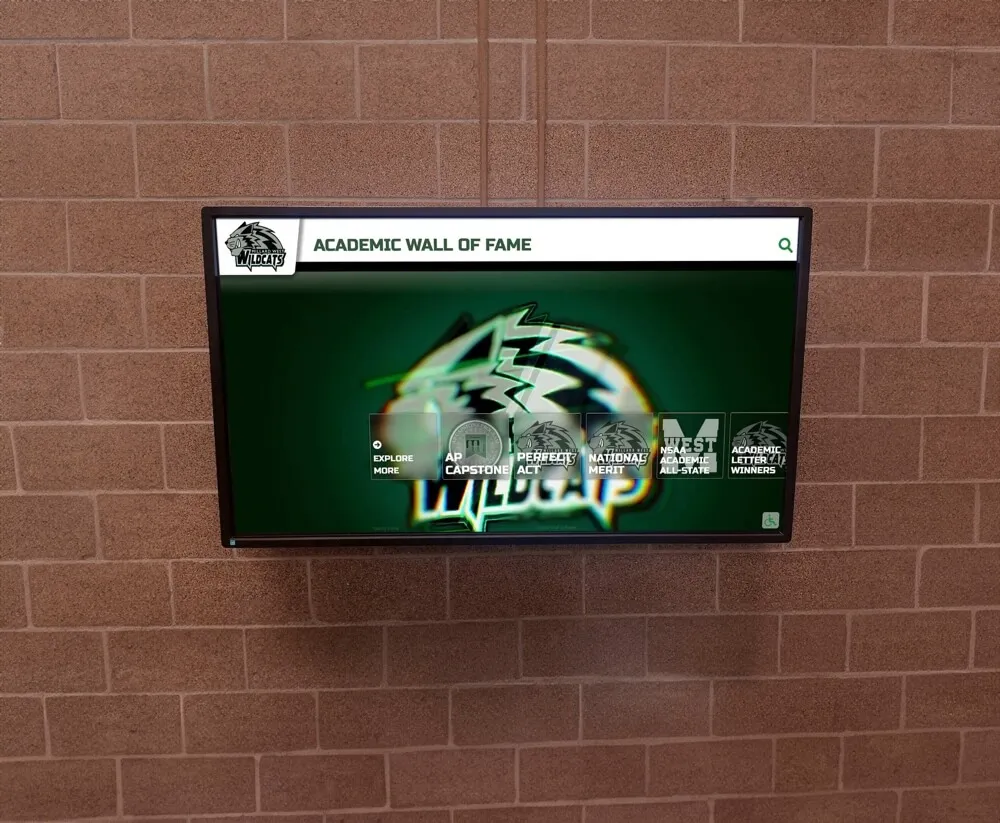
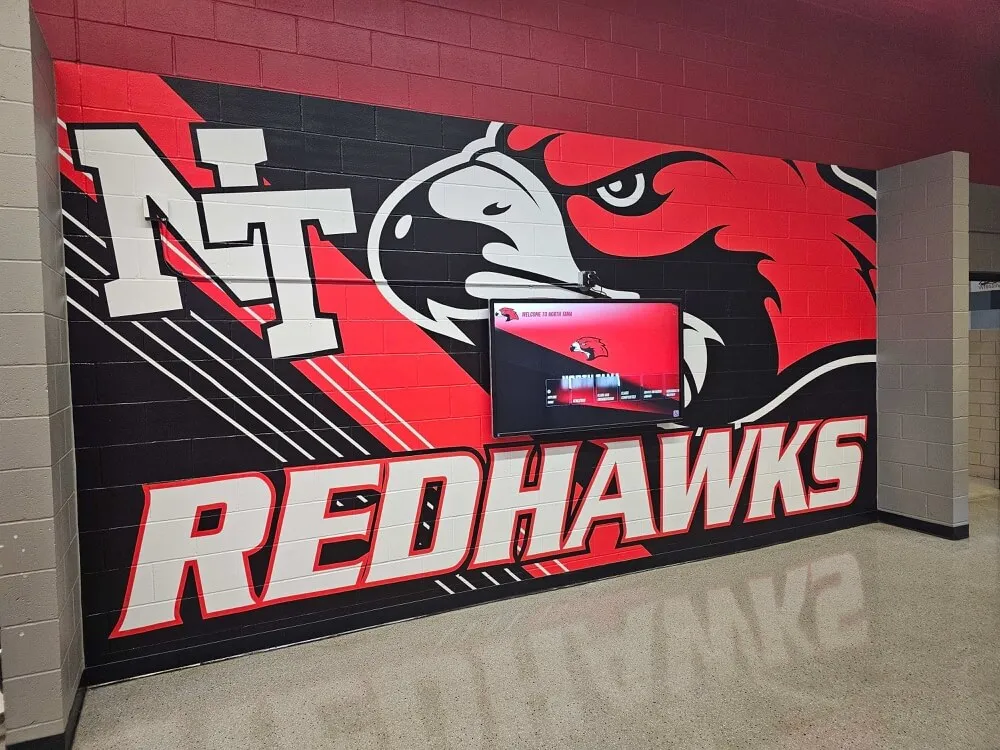
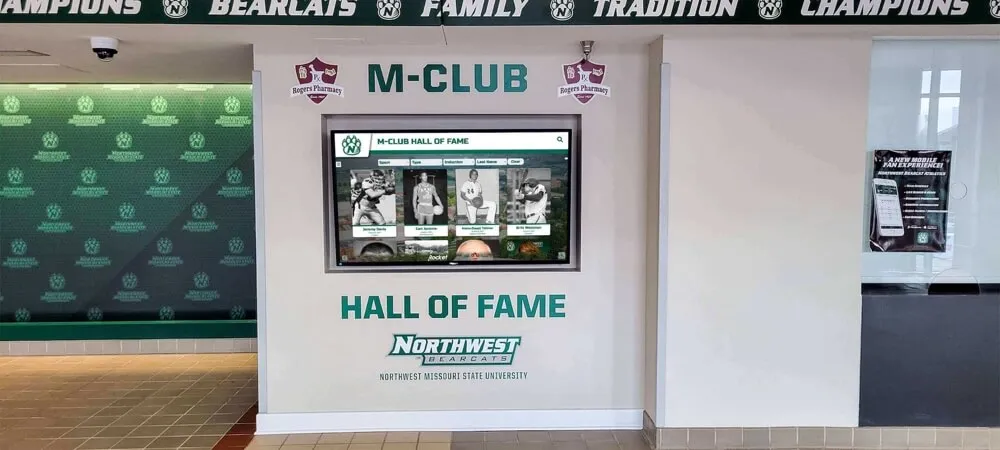
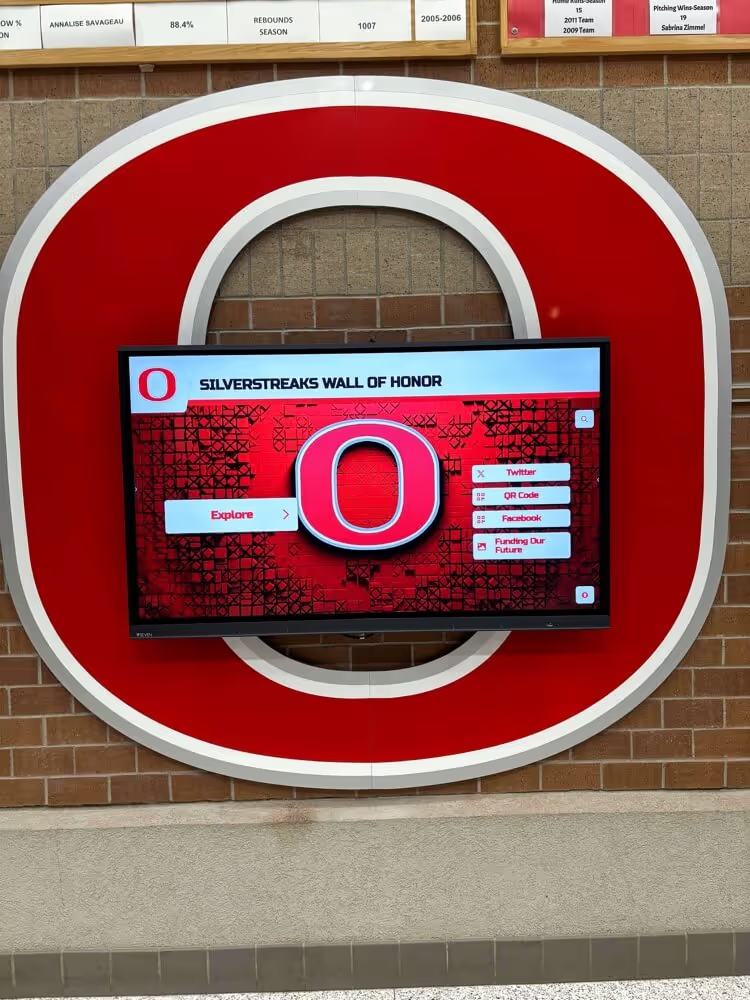
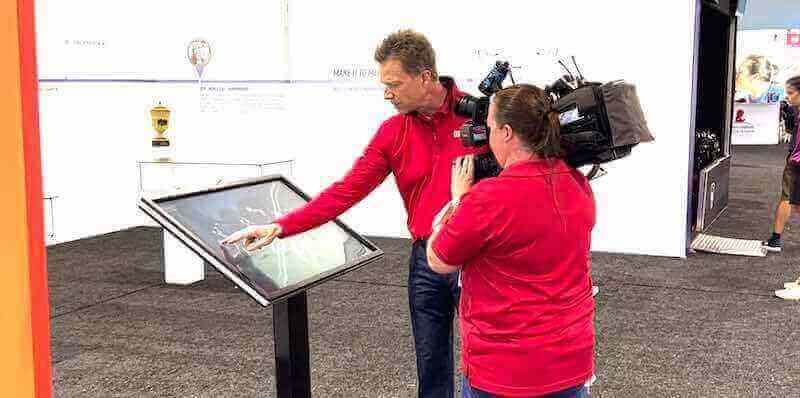
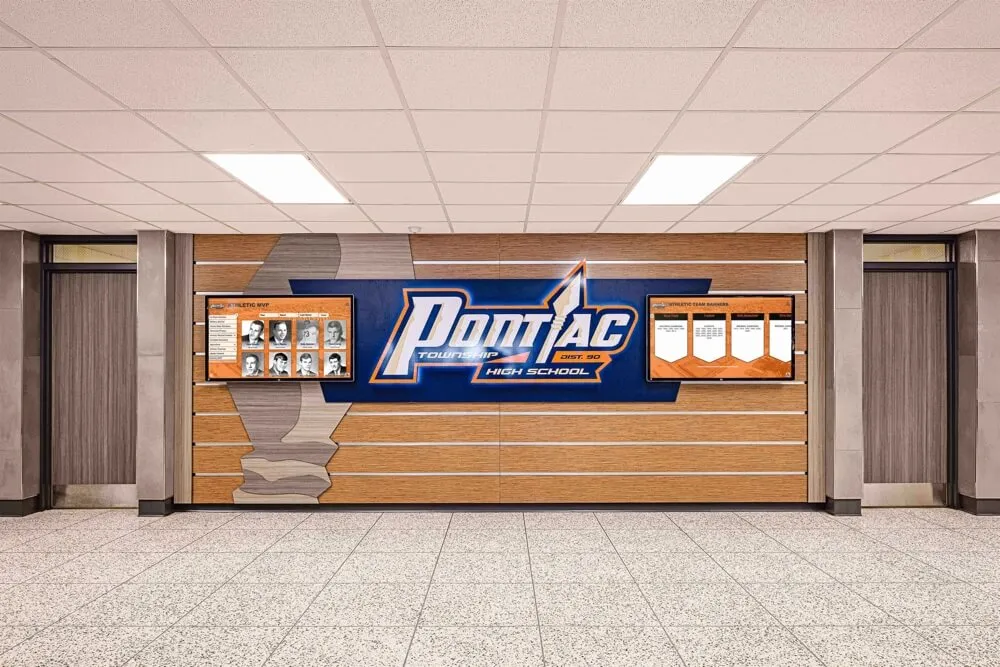
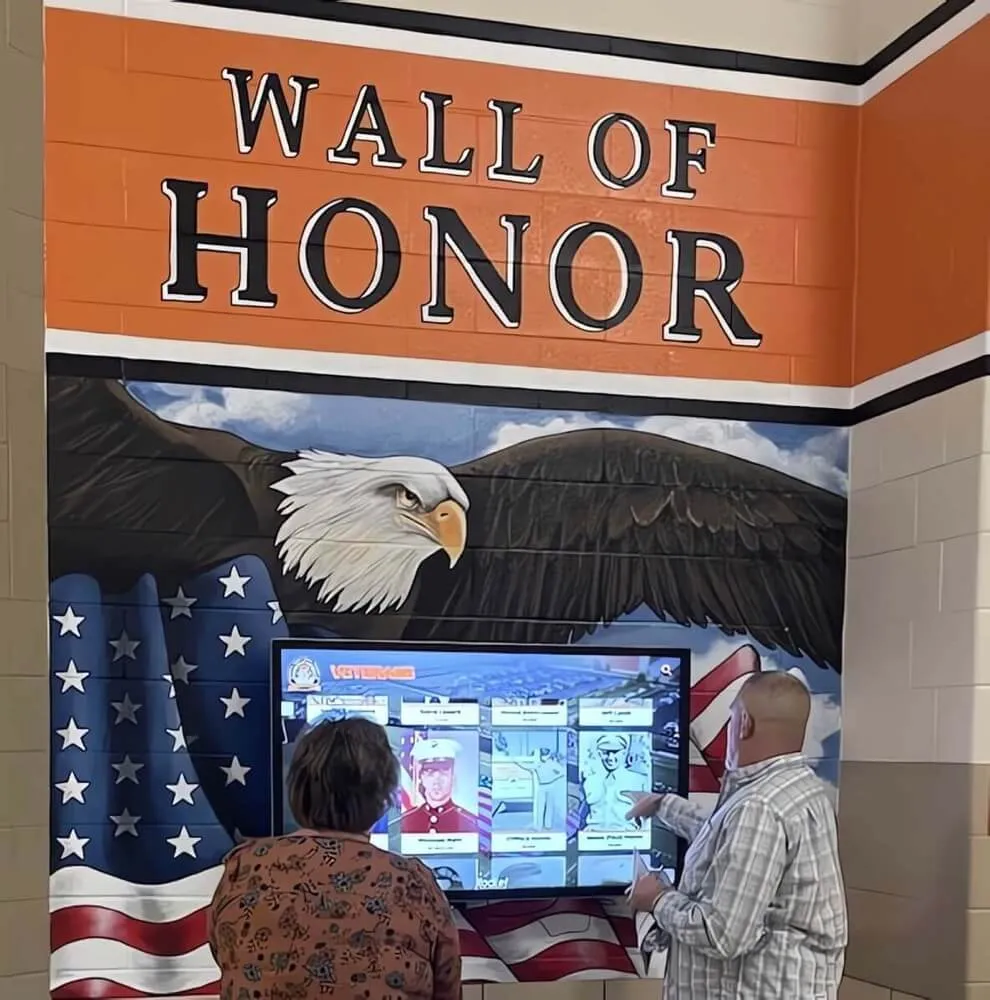
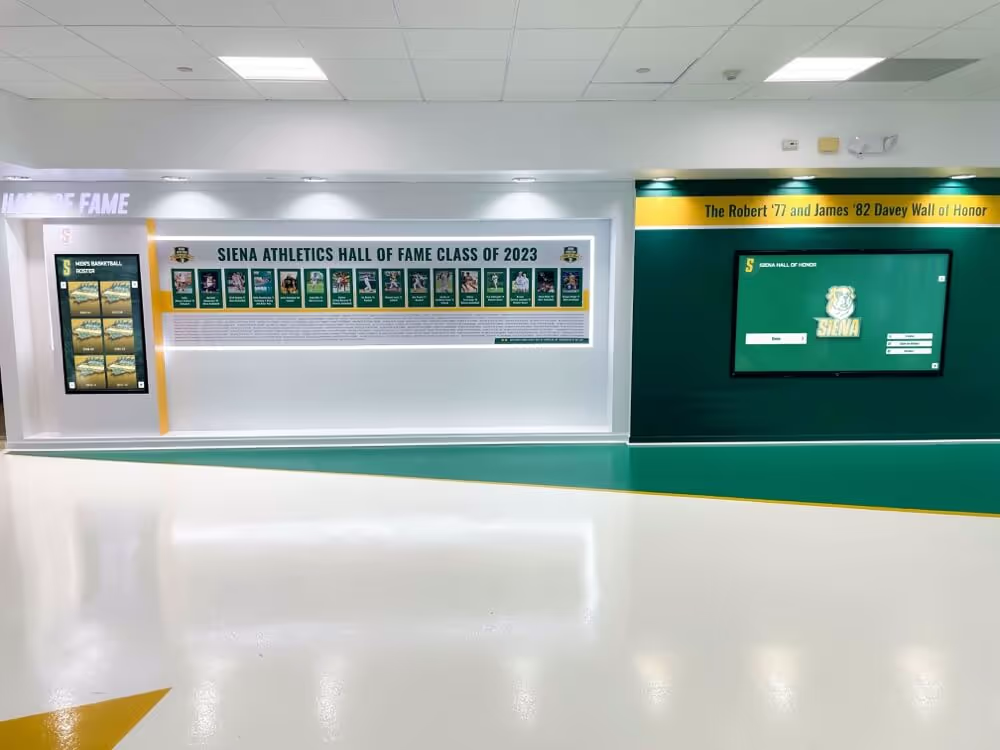
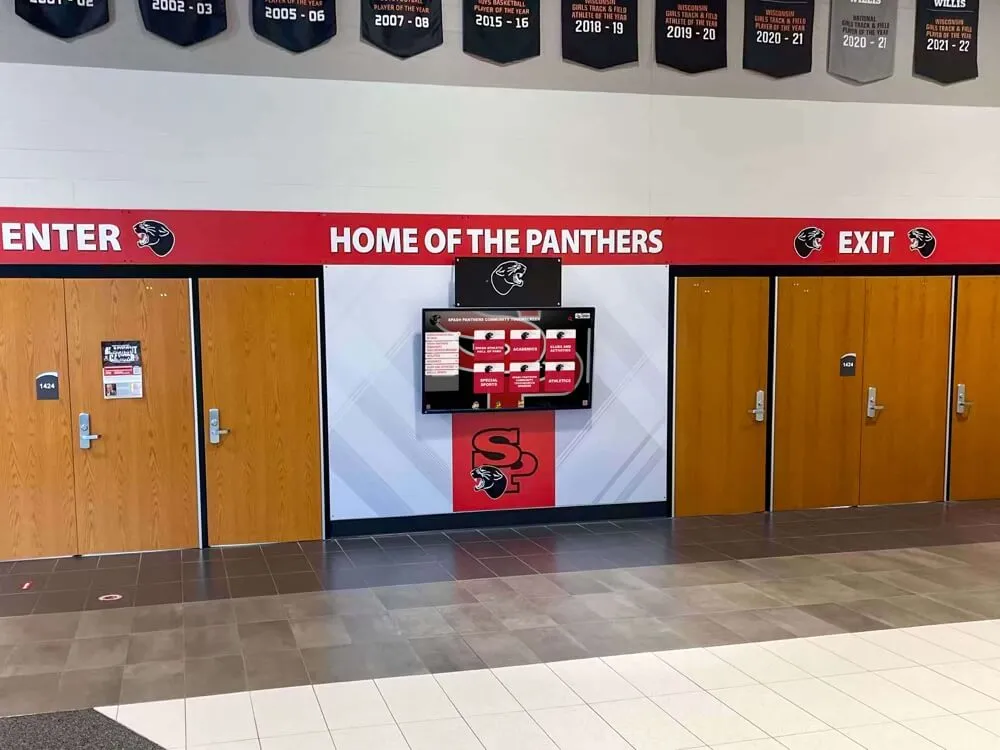
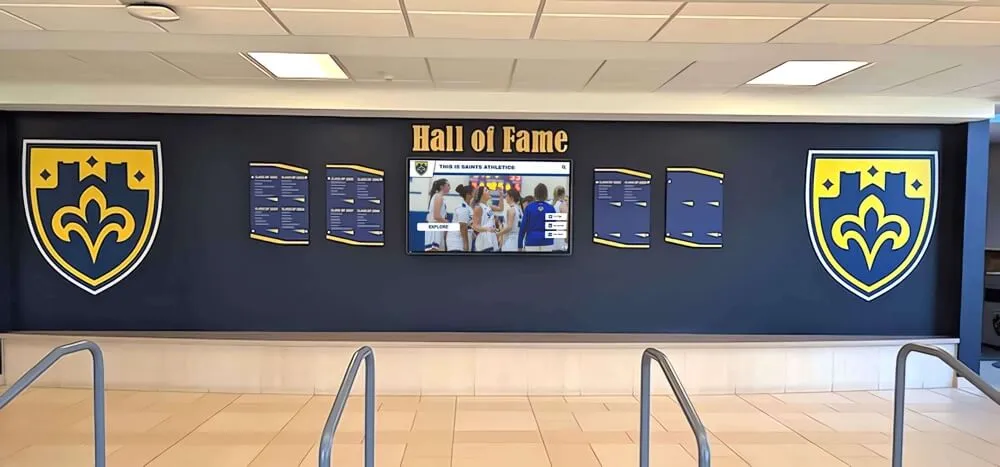
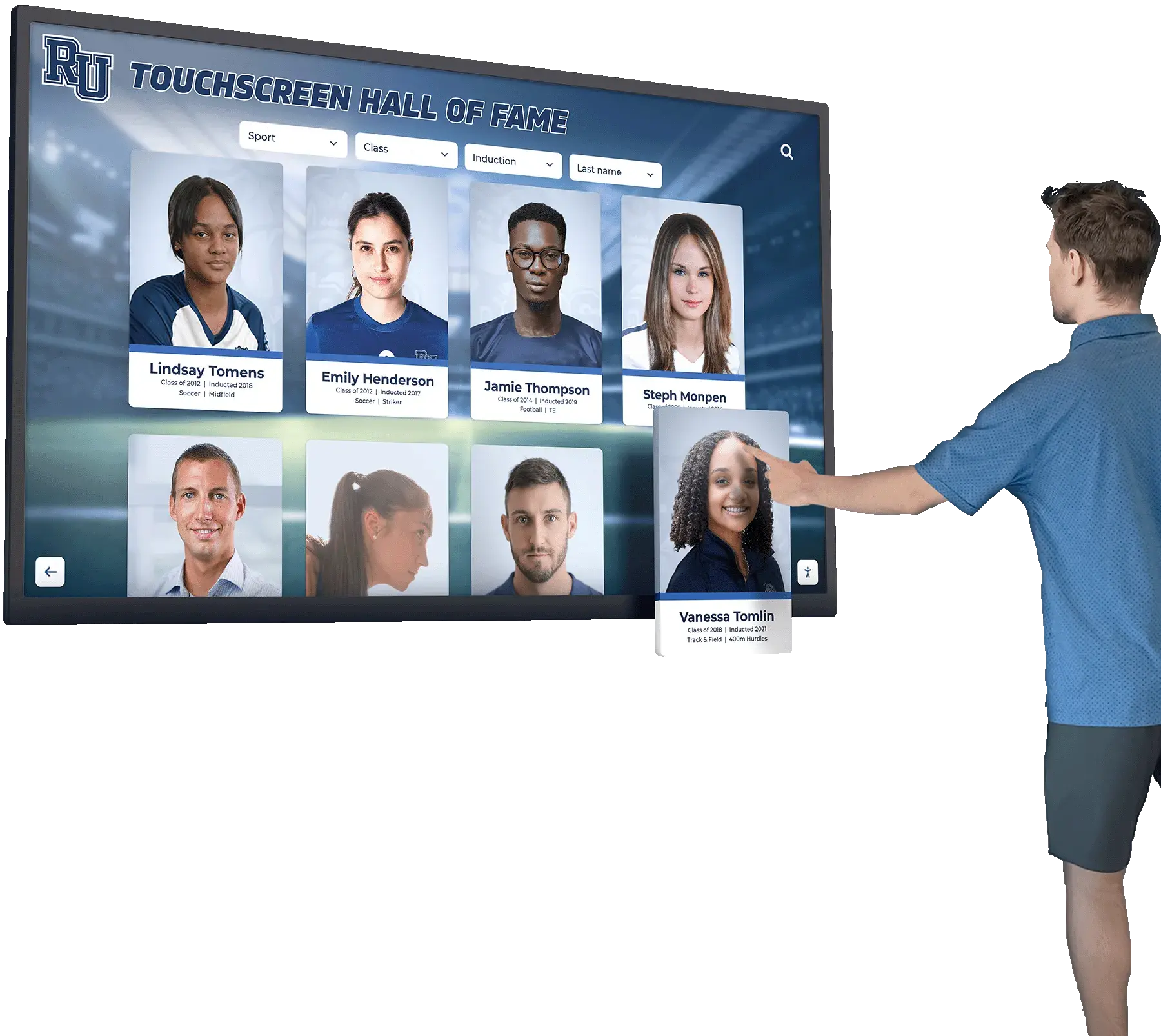
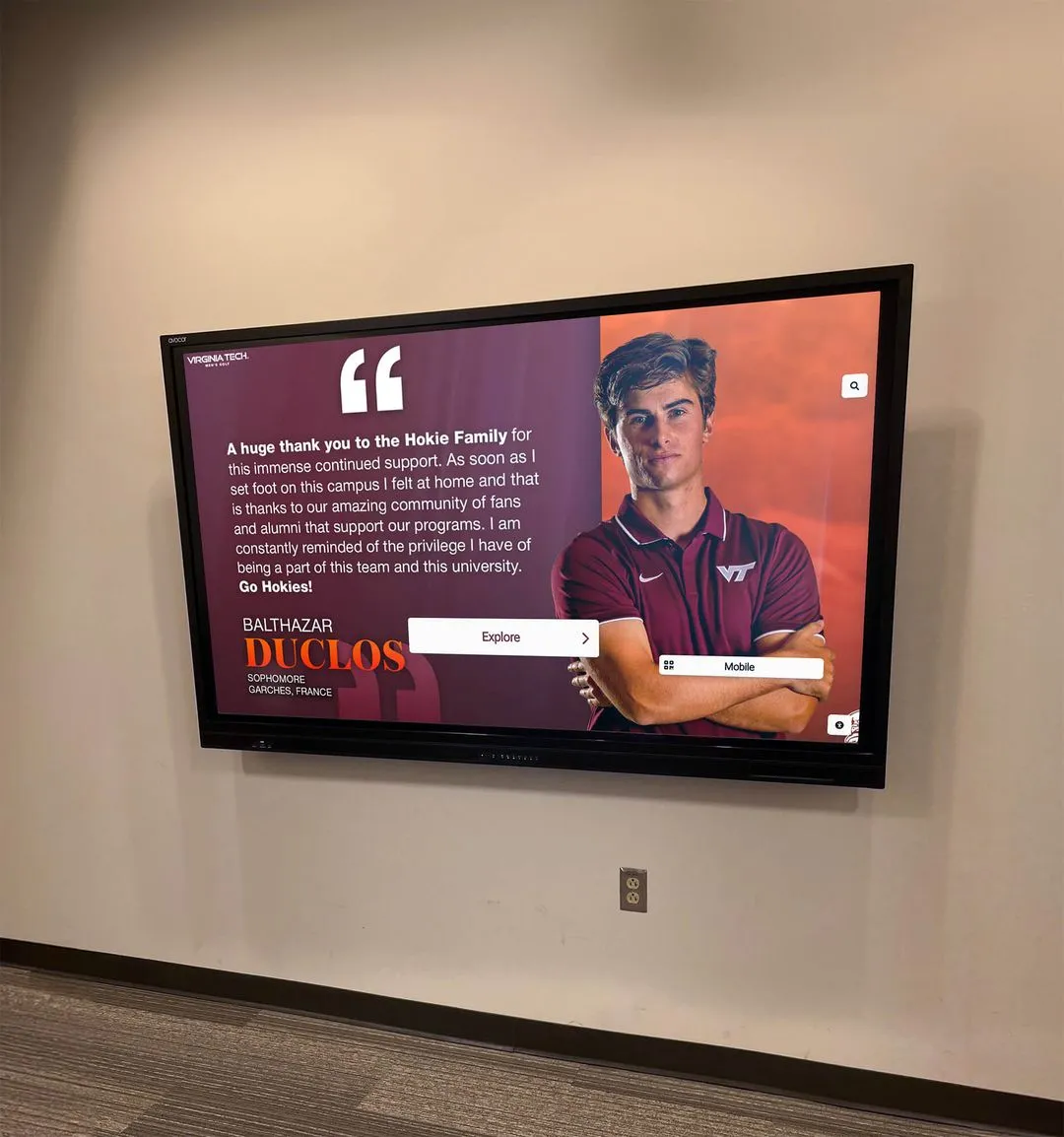
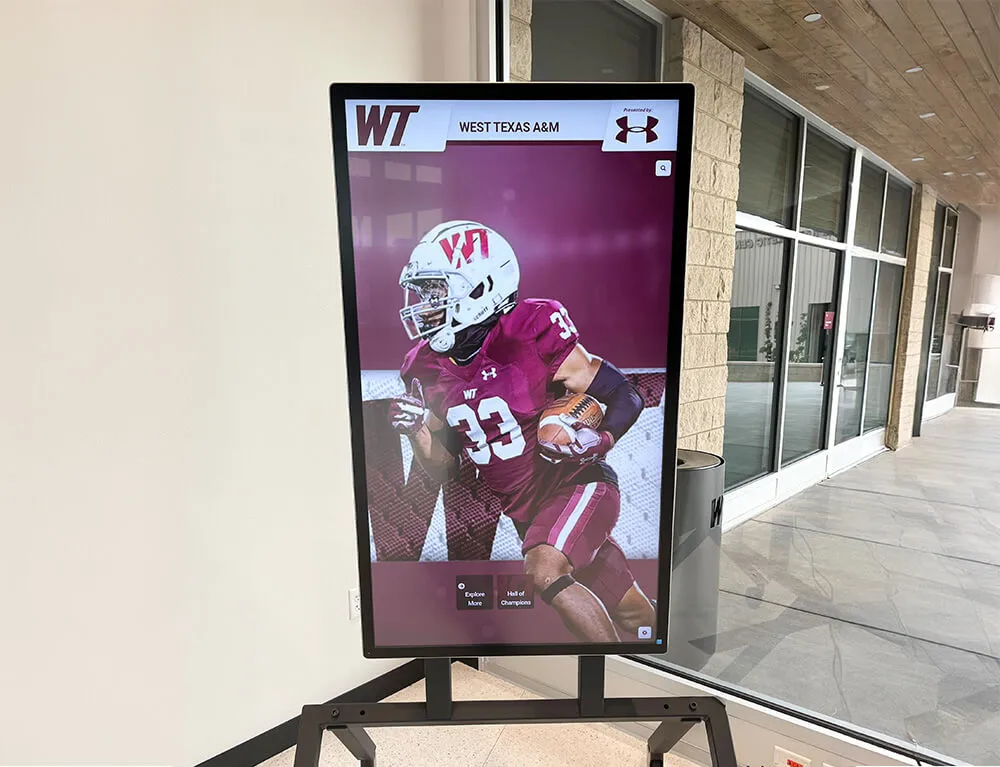
Traditional vinyl wall wraps create immediate visual impact but generate long-term limitations administrators discover after installations—content becomes outdated requiring expensive replacement, manual design updates consume staff time coordinating with vendors, limited space restricts how many achievements receive visibility, and static graphics cannot incorporate video, interactive elements, or searchable databases. Modern digital recognition displays address these challenges by enabling instant remote content updates, unlimited capacity for achievements and individuals, multimedia storytelling with video and photos, and web access allowing global community engagement. Solutions like Rocket Alumni Solutions provide purpose-built platforms combining the visual impact schools want from wall wraps with flexibility and sustainability static graphics cannot match.
Understanding Wall Wrap Applications in Educational Settings
Schools implement wall graphics across diverse environments, each presenting unique design considerations and functional requirements.
Athletic Facility Wall Wraps
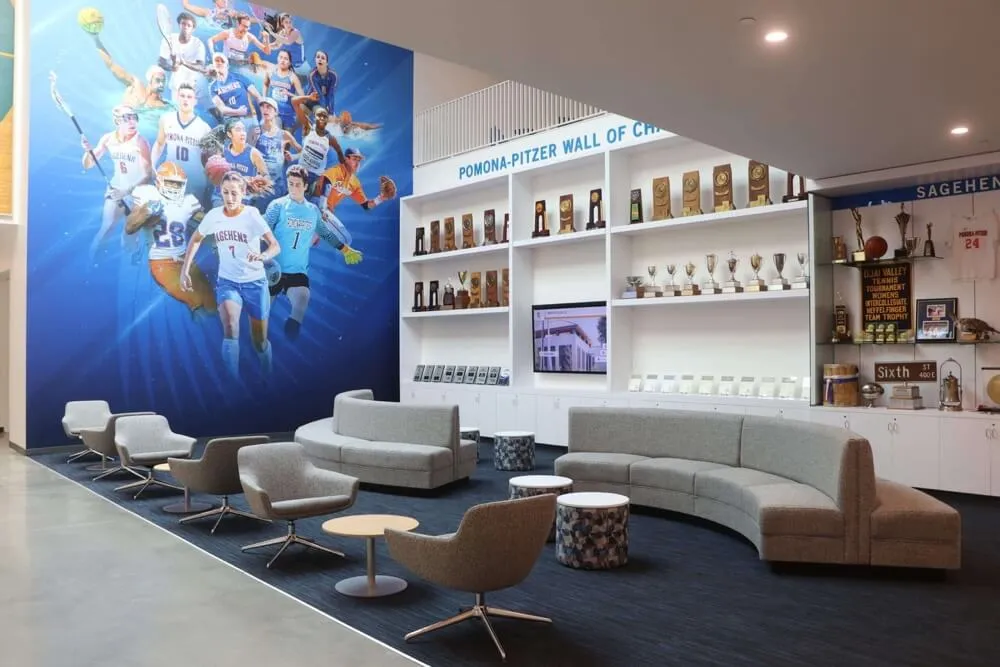
Sports venues represent the most common application for school wall wraps, transforming utilitarian spaces into inspiring environments celebrating competitive excellence:
Weight Room Installations
Training facilities benefit from motivational graphics creating focused athletic environments:
- Achievement timelines: Historical records, championship years, and milestone accomplishments inspiring current athletes
- Technique demonstrations: Proper form illustrations for major lifts, exercise progressions, and training protocols
- Team identity elements: School colors, mascot imagery, and program branding establishing territorial identity
- Motivational messaging: Quotes from legendary coaches, team slogans, and performance standards
- Safety reminders: Spotting procedures, equipment protocols, and emergency contact information
Weight room installations face demanding conditions—high humidity from athlete exertion, frequent equipment contact, cleaning chemical exposure, and temperature fluctuations. Material selection and lamination choices become critical for longevity in these environments.
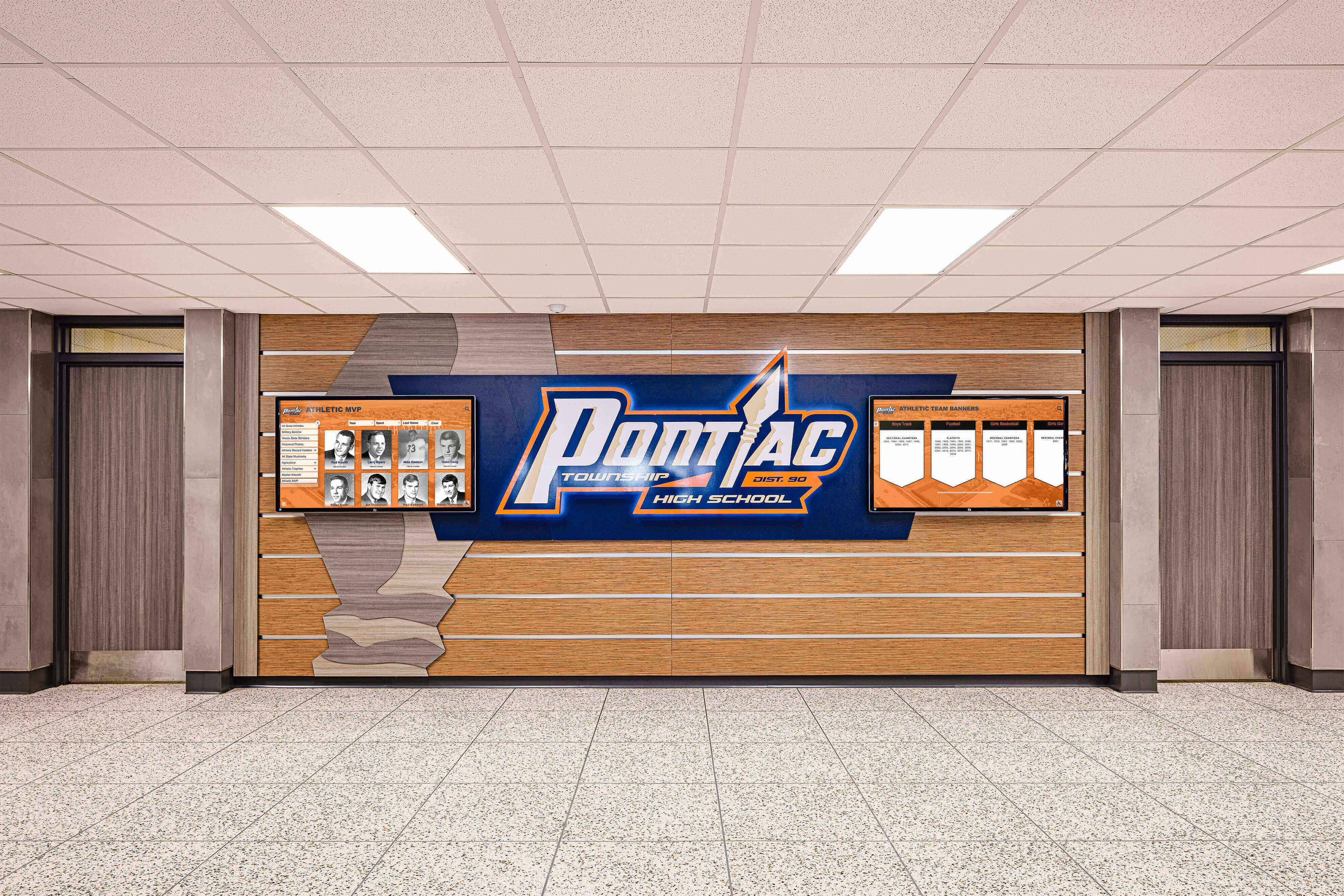
Gymnasium Wall Graphics
Main competition venues create opportunities for large-scale branded environments:
- Court or floor background murals: Wall designs complementing playing surfaces and creating cohesive visual identity
- Championship banners and records: Recognition walls celebrating conference titles, state championships, and individual records
- Spectator-facing graphics: Designs visible to home and visitor sides creating home court advantage through environmental branding
- Entry corridor installations: Approach graphics building anticipation as teams enter competition spaces
Gyms present challenges including wall height requiring lifts or scaffolding for installation, impact from sports equipment, and lighting variations affecting color appearance and photograph quality.
Locker Room Environments
Team spaces benefit from graphics creating identity and shared purpose:
- Pre-game motivation zones: Graphics in areas where teams gather before competition
- Individual locker customization: Name plates, achievement recognition, or motivational elements at locker stations
- Team rule reminders: Conduct expectations, academic standards, and program values
- Alumni connection elements: Recognition of former players creating tradition and continuity
Moisture management becomes paramount in locker rooms with shower areas and humidity from damp equipment and towels.
Academic Building Applications
Beyond athletics, schools apply wall wraps throughout academic facilities creating rich learning environments:
Main Entry and Lobby Spaces
First impressions for visitors, prospective families, and community members warrant thoughtful design:
- School history timelines: Founding dates, building expansions, significant institutional milestones, and leadership succession
- Mission and values statements: Educational philosophy, community commitments, and institutional priorities
- Academic achievement recognition: Valedictorians, National Merit Scholars, academic competition successes, and college matriculation data
- Wayfinding integration: Directional information combined with decorative elements supporting navigation
Administrative teams appreciate lobby installations for their role in campus tours and community events where environmental design communicates institutional quality and priorities.
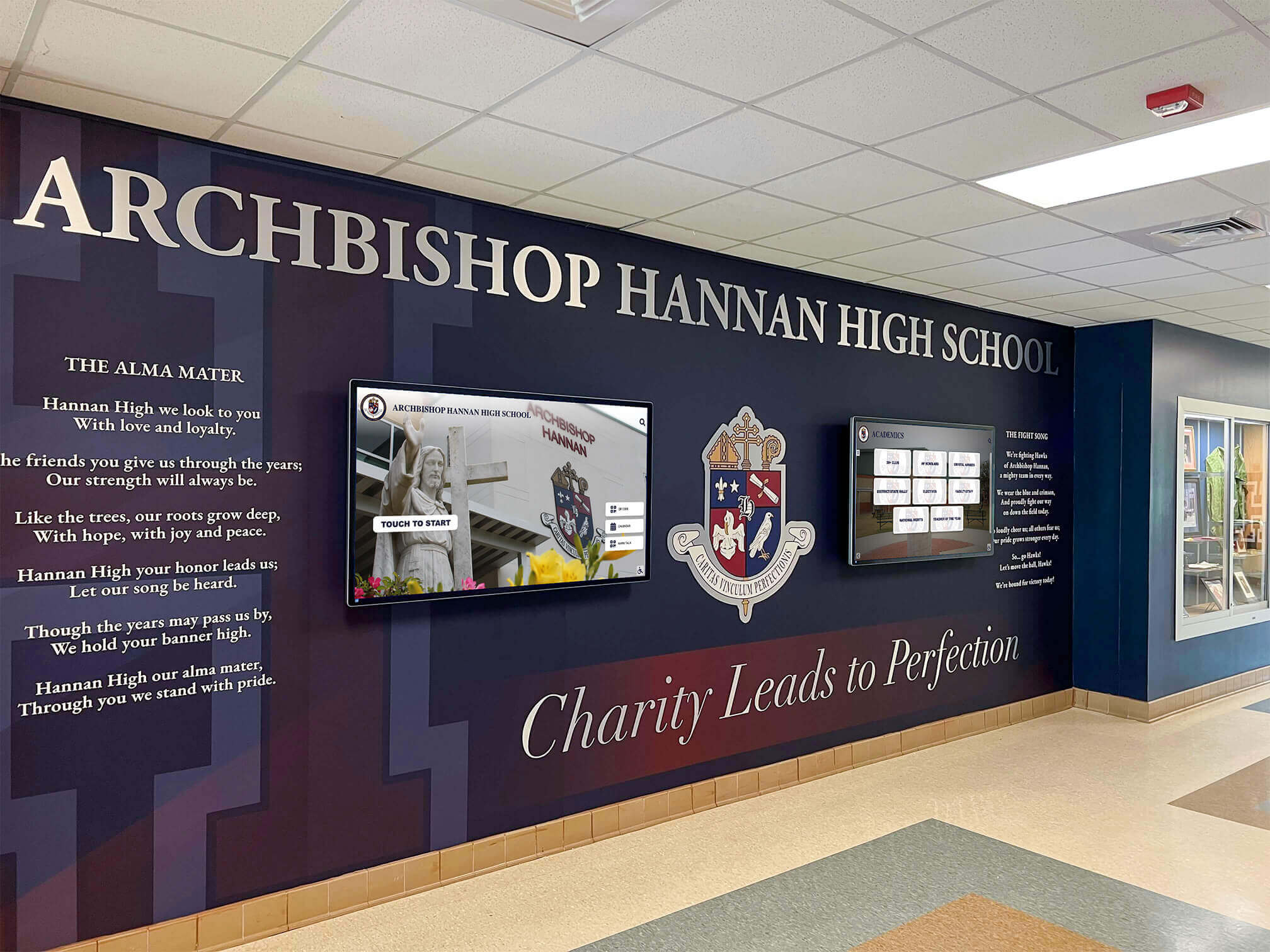
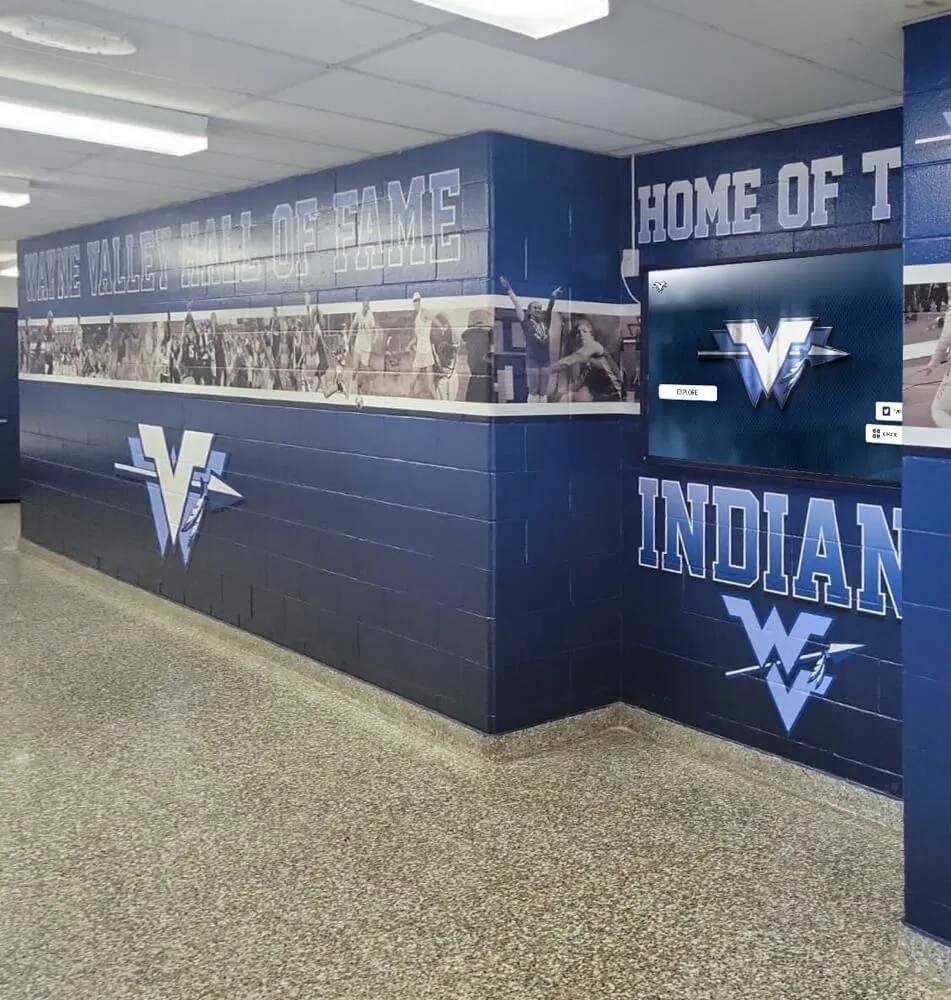
Hallway and Corridor Installations
High-traffic circulation spaces provide daily engagement opportunities for student populations:
- Department identification: Subject-specific graphics marking math, science, language, and arts zones
- Historical figures and role models: Subject-relevant leaders inspiring students in different academic disciplines
- Student artwork displays: Reproductions of exceptional student creative work celebrating achievement
- Safety and behavioral messaging: Code of conduct reminders, anti-bullying campaigns, and emergency procedures
Hallway installations must withstand constant student traffic, backpack contact, and occasional vandalism or picking at edges—durability concerns exceeding those in more controlled athletic spaces.
Library and Media Center Graphics
Learning commons benefit from designs supporting literacy and information discovery:
- Author spotlights and literary quotes: Inspiration from writers, poets, and thought leaders
- Dewey Decimal or subject organization aids: Visual navigation supporting collection access
- Reading promotion campaigns: Graphics supporting school-wide literacy initiatives and reading challenges
- Technology use guidelines: Acceptable use policies and digital citizenship principles
Libraries balance aesthetic appeal with acoustic considerations, as wall wrap materials may affect sound transmission and reverberation in spaces designed for quiet study.
Additional guidance on creating effective school history displays covers content development and storytelling approaches that work across both static graphics and digital platforms.
Wall Wrap Material Selection and Specifications
Material choices significantly impact installation success, appearance quality, and lifespan durability.
Vinyl Types and Characteristics
Understanding substrate options helps administrators make informed purchasing decisions:
Calendered vs. Cast Vinyl
Two manufacturing processes produce vinyl with different properties and price points:
Calendered vinyl passes through rollers that flatten the material into sheets. This economical manufacturing creates thicker, less conformable vinyl appropriate for flat surfaces. Calendered materials cost less but:
- Shrink more over time as plasticizers migrate from the material
- Conform poorly to textured surfaces or architectural details
- Provide shorter outdoor durability (typically 3-5 years)
- Work adequately for indoor applications on smooth painted walls
Cast vinyl begins as liquid poured onto a casting sheet and cured. This premium process produces thin, highly conformable material that:
- Maintains dimensional stability with minimal shrinkage
- Conforms to complex curves, textures, and architectural elements
- Delivers extended durability (7-10+ years outdoors, longer indoors)
- Costs more but justifies premium through longevity and appearance
Most school interior installations use calendered vinyl successfully when applied to properly prepared painted surfaces. Cast vinyl becomes necessary for textured walls, complex architectural details, or exterior applications.
Textured Finish Options
Surface finishes affect appearance and practical considerations:
- Gloss finishes: Vibrant color saturation and photographic clarity but prone to glare in brightly lit areas
- Matte finishes: Reduced glare and fingerprint visibility but slightly muted color intensity
- Textured surfaces: Specialized finishes mimicking brick, canvas, or other materials adding dimensional interest
High-traffic school environments often benefit from matte or textured finishes reducing visible wear and fingerprint accumulation compared to glossy surfaces.
Adhesive Systems and Application Methods
How graphics attach to walls affects both installation and future removal:
Permanent vs. Removable Adhesives
Adhesive formulation determines long-term commitment:
Permanent adhesives create strong bonds intended for installations lasting multiple years. They:
- Provide maximum resistance to edge lifting and environmental stress
- Risk damage to underlying wall surfaces during removal
- Require careful surface preparation ensuring adhesion to paint not wall substrate
- Suit installations intended for multi-year lifespans
Removable adhesives allow cleaner removal with reduced surface damage. They:
- Enable seasonal graphics changes or temporary installations
- Cost more per square foot than permanent options
- May experience edge lifting in high-traffic areas or extreme temperature variations
- Work well for rotating recognition displays or temporary campaigns
Schools planning frequent updates should specify removable adhesives accepting the cost premium for flexibility.
Application Methods
Professional installers use different techniques depending on installation scale and complexity:
- Dry application: Graphics positioned and squeegeed directly onto surfaces—faster for large simple installations
- Wet application: Surfaces sprayed with application fluid allowing repositioning before adhesive cures—better for complex installations
- Pre-spaced installation: Multi-panel designs with spacing precisely set during manufacture—ensures accuracy for large installations
- Overlapping seams vs. butt joints: Seam treatment affects visibility and durability
School facility managers should discuss application methods with installers, as technique choices affect both appearance quality and long-term durability.
Protective Laminates and Coatings
Surface protection extends lifespan in demanding school environments:
Anti-Graffiti Laminates
Clear protective layers over printed graphics provide:
- Marker and pen resistance allowing cleaning without graphic damage
- Scratch resistance from backpack contact and vandalism attempts
- UV protection reducing fade in sun-exposed installations
- Enhanced cleanability supporting regular maintenance
The modest cost increase for anti-graffiti laminates proves worthwhile in high-traffic school corridors and unsupervised spaces.
Textured vs. Smooth Laminates
Surface texture affects both appearance and maintenance:
- Smooth laminates maximize color saturation and photograph clarity
- Textured laminates reduce glare and hide minor imperfections
- Heavily textured surfaces may trap dirt requiring more aggressive cleaning
Athletic facilities with intense lighting often benefit from matte textured laminates reducing glare that interferes with photography and video recording.
Resources covering school hallway design and recognition displays explore how wall treatments integrate with broader facility improvement projects creating cohesive environments.
Design Development for School Wall Wraps
Effective designs balance aesthetic impact with practical functionality and institutional messaging requirements.
Establishing Design Objectives
Clear goals guide design decisions and vendor communication:
Primary Purpose Definition
Wall wrap installations typically serve one or more core functions:
- Brand identity reinforcement: Establishing consistent visual presence with school colors, mascots, and symbols
- Achievement recognition: Celebrating individuals, teams, or milestones deserving institutional acknowledgment
- Wayfinding and navigation: Supporting spatial orientation in complex facilities
- Educational content: Displaying subject-specific information supporting curriculum
- Behavioral messaging: Communicating values, expectations, and community standards
Designs trying to accomplish everything simultaneously often succeed at nothing. Focused purpose creates clarity supporting effective execution.
Audience Considerations
Different installation locations engage distinct audiences with varying needs:
- Student-facing designs: Age-appropriate content, trendy aesthetic sensibilities, and peer-relevant messaging
- Community-oriented installations: Donor recognition, historical preservation, and institutional accomplishment showcases
- Recruiting-focused graphics: Highlighting competitive advantages during tours for prospective students and families
- Staff-targeted content: Mission reinforcement, procedural reminders, and professional inspiration
Understanding primary audience shapes design decisions about complexity, reading level, information density, and aesthetic approach.
Visual Design Principles for Large-Format Graphics
Scale changes design requirements compared to smaller printed materials:
Viewing Distance and Resolution
Graphics designed for close inspection fail at large scale:
- Images intended for viewing beyond 10 feet require lower resolution than small format prints
- Acceptable resolution decreases as viewing distance increases—100 dpi sufficient for 10-foot viewing, 50 dpi acceptable at 25+ feet
- Text size must scale appropriately—6-inch letters remain legible at 60 feet, while 1-inch text becomes unreadable beyond 10 feet
- Photographic detail that works in yearbooks disappears in wall-sized reproductions
Designers experienced in large-format work understand these scale relationships—school staff repurposing existing materials often encounter disappointing results from insufficient resolution or inappropriate sizing.
Color Consistency and Lighting Interaction
Wall graphics interact with facility lighting affecting color appearance:
- Colors shift under different lighting temperatures (fluorescent, LED, natural daylight)
- Glossy finishes create hotspots and reflections in brightly lit areas
- Dark walls absorb light requiring brighter illumination for visibility
- School colors may require custom color matching ensuring accuracy across different materials and lighting conditions
Professional installers provide color proofs under lighting conditions matching actual installation environments preventing surprises after expensive production.
Composition and Visual Hierarchy
Effective designs guide viewer attention through intentional organization:
- Establish clear focal points drawing initial attention
- Create visual flow guiding eye movement through content
- Use size, contrast, and positioning to communicate information priority
- Avoid cluttered compositions overwhelming viewers with excessive elements
- Incorporate negative space providing visual rest and emphasizing key content
Many school designs fail through overcrowding—attempting to include too much information in available space creating visual chaos rather than clear communication.
Content Development and Institutional Approval
Wall wrap permanence requires thorough review before production:
Accuracy Verification
Errors become expensive once graphics reach walls:
- Spell-check all names, particularly unusual spellings or special characters
- Verify dates, statistics, and factual claims against primary sources
- Confirm current branding standards including logo versions and color specifications
- Review trademark usage ensuring proper permission for any third-party marks
Multiple reviewers catching different error types before production approval prevents costly reprints or, worse, permanently installed mistakes requiring removal.
Approval Workflows
Large installations warrant systematic review:
- Initial design concept approval by primary stakeholder (athletic director, principal)
- Content accuracy review by records keeper or historian
- Legal review for trademark usage and photo rights
- Administrative approval from superintendent or school board for major installations
- Final proof approval including all corrections and adjustments
Complex approval chains take time—schools should build adequate review periods into project timelines preventing rushed decisions or inadequate vetting.
Guidelines for building school pride through environmental design address how wall treatments support broader culture-building initiatives creating positive educational environments.
Installation Planning and Execution
Professional installation separates successful projects from disappointing results requiring expensive remediation.
Site Preparation Requirements
Wall conditions determine installation success:
Surface Evaluation
Not all walls accept vinyl graphics effectively:
- Painted surfaces: Ideal substrate when properly prepared—paint must be fully cured (minimum 30 days), clean, and free from flaking or peeling
- Textured walls: Heavy texture prevents complete adhesion—may require skim coating for smooth surface
- Concrete block: Raw block requires sealing and smooth coating before vinyl application
- Wallcovering or fabric: Existing coverings should be removed exposing painted surfaces beneath
- Glossy paint: Low adhesion surfaces may require light sanding or primer for adequate bond
Schools should arrange installer site visits before design finalization identifying any preparation requirements affecting timeline or budget.
Surface Cleaning and Priming
Even paintable surfaces require preparation:
- Thorough cleaning removing dust, oils, and contaminants that prevent adhesion
- TSP (trisodium phosphate) wash for walls with accumulated dirt or grease
- Primer application for challenging surfaces or questionable paint conditions
- Sufficient drying time before vinyl application
Inadequate surface preparation causes more installation failures than any other factor—this critical step should never be rushed or skipped regardless of schedule pressure.
Installation Process and Timeline
Understanding installation workflows helps schools prepare:
Typical Installation Sequence
Professional installations follow systematic processes:
- Pre-installation site check: Installer verifies surface conditions, measurements, and access requirements
- Surface preparation: Cleaning, repairs, or priming as needed
- Layout and registration: Positioning marks ensuring accurate alignment, particularly for multi-panel installations
- Panel application: Systematic application beginning at predetermined starting point
- Trimming and finishing: Edge treatment, seam pressing, and final quality inspection
- Cleanup and protection: Removing waste materials and installing temporary barriers if needed during adhesive cure
Large installations may require multiple days depending on square footage, complexity, and access considerations.
Access and Scheduling Coordination
School environments create unique installation challenges:
- Evening or weekend installation may be necessary to avoid disrupting classes
- Spring break or summer vacation provides optimal installation windows
- High ceilings require lifts or scaffolding with corresponding access requirements
- Fire safety systems, sprinklers, and emergency lighting need working clearance
- Athletic schedules may restrict when gyms or competition spaces remain available
Installation coordination should begin early involving facility managers, athletic directors, and custodial staff ensuring smooth execution.
Quality Control and Acceptance
Systematic inspection protects investment:
Installation Inspection Criteria
Professional installations meet specific standards:
- Complete adhesion without bubbles, wrinkles, or lifting edges
- Accurate color matching approved proofs
- Proper registration and alignment in multi-panel designs
- Clean trimming with no overhangs or gaps
- Smooth appearance without visible seams (when specified)
- No damage to surrounding surfaces or building elements
Schools should conduct walk-throughs with installers before final acceptance ensuring any issues receive immediate attention while crews and equipment remain onsite.
Warranty and Guarantee Terms
Understanding coverage protects schools:
- Material warranties (typically 3-7 years) cover premature fading, cracking, or delamination under normal conditions
- Installation warranties (typically 1-2 years) address application failures like lifting or bubbling
- Exclusions for damage from vandalism, cleaning chemical abuse, or abnormal environmental conditions
- Coverage for removal and reinstallation if manufacturing defects require replacement
Warranty documentation should be retained by facility management for reference when issues arise years after installation.
Approaches to honoring school history through environmental design examine how physical installations integrate with digital storytelling platforms creating layered recognition experiences.
Maintenance and Longevity Considerations
Proper care extends installation lifespan and maintains appearance quality.
Routine Cleaning Protocols
Regular maintenance prevents deterioration:
Recommended Cleaning Methods
Vinyl graphics tolerate routine cleaning when done properly:
- Mild soap and water solution for general dirt and dust
- Soft cloths or sponges avoiding abrasive materials scratching laminates
- Gentle circular motions rather than aggressive scrubbing
- Immediate attention to graffiti before permanent staining
- Specialized vinyl cleaners for stubborn stains
Schools should provide custodial staff with specific cleaning protocols preventing damage from harsh chemicals or abrasive tools used on other surfaces.
Cleaning Restrictions
Certain products and methods damage graphics:
- Petroleum-based solvents dissolving vinyl or adhesive
- Abrasive cleansers scratching protective laminates
- High-pressure washing dislodging edges or forcing water behind graphics
- Excessive heat from steam cleaning
- Ammonia-based glass cleaners used on adjacent windows spreading onto graphics
Custodial training prevents inadvertent damage from well-intentioned cleaning using inappropriate products or methods.
Damage Prevention and Repair
Proactive measures minimize wear:
Physical Protection Strategies
High-traffic areas benefit from preventive measures:
- Edge guards or trim protecting vulnerable corners and terminations
- Furniture placement preventing chair backs or table edges contacting graphics
- Protective barriers in areas with equipment or cart traffic
- Clear sightlines preventing inadvertent contact in busy corridors
- Student education about respecting installations reducing vandalism
Minor protective investments extend lifespan substantially in demanding school environments.
Repair Options for Damaged Sections
Partial repairs avoid complete replacement:
- Small tears or scratches often patch successfully with clear laminate
- Individual panels in multi-panel installations may replace independently
- Digital print files enable exact reprints of damaged sections
- Professional repair services address edge lifting before it spreads
Maintaining original design files allows cost-effective repairs years after initial installation when issues develop.
Update and Replacement Planning
Content evolution requires planning:
Planned Obsolescence Considerations
Static graphics become outdated:
- Championship years and records continue accumulating
- Graduating classes and new inductees require adding to recognition displays
- Program changes, staff transitions, and organizational evolution alter messaging
- Design trends shift making older installations appear dated
Schools should anticipate update requirements during initial design, potentially leaving space for additions or planning for eventual replacement.
Removal and Replacement Processes
End-of-life removal requires care:
- Professional removal minimizes wall damage requiring repair
- Heat application softens adhesive enabling cleaner removal
- Adhesive residue removal using appropriate solvents
- Surface repair and repainting before new installations
- Disposal of old materials following local waste requirements
Removal costs should factor into total ownership calculations when comparing wall wraps to alternative recognition approaches.
Comparing Static Wall Wraps to Digital Recognition Systems
Modern alternatives address limitations inherent in permanent vinyl installations.
Static Graphics Limitations
Wall wraps create challenges schools discover over time:
Content Update Restrictions
Vinyl permanence becomes a liability:
- Adding new achievements requires expensive reprinting and reinstallation
- Rotating recognition creates waste with perfectly functional graphics becoming obsolete
- Seasonal or event-specific content creates impractical update frequency
- Limited space forces selective recognition as programs grow
Athletic programs generating new records and champions annually find static graphics increasingly frustrating as update costs accumulate.
Capacity Constraints
Physical space limitations create difficult choices:
- Finite wall area forces prioritizing which achievements receive visibility
- Multi-year programs with extensive history cannot display comprehensive records
- Alphabetical or chronological layouts complicate adding individuals to existing designs
- Growing programs eventually exhaust available recognition space
Schools using wall wraps often begin with enthusiasm but struggle as successful programs produce more achievements deserving recognition than physical space allows.
Accessibility and Engagement Limitations
Static installations serve only physical visitors:
- Alumni and community members beyond local area cannot access recognition
- No searchability requiring visitors to scan entire displays for specific individuals
- Inability to incorporate video, audio, or interactive storytelling
- Limited engagement beyond passive viewing
Recognition programs increasingly value online access enabling global engagement beyond those physically present in facilities.
Comparisons between traditional recognition displays and modern digital alternatives examine total cost of ownership over 5-10 year horizons revealing surprising economic advantages of platforms eliminating physical update requirements.
Digital Display Advantages
Modern recognition platforms address vinyl wrap limitations:
Instant Content Management
Digital systems eliminate physical update requirements:
- Add new inductees, records, or achievements instantly via web interface
- Update information remotely without facility access or vendor coordination
- Rotate seasonal content without disposal waste or reinstallation costs
- Correct errors immediately rather than living with mistakes until next print cycle
Schools managing recognition in-house reduce dependence on external vendors and associated costs, delays, and coordination hassles.
Unlimited Recognition Capacity
Digital platforms remove physical space constraints:
- Recognize unlimited individuals without running out of wall space
- Maintain complete historical records rather than selective highlights
- Incorporate comprehensive statistics, achievements, and biographical information
- Create category-based views filtering by sport, decade, or achievement type
Athletic directors appreciate never choosing which deserving individuals to exclude due to space limitations.
Enhanced Engagement Features
Digital platforms create richer experiences:
- Video tributes, highlight reels, and interview content
- Searchable databases enabling visitors to find specific individuals quickly
- QR codes providing smartphone access to detailed profiles
- Social sharing allowing individuals to amplify recognition through personal networks
- Web access enabling global visibility for alumni regardless of location
Schools prioritizing alumni engagement find digital platforms generate substantially higher interaction than static wall graphics.
Accessibility Compliance
Modern platforms address ADA requirements:
- Screen reader compatibility for visually impaired visitors
- Adjustable text sizes and high-contrast modes
- Alternative text descriptions for images
- Keyboard navigation for those unable to use touchscreens
Digital platforms built with accessibility standards meet compliance requirements that static wall graphics inherently cannot address.
Sustainable Cost Structure
Total ownership costs favor digital over multi-year horizons:
- Eliminate recurring design, printing, and installation expenses
- Reduce administrative time coordinating updates with vendors
- Prevent waste from disposing functional but outdated graphics
- Scale recognition without proportional cost increases
Budget analyses comparing vinyl graphics to digital recognition systems frequently show digital platforms paying for themselves within 2-3 years through eliminated update costs while delivering superior functionality.
Implementation Strategy for School Recognition Programs
Schools evaluating recognition investments should consider systematic approaches balancing immediate needs with long-term sustainability:
Assessment Phase
Effective planning begins with honest evaluation:
Current State Analysis
Examine existing recognition approaches:
- What recognition currently exists and where
- How content updates occur and associated costs
- Space constraints limiting recognition capacity
- Staff time required for recognition program management
- Community engagement levels with current displays
Understanding current limitations informs meaningful improvement priorities.
Requirements Definition
Clarify program goals:
- What achievements and individuals deserve recognition
- How frequently content updates should occur
- Whether historical records should remain permanently accessible
- How athletic and academic recognition integrate or separate
- Budget available for initial implementation and ongoing maintenance
Clear requirements prevent pursuing inappropriate solutions mismatched to actual needs.
Solution Selection
Compare approaches systematically:
Evaluation Criteria
Multiple factors beyond initial cost matter:
- Capacity: How many individuals and achievements can the system accommodate
- Update flexibility: How easily and frequently can content change
- Administrative burden: Staff time required for ongoing management
- Longevity: Expected lifespan before replacement necessary
- Engagement potential: How visitors interact with and share recognition
- Accessibility: Whether all community members can access regardless of abilities
- Total cost of ownership: Initial investment plus maintenance, updates, and eventual replacement
Wall wraps excel in initial visual impact and upfront cost but score poorly on update flexibility, capacity, and long-term ownership costs. Digital platforms require higher initial investment but deliver superior scores across most other evaluation criteria particularly important for sustainable long-term programs.
Hybrid Approaches
Some schools implement combined strategies:
- Static graphic murals for branding and unchanging elements
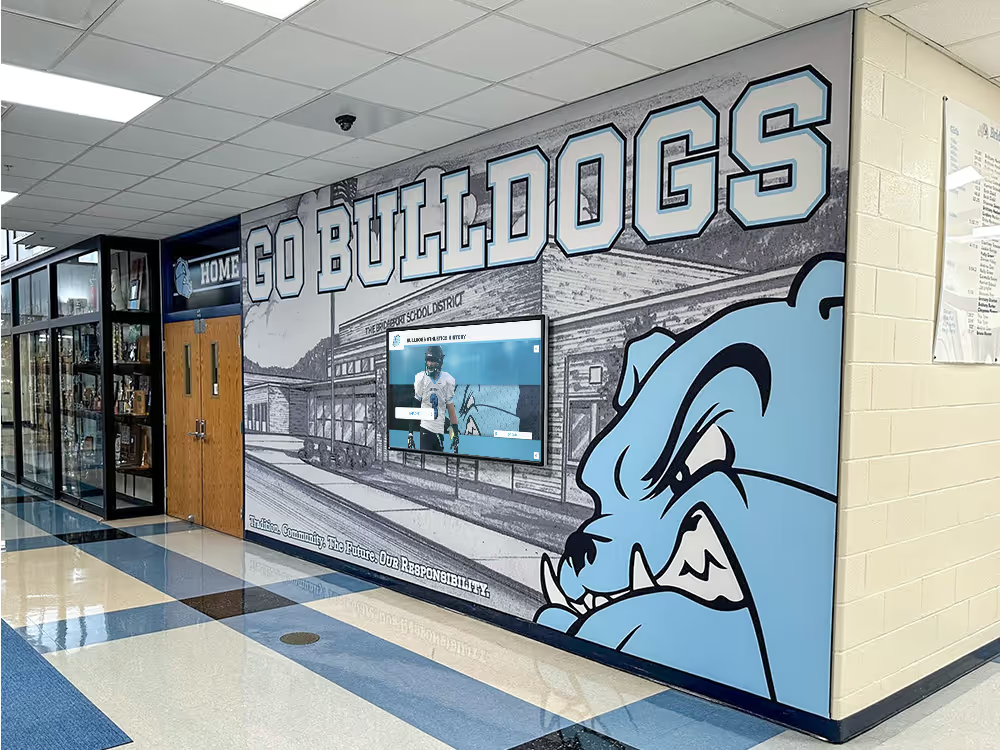
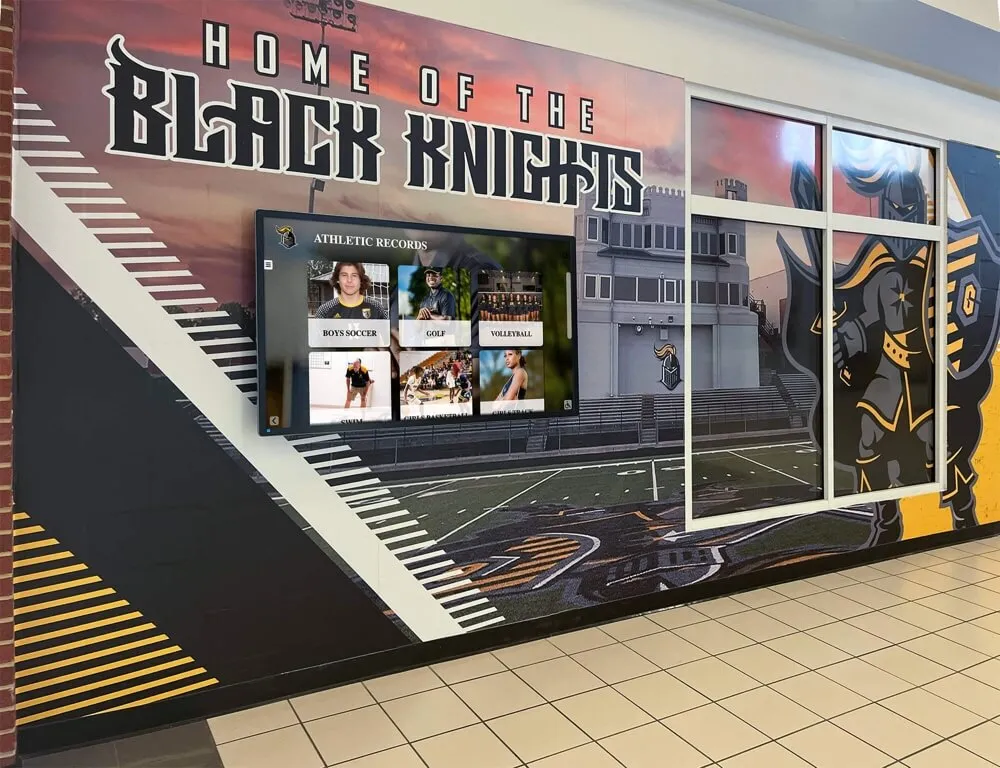
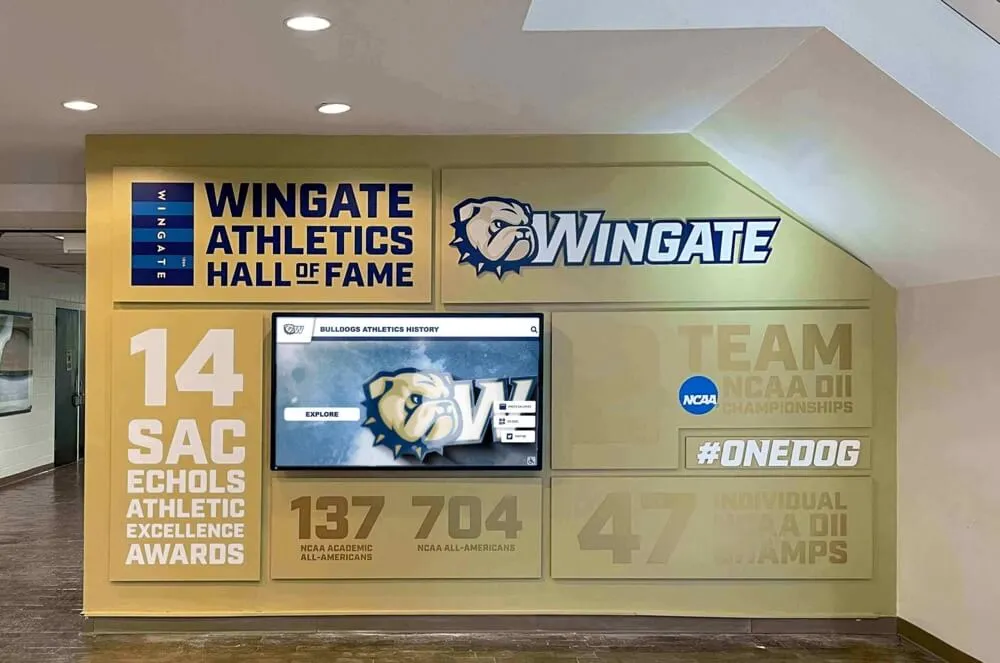
- Digital displays for frequently updated content like current records and recent inductees
- QR codes on wall graphics linking to comprehensive digital databases
- Physical displays directing visitors to web platforms for complete information
Hybrid installations combine strengths of different approaches while mitigating individual weaknesses.
Vendor Selection and Partnership
Implementation success depends on partner quality:
Evaluation Criteria for Recognition Partners
Look beyond sales presentations:
- Education sector experience: Partners familiar with school decision processes, budgets, and stakeholder needs
- Content management capabilities: Whether systems require technical expertise or enable staff self-service
- Support and training: What implementation assistance and ongoing support comes with solutions
- Customer references: Conversations with similar schools using platforms over multi-year periods
- Product roadmap: Whether partners actively improve platforms or deliver static solutions
Schools benefit from partners viewing relationships as ongoing rather than transactional sales focused solely on initial installation.
Recognition platforms like Rocket Alumni Solutions specialize in educational recognition programs, providing purpose-built systems designed around how schools actually work rather than generic digital signage platforms adapted awkwardly to recognition use cases.
Cost Analysis and Budget Planning
Understanding complete financial implications supports sound decisions.
Wall Wrap Investment Components
Multiple cost elements comprise total investment:
Initial Installation Costs
Budget for complete project requirements:
- Design development: Professional design services for custom graphics ($1,500-$5,000 depending on complexity)
- Production: Large-format printing with protective laminates ($8-$15 per square foot)
- Site preparation: Surface repairs, priming, or texturing ($2-$8 per square foot)
- Installation labor: Professional application ($3-$8 per square foot depending on complexity and access)
- Project management: Coordination, approvals, and oversight
A 200 square foot hallway installation might total $4,000-$8,000 depending on specifications and local market rates. Large gymnasium installations exceeding 1,000 square feet commonly reach $15,000-$30,000.
Ongoing Maintenance Expenses
Routine care requires resources:
- Cleaning supplies and custodial time
- Periodic repairs addressing damage
- Edge resealing preventing lifting
- Protective measures like edge guards or barriers
Annual maintenance typically remains modest—perhaps $200-$500 depending on installation size and traffic levels.
Update and Replacement Costs
Content changes create significant expenses:
- Complete replacement for outdated content ($6,000-$25,000+ matching original installation)
- Partial updates for additions ($2,000-$8,000 depending on extent)
- Update frequency (annually for athletic recognition, less often for historical content)
A school replacing athletic recognition graphics every 3-4 years as content becomes outdated spends $2,000-$8,000 per update cycle—costs that accumulate substantially over 10-15 year timeframes.
Digital Platform Investment Components
Alternative approaches structure costs differently:
Initial Implementation
Digital recognition platforms involve upfront investment:
- Platform licensing: Annual or multi-year subscription ($2,000-$6,000 annually depending on features and usage)
- Content migration: Transferring existing recognition data into systems
- Hardware: Display screens if incorporating physical installations ($2,000-$8,000 per screen)
- Training: Staff onboarding for content management
Initial year costs might total $5,000-$15,000 depending on whether physical displays complement web platforms or schools implement purely web-based systems.
Ongoing Subscription and Support
Annual expenses maintain systems:
- Platform subscription or licensing ($2,000-$6,000 annually)
- Included software updates and improvements
- Customer support and technical assistance
- Content management tools and training resources
Annual costs remain consistent rather than spiking during update years as with physical graphics.
Update Economics
Content changes occur without incremental expense:
- Add unlimited new inductees or records
- Correct errors without reprinting
- Rotate seasonal or featured content
- Reorganize or recategorize information
Staff manage updates using web interfaces without vendor coordination, design fees, or production costs.
Comparative Financial Analysis
Comparing total ownership costs over realistic timeframes reveals interesting economic realities:
Five-Year Cost Comparison Example
Consider a typical high school athletic recognition program:
Wall Wrap Approach:
- Year 1: Initial installation ($12,000)
- Year 3: First major update ($6,000)
- Year 5: Second update ($6,000)
- Maintenance: ($500 annually × 5 = $2,500)
- Five-year total: $26,500
Digital Platform Approach:
- Year 1: Implementation ($8,000 including first year subscription)
- Years 2-5: Annual subscription ($4,000 × 4 = $16,000)
- Five-year total: $24,000
Digital platforms deliver comparable or lower costs while providing unlimited capacity, instant updates, enhanced engagement, and global accessibility static graphics cannot match.
Additional perspective on choosing sustainable recognition systems examines full-service platforms versus DIY approaches helping schools select appropriate solutions matching technical capabilities and staffing realities.
Conclusion: Choosing Sustainable Recognition Solutions
Wall wraps transformed school environments when they emerged, providing cost-effective approaches for creating branded spaces celebrating achievements and reinforcing identity. Many schools successfully implement vinyl graphics for unchanging content like school crests, mascot imagery, and foundational historical elements where permanence creates value rather than limitation.
Yet recognition programs honoring ongoing achievements—new inductees, current records, recent champions—face different requirements favoring flexibility over permanence. Athletic directors adding champions annually, academic programs celebrating evolving accomplishments, and institutions with extensive historical records exceeding physical display capacity increasingly find static graphics create frustrating limitations and escalating costs.
Modern digital recognition platforms address these challenges by eliminating physical update requirements, providing unlimited capacity for comprehensive programs, enabling rich multimedia storytelling, ensuring accessibility compliance, and delivering global visibility engaging alumni regardless of location. Schools evaluating recognition investments should examine total cost of ownership over realistic 5-10 year timeframes, comparing both initial and ongoing expenses while honestly assessing how frequently content updates should occur.
The question for school administrators is not whether wall wraps can create visually appealing installations—they clearly can. Rather, the question is whether static permanence matches program needs or whether sustainable dynamic systems better serve institutions committed to ongoing recognition of continuing excellence across generations of deserving individuals.
Schools ready to explore recognition approaches combining visual impact with sustainable management should schedule a demonstration of modern digital recognition platforms built specifically for educational environments where celebrating achievement creates culture, preserves history, and inspires future excellence.