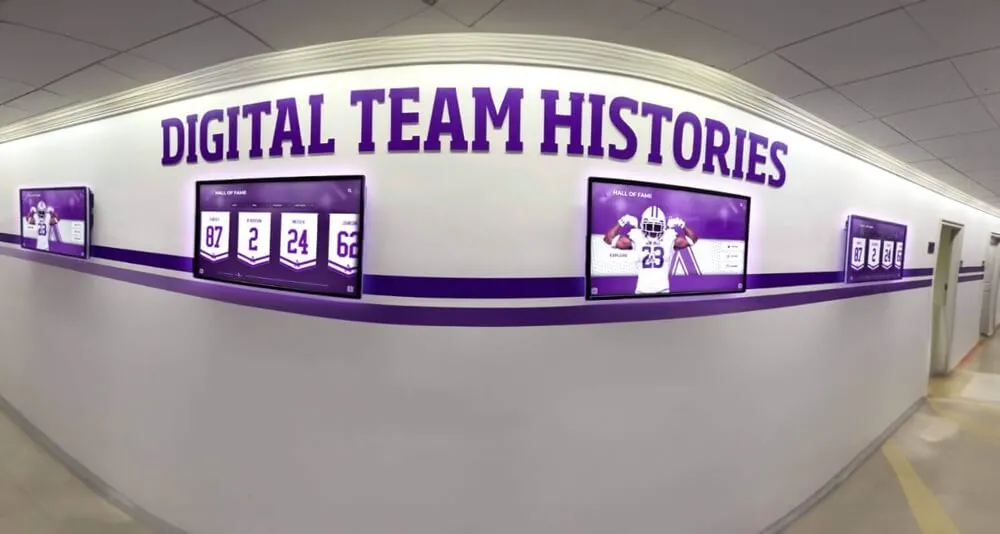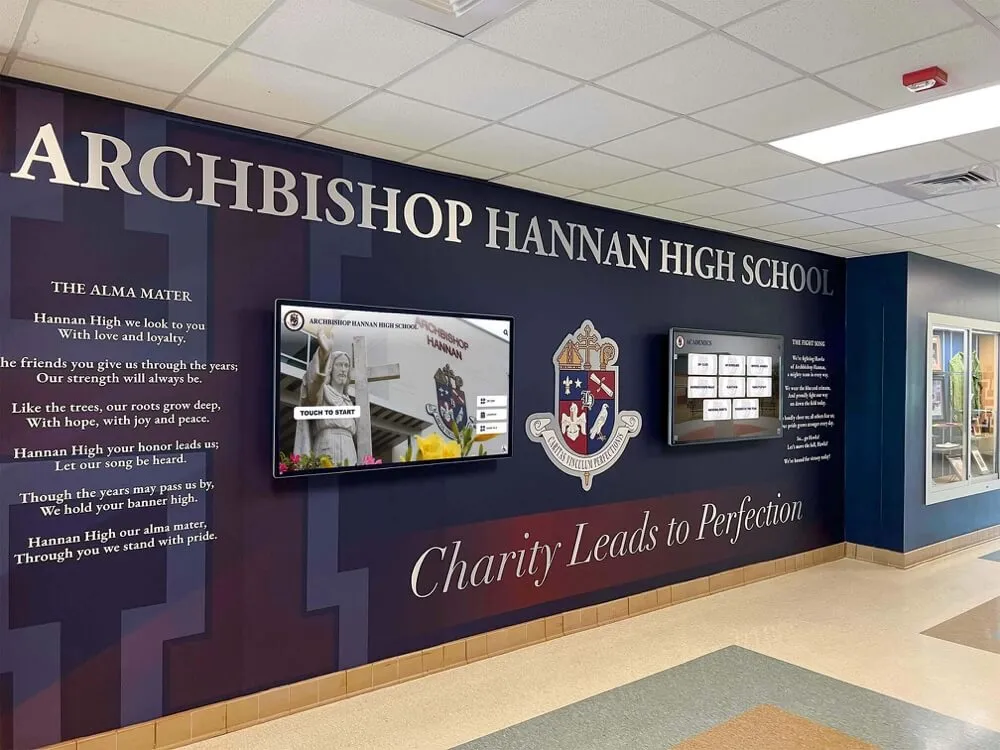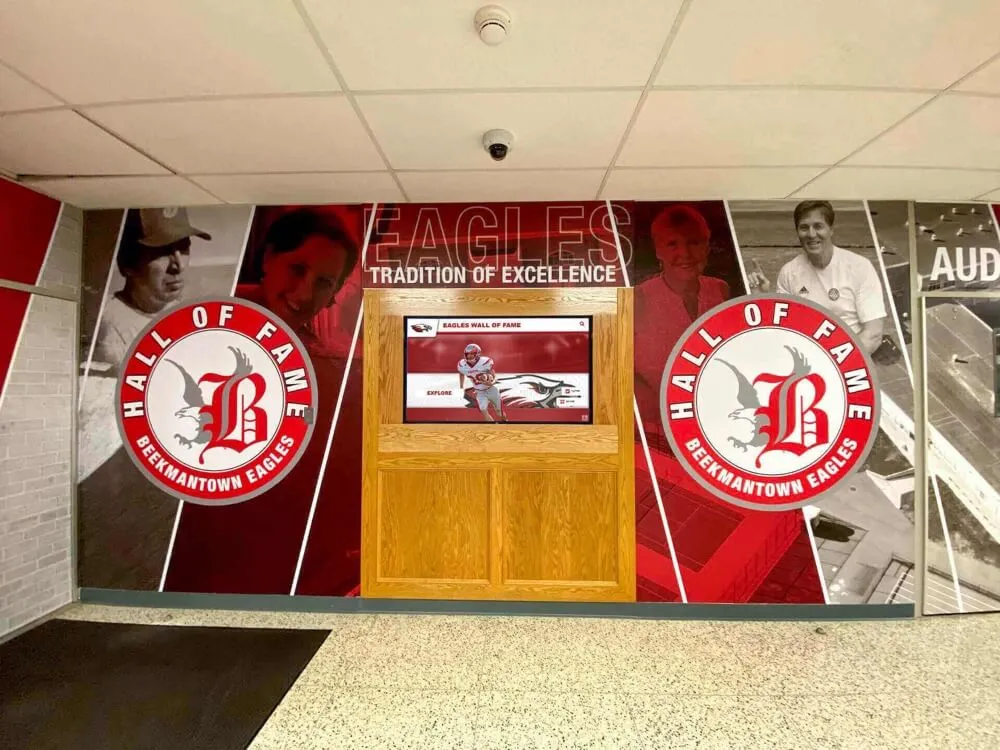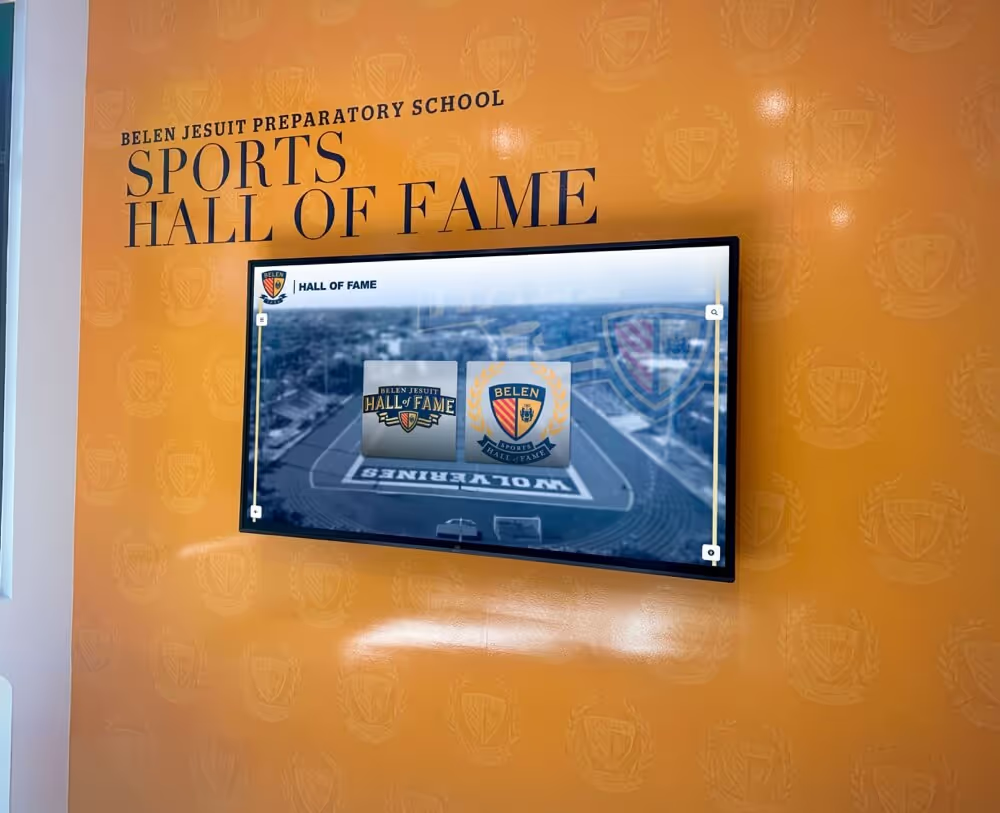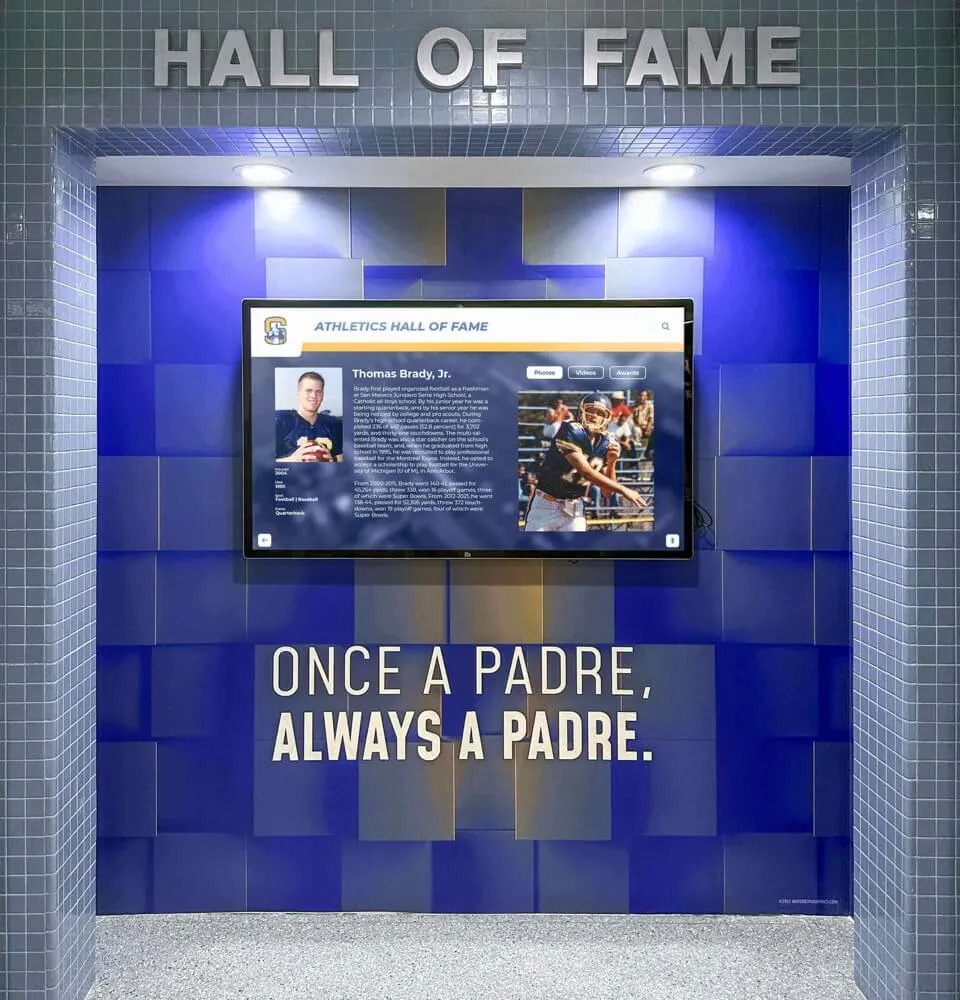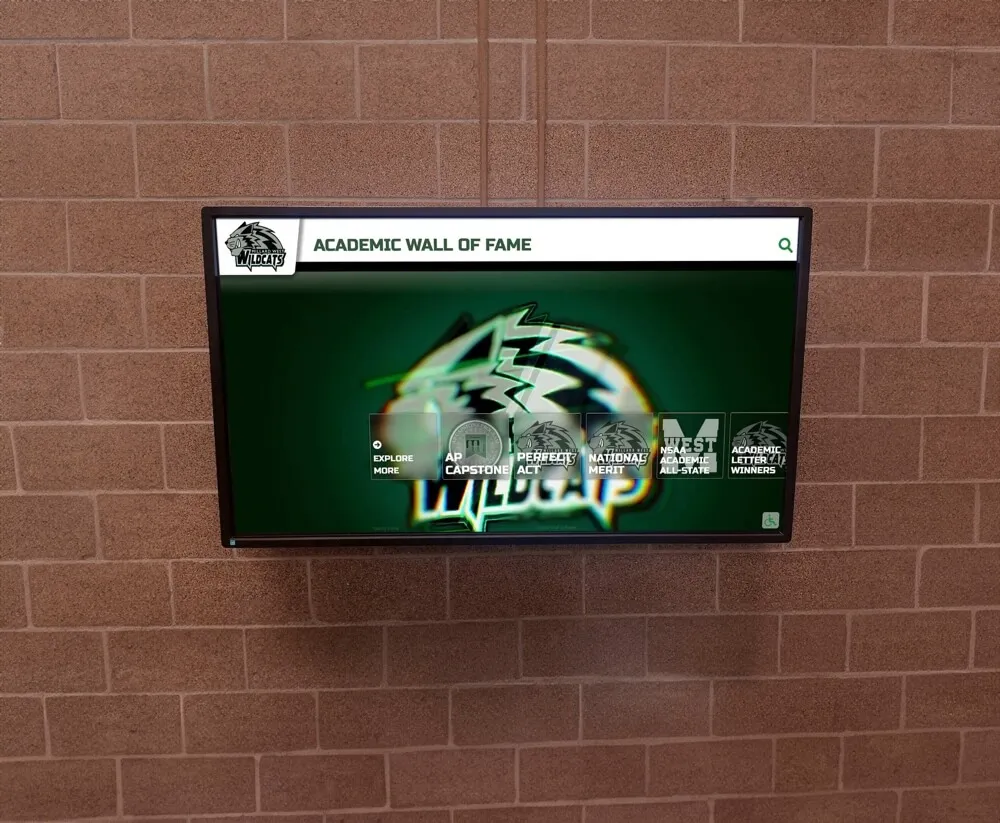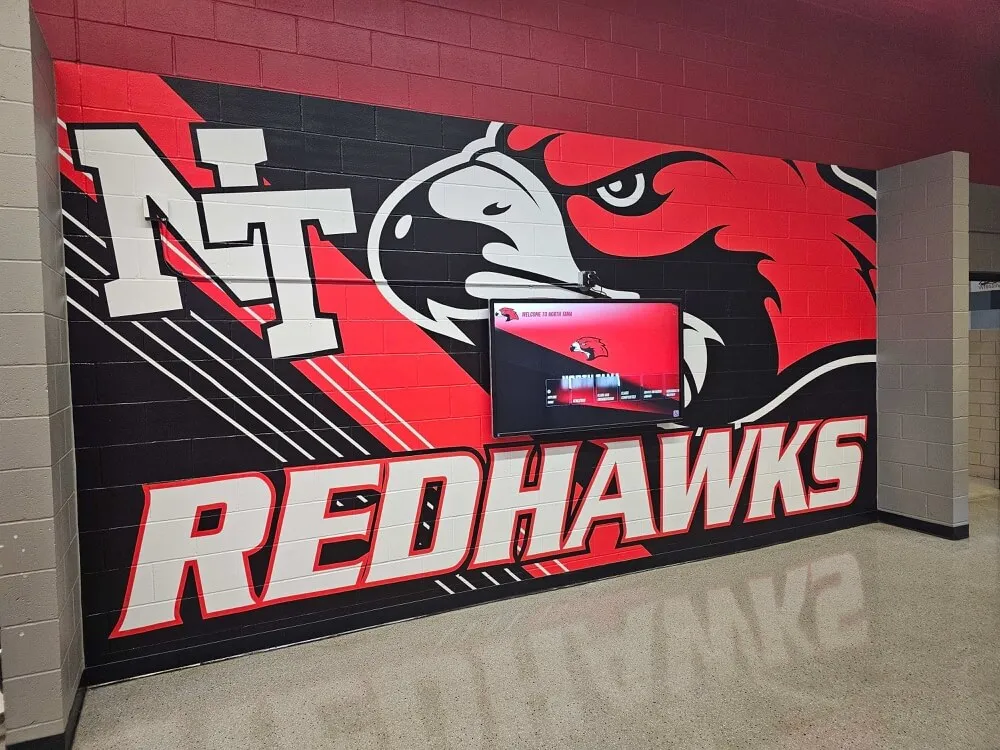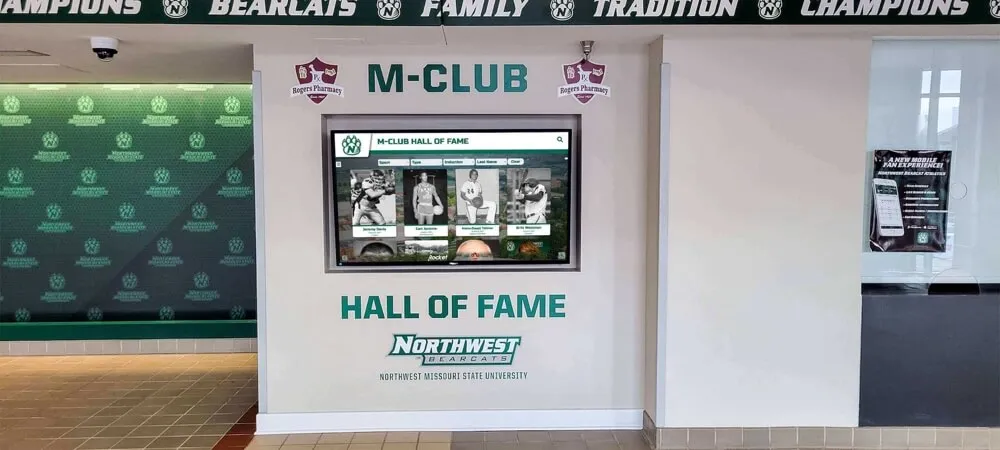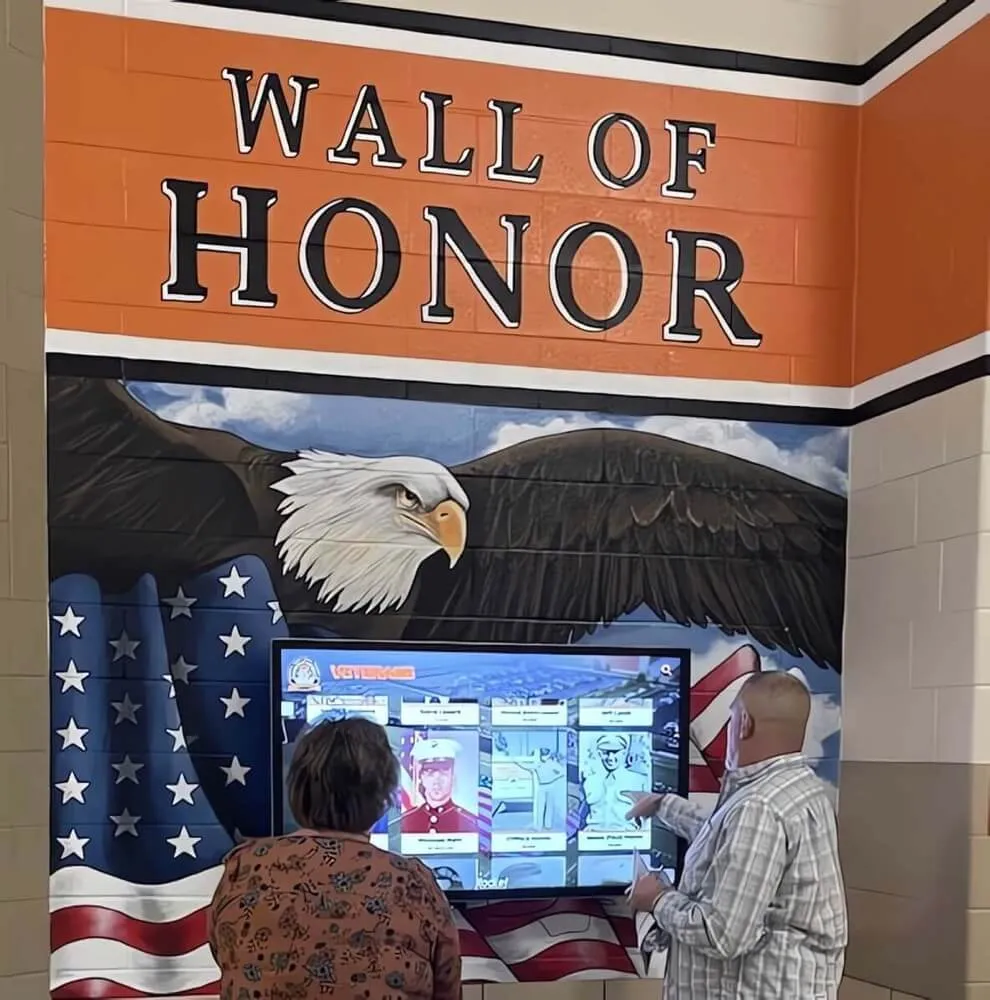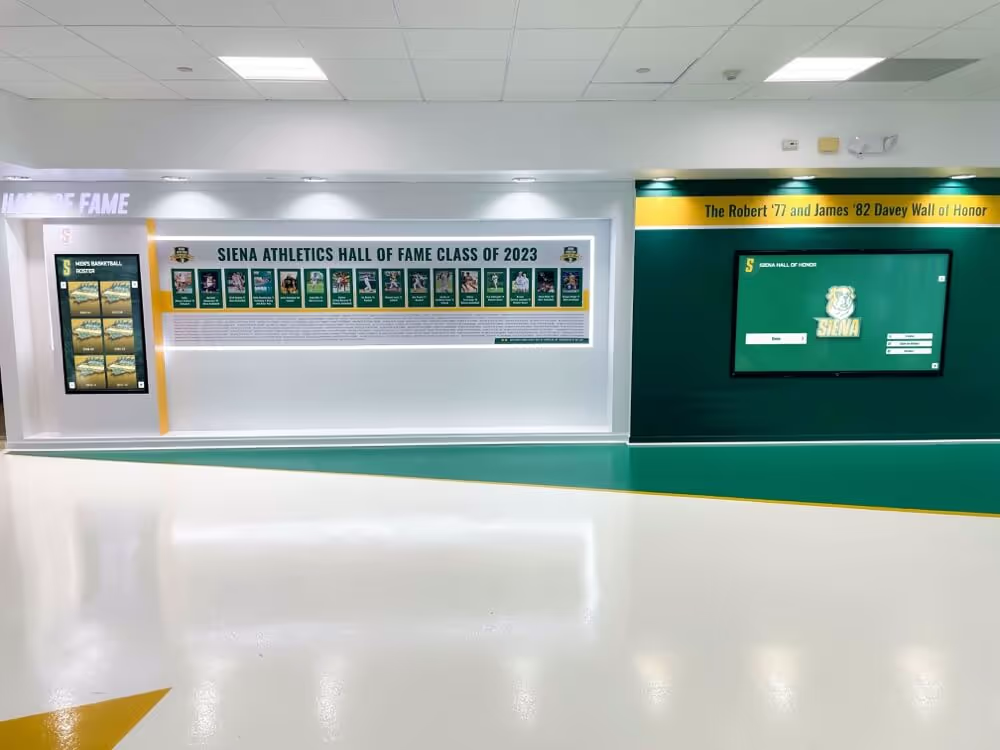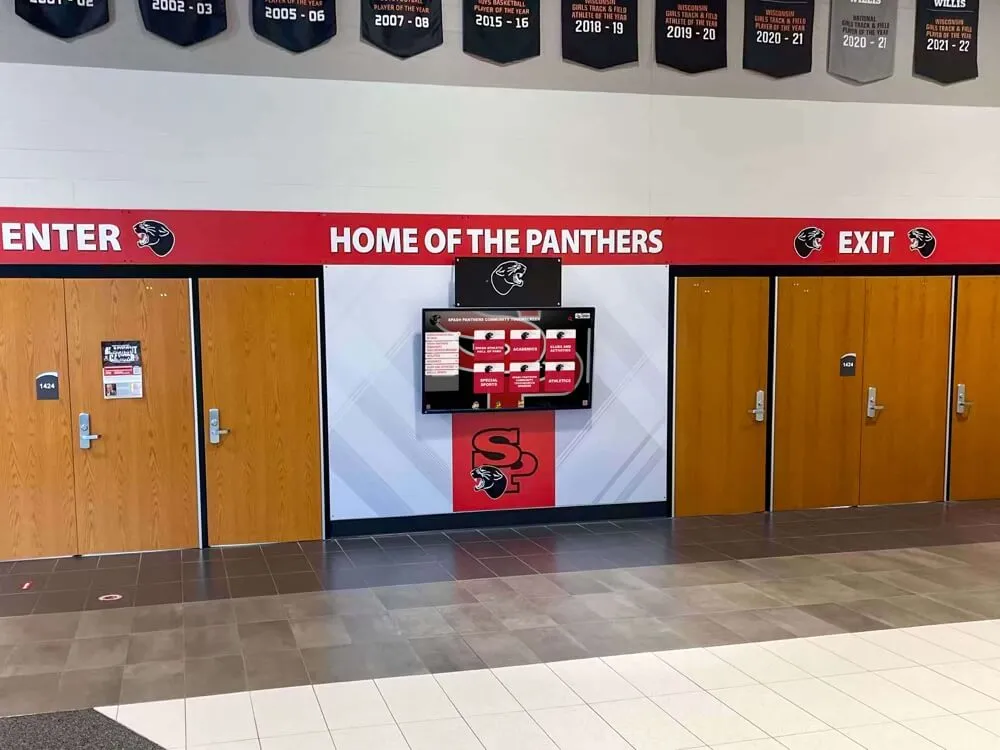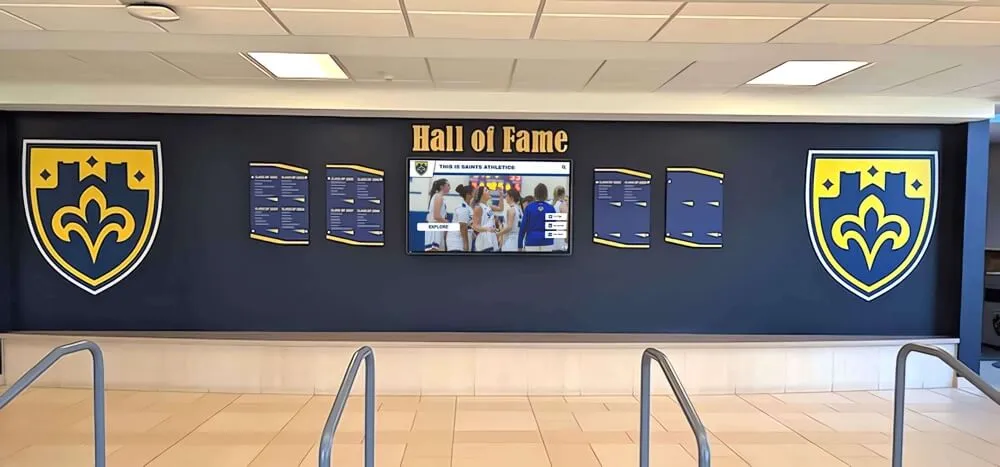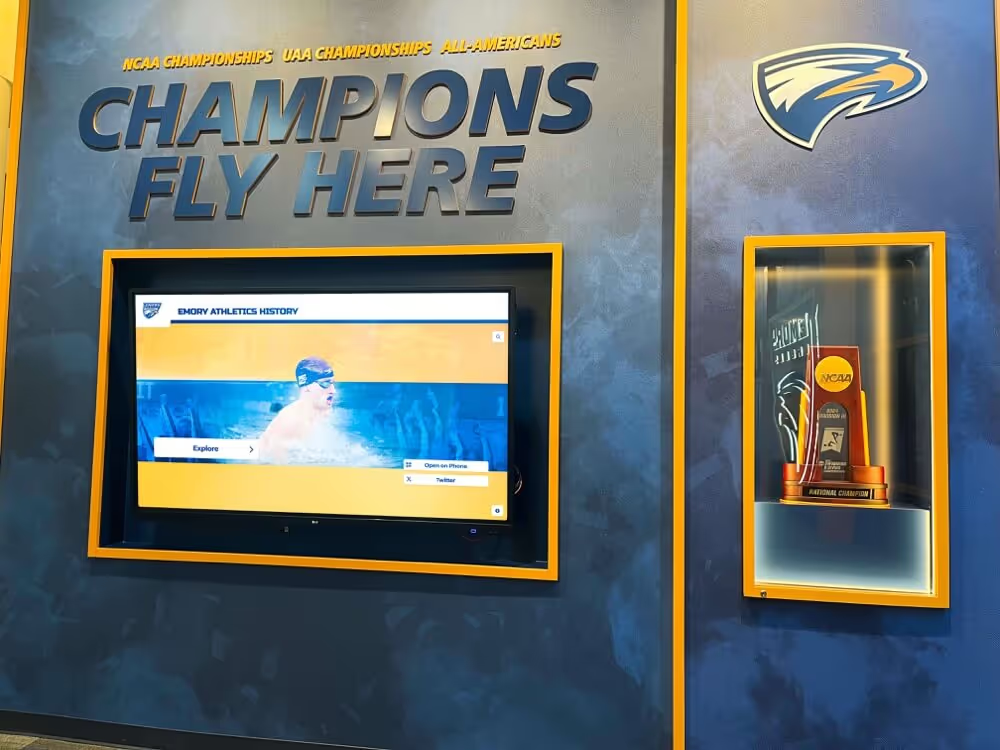




Athletic directors across the country face a common challenge: aging trophy cases bursting at the seams, faded photographs barely visible behind dusty glass, and an ever-growing list of achievements with nowhere to display them. The solution isn’t building more trophy cases—it’s migrating to interactive digital displays that offer unlimited capacity, instant updates, and engaging experiences that static cases simply cannot match.
This comprehensive guide walks you through every phase of migrating from physical trophy cases and record boards to modern touchscreen displays, addressing the practical questions athletic directors ask: How much does it cost? How long does it take? What happens to our existing trophies? And most importantly—how do we ensure nothing gets lost in the transition?
Why Athletic Programs Are Making the Switch
The decision to migrate from trophy cases to digital displays stems from practical problems that every athletic director recognizes immediately.
The Trophy Case Dilemma
Physical trophy cases create an impossible situation: you want to honor every athlete and achievement, but you’re constrained by three feet of wall space. This forces uncomfortable decisions about which accomplishments deserve recognition and which get relegated to storage.
Common Trophy Case Problems:
- Space Exhaustion: Cases fill up within 5-10 years, forcing removal of older achievements
- Visibility Issues: Back rows become impossible to see; glass reflections obscure plaques
- Maintenance Burden: Constant dusting, bulb replacements, and lock repairs
- Update Difficulty: Adding new achievements requires physical installation, sometimes costing $200-500 per addition
- Photo Degradation: Sunlight and time fade photographs beyond recognition
- Security Concerns: Valuable trophies attract theft; glass breaks easily
- Inflexibility: Cannot reorganize or feature specific achievements for events
The Digital Display Advantage
Modern digital record boards solve these problems while introducing capabilities impossible with physical displays:
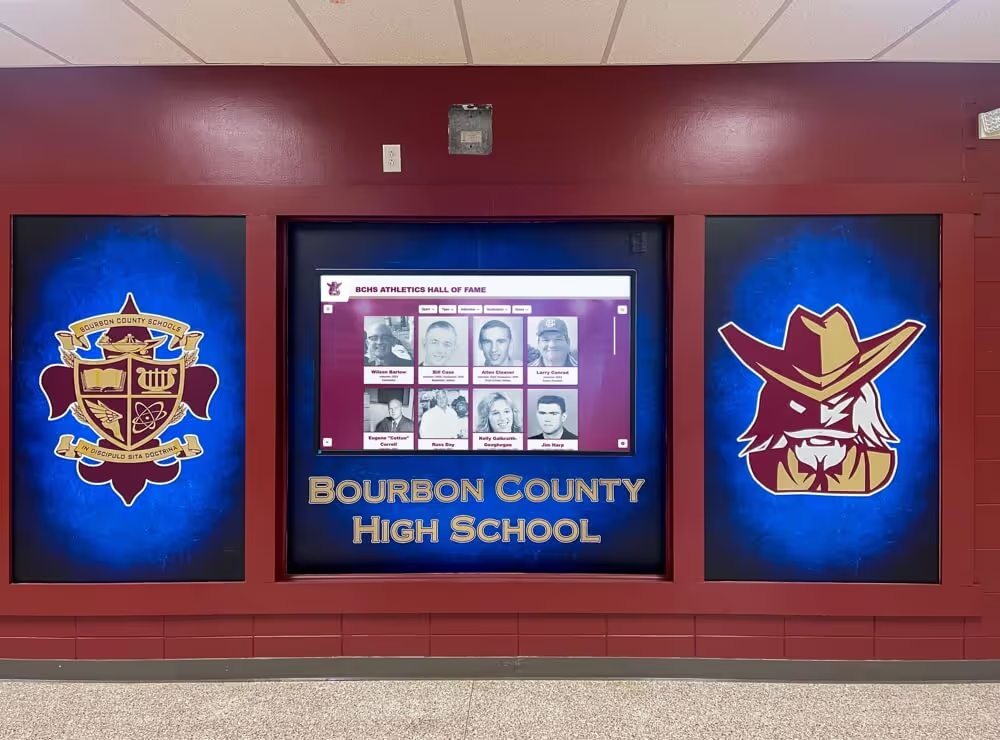
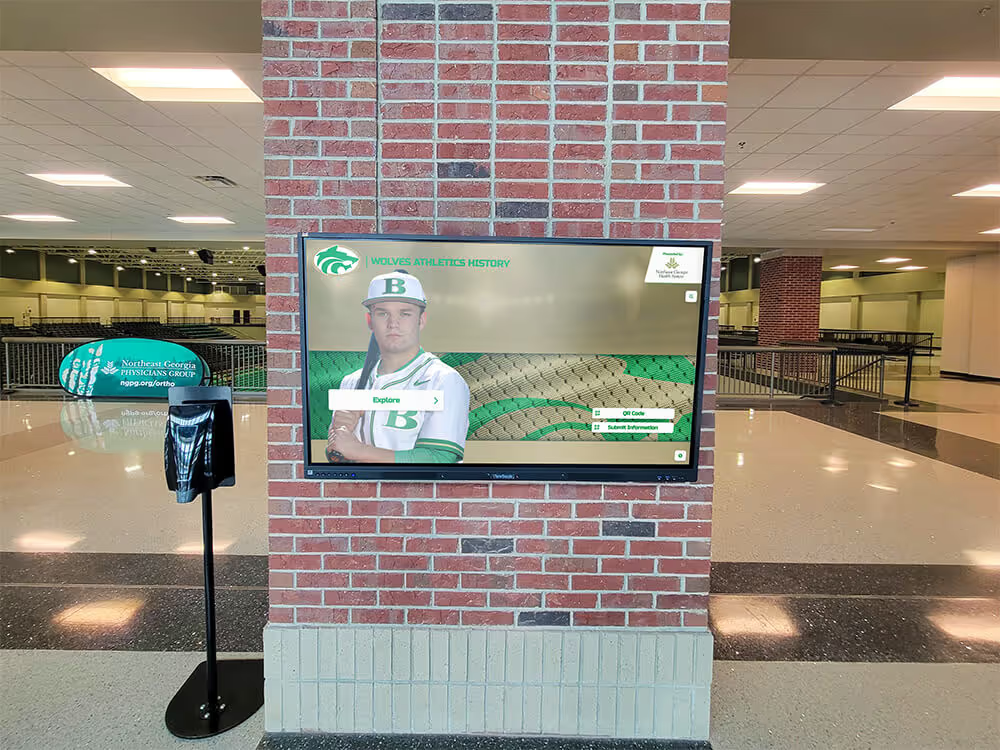
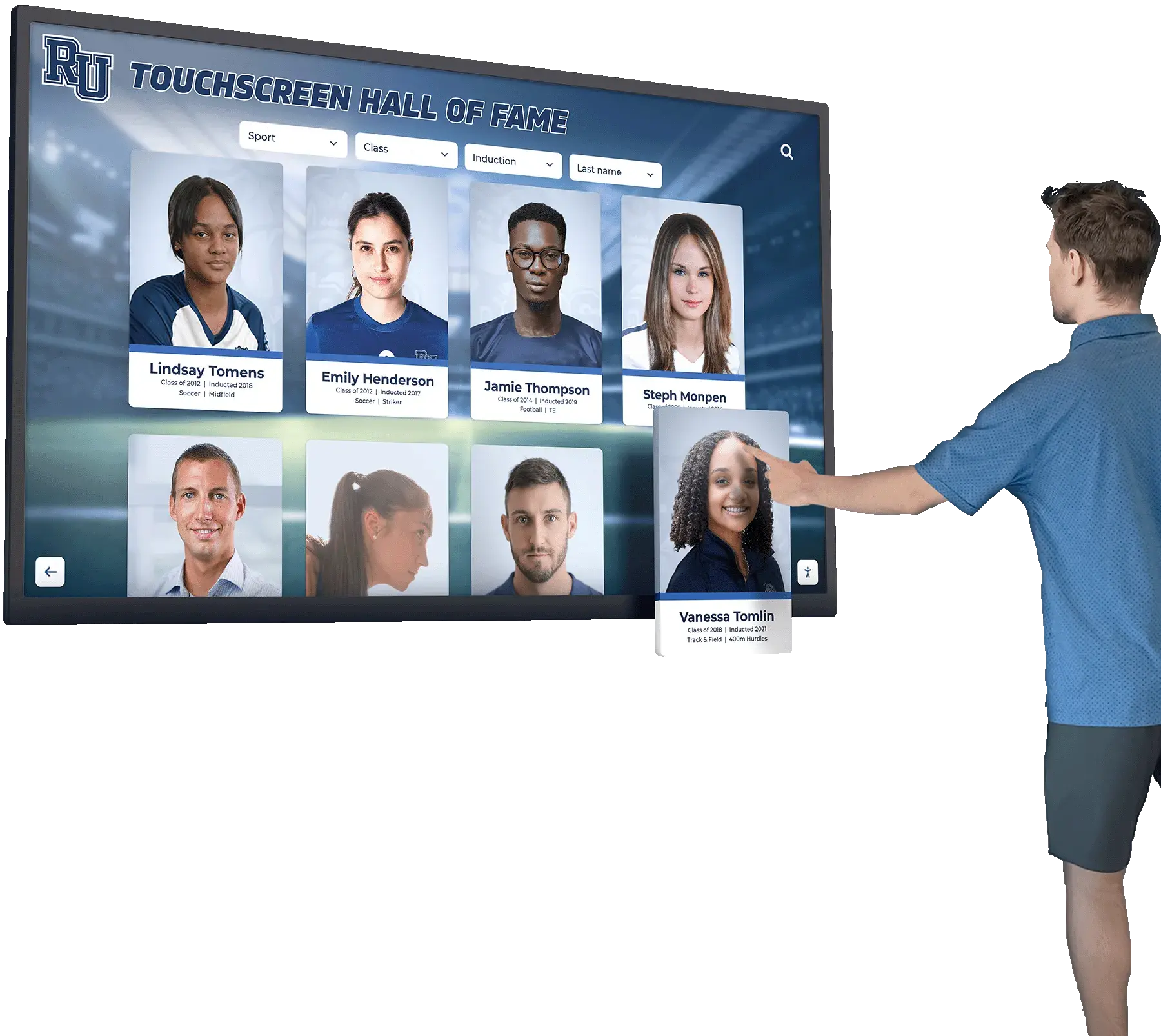
Unlimited Recognition Capacity: Display thousands of achievements without physical space constraints. A single 55-inch touchscreen can showcase your entire athletic history—every sport, every season, every record holder.
Instant Updates: Add new achievements in minutes through cloud-based management systems. No waiting for engraving, no installation appointments, no ongoing costs per addition.
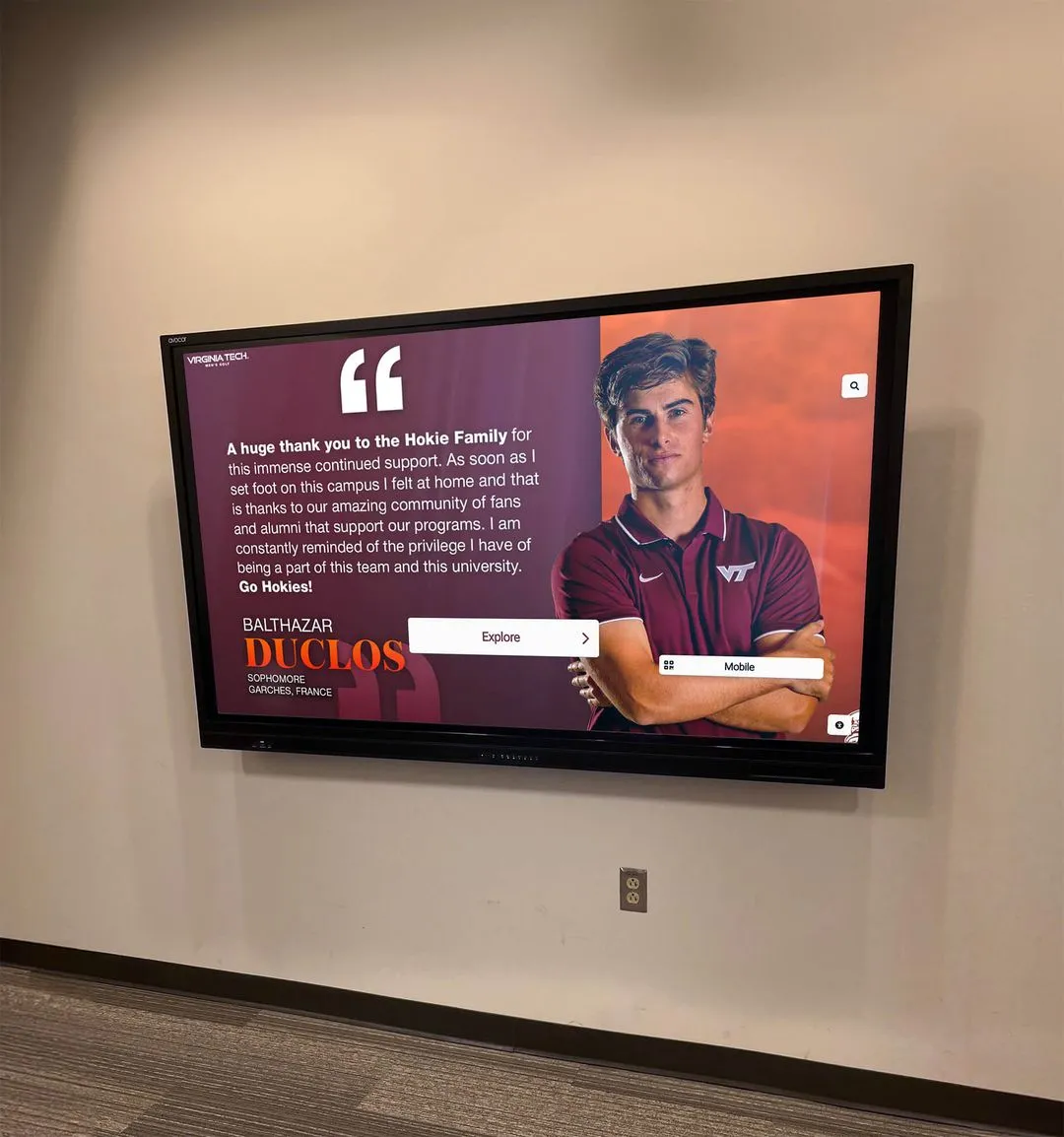
Enhanced Storytelling: Include photos, videos, statistics, and narratives that bring achievements to life. Show game highlights, championship moments, and athlete interviews alongside traditional records.
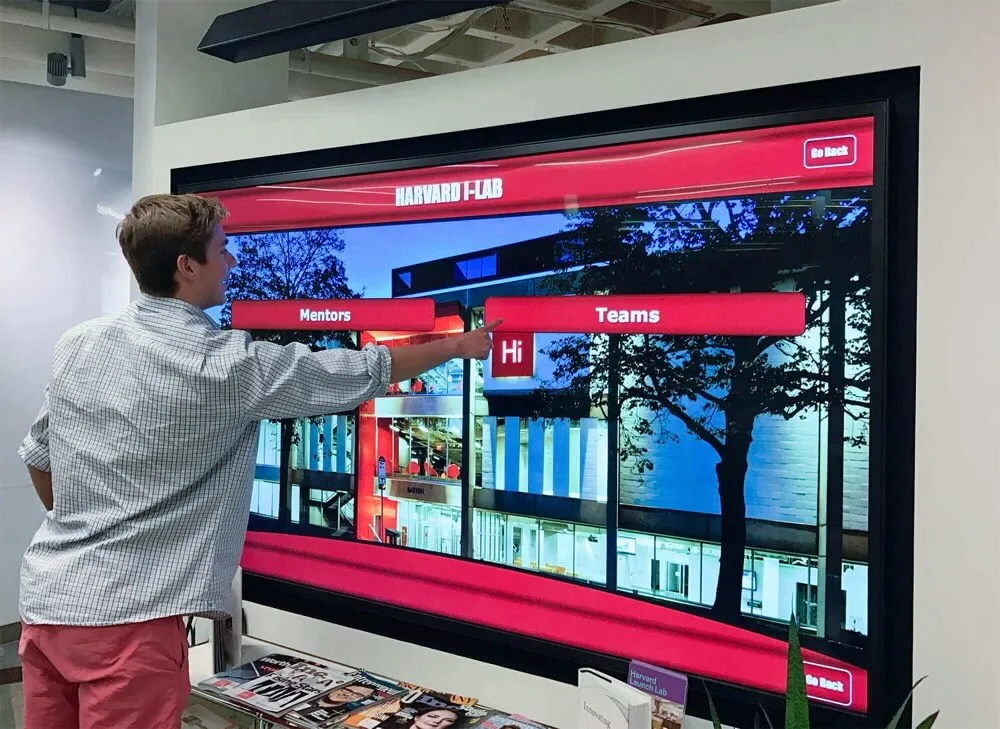
Interactive Exploration: Athletes, families, and visitors can search for specific individuals, filter by sport or year, and discover connections between current and historical achievements.
Professional Presentation: Consistent, high-quality displays that never fade, yellow, or deteriorate. Automatic brightness adjustment ensures perfect visibility in any lighting condition.
Cost Efficiency: While initial investment is higher, elimination of ongoing maintenance, updates, and expansion costs creates favorable long-term economics.
Athletic programs that have made the transition commonly report increased student-athlete engagement and pride in their school’s athletic history when they can interact with digital displays versus traditional trophy cases.
Phase 1: Assessment and Planning (Weeks 1-4)
Successful migration begins with thorough assessment of your current situation and clear planning for the transition.
Inventory Your Current Recognition Assets
Before making any decisions, document exactly what you’re working with:
Physical Trophy Audit:
- Count total trophies, plaques, and awards currently displayed
- Note condition and relevance of each item
- Identify items with special significance (state championships, retired jerseys, etc.)
- Document any items that should remain physical (very large trophies, three-dimensional awards)
- Photograph everything for digital archive purposes
Record Board Documentation:
- List all current record boards and their locations
- Document every record currently displayed
- Identify missing records or gaps in historical data
- Note condition of existing boards (fading, outdated design, damage)
- Assess whether records are current and accurate
Historical Materials Assessment:
- Locate archived photos, newspaper clippings, and programs
- Inventory yearbooks and team photos
- Identify available video footage or audio recordings
- Document existing digital assets and their quality
- Note gaps in historical record that need research
Stakeholder Engagement Strategy
Your migration project affects multiple groups, each with different concerns and priorities:
Administration: Focus discussions on return on investment, maintenance cost reduction, and enhanced school image. Present data on long-term cost savings and increased alumni engagement from schools that have made the transition.
Coaching Staff: Emphasize how digital displays make it easier to showcase team achievements, motivate current athletes, and recruit prospective students. Show how instant updates mean their championships appear immediately rather than waiting months for traditional updates.
Alumni: Address concerns about honoring tradition and preserving history. Demonstrate how digital systems actually enhance preservation through backups and professional presentation, while making alumni achievements more accessible to broader audiences.
Athletes: Highlight interactive features, social sharing capabilities, and the modern presentation that resonates with their generation. Student input on design and features increases buy-in and engagement.
Boosters and Donors: Show how digital displays can include donor recognition, sponsorship opportunities, and fundraising campaign progress tracking—creating new revenue streams while honoring contributions.
Budget Development
Understanding total investment requirements prevents surprises and ensures proper funding allocation:
Hardware Costs:
- Touchscreen Display (55-75"): $3,000 - $8,000 per screen
- Mounting Hardware and Installation: $500 - $1,500
- Media Player/Computer (if not integrated): $400 - $800
- Network Infrastructure Upgrades (if needed): $500 - $2,000
Software and Platform:
- Recognition Platform License (annual): $2,000 - $6,000
- Initial Setup and Configuration: $1,000 - $3,000
- Content Management System Training: $500 - $1,000
Content Development:
- Professional Photography and Scanning: $1,500 - $4,000
- Historical Research and Data Entry: $2,000 - $5,000
- Video Production (if desired): $2,000 - $8,000
Professional Services:
- Project Management and Consulting: $2,000 - $5,000
- Installation and Technical Setup: $1,000 - $3,000
Typical Total Investment Range: $15,000 - $45,000 for a comprehensive single-display system, with additional displays costing $5,000 - $12,000 each.
Solutions like Rocket Alumni Solutions provide comprehensive packages that simplify budgeting by bundling hardware, software, installation, and training into clear pricing structures.
Timeline Planning
Realistic timeline expectations prevent frustration and ensure quality implementation:
Weeks 1-4: Planning and Approval
- Complete assessment and stakeholder meetings
- Finalize budget and secure funding approval
- Select vendor and sign contracts
Weeks 5-10: Content Development
- Digitize existing materials
- Research and compile historical information
- Organize content structure and categories
Weeks 11-14: Hardware and Installation
- Order and receive equipment
- Prepare installation location
- Install displays and network connections
Weeks 15-18: Software Configuration and Content Upload
- Configure recognition platform
- Upload and organize all content
- Test functionality and user experience
Weeks 19-20: Training and Launch
- Train staff on content management
- Conduct soft launch with select groups
- Official public launch and celebration
Most athletic programs complete migration in 4-6 months from decision to launch.
Phase 2: Content Digitization and Organization (Weeks 5-10)
The content development phase determines the quality and usefulness of your final digital system. Rushing this phase creates disappointing results, while thoughtful execution produces engaging experiences that showcase your athletic program’s legacy.
Photography and Documentation Standards
Professional digitization ensures your historical content looks its best on modern displays:
Trophy and Award Photography:
Set up a consistent photography station with proper lighting, neutral background, and camera support. Photograph each trophy from multiple angles, ensuring any engraving is clearly legible. Capture close-ups of nameplates, dates, and achievement details.
For large trophies that will remain on display, high-quality photos allow you to feature them in the digital system while they stay in prominent physical locations. Three-dimensional trophies translate well to digital format through multiple angles and detail shots.
Document Scanning Standards:
Scan newspaper clippings, certificates, and historical documents at minimum 300 DPI resolution. Use photo editing software to improve contrast and readability of aged materials. Yellowed newspaper clippings often benefit from converting to grayscale and adjusting brightness to restore legibility.
Save master copies in high-resolution formats (TIFF or PNG), then create optimized versions for display (JPEG at appropriate compression). This preserves quality while ensuring smooth performance on interactive displays.
Historical Photo Restoration:
Faded yearbook photos and team pictures often need enhancement before digital display. Basic photo editing can dramatically improve old photographs:
- Adjust brightness and contrast to restore detail
- Crop to remove damaged edges while preserving subjects
- Remove spots, scratches, and discoloration when possible
- Sharpen slightly to compensate for aged print quality
Professional photo restoration services cost $10-30 per image for significant improvements. For extensive collections, focus restoration efforts on the most historically significant or frequently accessed images.
Data Structure and Organization
Logical organization makes content easy to find and browse:
Primary Organization Categories:
Sport and Gender: Basketball (Boys), Basketball (Girls), Football, Soccer, etc.
- Season/Year: Organize chronologically within each sport
- Achievement Type: Team championships, individual records, conference titles, etc.
- Recognition Level: State championships, conference honors, individual achievements
Secondary Metadata Tags:
Add searchable attributes that enable powerful filtering:
- Athlete names (with graduation year)
- Coach names and tenures
- Opponent information for championship wins
- Facility locations (home field, visiting championships)
- Season records and statistics
- Award organizations (All-State, All-Conference, All-American)
This metadata structure supports the search and filter features that make digital displays far more useful than static trophy cases. Athletes and families can instantly find specific individuals, while casual browsers can explore by sport, era, or achievement type.
Historical Research and Content Enhancement
Migration projects often reveal gaps in historical records that research can fill:
Newspaper Archives: Local papers typically covered high school athletics extensively. Many libraries offer digital newspaper archives searchable by date and keyword. Search for your school name combined with sport keywords to uncover forgotten achievements and rich historical context.
Yearbook Deep Dives: School yearbooks contain team photos, rosters, season summaries, and individual athlete spotlights often missing from trophy case records. Systematically reviewing yearbooks decade by decade fills gaps and provides context for bare statistics.
Alumni Outreach: Former athletes often possess photos, programs, and memories not documented anywhere else. Create a structured submission process where alumni can contribute content:
- Online submission form requesting photos, stories, and statistics
- Scanning stations at reunion events for physical materials
- Phone or video interview options for oral history capture
- Verification process ensuring accuracy before publication
Athletic Department Archives: Dusty storage rooms often contain treasures: old uniforms, championship trophies moved aside for newer achievements, coaching records, and historical documents. Systematic archive review frequently uncovers significant material worth including in digital displays.
Phase 3: System Selection and Design (Weeks 8-12)
Choosing the right platform and designing effective user experiences separate successful implementations from disappointing ones.
Platform Evaluation Criteria
Not all digital display solutions are created equal. Evaluate platforms based on capabilities that matter for athletic recognition:
Content Management Ease: The system you choose will need regular updates as new achievements occur. Platforms requiring technical expertise for simple updates create bottlenecks and frustration. Look for web-based content management systems that allow athletic department staff to make updates without IT department involvement.
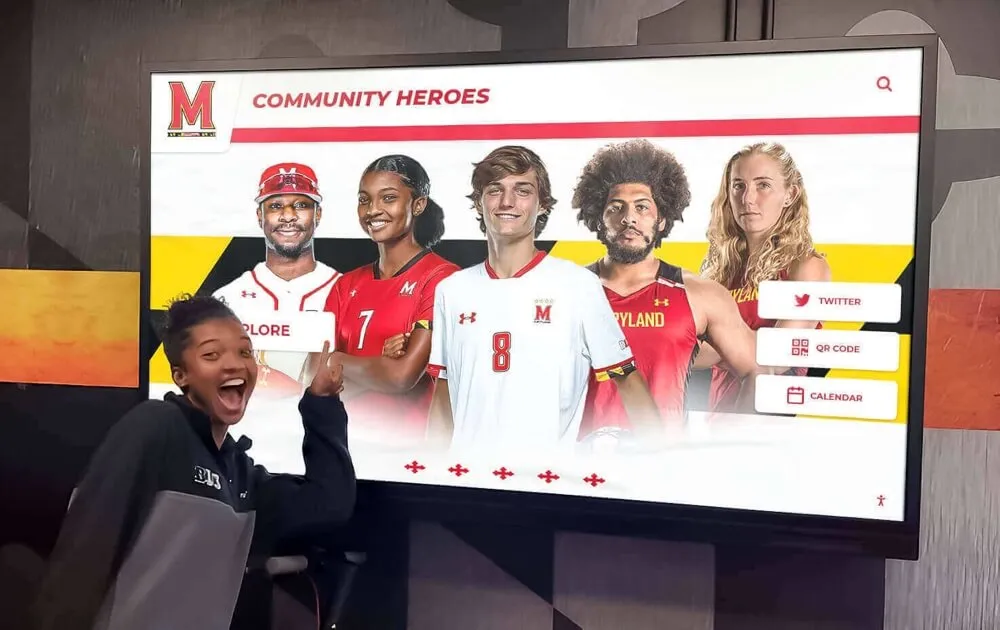
Search and Filter Functionality: Static scrolling through hundreds of achievements defeats the purpose of going digital. Robust search by athlete name, sport, year, and achievement type makes content accessible. The best systems offer multiple discovery paths: browsing by timeline, filtering by sport, or searching for specific individuals.
Multimedia Integration: Text and static photos represent minimal upgrade from trophy cases. Platforms that seamlessly integrate video clips, photo galleries, audio recordings, and interactive timelines create engaging experiences that showcase athletic program history compellingly.
Template and Design Options: Your recognition display should reflect your school’s identity. Evaluate whether platforms offer customizable templates, school color schemes, logo integration, and layout flexibility without requiring custom development.
Analytics and Engagement Tracking: Understanding what content resonates helps inform future additions and improvements. Platforms providing usage analytics, popular content reports, and engagement metrics enable data-driven decisions about content priorities.
Scalability: Today you might display one sport, but you’ll likely want to expand to all athletics eventually. Ensure your platform handles growing content volumes without performance degradation and supports multiple displays if you want to install screens in different locations.
Specialized platforms like Rocket Alumni Solutions focus specifically on educational athletic recognition, providing purpose-built features rather than adapting general digital signage for athletic applications.
Hardware Configuration Decisions
Display hardware significantly impacts user experience and long-term satisfaction:
Screen Size Selection:
- 43-49": Suitable for individual viewing in offices or smaller spaces
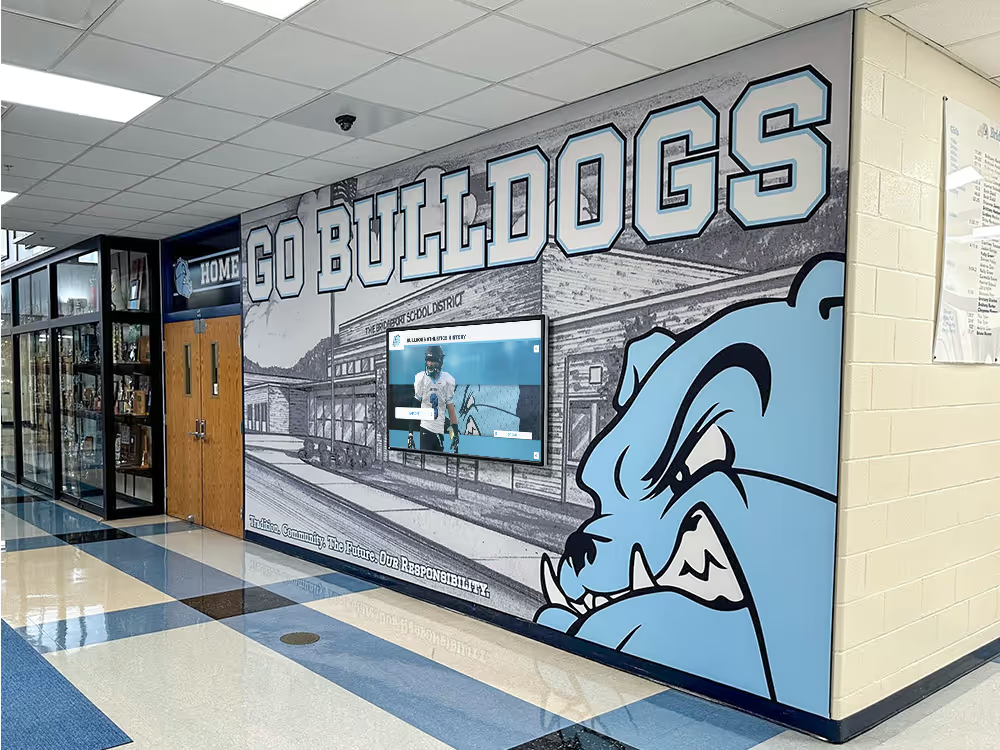
- 55-65": Optimal for hallway displays where 2-4 people view simultaneously
- 70-86": Best for lobby installations and large gathering spaces with group viewing
Consider viewing distances: people should be able to read text comfortably from typical standing positions. Larger screens aren’t always better if they’re viewed from close distances—text becomes uncomfortably large.
Touchscreen vs. Non-Touch:
Interactive touchscreen displays engage users far more effectively than passive screens. Touch interaction feels intuitive to modern users and enables the search and exploration features that make digital displays superior to trophy cases.
However, touchscreens cost 30-50% more than non-touch displays and require more robust hardware for responsive performance. For budget-conscious programs, non-touch displays with automated content rotation work acceptably for passive viewing, though you lose the engagement benefits.
Installation Location Planning:
Prime locations balance visibility with practicality:
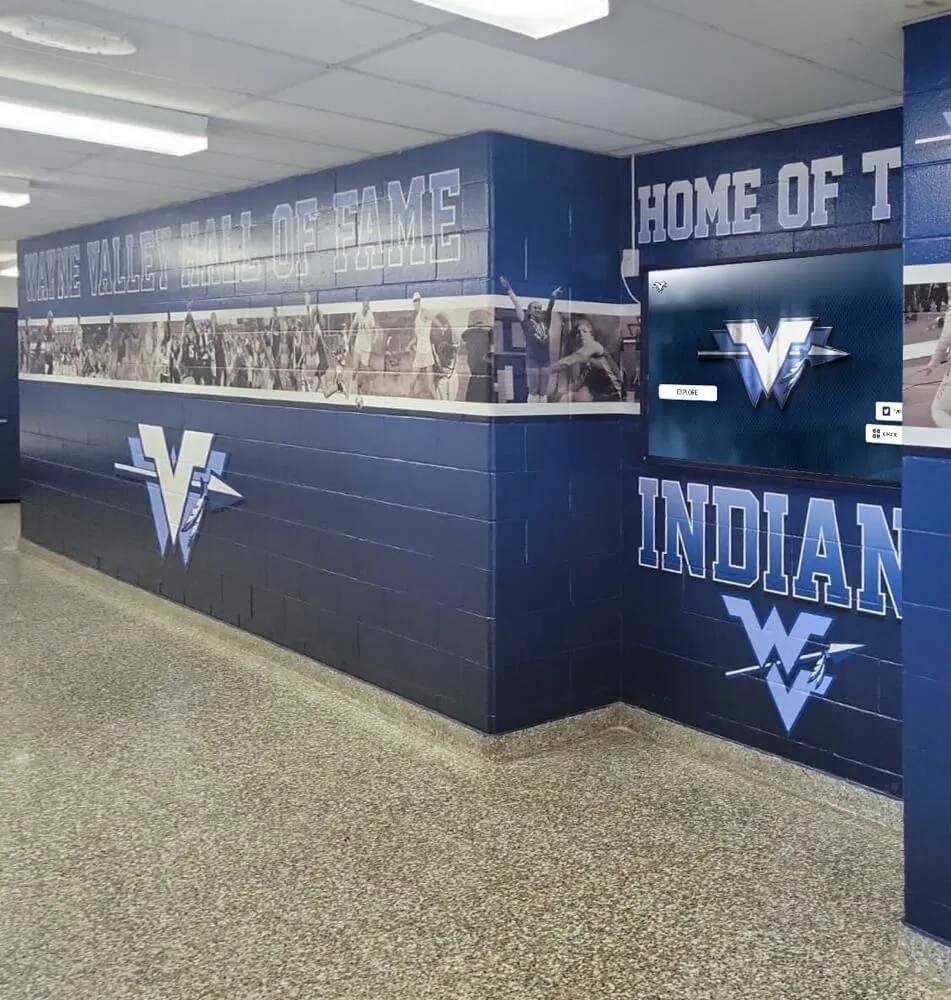
Main Entrance/Lobby: Maximum visibility for visitors, recruits, and community events. Requires durable, tamper-resistant installation.
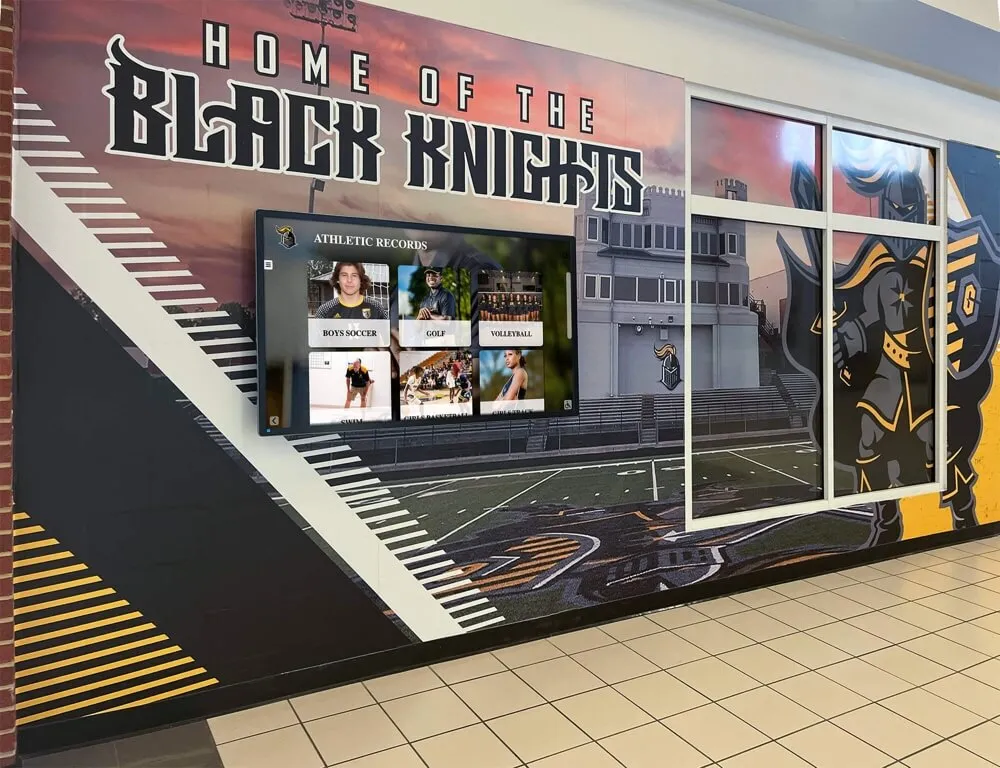
Athletic Hallway: Natural fit near locker rooms and team spaces. High athlete engagement but limited visitor exposure.
Gymnasium Concourse: Excellent visibility during events when crowds gather. May face competition from game action for attention.
Commons/Cafeteria: High student traffic ensures regular engagement. Background noise may be a factor.
Consider power and network connectivity when selecting locations. Running new electrical and ethernet lines adds cost. Locations with existing infrastructure simplify installation.
Content Design and User Experience
The interface design significantly impacts whether people actually engage with your digital display:
Navigation Simplicity: Users should understand how to interact within 5 seconds. Prominent “tap anywhere to begin” messaging, clear category buttons, and obvious back/home navigation prevent confusion.
Visual Hierarchy: Most important content (recent championships, all-time records) should have prominent placement. Less frequently accessed historical information can require one additional navigation step.
Reading Comfort: Text size must be legible from typical standing distances. Test content at actual installation location before finalizing designs. What looks good on a laptop screen may be unreadable from 6 feet away.
Color and Branding: School colors, logos, and athletic branding create familiar, professional appearance. Avoid overwhelming users with too many colors or busy backgrounds that distract from content.
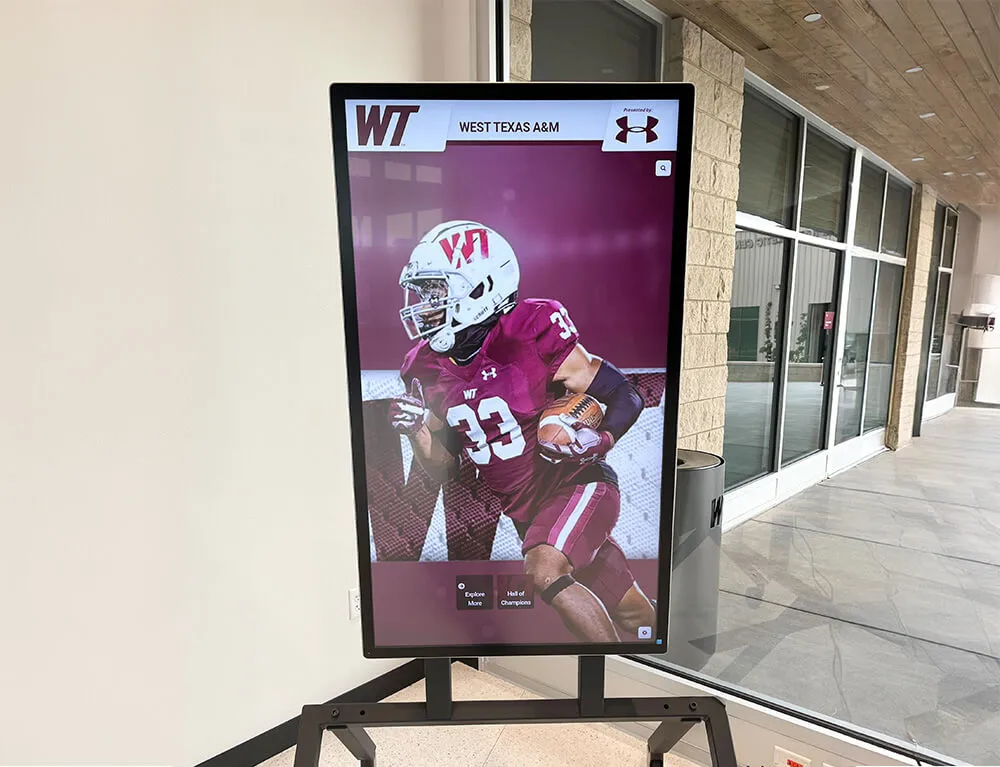
Attract Loop: When idle, the display should show attractive content that entices interaction. Rotating highlights of championships, record holders, and compelling historical photos draw attention better than static “tap to begin” screens.
Studying effective digital recognition implementations helps avoid common mistakes. The touchscreen hall of fame implementation guide provides detailed best practices from successful installations.
Phase 4: Installation and Technical Implementation (Weeks 13-16)
The installation phase brings planning to physical reality. Proper execution prevents technical problems and ensures reliable long-term operation.
Pre-Installation Preparation
Thorough preparation prevents costly delays and installation problems:
Site Preparation:
- Verify wall structural capacity for display weight (commercial displays weigh 60-150 lbs depending on size)
- Ensure electrical capacity and circuit availability
- Confirm network connectivity (hardwired ethernet strongly preferred over WiFi)
- Plan cable routing and concealment for professional appearance
- Coordinate with facilities team for any wall modifications needed
Equipment Staging:
- Establish secure storage for hardware upon delivery
- Unbox and inventory all components before installation day
- Test equipment functionality before mounting
- Prepare mounting hardware and installation tools
Coordination:
- Schedule installation during low-traffic periods (weekends, breaks)
- Arrange facilities staff availability for electrical/network work
- Plan for 2-3 day installation window allowing buffer for unexpected issues
- Notify security about installation activities and after-hours access needs
Installation Process
Professional installation typically follows this sequence:
Day 1: Infrastructure and Mounting
- Install electrical outlet (if new circuit required)
- Run and terminate network cabling
- Mount display bracket according to manufacturer specifications
- Verify mounting security and level installation
Day 2: Display and Equipment Setup
- Mount display to bracket with assistance (large displays require 2-3 people)
- Connect power, network, and any peripheral devices
- Cable management for clean appearance
- Install media player or computer if separate from display
- Power on and verify basic functionality
Day 3: Software and Content
- Install and configure recognition software platform
- Connect to network and test internet connectivity
- Upload initial content and media files
- Configure display settings (brightness, sleep schedule, orientation)
- Test all interactive features and navigation paths
Quality Assurance Testing
Before declaring installation complete, systematic testing ensures everything works correctly:
Functionality Testing:
- Verify touch accuracy across entire screen surface
- Test every navigation path and button
- Confirm search functionality works with various inputs
- Check video playback quality and audio levels
- Verify all external links and integrations function
Content Verification:
- Spot-check accuracy of athlete names, dates, and statistics
- Confirm all images display correctly with appropriate sizing
- Test multimedia content (videos, photo galleries)
- Verify no broken links or missing content
Performance Testing:
- Navigate rapidly through content to identify lag or crashes
- Test with multiple users simultaneously (if multi-touch)
- Leave running for extended period to check for memory leaks or freezing
- Verify automatic screen wake/sleep schedule works correctly
User Experience Testing:
- Ask test users unfamiliar with the system to navigate without instruction
- Observe where confusion occurs and refine accordingly
- Check readability from various distances and angles
- Verify display brightness appropriate for location lighting
Understanding technical considerations for digital displays helps ensure thorough testing and successful implementation.
Phase 5: Content Migration and Launch (Weeks 17-20)
With hardware installed and tested, focus shifts to content population and successful public launch.
Systematic Content Upload
Uploading content methodically prevents errors and ensures nothing gets missed:
Start with Structure: Create all category hierarchies, sport designations, and organizational frameworks before adding specific content. This prevents the need to reorganize later when you have hundreds of entries.
Batch Processing: Rather than jumping randomly through decades and sports, upload systematically:
- Complete one sport at a time, working chronologically from earliest to most recent
- Finish team championships before individual records within each sport
- Ensure consistency in how similar achievements are presented
Quality Control Process:
- Have second person review entries before marking “complete”
- Check for typos in athlete names (these become embarrassing when noticed after launch)
- Verify dates and statistics accuracy using source documents
- Ensure photo quality acceptable when displayed at full size
- Test that each entry navigates and displays correctly
Missing Content Tracking: Document gaps discovered during upload process. Create prioritized list of historical research needed to fill holes. Some gaps can be addressed after launch, but known missing championship years or record holders should be researched before going live if possible.
Staff Training
Successful long-term operation requires capable content managers:
Training Components:
Basic Navigation: Staff should be able to demonstrate the display to visitors, helping them find specific athletes or achievements.
Content Updates: Train designated staff on adding new achievements, uploading photos, and editing existing entries. Practice with sample entries during training rather than live content.
Troubleshooting: Cover common issues like display not waking, network connectivity problems, and touch calibration drift. Provide clear contact information for technical support beyond basic troubleshooting.
Maintenance Tasks: Establish schedule for regular content reviews, ensuring statistics stay current and new achievements are added promptly. Physical maintenance includes screen cleaning techniques that won’t damage anti-glare coatings.
Documentation: Create written procedures with screenshots for all common tasks. Digital documentation accessible from anywhere helps staff when they haven’t updated content in several months and need refreshers.
Launch Strategy
Strategic rollout builds excitement and ensures smooth transition:
Phase 1: Soft Launch (1-2 weeks)
- Enable display but announce only to athletic staff and select teams
- Gather initial feedback and make adjustments
- Work out any technical issues before broad audience
- Create promotional materials and talking points
Phase 2: Team Introduction
- Dedicate practice time for each team to explore their sport’s section
- Photograph athletes interacting with display for promotional use
- Gather athlete reactions and testimonials
- Identify athlete ambassadors who can demonstrate to visitors
Phase 3: Public Launch Event
- Coordinate launch with homecoming, key athletic event, or alumni gathering
- Invite local media for coverage
- Recognize donors and supporters who funded the project
- Demonstrate features and encourage hands-on exploration
- Distribute promotional materials directing people to display location
Ongoing Promotion:
- Feature display in school social media and newsletters
- Create QR code linking to digital version for remote access
- Encourage athletes to share photos of themselves on the display
- Integrate into tours for prospective students and recruits
Handling Common Migration Challenges
Every migration encounters predictable obstacles. Preparing for these issues enables quicker resolution.
“What Do We Do with Our Physical Trophies?”
This question causes more anxiety than any other migration issue. Athletic directors worry about appearing disrespectful to past achievements or upsetting alumni.
Balanced Approach:
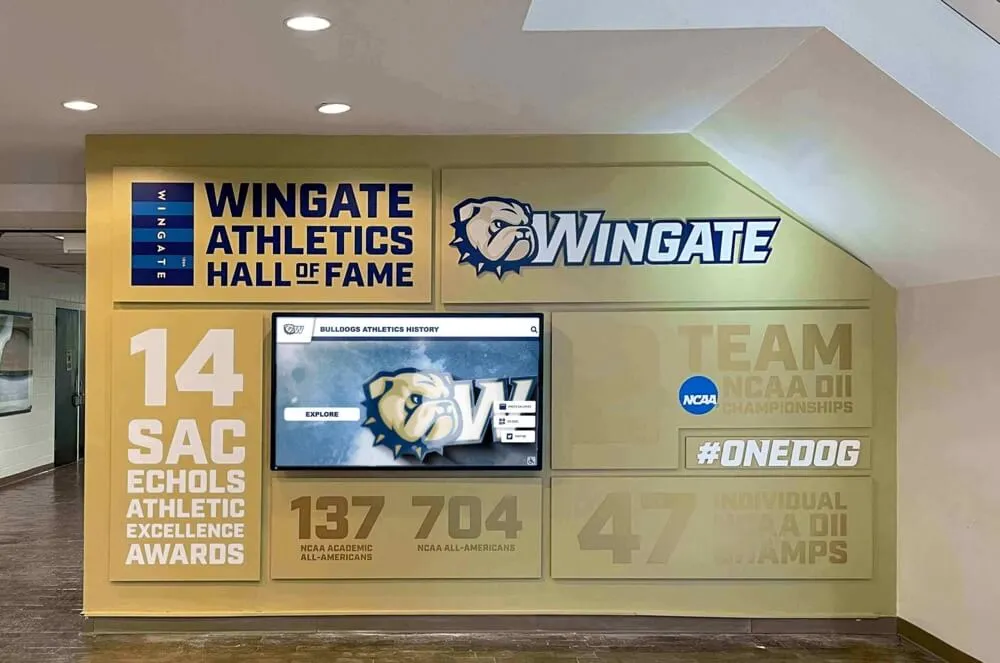
Keep Signature Pieces on Display: The most iconic trophies—state championship hardware, especially large or unusual pieces, retired jerseys—deserve continued physical display. Select 10-20 items representing program milestones for prominent physical placement, potentially in cases alongside the digital display.
Rotate Other Trophies: Create rotation schedule where different sports’ most significant trophies appear in lobby displays during their seasons. Football trophies prominent during fall, basketball during winter, etc.
Offer Alumni Reclamation: Some alumni would love to have their individual awards. Create process where former athletes can request items with their names, with deadline for pickup. Unclaimed items proceed to next disposition step.
Photograph Before Storage: Ensure every trophy is professionally photographed from multiple angles before storage. The digital display can feature these photos prominently, preserving the visual impact while physical items are safely stored.
Dignified Storage: Climate-controlled storage shows respect for athletic history. Avoid appearances of “throwing out” trophies. Some programs create behind-the-scenes archive spaces where interested individuals can view stored items by appointment.
Consider Donations: Local sports museums, historical societies, or youth sports programs might appreciate donated trophies for their own displays or as inspiration for young athletes.
“Our Historical Records Have Gaps and Errors”
Perfect historical accuracy proves impossible for most programs, especially those 50+ years old. Embrace this reality rather than letting it prevent progress.
Strategies for Incomplete Information:
Be Transparent: Where records are uncertain, acknowledge it. “Conference Champions (exact year uncertain: 1967-1969)” shows honesty rather than guessing wrong year.
Focus on What You Have: Present comprehensive information for recent decades where documentation is solid. Historical sections can be less detailed, providing overview rather than exhaustive statistics.
Crowd-Source Information: Launch display with note inviting community members to submit additional information or corrections. Many alumni eagerly contribute when given easy process.
Continuous Improvement: Treat launch as version 1.0 rather than final product. Commit to ongoing historical research, adding newly discovered information over time.
Prioritize Significance: Incomplete rosters from 1960s matter less than ensuring recent state championships are thoroughly documented. Allocate research time proportional to importance and interest level.
“Our Staff Worries About Learning New Technology”
Technology anxiety is real, especially among staff more comfortable with traditional methods. Address concerns proactively.
Ease Concerns Through:
Emphasize Simplicity: Modern platforms designed for schools assume non-technical users. Updating digital displays is typically easier than managing physical trophy cases or record boards once initial learning curve is passed.
Provide Comprehensive Training: Hands-on practice during training builds confidence. Let staff make practice updates before touching live content.
Create Support Resources: Written guides, video tutorials, and clear help contact information reduce anxiety about being “stuck” when updating content.
Start Small: Begin with one person managing updates initially. As they gain confidence, they can train others. Distributed responsibility works better after initial adoption period.
Highlight Benefits: Less time dusting trophy cases, no arranging engraving appointments, no installation scheduling—digital maintenance is usually less burdensome once system is learned.
“How Do We Justify the Cost?”
Budget committees need clear justification beyond “it would be nice to have.”
Build ROI Case:
Maintenance Savings: Calculate current annual costs for trophy case maintenance, record board updates, engraving, and installation. Digital systems eliminate most of these ongoing expenses. Five-year comparison typically shows favorable economics.
Unlimited Expansion: Physical displays require expensive additions when full. Digital capacity is essentially unlimited—the same initial investment accommodates 500 or 5,000 achievements.
Enhanced Recruiting: Modern recruits expect contemporary facilities. Dated trophy cases suggest program isn’t keeping pace. Professional digital displays project investment in athletics.
Community Engagement: Interactive displays keep alumni connected. Track engagement metrics to quantify community impact. Increased alumni involvement often translates to donations and support.
Multi-Purpose Platform: Beyond athletics, digital displays can highlight academic achievements, arts accomplishments, and donor recognition. Shared costs across multiple departments improves budget case.
Grant Opportunities: Technology upgrades qualify for various educational grants. Research options through state education departments, national athletic associations, and education technology foundations.
Long-Term Success and Growth
Migration isn’t a one-time project—it launches an ongoing recognition program requiring attention and strategy.
Content Growth Strategy
Keep displays fresh and engaging through regular content additions:
Immediate Updates: Add new achievements within days of occurrence. Athletes appreciate prompt recognition, and timely updates demonstrate active management.
Seasonal Features: Highlight sports currently in season. Update featured content for homecoming, senior nights, and championship competitions.
Historical Deep Dives: Gradually expand historical coverage. Dedicate time quarterly to research and document another decade or sport not fully covered initially.
Multimedia Enhancement: Continuously improve content quality. Add video interviews with retired coaches, audio clips from championship radio broadcasts, enhanced photos from historical archives.
Alumni Contributions: Create sustainable process for alumni submissions. Feature “alumni memory of the month” highlighting stories submitted by former athletes.
The most successful programs view initial launch as a foundation, building richer content over years.
Measuring Success
Track metrics demonstrating value and identifying improvement opportunities:
Engagement Metrics:
- Daily/weekly interaction counts
- Average session duration
- Most frequently accessed content
- Search terms and filters used
- Return visitor patterns
Qualitative Feedback:
- Athlete and family testimonials
- Recruit reactions during visits
- Alumni comments and stories
- Community feedback at events
- Staff observations of usage patterns
Organizational Impact:
- Alumni engagement increases
- Recruiting advantage mentions
- Donor satisfaction improvements
- Community pride indicators
- Media coverage and mentions
Regular review of these metrics informs content priorities and justifies continued investment.
Future Enhancement Opportunities
Digital platforms enable capabilities impossible with static displays:
Remote Access: Extend digital displays with web portals allowing global access. Alumni across the country can explore their achievements and share with family.
Mobile Integration: QR codes linking physical spaces to digital content. Visitors can continue exploration on personal devices.
Social Media Integration: Automatic sharing of newly added achievements. Athletes can easily share their recognition to social platforms.
Virtual Reality: Immersive historical experiences bringing past championships to life through VR headsets.
AI-Powered Features: Personalized content recommendations based on visitor interests. Automated connection discovery between related athletes and achievements.
Staying informed about emerging trends in digital recognition helps plan strategic enhancements as technology evolves.
Conclusion: Transforming Athletic Recognition for Modern Programs
Migrating from trophy cases to digital displays represents more than a technology upgrade—it’s a fundamental reimagining of how athletic programs celebrate achievement and honor legacy. While the process requires investment, planning, and effort, the result is a dynamic recognition system that grows more valuable over time rather than deteriorating and filling up like physical displays.
Athletic directors who complete this transition consistently report relief at escaping the space constraints and maintenance burden of trophy cases, satisfaction with enhanced professionalism of their recognition displays, and appreciation for the engagement modern systems create with athletes, families, and alumni.
The migration roadmap provided in this guide—from initial assessment through launch and long-term growth—reflects real-world experience from hundreds of successful implementations. Your journey will have unique challenges based on your program’s specific situation, but the fundamental phases and best practices remain consistent.
Digital recognition solutions like Rocket Alumni Solutions specialize in guiding athletic programs through this transition, providing technology platforms designed specifically for athletic recognition rather than adapted from generic digital signage. Their experience implementing systems across diverse athletic programs—from small schools to major universities—translates to smoother migrations and better long-term outcomes.
Your athletic program’s achievements deserve recognition that matches their significance. Trophy cases gathering dust behind foggy glass don’t honor your athletes effectively. Modern interactive displays showcase accomplishments with professionalism, accessibility, and engagement that static cases cannot approach.
The migration journey begins with a single decision: commit to transformation. The roadmap exists, proven solutions are available, and the benefits are clear. Your athletes, alumni, and community deserve recognition that reflects modern standards—and your program deserves the freedom from space constraints and maintenance burdens that digital platforms provide.
For additional guidance on specific aspects of migration, explore these detailed resources: digital record board benefits, content planning strategies, and touchscreen software selection.
The future of athletic recognition is interactive, unlimited, and engaging. Make the decision today to give your program’s achievements the platform they deserve.