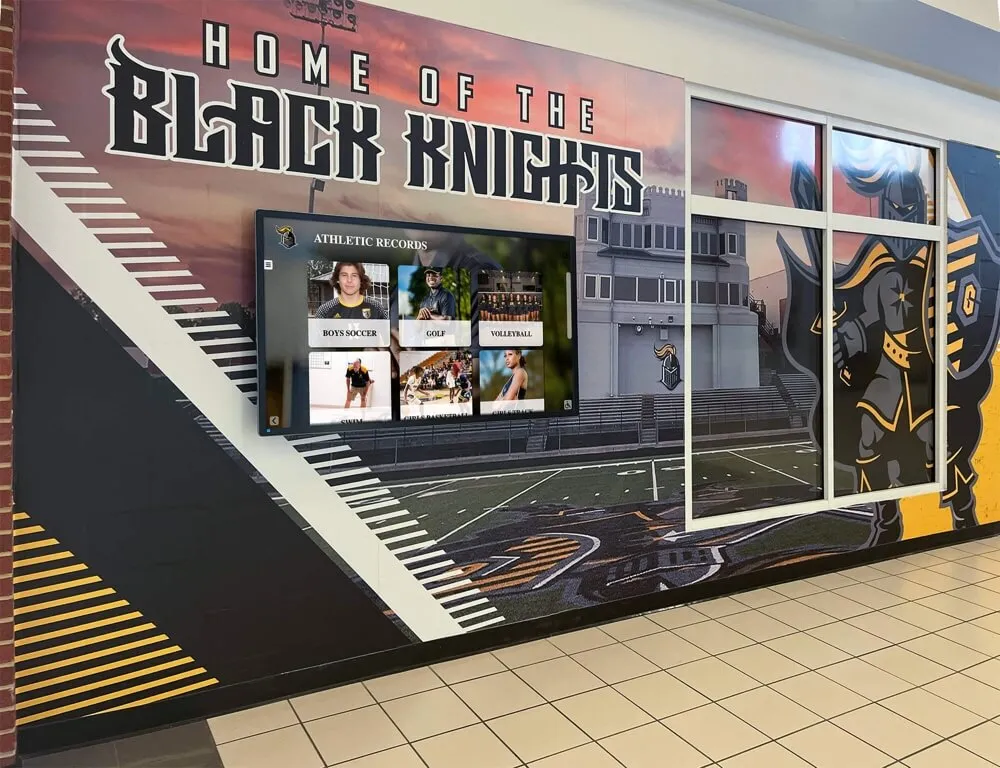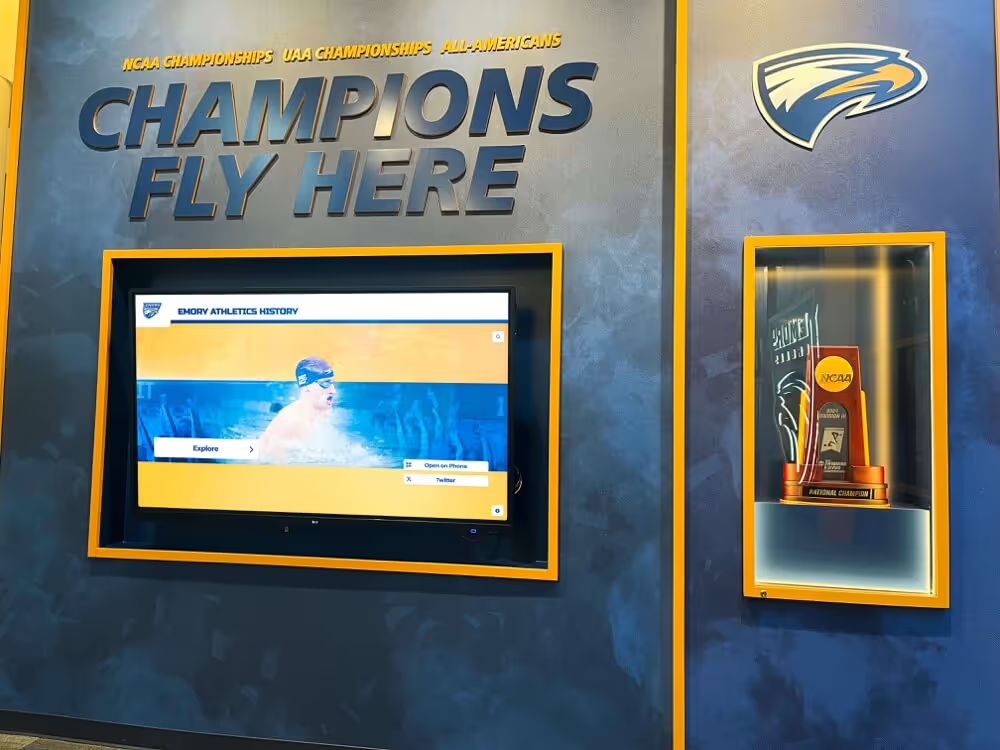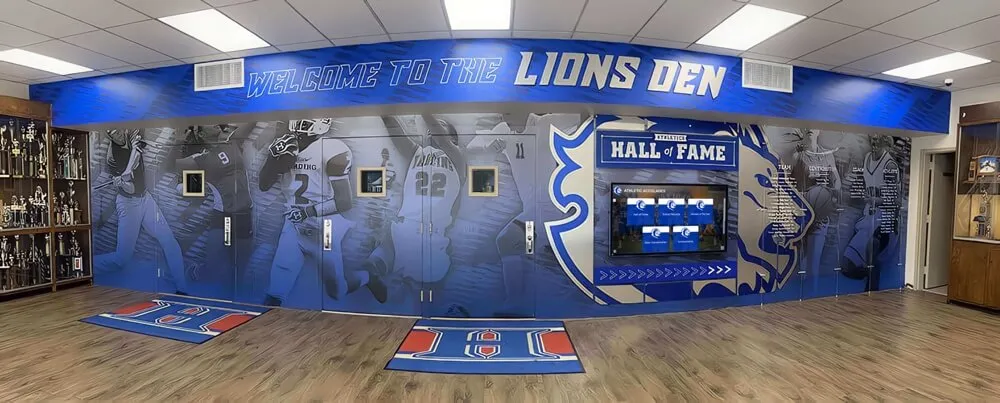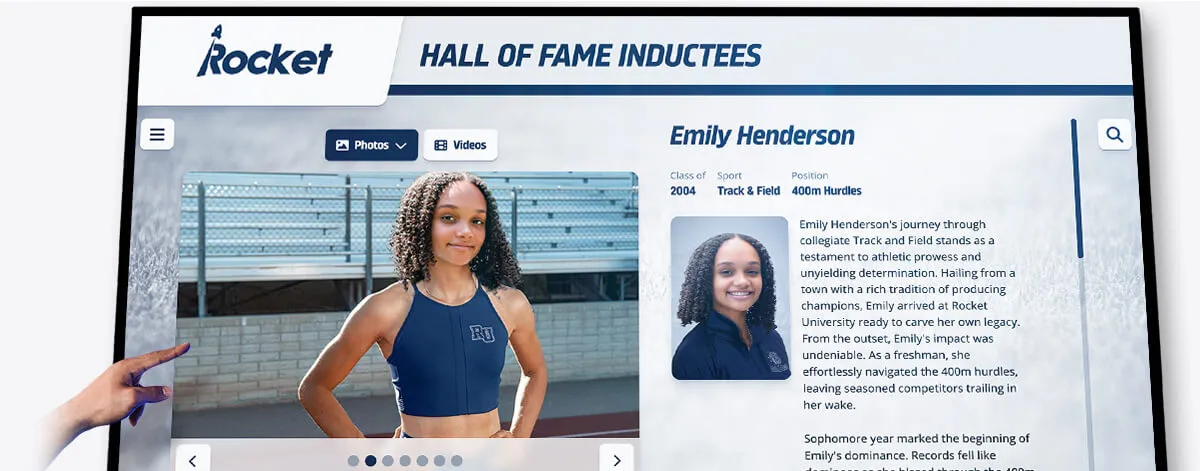




A track record board is one of the most detail-intensive recognition displays in any athletic program. Unlike football or basketball — where you track a handful of team statistics — track and field produces records across 20 or more individual and relay events, split by gender, complicated by wind-aided marks, and governed by strict verification standards before a time or distance earns a permanent spot on the wall. Getting this right from the start — with a defined event list, clear proof requirements, relay-specific handling, and a repeatable season update workflow — is the difference between a board that grows more impressive each year and one that collects disputes and blank spaces.
This guide covers everything athletic directors and coaches need to plan and maintain a track record board: which events to include, what documentation to require before listing a record, how to handle relay splits and team composition changes, and how to move from a static plaque to a digital display that updates automatically.
Quick Answer: What Makes a Track Record Board Complete?
A complete track record board lists all contested individual and relay events for both genders, requires verified performance documentation (FAT or hand-timed with photo finish backup), applies wind-aid limits to sprints and horizontal jumps, names every relay team member, and is updated within two weeks of each season's close. Digital platforms automate ranking and flag pending verifications, reducing administrative time while keeping the board accurate.
Table of Contents
- Event List: What to Include on a Track Record Board
- Verification Rules Before a Record Is Posted
- Relay Record Handling: Splits, Rosters, and Substitutions
- Season Update Workflow: Step-by-Step
- Wind-Aid Policy for Sprints and Horizontal Jumps
- Moving to a Digital Display Workflow
- Frequently Asked Questions
Event List: What to Include on a Track Record Board
The first planning decision is scope. Some programs list only the marquee events; others capture every contested event. A comprehensive track record board should include all events your program actually competes in — records for events that are never run hold a slot that could recognize a real achievement.
Standard Individual Track Events
| Event | Notes |
|---|---|
| 100 meters | Wind-limit applies |
| 200 meters | Wind-limit applies |
| 400 meters | No wind reading |
| 800 meters | No wind reading |
| 1,600 meters (or mile) | Note which distance your state uses |
| 3,200 meters (or 2-mile) | Note which distance your state uses |
| 110m / 100m hurdles | Varies by gender; wind-limit applies |
| 300m / 400m hurdles | Varies by state association |
| 3,000m steeplechase | College and larger high school programs |
| 4×100 relay | List all four legs by name |
| 4×200 relay | List all four legs |
| 4×400 relay | List all four legs |
| 4×800 relay | List all four legs |
| Sprint medley relay | 200-200-400-800 legs; note order |
| Distance medley relay | 1,200-400-800-1,600 legs; note order |
Field Events
| Event | Notes |
|---|---|
| High jump | Record in feet/inches and meters |
| Pole vault | Record in feet/inches and meters |
| Long jump | Wind-limit applies |
| Triple jump | Wind-limit applies |
| Shot put | Record implement weight separately for boys/girls |
| Discus | Record implement weight separately |
| Hammer throw | College programs; note implement weight |
| Javelin | Note implement weight; rule change year if applicable |
Combined Events
| Event | Notes |
|---|---|
| Pentathlon | Girls; note which five events per state rules |
| Heptathlon | Girls; note scoring table version |
| Decathlon | Boys; note scoring table version |
Programs recognized in broader academic recognition programs often benefit from listing student-athletes who achieved combined event scores alongside athletic record holders — the same display can honor both dimensions of student-athlete excellence.

Verification Rules Before a Record Is Posted
Every record on a track board carries the program’s credibility. A policy that requires documentation before posting protects against errors, hand-timing variance, and disputed marks. Define your verification standard before the first record is submitted — not after a controversy.
Minimum Documentation Requirements
| Performance type | Required documentation |
|---|---|
| Fully automatic timing (FAT) | Official results sheet with FAT designation, meet name, date, and NFHS/NCAA rule designation |
| Hand-timed | Two independent stopwatch readings within 0.05 seconds; printed or digital meet results |
| Field events | Official measurement by a certified official; printed results sheet |
| Combined events | Certified results from each individual sub-event; combined score verified against current scoring table |
| Relay records | Same FAT or hand-time standard; full team roster with all four legs named |
Who Reviews the Submission
Designate a single person — typically the head coach or athletic director — as record custodian. A two-step process reduces error: the coach submits the documentation, and the athletic director or a department lead independently reviews and approves before the board is updated. This is especially important when the submitting coach benefits from the recognition.
Handling Records from Away Meets and Invitationals
Records set at away meets are valid but require extra verification steps. The minimum standard is a printed or emailed official results sheet from the host school’s timing service. Results posted on athletic.net or MileSplit with verified meet IDs are acceptable supplementary evidence. Post-only results from parent timing apps are not sufficient.
Programs that connect their athletic achievement recognition to a rigorous verification standard find that the records they do post carry more weight with athletes, alumni, and recruiting families — because everyone knows each mark was earned cleanly.
Relay Record Handling: Splits, Rosters, and Substitutions
Relay records are the most administratively complex entries on a track record board. Four individuals share credit for one time, and the team composition can change between heats, between meets, and even between legs within a single event.
Who Gets Named on the Record
The standard is to name all four athletes who ran the relay leg that produced the record time — regardless of who ran earlier heats that same day. If Athlete A ran the prelim and Athlete B ran the final, only the final runners are credited for the record.
Handling Alternate Runners
Some programs carry a fifth or sixth relay member who practices with the team but may not have run the record performance. These alternates should be noted in the archive record but not listed as record holders on the display. A clear notation — “Alternates: [names]” — honors their contribution without misrepresenting the performance.
When a Split-Leg Record Exists
Occasionally a relay team sets a record with one exceptional leg — a 100m split of 10.2 in a 4×100, for example. Individual relay splits are not officially recognized records on a track record board under NFHS rules, but programs may choose to note exceptional splits as historical context rather than official records. Distinguish these clearly from official marks to avoid confusion.
Relay Record Entry Format
| Field | Example |
|---|---|
| Event | 4×400 Relay (Boys) |
| Time | 3:14.82 |
| Meet | State Championship |
| Date | May 17, 2025 |
| Leg 1 | Marcus Thompson (400m leg, 51.4) |
| Leg 2 | Devon Williams (400m leg, 48.9) |
| Leg 3 | Jordan Rivera (400m leg, 47.6) |
| Leg 4 | Caleb Foster (400m leg, 46.9) |
| Timing method | FAT |
| Verified by | Athletic Director signature + meet results PDF |
Season Update Workflow: Step-by-Step
A consistent season-end workflow prevents records from piling up in a coach’s email inbox and ensures the board reflects current achievements before alumni events, banquets, and the next recruiting season.
Step 1: Pull final results from each meet. At season close, compile official results from every meet. Athletic.net, MileSplit, and state association results portals are the primary sources. Download PDFs or export CSVs so documentation is preserved independent of third-party sites.
Step 2: Compare each athlete’s season-best against the current record board. Sort season-best performances by event. Any performance that beats the listed record goes into the review queue. Be thorough: a new record can come from a late-season meet that didn’t get media attention.
Step 3: Request documentation for each candidate record. Contact the head coach for each candidate. Required documentation varies by timing method (see verification table above). Set a deadline — typically 10 business days after the last competition — for submitting documentation.
Step 4: Review and approve. The record custodian verifies submitted documentation against the meet results source. Approve clean submissions; return incomplete ones with a specific list of what’s missing. Keep a log of every review decision.
Step 5: Update the board. Post approved records with the full required fields: athlete name(s), performance mark, meet name, date, and verification status. For digital displays, this step is a data entry or import operation rather than a physical plaque update.
Step 6: Archive the season records. Save a complete snapshot of the record board as it stands at season end. PDF and spreadsheet format both work. File it under the season year. This archive protects against future disputes and provides the data needed for retrospective recognition at milestones like class reunion celebrations or hall of fame nominations.
Step 7: Communicate updates to athletes and coaches. A brief email or team announcement confirming which records were broken, who holds them, and where they are displayed builds program culture and gives athletes recognition they can share with families.

Wind-Aid Policy for Sprints and Horizontal Jumps
Wind assistance is the most misunderstood technical rule in track and field record-keeping. A performance that exceeds +2.0 m/s wind assistance is legal for competition but cannot be recognized as an official record under NFHS and NCAA rules. Programs that fail to enforce wind limits end up with record boards that mix wind-aided and legal marks — an integrity problem that grows harder to fix the longer it goes unaddressed.
Events Affected by Wind Rules
| Event category | Wind rule |
|---|---|
| Sprints: 100m, 200m | Max +2.0 m/s for records |
| Hurdles: 100m H, 110m H | Max +2.0 m/s for records |
| Long jump | Max +2.0 m/s for records |
| Triple jump | Max +2.0 m/s for records |
| 400m and longer sprints | No wind rule |
| Vertical jumps, throws | No wind rule |
| Relay events | No wind rule |
What to Do When a Wind-Aided Mark Surpasses the Record
The performance can appear in the season’s results and be recognized at banquets as an outstanding individual achievement — but it cannot be posted on the official record board. A common practice is to note it in a supplemental “notable performances” section that is clearly distinguished from official records. This recognizes the athlete’s accomplishment while maintaining the board’s integrity.
Recognition programs that handle student athlete recognition with precision apply the same discipline to every category: the standard is documented, consistently applied, and clearly communicated to athletes at the start of each season.
Moving to a Digital Display Workflow
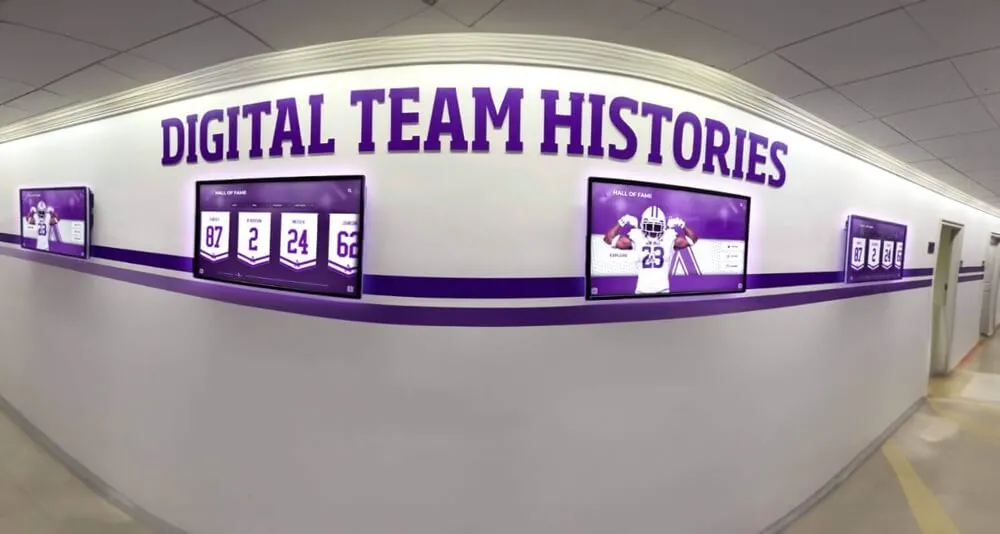
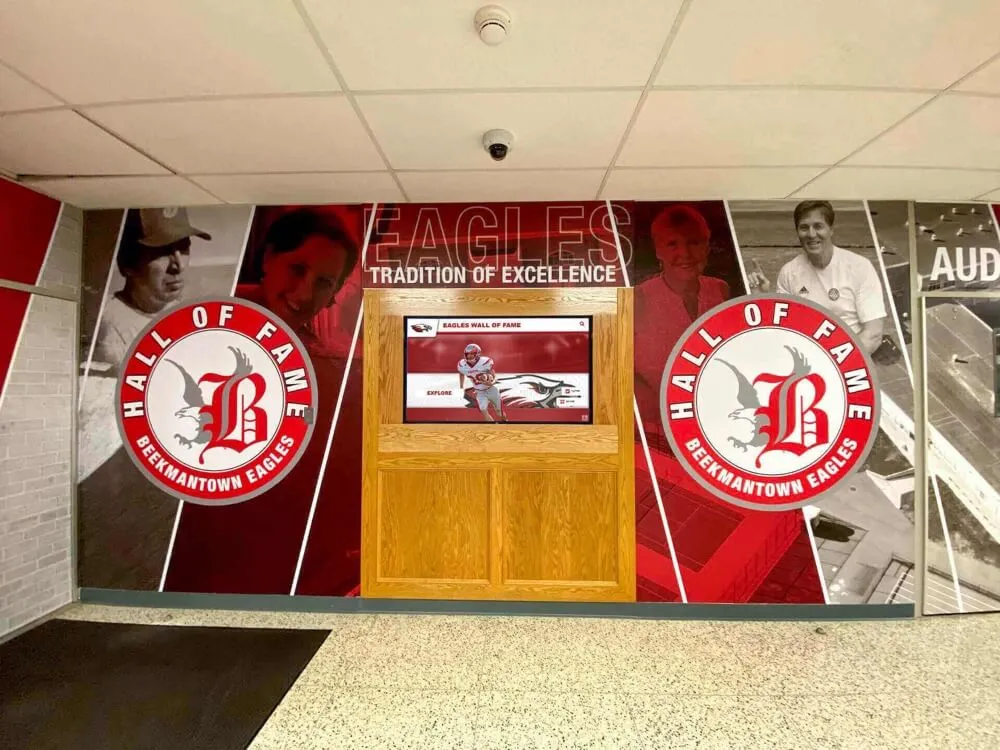
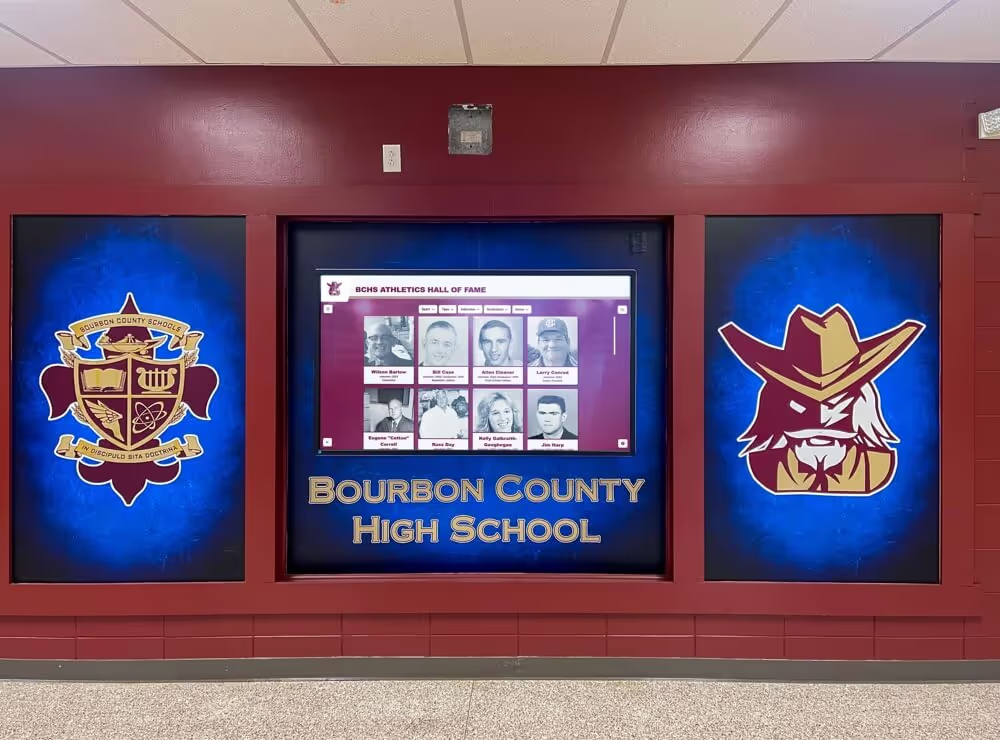
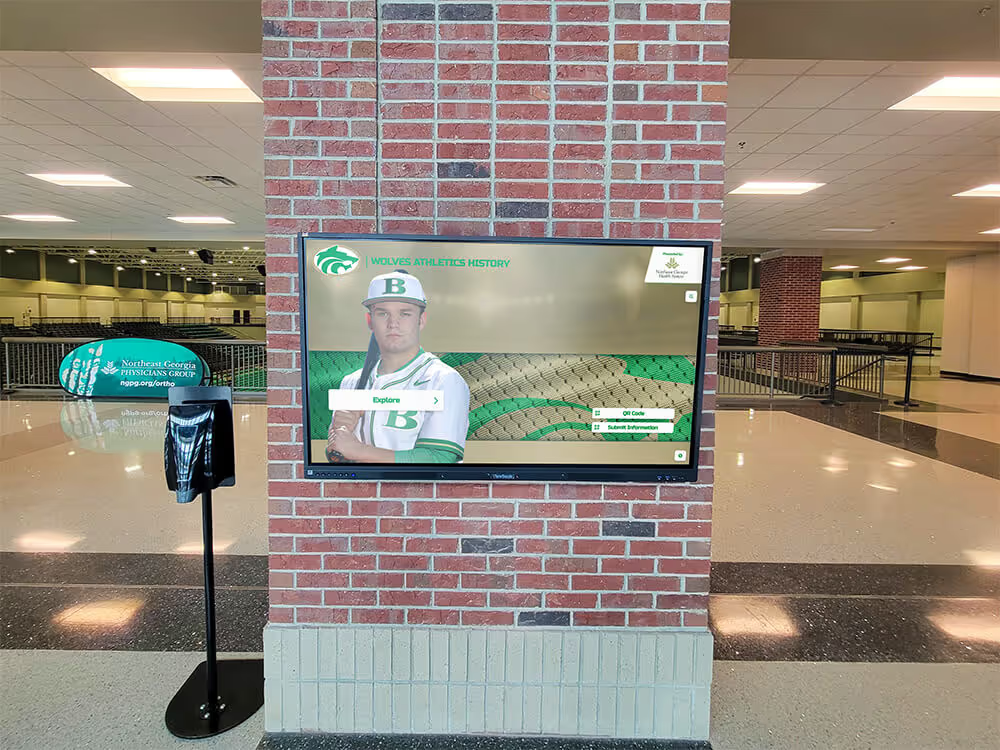
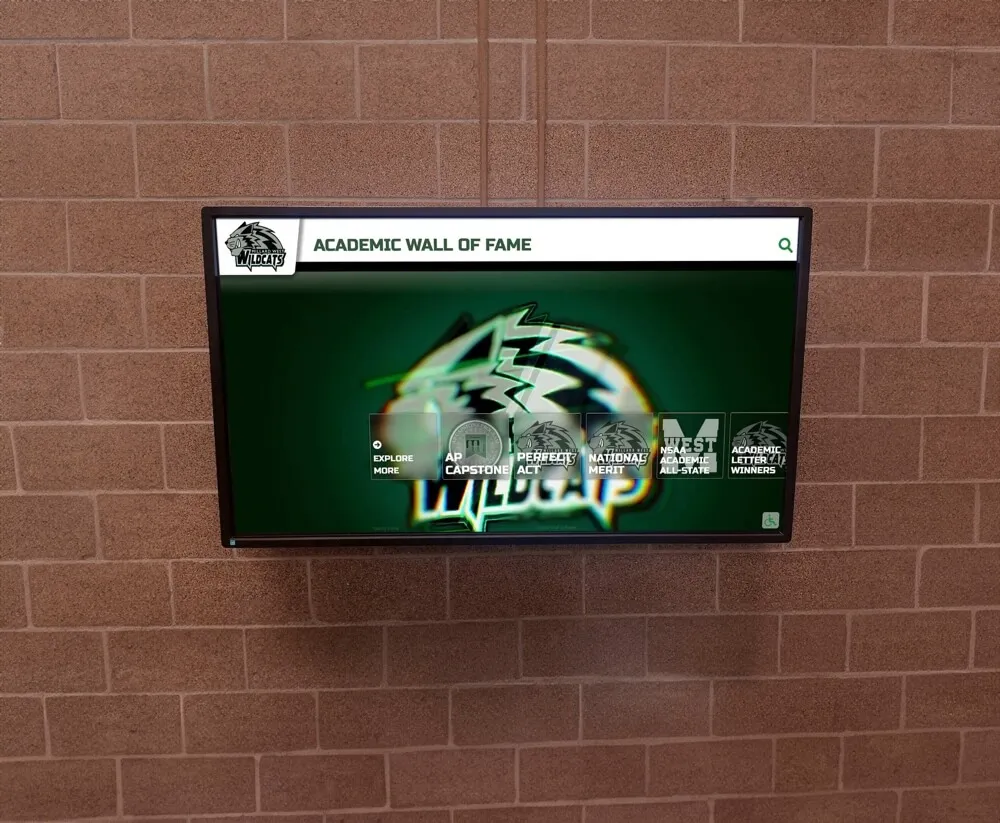
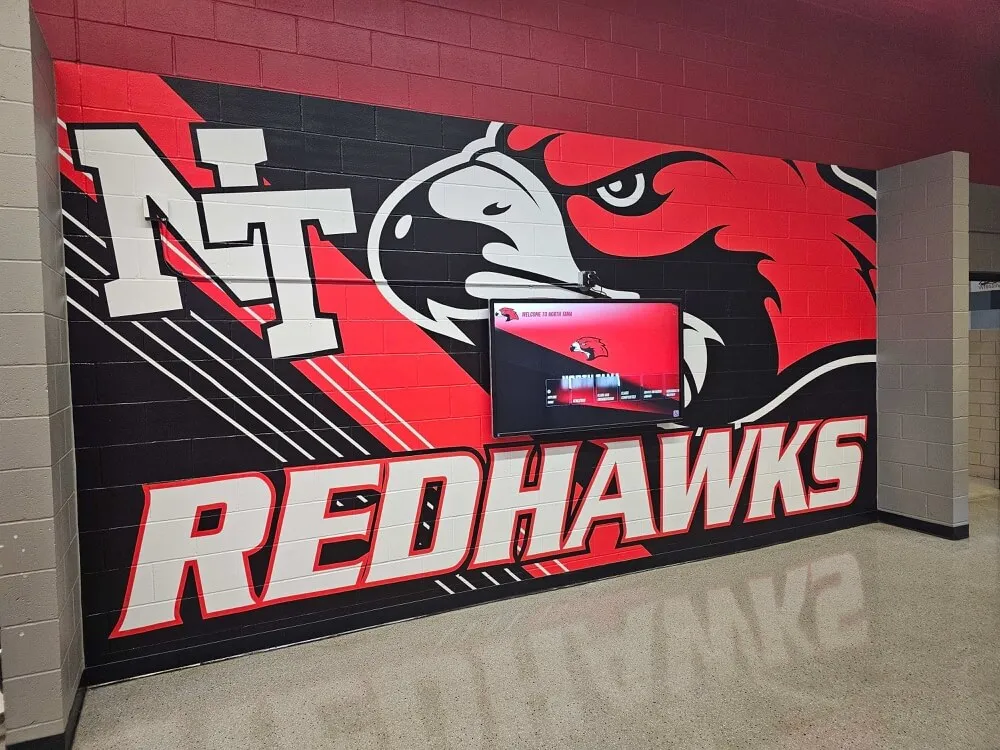
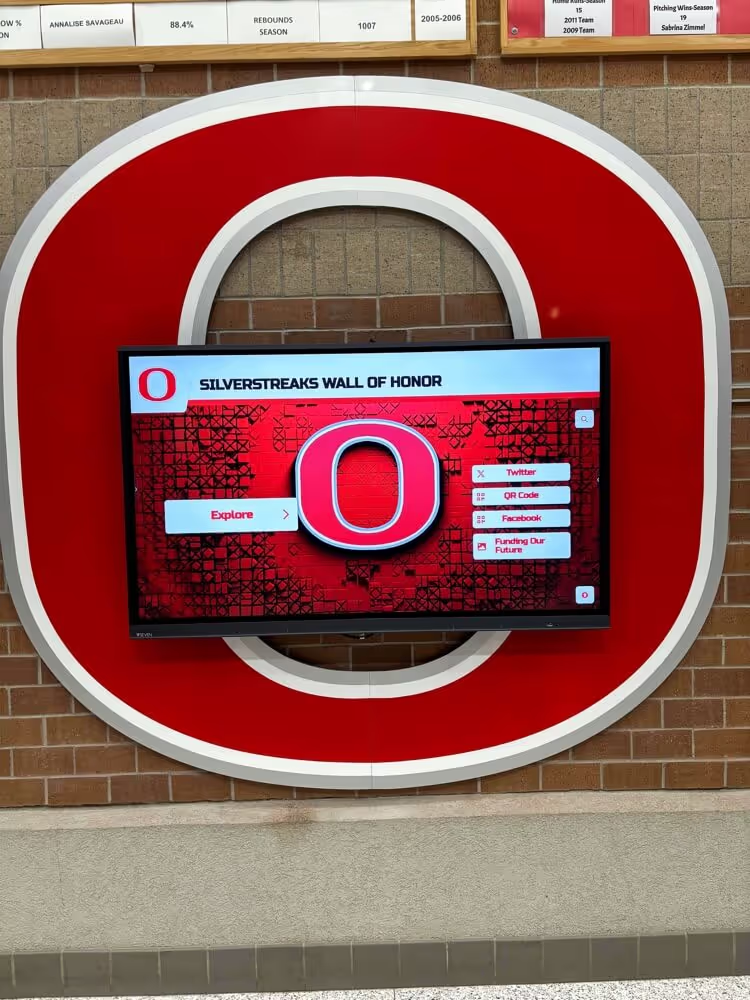
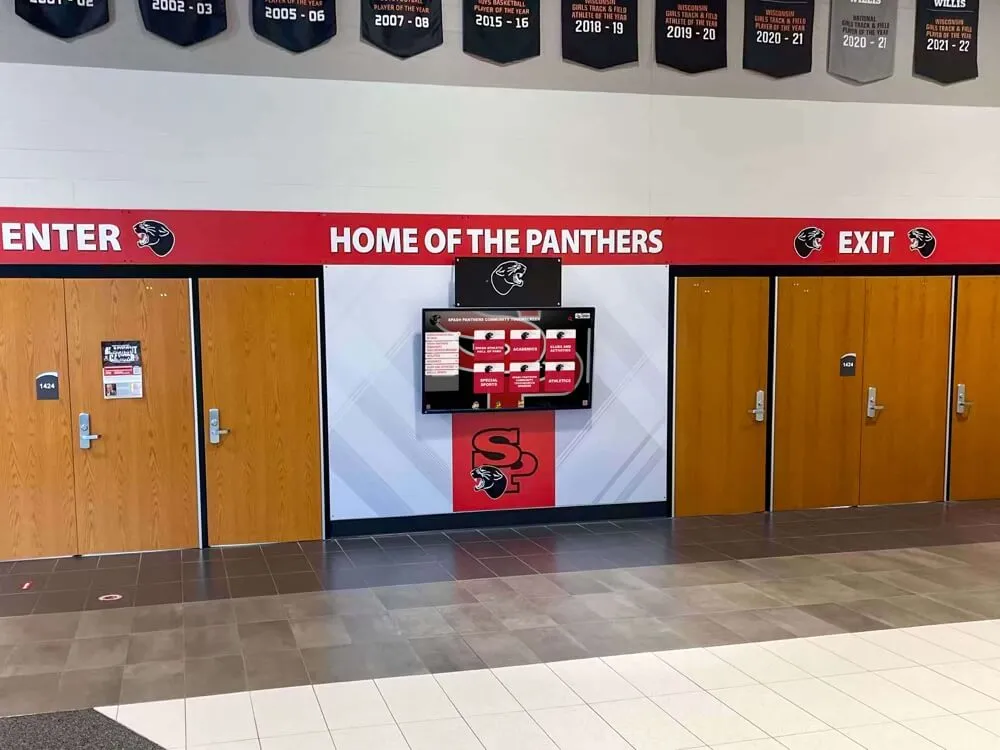
A physical track record board — painted, engraved, or printed on acrylic — requires physical access every time a record changes. Over a decade of competitive seasons, that means dozens of plaque updates, reprints, or paint corrections that never quite match the original. Digital displays solve the maintenance problem while adding capabilities that static boards cannot offer.
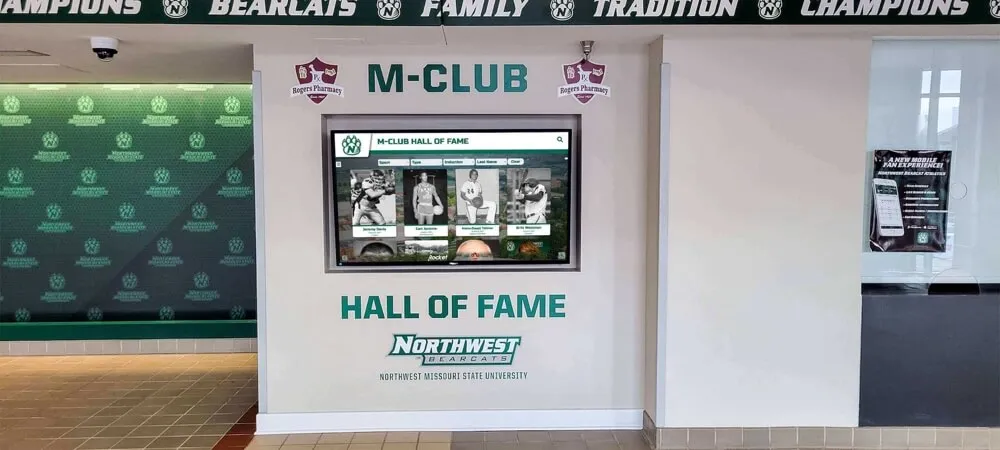
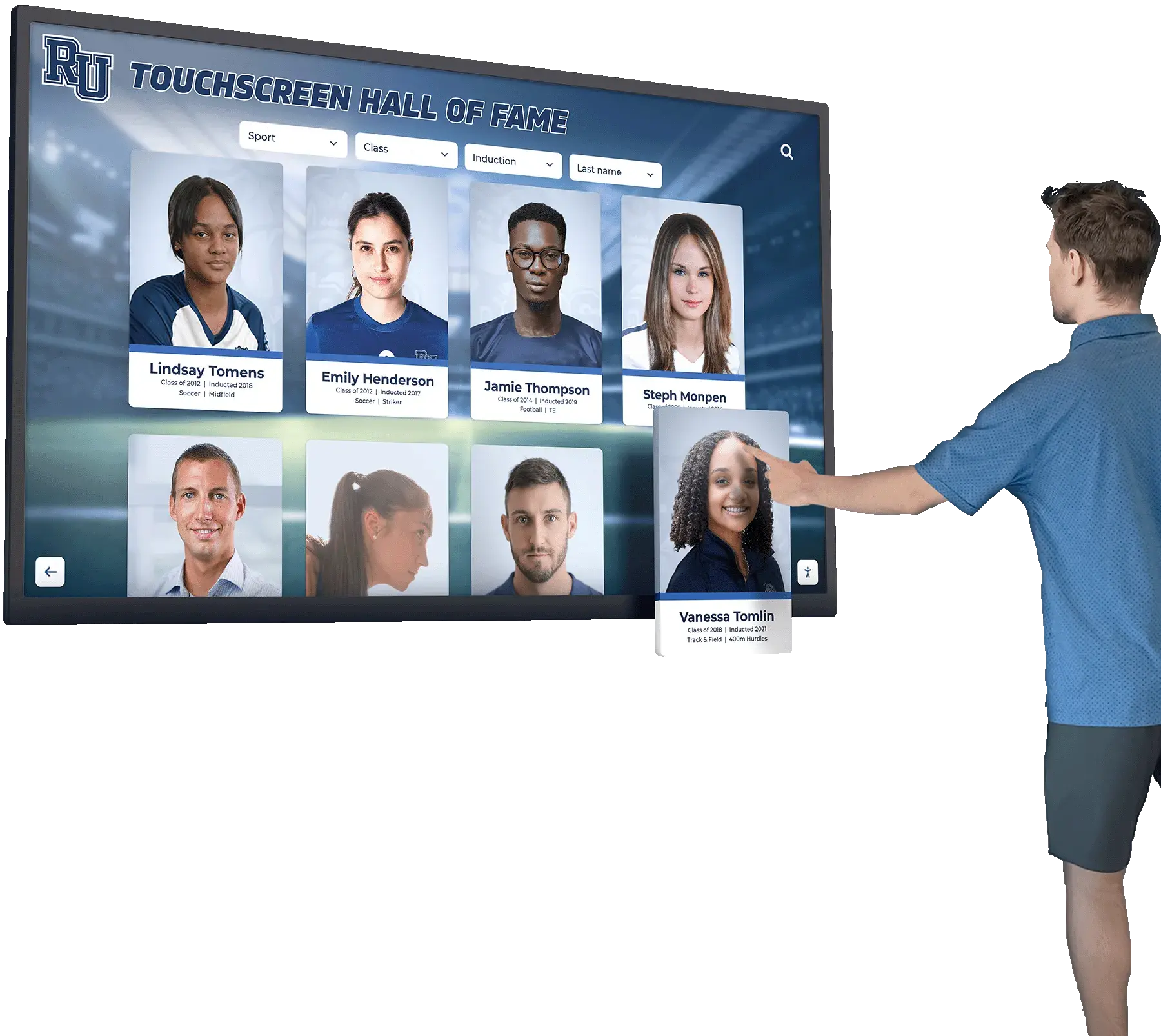
What a Digital Track Record Board Adds
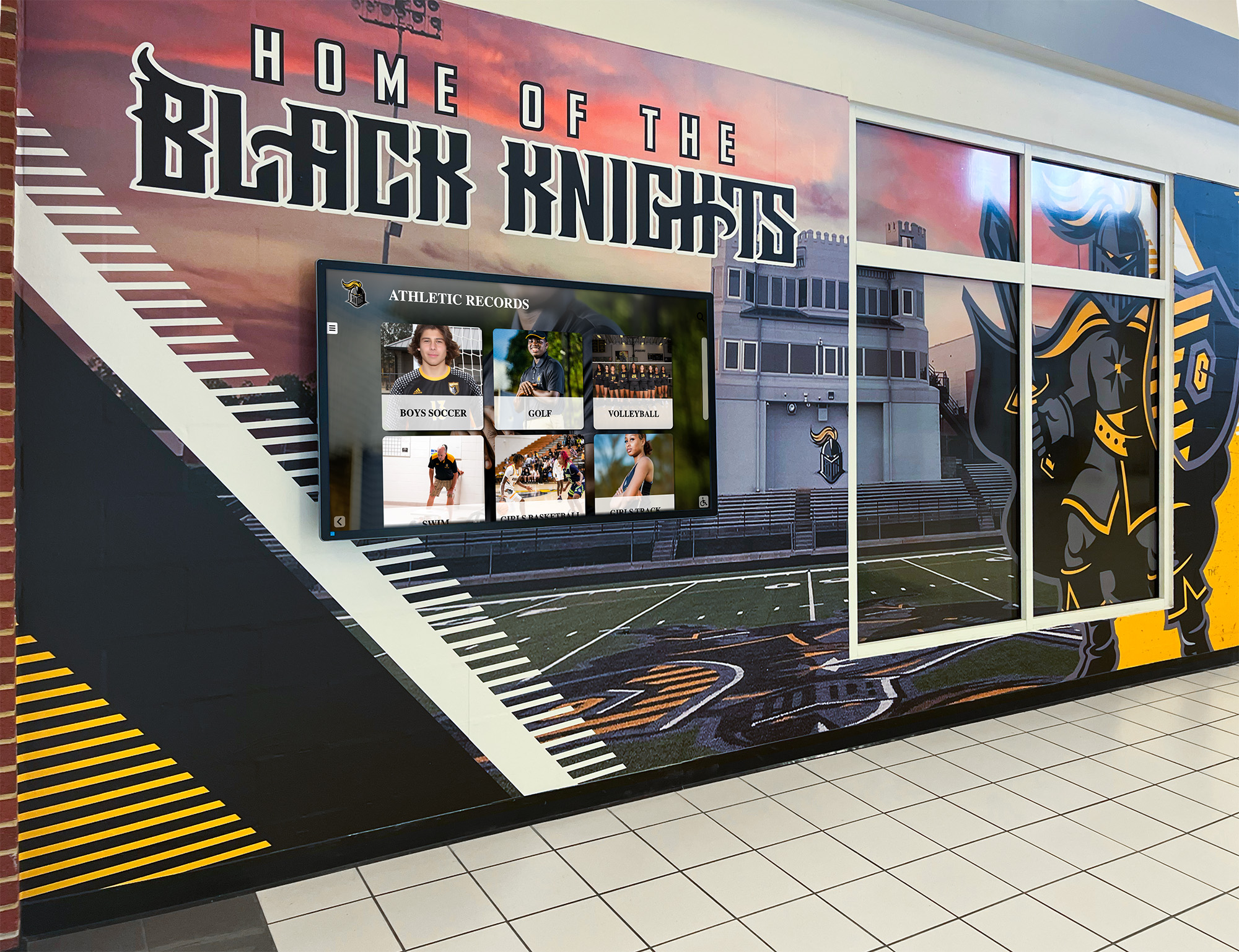
- Auto-ranking: Load career and season records once; the platform re-sorts rankings automatically when new data is added. The all-time 400m leaders list updates itself when a new record is approved.
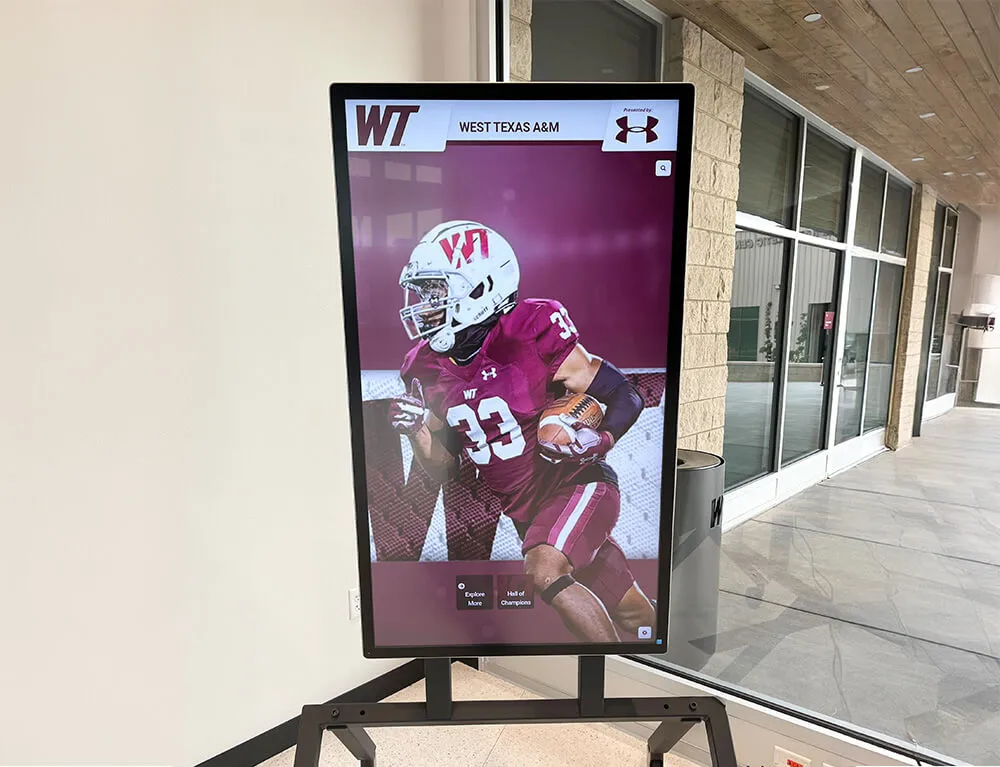
- Multi-event browsing: Visitors browse by event, gender, or year rather than scanning a single wall.
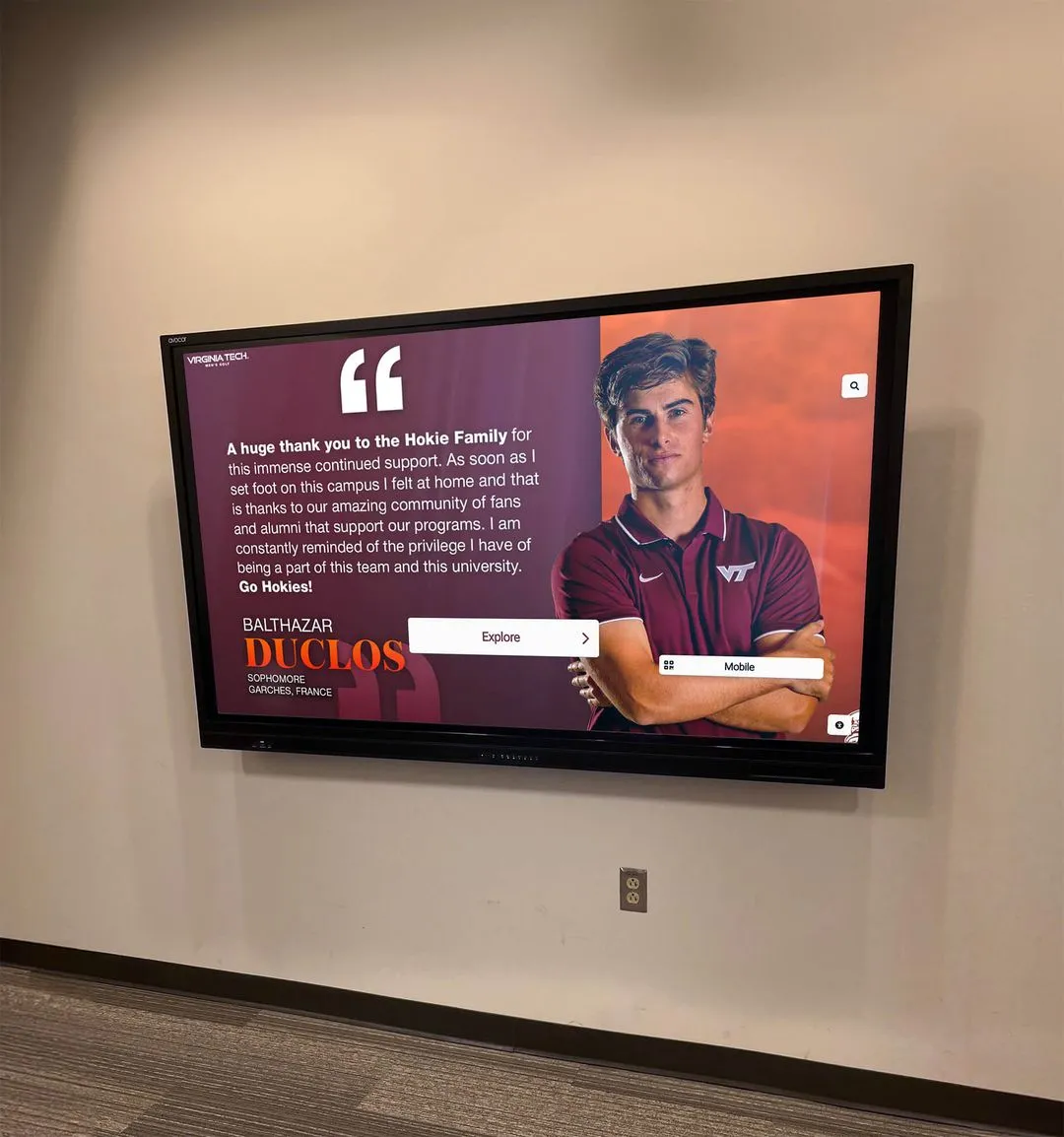
- Photo integration: A digital display can show the athlete’s photo, a clip from the record performance, and the full relay team roster on the same screen.
- Verification workflow integration: Pending records are flagged in the system with a “pending review” status, keeping the live display accurate while the approval process completes.
- Alumni engagement: Former record holders can be notified when their mark is broken, and their profiles remain permanently accessible even decades after graduation.
Platforms built for school athletics — reviewed in depth across comprehensive hall of fame tool guides — support multi-sport record boards that combine track, swimming, cross country, and every other program on a single display managed through one administrative interface.
Migrating Historical Records to a Digital Platform
Most programs have records going back 20 or more years stored in a combination of printed programs, hand-written logs, and spreadsheets of varying quality. A practical migration approach:
- Start with the last 10 years, where documentation is most complete and verification is most feasible.
- Work backward, flagging each pre-digital record with a confidence level: verified (official meet results found), estimated (corroborated by multiple sources), or oral tradition (coach or alumni memory only).
- Display the confidence level alongside historical records so future administrators and athletes understand the evidentiary basis.
- Add to the archive each season so the digital board grows richer over time.
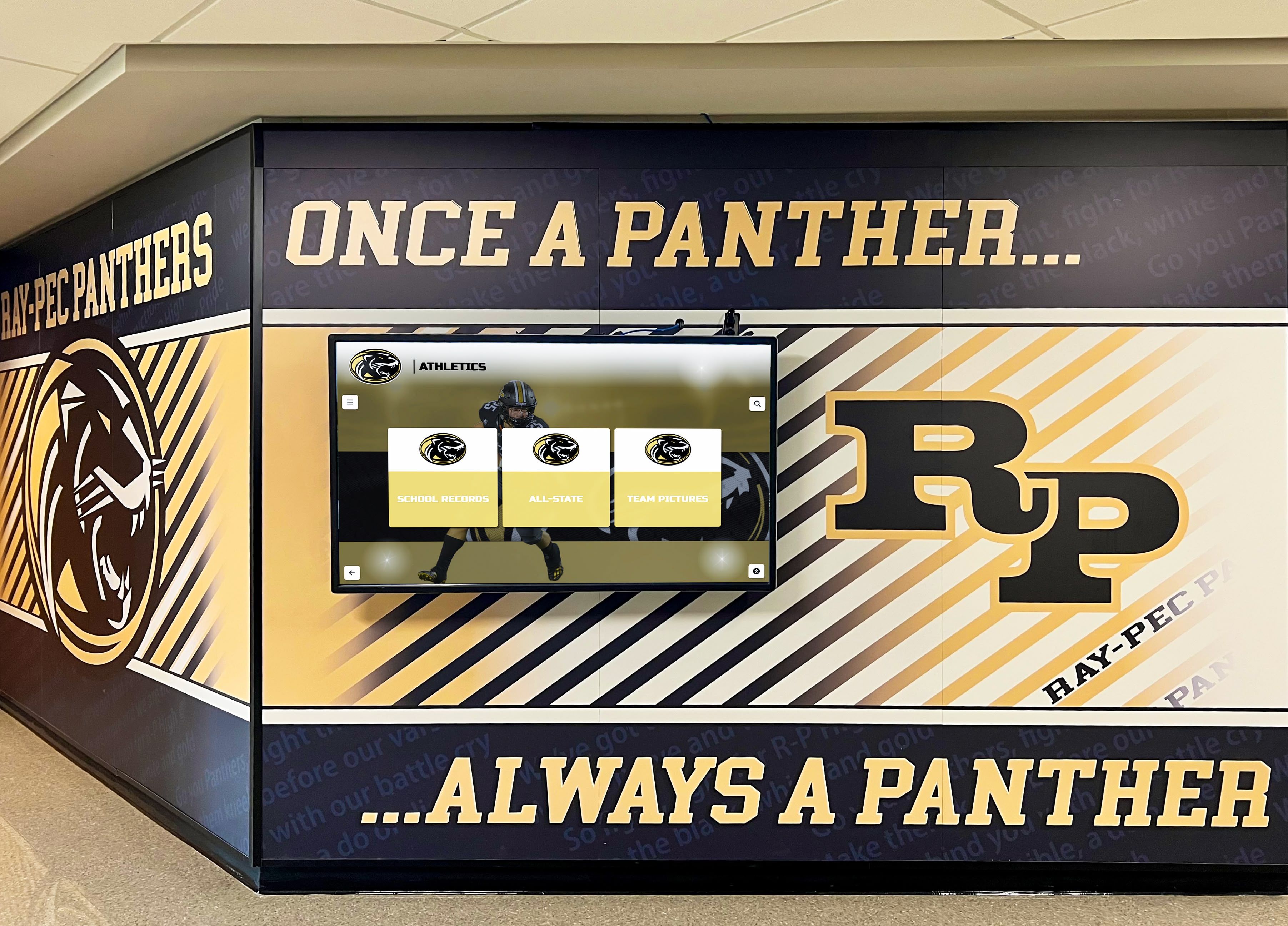
Digital record boards built for long-term archiving give programs a way to present decades of achievement to current athletes, visiting recruits, and alumni returning for reunion and recognition events. When a former state qualifier walks through the athletic hallway 15 years after graduation and sees their name on the board, the program’s investment in documentation pays off in a way no trophy case can replicate.
For programs beginning to explore digital record board options, resources like the hall of fame tools comparison guide outline what platforms are available, what pricing structures to expect, and what to look for in a school-specific athletic recognition system.
Book a Demo with Rocket Alumni Solutions
Frequently Asked Questions
What events must be included on a high school track record board?
At minimum, include all events your state athletic association sanctions for varsity competition — both boys and girls. In most states that is 100m, 200m, 400m, 800m, 1,600m, 3,200m, 110m/100m hurdles, 300m/400m hurdles, 4×100, 4×200, 4×400, high jump, pole vault, long jump, triple jump, shot put, and discus. Add relay events your program actually enters (4×800, sprint medley, distance medley) and combined events if contested. Leave out events your program does not compete in.
How do you handle a record set at a non-sanctioned meet?
Records must come from sanctioned meets to qualify for the official board. A performance at an unsanctioned invitational — one not run under NFHS or applicable governing body rules — does not qualify regardless of the time or distance. Note it as a “best performance outside of sanctioned competition” if you want to acknowledge the athlete’s achievement without compromising the record’s standing.
Can a relay record be broken if only two of the four original runners return the following year?
Yes. Relay records belong to the performance, not the team. A new group of four runners who break the time sets a new record with their names attached, regardless of whether any of the previous record holders are still on the team.
How long should we keep documentation for verified records?
Permanently. Once a record is approved and posted, the supporting documentation — official results sheet, timing printout, or signed verification form — becomes part of the program’s permanent archive. Digital storage makes this easy: a single folder with PDFs of every record’s supporting documentation occupies negligible space and can survive staff transitions indefinitely.
What is the correct format for displaying a wind reading?
Wind readings are displayed in meters per second with sign: “+1.8” for a tailwind, “-0.4” for a headwind. A reading of exactly zero is written as “0.0.” Always include the wind reading for any sprint or horizontal jump record so future administrators can verify the mark’s validity without having to retrieve the original meet sheet.
Should we list records broken at the state championship differently from those set at regular-season meets?
Both are valid records regardless of meet prestige, and both should be displayed with equal weight. Including the meet name and date on every entry provides context that lets readers understand the competitive environment — a time set at the state championship carries implicit significance without needing a special visual treatment.
How do digital record boards handle pending verifications?
Platforms like Rocket Alumni Solutions allow administrators to enter a performance with a “pending” status, making it visible in the system for review without publishing it to the public display. Once the verification is complete and approved, a single status change makes the record live. This prevents premature posting while keeping the administrative workflow organized.
How do we recognize records from alumni who graduated before the program had a record board?
Retroactive records are valid as long as documentation exists. Official state association archives, printed meet programs, local newspaper archives, and yearbook records are all acceptable sources. For marks that can only be corroborated through oral testimony, create a clearly labeled “historical estimate” category rather than presenting them as fully verified records. Resources on hall of fame recognition approaches address how to handle legacy recognition with appropriate context.
Building a Track Record Board That Lasts Decades
A track record board built on clear event scope, rigorous verification rules, precise relay documentation, and a repeatable season update process becomes one of the most compelling displays in an athletic program. Every name and every mark represents a real achievement, verified and preserved with enough detail that future generations — coaches, athletes, alumni, and community members — can trust what they read.
Programs that invest in comprehensive athletic recognition infrastructure find that the record board becomes a recruiting asset, a reunion anchor, and a daily source of motivation for current athletes who can see exactly what standard they are chasing.
Transitioning that structure to a digital platform removes the maintenance burden while adding capabilities — searchability, photo integration, auto-ranking, alumni engagement — that a physical board simply cannot provide. The event list, verification rules, and update workflow you build now become the data architecture that powers the display for the next 20 years.
See a Live Digital Track Record Board for Your Program
Rocket Alumni Solutions builds interactive record boards and athletic recognition displays for high school and college programs. Auto-ranking across every event, unlimited historical entries, relay team rosters, and browser-based updates — no IT department required.
Book a Free Demo