



Track and field programs generate more record-worthy performances than any other high school sport. Between running events spanning 100 meters through 3200 meters, field events including jumps and throws, relay configurations, and both indoor and outdoor seasons, a comprehensive track program tracks hundreds of potential record holders across multiple decades. Athletic directors, coaches, and booster clubs managing these programs face the ongoing challenge of preserving this extensive history while ensuring current athletes can see the standards they’re chasing and understand their place in program legacy.
This comprehensive guide examines how successful high school track and field programs preserve, organize, and display their athletic records. You’ll discover the essential categories worth tracking, proven preservation methods that prevent history loss, effective display strategies that inspire current athletes, and modern solutions that eliminate the manual update burden while celebrating every record holder who’s ever represented your program.
Why Track and Field Record Preservation Matters
Unlike team sports where championships define program success, track and field celebrates individual excellence measured in tenths of seconds and fractions of inches. Every record represents countless training hours, technical refinement, and competitive courage that pushed human performance boundaries. Schools that preserve this history honor not just champions, but the progression of athletic achievement itself—showing how today's records build on yesterday's breakthroughs while inspiring tomorrow's competitors. Digital recognition platforms like Rocket Alumni Solutions enable programs to maintain comprehensive record books that never erase history when new records fall, preserving every champion who's earned their place in program legacy.
Essential Track and Field Record Categories
Comprehensive track programs maintain records across multiple categories to ensure all achievement types receive proper recognition and preservation.
Sprint and Distance Running Records
Running events form the foundation of track programs, with records maintained across distinct distance categories that each require unique athletic capabilities.
Sprint Records (100m, 200m, 400m): Sprint records measure explosive speed and technical acceleration. Programs should maintain separate records for these distances as they represent fundamentally different racing approaches—pure speed versus speed endurance.
Middle Distance Records (800m, 1600m): Middle distance events combine speed with strategic race management. The 800m and mile represent classic championship races where school records often stand for years, making proper preservation particularly important.
Distance Records (3200m, 5000m): Distance events showcase endurance excellence. Programs with cross country teams may also track 5K records to recognize their top distance specialists.
Hurdle Records: Both sprint hurdles (100m/110m) and intermediate hurdles (300m/400m) require specialized technique that makes these distinct record categories deserving separate recognition from flat sprint times.
Schools planning comprehensive recognition systems benefit from understanding approaches used for sports banquet awards categories that celebrate diverse achievement types across athletic programs.
Field Event Records
Field events measure power, technique, and coordination through throwing and jumping disciplines that each require years of specialized training.
Jumping Events: Programs maintain separate records for high jump, long jump, triple jump, and pole vault. Each event demands distinct technical skills and athletic capabilities that make combined jumping records meaningless.
Throwing Events: Shot put, discus, javelin, and hammer throw (where offered) each require unique technique and strength development. Gender-specific implement weights necessitate maintaining separate records for boys and girls programs.
Multi-Event Records: Decathlon and heptathlon scores recognize the ultimate all-around athletes who compete across multiple disciplines. These combined event records deserve prominent display alongside individual event achievements.
Relay Records
Relay events add team dynamics to individual sport track and field, creating record categories that recognize collective performance excellence.
Sprint Relays: 4x100m and 4x200m relay records capture pure team speed and exchange technique. Programs should preserve the names of all four relay members to properly honor collective achievement.
Distance Relays: 4x400m and 4x800m relays demonstrate team depth in speed endurance and tactical racing. These championship relays often determine meet outcomes, making their records particularly meaningful to program history.
Mixed and Shuttle Relays: Some programs compete in specialized relay formats including mixed-gender relays or shuttle hurdle relays that deserve record tracking when regularly contested.
Understanding how schools approach 1000 points scorer recognition in other sports provides models for multi-year achievement tracking applicable to track athletes who set multiple records across their careers.

Indoor vs. Outdoor Records
Programs with indoor and outdoor seasons face important decisions about record categorization that affect historical accuracy and athlete recognition.
Separate Season Records: Indoor track features shorter sprint distances (55m vs. 100m), different hurdle spacing, and banked turns that make direct comparison to outdoor marks impossible. Comprehensive programs maintain separate indoor and outdoor record books.
Venue-Specific Considerations: Some field events like pole vault and high jump may post significantly different performances between indoor and outdoor competition due to facility differences, weather protection, and psychological factors associated with venue type.
Combined Rankings: While maintaining separate seasonal records, some programs also track best marks regardless of season to identify absolute program bests. This dual approach preserves historical context while recognizing ultimate achievement.
Traditional Record Preservation Methods
High school track programs have employed various methods to preserve athletic records, each with distinct advantages and significant limitations affecting long-term historical accuracy.
Physical Record Books and Binders
Many established programs maintain handwritten or typed record books documenting performance history across decades of competition.
Method Overview: Athletic directors or head coaches keep physical binders or bound books listing records by event, with entries updated manually as new records fall. The best versions include athlete names, marks, meet locations, and dates for comprehensive historical documentation.
Advantages: Physical books create tangible historical artifacts that don’t depend on technology, can be referenced without power or internet connectivity, and often contain coaching annotations and historical notes that add context to raw performance data.
Significant Limitations: Records exist in only one location making them vulnerable to loss through fire, flood, or simple misplacement during coaching transitions. Updates require manual data entry prone to transcription errors, and athletes cannot easily access this information to understand what performances they’re chasing. Physical degradation over time makes old entries increasingly difficult to read.
Wall-Mounted Record Boards
Traditional vinyl or painted record boards mounted in field houses, gymnasiums, or weight rooms provide visible recognition of record holders that athletes see during training.
Display Format: Fixed boards list events with current record holder names and marks, often updated with new vinyl lettering or paint when records fall. The most common placements include indoor practice facilities where track athletes train year-round.
Recognition Value: Visible record boards create daily motivation as athletes train in spaces displaying the performances they’re pursuing. Seeing their name on the wall after setting a record provides tangible recognition that validates achievement.
Update Challenges: When records fall, updating vinyl boards requires purchasing replacement lettering, precise alignment, and removal of old names—a process that discourages frequent updates and often results in outdated information remaining posted for months. More problematically, limited physical space forces programs to list only current records, completely erasing previous record holders from visible program history.
The challenge of maintaining current information on physical displays reflects broader issues addressed by touch screen kiosk software designed to solve static content update problems.
Spreadsheet and Document Files
Digital documents provide flexibility that physical books lack, though they introduce different preservation challenges that affect record accessibility and historical continuity.
Common Approach: Coaches or athletic directors maintain Excel spreadsheets or Word documents listing records by event, storing files on school computers or personal devices. More sophisticated versions include multiple sheets tracking seasonal records, all-time marks, and historical progressions.
Version Control Issues: When multiple people update separate file copies, determining which version contains accurate current information becomes problematic. Coaching changes frequently result in lost files when departing coaches take documents with them or fail to properly hand off digital records.
Access Restrictions: Files stored on individual computers remain inaccessible to athletes, parents, and community members interested in program history. This limited access reduces records’ motivational value and prevents broader program community from engaging with athletic achievement history.
Modern Digital Record Board Solutions
Contemporary digital platforms eliminate the preservation challenges, update burdens, and access limitations that plague traditional record-keeping methods while expanding recognition possibilities.
Automated Ranking and Update Systems
Digital record boards automatically sort performances, update rankings when new marks are achieved, and preserve complete historical progressions without manual intervention.
Automatic Performance Sorting: When coaches or athletic directors enter new performance data, modern systems automatically compare marks against existing records, update rankings instantly, and notify relevant stakeholders when records fall. This automation eliminates transcription errors and ensures displayed information remains current.
Unlimited Historical Depth: Unlike physical boards limited by wall space, digital platforms preserve every record holder throughout program history. Athletes can view how current records have progressed over decades, seeing the complete lineage of achievement in each event rather than just the current standard.
Multi-Level Recognition: Sophisticated systems maintain separate leaderboards for varsity records, freshman records, outdoor versus indoor marks, and all-time rankings across combined seasons. This comprehensive approach ensures athletes at all competitive levels receive appropriate recognition.
Schools implementing modern recognition systems often coordinate these with planning for athletic banquet planning that celebrates both individual records and team achievements.

Accessibility and Display Flexibility
Modern platforms make record information accessible through multiple channels while providing display flexibility that adapts to different venues and audience needs.
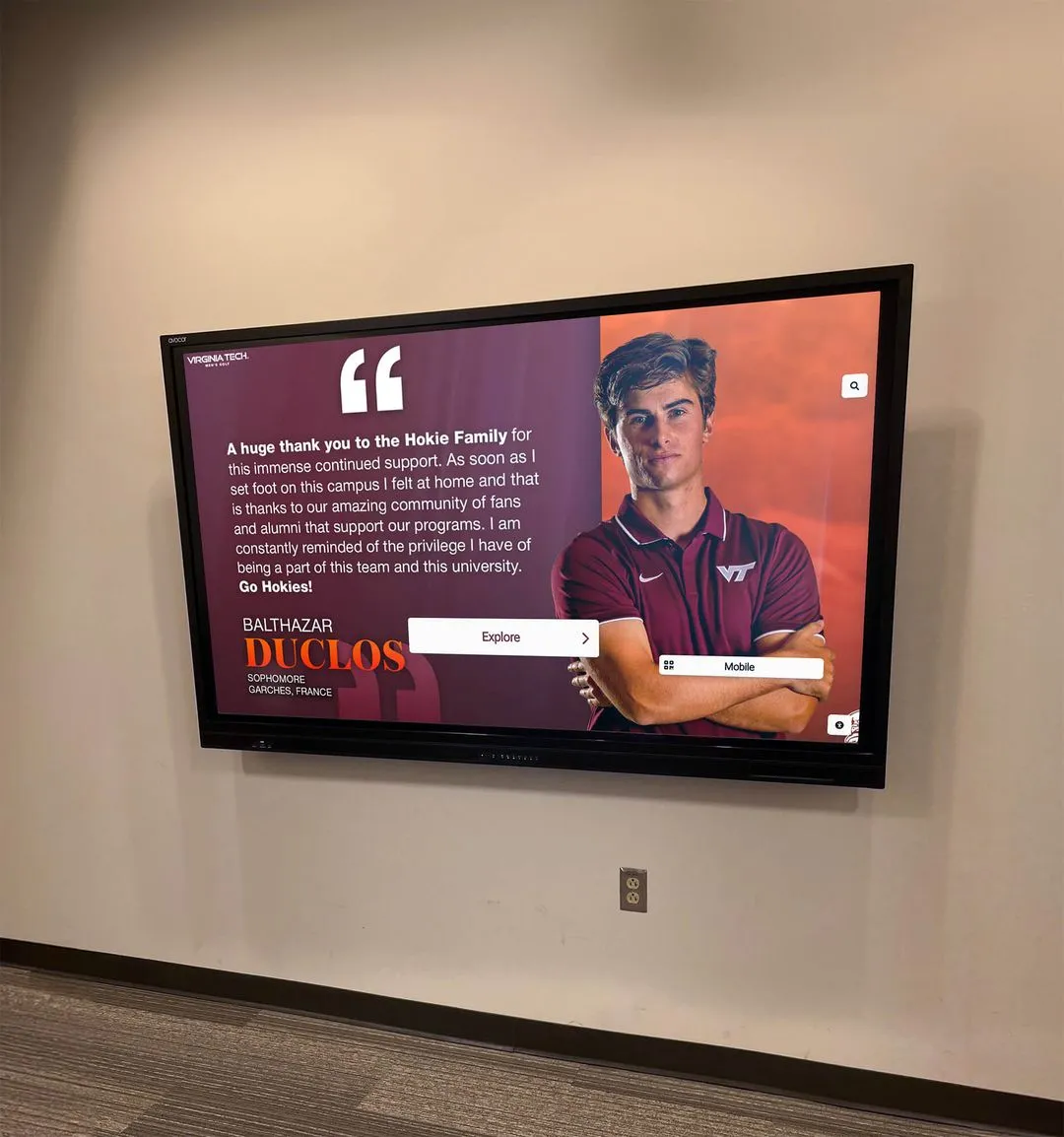
Multi-Device Access: Cloud-based record systems allow athletes, parents, coaches, and alumni to view current standings and historical records from any smartphone, tablet, or computer. This accessibility keeps records relevant beyond physical school spaces while engaging broader program communities.
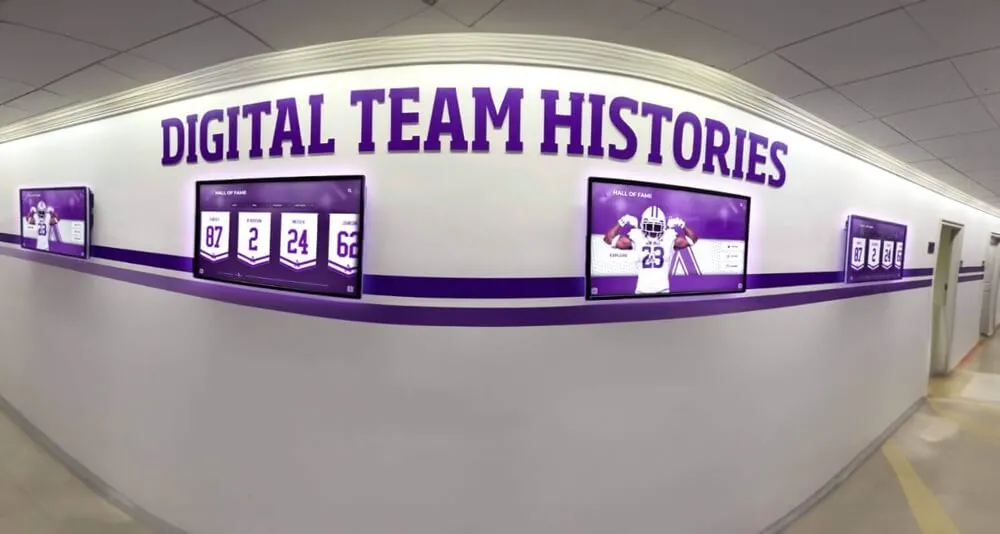
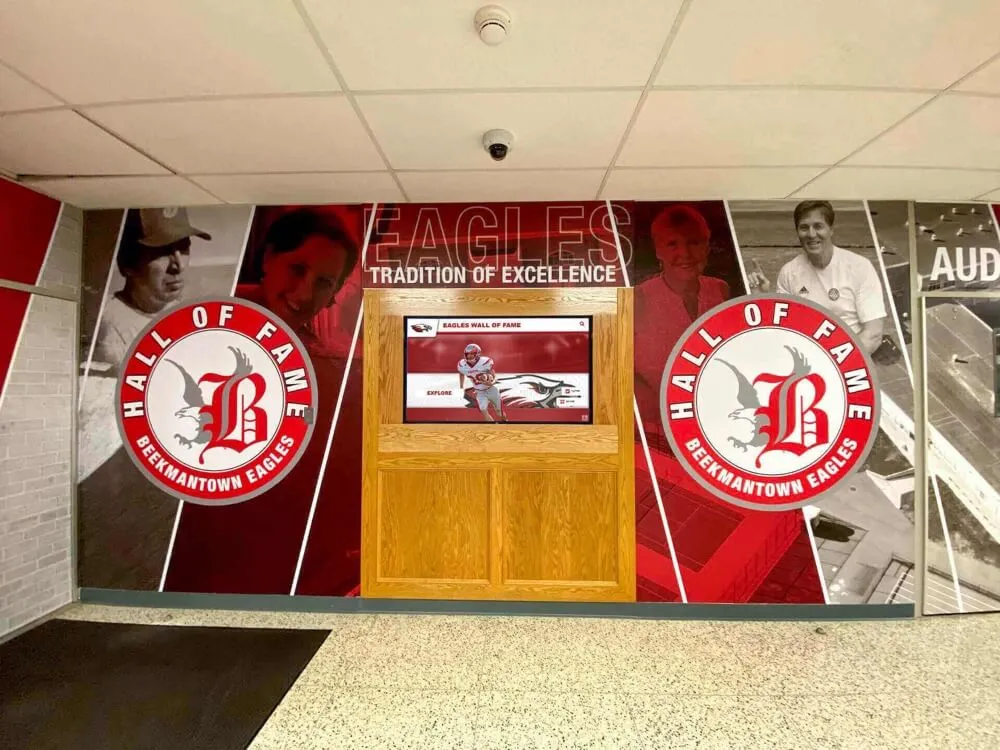
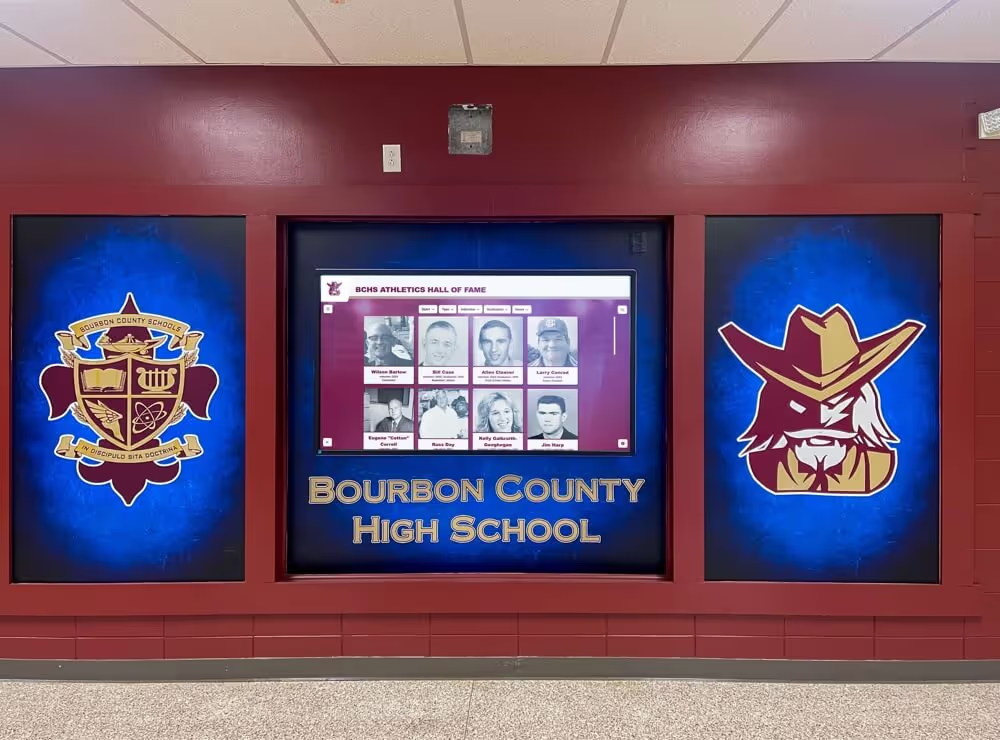
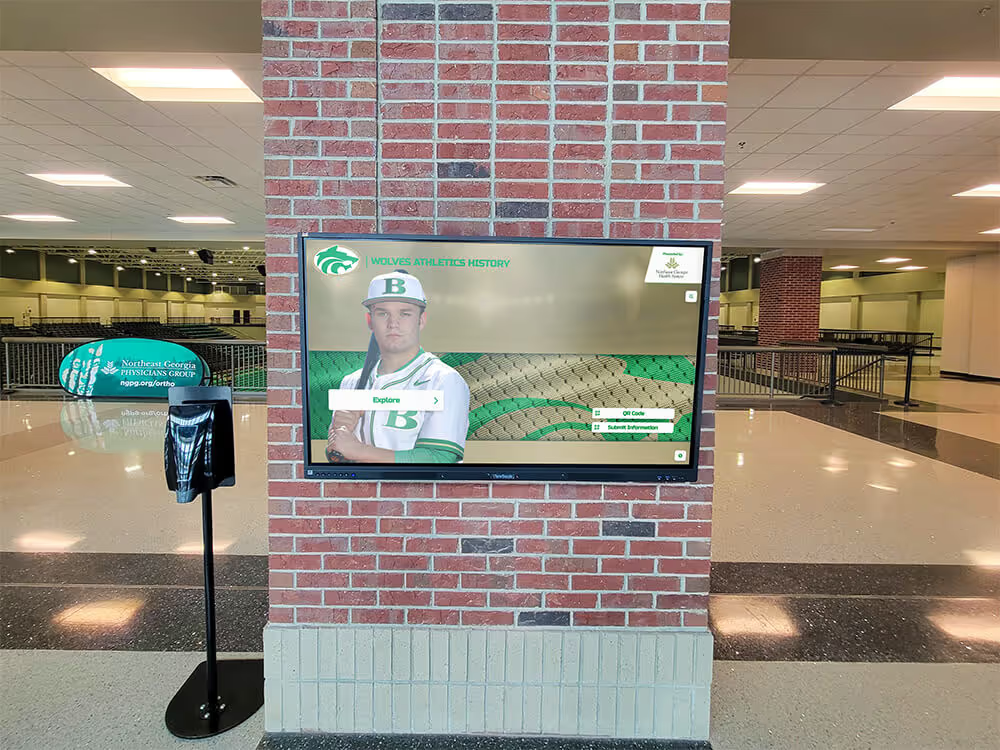
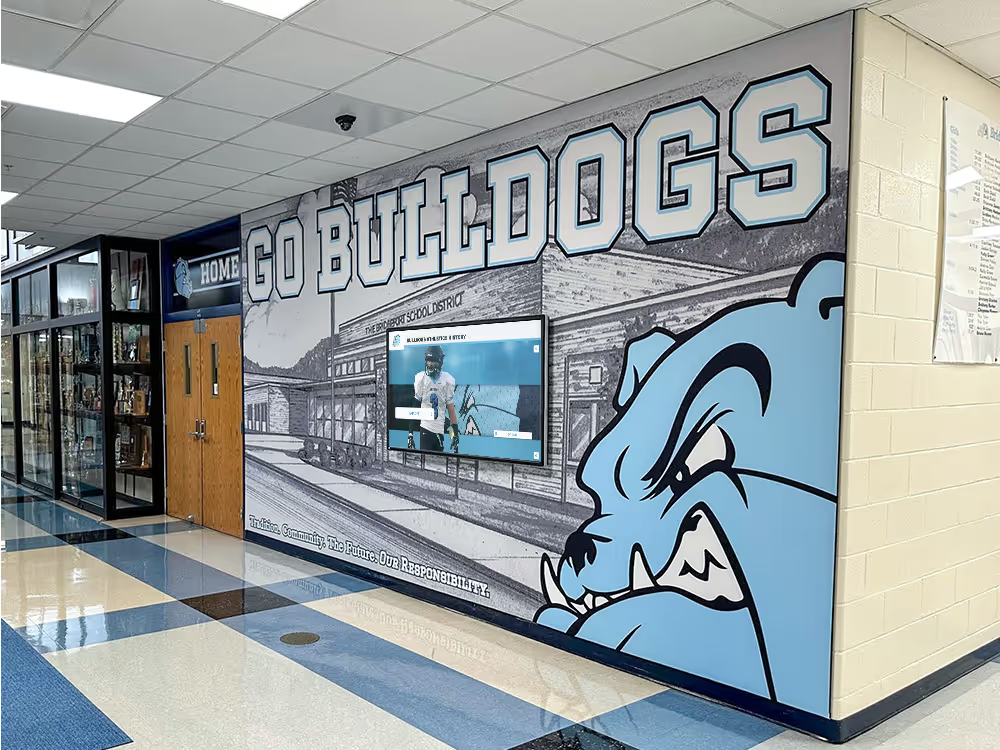
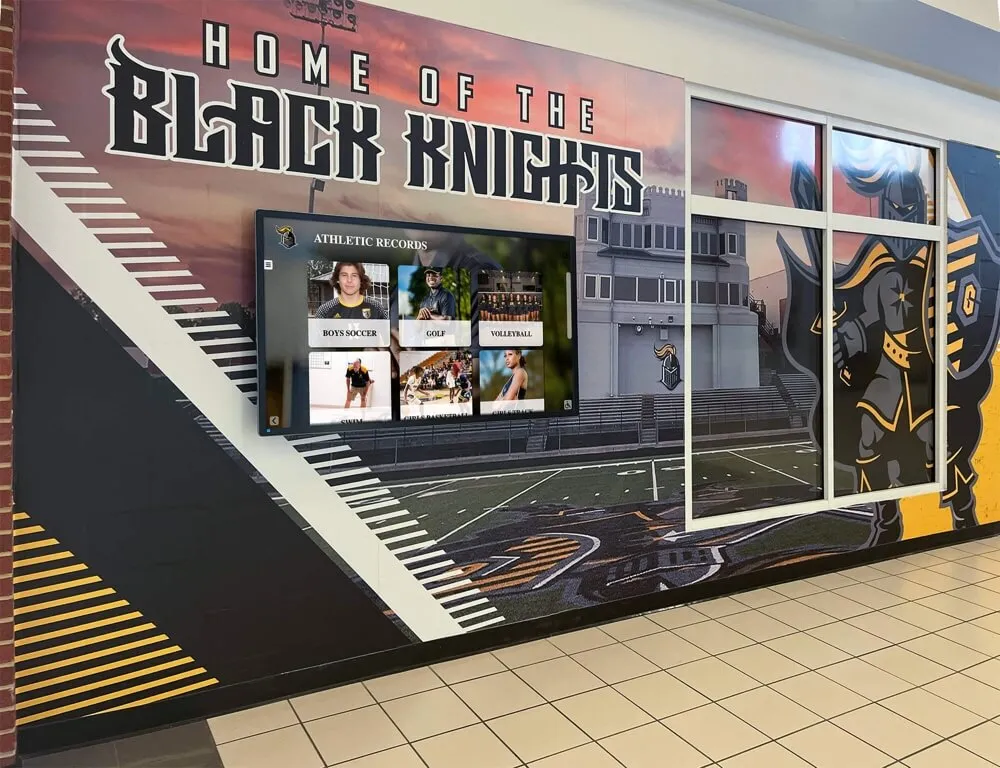
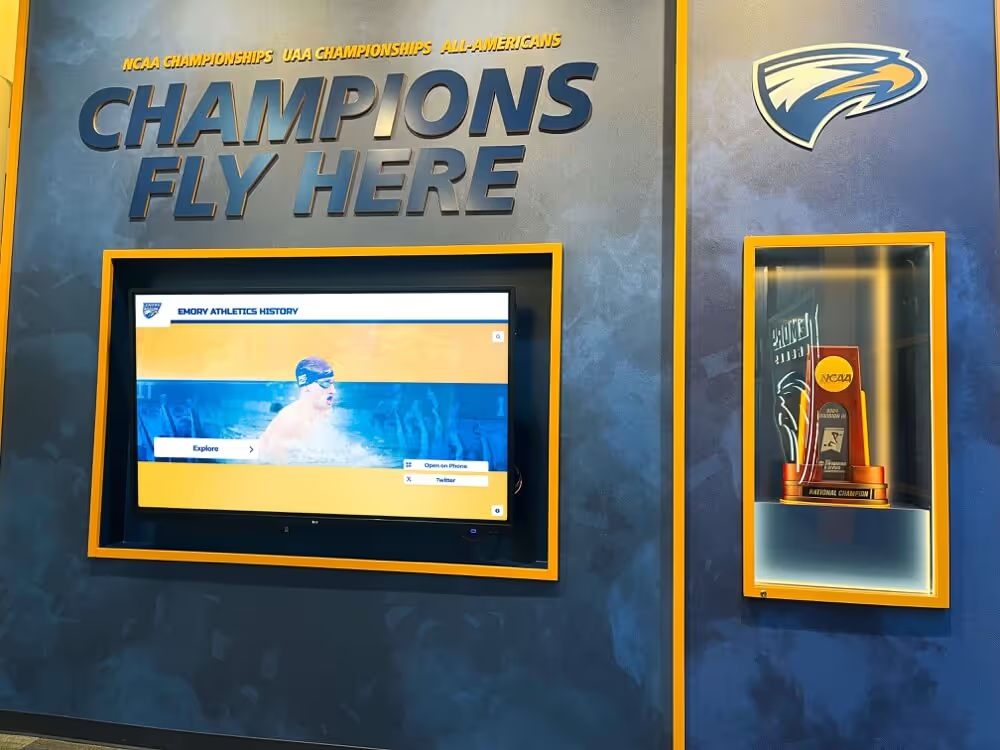
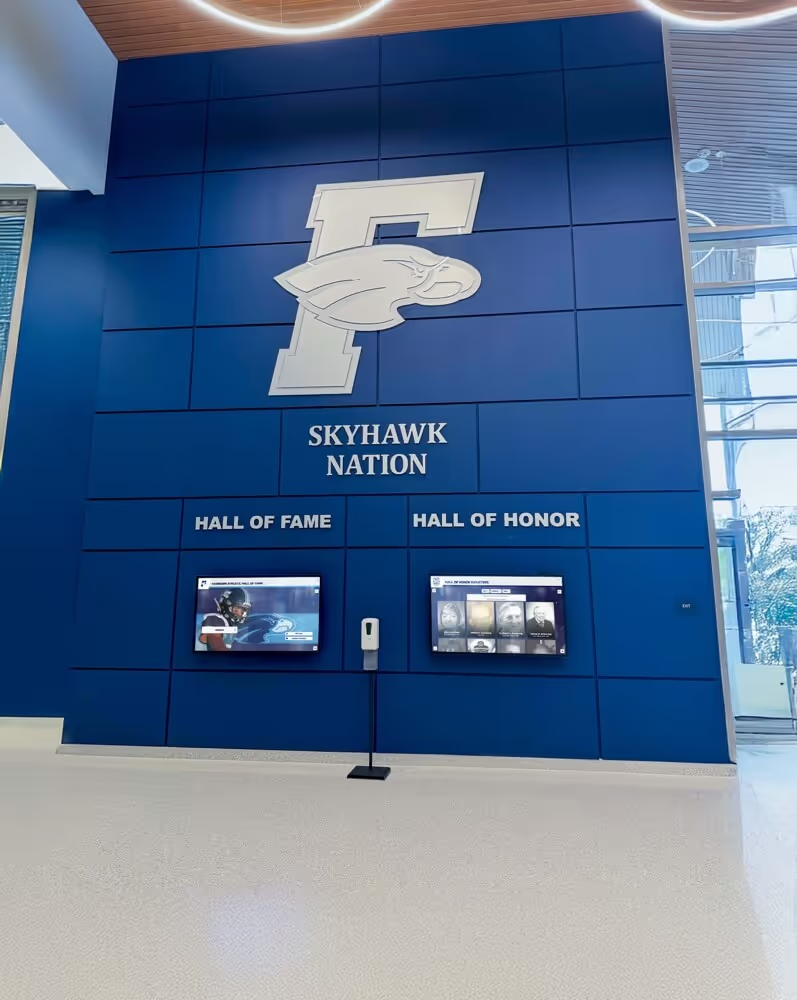
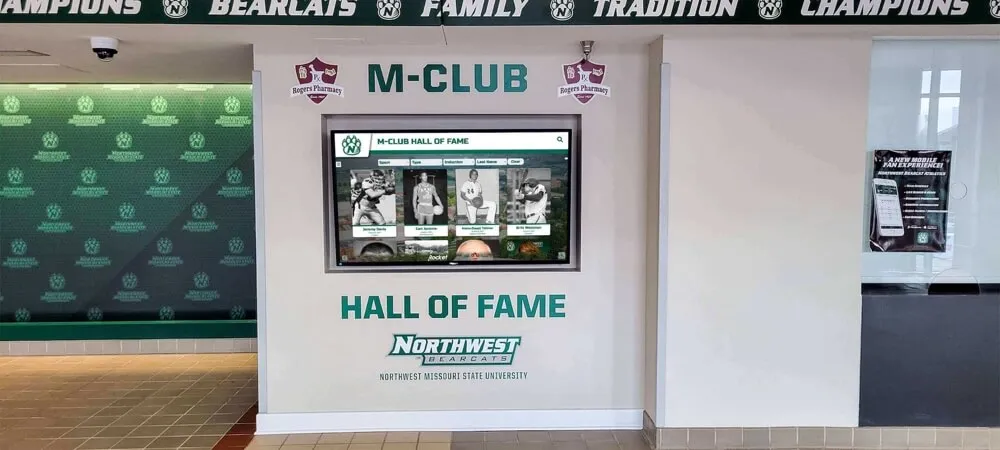
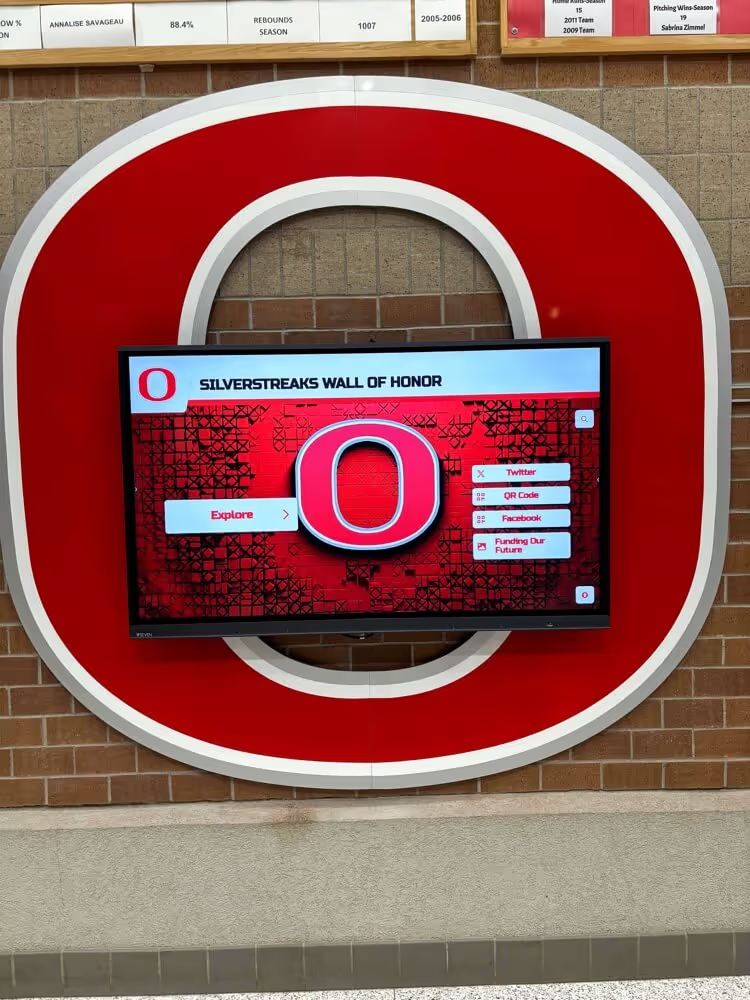
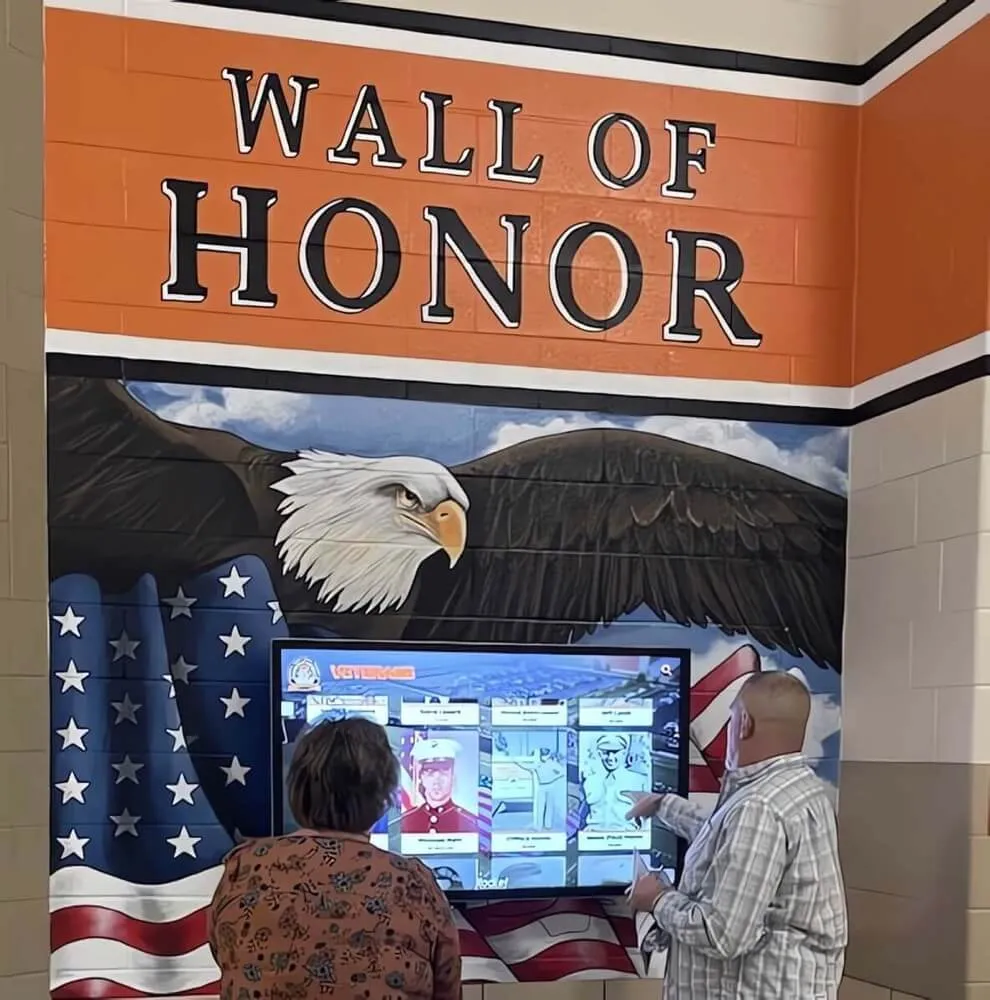
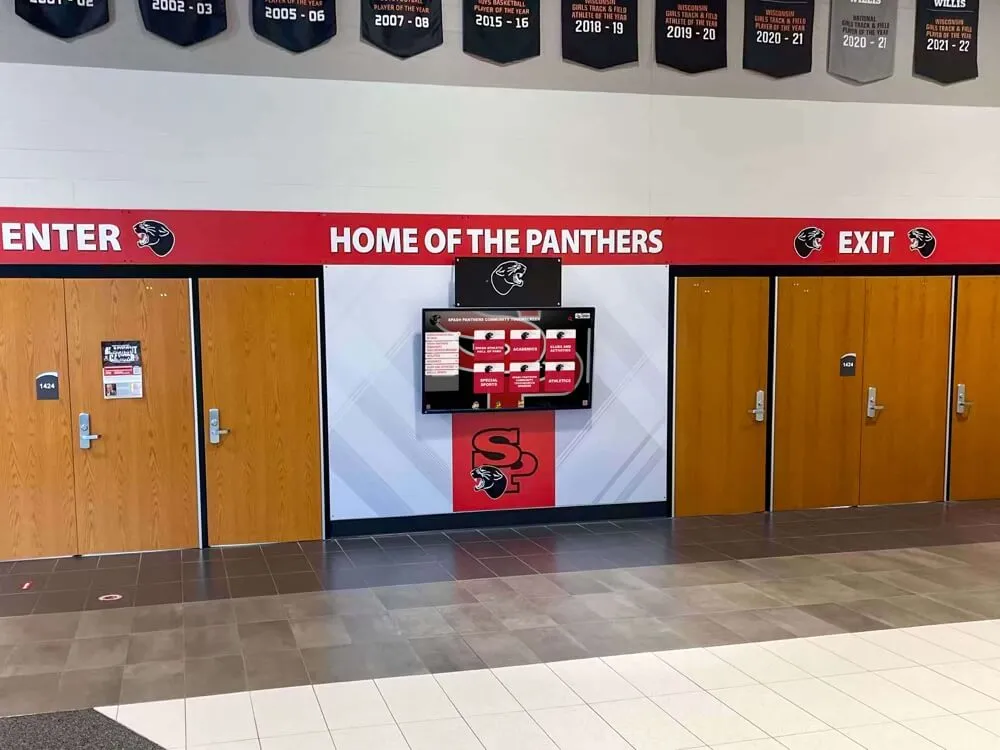
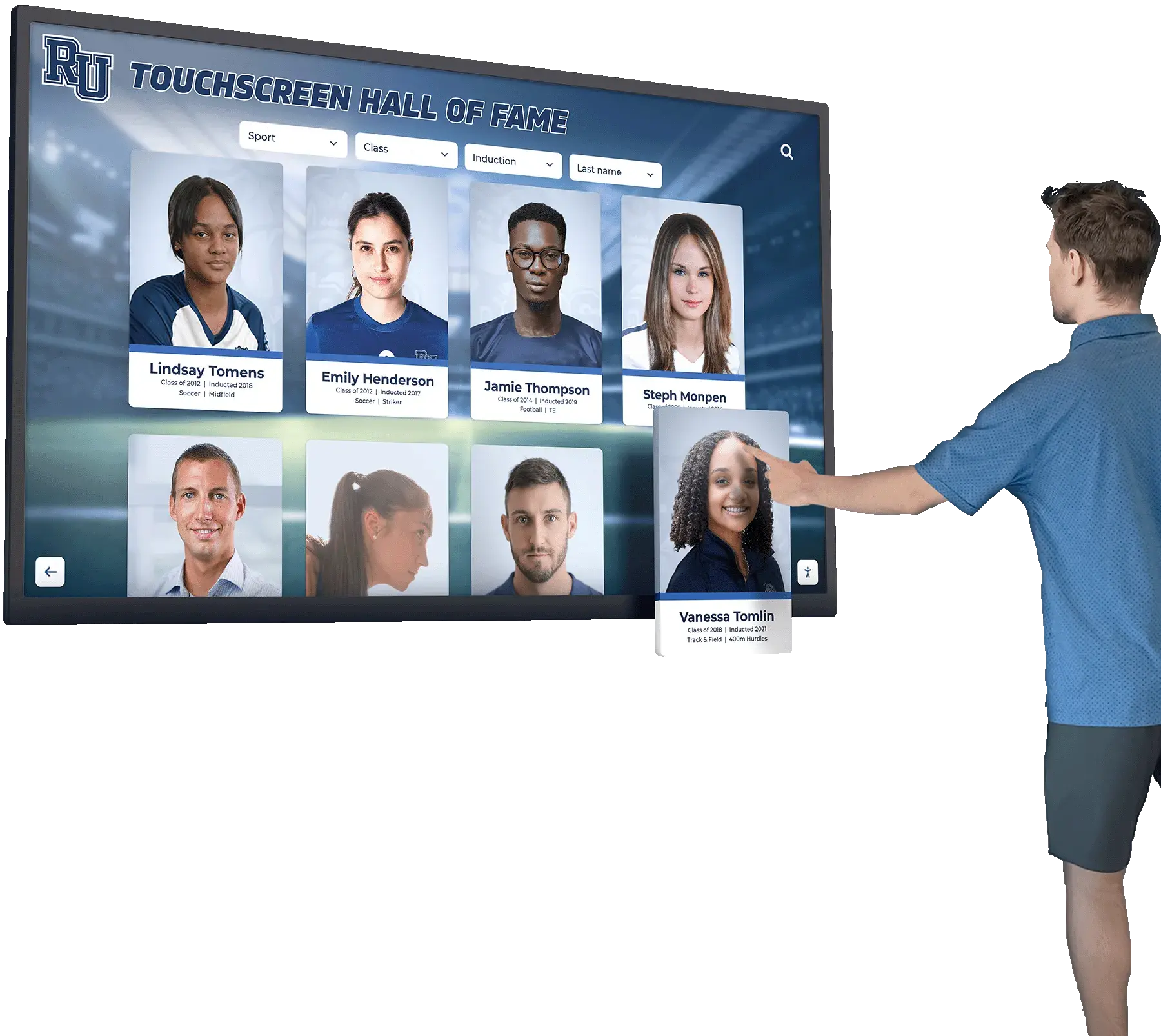
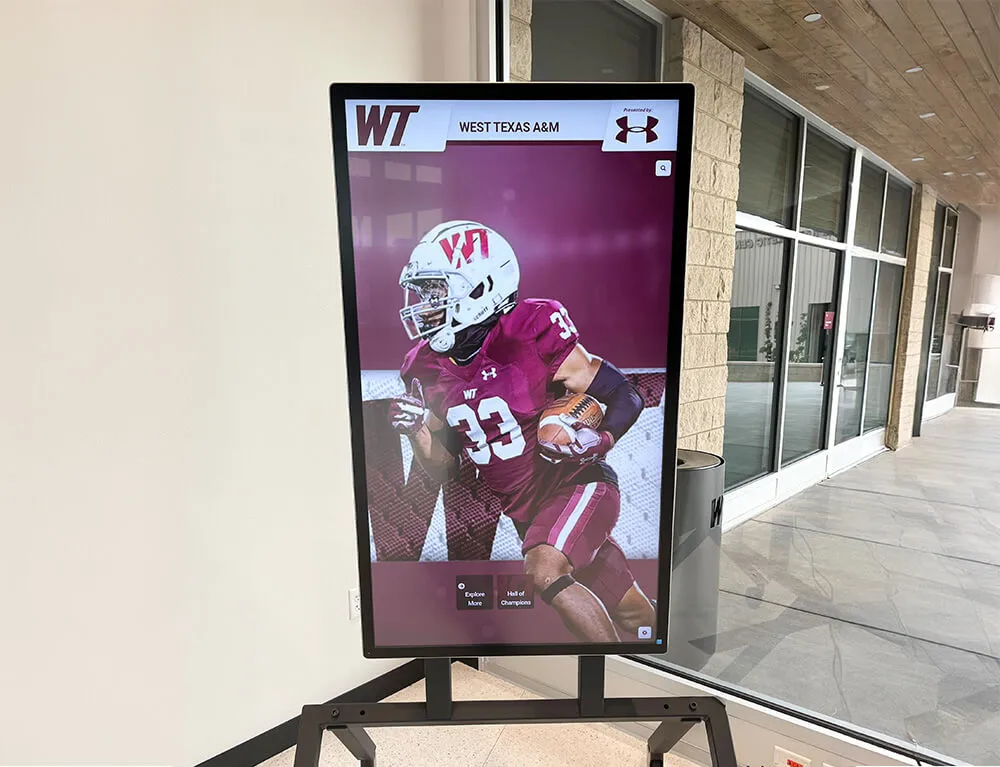
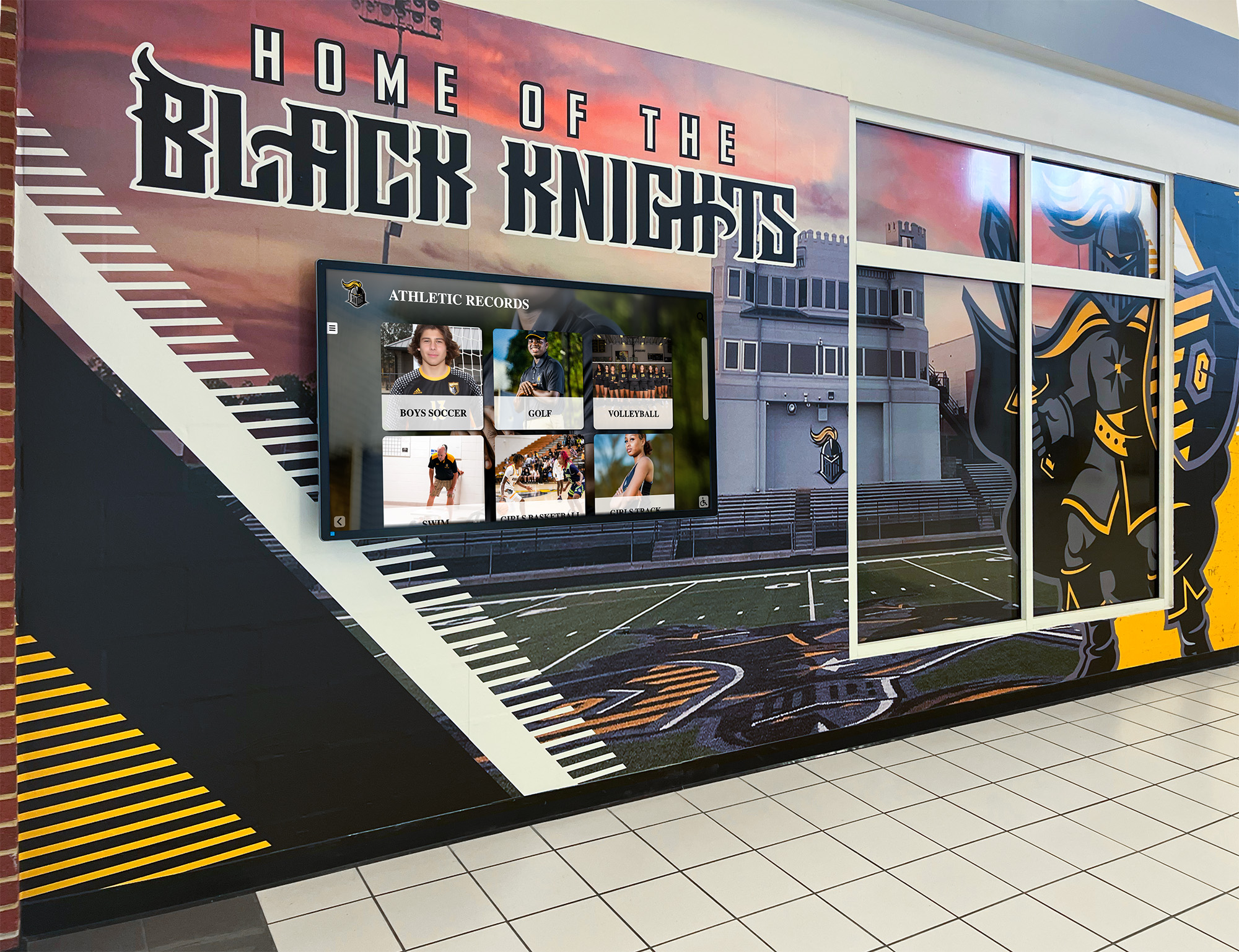
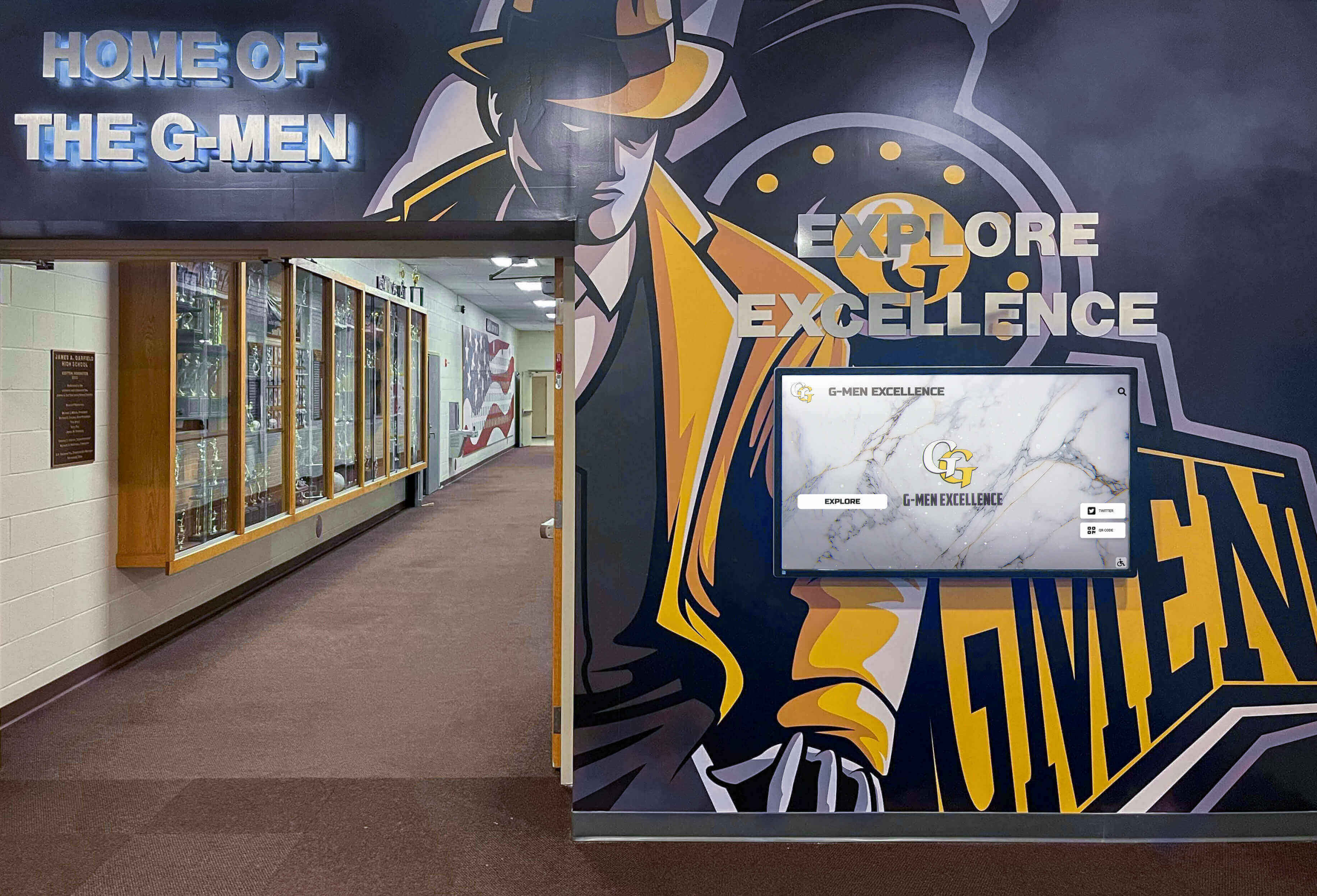
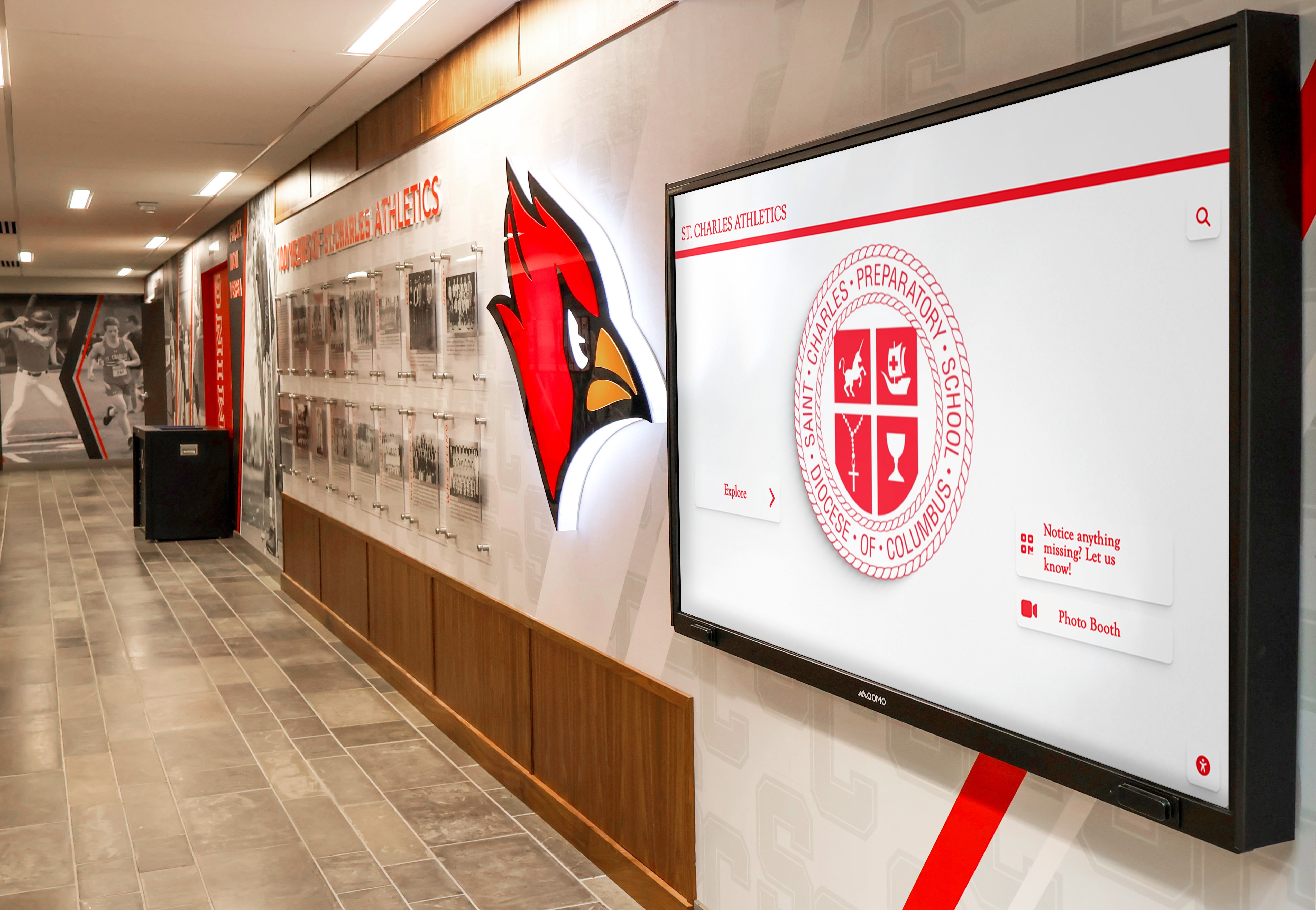
Large Format Display Integration: The same system that powers mobile access can drive large touchscreen displays in athletic facilities, allowing visitors to explore records interactively. Athletes can view not just their event, but search by name, year, or performance range to understand their place in comprehensive program history.
Event and Meet Integration: Advanced platforms connect record boards with meet management systems, automatically pulling performance data from competition results to update records without manual data entry. This integration eliminates the administrative burden that causes traditional record boards to fall behind current information.
The same technology enabling interactive record displays powers broader digital signage content ideas that schools use across campus recognition applications.
Search and Filter Capabilities
Digital systems let users explore records through multiple dimensions that reveal patterns and stories impossible to discover through static lists.
Name Search Functionality: Athletes and alumni can search by name to instantly view all their recorded performances across events and seasons. This personalized access creates meaningful connections between individuals and program history spanning their competitive years.
Year and Era Filtering: Viewing records by decade or coaching era reveals how program development and training evolution affected performance progression. Alumni can revisit their competitive periods while current athletes understand historical context for today’s standards.
Performance Range Queries: Coaches can identify how many athletes have broken specific performance thresholds (like sub-5-minute miles or 20-foot long jumps) to understand program depth beyond just record holders. This broader achievement recognition motivates athletes pursuing excellence even when records remain out of reach.
Best Practices for Track Record Documentation
Comprehensive record preservation requires systematic documentation practices that ensure historical accuracy while supporting multiple use cases across coaching, athlete development, and program promotion.
Essential Data Fields
Complete record entries contain specific information elements that provide context beyond raw performance marks.
Athlete Name and Graduation Year: Full names prevent confusion between athletes with similar names, while graduation years help distinguish between different competitive eras and identify record holder current status (current student, recent graduate, or historical athlete).
Performance Mark and Units: Record the precise performance with appropriate units (meters, feet/inches, minutes/seconds, points for multi-events) and include wind readings for sprint and horizontal jump events where legal wind limits apply to record recognition.
Competition Details: Document the meet name, location, and date where the record was set. Championship performances at major invitationals or state meets carry additional significance worth preserving in historical context.
Conditions and Context: Note whether performances occurred during indoor or outdoor seasons, preliminary rounds versus finals, and any unusual circumstances (facility records, altitude considerations, exceptional weather) that add meaning to achievement.
Programs maintaining thorough documentation can support additional recognition initiatives like graduation speech highlights celebrating athletic excellence alongside academic achievement.
Gender-Specific Records
Track and field programs must maintain completely separate record books for boys and girls programs due to fundamental performance differences and different competition rules.
Equipment Differences: Throwing events use different implement weights for male and female athletes (12-pound shot put for boys, 8-pound for girls), making combined records meaningless and technically invalid for record purposes.
Distance Variations: Some programs compete in gender-specific distances (boys may run 110m hurdles while girls run 100m hurdles), requiring separate record categories that reflect actual competitive events.
Equal Recognition: Maintaining parallel record structures for boys and girls programs ensures both receive equivalent recognition while preserving the distinct achievement histories each program generates through decades of competition.

Record Verification Processes
Establishing clear verification standards prevents disputed records and ensures historical accuracy that withstands scrutiny from future program leadership.
Official Meet Results: Accept only performances documented in official meet results with certified timing or measurement. Training performances, time trials, or informally measured marks should not qualify for official record recognition regardless of performance quality.
Wind Legal Requirements: For sprint events through 200m and horizontal jumps, verify wind readings remained at or below +2.0 meters per second to meet legal performance standards. Wind-aided marks may be documented separately but should not appear as official records.
Measurement Certification: Field event records require verification by certified officials using calibrated equipment. Self-measured performances or estimated distances lack the accuracy necessary for permanent record status.
Documentation Retention: Maintain original meet result documents, newspaper clippings, or official verification letters supporting major records. This documentation becomes invaluable when questions arise about historical performance accuracy years after the mark was set.
Schools focused on proper documentation practices can apply similar rigor to other recognition areas including memorial recognition programs that preserve institutional history beyond athletics.
Strategic Display Placement for Maximum Impact
Where schools display track and field records significantly affects their motivational value and community engagement effectiveness.
Weight Room and Training Facilities
Displaying records in spaces where athletes train daily keeps performance standards visible during the preparation work that determines competitive success.
Motivational Proximity: Athletes grinding through winter training or summer conditioning sessions see the records they’re chasing, creating daily connection between preparation work and performance goals. This constant exposure makes abstract performance targets feel tangible and achievable.
Event-Specific Placement: Position sprint records near starting blocks or sprint areas, throwing records near implement storage, and distance records on running routes. This strategic placement creates natural associations between training spaces and the records athletes pursue in those disciplines.
Update Frequency: Training facility placement makes record currency particularly important—athletes who train daily will quickly notice when displays contain outdated information, undermining credibility. Digital displays in these spaces ensure information remains current without constant manual updates.
The same strategic thinking that informs record display placement applies to touchscreen displays in gym lobbies designed to showcase broader athletic programs.
Competition Venues
Displaying records at competition sites allows visiting athletes and spectators to understand performance context while adding prestige to home competition environments.
Track-Side Visibility: Record boards visible from competition areas let athletes see standards they’re attempting to break immediately before competing. This proximity creates powerful psychological connections between current effort and historical achievement.
Visiting Team Awareness: Home meet records posted prominently communicate program excellence to visiting teams and their supporters, establishing competitive reputation and raising performance expectations. Strong programs use record displays as psychological advantages.
Community Recognition: Parents, alumni, and community members attending meets engage with program history through accessible record displays. This engagement builds program pride and often inspires financial support from those reconnecting with athletic legacy.
Academic and Public Spaces
Placing athletic records in hallways, lobbies, and common areas integrates athletic achievement into broader school culture while making records accessible to non-athletes.
Student Body Exposure: Students who don’t participate in track see athletic excellence daily, building school pride and raising awareness of program achievements beyond game scores or championships. This visibility elevates athletics’ role in overall school identity.
Visitor Impressions: Prospective families touring schools encounter athletic recognition that demonstrates commitment to comprehensive student development. Well-presented record displays communicate that the school values and celebrates achievement across all program areas.
Alumni Engagement: Returning graduates naturally seek their names in record displays, creating reconnection opportunities that support alumni relations and development efforts. Digital systems that preserve complete historical records ensure decades of alumni can find their achievements recognized.
Handling Record Updates and Historical Transitions
How programs manage the moment when records fall reveals their values around recognition, historical preservation, and athlete celebration.
Celebrating New Record Holders
Setting school records represents career-defining achievements deserving immediate and meaningful recognition that extends beyond simply updating record lists.
Real-Time Announcement: When records fall during competition, announce the achievement immediately to celebrate the athlete in front of their supporters. This public recognition creates memorable moments that athletes remember for life.
Social Media Documentation: Post record-breaking performances on program social media accounts with context about the previous record and historical significance. This digital documentation extends recognition beyond those physically present while building program narrative.
Formal Recognition: Present record certificates or commemorative items during team meetings or award ceremonies. Tangible recognition items give athletes permanent keepsakes connecting them to their place in program history.
Programs creating comprehensive recognition cultures coordinate record celebrations with broader initiatives including senior night celebrations honoring graduating athletes.
Preserving Previous Record Holders
The most important decision programs make about record displays involves how they treat athletes whose records are eventually broken.
Never Erase History: The fundamental principle of excellent record preservation is that previous record holders never disappear from program history. Systems that only display current records erase the very athletes who built program tradition and established the standards that inspired newer achievements.
Historical Progression Display: The best digital platforms show how records progressed over time—displaying not just the current 400m record at 48.5 seconds, but the complete progression showing it moved from 52.1 to 50.8 to 49.3 to 48.5 across different eras. This progression storytelling honors everyone who pushed performance boundaries.
Searchable Archives: Even when current record displays show only top marks, complete historical records should remain searchable and accessible. Athletes from any era should be able to find their achievements recognized and preserved in program documentation.
Coaching Transition Continuity
Record preservation faces its greatest risk during coaching changes when institutional knowledge walks out the door with departing staff.
Centralized Storage: Store record documentation in centralized school systems rather than individual coach computers. Athletic directors should maintain master record files independent of coaching staff to ensure continuity across personnel changes.
Formal Handoff Processes: Departing coaches should complete formal record book handoffs as part of transition procedures, with athletic directors verifying all historical documentation transfers to incoming staff. Treating record preservation as institutional rather than individual responsibility prevents history loss.
Digital Platform Independence: Cloud-based record systems owned by schools rather than coaches eliminate the risk that records disappear when staff changes occur. Institutional platforms ensure forty years of athletic history doesn’t walk out the door with a retiring coach.
Understanding institutional continuity challenges that affect athletic records provides relevant context for broader memorial programs like Remembrance Day recognition requiring sustained organizational commitment.
Measuring Record Display Effectiveness
Programs investing resources in record preservation and display should evaluate whether these systems achieve intended outcomes around motivation, engagement, and historical preservation.
Athlete Awareness and Motivation
Effective record displays ensure current athletes know the performance standards they’re pursuing and feel motivated by proximity to program history.
Awareness Assessment: Survey team members about their knowledge of school records in their events. High-performing systems achieve near-universal awareness—every 400m runner should know their school record and who holds it. Low awareness indicates display visibility or accessibility problems.
Performance Proximity Analysis: Track how many athletes compete within defined ranges of school records (within 5%, 10%, or 15% of record marks). Programs with visible, accessible records often see larger numbers of athletes approaching record territory as standards become tangible rather than abstract.
Record Breaking Frequency: While raw talent determines some record frequency, programs with excellent record display and celebration systems often see increased record attempts and successful record-breaking performances as athletes engage more directly with achievement targets.
Community Engagement Metrics
Record displays serve recognition purposes beyond current team motivation, engaging broader communities in program history and achievement celebration.
Display Interaction Rates: For digital touchscreen systems, monitor usage analytics showing how many visitors explore records, which events receive most attention, and whether users engage with historical progression features. High interaction rates indicate displays provide genuine value rather than serving as ignored decoration.
Alumni Reconnection: Track alumni engagement with record platforms, particularly searches for their own names or competitive eras. Strong systems become alumni engagement tools that support development efforts and reunion attendance.
Social Media Engagement: Monitor social media post performance when sharing record-breaking achievements or historical anniversary content (“30 years ago today, Jane Smith set the high jump record that still stands”). Engagement levels reveal whether program community values historical achievement recognition.
Historical Preservation Success
The ultimate measure of record system effectiveness is whether program history remains intact and accessible across decades and coaching changes.
Data Completeness Audits: Periodically review record books for gaps, missing data fields, or inconsistencies that indicate preservation problems. Complete records include all required information elements across all event categories for both current marks and historical progressions.
Verification Documentation: Assess whether major records have supporting documentation that would withstand challenges about accuracy or legitimacy. Records lacking verification create future problems when questions arise about historical performance claims.
Accessibility Testing: Verify that stakeholders across different roles (current athletes, coaching staff, athletic administration, parents, alumni, community members) can successfully access record information through appropriate channels. True preservation means records aren’t just stored but genuinely accessible to those seeking them.
Conclusion: Building Lasting Track and Field Legacy
Track and field programs generate richer achievement histories than any other high school sport, with hundreds of individual performance records representing decades of athletic excellence across dozens of events. Schools that implement comprehensive record preservation systems honor every athlete who’s pushed performance boundaries while creating motivational tools that inspire current competitors and engagement platforms that connect alumni to program legacy.
The choice between traditional static record boards that erase history when records fall and modern digital platforms that preserve complete achievement progressions fundamentally shapes whether programs lose or maintain their athletic heritage across coaching changes and institutional transitions. By implementing automated systems that update instantly, maintain unlimited historical depth, and provide accessible displays across training facilities and public spaces, athletic departments eliminate the preservation burdens and update challenges that cause traditional approaches to fail while expanding recognition to honor everyone who’s earned their place in program history.
Ready to transform how your track and field program preserves and displays athletic records? Rocket Alumni Solutions’ Digital Record Board automatically ranks performances, preserves complete historical progressions, and provides accessible displays that keep every record holder recognized across generations. Schedule a demonstration to see how modern record platforms eliminate manual updates while celebrating your complete athletic legacy.