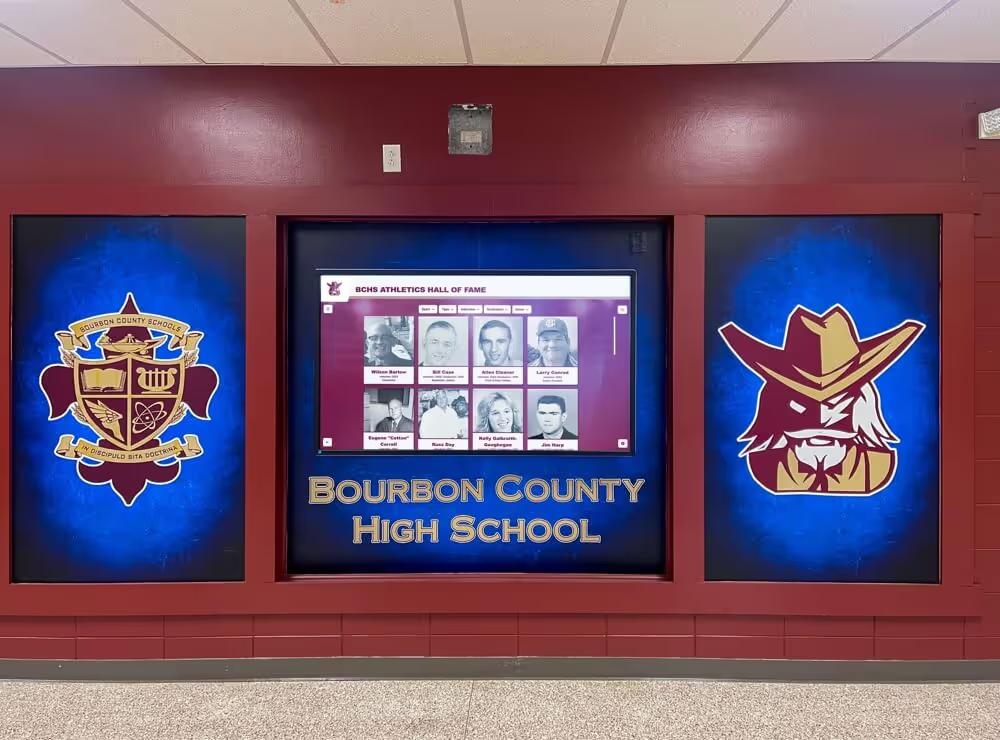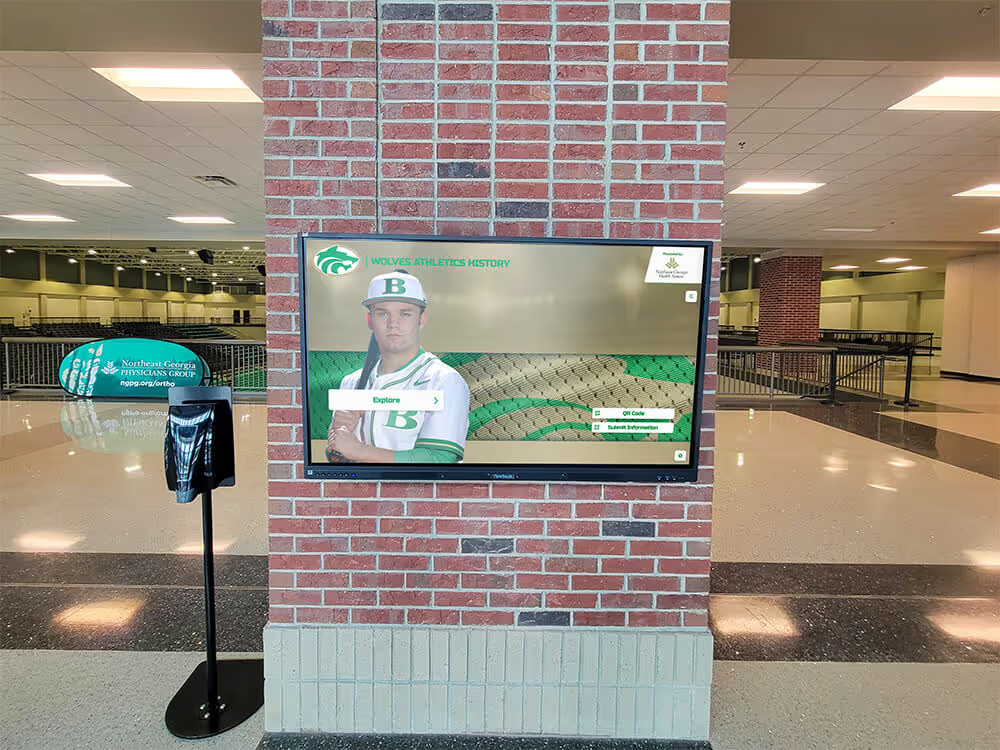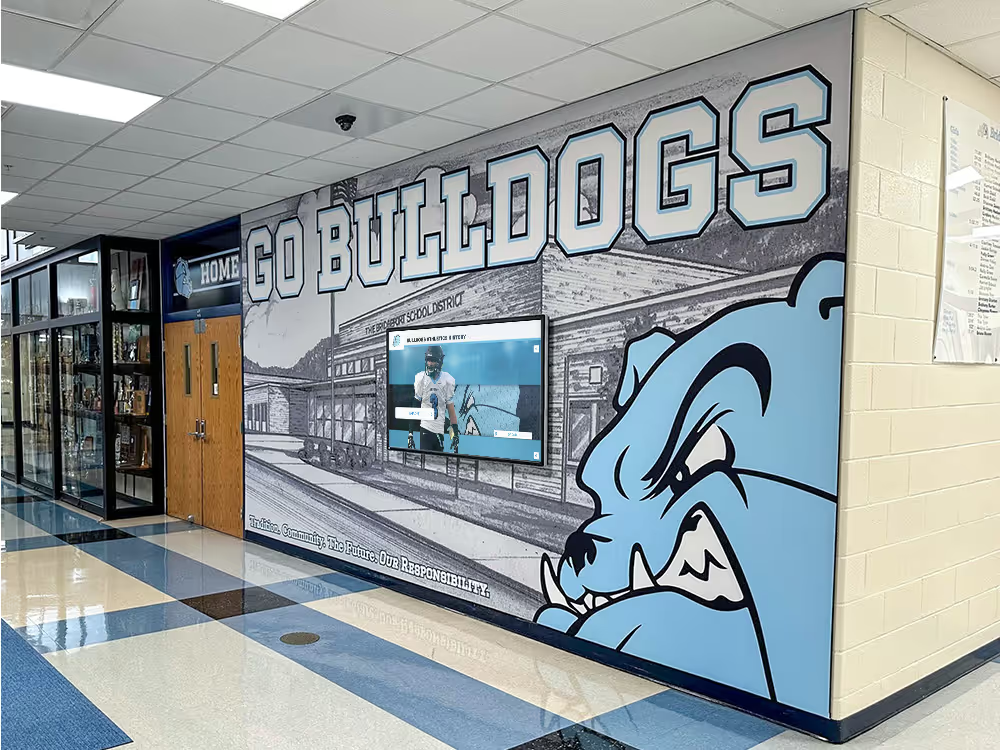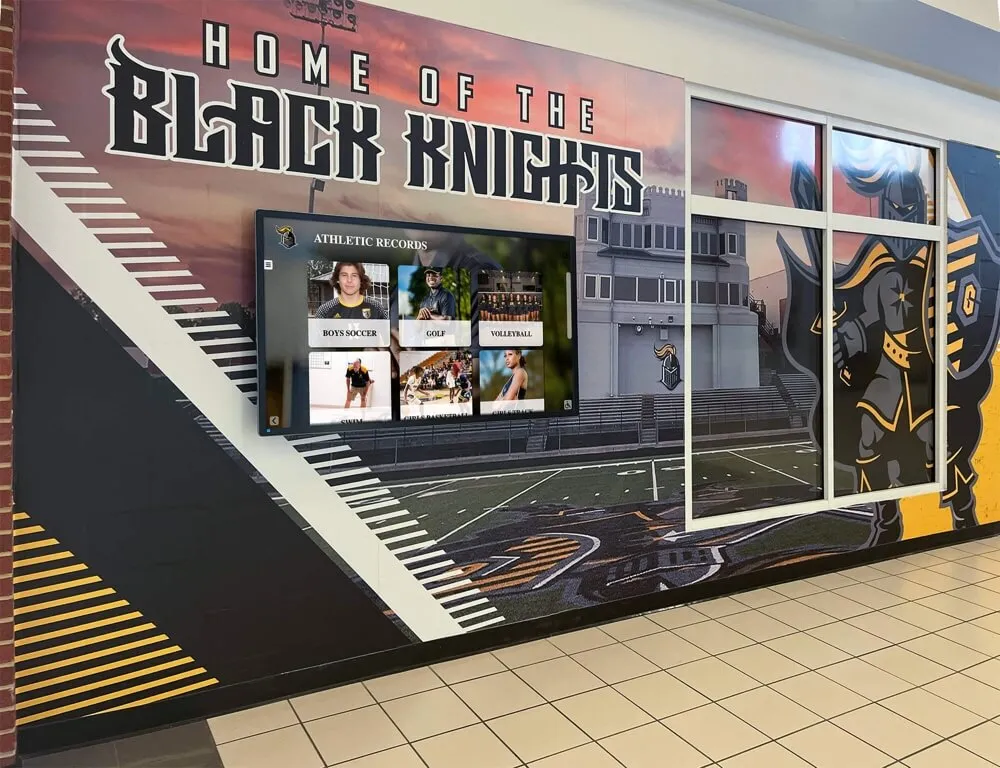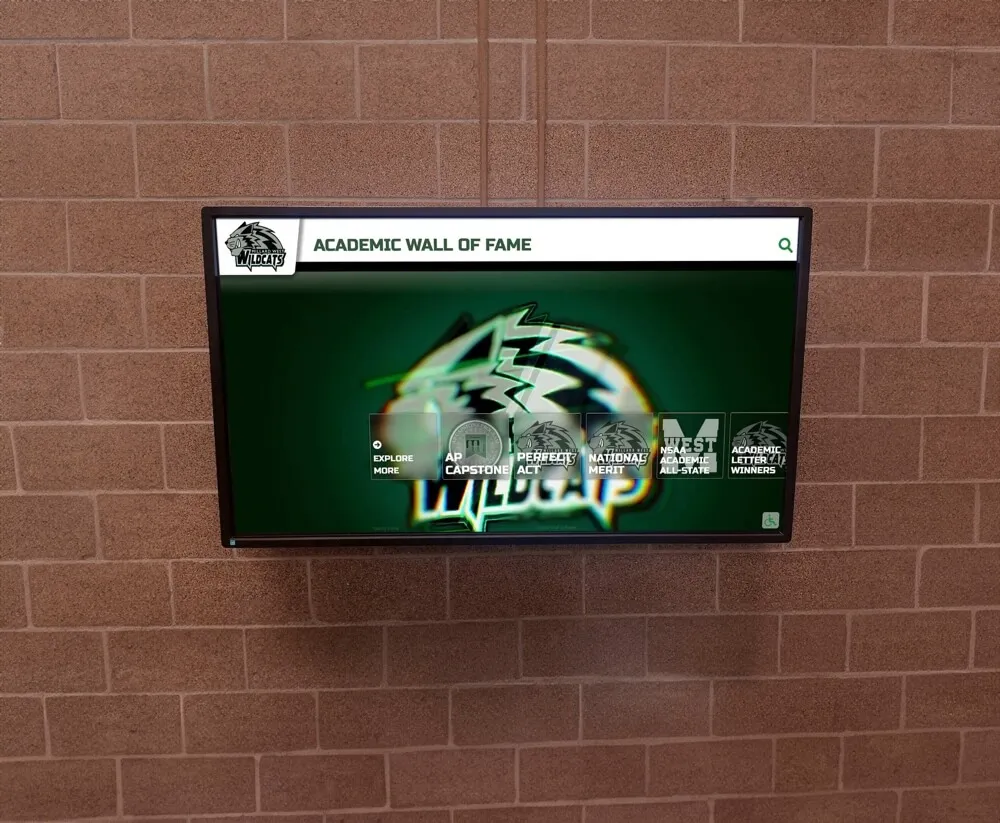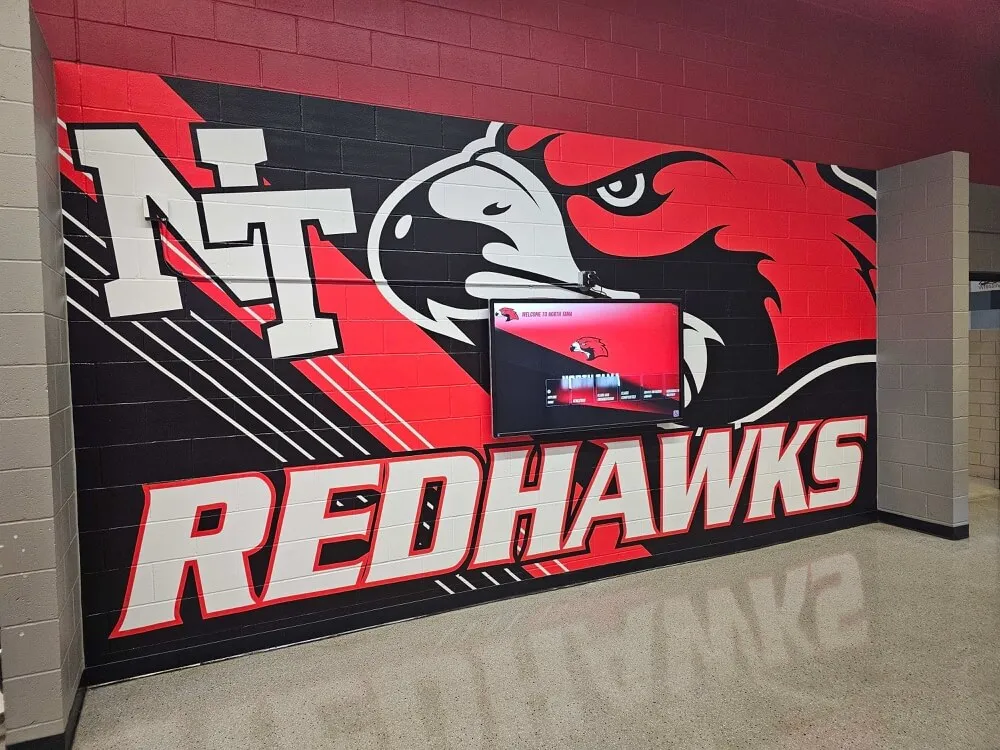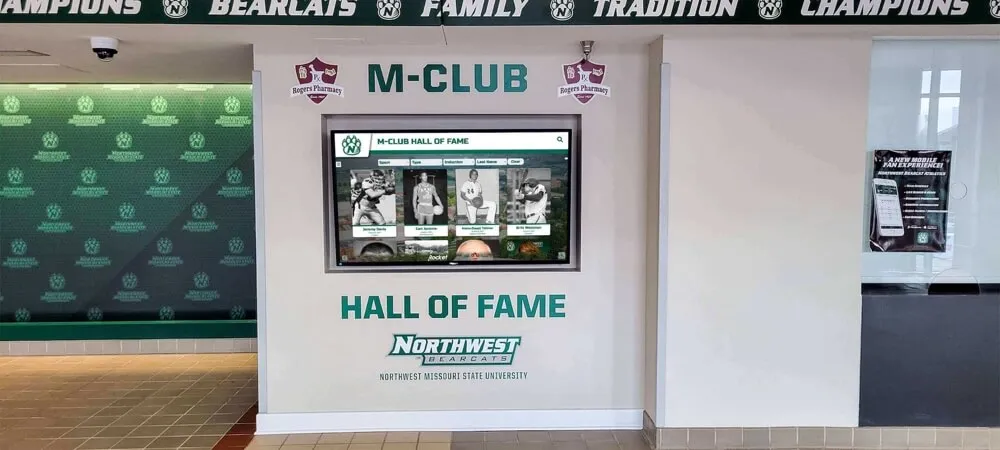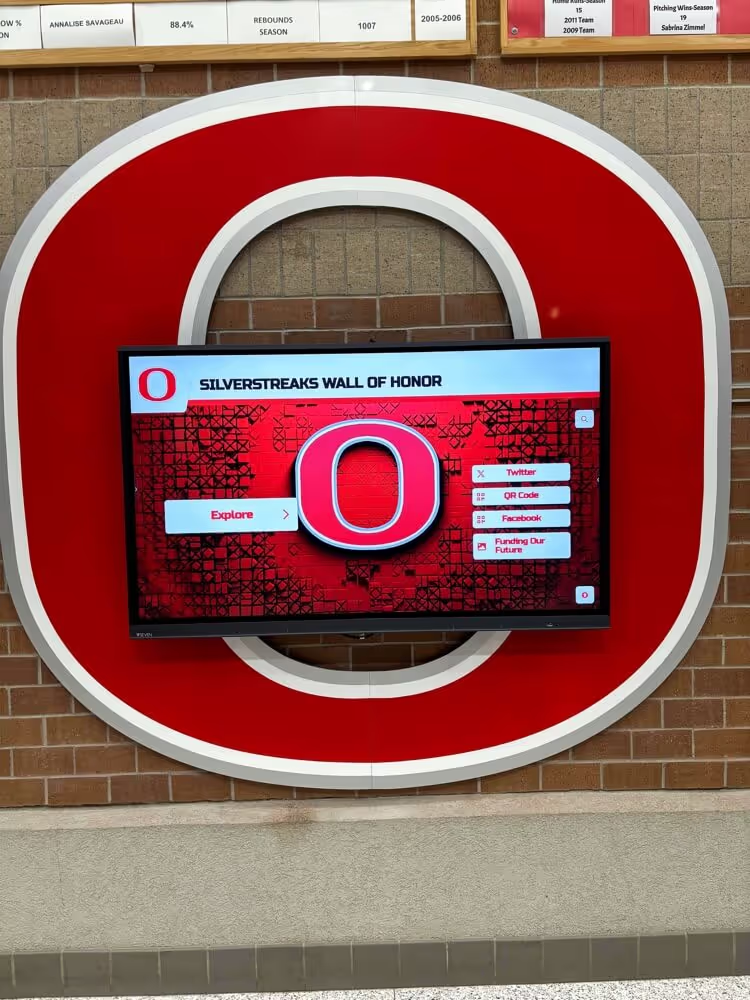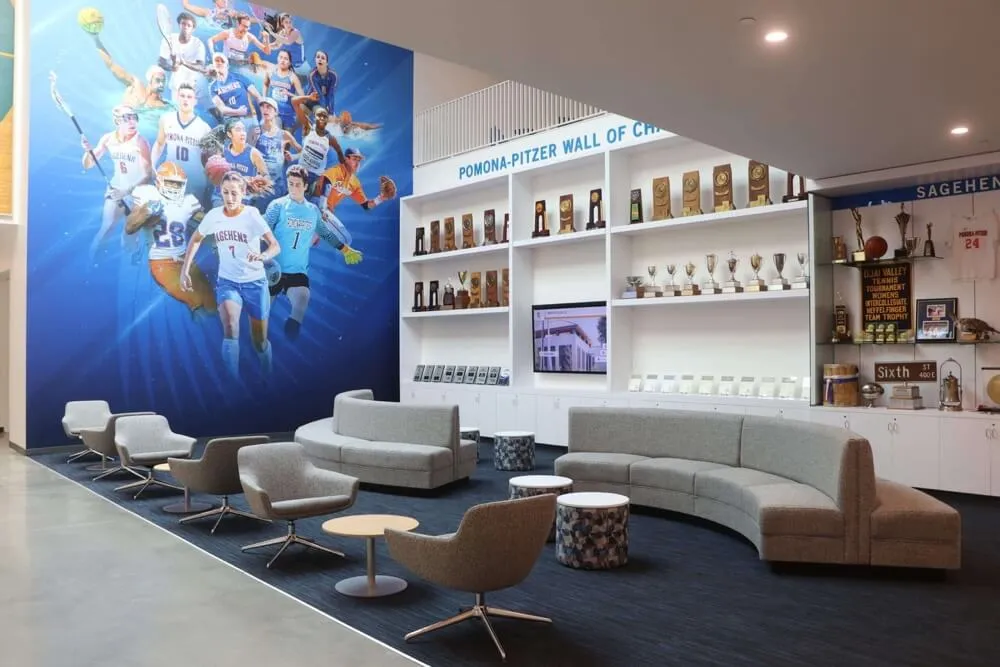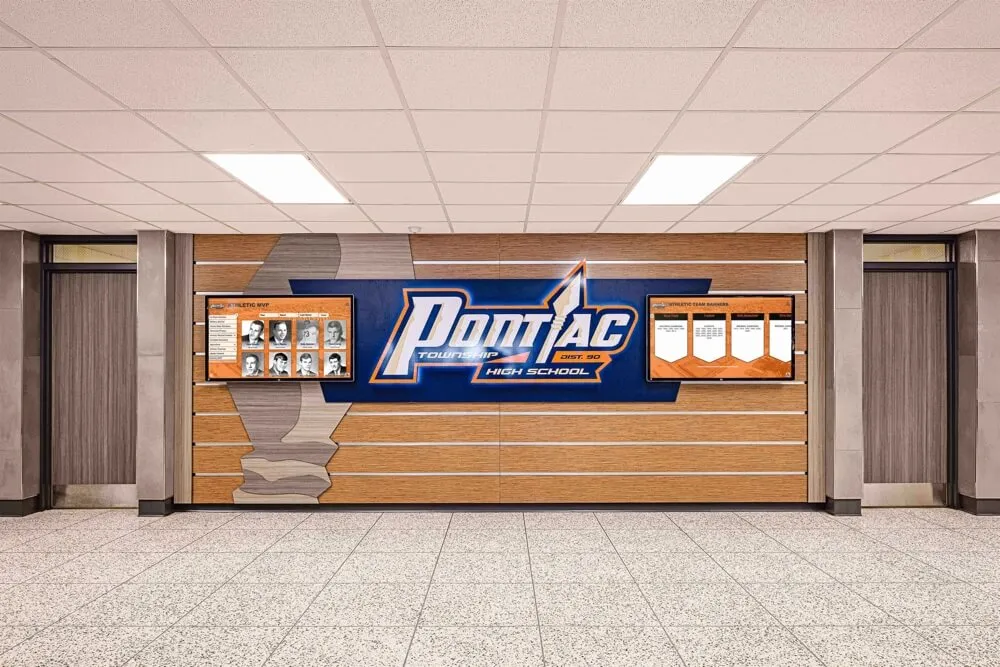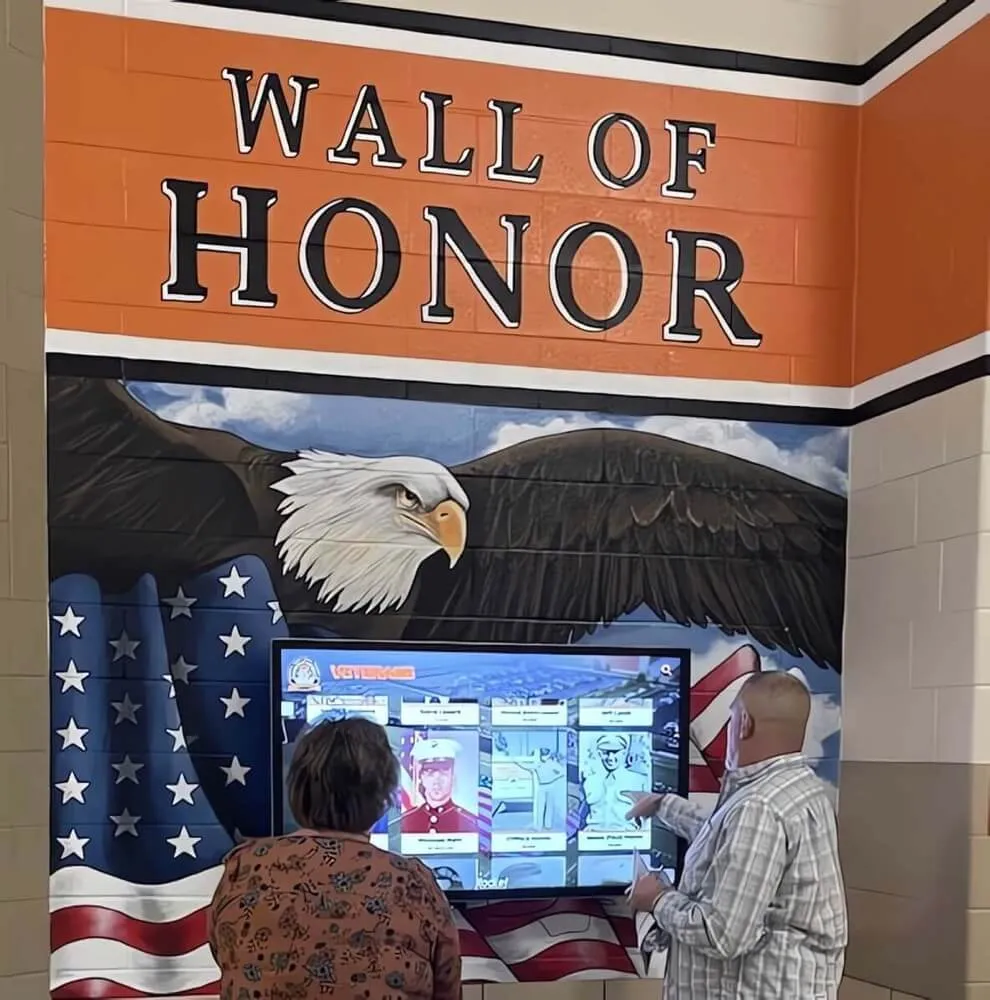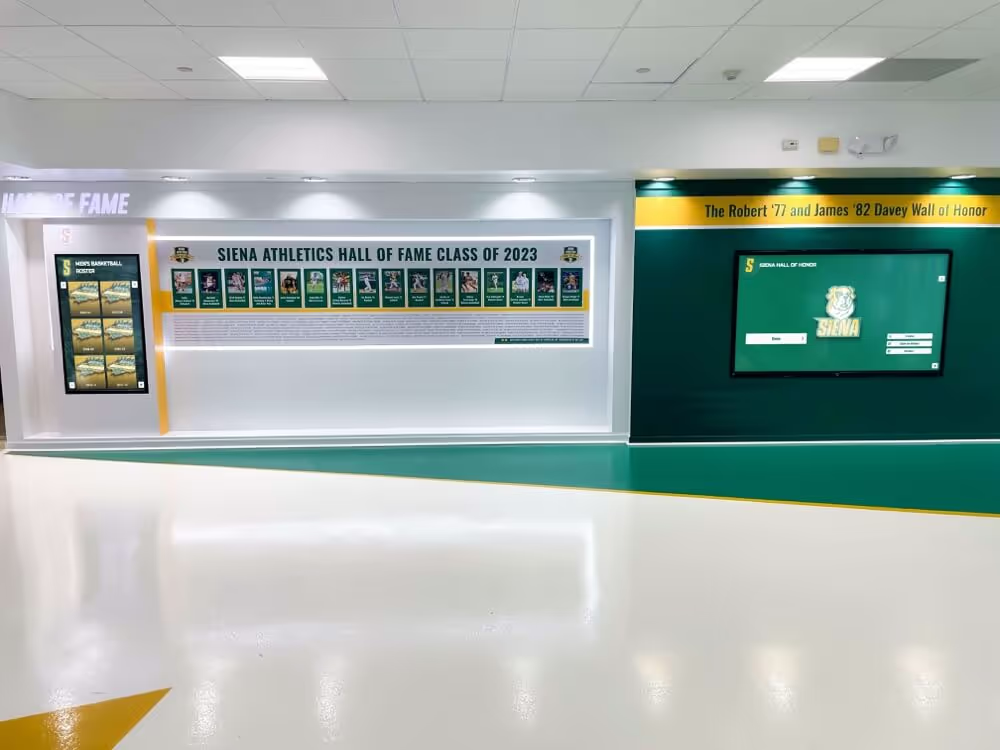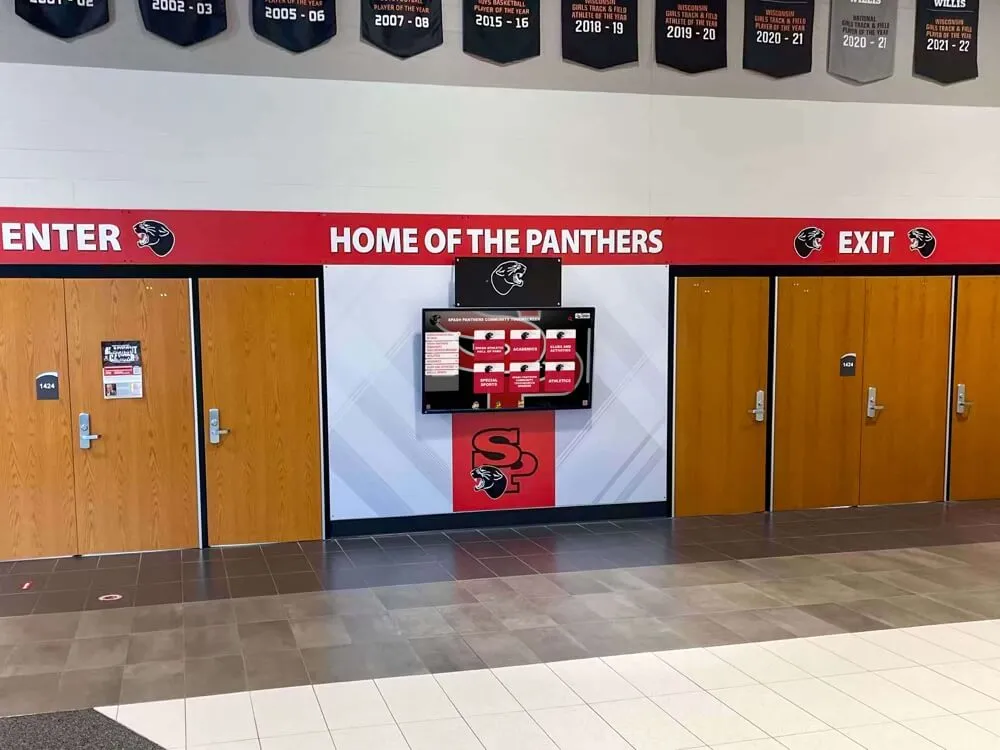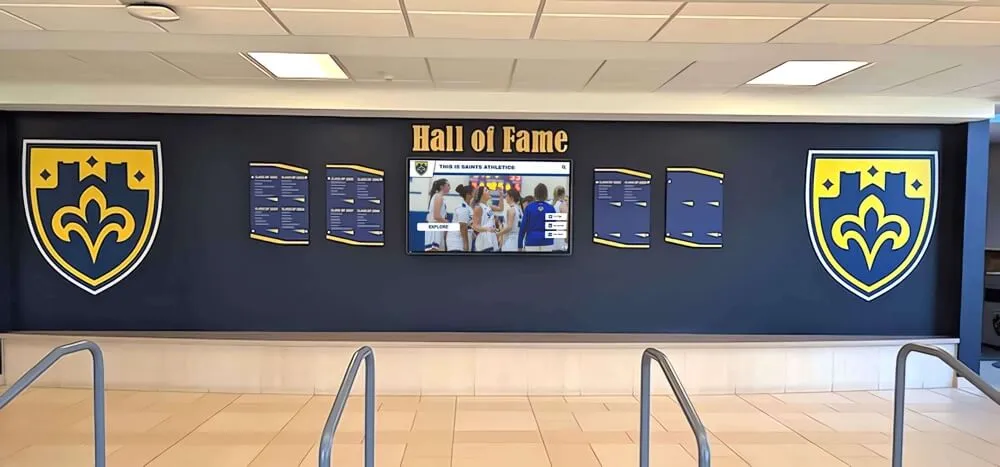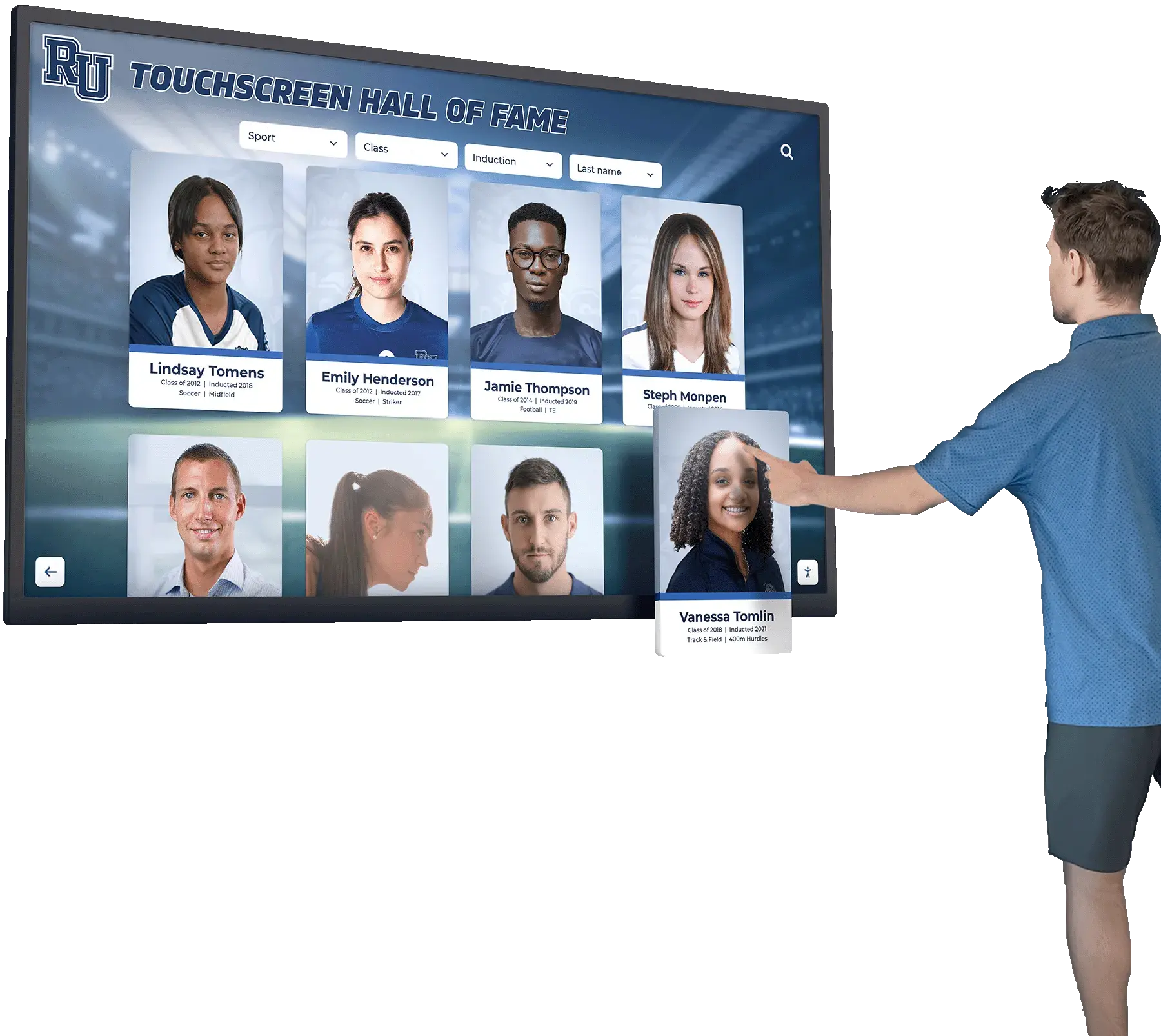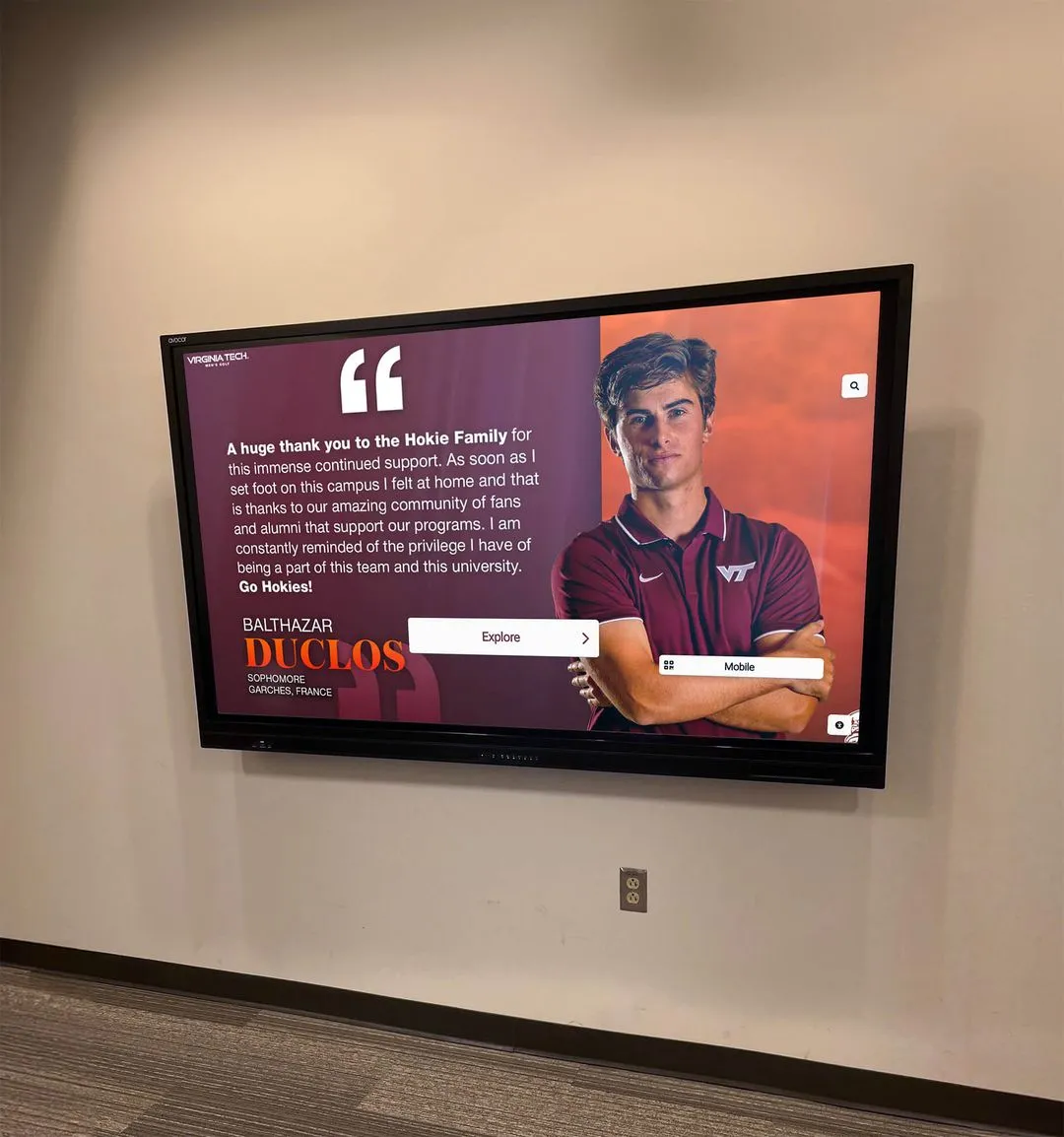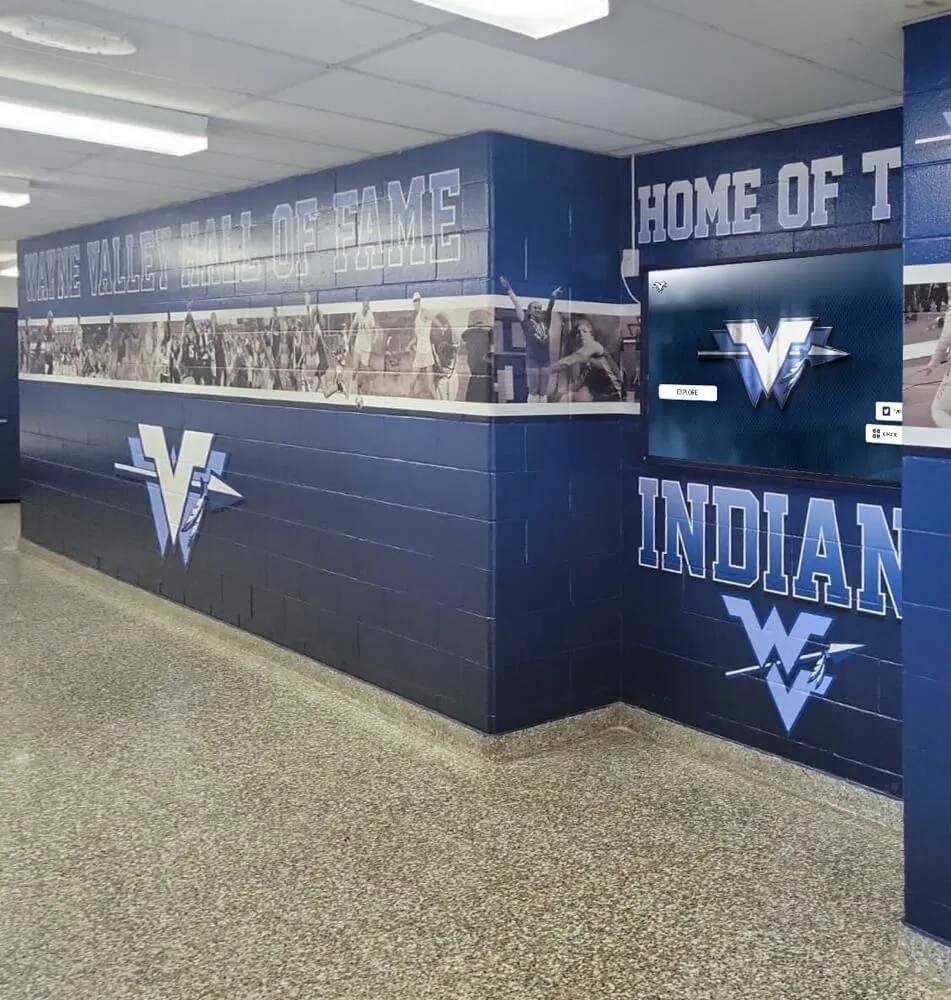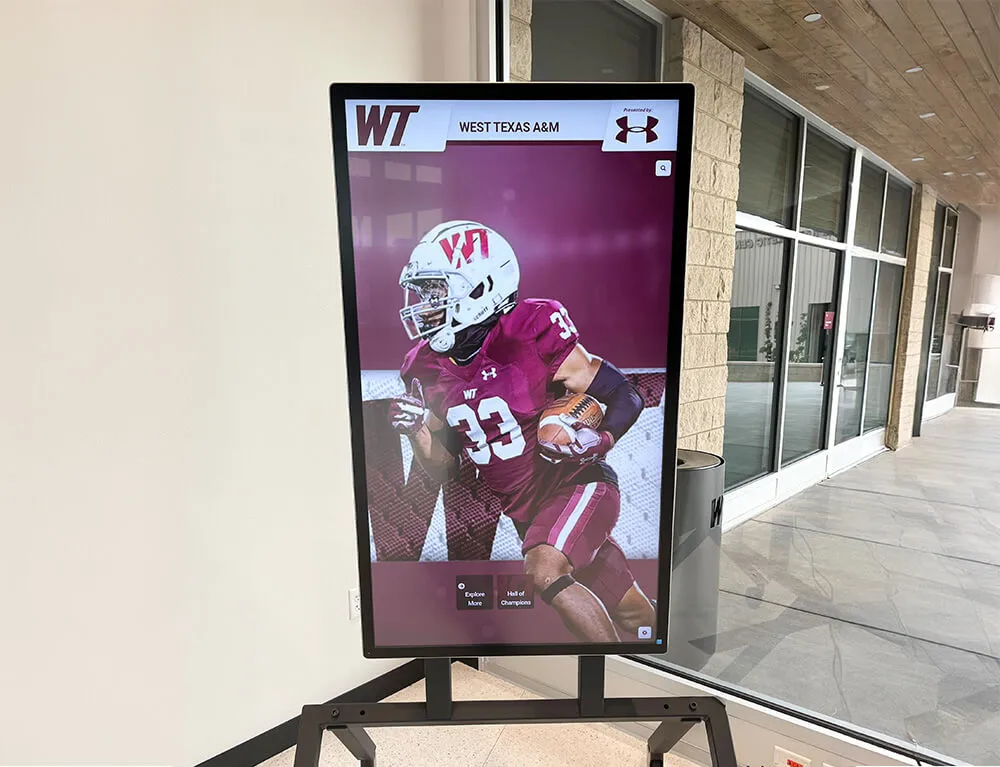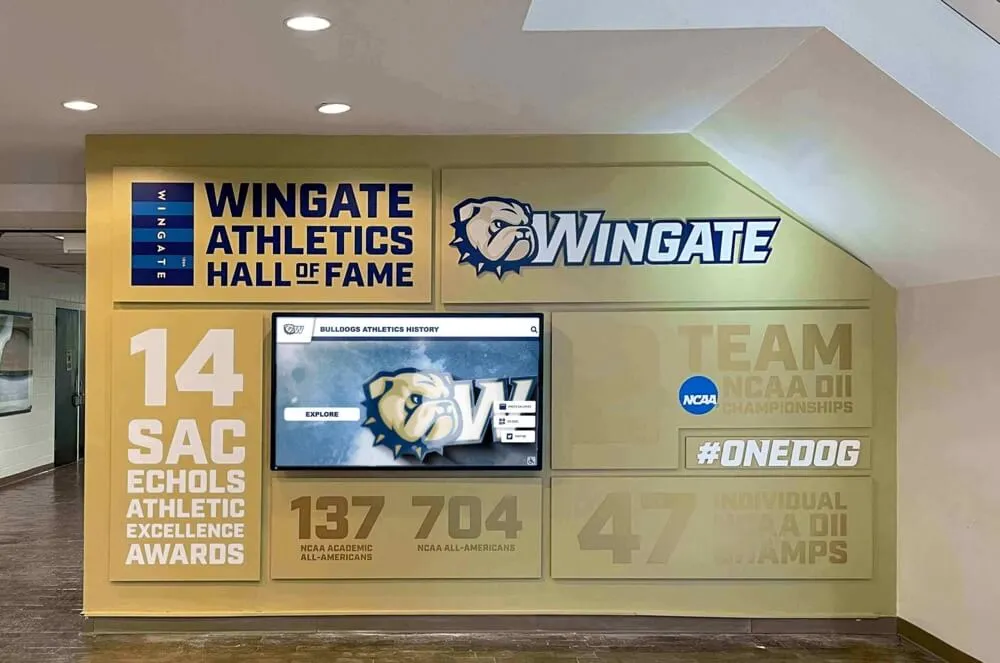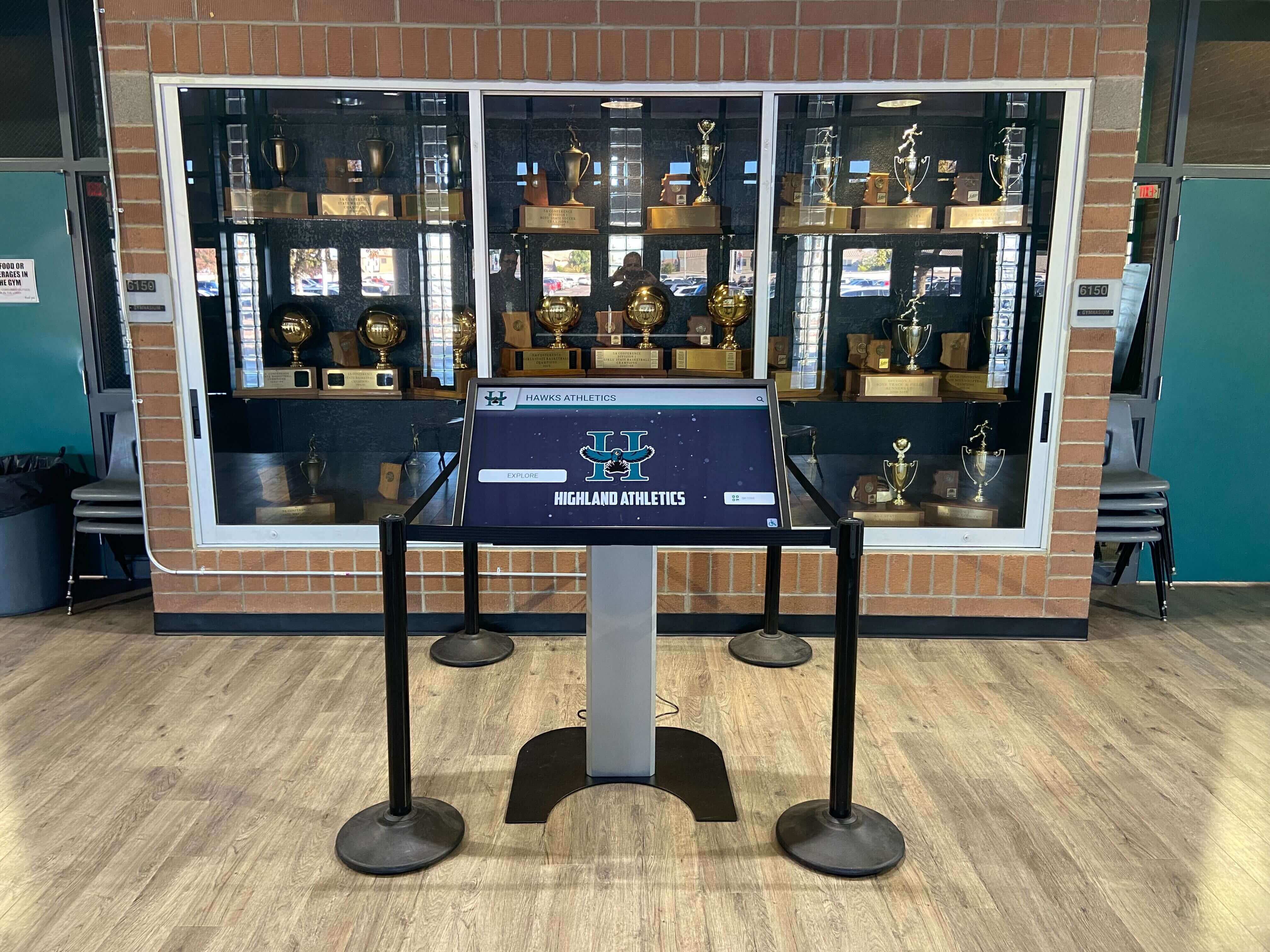




Athletic directors across the country face the same frustrating challenge: trophy cases that ran out of space years ago. Walk through any high school gym lobby and you’ll see the evidence—overcrowded shelves with trophies stacked three deep, championship plaques covering every available wall surface, and years of athletic achievements crammed together so tightly that individual honors become invisible. Storage rooms accumulate boxes of trophies removed to make room for recent awards, creating the painful reality that earning recognition today means erasing yesterday’s champions from public view.
This space crisis stems from a simple math problem: athletic programs generate new trophies, plaques, and championship hardware every season, but physical display capacity remains fixed. After 20-30 years of accumulated achievements, even the largest trophy cases reach maximum capacity, forcing impossible decisions about which teams and athletes deserve visible recognition while others get relegated to dusty storage where families and alumni never see them.
Why Touchscreen Displays Transform Gym Lobby Recognition
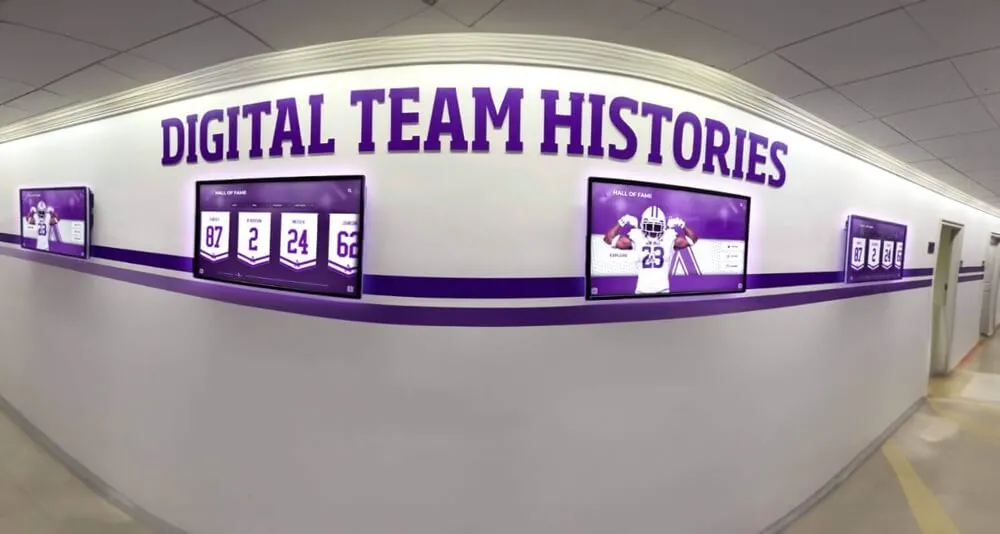
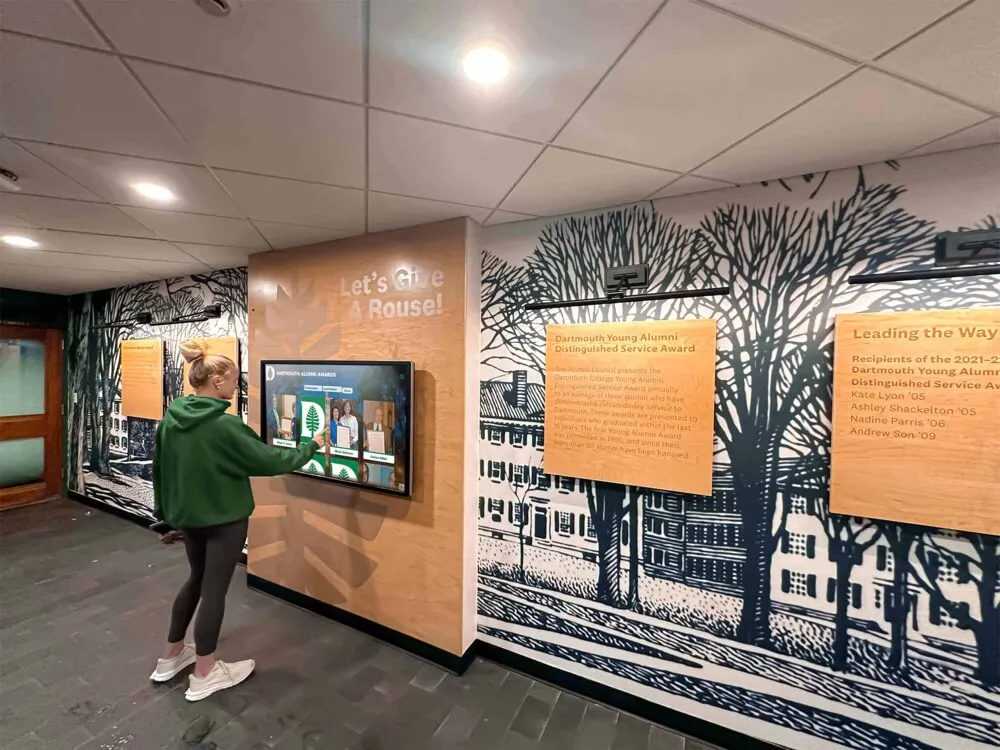
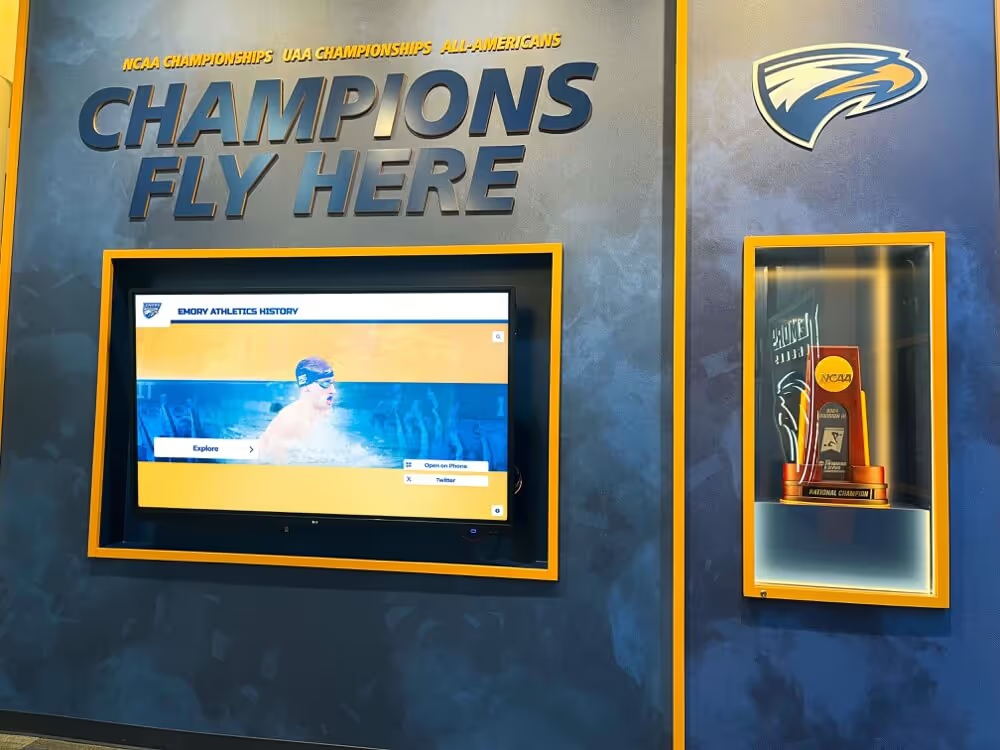
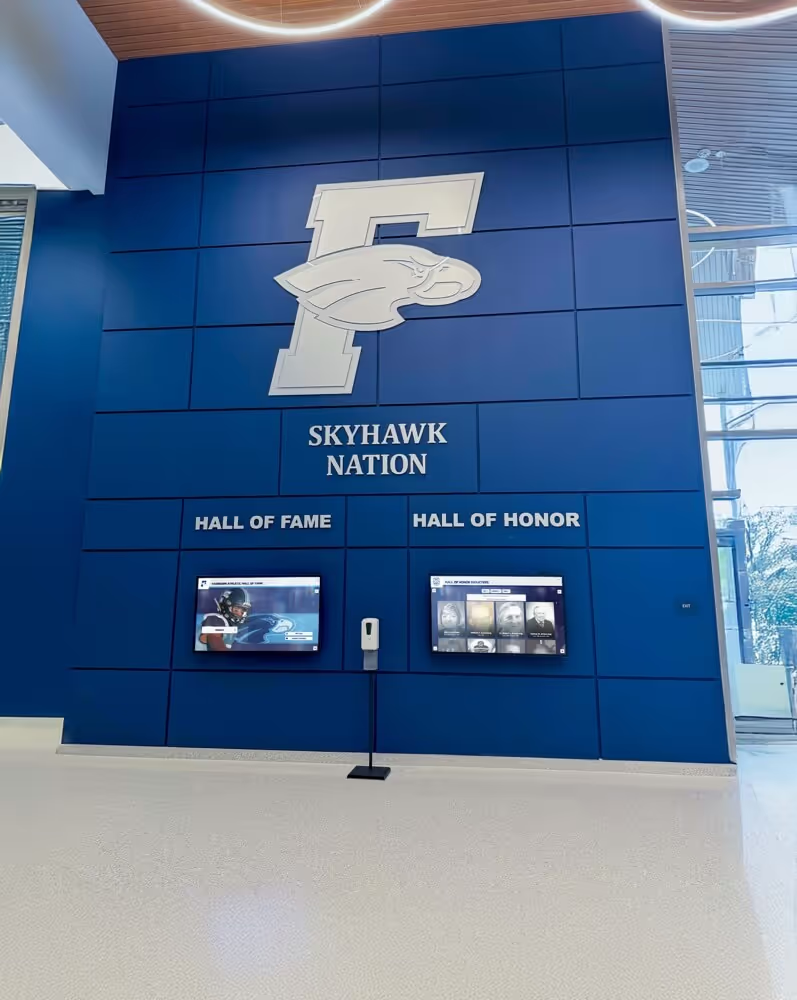
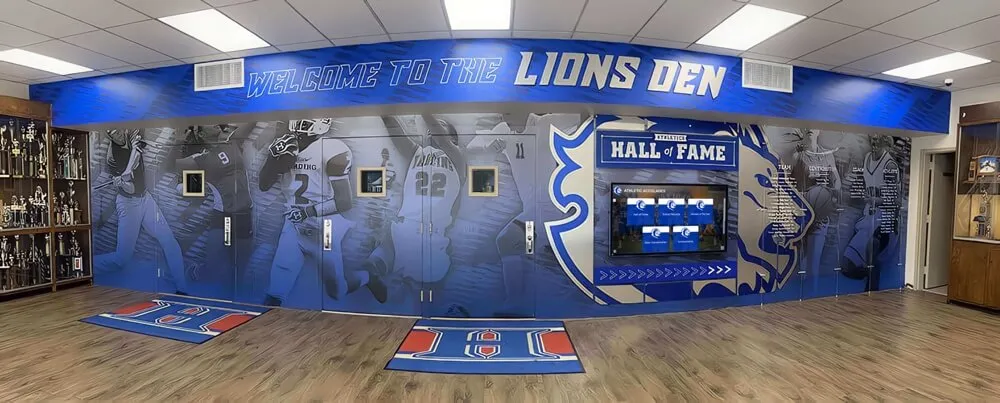
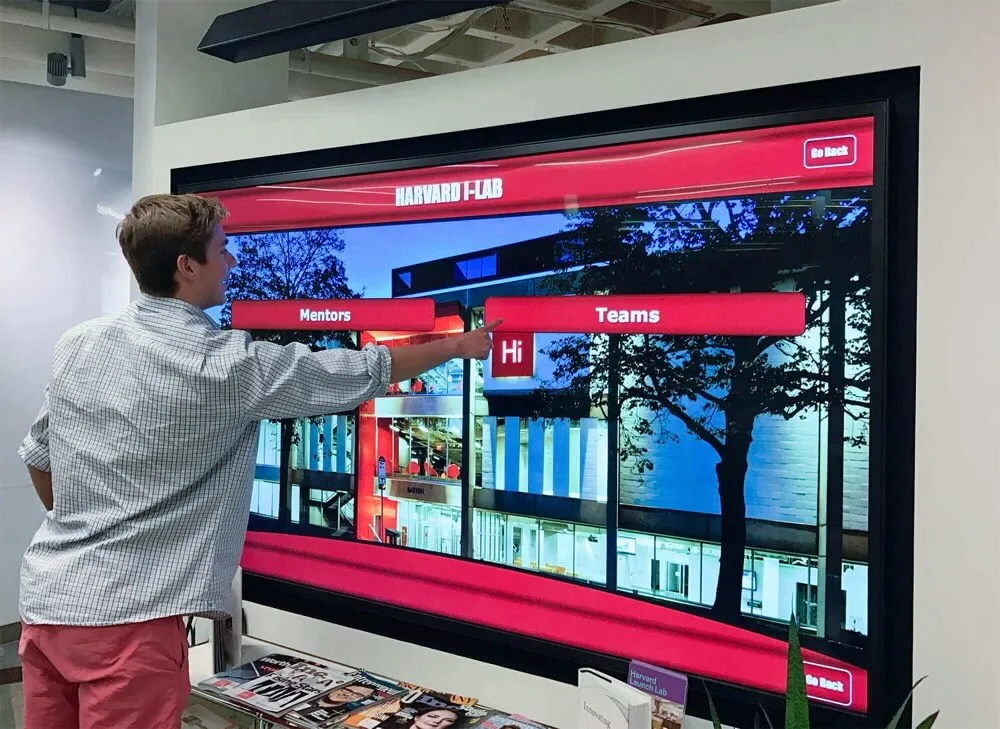
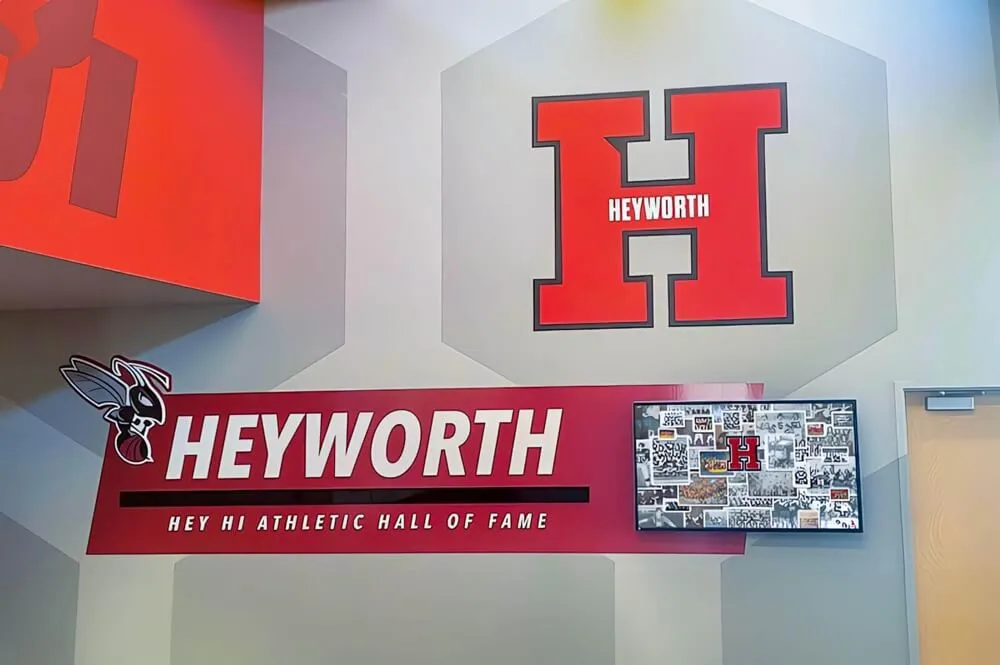
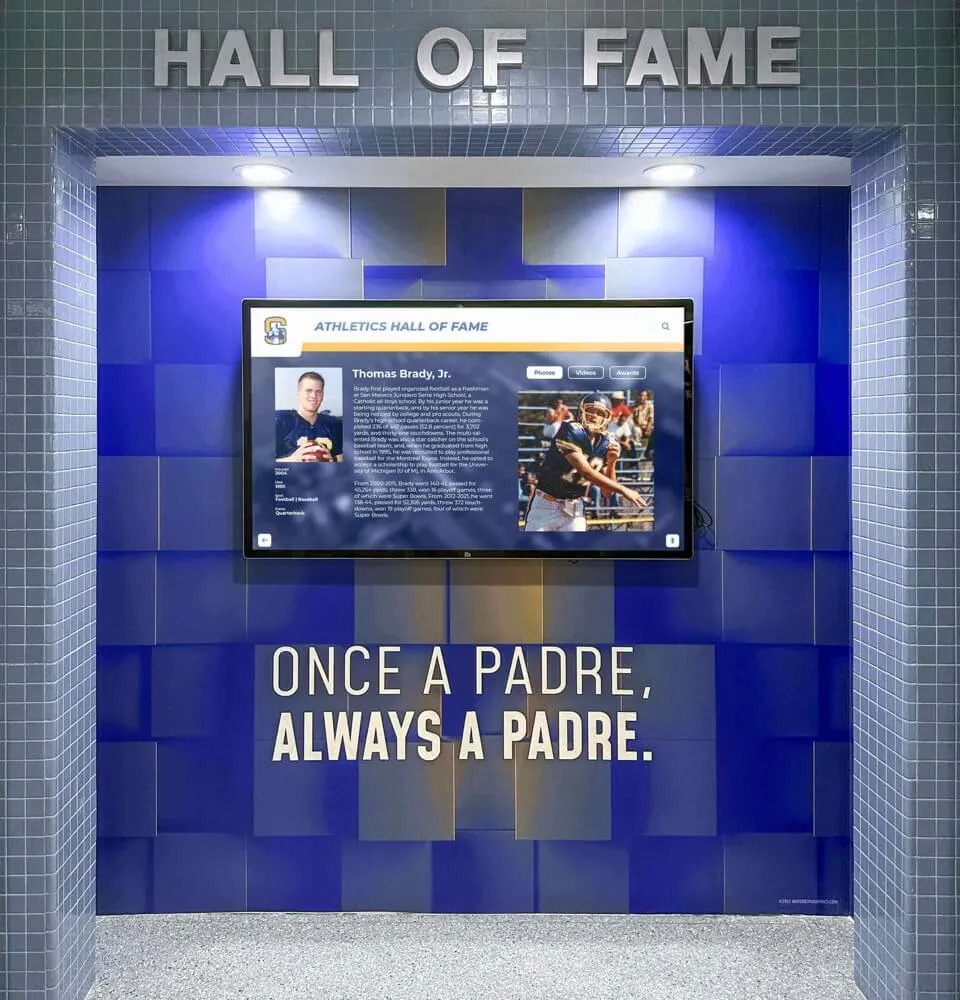
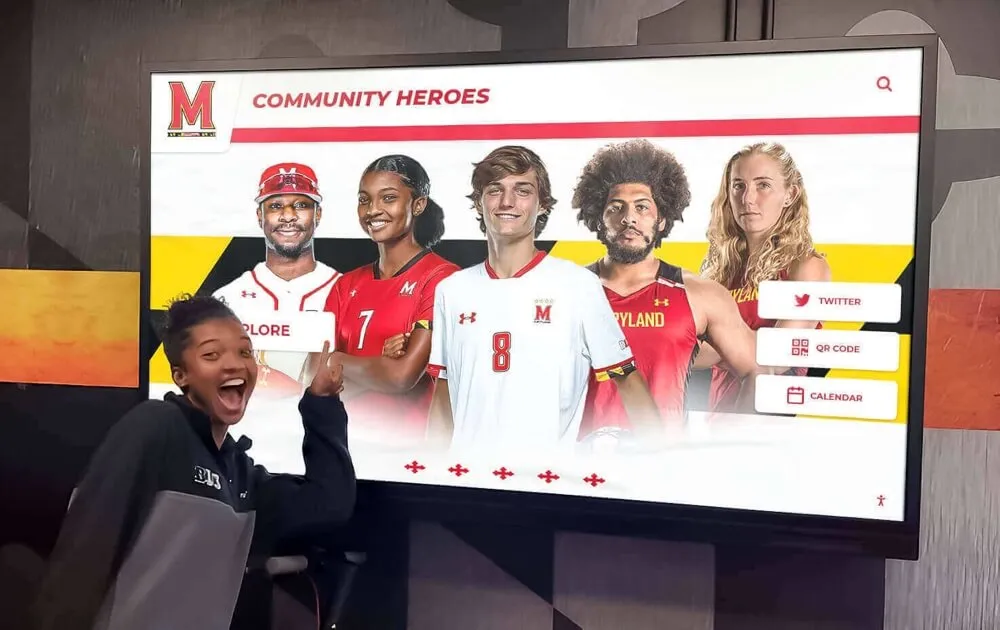
Touchscreen displays address the fundamental limitations of physical trophy cases by providing unlimited digital capacity that displays every athletic achievement throughout complete school history. Interactive systems eliminate ongoing space constraints, reduce long-term costs compared to purchasing and housing additional physical cases, enable powerful search functionality that instantly locates specific athletes or teams, and create engaging experiences matching how contemporary students expect to consume content. Solutions like Rocket Alumni Solutions’ Digital Record Board combine professional presentation quality with auto-ranking capabilities, unlimited record storage, and remote accessibility ensuring every athletic achievement receives permanent recognition worthy of the dedication athletes demonstrated earning it.
Understanding the Trophy Overcrowding Crisis
Before exploring digital solutions, understanding the specific challenges driving schools toward touchscreen alternatives provides essential context about why traditional trophy cases no longer meet institutional needs.
The Physical Capacity Problem
Trophy cases installed 20-30 years ago were designed with optimistic assumptions about adequate shelf space serving indefinite display needs. Reality proved otherwise. Each football season adds championship trophies, division titles, and tournament plaques. Basketball generates district, regional, and state hardware. Track and field, wrestling, soccer, baseball, softball, volleyball, swimming, and every other sport contribute annual recognition items. Academic achievements like scholar-athlete awards and team GPA honors add plaques requiring display space.
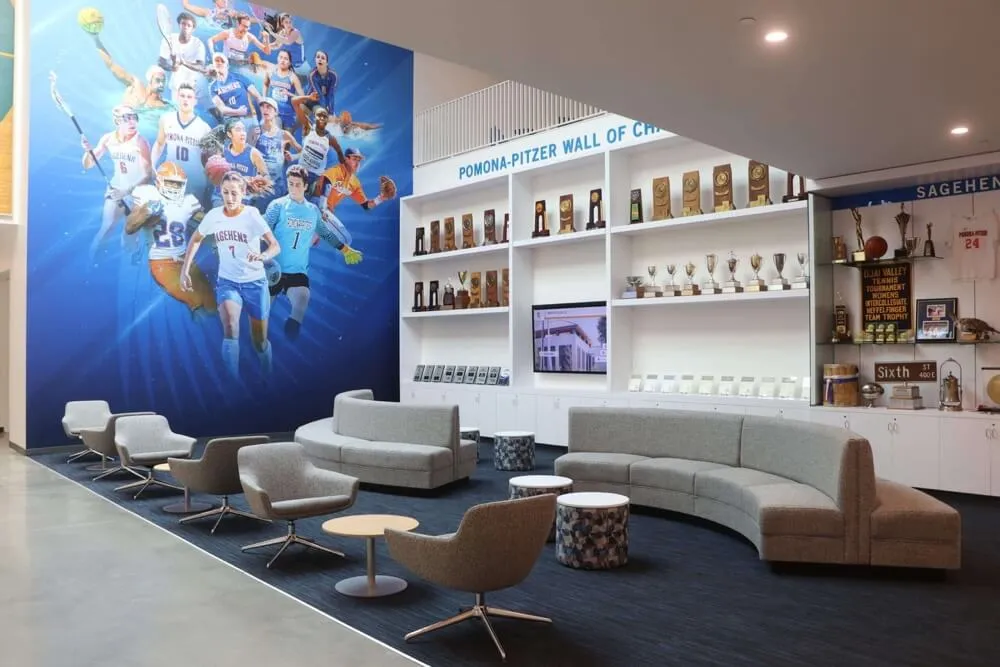
Within a decade, thoughtfully designed trophy cases fill completely. By year fifteen, athletic directors resort to stacking items, removing older trophies to storage, or cramming championships together eliminating the prominent display each achievement deserves. No amount of reorganization solves the fundamental problem: finite physical space cannot accommodate infinite achievement accumulation across unlimited time horizons.
Schools with particularly successful athletic programs face accelerated timeline compression. Programs winning multiple championships annually exhaust available space even faster, creating the paradoxical situation where excellence punishes itself through invisible recognition. The better your teams perform, the sooner trophy overcrowding forces removal of historical achievements that built program reputation and pride.
Escalating Costs for Physical Expansion
Expanding physical trophy case capacity requires substantial investment across multiple expense categories. Custom trophy cases matching existing installations cost $3,500-$8,000 per linear foot depending on materials, protective glazing, security features, and installation complexity. Large installations requiring 10-15 linear feet of additional capacity demand $35,000-$120,000 investments.
Construction expenses extend beyond cases themselves. Electrical work powers interior lighting showcasing contents properly. Structural reinforcement supports heavy glass and hardware weight on walls not designed for these loads. Architectural modifications integrate new cases aesthetically with existing spaces. Professional installation ensures proper mounting preventing collapse risks and damage.
Ongoing maintenance adds recurring costs. Glass cleaning maintains presentation quality. Lock and hinge repairs address wear from frequent access. Lighting fixture replacement maintains consistent illumination. Climate control prevents humidity damage to awards. Insurance coverage protects valuable contents.
Most frustratingly, physical expansion only delays inevitable capacity exhaustion rather than solving underlying problems. New trophy cases fill within 10-15 years, requiring the entire expensive expansion process again. Schools pursuing this approach face perpetual capital expense cycles without building cumulative value the way infrastructure investments typically do.
Recognition Inequity Across Generations
Limited physical space creates unavoidable recognition inequity where recent teams receive prominent display while historical achievements disappear into storage. Championship teams from the 1990s and 2000s—achievements that remain deeply meaningful to athletes who earned them and defined program identity during crucial development periods—get removed to make room for 2020s accomplishments.
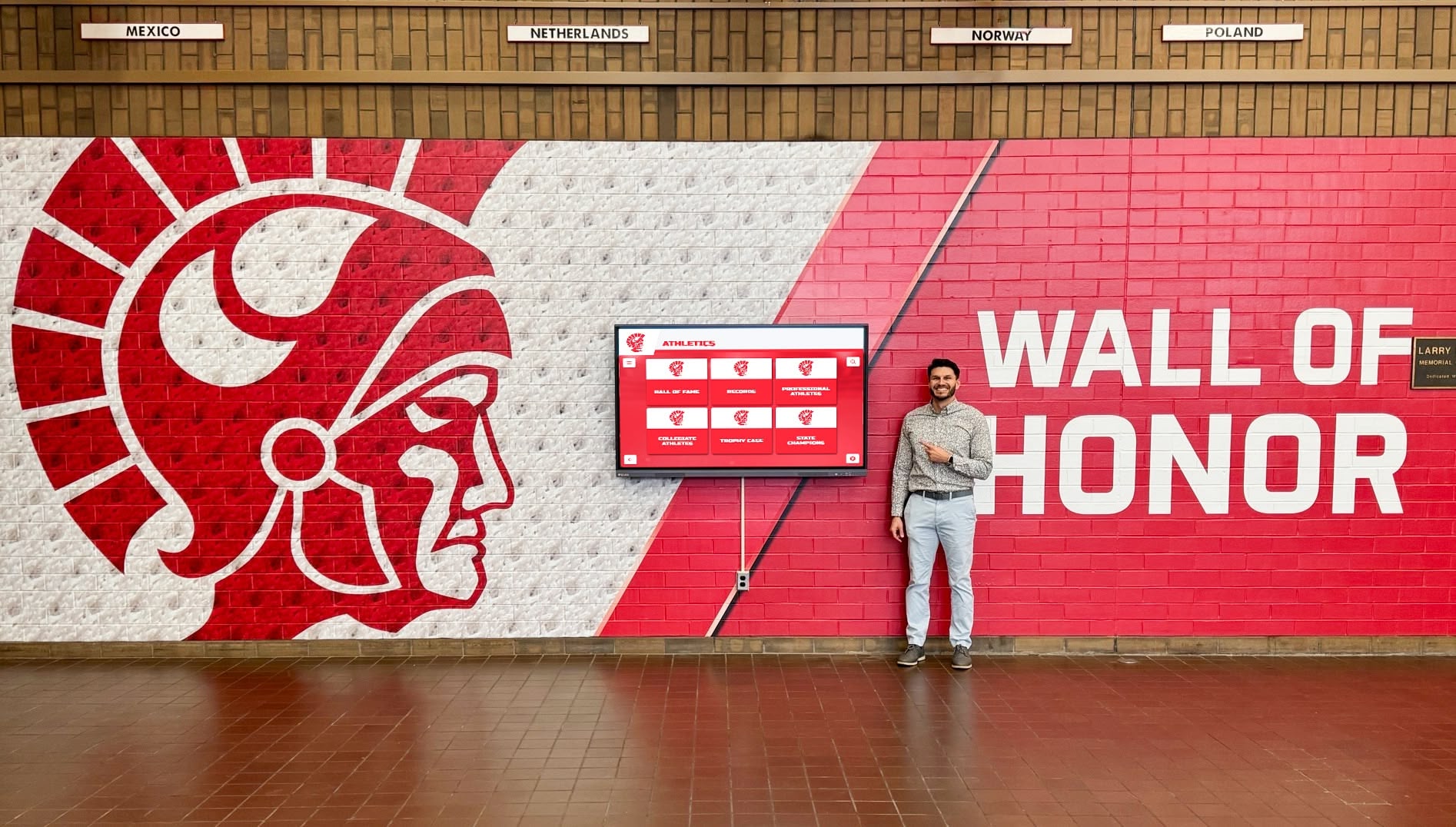
This temporal bias frustrates alumni who return expecting to show families their championship trophies only to discover them missing from displays. Younger siblings of former athletes cannot see older family members’ achievements. Community members lose institutional memory as physical evidence of historical excellence disappears from public view.
Recognition systems should honor all achievement equally regardless of when athletes competed. Trophy removal based solely on age rather than achievement significance contradicts fundamental fairness principles that athletics teach. Digital solutions eliminate this forced inequity by providing unlimited capacity ensuring every generation receives equal permanent recognition.
Limited Engagement with Static Displays
Traditional trophy cases offer passive viewing experiences failing to engage contemporary students who grew up with smartphones and interactive technology throughout their lives. Students glance briefly at static trophies during passing periods, spending an average of just 10-20 seconds looking at displays before moving on to other activities.
Physical trophies provide minimal context beyond engraved nameplates. Viewers see championship hardware without understanding game details, tournament brackets, opponent quality, or individual statistical achievements underlying team success. No search capability exists—finding specific athletes or teams requires knowing approximate years and manually scanning through chronologically organized shelves.
Geographic limitations confine recognition to those who physically visit gym lobbies. Alumni living across states cannot share achievements with families. Parents miss seeing trophies during work hours when buildings are locked. Prospective families touring schools cannot explore athletic history comprehensively during brief visits. Communities lack convenient access to school pride points during off-hours or remote circumstances. Schools implementing comprehensive athletic recognition programs discover that engagement quality matters as much as recognition quantity.
Touchscreen Display Solutions for Athletic Recognition
Modern digital approaches solve every major limitation confronting traditional trophy cases while preserving everything schools value about athletic recognition traditions. These systems combine professional presentation with interactive technology creating recognition programs that honor achievements while enabling unprecedented access and engagement.
System Components and Technical Architecture
Touchscreen displays for gym lobbies integrate several coordinated elements creating comprehensive athletic recognition platforms:
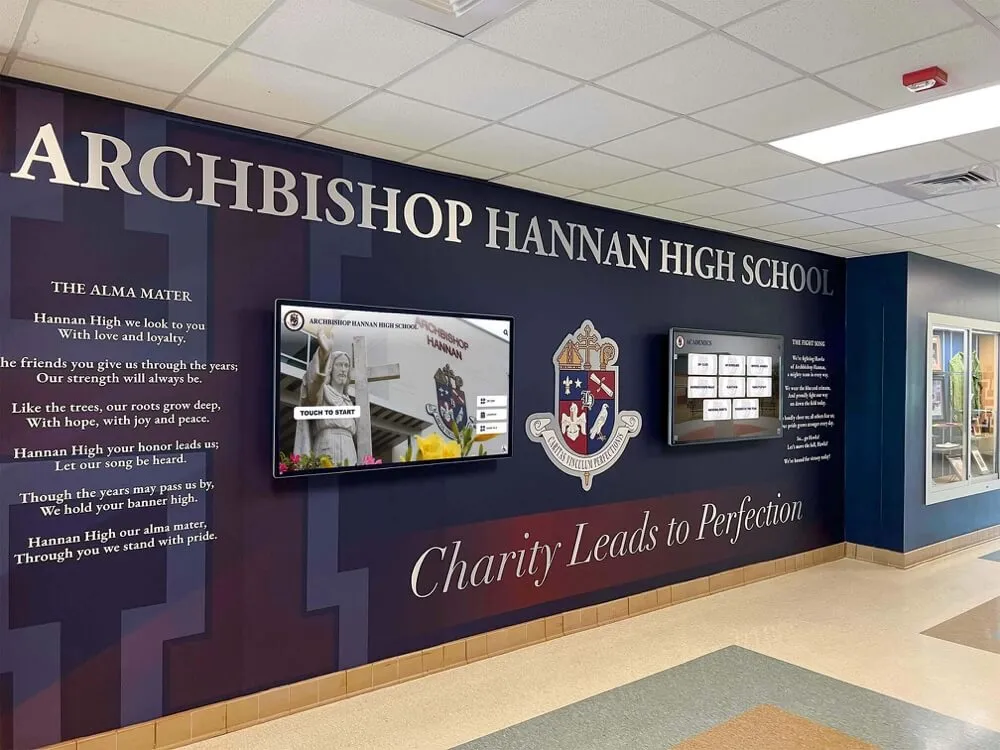
Commercial-Grade Touchscreen Hardware: Professional displays designed for continuous operation in high-traffic public environments withstand thousands of daily interactions across multi-year lifespans. Anti-glare protective coatings maintain visibility under bright gym lighting. Tempered glass prevents damage from typical student interaction. Mounting systems position screens at accessible heights accommodating diverse student body demographics from middle school through adult visitors.
Screen sizes typically range from 55 to 75 inches depending on viewing distances and content density requirements. Larger displays suit lobby environments where groups view simultaneously during pre-game gatherings or team celebrations. Multiple smaller displays work well distributing content across longer hallway installations near gymnasiums or practice facilities.
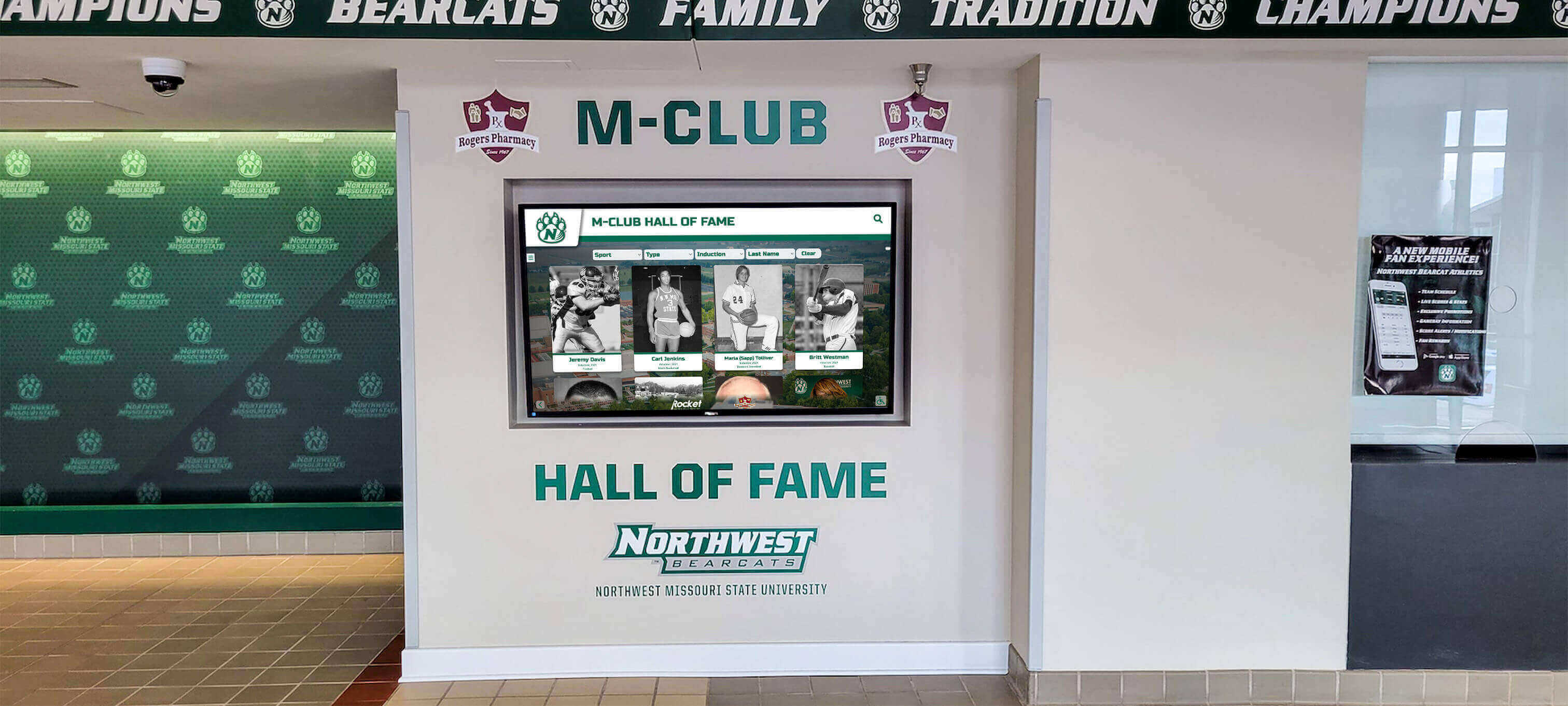
Purpose-Built Recognition Software: Specialized platforms designed specifically for athletic achievement display provide intuitive navigation, auto-ranking functionality, and comprehensive content organization matching how schools categorize sports achievements. Cloud-based architecture enables remote content management from any device without requiring IT expertise for routine updates. Responsive designs adapt automatically to various screen sizes and orientations.
Robust Content Management Systems: Web-based platforms organize all athletic records, team rosters, championship histories, and individual achievements through intuitive administrative interfaces. Staff members update content easily after games, seasons, or special events without technical knowledge barriers. Bulk import tools accelerate migration of historical records from spreadsheets or databases. Version control prevents accidental content deletion while maintaining complete edit histories.
Multi-Platform Accessibility: Content displays on physical touchscreens in gym lobbies, web browsers on any internet-connected device, and mobile apps enabling personal exploration. This universal accessibility extends recognition beyond those who physically visit facilities while providing convenient reference for coaches preparing motivational presentations, journalists researching athletic stories, or families sharing achievements with extended relatives.
Auto-Ranking and Real-Time Updates
The most powerful capability digital record boards provide is automatic ranking and real-time update functionality impossible with physical trophy arrangements. When athletes break records or achieve new personal bests, systems automatically rerank leaderboards showing updated standings across complete school history without manual intervention.
Coaches enter new performances through simple web forms—track times, wrestling records, swimming splits, basketball scoring, football statistics, or any measurable athletic achievement. Software instantly compares new performances against historical records, updates relevant leaderboards, notifies administrators when school records fall, and displays updated rankings on all connected screens within minutes.
This automation eliminates labor-intensive manual processes that traditionally discourage comprehensive record-keeping. Rather than spending hours each season updating static displays, athletic directors invest 5-10 minutes entering new data and let systems handle complex ranking calculations, historical comparisons, and public display updates automatically.
Comprehensive Sport and Achievement Coverage
Digital systems accommodate unlimited sports and achievement categories without space constraints. Traditional trophy cases force prioritization—which sports deserve limited shelf space? Do participation awards warrant display alongside championships? Should academic achievements appear in athletic spaces?
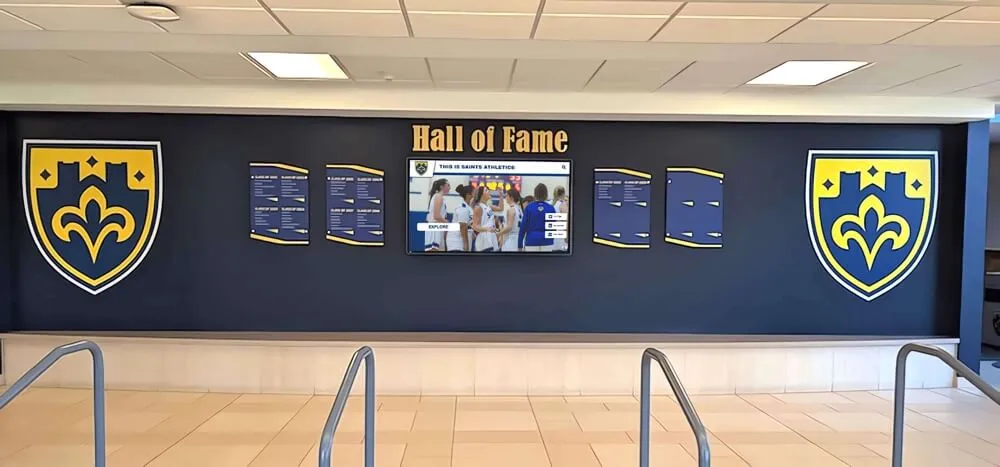
Touchscreen displays eliminate these difficult choices through organized navigation enabling comprehensive coverage:
Team Achievements: Conference championships, district titles, regional tournaments, state appearances, national qualifications, tournament placements, season records, playoff runs, rivalry game results, and tournament hardware.
Individual Recognition: All-conference selections, all-state honors, all-American awards, scholar-athlete recognition, team captain designations, most valuable player awards, coaching awards, sportsmanship honors, and leadership recognition.
Performance Records: All-time scoring leaders, career statistical records, single-game achievements, season performance bests, relay team records, tournament performances, weight class achievements, and event-specific records spanning complete program history.
Participation Recognition: Letter winners, multi-sport athletes, four-year participants, team managers and support staff, student trainers, statistical crews, and others contributing to program success beyond direct competition.
Schools pursuing high school trophy case modernization discover that comprehensive digital systems honor more athletes more meaningfully than selective physical displays ever could.
Powerful Search and Filter Capabilities

Interactive search functionality transforms passive trophy viewing into active exploration enabling users to discover specific achievements instantly. Students search by athlete name locating all sports participation, records held, and teams played on throughout careers. Families filter by graduation year finding all recognized athletes from specific classes. Coaches pull up historical performances comparing current athletes against program legends.
Advanced filtering enables sophisticated queries impossible with physical displays: identify all athletes earning all-state recognition across multiple sports, locate every conference championship team by sport and decade, find scholar-athlete award recipients by academic year, or discover which athletes hold the most individual program records across any sport.
This search power serves multiple institutional purposes beyond simple recognition. Journalists researching feature stories access comprehensive athletic histories instantly. Alumni relations staff identify notable athletes for recognition events or fundraising initiatives. Admissions teams show prospective families institutional athletic excellence across complete program histories. Statistical research investigating program trends analyzes decades of performance data previously trapped in paper archives or institutional memory.
Comprehensive Benefits for Schools and Athletic Programs
Institutions implementing touchscreen displays in gym lobbies discover advantages spanning administrative efficiency, cost savings, engagement improvements, and entirely new recognition capabilities impossible with traditional trophy cases.
Unlimited Achievement Capacity
A single 65-inch touchscreen accommodates detailed professional-quality displays of thousands of athletic achievements—records, championships, honors, and individual recognition requiring hundreds of linear feet of physical trophy case space. Schools finally display complete athletic program histories spanning entire institutional lifespans rather than making impossible choices about which achievements deserve limited physical display space.
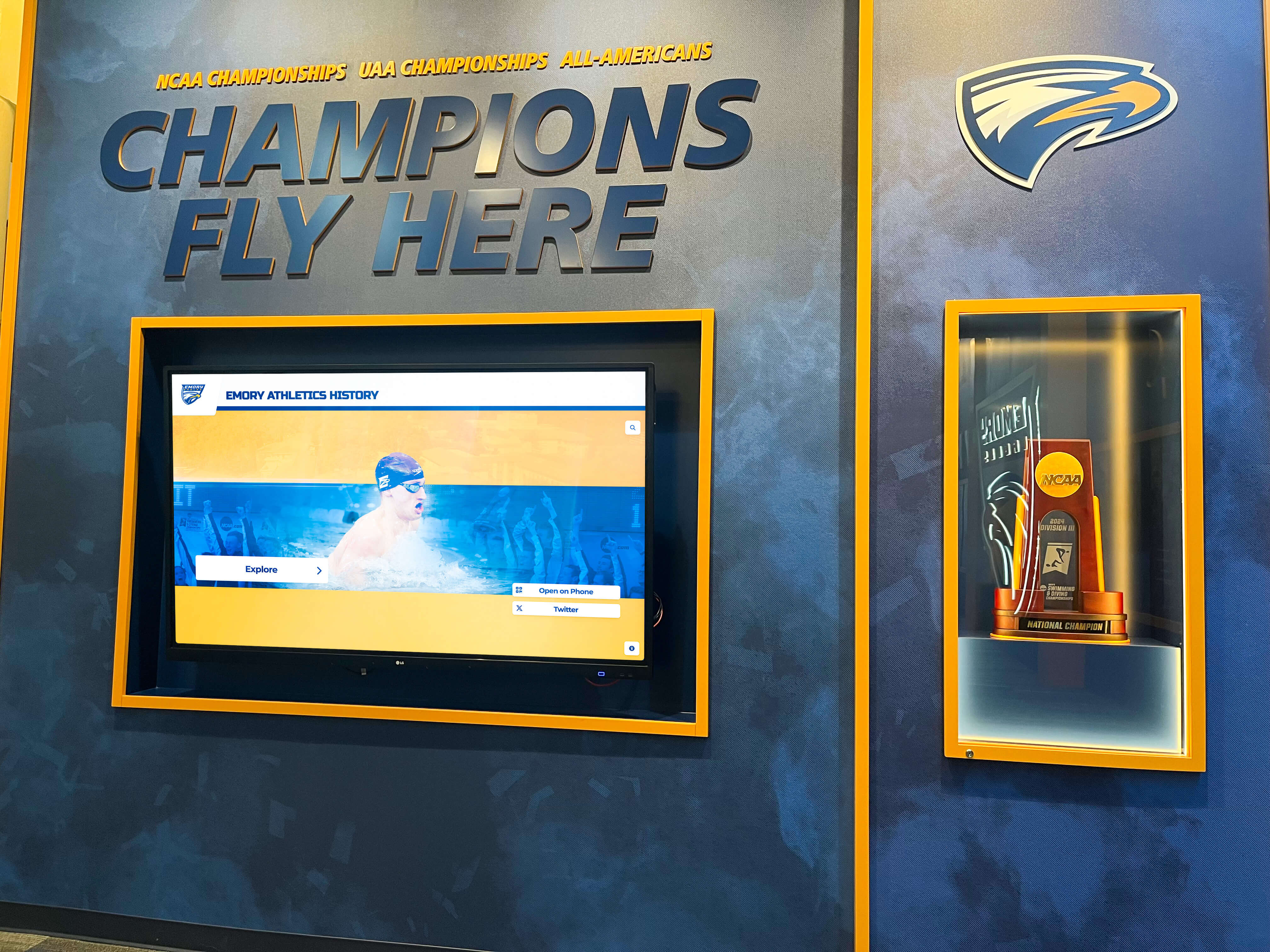
This unlimited capacity transforms recognition equity. Championship teams from every decade receive equal prominent treatment regardless of when athletes competed. The 1995 state football champions appear as prominently and accessibly as the 2025 champions. Individual record holders from the 1980s get displayed alongside contemporary stars. Every generation receives recognition honoring their contributions to program development and institutional pride.
Unlimited capacity also eliminates painful decisions about removing older trophies to accommodate recent achievements. Digital systems add new content without displacing existing recognition, ensuring permanence that physical constraints constantly threaten. Athletes earn confidence that achievements will remain visible throughout their lifetimes and beyond, not disappear into storage boxes when space demands force difficult prioritization choices.
Dramatic Long-Term Cost Advantages
While touchscreen systems require meaningful upfront investment, total cost of ownership over realistic 10-20 year evaluation periods proves substantially lower than physical trophy case expansion once you calculate cumulative costs physical approaches demand.
Digital system investment breakdown:
- Commercial-grade 65-inch touchscreen with protective mounting: $4,500-$7,500
- Athletic recognition software licensing (annual): $900-$1,800
- Professional installation including electrical and network: $1,500-$3,000
- Initial content digitization and setup: $1,500-$2,500
- Total initial investment: $8,400-$14,800
Annual operating costs: $900-$1,800 for software maintenance, $200-$400 for display upkeep, $100-$300 for content management time.
15-year total cost of ownership: $24,300-$47,700 for comprehensive digital recognition serving entire athletic programs with unlimited capacity.
Compare this to physical trophy case expansion:
- New trophy case installation (10 linear feet): $35,000-$80,000
- Annual trophy purchases and engraving: $2,000-$4,000
- Maintenance, repairs, and lighting: $400-$800 annually
- Additional expansion after 10-15 years: $35,000-$80,000
- 15-year total cost: $106,000-$232,000 with limited finite capacity requiring future expansion
Digital systems achieve break-even within 3-4 years, then deliver ongoing savings plus dramatically superior capabilities physical approaches cannot match regardless of investment levels. Schools looking to understand digital trophy case implementation find compelling financial arguments beyond space efficiency alone.
Enhanced Athletic Program Visibility
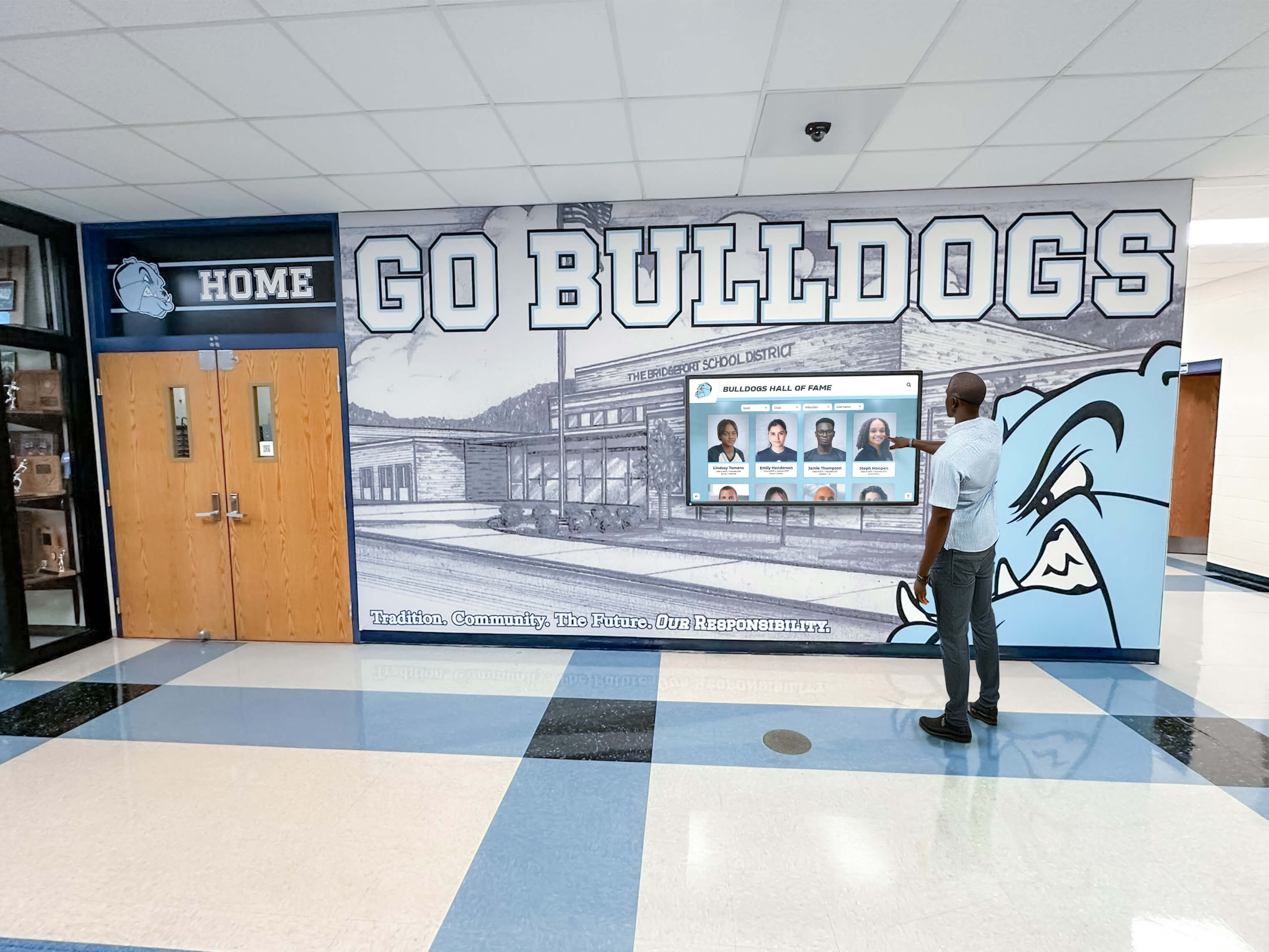
Interactive touchscreen displays create engagement opportunities fundamentally impossible with static trophy cases. Average interaction time with digital athletic displays runs 4-8 minutes compared to 10-20 seconds for physical trophies—a 15-30x increase. This dramatic improvement stems from active exploration versus passive viewing—users aren’t simply glancing at unchanging trophies but actively searching, discovering, and exploring comprehensive athletic histories.
Current students search for older siblings, parents, or family friends who competed previously, discovering personal connections to program history. This relevance builds stronger athletic identity compared to viewing anonymous trophies without personal significance. Athletes explore how family members performed during their competitive careers, comparing records across generations and understanding family athletic legacy.
Alumni visiting during games or reunions don’t just glance at recent trophies—they explore their own competitive years, locate teammates, review championship seasons, and compare their statistical achievements against contemporary athletes. Alumni report spending 15-25 minutes exploring digital displays during facility visits compared to 2-3 minutes with traditional trophy cases.
Prospective families touring schools during recruitment processes explore athletic program depth understanding championship traditions, competitive success patterns, and program culture across decades. Digital displays become recruitment tools demonstrating institutional athletic commitment and excellence beyond simple verbal presentations or printed marketing materials.
Remote Accessibility Expanding Recognition Reach
Geographic limitations no longer confine athletic recognition to those who can physically visit gym lobbies. Web and mobile platforms enable athletes anywhere worldwide to explore achievements, share records with families who never attended these schools, and maintain connections to program communities regardless of distance.
This remote accessibility dramatically expands engagement reach. Alumni living across countries access the same comprehensive content available on physical lobby displays. Family members unable to attend evening games explore achievements independently from home. Journalists researching stories access statistical records without coordinating facility visits. Prospective families evaluate programs before campus tours.
Social media integration enables easy sharing of discovered achievements, generating organic athletic program promotion when athletes post records and championships to Instagram, Twitter, or Facebook. This social amplification extends recognition visibility far beyond direct system users while creating positive institutional publicity through authentic personal sharing rather than formal athletic department marketing campaigns.
Implementation Strategies for Gym Lobby Touchscreen Displays
Schools implement touchscreen displays through various approaches depending on budget constraints, timeline pressures, existing technology infrastructure, stakeholder preferences, and strategic objectives requiring accommodation during change management processes.
Primary Lobby Installation Maximizing Visibility
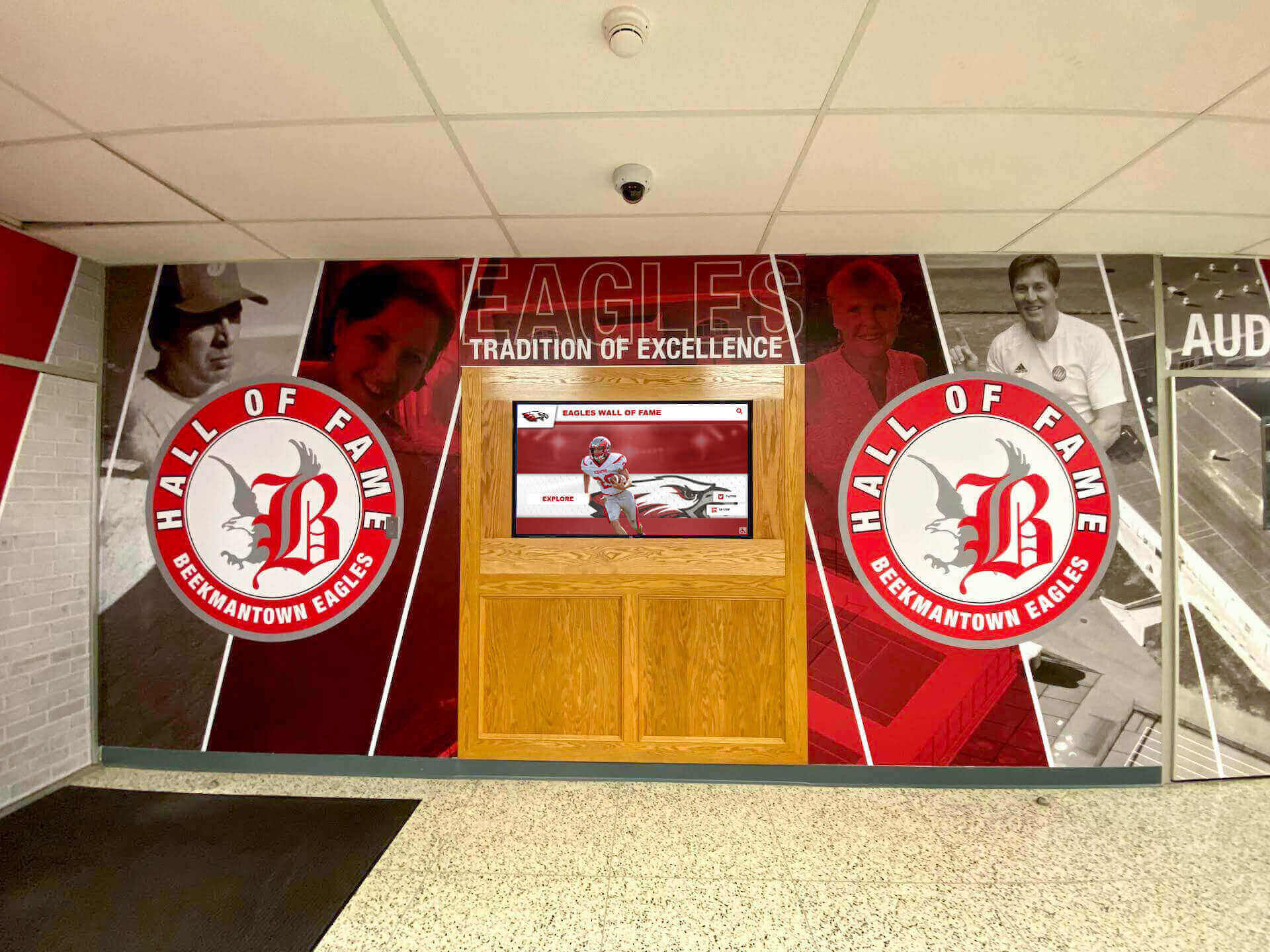
The most common implementation approach places a single large-format touchscreen (65-75 inches) in the primary gym lobby entrance where students, families, and visitors naturally congregate before and after athletic events. This high-visibility location maximizes organic engagement while establishing digital recognition as a central program element rather than supplementary addition.
Strategic positioning considerations include placing displays at comfortable viewing heights accommodating diverse user populations from middle school students through adult visitors, ensuring adequate ambient lighting for screen visibility without excessive glare, providing sufficient standing space for groups to gather during exploration without blocking facility traffic flow, and positioning near existing trophy cases creating visual connections between traditional and digital recognition elements.
This single-display approach minimizes initial investment while providing comprehensive athletic recognition functionality. Schools establish systems successfully, build stakeholder comfort with digital approaches, demonstrate engagement value through usage analytics, and create foundation for potential expansion to additional locations as budgets and strategic priorities allow.
Multi-Location Distributed Display Networks
Larger schools or those prioritizing maximum accessibility implement multiple touchscreen displays distributed across athletic facilities. Common placement locations include main gym lobby providing primary visibility, practice gymnasium offering access during training sessions, weight room celebrating strength achievements specifically, hallway connections between gymnasiums and main academic buildings capturing student traffic, and outdoor athletic complexes serving field sport athletes and spectators.
Distributed networks create multiple engagement opportunities throughout athletic facilities while reducing crowding at single locations. Student-athletes access records conveniently during practice facility visits without walking to main lobbies. Specialized displays in weight rooms feature strength records specifically, creating focused recognition matching location context. Outdoor kiosks bring recognition to field sport athletes whose competitions occur away from main gymnasiums.
Cloud-based content management enables efficient multi-display operation. Single administrative updates propagate automatically to all displays regardless of physical location. Consistent content ensures unified recognition experience while optional location-specific customization highlights relevant sports—weight room displays emphasize strength records, outdoor kiosks feature field sport achievements prominently.
Integration with Physical Trophy Retention

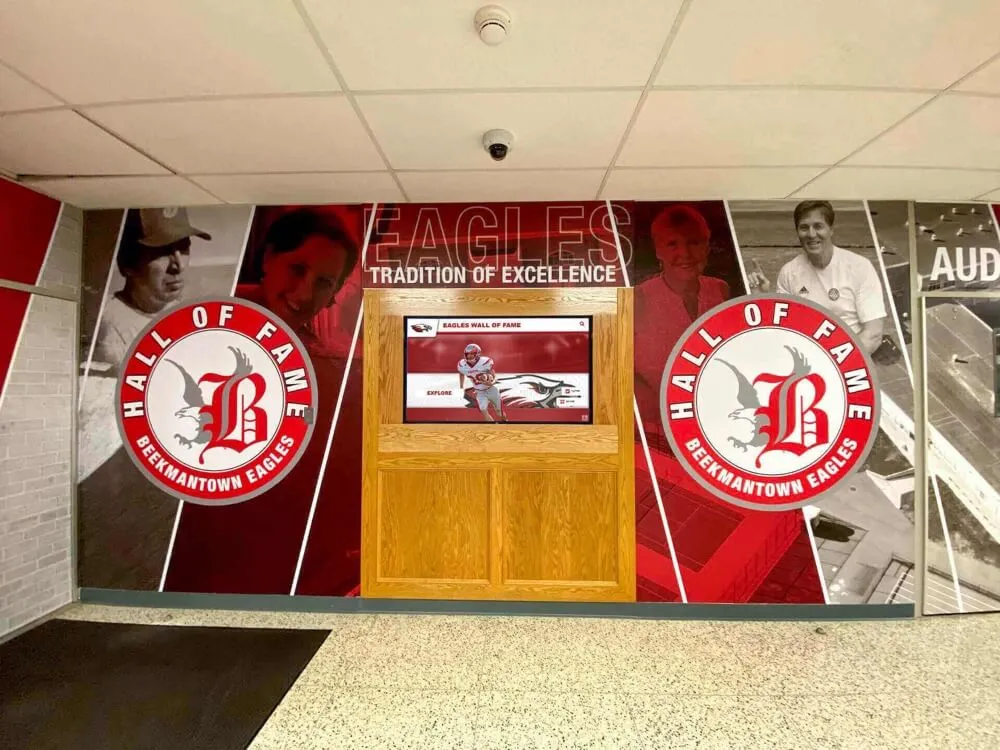
Many schools prefer hybrid approaches maintaining select physical trophies while supplementing with touchscreen displays addressing limitations physical cases cannot solve. Recent championship hardware remains in traditional trophy cases satisfying stakeholders valuing tangible recognition. However, adjacent touchscreen displays provide complete access to historical achievements, detailed statistical records, individual athlete recognition, and comprehensive program histories impossible to convey through physical trophies alone.
This model satisfies diverse stakeholder preferences during transition periods. Traditionalists see preferences honored through continued physical trophy display for marquee achievements. Technology advocates appreciate modern capabilities addressing historical limitations. Hybrid approaches work particularly well for schools with strong attachment to physical championship trophies, institutions managing stakeholder change resistance through gradual transition, communities where some tangible recognition maintains ceremonial importance, and situations where trophy disposal faces emotional resistance from alumni and community members.
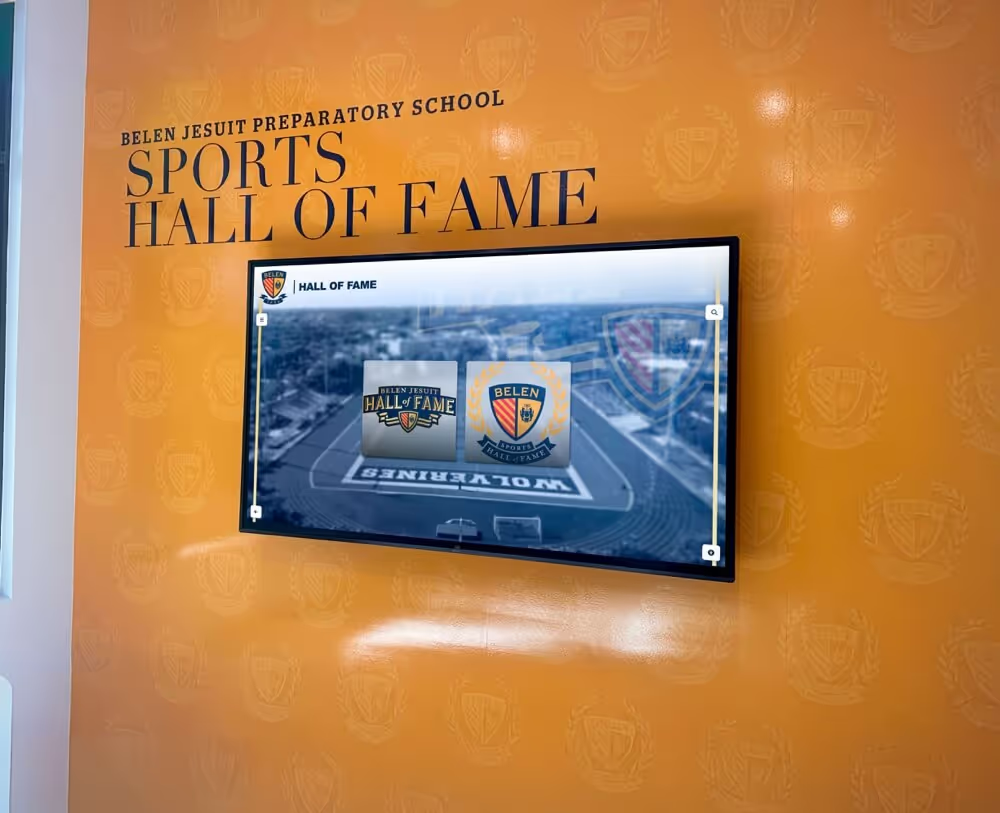
Schools implementing athletic hall of fame programs often use this hybrid model where hall of fame plaques remain physical while comprehensive achievement records transition to digital platforms.
Phased Implementation Spreading Investment
Budget-constrained schools often implement touchscreen recognition through phased approaches spreading costs across multiple fiscal years while building capabilities systematically toward comprehensive eventual systems.
Example Phased Timeline:
Year 1 ($2,000-$4,000): Digitize historical trophy records and athletic achievements through systematic data entry, establish cloud-based digital record database with proper organization and search capabilities, implement web-based remote viewing accessible to athletes and families anywhere.
Year 2 ($9,000-$15,000): Install first physical touchscreen display in main gym lobby, integrate recent seasons with enhanced statistical content and athlete profiles, establish efficient workflows for adding new achievements after each competitive season.
Year 3 ($6,000-$12,000): Expand to second display location in practice facility or weight room, integrate with other recognition programs like scholar-athlete awards and hall of fame, implement advanced features like QR code access enabling smartphone exploration.
This phased approach enables schools to start experiencing benefits immediately with manageable initial investments while spreading total costs across multiple budget cycles. Early success with initial phases often generates enthusiasm facilitating approval for subsequent expansion as stakeholders see concrete value through engagement metrics and community feedback.
Creating Compelling Digital Athletic Recognition Content
Technology platforms provide infrastructure, but compelling content creates meaningful experiences honoring athletes while engaging diverse audiences effectively. Thoughtful content development transforms digital displays from simple electronic trophy replacements into powerful athletic recognition and community-building tools.
Comprehensive Individual Athlete Profiles
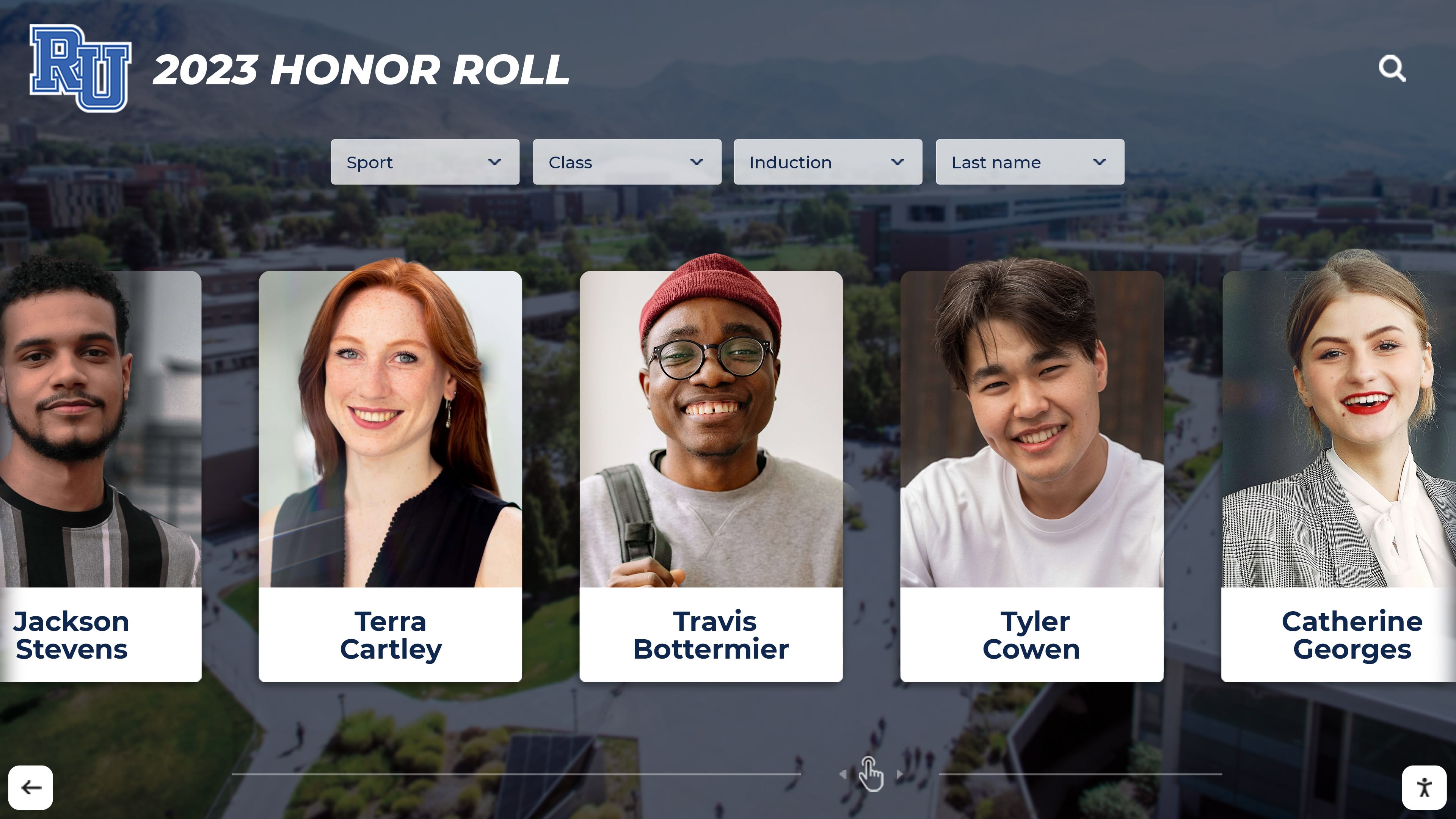
Rather than listing names on trophy engravings alone, digital platforms enable rich athlete profiles honoring complete athletic careers:
Foundational Elements: Full names with nicknames or preferred names athletes want displayed, high-quality athletic portrait photographs showing school uniforms, graduation years and specific dates, sports participated in across complete high school careers.
Athletic Achievement Details: Teams played on with specific positions, statistical records set throughout careers, championships won and tournament results, all-conference and all-state recognition received, team captain and leadership roles, special awards like most valuable player or scholar-athlete honors.
Contextual Information: Career statistics in detail showing performance progression, comparison against school record holders showing historical context, teammate connections linking to other athlete profiles, coach information identifying mentors throughout careers, memorable game highlights or season achievements worthy of special recognition.
Post-Secondary Updates: College commitment and scholarship information, professional career paths athletes pursue, notable post-graduation athletic or career accomplishments, current location information when appropriate for alumni networking.
This comprehensive profile richness transforms basic name listings into engaging narratives honoring complete athletic journeys. While basic identification provides essential recognition, enhanced content creates emotional connections and institutional pride extending far beyond simple acknowledgment of team membership.
Team Achievement Narratives
Beyond individual profiles, display comprehensive team achievement histories providing season context and championship narratives:
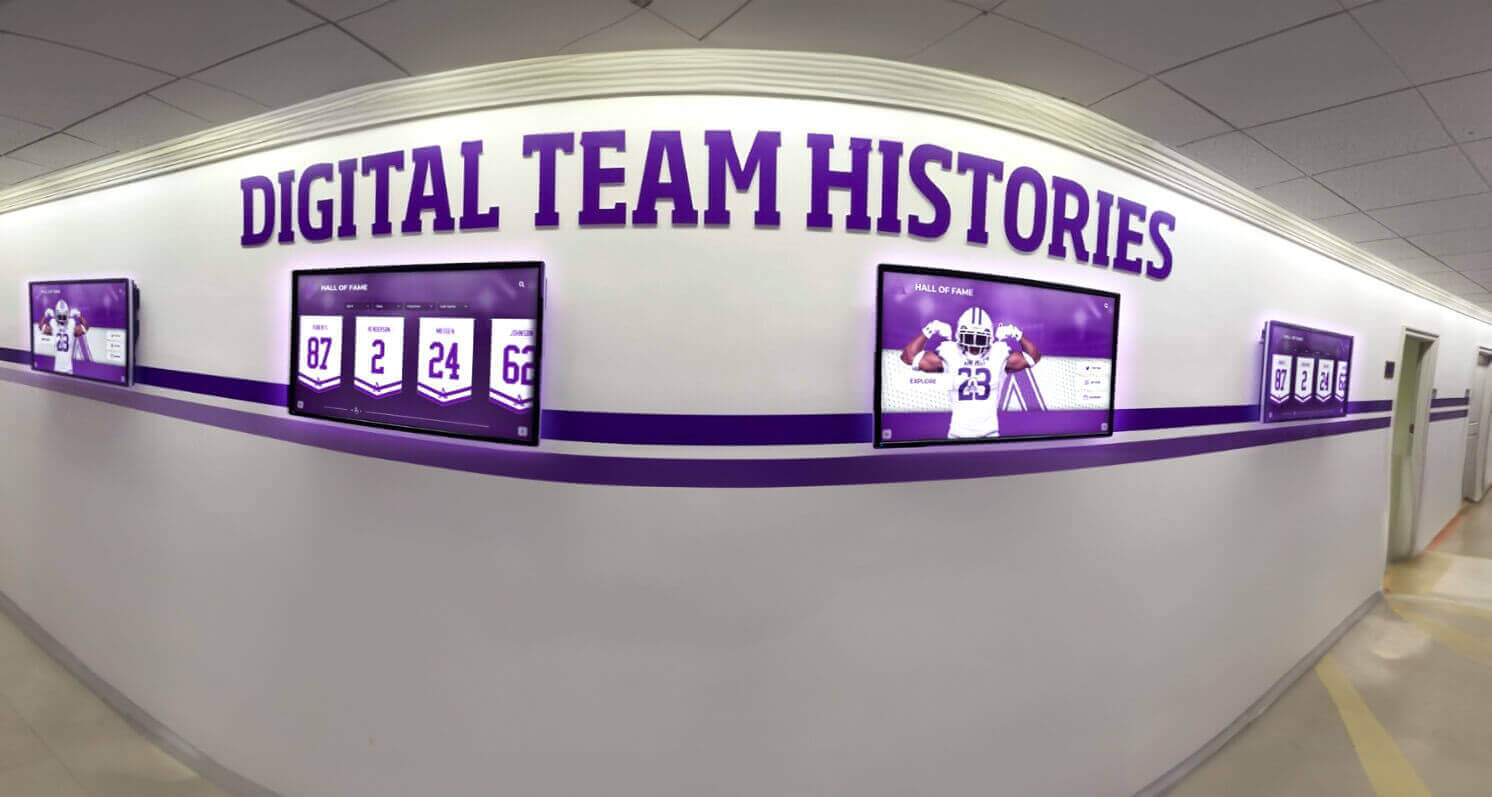
Championship Season Details: Complete season records showing wins and losses, tournament bracket progressions showing competitive paths to championships, game-by-game results highlighting notable victories, roster listings connecting to individual athlete profiles, coaching staff recognition crediting program leadership.
Historical Context: Comparison against other successful seasons in program history, identification of records set during championship runs, recognition of individual achievements within team success context, connection to broader school accomplishments during those academic years.
Visual Elements: Team photographs showing complete rosters in uniform, action photography capturing competitive moments, trophy and medal photography documenting tangible awards, newspaper clippings or media coverage from championship seasons, video highlights when available showcasing memorable plays or moments.
This narrative richness transforms simple “State Champions 2015” trophy labels into comprehensive stories explaining how teams achieved excellence. Current athletes understand the work required for championship success. Alumni relive meaningful competitive experiences. Families appreciate fuller context around athletic achievements their students earned.
Statistical Record Leaderboards
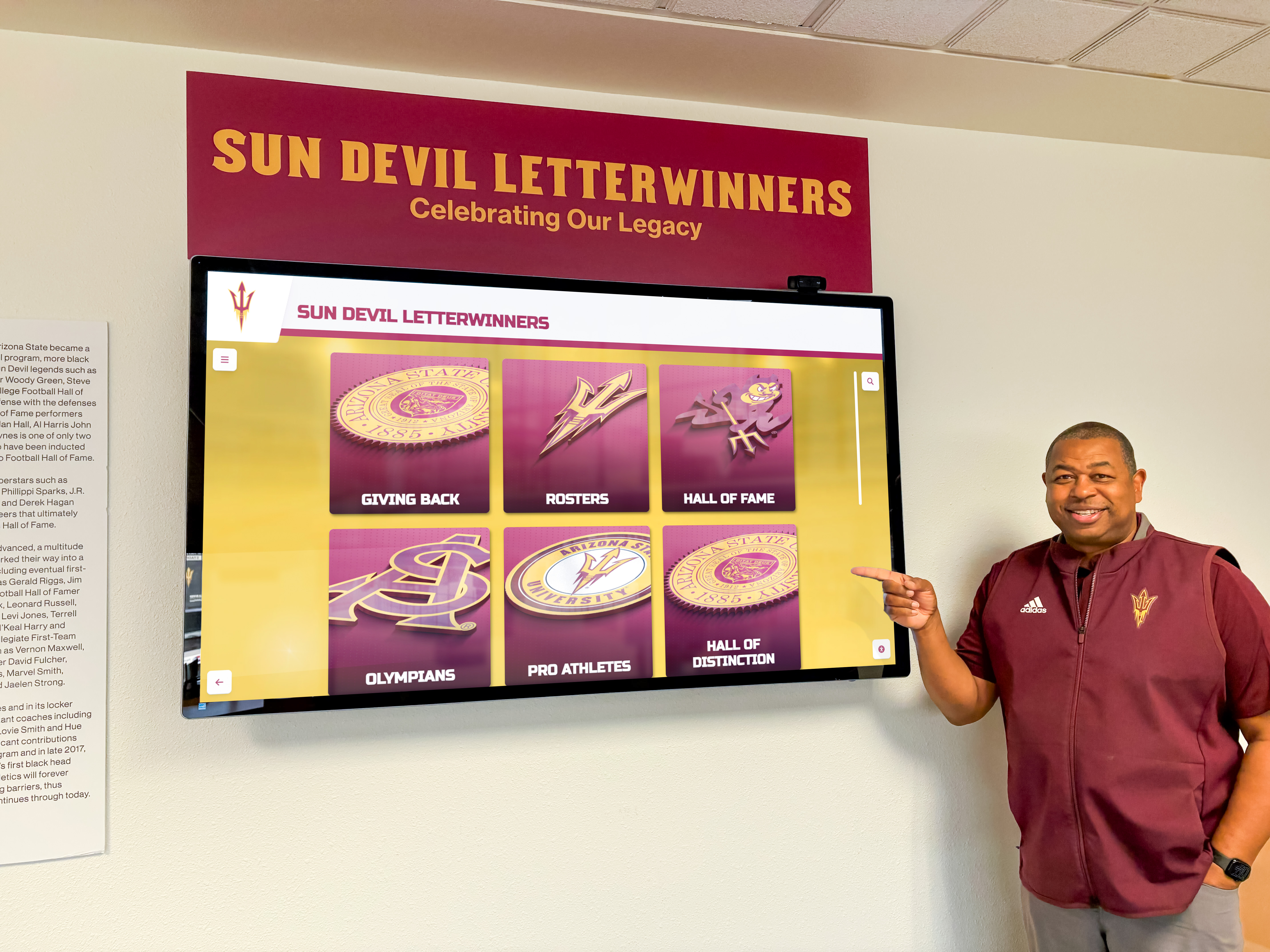
One of digital recognition’s most powerful capabilities is comprehensive statistical leaderboards showing all-time program records across measurable achievement categories:
Sport-Specific Records: Basketball—career points, single-game scoring, rebounds, assists, steals, three-pointers made. Track and field—100m dash, mile run, high jump, long jump, shot put, relay times by event. Swimming—freestyle times by distance, backstroke, butterfly, breaststroke, individual medley, relay records. Football—career passing yards, rushing yards, touchdowns, receiving yards, tackles, interceptions. Wrestling—career wins, pins, fastest pins, tournament championships by weight class.
All-Time Rankings: Rather than showing only current record holders, display top 10 or top 25 all-time performers in each category. This approach recognizes excellence beyond single record holders while showing performance context—is the current record substantially ahead of second place, or are top performances clustered together?
Auto-Ranking Updates: When new performances merit leaderboard inclusion, systems automatically update rankings showing current standings. Athletes breaking into top-10 lists receive immediate recognition without waiting for annual updates. Record-breaking performances trigger special highlighting drawing attention to historic achievements.
These comprehensive statistical leaderboards create perpetual competition and motivation. Current athletes see exactly what performances would earn program recognition. Coaches reference historical standards setting performance expectations. Alumni maintain interest tracking whether their records remain standing or get surpassed by exceptional current athletes.
Professional Implementation Best Practices
Successful implementations follow systematic planning processes ensuring smooth deployment, strong stakeholder buy-in, efficient execution, and sustained utilization delivering ongoing value.
Comprehensive Athletic Data Inventory
Begin by systematically inventorying all existing athletic achievement records requiring digitization:
Physical trophies and plaques documenting championships and tournament results, athletic record boards showing statistical performances across sports, yearbook archives containing team rosters and season summaries, athletic office files preserving newspaper clippings and media coverage, coaching records maintaining statistical performance data, athletic director archives documenting all-conference and all-state selections, alumni association records identifying notable post-graduation athletic accomplishments.
This comprehensive inventory reveals total content volume requiring digitization, identifies potential gaps where records may be incomplete, prioritizes which content provides greatest recognition value, and establishes realistic timelines for complete migration to digital systems. Many schools discover records exist across multiple locations without central organization—digitization projects create opportunities for proper consolidation and preservation.
Stakeholder Engagement and Change Management
Form planning committees including representatives from athletic administration providing budget approval and strategic direction, head coaches representing sport-specific interests and content expertise, athletic booster organizations funding supplementary recognition programs, student-athletes providing contemporary perspective on engagement preferences, parent representatives reflecting family priorities around recognition, facilities staff managing installation and ongoing maintenance, and technology coordinators ensuring network infrastructure and system support.
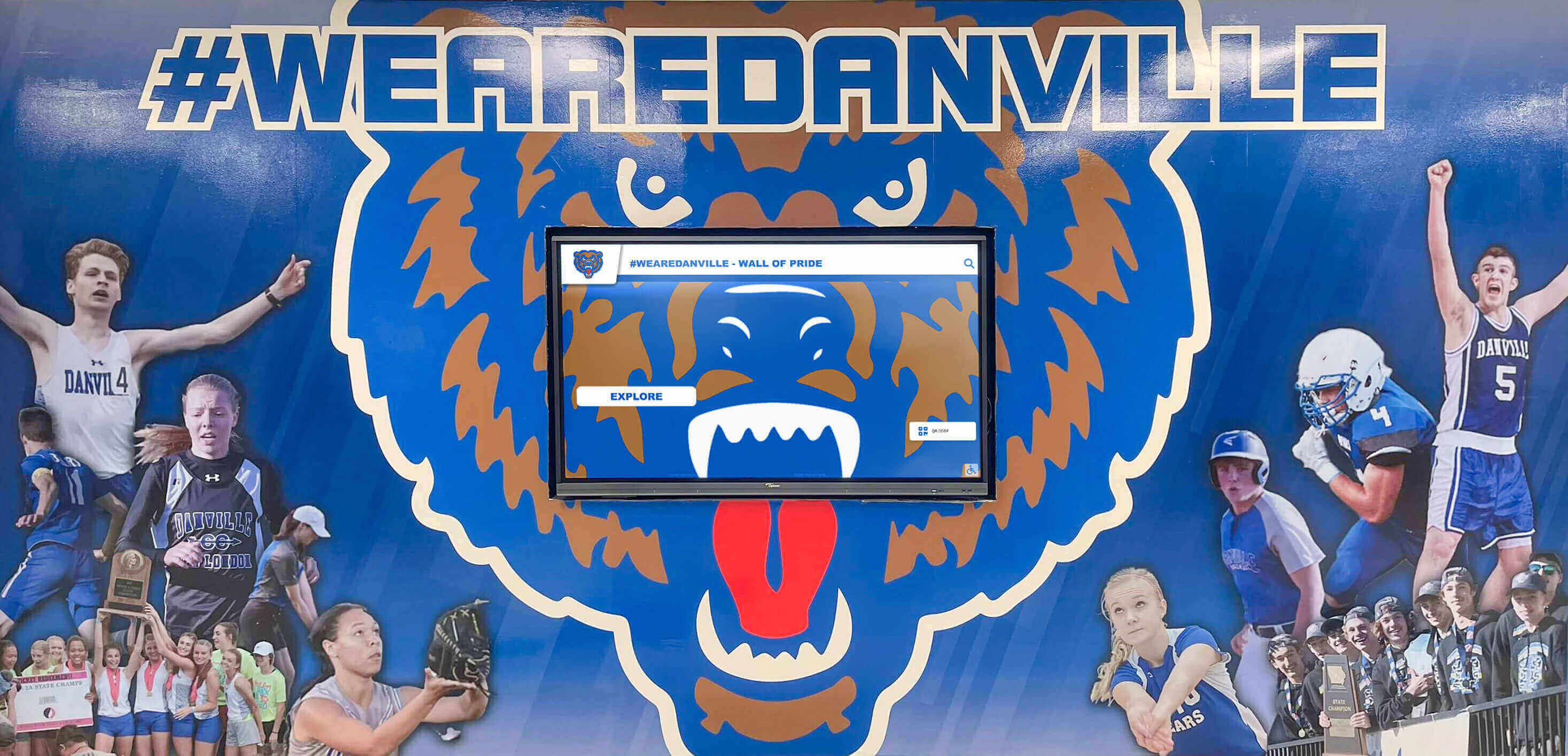
Inclusive planning approaches create stakeholder investment in success while identifying potential resistance early enough for proactive mitigation. Address concerns directly through open dialogue: traditionalists worried about losing physical trophies see hybrid approaches honoring both. Budget hawks concerned about costs see detailed ROI analysis demonstrating long-term savings. Technology skeptics concerned about complexity see intuitive demonstrations proving accessibility.
People support what they help create. Collaborative planning builds ownership ensuring long-term utilization rather than expensive installations gathering dust from lack of buy-in and promotion.
Professional Content Migration
Prepare comprehensive digital content through systematic approaches ensuring quality and completeness:
Photography: Professional photography of existing physical trophies and championship hardware, team photographs scanned from yearbooks or athletic archives, individual athlete portraits collected from school photography programs, action photography captured during competitive seasons showcasing athletes in competition.
Data Entry: Systematic entry of all athletic records, championship results, individual awards, team rosters, statistical achievements, coaching information, and contextual details. Establish data quality standards ensuring consistent formatting, complete information, and accurate spelling across all entries.
Verification: Cross-reference entered data against multiple sources confirming accuracy, involve coaches reviewing sport-specific information for completeness and correctness, engage alumni helping verify historical information and fill knowledge gaps, establish review processes preventing errors from appearing on public displays.
Quality content migration requires meaningful time investment but creates foundation for long-term recognition value. Rushed implementations with incomplete or inaccurate data undermine credibility and engagement, while thorough professional migration establishes authoritative athletic achievement archives worthy of institutional pride.
Strategic Launch and Promotion
Plan strategic launch timing during high-visibility events maximizing awareness and initial engagement. Ideal launch occasions include homecoming weekends when alumni return and families gather, hall of fame induction ceremonies celebrating athletic tradition, pre-season sports kickoff events building excitement for upcoming competitions, or athletics banquet programs recognizing annual achievements.
Create formal unveiling ceremonies generating excitement and awareness. Invite keynote speakers like program legends or distinguished alumni. Provide demonstrations showing navigation and search functionality. Share compelling stories about rediscovered achievements only possible through comprehensive digital archives. Encourage attendees to explore systems during events with staff support available answering questions.
Develop promotional campaigns through student morning announcements building awareness among current athletes, social media posts showcasing interesting historical discoveries and record-breaking achievements, email newsletters to alumni associations highlighting remote accessibility, local media coverage positioning systems as innovative athletic program improvements, and booster organization communications encouraging exploration and content feedback.
Initial promotion establishes usage patterns and community awareness. Without strategic launch and ongoing promotion, even excellent systems risk underutilization simply from lack of awareness rather than capability limitations.
Measuring Success and Demonstrating ROI
Understanding how communities engage with touchscreen athletic displays enables continuous improvement while providing compelling data demonstrating program value to administrators and stakeholders.
Quantitative Engagement Analytics
Modern platforms provide comprehensive analytics revealing detailed usage patterns:
Total interactions and unique visitors over daily, weekly, and seasonal timeframes showing utilization trends, average session duration revealing depth of engagement compared to passive trophy viewing, most-viewed athletes and teams revealing particular interest patterns, popular search terms showing what users seek most frequently, device type breakdown between physical displays and web/mobile remote access, peak usage times identifying when engagement occurs most frequently—before games, during school hours, or evening/weekend exploration.
These metrics inform strategic decisions about content priorities, hardware placement effectiveness, and promotional campaign impact. Schools discover which sports generate greatest interest guiding content development priorities. Analytics reveal whether web accessibility gets utilized justifying that investment component. Usage patterns inform optimal content refresh frequencies ensuring displays remain current and interesting.
Qualitative Community Feedback
Beyond quantitative metrics, qualitative feedback reveals perceived value and emotional impact:
Student-athlete focus groups discussing how recognition affects motivation and program pride, alumni surveys assessing whether systems enhance institutional relationships and reunion experiences, coach interviews revealing whether displays help recruiting or team culture development, parent feedback understanding family engagement value and communication improvement, visitor observations during campus tours and recruitment events assessing prospective family impressions, social media mentions indicating community conversation and organic promotion.
Combining quantitative analytics with qualitative feedback creates comprehensive understanding of program effectiveness informing strategic decisions about ongoing investment, expansion to additional locations, and enhancement priorities maximizing community value.
Financial ROI Calculation
Demonstrate clear return on investment through systematic cost comparison:
Investment Costs: Initial touchscreen hardware, software licensing, installation, and content digitization. Annual operating costs for maintenance, software updates, and content management.
Avoided Costs: Eliminated trophy case expansion expenses, reduced physical trophy purchase and engraving costs, avoided maintenance and repair expenses for aging trophy cases, prevented storage facility costs for displaced trophies, eliminated periodic reorganization labor.
Value-Added Benefits: Enhanced student-athlete recruitment through professional recognition, improved alumni engagement quantified through event attendance or donation metrics, increased community pride measured through media coverage or social engagement, administrative time savings from automated record-keeping and updates.
Example ROI: $12,000 initial investment + $1,200 annual operating costs = $18,000 total 5-year cost. Avoided trophy case expansion ($50,000) + reduced trophy purchases ($10,000) + storage cost avoidance ($2,000) = $62,000 in direct savings. Additional recruitment, engagement, and administrative efficiency benefits provide further value beyond quantified cost savings alone.
This comprehensive ROI analysis demonstrates that touchscreen displays represent strategic investments delivering measurable financial returns alongside qualitative recognition improvements traditional trophy cases cannot provide regardless of investment levels.
Conclusion: Modern Recognition for Athletic Excellence
Trophy overcrowding in gym lobbies stems from fundamental mathematics: finite physical space cannot accommodate infinite achievement accumulation across unlimited time. Traditional approaches—removing older trophies, cramming awards together, or investing heavily in physical case expansion—merely delay inevitable capacity exhaustion while creating recognition inequity where temporal accident determines visibility rather than achievement significance.
Touchscreen displays solve this persistent challenge definitively by providing unlimited digital capacity that honors every athletic achievement throughout complete program history. Interactive systems enable comprehensive recognition impossible with physical constraints, create engaging experiences matching how contemporary students consume content, deliver long-term cost advantages compared to physical expansion approaches, and extend recognition reach through remote web and mobile accessibility.
Every championship team deserves permanent visible recognition honoring their contribution to program excellence and institutional pride. Every record-breaking athlete should receive acknowledgment inspiring current competitors while preserving historical achievement. Every generation of athletes merits equal treatment regardless of when they competed. Touchscreen displays make equitable, comprehensive, accessible athletic recognition possible for schools committed to honoring athletic excellence as permanently and prominently as those achievements deserve.
The trophy overcrowding crisis affecting gym lobbies nationwide isn’t an inevitable reality requiring acceptance—it’s a solvable problem with proven modern solutions. When traditional physical recognition combines with digital innovation, athletic programs honor the past comprehensively while inspiring future excellence through technology serving timeless recognition purposes.
Ready to solve your trophy overcrowding challenge with a touchscreen display for your gym lobby? Explore how Rocket Alumni Solutions delivers comprehensive digital athletic recognition platforms designed specifically for high schools seeking unlimited capacity, auto-ranking record boards, and engaging interactive displays that honor every athlete across complete program history.