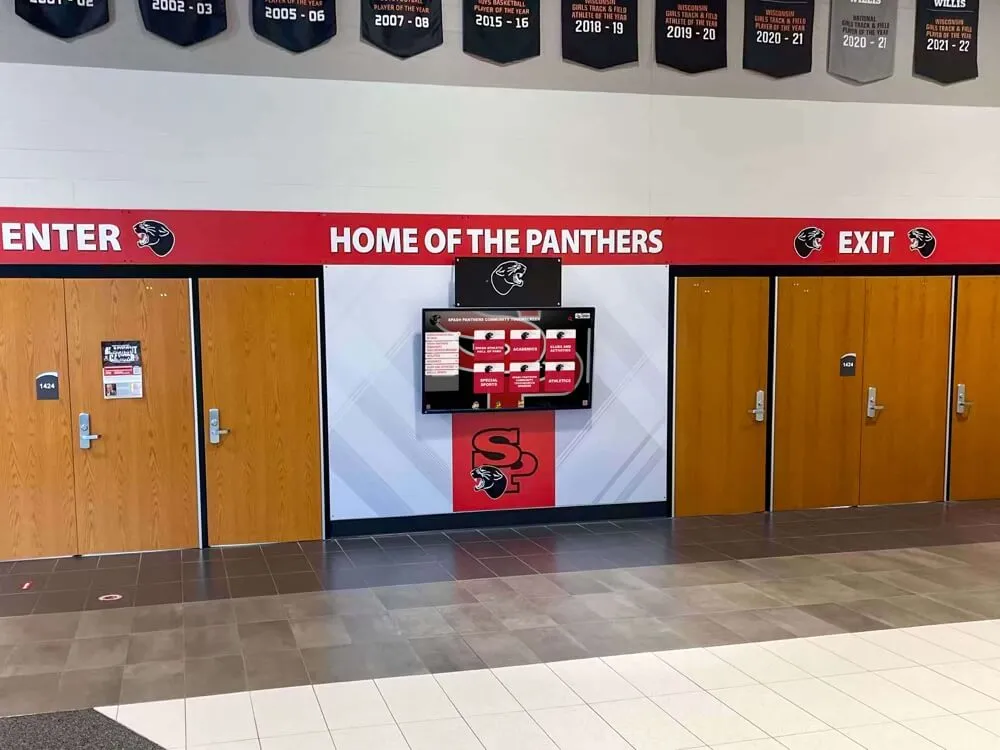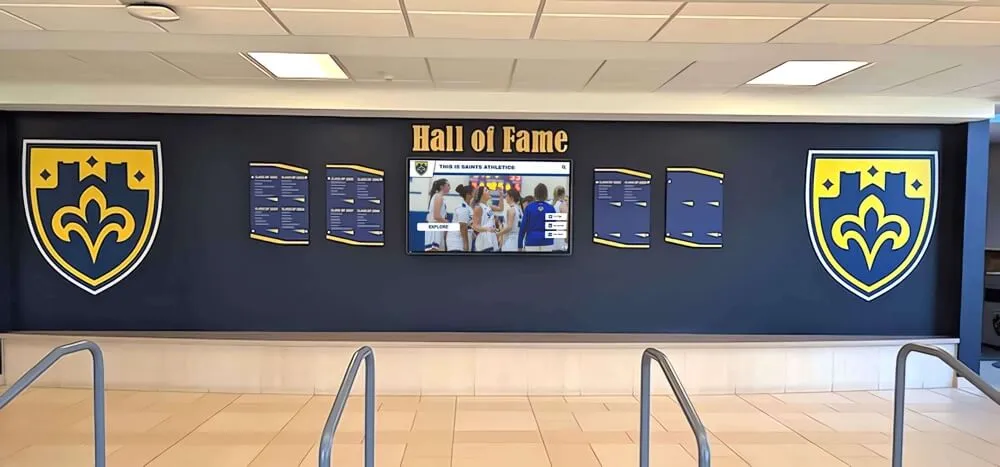




Championship seasons deserve celebration that lasts longer than trophy presentations. Sports team banners transform gym walls, athletic facilities, and school hallways into visual timelines showcasing program excellence, individual achievement, and team tradition. For athletic directors, coaches, and booster clubs planning recognition displays, selecting the right banner approach ensures achievements remain visible year-round while building the program culture that motivates future athletes.
Traditional vinyl banners serve important purposes, but modern athletic programs increasingly supplement or replace static displays with dynamic recognition systems that accommodate unlimited achievements, update automatically as records fall, and maintain chronological accuracy without physical reinstallation. This comprehensive guide explores sports team banner ideas spanning championship recognition, senior athlete tributes, record displays, and permanent digital alternatives that preserve athletic history while eliminating the space constraints and update friction inherent to physical banners.
Why Strategic Athletic Banner Planning Matters
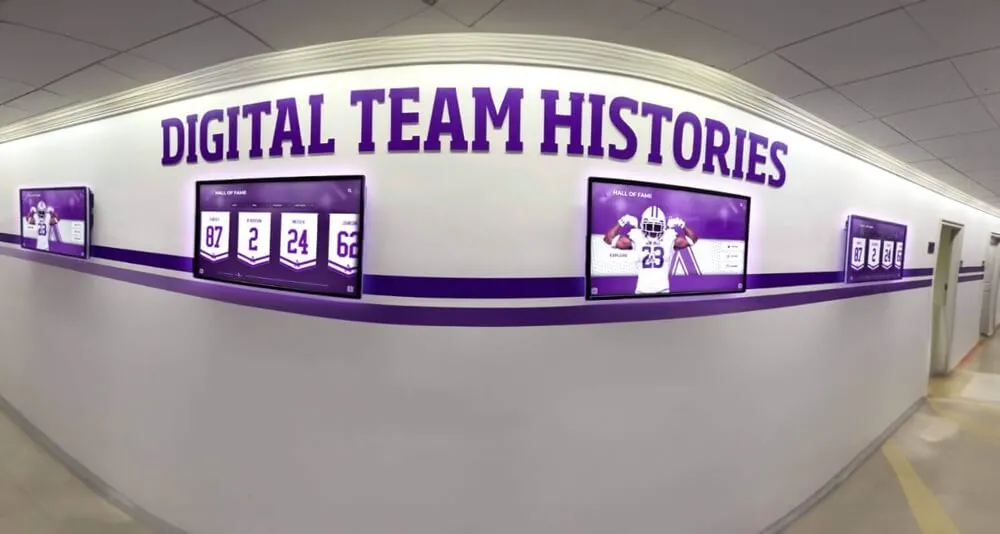
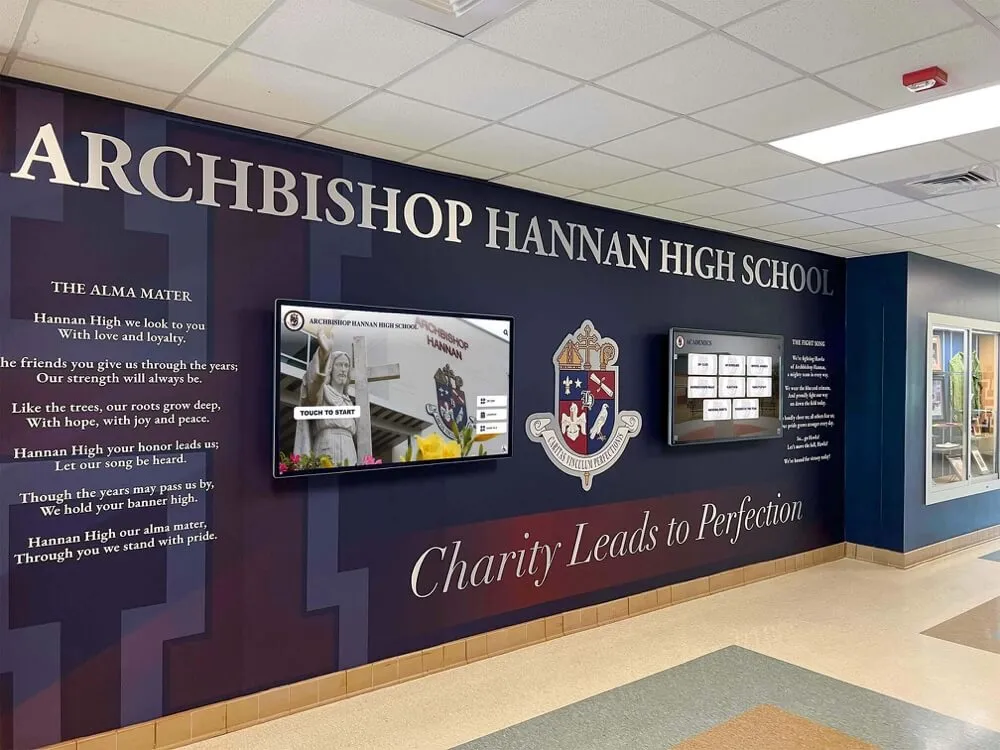
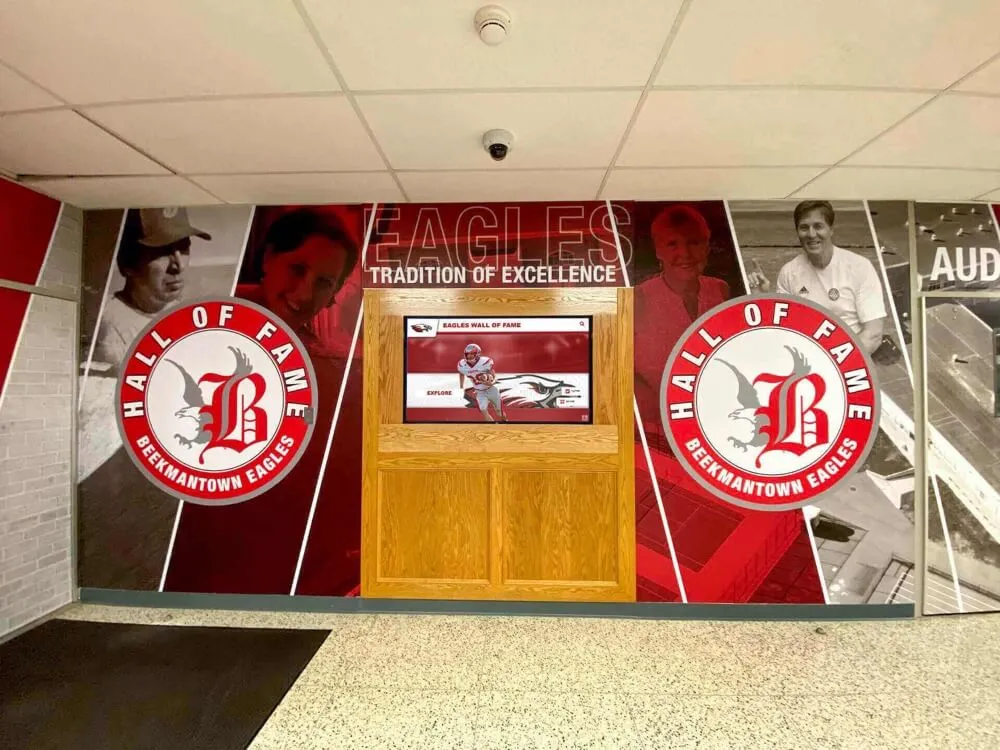
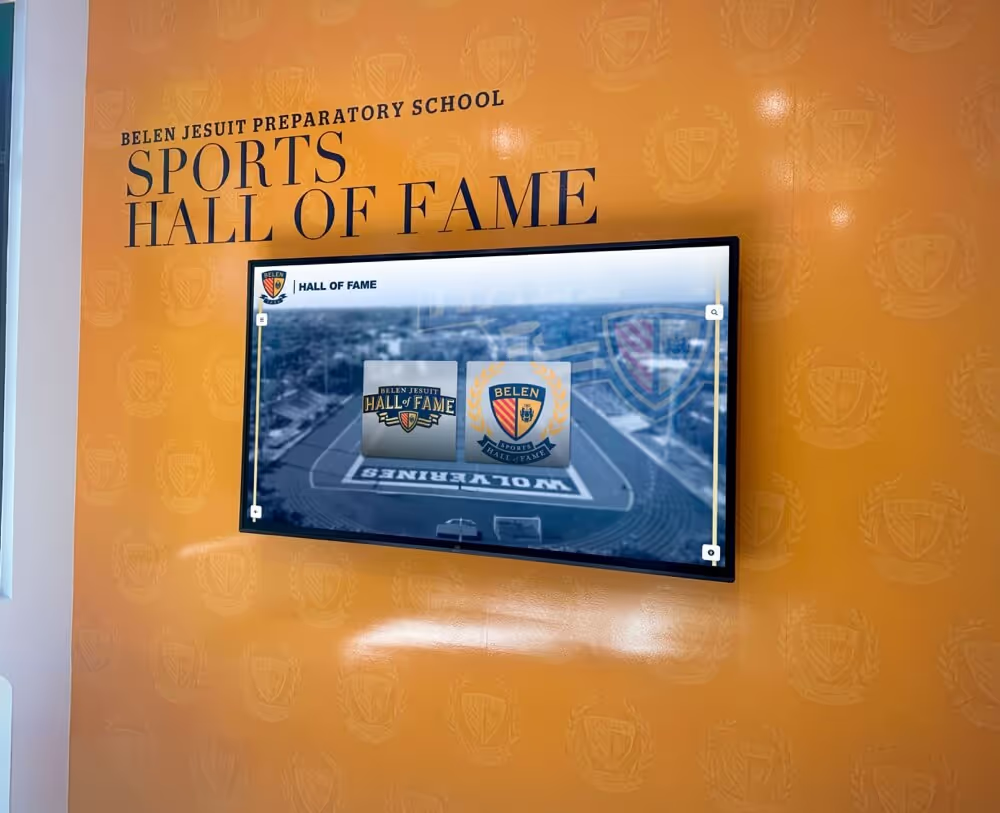
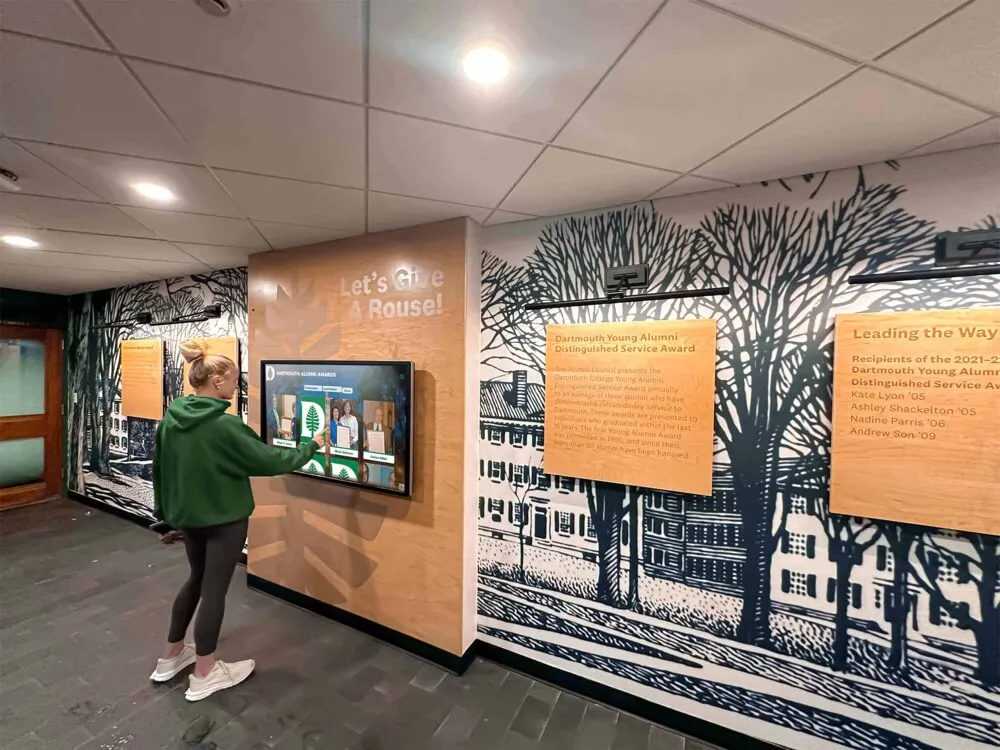
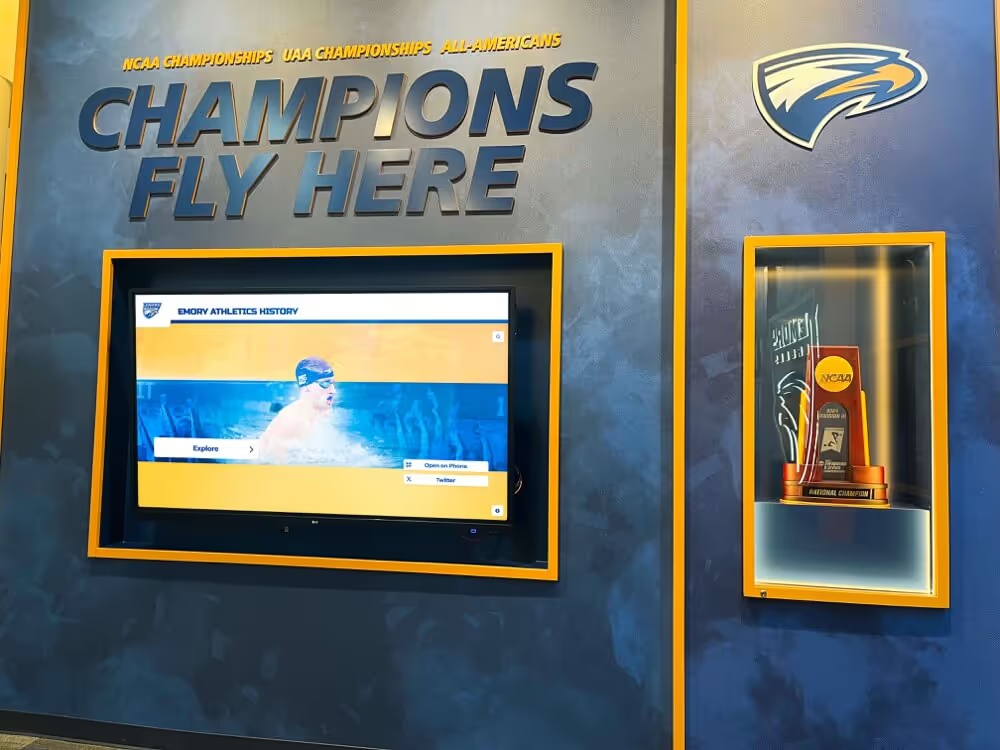
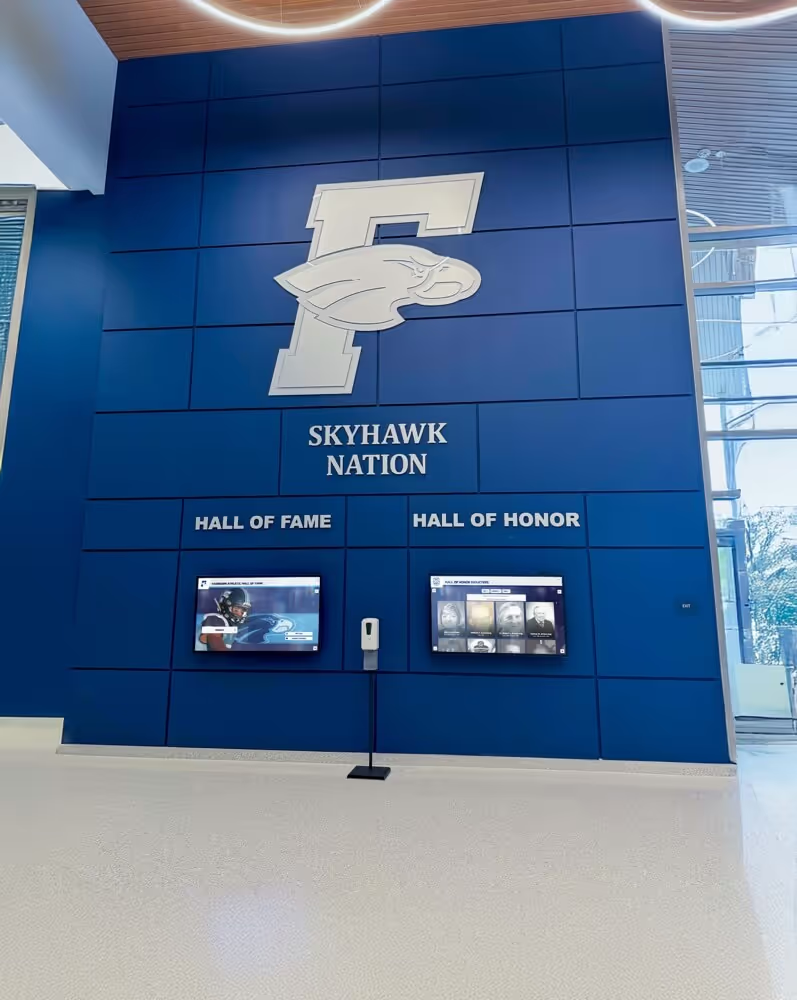
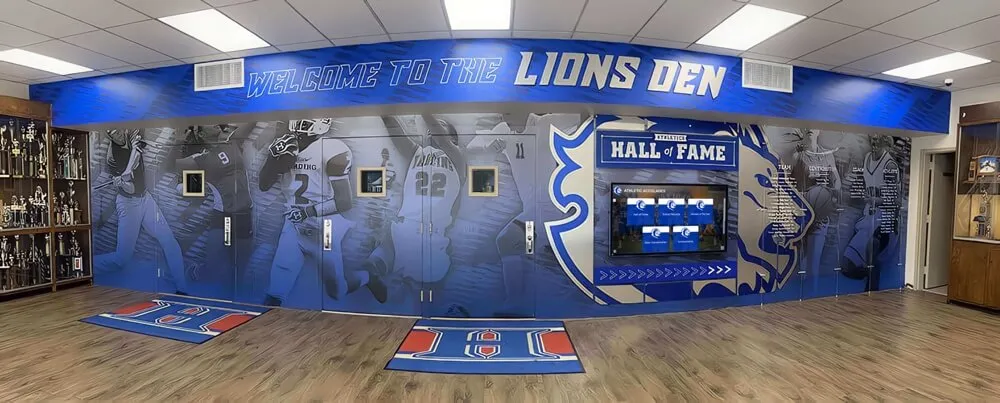
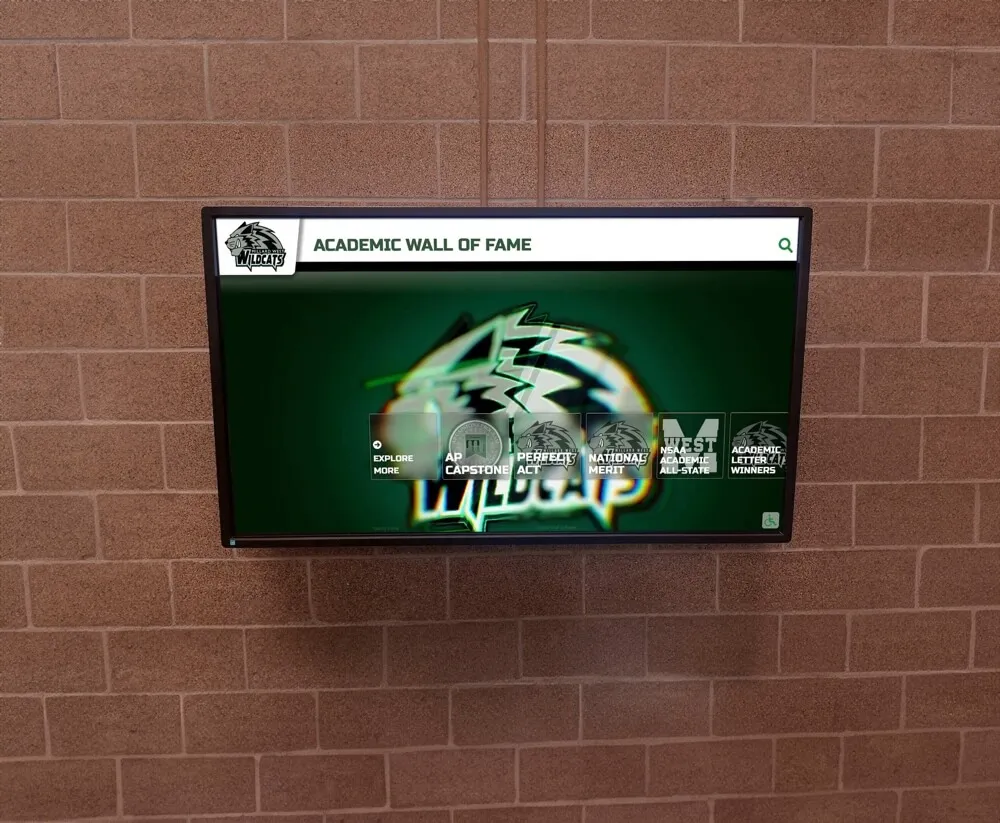
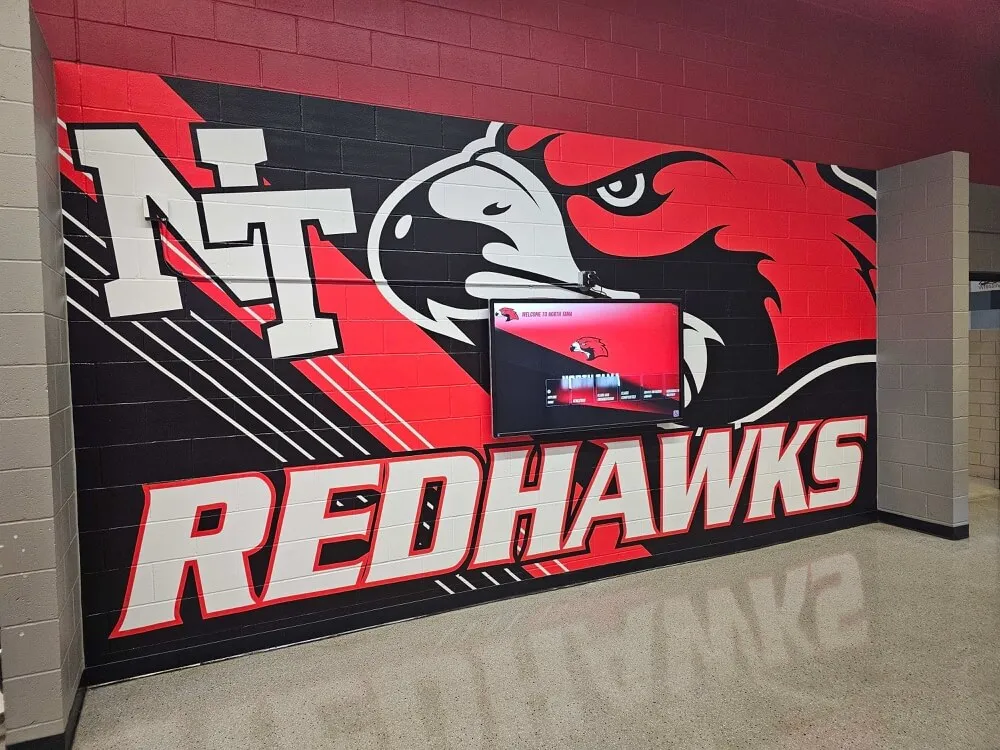
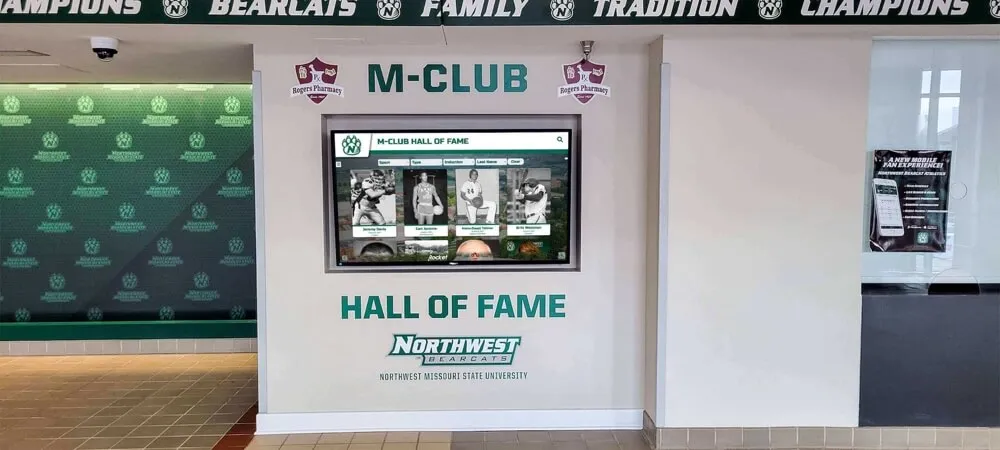
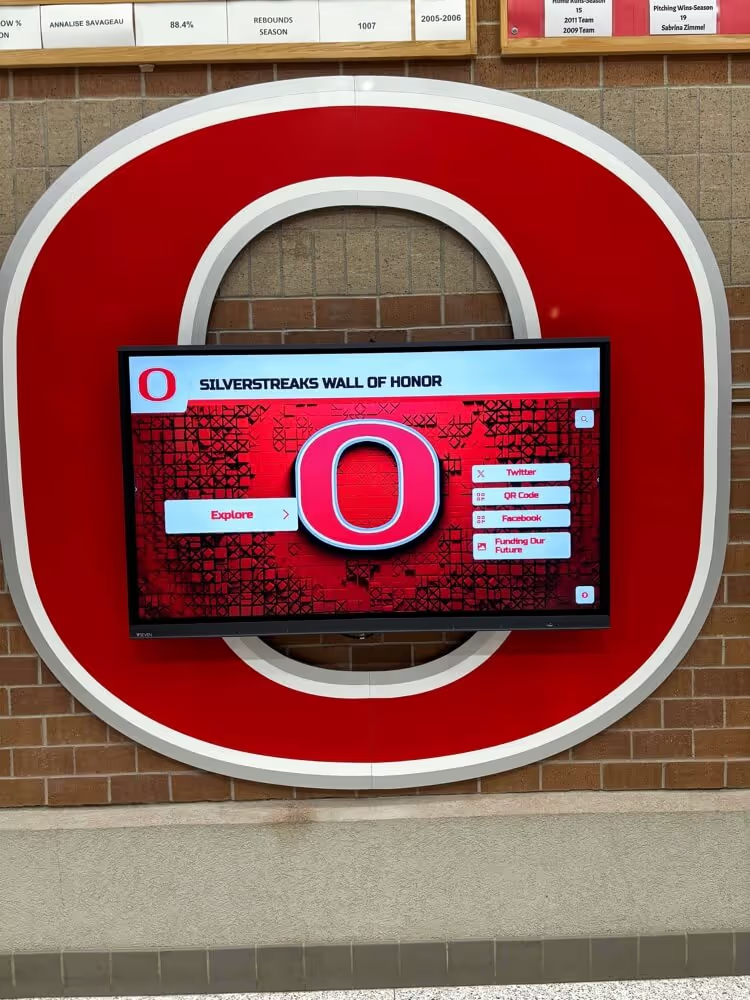
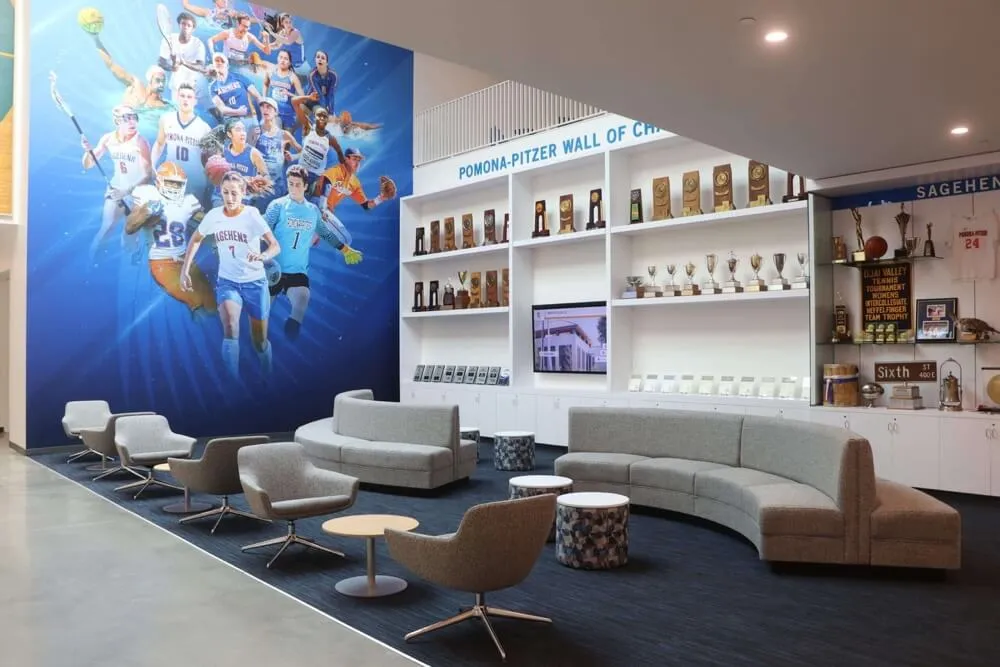
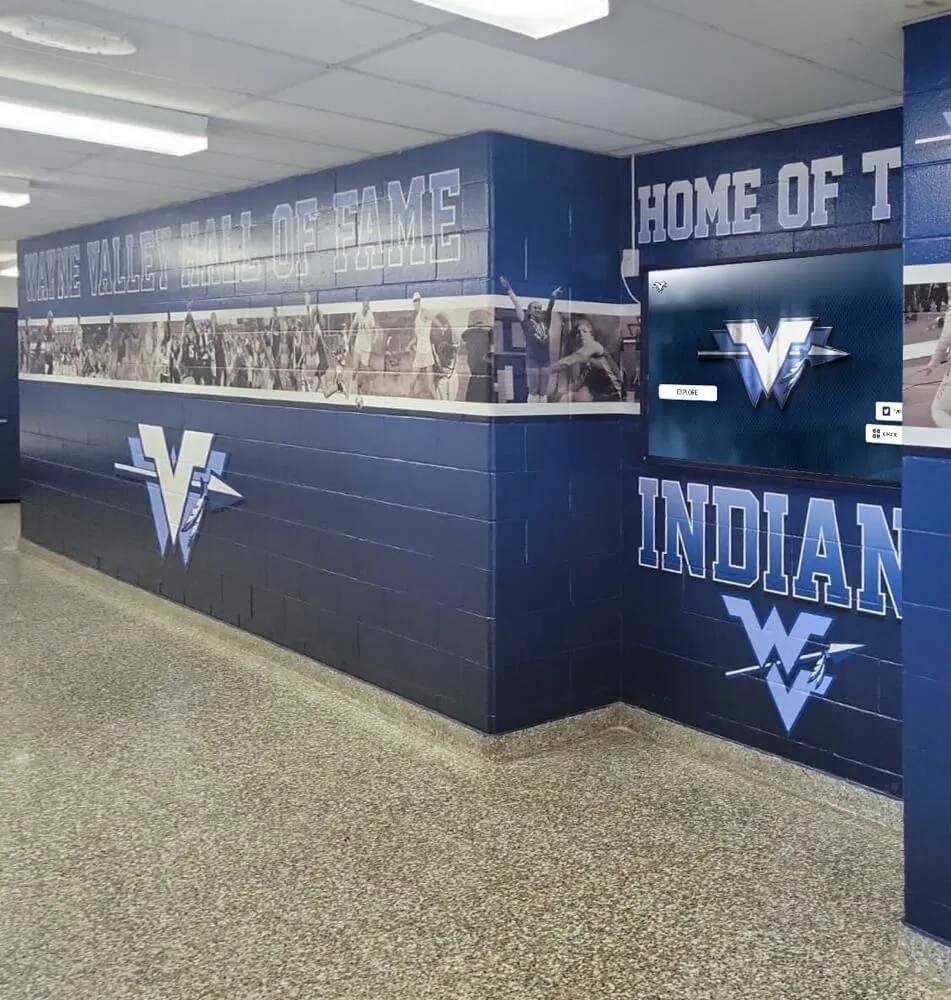
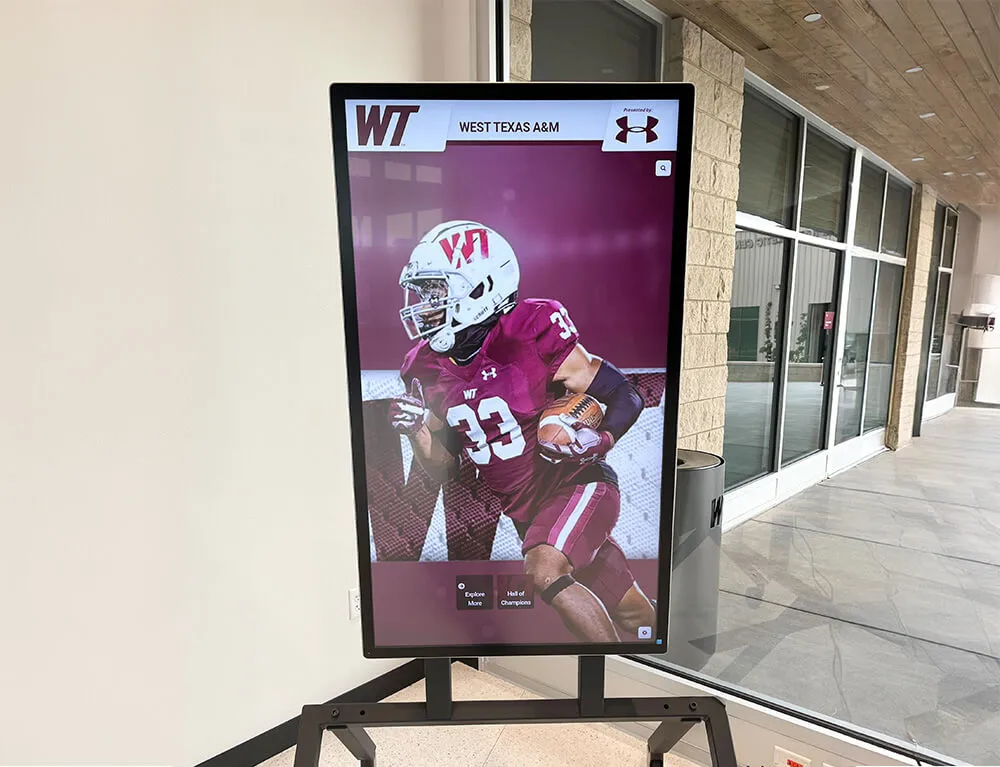
Well-designed sports team banners accomplish multiple objectives simultaneously. They validate athlete sacrifice, build program tradition, create recruitment advantages by demonstrating competitive excellence, and establish school identity through visual storytelling. Physical banner programs face inevitable limitations—wall space runs out, championship density creates readability issues, and updating requires professional removal and reinstallation. Digital recognition platforms enable athletic programs to celebrate every achievement permanently without space constraints while maintaining clean visual presentations that honor past champions alongside current record holders through interactive displays accessible on lobby screens, mobile devices, and public websites.
Championship Banner Design Fundamentals
Championship banners represent program pinnacles—state titles, conference championships, tournament victories, and competitive milestones that define successful seasons. Effective championship banner design balances immediate visual impact with long-term display cohesion.
Conference Championship Banners
Conference titles demonstrate sustained excellence within competitive leagues. Championship banners should include the sport name, championship level (conference, district, regional), season year, and any notable achievement details like undefeated records or tournament victory margins.
Design Elements: Use school colors as the primary palette with championship level clearly readable from distance. Include the conference logo if permissions allow, and maintain consistent sizing across all championship banners to create visual uniformity when displayed together.
Placement Strategy: Group championship banners by sport rather than chronologically to create concentrated visual impact. Basketball championship banners displayed together in the gymnasium tell more powerful stories than scattered placement across facilities.
State Championship Recognition
State titles represent athletic program peaks and deserve prominent, premium banner treatment. These banners warrant larger dimensions, premium materials, and design detail reflecting the achievement magnitude.
Essential Information: Sport designation, championship division or classification, season year, final tournament record, and key achievement details (tournament location, championship game score, undefeated season status). Consider including head coach names for historical context.
Visual Hierarchy: State championship banners should visually dominate other recognition displays through size, placement, or distinctive design elements. This hierarchy reinforces achievement levels for students, recruits, and visitors.
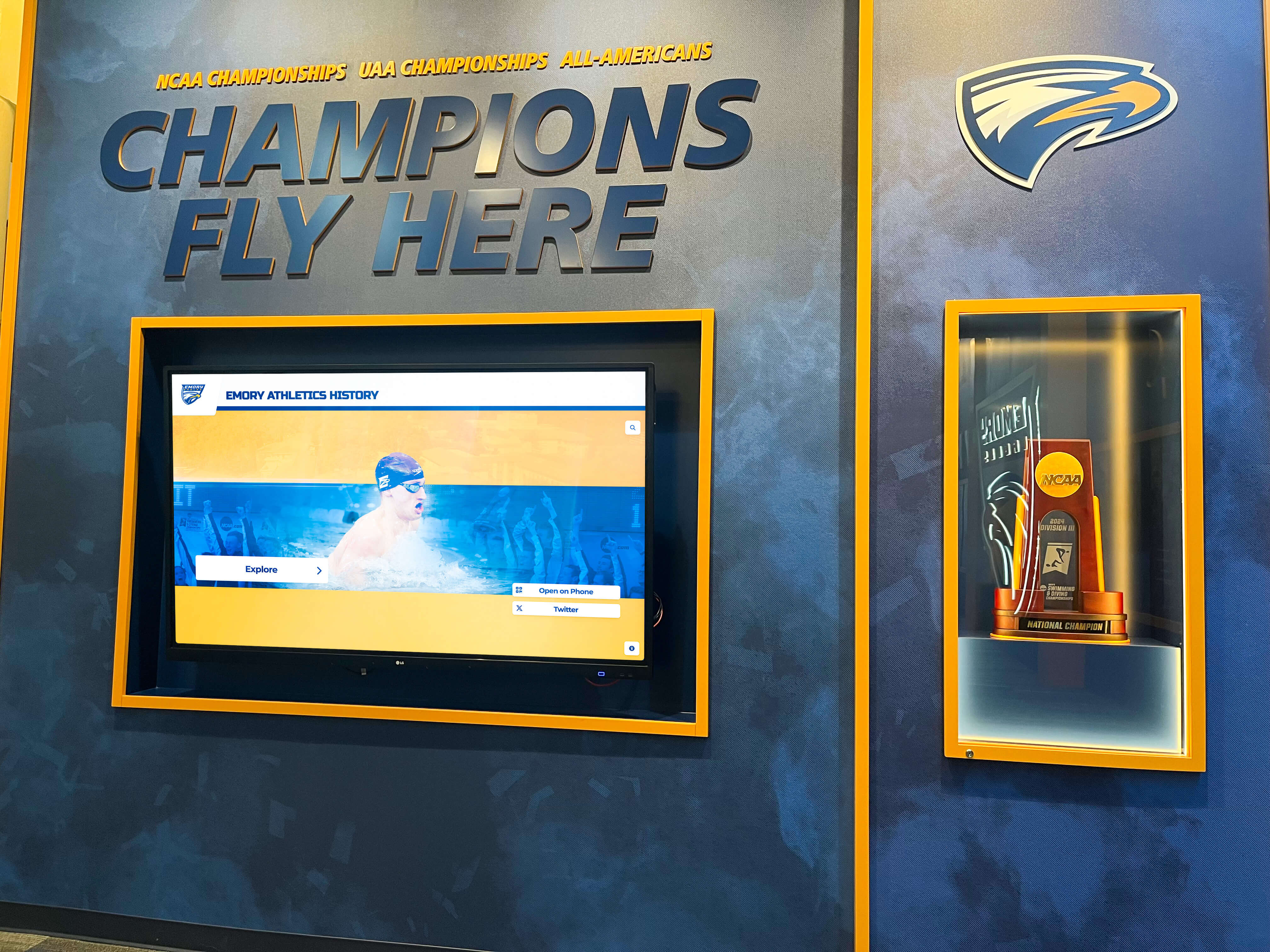
National Championship and Elite Competition Banners
Programs competing at national levels—whether USATF Junior Olympics, AAU championships, NJCAA competitions, or club sport national tournaments—deserve specialized recognition that distinguishes these exceptional achievements.
Design Differentiation: Use gold or metallic accents, distinctive shapes beyond standard rectangles, or premium finishing that separates national achievements from conference and state recognition. These details communicate achievement hierarchy immediately.
Context Provision: National championship banners should include competition organization (NJCAA, NAIA, AAU, USTA), championship division, location, and any records set during competition. This context helps future athletes understand achievement significance.
Understanding comprehensive approaches to athletic recognition programs helps athletic directors design banner systems that integrate with broader celebration strategies building program culture and tradition.
Senior Athlete Recognition Banners
Senior recognition banners celebrate graduating athletes while creating recruiting appeal and demonstrating program commitment to individual acknowledgment. These displays honor final seasons and career contributions.
Individual Senior Portrait Banners
Personal senior banners featuring action photos, jersey numbers, positions, and career statistics provide meaningful individual recognition that families cherish and younger athletes aspire to earn.
Content Elements: High-quality action photograph, athlete name, jersey number, position, years on varsity, career highlights (games played, points scored, championships won), and college commitment if applicable. Include graduation year for historical context.
Production Timeline: Begin senior banner planning in early season to ensure quality photo capture, design approval, production completion, and installation before senior night ceremonies. Rush production compromises quality.
Display Approaches: Hang senior banners in gymnasiums during their final season, then present them to athletes and families as keepsakes during senior night ceremonies. This creates tangible recognition athletes retain permanently.
Programs seeking comprehensive senior recognition solutions can explore template options and design services that streamline production while maintaining visual consistency across multiple sports and seasons.

Team Senior Class Banners
Collective senior class banners recognize entire graduating groups, particularly effective for programs with large senior contingents or schools wanting more economical recognition approaches than individual banners.
Design Format: Grid or collage layouts featuring all senior headshots with names, jersey numbers, and positions. Include the season year, team name, and overall senior class record. Add team photo if space allows.
Versatility: Team senior banners work well for all sports and remain relevant for historical displays showing program evolution across decades. Archive these banners to create visual program timelines.
Multi-Sport Senior Recognition
Athletes participating in multiple varsity sports deserve acknowledgment of their diverse athletic contributions. Multi-sport senior banners highlight the well-rounded athleticism increasingly rare in specialized sports cultures.
Information Architecture: List all varsity sports with years participated, significant achievements across each sport, and cumulative athletic awards. These banners demonstrate the value schools place on diverse athletic participation.
Motivational Impact: Multi-sport athlete recognition encourages younger students to participate broadly rather than specializing prematurely, supporting development research showing multi-sport athletes suffer fewer injuries and experience longer athletic careers.
Record Recognition Banner Systems
School records represent individual excellence worthy of permanent acknowledgment. Record banners transform gyms and field houses into achievement museums documenting program history.
Individual Record Holder Banners
Single-record banners celebrate athletes who set program benchmarks in specific statistical categories—career points scored, single-season rushing yards, fastest track times, or swimming split records.
Essential Details: Athlete name, record category, record value, date established, and previous record holder if desired. Including historical progression shows records build on previous achievement rather than appearing spontaneously.
Update Considerations: Traditional banners become outdated when records fall, requiring replacement or supplementation. Plan for record progression by incorporating digital displays that update automatically as new record holders emerge while maintaining historical record timelines.
Schools managing comprehensive record tracking systems find that digital platforms eliminate update friction while preserving complete achievement histories showing record evolution across decades.
Team Record Banners
Team records—win streaks, championship runs, undefeated seasons, or tournament performances—deserve collective recognition celebrating collaborative achievement.
Content Structure: Team record description, season or years accomplished, roster names (space permitting), coaching staff, and relevant statistics (final record, points differential, tournament results). Consider QR codes linking to detailed season histories.
Historical Context: Pair team record banners with championship banners from the same seasons to create comprehensive achievement narratives. This interconnection helps viewers understand how records contributed to championship success.
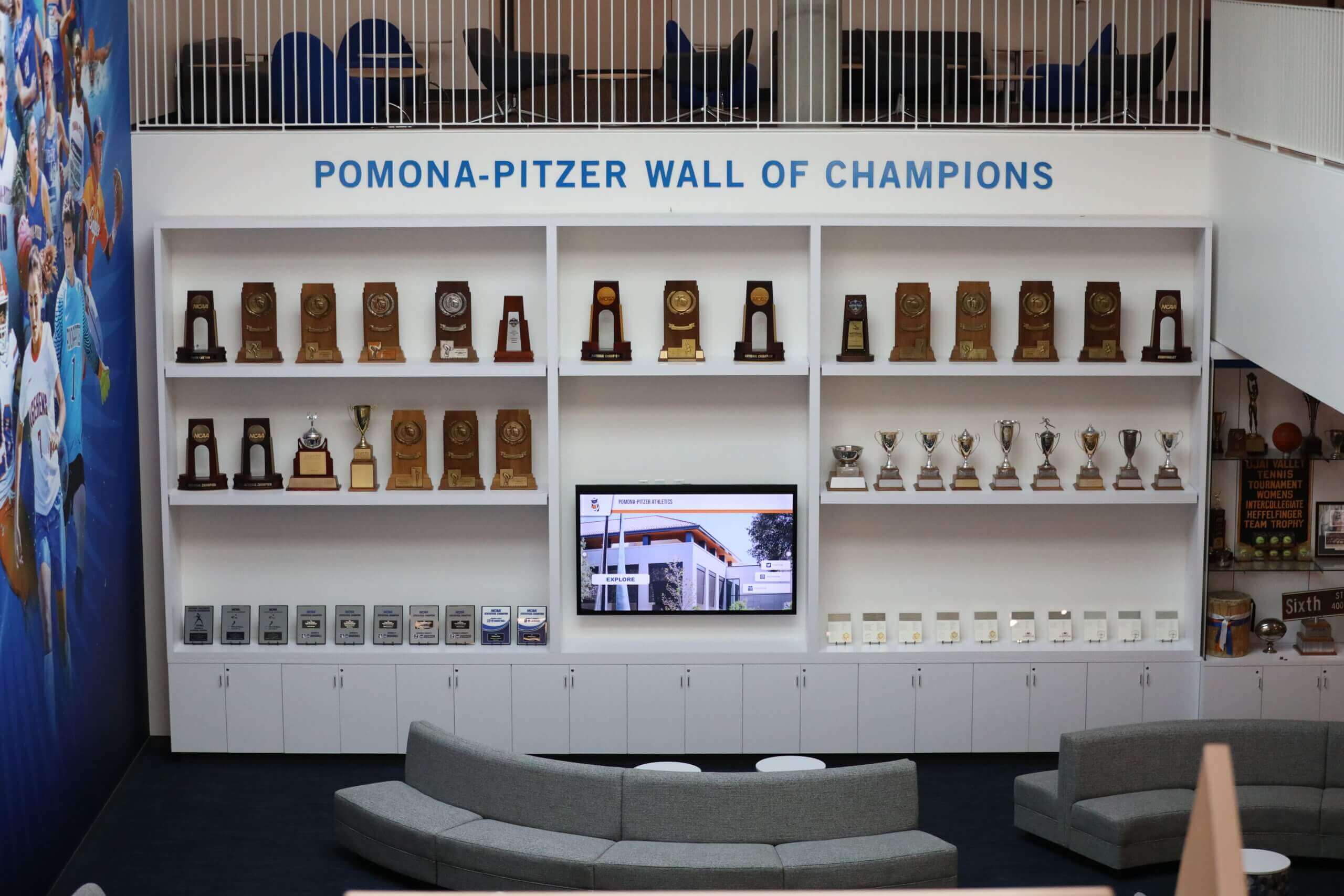
League and Conference Banner Recognition
League championships, all-conference selections, and competitive standings deserve acknowledgment building program credibility and demonstrating consistent excellence.
League Title Banners
League or conference championships often represent the most frequent championship opportunities for programs competing regionally. Regular league title recognition demonstrates sustained competitive success.
Design Consistency: Maintain visual consistency across league championship banners using standardized dimensions, color schemes, and information hierarchy. This uniformity creates cleaner displays as banner collections grow.
Achievement Differentiation: Distinguish between outright league championships, shared titles, regular season championships, and conference tournament victories through banner notation or subtle design variations.
All-Conference and All-State Recognition
Individual athletes earning all-conference, all-district, or all-state recognition deserve acknowledgment celebrating competitive excellence within larger talent pools.
Banner Formats: Create annual all-conference banners listing all athletes selected that season across all sports, or design sport-specific banners updated annually. Both approaches have merit depending on available display space and selection frequency.
Cumulative Recognition: Consider maintaining running lists of all-conference selections across years to demonstrate program depth. Digital displays excel at this cumulative tracking without requiring increasingly large banner sizes.
Programs exploring National Honor Society recognition approaches can apply similar honor roll concepts to athletic achievement displays celebrating individual excellence within team contexts.
Hall of Fame and Retired Number Banners
Elite programs establish halls of fame and retire jersey numbers honoring the most exceptional athletes and contributors. These permanent recognitions demand premium banner treatment.
Athletic Hall of Fame Banners
Hall of fame induction represents the highest individual athletic honor schools bestow. Hall of fame banners should reflect this prestige through quality, design, and placement.
Induction Information: Inductee name, sport(s), years participated, induction year, and brief achievement summary. Consider including small portrait photos for visual interest and improved recognition by current students unfamiliar with historical athletes.
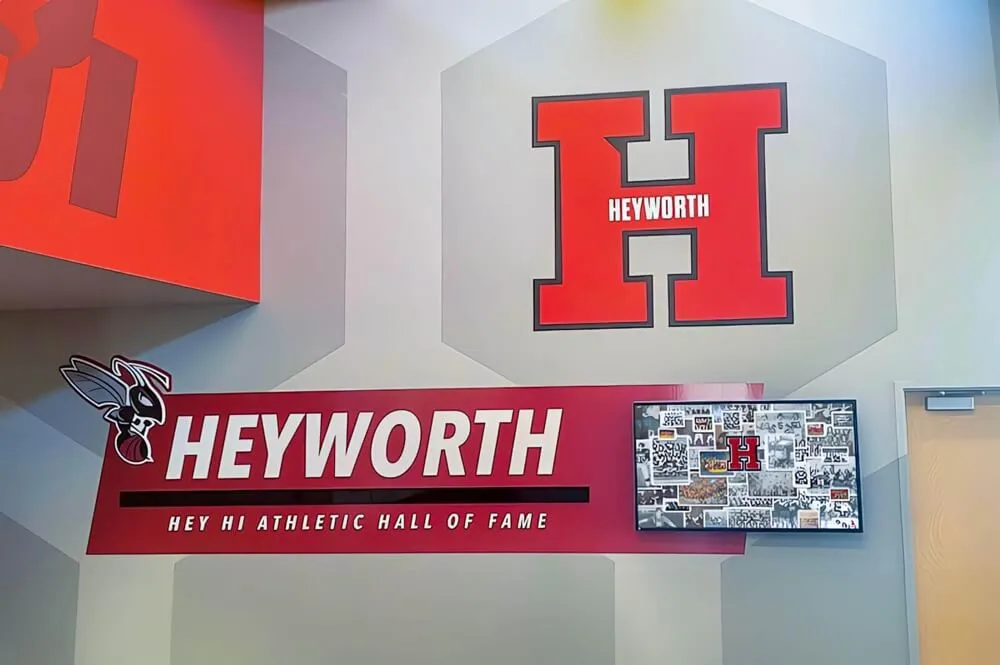
Display Organization: Arrange hall of fame banners chronologically by induction class or alphabetically by inductee surname. Provide clear labeling identifying the display as hall of fame recognition to distinguish it from other banner types.
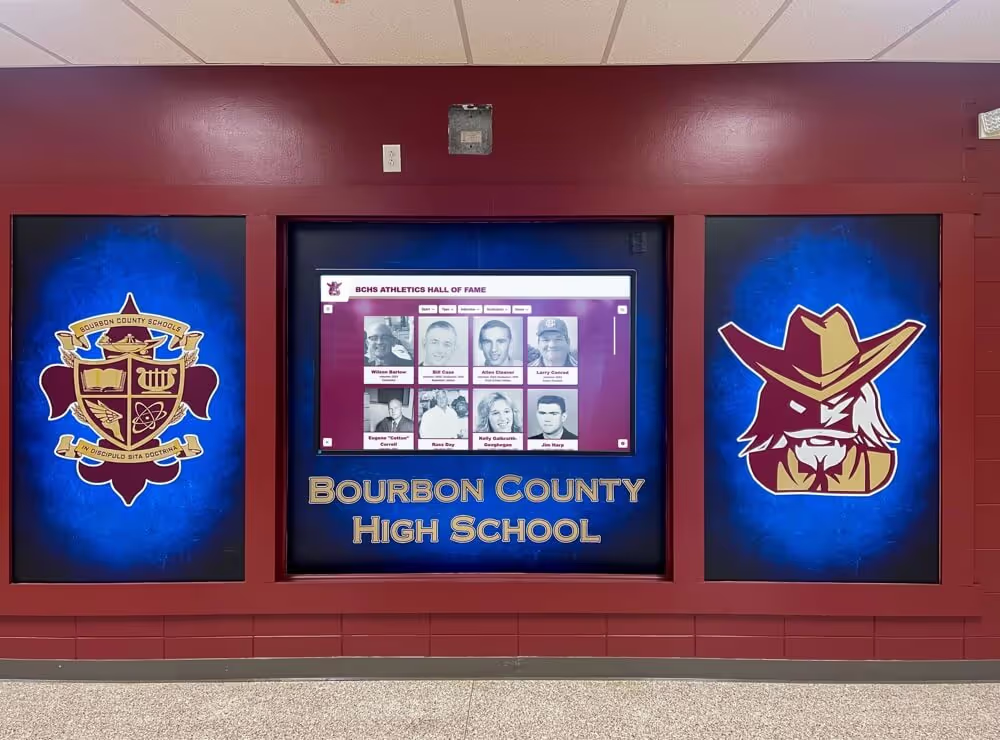
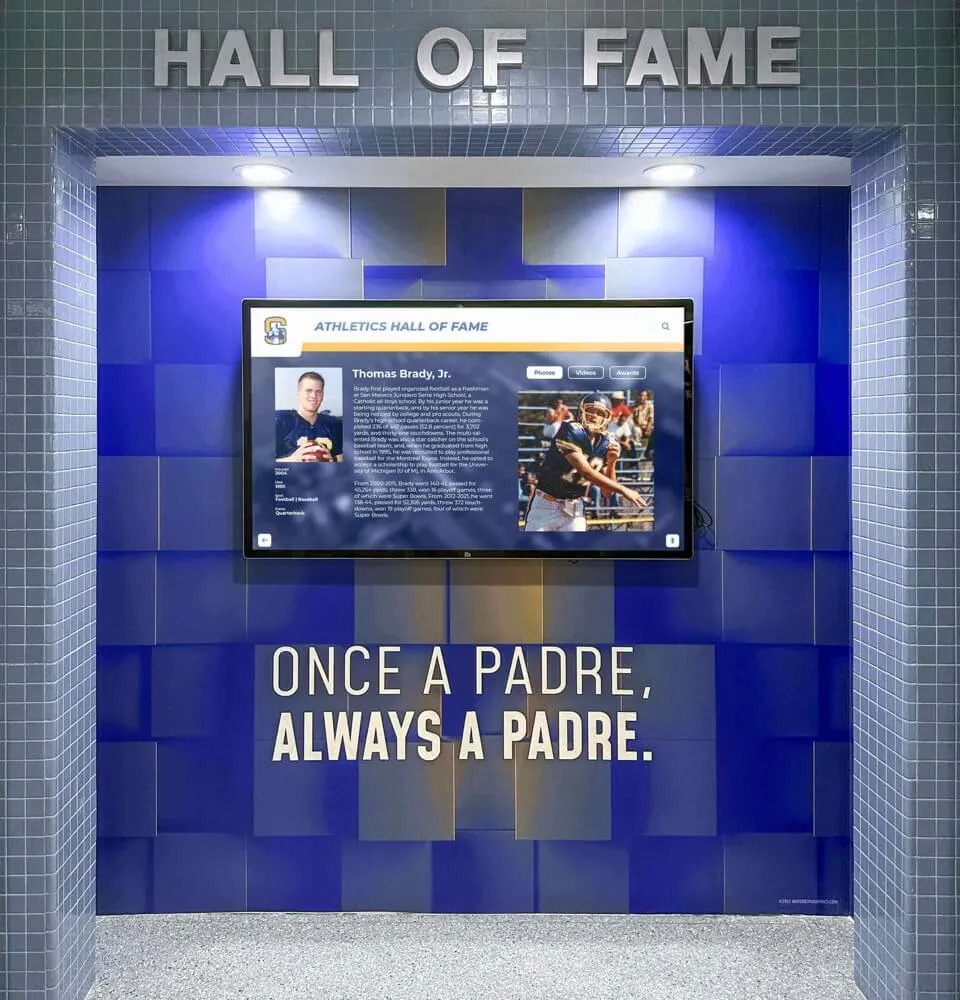
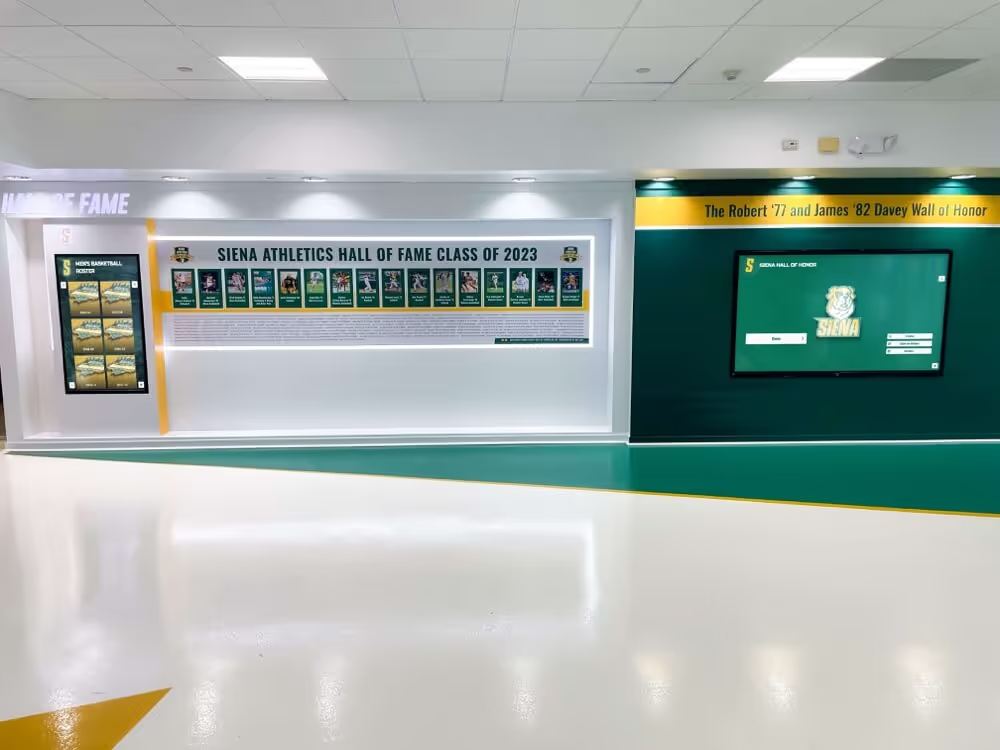
Expansion Planning: Hall of fame programs grow continuously, requiring display systems that accommodate additions without complete redesign. Plan installation with space for future inductees or consider digital platforms with unlimited capacity.
Schools developing comprehensive hall of fame programs should explore recognition approaches that balance tradition with scalability, ensuring hall of fame displays remain current and accessible to students, alumni, and visitors.
Retired Jersey Number Banners
Retiring jersey numbers permanently honors transcendent athletes whose contributions defined program eras. Retired number banners commemorate these individuals while preventing future use of their numbers.
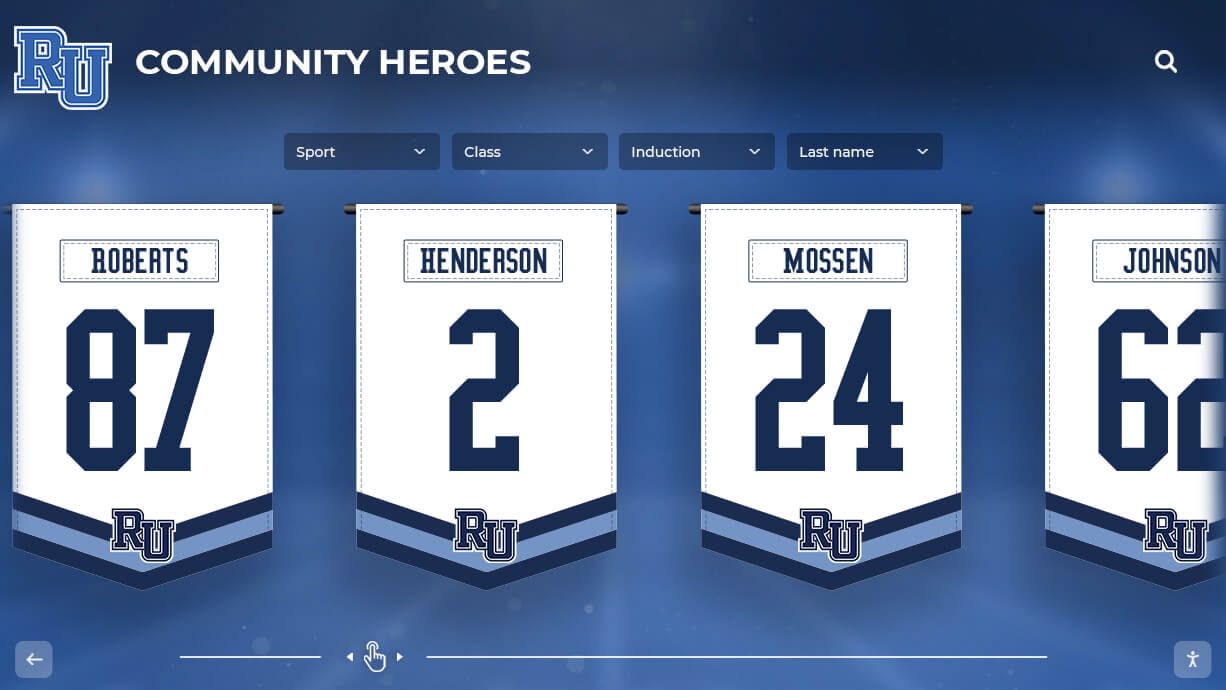
Banner Content: Jersey number prominently displayed, athlete name, sport, years competed, achievements justifying retirement (championships won, records set, awards earned), and retirement date. Brief quotes from athletes add personal dimension.
Visual Design: Retired number banners warrant distinctive design—larger dimensions, premium materials, or unique shapes—differentiating them from other recognition categories. These should be the most visually striking banners in facilities.
Ceremony Integration: Coordinate retired number banner unveiling with formal ceremonies featuring the honored athlete, family, coaches, and teammates. These events create powerful program tradition and demonstrate institutional commitment to honoring excellence.
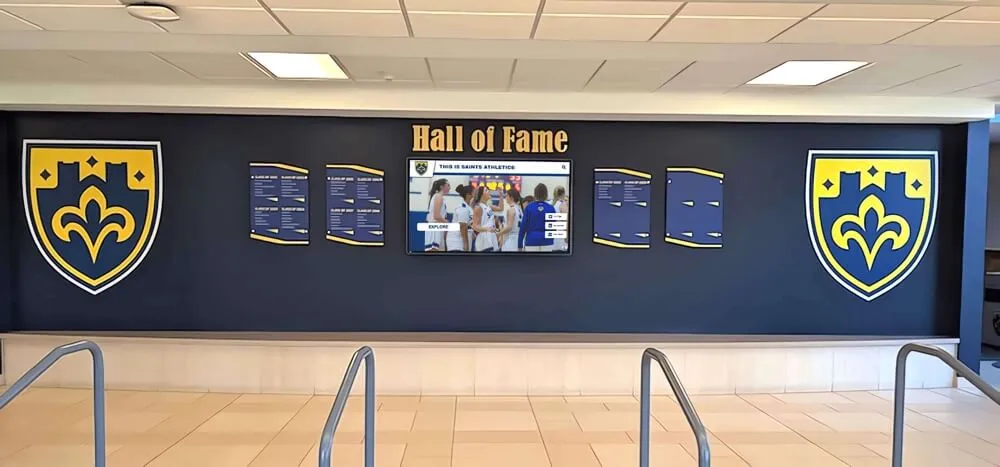
Seasonal and Motivational Banner Displays
Beyond achievement recognition, banners serve motivational and promotional purposes supporting team culture and community engagement.
Season Schedule and Opponent Banners
Displaying season schedules, upcoming opponent information, or countdown banners builds anticipation for key competitions while informing the school community about athletic calendar events.
Functional Design: Clear date and time information, opponent names and logos (if permitted), venue locations, and any special event details (senior night, homecoming, rivalry games). Update these banners seasonally as schedules change.
Promotional Value: Schedule banners positioned in high-traffic areas increase attendance by keeping events top-of-mind for students, staff, and visitors who might otherwise overlook athletic calendars.
Team Motto and Inspirational Banners
Motto banners reinforcing team values, inspirational quotes, or program mission statements create environmental messaging supporting desired culture.
Message Selection: Choose mottos reflecting genuine program values rather than generic inspiration. Phrases emerging from team discussions or historical program moments carry more meaning than borrowed quotes.
Design Impact: Typography matters significantly for motto banners. Bold, readable fonts with high contrast ensure messages communicate effectively from distance. Avoid overly decorative fonts that sacrifice readability for style.
Rivalry and Tradition Banners
Long-standing rivalries and special traditions deserve dedicated banner recognition celebrating competitive history and stoking healthy competition.
Content Options: Display series records against rival schools, trophy game histories, or tradition-specific achievements (homecoming game records, holiday tournament performances, senior night results). These banners build anticipation for recurring matchups.
Student Engagement: Rivalry banners create talking points and cultural knowledge transfer helping new students understand program traditions that define school identity.
Material and Production Considerations
Banner quality and durability directly impact how recognition displays age and whether they maintain professional appearance supporting program prestige.
Material Selection
Vinyl banners dominate school athletics due to cost-effectiveness and durability. Mesh vinyl options resist wind better for outdoor installations while solid vinyl provides superior print quality for indoor displays.
Fabric Alternatives: Canvas, polyester, and specialty fabrics offer premium aesthetics with texture and drape traditional vinyl lacks. These materials work well for hall of fame or retired number banners justifying premium investment.
Weather Resistance: Outdoor banners require UV-resistant inks, reinforced grommets, and weather-appropriate materials preventing fading, tearing, and deterioration from sun, rain, and temperature fluctuations.
Print Quality Standards
Banner recognition value depends partly on print quality. Low-resolution images, poor color matching, or visible pixelation undermine the prestige banners should convey.
Resolution Requirements: Ensure all photographs and graphics use sufficient resolution for the intended banner size—typically 150 DPI minimum. Oversized banners require higher resolution preventing visible degradation.
Color Consistency: Work with vendors who color-match school brand standards precisely. Inconsistent colors across multiple banners create unprofessional appearances and dilute brand identity.
Installation Methods
Proper installation extends banner life and ensures safety. Fallen or damaged banners communicate neglect rather than celebration.
Hanging Systems: Grommets with zip ties offer economical installation for temporary displays. Pole pockets create cleaner appearances for permanent banners while banner tracks allow easy swapping without ladder access.
Safety Considerations: All overhead banners must be securely fastened preventing falls that could injure students or damage equipment. Regular inspection ensures aging banners remain safely installed.
Understanding inclusive recognition program design ensures banner systems celebrate diverse achievement types across sports, genders, and competition levels rather than inadvertently reinforcing narrow definitions of athletic success.
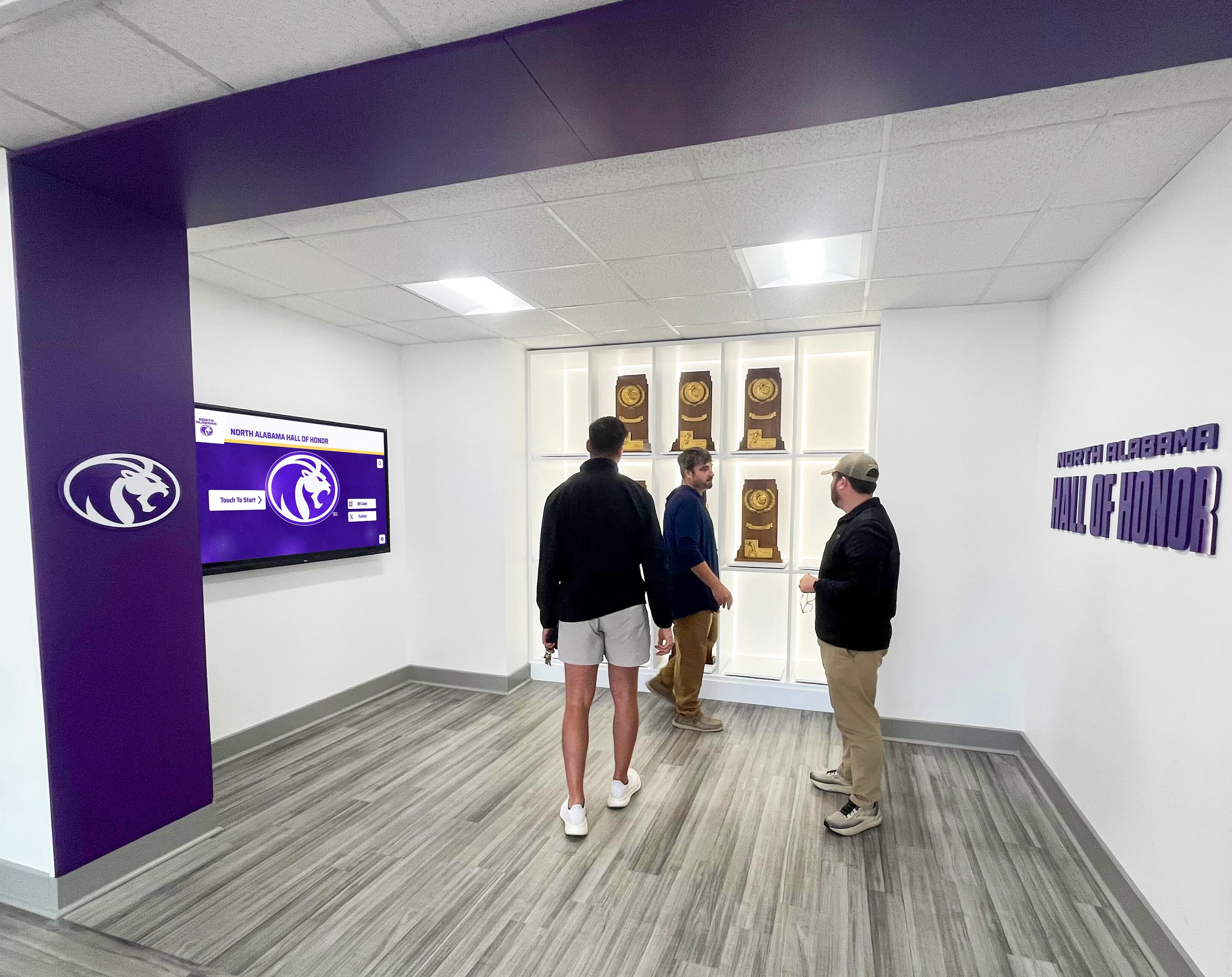
Digital Alternatives to Physical Banner Systems
Physical banners face inherent limitations—finite wall space, update friction when achievements change, maintenance requirements, and accessibility constraints for audiences beyond campus visitors. Digital recognition platforms address these limitations while preserving traditional banner benefits.
Unlimited Achievement Capacity
Digital displays accommodate unlimited championship banners, senior recognitions, and record acknowledgments without physical space constraints. Programs never face decisions about which achievements deserve display versus storage because capacity constraints disappear.
Scalability Benefits: As programs grow, add sports, or accumulate championships, digital systems expand effortlessly. Schools celebrating 50 championships display them as easily as schools with five titles.
Historical Preservation: Complete athletic histories remain accessible rather than relegated to storage when wall space fills. This comprehensive preservation ensures past athletes receive equal recognition regardless of when they competed.
Automatic Updates and Accuracy
Records fall, championships accumulate, and senior classes change annually. Digital platforms update automatically, maintaining current information without professional reinstallation or replacement costs.
Real-Time Currency: When swimmers break pool records or basketball players surpass career scoring marks, digital record boards update immediately rather than waiting for banner replacement cycles.
Cost Elimination: Schools spending thousands annually updating physical banners redirect those resources toward programming, equipment, or facility improvements while maintaining more current recognition displays.
Accessibility and Reach
Physical banners serve only campus visitors during facility hours. Digital recognition extends to alumni networks, prospective students, college recruiters, and community members accessing displays from anywhere via responsive websites and mobile applications.
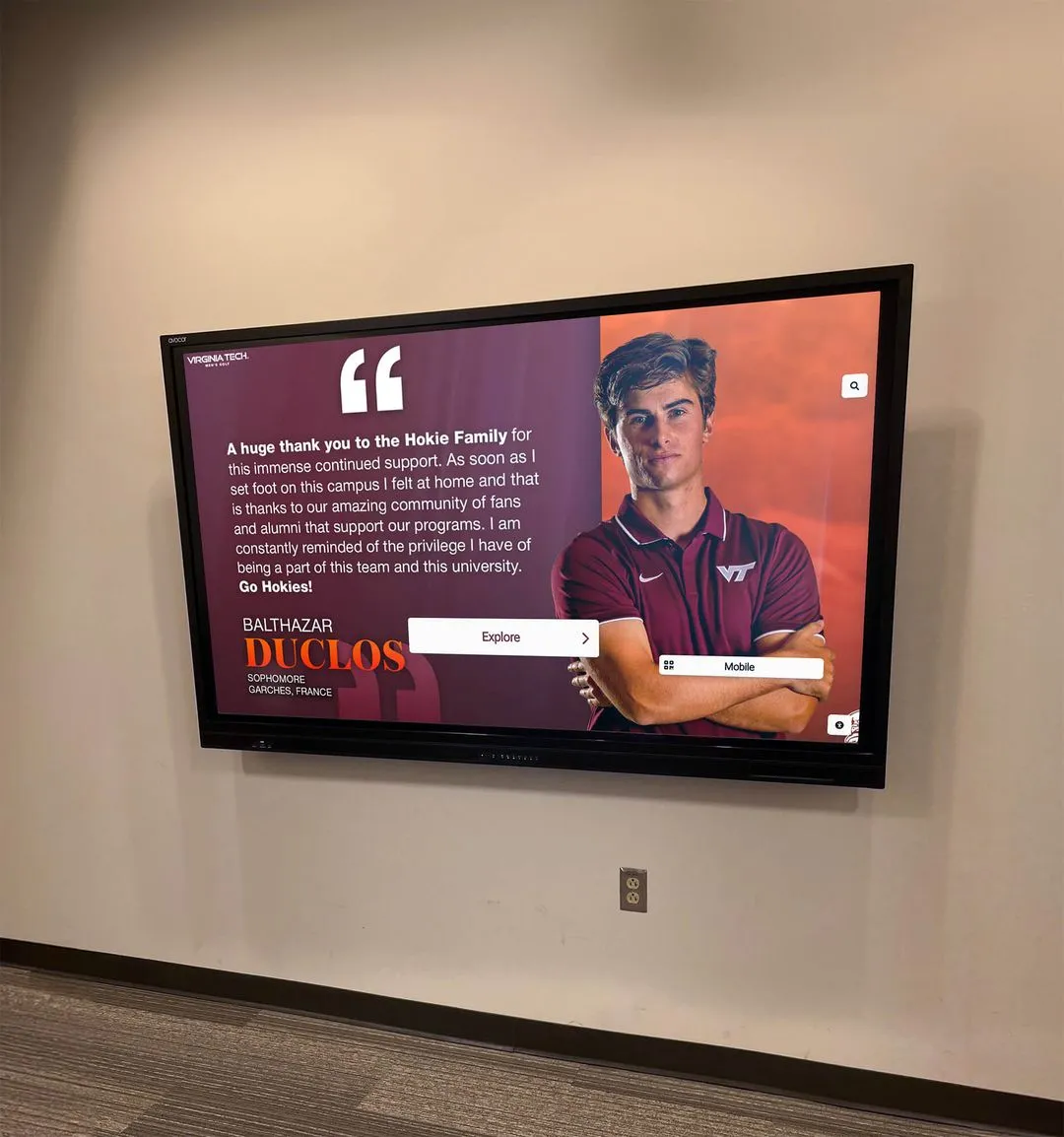
Mobile Access: Athletes share personal achievements displayed on digital platforms with family, friends, and recruiters through simple links rather than requiring campus visits to view physical banners.
ADA Compliance: Digital platforms meet accessibility standards that physical banners mounted at ceiling height cannot, ensuring recognition remains available to all community members regardless of physical ability.
Schools exploring modernization strategies can learn why digital solutions benefit programs of all sizes, budgets, and competitive levels through scalable platforms that grow with program success.
Interactive Engagement Features
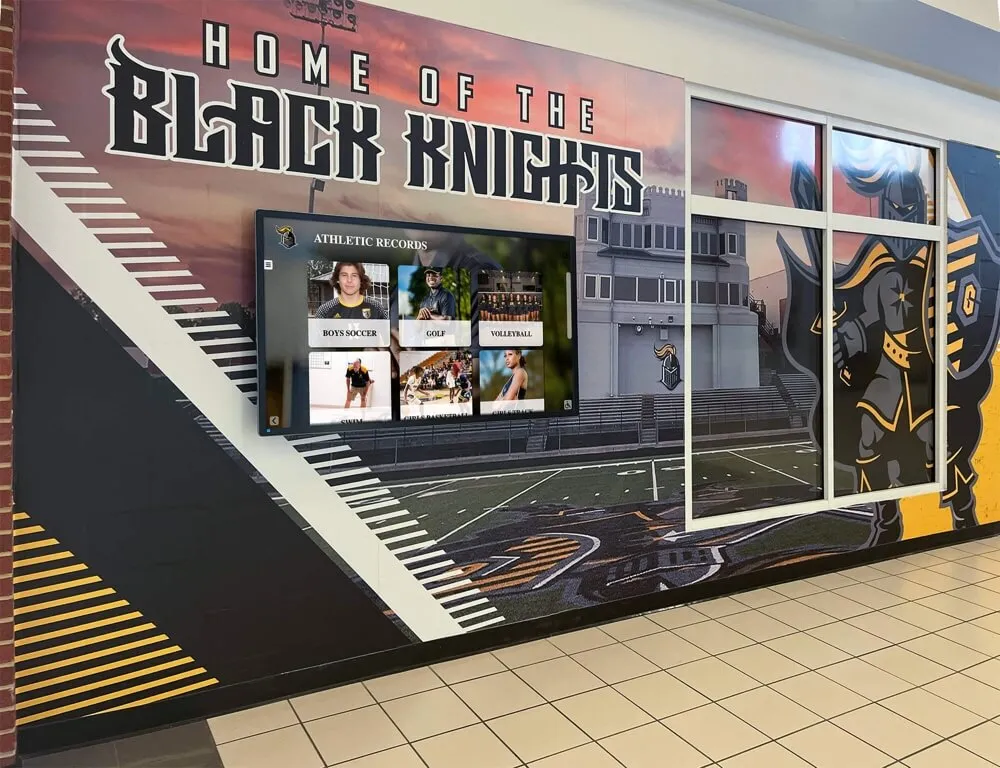
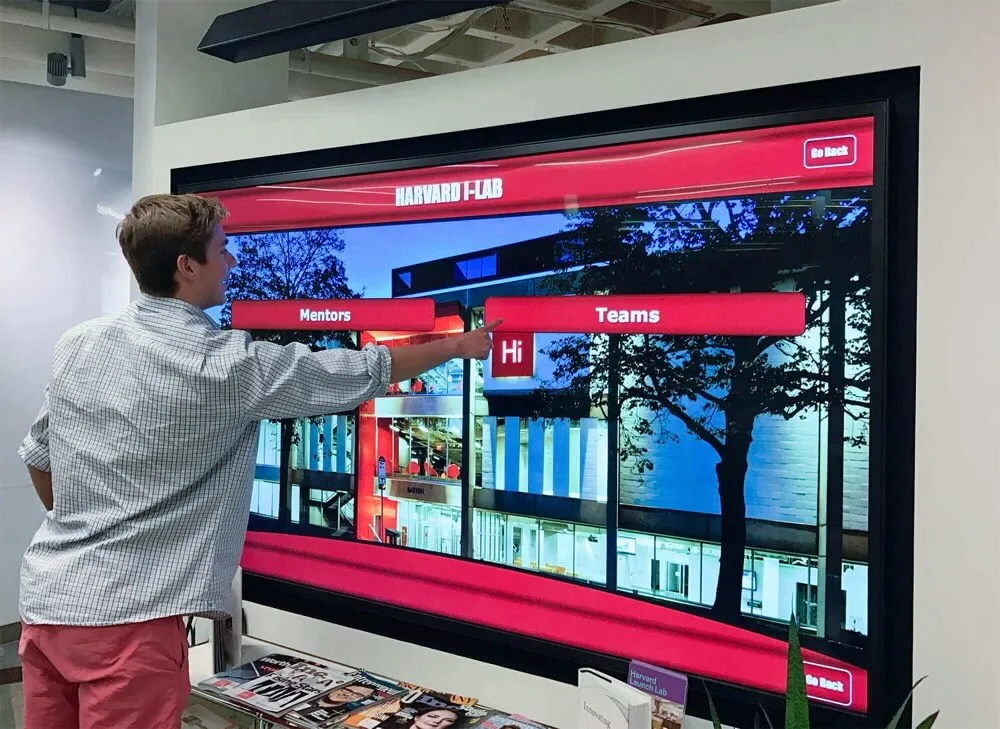
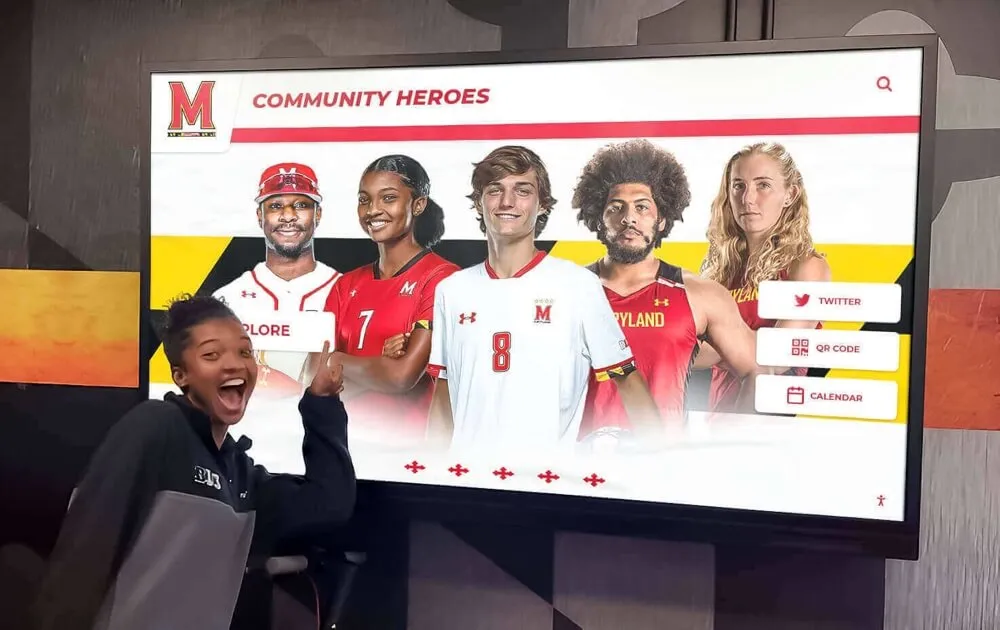
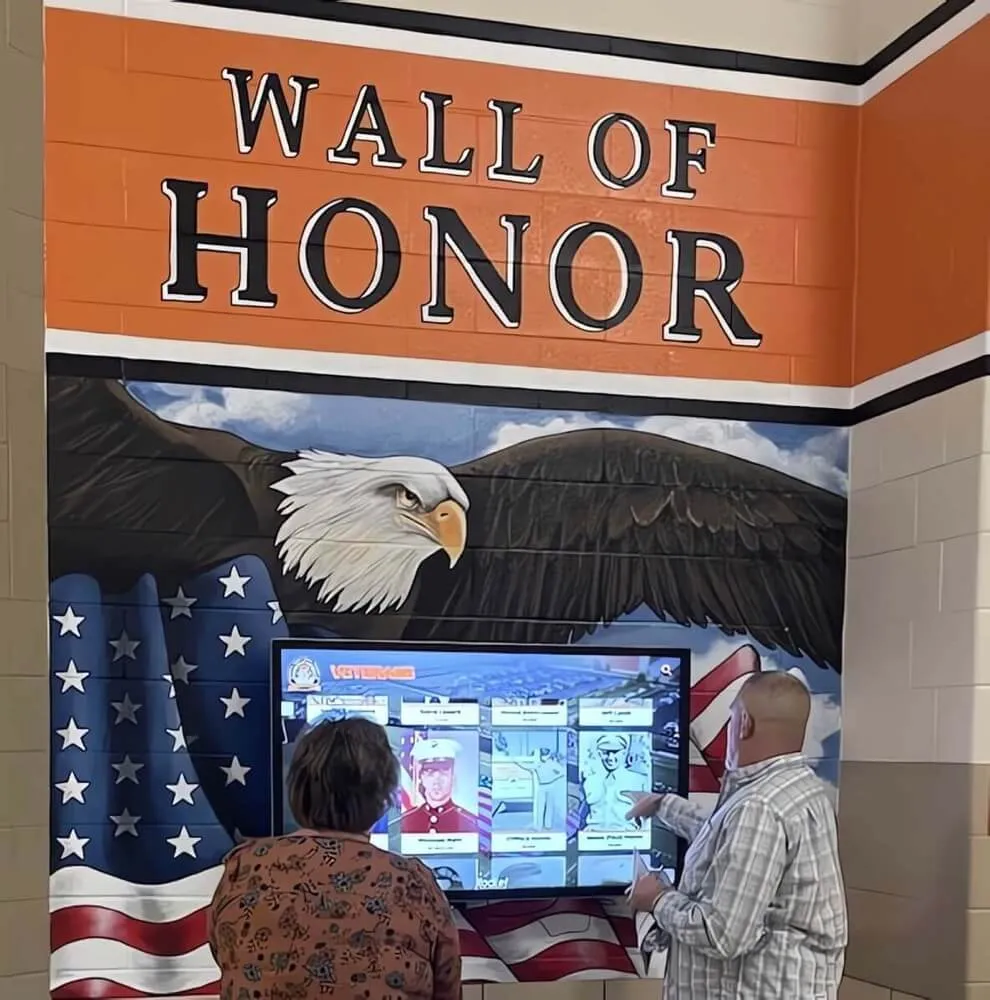
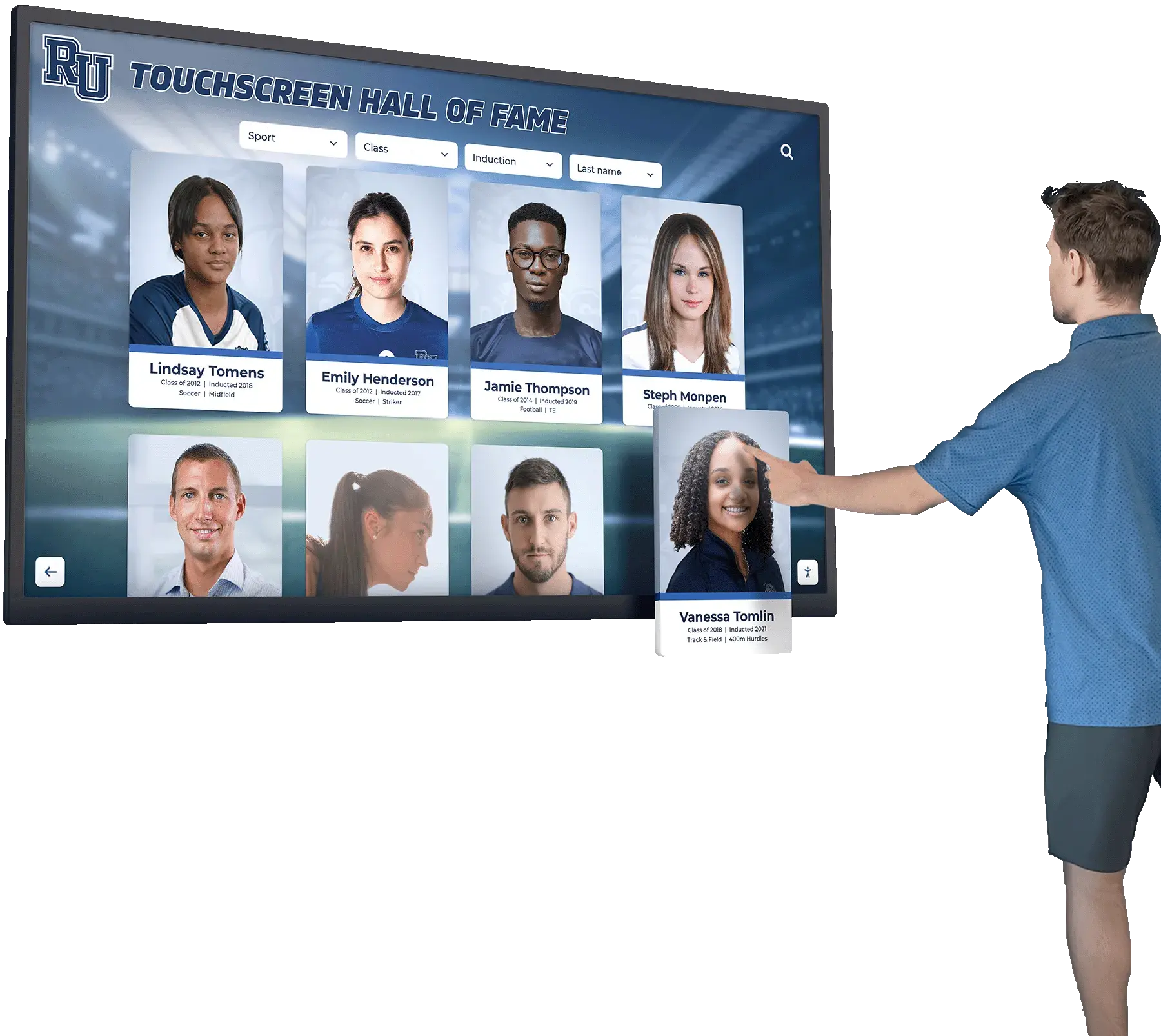
Static banners communicate one-way. Digital recognition enables interaction—filtering displays by sport, era, or achievement type; searching for specific athletes; exploring detailed statistics; and viewing photos and video beyond what banner dimensions accommodate.
Depth Without Clutter: Display clean, attractive overview screens while maintaining detailed achievement information accessible through taps or clicks. This layered approach prevents visual overwhelm while preserving comprehensive data.
Storytelling Capacity: Video highlights, coach interviews, and season narratives transform simple achievement lists into rich stories that engage current students and alumni more deeply than text and photos alone.
Budget Planning for Banner Programs
Comprehensive banner programs require multi-year budget planning accounting for initial production, ongoing additions, maintenance, and eventual replacement.
Initial Installation Costs
Starting banner programs from scratch requires simultaneous production of multiple banners creating visual impact. Budget planning should account for bulk production potentially spanning multiple championship banners, retired numbers, and hall of fame inductees.
Bulk Pricing: Many vendors offer volume discounts for orders exceeding minimum quantities. Producing ten banners simultaneously often costs significantly less per banner than ordering individually across multiple years.
Installation Infrastructure: Budget beyond banner costs to include hanging systems, installation labor, and any facility modifications required for proper display (additional mounting points, lighting, or wall preparation).
Annual Addition Budgets
Successful programs continuously accumulate achievements requiring annual banner budgets. Project expected championship frequency, senior class sizes, and hall of fame induction rates to estimate ongoing costs.
Variable Planning: Budget flexibility accommodates exceptional years when programs win multiple championships or experience larger senior classes. Fixed banner budgets sometimes force difficult choices about which achievements receive recognition.
Funding Sources: Booster clubs, corporate sponsors, and senior family contributions often fund portions of banner programs, reducing district budget impacts while building community investment.
Maintenance and Replacement Cycles
Banners deteriorate over time from dust, fading, or physical damage. Budget for cleaning, repair, or replacement maintaining professional appearances.
Lifecycle Planning: Indoor banners typically last 5-10 years while outdoor installations require replacement every 2-5 years depending on climate and material quality. Schedule replacements before banners appear shabby.
Storage Costs: Consider archive storage for retired banners preserving program history. Some schools rotate historical banners seasonally, requiring storage infrastructure for off-display items.
Schools managing FBLA, FFA, and academic recognition programs alongside athletic banners can explore unified recognition approaches reducing total costs through shared display infrastructure and production vendors.
Integrating Banners with Broader Recognition Systems
Sports team banners work best as components within comprehensive recognition ecosystems rather than standalone displays.
Trophy Case Coordination
Position banners near trophy cases creating concentrated recognition zones where championships, awards, and individual achievements cluster. This grouping tells more complete stories than scattered displays.
Visual Continuity: Coordinate banner colors and styles with trophy case backdrops, plaques, and other recognition elements. Consistent design language across recognition types creates cohesive, professional environments.
Chronological Alignment: Arrange banners and trophies chronologically showing program evolution across decades. This timeline approach helps visitors understand achievement progression and historical context.
Digital Display Integration
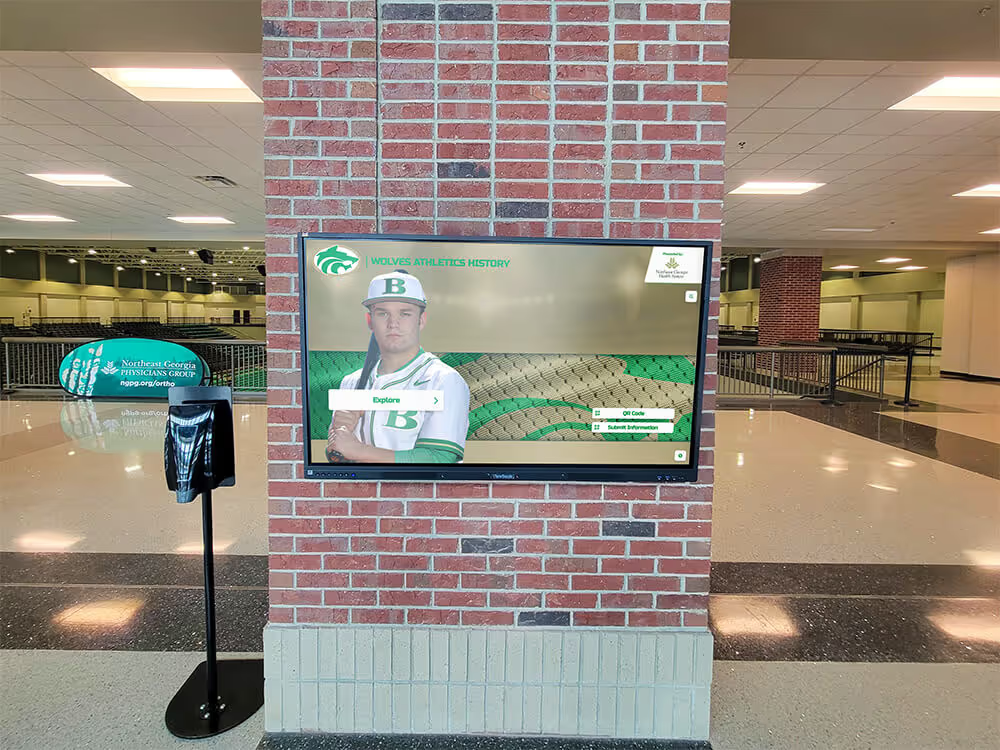
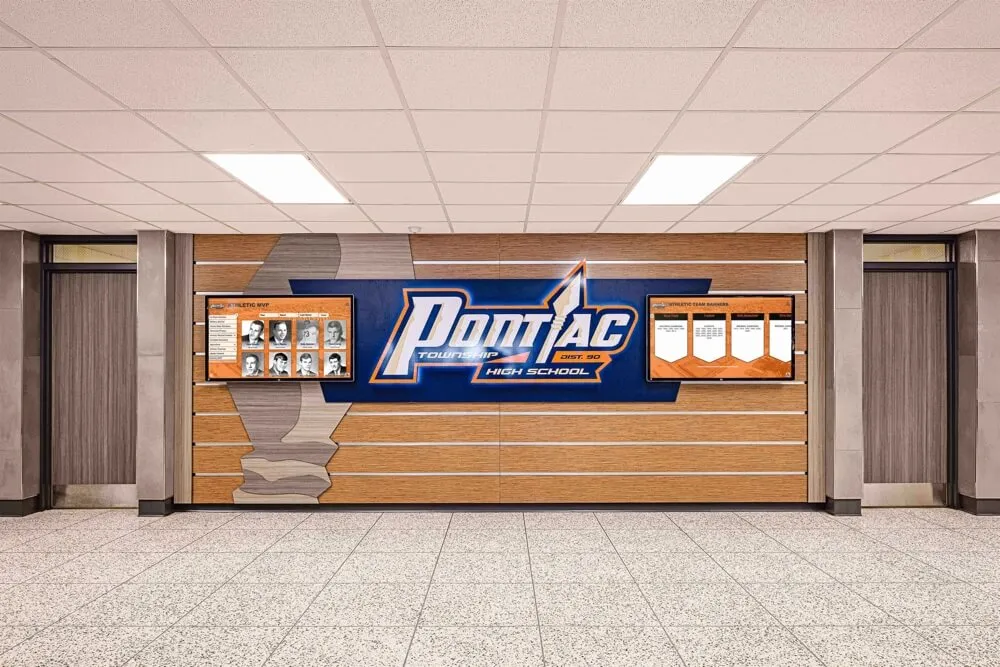
Schools installing digital recognition screens in lobbies, athletic facilities, or common areas can alternate between banner graphics and dynamic content showing statistics, schedules, or athlete profiles.
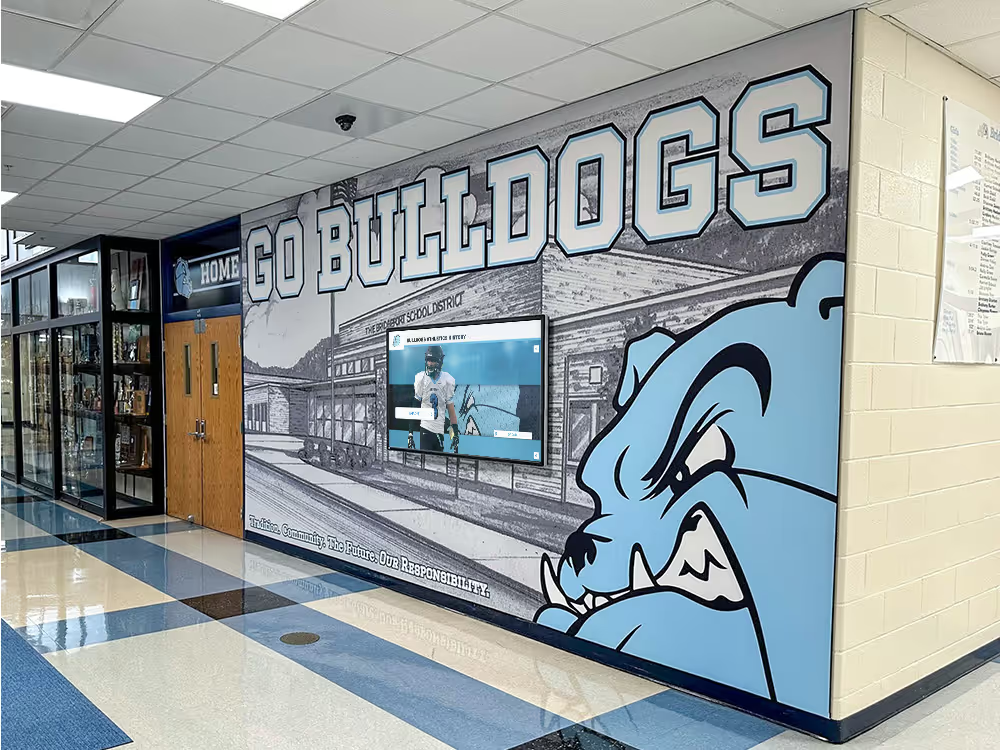
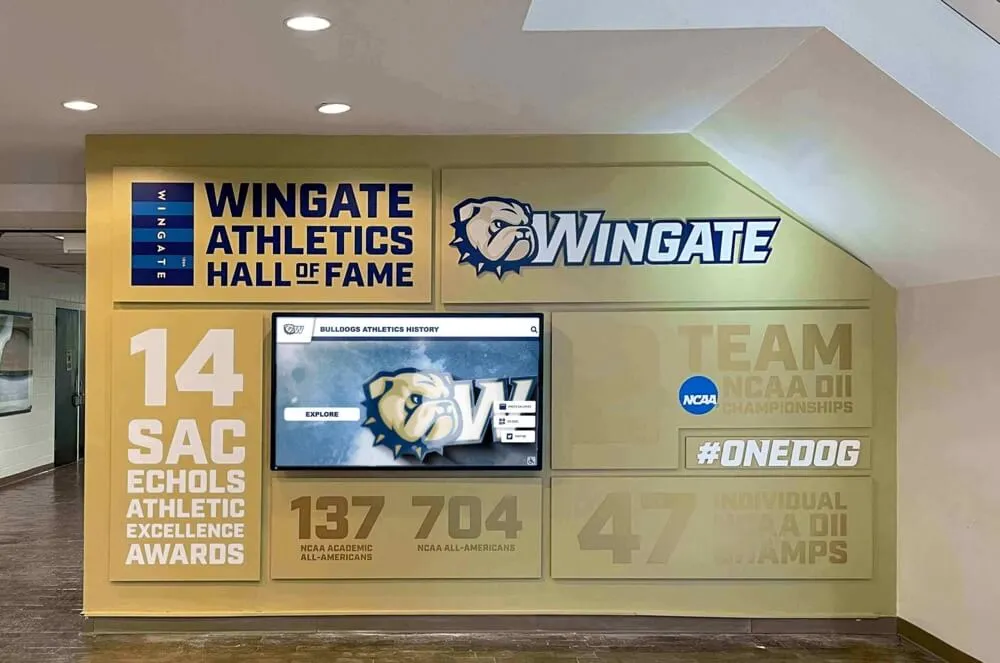
Complementary Systems: Use physical banners for championship and retired number recognition while digital displays handle frequently changing content like senior recognition, records, and all-conference selections. This hybrid approach optimizes each medium’s strengths.
Content Reuse: Banner graphics designed digitally can display on screens before physical production, allowing community preview and feedback ensuring designs meet expectations before print costs commit.
Website and Social Media Extension
Photograph banner unveilings for website galleries, social media posts, and digital yearbooks extending recognition beyond physical campus boundaries.
Recruitment Value: Championship banners featured in digital media communicate program excellence to prospective students and athletes considering school options. This marketing value justifies banner investment beyond current student recognition.
Alumni Engagement: Alumni associations and advancement offices leverage banner content for fundraising campaigns, reunion materials, and heritage storytelling that builds donor connections to athletic program success.
Creating Banner Design Standards
Consistent design standards across years and sports create professional appearances while simplifying future production.
Style Guide Development
Document design specifications for each banner type including dimensions, colors, fonts, layout templates, and content requirements. This reference ensures consistency regardless of which staff members coordinate future orders.
Template Creation: Work with designers to create master templates for each banner category. These templates reduce per-banner design costs, accelerate production timelines, and guarantee consistency across multiple sports and years.
Brand Compliance: Ensure all banner designs comply with school brand standards regarding logo usage, color specifications, and trademark requirements. Non-compliant banners risk takedown or replacement expenses.
Approval Processes
Establish clear approval workflows determining who reviews banner designs before production, what revision rounds vendors provide, and deadlines ensuring completion before installation targets.
Stakeholder Review: Athletic directors, coaches, booster club representatives, and school administrators may all have legitimate input on banner content and design. Define decision-making authority preventing delays from excessive revision cycles.
Proofreading Protocols: Implement multiple proofreading rounds catching errors before printing. Misspelled names, incorrect statistics, or wrong dates on permanent banners create embarrassment and replacement expenses.
Championship Banner Display Strategies
Strategic banner placement maximizes visual impact while maintaining facility functionality and safety.
Sport-Specific Grouping
Group championship banners by sport rather than chronologically. Basketball championship banners concentrated above one end of the gymnasium create more powerful visual statements than scattered placement.
Advantage: Sport grouping helps athletes visualize program legacy, building pride in contributing to established traditions. This concentration also simplifies future additions when programs earn new championships.
Consideration: Ensure equitable distribution of premium display locations across sports preventing perception that certain programs receive preferential treatment.
Chronological Timelines
Alternatively, arrange all championship banners chronologically creating visual program timelines showing achievement progression across decades and multiple sports.
Benefit: Chronological displays tell institutional stories showing how programs evolved, highlighting eras of particular excellence, and creating comprehensive historical narratives.
Challenge: This approach requires significant contiguous wall space accommodating linear arrangements and becomes challenging as championship totals grow.
Ceiling vs. Wall Mounting
Championship banners traditionally hang from gymnasium ceilings, but wall mounting offers advantages for certain facilities and banner types.
Ceiling Mounting: Creates dramatic visual impact in large gymnasiums with sufficient height. Ceiling banners remain visible from multiple angles and avoid competing with wall-mounted equipment or scoreboards.
Wall Mounting: Provides closer viewing enabling detailed information reading that ceiling distance prevents. Works better for smaller facilities with limited ceiling height or structural mounting limitations.
Athletic programs managing comprehensive achievement recognition across swimming championships, track meets, and other competitive events can explore banner systems that scale to accommodate multiple sports and achievement levels without creating visual clutter.
Balancing Tradition with Innovation
Sports team banners carry deep tradition and emotional significance for schools, athletes, and communities. Modernization efforts should respect this tradition while addressing practical limitations.
Preserving Banner Traditions
Schools with decades-long banner traditions should maintain aesthetic continuity when adding new banners or upgrading systems. Drastic style changes can disconnect historical achievements from current celebrations.
Design Continuity: New banner designs should echo historical banner aesthetics through color schemes, fonts, or layout approaches creating visual families across eras.
Ceremonial Consistency: If programs hold banner unveiling ceremonies, maintain these traditions even when transitioning to digital platforms capable of instant updates. Ceremonies matter as much as the recognition itself.
Gradual Digital Transition
Schools modernizing recognition systems need not eliminate physical banners immediately. Hybrid approaches maintain traditions while adding digital capacity solving space and update challenges.
Complementary Installation: Install digital displays showing broader achievement lists while maintaining championship banners for major titles. This preserves traditions while expanding recognition capacity.
Pilot Programs: Test digital recognition in single sports or facilities before broader implementation. Successful pilots build stakeholder confidence supporting larger system changes.
Long-Term Banner Program Sustainability
Sustainable banner programs balance recognition desires with budget realities, maintenance capacity, and space limitations.
Multi-Year Planning
Develop three-to-five-year banner plans projecting expected achievements, budget requirements, space availability, and design evolution ensuring programs remain financially and logistically sustainable.
Predictable Budgets: Multi-year planning allows district finance offices to budget predictably rather than facing unexpected banner expenses when programs experience championship surges.
Design Evolution: Plan periodic design refreshes every 5-10 years modernizing aesthetics while maintaining brand consistency. Gradual evolution prevents dated appearances while preserving recognition investment.
Space Management Strategies
Eventually, all facilities reach capacity limits. Proactive space management prevents crisis decisions about removing historical banners to accommodate new achievements.
Rotation Systems: Some schools rotate older championship banners to storage, displaying recent achievements prominently while preserving historical banners for special events, anniversaries, or periodic rotation.
Consolidation Approaches: Replace individual championship banners with comprehensive banner graphics showing all titles in compact formats. This consolidation sacrifices individual banner drama for space efficiency.
Digital Migration: Transition to digital platforms eliminating space constraints entirely while maintaining banner traditions through on-screen graphics, ceremony elements, and archived banner preservation.
Building Program Culture Through Recognition
Strategic sports team banner programs build athletic culture extending beyond immediate recognition to influence recruitment, performance, and community identity.
Motivational Environment Creation
Well-designed banner displays create environments reminding athletes daily of program standards, achievement expectations, and traditions they join upon making teams.
Visual Standards: Championship banners communicate non-verbally that winning matters, excellence is expected, and individual contributions to team success earn permanent recognition. These messages influence athlete mindset and performance.
Tradition Connection: Current athletes competing beneath banners celebrating past champions feel connected to program legacy, building responsibility to maintain standards and add their own achievements to institutional history.
Recruitment Advantages
Campus tours highlighting impressive banner displays demonstrate program success, commitment to athlete recognition, and competitive excellence prospective students seek.
Competitive Differentiation: Schools with comprehensive recognition systems distinguish themselves from competitors offering similar academic and athletic opportunities. Recognition matters in close recruitment decisions.
Family Appeal: Parents appreciate schools honoring athlete achievement meaningfully. Banner programs demonstrate institutional respect for athletes beyond using them for competition purposes.
Understanding comprehensive employee recognition principles provides frameworks applicable to athletic recognition programs, helping coordinators build systems that meaningfully celebrate diverse contribution types beyond championship outcomes.
Alumni Connection
Athletic banners preserving alumni achievements maintain connections between graduates and current programs. Alumni seeing their accomplishments recognized decades later feel valued and remain engaged with schools.
Fundraising Impact: Athletic facilities fundraising benefits from strong alumni connections built partly through visible recognition of historical achievements. Banner programs represent modest investments generating lasting alumni goodwill.
Heritage Preservation: Banner programs preserve institutional heritage that might otherwise disappear. Schools lacking systematic recognition lose connections to past excellence as institutional memory fades and historical athletes pass away.
Modernizing Athletic Recognition: Beyond Physical Banners
While traditional sports team banners serve important purposes, modern digital recognition platforms address inherent banner limitations while expanding recognition possibilities beyond what physical displays accommodate.
Digital record boards and recognition displays offer unlimited capacity, automatic updates, mobile accessibility, interactive features, and ADA compliance that physical banners cannot provide. Schools supplement or replace banner programs with digital platforms maintain recognition traditions through on-screen banner graphics, ceremony elements, and comprehensive achievement preservation while eliminating space constraints and update friction.
Rocket Alumni Solutions provides digital recognition platforms specifically designed for schools, colleges, and athletic programs seeking to honor achievements permanently without physical banner limitations. These touchscreen systems auto-rank records, celebrate unlimited athletes, maintain complete historical archives, and remain accessible to students, alumni, and recruits from any device.
For athletic directors and school leaders balancing tradition with practical recognition challenges, digital platforms represent evolution rather than replacement—preserving what matters about banner programs while solving limitations that prevent comprehensive celebration of every achievement deserving recognition.
Conclusion
Sports team banner programs transform athletic facilities into visual celebrations of achievement, tradition, and excellence. Whether designing championship banners honoring state titles, creating senior recognition displays celebrating graduating athletes, acknowledging record holders, or retiring jersey numbers for transcendent competitors, effective banner systems build program culture while providing athletes meaningful recognition extending beyond brief award ceremonies.
Traditional vinyl banners serve important purposes, particularly for championship recognition and ceremonial traditions central to school identity. However, physical banners face inevitable limitations—wall space constraints, update friction, maintenance requirements, and accessibility barriers preventing broader audiences from experiencing recognition displays.
Schools seeking to honor every achievement permanently while maintaining current information, unlimited capacity, and broad accessibility should explore digital recognition platforms designed specifically for athletic programs. These systems preserve banner traditions through on-screen graphics while solving practical challenges that force difficult decisions about which achievements receive recognition versus storage.
Athletic recognition matters—validating athlete sacrifice, building program tradition, supporting recruitment, and creating environments where excellence is expected and celebrated. Strategic banner programs, whether traditional physical installations or modern digital platforms, ensure every championship, record, and individual achievement receives the permanent honor it deserves.
Ready to explore recognition solutions that celebrate unlimited achievements without space constraints? Schedule a demo with Rocket Alumni Solutions to see how digital platforms preserve athletic history while eliminating the update friction and capacity limitations inherent to physical banner systems.