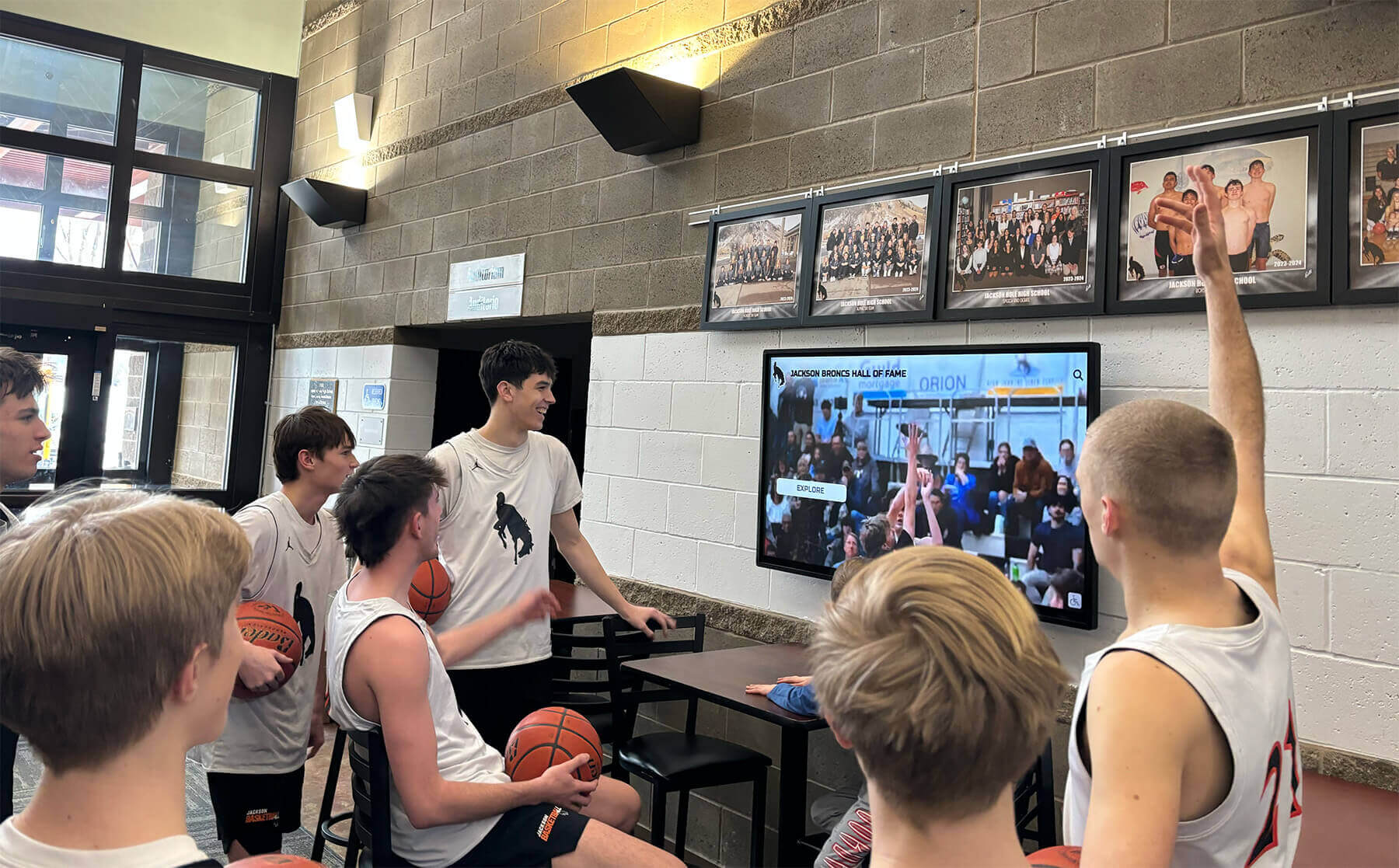




Senior night ceremonies occupy a unique space in athletic tradition—the final opportunity to publicly honor athletes who dedicated years to your program while creating memories families treasure for lifetimes. Yet the gap between perfunctory walkouts with flowers and genuinely meaningful celebrations that athletes remember decades later proves wider than most athletic directors realize.
The ceremony itself lasts 15-20 minutes. Photos capture brief moments on the field or court. Families receive flowers or small plaques. Then competition begins, and the recognition ends. This transactional approach misses the cultural and emotional significance senior night represents—the culmination of four-year athletic journeys, validation of sacrifices made, and demonstration of what your program genuinely values beyond win-loss records.
Programs that approach senior night as strategic recognition opportunity rather than obligatory tradition create celebrations athletes reference years later during alumni reunions, family gatherings, and when deciding whether to support programs financially or encourage their own children to participate. The investment required doesn’t scale with budget size—thoughtful planning, authentic appreciation, and creative approaches to permanent recognition matter far more than expensive production or elaborate gifts.
Intent: Demonstrate
This guide demonstrates how athletic programs create senior night celebrations generating lasting impact through ceremony innovation, family engagement, and permanent digital recognition. We'll walk through pre-event planning, ceremony execution strategies, and recognition systems extending senior acknowledgment far beyond single-night events—positioning your program to honor athletes with the depth and authenticity these transitions deserve.
Why Traditional Senior Night Approaches Fall Short
Walk through the senior night ceremony playbook used by most programs and a predictable pattern emerges: alphabetical introductions read by announcers, brief walks across the field or court with parents, flower presentations, quick team photos, and immediate transition to competition. This assembly-line approach processes seniors efficiently but rarely creates the emotional resonance or cultural significance athletic directors claim senior night represents.
The Recognition Disappears When Ceremonies End
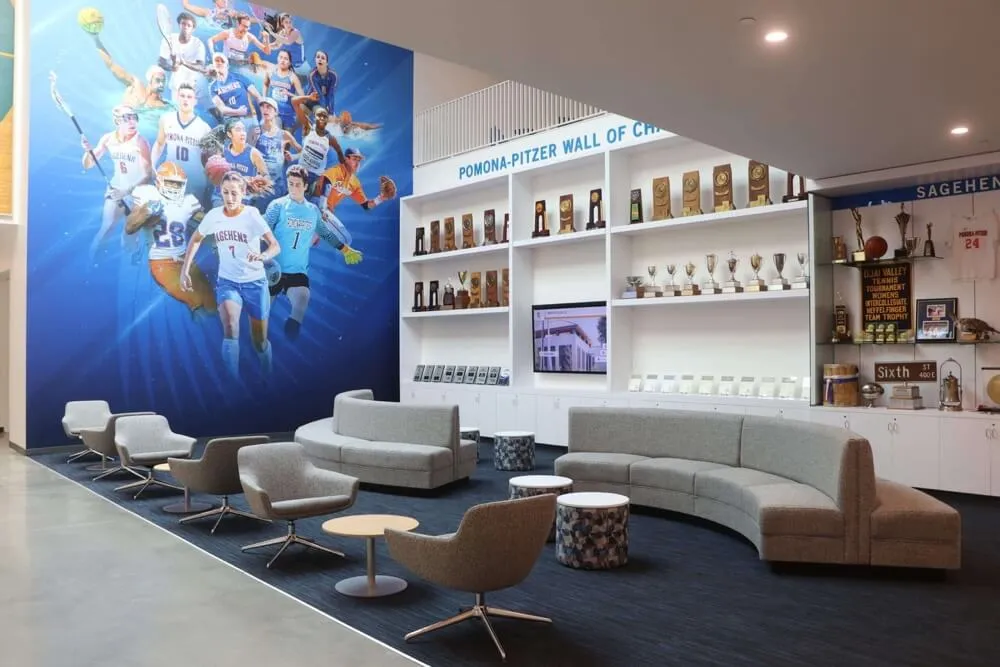
Physical space constraints limit traditional senior recognition to current-year athletes. Plaques on gymnasium walls accommodate perhaps 30-40 names before running out of room, forcing programs to choose which years to remove when adding new classes. Digital scoreboards display current seniors briefly during ceremonies, then immediately return to game operations with senior profiles deleted by next week’s competition.
This temporal limitation undermines recognition’s fundamental purpose. Athletes dedicating four years to programs deserve acknowledgment extending beyond brief ceremony moments—permanent recognition accessible to alumni returning after five, ten, or twenty years, visible to current athletes who study program history, and discoverable by prospective recruits researching athletic culture.
The problem intensifies for athletes in supporting roles. Star players receive attention regardless of recognition quality, while role players, backup athletes, and injured seniors often experience abbreviated acknowledgment during ceremonies designed to move quickly. Without permanent recognition systems accommodating comprehensive profiles, these athletes’ contributions effectively disappear when ceremonies conclude.
Families Feel Like Spectators Rather Than Participants
Traditional ceremonies position families as passive observers watching from stands while athletes receive recognition on competition surfaces. Parents receive flowers or small gifts during brief on-field moments, then return to seating for game observation. This approach misses opportunities for deeper family engagement that honors the collective commitment athletic careers represent.
The athlete’s journey involved countless early mornings, equipment purchases, travel expenses, schedule adjustments, and emotional support from families. Senior night should acknowledge these family contributions explicitly rather than treating parents as ceremony props appearing briefly before returning to spectator roles. Programs creating dedicated family time, parent-focused recognition elements, and opportunities for genuine connection demonstrate understanding that athletic achievement reflects family systems, not just individual athlete effort.
One-Size-Fits-All Ceremonies Don’t Honor Individual Stories
Standardized introduction scripts reading identical biographical information for every senior—name, position, years participated, college destination—reduce unique four-year journeys to generic data points. The senior who overcame significant injury deserves different storytelling than the multi-year captain. The athlete who matured from immature freshman to respected leader has a narrative distinct from the athlete who maintained consistent excellence throughout.
Generic approaches also fail to acknowledge varying achievement levels appropriately. The record-breaking athlete and the player who never saw competitive action both receive identical 30-second introductions, despite vastly different contributions. This false equivalence feels unsatisfying to everyone—stars wonder why programs don’t differentiate significant accomplishment, while role players sense the perfunctory acknowledgment lacks genuine appreciation for their specific contributions.
Programs need recognition systems accommodating both ceremony uniformity ensuring every senior receives appropriate time and permanent platforms enabling rich storytelling that brings individual journeys to life through photos, statistics, quotes, and narratives reflecting unique experiences.
Strategic Planning: Building Senior Night Programs That Resonate
Memorable senior nights emerge from systematic planning beginning weeks before ceremonies rather than last-minute coordination the day events occur. This advance preparation enables thoughtful execution creating genuine emotional impact rather than rushed processes checking boxes.
Start Planning at Season’s Beginning, Not Final Week
Most programs begin senior night planning 2-3 weeks before ceremonies. This compressed timeline forces compromise on content quality, limits family coordination, and creates administrative stress preventing thoughtful execution. Superior approaches initiate planning during preseason, building senior recognition into seasonal rhythms rather than treating acknowledgment as separate add-on activity.
Early-season planning enables:
Comprehensive photo collection throughout the season capturing seniors in multiple contexts—practice moments, team celebrations, pre-game rituals, community service, and competitive action. One ceremony-day photo shoot misses the authentic moments families treasure most.
Thoughtful biographical content development through extended senior interviews exploring what playing meant to them, favorite memories, people who influenced their development, and lessons learned through athletics. Rushed final-week surveys produce superficial responses lacking emotional depth.
Family coordination providing adequate notice for extended family travel planning, work schedule adjustments, and meaningful preparation. Last-minute notifications prevent grandparents, siblings at distant colleges, or parents with inflexible work schedules from attending.
Video tribute production requiring filming, editing, and refinement. Quality video content demands multiple revision cycles improving narrative flow, emotional pacing, and production polish—impossible when working against compressed deadlines.
Permanent recognition content preparation for digital record board systems displaying comprehensive senior profiles. Rich multimedia content including career statistics, photo galleries, and extended narratives requires systematic development impossible during final-week chaos.
Early planning also enables budget forecasting, volunteer recruitment, sponsorship solicitation, and vendor coordination ensuring all recognition elements receive appropriate resources rather than making do with whatever remains available during final weeks.
Define Recognition Philosophy Before Selecting Ceremony Elements
Before choosing specific ceremony activities, programs need clear philosophical frameworks defining what senior night recognition should accomplish. These foundational decisions guide all subsequent planning while ensuring ceremony elements align with intended cultural messages.
Core philosophical questions:
Equal time versus differentiated recognition: Will every senior receive identical ceremony time regardless of playing time and achievement level, or will recognition duration reflect contribution magnitude? Both approaches have merit—equal time demonstrates all commitment deserves equivalent respect, while differentiated approaches acknowledge that breaking program records differs meaningfully from supporting roles. Many programs implement equal ceremony time while using permanent digital recognition for differentiated storytelling accommodating varied achievement levels.
Ceremony simplicity versus production complexity: Simple ceremonies emphasizing authentic appreciation may resonate more powerfully than elaborate productions feeling performative. Sophisticated video tributes, musical coordination, and choreographed presentations require substantial resources while potentially overshadowing genuine emotional connection. Determine whether program culture and resources support production complexity or whether simpler authentic approaches better match institutional values.
Current-year focus versus program history integration: Should ceremonies exclusively celebrate current seniors, or should recognition incorporate connections to program legacy and alumni predecessors? Historical context positioning current seniors within multi-decade traditions creates continuity while enabling alumni engagement and demonstrating sustained program culture. Conversely, exclusive current-year focus maintains celebration intimacy without diluting attention on graduating athletes.
Individual versus team framing: Recognition can emphasize individual athlete achievement or collective senior class contributions to team success. Individual framing highlights personal journeys and unique accomplishments, while team framing reinforces collaborative culture and shared experiences. Most successful approaches balance both elements—individual profiles during permanent recognition, collective celebration during ceremonies.
These philosophical foundations prevent recognition planning from devolving into disconnected activity lists lacking cohesive vision or cultural alignment. Clear frameworks enable confident decision-making when conflicts arise or resource constraints force prioritization.
Engage Seniors in Planning Rather Than Imposing Predetermined Formats
Adults planning senior night based on what they assume athletes want frequently miss opportunities for recognition elements creating genuine meaning. Engaging seniors directly in planning ensures ceremonies reflect their actual preferences while building ownership making events feel personally relevant rather than institutionally prescribed.
Senior input mechanisms:
Planning committee participation: Invite 2-3 senior representatives to planning meetings contributing ideas, evaluating proposals, and providing feedback on ceremony drafts. This insider perspective reveals preferences adults might miss while helping seniors feel invested in successful execution.
Anonymous surveys collecting broader senior class input on preferred ceremony elements, music selections, introduction approaches, and recognition priorities. Survey anonymity encourages honest feedback rather than responses seniors believe coaches want to hear.
Individual interviews with each senior exploring what meaningful recognition looks like personally. Some athletes prioritize family involvement, others value teammate acknowledgment, and some emphasize permanent legacy recognition. Understanding individual preferences enables customization within standardized frameworks.
Option presentations offering seniors choices rather than unilateral staff decisions. For example, present three introduction script approaches, multiple music options, or various gift alternatives, allowing seniors to collectively select preferred elements. This shared decision-making transforms seniors from passive recipients to active recognition co-designers.
The planning engagement process itself communicates respect and value—demonstrating that programs genuinely care about senior preferences rather than executing predetermined templates regardless of athlete input. This consultation process often proves as meaningful as actual ceremony execution, particularly for athletes in supporting roles who rarely receive individualized attention.
Pre-Ceremony Recognition Building Anticipation
Senior night ceremonies represent recognition culmination rather than isolated events. Thoughtful programs build anticipation through extended recognition activities in days and weeks preceding ceremonies, creating sustained celebration rather than brief ceremony-only acknowledgment.
Senior Week Daily Recognition Activities
Rather than single-night celebration, implement senior week programming providing daily recognition building toward ceremony climax. This extended approach distributes attention across multiple days while engaging broader school communities in senior celebration.
Monday – Social Media Senior Spotlights: Launch social media campaign featuring individual senior profiles throughout the week. Each post highlights one senior with photos, statistics, memorable moments, and personal quotes. Coordinate timing enabling family members to share posts through personal networks amplifying recognition reach exponentially beyond program followers. Encourage teammates, classmates, and community members to comment with congratulations and memories creating digital affirmation archives seniors can revisit indefinitely.
Tuesday – Senior Thank You Project: Dedicate time for seniors to write thank you notes to people who supported their athletic journeys—coaches, trainers, teammates, teachers, administrators, custodial staff, and volunteers. This gratitude practice shifts focus from what seniors receive to appreciation they express, building humility while acknowledging support systems enabling athletic participation. Some programs display thank you boards where these notes become publicly visible, modeling appreciation culture for younger athletes.
Wednesday – Underclassmen Senior Appreciation: Reserve practice time for underclassmen to express appreciation for senior leadership and contributions. This might include formal presentations where underclass representatives deliver speeches, locker decorations created by younger teammates, or small gift presentations symbolizing gratitude. The public acknowledgment from teammates often proves more emotionally impactful than adult-driven recognition, validating that contributions mattered to peers sharing daily athletic experiences.
Thursday – Senior Practice Leadership: Hand complete practice control to seniors who design drills, lead conditioning, select music, and run team activities. This role reversal demonstrates trust while creating final practice memories reflecting senior personalities. Coaches observe rather than direct, signaling genuine belief in senior development and leadership capacity. These practices often become favorite memories as seniors experience program influence typically reserved for coaching staff.
Friday – Ceremony Day Preparation: Reserve morning hours for senior-only activities—team breakfast, facility tours showing spaces holding special meaning, video watching sessions reviewing season highlights, or quiet reflection time. Provide structured schedule preventing pre-ceremony chaos while creating dedicated space for seniors to process emotions and prepare mentally for evening recognition.
This distributed recognition approach ensures every senior receives sustained attention rather than brief ceremony moments, builds school-wide engagement with senior celebration, and creates multiple memory points families treasure alongside ceremony itself.
Permanent Digital Recognition Installations
Traditional senior night recognition disappears within weeks—ceremony programs get recycled, scoreboard presentations get deleted, and wall space constraints prevent adding permanent plaques. Modern digital recognition solutions eliminate these limitations, enabling permanent senior profiles accessible indefinitely to alumni, current students, prospective recruits, and visitors.
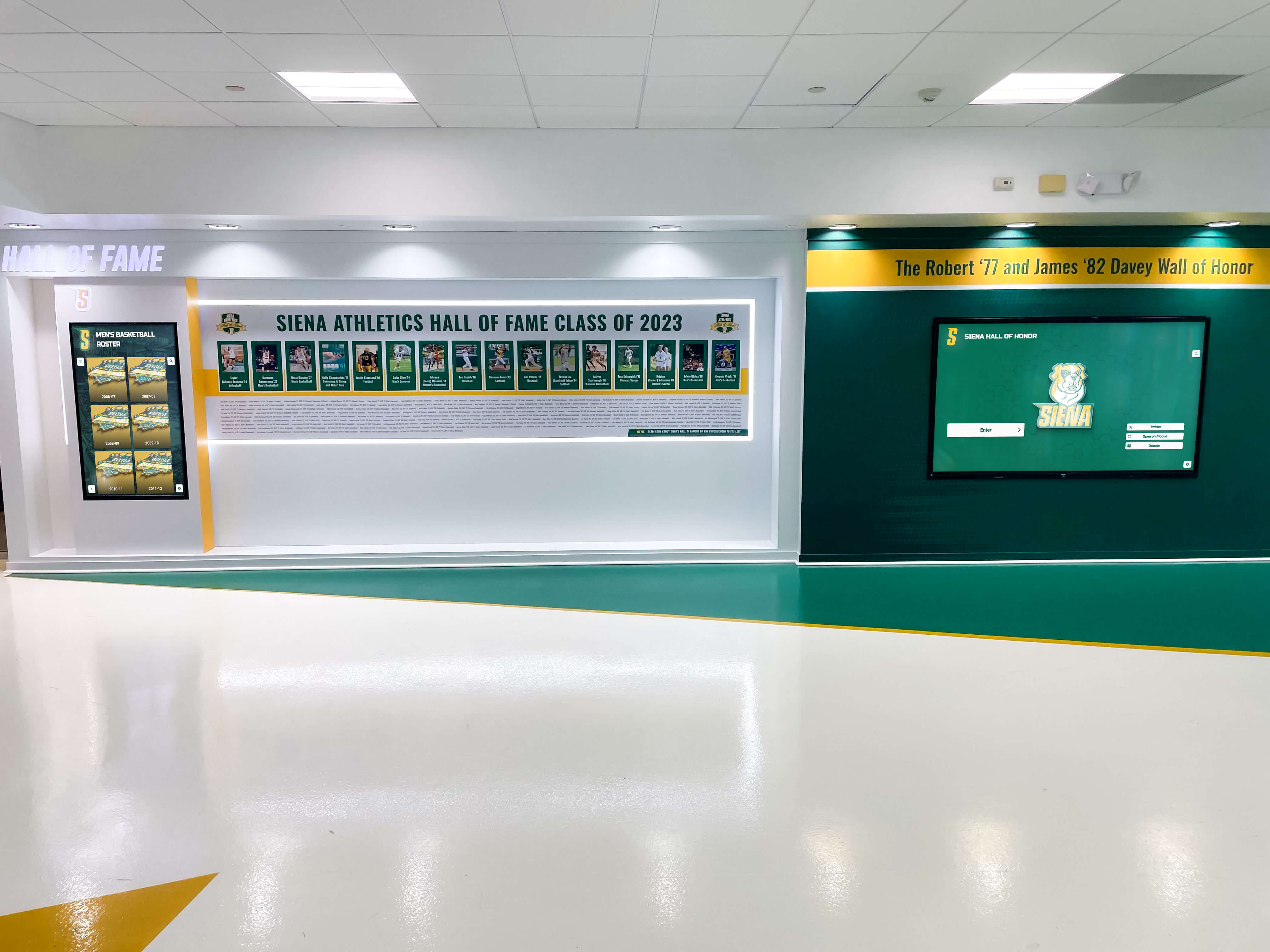
Installation timing and content development: Rather than waiting until ceremony week, begin developing permanent recognition content during preseason. Collect comprehensive senior photographs throughout the season capturing multiple contexts—competitive action, practice moments, team celebrations, community service, and casual team interactions. Record video interviews where seniors discuss what athletics meant personally, favorite memories, influential people, and lessons learned. Gather complete career statistics, awards received, college destinations, and biographical information.
This gradual content accumulation creates rich senior profiles far exceeding what rushed ceremony-week preparation enables. By senior night, comprehensive digital profiles should be complete and installed in prominent lobby or gymnasium locations, enabling ceremony references directing attendees to explore permanent recognition immediately following festivities.
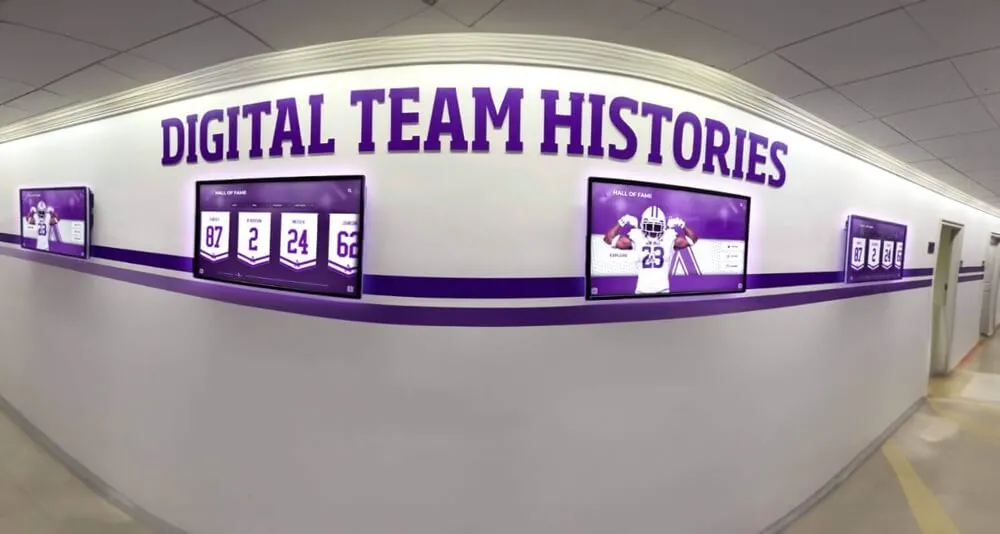
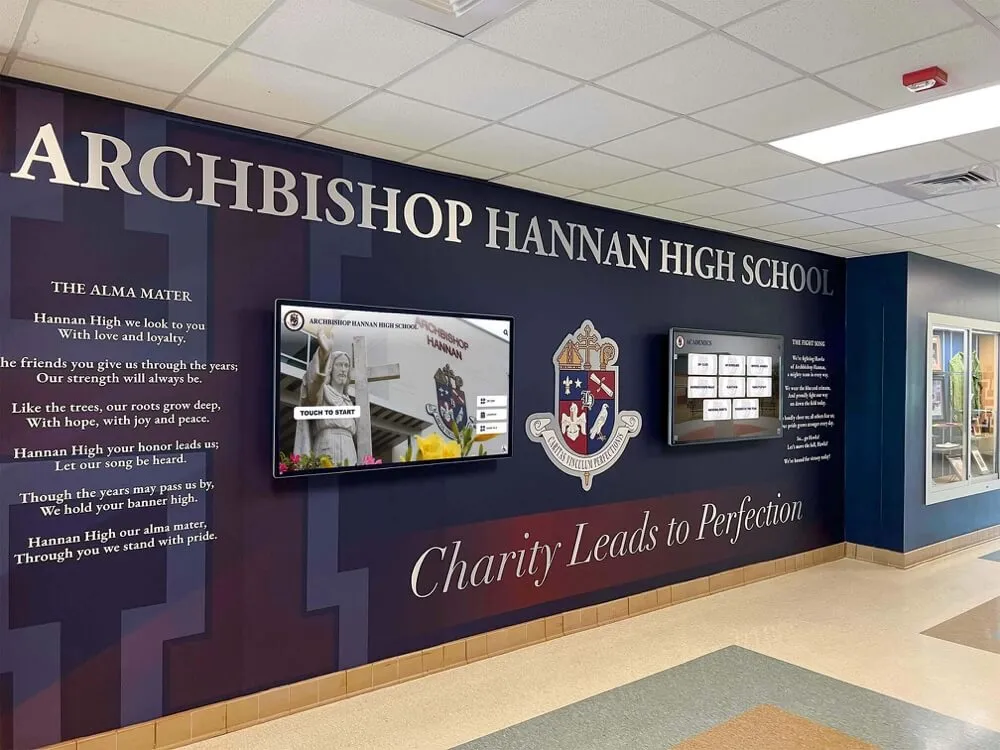
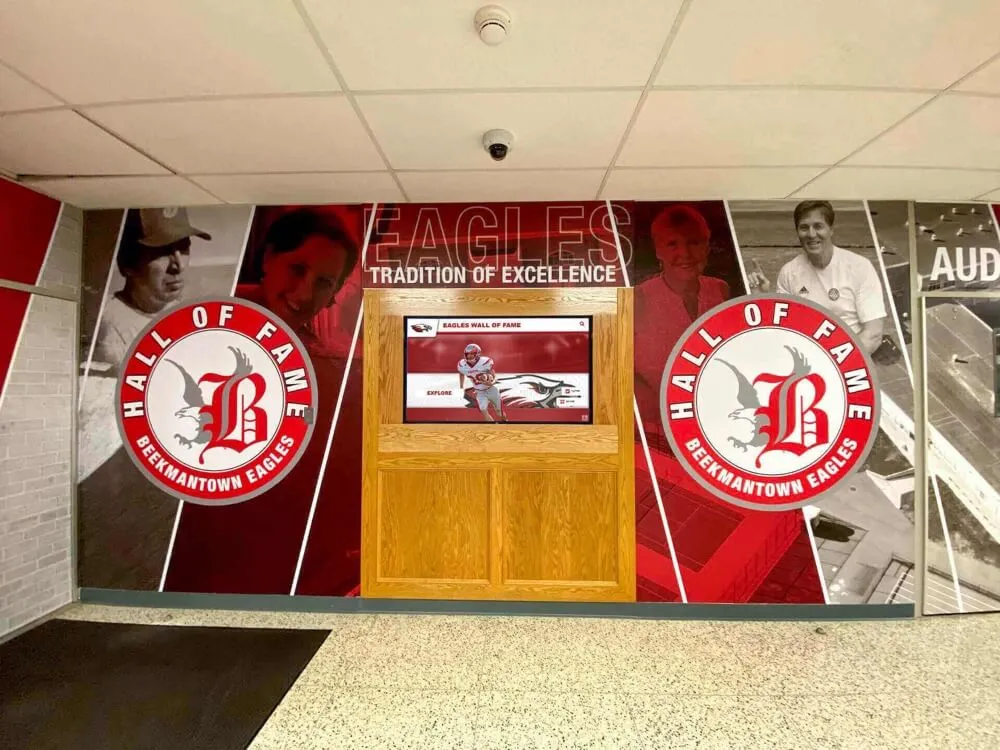
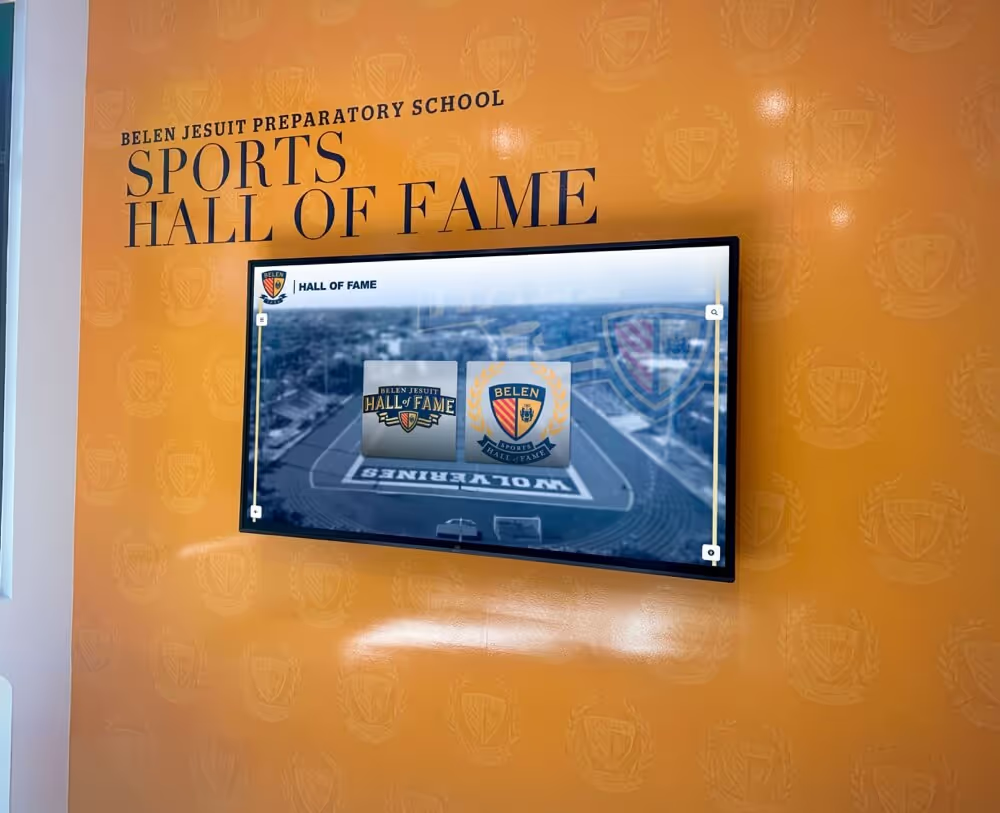
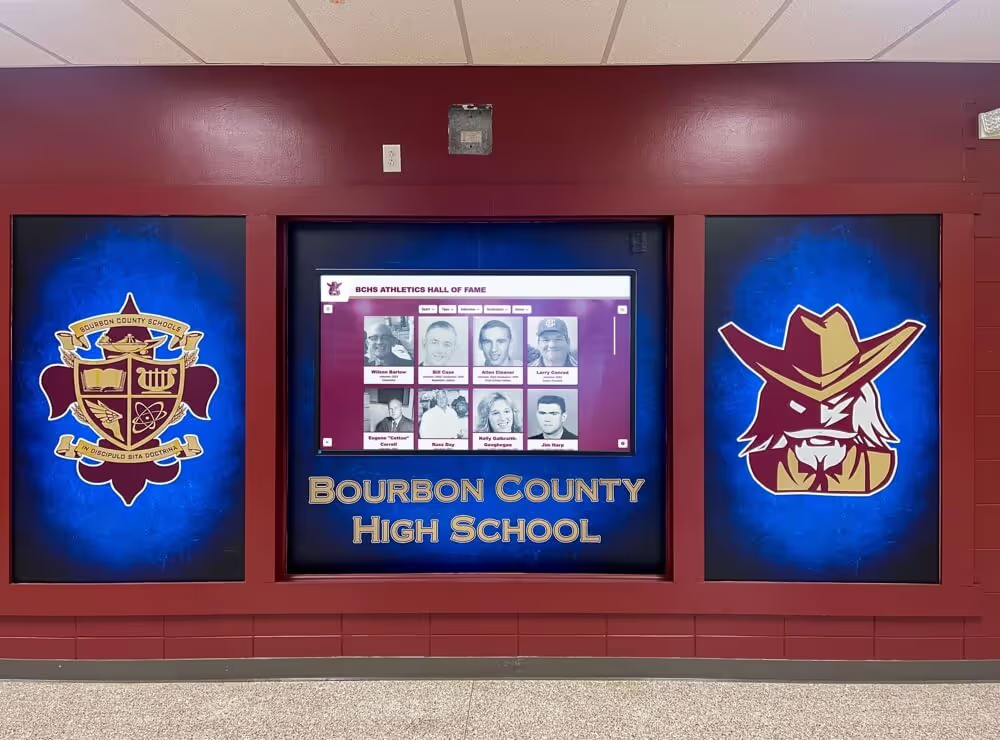
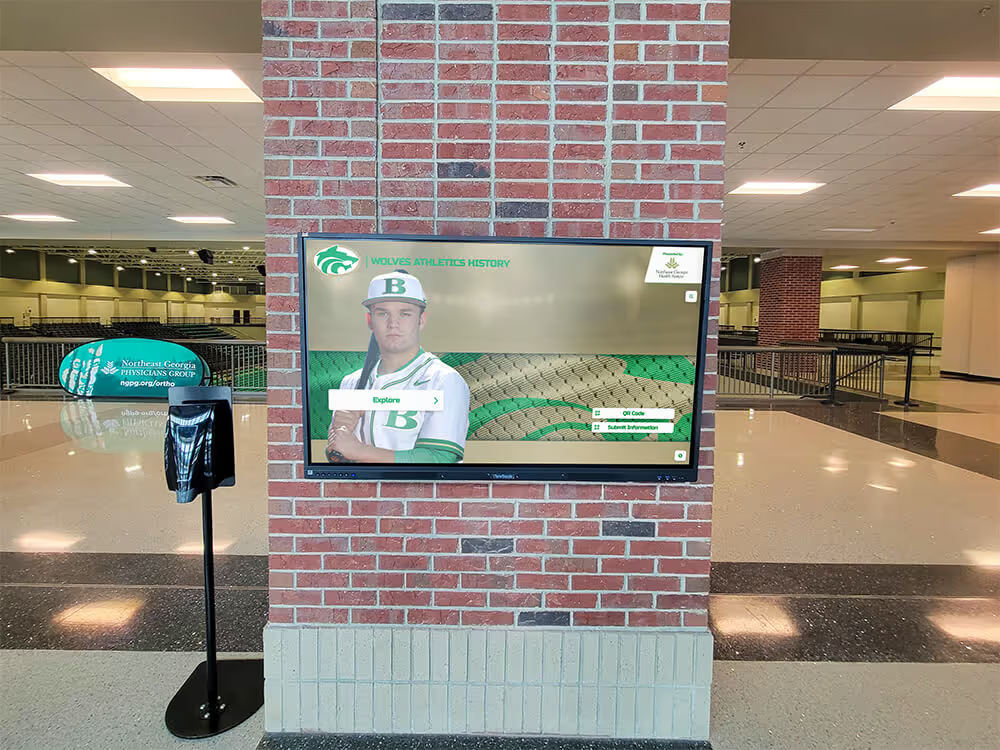
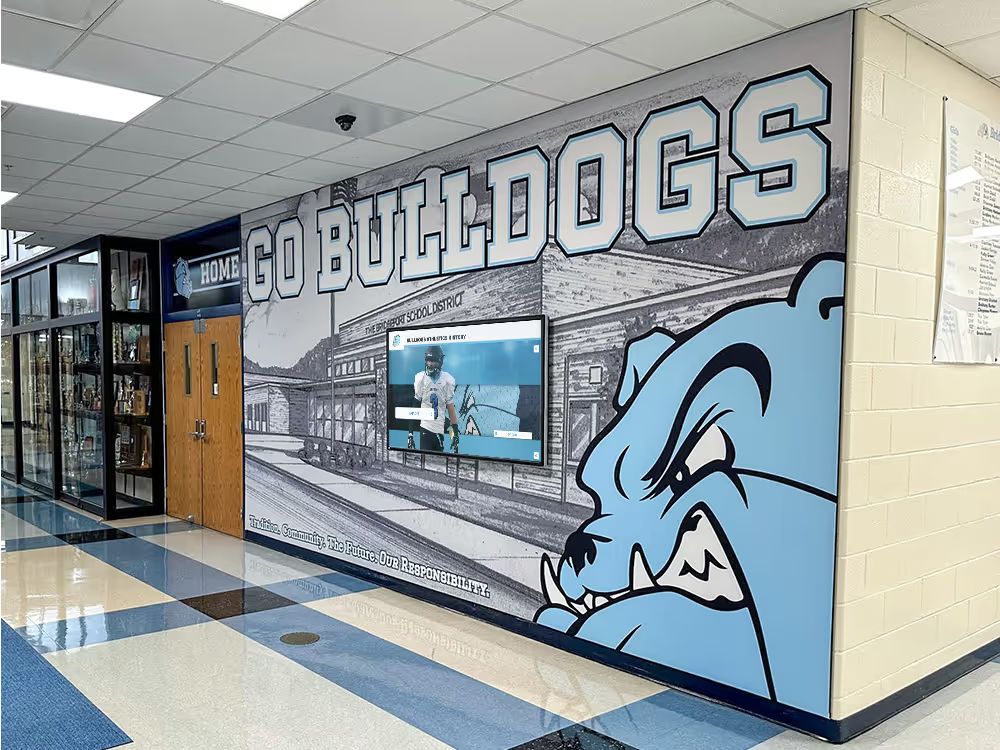
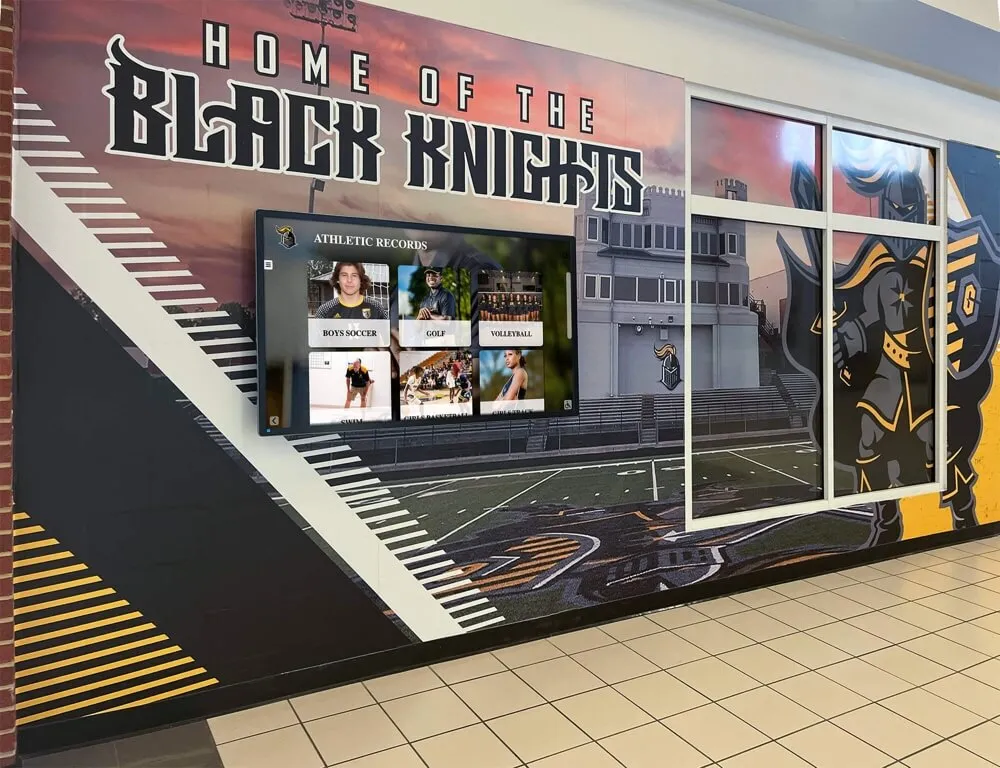
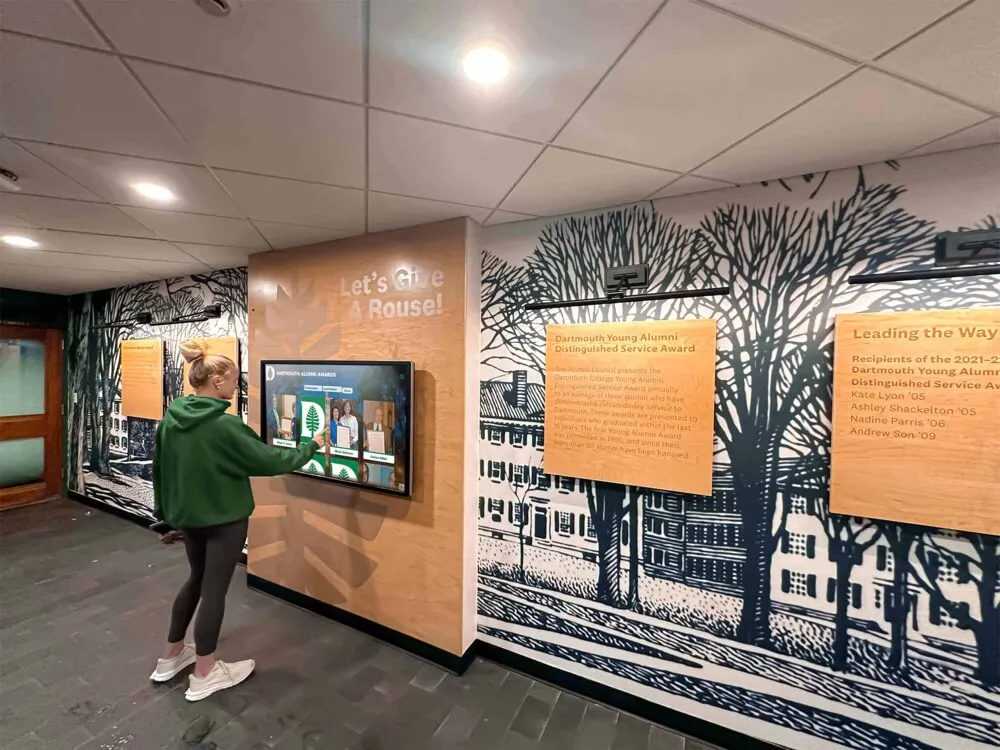
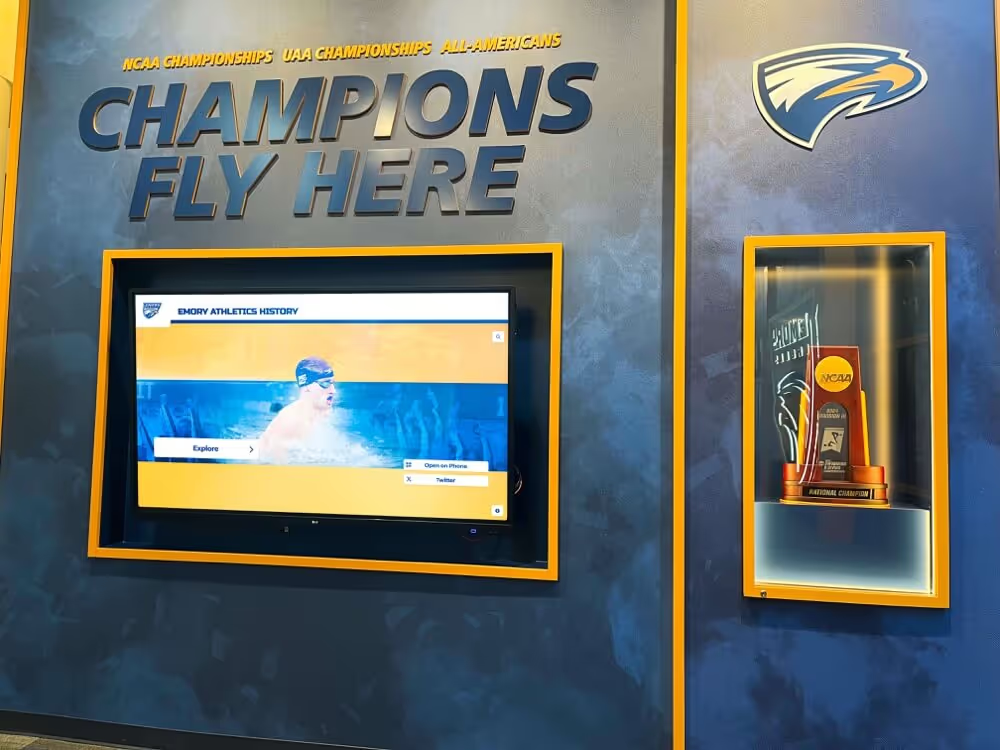
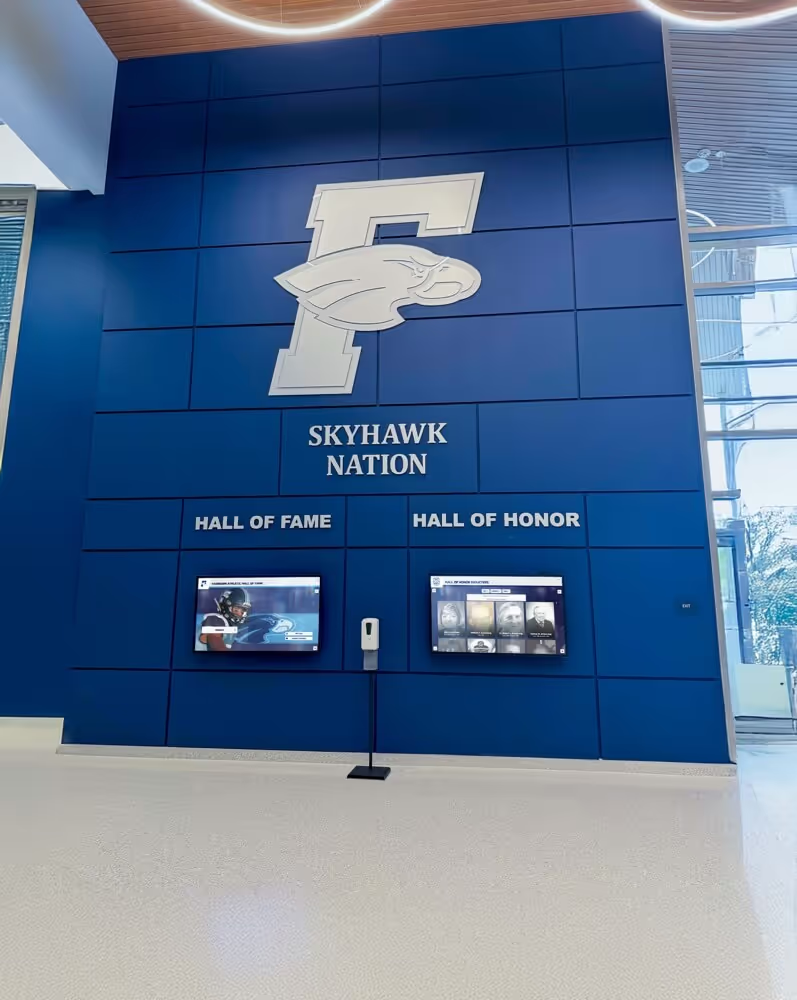
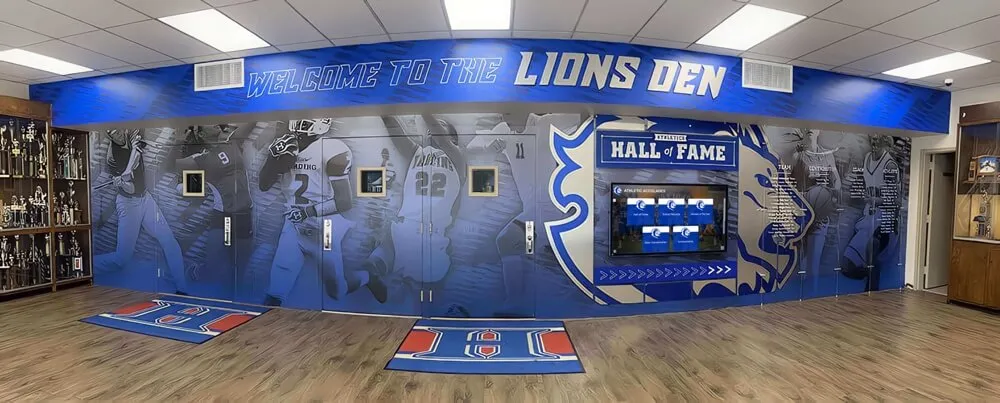
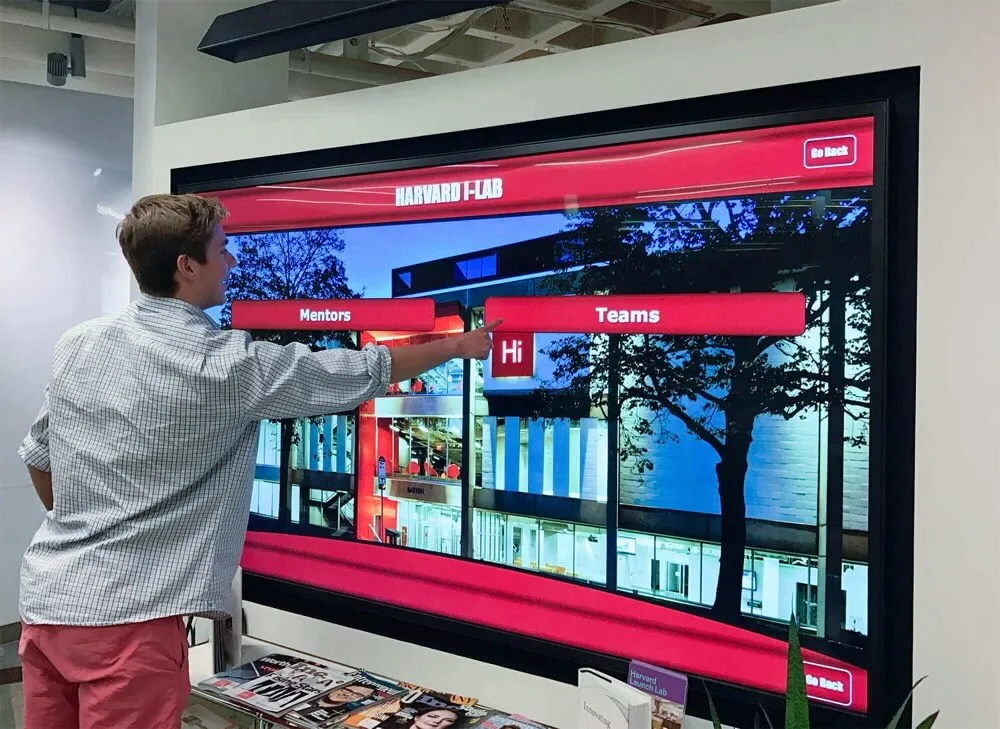
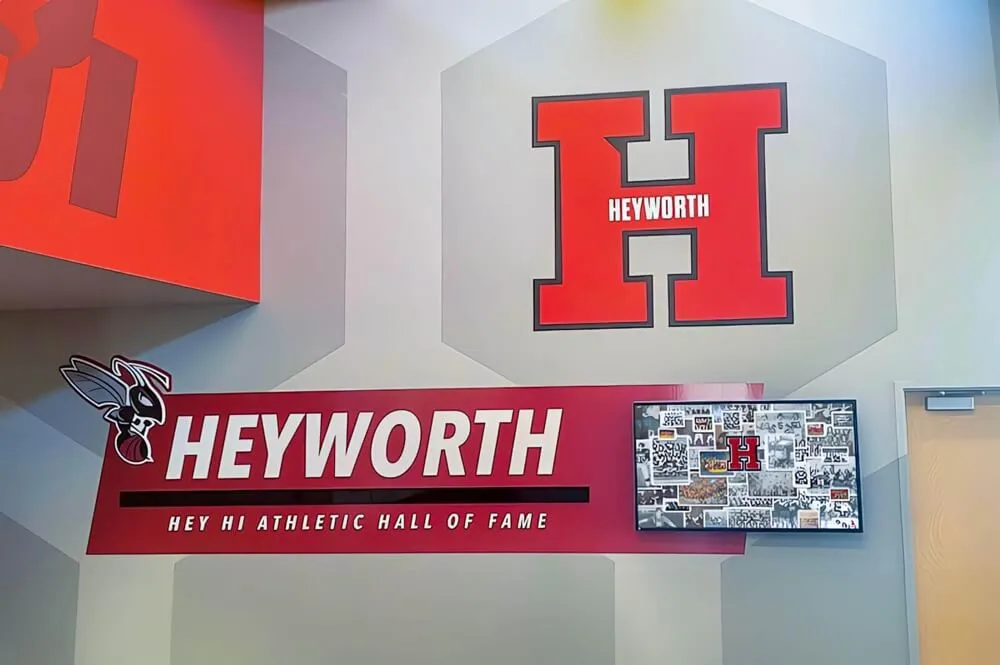
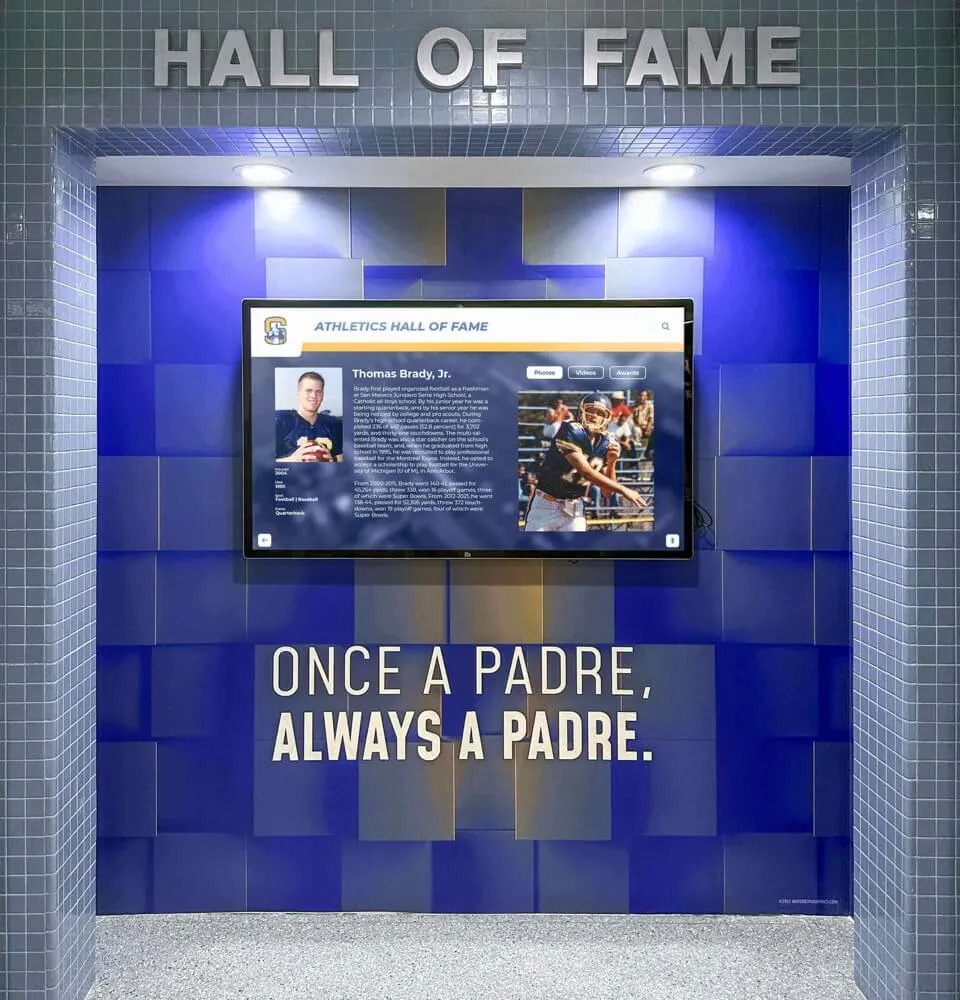
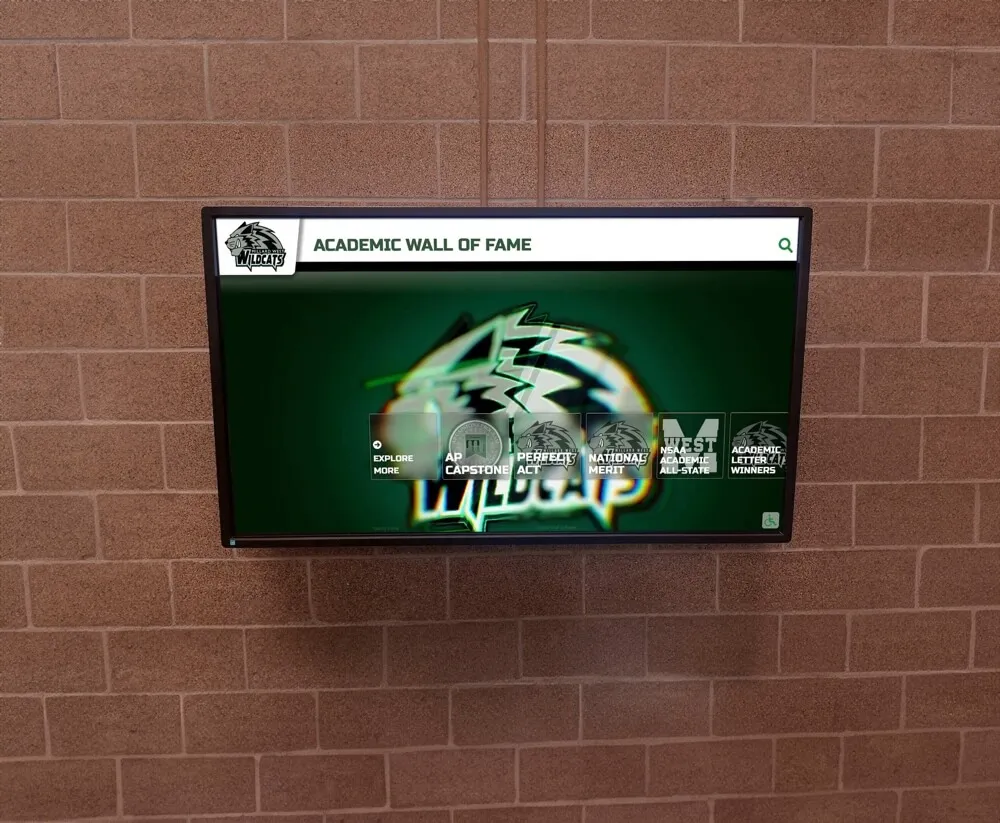
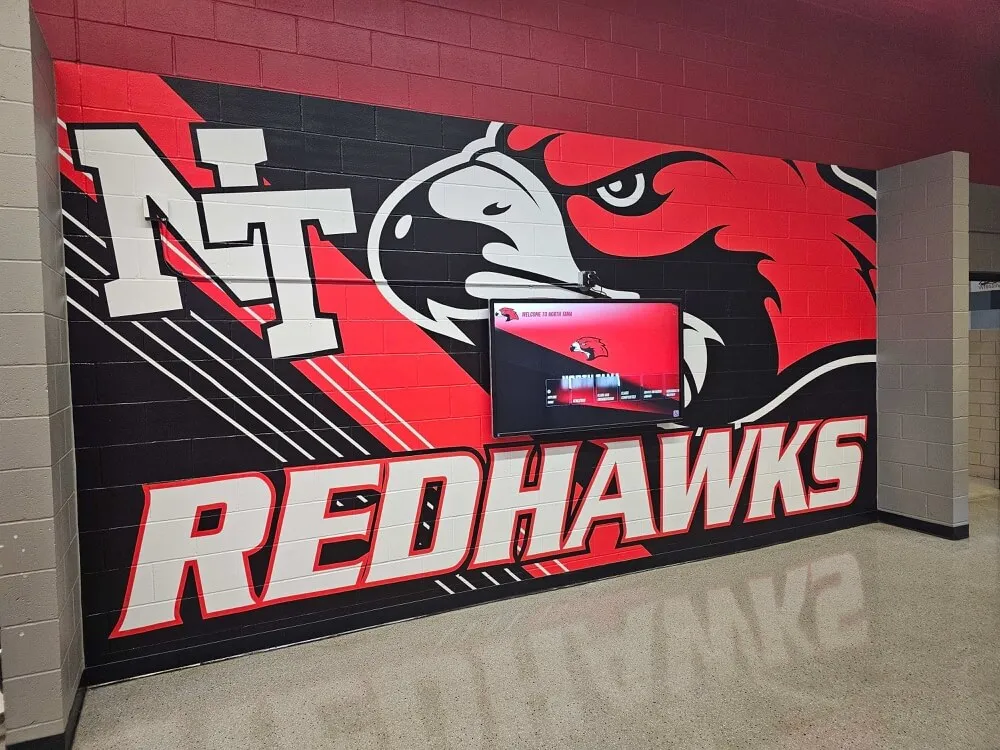
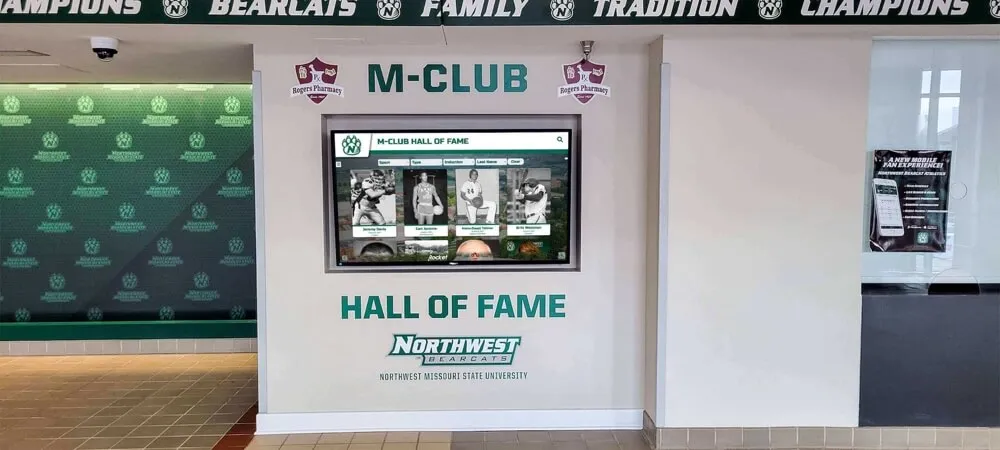
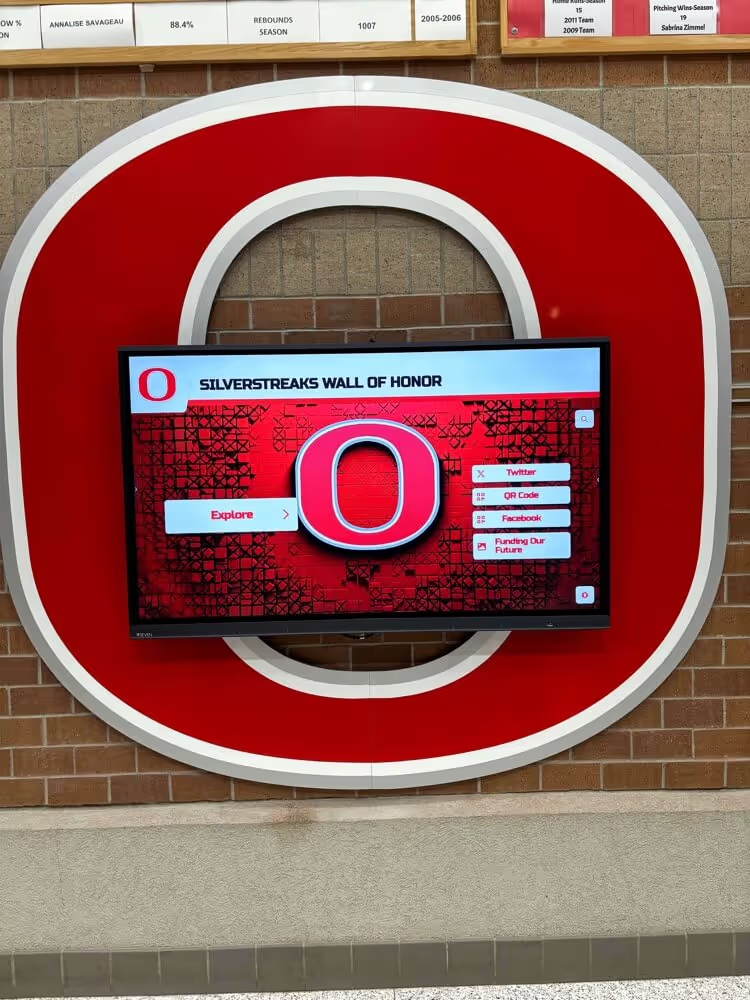
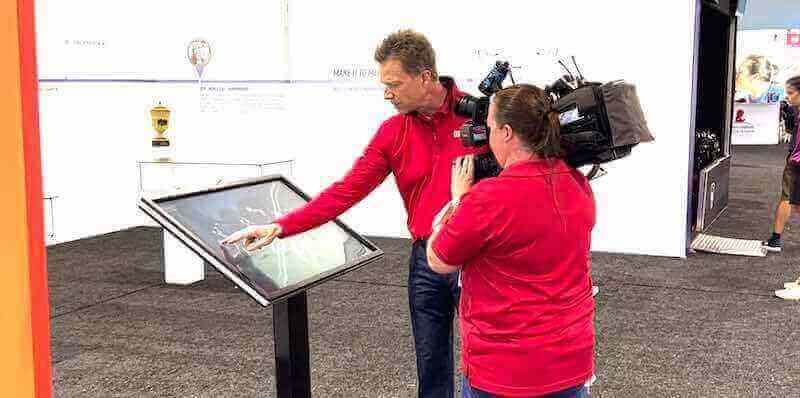
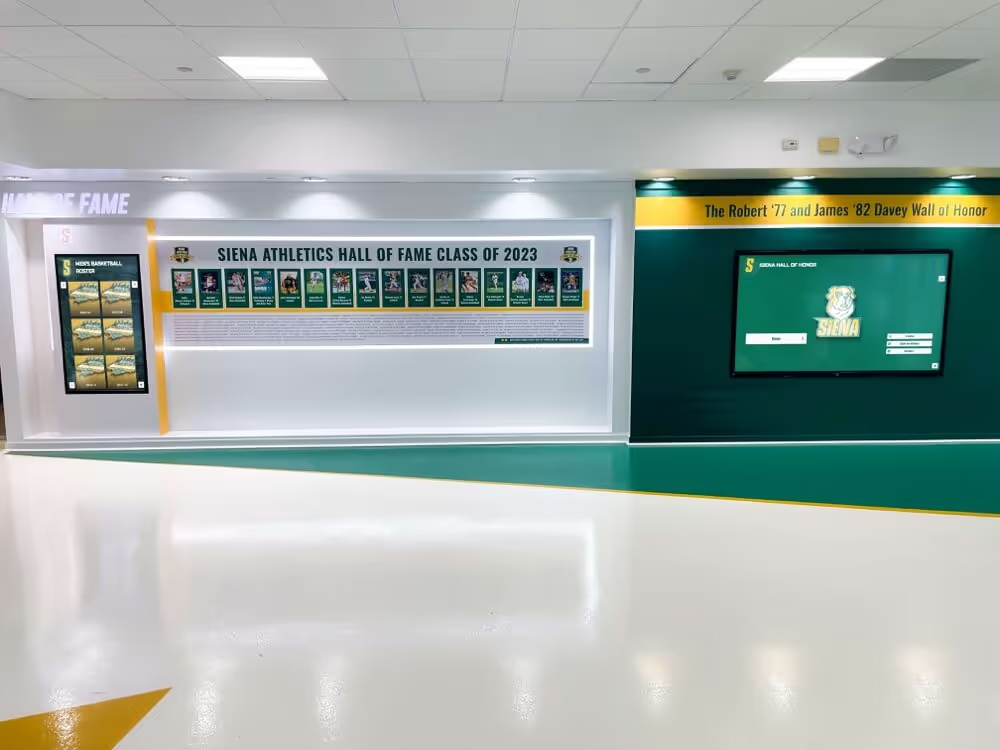
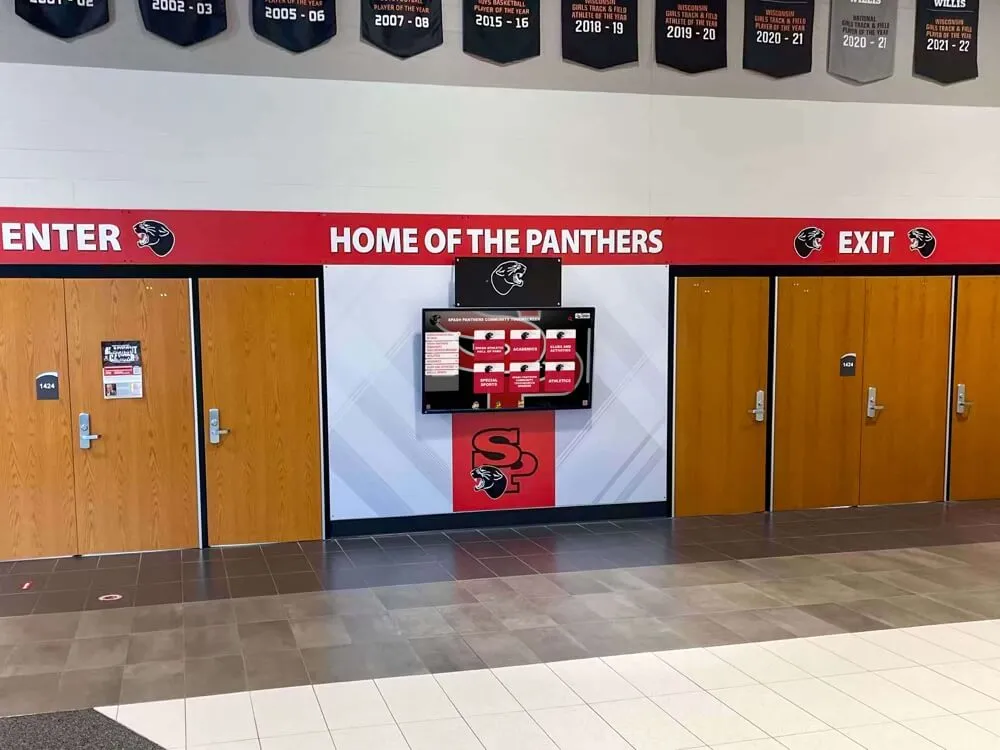
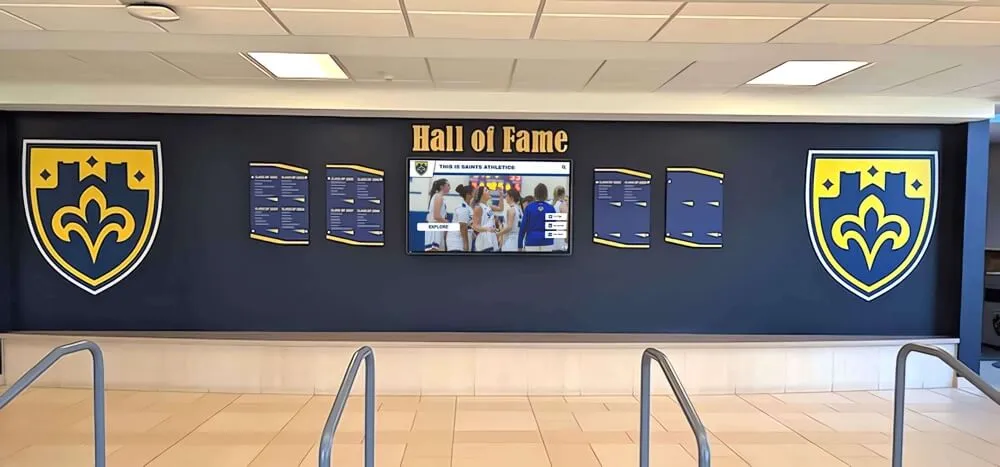
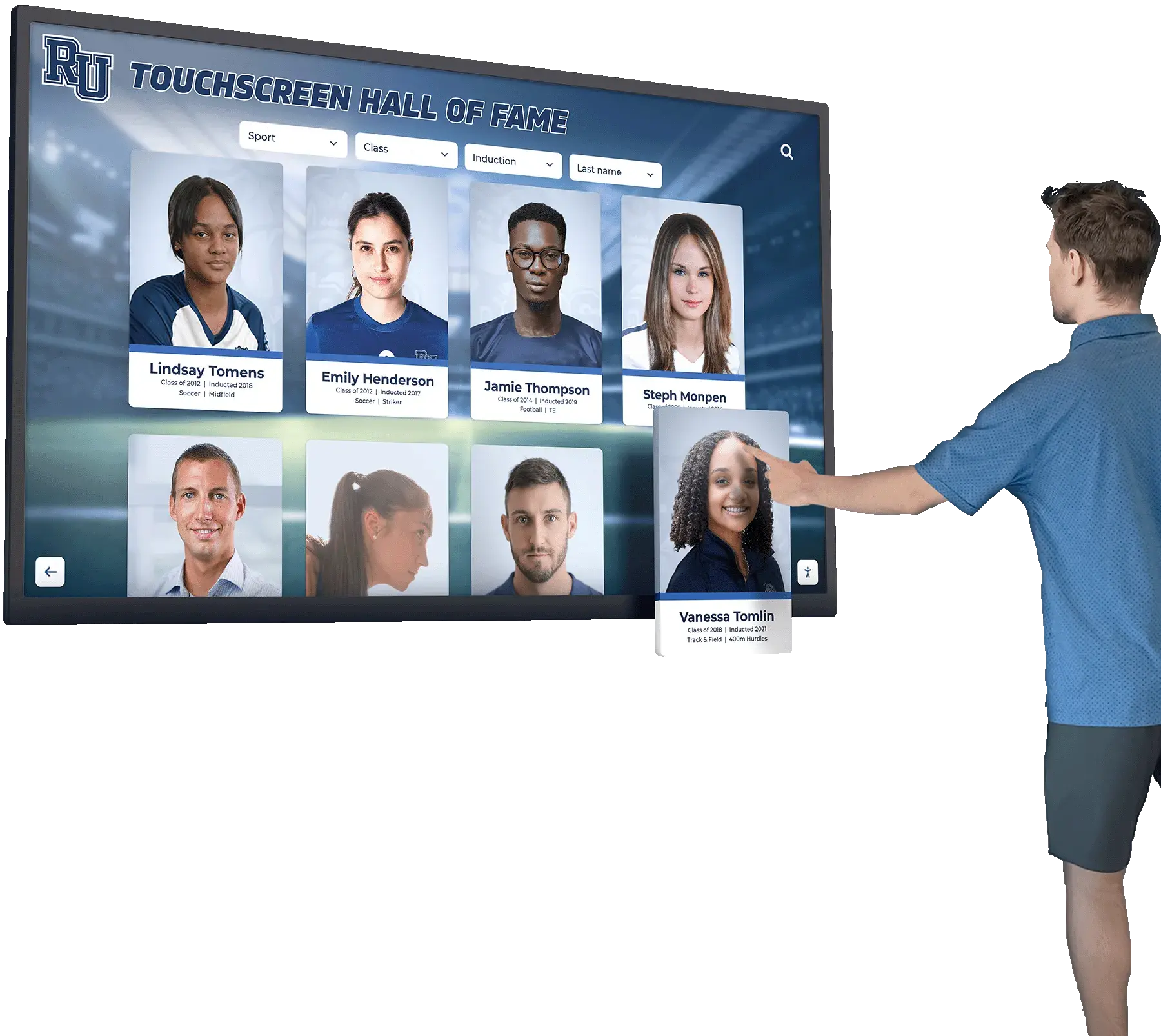
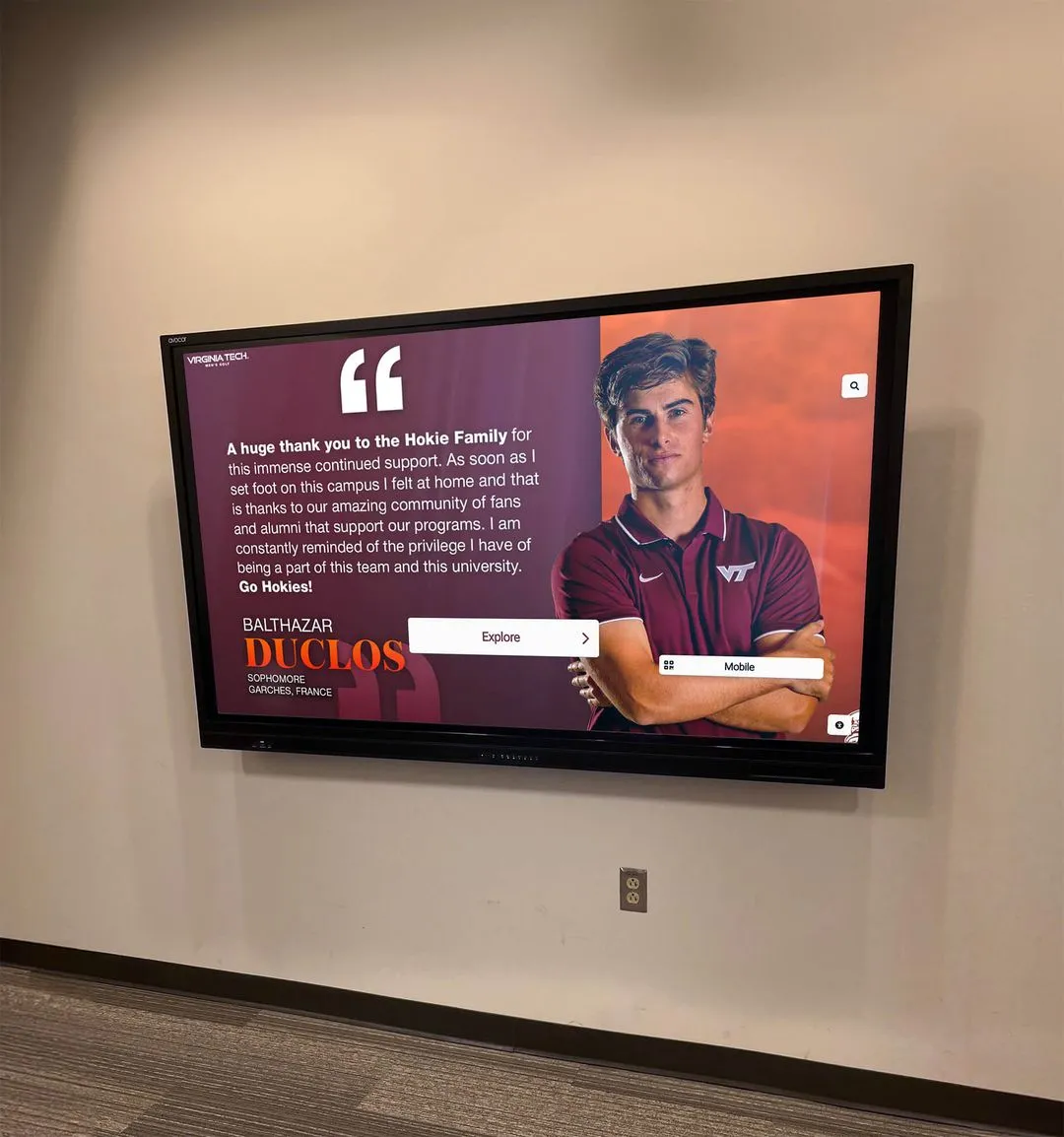
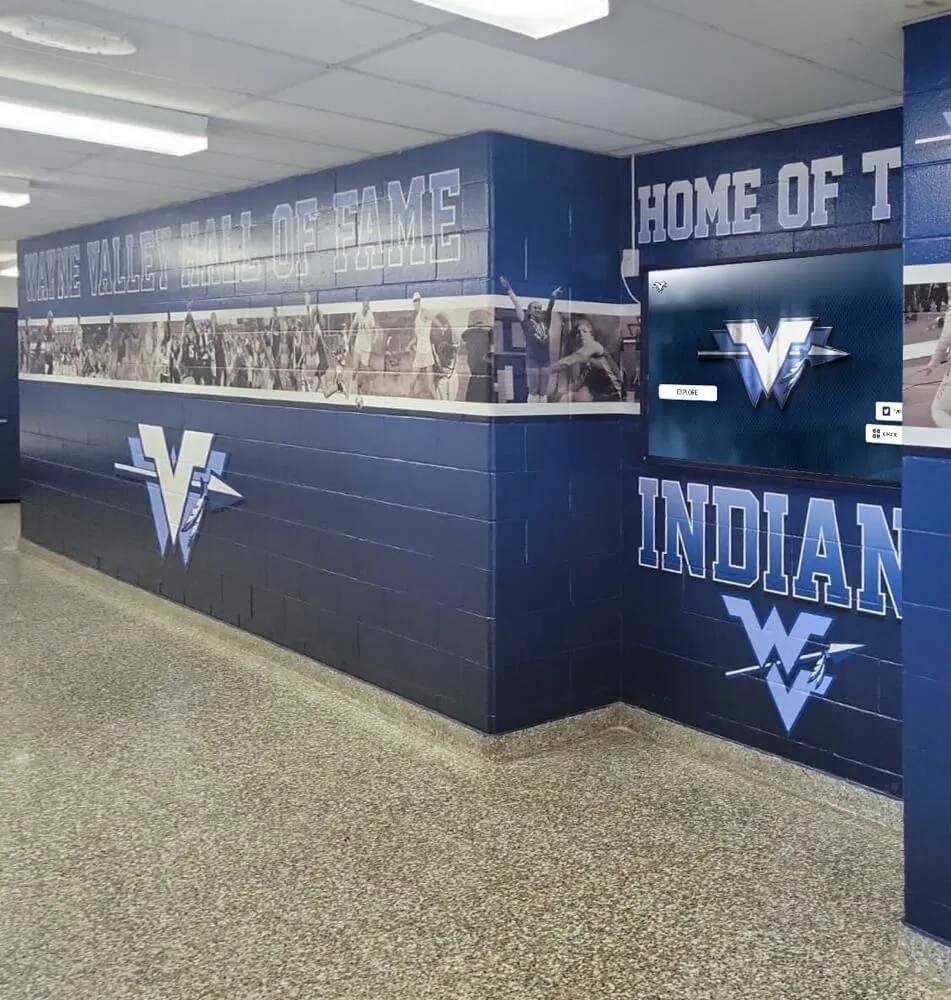
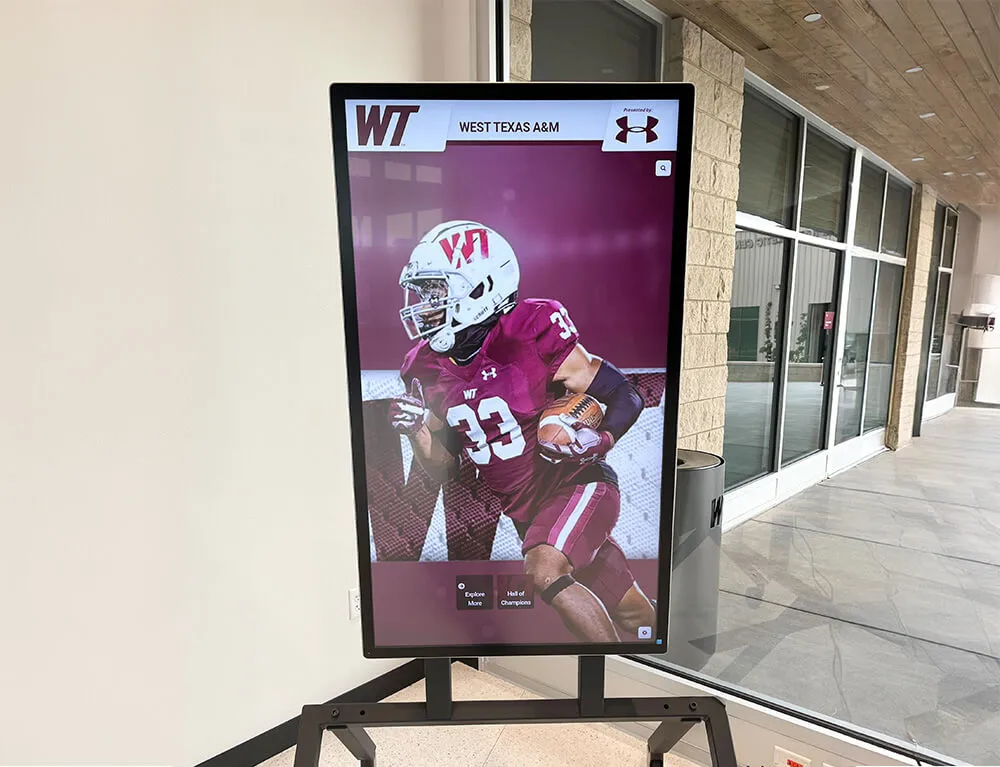
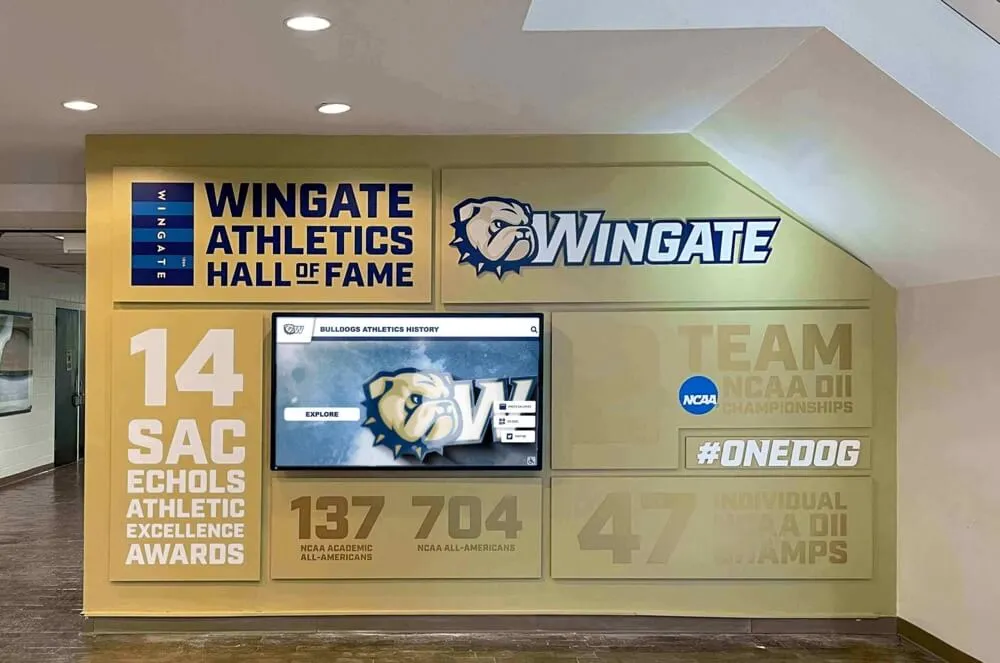
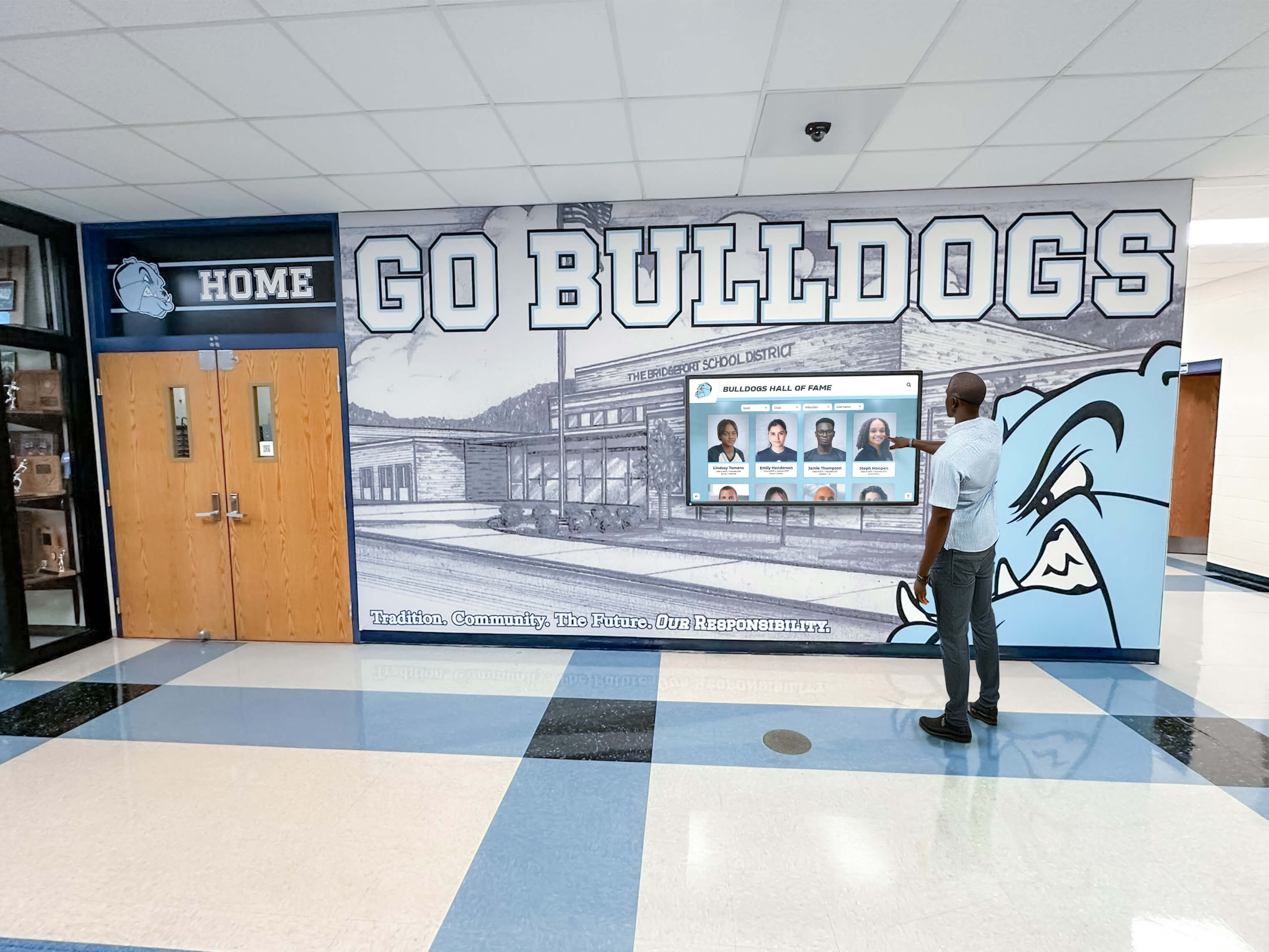
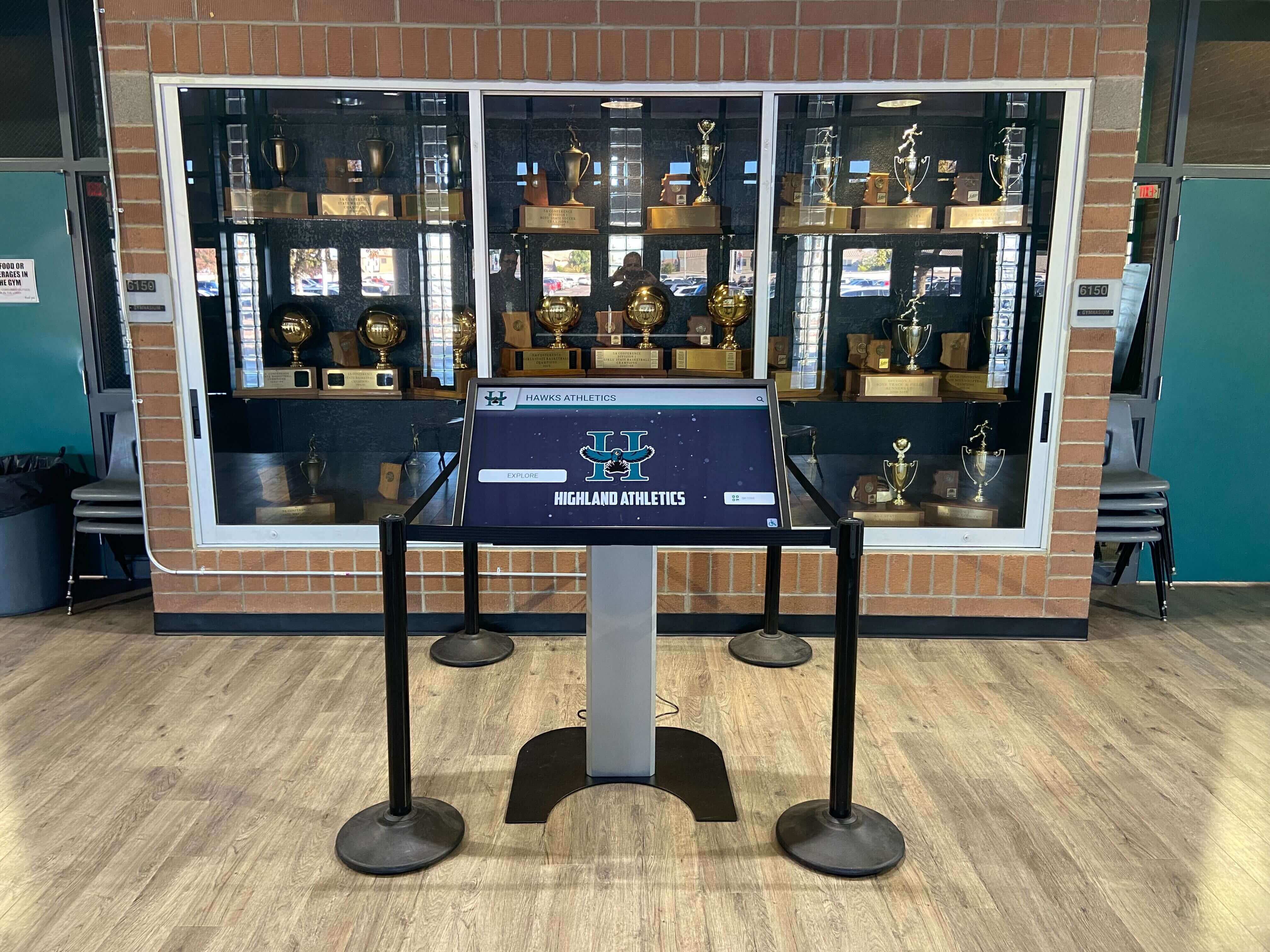
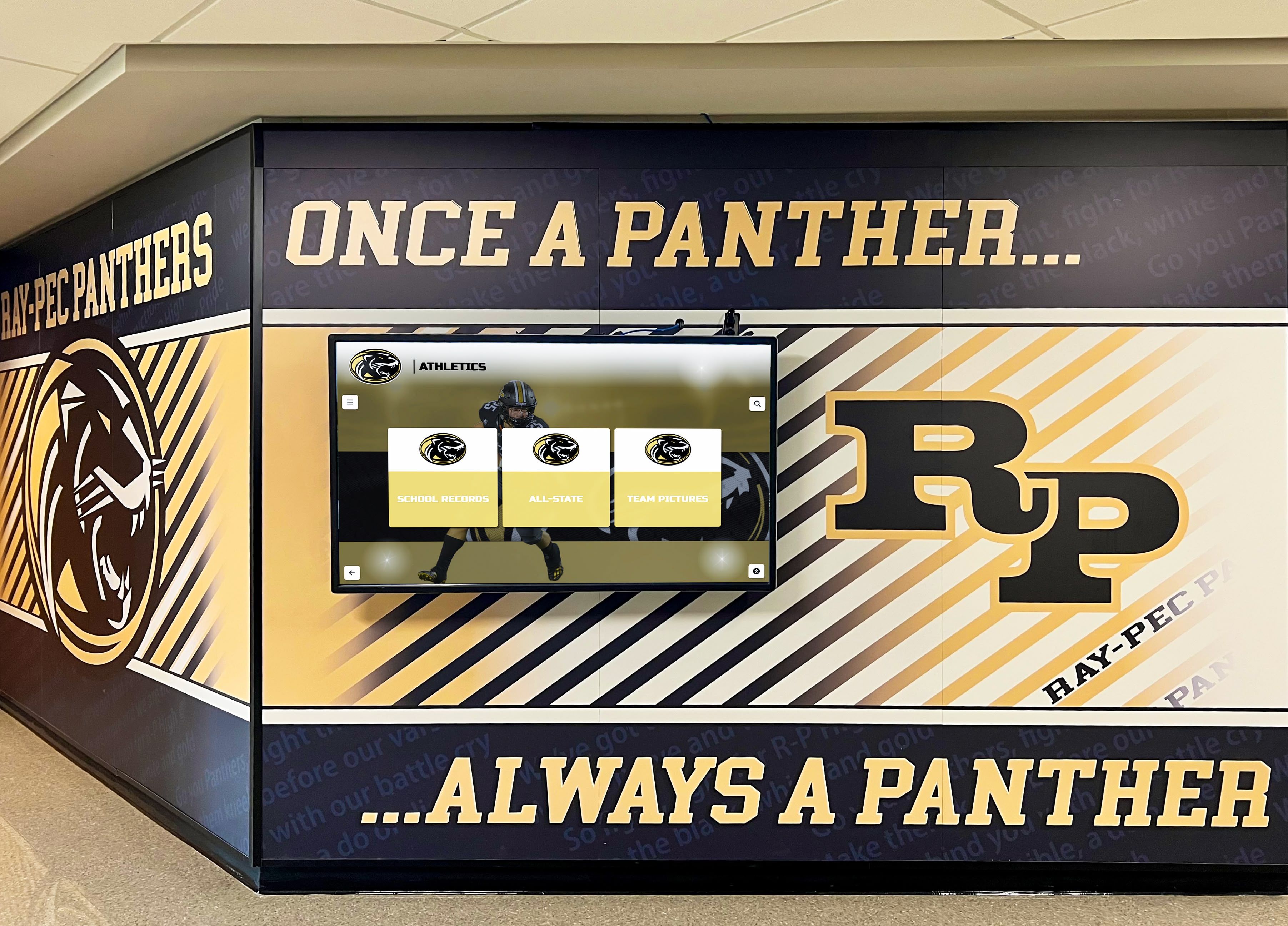
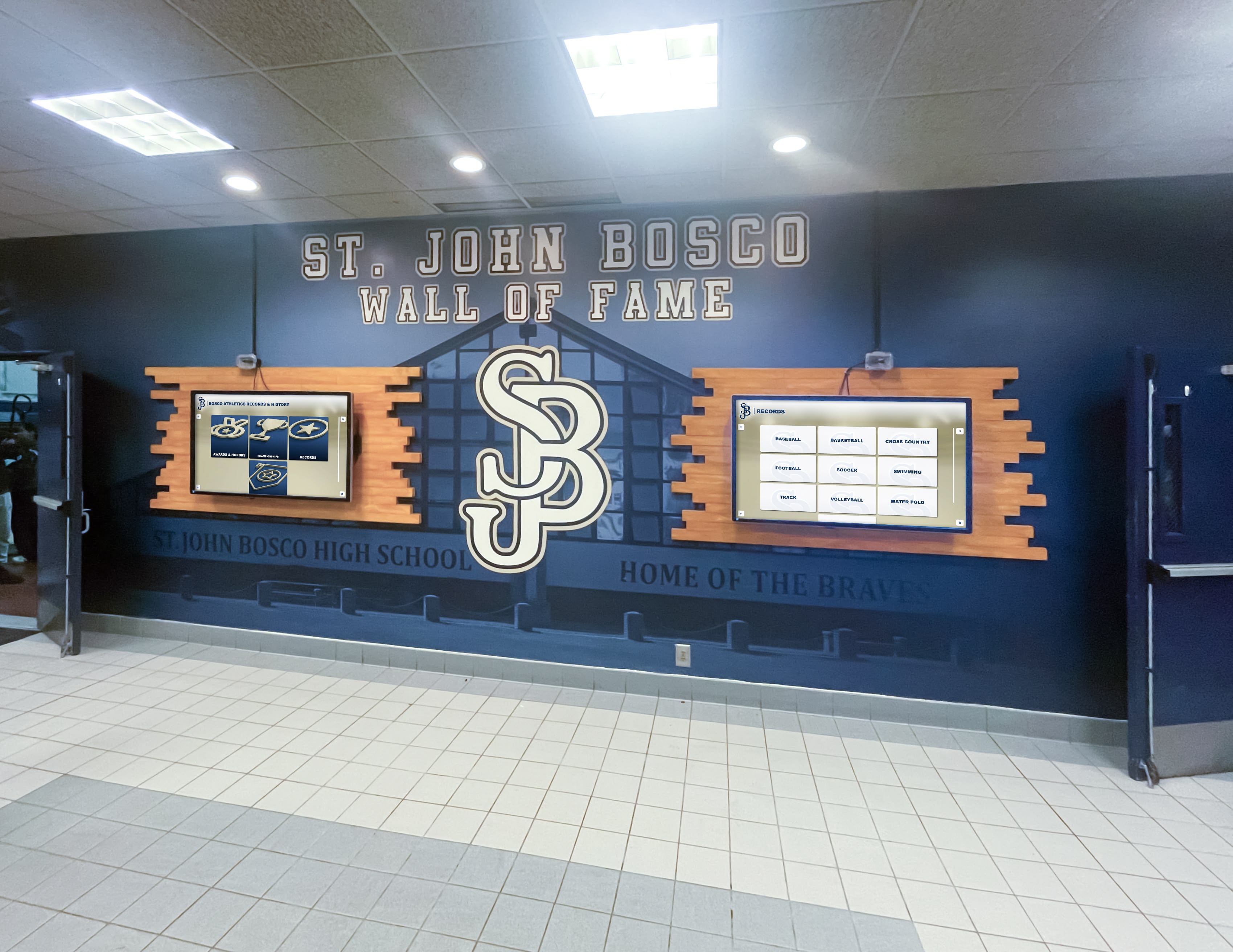
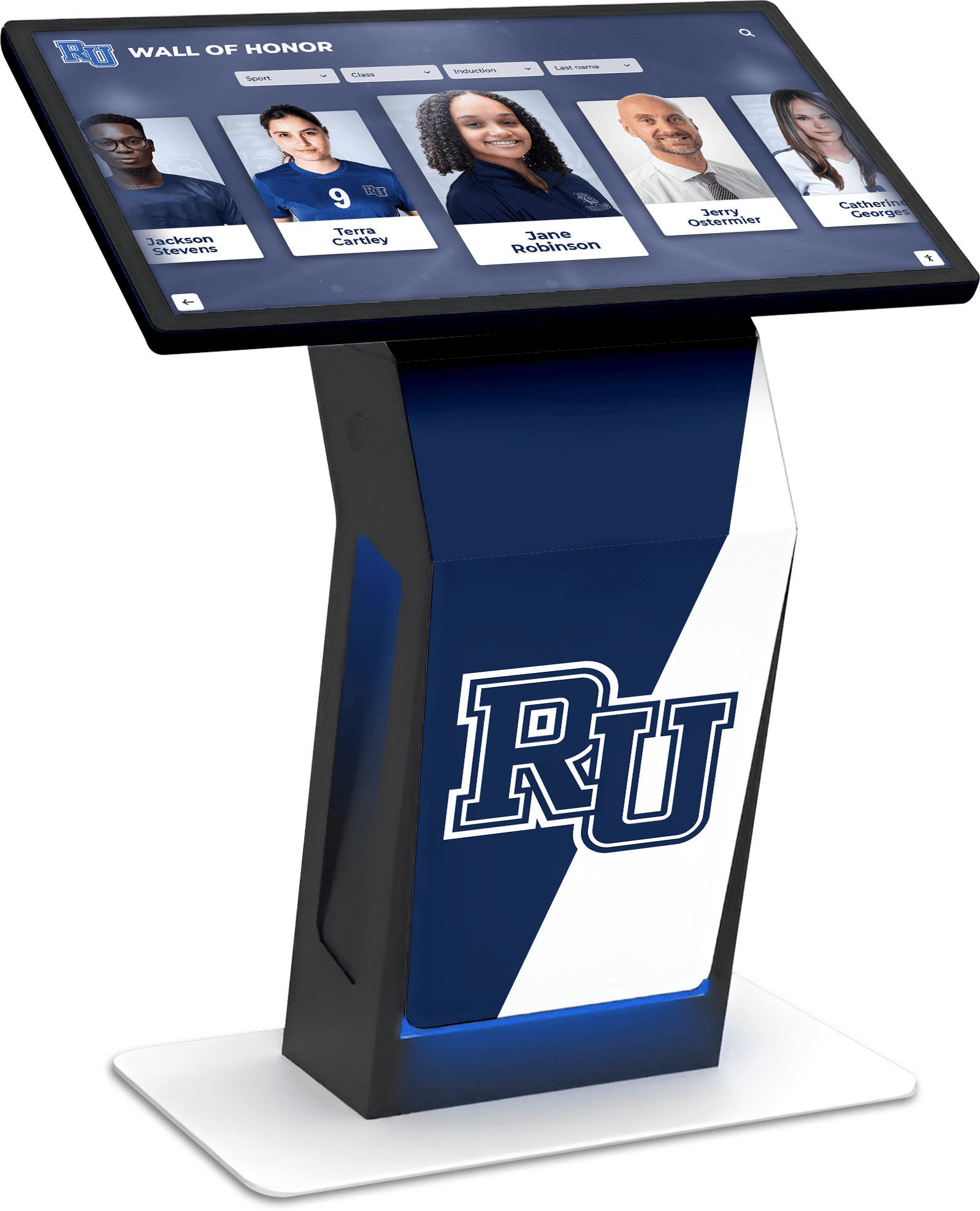
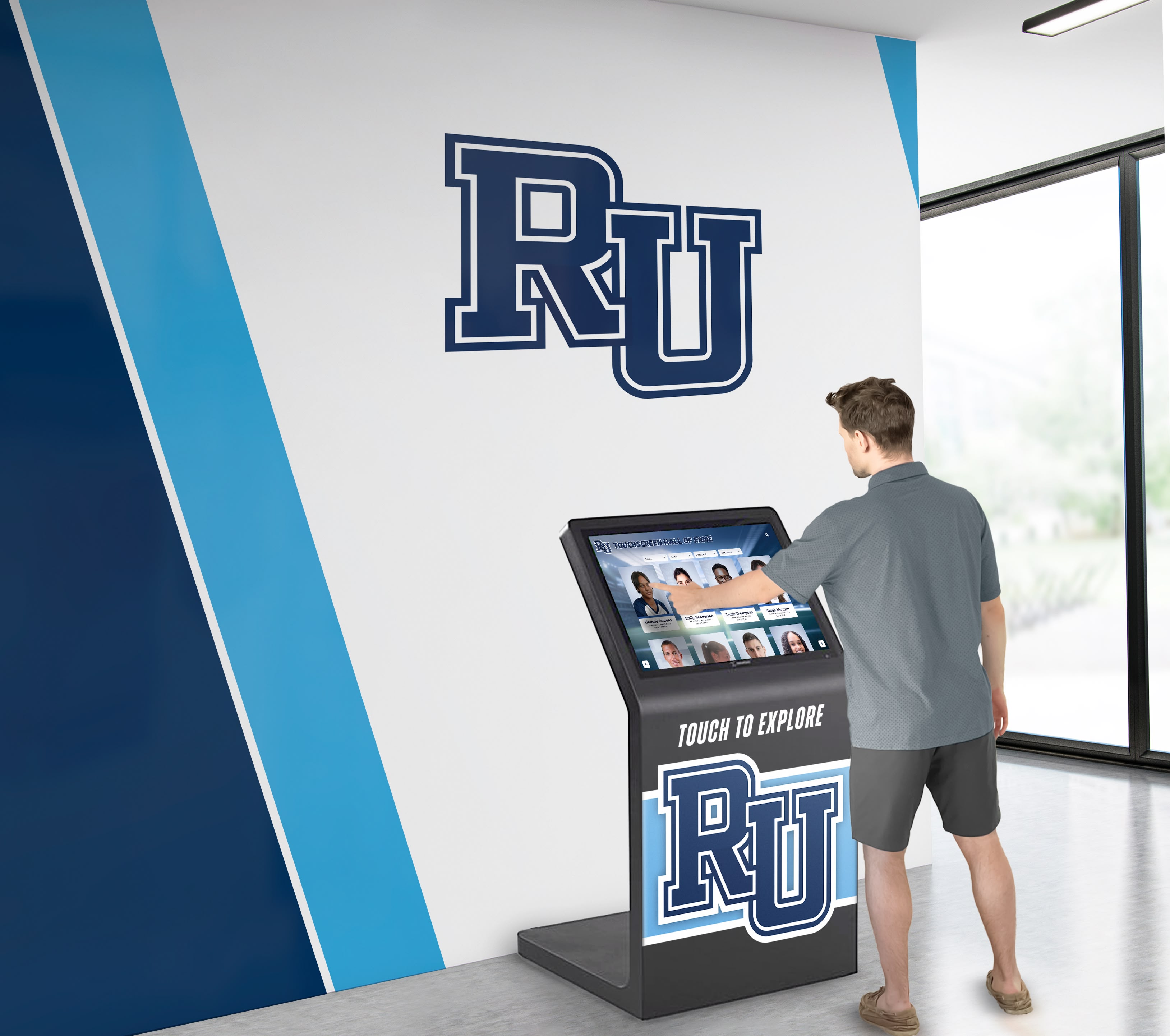
Display placement and visibility: Digital senior recognition deserves placement matching or exceeding athletic trophy case prominence. Main entrance lobbies, gymnasium entrances, athletic facility common areas, and college counseling centers provide high-traffic visibility ensuring daily recognition exposure rather than occasional viewing. Solutions like Rocket Alumni Solutions provide touchscreen interfaces enabling interactive exploration—visitors browse senior profiles, filter by graduation year or sport, search specific athletes by name, and explore related content like team photos, season highlights, and program achievements.
Unlimited capacity and comprehensive archives: Physical space constraints force programs to choose which seniors receive permanent recognition and which get removed when wall space fills. Digital systems eliminate this limitation entirely—programs can recognize every senior across decades without choosing whom to exclude or removing earlier classes accommodating recent graduates. This comprehensive archiving demonstrates that every senior mattered equally regardless of when they graduated, creates institutional memory spanning administrative eras, and enables alumni to locate their profiles during campus returns decades after graduation.
Updates reflecting post-graduation achievements: Permanent recognition shouldn’t freeze at graduation. As seniors continue to college athletics, achieve academic honors, pursue meaningful careers, or contribute to communities, programs can update profiles reflecting continued accomplishment. This dynamic recognition maintains relevance while demonstrating sustained interest in athletes beyond their utility to competitive programs. Alumni discover that programs continue valuing their achievements long after exhausting competitive eligibility—a cultural message that strengthens lifelong program affiliation and support.
Ceremony Execution Creating Emotional Resonance
Planning determines ceremony potential, but execution quality determines whether recognition generates genuine emotional impact or feels perfunctory. Attention to psychological dynamics, logistical precision, and authentic appreciation separates memorable celebrations from forgettable obligations.
Personalizing Introductions Beyond Generic Scripts
Standard introduction scripts listing name, position, years participated, and college destination reduce four-year journeys to data points lacking personality or emotional resonance. Rich introductions tell stories revealing who athletes are beyond statistics, what athletics meant to them personally, and how programs influenced their development.
Effective introduction elements:
Opening context setter: Begin each introduction establishing why this particular senior’s story matters. For example: “Our next senior transformed from a tentative freshman finding her way to the confident leader younger teammates now emulate” or “This senior’s journey demonstrates what determination looks like when facing significant obstacles.” These opening frames create narrative structure making biographical information more meaningful.
Specific memorable moments: Replace generic “worked hard and showed great dedication” language with concrete incidents revealing character and contribution. Reference the game-winning play everyone remembers, the practice when determination became obvious, the moment teammates recognized leadership emergence, or the challenge overcome demonstrating resilience. Specificity creates emotional connection generic descriptions never achieve.
Growth narratives: Four years changes people substantially. Effective introductions acknowledge transformation—highlighting how freshmen uncertainties evolved into senior confidence, describing maturation from self-focused athletes to team-oriented leaders, or noting how disappointments shaped character development. These growth stories demonstrate that programs value personal development as much as competitive achievement.
Gratitude expressions: Include athlete-authored statements thanking specific people who supported their journeys—parents obviously, but also teammates, coaches, trainers, teachers, or community members who influenced development. First-person gratitude feels more authentic than third-person biographical summaries, while giving seniors agency in how they’re presented publicly.
Future aspirations: Close introductions looking forward rather than only backward. Mention college plans, career aspirations, life goals, or values athletes plan applying beyond athletics. This forward orientation celebrates athletics as developmental foundation rather than identity entirety, demonstrating program understanding that athletic careers represent chapters in larger life stories.
These rich introductions require advance preparation impossible during ceremony week. Begin interview processes early, draft scripts allowing senior review and revision, practice delivery ensuring appropriate emotional pacing, and coordinate with public address announcers or introduction readers so content flows naturally rather than feeling rushed or awkward.
Creating Meaningful Family Participation Moments
Senior athletic careers represent family commitments, not just individual athlete effort. Parents managed logistics, absorbed expenses, provided emotional support, and made countless sacrifices enabling participation. Senior night should acknowledge these family contributions explicitly rather than limiting parent involvement to brief on-field walks.
Pre-ceremony family gathering spaces: Designate private areas where senior families gather before public ceremonies. Provide light refreshments, comfortable seating, and quiet atmosphere enabling families to connect without crowd chaos. This pre-ceremony time allows extended family members to catch up, creates space for photos in controlled settings, and provides buffer between arrival and ceremonial intensity. Some programs invite coaches to circulate through these spaces personally thanking parents for supporting athletes and programs—simple gestures communicating genuine appreciation.
Parent recognition during ceremonies: Beyond walking athletes onto fields or courts, create dedicated moments acknowledging parent contributions specifically. This might include brief remarks from senior athletes thanking parents publicly, presentation of flowers or small gifts to parents from athletic departments, or recognition statements from coaches highlighting parent support importance. These explicit acknowledgments validate that programs understand athletic success reflects family investment, not just individual athlete talent.
Post-ceremony family time protection: Rather than expecting seniors to immediately join teammates for game preparation, provide protected time following ceremonies for family connection. Designate specific spaces where seniors can spend 15-20 minutes with families without coaching staff pressure to transition to competition mode. This buffer recognizes that ceremonies create emotional intensity requiring processing time and family connection before refocusing on competitive performance.
Extended family inclusion: Beyond nuclear families, many seniors have grandparents, siblings, other relatives, or non-family mentors who significantly influenced their development. Flexible ceremony formats accommodating these extended support networks demonstrate program understanding that meaningful relationships extend beyond immediate families. Some programs allow seniors to designate who walks with them during ceremonies, enabling inclusion of multiple people rather than restricting participation to parents only.
Family involvement in permanent recognition: When developing digital recognition profiles, solicit family input and contributions. Parents often possess photos, stories, or perspectives athletes might not consider including. Collaborative content development creates recognition reflecting collective experience rather than purely athlete-centric narratives, while demonstrating that permanent recognition values family perspectives alongside athletic department framing.
Incorporating Underclassmen Meaningfully in Recognition
Senior night celebrates graduating athletes, but recognition execution provides powerful cultural modeling for younger team members observing how programs honor commitment and conclude athletic careers. Thoughtful underclassmen involvement builds anticipation for their eventual senior celebrations while reinforcing program values around appreciation and respect.
Underclassmen as ceremony assistants: Assign younger athletes specific ceremony roles—escorting seniors onto fields or courts, presenting flowers or gifts to seniors and families, holding signs with senior names and numbers, or creating honor corridors through which seniors walk. These participatory roles create investment in ceremony success while enabling underclassmen to contribute meaningfully to senior celebration.
Teammate testimony presentations: Reserve ceremony time for underclassmen representatives to deliver brief remarks about what this senior class meant to the team. These peer testimonials often carry more emotional weight than adult speeches, validating that seniors genuinely influenced teammates rather than just satisfying coaching expectations. The public acknowledgment from athletes who trained beside them daily proves more meaningful than generic adult appreciation.
Underclassmen preparation of surprise elements: Behind-the-scenes work preparing decorations, assembling memory books, creating video tribute content, or organizing post-ceremony celebrations gives younger athletes active roles in senior recognition. This preparation work builds appreciation for what seniors contributed while creating traditions underclassmen will eventually pass to future generations.
Explicit discussion of recognition importance: Use senior night as teachable moment discussing why recognition matters, what program culture around appreciation looks like, and what standards underclassmen should aspire to maintain. These conversations prevent recognition from feeling like isolated events unconnected to daily program culture, instead positioning senior night as visible manifestation of year-round appreciation values.
The long-term cultural benefits of thoughtful underclassmen involvement often exceed immediate ceremony impact. Younger athletes observing comprehensive senior celebration recognize what awaits them if they sustain commitment, understand that programs genuinely value contributions beyond competitive utility, and learn that athletic careers should conclude with dignity and celebration regardless of statistical achievement levels.
Beyond Single-Night Recognition: Building Permanent Legacy Systems
Ceremony-only recognition creates brief memorable moments but does little to establish lasting institutional memory or demonstrate sustained program appreciation. Comprehensive approaches integrate senior night ceremonies with permanent recognition systems honoring athletes indefinitely rather than limiting acknowledgment to brief events.
Digital Record Boards Providing Unlimited Recognition Capacity
Traditional physical plaques run out of wall space within decades, forcing programs to choose which seniors remain visible and which get removed accommodating new classes. This forced obsolescence communicates that senior recognition carries expiration dates—contradicting messaging that athletic contributions deserve permanent appreciation.
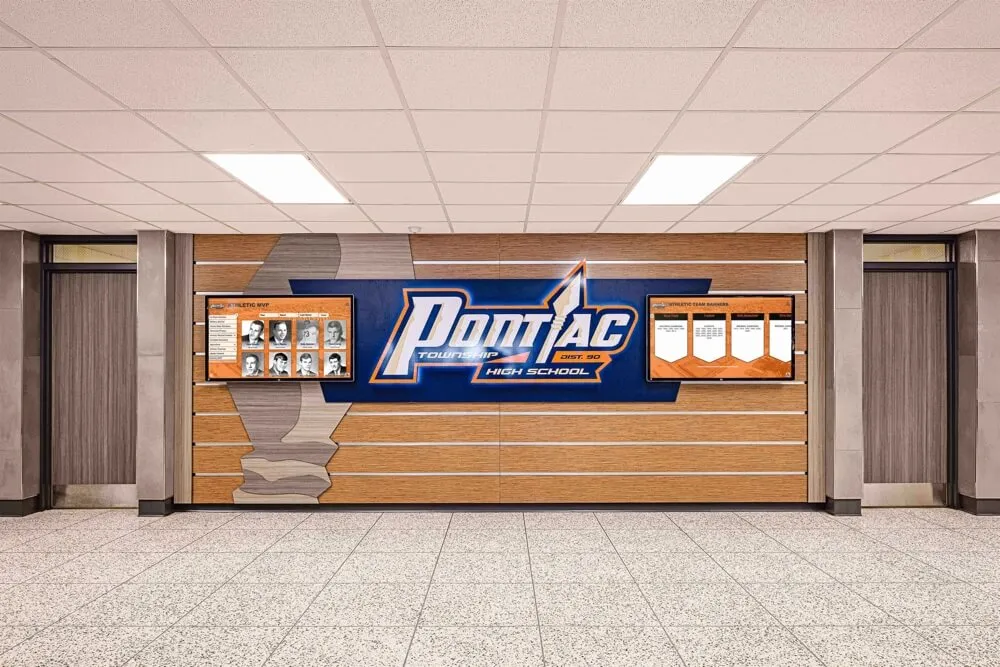
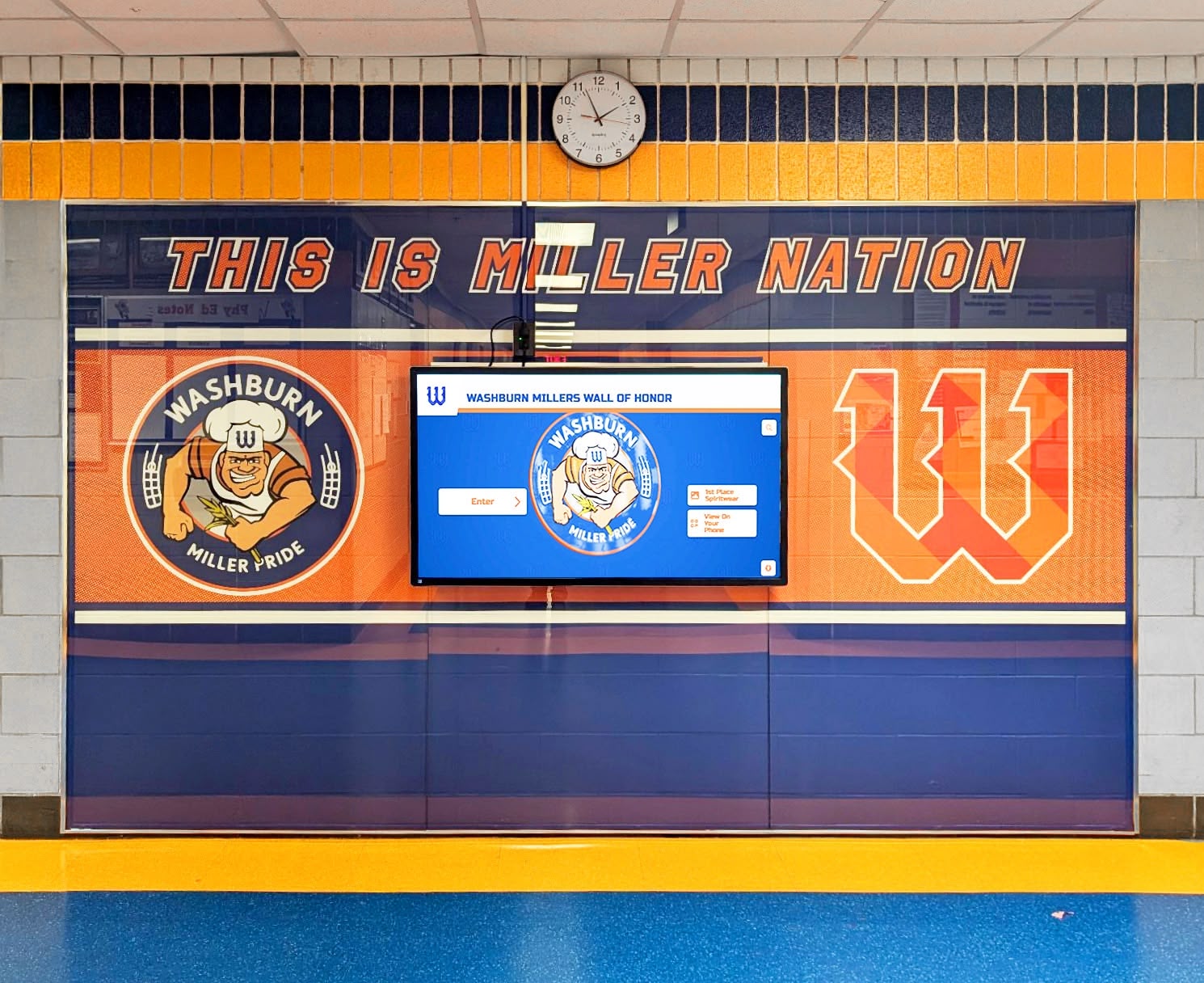
Digital record board systems eliminate space constraints entirely. Programs can recognize every senior across decades without choosing whom to exclude, maintain comprehensive archives spanning program history, and provide interactive exploration enabling rich storytelling impossible through static plaques limited to names and years.
Auto-ranking and performance tracking: Beyond senior recognition, digital record board technology automatically ranks performance across program history. Seniors see exactly where their achievements stand among all-time leaders, creating competitive context traditional recognition lacks. The athlete who ranks third all-time in program scoring deserves that historical perspective prominently featured alongside senior celebration.
Multimedia storytelling exceeding text limitations: Digital platforms accommodate photos, videos, audio clips, statistics graphics, and extended narratives impossible within physical plaque constraints. Senior profiles can include highlight video compilations, recorded interviews discussing what athletics meant personally, photo galleries chronicling four-year progressions, and complete statistical breakdowns showing career arcs. This depth transforms recognition from name-and-year acknowledgment to comprehensive career documentation families treasure and alumni revisit frequently.
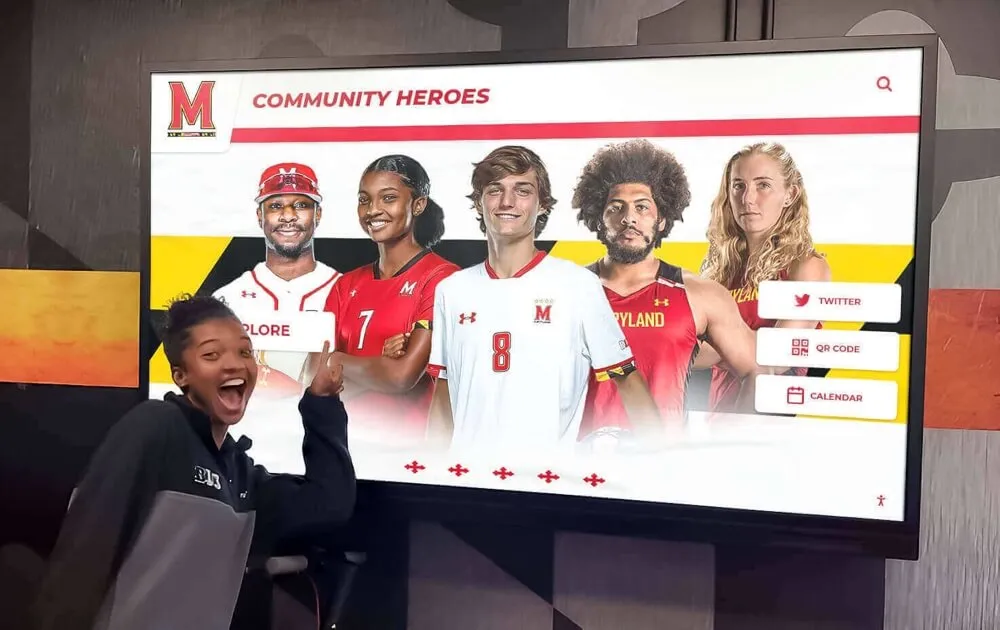
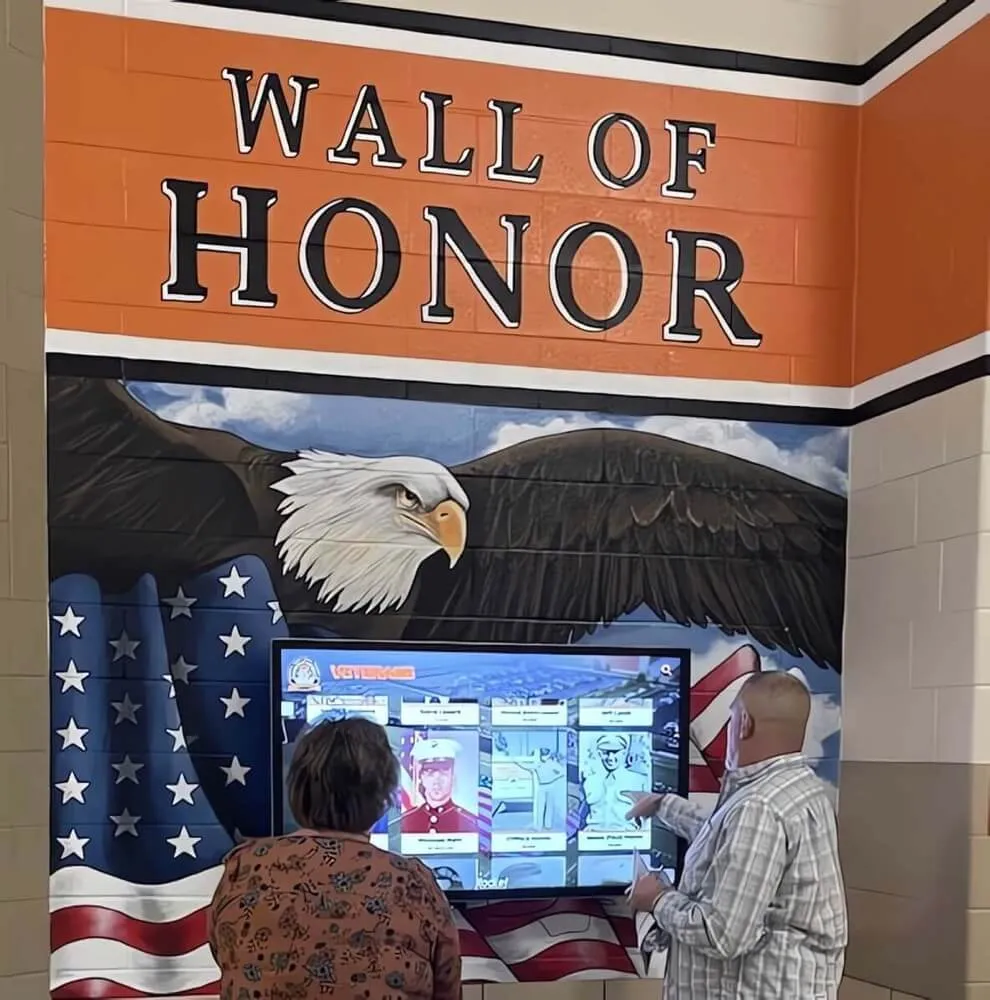
Searchable archives enabling discovery: Interactive touchscreen interfaces let visitors search seniors by name, filter by graduation year or sport, explore teammates from specific seasons, or identify athletes who continued to college programs. This discovery functionality proves particularly valuable during alumni weekends, reunions, or campus visits when graduates return seeking connections to their athletic eras. Solutions like Rocket Alumni Solutions provide intuitive search enabling anyone to locate specific seniors instantly rather than scanning hundreds of names on crowded wall displays.
Updates maintaining current relevance: As seniors transition to college athletics, achieve professional success, or contribute meaningfully to communities, digital profiles can be updated reflecting continued accomplishment. This dynamic recognition maintains engagement with alumni long after graduation while demonstrating sustained program interest in athlete welfare beyond competitive utility. The ability to showcase senior class “where are they now” updates creates ongoing connection points strengthening lifelong program affiliation.
Web accessibility extending physical display reach: Companion web platforms enable remote access to senior recognition from anywhere globally. Alumni living across the country can explore their old profiles, share recognition through social networks, or show family members their athletic legacies. Prospective athletes researching programs can review historical senior classes understanding what recognition looks like and assessing program culture around appreciation. This extended accessibility amplifies recognition impact exponentially beyond physical display visibility.
Integrating Senior Recognition Across Athletic Programs
Isolated sport-specific senior nights create fragmented recognition lacking institutional cohesion. Comprehensive approaches connect individual sport celebrations within unified frameworks demonstrating that all athletic contributions deserve equivalent appreciation regardless of sport profile or competitive visibility.
Multi-sport digital recognition platforms: Rather than separate recognition systems for each sport, implement unified platforms celebrating all athletic programs equally. This integrated approach prevents perception hierarchies where revenue sports receive sophisticated recognition while other programs make do with minimal acknowledgment. Every senior regardless of sport appears within the same professional system receiving equivalent presentation quality.
Cross-sport ceremony coordination: When possible, coordinate senior night ceremonies creating consistent recognition experiences across programs. Shared standards for introduction content, family involvement, ceremony length, and gift presentations demonstrate institutional commitment to equitable treatment. This consistency prevents situations where football senior nights receive elaborate production while tennis recognition feels perfunctory—disparities communicating painful messages about relative program value.
Combined recognition events: Some schools host multi-sport senior celebration events bringing together graduating athletes from all programs for collective recognition. These combined formats prove particularly effective for low-profile sports where individual senior night attendance remains small, creating community atmosphere and more festive environments than isolated ceremonies with sparse attendance. Shared events also build cross-sport camaraderie as athletes recognize common experiences despite sport differences.
Athletic department-wide permanent installations: Position comprehensive digital recognition displays in central athletic facilities or school entrances celebrating all sports collectively rather than sport-specific installations fragmenting recognition. These unified displays communicate institutional athletic department pride while enabling discovery across programs—families exploring their athlete’s recognition often browse other sports, building broader athletic community awareness and appreciation.
Addressing Common Senior Night Challenges and Concerns
Even thoughtfully planned recognition encounters predictable obstacles threatening ceremony quality or creating uncomfortable situations. Proactive planning addresses these challenges before they disrupt events or create negative experiences.
Managing Widely Varying Senior Achievement Levels Equitably
Most senior classes include athletes with vastly different achievement levels—record-breaking stars, consistent contributors, role players with minimal competitive time, and injured athletes unable to compete during final seasons. Creating recognition that feels meaningful and appropriate for all these categories without false equivalence proves challenging.
Ceremony time equality with permanent recognition differentiation: During ceremonies, provide every senior with equal introduction time and identical treatment regardless of achievement level or playing time. This uniform approach communicates that commitment deserves equivalent respect regardless of statistical production or competitive impact. However, permanent digital recognition systems enable differentiated storytelling accommodating varied achievement levels. The record-breaking athlete can have extensive statistics, career highlights, and achievement context prominently featured, while the role player profile focuses on character growth, teammate impact, and personal journey rather than statistical production. This two-tier approach balances ceremony equity with permanent recognition acknowledging genuine achievement differences.
Contribution-based rather than statistics-based recognition: Highlight specific contributions each senior made rather than exclusively celebrating statistical achievement. The athlete who never started a game might be recognized for practice intensity that elevated team preparation, positive attitude maintaining culture during difficult seasons, or mentorship supporting younger athletes’ development. Framing recognition around valued contributions rather than competitive statistics enables meaningful acknowledgment for all athletes regardless of playing time.
Senior quotes and self-authored content: Allow seniors to define how they want to be remembered rather than imposing external narratives. Some athletes prefer highlighting competitive achievement, others emphasize personal growth or relationships built, and some focus on lessons learned applicable beyond athletics. This autonomy ensures recognition aligns with individual values while preventing program-imposed framings that may not resonate personally.
Private conversations with non-stars: Proactively meet individually with seniors who saw limited action, acknowledging that abbreviated playing time doesn’t diminish appreciation for their commitment. These private conversations demonstrate genuine regard while creating space for authentic connection impossible during public ceremonies. Many role players cite these individual coach meetings as more meaningful than public recognition precisely because private contexts enable honesty and genuine emotional exchange.
Including Injured Athletes Who Lost Final Seasons
Few situations create more emotional complexity than senior night for athletes unable to compete during final seasons due to injury or medical retirement. These athletes require special recognition considerations acknowledging unique circumstances while maintaining dignity.
Full ceremony participation: Include injured athletes in all senior night elements without qualification or asterisks. They receive identical introductions, walk with families, and participate in all recognition activities alongside competing teammates. This unqualified inclusion validates that program membership and contributions matter independent of injury status—an essential message preventing athletes from feeling discarded when unable to compete.
Injury narrative framing: When appropriate and with athlete consent, acknowledge injury as significant part of senior experience rather than avoiding the topic. Some athletes find meaning positioning injury within larger development narratives—demonstrating resilience, maintaining team engagement despite inability to compete, or finding alternative contribution pathways when athletic participation ends prematurely. However, injury references require careful handling ensuring athletes don’t feel reduced to injury victims rather than complete people with multifaceted experiences.
Alternative contribution recognition: Highlight specific ways injured athletes continued contributing despite inability to compete. Many become de facto assistant coaches, film study experts, scout team leaders, or teammate mentors. Acknowledging these alternative contributions demonstrates that programs value participation beyond physical performance while providing athletes with dignified narratives countering feelings of uselessness common when injuries end careers.
Future-focused messaging: Close injury-affected senior recognition emphasizing future aspirations and how athletic lessons translate beyond competition. Position athletics as development foundation rather than identity entirety, demonstrating program belief that injured athletes have meaningful futures despite premature career conclusions. This forward orientation provides hope and purpose particularly important for athletes processing grief around lost opportunities.
Private support conversations: Beyond public recognition, meet privately with injured seniors processing complex emotions around career conclusions. These conversations provide space for authentic emotional expression, coaching support during difficult transitions, and relationship reinforcement that extends beyond competitive utility. Many injured athletes cite these private connections as most meaningful program experiences, precisely because they occurred when athletes could no longer contribute competitively.

Balancing Celebration with Competitive Performance Needs
Senior night ceremonies occur immediately before competitive events where performance matters for standings, playoff positioning, or championship pursuits. This juxtaposition creates tension between celebration appropriateness and competitive focus requirements.
Strategic scheduling minimizing distraction: When possible, schedule senior nights for regular season contests rather than playoff games where competitive stakes override recognition priorities. Mid-to-late regular season timing provides appropriate celebration gravity while avoiding situations where recognition competes with championship intensity for emotional bandwidth. Some programs designate specific opponents or game numbers for senior night scheduling, creating predictability enabling advance planning.
Pre-game ceremony timing: Conduct ceremonies during pre-game periods rather than halftime or post-competition. This placement enables families and community members to arrive specifically for recognition without committing to full event attendance, allows seniors to process emotions before competition begins, and prevents ceremony intensity from disrupting halftime adjustments when coaching staff needs to address performance issues.
Condensed ceremony formats: While recognition should feel thorough and unhurried, unnecessarily lengthy ceremonies create restlessness among general attendees and extended emotional intensity potentially affecting competitive mindset. Target 15-20 minute ceremony duration providing adequate time for meaningful recognition without excessive length. Permanent digital recognition systems enable rich storytelling without ceremony time constraints—brief public acknowledgment during events, comprehensive exploration available permanently through interactive displays.
Transition rituals resetting competitive focus: Create explicit transitions between celebration conclusion and competition commencement. This might include brief team huddles refocusing on game objectives, final pre-game routine execution providing familiar structure, or simple cues like changing from ceremony attire to competition uniforms. These transition markers help athletes shift mental states from emotional recognition to competitive performance.
Coach communication setting appropriate expectations: Discuss competitive expectations explicitly with seniors before senior night, establishing whether this represents celebration game where outcome matters less or high-stakes competition requiring full focus despite ceremony emotions. Clear expectations prevent confusion and enable seniors to calibrate mental preparation appropriately. Some coaches explicitly tell seniors “tonight is about celebration, performance comes second,” while others maintain normal competitive expectations. Either approach works provided communication remains clear.
Budget-Conscious Recognition Creating Maximum Impact
Effective senior night recognition scales with thoughtfulness and planning more than budget size. Programs with limited resources can create meaningful celebrations through creative approaches emphasizing authentic appreciation over expensive production.
Low-Cost High-Impact Recognition Elements
Student-produced video tributes: Rather than hiring professional video production companies, engage student media programs, film classes, or tech-savvy volunteers creating senior tribute videos. Student-produced content often feels more authentic than slick professional productions while building cross-curricular connections and providing students with meaningful project-based learning experiences. Supply student creators with photos, video clips, and interview recordings, then let them craft final products requiring minimal financial investment beyond time coordination.
Community-sourced photography: Instead of hiring professional photographers for senior night, recruit parent volunteers, school photography students, or community members with quality cameras to document ceremonies. Coordinate multiple photographers covering different angles and moments, then aggregate photos into shared albums enabling all families to access complete collections rather than receiving only images of their specific athlete. This community approach builds engagement while eliminating professional photography expenses.
Digital-first permanent recognition: While physical plaques cost $75-$150 per senior requiring ongoing wall space, web-based digital recognition platforms accommodate unlimited seniors with zero marginal costs per athlete after initial setup. For programs prioritizing permanent recognition but facing budget constraints, invest in comprehensive digital systems providing indefinite unlimited capacity rather than physical installations requiring continuous spending for each new senior class.
Peer-created recognition materials: Engage underclassmen in creating recognition elements—decorating locker rooms, designing programs, making posters, assembling memory books, or producing social media content. This peer involvement costs nothing financially while often producing recognition feeling more meaningful because teammate-generated rather than adult-created. The authenticity of teammates’ hand-drawn posters or handwritten notes frequently resonates more deeply than expensive professionally designed materials.
Leveraged existing resources: Utilize equipment, expertise, and materials already available within school systems. Music programs can provide performance elements, art departments can design graphics and programs, facilities staff can assist with setup and decoration, and administrative offices can support communication and promotion. This resource aggregation eliminates outsourcing costs while building cross-departmental engagement strengthening school community cohesion.
Sponsor partnership programs: Solicit local business support through senior night sponsorships. Community businesses often willingly support youth athletic recognition receiving acknowledgment through program advertising, scoreboard mentions, or banner displays. These partnerships offset direct program expenses while building community connections valuable for broader athletic program support beyond senior night alone.
Prioritizing Investment for Long-Term Recognition Value
When resources allow strategic investment, prioritize spending with enduring impact rather than single-use ceremony elements providing brief utility.
Permanent digital recognition infrastructure: Initial investment in comprehensive digital recognition systems costs more than traditional single-ceremony expenses but provides indefinite value. A $12,000-$18,000 investment in professional digital record board installation enables unlimited senior recognition for decades without additional per-athlete costs. This amortizes to minimal annual expense while delivering recognition quality and permanence impossible through traditional approaches. Programs should view digital recognition as infrastructure investment comparable to scoreboards or sound systems—substantial initial expense generating long-term value rather than recurring annual costs.
Professional photography for permanent archives: While ceremony-day snapshot photography can be community-sourced, investing in professional athlete portrait photography creates formal images suitable for permanent recognition displays, programs publications, and historical archives. Quality consistent portrait photography maintains professional appearance across decades of recognition while providing athletes with images useful for college recruiting materials, graduation announcements, and personal keepsakes. Target $500-$1,500 annually for comprehensive senior class portrait sessions—meaningful investment with multi-decade utility.
Quality over quantity in recognition items: Rather than numerous inexpensive recognition items serving primarily as ceremony props, invest in fewer high-quality items athletes genuinely value. One substantial gift—perhaps engraved watch, quality team jacket, or professional framed photo package—creates more lasting appreciation than multiple disposable items. Quality recognition communicates that programs invested thoughtfully in meaningful keepsakes rather than distributing token items meeting minimum expectations.
Technology and content management training: Invest in staff training for digital recognition platform management rather than outsourcing all content creation and updates. One-time training expenses enable sustainable in-house management reducing ongoing operational costs while building organizational capacity. Well-trained staff can efficiently create and maintain comprehensive recognition content without continuous vendor dependency or external service fees.
Measuring Success and Continuous Improvement
Systematic assessment reveals whether senior night initiatives achieve intended cultural and emotional impact while identifying improvement opportunities ensuring recognition evolves rather than stagnates around outdated approaches.
Gathering Stakeholder Feedback Through Multiple Channels
Senior exit surveys: Administer brief surveys to graduating athletes several weeks after senior night when initial emotional intensity subsides enabling more reflective assessment. Ask specifically what recognition elements felt most meaningful, what would have enhanced experiences, whether ceremonies met expectations, and what advice they’d offer for improving future recognition. Delayed timing produces more thoughtful feedback than immediate post-ceremony surveys dominated by emotional intensity rather than careful reflection.
Family feedback collection: Solicit parent and family perspectives through surveys or informal conversations. Family experiences differ substantially from athlete experiences—parents observe recognition from stands rather than participating directly, notice logistical and coordination details athletes miss, and bring different expectations shaped by prior senior night observations. This external perspective reveals blind spots internal stakeholders overlook while identifying appreciation elements particularly resonating with families.
Underclassmen observations: Survey younger athletes regarding what senior night taught them about program culture, whether recognition influenced their commitment to sustained participation, and what they anticipate when their senior celebrations arrive. These responses reveal whether recognition achieves intended cultural modeling goals or whether ceremonies feel disconnected from daily program values. Underclassmen often provide surprisingly insightful feedback precisely because observer perspective enables pattern recognition participants immersed in emotional experiences miss.
Alumni retrospective input: When possible, survey recent alumni several years after graduation asking how senior night recognition influenced their program perception, whether appreciation felt authentic and meaningful, and what lasting impact recognition has. Retrospective assessment reveals whether recognition creates enduring positive associations or proves forgettable once competitive careers conclude. Alumni perspectives also identify recognition elements with lasting versus temporary impact—distinguishing ceremony moments forgotten quickly from permanent recognition alumni still reference years later.
Coach and staff debriefing: Conduct internal staff assessment meetings evaluating logistical execution, identifying coordination breakdowns, discussing what worked effectively, and planning adjustments for subsequent years. Staff closest to planning and execution often recognize process improvements or operational refinements enhancing future events even when overall ceremonies succeeded from participant perspectives.
Using Digital Analytics to Understand Recognition Engagement
Programs implementing digital recognition platforms benefit from comprehensive engagement analytics revealing how athletes, families, alumni, and community members interact with permanent senior recognition.
Profile view analytics: Track which senior profiles receive most views, how long visitors spend exploring content, what content elements (photos, videos, statistics, narratives) engage users longest, and whether engagement patterns vary by graduation year or sport. These metrics reveal content types resonating most strongly, enabling optimization emphasizing high-engagement elements while reconsidering underutilized features consuming creation time without generating proportionate value.
Search and filter usage patterns: Analyze how visitors navigate recognition systems—whether they search specific names, filter by graduation years, browse by sport, or follow related content connections. Usage patterns reveal whether navigation design serves actual user needs or whether interface redesign would improve discovery and exploration experiences. Heavy search usage might indicate insufficient browsing functionality, while extensive filtering suggests visitors value flexible exploration capability.
Return visitor patterns: Monitor whether users return repeatedly to recognition systems or whether engagement remains limited to single visits. Frequent return visits indicate recognition maintains ongoing relevance and interest, while one-time-only patterns suggest limited sustained value. Return visitor rates also distinguish family and close friend engagement concentrated around initial recognition period from genuine community interest maintaining visibility across extended timeframes.
Social sharing analytics: Track social media sharing frequency, platform preferences, and distribution reach. High sharing rates indicate recognition generates sufficient pride and meaning that athletes and families proactively distribute content through personal networks—powerful validation that recognition resonates authentically. Sharing patterns also reveal which content formats (individual profiles, team photos, achievement highlights) generate most organic promotion, informing content prioritization decisions.
Web versus physical display engagement: Compare engagement patterns between physical touchscreen installations and companion web platforms. Some programs discover web accessibility generates exponentially more engagement than physical displays alone, validating digital investment while suggesting strategic emphasis should prioritize online accessibility. Other programs find physical displays dominate usage, indicating importance of prominent on-campus installations reaching daily student and visitor traffic.
Conclusion: Transforming Senior Night from Ceremony to Culture
Senior night represents visible manifestation of program culture around appreciation, respect, and recognition extending throughout athletic participation. Thoughtfully executed recognition creates powerful emotional experiences athletes remember for lifetimes while communicating values influencing younger athletes’ commitment and engagement.
The gap between perfunctory ceremonies checking obligatory boxes and genuinely meaningful celebrations that participants treasure decades later emerges not from budget differences but from philosophical commitment to authentic appreciation. Programs viewing senior night as annual task to complete miss opportunities ceremonies provide for cultural reinforcement, family engagement, and community building. Those approaching recognition as strategic investment in athlete development, alumni relations, and program tradition create celebrations generating returns far exceeding modest resource requirements.
Modern recognition extends far beyond single-night ceremonies through comprehensive digital systems enabling permanent celebration. Traditional approaches forced programs to choose which seniors receive lasting recognition when physical space constraints prevent acknowledging all athletes indefinitely. Digital platforms eliminate these limitations—every senior regardless of achievement level, sport profile, or graduation year can receive permanent professional recognition accessible to future generations.
Programs ready to transform senior night from isolated events to comprehensive recognition cultures integrating ceremonies with permanent digital appreciation should explore purpose-built platforms designed specifically for educational athletics. Rocket Alumni Solutions provides turnkey systems combining touchscreen display installations, comprehensive content management platforms, web accessibility, auto-ranking record board technology, and unlimited senior recognition capacity—enabling athletic programs to honor graduating athletes with the permanence and professional quality these transitions deserve.
For athletic directors, coaches, and school administrators committed to creating senior celebrations athletes will reference during alumni gatherings decades after graduation, the pathway forward requires three core commitments: planning beginning at season start rather than during final weeks, authentic appreciation emphasizing individual stories over generic acknowledgment, and permanent recognition extending far beyond brief ceremony moments through digital systems preserving institutional memory indefinitely.
Senior night done right creates memories lasting lifetimes. Programs investing the planning effort, creative energy, and recognition infrastructure these ceremonies deserve will build traditions athletes treasure, cultures younger athletes aspire to join, and institutional legacies strengthening program identity for generations.
Ready to implement permanent senior recognition that extends far beyond single-night ceremonies? Schedule a consultation with Rocket Alumni Solutions to explore how digital record board systems enable comprehensive senior celebration while providing unlimited recognition capacity ensuring every graduating athlete receives the permanent professional acknowledgment their commitment deserves—transforming senior night from brief events into enduring cultural traditions honoring athletic dedication across decades of program history.