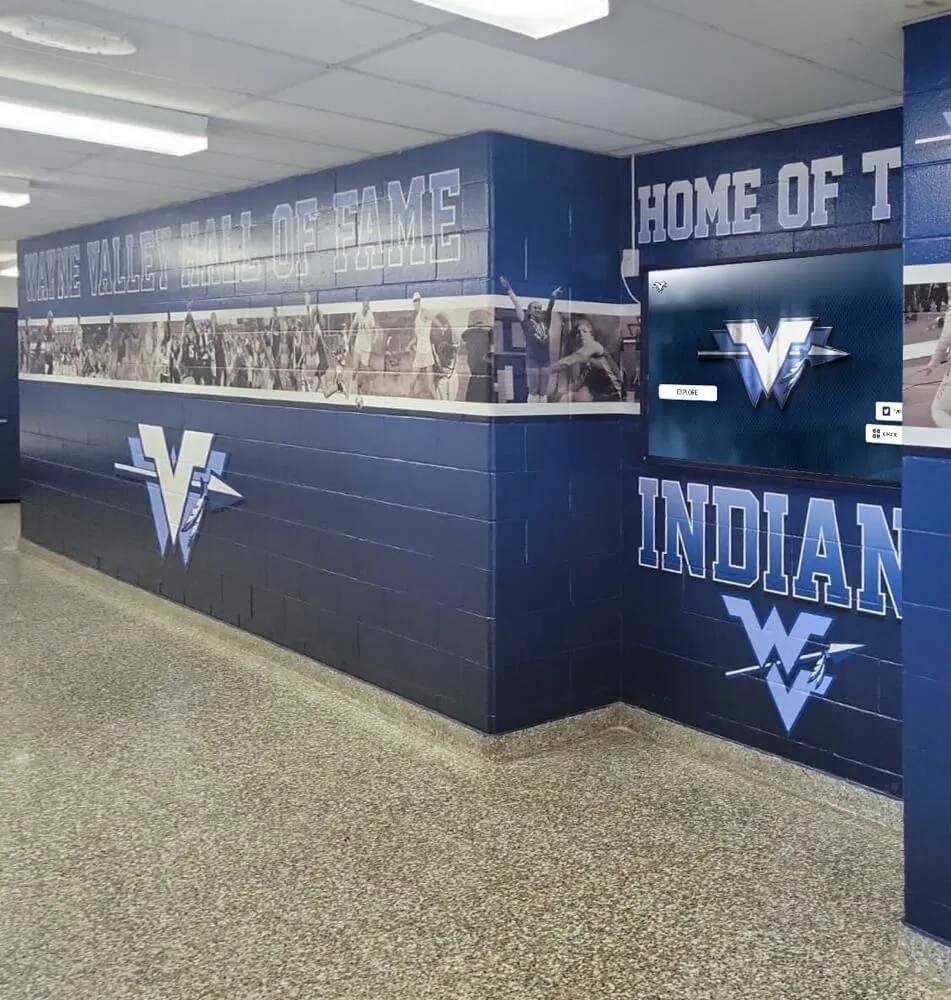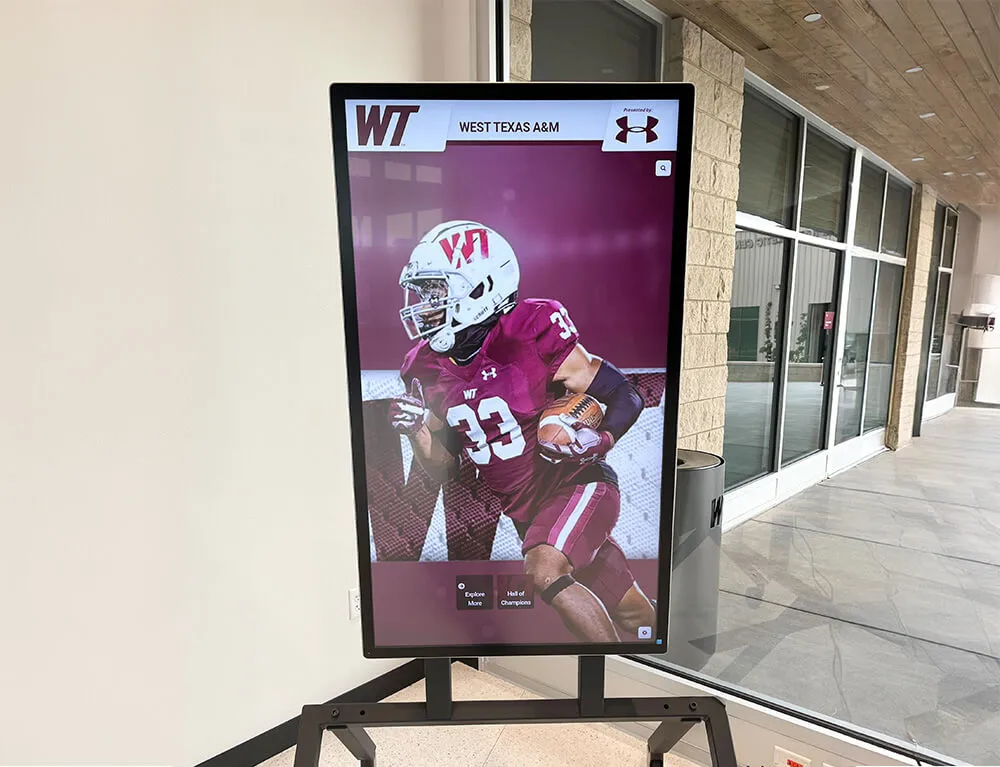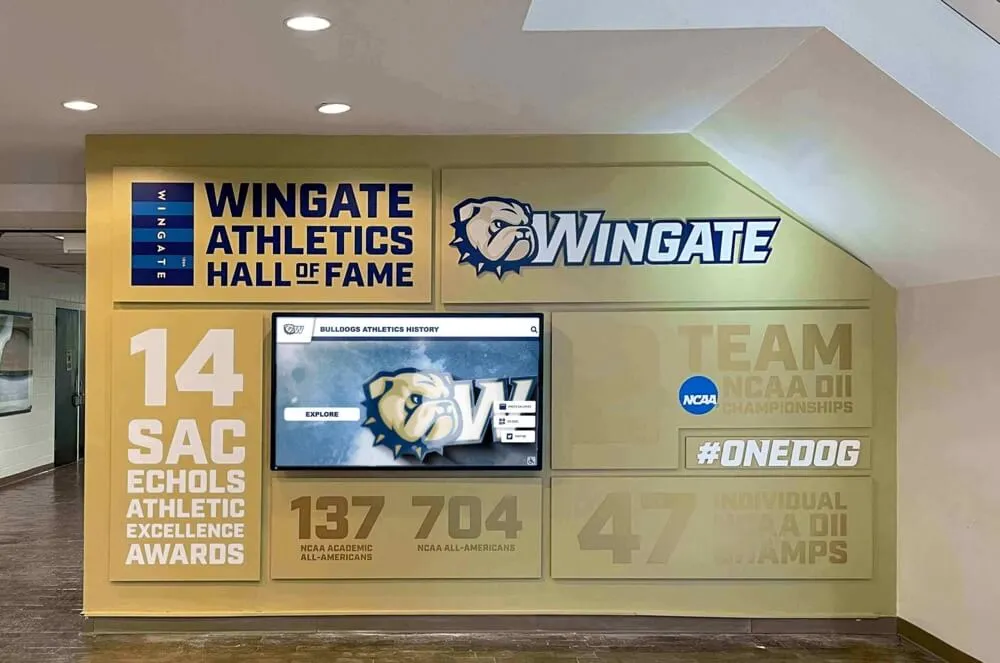




School records represent institutional markers of excellence that define what’s possible within a program. When a basketball player sees the single-game scoring record displayed prominently in the gymnasium, they understand the standard for elite performance. When students view the honor roll from previous years, they recognize the academic achievement level worth pursuing. School records transform abstract excellence into concrete benchmarks that inspire current students while preserving institutional history for future generations.
Yet most high schools struggle with how to effectively establish, track, and display these important milestones. Athletic records often exist in scattered spreadsheets or coaches’ personal notebooks. Academic achievement records may sit in dusty filing cabinets or exist only in administrator memory. Display systems overflow with decades of accomplishments while recent record-breakers wait months or years for recognition. Schools need comprehensive systems for defining what constitutes a record, maintaining accurate historical documentation, and showcasing achievements in ways that inspire rather than intimidate current students.
Why School Records Matter
School records serve multiple critical functions beyond simple documentation. They establish measurable standards for excellence, inspire current students by showing achievable pathways to recognition, preserve institutional history across generations, create healthy competition motivating improved performance, and demonstrate program quality to prospective students and families. Effective record systems require clear definitions, consistent tracking, and visible display ensuring achievements receive appropriate celebration. Solutions like Rocket Alumni Solutions provide purpose-built platforms enabling schools to comprehensively document and showcase records across athletics, academics, and activities without capacity limitations that plague traditional display systems.
Understanding School Records: Definitions and Categories
Before schools can effectively track and display records, they must establish clear definitions determining what constitutes a record-worthy achievement and how different record types should be categorized and maintained.
What Constitutes a School Record
School records represent the best performances or highest achievements within specific categories throughout institutional history, requiring careful definition to ensure consistency and fairness across eras and changing program circumstances.
Measurable Performance Standards: True records require objective, measurable criteria eliminating subjective judgment from determination. Athletic records typically measure quantifiable performances including fastest times in track events or swimming, longest distances in throwing or jumping events, highest point totals in scoring sports, most goals, assists, or other statistical achievements, and team performance records like most wins in a season or consecutive victories.
Academic records similarly require clear metrics such as highest GPA within graduating class, highest standardized test scores, most AP exams passed with qualifying scores, longest consecutive honor roll streak, and highest performance in subject-specific competitions with standardized scoring. Measurable standards ensure records remain objective and verifiable rather than dependent on individual interpretation or changing opinions over time.
Contextual Considerations: Record definitions must account for changing competitive contexts that affect comparability across eras. Schools should establish whether records apply to regular season only or include postseason play, how records account for changing season lengths (a 10-game football season versus 12 games), whether records differentiate between different competitive divisions or classifications, and how records address rule changes affecting performance (three-point line introduction in basketball, pitch count limits in baseball).
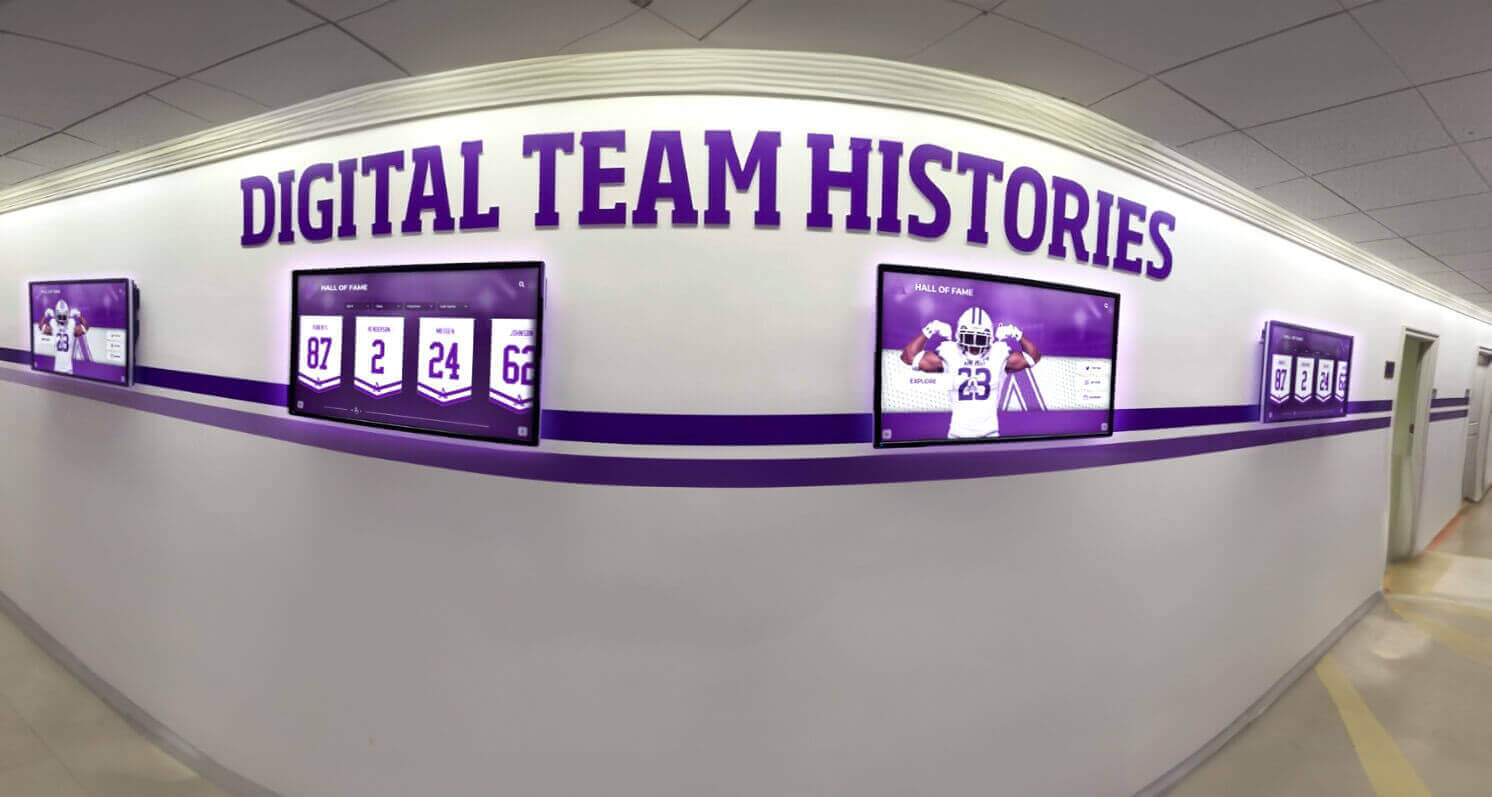
Some schools maintain separate record books for different eras when significant rule or competitive structure changes make direct comparison problematic. Others maintain unified records while providing historical context explaining circumstances surrounding older achievements.
Individual vs Team Records: Comprehensive record systems distinguish between individual achievement records and team performance records. Individual athletic records might include single-game, single-season, and career achievements across all measurable statistical categories. Team records typically document best seasonal performances (most wins, highest winning percentage), championship achievements, and consecutive success streaks.
Academic record systems similarly differentiate individual scholarly achievement (valedictorian, highest SAT score) from collective recognition (highest average GPA for graduating class, most National Merit Scholars in one year). This distinction ensures both personal excellence and collective achievement receive appropriate documentation and celebration.
Major School Record Categories
High schools maintain records across numerous performance areas, each requiring appropriate tracking systems and display consideration to ensure comprehensive achievement celebration.
Athletic Performance Records: Sports programs generate the most extensive record categories, typically organized by specific sports and subdivided into meaningful achievement areas. Track and field programs might maintain dozens of individual event records across sprints, distance races, hurdles, relays, jumps, and throws. Team sports like basketball track career points, rebounds, assists, steals, and blocks alongside single-game and single-season records in each category.
Football programs document passing yards, rushing yards, receiving yards, tackles, sacks, and interceptions across various timeframes. Swimming maintains records for each competitive event at different distances and strokes. Comprehensive athletic record systems provide frameworks for recognizing the most impressive achievements while ensuring every sport and statistical category receives equal documentation attention.
Academic Excellence Records: Academic records celebrate intellectual achievement across multiple dimensions. Individual achievement records include class rank positions (valedictorian, salutatorian, top ten), standardized test performance (highest SAT, ACT, or subject test scores), AP Scholar recognition (number of exams passed with high scores), and subject-specific honors like math competition winners or science olympiad medalists.
Collective academic records might document graduating class average GPA, percentage of students earning honor roll each semester, number of students accepted to selective universities, or total scholarship dollars earned by graduating classes. These records demonstrate institutional commitment to academic excellence while inspiring younger students to pursue intellectual achievement with the same dedication they bring to athletic competition.
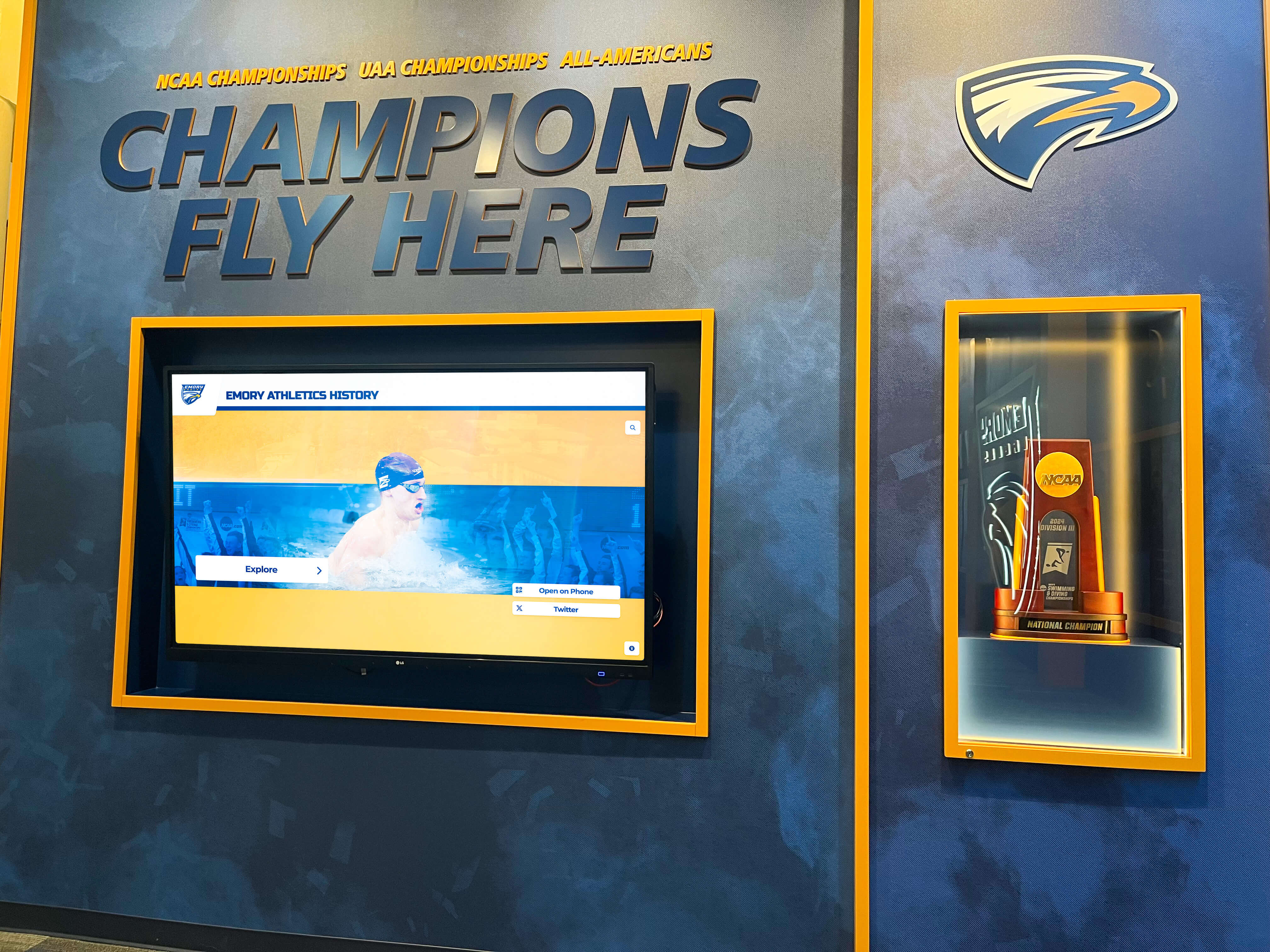
Activity and Extracurricular Records: Beyond athletics and traditional academics, comprehensive record systems acknowledge excellence in arts, activities, and service. Music programs might track all-state orchestra or band selections, drama programs document festival awards and productions, debate teams maintain tournament victory records, and service organizations recognize cumulative community service hours or project impact metrics.
These broader records demonstrate that schools value diverse forms of excellence, encouraging students with varied talents to pursue recognition regardless of whether they excel in traditional athletic or academic domains. Resources on debate team achievement recognition provide frameworks for celebrating competitive academic activities systematically.
Gender Equity in Record Keeping
Modern schools must ensure record systems provide equal recognition opportunities for male and female athletes while accounting for biological performance differences in certain sports.
Separate Gender Categories: Most high schools maintain separate record books for male and female athletes in sports where biological differences significantly affect performance outcomes. Track and field, swimming, and weightlifting naturally separate records by gender given clear performance distinctions. Team sports like basketball, soccer, and volleyball similarly maintain distinct records for boys’ and girls’ programs.
This separation ensures female athletes receive appropriate recognition for excellence within their competitive categories rather than being perpetually overshadowed by male performances in strength and speed-dependent events. Equal display prominence for both male and female records demonstrates institutional commitment to equity in athletic recognition.
Coeducational Sport Considerations: For truly coeducational sports where male and female athletes compete together on unified teams—like tennis doubles, mixed relay events, or certain club sports—schools might maintain unified records while noting gender composition of record holders. This approach acknowledges collaborative achievement while preserving recognition for athletes regardless of gender.
Display Equity: Beyond record definition, schools must ensure display systems provide equal visibility and prominence to male and female achievements. Traditional physical displays sometimes privileged boys’ athletics through larger trophy cases or more prominent hallway locations. Modern digital systems eliminate these spatial constraints, enabling comprehensive recognition for all programs regardless of gender. Guidance on creating engaging digital record board displays helps schools ensure equitable recognition across all athletic programs.
Establishing New School Records: Systems and Protocols
Creating and maintaining accurate, credible school records requires systematic processes ensuring proper documentation, verification, and official recognition when existing marks fall.
Official Record Verification Procedures
Record claims require verification confirming performances meet established criteria and occurred under appropriate competitive conditions.
Documentation Requirements: Schools should establish clear documentation standards for record consideration including official game or meet results from sanctioned events, verification from event officials or timing systems, photographic or video evidence when available, and confirmation from coaching staff who witnessed performances. These requirements prevent disputed or unverifiable claims from entering official record books.
For older records established before digital documentation standards existed, schools may accept period newspaper accounts, program records, or reliable witness testimony as sufficient verification. Documentation standards should balance thoroughness with recognition that verification capabilities have evolved substantially over decades of athletic competition.
Timing and Measurement Standards: Performance records require consistent measurement protocols ensuring fairness across eras. Track times should specify whether hand-timed or electronic timing produced results (electronic being more precise and slightly slower). Swimming records should note whether performances occurred in short course (25-yard) or long course (50-meter) pools, as times vary significantly between configurations.
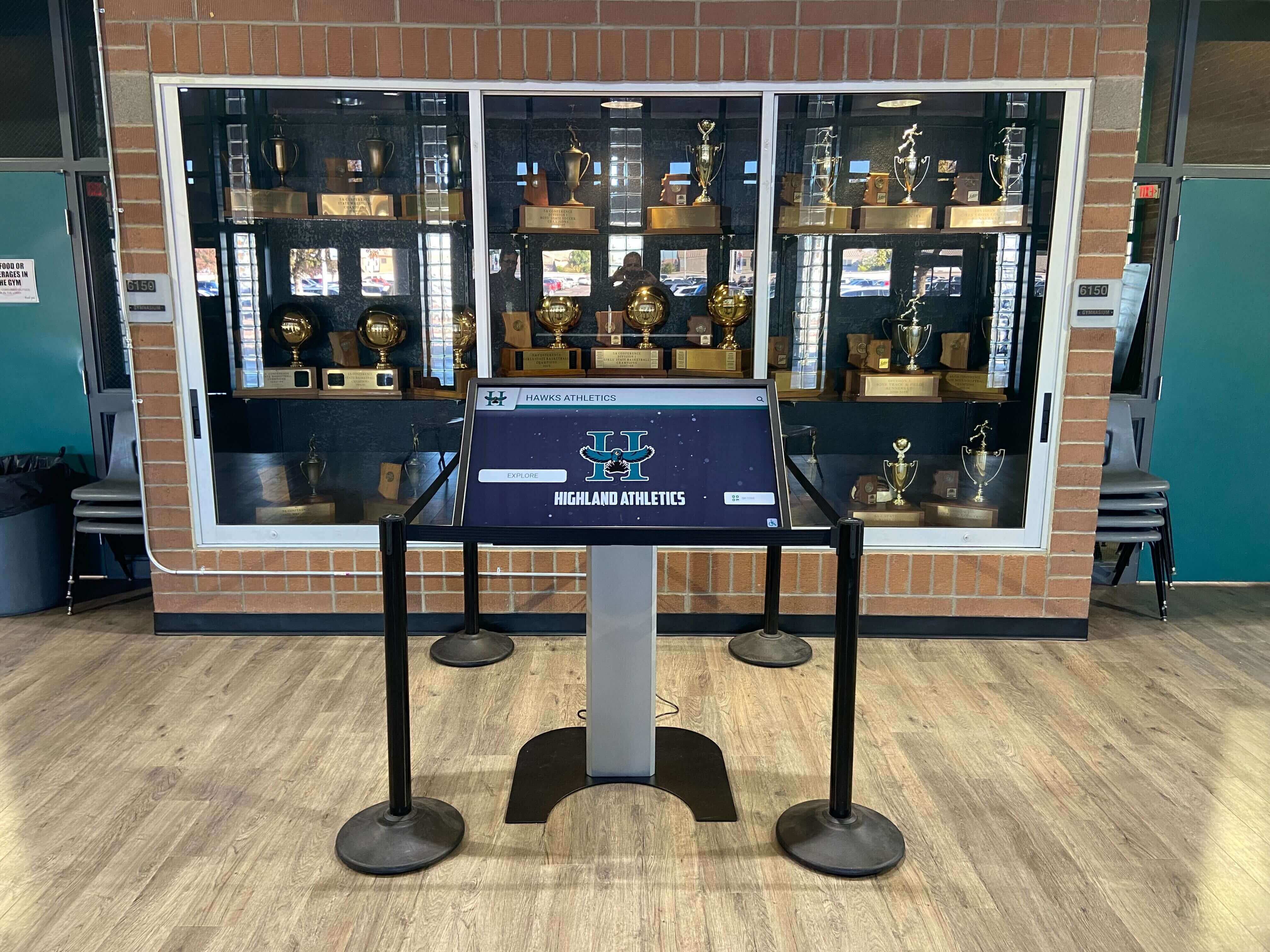
Field event records should specify measurement protocols and equipment standards. These technical details ensure records remain comparable and credible across time rather than mixing inconsistent measurement approaches that compromise record integrity.
Competitive Context Validation: Records should specify the competitive circumstances under which performances occurred. Did the basketball scoring record happen against varsity competition or a junior varsity opponent? Did the track record occur during regular season conference competition or at state championships? Was the academic achievement recorded during the same assessment format used today, or have testing standards changed?
This contextual information doesn’t invalidate records but provides meaningful background helping current students understand achievement circumstances and comparability to contemporary performance standards.
Record Ratification and Official Recognition
Once performances meeting record criteria occur and receive verification, schools should establish formal processes for official record recognition and celebration.
Athletic Department Review: Most schools assign athletic directors or designated record coordinators responsibility for reviewing potential record performances. This review confirms documentation completeness, verifies competitive context appropriateness, compares performance to existing record, and determines whether achievement warrants official record status.
Formal review processes prevent premature announcements of records that subsequent investigation reveals don’t meet established criteria—protecting institutional credibility while ensuring athletes receive appropriate recognition for legitimate achievements.
Timeline for Official Recognition: Schools benefit from establishing clear timelines for record ratification and public announcement. Immediate preliminary recognition during game announcements or team celebrations acknowledges achievement while formal verification proceeds. Official record status follows verification completion, typically within days or weeks of performance depending on documentation requirements and review complexity.
Quick turnaround maintains excitement and engagement surrounding record performances while ensuring accuracy and appropriate documentation precede permanent institutional recognition. Modern digital trophy case solutions enable immediate preliminary recognition with formal updates following official verification completion.
Public Announcement Protocols: Record-breaking performances deserve appropriate public celebration. Schools might announce new records through morning announcements or school-wide communications, social media posts celebrating achievement and honoring record holder, athletic or academic department website updates, media releases to local newspapers and sports outlets, and formal recognition during subsequent competitions or school assemblies.
Visible, enthusiastic recognition for record achievements encourages other students to pursue similar excellence while demonstrating institutional commitment to celebrating outstanding performance across all programs.
School Record Example Categories and Specific Examples
Understanding what specific records schools typically maintain helps institutions develop comprehensive systems ensuring no achievement category goes undocumented or unrecognized.
Athletic Record Examples by Sport
Different sports generate distinct record categories based on their scoring systems, competitive structures, and measurable performance metrics.
Track and Field Record Examples: Track programs typically maintain extensive record books covering sprint events (100m, 200m, 400m), middle distance (800m, 1600m), long distance (3200m, 5000m), hurdle events, relay races, jumping events (high jump, long jump, triple jump), and throwing events (shot put, discus, javelin). Each event generates individual records that might include fastest time or longest distance, athlete name and graduation year, date and location of performance, and previous record holder for historical context.
A complete track record might read: “100m Dash - 10.82 seconds - Marcus Thompson (Class of 2024) - State Championships, May 2024 - Previous Record: 10.95 seconds, David Martinez (Class of 2019).” This format provides complete achievement context while acknowledging historical progression.
Basketball Record Examples: Basketball generates numerous statistical categories worthy of record documentation. Single-game records might include most points scored, most rebounds, most assists, most steals, and most three-pointers made. Season records track total points, highest scoring average, total rebounds, total assists, and team records like most wins or longest winning streak.
Career records spanning multiple years document total career points, career rebounds, career assists, games played, and years as varsity starter. A comprehensive basketball record might state: “Career Points - 2,247 points - Sarah Johnson (Class of 2023) - Varsity 2020-2023 - Previous Record: 2,186 points, Michelle Davis (Class of 2018).”
Swimming Record Examples: Swimming programs maintain records for each competitive event at various distances including freestyle (50, 100, 200, 500 yards/meters), backstroke, breaststroke, butterfly, individual medley, and relay events. Records specify pool configuration (short course vs long course) and timing method (electronic vs hand-timed).
A swimming record might read: “100-Yard Freestyle - 48.23 seconds - Emily Chen (Class of 2024) - Conference Championships, February 2024 - Electronic Timing, Short Course Pool - Previous Record: 48.67 seconds, Amanda Wilson (Class of 2021).” This level of detail ensures fair comparison across performances and eras.
Team Sport Record Examples: Football, soccer, baseball, softball, volleyball, and other team sports generate both individual and collective records. Football might track passing yards (single game, season, career), rushing yards, receiving yards, tackles, and sacks. Team records include most wins in a season, consecutive victories, and championship appearances.
Soccer records document goals scored, assists, shutouts (for goalkeepers), and saves. Baseball tracks batting average, home runs, RBIs, strikeouts (for pitchers), and stolen bases. Each sport’s unique statistical structure requires tailored record categories capturing sport-specific excellence markers.
Academic and Scholarly Record Examples
Academic records celebrate intellectual achievement across standardized assessments, classroom performance, and competitive academic events.
Standardized Test Records: Schools might maintain records for highest SAT total score, highest ACT composite score, highest SAT or ACT section scores, highest SAT Subject Test scores (when offered), and highest AP exam scores or total qualifying scores. These records demonstrate institutional academic strength while inspiring students to pursue testing excellence.
An academic test record might appear as: “Highest SAT Score - 1570 - Jonathan Lee (Class of 2024) - December 2023 - Previous Record: 1550 - Rachel Kim (Class of 2022).” Simple, clear documentation acknowledges achievement while maintaining appropriate privacy around academic performance.
Grade Point Average Records: GPA records typically recognize valedictorian and salutatorian positions for each graduating class. Some schools maintain historical records showing highest GPAs across institutional history, though changing grading scales and weighted/unweighted calculation methods complicate direct comparison across eras.
Schools might document: “Highest Weighted GPA - 4.82 - Michael Rodriguez (Class of 2024) - Previous Record: 4.79 - Jennifer Nguyen (Class of 2023).” Notes about calculation methodology help contextualize achievements across different grading systems or policy eras.
Academic Competition Records: Schools participating in academic competitions like Science Olympiad, Math League, Quiz Bowl, or Debate maintain records for highest tournament placements, most event medals won, consecutive wins or qualifying streaks, and individual achievement within team competitions.
A competition record might state: “Science Olympiad State Championship - 1st Place Overall - 2024 Team - Previous Best: 3rd Place, 2021 Team” or “Math League Individual High Score - 38/40 - David Park (Class of 2024) - Regional Competition, March 2024.” These records acknowledge both team excellence and individual performance within competitive academic contexts. Resources on recognizing academic competition teams provide frameworks for comprehensive scholarly achievement celebration.
Arts, Activities, and Special Recognition Records
Comprehensive record systems extend beyond athletics and traditional academics to acknowledge excellence in diverse student pursuits.
Performing Arts Records: Music, theater, and dance programs generate achievements worthy of documentation including most all-state or all-region selections, highest ratings at performance festivals, most prestigious venue performances or tours, consecutive superior ratings at competitions, and individual awards like outstanding soloist or performer recognition.
A performing arts record might read: “All-State Orchestra Selections - 8 students selected - Class of 2024 - Previous Record: 6 students, Class of 2019.” These records demonstrate program strength while encouraging continued artistic excellence.
Service and Leadership Records: Schools valuing community engagement and leadership might maintain records for most community service hours completed by individual student, highest collective service hours by graduating class, longest consecutive years of specific service program participation, and largest single-day service event participation.
Leadership records could acknowledge longest serving student government president, most leadership positions held across high school career, or significant student-initiated programs that became enduring institutional traditions. These non-competitive records honor character and contribution alongside performance achievement.
Participation and Attendance Records: Some schools document positive participation patterns like perfect attendance across multiple years, most varsity letters earned across different sports, most activities participated in during high school career, and most years of consecutive participation in specific programs or clubs.
While less competitive than performance records, participation recognition encourages broad engagement and sustained commitment to school programs across multiple years rather than focusing solely on elite performance in single domains.
Traditional vs Modern Record Display Systems
How schools display records significantly affects their motivational impact, accessibility, and long-term maintenance requirements. Traditional and digital approaches offer distinct advantages and limitations.
Traditional Physical Record Boards and Displays
For decades, schools have used physical displays to showcase records, creating tangible recognition with specific characteristics and constraints.
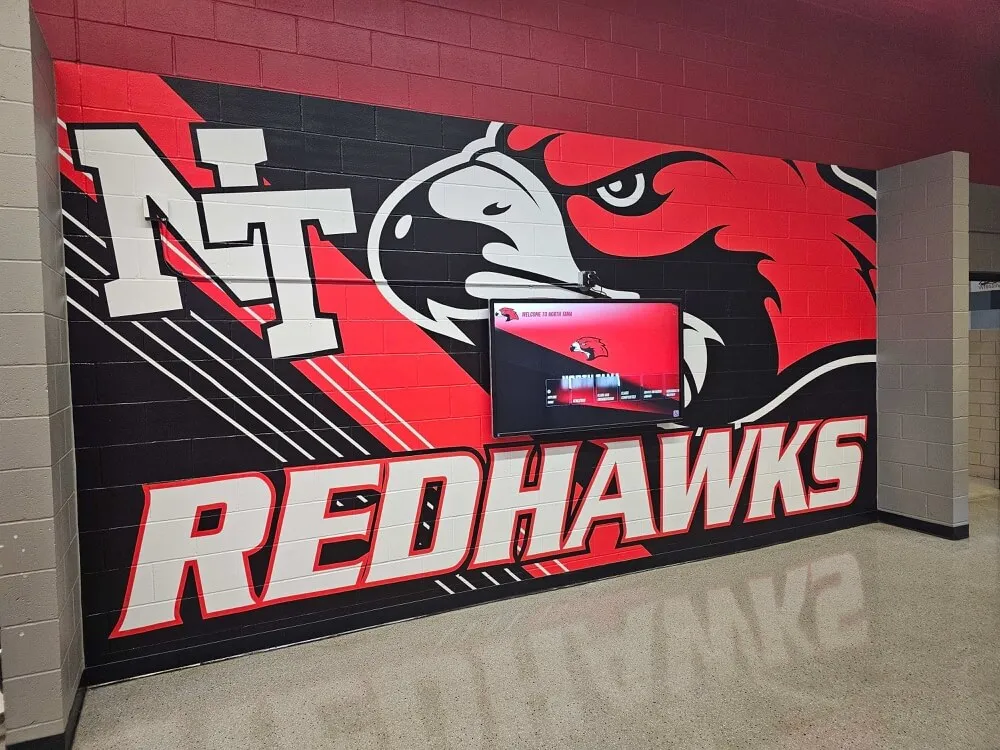
Painted Wall Displays: Many gymnasiums feature painted record boards listing achievements directly on walls. These permanent displays create strong visual presence and require no power or maintenance beyond occasional repainting when records fall or displays need refreshing.
However, painted displays face significant limitations including fixed capacity (boards fill completely after years of records), expensive and disruptive updates requiring professional painters and building access, inability to provide detailed information beyond names and basic statistics, and permanent commitment to specific wall locations that may become suboptimal as facilities evolve.
Schools with painted record boards often find themselves choosing between expensive regular updates and allowing displays to become outdated as new records remain unacknowledged for months or years.
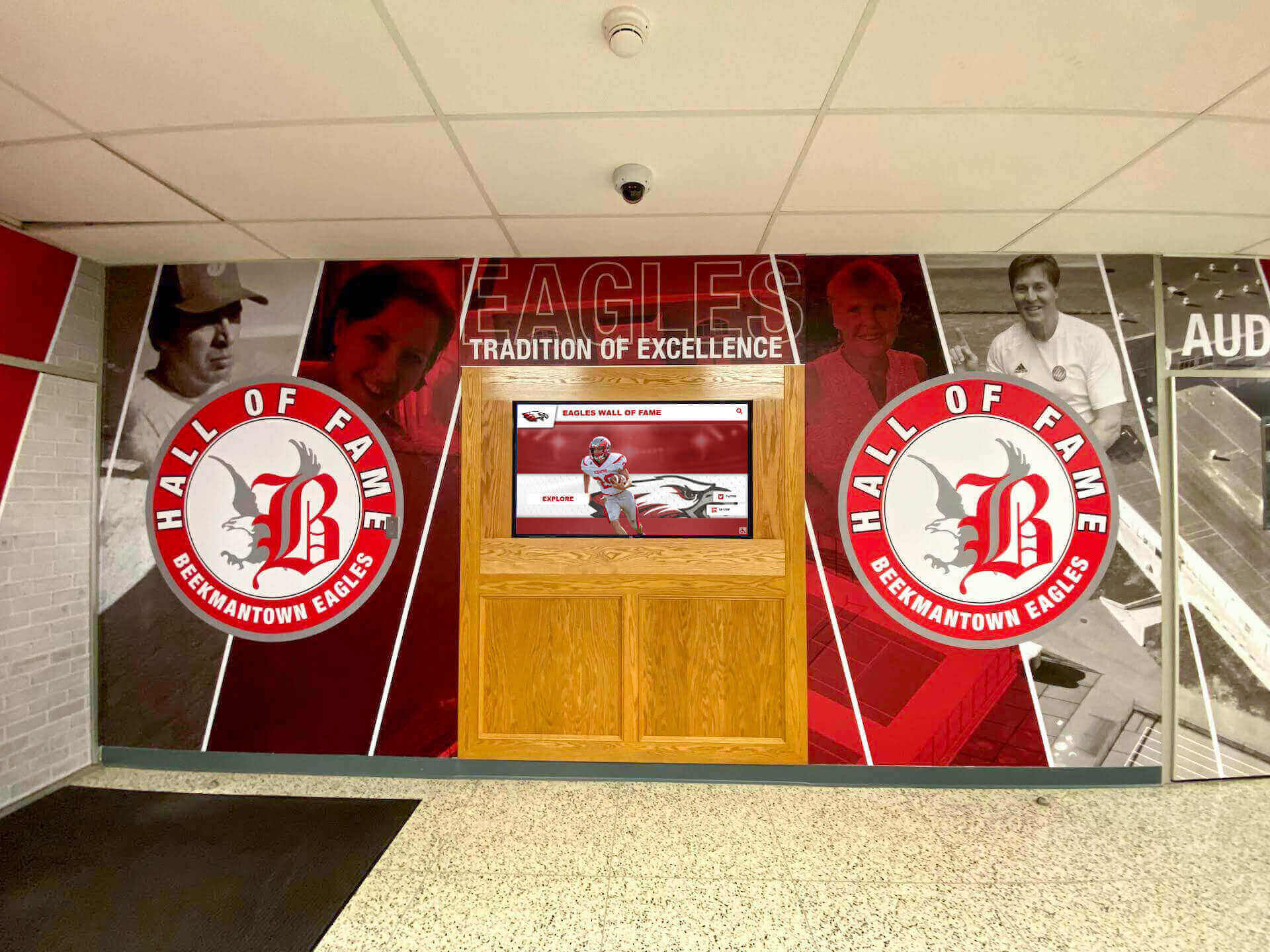
Printed and Mounted Board Systems: Alternative physical approaches include professionally printed record boards mounted in protective frames or acrylic cases. These systems offer cleaner aesthetics than painted walls and easier replacement when updates become necessary by simply printing new boards and swapping out outdated versions.
Yet printed boards still face capacity constraints forcing selective record display, require complete replacement for any updates rather than incremental additions, provide no multimedia storytelling beyond static text and occasional photos, and represent ongoing printing and mounting costs each time records change.
Trophy Case Integration: Schools often incorporate record documentation into trophy case displays, placing plaques or printed cards alongside trophies and awards. This integration creates comprehensive achievement celebration in single locations.
Trophy cases face severe space limitations that worsen as decades of accomplishments accumulate. Adding new record recognition often requires removing older achievements, creating difficult decisions about whose excellence deserves continued visibility and whose must be stored away providing zero inspirational value to current students. Strategies for modernizing trophy display cases help schools preserve traditional elements while expanding capacity through digital integration.
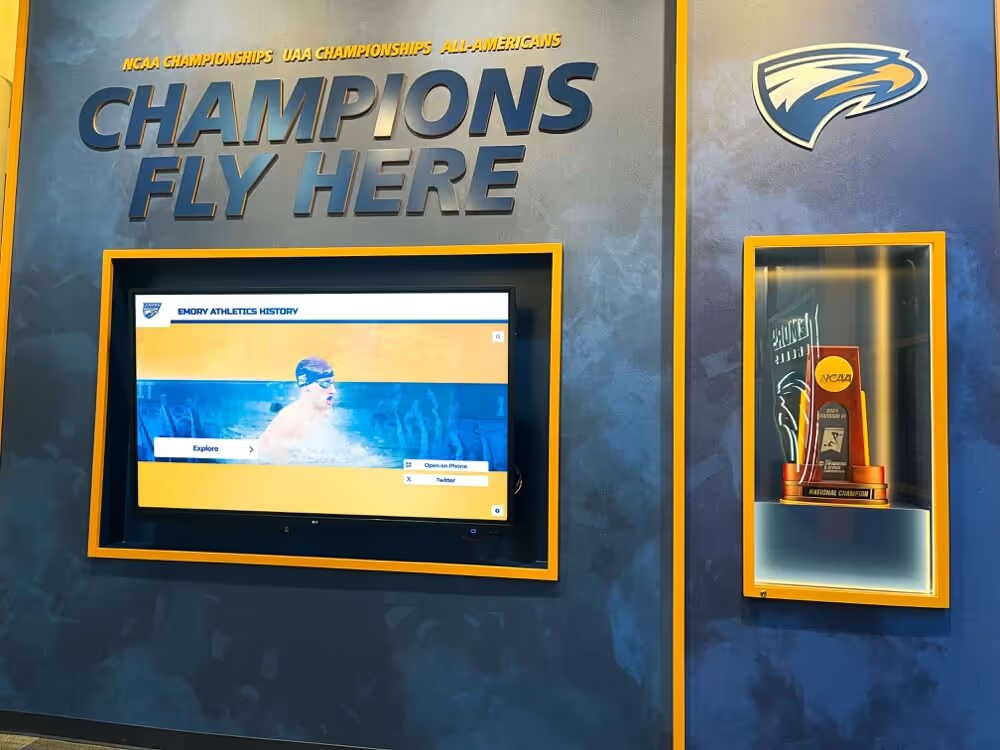
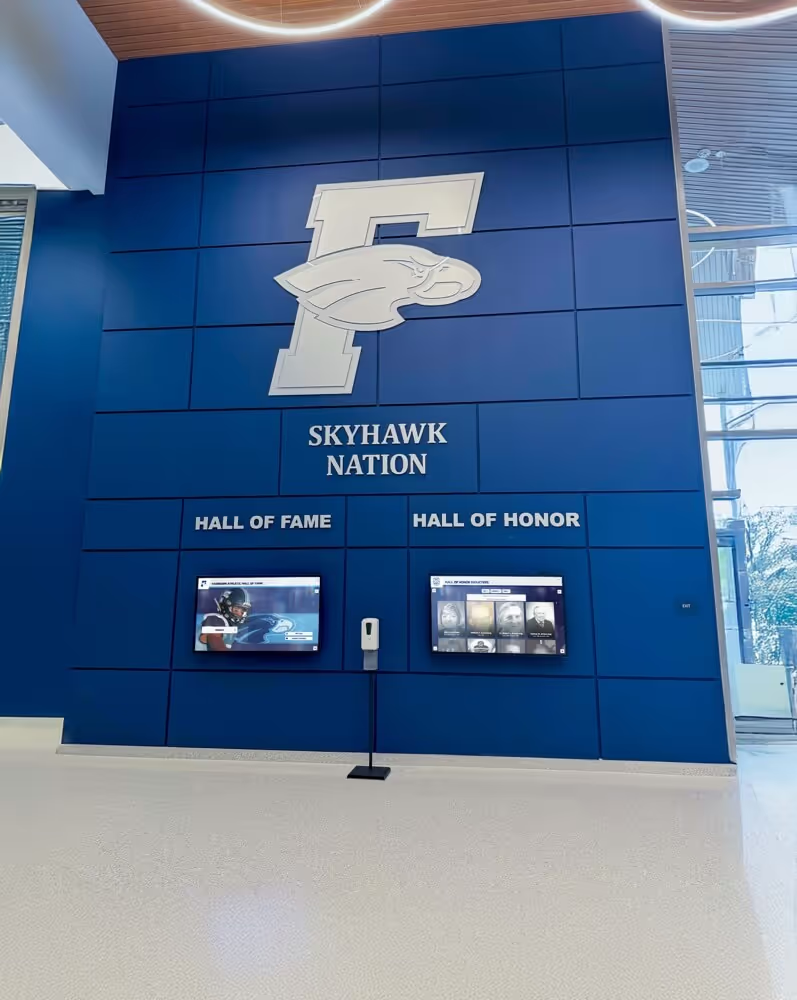
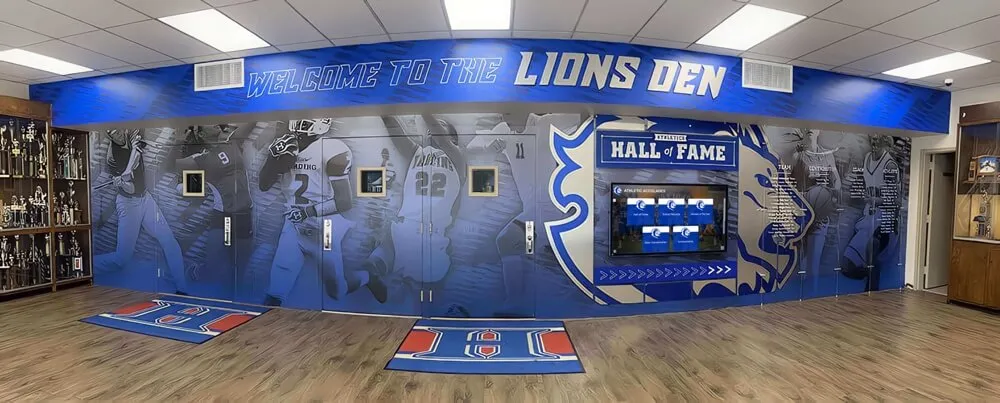
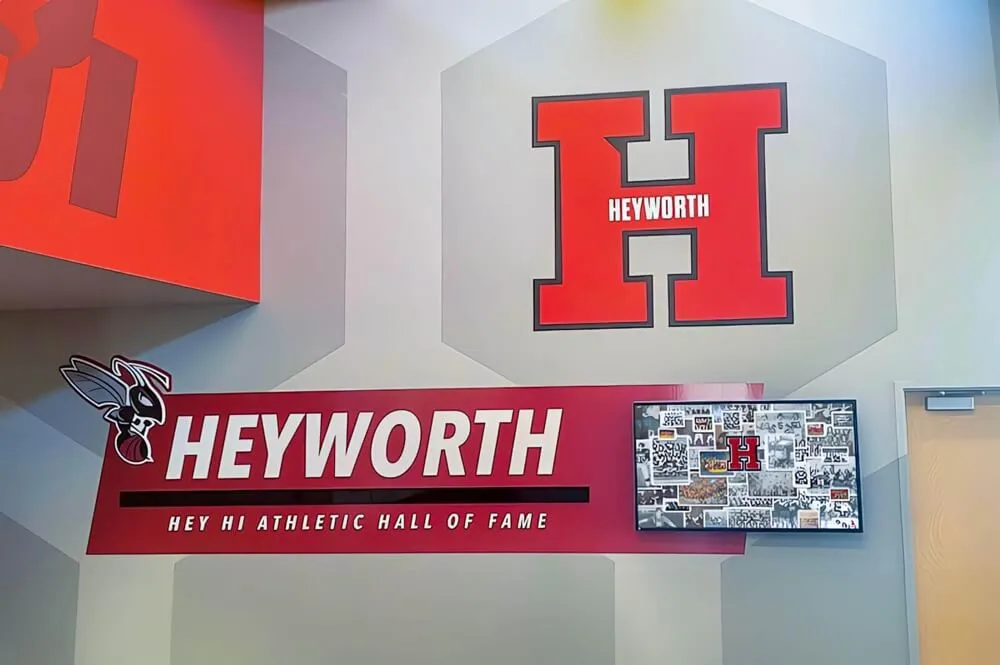
Digital Record Board Advantages and Capabilities
Modern digital record board technology addresses traditional display limitations while introducing powerful new capabilities for comprehensive record celebration.
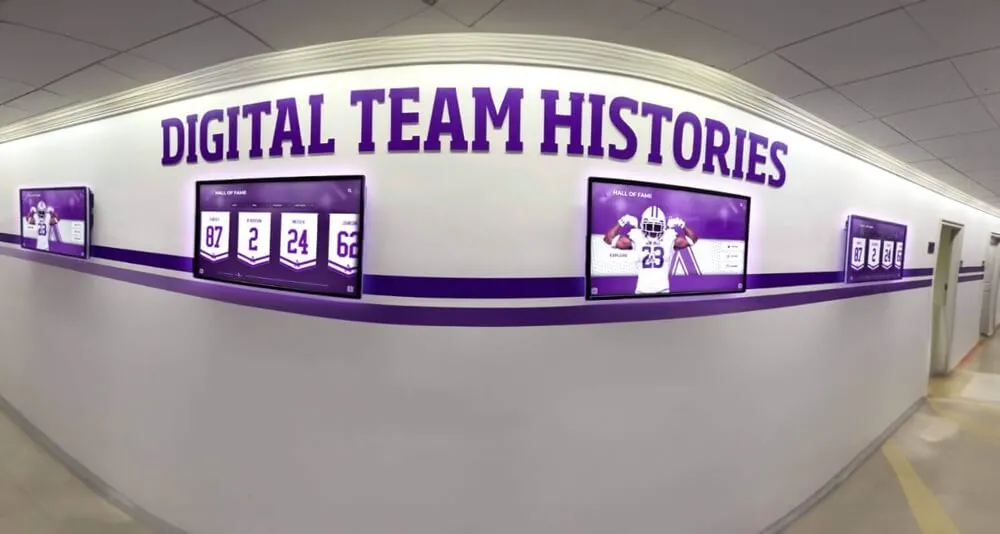
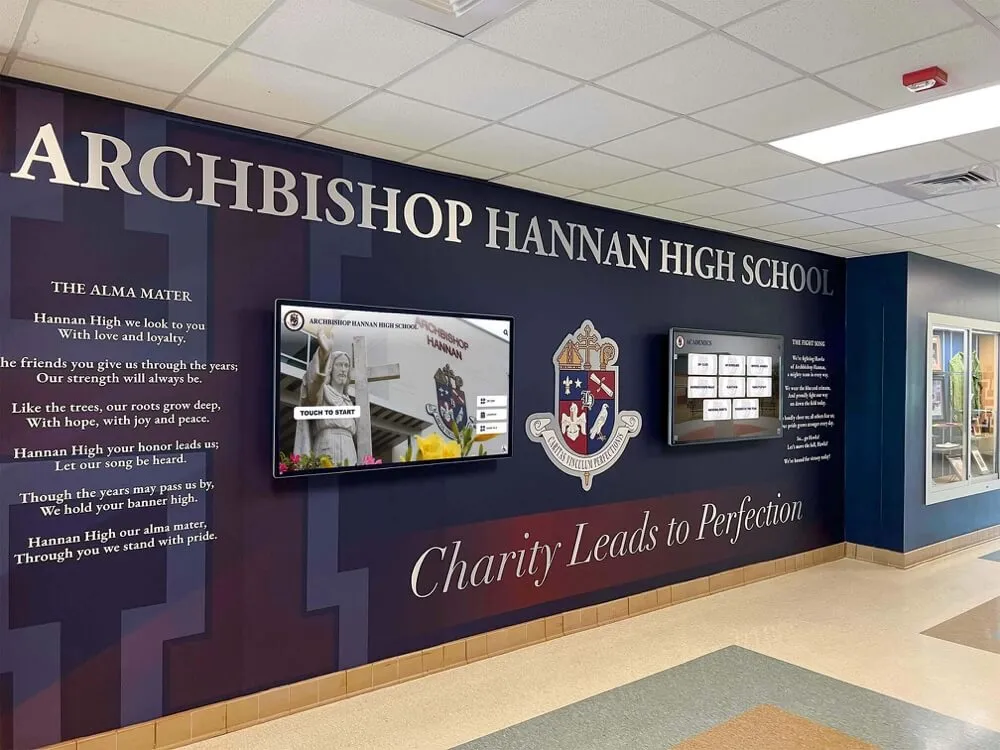
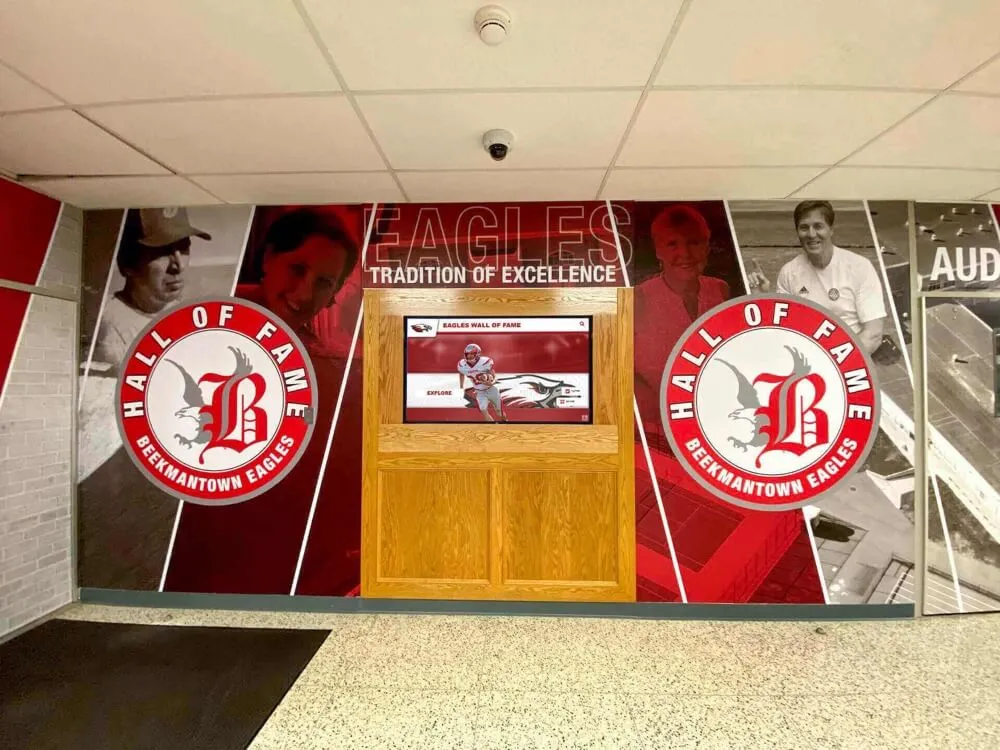
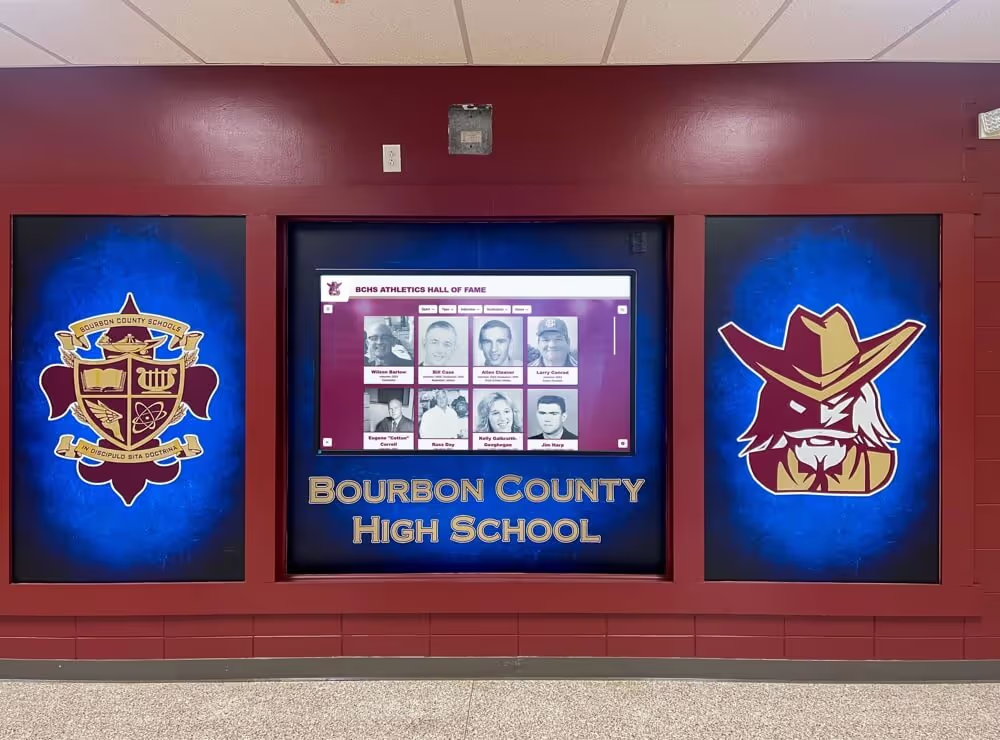
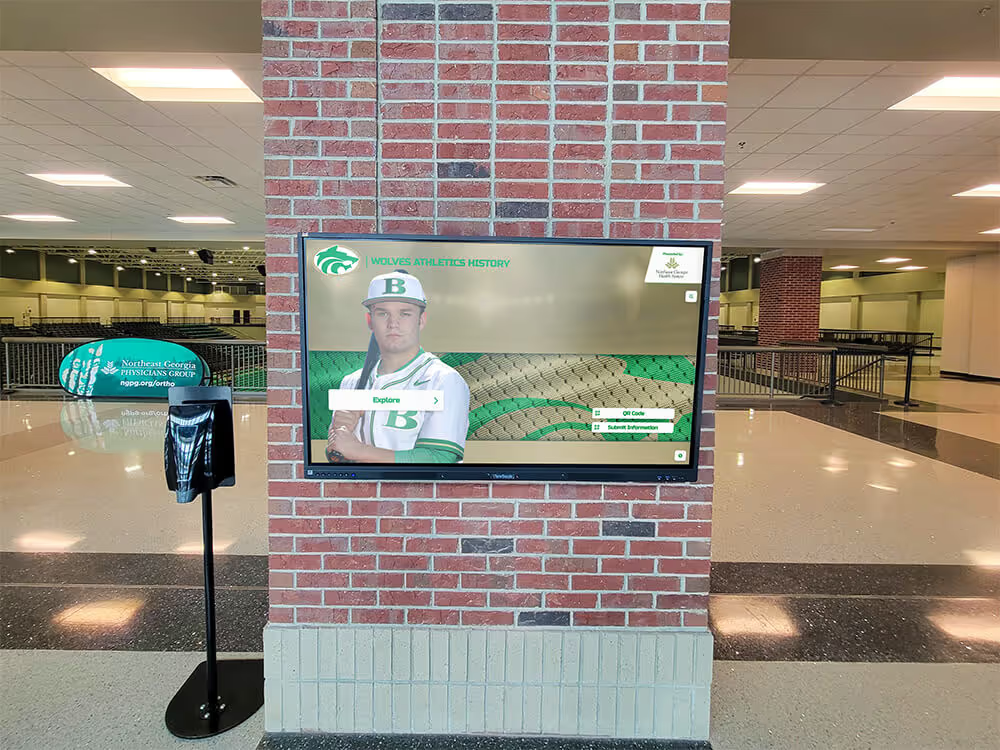
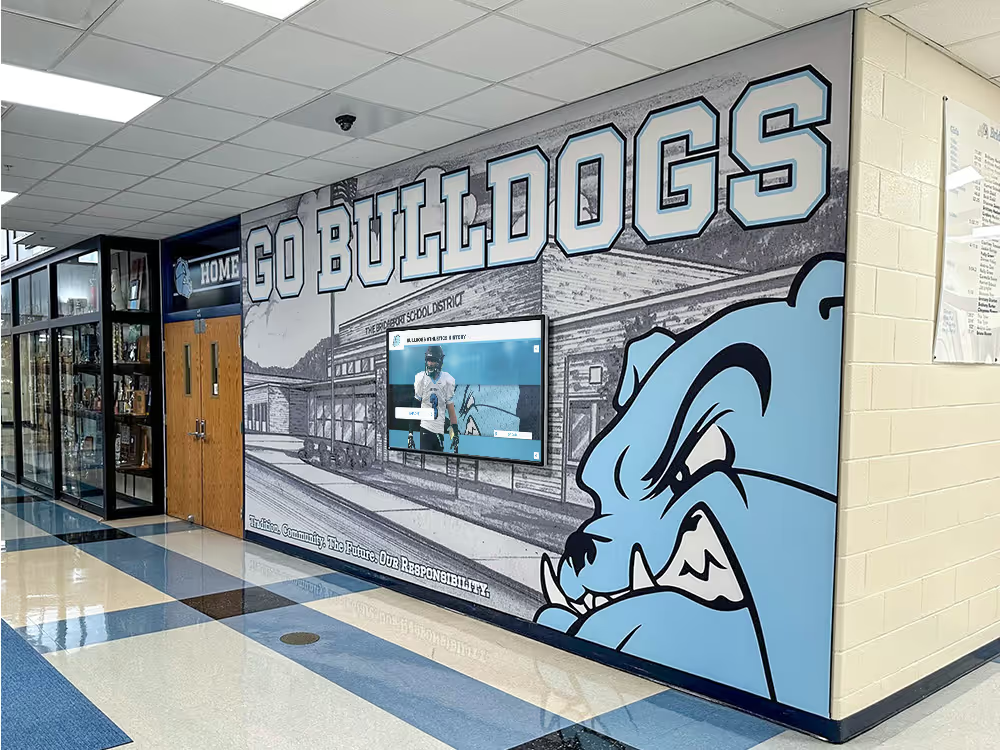
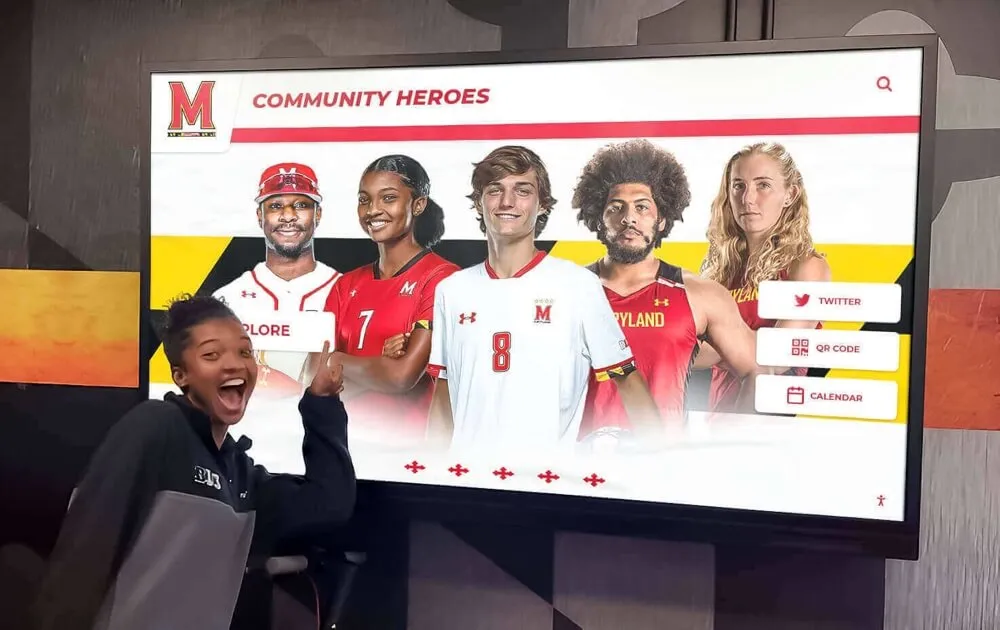
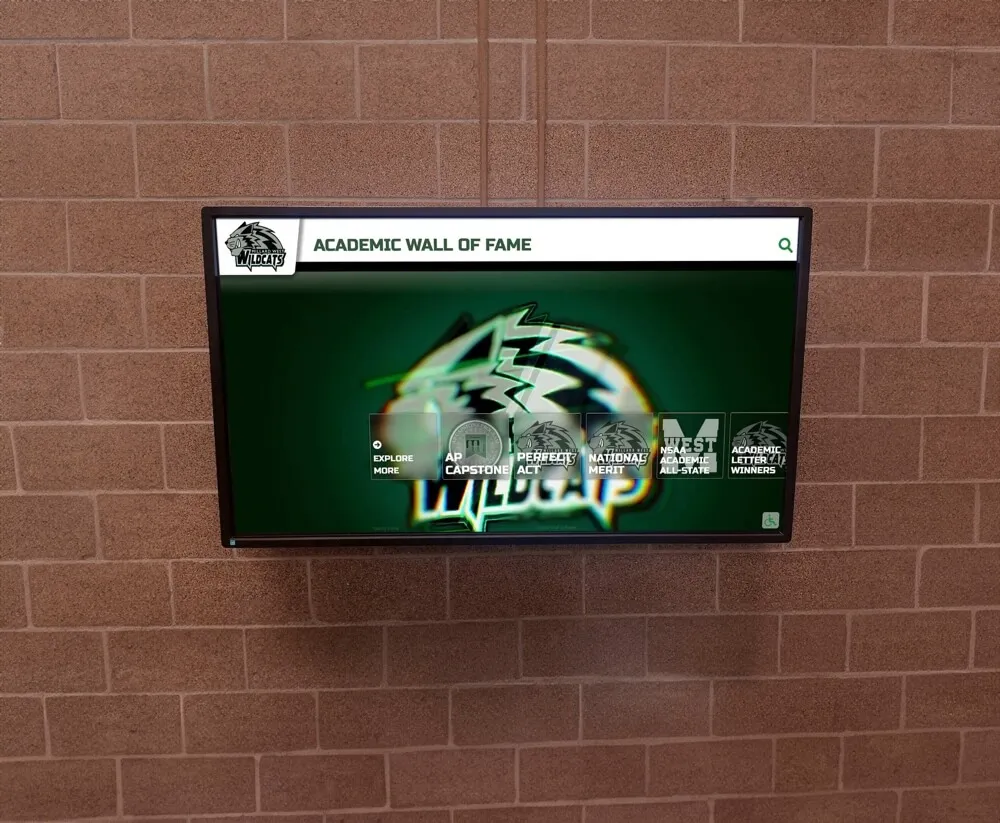
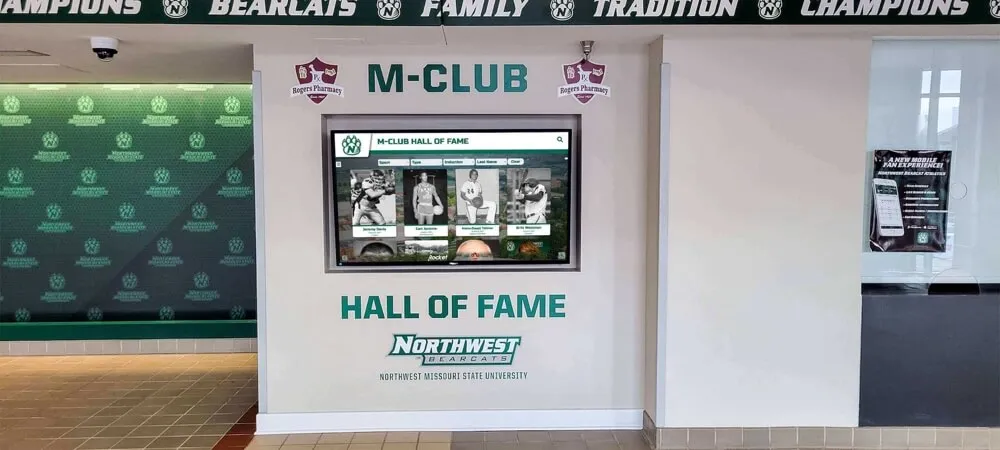
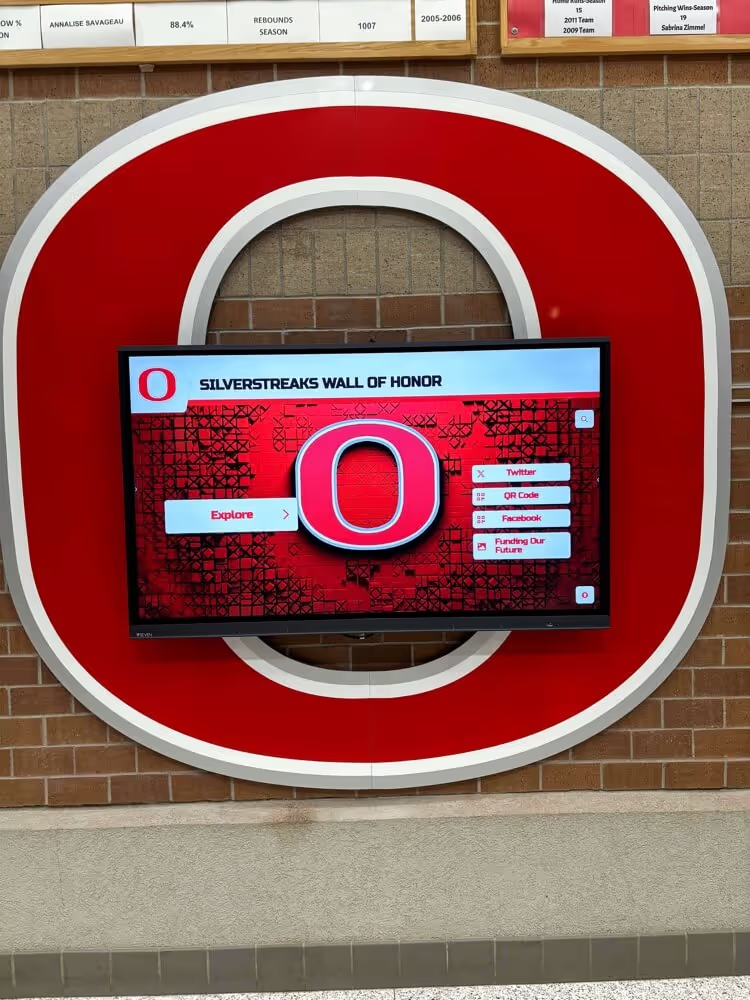
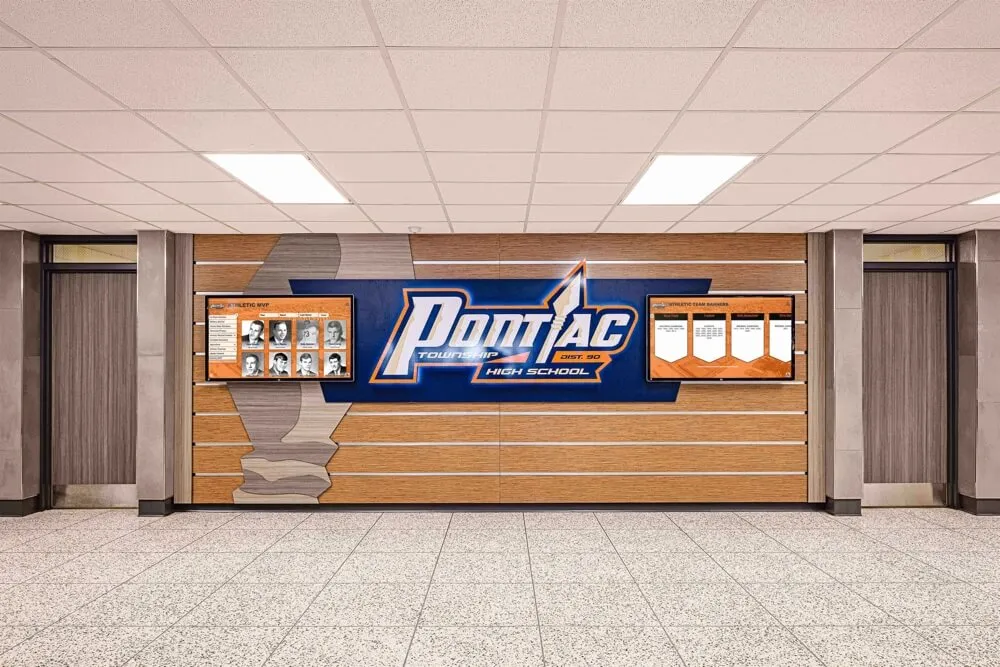
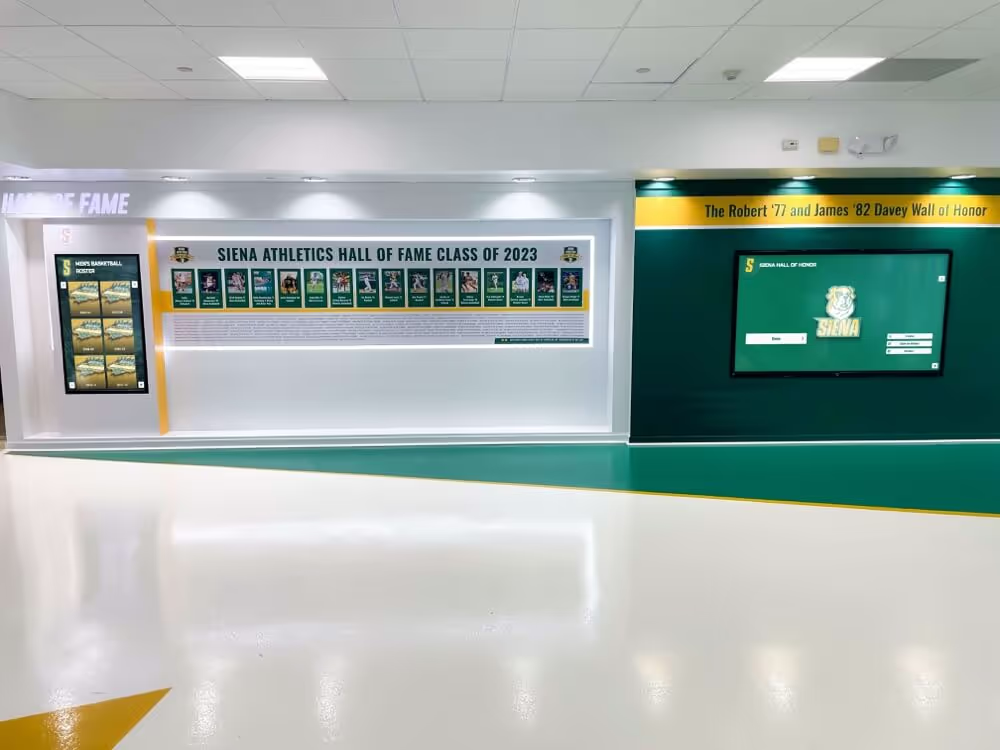
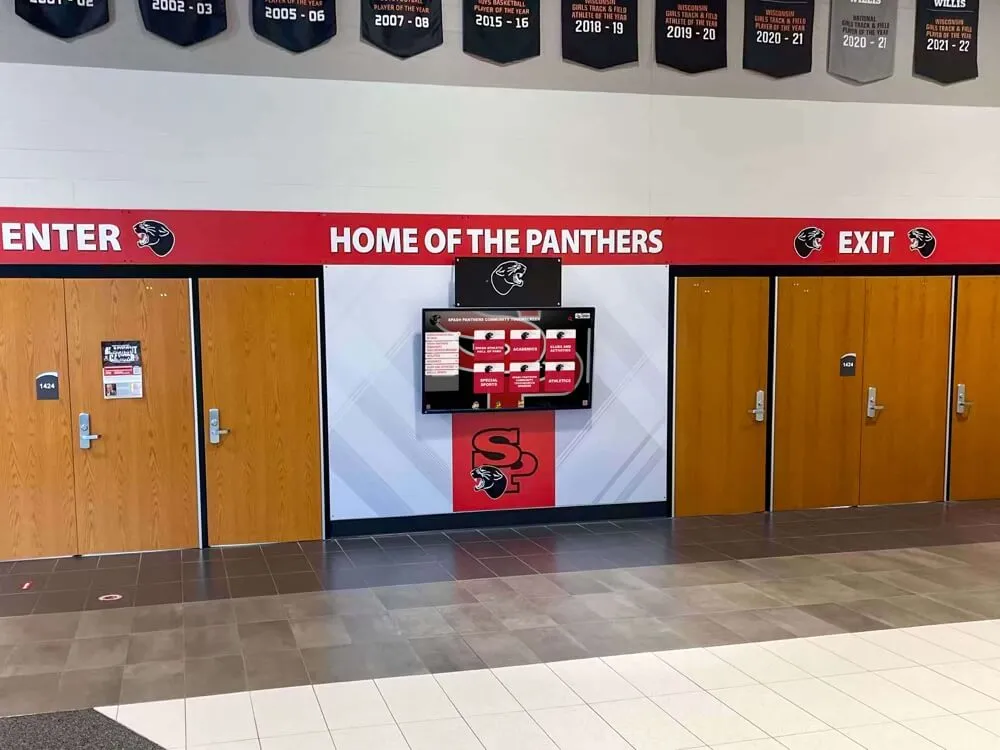
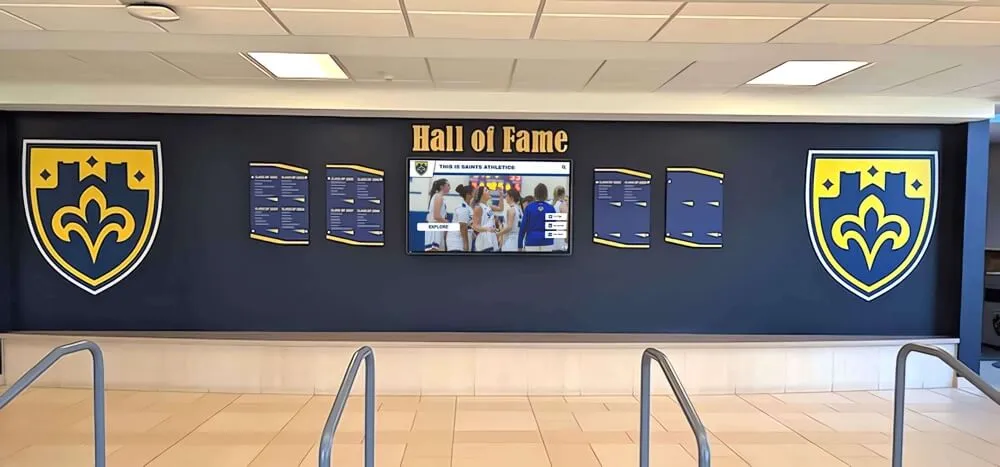
Unlimited Capacity and Scalability: Digital systems eliminate physical space constraints that force impossible prioritization decisions. A single digital display can showcase unlimited records across all sports, academic categories, and achievement types without ever requiring removal of older recognition to accommodate new records.
Schools can maintain complete institutional record histories spanning decades or centuries, providing comprehensive context showing record progression over time rather than showing only current holders. Every record holder from every era receives equal display capability, ensuring no achievement disappears simply because space ran out.
Instant Updates and Real-Time Currency: When records fall, digital systems enable immediate recognition updates without construction delays, printing expenses, or physical installation requirements. Athletic directors or activities coordinators log into cloud-based management platforms, update record information with photos and details, and publish changes appearing instantly on connected displays.
This immediacy ensures record recognition happens while achievement excitement remains high and community attention focuses on accomplishment—maximizing motivational impact on current students who witness their achievements receiving prompt, enthusiastic institutional celebration.
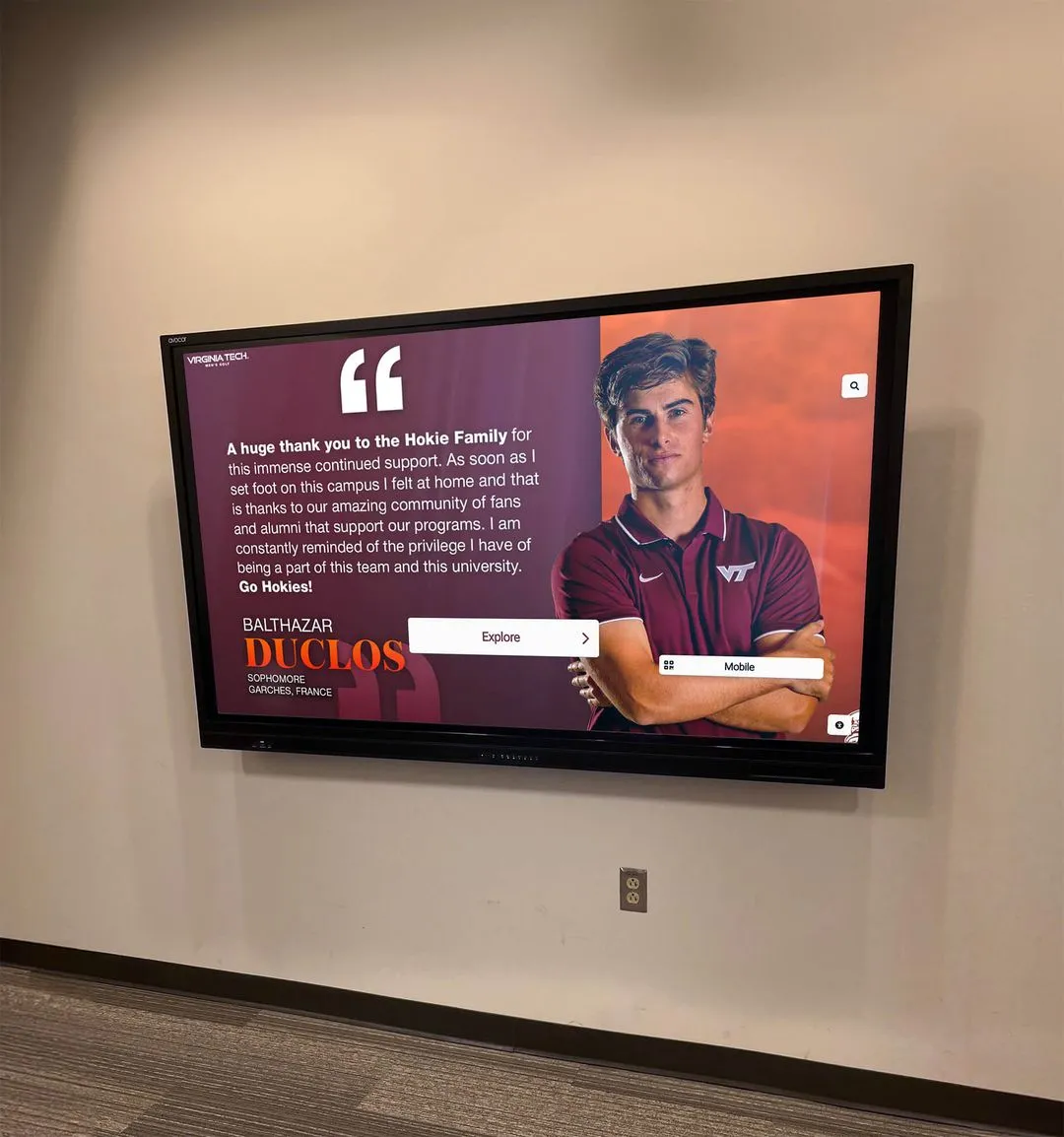
Rich Multimedia Storytelling: Digital displays support comprehensive multimedia content impossible with physical systems including photos showing record-breaking performances, video highlights capturing moments of excellence, complete statistical breakdowns providing performance context, athlete or student interviews sharing personal perspectives, and historical progression showing record evolution across institutional history.
This multimedia richness transforms records from simple statistics into inspiring stories that engage current students more deeply than names and numbers alone ever could. Students don’t just see that Sarah scored 35 points—they can watch highlights, read about her journey, and understand what made the performance exceptional.
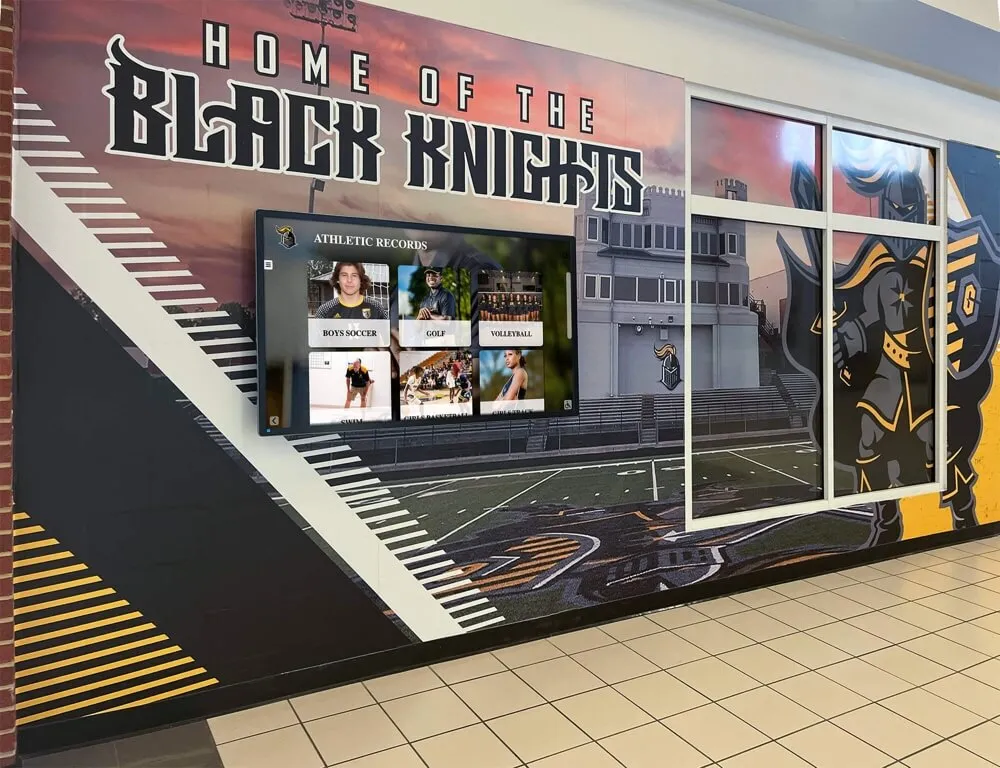
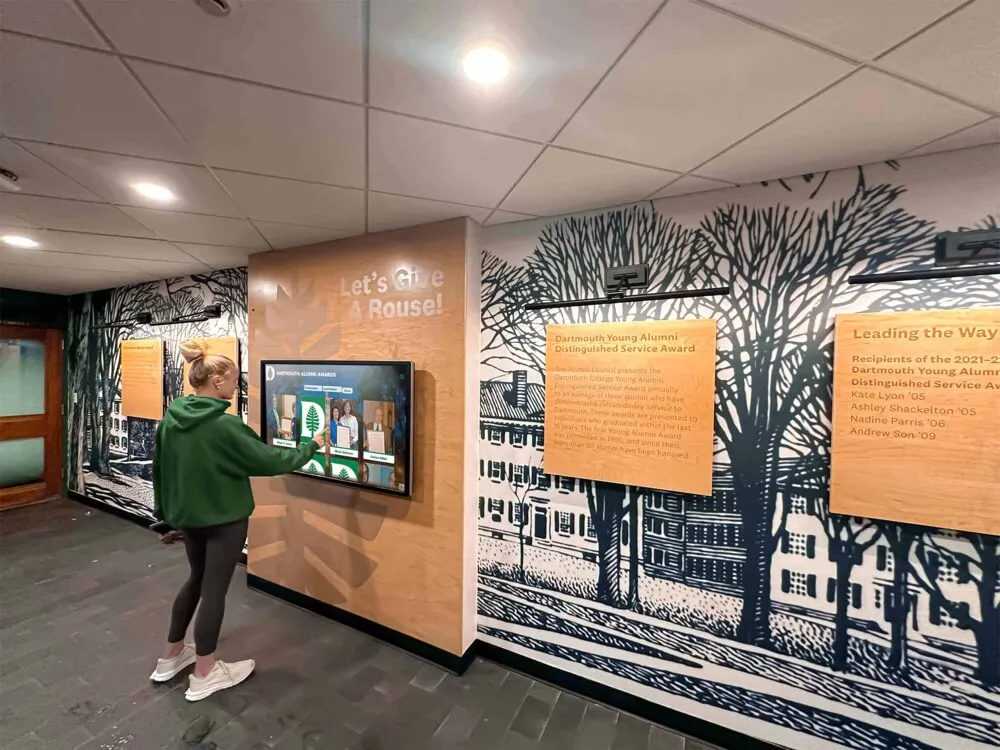
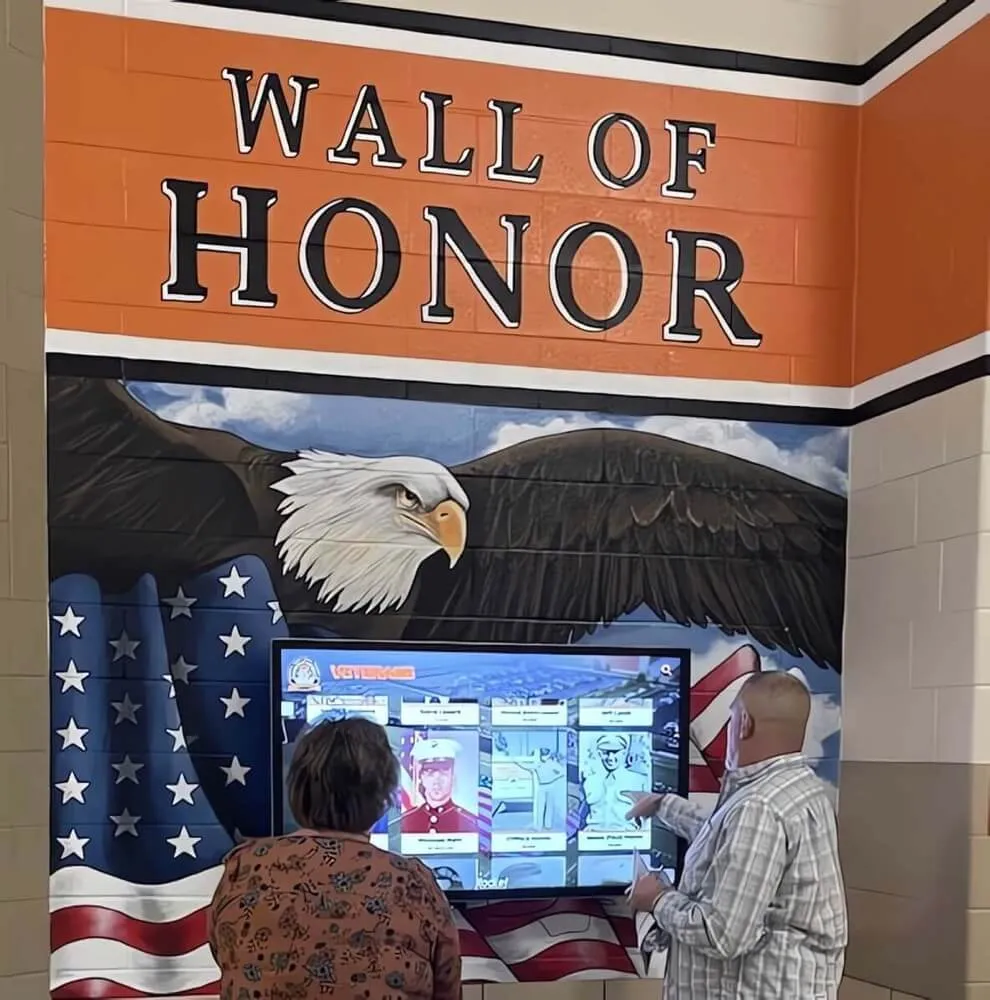
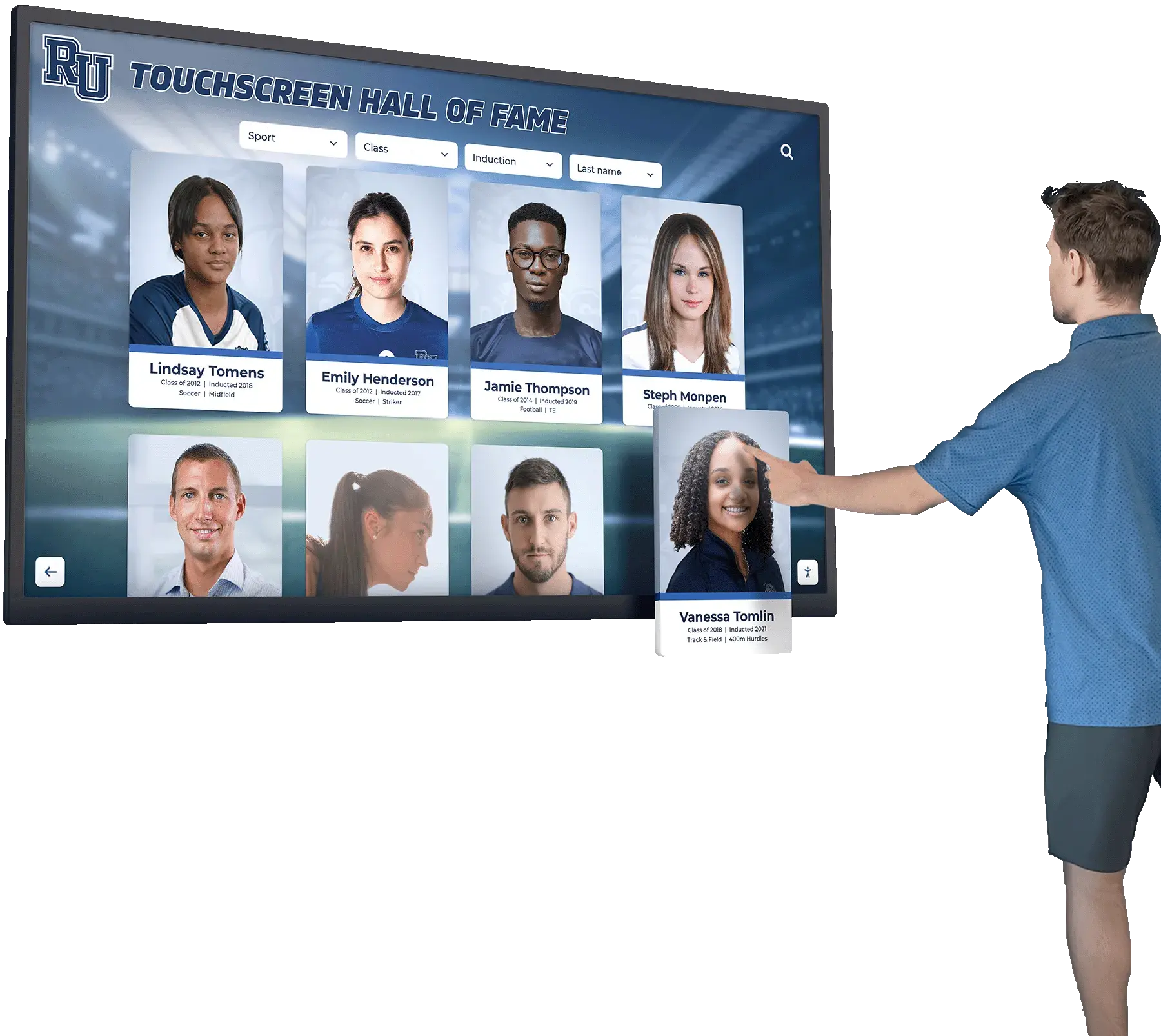
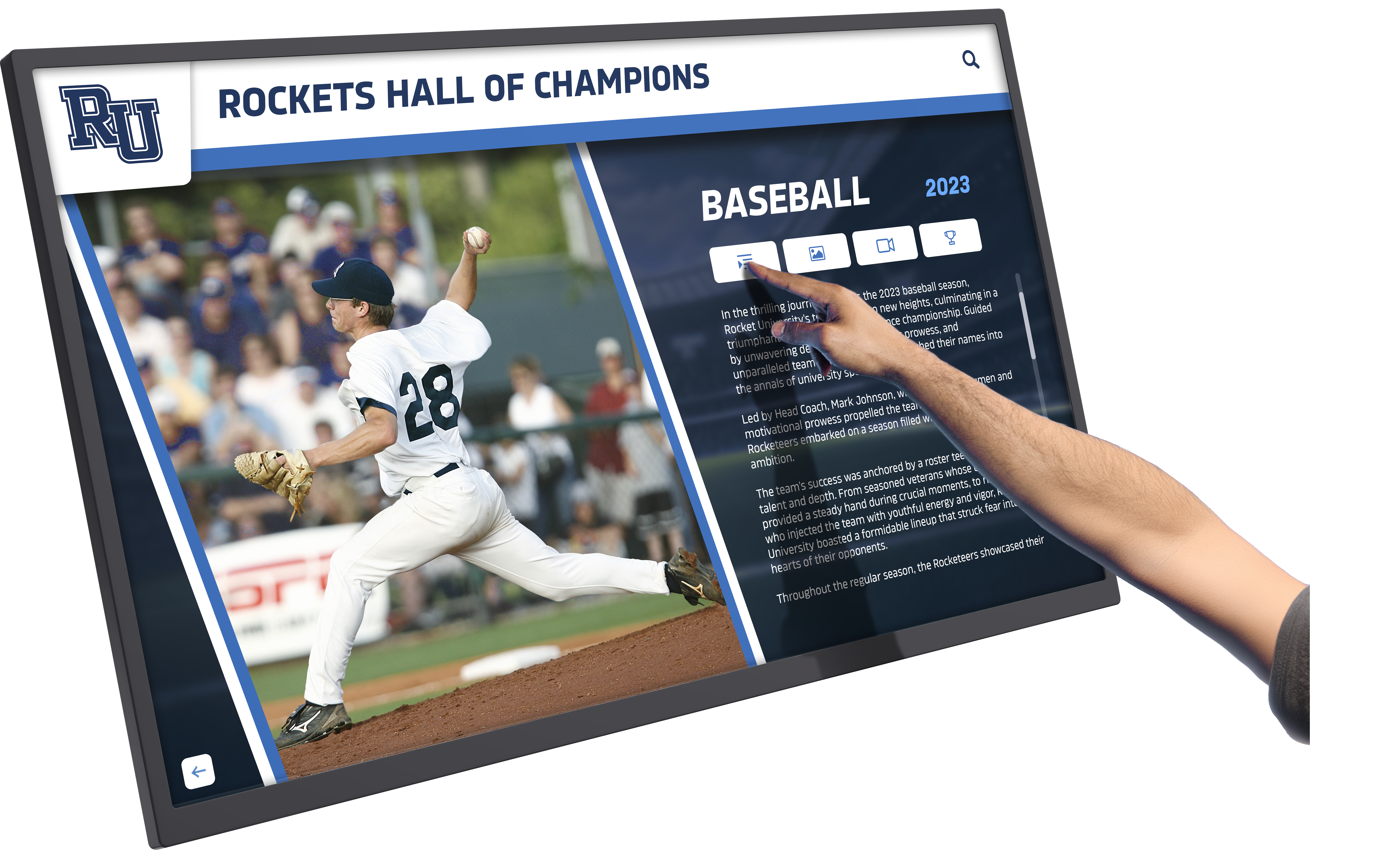
Interactive Exploration and Discovery: Touchscreen digital record boards enable users to actively search for personal connections rather than passively viewing whatever content happens to be displaying. Students can search for records by sport, year, name, or achievement type, compare records across different eras, filter content to specific categories of interest, and discover detailed stories about achievements that capture their attention.
This interactivity creates engagement levels impossible with static displays. Students spend minutes actively exploring rather than seconds glancing at fixed boards, discovering inspiration through self-directed investigation of excellence examples relevant to their personal interests and aspirations. Comprehensive guides to interactive digital signage design help schools maximize engagement through intuitive interface design and compelling content organization.
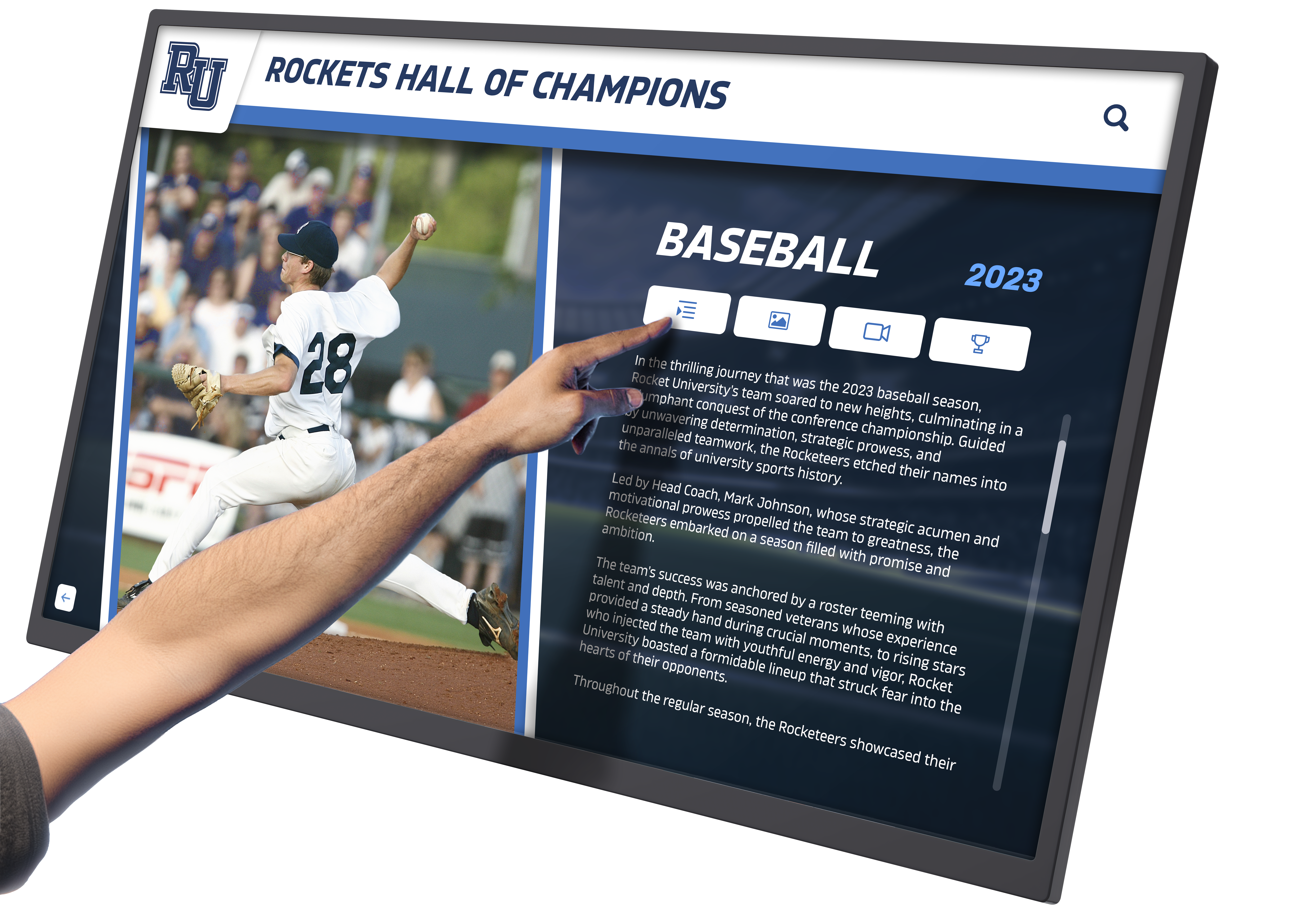
Search and Filtering Capabilities: Digital platforms provide sophisticated organization enabling users to navigate extensive record libraries through intuitive search and filtering. Users might search for all records held by athletes from specific graduation year, filter records to show only their sport of interest, compare record progression across decades showing how performances have improved, or find records held by specific individuals across multiple categories.
This organizational sophistication makes comprehensive record libraries accessible and engaging rather than overwhelming—helping users find personally relevant content quickly while also enabling open-ended exploration of achievement history.
Automatic Record Comparison and Context: Advanced digital systems can automatically compare current athlete statistics against standing records throughout seasons, showing how close active students are to record territory and building excitement as records become threatened. Real-time displays might show “Sarah needs 23 points to break career scoring record” or “Marcus is 0.15 seconds from 100m dash record.”
This dynamic comparison creates awareness and anticipation impossible with static displays that simply document past achievements without connecting them to present performance.
Implementing Effective Record Keeping Systems
Creating and maintaining comprehensive, accurate school record systems requires systematic approaches addressing research, documentation, verification, and long-term maintenance responsibilities.
Establishing Record Keeping Infrastructure
Before documenting first records, schools need organizational infrastructure ensuring systematic, sustainable record management.
Designating Record Coordinators: Effective record systems require clear responsibility assignment. Schools typically designate athletic directors or assistant athletic directors as coordinators for sports records, activities directors or principal assistants for academic and extracurricular records, and specific department heads or coaches for sport-specific or program-specific sub-categories.
Clear ownership prevents records from falling through organizational cracks where multiple people assume someone else handles documentation, resulting in lost achievements and incomplete institutional memory.
Creating Standardized Documentation Templates: Consistent record formatting ensures completeness and professionalism across all achievement categories. Templates should specify required information including achievement description, record holder name and graduation year, date and location of performance, previous record holder and mark, verification source or documentation reference, and any relevant contextual notes about competitive circumstances.
Standardized templates prevent inconsistent documentation quality where some records receive thorough context while others include minimal information, creating uneven recognition that feels disrespectful to certain achievement categories or eras.
Establishing Review and Approval Processes: Record claims should undergo formal verification before receiving official institutional recognition. Review processes might include initial coach or program director review confirming basic accuracy, athletic or activities director verification against documentation standards, periodic comprehensive audits ensuring long-term record accuracy, and clear appeals or correction processes for disputed records or discovered errors.
Formal processes protect institutional credibility while ensuring legitimate achievements receive appropriate recognition without unnecessary delays that diminish accomplishment excitement.
Historical Record Research and Recovery
Many schools lack comprehensive historical record documentation, requiring systematic research to build complete institutional achievement archives.
Archival Research Strategies: Reconstructing historical records requires detective work across multiple information sources including yearbook archives documenting seasonal highlights and major achievements, local newspaper archives containing contemporary game coverage and statistics, state athletic association historical records verifying championships and state meet performances, and reunion program collections preserving information about notable alumni achievements.
School archivists, librarians, or designated volunteers often lead this research, creating valuable projects that engage alumni, preserve institutional memory, and develop comprehensive recognition foundations. Historical research frequently uncovers remarkable achievements that current community members never knew about, strengthening appreciation for program legacy and tradition.
Alumni Engagement in Record Documentation: Alumni represent invaluable resources for historical record verification and context. Outreach strategies might include survey questionnaires asking alumni to share memories of record performances, requests for photographs or memorabilia donations documenting achievements, oral history interviews capturing details about significant accomplishments, and alumni event integration where reunion gatherings become research opportunities.
Alumni typically appreciate being consulted and involved rather than having recognition imposed without their input—and their participation results in richer, more authentic content that benefits current students through detailed historical context impossible to reconstruct without firsthand accounts.
Managing Incomplete or Uncertain Historical Data: Historical research inevitably encounters incomplete information where records likely existed but documentation has been lost to time. Schools must establish policies for handling uncertain data including minimum documentation standards for historical record acceptance, clear notation when records represent “best available information” rather than confirmed facts, separate categories for verified vs traditional/legendary records when appropriate, and ongoing openness to new information that might clarify or correct historical recognition.
Transparency about uncertainty maintains credibility while still honoring achievements that deserve celebration despite imperfect documentation.
Record Display Best Practices for Maximum Impact
How schools present records significantly affects their motivational and cultural impact. Strategic display approaches maximize inspiration while maintaining accessibility and appropriate context.
Location Strategy and Visibility
Record displays deliver value only when students, visitors, and community members actually encounter and engage with them regularly.
High-Traffic Area Placement: Position record displays where diverse audiences pass frequently including gymnasium entrances and lobbies where all athletic events begin, main building entrances capturing all students and visitors daily, commons areas and cafeterias with extended student dwell time, athletic hallways connecting locker rooms to competition spaces, and academic buildings near departments relevant to scholarly records.
Multiple display locations ensure records reach broader audiences than single installations in isolated areas only certain populations encounter regularly.
Proximity to Relevant Activities: Place athletic records where athletes train and compete—in gymnasiums, pool decks, tracks, and team areas. Position academic records near classrooms, libraries, and testing centers. This proximity creates regular encounters between current students and achievement standards they’re actively pursuing, maintaining awareness and inspiration throughout seasons rather than limiting impact to occasional special viewings.
Schools implementing strategic hallway design often integrate record displays into broader recognition programs that transform school spaces into achievement celebration environments rather than treating displays as isolated installations.
Visibility During Events and Tours: Ensure record displays occupy prominent positions where they capture attention during high-attendance events like athletic competitions attracting spectators, academic nights bringing families to campus, prospective student tours evaluating program quality, and alumni reunions reconnecting graduates with institutional history.
Event visibility extends recognition impact beyond daily student encounters to broader community engagement that builds program reputation and institutional pride.
Content Presentation and Organization
Well-organized, thoughtfully presented record content creates engaging, accessible displays that inspire rather than overwhelm viewers.
Logical Categorical Organization: Group records by intuitive categories that help users find relevant content quickly. Athletic records naturally separate by sport and then subdivide by record type (individual/team, career/season/game). Academic records might organize by achievement category (GPA, standardized tests, competitions) or by department (mathematics, science, literature).
Clear categorical structure enables efficient navigation while also supporting comprehensive browsing for users exploring full achievement scope across institutional history.
Historical Context and Record Progression: Don’t just show current record holders—provide historical context showing how records have evolved across decades. Display previous record holders alongside current ones, show record progression timelines demonstrating gradual improvement, include decade-by-decade record comparisons revealing performance trends, and acknowledge eras or individuals who dominated record books before subsequent athletes surpassed their marks.
This historical depth demonstrates that records represent ongoing institutional narratives rather than static final achievements, encouraging current students to see themselves as potential next chapters in continuing excellence stories.
Balanced Recognition Across Programs: Ensure display systems provide equal prominence and capacity to all sports, academic areas, and activity categories regardless of program profile or popularity. Football, basketball, and soccer records shouldn’t dominate displays while swimming, tennis, or golf receive minimal recognition. Similarly, valedictorian recognition shouldn’t overshadow science olympiad winners or debate team achievements.
Equal recognition demonstrates institutional commitment to celebrating all forms of excellence, encouraging students to pursue achievement in areas matching their talents rather than believing only certain accomplishments receive school appreciation.
Inspiration vs Intimidation Balance
Records should inspire excellence pursuit rather than intimidating students with seemingly unattainable standards that discourage effort.
Showcasing Record Progression Stories: Present records not as final destinations but as milestones in ongoing improvement journeys. Show how records have fallen multiple times across institutional history with each new holder surpassing the last, highlight athletes or students who broke multiple records throughout careers showing achievement accumulation, include stories of record holders describing training, dedication, and development that enabled success, and feature near-record performances showing that many students approach excellence even without achieving ultimate records.
This narrative framing helps current students see records as achievable through sustained dedication rather than as genetic gifts belonging only to rare exceptional individuals beyond their reach.
Multiple Recognition Tiers: Supplement elite records with additional recognition tiers that more students can achieve including top-ten performances across various categories, honorable mention for notable achievements falling short of records, seasonal recognition ensuring recent accomplishments receive celebration regardless of record status, and improvement awards celebrating growth and development even when absolute performance levels remain below record territory.
Multi-tiered systems create inclusive environments where diverse achievement levels receive appropriate celebration, preventing records from becoming exclusive clubs that most students never join.
Personal Best Emphasis: Frame records within broader messages emphasizing personal improvement and excellence pursuit regardless of whether record-breaking occurs. Display systems might include inspirational messaging about giving maximum effort, stories of athletes or students who maximized their potential without breaking records, and emphasis on team success and character development alongside individual statistical achievement.
This balanced approach positions records as worthy goals without suggesting they represent the only meaningful achievements or that students failing to break records somehow fell short of valuable contribution.
Digital Solutions for Modern School Record Management
Technology enables comprehensive, sustainable record systems that overcome traditional limitations while creating engaging recognition experiences for digital-native students.
Cloud-Based Record Management Platforms
Modern record platforms provide centralized management enabling authorized users to maintain records from anywhere while ensuring content accuracy and consistency.
Centralized Data Management: Cloud platforms consolidate all record information in single databases accessible to authorized administrators from any internet-connected device. Athletic directors update sports records during away competitions using smartphones or tablets, academic coordinators add achievement recognition immediately following competition results, and multiple department coordinators manage respective areas without coordination conflicts or version control confusion.
This centralized approach ensures records remain current and comprehensive rather than fragmenting across disconnected systems that nobody fully maintains.
Role-Based Access Control: Sophisticated platforms enable granular permission structures including view-only access for general users exploring records, editor access for coaches and coordinators who can add and modify content in their specific areas, approval workflows requiring administrative review before publication, and administrative access for overall system management and configuration.
These permission structures maintain data quality by preventing unauthorized modifications while enabling efficient distributed management across multiple responsible individuals rather than creating bottlenecks where single administrators must handle all updates personally. Systems for displaying comprehensive school history demonstrate how cloud platforms enable sustainable long-term record management.
Automatic Backup and Version History: Cloud systems provide automatic data backup protecting against loss from hardware failure, accidental deletion, or natural disasters. Version history maintains records of all changes enabling recovery if errors occur, showing who made modifications and when for accountability, reverting to previous versions if needed, and maintaining audit trails documenting record evolution.
These protections ensure decades of historical record research and documentation remains permanently secure rather than being vulnerable to single points of failure that could destroy irreplaceable institutional memory.
Integration with Athletic and Academic Management Systems
Record platforms can integrate with existing school systems to streamline data collection and reduce manual documentation burdens.
Athletic Management System Connections: Many schools use platforms like MaxPreps, Athletic.net, or Arbiter for competition scheduling and results tracking. Record systems that integrate with these platforms can automatically import statistical data following competitions, flag performances approaching or exceeding existing records, populate record holder profiles with career statistics, and maintain synchronized information across multiple systems.
This automation reduces manual data entry while ensuring record systems remain current without requiring administrators to manually transfer information between disconnected platforms.
Academic Data System Integration: Similarly, record systems might connect with student information systems to verify GPA claims or academic honors, import standardized test scores reported through school systems, or coordinate with scholarship and award databases documenting recognition.
Integration reduces verification burdens while maintaining appropriate privacy protections around student academic information.
Conclusion: Building Comprehensive School Record Systems
School records represent far more than statistical curiosities or historical trivia—they establish institutional standards for excellence, inspire current students through tangible examples of achievement, preserve program legacy across generations, and demonstrate quality to prospective students, families, and communities. Yet these valuable functions only occur when schools implement comprehensive systems for defining records clearly, tracking achievements systematically, maintaining documentation accurately, and displaying recognition prominently in ways that engage and inspire.
Traditional physical record displays have served schools for generations, creating tangible recognition with strong visual presence. But painted walls, printed boards, and trophy case plaques face fundamental limitations including severely restricted capacity forcing difficult prioritization decisions, expensive and disruptive updates when records fall, minimal contextual information beyond basic statistics, and no interactivity enabling personal exploration or discovery.
Modern digital record board technology transforms what’s possible in school record recognition by providing unlimited capacity honoring every record across all programs and eras, instant updates ensuring timely recognition maintaining excitement and engagement, rich multimedia content telling complete achievement stories beyond bare statistics, interactive exploration enabling users to search, filter, and discover personally relevant content, sophisticated organization making comprehensive record libraries accessible rather than overwhelming, and sustainable management through cloud platforms supporting distributed administration.
Schools implementing digital record systems report significant benefits including enhanced student motivation through visible achievement standards, stronger program culture celebrating excellence across all activities, improved historical preservation protecting institutional memory, increased community engagement and pride, and recruiting advantages demonstrating program quality to prospective students.
Whether establishing first formal record systems or modernizing existing displays, solutions like Rocket Alumni Solutions provide purpose-built platforms specifically designed for comprehensive school record management and display. These systems combine intuitive content management enabling efficient record updates, flexible organization supporting diverse record categories, multimedia storytelling creating engaging recognition experiences, and reliable performance ensuring recognition remains accessible across many years.
Beyond technology selection, successful record programs require strategic planning addressing clear definition of what constitutes records across different categories, systematic verification ensuring accuracy and credibility, comprehensive historical research documenting achievement across institutional history, sustainable management assigning clear responsibilities and workflows, and thoughtful display strategies balancing inspiration with accessibility.
Every school has remarkable achievement stories worth preserving and celebrating. The question isn’t whether school records matter, but whether current systems appropriately honor excellence while inspiring future students to pursue their own record-breaking performances. Modern digital record boards finally make comprehensive celebration possible, ensuring every achievement receives the recognition it deserves while creating engaging experiences that inspire current students to write the next chapters in continuing institutional excellence narratives.