



Every time a high school athlete walks into a gymnasium and sees a row of championship banners hanging overhead, something shifts. Those banners represent more than past victories—they are a covenant between generations of athletes, a visible promise that excellence will be recognized and remembered. Yet the banners hanging in gyms today reflect decisions made years or decades ago about design, materials, and placement. Schools that get those decisions right create displays that inspire athletes for generations. Schools that get them wrong face faded colors, peeling fabric, and cluttered walls that fail to honor the programs they represent.
This guide focuses on three connected questions every athletic director faces when a new title is won: How should the banner look? What should it be made of? And where—and how—should it be displayed so the achievement endures in institutional memory long after the athletes who earned it have moved on?
Beyond Physical Banners: Digital Championship Recognition
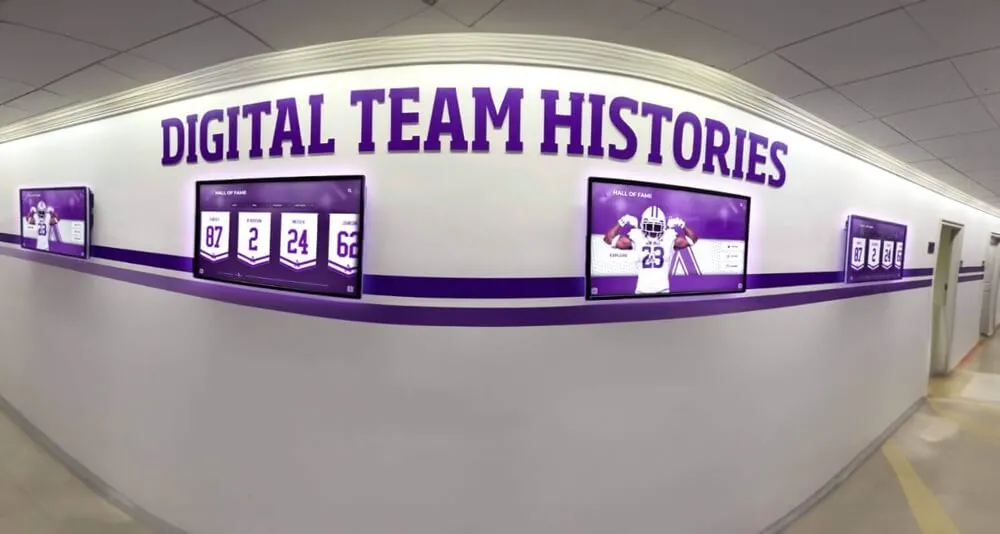
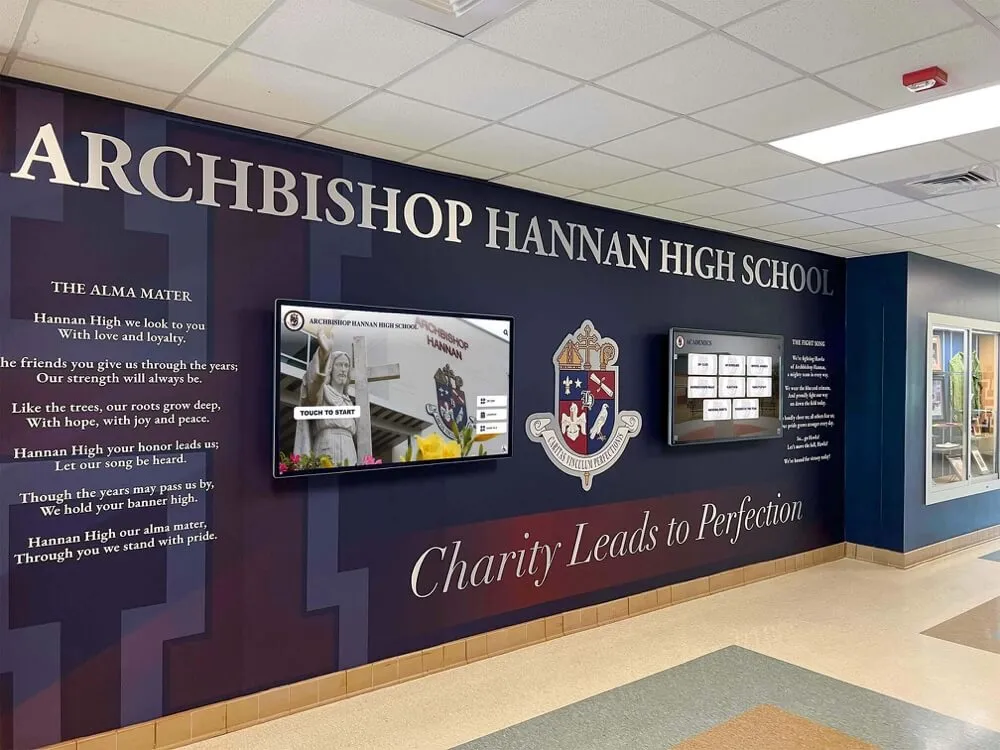
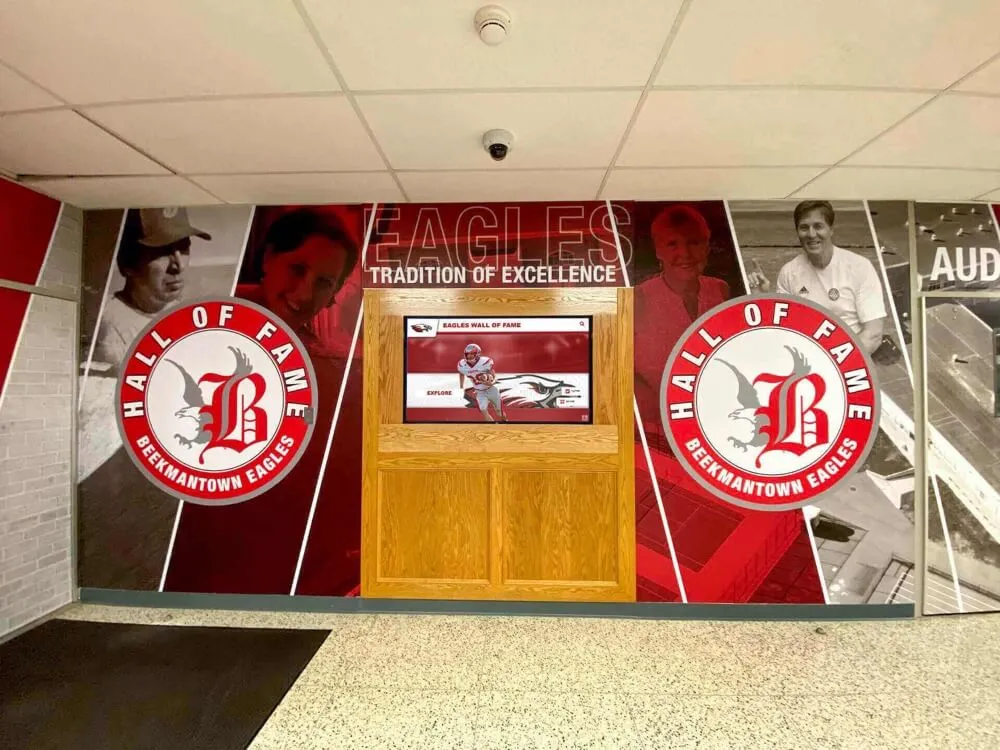
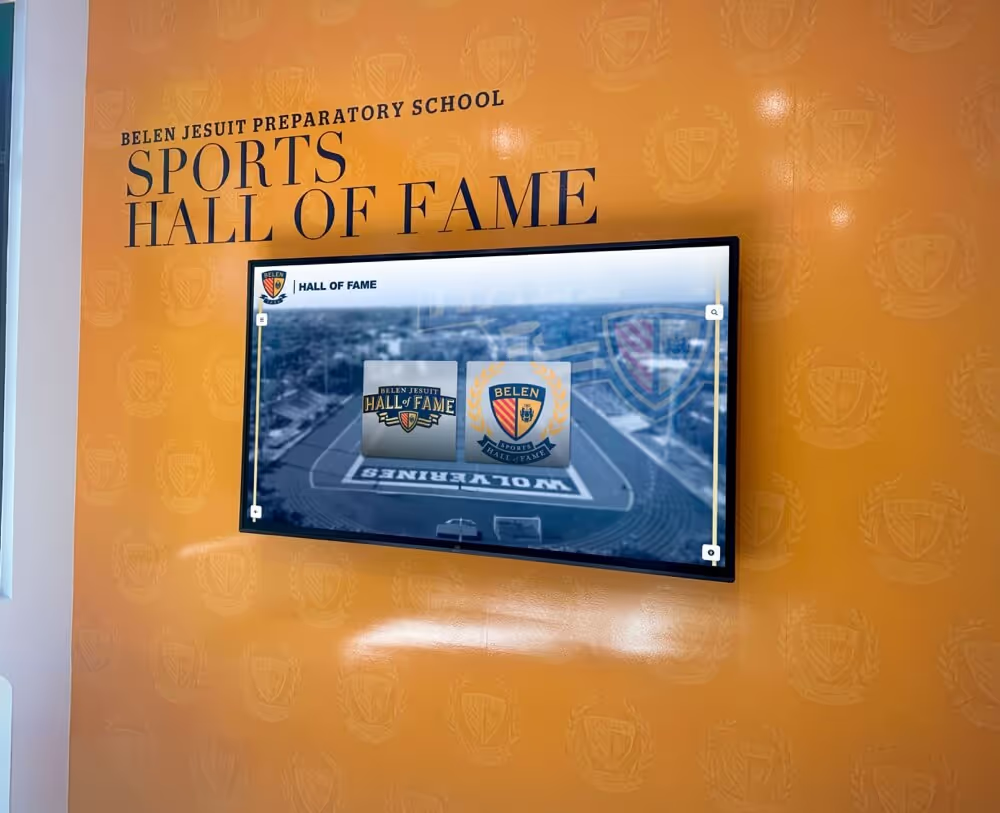
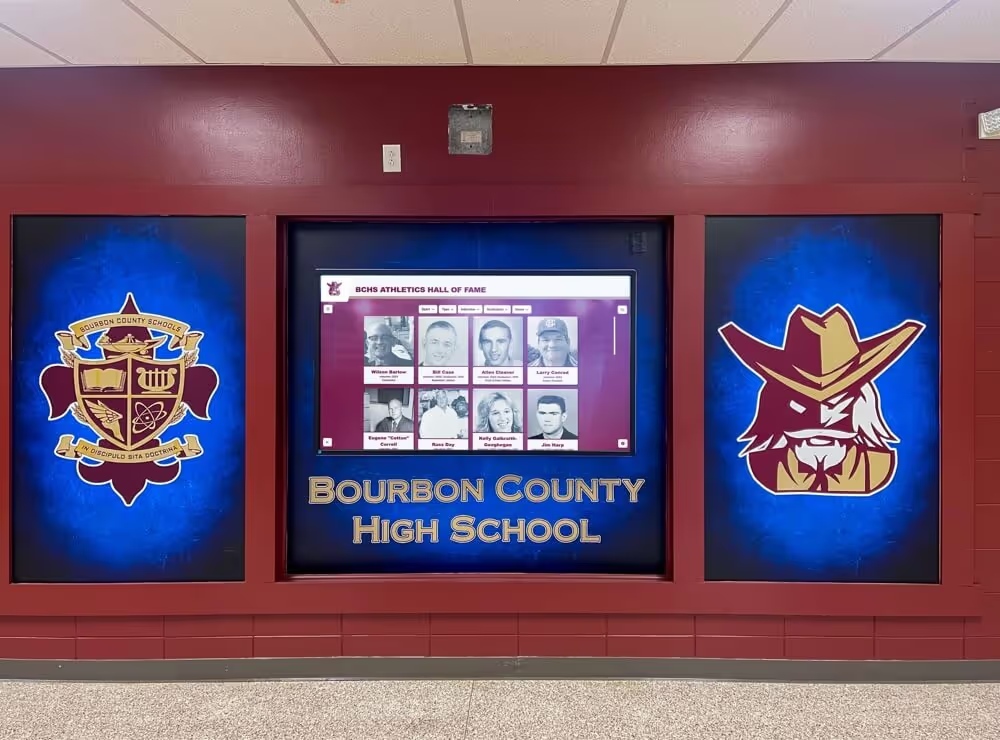
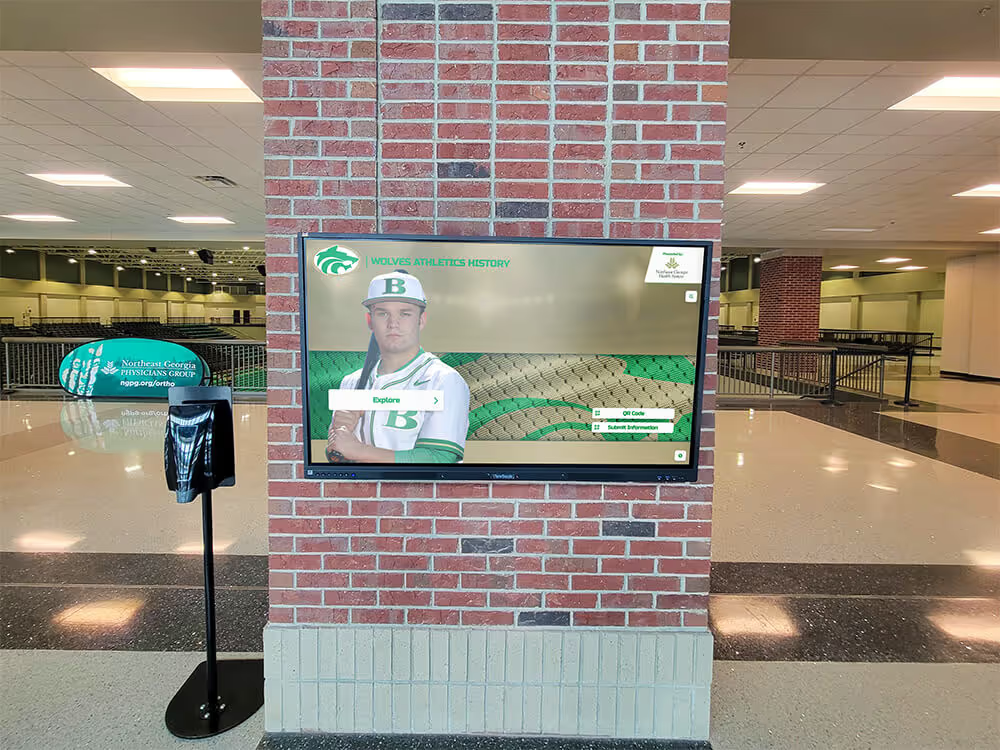
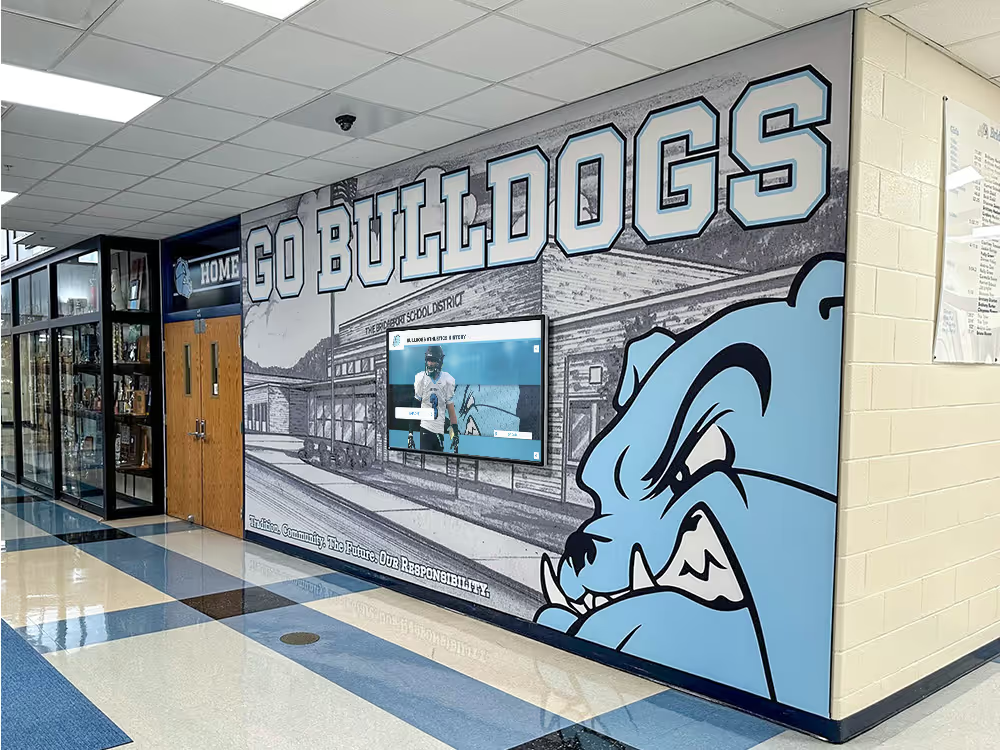
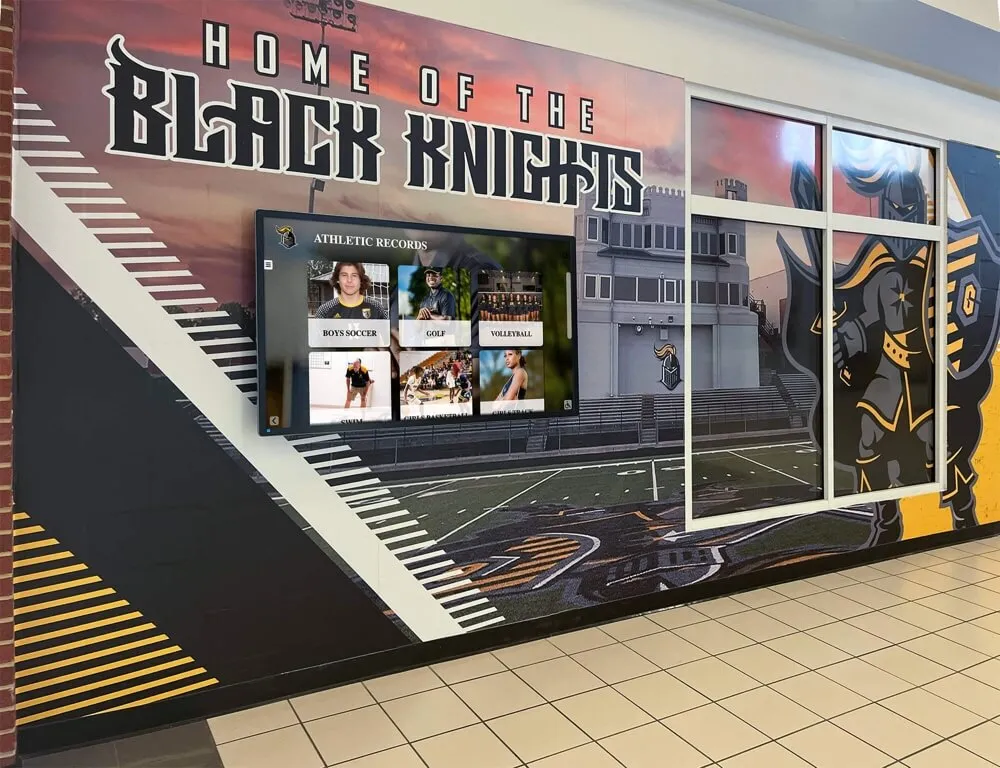
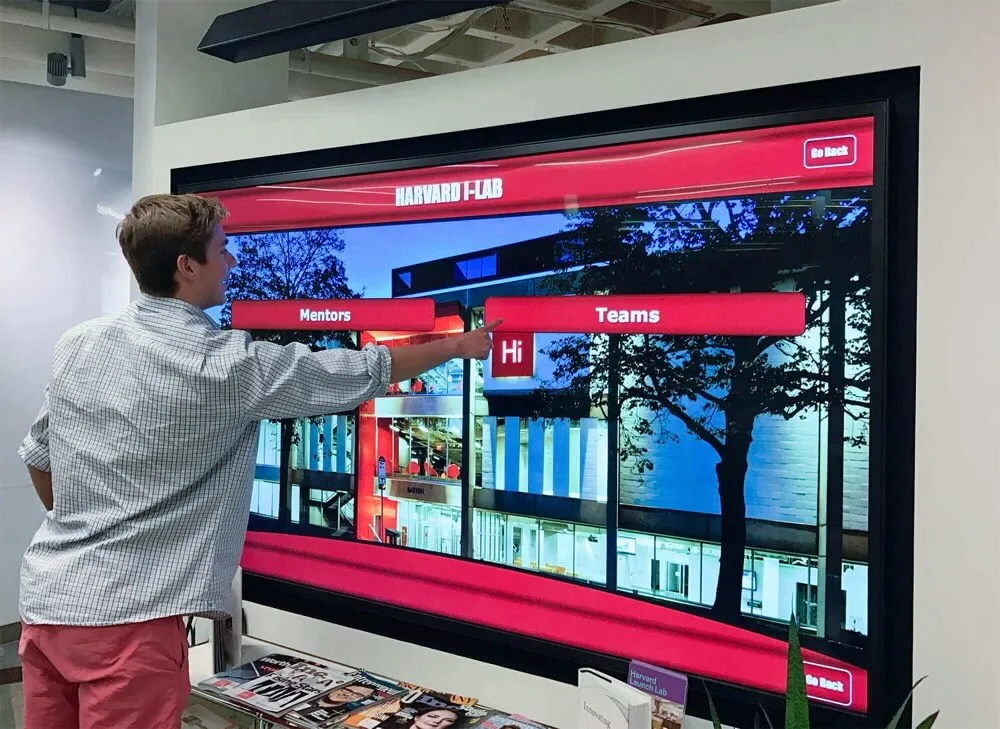
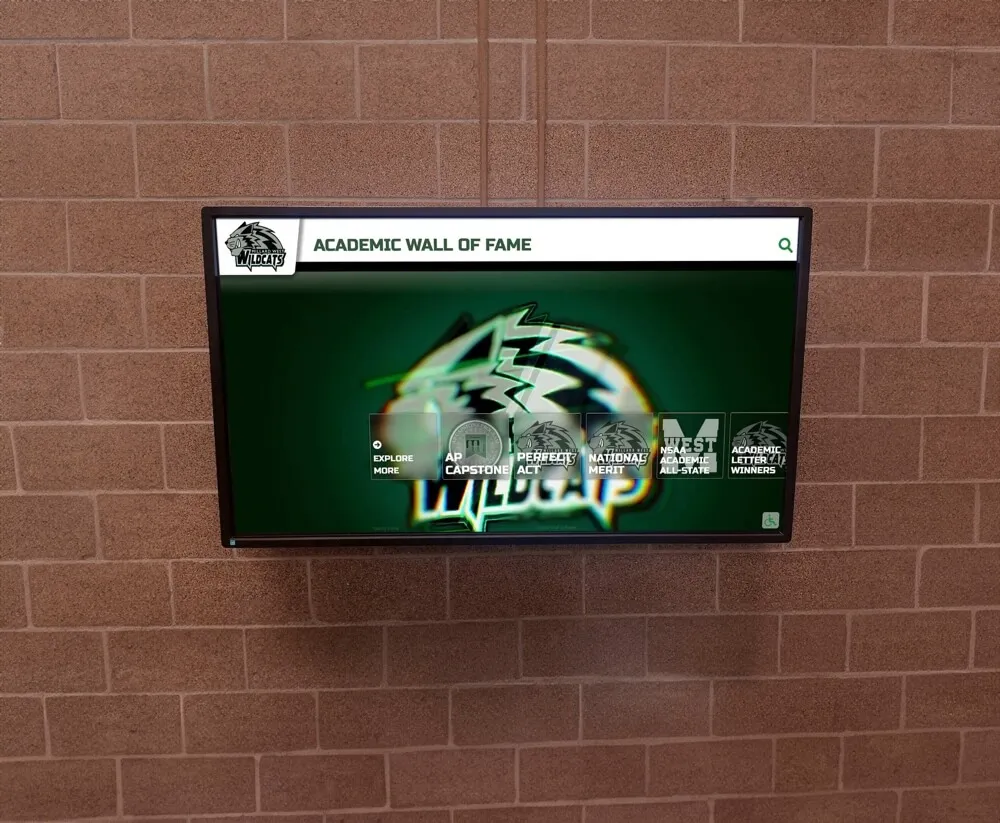
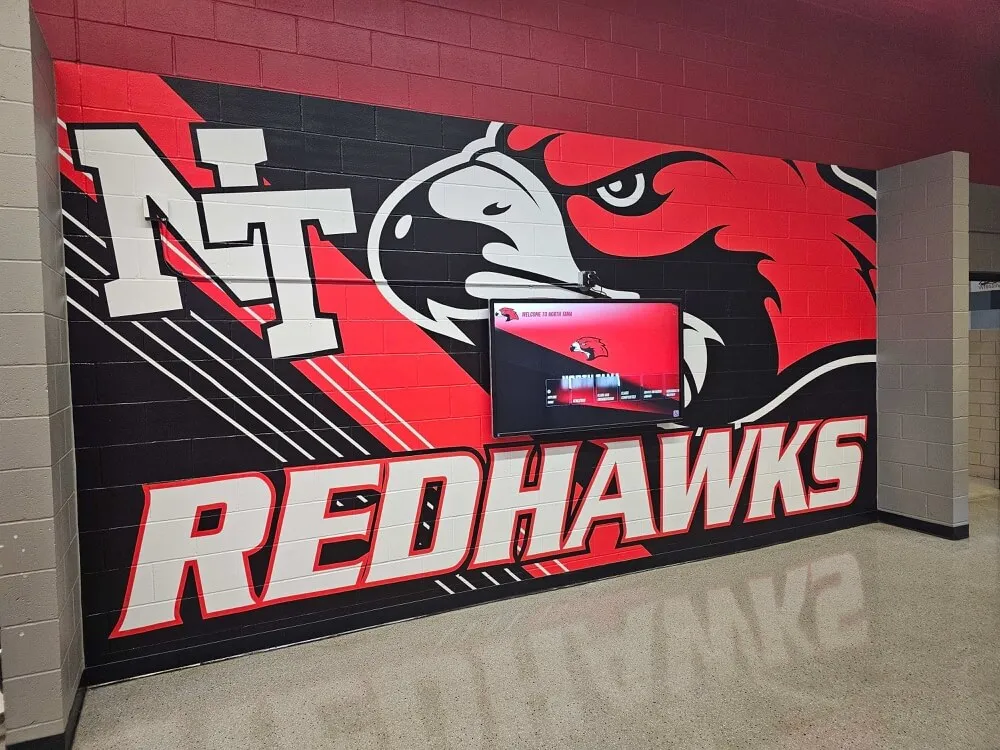
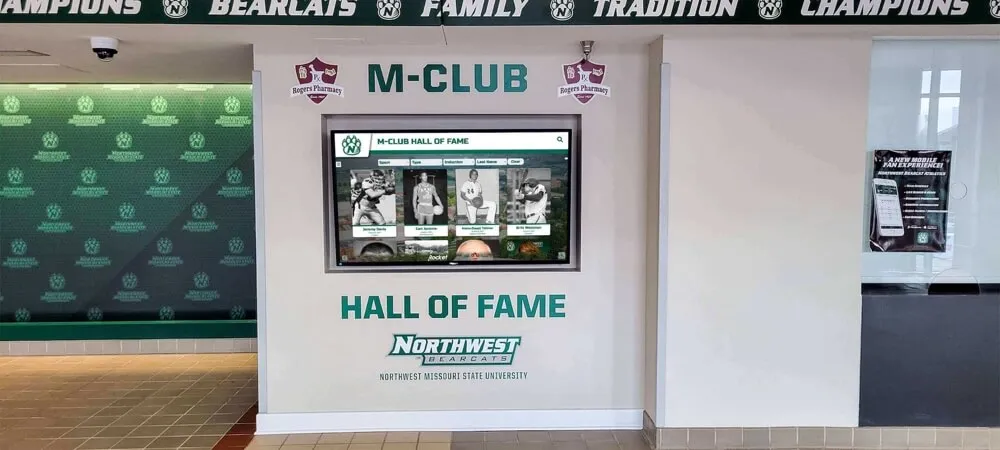
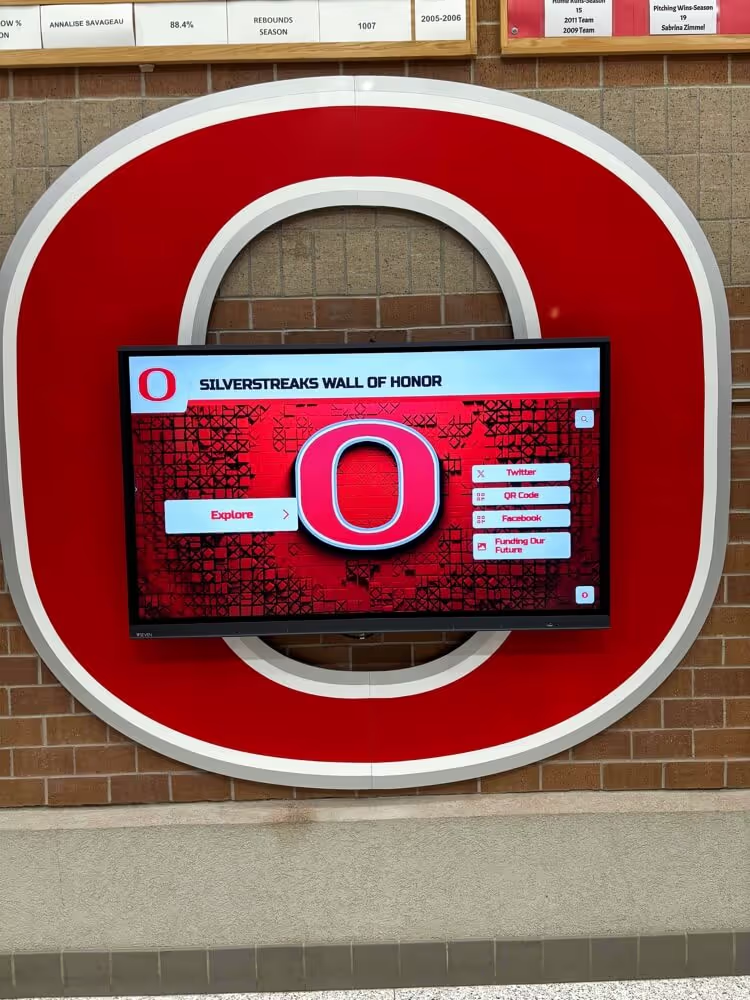
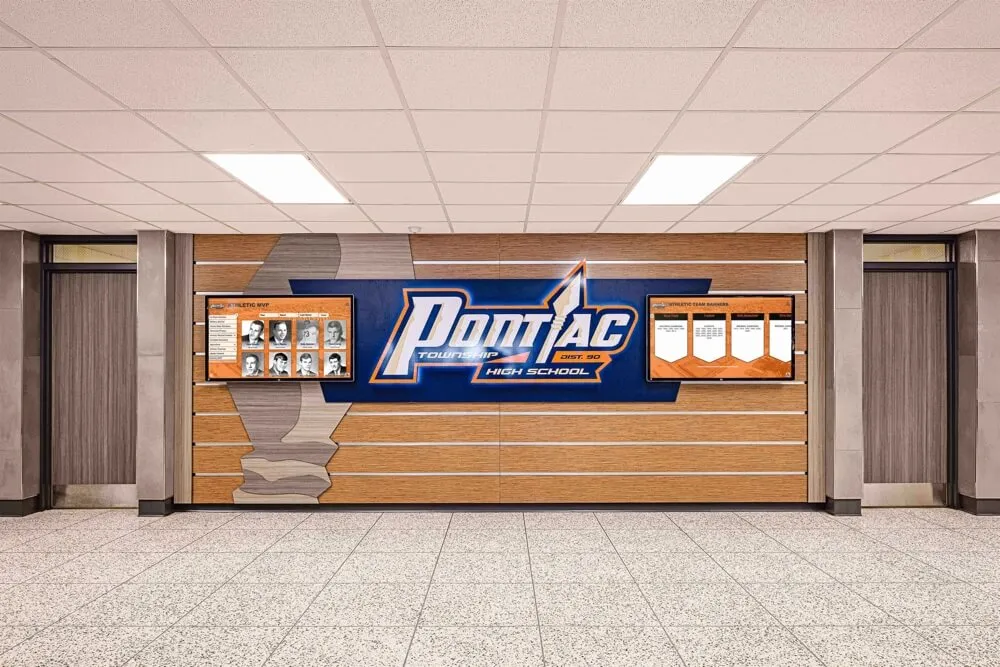
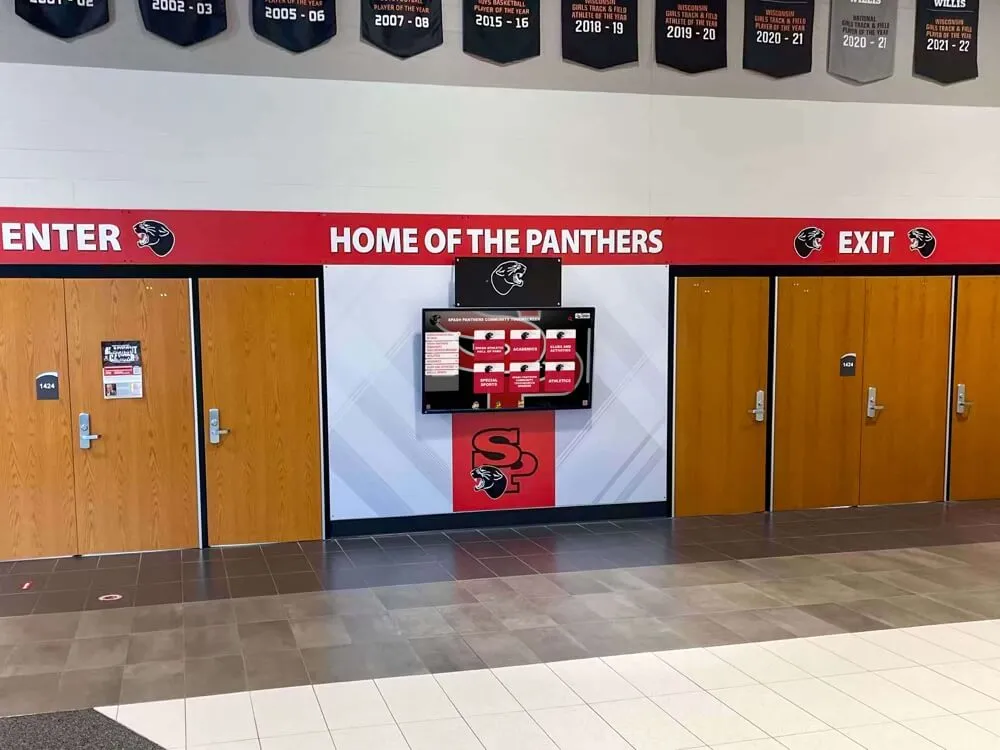
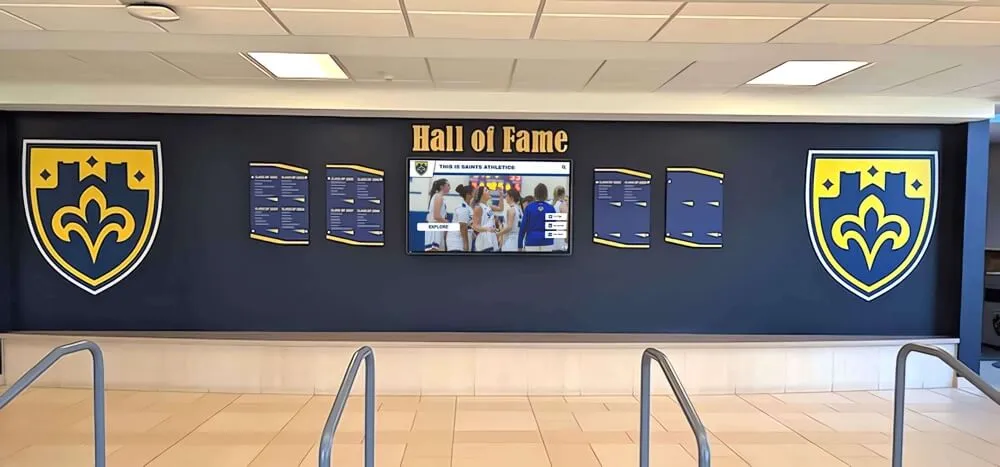
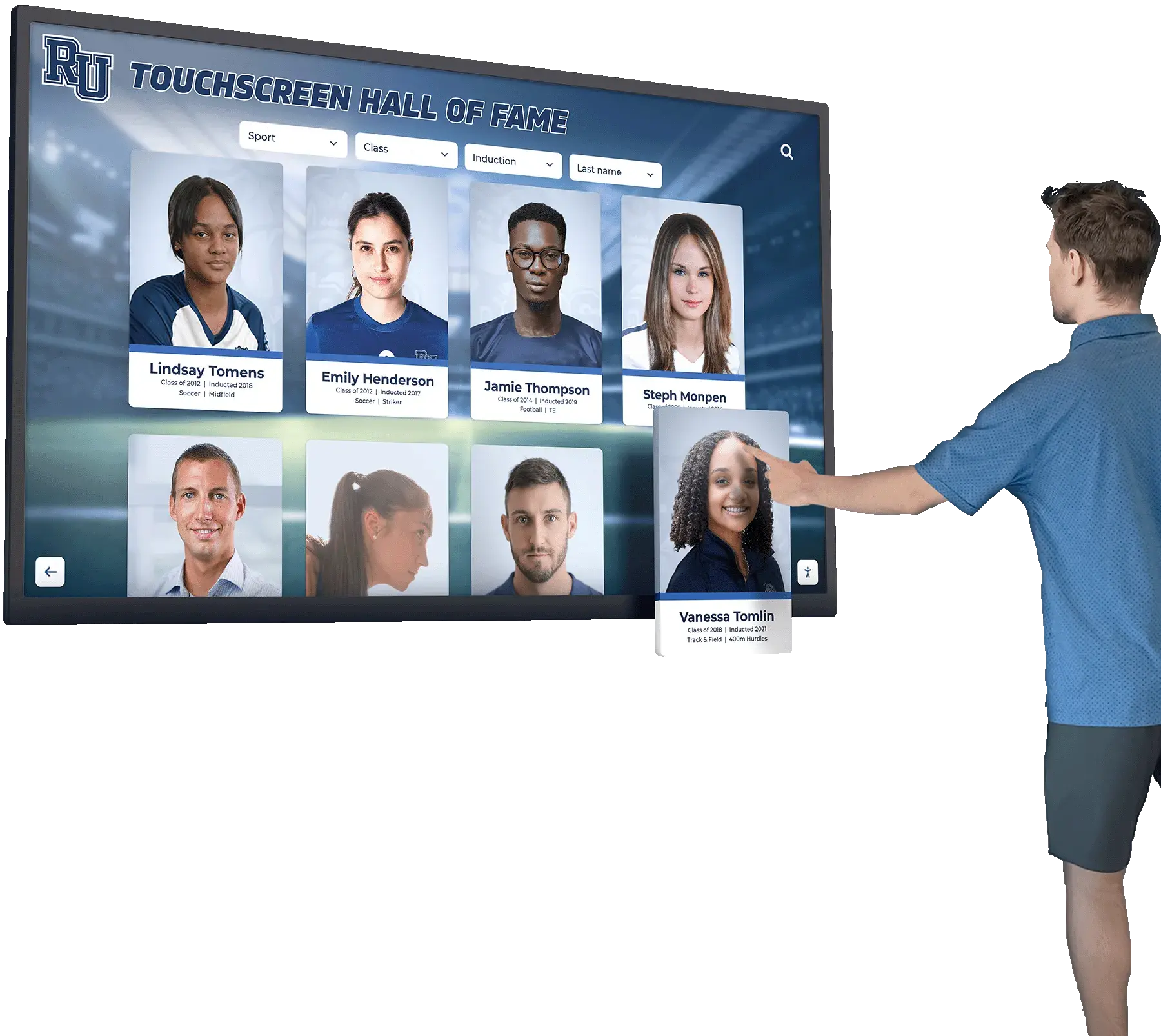
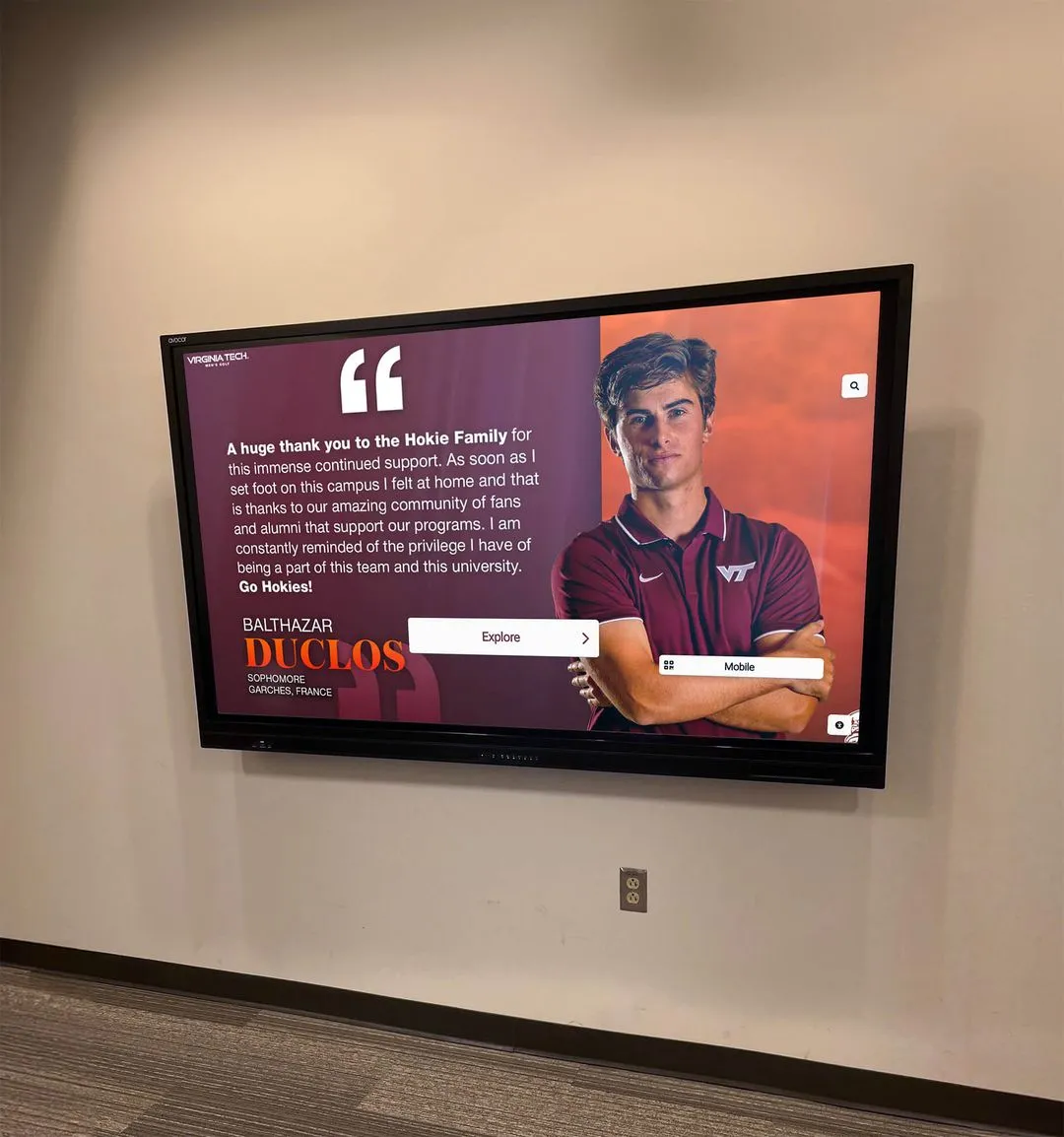
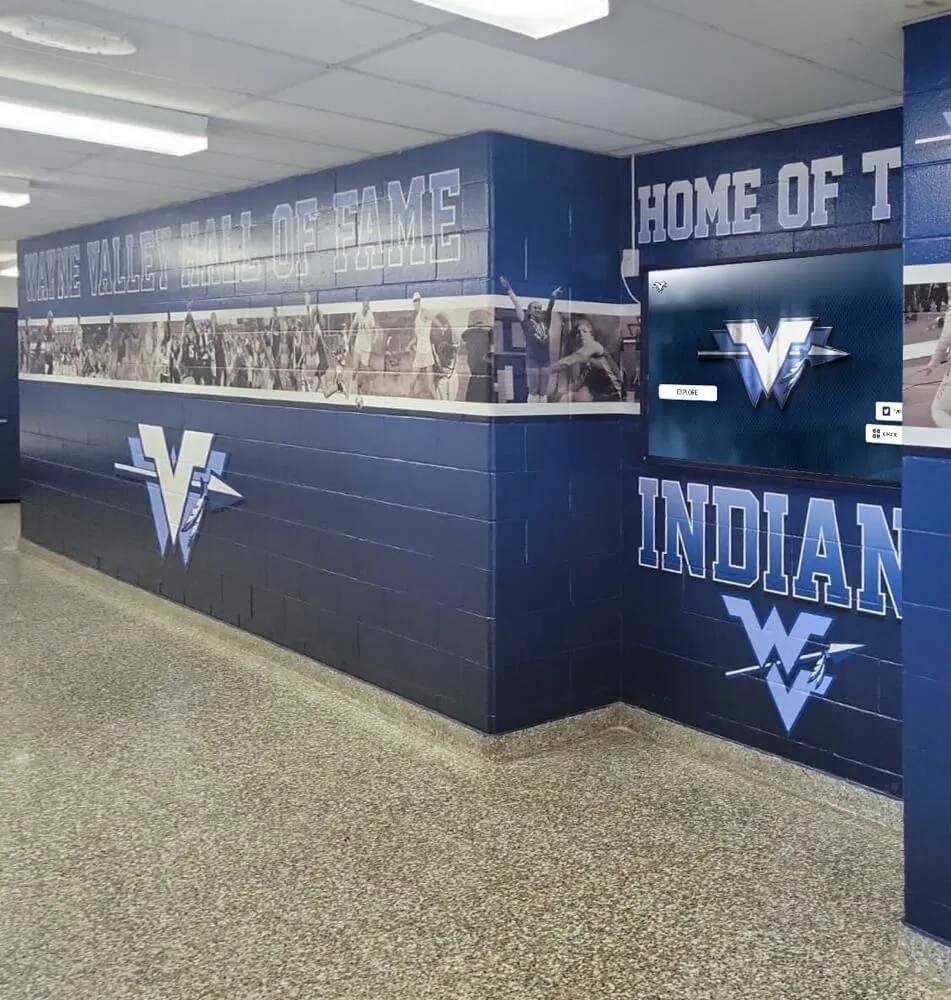
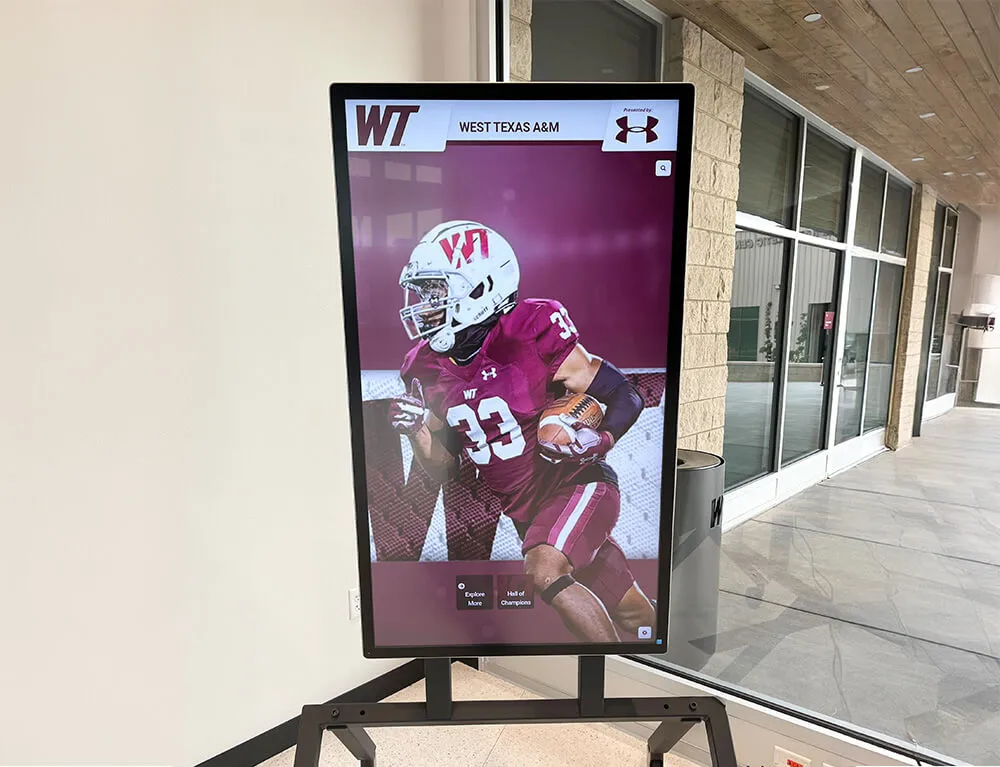
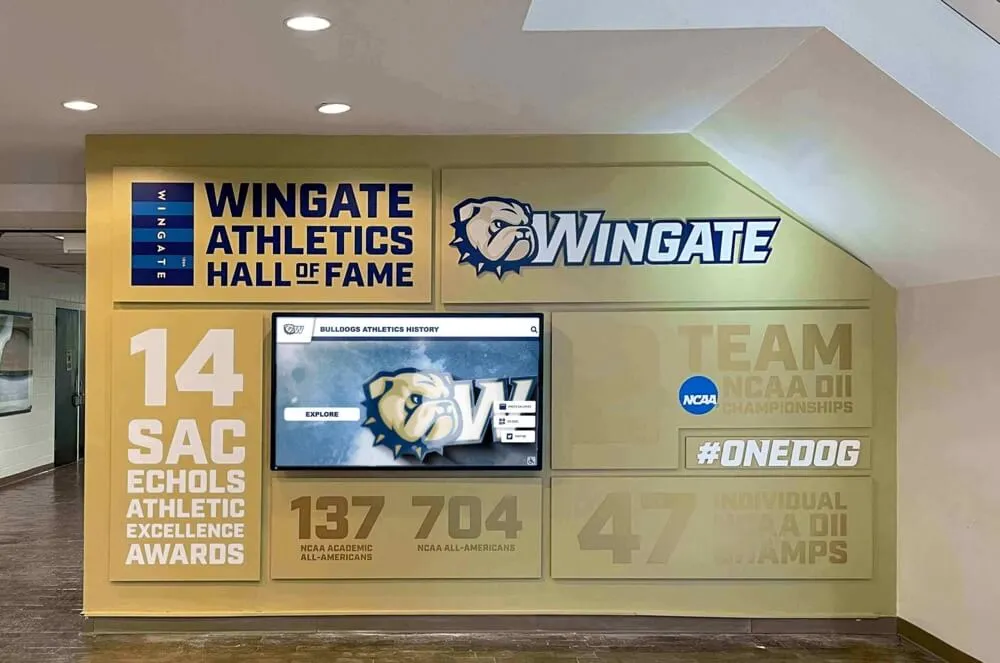
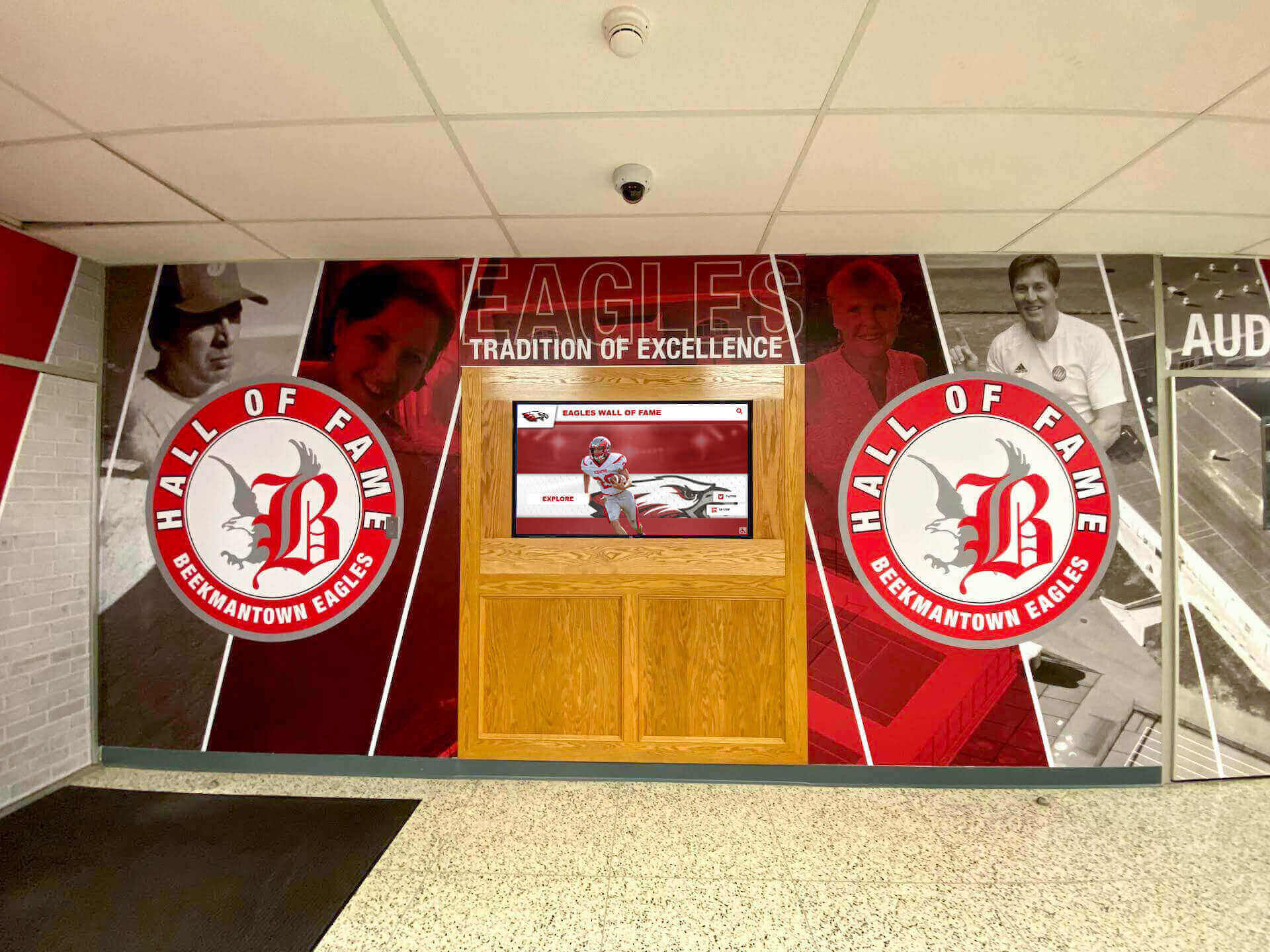
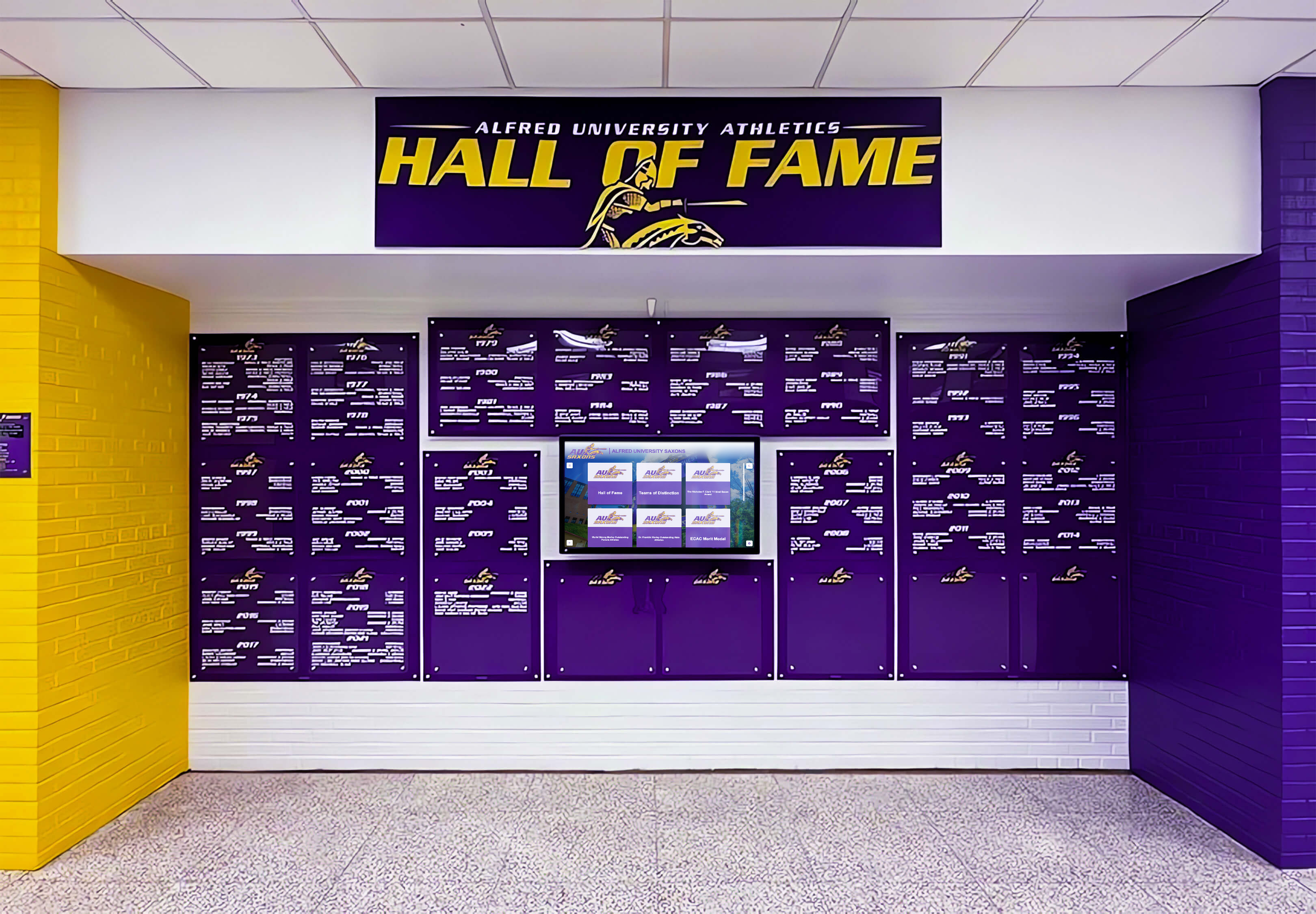
Traditional fabric and vinyl school championship banners carry real limitations: finite wall and rafter space, fading over time, costly reprinting, and static formats that cannot include rosters, photos, or season stories. Modern digital championship recognition systems eliminate these constraints by combining high-impact physical presence with unlimited content capacity—displaying every title across every sport, updating records instantly, and giving visitors touchscreen access to the full story behind each championship. Platforms like Rocket Alumni Solutions are purpose-built for school athletic recognition, offering interactive displays that transform how communities connect with championship history.
What Makes a Championship Banner Work: Core Design Principles
A championship banner performs a specific job. It must communicate the achievement clearly at a distance, look professional over decades of display, fit cohesively with other banners in the same facility, and represent the school’s visual identity with authority. Most design failures trace back to ignoring one of these four requirements.
The Essential Information Hierarchy
Every school championship banner needs to answer three questions at a glance:
- Which team? Sport and school identity
- What was won? Championship type and classification
- When? Season or academic year
Beyond these basics, successful banners often include the team’s season record, the coach’s name, or the specific tournament or conference earned. The challenge is sequencing this information so the most critical elements read first. Championship year and title type should anchor the visual hierarchy. Supporting details—records, coach names—should appear in smaller type that doesn’t compete with the primary message.
A common design mistake is giving equal visual weight to every text element, leaving viewers uncertain where to look. Professional banner designers use type sizing ratios of at least 3:1 between headline elements and secondary information, ensuring the banner communicates its core message instantly even when viewed from bleachers across a full gymnasium.

Color Strategies That Endure
School colors are the natural foundation for championship banner design—they provide instant institutional identification and create visual consistency across a collection of banners added over many years. But how schools apply those colors matters significantly.
Single dominant color approach: Using the primary school color as the background with the secondary color for text and graphic elements creates maximum legibility and strong visual impact. This approach works particularly well when the school has high-contrast colors (navy and gold, crimson and white, black and orange).
Split design approach: Dividing the banner vertically or diagonally between the two main school colors creates visual dynamism that stands out against gymnasium walls. This works especially well for schools whose individual colors might be difficult to read independently at distance.
Accent color discipline: Many schools introduce unauthorized colors into championship banners over time—silver metallic treatments, shifting backgrounds from year to year, or design trends that look dated within a decade. The most impressive championship banner collections are those where every banner from the 1980s to the present follows the same color rules, creating a unified visual legacy that communicates program continuity across eras.
Typography Choices That Age Well
Typography in championship banners must balance legibility, personality, and longevity. Consider how long the banner will hang: a typeface that looks current today should still look respectable in thirty years.
Serif fonts convey tradition and authority and tend to age well. They work particularly well for schools with long athletic legacies seeking a classic presentation.
Bold condensed sans-serif fonts offer strong legibility at a distance and carry a classic athletic aesthetic familiar to gymnasium audiences. Many successful championship banners use a bold condensed face for the primary championship designation.
Script or decorative fonts are high-risk choices. They can look distinctive when new but often feel dated quickly and become difficult to read as banners age and colors fade.
The safest approach is to select one primary display font for championship text and one clean secondary font for supporting information, then document these choices in a design standard applied to every future banner. Consistency across decades is worth more than any single design choice.
Championship Banner Materials: Choosing for Longevity
Material selection determines how long a championship banner maintains its original appearance. The right material for a rafter installation in a high-humidity gymnasium differs from the right choice for a wall-mounted display near exterior windows. Understanding these differences prevents premature fading, deterioration, or physical damage that undermines the recognition these displays are meant to provide.
Indoor Banner Materials Compared
Most school championship banners are indoor installations. The primary material options each carry distinct trade-offs:
Vinyl (PVC-based material): The most common choice for indoor championship banners. High-quality vinyl provides excellent color saturation, significant resistance to fading from fluorescent lighting, and dimensional stability—it won’t sag or stretch over time. Vinyl banners can be produced with smooth or textured finishes; matte finishes tend to read better in gymnasiums with overhead lighting that creates glare on reflective surfaces.
Polyester fabric: Lighter than vinyl, polyester fabric banners offer a traditional textile look preferred by some schools. Modern polyester with dye-sublimation printing provides good color fastness, though it generally requires hem finishing and more substantial grommets to maintain shape during hanging over extended periods.
Canvas: Used by schools seeking a premium, museum-quality appearance, canvas provides excellent material durability and a distinctive aesthetic. Canvas banners typically cost more to produce and are heavier, requiring more robust mounting hardware.
Felt: Traditional athletic felt banners, often produced with sewn lettering, represent the classic approach used for decades. Felt provides a distinctive tactile texture and traditional appearance that some schools prefer for heritage reasons. The limitation is that felt requires more complex production, making updates or additions expensive and time-consuming.
For most schools balancing cost, appearance, and longevity, high-quality vinyl with UV-resistant inks and a matte finish represents the optimal choice. When ordering, specify that the vinyl meet at least 10-year fade-resistance ratings under standard indoor fluorescent lighting conditions and request documentation of the print process used.
Grommet and Hardware Specifications
The visible face of a championship banner receives most attention, but the hardware holding it in place determines whether it stays straight and professional-looking for decades. Common failure points include:
- Undersized grommets that tear through banner material under repeated tension from building HVAC airflow
- Non-rust-resistant hardware that stains banner edges over time, particularly in high-humidity gymnasiums adjacent to pools or shower facilities
- Inadequate grommet spacing causing banners to sag or bow between attachment points
Professional banner installations use brass or aluminum grommets spaced no more than 18 inches apart along the top edge. For banners wider than 3 feet, side grommets provide additional stability. Cable or rod hanging systems that maintain consistent tension across the banner’s width prevent the characteristic bow that undermines the appearance of many gymnasium collections over time.
Establishing Size Standards
The most visually cohesive championship banner collections maintain consistent dimensions across all banners regardless of when they were produced. When schools deviate from established sizes—producing an oversized banner to accommodate extra text, or a smaller banner because a vendor had different standard stock—the visual disruption undermines the entire display.
Before ordering a first championship banner or replacing aging ones, athletic directors should establish size standards that will govern all future productions. Common standard sizes include 2’ × 4’ (vertical orientation), 3’ × 5’, and 4’ × 6’. Vertical orientations tend to work better for rafter hanging, while horizontal formats suit wall-mounted installations. Document the exact dimensions, material specifications, color codes (using Pantone or specific hex values, not approximations), font names, and layout guidelines in a formal design standard stored in institutional files accessible to any future staff member.
How Schools Display Title Wins: Traditions and Strategies
The physical placement of school championship banners is as consequential as their design. Different schools have developed distinct traditions for organizing and displaying their title collections, each with advantages depending on the school’s championship history, facility layout, and recognition philosophy.
The Classic Rafter Gallery
The most iconic championship banner tradition hangs banners chronologically from gymnasium rafters, creating a visual timeline of program achievement visible from anywhere in the facility. This approach works best when:
- The gymnasium has sufficient ceiling height (typically 25 feet or more) to hang banners without interfering with game play or sight lines
- The program has enough championships to create meaningful visual density—a single banner hanging alone in vast rafter space looks isolated rather than impressive
- The facility’s lighting system adequately illuminates the rafter level where banners will hang
Chronological rafter galleries create immediate historical impact. A visitor walking into a gymnasium hung with 35 banners spanning six decades understands instantly that they are entering a program with deep competitive tradition. The visual weight of accumulated achievement is difficult to replicate with other display approaches.
The challenge is managing this accumulation over time. Schools with extensive championship histories eventually face rafter crowding, which forces difficult decisions about spacing, size reductions, or transitioning historical banners to archival storage. Building a school history timeline that contextualizes championships alongside other institutional milestones can extend how schools present athletic legacy when physical space becomes constrained.
Dedicated Championship Walls
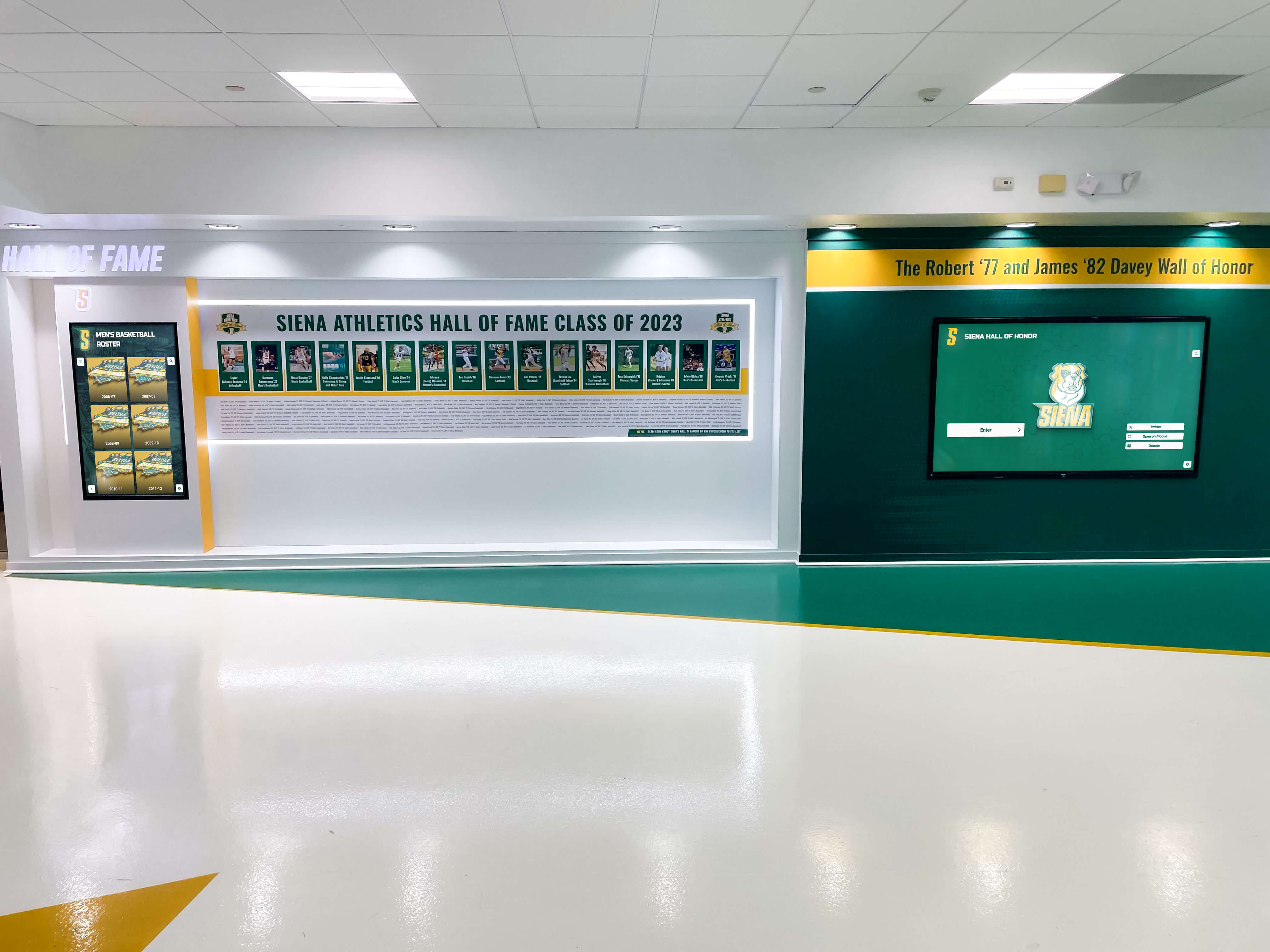
Wall-mounted championship displays offer advantages over rafter installations in facilities with low ceilings, renovation projects affecting structural systems, or schools seeking a different aesthetic presentation. Dedicated championship walls concentrate recognition in specific zones, allowing designers to create curated visual environments rather than the distributed effect of rafter galleries.
Effective championship wall strategies include:
Sport-specific sections: Grouping banners by sport—all basketball championships together, all swimming championships together—creates logical organization that helps visitors navigate program history by athletic discipline. This works particularly well in schools with strong traditions across multiple sports.
Era-based arrangement: Organizing banners by decade or coaching era provides historical context, allowing visitors to see how championship success accumulated or identify periods when programs faced rebuilding challenges before returning to title contention.
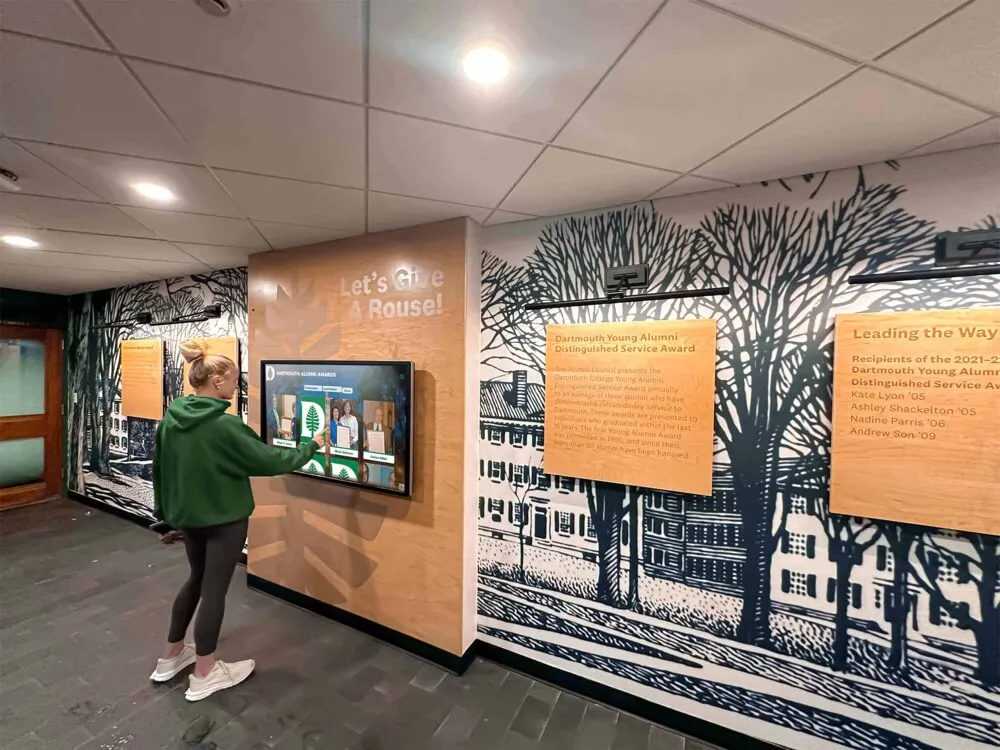
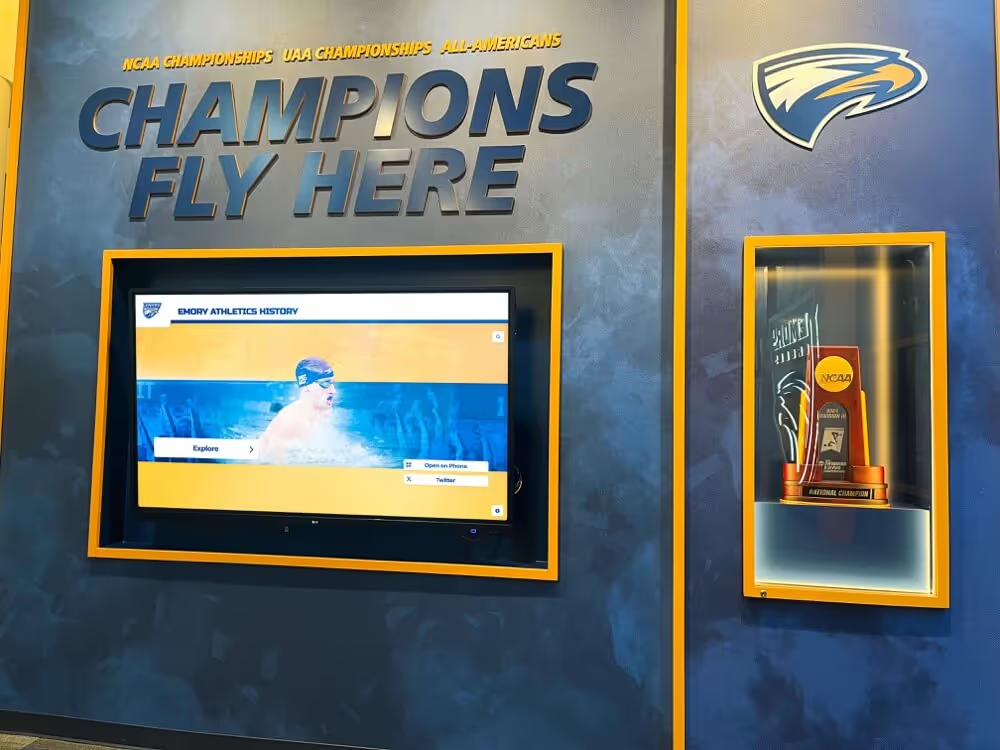
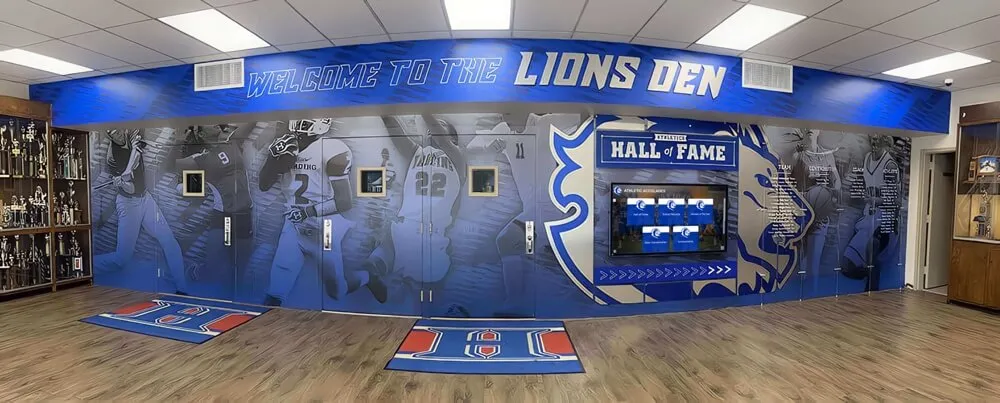
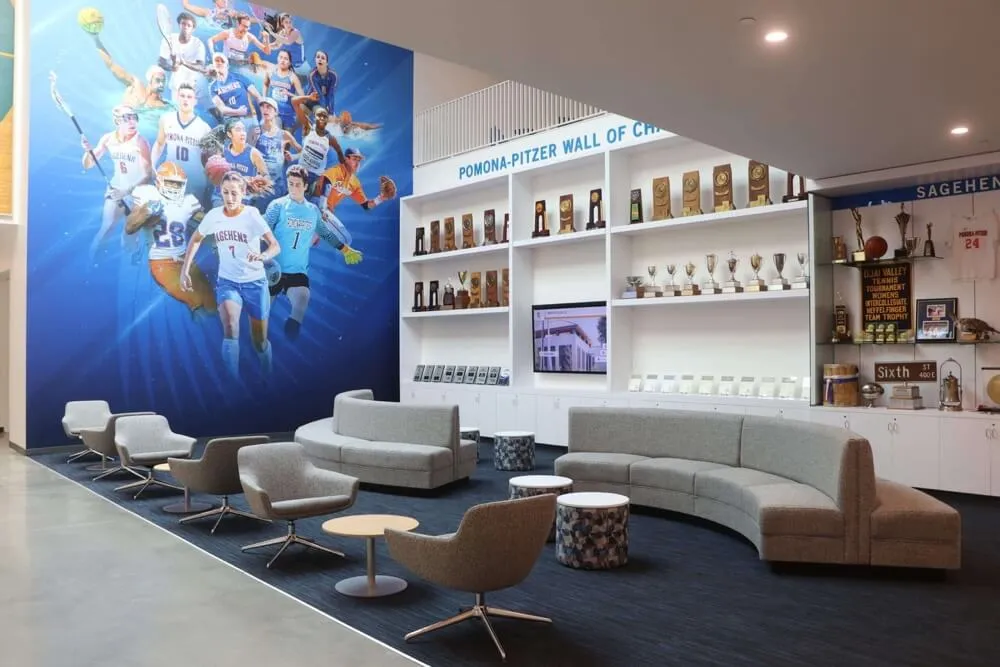
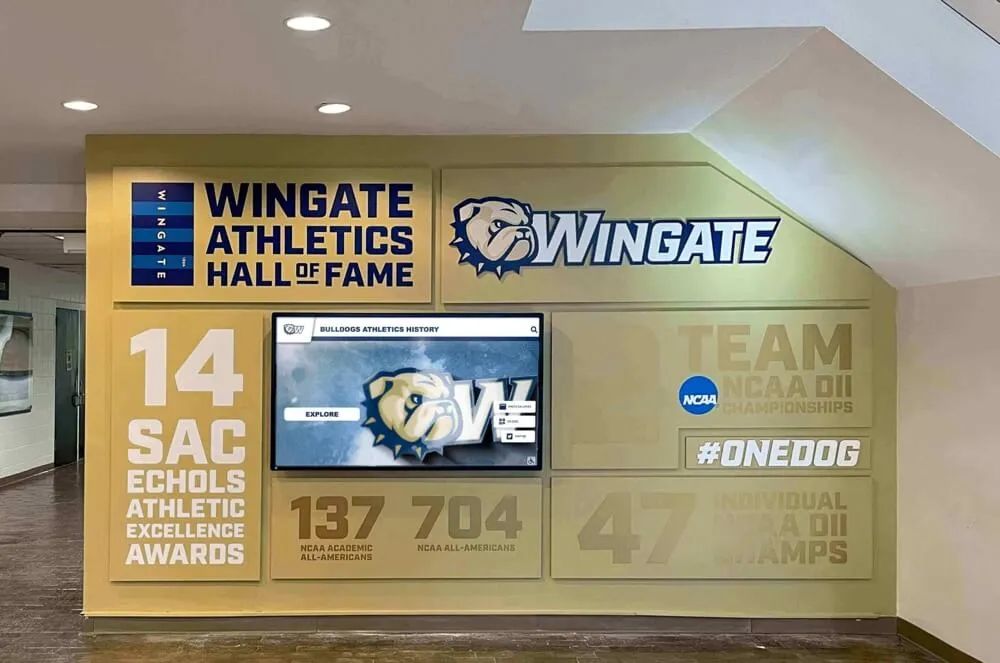
Integrated multimedia zones: Combining championship banners with photographs, trophy cases, and digital displays creates comprehensive recognition areas that tell complete championship stories. Many schools develop dedicated “championship corridors” in main athletic facility hallways that provide rich historical context beyond what banners alone communicate.
Thinking carefully about school lobby and entrance design helps athletic directors ensure championship recognition integrates effectively with broader facility aesthetics rather than competing with architectural elements that define the building’s character.
Multi-Sport Championship Recognition Across Facilities
Schools with active programs across many sports face a challenge that single-sport traditionalists don’t: how to recognize championships from cross country, volleyball, swimming, wrestling, soccer, and a dozen other programs without creating a visual cacophony that fails to honor any of them properly.
Several approaches work well:
Primary gymnasium as flagship: Reserve main gymnasium rafter and wall space for highest-level achievements—state championships and significant conference titles—while using sport-specific facilities (the natatorium, wrestling room, or track) for program-specific recognition.
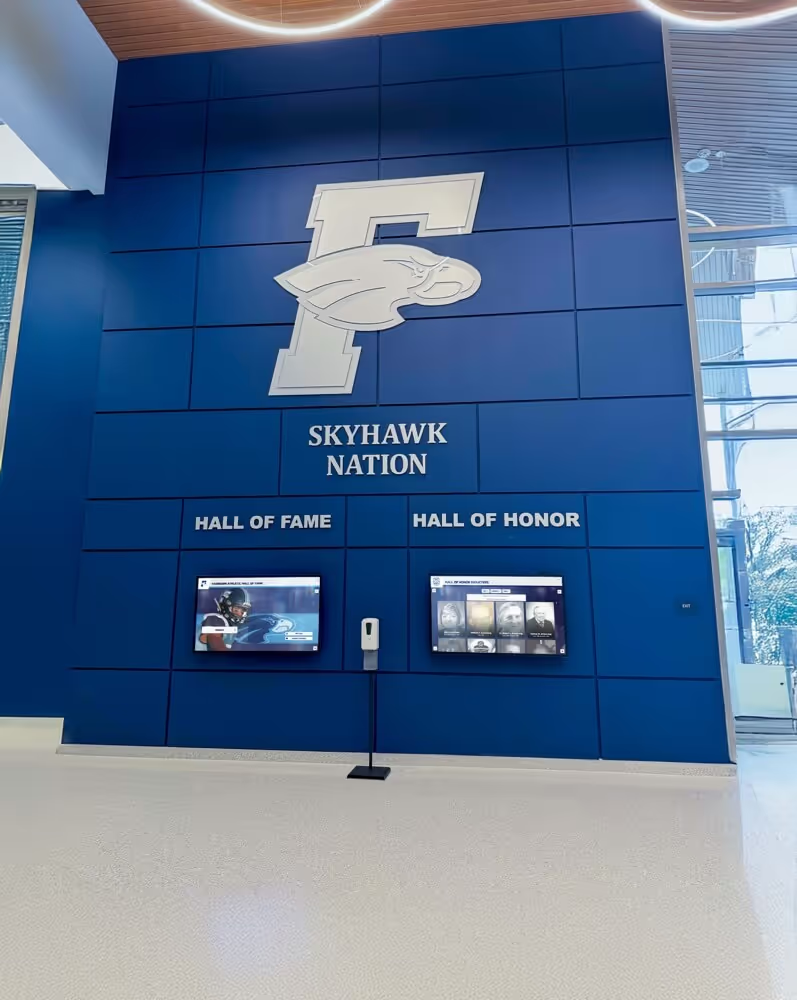
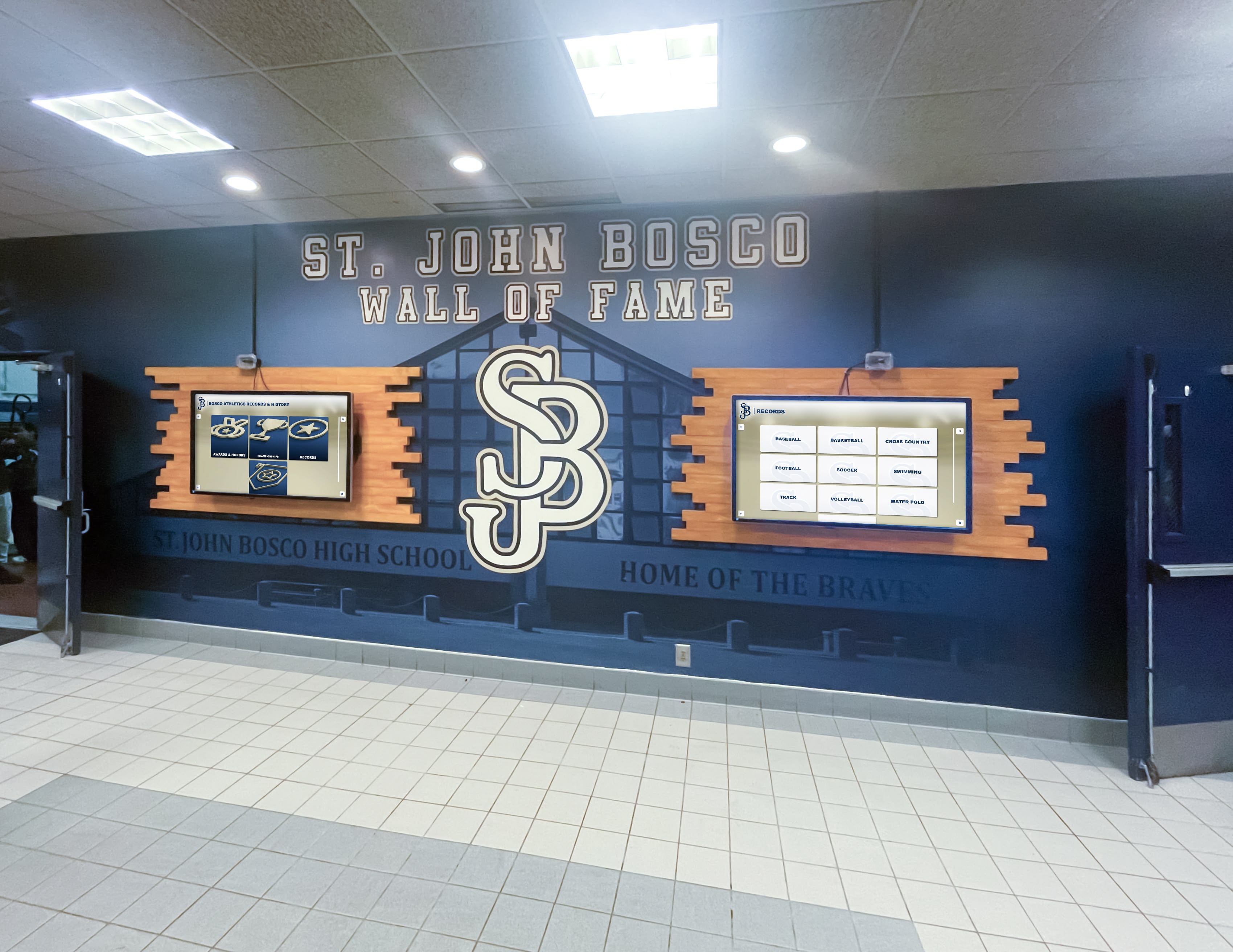
Central recognition hub: Create a single dedicated championship recognition area, ideally in a main school hallway or athletic lobby, that aggregates championships across all sports in a unified display. This creates a more powerful collective statement about the school’s overall athletic excellence than distributed displays in separate facilities that most visitors never see.
Athletic department corridor: Converting a hallway connecting athletic facilities into a dedicated recognition corridor provides substantial display space that doesn’t compete with functional facility requirements, while creating an impressive visual experience for anyone traversing the athletic wing during games or open houses.
Understanding booster club fundraising and community building approaches helps schools fund these recognition investments through community engagement rather than relying solely on athletic department budgets that may not fully accommodate comprehensive display projects.
Preserving Championship Recognition Across Generations
One of the most underappreciated challenges in championship banner management is institutional continuity. Athletic directors change. Coaches retire. Vendors shift. Design standards drift imperceptibly over time. Over decades, these changes accumulate into visual inconsistency that undermines the impression of sustained excellence that championship displays should project.
Creating Lasting Design Documentation
The most durable championship recognition programs treat their display standards as institutional assets rather than individual preferences. This means:
Formal design specifications: Documented color codes (Pantone values or exact RGB/hex codes), font names, banner dimensions, grommet specifications, and layout templates that any vendor can follow regardless of who produced previous banners.
Photographic archives: Maintaining high-resolution photographs of every banner produced creates references for future reproductions and documents the visual history of the program’s recognition approach across decades of production.
Replacement schedules: Rather than waiting for banners to visibly deteriorate, proactive programs establish 15- to 20-year replacement cycles, budgeting for systematic refresh that maintains consistent appearance across the collection without emergency replacements that create visual inconsistencies.
Centralized vendor relationships: Working with a single qualified vendor familiar with the school’s standards reduces design drift that occurs when each new championship triggers a new vendor relationship with no knowledge of previous work or established specifications.
Digitizing the Historical Championship Record
Physical championship banners cannot capture the complete story of what was won and by whom. A banner reading “State Champions 1988” communicates the achievement but preserves nothing about the athletes who earned it, the season they had, or the path to the title. For athletic programs invested in connecting current athletes with their predecessors, this information gap represents a genuine institutional loss.
The solution is building parallel digital archives that preserve the complete championship record: full rosters, season statistics, playoff paths, photographs, and contextual information about what made each championship notable. These archives serve multiple functions—motivational tools for current athletes, engagement platforms for alumni, and historical records that survive facility renovations or institutional transitions that might result in physical banners being stored or retired.
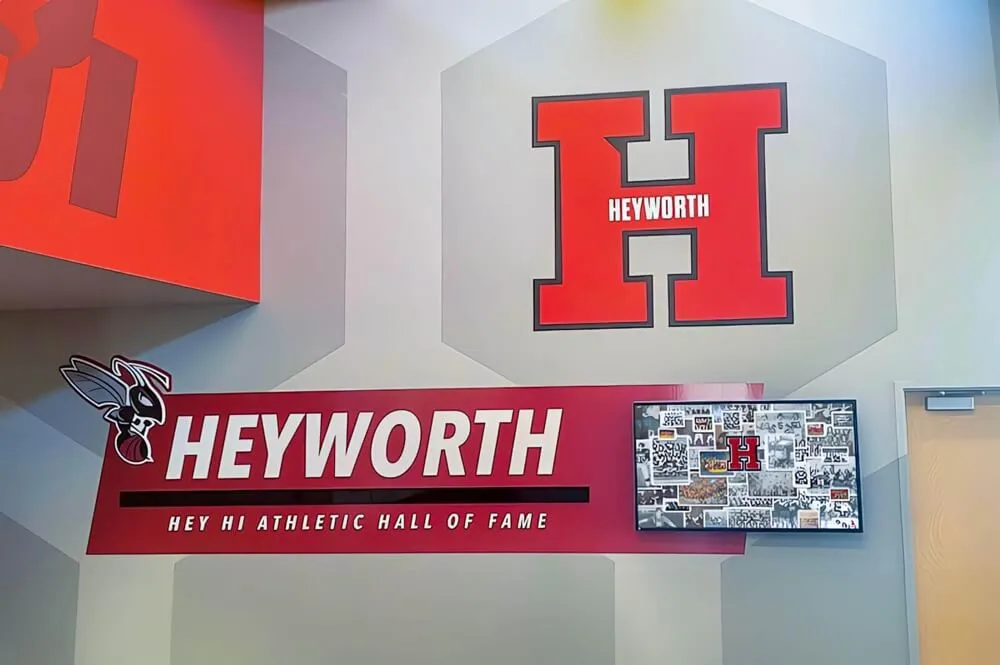
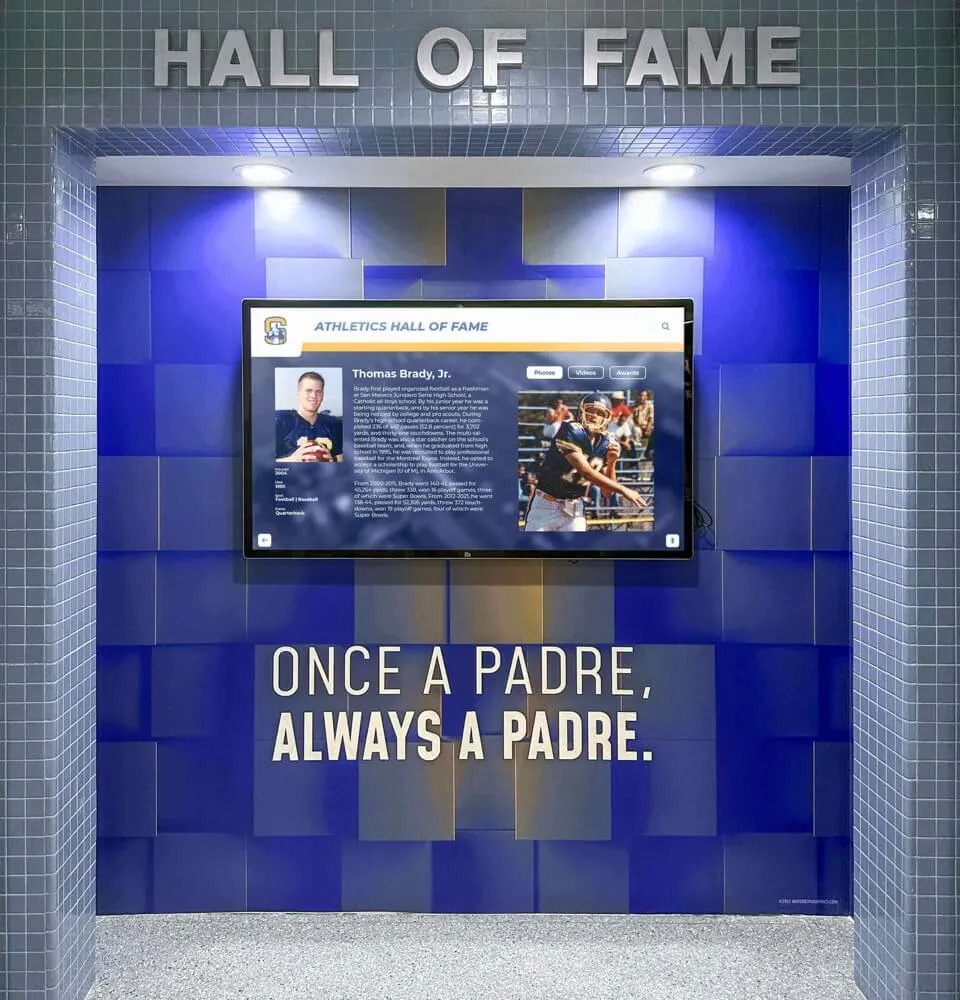
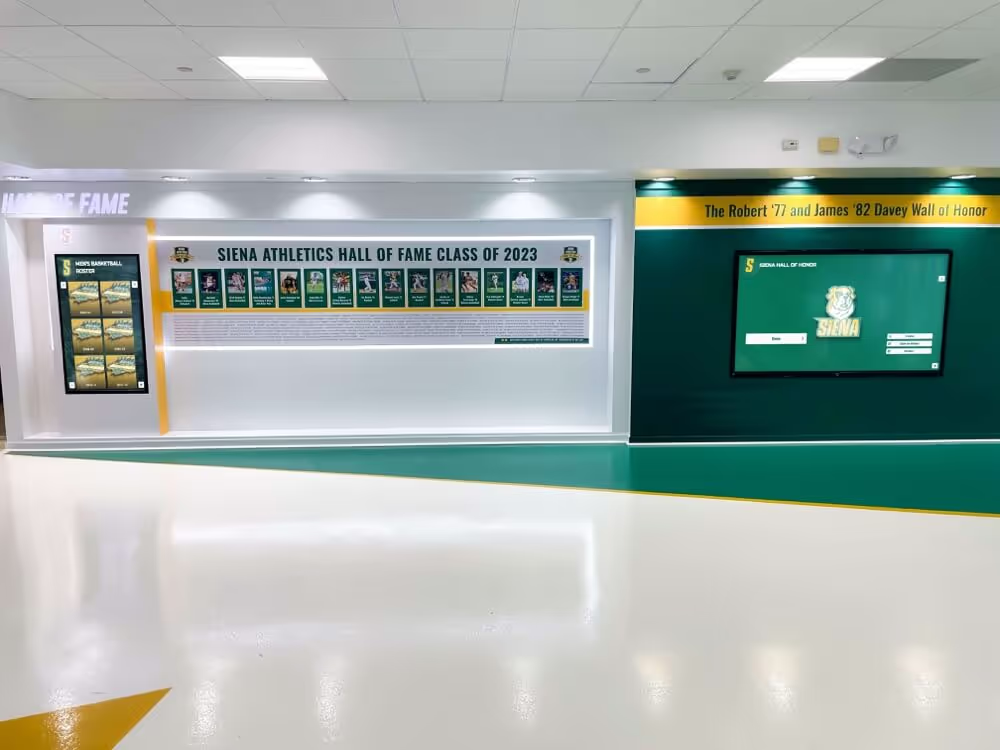
A digital hall of fame system provides the infrastructure to make these archives accessible and engaging rather than filing-cabinet exercises that few people encounter. When digital records connect to interactive displays in athletic facilities, championship recognition transforms from a title listing into a complete athletic narrative.
Connecting Alumni to Championship History
Championship banners serve an audience beyond current students and staff. Alumni who played on championship teams return to campuses decades later and look for evidence that their achievements are still recognized and remembered. Schools that invest in recognition that endures across generations build stronger alumni relationships than those whose displays show neglect.
This isn’t only about nostalgia. Athletic advancement strategies consistently demonstrate that alumni whose athletic achievements are visibly honored maintain stronger institutional connections and contribute more actively—financially and through mentorship—to programs they feel have honored their contributions appropriately over time.
Digital platforms that allow alumni to find their names in championship records, share those records on social media, or explore historical team statistics create ongoing engagement opportunities that physical banners alone cannot provide regardless of how well designed or maintained those banners are.
When Physical Banners Reach Their Limits
Even well-designed, well-maintained championship banner collections eventually run into constraints that physical displays cannot overcome. Understanding these limits—and how schools navigate them—helps athletic directors plan recognition systems that remain effective across decades of continued program success.
The Space Capacity Problem
The fundamental constraint of physical school championship banners is finite display space. Gymnasium rafters, walls, and corridors accommodate only so many banners before displays become crowded, difficult to read, or aesthetically overwhelming. Schools with extensive championship histories in multiple sports encounter this constraint regularly.
Common approaches to managing space constraints include:
- Scale reduction: Producing smaller banners for secondary championships (conference titles, regional finals) while reserving full-size banners for state championships
- Archival rotation: Moving the oldest banners to archival storage or dedicated historical display cases while keeping the most recent championships visible in primary locations
- Consolidation banners: Creating summary banners (e.g., “State Championships: 1979, 1983, 1986, 1992”) that consolidate multiple titles into single displays—a space-efficient approach that sacrifices individual recognition for each championship
- Digital supplementation: Using digital displays alongside physical banners to accommodate championships that physical space cannot hold
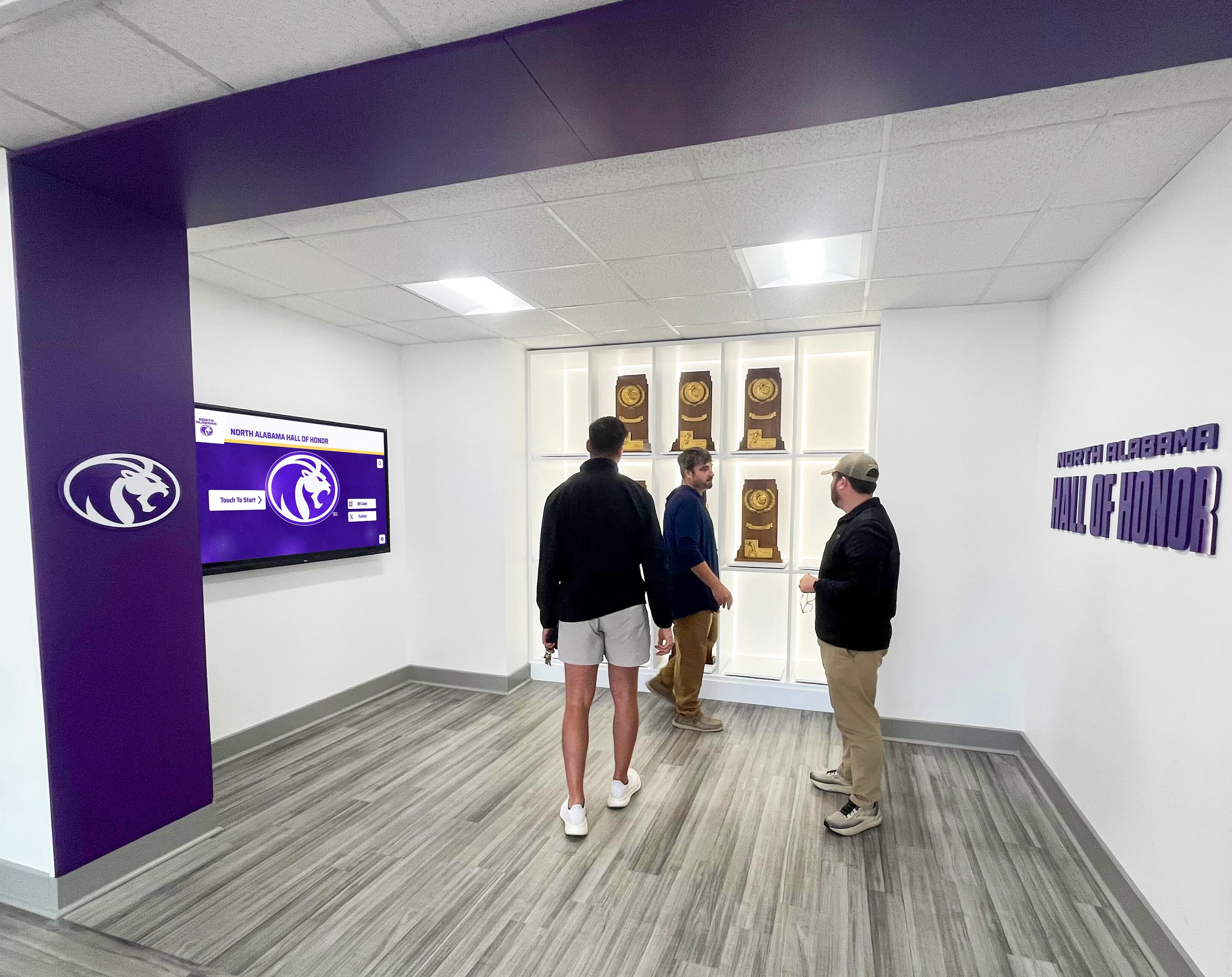
That last option has become increasingly practical as digital signage for schools technology has improved. Digital displays hold the complete championship record—every title across every sport across a program’s full history—in a format that’s visually compelling and accessible to anyone with a touchscreen interface.
The Update Delay Challenge
Traditional championship banners require a production and installation process that typically takes several weeks from title victory to display. During that interval, the championship has been won, celebrated, and partly moved past by a school community already focused on the next season. Recognition arrives after the emotional peak has passed.
Modern digital recognition systems eliminate this delay entirely. Within hours of a championship victory, athletic directors can update digital displays with the new title—including team photos, final scores, and roster documentation—creating timely recognition that amplifies rather than follows championship celebration while memories and community excitement are still fresh.
For schools combining physical and digital recognition, a practical approach is immediate digital recognition followed by a formal banner ceremony when the physical banner is ready, giving the installation a celebratory quality that honors both the achievement and the tradition of banner hanging as a school ritual.
Recognizing Youth Sports and Feeder Programs
Many high schools feed from feeder programs—youth leagues, middle school teams, and club programs—where athletes develop championship experience before competing at the varsity level. Recognizing championship success at these levels can be part of a broader athletic recognition philosophy, creating a developmental narrative that connects junior achievement to varsity championship traditions. Creative youth sports awards approaches establish early recognition habits that make formal championship banner programs feel like a natural extension of a school culture that has always taken athletic achievement seriously.
The Case for Digital Championship Displays
Physical championship banners will remain part of school athletic culture for the foreseeable future—they carry visual weight, emotional resonance, and traditional significance that digital alternatives cannot fully replicate. But physical banners work best as part of a broader recognition system that includes digital components addressing their inherent limitations.
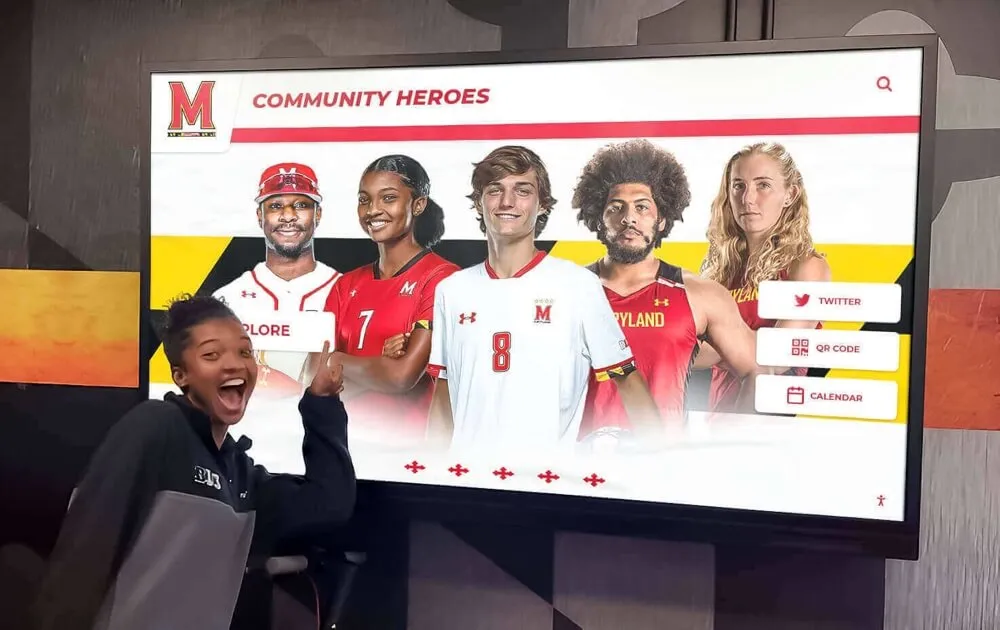
Digital display boards in school lobbies and entrances have proven effective at extending championship recognition beyond gymnasium spaces, creating recognition touchpoints that visitors encounter before they ever reach athletic facilities. This matters for recruiting, open houses, alumni visits, and any occasion when the school’s identity is on display for outside audiences.
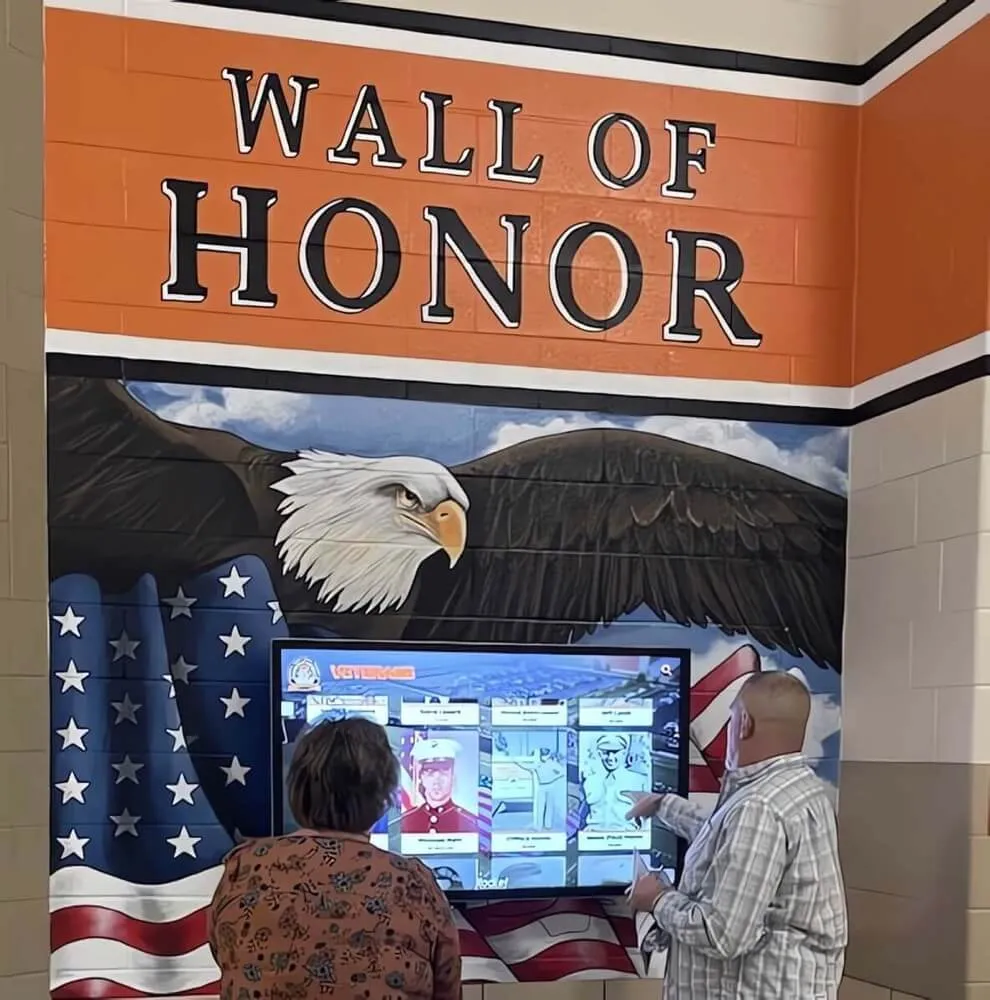
Interactive digital championship displays provide capabilities that no physical banner can match:
Complete historical archives: Every championship across every sport across the program’s full history, organized and searchable, rather than a subset limited by physical space constraints.
Rich multimedia content: Full team rosters, season statistics, game highlights, photographs, and contextual stories that transform championship listings into complete athletic narratives visitors can explore in depth.
Instant update capability: New championships appear within hours of victories rather than weeks later, with no production or installation required and no vendor coordination needed.
Alumni engagement: QR codes linking physical displays to mobile-accessible digital archives allow visiting alumni to find their championships, explore historical records, and share recognition on social media.
Universal accessibility: ADA-compliant touchscreen interfaces and web-accessible versions ensure all community members can explore championship history regardless of physical ability or geographic location.
Schools exploring how to create a collegiate-level athletic experience for their athletes increasingly point to comprehensive championship recognition as one of the most impactful factors in building program culture and attracting motivated athletes who want to compete in programs that take excellence seriously.
Building a Championship Banner Program That Lasts
Schools looking to establish or formalize their championship banner program benefit from a systematic approach addressing design standards, material specifications, display strategies, and long-term maintenance before ordering a single banner.
Starting with an Audit
Before making any new banner decisions, assess what currently exists:
- Which championships are currently recognized and which are missing from any display?
- Are physical banners in good condition, faded, or damaged beyond acceptable appearance?
- Is there documented design information for existing banners (exact colors, fonts, dimensions)?
- Is there adequate space for continued growth in current display locations?
- Does existing recognition serve the audiences it should—current athletes, visiting families, returning alumni?
Honest audits frequently reveal gaps: programs whose records include championships that never received recognition, displays with factual errors persisting for years unnoticed, or inconsistent design standards that make collections look accidental rather than intentional.
Establishing Standards Before Ordering
The time to establish banner design standards is before you need them—not during the pressure of ordering a new championship banner when there’s urgency to act quickly and no time for careful planning.
Core standard elements to document:
- Exact Pantone or hex color values for all brand colors used on banners
- Primary and secondary font choices with sources for consistent reproduction
- Standard banner sizes and orientations for different championship tiers
- Information hierarchy specifying what appears at what size and position
- Grommet specifications and hardware standards for all hanging systems
- Approved vendors and ordering procedures to maintain continuity
Store this documentation somewhere that survives staff turnover—in the athletic department’s institutional files rather than on an individual’s personal laptop or desk drawer.
Budgeting for the Long Term
Championship recognition is a perpetual investment, not a one-time expense. Schools that budget appropriately build impressive collections over time; schools that fund recognition reactively after each championship often end up with inconsistent results and missed recognition for important achievements.
Annual athletic budget planning should include line items for new championship banner production (estimated based on typical annual championship frequency), periodic banner replacement (based on 15- to 20-year replacement cycles), digital recognition system licensing or maintenance, and installation hardware maintenance.
Track and field recognition programs, as one example, can generate recognition needs across multiple levels and specialties—individual event titles, relay championships, conference team titles—that multiply quickly when the program achieves consistent success. Budgeting for this complexity before it arrives prevents the awkward situation of having resources for only partial recognition that fails to honor complete championship achievements.
What Championship Banners Build Over Time
When done right, school championship banners create something that outlasts any individual athlete, coach, or administrator. A gymnasium hung with banners spanning five or six decades tells a story about institutional commitment to excellence—commitment that transcends any single season, any single team, any single generation of students. Current athletes who walk beneath those banners understand implicitly that they are part of something larger than themselves.
Building that legacy requires decisions made with the next thirty years in mind, not just the immediate championship season. Material choices, design standards, display strategies, and digital archiving practices all contribute to whether championship recognition accumulates into genuine institutional pride or fades into background noise that no longer inspires the athletes who see it every day.
The schools that manage this best treat championship recognition not as an afterthought to winning but as a discipline in its own right—one that deserves the same planning, investment, and attention to detail that athletic programs bring to the championships themselves.
Preserve Every Championship Win with Digital Recognition
Rocket Alumni Solutions builds interactive championship recognition systems for schools that want to display every title win—across every sport, across every generation—without the space constraints, maintenance costs, or update delays that limit traditional banners. Get instant updates after championship victories, full roster and multimedia documentation, and an ADA-compliant display that connects current athletes with program history every day.