



School hallways, gymnasiums, and athletic facilities tell powerful stories through the banners and displays that line their walls. Whether celebrating championship seasons, honoring academic excellence, or welcoming visitors with institutional pride, banners serve as visual anchors creating identity, preserving memory, and inspiring current students through visible examples of past achievement.
Yet administrators face critical decisions when selecting banner approaches appropriate for their specific needs, budgets, and long-term recognition strategies. Traditional vinyl banners offer affordability and familiar implementation paths, while modern digital displays provide dynamic capabilities and unlimited recognition capacity that overcome physical constraints inherent in conventional formats.
This comprehensive guide explores both traditional and digital banner solutions, examining design principles, implementation strategies, cost considerations, and practical applications helping schools select recognition approaches aligned with institutional priorities while creating impressive displays that celebrate achievement appropriately and sustainably.
Why School Banners Matter for Community and Culture
School banners function far beyond mere decoration. Effective recognition displays communicate institutional values through what and whom schools choose to celebrate, create physical spaces reflecting pride and tradition, inspire current students by demonstrating achievement pathways, welcome visitors with immediate impressions of school culture, preserve institutional memory documenting excellence across decades, and strengthen community connection through visible acknowledgment of collective accomplishment.
Whether schools choose traditional fabric banners or modern digital displays, thoughtful banner programs create environments where achievement receives appropriate celebration, history remains visible and accessible, and every visitor immediately understands what the institution values and celebrates.
Traditional School Banner Options and Applications
Conventional banner formats have served schools effectively for decades, offering proven approaches that many administrators, families, and communities find familiar and satisfying.
Vinyl and Fabric Banner Materials
Traditional school banners typically utilize durable materials designed to withstand years of display in indoor and outdoor environments:
Vinyl Banners: Heavy-duty vinyl represents the most common banner material for school applications. Printed vinyl withstands moisture, resists fading under normal lighting conditions, accommodates full-color graphics and photography, and provides economical production costs relative to other options. Standard vinyl banners typically cost $3-8 per square foot depending on size, complexity, and quantity ordered. These banners work well in gymnasiums, cafeterias, hallways, and covered outdoor locations where weather protection exists.
Mesh Banners: Perforated vinyl mesh creates wind-resistant banners ideal for outdoor stadiums and exposed facilities where solid banners would catch wind creating tension and potential damage. Mesh materials allow air flow while maintaining image visibility from typical viewing distances. Applications include stadium fences, outdoor recognition walls, and facilities subject to weather exposure.
Fabric Banners: Premium cloth materials including polyester and nylon create sophisticated appearances appropriate for formal spaces like main entrances, administrative areas, or ceremonial locations. Fabric banners can be hemmed and sewn rather than merely grommeted, and higher-end materials accept dye sublimation printing producing vibrant colors and photographic quality. Costs typically run $8-15 per square foot making fabric banners appropriate for permanent display locations warranting premium aesthetics.
Material selection should reflect display location, expected lifespan, budget constraints, and desired appearance. Short-term seasonal banners merit economical vinyl solutions, while permanent recognition installations in prominent locations justify premium fabric investments creating lasting impressions.
Common Traditional Banner Designs and Layouts
Effective banner design balances aesthetic appeal with functional information communication:
Championship Banners: Athletic championship recognition typically follows standardized formats including sport identification, championship year, accomplishment level (conference, regional, state), team records or notable statistics, and sometimes roster listings or coaching staff acknowledgment. Vertical banners measuring 2-4 feet wide by 6-10 feet tall work well suspended from gymnasium ceilings or mounted on wall brackets, creating impressive visual impact visible from bleacher seating.
Individual Achievement Banners: Honor roll recognition, valedictorian acknowledgment, all-state athlete celebration, or scholarship recipient displays often utilize horizontal formats (4-6 feet wide by 2-3 feet tall) positioned at eye level in main hallways or academic wings. These designs typically feature individual photographs, names, achievement descriptions, and graduation years organized in consistent templates maintaining visual coherence across multiple honorees.
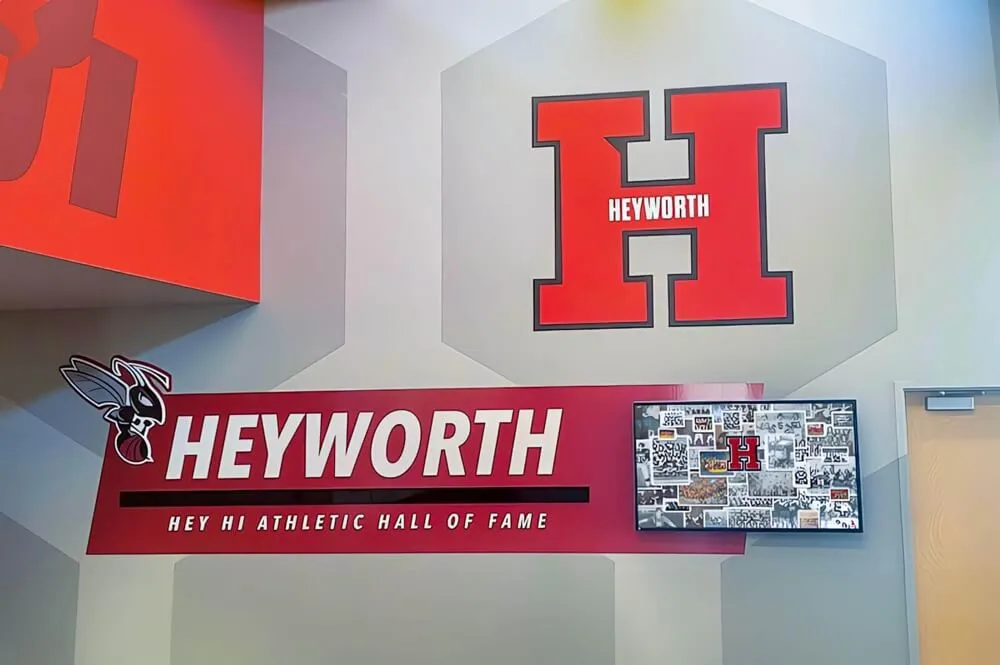
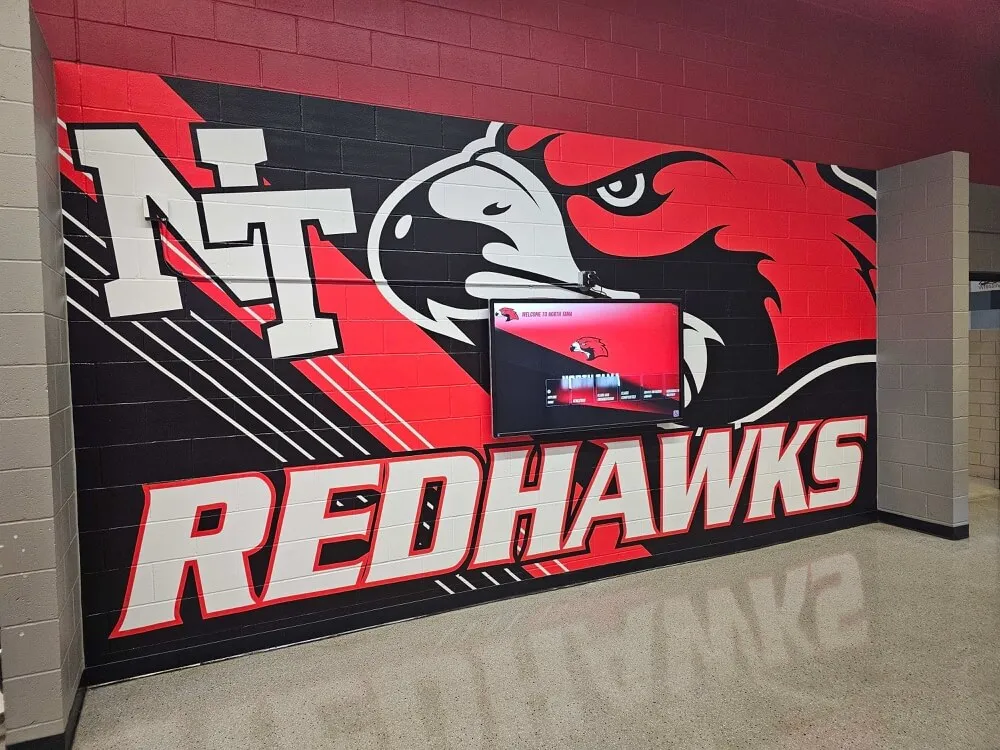
Institutional Pride Banners: School logos, mascots, mission statements, or value declarations create identity-reinforcing displays welcoming visitors while strengthening community belonging. These banners often employ bold colors matching school identity systems, large typography for visibility from distance, and simplified graphics ensuring clarity and impact.
Season Recognition Banners: Team rosters, schedules, motivational messages, or seasonal celebrations create temporary displays relevant for specific timeframes. These applications favor economical production enabling annual updates without prohibitive costs.
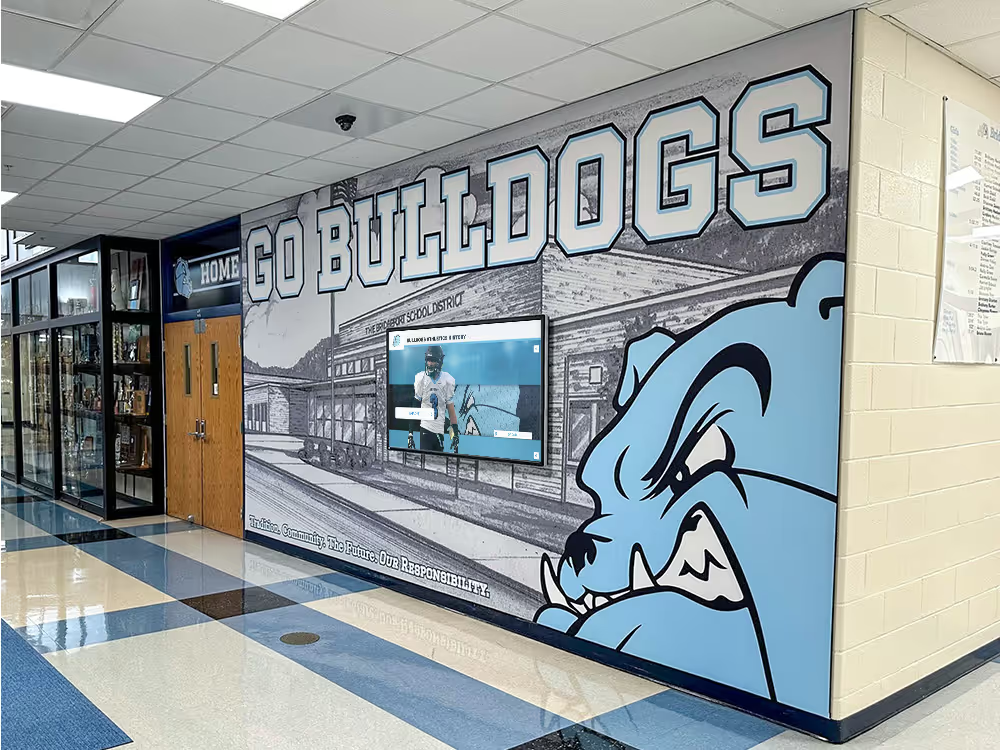
Understanding traditional wall wraps and recognition displays helps schools implement comprehensive visual environments celebrating achievement through coordinated designs.
Installation Methods and Hardware Considerations
Proper installation ensures banners remain secure, level, and professional-appearing throughout display lifespans:
Ceiling Suspension Systems: Gymnasiums commonly utilize steel cable or chain suspension with ceiling-mounted hardware allowing banners to hang vertically displaying championship recognition visible during games and events. Professional installation ensures structural adequacy supporting banner weight plus safety factors, particularly important in facilities where people gather beneath suspended elements. Costs typically range $100-300 per banner location for hardware and professional installation.
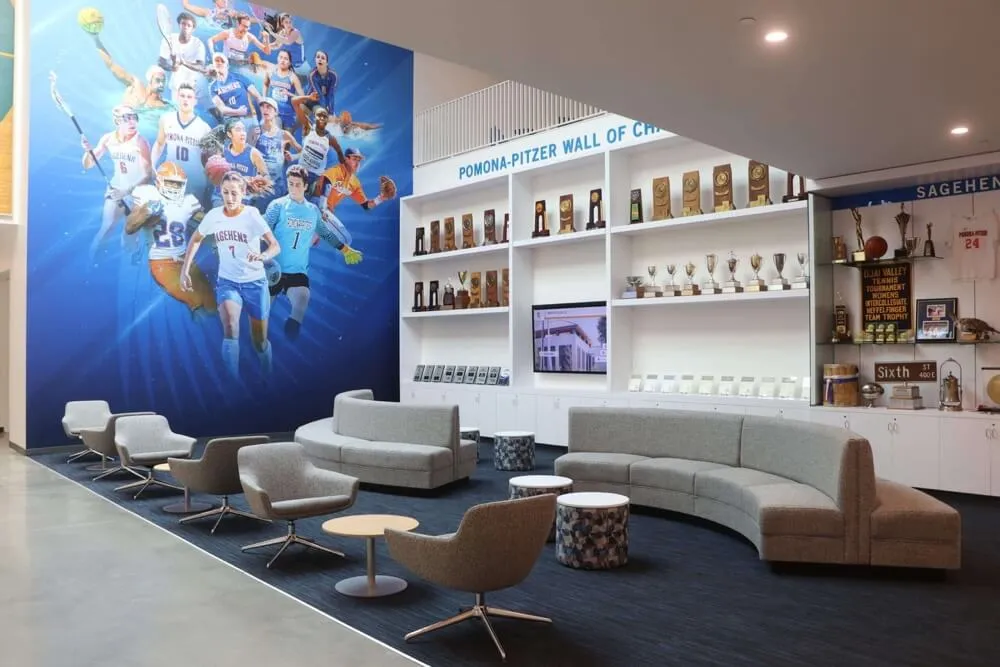
Wall Mounting Brackets: Aluminum or steel brackets fastened to wall studs create secure mounting points for horizontal banners in hallways and common areas. Brackets should engage structural elements rather than merely surface-mounting to drywall, ensuring long-term stability. Adjustable brackets accommodate banner size variations and enable level positioning during installation.
Banner Stands and Frames: Portable display solutions including retractable banner stands, telescoping poles, or weighted bases enable flexible positioning without permanent installation. These approaches work well for temporary displays, event-specific recognition, or spaces where permanent mounting proves impractical. Portable systems typically cost $75-250 per unit depending on size and quality.
Outdoor Installation: External banners require enhanced hardware including stainless steel components resisting corrosion, heavy-duty grommets or pole pockets, and installation methods accounting for wind loads. Professional consultation ensures installations meet safety standards while protecting investment through appropriate material and hardware selection.
Limitations and Challenges of Traditional Banners
While conventional banners serve many applications effectively, inherent limitations create challenges schools should understand when planning recognition programs:
Physical Space Constraints
Finite display capacity represents the most significant traditional banner limitation:
Gymnasiums accumulate championship banners season-after-season until ceiling space fills completely. At that point, difficult decisions emerge—remove older banners to accommodate recent championships, expand to different locations diminishing visual impact, or cease adding new recognition entirely. None of these options satisfies stakeholders expecting perpetual championship acknowledgment.
Hallway walls similarly reach capacity as multiple sports, academic programs, and recognition initiatives compete for limited linear footage. Schools often resort to rotating displays showing only recent honorees while older achievements disappear from view, effectively erasing history as new accomplishment accumulates.
This capacity problem only intensifies over time as successful programs continue generating achievements worthy of recognition. The more successful the athletic program or academic reputation, the faster available space exhausts, creating situations where excellence creates its own recognition constraints.
Update and Maintenance Costs
Banner updates require significant recurring investment:
Each championship season, academic year, or recognition cycle requires new banner production with associated design fees ($50-200), printing costs ($100-500+ per banner depending on size and materials), and installation expenses. Multiply these costs across multiple sports, academic programs, and recognition categories, and annual banner budgets easily reach thousands of dollars even for modest programs.
Banner degradation necessitates periodic replacement as materials fade, printing deteriorates, grommets tear, or general wear occurs. Even quality banners typically warrant replacement after 5-10 years to maintain professional appearance. This replacement cycle creates ongoing financial obligations exceeding initial installation costs over extended timeframes.
Storage requirements for seasonal or temporary banners add facilities management complexity. Off-season banners require organized storage protecting materials while enabling efficient retrieval when needed. Lost, damaged, or disorganized storage creates frustration and additional replacement costs.
Static Content Limitations
Traditional banners display fixed information that cannot adapt to changing contexts:
Once printed, banner content remains unchanged until replacement. Schools cannot update statistics, add contextual information, correct errors without reprinting, or provide additional details enhancing understanding. This static nature limits storytelling potential and prevents schools from adding depth to recognition beyond what physically fits within banner dimensions.
Interactive engagement proves impossible with traditional banners. Visitors can observe but cannot explore athlete statistics, view game highlights, access historical context, or discover related achievements. Recognition remains passive observation rather than active exploration potentially deepening engagement and impact.
Modern Digital Display Solutions for School Recognition
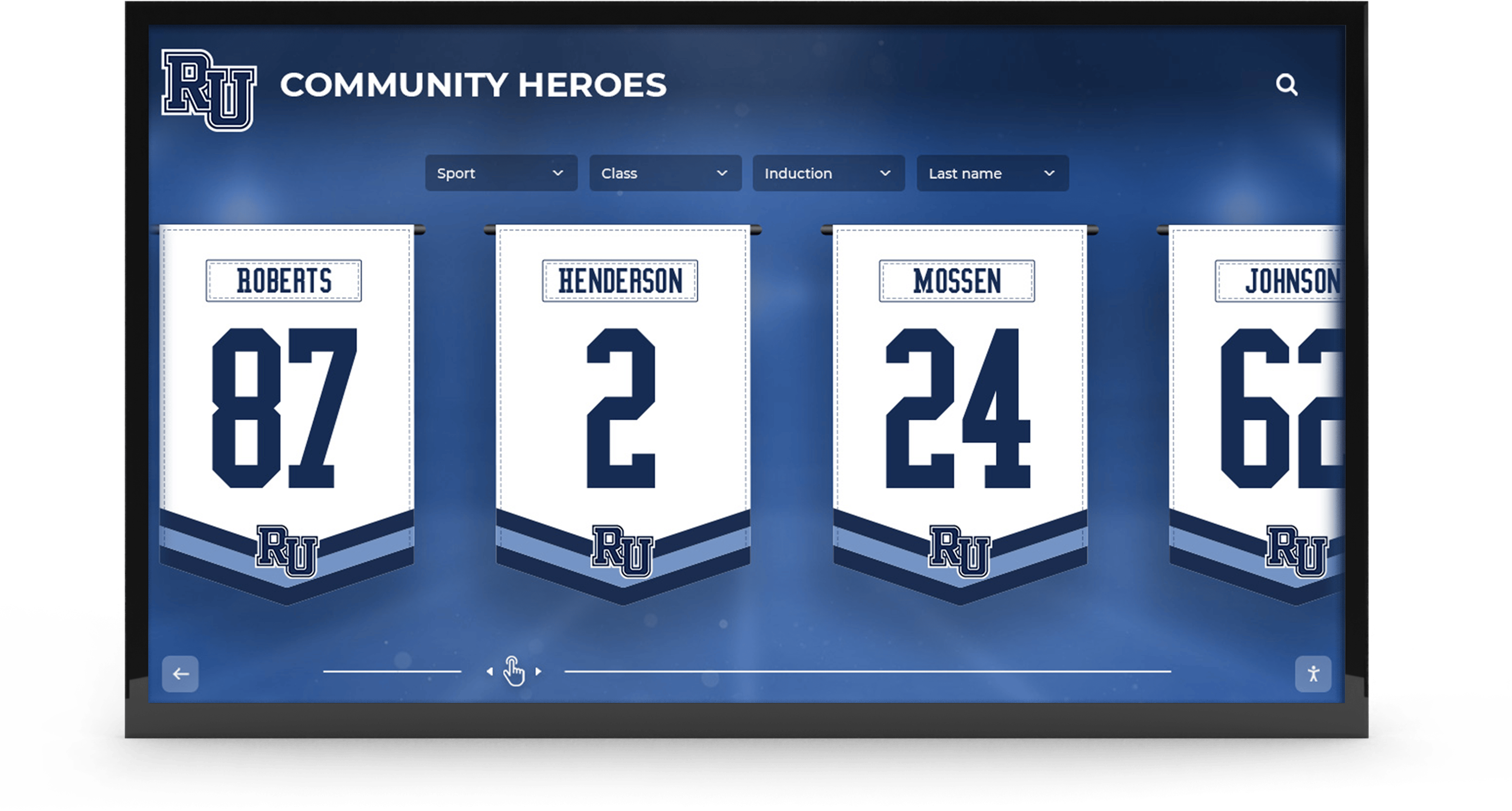
Digital recognition systems address traditional banner limitations while adding powerful capabilities transforming how schools celebrate achievement and engage communities.
Digital Display Technology Overview
Interactive touchscreen systems and digital signage platforms represent two primary digital banner alternatives:
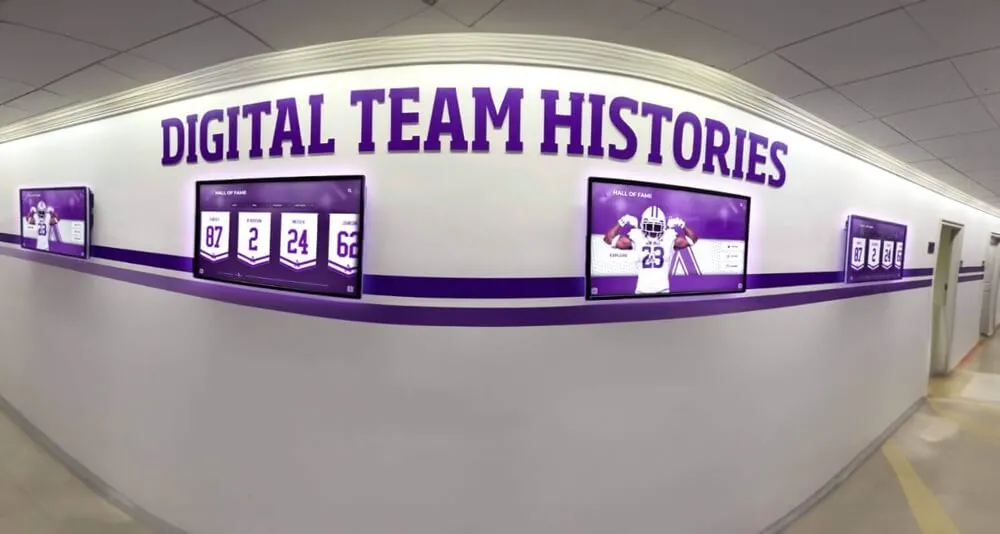
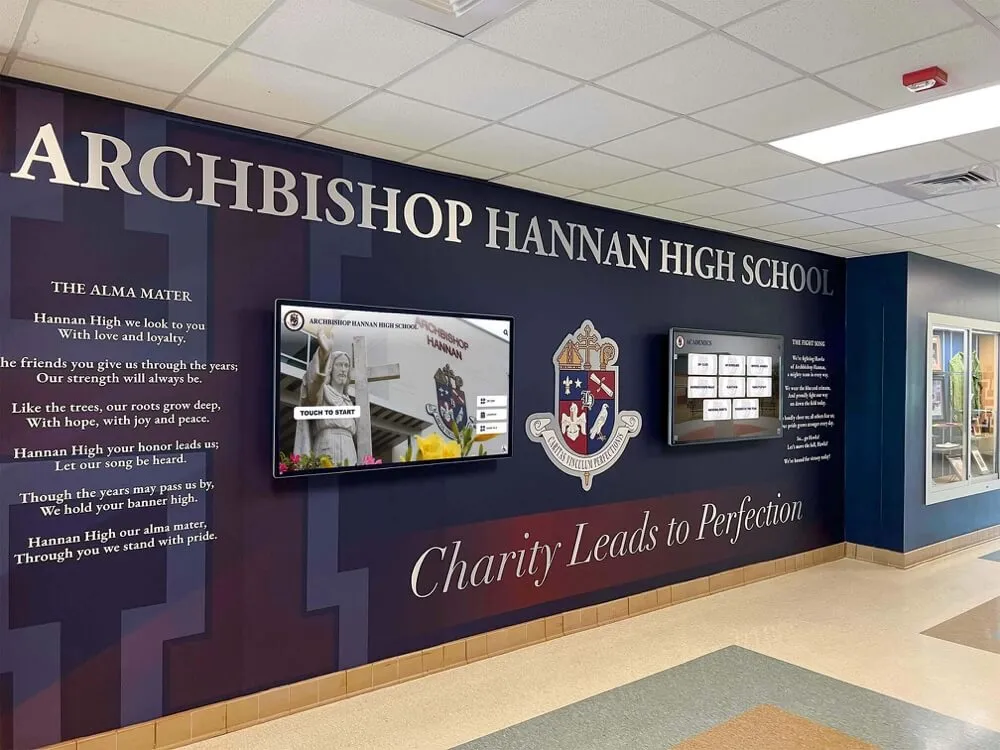
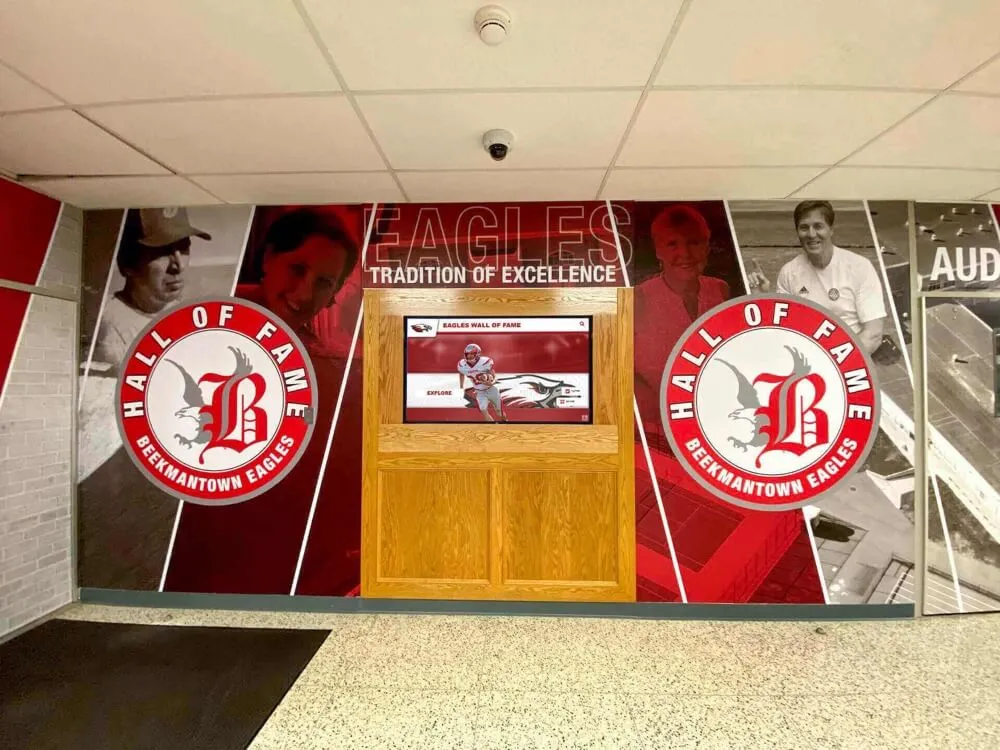
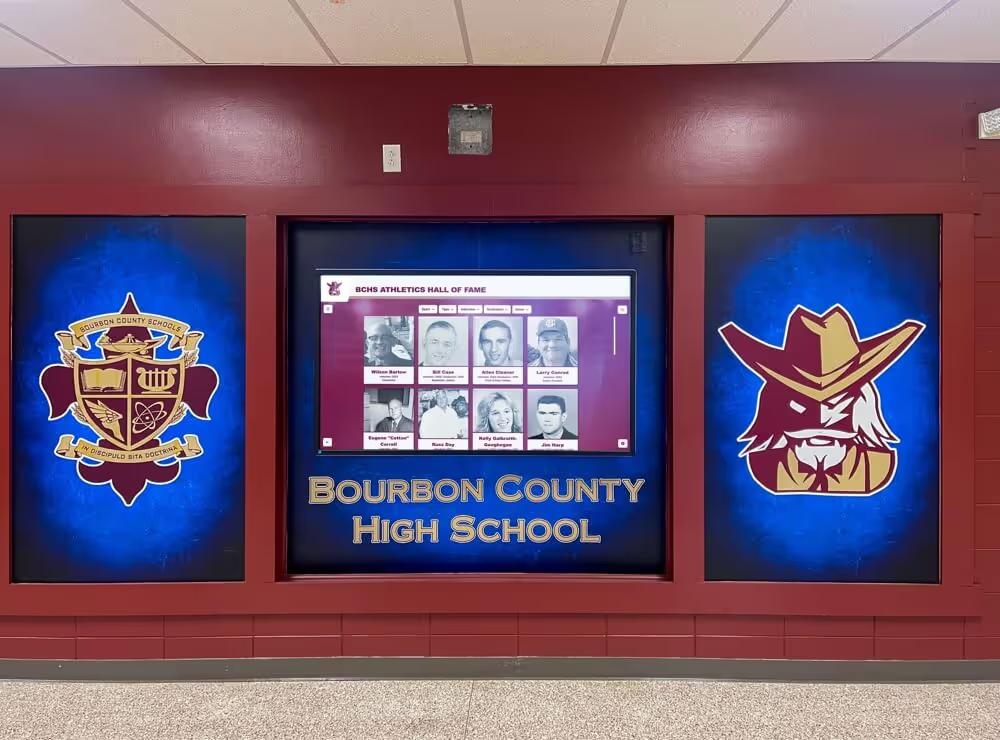
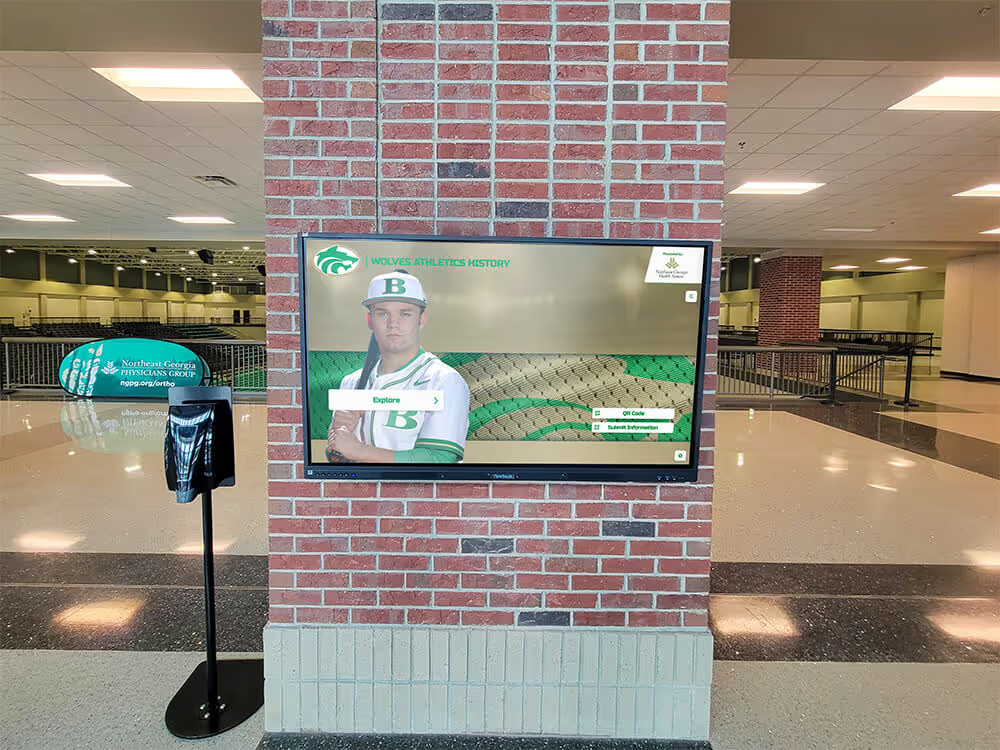
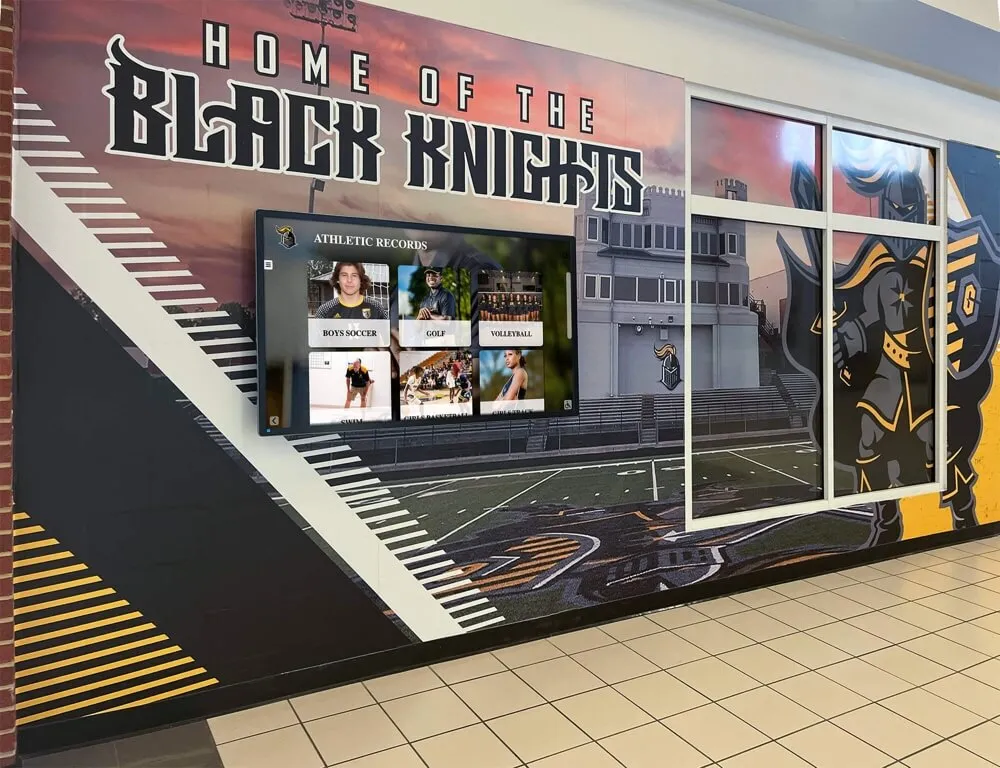
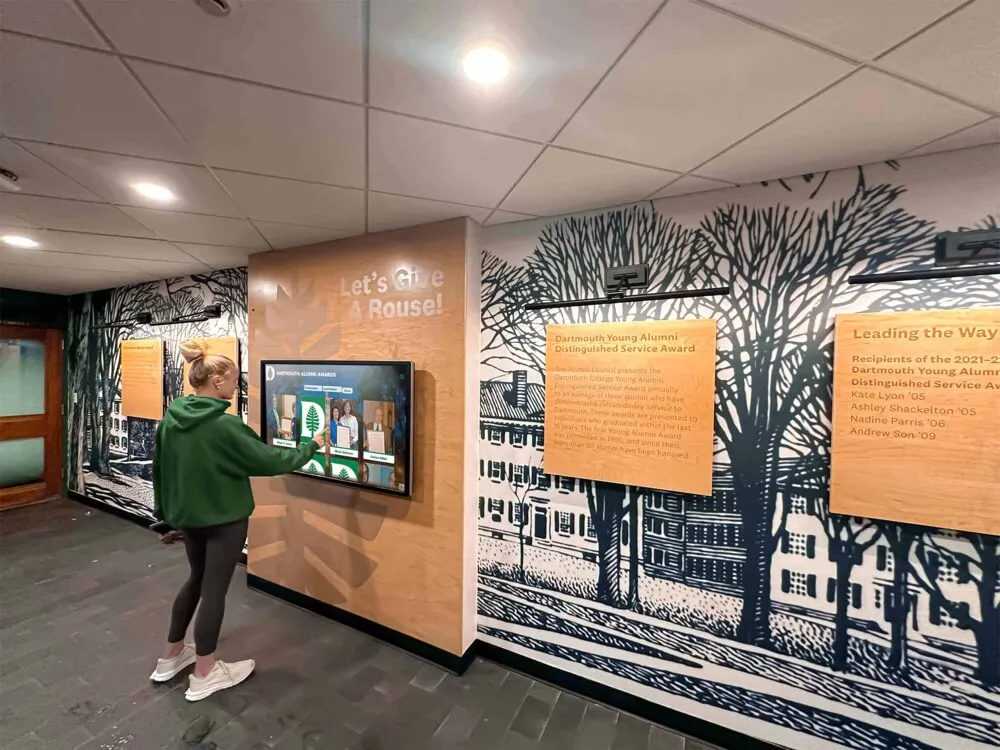
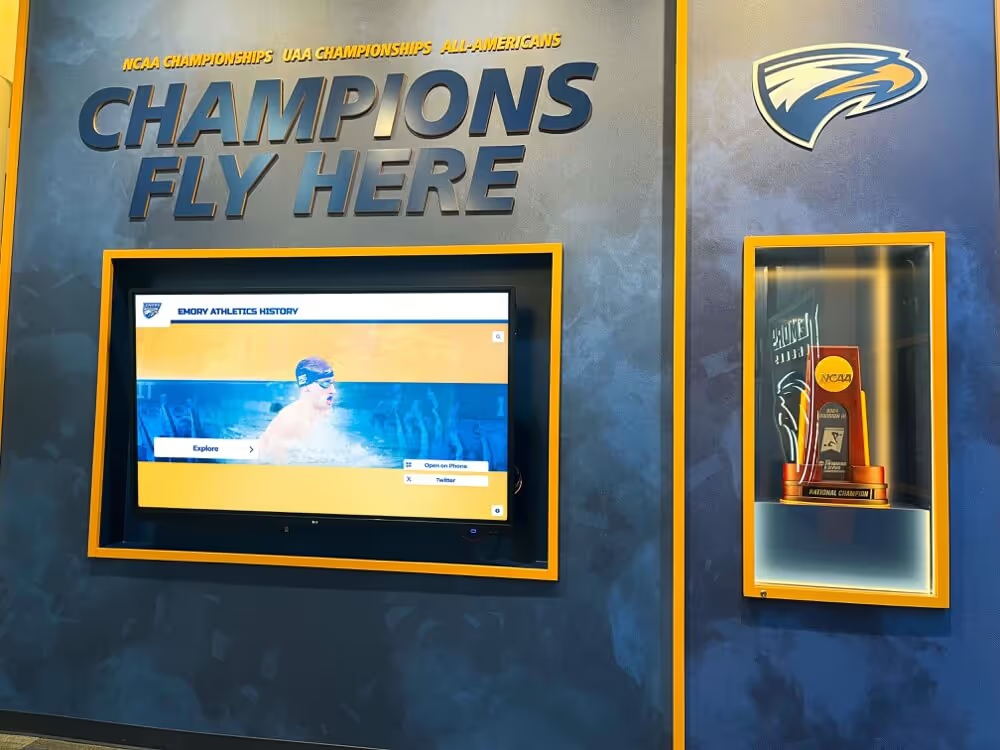
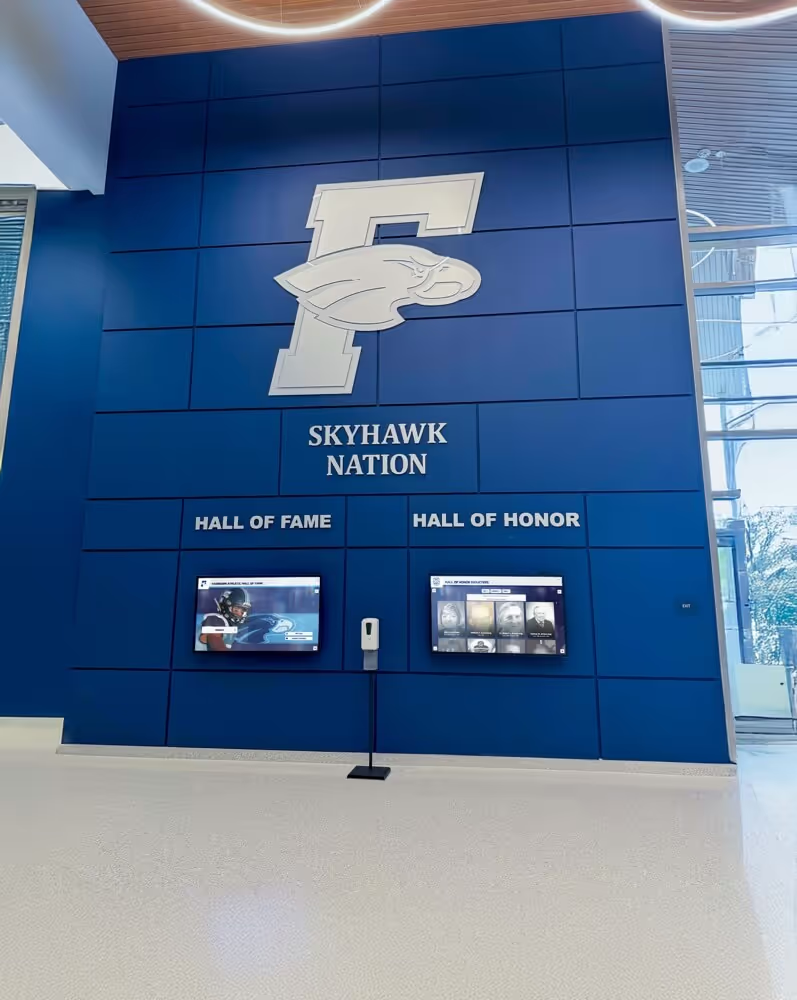
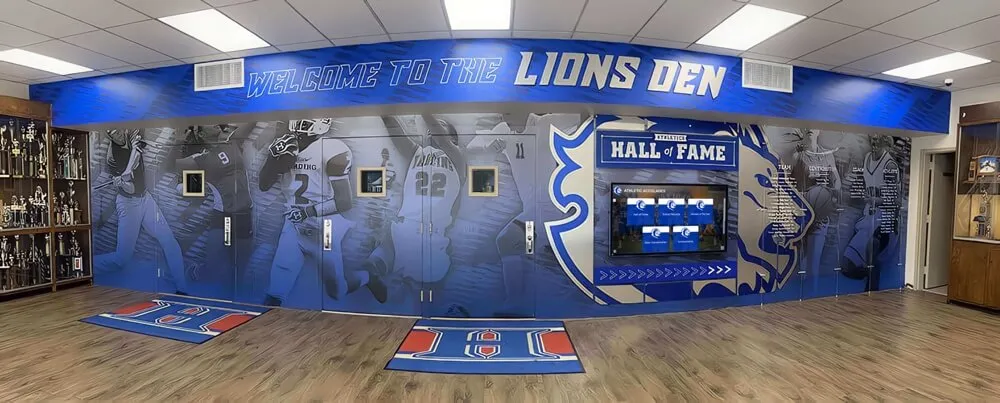
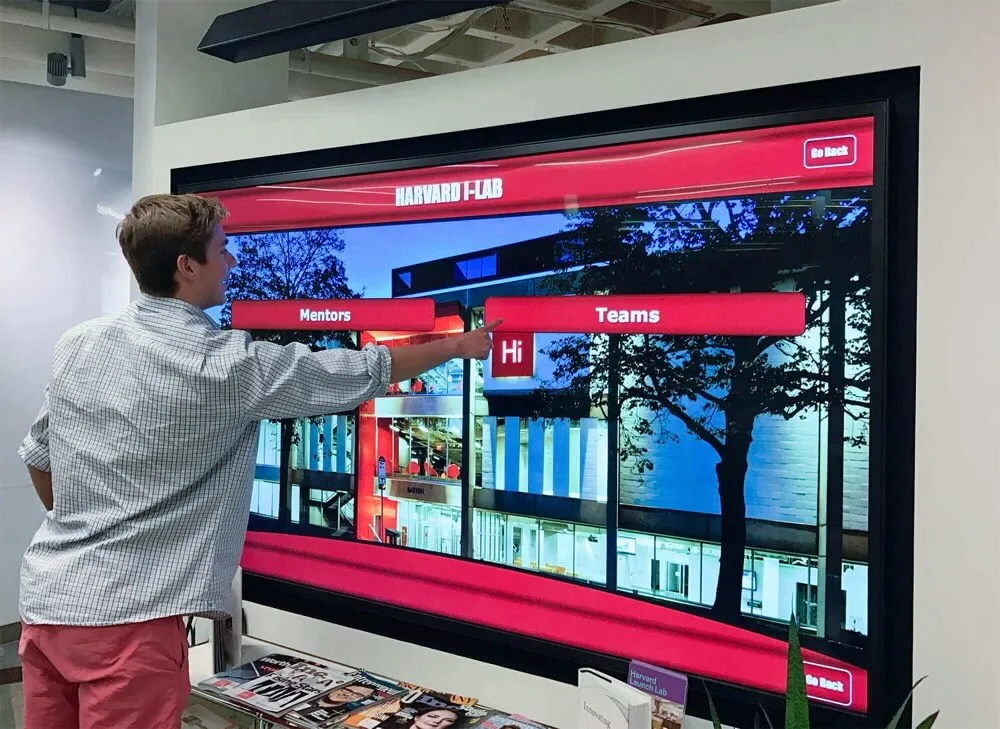
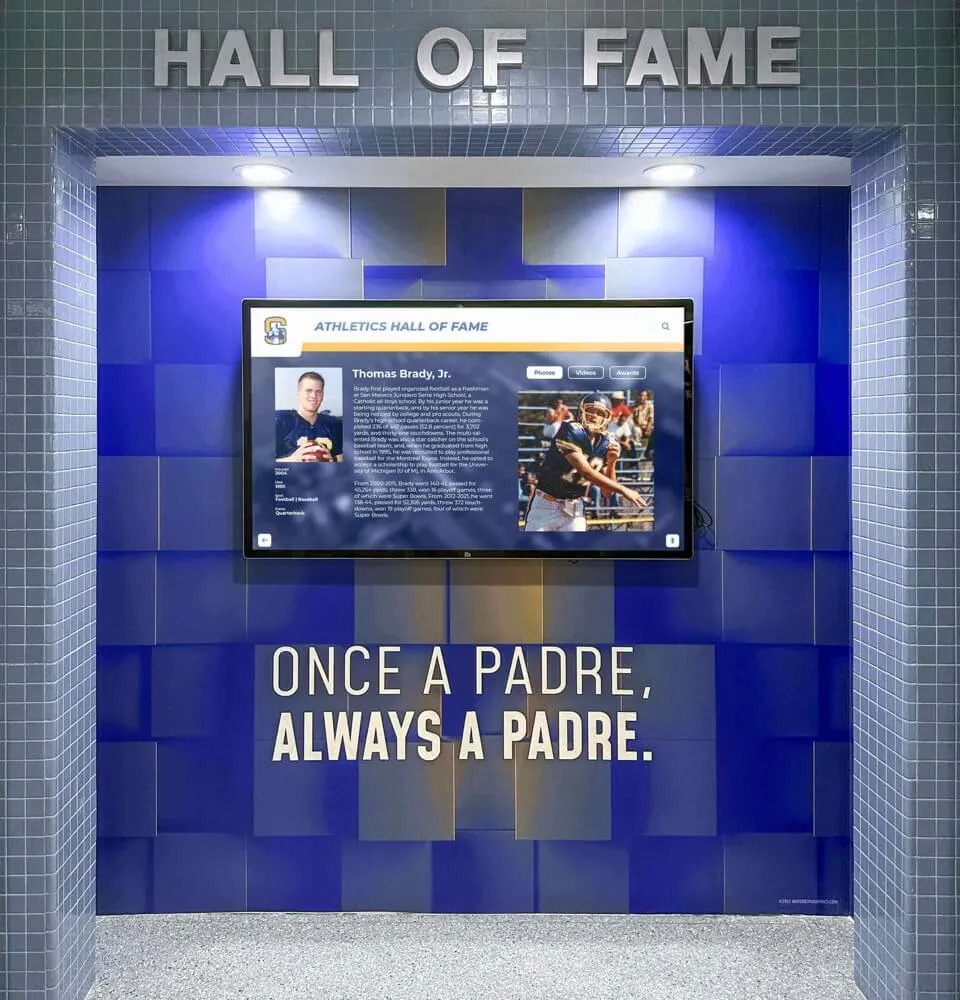
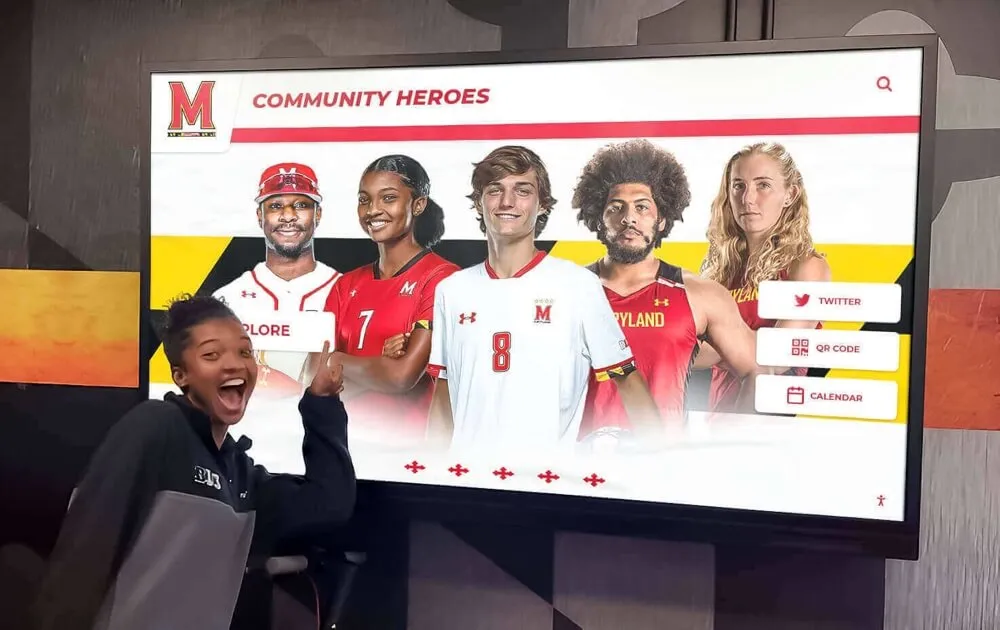
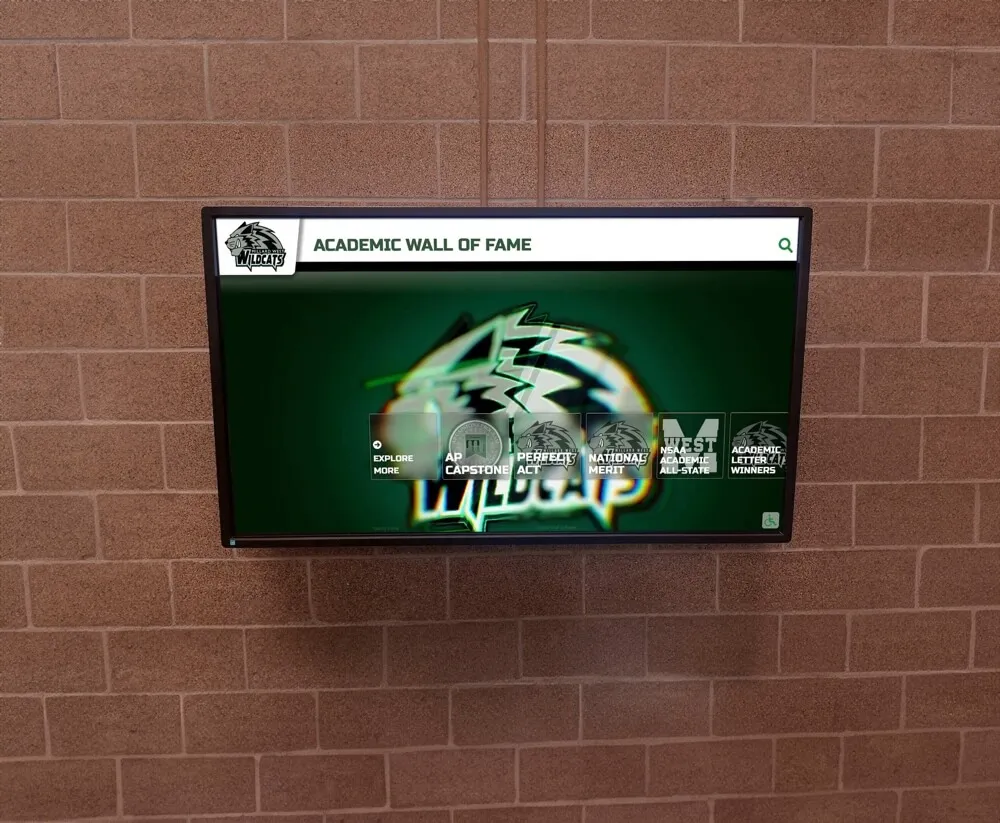
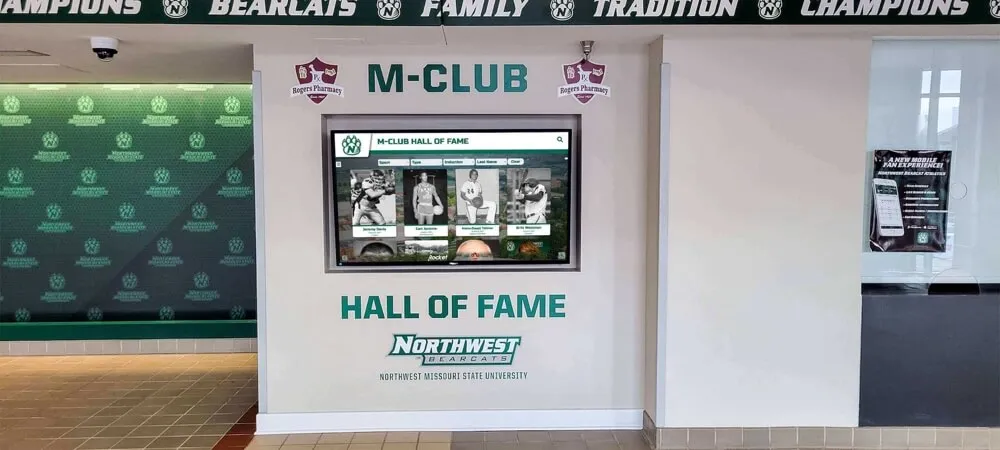
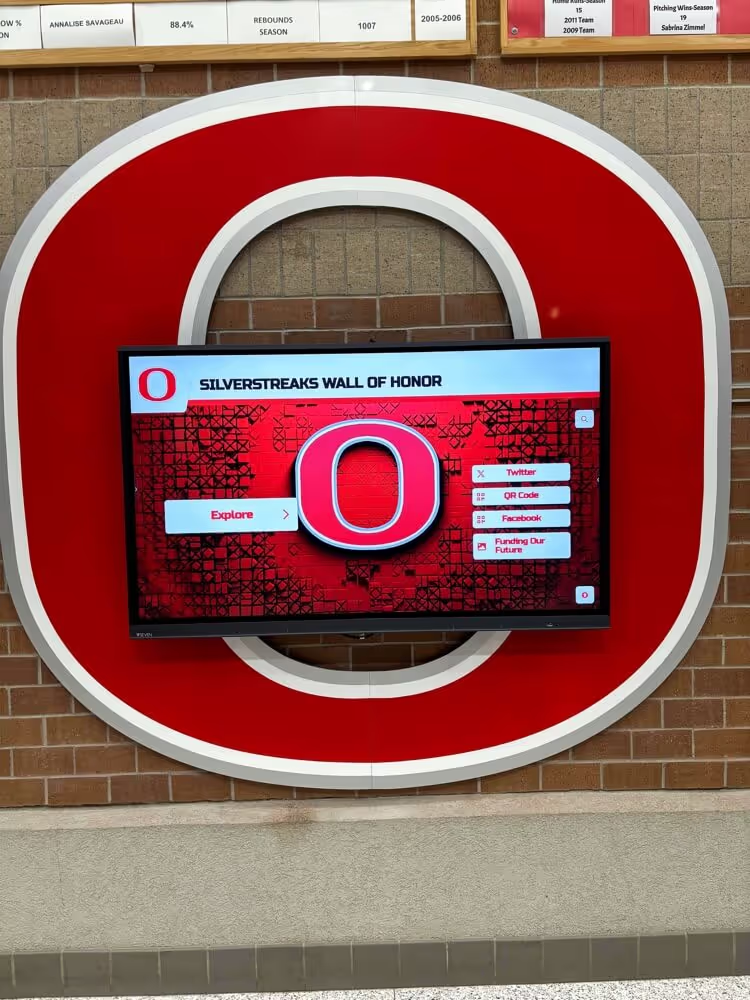
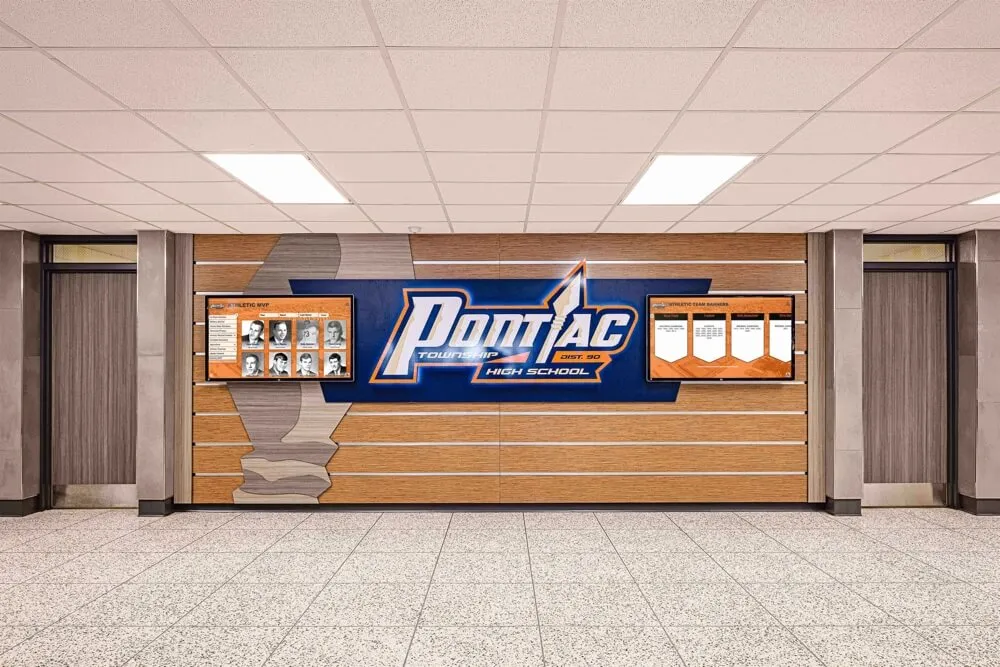
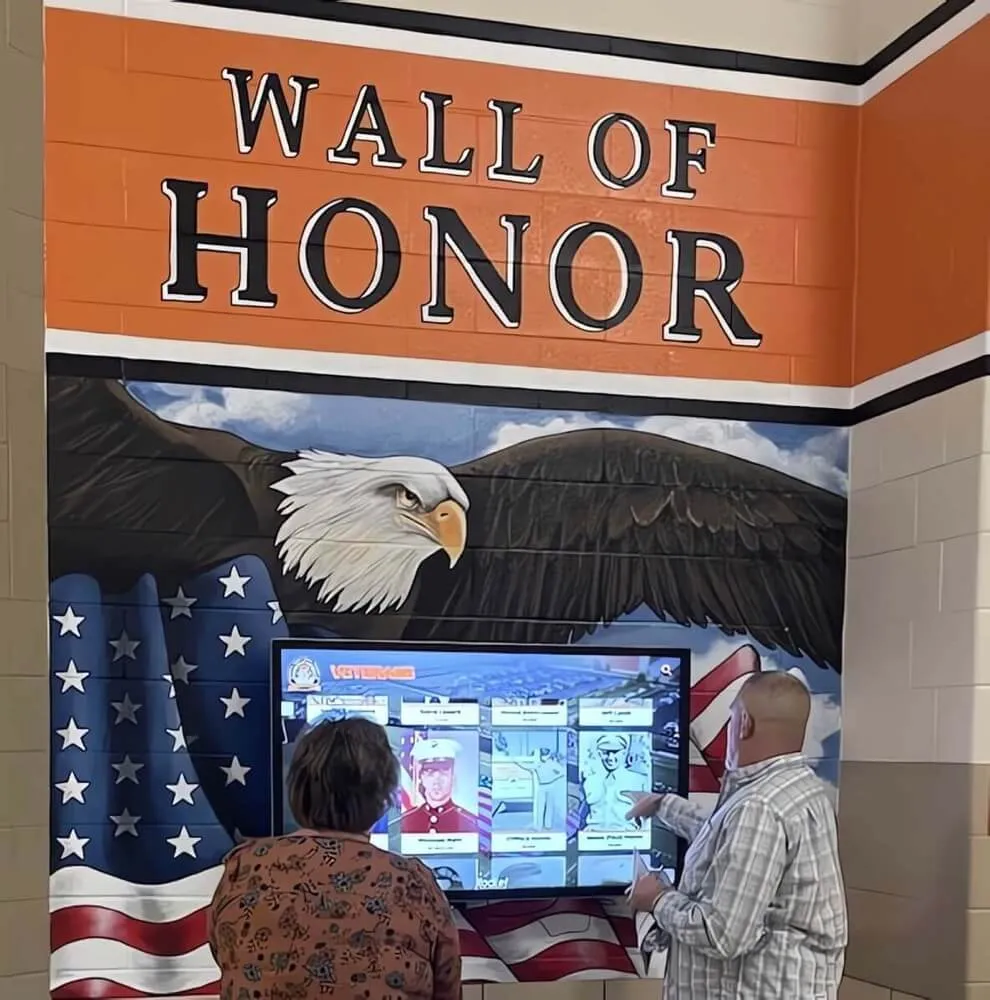
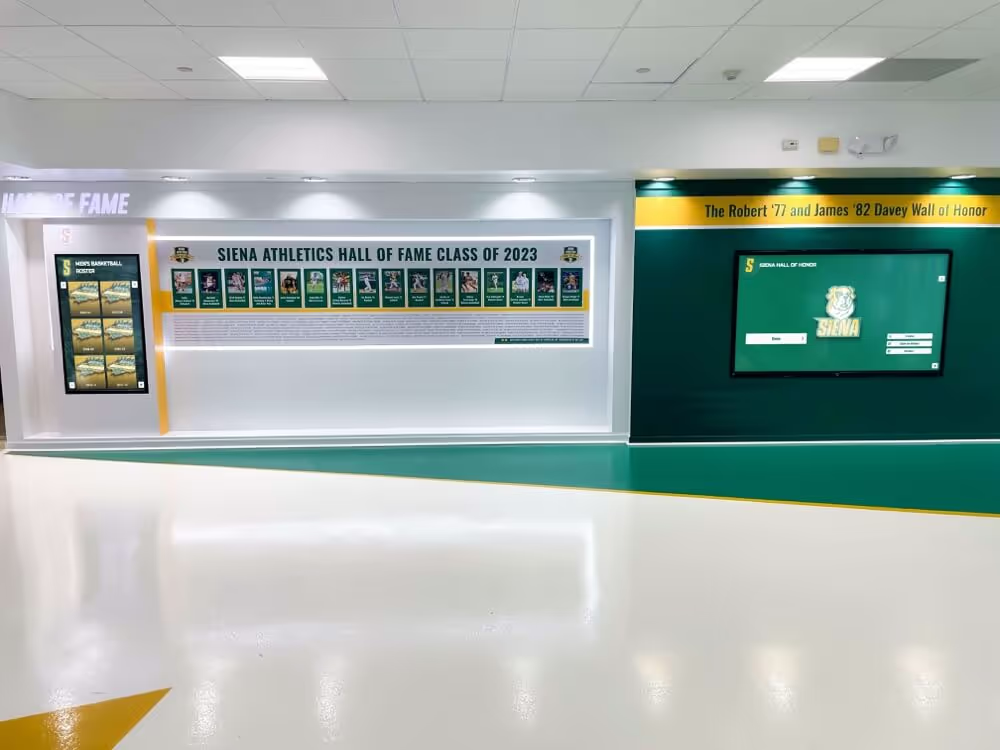
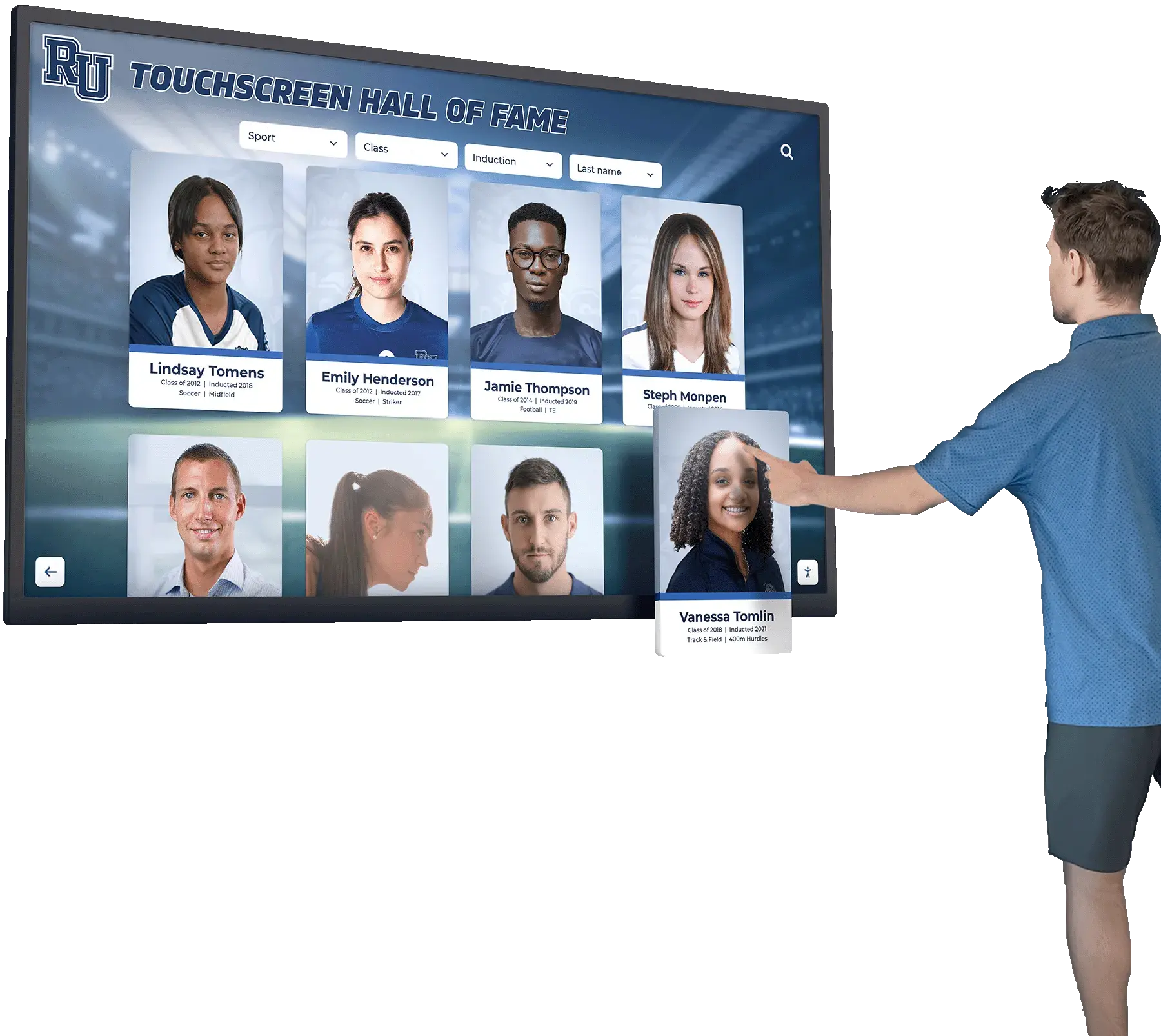
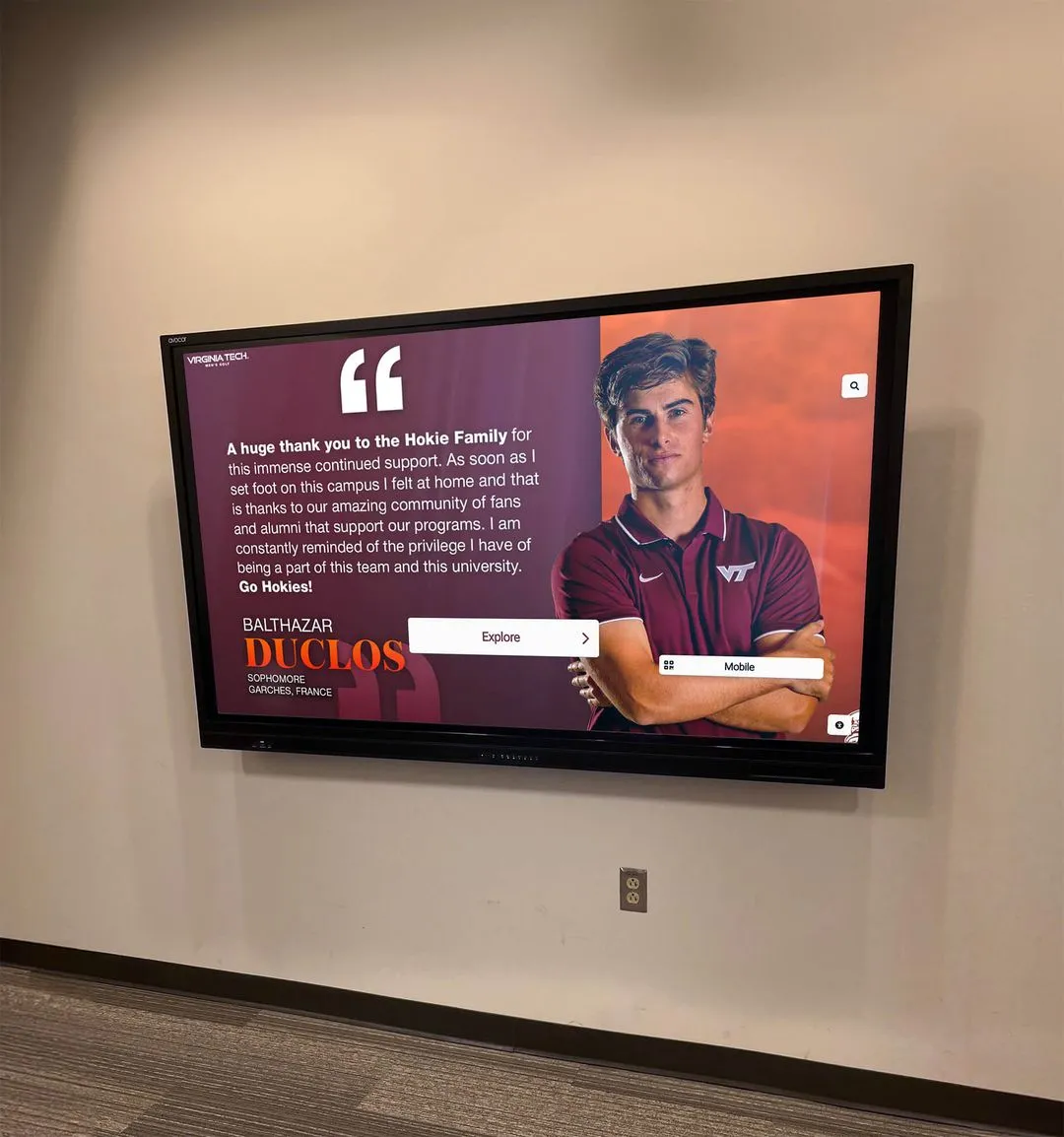
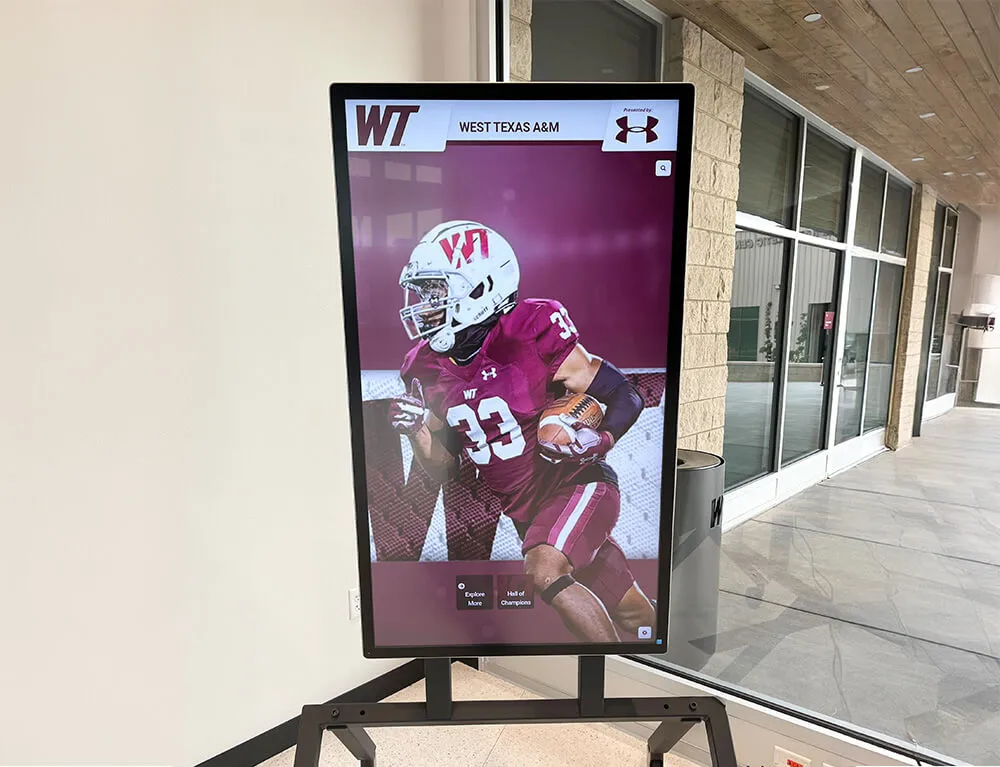
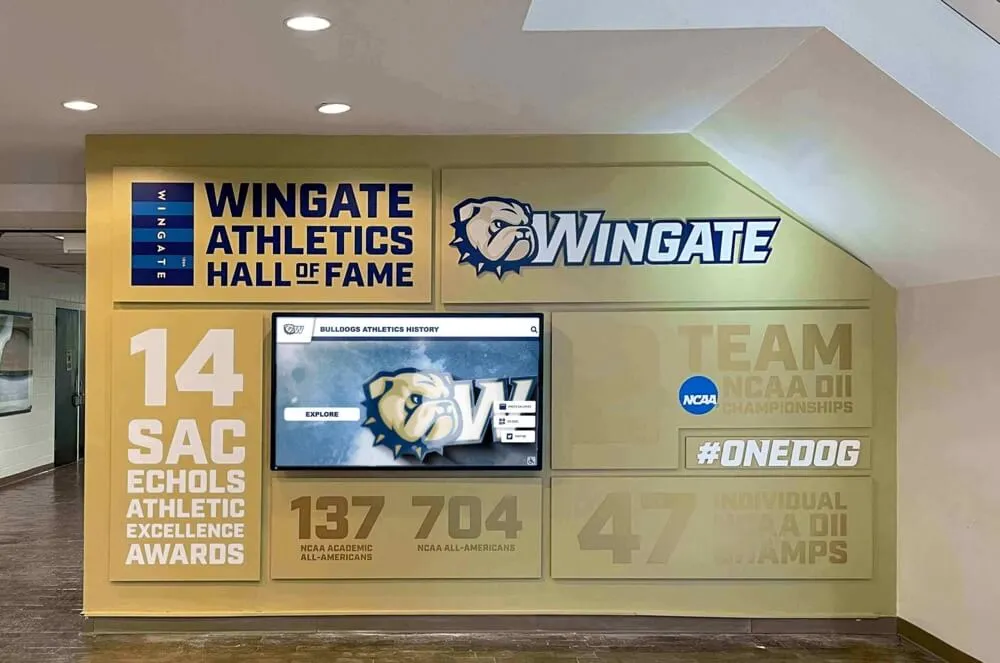
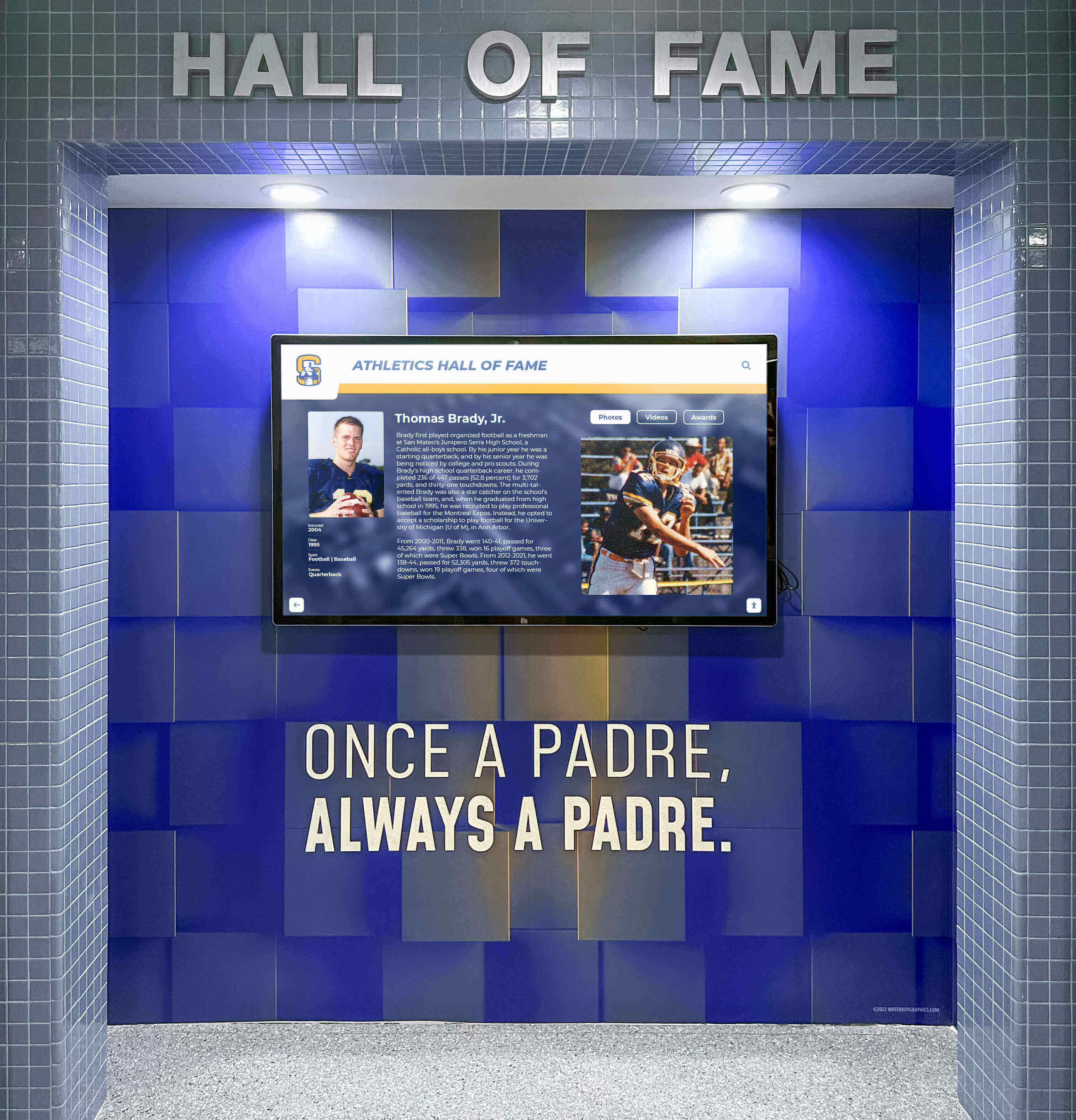
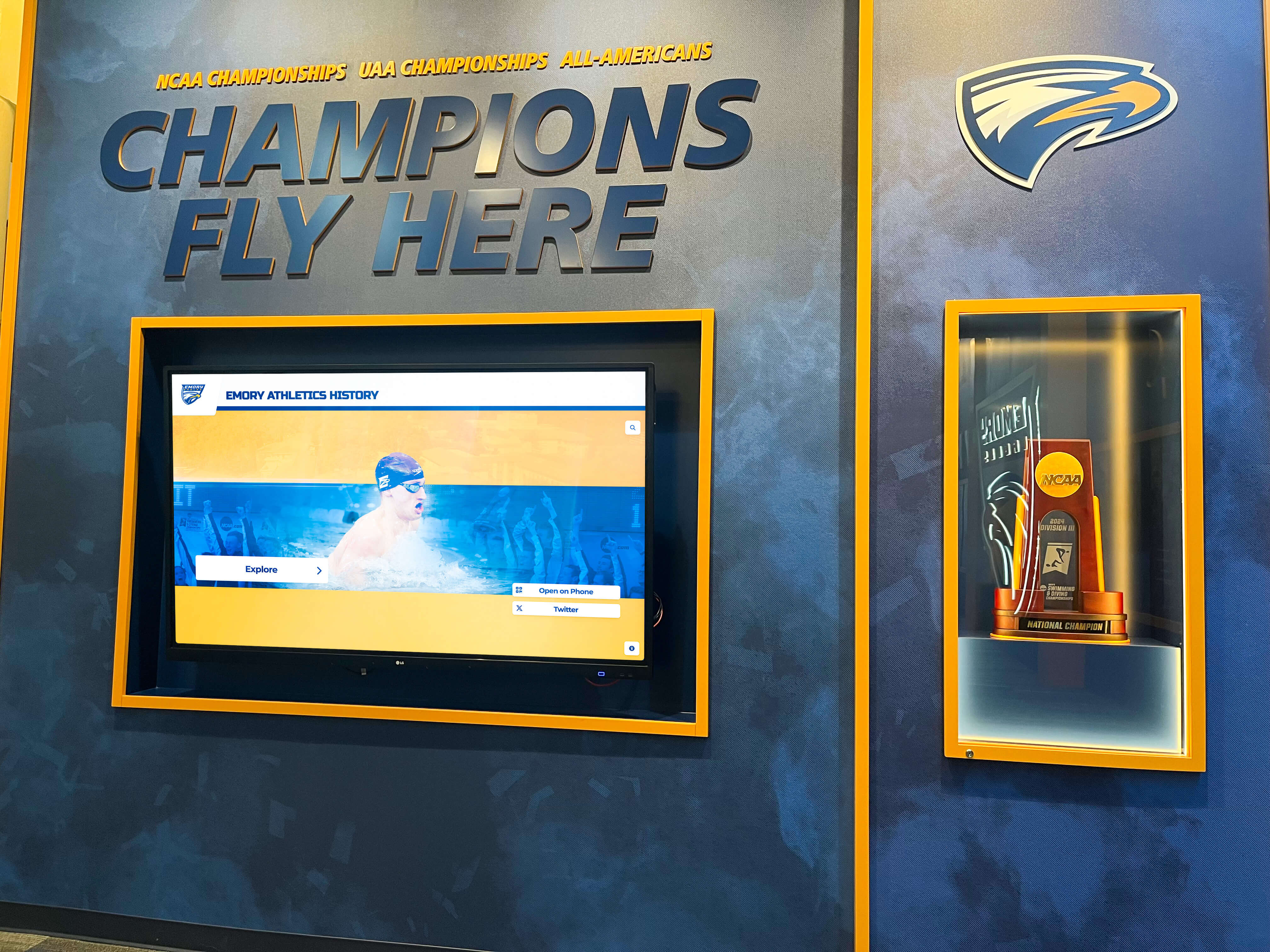
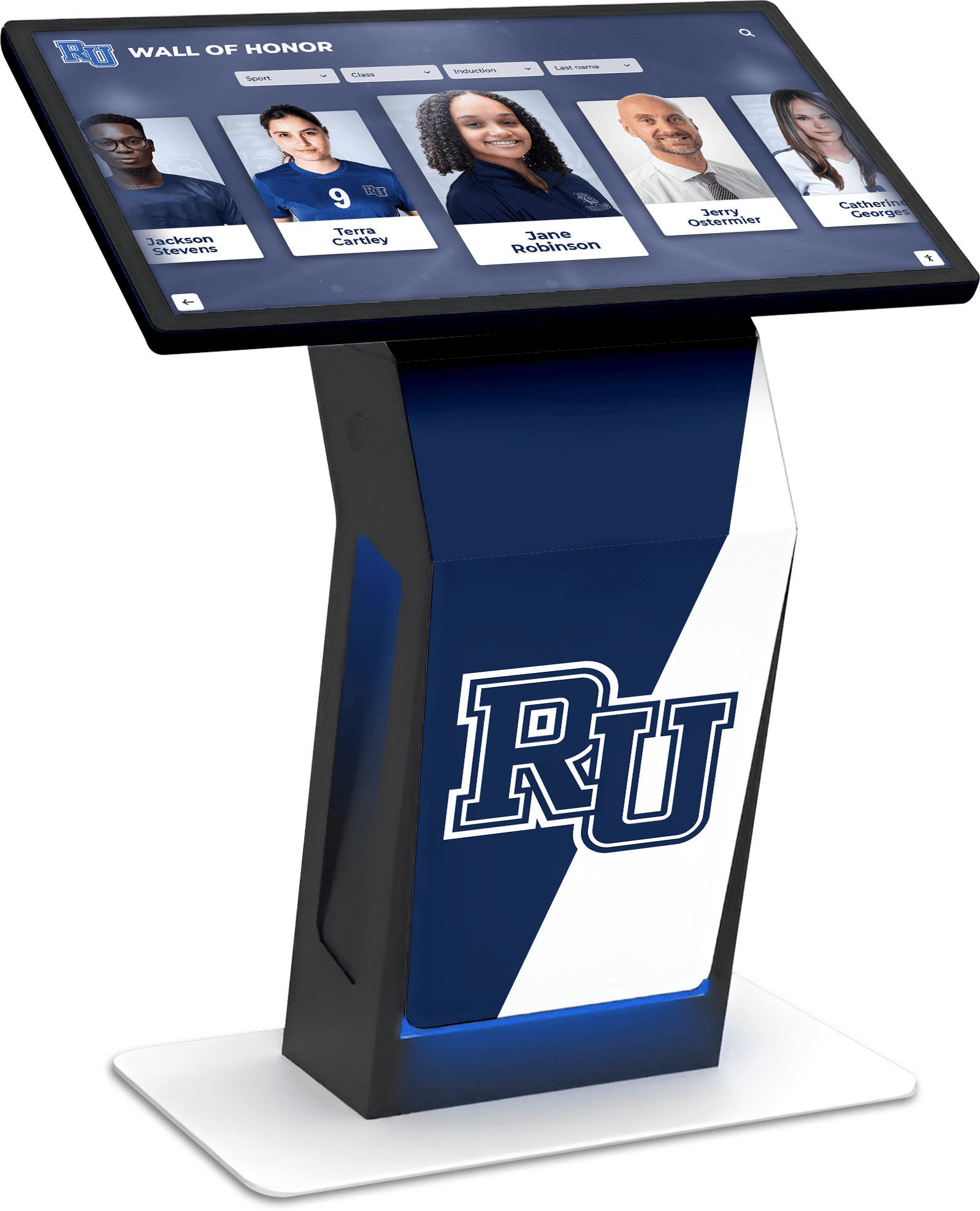
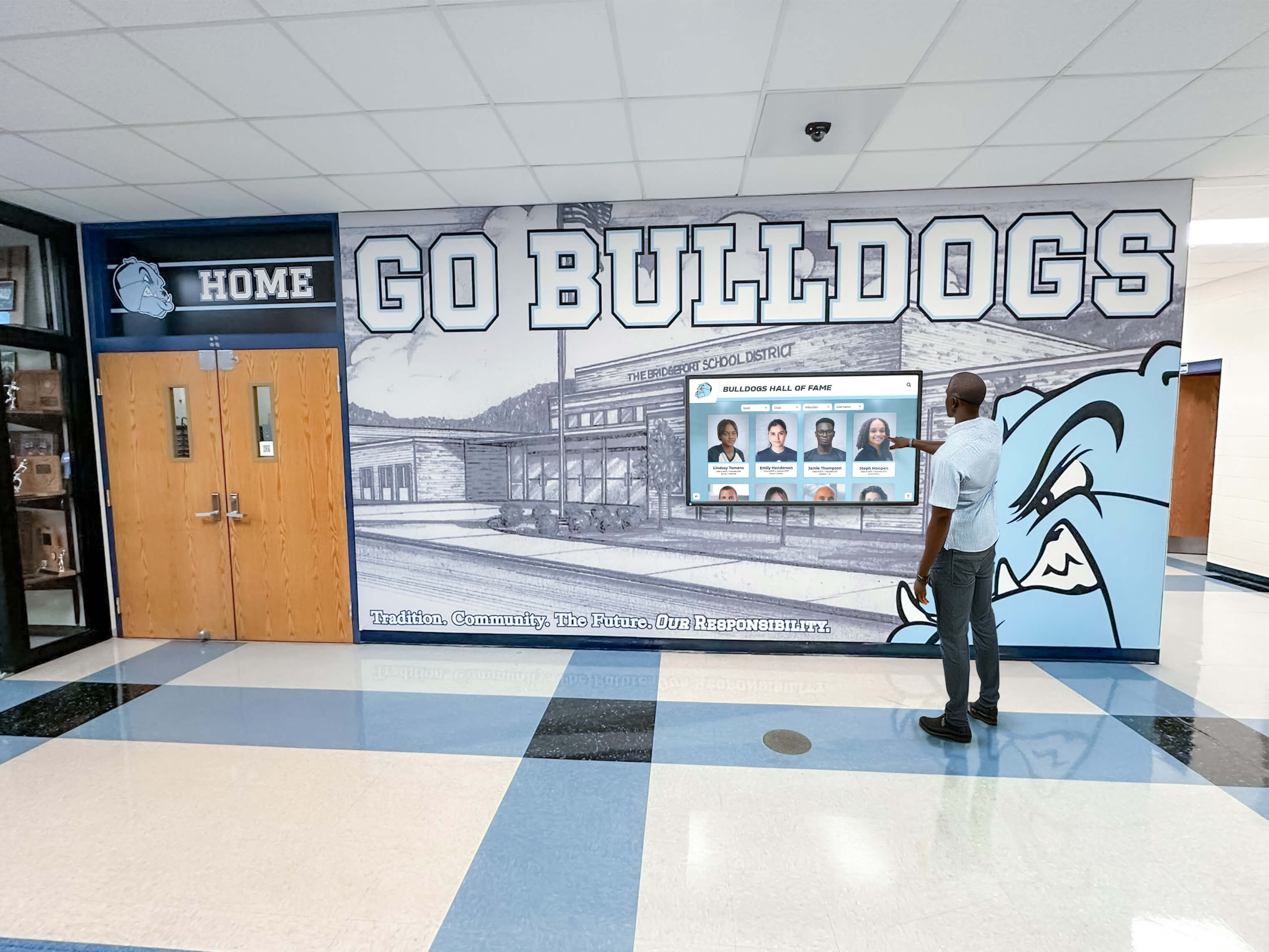
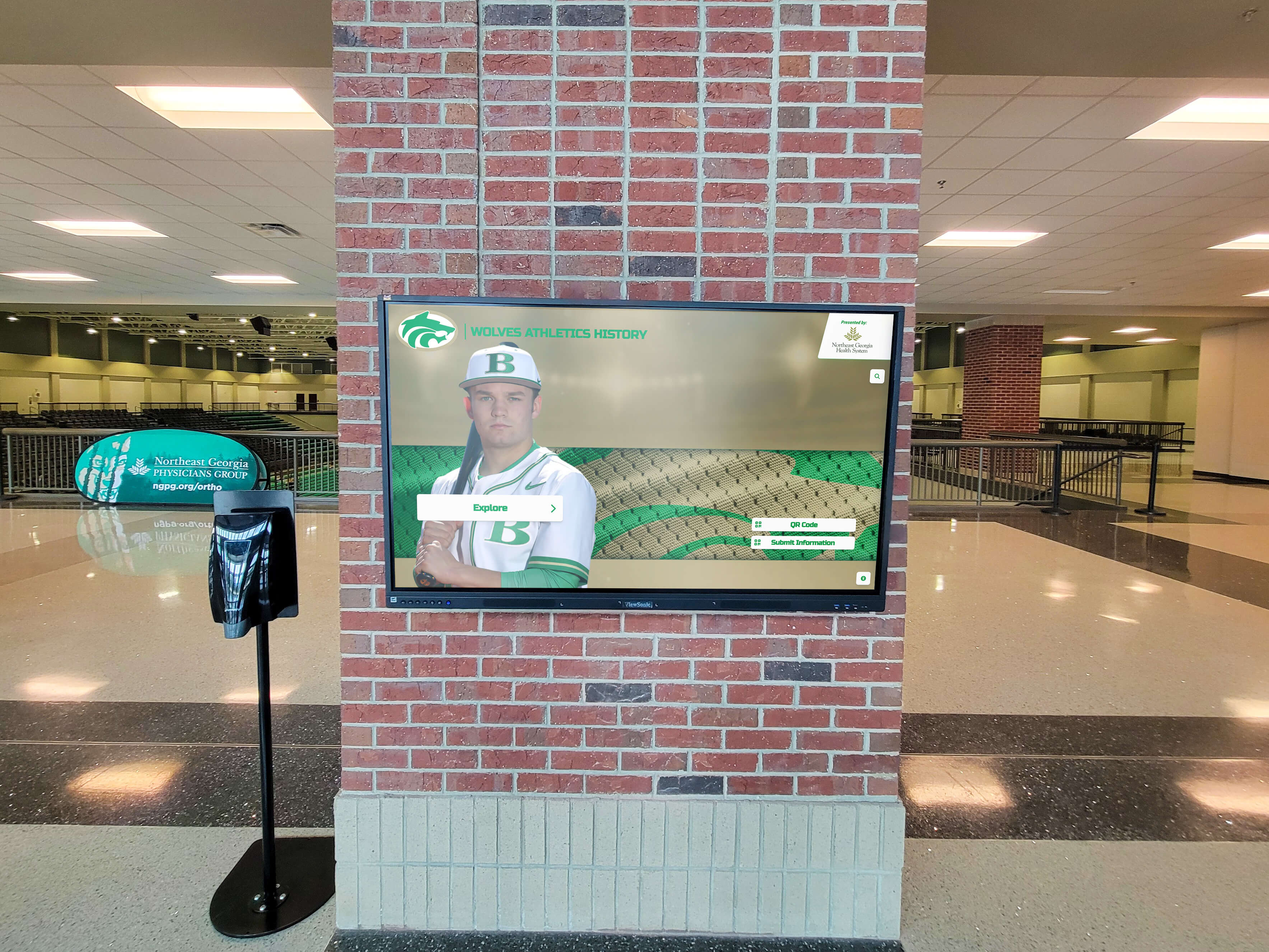
Interactive Touchscreen Displays: Large format touchscreens (typically 43-75 inches) enable visitors to explore recognition content through intuitive interfaces. Users can search for specific individuals, filter by year or achievement type, view detailed profiles including statistics and photos, watch video highlights, and discover related content through connected stories. Interactive systems transform passive banner observation into engaging experiences where visitors actively explore content relevant to their interests.
These systems typically utilize commercial-grade displays designed for continuous operation in public spaces, capacitive touch technology providing smartphone-like responsiveness, and professional mounting solutions creating permanent installations in lobbies, athletic facilities, or common areas where traffic naturally congregates.
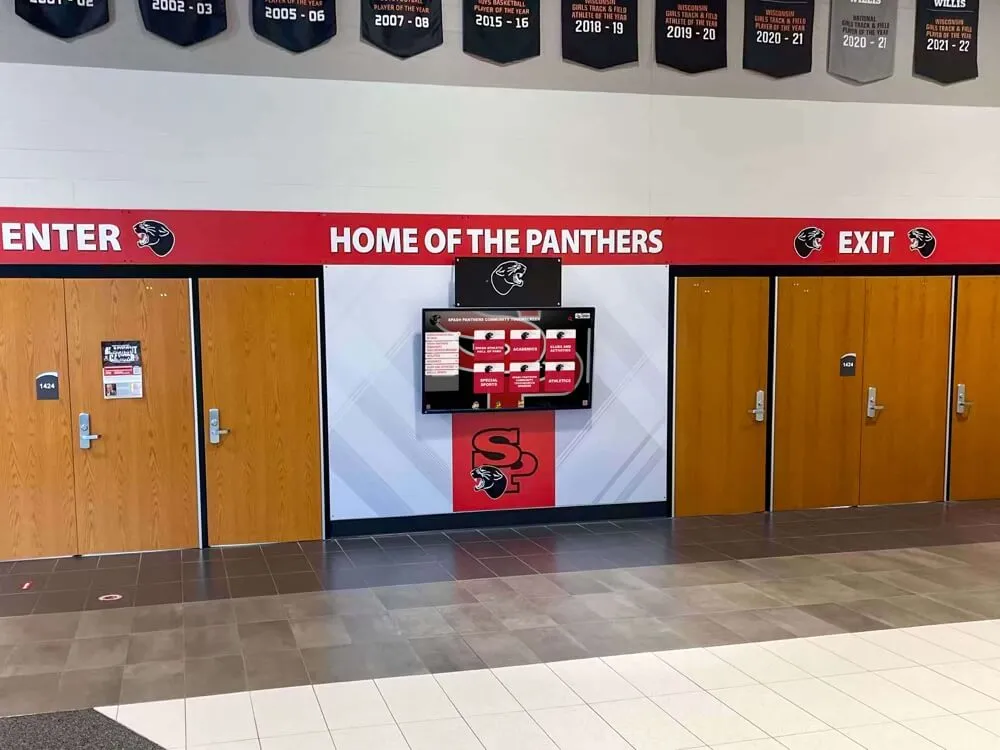
Digital Signage Displays: Non-interactive screens display rotating content showcasing multiple achievements, statistics, photos, and videos in automated sequences. While visitors cannot directly control content, digital signage provides dynamic presentation impossible with static banners, accommodating far more information through timed rotations cycling through comprehensive content libraries.
Digital signage proves particularly effective for locations where visitors pass through rather than pause for extended interaction—hallway corridors, cafeteria areas, or transition spaces where automated presentations reach audiences without requiring active engagement.
Both approaches eliminate physical space constraints through digital content management enabling unlimited recognition capacity within fixed display footprints, create visually impressive presentations through high-resolution graphics and video capabilities, and reduce long-term costs through content updates requiring no physical production or installation expenses.
Unlimited Recognition Capacity
Digital platforms overcome space limitations plaguing traditional banner approaches:
Schools can honor every championship team, recognize all-conference athletes across all sports and seasons, celebrate every valedictorian and honor roll list, acknowledge scholarship recipients from any year, and showcase distinguished alumni regardless of graduation decade—all within the same physical display footprint accommodating traditional banner installations.
This unlimited capacity solves the fundamental constraint forcing difficult decisions about whose achievement receives visible recognition. Digital systems enable comprehensive celebration ensuring no deserving student, team, or accomplishment gets excluded due to physical space limitations.
As programs continue achieving excellence and accumulating recognition-worthy accomplishments, digital displays simply incorporate new content without requiring additional wall space, expanded facilities, or removal of historical recognition. The tenth championship receives equal visibility to the first, and the hundredth honoree displays identically to those inducted decades earlier.
Solutions like Rocket Alumni Solutions provide purpose-built platforms designed specifically for educational recognition rather than generic digital signage requiring extensive customization. Purpose-built systems deliver intuitive content management, automatic ranking and sorting capabilities, templates optimized for athletic and academic recognition, and ongoing platform evolution responding to changing institutional needs.
Rich Multimedia Content Capabilities
Digital displays enable compelling storytelling impossible with traditional static banners:
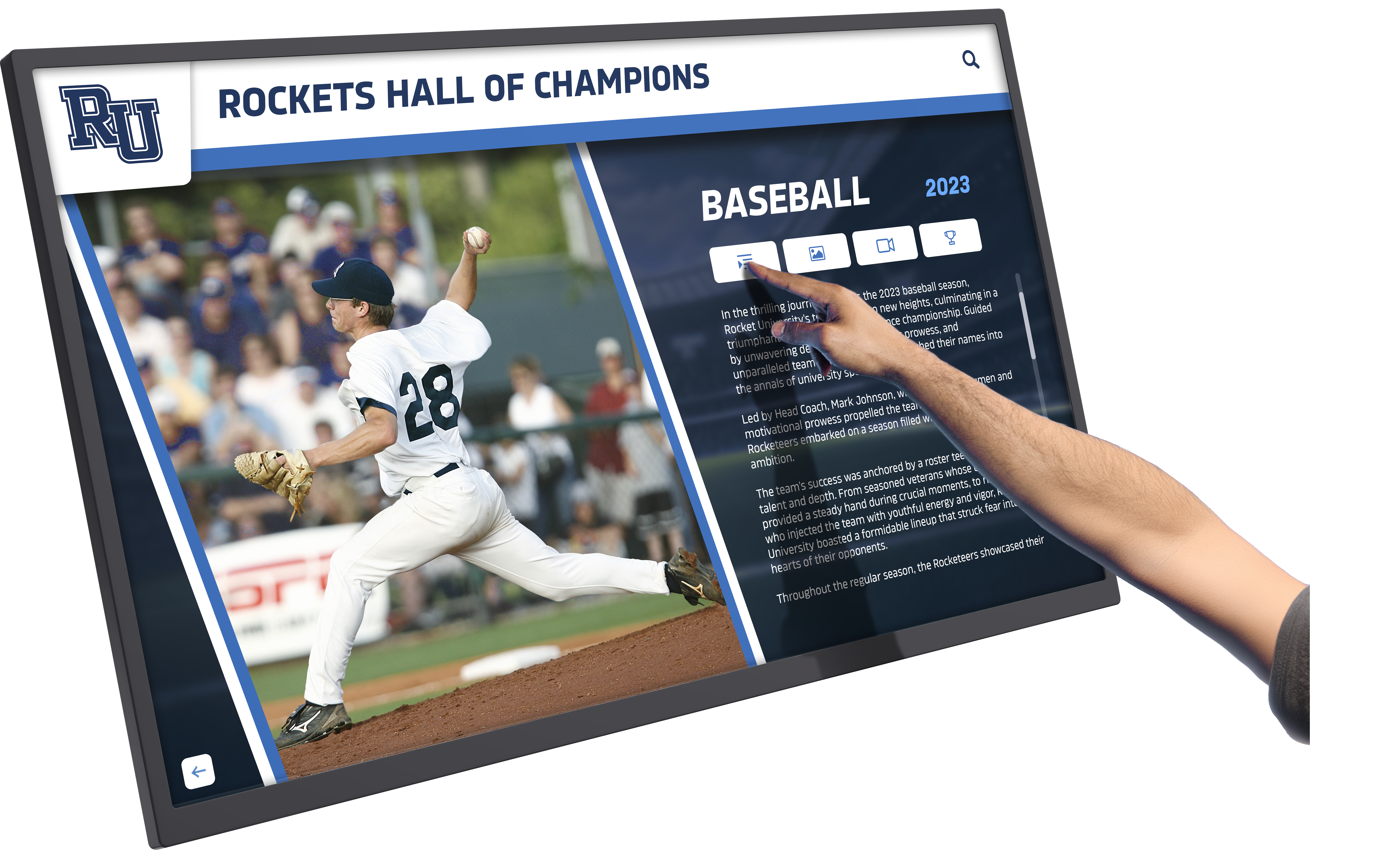
Video Integration: Championship highlight reels, athlete interviews, game-winning moments, or performance footage create emotional connections that static images cannot match. Video content brings achievements to life, helping current students and visitors understand the excellence being celebrated through authentic visual documentation.
Photo Galleries: Multiple images tell richer stories than single banner photographs. Individual athlete recognition can include action shots, team photos, award ceremonies, and personal images creating comprehensive visual narratives. Academic recognition displays can show students during competitions, with teachers, receiving awards, or engaged in scholarly activities providing context beyond names and dates.
Detailed Statistics and Records: Digital formats accommodate complete statistical breakdowns, career progression timelines, record comparisons across eras, and contextual information helping audiences understand achievement significance. Rather than listing only “State Champion 2023,” digital displays can show season records, playoff progression, individual standout performances, and historical context comparing recent achievement to institutional history.
Biographical Narratives: Extended text sharing student backgrounds, achievement journeys, memorable moments, or current activities creates personal connections impossible within banner space constraints. These narratives help younger students see themselves in older achievers, understanding that today’s champions were once freshmen facing similar challenges and uncertainties.
Understanding donor recognition strategies demonstrates how multimedia storytelling strengthens emotional connections while creating more meaningful recognition experiences.
Real-Time Updates and Content Management
Digital content management eliminates physical production delays:
When teams win championships, administrators can update digital displays within hours rather than waiting weeks for banner design, production, and installation. Immediate recognition maintains relevance and excitement while championships remain current news rather than old information finally receiving acknowledgment long after public attention has moved forward.
Statistical updates occur instantly as records fall, honor rolls publish, or new achievements occur. Schools maintain current information without reprinting costs, ensuring accuracy and timeliness impossible with static formats requiring physical replacement for any content change.
Error corrections happen immediately rather than requiring costly banner reprinting. When information proves inaccurate, administrators simply update digital content and changes appear instantly across all displays. This flexibility reduces anxiety about errors and enables confidence in content accuracy knowing that corrections require minutes rather than hundreds of dollars and weeks of waiting.
Seasonal content rotations occur through simple interface updates rather than physical banner storage, retrieval, and reinstallation. Holiday themes, homecoming celebrations, upcoming event promotions, or temporary recognition displays require only content schedule changes rather than storage logistics and manual labor.
Cost Considerations and Long-Term Value
Digital display investment requires understanding both upfront costs and long-term value equations:
Initial Investment: Quality interactive touchscreen systems typically range $3,000-8,000 depending on display size, mounting solutions, installation complexity, and software platform selection. This represents significantly higher initial investment than traditional banner approaches costing hundreds rather than thousands per installation.
However, total cost of ownership calculations must consider long-term banner program costs. Schools spending $2,000-5,000 annually on new banners, replacements, and updates will reach digital system costs within 2-4 years. Beyond that breakeven point, digital systems deliver ongoing value without recurring production expenses, creating substantial long-term savings.
Software and Maintenance: Cloud-based recognition platforms typically charge $500-1,500 annually for software access, content management tools, automatic updates, technical support, and platform hosting. These predictable subscription costs replace unpredictable banner expenses that fluctuate with championship count, recognition scope, and replacement needs.
Display hardware requires minimal maintenance given commercial-grade construction designed for continuous operation. Professional displays carry warranties typically covering 3-5 years, and expected lifespans of 8-12+ years mean hardware replacement occurs infrequently compared to banner replacement cycles.
Value Beyond Cost Savings: While long-term cost advantages matter, digital recognition delivers value extending beyond financial calculations. Enhanced community engagement through interactive exploration, comprehensive recognition honoring all deserving achievements rather than space-limited selections, impressive visual presentation creating memorable campus focal points, and analytics revealing which content resonates most with audiences create benefits justifying investment independent of cost comparisons.
Schools implementing digital recognition displays report improved alumni engagement, increased donor interest, stronger recruitment impressions, and enhanced school pride among students and families—outcomes with institutional value exceeding simple cost calculations.
Hybrid Approaches Combining Traditional and Digital Elements
Many schools successfully implement combination strategies leveraging both banner formats’ complementary strengths:
Strategic Format Selection by Application
Different recognition needs merit different display approaches:
Recent Championships: Traditional banners celebrating current or very recent accomplishments in gymnasiums create immediate visibility during games and events when digital displays may receive less attention than prominently suspended fabric banners commanding attention from bleacher seating.
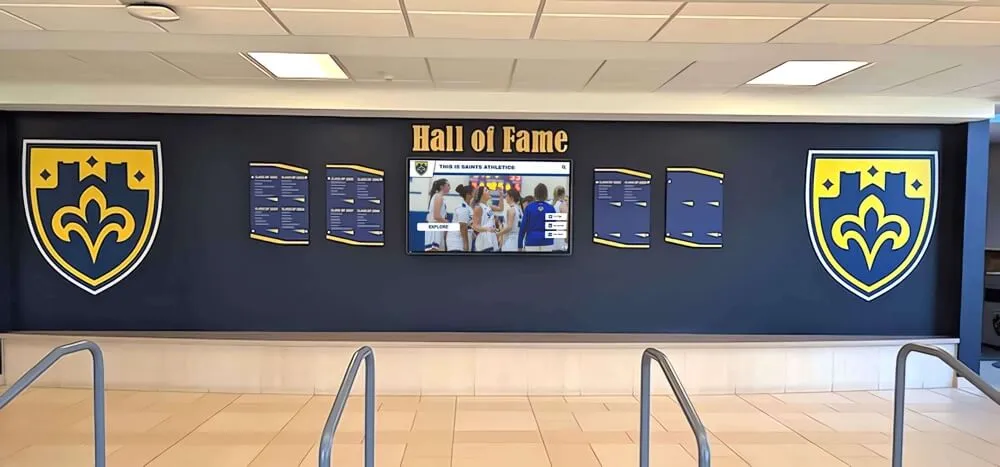
Historical Archives: Digital displays excel at preserving decades of history, showcasing championship teams from 1950s through present with equal visibility and detail impossible using physical banners consuming extraordinary wall space. Schools can honor all historical achievement comprehensively through digital archives while reserving physical banner space for recent recognition maintaining prominence.
Individual Recognition: Academic honor rolls, all-state athletes, scholarship recipients, and similar individual achievements work excellently in digital formats enabling searchable databases, detailed profiles, and flexible organization by year, sport, achievement type, or name. These recognition categories quickly exhaust physical space when hundreds of students merit acknowledgment across decades, making digital solutions particularly appropriate.
Ceremonial Spaces: Main entrances, administrative lobbies, or formal gathering areas may warrant traditional banners or recognition walls creating immediate impressive visual impact for visitors who may not pause to interact with digital displays. These high-traffic, short-duration visitor spaces benefit from format requiring no interaction while creating instant strong impressions.
Coordinated Visual Design Systems
Consistent aesthetics across both traditional and digital elements create cohesive recognition environments:
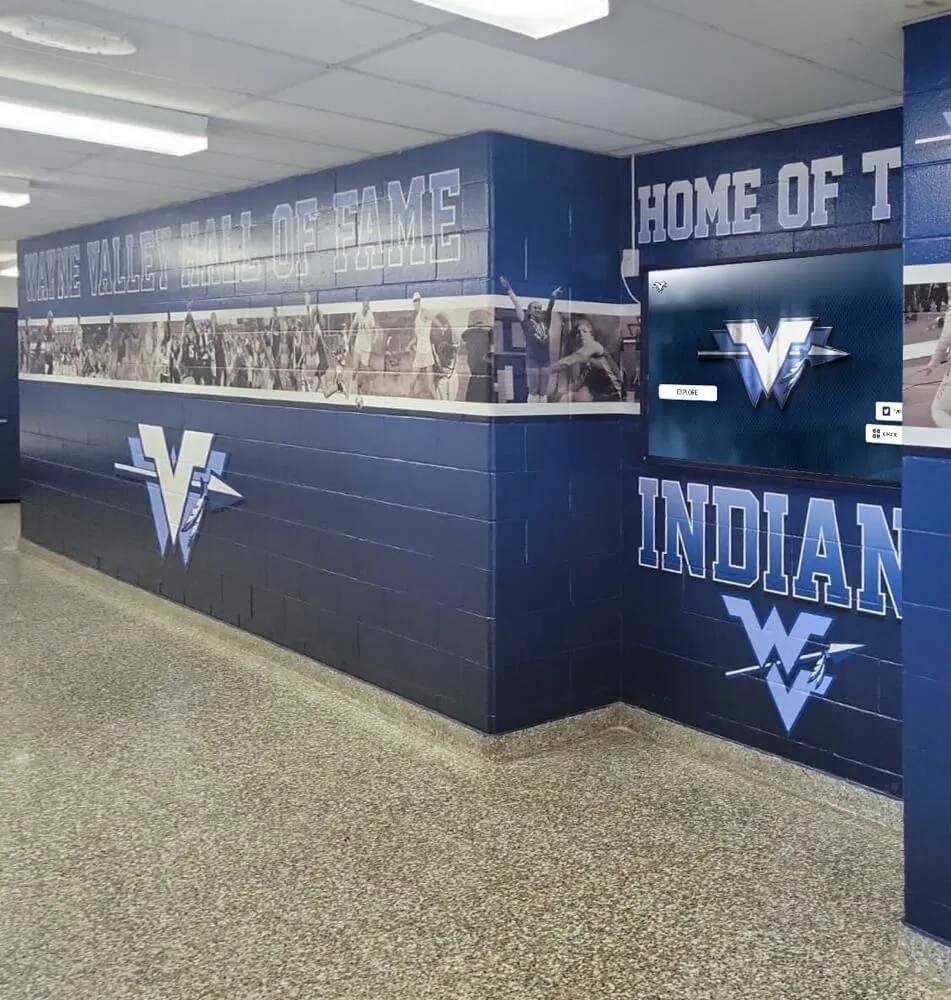
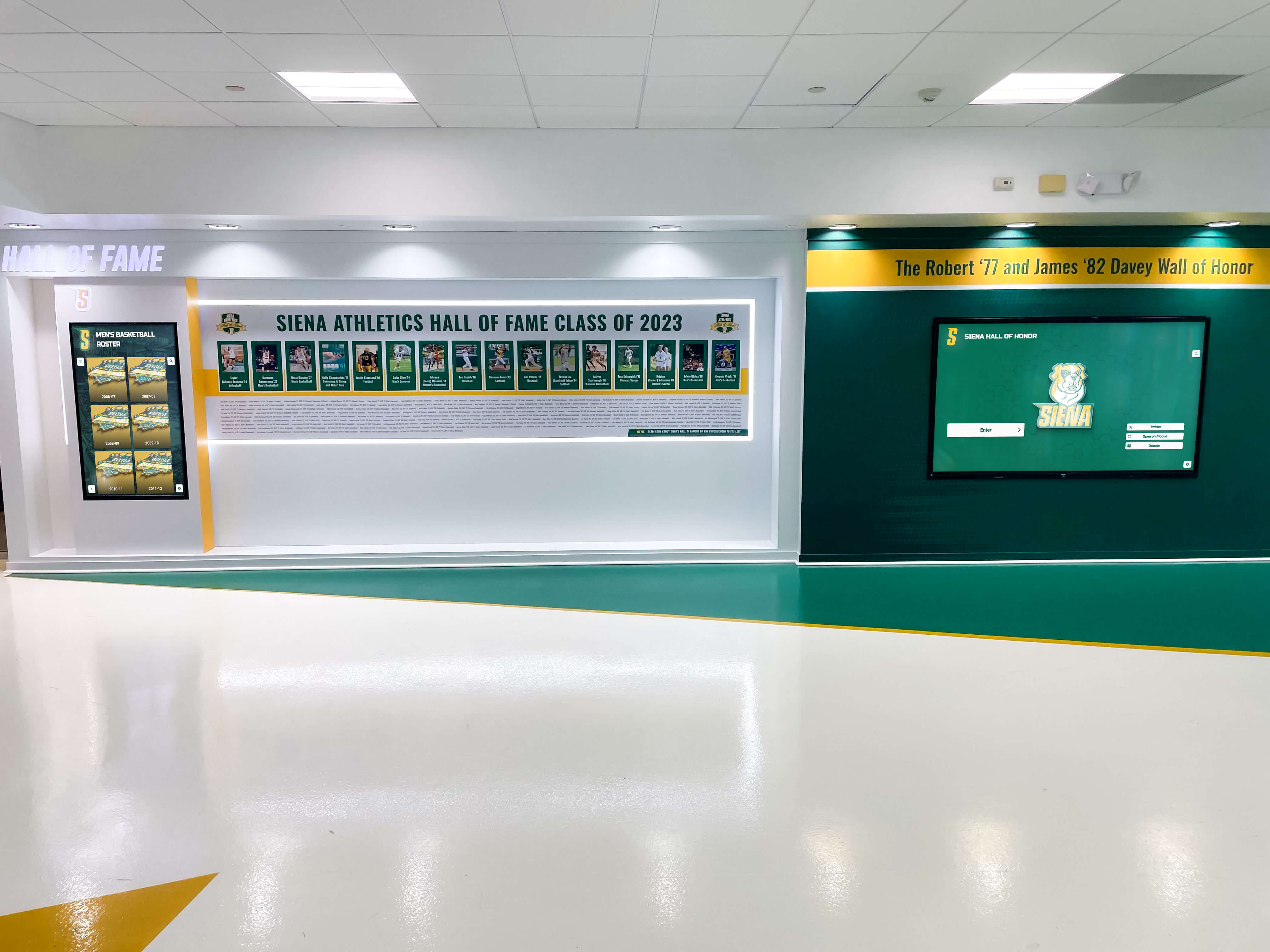
Schools implementing both formats should develop unified design standards including consistent color palettes reflecting institutional identity, coordinated typography across physical banners and digital interfaces, complementary layouts creating visual relationships between formats, and thematic elements tying different recognition areas together into comprehensive systems rather than disconnected individual installations.
This design coordination ensures visitors experience intentional, professional environments rather than haphazard collections of unrelated displays accumulated over time without cohesive planning. Professional design investment upfront creates templates and guidelines enabling consistent implementation across all future recognition additions regardless of format.
Resources exploring athletic recognition displays demonstrate effective integration of multiple recognition formats creating comprehensive celebration systems.
Design Principles for Effective School Banners
Regardless of format selection, fundamental design principles ensure recognition displays communicate effectively while creating visually appealing environments:
Visual Hierarchy and Information Organization
Effective banner designs guide viewer attention through intentional information hierarchy:
Primary information—names, championship years, key achievements—should receive prominent visual emphasis through size, color, position, or contrast ensuring immediate comprehension from typical viewing distances. Secondary details including statistics, rosters, or contextual information can appear in smaller text accessible upon closer examination but not competing for attention with primary content.
Consistent layouts across multiple related banners create predictable information patterns helping viewers quickly locate specific details. When all championship banners follow identical templates with consistent positioning for sport names, years, and achievement levels, viewers efficiently scan multiple displays finding desired information without repeatedly deciphering new organizational approaches for each banner.
White space prevents visual clutter and enables restful viewing even when multiple banners appear in single spaces. Overcrowded designs attempting to maximize information density often sacrifice comprehension as viewers struggle to parse competing elements without clear hierarchy or organization.
Color Selection and Institutional Identity
Strategic color use strengthens institutional branding while ensuring visibility:
School colors should anchor banner palettes, creating immediate institutional identity reinforcement. However, strict adherence to only school colors can create monotonous displays lacking visual variety across multiple recognition areas. Consider incorporating complementary accent colors providing variety while maintaining brand consistency, or using different value ranges (lights, darks, saturated, muted) within school color families creating visual interest without abandoning institutional palettes.
Contrast ensures readability from viewing distances typical for each installation location. Light text on dark backgrounds generally provides superior distance readability compared to dark text on light backgrounds, particularly relevant for suspended gymnasium banners viewed from bleacher seating 50+ feet away. Conversely, close-viewing hallway displays offer more color palette flexibility given shorter viewing distances.
Color psychology subtly influences perception—blue suggests stability and excellence, red conveys energy and passion, gold represents achievement and prestige, green implies growth and balance. Thoughtful color selection reinforces desired emotional responses and achievement celebration appropriateness.
Understanding school spirit building strategies demonstrates how visual elements including banners contribute to broader community culture development.
Typography and Readability Standards
Font selection dramatically affects comprehension and professional appearance:
Sans-serif typefaces generally provide superior readability for banner applications, particularly at distance. Clean, simple letterforms without decorative serifs maintain clarity when viewed from typical banner viewing distances. Popular choices include Helvetica, Gotham, Futura, or similar geometric sans-serif families offering multiple weights for hierarchy creation.
Font size calculations should account for viewing distance. A rule of thumb suggests one inch of letter height for every ten feet of viewing distance—banners viewed from 30 feet away require 3-inch minimum text height for comfortable readability. Digital displays require similar calculations despite screen format, ensuring text remains legible from expected viewing positions rather than sized only for immediate close viewing.
Font weight and style create visual hierarchy without requiring dramatically different sizes. Bold weights command attention for primary information while regular weights serve secondary content. Avoid excessive style variations (multiple different typefaces, decorative scripts, or novelty fonts) creating visual chaos rather than professional coherence.
Budget-Friendly Banner Ideas for Schools
Resource constraints need not prevent effective recognition when schools implement creative approaches maximizing impact within limited budgets:
Do-It-Yourself Banner Projects
In-house production can significantly reduce costs while building community ownership:
Schools with large-format printers can produce vinyl banners internally using standard banner material available through educational supply vendors. While print quality may not match professional production, many applications including seasonal team rosters, temporary event recognition, or classroom displays work perfectly well with in-house printing at fraction of professional costs.
Student design projects engage art programs, graphic design classes, or technology courses in authentic work creating real displays for school community rather than merely hypothetical projects. Student involvement builds pride and ownership while developing practical design skills in real-world applications. Supervising teachers ensure quality standards while students contribute creativity and labor reducing professional design expenses.
Parent volunteers with graphic design, printing, or marketing backgrounds often enthusiastically donate professional skills for school projects. Direct requests to parent organizations or targeted outreach to families with relevant professional experience frequently yields expert assistance at zero cost beyond material expenses.
Economical Material Alternatives
Budget-conscious material selection maintains professional appearance while controlling costs:
Lightweight Vinyl: Thinner vinyl materials (10-13 oz vs. premium 18 oz) reduce per-square-foot costs by 30-50% while maintaining adequate durability for indoor applications and protected outdoor locations. Reserve premium materials for permanent outdoor installations while economizing on indoor or temporary displays.
Printed Fabric Alternatives: Polyester flag material accepts dye sublimation printing creating vibrant colors and photographic quality at costs below premium banner fabrics. While less durable than heavy vinyl for outdoor applications, fabric alternatives work beautifully for indoor ceremonial banners, entrance displays, or special event recognition.
Bulk Order Discounts: Consolidate banner needs across multiple sports, programs, or recognition categories into single larger orders qualifying for volume discounts. Many printers offer 20-40% per-unit savings when orders exceed minimum quantities. Annual planning identifying all anticipated banner needs enables strategic bulk ordering rather than expensive small-quantity individual productions throughout the year.
Template Reuse: Design master templates accommodating variable content (names, years, statistics) through simple text updates rather than complete redesigns for each banner iteration. Template approaches reduce design fees to nearly zero after initial investment while maintaining consistent professional appearance across all program applications.
Free and Low-Cost Design Resources
Design tools and resources enable professional results without expensive software or professional designer engagement:
Free Design Platforms: Canva, Google Drawings, or similar web-based tools provide intuitive interfaces with banner templates, professional fonts, graphic libraries, and collaboration features enabling non-designers to create professional-quality layouts. Free tiers typically suffice for school banner projects without requiring paid subscriptions.
Template Marketplaces: Websites including Creative Market, Envato, or similar platforms offer professional banner templates for $5-25 providing fully-developed designs requiring only content customization. Professional templates eliminate design creation from scratch while ensuring quality results meeting printing requirements.
School District Shared Resources: Many districts maintain shared design resources including brand guidelines, template libraries, or graphic design staff supporting multiple schools. Investigate district-level resources potentially available before purchasing external services.
Exploring booster club fundraising strategies reveals how community organizations can fund recognition displays including both traditional and digital solutions.
Implementation Best Practices and Planning Strategies
Successful banner programs require systematic planning ensuring consistent quality, sustainable maintenance, and coordinated implementation:
Developing Comprehensive Recognition Plans
Strategic planning prevents ad-hoc decision-making creating inconsistent results:
Schools should inventory all recognition needs across athletics, academics, arts, student activities, and institutional identity, identifying which achievements currently receive visible acknowledgment and which merit recognition but currently go uncelebrated. This comprehensive assessment reveals recognition gaps and guides equitable program development honoring diverse excellence forms rather than privileging certain activities through exclusive recognition.
Prioritize recognition initiatives based on institutional values, stakeholder importance, budget availability, and implementation feasibility. Not every recognition category requires immediate implementation—phased approaches implementing highest-priority displays first while planning future expansion create realistic pathways toward comprehensive programs without overwhelming available resources.
Establish written recognition criteria defining achievement thresholds meriting banner acknowledgment. Clear standards prevent inconsistent decisions about what accomplishments deserve recognition, enabling transparent, defensible choices when stakeholders question why certain achievements receive banners while others do not.
Creating Sustainable Maintenance Systems
Long-term recognition effectiveness requires systematic maintenance:
Assign clear responsibility for banner program oversight rather than assuming recognition “just happens” without dedicated coordination. Whether administrators, athletic directors, activities coordinators, or designated committees, explicit accountability ensures consistent program execution, quality standards maintenance, and timely updates when new recognition becomes warranted.
Document standard operating procedures for banner design, approval, production, installation, storage, and replacement. Written procedures create institutional memory surviving staff transitions while ensuring consistent quality regardless of personnel changes. Include vendor contacts, design templates, approval workflows, installation instructions, and replacement schedules in comprehensive documentation.
Budget predictably for recognition program costs rather than treating banner expenses as unexpected surprises requiring emergency funding searches. Annual recognition budgets should anticipate normal program costs—new championship banners, academic recognition updates, periodic replacements—enabling proactive planning and preventing deferred maintenance due to funding unavailability.
Resources about event planning and recognition demonstrate how banner displays integrate with broader celebration strategies maximizing recognition impact.
Measuring Recognition Impact
Assessment enables continuous improvement while demonstrating program value:
Gather stakeholder feedback through surveys, focus groups, or informal conversations asking students, families, alumni, and staff about recognition program effectiveness, visibility, appropriateness, and gaps. Systematic feedback reveals whether recognition achieves intended purposes and identifies improvement opportunities.
Observe traffic patterns and engagement behavior around recognition displays. Do people pause and view displays, or walk past without engagement? Interactive digital systems provide analytics revealing exactly which content attracts interest and which gets ignored, enabling data-driven content improvements. Traditional banners require observational assessment noting whether locations receive adequate visibility or displays get overlooked due to poor positioning or design.
Document recognition program contributions to institutional objectives including school pride indicators, alumni engagement metrics, recruitment impressions, or community perception measures. While recognition programs rarely constitute sole drivers of these outcomes, demonstrating positive correlations supports continued program investment and expansion.
Conclusion: Selecting Banner Solutions Aligned with Institutional Needs
School banner decisions ultimately depend on specific institutional contexts including available budgets, recognition program scope, facility characteristics, stakeholder preferences, and long-term sustainability priorities. Traditional vinyl and fabric banners continue serving many schools effectively through economical implementation, familiar formats satisfying community expectations, tangible permanence some stakeholders strongly prefer, and appropriate solutions for limited recognition needs fitting comfortably within available physical space.
Modern digital displays overcome traditional format limitations while delivering capabilities transforming recognition from static acknowledgment into engaging experiences. Unlimited recognition capacity, rich multimedia storytelling, real-time content updates, searchable databases enabling personalized exploration, and long-term cost efficiency through eliminated recurring production expenses make digital solutions particularly compelling for schools with comprehensive recognition ambitions, space constraints limiting traditional display expansion, or forward-looking approaches embracing technology as institutional identity component.
Many schools discover hybrid approaches combining both formats’ strengths provide optimal solutions—traditional banners creating immediate visual impact in select high-profile locations while digital systems provide comprehensive historical archives, detailed individual recognition, and unlimited capacity accommodating growing achievement accumulation. This balanced strategy honors tradition while embracing innovation addressing practical constraints and contemporary engagement expectations.
Regardless of format selection, successful school banner programs share common characteristics: they celebrate achievement appropriately through professional-quality displays, they implement sustainable processes enabling consistent quality and timely updates, they allocate resources efficiently maximizing recognition impact within realistic budgets, they engage communities through visible acknowledgment creating pride and inspiration, and they preserve institutional legacy documenting excellence across generations for current students and future communities.
Your school’s recognition displays can create powerful environments celebrating student achievement while strengthening community identity and inspiring excellence. Whether implementing traditional banners, modern digital systems, or hybrid approaches combining both formats, the strategies and best practices explored throughout this guide provide frameworks for developing recognition programs serving your institution’s unique needs while honoring every student, team, and accomplishment deserving visible celebration.
Ready to explore how modern digital recognition displays can enhance your school’s ability to celebrate achievement comprehensively while overcoming traditional banner limitations? Rocket Alumni Solutions provides purpose-built platforms enabling schools to honor unlimited achievements through engaging interactive displays, creating impressive recognition experiences while delivering sustainable, cost-effective solutions that grow alongside your programs without physical space constraints limiting whom you can celebrate.