



School auditoriums serve as the heart of institutional life—hosting assemblies, theatrical productions, musical performances, graduation ceremonies, and community events that define school culture and connect generations of students, families, and alumni. Yet designing effective auditorium spaces requires balancing competing priorities: acoustic excellence for performances, flexible configurations for diverse events, comfortable seating for extended programs, accessible design serving all community members, technology integration supporting modern presentations, and budget constraints limiting ideal specifications.
Administrators, architects, and facility planners face critical decisions when designing new auditoriums or renovating existing spaces. How do you create acoustically excellent environments without excessive costs? What seating arrangements accommodate both intimate performances and large assemblies? How should technology infrastructure support current needs while enabling future capabilities? What design elements build school pride and create memorable spaces worthy of significant community events?
Modern School Auditorium Design Excellence
Successful school auditorium design extends beyond architectural aesthetics to create functional performance venues serving diverse programming needs throughout academic years. Effective spaces balance technical performance requirements with community gathering functions, incorporate flexible infrastructure accommodating evolving technology, and integrate recognition elements celebrating institutional achievement. Modern auditoriums become more than performance venues—they're community anchors preserving school heritage while hosting events creating lasting memories for students, families, and alumni generations.
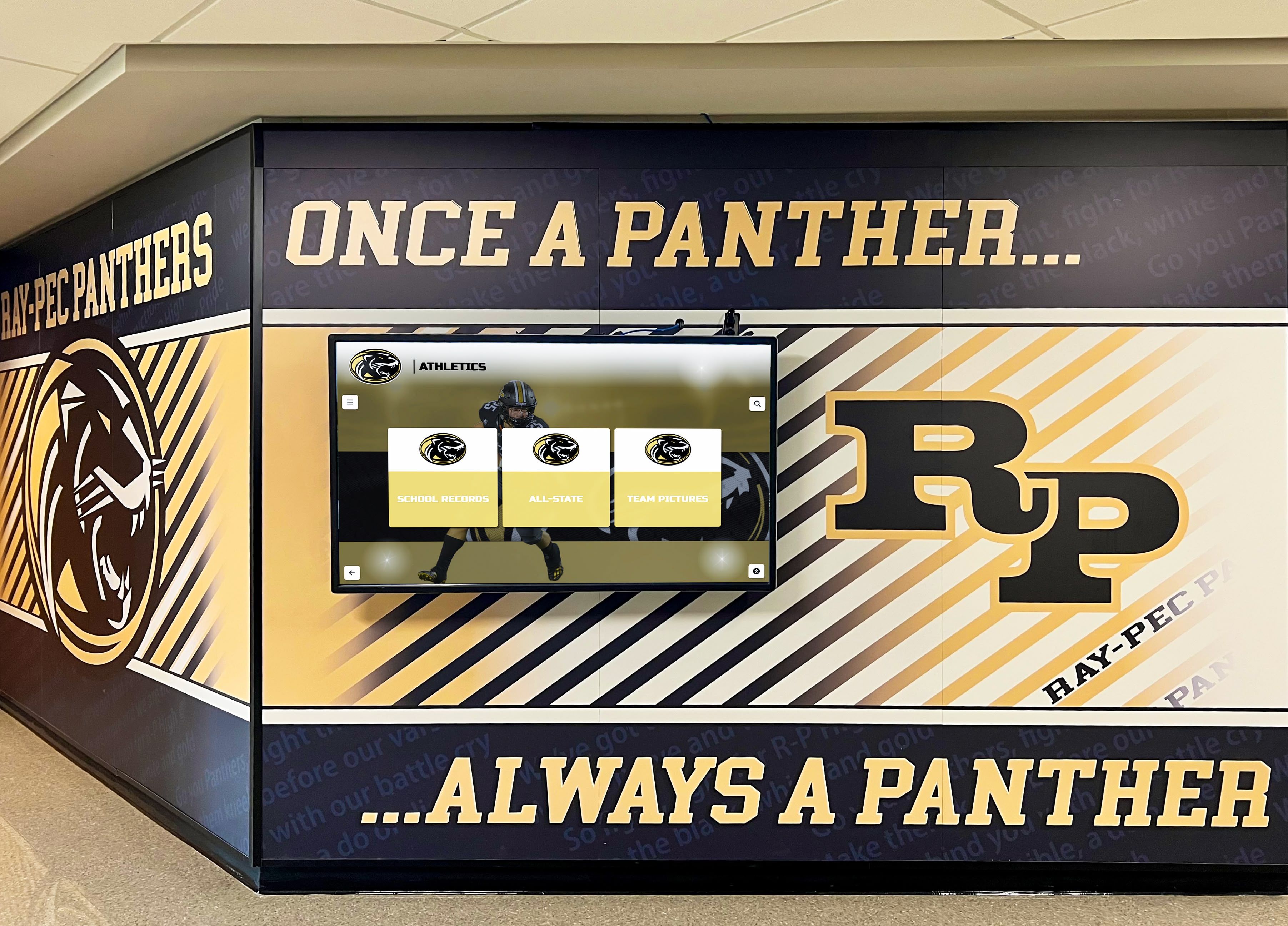
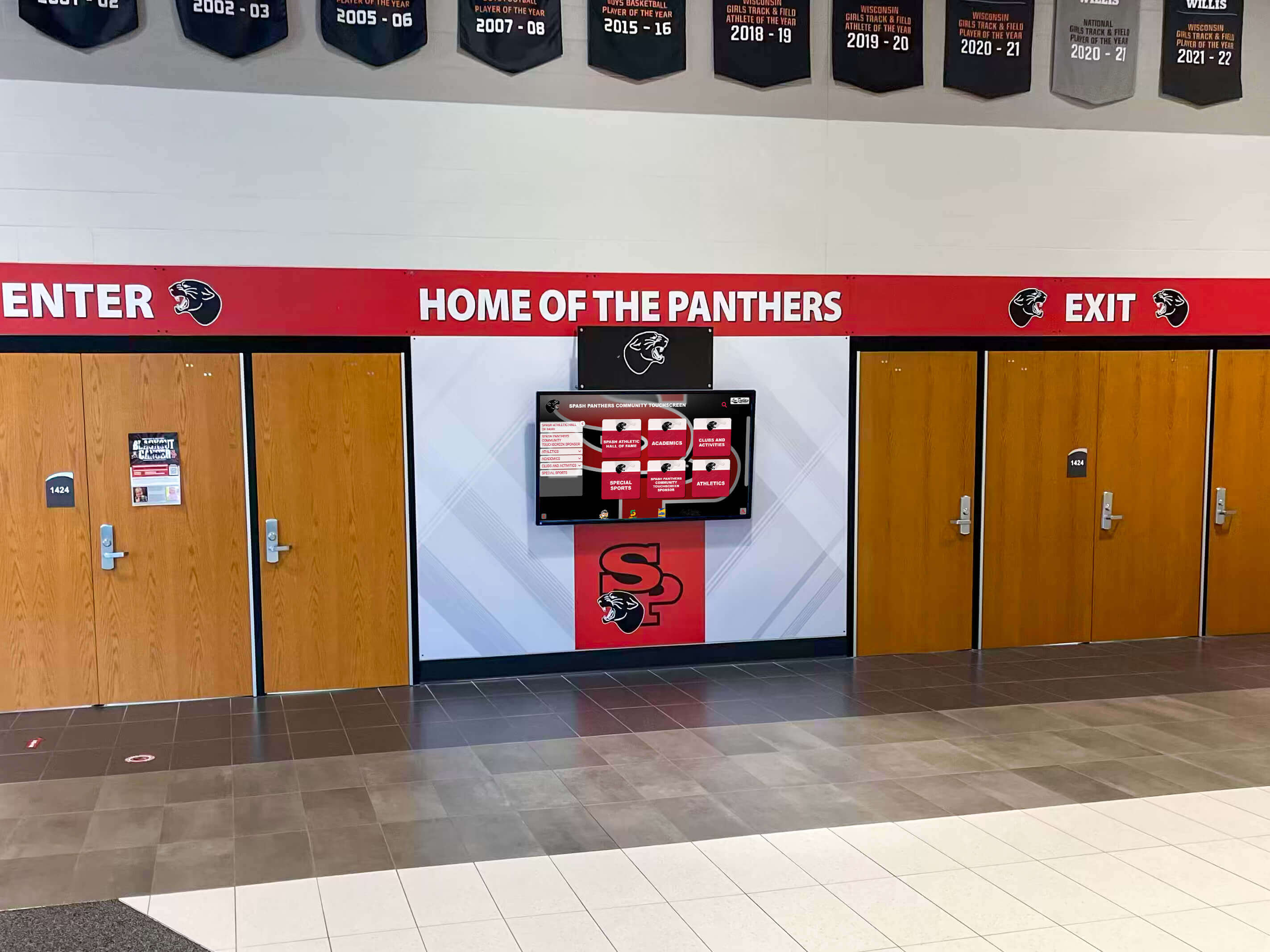
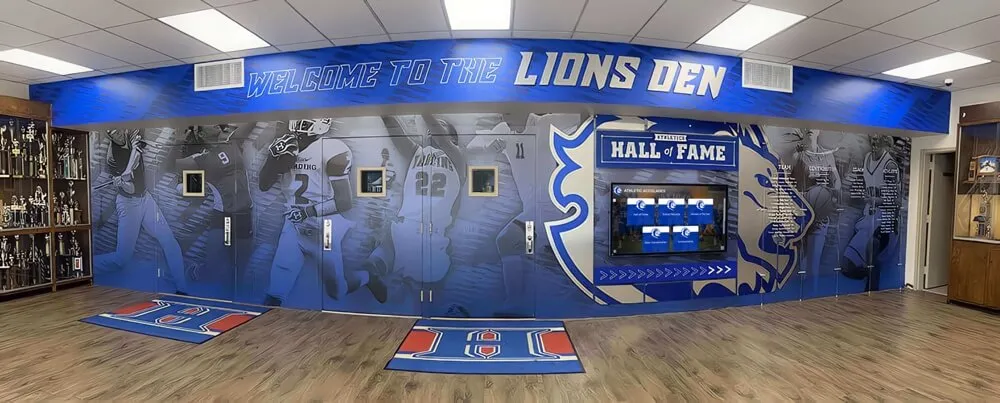
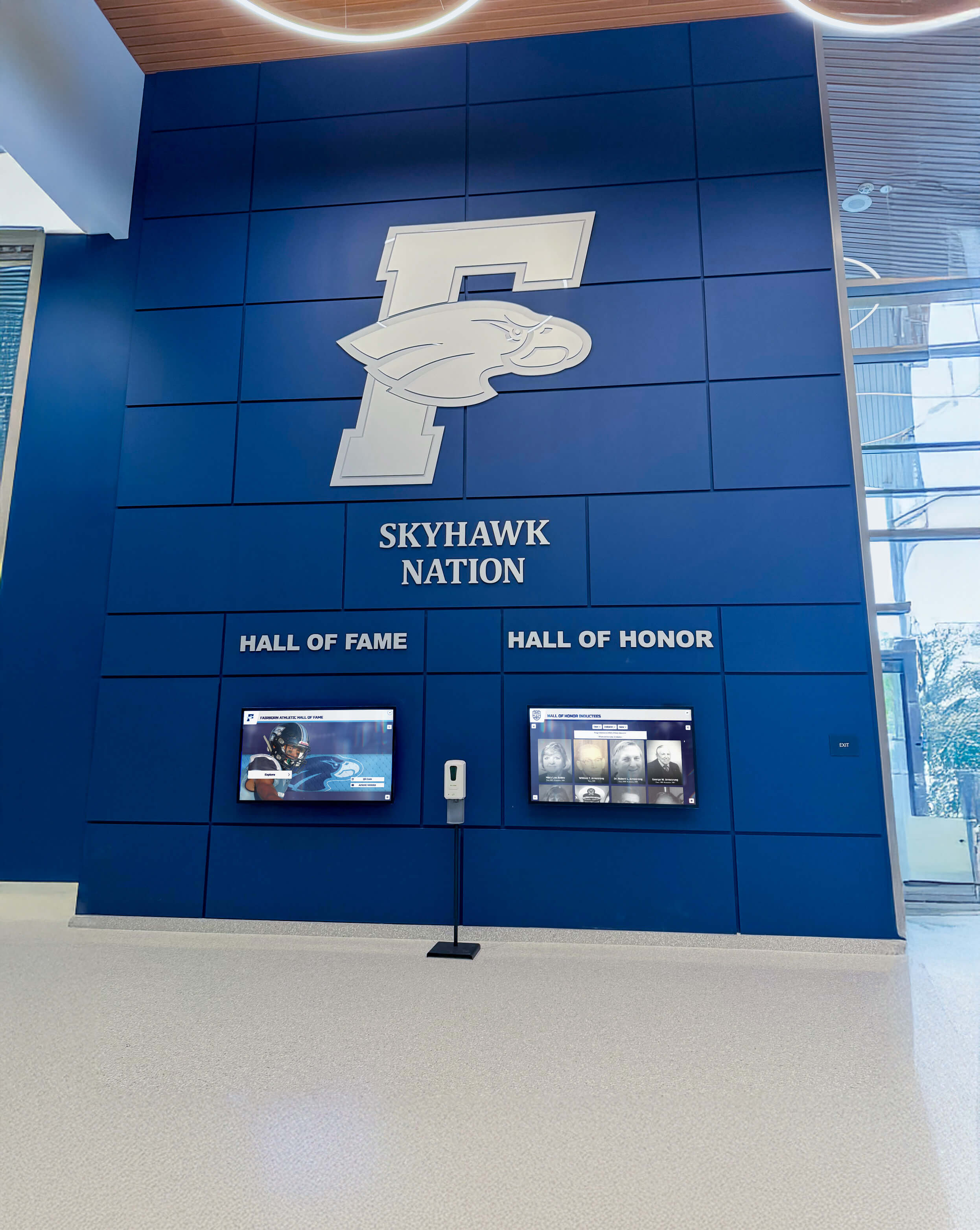
Recognition displays within auditorium spaces create powerful connections between current performances and institutional history. Solutions like Rocket Alumni Solutions offer digital recognition systems transforming auditorium lobbies into engaging showcases celebrating theatrical excellence, musical achievements, and distinguished alumni—creating inspirational environments enhancing every performance and event hosted in your facility.
Auditorium Design Fundamentals
Effective auditorium design begins with understanding core functional requirements determining space usability and performance quality.
Defining Primary and Secondary Functions
Clear functional priorities shape every design decision:
Primary Performance Functions
Most school auditoriums prioritize theatrical and musical performance capabilities. This primary function dictates stage dimensions accommodating set construction, backstage areas supporting cast and crew operations, technical infrastructure enabling professional-quality productions, acoustic design optimizing sound quality for live performance, and lighting systems creating dramatic effects and appropriate visibility.
Schools with strong performing arts programs often design auditoriums approaching professional theater standards—proscenium stages with full fly systems, orchestra pits for musical productions, comprehensive theatrical lighting grids, professional sound systems with mixing capabilities, and backstage support spaces including dressing rooms, green rooms, and scenery construction areas.
Assembly and Multi-Purpose Applications
Even performance-focused auditoriums serve important assembly functions. Regular uses include weekly or monthly all-school assemblies, academic recognition ceremonies, graduation events, guest speaker presentations, standardized testing sessions, and community meetings or forums.
These varied uses require design flexibility. Removable or retractable orchestra pits accommodate both musical performances and maximized floor seating. Portable stages adapt to different presentation formats. Versatile lighting enables both theatrical productions and clear visibility for lectures. Sound systems balance live performance amplification with speech intelligibility for presentations.
Community and Special Events
Many school auditoriums extend beyond student programming to serve broader community functions:
- Community theater productions generating facility revenue
- Civic meetings and town forums building community partnerships
- Professional performances bringing cultural programming to local areas
- Private rentals for recitals, celebrations, or organizational events
- Alumni gatherings strengthening institutional connections
Community use requires design considerations beyond typical student programming—separate public entrances bypassing school security checkpoints, accessible parking accommodating evening and weekend visitors, rental-friendly amenities including catering preparation areas and coat check facilities, and durable finishes withstanding intensive public use.
Capacity Planning and Space Requirements
Auditorium size fundamentally shapes design approach and project budgets:
Determining Appropriate Capacity
Right-sizing auditoriums prevents both overcrowding and underutilization:
Most high schools design auditoriums accommodating 40-60% of total student enrollment. A school with 1,200 students might target 500-700 seat capacity—sufficient for grade-level assemblies while creating appropriate intimacy for typical performances. Elementary and middle schools often design smaller spaces (200-400 seats) matching more modest performance ambitions and smaller student populations.
Capacity decisions consider whether auditoriums serve single schools or district-wide populations. Regional performing arts centers serving multiple schools require substantially larger capacities than typical single-school facilities.
Space Allocation Beyond Seating
Auditorium square footage extends far beyond audience areas:
- Seating Areas: Including aisles, wheelchair spaces, and sight line considerations
- Stage and Performance Space: Typically 30-40 feet deep for theatrical productions
- Backstage Areas: Dressing rooms, storage, green rooms, technical spaces
- Front-of-House Spaces: Lobbies, restrooms, concessions, box office areas
- Technical Areas: Control booths, lighting catwalks, mechanical rooms, storage
- Accessibility Circulation: Elevators, ramps, and inclusive pathways
Industry standards suggest total building area roughly 3-4 times the seating area square footage once all support spaces are included. A 500-seat auditorium with 7,500 square feet of seating area might require 25,000-30,000 total square feet including all supporting functions.
Acoustic Design Excellence
Sound quality determines whether auditoriums frustrate or elevate performances. Acoustic design represents specialized expertise warranting professional acoustical consultant engagement.
Understanding Acoustic Principles
Several factors collectively determine auditorium acoustic quality:
Reverberation Time Management
Reverberation—sound persistence after source cessation—dramatically affects intelligibility and musical quality. Excessive reverberation muddles speech and blurs musical passages. Insufficient reverberation creates dead acoustic environments lacking warmth and fullness.
Optimal reverberation varies by use. Speech-focused applications benefit from shorter reverberation times (0.8-1.2 seconds) enhancing intelligibility. Musical performances sound fuller with longer reverberation (1.4-2.0 seconds) supporting tonal richness. This fundamental conflict challenges multi-purpose auditoriums requiring compromise or variable acoustic treatments.
Sound Reflection and Diffusion
Strategic surface treatments shape sound behavior:
Hard reflective surfaces—wood, plaster, concrete—bounce sound throughout spaces creating fullness and projection. Strategic reflection placement directs sound toward audiences enhancing clarity. However, parallel reflective surfaces create problematic echoes and standing waves degrading quality.
Absorptive materials—acoustic panels, heavy curtains, upholstered seating—reduce reverberation by converting sound energy to heat. Strategic absorption placement controls excessive reverberation without creating overly dead acoustics.
Diffusive surfaces scatter sound in multiple directions preventing focused echoes while maintaining acoustic energy. Irregular architectural elements, angled surfaces, and specialized diffuser panels create beneficial diffusion.
Background Noise Control
Auditorium acoustic quality depends equally on absence of unwanted noise as presence of desirable sound. HVAC systems, exterior traffic, adjacent classroom activities, and mechanical equipment all generate noise masking quiet performances and distracting audiences.
Effective acoustic isolation requires massive construction—concrete walls, isolated floor structures, resilient ceiling systems, and sound-rated doors. HVAC design emphasizes quiet air movement through large ducts at low velocities rather than high-velocity systems generating rush noise. Mechanical equipment placement isolates noise sources from performance spaces.
Industry recommendations suggest background noise levels below NC-20 (Noise Criteria 20) for high-quality auditoriums—roughly equivalent to quiet bedroom levels enabling unamplified speech clarity from stage to back rows.
Acoustic Treatment Strategies
Balancing competing acoustic requirements requires sophisticated treatment approaches:
Variable Acoustics Systems
Some auditoriums implement adjustable treatments accommodating different performance types:
Retractable curtains or panels alternately expose or cover reflective surfaces, shortening or lengthening reverberation times. Opened curtains reveal hard walls for music; closed curtains provide absorption for speech.
Motorized systems enable convenient adjustment but add substantial costs. Manual systems reduce expenses while providing same acoustic benefits with added operational complexity.
Zoned Acoustic Design
Thoughtful material placement creates optimized conditions without variable systems. Auditoriums might incorporate highly absorptive rear walls controlling late reflections, strategically reflective side walls near stages supporting early sound reflections to audiences, diffusive surfaces at upper walls and ceilings scattering sound broadly, and absorptive treatments at rear ceiling areas preventing long-path echoes.
This zoned approach creates reasonable compromise supporting both speech and musical performance at lower costs than fully variable systems.
Resources on interactive display integration demonstrate how digital recognition elements enhance facility lobbies without compromising acoustic performance within auditorium spaces.
Seating Design and Configuration
Comfortable, properly arranged seating directly impacts audience experience and space functionality.
Seating Layout Principles
Sight lines and audience comfort require careful geometric planning:
Sight Line Optimization
Every audience member deserves unobstructed stage views. Achieving this requires proper floor slope or terraced seating elevating rear rows above heads of forward attendees. Continental seating slopes provide gradual inclines throughout audience areas. Balcony configurations create dramatic elevation changes concentrating large capacities in compact footprints.
Sight line calculations ensure seated audience members see stage floor areas based on typical eye heights and head dimensions. Computer modeling verifies designs before construction, preventing expensive post-construction corrections.
Seating Density and Comfort
Closely spaced seating maximizes capacity but sacrifices comfort during extended performances. Theater industry standards suggest minimum row spacing of 36-40 inches between seat backs providing adequate legroom and egress paths. Seat widths typically range 20-22 inches.
Schools sometimes reduce spacing slightly to increase capacity, accepting modest comfort reductions. However, excessive density creates audience dissatisfaction and building code egress problems. Balconies sometimes use tighter spacing than orchestra levels, recognizing less frequent balcony use for extended productions.
Accessibility Integration
Building codes mandate wheelchair-accessible seating distributed throughout auditoriums at various price points and viewing angles. Rather than concentrating accessible seating in single zones, contemporary design integrates wheelchair positions throughout seating sections at multiple elevations.
Companion seating directly adjacent to wheelchair positions accommodates attendants and friends. Transfer seating with removable armrests assists individuals with limited mobility. Assistive listening systems support hearing-impaired patrons.
Seating Specification Considerations
Selecting appropriate seating balances comfort, durability, maintenance, and budget:
Fixed vs. Flexible Seating
Traditional auditorium seating features fixed, upholstered chairs bolted to terraced floors. This permanent installation optimizes sight lines and acoustic properties while providing maximum comfort for theatrical performances.
Some multi-purpose spaces incorporate retractable seating systems collapsing against walls to create open floor areas for athletic events, exhibitions, or banquets. These mechanical systems dramatically increase space flexibility while adding substantial costs and reducing seating comfort compared to fixed theater seating.
Upholstery and Durability
Commercial theater seating fabrics balance aesthetic appeal with cleaning requirements and durability. Dark colors hide soiling better than light fabrics. Durable synthetic materials withstand years of intensive use better than natural fibers.
Some schools select moisture-barrier fabrics simplifying cleanup of inevitable spills. Antimicrobial treatments reduce hygiene concerns in heavily used public spaces.
Maintenance and Lifecycle Costs
Quality theater seating lasts 15-25 years with proper maintenance. Budget seating requiring replacement after 7-10 years ultimately costs more over facility lifespans. Reupholstering extends seating life when mechanisms remain sound but fabrics become worn or dated.
Maintenance considerations include ease of cleaning between seats, replacement part availability, warranty coverage quality, and manufacturer reputation for long-term support.
Stage and Performance Area Design
Stages serve as auditorium focal points where design decisions directly impact production quality and programming flexibility.
Stage Configuration Options
Stage design fundamentally shapes performance possibilities:
Proscenium Stages
Traditional proscenium configurations feature stages framed by permanent architectural elements creating clear separation between performers and audiences. Proscenium arches define stage openings, establishing formal theatrical relationships.
Advantages include clear focus on staged action, simplified technical systems with fixed positions for lighting and rigging, enhanced acoustic projection forward to audiences, and traditional theatrical aesthetic many communities expect. Schools with serious drama programs typically prefer proscenium configurations supporting conventional theatrical production approaches.
Thrust and Flexible Stages
Thrust stages extend into audience areas with seating surrounding three sides. This configuration increases intimacy and audience proximity while reducing maximum seating capacity compared to proscenium arrangements.
Some auditoriums incorporate movable stage elements enabling multiple configurations—full proscenium for traditional plays, thrust arrangement for concerts, or arena configuration for special events. This flexibility increases programming variety while substantially increasing costs and operational complexity.
Stage Dimensions and Technical Infrastructure
Adequate stage sizing and technical capabilities determine production quality limits:
Stage Depth and Width
Professional theater standards suggest minimum stage depths of 30-35 feet for dramatic productions, allowing set construction with backstage crossover circulation. Larger stages (40-50 feet deep) accommodate more elaborate productions and provide generous backstage working areas.
Stage width should exceed proscenium opening width by 15-20 feet per side, providing wing space for scenery storage, cast entrances, and technical equipment positioning. A proscenium opening 40 feet wide requires stage width approaching 70-80 feet for full theatrical functionality.
Schools with limited budgets sometimes reduce stage dimensions, accepting restrictions on production ambitions. However, inadequate stages frustrate directors and limit programming options throughout decades-long facility lifespans.
Fly Systems and Rigging
Professional theaters incorporate fly systems—rigging above stages enabling scenery suspension and vertical movement. Fly lofts (tall spaces above stages) accommodate raised scenery with full vertical clearance. Counterweight systems enable stage crew to raise and lower heavy scenery elements safely.
Full fly systems add substantial costs and require increased building height. Many school auditoriums compromise with limited rigging capabilities—fixed lighting positions, basic motorized rigging for curtains and screens, and overhead clearance sufficient for typical scenery but not full fly system functionality.
Orchestra Pits
Schools with strong music programs incorporate orchestra pits—lowered areas between stages and first audience rows accommodating musical accompaniment. Ideal designs feature removable or retractable pit floors enabling multiple configurations:
- Lowered position for musical theater productions requiring orchestra accompaniment
- Raised to stage level extending performance areas for plays or solo performances
- Raised to audience level providing additional seating for non-musical events
Backstage Support Spaces
Professional-quality productions require adequate backstage infrastructure:
Dressing Rooms and Green Rooms
Cast members need private spaces for costume changes, makeup application, and pre-show preparation. Minimum requirements include individual dressing rooms for leads and ensemble dressing rooms with multiple stations, adequate lighting at makeup mirrors, secure storage for personal belongings, and adjacent restroom facilities.
Green rooms provide gathering spaces where cast members wait before entrances, maintaining quiet away from audience areas while remaining available for performance cues.
Scene and Prop Storage
Productions accumulate substantial scenery, properties, and technical equipment requiring secure storage with convenient stage access. Storage rooms should accommodate full-height scenery panels, large furniture pieces, and specialized equipment. Schools producing multiple annual shows need adequate capacity storing multiple productions’ worth of materials simultaneously.
Loading Access and Scene Shop Areas
Professional-quality productions often require scenic elements too large for standard doors. Dedicated loading doors provide vehicle access enabling delivery and removal of rental equipment, constructed scenery, and performance materials. Adjacent scene construction shops enable on-site set building and maintenance.
Resources on digital recognition display placement explore how facilities incorporate achievement recognition throughout buildings including auditorium lobbies and entrance areas.
Lighting Design and Control
Sophisticated lighting transforms auditorium functionality, supporting both theatrical productions and general assembly visibility.
Theatrical Lighting Systems
Performance lighting requires specialized equipment and careful design:
Lighting Positions and Coverage
Comprehensive theatrical lighting incorporates multiple instrument positions providing complete stage coverage:
- Front-of-House Positions: Ceiling-mounted instruments above audience areas providing frontal illumination
- Side Light Positions: Wall-mounted or floor-standing instruments creating dimensional modeling
- Overhead Stage Positions: Instruments suspended above stages providing downlight and special effects
- Backstage Positions: Instruments behind performers creating silhouette and atmosphere
- Follow Spot Positions: Manually operated spotlights tracking performers from booth locations
Adequate lighting positions require architectural infrastructure—catwalks for safe instrument access, electrical capacity supporting power demands, and rigging points rated for equipment loads.
Lighting Control Systems
Modern theatrical lighting employs sophisticated digital control enabling complex programming:
Computerized consoles control individual instruments or groups, create and recall lighting cues instantaneously, program complex sequences timed to music or script requirements, and enable precise dimming and color mixing creating infinite variety.
Quality control systems justify investment by enabling productions to achieve professional polish while simplifying operation by student crews with limited technical experience.
House Lighting for Assemblies
Flexible lighting systems serve both theatrical and assembly functions:
General house lighting must provide adequate illumination for note-taking during assemblies, sufficient brightness for standardized testing sessions, and appropriate visibility for emergency egress. Contemporary design separates theatrical and house lighting systems enabling independent control.
Energy-efficient LED house lighting reduces operational costs while providing instant-on operation, eliminating warm-up delays common with older systems. Dimming capabilities create appropriate ambiance for various events while maintaining adequate visibility when needed.
Sound System Design
Professional audio systems enable speech intelligibility and musical sound reinforcement serving diverse performance needs.
Speaker System Configuration
Sound system quality depends on speaker placement and coverage:
Main Speaker Arrays
Auditorium sound systems typically center main speaker arrays above or beside proscenium openings, creating stereo or left-center-right configurations. Speaker positioning aims sound toward rear audience areas while avoiding excessive volume at front rows.
Contemporary design increasingly employs line array speakers—vertical columns of small speakers working together creating controlled directional coverage. Line arrays provide excellent intelligibility throughout auditoriums while minimizing sound reflection from rear walls causing echoes.
Supplemental Coverage
Large auditoriums require supplemental speakers filling areas not adequately covered by main arrays. Under-balcony speakers address coverage challenges in spaces shadowed from main systems. Delay speakers compensate for acoustic distance by introducing controlled time delays synchronizing sound arrival with visual cues.
Stage Monitoring
Performers require sound monitoring enabling them to hear accompaniment, other cast members, and themselves. Floor monitors positioned at stage edges provide this feedback without excessive volume affecting audience sound quality.
Mixing and Control Capabilities
Sophisticated control enables sound engineers to optimize audio quality:
Professional mixing consoles manage multiple sound sources—wireless microphones for performers, wired microphones for speakers, musical instrument inputs, and playback systems—combining them into balanced mixes sent to various speaker systems.
Digital mixing systems offer extensive flexibility, recallable settings for different production requirements, recorded cue programming simplifying student operation, and network connectivity enabling remote adjustment from audience areas during performances.
Resources on institutional recognition programs explore how schools celebrate excellence through comprehensive systems including auditorium-based ceremonies and permanent lobby displays.
Technology Integration and Multimedia Capabilities
Modern auditoriums require robust technology infrastructure supporting diverse presentation needs.
Projection and Display Systems
Video projection expands programming possibilities:
Large-Format Projection
High-brightness projectors enable video presentations visible throughout large auditoriums. Screen sizes typically match proscenium opening widths or larger, ensuring comfortable viewing from rear seating.
Projection technology choices include:
- LCD and DLP Projectors: Mainstream technology providing excellent image quality at moderate costs
- Laser Projectors: Premium systems offering superior brightness, longer operational life, and minimal maintenance
- Rear-Projection Systems: Installation behind translucent screens eliminating audience views of equipment
Permanent installation with fixed projection screens and dedicated projectors provides best image quality and operational simplicity. Portable systems offer flexibility but require setup labor and compromise image optimization.
LED Video Walls
Some contemporary auditoriums incorporate large LED video walls providing extremely bright, high-resolution displays visible even with house lights illuminated. These expensive systems excel for multimedia presentations, live video feeds during events, and dynamic scenic backgrounds for productions.
Network Infrastructure and Connectivity
Comprehensive technology requires robust infrastructure:
Distributed Network Access
Performance spaces need network connectivity throughout—at mixing consoles for digital audio systems, at lighting control positions for programming and backup, at projection locations for content delivery, and at multiple stage positions for flexible device connections.
Redundant pathways prevent single-point failures from disrupting events. Sufficient bandwidth accommodates simultaneous video streaming, remote device management, and real-time collaboration tools.
Wireless Systems and Frequency Management
Wireless microphones, in-ear monitors, and remote device connectivity require careful frequency coordination preventing interference. Professional wireless systems use UHF frequencies requiring Federal Communications Commission compliance and frequency coordination with local broadcast operations.
Schools in dense urban areas face challenging radio frequency environments requiring sophisticated wireless system management and potentially expensive frequency-agile equipment.
Recording and Streaming Capabilities
Contemporary expectations increasingly include event recording and live streaming:
Multi-Camera Production Systems
Professional-quality documentation employs multiple camera positions—wide shots capturing overall staging, medium shots following principal performers, and close-ups highlighting expressions and details. Video mixing systems select between camera feeds creating polished recordings.
Some schools install permanent camera infrastructure enabling student operation of sophisticated production capabilities. Others employ portable systems providing flexibility for special events.
Streaming Infrastructure
Live streaming enables remote participation by family members unable to attend physically, extended audience reach for special events, and recorded archives preserving institutional history. Quality streaming requires adequate internet bandwidth, reliable encoding equipment, and user-friendly platforms accessing streams across devices.
Lobby and Public Space Design
Auditorium lobbies serve important functions beyond simple circulation—creating welcoming environments, facilitating efficient audience movement, and showcasing institutional pride.
Lobby Sizing and Circulation
Adequate lobby space prevents crowding and supports positive audience experiences:
Capacity Planning
Industry standards suggest lobby space of approximately 10-12 square feet per auditorium seat. A 500-seat auditorium requires 5,000-6,000 square feet of lobby circulation space accommodating pre-show arrivals, intermission gatherings, and post-performance departures without excessive crowding.
Multiple entrance points and clear circulation paths prevent bottlenecks during peak arrival and departure periods. Separate entry and exit doors simplify crowd flow.
Amenity Integration
Lobbies accommodate various support functions:
- Box Office and Ticketing: Convenient locations near main entrances for ticket sales and will-call service
- Concessions: Refreshment sales generating revenue while providing audience convenience
- Restrooms: Adequate capacity based on auditorium seating (typically 1 fixture per 75-100 seats)
- Coat Check: Seasonal storage during cold weather months
- Accessibility Services: Assistive listening device distribution, wheelchair storage, companion seating coordination
Recognition and School Pride Elements
Auditorium lobbies provide premier locations for celebrating institutional achievement and building community pride:
Historical Recognition Displays
Lobby spaces naturally accommodate displays celebrating theatrical and musical achievement history. Traditional approaches include plaques listing show seasons and casts, framed production photos documenting memorable performances, display cases with awards and honors, and historical timelines illustrating program evolution.
However, physical displays face inevitable space constraints. After decades of productions, wall space exhausts and older achievements must be removed to accommodate recent shows—losing valuable institutional memory and recognition for past student accomplishments.
Digital Recognition Solutions
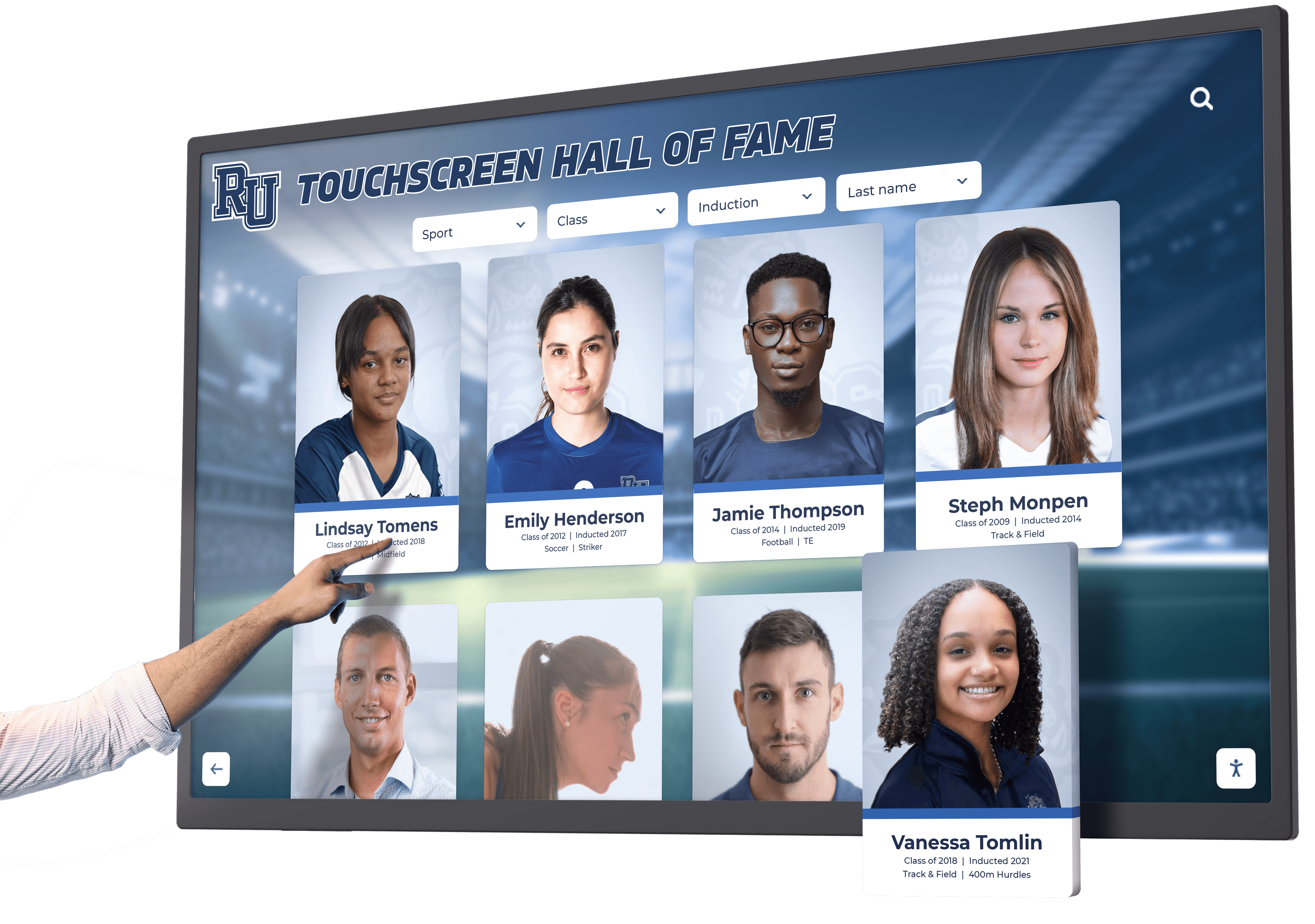
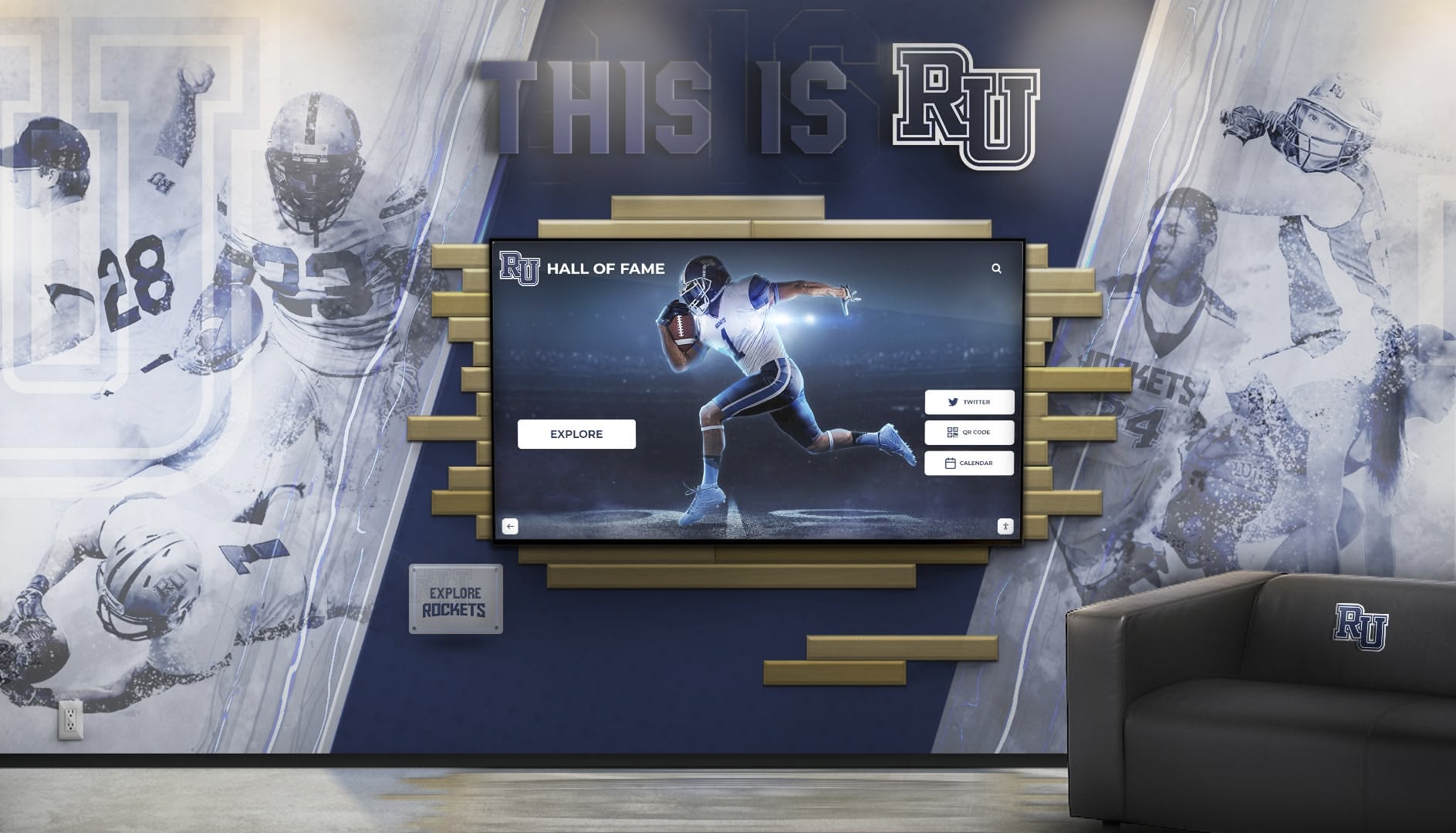
Modern recognition approaches eliminate space limitations while enhancing engagement. Interactive touchscreen displays within auditorium lobbies can showcase unlimited production history, including complete show listings with full cast and crew credits, production photo galleries with hundreds of images per show, video highlights from performances preserved digitally, searchable databases enabling visitors to explore specific shows or search for individuals, and detailed narratives celebrating memorable productions and outstanding performers.
Solutions like Rocket Alumni Solutions specialize in auditorium recognition displays, enabling theater directors and activities coordinators to manage content easily, showcase comprehensive production archives, celebrate student achievement permanently, and create engaging lobby experiences connecting current audiences with institutional performing arts heritage.
These systems complement physical architectural elements rather than replacing them—combining traditional aesthetic appeal with digital depth and comprehensive capacity ensuring every production and performer receives recognition regardless of space constraints.
Resources on digital signage content strategies provide frameworks for creating compelling recognition content that engages visitors and builds institutional pride.
Accessibility and Universal Design
Inclusive auditorium design ensures all community members can fully participate in performances and events.
Accessible Seating Integration
Beyond minimum code compliance, thoughtful design distributes accessible seating throughout auditoriums:
Wheelchair Positioning
Rather than concentrating wheelchair spaces in single locations, contemporary design integrates accessible seating throughout orchestra and balcony levels at various sight line qualities and price points. This distribution ensures patrons using wheelchairs can select seating preferences like any attendee rather than accepting limited options dictated by accessibility requirements.
Accessible seating areas should provide level sight lines without requiring patrons to look around audience members in front. This often means positioning wheelchair spaces on cross-aisles or in slightly elevated positions.
Companion Seating
Every wheelchair position requires adjacent companion seating for attendants, family, or friends. Removable or fold-down seats enable space to function alternately as wheelchair position or conventional seating depending on event needs.
Sensory Accommodations
Inclusive design addresses diverse sensory needs:
Assistive Listening Systems
Hearing loop systems, FM transmission, or infrared technologies provide audio directly to hearing aids or headsets, improving intelligibility for hearing-impaired patrons. Coverage throughout seating areas ensures accessibility regardless of seat location.
Visual Accommodations
Adequate lighting enables lip reading for hearing-impaired attendees. High-contrast color schemes assist visually impaired navigation. Large-print programs accommodate low vision.
Sensory-Friendly Modifications
Some schools offer sensory-friendly performances accommodating individuals with autism or sensory processing disorders—reduced house light darkness, lowered sound levels, permitted movement during performances, and quiet areas for sensory breaks. Auditorium design enabling these accommodations through flexible lighting and sound control expands access.
Resources on accessible digital displays explore inclusive technology design principles applicable throughout educational facilities.
Budget Planning and Cost Considerations
School auditorium projects represent significant capital investments requiring comprehensive budget planning.
Construction Cost Factors
Multiple variables drive total project expenses:
Size and Capacity
Construction costs generally scale with auditorium size. Typical educational auditorium construction costs range $400-$700 per square foot depending on quality level, location, and technical sophistication. A 500-seat auditorium with 25,000 square feet might cost $10-17.5 million for complete construction.
Technical System Quality
Theatrical technology represents 15-25% of total project budgets. Schools can economize with simplified lighting systems, modest sound reinforcement, and basic stage rigging—or invest in professional-grade systems approaching commercial theater quality. These technical decisions fundamentally affect production capabilities throughout facility lifespans.
Acoustic Treatment Sophistication
Comprehensive acoustic design including specialized construction, acoustic isolation, variable acoustic systems, and professional consultation adds substantial costs. However, inadequate acoustics create permanent performance limitations impossible to correct affordably after construction.
Value Engineering and Prioritization
Budget constraints often require strategic compromises:
Essential vs. Desirable Features
Core priorities ensuring basic functionality include adequate seating capacity, acceptable acoustics for speech and music, basic theatrical lighting enabling typical productions, and sufficient sound reinforcement for intelligibility. These essentials warrant budget protection even when constraints force reductions elsewhere.
Desirable enhancements often subject to value engineering include full fly systems, retractable orchestra pits, variable acoustic systems, sophisticated theatrical control systems, and premium finish materials. Schools can implement simpler versions initially while designing infrastructure enabling future enhancement when additional funding becomes available.
Phased Implementation Strategies
Some projects separate core building construction from technical system installation, completing buildings with basic equipment while planning future upgrades to professional-grade systems. This phasing spreads costs across budget cycles while enabling facility use during interim periods.
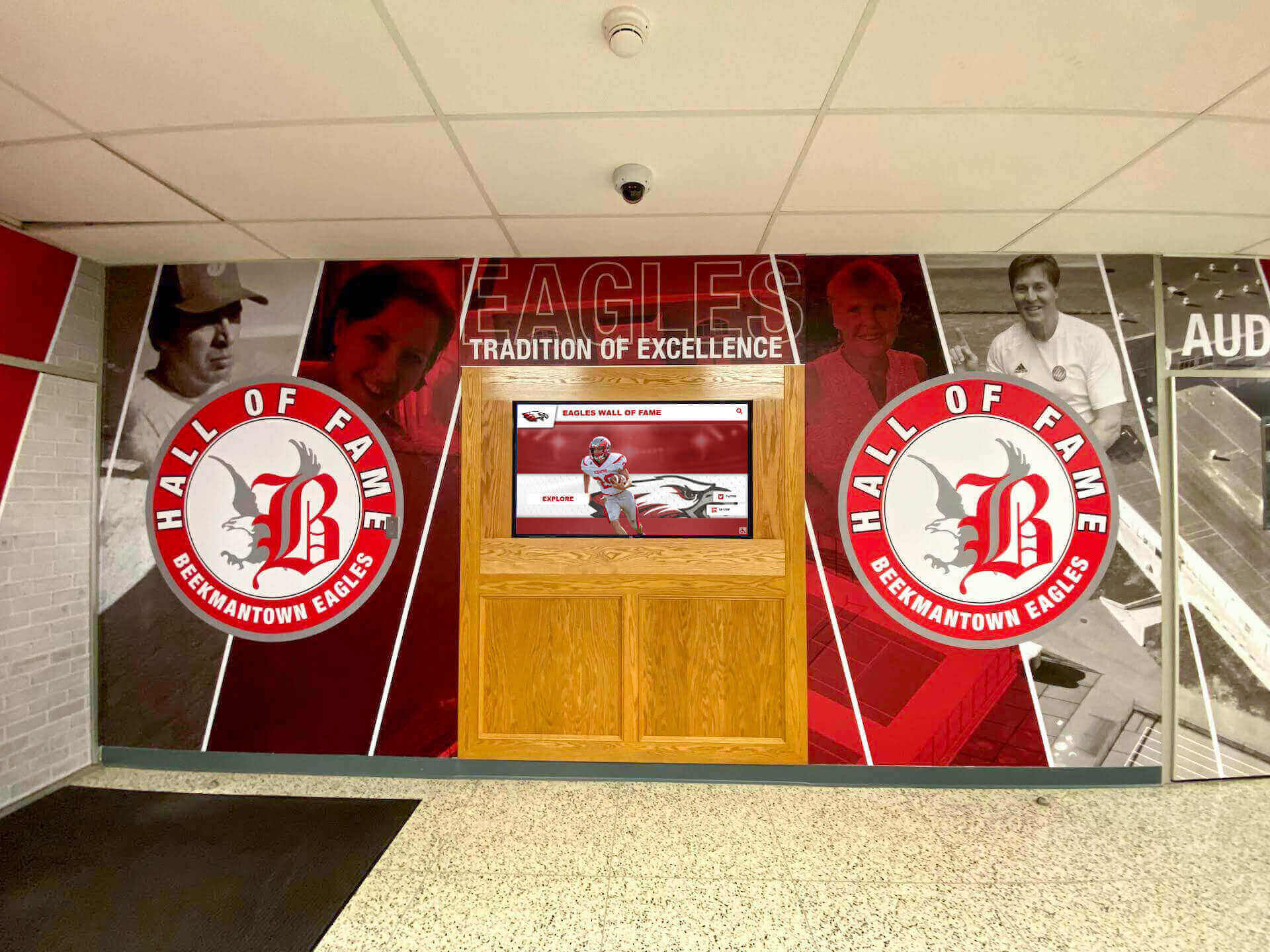
Similarly, recognition display systems can be planned during initial construction with infrastructure preparation—power, network connectivity, mounting provisions—while deferring actual display installation until operating budgets or fundraising enables purchase.
Renovation vs. New Construction
Schools with existing auditoriums face decisions about renovation versus replacement:
Assessing Existing Facilities
Systematic evaluation determines appropriate approaches:
Structural and Systems Assessment
Professional evaluation addresses structural adequacy, HVAC system capacity and condition, electrical infrastructure sufficiency for modern loads, plumbing capacity and condition, building envelope and weatherproofing, and accessibility compliance with current code requirements.
Structural soundness and reasonable systems condition favor renovation. Major structural deficiencies, asbestos contamination, or grossly inadequate infrastructure sometimes justify replacement despite higher costs.
Functional Adequacy
Beyond physical condition, functional assessment considers whether existing configurations meet programming needs:
Does seating capacity match current enrollment and program scale? Do sight lines provide adequate views throughout? Are stages adequately sized for typical productions? Does acoustic quality enable acceptable performance conditions? Can spaces accommodate accessibility requirements?
Sometimes functional inadequacies prove more significant than physical condition in determining renovation feasibility.
Renovation Advantages and Limitations
Strategic renovation often provides excellent value:
Cost Efficiency
Renovation typically costs 60-80% of equivalent new construction when existing structures remain sound. Schools preserve substantial capital investment while achieving dramatically improved functionality.
Community Heritage
Long-established auditoriums often hold significant sentimental value. Renovation preserves community memory and institutional continuity while upgrading capabilities. Alumni connection to spaces where they performed creates engagement opportunities and potential fundraising advantages.
Limitations and Constraints
However, renovation faces constraints. Existing structural grids limit ceiling heights affecting stage loft and technical positions. Foundation locations restrict seating reconfiguration and capacity additions. Building envelopes define total space limiting backstage expansion.
Some functional improvements prove prohibitively expensive through renovation when entirely new construction would provide superior results at comparable or lower costs.
Resources on athletic facility recognition demonstrate how digital displays enhance various school spaces including renovated facilities where space constraints limit traditional recognition approaches.
Sustainability and Operational Efficiency
Modern auditorium design increasingly emphasizes environmental responsibility and operational economy:
Energy-Efficient Systems
Sustainable approaches reduce environmental impact while lowering operational costs:
Lighting Efficiency
LED theatrical and house lighting dramatically reduces energy consumption compared to traditional incandescent and discharge lighting while providing superior color quality, instant operation, and minimal heat generation reducing cooling loads.
Though LED systems carry higher initial costs, energy savings and extended operational life (50,000+ hours versus 1,000-2,000 hours for incandescent) create favorable total cost of ownership.
HVAC Optimization
Auditoriums present HVAC challenges—large volumes requiring conditioning, highly variable occupancy creating load swings, and acoustic requirements demanding quiet operation. Energy-efficient approaches include:
- Variable-volume systems responding to actual occupancy rather than constant maximum conditioning
- Demand-controlled ventilation using CO2 monitoring adjusting fresh air based on attendance
- Heat recovery systems capturing exhaust energy preconditioning incoming fresh air
- High-efficiency equipment and proper insulation reducing conditioning requirements
Daylighting and Natural Ventilation
Lobby areas can incorporate daylighting reducing electrical lighting requirements while creating pleasant welcoming environments. Natural ventilation during moderate weather reduces mechanical conditioning needs though acoustic isolation from exterior noise requires careful design.
Maintenance and Lifecycle Planning
Long-term operational success requires sustainable maintenance approaches:
Durable Materials and Finishes
Initial material selection dramatically affects maintenance requirements and lifecycle costs. Commercial-grade finishes, impact-resistant surfaces in high-traffic areas, stain-resistant treatments, and quality theatrical equipment justify premium costs through extended service life and reduced maintenance.
Accessible Maintenance Design
Design affecting maintenance ease includes catwalks and lifts providing safe access to overhead lighting and equipment, modular technical systems simplifying component replacement, removable acoustic panels enabling periodic cleaning or replacement, and adequate service and storage spaces supporting ongoing maintenance operations.
Replacement Reserve Planning
School facilities departments should establish capital reserves funding major system replacement—theatrical lighting and control systems (15-20 year cycles), sound system components (10-15 years), HVAC systems (20-25 years), seating reupholstering or replacement (15-20 years), and roof and building envelope maintenance (20-30 years).
Reserve funding prevents deferred maintenance cycles degrading facility quality over time.
Building School Pride Through Auditorium Design
Auditoriums serve functional purposes while becoming powerful symbols of institutional identity and community pride.
Architectural Identity and Branding
Design communicates institutional character:
Exterior Expression
Prominent auditorium massing and distinctive architectural expression announce cultural commitment visible from campus approaches and community streets. Signature design elements create memorable landmarks distinguishing institutions.
Interior Design Themes
Lobby finishes, color palettes, material selections, and architectural details communicate institutional character—traditional elegance, contemporary sophistication, regional identity, or innovative creativity. These design choices shape community perceptions and student pride.
Celebration of Achievement and History
Recognition elements transform functional lobbies into pride-building showcases:
Comprehensive Production Archives
Digital recognition systems can preserve and display complete production histories—every musical, drama, concert, and special event hosted throughout decades. Current students see their performances join established traditions. Alumni reconnect with memories browsing productions from their school years. Prospective families evaluate program quality through demonstrated history.
Performer Recognition
Individual recognition celebrates outstanding student achievement—leading roles, technical excellence, distinguished senior portfolios, scholarship recipients, and alumni pursuing professional performing careers. Public acknowledgment motivates current students while honoring accomplishments permanently.
Community Connection
Recognition displays can celebrate community support—donor acknowledgment for facility construction or program endowments, volunteer recognition for set construction or costume creation, and distinguished community members bringing professional expertise as guest directors or clinicians.
These recognition elements work together creating environments celebrating performing arts excellence while building community investment in program success.
Future Trends in Auditorium Design
Understanding emerging developments helps administrators make forward-looking design decisions:
Flexible and Adaptable Spaces
Future auditoriums increasingly emphasize adaptability:
Modular seating systems, movable acoustic treatments, reconfigurable technical systems, and flexible spatial configurations enable spaces to transform across wide performance genres and non-performance uses—extending facility utility and community value.
Enhanced Technology Integration
Advancing capabilities enable sophisticated applications:
Integrated video production systems create professional-quality recordings accessible through streaming platforms. Immersive projection mapping transforms entire auditoriums into experiential environments. Advanced acoustic systems compensate for architectural limitations through digital processing. Network-connected control enables remote technical management and collaboration.
Social Media and Digital Engagement
Contemporary audiences expect integrated digital engagement:
Live social media integration during events, digital program content accessed through personal devices, augmented reality applications enhancing physical lobbies with virtual content, and comprehensive digital archives enabling global access to production history extend engagement beyond physical attendance.
Wellness-Focused Design
Emerging design priorities emphasize occupant wellness:
Improved indoor air quality through advanced ventilation and filtration, circadian lighting supporting natural biological rhythms, biophilic design incorporating natural materials and views, acoustic comfort throughout facility areas, and universal design serving diverse abilities create healthy, inclusive environments.
Making Informed Auditorium Design Decisions
Successful school auditorium design requires balancing technical performance requirements, functional versatility, budget constraints, and community aspirations. The most effective approaches begin with clear programming defining primary uses and performance priorities, engage stakeholders including performing arts faculty, administrators, students, and community members, retain experienced consultants for acoustics, theatrical design, and architectural planning, carefully evaluate renovation versus new construction based on existing condition and functional requirements, develop comprehensive budgets including construction, equipment, and operational costs, and implement recognition systems celebrating achievement and building institutional pride.
Modern auditoriums transcend single-purpose performance venues becoming community anchors hosting events defining school culture. Graduation ceremonies marking student achievement. Theatrical productions demonstrating creative excellence. Musical performances showcasing dedication and talent. Assembly programs building shared identity. Alumni events strengthening institutional connections.
When schools invest systematically in auditorium quality, the benefits extend throughout communities. Students experience professional-quality performance spaces inspiring excellence and enabling sophisticated artistic development. Families attend events in comfortable, acoustically excellent environments appropriate for milestone celebrations. Communities access cultural programming enriching local quality of life. Institutions build reputation for commitment to comprehensive education valuing arts alongside academics and athletics.
Ready to explore how comprehensive recognition systems can transform your auditorium lobby into an engaging showcase celebrating performing arts excellence? Digital solutions specifically designed for educational performing arts programs enable schools to preserve complete production history permanently, honor student achievement comprehensively, build program pride and community support, and create inspiring environments worthy of your students’ creative dedication.
Contact Rocket Alumni Solutions to discover how purpose-built recognition displays can enhance your auditorium facility while celebrating every performance, honoring every student achievement, and building the performing arts tradition your school community deserves.































