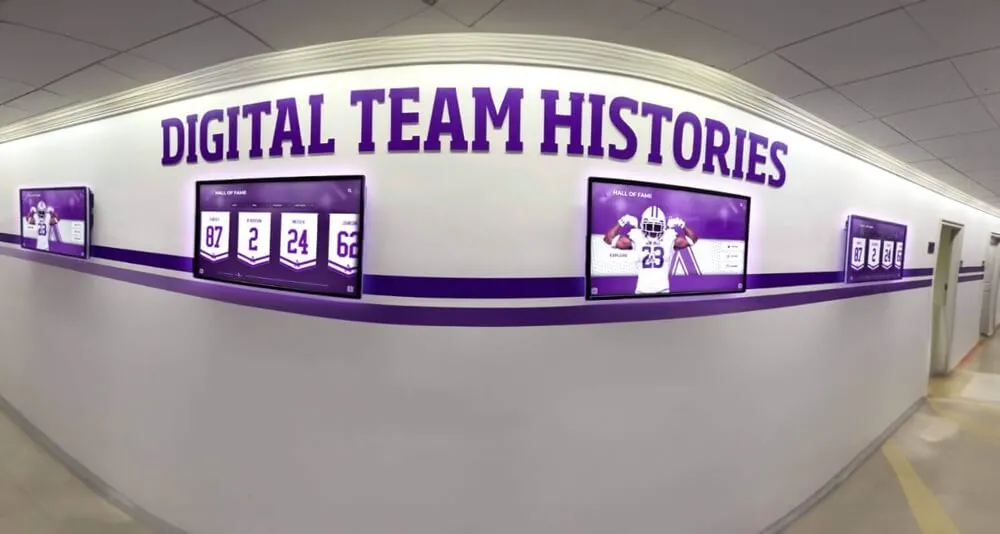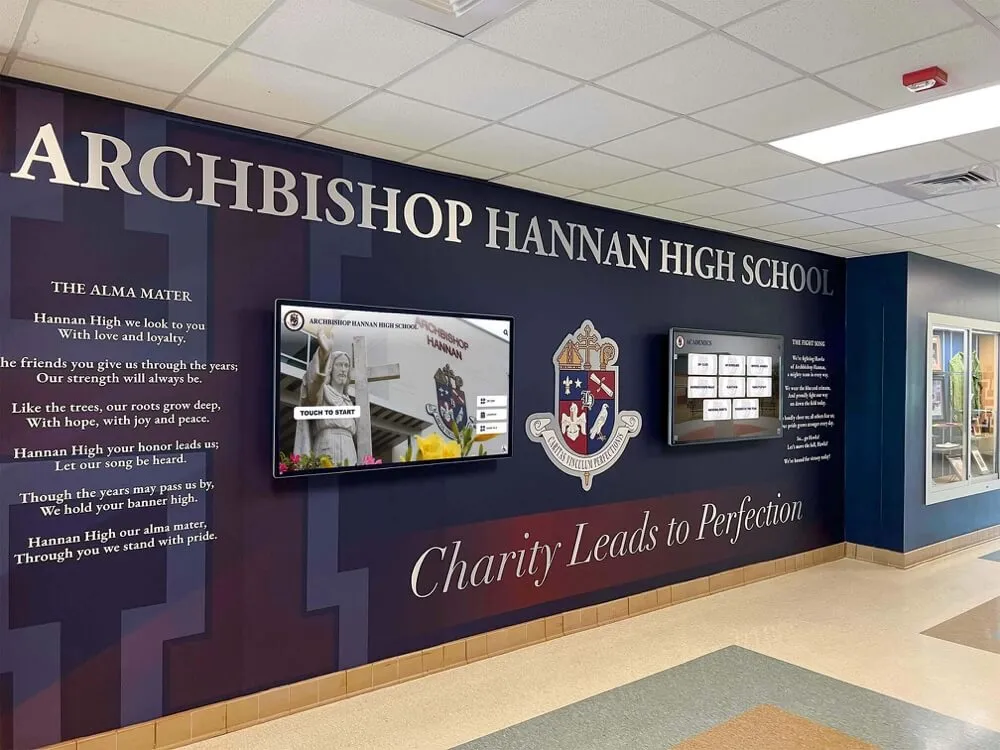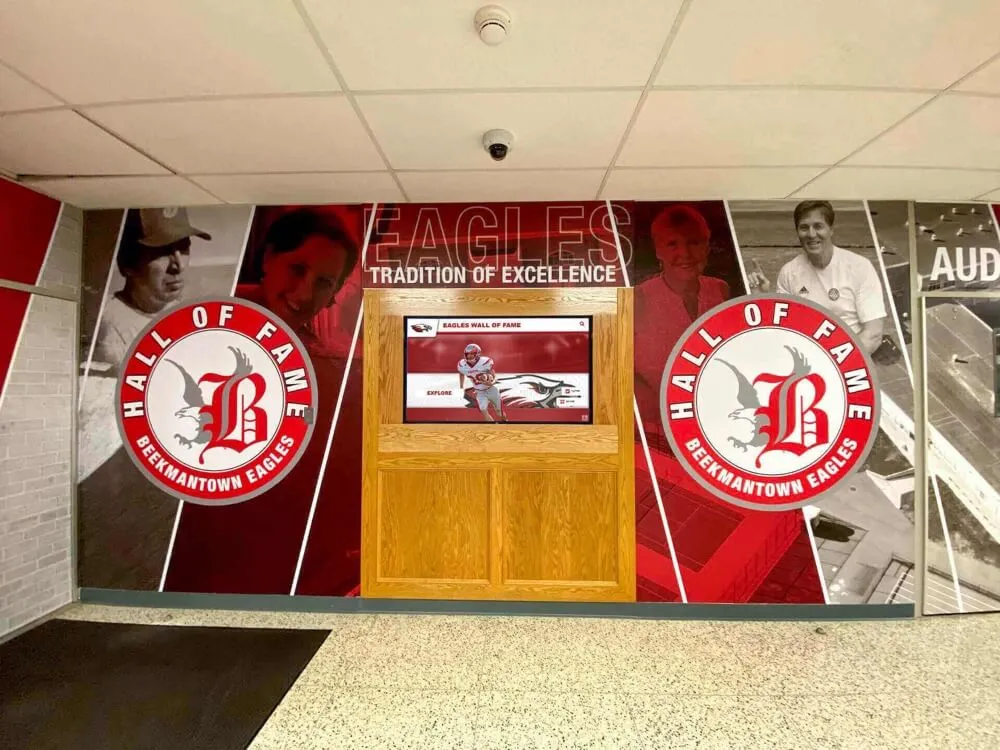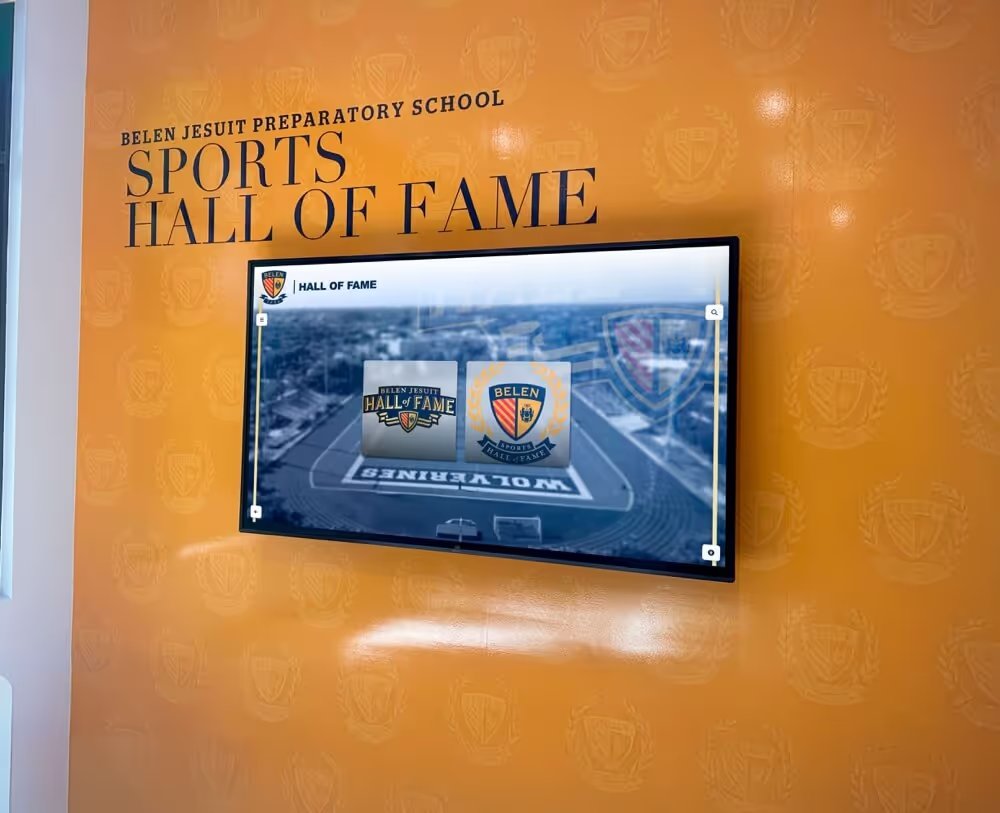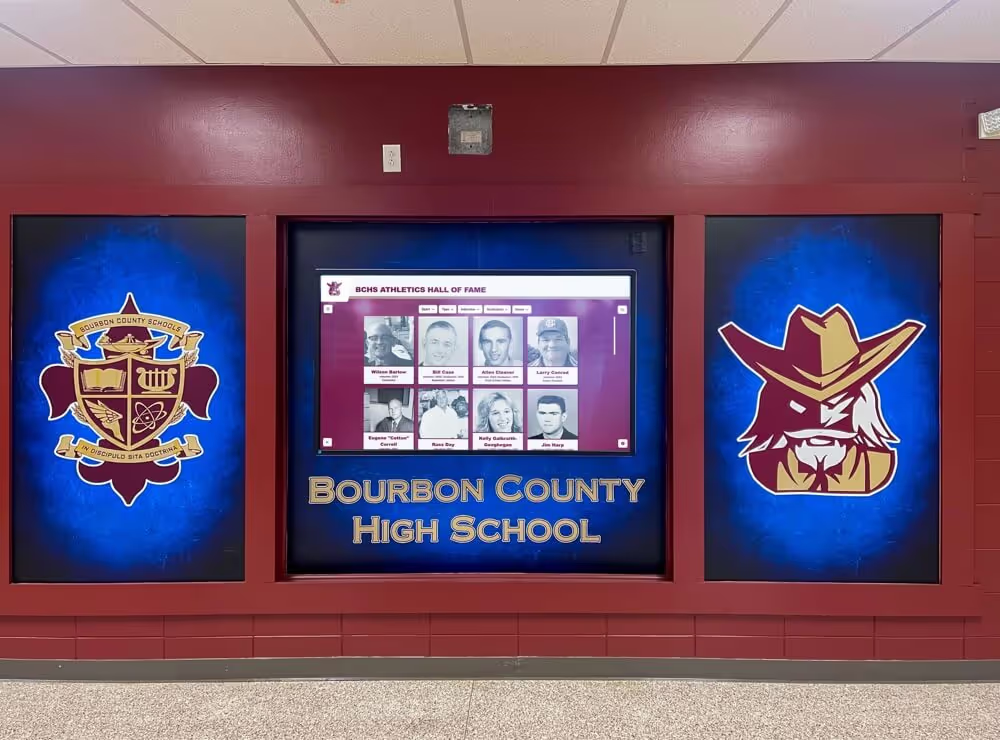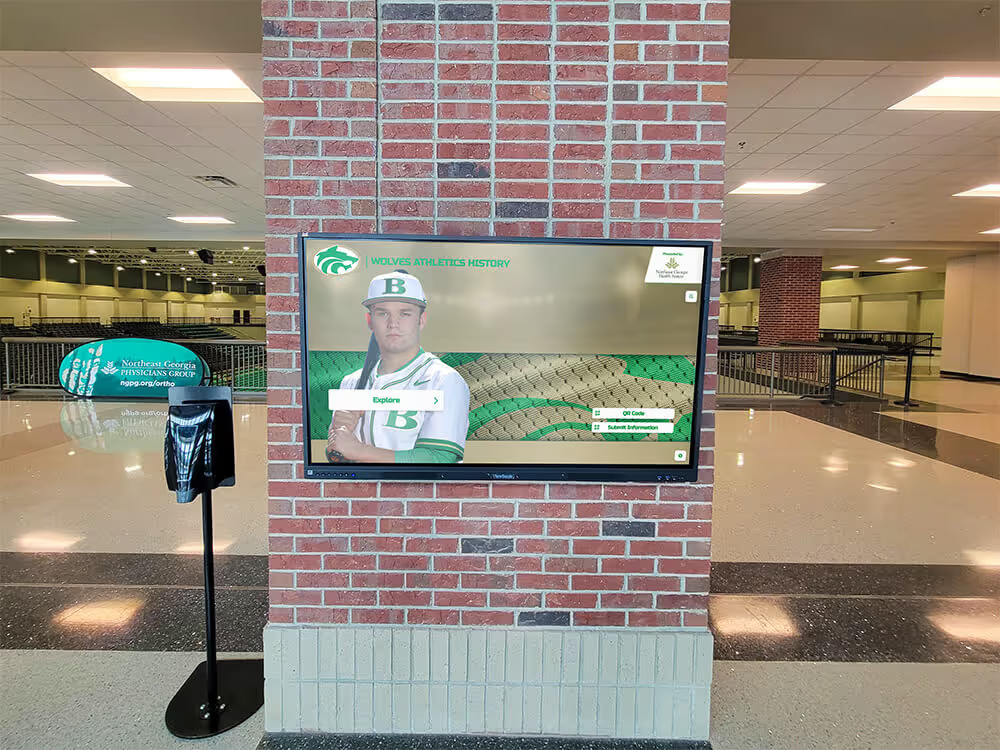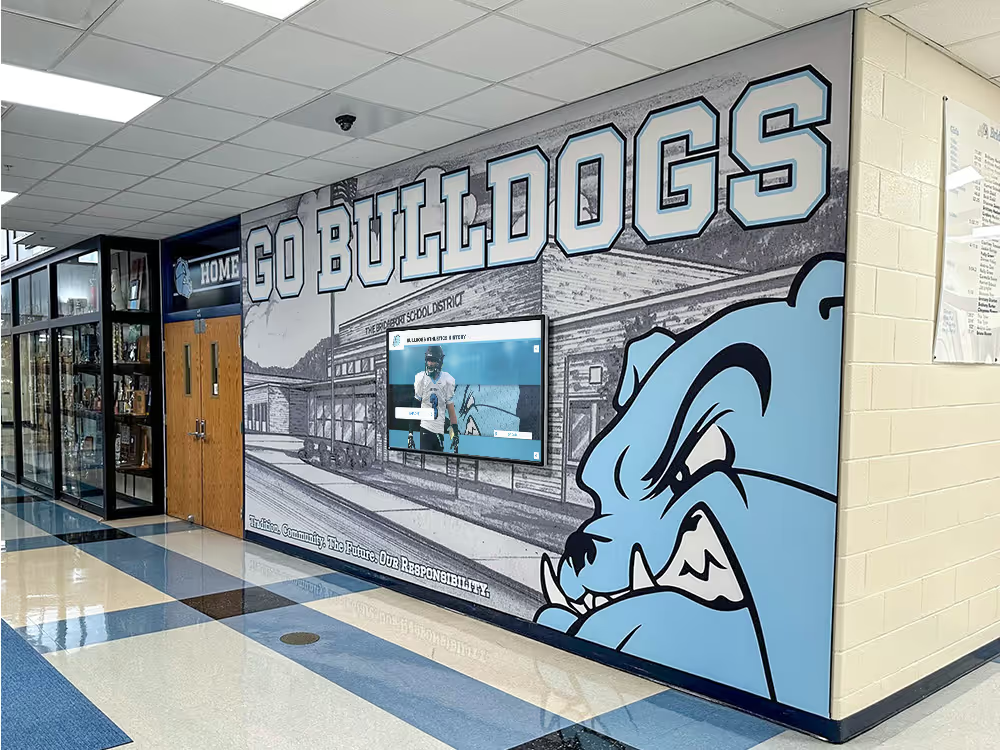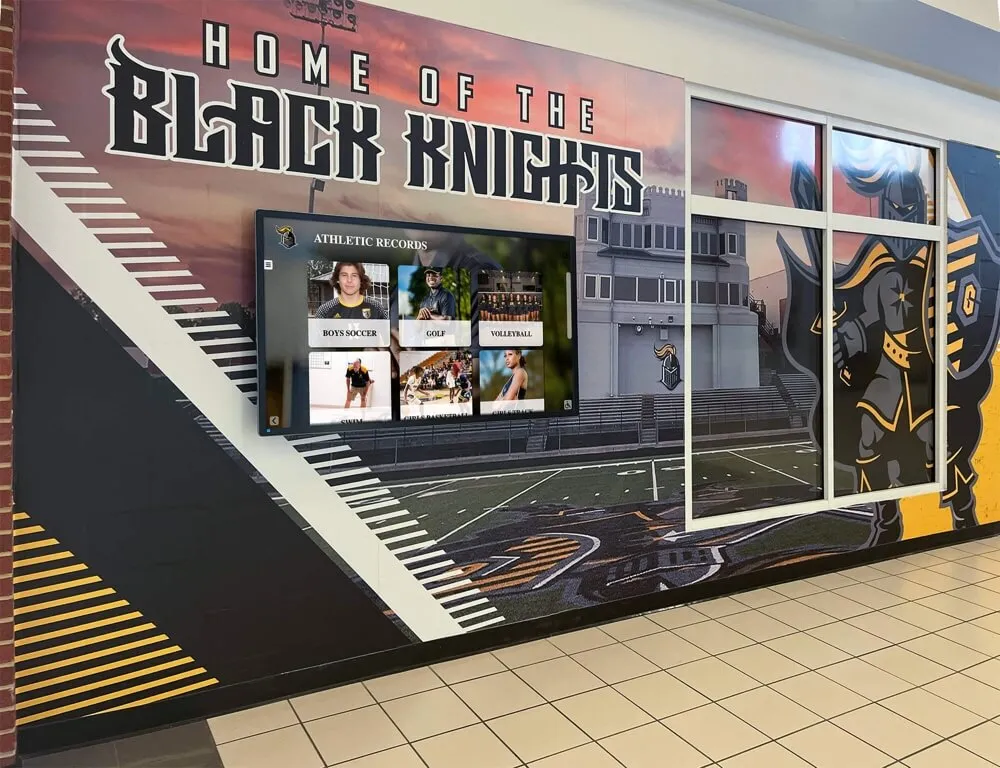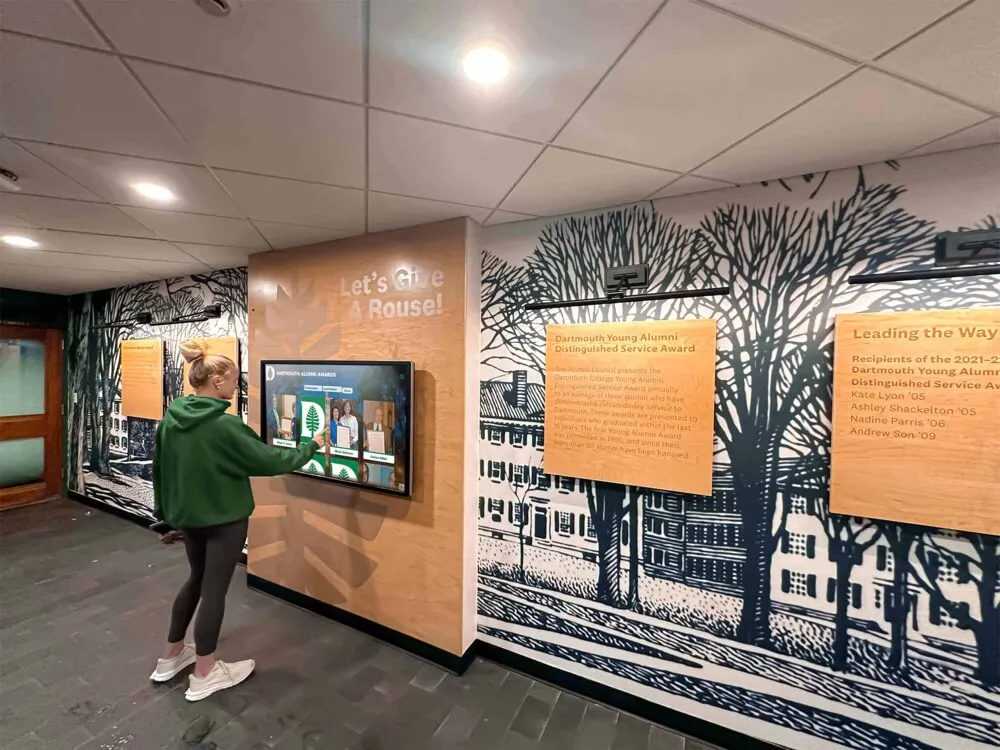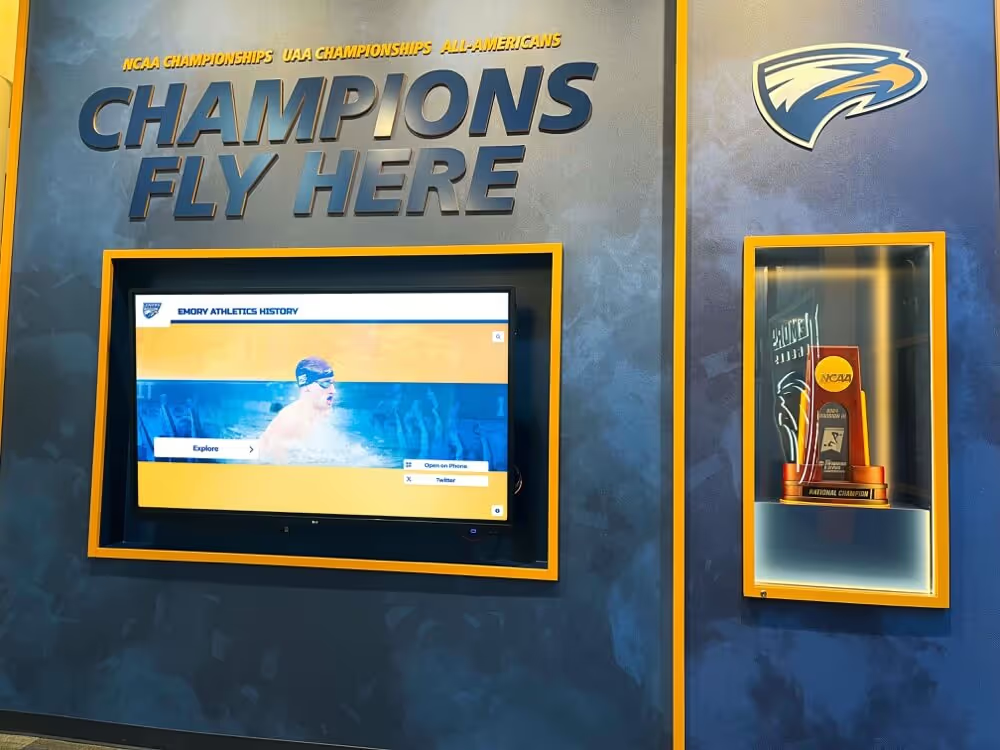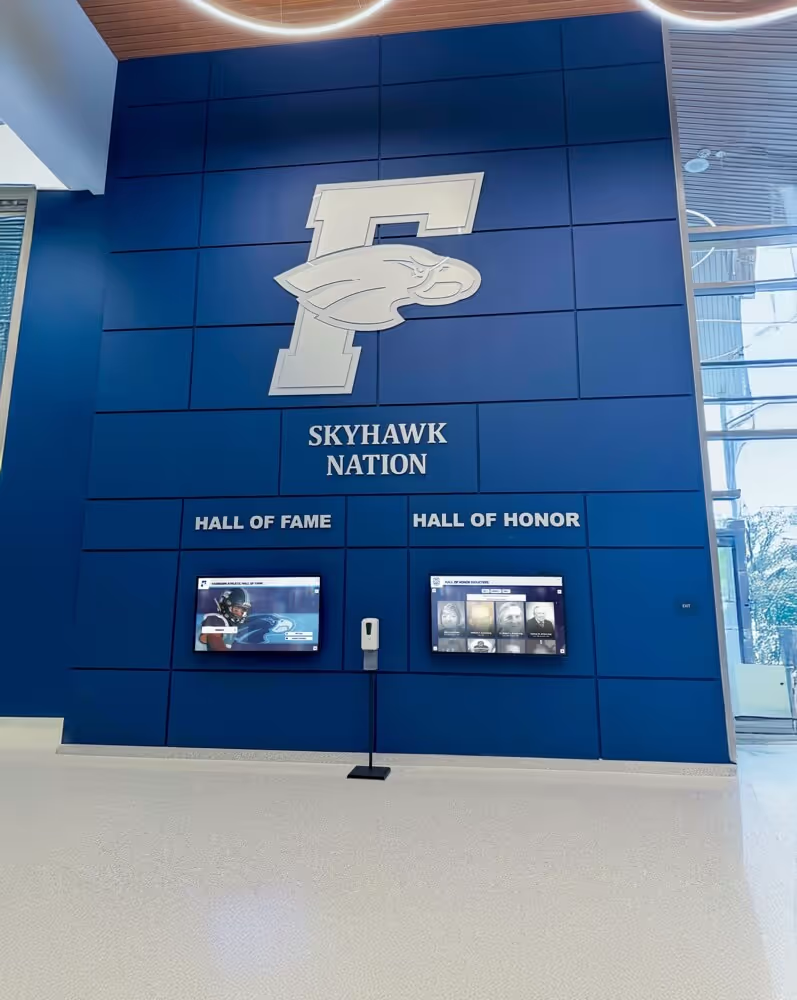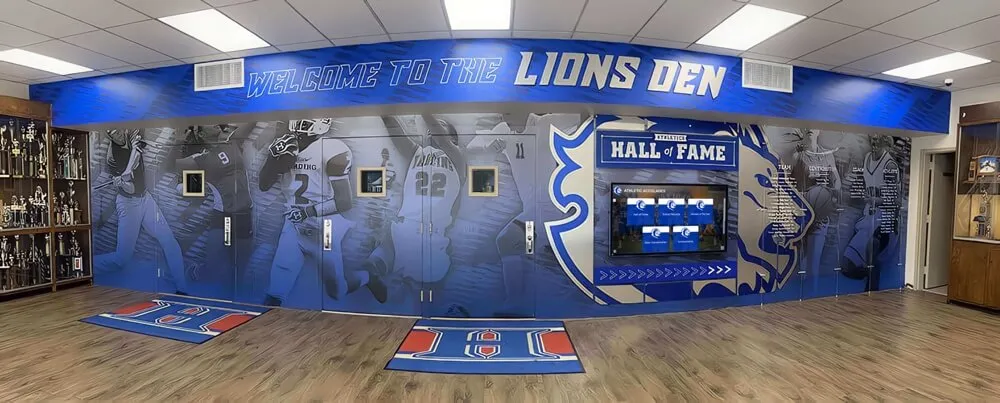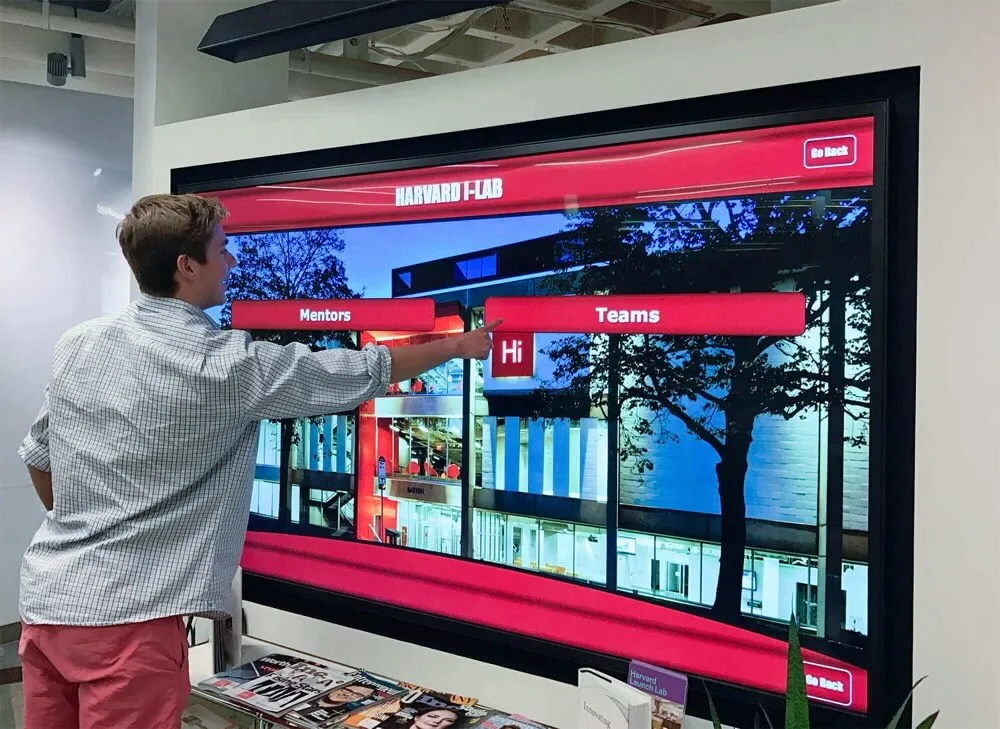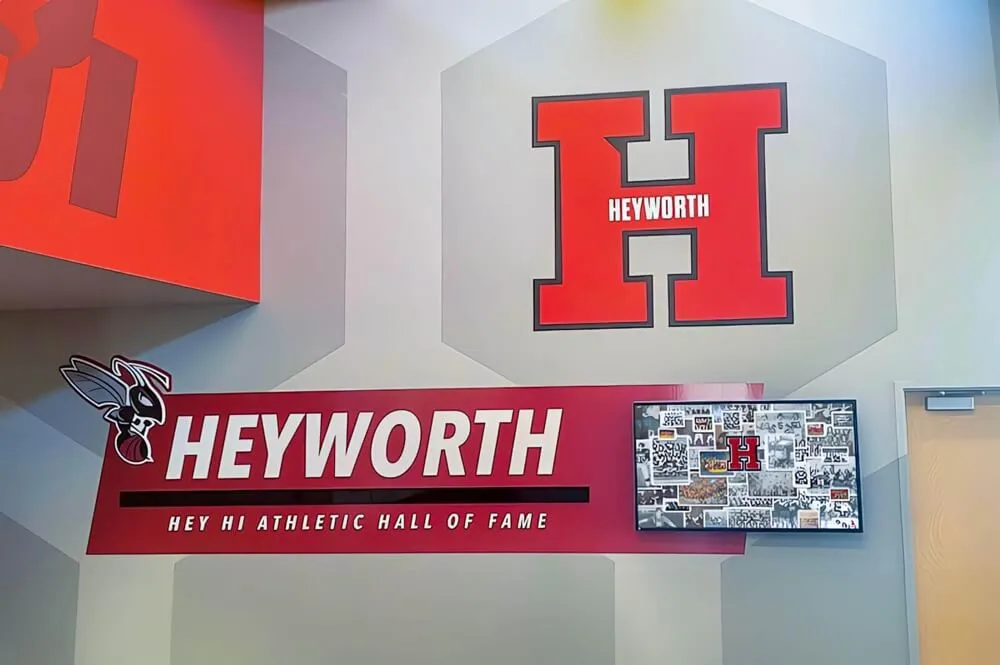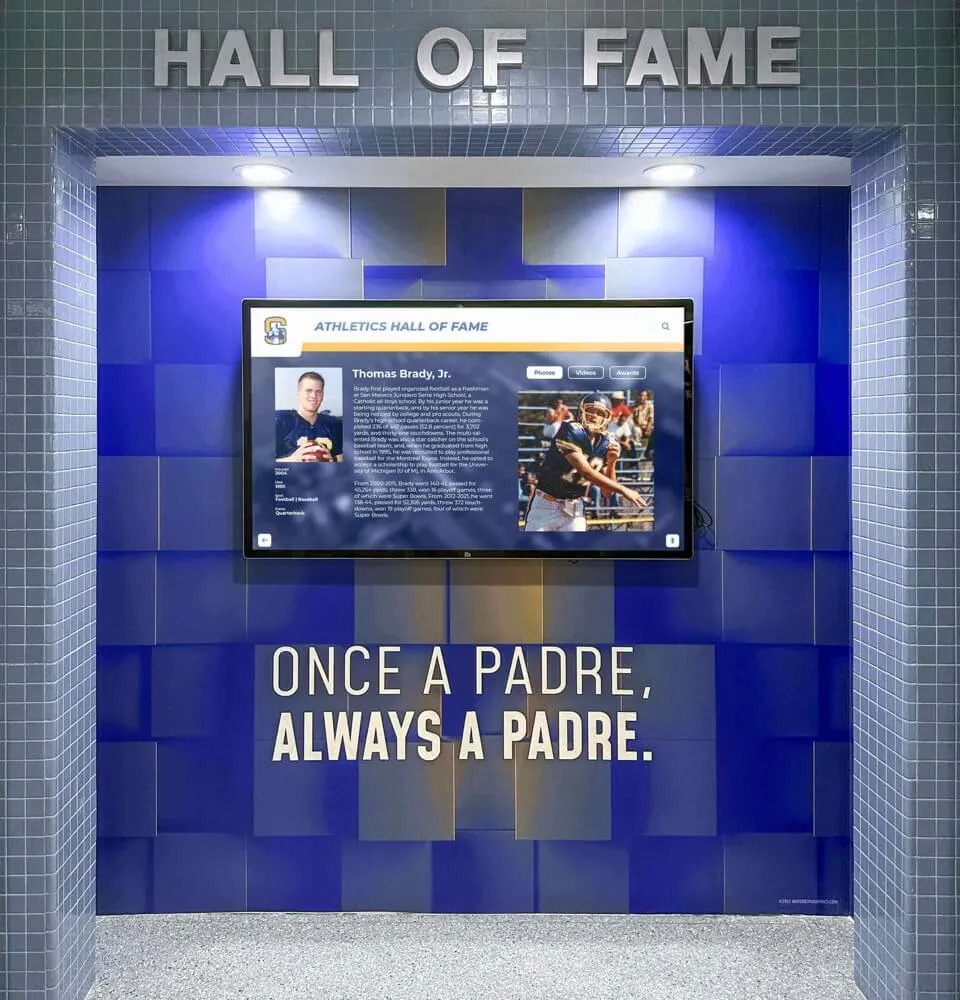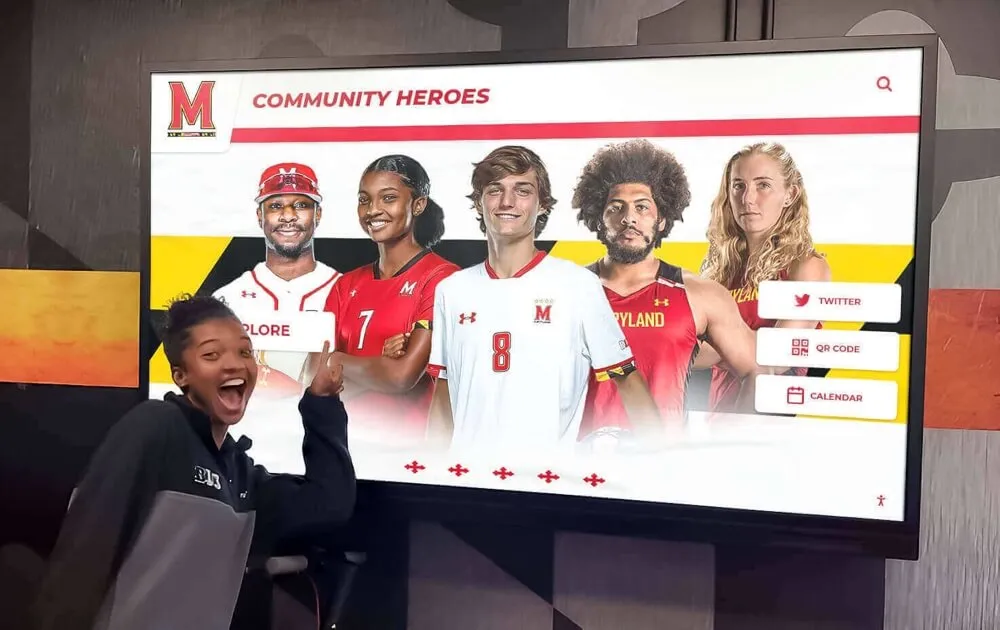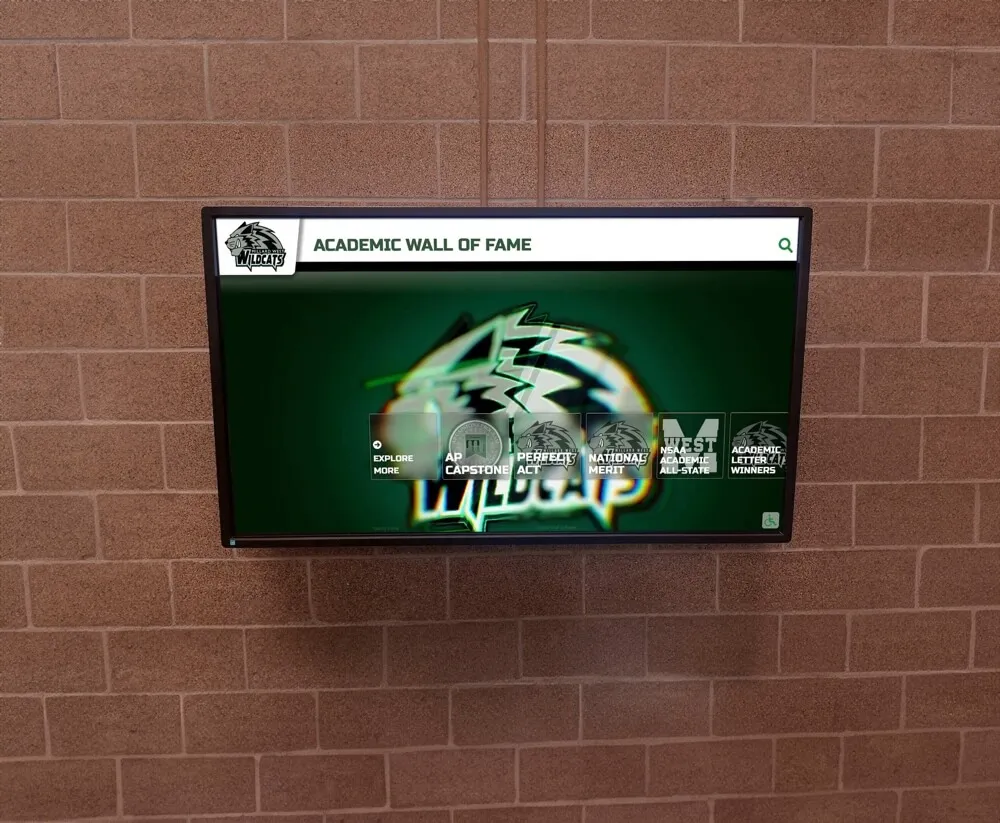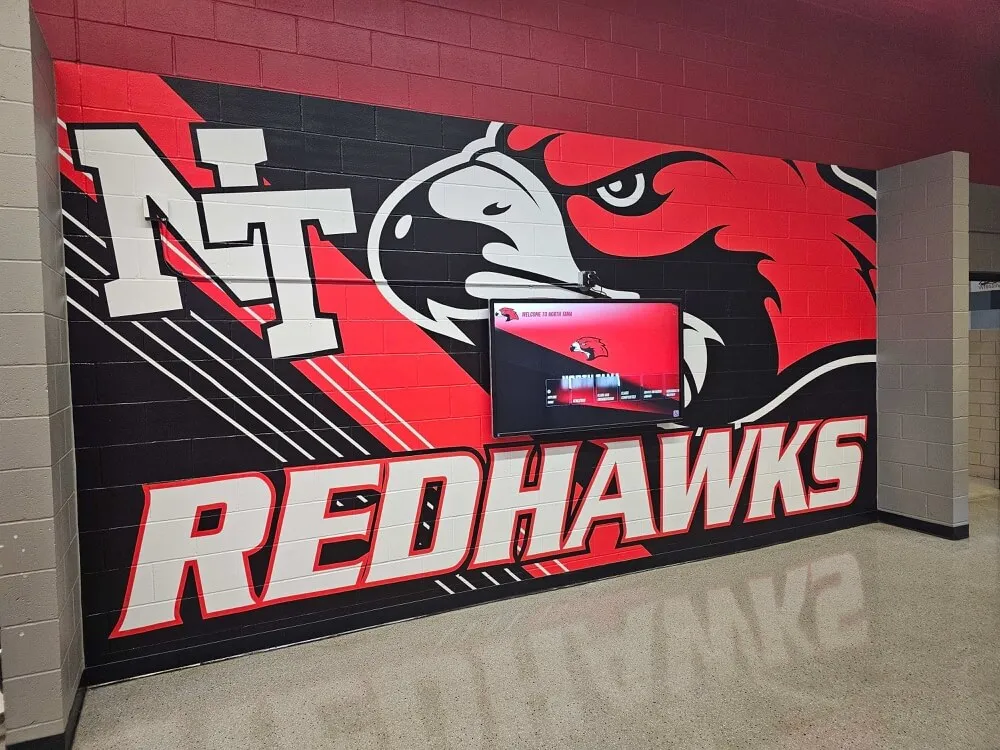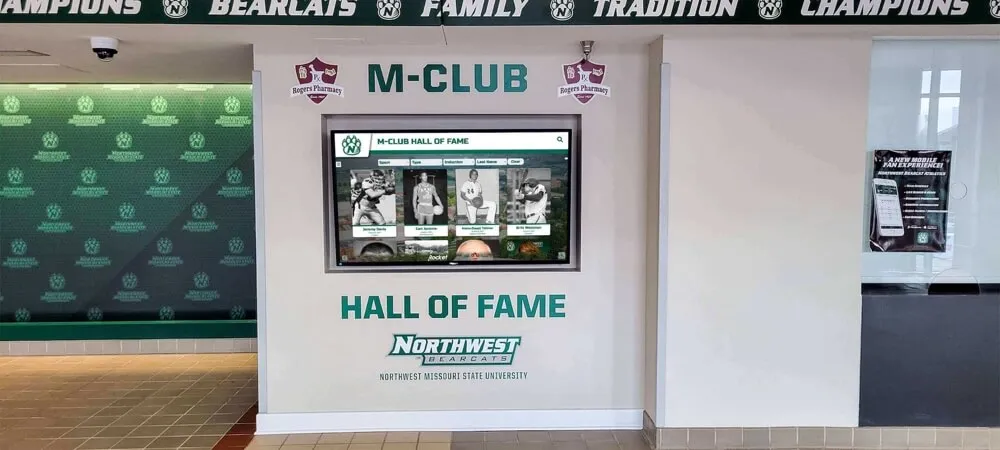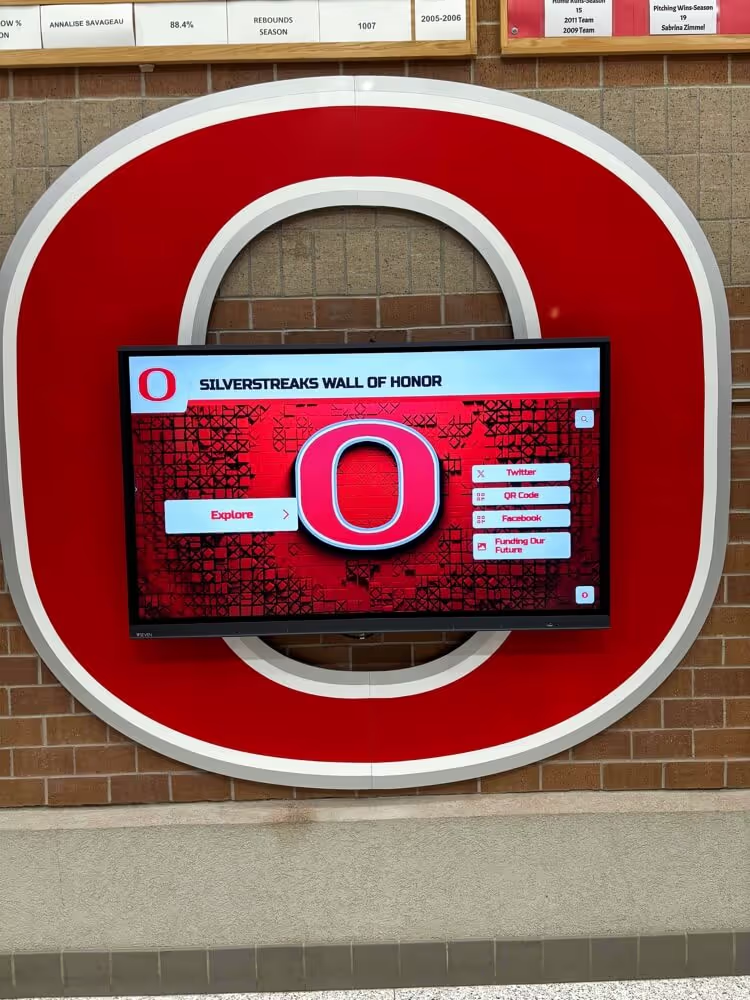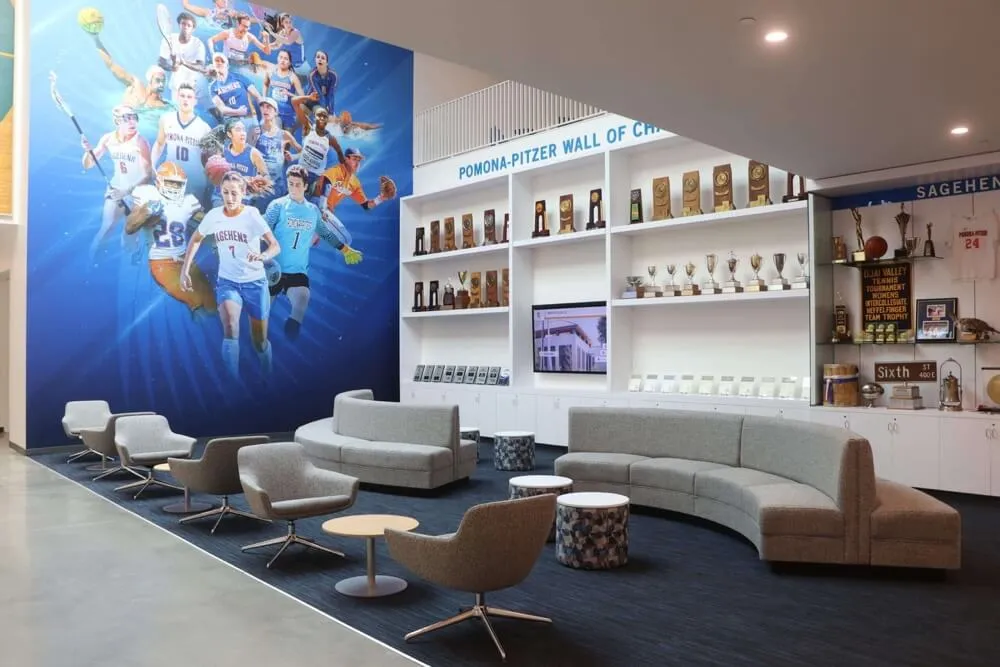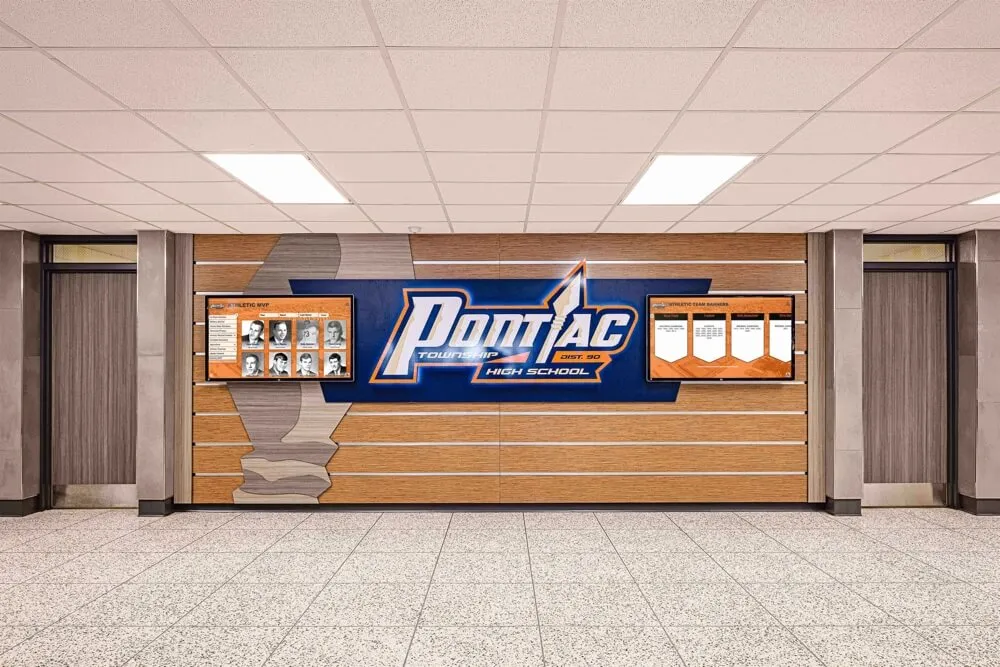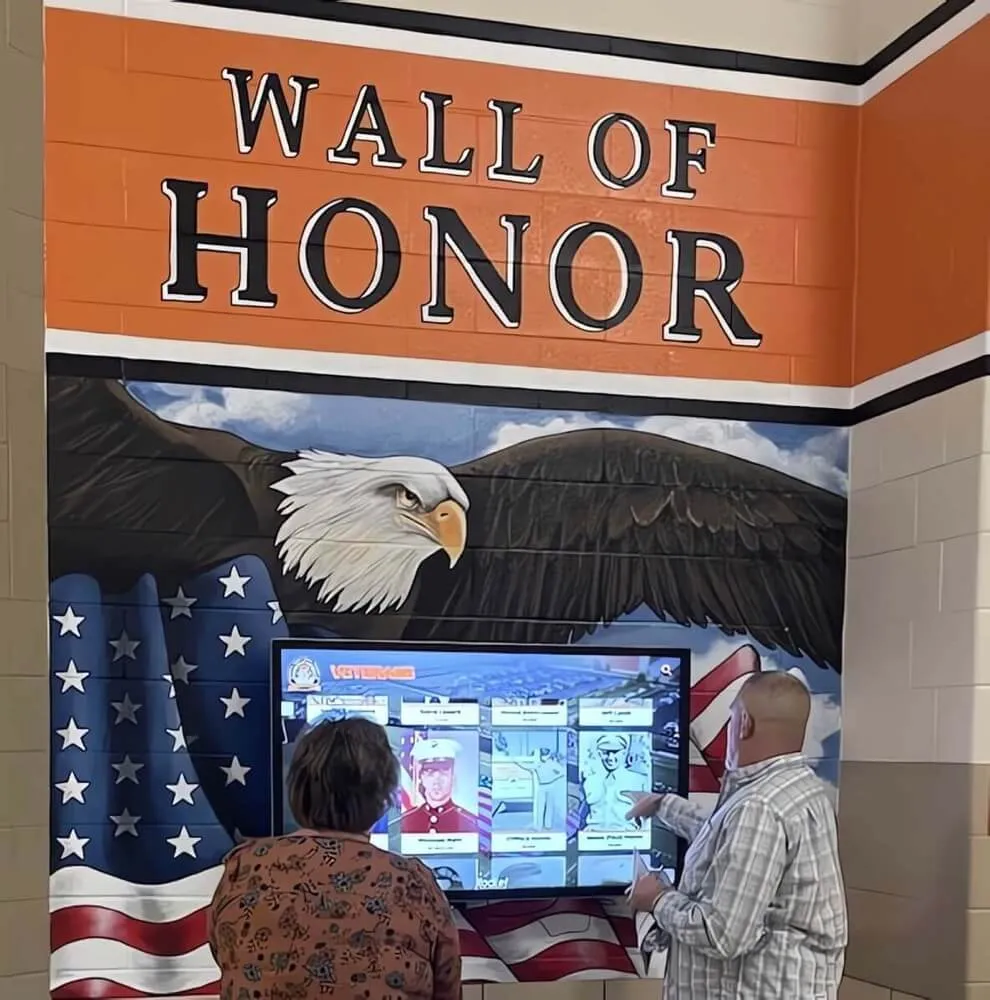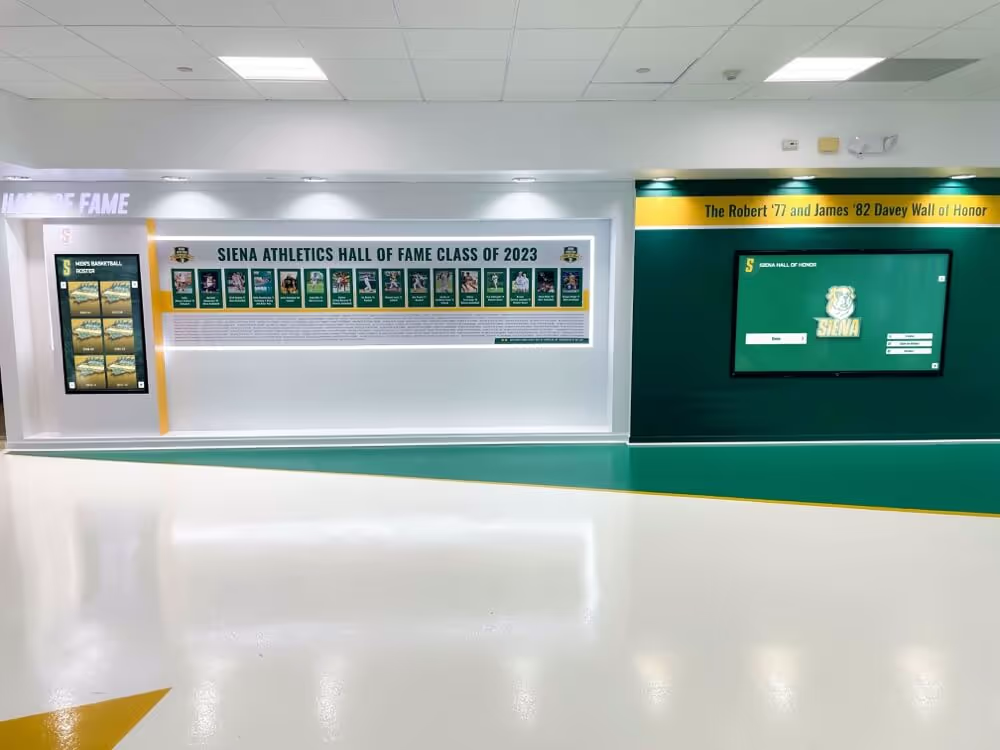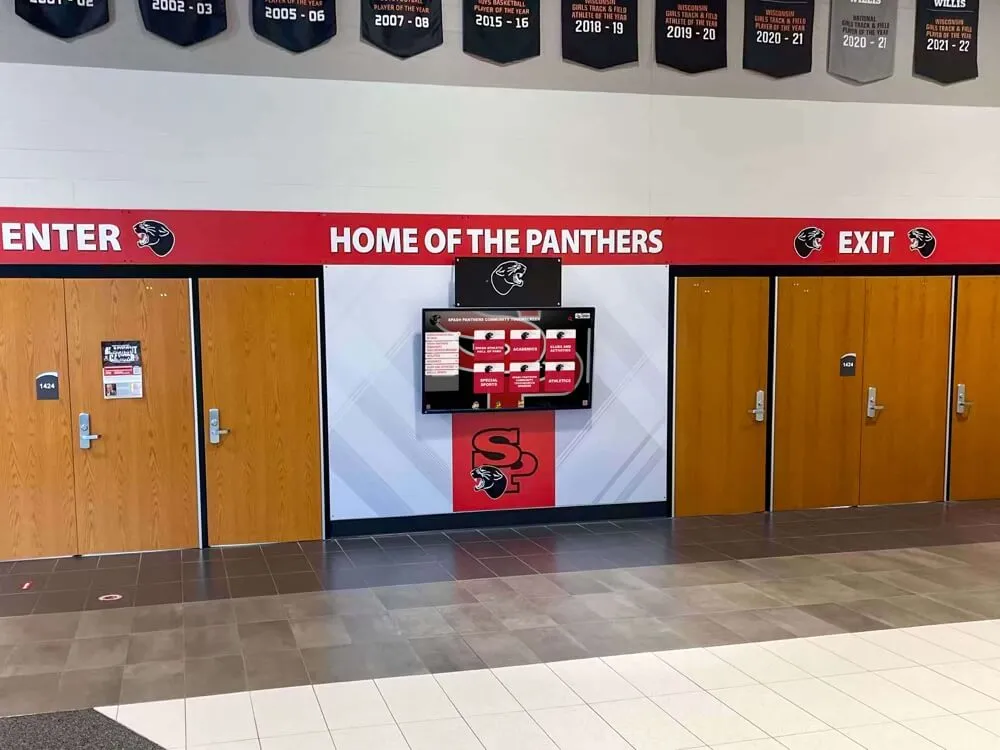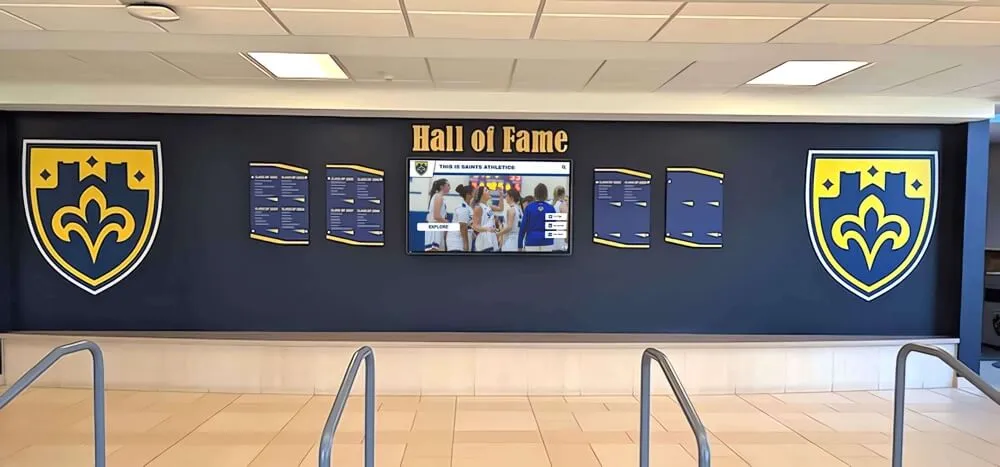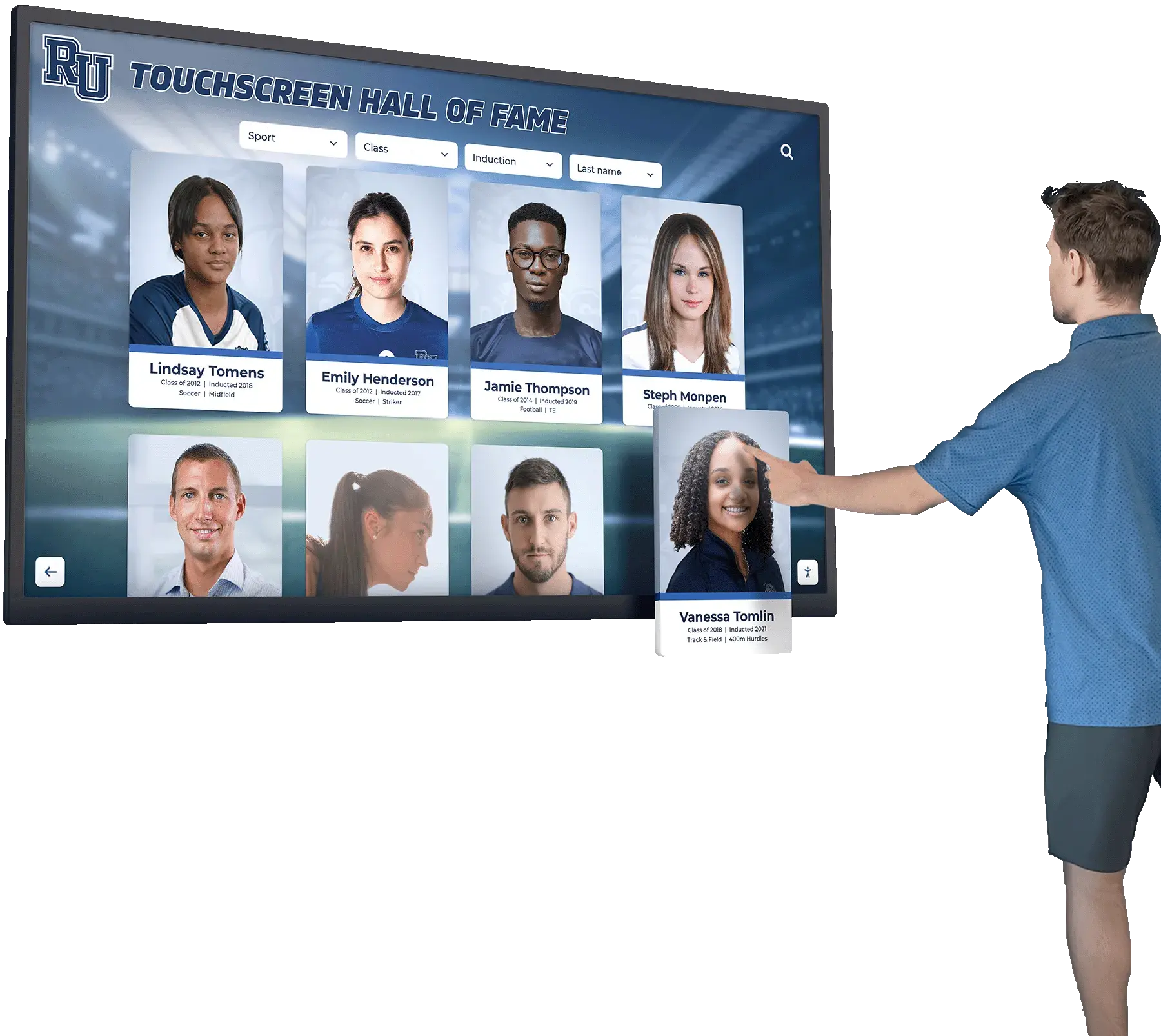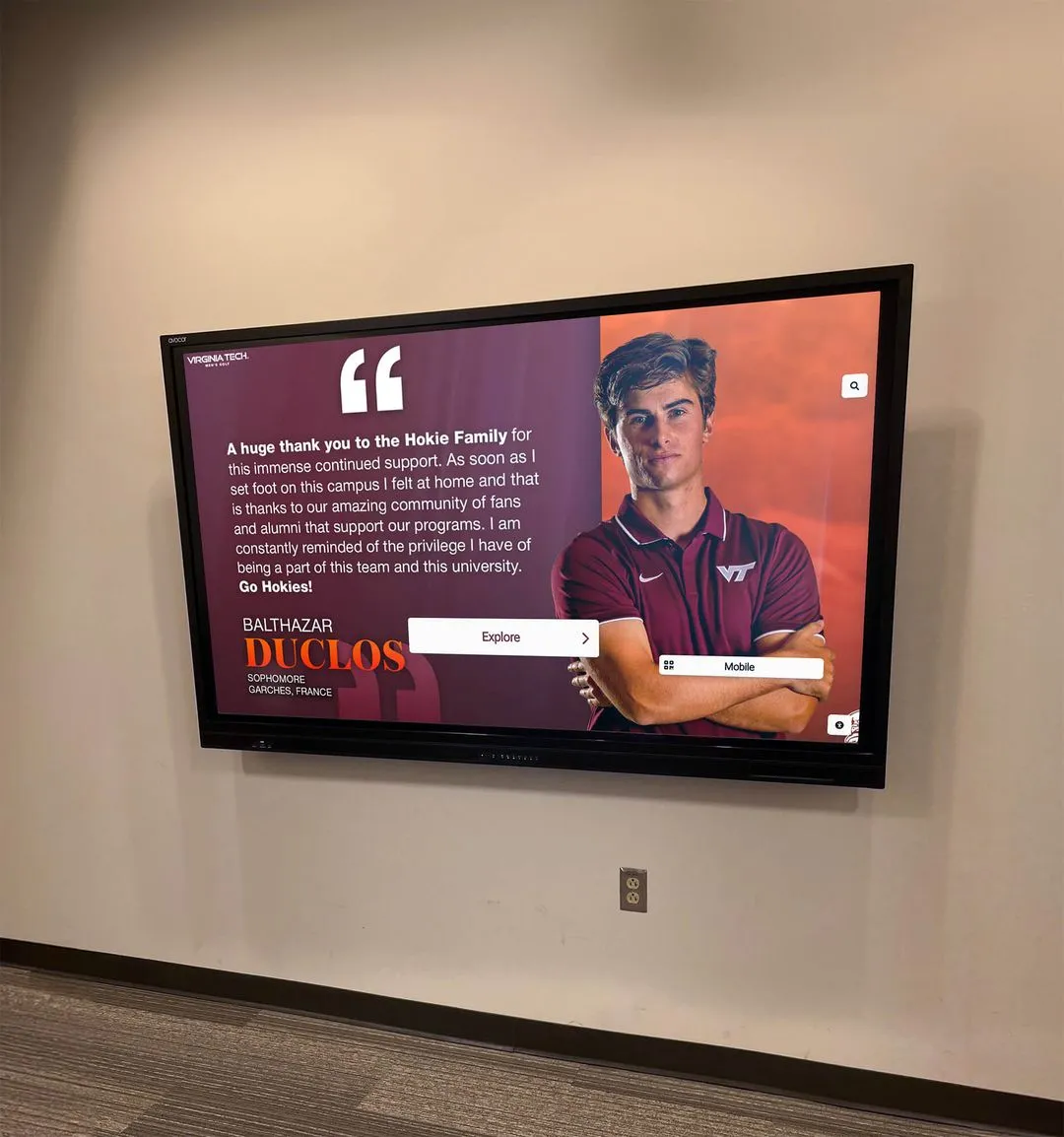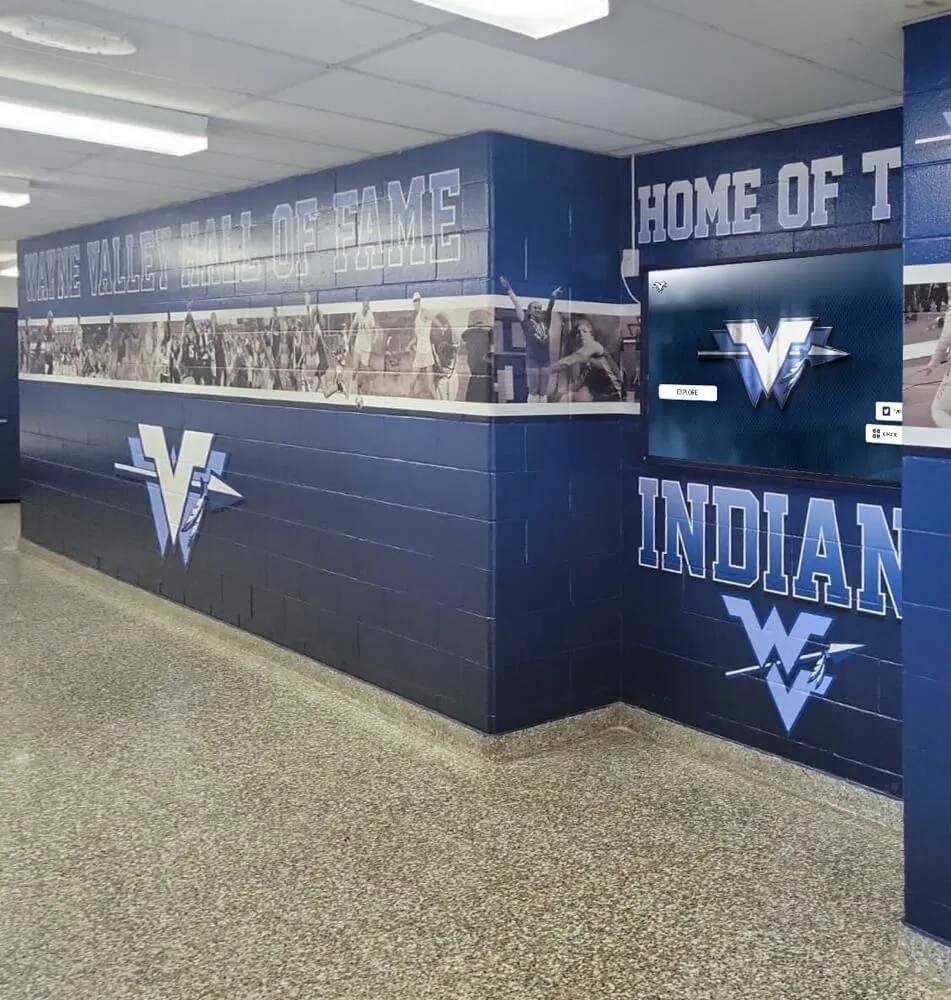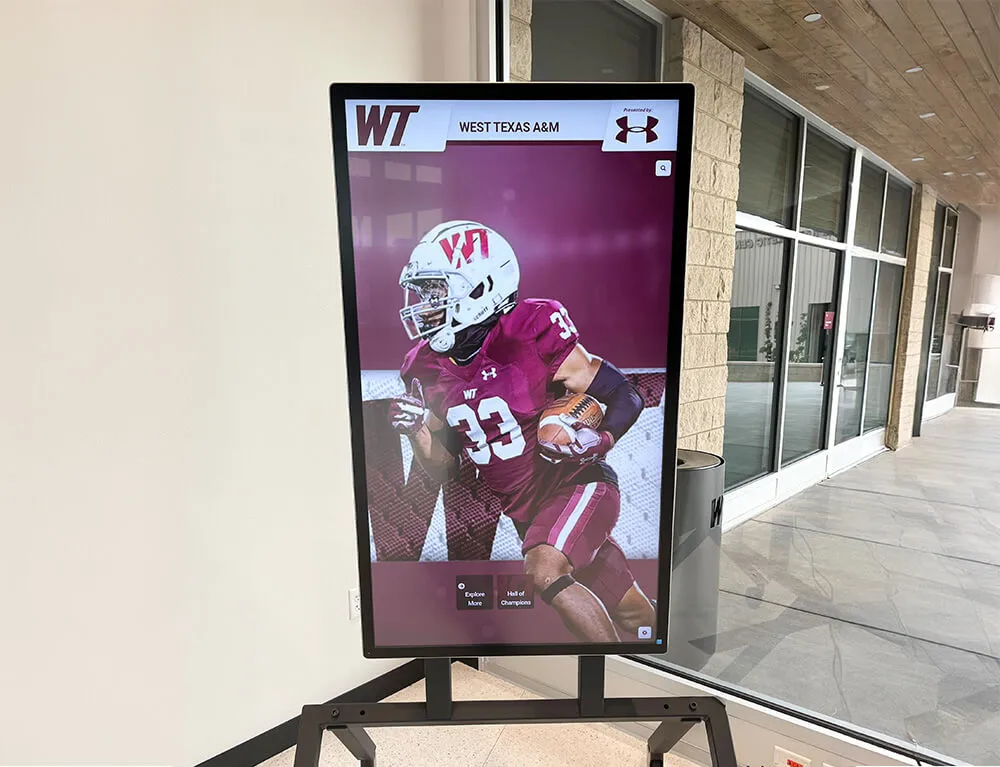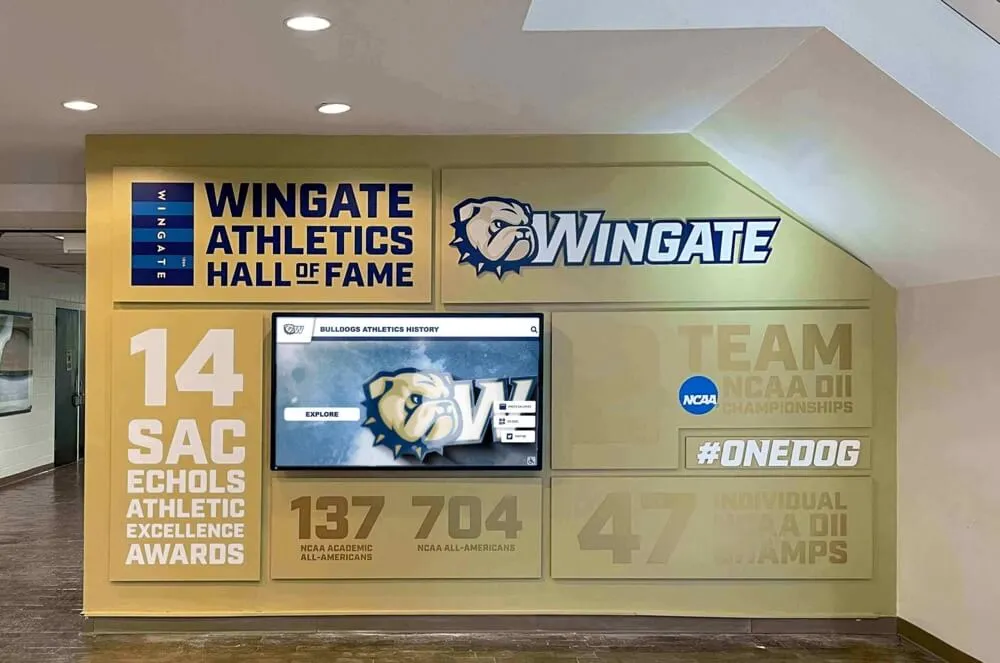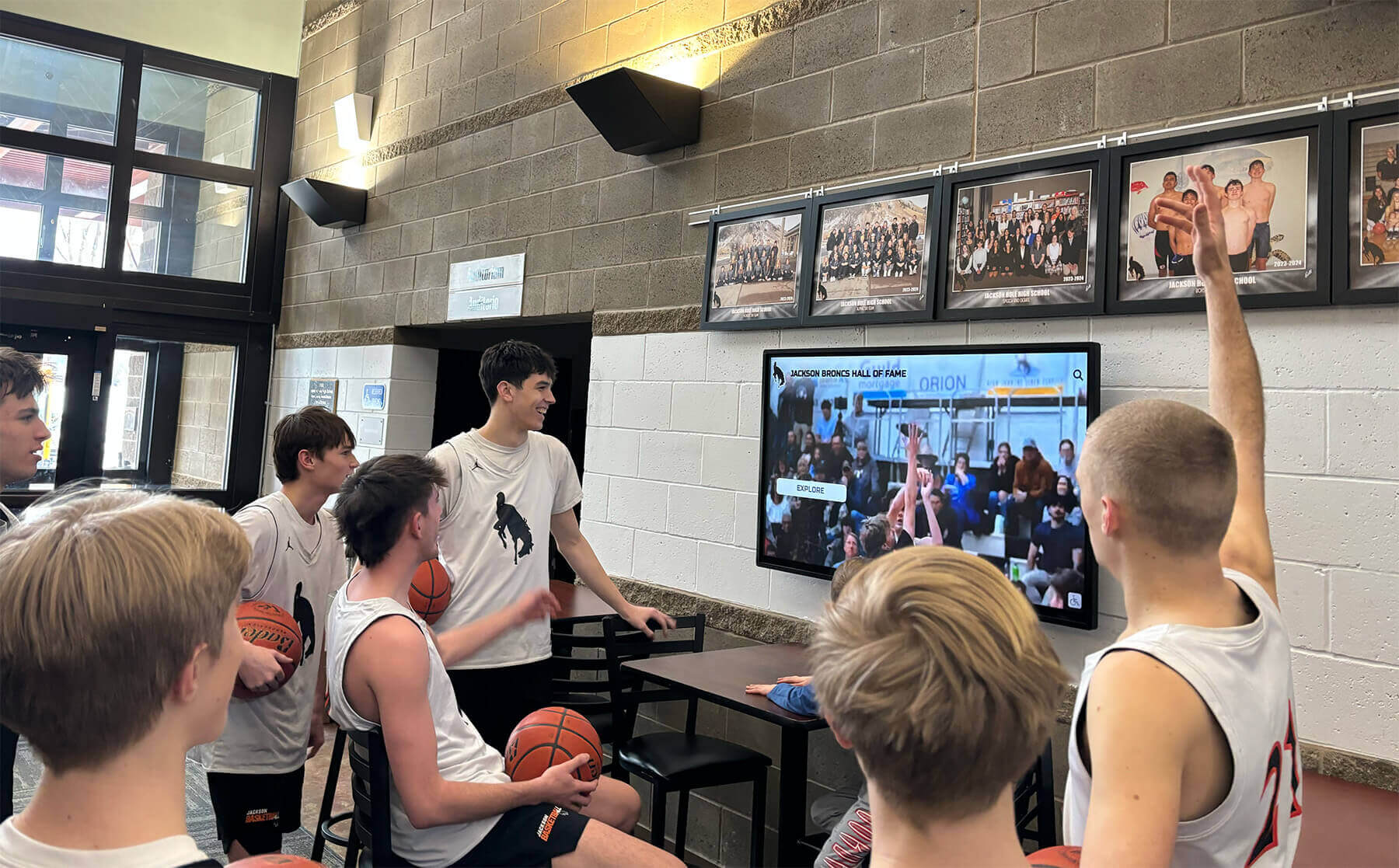




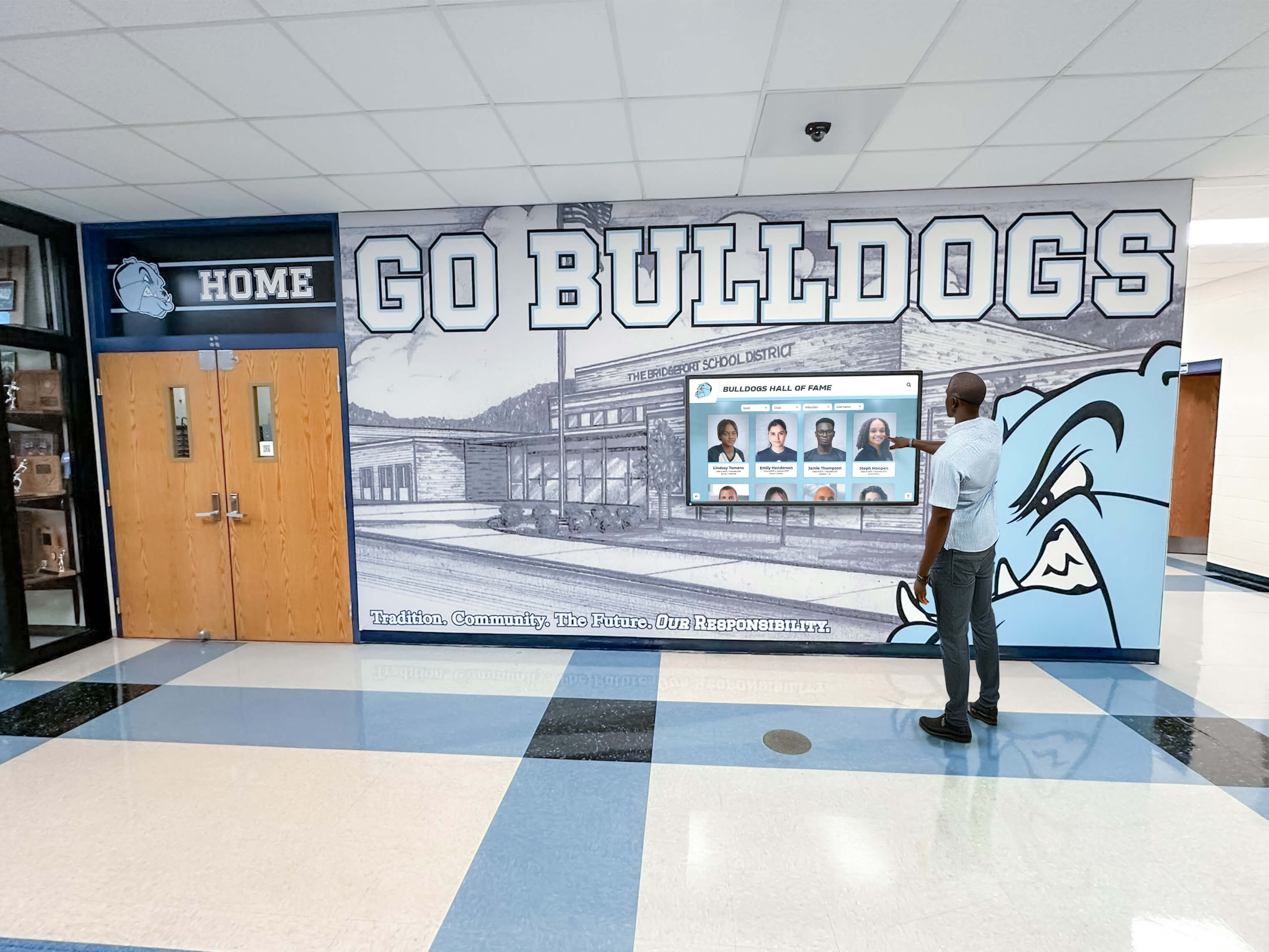
Friday night under the lights. The gymnasium buzzes with anticipation as students, parents, and alumni file through the entrance for the home basketball game. But something catches their attention before they even reach the bleachers—an interactive touchscreen display in the lobby showcasing decades of basketball excellence, from legendary 1,000-point scorers to last season’s championship run. Students crowd around, searching for their names, exploring historic teams, and discovering records they never knew existed. This isn’t a vision of the future. It’s happening right now at high schools using Rocket Alumni Solutions touchscreens to transform game night recognition.
Traditional record boards—those fading vinyl banners high on gymnasium walls or trophy cases crammed with dusty plaques—tell only a fraction of your basketball program’s story. They display perhaps the top ten career scorers, a handful of team championships, and little else. When a junior breaks into the top 20 for career assists, there’s nowhere to recognize that achievement. When a player passes a school legend’s three-point record, updating the display means weeks of waiting for banner production and installation. And when alumni return for games hoping to relive their glory days, they find their achievements buried in forgotten filing cabinets rather than celebrated where everyone can see them.
Digital record boards powered by interactive touchscreen technology solve these recognition challenges while creating engaging experiences that traditional displays simply cannot match. Whether you’re an athletic director researching recognition upgrades, a coach wanting better ways to motivate athletes, or an administrator seeking solutions that enhance facility appeal, understanding how touchscreen displays function during actual game scenarios reveals why hundreds of schools have made this transition.
Why Interactive Touchscreens Transform Basketball Recognition
Basketball generates more individual statistical records than perhaps any other high school sport—career points, single-game scoring, rebounds, assists, three-pointers, and dozens more categories. Traditional static displays force athletic directors to choose which few records receive recognition, leaving most achievements invisible. Interactive touchscreen displays eliminate these painful choices by accommodating unlimited records across every category and every era. When you deploy a Rocket Alumni Solutions digital record board in your gymnasium lobby or concourse, you create a living archive that honors every worthy achievement while providing the instant updates and engaging multimedia content that today's audiences expect.
The Game Night Experience: Touchscreen Recognition in Action
Understanding how touchscreen displays function during actual basketball games demonstrates their value beyond abstract capabilities discussed in product specifications.
Pre-Game Arrival and Lobby Engagement
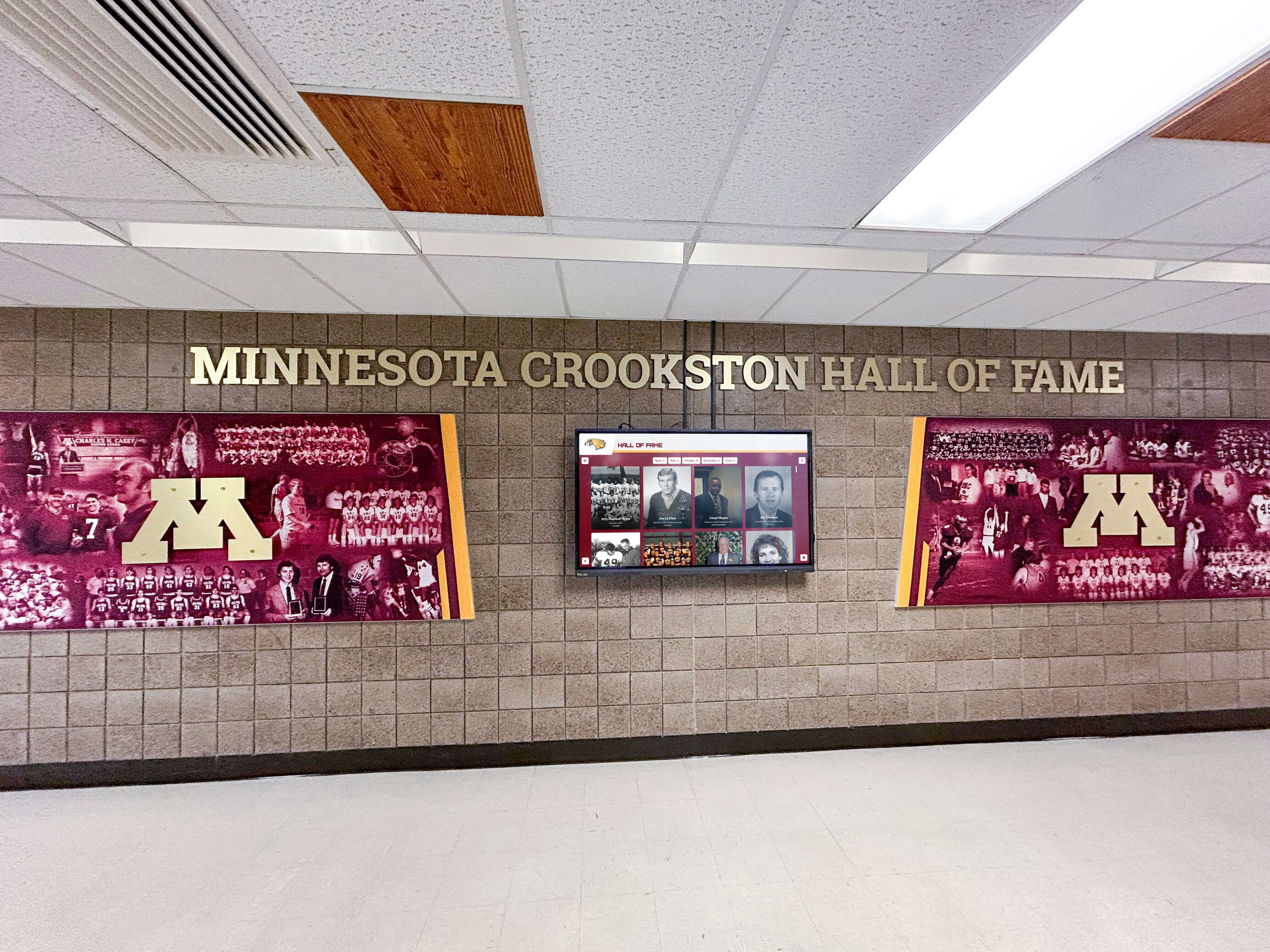
The experience begins the moment visitors enter your facility. Rather than walking past static banners that haven’t changed in years, they encounter a vibrant touchscreen display actively showcasing basketball excellence.
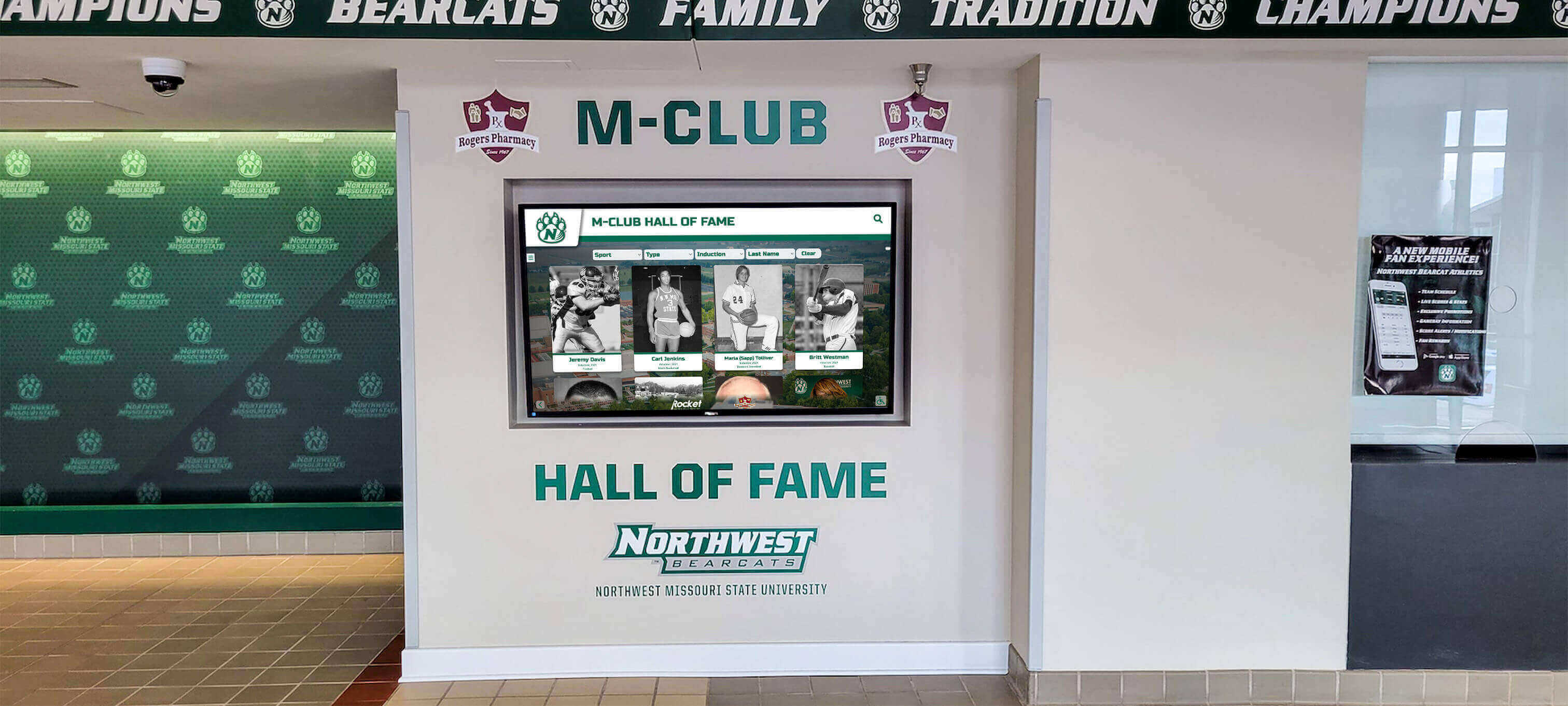
Immediate Visual Impact: Quality touchscreen installations command attention through screen size appropriate to viewing distance (typically 55-75 inches for gymnasium lobbies), high-resolution displays ensuring text readability from several feet away, attractive interface design reflecting school branding and colors, and dynamic content rotation automatically cycling through featured athletes, records, and championships.
This visual presence transforms otherwise utilitarian lobby spaces into celebration environments that communicate program pride and tradition before fans even reach the court.
Self-Directed Exploration: The interactive nature invites engagement that passive displays cannot achieve. Students search for their own statistics and achievements, parents find their children’s profiles and career progressions, alumni discover their records from decades past alongside current recognition, prospective families touring facilities explore program history and tradition, and younger athletes browse achievements of players they hope to emulate.
Research on visitor behavior at schools with interactive recognition shows average engagement times of 3-5 minutes per interaction—dramatically longer than the few seconds people spend glancing at traditional trophy cases. This extended engagement translates to deeper connections with program history and achievement culture.
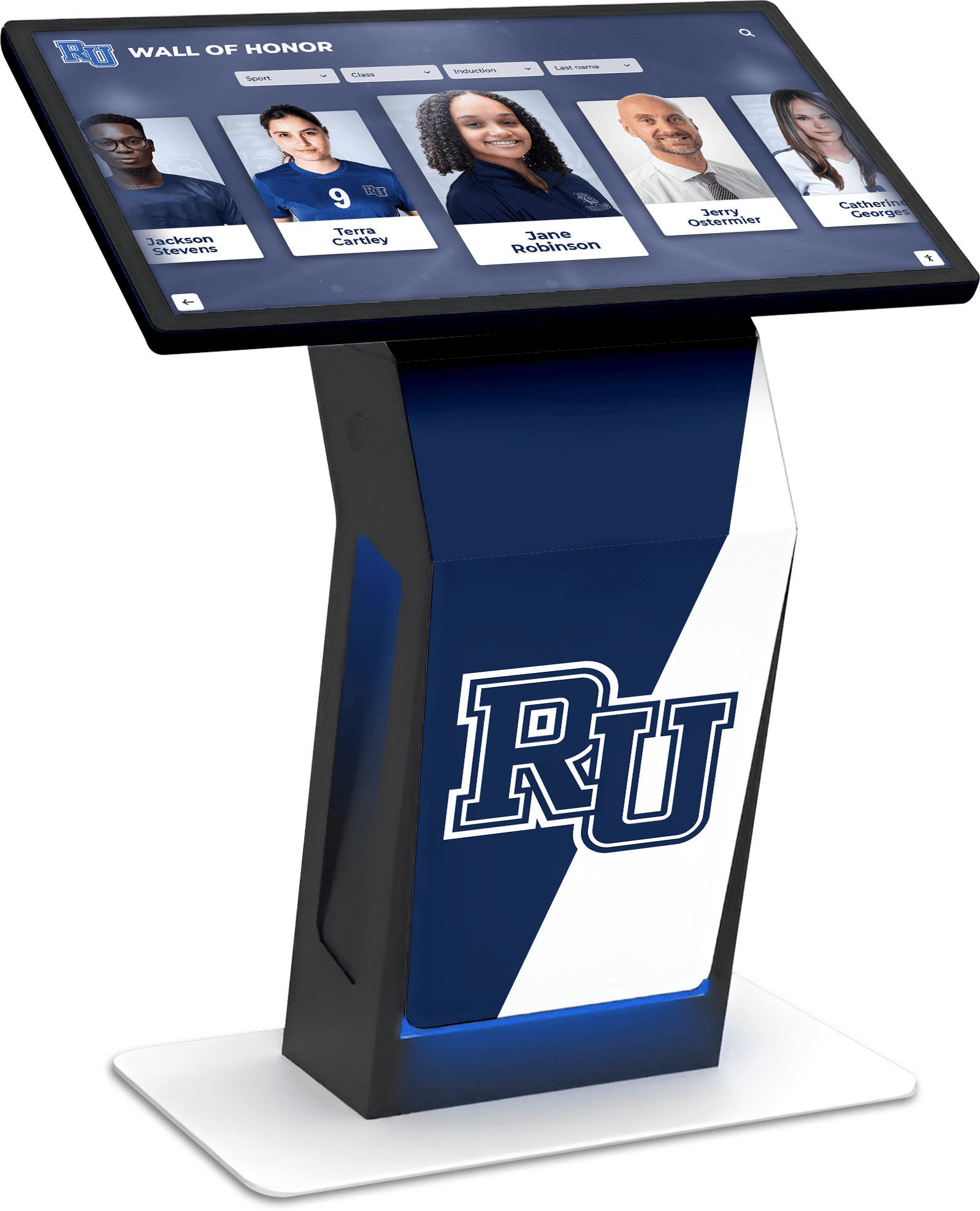
Social Connection and Conversation: Touchscreen displays naturally create social interaction points. Families gather around screens pointing out achievements, alumni share stories about players they competed with or against, students challenge friends to find specific records or statistics, and coaches reference displays when discussing program expectations with prospective athletes and families.
These organic social interactions strengthen community connections and program culture in ways that solitary viewing of traditional displays cannot replicate.
Halftime Showcase Opportunities
Game halftimes provide prime opportunities for recognition ceremonies that touchscreen technology enhances significantly.
Live Recognition Updates: When schools recognize all-state athletes, milestone achievements, or other honors during halftime ceremonies, digital displays update immediately. A student-athlete receives their 1,000-point scorer basketball at center court, and before they return to the bench, their updated profile showing this milestone appears on the lobby display for visitors to see during halftime break. This real-time capability creates seamless integration between ceremony and ongoing recognition that traditional systems requiring weeks for plaque production simply cannot achieve.
Statistical Context During Ceremonies: When recognizing achievements publicly, providing statistical context helps audiences appreciate significance. Digital displays enable presentation of career statistics showing progression toward milestones, ranking among all-time program leaders, comparative statistics placing achievements in historical context, and multimedia content including photos and highlights that bring recognition to life.
Athletic directors using digital systems often display honoree profiles on lobby screens during halftime, enabling family members to photograph their students in front of their digital recognition—creating cherished memories while the achievement celebration remains immediate and exciting.
Historical Connections: Effective recognition ceremonies connect current achievements to program traditions. When a player becomes the 47th athlete in school history to score 1,000 career points, digital displays can instantly show all 46 previous members of this elite club, demonstrate how the current player’s scoring rate compares to legends, highlight connections like multi-generational families with multiple 1,000-point scorers, and create narrative continuity that honors both current achievement and historical tradition.
These connections transform individual recognition into celebration of sustained program excellence spanning generations.
Why Basketball Programs Choose Rocket Alumni Solutions Touchscreens
Schools implementing digital recognition explore multiple providers before making decisions. Understanding what distinguishes purpose-built athletic recognition platforms from generic digital signage explains why hundreds of basketball programs specifically choose Rocket Alumni Solutions.
Purpose-Built Athletic Recognition Features
Generic digital signage systems display content, but they weren’t designed for the unique requirements of athletic record boards. Rocket Alumni Solutions platforms include specialized capabilities specifically addressing athletic recognition challenges.
Auto-Ranking Systems: Perhaps the most valuable feature for basketball record keeping is automatic ranking functionality. When you enter a new player’s career scoring total, the system automatically ranks them among all-time program leaders, updates all affected rankings throughout the database, displays accurate current rankings across all categories, and maintains historical accuracy as additional records are added over time.
This automation eliminates hours of manual ranking calculations and prevents the ranking errors that commonly plague spreadsheet-based record systems.
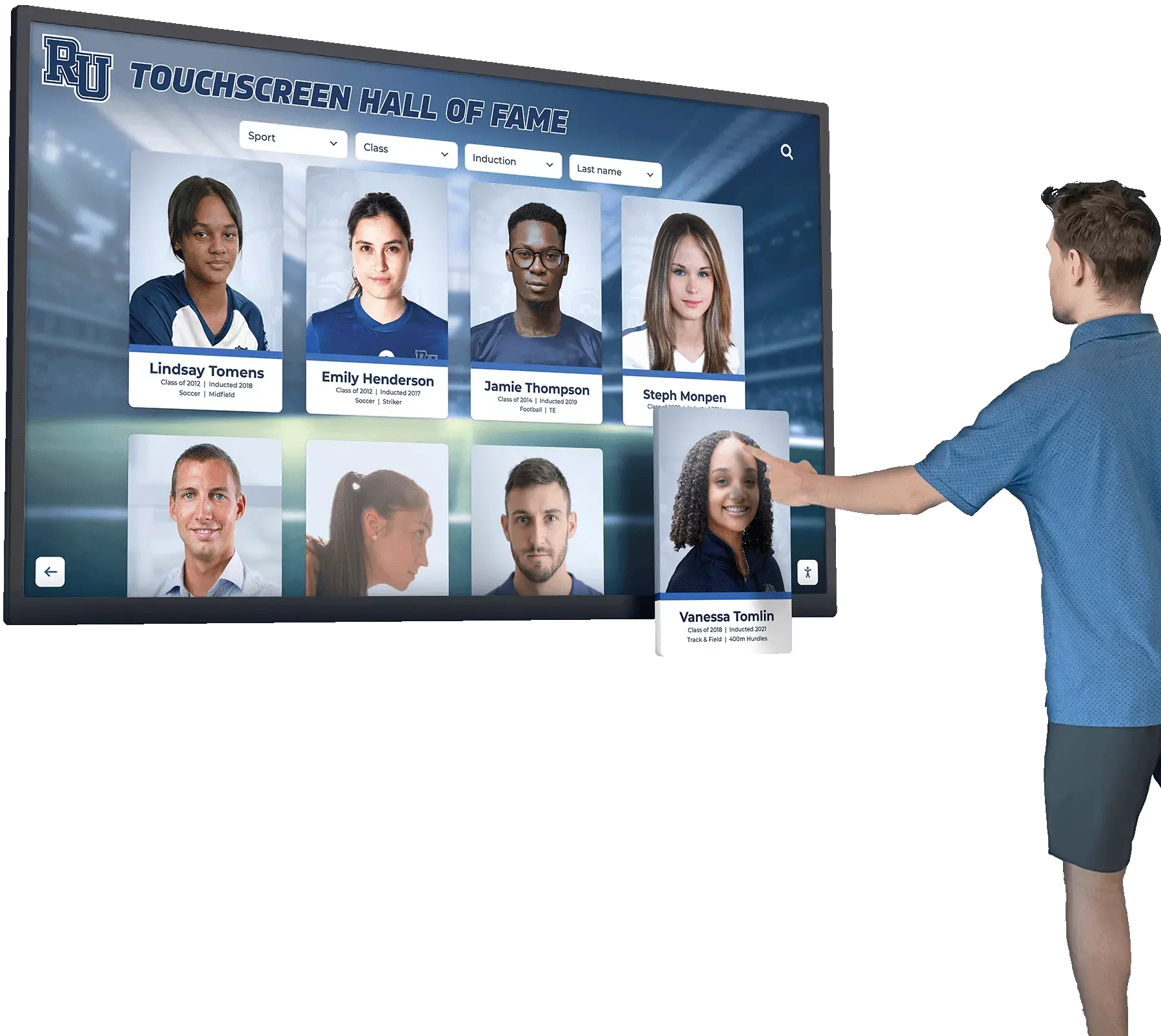
Unlimited Historical Capacity: Basketball programs with rich traditions spanning decades accumulate hundreds or thousands of record-worthy achievements. Digital systems accommodate comprehensive recognition including career records for points, rebounds, assists, steals, blocks, and three-pointers, single-season records across all statistical categories, single-game records and milestone achievements, team records spanning championship history and season performance marks, and all-conference and all-state recognition for hundreds of elite athletes.
This unlimited capacity ensures recognition equity—the player who ranks 47th in career scoring receives the same professional presentation as number one, and the championship team from 1978 displays alongside last year’s titleholders with identical prominence.
Template-Driven Professional Design: Not every athletic director possesses graphic design expertise, yet recognition quality reflects on both honored athletes and overall program professionalism. Rocket platforms include pre-built templates specifically designed for basketball statistics and achievements, automatic formatting ensuring consistent professional presentation, responsive layouts that adapt properly to different screen sizes and orientations, and customization capabilities allowing schools to incorporate branding without requiring design skills.
These templates enable schools to create recognition displays that look professionally designed regardless of staff technical capabilities.
ADA Compliance and Accessibility
Federal accessibility requirements apply to school recognition systems, yet many schools unknowingly deploy non-compliant solutions that create legal exposure while failing to serve all community members equally.
WCAG 2.1 AA Standards: Rocket Alumni Solutions maintains Web Content Accessibility Guidelines 2.1 Level AA compliance—the standard specified for educational institutions. This means keyboard navigation supporting users who cannot use touchscreens, screen reader compatibility enabling visually impaired access, sufficient color contrast ensuring readability for color blind users, and text scaling that accommodates various vision capabilities.
Schools deploying non-accessible systems face potential complaints and remediation costs far exceeding the investment in compliant solutions from the start.
QR Code Universal Access: Physical touchscreen displays installed in gymnasiums serve on-site visitors effectively, but what about alumni living across the country, athletes absent for away games, or family members unable to attend in person? Rocket systems generate unique QR codes that link directly to your recognition content, enabling anyone with a smartphone to access comprehensive records from anywhere. Parents share recognition profiles on social media, college recruiters review athlete profiles remotely, and alumni browse program history from their homes thousands of miles away.
This extended access dramatically amplifies recognition reach and impact beyond physical facility limitations.
Resources on interactive touchscreen software provide technical background about the underlying technologies that enable these specialized recognition capabilities.
The Technology Behind Game-Ready Recognition Displays
Understanding the technical components and infrastructure requirements helps schools plan successful implementations that function reliably during high-stakes game nights when hundreds of visitors will interact with displays.
Hardware Components and Specifications
Effective installations require appropriate commercial-grade hardware designed for the demanding high-traffic athletic environment.
Commercial Touchscreen Displays: Consumer-grade screens marketed for home use fail quickly in public installation scenarios involving continuous operation for 10-12 hours during events, hundreds of daily touches from multiple users, temperature variations in gymnasiums and lobbies, and occasional impacts from equipment or student activity.
Commercial displays designed for public deployment typically feature extended operational ratings supporting 16-18 hours daily use, tempered glass surfaces resisting scratches and impacts, industrial-grade touch sensors maintaining accuracy through heavy use, and thermal management systems preventing overheating during extended operation.
Schools that cut costs with consumer displays typically face premature failures requiring replacement within 2-3 years, while commercial equipment commonly operates reliably for 7-10 years or longer.
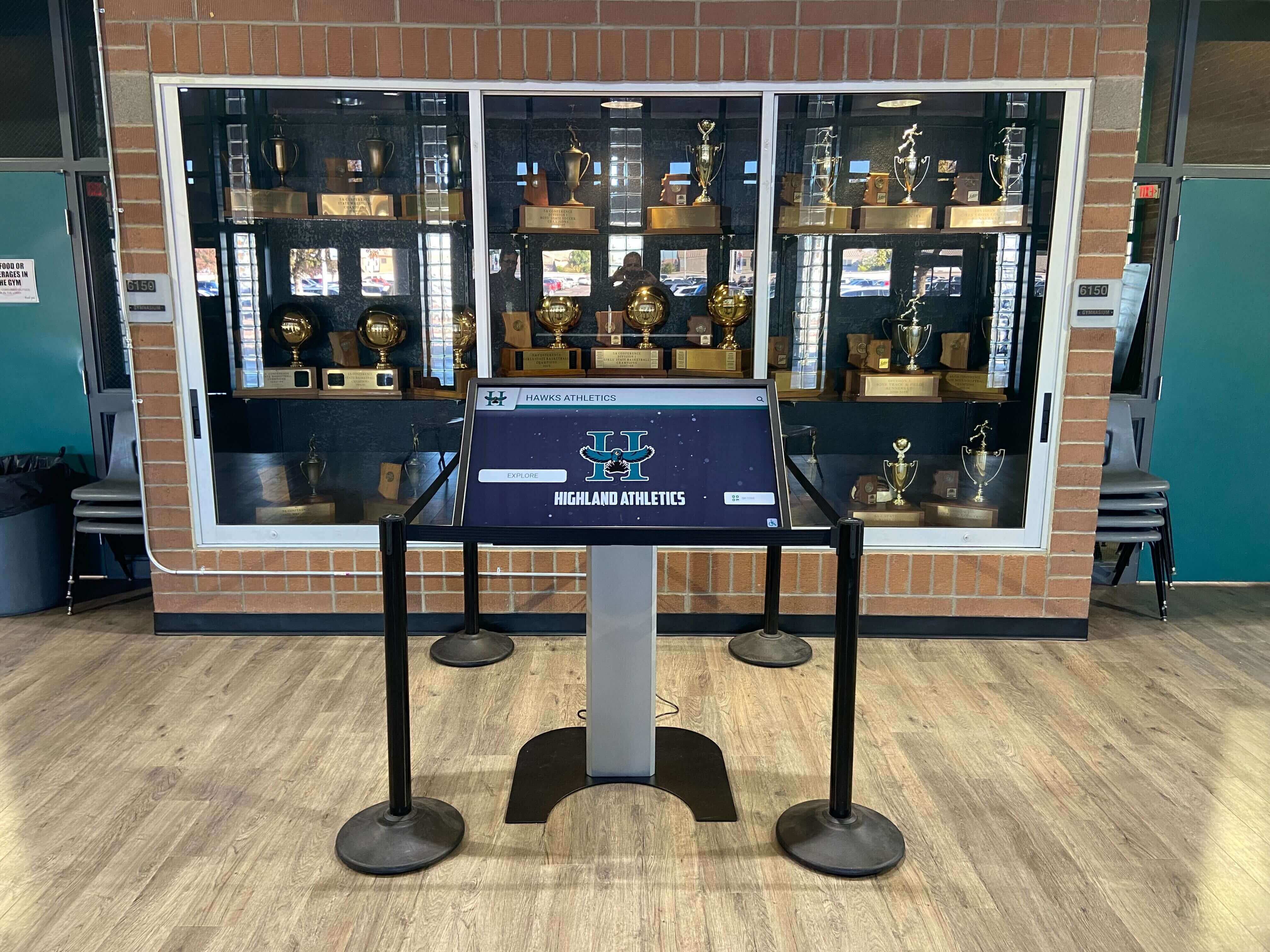
Screen Size and Positioning: Effective recognition requires displays large enough for comfortable viewing and reading from typical lobby distances. For gymnasium lobby installations where viewers approach within 3-6 feet, 55-65 inch displays typically provide optimal balance between readability and space requirements. For corridor installations with longer typical viewing distances, 65-75 inch displays ensure text remains readable. And for trophy case integrations where viewers position directly in front of displays, 43-55 inch displays often prove appropriate.
Professional installers assess actual viewing distances and lighting conditions to recommend appropriate sizing rather than applying one-size-fits-all specifications that may prove inadequate in specific facility contexts.
Mounting and Protection: Beyond the display itself, proper mounting ensures safety and longevity. Professional installations include secure wall mounting rated for display weight plus safety margin, anti-theft security hardware preventing unauthorized removal, cable management concealing and protecting power and network connections, and protective bezels or enclosures in high-traffic areas where accidental impacts might occur.
These infrastructure elements determine whether displays function reliably for years or create maintenance headaches and safety concerns.
Network Infrastructure and Connectivity
Digital recognition displays require reliable network connectivity for content updates and remote management.
Wired vs. Wireless Connectivity: Hardwired Ethernet connections provide the most reliable option, eliminating wireless interference issues and security concerns that WiFi introduces. However, many gymnasium lobbies lack convenient Ethernet access, making wireless connectivity practical necessity. Schools choosing wireless connectivity should ensure enterprise-grade access points with adequate bandwidth, network security preventing unauthorized access, and backup connectivity options for critical systems.
IT departments should evaluate connectivity before installation rather than discovering inadequate infrastructure after displays are mounted.
Remote Management Capabilities: Cloud-based management systems enable authorized staff to update content and manage displays from any location. Athletic directors at away games can update records from laptops or tablets, coaches can submit updated statistics after evening games from home, and communication staff can refresh content during summer months from remote work locations.
This flexibility dramatically reduces the friction and delays that plagued traditional recognition systems requiring physical presence for every update.
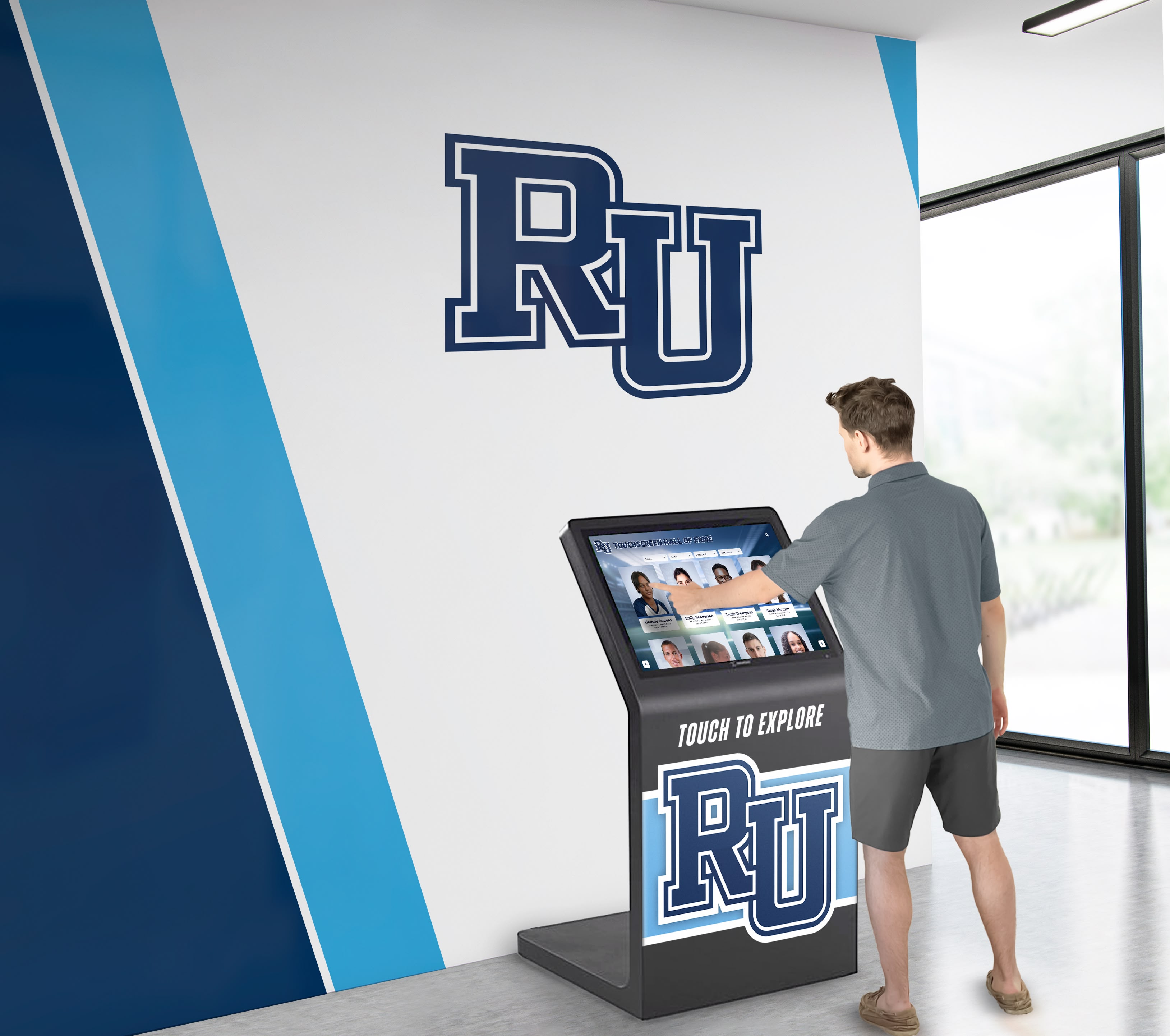
Backup and Redundancy: Reliable game night operation requires consideration of potential failure modes. Quality recognition platforms include cloud content backup preventing data loss, offline operation capability displaying cached content during network interruptions, automated content failover ensuring displays show appropriate content even if primary sources experience issues, and remote monitoring alerting staff to technical problems before game night arrives.
These redundancy features prove their value during the Friday night game when 500 visitors fill your lobby—not during Tuesday afternoon testing when issues cause minimal disruption.
Implementing Touchscreen Recognition for Your Basketball Program
Schools ready to deploy interactive recognition benefit from systematic planning addressing both the initial implementation and long-term sustainability.
Assessment and Planning Phase
Successful projects begin with thorough assessment and stakeholder alignment.
Facility Evaluation: Physical installation considerations significantly impact both cost and effectiveness. Evaluate potential locations for optimal visitor traffic patterns, available wall space with appropriate viewing clearance, electrical power access within reasonable distance, network connectivity options, lighting conditions that might affect screen visibility, and accessibility ensuring all visitors can comfortably use displays.
Walking through facilities during actual games helps identify high-traffic areas that maximize recognition visibility and impact.
Content Inventory and Historical Research: The recognition system’s value depends directly on content quality and completeness. Before implementation, schools should inventory existing records and historical documentation, identify gaps requiring research to fill, prioritize which records and athletes to include initially, and plan phased content expansion for comprehensive long-term coverage.
Many schools underestimate content development effort, discovering that gathering historical records, collecting photographs, and writing athlete profiles requires substantial time investment. Starting this research early prevents delays when hardware installation completes but content readiness lags.
Stakeholder Engagement: Implementation success requires buy-in from multiple constituencies. Engage athletic directors and coaches providing input about recognition priorities, IT departments ensuring technical infrastructure adequacy, facilities staff coordinating installation logistics, booster organizations potentially funding all or part of implementation, and parent/alumni groups whose support often proves crucial for comprehensive historical content development.
Early engagement prevents resistance and builds enthusiasm that smooths implementation challenges.
Budget Planning and Funding Options
Understanding complete implementation costs enables realistic budget planning and funding strategy development.
Initial Investment Components: Comprehensive budgets include commercial touchscreen hardware ($3,000-$8,000 depending on size and specifications), software platform licensing (typically $2,000-$5,000 initially), professional installation including mounting and wiring ($1,500-$3,000), initial content development ($2,000-$5,000 for comprehensive historical coverage), and staff training ensuring personnel can manage systems confidently.
Total initial investments for single-display systems typically range from $10,000-$20,000 depending on hardware selection, content scope, and installation complexity. While substantial, this compares favorably to cumulative costs of repeatedly producing and installing physical banners and plaques over equivalent timeframes.
Ongoing Operational Costs: Annual expenses include software subscription/licensing fees ($1,200-$3,000), content updates (mostly staff time for routine additions), technical support and maintenance, and occasional hardware repairs or replacements.
These predictable ongoing costs typically prove more manageable than the unpredictable episodic expenses of traditional recognition systems where banner replacement, plaque production, and facility modifications occur irregularly but expensively.
Funding Strategies: Schools successfully fund digital recognition through various approaches including athletic booster club special campaigns, alumni fundraising specifically for recognition enhancement, memorial donations honoring specific athletes or coaches, corporate sponsorships with appropriate recognition, and capital improvement budgets as part of larger facility renovation projects.
Many schools discover that alumni former athletes enthusiastically support recognition projects that will honor their achievements, providing funding sources that traditional capital campaigns struggle to access. Positioning recognition investments as honoring past athletes while inspiring current and future students often resonates powerfully with potential donors.
Installation and Content Launch
Professional installation and thoughtful content launch create positive first impressions that drive ongoing engagement.
Professional Installation Requirements: While technically competent facilities staff might handle basic mounting, professional installation ensures proper wall mounting meeting safety standards and weight ratings, electrical work complying with code requirements, network connectivity configuration and security, display calibration and positioning, and testing under actual usage conditions including lighting variations and traffic patterns.
Schools that attempt DIY installation often encounter unexpected complications that delay completion, compromise safety, or result in suboptimal positioning requiring reinstallation.
Content Development and Quality: Recognition effectiveness depends on content quality. Professional implementations include high-quality photographs showing athletes in action, comprehensive statistics providing achievement context, achievement narratives explaining significance and journey, and consistent formatting creating polished professional appearance across all profiles.
Schools with limited photography archives often conduct special photo sessions with current athletes, request historical photos from alumni families, and digitize yearbook content for historical athletes. This content development represents substantial work—successful schools typically allocate 40-80 hours for comprehensive initial content creation.
Launch Event and Promotion: Strategic launch timing maximizes impact and engagement. Many schools unveil recognition displays during high-profile events like opening game of basketball season, hall of fame induction ceremonies, homecoming or alumni weekend, or special recognition events honoring milestone achievements.
These public launches generate media coverage, social media engagement, and community excitement that establishes positive momentum for ongoing use and maintenance.
Resources on digital hall of fame implementation provide detailed planning frameworks ensuring successful deployments that function reliably and engage audiences effectively.
Maximizing Recognition Impact Beyond Game Night
While game night represents peak visibility and engagement, effective programs leverage digital recognition throughout the year and across multiple contexts.
Daily School Environment Integration
Recognition displays serve important purposes beyond game night spectacle.
Daily Student Motivation: When touchscreen displays occupy high-traffic areas that students pass multiple times daily, they create constant visual reinforcement of achievement culture. Underclassmen see the statistical progressions of 1,000-point scorers and understand the multi-year dedication required, freshmen discover that most program legends weren’t dominant as first-year players, creating hope and demonstrating development pathways, younger students browsing displays begin aspiring toward their own future recognition, and current varsity players check their statistics and rankings regularly, fueling competitive drive.
This daily visibility transforms recognition from occasional ceremony into ongoing cultural force shaping athlete motivation and program identity.
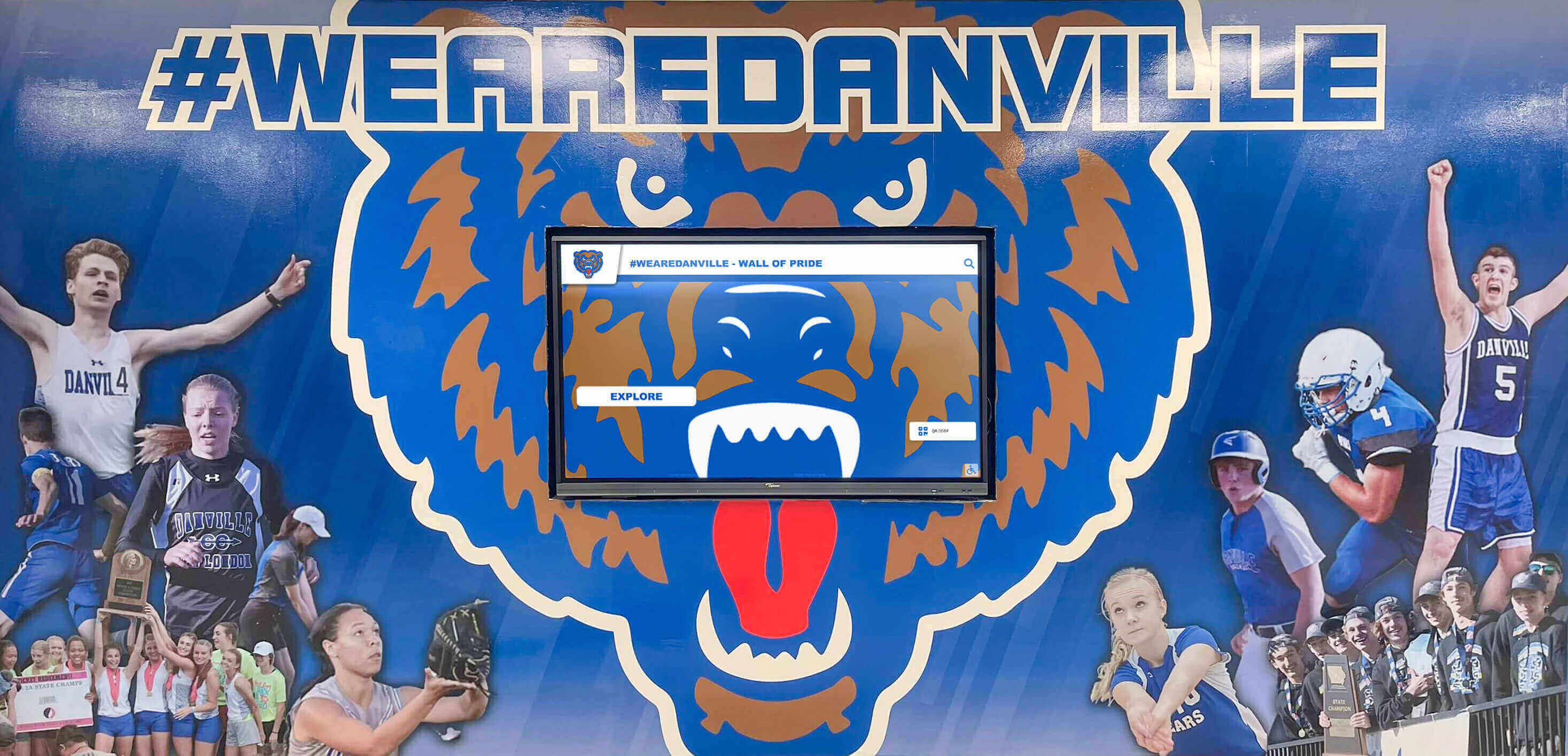
Recruiting Tool During Campus Visits: Prospective students and families evaluating schools form impressions based on visible evidence of program quality and student success. Interactive recognition displays demonstrate commitment to honoring individual achievement not just team championships, showcase depth of program tradition spanning decades, provide specific examples of athlete development and success, and communicate professional standards and attention to detail extending beyond athletics to encompass how schools value all student contributions.
Athletic directors report that recognition displays frequently become talking points during recruiting conversations—tangible proof points that program culture statements aren’t empty marketing claims but supported by visible institutional commitment.
Alumni Engagement During Returns: Alumni visiting schools for various reasons—watching younger siblings compete, attending reunions, participating in school events, or simply revisiting meaningful places—consistently seek their own high school recognition. Digital searchable systems enable instant discovery of their achievements regardless of graduation year, creating powerful emotional connections and reinforcing lifelong bonds with institutions. These positive alumni experiences translate to enhanced donor cultivation, volunteer support, and program advocacy within broader communities.
Cross-Sport Recognition Expansion
Basketball programs often pioneer digital recognition adoption, but comprehensive value emerges when systems expand across all sports.
Multi-Sport Platform Benefits: Rocket Alumni Solutions platforms accommodate all sports within unified systems. After establishing basketball recognition, schools typically expand to include football records and achievements, volleyball statistics and championships, track and field records across dozens of events, soccer, baseball, softball, and swimming programs, and emerging sports like lacrosse, competitive cheer, and esports.
Unified platforms create consistent experiences across sports while dramatically reducing incremental expansion costs compared to implementing separate systems for each program.
Recognition Equity Across Programs: Comprehensive digital systems ensure smaller sports receive recognition quality equivalent to high-profile programs. The wrestler who places at state receives profile presentation identical to the basketball all-state player. The swimmer who sets school records displays alongside the football championship team. This recognition equity communicates that schools value excellence based on achievement level rather than sport popularity—a powerful cultural message promoting participation across diverse athletic offerings.
Multi-Sport Athlete Celebration: Athletes who earn varsity letters across multiple sports demonstrate exceptional versatility and dedication. Digital platforms enable cross-referencing that celebrates these well-rounded athletes. Profile pages can highlight multi-sport participation, dedicated views can feature athletes who competed in three or more sports, and statistical analysis can identify rare athletes who earned all-conference recognition in multiple programs.
This comprehensive perspective honors athletic diversity in ways sport-specific traditional displays cannot approach.
Frameworks for student athlete recognition across multiple sports provide systematic approaches ensuring equitable celebration regardless of program size or visibility.
Measuring Recognition Program Success and ROI
Beyond qualitative benefits, schools benefit from tracking concrete metrics demonstrating recognition program value and return on investment.
Engagement Metrics and Analytics
Digital platforms provide usage data impossible to collect from traditional static displays.
Interaction Tracking: Modern recognition systems monitor total interactions per day/week/month, average engagement duration per session, most-viewed athletes and records, peak usage times correlating with events, and search patterns revealing visitor interests.
Schools typically observe dramatic engagement spikes on game nights and during special events, validation that recognition displays successfully attract and hold visitor attention during high-traffic periods.
Content Performance Analysis: Understanding which content engages audiences most effectively guides ongoing content development priorities. Analytics reveal which sports generate most interest, whether historical content or recent achievements attract more engagement, what types of statistical information users explore most thoroughly, and whether multimedia content like photos and videos increases engagement duration.
These insights enable data-driven content strategy rather than guessing what visitors might find interesting.
Access Pattern Insights: Tracking access patterns provides surprising insights including QR code scans indicating off-site access, device types (smartphones vs. tablets vs. desktop computers), geographic distribution of remote viewers, and time-of-day patterns showing when content gets accessed.
Many schools discover substantial off-hours remote access—alumni browsing content from across the country, parents sharing profiles with extended family, and students exploring records during study halls or after school. This extended reach multiplies recognition value far beyond on-site game night engagement.
Program Impact Indicators
Beyond usage statistics, qualitative indicators demonstrate broader program impact.
Athlete and Coach Feedback: Regular surveys and informal conversations reveal whether current athletes feel adequately recognized and motivated, coaches observe behavioral changes attributable to recognition visibility, senior athletes appreciate seeing their full career statistics and achievements documented professionally, and underclassmen demonstrate awareness of records and milestones they aspire to achieve.
These direct stakeholder perspectives provide ground truth about whether recognition systems achieve intended motivational and cultural objectives.
Alumni Engagement Measures: Track whether alumni mention recognition specifically during communications, gifts and donations increase among former athletes whose achievements are highlighted, social media sharing amplifies recognition reach beyond facility walls, and reunion attendance improves as alumni anticipate seeing their recognition during visits.
Development offices often observe that tangible recognition of past achievements creates emotional connections that translate to donor cultivation opportunities—a secondary benefit beyond core athletic objectives.
Recruiting Success: While numerous factors influence recruiting, observe whether prospective families specifically mention recognition during visits, commitment decisions reference program tradition and culture visible through recognition, and student-athletes indicate that comprehensive recognition influenced school choice.
These recruiting benefits often prove difficult to quantify precisely but emerge consistently in anecdotal reports from successful programs using comprehensive digital recognition.
Common Implementation Challenges and Solutions
Schools planning digital recognition benefit from understanding common obstacles and proven mitigation strategies.
Technical Challenges
Network Connectivity Issues: Gymnasium lobbies and athletic wings often lack robust network infrastructure. Solutions include pre-installation network assessment and infrastructure upgrades if necessary, wireless connectivity with enterprise-grade access points, cellular connectivity backup for critical displays, and offline operation modes displaying cached content during network interruptions.
IT department engagement early in planning prevents discovering inadequate infrastructure after installations complete.
Content Management Complexity: Staff without technical backgrounds sometimes feel intimidated by content management systems. Successful implementations address this through platform selection prioritizing intuitive interfaces over feature complexity, comprehensive training ensuring multiple staff members possess system competency, documentation and quick-reference guides supporting independent problem-solving, and technical support access when staff encounter challenges beyond their capabilities.
Schools that invest appropriately in training and support rarely struggle with ongoing content management, while those that skip these steps often see systems underutilized due to staff hesitation.
Hardware Maintenance and Longevity: Commercial displays prove reliable but not immortal. Planning should include manufacturer warranty terms and support processes, preventive maintenance schedules for cleaning and inspection, rapid response plans for failures occurring before events, and budget reserves for eventual hardware replacement after useful life expires.
These unglamorous planning elements prevent crises when displays malfunction on game day with no contingency response prepared.
Content Development Obstacles
Incomplete Historical Records: Many schools lack comprehensive documentation of historical achievements. Approaches for addressing this challenge include systematic research projects using yearbooks and archives, alumni outreach requesting information and photographs, phased content expansion rather than attempting immediate completeness, and transparency about documentation gaps rather than fabricating missing information.
Successful programs accept that historical content development continues indefinitely rather than treating it as one-time project completed before launch.
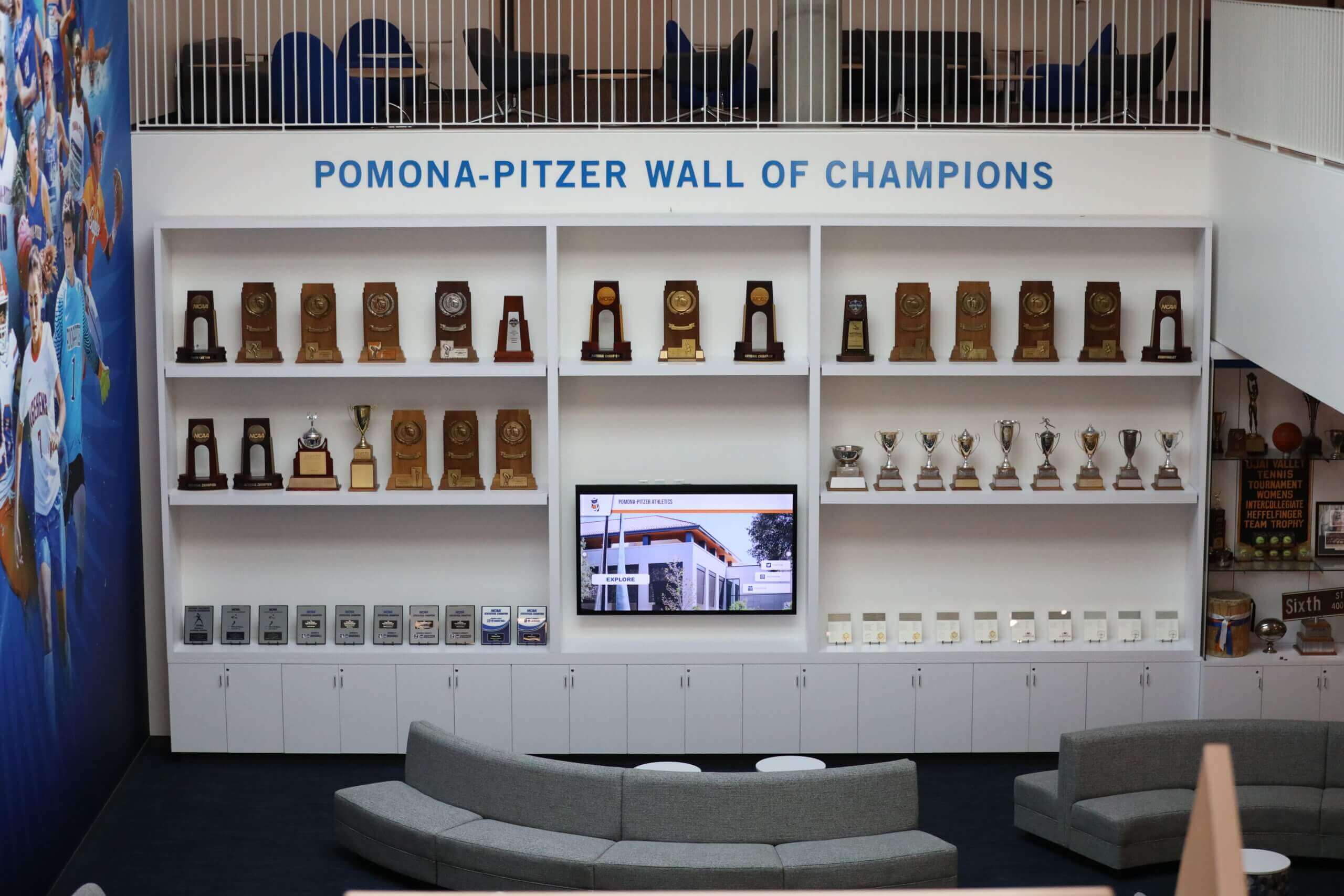
Photo Quality and Availability: Historical athlete photographs often prove difficult to source. Creative solutions include yearbook digitization capturing formal portraits, family photograph requests during alumni outreach, newspaper archives providing action photography, and placeholder graphics maintaining consistent presentation when photographs remain unavailable.
Many schools gradually improve photo coverage as families discover recognition displays and volunteer to contribute historical images previously stored in personal archives.
Maintaining Content Currency: Keeping recognition current requires systematic processes. Successful programs establish designated staff responsibility for updates, seasonal review cycles ensuring timely additions after each season, statistical integration with existing record-keeping systems when possible, and recognition that content maintenance represents ongoing commitment rather than one-time project.
Schools that launch recognition systems with initial enthusiasm but inadequate maintenance planning often see content currency decline within 2-3 years, diminishing recognition effectiveness and credibility.
Future-Proofing Basketball Recognition Systems
Technology investments require consideration of longevity and evolution to prevent premature obsolescence.
Platform Scalability and Growth
Effective recognition systems grow alongside programs rather than requiring replacement as needs expand.
Content Capacity Growth: Platforms should accommodate unlimited content expansion as seasons add new records, support multiple sports as recognition expands beyond basketball, integrate additional content types like video and documents, and maintain performance as databases grow to thousands of entries.
Systems that perform well initially but slow or become unwieldy as content expands create frustrating user experiences and require premature replacement.
Feature Evolution and Updates: Web-based platforms provide continuous improvement through software updates delivering new capabilities, security patches addressing vulnerabilities, interface refinements improving usability, and compatibility updates ensuring continued operation as underlying technologies evolve.
These ongoing improvements distinguish cloud platforms from legacy software requiring manual upgrades or becoming frozen in time.
Multi-Location Expansion: Successful initial deployments often lead to expansion requests. Platforms should support multiple displays across different facility locations, consistent content across all displays, location-specific customization when appropriate, and centralized management regardless of physical installation distribution.
This scalability enables growth from single gymnasium lobby display to comprehensive campus recognition network spanning multiple facilities and purposes.
Integration with Broader School Systems
Recognition systems deliver maximum value when integrated within broader school technology ecosystems.
Website Integration: Best practice implementations extend recognition beyond physical displays through embedded web widgets displaying records and achievements, responsive design ensuring mobile device compatibility, social sharing enabling viral content distribution, and search engine optimization ensuring recognition content ranks well in searches.
This web presence amplifies recognition reach to anyone with internet access rather than limiting visibility to facility visitors.
Athletic Management Systems: Integration with existing athletic management platforms enables automated data flow reducing manual entry, consistent statistics across different systems, simplified workflow for staff managing multiple systems, and reduced error rates from redundant data entry.
These integrations prove especially valuable for large athletic departments managing extensive statistical databases across multiple sports.
Resources on digital athletic recognition programs explore comprehensive approaches that integrate touchscreen displays within broader recognition and engagement strategies.
Real-World Impact: How Touchscreens Transform Game Night Culture
Beyond specifications and features, the ultimate measure of recognition system success emerges from cultural transformation at schools that implement them effectively.
Creating Visible Achievement Culture
Recognition displays communicate institutional values through visible action rather than abstract mission statements.
Achievement Becomes Omnipresent: When comprehensive recognition occupies prominent lobby positions, achievement transitions from occasional ceremony to constant environmental feature. Students encounter excellence daily rather than only during special events, visual reminders communicate that achievement accumulates over time through sustained effort, and recognition demonstrates that schools remember and honor achievement permanently rather than celebrating briefly and forgetting.
This persistent visibility shapes program culture more powerfully than sporadic verbal messaging about valuing achievement.
Inspiring Next-Generation Excellence: Current underclassmen browsing recognition displays discover tangible pathways to their own future recognition. They see statistical progressions showing how record holders developed across multiple seasons, identify similarities between themselves and past achievers who occupied similar starting points, visualize themselves joining elite company within their sports, and internalize that excellence results from effort and dedication rather than exclusively innate talent.
This inspirational framework proves particularly powerful for first-generation athletes from families without sports backgrounds who lack reference points for what achievement pathways look like.
Connecting Generations: Multi-generational program cultures emerge when current athletes feel connected to past excellence. Recognition displays enable current players to discover alumni they’ve heard about, understand historical context for current program standards and traditions, appreciate that they’re continuing legacies built over decades, and recognize that their own achievements will be preserved and celebrated for future generations.
These historical connections strengthen program culture and create institutional continuity transcending individual coaching tenures or administrative leadership changes.
Enhancing Community Pride and Engagement
Recognition extends beyond current athletes to engage broader school communities.
Alumni Return Experiences: Alumni visiting for games or other events consistently seek their own recognition as validation that their contributions mattered and remain remembered. Digital searchable systems enable instant discovery regardless of graduation decade, photograph and profile content triggers memories and emotions from competitive years, social sharing allows alumni to show recognition to friends and family who never visited campus, and positive experiences strengthen emotional bonds that translate to continued engagement and support.
Development professionals increasingly recognize that meaningful recognition creates donor cultivation opportunities impossible through abstract fundraising appeals alone.
Family Pride and Sharing: Parents whose children earn recognition feel pride extending to entire families. Families photograph students in front of their digital profiles, social media sharing amplifies recognition to extended networks far beyond school communities, grandparents living in distant states access recognition remotely through QR codes, and younger siblings aspire toward earning their own future recognition continuing family traditions.
This family engagement strengthens community connections while generating organic promotion as families share recognition broadly.
Community Identity and Tradition: In many communities, high school athletics form central elements of local identity and tradition. Comprehensive recognition preserving this history demonstrates respect for tradition while making it accessible to new community members, connects current programs to deeper historical context giving meaning to rivalries and traditions, creates conversation starting points bringing together different generations, and communicates that basketball represents more than games—it’s cultural institution worth preserving and celebrating.
These community engagement benefits extend well beyond athletics departments to influence broader institutional support and community relationships.
Schedule Your Digital Record Board Demo Today
Friday night basketball games create special opportunities—showcasing student talent, building community connections, and celebrating athletic tradition that defines program identity. Interactive touchscreen recognition transforms these opportunities from missed potential into engaging experiences that honor past excellence while inspiring future achievement.
Traditional static recognition—fading banners, overflowing trophy cases, forgotten filing cabinets—tells incomplete stories limited by physical constraints and update difficulties. Digital record boards powered by interactive touchscreens eliminate these limitations through unlimited recognition capacity, instant updates, rich multimedia content, engaging interactive exploration, and accessibility extending far beyond facility walls to anywhere stakeholders access content.
Hundreds of high school basketball programs have already made this transition, discovering that comprehensive digital recognition pays dividends through enhanced athlete motivation, improved recruiting appeal, strengthened alumni engagement, increased community pride, and demonstrated institutional commitment to honoring achievement appropriately.
Athletic directors and school leaders ready to transform their basketball recognition should explore what Rocket Alumni Solutions can provide. These purpose-built platforms combine intuitive content management, specialized athletic recognition features like auto-ranking, unlimited scalability, ADA accessibility compliance, professional template-driven design, and reliable performance during high-stakes game nights when recognition matters most.
The time to act is now—before Friday’s game when hundreds of visitors walk through your lobby past recognition that fails to reflect program excellence adequately. Schedule a Zoom demo with Rocket Alumni Solutions to see exactly how interactive touchscreens will look in your facility, understand the complete implementation process from assessment through launch, explore content management workflows your staff will use, and develop budget-appropriate solutions matching your program needs and financial constraints.
Basketball builds more than athletes—it develops character, creates lifelong connections, teaches valuable lessons about dedication and teamwork, and contributes to community identity in ways transcending individual statistics. Recognition systems honoring these contributions should reflect the significance basketball holds in your school culture. Digital record boards ensure that every achievement receives the lasting recognition it deserves while creating engaging experiences that strengthen your program for decades to come.
Don’t let another season pass with recognition that fails to honor your basketball tradition comprehensively. Book your digital record board demo today and discover how interactive touchscreen technology will transform your game night experience while preserving your program’s legacy for generations.