



High school gymnasiums across the country display the same familiar scene: championship banners hanging from rafters and walls, celebrating decades of athletic achievement. These vinyl banners represent significant ongoing expenses that athletic departments absorb year after year—typically $150-$400 per banner for design, production, installation, and eventual replacement as they fade, tear, or accumulate beyond available hanging space.
For athletic directors managing tight budgets while trying to recognize growing numbers of achievements across expanding sport offerings, expensive gym banners create a financial trap. Each championship requires a new banner. Every all-state athlete deserves recognition. Conference titles, milestone achievements, and special honors all compete for limited wall space and constrained recognition budgets. The math becomes impossible: more achievements worth celebrating than budget or space can accommodate.
This guide explores how schools nationwide are solving this challenge by replacing traditional vinyl banners with modern digital recognition displays. These systems eliminate ongoing banner production costs, accommodate unlimited achievements without space constraints, provide more engaging recognition experiences, and ultimately reduce long-term expenses while significantly improving how schools honor athletic excellence.
The True Cost of Traditional Gym Banners
A single championship banner costs $200-$400 including design, printing, and installation. Schools with successful programs across multiple sports easily spend $2,000-$6,000 annually on new banners—expenses that continue indefinitely as achievements accumulate. After 10 years, a school investing $4,000 annually has spent $40,000 on banners that fade, require replacement, and consume limited gymnasium wall space. Digital recognition systems like Rocket Alumni Solutions eliminate these recurring costs while providing superior recognition that engages students, families, and alumni more effectively than static banners ever could.
Understanding Traditional Banner Recognition Costs
Before exploring digital alternatives, athletic directors benefit from understanding the complete financial picture of traditional banner recognition—costs that often exceed what appears in formal budget line items.
Direct Banner Production Expenses
Traditional championship and recognition banners incur multiple cost categories that accumulate rapidly across successful athletic programs.
Design and Production Costs: Custom vinyl banner production typically ranges from $150-$400 per banner depending on size, quality, design complexity, and quantity ordered. Standard gymnasium championship banners measuring 2’x6’ or 3’x8’ cost $200-$300 each including full-color printing, grommets for hanging, and basic design services.
Schools requiring more elaborate designs—multiple colors, complex logos, detailed graphics, or premium materials resistant to fading—pay toward the higher end of this range. Bulk ordering multiple banners simultaneously provides modest discounts, but schools rarely know all championships they’ll win in advance to leverage volume pricing.

Installation and Hanging Costs: Beyond production, banners require professional installation for gymnasium applications. Hanging banners safely at appropriate heights requires specialized equipment, facility access during non-use times, and often district maintenance staff or external contractors. Installation typically adds $50-$150 per banner depending on gymnasium ceiling height, mounting complexity, and labor costs in your region.
Some schools attempt DIY installation to save costs, but this creates safety concerns, often results in unprofessional appearance with crooked or poorly secured banners, and consumes staff time that has value even when not explicitly billed.
Replacement and Maintenance: Vinyl banners don’t last forever. Gymnasium environments with temperature fluctuations, humidity, dust, and lighting exposure cause banner degradation. Colors fade, materials become brittle, vinyl tears or develops holes, and printed graphics deteriorate.
Most gymnasium banners require replacement every 7-12 years depending on material quality and environmental conditions. This creates ongoing replacement cycles where schools must reproduce and rehang banners simply to maintain existing recognition—not even adding new achievements but paying again to display the same information already recognized years earlier.
Hidden and Indirect Costs
Beyond explicit banner expenses, traditional recognition creates several hidden costs that impact overall program budgets.
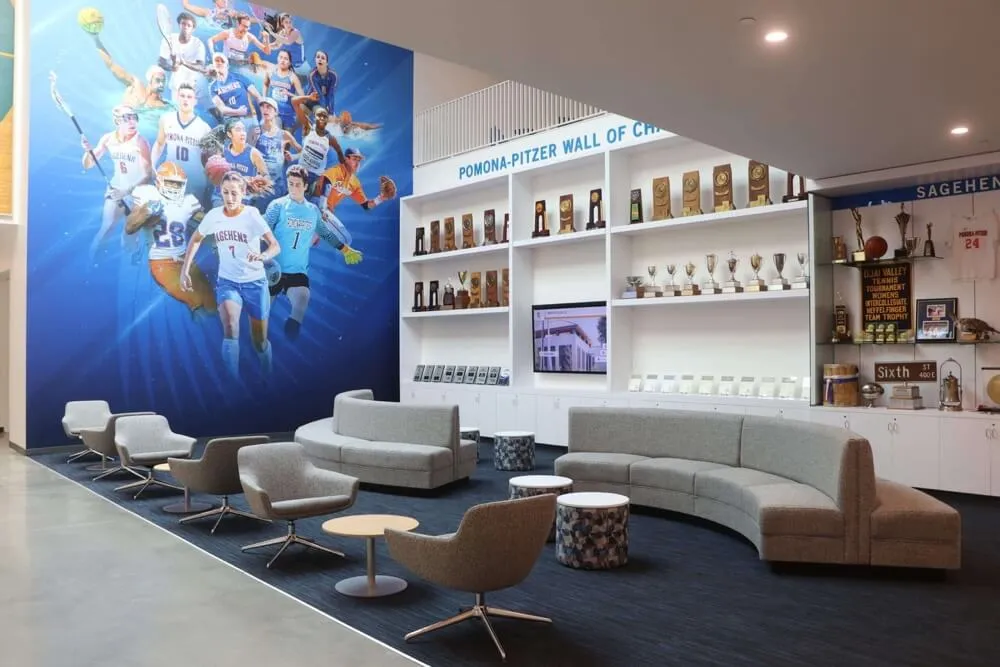
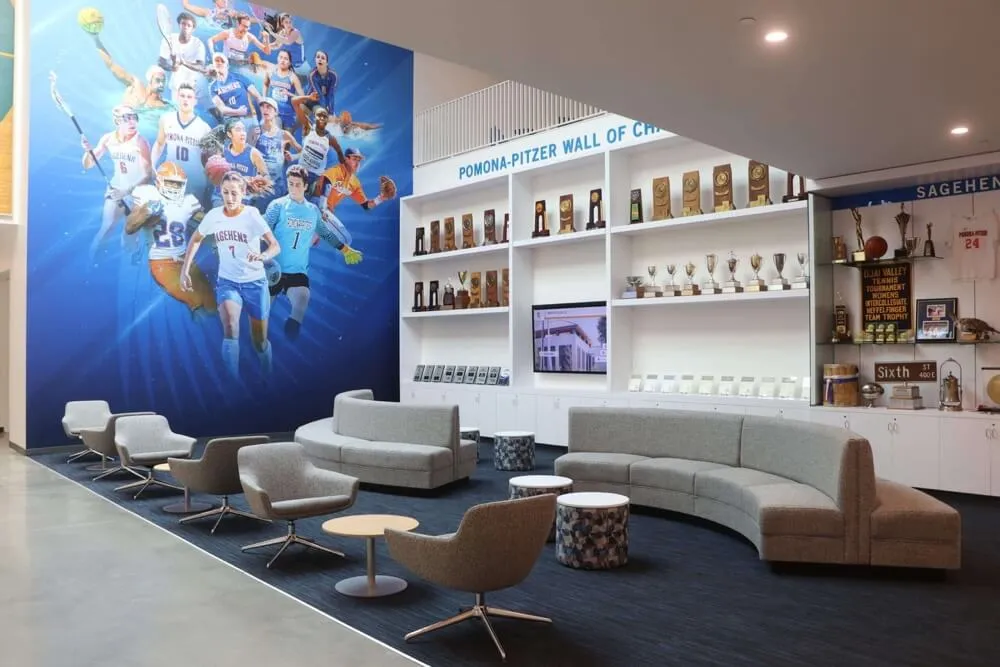
Space Limitations and Prioritization Decisions: Every gymnasium has finite wall and rafter space for banner display. As achievements accumulate across decades, schools face difficult decisions about what deserves display and what gets removed or relegated to storage. A school winning multiple championships annually across numerous sports quickly exhausts available hanging space.
These space constraints force prioritization that often feels unfair: Should older championships be removed to make space for recent achievements? Do major sports like football and basketball get priority over smaller programs? Should team championships displace individual achievement recognition? These decisions create political tensions, hurt feelings among athletes and coaches, and often result in storing physical banners representing genuine achievements that simply cannot be displayed due to space limitations.
Storage and Archive Challenges: Banners that can’t be displayed require storage—consuming warehouse or facility space, accumulating dust and damage, and essentially representing wasted investment since stored banners provide zero recognition value despite their production costs.
Many schools maintain extensive banner collections in storage that no one ever sees—representing thousands of dollars in sunk costs providing no ongoing benefit while requiring space and occasional inventory management.
Inflexibility and Error Correction: Traditional banners offer no flexibility once produced. If text contains errors—misspelled names, incorrect years, wrong statistics—schools must either live with embarrassing mistakes visible to everyone or pay to reproduce corrected banners. If recognition criteria change or additional information should be included, banners cannot be updated without complete reproduction.
This inflexibility means schools either accept imperfect recognition or incur additional unexpected costs correcting errors and making updates that digital systems handle instantly at no incremental expense.
The Athletic Department Budget Pressure Context
Banner costs exist within broader budget constraints that make every recurring expense increasingly unsustainable for athletic departments nationwide.
Rising Costs and Stagnant Budgets
Athletic directors consistently report that while program expenses increase annually, budgets grow slowly or remain stagnant. Equipment costs rise with inflation and safety requirement improvements. Transportation expenses increase with fuel prices. Officials’ fees grow annually. Facility maintenance demands more resources. Yet district athletic allocations often remain flat or face cuts when overall school budgets tighten.
According to educational finance research, athletic departments commonly cover 30-40% of actual program costs through fundraising, booster support, or creative resource reallocation because official budgets prove insufficient for genuine program needs.
In this environment, any expense category that can be reduced or eliminated creates budget breathing room for essential needs that cannot be deferred—like safety equipment, required competition fees, or coaching compensation.
Recognition Competing with Essential Expenses
When budgets get tight, recognition expenses often face cuts because they feel discretionary compared to equipment, transportation, or safety necessities. This creates unfortunate situations where schools cannot appropriately honor achievements because recognition budget lines disappear despite athletes continuing to earn championships and milestones deserving celebration.
Athletic directors shouldn’t face choices between recognizing championships and buying necessary equipment, but budget constraints force exactly these tradeoffs. Solutions that reduce or eliminate ongoing recognition costs enable schools to honor achievements appropriately without sacrificing essential program expenses.
Equity Across Sports and Athletes
Budget pressures exacerbate equity concerns around recognition. When banner budgets prove insufficient for all achievements, high-profile sports often receive priority—football championships get banners while smaller sports’ achievements go unrecognized due to cost constraints rather than achievement significance.
Similarly, team championships typically receive banner recognition while individual all-state athletes, record-holders, or milestone achievers get overlooked because banner budgets stretch to cover team success but cannot accommodate individual excellence.
Solutions like comprehensive digital recognition systems enable schools to recognize all achievements equitably without budget constraints forcing unfair prioritization among deserving athletes and programs.
Digital Recognition Displays: The Banner Replacement Solution
Modern digital display technology provides comprehensive alternatives to traditional banners—eliminating ongoing production costs while delivering recognition experiences that traditional banners cannot approach.
How Digital Systems Replace Traditional Banners
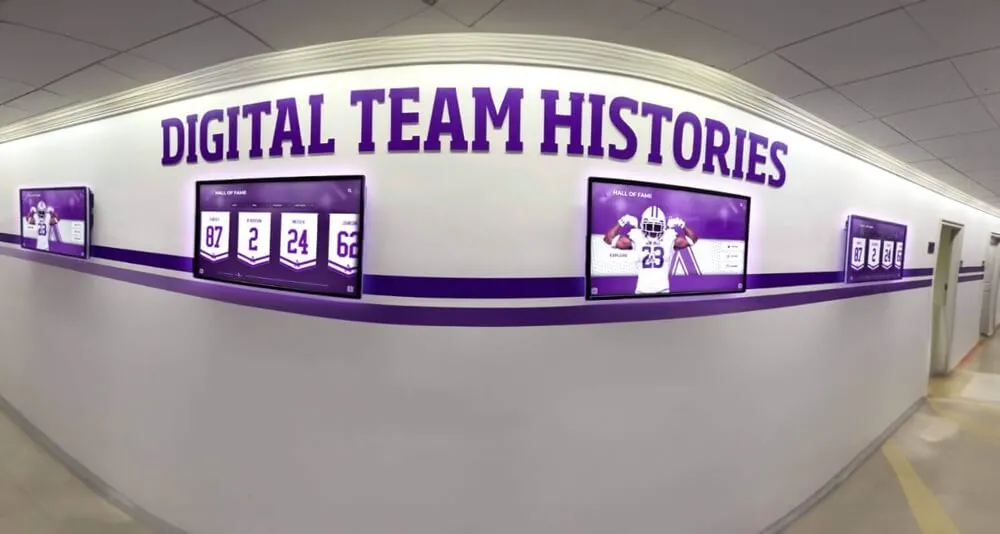
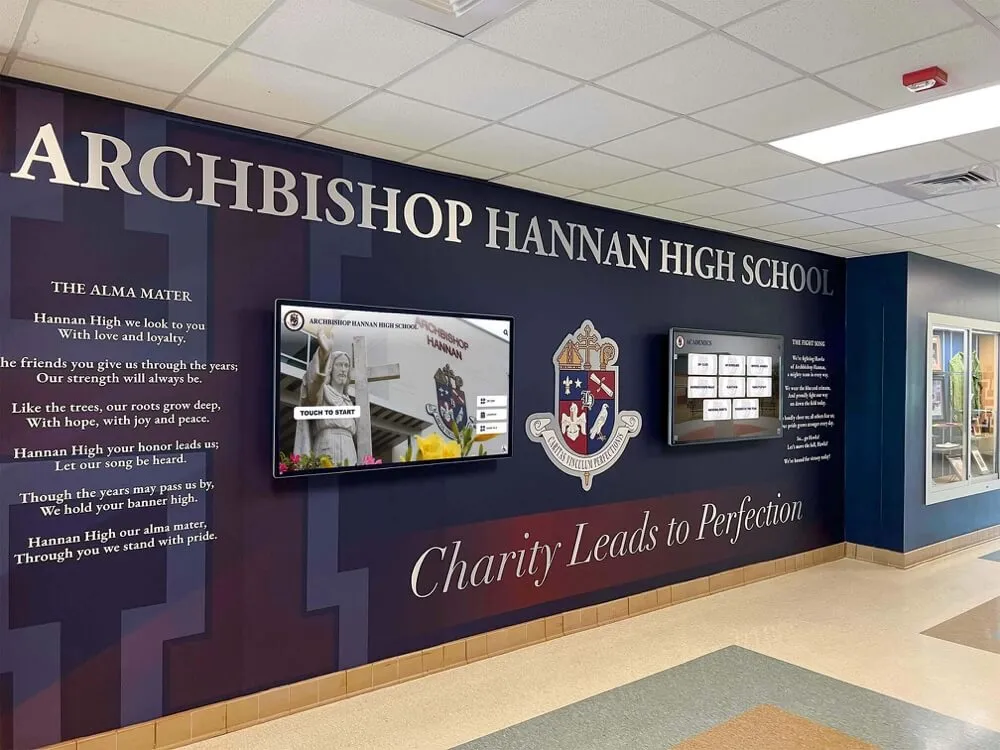
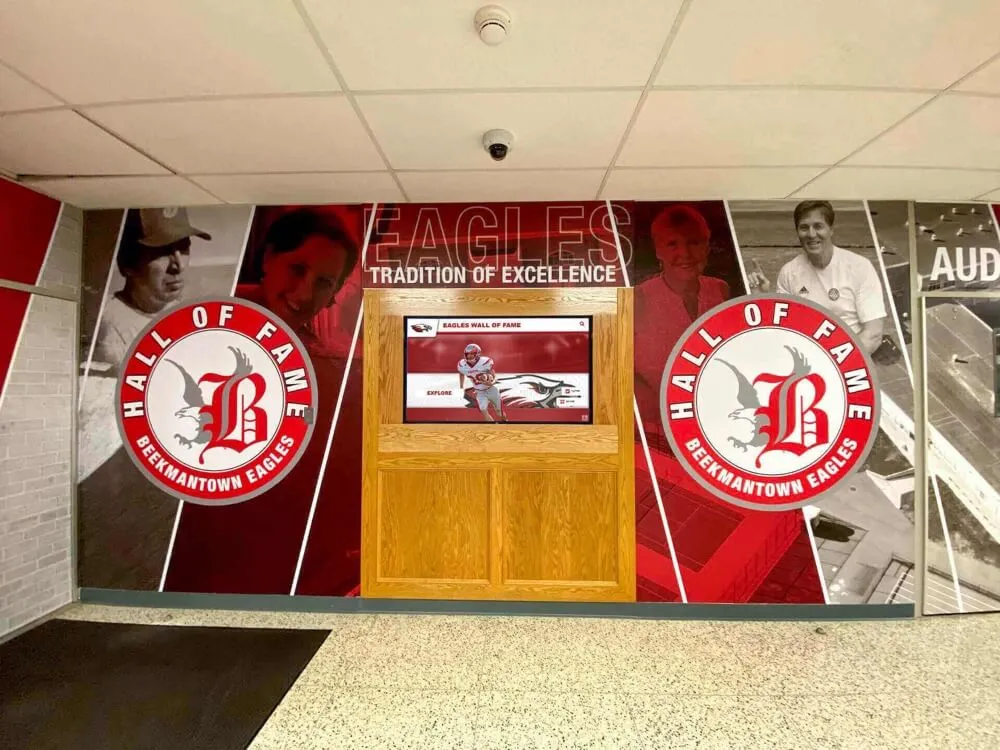
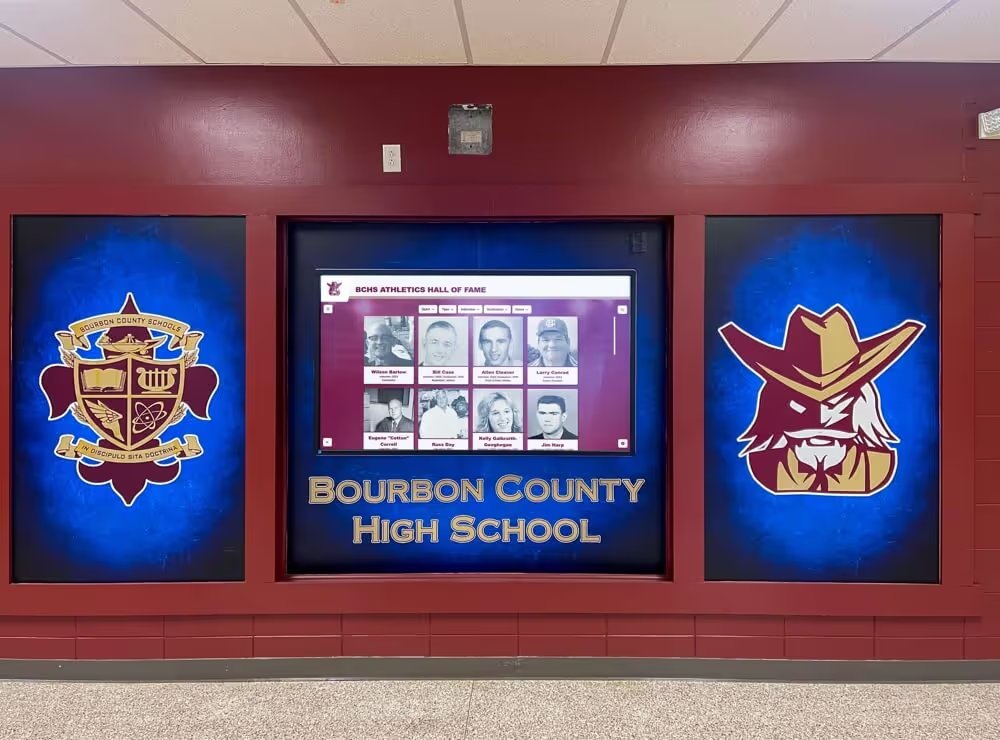
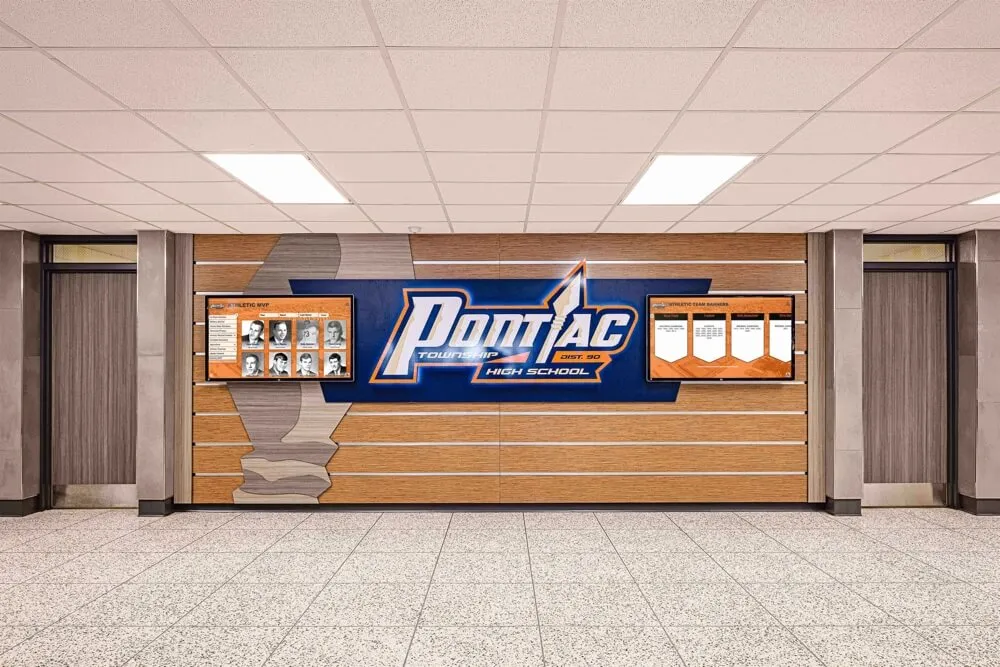
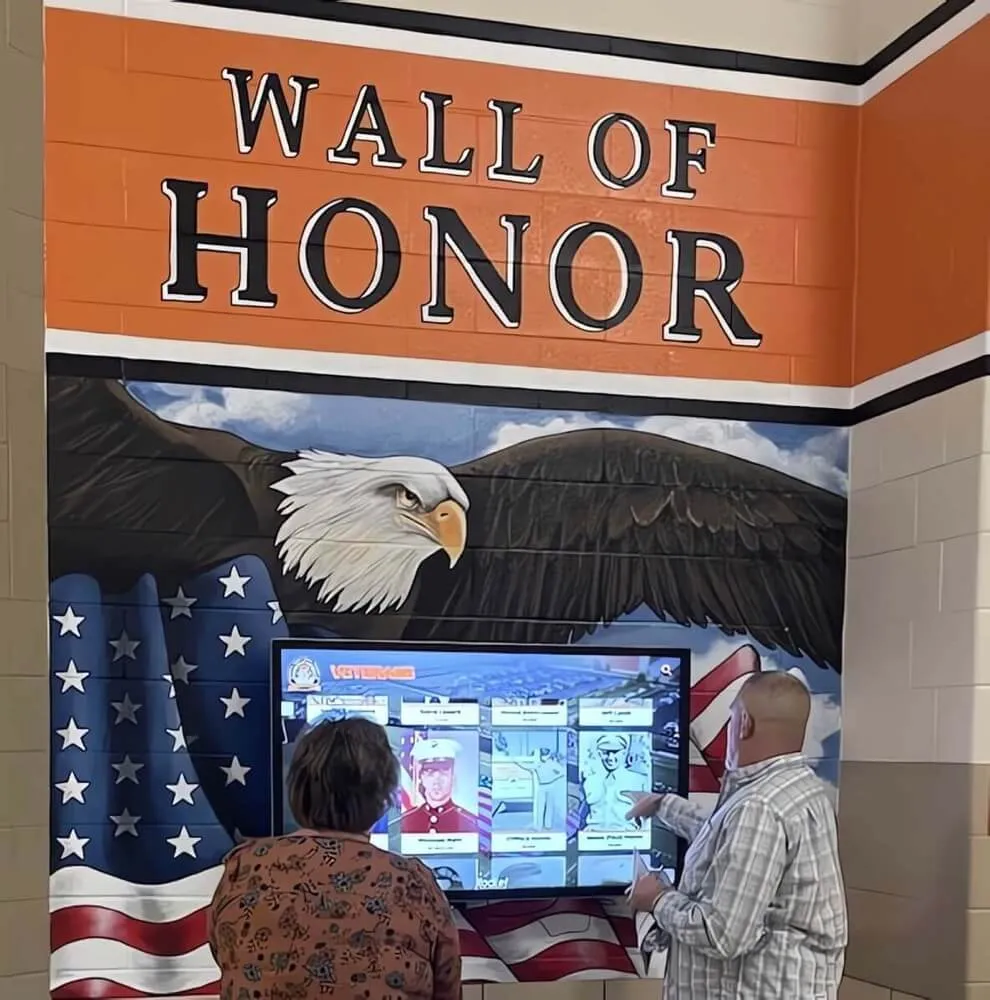
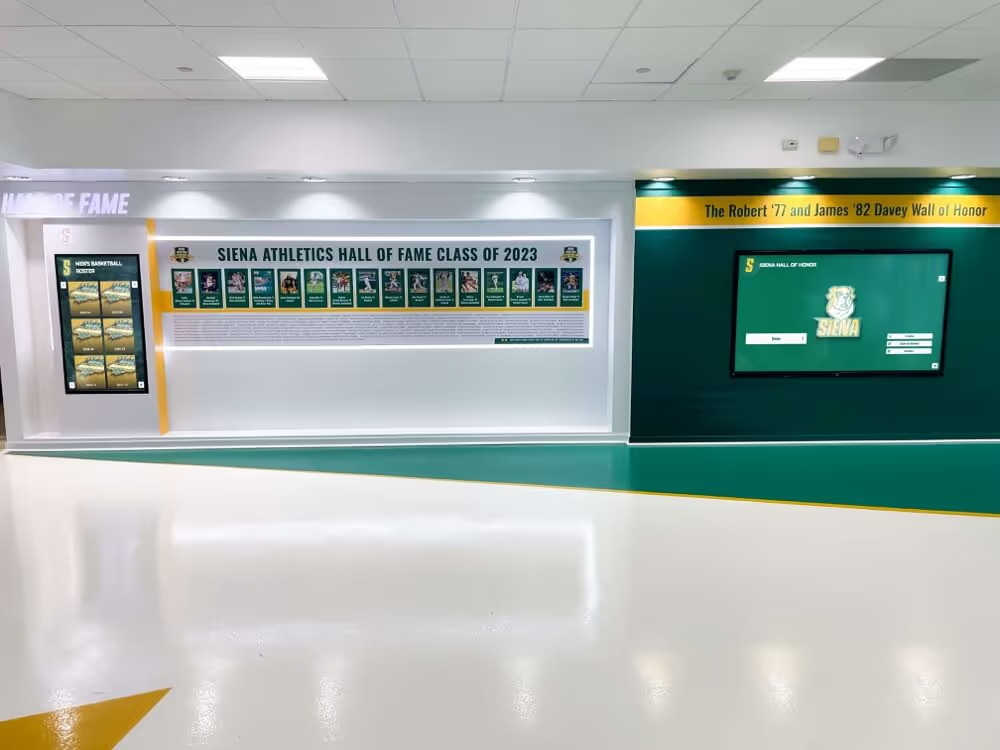
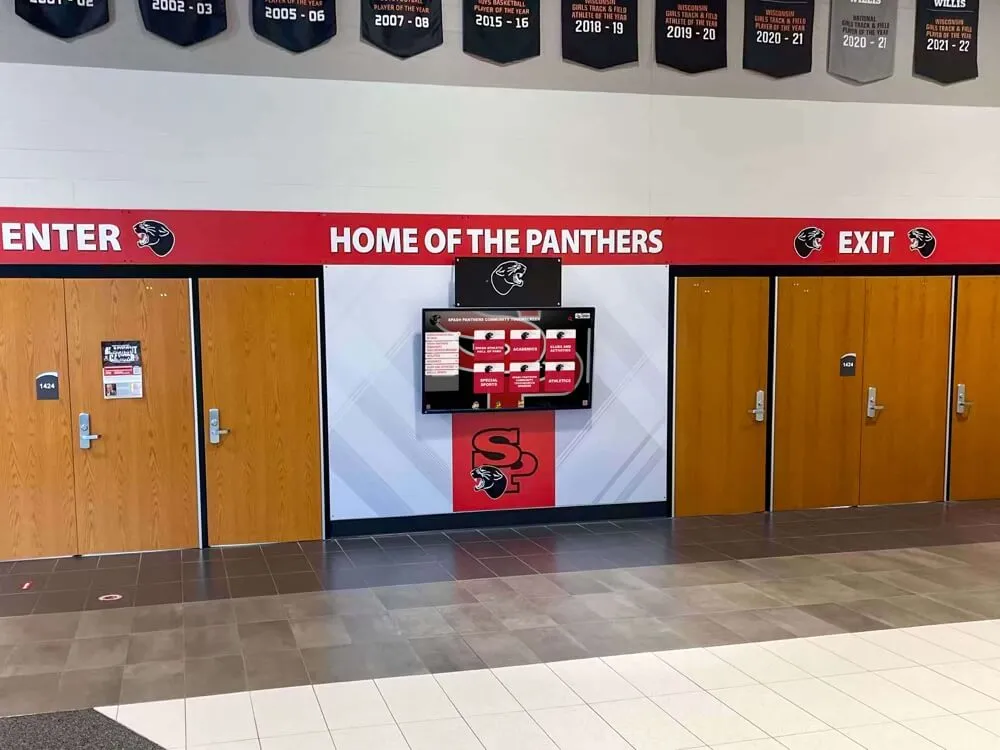
Digital recognition displays replace physical banners with interactive touchscreen systems that showcase athletic achievements through engaging multimedia presentations.
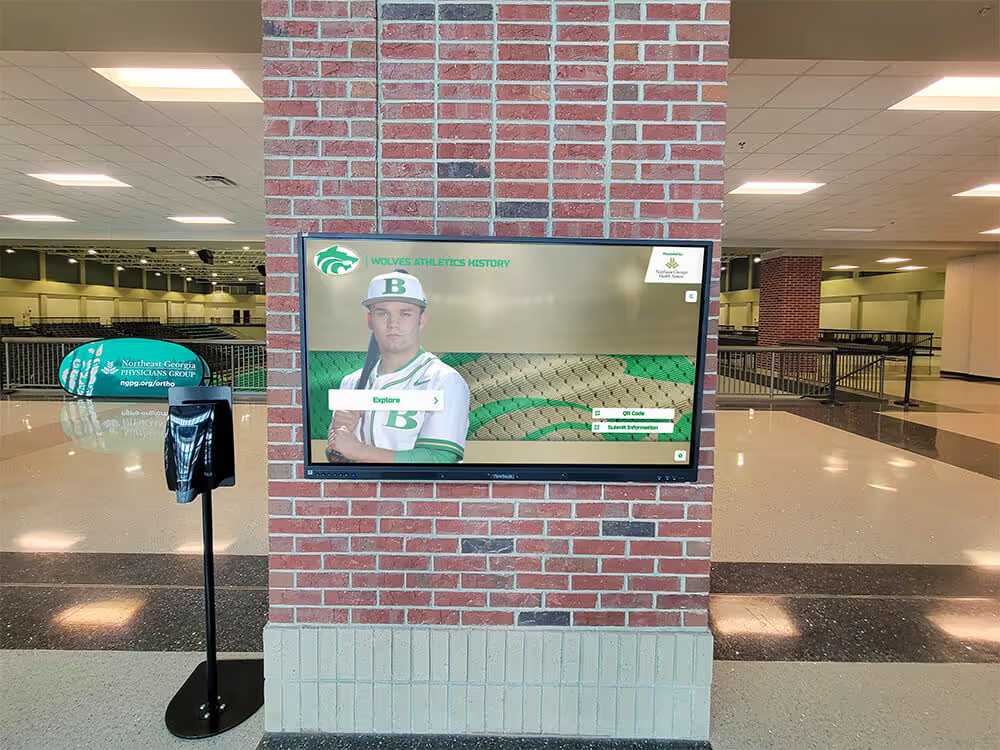
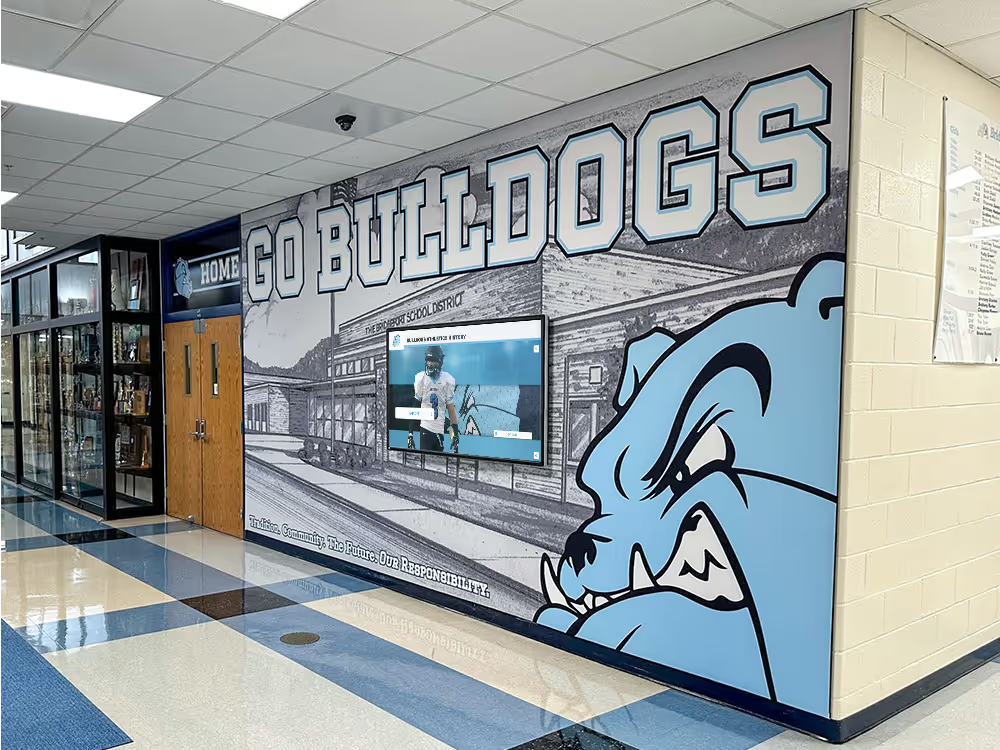
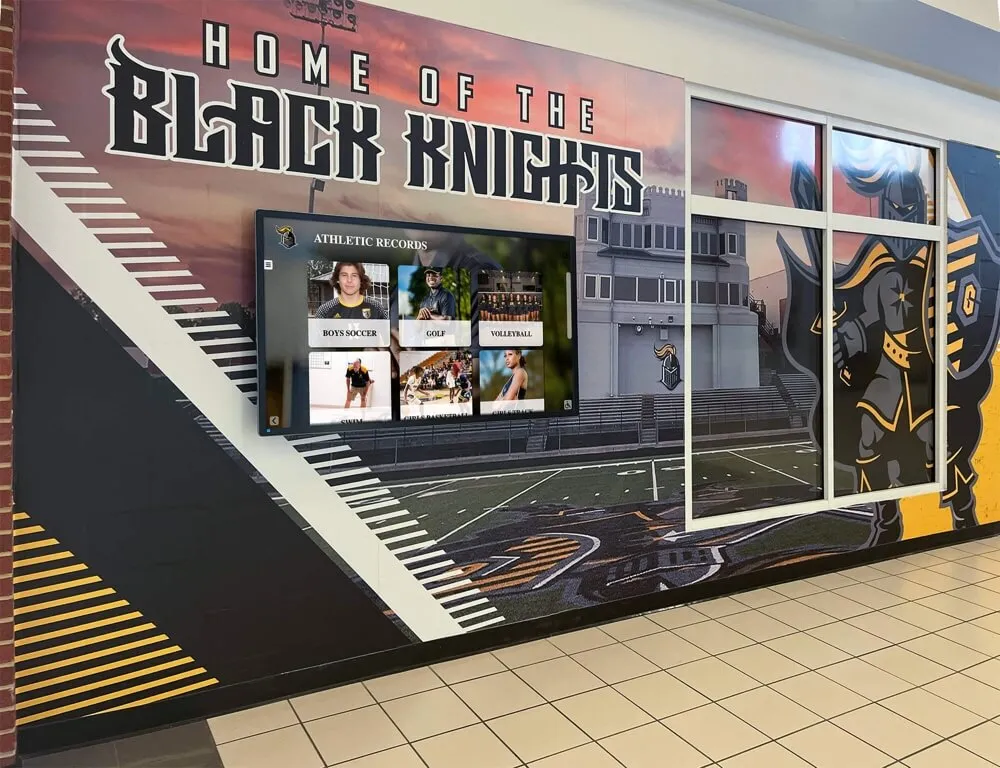
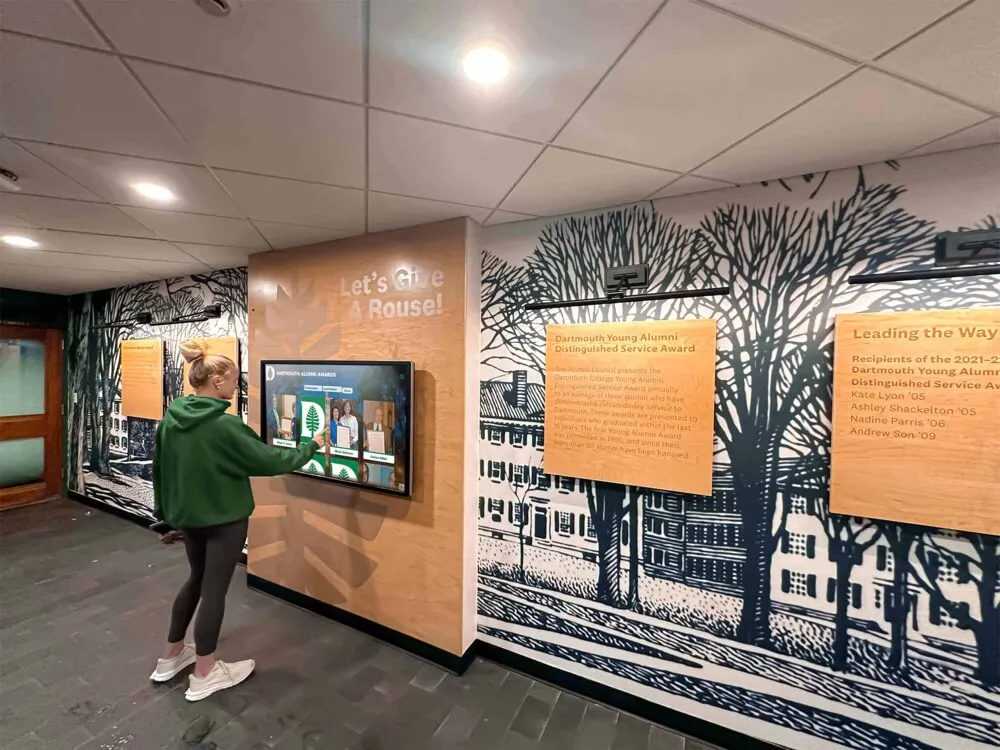
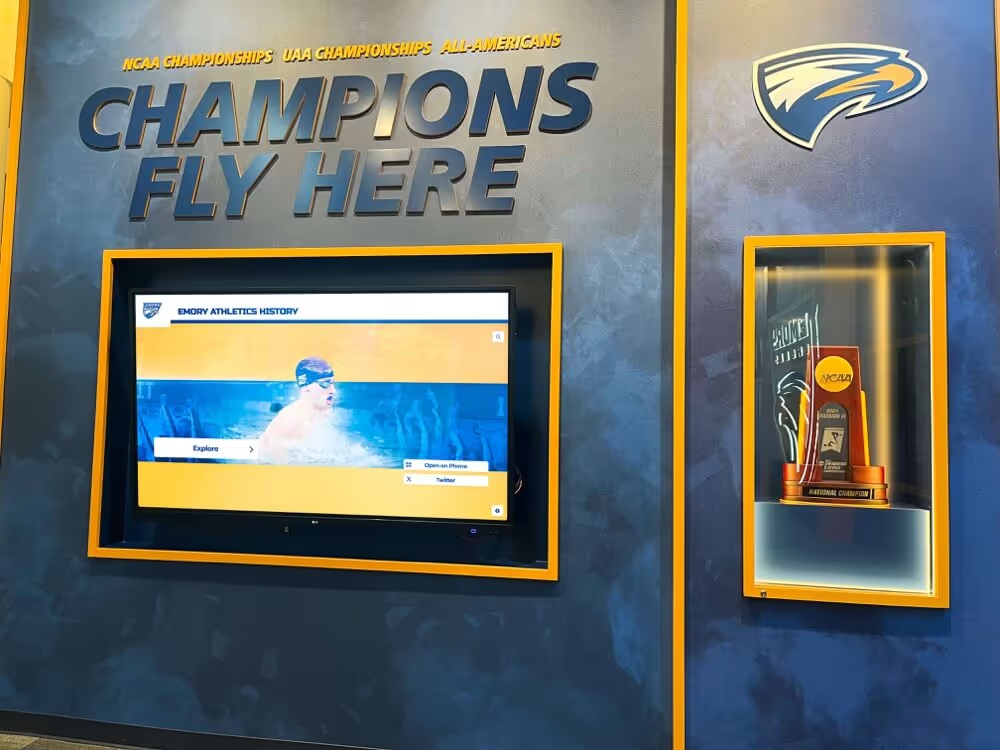
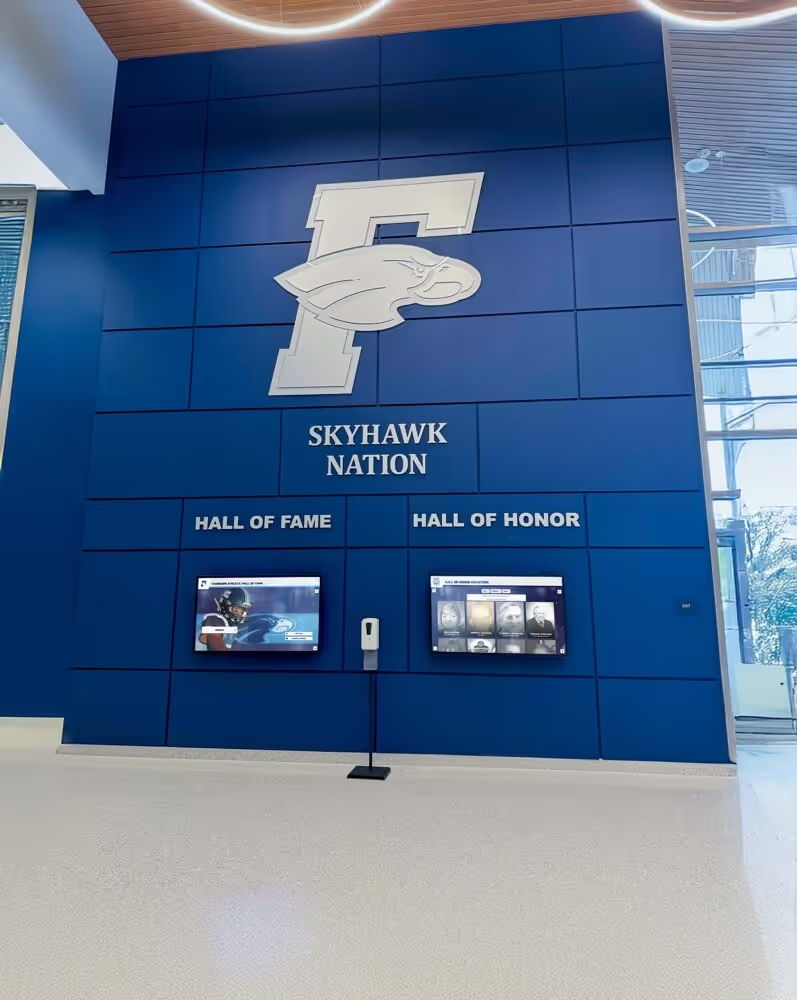
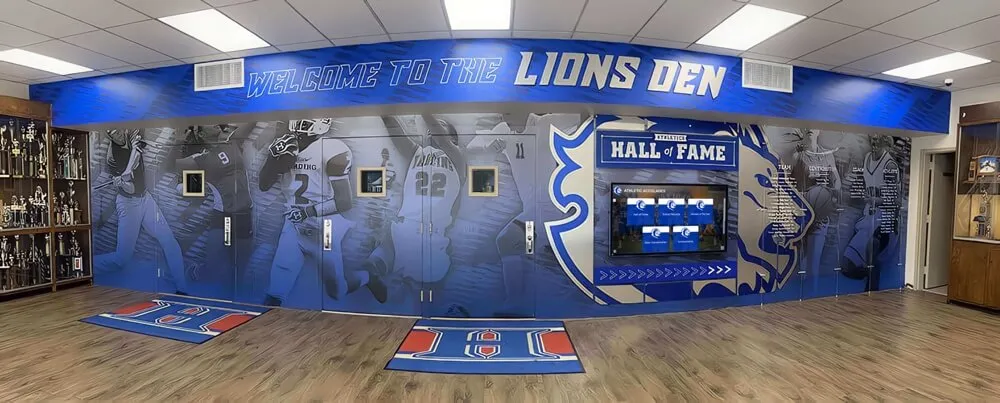
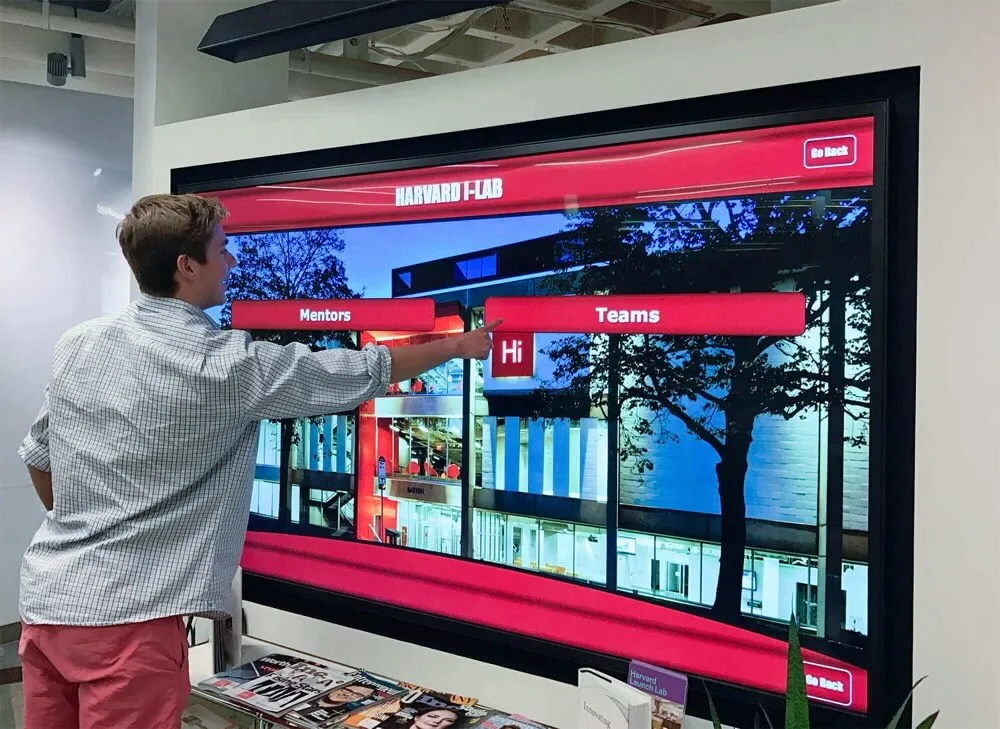
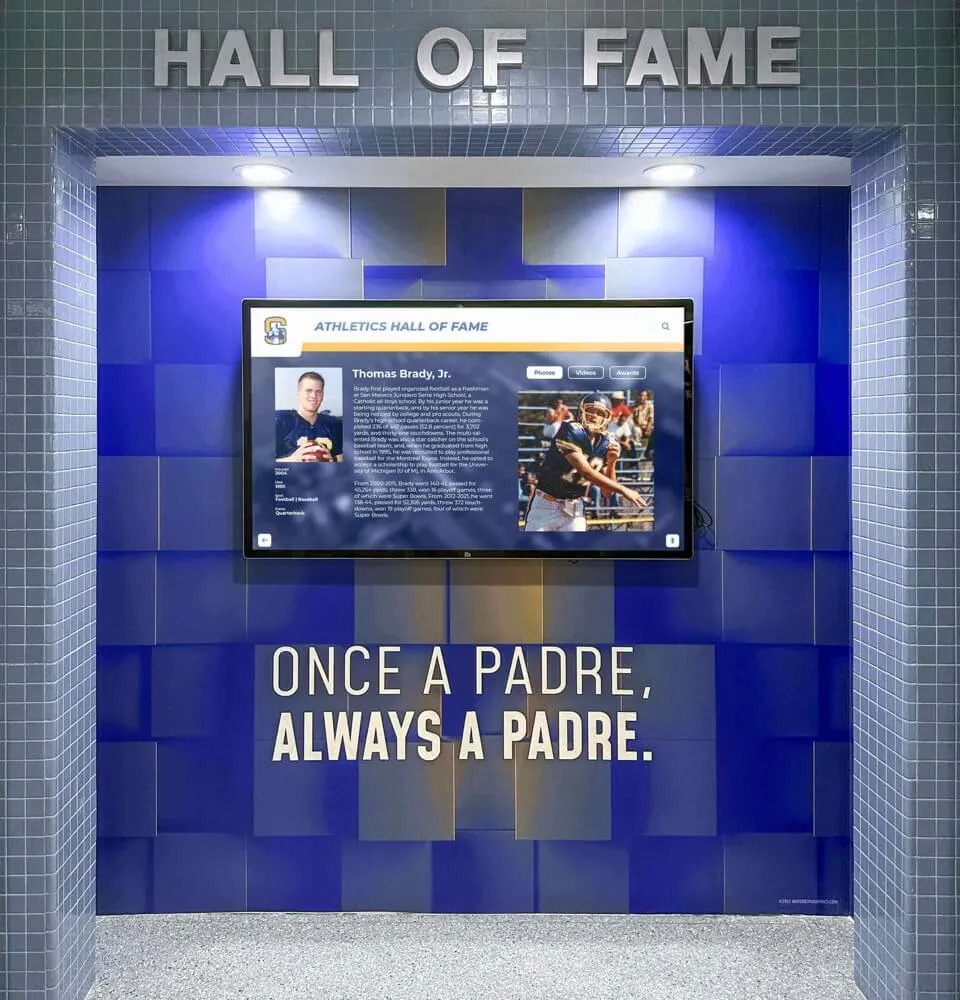
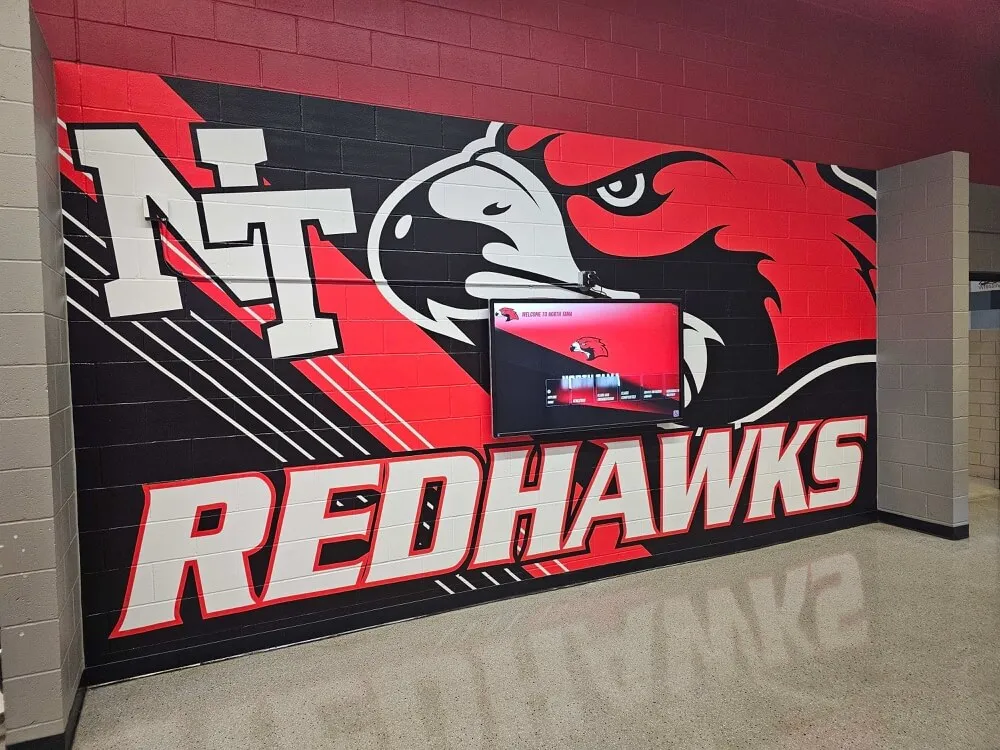
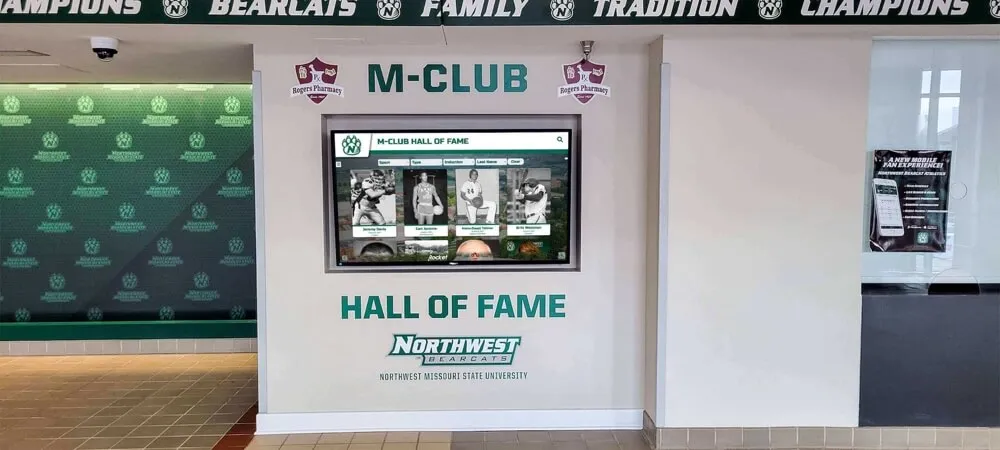
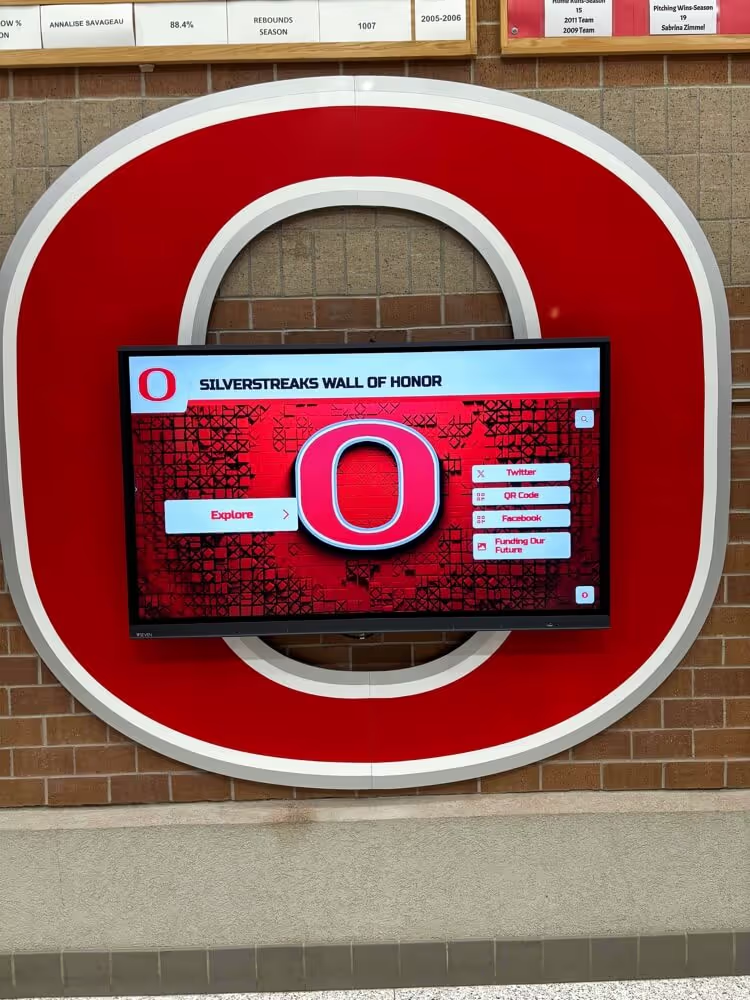
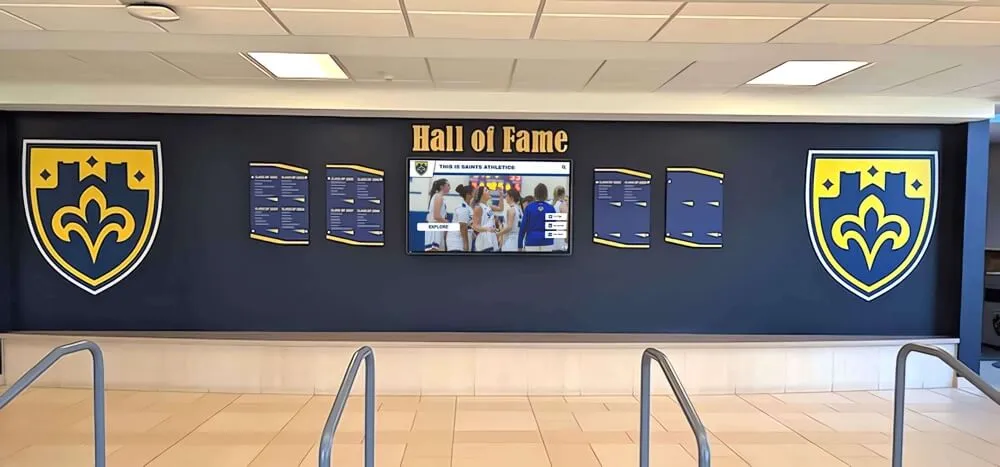
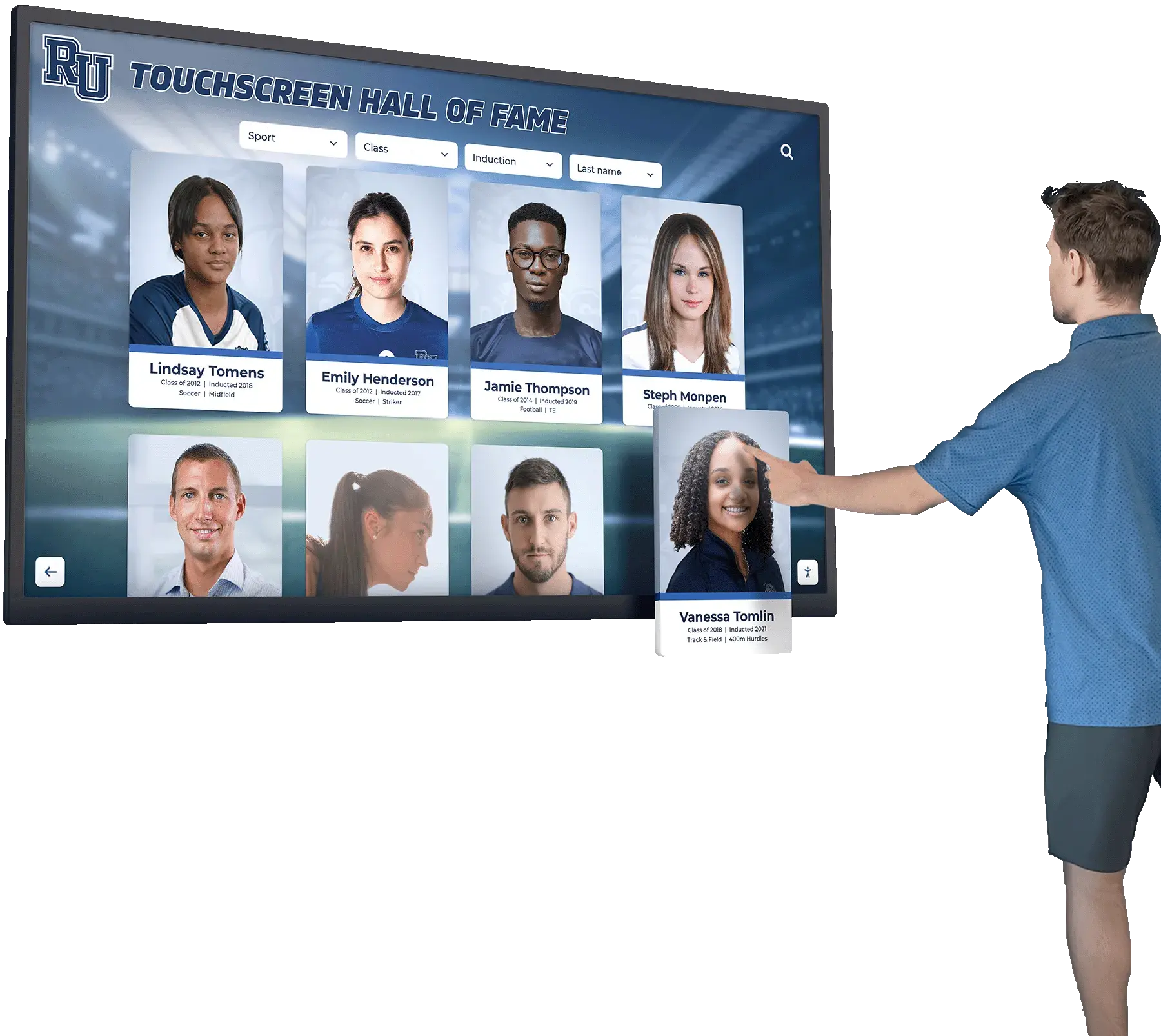
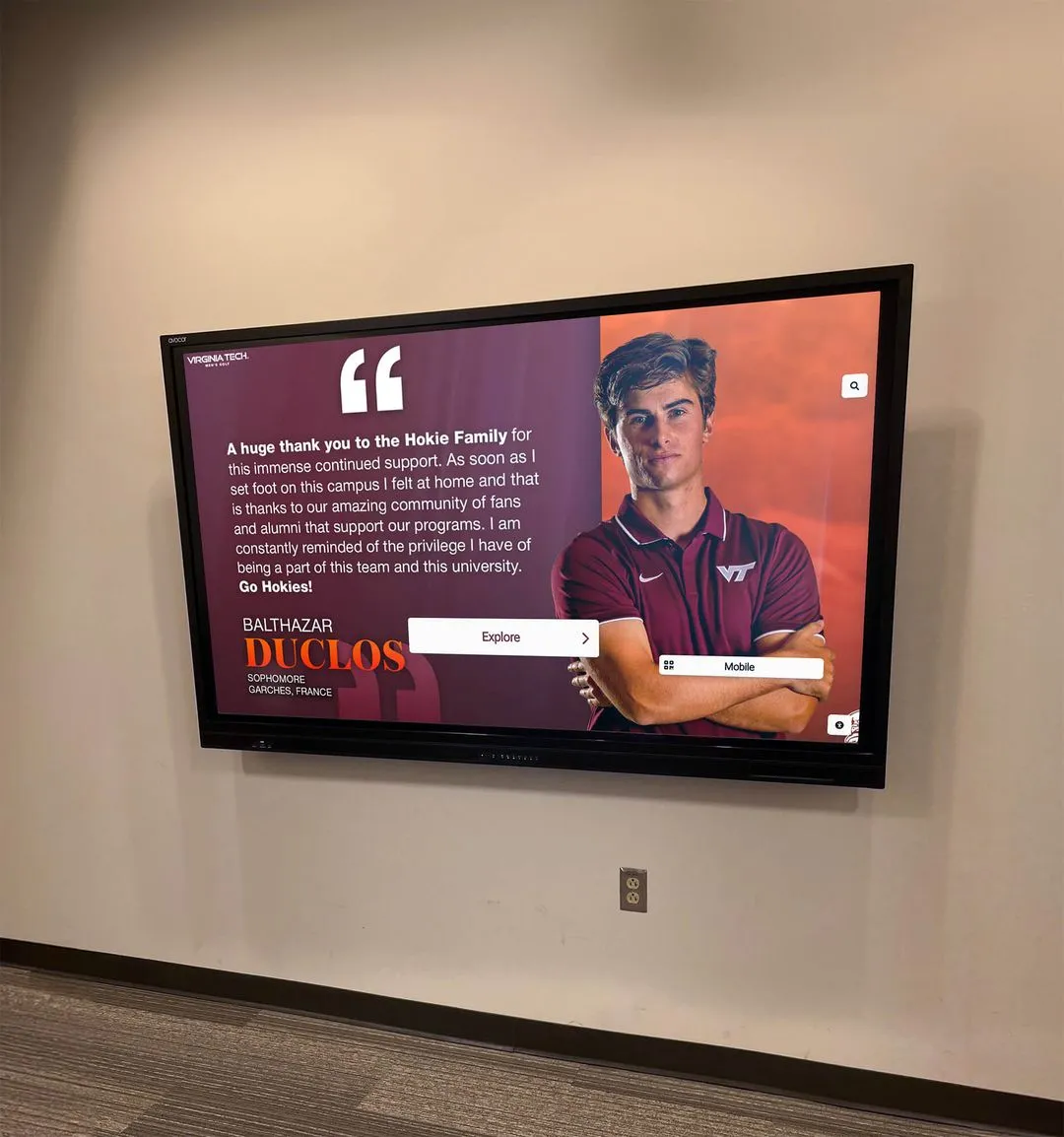
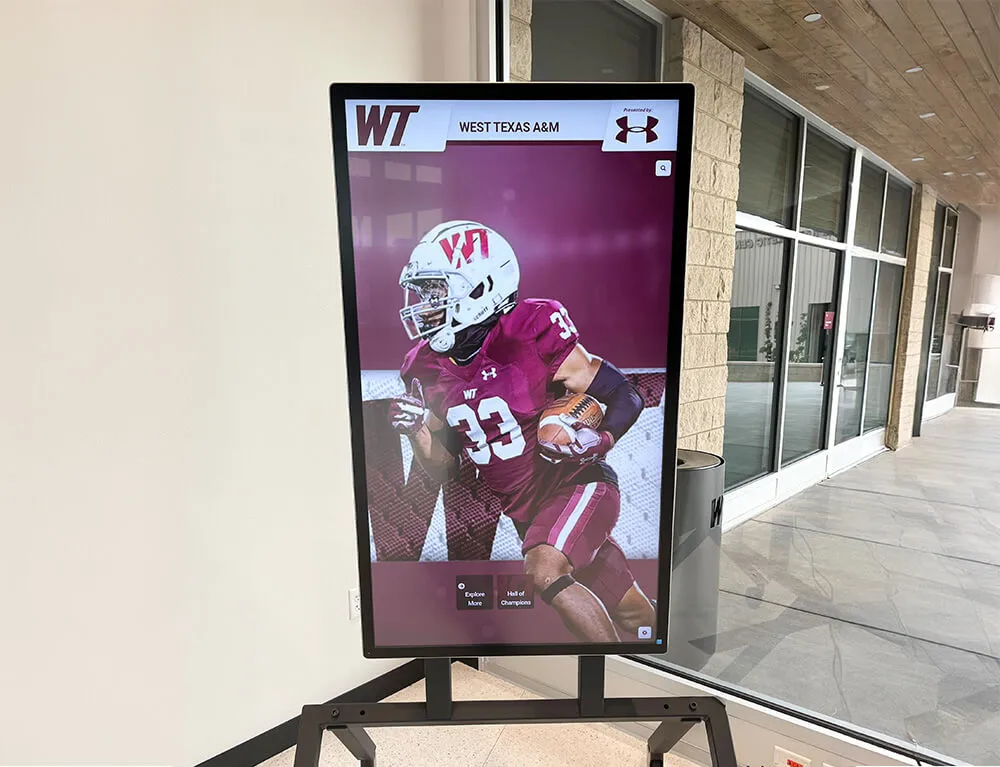
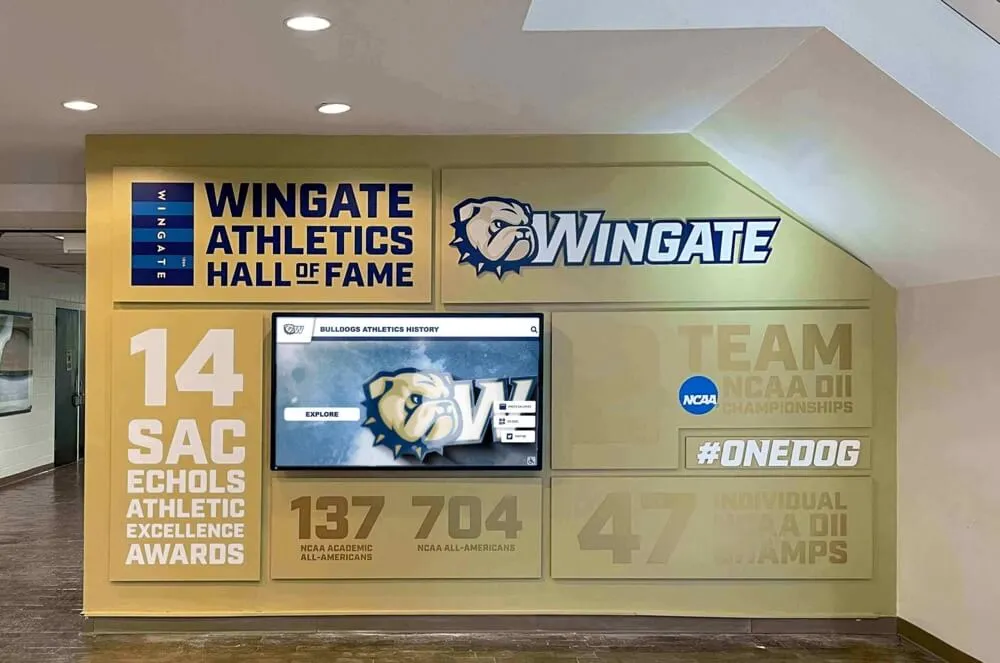
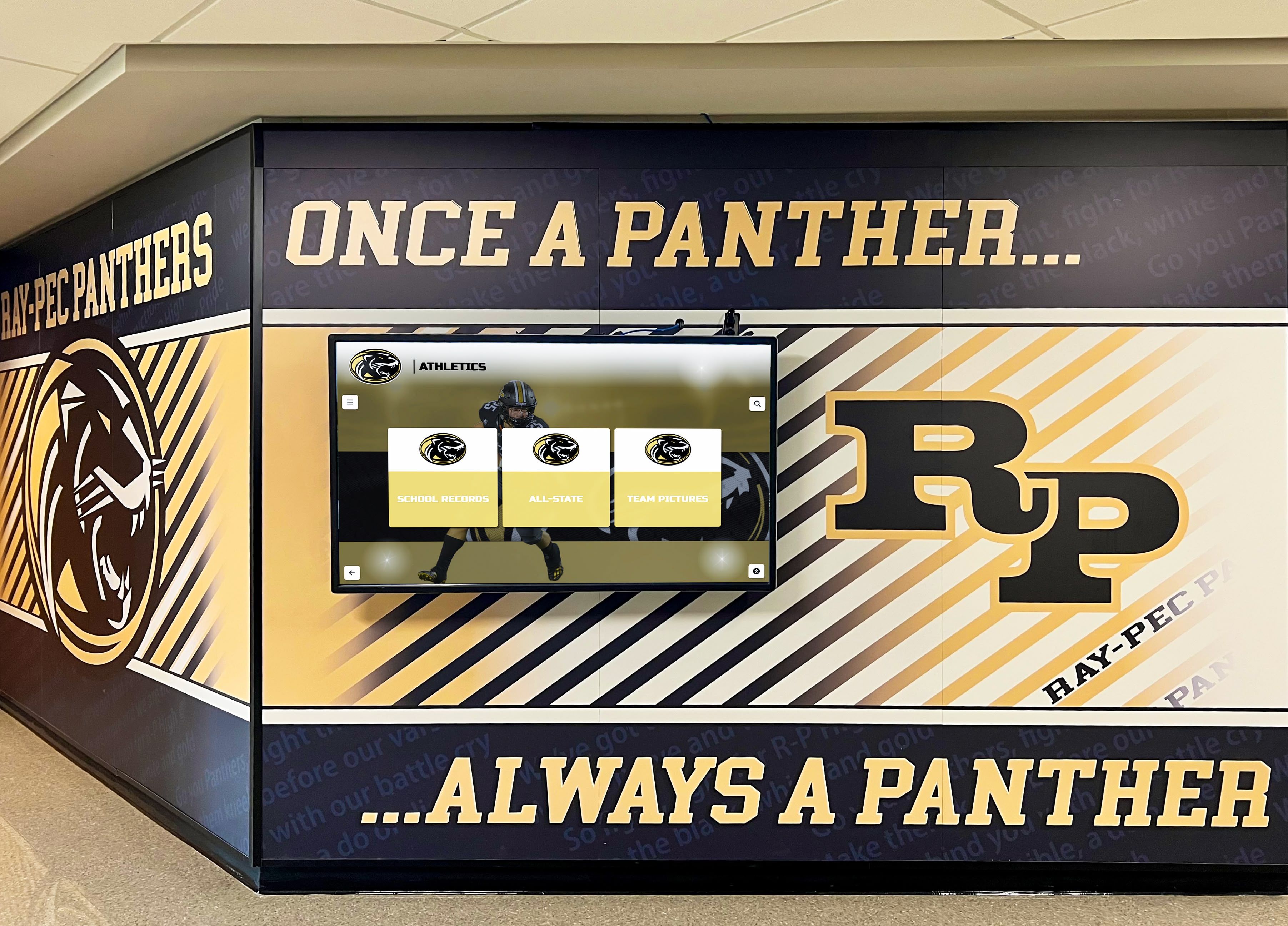
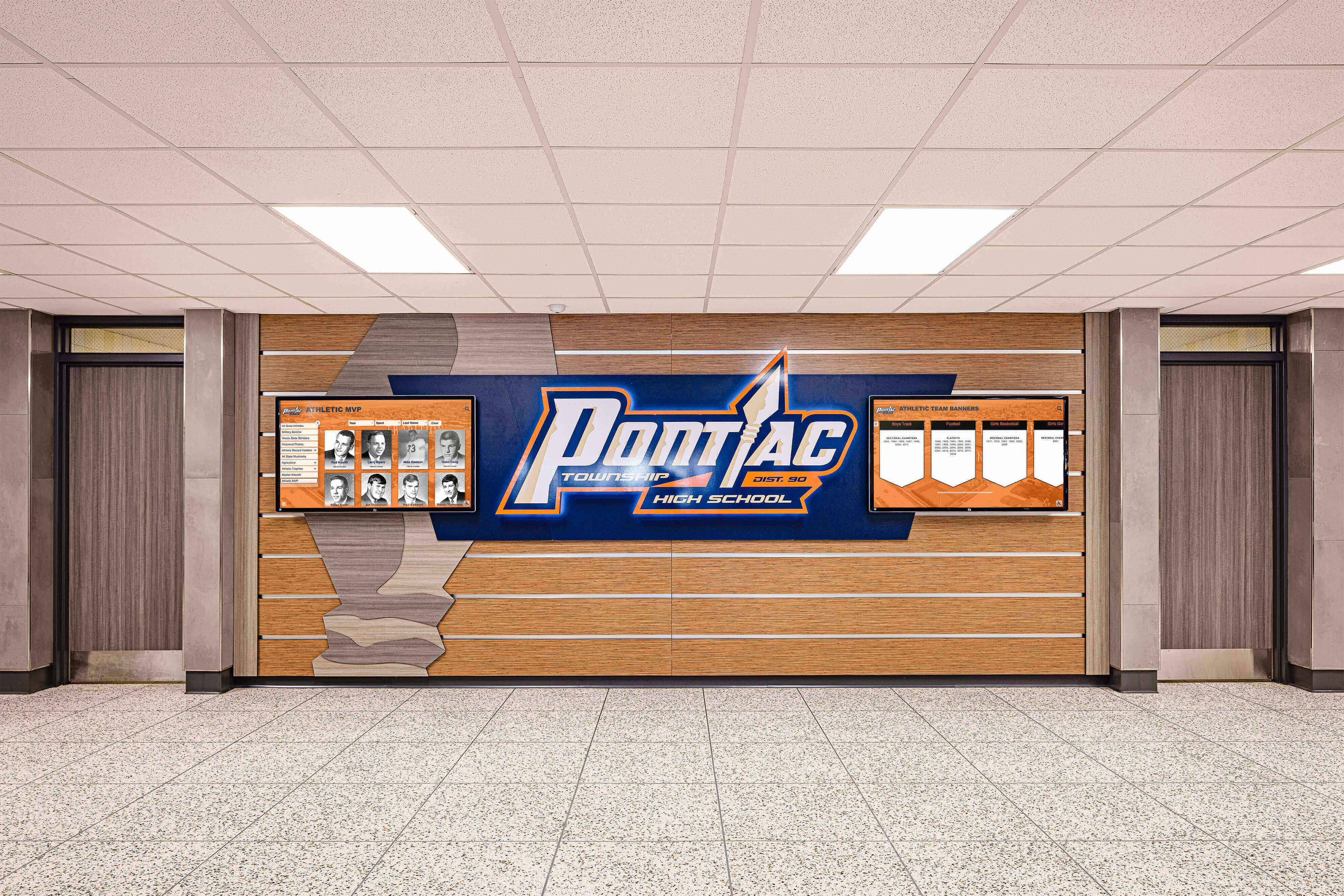
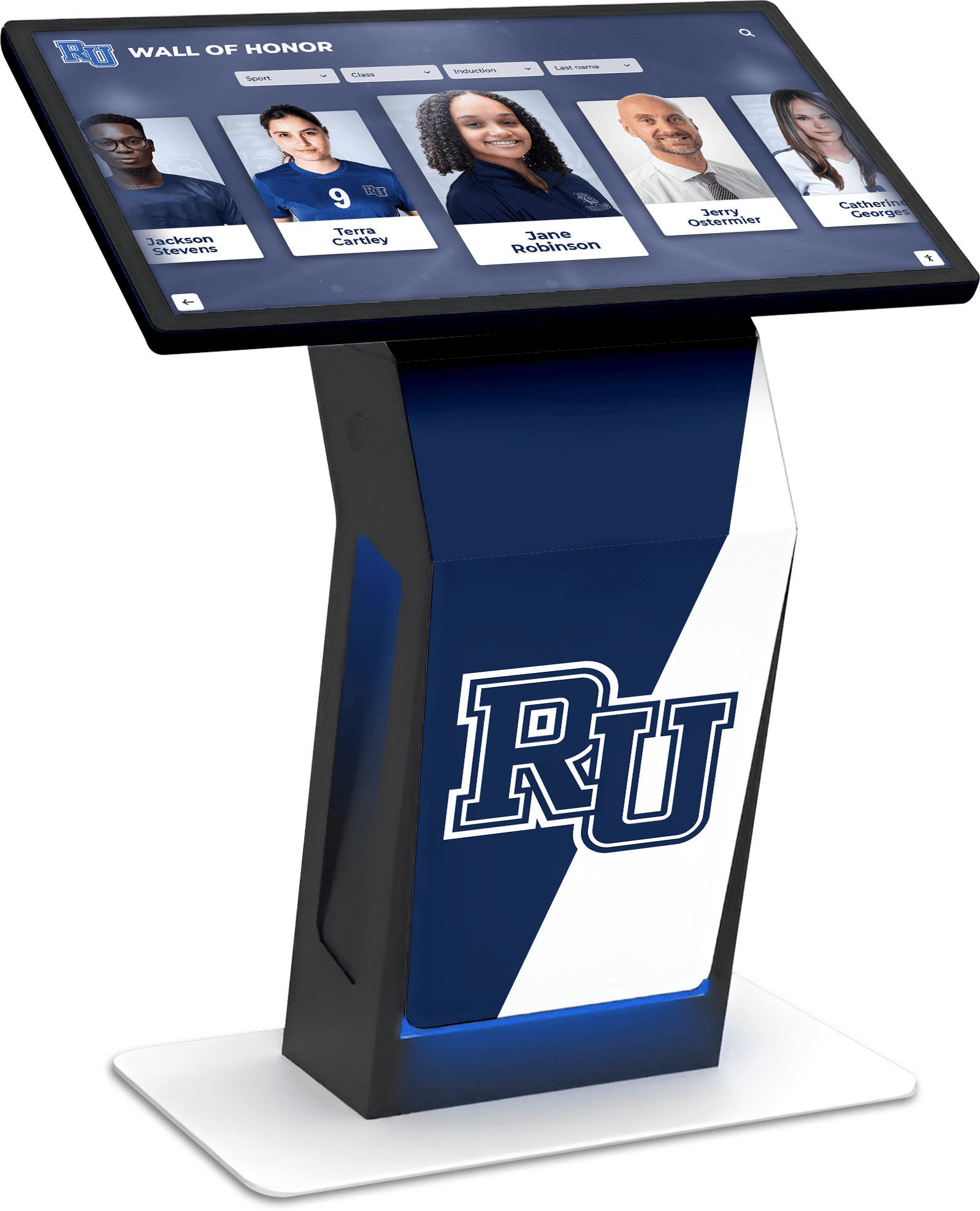
Large-Format Touchscreen Displays: Professional digital recognition systems typically use commercial-grade 55" or 65" touchscreen displays—large enough to command attention in gymnasiums, athletic lobbies, or hallways while accommodating touch interaction from multiple simultaneous users.
These displays present championship information, all-state athlete profiles, record holder recognition, and historical achievement timelines in organized, searchable formats that visitors actively explore rather than passively glance at like static banners.
Cloud-Based Content Management: Modern systems use cloud-based platforms enabling athletic directors or designated staff to add new achievements, update information, and publish recognition instantly from any internet-connected device. When your basketball team wins a conference championship, you can photograph the team, upload the image with championship details, and publish recognition within hours—not wait weeks for banner design, production, and installation.
This immediate recognition capability creates timely celebration while excitement remains fresh, whereas traditional banner production delays can mean achievements go unrecognized for months after they occur.
Unlimited Recognition Capacity: Perhaps the most significant advantage, digital systems accommodate unlimited achievements without space constraints. A school with 50 years of championships across 25 sports can recognize every single achievement—thousands of data points—within one touchscreen system occupying wall space equivalent to three traditional banners.
This unlimited capacity eliminates painful prioritization decisions about which achievements deserve display and which get relegated to storage. Every championship across every sport in every year receives equal recognition opportunity regardless of when it occurred or how many other achievements also deserve celebration.
Multimedia Recognition Capabilities: Digital displays support rich multimedia content impossible with traditional banners including high-resolution team and individual athlete photographs, video highlights and championship game footage, detailed statistics and performance metrics, athlete profiles with biographical information, and historical context connecting achievements across decades.
These capabilities create engaging recognition experiences where students, families, and visitors spend 5-10 minutes actively exploring content rather than spending 10 seconds glancing at text-only banners.
Resources on interactive touchscreen recognition systems explore how these platforms create engagement levels that traditional static displays cannot achieve.
Understanding the Cost Structure
Digital recognition systems require different investment structures than traditional banners—higher initial costs but dramatically lower ongoing expenses creating superior long-term value.
Initial System Investment: Professional digital recognition systems typically cost $12,000-$25,000 for complete turnkey implementation including commercial-grade touchscreen hardware, content management software licensing, professional installation and configuration, initial content development, and staff training.
This initial investment exceeds traditional banner costs, creating budget planning challenges for schools accustomed to incremental banner purchases rather than comprehensive system investments. However, proper cost analysis requires comparing total multi-year costs rather than only initial expenses.
Ongoing Annual Costs: After installation, digital systems incur annual expenses of $1,500-$3,500 typically including software licensing and cloud hosting, technical support and troubleshooting assistance, content management and updates, and periodic maintenance or hardware service.
These ongoing costs are substantially lower than traditional banner production expenses for active athletic programs, creating cumulative savings that quickly offset higher initial investment.
Cost Comparison Analysis: Consider a 10-year total cost of ownership comparison for a school with active programs across multiple sports:
Traditional Banner Approach:
- Average annual banner production: $3,500/year × 10 years = $35,000
- Periodic banner replacement: $2,000 every 8-10 years = $2,000
- Installation labor: $800/year × 10 years = $8,000
- 10-year total: $45,000
Digital Recognition System:
- Initial system investment: $18,000
- Annual software/hosting: $2,400/year × 10 years = $24,000
- Content management: Staff time only (no external costs)
- 10-year total: $42,000
This analysis shows digital recognition costs $3,000 less over 10 years while providing dramatically superior recognition capabilities, unlimited capacity, easy updates, and engaging multimedia experiences. Extend the timeline to 15 or 20 years and savings increase substantially as traditional banner costs continue indefinitely while digital systems function with only modest annual fees.
Schools implementing digital athletic recognition platforms consistently report eliminating 70-90% of ongoing recognition production expenses within 3-5 years of installation.
Advantages Beyond Cost Savings
While budget benefits provide compelling financial justification, digital recognition systems deliver numerous additional advantages that improve recognition quality and effectiveness beyond what cost analysis captures.
Comprehensive Historical Recognition
Traditional banners hanging in gymnasiums typically represent only recent decades due to space limitations. Championships from 1960s, 1970s, or early athletic program history often go unrecognized simply because displaying 60+ years of banners proves physically impossible.
Digital systems enable comprehensive historical recognition showcasing every championship, all-state athlete, record holder, and milestone achievement across complete program histories. A school founded in 1950 can recognize 75 years of athletic excellence within one digital display—creating historical completeness that traditional banners cannot achieve.
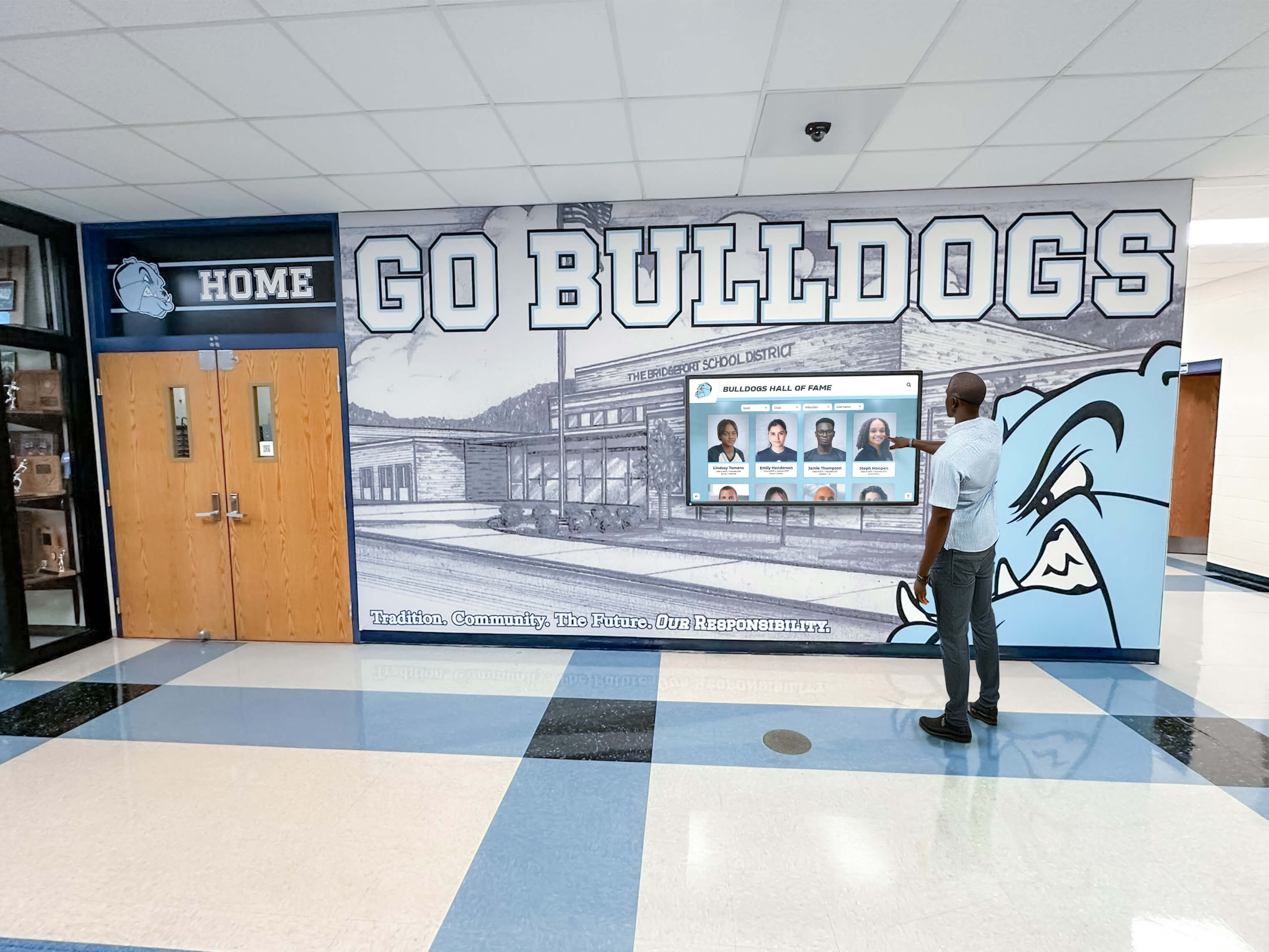
This comprehensive recognition strengthens school traditions, helps alumni feel connected to institutions decades after graduation, and demonstrates program longevity that builds pride among current students who see themselves as part of something larger than individual seasons.
Resources on preserving athletic history provide frameworks for creating comprehensive historical recognition that honors complete program traditions rather than only recent achievements.
Individual Athlete Recognition
Traditional championship banners primarily celebrate team achievements—conference titles, state championships, tournament participation. Individual excellence like all-state selections, record holders, or career milestone achievements rarely receive banner recognition due to space constraints and cost accumulation.
Digital systems accommodate unlimited individual recognition alongside team celebrations. Every all-state athlete across every sport in every year can receive dedicated profile pages with photographs, statistics, achievements, and biographical information. Record holders in track, swimming, wrestling, or any sport get recognition explaining exactly what records they set and how performances compare to program history. Career milestone achievements like 1,000-point basketball scorers receive permanent recognition explaining their accomplishment significance.
This comprehensive individual recognition demonstrates that schools value personal excellence alongside team success—important messaging for student-athlete development and program culture.
Instant Updates and Additions
When teams win championships using traditional banners, the celebration timeline looks like this: championship achieved in March, design approval by April, production completed by May, installation occurs in June—three months after the achievement when excitement has faded and school year may have ended.
Digital recognition enables instant updates. Championship achieved Saturday night, content uploaded Sunday morning, recognition published by Monday—celebrated while excitement remains fresh and achievement feels current rather than historical.
This immediacy applies to all recognition updates: correcting errors, adding newly discovered historical achievements, updating athlete profiles with post-graduation accomplishments, or incorporating additional context as information becomes available. Digital flexibility means recognition constantly improves rather than remaining static from production through eventual replacement.
Search and Discovery Features
Imagine an alumnus visiting their high school 30 years after graduation, walking into the gymnasium, and instantly finding their own recognition from 1995. With traditional banners, this requires scanning dozens or hundreds of banners hunting for their specific achievement—if it’s even displayed rather than stored due to space constraints.
Digital systems include search functionality enabling visitors to find specific athletes, years, sports, or achievement types instantly. An alumnus types their name and immediately accesses their complete profile including championship participation, all-state honors, records held, and team photographs. Prospective students touring facilities explore specific sports they’re interested in. Community members research local sports history searching for relatives or notable athletes.

This accessibility creates personal connections and engagement that passive banner displays cannot generate, transforming recognition from decoration into interactive experience.
Recruiting and Facility Tours
When prospective students and families tour athletic facilities, visible evidence of program excellence influences their impressions and decisions about school selection or athletic participation.
Traditional banners communicate program success but offer limited information—just championship years and brief designations. Prospective families cannot explore what those championships meant, who participated, what competition level they represented, or how programs have performed across comprehensive timelines.
Interactive digital displays enable prospective families to actively explore program histories during tours. They can see complete championship timelines, understand competitive contexts, view alumni athlete success stories, and assess program traditions comprehensively. This engagement creates stronger impressions than static banners and demonstrates institutional investment in celebrating student achievement appropriately.
Many athletic directors report that prospective families specifically mention impressive digital recognition during facility tours, viewing these systems as evidence of program quality and school commitment to honoring student success.
Implementation Planning for Banner Replacement
Schools ready to replace traditional banner recognition with digital systems benefit from systematic planning that addresses practical implementation considerations while building stakeholder support.
Assessment and Goal Definition
Current Recognition Inventory: Begin by documenting all existing banner recognition including total banners currently displayed, banners in storage not currently displayed, annual banner production over recent years, total recognition budget expenditures, and space available for continued banner expansion.
This inventory establishes baseline understanding of current recognition scope and ongoing costs that digital alternatives would replace.
Stakeholder Input: Gather perspectives from coaches about recognition priorities and athlete feedback, athletes and families about what recognition means to them, alumni about their own recognition experiences, and booster clubs about fundraising support for recognition enhancement.
This input ensures implementation reflects community priorities rather than exclusively administrative perspectives and often reveals that alumni and supporters enthusiastically embrace comprehensive recognition improvements.
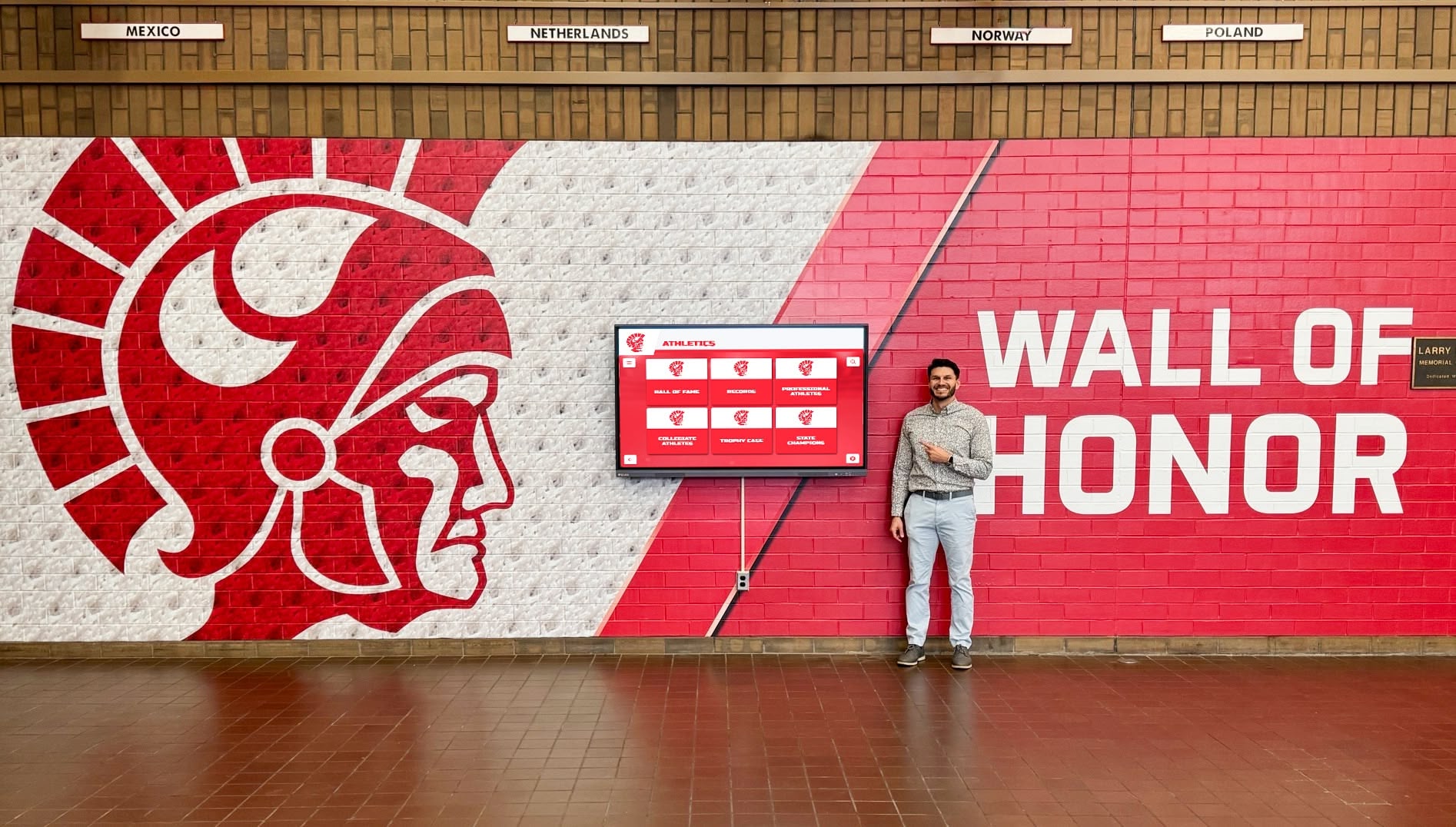
Goal Clarification: Define specific objectives for recognition program improvements such as eliminating ongoing banner production expenses, providing equity across all sports and achievement types, enabling comprehensive historical recognition, improving visitor engagement and experience, or creating flexible systems accommodating program growth.
Clear goals guide vendor selection, system design, and implementation decisions ensuring solutions address actual priorities rather than pursuing technology for its own sake.
Budget Development and Funding Strategies
Total Cost of Ownership Analysis: Develop comprehensive financial projections comparing traditional banner continuation versus digital implementation across 5, 10, and 15-year timelines. Include all costs—hardware, software, installation, ongoing fees, staff time, and maintenance—for accurate comparison.
This analysis typically demonstrates that digital systems achieve cost neutrality within 3-5 years before generating cumulative savings thereafter while delivering dramatically superior recognition capabilities throughout.
Funding Source Identification: Beyond annual athletic budgets, schools successfully fund recognition upgrades through athletic booster club special campaigns, alumni fundraising particularly from former athletes, memorial donations honoring deceased athletes or coaches, corporate sponsorships with appropriate recognition, and grant funding from athletic or educational foundations.
Many schools discover that alumni athletes enthusiastically support recognition improvements that will showcase their own achievements and preserve program traditions, making recognition enhancement natural fundraising opportunities.
Phased Implementation Options: If full system costs exceed available budgets, consider phased approaches starting with single high-visibility display for championships, adding individual achievement recognition in phase two, expanding to historical content in phase three, and integrating additional sports or achievement categories over time.
Phased implementation makes initial investment manageable while establishing programs that demonstrate value justifying future expansion.
Resources on athletic department budget management explore strategic approaches for funding recognition improvements within constrained athletic budgets.
Content Development and Historical Research
Digital recognition systems require substantial content development that schools often underestimate during planning.
Historical Achievement Compilation: Create comprehensive lists of all championships, all-state athletes, record holders, and milestone achievements across program history through yearbook research, newspaper archive reviews, coaches and administrator interviews, athlete and family consultations, and state athletic association records where available.
This historical research represents significant work that typically requires 3-6 months for comprehensive programs with decades of tradition.
Photography Collection: Gathering high-quality photographs for each achievement or athlete proves challenging particularly for historical recognition. Sources include yearbook scanning and digitization, family photograph requests, newspaper archive images, and new photography of trophies, awards, or memorabilia when action photos are unavailable.
Profile Content Creation: Comprehensive recognition requires writing biographical content, compiling statistics and achievements, developing historical context, and maintaining consistent tone across numerous profiles.
Many schools engage volunteers—particularly alumni, retired teachers, or community historians—to assist with historical research and content development, reducing staff workload while building community investment in program success.
Maintaining Traditional Elements While Modernizing
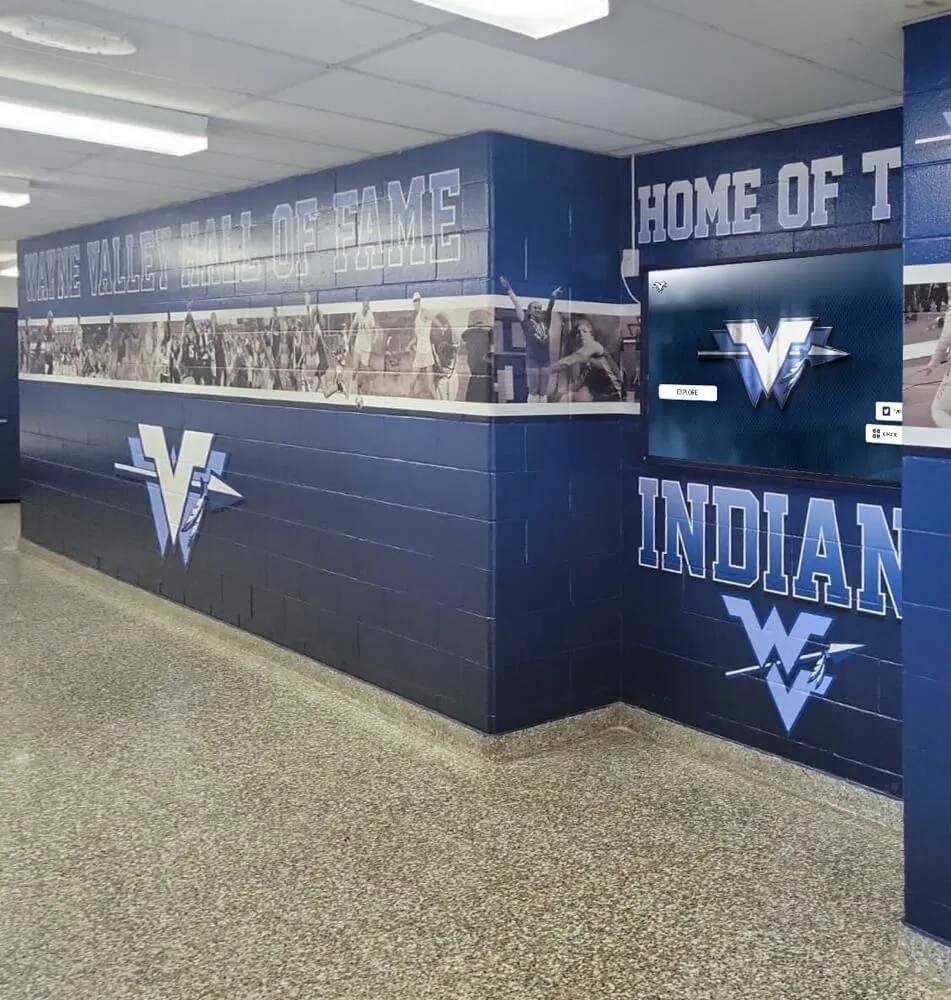
Some schools worry that replacing banners entirely abandons traditions or disappoints alumni who value physical displays they remember from their own athletic careers. Hybrid approaches can honor traditions while capturing digital advantages.
Selective Traditional Banner Retention
Rather than removing all existing banners immediately, many schools maintain selected traditional displays while adding digital systems for comprehensive recognition:
Major Championship Banners: Continue displaying traditional banners for major championships like state titles, national qualifications, or particularly significant program milestones while using digital systems for routine conference championships, tournament participation, and individual achievements.
Recent Championship Banners: Display traditional banners for championships within the last 5-10 years while digital systems showcase complete historical recognition including older achievements for which space no longer exists.
Memorial Banners: Maintain traditional banners honoring deceased athletes, coaches, or community members as permanent physical memorials while complementing these with detailed digital profiles expanding on their lives and contributions.
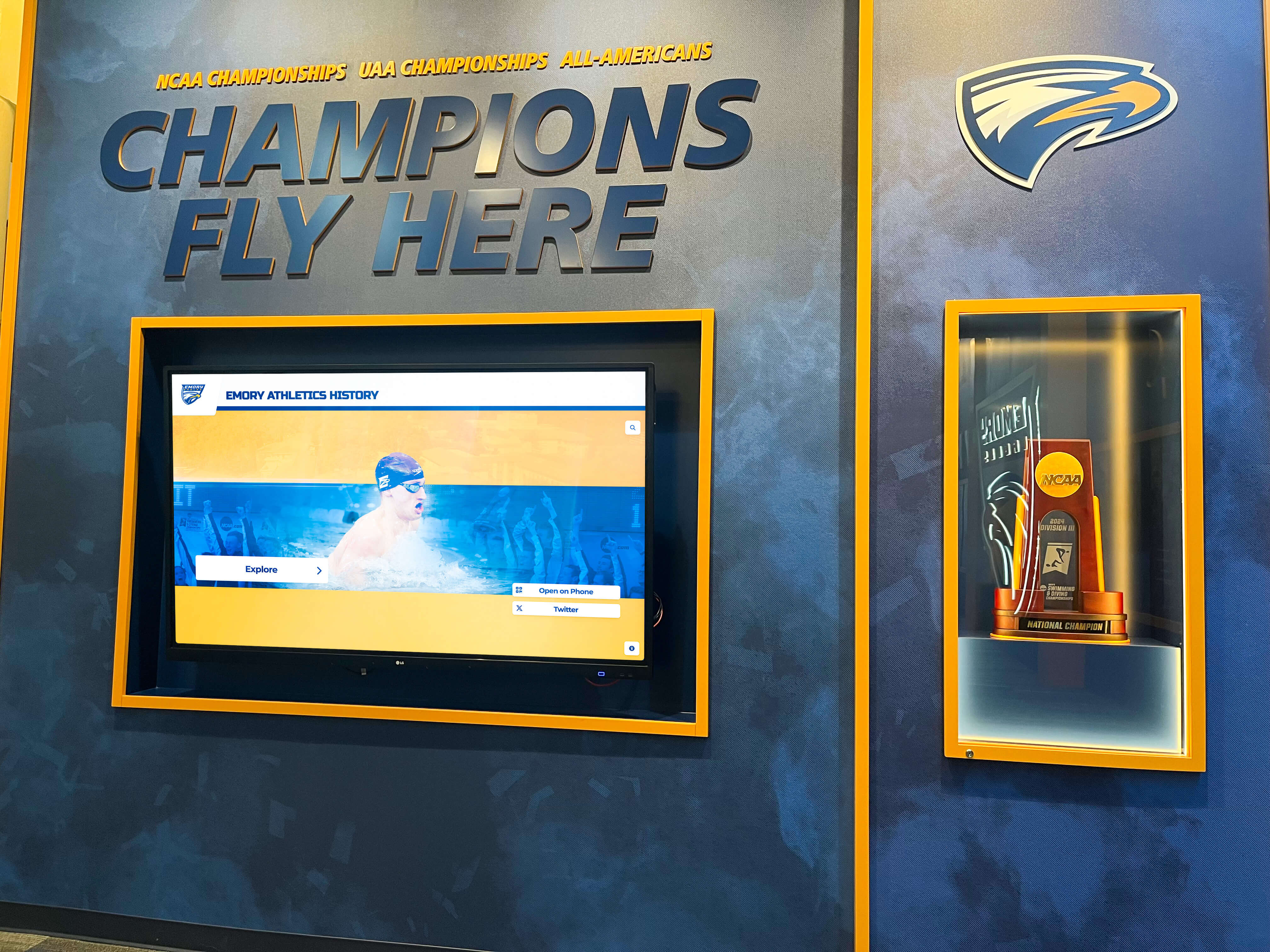
This selective retention honors traditions while solving space and cost problems that make continued banner-only recognition unsustainable.
Ceremonial Banner Traditions
Schools with strong banner-hanging traditions can maintain ceremonial elements while adjusting long-term recognition approaches:
Championship Banner Ceremonies: Continue traditional championship banner unveiling ceremonies creating memorable celebration moments for teams and communities, then photograph ceremony for digital preservation rather than permanent physical display.
Senior Night Banners: Some programs create senior athlete banners displayed temporarily during senior recognition celebrations, photographed and preserved digitally afterward rather than permanently hung consuming gymnasium space.
Temporary Banner Display: Display new championship banners for the immediate season following achievement before retiring to digital-only recognition—maintaining celebration while managing space.
These ceremonial traditions preserve emotional and cultural significance families and athletes value while adapting permanent recognition approaches to sustainable models that don’t create endless space and cost accumulation.
Addressing Common Concerns and Objections
When schools consider replacing traditional banners with digital recognition, common concerns arise that benefit from thoughtful responses addressing legitimate questions.
“Banners are tradition – we’ve always done it this way”
Tradition holds genuine value, but traditions evolve when circumstances change. Schools “traditionally” recognized achievements within capabilities and constraints of available technology and resources. Modern technology provides capabilities for comprehensive recognition that prior generations simply couldn’t access.
Embracing digital recognition doesn’t abandon tradition—it enhances tradition by enabling schools to recognize every achievement across complete program histories rather than only what limited space accommodates. Digital systems preserve and expand traditions rather than replacing them.
“Technology breaks or becomes obsolete”
This concern has validity—technology does require maintenance and eventual replacement. However, consider that vinyl banners also deteriorate, require replacement every 7-12 years, and represent technology themselves (synthetic materials, printed graphics).
Commercial-grade digital displays typically function reliably for 7-10 years with minimal maintenance—similar lifespan to vinyl banners. Cloud-based content management systems receive regular updates preventing obsolescence, and content portability ensures that even if hardware requires eventual replacement, recognition content transfers easily to upgraded systems.
The technology reliability question should compare “will digital systems work reliably?” against “do current banner-only approaches adequately serve recognition needs?"—where space constraints, cost accumulation, and limited information presentation create recognition inadequacy regardless of banner physical reliability.
“Athletes won’t feel honored without physical banners”
Recognition effectiveness depends on visibility, comprehensiveness, and perceived institutional commitment—not format. Research on recognition psychology consistently shows that comprehensive, well-presented recognition creates stronger emotional impact than format alone.
Digital systems often provide more meaningful recognition than traditional banners because they include personal photographs, detailed achievement descriptions, comprehensive statistics, and historical context that helps athletes understand their place in program traditions. Many athletes report preferring digital profiles where they can see themselves and read about their accomplishments over impersonal text-only banners listing championship years.
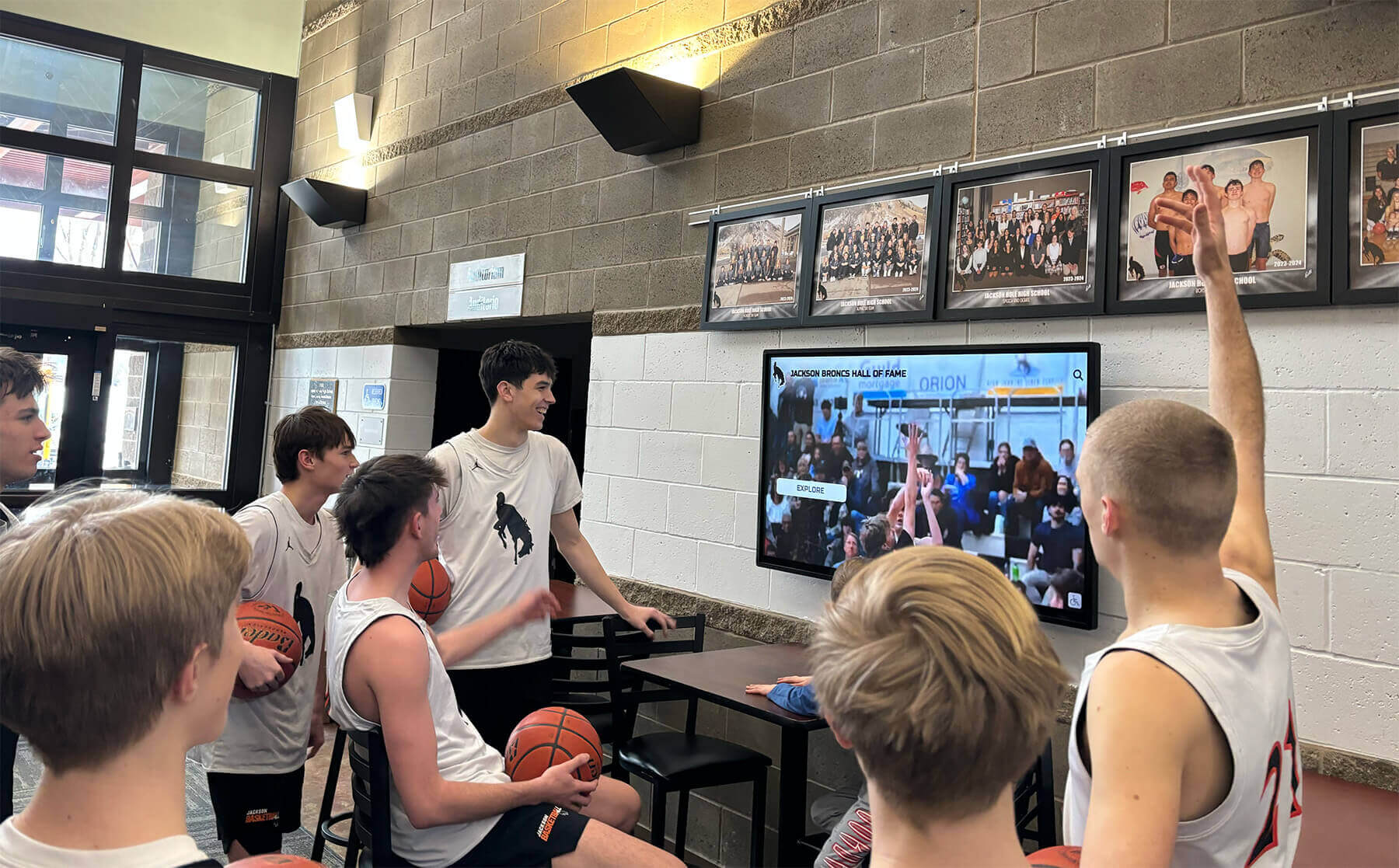
Additionally, digital recognition accommodates individual excellence alongside team championships, ensuring all-state athletes, record holders, and milestone achievers receive recognition that banner-only budgets often cannot provide. Most athletes prefer being recognized comprehensively through digital systems over not receiving recognition at all due to space and cost constraints limiting traditional approaches.
“We can’t afford digital systems”
The affordability question requires comparing total multi-year costs rather than only initial investment. As cost analysis throughout this guide demonstrates, digital systems typically achieve cost neutrality within 3-5 years before generating ongoing savings thereafter—meaning they become more affordable than continued banner production over program lifecycles.
Furthermore, funding recognition upgrades need not rely exclusively on annual operating budgets. Alumni, boosters, and community supporters often enthusiastically fund recognition improvements through special campaigns or memorial donations when presented with opportunities to preserve program traditions and showcase achievements comprehensively.
Schools that view recognition as infrastructure investment similar to facility improvements rather than consumable expense like banners discover that comprehensive recognition systems become affordable when framed appropriately and funded strategically.
Resources on recognition system funding provide strategies for financing recognition improvements through diverse sources beyond annual operating budgets.
Real-World Implementation Examples
Understanding how other schools successfully transitioned from traditional banners to digital recognition provides practical insights and proven approaches that work in real educational environments.
Large Comprehensive High School
A suburban high school with 2,500 students and 30 sport offerings had accumulated over 200 championship banners across 60 years, completely filling gymnasium and athletic facility display capacity. The school faced annual banner production costs exceeding $5,000 while numerous deserving achievements went unrecognized due to space constraints.
Implementation Approach: The school installed two large-format touchscreen displays—one in the main gymnasium and one in the athletic wing hallway. They digitized all existing championship banners, added comprehensive all-state athlete recognition spanning program history, included record holder listings for all sports, and created detailed historical timelines showing program development across decades.
Results: The school eliminated annual banner production costs completely while recognizing 300+ additional achievements that previously lacked display space. Alumni engagement increased measurably with visitors specifically commenting on ability to find their own recognition from decades earlier. Facility tours with prospective families became more engaging with interactive exploration replacing passive banner viewing.
The athletic director reported that eliminating ongoing banner expenses freed $5,000 annually for program enhancements including updated equipment and expanded recognition programs that traditional budgets couldn’t accommodate.
Small Rural School
A rural high school with 400 students and 12 sport offerings struggled with recognition budget constraints that limited banner production to 1-2 annually despite teams regularly winning conference championships across multiple sports.
Implementation Approach: Unable to afford comprehensive digital systems initially, the school implemented a phased approach. Year one focused on single touchscreen display in the gymnasium entry showcasing recent five years of achievements. Year two expanded content to include comprehensive historical championships researched through yearbook archives. Year three added all-state athlete recognition and individual milestone achievements.
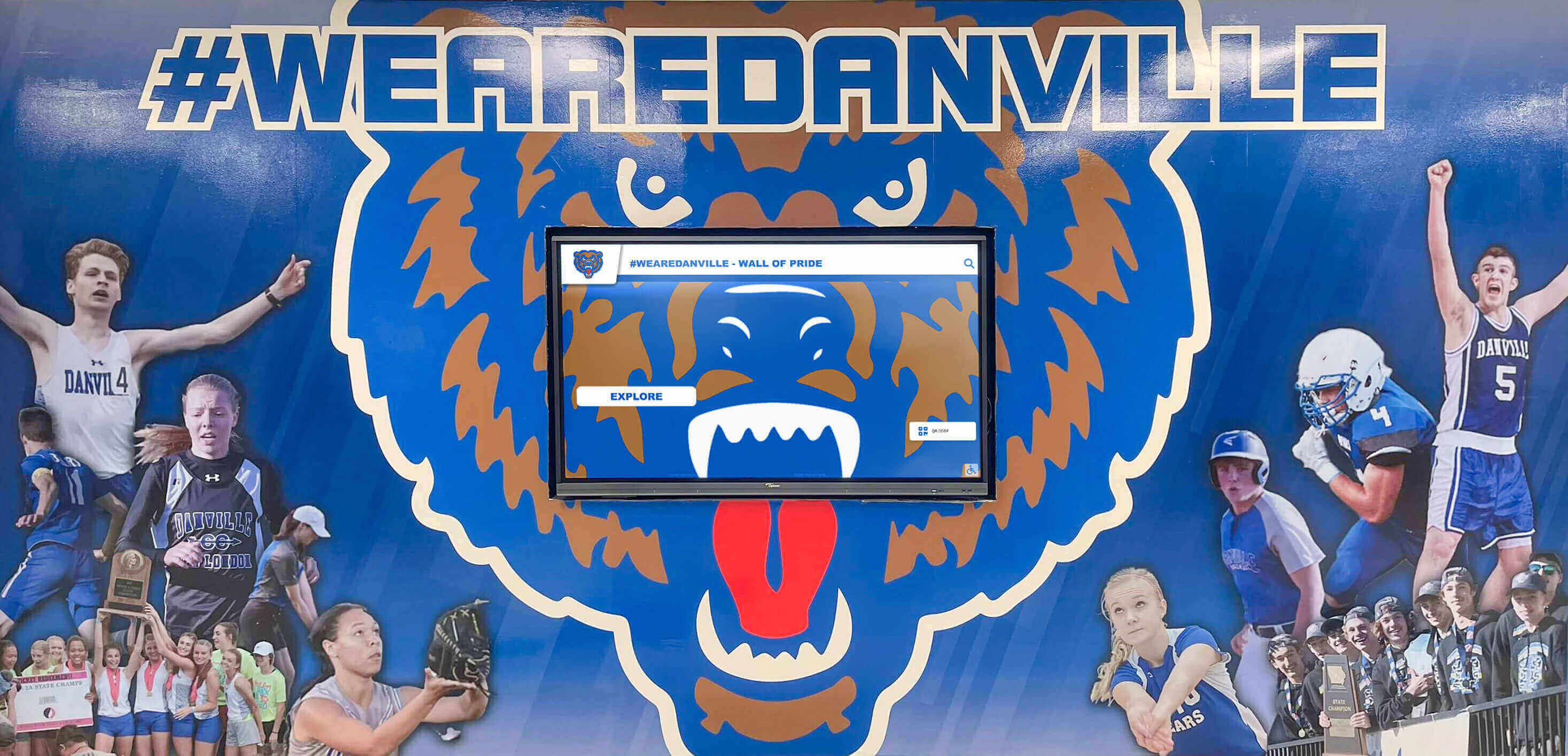
Funding Strategy: The school funded implementation through alumni fundraising campaign emphasizing preservation of athletic traditions. Retired alumni athletes contributed enthusiastically when shown how comprehensive digital recognition would honor their own achievements from decades earlier alongside current student success.
Results: Within three years, the school eliminated all banner production expenses while recognizing 10x more achievements than previous banner-only approach could accommodate. The athletic director noted that equitable recognition across all sports—including smaller programs historically overlooked due to cost constraints—created stronger program culture and improved retention in sports beyond football and basketball.
District-Wide Implementation
A mid-sized school district with five high schools faced recognition challenges across all campuses with inconsistent approaches, budget constraints, and space limitations creating uneven athlete recognition experiences.
Implementation Approach: The district implemented standardized digital recognition systems across all five high schools using centralized purchasing that reduced per-school costs through volume pricing. District athletic administration provided content development support helping schools research historical achievements and create comprehensive recognition content.
Results: Standardized systems created recognition equity across the district ensuring athletes at all schools received comparable honor regardless of individual building budgets or traditions. Centralized purchasing reduced implementation costs by approximately 30% compared to individual school approaches. Shared content development resources enabled comprehensive historical research that individual schools couldn’t resource alone.
The district athletic director reported that recognition standardization improved community perception of equitable athletic department management while eliminating over $15,000 in cumulative annual banner costs across five buildings.
Getting Started: Next Steps for Schools
Schools ready to explore replacing traditional banners with digital recognition can take systematic steps toward implementation without requiring immediate full commitment.
Preliminary Research and Vendor Evaluation
Identify Potential Vendors: Research companies providing athletic recognition solutions specifically designed for educational environments. Look for providers with extensive school installation experience, purpose-built content management systems, comprehensive implementation support, and favorable references from similar schools.
Solutions like Rocket Alumni Solutions specialize specifically in educational athletic recognition with platforms designed around school workflows, budget realities, and recognition requirements that general digital signage vendors often don’t understand.
Request Demonstrations: Schedule virtual or in-person demonstrations allowing stakeholders—athletic directors, principals, coaches, booster representatives—to experience systems firsthand. Effective demonstrations should show content management interfaces, visitor interaction experiences, reporting and analytics capabilities, and migration processes for existing recognition content.
Review Implementation Case Studies: Ask vendors for detailed case studies from schools similar to yours including school size and demographic, implementation timeline and process, costs and funding approaches, results and stakeholder feedback, and lessons learned during transition.
Stakeholder Engagement and Support Building
Create Recognition Task Force: Form small working groups including athletic directors and coaches, alumni representatives, booster club leadership, facilities and technology staff, and student-athlete representatives to guide planning, build consensus, and ensure diverse perspectives inform decisions.
Present Financial Analysis: Share comprehensive cost comparisons showing multi-year expenses for traditional versus digital approaches. Financial analysis proving cost-effectiveness typically generates administrative support essential for funding approval.
Gather Community Input: Survey coaches, athletes, families, and alumni about recognition priorities, preferences regarding traditional versus digital approaches, and willingness to support funding through donations or fundraising campaigns. Community engagement often reveals stronger support for modernization than administrators initially expect.
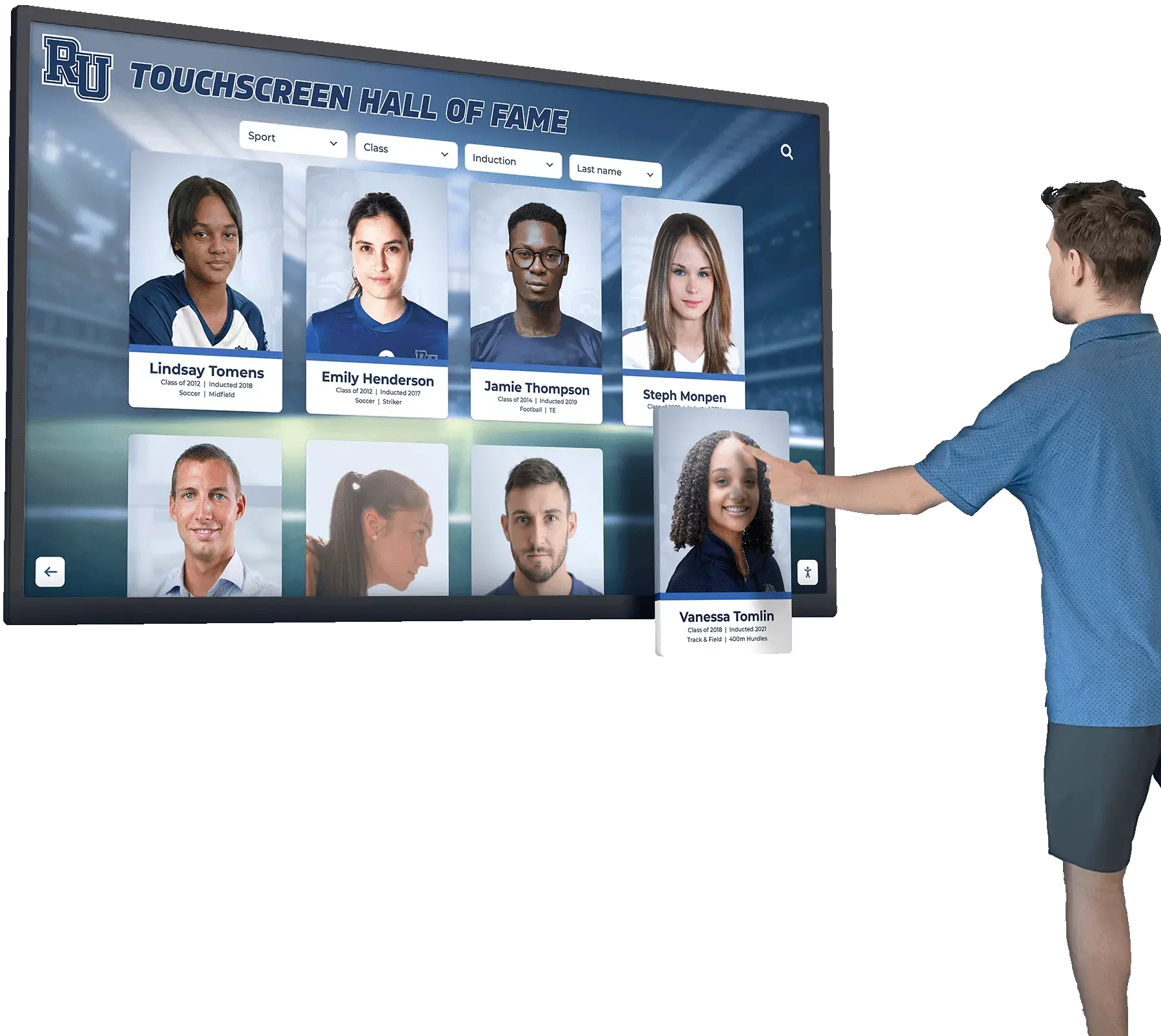
Pilot Program Consideration: For schools with multiple athletic facilities or district-level implementations, consider pilot installations in single locations before full rollout. Pilots demonstrate value, identify challenges in low-risk environments, build stakeholder comfort with change, and create proof points supporting broader implementation.
Funding Development
Budget Request Preparation: Develop formal budget requests presenting financial analysis, stakeholder support documentation, implementation timeline, vendor proposals and pricing, anticipated results and benefits, and ROI calculations demonstrating cost recovery timelines.
Well-prepared budget requests framing recognition as infrastructure investment rather than expense increase approval likelihood.
Fundraising Campaign Planning: If annual budgets prove insufficient, develop specific fundraising campaigns for recognition system implementation including naming opportunities for major donors, tribute recognition honoring deceased community members, class reunion contribution challenges, and business sponsorships with appropriate acknowledgment.
Resources on athletic fundraising strategies provide frameworks for successful campaigns supporting facility and recognition improvements.
Grant Research: Investigate grant opportunities from athletic or educational foundations, state athletic associations, community foundations supporting youth development, and corporate grant programs supporting educational technology. Many recognition upgrades qualify for grant funding when framed appropriately around student achievement recognition and institutional advancement.
Conclusion: Making the Transition to Sustainable Recognition
Expensive gym banners represent recognition approaches developed when vinyl printing was cutting-edge technology and gymnasium wall space seemed limitless. Those circumstances no longer exist. Modern athletic programs generate more achievements across more sports deserving recognition than traditional banners can accommodate within sustainable budgets or available display space.
Digital recognition systems provide comprehensive solutions that eliminate ongoing banner production expenses, accommodate unlimited achievements without space constraints, deliver engaging multimedia experiences that resonate with digital-native students, enable instant updates and additions maintaining timely relevant recognition, and provide search and discovery features making recognition personally accessible to athletes, families, and alumni across decades.
The transition from traditional banners to digital recognition doesn’t abandon tradition—it preserves and expands tradition by enabling schools to recognize every achievement across complete program histories rather than only what limited space and constrained budgets allow. It honors athletes more comprehensively through detailed profiles with photographs, statistics, and context rather than impersonal text-only listings. It demonstrates institutional commitment to celebrating student excellence through modern professional recognition that matches the significance of athletic achievements.
For athletic directors managing tight budgets while trying to recognize growing achievements equitably across expanding programs, eliminating expensive recurring banner costs while simultaneously improving recognition quality and comprehensiveness represents rare win-win opportunities that serve both financial stewardship and athlete honor appropriately.
Solutions like Rocket Alumni Solutions provide purpose-built platforms designed specifically for schools making this transition, offering intuitive content management, engaging interactive displays, unlimited recognition capacity, and professional presentation that reflects the significance of athletic excellence. Schools implementing comprehensive digital recognition consistently report eliminating 70-90% of ongoing recognition expenses within 3-5 years while dramatically improving how they honor student-athletes across all programs and all history.
The question isn’t whether digital recognition represents better value than traditional banners—financial and educational analysis conclusively demonstrates superior long-term value. The question is when your school will make the transition to sustainable recognition that honors athletes appropriately while managing costs responsibly. Every year spent continuing expensive banner-only approaches represents another year of accumulating costs and missed opportunities for comprehensive recognition that your student-athletes deserve and your program traditions merit.
Ready to explore how digital recognition can replace expensive banner costs while improving athletic recognition at your school? Schedule a demo to see exactly how modern systems showcase achievements, manage content, and deliver recognition experiences that transform how schools honor athletic excellence.
This guide reflects educational technology trends and athletic recognition best practices as of December 2026. Recognition system selection should align with specific school needs, budgets, facility characteristics, and community priorities. Consult with vendors and stakeholders before implementing significant recognition program changes.