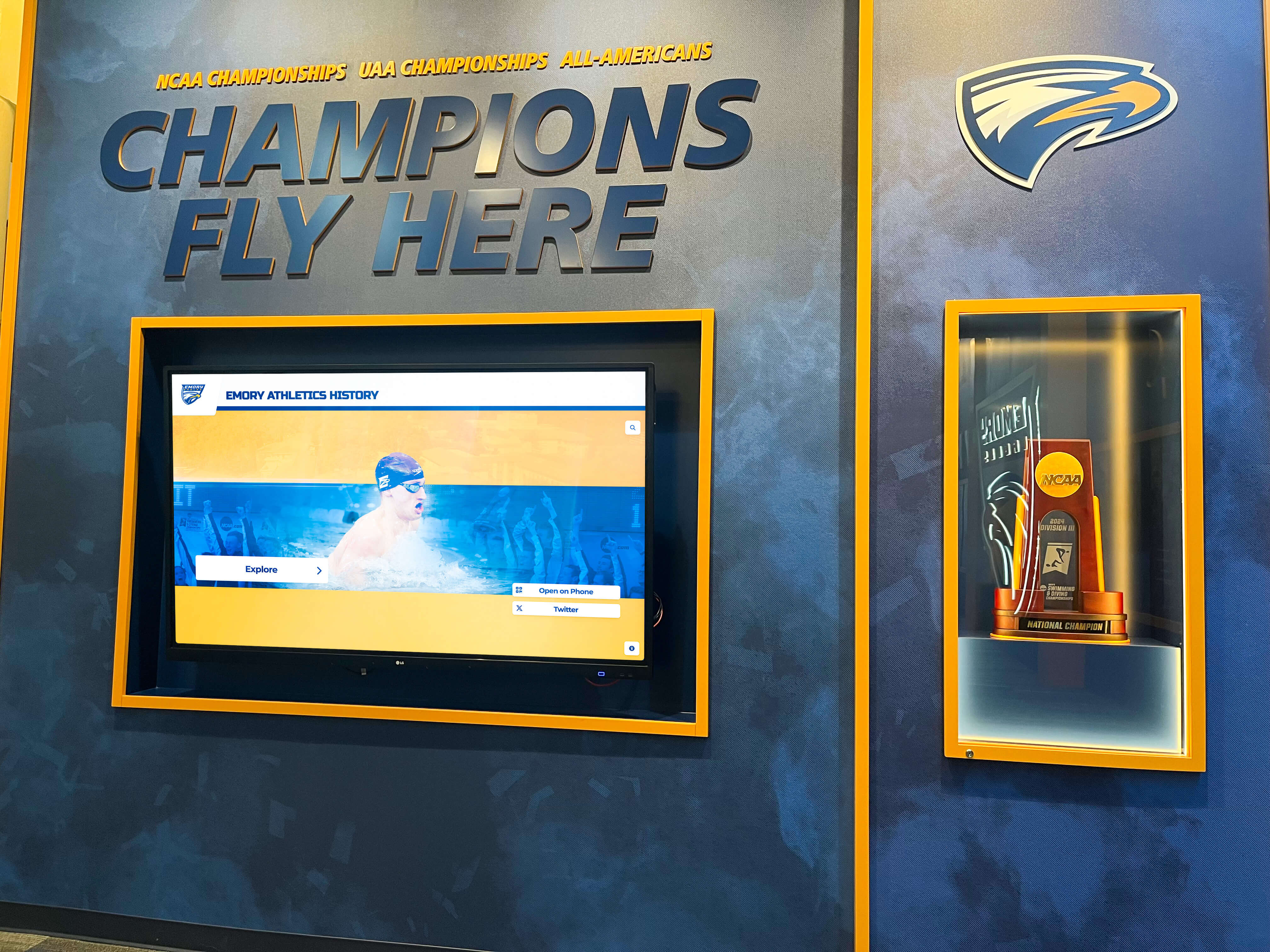




When an athletic program is firing on all cylinders, the energy spills beyond practice fields and game nights into every hallway, classroom, and common space in the building. Pep rallies are the mechanism that amplifies that energy—but only when the games and activities are designed to do real work for athletic programs, not just fill thirty minutes with noise. The difference between a forgettable assembly and a rally that actually moves the needle for your teams lies in whether the programming is built around athletic identity, record-setting culture, and genuine recognition of the students who represent the school in competition.
This guide is written specifically for athletic directors, head coaches, and activity coordinators who want pep rally games that serve a strategic purpose: reinforcing pride in athletic tradition, spotlighting individual and team achievement, and sending teams into competition with a crowd that feels personally invested in the outcome.
What Makes Pep Rally Games Work for Athletic Programs?
Games that work for athletic programs share three traits. First, they connect the student body to real athletic accomplishments—records that have been set, championships that have been won, milestones that are within reach. Second, they involve athletes directly rather than staging games that happen parallel to the teams being honored. Third, they build momentum that extends beyond the gym into how students talk about athletics in the days following the rally. Athletic directors who think carefully about software products for athletic administrators recognize that pep rally programming is part of the same recognition ecosystem as digital record boards, hall of fame displays, and senior night ceremonies.

Games That Connect Directly to Athletic Records
The strongest pep rally games for athletic programs use real school data as the foundation. When students compete against actual school records or guess real athletic statistics, every game reinforces pride in what the program has accomplished.
Record Board Trivia Challenge
Pull questions directly from the school’s all-time athletic records. Format them as a game show with student representatives from each grade competing for class points.
Sample question formats:
- “Which sport holds the most all-time school records set in a single season?”
- “Our school record in the 100-meter dash is [X] seconds. Which current athlete came closest to that mark this year?”
- “Name the year our football program last won a regional championship.”
- “Our swimming program holds records in how many individual events?”
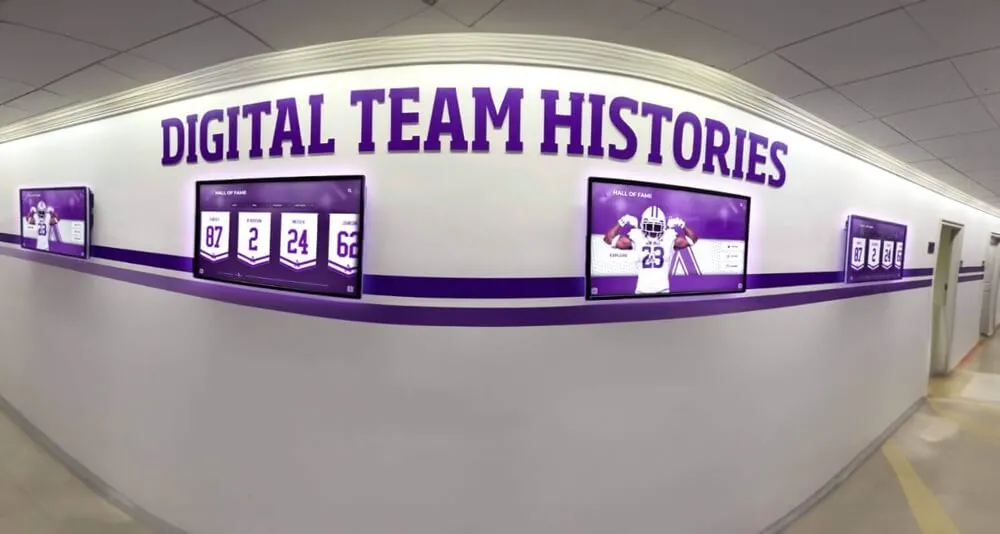
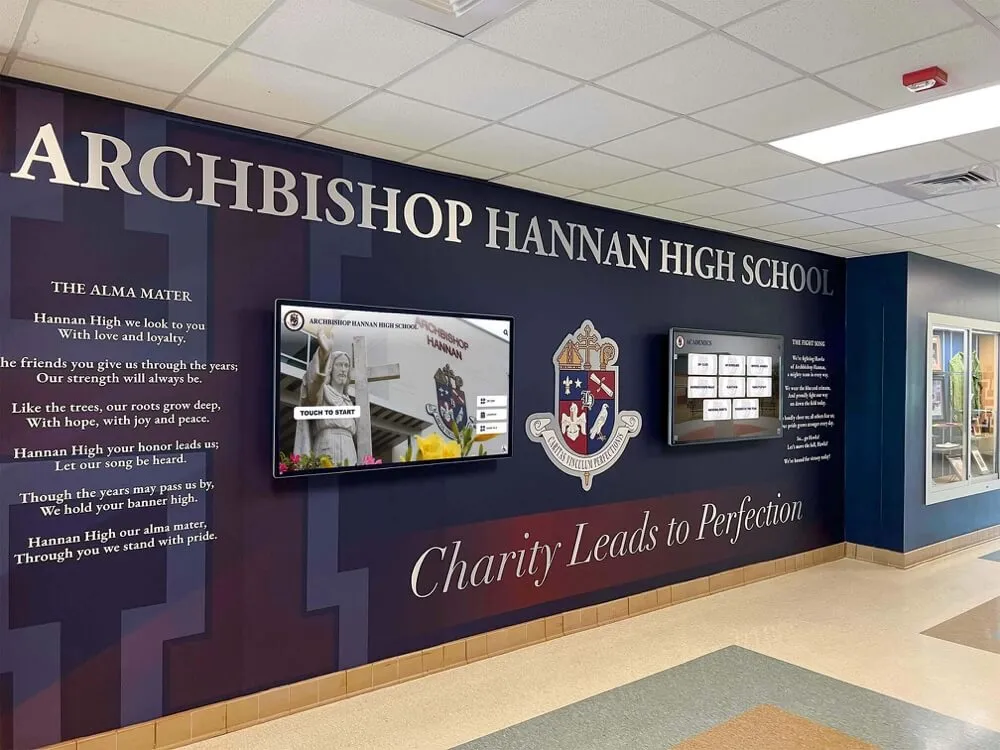
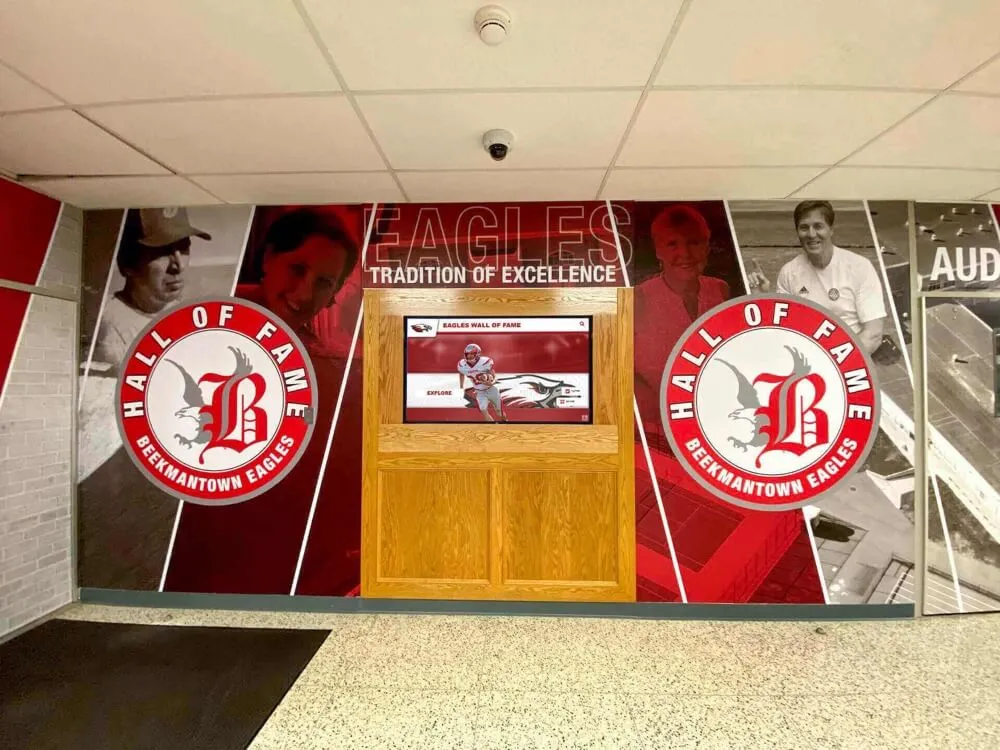
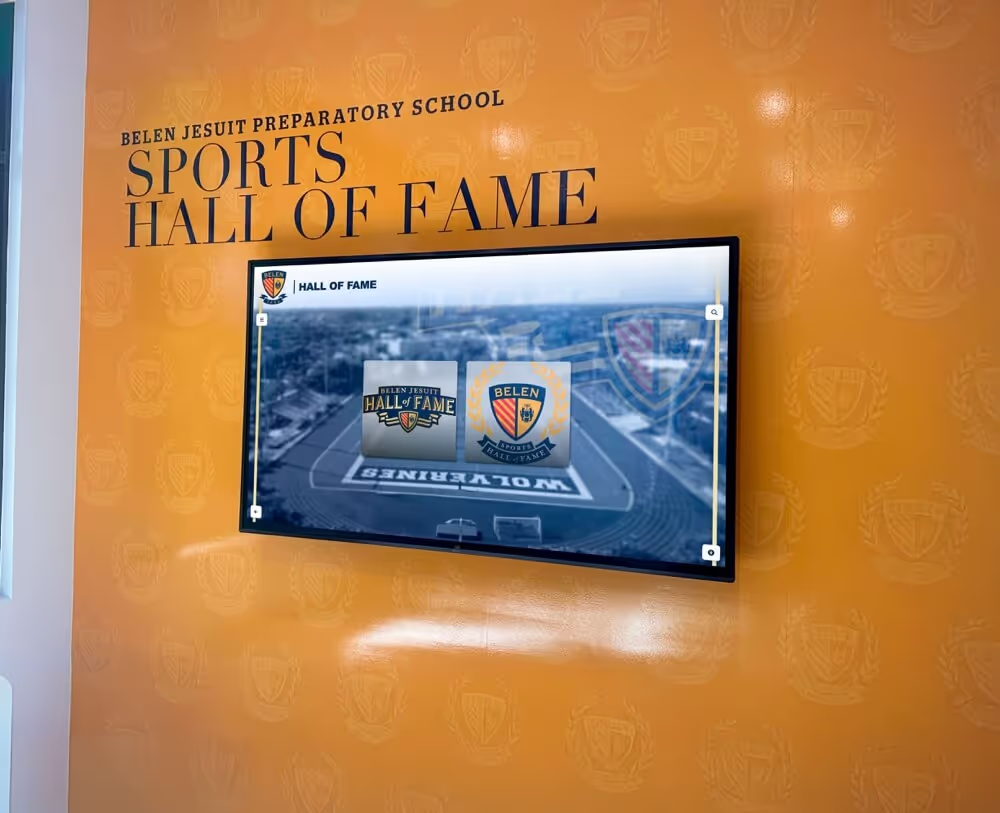
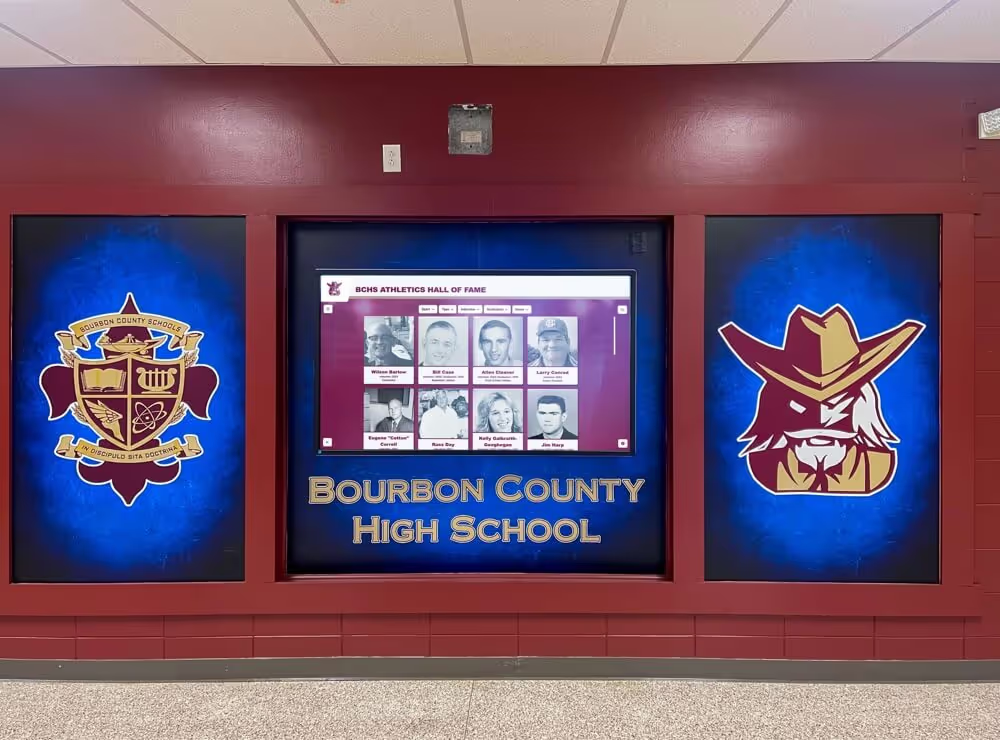
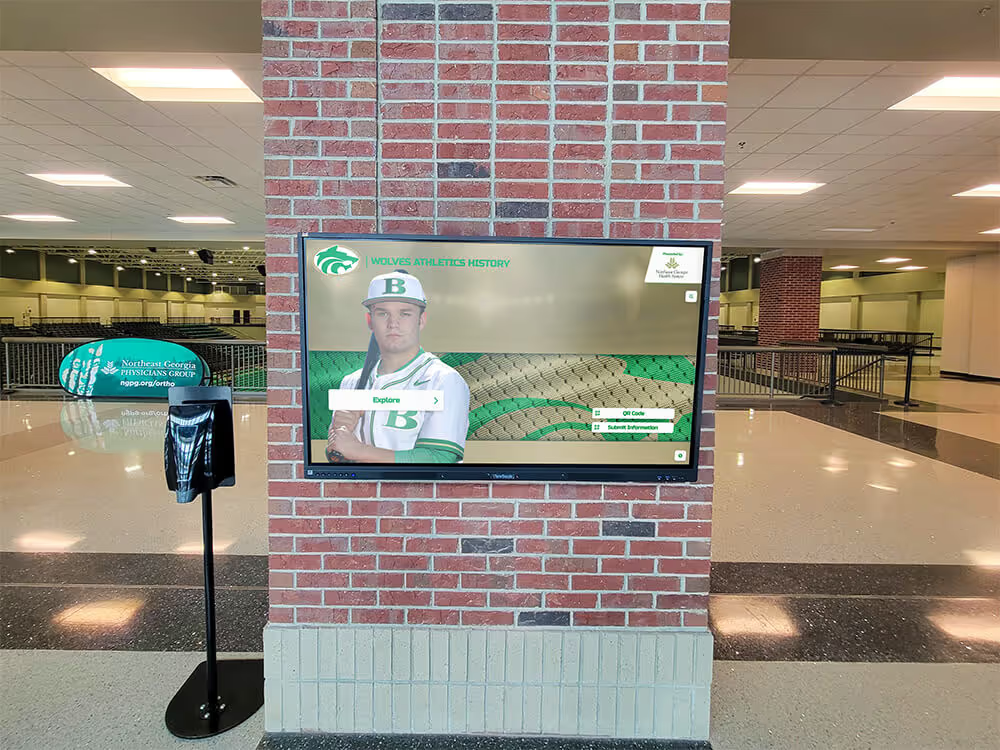
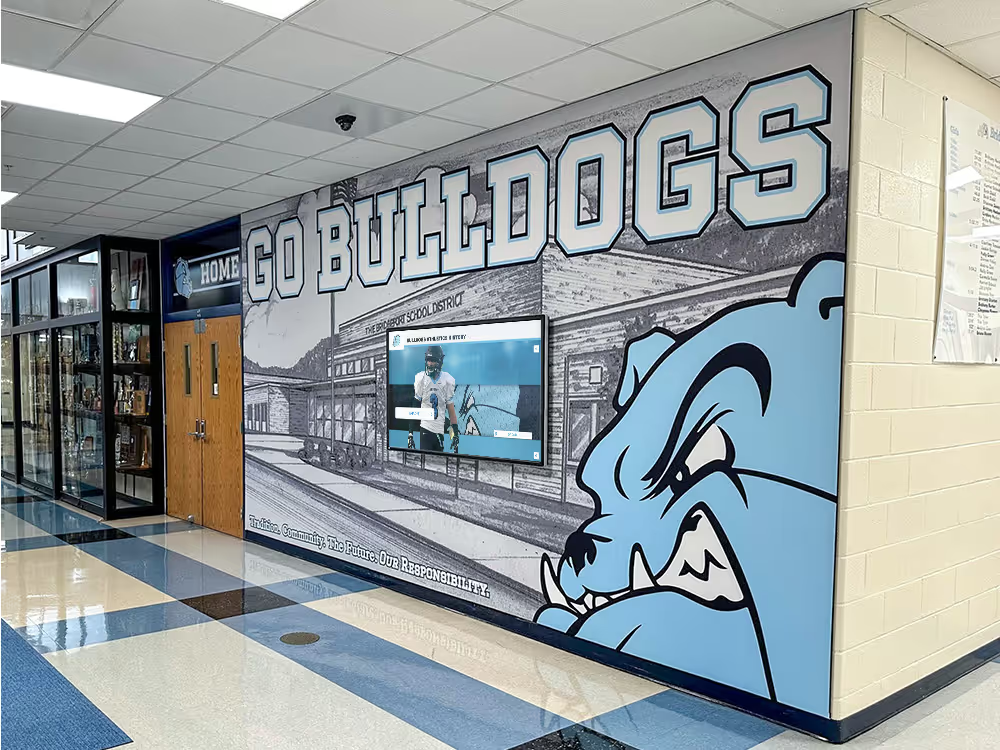
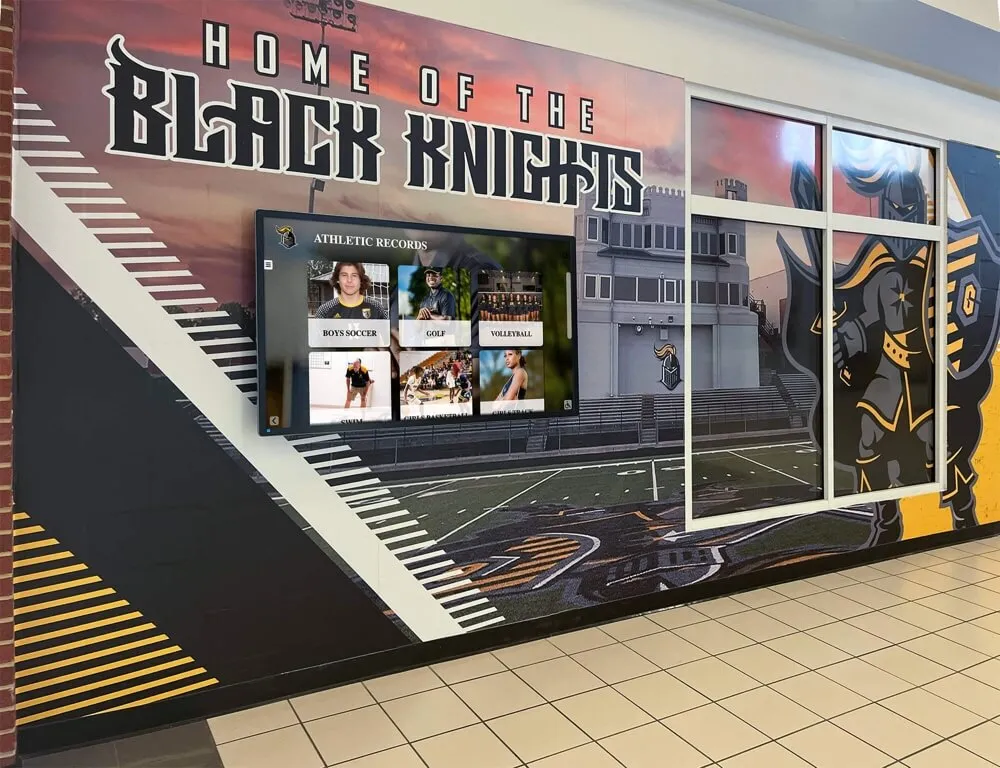
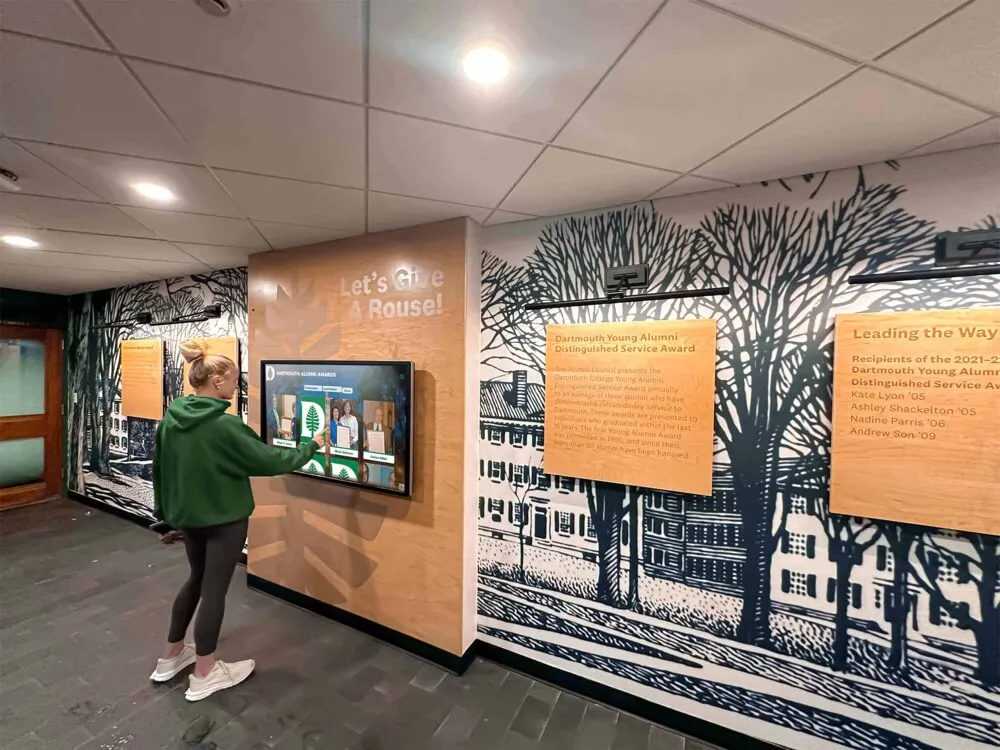
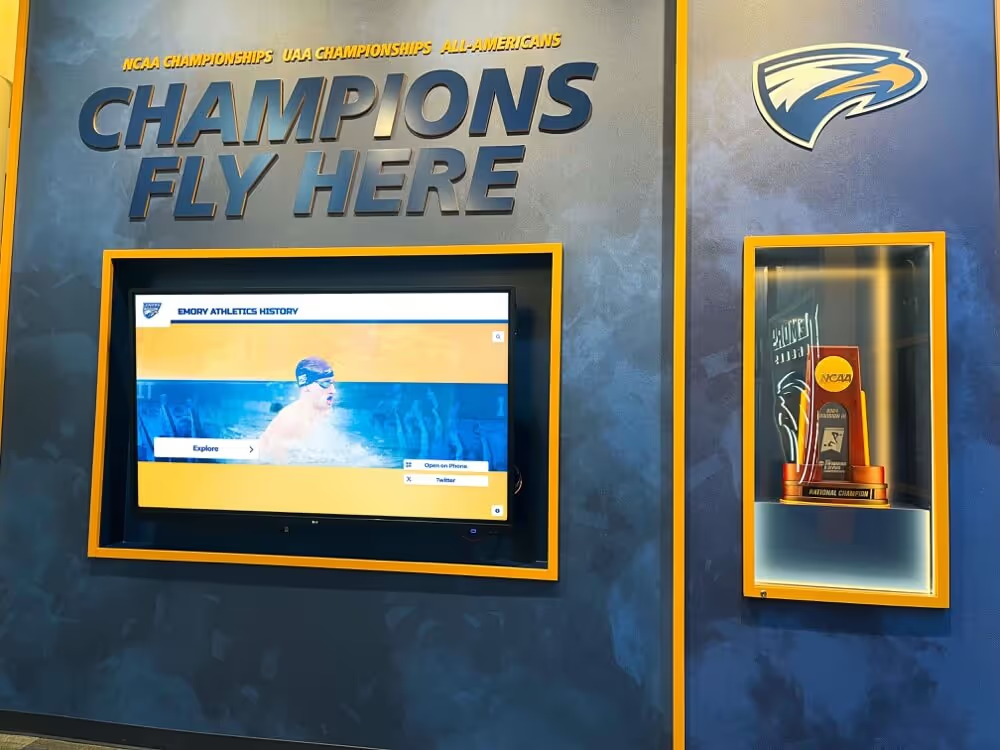
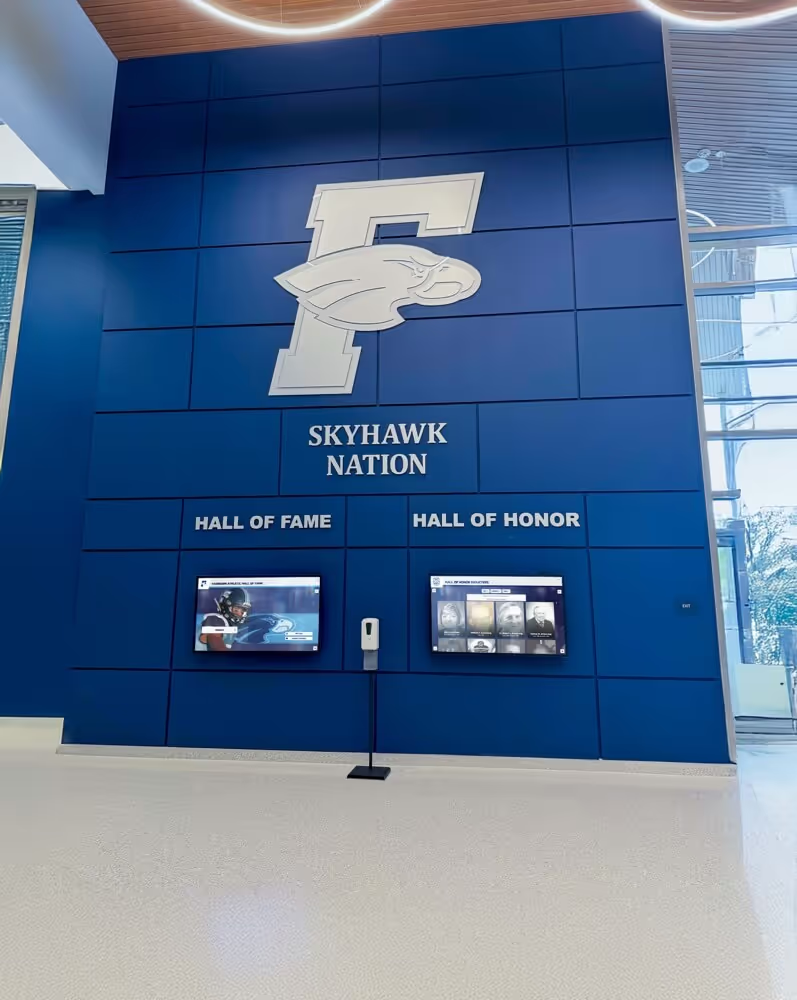
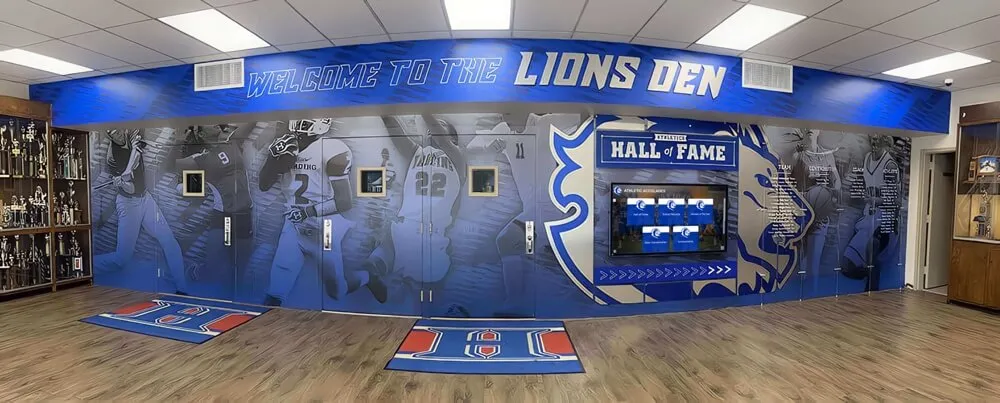
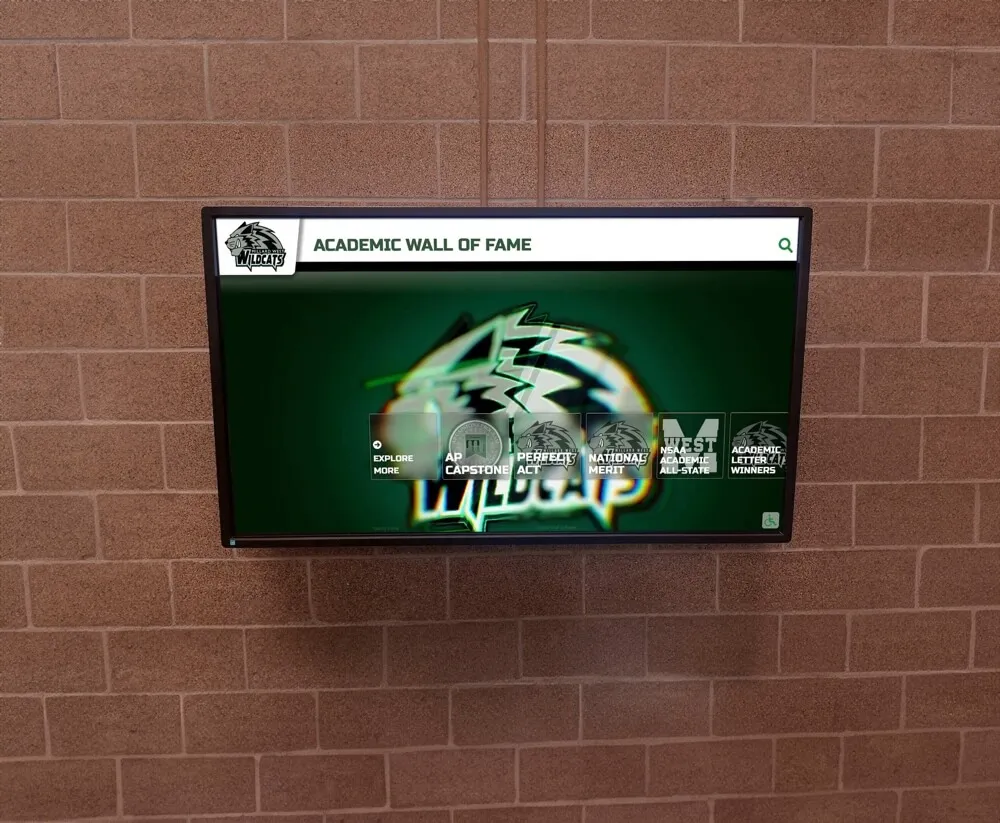
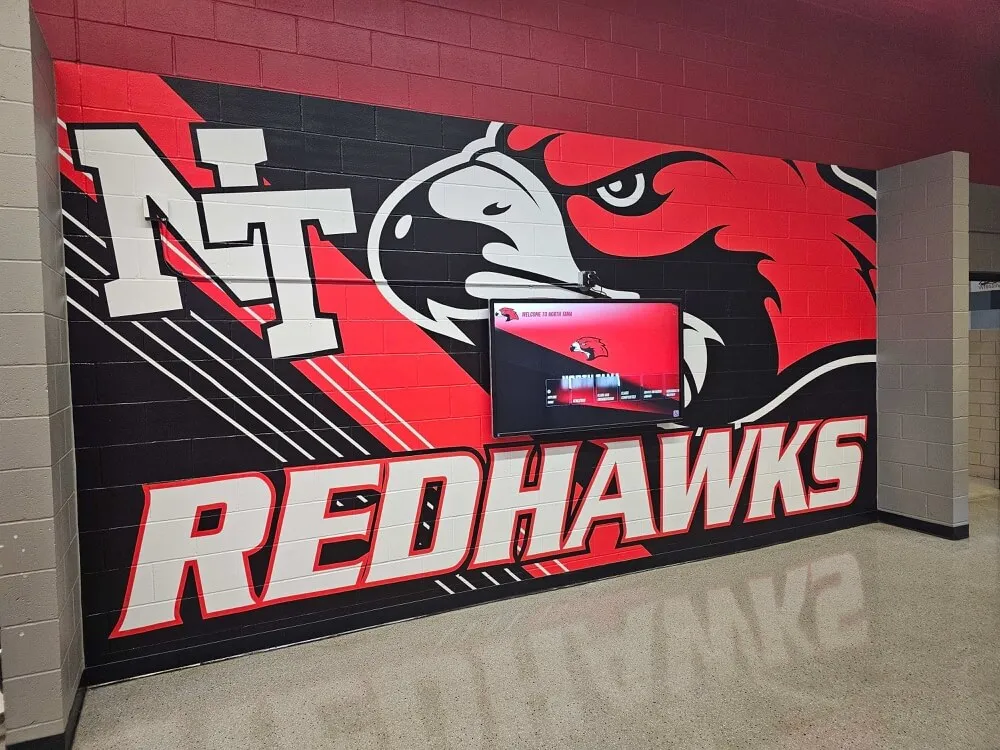
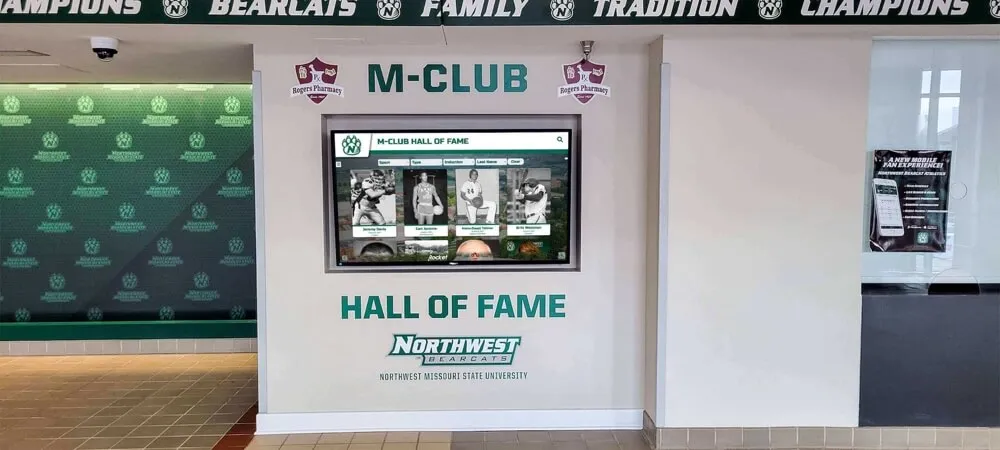
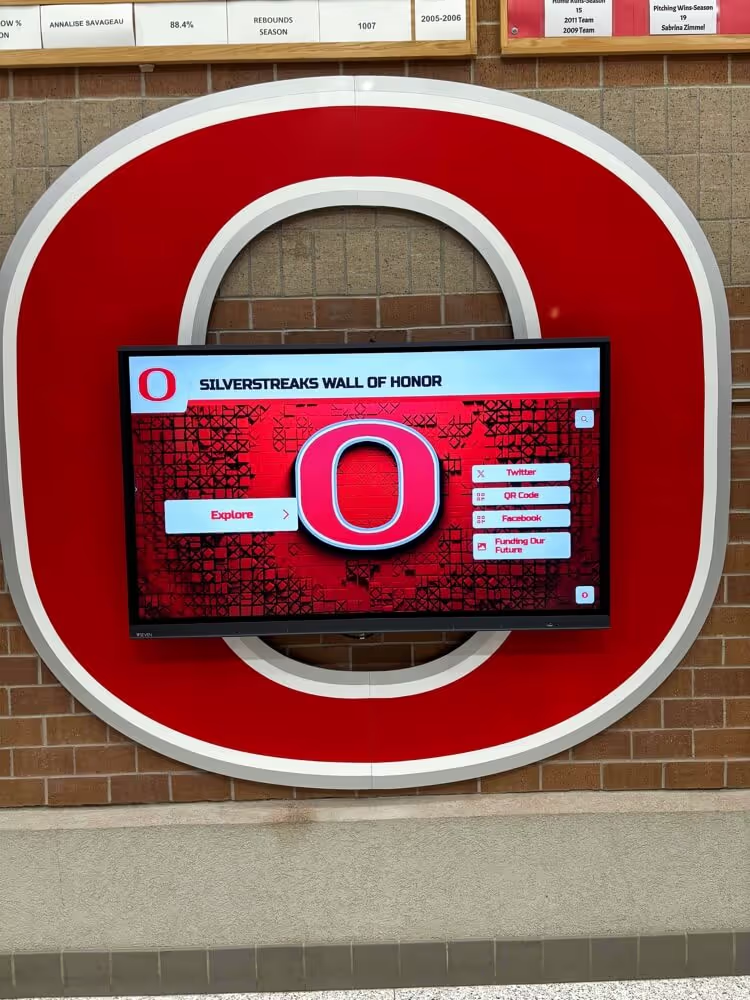
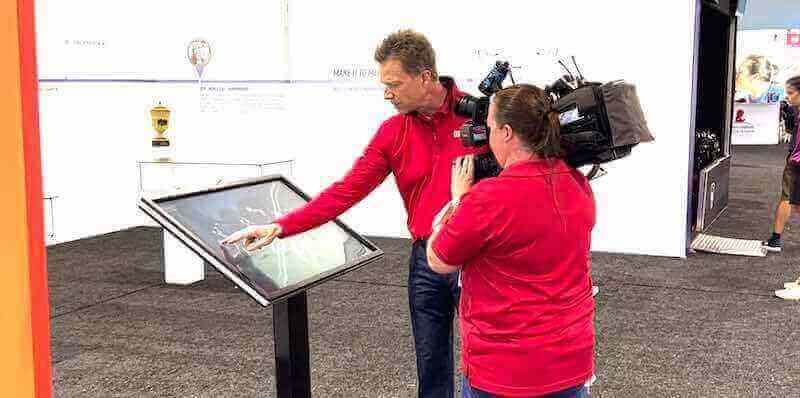
The key is that these questions have real answers tied to real achievements. Students who pay attention to athletics already know some answers; others leave the rally knowing more about program history than when they walked in. Schools tracking this kind of historical data through digital touchscreen athletic record displays have all this information organized and accessible for exactly this kind of programming.
Logistics: Prepare 20–25 questions, use a buzzer system or colored paddles for answer selection, and display questions on the scoreboard or projection system. Award cumulative class points to build competitive tension.
Record-Breaker Attempt Showcase
Invite current athletes to attempt school records live during the pep rally. Choose records that are realistically within reach—a distance athlete attempting the school long jump record, a basketball player attempting the school’s all-time single-season free throw percentage while taking five live attempts, a wrestler attempting a speed pin record against a willing opponent.
The live attempt creates genuine drama. Whether the athlete succeeds or falls short, the crowd understands they witnessed something real. Frame each attempt by displaying the existing record on the scoreboard and tracking the live performance against it in real time.
Best sports for this format: Track and field events adaptable to gym space (standing long jump, vertical jump, 40-yard dash), basketball free throws, volleyball serving, soccer penalty kicks, and gymnastics-style balance challenges.
Stat Guessing Game
Display a current athlete’s stat line without revealing their name. Students guess the athlete based on statistics alone: “This junior led our team in rushing yards last fall with 847 yards on 142 carries. Who is it?”
This format teaches the student body to pay attention to individual athletic performance while honoring athletes who may not otherwise receive public recognition. Running backs and quarterbacks typically get attention; offensive linemen, mid-rotation cross country runners, and second-line swimmers often don’t. The stat guessing game can spotlight any athlete whose numbers tell a compelling story.
Display the actual digital player card or record board entry when revealing each answer. This makes the connection explicit between live recognition and the permanent record the school maintains.
Team-vs-Team Athletic Competition Games
Games that pit different athletic teams against each other generate natural rooting interest throughout the gym. Every team’s fans are already in the building.
Athletic Skills Relay
Design a relay race where each leg tests a skill associated with a different sport. A representative from the appropriate team competes in that leg.
Sample relay structure:
- Football leg: Quarterback throws five passes through a tire swing target; first to hit three advances baton
- Basketball leg: Make three consecutive free throws before passing to next competitor
- Soccer leg: Dribble through cone course and finish with a penalty kick on goal
- Track leg: Sprint 40 yards to the exchange zone
- Volleyball leg: Serve three balls over the net from the service line; first to land two in bounds advances
This structure means every athletic team is actively represented, giving fans of each program a specific moment to cheer for their sport. It also subtly demonstrates the skill level of your athletes to the broader student body—students who don’t attend fall baseball games see for the first time exactly how hard it is to throw a strike through a tire target.
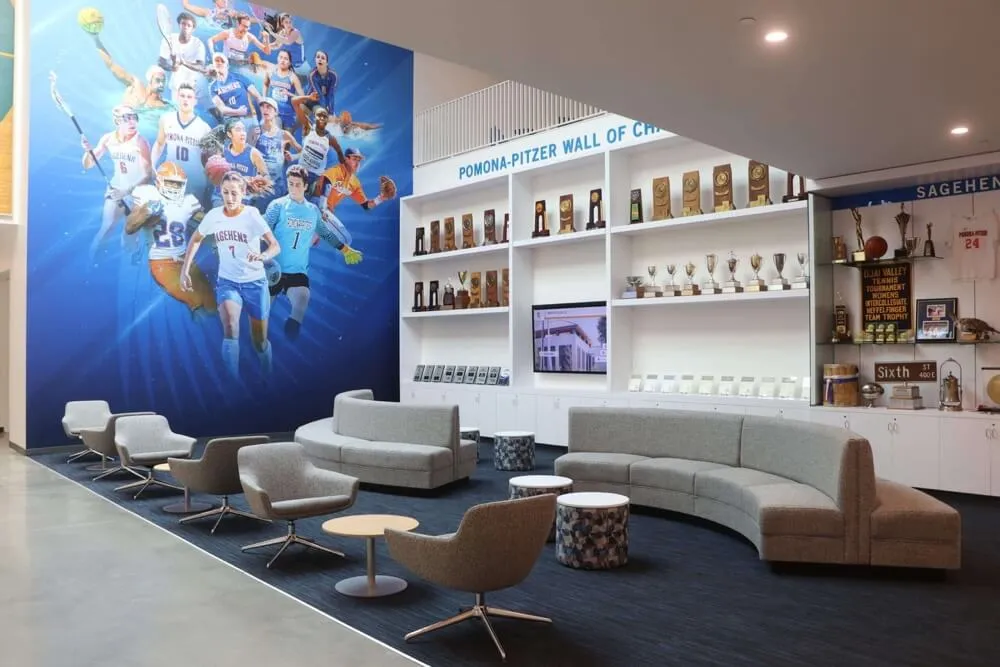
Championship Ring Toss Tournament
A ring toss bracket where teams compete for class or sport-based bragging rights. Simple, low-cost, and easy to run with large numbers of participants.
Twist for athletic programs: Attach each ring target to a placard listing one of the school’s championship years. When a competitor lands on a target, the announcer calls out that championship season and briefly describes what that team accomplished. “Ring on 2019—the year our girls’ soccer team won their first state title in program history.” The game becomes a live tour through program achievement, with each point scored attached to a real moment of excellence.
Field Day Sports Sampler
Divide the student body into sections representing different school teams. Each section competes across rotating stations featuring mini-versions of various school sports: a basketball free throw station, a soccer kick accuracy station, a volleyball bump-set-spike sequence station, a football accuracy throw, and a track sprint.
Cumulative scores from all stations determine the winning section at the rally’s end. The format exposes every student to multiple sports while demonstrating to athletes in each program that their sport is being celebrated and taken seriously.
Coach’s Call: The Play That Won the Game
Share video or audio of a notable in-game call or moment from a recent season. Then run a competition where students guess which coach made the call, what the situation was, or what the final outcome of that game turned out to be.
For schools without video infrastructure, the format adapts easily: a coach narrates the situation, students vote on what play call they would have made, and the coach then reveals what actually happened and why. This format builds tactical appreciation for coaching decisions while giving coaches a platform to demonstrate expertise in front of students who may only see them pacing the sidelines.
Connecting students to the craft of coaching—not just outcomes—is part of building a culture that honors retired coaches and the decisions they made for generations of athletes.
Recognition-Forward Rally Activities
Pep rally games should not be separate from recognition—recognition should be woven into the games themselves.
Senior Athlete Spotlight Challenges
Design specific game moments honoring senior athletes competing in their final season. Each spotlight lasts two to three minutes and follows a consistent format:
- Display the senior’s name, sport, and career statistics on the scoreboard
- Feature a brief video clip or photo sequence showing their career highlights
- Invite the senior to compete in one skill challenge related to their sport in front of the crowd
- Announce any college commitments, scholarship information, or post-graduation athletic plans
- Lead the gym in a standing ovation as their name and stats remain on display
Running four to six senior spotlights through a fall pep rally acknowledges the students most deeply invested in athletic culture while educating younger students about the commitment required to reach senior year as a varsity contributor. For ideas that extend senior recognition beyond rally moments, basketball senior night planning resources provide templates directly applicable to any sport.
Milestone Announcement Parade
Use the pep rally to announce athletic milestones achieved since the last rally. Structure these as a parade of recognition moments, not a long speech:
- Athletes who reached 100 career points in their sport
- Teams that set new school records in the current season
- Athletes earning all-conference, all-district, or all-state recognition
- Students achieving academic-athletic excellence thresholds
Each announcement takes 20–30 seconds: the athlete’s name, the achievement, a brief cheer. The cumulative effect over 12–15 announcements communicates to the entire student body that athletic accomplishment in this program is recognized, measured, and celebrated. Schools with systematic record-tracking through interactive board systems never miss a milestone because achievement data is always current and searchable.
The Record Wall Reveal
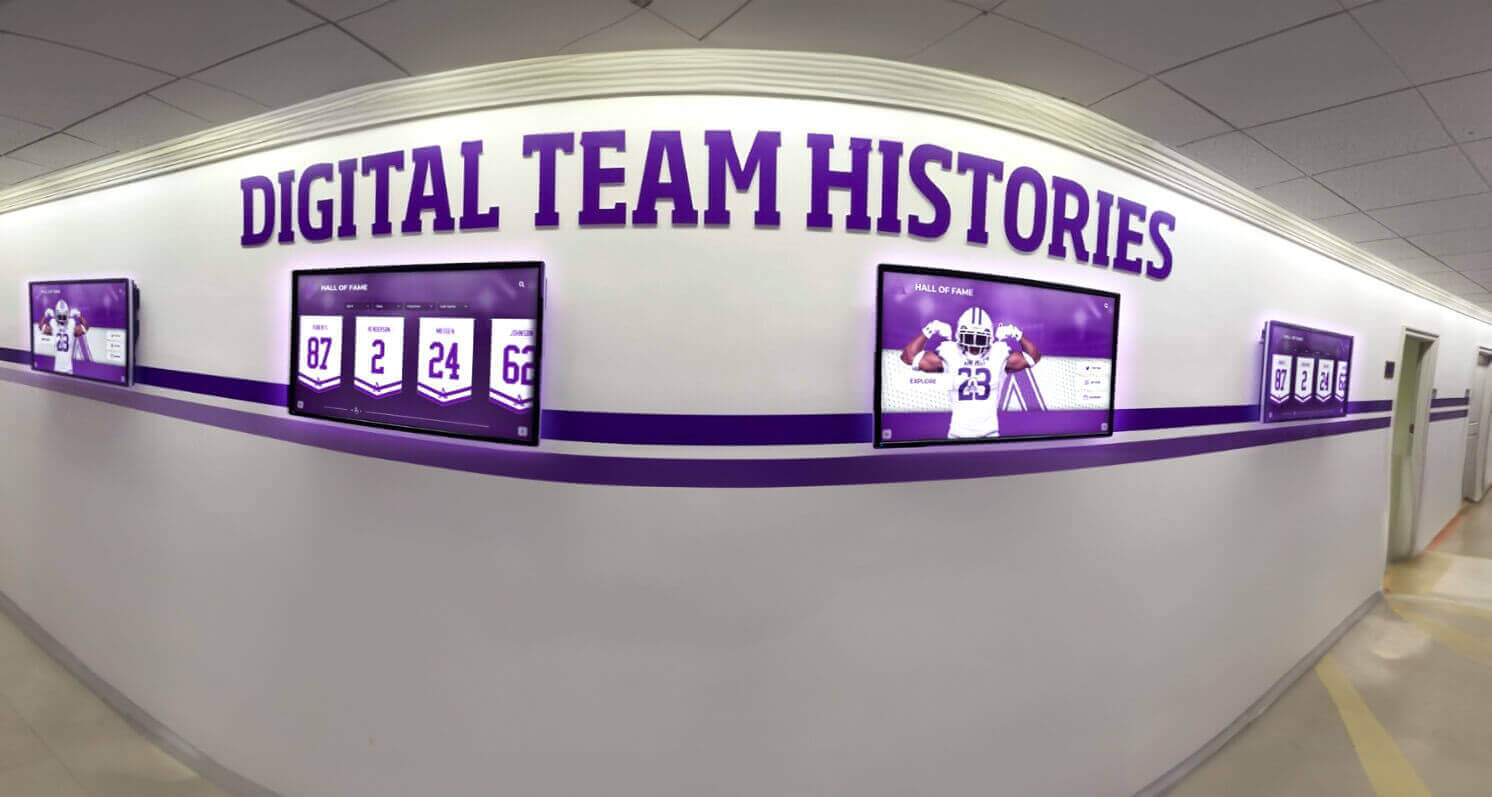
If your school is launching or updating a digital record board, the pep rally is the ideal venue for the reveal. Walk the student body through the board’s contents: the sport, the record, the athlete’s name, the year, and one sentence of context. Project the record board on the video screen so every student can see it.
“This is your school’s all-time 400-meter dash record. It was set 11 years ago by [Athlete Name], who now coaches track at [University]. That record has stood through 88 separate track seasons. Today, three of your current athletes are within 0.4 seconds of matching it.”
This format transforms the record board from administrative infrastructure into a living story the entire student body can follow. Students who learned about that record at the pep rally will watch the track meet differently, knowing what they’re potentially witnessing.
For schools still using manual vinyl record boards or spreadsheet tracking, this reveal moment also builds the case for why upgrading to an always-current digital system matters—not as a sales pitch but as a demonstration of what systematic recognition actually looks like for a program that takes its history seriously.
High-Energy Games That Build Team Atmosphere
Beyond recognition moments, pep rallies need games that create the kind of collective energy athletes carry with them into competition.
The Home Field Advantage Meter
Use a decibel meter (readily available as a smartphone app displayed on the scoreboard) to measure crowd volume. Run the test three times:
- First test: baseline volume with minimal prompting
- Second test: after leading the crowd through a structured chant
- Third test: “stadium mode”—coaches and team captains positioned in four corners of the gym, each leading their section
Display the measurements in real time. Challenge students to beat the current school volume record from the previous rally. Post-rally, include the peak decibel reading in the athletic program’s communication as “today’s home field advantage rating.” Teams who experience their crowd at maximum volume in practice—during the pep rally—carry that sound into the locker room before competition.
Sport-Specific Obstacle Course
Design a four-station obstacle course where each station replicates an athletic challenge without requiring specialized equipment:
- Agility station: Lateral shuffle through ladder or cones
- Endurance station: 30 seconds of box jumps on a low platform
- Coordination station: Juggle a soccer ball three times before advancing
- Strength station: Complete five push-ups before tagging next teammate
Run the course in relay format with teams representing different grade levels. Keep times displayed on the scoreboard throughout the event so competitive tension builds across multiple heats.
Championship Banner Countdown
If your school is heading into a playoff run or championship week, use a visible countdown format. Display remaining days to the championship game on the scoreboard. Each time a pep rally game is won by the competing class, add a “championship boost”—an additional 30-second celebration moment at the end of the rally where the student body performs the team’s official entrance chant or fight song.
The championship banner countdown transforms the pep rally into part of the preparation process rather than a separate event. Athletes hear that countdown from their classmates the same way they hear it in their own heads during practice. The digital banner recognition work that follows a championship run starts with the culture built in moments like these.
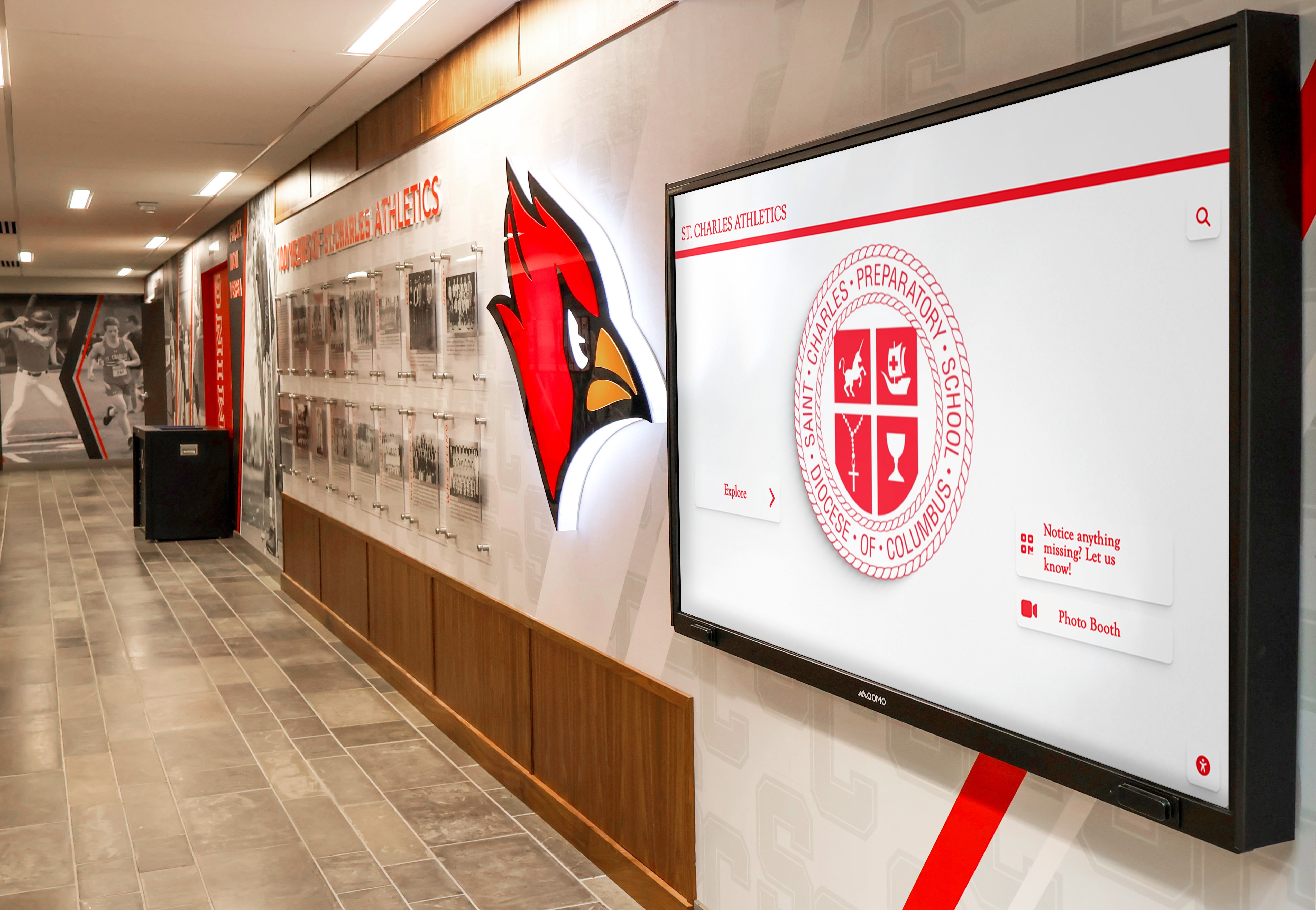
Homecoming and Special Event Rally Games
Homecoming pep rallies warrant a distinct playbook because they carry additional meaning: alumni are involved, community attention is higher, and the event sits within a week of elevated school pride.
Alumni Athlete Challenge
Invite two to four program alumni to return for homecoming week and participate in a structured skills challenge against current athletes. Keep the format light and brief—three challenges, five minutes total—but make the connection explicit:
“[Alumni Name] set the school record in the 200-meter dash in 2014 and currently holds that record. [Current Athlete Name] is your school’s fastest sprinter this season. Let’s see them both run 50 yards right now.”
This format accomplishes several things simultaneously: it introduces alumni to current students, connects current athletes to program legacy, demonstrates the caliber of athletes who came before, and creates a genuinely compelling live competition. It also builds the foundation for alumni athletic mentor programs that support athletes beyond the pep rally season.
Homecoming Court Athletic Challenge
Rather than simply walking homecoming court candidates across the gym floor, design a brief skills challenge each candidate completes. Keep it genuinely fun rather than athletically demanding—homecoming court candidates are not necessarily athletes, and that’s fine. The point is energy and participation, not performance.
Sample challenges: Shoot one free throw, make one forward roll on the mat, kick one soccer ball from the penalty spot, complete one hula hoop rotation. The crowd reacts to every attempt, candidates demonstrate game, and the moment is memorable in a way that a ceremonial walk is not.
For comprehensive context on how homecoming traditions integrate with athletic program identity, homecoming court roles and selection processes provide useful background on how different schools structure these moments.
Year in Athletics Video Premiere
Commission a five-minute highlight video covering the athletic year to date—every sport, key victories, record-setting moments, team milestones. Run the premiere at the homecoming pep rally with the same energy as a movie trailer launch.
Production elements that matter:
- Sport-specific music cuts rather than one song across all footage
- Individual athlete name cards when personal highlights appear
- Championship brackets and score graphics for significant wins
- A closing sequence featuring upcoming competitions and what’s still at stake
The video serves multiple purposes: it honors all teams equally, it communicates to athletes that their season mattered enough to document professionally, and it creates shareable content that extends rally energy into social media. Schools that maintain organized athletic photo and video archives find these productions much faster to execute—end-of-year athletic celebration planning benefits directly from systematic documentation throughout the season.
Integrating Digital Displays Into Rally Games
Schools with digital signage infrastructure in their gyms or lobbies have a built-in advantage for pep rally programming. The display is already running when students walk in. Use it.
Pre-rally scroll: Run a countdown graphic starting 15 minutes before the rally begins. Display team records, today’s featured athletes, and the games schedule. Students reading the display arrive already oriented to what’s happening.
Live game scoring: During competition games, display real-time scores on the digital board rather than having an announcer keep verbal track. Visual score displays heighten competitive tension and give quieter students a clear way to follow the action.
Record board integration: When a recognition moment involves a school record, pull that record up on the display so the student body can read the full context—athlete name, date set, distance or time or score—not just hear an announcement.
Post-rally recognition: Update digital recognition displays in school hallways with rally highlights and game results the same day, so students who attend afternoon practice walk past recognition of what happened at the rally that morning.
Schools exploring comprehensive gym scoreboard options for the athletic facility should consider how those displays support pep rally programming alongside their primary game-day function.
Planning Pep Rally Games for Athletic Programs: Practical Checklist
Athletic directors running pep rally programming alongside full athletic administration responsibilities need a lean planning framework. This checklist covers the essentials without requiring a dedicated events team.
Six weeks before:
- Confirm rally dates on master athletic calendar, coordinating with home game schedules and away travel
- Identify which sports or teams are featured at each rally (rotate so all programs receive spotlight throughout the year)
- Assign a student activity coordinator or student council liaison as day-of logistics lead
Three weeks before:
- Select three to four games from the options above, confirmed for facility and equipment requirements
- Identify senior athlete spotlights and contact those athletes for brief profile information
- Pull current season statistics and record board standings for trivia and milestone announcements
- Request any video production from media program or communications staff
One week before:
- Confirm all game equipment is in building and in working condition
- Rehearse transitions with student leaders and faculty volunteers
- Brief the athletic communications team on recognition announcements so they can prepare social content
Day of:
- Sound check and display test minimum 45 minutes before students arrive
- Walk designated participants through their game mechanics
- Brief faculty supervisors on crowd management positions
- Confirm athletic trainer is present and positioned accessibly
Day after:
- Post highlight content through school social channels
- Update record board and digital recognition displays with any new milestones announced at the rally
- Collect brief feedback from five to ten students and one to two coaches for continuous improvement
Building Year-Round Athletic Culture Through Rally Programming
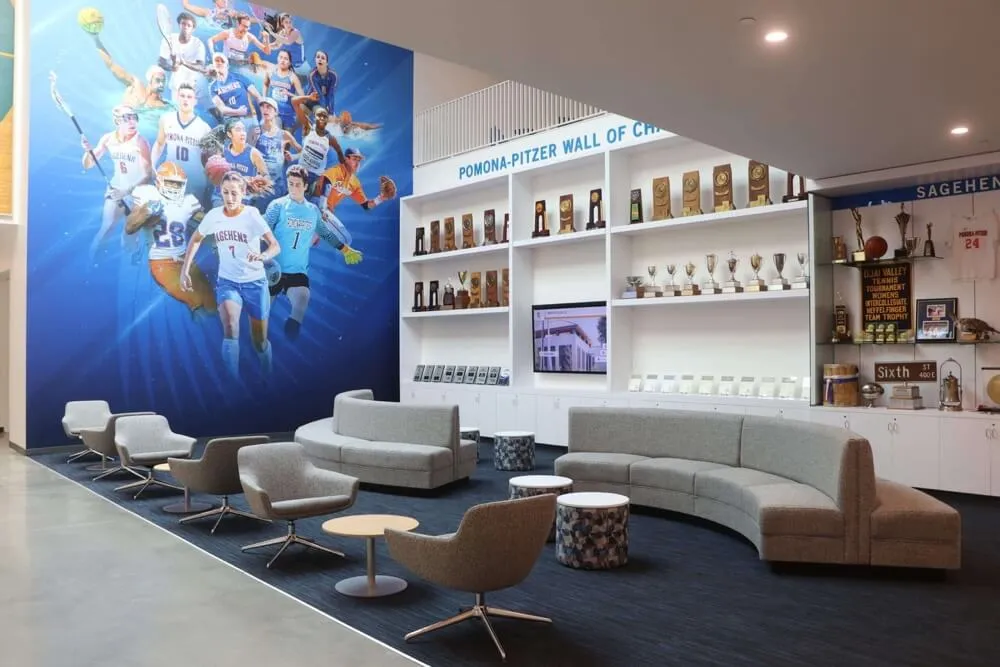
The most effective pep rally programming is not a standalone event strategy—it is the visible surface of a recognition culture that operates every day of the school year. Pep rallies work best when they reference achievements that already exist somewhere students can find them: on digital record boards in the weight room, on hallway displays near the athletic office, on school sports record databases students can access from their phones.
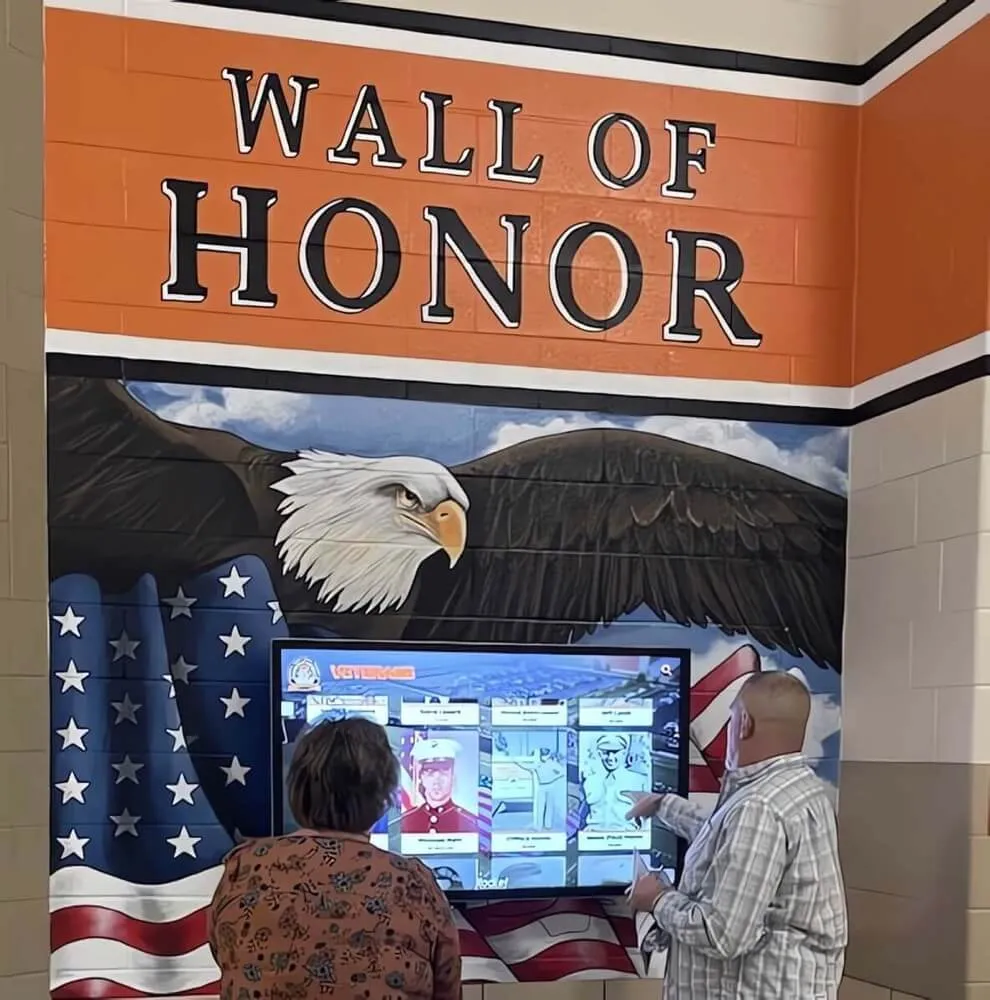
When students can look up the record they just heard announced at the rally, the recognition extends beyond the gym and the assembly period. When athletes train knowing their performances are tracked on a display their teammates check daily, the record board itself becomes a motivational tool that operates independently of any event. When the pep rally announces that a junior swimmer is currently ranked second all-time in the school’s 200-meter freestyle history, and that junior’s name is visible on the record board the next morning, the recognition loop is complete.
The programs that execute pep rallies most effectively are typically those that have invested in systematic athletic recognition infrastructure—tools that automatically maintain records, update standings, and surface achievements requiring no manual effort from an athletic director who is already managing eligibility, scheduling, facilities, and coaching staff simultaneously.
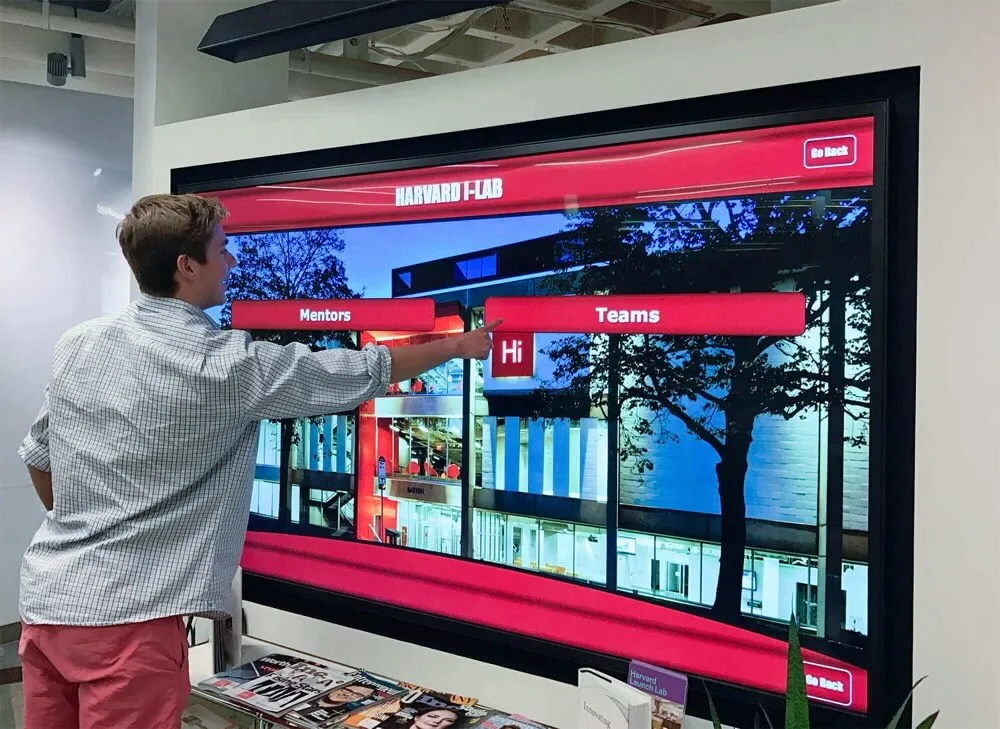
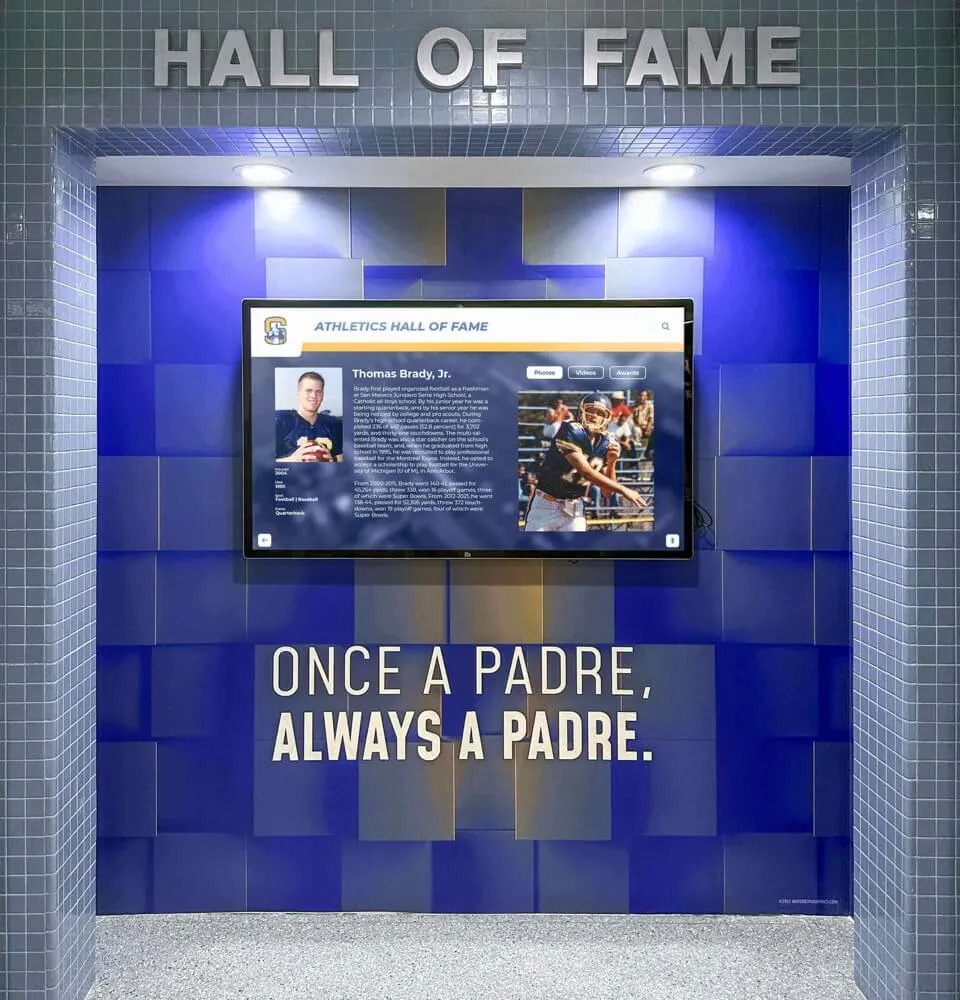
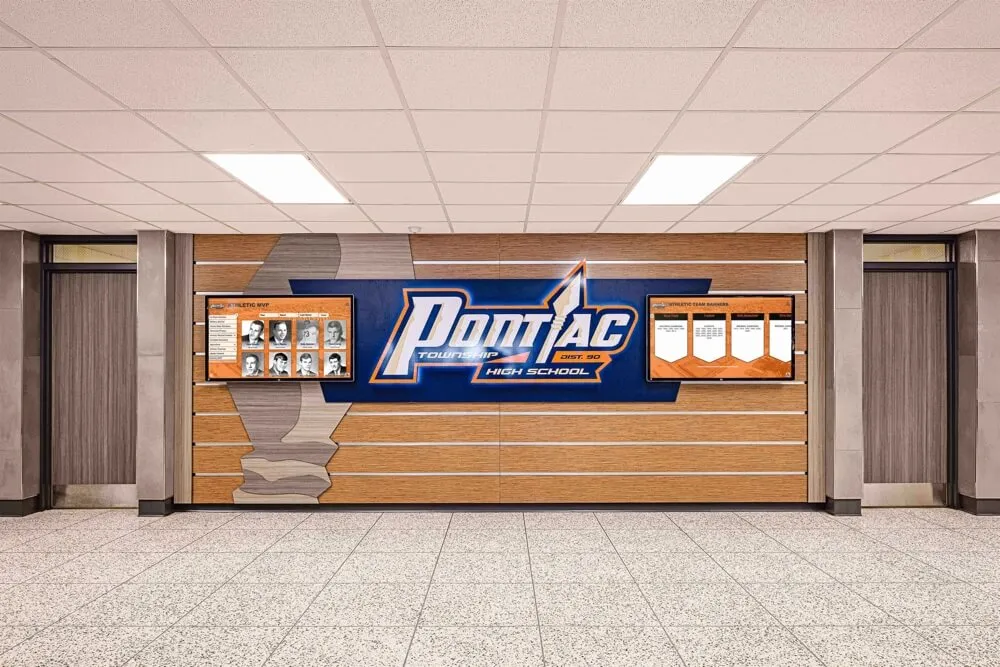
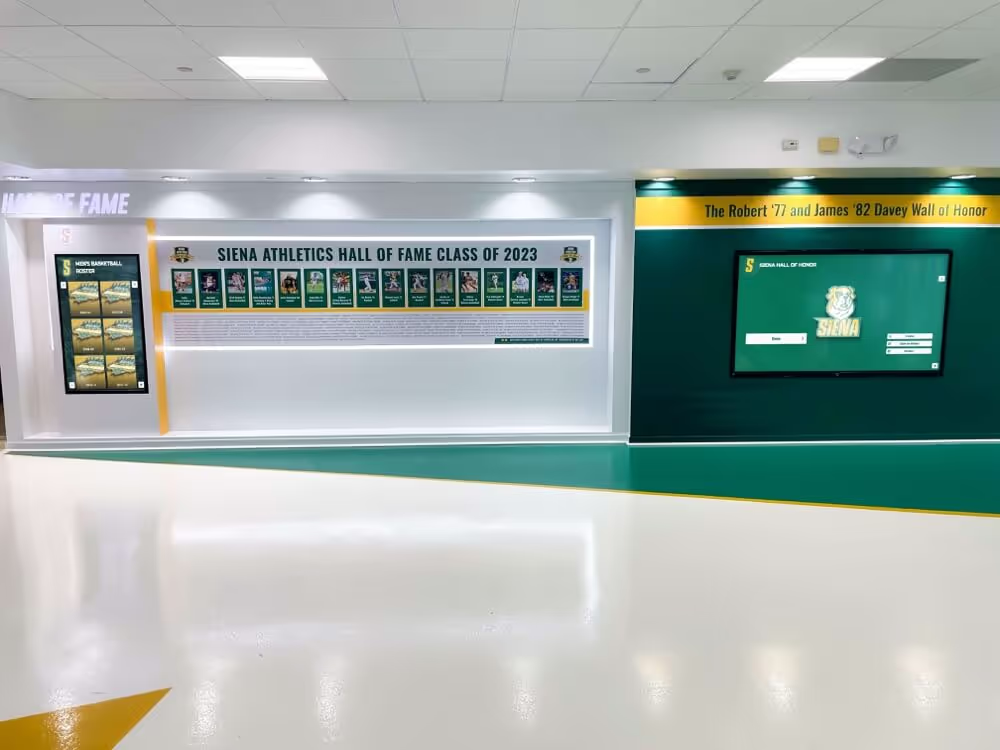
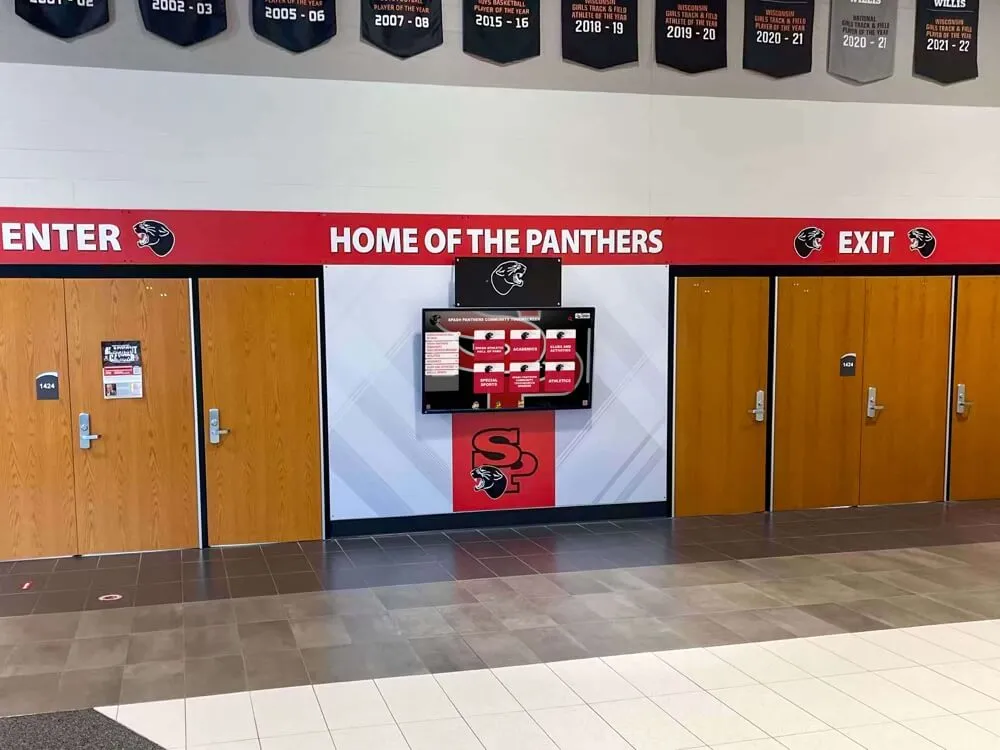
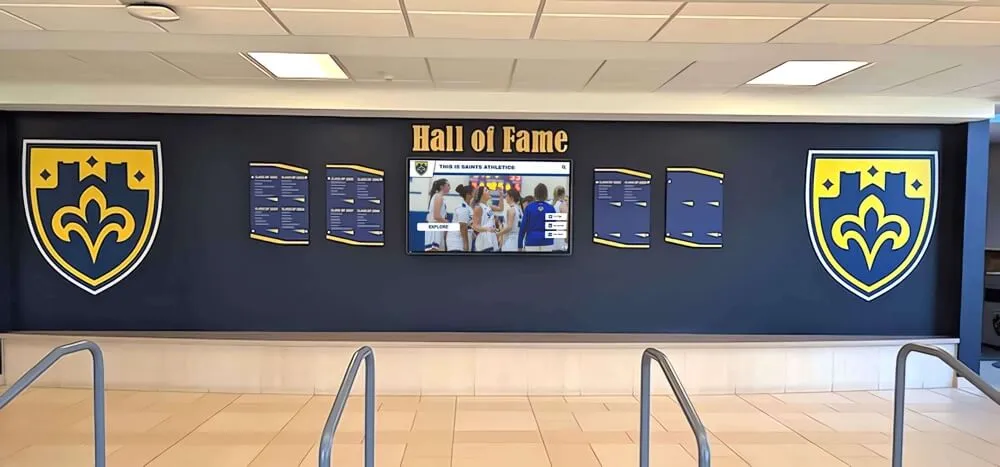
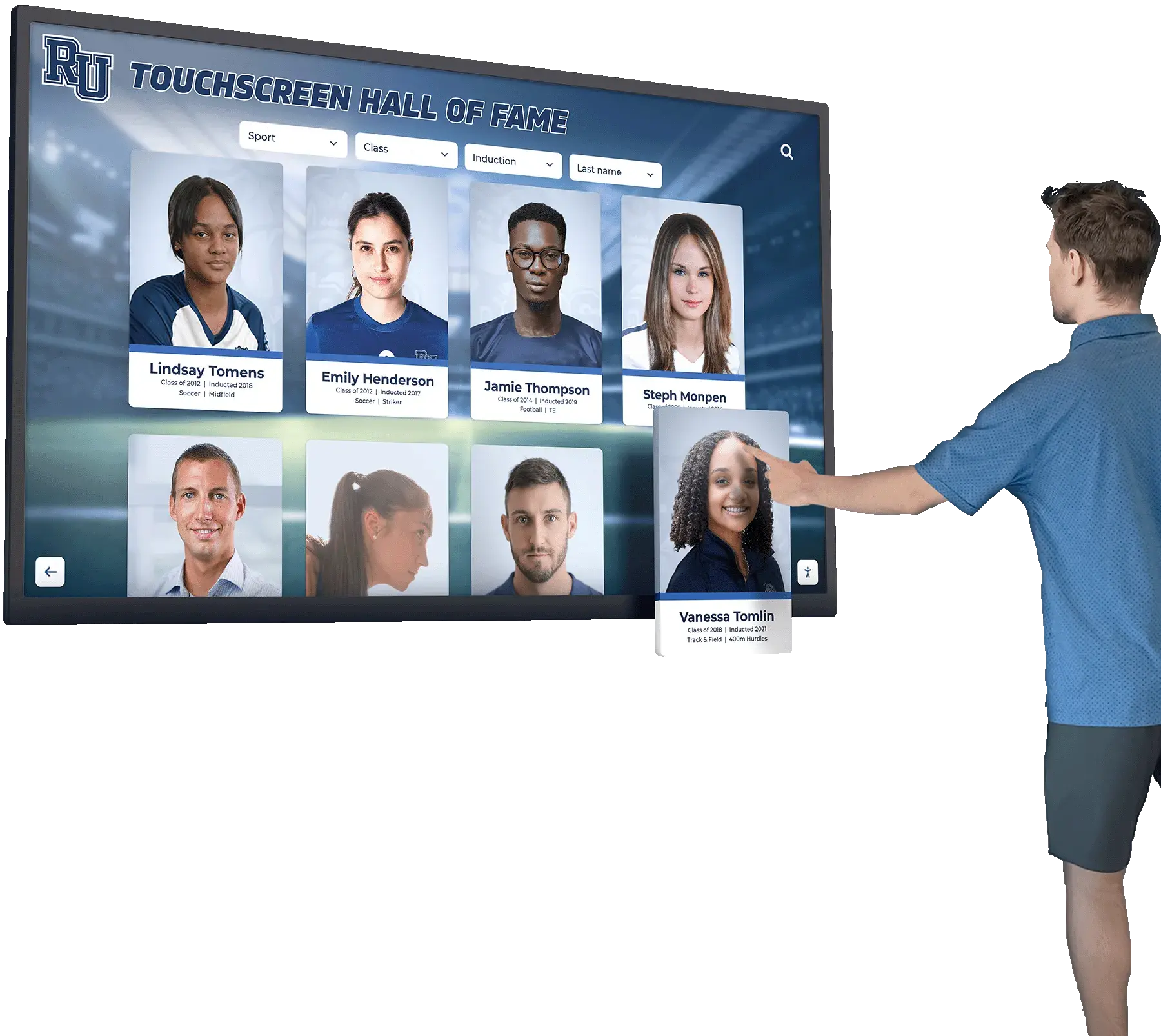
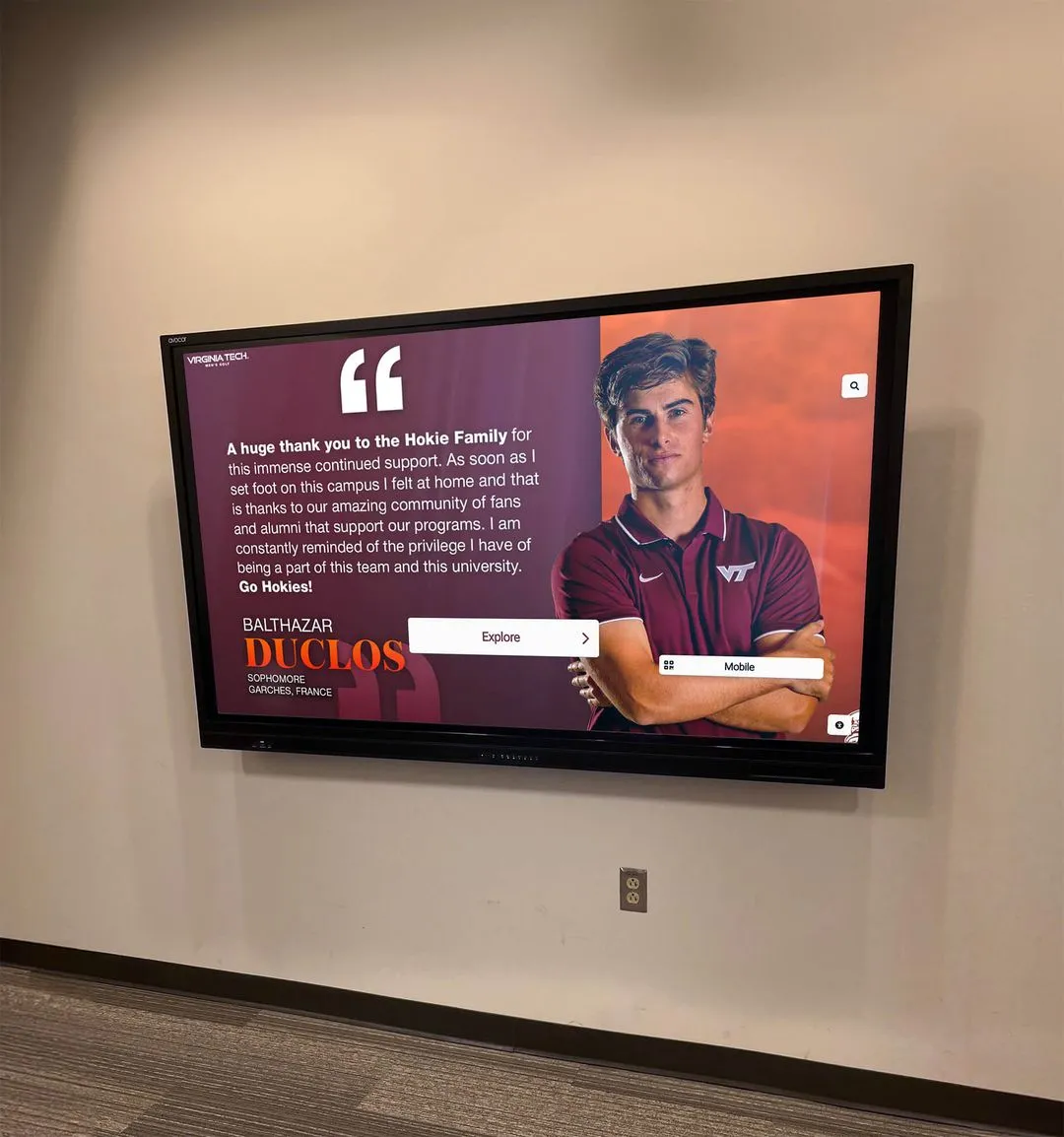
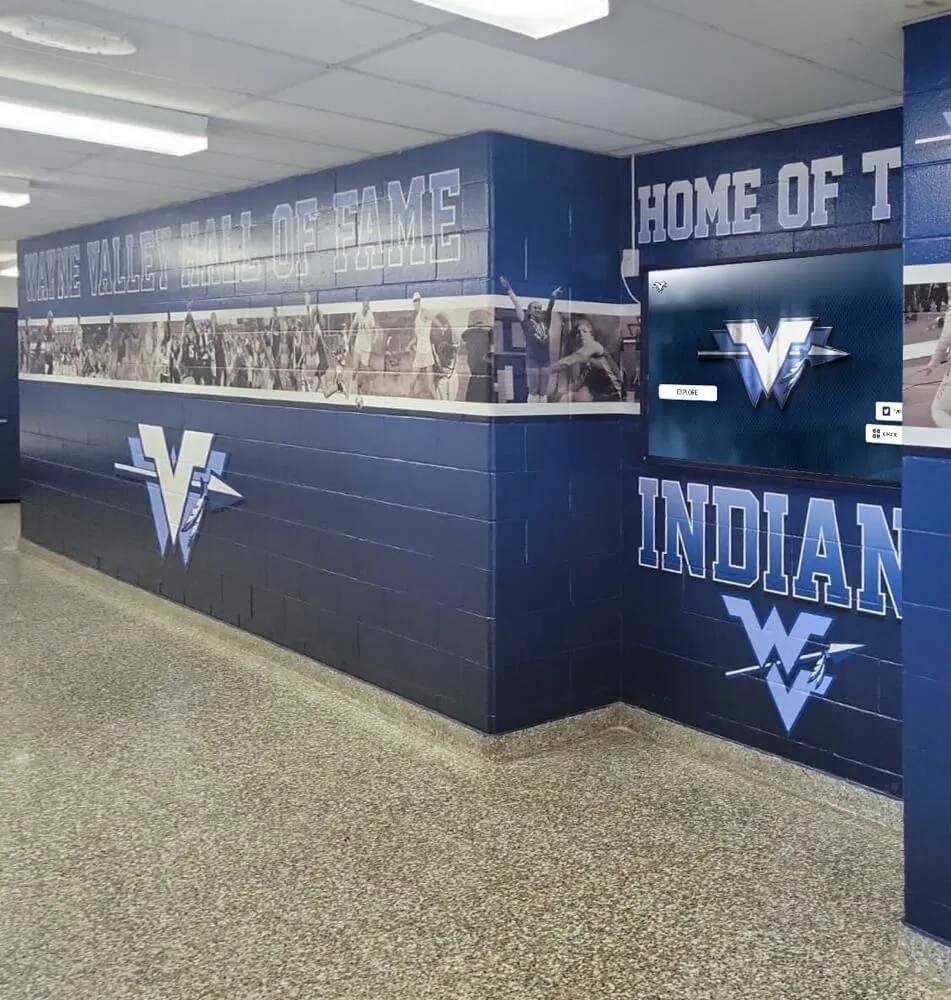
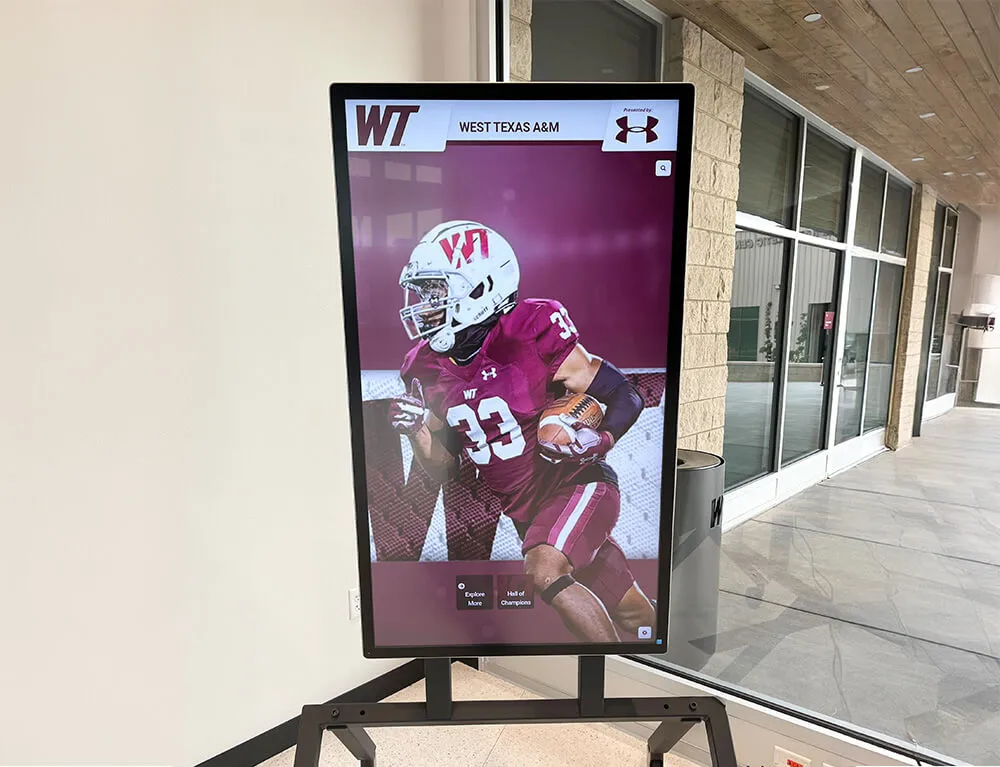
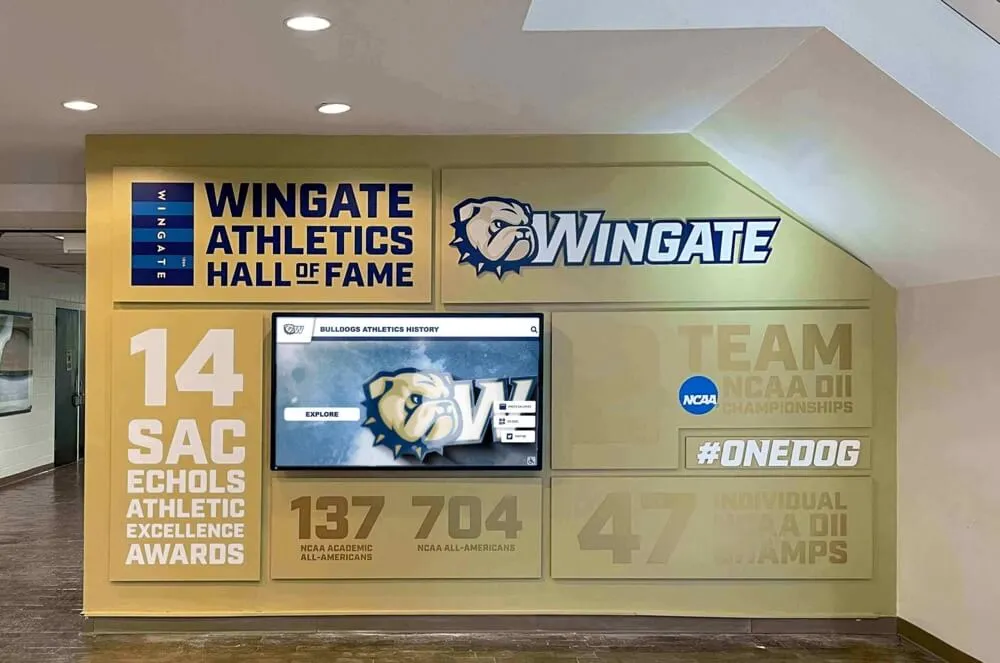
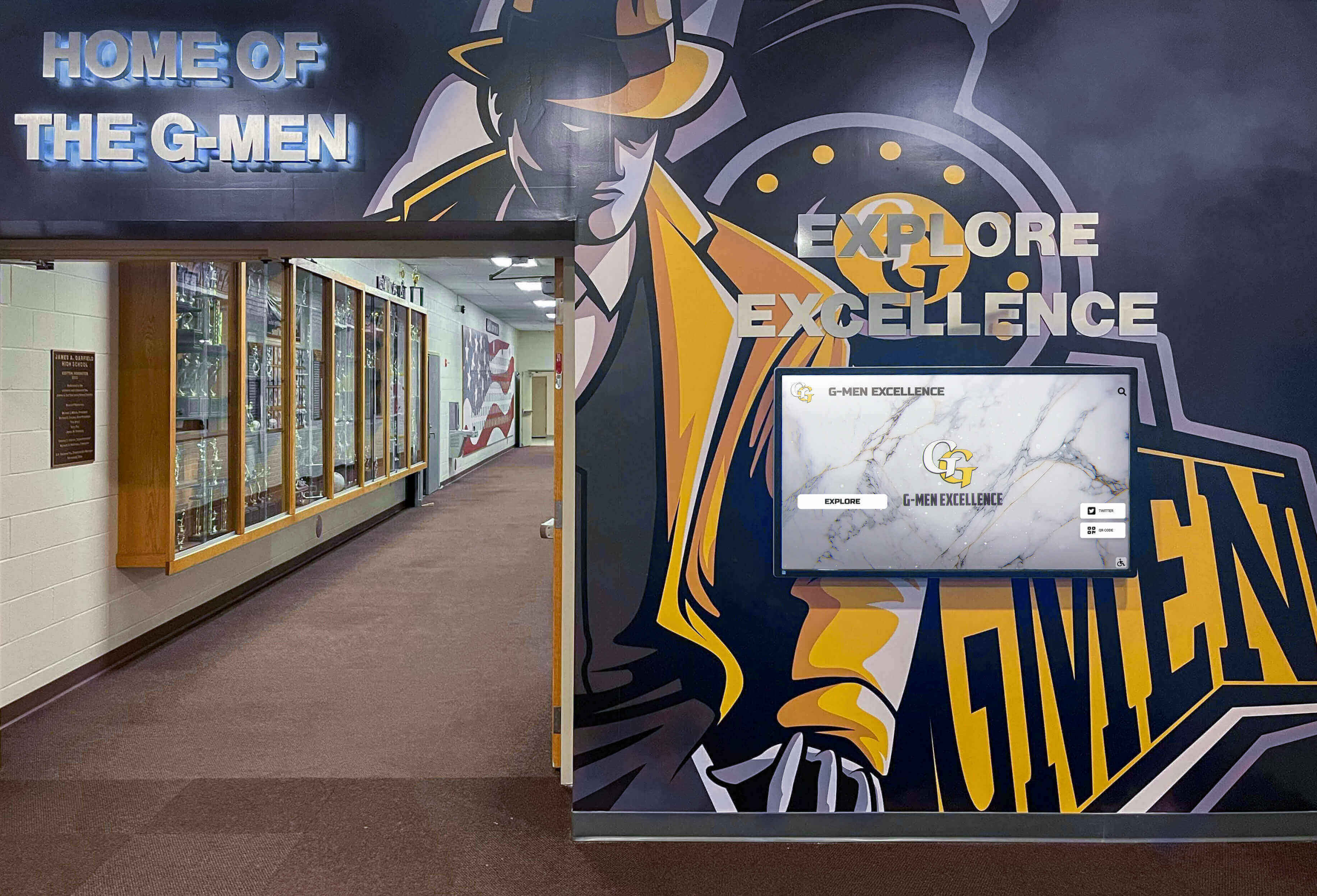
Rocket Alumni Solutions builds digital record boards, interactive hall of fame displays, and touchscreen recognition walls specifically for high school and collegiate athletic programs. The system automatically ranks record holders, maintains historical archives across sport categories, and surfaces the kind of achievement data that makes pep rally recognition moments feel specific and meaningful rather than generic. When athletic directors can pull a current record board report in two minutes instead of two hours, pep rally planning changes from a logistical challenge into a genuine recognition opportunity.
Give Your Pep Rally Games Something Real to Celebrate
Pep rally games hit differently when they're built around real school records, real athlete achievements, and a recognition system that keeps that data current year-round. Rocket Alumni Solutions helps high school athletic programs build the digital record boards, hall of fame displays, and touchscreen recognition walls that give pep rally programming its teeth—and keep athletic culture alive in the hallways every day between events.
Frequently Asked Questions
How many pep rally games should a high school athletic program plan per rally?
Three to five games across a 30–45 minute rally is the right range. More than five games causes individual activities to feel rushed; fewer than three risks the rally feeling underplanned. Build in two to three recognition moments between games so the event balances competition with honoring athletes.
How do we involve athletes who aren’t comfortable performing in front of the school?
Use games where athletic participation is embedded but not spotlighted individually. Relay competitions where athletes contribute one leg of a larger team effort, stat guessing games where athletes are honored without being called forward, and video tribute formats give athletes recognition without requiring public performance.
What’s the best pep rally game for building excitement before a championship game?
The Record Wall Reveal and the Championship Banner Countdown are both purpose-built for this situation. They connect the upcoming competition to the program’s historical stakes, making the rally feel like part of the preparation process rather than a distraction from it.
How do we make pep rally recognition feel meaningful rather than routine?
Specificity is everything. “Our girls’ basketball team is having a great season” lands differently than “Emily Rodriguez hit 500 career points at Tuesday’s game—the 12th player in program history to reach that milestone.” Pull specific numbers, specific names, and specific context. That specificity comes from systematic record-tracking that an always-current digital record board provides automatically.