



When a school’s Odyssey of the Mind team returns from a state tournament — carrying a trophy, a stack of judge scoresheets, and the kind of exhausted pride that only comes from months of creative work — what happens next? For too many programs, the answer is a brief announcement over the intercom and a photo on the school’s social media page that disappears in 48 hours. The team scrapbooks the programs, the coaches move on to next year’s problem, and the achievement fades from institutional memory before the next school year begins.
That gap between what OM teams earn and what schools choose to celebrate is both a recognition failure and a missed opportunity. Odyssey of the Mind is one of the most demanding academic competitions available to K–12 students — requiring creative problem solving, technical construction, theatrical performance, and the mental stamina to improvise under pressure — yet recognition programs at most schools treat it as an afterthought compared to athletics or even standard honor roll displays.
Why Odyssey of the Mind Recognition Matters
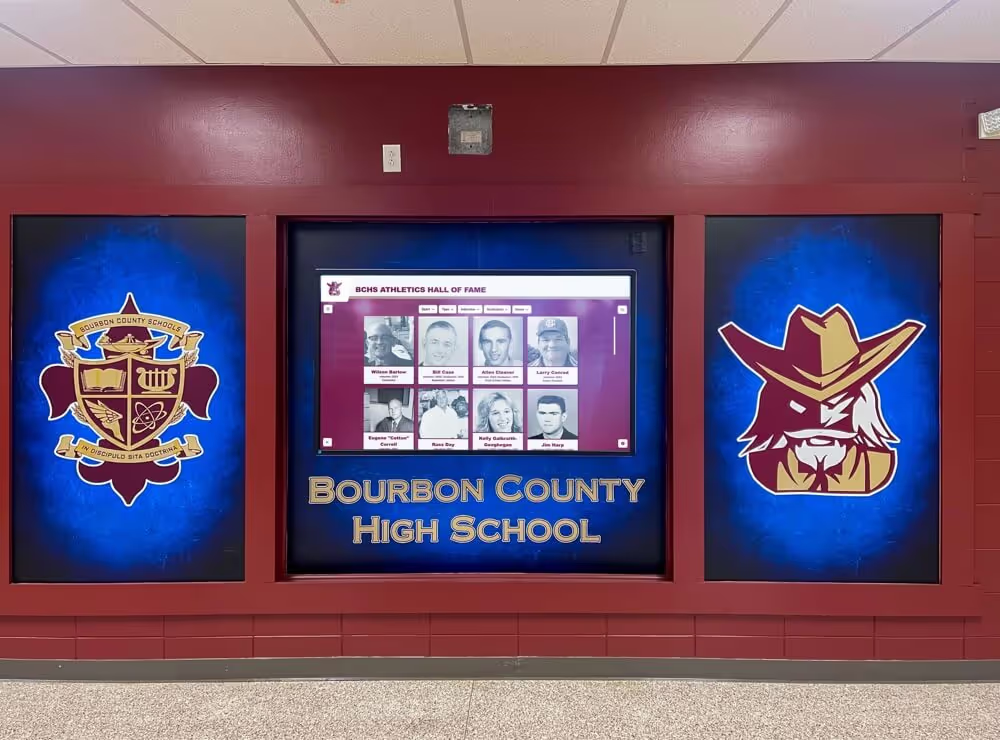
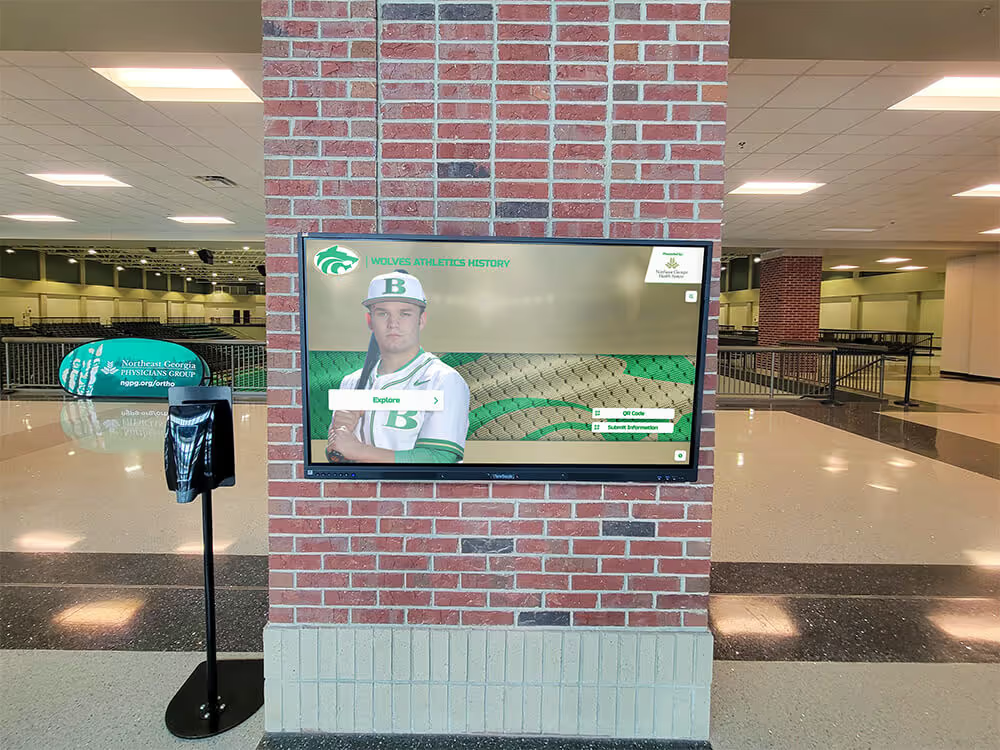
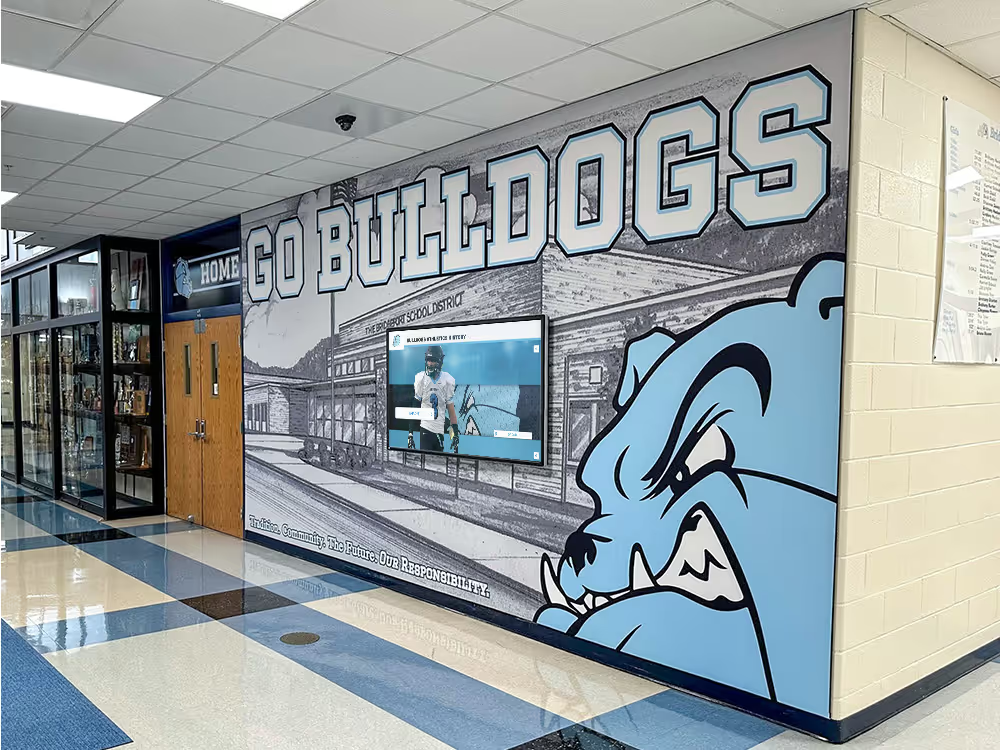
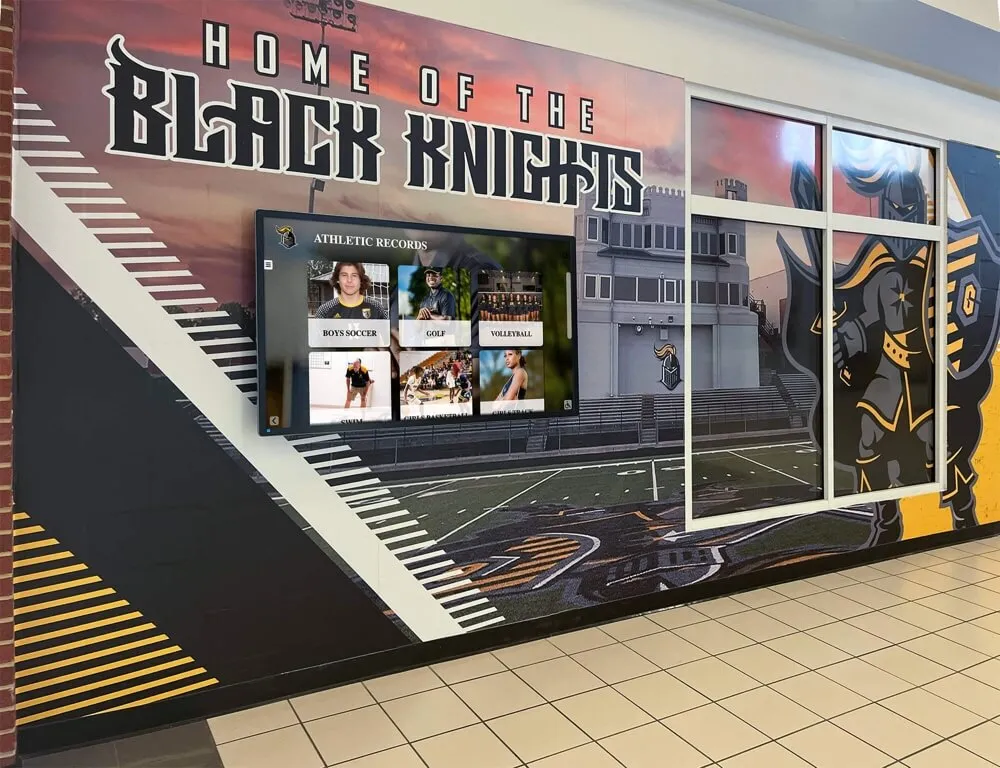
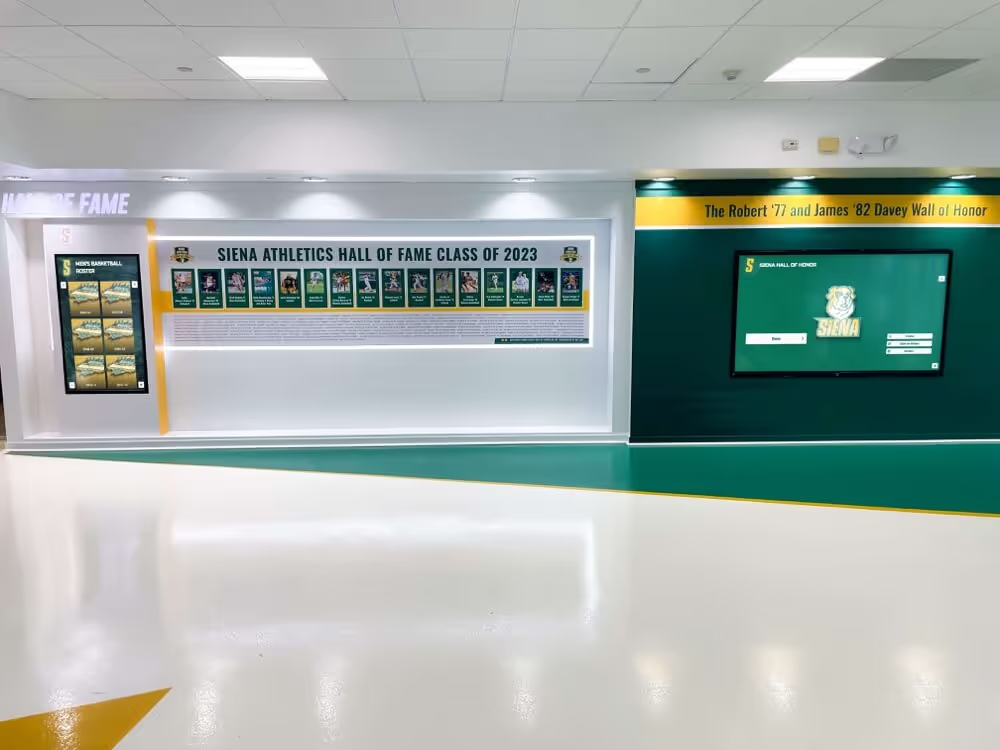
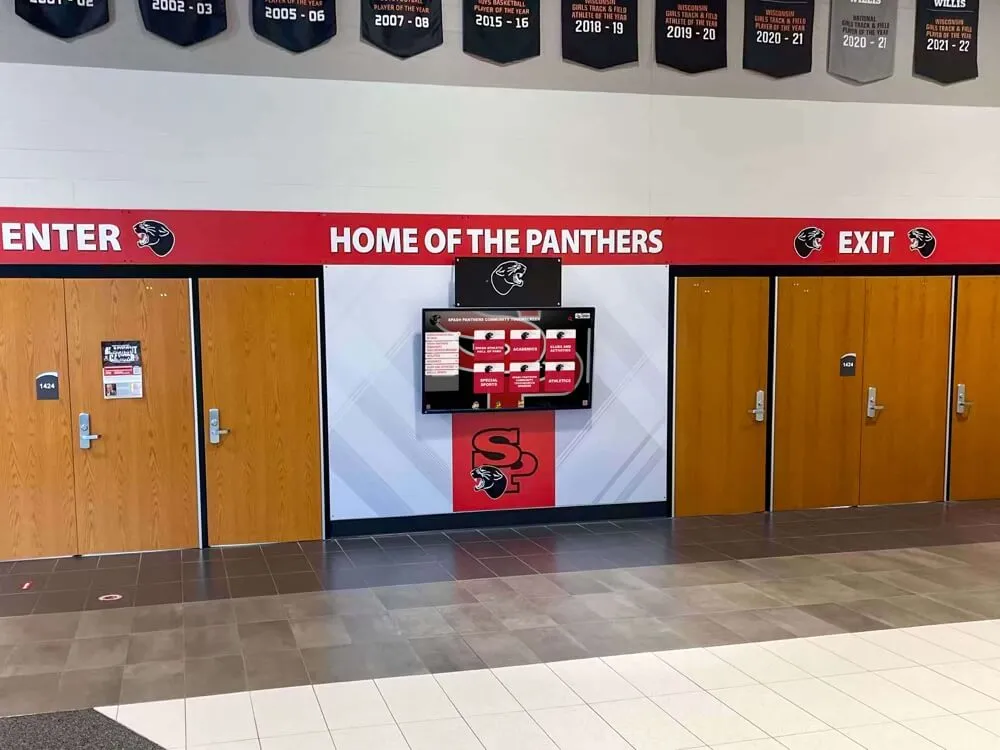
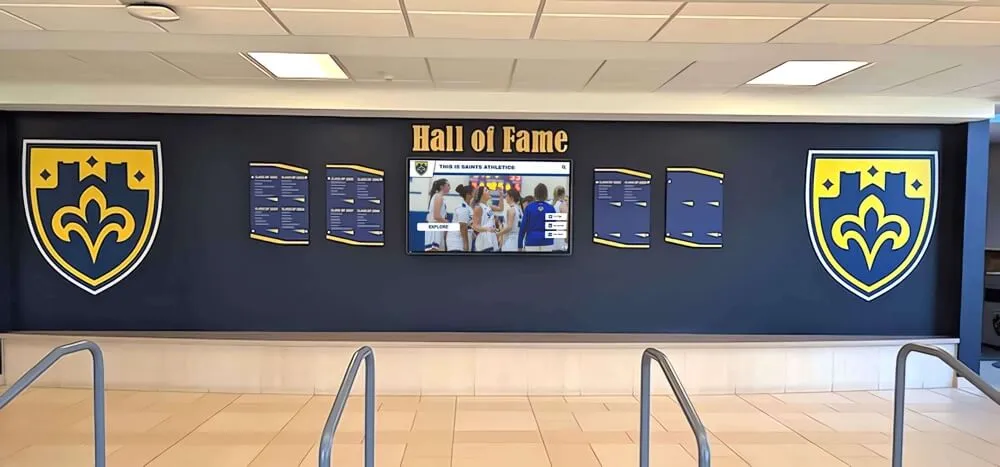
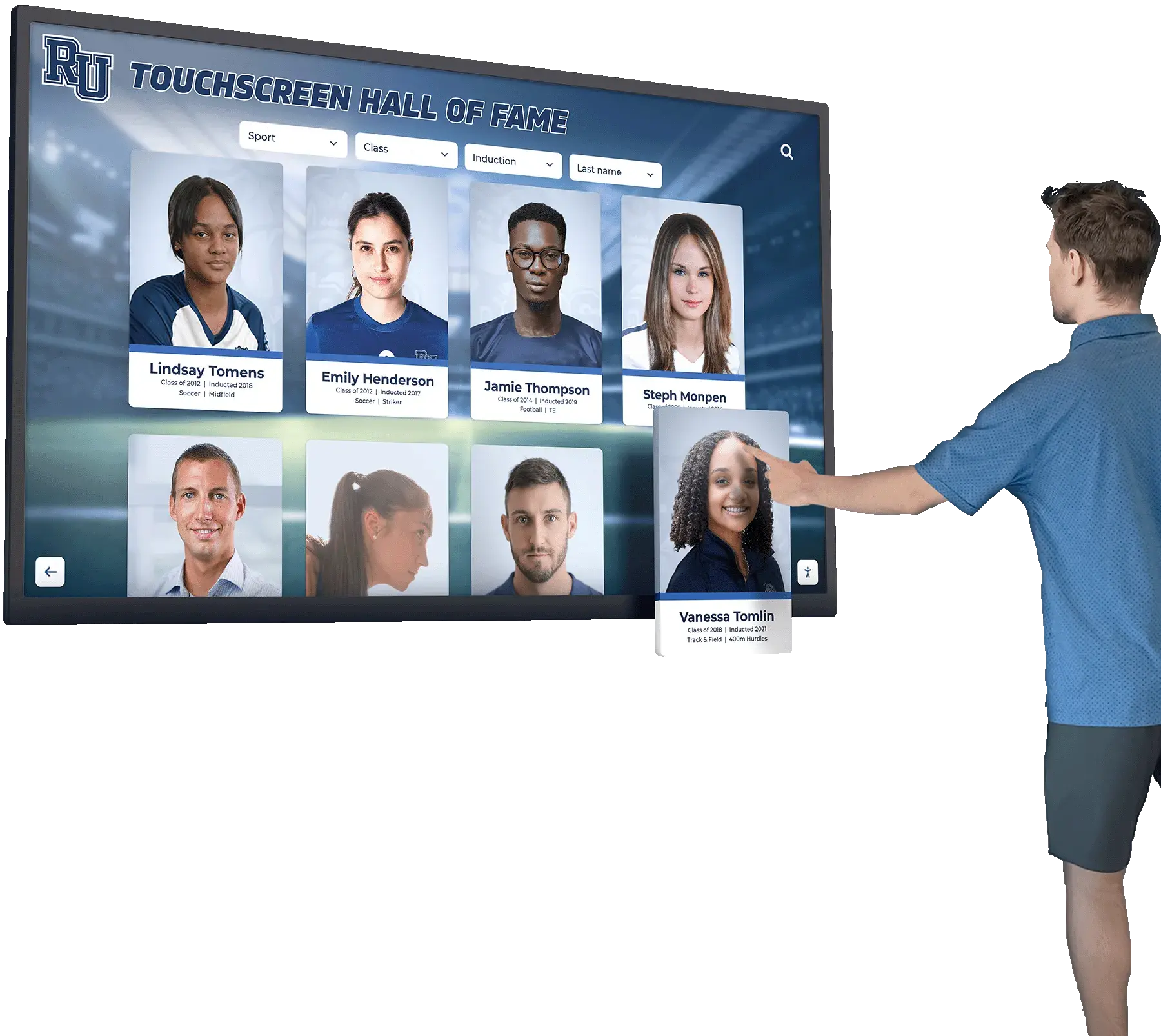
Odyssey of the Mind teams invest months developing original solutions to complex long-term problems, then compete through regional, state, and world-level tournaments. Comprehensive recognition programs that document these achievements — through permanent digital displays, trophy case features, and interactive showcases — validate student creativity while inspiring the next generation of problem solvers. Schools using recognition platforms like Rocket Alumni Solutions can honor OM achievement with the same prominence traditionally reserved for athletic championships.
What Is Odyssey of the Mind?
Odyssey of the Mind is a nonprofit creative problem-solving program for students from kindergarten through college. Founded in 1978 by Sam Michalko at what is now Rowan University in New Jersey, the program challenges teams of up to seven members to select from a set of long-term problems at the start of each season, then spend months developing and rehearsing an original solution to present at competition.
The program operates on a principle that distinguishes it from most academic competitions: outside assistance is strictly prohibited. Teams must design, build, write, and perform their solutions entirely on their own. Coaches can ask questions and facilitate the process, but the intellectual and creative work belongs entirely to the students.
The Long-Term Problem Structure
Each season, Odyssey of the Mind releases five to six long-term problems covering distinct domains. A typical season might include:
Technical/Vehicle Problems: Teams design, build, and operate a self-propelled vehicle that performs specific tasks within a defined performance space.
Structure Problems: Teams build a balsa wood structure meeting precise weight and dimensional constraints, then test it under load. Judges measure creativity and style alongside structural performance.
Performance/Classics Problems: Teams create an original theatrical presentation, often reimagining a classic literary work or historical scenario with entirely original dialogue, costumes, and staging.
Humor and Verbal Problems: Some problems emphasize comedic performance, requiring teams to script and stage an original humorous piece meeting specific thematic requirements.
Every problem includes Style points — awarded for the creative, artistic, and theatrical elements teams incorporate independently of the core solution requirements. Style frequently determines placement when scores are close, rewarding teams that commit to creative vision rather than purely technical execution.
The Spontaneous Component
Alongside the long-term problem, every competing team faces a spontaneous problem at tournament — an unpredictable challenge presented on-site that teams must solve in real time, typically within five minutes, with no preparation allowed. Spontaneous problems test divergent thinking, verbal creativity, and team communication under genuine time pressure.
The combination of months-long technical preparation and in-the-moment creative improvisation gives Odyssey of the Mind its unique profile. Success requires both sustained disciplined effort and rapid adaptive thinking — qualities that deserve recognition equal to athletic or academic achievement.
Tournament Structure: Regional Through World Finals
OM competitions progress through a tiered structure familiar to participants but often opaque to administrators and families unfamiliar with the program:
Regional/Affiliate Tournaments: The entry level for most teams, held locally within state or regional OM associations. Teams compete within their division (Primary, I, II, III, or College/University) and problem category. Top-placing teams advance to state competition.
State Tournaments: Hosted by state OM associations, typically drawing the top finishers from regional competitions. State tournaments determine which teams advance to World Finals.
World Finals: Held annually at a major university campus in the United States, World Finals brings together first-place state teams from across the country along with teams from international OM affiliate programs. Representing dozens of countries, World Finals is the culminating event of the OM season.
Placement at any level — particularly state and world competition — represents a significant achievement. For schools maintaining recognition programs, this tiered structure provides a natural framework for calibrating how prominently achievements are displayed.
The Recognition Gap in Creative Competition Programs
Most schools have established systems for celebrating athletic success: trophy cases in lobbies, championship banners in gymnasiums, record boards tracking performance statistics. Academic recognition programs typically include honor roll displays and national merit scholar walls. But creative competition programs like Odyssey of the Mind exist in a recognition gap.
OM trophies frequently end up in classroom corners rather than main display cases. Team photos get posted to a bulletin board outside the science wing, then replaced by a fundraiser flyer six weeks later. The institutional memory of a team that reached World Finals evaporates within a year.
This matters beyond sentiment. Students who invest months in creative problem solving and achieve competitive success need to see their accomplishments treated as institutional achievements — not personal mementos stored in a coach’s closet. Without lasting recognition, OM programs struggle to build the kind of multi-year culture that allows teams to grow, learn from previous cohorts, and sustain program momentum.
Resources on team recognition strategies that celebrate group achievement show how schools create systems that honor intellectual and creative achievement with the same visibility historically reserved for athletics.
How Schools Currently Display OM Tournament Achievements
Schools that do invest in OM recognition tend to use one of several approaches, each with distinct strengths and limitations.
Physical Trophy Cases and Plaques
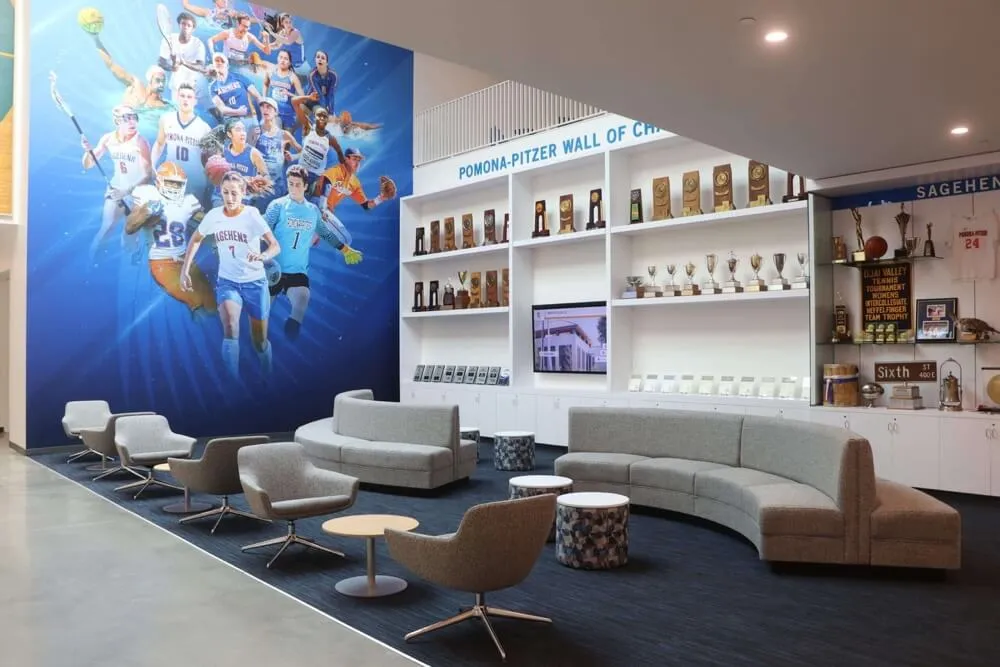
The most traditional approach places OM trophies in existing school display cases alongside athletic hardware. This works reasonably well for schools with ample case space and limited OM history. Trophies from state placements and world finals appearances carry visual weight and immediately communicate competitive success to visitors.
Limitations become apparent quickly:
- Case space is finite and usually already claimed by athletic programs
- Trophies communicate placement but nothing about the work behind the achievement — the problem, the solution approach, the team members, or the creative choices that earned scores
- Physical cases require manual updates and offer no searchable history
- Teams from five or ten years ago disappear entirely once case space fills
Engraved plaques solve the space issue slightly but face the same content limitation — names and years, nothing more.
Bulletin Boards and Paper-Based Recognition
Dedicated bulletin boards featuring team photos, problem descriptions, and competition results give OM achievement some visibility without requiring trophy case real estate. Many coaches maintain these themselves, posting photos from tournament weekends and updating results as the season progresses.
The problem is durability. Bulletin boards turn over on school communication cycles, and paper displays fade, tear, and eventually get replaced. The team that won state in 2019 has no more presence in the hallway than last week’s cafeteria menu.
Program Websites and Social Media
Many OM programs maintain social media presence or dedicated pages on school websites, posting photos and results in near real-time during tournament season. This approach is low-cost and reaches families effectively during active competition.
But websites and social media have the same institutional memory problem as bulletin boards — content ages out, pages go unmaintained when coaches change, and the visual record of program history requires active curation to survive.
Digital Recognition Displays: A Better Framework
Digital recognition platforms designed for educational environments address the core limitations of every traditional approach. Rather than choosing between visibility and permanence, schools can provide both.
A dedicated OM recognition display — or a section within a broader academic achievement display — can hold:
- Every team’s competition history, organized by year and tournament level
- Individual team member profiles across multiple seasons
- Problem descriptions explaining what the team was challenged to solve
- Photos from tournament performances
- Placement results and advancement history
- Video clips from world finals or state competition appearances
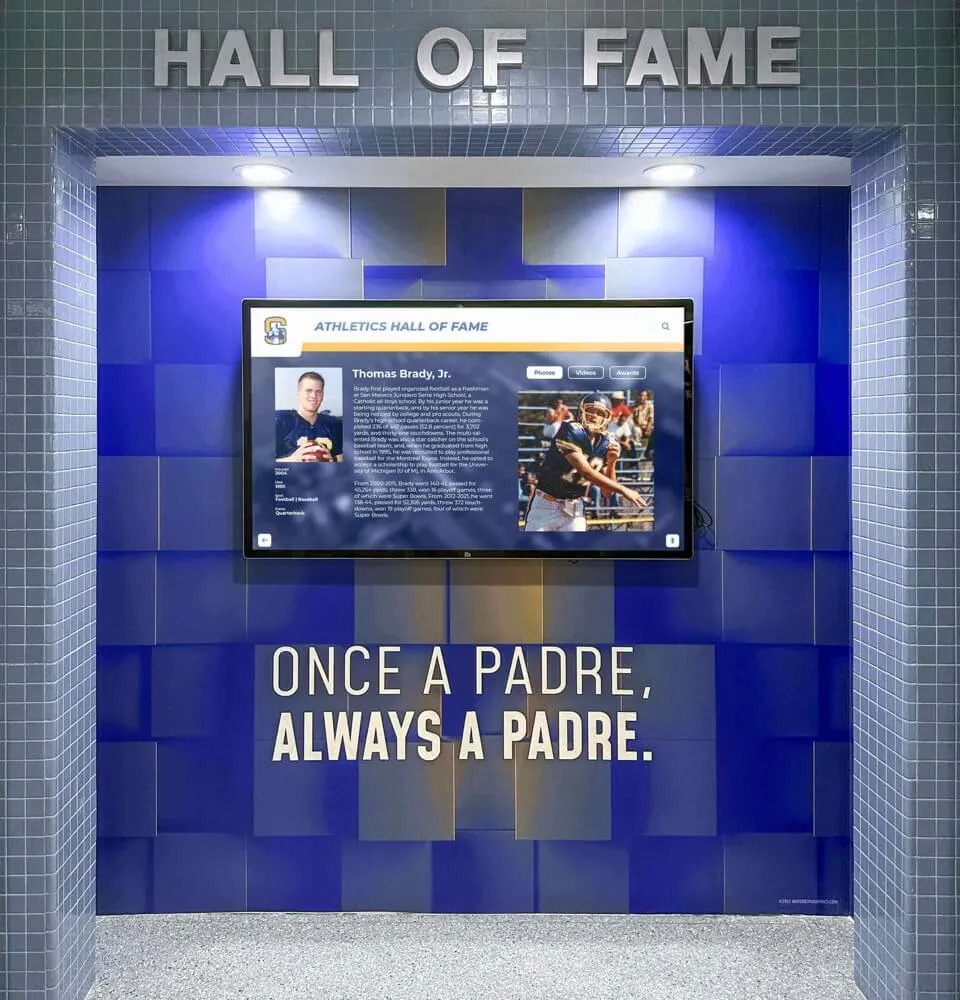
This depth of recognition transforms a static trophy case into an active archive of creative achievement — one that students, families, and visitors can explore interactively.
Building an Odyssey of the Mind Recognition Program
Schools ready to formalize OM recognition should consider a structured approach rather than improvising display elements as trophies accumulate.
Define What Gets Recognized and at What Level
Not every tournament appearance warrants the same recognition. A tiered approach keeps the display meaningful:
Tier 1 — World Finals Appearances: The highest recognition level. Teams reaching World Finals have won their state tournament, placing them among the top programs in their state. World Finals recognition should receive prominent, permanent placement regardless of final standing at the world level.
Tier 2 — State Tournament Placements: Teams finishing in the top positions at state deserve lasting recognition. Top-three finishes particularly warrant named recognition alongside the team photo and problem category.
Tier 3 — Regional/Affiliate Placements: Advancing from regional competition is an achievement worth documenting, even if it doesn’t carry the same weight as state or world placement. Regional recognition can be organized into a comprehensive program history section.
Tier 4 — Annual Program Participation: Some schools recognize every season’s team as part of broader OM program history, creating a complete archive regardless of competitive outcomes. This inclusive approach acknowledges the creative work even when placements don’t reach the podium.
Guidance on national student recognition programs that complement OM achievement helps schools integrate OM recognition into existing annual frameworks without requiring entirely separate ceremonies.
Capture the Right Content at the Right Time
The window for gathering high-quality content about OM teams is short. Once the season ends and team members disperse, the narrative details that make recognition compelling become much harder to collect. Schools should plan content capture as part of the regular competition season workflow:
At Regional and State Tournaments: Designate someone to photograph the team in competition, during spontaneous, and at the score posting. Action photos and candid moments tell a richer story than posed group shots alone.
Immediately After Competition: Gather brief team member statements while memory is fresh. What was the hardest part of building the solution? What did the team change at the last minute? What was the spontaneous problem like? These details transform a recognition profile from a list of names and a placement number into a genuine story.
Problem Documentation: Photograph the physical components of the long-term solution before dismantling. Structure-problem balsa wood constructions, vehicle problem mechanisms, and prop construction for performance problems are often disassembled after competition. Documentation before teardown preserves a visual record of the technical work.
Coach Perspective: A brief statement from the coach about what made this year’s team distinctive adds institutional voice to team recognition and creates continuity between seasons.
Choose a Recognition Platform That Grows With the Program
For schools with established OM programs spanning multiple years, a digital platform that handles unlimited entries without space constraints offers meaningful advantages over physical display approaches. The most useful platforms for OM recognition share several characteristics:
Searchability: Families should be able to find a specific team member’s name and see all seasons they participated in, including what problems the team worked on and where they placed. Chronological browsing by year and searchable by individual name both matter.
Multimedia Support: A platform that accepts photos and video alongside text allows the performance dimension of OM competition to come through in ways that static text and trophy hardware cannot convey.
Administrative Simplicity: OM coaches are often volunteers or teachers with limited technical bandwidth. Recognition platforms that require minimal IT involvement and allow direct content updates from a web interface or simple CMS are far more likely to stay current.
Long-Term Stability: Recognition programs succeed when they survive personnel transitions. Platforms with cloud hosting, vendor-maintained infrastructure, and clear data portability options protect institutional memory even when coaches change.
A guide to building online high school digital archives with best practices helps administrators evaluate platforms against these criteria before committing to a specific solution.
Connecting OM Recognition to Broader School Culture
Odyssey of the Mind recognition doesn’t need to exist in isolation from other school recognition programs. The most effective institutional displays integrate OM achievement alongside other creative and academic competition recognition — Science Olympiad, academic decathlon, robotics, drama, and debate — creating a comprehensive picture of the school’s intellectual culture.
This integrated approach has several advantages:
Visibility for Non-Athletic Excellence: When students and families navigate a recognition display and see OM achievements alongside state championship banners and honor roll records, it signals that the school values diverse forms of excellence rather than defining achievement narrowly through athletics and GPA alone.
Cross-Program Inspiration: Students who have never heard of Odyssey of the Mind may encounter it through a recognition display and become curious enough to join. Programs with strong recognition visibility reliably see stronger enrollment interest than programs operating below the school’s institutional awareness level.
Alumni Connection: Former OM participants who return to campus or visit school websites can find their team’s season documented and searchable — a small but meaningful expression of institutional memory that strengthens alumni relationships.
Fundraising and Program Support: When booster organizations and parent groups can point to visible, permanent recognition for OM achievements, they have an easier case to make for budget support, travel funding for state and world competitions, and materials stipends for building long-term problem solutions. Exploring booster club fundraising ideas can help OM programs build the community support infrastructure that sustains competitive success year after year.
Understanding school hallway remodeling ideas that boost recognition and engagement helps OM coaches and coordinators develop the narrative content that makes recognition meaningful rather than merely informational.
Practical Display Options for Different School Contexts
Not every school needs the same recognition infrastructure. The right approach depends on program history, available space, institutional context, and budget.
For Schools New to Formal OM Recognition
Start with what exists. If your school has OM trophies in storage, a physical display case feature in the main lobby — labeled specifically as Odyssey of the Mind achievements and organized by year — creates immediate visibility without requiring new technology investment.
Pair the physical display with a dedicated web page documenting program history. Even a simple page on the school website listing team members, problem categories, and placement results by year provides searchable institutional memory that survives bulletin board turnover.
For Programs With Multi-Year History
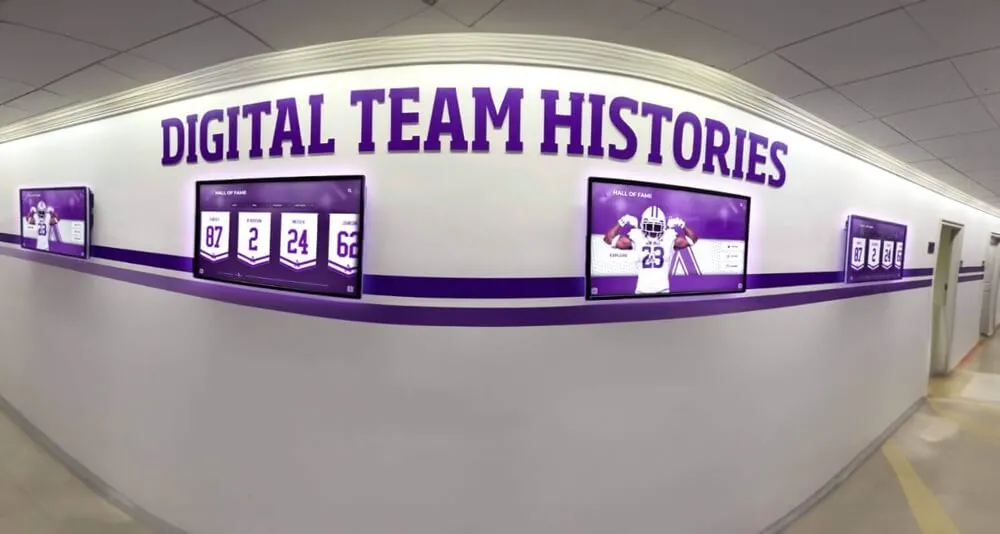
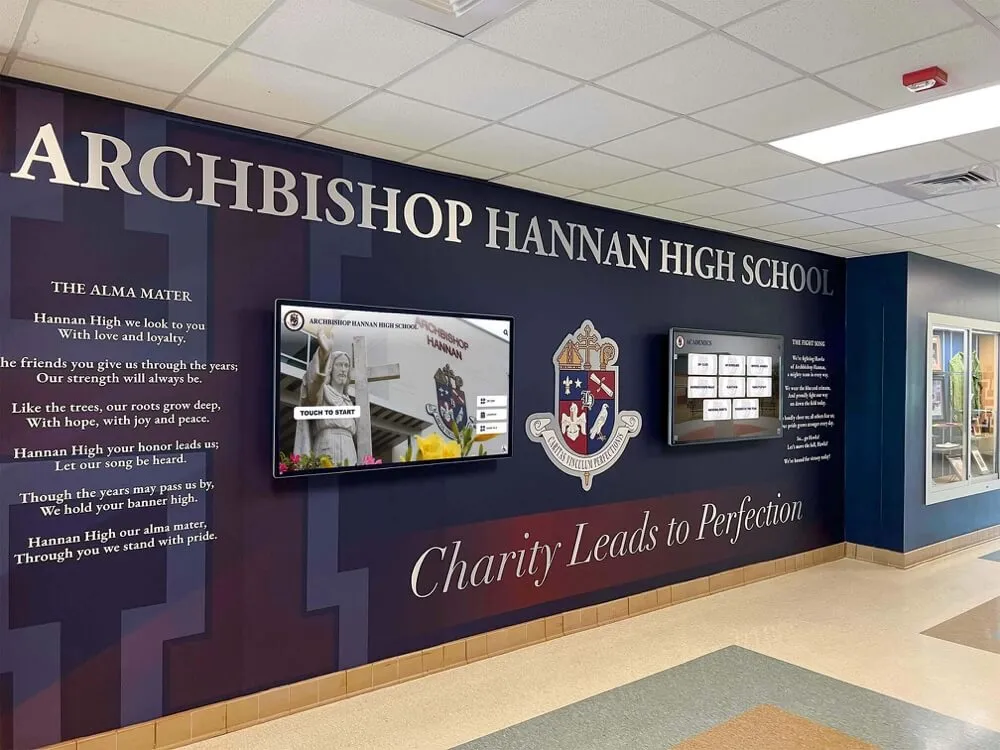
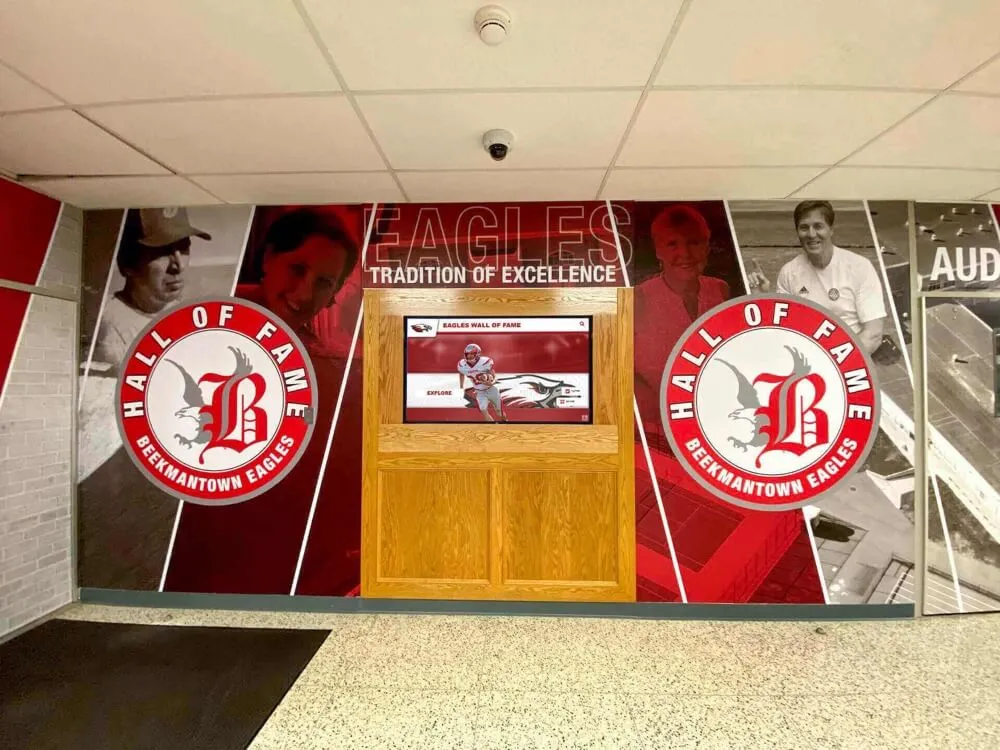
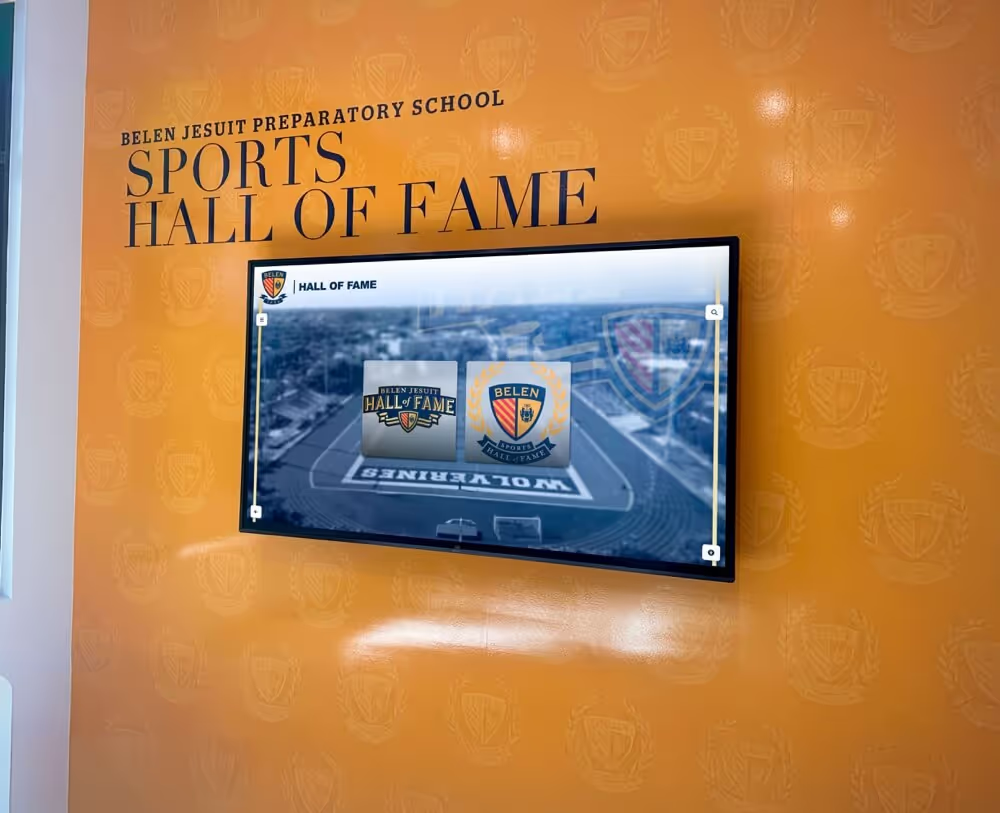
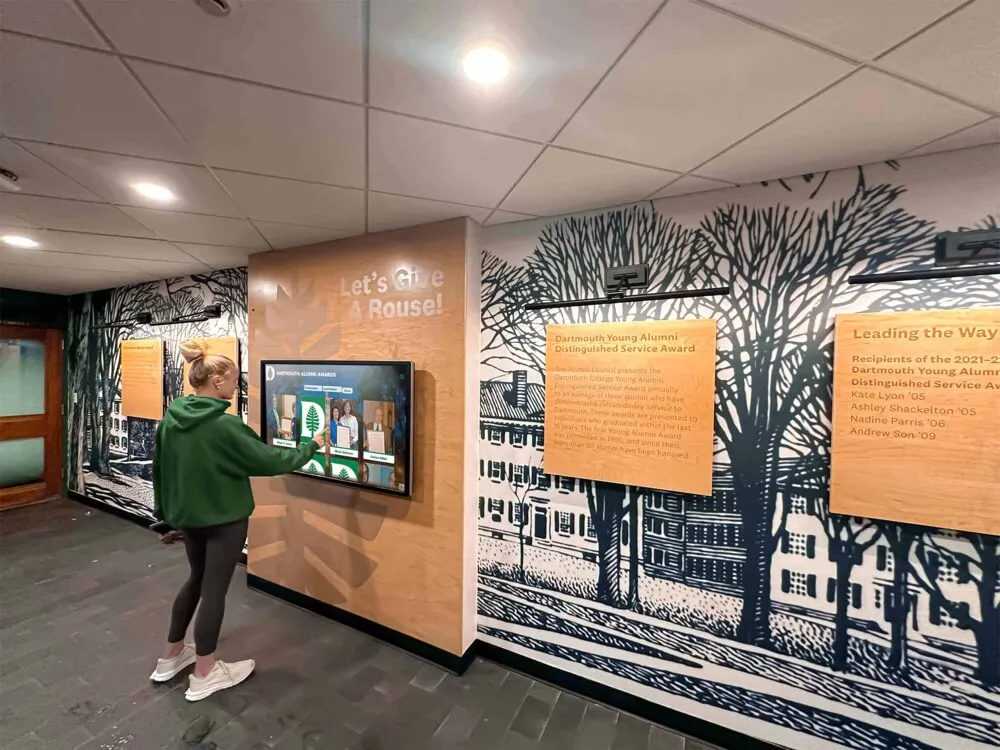
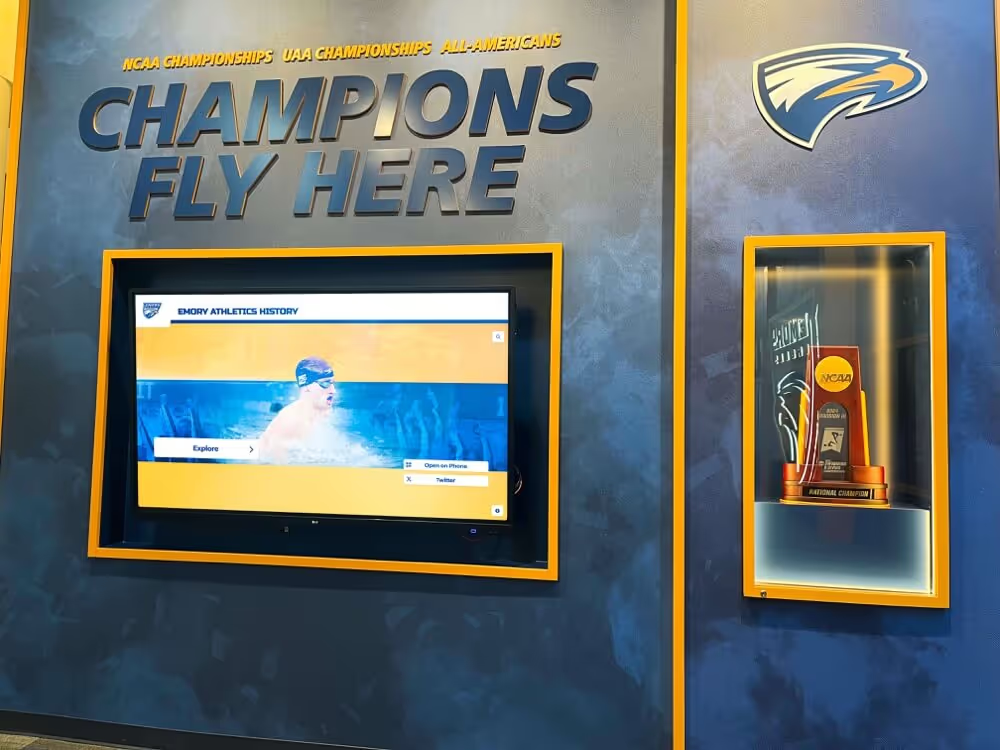
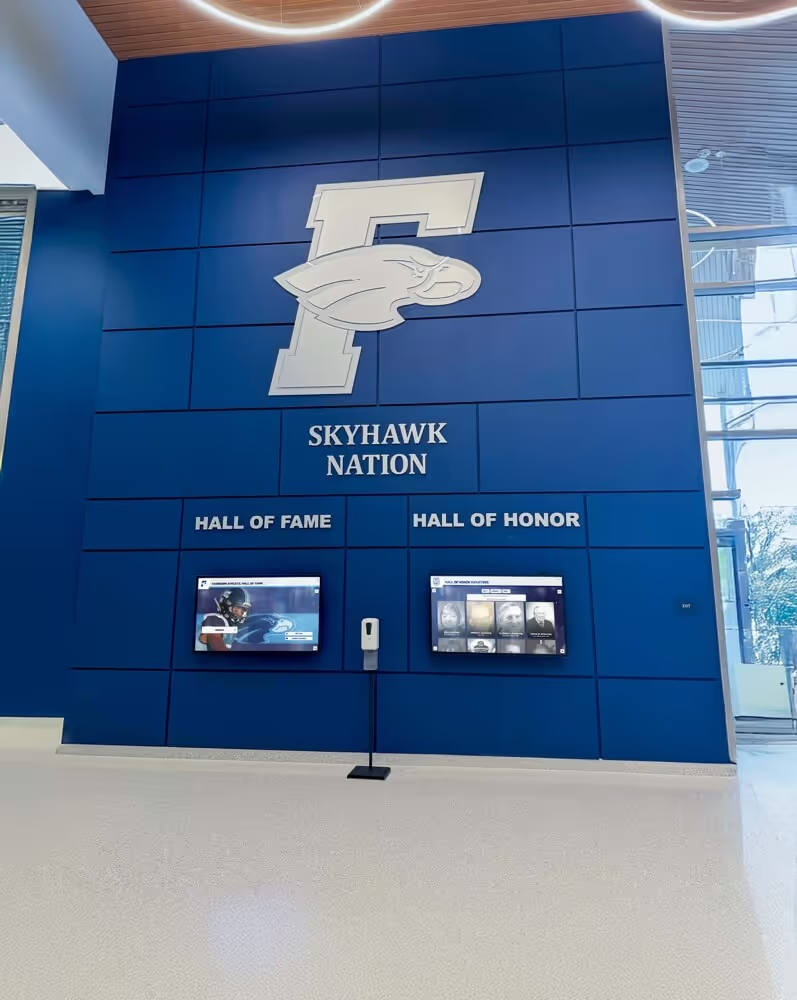
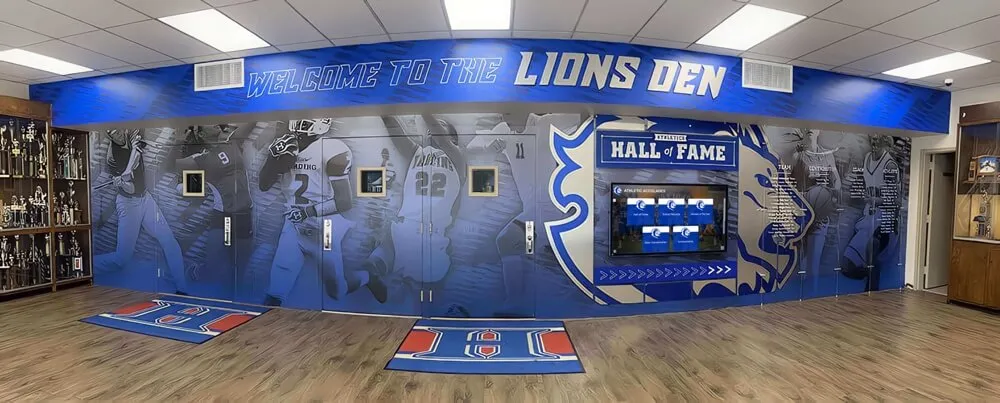
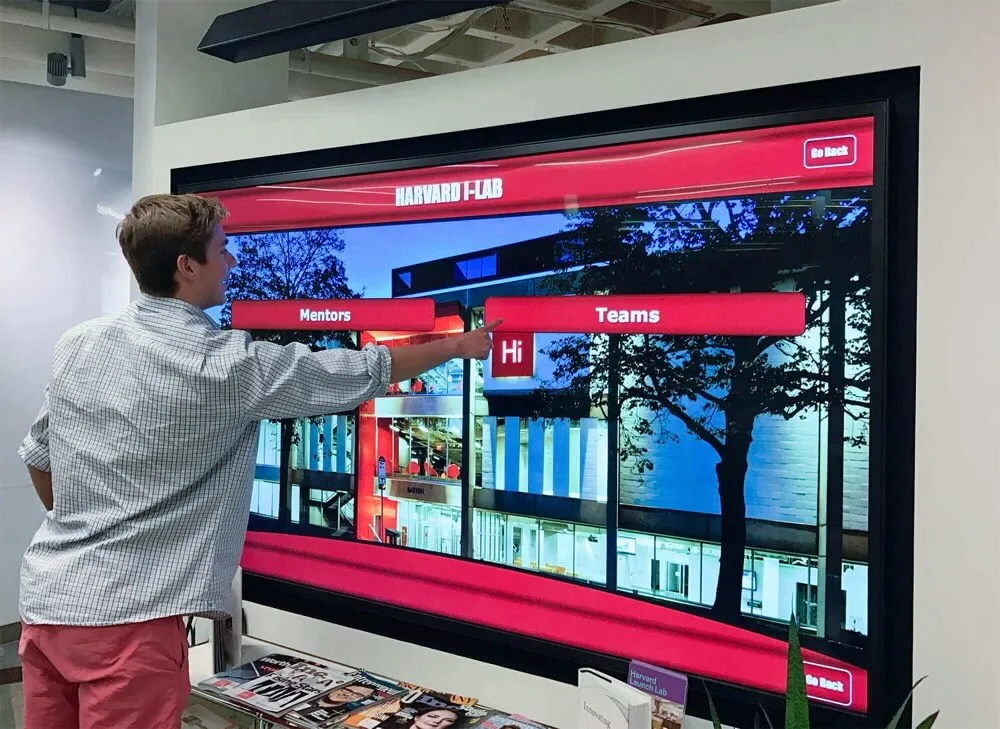
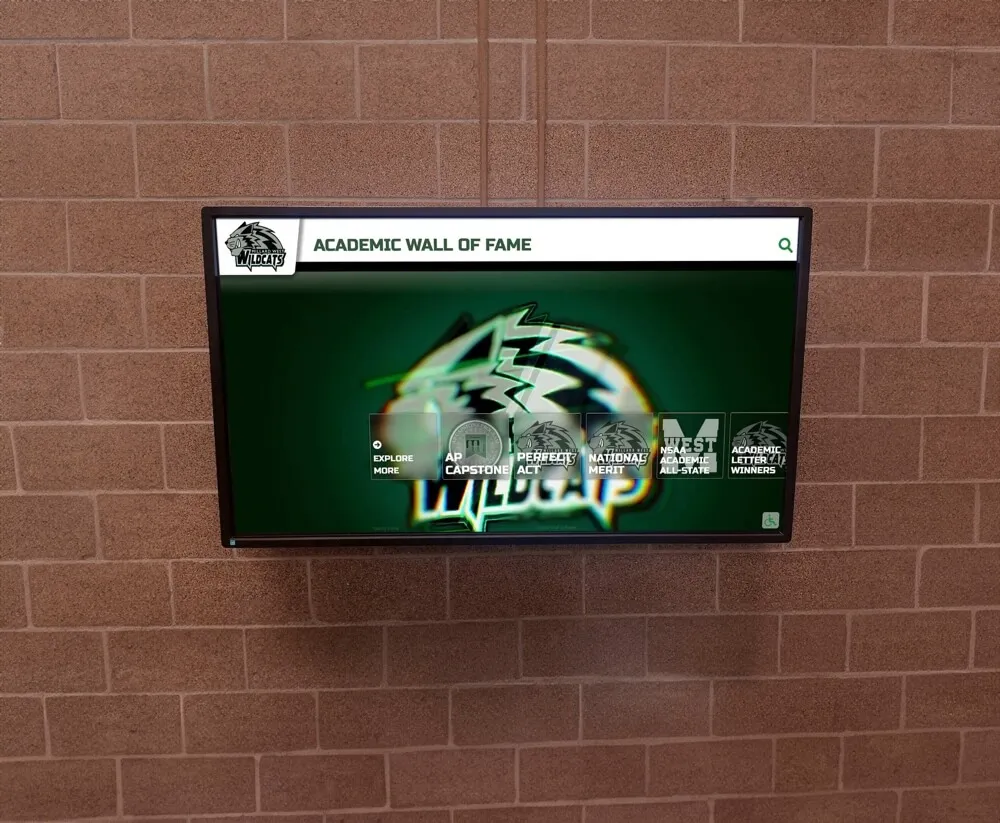
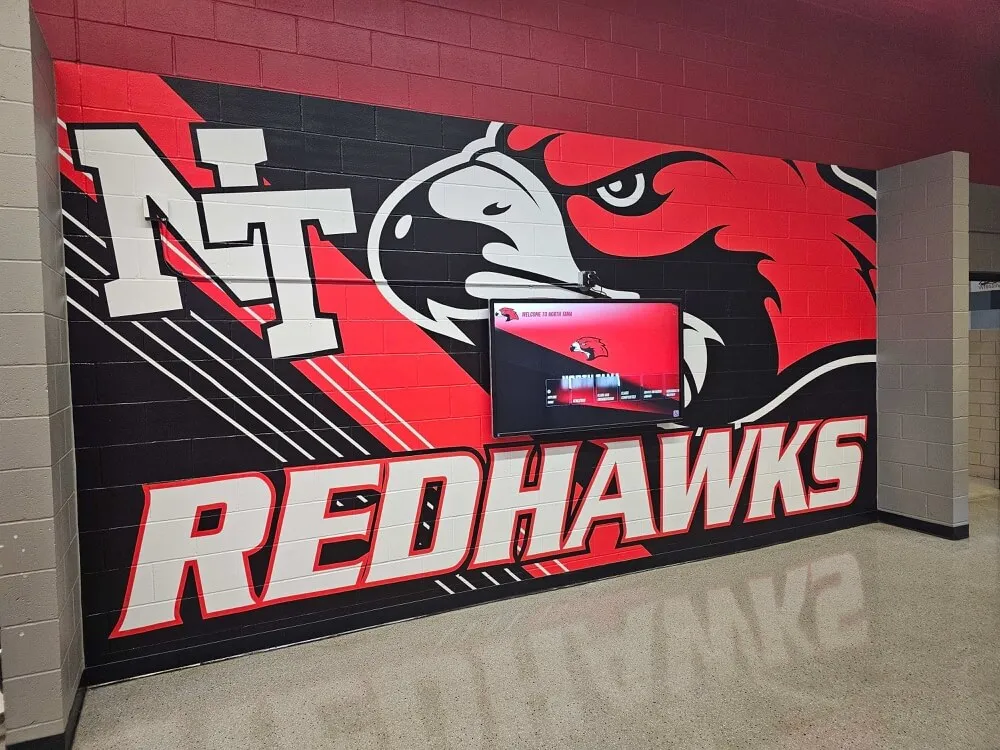
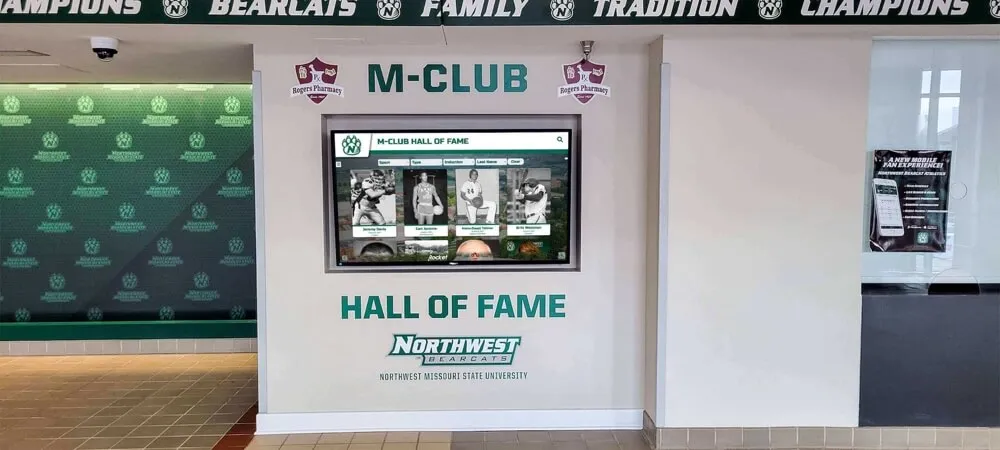
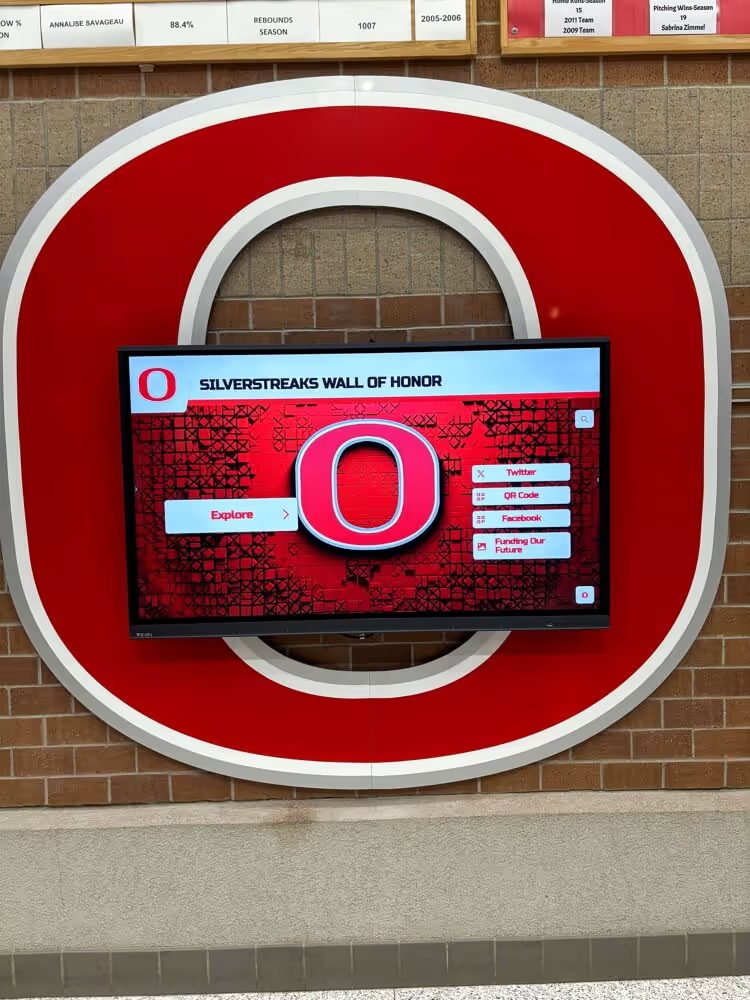
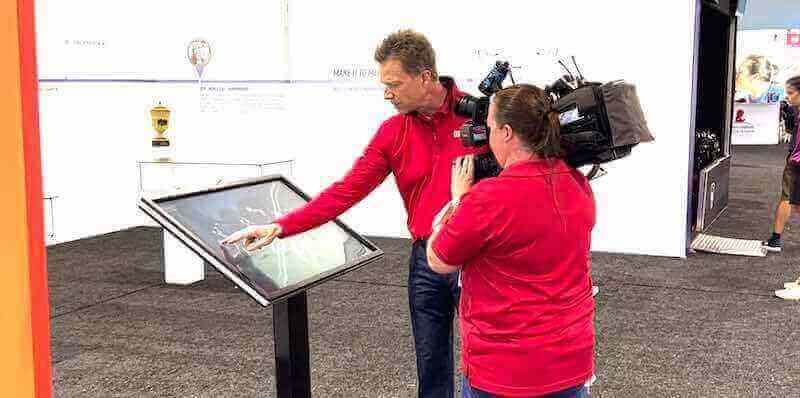
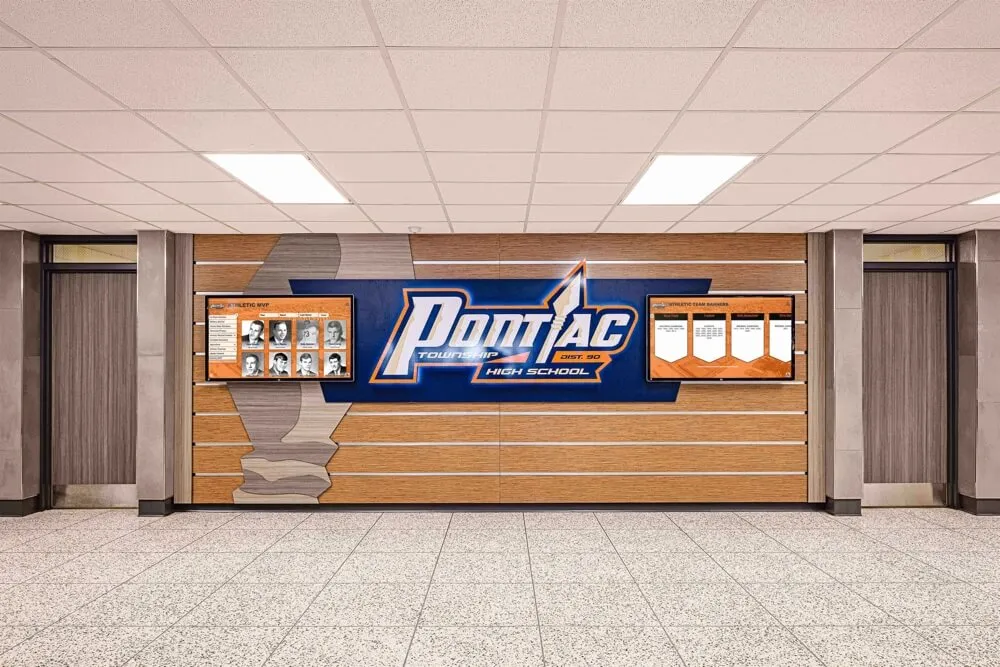
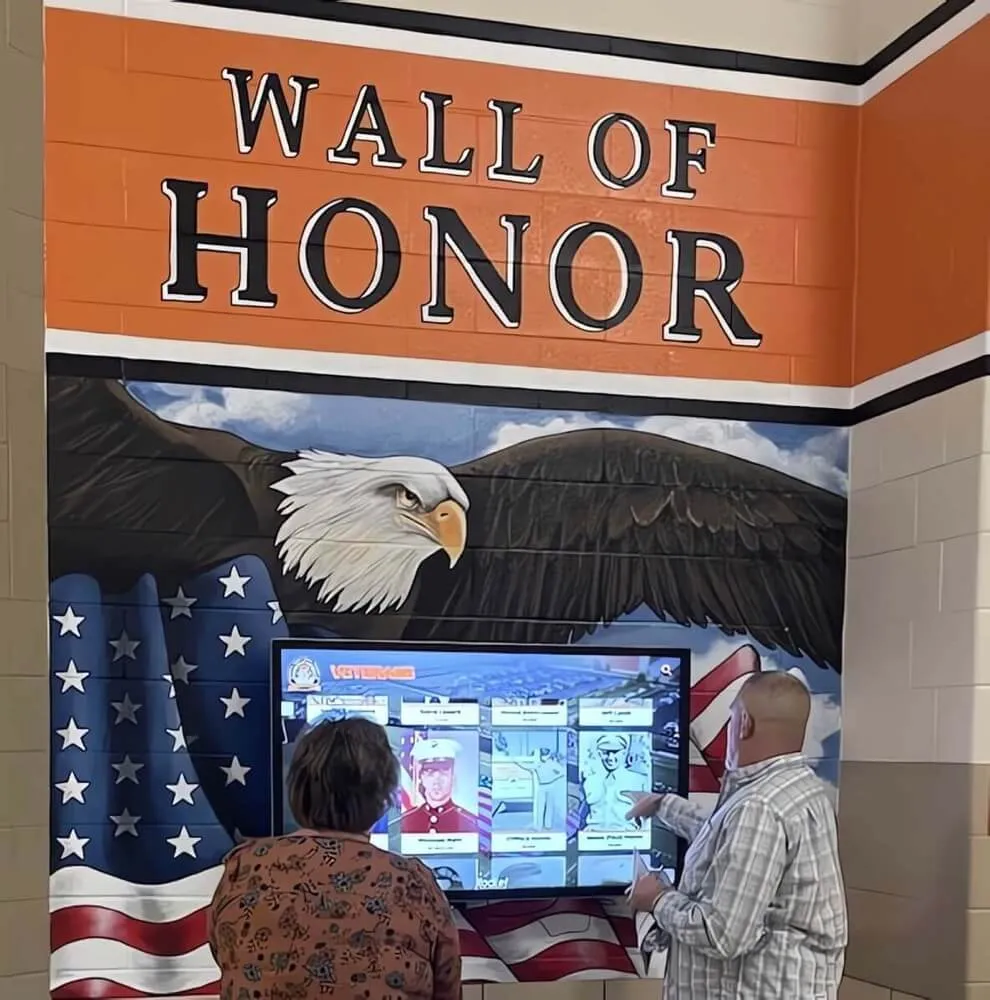
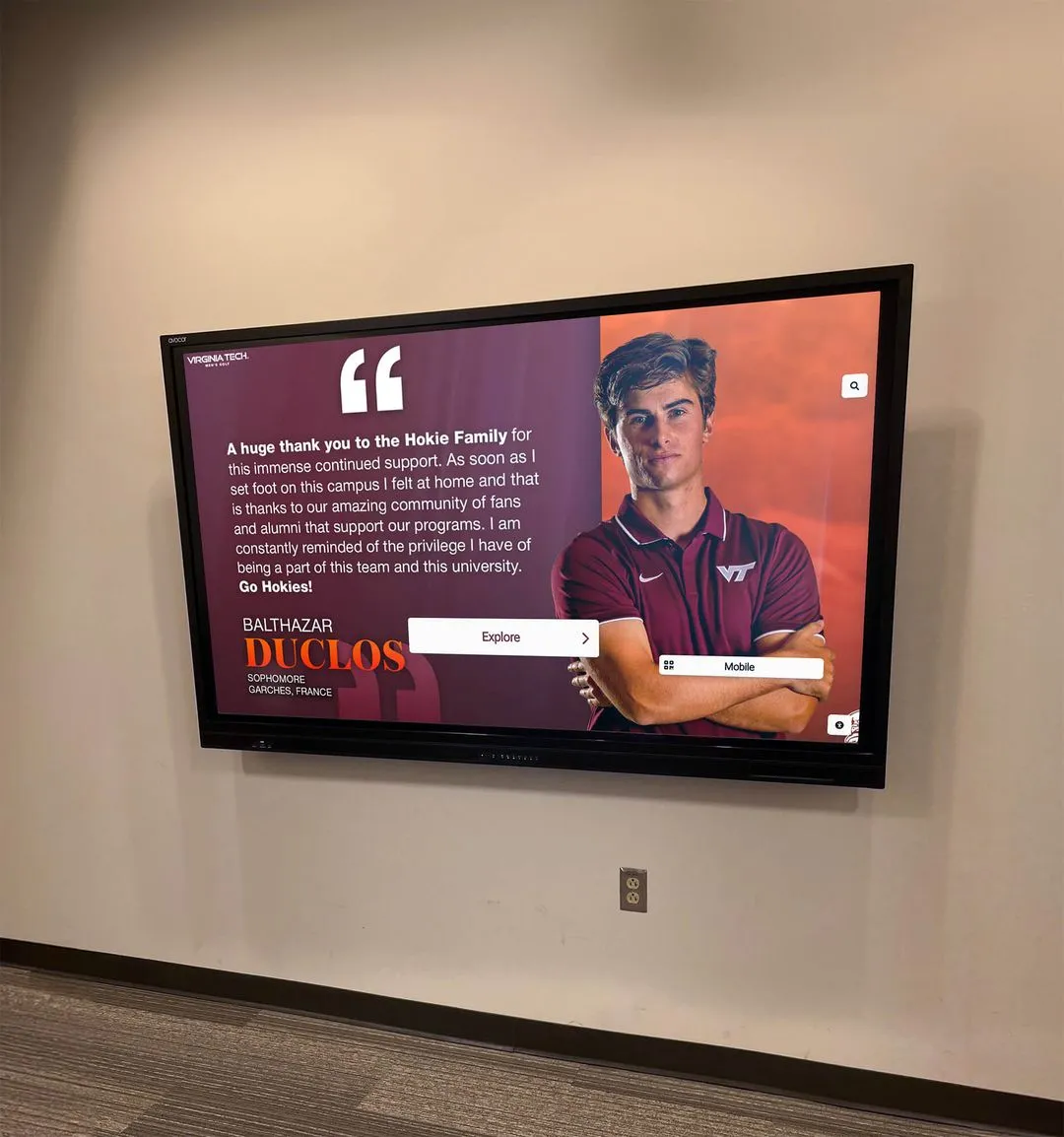
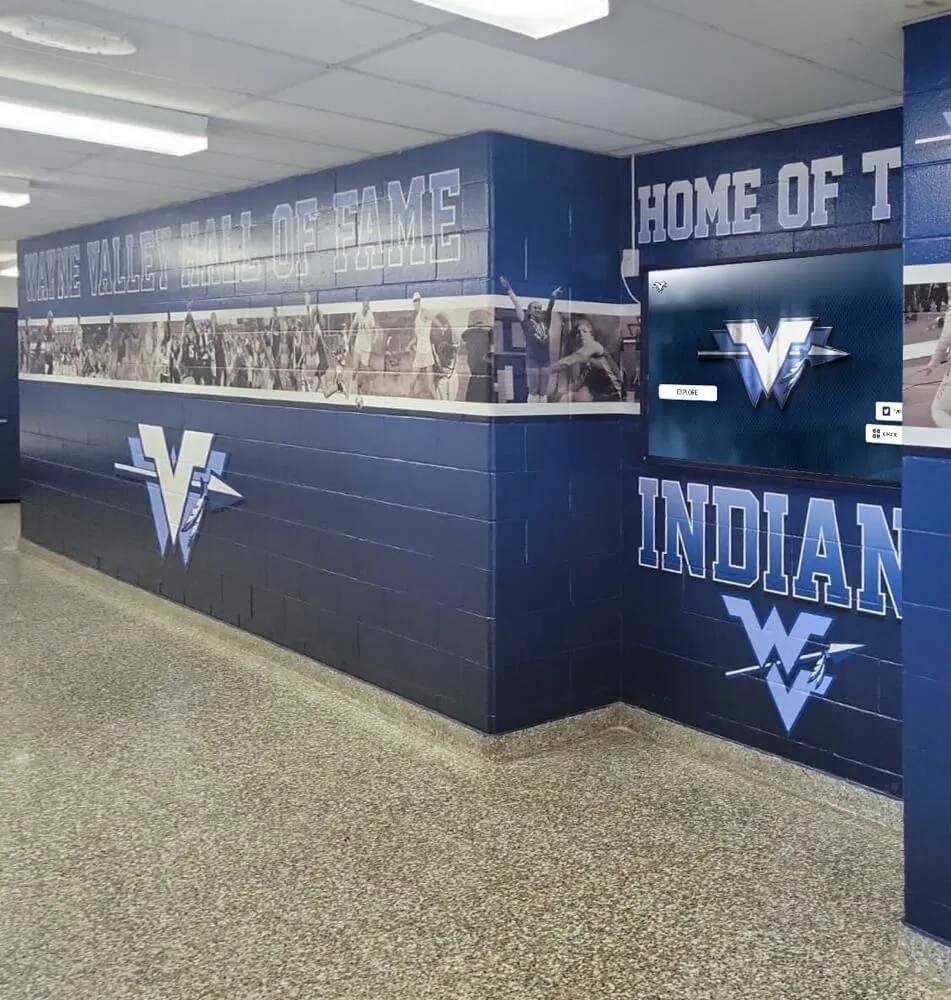
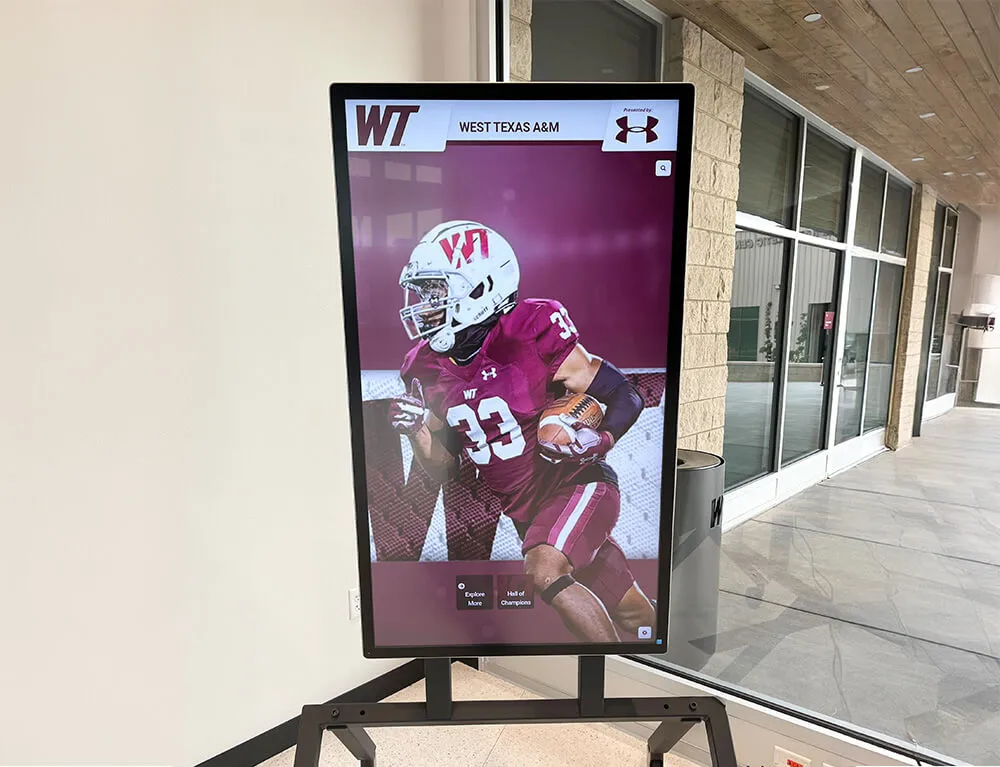
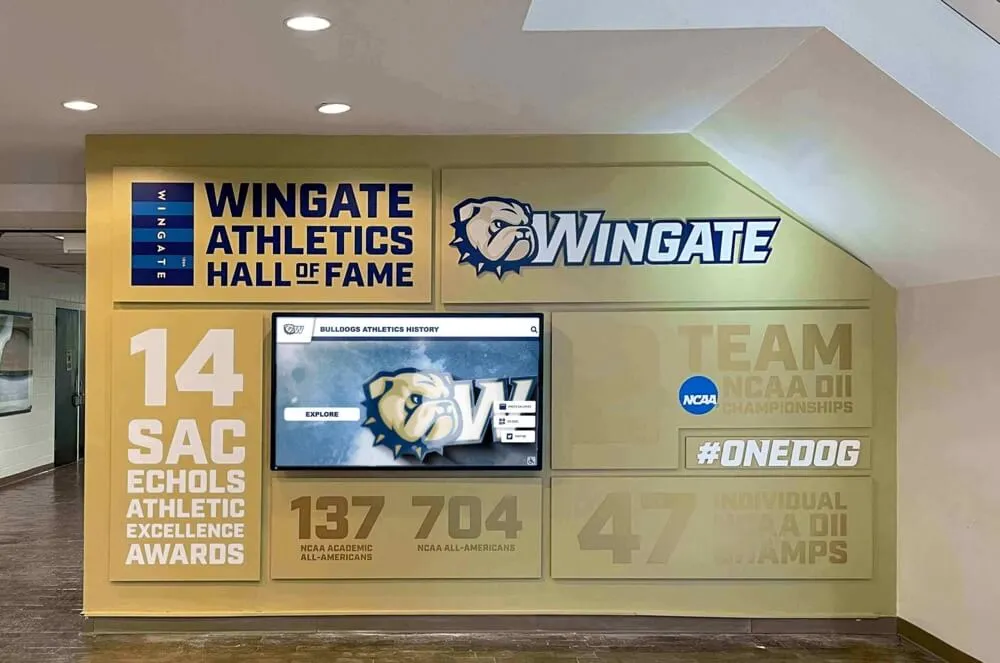
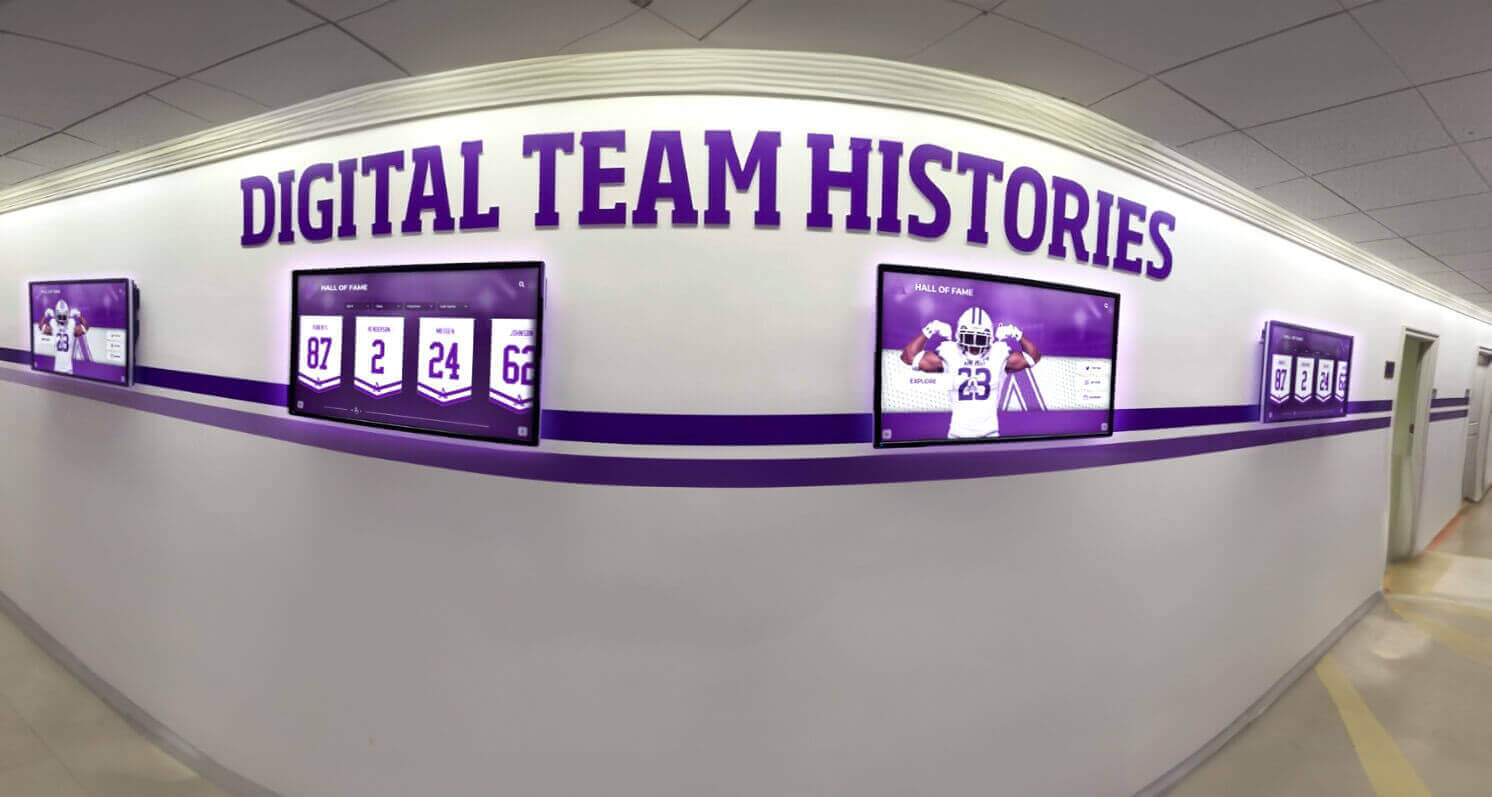
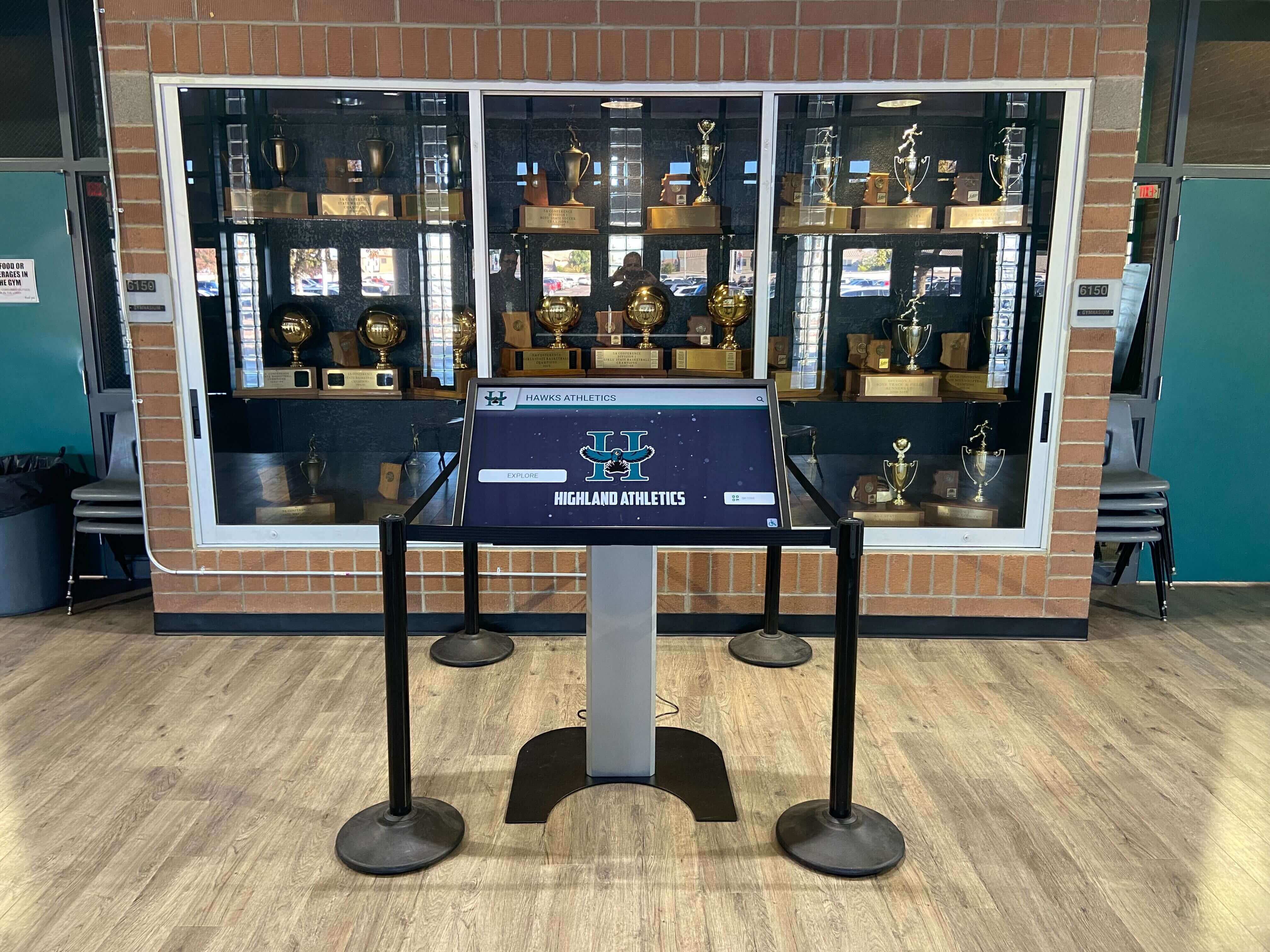
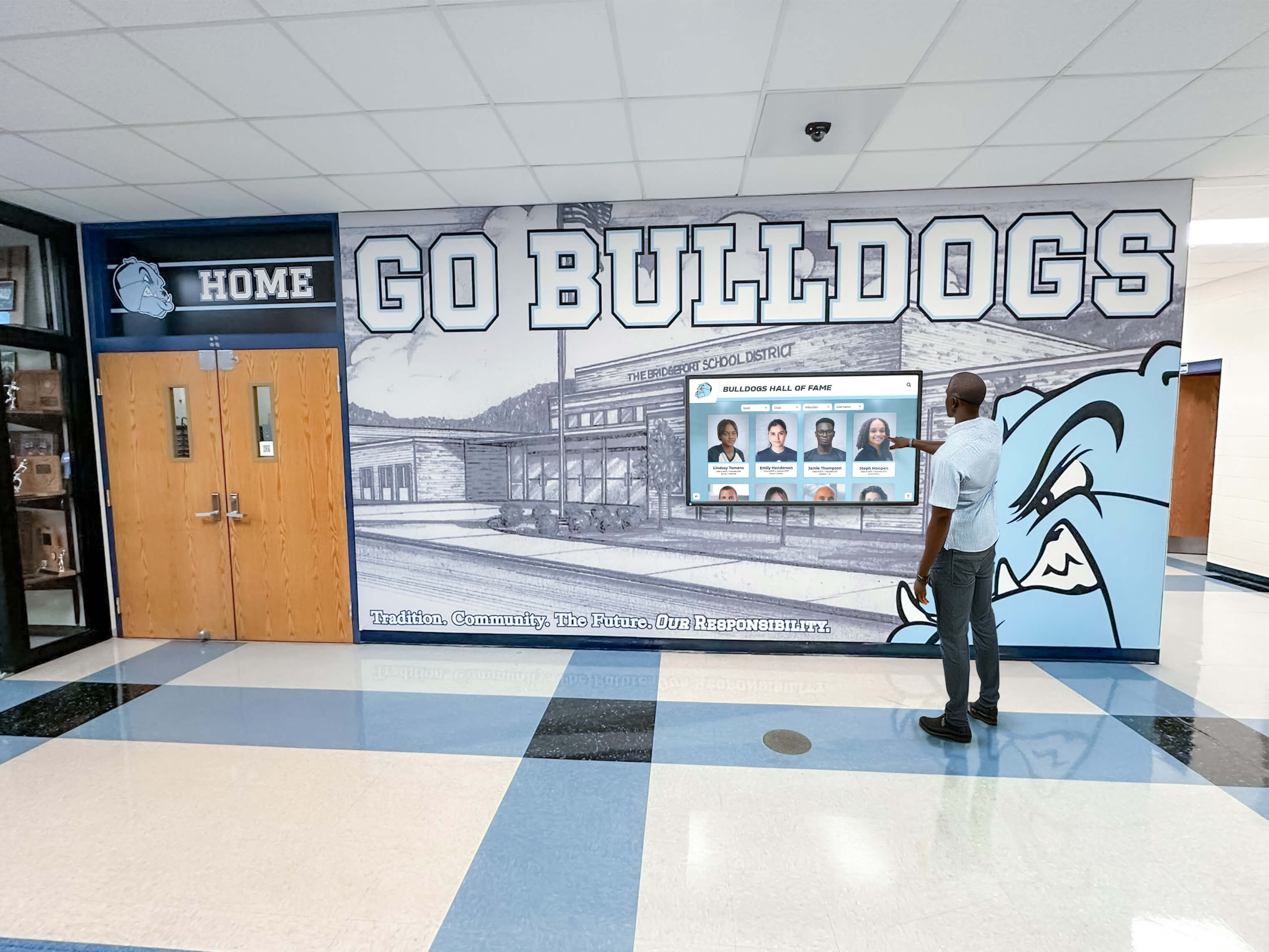
A dedicated digital display section within broader academic achievement recognition gives established OM programs the capacity to showcase complete competition histories without the space constraints of physical trophy cases. Interactive touchscreen systems allow visitors to browse by year or search by student name, with photos and video providing context that trophies alone cannot convey.
For schools already using recognition platforms for athletic or academic programs, extending those platforms to include OM and other creative competition programs requires minimal additional infrastructure while significantly broadening recognition coverage.
For Programs With World Finals History
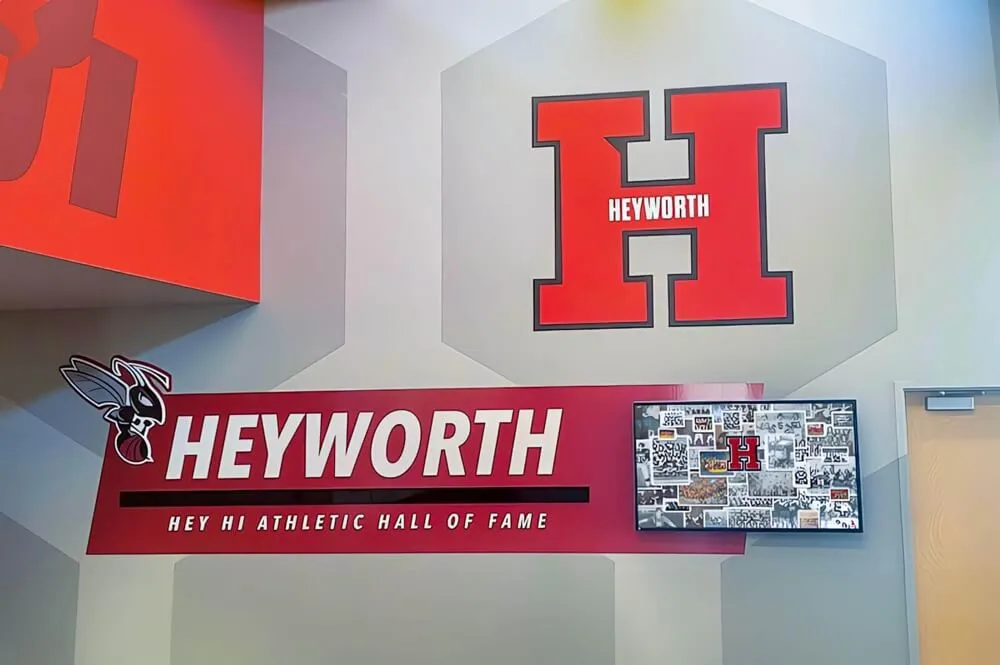
Schools whose teams have reached World Finals carry a particularly meaningful achievement worth prominent, permanent recognition. A World Finals banner or dedicated display panel — similar in treatment to a state championship banner in a gymnasium — acknowledges the institutional milestone while inspiring future teams with a visible legacy target.
Digital systems allow World Finals recognition to include the full story: team photos from the host campus, problem category and approach descriptions, score details, and team member profiles. This depth of documentation is impossible with physical hardware alone and creates a genuinely compelling institutional record.
Resources on building dedication plaques and permanent recognition displays provide practical guidance for converting historical records and archived photos into lasting digital recognition content.
Recognition Ceremonies and Annual Acknowledgment
Beyond permanent display, Odyssey of the Mind programs benefit from intentional ceremony and acknowledgment within the school’s regular recognition calendar.
End-of-Season Recognition Events
Many schools host spring academic recognition events that include academic awards, honor roll acknowledgment, and scholarship presentations. Adding OM tournament achievement recognition to these events — including specific acknowledgment for regional placements, state advancement, and world finals appearances — integrates creative competition recognition into the institution’s formal acknowledgment culture.
A brief ceremony component that brings OM team members on stage, describes the problem they worked on, and announces their placement provides public recognition that resonates beyond the coach’s classroom and the program’s social media followers.
Assembly and All-School Presentations
For teams that advance to state or world finals, an all-school assembly presentation gives the broader school community context for what the achievement represents. Students who have never participated in OM rarely understand what a World Finals appearance requires — the problem complexity, the months of after-school work, the performance under judging pressure, and the spontaneous component that no amount of preparation can fully remove.
A five-minute presentation at an all-school assembly that includes a short video clip and a brief team member description of the experience can shift institutional awareness of OM achievement significantly.
Student Recognition Boards
Some schools maintain rotating recognition boards near the main office or in high-traffic hallways that spotlight individual students and teams on a monthly or seasonal basis. Featuring the OM team during competition season — with problem details, team photo, and tournament results as they arrive — keeps the school community informed during the active season rather than waiting for year-end acknowledgment.
Guidance on student recognition awards across 40+ categories with ceremony ideas offers transferable frameworks for regular recognition that keeps achievement visible throughout the school year.
The Role of Digital Record Boards in Creative Program Recognition
Schools increasingly recognize that digital record board platforms built for athletic achievements — tracking all-time records, scoring leaders, and championship history — can serve academic and creative programs just as effectively.
A digital record board system adapted for Odyssey of the Mind can track:
- All-time world finals appearances by year and division
- State tournament placement history organized chronologically
- Individual students who participated in multiple OM seasons
- Problem categories attempted and competed in over program history
- Coaches who built the program across different eras
This structure mirrors how athletic record boards work — documenting institutional history, highlighting exceptional achievements, and creating a competitive legacy that future teams can see and aspire to match. The coach who first took a school’s OM team to World Finals deserves the same institutional visibility as the coach who won the first state championship in cross-country.
Purpose-built platforms for educational recognition provide the infrastructure for comprehensive creative competition recognition without requiring custom development or ongoing IT support. Schools manage content through accessible administrative interfaces, updating recognition in real time as new achievements are earned.
How these platforms fit within campus engagement strategy is covered in detail in resources on digital record board ideas for campus engagement, which helps administrators evaluate options before committing budget.
Building Long-Term OM Program Culture Through Recognition
Recognition is not merely a reward for past achievement — it is an investment in future program culture. Schools with strong OM recognition programs consistently demonstrate several cultural characteristics:
Higher participation rates: When prospective team members can walk through the hallway and see years of competition history, they understand that OM is a real, sustained program with institutional standing — not an informal club that might not run next year.
Alumni engagement: Former OM participants who can find their own team season documented in school recognition displays often maintain stronger connections to the program, occasionally returning as mentors, judges, or donors to the program’s materials budget.
Peer awareness: Students who have never participated in OM but see it recognized alongside athletic and academic achievements become more likely to consider joining. Visibility creates recruitment.
Coach retention: Coaches who invest years building OM programs are more likely to continue when their work is visibly acknowledged as part of the school’s institutional identity rather than treated as an extracurricular afterthought.
The connection between recognition culture and school pride more broadly is explored in the digital hall of fame buying guide for high schools, which provides frameworks transferable to creative competition programs.
Academic competition programs like OM also serve as a useful complement to honor roll and grade-based recognition — covering students who demonstrate exceptional creativity and problem-solving skills that standardized grades may not fully capture. Schools investing in comprehensive academic recognition increasingly treat OM achievement alongside honor societies like National Beta Club eligibility programs as a distinct and valued category alongside GPA-based honors.
Finally, schools looking to modernize all forms of academic achievement recognition — including honor roll, merit scholar programs, and creative competitions — should consider the value of AP Scholar awards and recognition board approaches that can house multiple recognition categories within a unified display architecture.
Conclusion: Giving OM Teams the Recognition They’ve Earned
Odyssey of the Mind teams spend months solving problems that would challenge adult engineers, writers, and performers. They build structures from balsa wood, construct vehicles from scratch, write original theatrical performances, and then walk into a spontaneous problem with nothing but their own thinking. When those teams bring home regional, state, or world-level achievements, those accomplishments deserve more than a brief intercom announcement and a fading bulletin board photo.
Schools that invest in comprehensive OM recognition — permanent displays, digital archives, ceremony integration, and institutional acknowledgment — create visible cultures where creative excellence has standing alongside athletic and academic achievement. That culture pays dividends in program participation, coach retention, alumni connection, and the kind of school pride that comes from genuinely honoring the full range of what students can achieve.
Whether your school’s program is just beginning to formalize recognition or has years of World Finals appearances that deserve a permanent digital home, the tools exist to build something lasting. The question is simply whether creative excellence will be treated as a footnote — or as the institutional achievement it actually is.
Ready to build a recognition display that does justice to your school’s Odyssey of the Mind history? Rocket Alumni Solutions provides interactive touchscreen recognition platforms built specifically for educational institutions — enabling schools to showcase OM tournament achievements, team histories, and individual contributors alongside athletics, academics, and the full spectrum of student excellence.