



Every year, thousands of high school students earn induction into the National Honor Society—one of the most prestigious academic honor organizations in the United States. These students demonstrate exceptional scholarship, leadership, service, and character through years of sustained effort and commitment. Yet despite the rigorous selection process and significant accomplishments NHS membership represents, many schools struggle to give these distinguished students the prominent, ongoing recognition they deserve.
National Honor Society students highlighted through modern digital recognition systems create lasting acknowledgment that honors member achievements while inspiring younger students to pursue these meaningful distinctions. Unlike brief induction ceremonies or paper certificates that disappear into files, comprehensive NHS recognition programs make these accomplishments visible throughout school communities, demonstrating the genuine value schools place on scholarship, leadership, service, and character.
The challenge lies not in whether NHS members deserve recognition—their qualifications speak clearly—but in how schools can effectively showcase these achievements in ways that feel meaningful to inductees, remain visible to broader communities, and inspire continued pursuit of the four pillars NHS represents. Schools implementing thoughtful NHS recognition programs report measurable benefits including stronger applications to the organization, enhanced school culture around academic and civic engagement, and improved student motivation to develop the comprehensive qualities NHS membership requires.
Why National Honor Society Recognition Matters
National Honor Society membership represents far more than academic grades—it validates complete student development encompassing intellectual achievement, community engagement, ethical character, and leadership capability. Modern digital recognition solutions enable schools to celebrate NHS excellence with the prominence these comprehensive accomplishments deserve, creating visible inspiration throughout entire school communities.
Understanding National Honor Society: More Than Just Good Grades
Before implementing effective recognition programs, schools must understand what NHS membership genuinely represents and why these distinctions merit prominent, sustained acknowledgment.
The Four Pillars of NHS Membership
The National Honor Society, established in 1921, recognizes students who demonstrate excellence across four fundamental pillars that extend well beyond simple academic performance:
Scholarship: Academic achievement forms the foundation of NHS eligibility, typically requiring a minimum cumulative GPA of 3.0-3.5 on a 4.0 scale (specific requirements vary by chapter). However, scholarship represents only the entry qualification—students must demonstrate excellence across all four pillars to earn membership. This academic standard ensures NHS members have proven their intellectual capability and dedication to learning.
Leadership: NHS members must demonstrate leadership through positions in school organizations, community groups, or work environments, or through influence on peers in positive directions. Leadership doesn’t require formal titles—chapter selection committees evaluate how students motivate others, solve problems, make decisions, and contribute to group success in various contexts.
Service: Community service forms a core NHS requirement, with members demonstrating sustained commitment to helping others through volunteer work, community projects, or ongoing service roles. NHS values consistent service over time rather than one-time events, seeking students who make helping others a regular priority rather than an occasional activity.
Character: Perhaps the most comprehensive pillar, character encompasses integrity, honesty, respect, responsibility, and ethical decision-making. Students must demonstrate positive traits through their daily actions, relationships with peers and adults, and responses to challenges. Character evaluation considers disciplinary records, teacher recommendations, and evidence of ethical behavior across school and community contexts.
What NHS Selection Represents
Understanding what NHS membership truly signifies helps schools develop appropriate recognition approaches that honor the full scope of student accomplishment:
Sustained Excellence Across Years: NHS membership doesn’t result from single achievements—it represents years of consistent effort across multiple dimensions of personal development. Students typically build qualifying records beginning in freshman year, progressively demonstrating scholarship, leadership, service, and character through three or four years of high school.
Complete Development Beyond Academics: While many academic awards recognize intellectual achievement alone, NHS membership validates complete development. NHS students prove they can succeed academically while simultaneously serving communities, leading peers, and maintaining ethical character—the well-rounded excellence colleges and employers genuinely value.
Peer Recognition and Faculty Validation: NHS selection typically involves faculty council evaluation and peer input, creating validation beyond simple GPA calculations. Teachers assess character, leadership potential, and service commitment through direct observation across multiple years, providing meaningful endorsement of student qualities beyond test scores.
Preparation for Civic Engagement: NHS members develop habits of service, ethical leadership, and community involvement that prepare them for active citizenship beyond school years. This civic preparation represents exactly what democratic societies need—educated, ethical, service-oriented citizens who lead positive change in their communities.
Competitive Advantage in College Admissions: College admissions officers recognize NHS membership as meaningful validation of student character and capabilities. Unlike many activities students list on applications, NHS requires faculty recommendation and rigorous evaluation, making membership a credible third-party endorsement of student excellence across multiple dimensions.
According to the National Association of Secondary School Principals (which oversees NHS), member students demonstrate significantly higher college graduation rates, stronger career outcomes, and greater civic engagement throughout their lives compared to equally intelligent peers who didn’t participate in honor society programs. This long-term impact demonstrates why NHS recognition deserves prominence in school recognition programs.
The Recognition Gap: Why NHS Students Often Go Uncelebrated
Despite their comprehensive qualifications, NHS members frequently receive minimal recognition compared to athletic achievements or other visible student activities. Understanding why this recognition gap exists helps schools address barriers preventing appropriate acknowledgment.
Brief Ceremonies Don’t Create Lasting Visibility
Most schools recognize NHS induction through annual ceremonies where new members receive certificates, light candles, and hear speeches about the four pillars. These ceremonies provide meaningful moments for inductees and families, but recognition essentially ends when the ceremony concludes. Certificates go into folders or drawers, programs get filed away, and within days the visibility of NHS achievement disappears entirely.
The Fleeting Recognition Problem: Assembly announcements reach only those physically present with typically divided attention. Paper certificates lack ongoing visibility once students take them home. Temporary displays recognizing new inductees often remain posted only briefly before removal to make space for other content. Within weeks of induction, visible evidence of NHS membership essentially vanishes from school environments.
This contrasts sharply with athletic recognition patterns. Championship trophies remain displayed in prominent cases for decades. Individual athletic achievements often receive permanent plaques or photos in main hallways. Current team rosters and achievements occupy prominent digital displays or bulletin boards updated throughout seasons.
The message this recognition disparity sends proves problematic: schools genuinely value athletic accomplishment (as they should) but treat comprehensive academic-civic excellence as less worthy of ongoing visibility and celebration. This undermines efforts to build strong academic culture and devalues the years of effort NHS membership requires.
Space Constraints Limit Traditional Recognition
Traditional recognition methods require physical space—wall areas for plaques, display cases for awards, bulletin boards for lists and photos. These space limitations create difficult choices about which achievements deserve permanent display and which receive only temporary or minimal acknowledgment.
Athletic programs often secured prominent recognition space decades ago, creating established traditions that subsequent achievements must work around. Academic honor society recognition typically receives secondary placement—if permanent space exists at all—despite representing schools’ fundamental educational mission.
A successful NHS chapter might induct 30-60 new members annually. Across four years, this creates 120-240 active members deserving recognition. Traditional plaque-based approaches for this volume would require extensive wall space most schools simply don’t have in prominent locations. This forces impossible choices: recognize only current inductees and ignore historical members, rotate displays annually and remove previous recognition, or provide minimal token acknowledgment that feels inadequate.
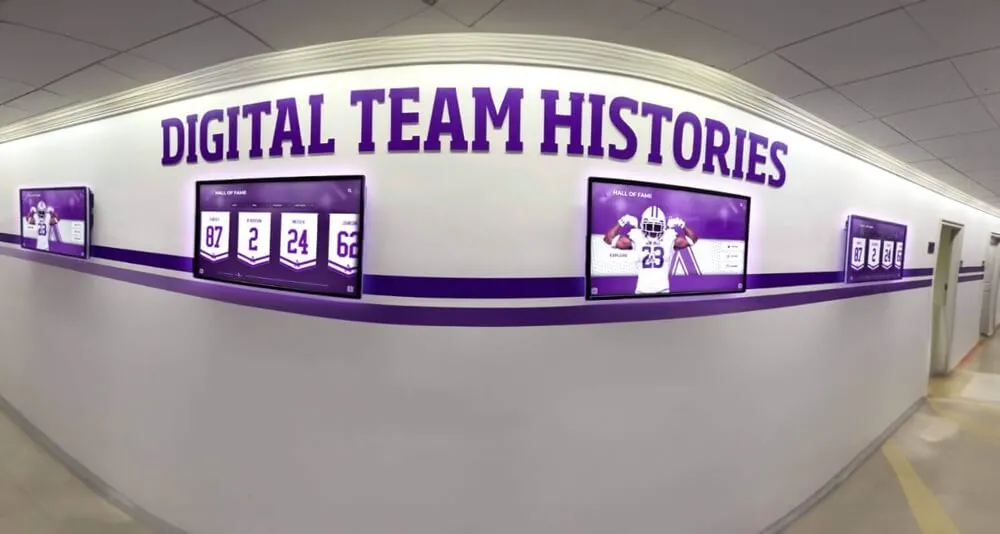
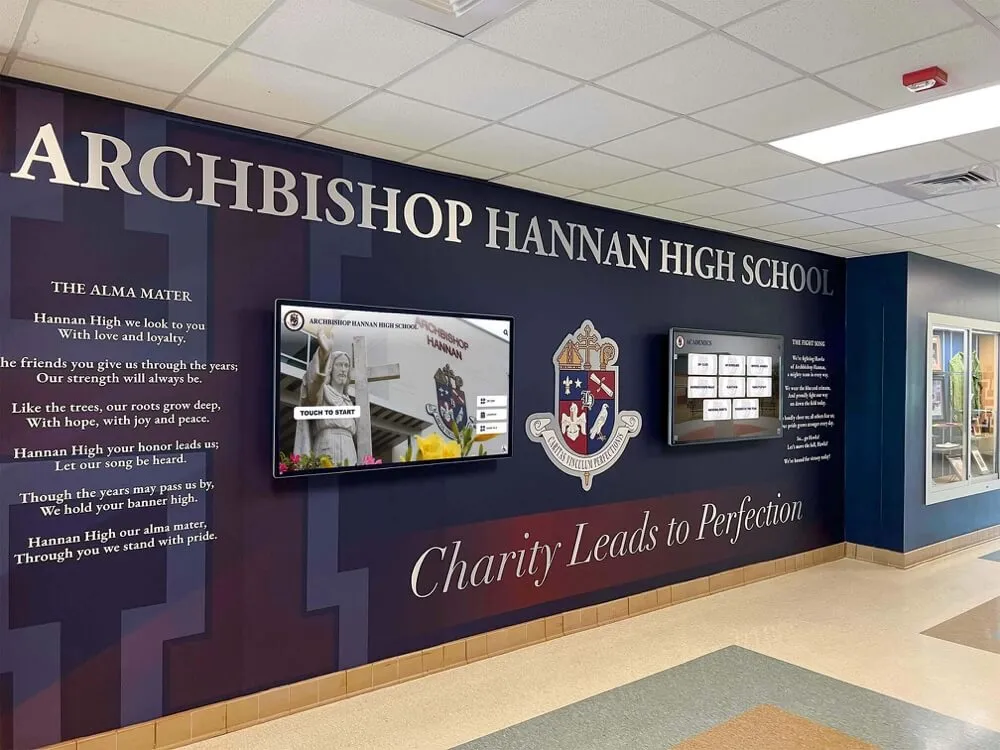
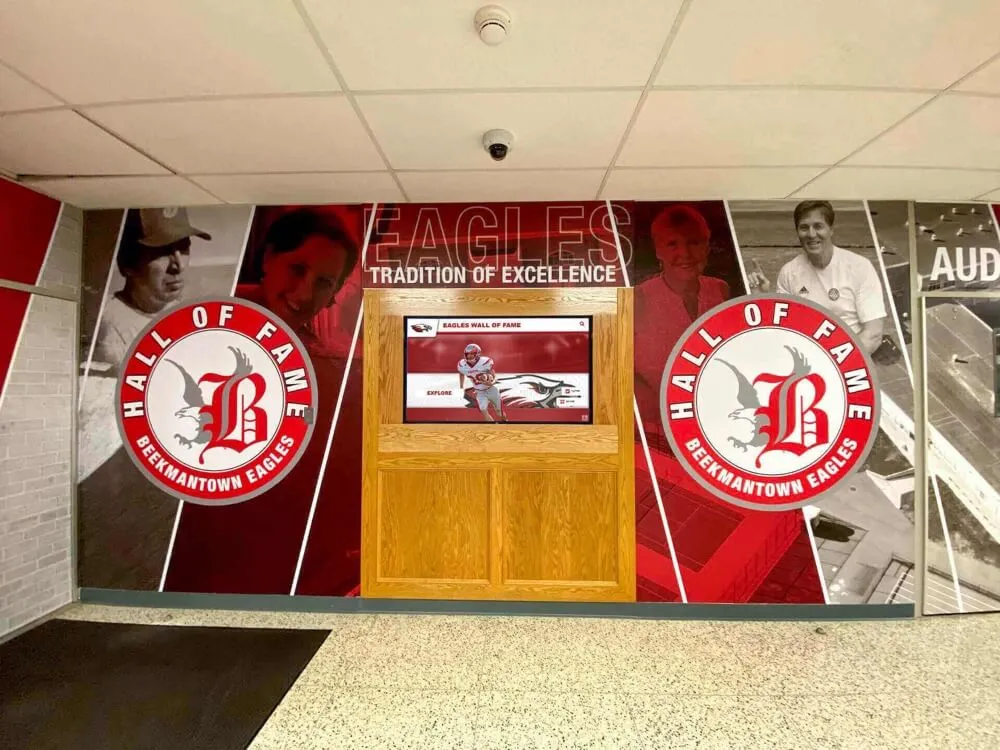
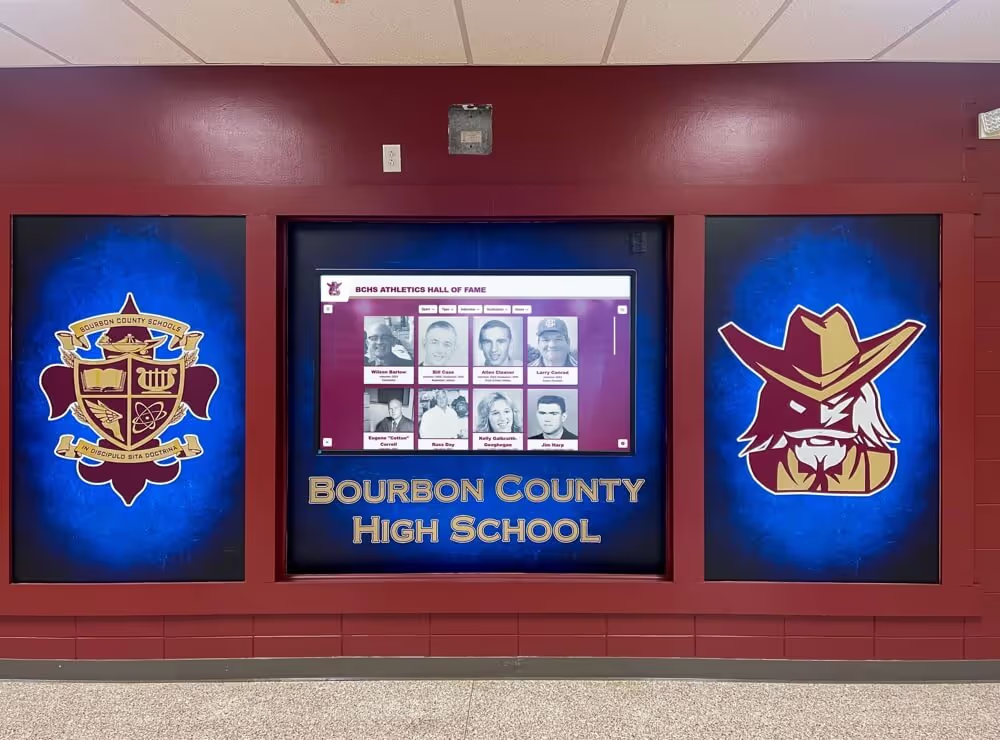
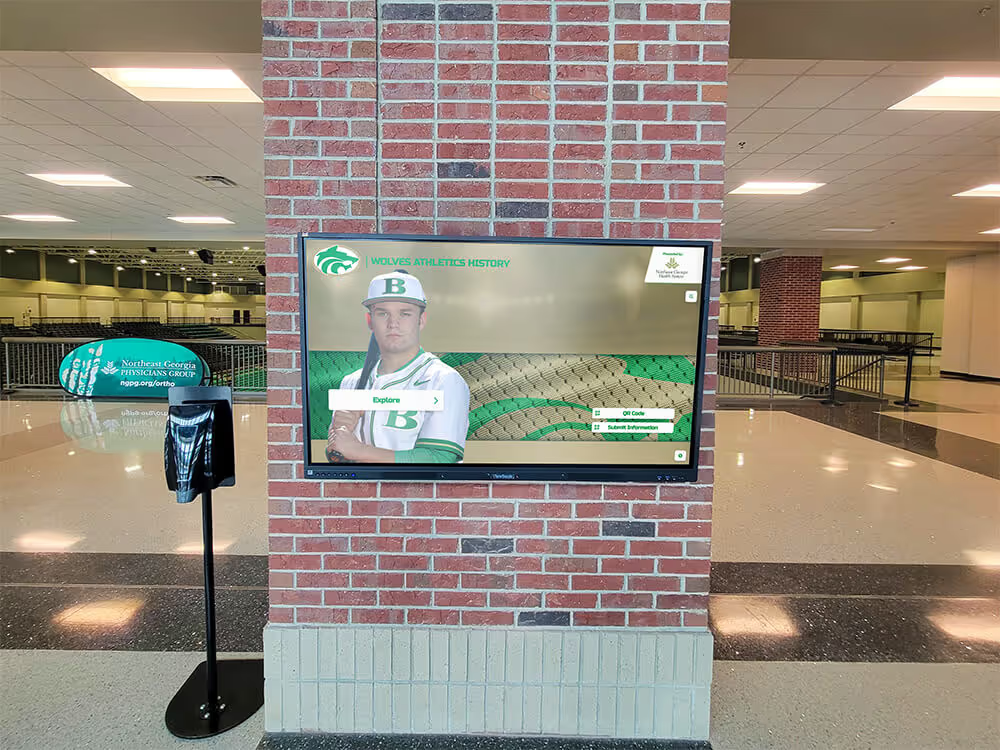
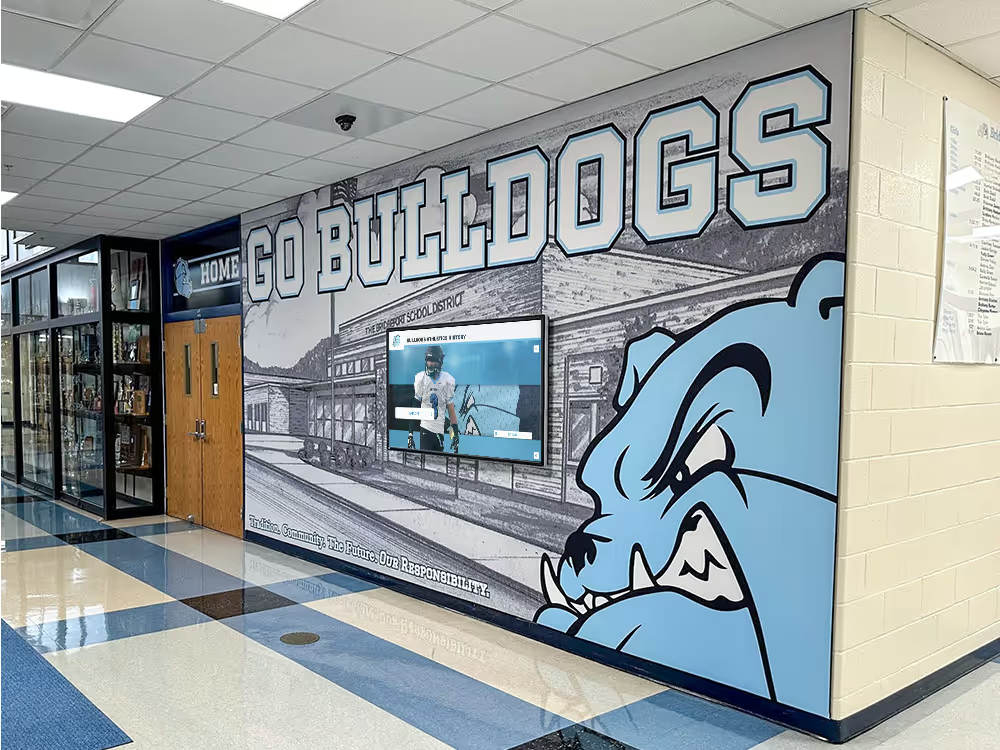
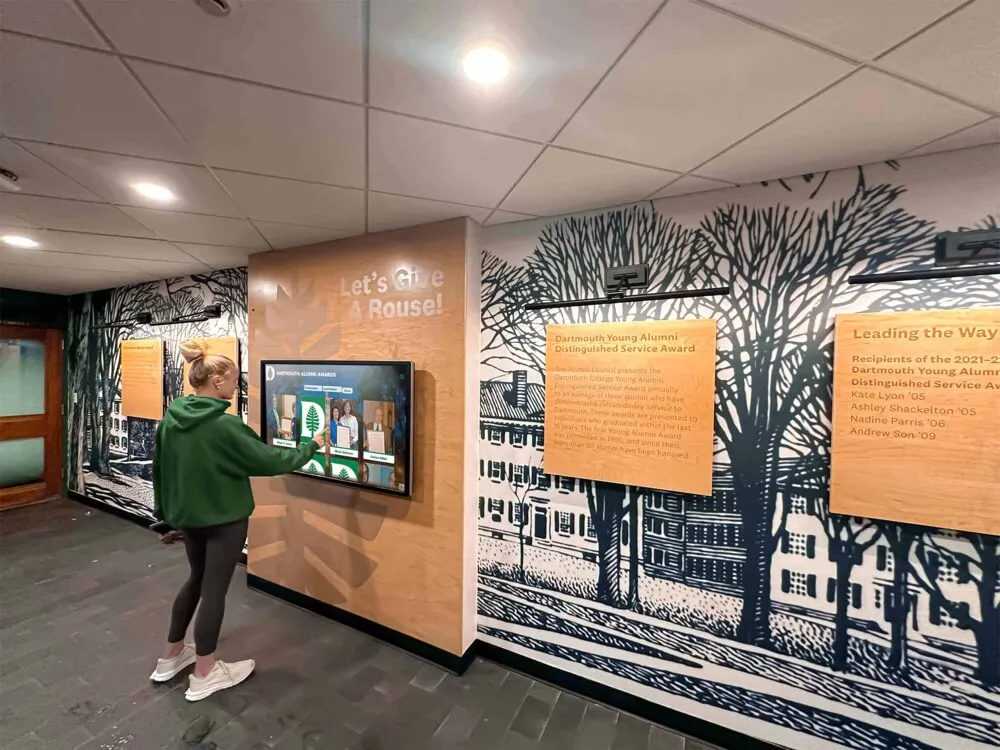
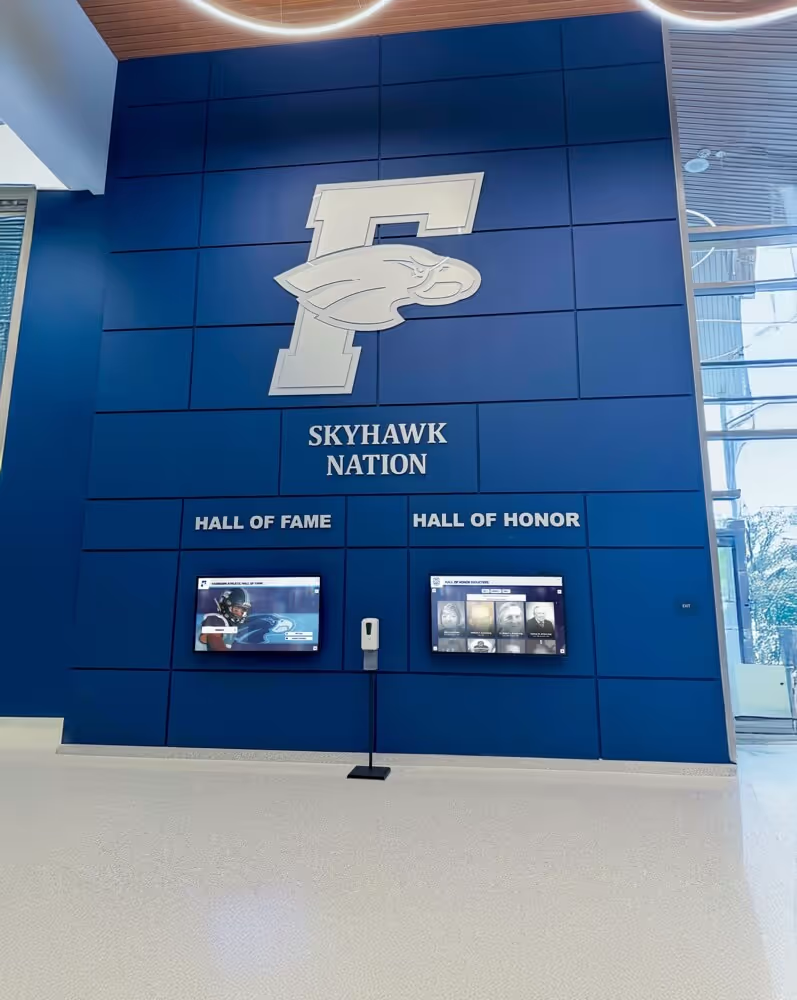
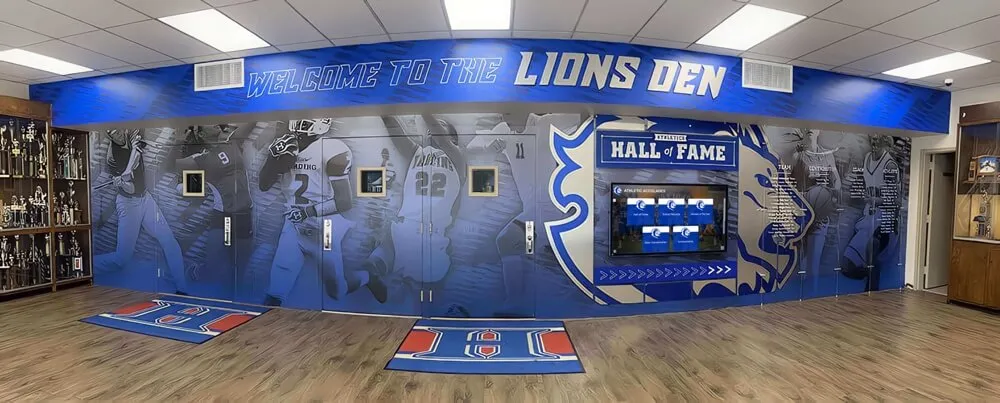
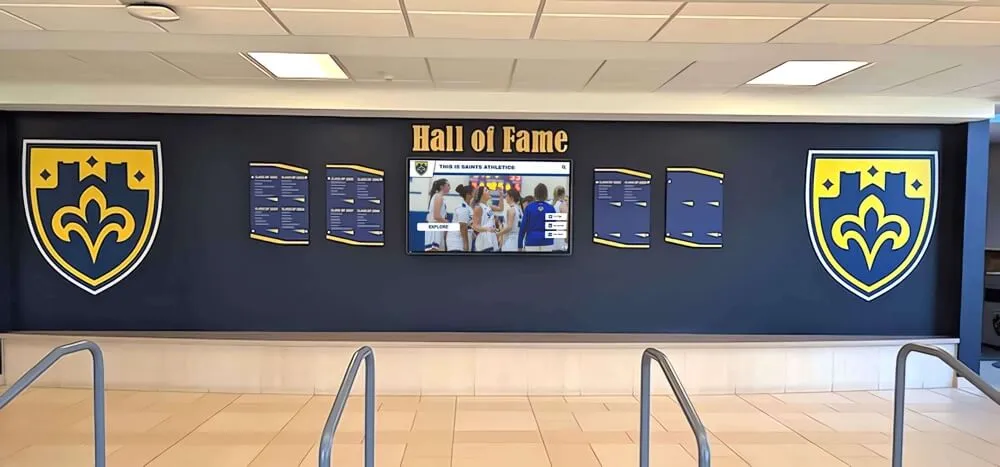
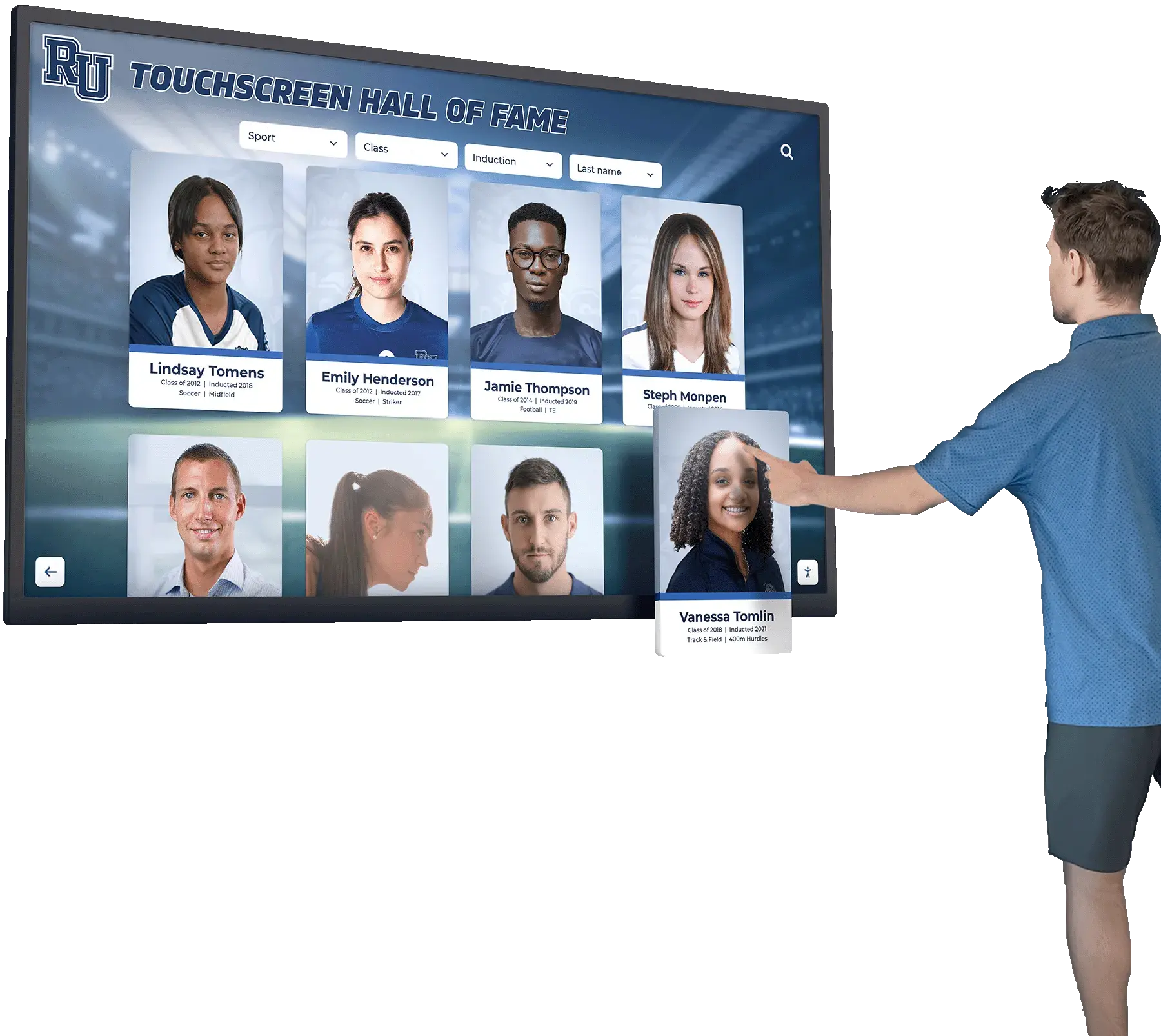

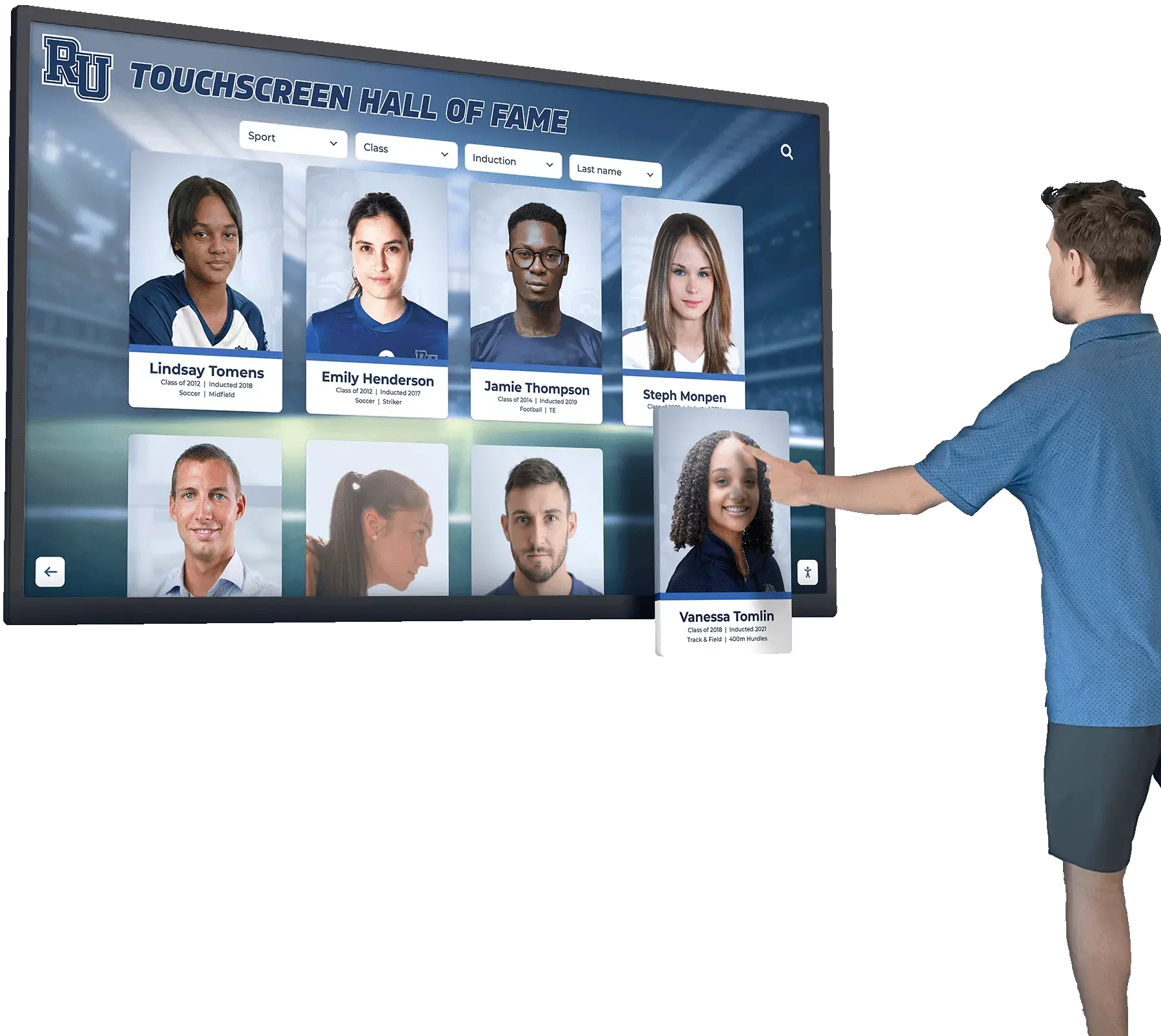
Solutions like digital recognition displays eliminate space constraints entirely. A single touchscreen can showcase complete profiles for hundreds or thousands of NHS members across decades—unlimited by physical constraints—while occupying less space than traditional trophy cases.
NHS Recognition Competes with More Visible Activities
School recognition programs must acknowledge numerous student achievements across academics, athletics, arts, activities, and community service. In this competitive environment, NHS recognition often gets crowded out by more visible or immediately dramatic accomplishments.
Athletic championships generate community excitement, local media coverage, and enthusiastic booster support—creating natural momentum for recognition. Theatrical productions, musical performances, and art exhibitions produce visible events that naturally inspire documentation and celebration. NHS membership, while equally valuable, lacks the dramatic single-event nature that generates similar visibility and recognition momentum.
This creates a challenge: how do schools give NHS membership the prominent recognition its comprehensive nature deserves when it competes with more immediately visible accomplishments for limited recognition space, budget, and attention?
The answer lies in systematic recognition strategies that don’t rely on competing for temporary attention but instead create permanent, accessible visibility for NHS excellence. Digital platforms enable comprehensive recognition without displacing other achievement acknowledgment, creating inclusive systems where diverse forms of excellence receive appropriate celebration.
Implementing Comprehensive NHS Recognition Programs
Effective NHS recognition requires systematic planning addressing program design, content development, technology implementation, and ongoing management ensuring sustainability across years.
Defining Recognition Program Scope and Content
Clear parameters ensure NHS recognition programs maintain focus while managing community expectations and staff workload.
Multi-Year Recognition Strategies: Determine whether to recognize only current NHS members or build comprehensive historical archives documenting years of membership. Historical documentation creates powerful institutional memory showing program growth over time, enables comparisons inspiring current students, and demonstrates sustained commitment to the four NHS pillars across decades.
Many schools implement phased approaches beginning with current members, then systematically adding previous years during summer months when demands are lighter. This enables manageable progress without overwhelming staff while building comprehensive archives capturing institutional excellence history.
Inclusion of Chapter Officers and Positions: NHS chapters typically elect officers—president, vice president, secretary, treasurer, and others—who demonstrate additional leadership through organizational management. Recognition programs should highlight these leadership positions, showing younger students potential advancement opportunities within NHS beyond basic membership.

Service Project Documentation: Many chapters engage in signature service projects—tutoring programs, community cleanups, fundraising initiatives, or ongoing partnerships with local organizations. Documenting these collective service efforts within recognition displays shows NHS impact beyond individual member qualifications, demonstrating how the organization contributes to school and community improvement.
Four Pillars Framework Integration: Effective recognition explicitly connects individual members to the four NHS pillars—scholarship, leadership, service, and character. Profile content should highlight how each member demonstrates these qualities through specific examples, helping younger students understand what NHS membership requires and how they might qualify for future consideration.
Essential Profile Content for NHS Members
Comprehensive NHS member profiles should include elements that honor individual achievement while inspiring younger students and demonstrating what NHS membership represents.
Core Biographical Information: Student name and graduation year providing basic identification, high-resolution photograph creating visual connection and personal recognition, and induction year showing when students earned membership (important for multi-year tracking as students advance through high school).
Academic Excellence Indicators: Without violating privacy, recognition can acknowledge academic achievement through general indicators—honor roll participation, Advanced Placement or International Baccalaureate coursework, academic competition achievements, or subject-specific excellence in particular disciplines. This demonstrates the scholarship pillar that forms NHS foundation.
Leadership Examples: Specific leadership positions or roles—student government, club presidencies, team captaincy, peer mentoring, work leadership, or community organization positions. Concrete examples help younger students understand what leadership looks like in practice and identify potential pathways for developing their own leadership capabilities.
Service Contributions: Description of service activities and time commitments—volunteer organizations, tutoring participation, community project involvement, or sustained service roles. Quantifying service hours when appropriate shows the substantial commitment NHS members make to helping others. Including diverse service examples demonstrates that meaningful service takes many forms.
Character Statements: While harder to quantify, character recognition might include teacher quotes highlighting integrity, responsibility, or ethical behavior, peer nominations or recognition showing respect from classmates, or student reflections on how they try to live NHS values. These personal elements bring the character pillar to life through specific examples rather than abstract descriptions.
Post-Secondary Plans: College destinations, intended majors, career aspirations, or scholarship information (when appropriate and with permission). This helps younger students see tangible outcomes from NHS membership and comprehensive excellence development, demonstrating that the four-pillar approach genuinely prepares students for future success.
Technology Solutions for NHS Recognition
Choosing appropriate technology fundamentally shapes what recognition programs can accomplish and how effectively they serve students and school communities.
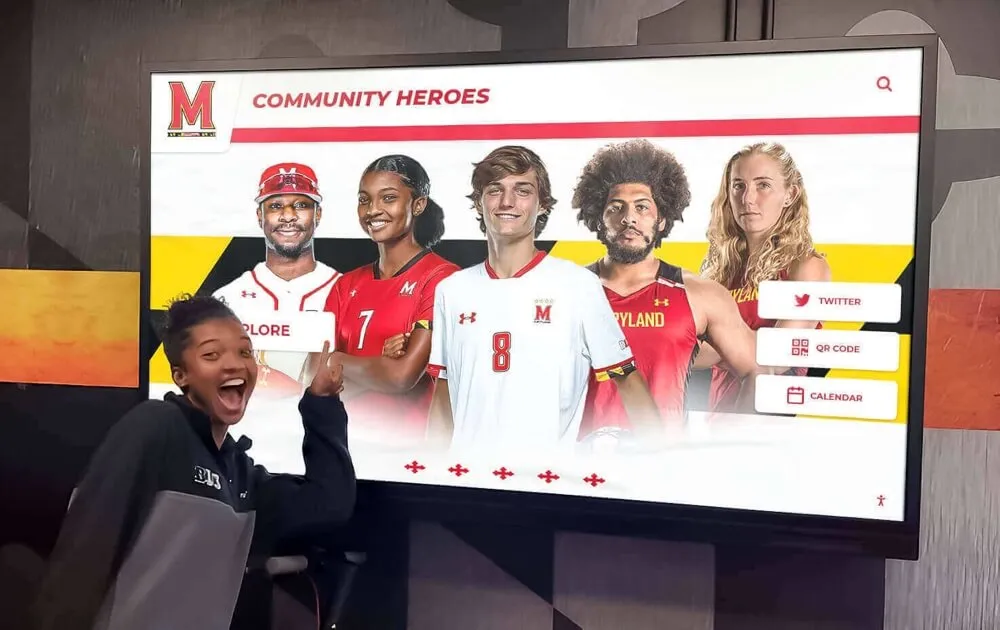
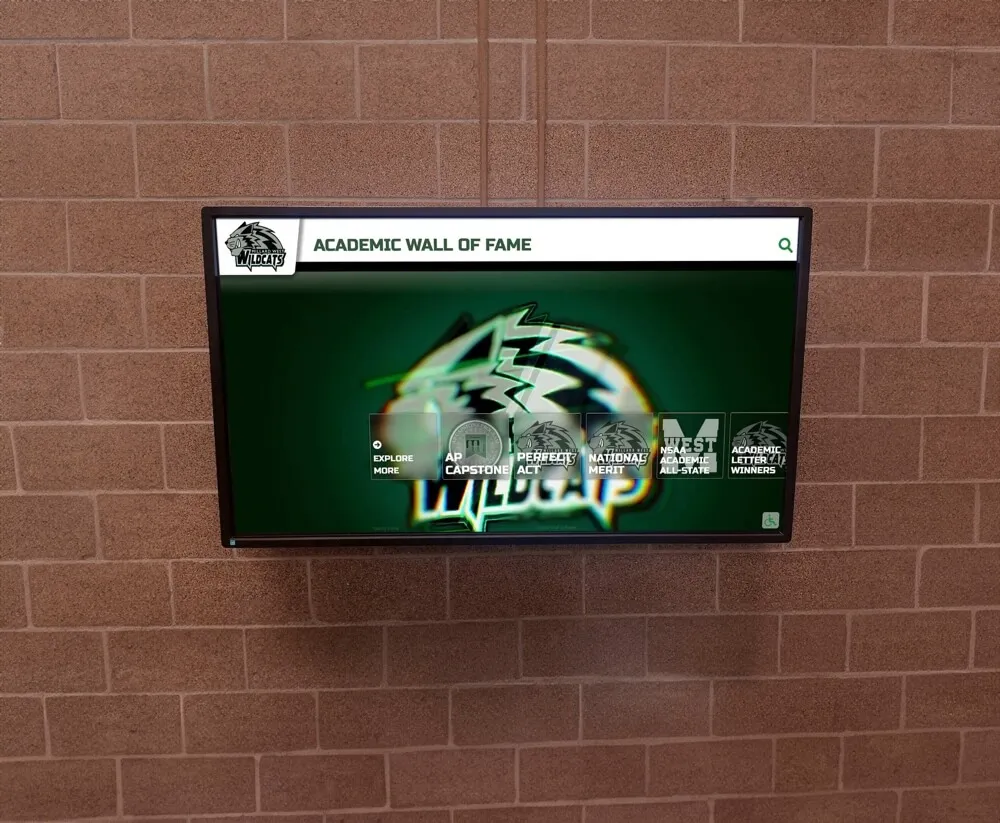
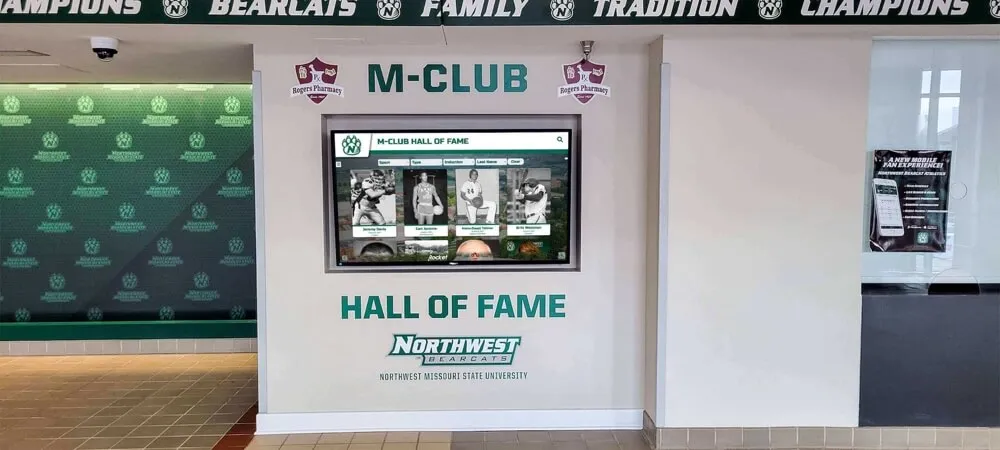
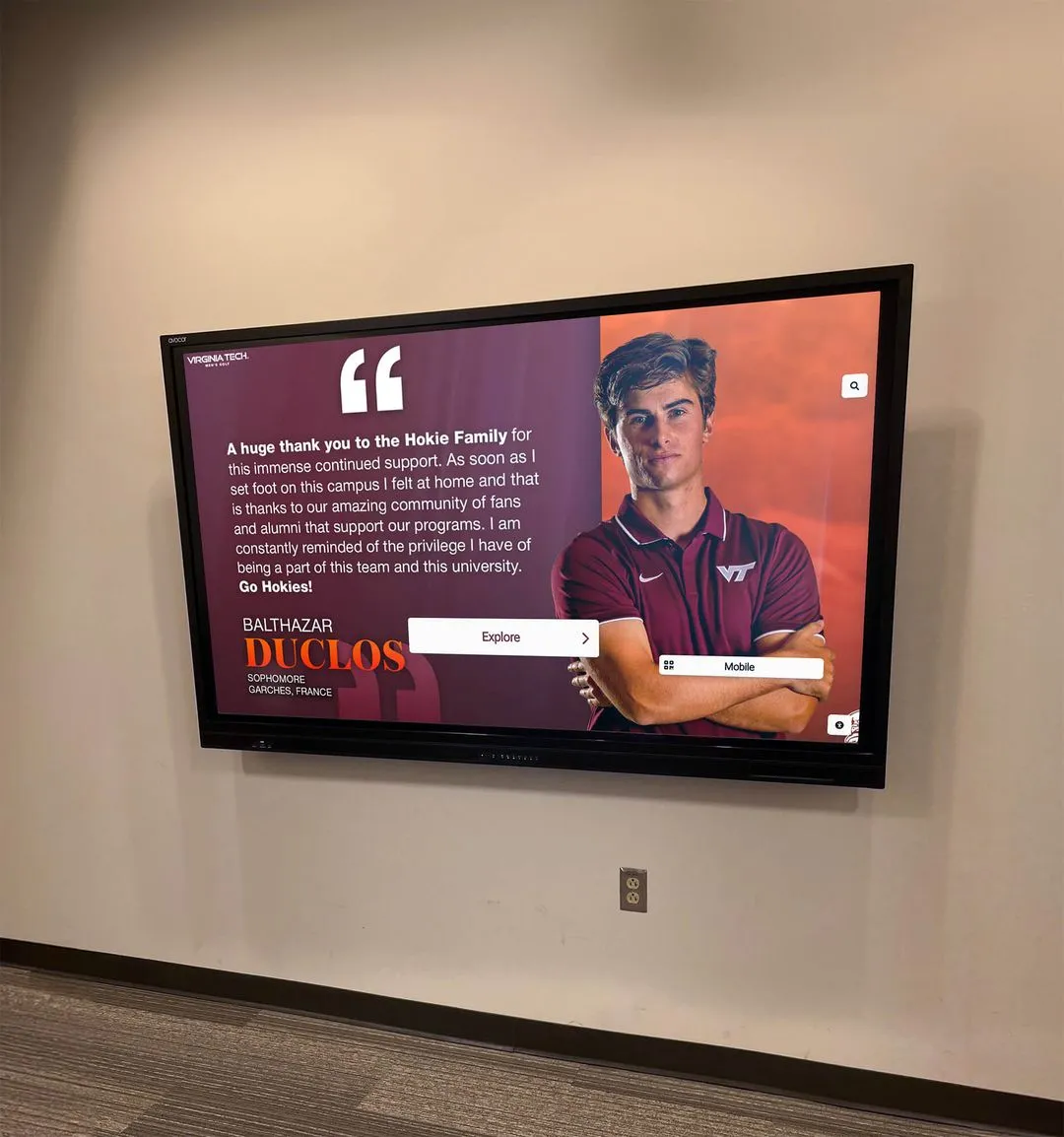
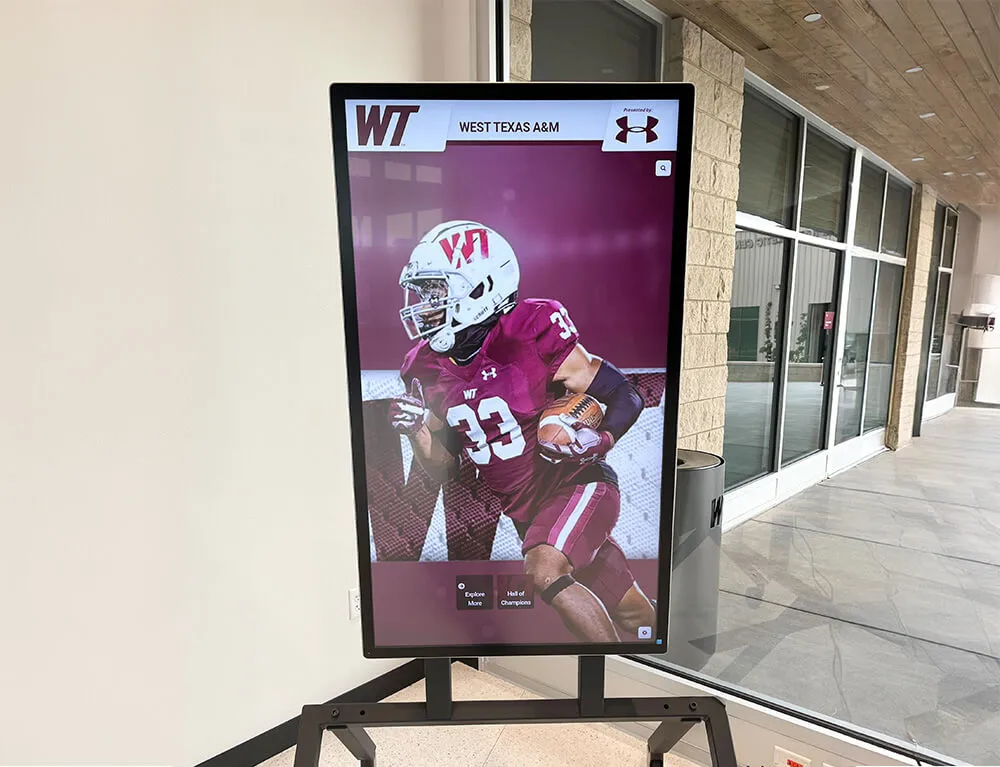
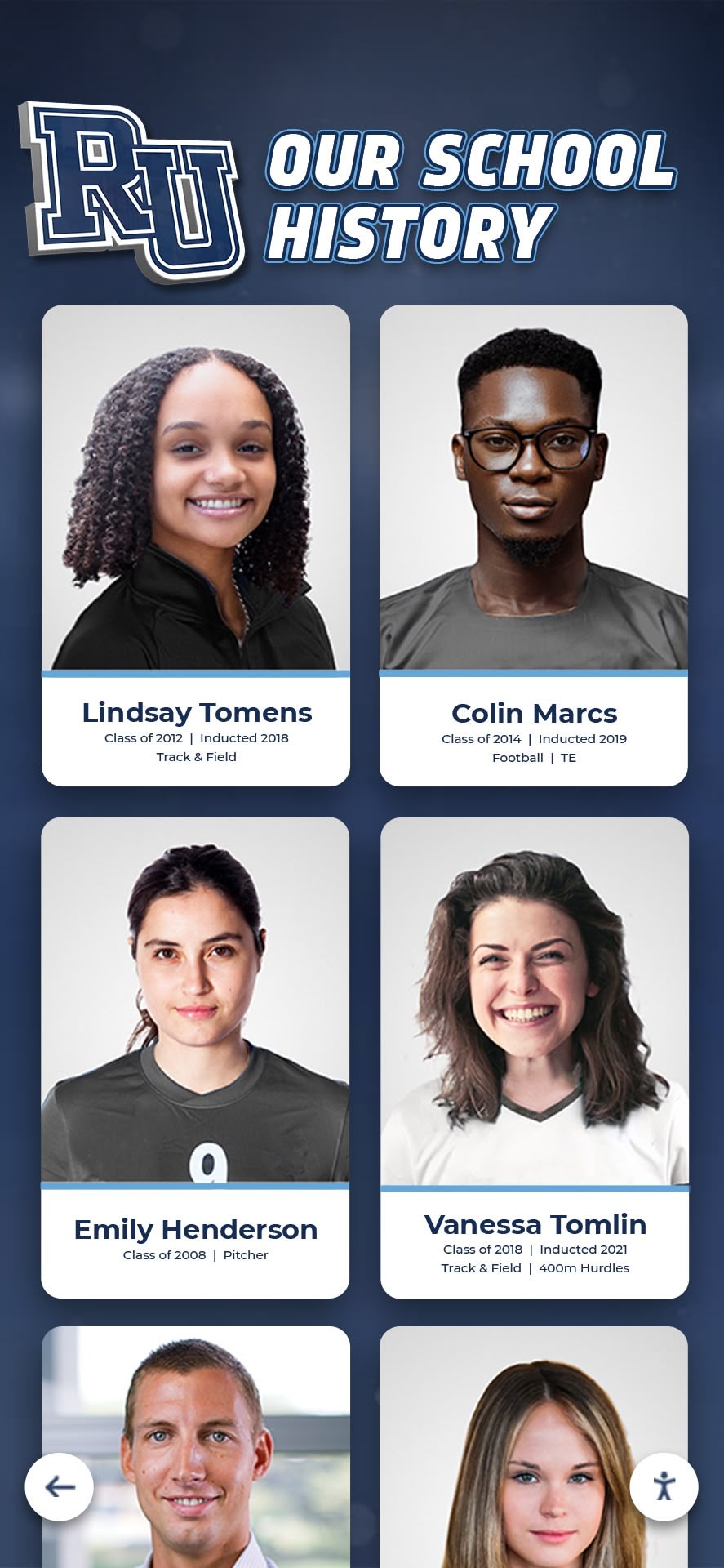
Interactive Touchscreen Displays: Commercial-grade touchscreen displays ranging from 43 to 86 inches provide engaging recognition experiences in high-traffic school locations. Cloud-based content management enables instant updates without requiring technical expertise or physical display access, ensuring recognition remains current throughout school years.
Optimal placement includes main school entrances where all students, staff, and visitors pass daily, counseling office areas where students discuss academic planning and college preparation, libraries and academic commons providing extended viewing opportunities, and cafeterias or student gathering spaces offering casual exploration during breaks.
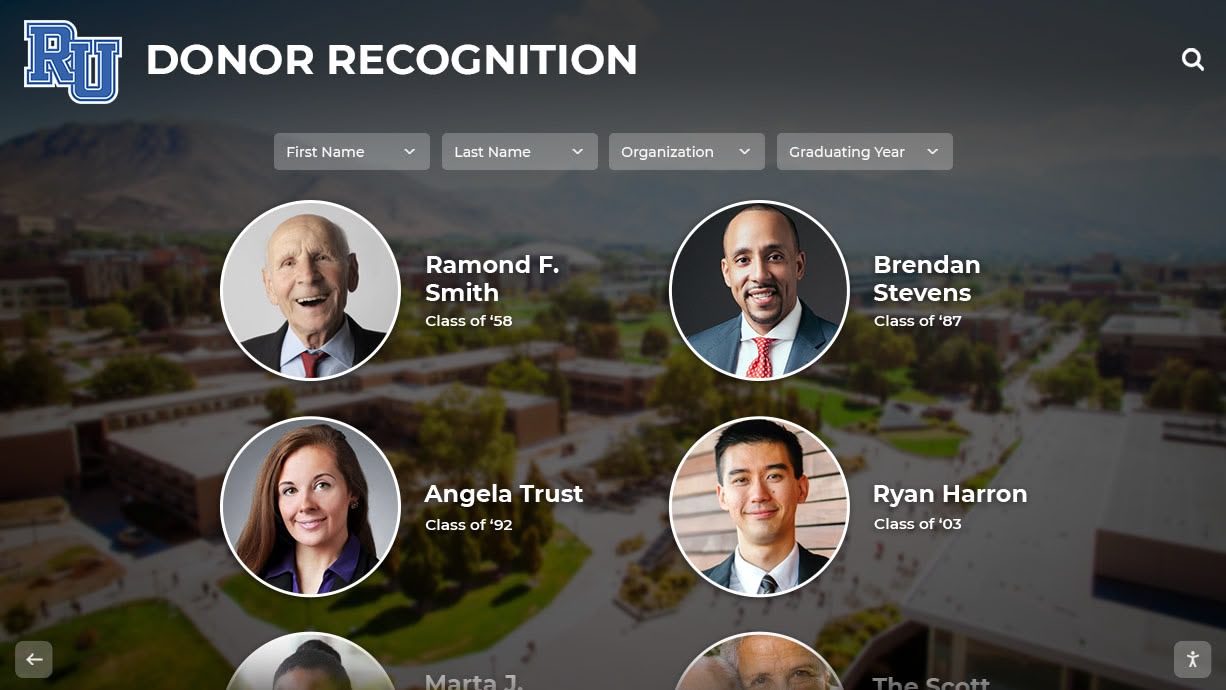
Web-Based Accessibility: Physical displays serve on-campus audiences effectively, but web-based recognition platforms extend acknowledgment reach to families, college admissions representatives, scholarship committees, and broader communities. Online accessibility proves particularly valuable for NHS recognition since families want to share achievements with extended family, students include recognition in college applications, and alumni can explore current chapter membership.
Essential web features include mobile-responsive design displaying effectively across devices, powerful search enabling discovery by name, year, or pillar, social media integration allowing one-click sharing, permanent accessibility keeping recognition online indefinitely, and integration with broader school academic programs providing context.
Combined Recognition Platforms: The most effective programs combine touchscreen displays for high-visibility campus experiences with web portals extending recognition globally. This multi-platform strategy maximizes engagement while accommodating varied user preferences and access contexts. Solutions like Rocket Alumni Solutions provide complete platforms specifically designed for educational recognition, offering both physical touchscreen displays and web accessibility through unified content management requiring no technical expertise.
Content Development and Historical Research
Building comprehensive NHS recognition requires systematic content creation gathering both current member information and historical excellence deserving permanent acknowledgment.
Current Member Content Collection: Establish regular processes for capturing NHS member information through standardized forms collecting achievement details, service descriptions, leadership examples, supporting photos, and character references. Align collection with natural school cycles—typically spring for new inductees, fall for updated senior information, and ongoing as members advance through high school.
Designate specific responsibility for content gathering across different aspects: NHS advisors coordinate overall content collection, counselors provide academic achievement context, activities coordinators verify leadership positions, and service coordinators document volunteer contributions.
Historical Member Research: Many schools have decades of NHS chapter history requiring research and documentation to preserve institutional academic legacy. Systematically review yearbooks, old newsletters, school newspapers, induction ceremony programs, and existing files documenting past members.
Historical research often takes substantially longer than anticipated—plan accordingly and consider engaging student workers, parent volunteers, or NHS members completing service hours for systematic historical projects. Comprehensive guides to academic history archiving provide detailed frameworks for systematic historical content development.
Privacy and Permission Management: Gather appropriate permissions through annual photo release forms covering recognition display usage, provide opt-out mechanisms for families strongly preferring privacy while maintaining participation as the default expectation, and limit personally identifiable information to names, graduation years, and achievement descriptions without sensitive personal data.
Creating Engaging NHS Recognition Experiences
Beyond basic profile display, thoughtful recognition creates engaging experiences that honor members while inspiring broader school communities and communicating institutional values.
Highlighting the Four Pillars Through Design
Visual design should make the NHS four-pillar framework immediately apparent, helping viewers understand what membership represents beyond simple academic achievement.
Pillar-Based Organization: Organize content around scholarship, leadership, service, and character themes, showing how each member demonstrates these qualities. Color coding, iconography, or visual organization by pillar helps viewers quickly understand NHS comprehensiveness and see how individual achievements connect to broader organizational values.
Exemplary Stories: Feature in-depth profiles of members demonstrating exceptional commitment to particular pillars—the student with 500+ service hours, the member who created a new community program, the leader who transformed a struggling organization, or the individual who demonstrated remarkable character during challenging circumstances. These detailed stories inspire peers while showing what exceptional commitment looks like in practice.
Service Project Documentation: Showcase chapter-wide service initiatives through photos, participation data, community impact statistics, and testimonials from partner organizations. Collective service recognition demonstrates NHS organizational impact while honoring all members who contributed to shared community improvement efforts.

Character Through Peer Recognition: When appropriate and with permission, include peer nominations or recognition showing how fellow students view NHS members. Quotes from classmates about member integrity, kindness, or positive influence provide powerful character validation from those who interact with inductees daily.
Connecting NHS Recognition to Future Opportunities
Help students understand tangible benefits NHS membership brings beyond pride and acknowledgment:
College Admission Context: Featured profiles might include college destinations of recent graduates, demonstrating the connection between comprehensive excellence and admission to quality institutions. When patterns emerge—NHS members consistently gaining admission to selective colleges, earning substantial scholarships, or receiving competitive program acceptance—this data demonstrates the genuine value of developing capabilities across all four pillars.
Scholarship Outcomes: Many scholarships explicitly reward character, leadership, and service alongside academics—exactly what NHS membership validates. Recognition highlighting scholarship outcomes from strong NHS participation demonstrates tangible financial return on the effort comprehensive excellence requires.
Career Preparation: NHS participation develops capabilities employers value: leadership experience, service orientation, ethical decision-making, and ability to balance multiple commitments. Recognition including alumni testimonials about how NHS experiences influenced career success connects high school achievement to long-term professional outcomes.
Alumni Success Stories: When possible, feature updates from alumni NHS members describing their current accomplishments—college success, career achievement, ongoing service, or leadership positions. These long-term outcome stories demonstrate the lasting impact of developing the four-pillar capabilities NHS membership requires.
Understanding how academic recognition influences student motivation and behavior helps schools design programs maximizing inspirational impact beyond simple acknowledgment.
Measuring NHS Recognition Program Impact
Systematic assessment demonstrates program effectiveness while identifying improvement opportunities ensuring recognition initiatives achieve intended goals.
Quantitative Engagement Metrics
Digital recognition platforms provide comprehensive analytics revealing how students, families, and visitors engage with NHS content:
Key Performance Indicators: Total unique visitors accessing recognition displays or web platforms, session duration measuring average time spent exploring content (4-8 minutes indicates genuine interest), search behavior revealing what content visitors seek and how they navigate profiles, return visitor rates demonstrating sustained engagement versus one-time viewing, and social sharing frequency tracking content distribution through personal networks.
Baseline measurements following initial launch establish benchmarks for tracking engagement trends over time. Quarterly reviews identify successful content types, peak usage periods, and popular features worth expanding while revealing underutilized components requiring optimization or clearer promotion.
Qualitative Impact Assessment
Beyond quantitative metrics, gather qualitative feedback revealing how recognition influences individuals and school culture:
Student Perspectives: Collect feedback through surveys or focus groups exploring whether NHS members feel recognition adequately honors their achievements, whether younger students notice recognition and find it inspiring, how recognition influences student interest in NHS membership, and whether displayed content accurately represents what NHS membership involves.
Family Reactions: Parent surveys or informal feedback about recognition visibility and quality, family pride in member acknowledgment, whether recognition helps families understand NHS significance, and how recognition compares to athletic or other achievement acknowledgment.

Faculty Observations: NHS advisor and teacher feedback about student discussion of recognition, apparent motivational effects on younger students, changes in NHS application quality or quantity, and cultural evolution around valuing comprehensive excellence across the four pillars.
Application and Membership Trends: Monitor NHS application numbers, candidate pool quality, induction rates, and member engagement in chapter activities following enhanced recognition implementation. While multiple factors influence these metrics, sustained recognition may correlate with stronger student interest in earning membership and deeper engagement once inducted.
Cultural Impact Indicators
Observe whether school culture shifts following prominent NHS recognition implementation:
Broader Excellence Conversations: Do students, teachers, and families discuss leadership, service, and character more frequently? Does academic excellence conversation expand beyond grades to include comprehensive development?
Balance in Recognition Visibility: Does NHS recognition create more equitable balance between academic and athletic acknowledgment? Do students perceive that schools value comprehensive excellence comparably to athletic or artistic achievement?
Inspiration and Aspiration: Do younger students express interest in eventual NHS membership? Do underclassmen ask about how to qualify or what they should do to build strong candidacy? This aspirational interest suggests recognition successfully communicates NHS value and inspires pursuit of the four-pillar development membership requires.
Regular assessment through these varied metrics provides comprehensive understanding of recognition program effectiveness while identifying opportunities for continuous improvement based on evidence rather than assumptions. Resources on measuring recognition program ROI and effectiveness provide detailed frameworks for systematic evaluation.
Overcoming Common NHS Recognition Challenges
Even well-designed recognition programs encounter predictable obstacles. Proactive strategies address these challenges before they undermine program success.
Challenge: Limited Staff Time and Competing Priorities
NHS advisors already manage demanding responsibilities including candidate evaluation, induction ceremonies, service project coordination, and ongoing chapter management. Adding recognition content development to this workload can feel overwhelming.
Solutions: Choose technology platforms with user-friendly interfaces dramatically reducing management burden through template systems, bulk import tools, and simple workflows. When content updates feel quick and straightforward, staff actually maintain currency rather than allowing displays to become outdated.
Engage NHS members themselves in content development as service project opportunities. Current members can interview inductees, gather biographical information, collect photos, or research historical chapter members—building valuable skills while completing required service hours. This distributed approach reduces advisor burden while creating authentic peer-to-peer content often more relatable to student audiences.
Designate specific responsibility rather than treating recognition as unfunded additional duty. Provide dedicated time allocation and clear expectations ensuring recognition receives appropriate priority alongside chapter advisor’s other responsibilities.
Challenge: Gathering Comprehensive Member Content
Collecting biographical information, quality photographs, leadership descriptions, and service documentation requires systematic outreach that often faces inconsistent participation.
Solutions: Integrate content collection into existing workflows—induction processes, regular chapter meetings, or required member communications—ensuring systematic data capture without separate voluntary requests producing uneven participation. Make content submission a membership requirement (within reason) with clear expectations communicated during induction.
Offer multiple submission formats accommodating varied preferences: online forms for efficient digital submission, brief in-person interviews during chapter meetings, or structured prompts in required reflection assignments. Flexible approaches maximize participation while accommodating diverse communication styles.
Create templates and examples showing exactly what information members should provide and how to present it effectively. Clear guidance reduces participation barriers created by uncertainty about expectations or format.
Challenge: Maintaining Recognition Currency and Accuracy
Recognition that becomes outdated or contains errors undermines credibility and perceived importance.
Solutions: Establish annual update cycles aligned with natural school calendars: content collection in late spring before seniors leave, profile development during summer when demands are lighter, and recognition updates in fall coordinating with new school year momentum. Predictable rhythms make programs sustainable while building community anticipation.
Implement review workflows where featured members verify draft profiles before publication, preventing factual errors, name misspellings, or outdated information from appearing in public recognition. Single obvious mistakes damage credibility disproportionately—audiences reasonably question overall quality when careless errors appear.
Future Trends in Academic Honor Society Recognition
Understanding emerging trends helps schools make forward-looking recognition investments remaining relevant for years.
Enhanced Integration with Digital Credentials
Educational institutions increasingly implement comprehensive digital credential systems where students accumulate verifiable achievement records creating portable portfolios documenting accomplishments. Recognition platforms will integrate with these systems, enabling NHS membership verification for college applications, scholarship submissions, and employment backgrounds.
Blockchain-verified credential systems create permanent, tamper-proof achievement records students share throughout their educational and professional lives. NHS recognition integrated with these platforms ensures membership becomes part of comprehensive achievement narratives connecting high school excellence to college success and career outcomes.
Enhanced Personalization and Smarter Content Features
Future platforms will incorporate artificial intelligence capabilities creating more engaging, personalized experiences through natural language search enabling conversational queries, smart content recommendations suggesting profiles based on viewing patterns, automated biographical narrative generation from structured data, and analytics identifying students likely to qualify for NHS based on current achievement trajectories.
These features will reduce staff burden while creating richer, more personalized recognition experiences automatically adapting to individual viewer interests and exploration patterns.
Expanded Multimedia Storytelling
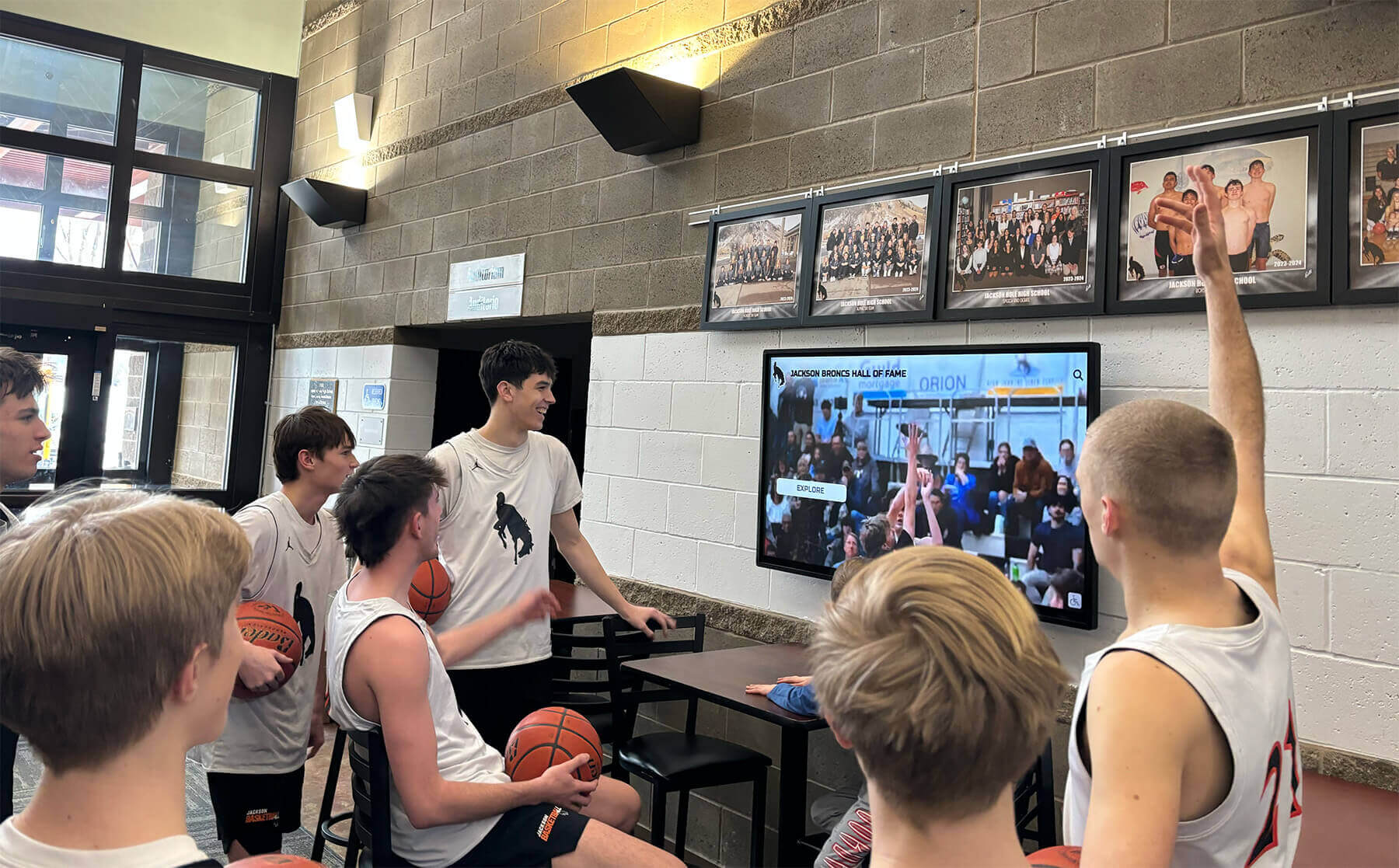
Emerging capabilities will enable new recognition experiences including short documentary-style video features highlighting remarkable member stories and service project impacts, timeline visualizations showing how individual achievement fits within broader institutional NHS chapter history, and augmented reality features connecting physical school spaces to digital NHS content through smartphone cameras.
These advanced capabilities will transform recognition from static profiles into rich storytelling experiences that emotionally engage audiences while preserving chapter heritage for future generations.
Conclusion: Honoring Comprehensive Excellence Through Visible Recognition
National Honor Society membership represents remarkable achievement across scholarship, leadership, service, and character—comprehensive excellence extending far beyond simple academic grades. These accomplishments deserve recognition equal in prominence, quality, and permanence to athletic championships, artistic performances, or any other form of student achievement schools celebrate.
National Honor Society students highlighted through modern digital recognition transforms how schools honor comprehensive excellence by creating engaging, accessible, and permanent displays that inspire current students while appropriately acknowledging distinguished members. Unlike traditional approaches limited by space constraints, brief ceremony acknowledgment, or static presentation, digital recognition provides unlimited capacity, ongoing visibility, rich multimedia storytelling, and global accessibility ensuring every NHS member receives recognition befitting their four-pillar accomplishments.
For schools beginning new recognition programs or enhancing existing approaches, purpose-built platforms designed specifically for educational institutions provide comprehensive capabilities without requiring technical expertise. Solutions like Rocket Alumni Solutions deliver complete systems combining technology, professional implementation, and ongoing support ensuring programs succeed from launch through years of sustainable operation.
The most successful NHS recognition programs share common characteristics: complete profiles honoring all four pillars of membership, prominent placement ensuring high visibility throughout school communities, rich content bringing member achievements to life through specific examples, timely updates maintaining currency and relevance, integration with broader academic recognition systems, measurable impact on student aspiration and school culture, sustainable operations through efficient workflows, and demonstrated value justifying continued investment.
Beyond immediate recognition purposes, effective programs create lasting benefits including increased NHS application quality as younger students understand requirements, enhanced school culture valuing comprehensive excellence beyond simple academics, stronger chapter engagement as members feel genuine institutional appreciation, balanced recognition equity addressing academic-athletic visibility disparities, preserved institutional memory documenting chapter history across generations, and strengthened commitment to developing scholarship, leadership, service, and character among all students.
Every NHS member represents years of sustained effort across academics, leadership, service, and character development—exactly the complete excellence that prepares students for collegiate success, career achievement, and meaningful citizenship. These students deserve recognition that honors their commitment while inspiring peers to pursue similar complete development. Modern digital recognition makes these aspirations achievable for schools committed to celebrating complete excellence with the prominence it deserves.
Ready to implement comprehensive National Honor Society recognition at your school? Talk to our team to explore how purpose-built platforms designed specifically for educational recognition enable schools to honor NHS excellence without space limitations, technical complexity, or sustainability concerns—ensuring your chapter members receive the lasting acknowledgment their four-pillar achievements deserve.