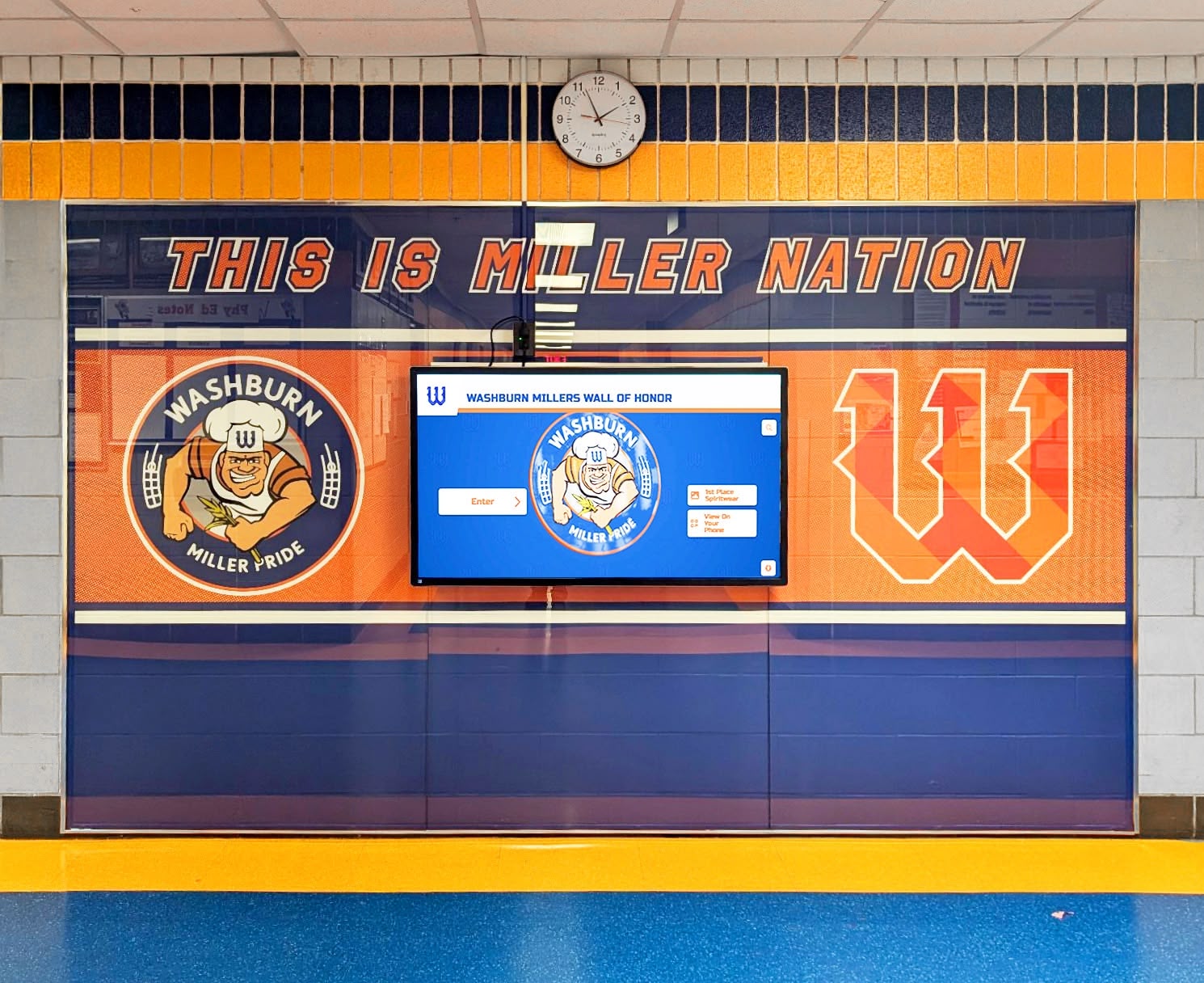




Every fall, high school seniors preparing audition recordings and college application essays confront a question their classmates pursuing athletic scholarships rarely have to answer: can you actually get a scholarship for band? The answer is yes—and the range of marching band scholarships available at the college level, through national organizations, and via community foundations is broader than most students and band directors realize. From full-ride performance scholarships at major universities to regional awards recognizing drum majors and section leaders, financial recognition for scholar-musicians is genuine, competitive, and worth pursuing with the same intensity applied to auditions and competitions.
What’s less visible is what happens after a student earns that scholarship. Athletic scholarship recipients get signing day ceremonies, social media announcements, and often a spot on the school’s athletic recognition wall. Academic scholarship winners appear in honor society inductions and school newsletters. But band scholarship recipients—students who earned financial aid through years of musical dedication, All-State selections, and leadership in competitive programs—too often receive a certificate and a brief mention in a concert program. This guide addresses both sides: the scholarships themselves and the recognition systems that honor the students who earn them.
Why Marching Band Scholarships Deserve Both Financial and Institutional Recognition
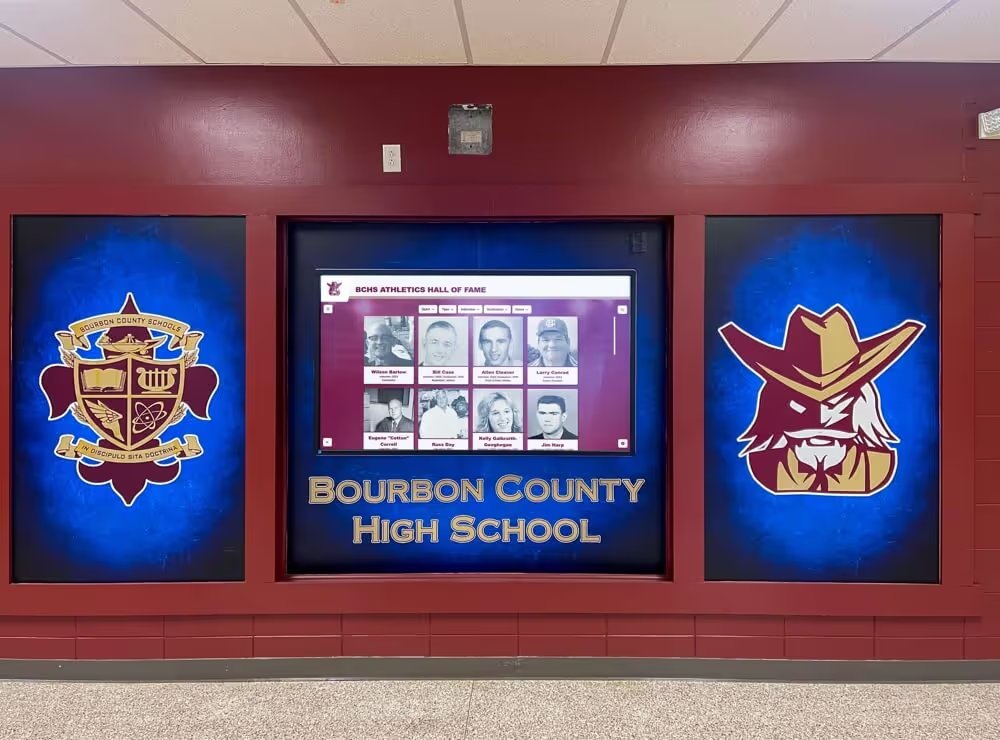
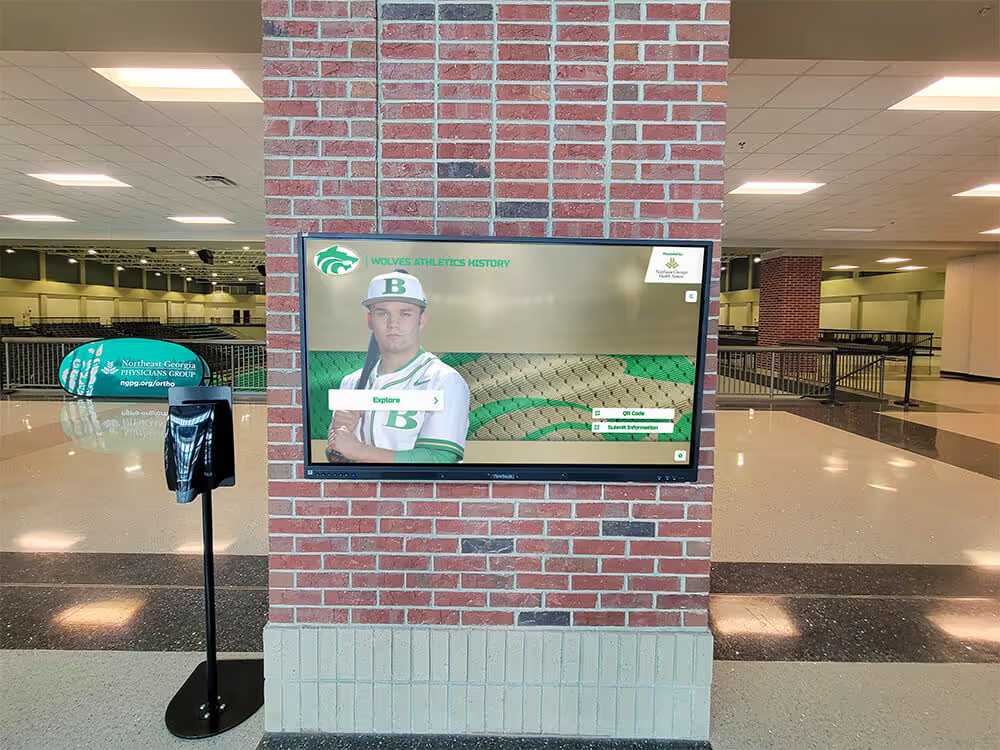
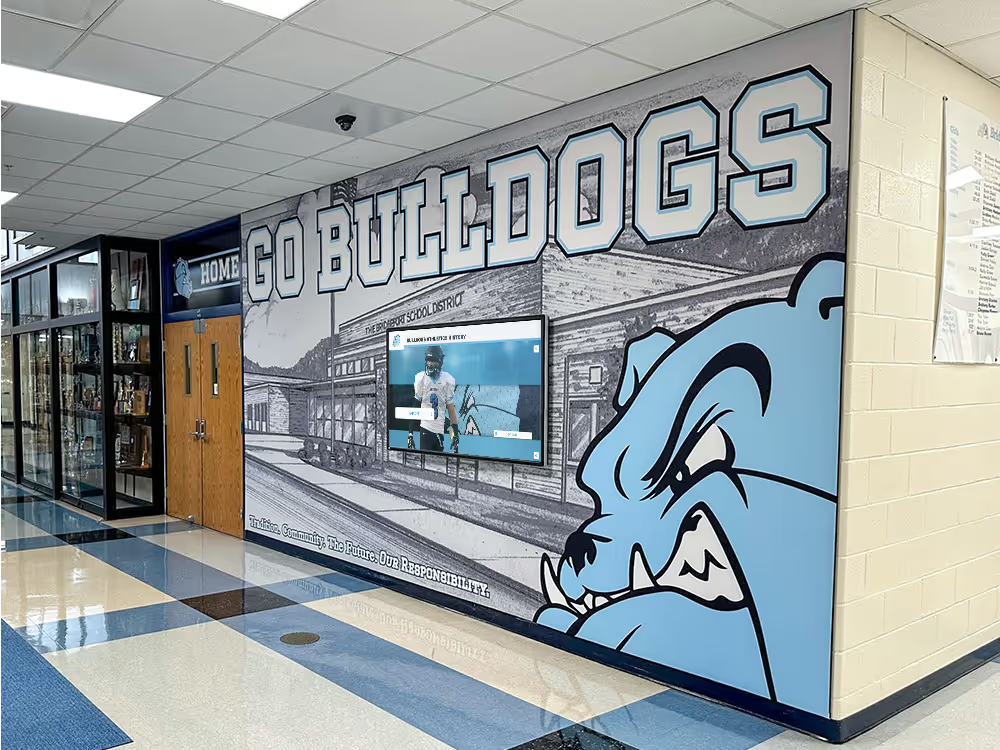
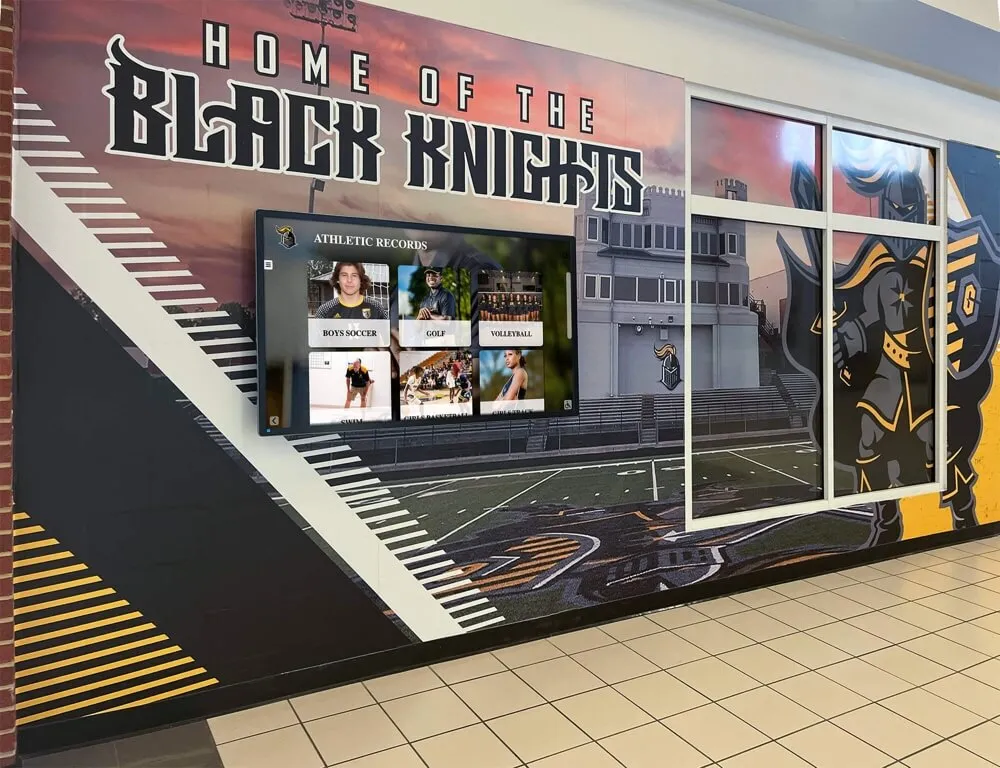
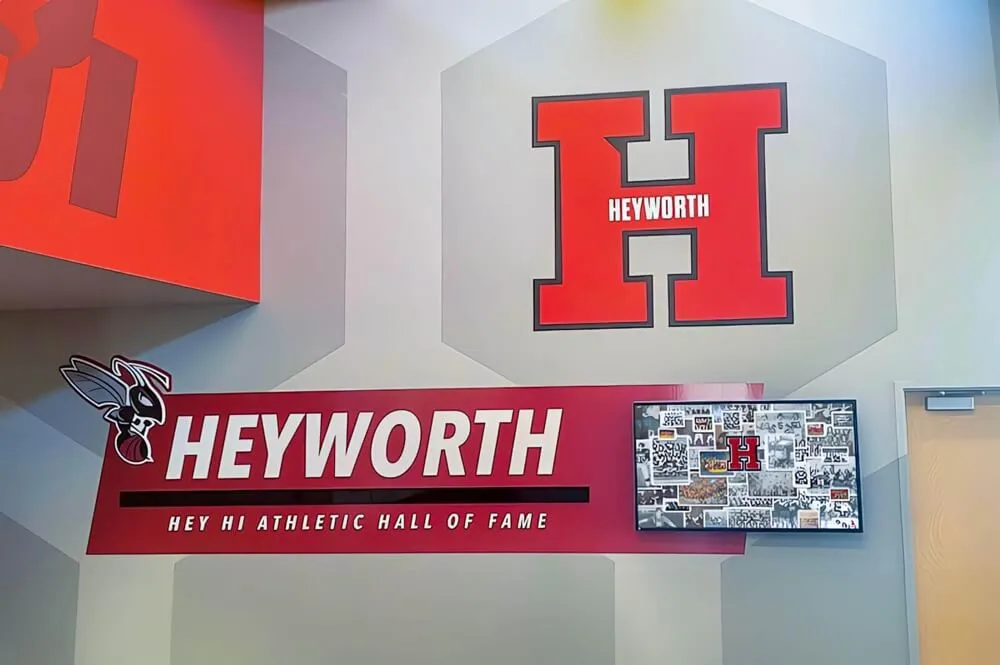
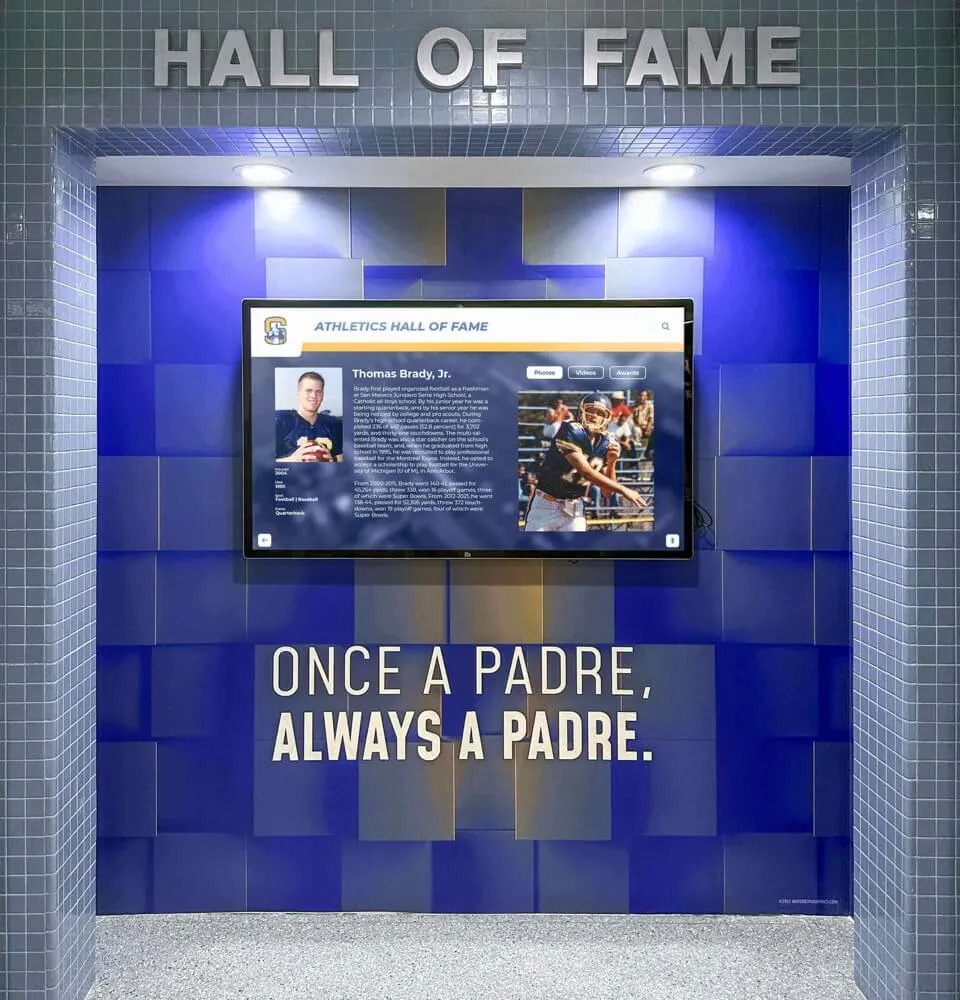
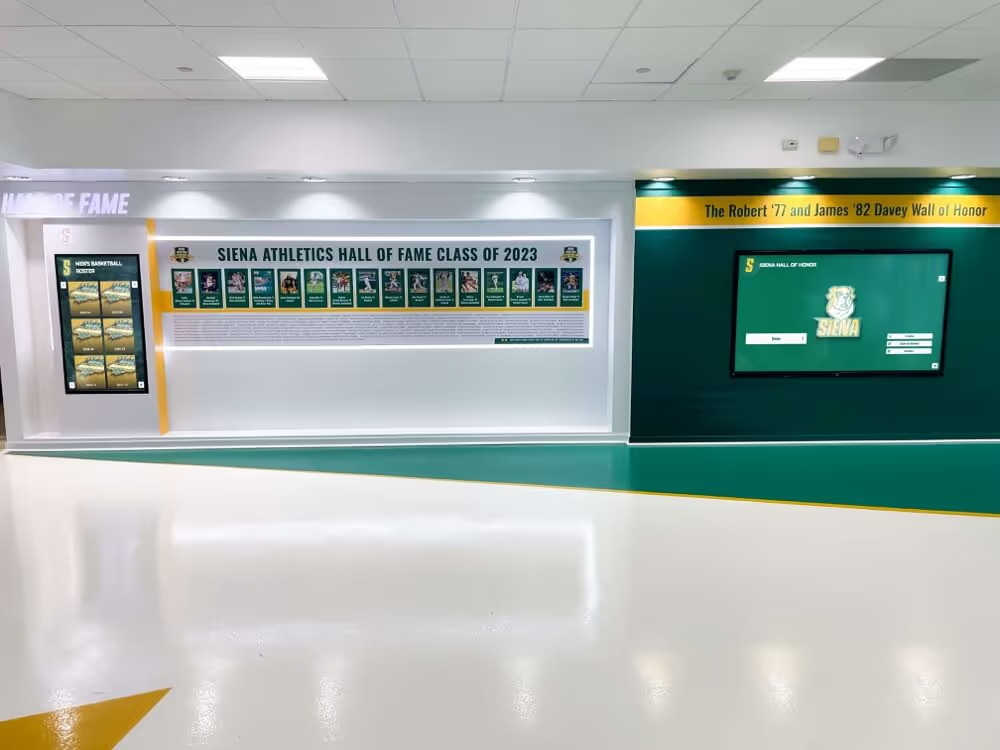
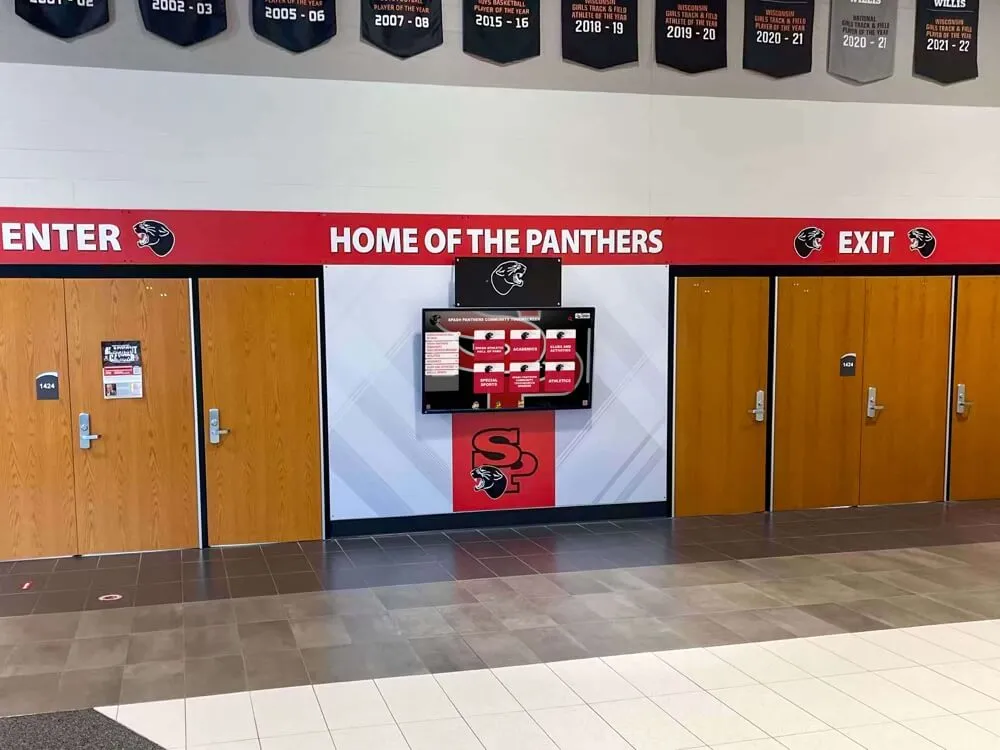
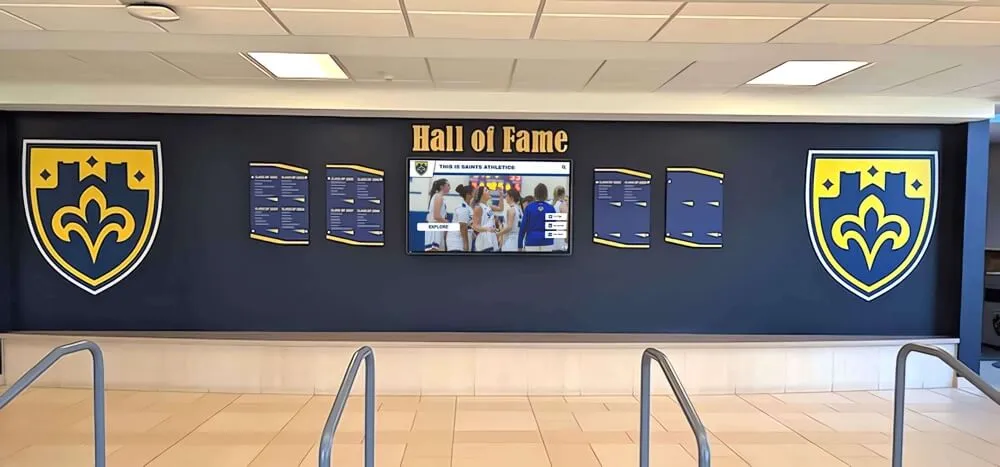
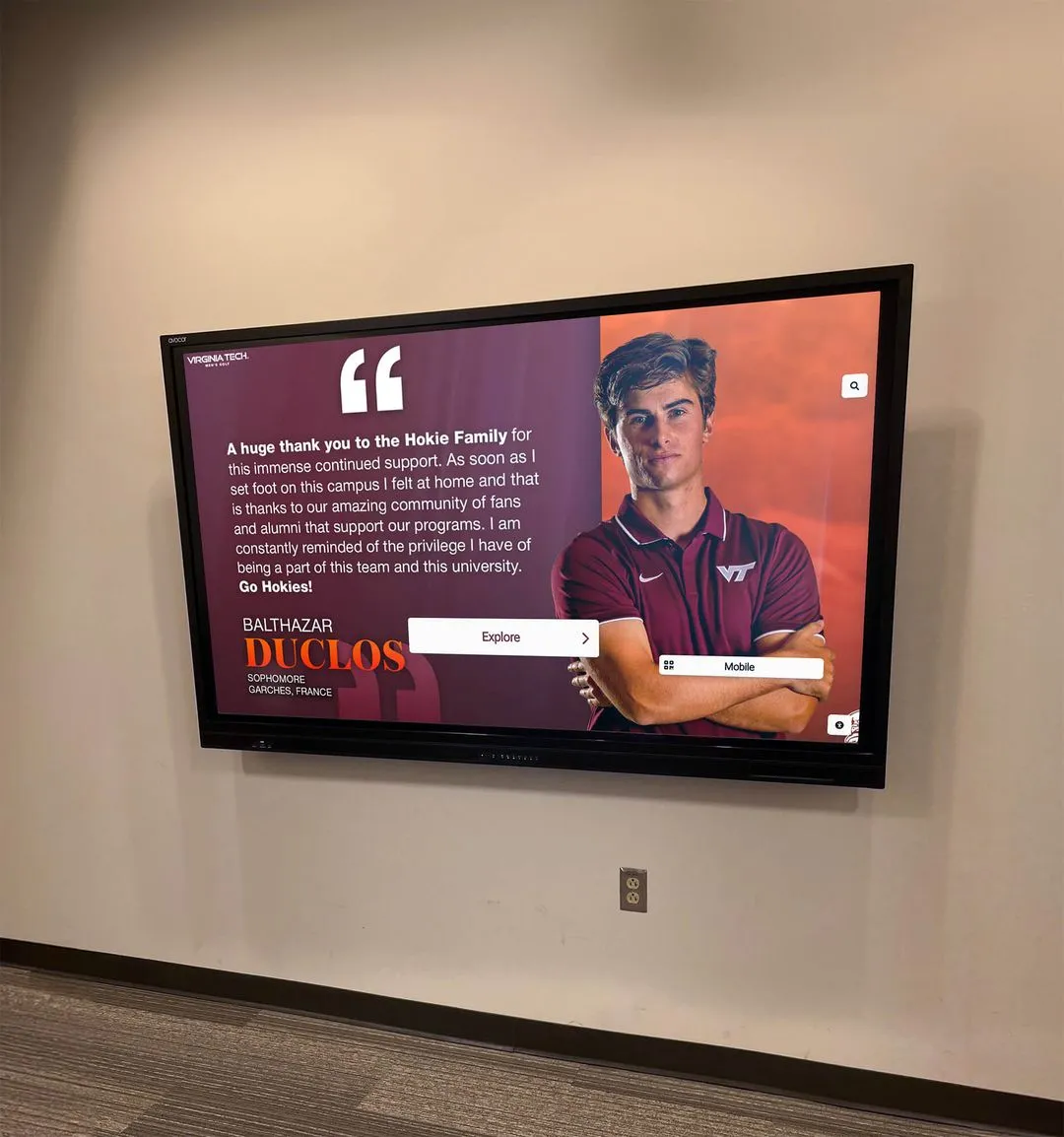
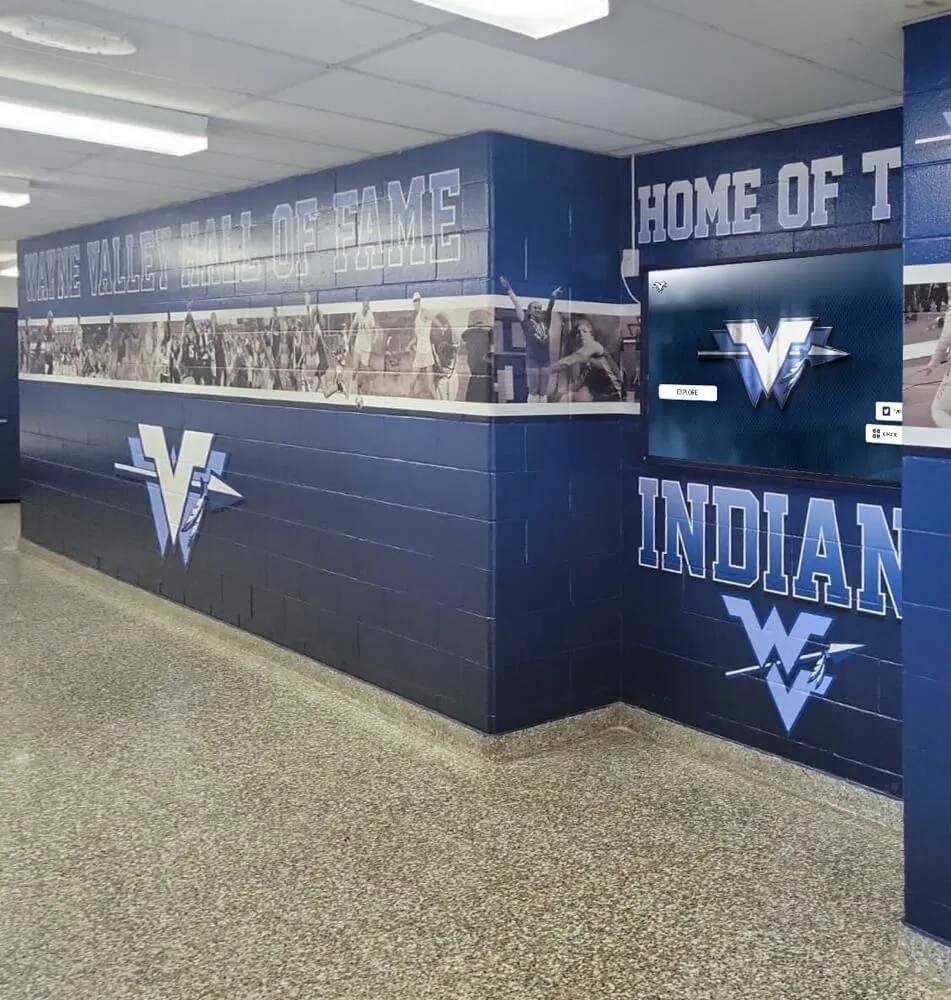
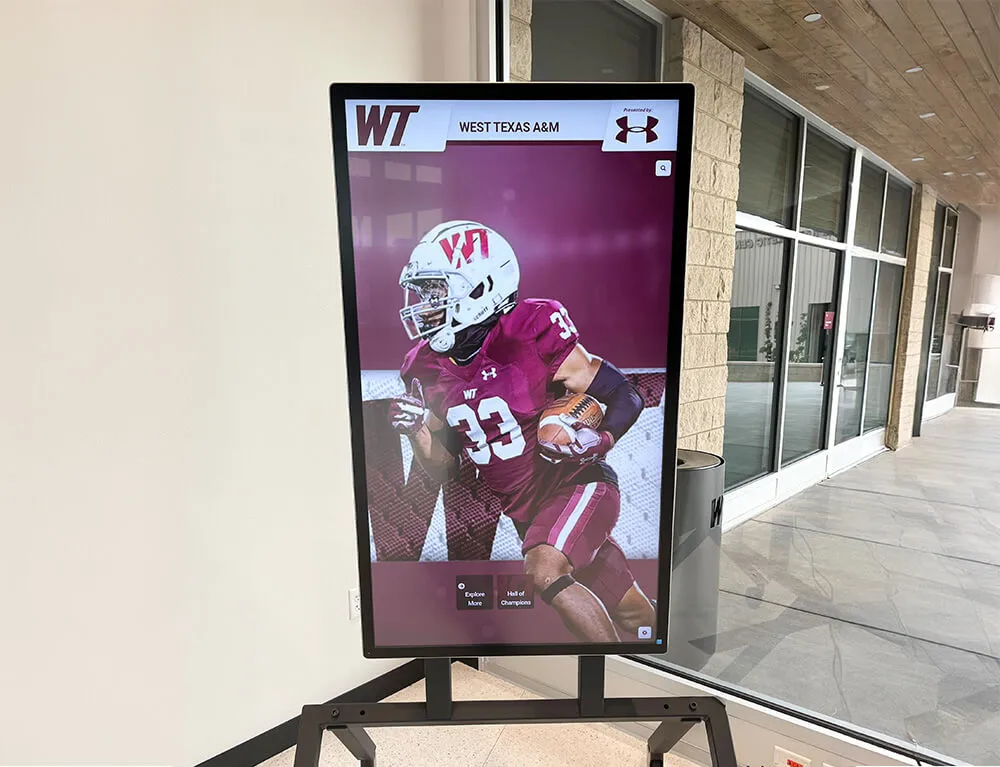
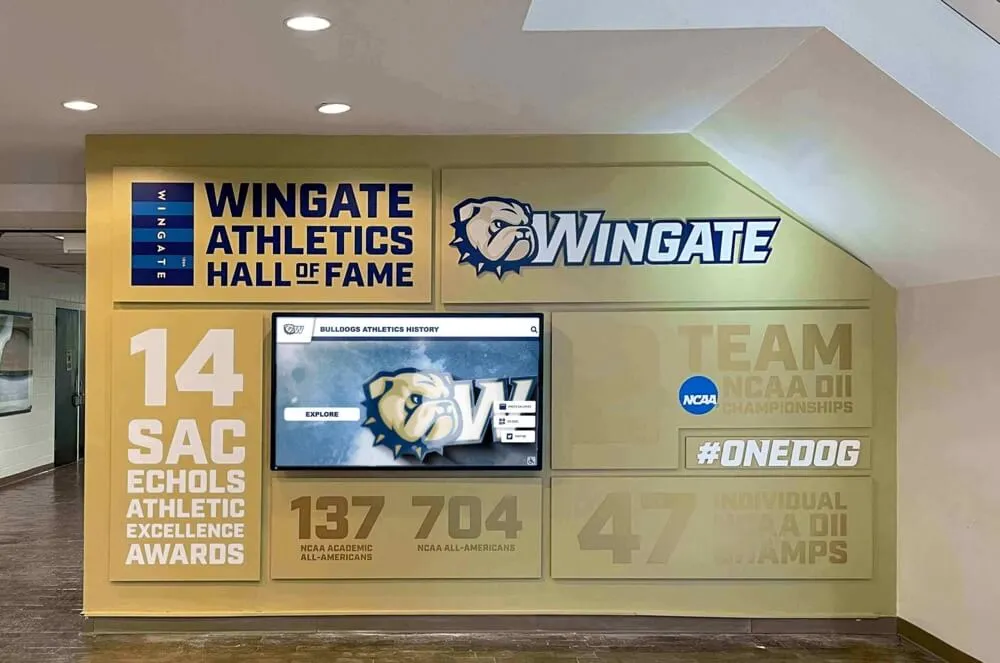
Marching band scholarships validate years of technical mastery, competitive achievement, and musical leadership. They open doors to college ensembles, music education careers, and performing arts programs at institutions across the country. Schools that recognize these achievements through prominent digital displays—the same kind used to honor athletic letter winners and academic all-stars—send a clear message that musical excellence earns lasting celebration. Solutions like Rocket Alumni Solutions help schools build scholar-musician walls of fame that place band scholarship recipients alongside every other form of achievement the school celebrates.
Can You Get a Scholarship for Band?
The short answer is yes. The longer answer is that “band scholarship” covers several distinct categories that function differently and draw from different funding sources. Understanding what each type offers helps students identify the right opportunities and helps schools know what kinds of achievements they should be recognizing on recognition walls.
University Performance Scholarships: Most four-year universities and many community colleges offer music scholarships through their performing arts or music departments. Students who audition successfully for the concert band, wind ensemble, or marching band may receive partial or full tuition support in exchange for ensemble participation. These scholarships are typically awarded annually and renewed based on continued participation and academic standing.
Marching Arts-Specific Awards: Organizations connected to the competitive marching arts—including drum and bugle corps organizations—offer educational scholarships recognizing alumni of their programs. Students who march with competitive ensembles and demonstrate leadership, academic achievement, or community service may qualify for awards from associated foundations and alumni networks.
State Music Educator Association Scholarships: Most state chapters of the National Association for Music Education (NAfME) and similar organizations fund scholarships for students pursuing music education degrees or demonstrating exceptional music achievement in high school. These often prioritize students with documented All-State participation, leadership roles in school ensembles, or private study accomplishments.
Local and Regional Foundation Awards: Community foundations, service organizations, and local businesses frequently fund scholarships for students involved in the arts. Band participation—especially in competitive marching bands or honor ensembles—often satisfies eligibility criteria that prioritize extracurricular leadership and sustained commitment.
Music-Specific National Programs: Several national programs award scholarships specifically to student musicians, recognizing performance excellence, music education intent, and contributions to school or community music programs. Eligibility varies widely, but many prioritize students who have pursued music seriously through high school in organized ensemble settings.
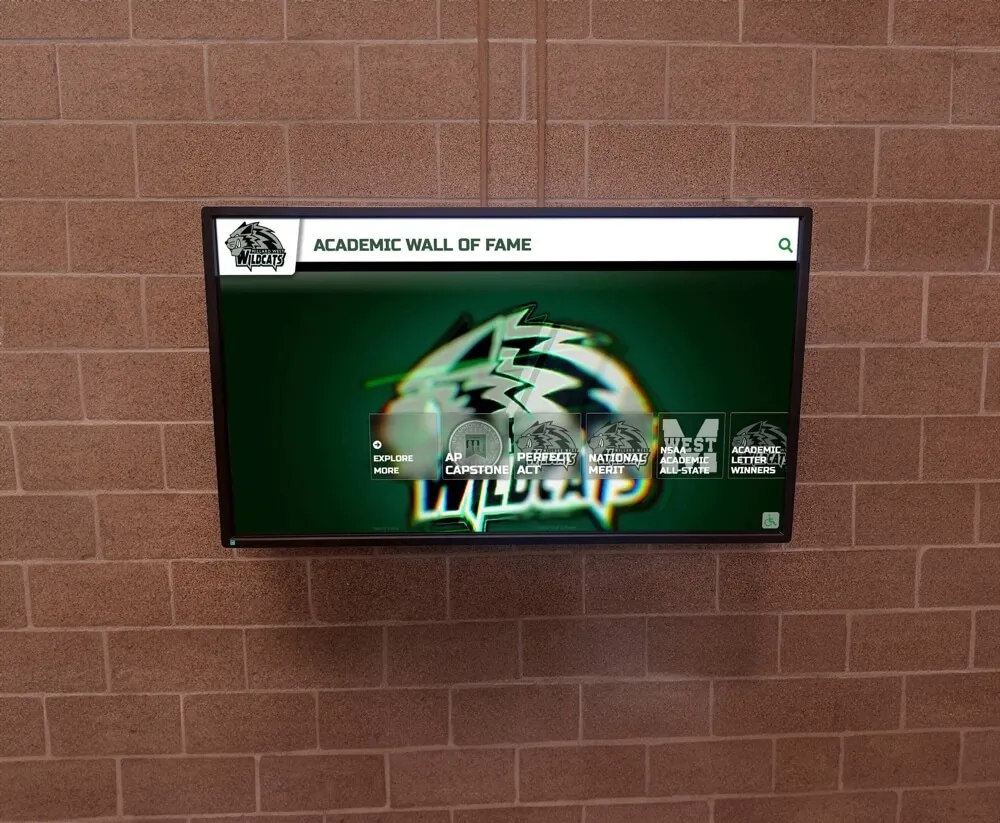
Types of Marching Band Scholarships
Not all band-related scholarships look the same. The category you pursue determines where you apply, what documentation you need, and how the award functions in your financial aid package.
Audition-Based Performance Scholarships
These are the most direct form of marching band scholarships. A student demonstrates their instrument proficiency in a live or recorded audition for a college music faculty panel. Selection results in a financial award tied to ensemble membership. Award amounts vary based on institution size, ensemble prestige, and the student’s demonstrated level. Students holding All-State designations, first-chair placements, or regional honor ensemble selections typically compete more favorably.
Preparation requires the same approach as competitive auditions: prepared solo repertoire, scales and technical exercises, sight-reading readiness, and sometimes a secondary instrument or music theory assessment.
Leadership and Service-Based Scholarships
Many scholarships weigh leadership roles in band programs heavily. Drum majors, section leaders, student conductors, and band officers demonstrate skills—communication, time management, peer mentoring—that scholarship committees across all categories value. Students in these roles should document their contributions specifically: how many students they led, competitions they helped prepare for, community performances they coordinated.
Academic Merit with Music Activity Component
Some institutional scholarships combine academic merit requirements with extracurricular criteria, and sustained participation in a school band program often satisfies the activity component. A student maintaining strong academics while also serving as a section leader in a competitive marching band presents a compelling complete profile.
Essay and Portfolio-Based Awards
Several organizations offer band-adjacent scholarships requiring essays about music’s role in the applicant’s life, career intentions in music or music education, or reflections on what performing arts contribute to school community. Supporting materials may include performance recordings, director recommendation letters, and documentation of competitive achievements.
For schools building recognition walls, these distinctions matter: a wall celebrating “band scholarship recipients” should be designed to capture the scholarship name, the awarding institution or organization, and enough context to help viewers understand what the student achieved.
What Scholarship Committees Look For
Understanding selection criteria helps students prepare stronger applications—and helps schools design recognition profiles that tell the right story about each recipient.
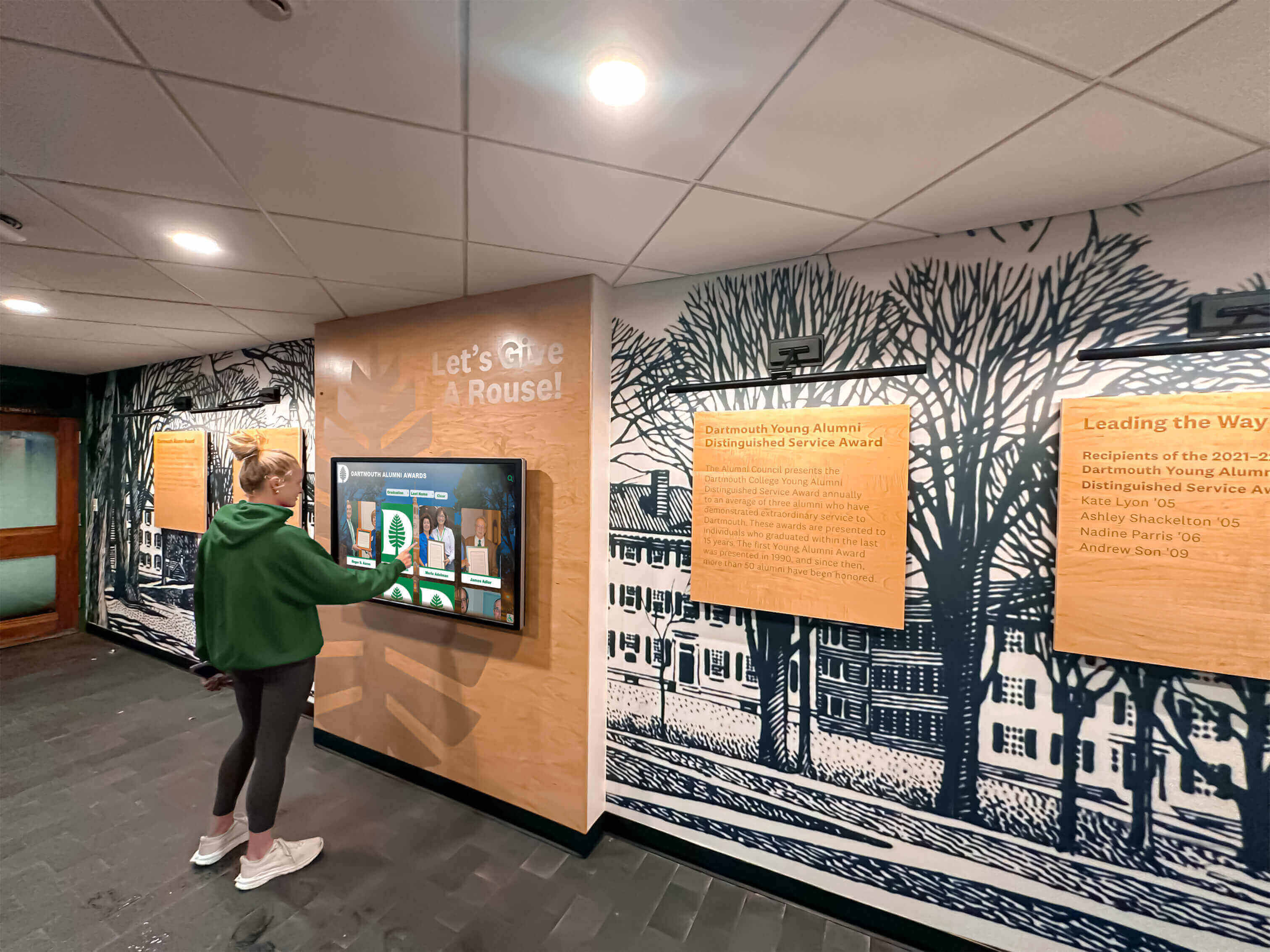
Demonstrated Technical Excellence: Documented All-State selections, regional honor ensemble placements, and superior ratings at solo and ensemble festivals provide concrete evidence of performance-level achievement. These credentials appear in audition materials, director recommendations, and application essays.
Consistent Commitment Over Time: Scholarship committees consistently favor students who participated in their band program continuously across multiple years over those who joined briefly before applying. Four years of marching band participation, including summers with competitive organizations, signals the sustained dedication that college ensembles need from scholarship recipients.
Academic Standing: Most band scholarships include GPA minimums. Students who maintain strong academic performance alongside intensive band commitments demonstrate the time management and discipline that predict success in college music programs.
Director and Teacher Recommendations: A specific, detailed recommendation from a band director carries significant weight. Directors who document a student’s leadership contributions, competitive achievements, and character qualities provide the third-party validation that scholarship reviewers need.
Leadership and Initiative: Roles like drum major, section leader, pit coordinator, or color guard captain demonstrate that a student can lead peers and take ownership of program success. These positions signal readiness for the ensemble leadership responsibilities that often accompany performance scholarships at the college level.
Community Contribution: Band students who perform at community events, mentor younger musicians through youth band programs, or organize music-related service activities demonstrate values that align with what most scholarship committees prioritize.
The types of student awards and recognition programs schools should offer provide useful context for how scholarship recognition fits within a broader student achievement culture.
Building a Scholarship Wall: Why Band Recipients Belong on Recognition Displays
Here is where schools most consistently fall short. When an athlete earns a Division I scholarship, the school announces it at signing day, posts photos on social media, and often adds the student’s name or photo to an athletic recognition display. Band scholarship recipients deserve equivalent treatment—and increasingly, the schools that build strong music programs are delivering it.
A dedicated section for marching band scholarships on a school’s recognition wall accomplishes several things simultaneously:
It validates the achievement publicly. Students and families who worked for years toward a music scholarship receive the same institutional acknowledgment that athletic achievement commands. This matters for program culture: when younger students see band scholarship recipients celebrated prominently, they understand that musical excellence produces concrete, lasting recognition.
It communicates program strength to prospective families. A recognition wall showing multiple scholarship recipients across multiple years demonstrates that the school’s music program consistently develops students to college scholarship-winning levels. That track record influences enrollment decisions for music-focused families evaluating schools.
It acknowledges donors and organizations. If local businesses, community foundations, or alumni have funded scholarships that students receive, naming those awards on a recognition wall extends gratitude visibly in a way that reinforces donor relationships.
It creates continuity across generations. A student who earns a scholarship and sees their name on a wall connecting them to recipients from the 1990s and 2000s experiences their achievement as part of a tradition. That sense of belonging to something larger than any individual year is what sustains program culture across decades.
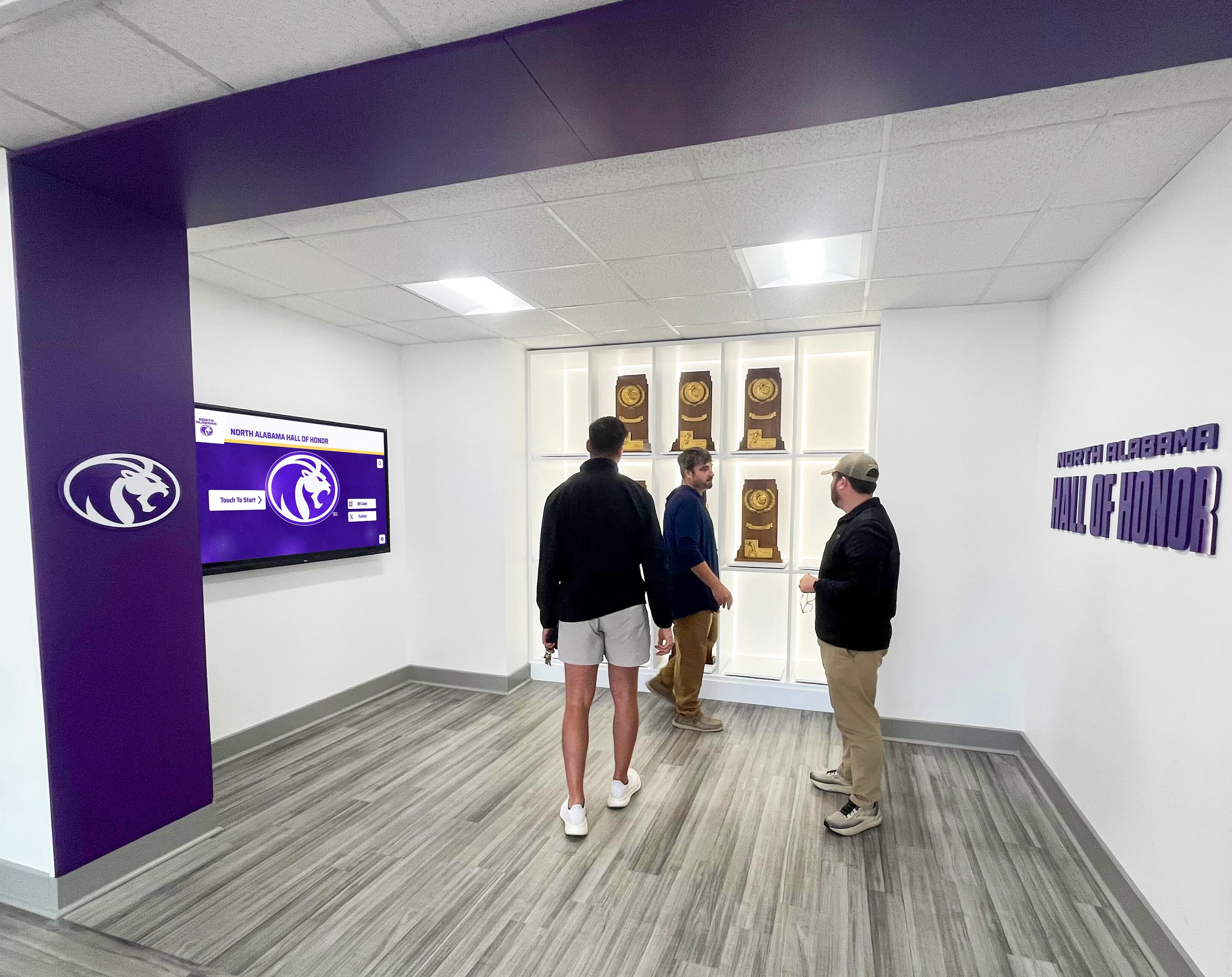
What to Include in a Band Scholarship Recognition Profile
Whether on a physical plaque, a digital display, or an interactive touchscreen, each scholarship recipient profile should capture enough information to be meaningful for viewers who didn’t know the student.
Essential Information:
- Student name and graduation year
- Scholarship name and awarding institution or organization
- Award year and whether renewable
- Instrument or ensemble role (drum major, section leader, specific instrument)
- College or university destination
Contextual Achievement Information:
- All-State designations or regional honor ensemble placements
- Competition achievements with the school’s marching band
- Leadership roles held in the program
- Years of continuous band participation
Optional Enrichment Content:
- Brief narrative about the student’s musical journey and scholarship path
- Photo in performance or with instrument
- College ensemble or music program they joined
- Post-graduation music-related achievements for alumni profiles
The comprehensive hall of fame guide provides frameworks for designing recognition systems that organize this kind of layered information clearly and attractively.
Digital vs. Traditional Displays for Band Scholarship Recognition
Schools choosing how to display band scholarship recipients face the same decision they confront with athletic halls of fame and academic recognition walls: traditional plaques and engraved displays versus digital and interactive systems.
Traditional Physical Displays
Engraved plaques and framed certificates provide tangible, permanent recognition that doesn’t require power or connectivity. They convey a sense of permanence and institutional seriousness. The limitations are familiar: physical space constrains how many recipients can be displayed, updating requires ordering new hardware and installation, and a student who earned a scholarship in 2002 may find their recognition outdated or crowded out by newer additions.
Digital Recognition Walls
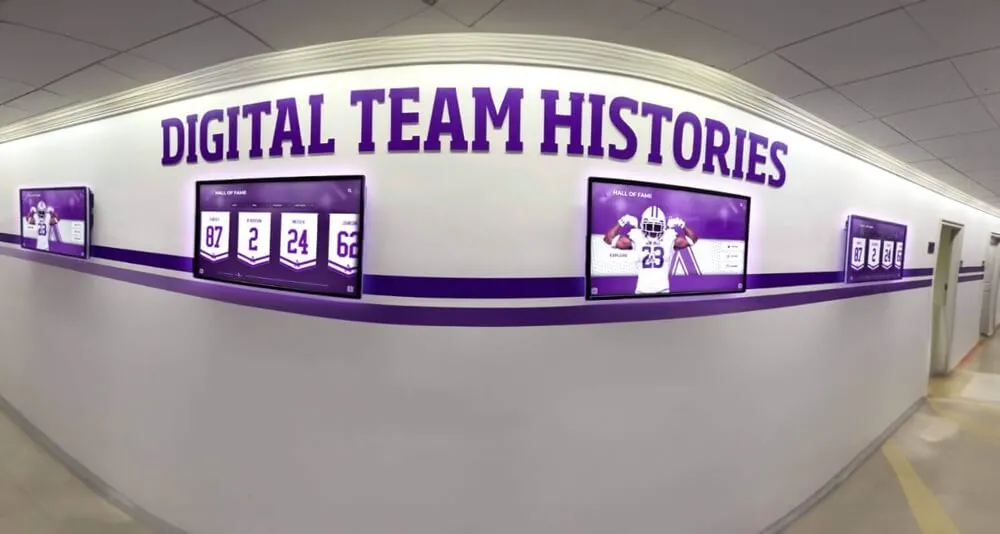
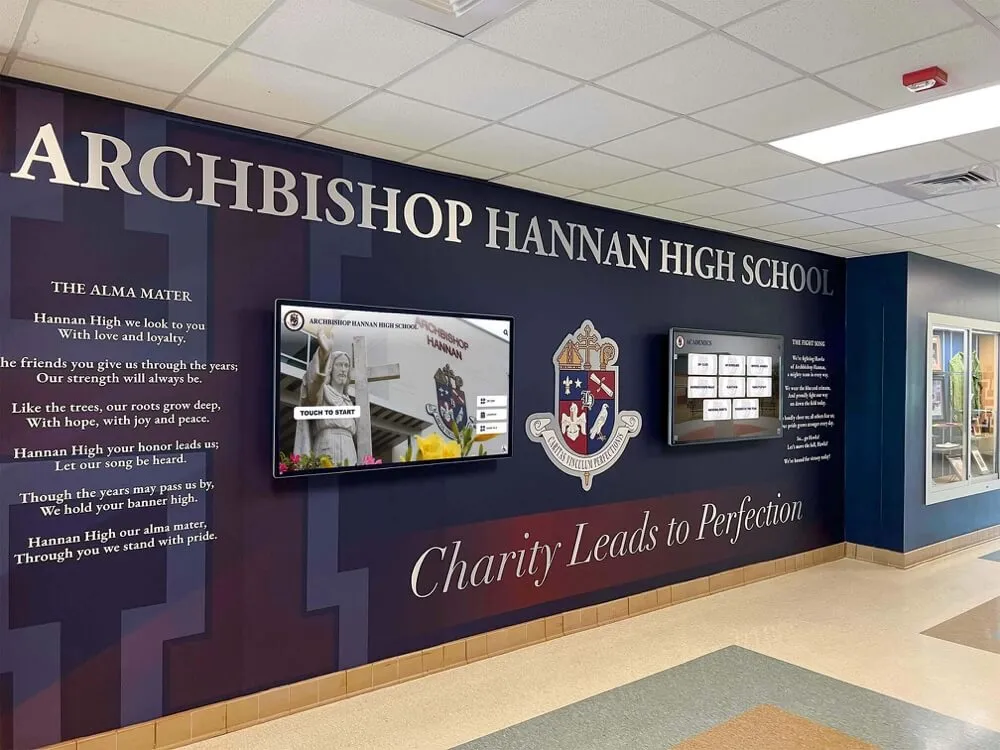
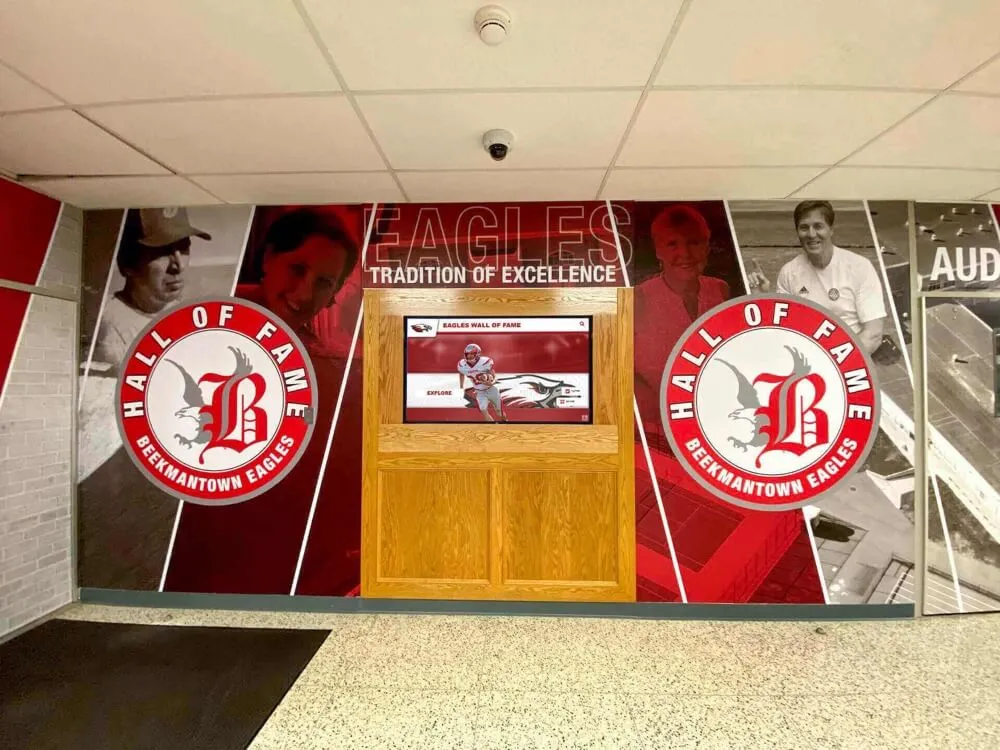
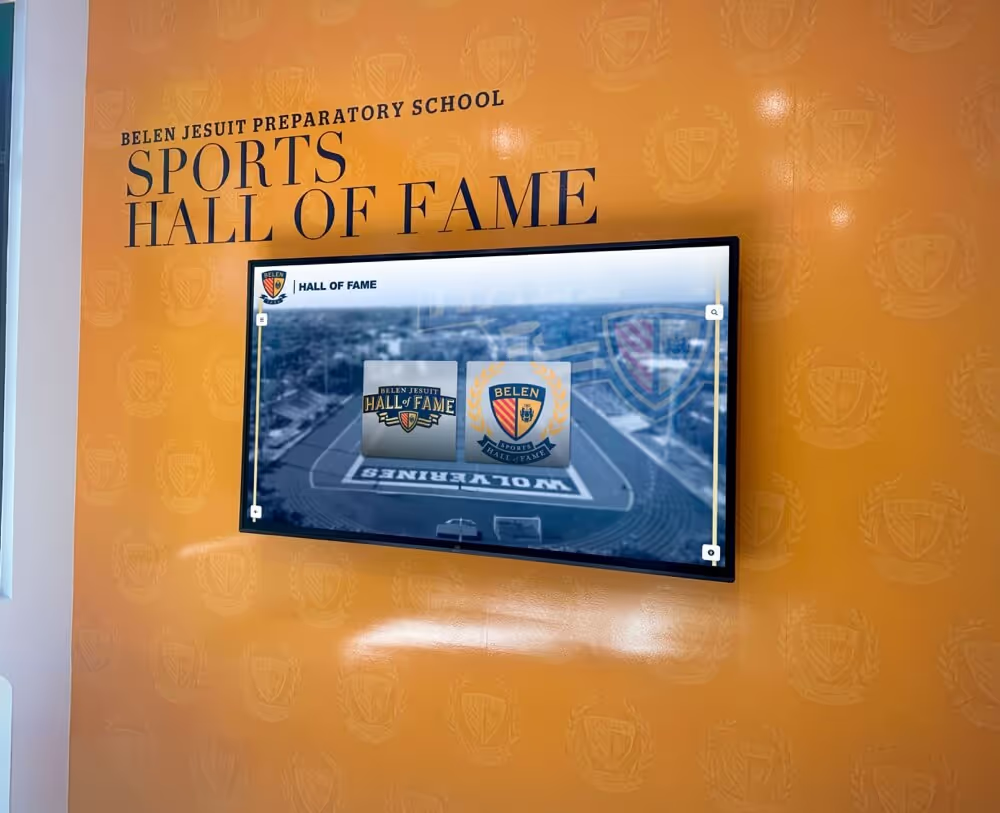
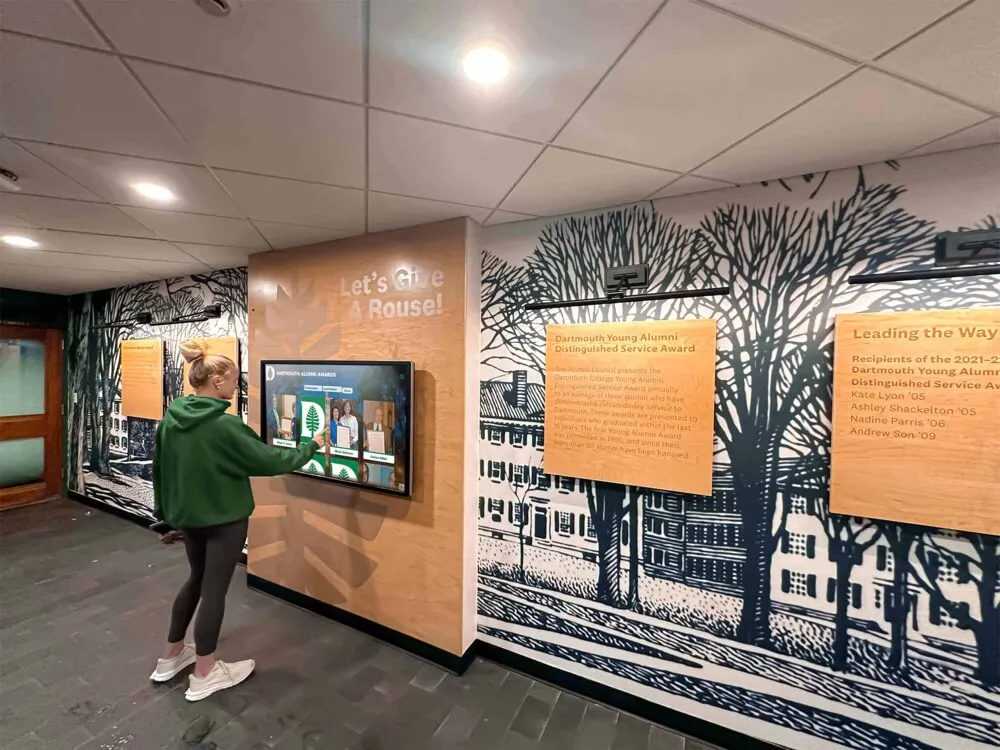
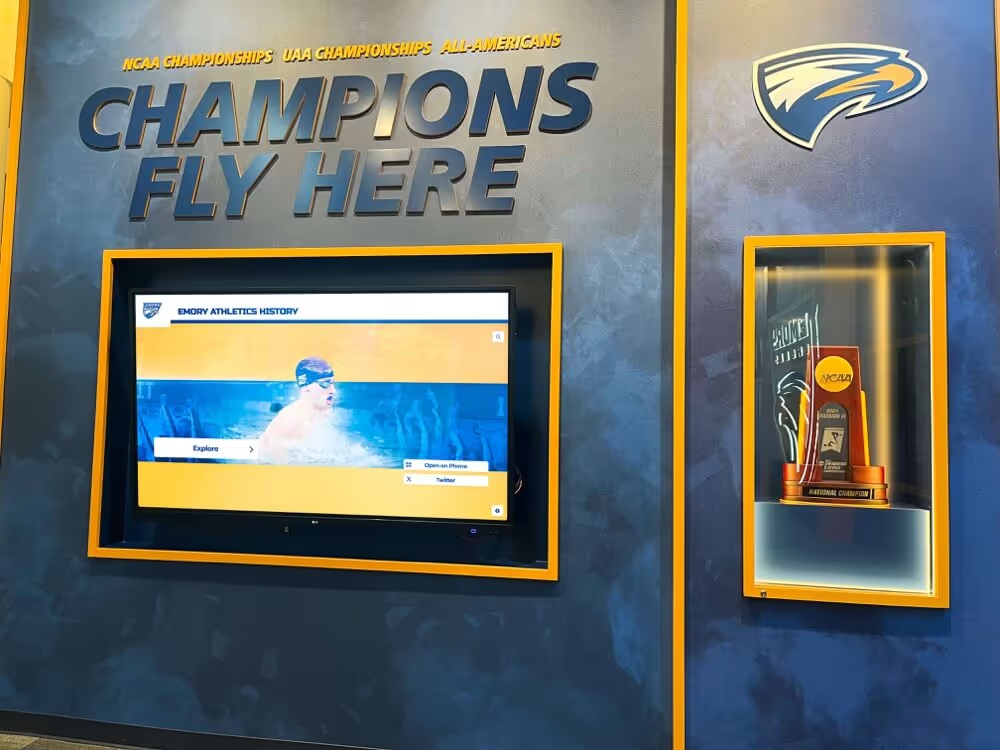
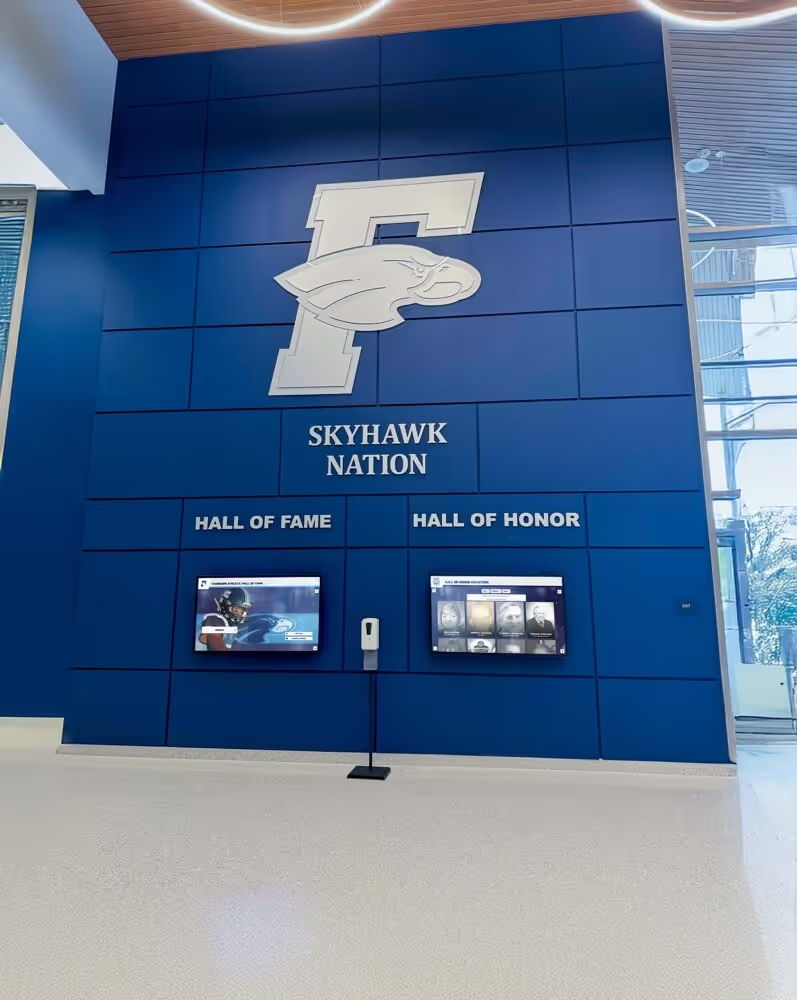
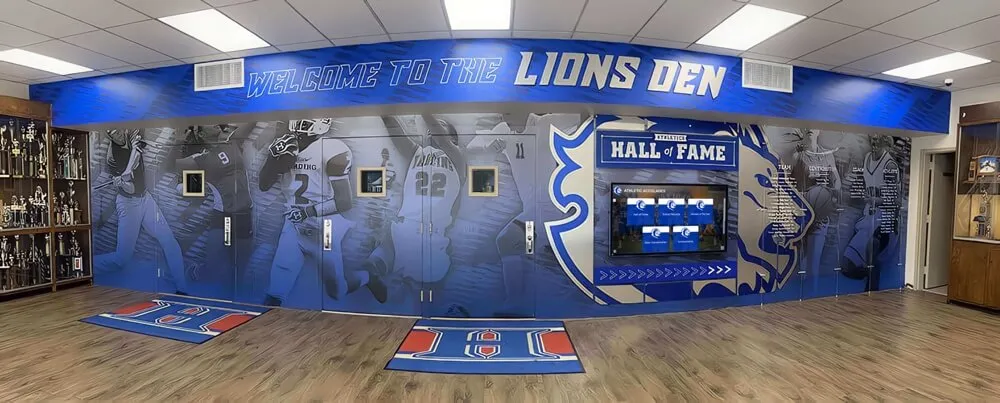
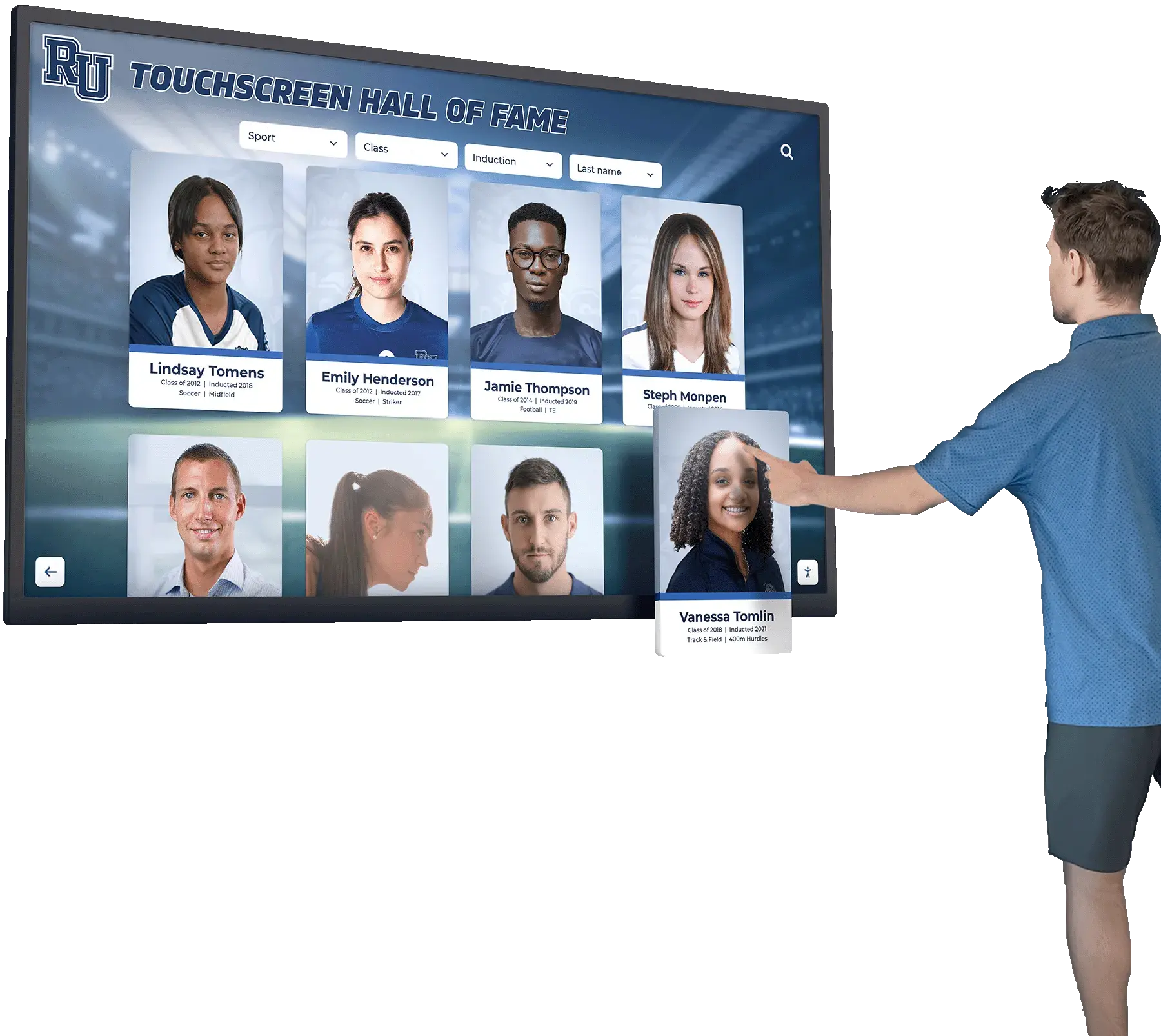
Interactive digital displays remove space limitations entirely. A school with forty years of band scholarship history can honor every recipient without prioritization. New recipients can be added within hours of confirmation. Rich profiles can include performance photos, brief biographical narratives, and scholarship details that a physical plaque could never accommodate.
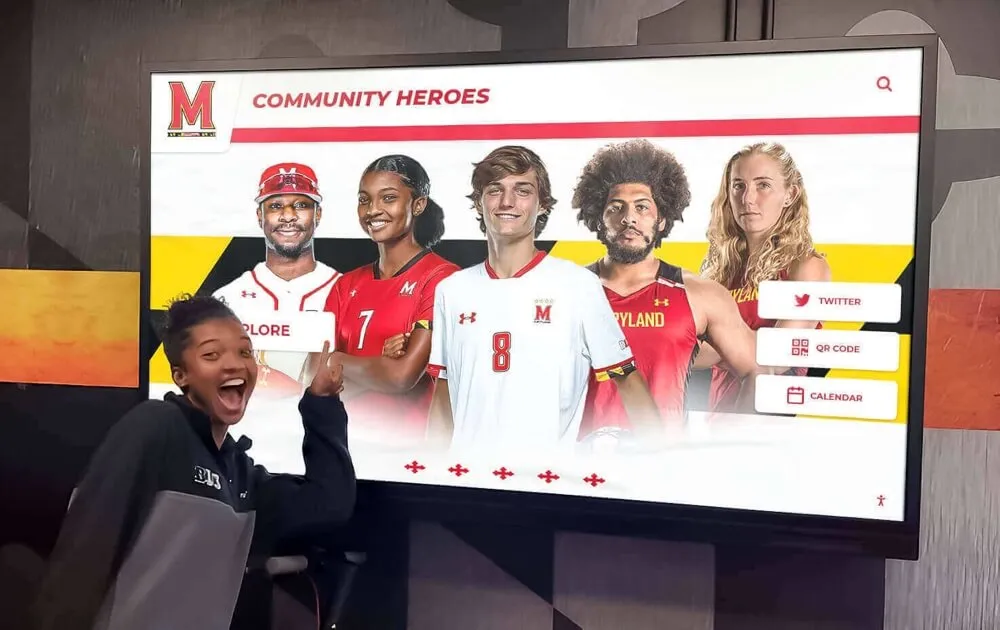
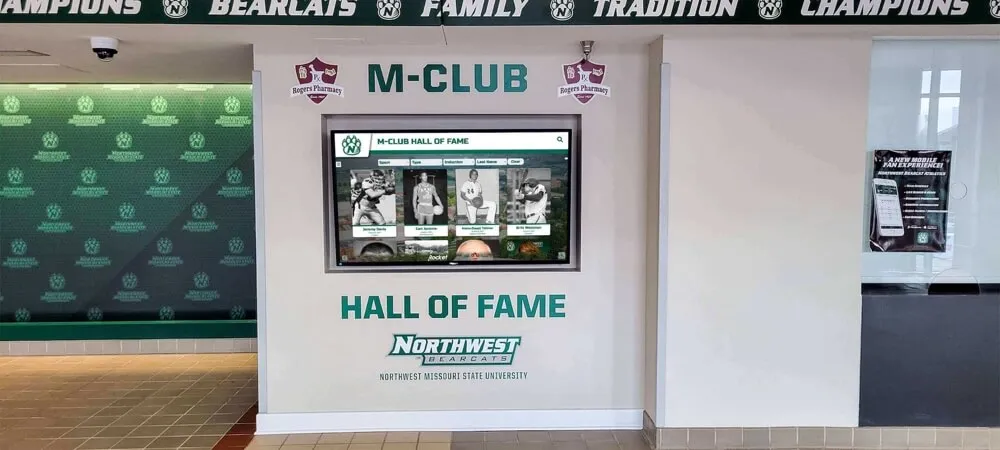
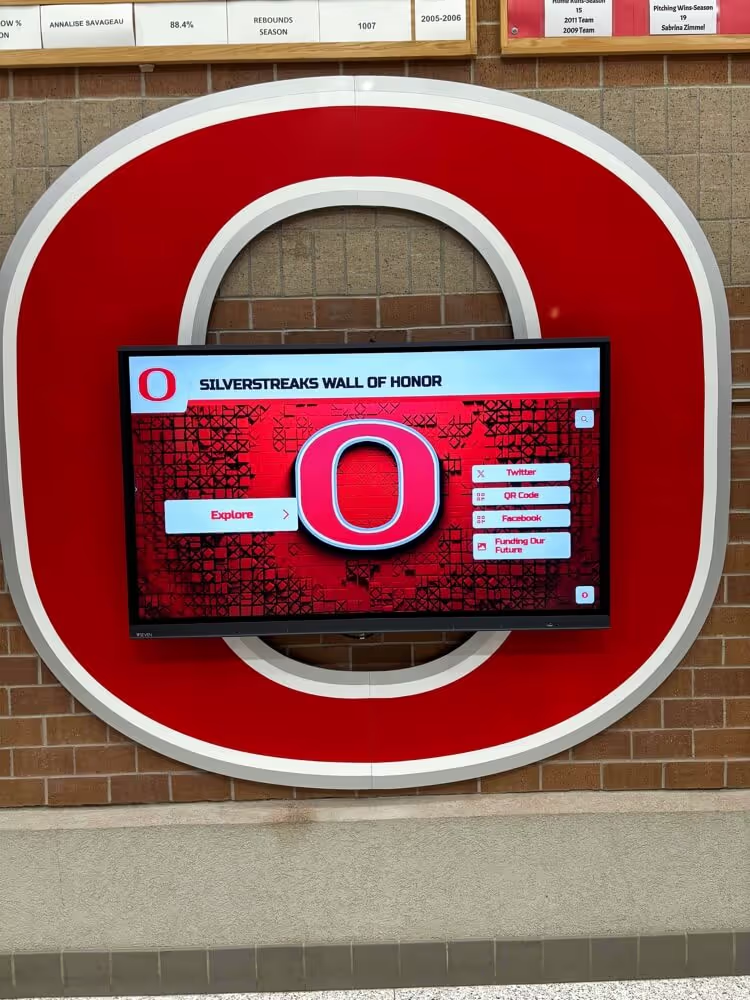
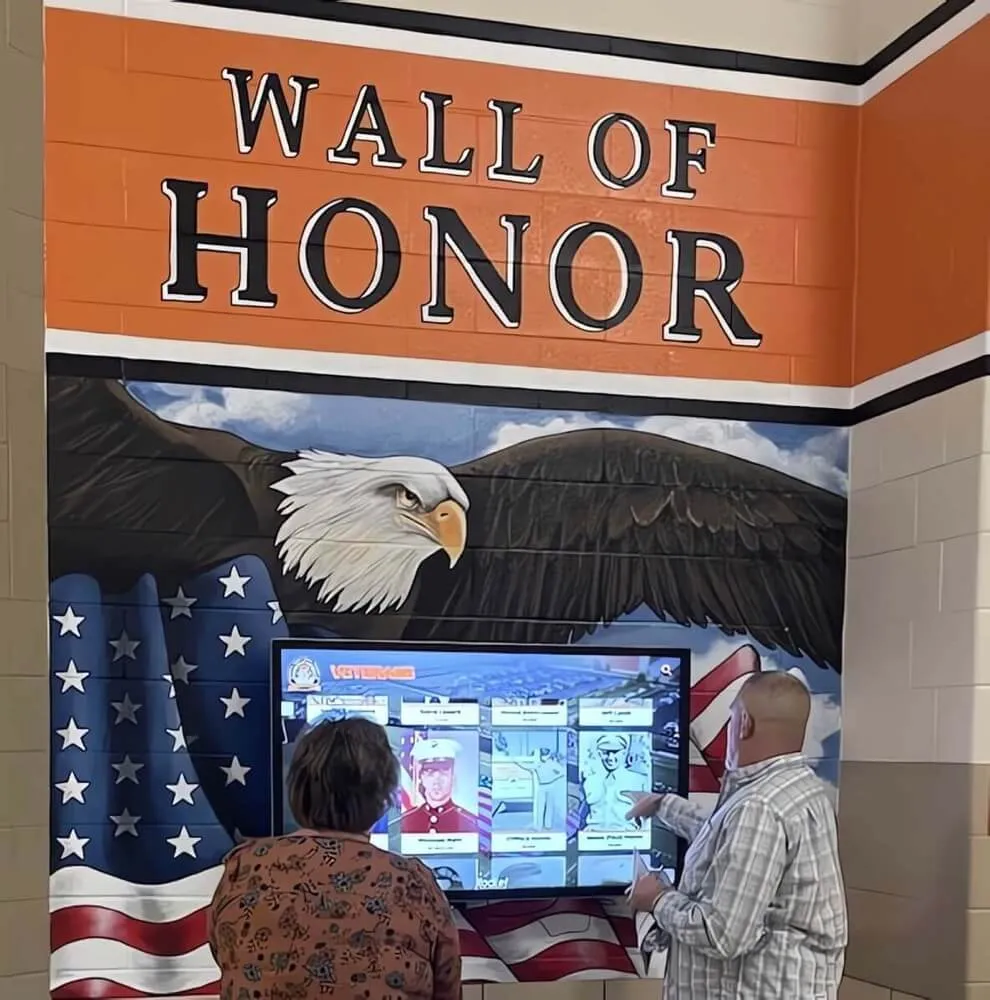
For schools already using touchscreen recognition systems for athletics, adding a band scholarship section requires only content additions rather than new hardware. The same system that displays football letter winners and swimming record holders can also display scholar-musicians—communicating through structure alone that the school treats all forms of excellence as equivalent.
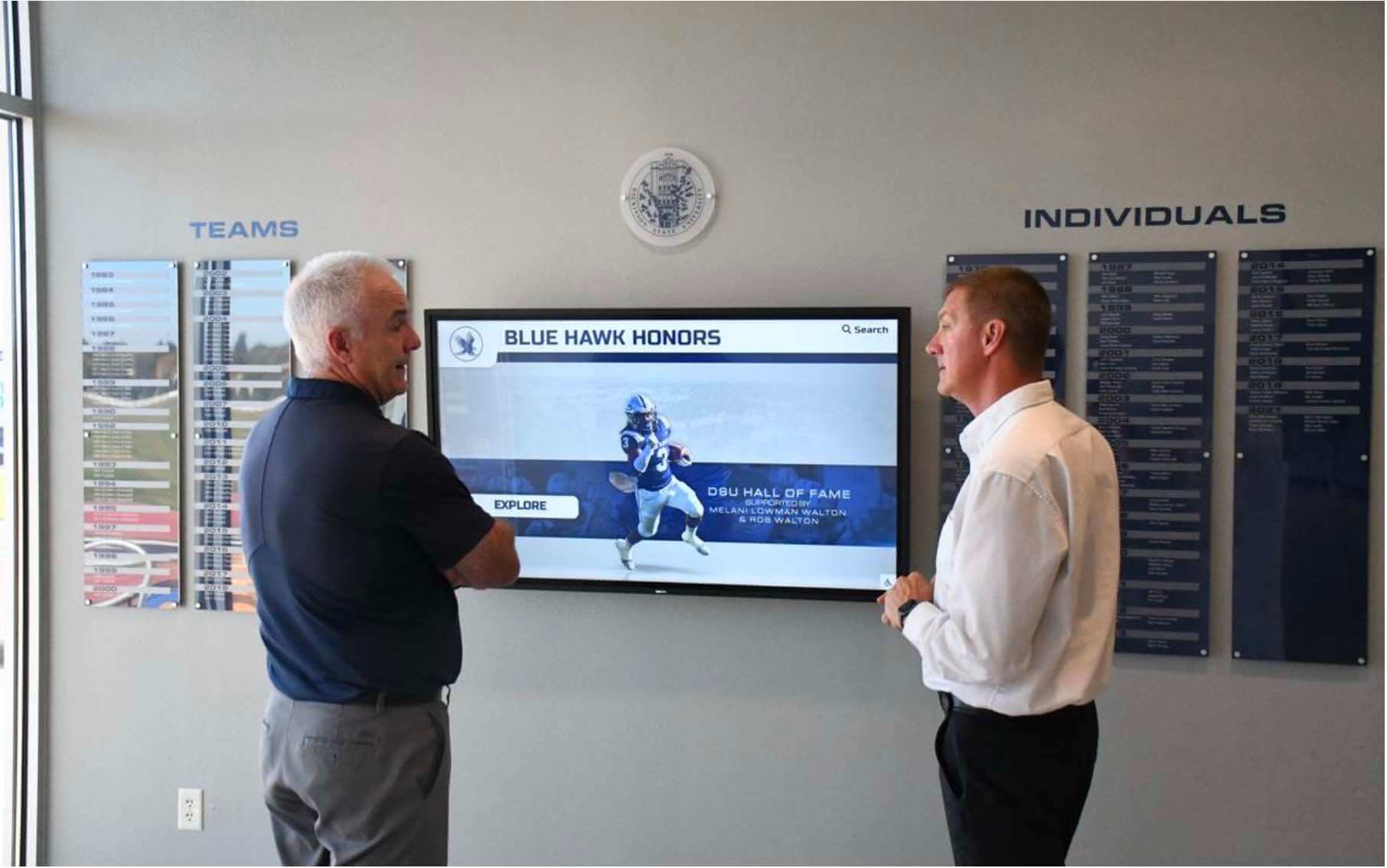
Digital tools that bring school history to life explain how modern recognition platforms handle exactly this kind of multi-category achievement display—athletic, academic, and arts achievements unified in a single navigable system.
Hybrid Approaches
Many schools implement both: a traditional plaque or banner display in the band room or performing arts center lobby recognizes the most recent class of scholarship recipients with physical permanence, while a digital system in the main hallway houses the complete historical archive with richer multimedia content. The physical display creates immediate ceremony; the digital system creates lasting accessibility.
Integrating Band Scholarships into Broader School Recognition Culture
The most effective recognition programs don’t silo band scholarships into a corner of the band room. They integrate scholar-musicians into the same school-wide recognition infrastructure that celebrates athletes, academic achievers, and community leaders.
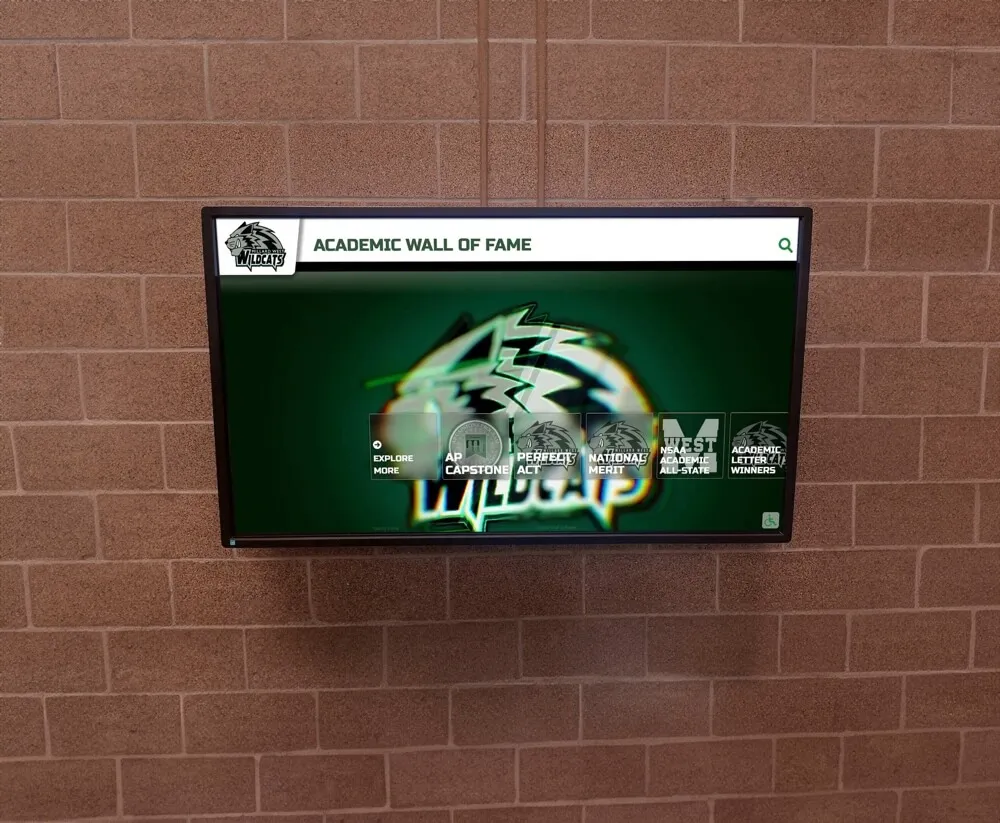
This integration serves everyone. When a visitor touring the school sees a recognition display featuring athletic scholarship recipients, academic honor roll members, National Honor Society inductees, and band scholarship winners in a unified system, they encounter evidence of a school that genuinely values diverse forms of excellence. That impression matters for enrollment, community pride, and program funding alike.
Programs that highlight National Honor Society students and similar academic high achievers alongside arts and athletic achievers create the most powerful versions of this unified recognition culture.
School-wide academic recognition programs, examined in depth in this academic recognition programs guide, offer models that music departments can adapt to ensure scholarship recipients receive equivalent visibility to honor roll achievers and academic award winners.

Practical Steps for Schools Ready to Build a Band Scholarship Wall
If your school doesn’t currently have a dedicated recognition display for music scholarship recipients, here’s a practical path toward creating one.
Step 1: Compile the historical record. Start with music directors, yearbooks, concert program archives, and alumni outreach to identify every scholarship recipient you can document. Many programs will find a richer history than they expected once they start looking. Don’t wait for a perfect record—begin with what you can verify and build from there.
Step 2: Establish documentation standards going forward. Create a simple system for capturing scholarship details when students receive awards: scholarship name, awarding organization, dollar amount (optional), college destination, and supporting achievement context. Collecting this at the time of announcement is far easier than reconstructing it years later.
Step 3: Choose your display format. Assess available space, budget, and your existing recognition infrastructure. If you already have digital recognition systems in other parts of the building, extending them to cover music scholarship recipients is straightforward. If you’re starting fresh, a modest physical display in the performing arts center can serve as a foundation while you plan for expansion.
Step 4: Launch with ceremony. Don’t install a recognition display quietly. Announce it at a concert, involve current and alumni scholarship recipients in an unveiling event, and use local media to communicate that your school now permanently honors its scholar-musicians. The ceremony creates the beginning of a tradition.
Step 5: Maintain it consistently. A recognition wall that stops updating becomes a statement about institutional neglect rather than achievement. Assign someone in the music department to ensure new recipients are added promptly each year, and review older profiles periodically for accuracy and completeness.
Whole-school celebration ideas for building community recognition events offer additional strategies for launching recognition programs with the community engagement that makes them last.
Inspiring Future Musicians Through Visible Recognition
Recognition walls serve a secondary audience beyond the students being honored: the younger musicians watching from the stands, practicing scales in the band room, and beginning to consider whether years of dedication to their instrument are worth the commitment.
When a ninth-grader walks past a display showing fifteen years of band scholarship recipients from their school—names, instruments, scholarship sources, college destinations—they receive a concrete answer to an often-unasked question: does this program produce musicians who go on to earn real recognition and financial support? That answer, made visible in a hallway rather than buried in a concert program footnote, shapes how seriously a student pursues their musical development.
Digital hall of fame systems have documented this motivational effect across athletic programs for years. Music programs that adopt the same approach—making past achievement visible to current students—report similar effects on practice commitment and audition preparation standards.
The best music programs create cycles: visible recognition of past excellence raises aspirations for current students, which produces more competitive musicians, which generates more scholarship-level talent, which adds more names to the recognition wall. Schools that invest in recognition aren’t just honoring the past—they’re actively building the conditions for future achievement.
Addressing the Recognition Gap Between Athletics and the Arts
The gap between how schools celebrate athletic scholarship recipients versus music scholarship recipients is real and consequential. Schools that want to close it don’t need to diminish athletic recognition. They need to extend the same institutional seriousness—signing ceremonies, social media announcements, named recognition walls, alumni storytelling—to the arts.
This isn’t primarily about equity for its own sake, though that matters. It’s about what consistent recognition does for program culture over time. Music programs with strong, visible recognition traditions attract students who are serious about their craft, retain those students through the demanding phases of competitive preparation, and graduate scholar-musicians who become alumni advocates for the programs that recognized them meaningfully.
Student of the month programs and similar recognition frameworks demonstrate that even small-scale, consistent recognition practices shift school culture meaningfully over time—and the same logic applies at the larger scale of scholarship recognition.
Conclusion: Scholar-Musicians Deserve Named Walls
Marching band scholarships are real, competitive, and meaningful financial achievements. Students who earn them have demonstrated years of technical growth, competitive success, and the kind of sustained commitment that college music programs, community foundations, and scholarship organizations recognize with financial support. Schools that treat these achievements as equivalent to athletic and academic honors—through public announcements, formal ceremonies, and permanent recognition displays—build music program cultures where excellence becomes self-reinforcing.
The practical infrastructure for this recognition exists and is increasingly accessible. Interactive digital displays, touchscreen hall of fame systems, and flexible content management platforms make it straightforward to add scholar-musician recognition to existing school displays or build dedicated new systems in performing arts spaces. The remaining work is institutional: deciding that band scholarship recipients belong on named walls of fame and committing to the consistent recognition practices that make that decision real.
For schools ready to build or upgrade recognition systems that honor scholar-musicians alongside every other form of student excellence, Rocket Alumni Solutions provides the display infrastructure, content management tools, and implementation support to make it happen. Scholar-musicians have earned the recognition. The walls should show it.