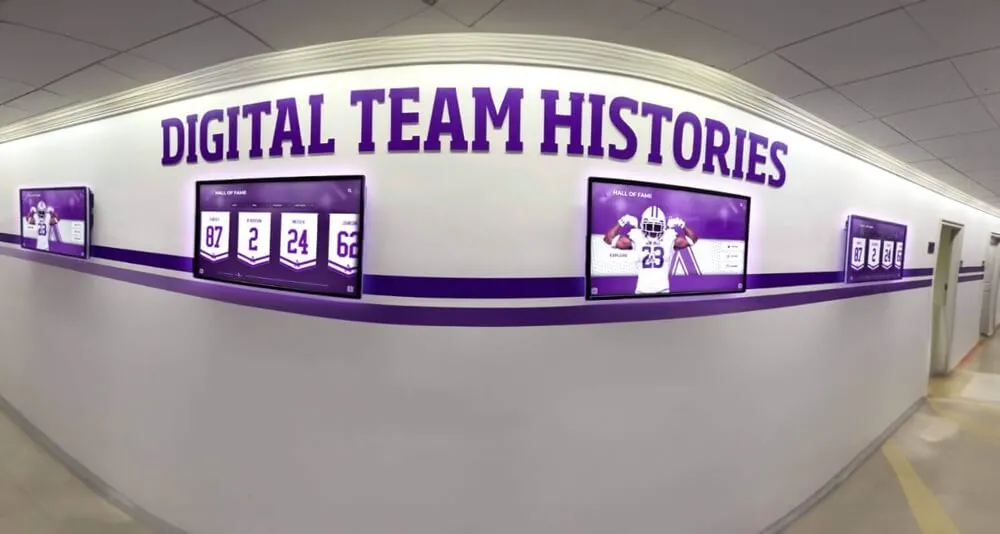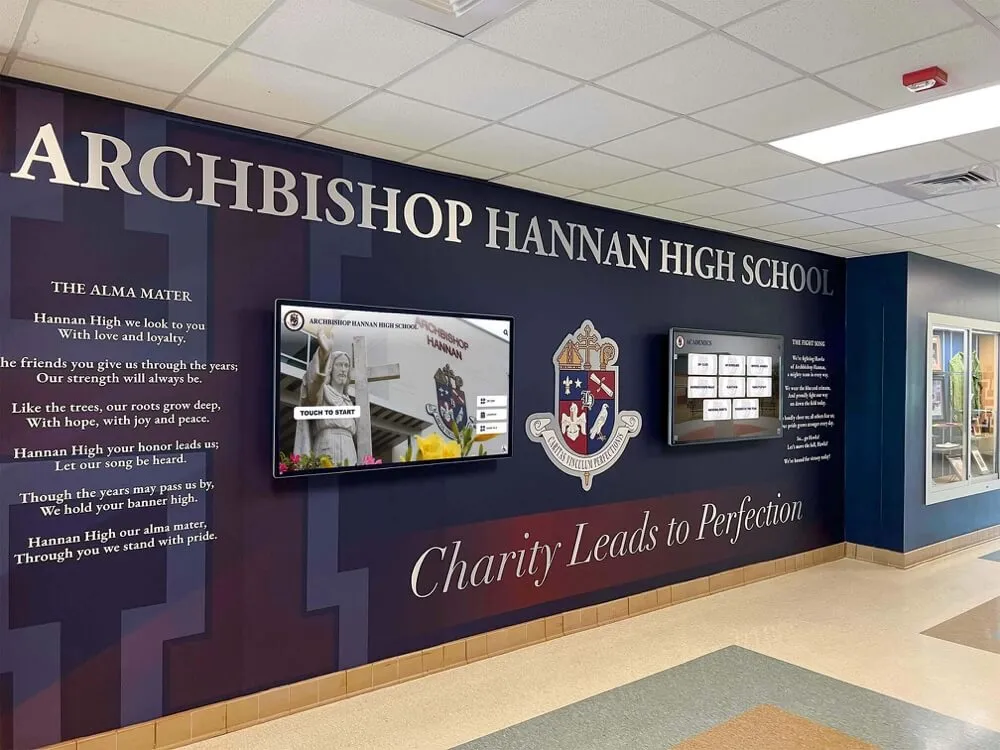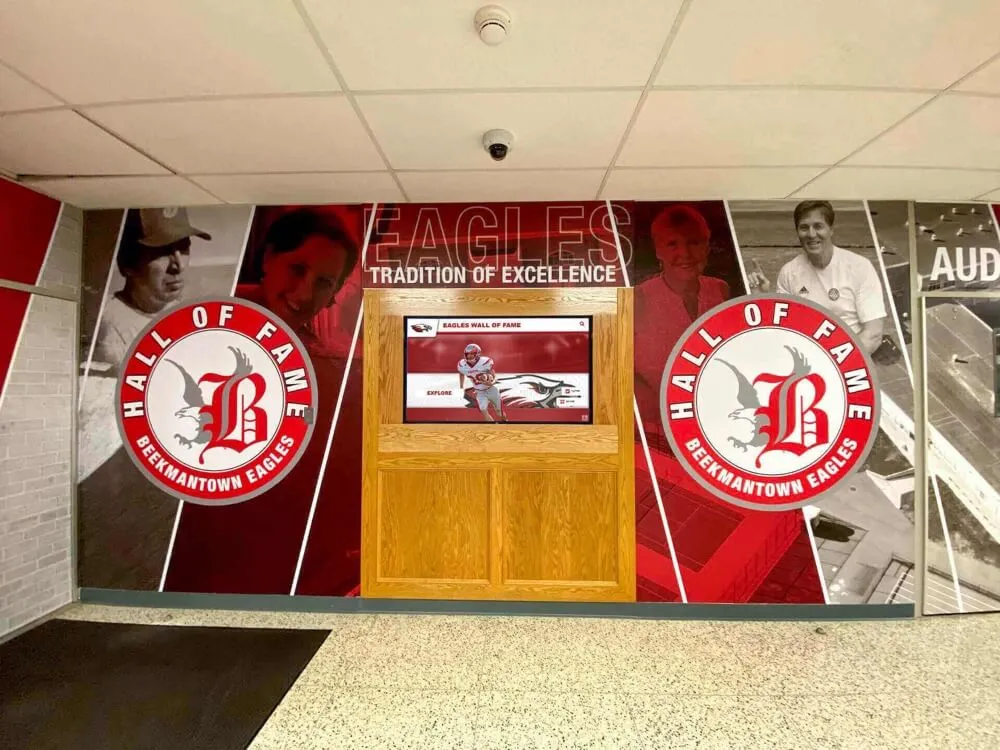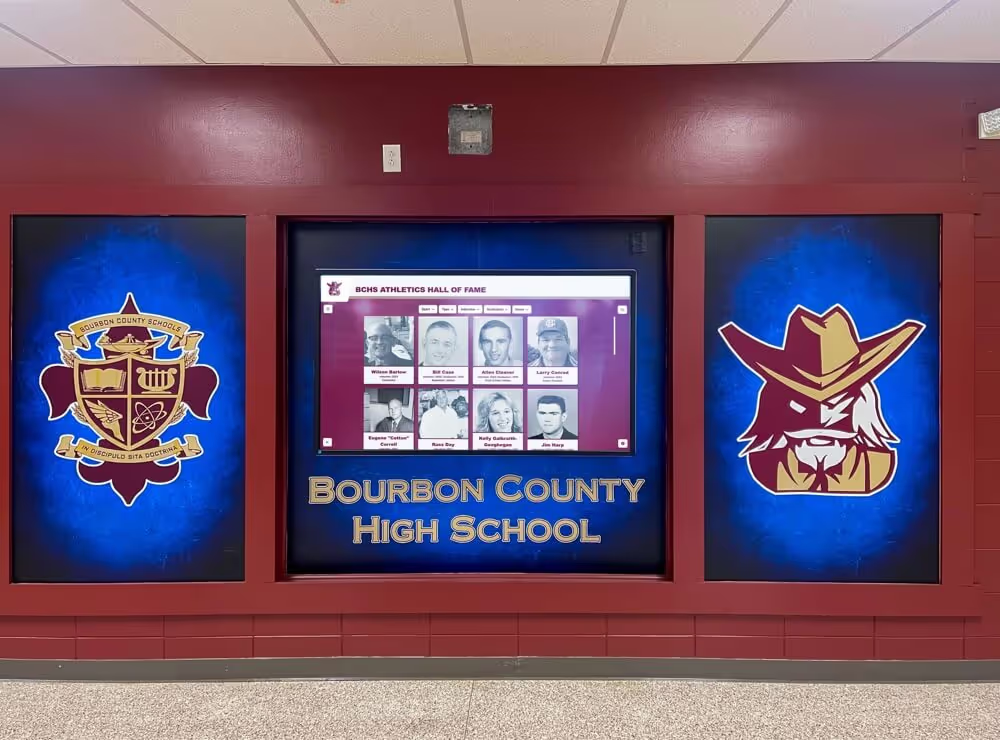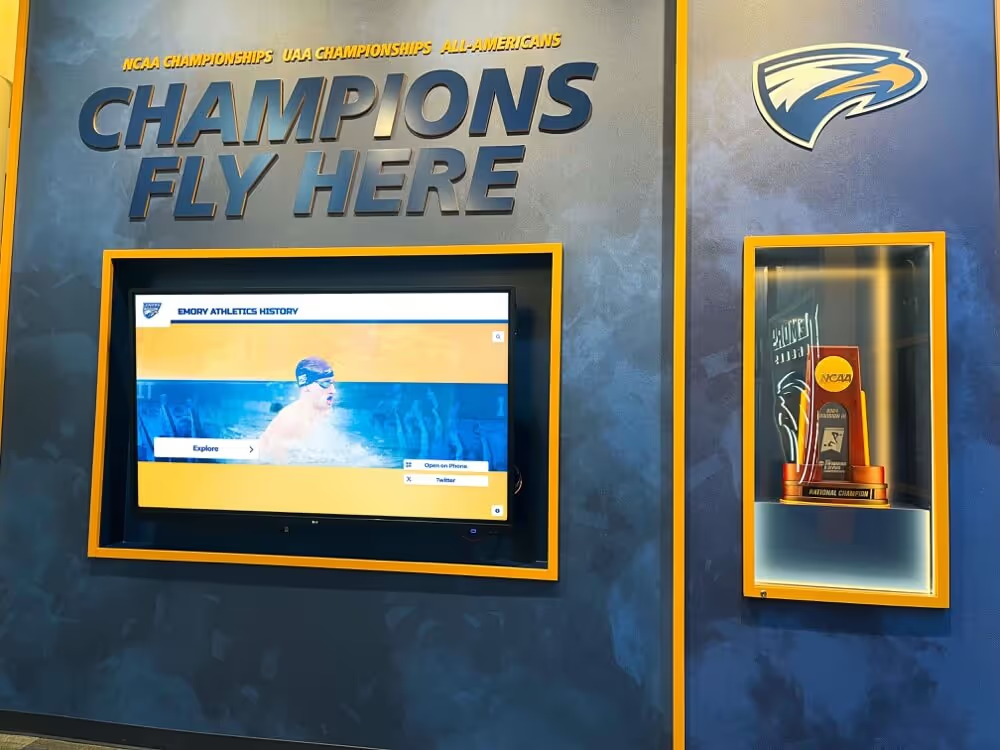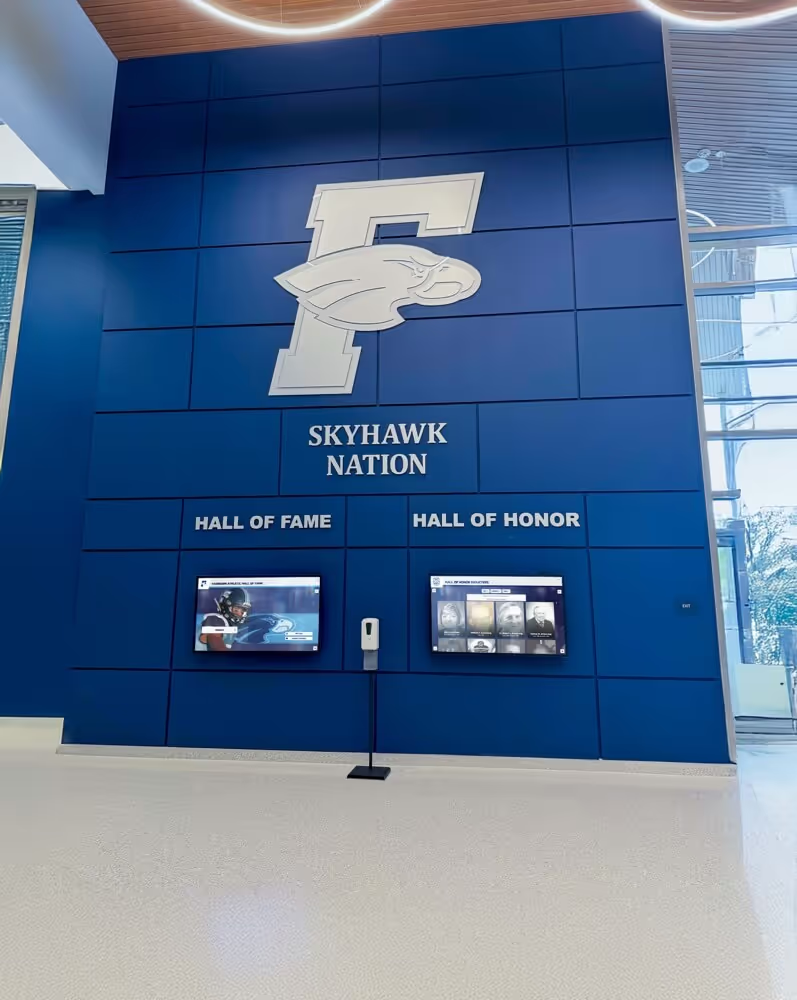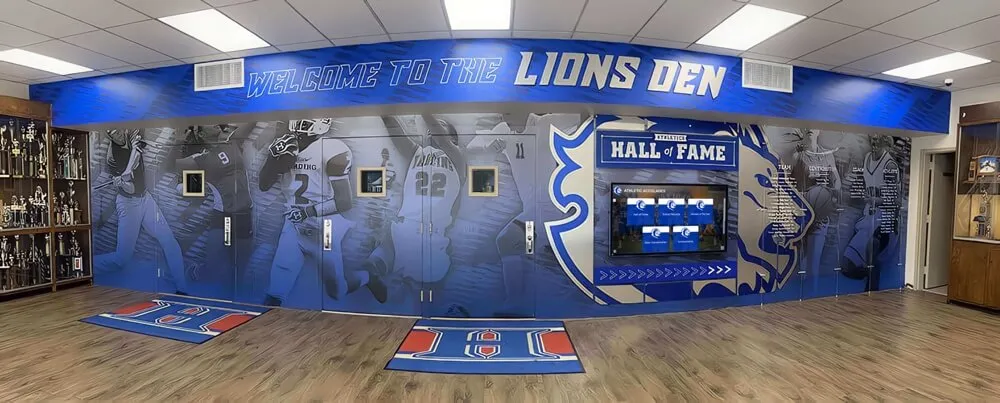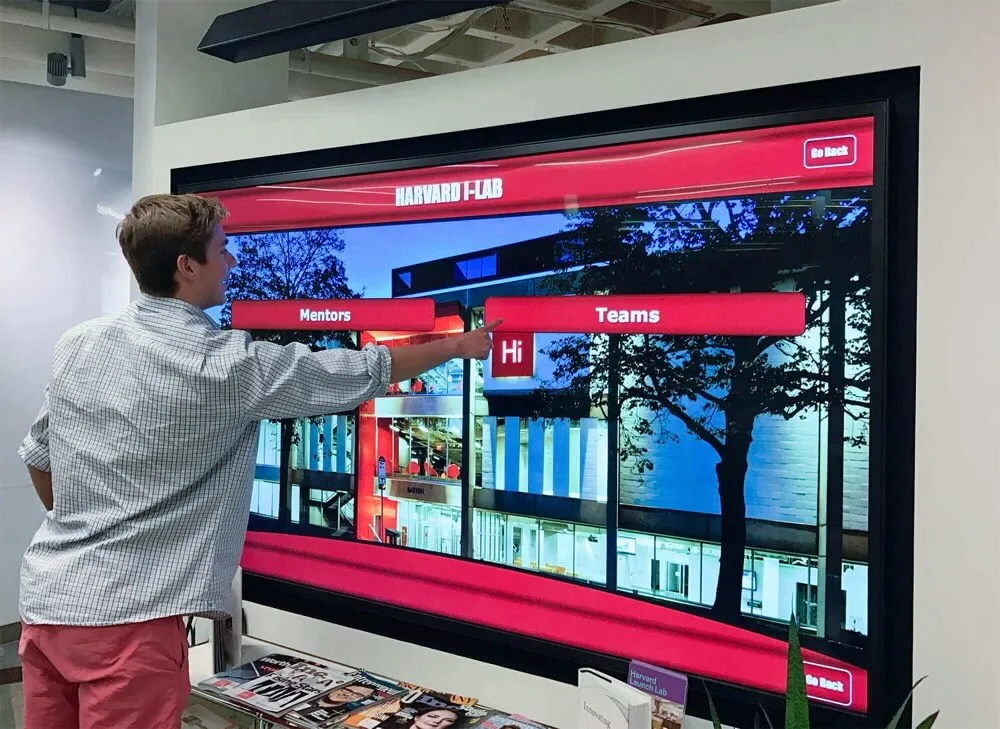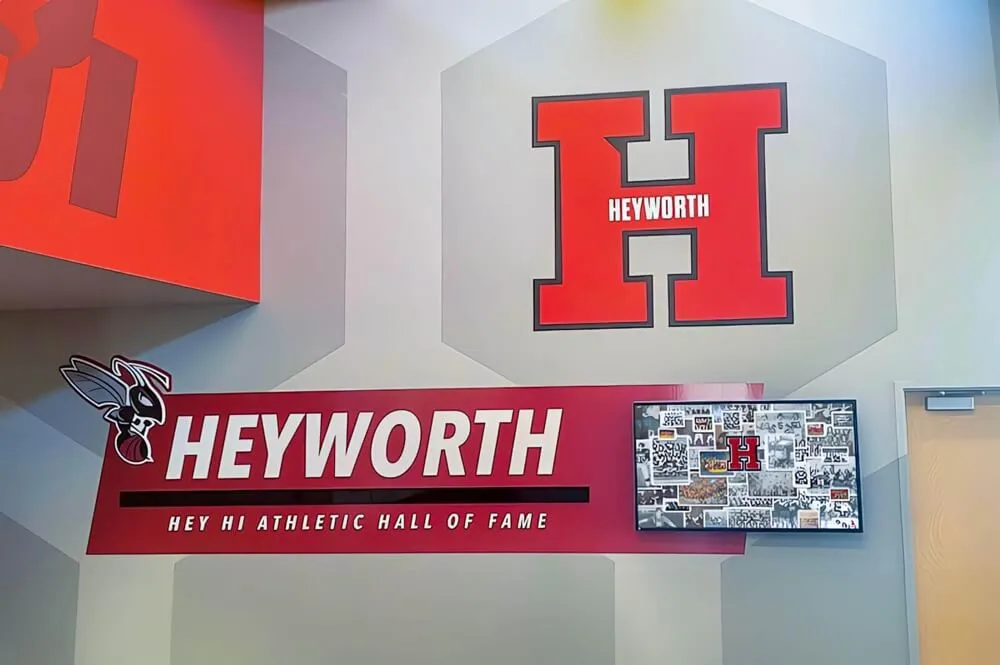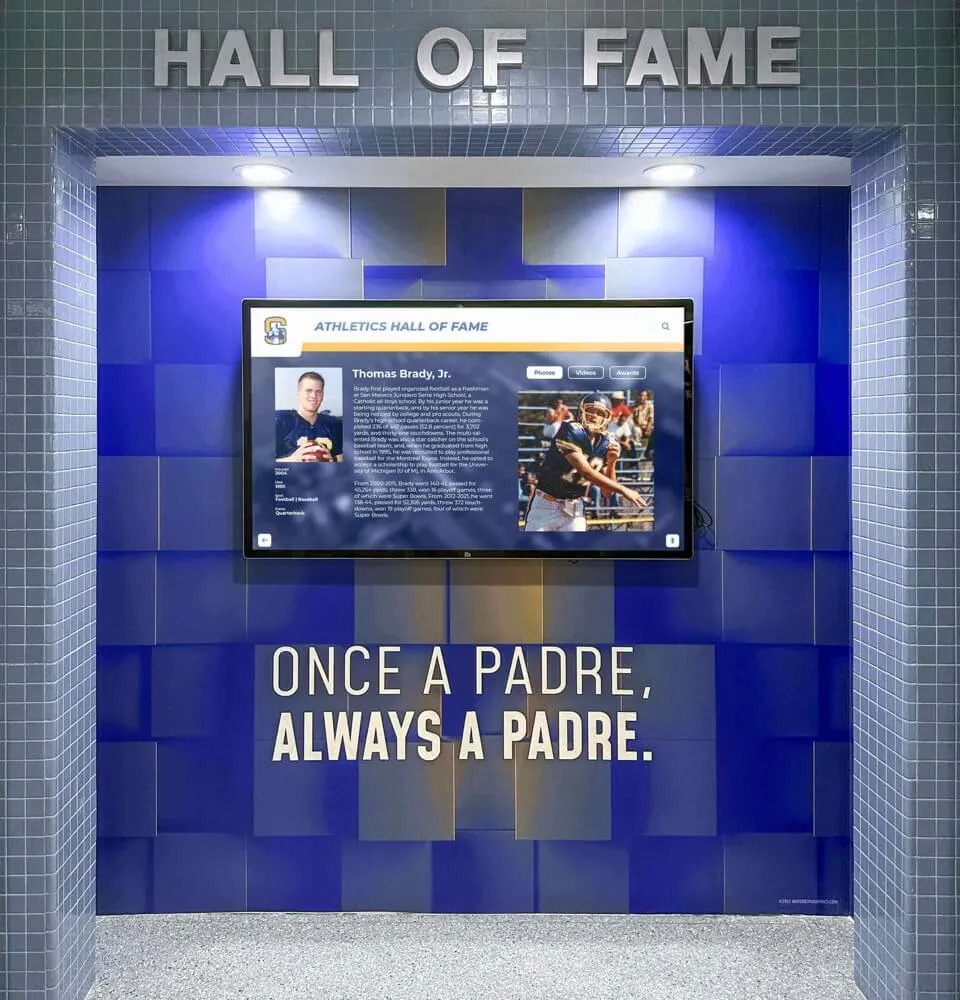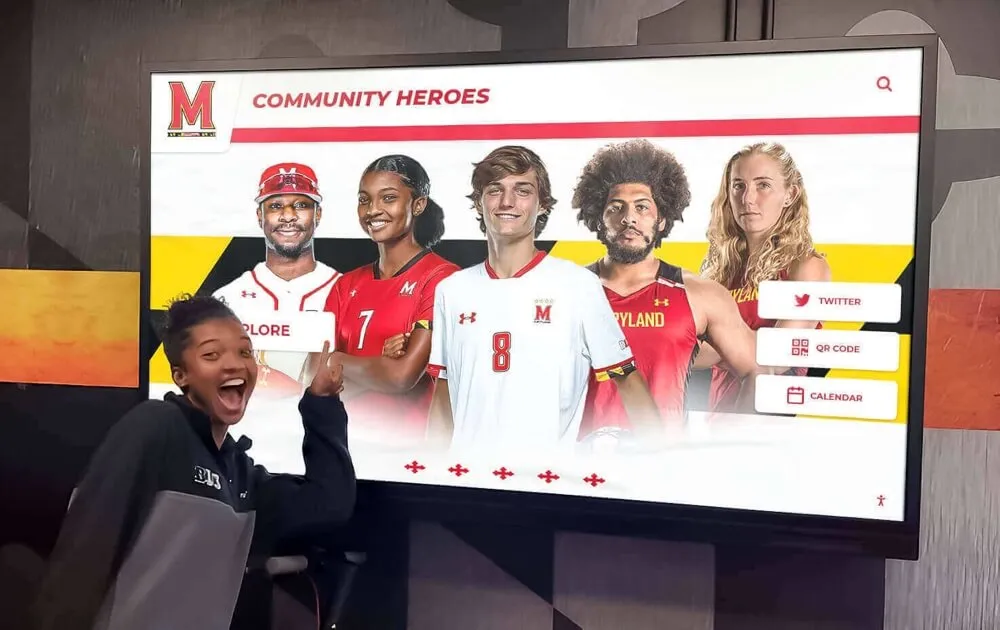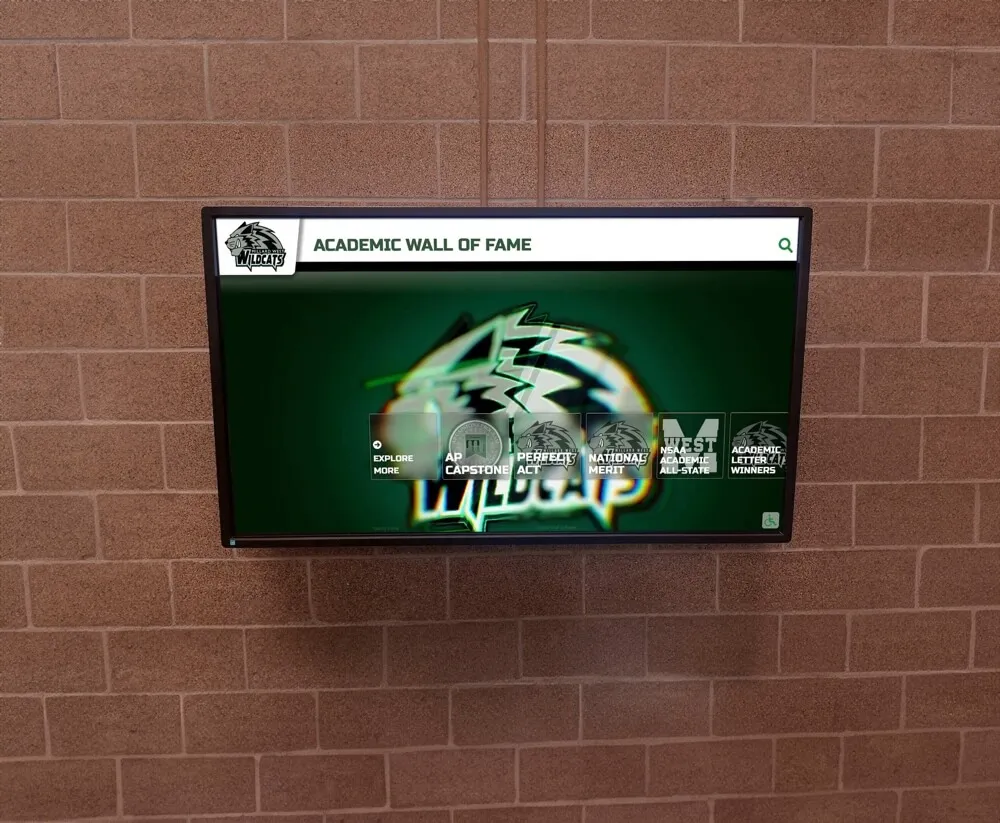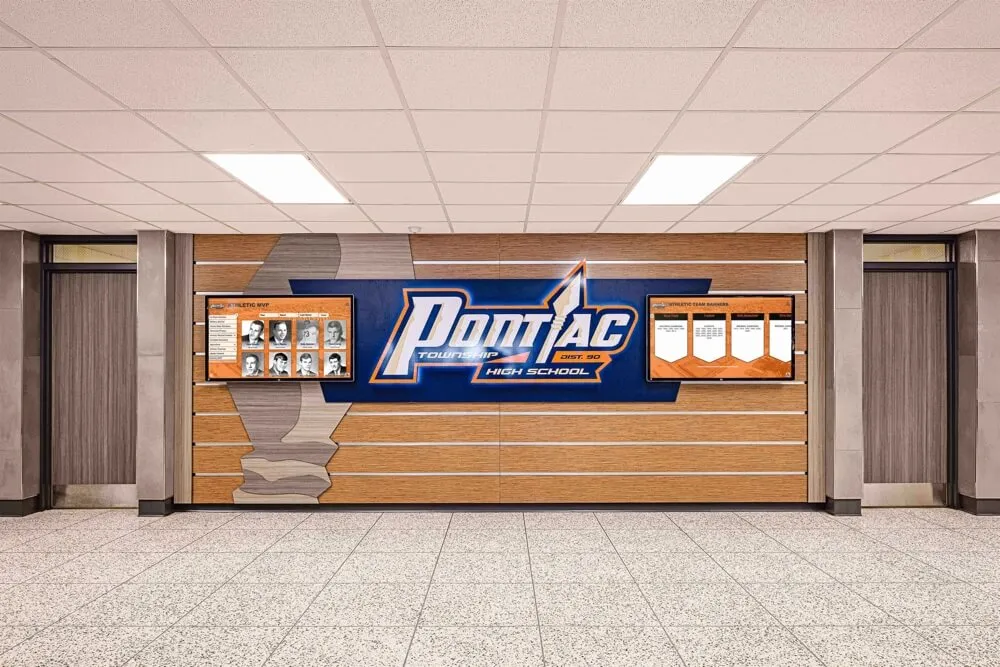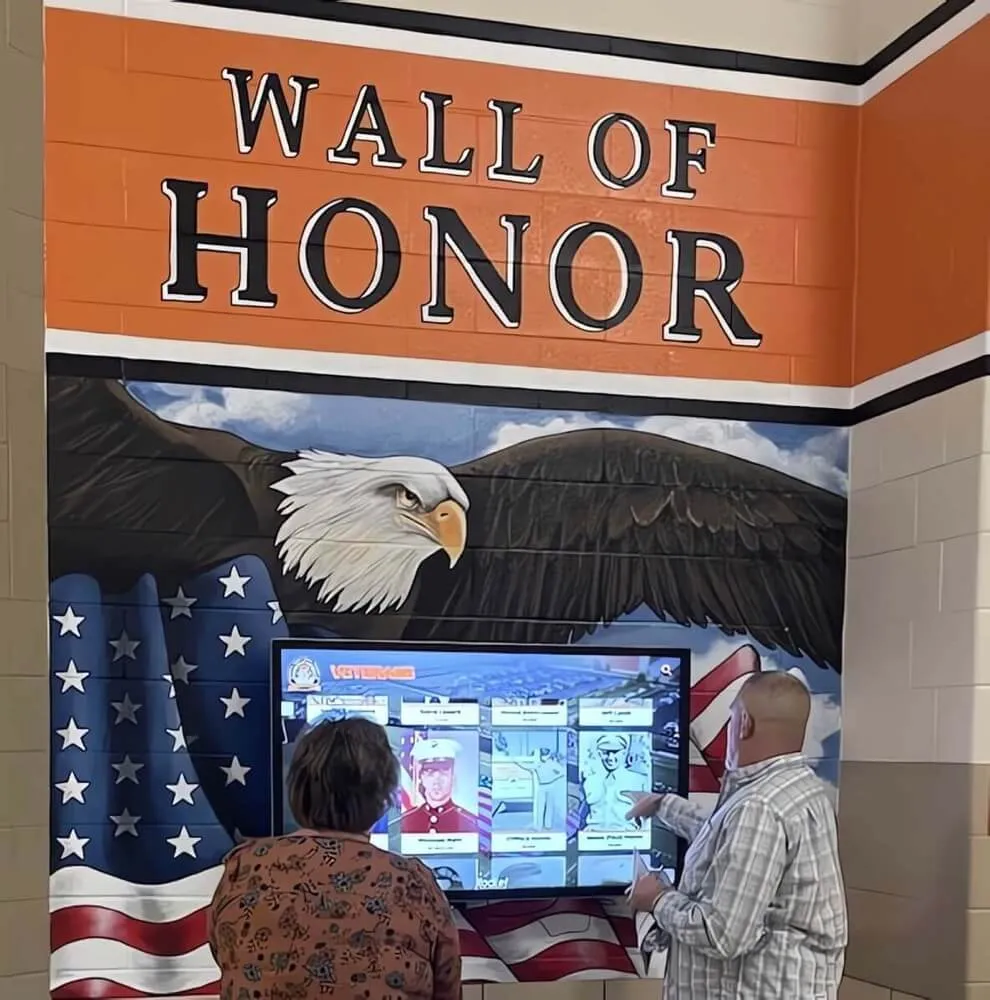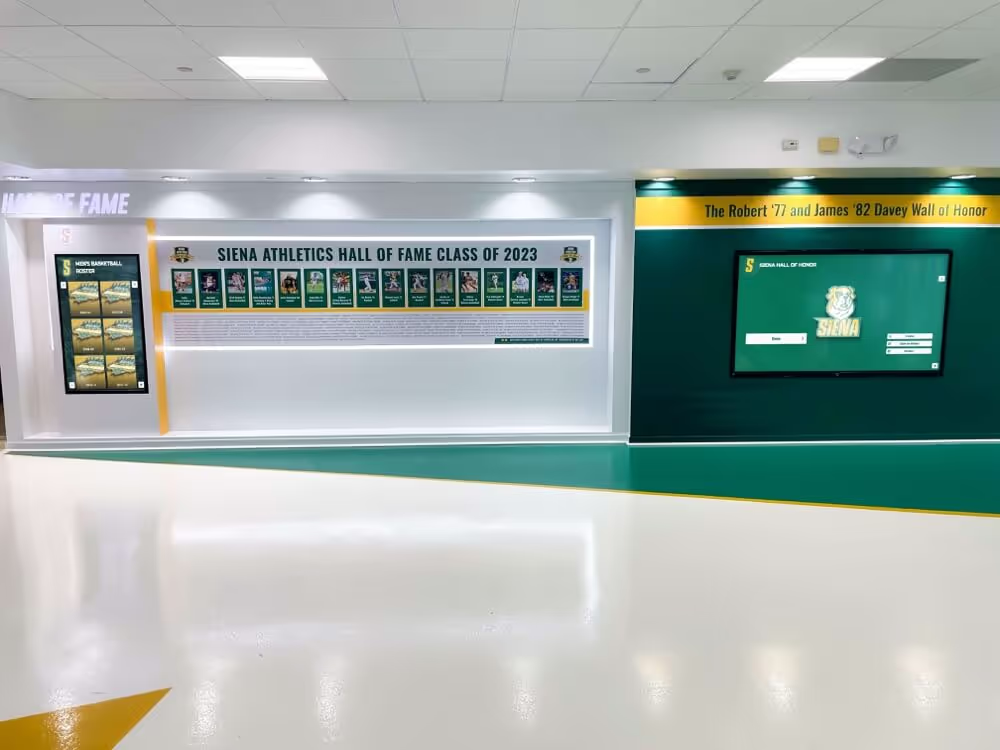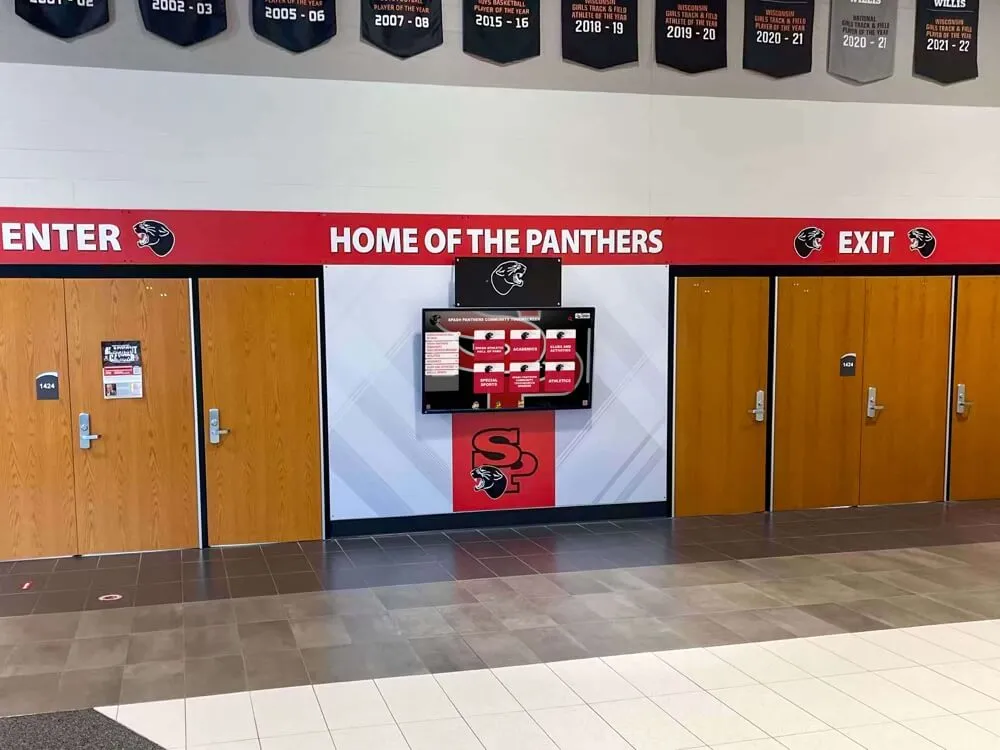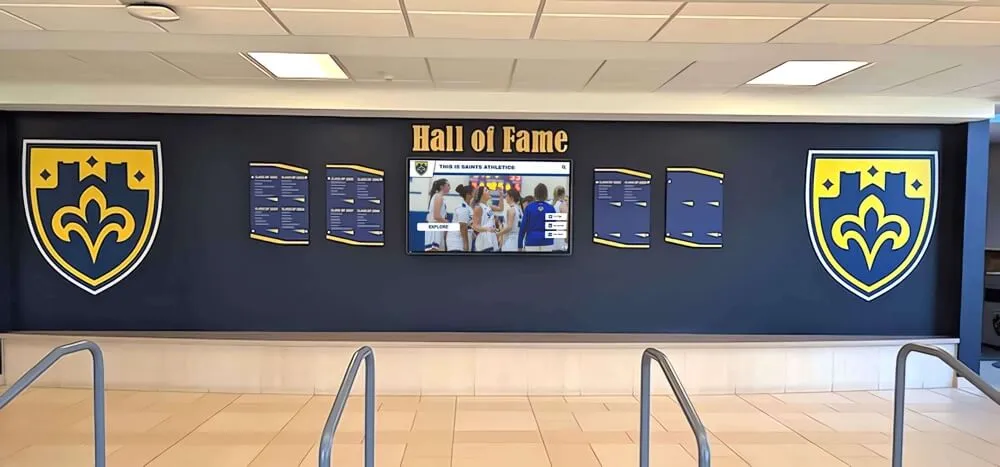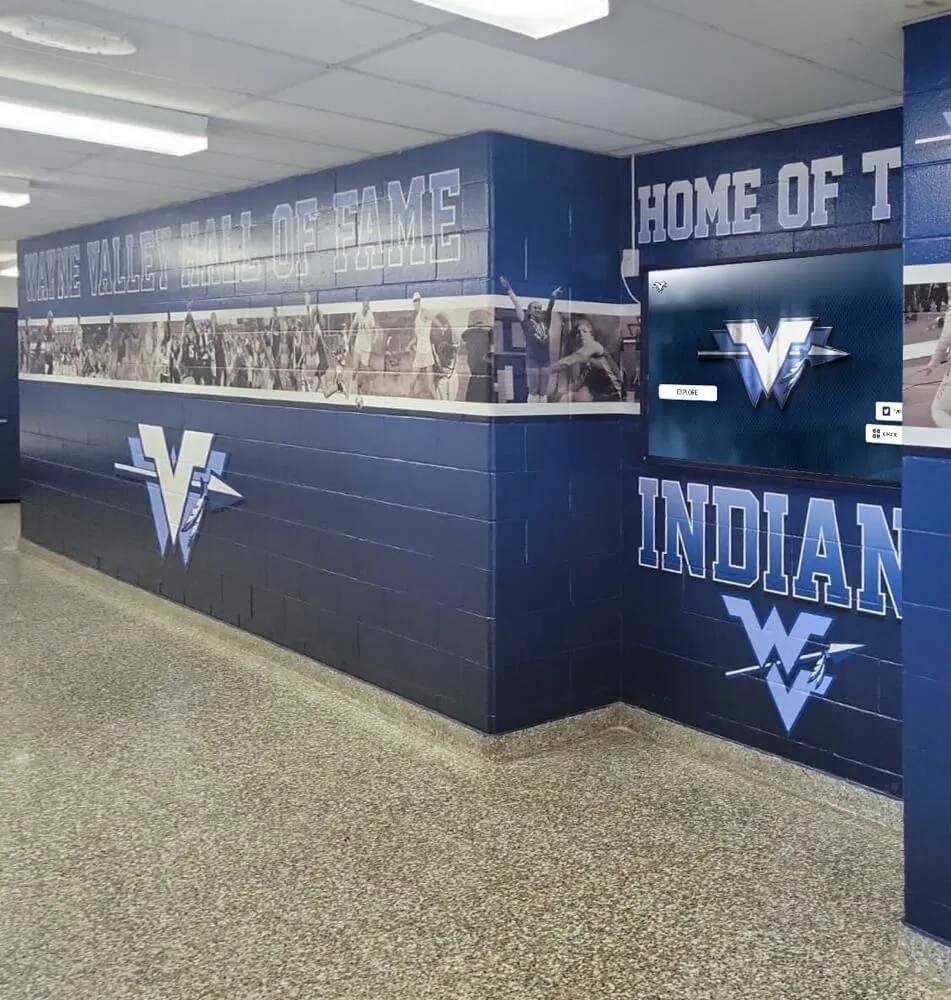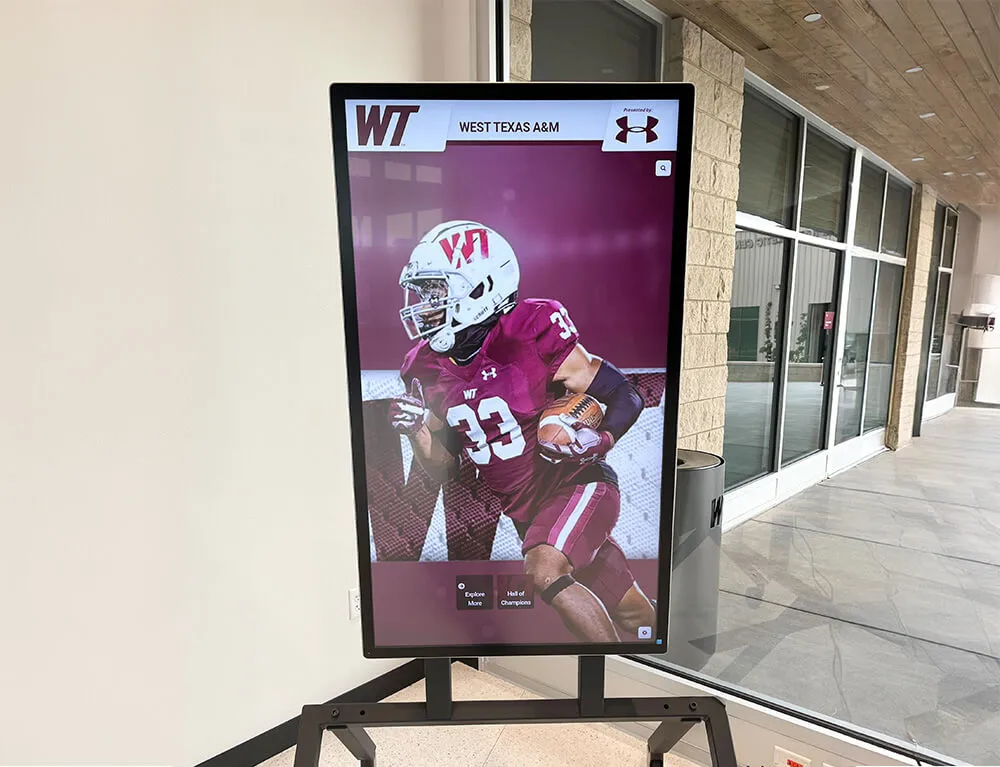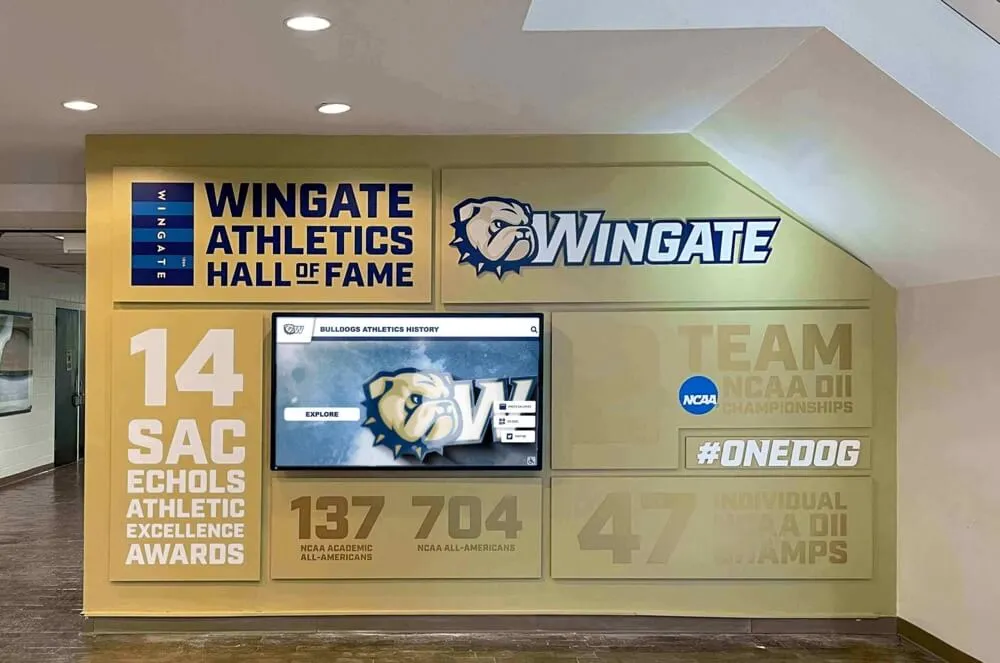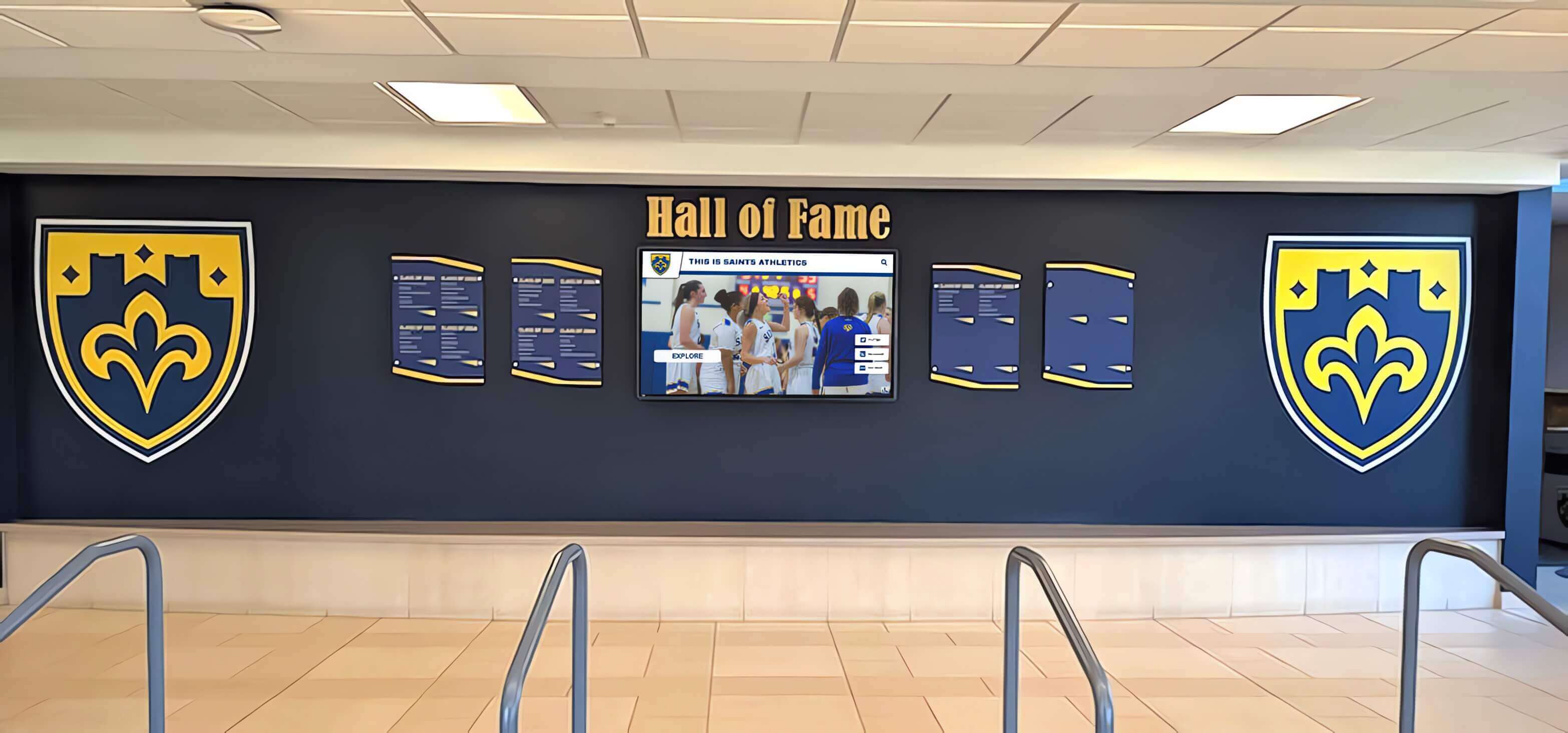




High schools invest decades building athletic traditions through championship seasons, record-breaking performances, and exceptional student-athletes who bring pride to their communities. Yet the traditional methods used to honor these achievements—vinyl record boards requiring manual updates, static plaques consuming limited wall space, trophy cases that overflow with hardware—create frustration for athletic directors tasked with keeping recognition current while managing constrained budgets and facility limitations.
Every season brings new champions. Records fall. Athletes achieve milestones worth celebrating. But when recognition systems depend on expensive vinyl replacements or custom plaque production, updates lag behind achievements by weeks or months. Names disappear from record boards when space runs out. Historical accomplishments fade from institutional memory as old displays get removed to make room for recent successes.
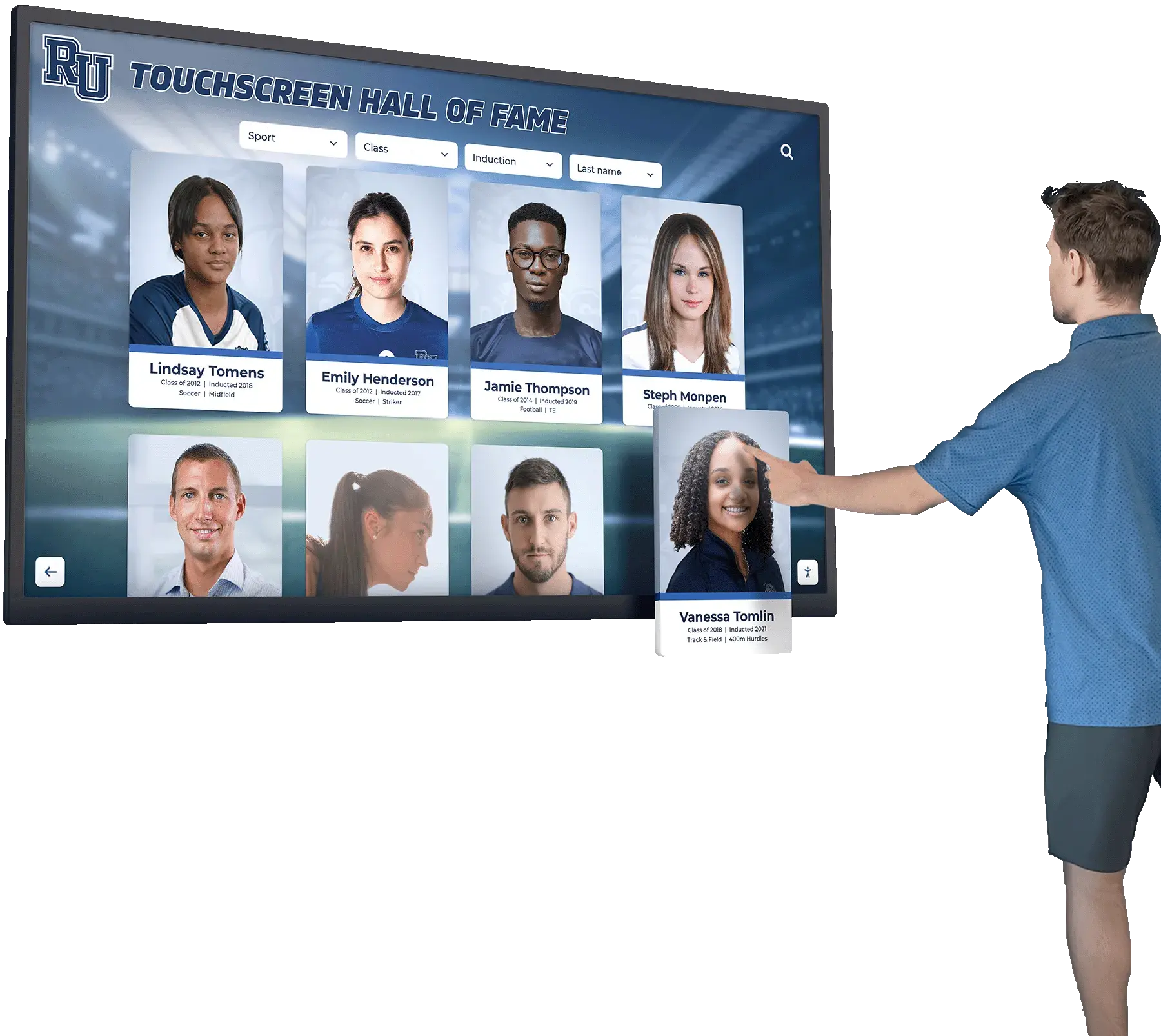
A modern high school wall of fame eliminates these constraints through digital record board technology that automatically updates rankings, accommodates unlimited entries without space limitations, ensures ADA compliance for universal access, and preserves every achievement in searchable digital archives. This guide explains how athletic directors can upgrade from manual maintenance and space-constrained recognition to always-current digital systems that honor excellence comprehensively.
Intent: Compare and Demonstrate Digital Wall of Fame Solutions
This guide compares traditional high school walls of fame to digital record board systems, demonstrating how auto-ranking technology keeps every champion visible without manual updates. Athletic directors spending hours maintaining vinyl boards or facing difficult decisions about which records to display can discover how solutions like Rocket Alumni Solutions eliminate update friction while providing unlimited capacity and comprehensive recognition through cloud-based platforms requiring zero technical expertise.
The Traditional High School Wall of Fame Problem
Before exploring modern solutions, understanding why traditional approaches create persistent challenges helps athletic directors recognize symptoms affecting their own programs.
Manual Update Requirements That Consume Administrative Time
Traditional vinyl record boards demand manual labor every time records change. When a basketball player breaks the single-season scoring record, athletic directors must contact sign vendors, specify exact text changes, wait for vinyl production, schedule installation appointments, and coordinate facility access. This process consumes hours for each record update and often delays recognition by weeks.
The cumulative time investment becomes substantial across comprehensive athletic programs. A school with 20+ sports might update 50-100 records annually. At 30 minutes per change coordinating with vendors and confirming accuracy, that’s 25-50 hours yearly spent on record board administration alone—time that could support coaching development, event management, or student-athlete mentorship.
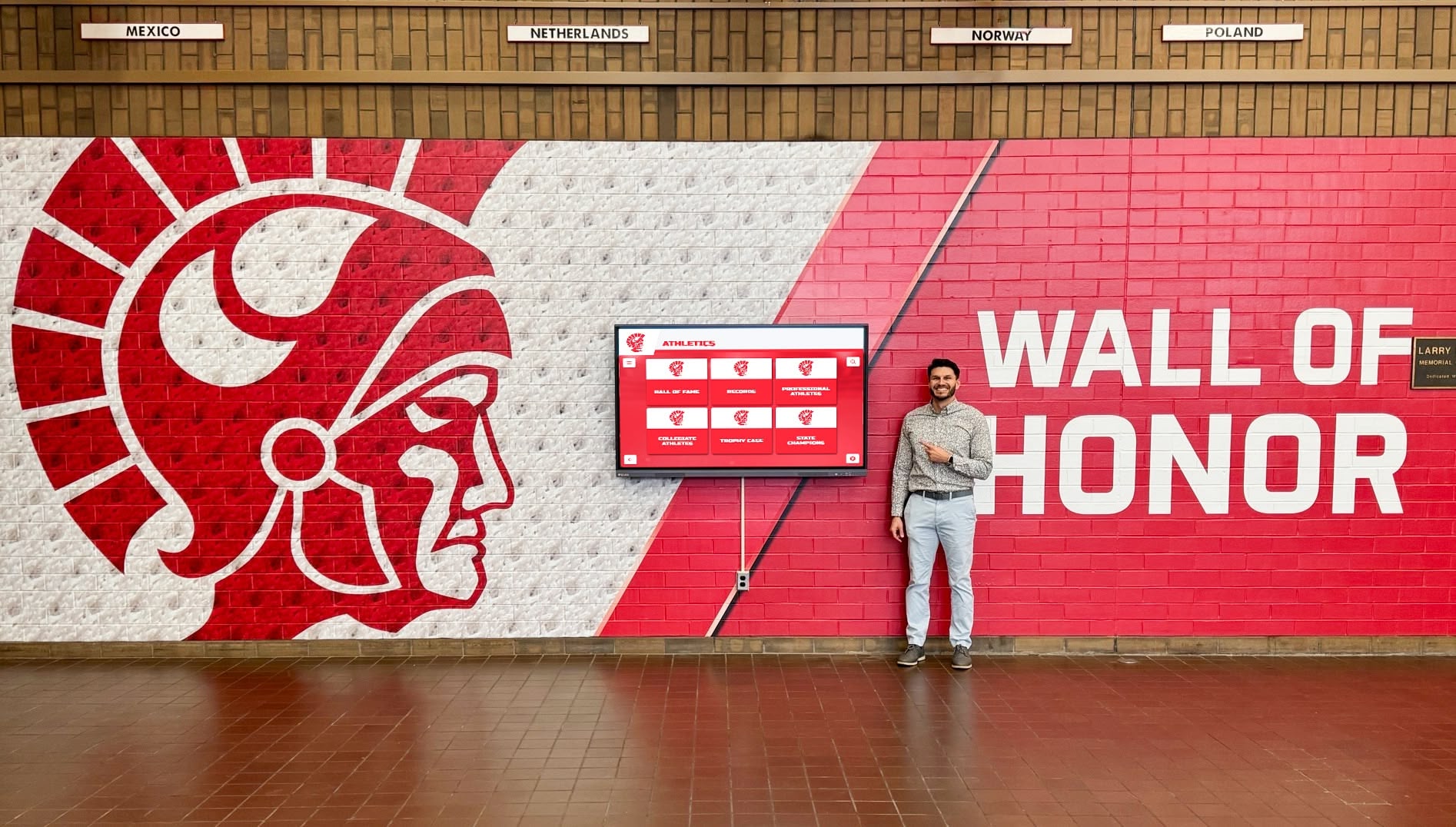
Space Constraints That Force Difficult Recognition Decisions
Physical wall space limitations create zero-sum recognition where honoring new achievements requires removing historical records. Many athletic directors face painful decisions: display only top-3 performers per event, removing fourth and fifth place finishers? Show records from recent decades only, erasing pre-1980 achievements? Limit recognition to select “major” sports, excluding smaller programs?
These compromises breed resentment. Athletes who earned fourth-place all-time status wonder why their legitimate accomplishments disappeared from recognition. Parents of swimmers or tennis players question why football and basketball dominate display space. Alumni returning to campus find their records gone, replaced by more recent performances.
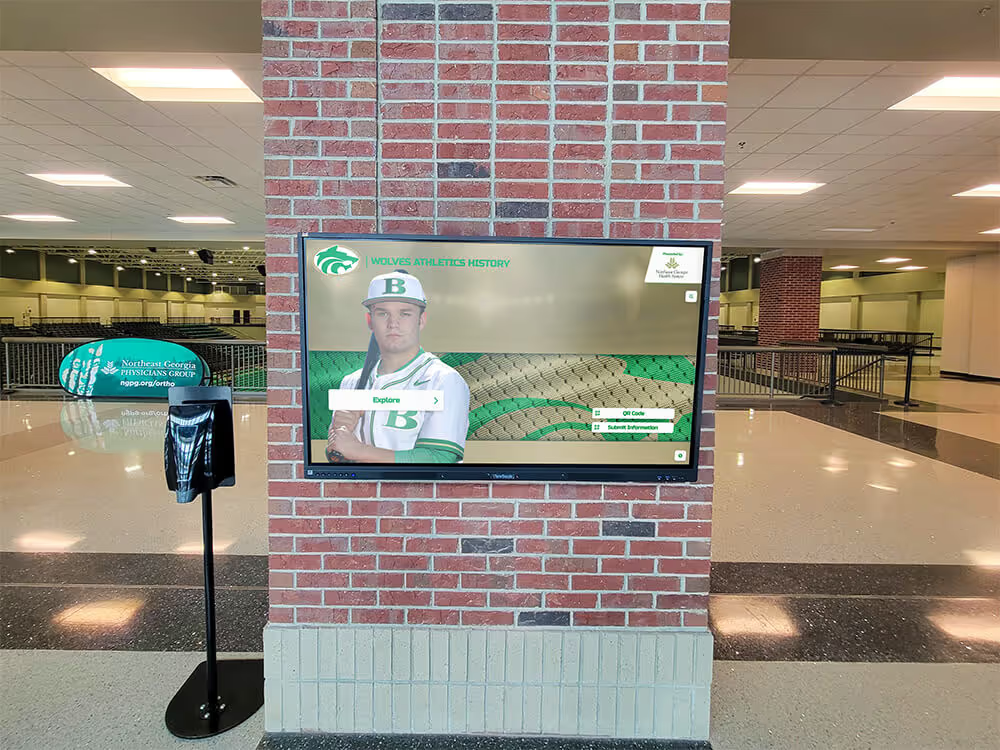
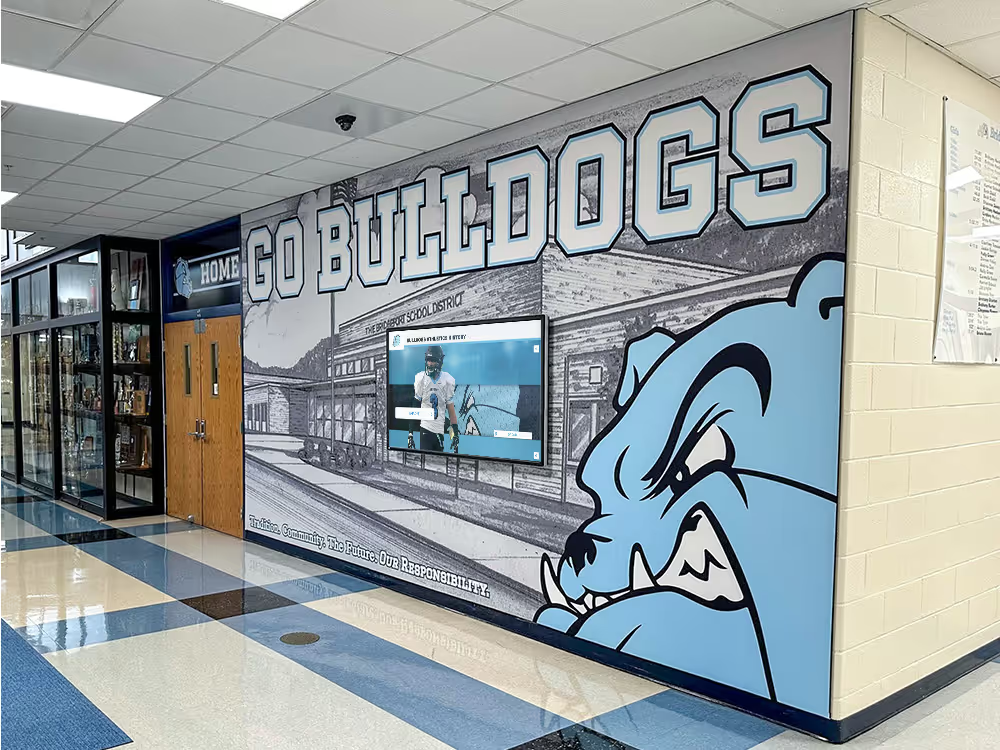
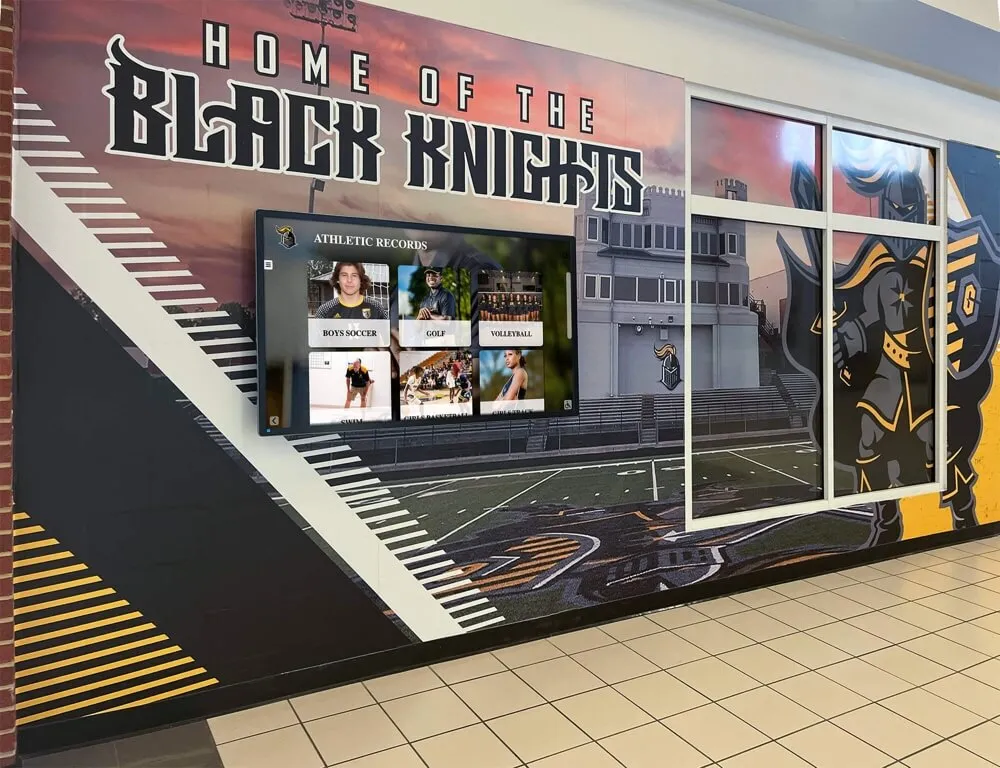
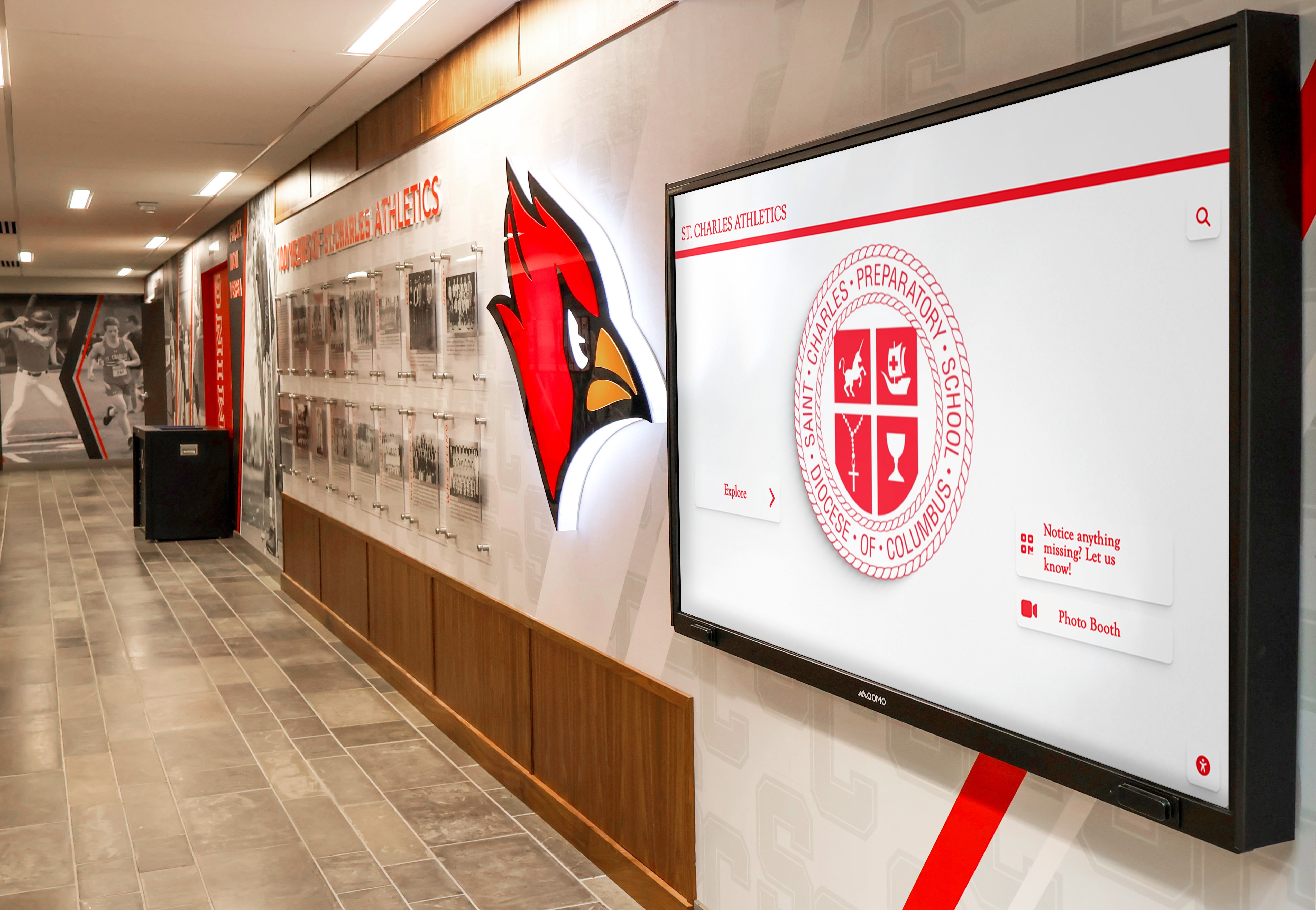
Digital record board systems from providers like Rocket Alumni Solutions eliminate forced choices through unlimited capacity that preserves every achievement without space trade-offs. The digital equivalent of one 55-inch display can showcase detailed profiles for thousands of record holders across decades and sports.
Lost History When Names Come Off the Wall
Perhaps the most significant traditional wall of fame limitation involves permanent loss of historical recognition. When vinyl boards reach capacity, the names removed often disappear entirely from institutional memory. Athletic departments rarely maintain comprehensive archives of past record holders, meaning the removal from physical display effectively erases achievement from school history.
This loss affects multiple stakeholders. Current students never learn about the rich traditions their programs built across generations. Alumni find their accomplishments forgotten—names literally erased to accommodate newer records. Historical research becomes impossible when primary documentation no longer exists and memories fade as decades pass.
Digital archives for schools preserve complete recognition histories, ensuring every achievement remains searchable and accessible regardless of current display priorities.
ADA Compliance Challenges With Fixed Displays
Traditional vinyl boards mounted at fixed heights create accessibility barriers for community members using wheelchairs, students with visual impairments, or visitors with other mobility limitations. The Americans with Disabilities Act requires that recognition systems provide equal access, yet traditional displays positioned 6-8 feet high on walls inherently exclude individuals unable to approach or view content at those elevations.
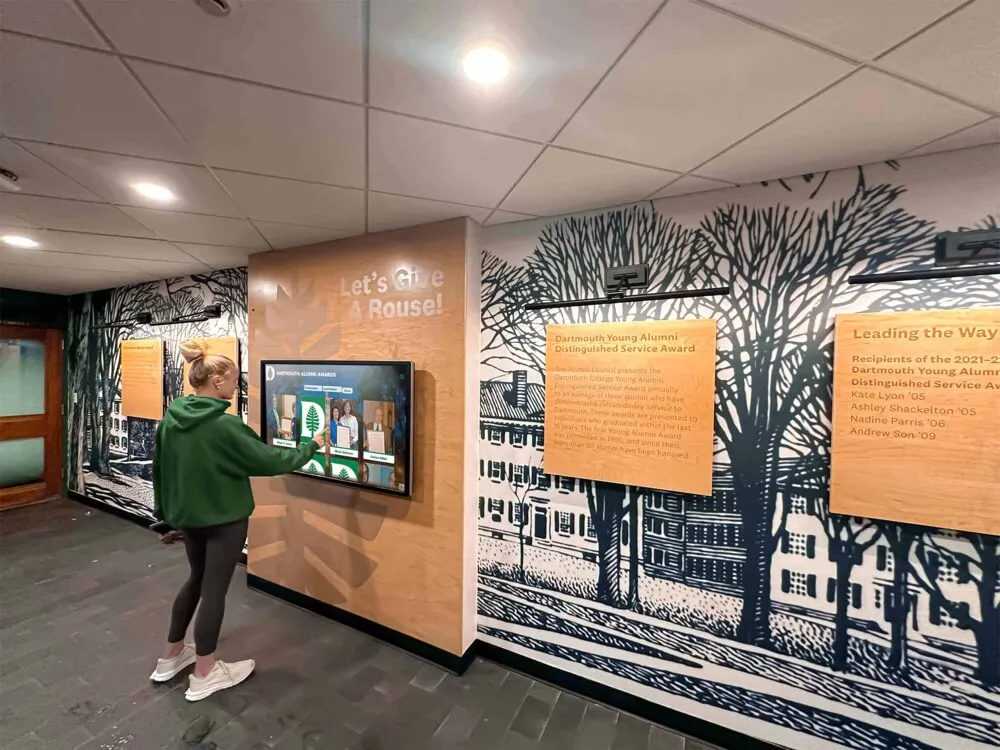
This compliance gap creates both legal risk and ethical concerns. Schools committed to inclusive excellence should ensure recognition systems allow all community members to explore achievements regardless of physical abilities. Digital touchscreen displays positioned at accessible heights with screen reader compatibility and adjustable text sizing provide universal access that static vinyl boards cannot match.
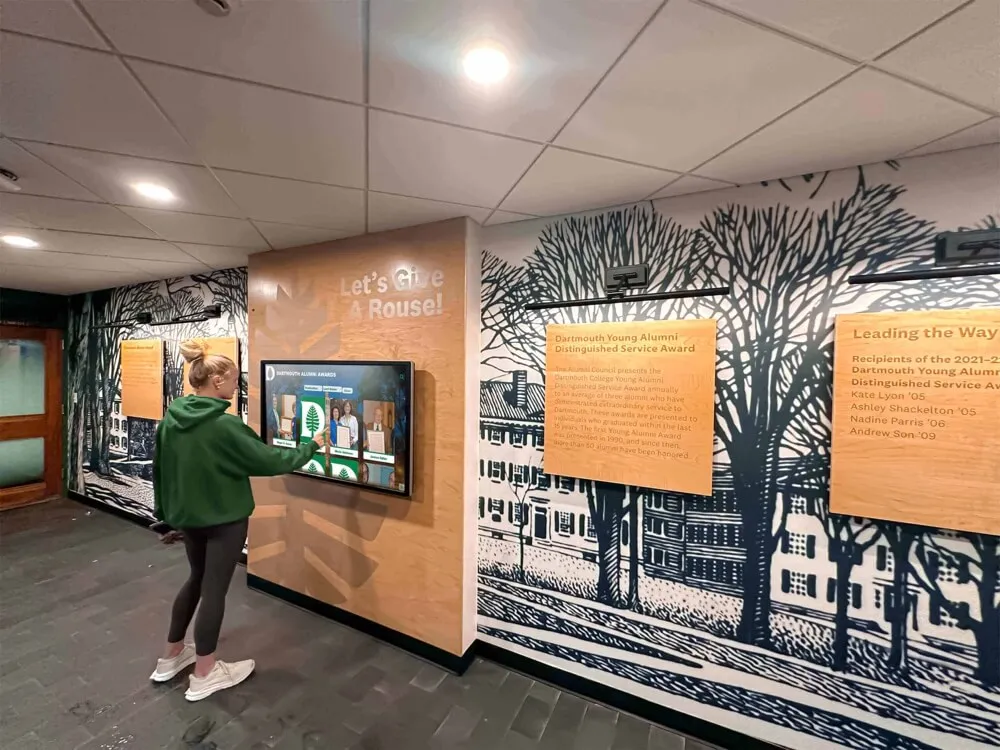
How Digital Record Boards Transform High School Walls of Fame
Modern digital systems address traditional limitations while introducing capabilities that fundamentally improve how schools recognize and preserve athletic excellence.
Auto-Ranking That Eliminates Manual Updates
The defining advantage of purpose-built digital record board platforms involves automatic ranking that responds instantly when new performances exceed existing records. When coaches input meet results or game statistics through simple web interfaces, the system automatically calculates whether new records occurred, updates rankings across all affected categories, adjusts historical standings, and publishes changes to displays without administrative intervention.
This automation transforms record maintenance from hours-long administrative burden into five-minute data entry tasks requiring no technical expertise. A swimming coach uploads state meet results. The system identifies that Sarah Jones’s 100m freestyle time represents a new school record, automatically moves her to first position, shifts previous record holders down one rank, updates her athlete profile with the achievement, and displays the change on lobby touchscreens within seconds.
Athletic directors implementing digital record board solutions report update time reductions from hours to minutes while simultaneously improving accuracy and eliminating vendor dependencies that delayed recognition.
Unlimited Capacity for Comprehensive Recognition
Digital systems accommodate unlimited entries per category, enabling schools to maintain complete historical records rather than displaying only top performers due to space limitations. Instead of showing only the top-3 shot put throwers, digital record boards can showcase all 50 athletes who exceeded 45 feet across program history. Rather than limiting basketball recognition to 1980-present, schools preserve every thousand-point scorer dating to program founding.
This unlimited capacity creates equitable recognition where fourth-place finishers receive acknowledgment equal to record holders—both earned statistical distinction worthy of preservation. Athletes from smaller sports gain visibility proportional to their programs rather than being marginalized by major sport dominance of limited physical space.
Comprehensive recognition also benefits historical research and alumni engagement. Family members can search digital archives to discover whether relatives competed decades earlier. Local journalists researching program traditions access complete statistical histories. Reunion attendees explore teammates’ accomplishments through interactive displays that would be impossible with space-constrained physical boards.
Rich Multimedia Profiles That Tell Complete Stories
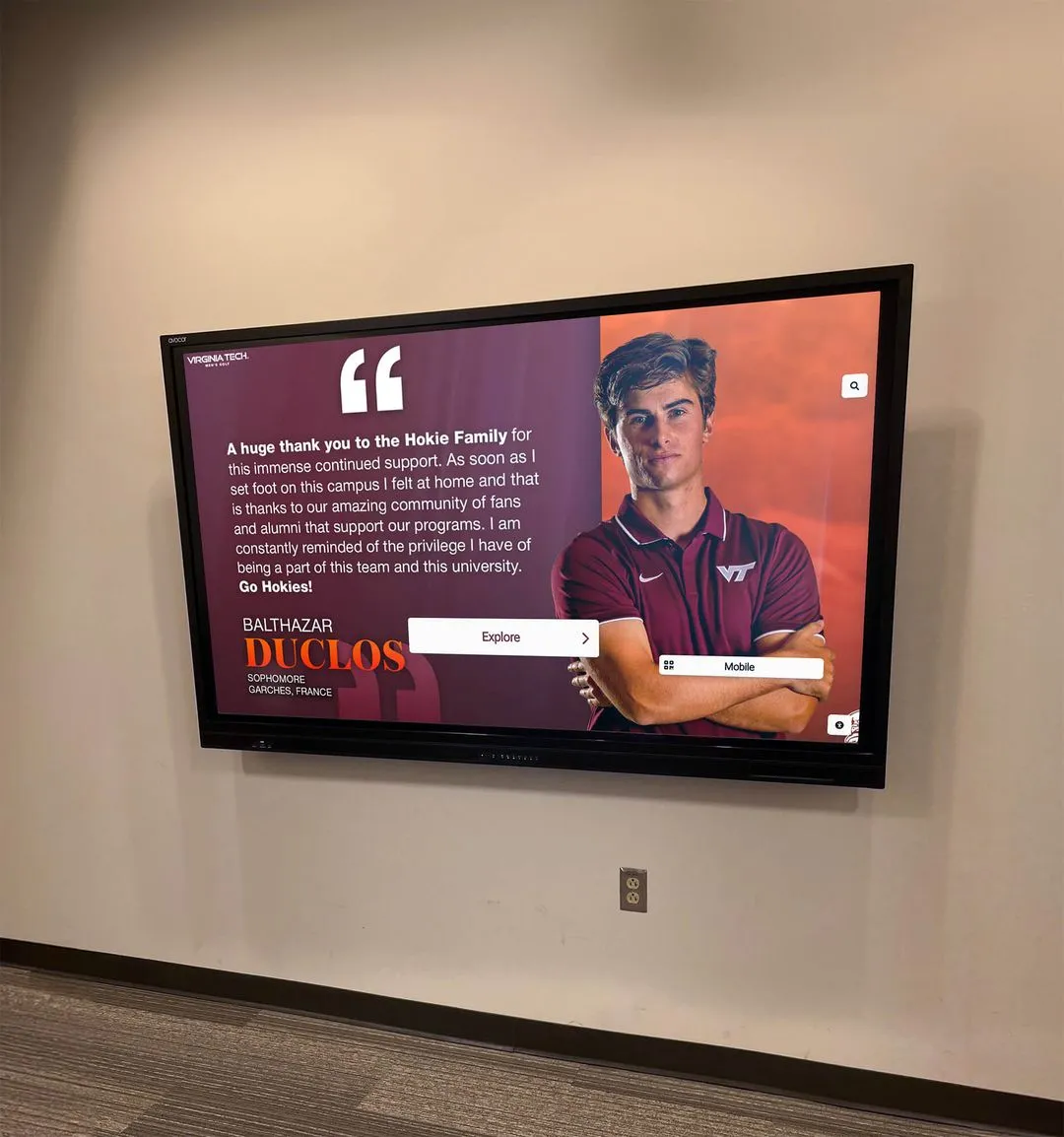
Traditional vinyl boards communicate minimal information—typically just athlete name, year, and performance mark. Digital platforms enable comprehensive profiles including high-quality action photographs showing athletes competing, complete career statistics across all events or seasons, video highlights when available showcasing signature performances, biographical information and post-graduation paths, championship context and team achievements, and athlete reflections about their experiences.
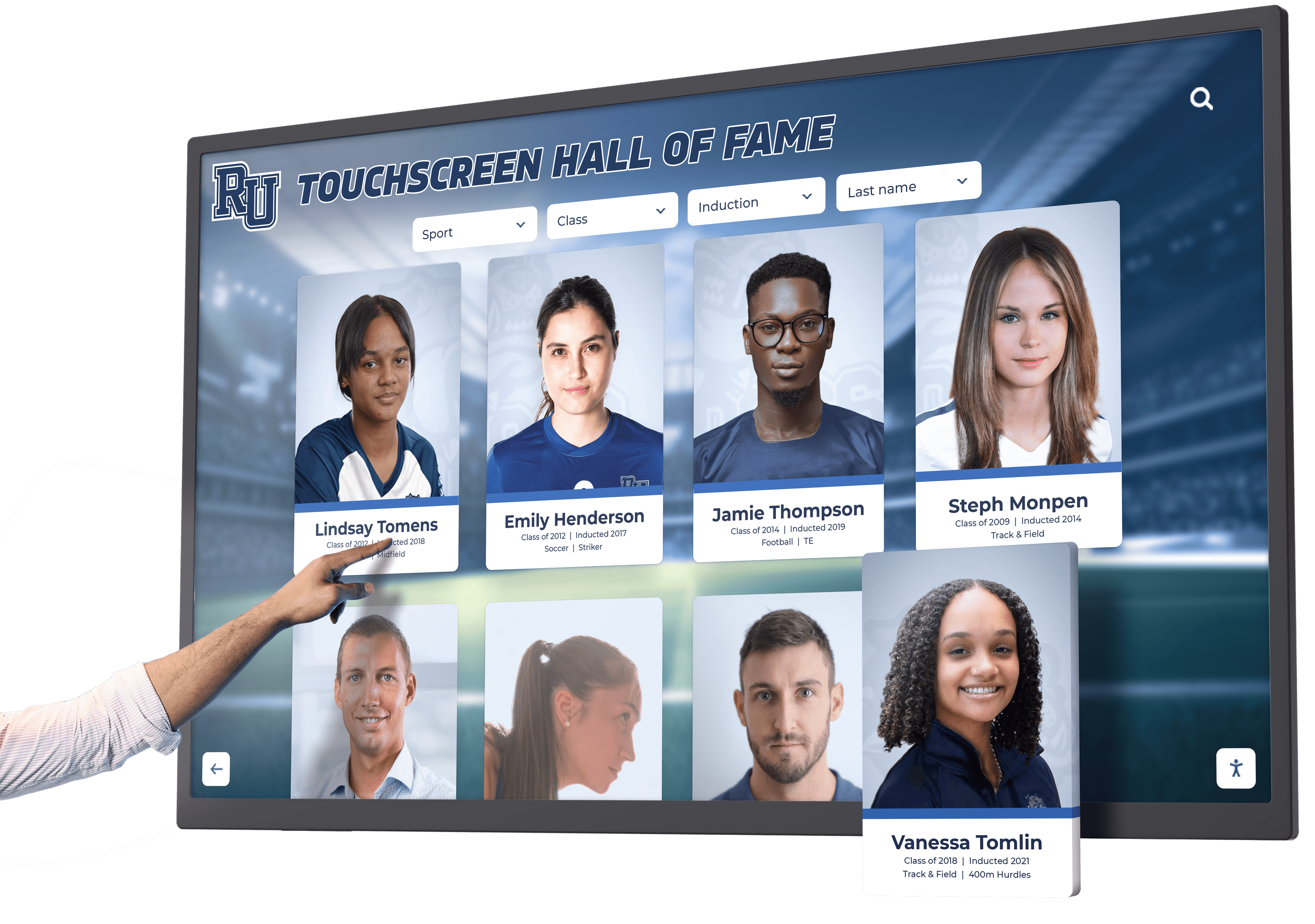
This multimedia depth transforms recognition from simple acknowledgment to rich storytelling that honors complete athletic journeys. Current students viewing a record holder’s profile see not just a mark but the person behind the achievement—their training dedication, competitive mindset, academic accomplishments, and subsequent life path. This humanized recognition inspires more effectively than sterile statistical listings.
Search and Discovery Features Enabling Personalized Exploration
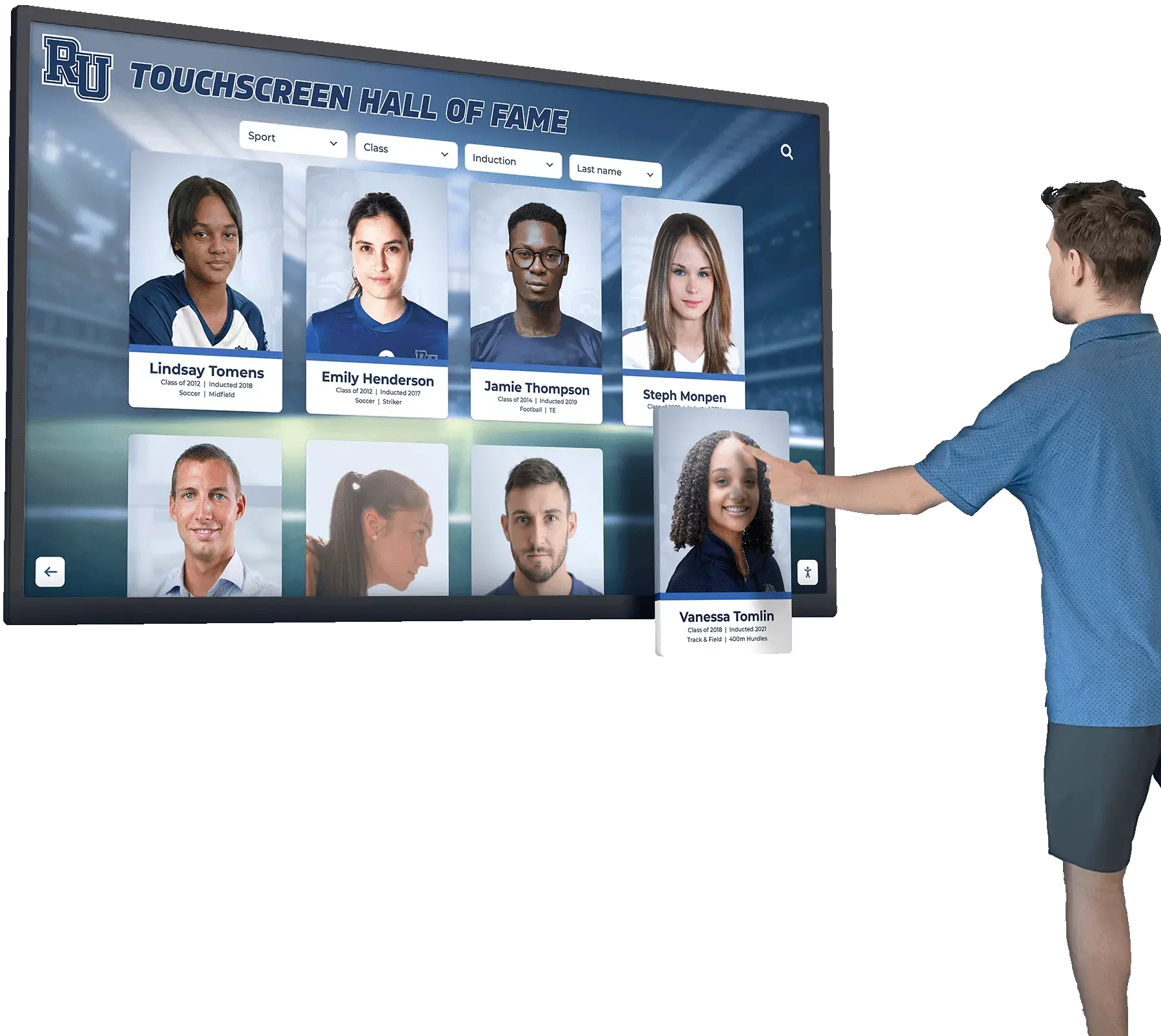
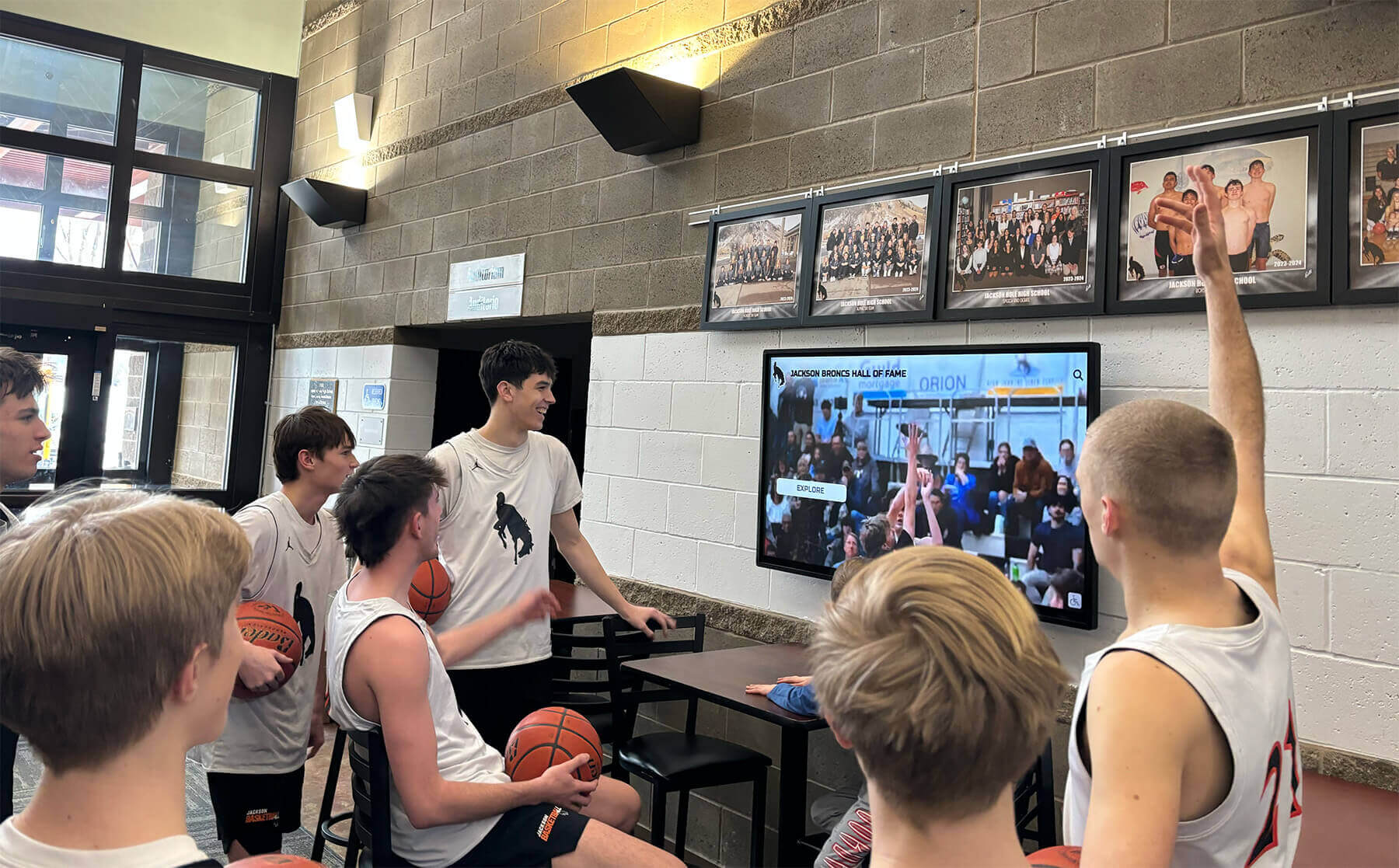
Interactive digital systems allow visitors to search by athlete name, graduation year, sport, event, or achievement type, facilitating personalized exploration impossible with static displays. An alumnus visiting campus can instantly locate their own records from decades earlier. A prospective family researching your program can explore all state qualifiers in their child’s sport. Students can discover whether relatives or neighbors earned recognition at your school.
These discovery tools make massive recognition databases navigable and personally relevant. Rather than overwhelming visitors with hundreds of names in small print, digital interfaces present curated views based on user interests while maintaining comprehensive archives accessible through search functions.
Digital hall of fame displays enable sophisticated filtering and sorting that helps different audiences find personally meaningful recognition within comprehensive historical collections.
Multiple Access Points Extending Recognition Beyond Campus
The most sophisticated digital wall of fame platforms provide access through multiple channels including physical touchscreen displays in athletic facilities, responsive web access enabling worldwide exploration, mobile applications for portable viewing, QR code unlocks allowing personal content access, and social media integration for sharing achievements.
This multi-channel approach extends recognition impact exponentially beyond physical campus visitors. Athletes at college share their high school recognition profiles with teammates nationwide. Grandparents living internationally view grandchildren’s achievements without traveling. Alumni associations promote notable members through social sharing of digital profiles. Community newspapers source athlete biographies from publicly accessible digital archives.
Remote accessibility particularly benefits schools with geographically dispersed alumni populations who maintain emotional connections to athletic experiences but rarely visit campus physically. Digital access ensures recognition reaches these stakeholders who might otherwise never engage with purely location-dependent physical displays.
Planning Your Digital High School Wall of Fame Implementation
Strategic planning ensures digital record board investments deliver maximum impact while avoiding common implementation pitfalls that undermine adoption and sustainability.
Defining Recognition Scope and Categories
Clear scope definition guides content development and system configuration. Athletic directors should determine which achievement categories to recognize including individual records by sport and event, championship team rosters and season summaries, coaching milestone victories and program leadership, multi-sport athlete versatility and sustained excellence, and special recognitions like all-state honors or academic achievement.
Comprehensive recognition creates more equitable programs where athletes from all sports see pathways to acknowledgment. If football dominates physical trophy cases, ensure digital systems give equal visibility to swimming, tennis, golf, and other programs that deserve proportional recognition based on participation and achievement levels.
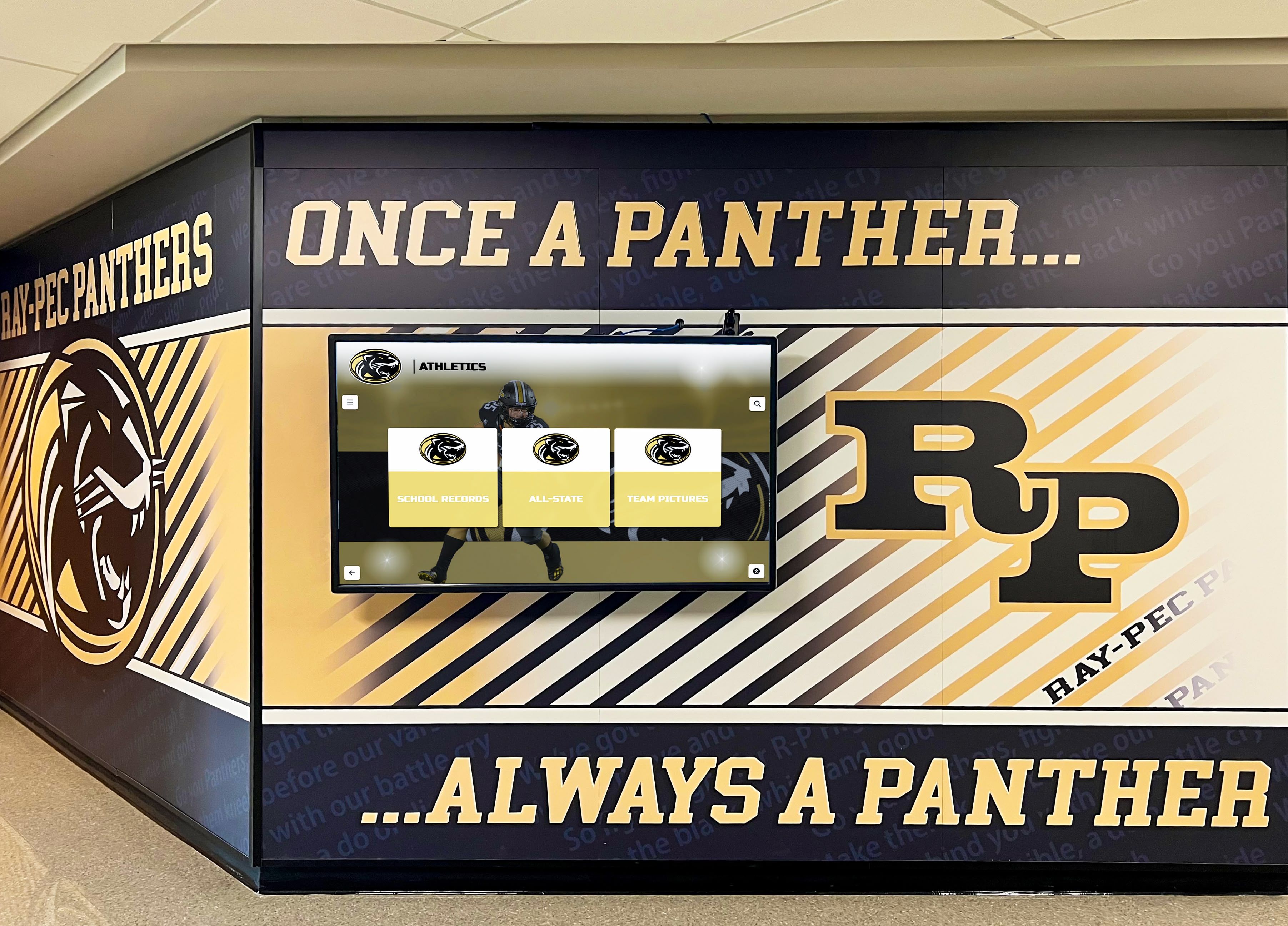
Also establish time horizons for historical recognition. Will the digital wall of fame include complete program history from founding, or focus on recent decades with plans to expand coverage as resources permit? Setting realistic scope prevents overwhelming initial implementation while creating roadmaps for systematic expansion.
Establishing Data Collection and Verification Processes
Digital record board accuracy depends on systematic data collection and verification workflows that prevent errors undermining credibility.
Primary Source Documentation: Require coaches to submit official meet results, box scores, or verified statistics rather than relying on memory or unofficial sources. Documentation creates accountability and enables future verification if questions arise about record accuracy.
Two-Person Verification: Institute review processes where athletic directors or assistant coaches verify record claims before publication. A second set of eyes catches input errors, identifies missing context, and ensures statistical calculations follow established standards.
Historical Research Protocols: When digitizing legacy records from yearbooks, newspaper archives, or institutional files, develop standards for handling incomplete information, conflicting sources, or uncertain data that cannot be definitively verified through available documentation.
Many athletic departments building digital recognition systems discover that systematic documentation processes improve record-keeping quality beyond just wall of fame purposes—creating valuable data supporting coaching analysis, historical research, and media relations.
Selecting Hardware and Software Components
Digital wall of fame implementations require coordinated hardware and software selections that work together reliably while meeting institutional needs and budget parameters.
Display Hardware Considerations: Commercial-grade touchscreens designed for continuous operation in high-traffic environments, mounting solutions accommodating existing architectural constraints, network connectivity through ethernet or reliable wireless, and positioning at ADA-compliant heights enabling universal access.
Consumer-grade displays purchased from retail electronics stores typically fail within months when subjected to continuous operation in school environments. Purpose-built commercial displays cost more initially but deliver reliability, longevity, and warranty support appropriate for institutional installations expected to operate continuously for years.
Software Platform Requirements: Cloud-based content management requiring no technical expertise, intuitive interfaces enabling coaches to update records directly, responsive design ensuring recognition works across devices and screen sizes, and robust security protecting institutional data and athlete information.
Athletic directors benefit from purpose-built platforms designed specifically for athletic recognition rather than generic digital signage systems lacking sport-specific features like auto-ranking, statistical tracking, or championship documentation tools that purpose-built solutions provide.
Solutions like Rocket Alumni Solutions deliver integrated hardware and software packages pre-configured for athletic recognition, eliminating technical complexity that would otherwise require IT department involvement and specialized expertise.
Budget Planning and Funding Strategies
Digital record board systems require investment that exceeds traditional vinyl board costs while delivering capabilities and long-term value that justify higher initial expense.
Cost Components: Initial hardware including commercial touchscreen displays ($3,000-$8,000), professional installation and network integration ($1,000-$3,000), software licensing for content management platforms ($1,500-$5,000 annually), content development for historical records and athlete profiles (varies by scope), and ongoing operation including electricity and maintenance (minimal).
Comparing Total Cost of Ownership: Traditional vinyl boards appear cheaper initially but incur continuous update costs of $75-$200 per change. Schools updating 50 records annually spend $3,750-$10,000 yearly on vinyl replacements—costs that accumulate across decades while providing no capability improvements.
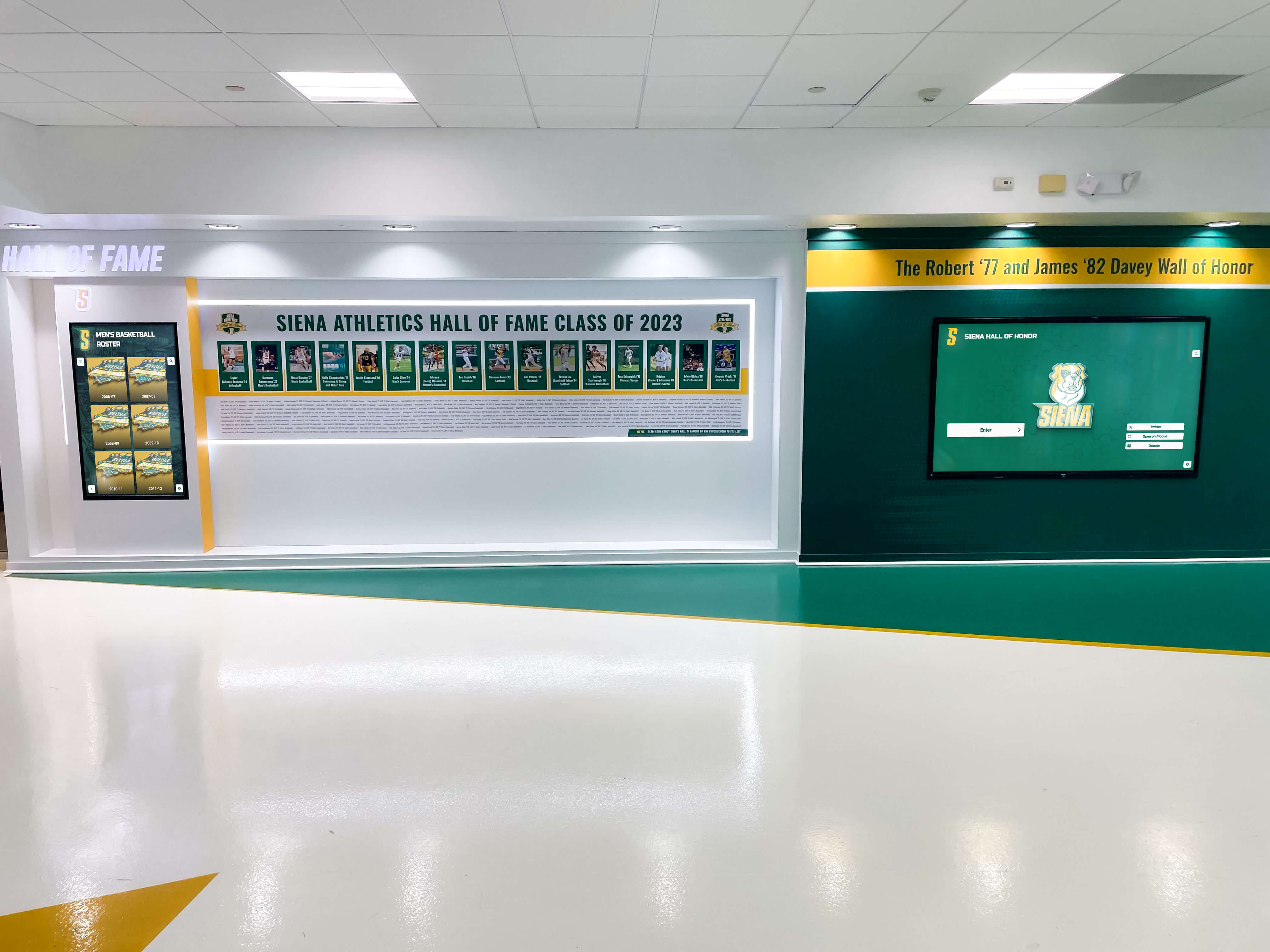
Digital systems require higher upfront investment but dramatically lower ongoing costs through elimination of per-update vendor charges. After 3-5 years, cumulative vinyl replacement costs typically exceed digital system total cost of ownership while digital platforms continue providing superior functionality, unlimited capacity, and automatic updates.
Funding Sources: Athletic departments successfully fund digital record boards through booster club capital campaigns viewing recognition infrastructure as core mission investment, alumni association contributions particularly from former record holders supporting recognition preservation, corporate sponsorships with appropriate acknowledgment of contributors, memorial donations honoring legendary coaches or deceased athletes, facility improvement bond funds when schools undertake larger athletic renovations, and phased implementation spreading costs across multiple budget cycles.
Many schools discover that alumni athletes enthusiastically support digital record board funding when presented with compelling visions for comprehensive historical recognition preserving their achievements in modern accessible formats.
Technical Features That Maximize Recognition Impact
Beyond basic digital display capabilities, specific technical features distinguish exceptional wall of fame systems from generic digital signage repurposed for athletic recognition.
Template-Driven Layouts Ensuring Professional Consistency
Purpose-built digital record board platforms provide pre-designed templates for standard recognition categories including individual records by sport with auto-ranking, championship team rosters and season summaries, coaching milestone recognition and career statistics, all-state and special honor acknowledgment, and multi-sport athlete versatility celebration.
These templates ensure professional visual consistency across all sports and achievement types while requiring zero graphic design expertise. Athletic directors select appropriate templates, input content through simple forms, and the system generates polished displays matching institutional branding automatically.
Template standardization also accelerates content development. Rather than custom-designing every athlete profile or record category from scratch, templates enable rapid deployment where content entry represents the only required effort—reducing time-to-launch from months to weeks.
QR Code Integration for Personal Content Access
QR code functionality allows athletes and families to unlock personalized content beyond publicly displayed information. When athletes compete, they receive unique QR codes that unlock extended profile content including complete career statistics across all competitions, photo galleries documenting athletic progression, video highlight packages showcasing best performances, personal statements reflecting on athletic experiences, and links to current social media or college athletic profiles.
This two-tier approach balances public recognition with privacy. Basic achievements remain publicly accessible through lobbies displays, while detailed personal content requires QR authentication ensuring only authorized individuals access extended profiles.
QR codes also enable powerful alumni engagement. Schools can include QR codes in reunion invitations that unlock class-specific recognition content. Alumni association newsletters feature QR links to historical profiles. Athletic department social media posts include QR codes directing followers to featured athlete content—extending recognition reach across multiple channels.
Responsive Design for Multi-Device Accessibility
The best digital wall of fame systems work seamlessly across desktop computers, tablets, smartphones, and large touchscreen displays through responsive design that adapts content presentation to available screen dimensions.
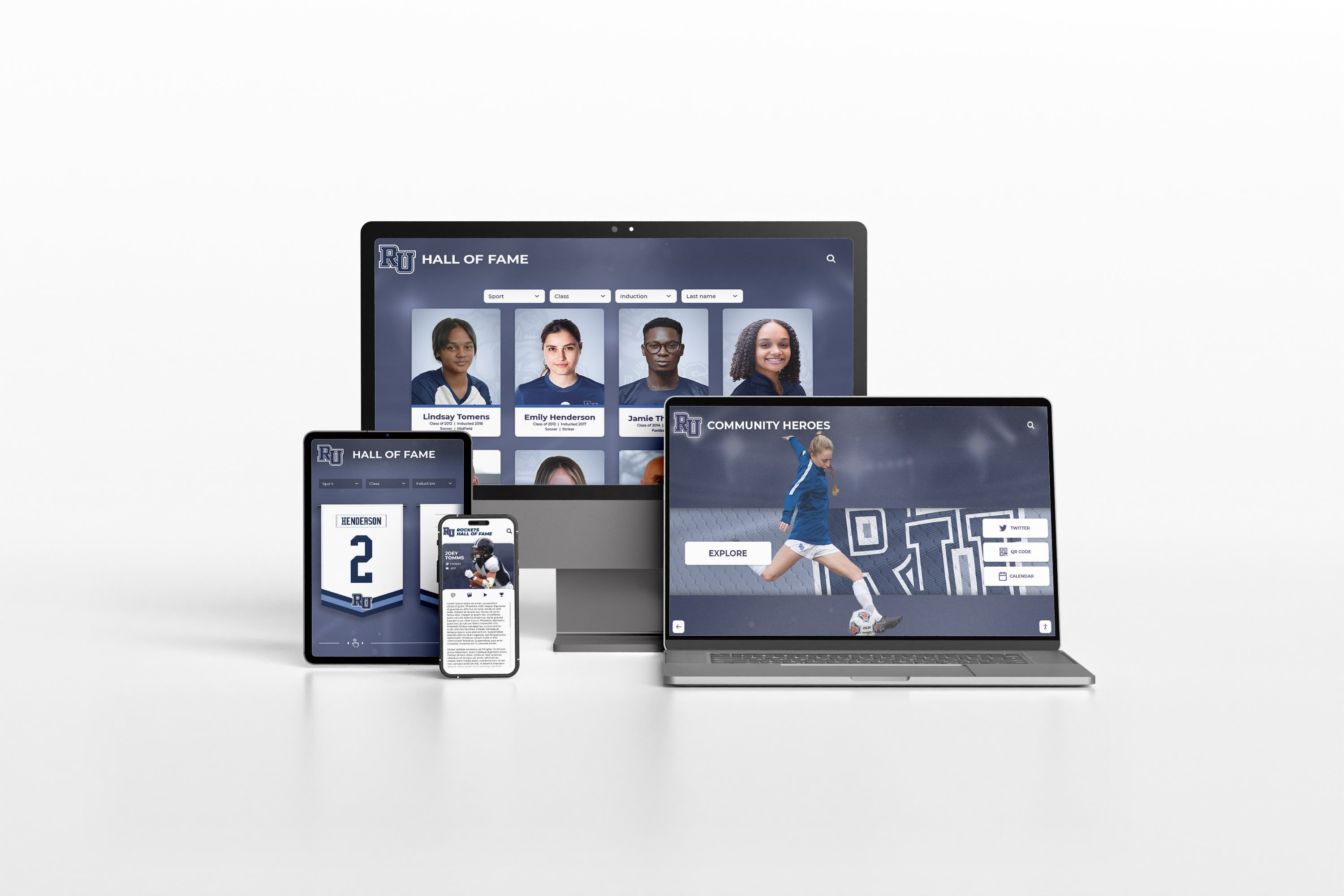
This device flexibility ensures recognition reaches audiences through their preferred access methods. Students browse on smartphones during lunch breaks. Alumni explore on home computers while reminiscing about high school athletics. Families view on lobby touchscreens when attending games. Each access point provides equivalent content appropriately formatted for available screen real estate.
Responsive design also future-proofs investments. As new device types emerge, responsive platforms automatically accommodate them without requiring redesign or additional development—protecting recognition system longevity regardless of technological changes.
ADA Compliance Features Ensuring Universal Access
Federal ADA requirements mandate that schools provide equal access to information for community members regardless of physical abilities. Digital wall of fame systems achieve compliance through multiple accommodations including screen reader compatibility for visually impaired users, adjustable text sizing for users with low vision, keyboard navigation alternatives for users unable to use touchscreens, adequate color contrast meeting WCAG standards, and accessible positioning at heights usable by wheelchair users.
These accommodations ensure that all community members can explore athletic recognition independently without requiring assistance—respecting dignity while meeting legal obligations.
Schools implementing accessible digital recognition displays demonstrate commitment to inclusive excellence where achievement celebration welcomes full participation from all stakeholders regardless of physical abilities.
Content Strategies for Compelling Digital Recognition
Technical capabilities matter little if content fails to engage audiences or honor athletes appropriately. Strategic content development ensures digital walls of fame deliver recognition that feels meaningful, accurate, and inspiring.
Historical Record Research and Documentation
Comprehensive digital recognition requires systematic historical research excavating decades of athletic achievement that may not exist in readily accessible formats.
Source Identification: Successful historical research draws from yearbook archives documenting team rosters and major achievements, local newspaper sports sections covering games and championships, state athletic association records preserving tournament results, coach and administrator interviews capturing institutional memory, and family-submitted photographs and documentation from personal collections.
Managing Incomplete Information: Historical records often contain gaps where key information cannot be verified through available sources. Rather than fabricating details or omitting athletes entirely, effective approaches transparently acknowledge uncertainty while recognizing verified achievements—respecting both historical accuracy and accomplishment deserving acknowledgment despite incomplete documentation.
Phased Historical Coverage: Many schools implement historical recognition in phases rather than attempting comprehensive coverage before launching systems. Begin with recent 10-20 years where records remain accessible, expanding systematically into earlier decades as research progresses and resources permit. This phased approach delivers value quickly while creating roadmaps for ongoing enhancement.
Athlete Profile Development That Humanizes Achievement
Moving beyond minimal name-and-statistic listings, comprehensive athlete profiles tell complete stories about individuals behind achievements.
Biographical Context: Effective profiles include basic biographical details (graduation year, hometown, post-graduation path), athletic specialization and position/event focus, notable career progression and development arc, academic achievements and scholar-athlete recognition, leadership roles and team contributions beyond statistics, and current status including college athletics or professional pursuits.
This context humanizes statistical accomplishments. Current students viewing a record holder’s profile see a real person who attended their school, walked the same hallways, trained in the same facilities, and faced similar academic-athletic balance challenges—making excellence feel achievable rather than impossibly distant.
Performance Narrative: Brief narratives describing how athletes achieved recognition adds story depth that raw statistics cannot convey. Did they overcome significant injury to set records in their final season? Improve dramatically through dedicated training visible to teammates? Excel across multiple sports while maintaining academic excellence? Demonstrate remarkable sportsmanship winning community recognition?
These stories inspire more effectively than numbers alone. Athletes reading about predecessors who persevered through adversity, dedicated themselves to skill development, or balanced multiple commitments gain concrete examples of pathways to excellence grounded in familiar athletic experiences.
Championship Team Recognition That Celebrates Collective Excellence
While individual records often dominate wall of fame content, championship teams deserve comprehensive recognition celebrating collective achievement that required unified effort, strategic coaching, and sustained excellence across complete seasons.
Complete Team Rosters: Championship recognition should include every athlete who contributed—varsity players, junior varsity squad members who supported development, managers and support staff who enabled success, and coaching staff who shaped strategies and culture.
Comprehensive rosters ensure all contributors receive acknowledgment rather than recognizing only starters or top scorers. The role players, defensive specialists, and bench athletes who sacrificed individual statistics for team success deserve recognition honoring their championship contributions.
Season Narrative and Context: Championship documentation should tell complete season stories including preseason expectations and predictions, key victories during regular season competition, tournament or playoff progression showing path to championships, championship game details and memorable performances, and historical significance within program traditions.
These narratives help audiences appreciate championship significance beyond simple “2019 State Champions” designations that provide minimal context.
Resources on championship team recognition explore comprehensive approaches to celebrating collective excellence through digital platforms that accommodate rich multimedia documentation impossible with traditional static displays.
Leveraging Digital Walls of Fame for Program Development
Beyond honoring past achievement, strategic high school walls of fame support broader athletic department objectives including recruiting, alumni engagement, and community pride that benefit current programs and future athletes.
Recruiting Impact Through Visible Excellence Demonstration
Prospective athletes and families evaluating high schools form impressions based on visible evidence of program quality and institutional commitment to celebrating student success.
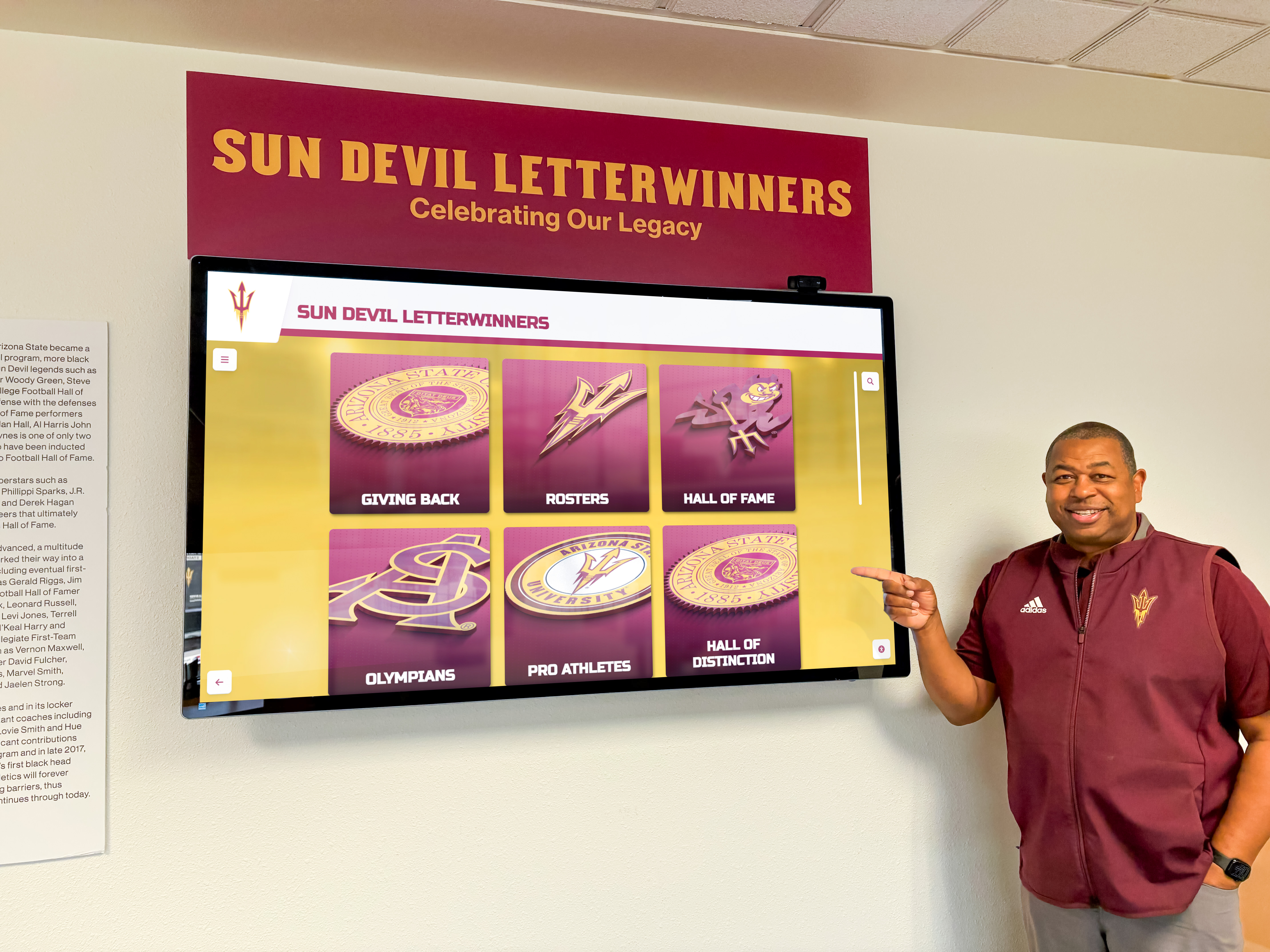
Program Tradition and Excellence: Comprehensive digital walls of fame demonstrate depth of athletic tradition through decades of championship success, multiple generation of record holders, consistent all-state athlete production across sports, and sustained coaching excellence building winning cultures.
These visible markers communicate program quality more effectively than verbal claims during campus tours. Families can independently explore recognition, verify claimed traditions, and assess whether your athletic culture matches institutional values and student needs.
Commitment to Individual Recognition: Prospects notice whether schools recognize individual excellence or exclusively celebrate team championships. Digital record boards showcasing individual records alongside team achievements signal that institutions value and acknowledge personal athletic development—appealing to talented individuals evaluating where to invest their high school athletic careers.
Professional Presentation Standards: The quality and comprehensiveness of recognition communicates broader institutional standards. Schools investing in modern digital systems with professional design, accurate documentation, and rich multimedia content signal that they approach athletics—and education generally—with excellence standards that resonate with families seeking top-tier programs.
Alumni Engagement Through Preserved Achievement Visibility
Former athletes maintain strong emotional connections to high school athletic experiences that shaped personal development, created lasting friendships, and taught valuable life lessons about dedication, perseverance, and teamwork.
Permanent Recognition Sustaining Connections: When alumni return to campus for reunions, games, or community events and find their achievements preserved in comprehensive digital archives, they feel valued and maintain engaged relationships with institutions that remember their contributions decades after graduation.
This sustained visibility affects giving patterns, volunteer support, and institutional loyalty. Alumni who feel genuinely honored through continued recognition become advocates who support current programs, mentor young athletes, and contribute financially to athletic department priorities.
Convenient Remote Access: Digital platforms with web and mobile access enable alumni engagement without requiring physical campus visits. Former athletes living across the country or internationally can explore recognition remotely, share profiles with families and friends, and maintain connections to institutional athletic traditions regardless of geographic distance.
Alumni recognition programs that combine physical lobby displays with accessible online platforms maximize engagement by meeting alumni where they are rather than requiring on-site visits that many cannot make regularly.
Community Pride and Institutional Visibility
Athletic recognition extends beyond internal stakeholders to affect broader community perceptions, local media coverage, and regional reputation.
Local Media Story Development: Comprehensive digital archives provide journalists with ready resources when developing sports feature stories, historical retrospectives, or athlete profiles. Rather than spending hours researching school records through disconnected sources, reporters access complete documentation through public-facing wall of fame platforms—increasing coverage frequency and quality.
Social Media Content Generation: Athletic departments leverage digital recognition as ongoing social content sources. Feature a “Record Holder of the Week” series, highlight championship anniversaries, celebrate alumni athletic accomplishments, or showcase multi-generational family athletic traditions—all drawn from digital wall of fame archives requiring minimal content creation effort.
Community Identity and Institutional Reputation: Schools known for exceptional athletic traditions and comprehensive recognition of achievement build reputations as excellence-focused institutions. This perception affects enrollment, property values in attendance zones, community support for facilities referendums, and regional standing among educational institutions.
Implementation Case Study: From Vinyl to Digital Transformation
Understanding real-world implementation helps athletic directors anticipate challenges while learning from successful transitions from traditional to digital recognition systems.
Initial Assessment and Planning
A typical 900-student comprehensive high school with 22 varsity sports faced common frustrations with traditional vinyl record boards consuming gym lobby walls. Individual sport record boards showed only top-3 performers due to space constraints, boards were 15 years outdated with missing recent record holders, multiple records contained errors from manual updates, and no mechanism existed for recognizing championships or all-state athletes beyond bulletin board announcements.
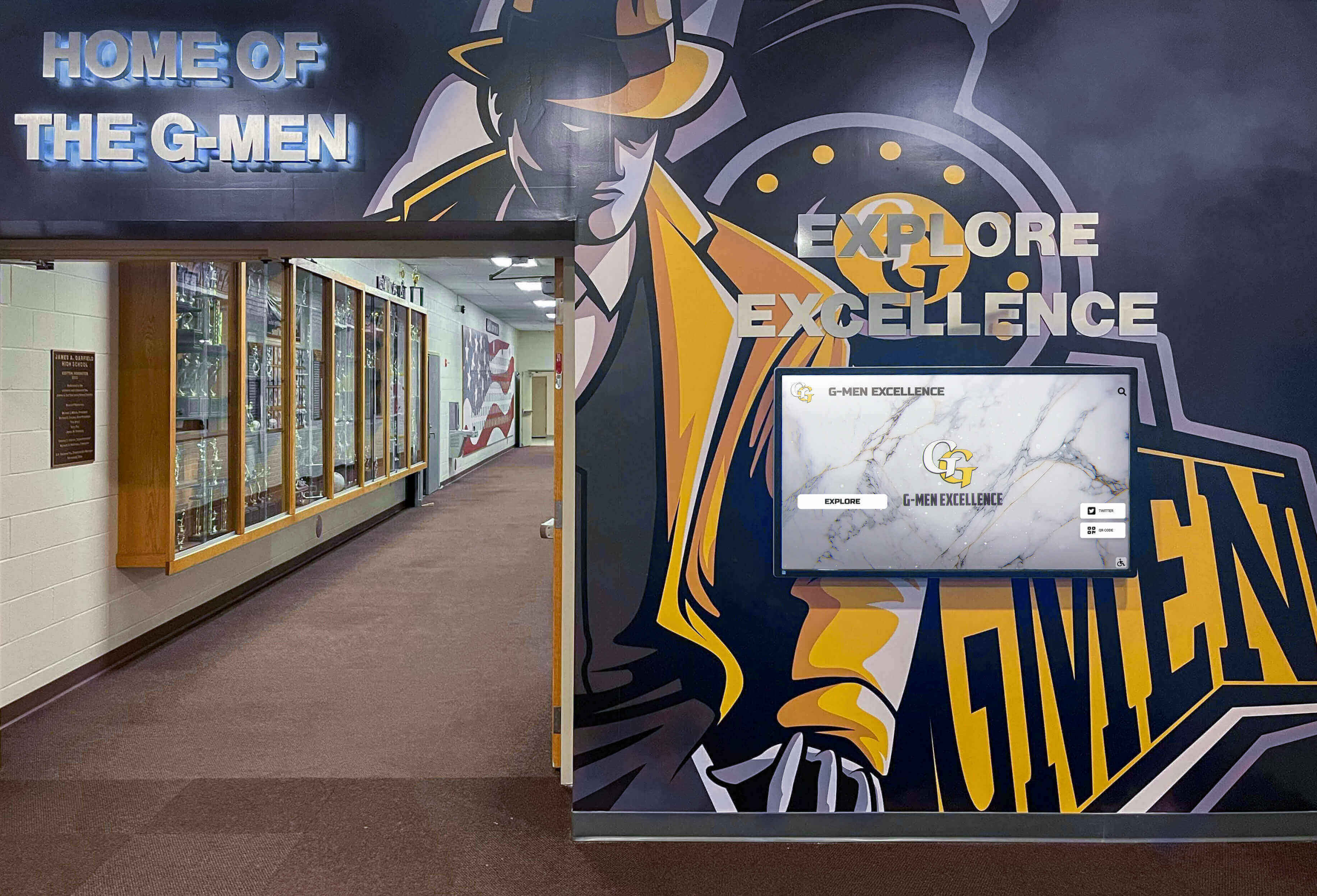
The athletic director formed a planning committee including coaches from major and minor sports, booster club leadership interested in funding initiatives, IT staff advising on technical requirements, and an alumni representative providing historical perspective. This diverse group assessed current recognition gaps, surveyed coaches about record documentation availability, researched vendor options and system capabilities, and developed phased implementation proposals with budget estimates.
Funding and Procurement
The committee presented comprehensive digital wall of fame proposals to the booster club, athletic budget committee, and school administration emphasizing elimination of annual vinyl update costs, unlimited recognition capacity ensuring equity across all sports, ADA compliance addressing legal obligations, and alumni engagement opportunities supporting fundraising goals.
The booster club committed $25,000 for a three-display system including lobby touchscreen, gymnasium hallway display, and weight room installation. This investment covered commercial-grade touchscreens, software licensing for five years, professional installation and network integration, and initial content development support.
The athletic director selected Rocket Alumni Solutions based on purpose-built athletic recognition capabilities, template-driven content management requiring no design expertise, proven reliability across hundreds of school installations, comprehensive training and ongoing support included in licensing, and positive references from peer institutions.
Historical Research and Content Development
Content development represented the most time-intensive implementation phase. The athletic director delegated sport-specific research to head coaches who reviewed historical records in their programs, compiled complete individual record lists with verification, identified championship teams across program history, gathered coach career milestone information, and collected photographs from archives and family submissions.
This distributed approach engaged coaches as active recognition program participants while distributing workload across multiple individuals rather than overwhelming a single administrator. Coaches appreciated opportunities to document their sports comprehensively and ensure equitable visibility within school-wide recognition systems.
Historical research surfaced interesting findings including multiple errors on existing vinyl boards requiring correction, several unrecognized records from pre-vinyl eras, championship teams inadequately documented in school archives, and multi-generational family athletic traditions spanning decades.
Launch and Ongoing Operation
After six months of planning, procurement, and content development, the school unveiled its digital wall of fame during homecoming week with media coverage, recognition ceremonies for newly-discovered historical record holders, demonstration sessions teaching community members to use interactive systems, and social media campaigns featuring athlete profiles and historical achievements.
Post-launch operation proved dramatically easier than anticipated. Coaches update records through simple web forms after competitions. The system automatically calculates rankings and publishes changes within minutes. Athletic directors review submissions for accuracy but no longer coordinate vinyl vendors or schedule installation appointments. Total administrative time dropped from 40+ hours annually to approximately 5 hours—a 90% reduction.
Common Implementation Questions and Concerns
Athletic directors considering digital wall of fame systems commonly raise predictable questions about costs, technical complexity, and practical operation.
“Won’t Digital Systems Cost More Than Traditional Displays?”
Initial investment for digital systems exceeds traditional vinyl board costs, typically $15,000-$30,000 for comprehensive multi-display installations versus $5,000-$8,000 for comparable vinyl coverage.
However, total cost of ownership strongly favors digital systems when accounting for ongoing operation. Traditional vinyl boards require continuous update costs of $75-$200 per change. Athletic programs updating 50-75 records annually spend $4,000-$15,000 yearly on vinyl replacements—costs that accumulate indefinitely without capability improvements.
Digital systems incur annual software licensing fees of $1,500-$5,000 but eliminate per-update vendor costs entirely. Over typical 10-year planning horizons, digital systems prove substantially cheaper while providing unlimited capacity, automatic updates, remote access, and comprehensive capabilities impossible with traditional approaches.
“Do We Need IT Expertise to Manage Digital Recognition?”
Purpose-built athletic recognition platforms specifically avoid requiring technical expertise. Cloud-based systems need no on-site servers or specialized IT infrastructure. Content management interfaces use simple web forms similar to social media posting. Updates happen through intuitive point-and-click interfaces requiring no coding or design skills.
Most schools operate digital walls of fame without IT department involvement beyond initial network connectivity setup. Athletic directors, assistant coaches, or administrative assistants manage content updates using platforms designed for non-technical users.
This accessibility represents a defining difference between purpose-built athletic recognition systems and generic digital signage platforms that require technical expertise for content development and system administration.
“What Happens If Hardware Fails or Software Companies Go Out of Business?”
Reputable vendors provide commercial-grade hardware with 3-5 year warranties covering repairs or replacement if displays fail. Commercial touchscreens designed for continuous operation prove far more reliable than consumer electronics, with typical lifespans exceeding 8-10 years of continuous use.
Software platform sustainability deserves evaluation during vendor selection. Established providers serving hundreds of schools demonstrate business model viability and longevity expectations. Schools should ask about customer count, years in operation, data portability options, and backup procedures protecting content if business circumstances change.
Cloud-based platforms provide inherent backup protection since content exists on vendor servers independent of local hardware. Even if displays fail, recognition remains accessible through web and mobile access until hardware repairs complete.
“How Do We Handle Athletes Who Break Records After Graduation?”
Digital record boards accommodate post-graduation record progression automatically. When current athletes exceed existing records, the system updates rankings immediately regardless of when previous records were set.
Former record holders remain preserved in complete historical archives showing their records and eventual replacement by superior performances. This approach honors both original achievement and eventual surpassing performance without erasing either from institutional memory—something traditional vinyl boards cannot accommodate given space limitations.
Historical record progression documentation provides interesting content showing how program standards improved across decades. Track event times that qualified for state meets in 1980 might rank outside top-20 today—demonstrating athletic evolution and training improvement that adds context to modern performance interpretation.
Measuring Digital Wall of Fame Success and Impact
Effective programs establish metrics demonstrating value and guiding continuous improvement based on evidence rather than assumptions.
Quantitative Usage Metrics
Digital platforms typically provide analytics showing engagement patterns and content popularity including total interactions and session counts, average viewing duration indicating engagement depth, most-viewed athletes and sports revealing audience interests, search terms showing discovery patterns, peak usage times informing optimal update schedules, and geographic distribution of web access demonstrating reach beyond campus.
These data reveal how audiences use recognition systems and which content resonates most strongly—insights impossible with traditional static displays providing zero usage feedback.
Qualitative Stakeholder Feedback
Systematic feedback collection from key constituencies provides perspectives complementing quantitative analytics including athlete satisfaction with recognition comprehensiveness and presentation quality, coach assessment of recruitment impact and update process ease, family reactions to recognition preservation and accessibility, alumni engagement levels and emotional response to continued visibility, and administrative evaluation of time savings and program value.
Regular surveys, focus groups, or informal conversations reveal improvement opportunities and validate program benefits justifying continued investment and expansion.
Operational Efficiency Improvements
Measuring administrative time spent on recognition maintenance before and after digital implementation quantifies efficiency gains including hours annually spent coordinating vinyl updates eliminated, vendor communication and installation scheduling time removed, error corrections simplified through instant digital updates, and historical research facilitated through searchable digital archives.
These operational improvements represent tangible return on investment beyond recognition quality enhancements—freeing athletic director time for higher-value activities like coaching support, event management, or student-athlete development.
Future Trends in Digital Athletic Recognition
Digital wall of fame technology continues evolving with emerging capabilities that will further transform how schools honor athletic achievement in coming years.
Artificial Intelligence Integration for Automated Content Development
Emerging AI capabilities will automate aspects of profile creation and historical documentation currently requiring manual effort. Image recognition might automatically identify athletes in historical photographs for profile integration. Natural language generation could draft achievement narratives from statistical data. Computer vision might analyze video footage to identify highlight moments worth preserving.
These automation capabilities will reduce content development barriers that currently limit recognition comprehensiveness—making it feasible to create rich profiles for thousands of athletes without proportional staff time investment.
Augmented Reality Experiences Enhancing Physical Spaces
Future implementations might combine physical trophy displays with augmented reality overlays accessible through smartphone cameras. Visitors pointing phones at trophy cases could see 3D athlete models, video highlights overlaid on physical spaces, historical context appearing alongside actual hardware, or interactive statistical comparisons between different eras.
These augmented experiences will bridge physical and digital recognition realms—preserving tangible trophy presence while leveraging digital capabilities for rich content enhancement impossible with physical displays alone.
Integration with Wearable Technology and Performance Tracking
As athletic programs increasingly adopt wearable sensors and performance tracking technology, integration with recognition systems could provide unprecedented achievement documentation. Real-time biometric data from record-setting performances, complete workout logs showing training dedication behind achievements, biomechanical analysis of exceptional athletic movements, and performance progression graphs documenting improvement across careers might all integrate into digital profiles.
These integrations will enable recognition sophistication impossible in previous eras—documenting not just what athletes achieved but how they trained, progressed, and performed across complete athletic careers.
Conclusion: Transform Recognition Through Modern Digital Systems
High school walls of fame honor decades of athletic dedication, championship success, and individual excellence that define program traditions and inspire future athletes. Traditional recognition approaches served institutions well for generations but cannot match modern capabilities that digital record board technology delivers.
Auto-ranking eliminates manual update burden that consumed dozens of administrative hours annually. Unlimited capacity ensures every achievement receives preservation without space constraints forcing difficult exclusions. Rich multimedia profiles tell complete athlete stories honoring accomplishments comprehensively. Universal accessibility ensures all community members explore recognition regardless of physical abilities. Remote access extends engagement to alumni worldwide who maintain connections to athletic experiences shaping their development.
Athletic directors spending hours coordinating vinyl updates or facing difficult decisions about which records to display can transform recognition through solutions like Rocket Alumni Solutions that deliver comprehensive digital record boards designed specifically for high school athletic recognition. These purpose-built platforms combine intuitive content management requiring zero technical expertise, commercial-grade hardware ensuring reliability, professional templates delivering polished presentation automatically, and proven track records across hundreds of successful implementations.
The investment required for modern digital systems proves cost-effective compared to accumulating vinyl replacement expenses while delivering capabilities traditional approaches cannot match. Schools ready to eliminate manual update friction, preserve complete achievement histories, and create engaging recognition experiences that inspire current athletes should explore digital wall of fame solutions.
Every record broken deserves immediate recognition. Every championship team merits comprehensive documentation. Every athlete who achieved excellence should see their accomplishments preserved permanently. Digital record board technology makes this comprehensive recognition practical, affordable, and sustainable for athletic programs committed to honoring excellence while preserving traditions that define school athletic identity for generations to come.
Schedule a Zoom with Rocket Alumni Solutions to explore how auto-ranking digital record boards can transform your high school wall of fame while eliminating update burden and space constraints that limit traditional recognition approaches.