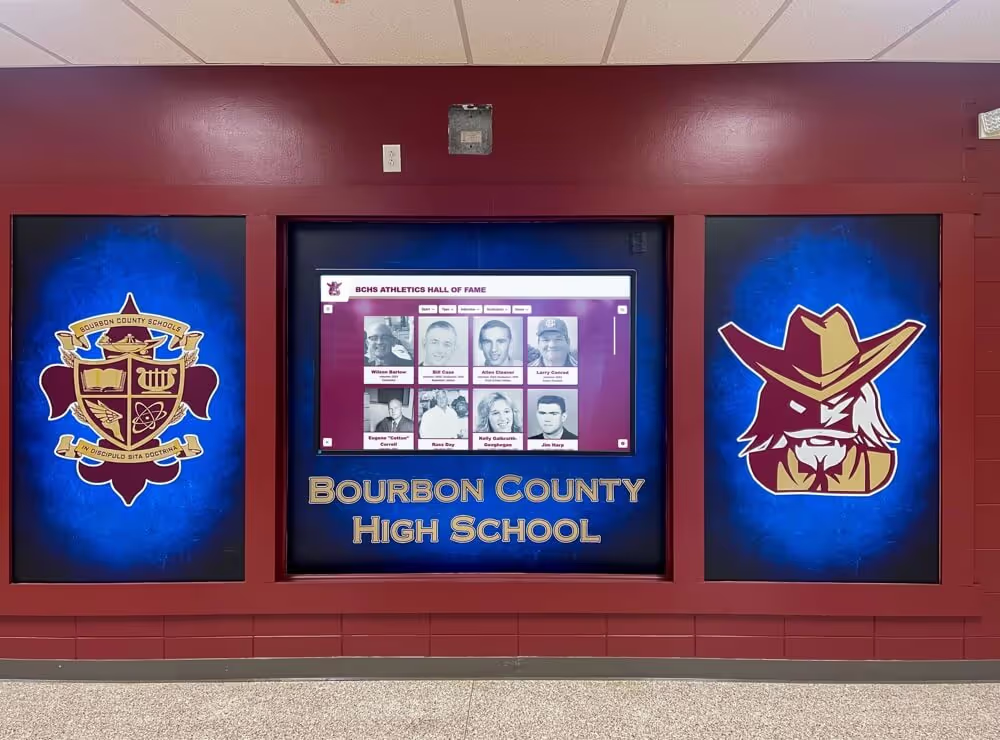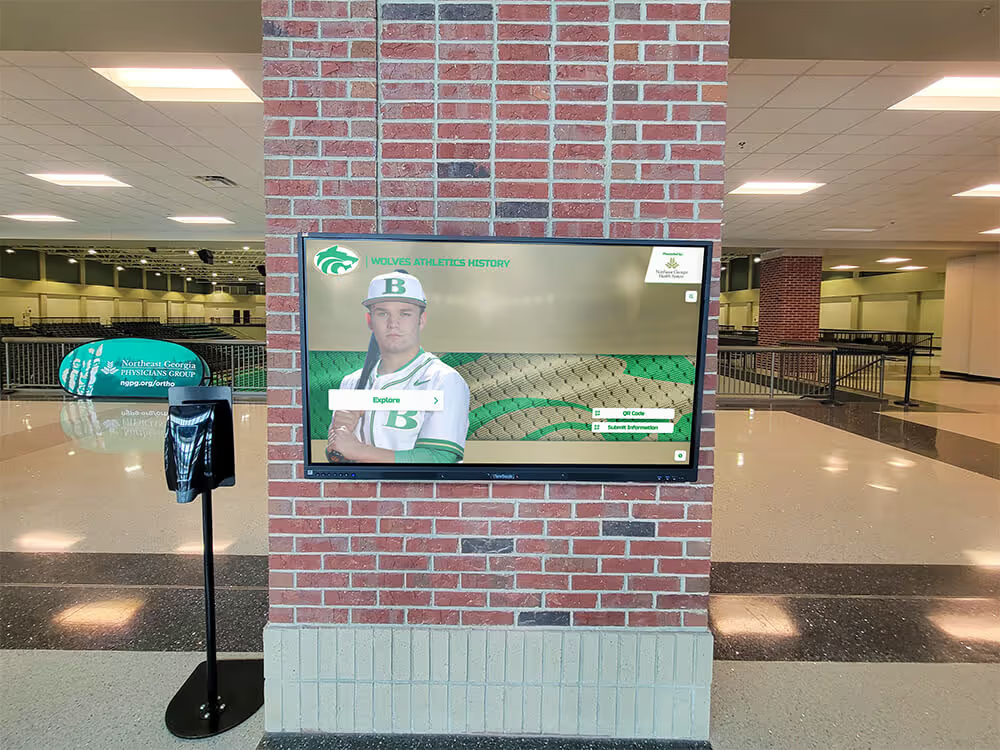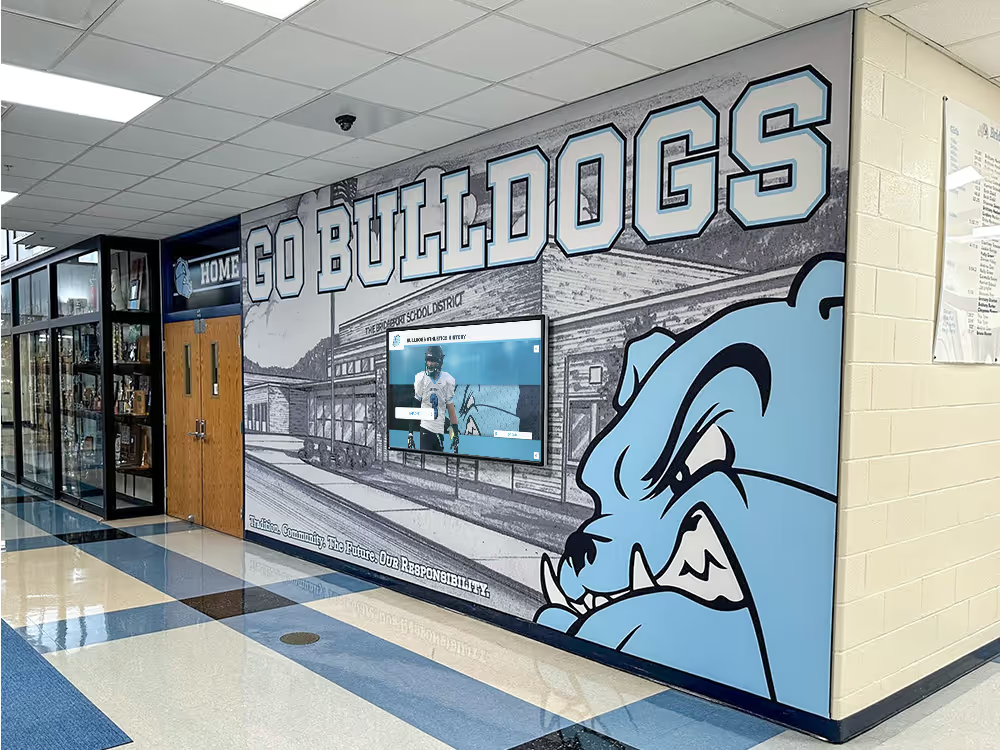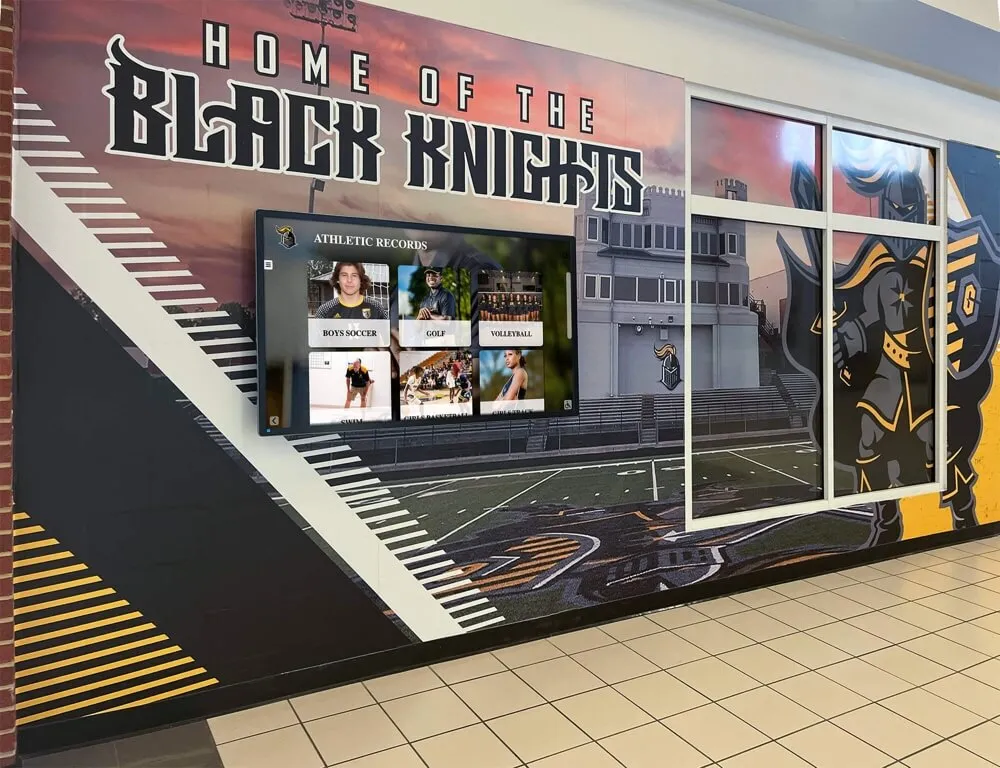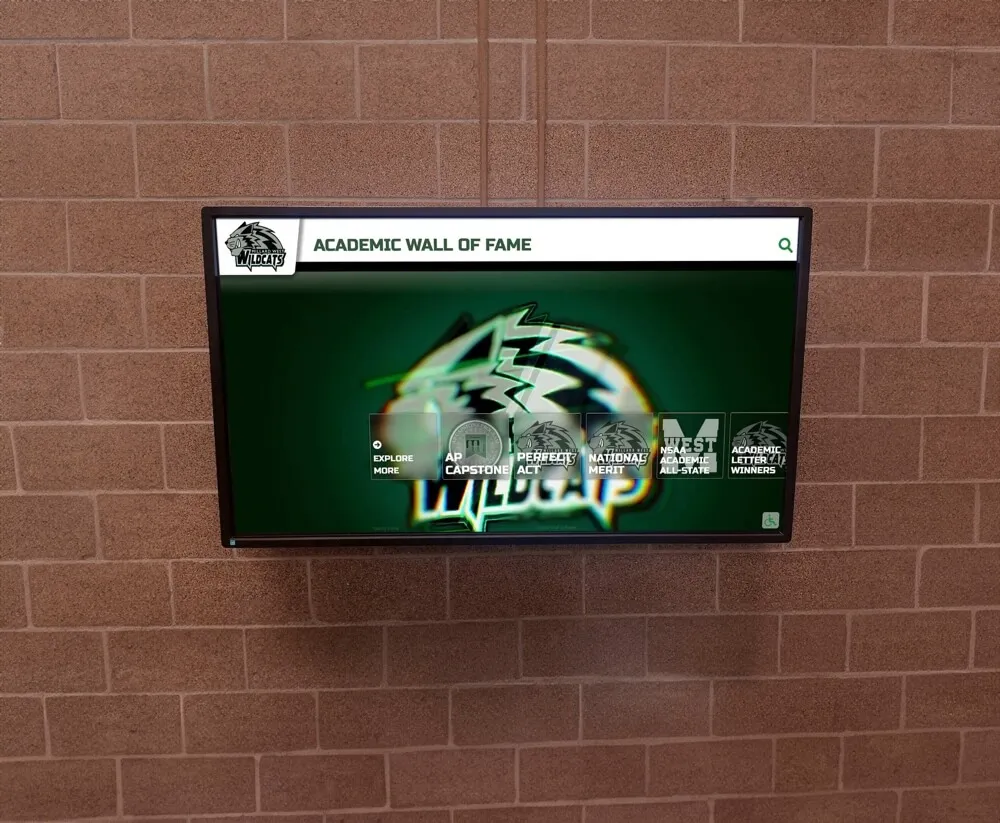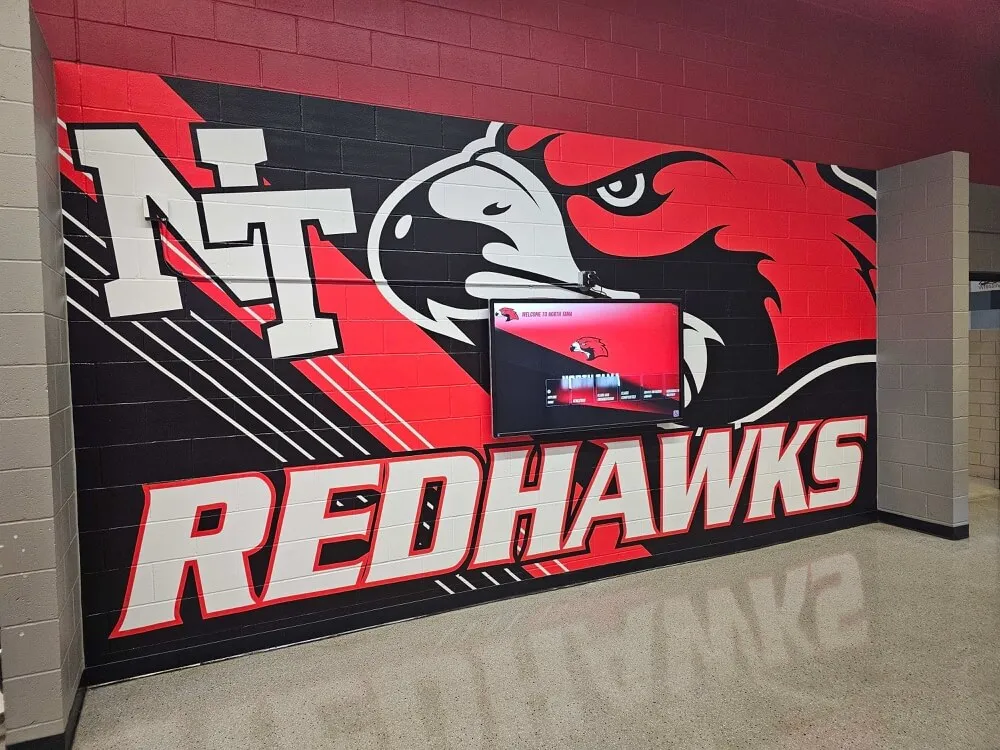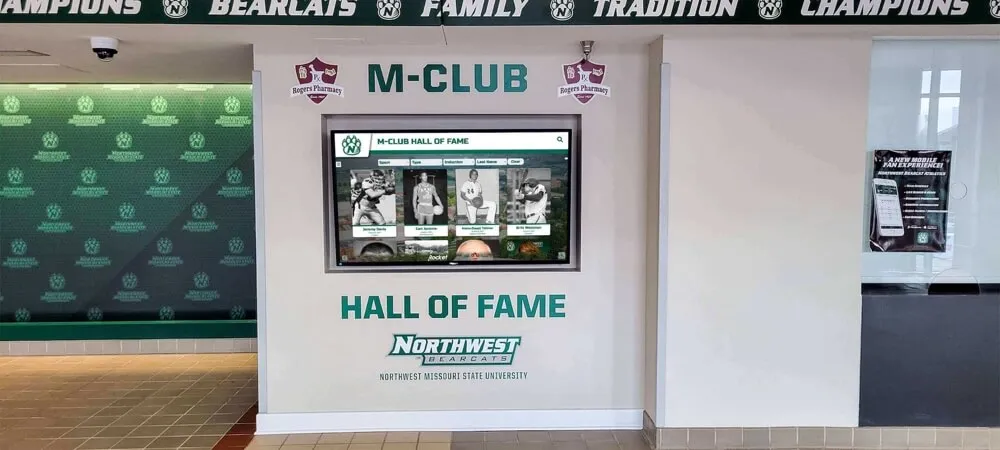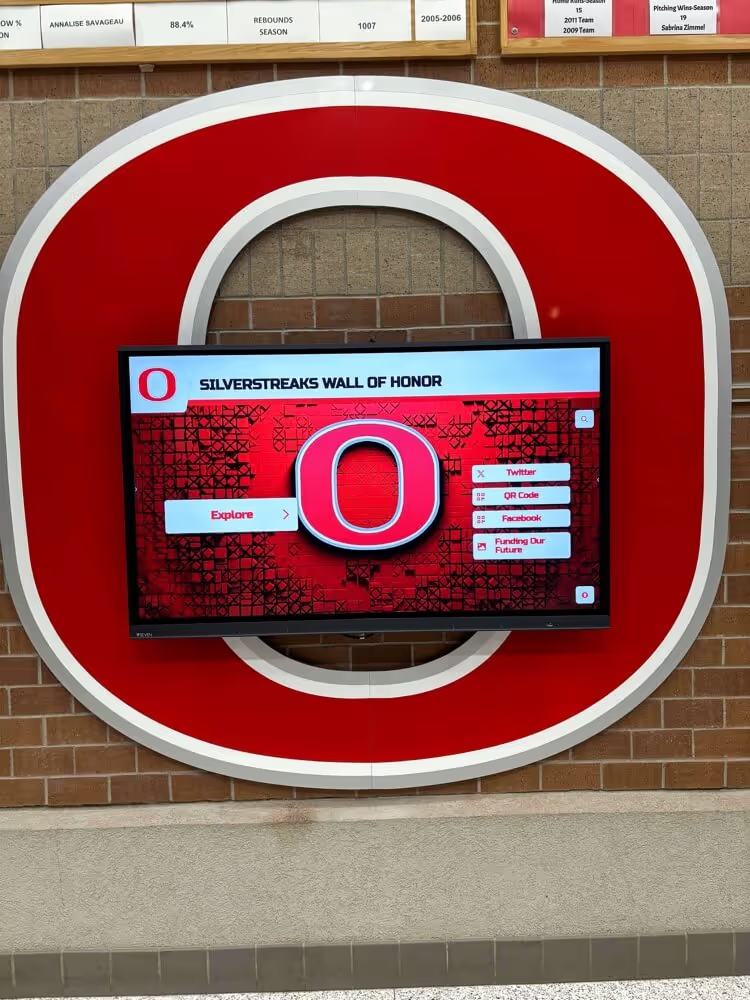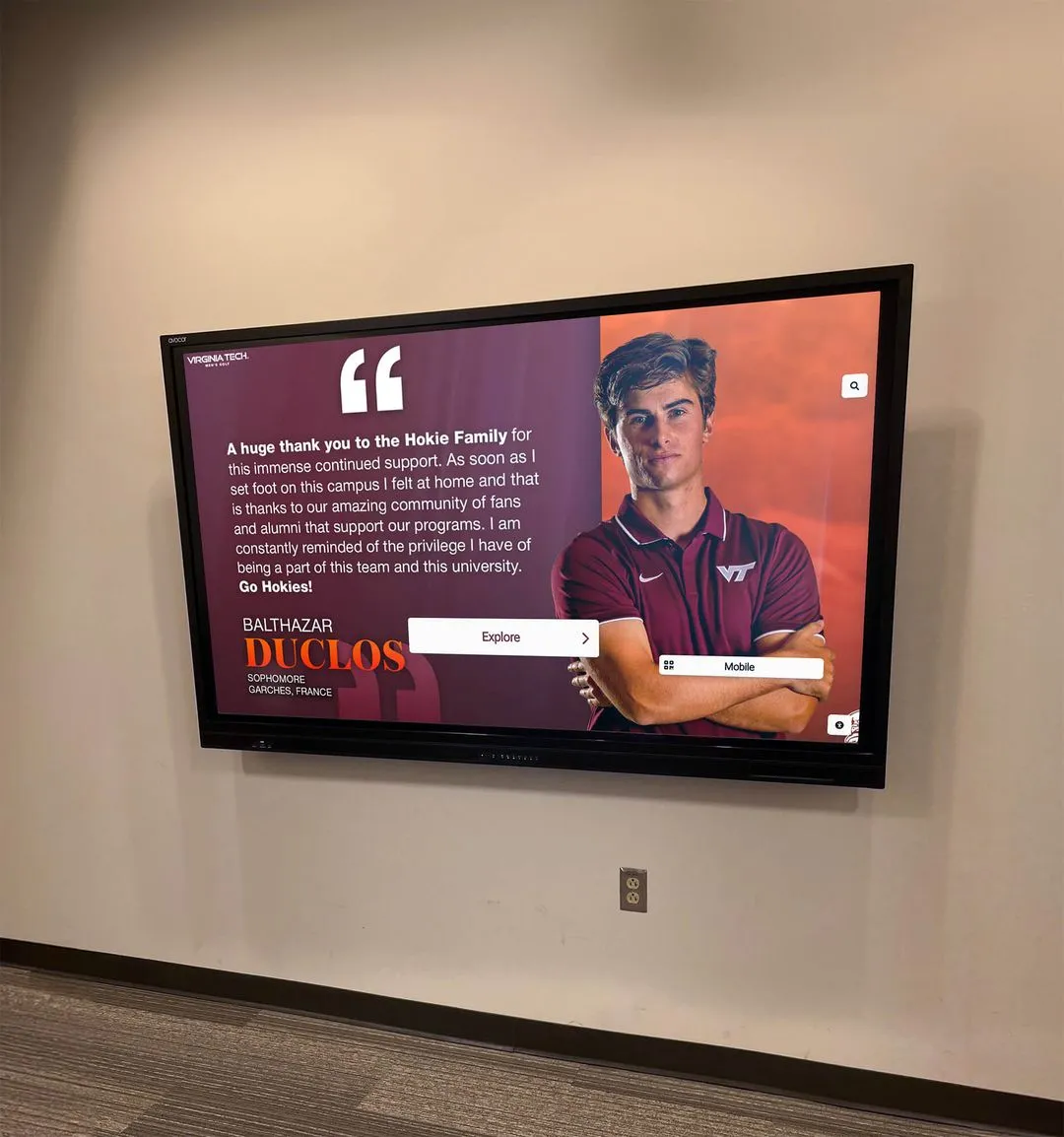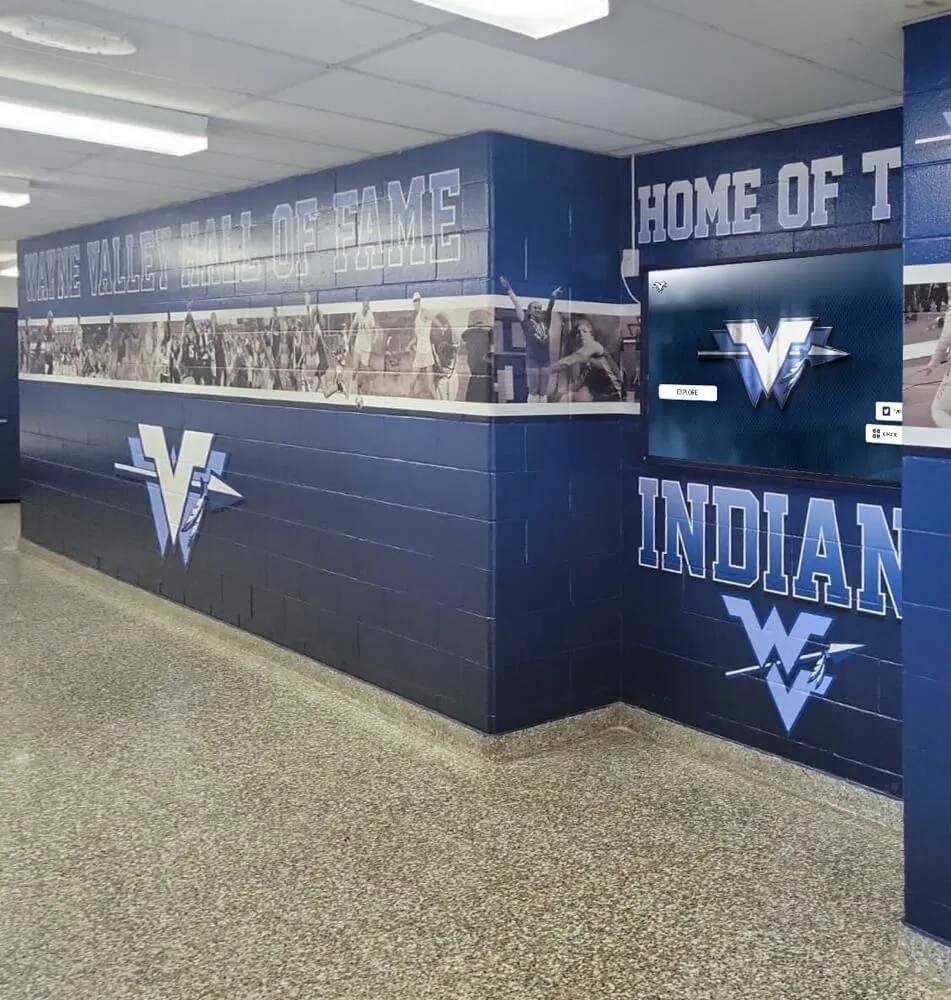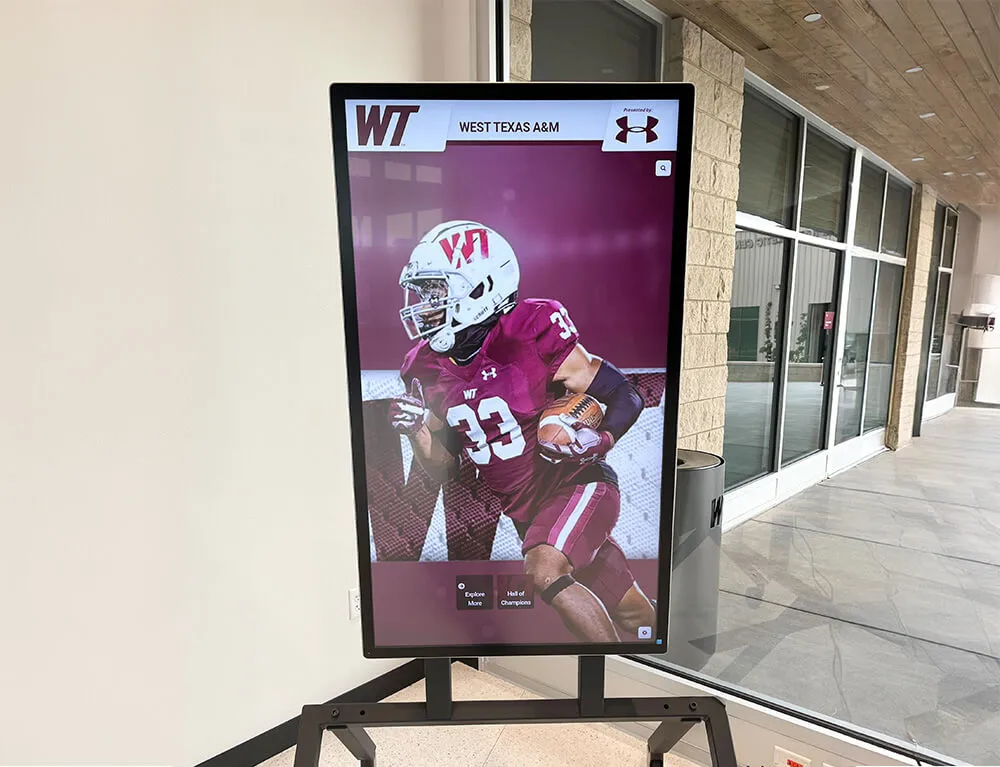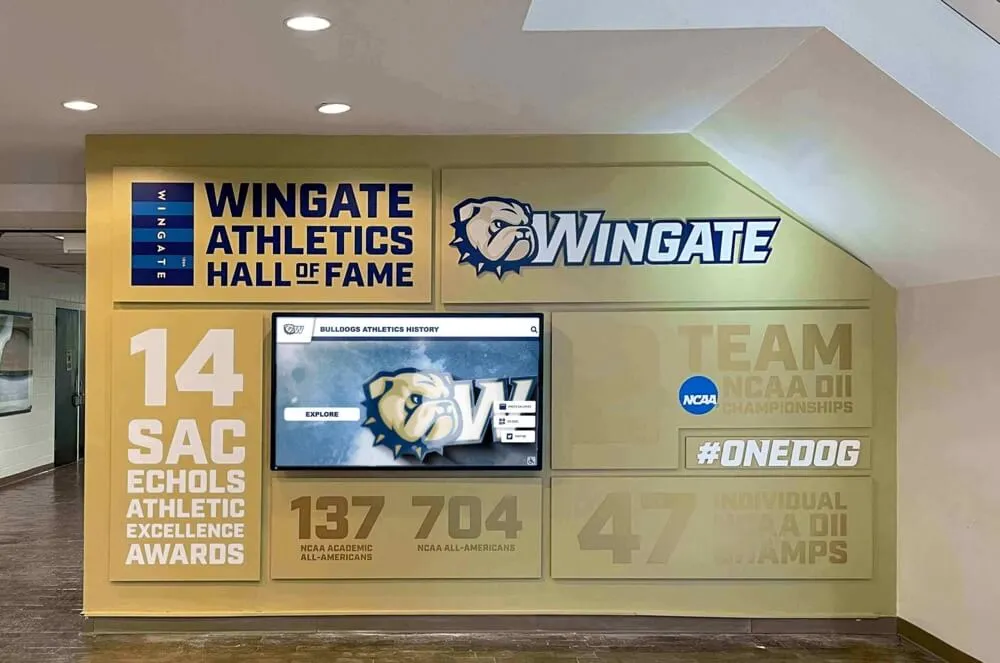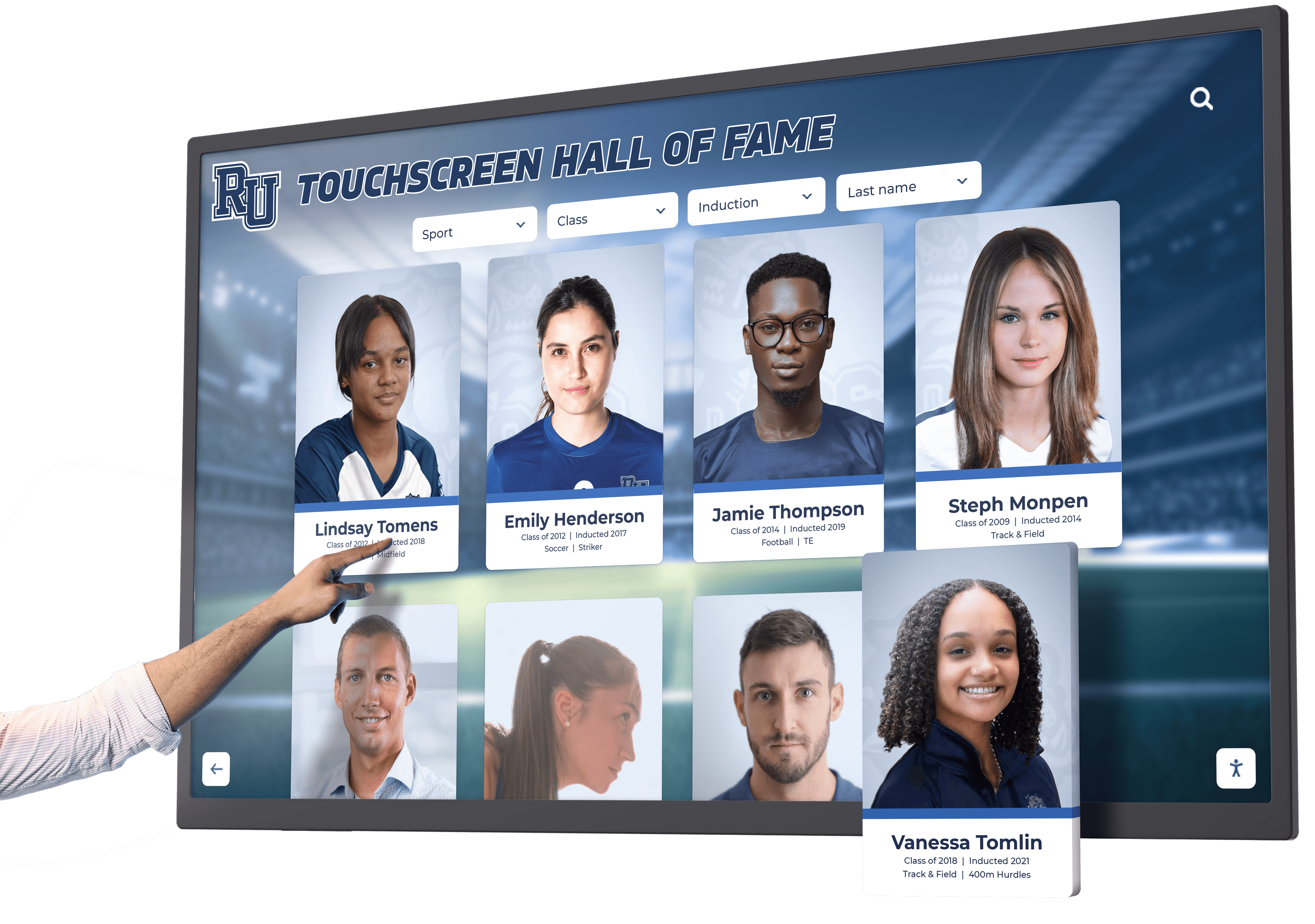




High school reunion display boards serve as centerpieces that transform ordinary gathering spaces into nostalgia-filled environments celebrating shared memories, honoring distinguished classmates, and recognizing those who’ve passed away. Whether commemorating a 10th, 25th, or 50th reunion, these displays create immediate emotional connection points that spark conversations, remind attendees of formative experiences, and visibly demonstrate the enduring bonds connecting classmates across decades since graduation.
Reunion planning committees face important decisions about display board formats—from traditional poster boards featuring printed photos and memorabilia to modern interactive digital touchscreen systems enabling comprehensive multimedia presentations. Each approach offers distinct advantages depending on budget constraints, venue capabilities, technical comfort levels, and post-event archival priorities that determine whether displays exist solely for single weekend events or continue providing value indefinitely through permanent online accessibility.
The most effective high school reunion display boards balance nostalgic appeal with practical functionality, incorporating memory walls celebrating shared experiences, achievement recognition honoring distinguished careers and contributions, memorial tributes providing dignified acknowledgment of deceased classmates, and interactive elements encouraging active participation rather than passive observation. Modern digital recognition solutions address traditional limitations while preserving everything reunion planners value about commemorative displays.
Why High School Reunion Display Boards Create Lasting Impact
High school reunion display boards serve functions far beyond simple decoration. They provide visual focal points unifying diverse attendees around shared history, create structured frameworks ensuring all classmates receive appropriate recognition, preserve memories through documentation extending beyond single events, and demonstrate organizational care reflecting positively on planning committees. Whether planning committees choose traditional physical displays or modern digital recognition platforms like those from Rocket Alumni Solutions, thoughtful display board creation significantly enhances reunion experiences while honoring every attendee meaningfully.
Understanding High School Reunion Display Board Purposes
Before exploring specific formats and implementation approaches, understanding the multiple purposes these displays serve helps planning committees make strategic decisions aligning with reunion objectives and attendee expectations.
Creating Immediate Emotional Connection and Nostalgia
The moment alumni enter reunion venues and encounter display boards featuring familiar faces, school colors, mascots, and memories from decades past, powerful emotional responses trigger automatically. Nostalgia creates psychological openness to connection, making attendees more receptive to conversations, more willing to engage with unfamiliar classmates, and more appreciative of shared experiences binding the group together despite divergent life paths since graduation.
Research in social psychology consistently demonstrates that shared nostalgia strengthens group cohesion. When classmates view photographs from prom, athletic competitions, school plays, or graduation ceremonies, they experience collective memory activation that reinforces shared identity as members of specific graduating classes. This emotional foundation facilitates relationship renewal that constitutes the primary purpose of reunion events.

Display boards function as conversation catalysts breaking initial awkwardness many attendees feel when encountering classmates they haven’t seen in years or decades. Rather than struggling with small talk, alumni naturally congregate around displays, pointing out shared memories, laughing about forgotten incidents, and using visual prompts to access long-dormant recollections. This organic interaction pattern makes well-designed displays invaluable social facilitators.
Honoring Distinguished Classmates and Shared Achievements
Every graduating class includes individuals who’ve achieved professional distinction, provided exceptional community service, overcome extraordinary challenges, or contributed meaningfully to their fields. Reunion display boards provide appropriate venues for recognizing these accomplishments, celebrating excellence without creating uncomfortable hierarchies that diminish those following different paths.
Recognition serves multiple purposes beyond honoring specific individuals. Showcasing diverse achievement types demonstrates the varied ways classmates have made meaningful contributions—from business success to artistic creativity, from teaching careers impacting future generations to military service protecting communities, from raising families to breakthrough scientific research. This comprehensive recognition approach ensures all attendees see valued pathways reflected in displayed achievements.
For current planning committees, achievement recognition also builds case studies for future reunion promotion. When potential attendees considering whether to attend future reunions see that previous events meaningfully honored accomplishments and created dignified celebration environments, attendance rates typically improve because alumni trust that committees will treat them respectfully regardless of life circumstances.
Memorial Recognition for Deceased Classmates
Perhaps the most emotionally significant display board purpose involves honoring classmates who’ve passed away since graduation or previous reunions. Memorial displays provide collective grieving opportunities, ensure deceased individuals remain present in class consciousness, and offer comfort to families who may attend as guests of surviving spouses or siblings.
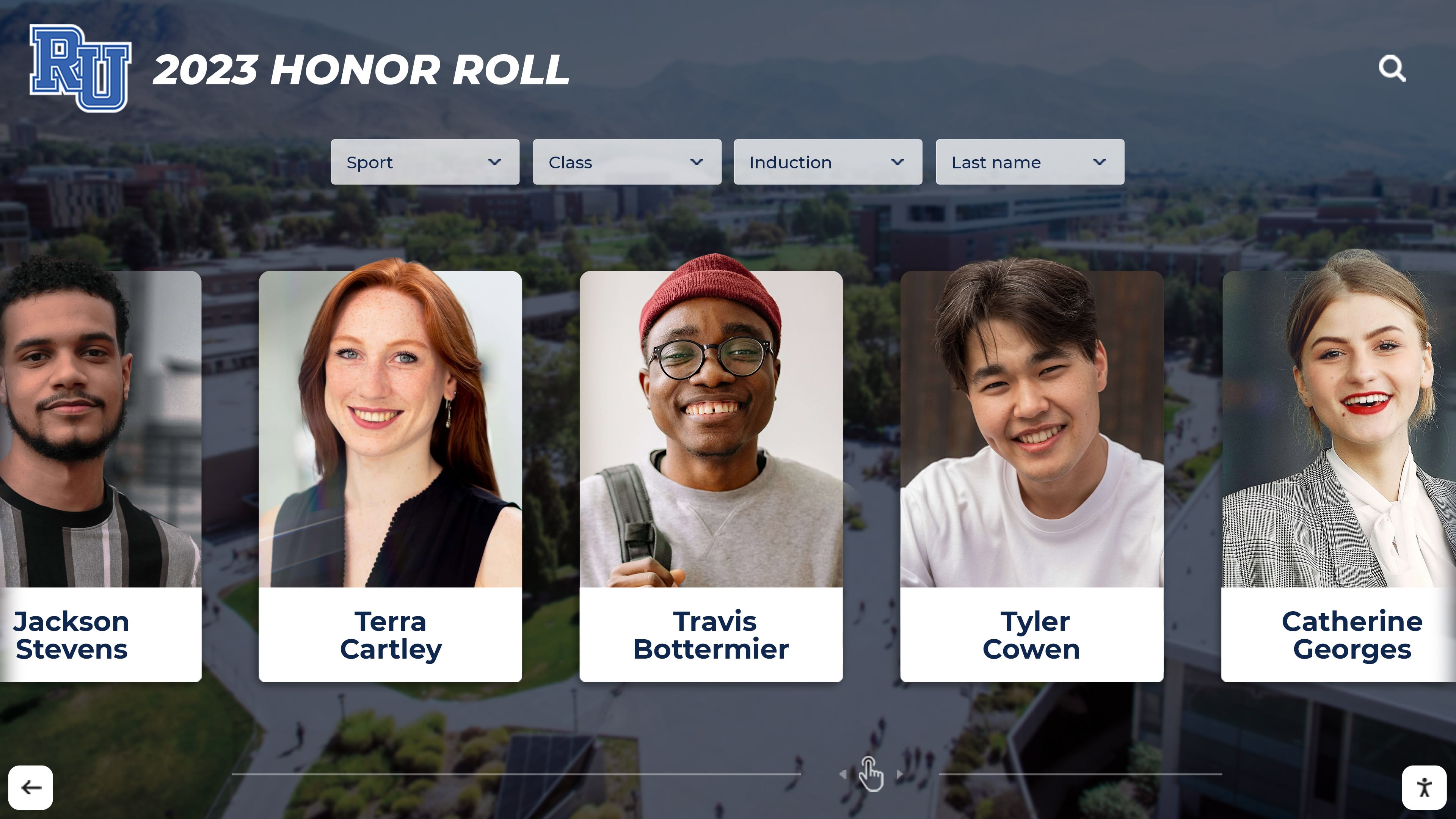
Memorial board creation requires particular sensitivity around design choices, information accuracy, and placement within venues. These displays need appropriate reverence without overwhelming reunion atmospheres intended primarily for celebration and reconnection. Striking this balance represents one of planning committees’ most challenging tasks, making thoughtful approach selection particularly important.
Documentation and Permanent Archival
High school reunion display boards create documentation preserving class history for future reference. Photographs of displays, digital copies of assembled content, and archived materials enable reunion committees to build upon previous efforts rather than starting from scratch for each subsequent gathering.
For schools maintaining alumni recognition programs year-round, reunion display content often feeds into permanent institutional recognition systems. Class composites, achievement updates, and biographical information collected for reunion purposes gain extended value when integrated into schools’ ongoing alumni engagement efforts.
Traditional Physical Display Board Formats
Despite digital alternatives, many reunion committees continue selecting traditional physical display formats for legitimate practical and aesthetic reasons. Understanding available options helps committees make informed choices appropriate for specific situations.
Poster Board and Foam Core Displays
The most accessible and budget-friendly approach involves creating displays using poster board, foam core board, or corrugated plastic sheets available at office supply stores. These materials accept various attachment methods including tape, pins, glue, and staples, enabling flexible design implementations without requiring specialized skills or equipment.
Typical Implementation Approach:
Planning committees acquire multiple 24x36 inch or larger display boards, organizing them by theme—one board for memories and photos, another for achievements and career updates, a third for memorial recognition, and additional boards for specific interest areas like athletics, performing arts, or military service if class size warrants specialized categories.
Committee members collect photographs by soliciting submissions through reunion websites, social media groups, or direct email requests to classmates. Historical photos sourced from yearbooks, personal collections, and school archives get scanned or reprinted at appropriate sizes. Modern photos documenting current lives typically come from social media profiles or direct submissions.
Photos get arranged on boards with handwritten or printed captions providing context—names, dates, occasions, and brief descriptions. Decorative elements like school colors, mascot images, class year graphics, and thematic embellishments create visual cohesion. Protective covering with clear contact paper or laminate sheets helps preserve boards if committees want to retain them after events.
Advantages of Poster Board Displays:
Low cost makes this approach accessible to committees with minimal budgets. Materials typically cost $50-$200 total depending on quantity and quality selections. No special skills or equipment requirements mean any volunteer can contribute. Tactile, handcrafted aesthetics appeal to some attendees who appreciate visible human effort. Easy transportation in personal vehicles simplifies logistics without requiring rental trucks or special handling.
Limitations to Consider:
Physical space constraints limit content capacity—each board accommodates perhaps 20-30 photographs maximum before becoming cluttered and difficult to view. Crowded venues with limited wall space may not provide adequate display areas. Physical materials deteriorate during multi-day events, particularly in high-humidity environments or outdoor venues where tape loosens and photos curl. No content updates are possible once boards are complete—if classmates submit additional photos after assembly or committees discover errors, corrections require partial reconstruction. Post-event storage proves challenging for committees hoping to preserve displays for future reference.
Banner and Vinyl Display Systems
Higher-budget committees sometimes invest in professional banner or vinyl displays offering superior durability and visual impact compared to homemade poster boards. Professional printing companies produce custom banners featuring high-resolution images, professionally typeset text, and branded elements creating polished presentations.
Professional Banner Benefits:
Weather resistance enables outdoor display without damage concerns. Large format options (3x6 feet or 4x8 feet) create impressive visual statements visible across large venues. Professional design quality elevates perceived event sophistication, signaling to attendees that committees invested significant effort. Reusability across multiple reunion events spreads costs over extended periods—a banner created for a 20th reunion can potentially be used again at the 25th with minor additions.
Professional printing services typically charge $100-$400 per banner depending on size, material quality, and design complexity. While substantially more expensive than DIY poster boards, the quality difference proves significant enough that many committees consider the investment worthwhile for milestone reunions like 25th, 40th, or 50th anniversaries.
Display Table and Memorabilia Presentations
Beyond wall-mounted boards, many committees create display tables featuring three-dimensional memorabilia that poster boards cannot accommodate. Yearbooks opened to significant pages, letterman jackets, prom dresses, spirit buttons, pom poms, trophies, and other artifacts create tactile experiences triggering powerful memory associations.
Display tables work particularly well in conjunction with wall-mounted boards, creating multi-sensory environments where attendees can view photographs on walls then examine related physical objects on tables below. The combination addresses different engagement preferences—some alumni prefer passive visual observation while others want opportunities to handle materials and examine details up close.
Memorabilia displays require careful curation and protective measures. Valuable or irreplaceable items need secure positioning preventing theft or accidental damage. Committee members should remain nearby to supervise, provide context, and answer questions. Insurance considerations may apply for especially valuable objects like championship rings or signed historical documents.
Modern Digital High School Reunion Display Solutions
Digital technology addresses virtually every limitation confronting traditional physical displays while maintaining nostalgic appeal and emotional impact reunion planners prioritize. Modern digital solutions range from simple slideshow presentations to sophisticated interactive touchscreen systems enabling comprehensive multimedia experiences.
Digital Slideshow Presentations
The most basic digital approach involves creating slideshow presentations displayed on large-screen televisions, projectors, or computer monitors positioned prominently within venues. Committees assemble photographs, design simple transition slides with captions, and set presentations to loop continuously throughout events.
Slideshow Implementation:
Free or low-cost software like Google Slides, Microsoft PowerPoint, or Apple Keynote enables straightforward slideshow creation. Committees collect digital photographs through email submissions or shared cloud folders, organize images thematically or chronologically, add captions providing context, and incorporate design elements reflecting school branding or reunion themes.
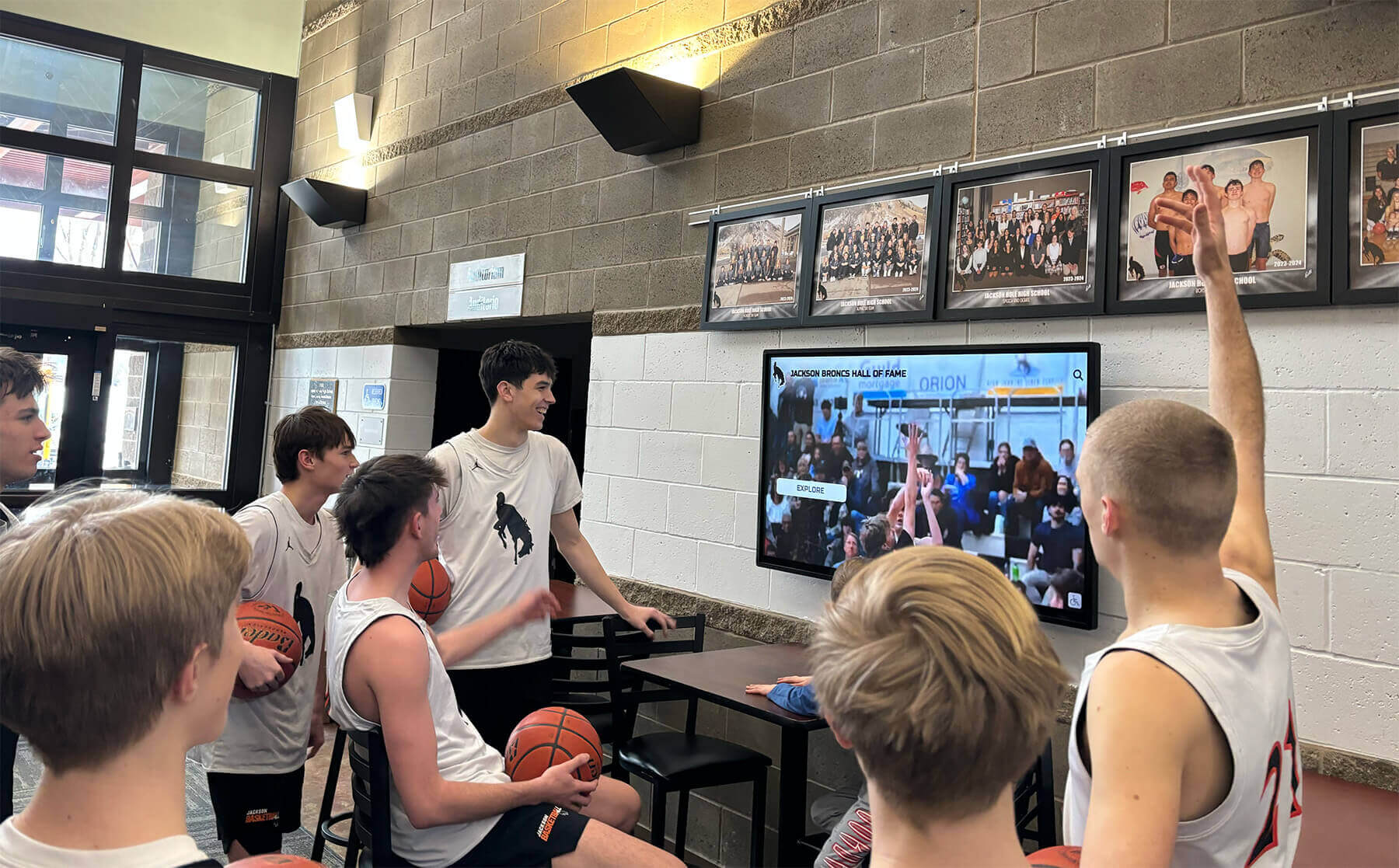
Hardware requirements prove minimal—any laptop computer can drive presentations, and venues often provide display screens or projectors as standard amenities. Committees without access to venue equipment can rent displays for $50-$150 per day from audiovisual companies. Internet connectivity enables live updates if classmates submit additional photos during events.
Slideshow Advantages and Limitations:
Digital slideshows accommodate virtually unlimited content without physical space constraints. Unlike poster boards holding 20-30 images, digital presentations can include hundreds of photographs cycling continuously. Committees can easily update content, correct errors, or incorporate late submissions simply by editing files and restarting presentations.
However, passive slideshow formats provide no interactivity—attendees cannot search for specific images, control presentation pacing, or access detailed information beyond brief captions. Large groups viewing simultaneously may miss particular slides if timing proves unfortunate. Screen visibility depends on viewing angles and lighting conditions that committees cannot always control in venue spaces.
Interactive Touchscreen Display Systems
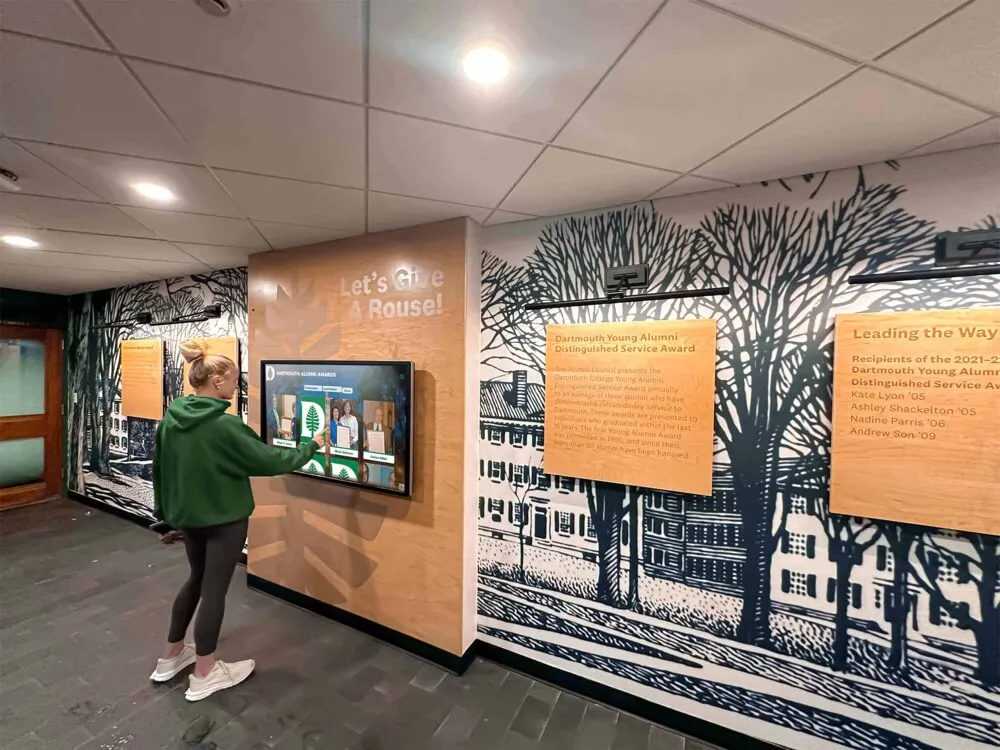
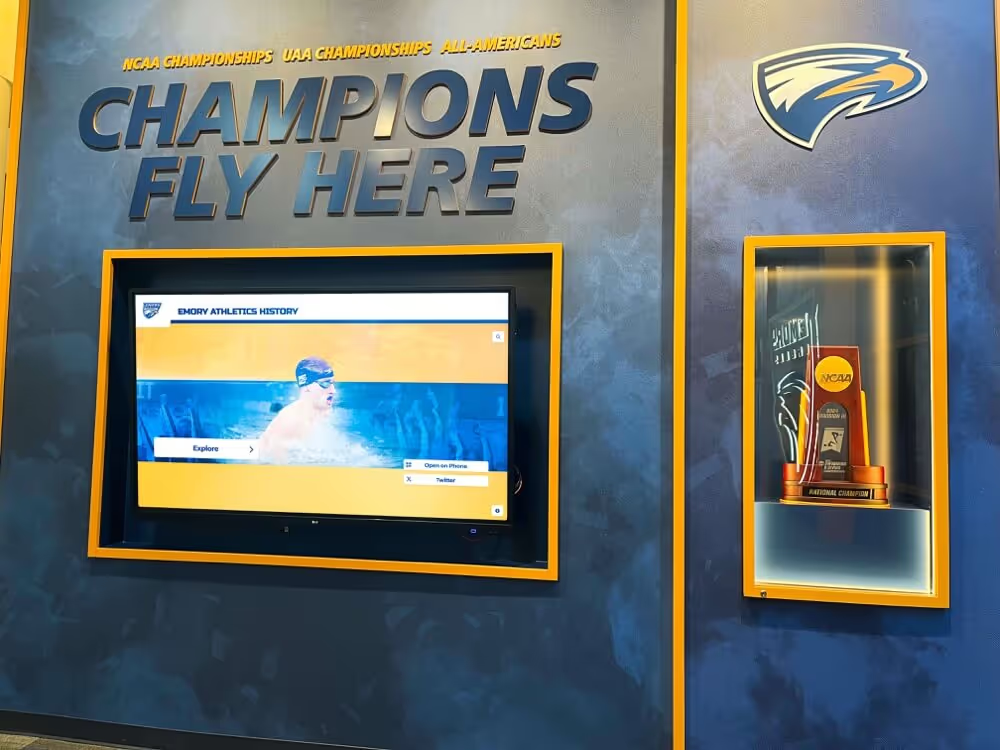
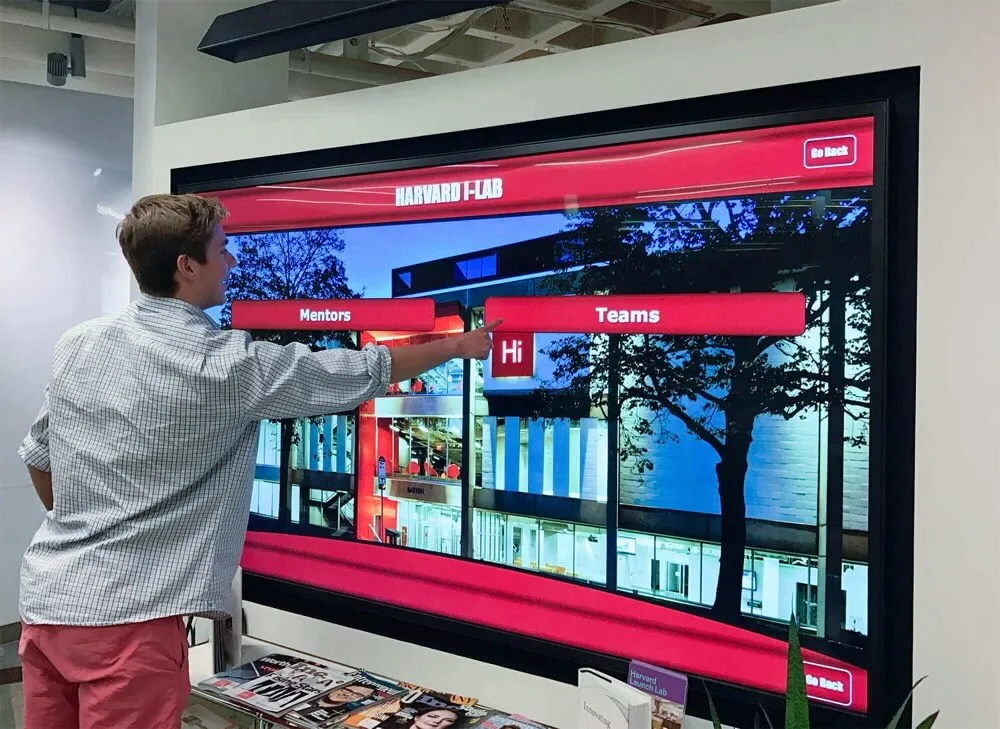
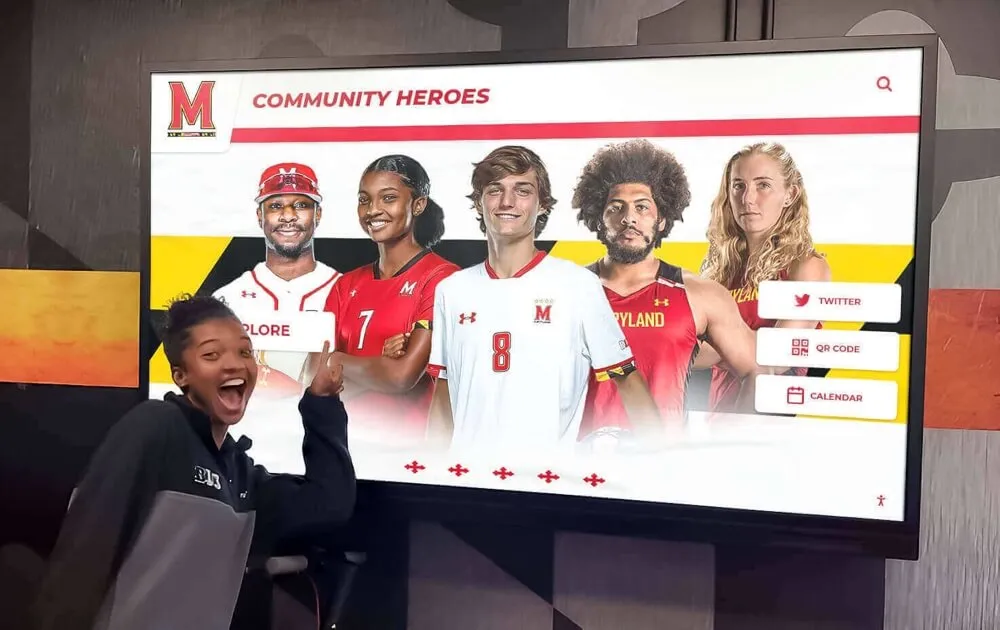
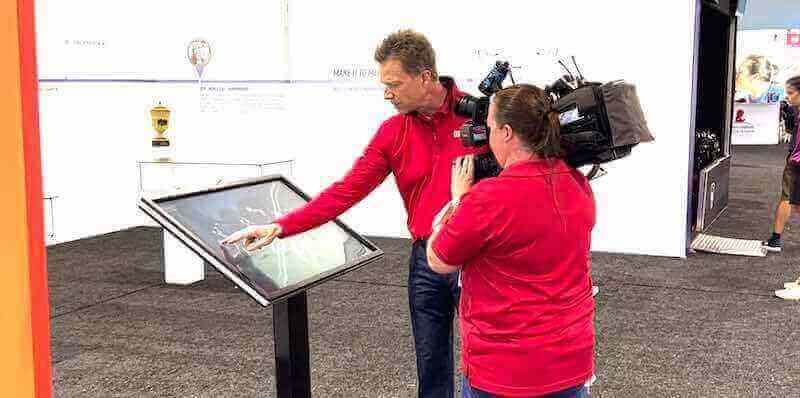
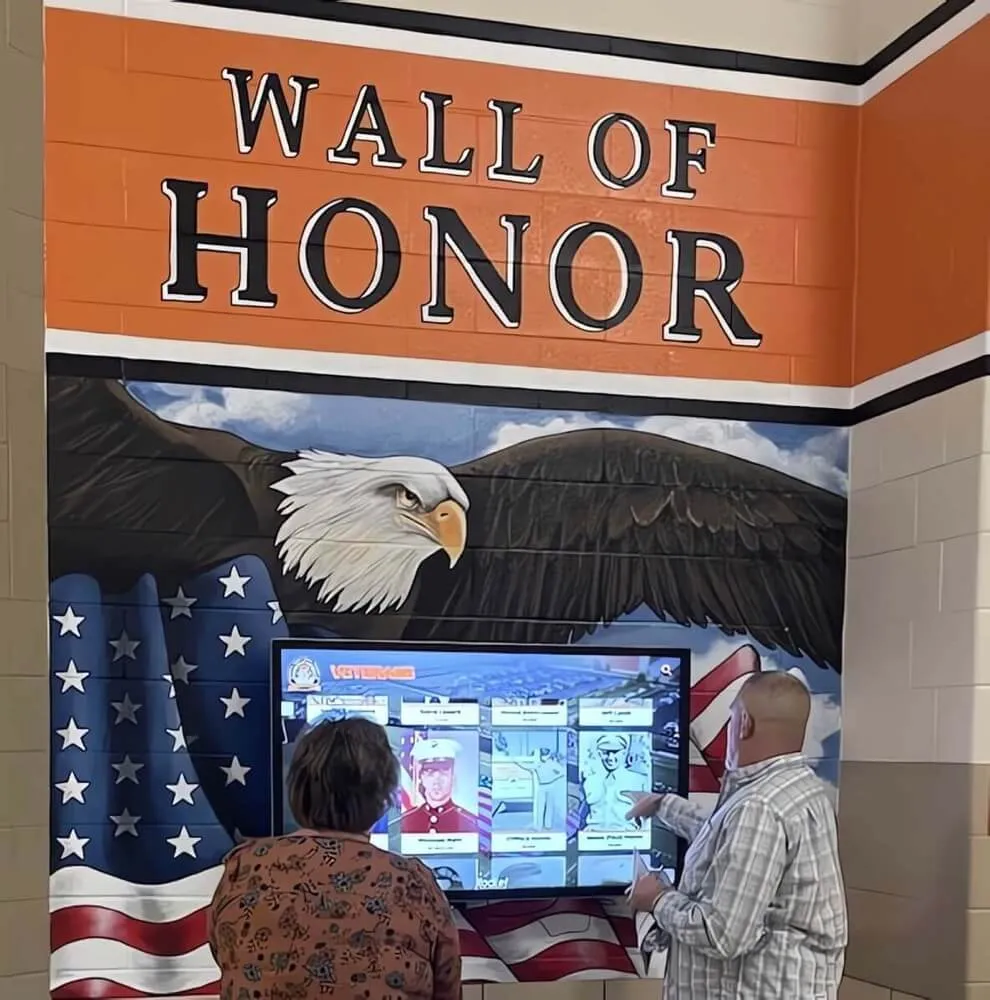
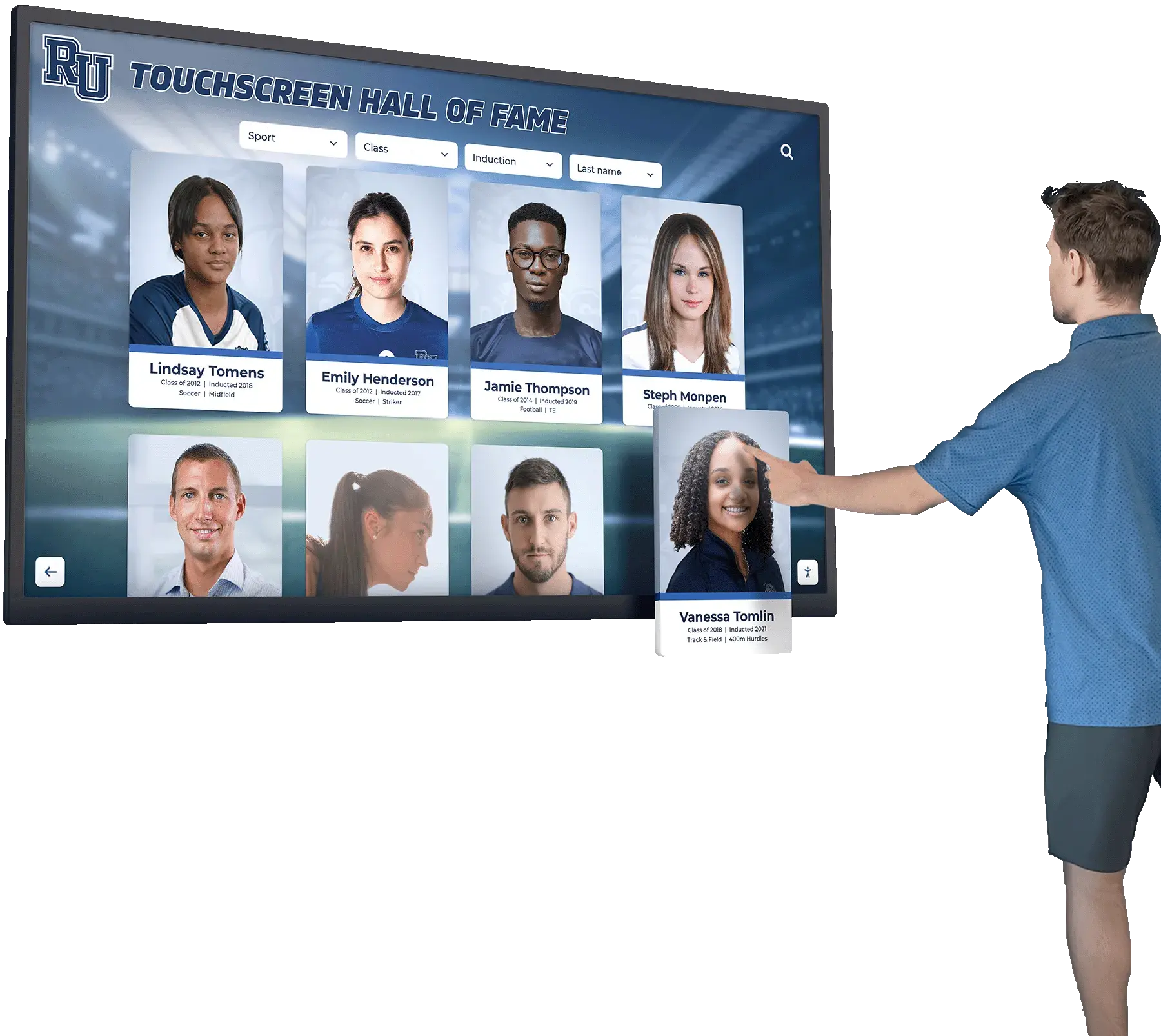
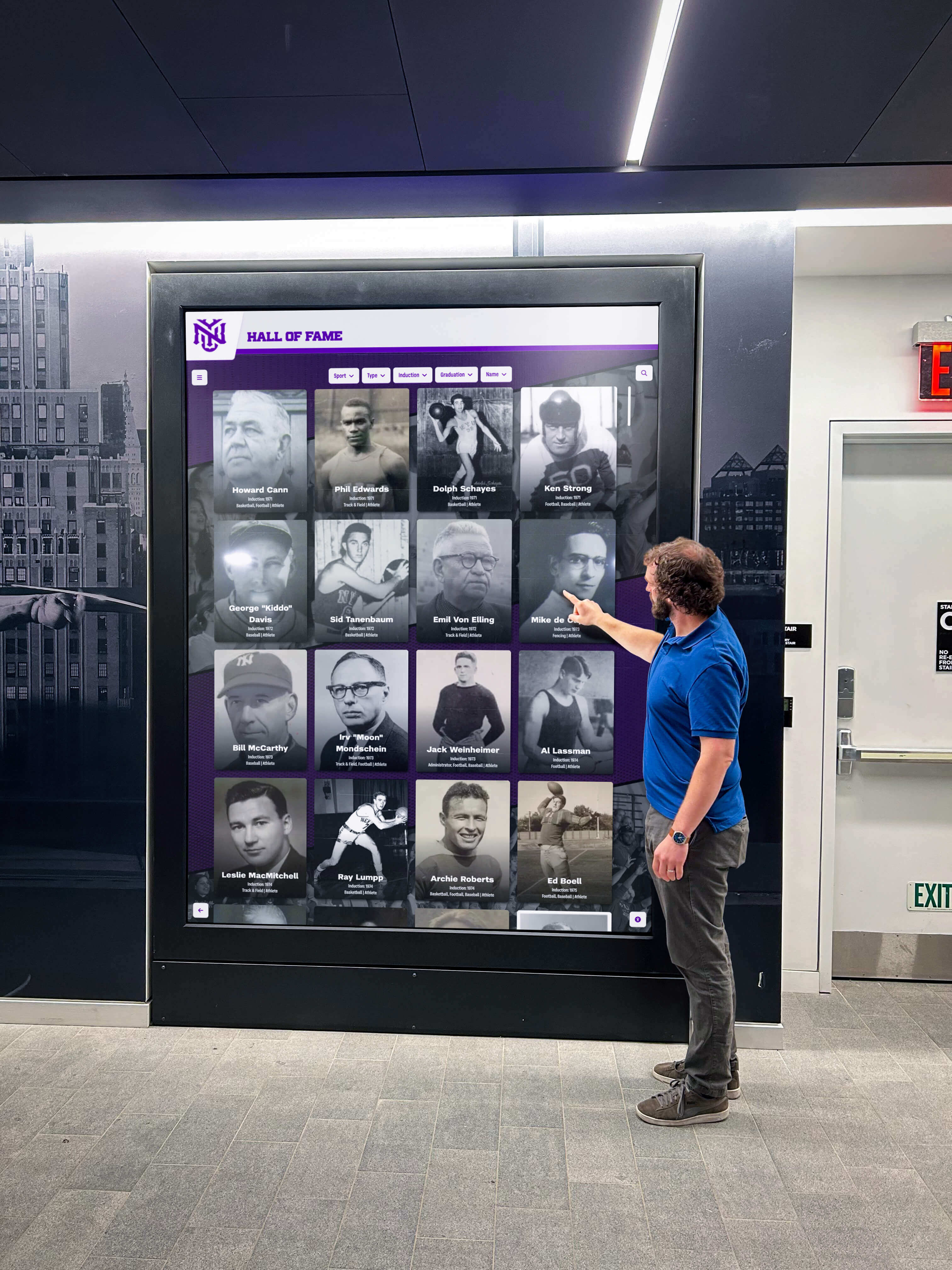
The most sophisticated approach involves installing commercial-grade interactive touchscreen displays running specialized reunion recognition software. These systems transform passive viewing into active exploration where attendees search databases, zoom into photographs, read extended biographical content, watch video clips, and navigate through comprehensive class histories at their own pacing.
Comprehensive Interactive System Components:
Commercial-Grade Touchscreen Hardware: Professional displays ranging from 43-inch portable units to 75-inch floor-standing kiosks provide reliable touch response, wide viewing angles, high brightness levels appropriate for varied lighting conditions, and anti-glare coatings ensuring visibility. Commercial displays designed for continuous operation withstand multi-day reunion events without overheating or experiencing performance degradation common in consumer televisions.
Cloud-Based Content Management Platforms: Purpose-built reunion recognition software provides intuitive interfaces where committees upload photographs, enter biographical information, create searchable databases enabling instant classmate location, organize content by achievement categories or chronological timelines, and maintain complete control over what information displays publicly.
Multi-Platform Accessibility: The most valuable digital systems extend beyond single physical displays at events. Web-based platforms enable remote access so classmates unable to attend physically can still explore reunion content from anywhere worldwide. Mobile-responsive interfaces work seamlessly on smartphones and tablets. Some solutions like those from Rocket Alumni Solutions provide integrated approaches combining in-person touchscreen displays with permanent online access ensuring ongoing engagement between reunion events.

Powerful Search and Discovery Features: Attendees can search by name finding specific classmates instantly, filter by achievement categories like career fields or geographic locations, browse chronologically through class timelines, and discover connections between classmates through shared activities or experiences. These capabilities prove impossible with static physical displays where finding specific content requires manually scanning entire boards.
Permanent Digital Recognition Displays
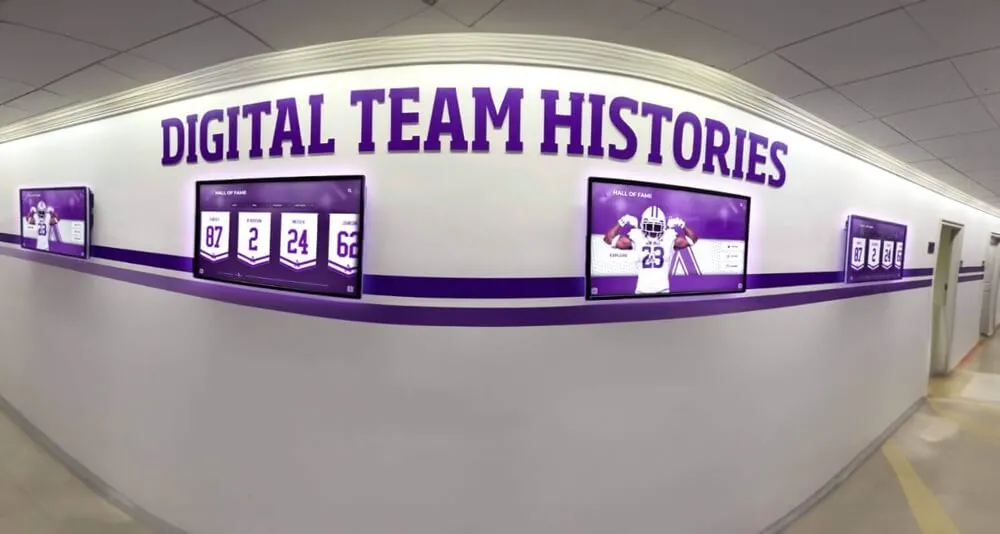
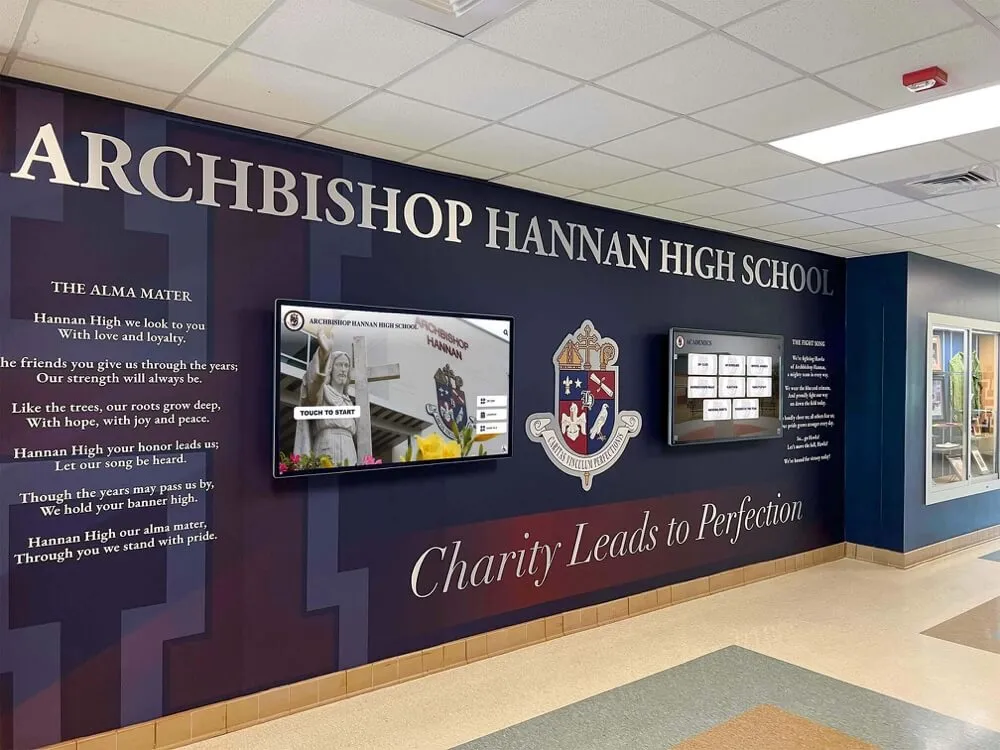
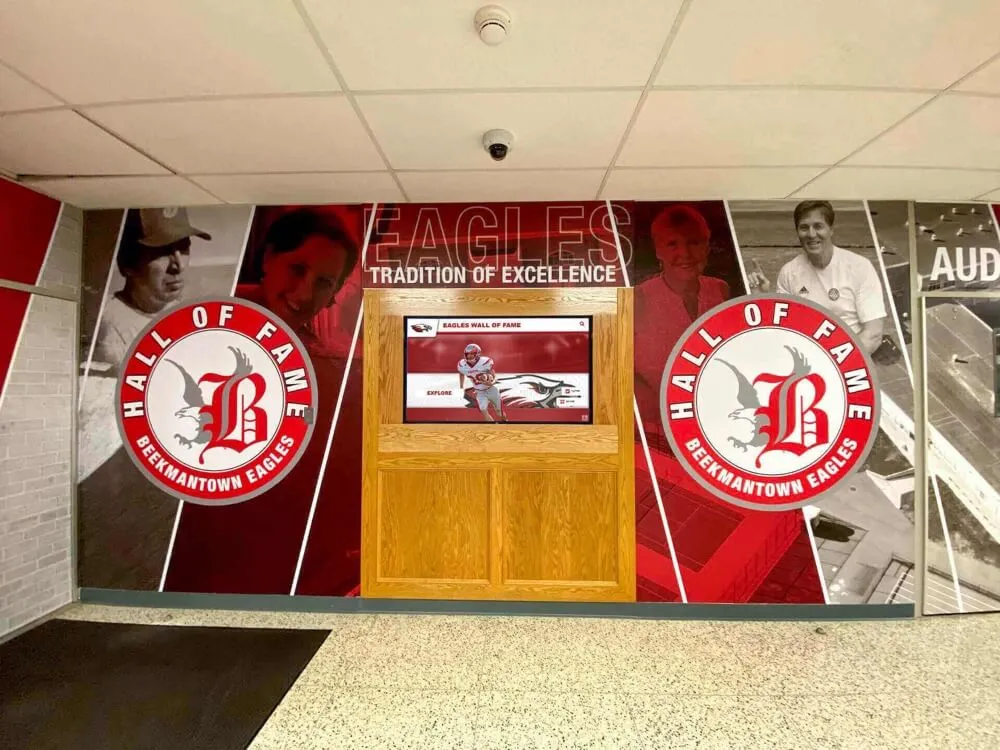
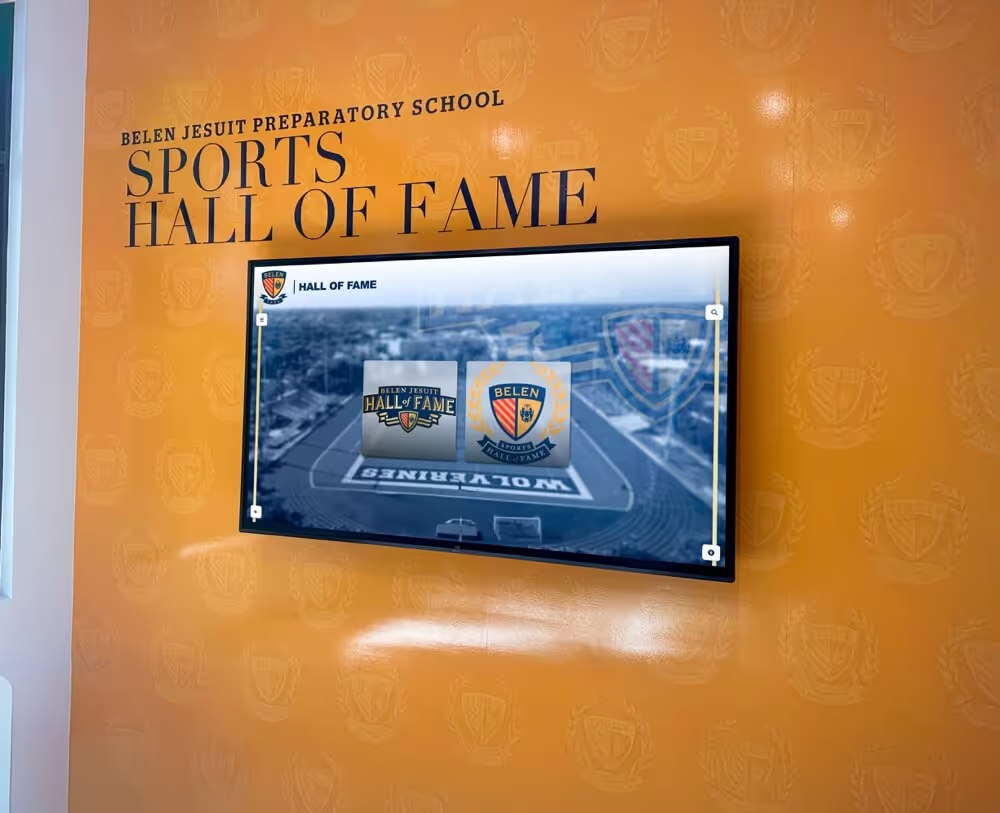
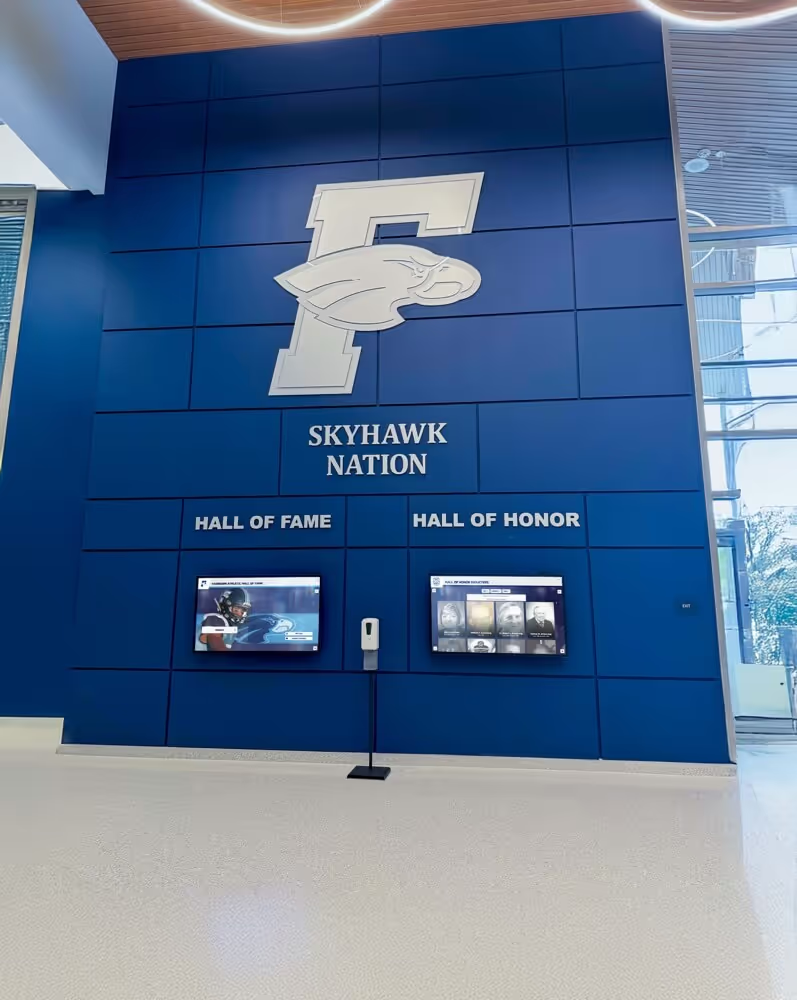
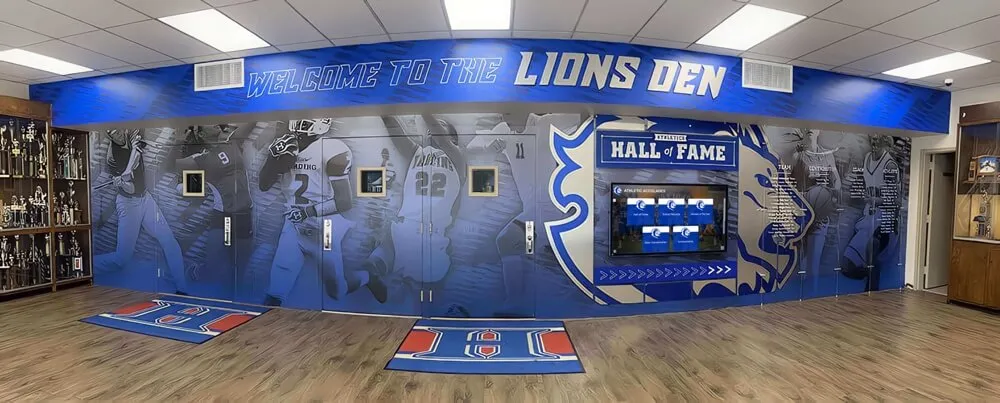
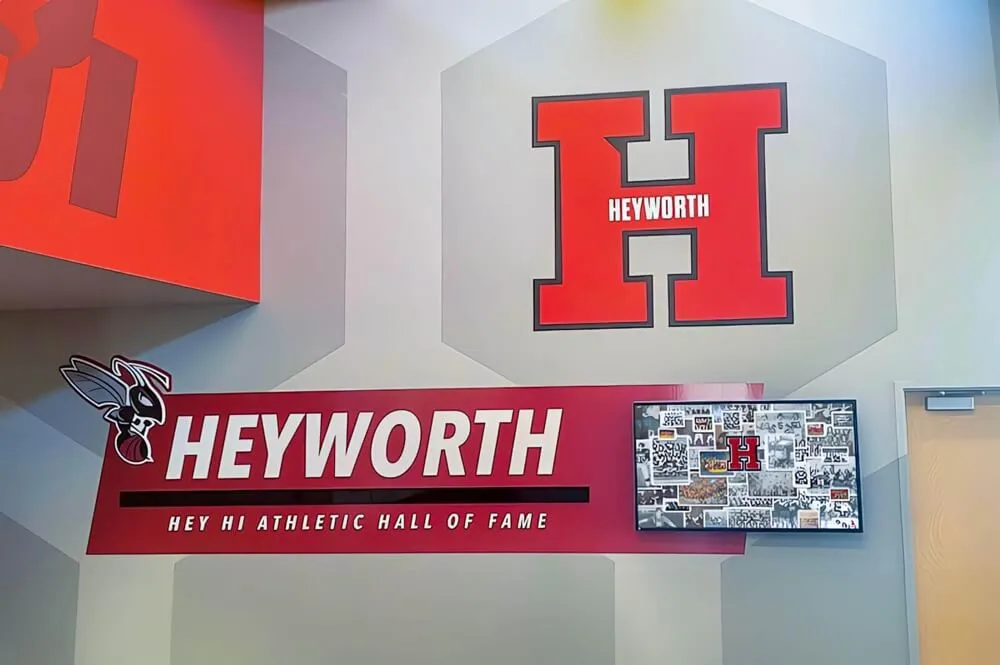
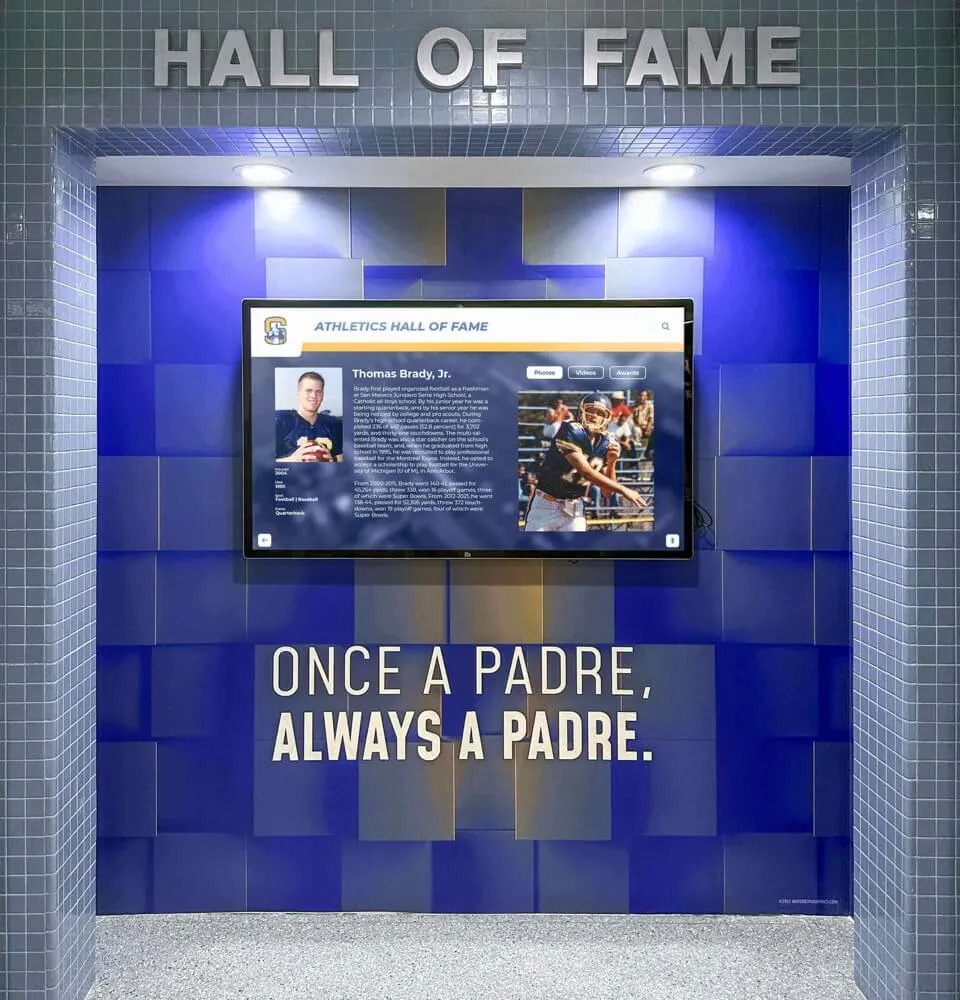
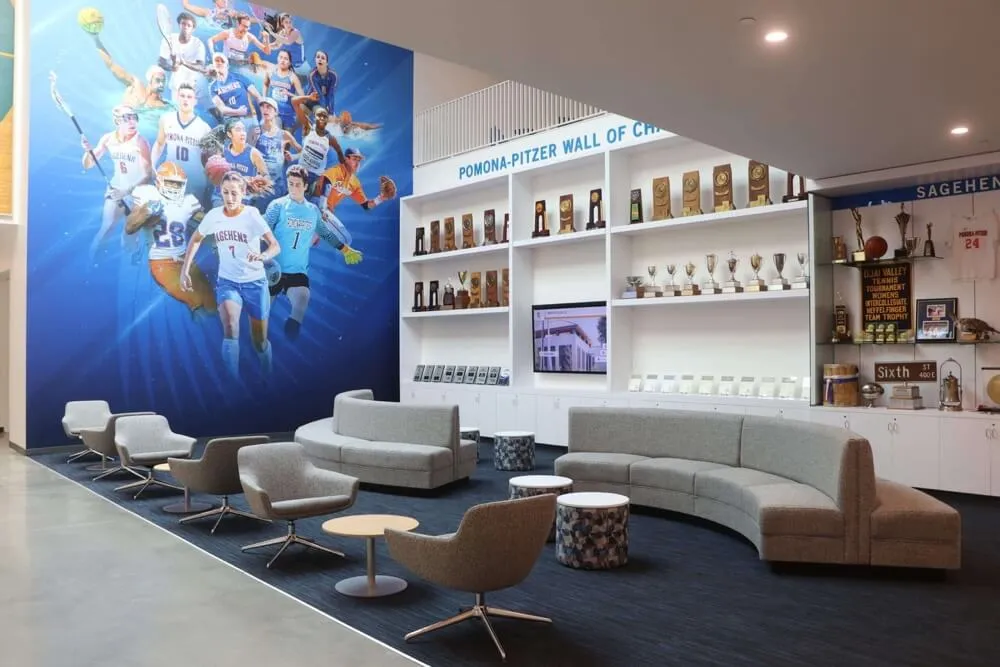
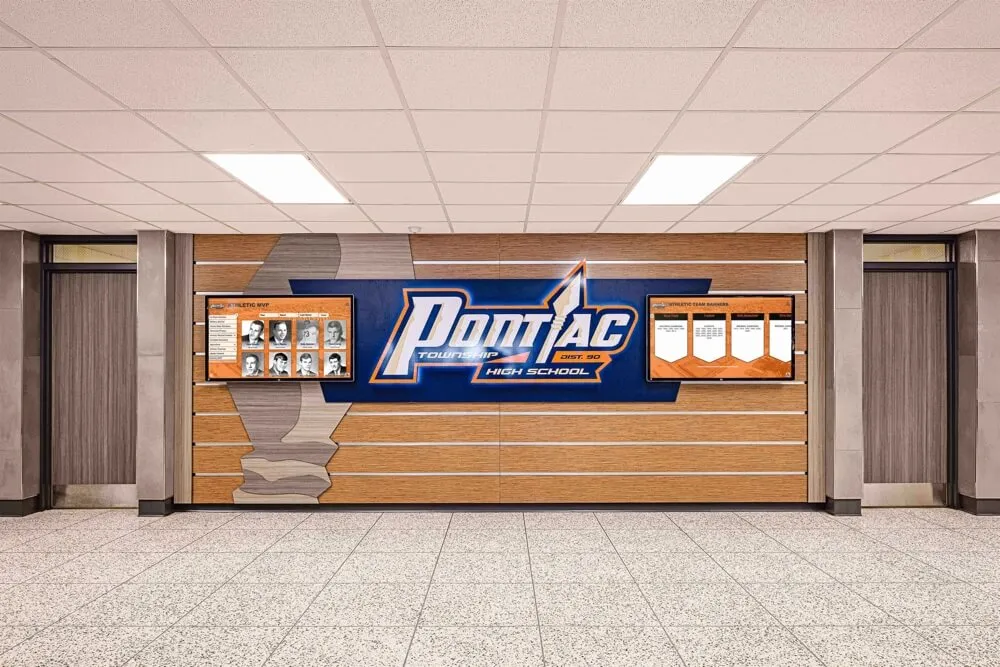
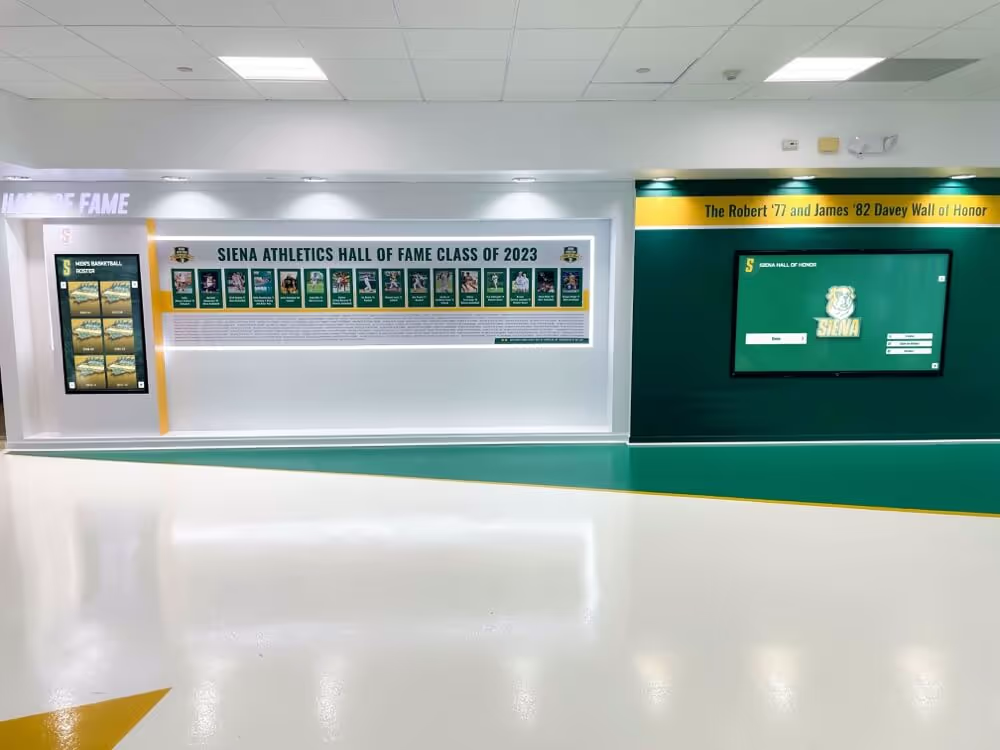
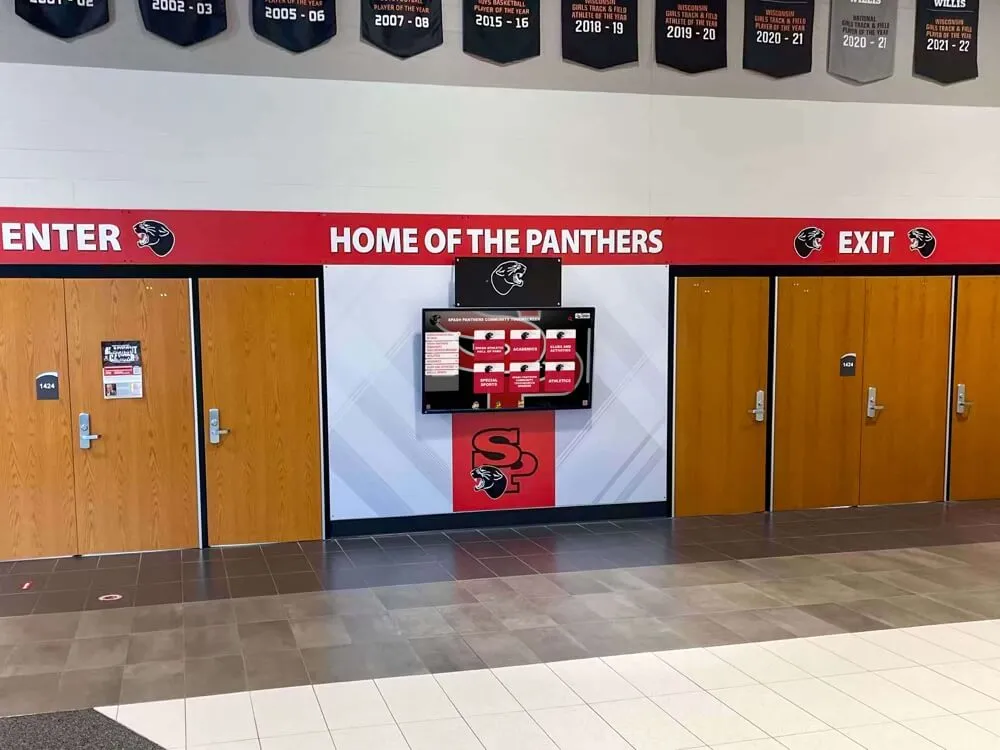
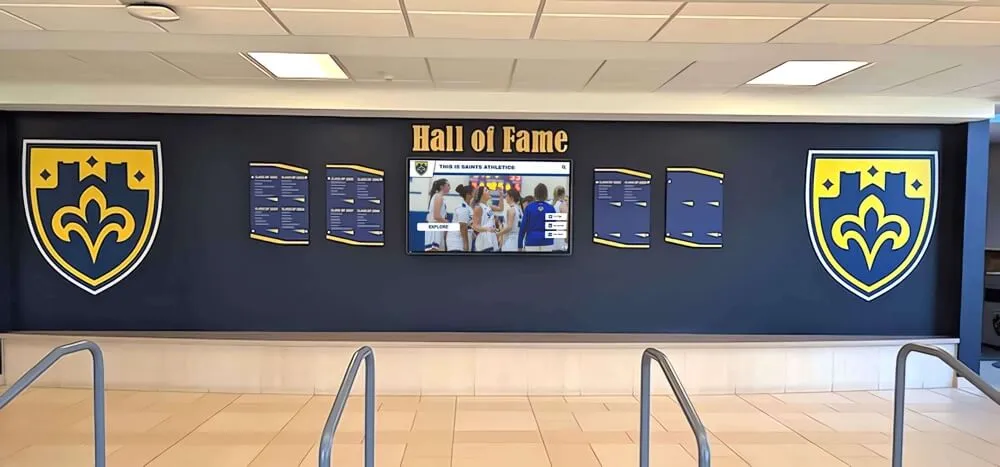
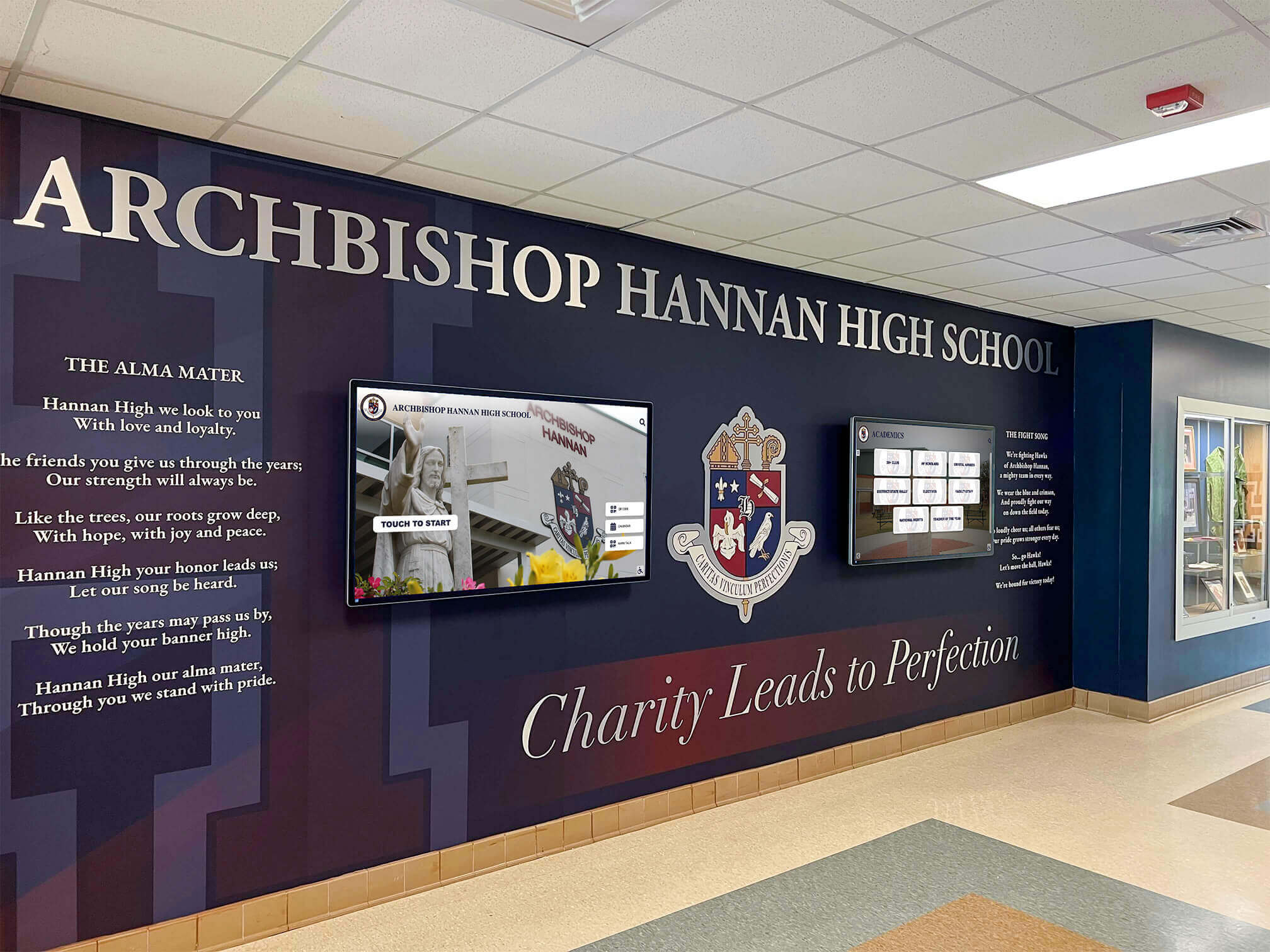
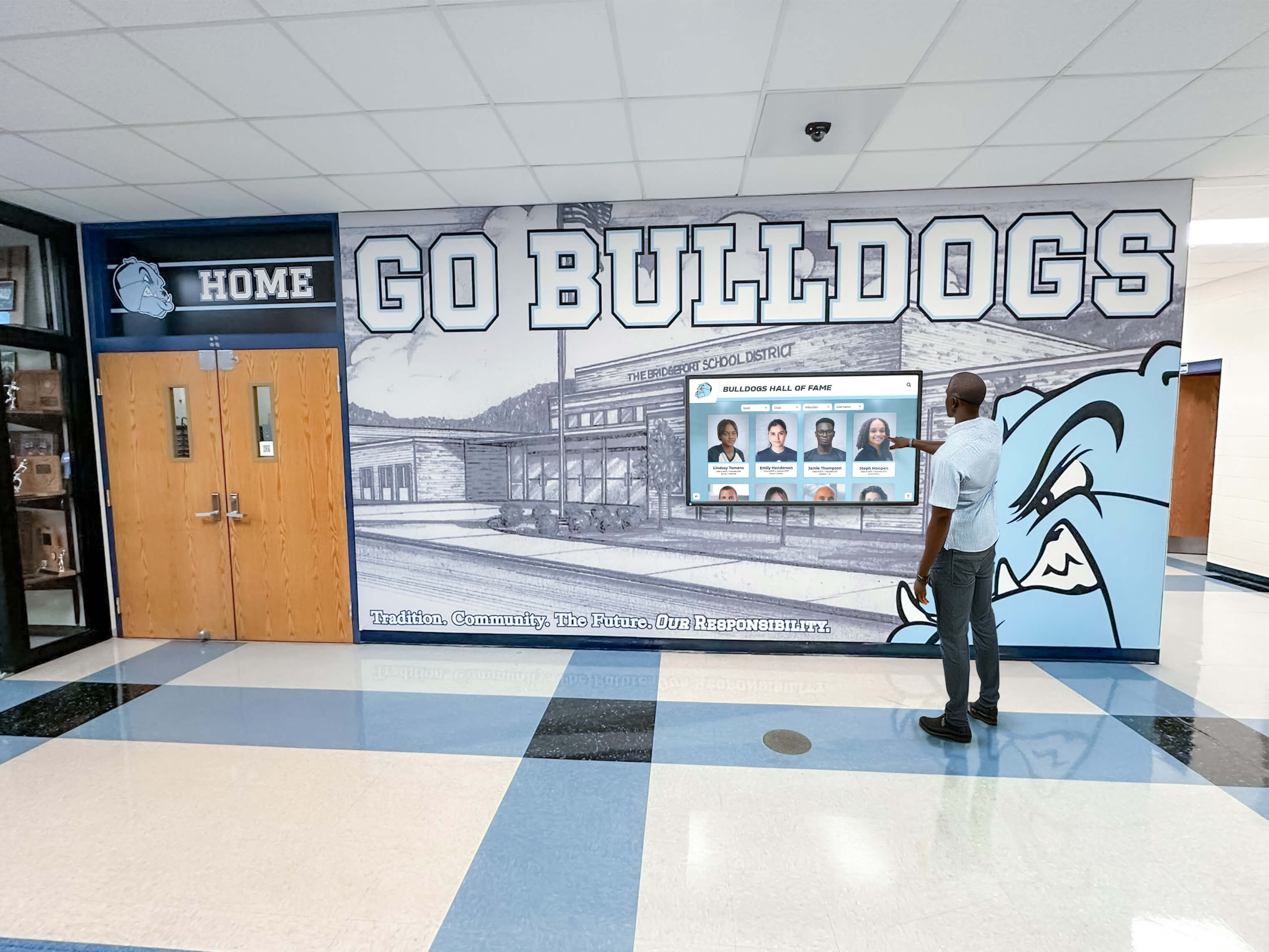
Some forward-thinking schools install permanent digital recognition displays in facilities, enabling reunion committees to leverage institutional infrastructure rather than creating temporary single-event solutions. Schools maintaining digital hall of fame displays often configure systems to highlight specific graduating classes during reunion weekends while providing year-round access to comprehensive alumni recognition content.
This approach creates powerful synergies between individual reunion events and broader institutional alumni engagement strategies. Content committees assemble for specific reunions feeds permanent school recognition systems, building comprehensive databases benefiting future reunion planning while supporting ongoing alumni relations efforts. Schools gain richer content, reunion committees benefit from professional infrastructure, and alumni enjoy lasting recognition extending far beyond single event weekends.
Content Ideas for Effective Reunion Display Boards
Regardless of format selection, compelling content creates meaningful experiences that fulfill reunion display boards’ multiple purposes. Planning committees should develop comprehensive content strategies addressing diverse recognition categories and attendee interests.
Memory Lane: Shared Experiences and School History
The heart of most reunion displays involves celebrating shared memories connecting all classmates regardless of subsequent life paths or achievement levels. This egalitarian recognition ensures every attendee feels included and valued.
Effective Memory Content Categories:
Iconic School Moments: Photographs from significant school events including prom, homecoming, athletic championships, theater productions, band concerts, graduation ceremonies, and spirit weeks. These universal experiences provide common ground all classmates can relate to regardless of individual participation in specific activities.
Classroom and Academic Life: Photos from typical school days showing classrooms, cafeterias, libraries, hallways, and study areas. Candid shots capturing everyday experiences often trigger stronger nostalgia than formal posed photographs from special occasions.
Friendship Groups and Social Life: Pictures documenting various friend groups and social circles acknowledging class social diversity. Include photographs from multiple sources ensuring comprehensive representation rather than focusing exclusively on any particular social subset.
School Traditions and Culture: Documentation of unique school traditions, inside jokes, beloved teachers, memorable events, or quirky customs that only classmates who attended during specific years would understand. These insider references create strong connection through shared cultural knowledge.
Then and Now Comparisons: Side-by-side photographs showing classmates during school years and currently. These comparisons celebrate life evolution while maintaining connection to shared past. They work particularly well in digital formats where viewers can toggle between timeframes interactively.
Career Achievements and Professional Recognition
Celebrating classmates’ professional accomplishments demonstrates class quality while providing inspiration without creating uncomfortable competition. Strategic presentation approaches emphasize diverse achievement types rather than suggesting hierarchical value judgments.
Professional Recognition Content:
Career Field Diversity: Organize recognition by career categories including education, healthcare, business, technology, public service, military, trades, arts and entertainment, nonprofit work, and entrepreneurship. This categorical approach ensures all fields receive equal prominence rather than privileging traditionally high-status professions.
Notable Professional Accomplishments: Highlight classmates who’ve achieved distinction in their fields—published authors, patent holders, award recipients, business founders, community leaders, elected officials, or individuals recognized by professional associations. Request brief biographical summaries rather than lengthy resumes to maintain accessibility.
Post-Graduation Educational Achievements: Recognize advanced degrees, certifications, and continued learning accomplishments including bachelor’s, master’s, and doctoral degrees from various institutions, professional certifications and specialized training, and any educational achievements demonstrating commitment to lifelong learning.
Community Service and Volunteerism: Celebrate classmates who’ve contributed meaningfully through volunteer work, nonprofit leadership, community organizing, coaching youth sports, mentoring programs, or other service activities. These contributions often receive less public recognition than professional achievements despite creating substantial community impact.
For schools implementing comprehensive academic recognition programs year-round, reunion professional achievement content can feed into permanent institutional recognition systems creating lasting value beyond single events.
Personal Milestones and Family Updates
Beyond professional accomplishments, personal life updates help classmates reconnect on human levels. Family information, hobbies, interests, and life circumstances provide conversation starting points facilitating authentic interpersonal connection.
Personal Update Content Ideas:
Family Information: Children and grandchildren numbers and ages, marriage anniversaries and significant relationships, and geographic location updates showing where classmates now live. This information helps identify shared circumstances like simultaneously navigating parenthood, experiencing empty-nest transitions, or becoming grandparents.
Hobby and Interest Updates: Current passions and interests including athletic pursuits, creative activities, travel experiences, collecting hobbies, or volunteer commitments. Discovering shared interests provides natural foundations for renewed friendships extending beyond reunion weekends.
Life Journey Highlights: Significant personal milestones like overcoming health challenges, completing major goals (running marathons, writing books, learning new skills), significant life transitions, or personal transformations. These narratives humanize classmates beyond professional identities while inspiring others facing similar challenges.
Memorial Tributes for Deceased Classmates
Honoring deceased classmates requires particular thoughtfulness balancing appropriate reverence with overall reunion celebration atmospheres. Planning committees should consider multiple factors when designing memorial recognition.
Memorial Content Considerations:
Dignified Visual Presentation: Memorial sections should be visually distinct from celebratory content, often using subdued color schemes, respectful typography, and solemn design elements. Physical displays might use silk flowers, candles, or other traditional memorial symbols. Digital displays can incorporate elegant transitions, subtle background music, or formal presentation styles.
Comprehensive and Accurate Information: Include full names (including maiden names for women), birth and death dates, brief biographical information highlighting significant life achievements and contributions, and photographs showing individuals during school years and, when available, later in life. Accuracy proves critically important—verify all information through multiple sources before inclusion.
Family Sensitivity: Some families prefer privacy around deaths involving tragic circumstances, suicide, or other sensitive situations. Planning committees should contact families when possible, seeking permission before including deceased classmates in public displays and asking if families want to provide specific information, photos, or remembrances.
Appropriate Placement: Position memorial displays where attendees can pay respects without feeling obligated to dwell exclusively on losses during events intended primarily for celebration. Some committees create dedicated memorial areas slightly separated from main display sections. Others integrate memorial content within comprehensive displays but use clear visual differentiation.
Ceremony Integration: Consider brief formal memorial moments during reunion programming—perhaps a moment of silence, reading of names, or candle-lighting ceremony providing structured collective remembrance complementing display content.
Step-by-Step Planning Process for Reunion Display Boards
Successful display board implementation requires systematic planning processes ensuring comprehensive coverage, quality execution, and timely completion before reunion events. Following structured approaches prevents last-minute stress while producing professional results.
Forming Display Board Committees
Designate specific volunteers responsible for display board creation, establishing clear role definitions preventing duplicated effort or overlooked responsibilities. Typical committee structure includes:
Committee Chair: Provides overall coordination, makes final decisions on contested issues, ensures deadlines get met, and serves as primary liaison with broader reunion planning leadership.
Content Collection Coordinator: Manages photograph and information gathering through multiple channels including email solicitations, social media requests, direct outreach to specific classmates, and coordination with school archives or libraries for historical materials.
Design and Layout Lead: Develops overall aesthetic direction, creates templates ensuring visual consistency, makes design software selections for digital projects, and oversees actual assembly or software configuration.
Technical Coordinator (for digital projects): Handles hardware setup, software configuration, troubleshooting technical issues, coordinating with venue technology infrastructure, and ensuring reliable operation throughout events.
Memorial Content Specialist: Takes responsibility for sensitive memorial recognition including family outreach, information verification, appropriate design implementation, and potentially coordinating memorial ceremony elements.
Establishing Content Collection Strategies and Timelines
Begin content gathering early—ideally 6-12 months before reunion events for major milestone reunions or 3-6 months for smaller gatherings. Early starts accommodate multiple content rounds addressing low initial response rates.
Effective Collection Approaches:
Multi-Channel Solicitation: Send requests through multiple communication channels simultaneously including dedicated reunion websites with upload portals, private Facebook groups where classmates can share content directly, email campaigns with clear submission instructions, and personal outreach to classmates who committees know possess valuable photos or information.
Specific Content Requests: Rather than generic “send us photos” requests that generate low responses, create specific categories requesting particular content types. Ask separately for school event photos, candid classroom shots, athletic competition images, performing arts productions, current family photos, and professional headshots. Specific requests generate more targeted, useful submissions.
Graduated Deadlines: Establish multiple submission deadlines rather than single final dates. Initial deadlines might be 90 days before events for content appearing in printed materials or promotional campaigns. Secondary deadlines 30 days out accommodate additional submissions. Digital display formats enable last-minute additions even during events themselves if committees maintain flexibility.
Proactive Targeted Outreach: When broad solicitations produce insufficient content in particular categories, identify specific individuals likely to possess needed materials and contact them directly. Former yearbook staff, team photographers, drama club members, and school newspaper contributors often maintain extensive photo collections they’re willing to share when asked personally.
Quality Standards and Content Curation
Not all submitted content merits inclusion. Establishing clear quality standards and implementing review processes ensures professional presentation quality while respecting contributors’ efforts.
Quality Evaluation Criteria:
Photo Resolution and Clarity: Digital photos should be high enough resolution for intended display sizes—generally minimum 1920x1080 pixels for screen display or 300 DPI for printing. Reject blurry, poorly exposed, or excessively low-resolution images where subjects can’t be identified clearly.
Subject Recognition and Relevance: Photos should include identifiable classmates or document clearly relevant school experiences. Generic crowd shots where no one can be identified, photos from events unrelated to the specific class, or images where relevance isn’t clear typically add little value.
Appropriate Content: Screen submissions for potentially offensive material, unflattering candid shots that could embarrass individuals, or photographs from situations some classmates might prefer remain private (wild parties, inappropriate behavior, or similar situations). When uncertain, consult with other committee members or broader reunion leadership.
Complete Information: Ensure submitted photos include necessary context—who appears in images, when and where photos were taken, what events are documented, and any other relevant background. Photos without adequate information prove frustrating for viewers who can’t identify subjects or understand contexts.
Diverse Representation: Curate content ensuring broad class representation rather than inadvertently featuring only particular social groups or subsets. Intentionally seek content showing diverse classmates, various activities and interests, and comprehensive rather than narrow perspectives on shared experiences.
Technical Setup and Installation for Physical Displays
For committees selecting traditional physical display formats, systematic assembly and installation processes ensure professional results and prevent venue damage or display failures during events.
Physical Display Assembly Best Practices:
Layout Planning: Before attaching anything permanently, arrange all content on boards experimenting with different configurations. Take photographs of preferred arrangements before disassembly so volunteers can replicate layouts during final assembly. This trial-and-error approach prevents waste from incorrect permanent attachments.
Secure Attachment Methods: Use appropriate adhesives for materials involved. Photo mounting tape provides strong bonds without damaging photos. Spray adhesives work well for large-area attachments but require ventilation and protective covering of work areas. Lamination protects finished boards while making content more secure.
Transportation Protection: Transport assembled boards flat in vehicles, protecting surfaces with moving blankets or cardboard separators. Larger boards may require truck rentals or SUVs with folded seats creating adequate space. Assign specific volunteers to transport and setup responsibilities ensuring accountability.
Venue Installation: Scout venues in advance, identifying optimal display locations with adequate lighting, appropriate viewing angles, and available mounting options. Bring various mounting supplies including painter’s tape for painted walls, pins for acoustic panels or similar surfaces, easels if freestanding displays are needed, and table coverings if using display tables. Verify venue rules about wall mounting and damage prevention requirements.
Digital System Configuration and Testing
Digital display implementation requires additional technical considerations ensuring reliable operation throughout multi-day reunion events.
Digital Display Technical Setup:
Hardware Selection and Rental: For committees not investing in permanent equipment, audiovisual rental companies provide commercial-grade displays with delivery, setup, and breakdown services. Rental costs typically run $200-$500 per day depending on screen sizes and service levels. Alternatively, some schools may loan equipment from athletic facilities, performing arts departments, or IT infrastructure.
Software Platform Selection: Choose between simple slideshow software requiring no internet connectivity, cloud-based platforms enabling real-time updates but dependent on venue WiFi, or specialized reunion recognition software providing sophisticated features but requiring subscription costs or one-time licensing fees. Solutions like those provided by Rocket Alumni Solutions offer purpose-built platforms specifically designed for alumni recognition scenarios including reunion events.
Content Loading and Organization: Upload all photos, enter biographical information, create searchable databases or organized categories, and test navigation ensuring intuitive user experiences. Conduct thorough reviews checking for spelling errors, incorrect information, missing content, or technical malfunctions before events begin.
Backup and Contingency Planning: Maintain complete content backups on multiple devices or cloud storage preventing data loss if primary systems fail. Bring backup hardware like spare laptops, extra HDMI cables, power strips, and extension cords addressing common technical issues. Identify venue staff or committee members capable of basic troubleshooting during events.
Interactive Testing: If implementing touchscreen displays, test touch responsiveness across entire screen surfaces, practice common user interactions like searching and zooming, verify all links and navigation elements function correctly, and ensure satisfactory performance under various lighting conditions present at venues.
Budget Considerations and Cost Management
Reunion display boards accommodate virtually any budget level from essentially free DIY approaches to sophisticated digital systems costing thousands of dollars. Understanding cost structures across different approaches helps committees make informed decisions balancing financial constraints with desired impact levels.
DIY Physical Display Budget Breakdown
Committees creating traditional poster board displays from scratch can implement professional-looking results for $75-$250 total investment:
- Poster board or foam core (8-12 sheets): $40-$80
- Professional photo printing (50-100 4x6 or 5x7 prints): $15-$40
- Mounting supplies (tape, adhesive, pins): $10-$25
- Decorative elements (borders, letters, embellishments): $10-$30
- Protective lamination or covering: $20-$40
- Transportation and installation supplies: $10-$35
Time investment typically requires 15-25 hours total spread across multiple volunteers including content collection, layout planning, assembly, and installation. Assign monetary value to volunteer time differently depending on committee priorities and availability.
Professional Physical Display Budget
Committees investing in professional banner printing or custom display production should budget $300-$800 per major display element:
- Professional banner printing (3x6 feet): $100-$250 each
- Custom vinyl or fabric displays: $150-$400 each
- Professional design services: $200-$500 for complete project
- Shipping and handling: $30-$75
- Display stands or mounting systems: $50-$150
Professional quality proves particularly appropriate for milestone reunions like 25th, 40th, or 50th anniversaries where attendees expect elevated presentation standards reflecting event significance.
Digital Slideshow Budget
Simple digital slideshow presentations offer excellent cost-effectiveness:
- Laptop or computer (if not already available): $300-$800 one-time
- Display screen rental: $50-$150 per day, or free if venue-provided
- Presentation software: $0-$120 (free options available, premium software optional)
- HDMI cables and connectors: $15-$35
- Backup storage drives: $20-$40
Total costs typically range from $85-$350 if committees need to rent displays but own laptops, or $385-$1,150 if acquiring all equipment new. These investments serve multiple reunion cycles amortizing costs across years.
Interactive Touchscreen System Budget
Sophisticated touchscreen display solutions involve higher upfront costs but provide dramatically superior capabilities:
Rental Approach (appropriate for single-event use): $500-$1,500 total including commercial-grade 55-inch touchscreen rental for weekend events, software licensing or temporary subscriptions, delivery, setup, and breakdown services, and technical support throughout events. This approach works well for committees wanting premium experiences without long-term financial commitments.
Purchase Approach (appropriate for ongoing use or school-supported implementation): $3,500-$8,500 initially including commercial-grade touchscreen hardware with minimum 50,000-hour lifespans, specialized recognition software licensing, professional content management systems, and installation services. Schools supporting purchases often maintain displays for permanent year-round alumni recognition, enabling reunion committees to leverage institutional infrastructure.
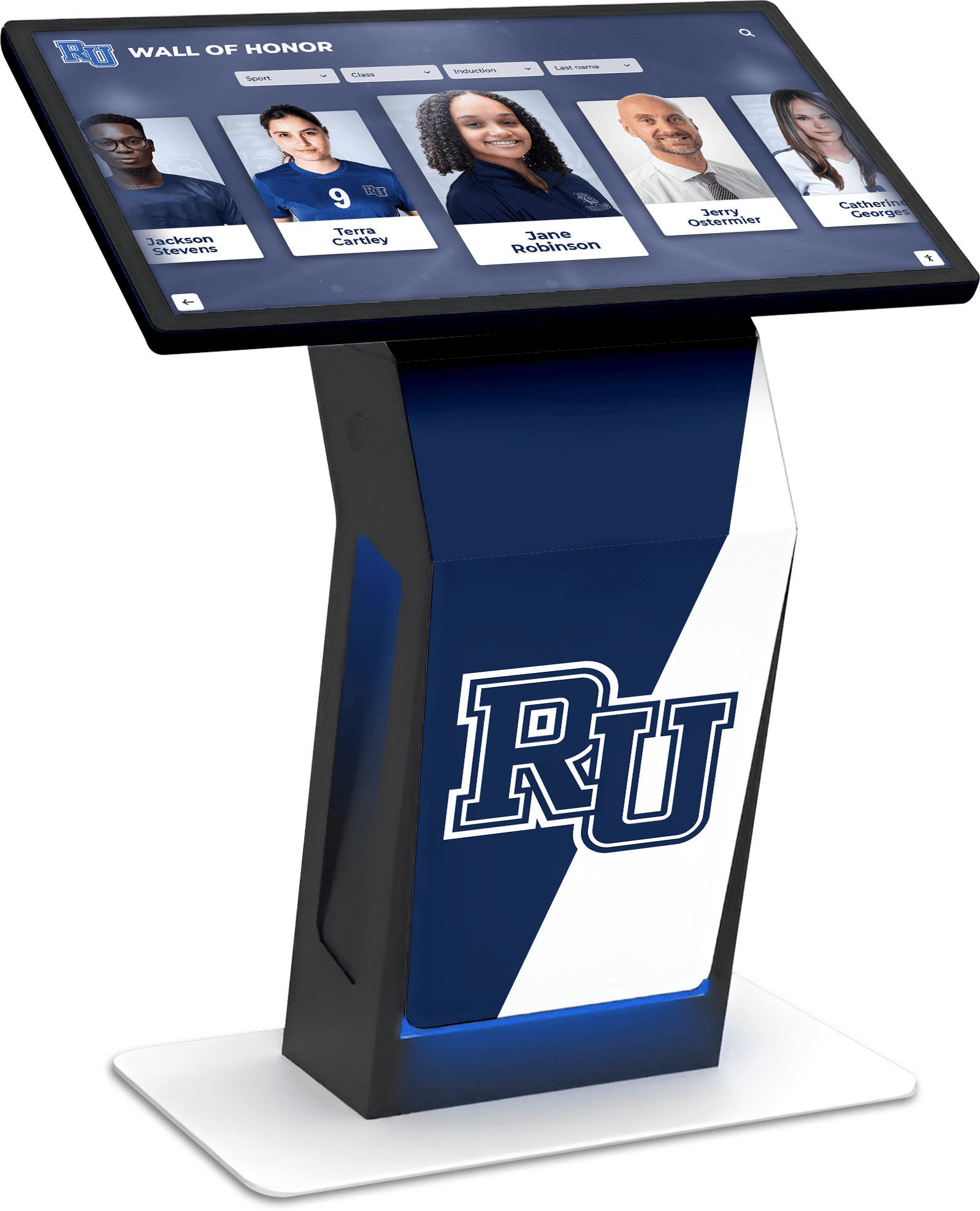
Solutions like those from Rocket Alumni Solutions provide purpose-built platforms specifically designed for educational recognition scenarios, combining hardware, software, content management, and ongoing support in comprehensive packages. Many schools implementing permanent digital displays coordinate with reunion committees ensuring class-specific content receives appropriate prominence during reunion weekends while serving broader institutional recognition purposes year-round.
Maximizing Engagement Through Interactive Elements
Beyond static content presentation, incorporating interactive elements encourages active participation creating stronger emotional connections and more memorable experiences. Both physical and digital display formats support various interaction approaches.
Physical Display Interactive Elements
Traditional physical displays can incorporate interactive components inviting attendee participation:
Memory Contribution Boards: Provide blank poster sections with markers where attendees write favorite memories, inside jokes, or messages to classmates. These spontaneous contributions often become favorite display elements as authentic voices emerge.
Photo Opportunity Backdrops: Create branded photo backdrop areas featuring school colors, mascots, class years, or reunion themes where attendees take selfies or group photos. Designate hashtags encouraging social media sharing extending recognition visibility beyond physical venues.
Guest Book Integration: Position guest books adjacent to displays where attendees sign in, leave contact information enabling post-reunion connection, and write brief updates or reflections. Digital versions using tablets or computers can feed directly into online platforms.
Question Prompts: Post conversation-starter questions near displays like “What was your most memorable school moment?” or “Which teacher influenced you most?” These prompts help shy attendees initiate conversations with less familiar classmates.
Digital Display Interactivity
Interactive touchscreen systems naturally invite exploration through various engagement mechanisms:
Comprehensive Search Functions: Enable attendees to instantly locate themselves, search for specific classmates, or discover who pursued particular careers or lives in specific locations. Search functionality proves especially valuable at large reunions where manually finding specific content would prove prohibitively time-consuming.
Zoom and Detail Views: Allow users to zoom into photographs examining details, reading captions more easily, or sharing specific images with nearby friends. This granular control creates more intimate viewing experiences impossible with fixed-size physical prints.
Social Sharing Capabilities: Enable attendees to share favorite photos or profiles directly to social media platforms, extending reunion visibility and creating organic promotion for future events. QR codes linking to permanent online versions let classmates bookmark content for future reference.
Submission Portals: Allow real-time content submission during events where classmates upload additional photos, update biographical information, or contribute memories directly through touchscreen interfaces. These live additions keep displays dynamic throughout multi-day reunion weekends.
Sophisticated systems like those available from providers specializing in educational recognition create seamless experiences integrating in-person touchscreen displays with web-based platforms enabling remote access. This hybrid approach serves both attendees physically present and those unable to attend who want to explore content remotely, dramatically expanding engagement reach.
Post-Reunion Considerations and Ongoing Value
Thoughtful planning for post-event display handling maximizes long-term value while supporting future reunion efforts and ongoing alumni engagement.
Content Archiving and Preservation
Regardless of original display format, digital archiving ensures permanent preservation:
Physical Display Digitization: Photograph completed physical displays comprehensively documenting all content. Scan important materials at high resolution. Store digital copies in multiple locations including cloud services, external drives, and school archives preventing loss.
Organized File Management: Create systematic file organization with clear folder structures, consistent naming conventions, comprehensive metadata tagging, and documentation explaining content sources and usage rights. This organization enables future reunion committees to locate and reuse valuable content efficiently.
School Archive Contribution: Offer copies to school libraries, historical societies, or institutional archives contributing to comprehensive institutional memory preservation. Schools implementing digital archives for historical preservation often welcome reunion content enriching collections.
Permanent Online Access
Converting temporary reunion displays into permanent online resources creates ongoing engagement opportunities:
Dedicated Reunion Websites: Maintain reunion websites beyond events with photo galleries, attendee directories, video clips from events, and message boards enabling continued connection. Some reunion planning platforms like ClassCreator or MyReunion.com offer built-in hosting.
Social Media Group Integration: Share display content through private Facebook groups, LinkedIn alumni groups, or Instagram accounts dedicated to specific graduating classes. Ongoing content sharing maintains engagement between reunion cycles supporting future event attendance.
Integration with School Systems: Schools maintaining permanent digital recognition displays can incorporate reunion content creating comprehensive alumni recognition extending beyond single-class events. This integration serves both individual class interests and broader institutional advancement objectives.
Planning for Future Reunions
Effective post-reunion documentation and archiving significantly simplifies planning for subsequent gatherings:
Attendance Records: Maintain comprehensive lists documenting who attended including updated contact information. These records prove invaluable for future outreach ensuring no classmates get overlooked.
Content Inventory: Catalog all collected photos, biographical updates, and memorial information enabling future committees to update and expand rather than starting from scratch. Identify content gaps or missing information to target in future collection efforts.
Lessons Learned Documentation: Record what worked well, what challenges arose, which display formats generated most engagement, and specific improvement recommendations. This institutional knowledge transfer prevents repeated mistakes while building on successful approaches.
Succession Planning: Identify younger alumni willing to assume leadership roles for future reunions, ensuring continuity as original planning committee members age or become less available. Early recruitment enables mentorship and knowledge transfer.
Integrating School-Wide Recognition Programs
Forward-thinking schools coordinate reunion display efforts with permanent institutional recognition programs creating synergies benefiting both individual classes and broader alumni engagement strategies.
Permanent Digital Recognition Infrastructure
Schools installing permanent digital recognition displays in facilities create valuable infrastructure individual reunion committees can leverage. Rather than creating temporary displays from scratch, committees can coordinate with institutional systems ensuring class-specific content receives appropriate prominence during reunion weekends while serving year-round recognition purposes.
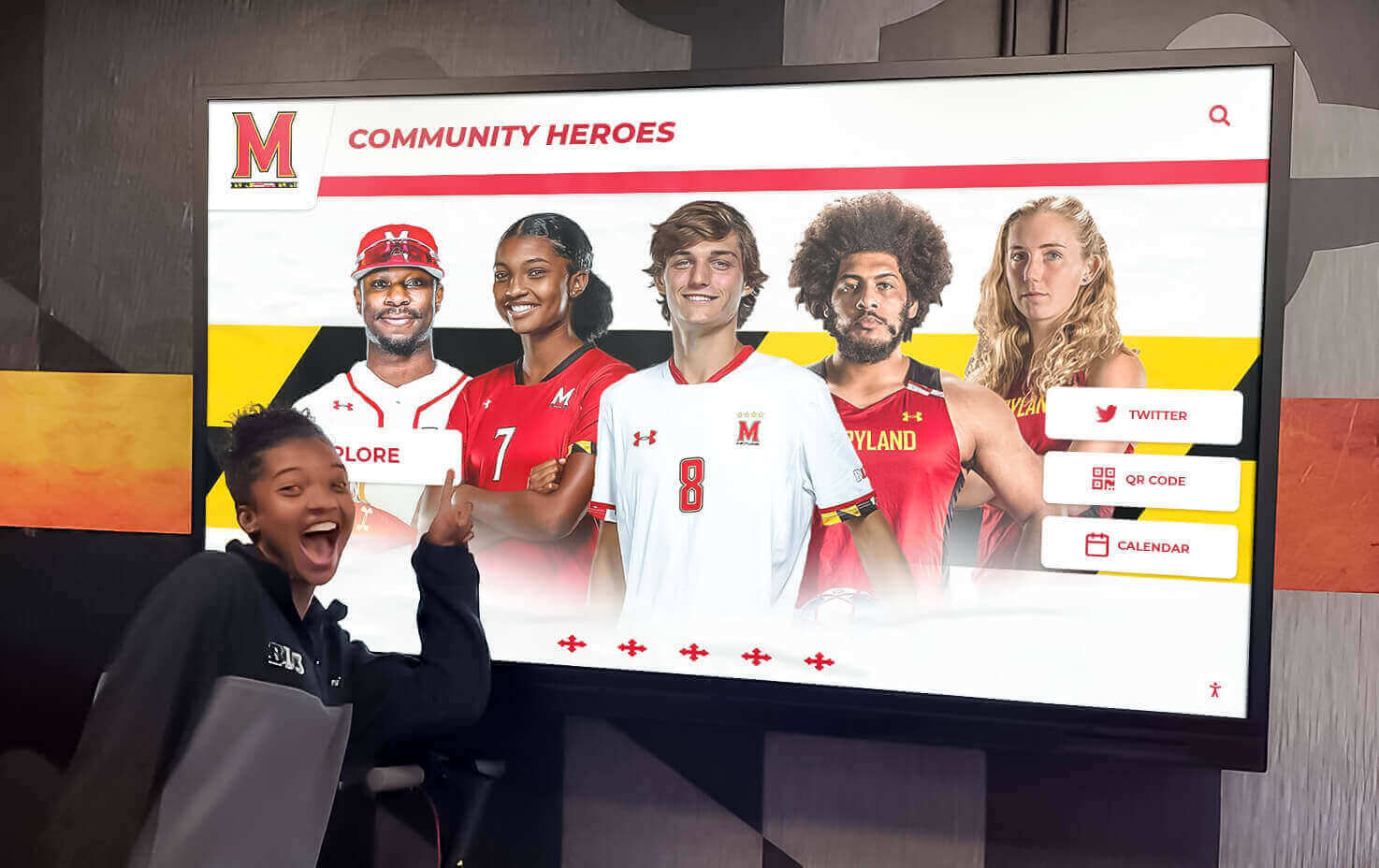
This approach provides multiple benefits including reduced reunion committee workloads since institutional staff manage technical infrastructure, professional-quality presentation reflecting positively on both schools and reunion organizers, permanent accessibility serving alumni unable to attend specific events, and cumulative content growth where each reunion contributes to ever-richer recognition databases.
Schools implementing comprehensive touchscreen displays for class reunion content report increased alumni engagement, higher reunion attendance as graduates appreciate quality recognition experiences, and improved advancement outcomes as stronger alumni connections translate to increased giving and support.
Coordination Between Reunion Committees and Advancement Offices
Formal coordination between reunion planning committees and school advancement offices creates strategic alignment ensuring resources get allocated efficiently while maximizing impact:
Shared Content Collection: Advancement offices gathering biographical information for annual giving campaigns or alumni magazines can share content with reunion committees, eliminating redundant data collection efforts.
Technology Infrastructure Sharing: Schools owning digital display equipment can loan or schedule access for reunion events, dramatically reducing committee costs while increasing institutional engagement visibility.
Professional Design Support: Schools with communications or marketing staff can provide design guidance or production support helping volunteer committees achieve professional presentation quality they might not otherwise accomplish.
Data Management Collaboration: Information collected for reunion purposes feeds advancement databases improving data quality for ongoing alumni relations, while advancement offices reciprocate by helping committees verify contact information or locate lost classmates.
This reciprocal relationship strengthens both individual reunion outcomes and broader institutional alumni engagement, creating reinforcing cycles where each effort enhances the other.
Conclusion: Creating High School Reunion Display Boards That Truly Matter
Thoughtfully designed high school reunion display boards—whether traditional physical formats or modern interactive digital systems—create lasting impact by honoring shared histories, celebrating diverse achievements, remembering deceased classmates, and facilitating renewed connections among individuals whose lives diverged dramatically since graduation yet who remain bound by formative experiences during crucial developmental years.
The most effective displays balance nostalgic appeal with practical functionality, incorporating comprehensive content addressing diverse interests, implementing formats appropriate for available budgets and technical capabilities, and creating engagement opportunities encouraging active participation rather than passive observation. Whether reunion committees select poster boards costing under $200 or sophisticated touchscreen displays approaching $8,500, the fundamental principles remain consistent: honor every classmate meaningfully, create content that sparks conversation and connection, preserve memories for future reference, and demonstrate organizational care reflecting positively on entire graduating classes.
Digital recognition technology offers compelling advantages over traditional approaches including unlimited content capacity without physical space constraints, powerful search and discovery capabilities impossible with physical displays, permanent online accessibility serving alumni worldwide regardless of physical reunion attendance, and seamless integration with ongoing alumni engagement programs extending value far beyond single event weekends. Modern solutions like those from Rocket Alumni Solutions provide purpose-built platforms specifically designed for alumni recognition scenarios including reunion events, combining commercial-grade hardware, intuitive content management, and comprehensive support enabling committees to create professional experiences without requiring technical expertise.
Whether planning 10th or 50th reunions, small intimate gatherings or large-scale events, reunion display boards represent strategic investments in community preservation and relationship renewal that graduates remember long after events conclude. When implemented thoughtfully with attention to content quality, design aesthetics, and emotional resonance, these displays transform ordinary reunion spaces into meaningful environments celebrating shared journeys while honoring individual paths—exactly what every graduating class deserves.
Ready to elevate your class reunion recognition beyond traditional poster boards? Explore how modern digital reunion memory walls create engaging experiences, discover comprehensive approaches to alumni recognition programs, or learn about interactive touchscreen solutions that transform how schools celebrate graduating classes. Contact Rocket Alumni Solutions to discuss how purpose-built digital recognition platforms can enhance your reunion while creating permanent value extending far beyond single event weekends.
Sources: