



Winning a high school football state championship represents the pinnacle of competitive athletic achievement. These titles result from years of preparation, countless hours in the weight room, summer conditioning programs, film study, practice repetitions, and the dedication of athletes, coaches, and entire communities working toward a common goal. A state championship validates all that work while creating memories athletes carry throughout their lives—memories of Friday night lights, championship drives, defensive stands, and the final seconds ticking off the clock confirming victory.
Yet championship seasons pass quickly. Within weeks of cutting down nets or hoisting trophies, attention shifts to next season’s challenges, graduating seniors move on to college, and younger players begin their own championship pursuits. Without intentional commemoration systems, championship excellence fades from institutional memory—relegated to dusty trophy cases, forgotten storage rooms, or simply lost to time as decades pass and memories dim.
Effective championship recognition preserves these achievements permanently while inspiring future excellence, strengthening school pride, engaging alumni communities, and demonstrating institutional commitment to honoring athletic achievement appropriately. Schools that develop systematic approaches to celebrating and commemorating state championships create lasting traditions that elevate program culture, maintain competitive standards, and ensure every championship team receives recognition reflecting their remarkable accomplishment.
Modern Championship Recognition Systems
Traditional championship recognition using physical banners, trophy cases, and plaques served schools well for decades, but these approaches create limitations including finite display space forcing difficult decisions about what hangs prominently, manual updates requiring vendor coordination and installation delays, limited content capacity preventing comprehensive team documentation, and accessibility restricted to building visitors during facility hours. Modern digital recognition platforms eliminate these constraints through unlimited championship capacity accommodating every title across program history, instant remote updates celebrating championships immediately after victories, rich multimedia content including photos, videos, statistics, and complete rosters, and universal web access enabling global recognition extending far beyond campus boundaries. Solutions like Rocket Alumni Solutions provide purpose-built championship recognition systems designed specifically for high school athletic programs, combining intuitive content management with engaging displays that preserve championship excellence permanently while inspiring current athletes toward their own title pursuits.
Traditional Championship Celebration Approaches
Schools have developed time-honored traditions celebrating state championships through physical recognition methods that create tangible tributes to championship excellence while building program identity and institutional pride.
Championship Banners and Gymnasium Displays
Hanging championship banners represents the most visible and traditional form of title recognition, creating immediate visual impact communicating program excellence to students, opponents, visitors, and communities.
Design Considerations for Championship Banners: Effective banners balance aesthetics with information, typically including the championship year and classification or division, team name and mascot creating immediate school identification, championship designation clearly stating “State Champions” or specific tournament names, season record providing context about championship journey, and school colors and logos maintaining brand consistency while creating visually striking displays.
Quality materials matter significantly for longevity. Indoor banners made from durable vinyl, canvas, or heavy-duty fabric resist fading from gymnasium lighting while maintaining professional appearance for decades. Proper installation using secure hanging systems prevents sagging, ensures straight alignment, and withstands the vibrations and air movement from heating and cooling systems, crowd noise, and athletic activities occurring beneath them.
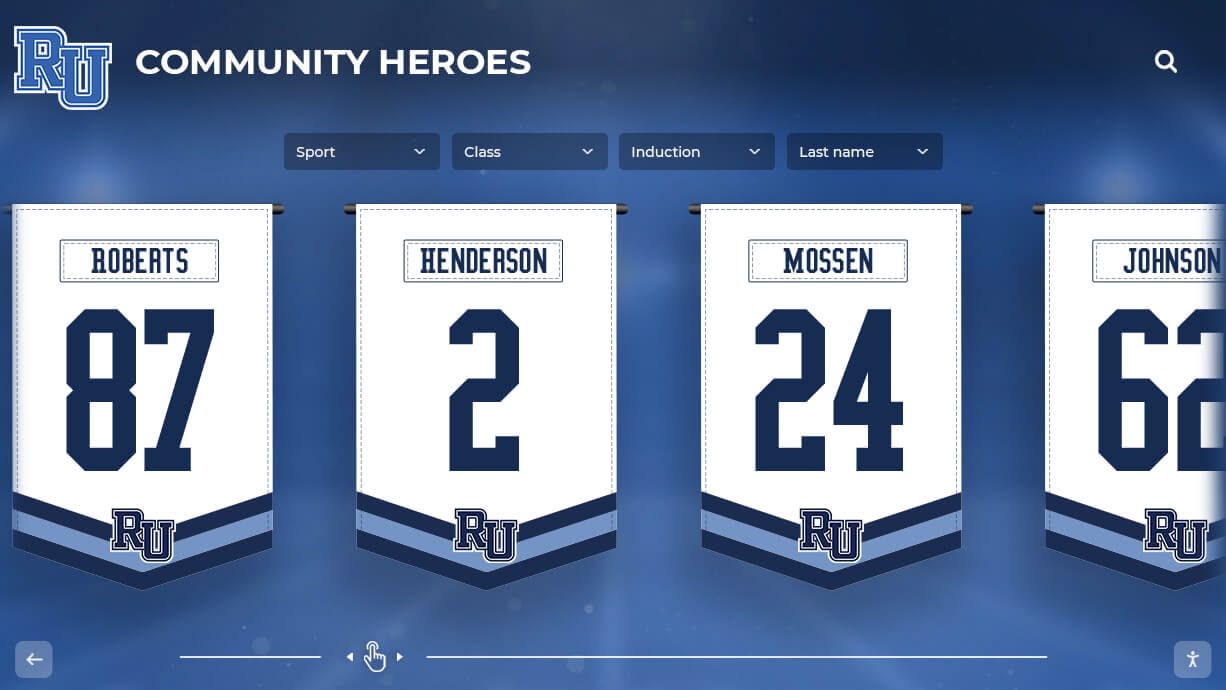
Strategic Banner Placement: Banner location affects visibility and impact significantly. Most successful programs display banners in main competition gymnasiums where home games create natural audience exposure, athletic facility entrances welcoming athletes and visitors with immediate championship presence, prominent wall sections visible from bleachers ensuring championship tradition remains visible during all home events, and chronological arrangements showing championship progression across decades demonstrating sustained program excellence.
Some schools create dedicated championship walls grouping all titles together, while others prefer sport-specific sections placing football championships near football facilities, basketball titles in gymnasiums, and wrestling championships in wrestling rooms. Either approach succeeds when executed consistently and maintained over time rather than creating ad hoc displays that lack coherence and fail to properly honor championship excellence.
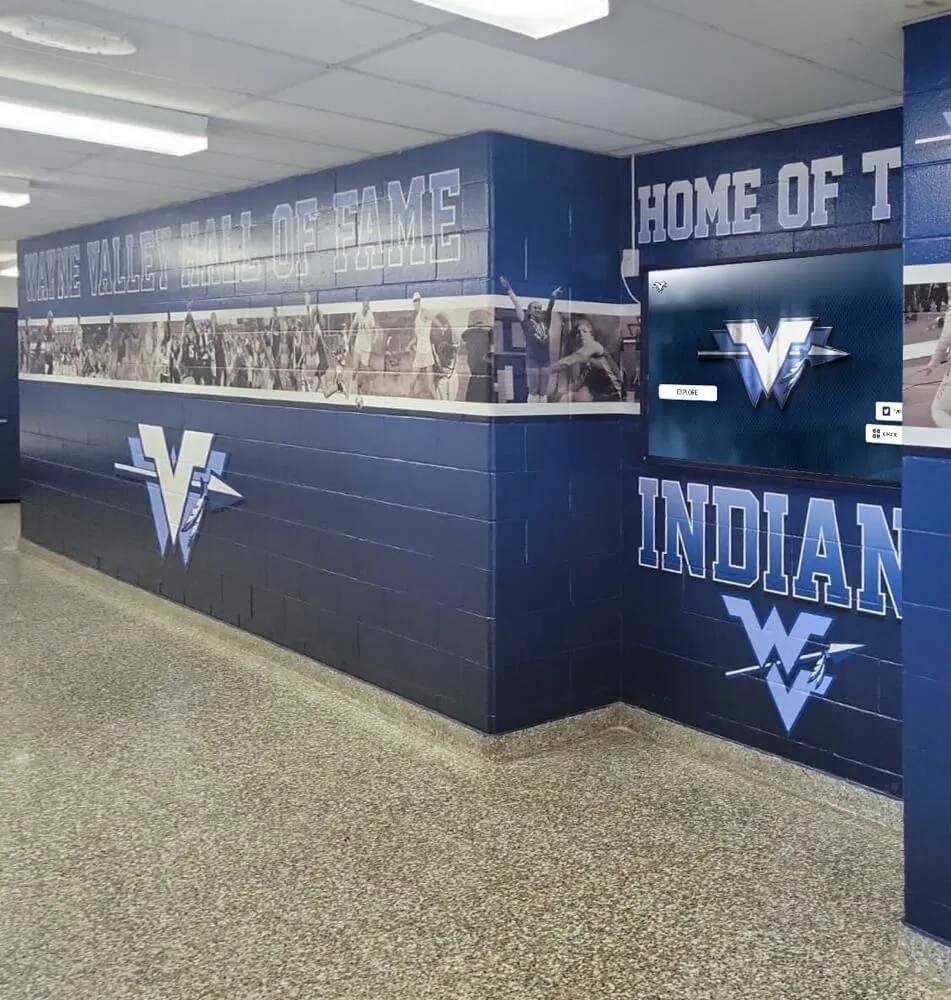
Space Limitations and Solutions: Schools with extensive championship traditions eventually face space constraints as banner displays fill available wall space. This forces difficult decisions about rotation systems cycling older banners to storage, size reductions creating smaller banners as space fills, archive sections designating specific areas for historical championships, or digital integration supplementing physical banners with digital displays accommodating unlimited championships without spatial constraints.
Resources on replacing expensive gym banners with digital displays explore solutions maintaining championship visibility while overcoming physical space limitations that affect programs with extensive winning traditions.
Championship Rings and Physical Awards
Championship rings provide tangible personal recognition that athletes treasure throughout their lives—physical reminders of championship achievement they can wear, share with family, and pass to future generations as family heirlooms representing athletic excellence.
Ring Design Elements: Championship rings typically feature school name and mascot identification, championship year and classification, athlete name personalization creating individual ownership, team record or significant statistics, and stones or materials reflecting championship tier and budget considerations.
Many programs offer different ring tiers based on contribution level, with varsity players receiving full championship rings, junior varsity or freshman players earning smaller rings or alternative recognition, coaches and staff receiving rings matching or slightly distinct from player versions, and families sometimes purchasing additional rings as keepsakes at their own expense.
Budgeting for Ring Programs: Championship rings represent significant expenses ranging from $75-$150 per ring for basic designs to $300-$500 for premium options featuring gold, genuine stones, and elaborate customization. For a varsity football program with 60 players plus coaches and staff, total ring costs might reach $5,000-$20,000 depending on quality choices.
Most schools fund rings through athletic department budgets, booster club fundraising, player/family contributions, championship game ticket revenue, or community sponsorships where local businesses contribute toward ring purchases in exchange for recognition and association with championship excellence.
Alternative Physical Recognition: Schools with limited ring budgets implement alternative personal recognition including championship medallions or pendants, engraved watches celebrating achievements, custom jackets or letterman additions, framed certificates personalized for each team member, and photo plaques showing athletes celebrating championship moments.
These alternatives provide meaningful personal recognition at lower price points while maintaining championship celebration importance and ensuring all athletes receive tangible reminders of their achievements regardless of budget constraints that might prevent premium ring programs.
Trophy Cases and Permanent Displays
Trophy cases serve as institutional archives preserving championship trophies, medals, photographs, and artifacts in protected displays accessible to students, families, and visitors exploring program history and competitive achievements.
Effective Trophy Case Design: Successful trophy cases incorporate championship trophies displayed prominently with clear identification, team photographs showing athletes who earned championships, game balls or equipment from championship contests, newspaper clippings documenting championship coverage, statistical summaries highlighting championship season achievements, and playoff brackets showing paths to championship victories.
Organized layouts prevent cluttered appearances that make specific championships difficult to identify or appreciate. Many programs create chronological arrangements showing championship progression, sport-specific sections separating football from basketball from other programs, or tiered displays where state championships receive premium placement above conference or regional titles.
Lighting significantly affects trophy case impact. LED spotlighting draws attention to key trophies, prevents glare obscuring visibility, and maintains energy efficiency compared to older fluorescent or halogen systems that generate excessive heat potentially damaging photos and artifacts over time.
Maintenance and Updates: Trophy cases require regular attention maintaining professional appearance and current information. Annual maintenance should include cleaning glass surfaces and cases removing dust and fingerprints, updating championship information as new titles arrive, rotating displays preventing permanent sun exposure damage to photos, replacing worn or faded information cards, and repairing damaged case components ensuring secure protection of valuable trophies and historical artifacts.
Many schools assign specific staff members—athletic directors, assistant coaches, facilities managers—explicit responsibility for trophy case maintenance, preventing neglect that occurs when everyone assumes someone else handles these important recognition systems.
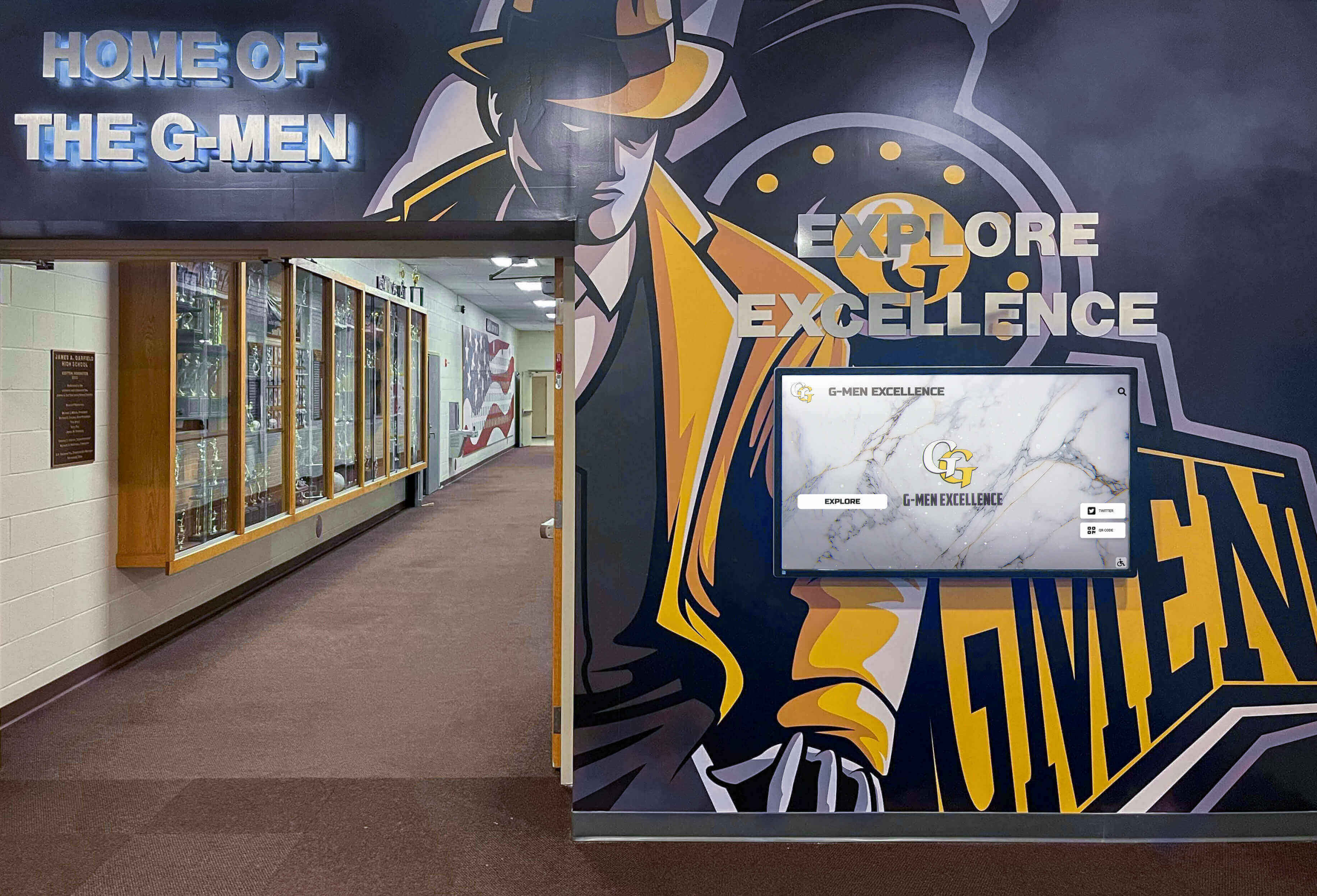
Modern Digital Championship Recognition Systems
Digital technology transforms championship recognition by eliminating physical constraints while providing capabilities impossible with traditional displays, enabling comprehensive celebration of all championships across complete program histories.
Interactive Touchscreen Championship Displays
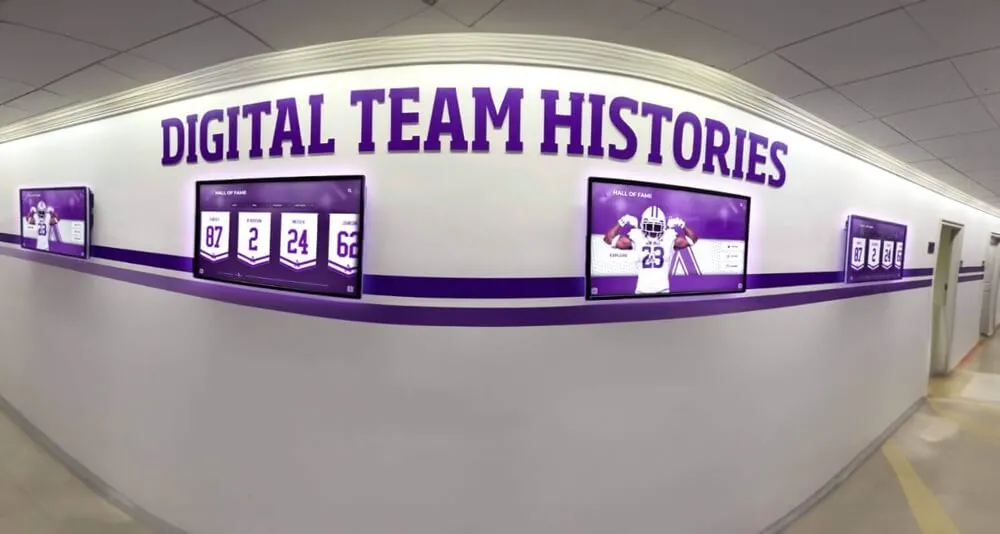
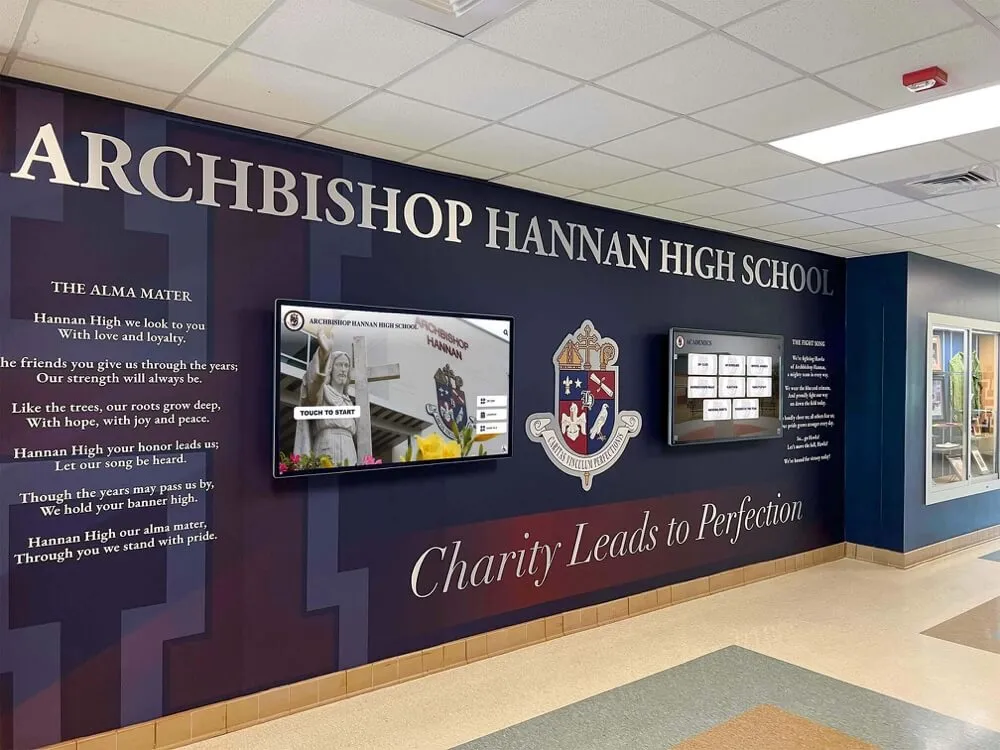
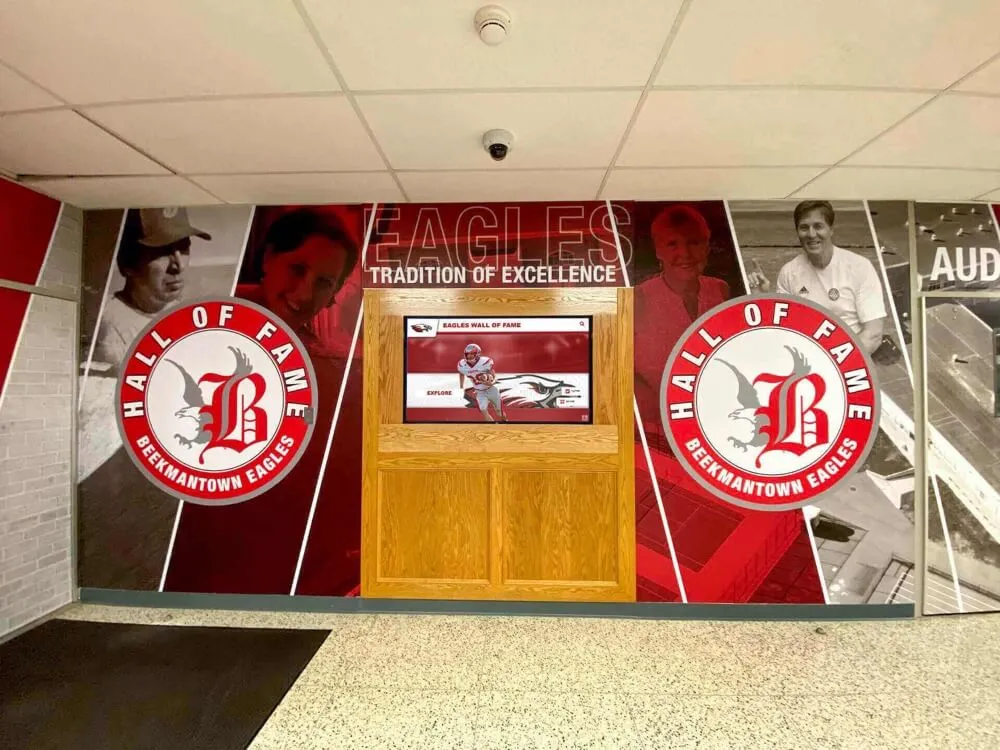
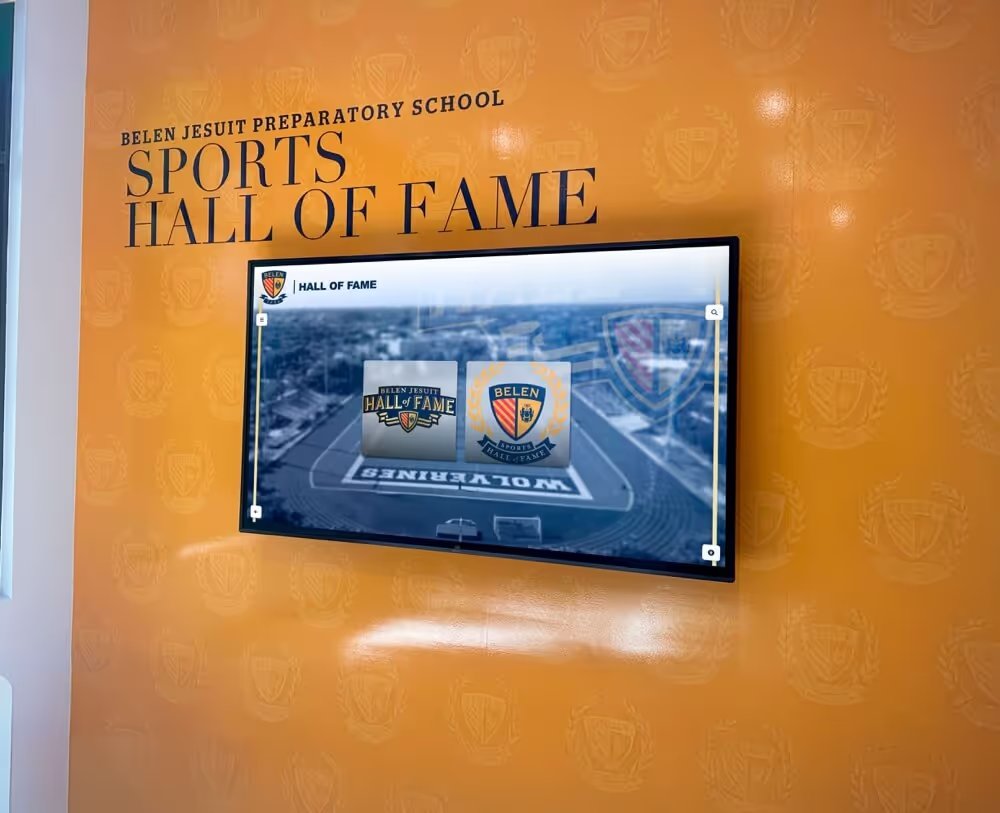
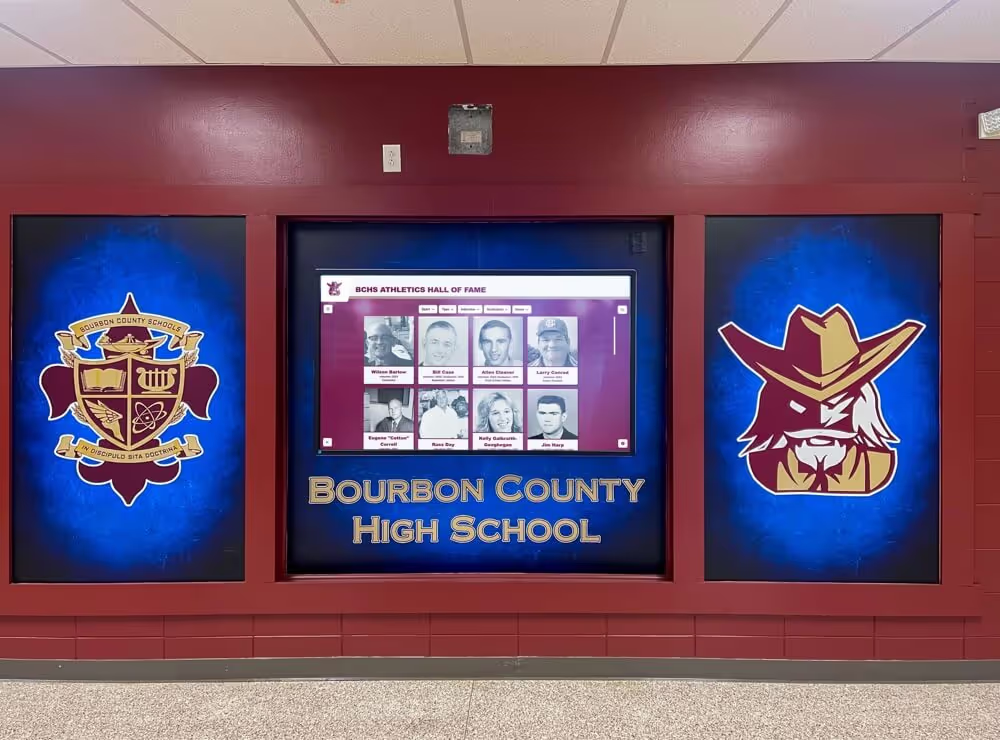
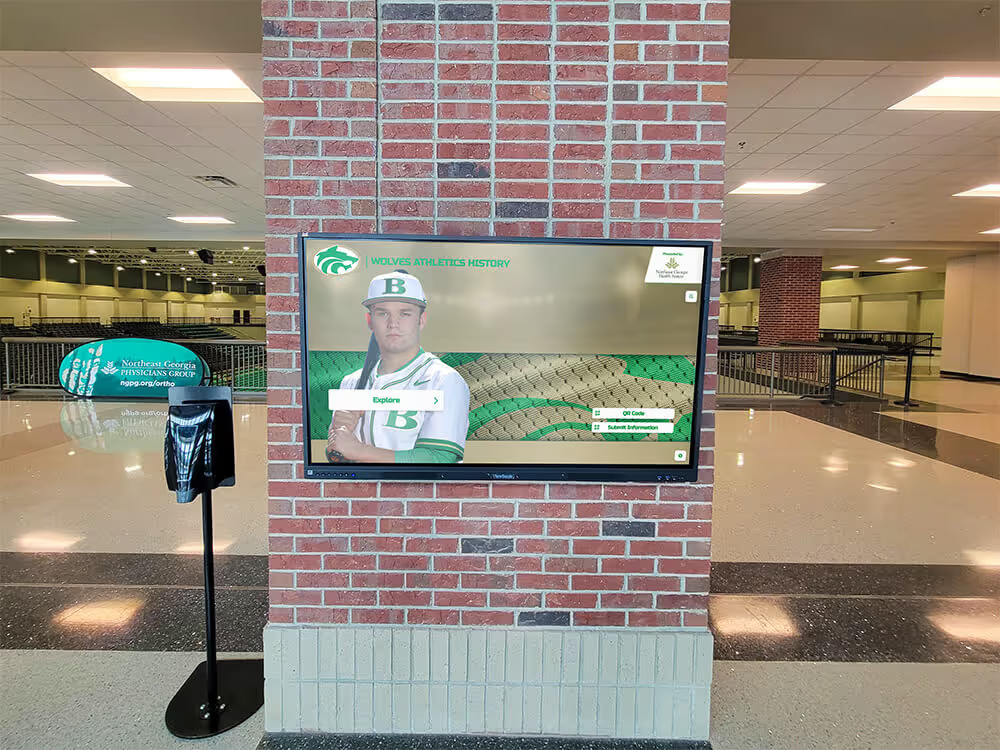
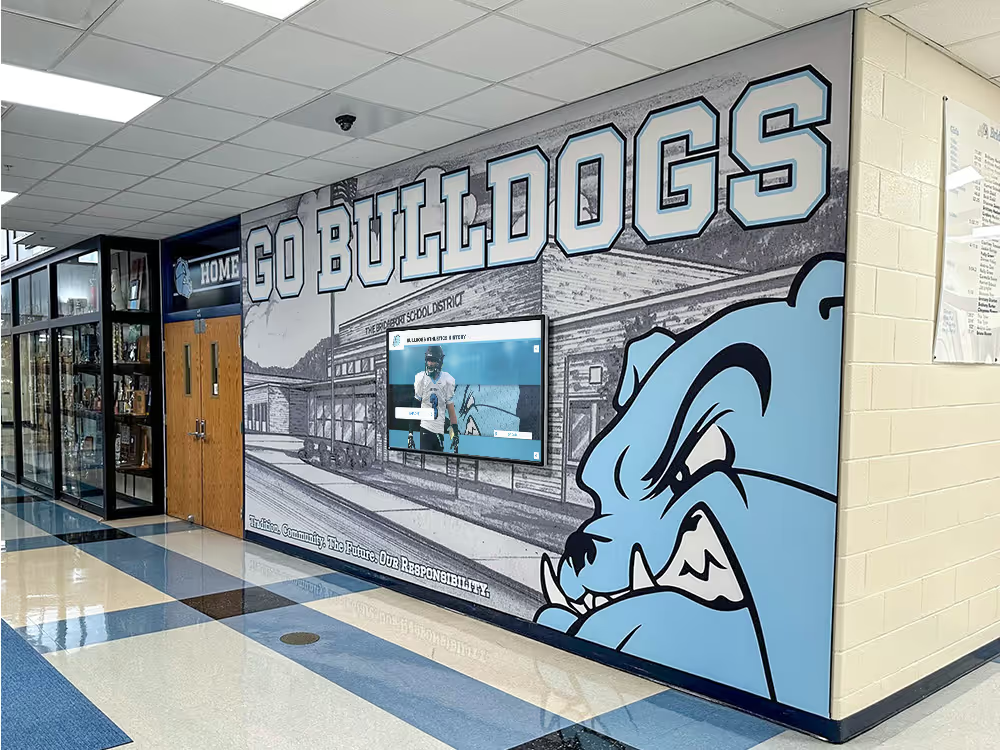
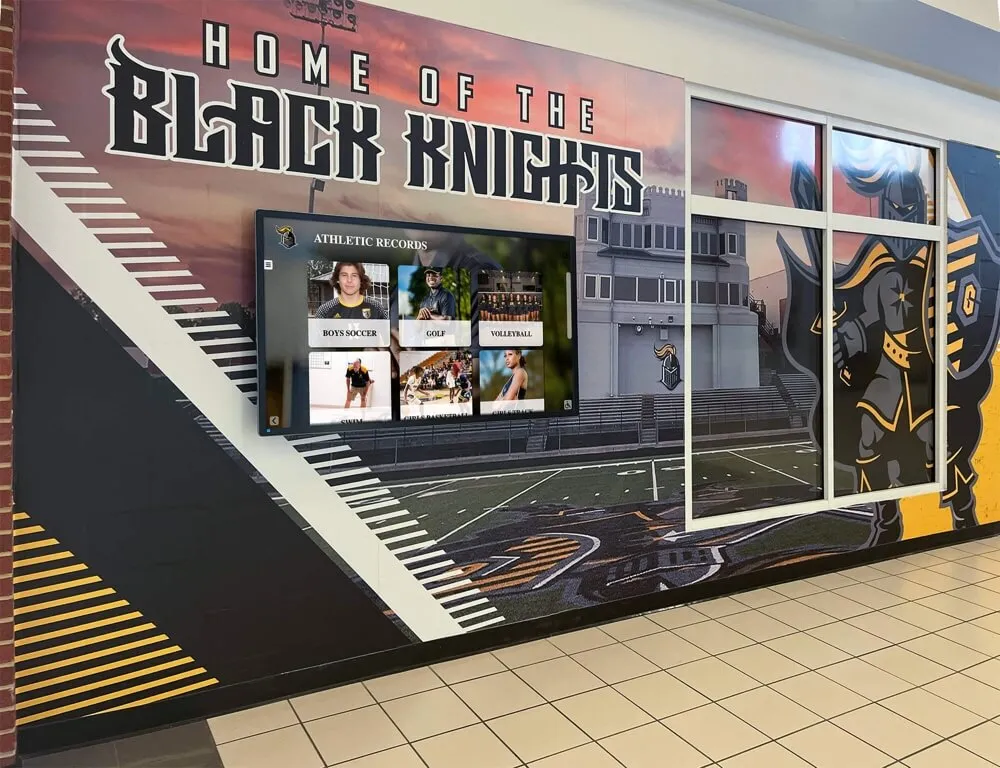
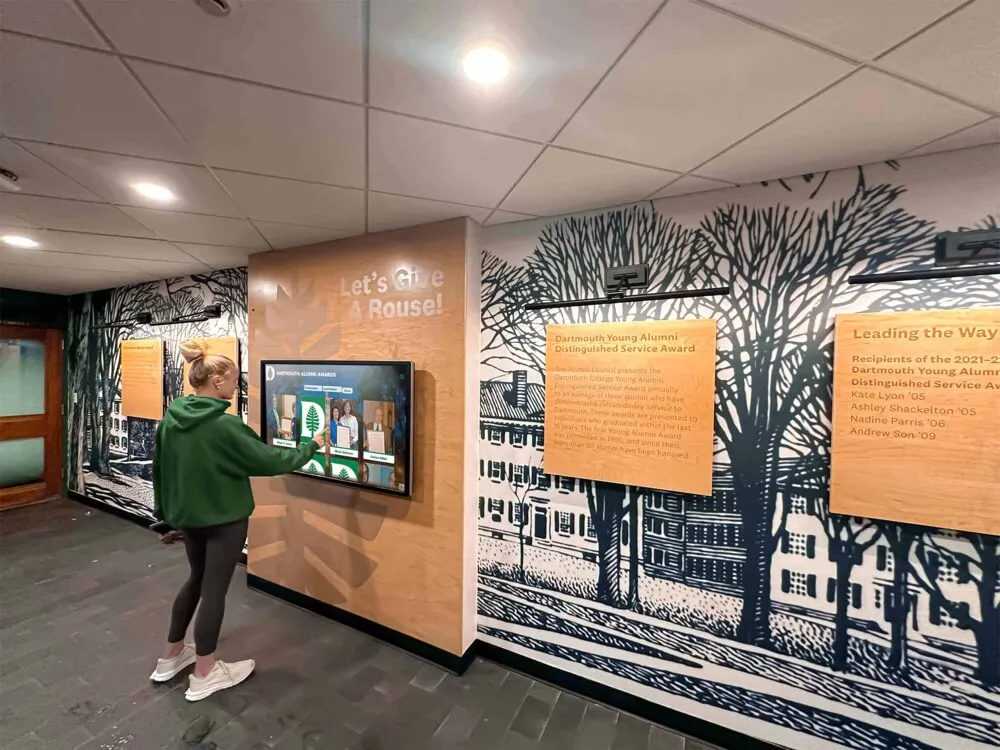
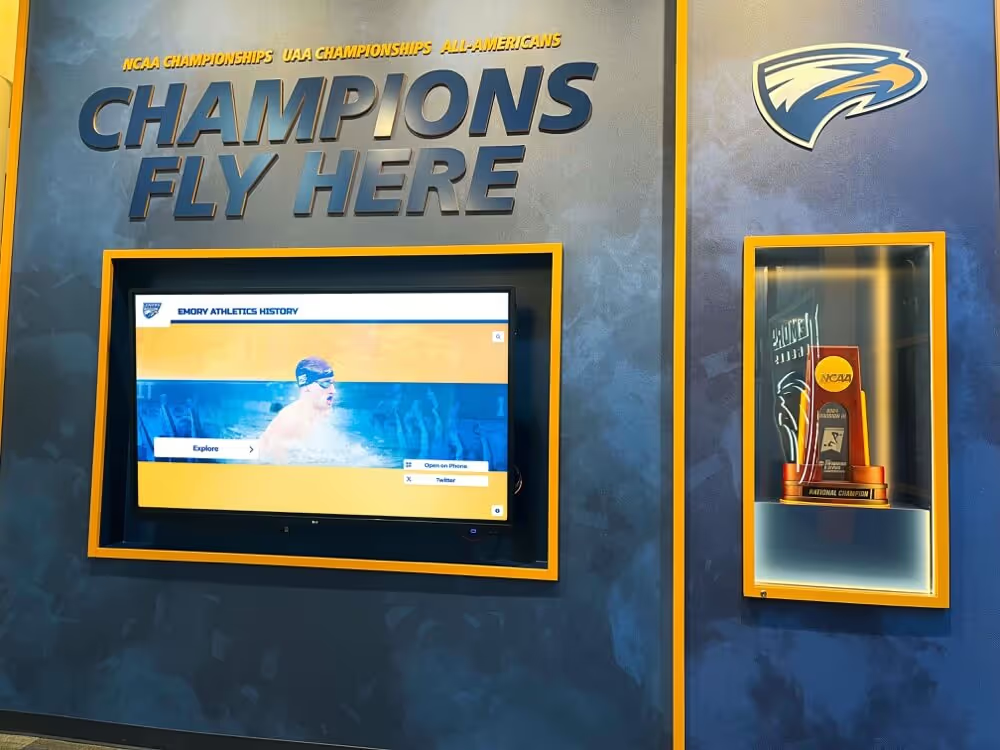
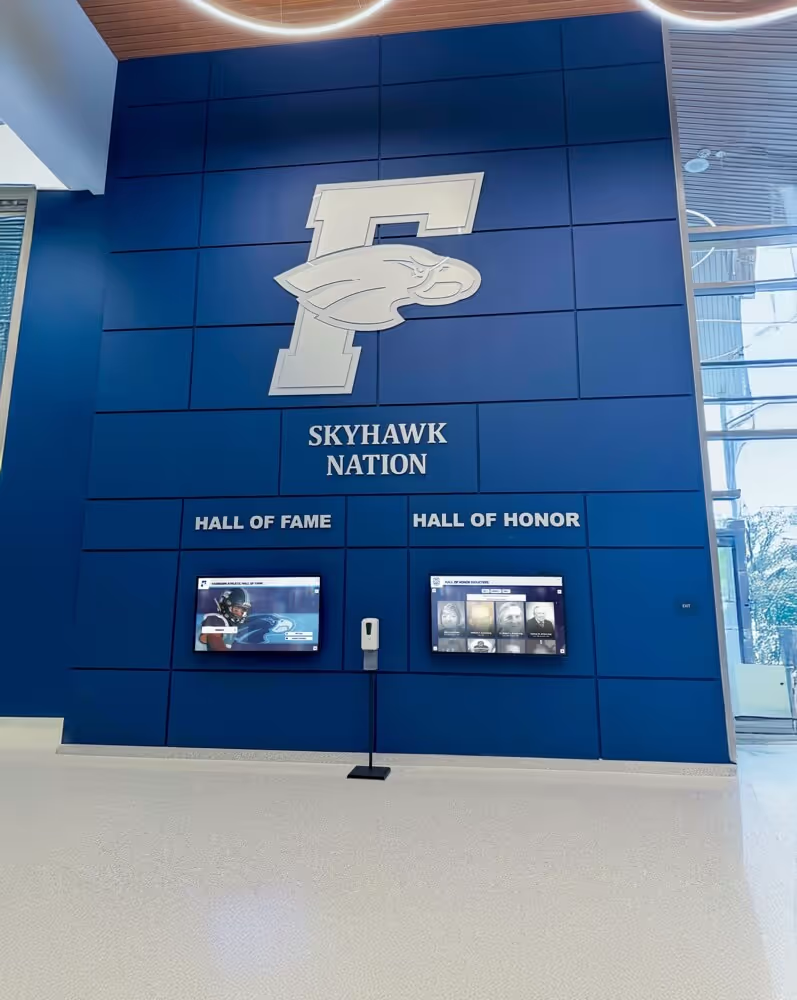
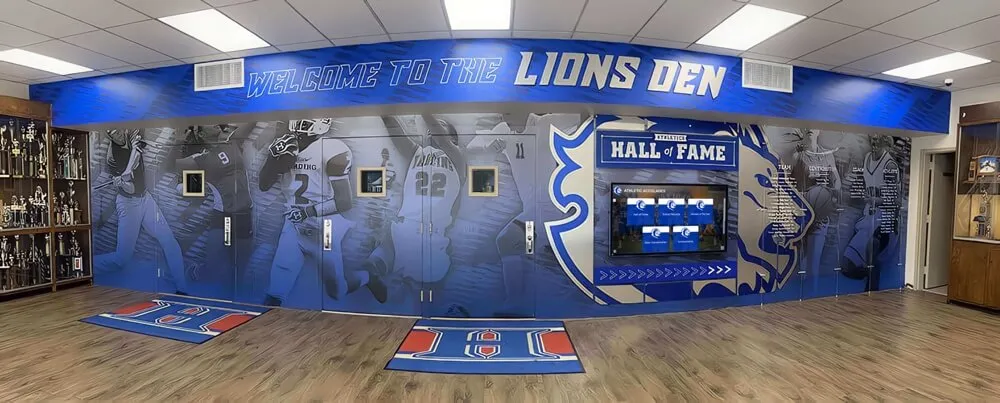
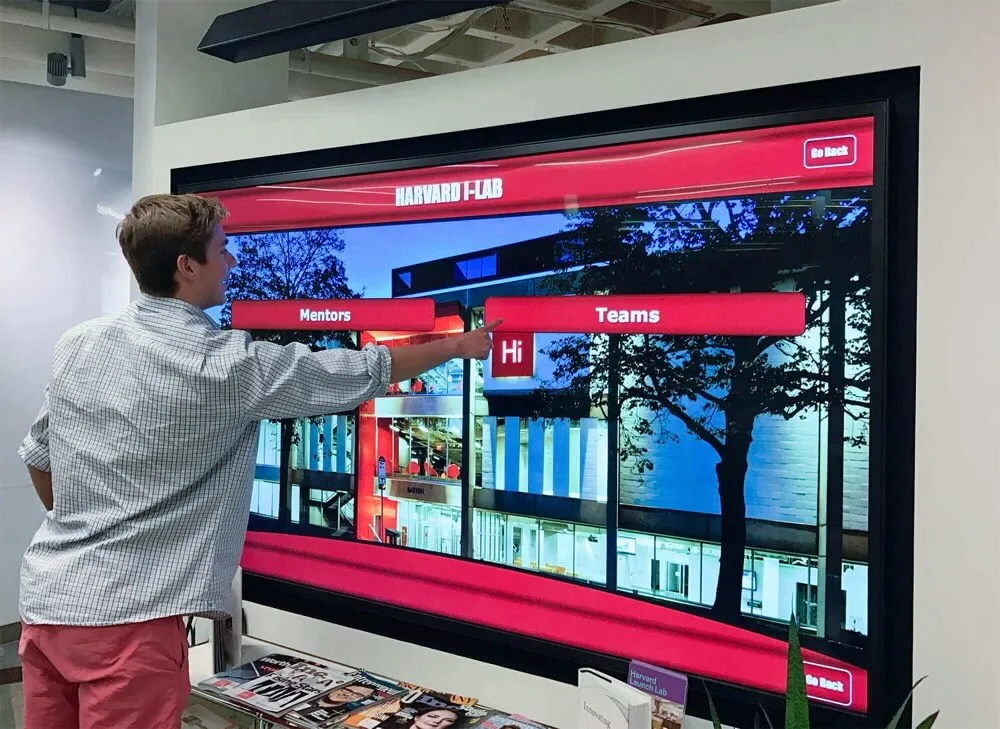
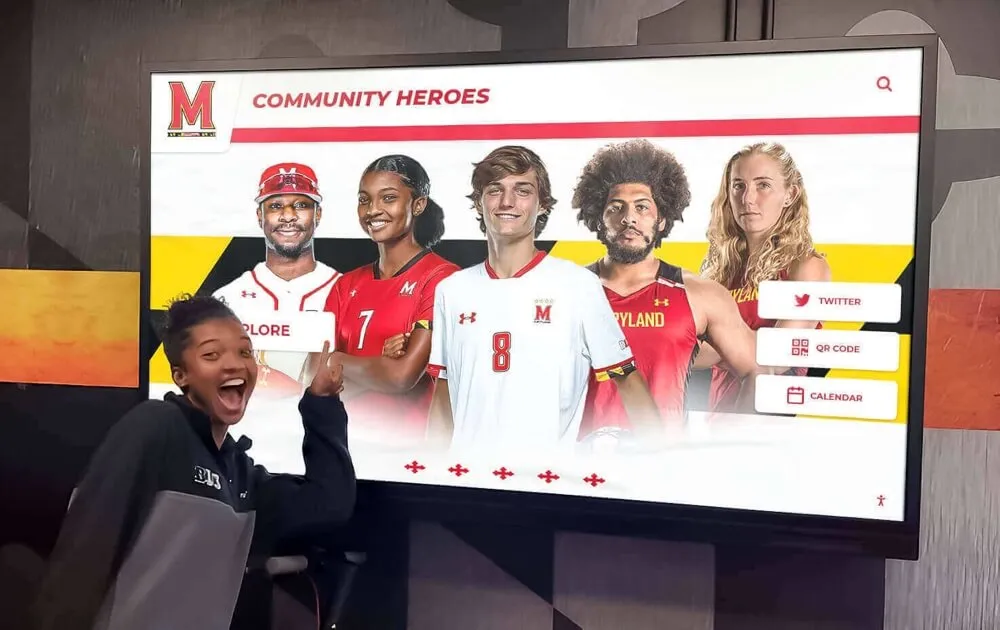
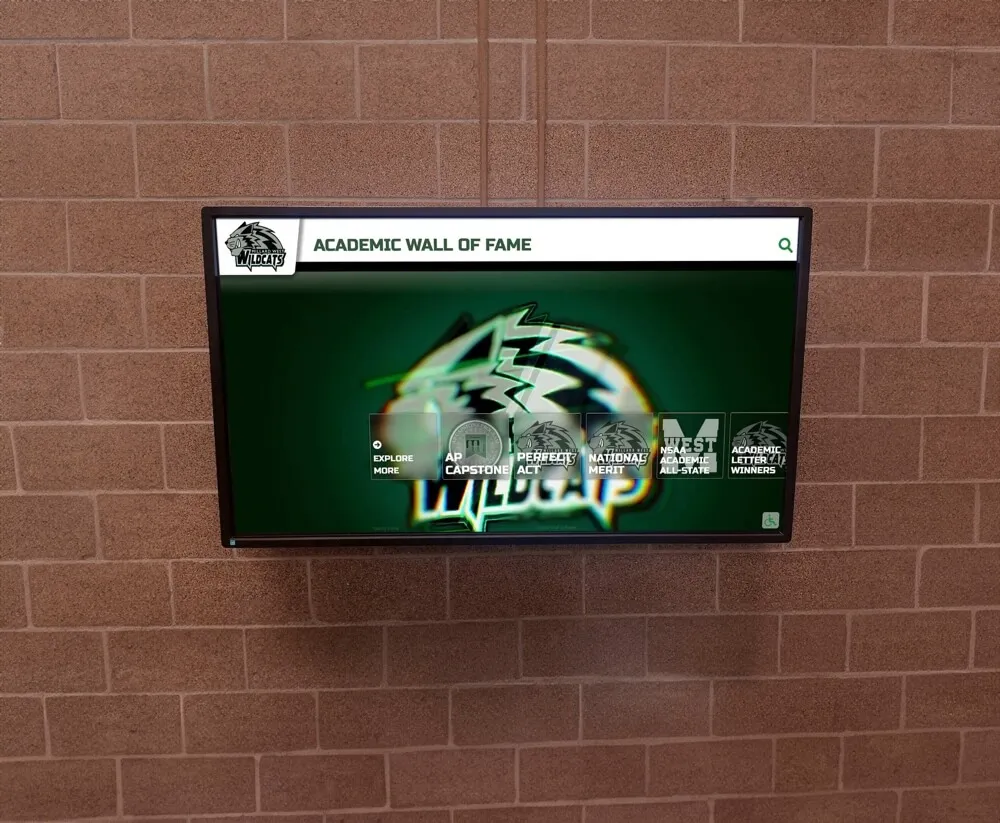
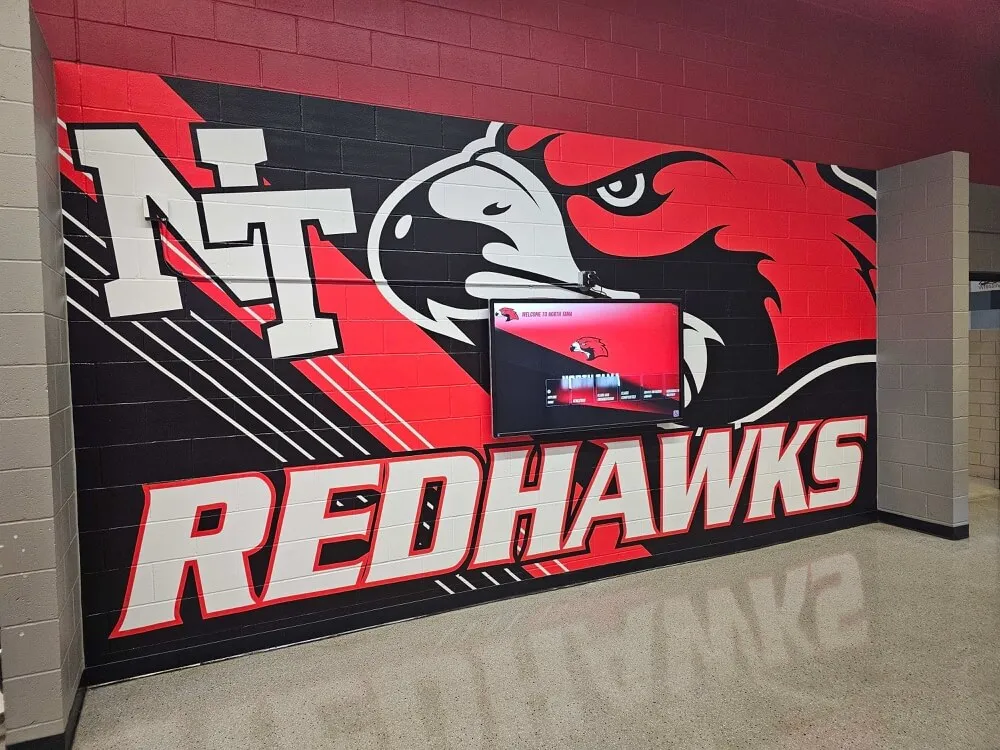
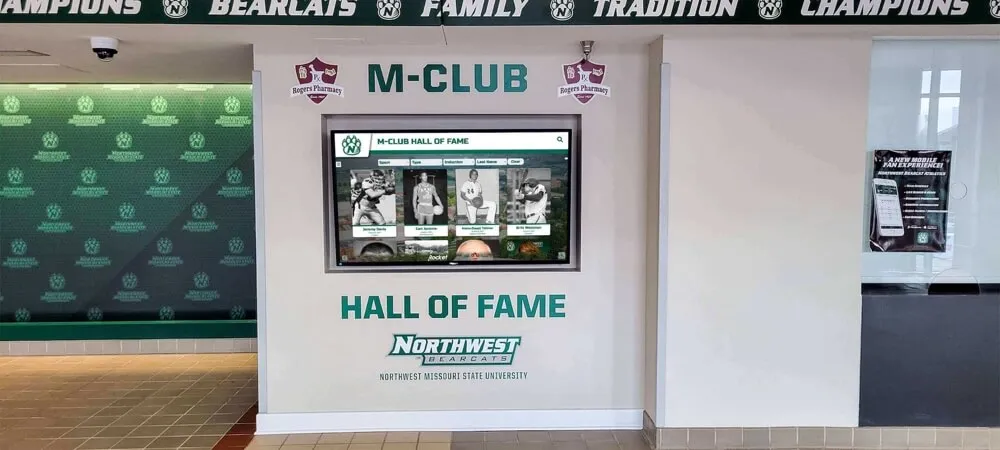
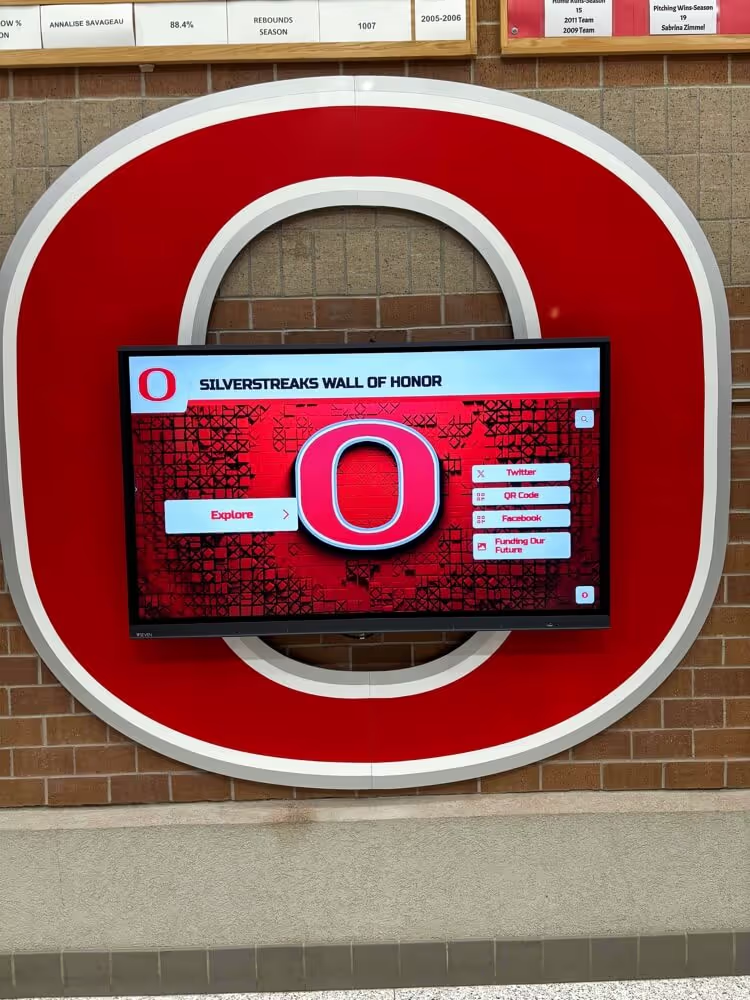
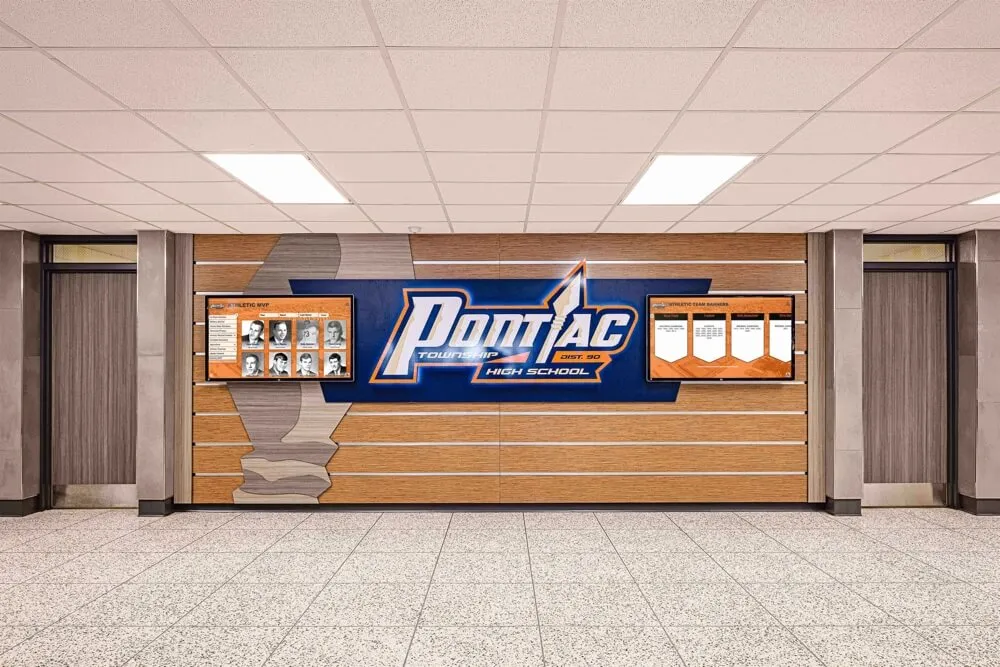
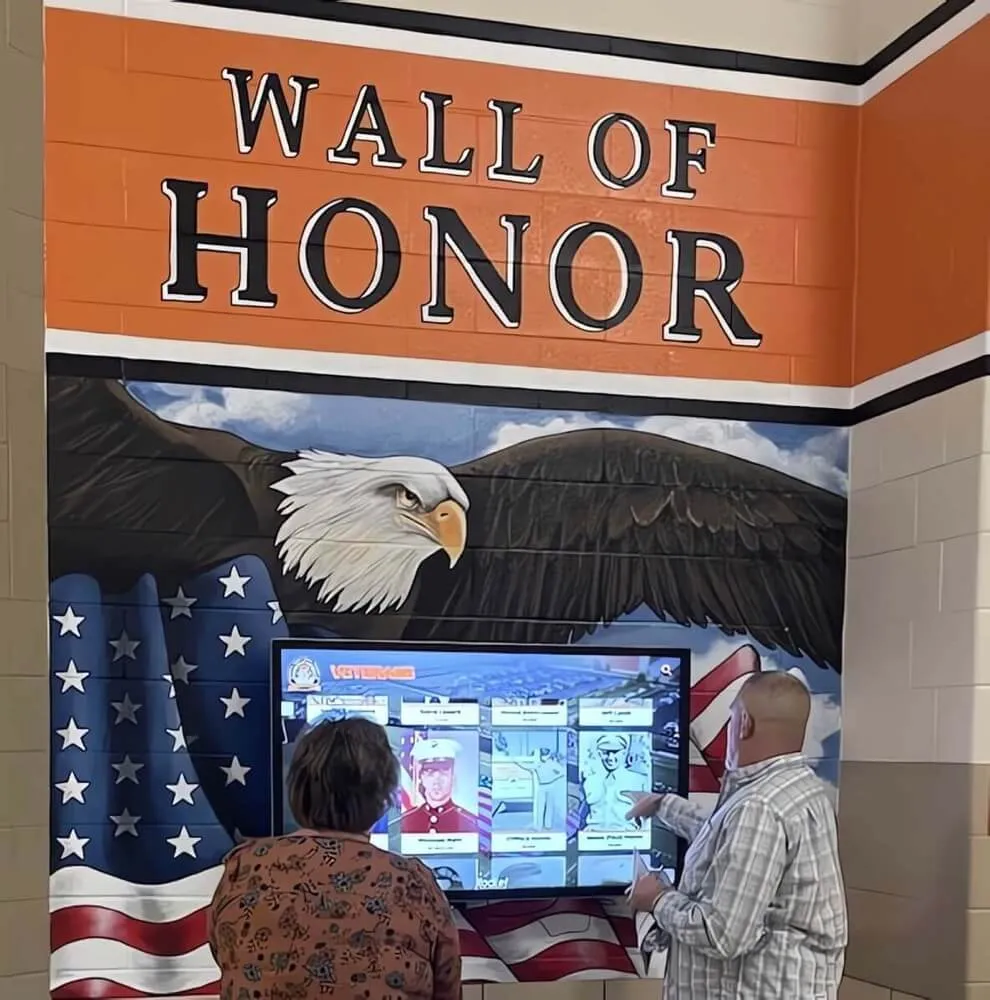
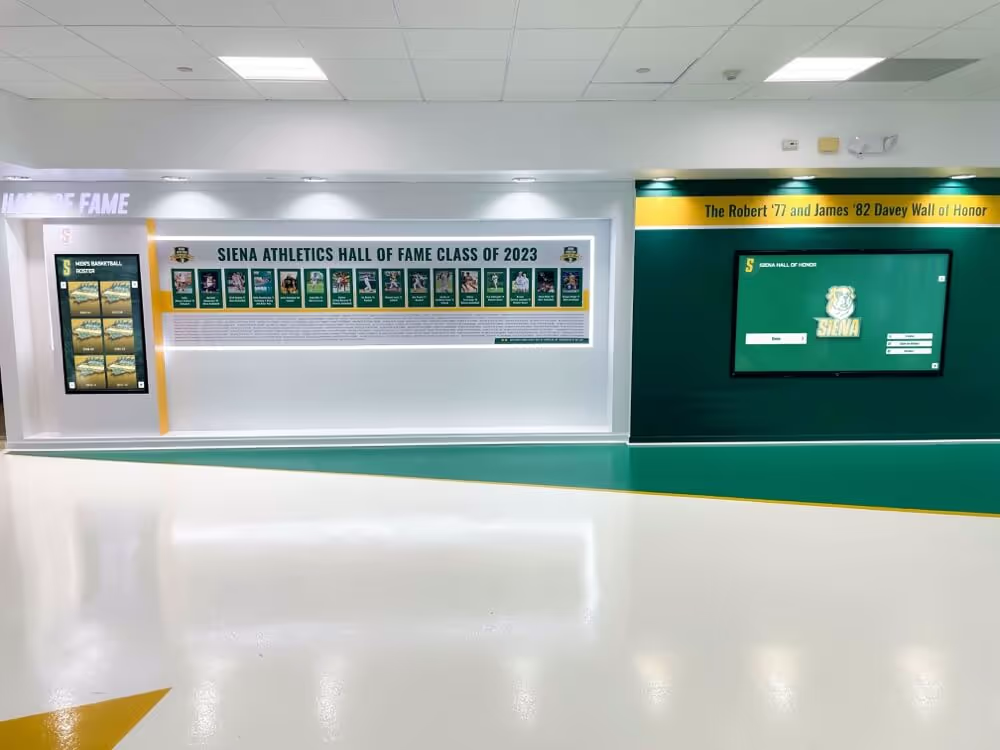
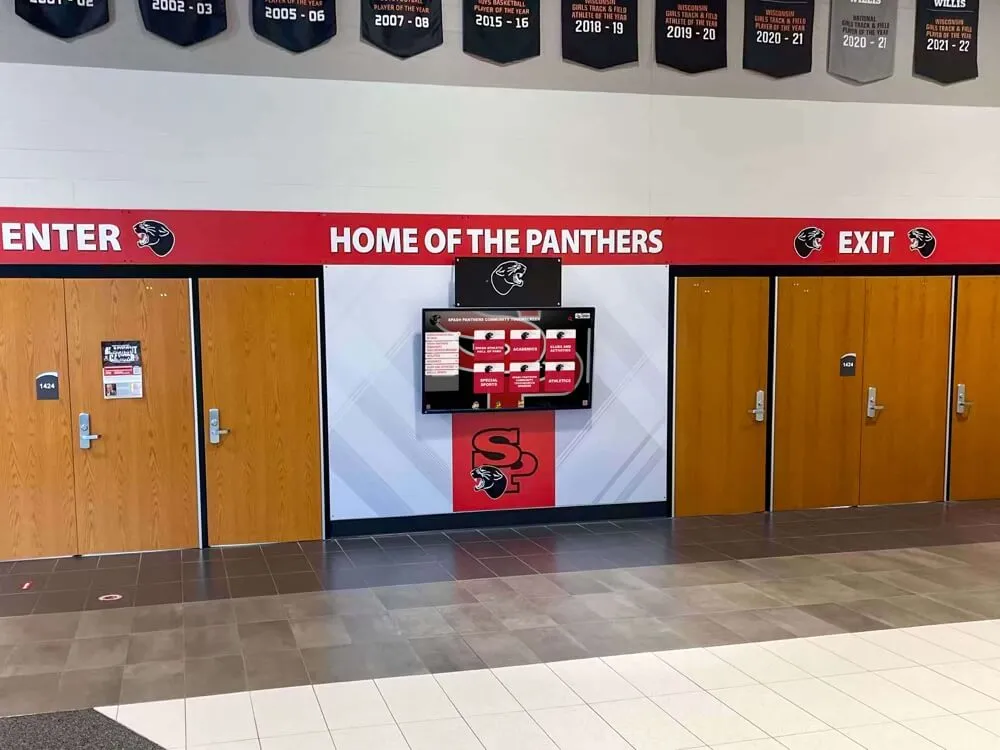
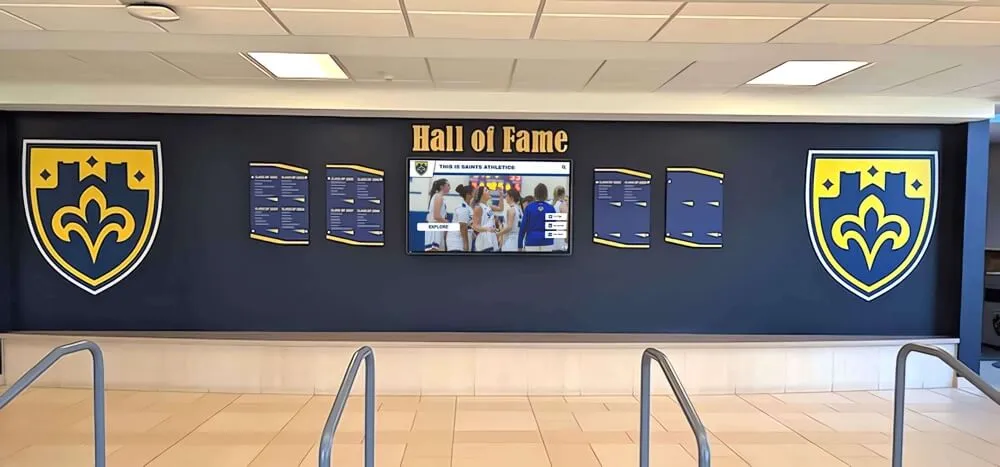
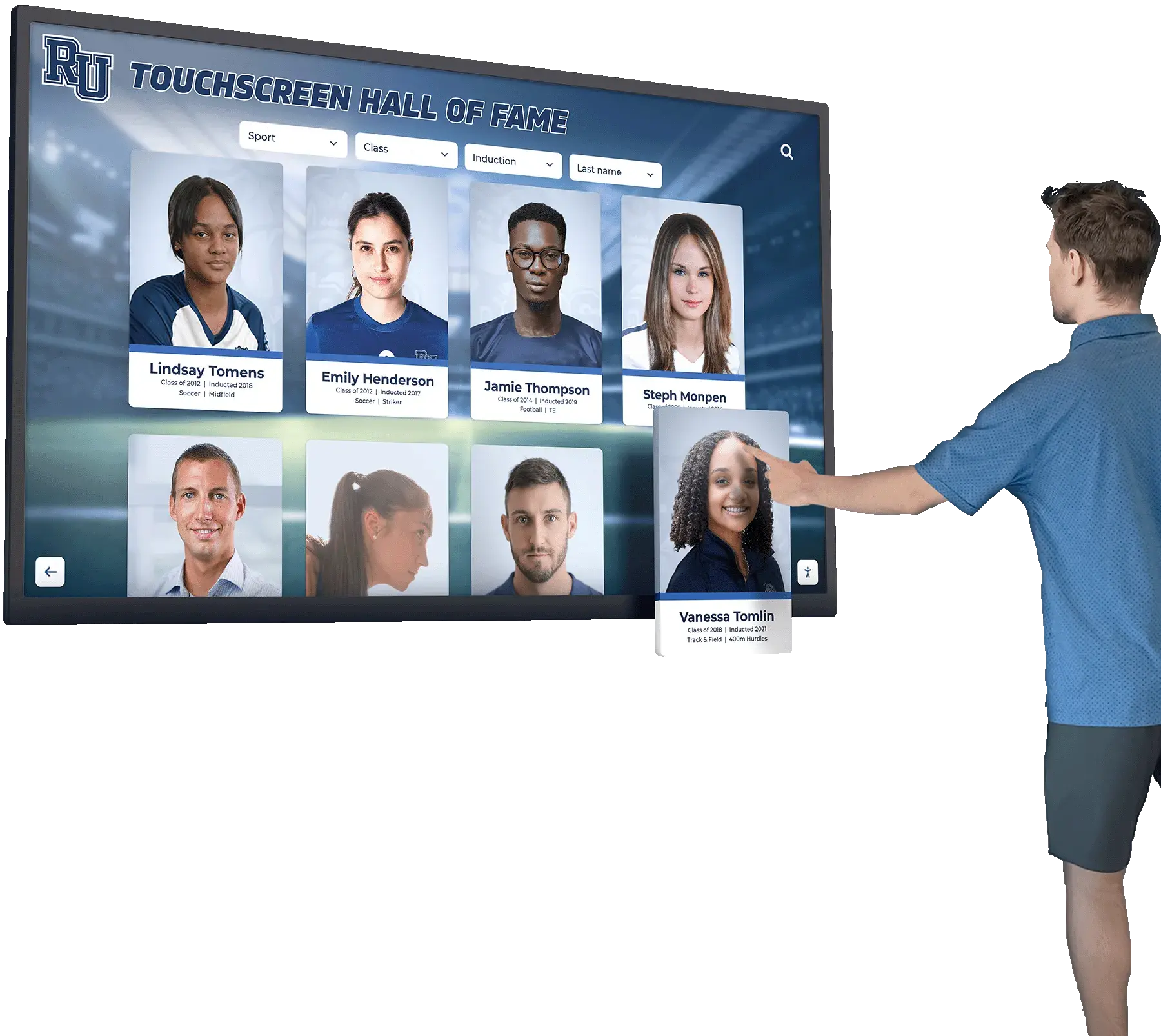
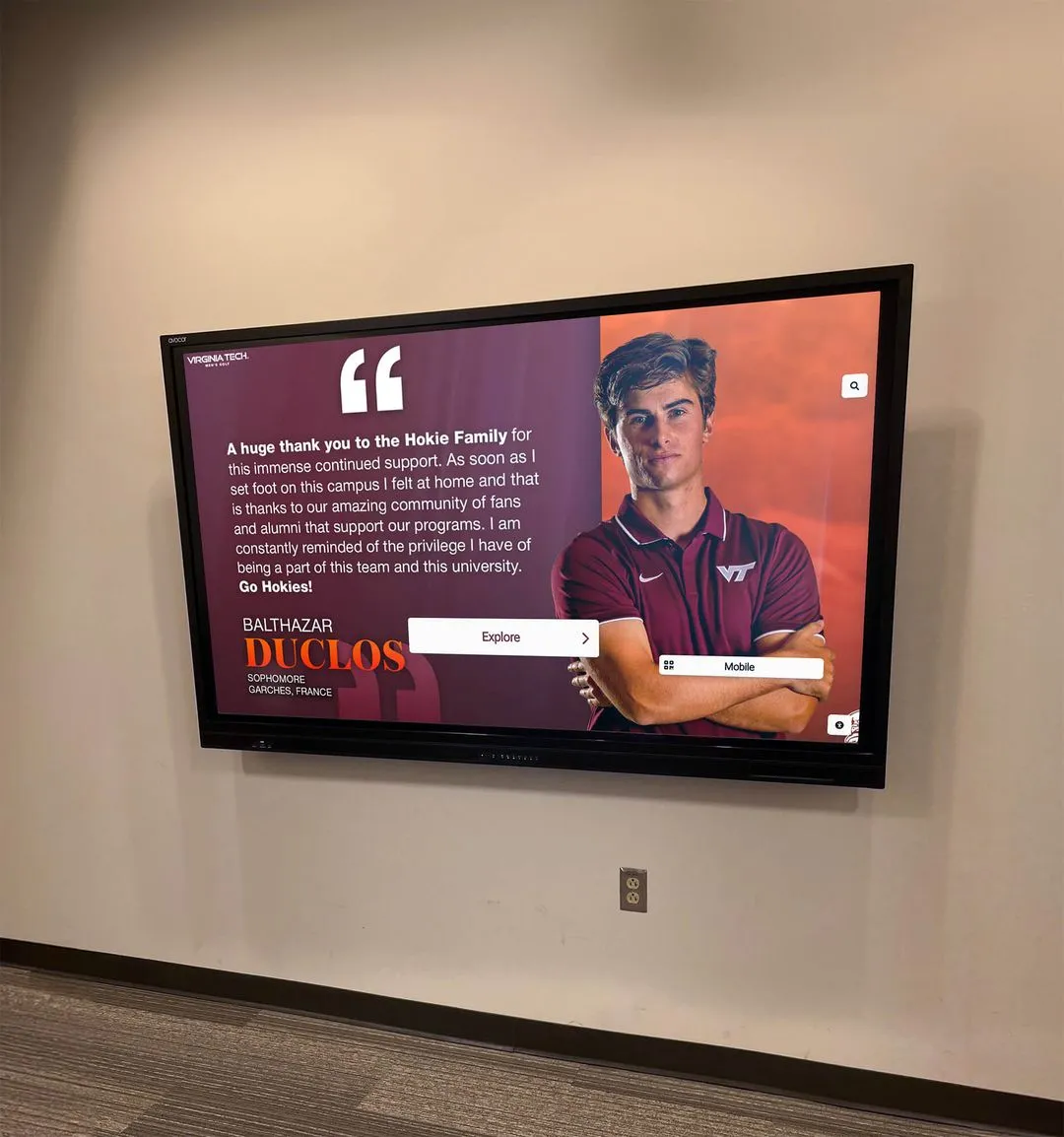
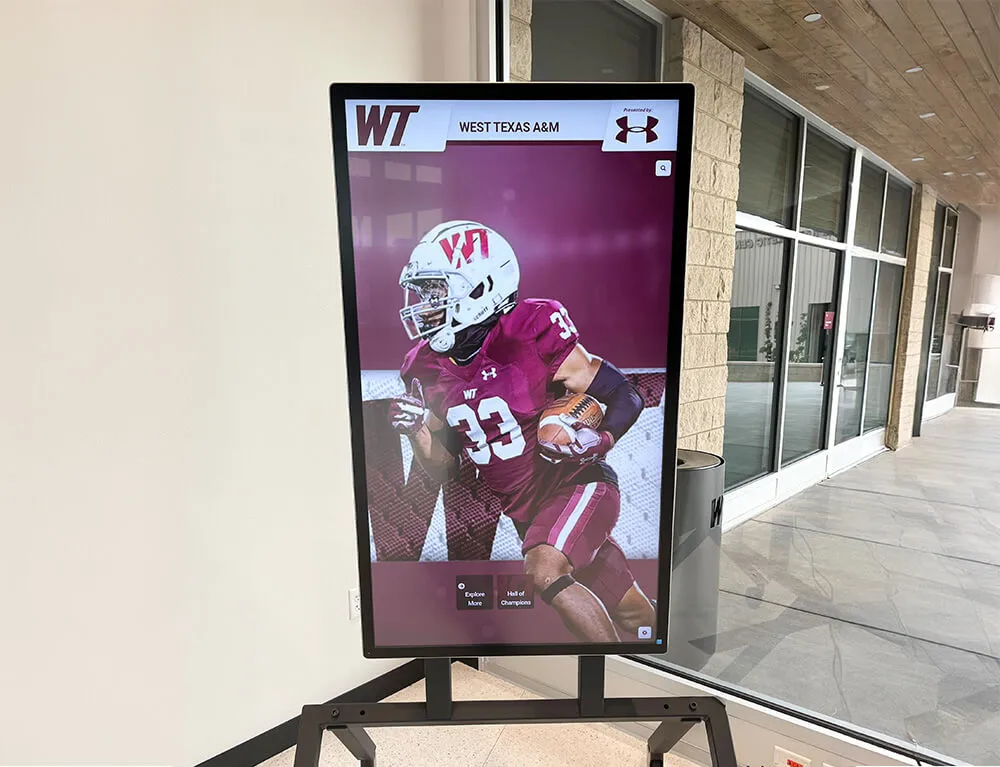
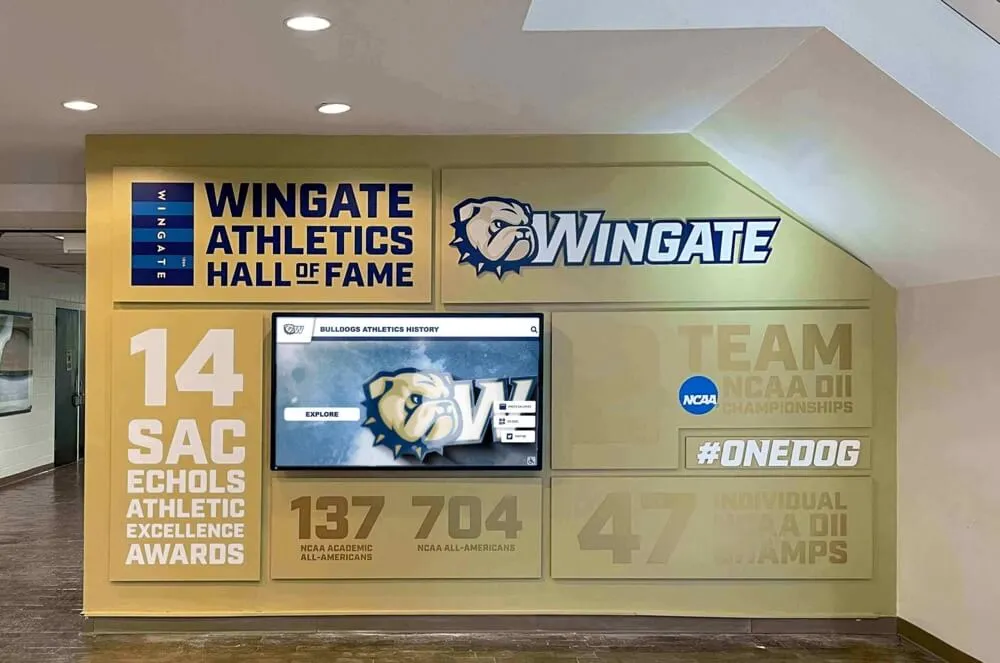
Interactive digital displays create dynamic championship recognition experiences where users actively explore team rosters, season statistics, playoff results, and championship moments through intuitive touchscreen interfaces that engage audiences far more effectively than static plaques or banners.
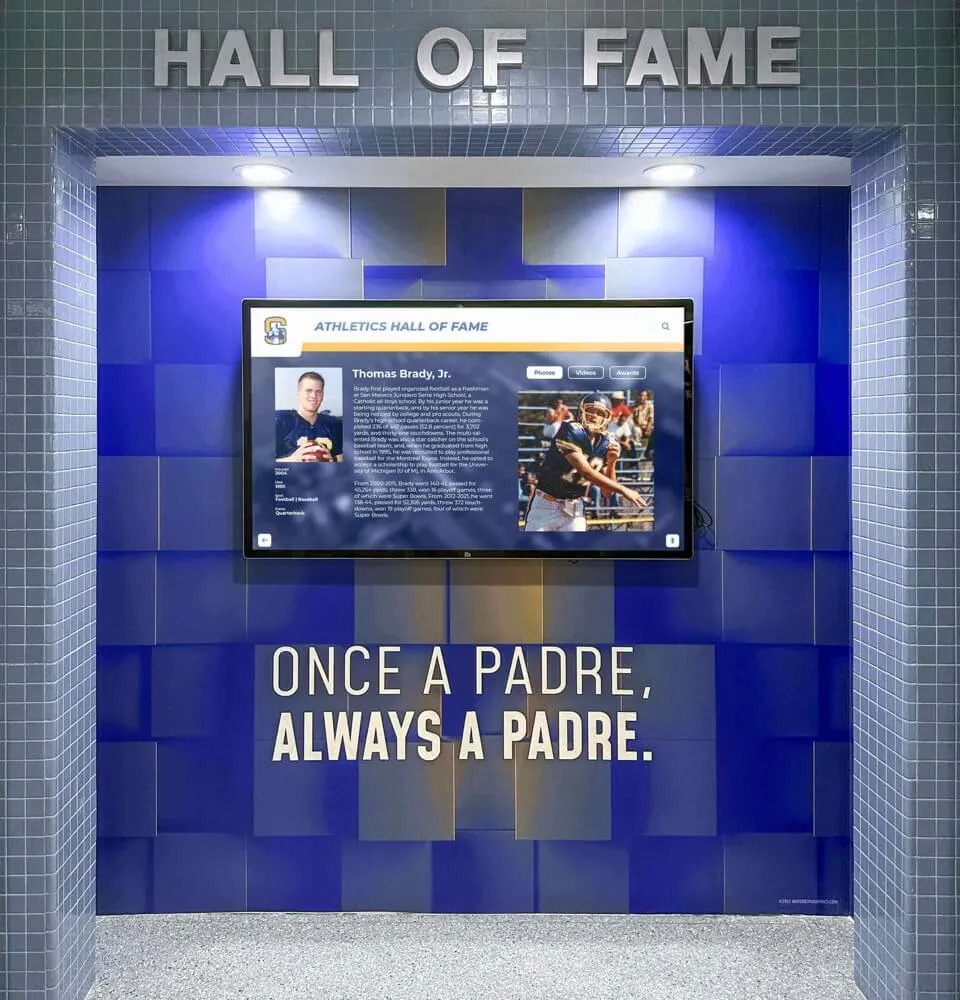
Comprehensive Championship Documentation: Digital platforms accommodate unlimited content for each championship including complete team rosters with player names, positions, and jersey numbers, season statistics and records documenting championship journey, playoff scores and results showing path to title, championship game details preserving final victory details, coaching staff recognition honoring leadership behind success, photo galleries capturing season highlights and championship celebrations, video highlights when available showcasing signature plays and moments, and alumni updates showing where championship team members are now.
This comprehensive documentation creates rich historical archives preserving championship excellence completely rather than the limited information physical banners or plaques can accommodate due to space constraints that force condensed recognition lacking detail and context.
Unlimited Championship Capacity: Perhaps the greatest advantage digital systems provide is unlimited recognition capacity. Schools with five championships receive equal space as programs with fifty titles. Every championship from program inception through present receives full recognition without space constraints forcing prioritization decisions that might emphasize recent titles while minimizing historical achievements or vice versa.
This democratic approach ensures all championship teams receive appropriate honor regardless of when they competed, maintaining institutional memory that might otherwise fade as decades pass and physical displays reach capacity limits that force difficult decisions about what remains visible versus what gets relegated to storage or removed entirely.
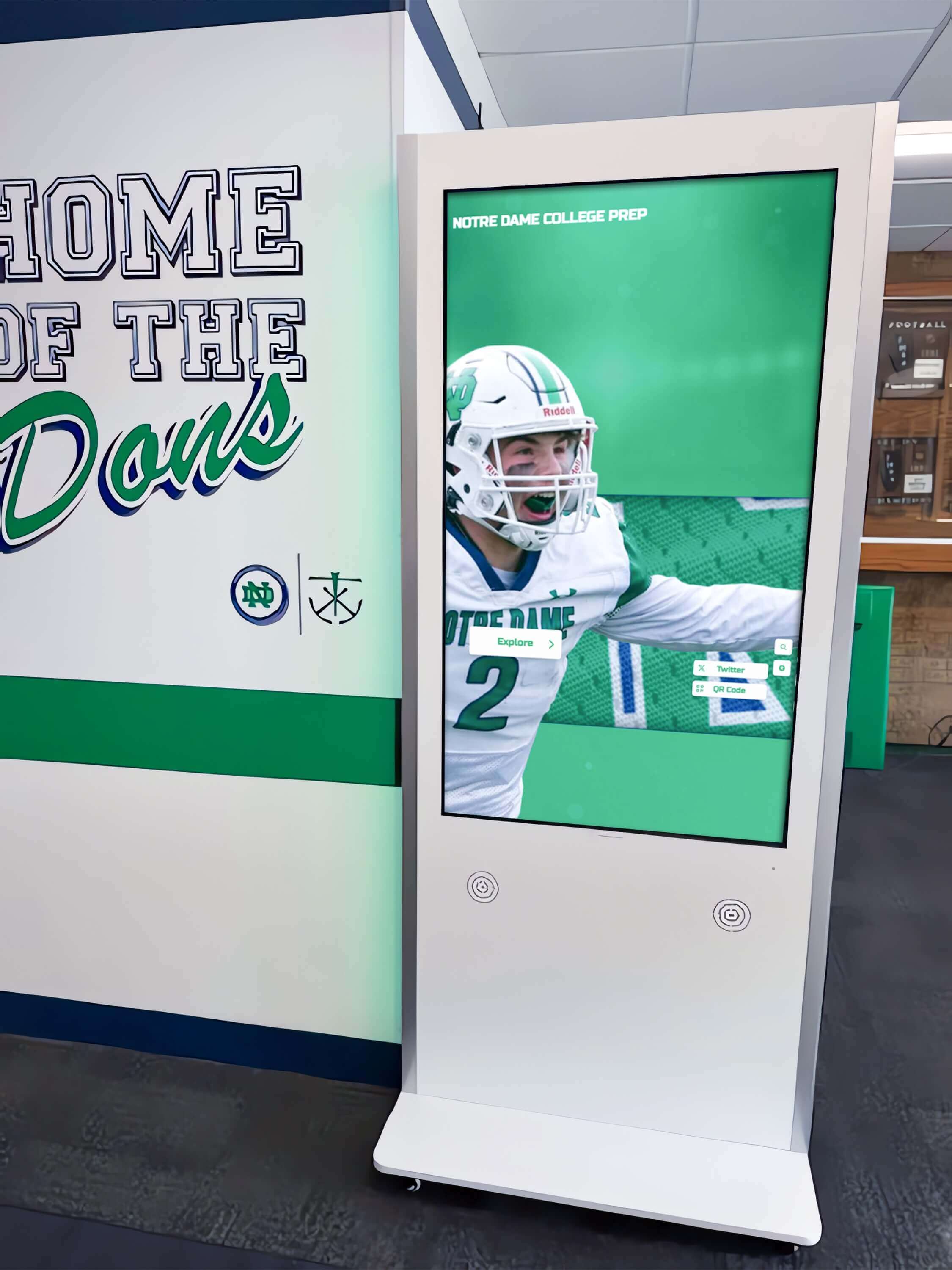
Instant Updates and Additions: When teams win championships, digital systems enable immediate recognition without waiting for banner production, ring delivery, or physical installation. Athletic departments can photograph championship trophies, upload team photos, enter rosters and statistics, and publish championship recognition within hours or days of title victories—creating timely celebration while excitement remains fresh and relevant to current students and communities.
Traditional recognition often requires weeks or months for production and installation, by which time championship excitement has cooled and attention shifted to other activities or upcoming seasons. Immediate digital recognition maintains championship momentum while demonstrating institutional responsiveness and commitment to honoring excellence promptly and appropriately.
Search and Discovery Features: Interactive systems allow users to search championship history by year, coach, player name, or keywords, facilitating personalized exploration traditional displays cannot provide. An alumnus visiting campus can instantly find their championship team from decades earlier. Current athletes can explore whether relatives or community members played on previous championship teams. Prospective families researching programs can review complete championship histories understanding competitive traditions and excellence standards.
Solutions like athletic recognition systems for high schools provide frameworks for implementing comprehensive recognition that celebrates championships alongside individual achievements, records, and hall of fame inductees in unified systems honoring all forms of athletic excellence.
Web-Based Championship Archives and Social Media Integration
Extending championship recognition beyond physical facility boundaries through online platforms and social media amplifies celebration while creating accessible historical records available globally to athletes, families, alumni, and communities celebrating football excellence.
Online Championship Platforms: Web-based championship platforms provide 24/7 access from any location enabling athletes away at college to share championship profiles with teammates, families living across the country or internationally to view championships, alumni decades removed to explore program history and reconnect with memories, media covering programs to research championship traditions without facility visits, and prospective athletes evaluating programs to understand competitive histories and championship expectations.
These platforms typically feature searchable championship databases filterable by year, coach, or classification, complete team rosters with individual player information when available, season summaries documenting championship journeys, photo galleries preserving visual history, video content showcasing highlights and championship moments, and social sharing capabilities extending recognition reach through family and alumni networks.
Social Media Championship Celebration: Social media provides immediate championship recognition reaching broader audiences than any physical display or traditional media outlet can achieve. Effective championship social media strategies include real-time championship celebration posting photos and videos immediately following victories, player spotlight series highlighting individual contributions to championships, throwback content celebrating historical championships on anniversaries, comparison content showing championship evolution across decades, and alumni engagement inviting former champions to share memories and reflections.
Social sharing by athletes and families amplifies recognition exponentially beyond direct institutional followers, creating organic reach that traditional recognition approaches cannot generate through physical displays restricted to facility visitors during limited hours.

Video Archives and Highlight Reels: Championship game footage creates powerful recognition content that brings victories to life through action and emotion that static photos cannot capture. Schools with video archives should develop championship highlight reels featuring signature plays and turning points from championship games, championship celebration moments capturing emotional victories, player interviews reflecting on championship experiences, season journey videos documenting paths to titles, and historical comparison videos showing championship evolution across eras.
These video archives serve multiple purposes beyond recognition—recruiting tools showcasing program excellence, educational resources for current athletes studying championship approaches, alumni engagement content connecting former players to programs, and historical preservation documenting competitive achievements in formats that tell complete stories rather than reducing championships to brief text summaries that fail to capture the emotion, dedication, and excellence required for state title victories.
Creating Championship Celebration Ceremonies and Events
Championship recognition extends beyond permanent displays to include celebration ceremonies and events that honor teams publicly while building school spirit, community pride, and institutional traditions around athletic excellence.
Immediate Post-Championship Celebrations
The hours and days immediately following championship victories provide unique opportunities for celebration while excitement remains at peak levels and emotional connections to achievement feel most powerful and immediate.
Victory Rally Planning: Many successful programs conduct victory rallies or assemblies celebrating championships immediately upon teams returning to campus. Effective rallies include championship team entrance creating dramatic moments as athletes arrive with trophies, administrator remarks acknowledging achievement and setting context about championship significance, coach speeches reflecting on season journeys and crediting athlete dedication, player testimonials sharing experiences and thanking supporters, trophy presentations showcasing championship hardware, and school community celebration creating memorable collective moments building school spirit and pride.
These rallies should occur quickly—ideally within 24-48 hours of championship victories—while excitement remains fresh and before holiday breaks or season endings disperse student bodies and fragment school communities that provide natural audiences for celebration.
Community Recognition Events: Many communities organize parades, banquets, or civic celebrations honoring championship teams through public acknowledgment that demonstrates how athletic achievement reflects positively on entire communities beyond just schools or athletic departments.
Community events might include victory parades through downtown areas or neighborhoods, city council or county commission proclamations recognizing achievements, chamber of commerce or civic organization banquets, local business window displays celebrating championships, and community fundraisers supporting program needs while celebrating success.
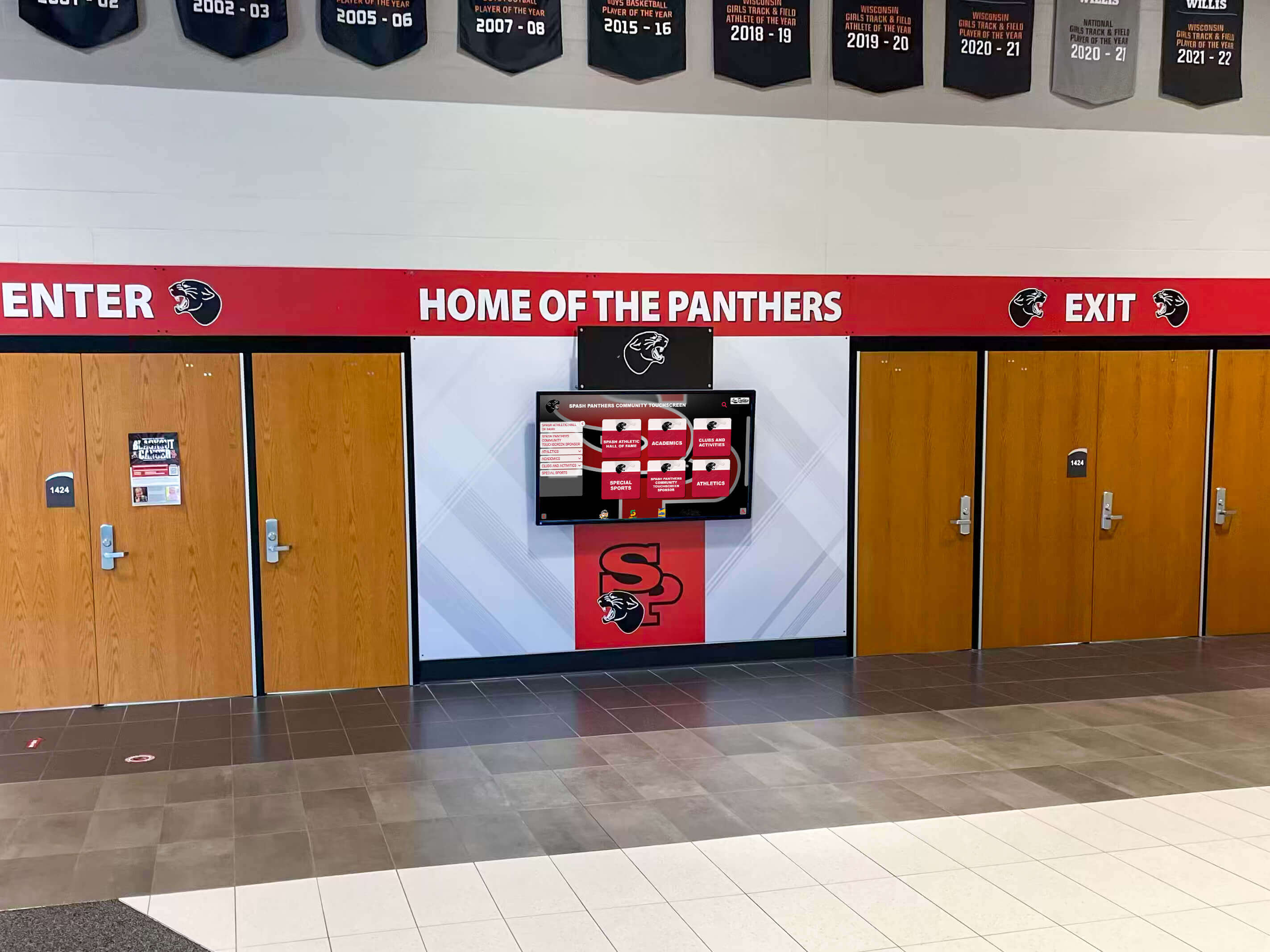
These broader celebrations demonstrate that high school athletics serve important community functions beyond wins and losses—building civic pride, creating shared identity, and providing positive focal points that unite diverse populations around common cause and celebration.
Media Coverage and Documentation: Coordinating with local media ensures championship coverage reaches broader audiences while creating permanent documentation of achievements through newspaper interviews and features, television news coverage and highlights, radio interviews with coaches and athletes, online articles and photo galleries, and social media coverage extending recognition to digital platforms.
Schools should actively facilitate media access through arranging interview opportunities with coaches and players, providing statistics and background information supporting story development, coordinating photo opportunities during celebrations, and sharing content on school channels that media outlets can republish or reference.
Annual Championship Banquets and Recognition Ceremonies
Formal banquets provide structured environments celebrating championships appropriately while honoring individual contributions, recognizing leadership, and acknowledging the comprehensive effort required for championship success beyond just game-day performances.
Banquet Structure and Components: Successful championship banquets typically include formal opening acknowledging achievement significance, championship season video presentation showing journey to title, individual award presentations recognizing various contributions and achievements, championship ring or award distribution creating memorable personal recognition moments, player and coach speeches reflecting on experiences, and informal reception time enabling personal celebration and relationship building.
Timing matters significantly for banquet success. Many programs schedule banquets 4-6 weeks after season conclusions—providing sufficient time for ring production and video editing while occurring before holidays or season endings when scheduling becomes difficult and attention shifts to other activities that might reduce attendance or diminish event impact.
Individual Award Categories: Beyond celebrating team championships, banquets provide opportunities recognizing individual achievements including most valuable player awards, offensive and defensive player awards, special teams recognition, most improved player awards, leadership and character awards, academic excellence recognition, and career milestone achievements for graduating seniors.
These individual awards ensure all significant contributions receive acknowledgment rather than focusing exclusively on statistical leaders or high-profile positions that might overshadow linemen, special teams players, or athletes whose contributions resist easy quantification but proved essential for championship success.
Family and Community Engagement: Championship banquets should include not just athletes and coaches but also families who supported athletes throughout seasons, administrators who provided institutional support and resources, booster club members whose fundraising enabled program excellence, community supporters who attended games and celebrated achievements, and younger athletes who will carry forward championship traditions and standards.
Inclusive approaches demonstrate that championships reflect comprehensive community effort rather than isolated achievement by individual teams operating independently from broader support systems that enable competitive excellence and provide resources necessary for sustained program success.
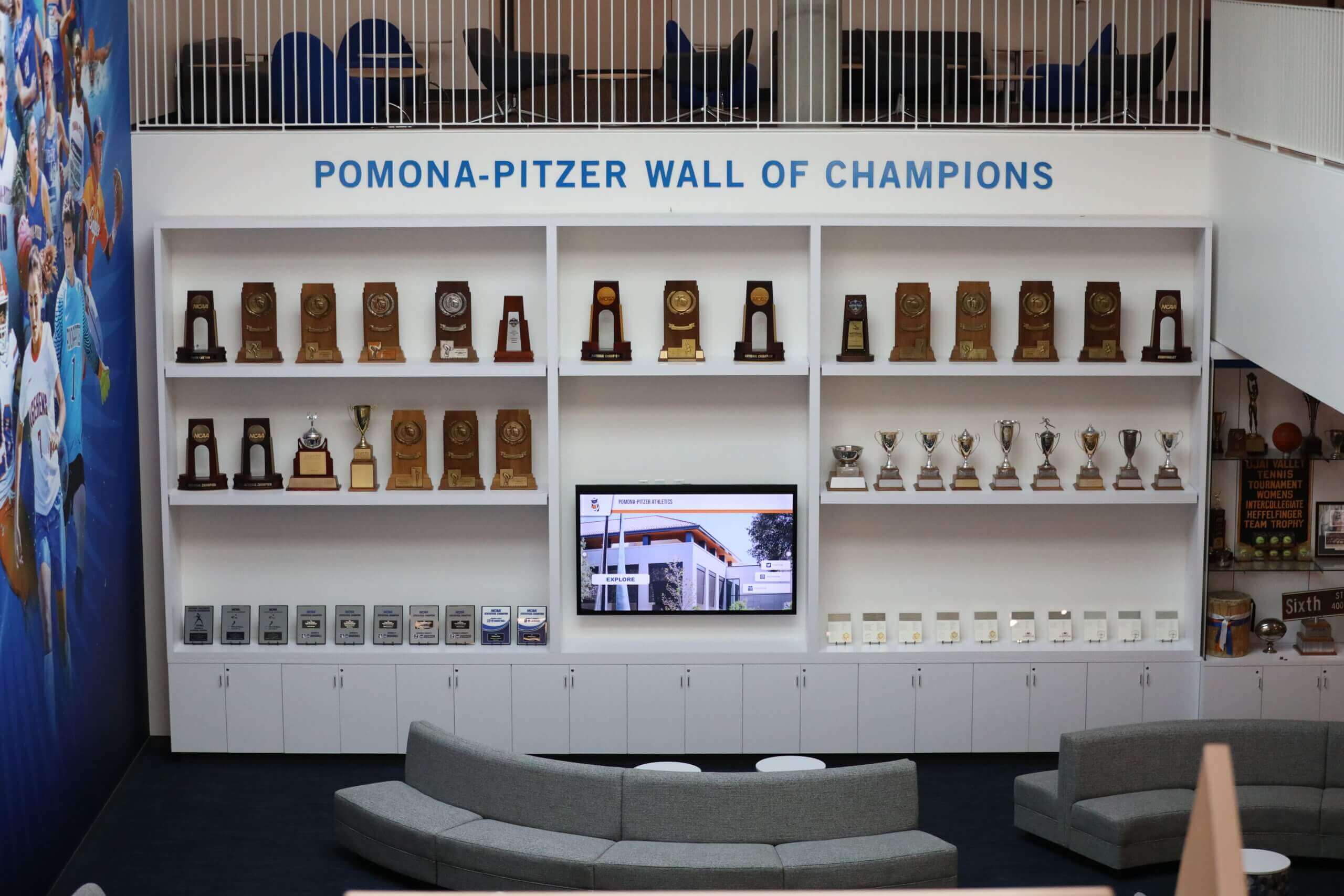
Preserving Championship History and Institutional Memory
Championship excellence deserves permanent preservation ensuring achievements remain accessible and appreciated decades after titles are won and original participants graduate, move away, or pass on, leaving championship legacies as institutional assets that inspire future generations.
Comprehensive Championship Documentation
Systematic documentation practices ensure championship details aren’t lost to time, memory degradation, or institutional transitions that might otherwise erase important historical information about competitive achievements and the athletes who earned them.
Essential Documentation Elements: Complete championship records should include full team rosters with athlete names, positions, jersey numbers, and classes, complete season statistics for team and individual performance, game-by-game results throughout championship seasons, playoff brackets showing championship tournament progression, championship game details including final scores, statistics, and turning points, coaching staff listings recognizing leadership contributions, team photos capturing championship squads, action photos from games showing athletes competing, celebration photos documenting championship moments, newspaper clippings providing contemporary reporting and community reaction, video footage when available preserving games and celebrations, and athlete biographies providing context about individuals beyond just statistics.
This comprehensive approach creates complete championship archives that tell full stories rather than reducing complex season-long achievements to single-sentence summaries that fail to honor the depth of dedication, skill, and teamwork required for championship success.
Organizing Historical Information: Championship information should be systematically organized in formats enabling easy access and exploration through chronological archives listing championships year by year, coaching era organization grouping championships by head coaches, player databases enabling searches by athlete names, statistical compilations tracking records and achievements across championships, and cross-referenced systems connecting related information such as athletes who competed in multiple championships or families with members across different championship teams.
Digital systems excel at this organization by enabling multiple simultaneous organizational schemes—users can view chronological listings, search by coach name, filter by classification, or explore individual athlete profiles all within unified databases that traditional physical displays cannot replicate due to inherent limitations in how physical information can be organized and accessed.
Oral History Projects: As decades pass, important championship details and context risk being lost as participants age and memories fade. Proactive oral history programs preserve experiences through video interviews with championship coaches reflecting on seasons, athlete testimonials sharing personal experiences and memories, parent perspectives describing what championships meant to families, community member reflections providing broader context, and recorded conversations capturing group interactions and shared remembering among teammates.
These oral histories add emotional depth and personal context that written records and statistics cannot capture, humanizing championships and creating connections between historical achievements and current athletes who benefit from understanding that championship excellence requires more than just physical talent—it demands character, dedication, leadership, and teamwork sustained across entire seasons under pressure.
Creating Championship Timelines and Historical Displays
Visual timelines and historical displays help students, families, and communities understand program championship traditions and evolution over decades of competitive excellence.
Championship Timeline Formats: Effective timeline approaches include linear chronological displays showing championship progression across decades, coaching era comparisons highlighting achievements under different leadership, classification or division organization showing titles across different competitive tiers, decade comparisons examining how football and championships evolved over time, and interactive digital timelines enabling exploration of specific championships with complete details accessible through selection or interaction.
These timelines contextualize individual championships within broader program narratives, demonstrating whether single championships represent unique achievements or reflect sustained excellence traditions maintained across generations of athletes and coaches building upon previous successes and establishing competitive standards.
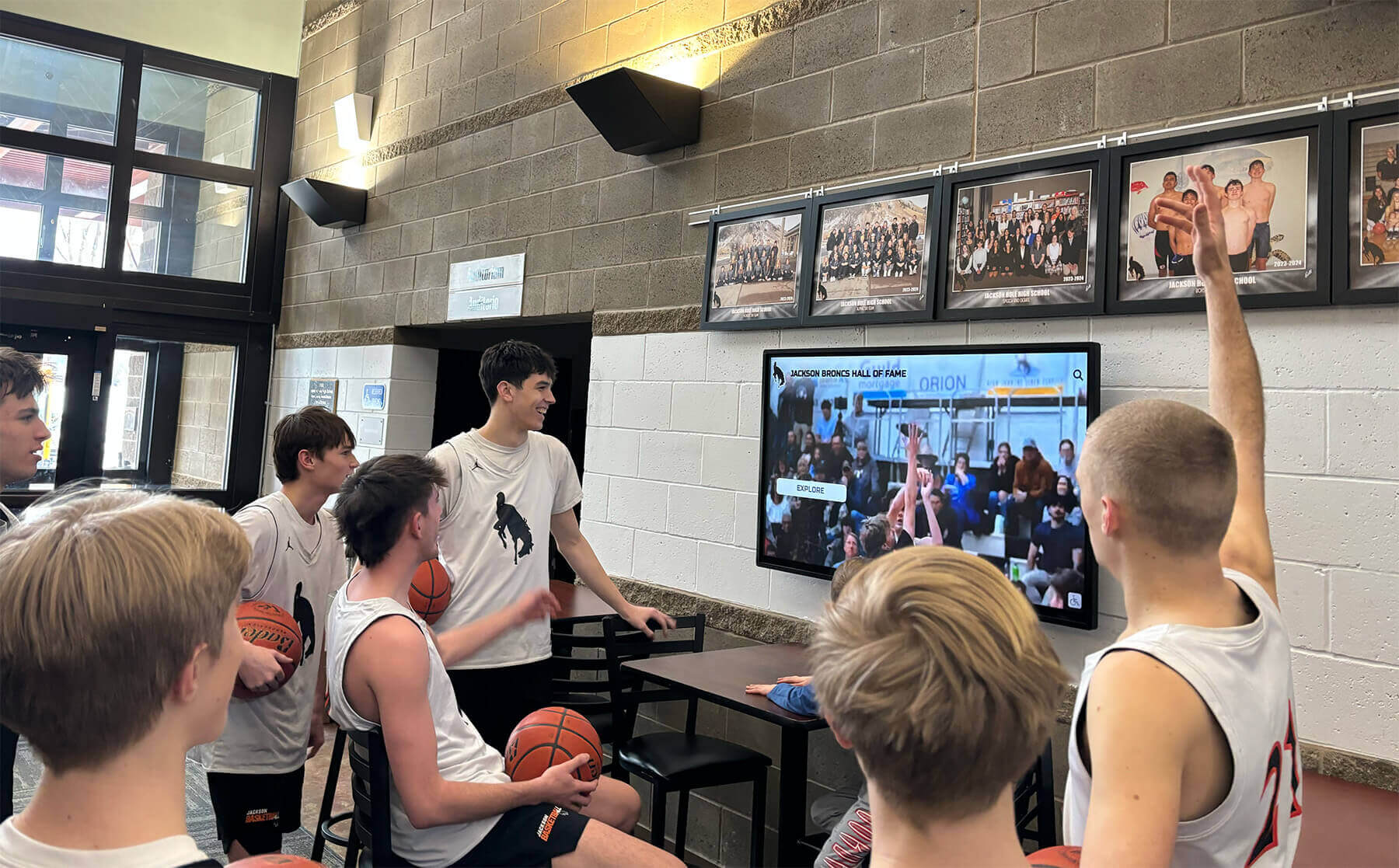
Comparative Historical Analysis: Historical displays can incorporate interesting analytical perspectives including championship frequency showing years between titles, competitive classification trends examining championships across divisions, coaching tenure and championship correlation, athlete development examining whether championships correlate with youth program strength or specific training approaches, and community support patterns exploring relationships between booster club strength, facility investments, and championship success.
These analyses provide interesting perspectives for students, community members, and program supporters while demonstrating that championship success doesn’t occur randomly—it reflects systematic factors including quality coaching, athlete development, institutional support, and community investment that combine creating conditions enabling sustained competitive excellence.
Photo and Artifact Collections: Physical and digital archives preserving championship-related materials create valuable historical resources including game jerseys or helmets from championship teams, game balls from championship victories, championship patches or pins worn during title runs, ticket stubs from championship games, programs from championship contests, signed items from championship athletes, newspaper front pages celebrating victories, and historical equipment showing how football gear evolved across decades of championships.
These artifacts connect present to past in tangible ways that statistics and descriptions cannot replicate, helping current students appreciate that athletes in historical championship photos walked the same hallways, trained in similar facilities, and experienced comparable challenges, dreams, and emotional journeys toward championship excellence.
Funding Championship Recognition Programs
Championship recognition requires financial investment spanning ring purchases, banner production, display systems, documentation efforts, and celebration events. Sustainable funding approaches ensure appropriate recognition regardless of budget constraints that might otherwise limit celebration of athletic excellence.
Traditional Funding Sources and Budget Allocation
Most championship recognition funding comes from established athletic department budgets, booster club support, and community fundraising that provides resources for both immediate celebration and permanent recognition systems.
Athletic Department Budget Integration: Forward-thinking athletic departments incorporate championship recognition into regular operating budgets through line items for championship rings allocated annually based on projected needs, banner and display maintenance budgets ensuring current appearance, trophy case updates maintaining professional presentation, digital system subscriptions or licenses if using modern platforms, and celebration event funding supporting rallies, assemblies, or banquets.
Budget integration treats recognition as essential program function rather than discretionary expense subject to elimination during budget pressures, ensuring championship achievements receive appropriate honor regardless of annual financial circumstances that might vary based on fundraising success or institutional budget allocations.
Booster Club Championship Support: Athletic booster clubs often view championship recognition as appropriate funding priority since it celebrates the athletic excellence their fundraising efforts help create through facility improvements, equipment purchases, and program support that enables competitive success.
Booster funding might support championship ring programs covering full or partial ring costs, physical display enhancements including banner production and installation, digital recognition systems providing initial implementation or annual subscriptions, celebration event expenses covering banquet costs or rally materials, and championship documentation funding professional photography, videography, or historical preservation projects.
Clear communication between athletic departments and booster organizations ensures recognition needs receive appropriate priority in fundraising and spending decisions, preventing situations where facilities or equipment receive all attention while recognition of athletes who use those resources gets neglected despite being equally important for program culture and morale.

Community Sponsorship Opportunities: Local businesses often support championship recognition through sponsorships that associate their brands with athletic excellence while providing needed funding for recognition programs, celebration events, or display systems.
Sponsorship opportunities might include championship ring sponsors where businesses cover ring costs in exchange for recognition, banner sponsors funding specific championship banner production, digital display sponsors supporting modern recognition systems, celebration event sponsors covering banquet or rally expenses, and championship program sponsors funding broader recognition initiatives across multiple years or teams.
Sponsorships should provide appropriate recognition without commercializing athletics inappropriately—typically through acknowledgment in programs, facility signage, or website recognition rather than advertising placement on uniforms or equipment that might cross lines between supporting student athletics and commercial exploitation of high school sports.
Cost-Effective Recognition Strategies
Schools with limited budgets can implement meaningful championship recognition through strategic approaches that maximize impact while minimizing expenses, ensuring all championship teams receive appropriate honor regardless of financial constraints.
Digital-First Recognition: Digital recognition platforms provide cost-effective alternatives to expensive physical displays through social media celebration requiring zero financial investment beyond staff time, free or low-cost website platforms such as Google Sites or WordPress for championship archives, digital photo galleries using free services like Google Photos or Flickr, QR codes linking physical displays to rich online content, and existing digital signage infrastructure repurposed for championship recognition.
These digital approaches create comprehensive recognition accessible globally to athletes, families, and alumni while avoiding the high costs associated with physical banners, trophy cases, or traditional displays that require ongoing maintenance, occupy limited space, and lack the flexibility and capacity that digital systems provide.
Scaled Physical Recognition: Budget-conscious schools can implement scaled physical recognition providing meaningful tangible celebration without premium costs through team plaques instead of individual rings providing group recognition at lower expense, photo composites showing championship teams in affordable framed displays, certificate programs printing professional recognition documents, medallions or pendants as ring alternatives at fraction of cost, and DIY banner programs using school printing capabilities or parent volunteers.
These approaches maintain physical recognition traditions while adapting to financial realities, ensuring championship teams receive tangible honor even when premium recognition options exceed available budgets or would require fundraising that proves impractical given other program needs and priorities.
Progressive Recognition Systems: Many schools implement progressive recognition where initial championship celebration occurs immediately using low-cost or no-cost approaches, with enhanced recognition added over time as funding becomes available. For example, immediate digital recognition and social media celebration, followed by photo composites produced within weeks, with permanent displays or rings added when booster fundraising succeeds or subsequent budget years provide additional resources.
This approach ensures timely celebration while championship excitement remains fresh, with permanent recognition following as financial circumstances allow rather than delaying all recognition until comprehensive funding exists—which might never materialize in some cases or occur so far after championship victories that emotional impact and relevance diminish significantly.
Resources on booster club fundraising strategies provide frameworks for generating revenue supporting championship recognition programs and broader athletic department needs.
Leveraging Championship Recognition for Program Benefits
Well-executed championship recognition provides benefits extending far beyond simply honoring past achievements—it creates strategic advantages supporting current teams, alumni engagement, community support, and sustained competitive excellence.
Inspiring Current Athletes Toward Championship Pursuit
Visible championship recognition creates powerful motivation for current athletes by demonstrating that excellence receives lasting celebration and permanent institutional honor rather than fleeting acknowledgment that disappears once seasons conclude.
Setting Performance Standards: Championship displays communicate clear standards showing athletes exactly what level of excellence earns the most prestigious program recognition through championship rosters demonstrating required talent density, championship statistics illustrating performance levels needed for title runs, championship season records showing consistency requirements, and championship documentation revealing preparation, dedication, and commitment standards.
These visible standards help athletes understand that championship success doesn’t occur randomly or through luck—it requires specific levels of performance sustained throughout seasons, comprehensive team excellence rather than individual brilliance alone, and dedication extending beyond game days to training, preparation, and development occurring year-round.
Creating Championship Culture: Programs with strong championship recognition foster cultures where title pursuit becomes normalized expectation rather than distant aspiration. Younger athletes grow up surrounded by championship imagery, absorb championship mentality, understand championship standards, and inherit championship expectations from older teammates who learned from previous generations creating self-sustaining cultural transmission.
This championship culture proves far more powerful than coaching speeches or motivational tactics because it reflects institutional identity rather than individual coach preferences—creating sustained competitive advantages that persist across coaching changes and athlete turnover that might disrupt programs lacking this cultural foundation.
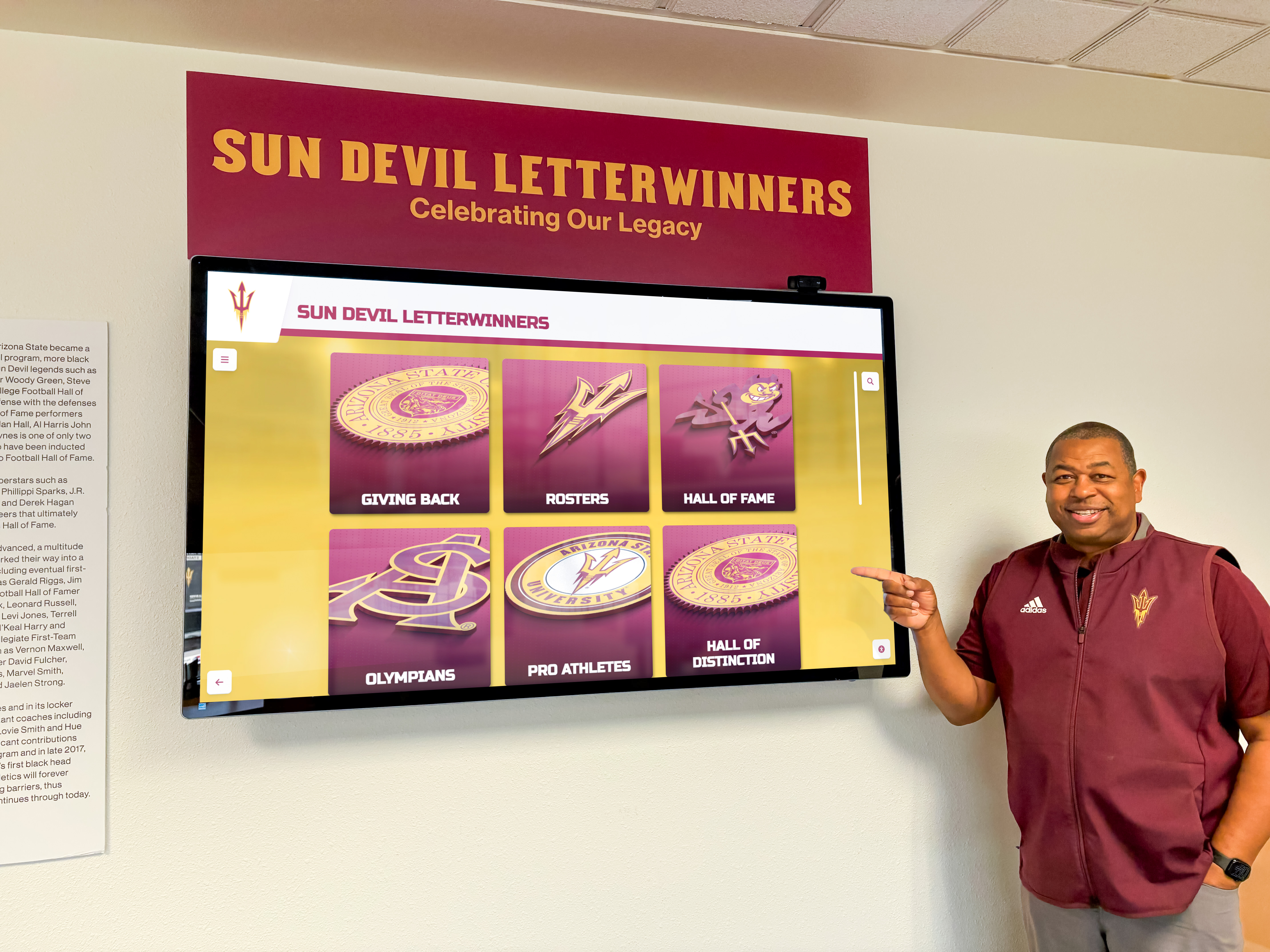
Connecting Past and Present: Recognition systems creating connections between historical championship teams and current athletes provide powerful motivation through alumni visits and speaking engagements where championship athletes share experiences, mentorship programs pairing current players with championship alumni, social media content featuring historical champions encouraging current teams, and recognition ceremonies where historical champions present awards to current athletes.
These intergenerational connections help current athletes appreciate that they represent latest chapters in ongoing championship traditions extending across decades—creating sense of responsibility to maintain standards and honor excellence established by those who came before while building their own championship legacies for future generations to continue.
Strengthening Alumni Engagement and Support
Championship recognition provides natural connection points maintaining alumni relationships with programs, schools, and communities long after graduation—relationships that benefit programs through support, mentorship, and advocacy that sustains competitive excellence across generations.
Alumni Championship Reunions: Championship anniversaries provide perfect occasions for team reunions bringing former athletes back to campuses reconnecting with teammates, coaches, and programs while demonstrating to current athletes how championship excellence creates lifetime bonds and lasting connections extending far beyond high school seasons.
Many programs organize 10-, 20-, 25-, or 50-year championship reunion events where historical championship teams are honored at current games, participate in recognition ceremonies, receive updated recognition in displays, tour facilities showing program evolution, and meet current athletes building intergenerational connections.
Fundraising and Support: Championship alumni often become program supporters providing financial contributions supporting current teams, equipment donations or facility improvements, mentorship for current athletes, career networking helping graduating seniors, advocacy with school administrators ensuring program support, and community ambassadorship promoting programs broadly.
Programs maintaining strong championship recognition and alumni engagement benefit from sustained support that enhances competitive capabilities through resources, connections, and advocacy that programs lacking these relationships cannot easily replicate regardless of coaching quality or athlete talent available in any given season.
Digital Engagement Opportunities: Modern digital recognition systems enable ongoing alumni engagement through online championship archives alumni explore regularly, social media content celebrating historical championships, crowdsourcing campaigns asking alumni to share memories and photos, virtual reunions connecting geographically dispersed teammates, and update programs keeping alumni informed about current team success.
These digital touchpoints maintain regular program connection even for alumni who have relocated far from communities where they grew up and competed, ensuring championship experiences remain accessible and relevant decades after seasons concluded and creating sustained emotional bonds supporting long-term relationship maintenance.
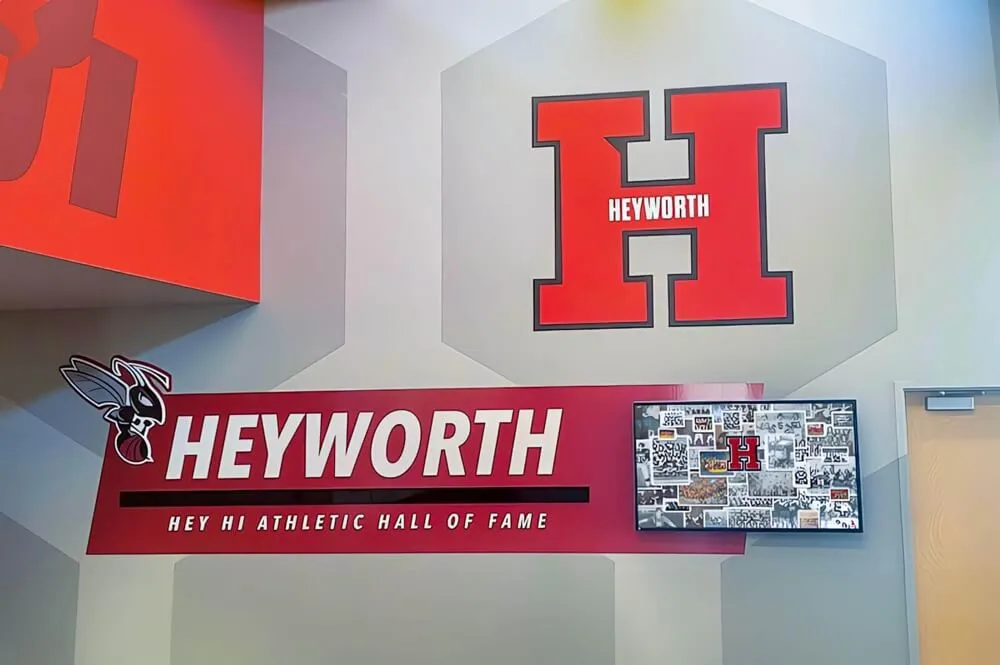
Solutions like athletic hall of fame systems provide comprehensive platforms celebrating championships alongside individual achievements, records, and hall of fame inductees in unified recognition systems that strengthen alumni engagement while honoring all forms of athletic excellence.
Building Community Pride and School Spirit
Championship recognition extends beyond athletics to serve broader community functions building civic pride, school spirit, and institutional identity that benefits entire educational communities rather than just athletic departments or individual sports programs.
Positive Community Identity: In many communities, high school football championships become defining civic moments creating shared identity and pride that transcends individual participation through community celebrations uniting diverse populations, positive media coverage showcasing communities nationally, economic benefits from increased visibility and reputation, and recruitment advantages attracting families to communities with strong school traditions.
Visible championship recognition maintains these benefits long after title seasons conclude by reminding community members and visitors that excellence characterizes these places—excellence worth celebrating, supporting, and perpetuating through continued investment in young people, educational institutions, and athletic programs that develop character while pursuing competitive success.
School Spirit and Institutional Pride: Championship recognition strengthens school spirit benefiting student experience broadly through pride in institutional excellence and tradition, increased attendance at athletic events and student activities, stronger student engagement with school programs, enhanced school reputation affecting college admissions and opportunities, and positive school culture built around pursuing excellence.
These broader benefits justify championship recognition investment even beyond its direct impact on athletic programs and participants—championships serve institutional purposes creating positive environments that enhance education, student development, and community engagement.
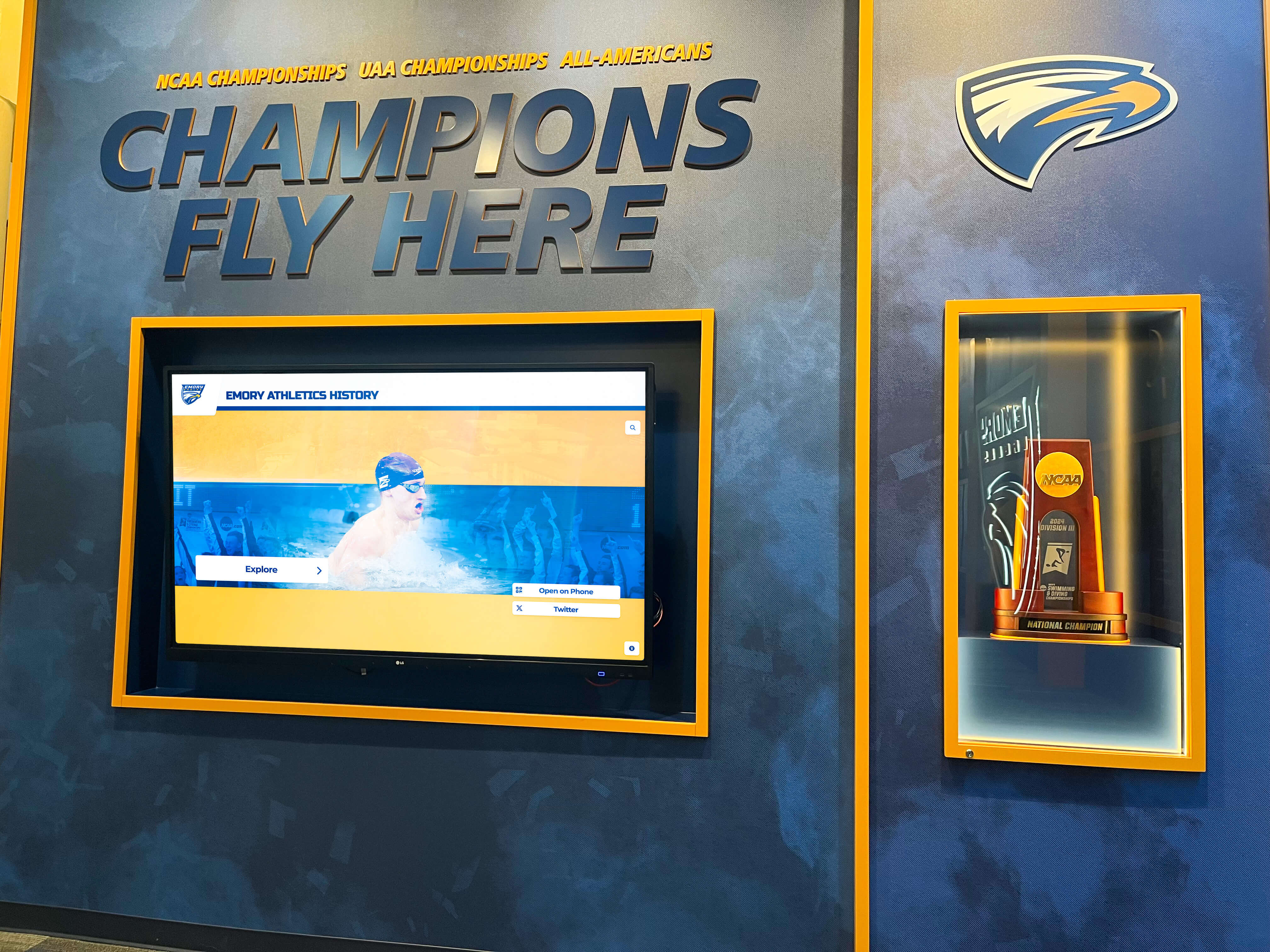
Recruitment and Enrollment: Schools with strong athletic traditions often experience recruitment benefits extending beyond just athlete families to families valuing excellence, tradition, community engagement, and school spirit demonstrated through championship recognition and athletic program quality.
Open houses, campus tours, and recruitment materials frequently highlight athletic facilities and championship traditions demonstrating that schools value excellence across domains—not just academics but also athletics, arts, and activities that comprise comprehensive educational experiences that develop well-rounded students prepared for success beyond high school.
Implementing Championship Recognition Systems
Schools seeking to establish or enhance championship recognition benefit from systematic approaches addressing planning, implementation, maintenance, and continuous improvement ensuring recognition systems serve intended purposes effectively while remaining sustainable across years and decades.
Assessing Current Recognition and Identifying Gaps
Before implementing new recognition systems, schools should evaluate existing approaches identifying strengths to build upon and gaps requiring attention to ensure comprehensive appropriate championship honor.
Recognition Audit Questions: Comprehensive assessment examines multiple dimensions including what championships are currently recognized and which might be missing, whether all championship teams receive equal recognition or some are emphasized disproportionately, if recognition information is accurate and complete or contains errors and omissions, whether displays are current or outdated with recent championships unrecognized, if physical displays are maintained or deteriorating, whether recognition is accessible to intended audiences or located poorly, and if recognition inspires current athletes or feels disconnected from contemporary programs.
Honest assessment often reveals uncomfortable truths—championships forgotten or never properly recognized, displays containing factual errors persisting for years, inequitable recognition favoring certain sports or eras, or neglected systems no longer serving intended purposes due to institutional transitions or lack of ongoing maintenance.
Stakeholder Input: Assessment should include perspectives from multiple constituencies including current coaches reflecting on recognition adequacy, athletic directors evaluating administrative burden and effectiveness, current athletes sharing whether recognition inspires them, parents and families providing external perspectives, alumni describing recognition importance to their continued connection, and community members explaining how recognition affects school perception.
Different stakeholders often have diverging priorities and preferences—coaches might emphasize motivation while alumni focus on preservation and parents care about inclusive celebration—requiring balanced approaches addressing multiple legitimate needs rather than optimizing exclusively for single constituency at others’ expense.
Selecting Recognition Approaches and Technologies
Based on assessment findings, schools select recognition approaches matching their specific situations, priorities, resources, and constraints rather than adopting one-size-fits-all solutions that might not fit particular institutional contexts.
Criteria for Recognition System Selection: Important evaluation factors include budget alignment ensuring approaches fit available resources, maintenance requirements matching staff capacity and expertise, space considerations accounting for physical constraints, content capacity accommodating championship volume across program history, update frequency enabling timely recognition of new championships, accessibility ensuring recognition reaches intended audiences, engagement potential measuring whether approaches inspire current athletes, and growth capacity accommodating future championships without requiring complete system replacement.
Different schools reach different conclusions based on these criteria. Small schools with limited budgets might implement digital-first approaches using free platforms and existing equipment. Large schools with extensive traditions might invest in comprehensive systems combining physical and digital recognition. Schools with strong booster support might prioritize premium physical recognition while others with limited funding emphasize cost-effective digital platforms providing broader capability at lower expense.
Implementation Planning: Successful implementation requires careful planning addressing timeline development establishing realistic schedule, responsibility assignment ensuring accountability, budget allocation confirming resource availability, content development planning, communication strategy informing stakeholders, and success metrics defining how effectiveness will be measured.
Phased approaches often work better than attempting comprehensive implementation simultaneously—perhaps starting with digital recognition for recent championships, then gradually digitizing historical championships, before adding physical display enhancements or ring programs as budget allows and experience grows with new recognition systems and technologies.
Ensuring Sustainable Long-Term Operation
Recognition systems require ongoing attention maintaining quality, accuracy, and relevance over time as new championships occur, staff transitions happen, and institutional priorities evolve across years and decades.
Designated Responsibility: Successful programs assign explicit responsibility for championship recognition to specific individuals ensuring accountability through athletic director oversight providing ultimate responsibility, assistant coach or staff management handling daily operations, student assistants supporting content updates and maintenance, and booster club support funding ongoing needs and enhancements.
Clear responsibility prevents situations where everyone assumes someone else manages recognition resulting in neglect, inaccuracy, and deterioration that undermines recognition value and disrespects championship teams through institutional indifference despite initial good intentions and investments.
Annual Recognition Cycle: Systematic scheduling ensures consistent operation including post-championship immediately updating recognition for new titles, summer review auditing accuracy and completeness, fall maintenance addressing physical or digital system needs, winter planning preparing for potential championships, and spring enhancement implementing improvements based on lessons learned.
Regular cycles create institutional routines that persist across personnel transitions, administrative changes, and budget fluctuations that might otherwise disrupt recognition continuity and quality.
Continuous Improvement: Recognition systems should evolve based on experience, technology advancement, and stakeholder feedback through annual reviews assessing effectiveness, stakeholder surveys gathering input, technology updates implementing improvements, content enhancement expanding historical documentation, and process refinement increasing efficiency.
Programs treating recognition as ongoing initiatives rather than one-time projects achieve sustained excellence appropriately honoring all championship teams across generations while adapting to changing needs, technologies, and expectations that evolve over time.
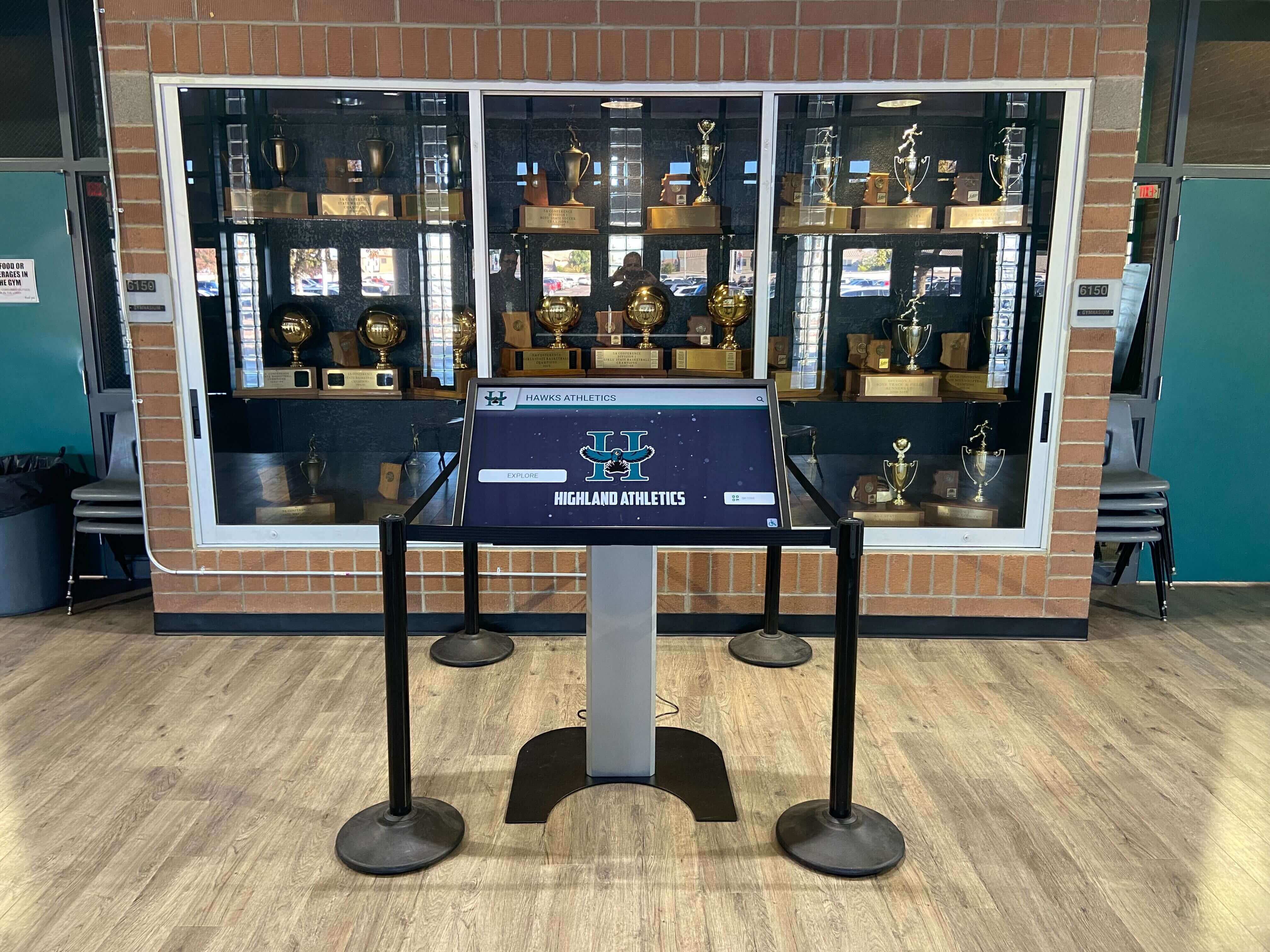
Conclusion: Honoring Championship Excellence That Inspires Future Success
High school football state championships represent pinnacle achievements earned through extraordinary dedication, teamwork, perseverance, and excellence sustained across entire seasons under intense competitive pressure. These championships validate years of preparation, countless training hours, and comprehensive commitment from athletes, coaches, families, and communities working toward common goals.
Championship excellence deserves recognition matching its significance—recognition that preserves achievements permanently, inspires current athletes toward their own championship pursuits, strengthens alumni connections maintaining program support across generations, builds community pride and school spirit benefiting entire institutions, and creates visible standards communicating what championship excellence requires.
Traditional recognition approaches using banners, rings, and trophy cases served schools well for decades, but modern digital recognition platforms eliminate inherent limitations while providing capabilities impossible through physical displays alone. Unlimited championship capacity accommodating all titles across program histories, instant updates celebrating achievements immediately after victories, rich multimedia content documenting championships comprehensively, universal accessibility extending recognition globally beyond facility boundaries, and comprehensive historical archives preserving institutional memory permanently.
Schools of all sizes and budgets can implement effective championship recognition through approaches ranging from free digital platforms to comprehensive systems combining physical and digital elements. What matters most isn’t technology sophistication or budget size but rather institutional commitment to honoring championship excellence appropriately, systematically, and permanently while ensuring recognition serves strategic purposes inspiring current athletes, engaging alumni, and building program cultures that sustain competitive excellence across generations.
Whether your school recently won its first championship seeking to establish recognition traditions or maintains extensive championship history requiring comprehensive documentation and display, solutions like Rocket Alumni Solutions provide purpose-built platforms designed specifically for high school athletic recognition. These systems combine intuitive content management enabling non-technical staff to maintain current recognition, engaging interactive displays inspiring athletes and captivating visitors, comprehensive analytics demonstrating recognition impact and engagement, flexible implementation accommodating various budgets and institutional preferences, and reliable performance ensuring recognition remains accessible and effective across years and decades.
Championship excellence deserves lasting celebration. Modern recognition solutions ensure every championship team receives honor reflecting their remarkable achievements while building program traditions that inspire future generations toward their own championship pursuits. The dedication required for state championships merits recognition that matches its significance—comprehensive, accessible, inspiring, and permanent celebration of athletic excellence at its highest level.
Your football program’s championship achievements represent more than wins and losses—they demonstrate what becomes possible when talent meets dedication, teamwork, and sustained excellence. Proper championship recognition ensures these achievements receive the lasting honor they genuinely deserve while creating competitive advantages that benefit current teams, strengthen alumni engagement, build community pride, and establish traditions that elevate your entire athletic program.
Ready to transform how your school celebrates and commemorates football championships? Schedule a demo to explore how comprehensive championship recognition systems can honor your program’s excellence while building traditions that inspire athletes, engage alumni, and strengthen your school community for generations.