



Planning a new baseball field construction or renovating existing facilities demands precise understanding of regulation dimensions. High school baseball fields follow specific measurement standards that differ from both youth and professional layouts, requiring athletic directors and facilities managers to balance official requirements with available space, budget constraints, and multi-use considerations. Getting dimensions right from the start prevents costly corrections while ensuring your field meets competition standards and provides safe playing conditions.
Whether you’re breaking ground on new construction, renovating aging facilities, or verifying that existing fields meet current standards, understanding the complete specification framework for high school baseball fields ensures your investment delivers competition-ready facilities that serve your program for decades. This comprehensive guide provides the exact measurements, layout principles, and planning considerations athletic directors need when working with architects, contractors, and groundskeeping teams.
Why Precise Field Dimensions Matter for High School Programs
Field dimensions directly impact player safety, game fairness, and facility compliance with state athletic association regulations. Incorrect basepath distances affect runner timing and defensive positioning. Improper mound placement changes pitch effectiveness and pitcher mechanics. Inadequate foul territory creates safety hazards for players and spectators. Many state athletic associations require certification that fields meet dimensional standards before sanctioning varsity competition, making accuracy essential rather than optional.
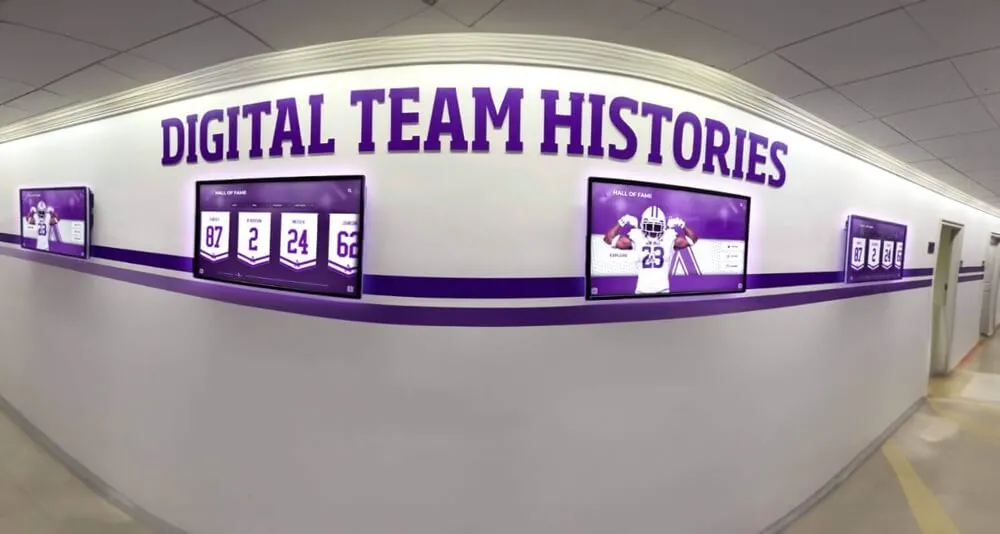
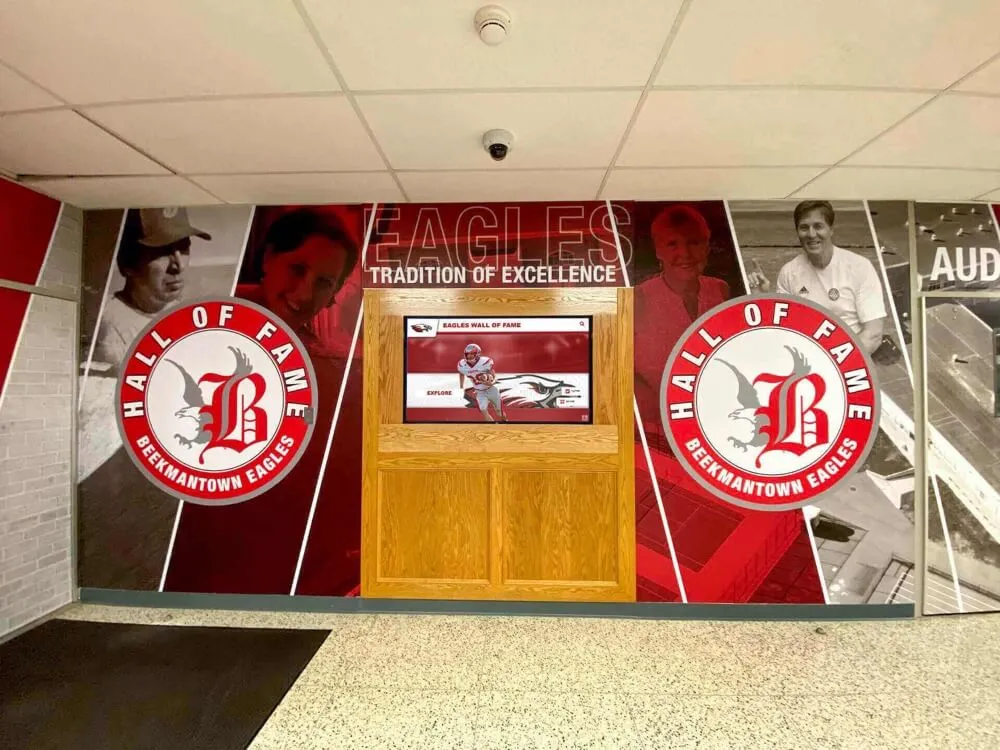
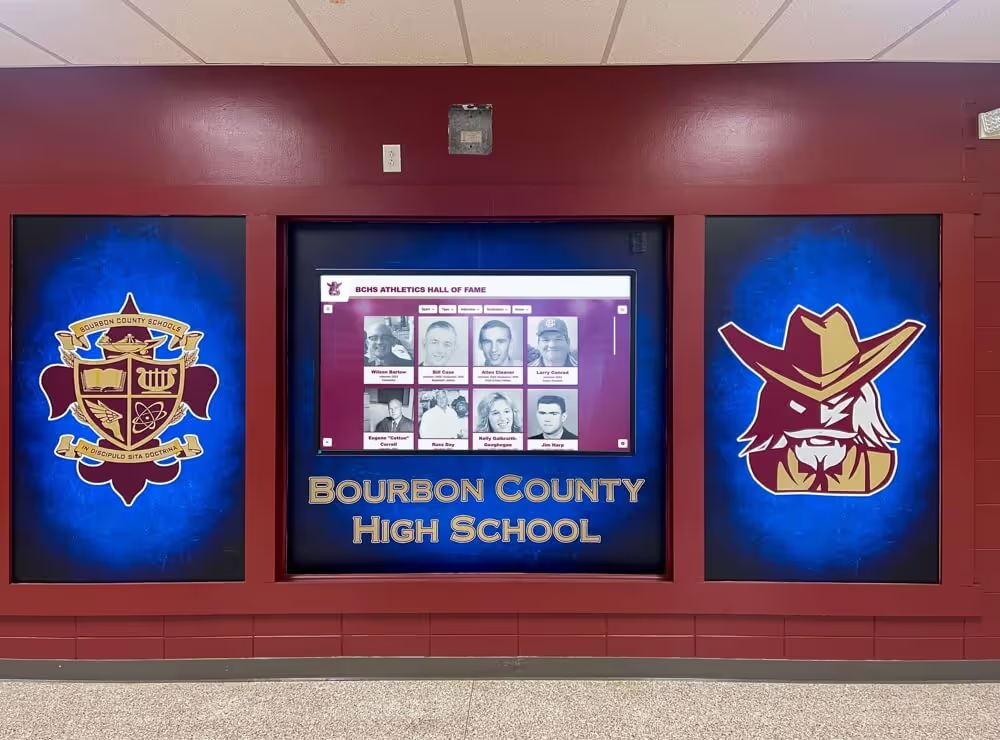
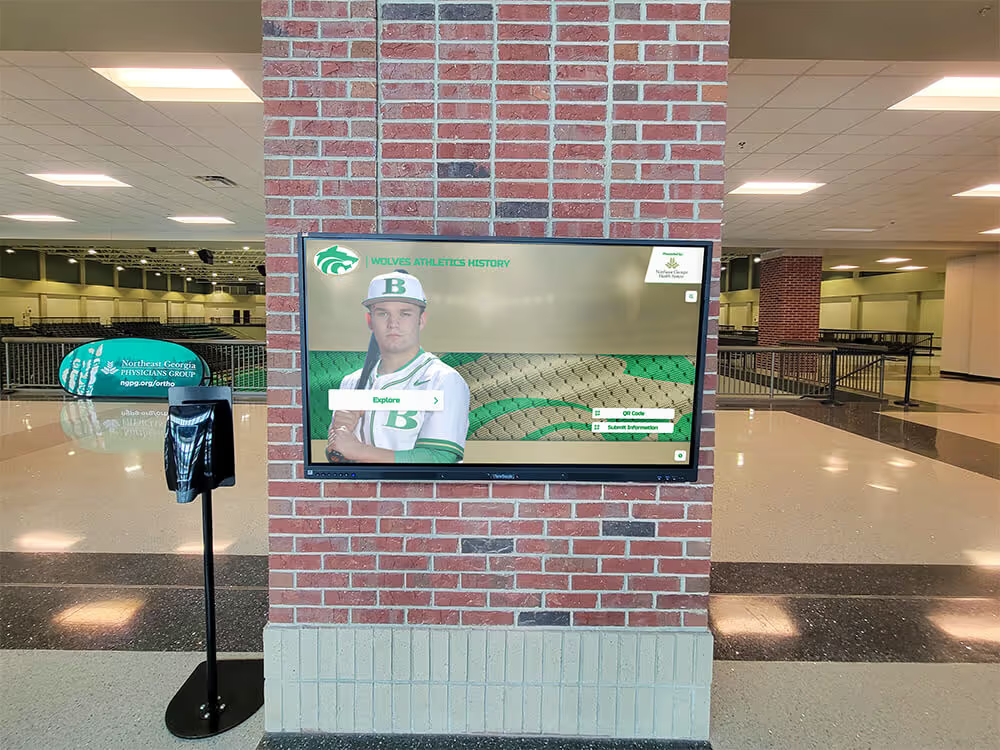
Schools that implement proper field dimensions create environments where athletes develop skills transferable to college programs while maintaining records that accurately reflect achievement. Modern solutions from Rocket Alumni Solutions help athletic departments preserve and showcase those achievements through digital recognition displays that celebrate player accomplishments earned on properly dimensioned competition fields.

Core Infield Dimensions for High School Baseball
The infield represents the most critical measurement zone for high school baseball fields, with precise distances required between bases, from home plate to the pitcher’s mound, and for baseline positioning.
Basepath Distance: The Foundation Measurement
High school baseball fields use 90-foot basepaths—the same distance as college and professional fields. This measurement represents the distance between the centers of each base, forming the iconic diamond shape that defines baseball geometry.
Key basepath specifications:
- Base to base distance: 90 feet between each base center
- Home to first base: 90 feet from home plate apex to first base center
- First to second base: 90 feet measured from base centers
- Second to third base: 90 feet between base centers
- Third to home: 90 feet completing the diamond
Diagonal measurements for verification:
- Home to second base: 127 feet 3⅜ inches (diagonal across diamond)
- First to third base: 127 feet 3⅜ inches (opposite diagonal)
These diagonal measurements provide critical verification when laying out fields. If your base-to-base measurements are 90 feet but diagonals don’t match the specified 127 feet 3⅜ inches, your diamond isn’t square—a common construction error that affects play fairness.
Pitching Mound Location and Dimensions
The pitcher’s mound sits at the geometric center of infield action, with precise distance and construction specifications:
Mound distance:
- Pitcher’s rubber to home plate: 60 feet 6 inches (measured from front edge of rubber to back point of home plate)
Mound construction specifications:
- Mound diameter: 18 feet circular mound
- Mound height: 10 inches above home plate level (measured at pitcher’s rubber)
- Pitcher’s rubber dimensions: 24 inches long × 6 inches wide
- Slope: Gradual slope from rubber toward home plate, with 1 foot in front of rubber level with the rubber
The 60 feet 6 inches distance from rubber to plate is identical across high school, college, and professional baseball, ensuring pitchers develop at regulation distances regardless of level. This consistency helps athletic programs track pitching achievements and maintain accurate records across graduating classes, which schools can showcase through digital displays for team awards and achievements.

Home Plate Specifications
Home plate features unique pentagonal dimensions that differ from the square bases:
Home plate measurements:
- Front edge width: 17 inches (facing pitcher)
- Sides adjacent to front: 8½ inches each (angled sides)
- Sides toward backstop: 12 inches each (forming point toward catcher)
- Point to front edge depth: 17 inches
- Thickness: 1-2 inches (beveled edges)
Home plate should be set flush with ground level, with the 17-inch front edge perpendicular to the pitcher’s mound. The point of home plate extends toward the backstop, and all distance measurements to other bases originate from this back point.
Base Dimensions and Placement
First, second, and third bases follow consistent specifications:
Base specifications:
- Base size: 15 inches × 15 inches square
- Base thickness: 3-5 inches (canvas bags filled with soft material)
- Anchoring: Bases attach to ground anchors allowing removal for field maintenance
Placement details:
- First and third bases: Positioned entirely within fair territory, with the outer edge of the base aligned with the foul line
- Second base: Center of base aligns with intersection of direct lines from home to second and first to third
- Base anchors: Set at exact measurement points with bases positioned accordingly
Proper base placement ensures basepaths measure correctly while maintaining fair/foul territory boundaries essential for gameplay.
Outfield Dimensions and Fence Distances
Unlike infield measurements which follow rigid standards, outfield dimensions offer more flexibility based on available property, though minimum distances exist for high school competition.
Recommended Outfield Fence Distances
High school baseball fields typically feature these outfield fence distances, though exact measurements vary by available space:
Standard fence distance guidelines:
- Left field foul pole: 320-335 feet from home plate
- Left-center field: 360-375 feet from home plate
- Center field: 380-400 feet from home plate (deepest point)
- Right-center field: 360-375 feet from home plate
- Right field foul pole: 320-335 feet from home plate
Minimum fence distances:
Many state athletic associations establish minimum outfield fence distances for varsity competition:
- Minimum to outfield fence: 300 feet from home plate (measured to closest point)
- Recommended minimum for competitive play: 320 feet to corners, 380 feet to center
Fields constrained by property boundaries may use shorter dimensions for junior varsity or freshman competition, though varsity fields should meet or exceed recommended minimums to prepare athletes for college-level field dimensions.
Outfield Fence Height
Fence height standards:
- Typical height: 6-8 feet throughout most of outfield
- Home run fence: Minimum 6 feet, maximum 10 feet in most areas
- Backstop fence: 25-30 feet high (discussed separately below)
Fence height affects home run frequency and outfield play difficulty. Fields with 8-foot fences reduce home runs while encouraging gap hitting and defensive range development. Schools should consider their program philosophy—power-oriented programs may prefer lower fences while contact-focused programs might choose taller barriers.

Foul Territory and Safety Zones
Adequate foul territory protects players, coaches, and spectators while providing space for defensive plays on foul balls.
Backstop Distance and Construction
The backstop represents the most critical safety structure on baseball fields:
Backstop specifications:
- Distance from home plate: 50-70 feet (60 feet is common standard)
- Height: 25-30 feet minimum
- Material: Chain-link fence with vinyl coating or netting systems
- Top overhang: Optional 4-6 foot overhang angled toward field (prevents foul balls leaving playing area)
Greater backstop distance provides more foul territory for catchers to pursue pop-ups while increasing spectator safety. Tighter backstops (50-55 feet) work for space-constrained sites but require additional netting protection for spectator areas directly behind backstops.
Foul Line Extensions and Territory
Foul territory guidelines:
- Down first base line: Minimum 15 feet from baseline to fence; 20-30 feet recommended
- Down third base line: Minimum 15 feet from baseline to fence; 20-30 feet recommended
- Between home and dugouts: 20-25 feet recommended for safety
Generous foul territory benefits defensive players pursuing foul pop-ups while providing safe zones between live play and spectator areas. Fields with minimal foul space require additional safety netting or strategic dugout placement.
Dugout Placement and Dimensions
Dugout specifications:
- Location: Typically placed along first and third base lines
- Distance from foul line: 10-15 feet minimum; 15-20 feet preferred
- Distance from home plate: Usually begins 10-15 feet from home plate and extends 40-50 feet toward outfield
- Depth: 8-12 feet deep from fence line to back wall
- Length: 40-60 feet long
- Roof clearance: Minimum 7-8 feet internal height
Dugouts should provide bench seating for 20-25 players and coaches while maintaining clear sightlines to the playing field. Raised dugouts sitting 2-3 feet below field level offer traditional aesthetics, while ground-level dugouts simplify accessibility.
Additional Field Markings and Zones
Beyond base measurements and fences, several additional markings and zones complete baseball field layouts.
Batter’s Boxes
Batter’s box dimensions (each side of home plate):
- Length: 6 feet (3 feet forward of home plate center, 3 feet behind)
- Width: 4 feet (measured from edge of home plate)
- Distance from home plate: 6 inches from home plate edge to nearest batter’s box line
- Chalk lines: White chalk marking rectangular boxes on each side of home plate
Both right-handed and left-handed batter’s boxes receive identical dimensions, providing equal positioning for batters regardless of batting stance.
Catcher’s Box
Catcher’s box specifications:
- Width: 43 inches wide (centered behind home plate)
- Length: 8 feet long (extending from home plate toward backstop)
The catcher’s box defines legal positioning for catchers when not receiving pitches, though modern games rarely enforce this marked zone.
Coach’s Boxes
Coach’s box dimensions:
- Location: One along first base line, one along third base line
- Distance from foul line: 8-15 feet from foul line (in foul territory)
- Length: 20 feet long
- Width: 10 feet wide
- Position along baseline: Box positioned so front edge aligns with front edge of base
Base coaches must remain within these boxes during live play, affecting strategic positioning during games.
Warning Track
Warning track specifications:
- Material: Different texture from outfield grass (typically dirt or crushed brick)
- Width: 10-15 feet wide along outfield fence
- Location: Continuous strip along entire outfield fence perimeter
Warning tracks provide tactile and visual cues for outfielders approaching fences at full speed, critical for player safety during pursuit of fly balls. Quality warning track construction prevents injuries while allowing aggressive defensive play.
Grass and Turf Specifications
Playing surface quality directly affects game play, injury rates, and maintenance requirements.
Grass Field Specifications
Infield grass considerations:
- Grass type: Varies by climate—Bermuda grass (warm climates), bluegrass or ryegrass blends (cool climates)
- Mowing height: 0.5-1.5 inches for infield grass areas
- Coverage: Grass extends from outfield edge to infield skin cutout
Outfield grass specifications:
- Grass type: Same species as infield for visual consistency and maintenance simplification
- Mowing height: 1.5-2.5 inches (slightly higher than infield for ball control)
- Drainage slope: Gentle grade toward outfield fence prevents standing water
Infield Dirt/Skin Areas
Skinned infield options:
High school fields commonly use two infield skin configurations:
Full infield skin:
- Dirt area covers entire space within basepaths plus extended areas around bases
- Typical radius: 95-foot radius from pitcher’s mound creates circular skinned area
- Benefits: Traditional appearance, easier maintenance, faster drainage
- Drawbacks: More dirt to maintain, higher grooming requirements
Grass infield with dirt base paths:
- Grass grows within diamond with dirt only on basepaths and immediate base areas
- Dirt width on basepaths: 4-6 feet wide paths between bases
- Benefits: Less dirt maintenance, cooler surface temperatures, modern aesthetic
- Drawbacks: More complex mowing patterns, edge maintenance challenges
Both approaches work effectively for high school programs. Choice depends on maintenance capabilities, aesthetic preferences, and regional climate considerations.
Artificial Turf Considerations
Some high school programs install artificial turf for lower maintenance and multi-sport field use:
Artificial turf specifications:
- Pile height: 1.5-2.5 inches for baseball-specific turf
- Infill material: Silica sand, rubber crumb, or modern alternatives (coconut fiber, cork)
- Shock absorption: Minimum Gmax rating of 200 for safety
- Drainage: Perforated backing with 30+ inches/hour drainage capacity
Artificial turf requires substantial upfront investment ($500,000-$1,000,000+ for complete installation) but eliminates mowing, irrigation, and many weather-related maintenance issues. Fields can support multi-sport use and extended practice schedules without surface damage.
Field Orientation and Site Planning
Proper field orientation affects playability throughout seasons and time of day.
Sun Orientation Standards
Recommended field orientation:
- Home plate to center field axis: Aimed east-northeast (roughly 67.5 degrees from due north)
- Purpose: Minimizes afternoon sun in batters’ and infielders’ eyes during typical game times
- Flexibility: Exact orientation often compromised based on property boundaries and existing structures
The traditional “home plate faces east-northeast” guideline originates from early baseball seeking to position the afternoon sun behind batters rather than in their eyes. Modern lighting systems reduce sun impact for evening games, but proper orientation still benefits daytime practice and weekend afternoon competitions.
Space Requirements for Complete Facility
Minimum property dimensions for regulation field:
- Length (home to center field fence): Approximately 400 feet from backstop to center field fence, plus 50+ feet beyond fence for safety/maintenance access = 450+ feet total
- Width (foul line to foul line): Approximately 400 feet from left field foul pole to right field foul pole = 400+ feet minimum
Recommended total property:
- Optimal dimensions: 500 feet × 500 feet (approximately 5.7 acres minimum)
- Comfortable dimensions: 600 feet × 600 feet (approximately 8.3 acres) allowing parking, concessions, and buffer zones
Constrained sites may require creative solutions including shortened outfield dimensions, asymmetrical fence lines, or shared parking/facility space with adjacent fields. Athletic directors should consult with experienced field architects when working with limited acreage to maximize usable field dimensions while maintaining safety standards.
Dugout and Team Area Requirements
Beyond the playing surface itself, complete baseball facilities require properly designed team areas.
Dugout Interior Layout
Essential dugout features:
- Bench seating: Continuous bench along back wall, 18-24 inches deep
- Storage cubbies: Individual player equipment storage above or below benches
- Bat racks: Vertical or horizontal bat storage for 15-20 bats minimum
- Helmet storage: Dedicated shelving or hooks for 15+ batting helmets
- Water stations: Built-in coolers or plumbed water fountains
- First aid supplies: Dedicated storage for training supplies and ice
- Coaching area: Standing/seating space for 3-4 coaches with clear field views
Well-designed dugouts enhance game-day experience while providing functional space for equipment management during competition.
Bullpen Specifications
Bullpen dimensions and placement:
- Mound distance: Same 60 feet 6 inches as game mound
- Mound specifications: Identical height and slope to game mound for accurate warm-up
- Home plate area: Full home plate and catcher positioning space
- Safety netting: Protection between bullpens and spectator areas
- Location: Often positioned down foul lines beyond dugouts or in foul territory corners
Many high school fields place bullpens along outfield foul lines or in deep foul territory corners. Bullpen positioning should allow pitchers to warm up without interfering with game action or presenting safety risks to fans.
Accessibility and ADA Compliance
Modern baseball facilities must accommodate spectators and participants with disabilities.
Required Accessible Features
ADA compliance elements:
- Accessible seating: Wheelchair spaces with companion seating, dispersed throughout spectator areas
- Accessible pathways: Minimum 36-inch-wide routes from parking to seating, restrooms, and concessions
- Accessible restrooms: ADA-compliant facilities within 200 feet of seating areas
- Accessible dugouts: Some jurisdictions require accessible dugout entry for players with disabilities
- Parking: Reserved accessible parking spaces with proper signage and proximity to facilities
Athletic directors planning field construction should consult ADA guidelines and local accessibility codes early in design phases. Retrofitting accessibility features into completed facilities costs substantially more than integrating them during initial construction.
Schools implementing comprehensive recognition programs can ensure those programs also meet accessibility standards. Digital donor recognition solutions and athletic achievement displays from Rocket Alumni Solutions incorporate ADA-compliant interfaces ensuring all community members can access and interact with recognition content.
Lighting Systems for Night Games
Quality lighting extends field usage and allows evening competition scheduling.
Lighting Level Standards
Illumination requirements for high school baseball:
- Infield: 50-70 foot-candles minimum; 70-100 foot-candles preferred
- Outfield: 30-50 foot-candles minimum; 50-70 foot-candles preferred
- Uniformity ratio: Maximum-to-minimum ratio of 2.5:1 or better (prevents dark spots and shadows)
- Poles: 80-120 feet tall depending on field dimensions
- Pole placement: Typically 4-6 poles positioned outside fence line to minimize shadows
LED lighting systems have largely replaced metal halide systems at modern facilities, offering instant-on capabilities, lower operating costs, and longer equipment life. While LED systems require higher upfront investment, operational savings and reduced maintenance typically justify the expense for programs scheduling significant night competitions.
Lighting Design Considerations
Effective lighting planning addresses:
- Spill light control: Minimizing light pollution affecting neighboring properties
- Glare reduction: Proper aiming prevents lights shining directly in players’ eyes
- Spectator area lighting: Separate systems for seating areas, parking, and walkways
- Control systems: Programmable controls allowing different lighting levels for practice vs. competition
Athletic directors should work with lighting engineers experienced in sports facility design rather than general commercial lighting contractors. Sports lighting requires specialized knowledge about horizontal foot-candles, uniformity ratios, and glare control that differ substantially from parking lot or building lighting.
Scoreboard and Video Display Requirements
Modern baseball facilities increasingly incorporate electronic scoreboards and video displays.
Scoreboard Specifications
Minimum scoreboard information display:
- Score by inning: Runs scored each inning for both teams
- Current inning indicator: Clear display of current inning and half
- Ball-strike-out count: Real-time count display
- Runs-hits-errors summary: Running totals for both teams
- Player at bat: Jersey number or name of current batter
Enhanced scoreboard features:
- Pitch speed display: Radar gun integration showing pitch velocity
- Video replay board: Screens showing highlight replays (less common at high school level but increasingly popular)
- Statistics displays: Batter statistics, pitcher statistics
- Advertising panels: Revenue-generating sponsorship space
Scoreboard placement typically positions displays beyond outfield fences where batters, fielders, and spectators all have clear sightlines. Center field locations are traditional, though corner placements work when center field space constraints exist.
Field Recognition Integration
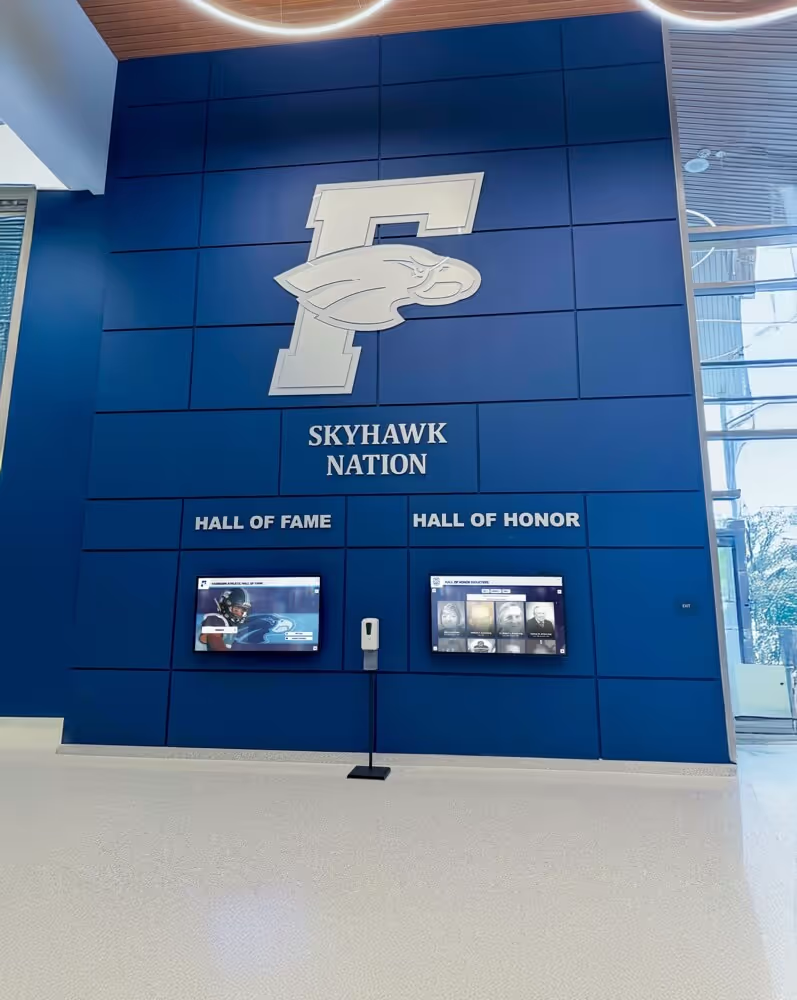
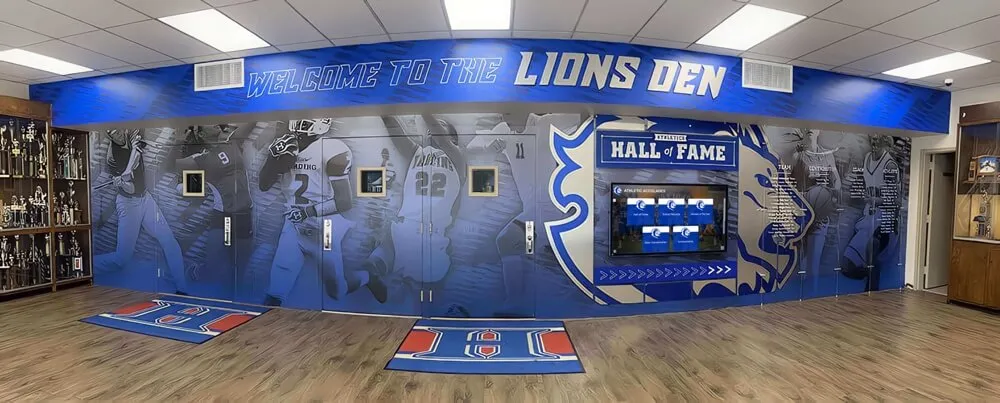
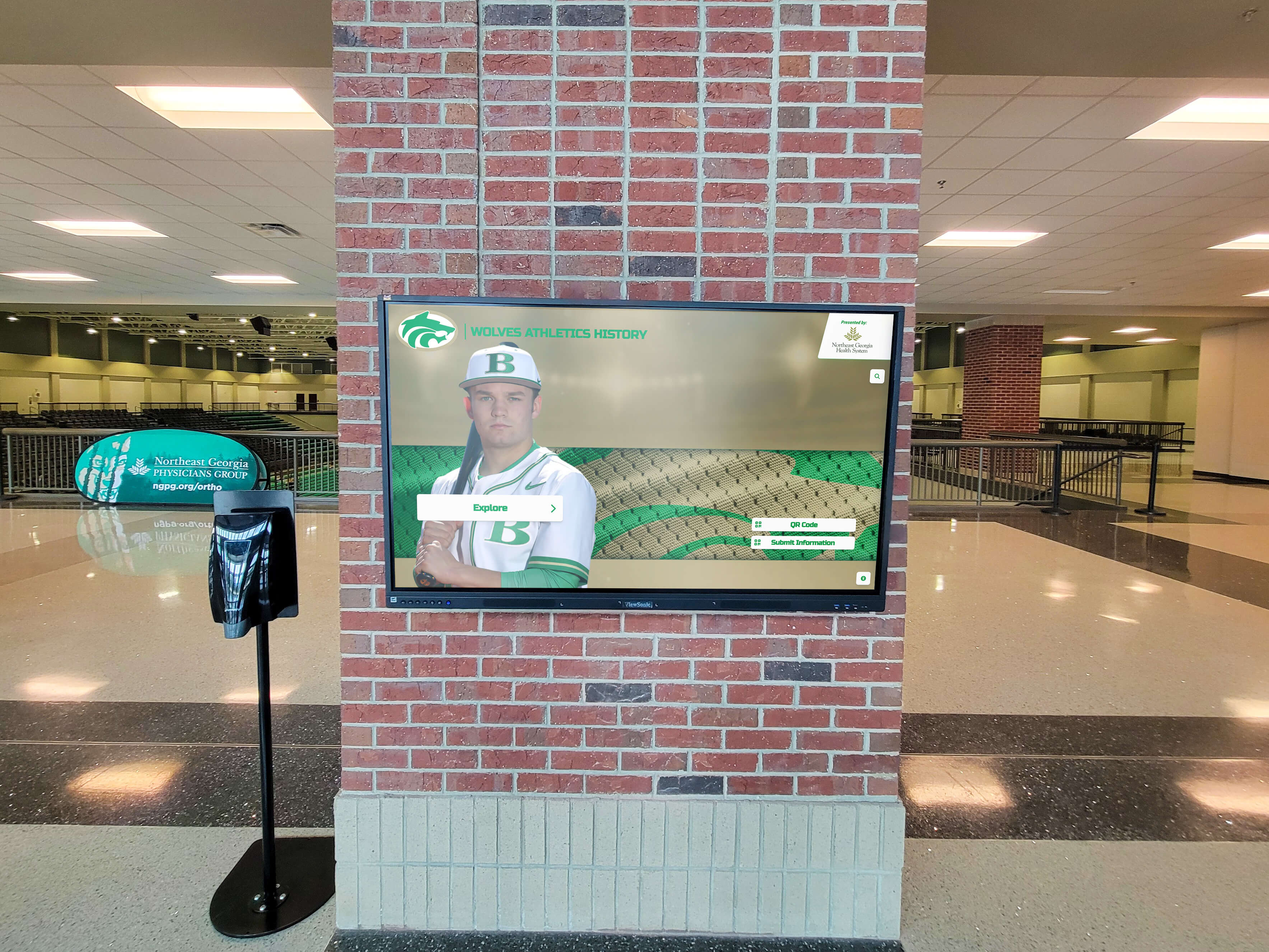
Baseball facilities serve as ideal locations for comprehensive athletic recognition displays celebrating individual and team achievements beyond game-day scoreboards. Programs can showcase season records, career leaders, all-time achievements, championship teams, and individual honors through permanent recognition installations.
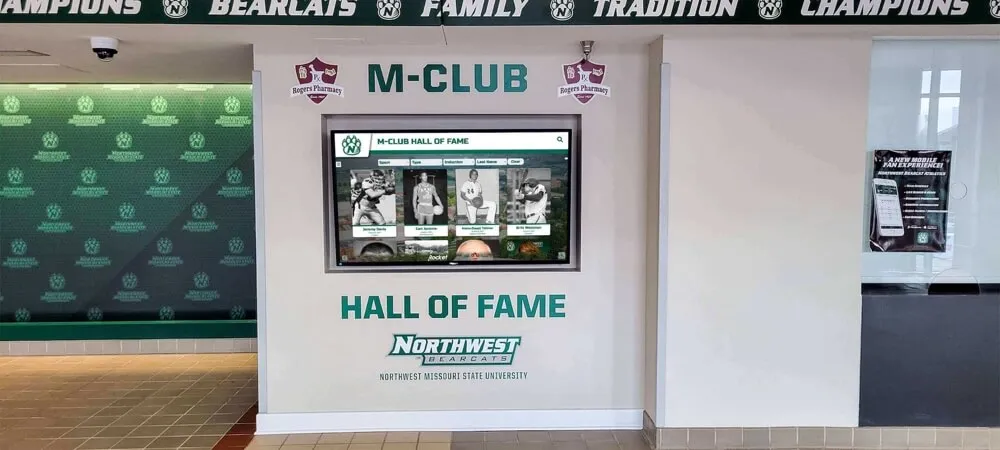
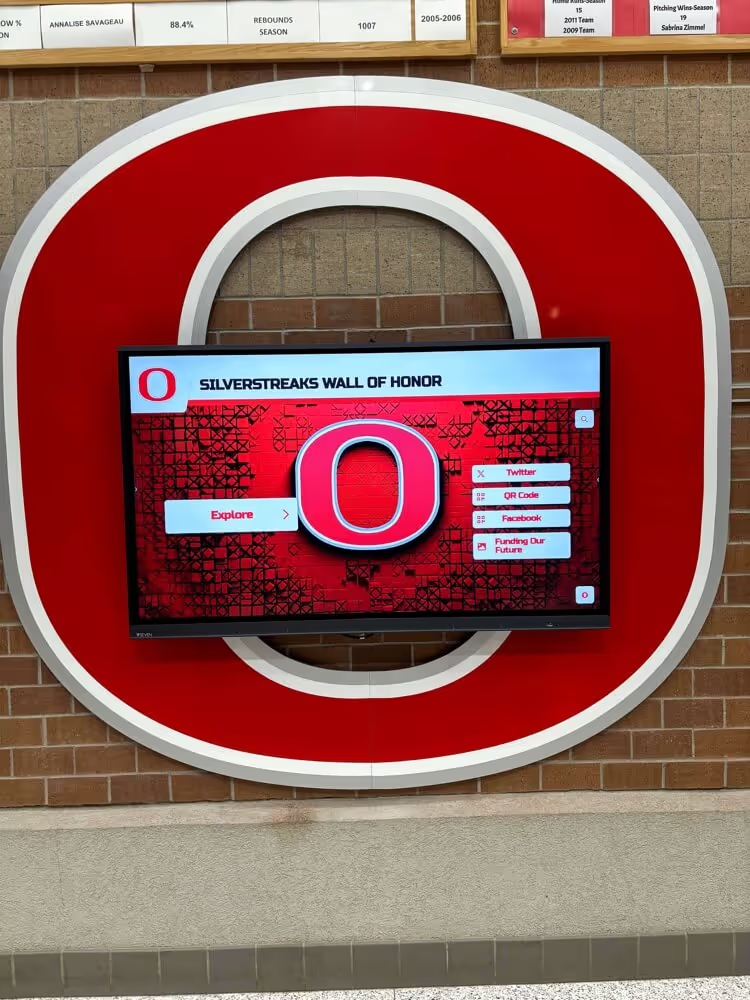
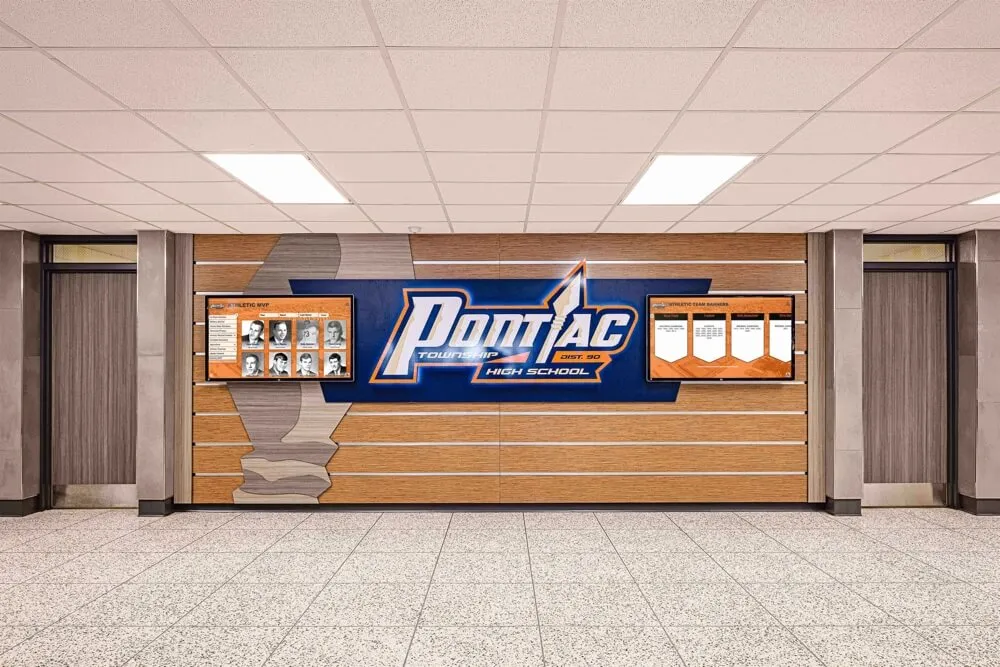
Traditional trophy cases and vinyl record boards require regular physical updates and offer limited space for comprehensive recognition. Digital recognition displays from Rocket Alumni Solutions allow athletic departments to maintain unlimited recognition content, update records instantly, and provide interactive access to complete program histories that preserve every achievement rather than displaying only current record holders.
These systems can be integrated into stadium concourses, field house lobbies, or dedicated recognition areas adjacent to baseball facilities, creating comprehensive celebrations of program excellence that inspire current athletes while honoring past contributors. Interactive displays allow visitors to explore achievement databases, view historical photos and videos, and understand the complete tradition of excellence your program has built.
Drainage and Field Maintenance Infrastructure
Proper drainage systems distinguish playable fields from those constantly cancelled due to standing water.
Drainage System Design
Essential drainage components:
- Surface grading: Gentle slopes carrying water toward drainage points (minimum 1-2% grade)
- Subsurface drainage: Perforated pipe systems beneath field collecting and removing water
- Infield drainage: Additional drainage under infield skin areas where water accumulates quickly
- Outfield drainage: Gradual slopes toward fence lines with catch basins collecting runoff
Quality drainage allows fields to become playable within hours after significant rainfall rather than remaining waterlogged for days. Investment in comprehensive drainage during construction pays dividends in reduced game cancellations and practice limitations throughout field lifespan.
Irrigation Systems
Irrigation system requirements:
- Coverage: Complete field coverage including infield grass, outfield, and warning track areas
- Head types: Pop-up spray heads for close areas, rotors for longer distances
- Control zones: Separate zones for infield and outfield allowing different watering schedules
- Controller: Programmable timer with rain sensors preventing unnecessary watering
Automated irrigation maintains consistent field conditions while reducing groundskeeping labor. Systems should allow both automatic scheduling and manual operation for targeted watering or pre-game surface preparation.
Budget Planning for Field Construction
Understanding typical cost ranges helps athletic directors develop realistic construction budgets.
Construction Cost Estimates
New field construction cost ranges (2026 estimates):
Basic natural grass field:
- Minimal configuration: $150,000-$300,000 (grading, drainage, grass installation, basic fencing, minimal amenities)
- Standard field: $300,000-$600,000 (comprehensive drainage, irrigation, dugouts, fencing, basic lighting)
- Premium facility: $600,000-$1,500,000 (high-quality materials, lighting, dugouts, spectator seating, concessions, field house integration)
Artificial turf field:
- Turf installation alone: $500,000-$800,000 (field surface only)
- Complete facility: $1,000,000-$2,500,000+ (turf, lighting, dugouts, spectator areas, field house)
These estimates vary significantly based on geographic location, site conditions requiring remediation, material selections, and feature complexity. Athletic directors should obtain multiple competitive bids while maintaining detailed specifications ensuring comparable quotes.
Funding Strategies
Common funding approaches:
- Capital improvement budgets: Multi-year district capital allocations
- Bond referendums: Community-approved bond issues for facility construction
- Booster fundraising: Dedicated fundraising campaigns by athletic booster organizations
- Naming rights: Corporate or donor naming rights for facilities or specific components
- Grants: State athletic facility grants or youth sports development grants
- Public-private partnerships: Partnerships allowing community use in exchange for funding contributions
Successful field projects typically combine multiple funding sources rather than relying on single revenue streams. Athletic directors should develop comprehensive funding strategies early in planning processes, securing financial commitments before breaking ground.
Facilities incorporating recognition opportunities for donors and supporters through donor walls, named spaces, and public acknowledgment displays often find fundraising success increases substantially. Digital donor recognition systems allow flexible acknowledgment options at various giving levels, creating more opportunities for community investment in facility projects.
Ongoing Maintenance and Operating Costs
Beyond construction expenses, athletic directors must budget for ongoing field maintenance.
Annual Maintenance Budget Requirements
Typical annual maintenance costs for natural grass fields:
- Small program (minimal maintenance): $5,000-$15,000 annually
- Basic mowing, infield grooming, line marking, irrigation water
- Standard program (proper maintenance): $15,000-$40,000 annually
- Regular mowing and edging, professional infield maintenance, fertilization, pest control, irrigation, repairs
- Premium program (showcase quality): $40,000-$80,000+ annually
- Dedicated groundskeeper, professional-level maintenance, regular overseeding, comprehensive fertility program, specialized equipment
Artificial turf field maintenance:
- Annual costs: $5,000-$15,000
- Grooming, infill replenishment, cleaning, seam repairs, line repainting
- Major renovation (8-12 years): $200,000-$400,000
- Complete turf replacement at end of lifespan
While artificial turf offers lower annual maintenance costs, the eventual need for complete replacement must be factored into long-term facility planning and budgeting.

Multi-Use Field Considerations
Many schools utilize baseball fields for multiple purposes maximizing facility investment.
Softball Field Conversion
Baseball and softball fields share many dimensional similarities while differing in key measurements:
Shared field considerations:
- Basepath compatibility: Softball uses 60-foot basepaths vs. baseball’s 90 feet—different diamonds can’t easily share bases
- Mound distance: Softball pitchers work from 43 feet vs. baseball’s 60 feet 6 inches—requires separate mounds or portable mound systems
- Fence distances: Softball fences typically closer (190-235 feet) than baseball (320+ feet)
Most schools construct separate dedicated baseball and softball facilities rather than attempting shared-use configurations. The dimensional differences make true sharing impractical for varsity competition, though practice and sub-varsity games can sometimes utilize shared spaces with temporary modifications.
Fall and Winter Alternative Uses
Off-season field uses:
- Football practice: Some programs use outfield areas for football practice during fall
- Soccer practice: Outfield grass can support soccer practice or small-sided games
- Physical education classes: General PE activities in open field space
- Community events: Civic gatherings, charity runs, community celebrations
Intensive off-season use accelerates turf wear and can create maintenance challenges during baseball season. Athletic directors should evaluate whether off-season revenue or program benefits justify accelerated field degradation and increased maintenance requirements.
Technology Integration for Modern Fields
Contemporary baseball facilities increasingly incorporate technology enhancing player development and fan experience.
Video Analysis Systems
Video technology applications:
- Batting analysis: High-speed cameras capturing swing mechanics for coaching review
- Pitching mechanics: Video analysis of delivery mechanics, release points, and follow-through
- Game film: Multi-angle game coverage for team review and opponent scouting
- Recruiting footage: High-quality video for college recruiting presentations
Dedicated camera positions, equipment storage, and power/data infrastructure should be considered during facility planning for programs intending to utilize video analysis technology.
Performance Tracking Technology
Modern tracking systems:
- Pitch tracking: Systems measuring pitch velocity, spin rate, break, and location
- Exit velocity measurement: Batted ball speed tracking for hitting development
- Sprint speed timing: Electronic timing for base running speed development
- Launch angle measurement: Batted ball trajectory analysis
While professional-grade systems remain expensive ($50,000-$100,000+), affordable consumer-level options ($500-$5,000) now provide high school programs access to data previously available only at elite levels.
Digital Recognition and Record Display
Beyond performance tracking, modern facilities benefit from enhanced recognition systems celebrating program achievements. Traditional vinyl record boards require manual updates, offer limited space, and show only current record holders—erasing the accomplishments of previous athletes when records fall.
Digital record board systems preserve complete achievement histories, allowing visitors to explore records dating back decades rather than viewing only current holders. These systems can display statistical leaders, championship teams, all-conference selections, college commits, and individual honors through interactive interfaces accessible to players, families, and visitors.
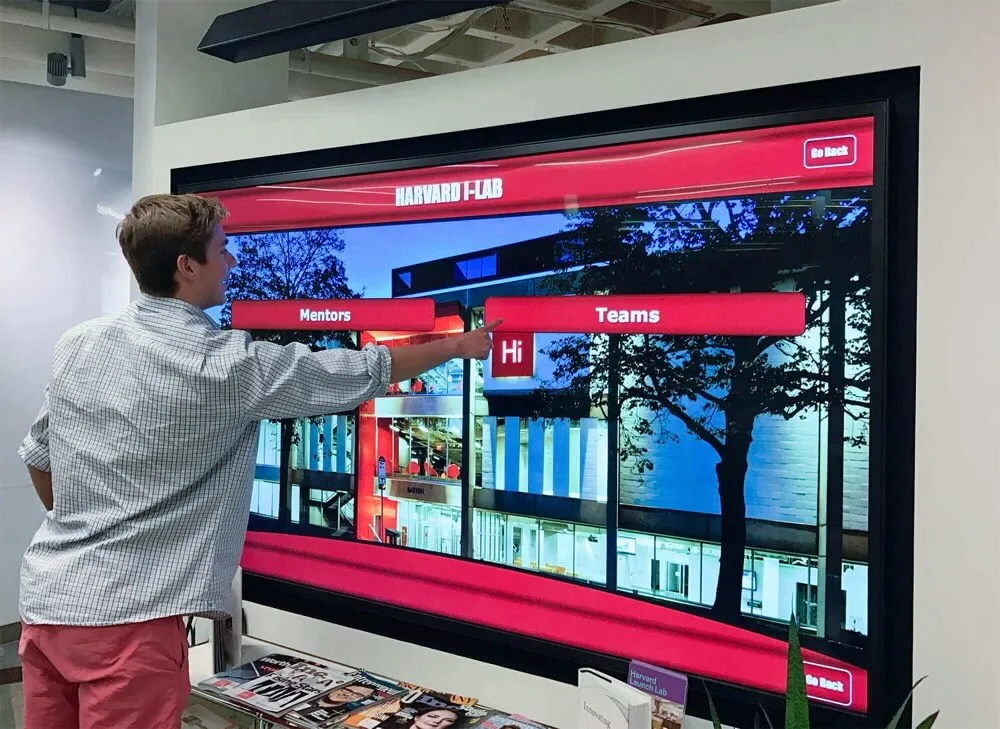
Interactive touchscreen displays installed in field house lobbies, stadium concourses, or dedicated recognition areas create engagement opportunities while celebrating program tradition. Athletes can view where their statistics rank in program history, explore profiles of players who came before them, and understand the excellence standards your program maintains—all while their achievements remain permanently preserved rather than being erased when future athletes surpass their records.
State and Governing Body Regulations
Athletic directors must ensure field dimensions comply with state athletic association requirements.
NFHS Guidelines
The National Federation of State High School Associations (NFHS) publishes baseball rules including field dimension guidelines that most state associations adopt. While NFHS provides recommended standards, individual state associations may establish specific requirements.
Key NFHS recommendations:
- 90-foot basepaths
- 60 feet 6 inches from pitcher’s rubber to home plate
- Minimum fence distances (varies by state)
- Specific field marking requirements
State Athletic Association Requirements
Individual state associations often establish additional requirements:
Common state-level regulations:
- Field certification: Annual or periodic certification that fields meet dimensional standards
- Safety inspections: Required inspections of fencing, dugouts, and spectator areas
- Playing surface standards: Minimum maintenance and condition requirements
- Lighting standards: Minimum illumination levels for night games
- Spectator capacity: Requirements for tournament host sites
Athletic directors should consult their specific state athletic association for complete requirement lists when planning construction or renovation projects. Some states require pre-approval of facility plans before construction begins to ensure compliance with all standards.
Planning Checklist for Athletic Directors
Use this comprehensive checklist when planning baseball field construction or renovation:
Pre-Planning Phase
- ☐ Review state athletic association field requirements
- ☐ Assess available property dimensions and orientation options
- ☐ Determine budget range and funding sources
- ☐ Decide between natural grass vs. artificial turf
- ☐ Identify multi-use requirements and constraints
- ☐ Consult with coaching staff about program needs and priorities
- ☐ Review accessibility requirements and ADA compliance needs
Design Phase
- ☐ Hire experienced sports field architect
- ☐ Finalize exact field orientation
- ☐ Specify infield and outfield dimensions
- ☐ Design drainage system
- ☐ Plan irrigation system
- ☐ Design dugout layout and specifications
- ☐ Determine fence heights and distances
- ☐ Plan lighting system (if applicable)
- ☐ Design scoreboard and video display integration
- ☐ Plan spectator seating areas
- ☐ Design accessible pathways and facilities
- ☐ Plan storage and maintenance buildings
- ☐ Integrate recognition display areas
Construction Phase
- ☐ Obtain necessary permits and approvals
- ☐ Select qualified contractor with sports field experience
- ☐ Verify layout measurements before construction begins
- ☐ Inspect drainage installation before covering
- ☐ Verify irrigation coverage before final grading
- ☐ Confirm mound and home plate positioning accuracy
- ☐ Inspect fence installation for proper anchoring
- ☐ Test lighting levels and uniformity
- ☐ Verify scoreboard functionality
- ☐ Conduct final walkthrough addressing all deficiencies
Post-Completion Phase
- ☐ Develop comprehensive maintenance plan
- ☐ Train groundskeeping staff on proper maintenance procedures
- ☐ Stock necessary maintenance equipment and supplies
- ☐ Establish field use policies and reservation systems
- ☐ Install recognition displays celebrating program achievements
- ☐ Schedule official field dedication or opening ceremony
- ☐ Document final field specifications for future reference
- ☐ Establish budget for ongoing maintenance costs
Conclusion: Building Fields That Develop Champions
Properly dimensioned baseball fields create environments where high school athletes develop skills, compete fairly, and build memories lasting lifetimes. Precision in field construction ensures your facility meets competition standards while providing safe playing conditions that protect athletes and minimize liability. Beyond the measurements themselves, thoughtful facility planning addresses accessibility, technology integration, maintenance infrastructure, and recognition opportunities that transform basic playing fields into comprehensive athletic complexes serving programs and communities for decades.
Athletic directors who invest time understanding complete field specification requirements, work with experienced architects and contractors, and plan for long-term maintenance create facilities that become sources of community pride while supporting athlete development at the highest levels. These fields host countless games, develop numerous college prospects, and create traditions connecting generations of athletes, families, and supporters.
As you complete field construction or renovation projects, consider how you’ll celebrate the achievements earned on those fields. Digital recognition systems from Rocket Alumni Solutions provide the perfect complement to state-of-the-art facilities, preserving every record, honoring every achievement, and ensuring your program’s tradition of excellence remains accessible to current athletes, visiting recruits, proud alumni, and community supporters for generations to come. These systems integrate seamlessly into modern athletic facilities, providing the recognition infrastructure that transforms good programs into legendary ones.
Build your field right. Measure precisely. Maintain consistently. Recognize thoroughly. Your athletes deserve nothing less.