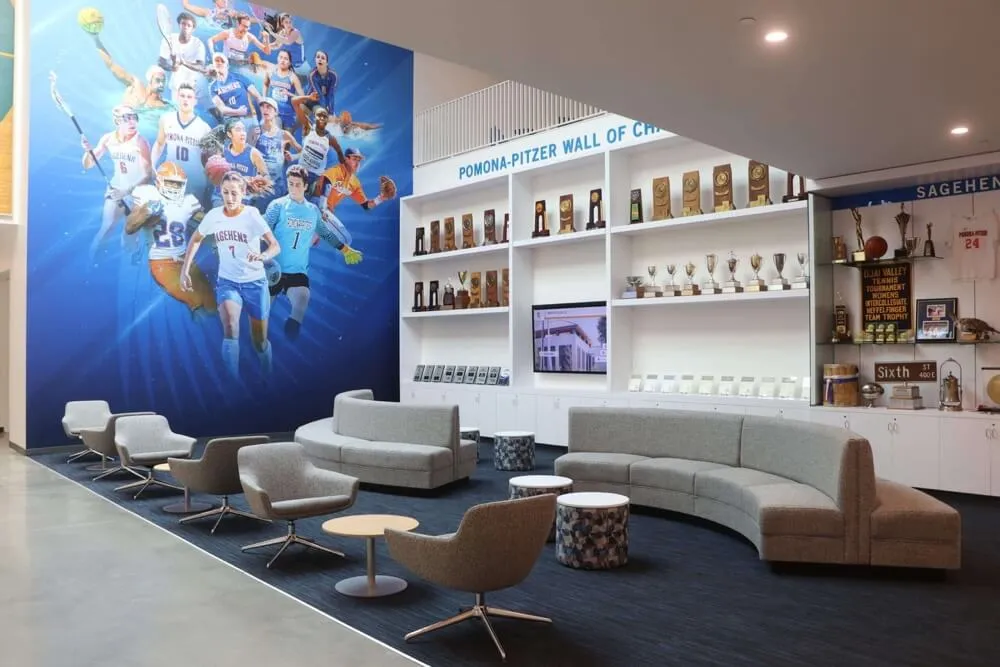




Walk into any championship-caliber athletic facility and you’ll immediately sense something different—not just superior equipment or pristine floors, but an atmosphere that communicates excellence, tradition, and pride. The walls themselves tell stories through carefully designed graphics celebrating past achievements, motivating current athletes, and establishing visual identity that transforms utilitarian gymnasiums into inspiring competitive environments.
Yet many school gymnasiums remain stark, forgettable spaces with blank walls offering zero inspiration or recognition. Athletic directors know these facilities deserve better—environments where every athlete feels connected to program tradition, where visiting teams understand they’re competing on hallowed ground, and where community members gather in spaces reflecting institutional pride. The challenge lies in creating gym wall graphics that balance aesthetic impact with practical durability, celebrate athletic heritage while remaining budget-conscious, and deliver professional quality without requiring specialized design expertise.
Modern gymnasium design increasingly recognizes that walls represent prime real estate for building athletic culture. Strategic graphics installations transform underutilized vertical space into powerful tools for recognition, motivation, branding, and storytelling—creating environments where athletes perform their best and communities take pride in their athletic facilities.
Modern Gym Wall Graphics Solutions
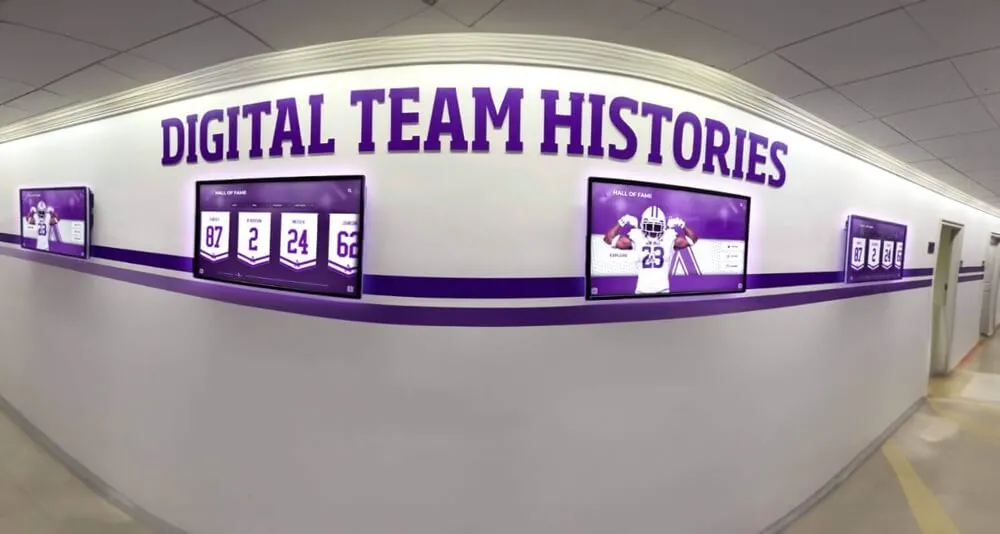
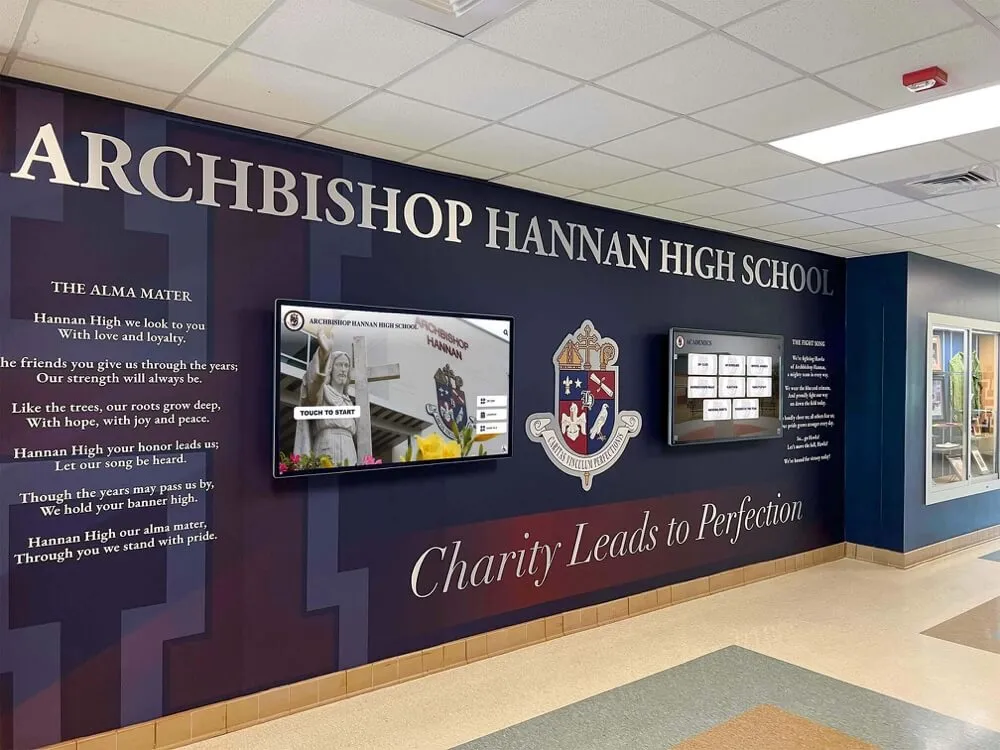
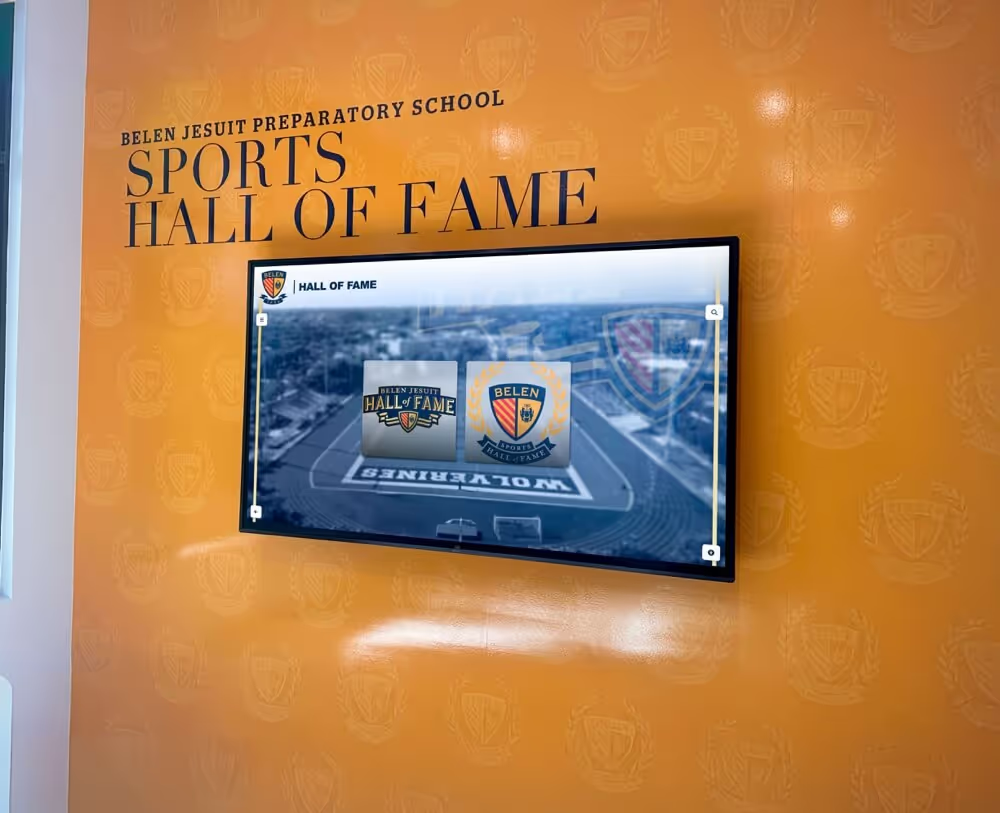
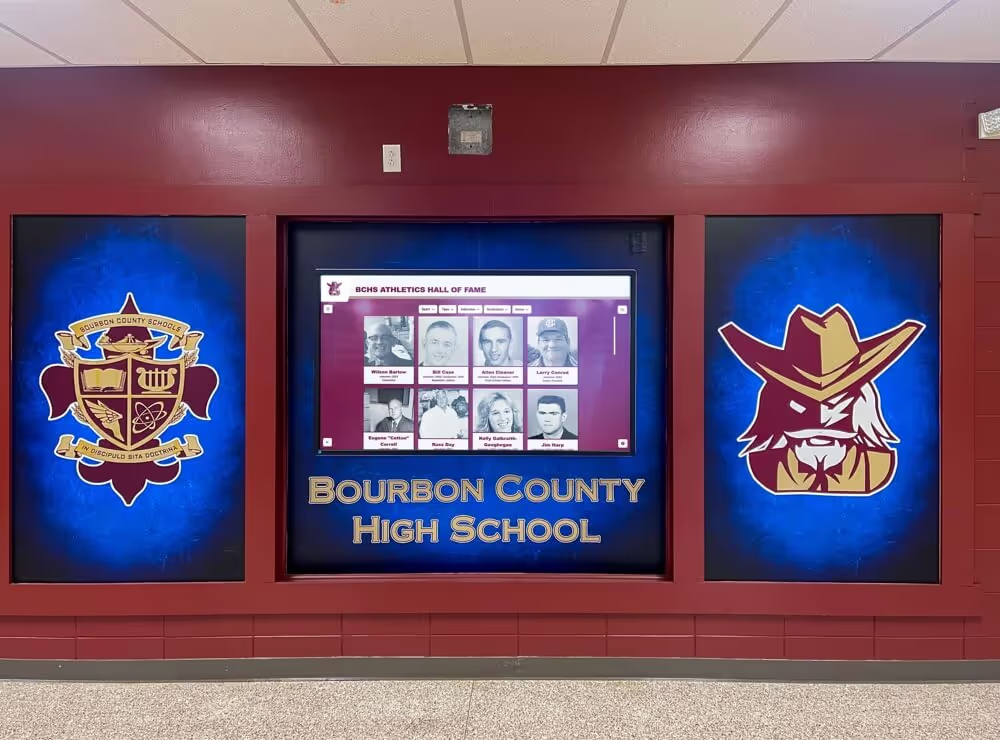
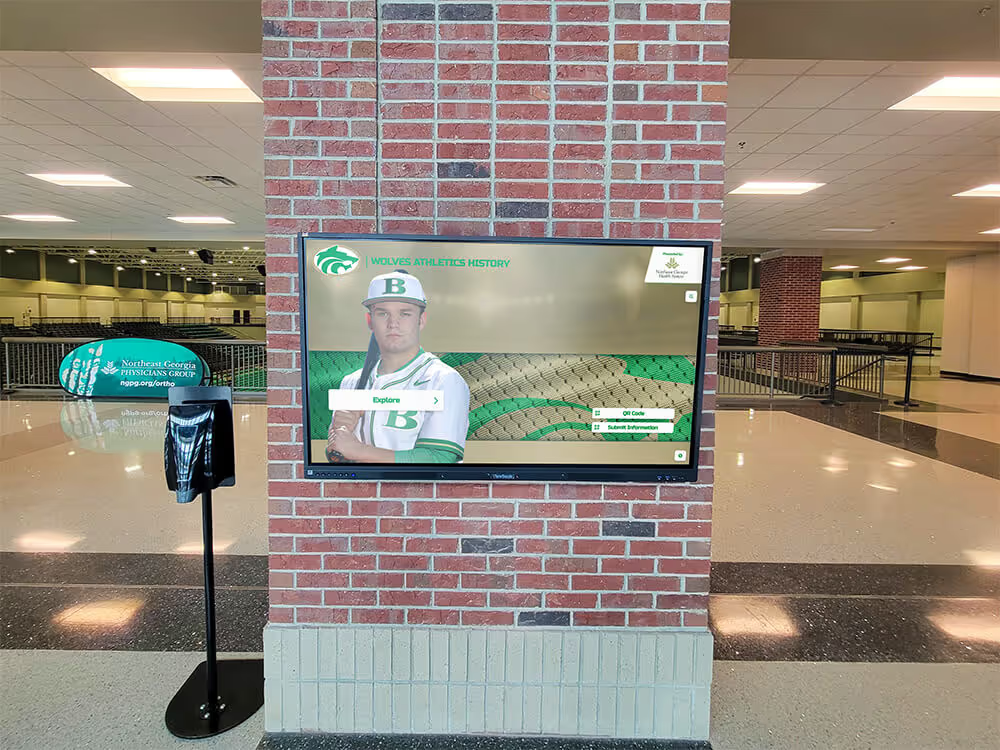
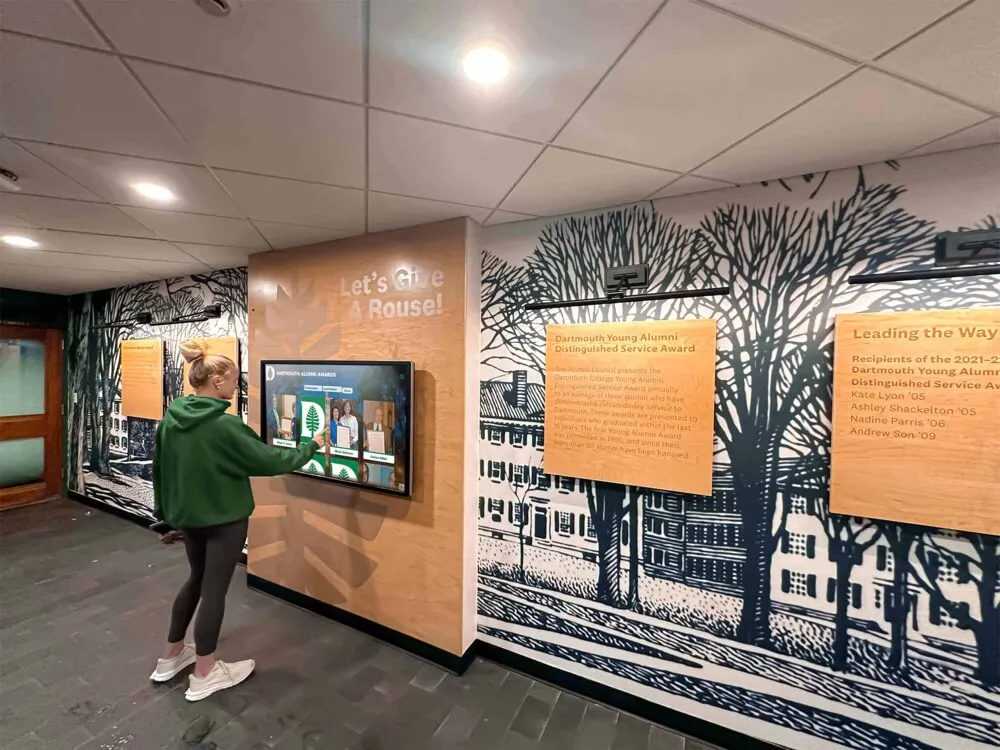
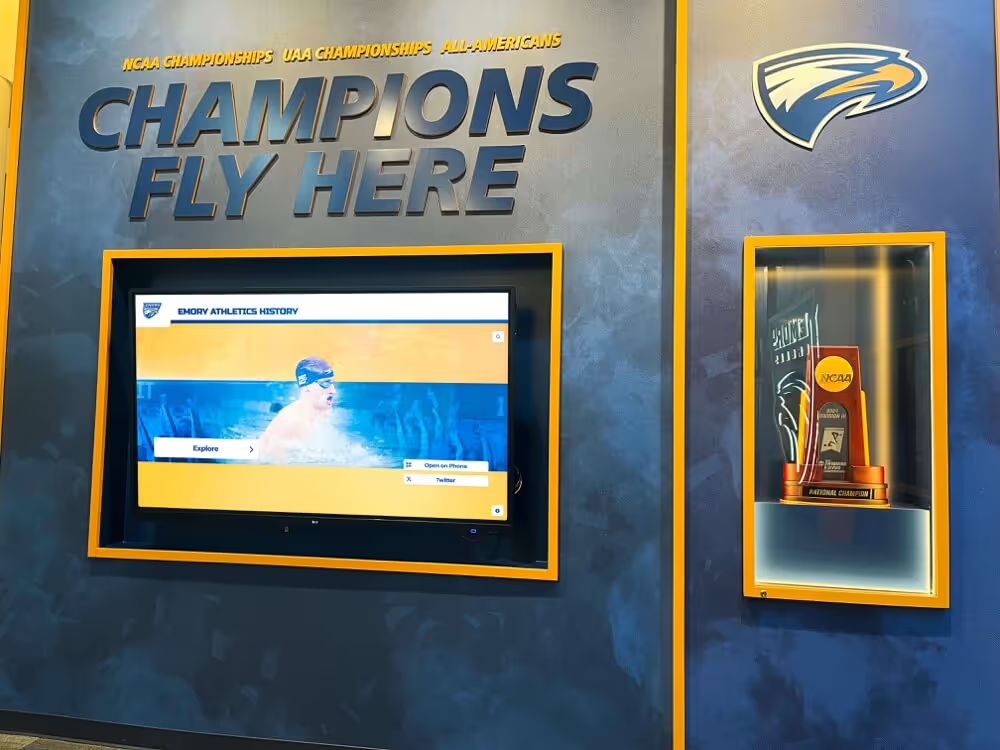
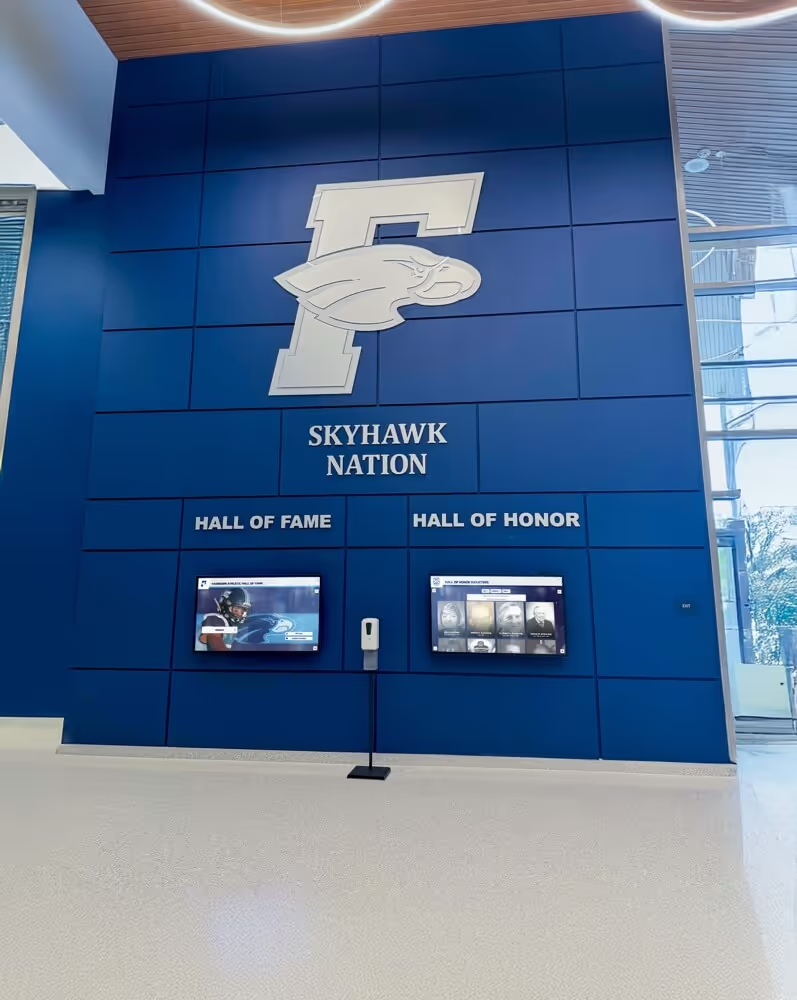
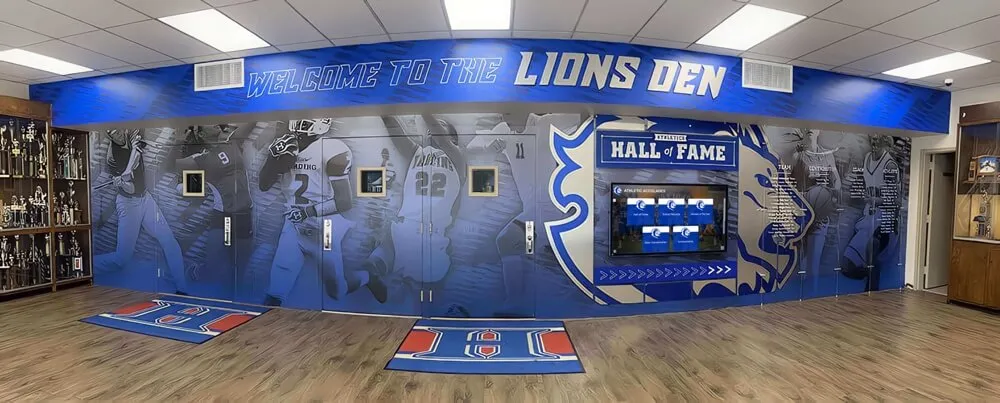
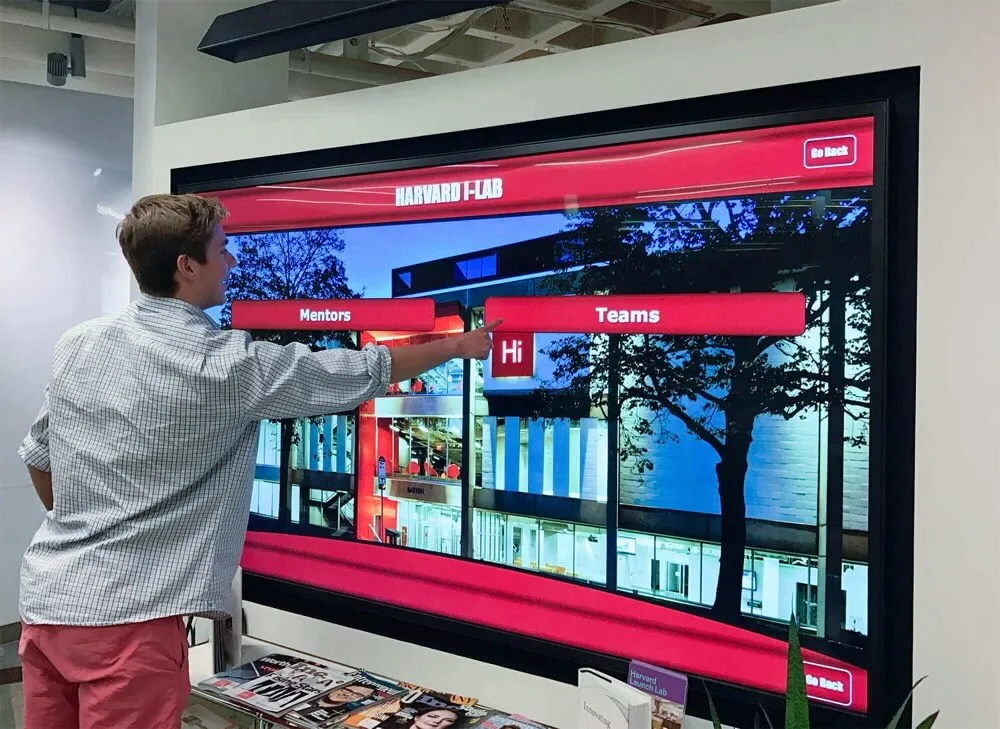
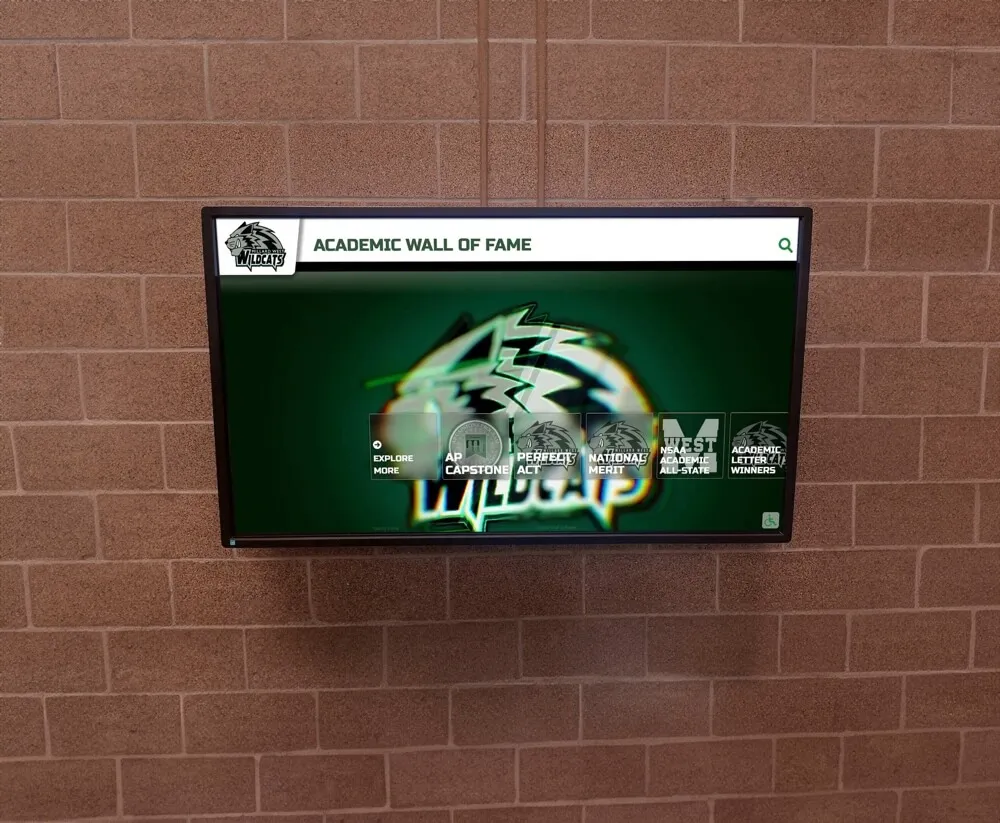
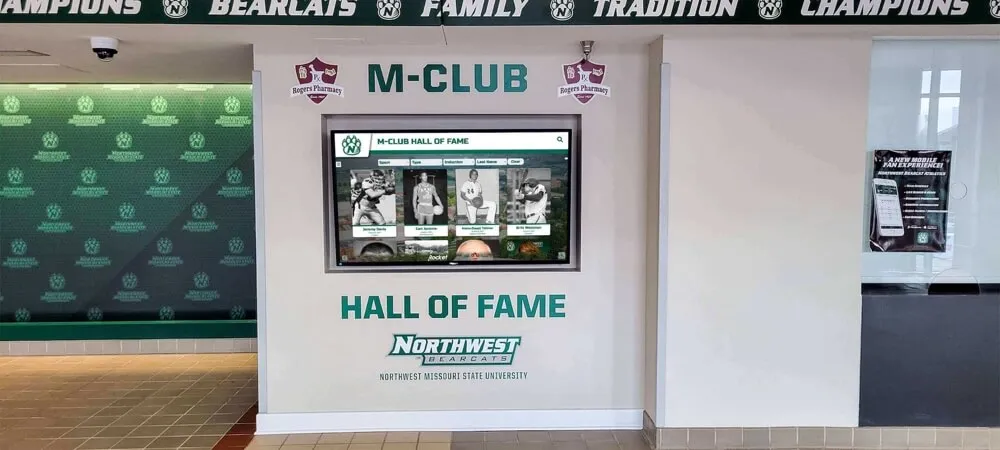
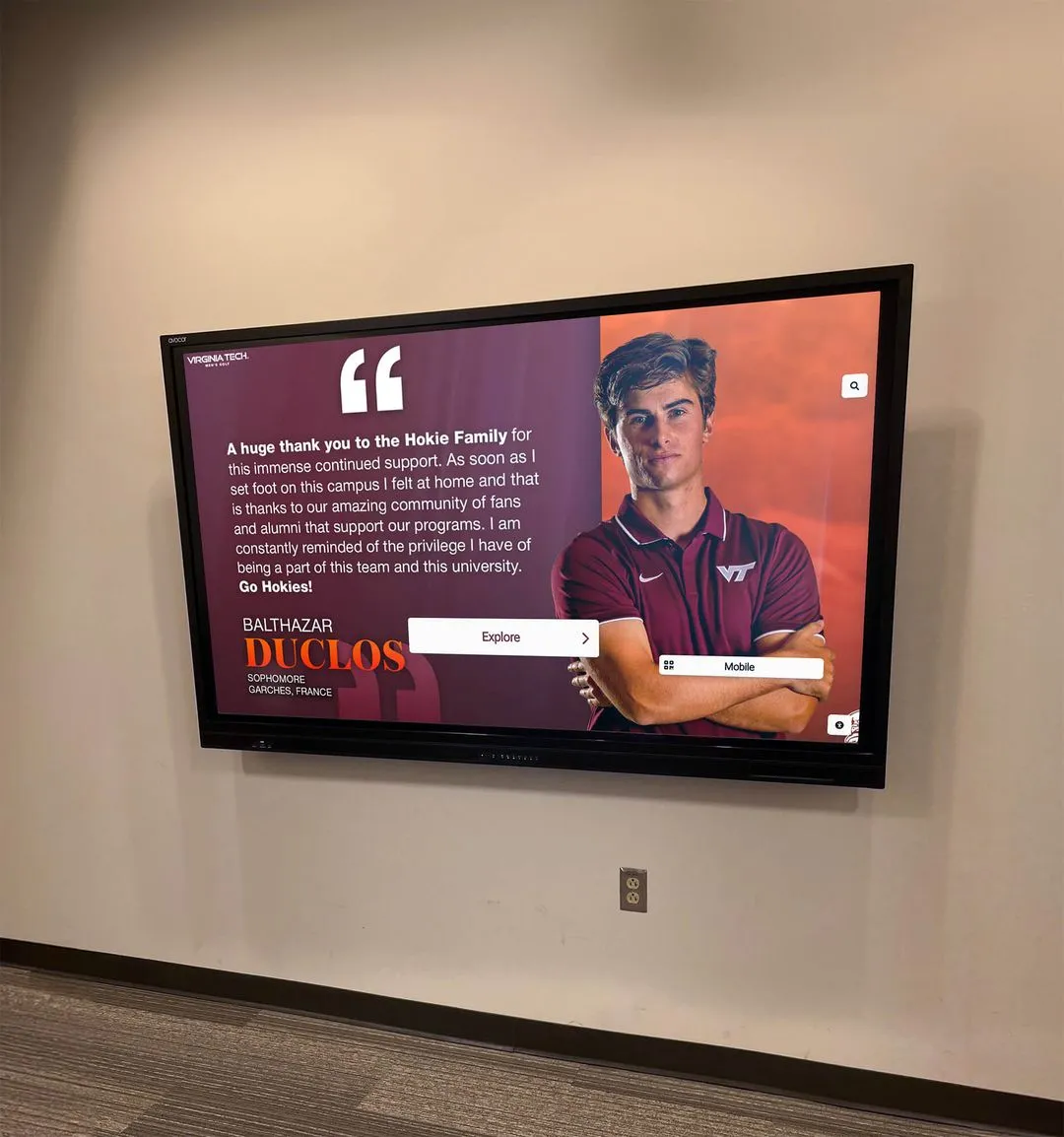
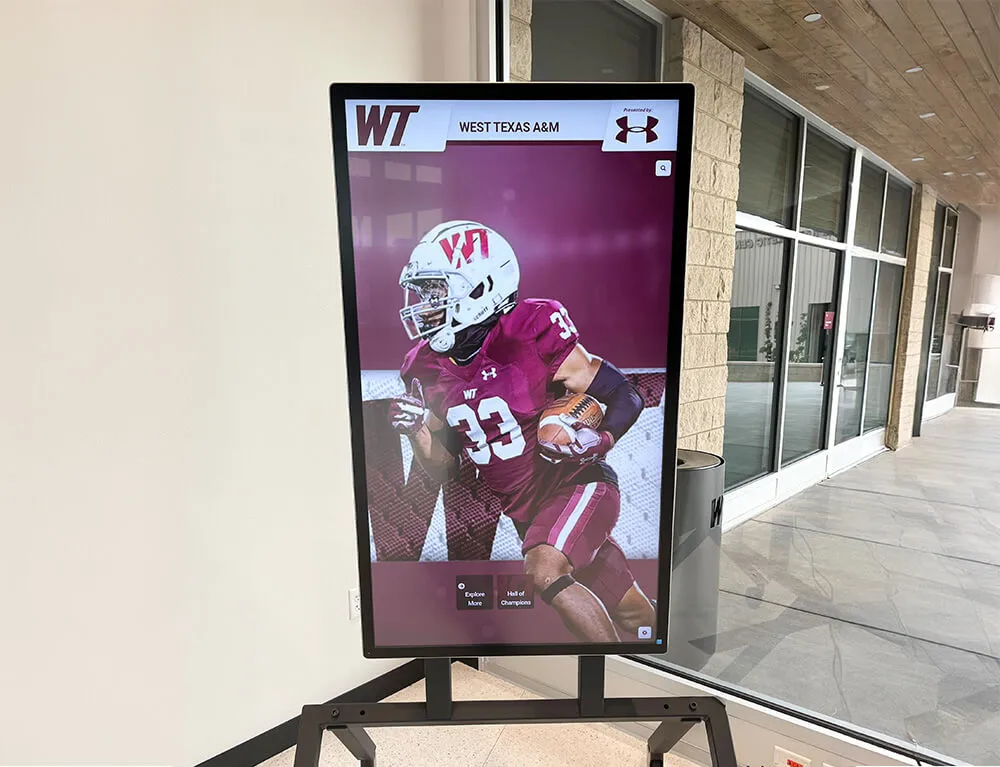
Traditional gym wall graphics using painted murals or vinyl decals create immediate visual impact but impose significant limitations—content becomes outdated as teams win new championships, manual updates require expensive repainting or replacement, static displays cannot showcase comprehensive athletic history, and physical graphics deteriorate under gymnasium environmental conditions. Modern digital recognition platforms eliminate these constraints while complementing traditional graphics through unlimited content capacity, instant remote updates, rich multimedia athlete profiles, comprehensive record tracking across all sports, and sustainable long-term operation. Solutions like Rocket Alumni Solutions offer purpose-built digital record boards designed specifically for athletic facilities, delivering professional displays that honor every achievement without space limitations, manual update burdens, or ongoing graphic production costs.
Understanding Gym Wall Graphics: Purpose and Strategic Value
Effective gymnasium graphics serve multiple objectives beyond simple decoration or space-filling, creating environments that actively support athletic program development and institutional culture.
Building Athletic Identity and Program Culture
Gymnasium environments communicate messages about program priorities, traditions, and standards—whether intentionally designed or inadvertently communicated through neglect.
Visual Culture Creation: Athletes spend thousands of hours in gymnasiums throughout their careers—practicing, competing, conditioning, and gathering for team meetings. The visual environment surrounding these experiences shapes perceptions about program quality and institutional commitment to athletic excellence. Well-designed gym wall graphics establish professional standards through consistent branding reflecting school colors and mascots, championship recognition celebrating team and individual achievements, motivational messaging reinforcing effort and excellence values, historical context connecting current teams to program legacy, and aesthetic quality demonstrating institutional investment in athletics.
When athletes train in facilities featuring professionally designed graphics honoring past excellence while establishing high standards, they internalize expectations about performance, conduct, and achievement that align with program culture objectives.
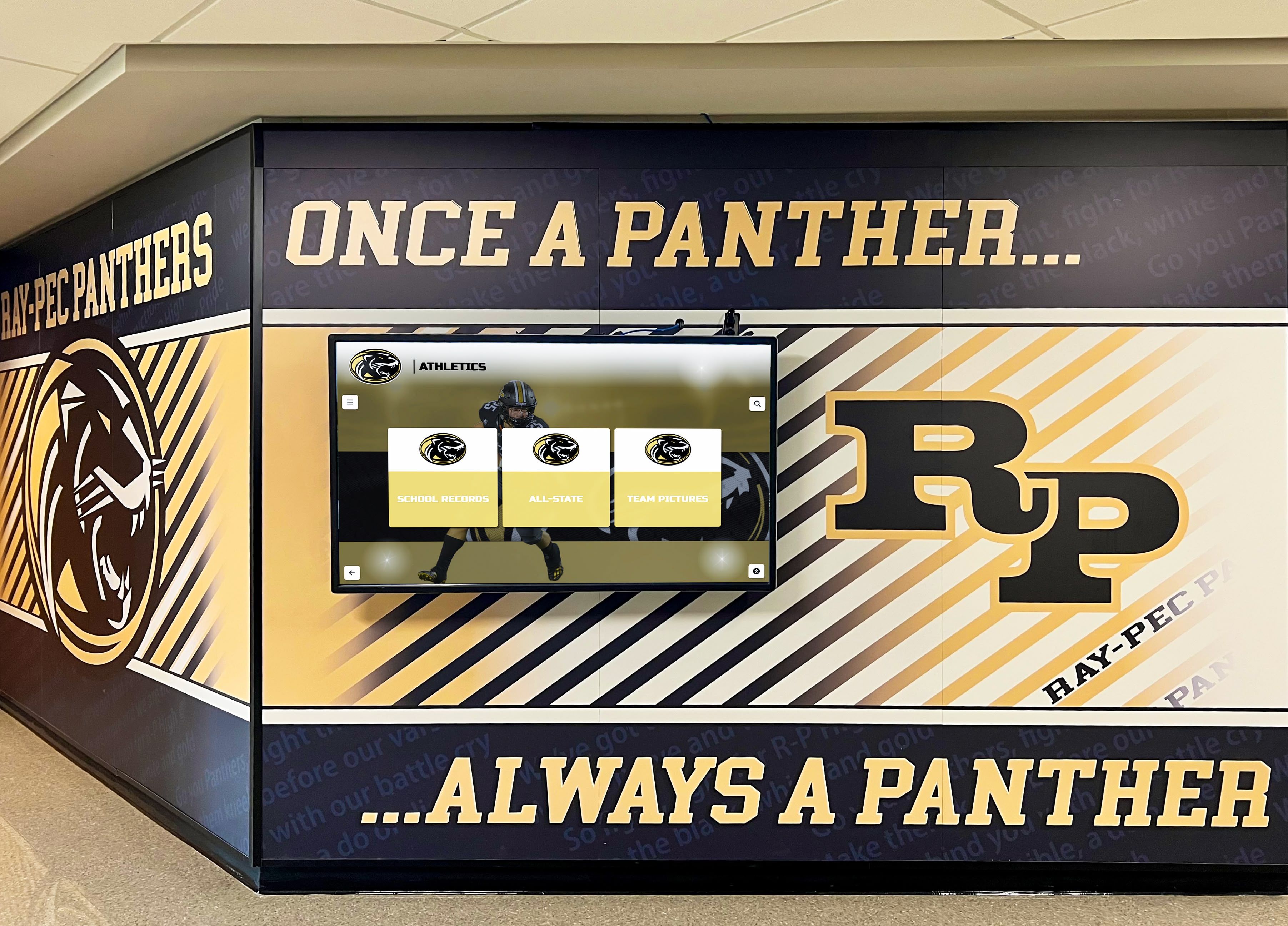
Competitive Advantage Through Environment: Home court advantage extends beyond crowd support to environmental factors including familiarity and comfort. Gymnasiums featuring prominent graphics celebrating home team heritage while establishing visual dominance create psychological advantages. Visiting teams competing in facilities where walls showcase decades of championship success, retired jerseys honoring legendary athletes, and comprehensive record boards documenting excellence understand they’re facing established programs with winning traditions.
Many coaches deliberately incorporate facility graphics into pre-game preparations, directing attention to championship banners or record boards reminding athletes of standards they’re defending and traditions they’re continuing.
Motivating Current Athletes Through Recognition and Aspiration
Strategic graphics installations create both recognition for past achievement and aspiration toward future excellence.
Visible Record Boards and Achievement Tracking: Displaying current program records prominently throughout gymnasiums transforms abstract statistics into concrete goals athletes pursue. When records are visible daily during practice—not hidden in coaches’ offices or buried in media guides—they become active targets driving training intensity and competitive focus.
Modern digital record boards for gymnasiums enable comprehensive record display across all sports and categories without physical space limitations, automatically highlighting records most relevant to current seasons while maintaining complete historical archives.
Recognition Systems Creating Belonging: Graphics celebrating team championships, all-conference athletes, academic all-Americans, and milestone achievements create belonging for athletes who see their contributions recognized. This visible appreciation reinforces that excellence is remembered—achievements don’t disappear after graduation but become permanent parts of facility heritage.
Recognition particularly matters for athletes in less-prominent sports who rarely receive public acknowledgment. Comprehensive graphics systems ensure every program receives equitable visibility regardless of spectator attendance or media coverage.
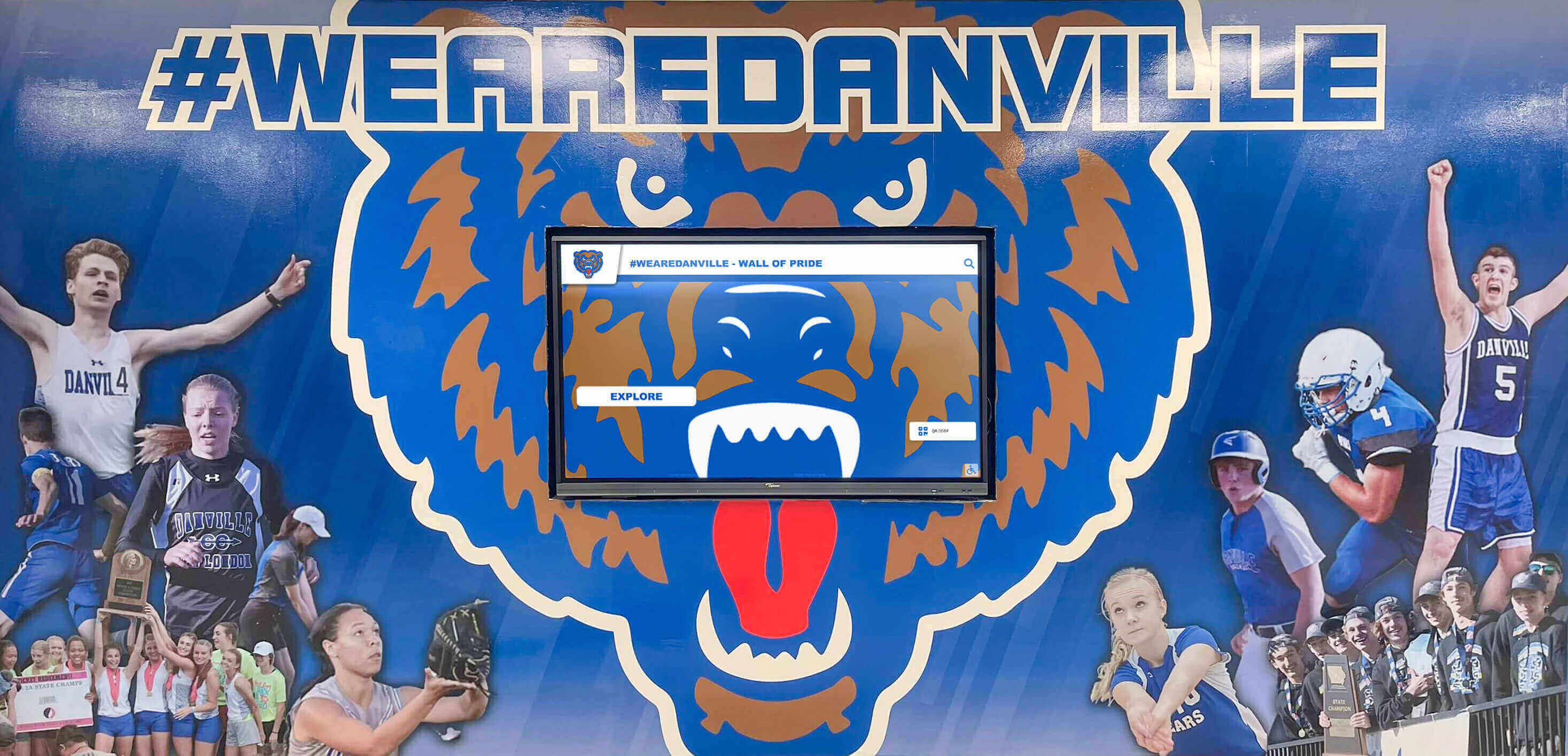
Aspirational Messaging and Goal Setting: Motivational quotes from legendary coaches, inspirational sayings about effort and character, and achievement standards communicate performance expectations. Strategic messaging reinforces program values while creating shared language around effort, teamwork, and excellence that coaches reference throughout seasons.
Understanding student recognition and awards programs helps athletic departments design comprehensive systems celebrating diverse achievements across academic and athletic domains.
Supporting Community Engagement and Fundraising
Gymnasium graphics create community touchpoints supporting broader athletic department objectives beyond daily training environments.
Community Pride and Facility Showcase: Gymnasiums host more than athletic competitions—they serve as community gathering spaces for ceremonies, meetings, events, and celebrations. Professional graphics elevate these facilities from utilitarian spaces to showcase venues communities take pride in showing visitors.
During facility tours with prospective families, booster club meetings, or community events, quality graphics demonstrate institutional investment while creating positive impressions that support enrollment, volunteer recruitment, and philanthropic engagement.
Donor Recognition and Sponsorship Visibility: Many graphics projects receive funding through booster clubs, community sponsors, or individual donors. Incorporating appropriate donor recognition within graphics designs acknowledges generosity while creating visibility encouraging future support. Championship murals might include sponsor logos, record board displays can recognize major donors, and facility naming opportunities connect graphics to philanthropic campaigns.
Recruiting Tool for Prospective Athletes: Facility quality significantly influences recruiting outcomes as athletes and families evaluate program commitment and competitive environment. Gymnasiums featuring professional graphics, comprehensive championship recognition, and modern displays communicate program quality more effectively than verbal claims during recruiting conversations.
The visual first impression when prospective athletes enter facilities often determines whether they envision themselves competing successfully in that environment or seeking alternatives offering superior facilities and program culture.
Types of Gym Wall Graphics: Options and Applications
Athletic facilities utilize diverse graphic formats depending on objectives, budgets, and physical constraints. Understanding options enables strategic decisions aligning graphics with program needs.
Painted Murals and Custom Artwork
Hand-painted or digitally designed murals create custom artistic installations celebrating school identity and athletic heritage.
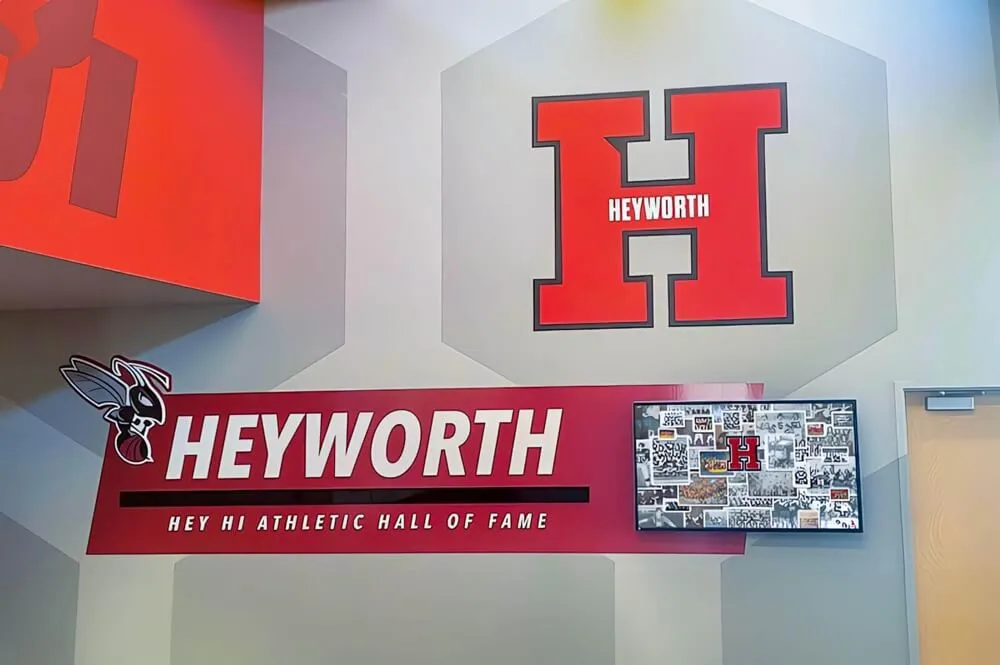
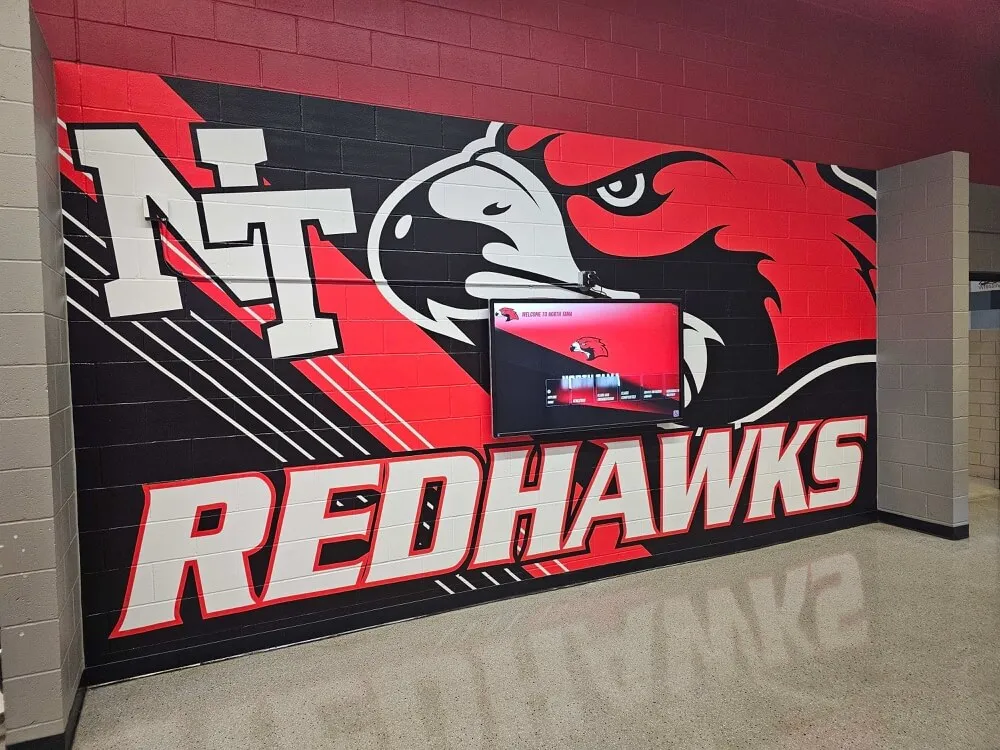
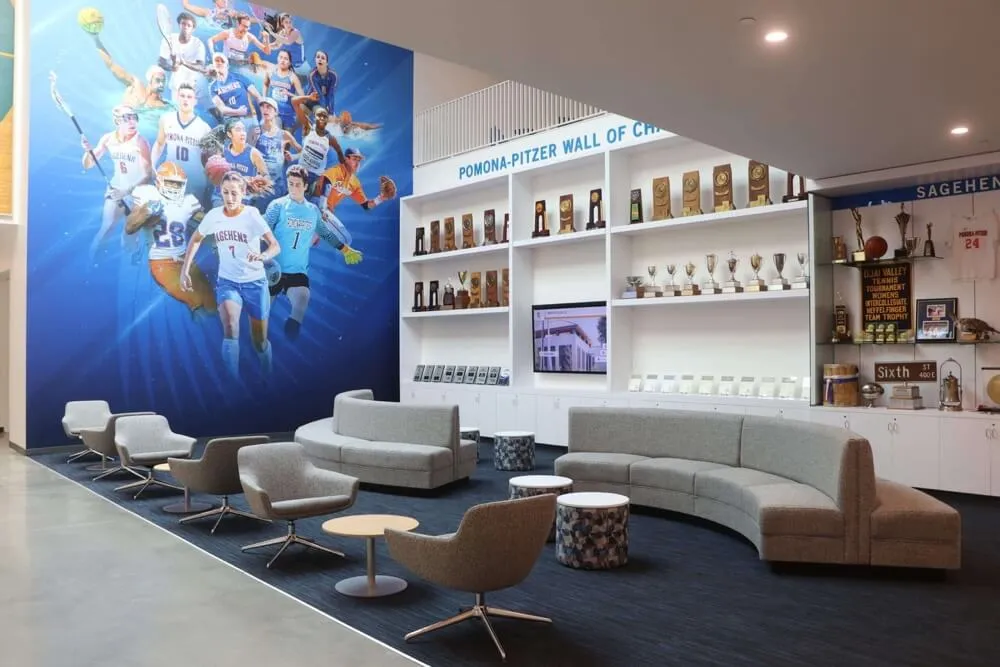
School Mascot and Branding Elements: Large-scale mascot illustrations establish immediate visual identity while creating Instagram-worthy backdrops athletes and fans photograph extensively. Mascot murals work particularly well on main gymnasium walls visible from bleachers, in entrance areas establishing first impressions, or behind basketball hoops creating prominent game broadcast backgrounds.
Professional mural artists typically charge $15-$75 per square foot depending on design complexity, surface preparation requirements, and geographic location. A prominent 10-foot by 20-foot mascot mural generally costs $3,000-$15,000 including design, preparation, painting, and sealing.
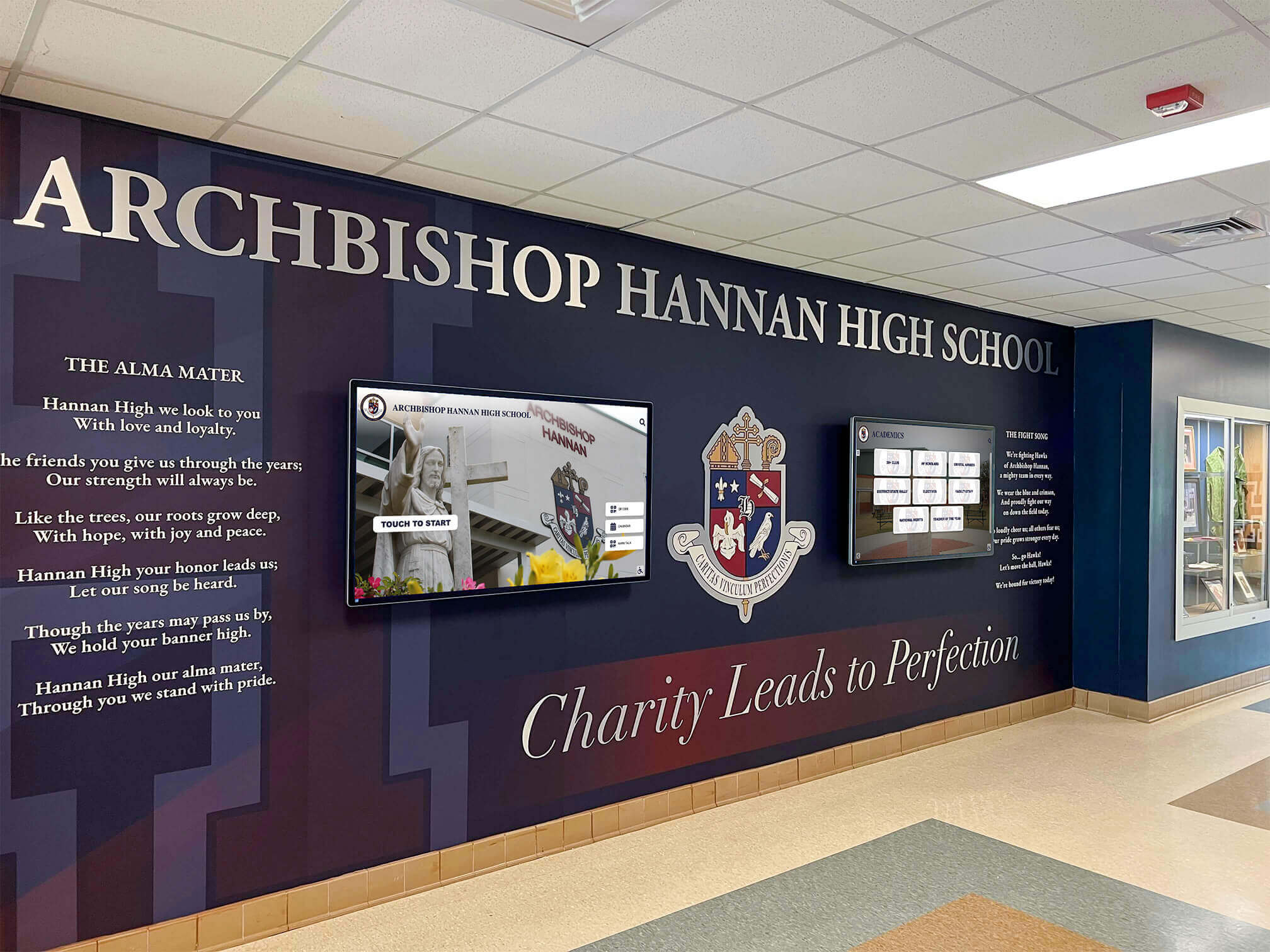
Championship Celebration Murals: Custom murals commemorating significant championships create permanent recognition for milestone achievements. These installations might feature action photography from championship games, roster listings with player names and numbers, final scores and tournament progression, and contextual information about season significance.
Championship murals transform individual achievements into permanent facility heritage while creating emotional connection for athletes who contributed to celebrated teams.
Motivational Quote Installations: Strategic placement of inspirational quotes attributed to legendary coaches, famous athletes, or cultural figures reinforces program values. Effective motivational graphics use bold typography ensuring readability from distance, strategic placement in high-traffic areas ensuring daily visibility, thematic consistency aligning with program philosophy, and attributed sources lending credibility and context.
Avoid generic motivational content available everywhere—seek quotes specifically resonating with your program’s unique culture and competitive context.
Vinyl Wall Decals and Graphics
Printed vinyl graphics offer more affordable and flexible alternatives to painted murals while delivering professional quality and design precision.
Advantages of Vinyl Graphics: Vinyl installations cost significantly less than hand-painted murals ($5-$25 per square foot typically), install quickly without facility downtime, maintain consistent quality through digital printing, update easily by removing and replacing sections, and work on diverse surfaces including painted walls, concrete blocks, and gymnasium dividers.
Modern vinyl materials withstand gymnasium environments including temperature fluctuations, humidity, and incidental ball contact when properly installed with appropriate protective coatings.
Common Vinyl Applications: Timeline graphics showing program history across decades, championship banner graphics listing all conference and state titles, record board displays showcasing program records by sport, team photo galleries celebrating recent championship teams, and branding elements reinforcing school colors and mascots.
Vinyl’s flexibility enables creative applications impossible with painted murals including floor-to-ceiling designs spanning entire walls, window graphics controlling light while adding visual interest, and gymnasium divider graphics transforming curtains into branded surfaces.
Maintenance and Longevity: Quality vinyl graphics properly installed typically last 5-10 years in indoor gymnasium environments before fading or edge lifting necessitates replacement. Protective laminates extend longevity while enabling cleaning without graphic damage. However, content becoming outdated—new championships, broken records, retired coaches—often drives replacement before material degradation.
This eventual replacement requirement represents vinyl graphics’ primary limitation compared to digital alternatives enabling instant content updates without physical reinstallation.
Championship Banners and Hanging Recognition
Suspended banners celebrating conference and state championships create traditional recognition many programs maintain as essential facility elements.
Banner Design Best Practices: Effective championship banners include sport identification with appropriate iconography, championship year prominently displayed, championship type (conference, district, regional, state, national), team record when applicable, and consistent design system across all sports and years.
Standardized templates ensure visual consistency as new championships add to collections over time, preventing aesthetic mismatch when banners from different eras hang together.
Space Management Considerations: Championship banners fill ceiling space surprisingly quickly, particularly in successful multi-sport programs. After decades of success, facilities run out of prime ceiling real estate, forcing difficult decisions about which championships deserve prominent display versus relegated to less visible locations.
Some programs address space constraints by creating rotating displays featuring recent championships prominently while archiving older banners, or implementing tiered systems where state championships receive permanent display while conference titles rotate seasonally.
Production and Costs: Custom championship banners from specialized athletic suppliers typically cost $150-$500 each depending on size, material quality, design complexity, and hanging hardware. While individual banner costs seem modest, comprehensive programs with dozens of championships across multiple sports accumulate significant total investment.
Banner production timelines typically require 2-4 weeks from order to installation, meaning championship recognition cannot happen immediately after seasons conclude unless programs maintain blank banners updated locally with vinyl lettering or other quick-turnaround methods.
Digital Displays and Interactive Record Boards
Modern digital technology revolutionizes athletic facility graphics by addressing traditional limitations while creating unprecedented capabilities for comprehensive, engaging, and sustainable recognition.
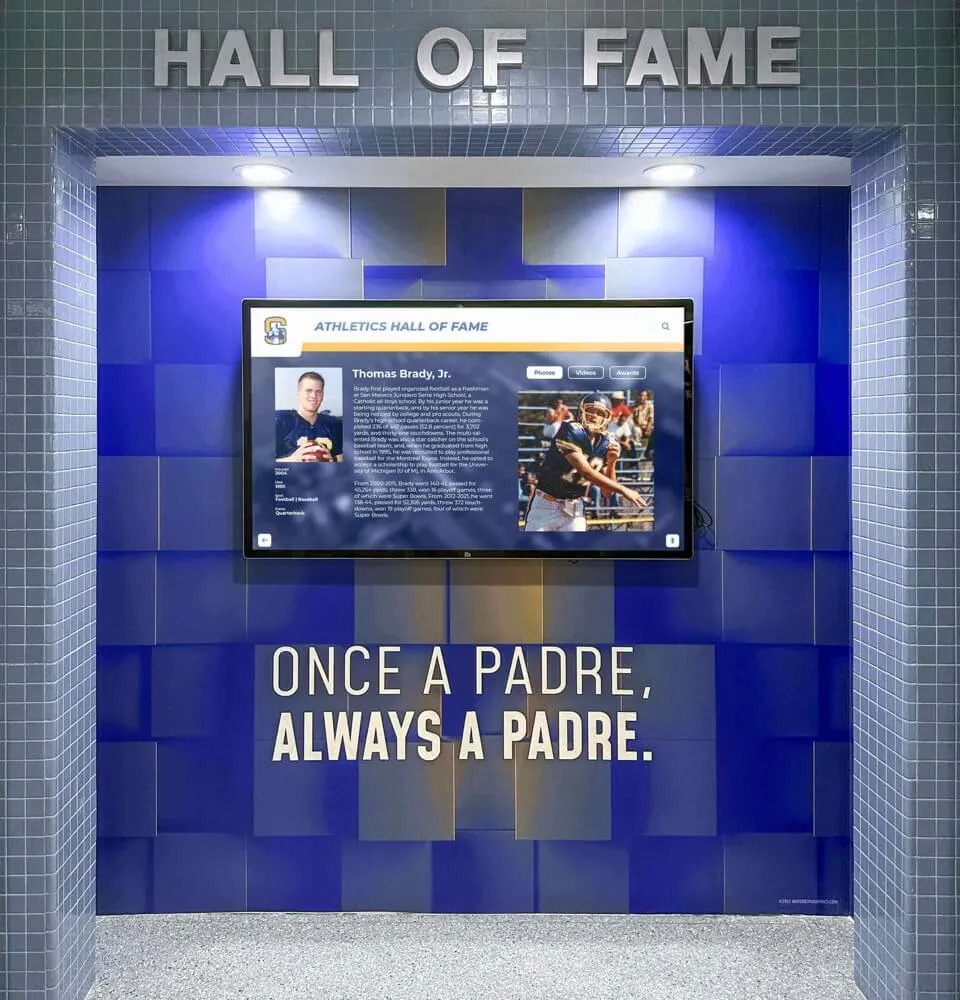
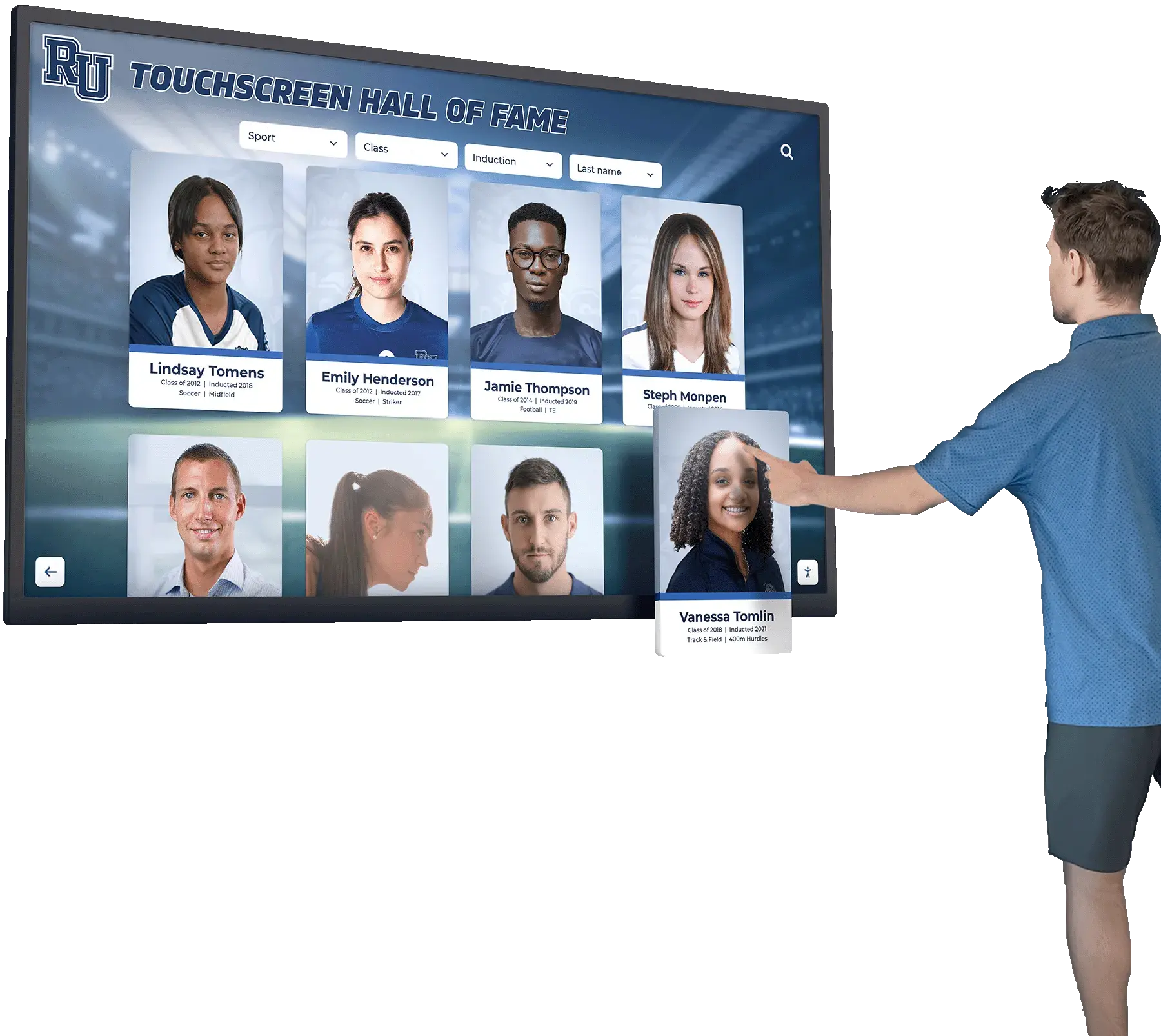
Advantages Over Static Graphics: Digital athletic record boards provide transformational benefits including unlimited content capacity showcasing every record across all sports and categories, instant updates when records fall or championships occur, rich multimedia integration with photos, videos, and detailed statistics, powerful search enabling athletes to locate specific records or achievements, and sustainable operation without ongoing graphic production costs.
Single digital displays replace dozens of static record boards, championship listings, and achievement graphics while providing superior functionality and engagement.
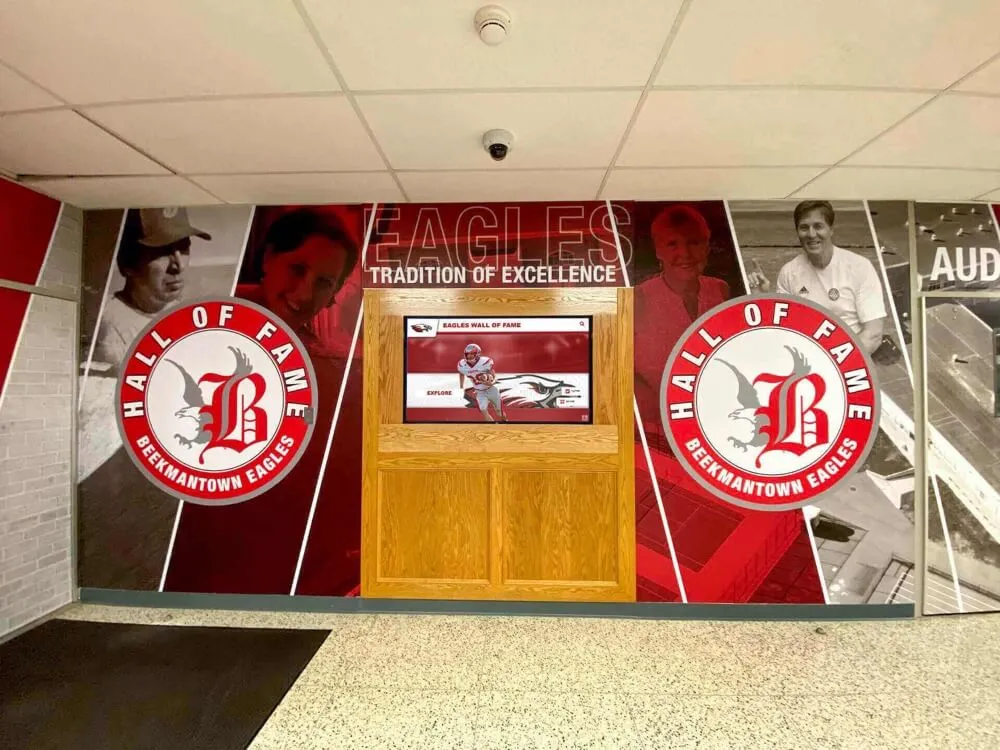
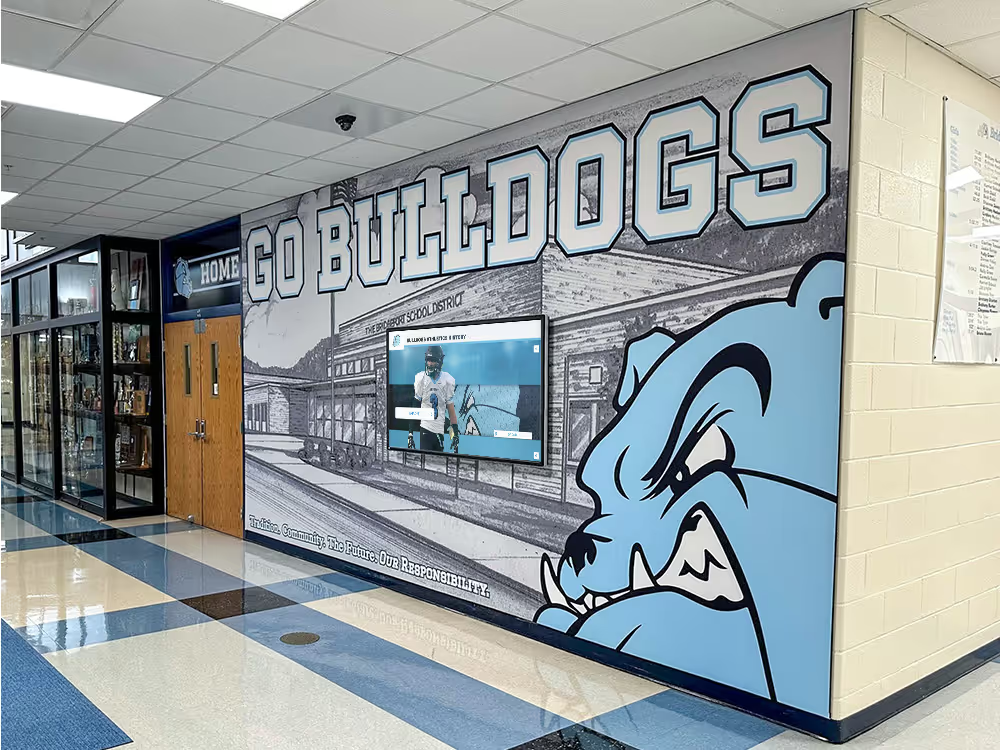
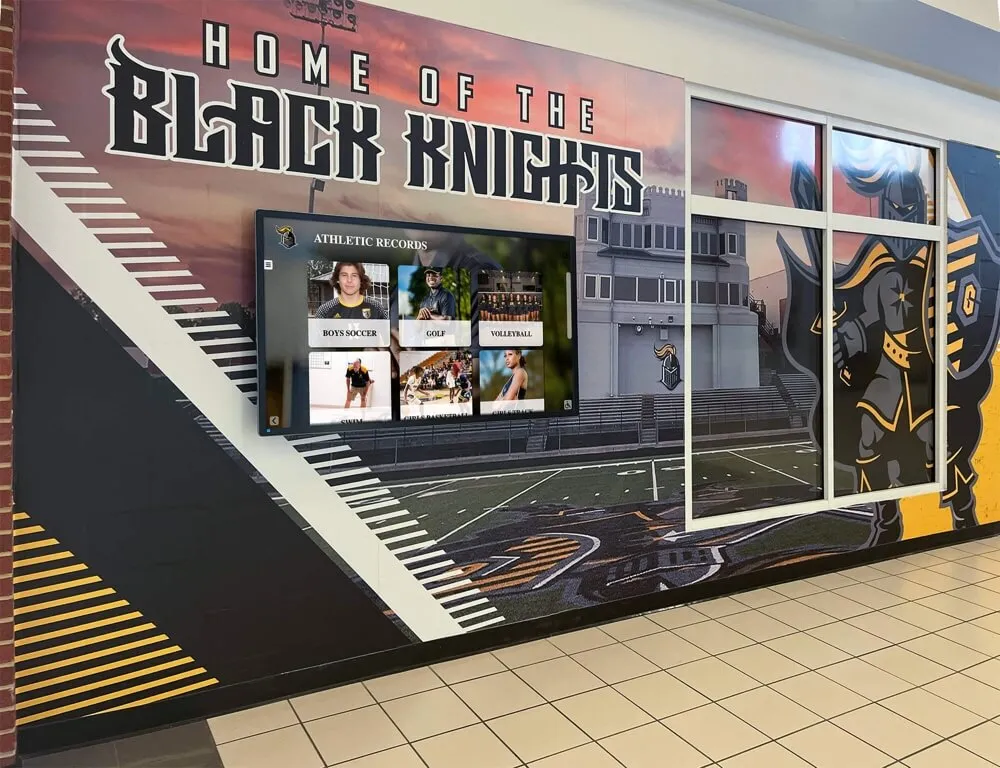
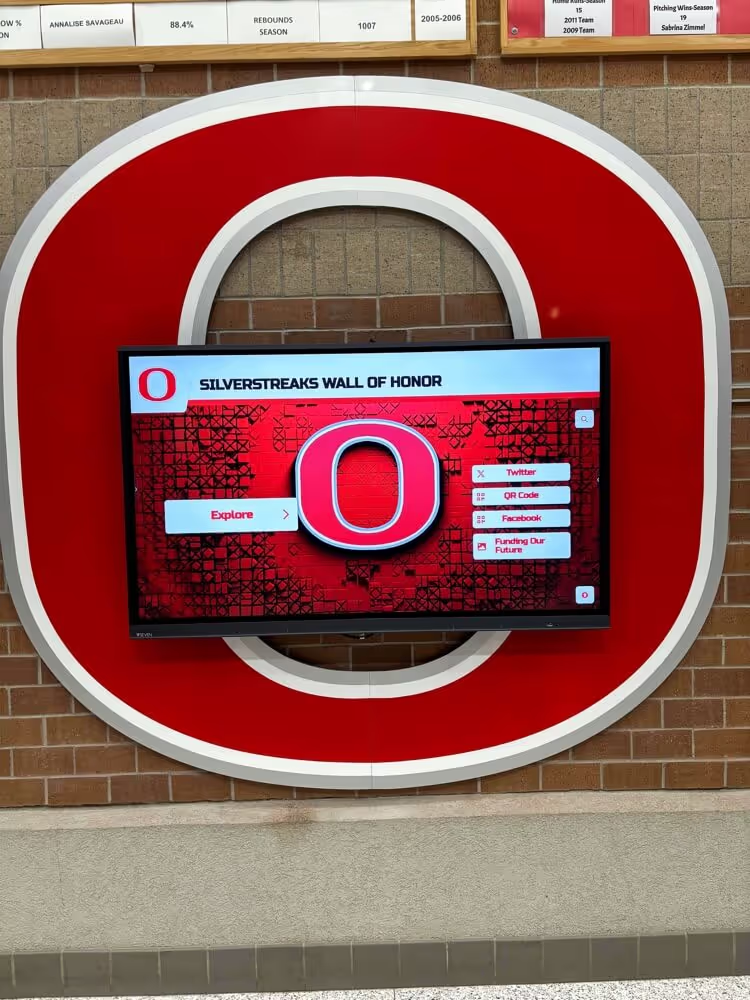
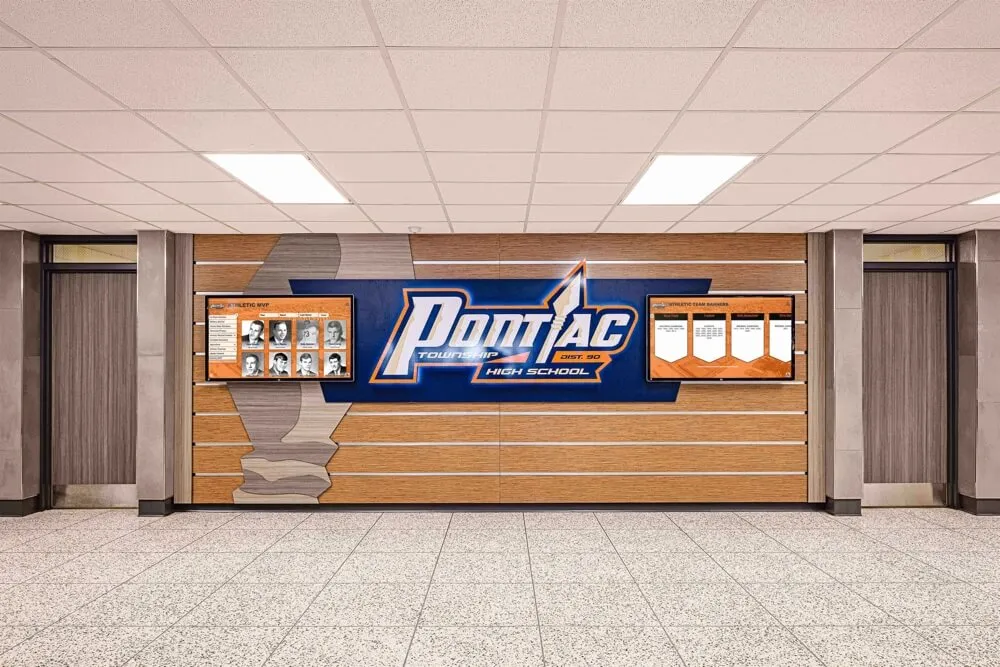
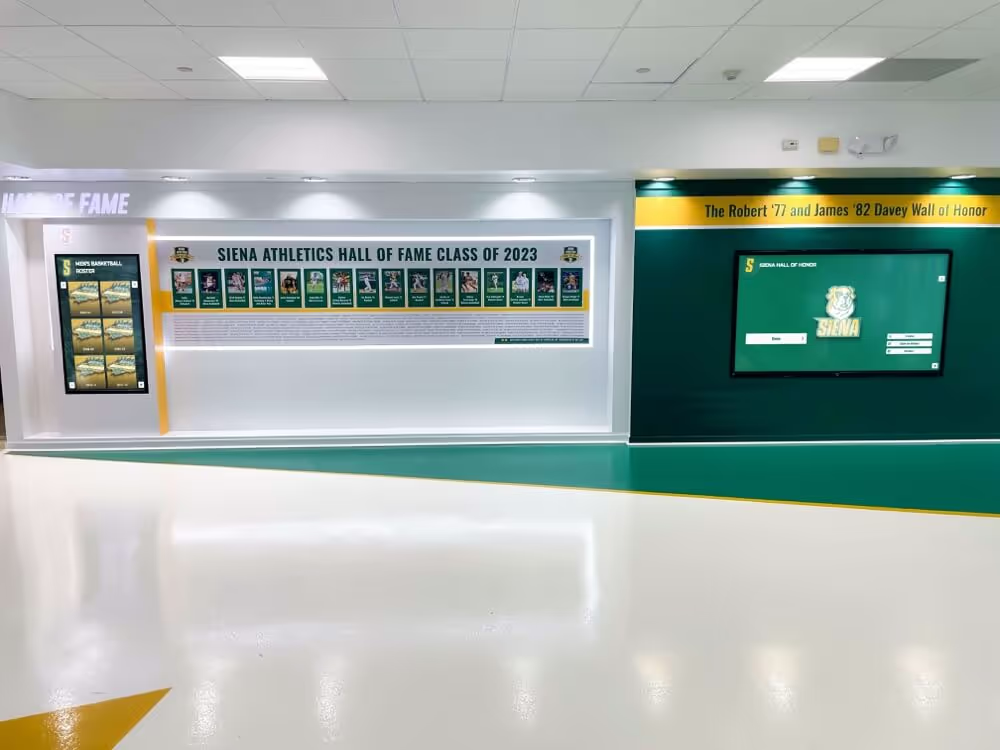
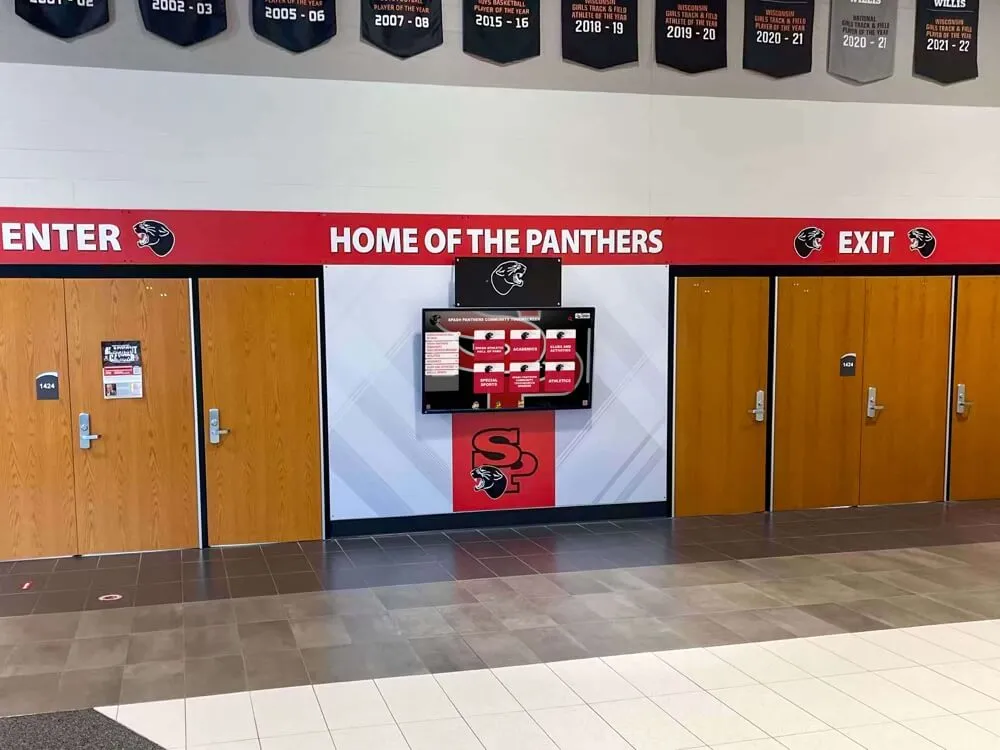
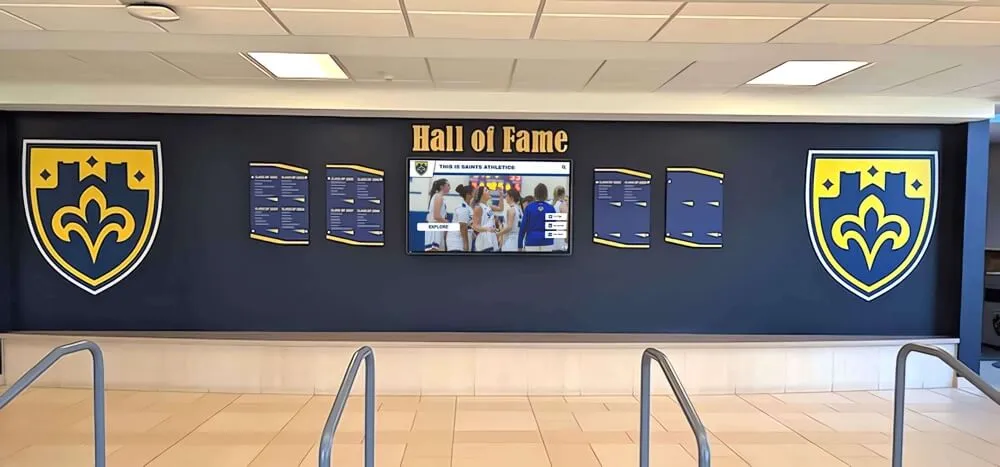
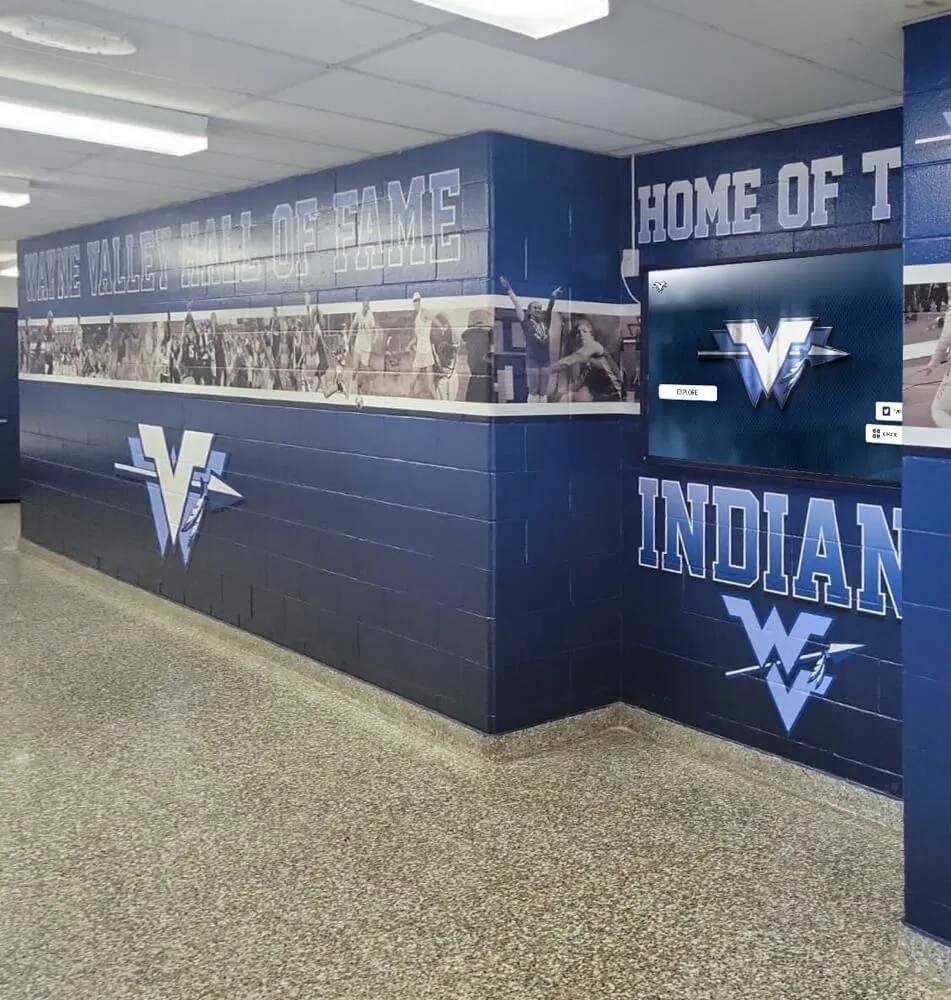
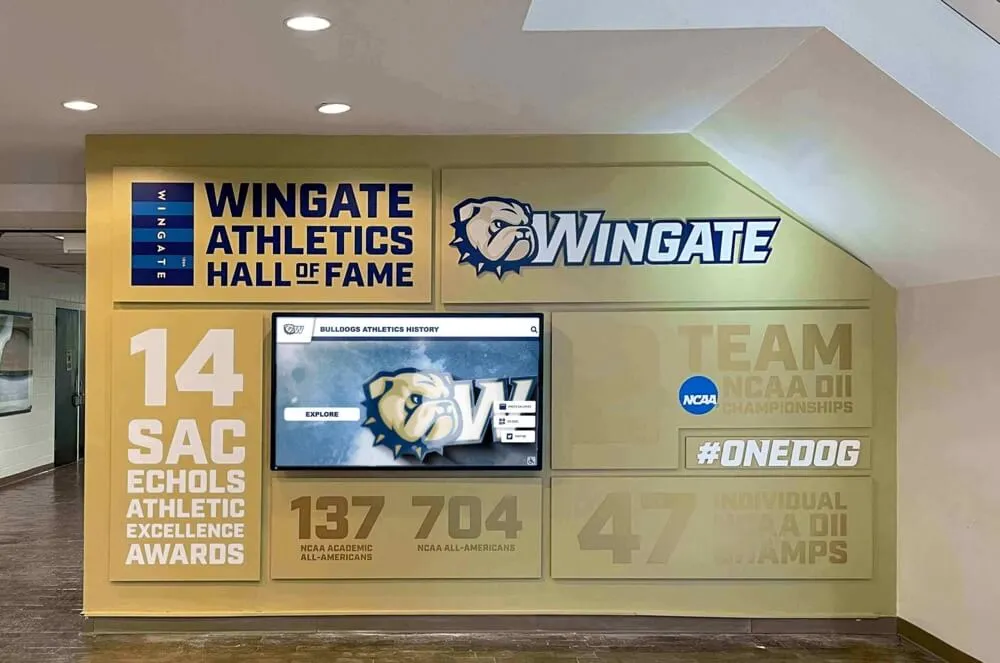
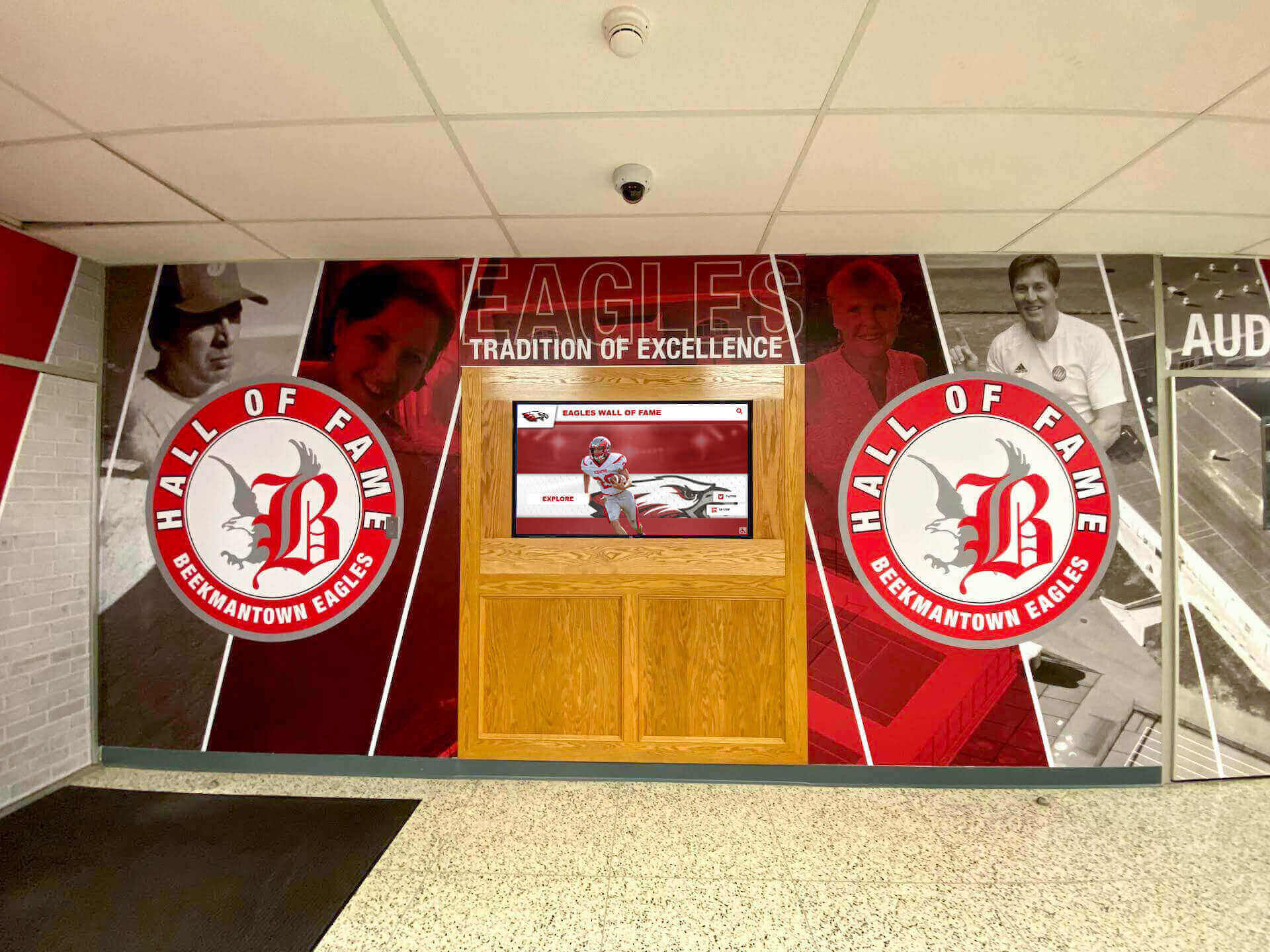
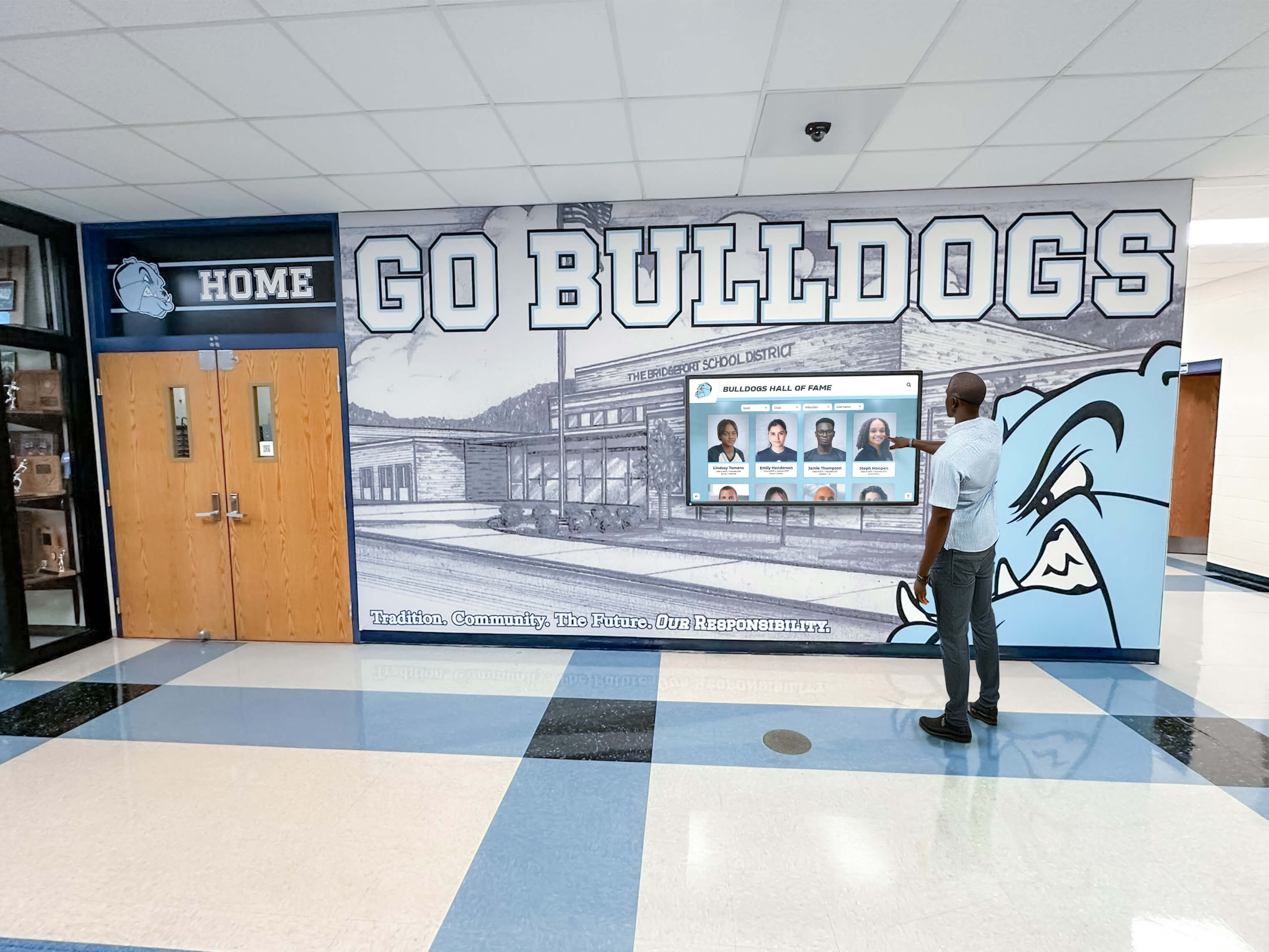
Integration with Traditional Graphics: Digital systems complement rather than replace traditional graphics through hybrid installations combining physical murals establishing brand identity and visual impact with digital displays providing comprehensive, current athletic data. Strategic placement positions digital record boards adjacent to related physical graphics creating cohesive visual environments.
For example, a mascot mural might include integrated mounting for digital display showcasing current records, or championship banner displays might include companion touchscreen exploring detailed championship team histories.
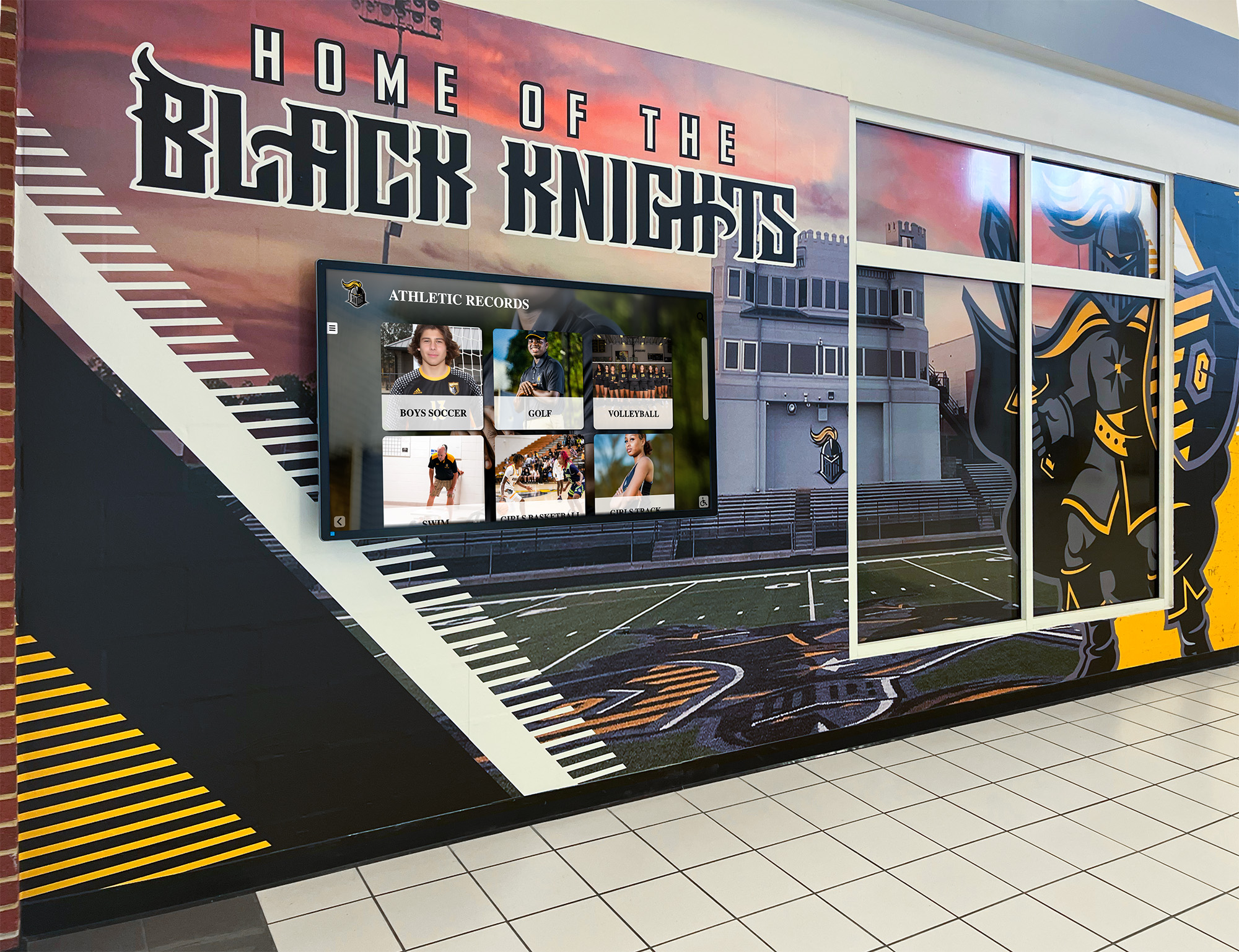
Content Management and Sustainability: Purpose-built athletic recognition platforms enable coaches and athletic directors to update content independently through intuitive web interfaces requiring no technical expertise. Cloud-based systems allow remote updates from any location, eliminating facility access requirements and enabling immediate recognition following competitions.
Long-term cost analysis typically favors digital systems over traditional graphics requiring periodic replacement. While initial investment exceeds individual vinyl graphics or painted murals, elimination of ongoing update costs and unlimited expansion capacity without additional spending creates superior value across facility lifespans.
Resources on digital trophy case systems provide comprehensive implementation guidance for athletic facilities seeking modern recognition solutions.
Strategic Gym Wall Graphics Design Principles
Effective gymnasium graphics share specific design characteristics ensuring they enhance rather than detract from facility aesthetics and functionality.
Color Palette and Branding Consistency
Visual coherence across all graphics elements creates professional environments supporting institutional identity.
School Color Integration: All graphics should utilize official school colors in appropriate applications maintaining brand consistency. However, avoid monotonous color application—strategic use of neutral backgrounds, varied tones within school color families, and accent colors highlighting specific elements creates visual interest while maintaining brand alignment.
Graphics competing with school colors or introducing unrelated palettes fragment visual identity and create amateurish appearances undermining intended impact.
Coordinated Design Systems: Establish design templates governing typography, layout principles, graphic elements, and stylistic approaches used consistently across all gymnasium graphics. When championship banners, record boards, motivational graphics, and murals follow unified design language, facilities feel cohesive and professionally planned rather than haphazardly accumulated over time.
Design system documentation ensures future graphics additions maintain consistency even when different vendors or designers produce individual elements years apart.
Typography and Readability
Text-based graphics must communicate effectively from various viewing distances under gymnasium lighting conditions.
Hierarchy and Emphasis: Establish clear visual hierarchy ensuring most important information receives greatest visual emphasis through larger type sizes, bolder weights, strategic color contrast, and prominent positioning. Secondary information should remain accessible without competing for attention with primary content.
For example, championship year deserves greatest prominence on banners, with sport identification and championship type providing supporting context at smaller but readable scales.
Font Selection: Choose typefaces balancing aesthetic appeal with functional readability. Sans-serif fonts generally provide superior legibility for large-scale environmental graphics viewed from distance. Avoid overly stylized decorative fonts that sacrifice readability for novelty, and maintain consistent font families across related graphics elements.
Viewing Distance Considerations: Calculate appropriate text sizes based on maximum viewing distances. General guideline suggests one-inch letter height for every 10 feet of viewing distance—text intended for reading across a 60-foot gymnasium requires minimum 6-inch letter height.
Test graphic designs at actual size and viewing distances before final production, ensuring readability under real facility conditions rather than relying on scaled computer previews.
Layout and Compositional Balance
Strategic spatial organization creates graphics that feel professionally designed rather than cluttered or imbalanced.
Visual Weight Distribution: Balance graphic elements across composition preventing heavy concentration in particular areas while leaving other sections sparse. Visual weight derives from color intensity, element size, detail complexity, and positioning—distributed evenly creates harmonious compositions.
Breathing Room and Negative Space: Resist temptation to fill every square inch with content. Strategic negative space gives important elements room to breathe, prevents visual overcrowding, and creates sophisticated aesthetic impact. Cluttered graphics sacrifice readability and professional appearance for marginal content increases.
Alignment and Organization: Establish clear alignment systems creating order and structure. Consistent left, right, or center alignment; regular spacing intervals; and organized element groupings create professional polish distinguishing quality graphics from amateur attempts.
Grid-based layouts provide frameworks ensuring compositional consistency across multiple related graphics even when produced at different times.
Material Selection and Durability
Gymnasium environments impose specific requirements demanding appropriate material choices for longevity and performance.
Environmental Considerations: Gymnasiums experience temperature fluctuations, humidity variations, impacts from balls and equipment, and cleaning chemical exposure. Graphics materials must withstand these conditions without fading, peeling, cracking, or deteriorating prematurely.
Commercial-grade vinyl with protective laminates, specialized gymnasium paints with impact-resistant topcoats, and proper surface preparation ensure installations survive demanding athletic environments.
Maintenance Requirements: Specify low-maintenance materials and finishes enabling routine cleaning without special procedures or products. Graphics requiring specialized care or prohibiting normal facility cleaning create ongoing burdens discouraging proper maintenance.
Replacement Planning: Even durable graphics eventually require replacement. Design installations enabling partial updates rather than complete removal when content changes—modular vinyl sections, championship banner systems accommodating additions, and digital displays updating content without hardware replacement.
Content Development for Gym Wall Graphics
Design quality means little without compelling content that resonates with athletes, celebrates achievements authentically, and communicates program values effectively.
Championship and Achievement Recognition
Athletic success deserves prominent celebration creating pride while motivating continued excellence.
Comprehensive vs. Selective Recognition: Decide whether graphics will recognize all championships and achievements or only highest accomplishments like state titles. Comprehensive approaches honor broader achievement but require more space, while selective recognition emphasizes premier accomplishments but risks diminishing other worthy achievements.
Digital solutions eliminate this forced choice by providing unlimited capacity for comprehensive recognition without space constraints limiting physical graphics.
Information Hierarchy: Determine what details championship graphics should include. Essential information includes sport and championship type, year achieved, and basic team identification. Enhanced recognition might add complete rosters, season records, championship game scores, coaching staff, and milestone context.
Balance comprehensive information desires against readability and space constraints—overly detailed graphics become illegible while sparse recognition feels inadequate.
Historical Depth: Decide how far back championship recognition extends. Some programs celebrate complete history from founding, while others focus on recent decades where documentation exists and current community connections remain strong. Historical depth decisions affect space requirements and research investments needed for content development.
Record Boards and Statistical Displays
Program records create goals athletes pursue while documenting excellence benchmarks established by previous generations.
Record Categories: Determine which statistical categories deserve recognition across different sports. Individual sports like track and field or swimming feature dozens of event-specific records, while team sports typically recognize position-specific career and single-season achievements.
Comprehensive athletic record tracking systems enable detailed documentation across all relevant categories without space limitations forcing selective recognition.
Record Presentation Format: Standard record board formats include athlete name and graduation year, statistical achievement with appropriate units, date when record was set, and previous record for context. Enhanced formats might add performance details describing conditions or competition context, athlete photos, and career summary information.
Update Protocols: Establish clear processes for updating records when broken including verification procedures confirming new records, timeline for graphics updates, and recognition ceremonies celebrating new record-holders. Digital systems enable immediate updates, while physical graphics require planning for periodic replacement or modification.
Motivational Content and Program Values
Strategic messaging reinforces culture and expectations beyond recognition of past achievements.
Quote Selection: Choose motivational content aligned specifically with program philosophy rather than generic inspiration. Quotes from coaches who built your program, legendary athletes who embodied your values, or cultural figures whose messages resonate with your community create authentic connections generic content cannot replicate.
Attribute quotes accurately and provide appropriate context ensuring authenticity and educational value.
Core Values Communication: Graphics presenting program values—teamwork, integrity, excellence, perseverance, sportsmanship—create shared language coaches reference throughout seasons. Values graphics work best when they communicate concepts through compelling imagery and memorable language rather than corporate-speak lists.
Team Mottos and Traditions: Incorporate team-specific mottos, rally cries, or traditional sayings that carry meaning within your program culture. These insider elements strengthen belonging for current athletes while creating curiosity among visitors unfamiliar with tradition contexts.
Understanding comprehensive school lobby design principles helps athletic departments create cohesive visual environments extending beyond gymnasiums to all facility spaces.
Implementation: Planning and Installing Gym Wall Graphics
Successfully implementing gymnasium graphics requires systematic planning addressing design, production, installation, and ongoing management.
Assessment and Planning Phase
Space Inventory and Mapping: Document all available wall space including dimensions, surface materials, and viewing angles. Photograph walls from multiple perspectives identifying prime locations receiving maximum visibility versus secondary spaces suitable for supporting graphics.
Create scale floor plans mapping potential graphic locations, enabling informed decisions about placement and sizing before committing to specific designs or expenditures.
Budget Development: Comprehensive budgets should account for design services including custom artwork or template customization, production costs for printing, painting, or manufacturing, installation labor and equipment rentals, ongoing maintenance and eventual replacement, and contingency reserves for unforeseen complications.
Typical comprehensive gymnasium graphics programs range from $10,000-$75,000 depending on facility size, graphic complexity, and whether projects include digital display components. Phased implementation spreading costs across multiple years makes ambitious programs financially manageable.
Stakeholder Input: Engage coaches across all sports ensuring equitable representation, athletes providing current participant perspectives, alumni offering historical knowledge and tradition insights, administrators confirming alignment with institutional priorities, and facilities staff identifying practical installation and maintenance considerations.
Broad stakeholder engagement prevents designs serving narrow interests while missing broader community expectations or practical requirements.
Design Development Process
Concept Development: Generate multiple design directions exploring different aesthetic approaches, content organizations, and material applications. Initial concepts should prioritize big-picture vision over detailed execution, enabling strategic decisions about overall direction before investing in detailed design work.
Present concepts to stakeholder groups gathering feedback that informs design refinement.
Design Refinement: Develop selected concepts into detailed designs specifying exact dimensions and placement, complete color specifications, typography selections, content wording and organization, material specifications, and installation methods.
Detailed designs enable accurate cost estimates while providing contractors and vendors complete specifications for production and installation.
Mock-ups and Visualization: Create full-scale mock-ups of key elements when possible, enabling evaluation under actual facility conditions. Large graphic elements can be mocked up using temporary materials positioned where final installations will occur, revealing how designs work at scale and viewing distances rather than relying on small-scale renderings.
Digital visualization tools enable realistic renderings showing how graphics will appear in facility photographs, though nothing replaces full-scale testing for critical elements.
Production and Installation
Vendor Selection: Research specialized athletic graphics vendors versus general sign companies. Specialized vendors understand gymnasium-specific requirements including material durability needs, common design approaches, and installation challenges unique to athletic facilities.
Request portfolios showing completed gymnasium projects and references from athletic directors at schools with similar graphics installations.
Production Timelines: Plan production schedules accounting for typical lead times including 2-3 weeks for design development and approval, 2-4 weeks for vinyl printing and preparation, 1-2 weeks for painted mural completion, and 2-4 weeks for championship banner production.
Complex projects requiring custom artwork, unusual materials, or peak-season production may require extended timelines. Order well in advance of desired completion dates, particularly for projects celebrating graduating seniors or championship teams where completion deadlines matter.
Installation Scheduling: Coordinate installation during periods minimizing facility disruption—summer breaks, holiday recesses, or specific days when gymnasiums can be closed without affecting programs. Large installations may require multiple days with equipment blocking floor space and creating unsafe conditions for concurrent athletic activities.
Communicate installation schedules clearly to all facility users preventing conflicts and frustration from unexpected access limitations.
Quality Control: Inspect completed installations thoroughly before accepting as complete including verifying color accuracy, confirming spelling and factual accuracy, checking alignment and level placement, ensuring secure adhesion or mounting, and testing protective coatings and finishes.
Address any deficiencies immediately while vendors remain engaged rather than discovering problems weeks later when warranty coverage and vendor responsiveness prove more challenging.
Common Gym Wall Graphics Challenges and Solutions
Athletic facilities encounter predictable obstacles when implementing graphics programs—understanding these challenges enables proactive strategies preventing problems.
Challenge: Outdated Content and Maintenance
Graphics celebrating championships or records quickly become outdated as new achievements occur.
Solutions: Implement modular designs enabling partial updates rather than complete replacement, establish update budgets and protocols before outdated content accumulates, consider digital solutions eliminating manual update requirements, and maintain design templates enabling consistent additions matching original installations.
Budget for graphics as ongoing operational expenses requiring periodic updates rather than one-time capital projects assuming permanent completion.
Challenge: Limited Budget and Phased Implementation
Comprehensive graphics programs often exceed available budgets, forcing difficult prioritization decisions.
Solutions: Develop phased implementation plans addressing highest-priority elements first while establishing roadmaps for future expansion. Phase 1 might address most visible walls in main gymnasium, with subsequent phases tackling auxiliary gyms, hallways, and secondary spaces as budgets permit.
Seek booster club funding, alumni donations, or community sponsorships offsetting institutional costs. Graphics projects create tangible visible results donors appreciate, unlike operational expenditures lacking concrete deliverables.
Consider hybrid approaches using affordable vinyl graphics for most elements while reserving custom murals for signature focal points maximizing impact with limited premium-cost investments.
Challenge: Equitable Multi-Sport Recognition
Programs with dominant high-profile sports risk graphics that disproportionately celebrate football and basketball while under-recognizing equally deserving achievements in other sports.
Solutions: Establish recognition policies ensuring equitable treatment across all sports before design development begins. Policies might specify equal championship recognition regardless of sport, proportional space allocation by number of participants, or standardized formats ensuring consistent treatment.
Review graphics plans with coaches across all sports confirming perceptions of fairness before installation. Digital unlimited-capacity solutions particularly address equity concerns by eliminating space limitations forcing selective recognition.
Resources on student awards and recognition programs provide frameworks for equitable multi-sport celebration systems.
Challenge: Surface Preparation and Installation Quality
Poor surface preparation or installation techniques cause premature failure regardless of material quality.
Solutions: Specify proper surface preparation in installation contracts including cleaning removing dirt and residues, repairing cracks and imperfections, priming porous or problematic surfaces, and adequate drying time before graphics application.
Use experienced installers familiar with gymnasium environments rather than general contractors lacking specialized expertise. Vinyl graphics particularly require trained installers preventing bubbles, wrinkles, and edge lifting that plague amateur installations.
For painted murals, specify primer systems and topcoat protectants designed for high-traffic environments resisting impacts and enabling cleaning without paint damage.
Emerging Trends in Athletic Facility Graphics
Understanding developing approaches helps athletic directors make forward-looking decisions maximizing long-term value.
Dynamic Digital Content Integration
Static graphics increasingly give way to dynamic digital installations enabling real-time content updates and interactive experiences.
Live Statistics and Scoring: Digital displays can showcase live game statistics during competitions, current season standings and records, and real-time social media feeds featuring fan engagement. This dynamic content creates excitement while providing information enhancing spectator experiences.
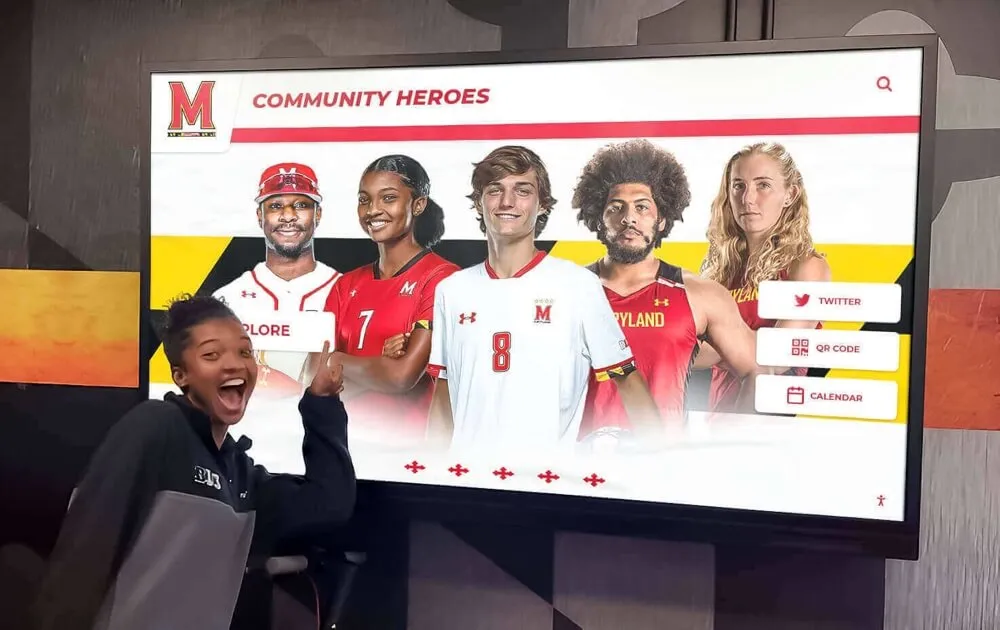
Athlete Spotlight Rotations: Rather than selecting specific athletes for permanent recognition risking perceived favoritism, digital systems rotate spotlight features ensuring all athletes receive periodic visibility. Rotation algorithms can emphasize athletes from current sports seasons, highlight birthday recognitions, or feature athletes from specific graduation years during reunions.
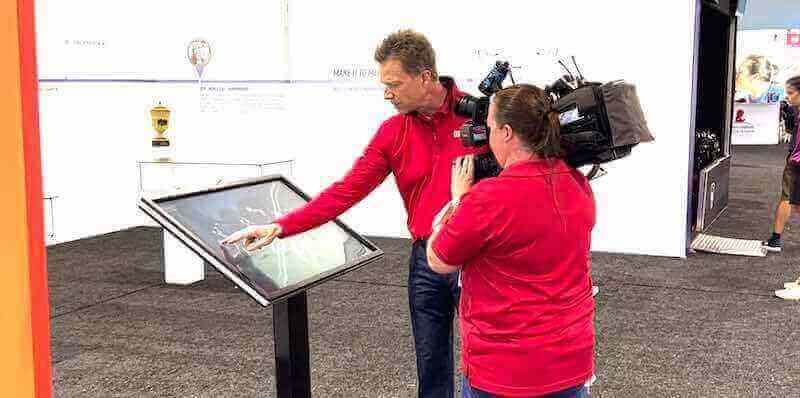
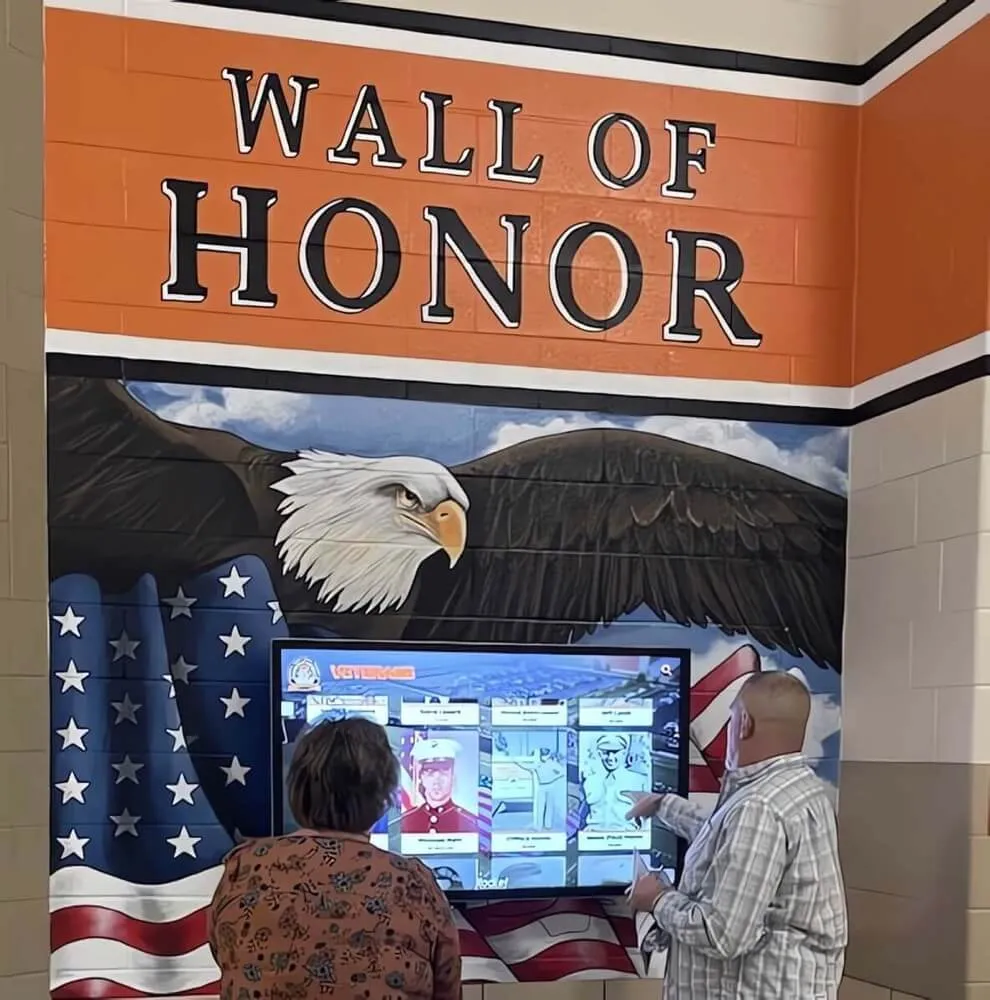
Interactive Exploration: Touchscreen digital installations enable visitors to explore comprehensive athletic histories through intuitive search interfaces, filter content by sport or achievement type, and share discoveries through social media integration. Interactive exploration transforms passive viewers into engaged participants creating memorable experiences.
Augmented Reality Enhancement
Emerging AR technology enables smartphones or tablets to unlock additional content when viewing physical graphics.
AR applications might overlay championship team videos when viewing banner displays, provide detailed statistics and photos when scanning record boards, or enable virtual trophy case exploration through smartphone cameras. These enhanced experiences particularly resonate with tech-savvy younger athletes and prospective families.
Sustainability and Eco-Friendly Materials
Increasing environmental consciousness drives demand for sustainable graphics materials and processes.
Options include water-based paints eliminating toxic VOC emissions, recyclable vinyl substrates and responsible disposal protocols, and locally-sourced materials reducing transportation impacts. Sustainable materials align with institutional environmental commitments while often providing superior indoor air quality in occupied gymnasiums.
Digital displays particularly support sustainability objectives by eliminating ongoing material consumption for updates, though energy efficiency considerations require specification of low-power LED panels and automatic dimming or sleep modes.
Measuring Gym Wall Graphics Impact and Success
Evaluating graphics program effectiveness ensures investments deliver intended value while identifying opportunities for improvement.
Stakeholder Feedback and Satisfaction
Systematic feedback collection reveals how graphics influence key stakeholder groups.
Athlete Perspectives: Survey current athletes about whether graphics make them proud of facilities, inspire training motivation, create goals they pursue, and influence recruiting perceptions. Athlete feedback reveals whether graphics achieve intended motivational and culture-building objectives.
Alumni Engagement: Track alumni comments during reunions or facility tours, monitor social media posts featuring graphics, and measure facility rental requests for personal events. Alumni sharing gymnasium photos or expressing pride in facility improvements indicates successful emotional connection.
Community and Donor Response: Document booster club enthusiasm and fundraising momentum following graphics installations, prospective family comments during recruiting visits, and community event attendance in upgraded facilities.
Recruiting and Program Development Outcomes
Graphics influence recruiting success and program quality perceptions in ways affecting competitive results.
Facility Tour Feedback: Systematically collect prospective athlete reactions during recruiting visits comparing feedback before and after graphics installations. Improved facility perceptions and increased commitment rates following graphics upgrades demonstrate recruiting impact.
Competitive Success Trends: While graphics alone don’t win games, facility improvements contribute to program culture shifts that influence recruiting, retention, and performance. Track competitive results and participation levels in years following major graphics installations, controlling for other variables affecting outcomes.
Cost-Effectiveness and Return on Investment
Graphics represent significant investments requiring accountability and value demonstration.
Cost Per Year of Service: Calculate total graphics costs divided by expected service life estimating annual investment. Vinyl graphics costing $10,000 with 7-year expected life represent approximately $1,430 annual cost. Compare alternatives based on annual costs rather than just initial expenses.
Avoided Costs Through Digital Solutions: For programs implementing digital record boards, quantify avoided costs from eliminated manual updates, reduced graphic replacement expenses, and eliminated ongoing production costs. Digital platforms often demonstrate superior ROI across multi-year timeframes despite higher initial investment.
Conclusion: Transforming Gymnasiums Into Championship Environments
Athletic facilities serve as second homes for student-athletes dedicating countless hours to competitive excellence and personal development. These spaces deserve thoughtful design creating environments that inspire rather than merely accommodate, that celebrate heritage rather than ignore history, and that communicate institutional commitment to athletic excellence through every visual element.
Strategic gym wall graphics transform blank institutional walls into powerful recognition systems, motivational tools, and brand ambassadors. Whether through traditional painted murals and vinyl installations, championship banners celebrating team success, or modern digital displays providing comprehensive interactive recognition, effective graphics create facility atmospheres where athletes perform their best, communities take pride, and traditions strengthen across generations.
Modern athletic facilities increasingly embrace hybrid approaches combining traditional graphics elements delivering visual impact and aesthetic appeal with digital platforms providing unlimited recognition capacity, instant updates, and comprehensive content management. This balanced strategy honors what works about conventional graphics while eliminating limitations through technology enabling sustainable long-term operation.
For athletic directors evaluating graphics programs, success requires systematic planning addressing stakeholder input and equitable recognition, thoughtful design balancing aesthetics with functionality, quality production and professional installation, and sustainable management protocols ensuring ongoing currency and accuracy.
Whether your gymnasium currently features stark blank walls awaiting transformation or existing graphics requiring refresh and modernization, comprehensive solutions now exist matching any budget, timeline, or design vision. The achievements earned through dedicated training, competitive excellence, and unwavering commitment deserve recognition creating permanent facility heritage while inspiring the next generation to pursue their own athletic excellence.
Your athletes deserve to train in facilities communicating that their achievements matter, their traditions continue, and their programs pursue excellence worthy of celebration. Thoughtfully designed gym wall graphics ensure every practice, every competition, and every moment in athletic facilities reinforces these messages—creating environments where championship culture flourishes and athletic excellence becomes not just a goal but an expectation embedded in the very walls surrounding every effort.
Ready to create a comprehensive athletic recognition system that celebrates championships, tracks records, and honors every deserving athlete without space limitations or ongoing update burdens? Explore how Rocket Alumni Solutions delivers digital record boards designed specifically for gymnasiums and athletic facilities seeking to honor excellence through modern displays that complement traditional graphics while eliminating manual update requirements and capacity constraints.