



Every spring, schools and universities across the country celebrate students who accomplished something rare: they didn’t just finish their degree—they earned it at the highest levels. Graduation with honors represents the culmination of years of consistent academic effort, intellectual discipline, and deliberate prioritization of learning. For students who’ve maintained exceptional grades across demanding coursework, that gold cord, distinctive sash, or designation in the commencement program carries genuine weight.
For school administrators, counselors, and academic leaders, honors graduation also presents a meaningful recognition opportunity that extends well beyond the ceremony itself. Understanding how to define, structure, and celebrate honors graduates—and how to preserve that recognition permanently—helps schools build cultures where academic excellence is valued as visibly as any championship banner on the gym wall.
Why Graduation With Honors Deserves More Than a Single Ceremony Moment
Honors graduates represent the highest academic achievers your institution has produced. Their recognition shouldn't disappear when the commencement program gets recycled. Modern digital recognition solutions enable schools to celebrate honors graduates with the visibility and permanence their accomplishments deserve—long after graduation day. Solutions like Rocket Alumni Solutions provide purpose-built platforms that help schools display academic achievers through engaging interactive walls of fame, keeping the recognition of top scholars accessible to current students, families, and future classes for years to come.
What Does It Mean to Graduate With Honors?
“Graduation with honors” isn’t a single designation—it’s a category of recognition that takes different forms depending on the institution and level of education. Understanding the distinctions helps schools make intentional decisions about how to structure and communicate these achievements.
Latin Honors at the College and University Level
The most widely recognized system for honors graduation comes from the Latin honors tradition used by colleges and universities across the United States and internationally. These three designations—each indicating increasingly exceptional academic performance—appear on diplomas, transcripts, and in commencement programs.
Cum Laude (“With Praise”)
Cum laude is the baseline Latin honors designation, recognizing students whose cumulative GPA falls within the top academic tier but below the more selective thresholds above it. Most four-year institutions set cum laude requirements somewhere between 3.5 and 3.7 GPA on a 4.0 scale, though this varies considerably by school.
Magna Cum Laude (“With Great Praise”)
Magna cum laude recognizes a higher level of academic achievement, typically requiring a cumulative GPA in the 3.7 to 3.85 range. At more competitive institutions, the threshold may be set by class rank rather than raw GPA—awarding magna cum laude to students graduating in the top 10 to 15 percent of their class.
Summa Cum Laude (“With Highest Praise”)
Summa cum laude represents the pinnacle of Latin honors, reserved for students who maintained near-perfect or perfect grade point averages throughout their academic careers. Most institutions set this threshold at 3.9 or above, with some requiring a strict 4.0. At schools using class rank systems, summa cum laude may go only to the top 1 to 5 percent of graduating students.

Important Note: GPA Thresholds Vary by Institution
There is no universal standard for Latin honors GPA cutoffs. Each institution establishes its own criteria, and some use weighted or unweighted GPAs, class rank calculations, or hybrid models. Students planning to graduate with honors should always consult their institution’s official academic catalog rather than assuming standard thresholds apply.
Some schools use percentage-based rather than GPA-based criteria. Others apply Latin honors only to students who completed a minimum number of credit hours at that institution—a relevant consideration for transfer students.
High School Honors Graduation Designations
At the high school level, honors graduation takes different but equally meaningful forms. Rather than Latin honors designations, most high schools use a combination of the following:
Valedictorian
The valedictorian holds the highest GPA in the graduating class and traditionally delivers the valedictory address at commencement. When multiple students share identical GPAs—increasingly common at schools using weighted or unweighted calculations—some institutions name co-valedictorians or use additional tie-breaking criteria such as course rigor or credit hours completed.
Salutatorian
The salutatorian holds the second-highest GPA in the graduating class and typically delivers opening remarks at the graduation ceremony. The salutatorian designation remains one of the most recognized academic honor designations at the high school level.
Highest Honors / High Honors / Honors
Many high schools implement tiered academic honors designations modeled loosely on the Latin honors system. Common thresholds include: Highest Honors for a 3.9+ GPA, High Honors for 3.7–3.89, and Honors for 3.5–3.69. Schools use varying terminology—“Principal’s Honor Roll,” “Academic Excellence Award,” “Distinguished Scholar”—but the underlying intent is the same: recognizing students who sustained exceptional performance across their entire high school career.
For a comprehensive look at how schools define and celebrate the highest academic awards at the high school level, it’s worth examining how different institutions approach criteria, ceremony, and long-term recognition.
National Honor Society Distinction
NHS membership at the time of graduation often appears in commencement programs as an additional academic distinction. Because NHS criteria include GPA minimums alongside leadership, character, and service requirements, NHS graduates represent a distinct cohort of well-rounded achievers beyond pure academic performance.
GPA Requirements: What Schools Typically Require
Because honors thresholds vary significantly, the following represents typical ranges schools use—not universal standards. Schools developing or revising honors criteria should consider peer institution benchmarks, student population distribution, and their specific grading policies.
Typical High School Honors GPA Ranges
| Designation | Typical GPA Range | Notes |
|---|---|---|
| Honors | 3.5 – 3.69 | May vary based on weighted/unweighted policy |
| High Honors | 3.7 – 3.89 | Some schools start this tier at 3.75 |
| Highest Honors | 3.9 – 4.0 | Some require perfect 4.0 on unweighted scale |
| Valedictorian | Top 1 in class | Tie-breaker policies vary widely |
| Salutatorian | 2nd highest in class | Sometimes expanded to top 5 students |
Typical College Latin Honors GPA Ranges
| Designation | Typical GPA Range | Notes |
|---|---|---|
| Cum Laude | 3.5 – 3.69 | Many schools use 3.5 as minimum floor |
| Magna Cum Laude | 3.7 – 3.84 | Some schools use class rank percentile |
| Summa Cum Laude | 3.85 – 4.0 | Most selective threshold; sometimes top 5% |
Weighted vs. Unweighted GPA Considerations
A critical variable in any honors GPA calculation is whether the school uses weighted or unweighted grades. Weighted GPA systems assign additional grade points for honors, AP, IB, or dual enrollment courses—meaning a student earning straight A’s in the most rigorous curriculum available might achieve a 4.5 or higher on a weighted scale.
Schools must decide whether honors thresholds apply to weighted or unweighted GPAs, since this fundamentally affects which students qualify. Many schools that use weighted GPAs for class rank and academic recognition set honors thresholds on the weighted scale—rewarding students who both earned high grades and chose challenging coursework.
Why Recognizing Honor Graduates Matters for School Culture
Graduation with honors recognition isn’t just about rewarding individual students—it’s a cultural signal that academic excellence is valued at the highest levels within the institution.
The Motivational Ripple Effect
When honors graduates are visibly celebrated—not just at the graduation ceremony but throughout the school year and in permanent displays—underclassmen see concrete proof that academic achievement earns recognition. Research on academic motivation consistently finds that visible peer recognition influences student effort and goal-setting.
A student who sees a former classmate’s name on an academic wall of fame knows that honors designation isn’t hypothetical. It’s a real outcome that real students at their school have achieved. That visibility creates aspirational pull in ways that abstract expectations cannot.
Honors Recognition Builds Institutional Identity
Schools known for celebrating academic excellence attract students and families who prioritize learning. When honors graduation is treated with the same intentionality as athletic championships—with permanent displays, ceremony, and community acknowledgment—it communicates institutional values in a way that administrative policies alone cannot.
Schools with strong academic recognition programs build reputations for valuing scholarship alongside other achievements—which matters when prospective students and families evaluate where to apply or enroll.
Long-Term Alumni Connection
Honor graduates who feel genuinely recognized by their school are more likely to maintain connection with that institution over time. Alumni who remember meaningful recognition are more likely to refer prospective students, participate in mentorship programs, and support institutional initiatives. The recognition moment at graduation is the first step in a relationship that, with proper cultivation, extends for decades.

Common Criteria Schools Use Beyond GPA
While GPA is the primary threshold for graduation with honors, many institutions incorporate additional criteria ensuring that honors designations reflect well-rounded academic engagement rather than grade point averages alone.
Course Rigor and Credit Hours
Some institutions require that honors graduates complete a minimum number of hours in challenging coursework—AP courses, honors-level classes, IB programs, or dual enrollment options. A student who maintained a 3.9 GPA by consistently taking less demanding courses might not qualify for honors under a rigor-inclusive model, while another student with a 3.7 who completed five AP courses and two college credits might qualify at a higher honors tier.
This approach aligns honors recognition with substantive academic achievement rather than GPA inflation, though it requires clear criteria documentation and consistent application.
No Significant Disciplinary Record
Many schools require that honors graduates demonstrate character alongside academic achievement—establishing that students under significant academic integrity violations, suspensions, or expulsions during their tenure do not receive honors designations. This positions honors graduation as recognition of the whole student, not performance metrics alone.
Minimum Credit Hours at the Institution
For transfer students at the college level, most institutions require that a minimum percentage of credit hours—often 50 to 60 percent—be completed at that specific institution before a student qualifies for institutional Latin honors. Students who completed most of their undergraduate coursework elsewhere and transferred for only a final semester typically don’t qualify, though they may earn honors from their previous institution.
Academic Integrity Standards
Institutions with robust academic integrity processes often include provisions that honors candidates must not have unresolved academic integrity violations. Proactive communication of this criterion helps students understand that honesty and ethical scholarship are prerequisites for honors recognition, not afterthoughts.
Recognition Programs That Work: Celebrating Honor Graduates Beyond Commencement Day
The graduation ceremony itself provides one critical recognition moment—but for honors graduates whose academic achievement represents years of sustained effort, single-moment recognition misses the opportunity to build lasting celebration that continues to inspire.
The Commencement Ceremony: Getting the Fundamentals Right
Honors recognition within the graduation ceremony should be purposeful and visible. Common approaches include:
Honors Regalia
Distinctive visual markers help honors graduates stand out during the ceremony itself. Gold cords (commonly used for honors) and white stoles or medallions (for National Honor Society or highest academic distinction) signal achievement to the assembled audience. Some schools use color coding across honors tiers—gold for honors, silver for high honors, white for highest honors—enabling families to see at a glance where each graduate’s academic standing falls.
Announcement and Acknowledgment
Most commencement programs list honors designations alongside each graduate’s name. Many ceremonies also include a collective acknowledgment moment—asking honors graduates to stand, or having the class president or principal recognize the honors cohort by tier. These moments validate achievement publicly and give families cause for particular celebration.
Separate Honors Recognition Events
Many schools hold a separate academic honors convocation or awards ceremony before or alongside graduation, specifically designed to recognize academic achievement in greater depth than the broader commencement allows. These events provide space to celebrate Academic Decathlon participants, departmental award recipients, National Merit scholars, and honors graduates together in a ceremony that gives academic achievement its own spotlight.

Building Permanent Honors Recognition That Outlasts the Ceremony
One of the most significant gaps in most schools’ recognition programs is the absence of permanent, visible honors graduate recognition. Athletic trophy cases and championship banners from decades past line hallways across the country—but where is the equivalent permanent recognition for the student who graduated summa cum laude or was named valedictorian in 2019?
The answer is often: it doesn’t exist. And that gap communicates something unintentional about institutional priorities.
Schools serious about recognizing academic achievement invest in lasting recognition systems that keep honors graduates visible long after commencement. This is where modern digital recognition technology makes a meaningful difference.
Academic Walls of Fame
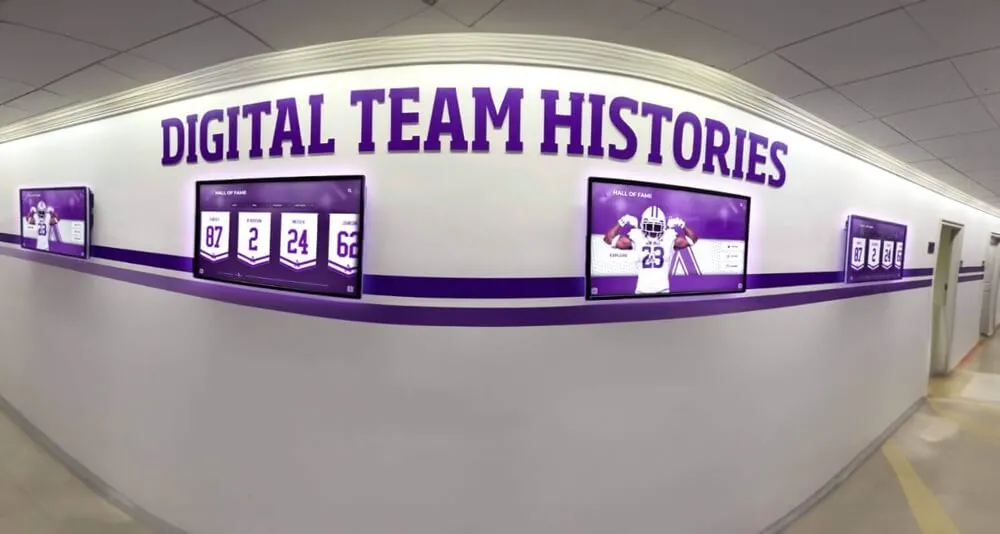
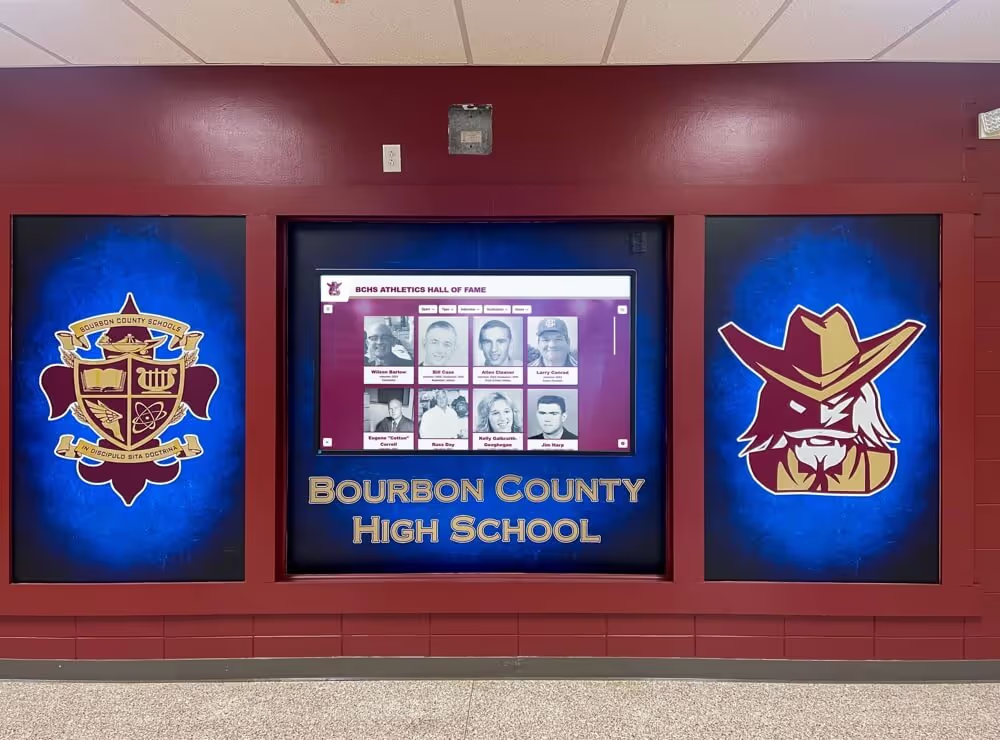
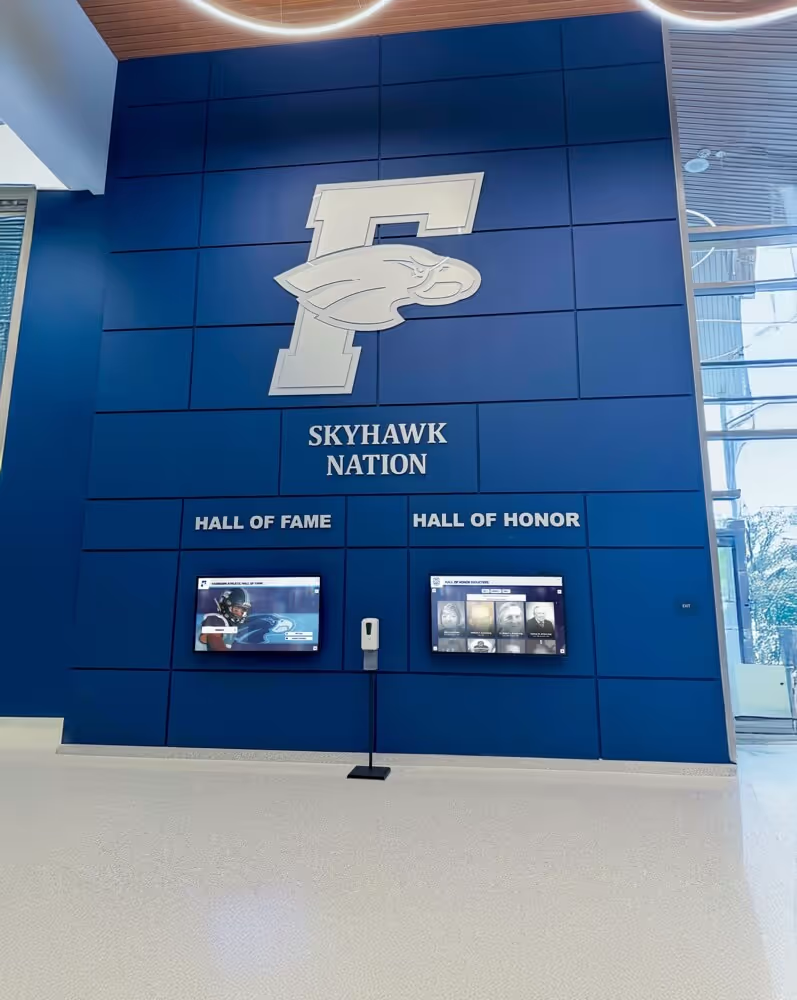
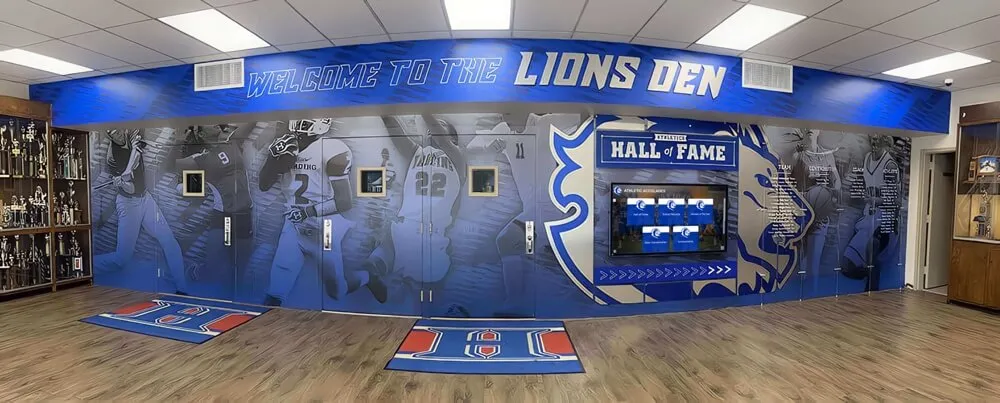
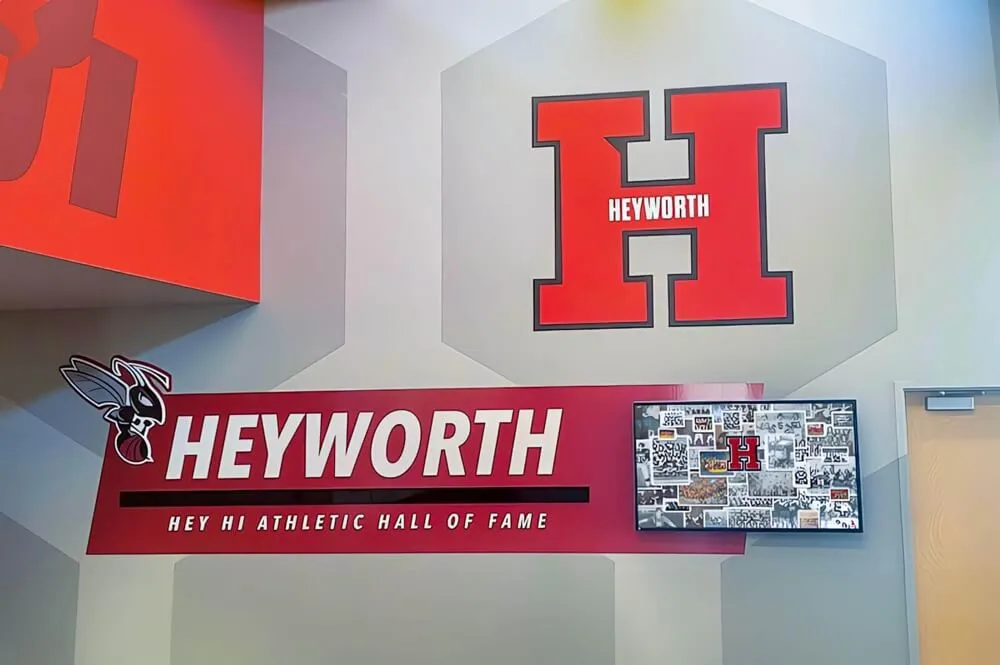
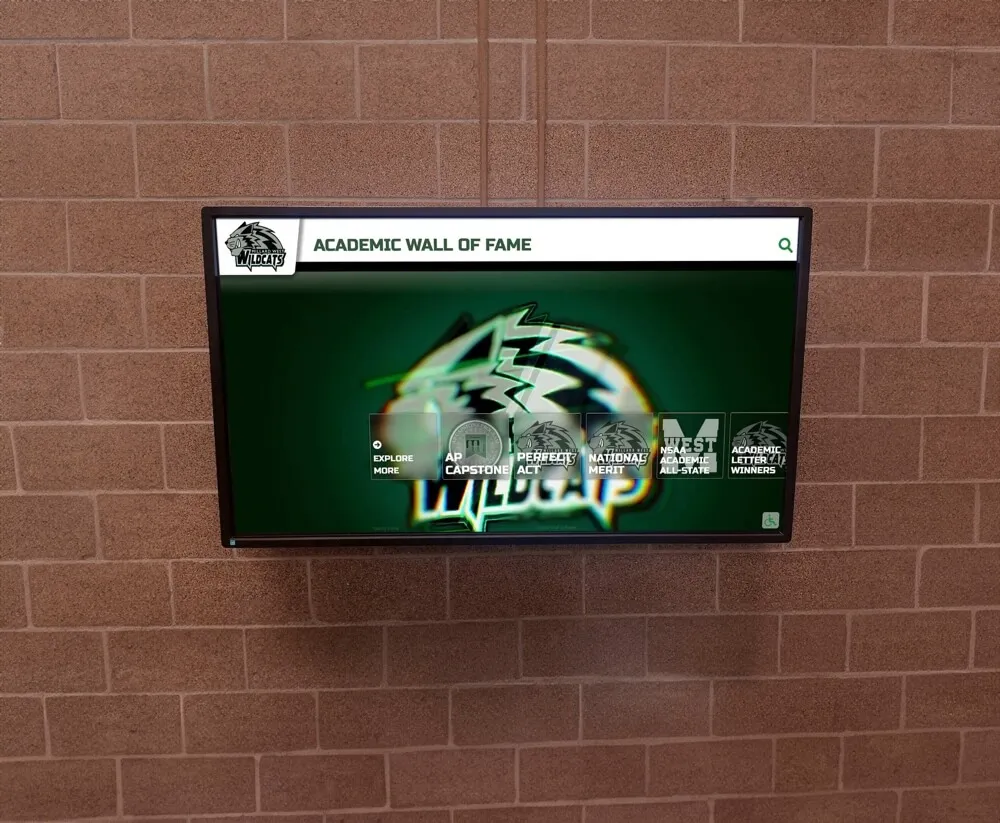
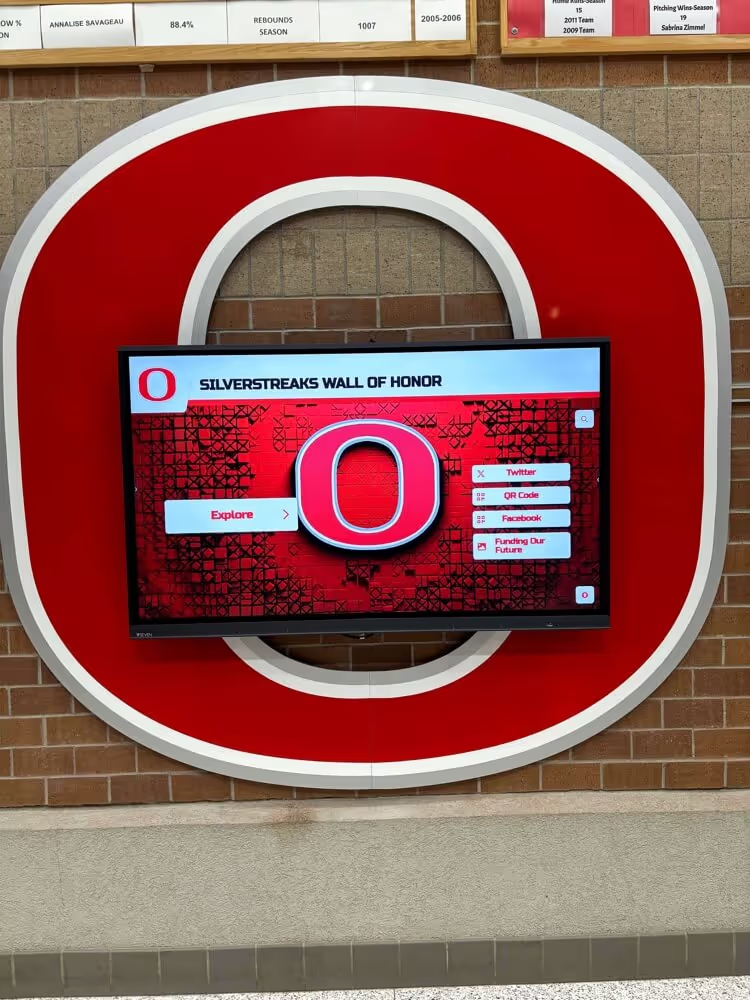
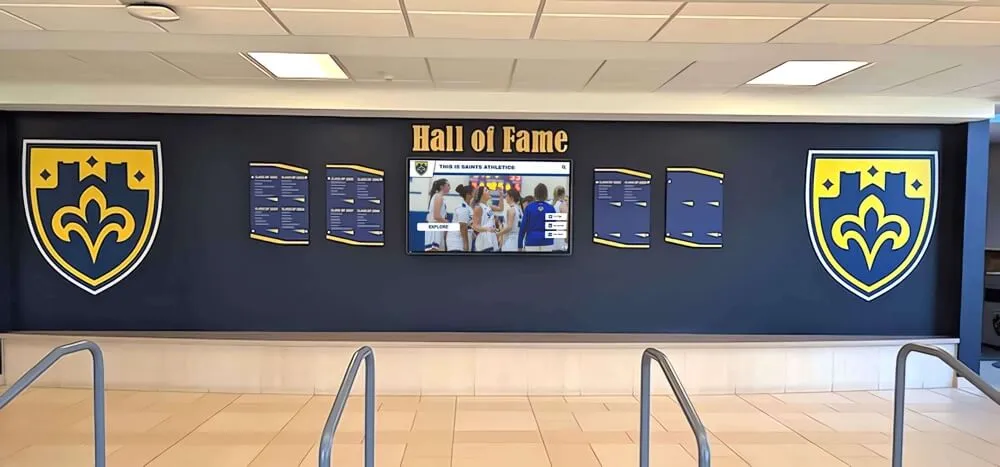
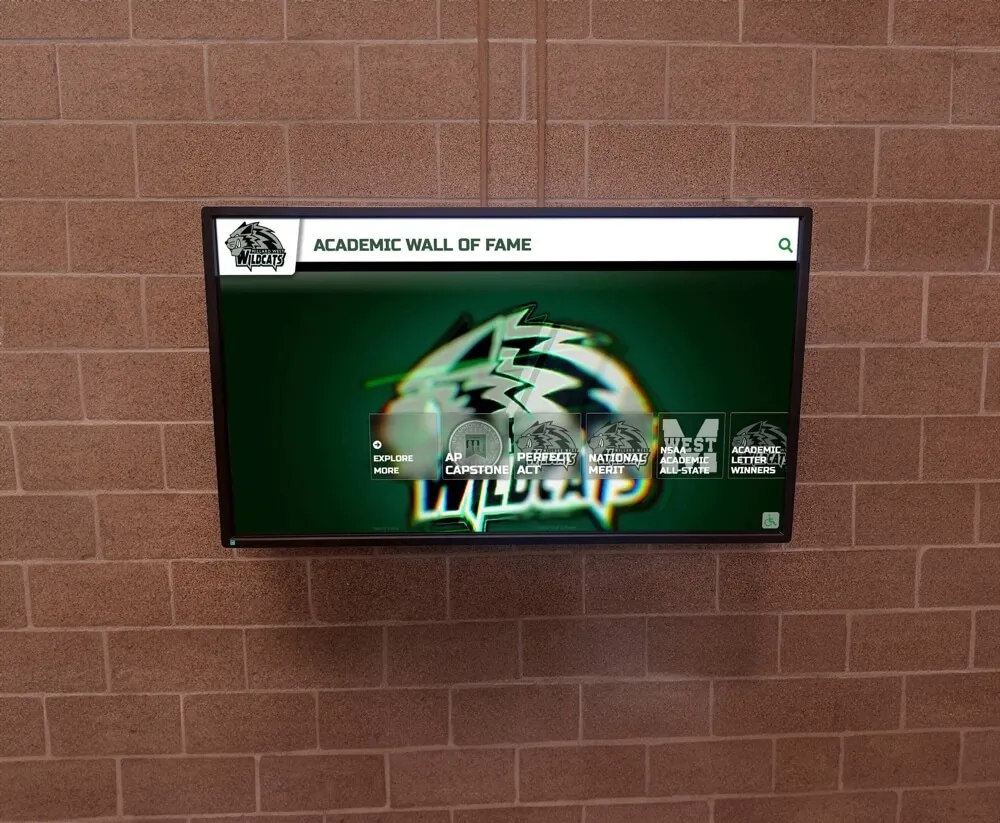
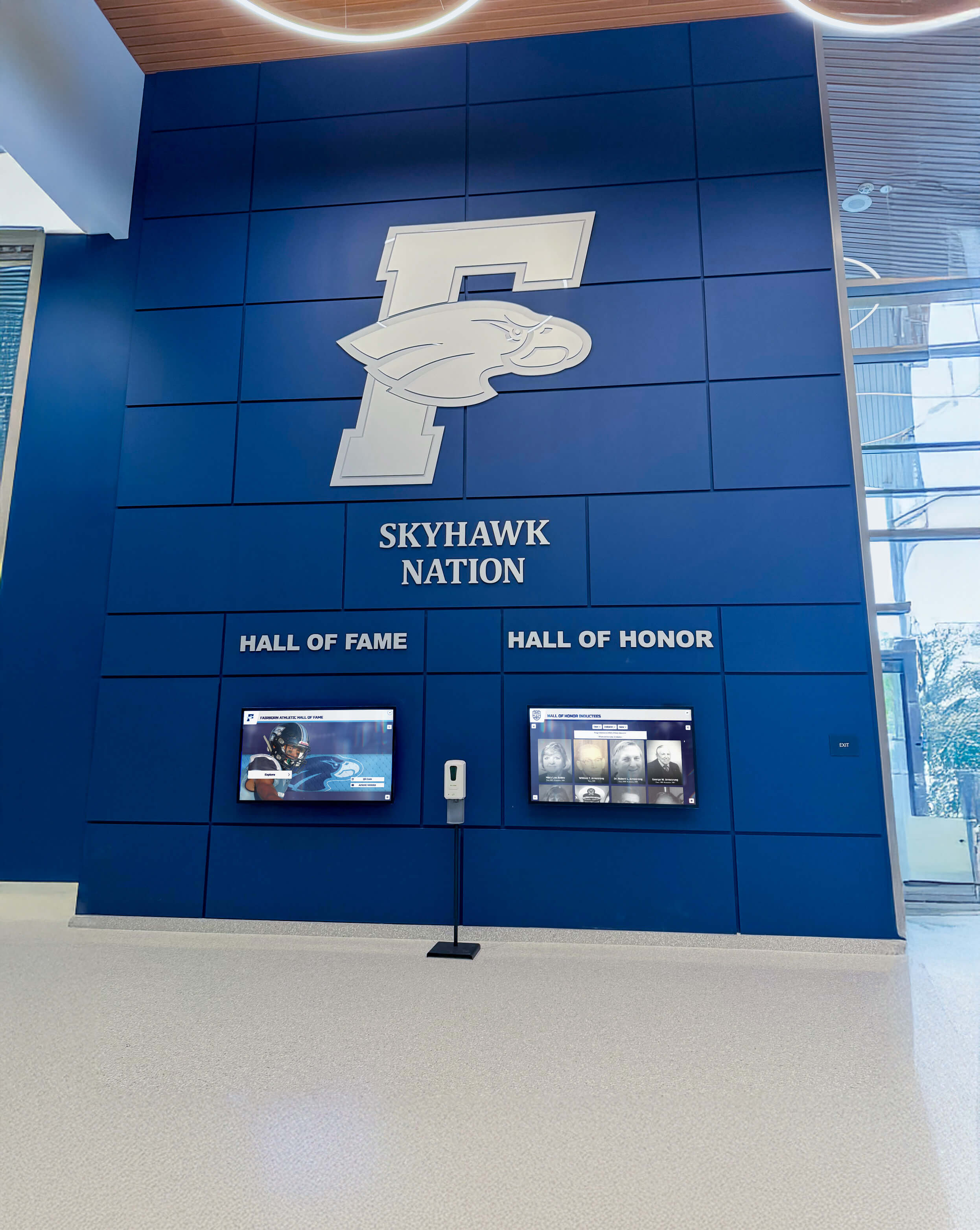
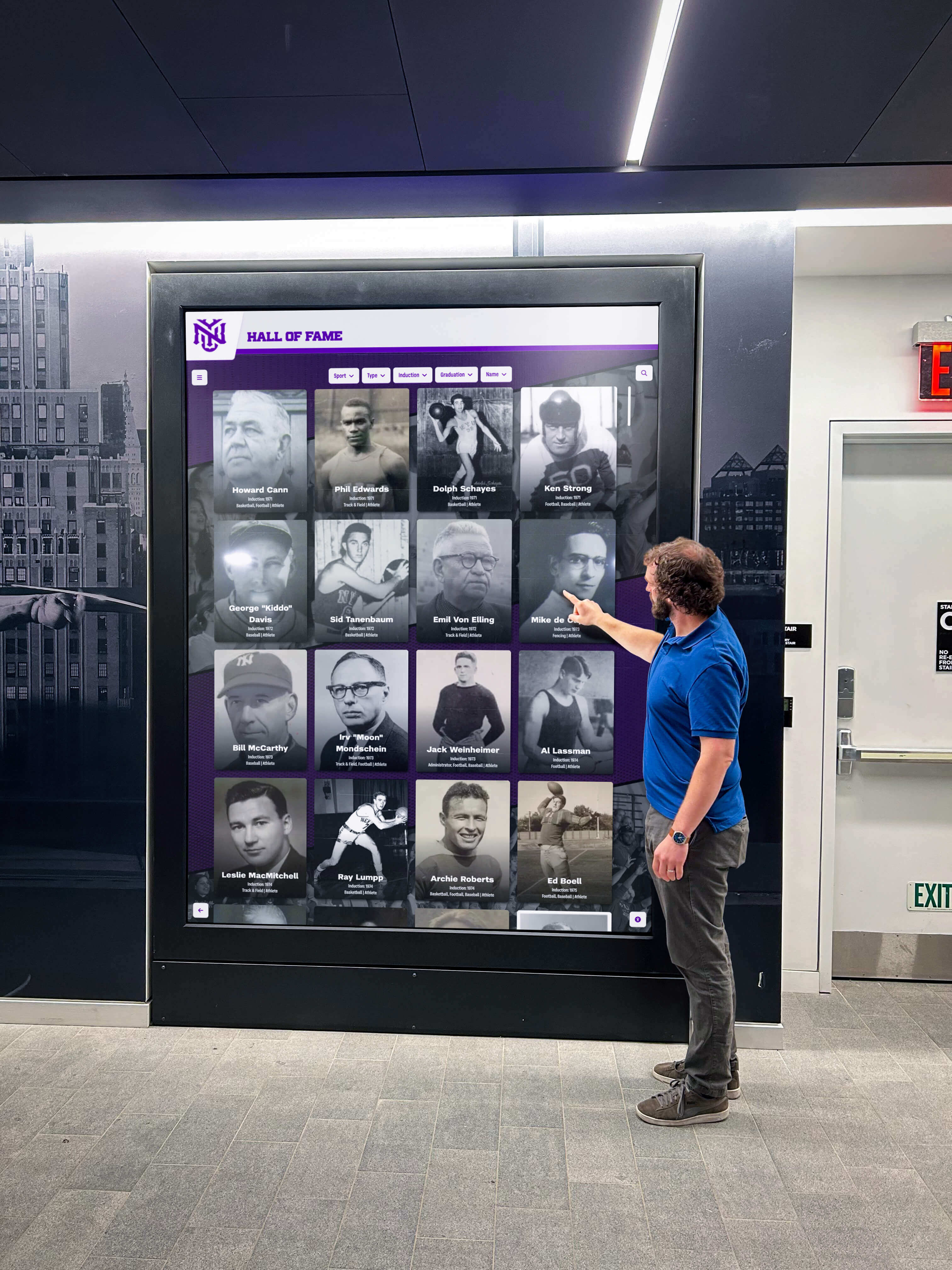
An academic wall of fame functions exactly like an athletic hall of fame—but centered on scholarly achievement. Honors graduates, valedictorians, salutatorians, and principal’s list recipients can be featured in displays that showcase their photo, graduation year, honors designation, and notable academic accomplishments. Unlike physical plaques that quickly exhaust available wall space, digital recognition displays can accommodate unlimited honorees across any number of years without requiring additional physical space.
Interactive Digital Displays for Academic Recognition
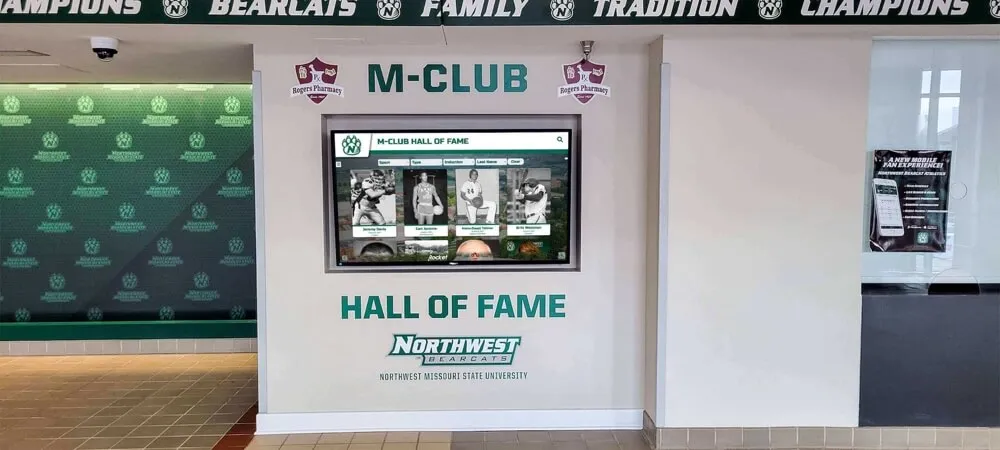
Interactive touchscreen displays allow students, families, and visitors to explore honors graduates by year, by honors tier, or by name. A prospective student touring the campus can browse thirty years of valedictorians. A current junior can search for alumni who graduated with summa cum laude distinction to understand what achievement is possible at their school. These systems transform recognition from a passive display into an engaging experience.
The best platforms support virtual hall of fame functionality as well—extending recognition online so families worldwide and alumni in other states can access and share honors graduate profiles.
ADA Compliance and Accessibility
Any recognition display placed in school or university facilities needs to meet accessibility standards. ADA-compliant digital recognition displays ensure that interactive touchscreens, kiosks, and digital walls are usable by all members of the school community, including those with physical or visual disabilities. This is a legal requirement for public institutions and a meaningful expression of inclusive values for all schools.
How Schools Can Structure an Honors Graduate Recognition Program
Creating a lasting, sustainable honors recognition program requires deliberate design across several dimensions.
Establishing Clear Criteria and Communicating Them
The foundation of any credible honors program is transparent criteria. Students should be able to look up exactly what GPA threshold corresponds to which honors level, how weighted courses factor into the calculation, and what additional requirements (if any) apply. Ambiguous criteria breed both confusion and perceptions of unfairness—neither of which serves the institution.
Publish honors criteria in:
- The student handbook (updated annually)
- The school or university website under academic policies
- Counselor and advisor resources
- Communications sent to incoming students and families
When criteria change—due to evolving grading scales, curriculum changes, or policy updates—communicate those changes proactively and document which criteria applied to which graduating classes. This protects institutional credibility and ensures consistent historical recognition.
Creating a Nomination and Verification Workflow
For GPA-based honors, the workflow is straightforward: registrars or academic records staff identify qualifying students based on final cumulative GPA after all grades post. Build in verification checkpoints:
- Run preliminary honors lists based on grades posted before official finalization
- Allow department heads or registrars to flag any outstanding grade adjustments, incomplete courses, or academic integrity concerns
- Finalize the official honors list after all grades are confirmed and any exceptions are resolved
- Communicate honors designations to students and families with enough lead time to order regalia or correct any errors
For schools incorporating criteria beyond GPA—course rigor, disciplinary history, credit hours at institution—additional review steps may be needed, but the same verification principle applies: document the process and build in quality control before publishing the final list.
Recognition at Multiple Touchpoints
Effective honors recognition doesn’t rely on a single ceremony moment. Consider recognizing honors graduates at multiple points:
Mid-Year Notification: When students reach the academic standing that makes them likely honors candidates, notify them proactively. This creates anticipation and motivates continued performance through final semester.
Senior Awards Ceremony: Recognize honors candidates at a dedicated senior or academic awards event before commencement, giving their achievement its own program time rather than a brief mention during the graduation ceremony.
Commencement Program Listing: Ensure honors designations appear clearly and accurately in all printed and digital commencement programs. This document becomes a keepsake families preserve for decades.
Graduation Ceremony Acknowledgment: Whether a collective standing acknowledgment or individual announcement, the commencement ceremony should include visible honors recognition.
Permanent Digital Display: Add honors graduates to the school’s academic wall of fame or digital recognition system immediately after graduation. This creates the lasting record that outlives the ceremony.
Signage and Physical Recognition Infrastructure
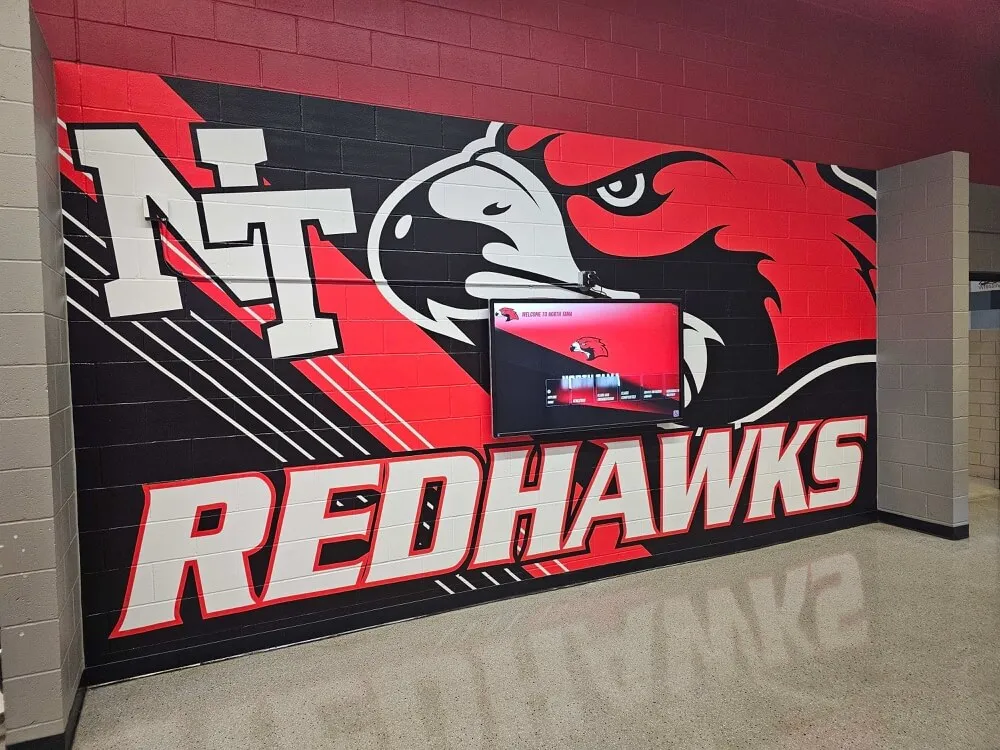
The physical environment of a school communicates values through what it chooses to display. Schools that invest in custom academic recognition signage send a clear message to students, faculty, and visitors: academic achievement is celebrated here, not just athletic performance.
Consider where honors recognition appears in the physical school environment:
- Main entrance displays: High-traffic areas that all students pass daily
- Library and academic center: Natural alignment with academic values
- Counseling office: Helpful context when discussing college planning and aspirations
- Administrative reception area: Visible to prospective families and community visitors
Strategic placement ensures honors recognition is seen regularly rather than requiring deliberate visits to a specific location. When students encounter recognition for academic achievement in their daily movement through school, it normalizes the idea that graduation with honors is an achievable, valued goal.
The Recognition Gap Between Athletic and Academic Achievement
One persistent pattern in school recognition culture is a significant disparity between how athletic achievements and academic achievements are displayed and celebrated. Most school hallways feature prominently placed championship banners, athletic records, and sports hall of fame installations—while academic honors may receive only a paper certificate at an awards assembly and a line in the graduation program.
This gap isn’t typically intentional. It reflects the fact that athletic recognition infrastructure developed decades ago and has been maintained, while academic recognition systems often never received equivalent investment. The result is an unintentional message about institutional values.
Addressing this gap requires specific decisions:
Allocate Budget to Academic Recognition: If the athletic budget includes funds for trophy cases, banners, and hall of fame displays, the academic budget should include equivalent investment in recognition infrastructure.
Apply the Same Visibility Standards: If championship banners are displayed in high-traffic main hallways, honors graduate recognition should be positioned with similar visibility—not tucked into a rarely-visited corner.
Use Equivalent Technology: If athletics benefits from interactive digital displays, academic recognition programs deserve the same modern presentation. The student recognition programs that work for athletic achievers apply equally to academic achievers with the right content strategy.
Celebrate School Leaders Who Champion Recognition: Administrators who prioritize academic recognition—and who make the systems function—deserve acknowledgment within the school community. When school leaders champion academic culture, it reinforces that this work is valued institutionally and motivates continued investment in recognition programs.
Digital Record Boards for Academic Honors: A Practical Approach
Rocket Alumni Solutions builds recognition platforms specifically for educational institutions—including digital record boards designed to display academic achievement with the same sophistication typically reserved for athletic records. For honors graduate recognition, this means:
Unlimited Capacity: No physical wall space limitations mean every honors graduate—across every graduating class, every year—can be included in the permanent recognition system. Schools no longer have to choose whose achievement is displayed and whose gets removed to make room.
Easy Content Updates: When each new graduating class’ honors list is finalized, staff can update the digital recognition system quickly from any device with an internet connection. New honors graduates appear immediately in the display—no waiting for physical plaques to be engraved and mounted.
Searchable, Engaging Displays: Students and visitors can search for honors graduates by name, graduation year, or honors tier. The interactive experience transforms recognition from a static list into genuine discovery—a current student can find alumni who graduated with highest honors in their intended major field and feel connected to an academic legacy.
Historical Archive Building: Schools can use digital platforms to backfill historical honors graduate recognition—adding valedictorians and salutatorians from past decades, or honors graduates from previous classes—building a cumulative record of academic excellence that grows more compelling with each passing year.
Community Event Integration: Recognition can extend beyond the physical campus to public-facing web platforms and mobile-accessible displays that let alumni worldwide access and share their honors recognition long after leaving campus.
Frequently Asked Questions About Graduation With Honors
Can a student graduate with honors if they transferred from another institution?
At most colleges and universities, students who transfer must complete a minimum percentage of their total credit hours at the degree-granting institution—often 50 to 60 percent—to be eligible for Latin honors. GPA calculations for honors eligibility may include only credits earned at the primary institution, or may consider transfer credits depending on institutional policy. Students should verify eligibility requirements early in their academic planning.
Does graduation with honors appear on a diploma?
Latin honors designations (Cum Laude, Magna Cum Laude, Summa Cum Laude) typically appear on the diploma itself and on official transcripts. High school honors designations (valedictorian, honors, highest honors) typically appear in the commencement program and are noted on academic records, though diploma policies vary by district and state.
Are honors designations based on final cumulative GPA or in-progress GPA?
Honors designations are almost always based on final cumulative GPA after all grades post for the final term. Preliminary notices may be issued based on projected GPA calculations, but official honors designations are confirmed only after final grades are certified. If a final course grade changes a student’s GPA below an honors threshold, the honors designation is typically rescinded.
How should schools handle situations where a student’s GPA falls just below the honors threshold?
Clear, consistently applied criteria prevent grade-boundary disputes from becoming administrative problems. Schools should document their exact GPA thresholds, including how rounding is applied (whether a 3.496 rounds to 3.5 for honors qualification, for example). Communicating these policies explicitly in advance sets appropriate expectations and reduces difficult individual conversations at the end of the year.
Do honors designations affect college admissions?
High school honors designations like valedictorian and salutatorian are commonly recognized by college admissions offices as indicators of exceptional academic performance. Some institutions offer automatic scholarships or admissions advantages to class valedictorians. Latin honors from undergraduate institutions appear on graduate school and professional school applications and on job applications for positions requiring degree verification.
Building a Recognition Culture That Honors Academic Excellence
The way a school celebrates its honors graduates communicates institutional values more powerfully than any policy statement. When students see evidence every day that academic achievement earns real, lasting recognition—displayed prominently, celebrated deliberately, and preserved permanently—they receive a clear message: earning graduation with honors is a meaningful goal worth pursuing.
Schools that invest in comprehensive honors recognition programs—with clear criteria, multi-touchpoint celebration, and permanent digital displays—build cultures of academic engagement that serve students and institutional mission alike. The infrastructure for this recognition doesn’t need to be complex. It needs to be intentional, visible, and sustained.
Ready to give your honors graduates the lasting recognition they’ve earned? Rocket Alumni Solutions builds digital recognition platforms specifically designed for schools and universities—enabling academic halls of fame, interactive honors graduate displays, and searchable achievement archives that celebrate top academic achievers long after commencement day.