



Flag football has exploded from recreational pastime to mainstream competitive sport, becoming the fastest-growing high school sport in America and earning recognition as an Olympic event for the 2028 Los Angeles Games. This non-contact variant of traditional football eliminates tackling by requiring defenders to remove flag belts from ball carriers, creating an accessible, safer version that emphasizes speed, agility, and strategic gameplay. For players stepping onto the field for the first time, coaches building new programs, and fans trying to understand what makes this sport special, mastering the fundamental rules transforms confusion into competitive understanding and appreciation for the tactical depth flag football provides.
Understanding flag football rules proves essential not just for participation but for strategic development. While the sport shares DNA with tackle football—similar field dimensions, scoring concepts, and offensive/defensive structures—the no-contact requirement fundamentally changes gameplay dynamics, creating unique strategic considerations around positioning, route running, and defensive coverage. Schools launching flag football programs recognize that teaching proper rules from the beginning establishes program foundations that support long-term competitive success and create traditions worth celebrating through permanent recognition displays.
Celebrating Flag Football Excellence Through Recognition
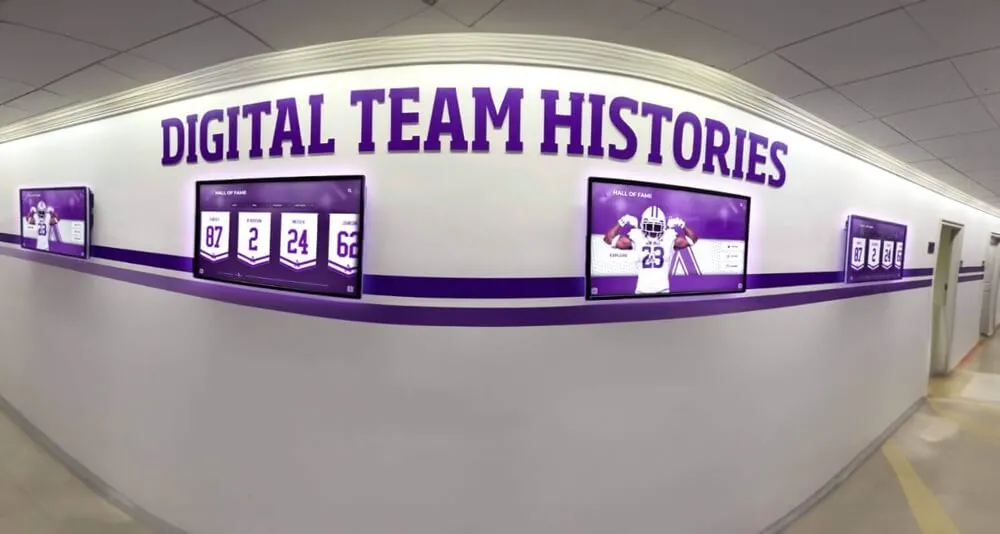
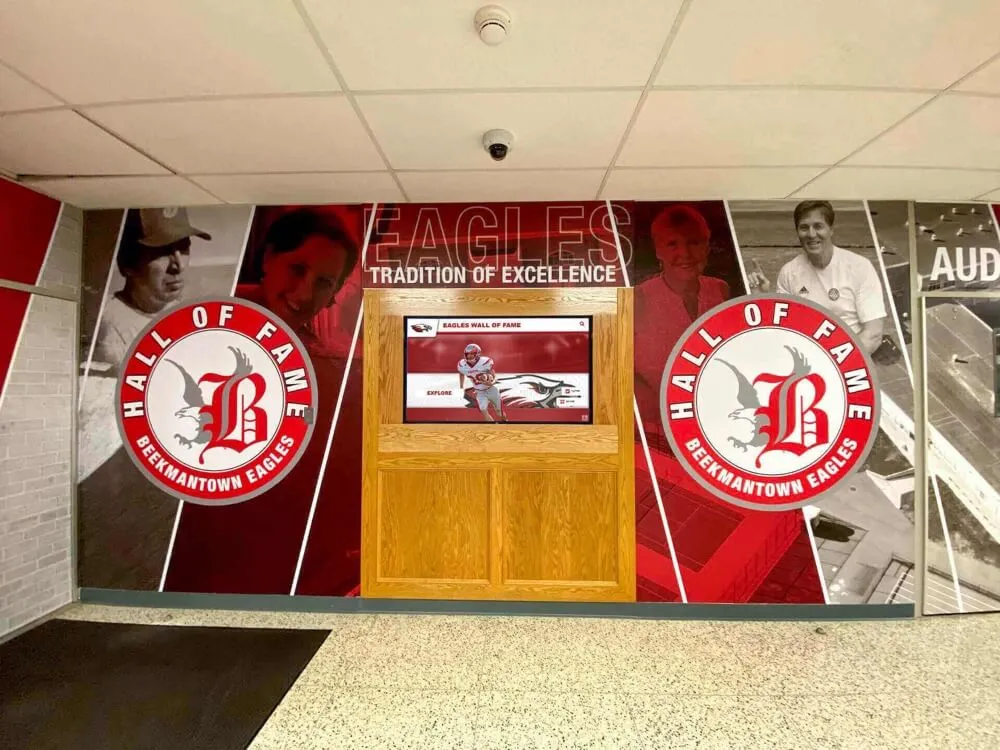
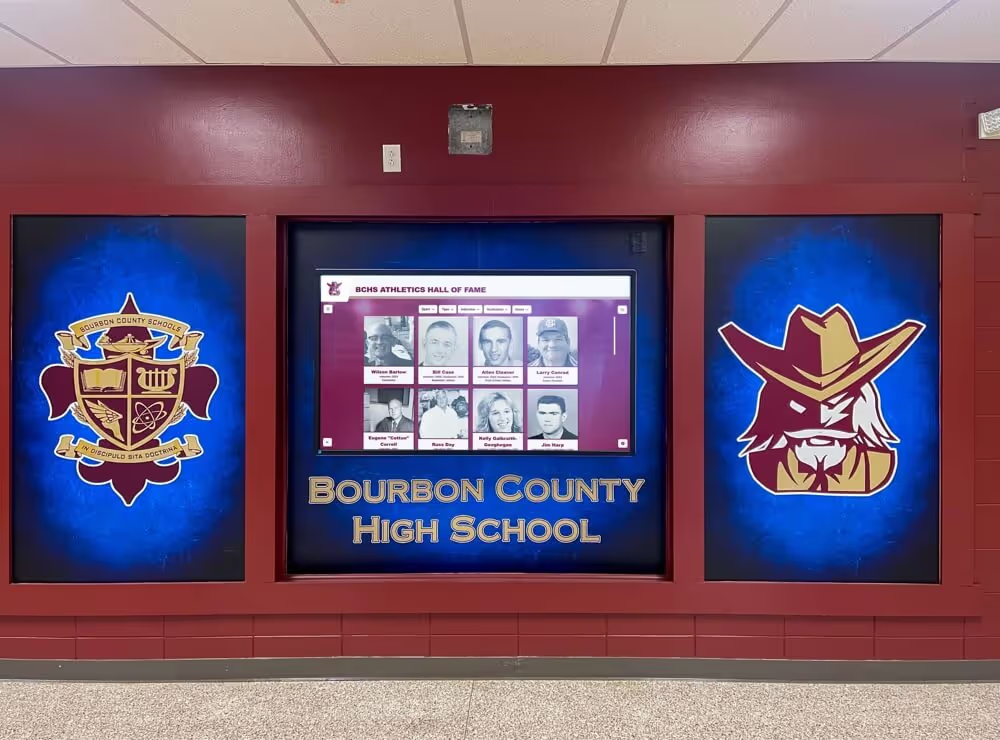
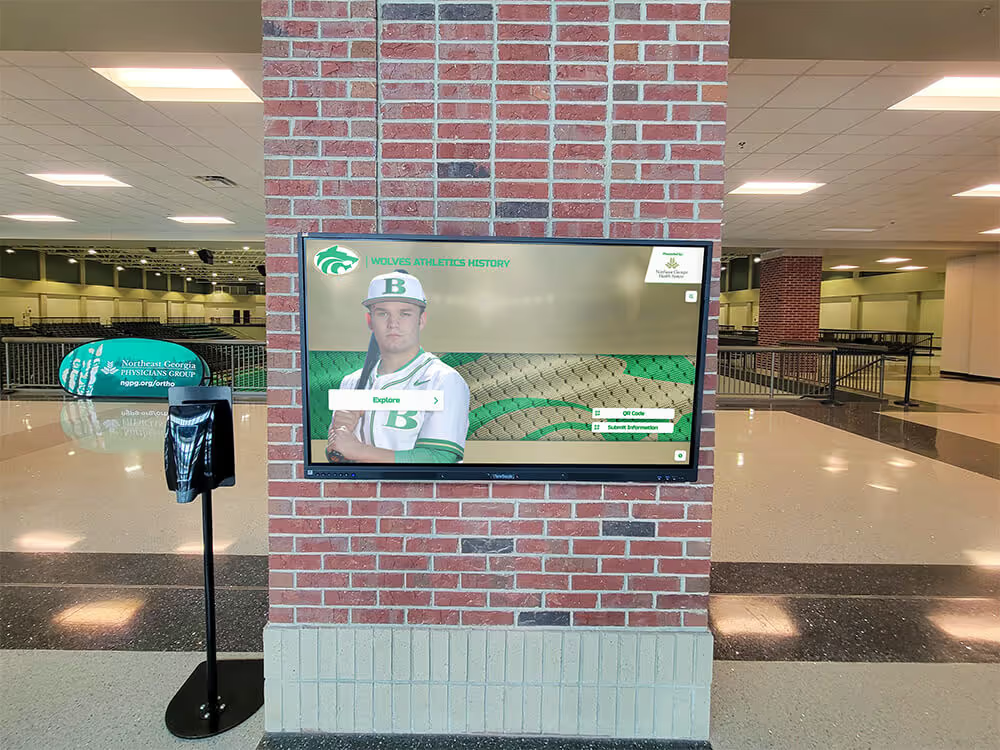
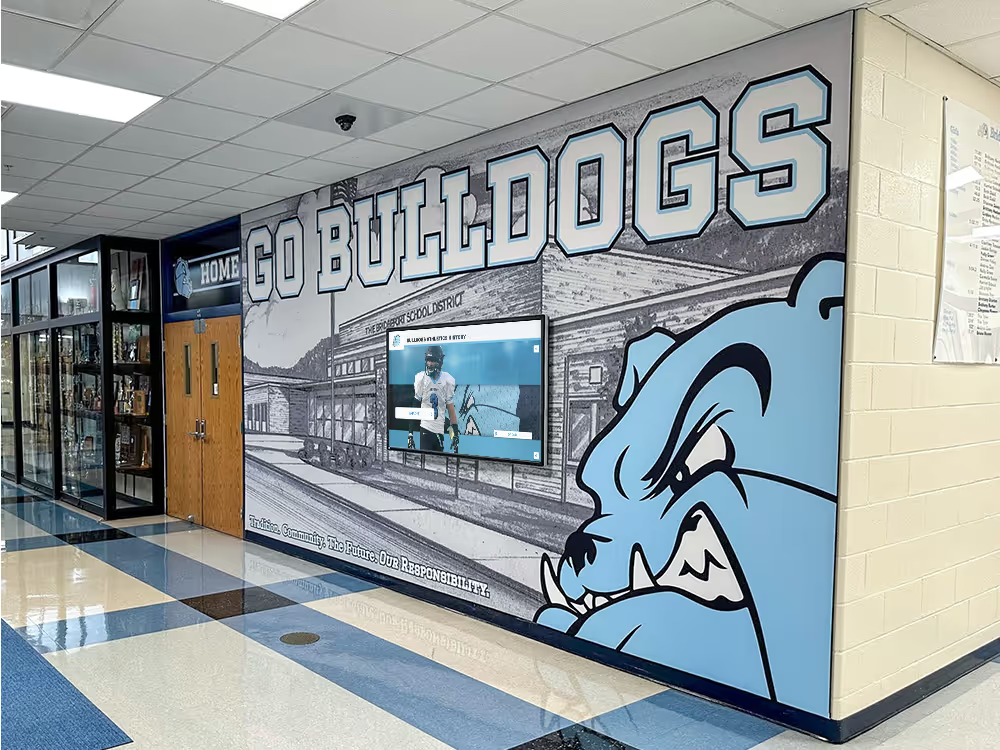
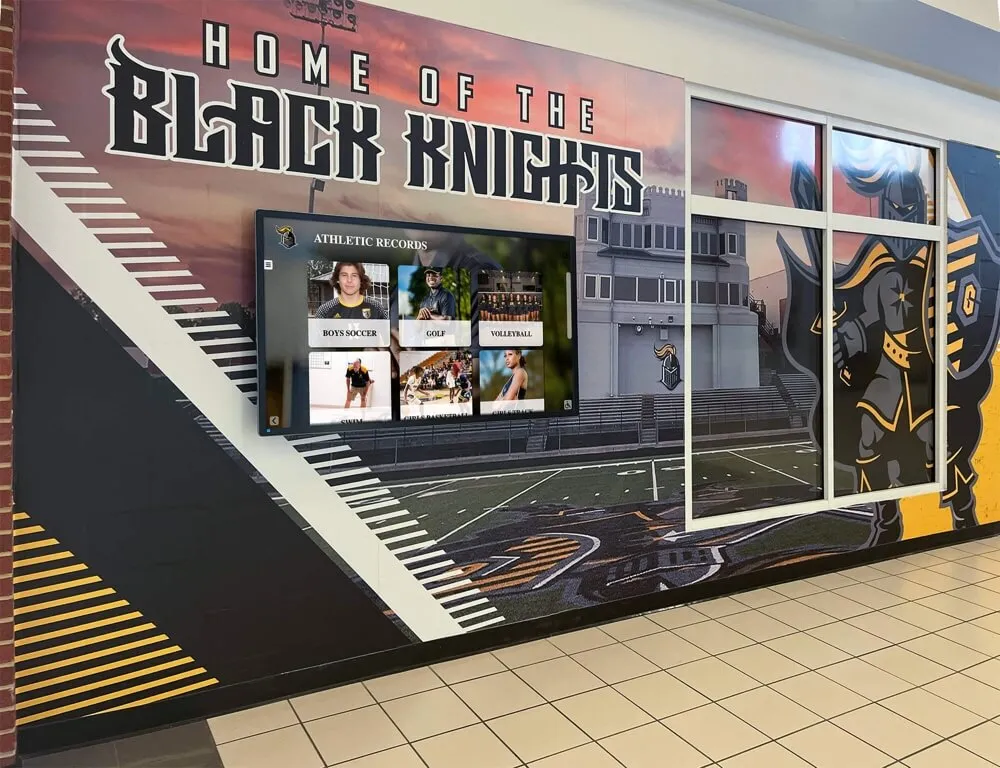
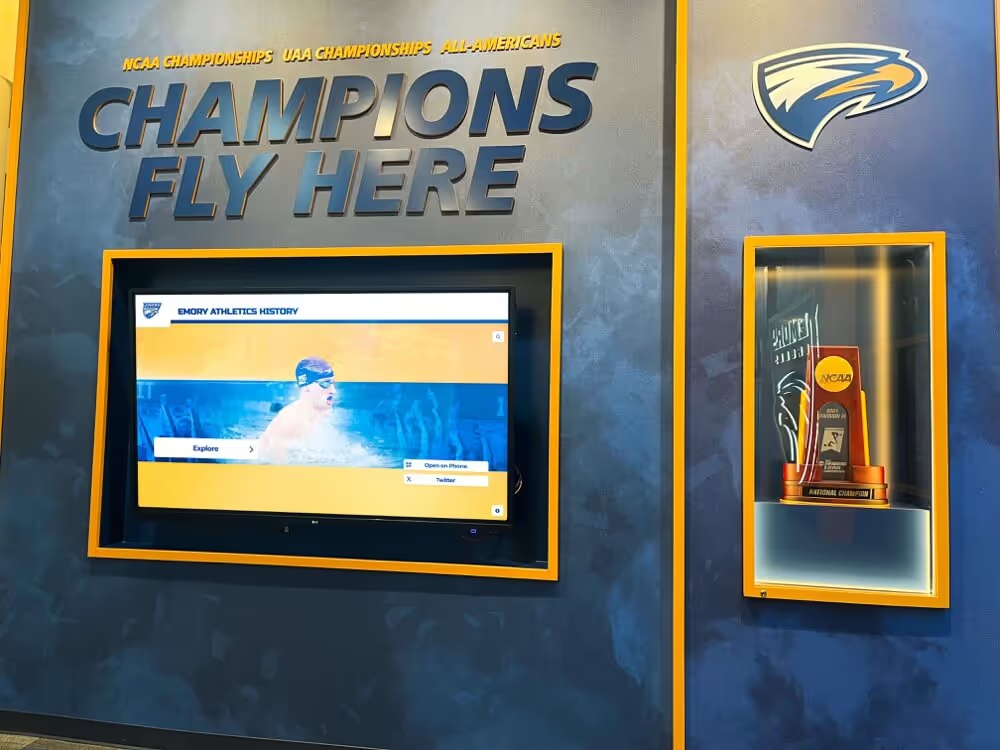
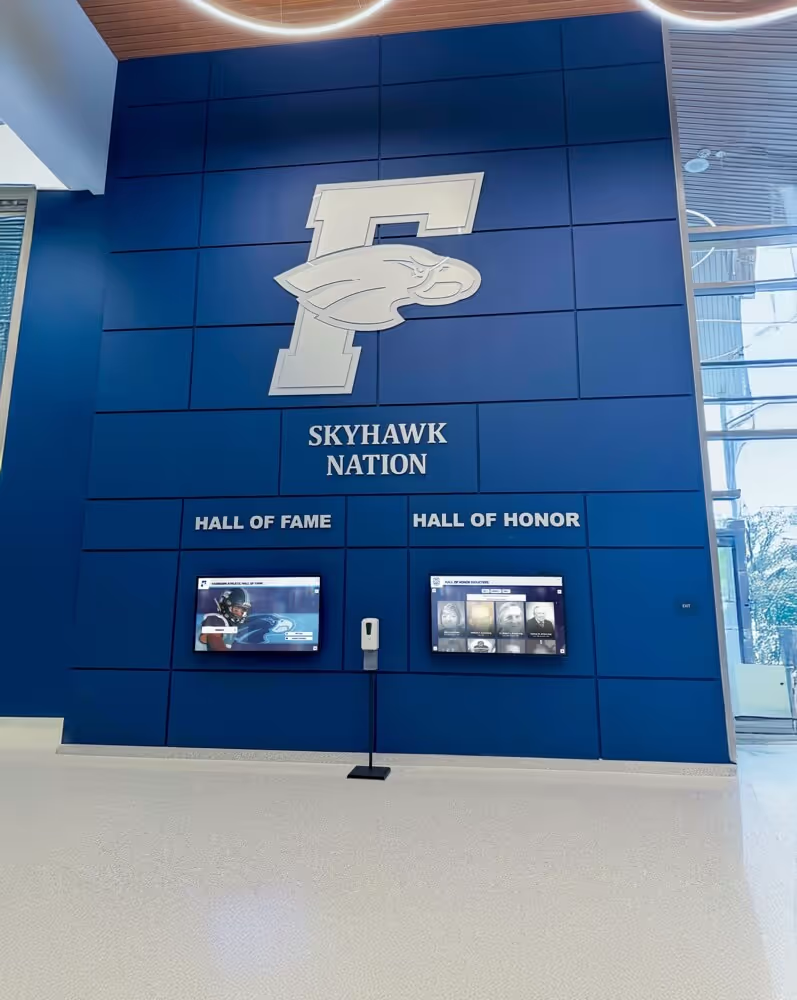
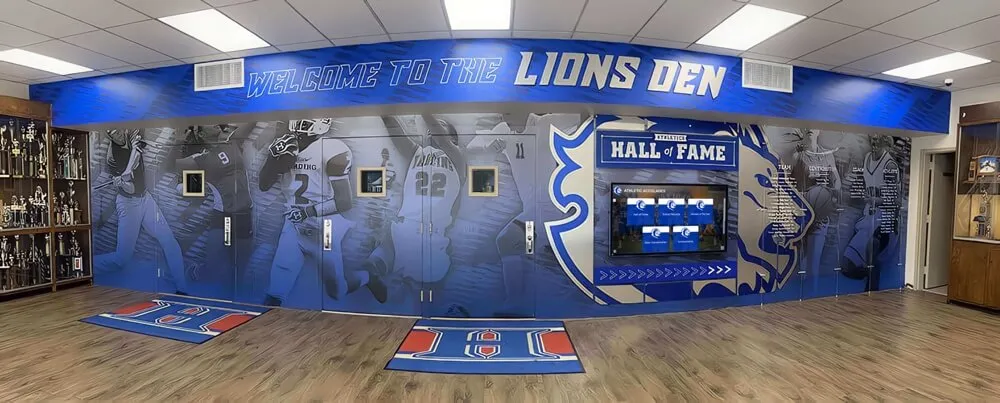
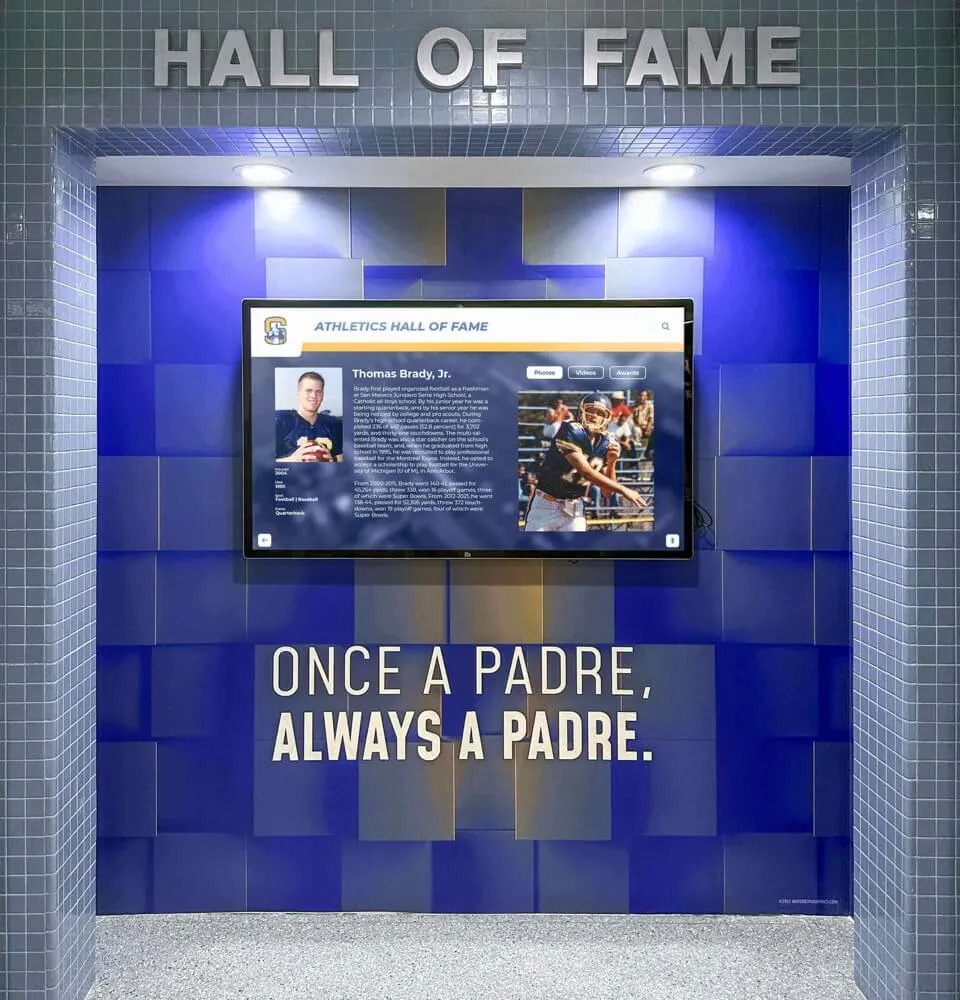
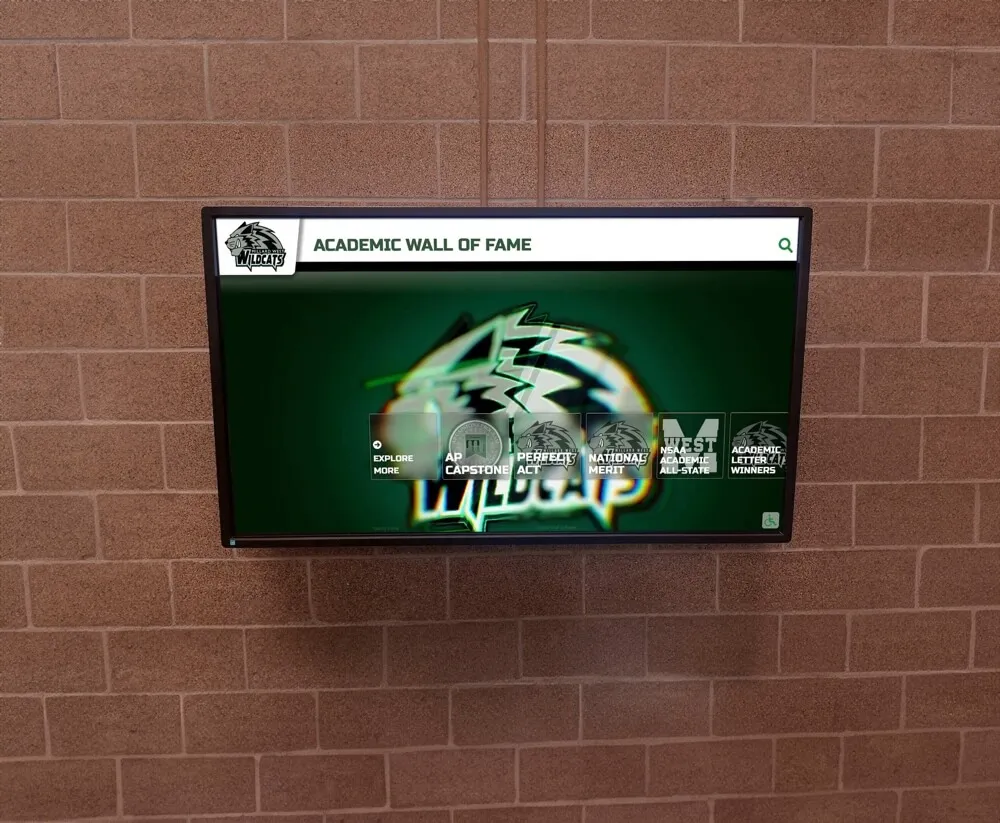
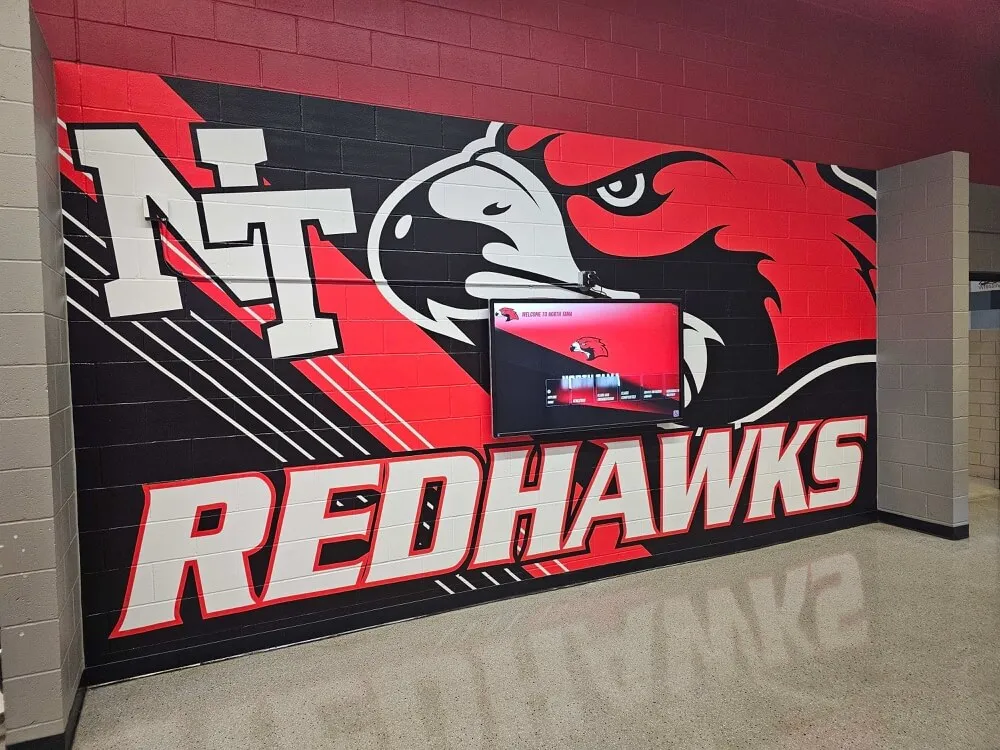
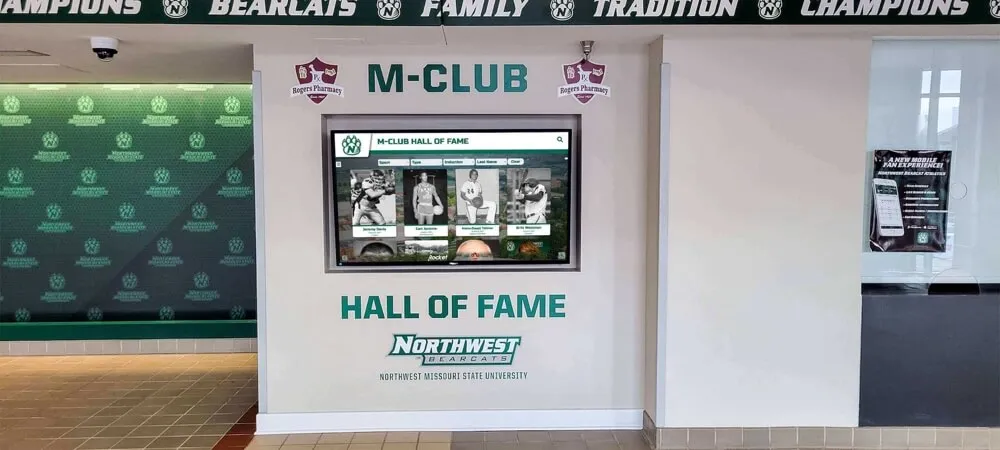
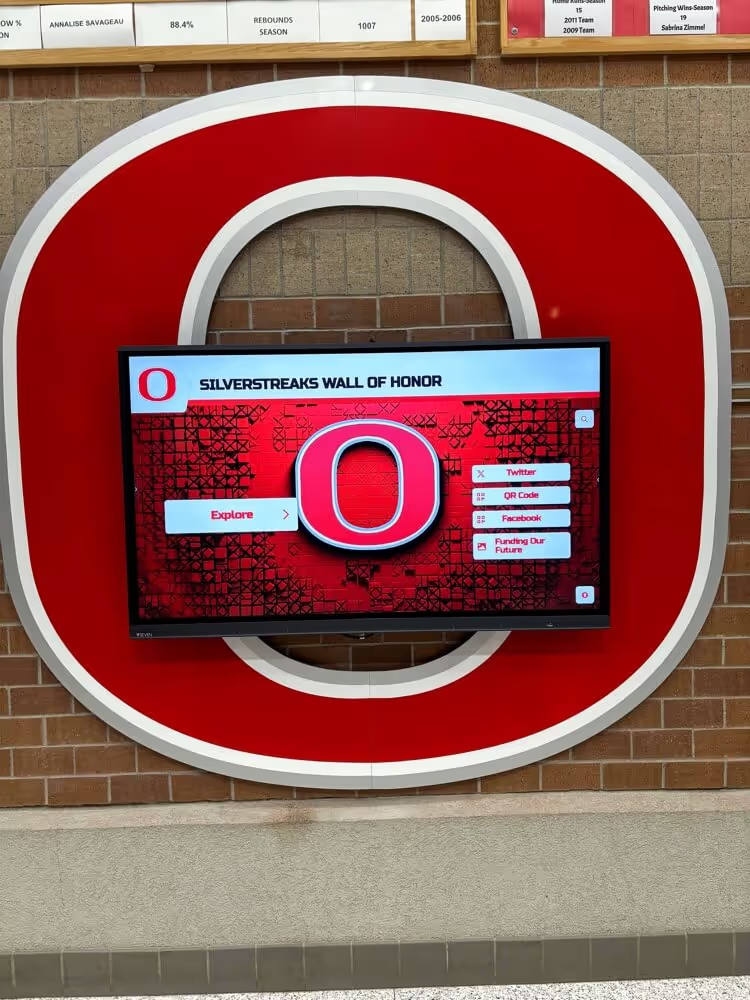
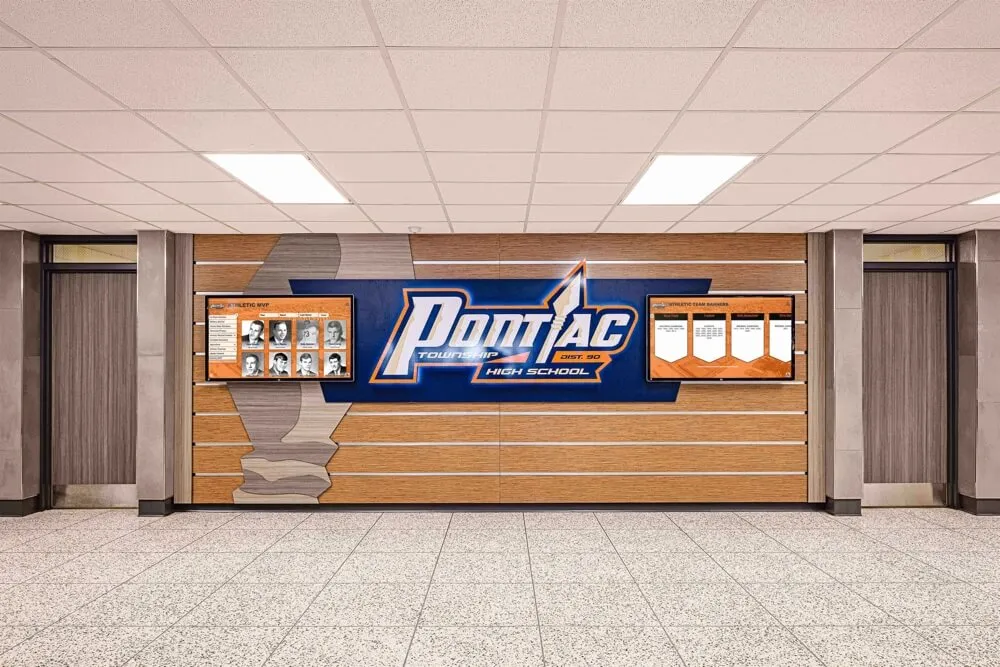
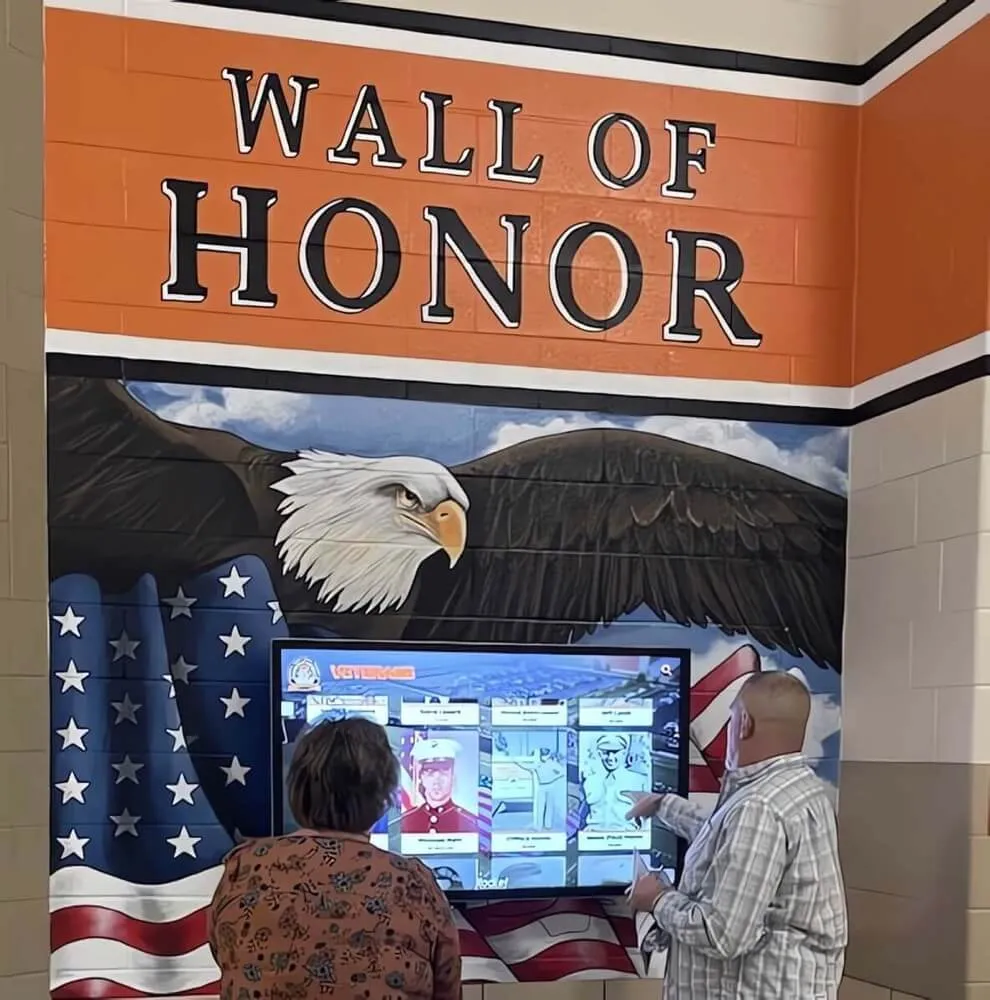
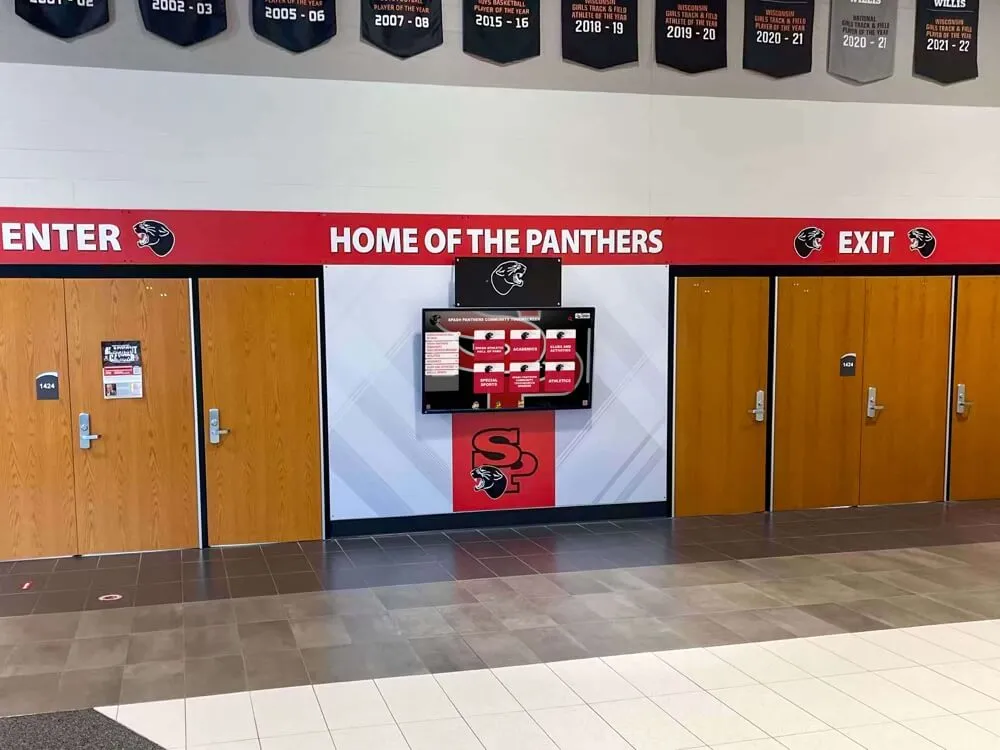
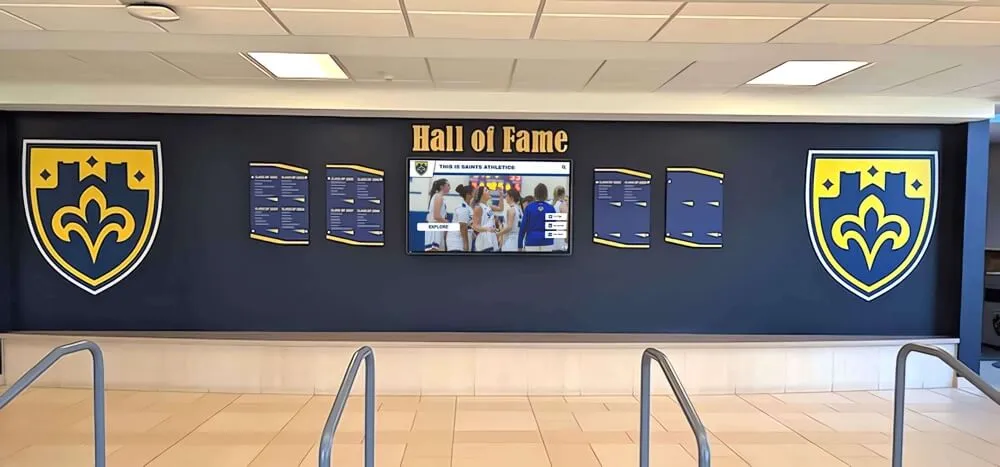
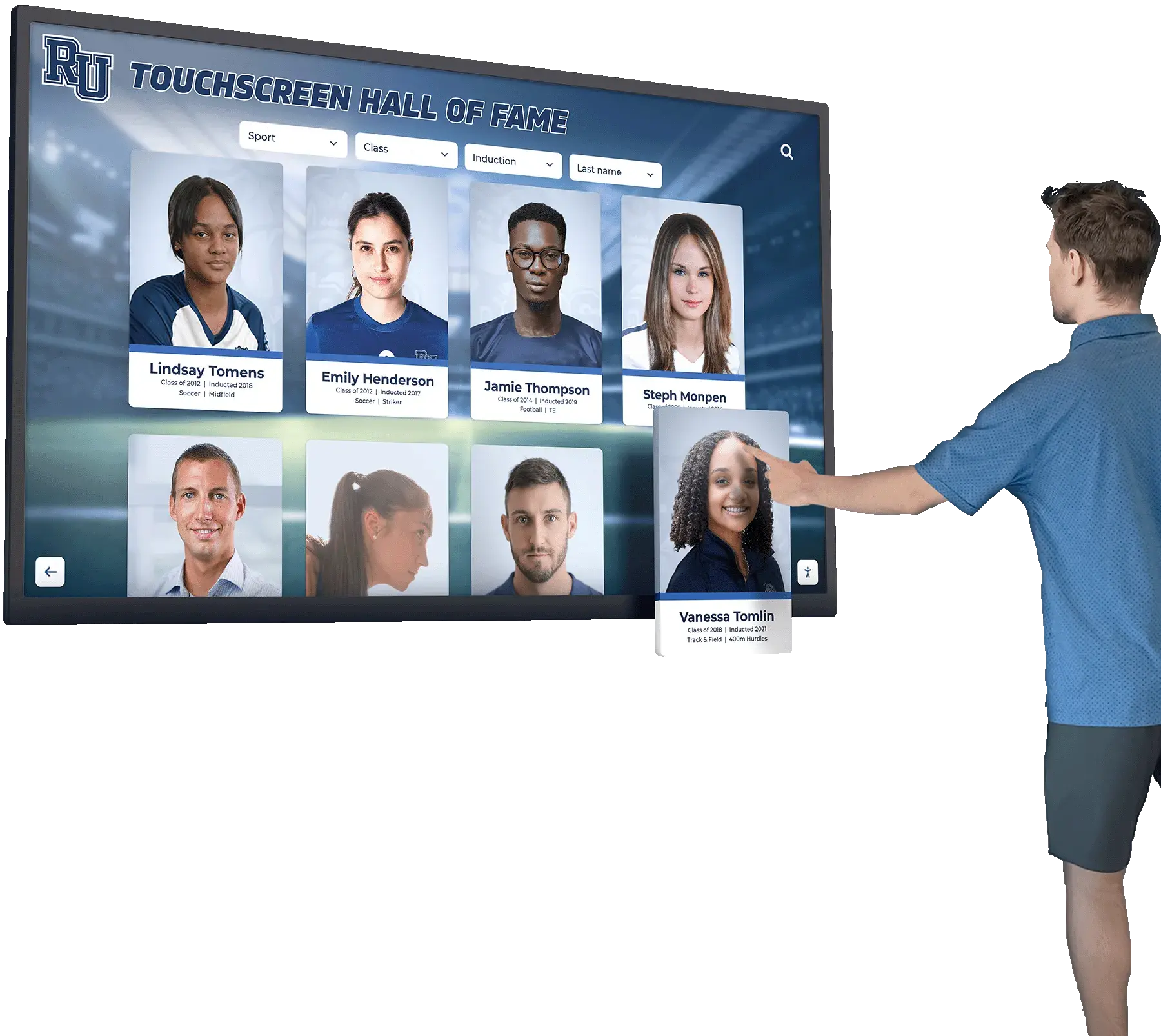
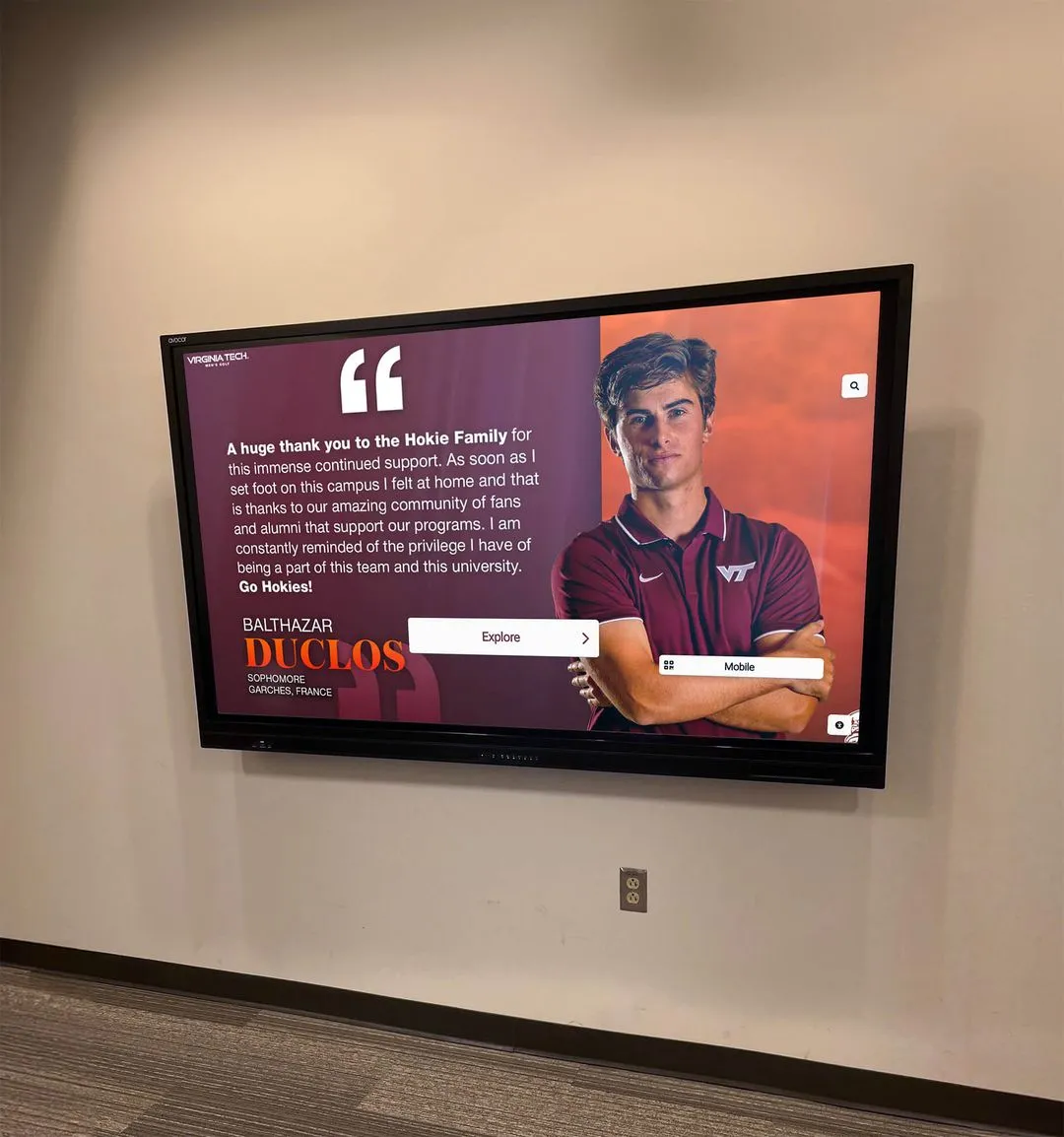
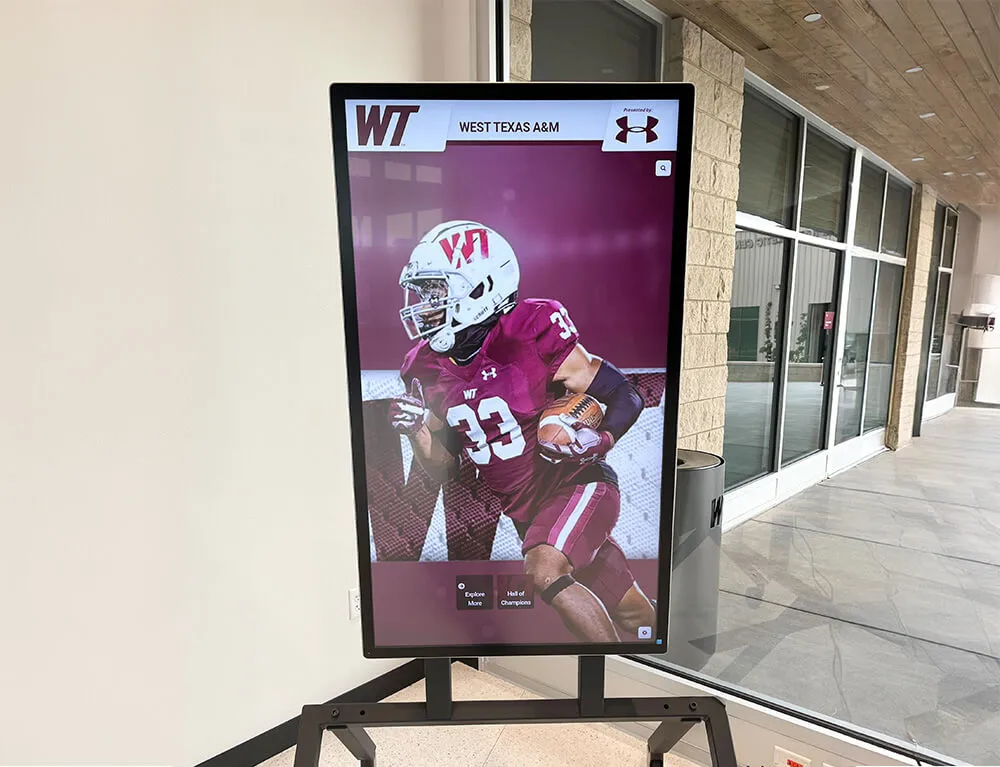
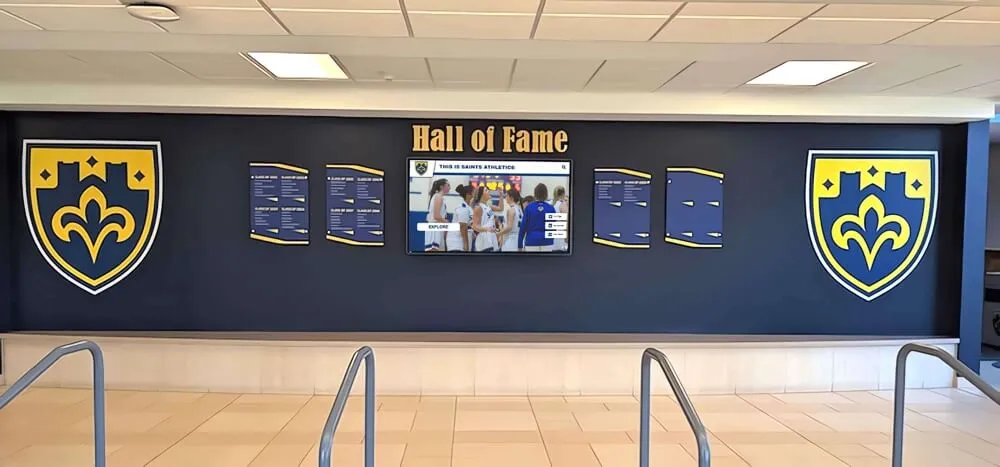
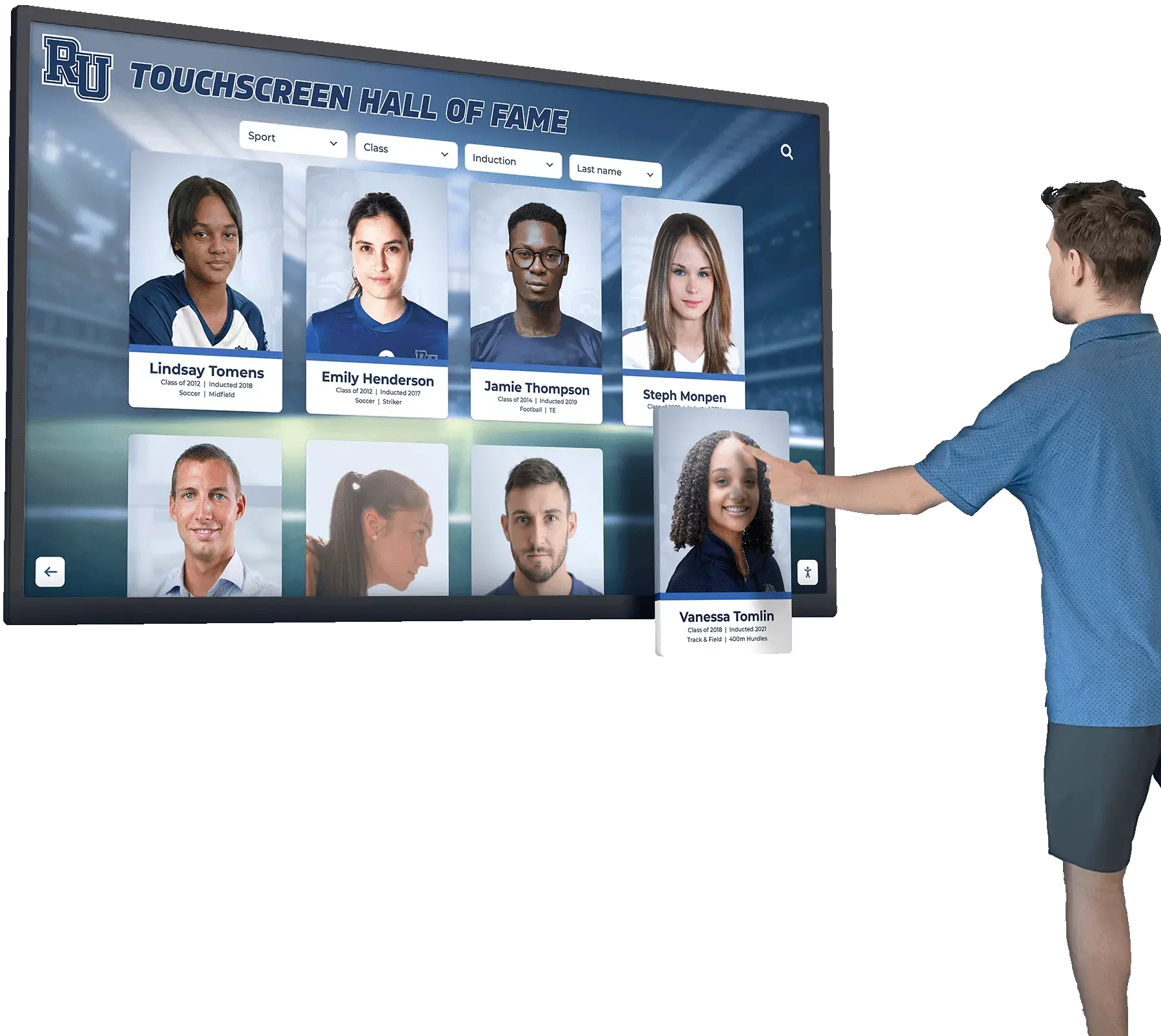
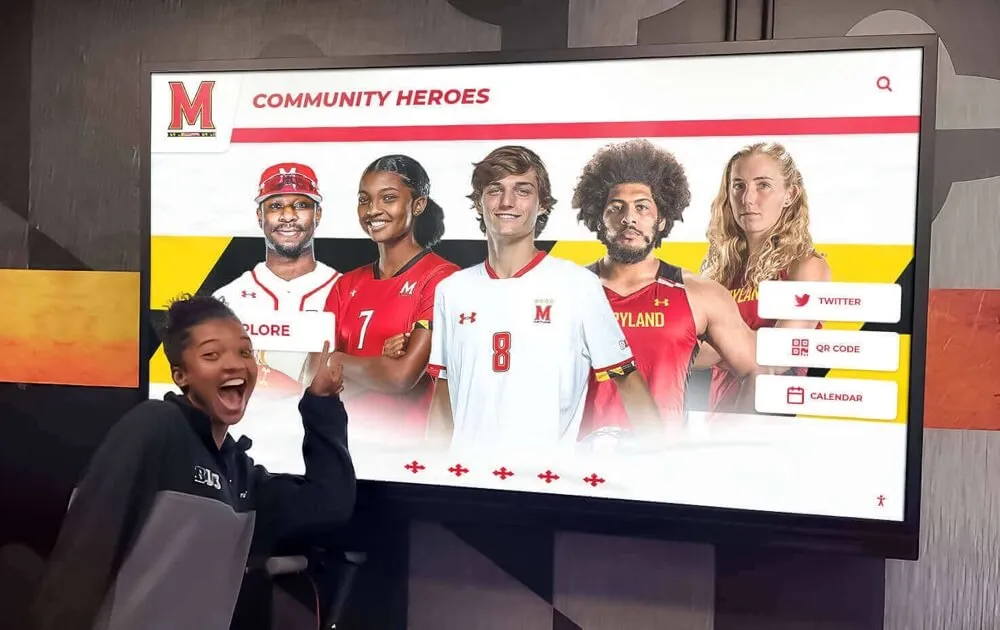
As flag football programs grow across schools nationwide, athletic departments are establishing new traditions celebrating championship teams, record-setting athletes, and program milestones. Digital recognition solutions enable schools to permanently showcase flag football achievements alongside traditional sports. Rocket Alumni Solutions provides athletic departments with interactive digital displays that highlight championship banners, statistical leaders, all-state selections, and historic team achievements—creating lasting tributes to flag football excellence while establishing program traditions that motivate future athletes.
Flag Football Field Dimensions and Equipment Basics
Before understanding gameplay rules, familiarity with the playing field and required equipment creates necessary context for how the sport operates.
Field Size and Markings
Flag football fields vary by organizing body, but most competitive leagues follow standardized dimensions that maintain traditional football proportions while accommodating space constraints:
Standard Field Dimensions:
- Length: 70 yards from goal line to goal line, plus two 10-yard end zones (90 yards total)
- Width: 30 yards across
- Markings: Yard lines marked every 10 yards from goal line to goal line
- No-Run Zones: Special 5-yard zones before each goal line where quarterbacks cannot run (designed to prevent power running plays near the goal line)
Field Variations:
- NFL Flag: Uses 70-yard x 30-yard playing field specifications
- High School Sanctioned: Many states use 80-yard x 40-yard fields for girls’ flag football programs
- Youth Leagues: Often use 40-yard x 20-yard or 50-yard x 25-yard fields for younger age groups
- Adult Recreational: May adapt to available space, using soccer fields or other multipurpose facilities
The smaller field compared to traditional tackle football (which uses 100-yard x 53.3-yard dimensions) creates faster-paced gameplay with less distance to cover, emphasizing quick decision-making and execution.

Required Equipment
Flag football’s equipment requirements remain minimal compared to tackle football, emphasizing accessibility and safety:
Essential Equipment:
- Flag Belt: Each player wears a belt with two or three flags (typically bright colored) attached by clips or velcro around their waist
- Football: Standard youth or intermediate-size football (smaller than regulation NFL football for most leagues)
- Mouthguard: Required in most competitive leagues for player safety
- Appropriate Footwear: Molded cleats or turf shoes (metal cleats typically prohibited)
- Fitted Clothing: Form-fitting shirts (prevents flag obscurement) and athletic shorts or pants without pockets or loops that could interfere with flag pulling
Equipment Restrictions:
- No pads, helmets, or protective gear beyond mouthguards (reduces contact justification)
- No jewelry, watches, or hard hair accessories
- Shirts must be tucked in (prevents flag hiding)
- No belt loops or pockets near flag belt area
- Flags must hang freely without obstruction
This minimal equipment requirement makes flag football significantly more accessible than tackle football, reducing financial barriers while maintaining competitive integrity. Schools building comprehensive athletic achievement showcases often highlight equipment accessibility as part of their flag football program growth story.
Basic Gameplay Structure and Timing
Flag football maintains football’s fundamental offensive/defensive structure while adapting timing and possession rules for the no-contact format.
Game Duration and Timing
Standard flag football games use the following timing structure, though variations exist across different organizing bodies:
Game Length:
- Standard Format: Two 20-minute halves (running clock) with 3-minute halftime
- High School Sanctioned: May use four 12-minute quarters matching traditional football structure
- Youth Leagues: Often use two 15-minute halves or shorter periods for younger age groups
- Tournament Format: Sometimes uses shortened periods (10-12 minute halves) to accommodate multiple games
Clock Management:
- Running Clock: Clock runs continuously except during timeouts and final two minutes of each half
- Final Two Minutes: Clock stops on incomplete passes, out of bounds, scores, and change of possession (matches traditional football)
- Timeouts: Each team typically receives three 60-second timeouts per game
- Overtime: Most leagues use “Kansas City” format—each team gets possession from designated yard line (typically 5 or 10 yard line) with opportunity to score
Team Composition and Positions
Flag football teams use smaller rosters than tackle football, emphasizing skill positions and versatility:
On-Field Players:
- Standard Format: 5-on-5 (most common), 7-on-7, or 8-on-8 depending on league
- NFL Flag and Most Youth Leagues: 5-on-5 format
- High School Sanctioned Programs: Often use 7-on-7 or 8-on-8 formats
Position Structures (5-on-5 example):
- Offensive Positions: Quarterback, Center, 3 eligible receivers (can line up anywhere)
- Defensive Positions: Typically includes rushers, defensive backs covering receivers, and safety providing deep coverage
- No Linemen: All offensive players except the center are eligible receivers, creating pass-heavy offensive strategies
Substitution Rules:
- Unlimited substitutions between plays
- Players may play both offense and defense (most common in smaller-roster formats)
- Some leagues require minimum playing time for all roster players (particularly youth leagues)

Offensive Rules and Scoring
Flag football offense combines traditional football concepts with unique rule modifications that eliminate blocking and emphasize passing gameplay.
Scoring System
Flag football uses the same point values as traditional football with minor modifications in some leagues:
Scoring Plays:
- Touchdown: 6 points (advancing the ball into opponent’s end zone)
- Extra Point (1-Point Conversion): 1 point (from 5-yard line in most leagues)
- Extra Point (2-Point Conversion): 2 points (from 10-12 yard line depending on league)
- Safety: 2 points (downing ball carrier in their own end zone)
No Field Goals: Most flag football leagues eliminate kicking entirely, though some leagues include placeholder conversions
Mercy Rule: Many leagues implement running-clock or shortened-game rules when one team leads by predetermined margin (typically 28-35 points) to maintain sportsmanlike competition.
Offensive Play Rules
Flag football offense operates under specific constraints that shape strategic approaches:
Snap and Quarterback Rules:
- Center Snap: Ball must be snapped between legs to quarterback (like traditional football)
- Quarterback Run Restrictions: In no-run zones (5 yards before goal line), quarterbacks cannot run the ball forward
- Direct Snap Restrictions: Some leagues require quarterback to receive direct snap (no shotgun or pistol formations allowed in certain youth leagues)
- Scrambling: Quarterbacks may run when outside the no-run zone, but some leagues require quarterback to wait specific time (typically 4 seconds) before crossing line of scrimmage
Rushing (Running) Rules:
- Ball Exchange: Most leagues prohibit forward handoffs; running plays must be direct snaps or backward laterals
- Running Lanes: Some leagues designate specific areas where running plays are permitted
- Spin Moves: Legal, but ball carrier cannot lower head/shoulders or initiate contact
- Flag Guarding: Ball carrier cannot shield, guard, or obstruct flags with hands, arms, or ball (results in penalty)
Passing Rules:
- Forward Pass: Only one forward pass per play (like traditional football)
- Lateral Passes: Unlimited backward or sideways lateral passes permitted
- Receiver Eligibility: All offensive players except the center are eligible receivers
- Completion Requirements: Receiver must have one foot inbounds (some leagues require two feet)
Building successful offensive systems requires teaching proper fundamentals and celebrating players who master these skills. Programs using modern recognition solutions can highlight statistical leaders in categories like passing yards, receiving touchdowns, and offensive efficiency while motivating skill development.
Blocking and Contact Restrictions
The defining characteristic separating flag from tackle football involves strict no-blocking and no-contact rules:
Prohibited Blocking:
- No Downfield Blocking: Offensive players cannot block defenders downfield
- Screen Blocking Only: Some leagues permit stationary screening (standing position without contact)
- No Cut Blocks: No blocking below the waist under any circumstances
- No Picks: Cannot intentionally impede defender’s path to create separation for receivers
Contact Penalties:
- Offensive Contact: Advancing ball carrier initiating contact with defender results in dead ball at spot of foul
- Stiff Arms: Prohibited (results in penalty and loss of down)
- Receiver Contact: Offensive players cannot push off defenders to create separation
These restrictions fundamentally alter offensive strategy compared to tackle football, placing premium value on route running precision, timing, and spatial awareness rather than physical dominance.
Defensive Rules and Flag Pulling Mechanics
Defense in flag football centers entirely on flag pulling technique and positioning, creating unique strategic considerations distinct from tackle football.
Legal Flag Pulling
The fundamental defensive action in flag football requires understanding proper flag removal technique and rules:
Proper Flag Pull Requirements:
- Clean Pull: Defender must pull flag belt or flag from ball carrier’s waist
- Visual Verification: Defender should raise pulled flag overhead to signal play dead to officials
- Flag Possession: Defender must retain pulled flag and return it to ball carrier after play
- Inadvertent Flag Loss: If flag falls off without defender contact, ball carrier may continue (one-hand touch rules typically apply when flags are missing)
Illegal Flag Pull Penalties:
- Holding Before Pull: Grabbing ball carrier’s clothing, arms, or body before/instead of flag
- Tripping: Using feet or legs to impede ball carrier’s movement
- Diving at Flags: Some leagues prohibit diving flag pulls (safety consideration)
- Rough Play: Excessive force when pulling flags (judgment call by officials)
Ball Carrier Downed:
- Flags Pulled: Play ends immediately at spot where flags were pulled
- Knee/Body Down: If ball carrier’s knee or body touches ground (except hands), play is dead even if flags weren’t pulled
- Out of Bounds: Ball carrier stepping out of bounds ends play at that spot
Defensive Alignment and Rushing Rules
Flag football implements specific rules governing defensive positioning and quarterback rushing to balance offensive/defensive advantages:
Defensive Rusher Rules:
- Rush Line: Designated line (typically 7 yards from line of scrimmage) that rushers must start behind
- Rushing Eligibility: Typically 1-2 defenders may rush the quarterback (varies by league)
- Rush Timing: Rushers cannot cross rush line until snap occurs
- No Blitzing: In most youth leagues, specific players are designated as rushers (cannot send additional defenders)
Coverage Rules:
- Press Coverage Prohibited: Defenders cannot make contact with receivers at line of scrimmage
- Zone or Man Coverage: Defenders may play zone or man-to-man coverage as long as no illegal contact occurs
- Bump-and-Run Prohibited: Cannot redirect receivers with hands or body contact
- Hand Fighting: Some leagues permit minimal hand fighting between receivers and defenders, while others prohibit all contact
These defensive constraints create strategic depth around coverage schemes, positioning, and anticipation rather than physical disruption of offensive plays. Schools developing comprehensive athletic achievement tracking systems often recognize defensive leaders in categories like flag pulls, interceptions, and pass breakups.
Common Penalties and Rule Violations
Understanding penalties helps players avoid mistakes while clarifying enforcement procedures for coaches and officials.
Major Penalties (Typically 10 Yards)
These infractions significantly impact gameplay and receive substantial yardage penalties:
Offensive Penalties:
- Flag Guarding: Ball carrier using hands, arms, or ball to prevent flag access (10 yards, loss of down)
- Illegal Contact/Blocking: Offensive player initiating contact with defender (10 yards from spot of foul)
- Illegal Forward Pass: Throwing forward pass beyond line of scrimmage or second forward pass (10 yards, loss of down)
- Intentional Grounding: Quarterback throwing ball away without receiver in area to avoid flag pull (10 yards, loss of down)
Defensive Penalties:
- Pass Interference: Impeding receiver’s ability to catch ball without playing the ball (spot foul or 10 yards)
- Illegal Contact: Holding, pushing, or impeding offensive player before/without pulling flag (10 yards, automatic first down)
- Illegal Rush: Crossing rush line before snap or illegal rusher advancing (10 yards, automatic first down)
- Roughing the Passer: Contact with quarterback after ball release (10 yards, automatic first down)
Minor Penalties (Typically 5 Yards)
Less severe infractions that still impact field position and downs:
Common Minor Penalties:
- Offsides: Player crossing line of scrimmage before snap (5 yards)
- False Start: Offensive player moving after set position before snap (5 yards)
- Delay of Game: Failing to snap ball before play clock expires (5 yards)
- Illegal Substitution: Too many players on field or improper substitution procedure (5 yards)
- Illegal Equipment: Illegal pads, jewelry, or improperly secured flags (5 yards, player must leave field until corrected)
Penalty Enforcement:
- Acceptance/Declination: Non-penalized team may accept or decline penalty depending on which outcome provides better field position
- Automatic First Down: Certain defensive penalties (illegal contact, pass interference) include automatic first down regardless of yardage
- Loss of Down: Certain offensive penalties include loss of down in addition to yardage
Unsportsmanlike Conduct and Ejections
Flag football emphasizes sportsmanship, with strict enforcement of behavioral standards:
Unsportsmanlike Conduct (15 yards):
- Taunting opponents or excessive celebration
- Arguing with officials
- Using profane language
- Intentionally rough play
Ejectable Offenses:
- Fighting or throwing punches
- Repeated unsportsmanlike conduct
- Intentionally dangerous play
- Abusive language toward officials
Programs building positive culture celebrate not just competitive success but sportsmanship and character development. Athletic departments implementing comprehensive recognition programs often include sportsmanship awards alongside statistical achievements when honoring flag football athletes.
Key Rule Differences Between Flag Football Variants
As flag football has grown, different organizing bodies have developed rule variations suited to their specific populations and competitive levels.
NFL Flag Football Rules
NFL Flag represents one of the most popular youth flag football organizations, with specific rule sets designed for development:
Distinctive NFL Flag Rules:
- 5-on-5 Format: Standard team size across all age divisions
- No-Run Zones: 5-yard zones before each goal line where quarterbacks cannot run
- 7-Yard Rush Line: Defensive rushers must line up 7 yards from line of scrimmage
- Direct Snap Required: Quarterback must receive direct snap (shotgun formations prohibited in younger divisions)
- One Rusher: Only one defensive player may rush quarterback in most youth divisions
- Spinning Allowed: Ball carriers may spin to avoid defenders but cannot lower shoulder or initiate contact
Age Division Modifications: NFL Flag adjusts specific rules by age group, with younger divisions having more restrictive quarterback running rules and simpler rushing schemes, while older divisions allow more advanced tactical options.
High School Sanctioned Flag Football Rules
States sanctioning girls’ flag football as official high school sport (currently 11 states plus growing) use rules adapted for competitive high school athletics:
High School Adaptations:
- 7-on-7 or 8-on-8 Format: Larger team sizes accommodating high school roster structures
- Full-Field Dimensions: Many states use 80x40 yard fields (closer to traditional football proportions)
- Modified Rushing Rules: Multiple rushers permitted with specific alignment requirements
- Traditional Timing: Four-quarter format matching other high school sports
- Playoff Structures: State championship tournaments following traditional high school athletic association formats
NFHS Involvement: While the National Federation of State High School Associations hasn’t adopted universal flag football rules, individual state associations have developed standardized rules creating consistency within their states and regions.
Adult Recreational League Variations
Adult recreational leagues often modify rules to accommodate skill levels, available facilities, and player safety priorities:
Common Recreational Modifications:
- Co-Ed Rules: Gender-specific requirements (minimum female players, bonus points for female touchdowns)
- Field Adaptations: Using available soccer fields or multipurpose facilities rather than dedicated football fields
- Modified Contact: Some leagues permit limited screening blocks or more physical play
- Kicking Options: Some adult leagues include extra point kicks or field goal attempts
- Roster Flexibility: Relaxed substitution rules and minimum playing time requirements
Understanding which rule set applies to your specific league or organization prevents confusion and ensures proper preparation. Coaches developing new programs should clarify governing rules early in program planning to ensure proper teaching and strategic development.
First Down System and Possession Rules
Flag football uses modified first down rules that accelerate gameplay while maintaining strategic decision-making around field position.
Achieving First Downs
Most flag football leagues use simplified first down systems compared to traditional football:
Standard First Down Rules:
- Three-Down System: Most common format gives offense three plays to achieve first down (rather than four downs in tackle football)
- Midfield and Goal: Offense must reach midfield to earn first down, then reach end zone for touchdown
- Zone-Based System: Some leagues divide field into four 20-yard zones, requiring advancement to next zone for first down
- Traditional System: High school sanctioned programs may use traditional 10-yard first down system
Penalties and First Downs:
- Defensive penalties that include “automatic first down” provision reset downs to first down regardless of yardage gained
- Offensive penalties typically include loss of down in addition to yardage, significantly impacting field position
Change of Possession Rules
Understanding when possession changes helps players recognize crucial game moments:
Possession Changes:
- Turnover on Downs: Failing to achieve first down or touchdown within allowed attempts
- Interception: Defensive player catching forward pass (immediate possession change)
- Fumble Recovery: Though less common in flag football, fumbles recovered by defense result in possession change
- Punt Alternative: Many leagues eliminate punts; instead, opponent receives ball at specific yard line (typically 5 yards from where offensive possession ended)
Post-Score Possessions:
- After touchdowns and conversions, opponent receives possession at their own 5-yard line (or midfield in some leagues)
- After safeties, team that was scored upon receives possession at their own 5-yard line
Strategic decision-making around these possession rules creates coaching challenges and opportunities similar to tackle football despite simplified down structures.
Strategic Implications of Flag Football Rules
Understanding rules intellectually differs from recognizing how those rules shape competitive strategy. Several key rule elements create unique strategic considerations for flag football:
Speed and Spacing Advantages
The no-blocking rules and smaller field dimensions create premium value around specific athletic attributes:
Offensive Strategic Priorities:
- Speed Dominance: Without blocking, fastest players create separation through pure speed rather than created lanes
- Route Precision: Timing routes and spatial awareness replace power running and physical receiver play
- Quick Passing: Shorter fields and pass-heavy gameplay emphasize quick decision-making and release
- Multiple Threats: With all players (except center) eligible as receivers, spreading defense creates natural advantages
Defensive Adjustments:
- Coverage Skills: Defending in space without physical contact requires excellent footwork and anticipation
- Communication: Coordinating coverage without ability to physically disrupt timing requires verbal coordination
- Rush Discipline: Limited rushers must create pressure without overcommitting and exposing coverage gaps
- Flag Pulling Technique: Fundamental defensive skill requiring practice to execute cleanly at high speed
Late-Game Tactical Considerations
Flag football’s clock management rules create specific end-game strategic scenarios:
Trailing Team Strategies:
- Timeout Management: Preserving timeouts for final two minutes when clock stops on incompletions
- Sideline Routes: Throwing to sidelines stops clock in final two minutes
- Two-Point Conversions: More aggressive conversion attempts when trailing by specific margins
- No-Huddle Offense: Accelerating tempo to maximize possessions in limited time
Leading Team Strategies:
- Clock Consumption: Running plays and avoiding incomplete passes to keep running clock active
- Strategic First Downs: Converting first downs to maintain possession rather than scoring quickly
- Prevent Defense: Giving underneath completions while preventing deep touchdowns
- Penalty Avoidance: Automatic first downs from defensive penalties extend opponent possessions
These strategic elements create coaching challenges and learning opportunities that benefit from comprehensive player development programs. Schools building flag football traditions often celebrate not just athletic achievement but tactical mastery and strategic understanding when recognizing program leaders through community recognition displays.
Teaching Flag Football Rules to Beginners
For coaches and program administrators introducing flag football to new participants, systematic rule teaching accelerates understanding and competitive readiness.
Progressive Rule Introduction
Rather than overwhelming beginners with complete rule books, effective teaching sequences rules progressively:
Phase 1 - Fundamental Concepts (First 2-3 Practices):
- Basic objective: Advance ball to end zone while preventing opponent from doing same
- Flag pulling mechanics: How to properly pull flags and when play stops
- Basic positions: Who snaps ball, who can run, who can catch
- Scoring: Touchdowns and conversions
- Dead ball situations: When plays end
Phase 2 - Offensive Rules (Practices 3-5):
- First down system and field zones
- Legal/illegal passes and laterals
- Flag guarding prohibition
- Running restrictions (no-run zones, quarterback rules)
- Basic alignment rules
Phase 3 - Defensive Rules (Practices 5-7):
- Rush line and rushing eligibility
- Legal coverage techniques (no contact)
- Pass interference concepts
- Defensive penalties and their consequences
Phase 4 - Advanced Concepts (Ongoing):
- Clock management and timeouts
- Penalty acceptance/declination strategy
- Special situations (overtime, mercy rule)
- Sportsmanship expectations and unsportsmanlike penalties
Common Beginner Mistakes and Corrections
Understanding typical rule violation patterns helps coaches proactively address issues:
Frequent Beginner Violations:
- Flag Guarding: New ball carriers instinctively protect flags with hands—requires repetitive correction and explanation
- Illegal Contact: Players from tackle football backgrounds struggle eliminating blocking/physical play habits
- Offsides: Learning to hold position until snap requires practice and awareness
- Illegal Rushes: Defenders jumping rush early or illegal players rushing requires clear designation and communication
Teaching Strategies:
- Controlled Scrimmages: Practice situations with officials explaining penalties in real-time
- Video Review: Showing legal vs. illegal techniques helps visual learners understand differences
- Repetition: Drilling proper techniques (clean flag pulls, no-contact routes) until they become automatic
- Positive Reinforcement: Celebrating clean plays and proper technique execution builds correct habits
Programs committed to proper fundamental teaching create sustainable success that extends beyond individual seasons. Athletic departments recognizing comprehensive achievement often highlight technical mastery and rules knowledge alongside competitive success when celebrating program development through end-of-year recognition programs.
Safety Rules and Injury Prevention
While flag football eliminates tackle football’s high-impact collisions, specific safety rules protect participants from remaining injury risks.
Prohibited Dangerous Actions
Flag football enforces strict rules against actions creating injury risk:
Contact Prohibitions:
- No Tackling: Any tackling or body-blocking motion (even without flag pull) results in penalty and possible ejection
- No Diving: Many leagues prohibit diving for flags due to collision risk with ball carrier’s legs
- No Stiff Arms: Ball carriers cannot extend arm into defenders (creates facial/head contact risk)
- No Lowering Shoulder: Ball carriers initiating contact with lowered head or shoulder position
- No Screening Blocks: Even stationary blocking creates collision potential and is prohibited in most competitive leagues
Equipment Safety Requirements:
- Mouthguard Mandatory: Required in most sanctioned leagues despite no tackling
- No Metal Cleats: Prevents cuts during incidental foot contact
- No Jewelry: Prevents cuts and catching on clothing/flags
- Proper Flag Belts: Approved flag belts with breakaway safety features required
Weather Safety Protocols:
- Lightning Policies: Standard 30-minute delay after last lightning strike (same as other outdoor sports)
- Heat Safety: Water breaks, humidity monitoring, and practice modifications in extreme heat
- Field Conditions: Games postponed on unsafe field surfaces (excessive mud, ice, uneven surfaces)
Injury Reporting and Response
Even with reduced contact, proper injury protocols remain essential:
Common Flag Football Injuries:
- Ankle Sprains: Most common injury from cutting, pivoting, and change-of-direction movements
- Pulled Muscles: Hamstring and quadriceps strains from sprinting without proper warmup
- Finger Injuries: Jammed or hyperextended fingers from catching or flag pulling
- Collision Injuries: Accidental contact during simultaneous flag pull attempts or pursuit
Safety Protocols:
- Certified Trainers: High school programs should have athletic trainers present at games and practices
- Emergency Action Plans: Clear protocols for serious injuries requiring emergency medical response
- Concussion Protocols: Despite no tackling, head injuries can occur from accidental collisions—return-to-play protocols must be followed
- Parent Communication: Clear injury reporting and communication procedures for youth leagues
Comprehensive athletic programs prioritize safety alongside competition, recognizing that player welfare creates sustainable program success. Schools documenting program development often celebrate safety records and injury prevention initiatives when sharing program stories through digital recognition platforms.
Officials, Officiating Mechanics, and Game Administration
Proper officiating ensures fair competition and player safety while maintaining game flow and enforcing rules consistently.
Official Positions and Responsibilities
Flag football uses simplified officiating crews compared to tackle football:
Standard Officiating Crew:
- Two-Official System (Most Common): Referee (behind offense) and Umpire (behind defense)
- Three-Official System (High-Level Competition): Adds Line Judge for sideline and line of scrimmage coverage
- Single Official (Youth Recreational): One official manages entire game in small-field youth leagues
Official Responsibilities:
- Referee: Primary decision-maker, manages clock and timeouts, focuses on quarterback area and backfield
- Umpire: Watches for illegal contact, rush line violations, defensive coverage penalties
- Line Judge (when present): Monitors line of scrimmage, receiver routes on designated sideline, assists with flag pull verification
Mechanics Unique to Flag Football:
- Flag Pull Verification: Officials must observe clean flag pulls and determine when ball carrier is down
- Rush Line Monitoring: Tracking which defenders are eligible rushers and whether they cross rush line legally
- Contact Assessment: Determining whether incidental contact crosses threshold into illegal contact or unsportsmanlike play
- Flag Guarding Judgment: Deciding when ball carrier’s arm/body movements constitute illegal flag guarding
Pre-Game and Game Administration
Proper game administration creates fair, well-organized competition:
Pre-Game Procedures:
- Coin Toss: Determines which team receives first possession (defer option available similar to tackle football)
- Equipment Check: Officials verify all players have proper flags, no illegal equipment, appropriate footwear
- Captain’s Meeting: Reviewing specific ground rules, sportsmanship expectations, facility-specific considerations
- Ball Approval: Verifying approved footballs are available and properly inflated
Scorekeeping and Statistics:
- Official Score: Scoreboard operators track score, down, distance, time remaining
- Statistics: Many programs track passing yards, rushing yards, receptions, flag pulls, interceptions for recognition purposes
- Permanent Records: Championship teams and individual record holders documented for program history archives
Building comprehensive program documentation supports long-term tradition development and creates content for recognition displays. Athletic departments managing multiple sports programs benefit from centralized administrative software solutions that track achievements across all programs including emerging sports like flag football.
Building Your Flag Football Program
Understanding rules represents just the foundation for developing successful flag football programs. Schools and organizations launching new programs should consider several additional elements that support sustainable success.
Program Development Fundamentals
Creating lasting flag football traditions requires systematic program building:
Essential Program Elements:
- Coaching Education: Ensuring coaches understand rules, safety protocols, and age-appropriate teaching methods
- Equipment Investment: Purchasing quality flags, belts, footballs, and safety equipment
- Facility Scheduling: Securing practice and game field access (can share with soccer, lacrosse, or other field sports)
- Budget Planning: Identifying funding through athletic department budgets, booster clubs, or participation fees
- League Affiliation: Joining established leagues (NFL Flag, local recreational leagues, or state sanctioned high school programs)
Player Development Priorities:
- Fundamental Skills: Teaching proper throwing, catching, route running, and flag pulling before advanced strategy
- Rules Education: Ensuring players understand basic rules before competitive play begins
- Sportsmanship Culture: Establishing expectations for respectful competition, official treatment, opponent interaction
- Inclusive Participation: Creating opportunities for players of various skill levels and athletic backgrounds
Recognition and Tradition Building:
- Awards Programs: Establishing end-of-season recognition for achievements, improvement, sportsmanship
- Record Keeping: Documenting team and individual achievements to build program history
- Championship Celebrations: Appropriately recognizing competitive success and milestones
- Permanent Displays: Creating visible program recognition that motivates current participants and celebrates alumni
Programs investing in comprehensive recognition infrastructure create lasting traditions that elevate program status within school communities and motivate sustained participation across multiple seasons.
Celebrating Flag Football Achievement
As flag football grows from recreational activity to sanctioned competitive sport, schools are establishing recognition traditions that honor program achievements:
Achievement Categories Worth Celebrating:
- Championship Teams: Conference, regional, state championship recognition
- Individual Records: Career and season records in passing, receiving, rushing, flag pulls, interceptions
- All-Conference and All-State Selections: Recognizing athletes earning competitive honors
- Program Milestones: First season, first championship, milestone wins, perfect seasons
- Character Awards: Sportsmanship, leadership, most improved, team awards recognizing intangibles
Modern Recognition Solutions:
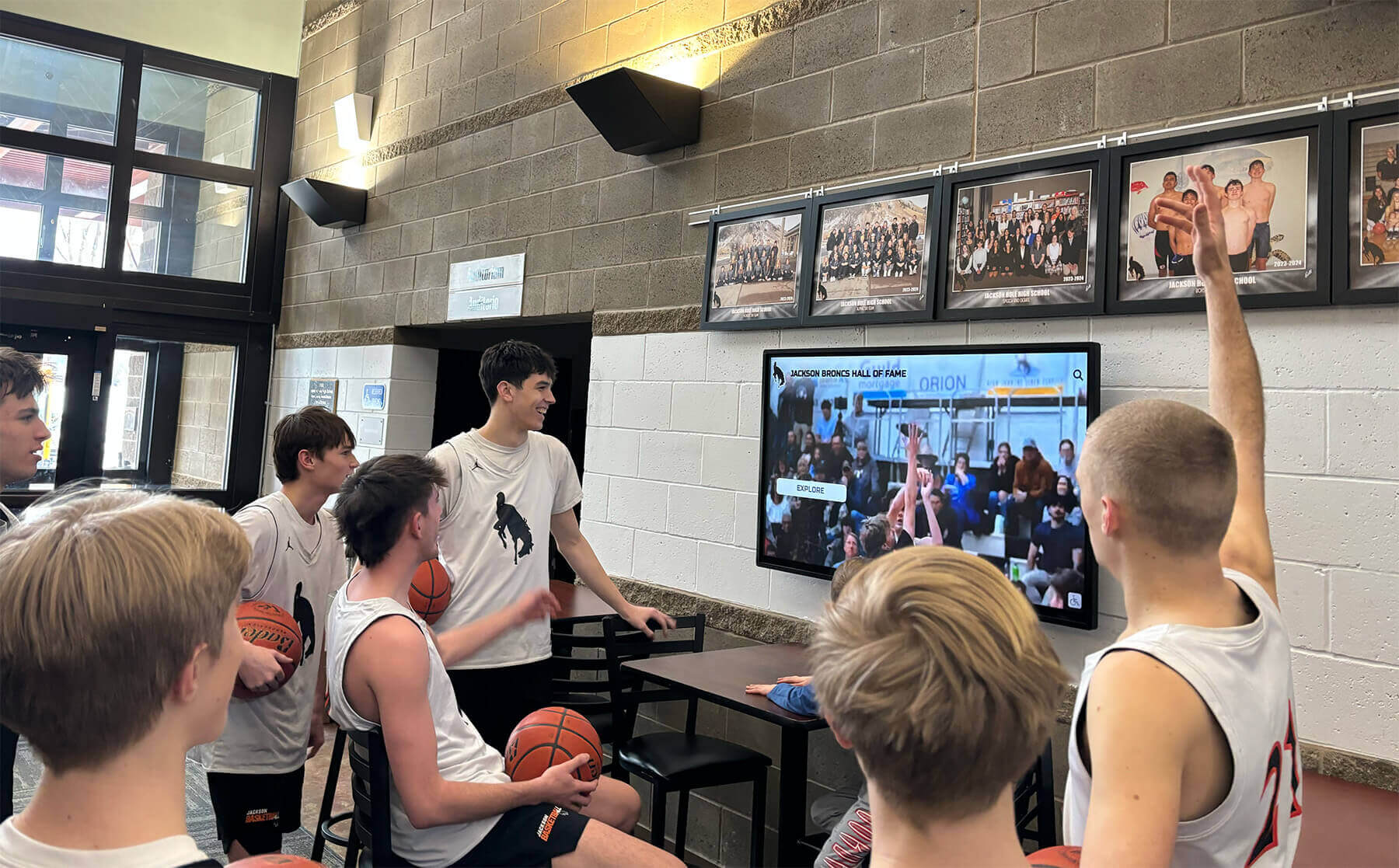
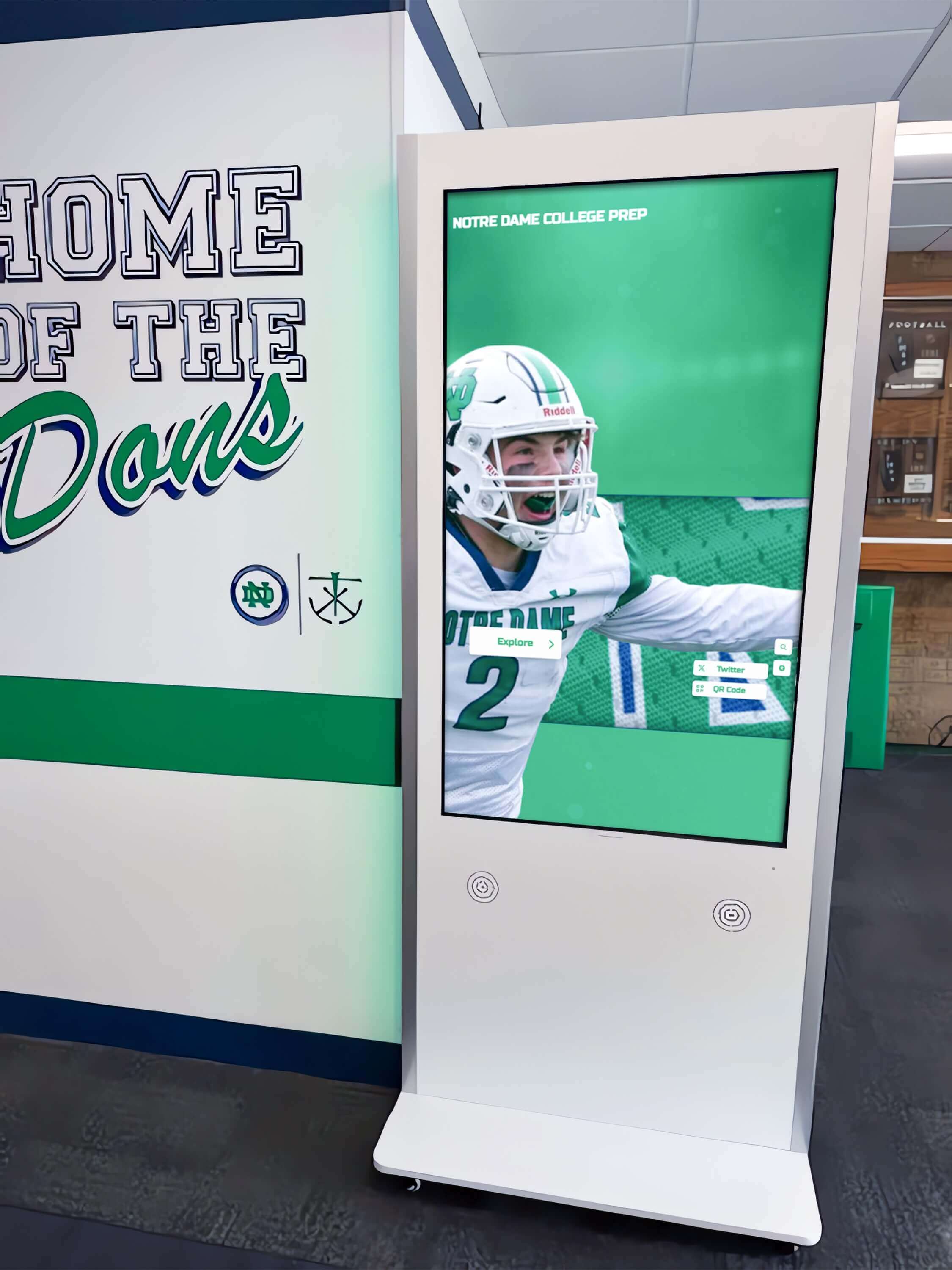
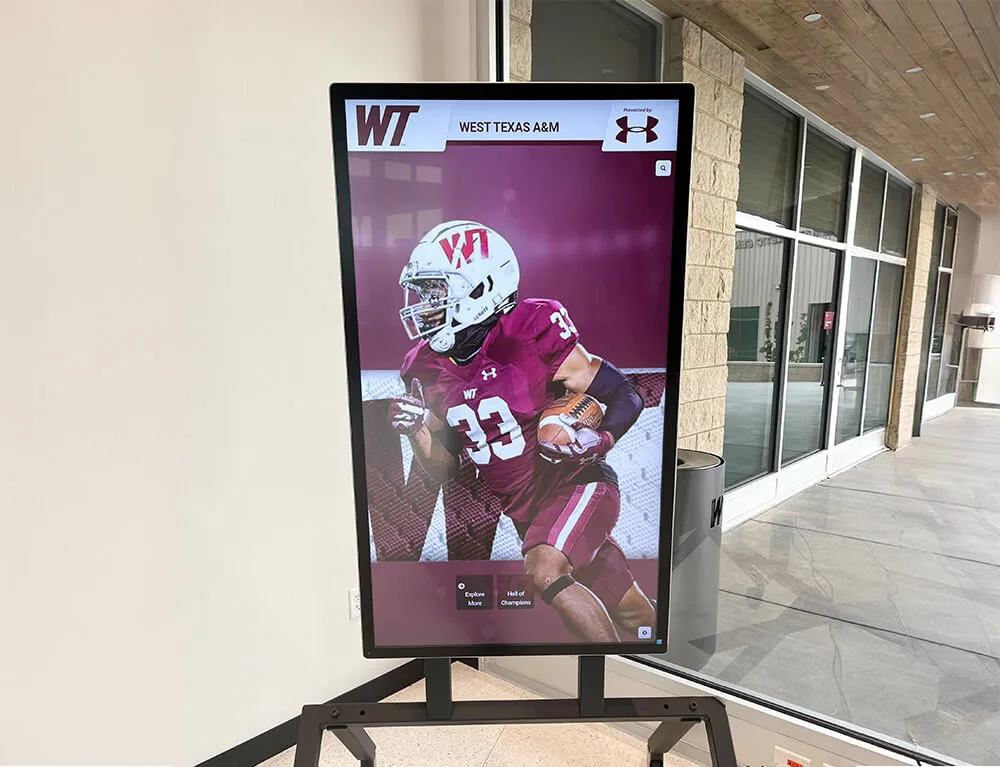
Digital recognition platforms enable flag football programs to establish prominent visibility alongside traditional sports. Interactive displays can showcase game highlights, player statistics, championship banners, and program history while accommodating program growth as achievement lists expand each season. Unlike static plaques with finite space, digital solutions scale infinitely while maintaining visual impact and accessibility.
Program Story Documentation:
- Historical Context: Documenting program founding, early challenges, growth milestones
- Athlete Spotlights: Highlighting individual athletes who exemplified program values or achieved exceptional success
- Championship Seasons: Preserving rosters, statistics, game results, and memorable moments from historic seasons
- Community Impact: Celebrating program contributions to school spirit, community engagement, and athlete development
Schools establishing flag football programs now are creating traditions that will span decades. Investing in proper recognition infrastructure from the beginning ensures achievements receive appropriate permanent celebration rather than becoming lost to time as rosters turn over and memories fade.
Conclusion
Flag football has evolved from simple recreational alternative to competitive sport with Olympic status, sanctioned high school leagues, and millions of participants nationwide. Understanding flag football rules—from basic field dimensions and scoring to nuanced penalty applications and strategic implications—transforms casual participants into informed competitors and engaged fans who appreciate the sport’s tactical depth and athletic demands.
For players entering flag football for the first time, mastering these rules accelerates competitive development and prevents costly mistakes during crucial game moments. Coaches building new programs benefit from systematic rule teaching that establishes proper fundamentals while developing strategic understanding. Fans watching flag football gain deeper appreciation for the speed, precision, and decision-making excellence the sport requires when they understand the rules shaping what they observe on the field.
As flag football continues its explosive growth trajectory—adding high school state championships, Olympic competition, and expanding youth participation—the sport is establishing permanent place within competitive athletics. Schools launching flag football programs today are creating traditions that will endure for generations, building program histories worth celebrating through comprehensive recognition that honors the athletes, coaches, and achievements defining flag football excellence in their communities.
Ready to establish lasting traditions for your flag football program? Rocket Alumni Solutions provides athletic departments with interactive digital displays that showcase championship banners, statistical leaders, all-state selections, and program milestones—creating permanent recognition for flag football excellence that motivates current athletes while honoring program history. Our solutions scale with your program, accommodating growth while maintaining visual impact in high-traffic areas where achievements receive the visibility they deserve.