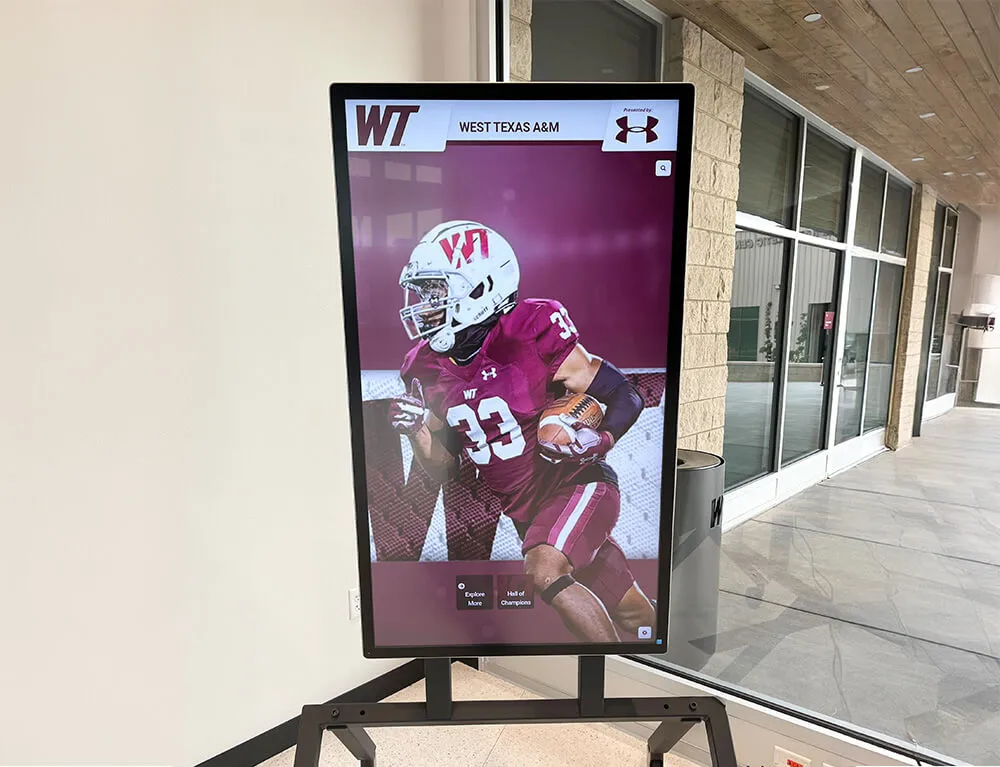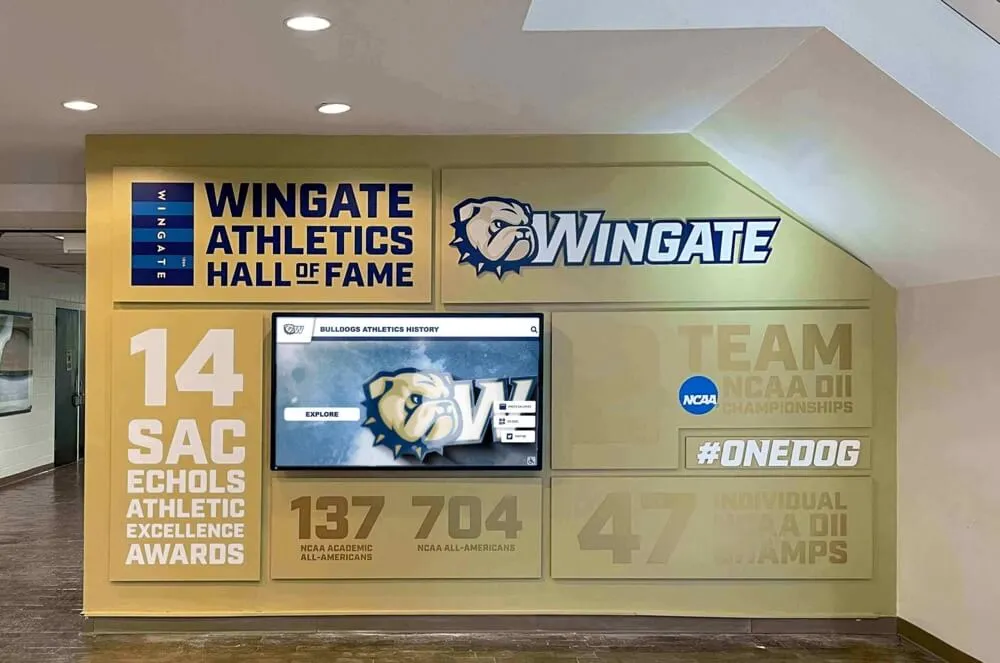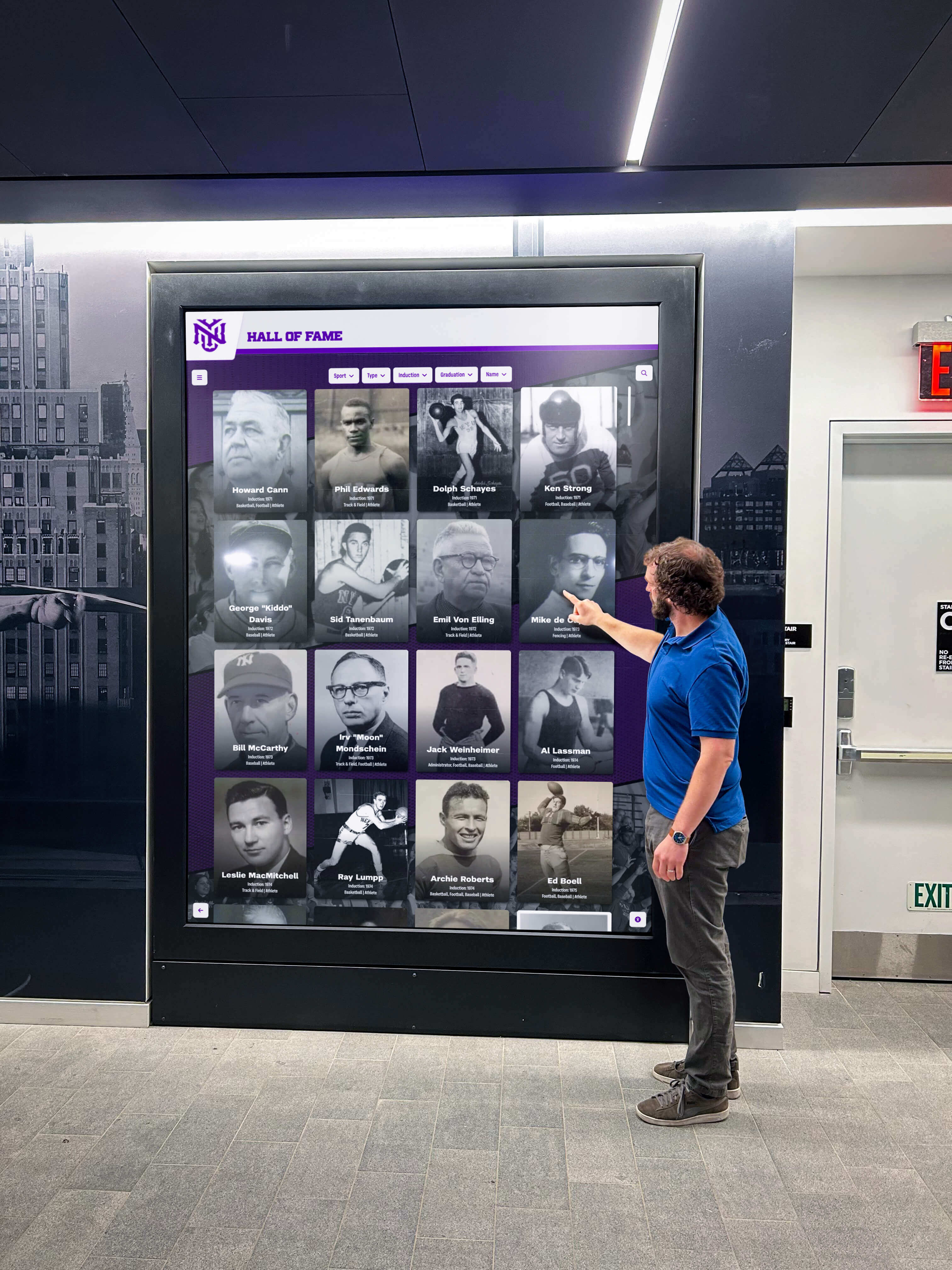




Recognition walls have emerged as powerful cultural tools transforming ordinary workplaces into environments where achievement matters, contributions receive visible acknowledgment, and employees feel genuinely valued. Organizations implementing strategic recognition displays report measurable improvements in employee satisfaction, retention rates, and overall engagement—outcomes directly affecting bottom-line results through reduced turnover costs and enhanced productivity. Yet the difference between recognition walls that inspire excellence and those gathering dust as neglected afterthoughts comes down to thoughtful design, authentic commitment, and implementation approaches matching contemporary workplace expectations.
Whether your organization operates from corporate headquarters, manufacturing facilities, healthcare centers, professional services offices, or distributed remote locations, recognition walls communicate powerful messages about institutional values. They demonstrate what organizations celebrate, validate individual contributions toward collective success, build pride across teams, and create visible evidence that hard work receives meaningful acknowledgment beyond paychecks and performance reviews.
Recognition That Reaches Every Team Member
Traditional employee recognition approaches face inherent constraints limiting effectiveness—physical space restrictions forcing impossible choices about who receives acknowledgment, manual update requirements consuming administrative resources, static formats failing to engage digital-native workforces, and accessibility barriers preventing remote employees from experiencing recognition. Modern digital recognition platforms eliminate these limitations by providing unlimited capacity for honorees, instant remote updates maintaining currency, rich multimedia content bringing achievements to life, and universal web accessibility ensuring all employees can experience appreciation regardless of location. Solutions like Rocket Alumni Solutions offer platforms originally designed for educational recognition but increasingly adopted by forward-thinking organizations seeking sophisticated employee appreciation systems that scale sustainably while maintaining genuine impact.
The Strategic Foundation of Workplace Recognition
Recognition walls serve purposes extending far beyond simple acknowledgment. They function as cultural infrastructure communicating organizational values, establishing behavioral standards, building community identity, and creating environments where excellence becomes expected rather than exceptional.
Walk through workplaces with strong recognition cultures and patterns emerge immediately—achievement receives prominent visibility, diverse contribution types earn celebration, recognition feels current and relevant, and employees demonstrate genuine pride discussing colleagues’ accomplishments. These environments feel fundamentally different from organizations where recognition exists nominally but receives minimal authentic investment or sustained attention.
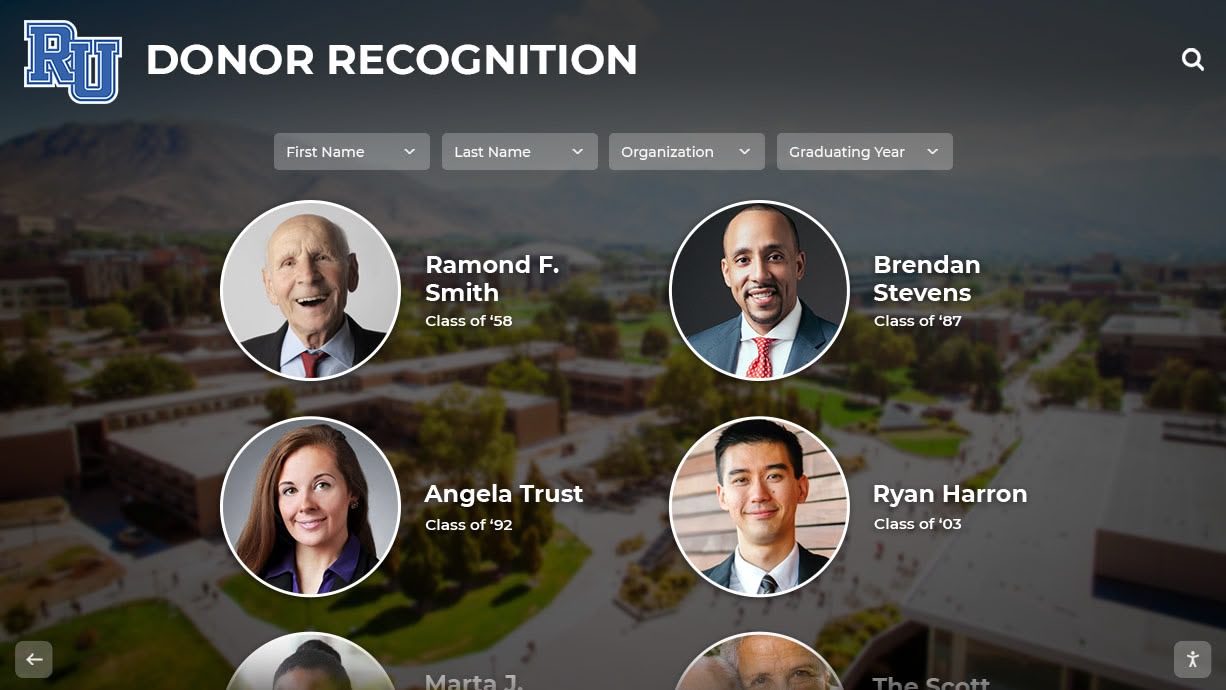
Research from Gallup consistently demonstrates that employees who feel adequately recognized demonstrate significantly higher engagement, productivity, and retention compared to colleagues lacking appreciation. Organizations implementing comprehensive recognition programs report 20-30% reductions in turnover rates—savings that quickly justify recognition system investments when calculated against replacement costs averaging 50-200% of annual salaries depending on role complexity and seniority level.
Beyond quantifiable retention benefits, recognition influences workplace dynamics through social validation mechanisms. When employees observe colleagues receiving meaningful acknowledgment, they understand which behaviors and accomplishments organizations truly value regardless of stated mission statements or leadership speeches. Recognition patterns teach more powerfully than any corporate communication about what matters authentically within organizational cultures.
Essential Recognition Wall Categories Celebrating Diverse Excellence
Effective recognition systems honor varied contribution types rather than narrow definitions focusing exclusively on sales performance or tenure milestones. Comprehensive category structures ensure employees across all functions and seniority levels see realistic pathways to acknowledgment through excellence appropriate to their roles and capabilities.
Performance Achievement Recognition
Performance-based categories celebrate employees meeting or exceeding role-specific standards through measurable accomplishments. Sales excellence recognition honors revenue generation and client acquisition benchmarks. Customer service achievement celebrates exceptional satisfaction scores and retention results. Quality performance acknowledges error reduction and consistency standards. Innovation awards recognize process improvements and creative problem-solving. Operational excellence honors efficiency gains and resource optimization.
Clear performance criteria enable employees to understand precisely what achievement requires, creating transparency preventing favoritism perceptions while establishing motivational targets encouraging focused effort toward recognized accomplishments. When colleagues see specific achievement details explaining why individuals received recognition, they gain actionable insights about pathways to similar acknowledgment through comparable contributions.
Digital recognition systems allow rich achievement documentation impossible with traditional plaques—detailed accomplishment narratives, quantifiable results demonstrating impact, team context describing collaboration required, and challenges overcome highlighting exceptional effort. This depth transforms recognition from abstract acknowledgment into meaningful storytelling colleagues can understand, appreciate, and potentially emulate in their own work.
Values-Based Recognition
Values recognition honors behaviors demonstrating organizational principles regardless of job function or performance metrics. Integrity awards celebrate ethical conduct and principled decision-making under pressure. Collaboration recognition acknowledges team contribution and cross-functional partnership. Leadership awards honor mentorship, example-setting, and positive influence on workplace culture. Community service recognition celebrates volunteer contributions and civic engagement. Customer focus awards acknowledge client advocacy and relationship building.
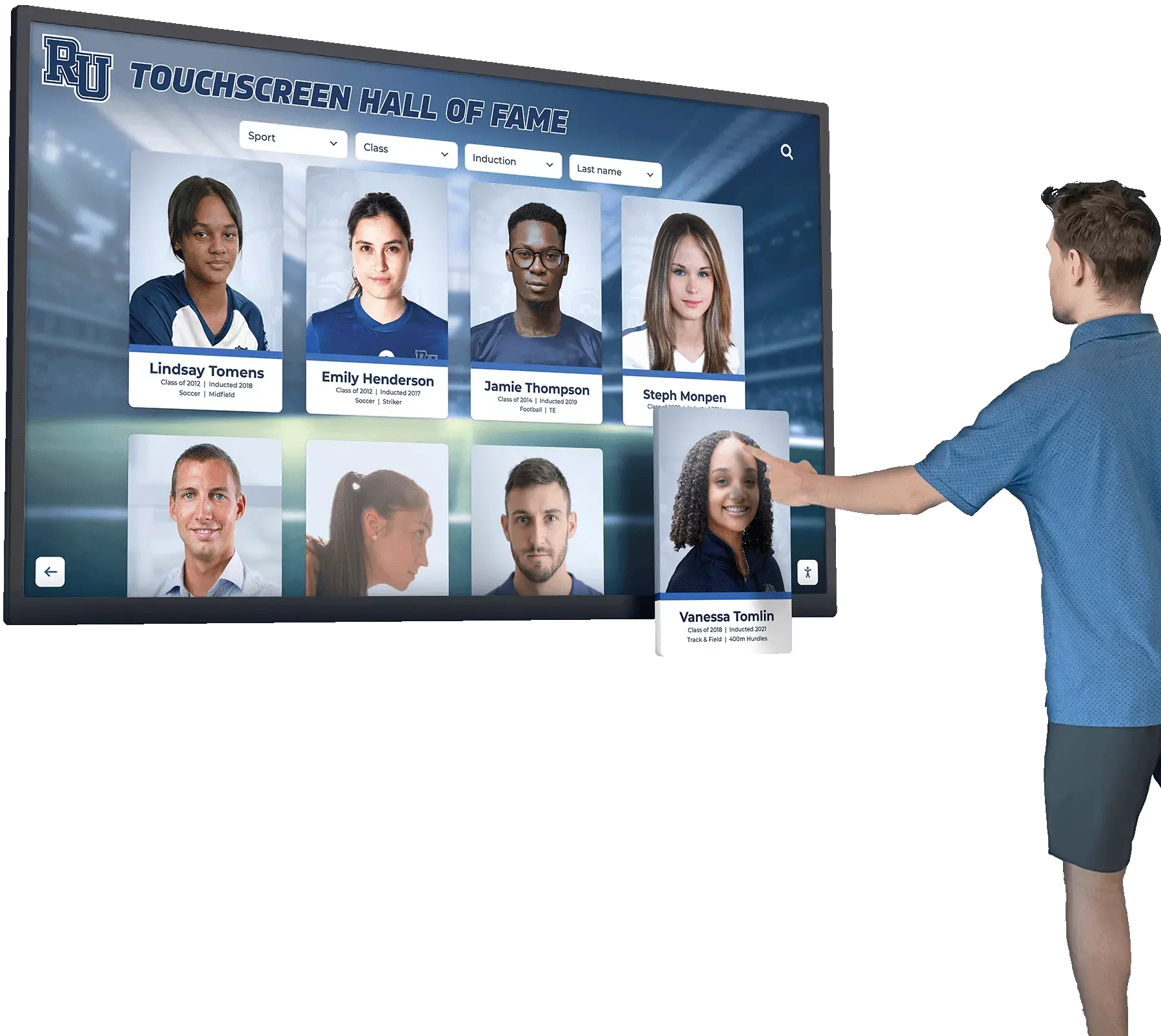
Values-based recognition reinforces cultural priorities by demonstrating that organizations notice and appreciate behaviors beyond immediate job requirements. When companies claim to value collaboration but exclusively recognize individual achievement, employees quickly learn stated values lack substance. Recognition aligned authentically with values proves organizational commitment through tangible acknowledgment making abstract principles concrete and observable.
Organizations implementing comprehensive recognition approaches report stronger cultural alignment as employees increasingly exhibit behaviors receiving visible celebration, creating reinforcing cycles where recognition encourages values-aligned actions that merit additional recognition.
Tenure and Service Milestones
Long-term employment represents significant employee commitment deserving meaningful acknowledgment. Service milestone recognition celebrates tenure achievements at intervals demonstrating substantial organizational loyalty—five, ten, fifteen, twenty, and twenty-five year anniversaries marking sustained dedication increasingly rare in contemporary employment markets characterized by frequent job changes.
Tenure recognition should extend beyond simple longevity acknowledgment by highlighting how long-serving employees contributed throughout careers. Comprehensive profiles document career progression across roles, major projects contributed to, teams mentored, and legacy impacts demonstrating why tenure matters beyond calendar years. This contextual recognition honors both commitment and accumulated contributions rather than treating tenure as passive time passage.
Anniversary recognition creates natural engagement opportunities—organizations can schedule recognition ceremonies aligned with milestone dates, feature honorees in internal communications, and leverage tenure celebrations for team-building through collective acknowledgment of sustained contributions. Long-service recognition particularly resonates with employees valuing stability and organizational relationships, creating powerful retention incentives as individuals approach milestone anniversaries worth celebrating.
Innovation and Continuous Improvement
Organizations seeking sustained improvement benefit from recognition systems celebrating innovative contributions regardless of role or seniority. Process improvement awards honor efficiency enhancements reducing time or resource requirements. Cost-saving recognition acknowledges expense reduction ideas generating measurable financial impact. Quality improvement celebrates error reduction initiatives and consistency enhancements. Customer experience innovation honors service enhancement suggestions improving satisfaction. Technology adoption awards recognize effective tool utilization advancing operational capabilities.
Innovation recognition creates environments where all employees feel empowered to suggest improvements rather than believing innovation remains exclusive to specific roles or senior personnel. Visible recognition for implemented suggestions demonstrates organizational receptivity to employee ideas, encouraging continued contribution of improvement concepts that collectively drive operational excellence and competitive advantage.

According to research from MIT Sloan Management Review, organizations with robust innovation recognition programs generate 35-40% more improvement suggestions from front-line employees compared to organizations lacking formal acknowledgment systems. Front-line workers often possess valuable process insights that formal innovation functions overlook—recognition systems that capture and celebrate these contributions unlock substantial organizational value.
Team and Collective Achievement
While individual recognition maintains importance, team-based acknowledgment celebrates collective achievement requiring coordinated effort across multiple contributors. Project completion recognition honors successful initiative delivery meeting timeline and quality standards. Department excellence acknowledges collective performance benchmarks. Cross-functional collaboration celebrates successful inter-department partnerships overcoming organizational silos. Safety achievement recognizes incident-free operations requiring sustained attention from entire teams. Quality milestones honor team-based process excellence and consistency.
Team recognition addresses workplace realities where significant achievements require coordinated contributions rather than individual heroics. Balanced recognition programs honor both individual excellence and collective achievement, preventing cultural imbalances that overemphasize individual performance at the expense of collaboration essential for organizational success in complex modern business environments.
Organizations implementing team-based recognition systems report improved cross-functional collaboration as employees increasingly view collective success as pathway to recognition rather than competing exclusively for individual acknowledgment.
Modern Recognition Wall Implementation Approaches
Recognition effectiveness depends substantially on display format, technology choices, and implementation strategies matching organizational contexts and employee expectations.
Interactive Digital Recognition Displays
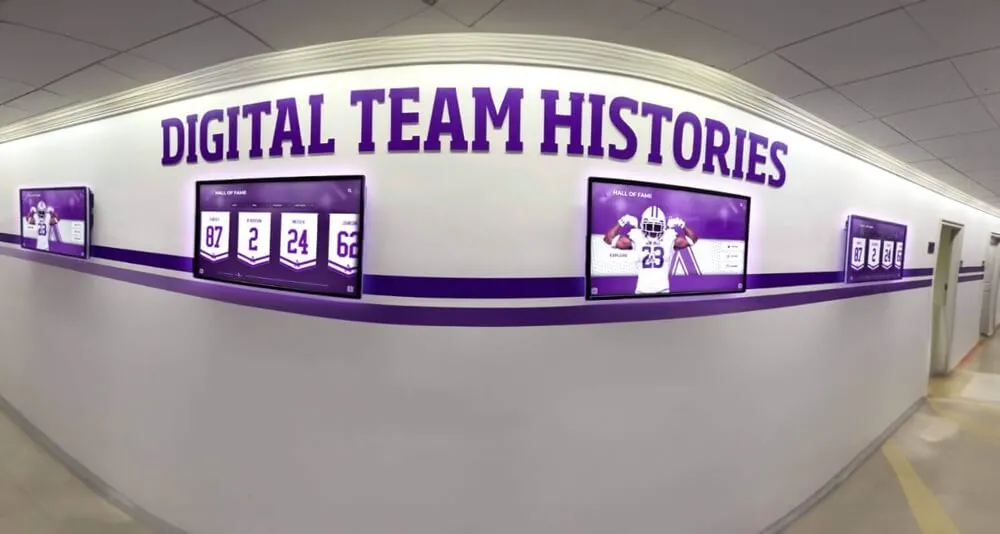
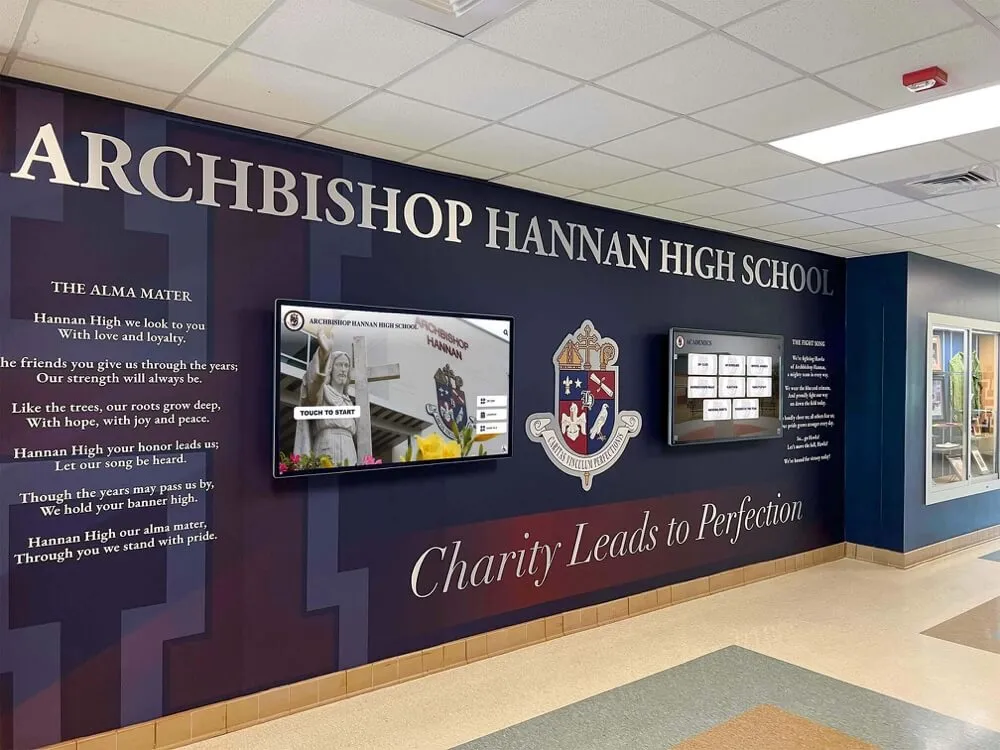
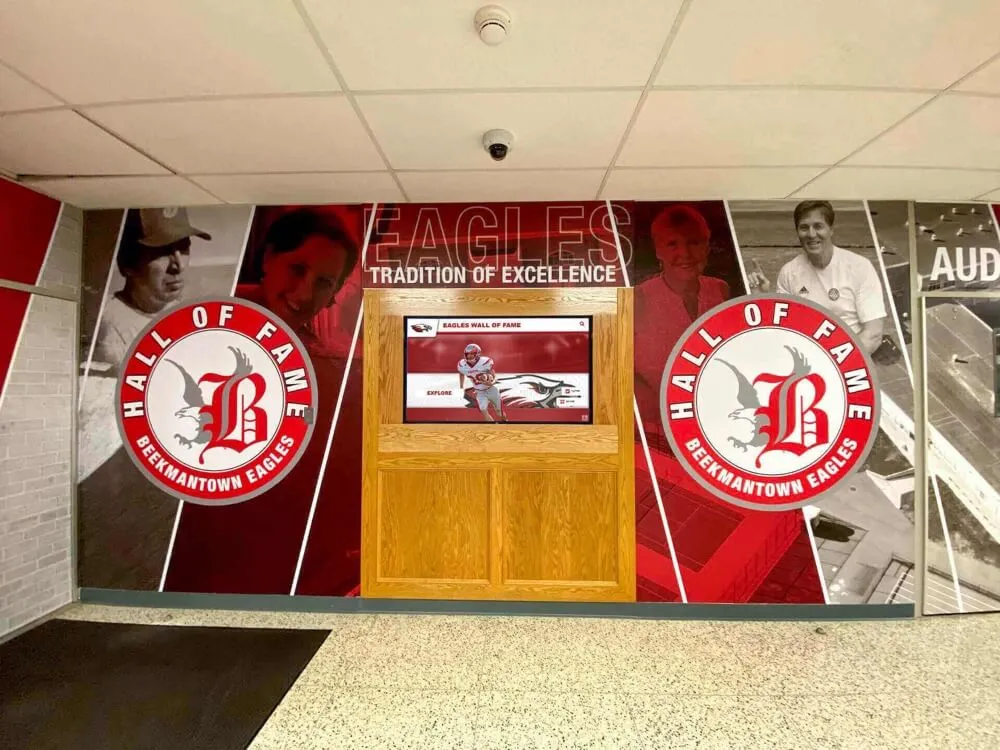
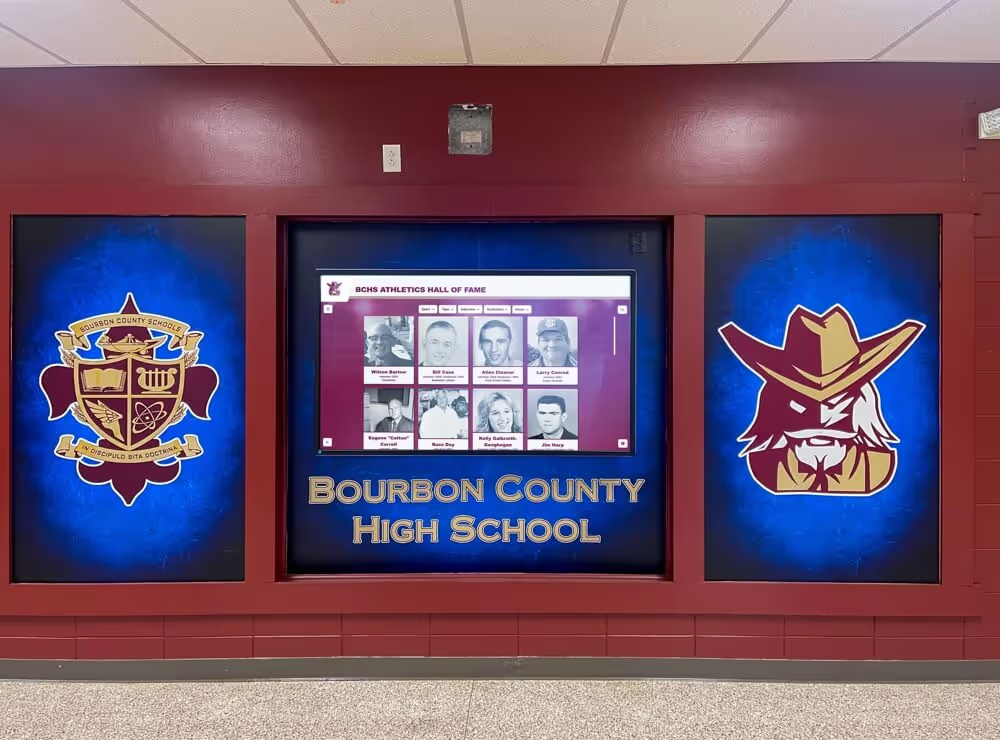
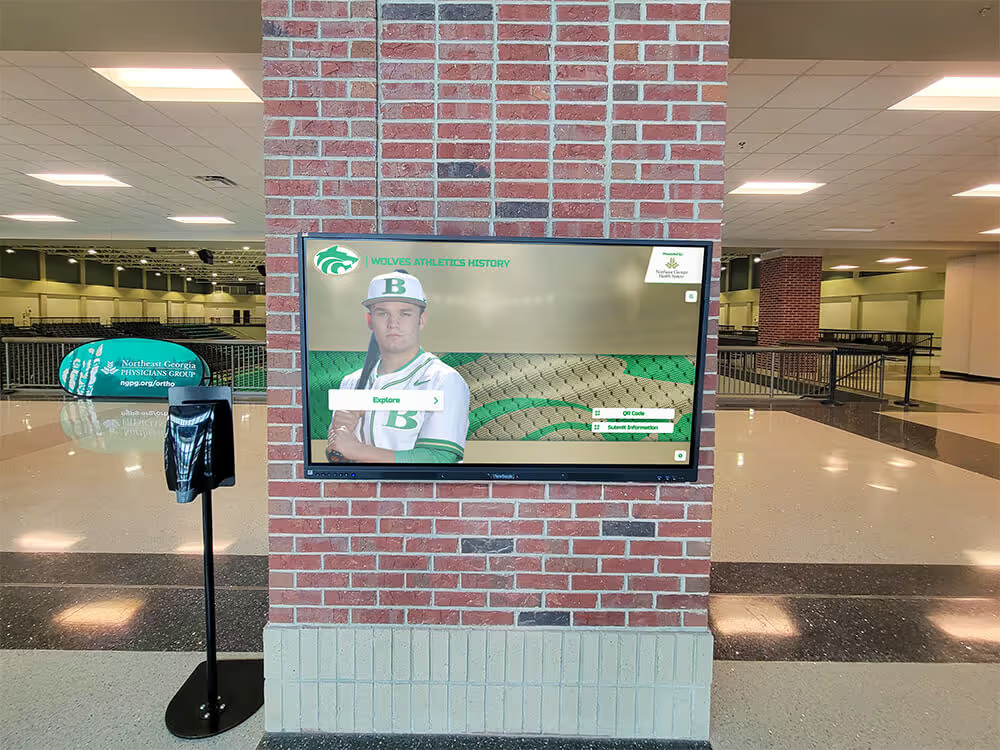
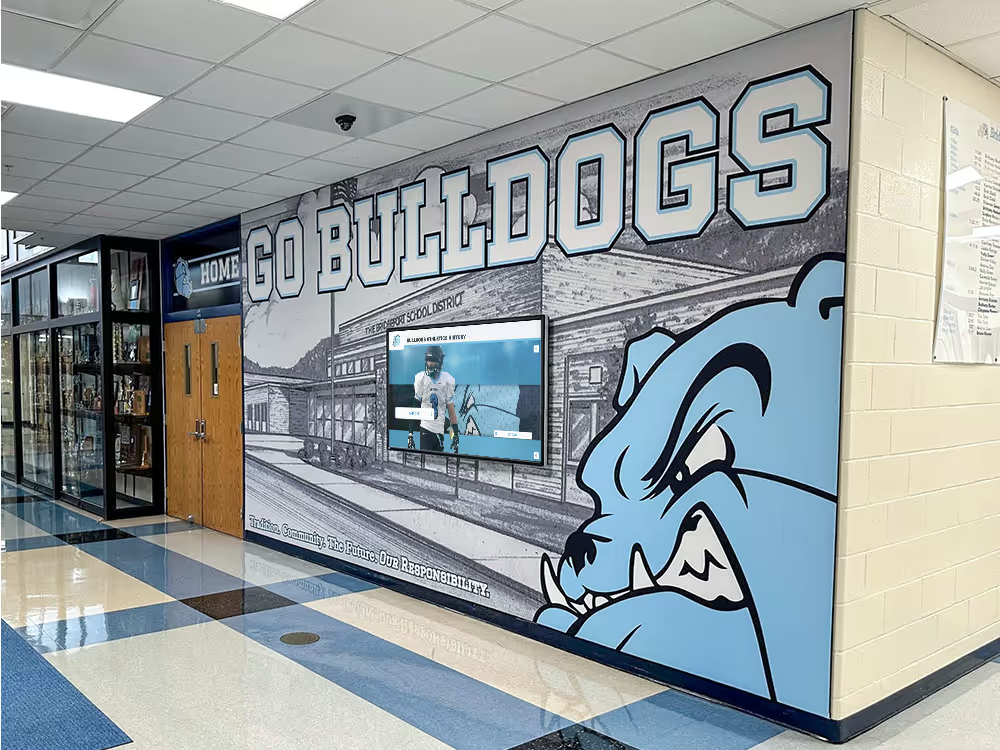
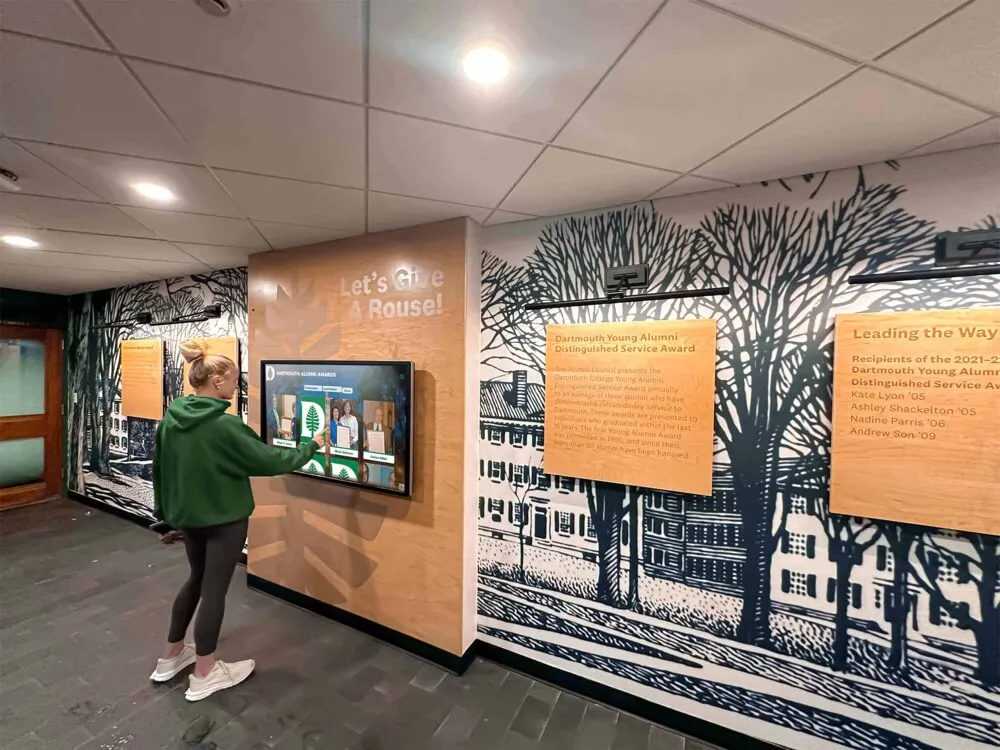
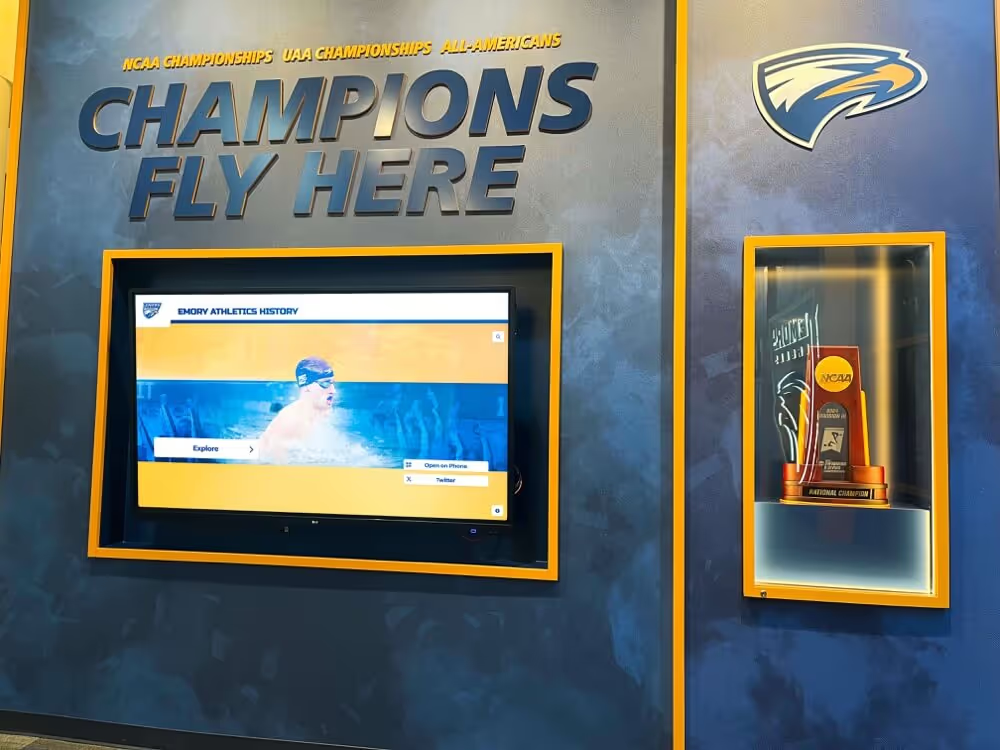
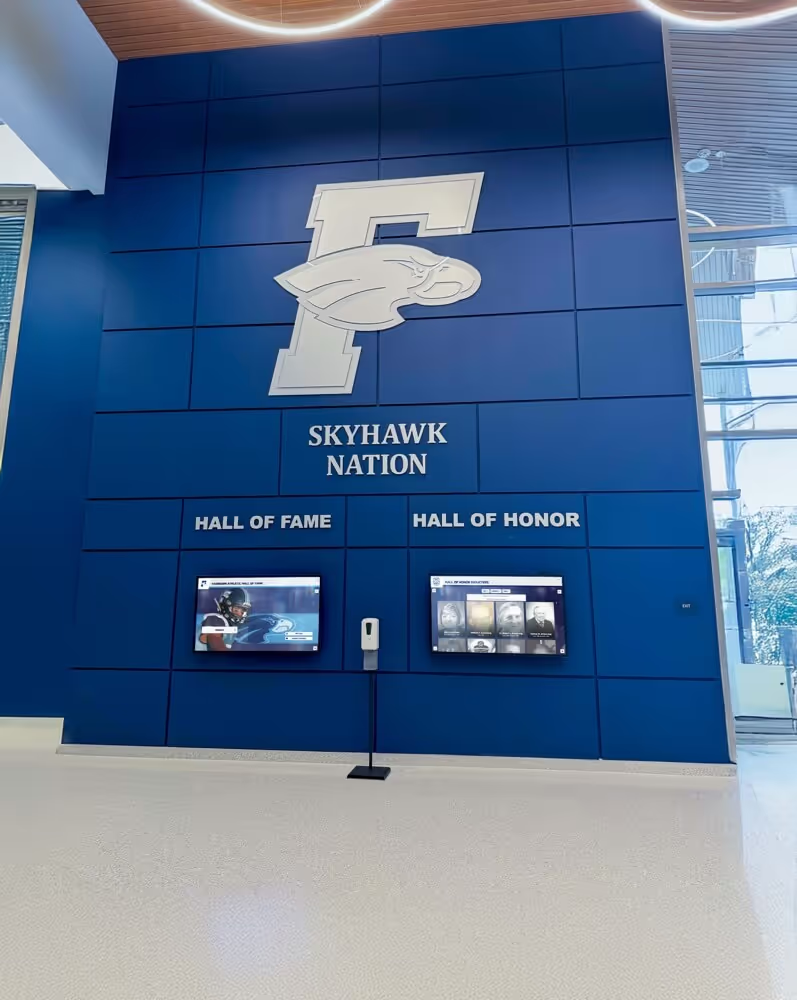
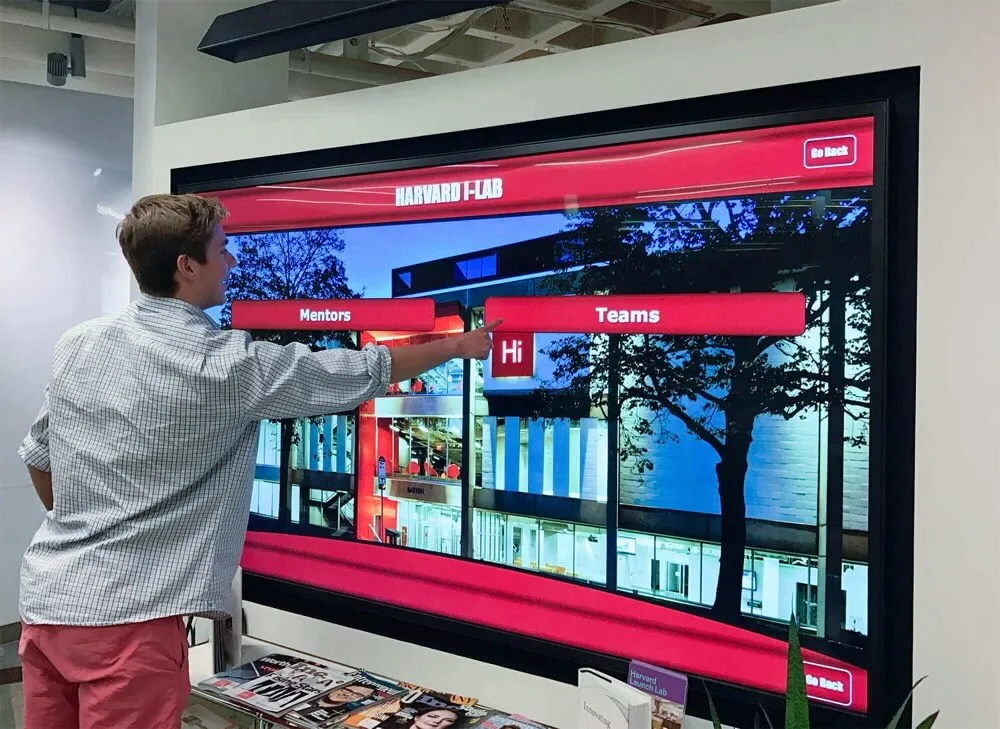
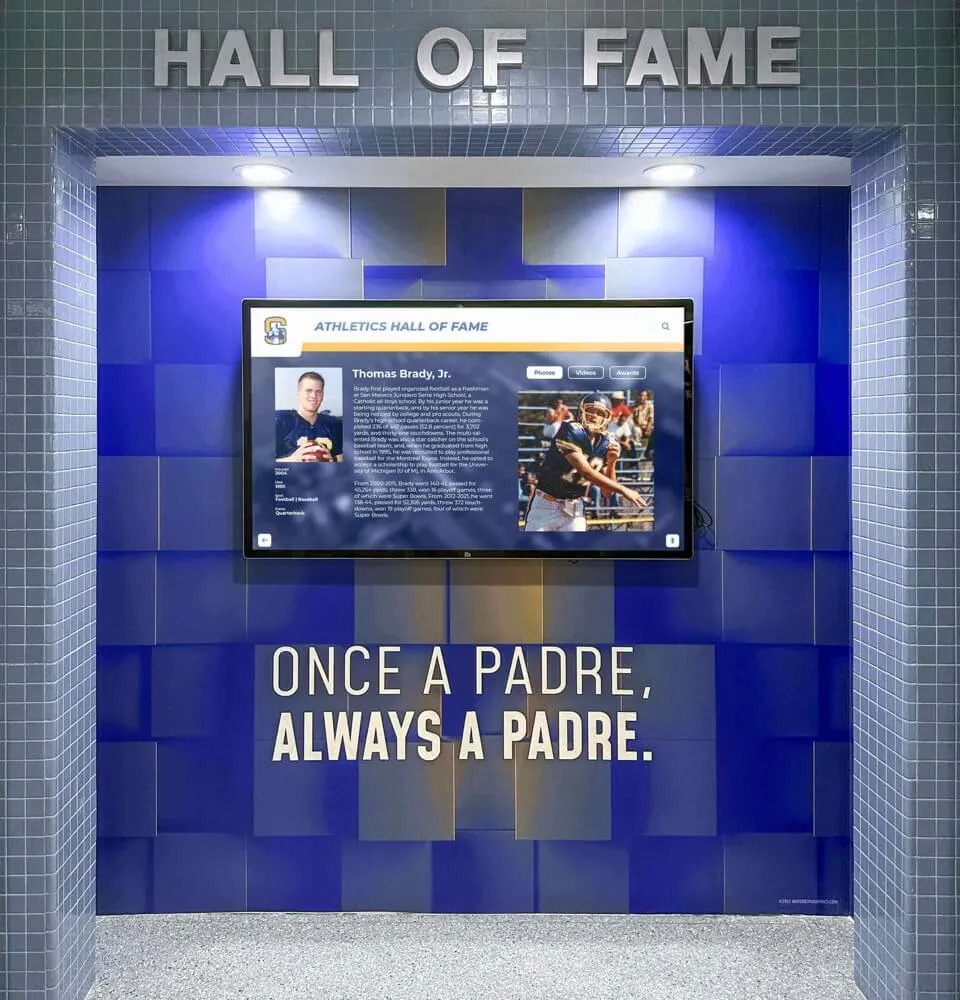
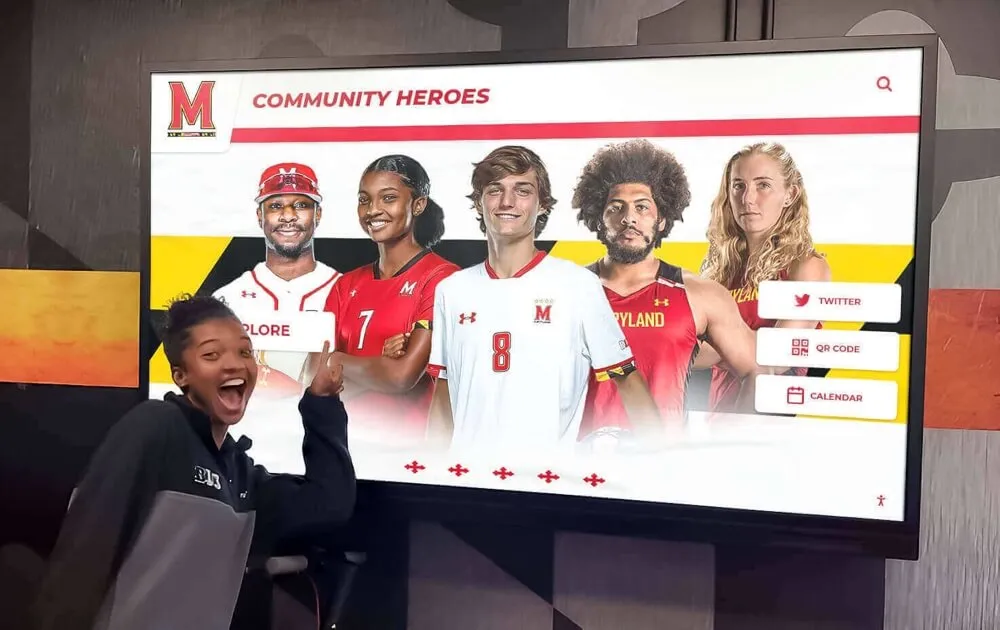
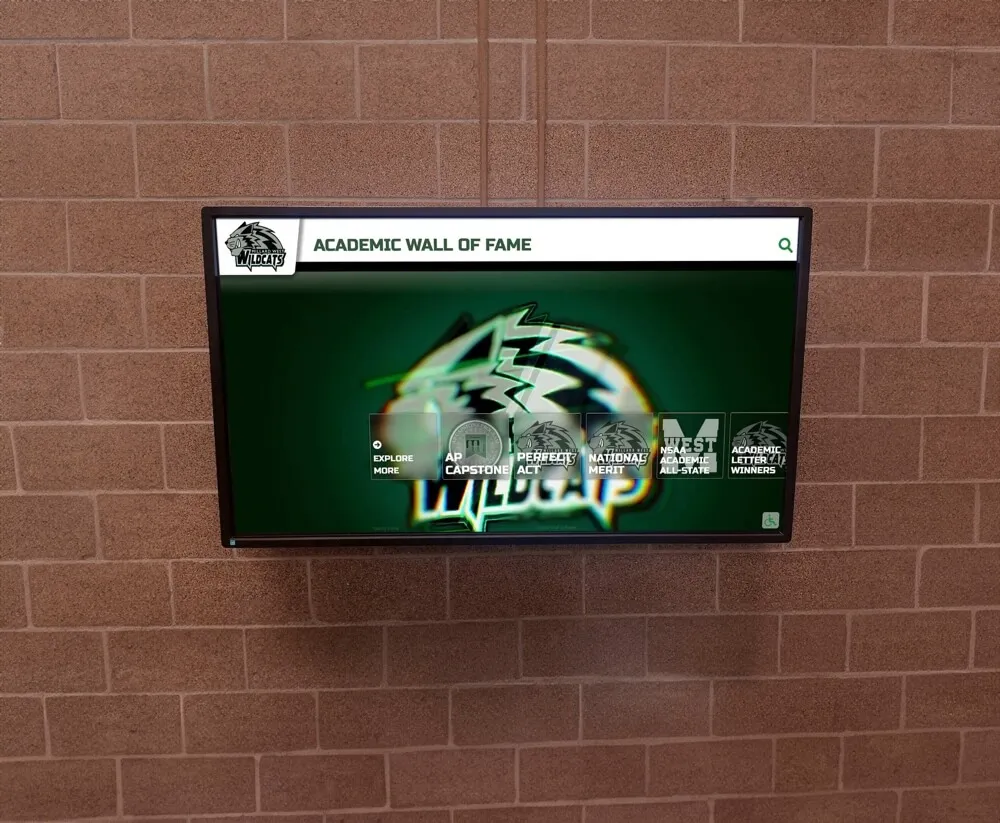
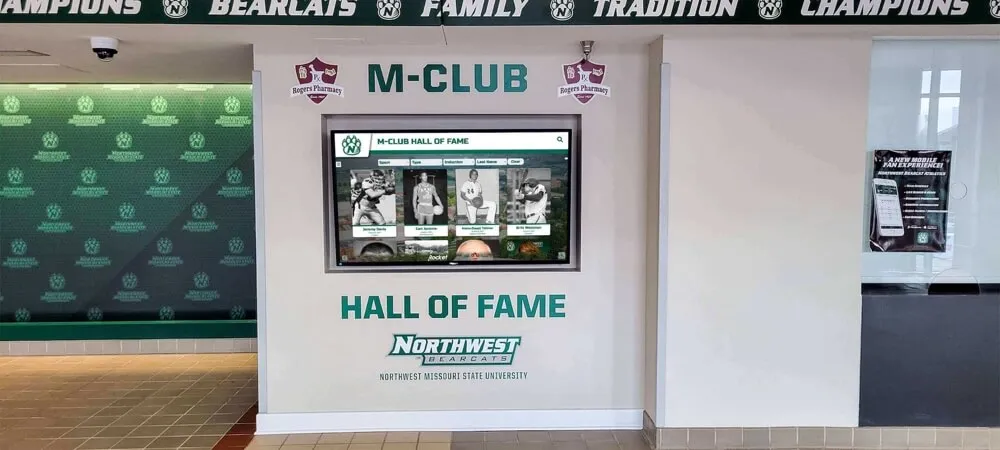
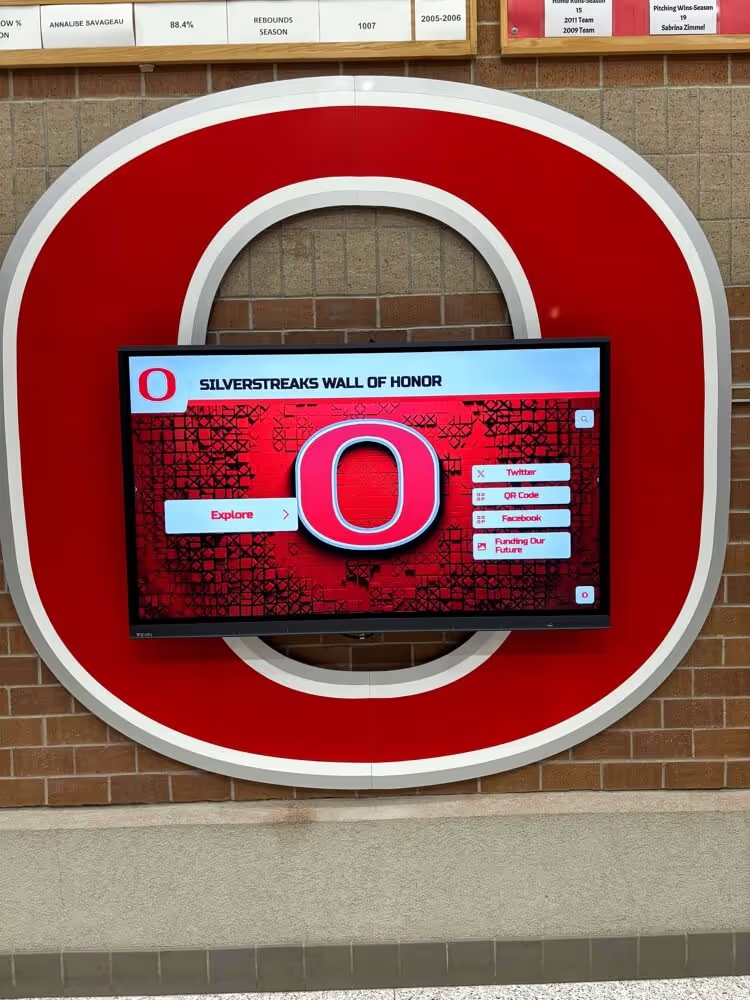
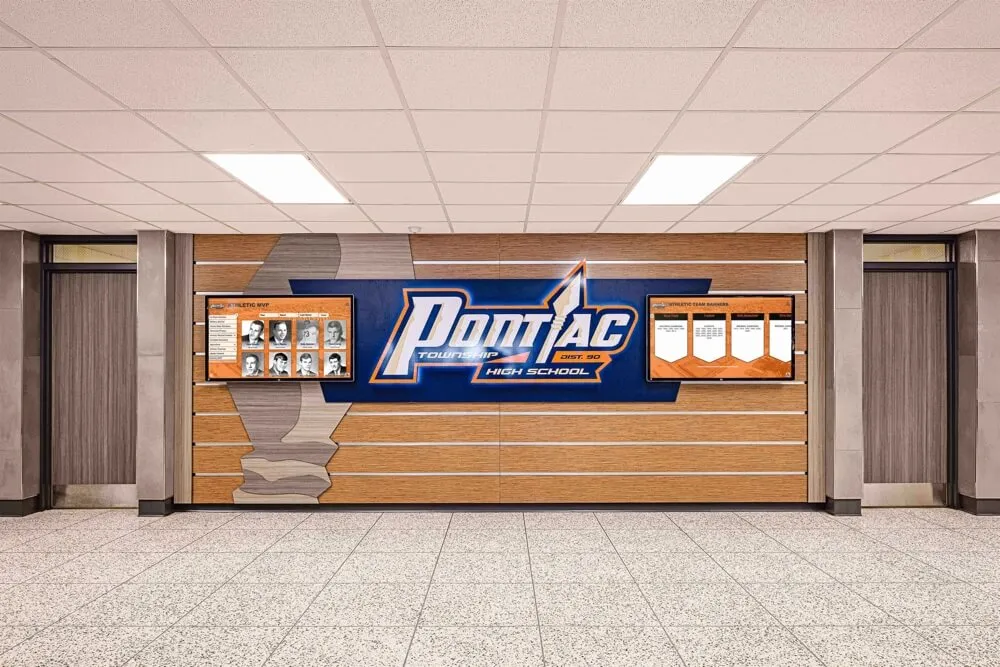
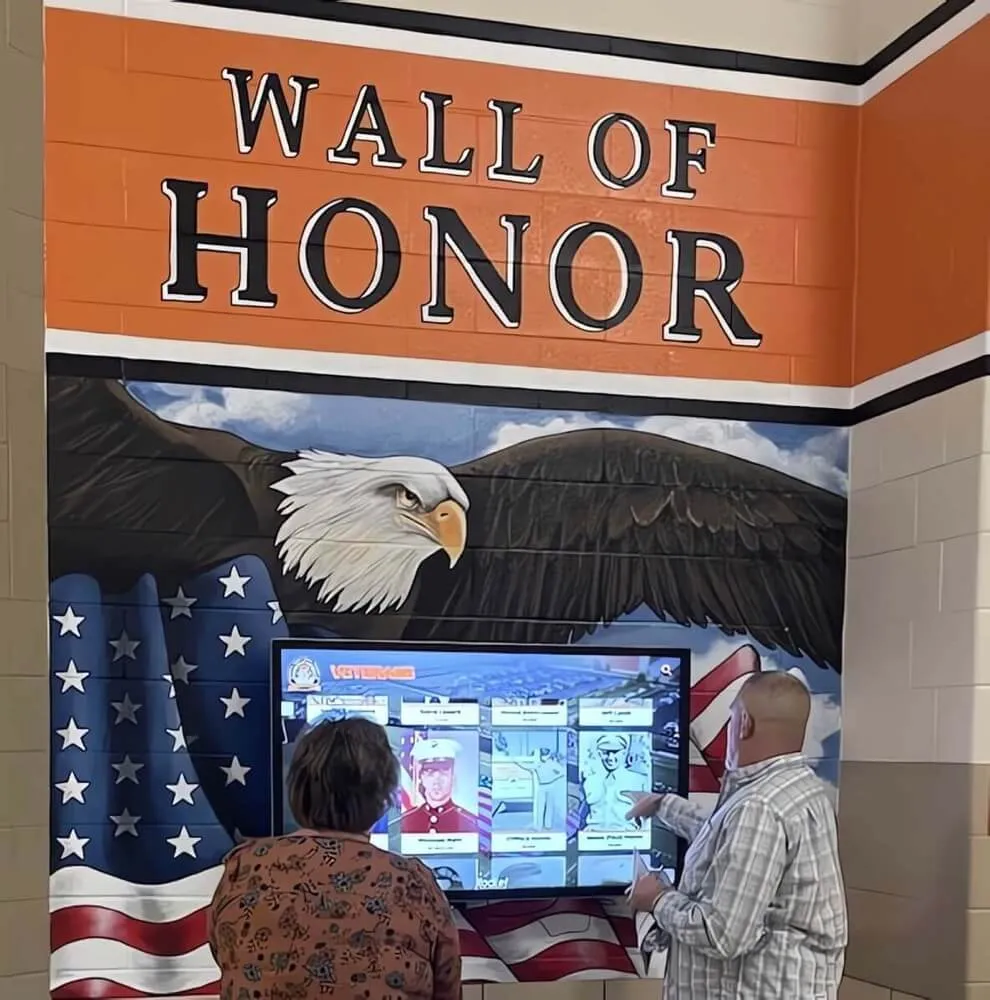
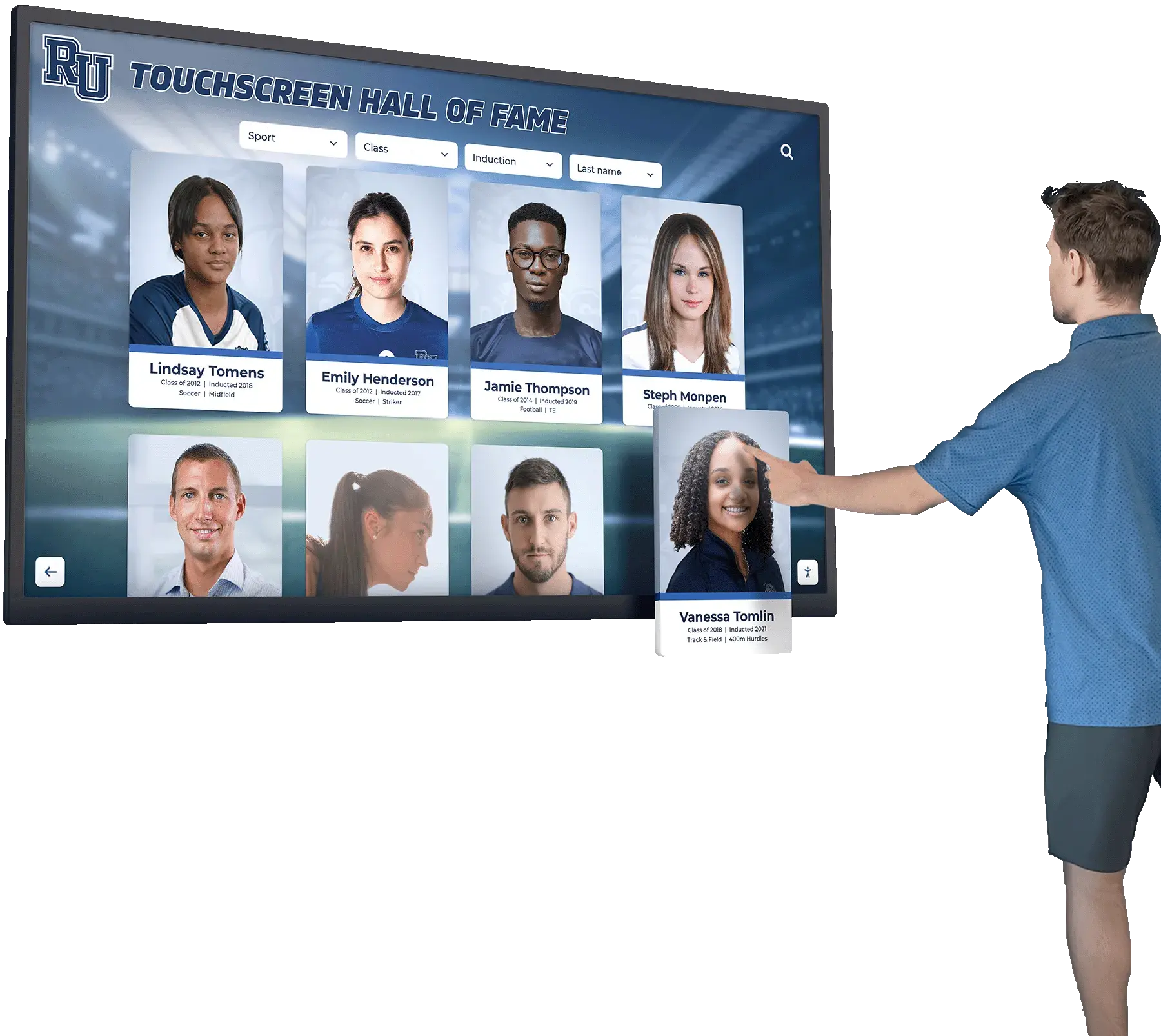
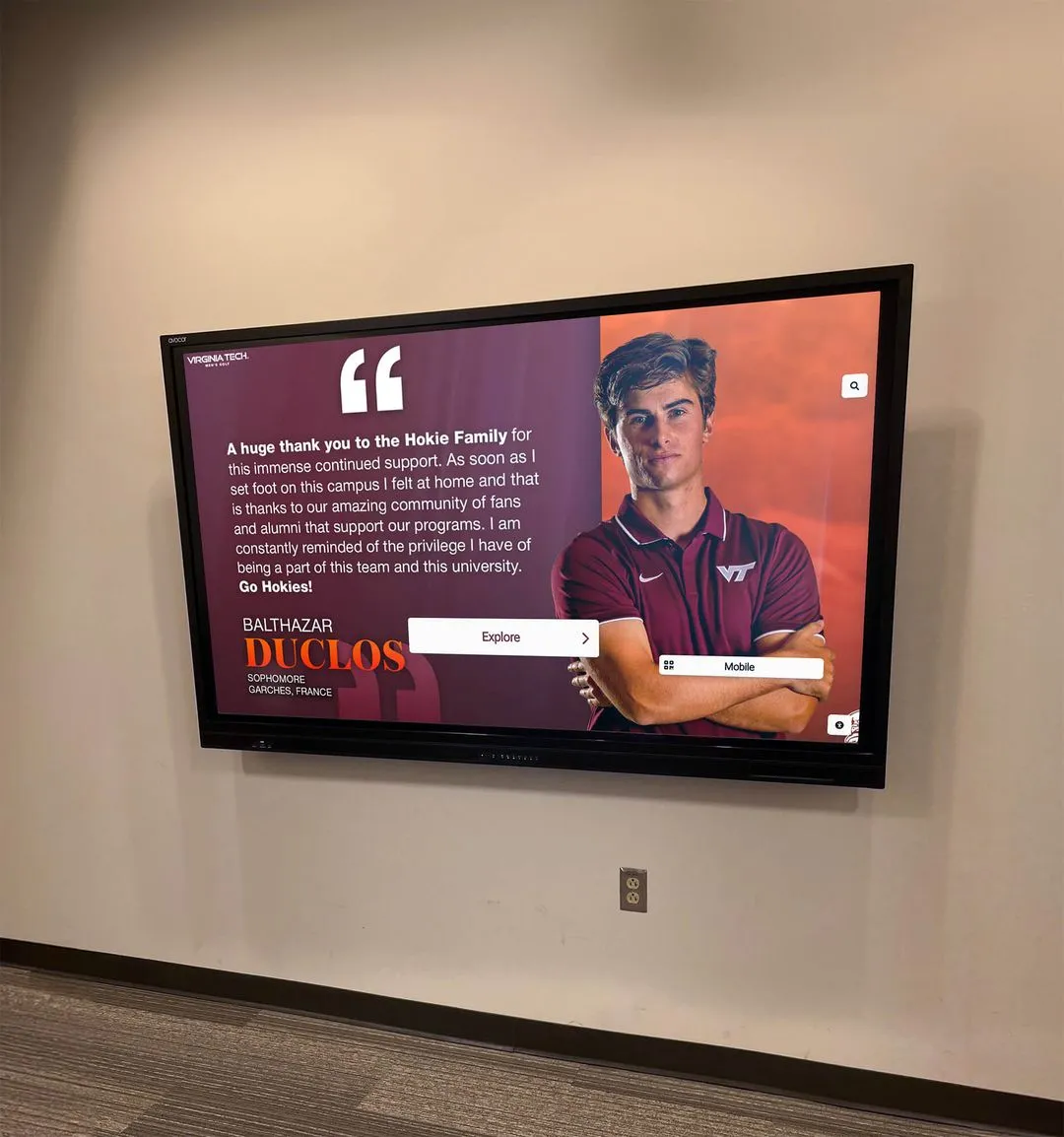
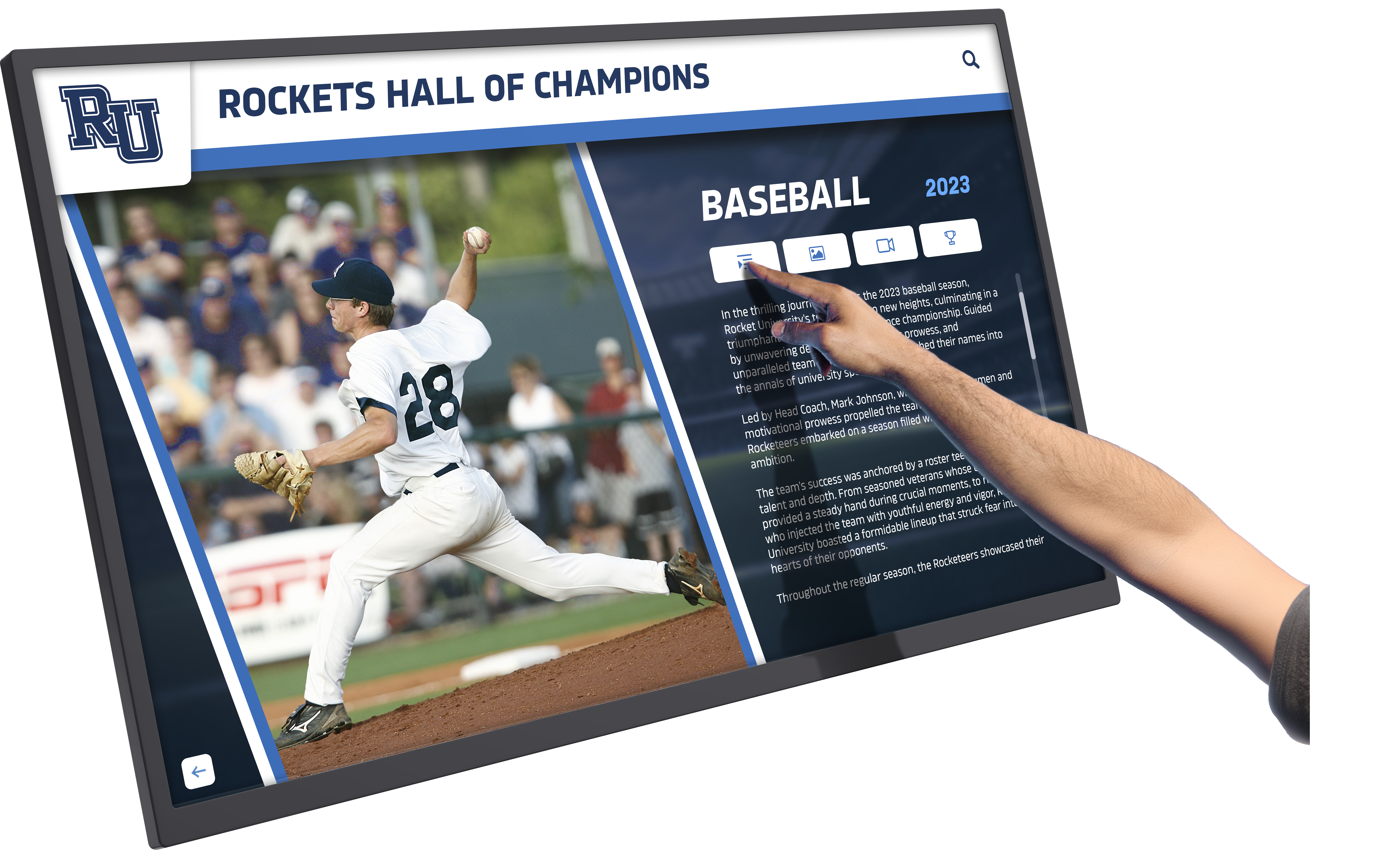
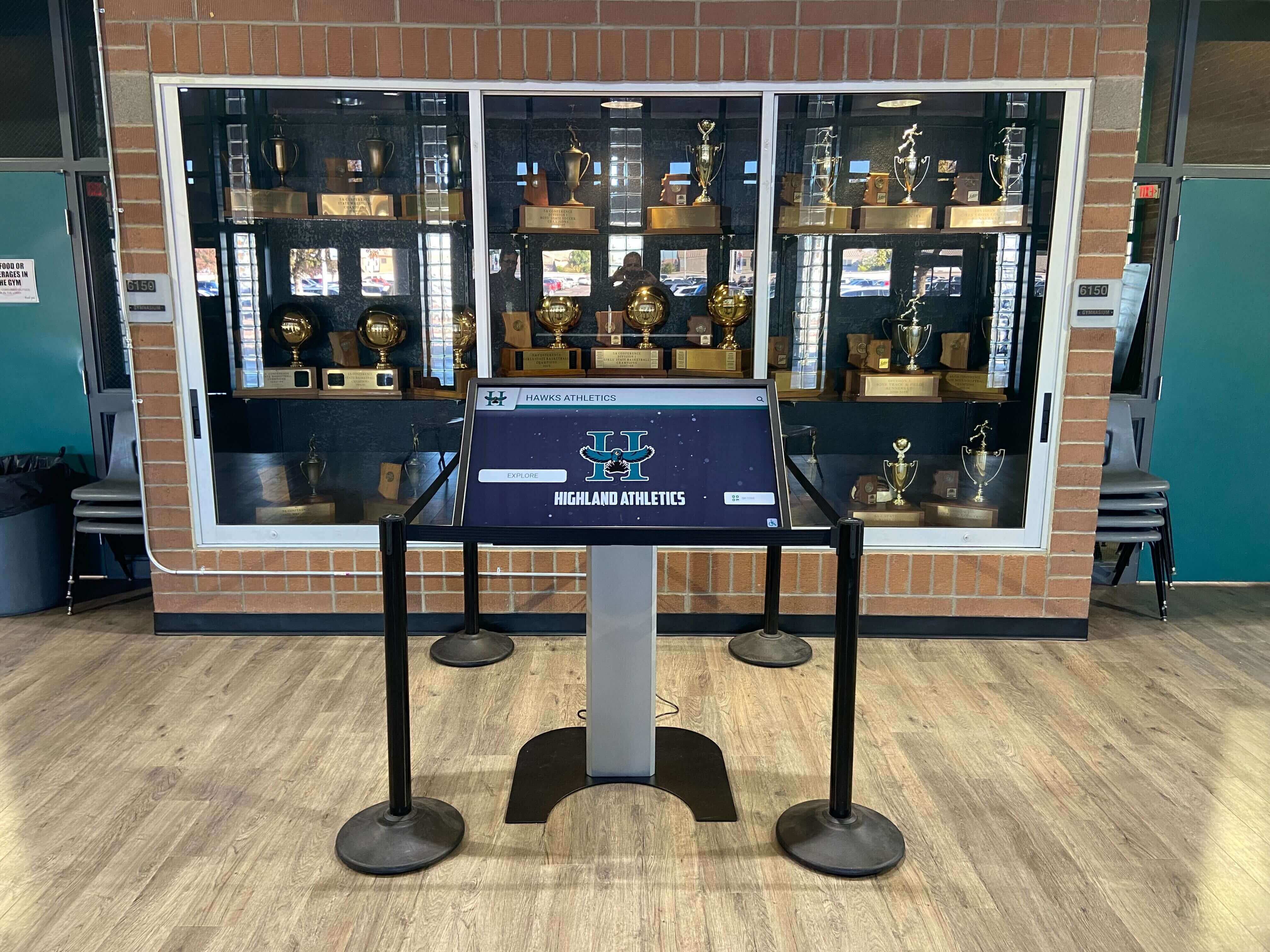
Interactive touchscreen systems create engaging exploration experiences where employees actively discover recognition content rather than passively viewing static displays. These platforms allow users to search for specific colleagues, filter by department or achievement category, explore detailed accomplishment profiles with photos and narratives, and discover connections between team members and organizational successes.
Interactive displays transform recognition from brief glance-and-move encounters into meaningful exploration sessions where employees invest time learning about colleagues’ contributions. Search functionality enables personal connections—employees quickly find their own recognition, locate former team members, or discover how colleagues contributed to significant initiatives. This active engagement creates stronger psychological impact compared to passive viewing of names listed on walls.
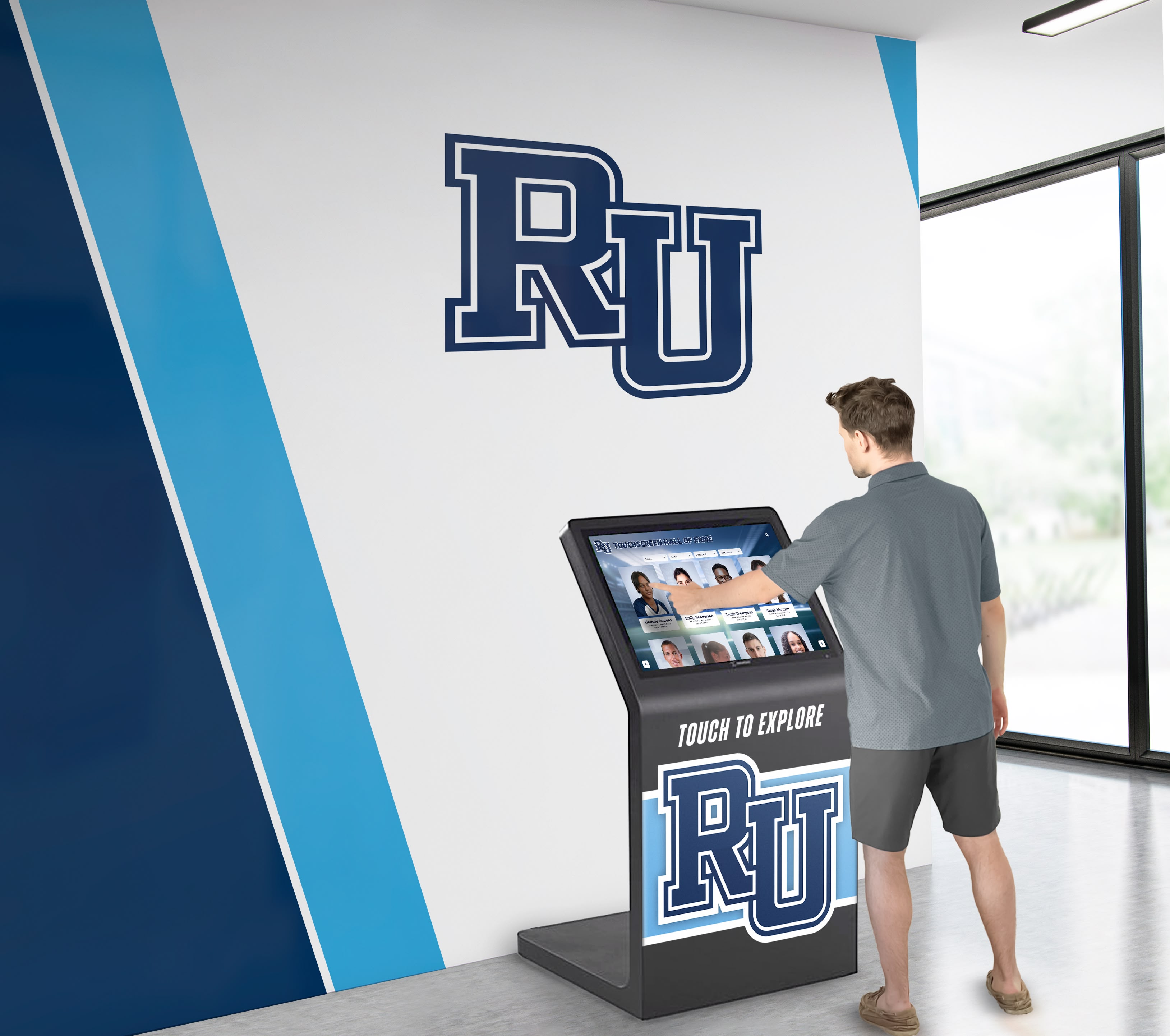
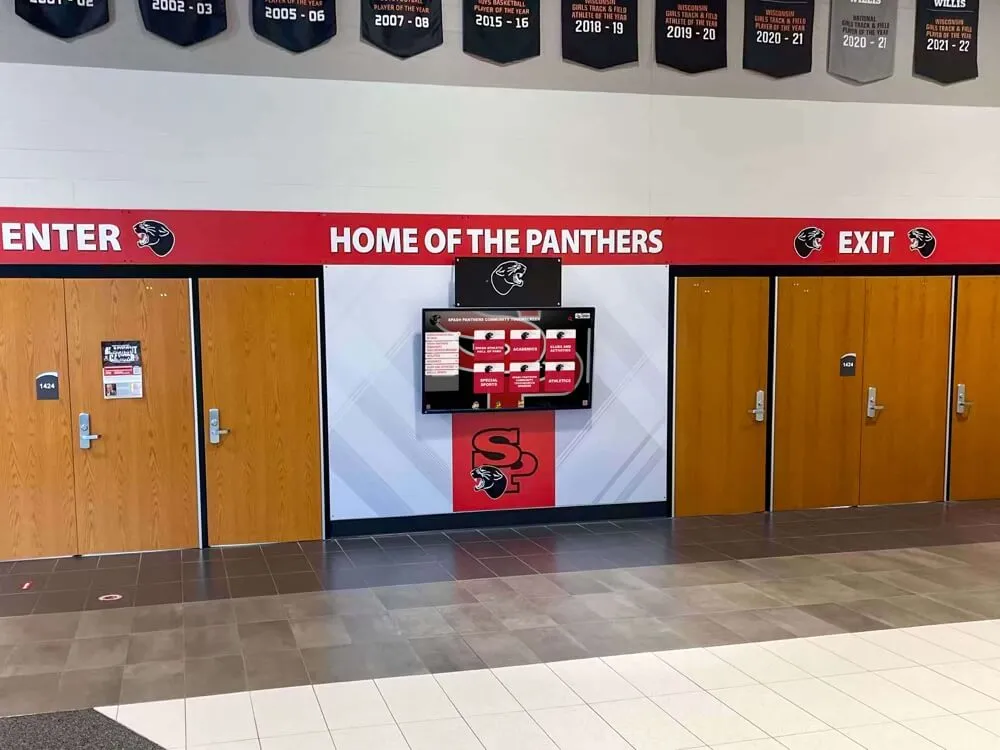
Touchscreen recognition systems prove particularly effective in high-traffic locations where employees naturally congregate—main lobbies, cafeteria entrances, elevator waiting areas, and break room corridors. Strategic placement ensures consistent exposure maximizing recognition visibility while accommodating varying dwell times as some visitors conduct detailed exploration while others view cycling content during brief passages.
Digital platforms designed for organizational recognition provide features supporting workplace needs including departmental organization, location-based filtering for multi-site organizations, tenure tracking, achievement categorization, leadership acknowledgment, and team-based recognition. Purpose-built systems understand corporate requirements rather than forcing organizations to adapt platforms designed for entirely different purposes.
Web-Based Recognition Platforms
Remote and hybrid work environments require recognition systems accessible from anywhere rather than limiting visibility to physical office locations. Web-based recognition platforms provide universal access enabling all employees to view acknowledgment regardless of geographic location, work schedule, or facility proximity.
Online recognition systems support distributed teams by creating shared appreciation experiences across offices, enabling remote employees to feel included in organizational culture, allowing family members to view workplace recognition, facilitating social sharing extending recognition reach, and maintaining employee connections to organizational achievements even after employment transitions.
Recognition accessibility proves particularly critical for organizations with multiple locations, field-based employees, remote workers, international teams, or shift-based operations where employees rarely visit main offices. Web platforms ensure everyone experiences recognition equitably regardless of physical proximity to traditional display locations.
Mobile-responsive designs enable employees to explore recognition through personal devices—smartphones and tablets integrated into daily life. Mobile accessibility extends recognition impact beyond workplace by enabling employees to share achievements with family members, post accomplishments through personal social networks, revisit recognition content whenever desired, and maintain emotional connections to organizational appreciation long after initial acknowledgment occurs.
Hybrid Physical and Digital Approaches
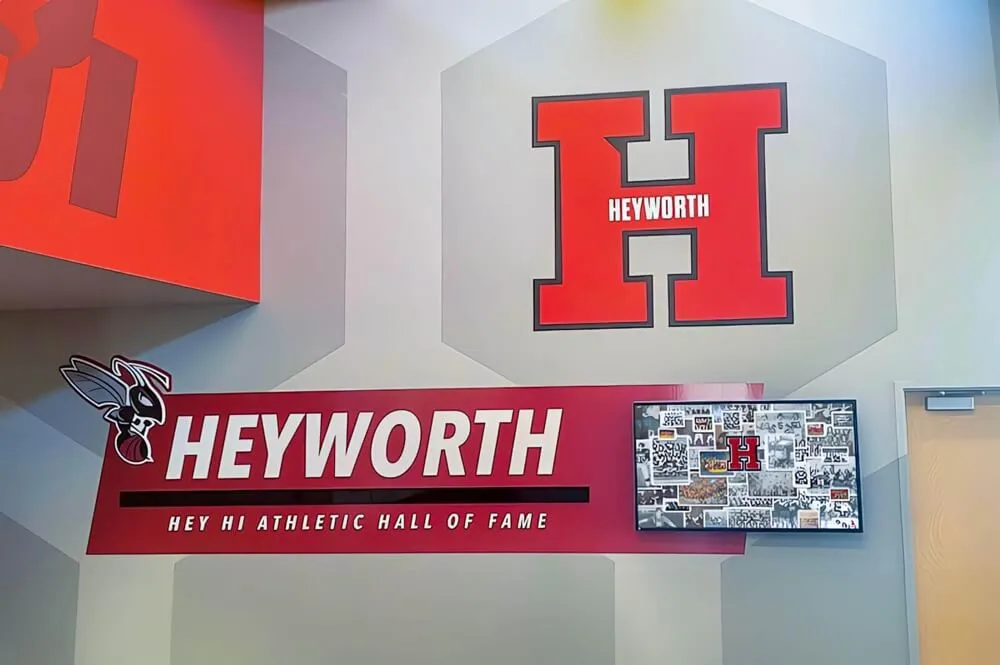
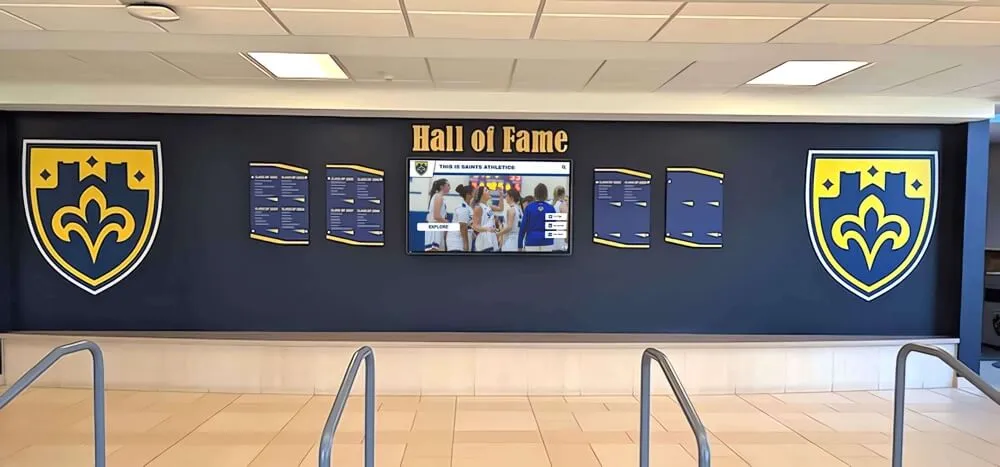
Many organizations successfully combine physical and digital recognition elements, satisfying stakeholders valuing tangible displays while embracing digital capabilities expanding recognition reach and depth. Traditional elements might include prominent nameplate walls for recent honorees, trophy cases displaying select awards, or naming opportunities for highest distinctions—alongside digital displays providing expanded content, historical depth, unlimited capacity, and interactive exploration.
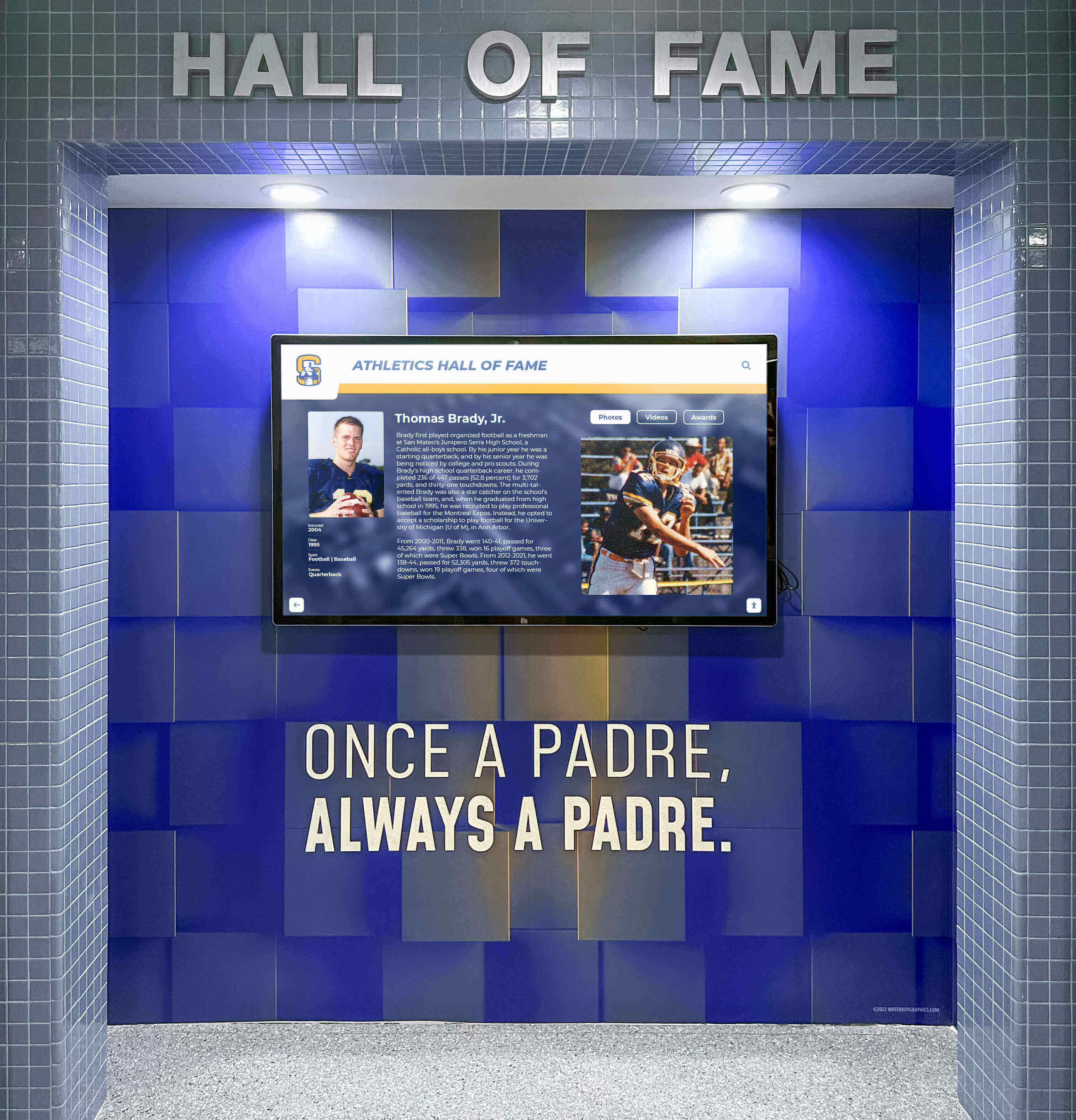
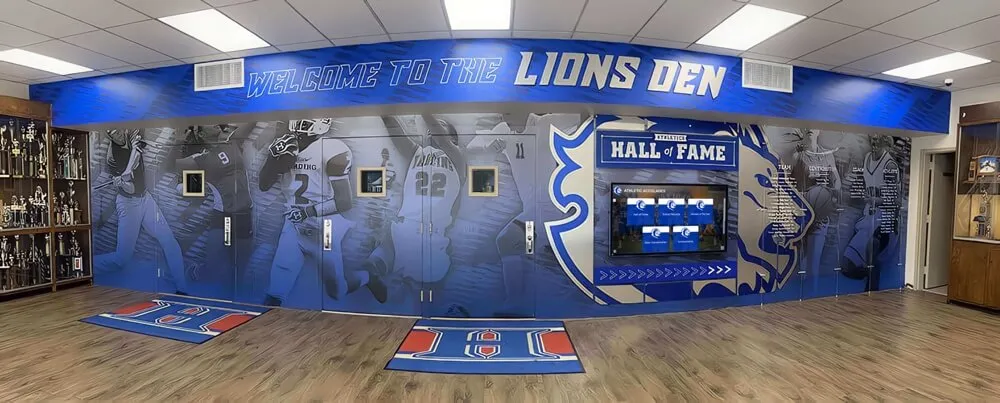
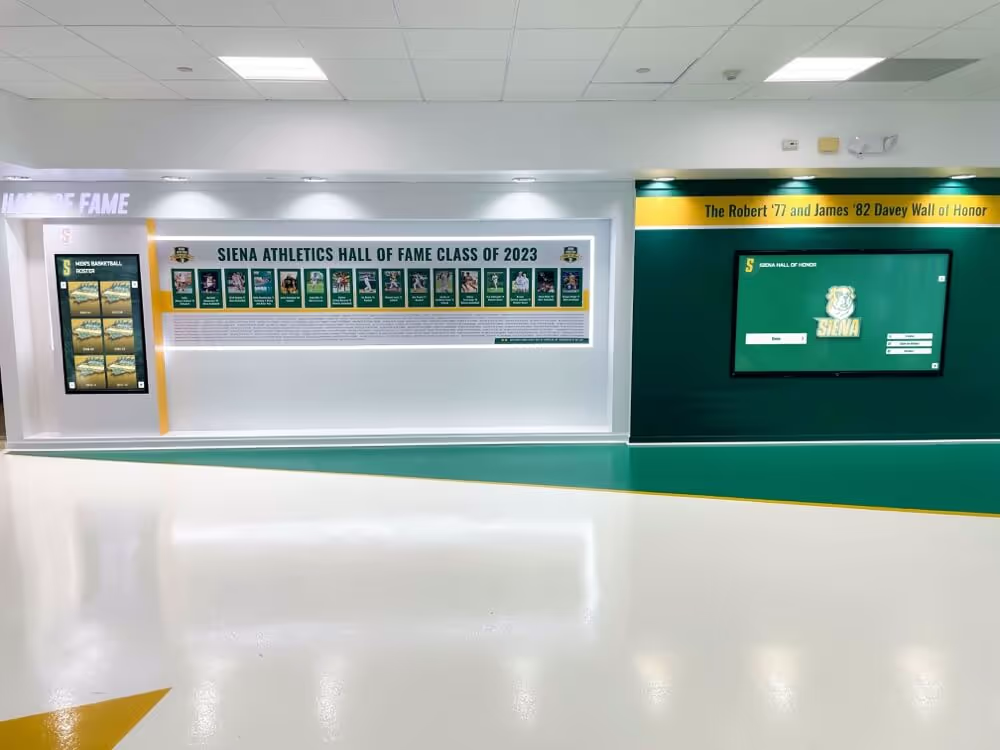
Hybrid approaches honor tradition while addressing practical constraints. Organizations position digital displays adjacent to traditional recognition, creating seamless transitions where physical plaques introduce honorees while interactive screens enable detailed profile exploration. This integration leverages complementary strengths rather than forcing either/or choices between formats that different stakeholder groups prefer for valid reasons.
Budget-conscious organizations often implement phased approaches beginning with traditional recognition in primary locations alongside pilot digital systems in secondary spaces. Demonstrated digital effectiveness through pilot programs builds support for broader implementation while managing initial investment and change management carefully.
Strategic Recognition Wall Placement and Design
Recognition display effectiveness depends substantially on location choices, visual design quality, and integration with workplace environments communicating organizational seriousness about appreciation.
High-Impact Location Selection
Recognition visibility requires strategic placement in locations receiving consistent employee and visitor traffic. Optimal locations include main building entrances capturing all daily arrival and departure traffic, elevator lobbies where employees wait with natural viewing time, cafeteria entrances passed during lunch and break periods, conference room corridors traveled by employees attending meetings, and reception areas visible to both employees and external visitors.
Avoid relegating recognition to remote locations requiring deliberate visits—lower-traffic areas dramatically reduce recognition visibility and impact while signaling that acknowledgment holds minimal organizational priority despite stated appreciation rhetoric. Prime real estate allocation demonstrates genuine recognition commitment while maximizing employee exposure to celebrated achievements creating sustained cultural influence through repeated visibility.
Organizations operating multiple facilities should implement recognition presence across all significant locations rather than concentrating displays exclusively at headquarters. Distributed recognition ensures employees at all sites experience appreciation visibility, preventing perceptions that only headquarters employees receive meaningful acknowledgment while satellite locations remain afterthoughts in organizational culture.
Visual Design and Brand Integration
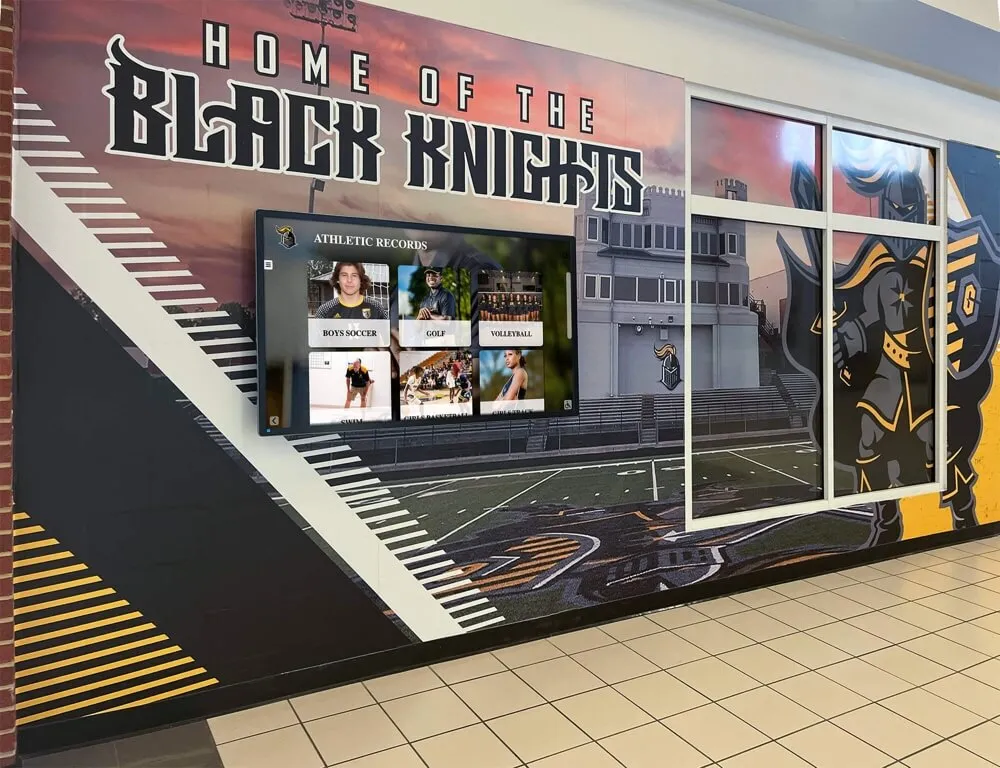
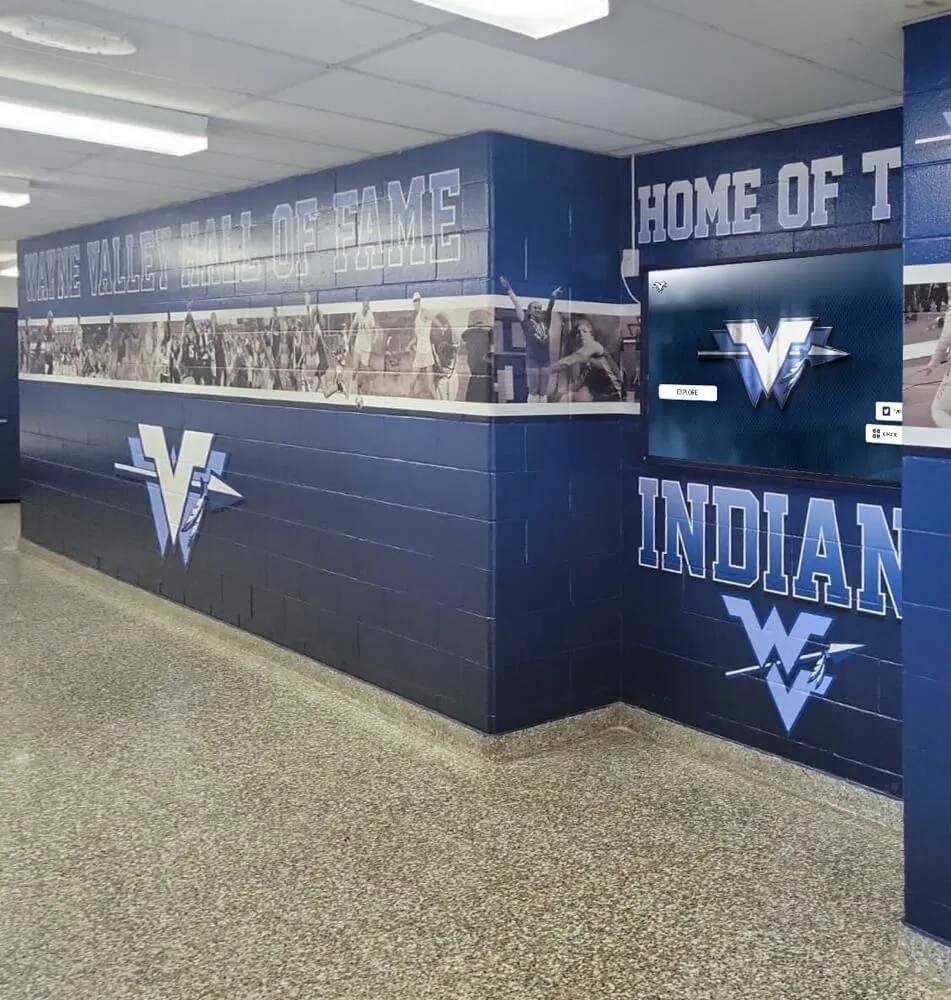
Recognition displays should align with organizational branding, architectural style, and workplace aesthetics rather than appearing as afterthought additions disconnected from environmental design. Design considerations include color schemes matching corporate identity and workplace palette, typography aligning with organizational visual standards, graphic elements reinforcing brand recognition, material selections complementing surrounding architecture, and integration approaches creating cohesive appearances rather than obvious add-ons.
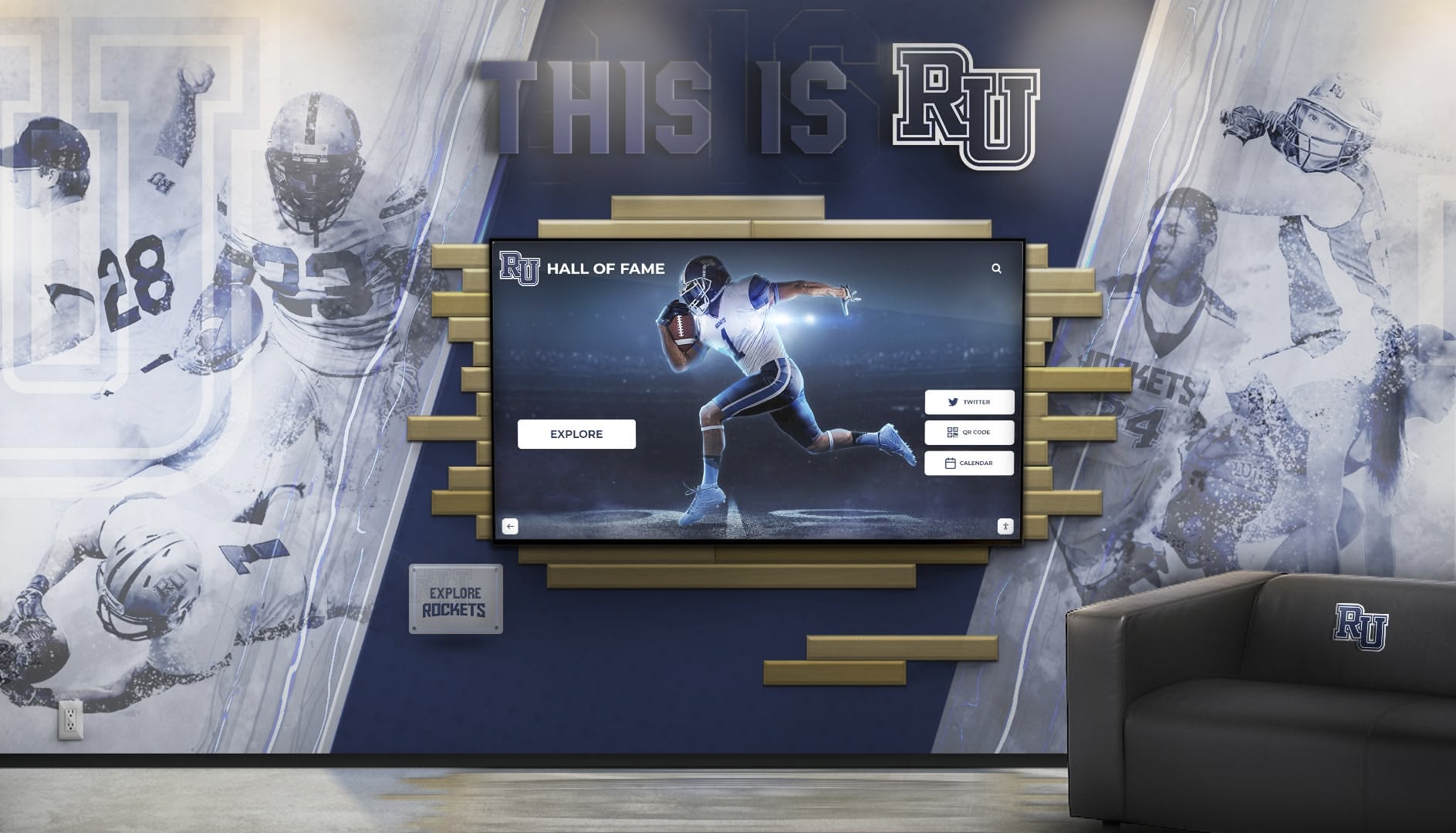
Professional design creates recognition displays that enhance rather than detract from workplace environments. Well-designed systems feel like intentional architectural elements reflecting organizational sophistication rather than amateur installations suggesting minimal investment or care. Organizations lacking internal design expertise should engage professionals experienced with corporate recognition installations who understand how to create systems balancing professional aesthetics with functional recognition requirements.
Display design should accommodate organizational growth and evolution—modular systems that expand as recognition needs increase, flexible content structures supporting varied achievement categories, and technology architectures allowing feature enhancements as organizational requirements develop over time. Forward-looking design prevents premature obsolescence requiring complete replacement when predictable needs emerge.
Accessibility and Inclusive Design
Recognition systems must accommodate all employees regardless of physical abilities, ensuring equitable access to viewing and exploring recognition content. Accessibility requirements include mounting heights appropriate for wheelchair users, adequate clear space in front of displays for mobility device maneuvering, adjustable text sizing for vision-impaired users, high-contrast display modes improving readability, audio capabilities for blind or low-vision employees, and alternative input methods beyond touchscreen interaction for users with limited dexterity.
The Americans with Disabilities Act establishes legal requirements for workplace accessibility that recognition installations must meet. Beyond legal compliance, inclusive design demonstrates organizational commitment to equitable employee experience and prevents recognition systems from inadvertently excluding team members who should experience appreciation equally regardless of physical capabilities or assistive technology needs.
Recognition Content Development and Management
Sustainable recognition programs require systematic content creation, regular updates, and quality standards maintaining professional presentation that honors employees appropriately.
Professional Photography and Visual Excellence
Recognition impact depends substantially on visual quality—professional photography creates polished presentations honoring employees appropriately while amateur snapshots undermine recognition professionalism. Organizations should establish photography standards including professional headshot sessions for formal recognition, consistent backgrounds and lighting creating uniform appearance, high-resolution image capture ensuring quality display at large sizes, appropriate attire guidelines maintaining workplace standards, and optional action photography showing employees in authentic work contexts.
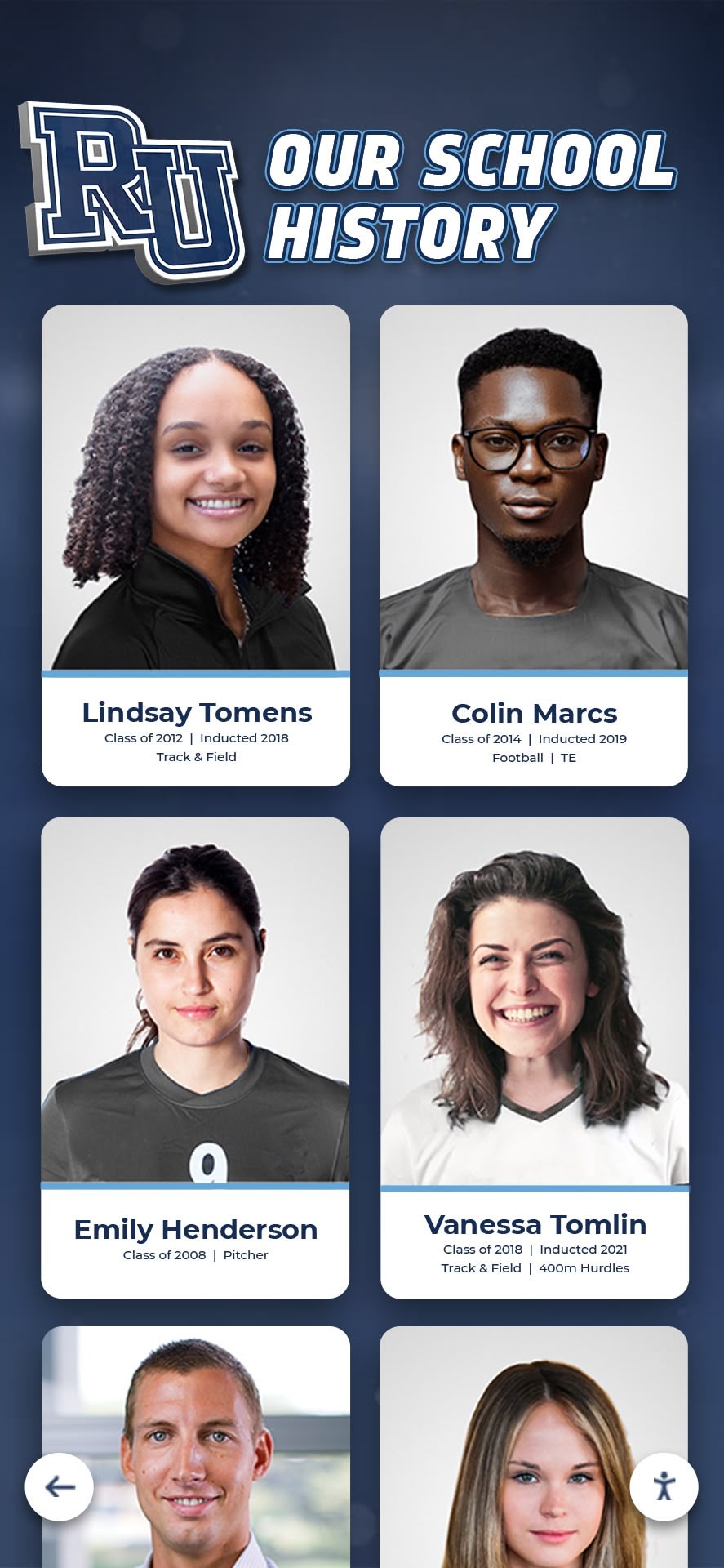
Some organizations schedule annual recognition photo sessions ensuring current, high-quality images for all employees. Others engage professional photographers for quarterly sessions as recognition needs arise. Investment in quality photography pays dividends through professional presentations reflecting positively on organizational standards while demonstrating that employee recognition merits thoughtful production values rather than hasty smartphone snapshots.
Digital platforms designed for recognition typically include image optimization features automatically adjusting uploaded photos for optimal display quality, supporting various image formats, and providing cropping tools ensuring consistent presentation without requiring advanced technical skills from administrators managing content.
Compelling Achievement Narratives
Recognition effectiveness increases dramatically when detailed context explains why individuals received acknowledgment rather than simply listing names and titles. Comprehensive recognition profiles include specific achievement descriptions explaining what individuals accomplished, quantifiable results demonstrating impact when possible, team context describing collaboration required, challenges overcome highlighting exceptional effort, and personal reflections from recognized employees sharing achievement perspectives.
Narrative content transforms recognition from abstract acknowledgment into meaningful storytelling that colleagues can understand, appreciate, and potentially emulate. When employees read detailed descriptions explaining how colleagues achieved recognition, they gain insights into behaviors and approaches they might adopt in their own work, creating learning opportunities alongside appreciation.
Recognition content should maintain appropriate professional tone while feeling authentic and personal. Overly formal corporate language creates distant acknowledgment lacking emotional resonance, while excessively casual approaches may undermine recognition seriousness. The goal creates warm, genuine appreciation expressed through clear, specific detail rather than generic praise applicable to anyone.
Organizations implementing academic recognition best practices can adapt proven approaches from educational environments to corporate contexts, leveraging decades of recognition expertise from institutions excelling at meaningful acknowledgment.
Regular Updates and Content Currency
Recognition impact diminishes when displays become outdated, suggesting programs lack sufficient organizational importance for regular maintenance attention. Establishing update schedules ensures recognition remains current through immediate recognition additions within days of achievements, quarterly content reviews ensuring accuracy and relevance, annual comprehensive audits confirming all recognized employees remain accurately represented, and prompt updates when employment circumstances change requiring recognition modifications.
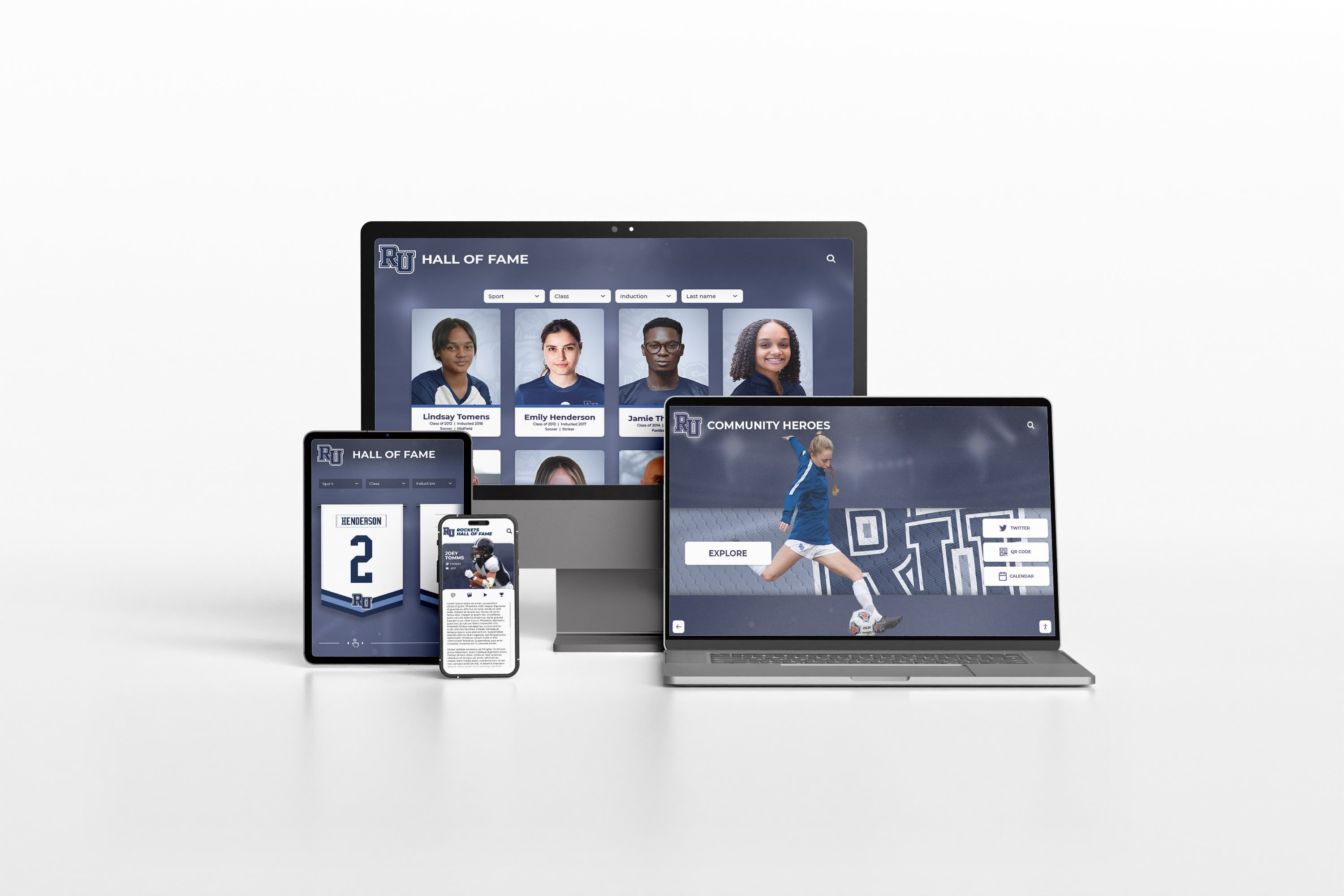
Digital recognition platforms dramatically simplify update processes compared to physical displays requiring contractors, materials ordering, and installation scheduling. Content updates to digital systems occur remotely from any internet-connected device in minutes rather than requiring weeks or months for physical installations. This efficiency difference determines whether recognition remains current or gradually becomes outdated through update friction preventing timely maintenance.
Organizations should designate specific individuals responsible for recognition content management, providing clear expectations, protected time allocation, and accountability ensuring consistent attention. Recognition programs depending on whenever-someone-finds-time maintenance inevitably decline as other priorities consume attention from busy administrative personnel juggling multiple competing responsibilities.
Overcoming Recognition Program Challenges
Even well-designed recognition initiatives encounter predictable obstacles requiring proactive management strategies addressing common implementation difficulties.
Challenge: Recognition Feels Exclusive Rather Than Aspirational
When identical employees receive multiple awards repeatedly while most team members never experience recognition, programs risk creating discouragement rather than motivation for broader populations perceiving acknowledgment as impossible to achieve based on observed patterns.
Solutions: Establish diverse recognition categories spanning achievement types and contribution levels accessible to employees with varied strengths and roles. Implement recognition limits preventing individual domination ensuring broader distribution. Create tiered acknowledgment systems recognizing various performance levels rather than all-or-nothing approaches. Develop improvement-based categories explicitly accessible to employees at different baselines. Monitor distribution patterns proactively addressing concentration that undermines inclusive program intentions.
Recognition should balance honoring exceptional achievement with creating realistic pathways enabling varied employees to experience acknowledgment through different excellence forms. Programs successfully engaging broad employee populations typically recognize 30-50% of workforces annually through various categories, contrasting with exclusive systems honoring only top 5-10% creating perceptions that recognition remains unreachable for most team members.
Challenge: Remote Workers Feel Excluded From Recognition
Physical recognition displays in main offices provide minimal value for remote and hybrid employees who rarely visit facilities, potentially creating inequitable recognition experiences based on work location rather than contribution quality.
Solutions: Implement web-based recognition platforms providing universal access regardless of location. Develop communication strategies actively promoting recognition to remote employees through emails, team meetings, and collaboration platforms. Ensure remote workers receive equitable consideration in recognition selection processes avoiding proximity bias favoring in-office employees. Consider virtual recognition ceremonies complementing physical events. Create recognition program materials specifically addressing remote employee inclusion rather than assuming physical display visibility alone suffices.
Organizations employing significant remote workforces might prioritize digital-first recognition strategies emphasizing web accessibility and mobile responsiveness as primary delivery mechanisms, treating physical displays as supplementary elements serving office-based employees rather than sole recognition presentations.
Research from birthday recognition programs demonstrates that remote employees experiencing equitable recognition visibility report significantly higher engagement and organizational connection compared to remote workers perceiving recognition as primarily benefiting office-based colleagues.
Challenge: Maintaining Content Currency and Relevance
Recognition displays quickly lose impact when content becomes outdated, suggesting programs lack sufficient organizational priority for regular maintenance attention that keeps acknowledgment current and relevant.
Solutions: Digital platforms dramatically reduce update friction compared to physical displays requiring contractors and installation scheduling. Establish clear update responsibilities with designated administrators and protected time allocation. Implement content review calendars ensuring regular attention. Choose platforms providing intuitive content management enabling quick updates without technical expertise requirements. Automate routine content updates when possible through system integrations or scheduled processes reducing manual intervention requirements.
Organizations should realistically assess available administrative capacity when selecting recognition approaches. Sophisticated systems requiring extensive manual management often fail sustainably operating not because of system quality but because ongoing demands exceed realistic staff availability given competing responsibilities. Simpler systems receiving consistent attention often outperform feature-rich platforms lacking regular maintenance that quickly becomes outdated and ineffective.
Challenge: Budget Constraints Limiting Recognition Investment
Organizations often struggle justifying recognition investments against competing budget priorities, particularly when recognition feels like optional employee relations expense rather than strategic talent management investment delivering measurable returns.
Solutions: Document recognition program business cases quantifying impacts on retention, productivity, and engagement supported by research demonstrating recognition return on investment through reduced turnover costs alone. Phase implementations beginning with pilot programs demonstrating value before requesting broader investment. Position recognition as infrastructure investment supporting culture and retention rather than discretionary nice-to-have expense. Consider modest initial implementations that can expand as demonstrated value justifies additional investment through measurable outcomes.
Recognition investments compete with numerous organizational priorities. Compelling business cases supported by retention costs, engagement research, and competitive talent market realities help secure appropriate funding by demonstrating strategic value rather than positioning recognition as employee relations nicety without clear business justification.
Measuring Recognition Wall Effectiveness
Evidence-based program management requires measuring recognition impacts on intended outcomes including employee satisfaction, retention, and engagement through systematic assessment approaches.
Employee Engagement Metrics
Recognition programs should demonstrate measurable effects on employee engagement assessed through regular employee surveys including specific recognition questions, participation rates in voluntary programs, recognition content interaction analytics for digital systems, social sharing indicating organic program promotion, and qualitative feedback revealing how recognition affects employee experiences and organizational perceptions.

Organizations implementing robust employee engagement surveys can incorporate recognition-specific questions measuring awareness of recognition programs, perceptions of recognition fairness and transparency, understanding of how employees qualify for acknowledgment, satisfaction with recognition frequency and quality, and beliefs about whether recognition affects personal motivation and effort investment.
Digital recognition platforms provide comprehensive analytics impossible with physical displays including unique visitor counts showing how many employees view recognition, session duration revealing engagement depth, popular content indicating which recognition generates most interest, search patterns showing what employees explore, and return visitor rates measuring sustained engagement over time beyond initial novelty.
Retention and Turnover Analysis
Recognition aims to improve employee retention by strengthening organizational attachment and demonstrating appreciation translating into increased loyalty. Organizations should monitor turnover rates among recognized employees compared to general populations, tenure distributions showing whether recognition correlates with long-term employment, exit interview data revealing whether recognition absence contributed to departure decisions, and retention rates following recognition program implementations providing before-after comparisons.
Direct causation proves difficult establishing conclusively given numerous factors affecting retention decisions. However, correlation analysis reveals whether recognition programs associate with desired retention outcomes, supporting continued program investment and refinement. Multiple studies document that recognized employees demonstrate significantly lower turnover rates than unrecognized colleagues—research indicates approximately 20-30% lower turnover among employees receiving regular meaningful recognition.
Organizations implementing comprehensive programs often discover that teacher appreciation approaches from educational environments translate effectively to corporate contexts when adapted appropriately for workplace cultural norms and professional expectations.
Recognition Distribution Equity Analysis
Fair recognition distribution across organizational populations proves essential for program credibility and effectiveness. Regular analysis should examine recognition patterns across departments ensuring proportional acknowledgment, location distributions for multi-site organizations, demographic patterns identifying potential bias, seniority levels verifying recognition reaches all experience levels, and role types confirming recognition extends beyond obvious categories like sales.
Systematic distribution analysis identifies unintended recognition gaps requiring program adjustments. If analysis reveals certain departments rarely receive recognition despite strong performance, organizations might establish department-specific recognition categories or educate managers about nomination processes. Demographic imbalances might indicate bias in selection requiring corrective process changes ensuring equitable consideration.
Transparent equity analysis demonstrates organizational commitment to fair recognition while identifying improvement opportunities preventing acknowledgment from inadvertently reinforcing existing organizational imbalances rather than celebrating excellence broadly across all employee populations.
Building Recognition Cultures That Sustain Excellence
Effective employee recognition walls share fundamental characteristics distinguishing genuinely impactful systems from token acknowledgment generating minimal motivation: diverse categories celebrating varied contribution types ensuring all employees see potential pathways to acknowledgment, transparent criteria applied consistently ensuring fairness perceptions critical for program credibility, engaging presentation formats resonating with contemporary employee expectations, regular updates maintaining currency and relevance demonstrating sustained organizational commitment, authentic acknowledgment with specific accomplishment details rather than generic praise, accessible design ensuring all employees can experience recognition equitably regardless of location or physical capabilities, visible leadership commitment demonstrating executive support through active participation, integration with broader talent management connecting recognition to organizational culture deliberately, evidence-based management assessing effectiveness and guiding continuous improvements, and sustained institutional commitment across leadership changes preventing program abandonment during transitions.
When organizations invest thoughtfully in comprehensive recognition programs aligned with these principles, returns prove substantial: measurably improved employee satisfaction and engagement reflected in survey results, reduced turnover saving significant replacement costs that quickly justify program investments, stronger organizational cultures aligned with stated values through visible behavioral reinforcement, enhanced employer brands attracting top talent increasingly selective about workplace cultures, increased productivity through motivated workforces understanding their contributions receive meaningful acknowledgment, and most importantly employees feeling genuinely valued for contributions rather than viewing themselves as interchangeable resources easily replaced.
Ready to transform how your organization celebrates team excellence? Modern recognition solutions provide capabilities impossible with traditional approaches—unlimited capacity accommodating growing teams without space constraints forcing impossible choices, instant updates maintaining current recognition without installation delays undermining timeliness, rich multimedia content honoring employees comprehensively through detailed storytelling, universal accessibility serving all employees equitably regardless of location or work arrangements, and proven approaches helping organizations build appreciation cultures that attract, motivate, and retain exceptional talent in competitive employment markets.
Your team achieves remarkable accomplishments daily across performance excellence, innovation, collaboration, service commitment, and sustained dedication. Recognition walls ensure these contributions receive acknowledgment that inspires continued excellence, reinforces organizational values authentically, builds workplace community and identity, creates lasting appreciation records preserving institutional memory, and establishes environments where employees feel authentically valued for work that matters to collective success.
Employee recognition represents far more than workplace decoration or feel-good initiatives—it’s fundamental infrastructure supporting organizational culture, talent retention, and team motivation with measurable impacts on business outcomes. When recognition celebrates diverse excellence through engaging accessible systems maintained sustainably over time, organizations create environments where achievement flourishes and every contributor’s efforts receive acknowledgment they genuinely deserve.
Book a demo with Rocket Alumni Solutions to discover how modern recognition platforms can transform your organization’s approach to celebrating employee excellence through comprehensive systems that honor achievement, inspire continued contribution, and strengthen workplace culture across your entire team.