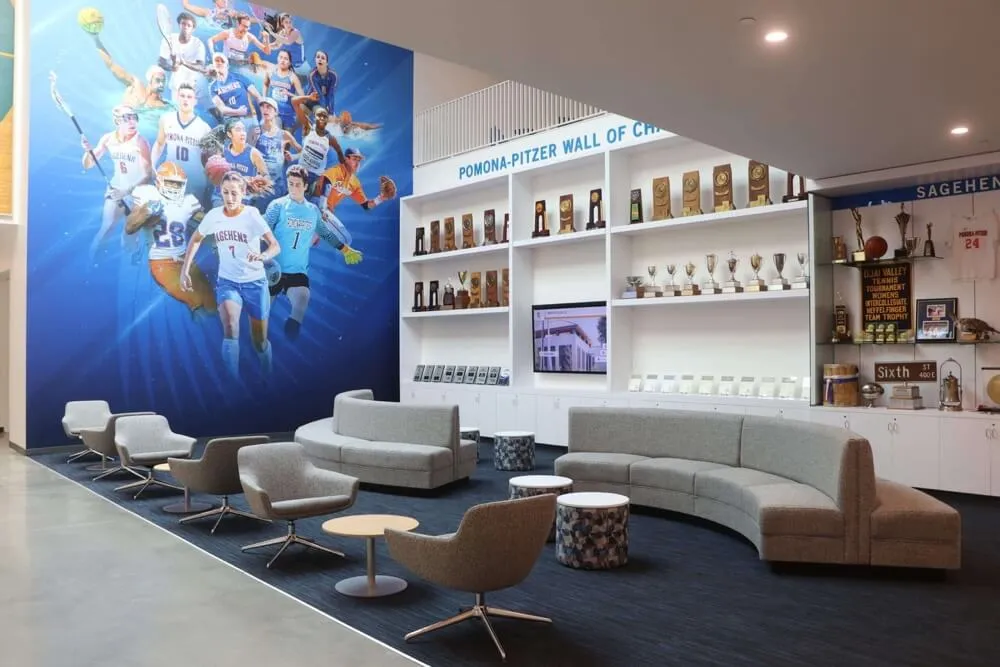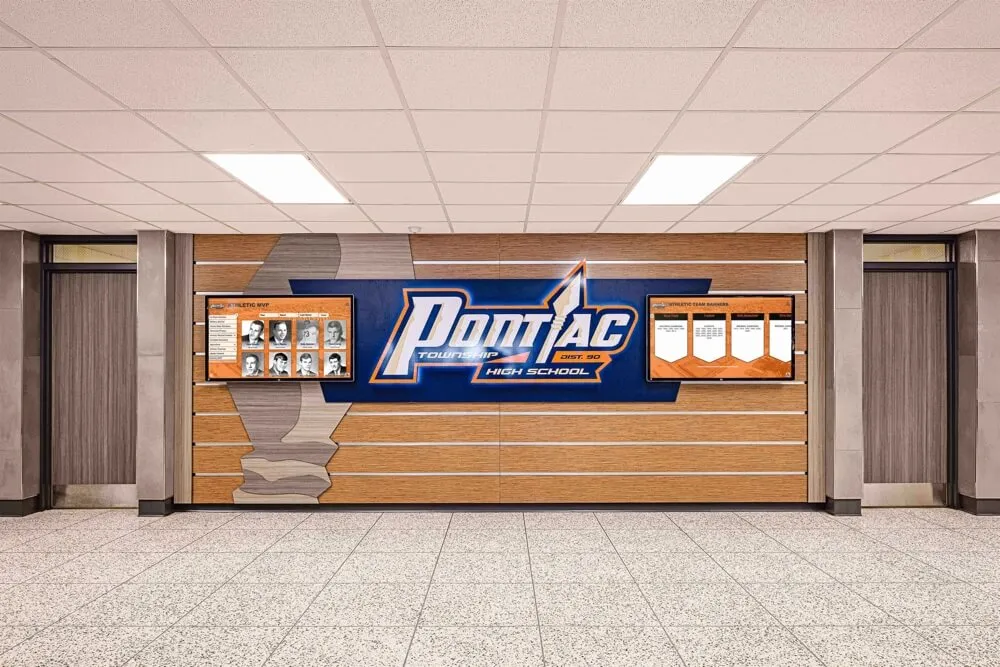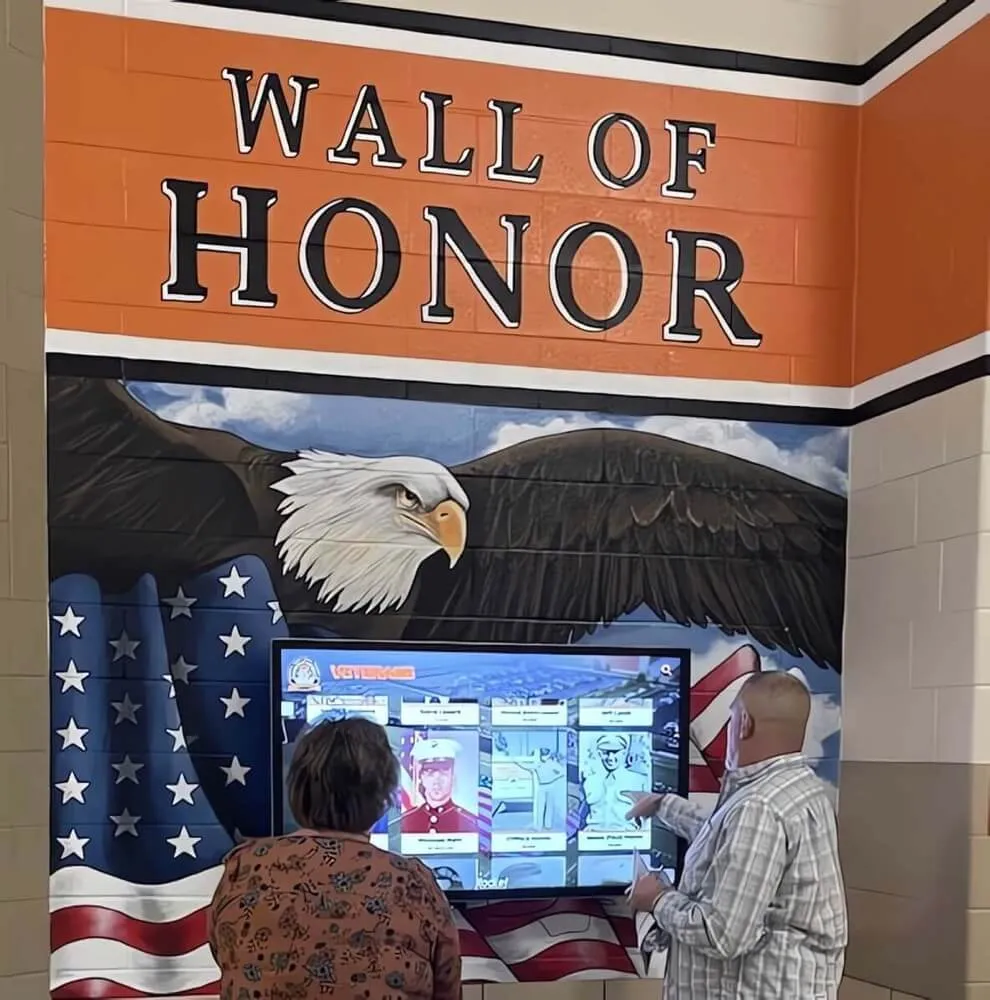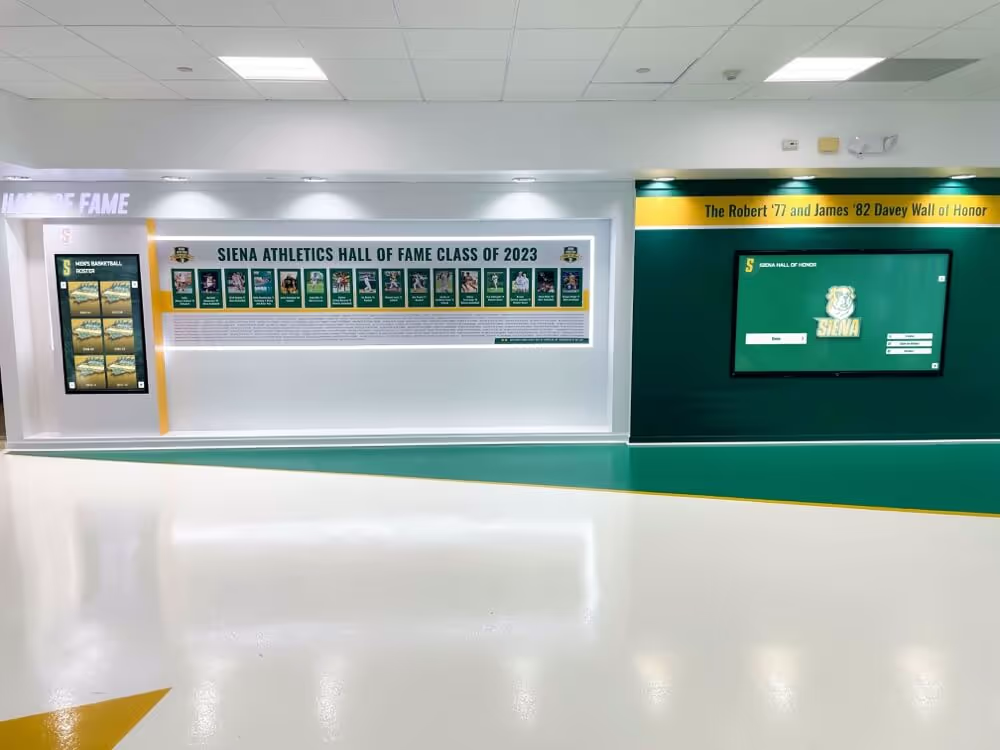




Employee recognition walls transform workplace culture by making achievement visible, celebrating contributions publicly, and inspiring continued excellence. Organizations investing in recognition systems report measurable improvements in employee satisfaction, retention rates, and overall engagement. Yet many businesses struggle with recognition displays that quickly become outdated, fail to accommodate growing teams, or simply lack the impact needed to truly motivate and inspire. The difference between effective recognition and token acknowledgment often comes down to implementation approach—combining thoughtful design, sustainable technology, and genuine commitment to honoring employee contributions.
Whether your organization occupies a corporate headquarters, regional office, manufacturing facility, healthcare center, or professional services firm, recognition walls serve as powerful cultural statements. They communicate organizational values, demonstrate appreciation for hard work, build team pride, and create environments where employees feel genuinely valued beyond their immediate job responsibilities. When employees walk through lobbies and see colleagues honored for achievements, they receive clear messages about what the organization celebrates and how individual contributions matter to collective success.
Modern Recognition Solutions for Today's Workplace
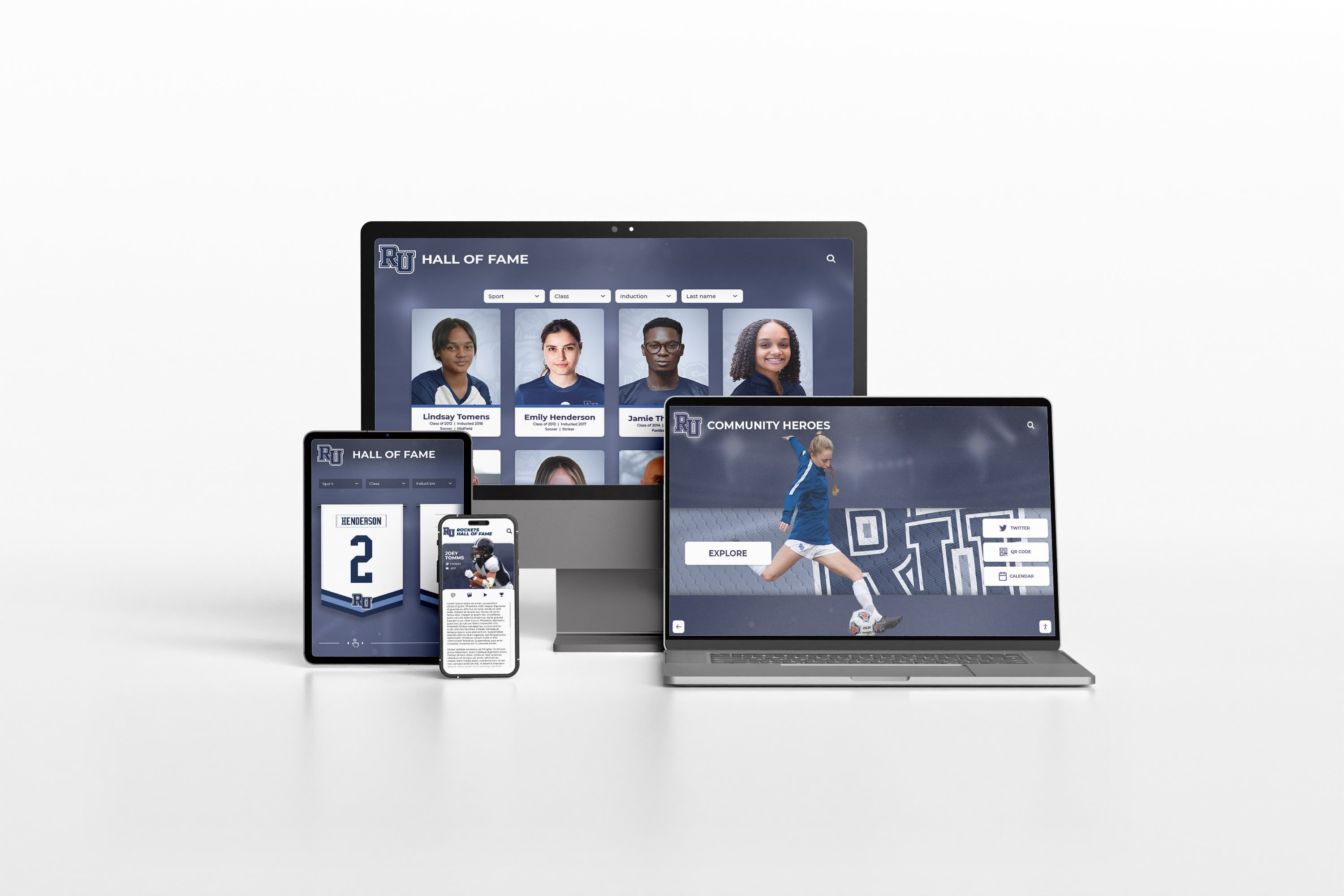
Traditional recognition walls using engraved plaques or printed certificates face inherent limitations—finite physical space restricting how many employees can be honored, manual update requirements consuming administrative time, inability to display rich content like photos or videos, and accessibility barriers preventing remote workers from experiencing recognition. Digital employee recognition displays eliminate these constraints by providing unlimited capacity for honorees, instant remote updates from any location, multimedia content including professional photos and achievement details, and web accessibility ensuring all employees can view recognition regardless of physical location. Solutions like Rocket Alumni Solutions offer platforms originally designed for educational recognition but increasingly adopted by forward-thinking organizations seeking sophisticated employee recognition capabilities that grow with teams and maintain engagement through interactive, always-current displays.
Understanding the Impact of Employee Recognition
Research consistently demonstrates that recognition significantly affects employee motivation, satisfaction, and retention. According to Gallup, employees who don’t feel adequately recognized are twice as likely to quit within the next year compared to those who feel appreciated. Recognition wall investments deliver tangible returns through reduced turnover costs, increased productivity, improved workplace morale, and stronger organizational culture aligned with stated values.
Recognition walls serve multiple organizational functions beyond simple acknowledgment. They create visible proof that achievement matters, provide social validation that motivates continued excellence, establish clear performance standards by showing what success looks like, build community pride through collective celebration, and preserve institutional memory documenting who contributed to organizational success over time.
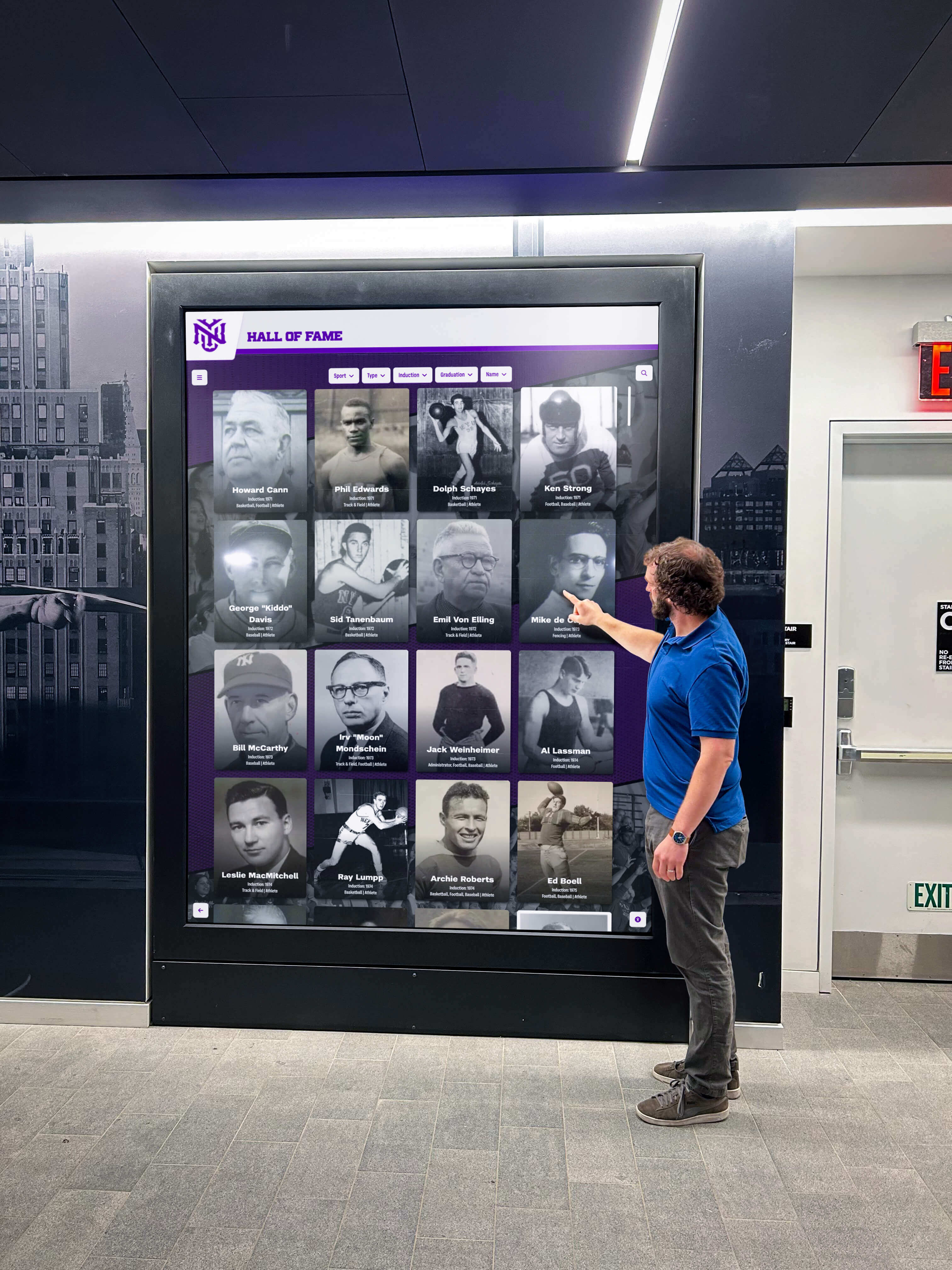
Effective recognition walls balance celebration with accessibility—honoring exceptional achievement while creating pathways enabling diverse employees to experience recognition through various contribution types. Recognition limited to identical top performers repeatedly creates discouragement rather than motivation for most team members who perceive acknowledgment as impossible to attain.
Traditional Employee Recognition Wall Approaches
Understanding conventional recognition methods provides context for evaluating modern alternatives that address inherent limitations.
Engraved Plaques and Name Plates
Physical plaques represent the traditional recognition standard—permanent, professional, and tangible. Organizations install bronze, brass, or acrylic plaques listing employee names, achievements, years of service, or award categories. These displays create formal recognition appropriate for corporate environments expecting professional presentation.
Traditional plaque systems face practical constraints affecting long-term effectiveness. Physical space limitations restrict recognition capacity—walls eventually fill completely, forcing organizations to choose between removing earlier honorees or stopping new recognition entirely. Installation requirements mean adding new plaques involves scheduling contractors, ordering materials, and waiting weeks or months between achievement and display. High per-unit costs discourage comprehensive recognition, leading organizations to honor only exceptional cases rather than celebrating broader contributions. Limited information capacity restricts plaques to names and dates without context explaining why individuals received recognition.
Despite limitations, traditional plaques offer advantages including tangible permanence creating psychological impact, no technology dependencies requiring maintenance, and alignment with formal corporate aesthetics in traditional industries. Organizations valuing these characteristics often combine physical recognition with digital donor recognition systems that provide richer content while maintaining physical presence for traditional appeal.
Printed Certificates and Photo Displays
Many organizations create recognition walls using framed certificates, employee photos, and printed materials mounted behind glass or in bulletin board displays. These approaches allow organizations to showcase achievements without expensive custom plaques while adding visual elements that help colleagues identify recognized employees.
Printed recognition displays require regular updating as paper fades, photos yellow, and mounting materials deteriorate over time. Maintenance demands increase as displays age, requiring someone to print new materials, update frames, and maintain visual consistency. Unlike digital systems where content updates happen remotely in minutes, physical displays need hands-on attention that often falls to busy administrative staff who struggle finding time for regular updates.
The visual appeal of printed displays degrades noticeably over time—sun exposure fades colors, adhesives fail causing materials to fall, and dust accumulation makes displays appear neglected rather than honored. Organizations frequently launch certificate walls with enthusiasm but struggle maintaining them long-term, resulting in outdated displays that undermine recognition intentions by suggesting the organization no longer values the program enough to keep it current.
Trophy Cases and Award Displays
Organizations with significant recognition traditions often install trophy cases displaying physical awards, commemorative plaques, and tangible recognition artifacts. These showcase spaces work well for displaying dimensional items like crystal awards, engraved trophies, or custom recognition pieces that benefit from three-dimensional presentation.
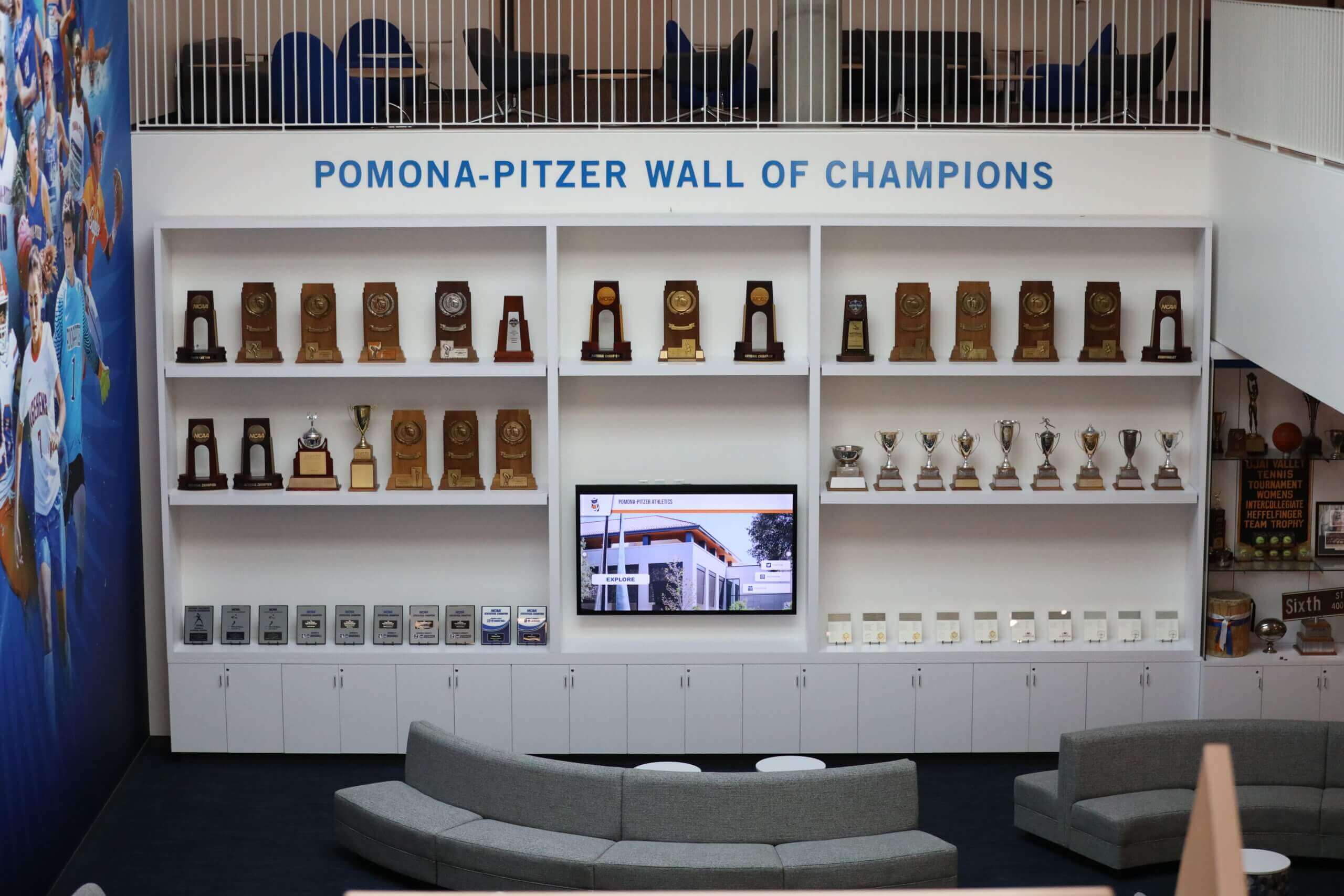
Trophy case displays require substantial floor or wall space, security considerations preventing theft, regular dusting and maintenance, and careful organization preventing cluttered appearances. They excel at displaying prestigious awards but lack capacity for comprehensive employee recognition reaching broader team populations. Most organizations use trophy cases for high-level recognition while needing complementary systems for regular employee appreciation and achievement acknowledgment.
Digital alternatives increasingly replace or supplement trophy cases by providing unlimited capacity without physical storage requirements. Organizations can photograph physical awards and display them digitally alongside recipient profiles, achievement descriptions, and comprehensive documentation creating richer recognition experiences than simple trophy presentation alone provides.
Modern Digital Recognition Wall Solutions
Digital recognition platforms eliminate traditional limitations while providing substantially enhanced capabilities transforming employee recognition from administrative task to engaging cultural program.
Interactive Touchscreen Displays
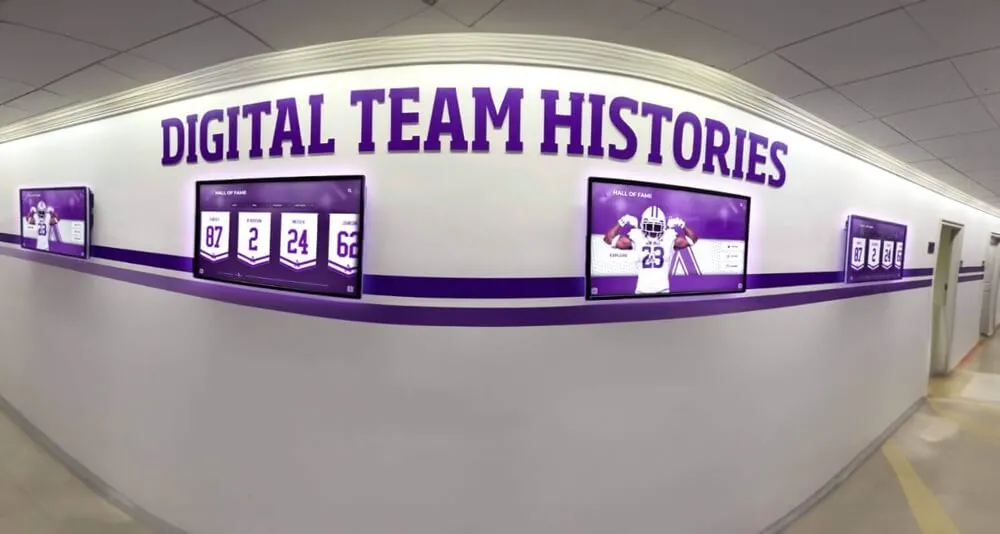
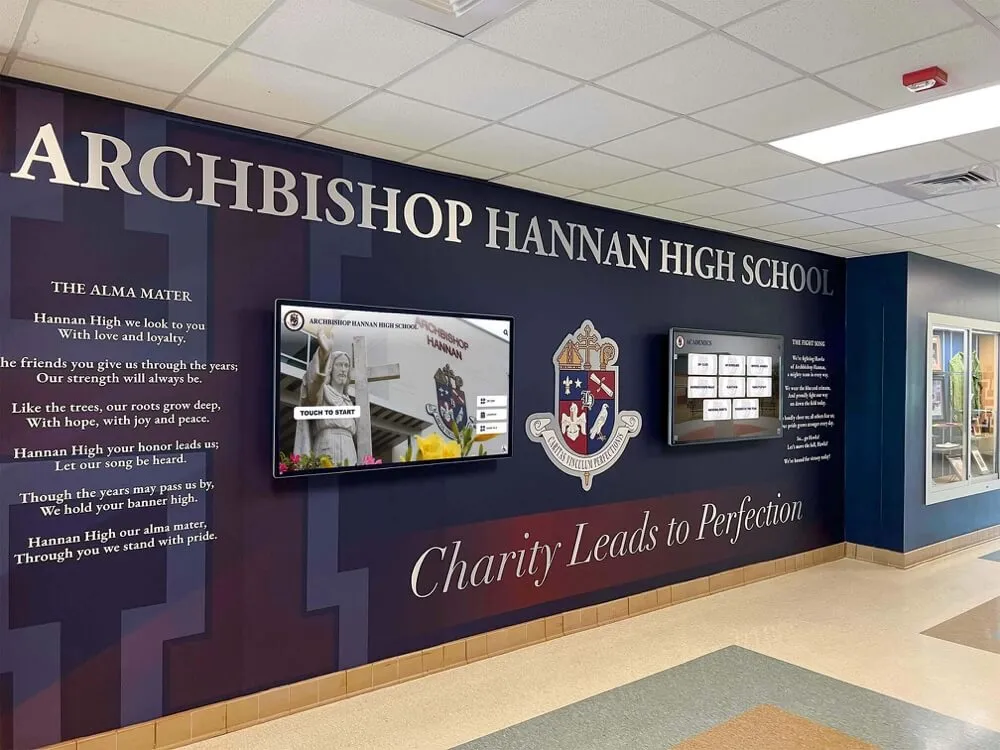
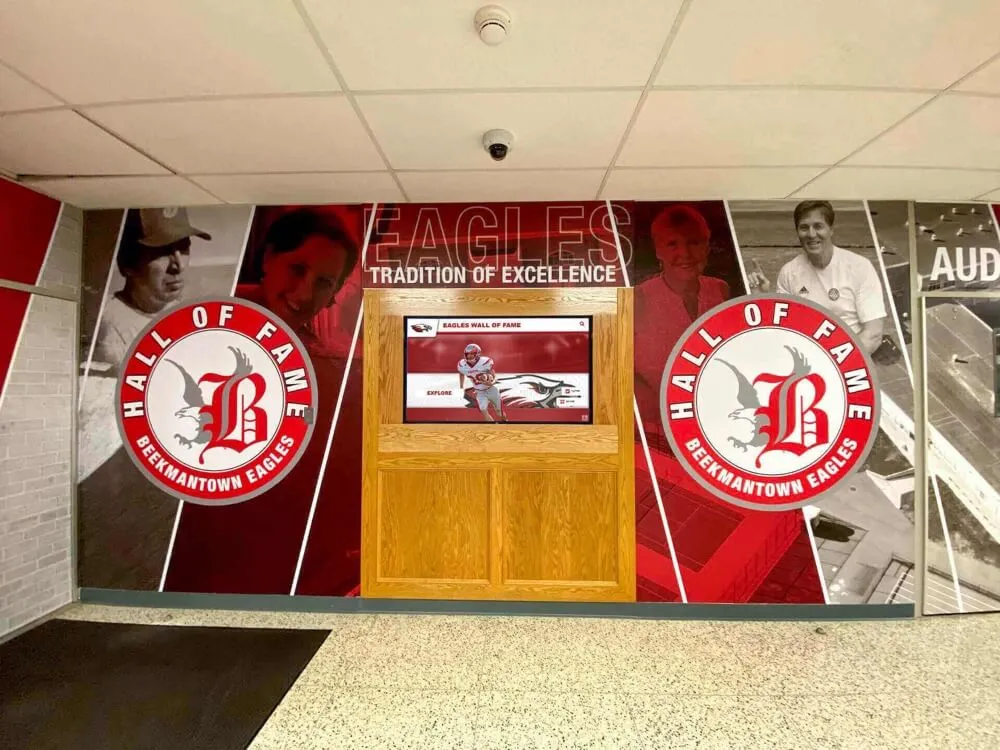
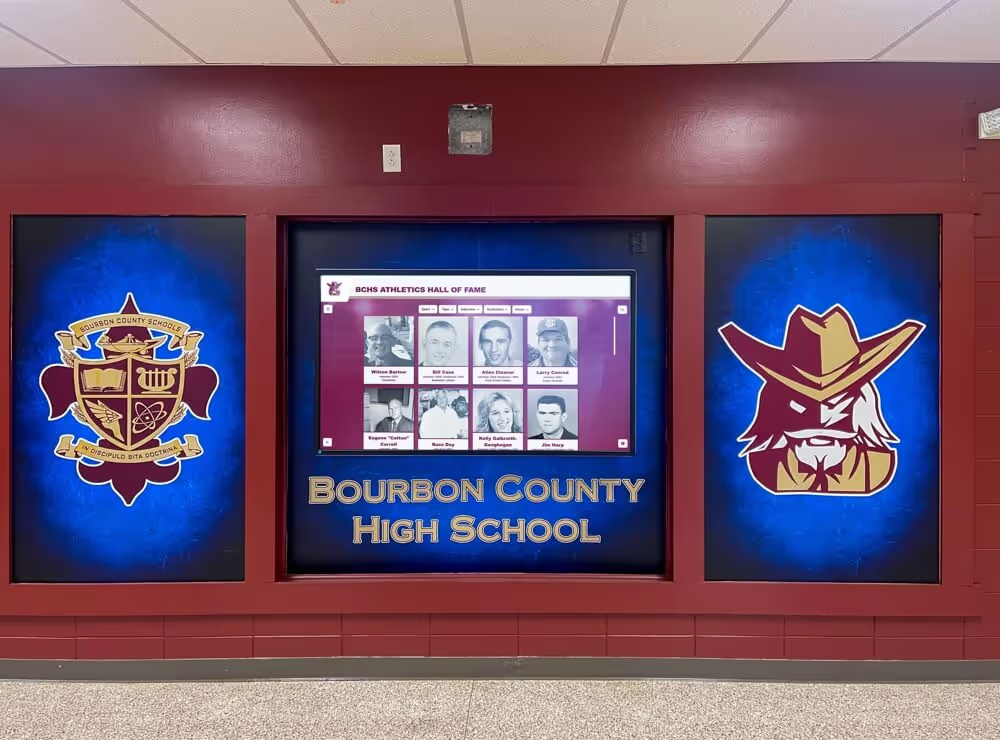
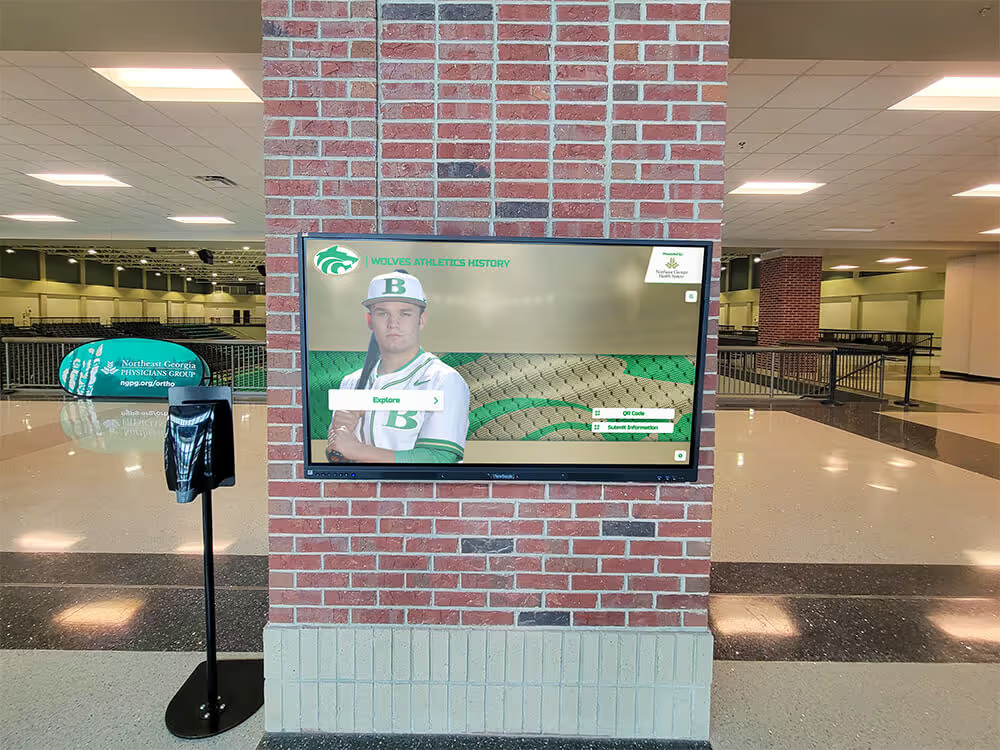
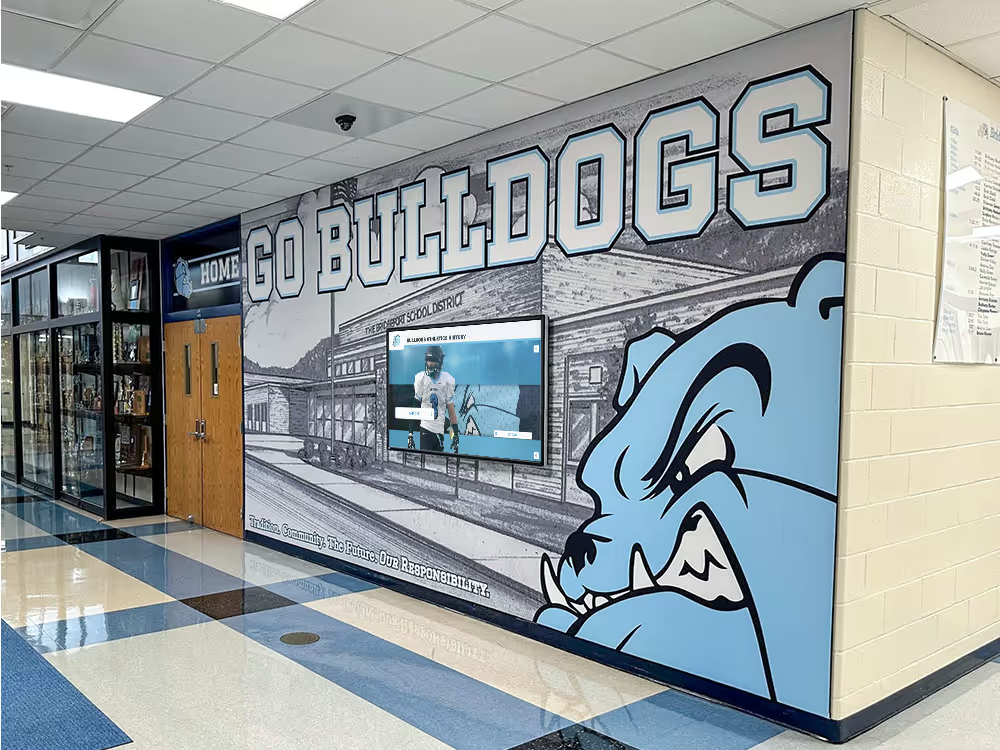
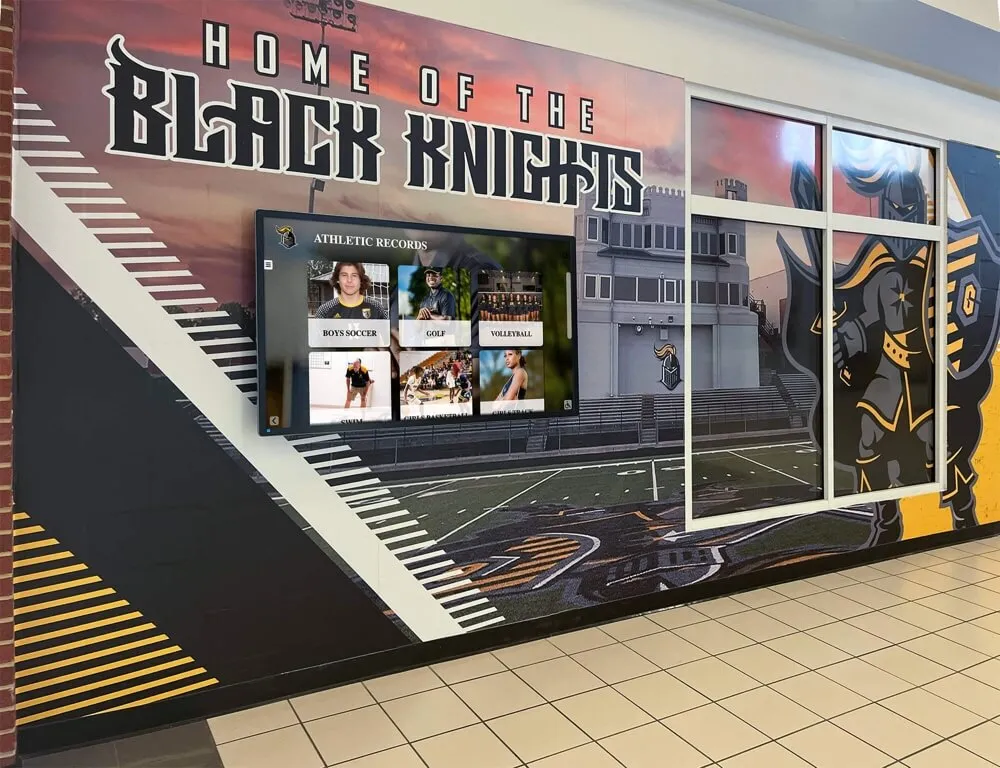
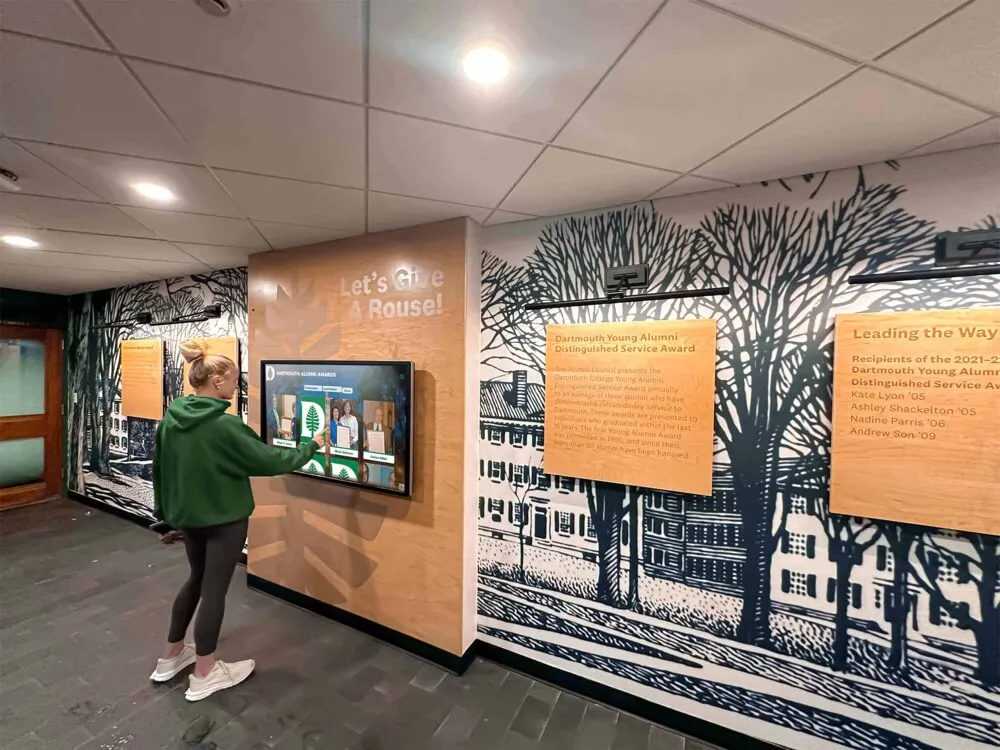
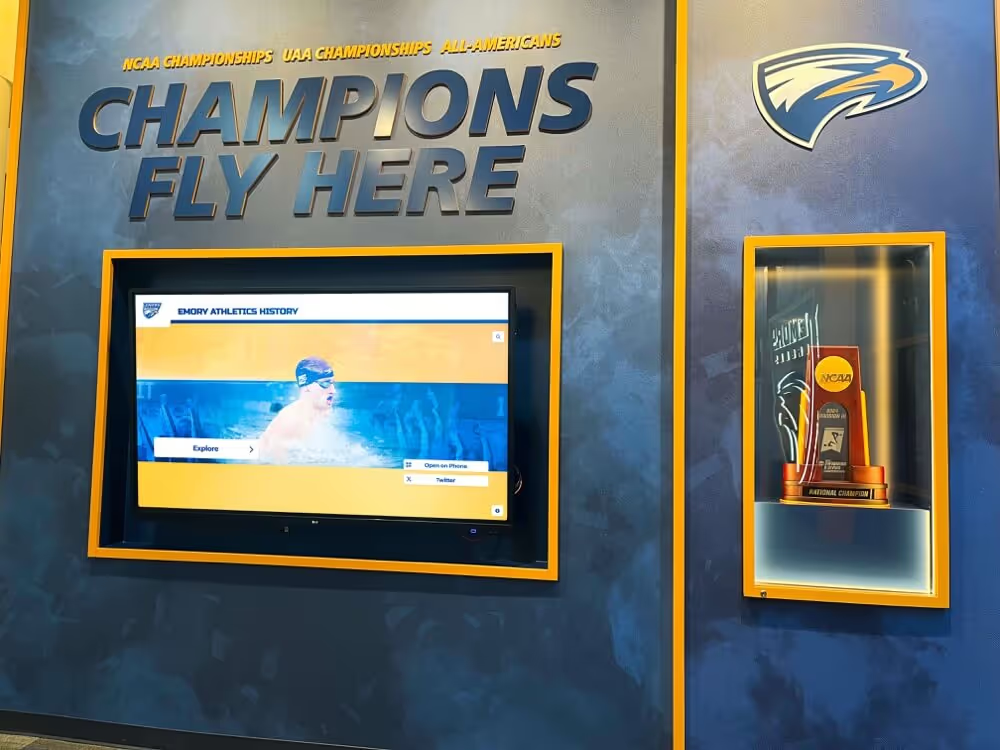
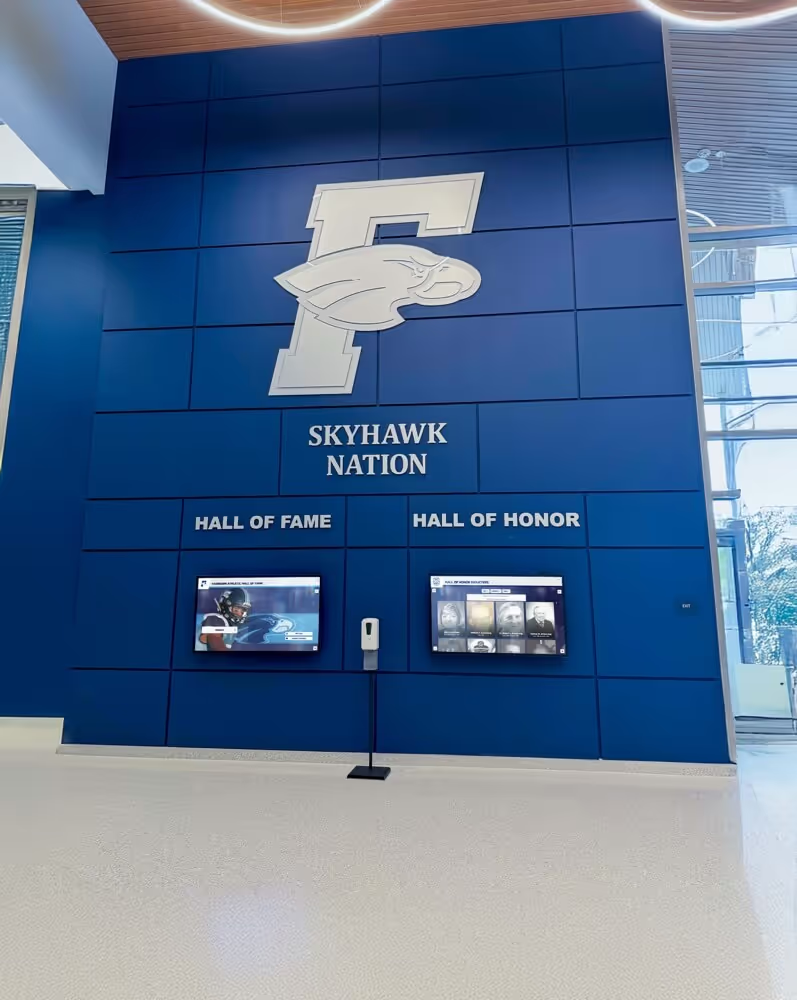
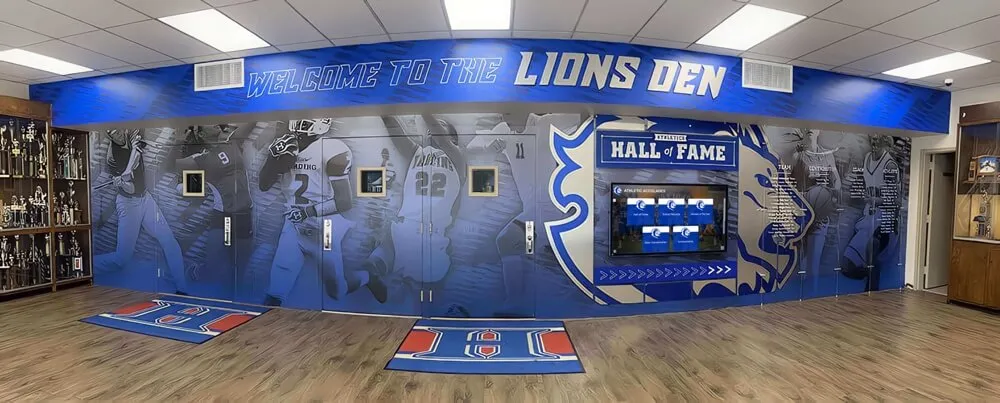
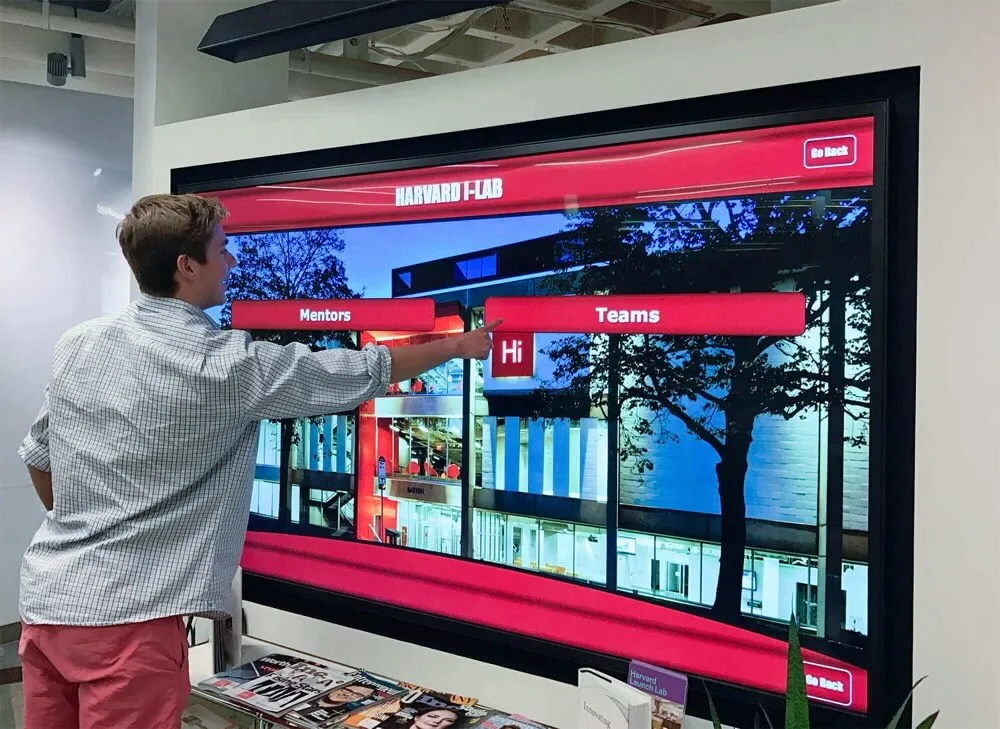
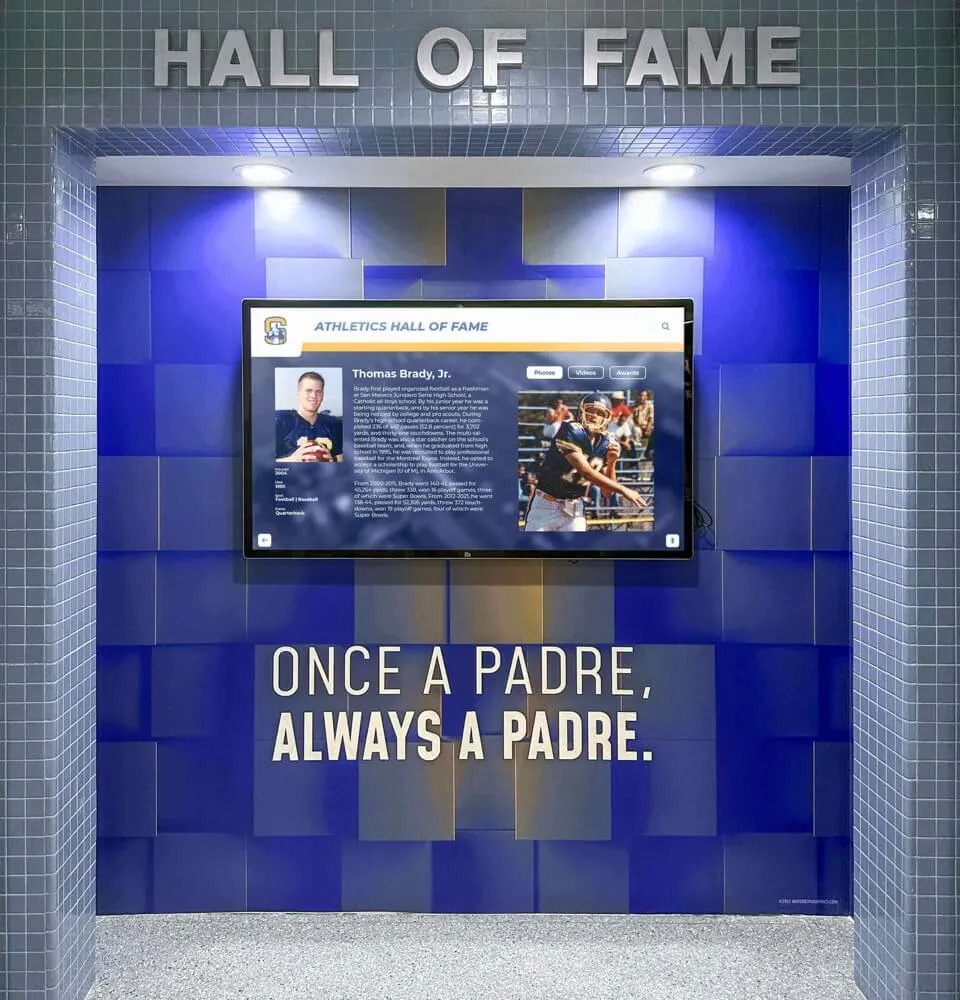
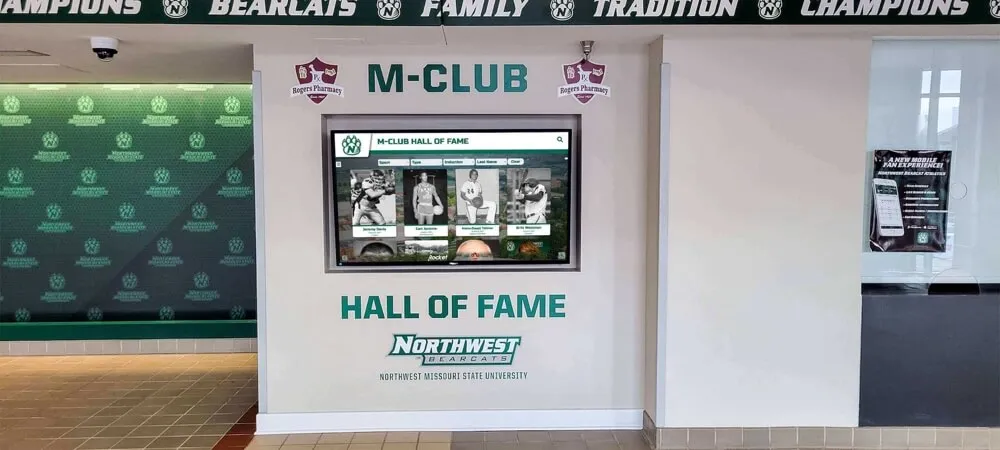
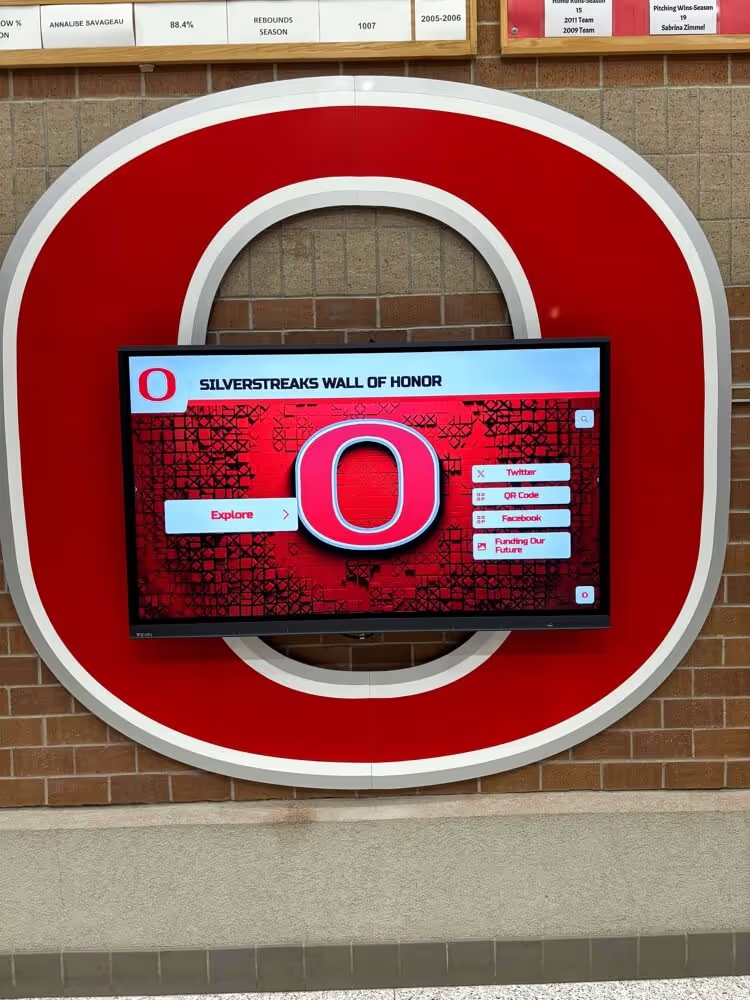
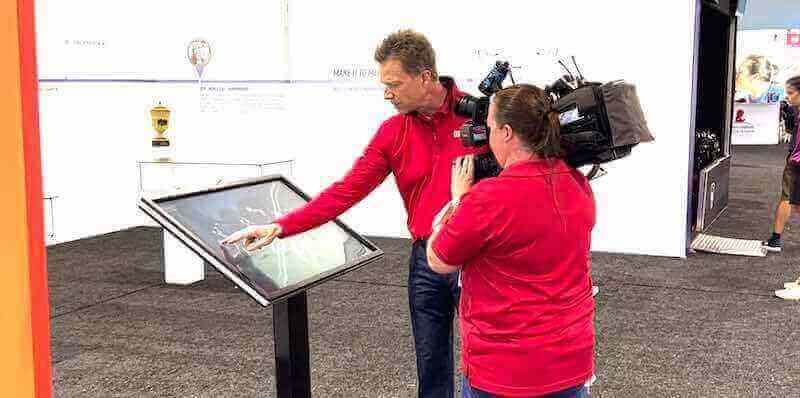
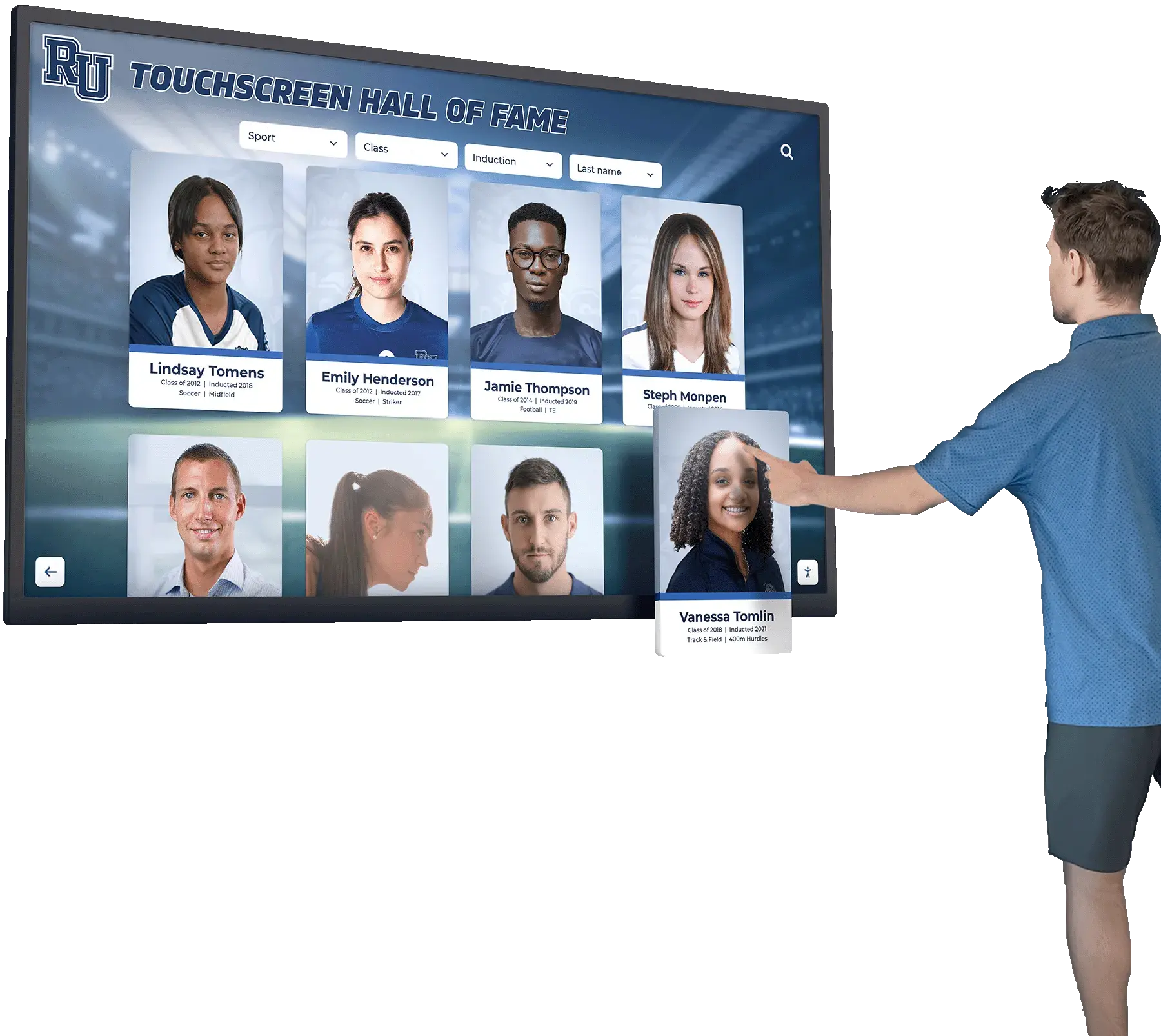
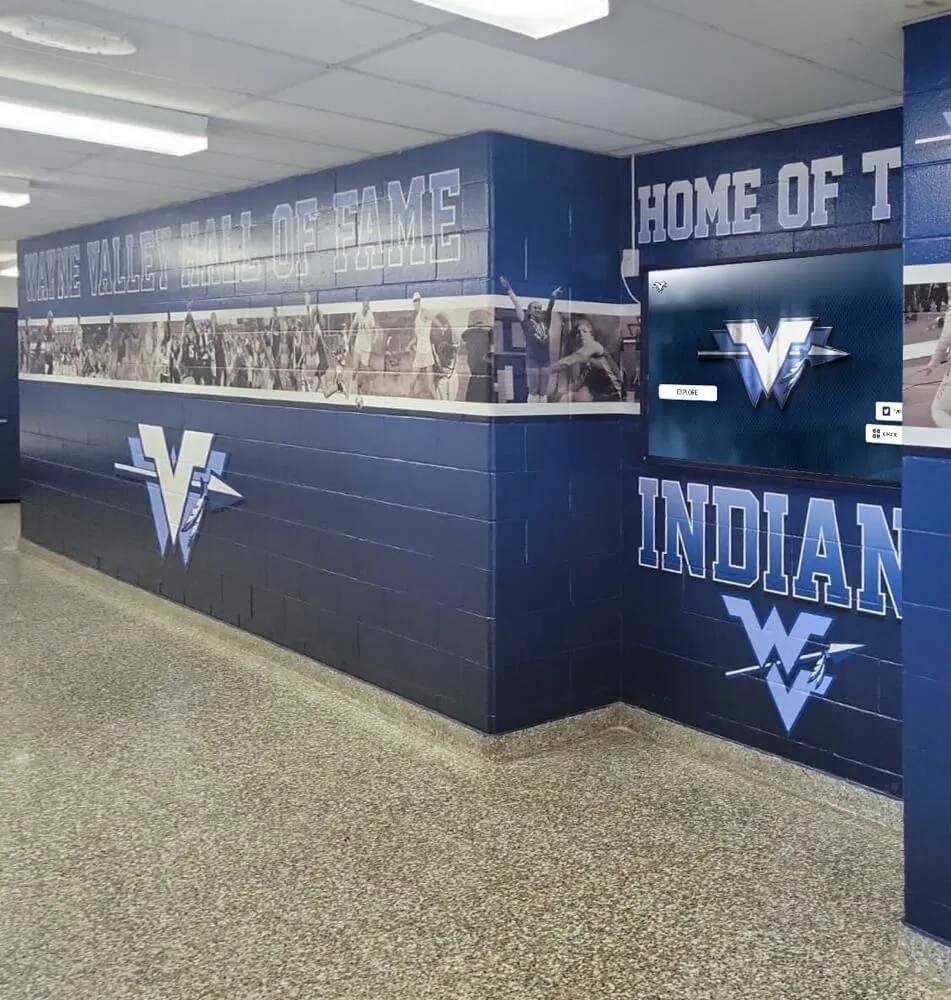
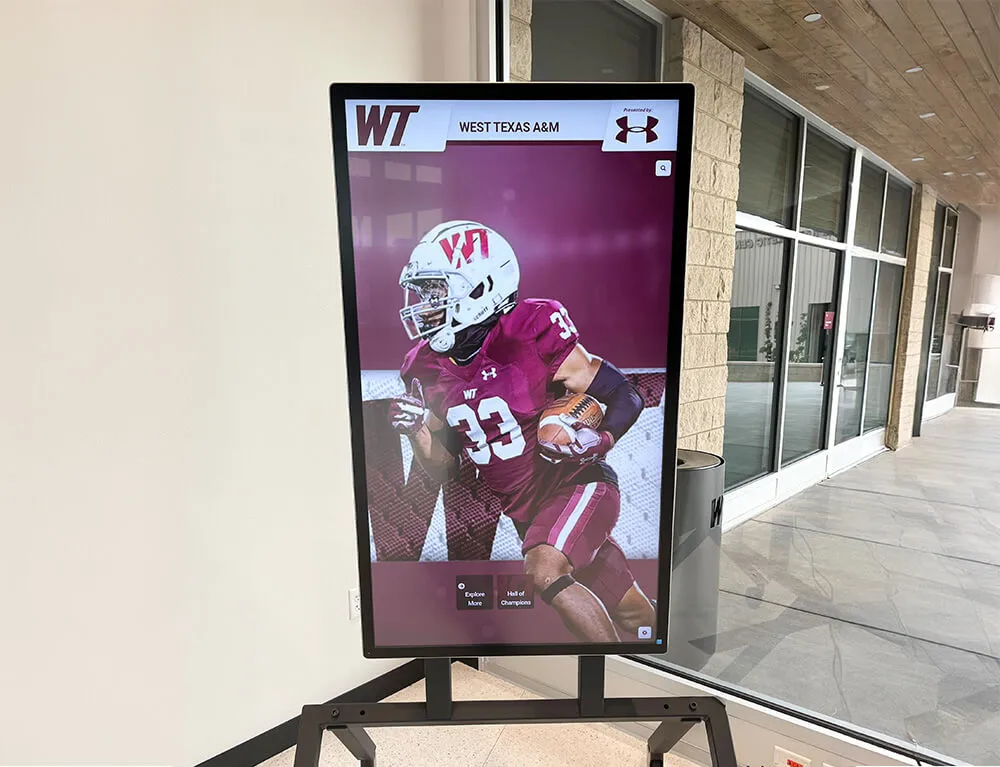
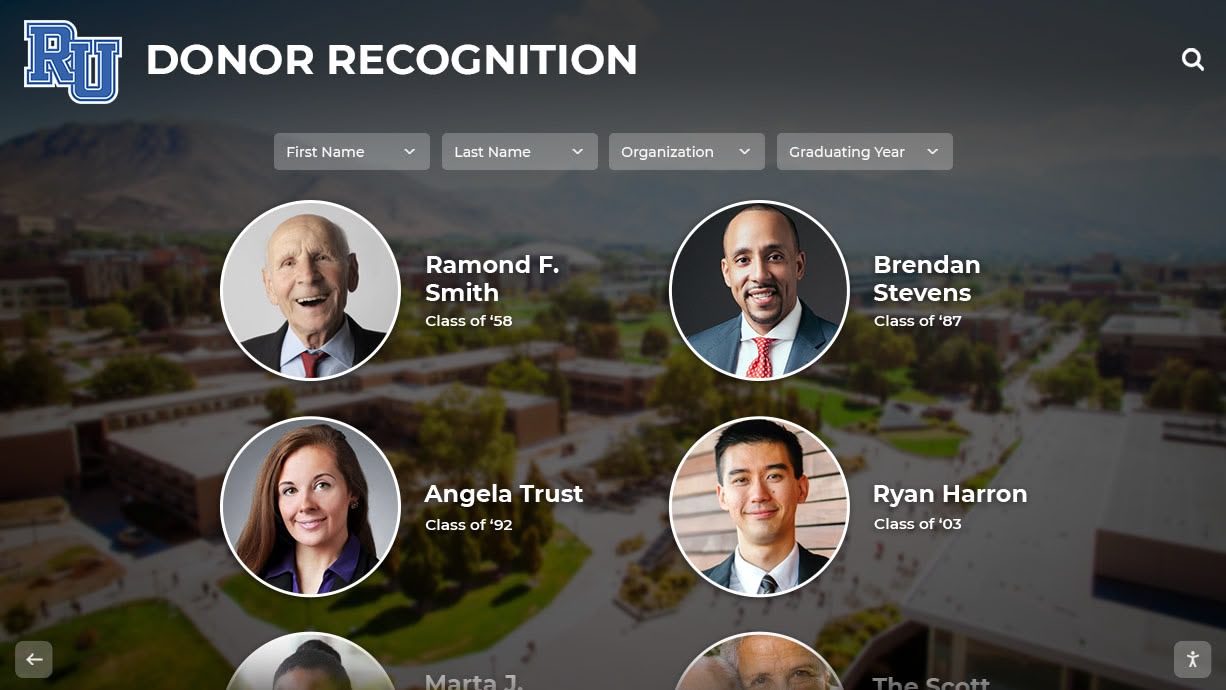
Touchscreen recognition systems create engaging exploration experiences where employees actively discover recognition content rather than passively viewing static displays. Interactive platforms allow users to search for specific employees, filter by department or achievement type, explore detailed accomplishment profiles, examine high-resolution photos, and discover connections between team members and organizational successes.
Interactive displays transform recognition from brief glance-and-move-on encounters into meaningful exploration sessions where employees spend time learning about colleagues’ contributions. Search functionality enables personal connections—employees can quickly find their own recognition, locate former team members, or discover how colleagues contributed to significant projects. This active engagement creates stronger psychological impact than passive viewing of names on walls.
Digital recognition displays designed for organizational settings provide features specifically supporting workplace recognition needs including department organization, tenure tracking, achievement categorization, leadership recognition, and team-based acknowledgment. Purpose-built platforms understand corporate recognition requirements rather than forcing organizations to adapt systems designed for other purposes.
Wall-Mounted Recognition Screens
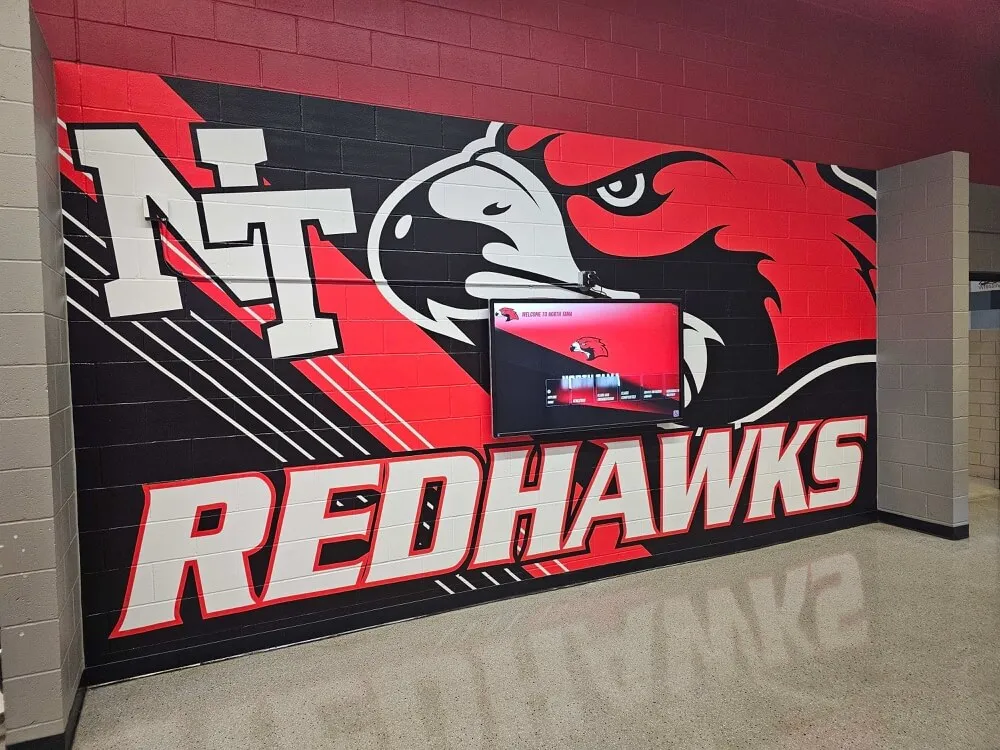
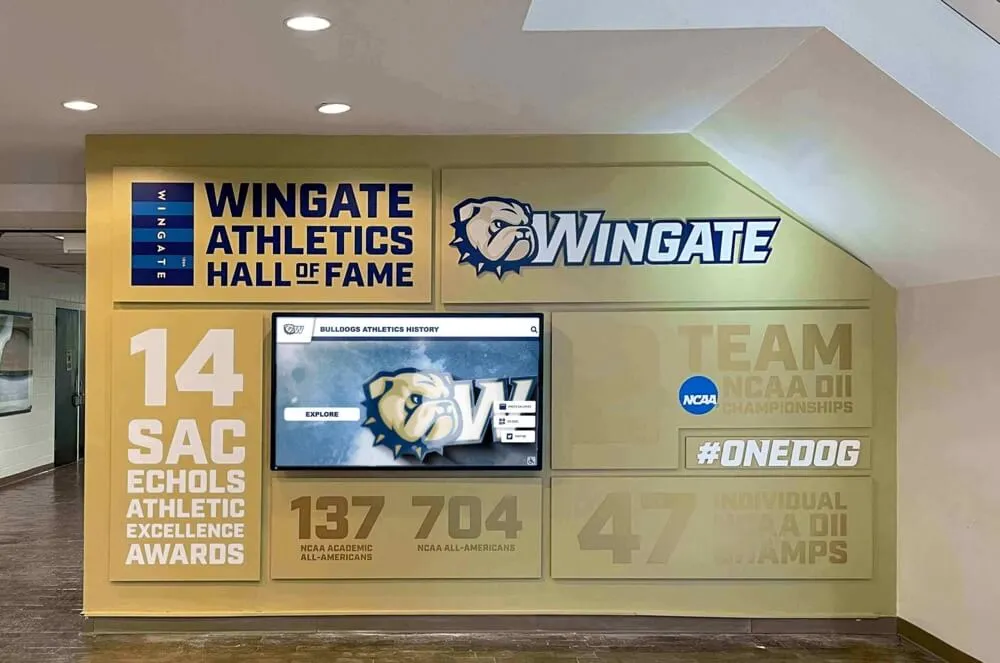
Large-format digital displays mounted in high-traffic areas provide prominent recognition visibility without requiring user interaction. These systems cycle through employee profiles, achievement highlights, anniversary celebrations, and recognition categories creating continuous visibility that keeps recognition top-of-mind throughout workdays.
Wall-mounted displays work effectively in locations where employees pass regularly but might not stop for interactive exploration—elevator lobbies, cafeteria entrances, main reception areas, and hallway intersections. Automatic content rotation ensures all recognized employees receive regular visibility rather than requiring someone to manually navigate to specific profiles.
Organizations often implement combined approaches using interactive touchscreens in primary locations encouraging exploration alongside wall-mounted displays in secondary spaces maintaining consistent recognition presence. This dual-system approach maximizes recognition visibility while accommodating different engagement patterns and location requirements.
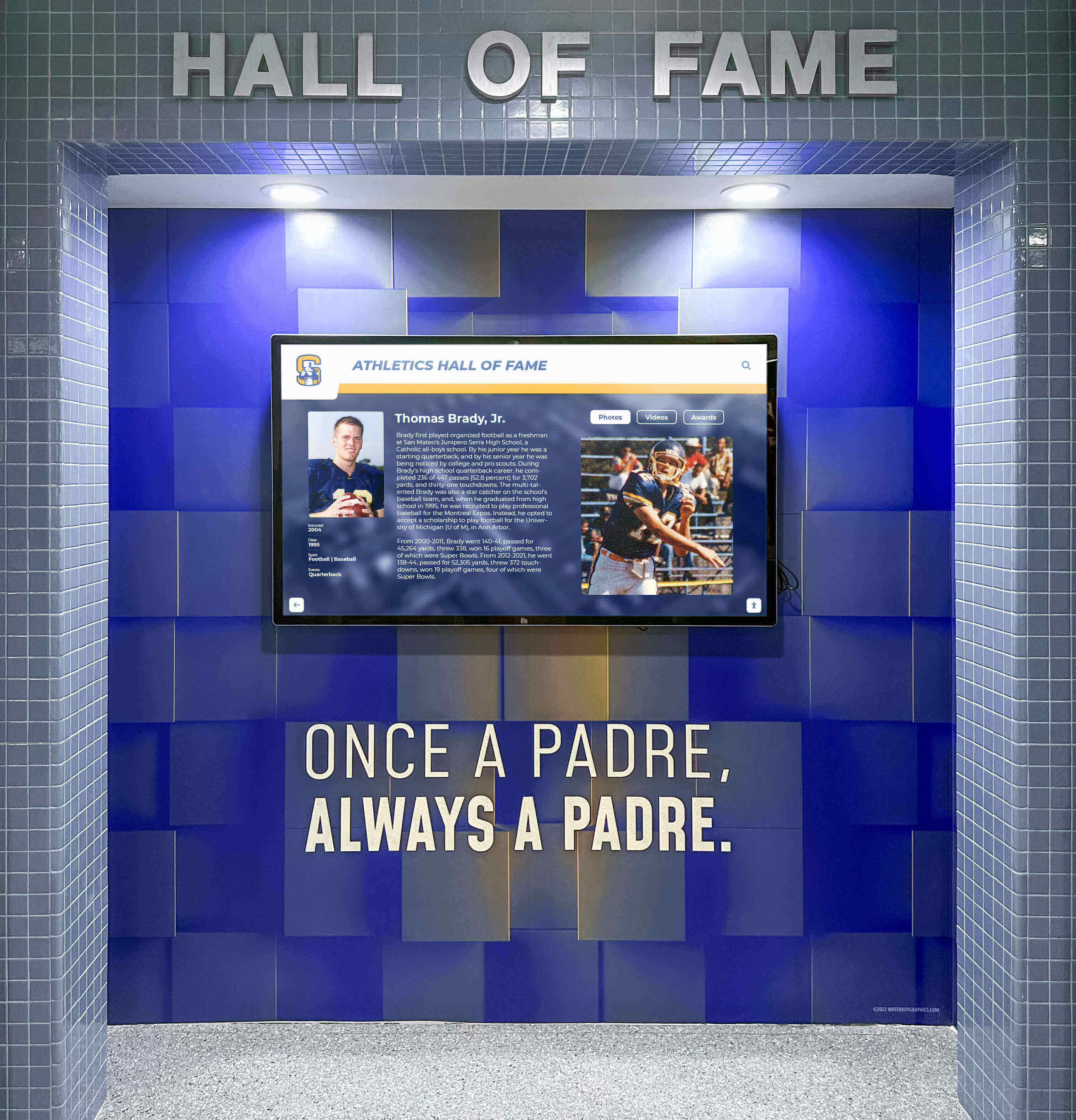
Web-Based Recognition Platforms
Remote and hybrid work environments require recognition systems accessible from anywhere rather than limiting visibility to physical office locations. Web-based recognition platforms provide universal access enabling all employees to view recognition regardless of geographic location, work schedule, or facility access.
Online recognition systems support distributed teams by creating shared recognition experiences across offices, enabling remote employees to feel included in company culture, allowing family members to view workplace recognition, facilitating social sharing extending recognition reach, and maintaining employee connections to organizational achievements even after leaving companies.
Recognition accessibility proves particularly important for organizations with multiple locations, field-based employees, remote workers, international teams, or shift-based operations where employees rarely visit main offices. Web platforms ensure everyone can experience recognition equitably regardless of physical proximity to traditional display locations.
Mobile-Responsive Recognition Access
Contemporary employees expect information accessibility through personal devices—smartphones and tablets integrated into daily life. Mobile-responsive recognition systems adapt content presentation to different screen sizes, allowing employees to explore recognition during commutes, share achievements with family through personal devices, and maintain connections to organizational culture outside office environments.
Mobile accessibility extends recognition impact beyond workplace by enabling employees to show family members their recognition, share achievements through personal social networks, revisit recognition content whenever desired, and maintain emotional connections to organizational appreciation long after initial acknowledgment occurs.
Digital platforms supporting employee recognition provide responsive designs ensuring professional presentation across all device types from desktop monitors to smartphones, maintaining recognition quality and accessibility regardless of how employees choose to engage with content.
Creative Recognition Wall Categories and Programs
Effective recognition walls celebrate diverse contribution types rather than narrow definitions focusing exclusively on sales achievement or tenure milestones.
Performance Excellence Recognition
Achievement-based recognition acknowledges employees meeting or exceeding performance standards across various functions. Categories might include sales achievement honors recognizing revenue generation and client acquisition, customer service excellence celebrating exceptional client experiences, quality achievement acknowledging error-free production or service delivery, innovation awards honoring process improvements and creative problem-solving, and productivity recognition celebrating efficiency gains and operational excellence.
Performance recognition should establish clear, measurable criteria enabling employees to understand what achievement requires. Transparent standards prevent perceptions of favoritism while creating motivational targets encouraging focused effort toward recognized accomplishments. When employees see colleagues honored for specific achievements, they understand pathways to similar recognition through comparable contributions.
Tenure and Loyalty Recognition
Long-term employment represents significant employee commitment deserving acknowledgment. Service milestone recognition celebrates tenure achievements at meaningful intervals—five, ten, fifteen, twenty, and twenty-five year anniversaries demonstrate substantial organizational loyalty increasingly rare in contemporary employment markets.
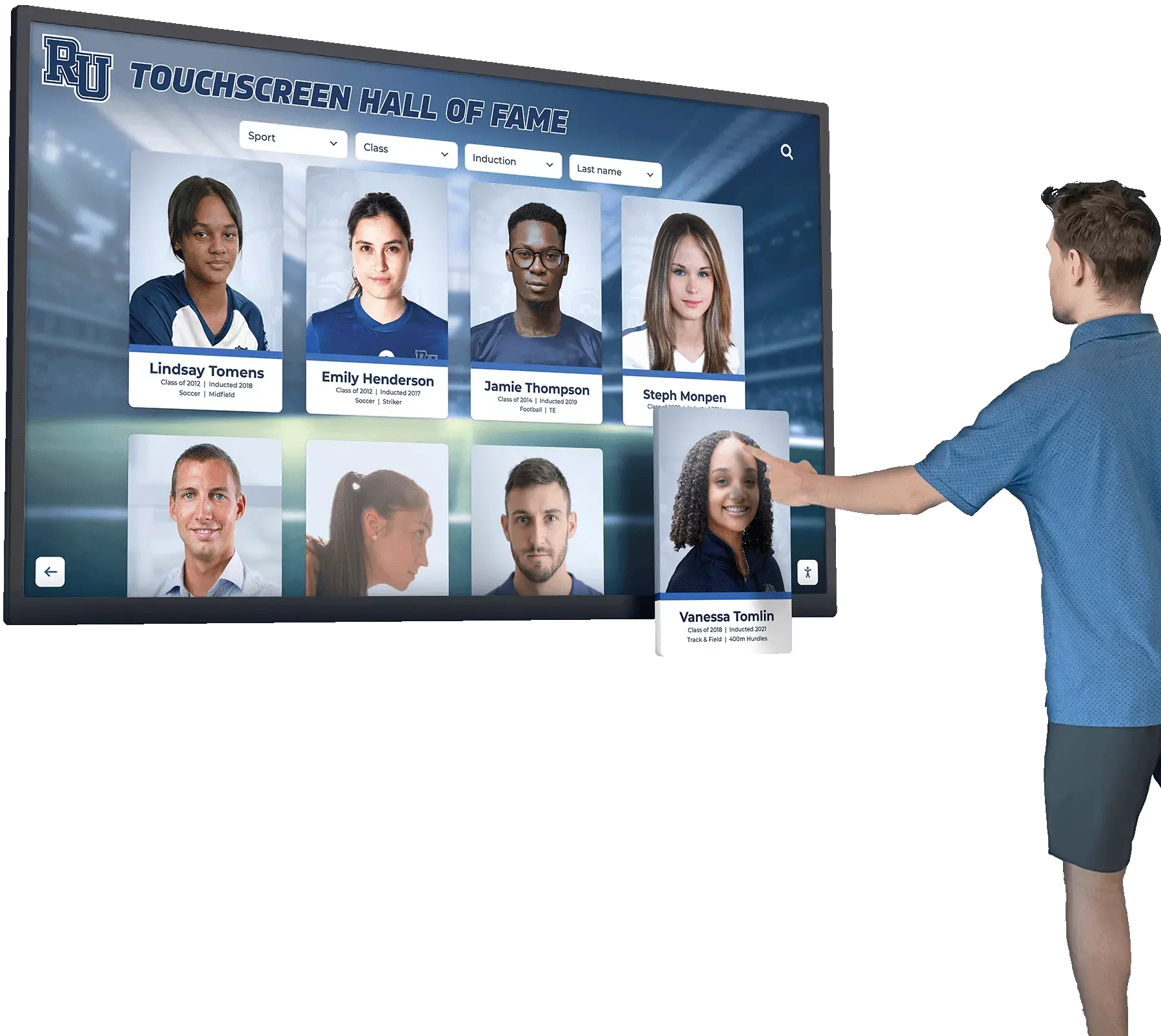
Tenure recognition should extend beyond simple longevity acknowledgment by highlighting how long-serving employees contributed throughout their careers. Digital platforms enable comprehensive profiles documenting career progression, major projects contributed to, roles held over time, teams supported, and legacy impacts demonstrating why tenure matters beyond calendar years. This contextual recognition honors both commitment and accumulated contributions rather than treating tenure as passive time passage.
Organizations implementing comprehensive recognition programs report that tenure recognition particularly resonates with employees who value stability and organizational relationships, creating powerful retention incentives as individuals approach milestone anniversaries worth celebrating.
Values-Based Recognition
Values recognition acknowledges behaviors demonstrating organizational principles regardless of job function or performance metrics. Categories align with stated organizational values—integrity recognition honoring ethical conduct, collaboration awards celebrating team contribution, leadership acknowledgment recognizing mentorship and example-setting, innovation recognition honoring creative problem-solving, and community service celebrating volunteer contributions.
Values-based recognition reinforces cultural priorities by demonstrating that organizations notice and appreciate behaviors beyond immediate job requirements. When companies claim to value collaboration but only recognize individual achievement, employees quickly learn stated values lack substance. Recognition aligned with values proves organizational commitment through tangible acknowledgment.
Team and Department Recognition
While individual recognition maintains importance, team-based acknowledgment celebrates collective achievement requiring coordinated effort. Categories might include project completion recognition honoring successful initiative delivery, department excellence acknowledging collective performance standards, cross-functional collaboration celebrating successful inter-department partnerships, safety achievement recognizing incident-free operations, and quality milestones honoring team-based process excellence.
Team recognition addresses workplace realities where significant achievements require coordinated contributions rather than individual heroics. Balanced recognition programs honor both individual excellence and collective achievement, preventing cultural imbalances that overemphasize individual performance at the expense of collaboration essential for organizational success.
Innovation and Improvement Recognition
Organizations seeking continuous improvement benefit from recognition systems celebrating innovative contributions regardless of role or seniority. Categories include process improvement awards honoring efficiency enhancements, cost-saving recognition acknowledging expense reduction ideas, quality improvement celebrating error reduction initiatives, customer experience innovation honoring service enhancement suggestions, and technology adoption awards recognizing effective tool utilization.
Innovation recognition creates environments where all employees feel empowered to suggest improvements rather than believing that innovation remains the exclusive domain of specific roles or senior personnel. Visible recognition for implemented suggestions demonstrates organizational receptivity to employee ideas, encouraging continued contribution of improvement concepts that collectively drive operational excellence.
Strategic Recognition Wall Placement and Design
Recognition display effectiveness depends substantially on location choices, visual design, and integration with workplace environments.
High-Traffic Location Selection
Recognition visibility requires strategic placement in locations receiving consistent employee and visitor traffic. Optimal locations include main building entrances capturing all daily arrival and departure traffic, elevator lobbies where employees wait with viewing time, cafeteria entrances passed during lunch and break periods, conference room corridors walked by employees attending meetings, and reception areas visible to both employees and external visitors.
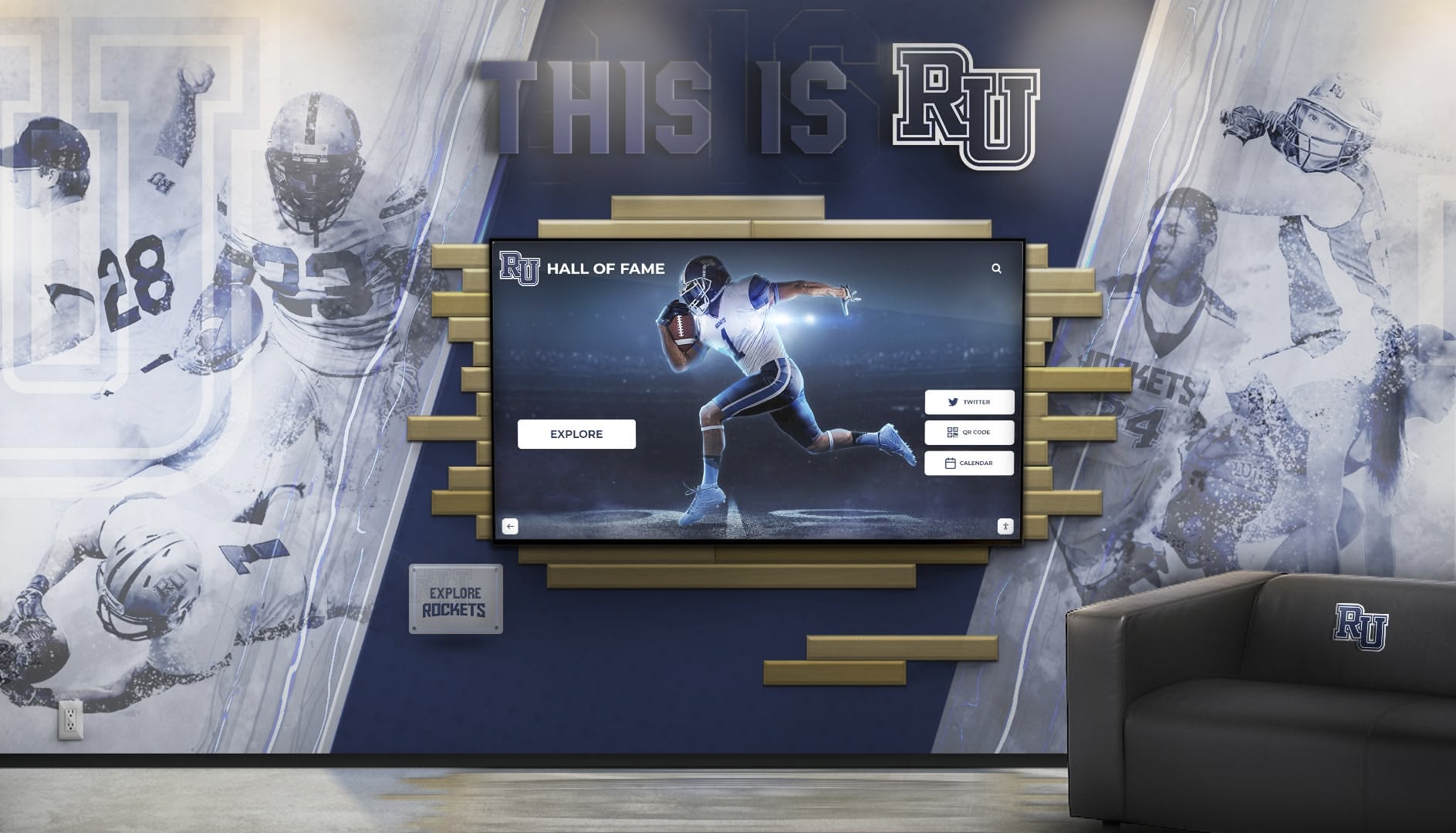
Avoid relegating recognition to remote locations requiring deliberate visits—lower-traffic areas dramatically reduce recognition visibility and impact. Recognition placed in seldom-visited corners or isolated hallways signals that acknowledgment holds minimal organizational priority despite stated appreciation rhetoric. Prime real estate allocation demonstrates genuine recognition commitment while maximizing employee exposure to celebrated achievements.
Visual Design and Brand Integration
Recognition displays should align with organizational branding, architectural style, and workplace aesthetics rather than appearing as afterthought additions disconnected from environmental design. Design considerations include color schemes matching corporate branding and workplace palette, typography aligning with organizational visual standards, graphic elements reinforcing brand identity, material selections complementing surrounding architecture, and integration approaches creating cohesive appearances rather than obvious add-ons.
Professional design creates recognition displays that enhance rather than detract from workplace environments. Well-designed systems feel like intentional architectural elements reflecting organizational sophistication rather than amateur installations suggesting minimal investment or care.
Organizations lacking internal design expertise should engage professionals experienced with corporate recognition installations. Recognition display design specialists understand how to create systems balancing professional aesthetics with functional recognition requirements, producing displays that honor employees appropriately while maintaining workplace visual standards.
Accessibility and Inclusive Design
Recognition systems must accommodate all employees regardless of physical abilities, ensuring equitable access to viewing and exploring recognition content. Accessibility requirements include mounting heights appropriate for wheelchair users, adequate clear space in front of displays for mobility device maneuvering, adjustable text sizing for vision-impaired users, high-contrast display modes improving readability, audio description capabilities for blind or low-vision employees, and alternative input methods beyond touchscreen interaction for users with limited dexterity.
The Americans with Disabilities Act (ADA) establishes legal requirements for workplace accessibility that recognition installations must meet. Beyond legal compliance, inclusive design demonstrates organizational commitment to equitable employee experience and prevents recognition systems from inadvertently excluding team members who should experience appreciation equally.
Multi-Location Recognition Coordination
Organizations operating multiple facilities face coordination challenges maintaining recognition consistency across locations. Centralized digital platforms enable synchronized recognition content appearing identically across all offices, customizable local content celebrating location-specific achievements, unified administration managing entire recognition systems from central positions, consistent branding and standards regardless of facility, and comprehensive visibility showing employees recognition from all locations rather than limiting awareness to single sites.
Multi-location capabilities prove particularly valuable for distributed organizations wanting to build unified cultures across geographic separation. When employees in different offices see colleagues recognized system-wide, they develop organizational identity beyond immediate team familiarity, understanding their work contributes to collective success spanning multiple locations.
Recognition Wall Content Development and Management
Sustainable recognition programs require systematic content creation, regular updates, and quality standards maintaining professional presentation.
Professional Photography and Visual Content
Recognition impact depends substantially on visual quality—professional photography creates polished presentations while amateur snapshots undermine recognition professionalism. Organizations should establish photography standards including professional headshot sessions for formal recognition, consistent backgrounds and lighting creating uniform appearance, high-resolution image capture ensuring quality display at large sizes, appropriate attire guidelines maintaining workplace standards, and optional action photography showing employees in work contexts.

Some organizations schedule annual recognition photo sessions ensuring current, high-quality images for all employees. Others engage professional photographers for quarterly sessions as recognition needs arise. Investment in quality photography pays dividends through professional presentations that honor employees appropriately while reflecting positively on organizational standards.
Digital platforms designed for recognition typically include image optimization features automatically adjusting uploaded photos for optimal display quality, supporting various image formats, and providing cropping tools ensuring consistent presentation without requiring advanced technical skills from administrators managing content.
Compelling Achievement Narratives
Recognition effectiveness increases dramatically when detailed context explains why individuals received acknowledgment rather than simply listing names and titles. Comprehensive recognition profiles include specific achievement descriptions explaining what individuals accomplished, quantifiable results demonstrating impact when possible, team context describing collaboration required, challenges overcome highlighting exceptional effort, and personal reflections from recognized employees sharing perspectives.
Narrative content transforms recognition from abstract acknowledgment into meaningful storytelling that colleagues can understand, appreciate, and potentially emulate. When employees read detailed descriptions explaining how colleagues achieved recognition, they gain insights into behaviors and approaches they might adopt in their own work.
Recognition content should maintain appropriate professional tone while feeling authentic and personal. Overly formal corporate language creates distant acknowledgment lacking emotional resonance, while excessively casual approaches may undermine recognition seriousness. The goal creates warm, genuine appreciation expressed through clear, specific detail rather than generic praise applicable to anyone.
Regular Updates and Content Currency
Recognition impact diminishes when displays become outdated, suggesting programs lack sufficient importance for regular maintenance. Establishing update schedules ensures recognition remains current through immediate recognition additions within days of achievements, quarterly content reviews ensuring accuracy and relevance, annual comprehensive audits confirming all recognized employees remain accurately represented, and prompt removal or updates when employment circumstances change.
Digital recognition platforms dramatically simplify update processes compared to physical displays requiring contractors, materials ordering, and installation scheduling. Content updates to digital systems occur remotely from any internet-connected device in minutes rather than requiring weeks or months for physical installations. This efficiency difference determines whether recognition remains current or gradually becomes outdated through update friction preventing timely maintenance.
Organizations should designate specific individuals responsible for recognition content management, providing clear expectations, protected time allocation, and accountability ensuring consistent attention. Recognition programs depending on whenever-someone-finds-time maintenance inevitably decline as other priorities consume attention.
Privacy Considerations and Employee Consent
Recognition involves balancing public acknowledgment against individual privacy preferences. Organizations should establish clear policies addressing whether recognition participation requires employee consent, what personal information displays publicly, how employees request privacy accommodations, whether recognition continues after employees leave organizations, and how organizations handle recognition for disciplinary or legal situations.
Most organizations default to recognition participation being standard employment aspects similar to organizational directories or team photos, providing opt-out mechanisms for employees with compelling privacy concerns. This approach prevents losing recognition program benefits because individual employees prefer privacy while respecting legitimate privacy needs.
Privacy policies should address practical scenarios including employees in sensitive positions requiring confidentiality, domestic violence situations where public information creates safety risks, personal preferences against public recognition, and cultural considerations where public acknowledgment feels uncomfortable rather than honoring.
Implementation Planning and Best Practices
Successful recognition wall initiatives require systematic planning addressing technical, cultural, and operational dimensions.
Budget Development and Cost Considerations
Recognition wall investments vary substantially based on approach, scale, and features selected. Comprehensive budget development includes initial implementation costs covering display hardware, software platforms or subscriptions, professional installation, content development, and design services, alongside ongoing operational expenses encompassing software subscriptions or licensing fees, content management labor, hardware maintenance and replacement, photography services, and recognition award costs for physical items.
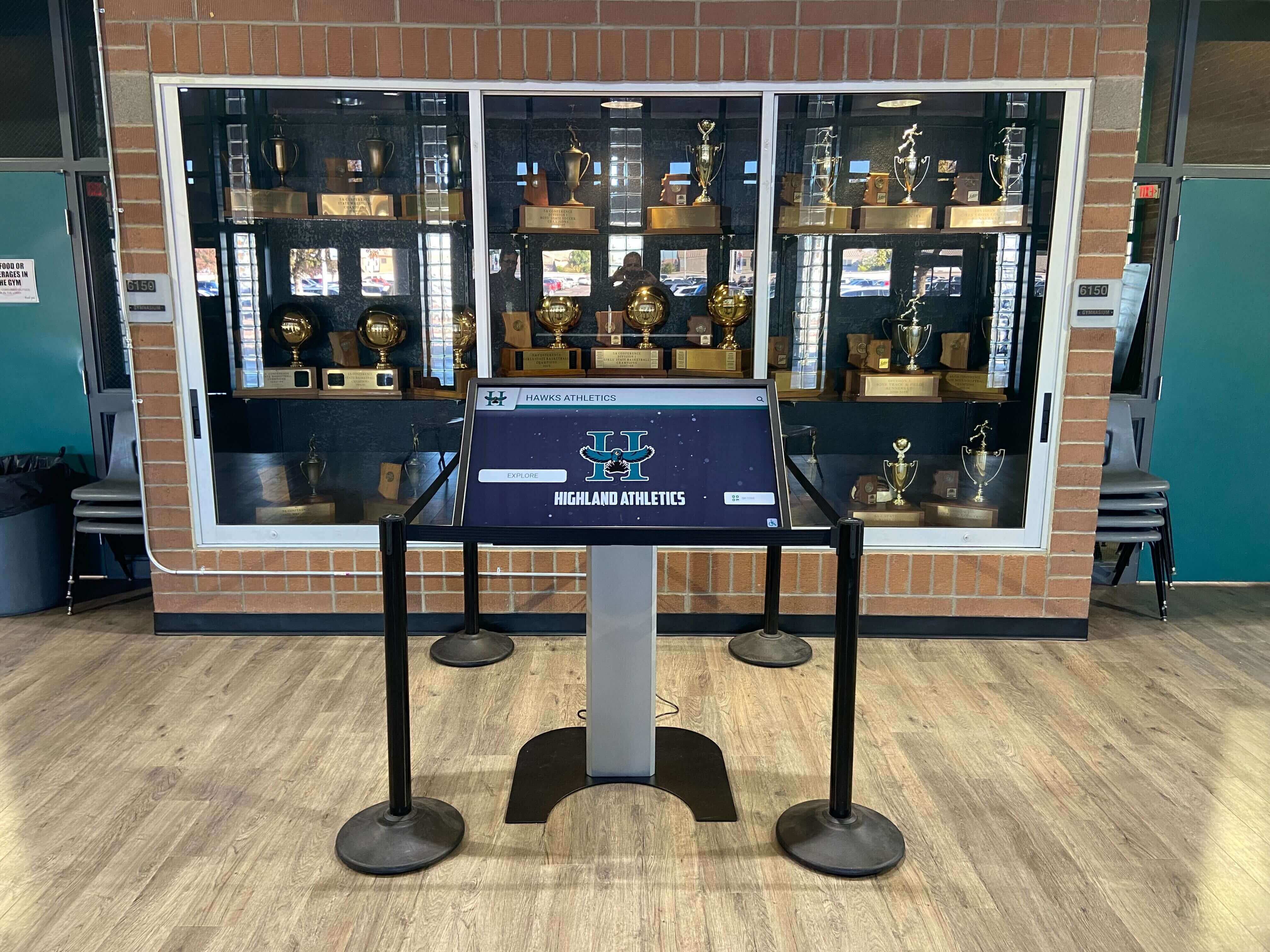
Digital recognition systems typically involve higher initial implementation costs compared to traditional plaques but deliver substantially lower ongoing expenses and far greater capacity. Organizations should evaluate total cost of ownership over expected system lifespans—usually 5-10 years—rather than focusing exclusively on initial expenditure.
Recognition technology investments should be positioned as infrastructure supporting organizational culture and employee engagement rather than discretionary expenditures easily deferred. Recognition directly affects retention, morale, and productivity—core human capital outcomes with substantial financial implications justifying appropriate investment levels.
Technology Platform Selection and Evaluation
Organizations exploring recognition technology should evaluate multiple options comparing features, usability, and vendor stability. Critical evaluation criteria include purpose-built recognition focus versus adapted generic digital signage, intuitive content management for non-technical administrators, unlimited capacity without per-profile restrictions or fees, powerful search and filtering supporting content discovery, multimedia support including photos, videos, and detailed profiles, mobile responsiveness ensuring accessibility across devices, analytics revealing engagement patterns and program usage, vendor experience with corporate recognition implementations, and long-term vendor viability ensuring sustained support.
Request demonstrations allowing hands-on platform experience before commitments. Test content management interfaces from administrator perspectives evaluating ease of use. Review sample installations at similar organizations when possible. Check vendor references specifically asking about implementation quality, ongoing support responsiveness, and whether systems delivered promised capabilities.
Avoid platforms requiring technical expertise for routine content updates or customization—these dependencies create operational barriers preventing regular maintenance and limiting which staff members can manage recognition systems effectively.
Cultural Integration and Program Launch
Technology alone proves insufficient for recognition success—cultural integration determines whether systems become valued organizational elements or ignored installations failing to generate intended impact. Successful launches include clear communication explaining recognition program purposes, leadership participation demonstrating executive commitment, initial content comprehensiveness ensuring impressive launch impact, employee involvement through nomination processes or selection committees, ceremonial unveiling creating memorable program introduction, and sustained promotion maintaining awareness beyond initial novelty.
Leadership participation particularly affects recognition program credibility. When executives actively reference recognition displays, attend recognition ceremonies, and personally acknowledge honored employees, they signal authentic organizational commitment. Conversely, recognition programs launched without visible leadership support often fail generating sustained employee engagement regardless of system quality.
Consider phased launches beginning with pilot implementations in limited locations, allowing refinement based on initial feedback before organization-wide deployment. Pilot approaches reduce initial risk while creating proof-of-concept demonstrations supporting broader investment when systems prove effective.
Ongoing Program Management and Sustainability
Recognition program success requires sustained management preventing gradual decline after initial enthusiasm fades. Sustainability practices include designated program ownership with clear responsibility and accountability, regular content update schedules preventing outdated displays, periodic program reviews assessing effectiveness and identifying improvements, employee feedback collection informing program evolution, visible executive attention reinforcing ongoing priority, and integration with broader human resources initiatives connecting recognition to overall talent management.
Organizations should document recognition program procedures ensuring consistent operation across personnel changes. Written protocols covering nomination processes, selection criteria, content standards, update procedures, and technical management prevent program disruption when responsible individuals change roles or leave organizations.
Annual program reviews should examine recognition distribution patterns ensuring equitable access across departments, locations, and demographic groups. Systematic analysis identifies unintended biases or gaps in recognition requiring corrective action, ensuring programs serve entire organizations rather than inadvertently favoring specific groups.
Measuring Recognition Wall Effectiveness
Evidence-based program management requires measuring recognition impacts on intended outcomes including employee satisfaction, retention, and engagement.
Employee Engagement Metrics
Recognition programs should demonstrate measurable effects on employee engagement assessed through regular employee surveys including specific recognition questions, participation rates in voluntary programs, recognition content interaction analytics for digital systems, social sharing indicating organic program promotion, and qualitative feedback revealing how recognition affects employee experiences.
Organizations implementing robust employee engagement surveys can incorporate recognition-specific questions measuring awareness of recognition programs, perceptions of recognition fairness and transparency, understanding of how employees qualify for recognition, satisfaction with recognition frequency and quality, and beliefs about whether recognition affects motivation and effort.
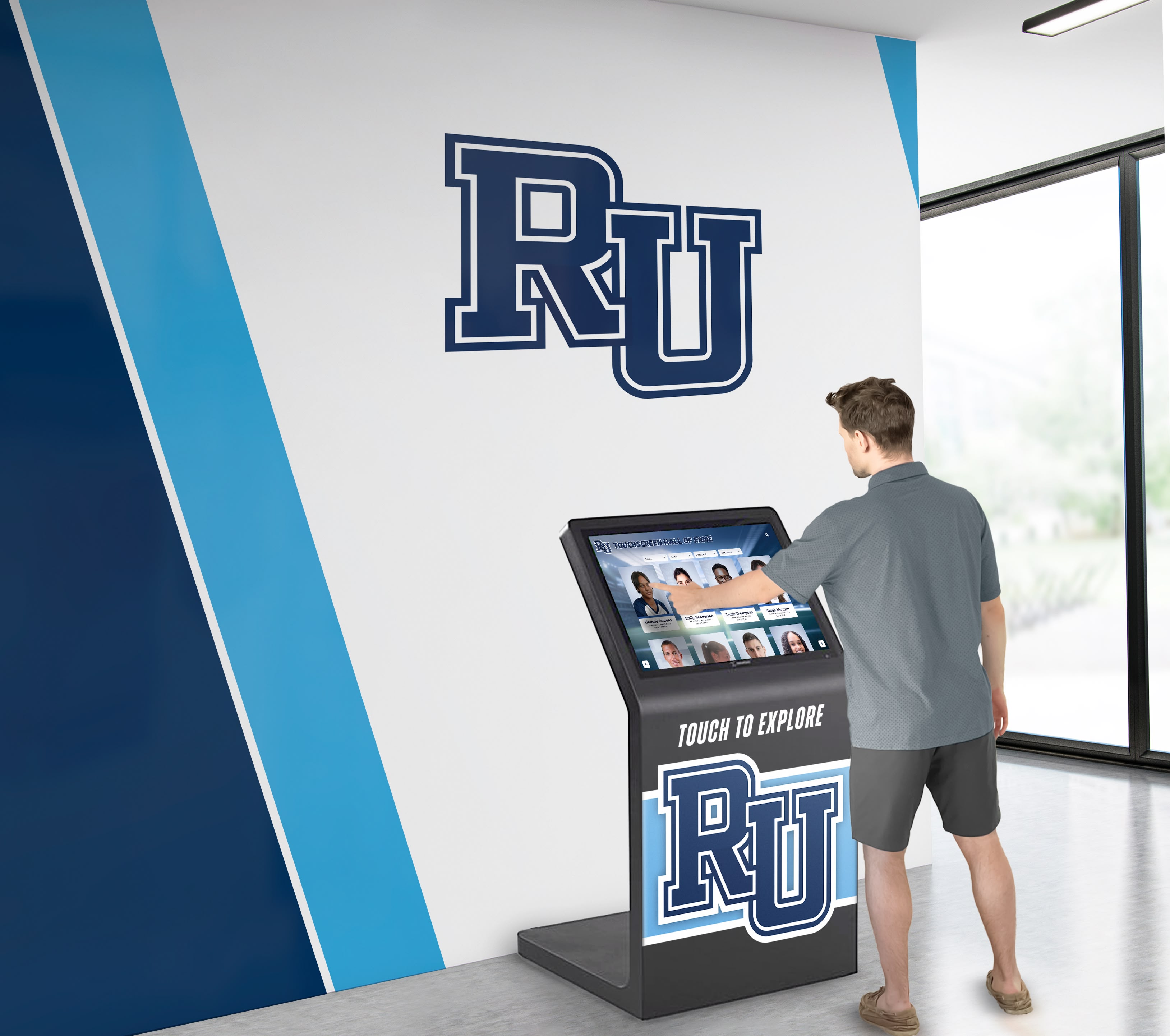
Digital recognition platforms provide comprehensive analytics impossible with physical displays including unique visitor counts showing how many employees view recognition, session duration revealing engagement depth, popular content indicating which recognition generates most interest, search patterns showing what employees explore, and return visitor rates measuring sustained engagement over time.
Retention and Turnover Analysis
Recognition aims to improve employee retention by strengthening organizational attachment and demonstrating appreciation. Organizations should monitor turnover rates among recognized employees compared to general populations, tenure distributions showing whether recognition correlates with long-term employment, exit interview data revealing whether recognition absence contributed to departure decisions, and retention rates following recognition program implementations.
Direct causation proves difficult establishing conclusively given numerous factors affecting retention decisions. However, correlation analysis can reveal whether recognition programs associate with desired retention outcomes, supporting continued program investment and refinement.
Multiple studies document that recognized employees demonstrate significantly lower turnover rates than unrecognized colleagues—SHRM research indicates approximately 20-30% lower turnover among employees receiving regular recognition. While recognition alone cannot overcome systemic organizational problems driving turnover, effective programs contribute meaningfully to retention efforts within generally positive work environments.
Recognition Distribution Equity Analysis
Fair recognition distribution across organizational populations proves essential for program credibility and effectiveness. Regular analysis should examine recognition patterns across departments ensuring proportional acknowledgment, location distributions for multi-site organizations, demographic patterns identifying potential bias, seniority levels verifying recognition reaches all experience levels, and role types confirming recognition extends beyond obvious categories like sales.
Systematic distribution analysis identifies unintended recognition gaps requiring program adjustments. If analysis reveals certain departments rarely receive recognition despite strong performance, organizations might establish department-specific recognition categories or educate managers about nomination processes. Demographic imbalances might indicate bias in selection requiring corrective process changes ensuring equitable consideration.
Transparent equity analysis demonstrates organizational commitment to fair recognition while identifying improvement opportunities preventing recognition from inadvertently reinforcing existing organizational imbalances rather than celebrating excellence broadly.
Overcoming Common Recognition Wall Challenges
Even well-designed recognition programs encounter predictable obstacles requiring proactive management strategies.
Challenge: Recognition Feels Exclusive Rather Than Aspirational
When identical employees receive multiple awards repeatedly while most team members never experience recognition, programs risk creating discouragement rather than motivation for broader populations perceiving recognition as impossible to achieve.
Solutions: Establish diverse recognition categories spanning achievement types and contribution levels, implement recognition limits preventing individual domination, create tiered acknowledgment systems recognizing various performance levels, develop improvement-based categories accessible to employees at different baselines, and monitor distribution patterns proactively addressing concentration that undermines program intentions.
Recognition should balance honoring exceptional achievement with creating realistic pathways enabling varied employees to experience acknowledgment through different excellence forms. Programs successfully engaging broad employee populations typically recognize 30-50% of workforces annually through various categories, contrasting with exclusive systems honoring only top 5-10%.
Challenge: Maintaining Content Currency and Relevance
Recognition displays quickly lose impact when content becomes outdated, suggesting programs lack sufficient organizational priority for regular maintenance attention.
Solutions: Digital platforms dramatically reduce update friction compared to physical displays requiring contractors and installation scheduling. Establish clear update responsibilities with designated administrators, protected time allocation, and accountability measures. Implement content review calendars ensuring regular attention. Choose platforms providing intuitive content management enabling quick updates without technical expertise requirements. Automate routine content updates when possible through system integrations or scheduled processes.
Organizations should realistically assess available administrative capacity when selecting recognition approaches. Sophisticated systems requiring extensive manual management often fail sustainably operating not because of system quality but because ongoing demands exceed realistic staff availability. Simpler systems receiving consistent attention often outperform feature-rich platforms lacking regular maintenance.
Challenge: Remote Workers Feel Excluded From Recognition
Physical recognition displays in main offices provide minimal value for remote and hybrid employees who rarely visit facilities, potentially creating inequitable recognition experiences based on work location rather than contribution quality.
Solutions: Implement web-based recognition platforms providing universal access regardless of location. Develop communication strategies actively promoting recognition to remote employees through emails, team meetings, and collaboration platforms. Ensure remote workers receive equitable consideration in recognition selection processes. Consider virtual recognition ceremonies complementing physical events. Create recognition program materials specifically addressing remote employee inclusion rather than assuming physical display visibility alone suffices.
Organizations employing significant remote workforces might prioritize digital-first recognition strategies emphasizing web accessibility and mobile responsiveness as primary delivery mechanisms, treating physical displays as supplementary elements rather than sole recognition presentations.
Challenge: Budget Constraints Limiting Recognition Investment
Organizations often struggle justifying recognition investments against competing budget priorities, particularly when recognition feels like optional employee relations expense rather than strategic talent management investment.
Solutions: Document recognition program business cases quantifying impacts on retention, productivity, and engagement supported by research demonstrating recognition return on investment. Phase implementations beginning with pilot programs demonstrating value before requesting broader investment. Explore recognition platforms designed for budget-conscious organizations providing core capabilities without premium pricing. Position recognition as infrastructure investment supporting culture and retention rather than discretionary nice-to-have expense. Consider modest initial implementations that can expand as demonstrated value justifies additional investment.
Recognition investments compete with numerous organizational priorities. Compelling business cases supported by retention costs, engagement research, and competitive talent market realities help secure appropriate funding by demonstrating strategic value rather than positioning recognition as employee relations nicety.
Future Trends in Employee Recognition Technology
Understanding emerging developments helps organizations make forward-looking recognition investments remaining effective long-term.
Artificial Intelligence and Personalization
AI capabilities increasingly enable personalized recognition experiences adapting to individual preferences, interaction patterns, and interests. Future systems will provide customized content recommendations showing recognition likely to interest specific employees, natural language interfaces allowing conversational content exploration, automated achievement detection identifying recognition opportunities from performance systems, predictive analytics suggesting recognition timing for maximum impact, and intelligent content generation creating initial recognition drafts from achievement data.
AI personalization transforms recognition from one-size-fits-all presentations into tailored experiences acknowledging that different employees value different recognition aspects and engage with content differently based on roles, preferences, and relationships to recognized colleagues.
Integration with Performance Management Systems
Recognition platforms increasingly integrate directly with performance management, HRIS, and business intelligence systems creating seamless workflows where achievements automatically trigger recognition considerations, performance data populates recognition profiles, recognition participation factors into performance evaluations, and achievement patterns inform talent development decisions.
System integration eliminates manual data transfer requirements that create administrative burden and error opportunities. When recognition platforms automatically receive achievement information from source systems, content creation becomes dramatically more efficient while ensuring recognition reflects accurate, timely accomplishment data.
Blockchain and Verifiable Credentials
Emerging platforms implement blockchain technology creating permanent, verifiable recognition records that employees own and control rather than remaining exclusively within employer systems. Blockchain-based recognition enables portable achievement records traveling with employees across career moves, cryptographic verification preventing credential fraud, decentralized ownership giving employees recognition data control, and interoperable systems allowing recognition acceptance across organizations.
This evolution positions recognition as professional credential building employee personal brands beyond single organization contexts, increasing recognition value by creating lasting career assets rather than organization-specific acknowledgment disappearing when employment ends.
Enhanced Social Recognition Integration
Future recognition systems will provide deeper social media integration enabling one-click sharing to professional networks, automated recognition announcements through collaboration platforms, peer recognition workflows supplementing formal programs, social validation through likes and comments, and recognition content formatted specifically for social distribution.
Social integration extends recognition impact far beyond organization walls, allowing employees to share workplace achievements with personal and professional networks naturally. This organic promotion creates positive employer branding while amplifying recognition psychological impact through extended social validation.
Building Recognition Programs That Inspire Excellence
Effective employee recognition walls share fundamental characteristics distinguishing genuinely impactful systems from token acknowledgment generating minimal motivation: diverse categories celebrating varied contribution types, transparent criteria applied consistently ensuring fairness, engaging presentation formats resonating with contemporary employees, regular updates maintaining currency and relevance, authentic acknowledgment with specific accomplishment details, accessible design ensuring all employees can experience recognition equitably, visible leadership commitment demonstrating executive support, integration with broader talent management connecting recognition to organizational culture, evidence-based management assessing effectiveness and guiding improvements, and sustained institutional commitment across leadership changes.
When organizations invest thoughtfully in comprehensive recognition programs, returns prove substantial: measurably improved employee satisfaction and engagement, reduced turnover saving significant replacement costs, stronger organizational cultures aligned with stated values, enhanced employer brands attracting top talent, increased productivity through motivated workforces, and most importantly, employees feeling genuinely valued for contributions rather than viewing themselves as interchangeable resources.
Ready to transform how your organization celebrates team excellence? Modern recognition solutions provide capabilities impossible with traditional approaches—unlimited capacity accommodating growing teams without space constraints, instant updates maintaining current recognition without installation delays, rich multimedia content honoring employees comprehensively, universal accessibility serving all employees equitably regardless of location, and proven approaches helping organizations build appreciation cultures that attract, motivate, and retain exceptional talent.
Your team achieves remarkable accomplishments daily across performance excellence, innovation, collaboration, service, and dedication. Recognition walls ensure these contributions receive acknowledgment that inspires continued excellence, reinforces organizational values, builds workplace community, creates lasting appreciation records, and establishes environments where employees feel authentically valued for work that matters to collective success.
Employee recognition represents far more than workplace decoration—it’s fundamental infrastructure supporting organizational culture, talent retention, and team motivation. When recognition celebrates diverse excellence through engaging accessible systems maintained sustainably over time, organizations create environments where achievement flourishes and every contributor’s efforts receive acknowledgment they genuinely deserve.
Book a demo to discover how modern recognition platforms can transform your organization’s approach to celebrating employee excellence through comprehensive systems that honor achievement, inspire continued contribution, and strengthen workplace culture across your entire team.