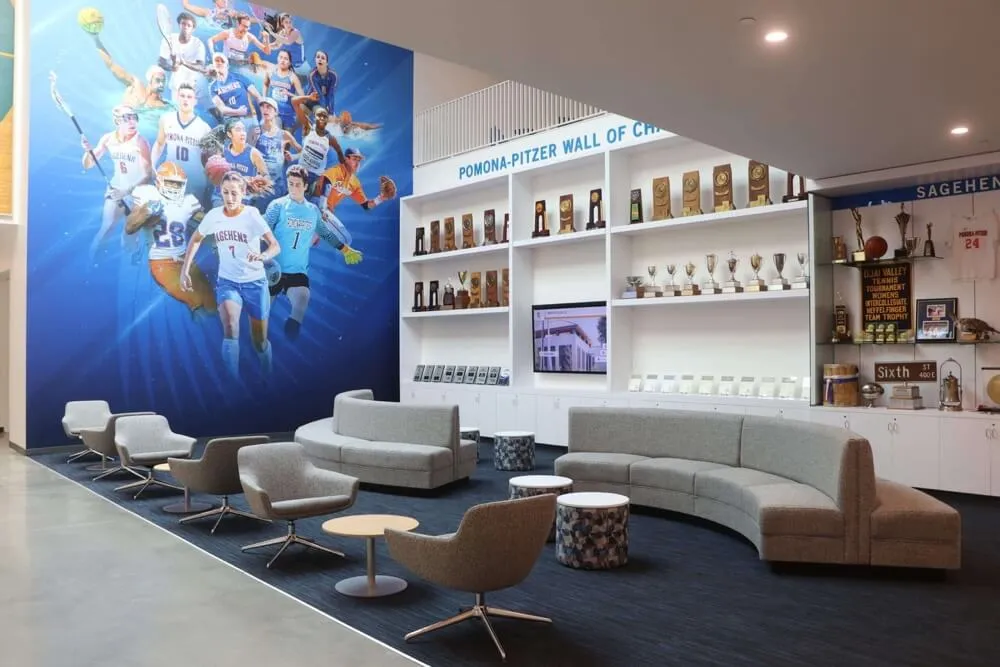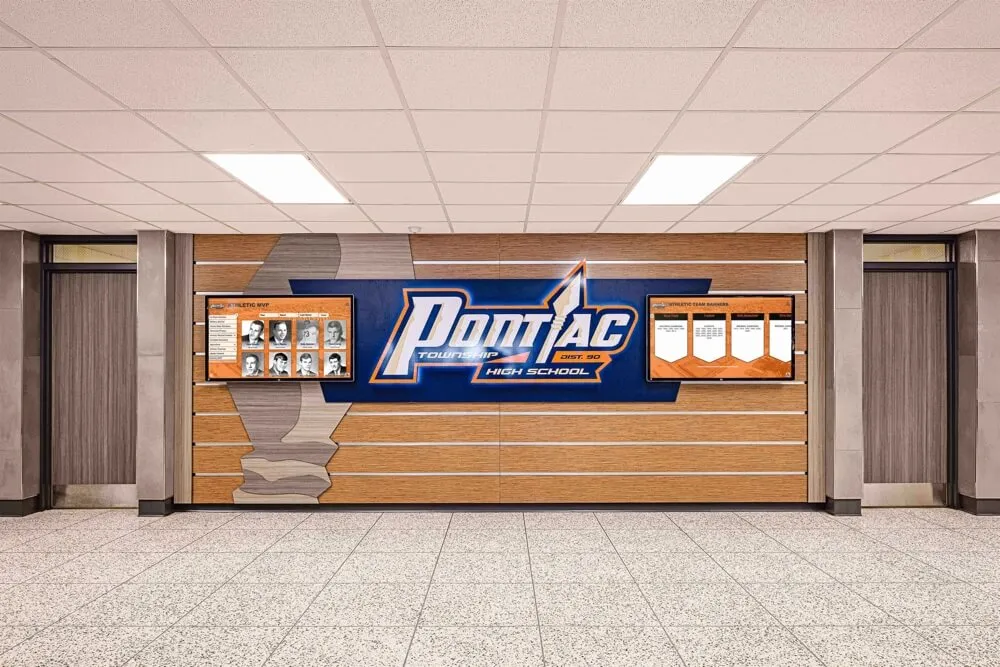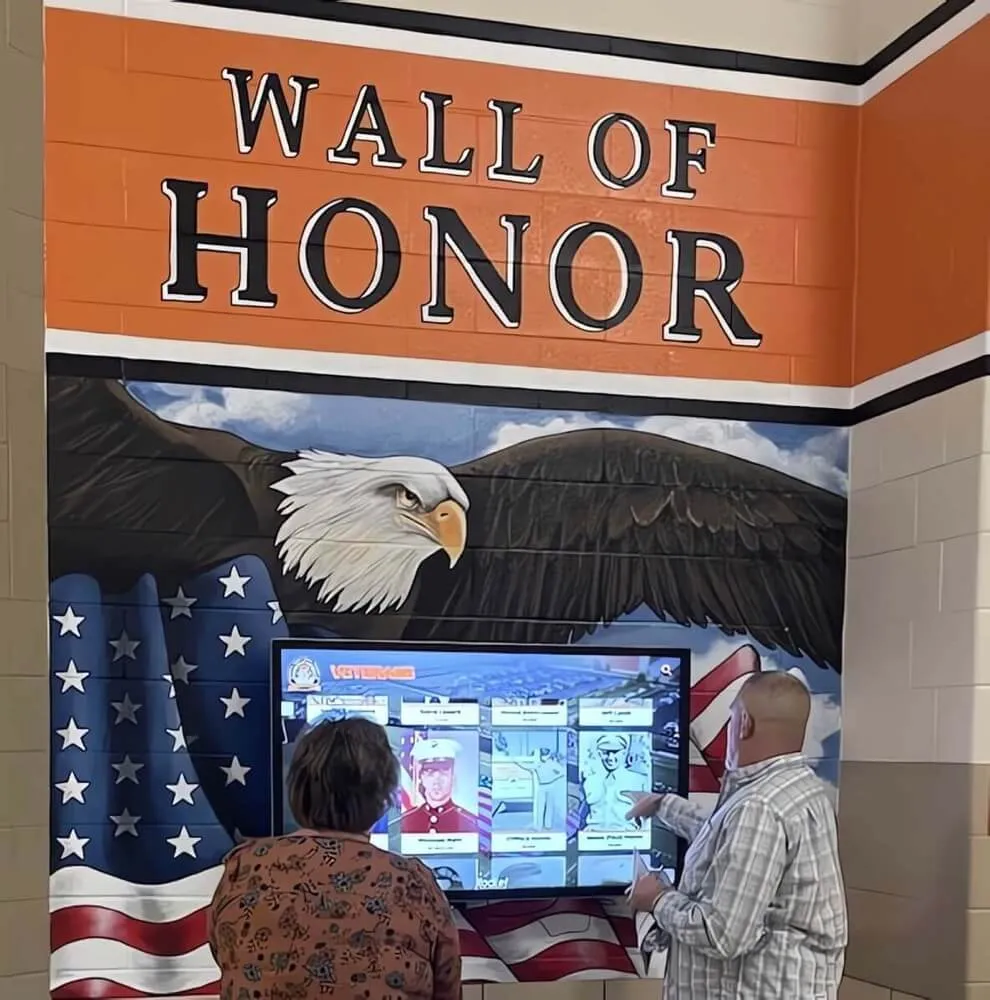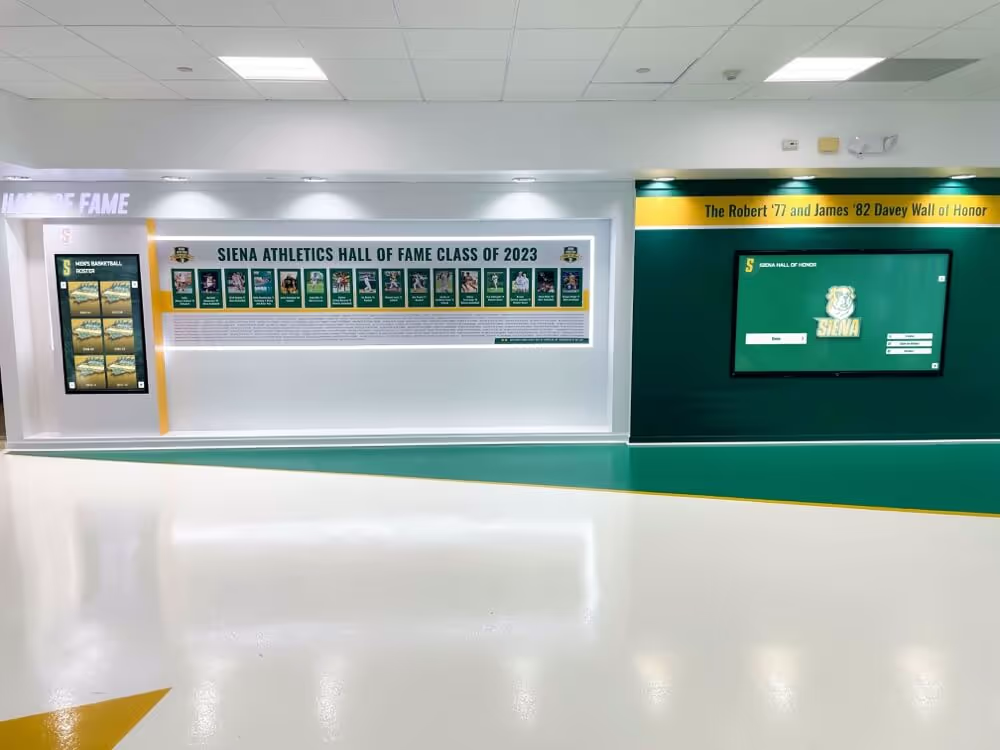




Organizations launching capital campaigns, building renovations, or major fundraising initiatives face a fundamental question: how do we recognize donors in ways that honor their generosity, inspire future giving, and remain financially sustainable over decades? Traditional donor walls featuring engraved plaques have served this purpose for generations, yet many institutions discover that physical recognition approaches create unexpected challenges including limited space for future donors, expensive ongoing updates, maintenance requirements, and inability to tell rich donor stories beyond names and gift amounts.
Donor wall planning in 2026 presents organizations with more options than ever before. Traditional physical plaques, modern digital displays, interactive touchscreens, and hybrid approaches each offer distinct advantages depending on organizational priorities, budgets, facility constraints, and community expectations. Making informed decisions requires understanding available technologies, realistic cost structures, implementation best practices, and long-term maintenance implications.
This comprehensive guide examines everything organizations need to know about donor wall planning, design, and implementation in 2026. You’ll discover essential planning steps before committing to recognition approaches, detailed comparisons of traditional versus digital donor wall technologies, proven design principles maximizing donor engagement and giving inspiration, realistic cost analysis covering both initial investments and long-term expenses, implementation best practices ensuring successful installations, and maintenance strategies keeping recognition programs relevant for decades.
Whether you’re launching your first donor recognition program, expanding existing recognition to accommodate growth, or modernizing outdated approaches that no longer serve organizational needs, this guide provides the insights needed to make strategic decisions that will honor donors appropriately while supporting fundraising objectives for years to come.
Understanding Donor Walls: Definition, Purpose, and Strategic Value
Donor walls represent dedicated physical or digital spaces publicly recognizing individuals, families, corporations, and foundations who have supported organizations through financial contributions. These recognition displays serve multiple strategic purposes beyond simply listing names.
Core Functions Donor Walls Serve
Public Acknowledgment and Gratitude:
Donor walls provide visible, lasting recognition honoring contributions that make organizational missions possible. This public acknowledgment demonstrates institutional appreciation while validating donors’ decisions to invest in causes they care about deeply.
Inspiration for Future Giving:
Well-designed recognition displays inspire additional giving by showcasing philanthropic community support. Prospective donors seeing peers’ names gain confidence that the organization merits investment. Existing donors viewing growing recognition may consider increasing giving levels to achieve higher recognition tiers.
Cultivation of Giving Culture:
Donor walls normalize philanthropy within organizational communities. Students, patients, members, and visitors regularly exposed to donor recognition develop understanding that community support makes services, facilities, and programs possible, fostering future giving as they develop capacity.
Stewardship and Relationship Building:
Recognition displays provide tangible stewardship fulfilling promises made during solicitation. Donors appreciate seeing their names displayed permanently, validating giving decisions and strengthening emotional connections with institutions they support.
Campaign Momentum Generation:
During active campaigns, donor walls demonstrate progress visually, creating excitement and urgency. Seeing recognition spaces fill motivates prospective donors to commit before missing opportunities for prominent placement.
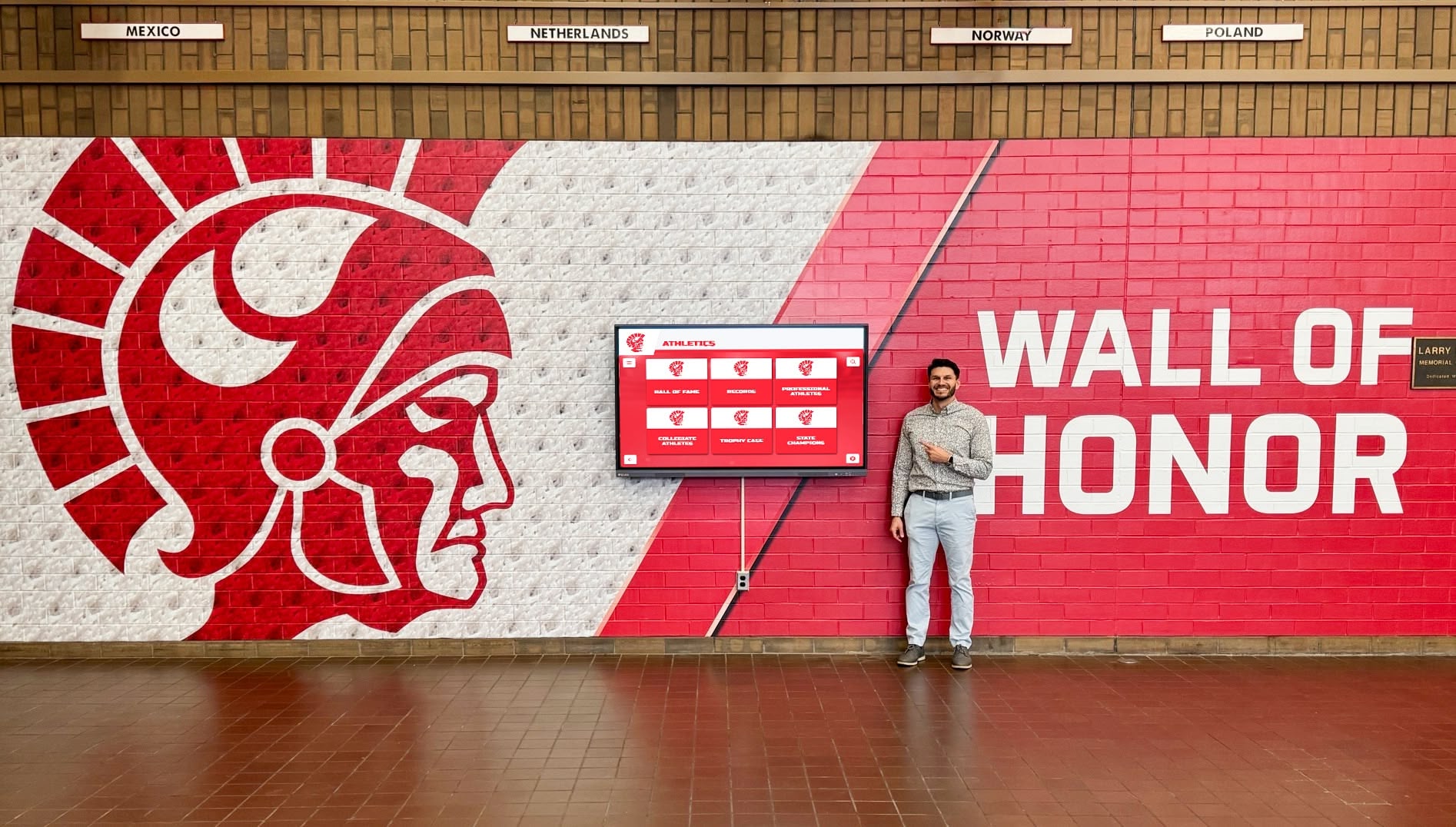
Where Organizations Install Donor Walls
Strategic placement maximizes recognition impact and donor appreciation:
Educational Institutions:
- Main building lobbies and entrances
- Library atriums and study spaces
- Athletic facilities and field houses
- Performing arts centers and theaters
- New construction or renovated buildings funded by campaigns
- Alumni centers and gathering spaces
Healthcare Organizations:
- Hospital main entrances and registration areas
- Patient care pavilions and treatment centers
- Medical research buildings and laboratories
- Emergency department waiting areas
- Cancer treatment centers and specialty clinics
- Cafeterias and family waiting spaces
Nonprofit Organizations:
- Community center main entrances
- Program service areas
- Event venues and gathering halls
- Administrative building lobbies
- Museum galleries and exhibition spaces
- Performing arts venues and cultural centers
Religious Institutions:
- Church narthex and gathering spaces
- Fellowship halls and community rooms
- Building campaign construction sites
- Education wings and youth program facilities
- Renovation project areas
Placement decisions balance donor visibility, organizational traffic patterns, maintenance accessibility, and facility aesthetics.
Traditional Donor Wall Approaches: Physical Recognition Options
Physical donor walls have recognized philanthropic support for decades through various material approaches and design styles.
Engraved Plaques on Mounted Boards
The most traditional approach features individual donor name plaques mounted on decorative backboards, typically installed in prominent building locations.
Common Materials:
Bronze or Brass Plaques: Premium appearance with traditional aesthetic; typically laser-engraved or cast with raised lettering. Bronze develops natural patina over time creating distinguished aged appearance. Investment ranges $150-$400 per plaque depending on size and finish.
Stainless Steel or Aluminum Plaques: Modern aesthetic with clean lines; typically laser-engraved or etched. These materials resist corrosion well and maintain appearance with minimal maintenance. Cost ranges $75-$250 per plaque.
Acrylic or Wood Plaques: Budget-friendly options suitable for smaller campaigns or regional recognition areas. Acrylic offers transparency effects with modern styling; wood provides warmth with traditional character. Cost ranges $40-$150 per plaque.
Mounting Board Options:
Plaques attach to decorative backboards constructed from wood paneling, fabric-covered boards, painted walls, brick or stone surfaces, custom metalwork, or architectural millwork matching facility design.
Advantages:
- Traditional aesthetic familiar to donors and communities
- No ongoing technology costs or digital infrastructure required
- Tactile quality and physical presence
- Premium materials convey significance and permanence
- Established vendor ecosystem with proven processes
Limitations:
- Fixed space constraints limiting future growth capacity
- Expensive ongoing additions as new donors give
- Labor-intensive installation requiring facility access
- Limited storytelling beyond names and giving levels
- Updates require physical access and professional installation
- No remote accessibility for broader donor community
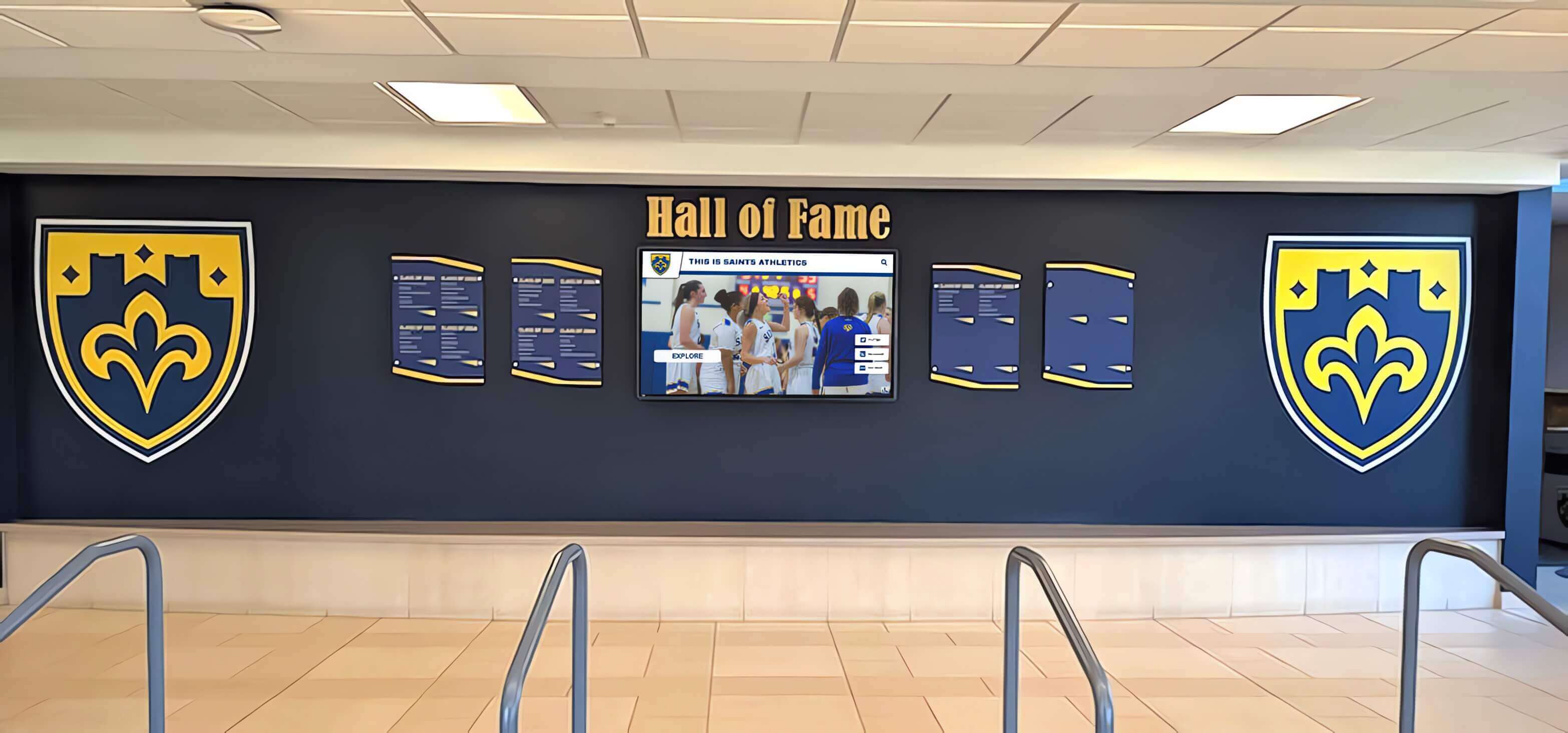
Etched or Carved Wall Surfaces
Premium installations integrate donor recognition directly into architectural elements through etching, carving, or inlaying names into permanent building materials.
Common Applications:
Glass Wall Etching: Names sandblasted or laser-etched into architectural glass panels create sophisticated transparent displays with backlighting possibilities. Common in modern buildings with extensive glazing.
Stone or Brick Engraving: Donor names carved directly into limestone, granite, marble, or brick surfaces create permanent recognition literally built into facility architecture.
Metal Panel Systems: Donor names cut or engraved into architectural metal panels matching building exteriors or interior design themes.
Advantages:
- Exceptional permanence and premium aesthetic
- Integrated architectural appearance
- Highly prestigious recognition
- Minimal maintenance requirements
- Cannot be easily damaged or removed
Limitations:
- Extremely expensive initial investment ($50,000-$250,000+)
- Nearly impossible to modify after installation
- Advance planning required during building design phase
- Very limited flexibility for campaign adjustments
- Space constraints even more rigid than plaque systems
- High risk if campaign goals not met
Organizations rarely choose these approaches unless campaign success is virtually guaranteed before installation.
Donor Recognition Gardens and Outdoor Spaces
Exterior recognition approaches integrate philanthropy acknowledgment into landscaped environments through engraved pavers, dedication stones, memorial benches, and recognition signage.
Common Elements:
Engraved Pavers or Bricks: Individual recognition bricks creating walkways or patios; typically 4"x8" or 8"x8" bricks laser-engraved with donor names, memorial messages, or commemorative text. Cost $100-$300 per brick including installation.
Donor Benches: Memorial or dedication benches with engraved plaques recognizing major gifts; provide functional seating while honoring philanthropy. Cost $1,500-$5,000 per bench.
Stone Monuments: Freestanding recognition stones or walls featuring donor names engraved into granite or limestone surfaces; typically recognize leadership gifts.
Advantages:
- Pleasant recognition environment integrated with campus spaces
- Functional use as gathering or contemplative areas
- Lower cost per recognition unit than interior plaques
- Expandable design accommodating growth
- Memorial and commemorative appeal
Limitations:
- Weather exposure requiring durable materials and maintenance
- Visibility challenges in outdoor locations
- Seasonal accessibility issues in certain climates
- Security concerns in unsupervised exterior locations
- Limited storytelling capabilities
- No digital or multimedia integration
Digital Donor Wall Technologies: Modern Recognition Solutions
Digital recognition technologies provide alternatives to traditional physical approaches, offering unique advantages for storytelling, flexibility, and long-term cost management.
Static Digital Displays (Non-Interactive)
Basic digital donor walls use standard commercial displays showing donor recognition content through looping slideshows or static screens.
Technology Components:
- Commercial-grade display screens (43"-75" typical)
- Media player or mini PC running presentation software
- Content management software for designing recognition displays
- Network connectivity for remote content updates
Content Presentation Approaches:
Recognition content typically displays through rotating slides showing giving society members, scrolling donor lists organized by gift levels, photo galleries featuring donor events and campaign highlights, campaign thermometer graphics showing fundraising progress, and donor spotlight features with photos and brief biographical information.
Advantages:
- Lower initial cost than interactive touchscreen systems ($3,000-$8,000 per display)
- Simple content management requiring minimal technical expertise
- Easy updates without physical access to displays
- Unlimited recognition capacity unconstrained by physical space
- Multimedia capabilities including photos and videos
- Flexibility changing content based on campaigns or seasons
Limitations:
- Passive viewing only without interaction
- Limited donor engagement compared to searchable databases
- Content must cycle through all donors reducing individual visibility
- Requires ongoing content design and management
- No ability for donors to explore personal recognition on demand
- Lacks web accessibility for remote viewing
Static digital displays work well for smaller donor populations (under 500 names) where cycling through all recognition remains practical, or as campaign progress displays complementing other recognition methods.
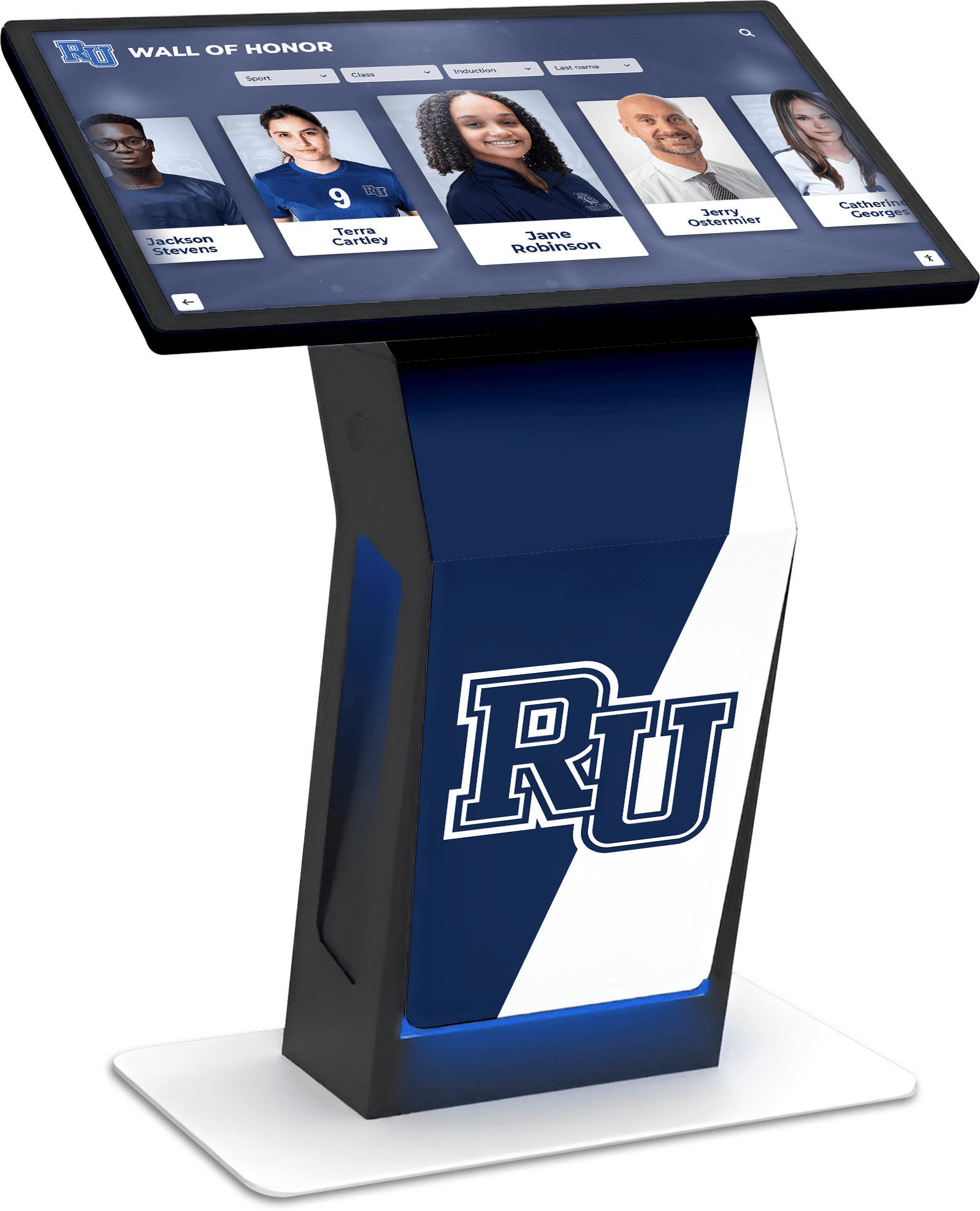
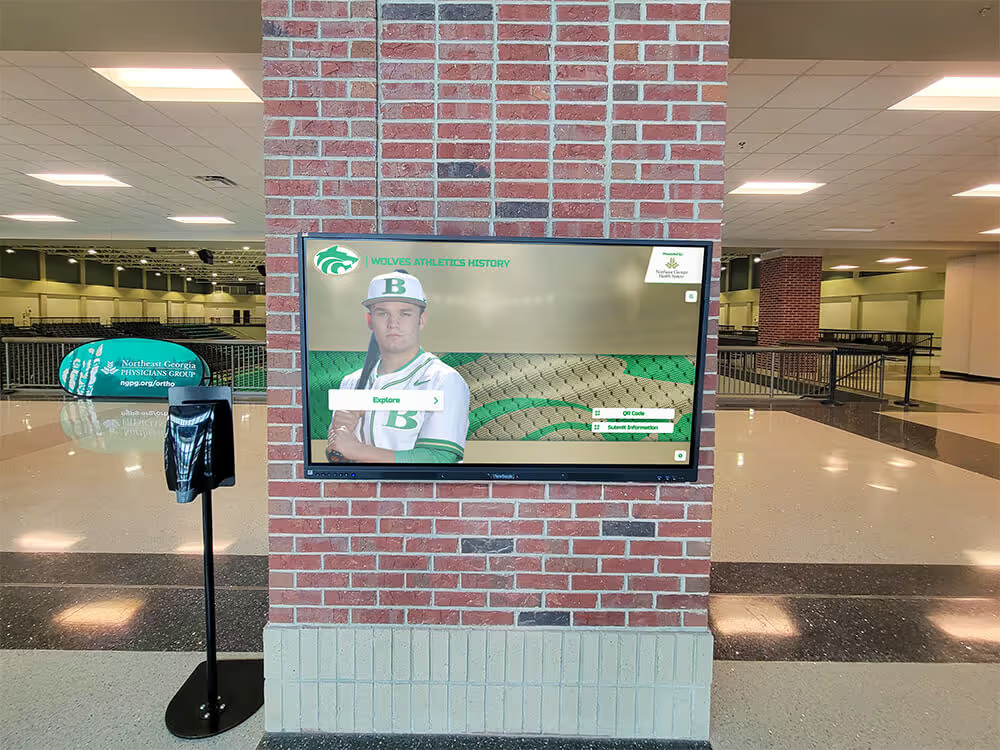
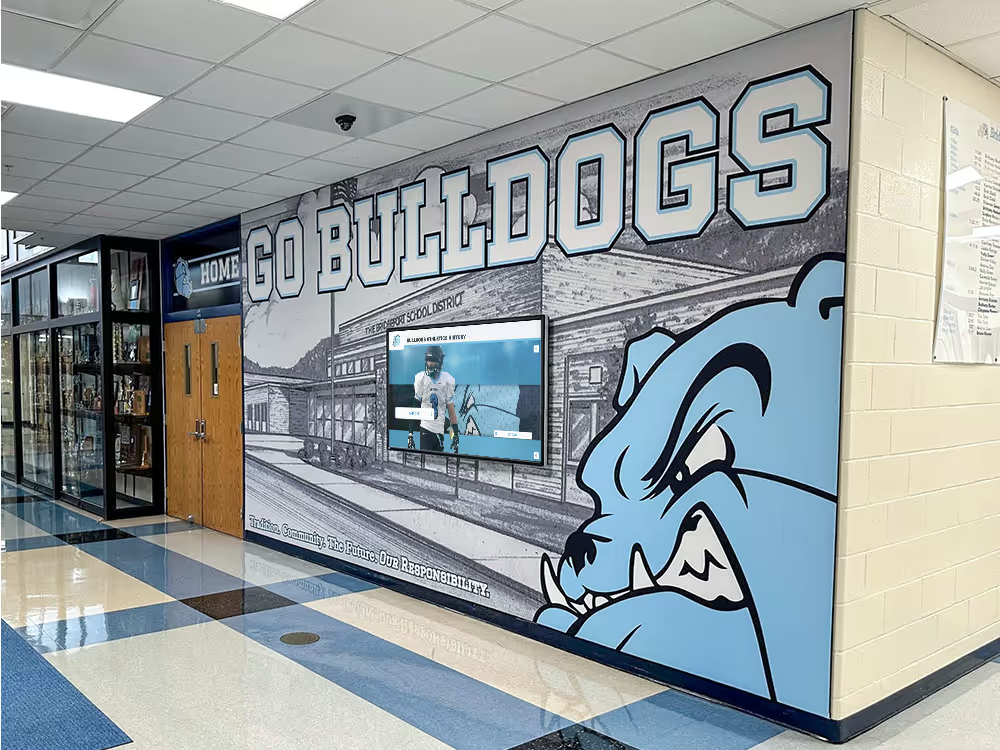
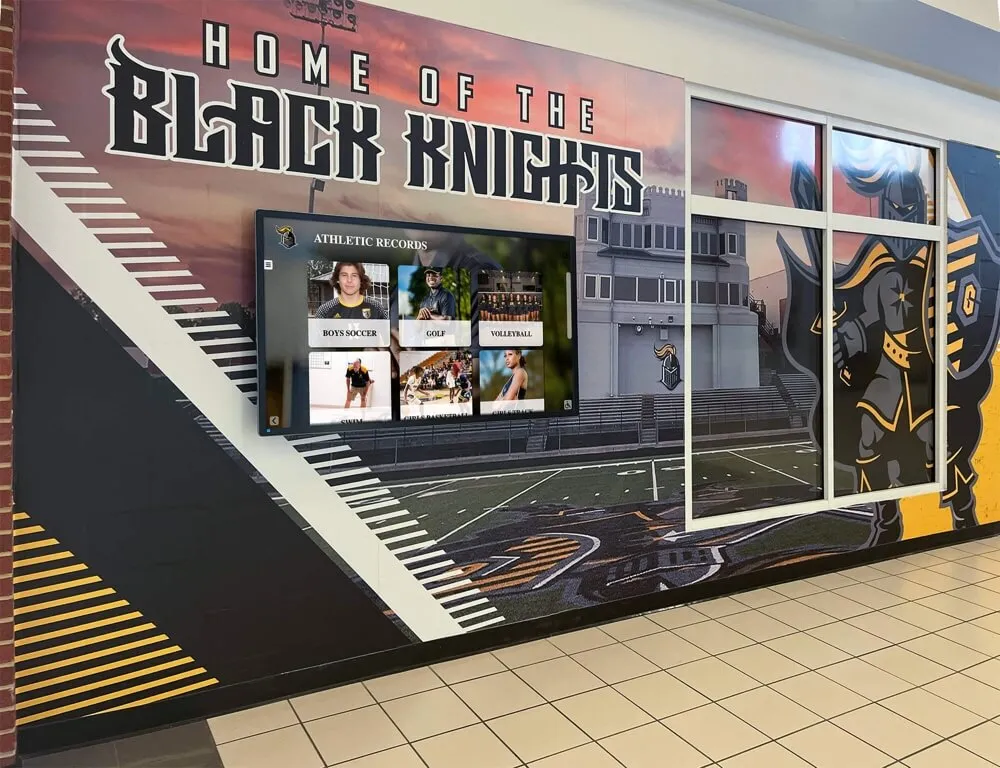
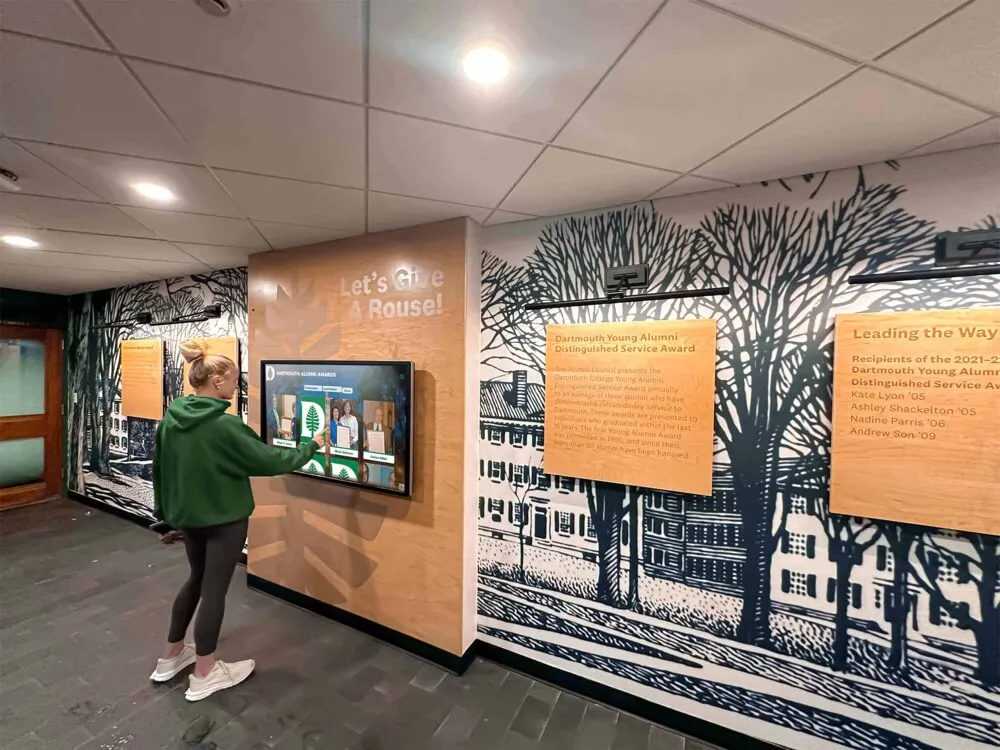
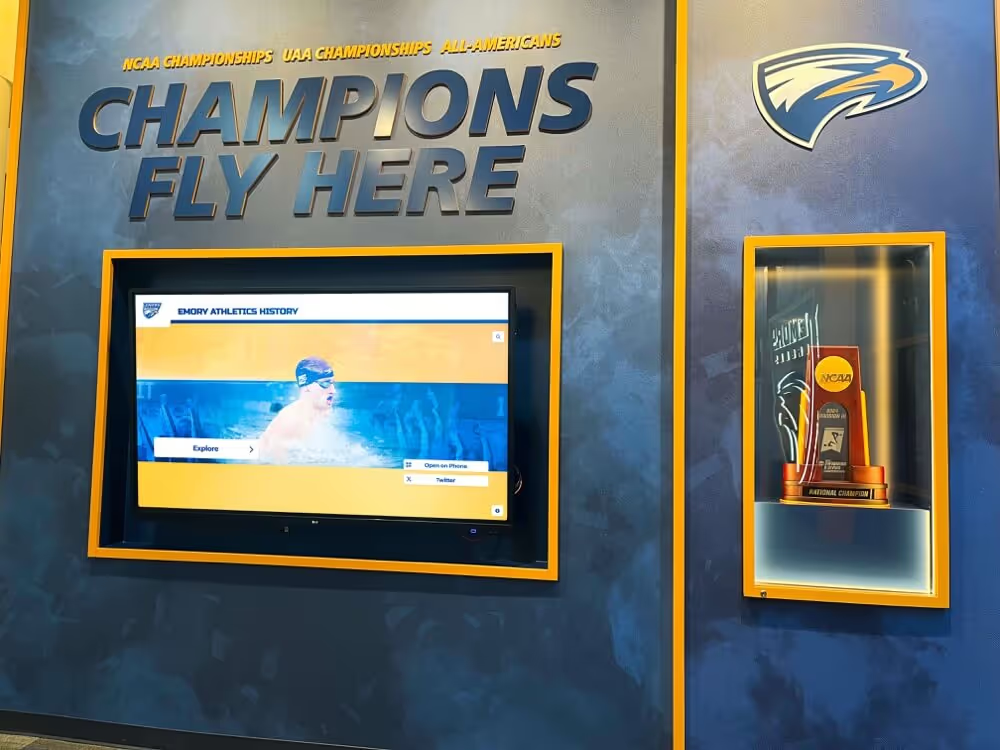
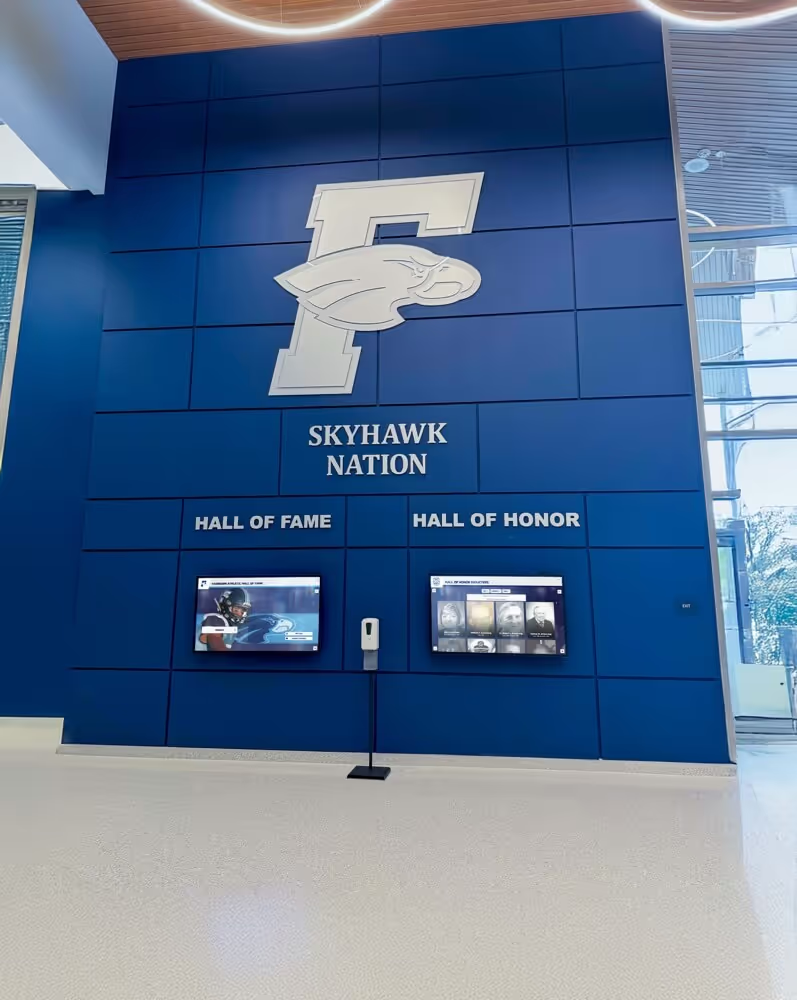
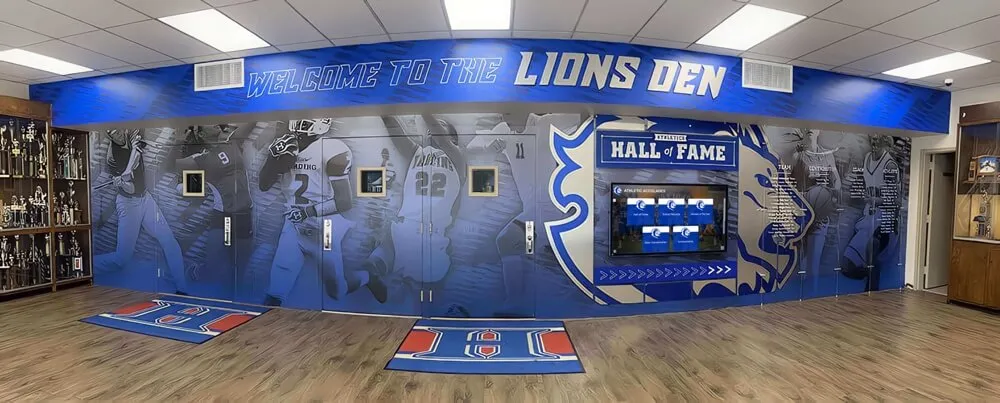
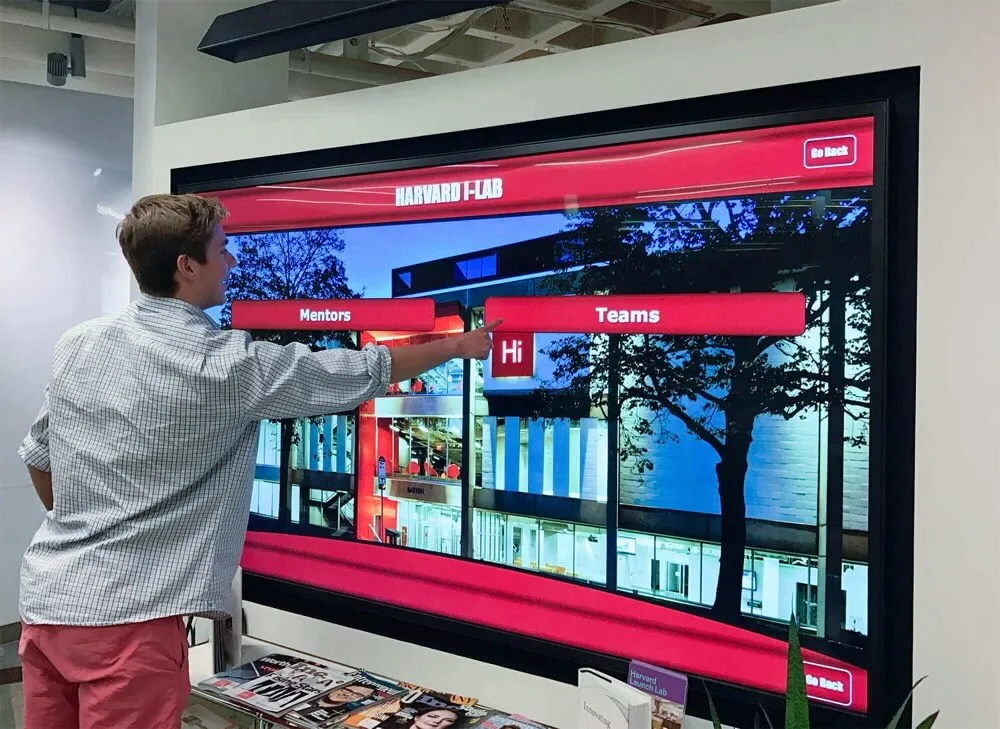
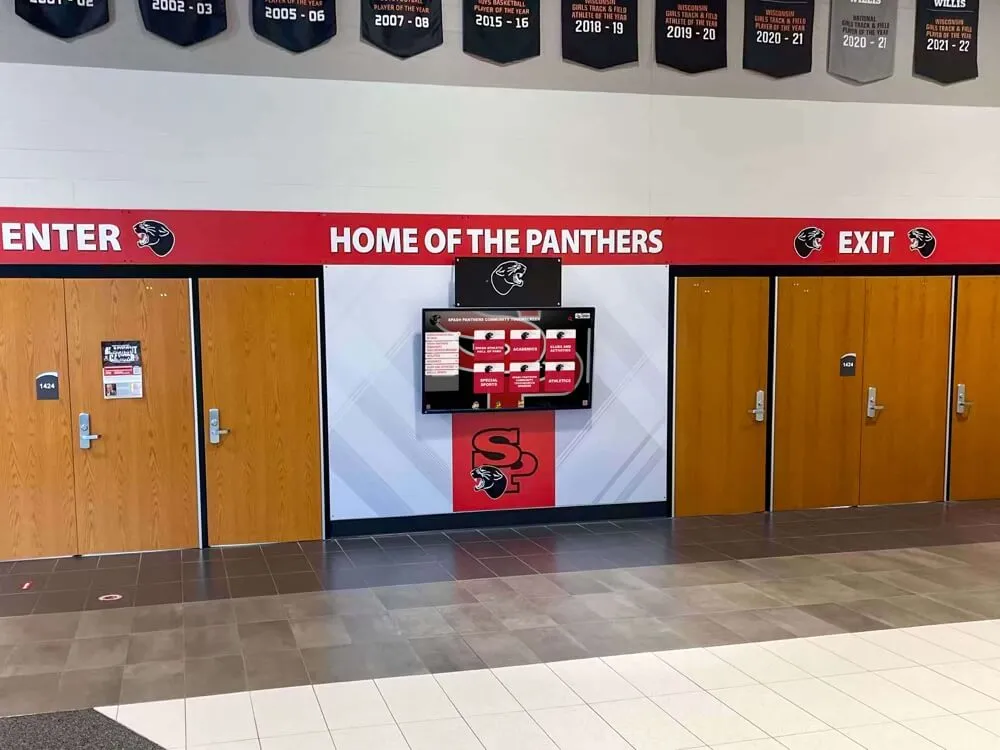
Interactive Touchscreen Donor Walls
Purpose-built interactive systems provide searchable donor databases accessible through touchscreen displays, offering the most sophisticated digital recognition approach.
Technology Components:
- Commercial-grade touchscreen displays (43"-86" typical)
- Commercial media player or mini PC running recognition software
- Specialized donor recognition software with database functionality
- Web-accessible interface for remote donor access
- Content management dashboard for staff updates
Core Capabilities:
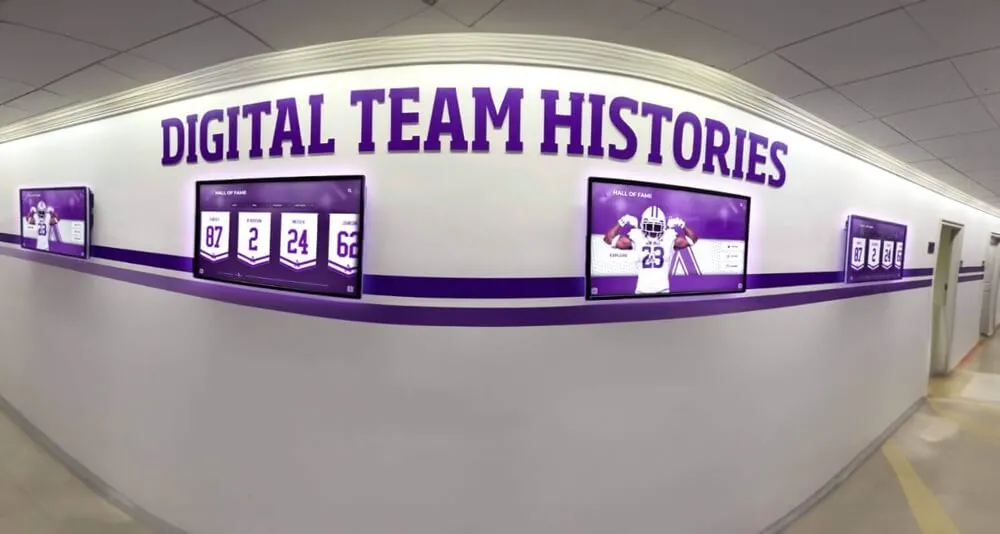
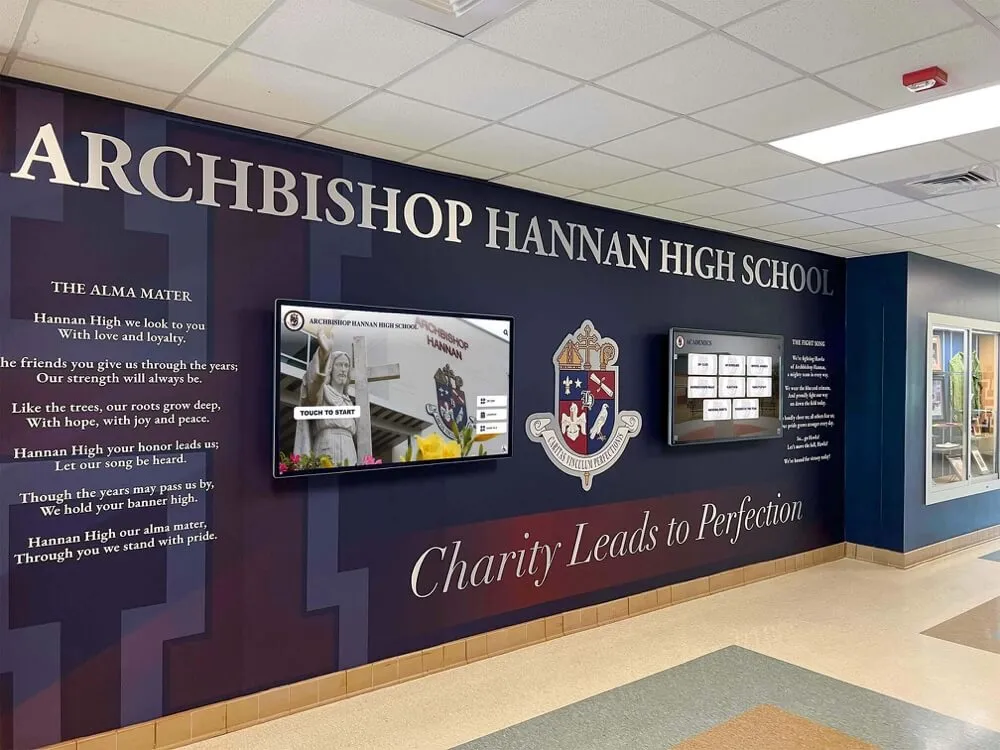
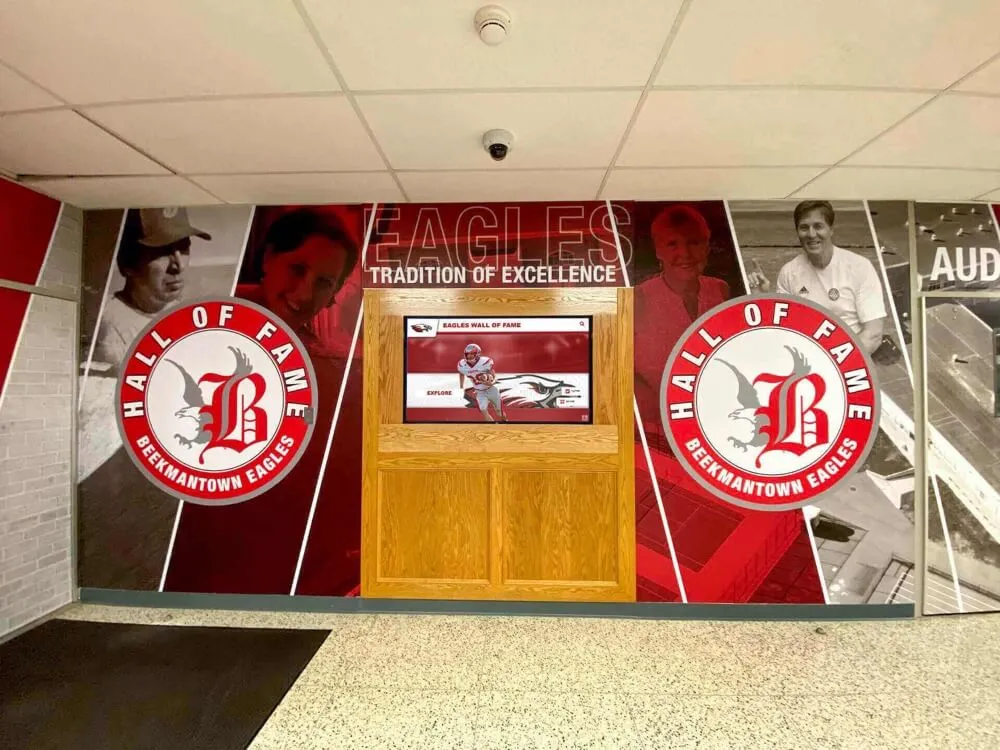
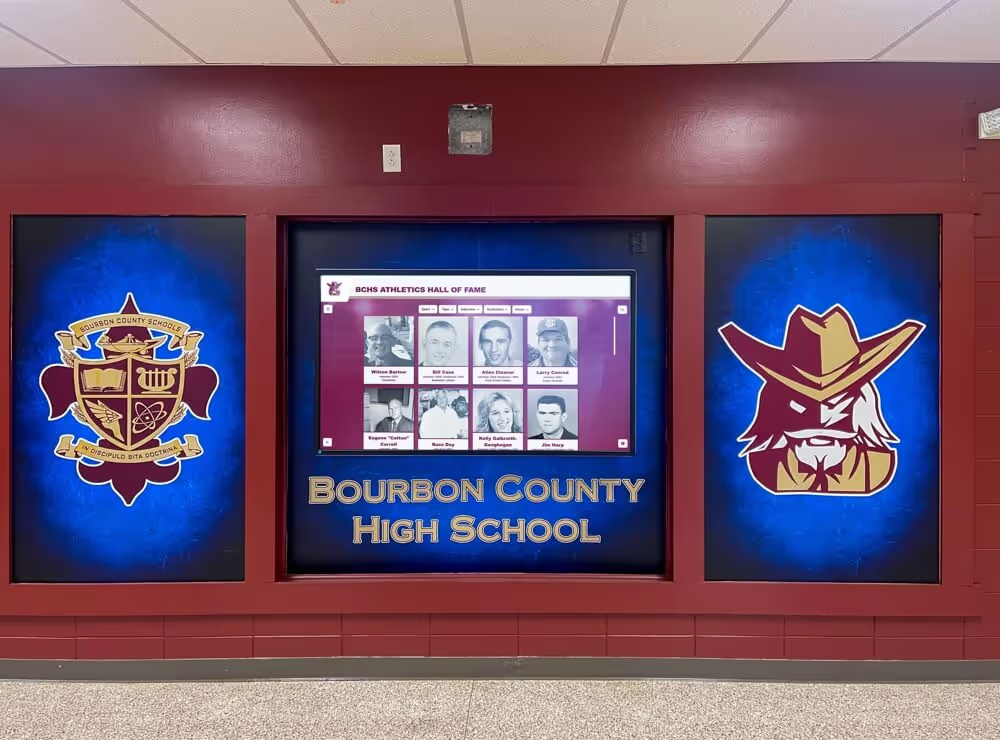
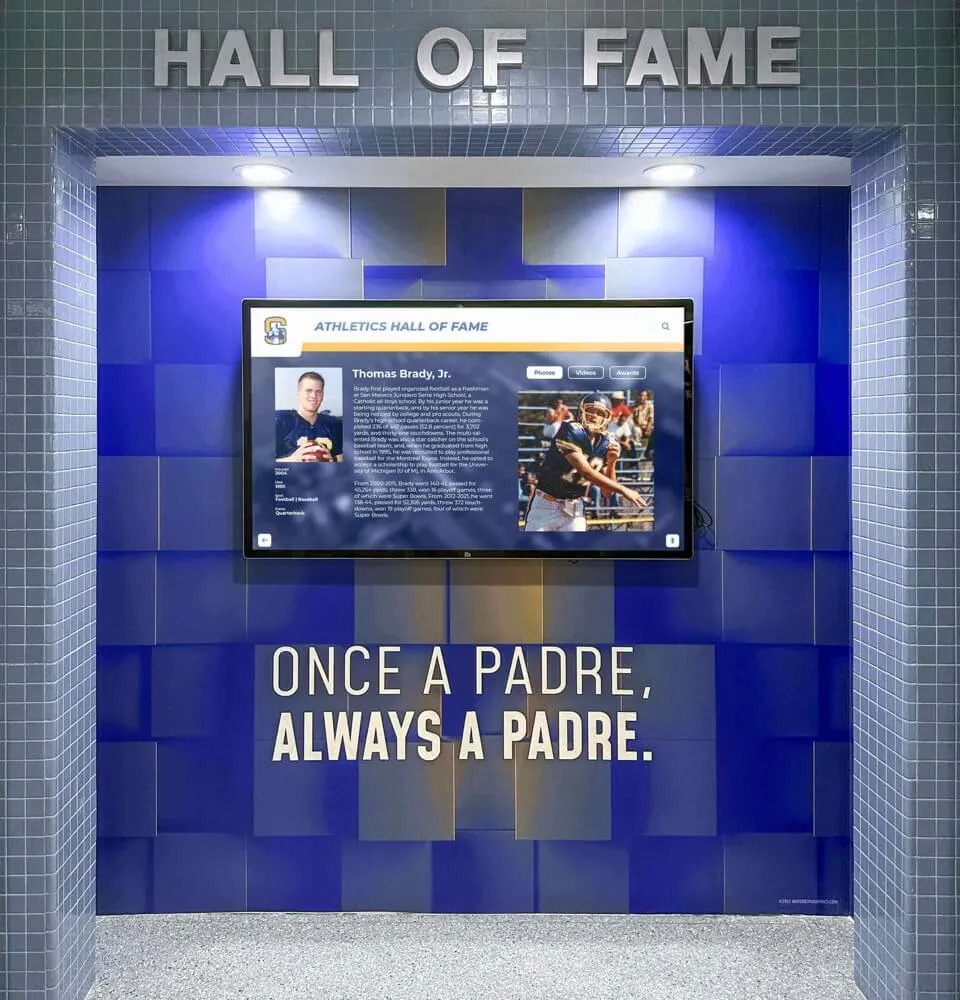
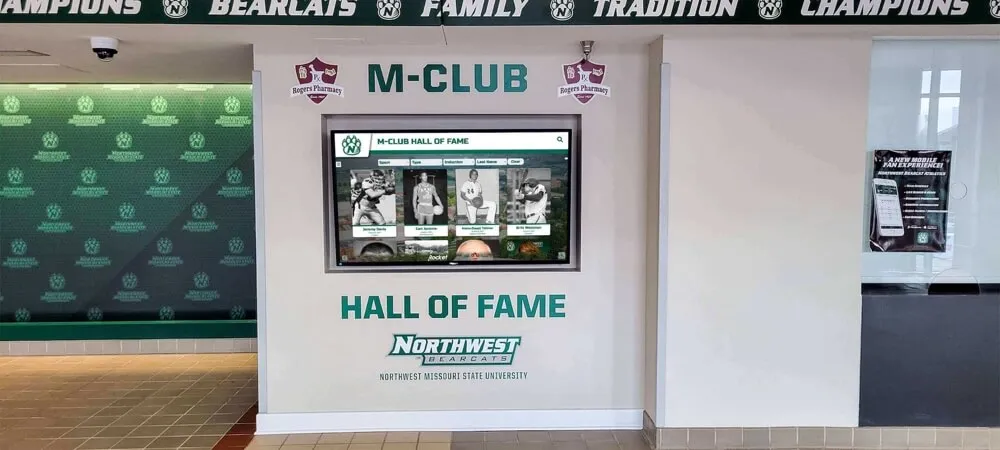
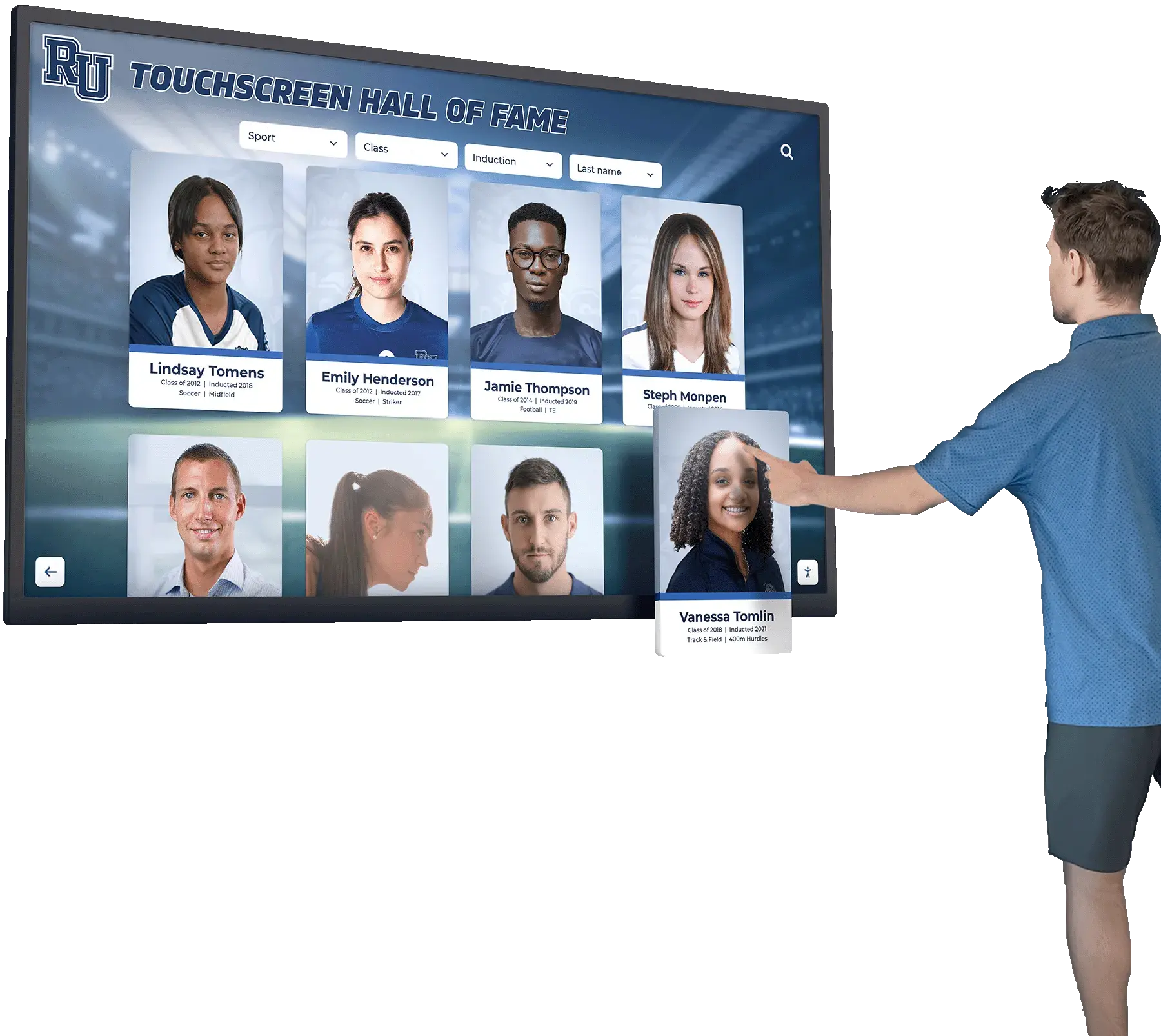
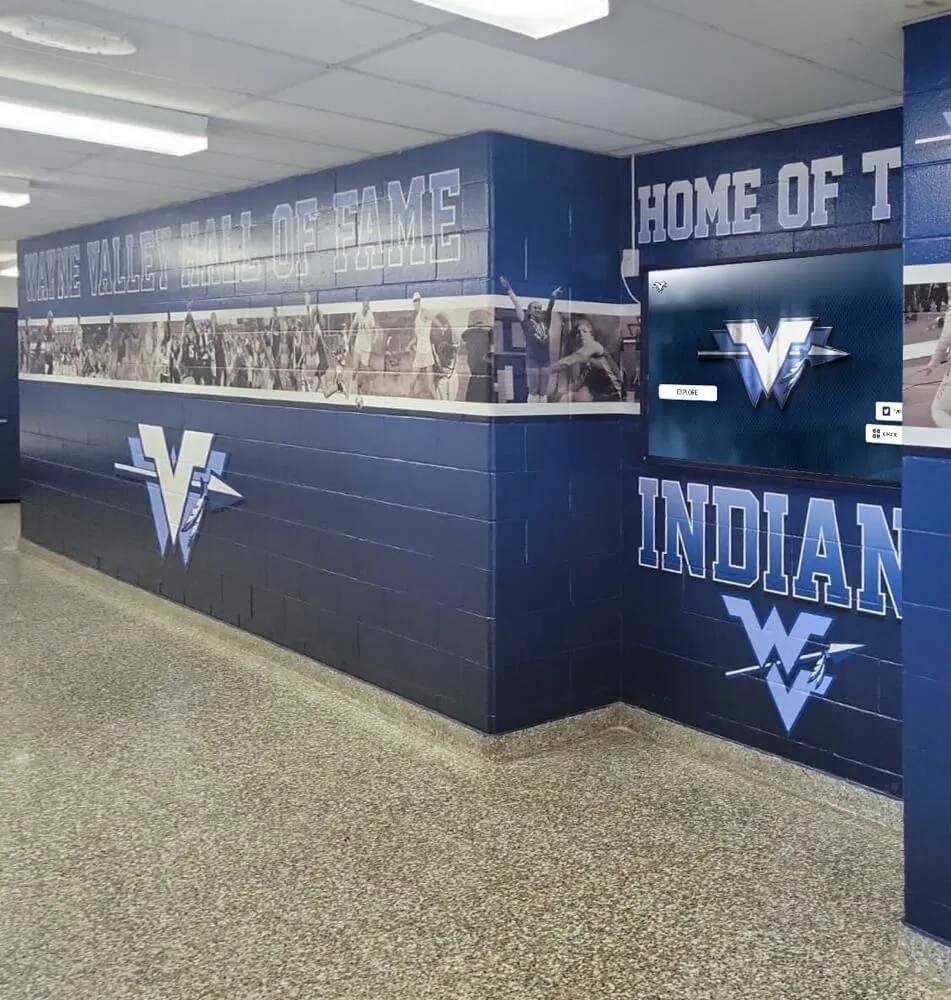
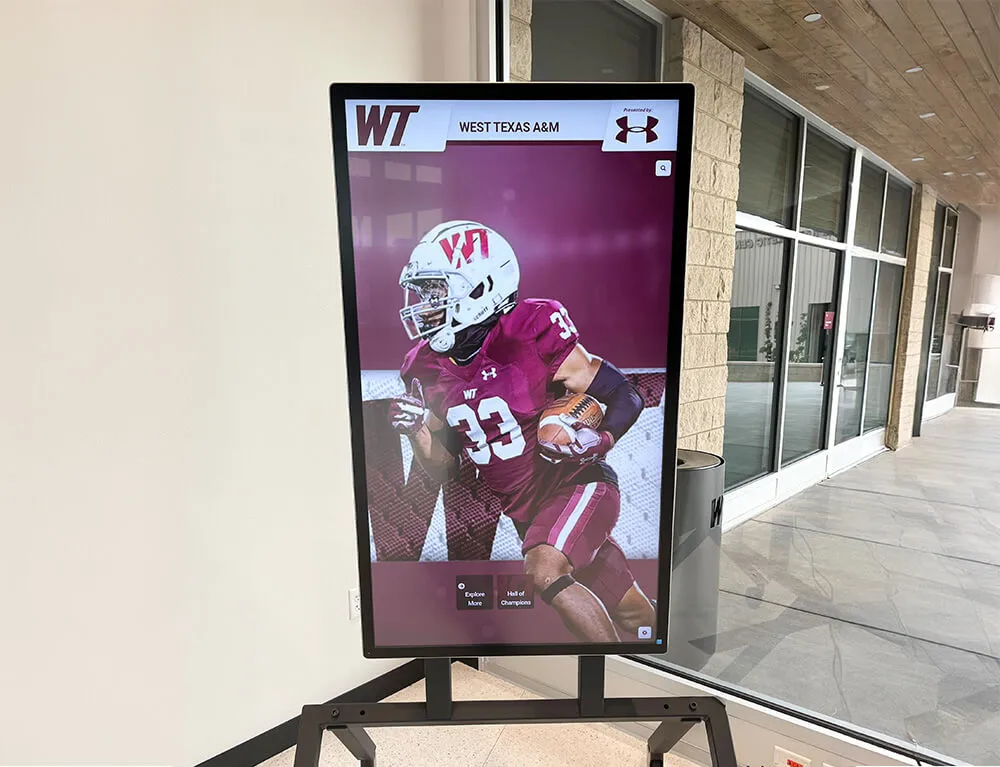
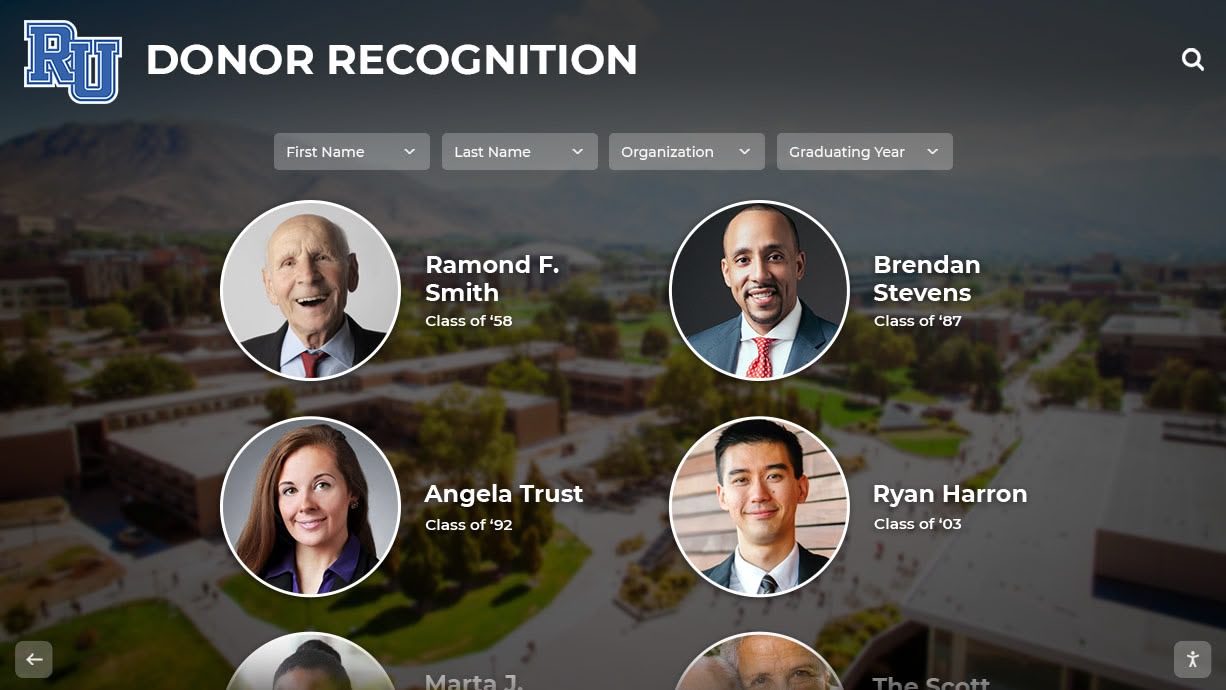
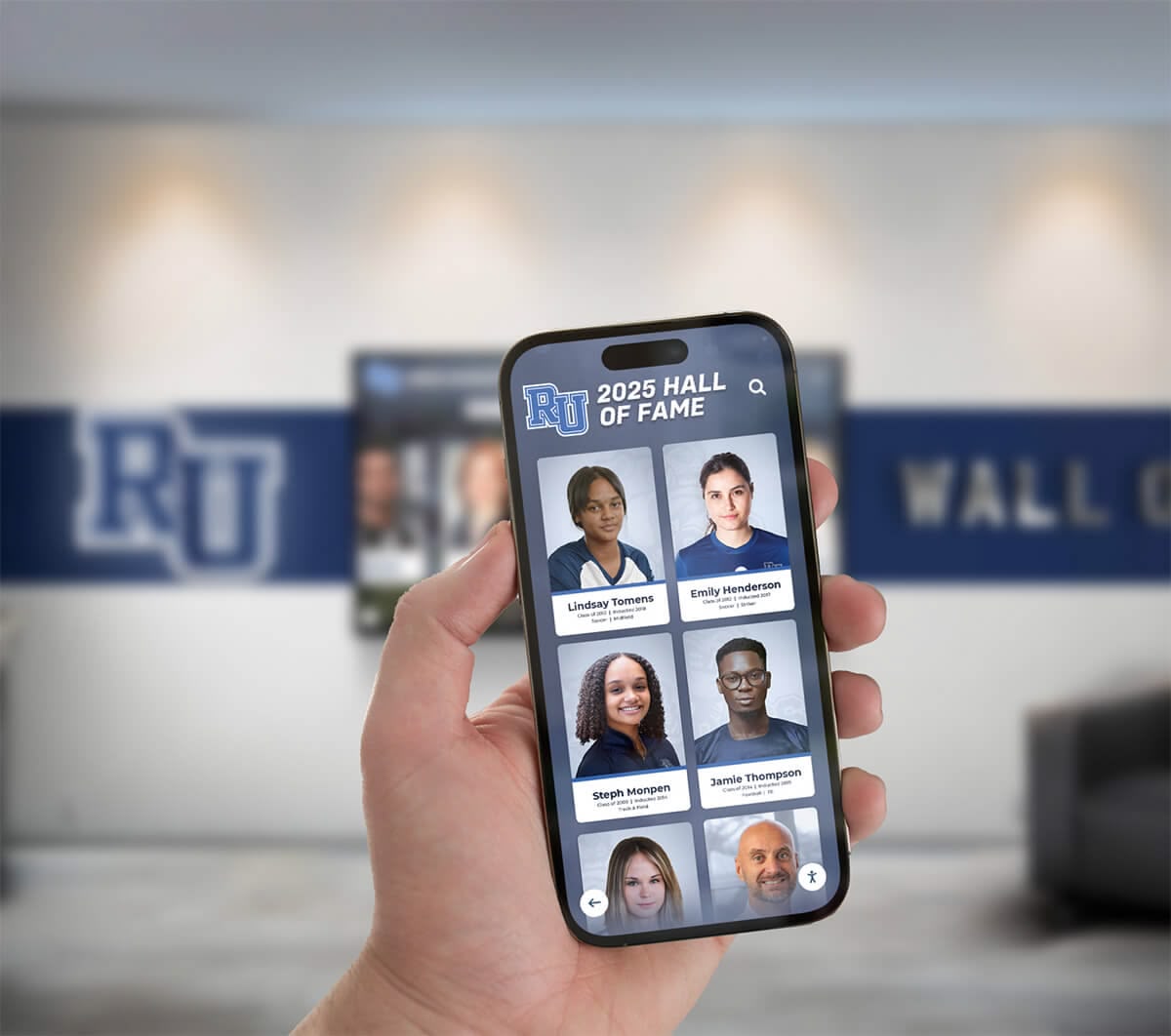
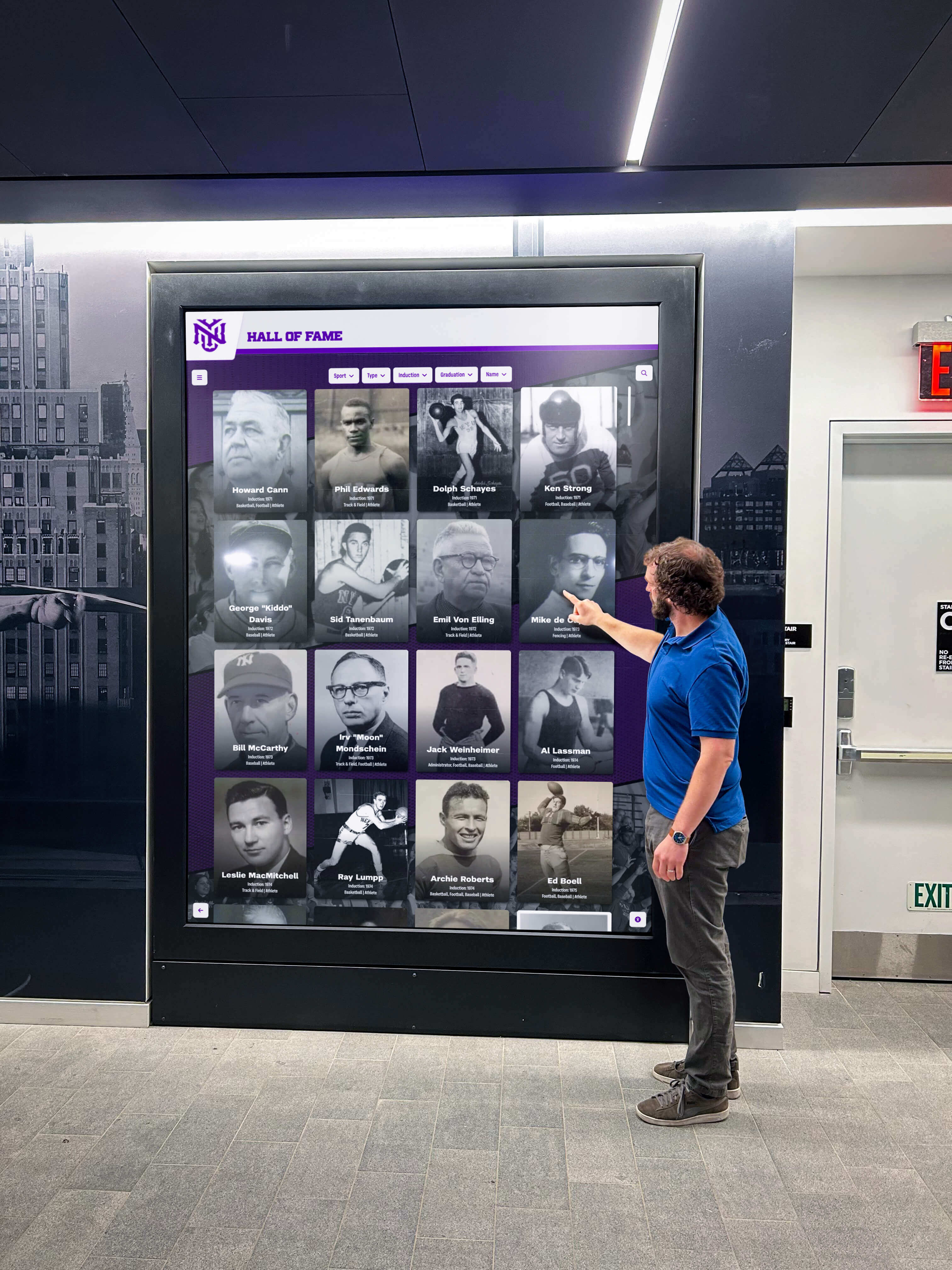
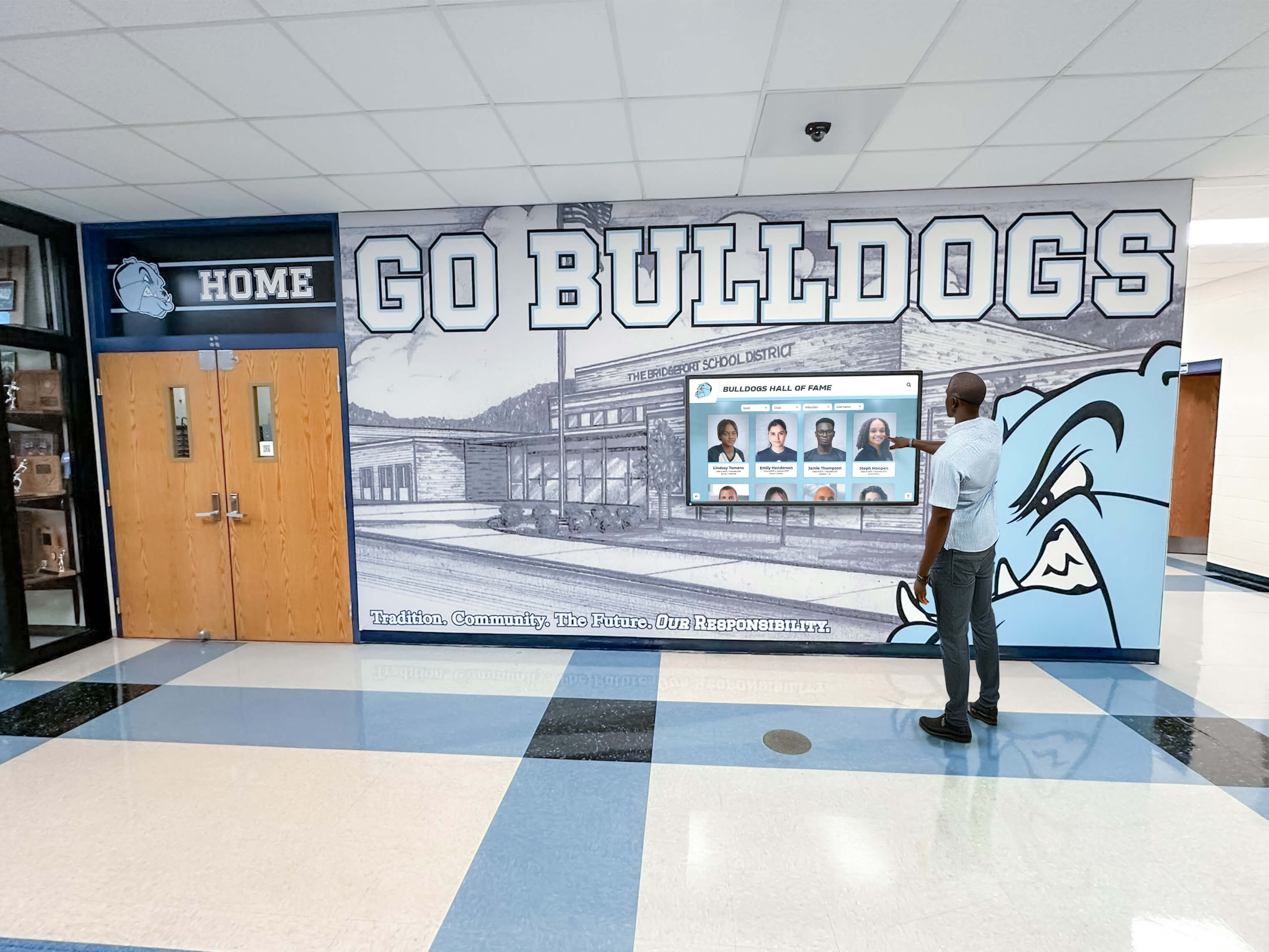
Interactive donor walls enable donors, visitors, and community members to search comprehensive databases by name, view detailed donor profiles with photos and biographical information, filter by giving level or campaign, explore giving society rosters, watch donor video testimonials, read donor stories and motivations, and share recognition on social media.
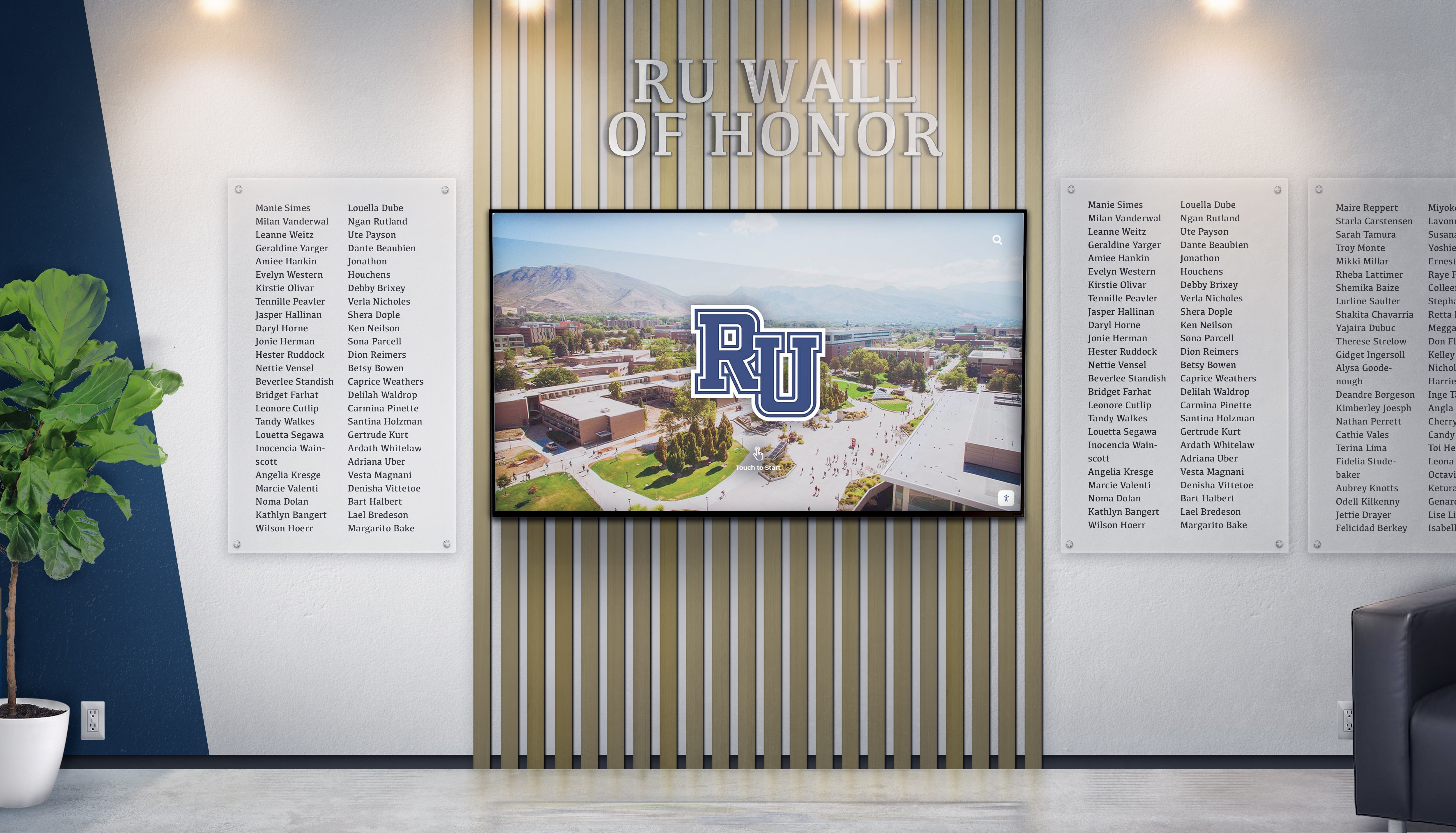
Purpose-built platforms like Rocket Alumni Solutions provide pre-designed templates specifically for donor recognition programs, making implementation straightforward even for organizations without technical expertise.
Advantages:
- Unlimited recognition capacity through searchable databases
- Rich storytelling with photos, videos, and biographical content
- Interactive engagement increasing donor visibility impact
- Web accessibility enabling remote exploration by entire donor community
- Lower long-term costs eliminating physical plaque additions
- Instant updates when new gifts occur
- Analytics tracking engagement and popular content
- Social sharing extending recognition reach
- ADA compliance with screen reader support
Limitations:
- Higher initial investment than static digital displays ($12,000-$35,000)
- Requires quality recognition software platform
- Content development more intensive than simple plaque lists
- Staff training needed for content management
- Dependence on technology and internet connectivity
- May feel less traditional to some donor populations
Interactive touchscreen systems prove most valuable for organizations with large donor populations (500+ individuals), complex giving societies with multiple recognition tiers, long-term sustainable recognition needs, desire to tell rich donor stories beyond just names, and web accessibility priorities for geographically distributed donor communities.
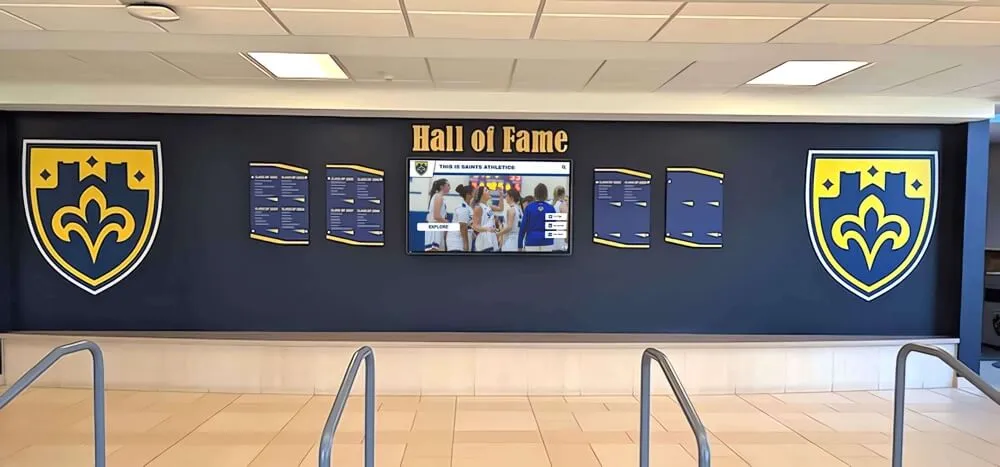
Hybrid Approaches: Combining Physical and Digital Recognition
Many organizations find optimal results combining traditional and modern approaches, gaining advantages of both while mitigating respective limitations.
Common Hybrid Models:
Leadership Donors on Physical Plaques + Digital Database: Major gift donors (typically $25,000+) receive permanent plaques recognizing transformational support, while broader donor populations appear in searchable interactive databases. This approach provides traditional prestige recognition for largest investors while managing ongoing costs sustainably.
Campaign-Specific Physical + Permanent Digital: Individual capital campaigns receive physical donor walls recognizing supporters of specific projects, while comprehensive digital databases preserve all historical giving across multiple campaigns, creating permanent institutional recognition beyond single initiatives.
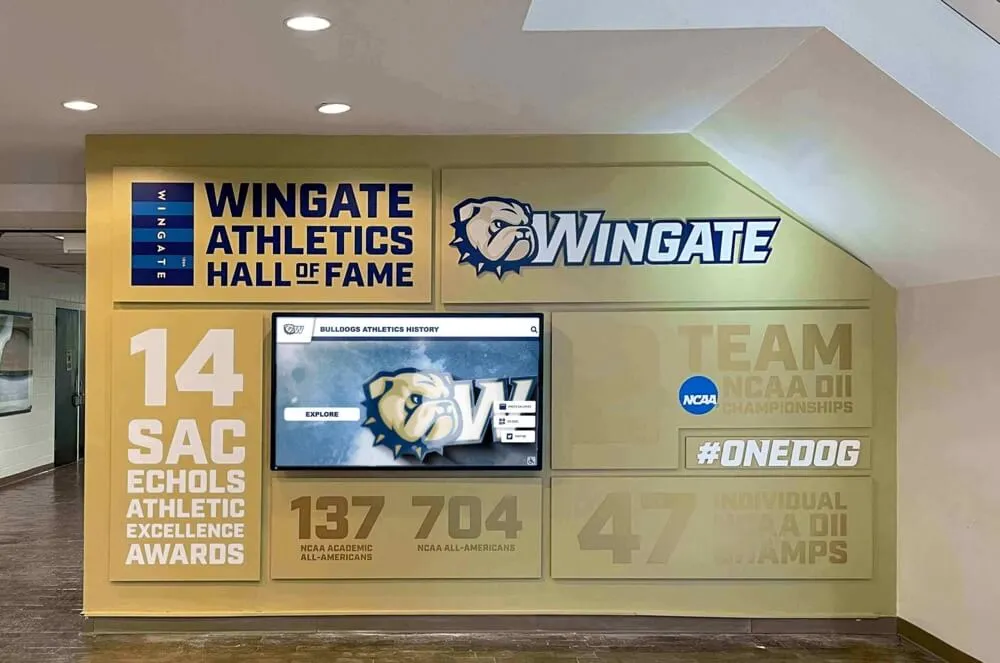
Physical Recognition with Digital Storytelling: Traditional donor name plaques supplement with adjacent digital displays featuring donor video interviews, gift impact stories, campaign highlights, and multimedia content enriching recognition beyond what physical plaques can convey.
Advantages of Hybrid Approaches:
- Balance tradition and innovation
- Meet diverse donor preference expectations
- Optimize costs by reserving expensive physical recognition for major gifts
- Provide rich storytelling digitally while maintaining traditional elements
- Future-proof recognition programs combining permanent physical prestige with flexible digital capacity
Implementation Considerations:
Successful hybrid programs require clear policies defining which donors receive which recognition types, ensuring consistent messaging explaining recognition approaches to all donors, and designing cohesive aesthetics integrating physical and digital elements harmoniously rather than creating disjointed experiences.
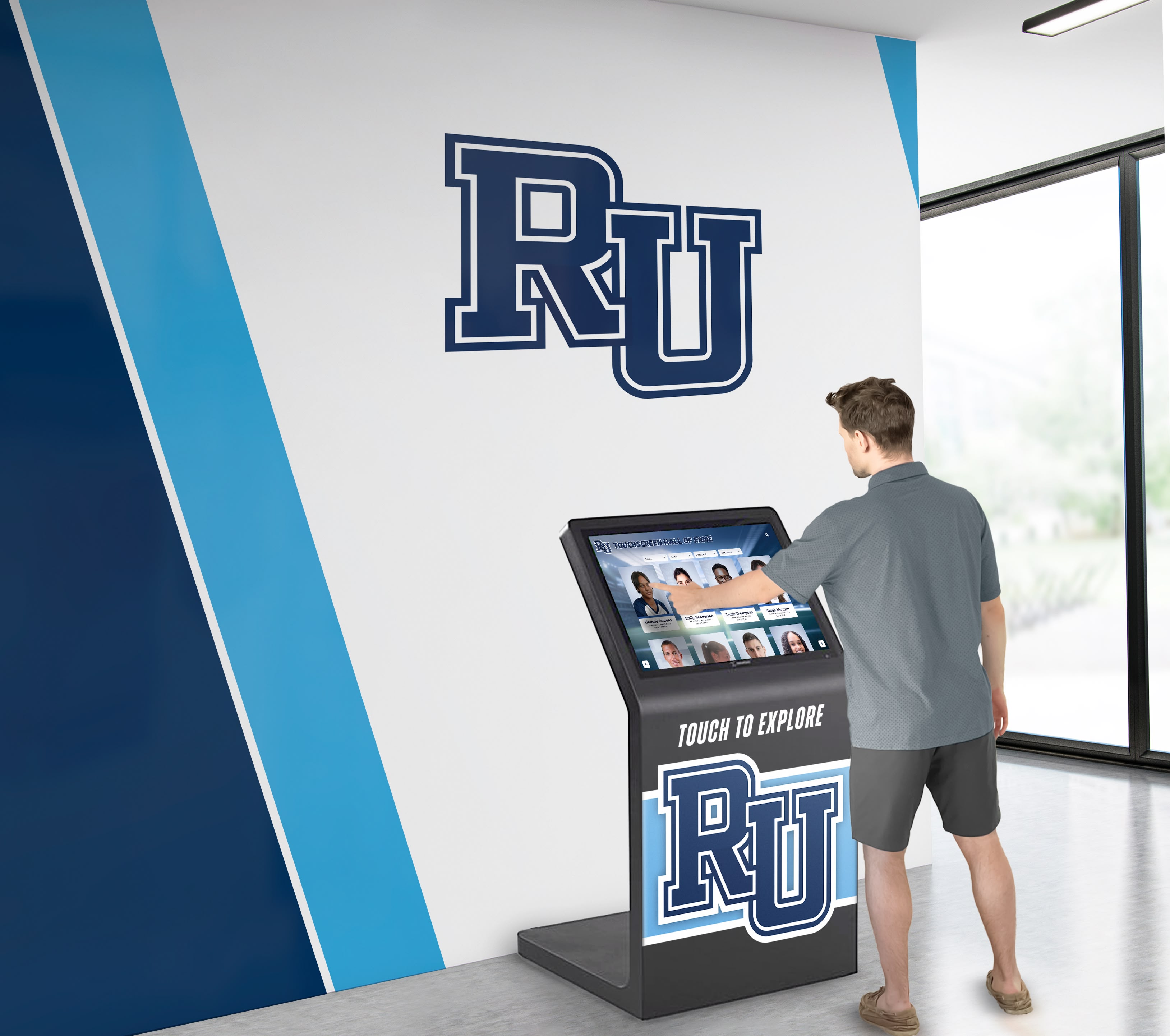
Critical Planning Steps Before Implementing Donor Walls
Thoughtful advance planning prevents expensive mistakes and ensures recognition programs serve organizational needs effectively for decades.
Step 1: Define Recognition Program Objectives
Clarify what your organization aims to achieve through donor recognition beyond simply displaying names.
Key Questions:
- Are we primarily providing stewardship fulfilling donor commitments?
- Do we want recognition inspiring additional giving from prospects?
- Should recognition educate community about philanthropy culture?
- Is storytelling about donor motivations and gift impact important?
- Do we need recognition supporting active campaign momentum?
- Should recognition be accessible to remote donor community members?
- Are we honoring specific campaign donors or all historical giving?
Clear objectives guide every subsequent decision about recognition approaches, technologies, budgets, and implementation strategies.
Step 2: Establish Recognition Policies and Criteria
Document clear policies defining who receives recognition, at what levels, and through which methods.
Essential Policy Elements:
Minimum Gift Thresholds: Define minimum contribution amounts qualifying for permanent recognition. Common thresholds range from $1,000 for broad community recognition to $25,000+ for leadership donor walls. Consider multi-year giving totals versus single gifts.
Recognition Level Tiers: Establish giving societies or recognition levels with clear benefits at each tier. Typical structures include: Benefactor Circle ($100,000+), Leadership Society ($50,000-$99,999), Patron Society ($25,000-$49,999), President’s Circle ($10,000-$24,999), and Founder’s Society ($5,000-$9,999).
Pledge Recognition Policies: Determine whether pledges qualify for immediate recognition or require fulfillment first. Many organizations recognize multi-year pledges upon full payment.
Anonymous Donor Handling: Respect donor privacy preferences while acknowledging contributions. Common approaches include listing as “Anonymous Donor” at appropriate giving levels.
Recognition Duration and Permanence: Define how long recognition lasts. Most permanent recognition requires outright gifts rather than annual fund contributions, though sustained giving clubs may recognize consistent multi-year support.
Naming Rights Policies: For major gifts warranting building, room, or program naming, establish clear policies about naming duration, recognition placement, and institutional approval processes.
Corporate and Foundation Recognition: Determine how organizational donors appear versus individual recognition, and whether corporate matching gifts receive separate acknowledgment.
Document policies formally and secure board approval before launching recognition programs to ensure consistency and avoid conflicts later.
Step 3: Assess Space Availability and Placement Options
Evaluate facility locations suitable for donor recognition considering visibility, traffic patterns, accessibility, and future expansion possibilities.
Ideal Location Characteristics:
- High visibility in prominent building locations
- Substantial daily foot traffic by key constituencies
- Adequate space for recognition displays and visitor viewing
- Appropriate dignity and aesthetic quality
- Accessibility compliance enabling all community members to view recognition
- Available electrical power and network connectivity for digital displays
- Suitable lighting conditions avoiding glare on displays
- Climate control protecting recognition elements from environmental damage
- Security preventing vandalism or theft
- Future expansion space accommodating program growth
Walk through facilities with development staff, facilities managers, architects, and donor representatives evaluating potential locations against these criteria before committing to specific placements.
Step 4: Project Long-Term Growth and Capacity Needs
Estimate future recognition needs over 10-20 year horizons, ensuring chosen approaches accommodate growth without requiring complete replacement.
Growth Projection Methodology:
Analyze historical giving data identifying annual new donors qualifying for recognition at various gift levels. Project campaign timelines and anticipated participation rates based on organizational priorities and community capacity. Calculate cumulative recognition needs over planning horizons considering attrition through deaths, departures, or request removals.
Organizations frequently underestimate growth, implementing recognition programs that reach capacity within 5-7 years, necessitating expensive expansions or replacements. Digital recognition systems provide virtually unlimited capacity, making them financially prudent for organizations expecting sustained fundraising success.
Step 5: Determine Realistic Budget Parameters
Establish comprehensive budgets covering both initial implementation and long-term maintenance costs.
Total Cost of Ownership Analysis:
Initial Investment Components:
- Recognition system purchase (plaques, digital hardware, software licensing)
- Professional design and planning services
- Installation and facility preparation
- Initial content development and donor data compilation
- Staff training on content management
- Launch event and donor unveiling ceremonies
Ongoing Annual Costs:
- New donor additions as giving occurs
- Content updates and maintenance
- Software licensing or subscription fees (digital systems)
- Display cleaning and routine maintenance
- Replacement of failed components (digital systems)
- Staff time managing recognition programs
Compare total 10-year ownership costs across recognition approaches rather than focusing only on initial purchase prices. Organizations frequently discover that higher initial investments in digital recognition produce lower total costs over institutional planning horizons compared to seemingly cheaper physical plaques requiring expensive per-donor additions indefinitely.
Donor Wall Design Principles Maximizing Engagement and Impact
Thoughtful design significantly influences recognition effectiveness, donor satisfaction, and giving inspiration.
Visual Hierarchy and Organization
Organize donor recognition through clear hierarchical structures making recognition levels immediately apparent while maintaining dignity for all supporters regardless of giving capacity.
Effective Organizational Approaches:
Tiered Recognition Levels: Group donors by gift ranges using distinct visual treatments—larger text, prominent placement, or special design elements for higher giving levels. This approach honors transformational gifts appropriately while recognizing all donors respectfully.
Chronological Organization: Arrange recognition by campaign years or class years (educational institutions) creating historical narrative showing philanthropic support evolution over time.
Alphabetical Listings: Simple alphabetical ordering within giving levels facilitates finding specific donors quickly while avoiding subjective hierarchies beyond gift amounts.
Thematic Groupings: Organize by what gifts support—specific programs, departments, facilities, or initiatives—connecting recognition directly to philanthropic impact.
Avoid cluttered designs attempting to include too much information in limited space. Clarity and readability should always take priority over maximizing name density.
Color, Typography, and Aesthetic Integration
Recognition displays should complement facility architecture and institutional branding rather than appearing as afterthoughts poorly integrated with surroundings.
Design Considerations:
Institutional Brand Alignment: Incorporate organizational colors, fonts, logos, and graphic standards ensuring recognition displays feel cohesive with broader institutional identity.
Readability Standards: Select fonts and sizes ensuring legibility from typical viewing distances (6-12 feet for most installations). Avoid overly decorative typefaces that sacrifice readability for style. Maintain sufficient contrast between text and backgrounds.
Material and Finish Quality: Choose materials conveying appropriate prestige and permanence—quality that honors donor investments. Premium materials need not be most expensive, but should appear professional and well-crafted.
Lighting Design: Ensure adequate illumination highlighting recognition displays without creating glare. Consider integrated LED lighting, track lighting, or strategic use of natural light maximizing visibility and visual appeal.
Work with professional designers or architects experienced in donor recognition ensuring results that honor donors appropriately while enhancing rather than detracting from facility aesthetics.
Storytelling and Impact Communication
The most effective donor recognition extends beyond simply listing names, conveying why donors give and what their philanthropy accomplishes.
Storytelling Elements:
Donor Photographs: Personal images create emotional connections and recognition value for donors themselves and community members who know them. Photos work particularly well in digital systems where space constraints don’t limit image inclusion.
Gift Impact Narratives: Brief descriptions explaining what donations support help prospective donors understand how their potential gifts would make tangible differences. Stories about scholarships funded, research enabled, facilities built, or programs supported inspire additional giving.
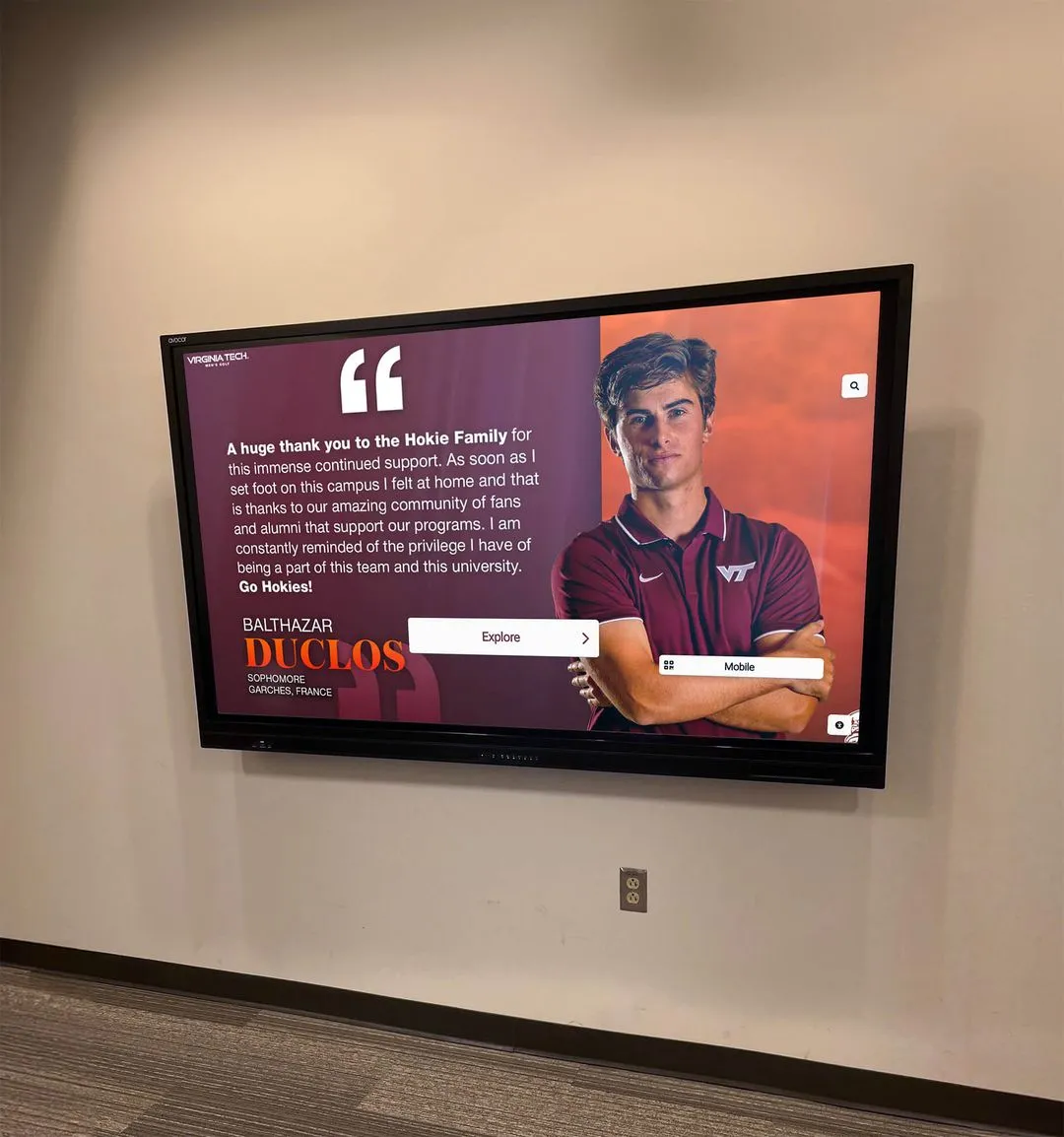
Donor Testimonial Quotes: First-person explanations of giving motivations from donors themselves prove especially powerful. Quotes like “I give because this organization changed my life” or “Supporting this mission honors my parents’ legacy” provide authentic voices inspiring others.
Historical Context: For long-established organizations, recognition can incorporate historical perspective showing how philanthropic support has sustained missions across generations, positioning current donors within noble traditions.
Campaign Progress Visualization: During active campaigns, visual displays showing fundraising progress create excitement and urgency encouraging additional participation before campaigns close.
Digital recognition systems excel at rich storytelling through photos, videos, and multimedia content impossible to achieve with traditional plaques limited to names and dates.
Accessibility and Inclusive Design
Recognition programs should be accessible to all community members regardless of physical abilities or technology access.
Accessibility Requirements:
Physical Accessibility: Install recognition displays at heights and locations wheelchair users can view comfortably (typically 40-48 inches from floor to center). Ensure adequate clearance around displays for mobility devices.
Visual Accessibility: Provide sufficient text size, contrast, and readability supporting visitors with visual impairments. Digital systems should include screen reader compatibility and adjustable text sizes.
Language Accessibility: For organizations serving multilingual communities, consider bilingual recognition or digital systems with language selection options.
Technology Accessibility: Ensure web-accessible versions of digital recognition work well on various devices including smartphones, tablets, and desktop computers with different browsers and assistive technologies.
Organizations in United States must comply with Americans with Disabilities Act (ADA) requirements; international organizations should follow applicable accessibility standards in their jurisdictions.
Realistic Cost Analysis: Traditional vs. Digital Donor Walls
Understanding complete financial implications over realistic timeframes enables informed investment decisions aligned with organizational resources and strategic priorities.
Traditional Physical Plaque Costs
Initial Installation Investment:
For donor wall accommodating 100 initial donors:
- Individual bronze plaques (100 @ $200 each): $20,000
- Decorative mounting board and installation: $8,000-$15,000
- Professional design services: $3,000-$8,000
- Facility preparation (electrical, lighting, painting): $2,000-$5,000
- Total initial installation: $33,000-$48,000
Ongoing Addition Costs:
As fundraising continues and new donors qualify for recognition:
- Individual plaque cost: $200 per donor
- Installation labor: $75-$150 per plaque
- Project management and coordination: $50-$100 per addition
- Total per-donor additions: $325-$450 each
Long-Term Financial Projection (10 Years):
Assuming 20 new qualifying donors annually over 10 years:
- Initial installation: $40,000 (average)
- 200 additional donors over decade (200 × $375): $75,000
- Periodic board expansions as space fills (2 @ $12,000): $24,000
- Total 10-year investment: $139,000
Cost per donor recognized over 10 years: $463
Digital Static Display Costs
Initial Installation Investment:
For static digital display with rotating donor recognition:
- Commercial 65" display screen: $2,500
- Commercial media player: $500
- Professional mounting system: $800
- Digital signage software annual license: $600 first year
- Professional content design services: $3,000-$6,000
- Installation and configuration: $1,500
- Total initial installation: $8,900-$11,900
Ongoing Operating Costs:
- Annual software licensing: $600
- Content updates (design time, 12 updates annually): $2,400
- Routine maintenance and repairs: $300
- Electricity (est. $75/year): $75
- Annual operating costs: $3,375
Long-Term Financial Projection (10 Years):
- Initial installation: $10,000 (average)
- Nine years ongoing operations (9 × $3,375): $30,375
- Display replacement after 7 years: $3,500
- Total 10-year investment: $43,875
Cost per donor recognized over 10 years: $146 (for 300 donors)
Digital static displays deliver recognition at approximately 30% of traditional plaque costs over decade-long timeframes while accommodating far more donors in same space.
Interactive Touchscreen Costs
Initial Installation Investment:
For interactive touchscreen with searchable donor database:
- Commercial 65" touchscreen display: $6,000
- Commercial mini PC: $800
- Professional floor-standing kiosk enclosure: $4,000
- Recognition software platform license (first year): $3,500
- Content development and donor database setup: $5,000-$10,000
- Installation, configuration, and training: $3,000
- Total initial installation: $22,300-$27,300
Ongoing Operating Costs:
- Annual software licensing: $3,000
- Content updates and additions (20 hours annually @ $100/hr): $2,000
- Routine maintenance, repairs, and technical support: $800
- Electricity: $100
- Annual operating costs: $5,900
Long-Term Financial Projection (10 Years):
- Initial installation: $25,000 (average)
- Nine years ongoing operations (9 × $5,900): $53,100
- Display replacement after 7 years: $7,000
- Total 10-year investment: $85,100
Cost per donor recognized over 10 years: $71 (for 1,200 donors)
Interactive touchscreen systems provide the most cost-effective recognition approach for organizations with large donor populations or expecting substantial fundraising growth, delivering comprehensive recognition at approximately 15% of traditional plaque costs per donor over 10-year planning horizons.
Cost Comparison Summary
| Recognition Approach | Initial Investment | 10-Year Total | Cost Per Donor (10 Years) | Capacity Limit |
|---|---|---|---|---|
| Traditional Plaques | $40,000 | $139,000 | $463 | ~300 donors before requiring board expansion |
| Static Digital Display | $10,000 | $43,875 | $146 | Virtually unlimited (cycling display) |
| Interactive Touchscreen | $25,000 | $85,100 | $71 | Virtually unlimited (searchable database) |
These projections demonstrate that while digital recognition systems require higher initial investments, total cost of ownership over institutional planning timeframes proves substantially lower than traditional approaches for organizations with growing donor populations.
Organizations should analyze costs based on specific circumstances including anticipated donor growth rates, available space for physical recognition expansion, technical capabilities, and strategic priorities balancing tradition with innovation.
Implementation Process: From Planning to Launch
Systematic implementation approaches ensure recognition programs launch successfully and serve organizations effectively from day one.
Phase 1: Project Team Formation and Stakeholder Engagement (Weeks 1-3)
Assemble cross-functional teams representing development, facilities, communications, finance, IT, and institutional leadership. Include donor representatives when appropriate, ensuring recognition approaches align with community expectations.
Key Team Responsibilities:
Development staff provide donor data, gift policies, and stewardship requirements. Facilities managers assess space options, installation logistics, and maintenance implications. Communications teams ensure brand alignment and public messaging strategies. Finance representatives evaluate budget implications and approval processes. IT staff assess network infrastructure, security requirements, and technical support capabilities for digital systems.
Hold kickoff meetings establishing clear objectives, decision-making processes, timelines, and communication protocols ensuring all stakeholders remain aligned throughout implementation.
Phase 2: Vendor Research and Selection (Weeks 4-8)
Research available recognition vendors thoroughly, requesting comprehensive proposals and checking references from comparable organizations.
Evaluation Criteria:
- Product quality and design aesthetic
- Technical capabilities and features
- Total cost including implementation and ongoing expenses
- Vendor experience with similar organizations
- Reference satisfaction and long-term support quality
- Implementation timeline and support services
- Content management ease for non-technical staff
- Customization flexibility matching specific needs
- Warranty coverage and technical support quality
- Long-term vendor stability and commitment
Request detailed proposals from 3-4 qualified vendors. Check references thoroughly, speaking with current clients about satisfaction, support responsiveness, and any implementation challenges encountered. Review vendor work samples and request demonstrations of interactive systems before making final decisions.
For digital recognition displays, prioritize vendors offering purpose-built donor recognition platforms rather than generic digital signage requiring extensive customization.
Phase 3: Design Development and Approval (Weeks 9-14)
Work with selected vendors developing detailed recognition designs aligned with institutional brand standards, facility aesthetics, and donor expectations.
Design Process Milestones:
Initial concepts present 2-3 design directions exploring different aesthetic approaches. Review sessions gather feedback from stakeholder teams refining preferred directions. Detailed design development specifies exact materials, dimensions, layouts, typography, and content organization. Mockups and visualizations show how recognition will appear in actual installation locations. Final approval confirms designs meeting all stakeholder requirements before production begins.
Allocate adequate time for design iteration—rushing this phase produces suboptimal results difficult or expensive to modify after installation.
Phase 4: Content Development and Data Compilation (Weeks 12-18)
Compile comprehensive donor data and develop content populating recognition displays.
Content Requirements:
Traditional Plaques: Donor names, gift dates, recognition levels or gift amounts, and any special designations or memorial dedications.
Digital Displays: All traditional information plus donor photographs, biographical information, gift impact narratives, donor testimonial quotes, video content (if using interactive systems), and campaign milestone information.
Establish quality control processes ensuring accuracy—donor recognition errors create serious stewardship problems. Verify spelling, dates, and gift information with development database records. Obtain donor approval for biographical content and photos when possible.
For organizations implementing digital recognition, platforms like those provided by Rocket Alumni Solutions offer intuitive content management interfaces and templates specifically designed for donor recognition programs, accelerating content development significantly.
Phase 5: Production and Installation (Weeks 19-24)
Vendors fabricate recognition components and coordinate installation scheduling with facility operations.
Installation Coordination:
Facilities prepare installation locations completing any necessary electrical work, network connectivity, painting, or structural modifications. Vendors schedule installation during low-traffic periods minimizing disruption to operations. Installation teams complete mounting, configuration, and testing ensuring everything functions properly. Final inspections verify quality meeting specifications and stakeholder expectations.
For digital systems, installation includes display mounting, media player configuration, software installation, network connectivity setup, content loading, and system testing verifying all features work correctly.
Phase 6: Staff Training and Documentation (Week 24)
Ensure staff members responsible for ongoing recognition management understand systems thoroughly and can perform routine updates confidently.
Training Components:
Hands-on practice adding new donors, updating existing recognition, uploading photos and media content, and generating reports from digital systems. Written documentation providing step-by-step procedures for common tasks. Vendor contact information and technical support processes for resolving issues. Content management best practices ensuring consistency and quality.
Identify backup personnel who can manage systems when primary administrators are unavailable, preventing recognition updates from being delayed by staffing changes or absences.
Phase 7: Public Launch and Donor Engagement (Week 25)
Plan formal unveiling events generating awareness, excitement, and appreciation among donor communities.
Launch Event Elements:
Host ribbon-cutting ceremonies or dedication events during high-attendance occasions like homecoming weekends, annual galas, or board meetings. Invite recognized donors to celebrate their inclusion and strengthen emotional connections with organizations. Provide demonstrations of interactive features for digital systems. Engage media for publicity extending awareness beyond event attendees. Distribute communications highlighting recognition programs to broader constituencies.
Well-executed launch events demonstrate appreciation for donor support while inspiring additional giving from prospective donors impressed by how organizations honor philanthropy.
Maintenance and Long-Term Sustainability Strategies
Recognition programs require ongoing attention maintaining relevance, accuracy, and operational functionality over decades.
Routine Maintenance Requirements
Physical Recognition Systems:
Traditional donor walls need regular cleaning removing dust and fingerprints, periodic inspection identifying damaged plaques requiring repair or replacement, secure mounting verification ensuring plaques remain properly attached, and lighting maintenance replacing failed bulbs and ensuring adequate illumination.
Budget 4-8 hours annually for routine physical recognition maintenance depending on installation size and location traffic levels.
Digital Recognition Systems:
Digital displays require screen cleaning weekly or biweekly depending on touchscreen use, software updates installing security patches and feature enhancements, content backup procedures protecting against data loss, and component monitoring detecting potential hardware failures before they occur.
Most organizations allocate 2-4 hours monthly for digital system maintenance and content updates, with vendors typically providing remote technical support for significant issues.
Content Updates and Growth Management
Adding New Donors:
Establish clear processes for incorporating new donors as giving occurs. For physical systems, create vendor relationships enabling efficient plaque additions with reasonable turnaround times (typically 4-6 weeks). For digital systems, staff should add new recognition immediately upon gift processing through content management dashboards, providing prompt stewardship reinforcing giving decisions.
Recognition Policy Updates:
Review recognition policies periodically (every 3-5 years) ensuring criteria remain appropriate as giving programs evolve, gift levels reflect current campaign goals, and recognition approaches continue serving organizational objectives effectively.
Technology Refresh Planning
Digital recognition systems eventually require updates or replacement as technology evolves and hardware reaches end of useful life.
Realistic Lifespan Expectations:
Commercial-grade displays typically function reliably for 7-10 years with appropriate usage and maintenance. Media players and computers may require replacement after 5-7 years. Recognition software platforms receive ongoing updates from quality vendors, but organizations should budget for potential platform migrations if vendors discontinue products or better alternatives emerge.
Establish technology refresh reserves setting aside 10-15% of initial digital system costs annually, providing funds for eventual component replacement without requiring emergency budget requests when inevitable technology updates become necessary.
Donor Recognition Audits
Conduct periodic comprehensive reviews ensuring recognition programs maintain accuracy and currency.
Audit Procedures:
Verify donor information against development database records identifying discrepancies. Check for deceased donors whose families may request memorial designations. Identify outdated gift amounts if displays include cumulative giving totals. Review biographical information ensuring accuracy and appropriateness. Test all interactive features on digital systems confirming functionality.
Schedule formal audits every 2-3 years, with informal reviews occurring more frequently as staff add new donors routinely.
Special Considerations for Different Organization Types
While core donor wall principles apply broadly, different organizational contexts create unique requirements and opportunities.
Educational Institutions: Schools, Colleges, Universities
Educational donor recognition frequently acknowledges capital campaign support for building construction, scholarship endowments, program funding, and athletic facility improvements.
Unique Considerations:
Multi-generational recognition opportunities honoring alumni families across generations create powerful emotional connections. Academic achievement recognition may integrate with donor walls showing scholarship recipients alongside benefactors funding educational support. Athletic program recognition combines team accomplishments with donor support enabling competitive excellence. Historical institutional timelines position current philanthropy within traditions spanning decades or centuries.
Interactive digital systems prove particularly valuable in educational settings where academic recognition programs and donor acknowledgment often intersect, providing unified platforms celebrating both student achievement and philanthropic support enabling educational missions. Many institutions combine donor recognition with alumni engagement strategies, creating comprehensive recognition ecosystems.
Healthcare Organizations: Hospitals, Medical Centers, Clinics
Healthcare donor recognition acknowledges support for medical equipment, patient care facilities, research programs, and community health initiatives.
Unique Considerations:
Memorial and tribute recognition proves especially meaningful in healthcare settings where many gifts honor deceased loved ones or thank medical professionals for care received. Patient and family connection to institutions often drives giving, making recognition approaches emphasizing gratitude and healing appropriate. Medical research recognition may highlight specific conditions or treatment areas donors support, connecting philanthropy directly to health impact. Organizations exploring digital recognition displays can honor both medical staff excellence and philanthropic support through integrated platforms.
Placement in patient care areas, family waiting spaces, and public lobbies ensures recognition visibility while maintaining appropriate dignity in clinical environments.
Nonprofit Community Organizations
Nonprofits serving diverse community needs recognize donors supporting social services, arts and culture programs, environmental conservation, human services, and mission-specific initiatives.
Unique Considerations:
Nonprofit donor populations often include grassroots community supporters making smaller gifts alongside major philanthropists, requiring recognition approaches honoring all contributors appropriately regardless of capacity. Mission connection proves crucial—recognition should reinforce organizational values and programmatic impact rather than appearing purely transactional. Community representation in donor recognition helps demonstrate broad-based support, encouraging additional participation from diverse constituencies.
Organizations with limited physical facilities may prioritize digital recognition with strong web accessibility, ensuring distributed donor communities can access recognition remotely even if unable to visit offices frequently.
Religious Institutions: Churches, Synagogues, Mosques, Temples
Faith-based organizations recognize donations supporting building campaigns, ministry programs, mission work, and operational sustainability.
Unique Considerations:
Theological perspectives on recognition and humility influence appropriate acknowledgment approaches—some faith traditions emphasize anonymous giving while others celebrate public philanthropy. Balancing individual recognition with community-focused messaging ensures donor walls reinforce collective mission rather than individual aggrandizement. Sacred space aesthetics require recognition installations complementing worship environments respectfully without appearing commercial or ostentatious.
Many religious institutions find hybrid recognition approaches effective, providing private recognition spaces separate from worship areas while offering public acknowledgment in fellowship halls or administrative buildings where appropriate.
Emerging Trends in Donor Recognition for 2026 and Beyond
Donor recognition continues evolving as organizations experiment with innovative approaches responding to changing donor expectations and technological capabilities.
Mobile-First Recognition Experiences
Organizations increasingly prioritize web-accessible donor recognition optimized for smartphone access, recognizing that donors and community members explore recognition remotely more frequently than visiting physical installations.
Quality recognition platforms now provide responsive interfaces working flawlessly across devices, social sharing features enabling donors to distribute recognition through personal networks, QR code connections linking physical displays to mobile experiences, and notification systems alerting donors when recognition goes live or content updates occur. Educational institutions often integrate donor recognition with broader digital archives preserving institutional history comprehensively.
Video Storytelling Integration
Video content creates emotional connections impossible through text alone. Organizations collect donor testimonial videos explaining giving motivations, gift impact videos showing how donations make tangible differences in communities served, campaign progress videos building momentum during active fundraising initiatives, and virtual tours enabling remote exploration of facilities donors helped fund.
Interactive touchscreen recognition systems seamlessly integrate video content, transforming static name lists into rich multimedia storytelling experiences.
Real-Time Campaign Progress Displays
During active fundraising campaigns, organizations use digital recognition systems to show real-time progress toward goals through dynamic thermometer graphics, countdown timers building urgency as campaigns approach deadlines, milestone announcements celebrating when campaigns reach significant benchmarks, and live donor additions acknowledging new commitments immediately.
This immediate recognition reinforces giving decisions while creating visible momentum encouraging additional participation from prospective donors observing campaign success.
Analytics-Driven Recognition Optimization
Digital recognition systems provide engagement data helping organizations understand what content resonates most effectively with audiences. Metrics tracking most-viewed donor profiles, popular search terms revealing discovery behaviors, peak usage times informing placement and marketing decisions, and session duration indicating engagement depth guide continuous recognition program improvement based on actual usage patterns rather than assumptions.
Organizations analyze data identifying opportunities to enhance storytelling, improve navigation, and optimize content strategies maximizing recognition impact and donor satisfaction.
Sustainability and Environmental Considerations
Organizations increasingly consider environmental impact when selecting recognition approaches. Digital systems eliminate material waste from plaque production and shipping, reduce energy consumption through efficient LED displays, and enable recognition updates without physical materials or transportation.
Some organizations highlight environmental benefits in donor communications, positioning digital recognition as aligned with broader institutional sustainability commitments appealing to environmentally conscious donors.
Frequently Asked Questions About Donor Walls
How much does a donor wall typically cost?
Costs vary dramatically based on recognition approach, size, and features. Traditional plaque-based walls typically range $30,000-$50,000 for initial 100-donor installations with ongoing per-donor costs of $300-$450. Static digital displays cost $8,000-$12,000 initially with lower ongoing expenses. Interactive touchscreen systems typically require $20,000-$35,000 initial investments but deliver lowest long-term per-donor costs for growing programs. Total 10-year ownership costs prove most important when comparing approaches.
What is the minimum gift amount to be included on a donor wall?
Minimum thresholds vary by organization size, campaign scope, and community capacity. Common minimums range from $1,000 for broad community recognition programs to $25,000 for leadership donor walls. Educational institutions often use $5,000-$10,000 thresholds for permanent recognition. Organizations should establish minimums ensuring manageable donor populations while acknowledging meaningful philanthropy appropriately.
Can we update digital donor walls ourselves or do we need the vendor?
Quality digital recognition platforms provide intuitive content management dashboards enabling non-technical staff to add donors, update information, upload photos, and manage content independently through web-based interfaces. Organizations should prioritize systems offering staff autonomy rather than requiring vendor involvement for routine updates, ensuring timely recognition and lower ongoing costs.
How do we handle deceased donors on recognition displays?
Most organizations maintain deceased donors in recognition displays permanently, honoring their legacy contributions while sometimes adding memorial designations or adjusted biographical content. Some families request memorial language additions. Digital systems enable easy updates accommodating these requests respectfully. Establish clear policies addressing posthumous recognition before issues arise, ensuring consistent and appropriate handling.
Should we recognize pledge commitments before they’re fulfilled?
Policies vary by organization. Some recognize multi-year pledges immediately upon commitment, trusting donor integrity and providing stewardship reinforcing completion. Others wait for pledge fulfillment before adding recognition, avoiding awkward situations if commitments remain unfulfilled. Middle ground approaches recognize pledges in temporary or provisional designations until completion qualifies for permanent status. Document policies clearly in gift agreements preventing misunderstanding.
How long does donor wall implementation typically take?
Timeline depends on approach complexity and organizational decision-making speed. Simple traditional plaque walls may install within 8-12 weeks. Digital systems with extensive content development typically require 12-20 weeks from vendor selection to public launch. Complex custom installations may extend to 6+ months. Most time-consuming element is usually content development and stakeholder approval processes rather than physical installation.
Can we start with physical plaques and add digital recognition later?
Absolutely. Many organizations implement hybrid approaches starting with traditional recognition for initial campaign donors and adding digital systems as programs grow. Some convert physical recognition to digital platforms over time, photographing existing plaques for digital database inclusion before removing physical boards. Future-proofing involves reserving space for potential digital display additions even if implementing physical recognition initially.
What happens if technology vendors go out of business?
Select vendors with proven track records, substantial customer bases, and demonstrated commitment to educational and nonprofit markets. Organizations like Rocket Alumni Solutions serving thousands of institutions demonstrate stability and reliability. Review contracts ensuring data ownership and export capabilities. Quality vendors provide data portability preventing lock-in if organizational needs change or unexpected vendor challenges occur.
Conclusion: Strategic Donor Recognition Decisions for Lasting Impact
Donor recognition represents far more than simply listing names acknowledging financial support. Well-designed recognition programs honor philanthropy appropriately, inspire additional giving, cultivate organizational culture valuing community support, and strengthen donor relationships advancing institutional missions for decades.
Organizations in 2026 benefit from more donor recognition options than ever before. Traditional physical approaches provide familiar prestige and tangible permanence. Modern digital technologies offer unlimited capacity, rich storytelling, interactive engagement, web accessibility, and lower long-term costs. Hybrid strategies combine advantages of both while mitigating respective limitations.
The optimal approach depends on specific organizational circumstances including anticipated donor growth rates, budget parameters, facility constraints, community expectations, and strategic priorities balancing tradition with innovation. Most institutions serving large constituencies or expecting sustained fundraising success discover that digital recognition platforms deliver superior long-term value through virtually unlimited capacity, comprehensive storytelling capabilities, instant updates, and dramatically lower per-donor costs over institutional planning horizons.
Regardless of which recognition approach organizations choose, success requires thoughtful planning establishing clear objectives and policies, careful vendor selection prioritizing quality and support over lowest initial cost, systematic implementation addressing content development and stakeholder engagement, and ongoing maintenance sustaining accuracy and functionality for decades.
Your donors’ generosity deserves recognition matching their investment significance. Modern donor recognition technologies and proven implementation strategies make comprehensive, engaging, sustainable recognition more achievable than ever before—programs that honor past philanthropy while inspiring future giving supporting organizational missions for generations to come.
Ready to explore how modern digital donor recognition can transform your fundraising stewardship and engagement strategies? Book a demo with Rocket Alumni Solutions to discover recognition platforms designed specifically for educational institutions, healthcare organizations, and nonprofits seeking to honor donors comprehensively while building sustainable recognition programs serving communities for decades.
Disclaimer: This comparison is based on publicly available information as of January 2026. All product names and trademarks belong to their respective owners. Comparative statements reflect Rocket Alumni Solutions’ interpretation of available data and may change over time.