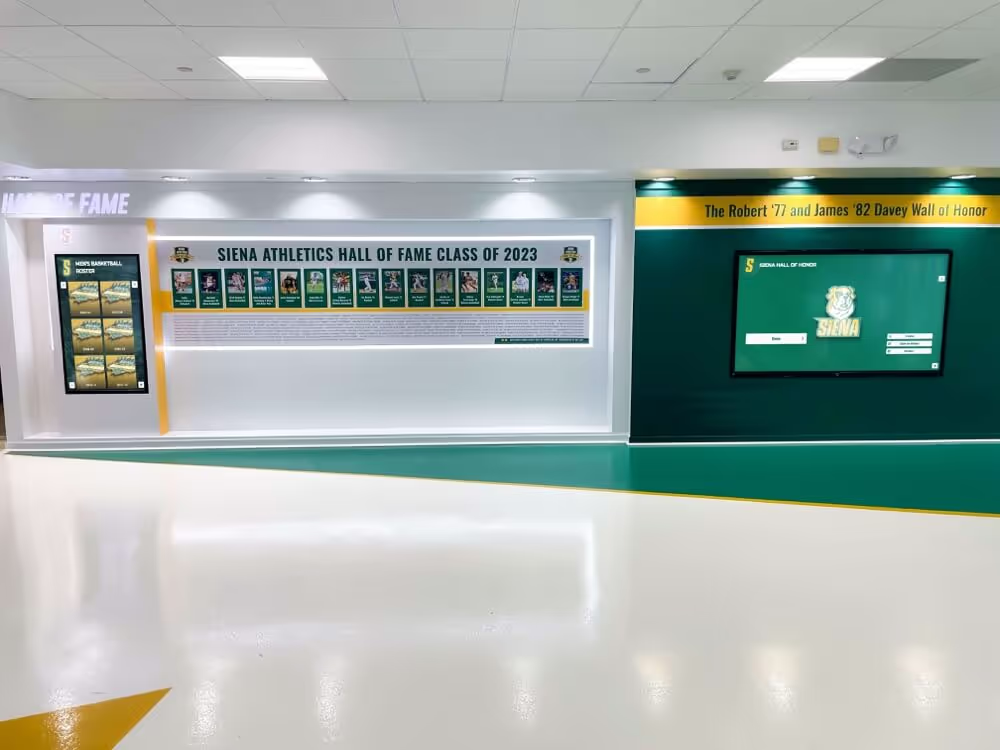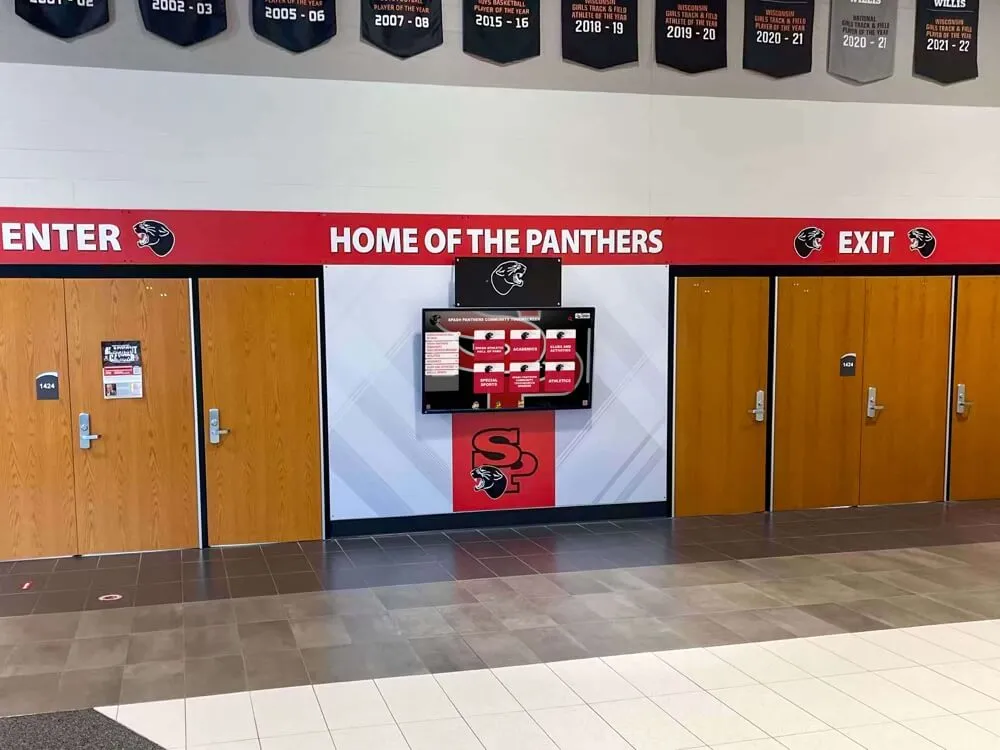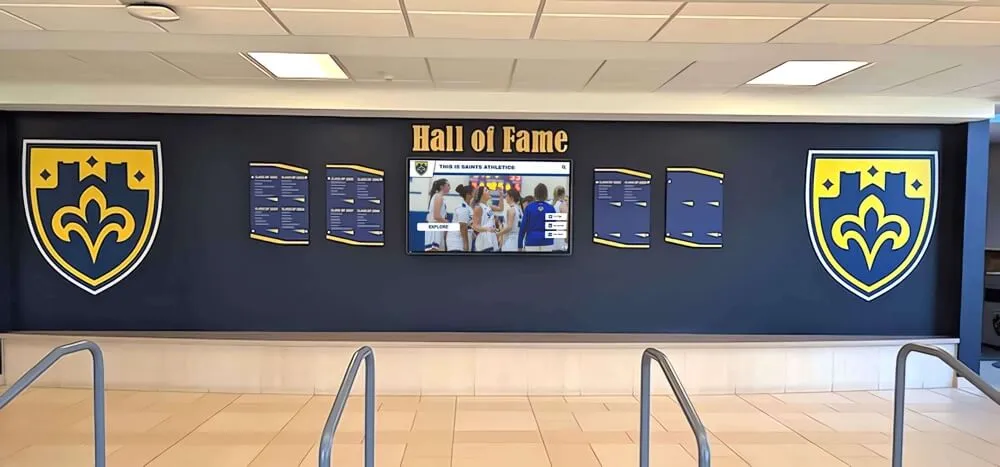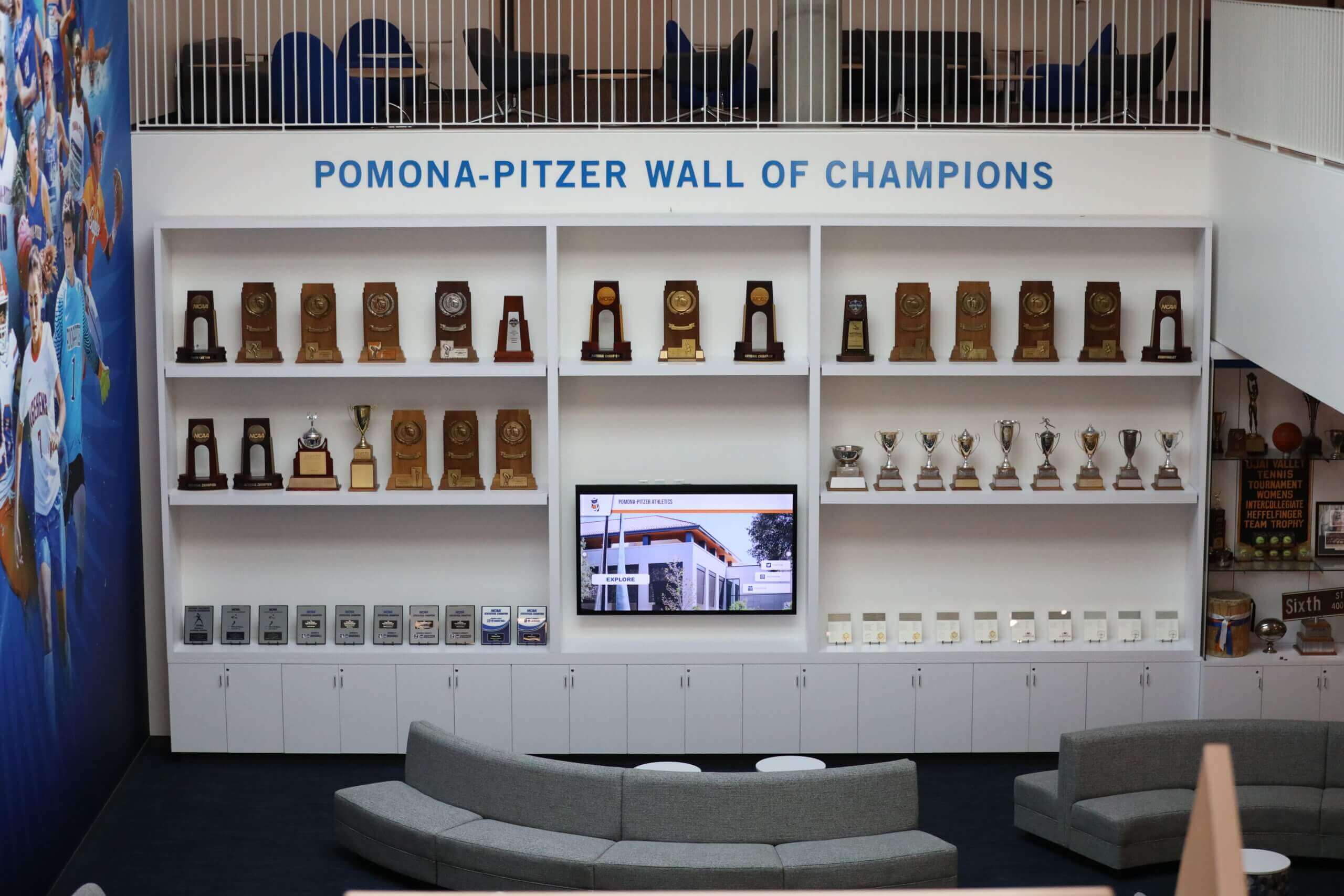




Division III athletics represents college sports at its purest—student-athletes competing for the love of the game, balancing rigorous academics with athletic excellence, and building lifelong connections without the pressures of athletic scholarships or professional aspirations. Yet despite producing remarkable achievements, championship teams, and exceptional student-athletes who embody the true student-athlete ideal, Division III programs often struggle with limited visibility, scarce media coverage, and recognition systems that fail to celebrate their unique contributions to collegiate athletics.
Modern digital recognition systems offer transformative solutions for Division III athletic departments seeking to honor student-athlete achievements, preserve program history, and demonstrate institutional commitment to comprehensive athletics—all while working within the budget realities that define smaller college operations. These technologies enable DIII schools to create professional, engaging recognition experiences that rival those at Division I powerhouses while celebrating the distinctive values that make Division III athletics special.
Why Division III Athletics Needs Better Recognition Systems
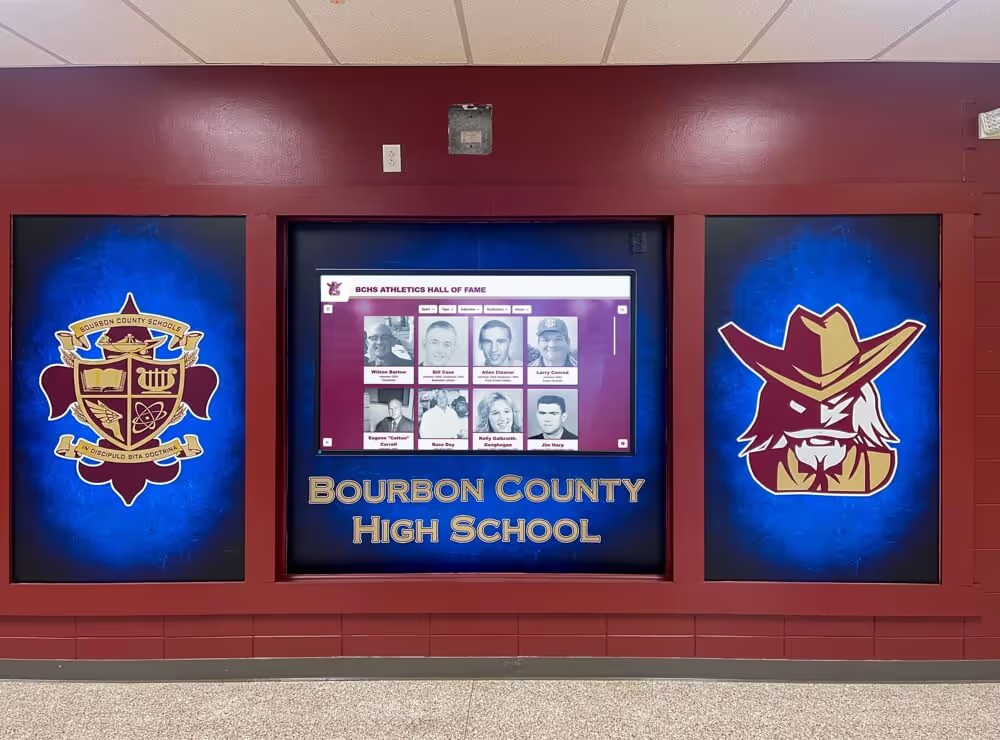
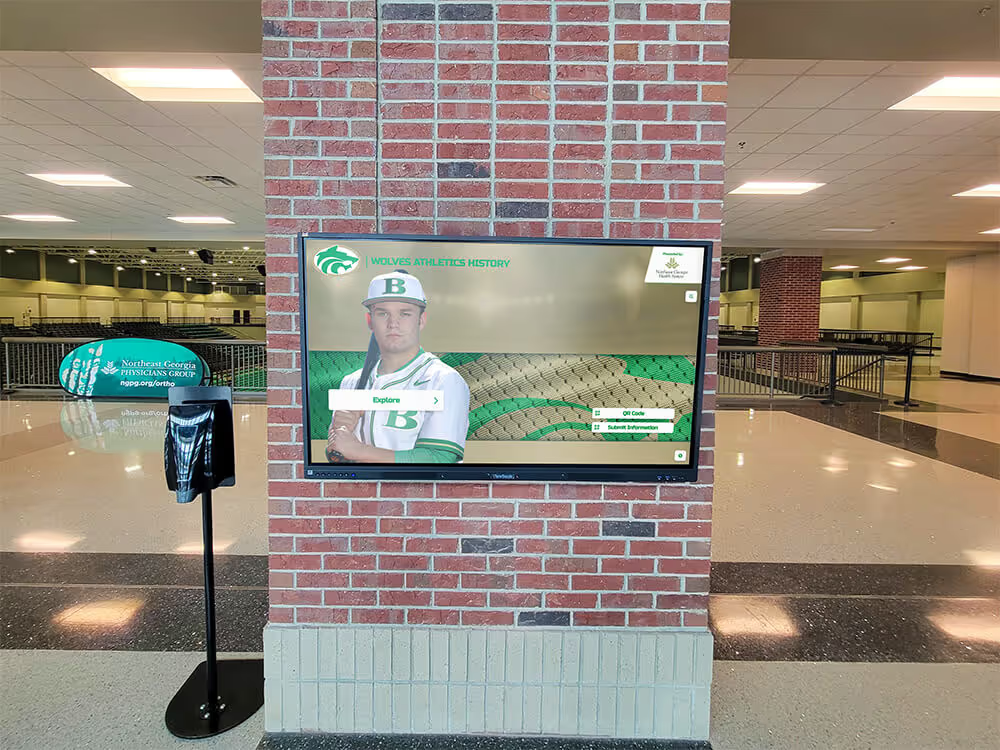
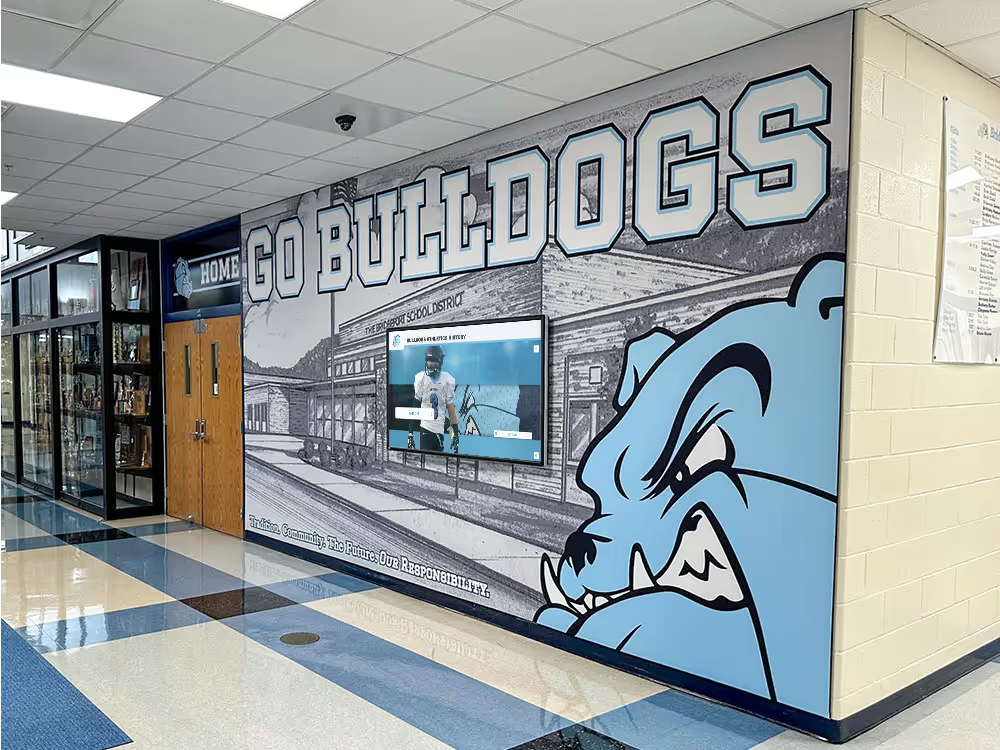
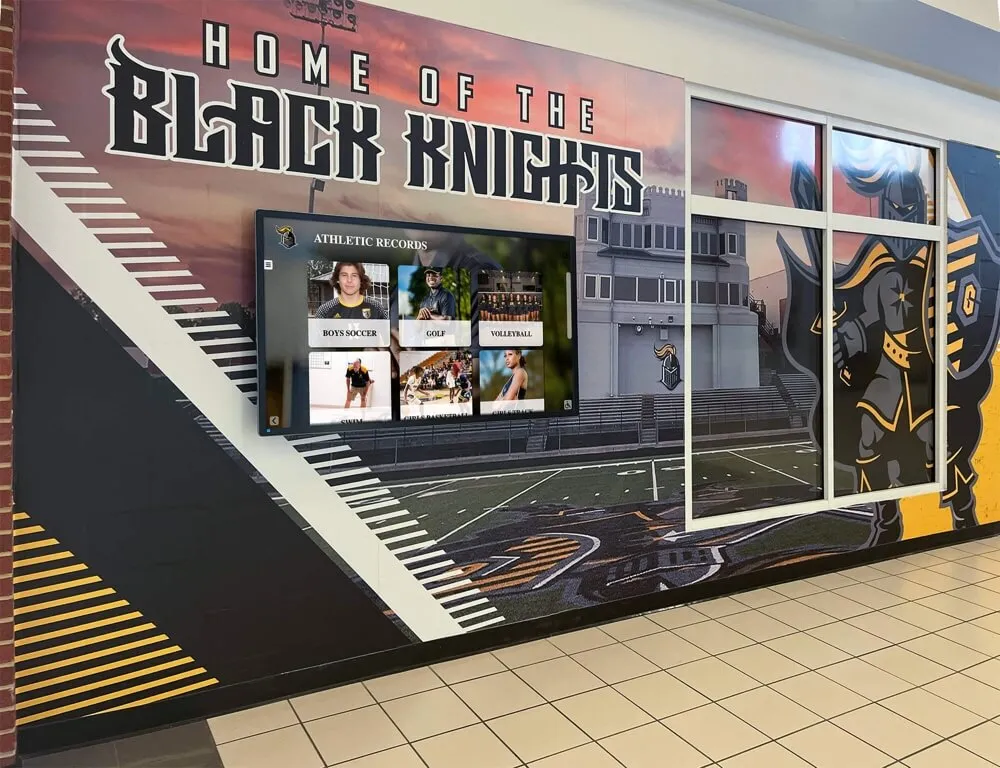
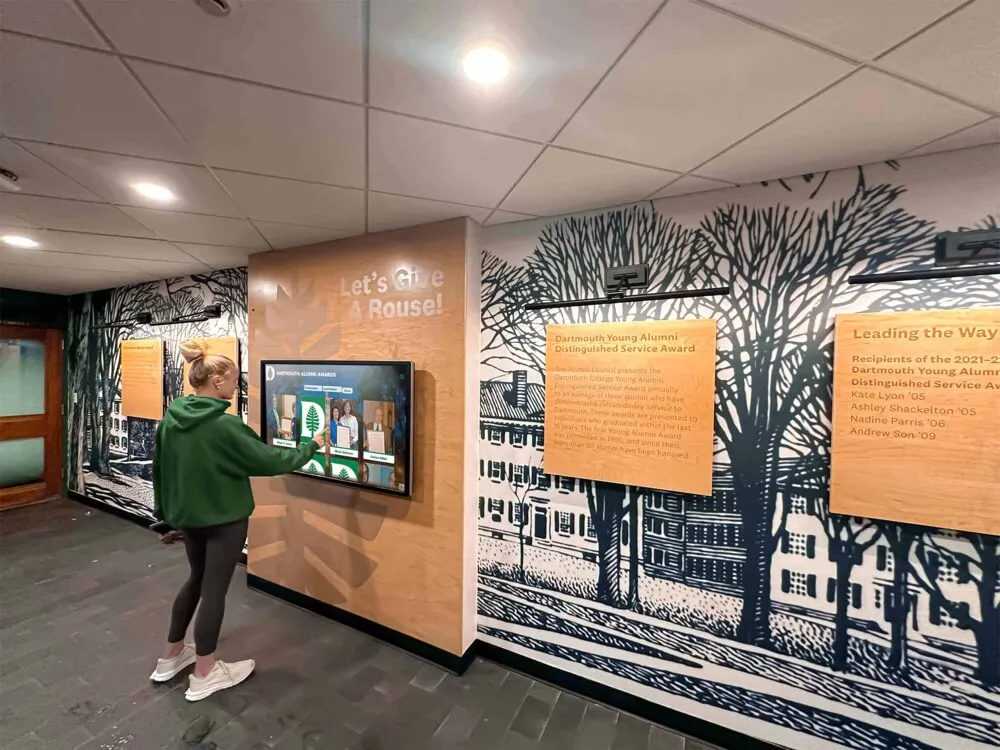
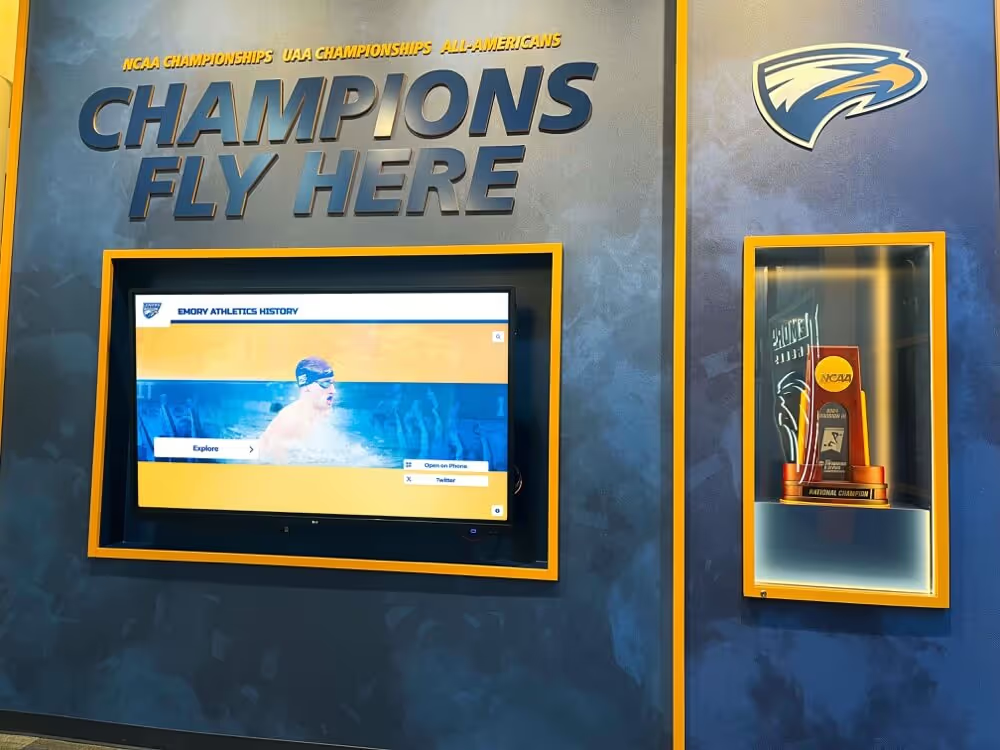
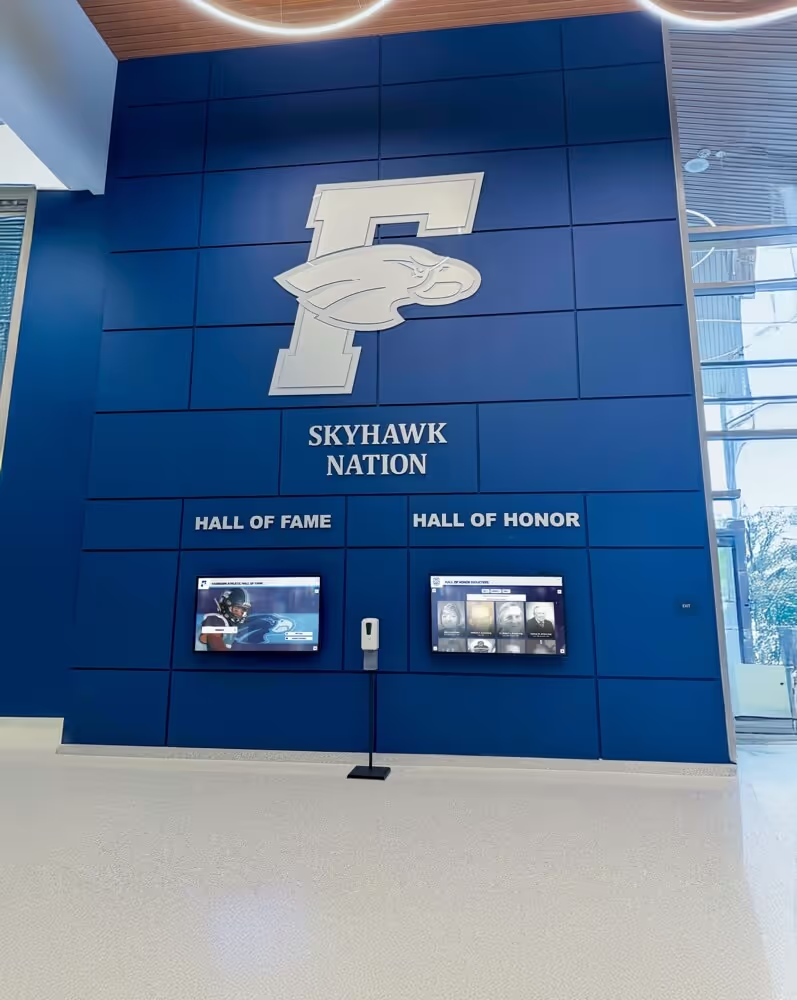
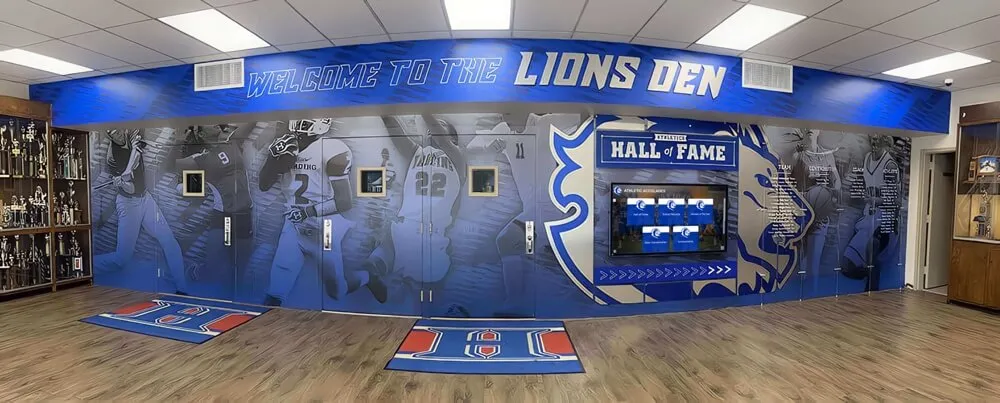
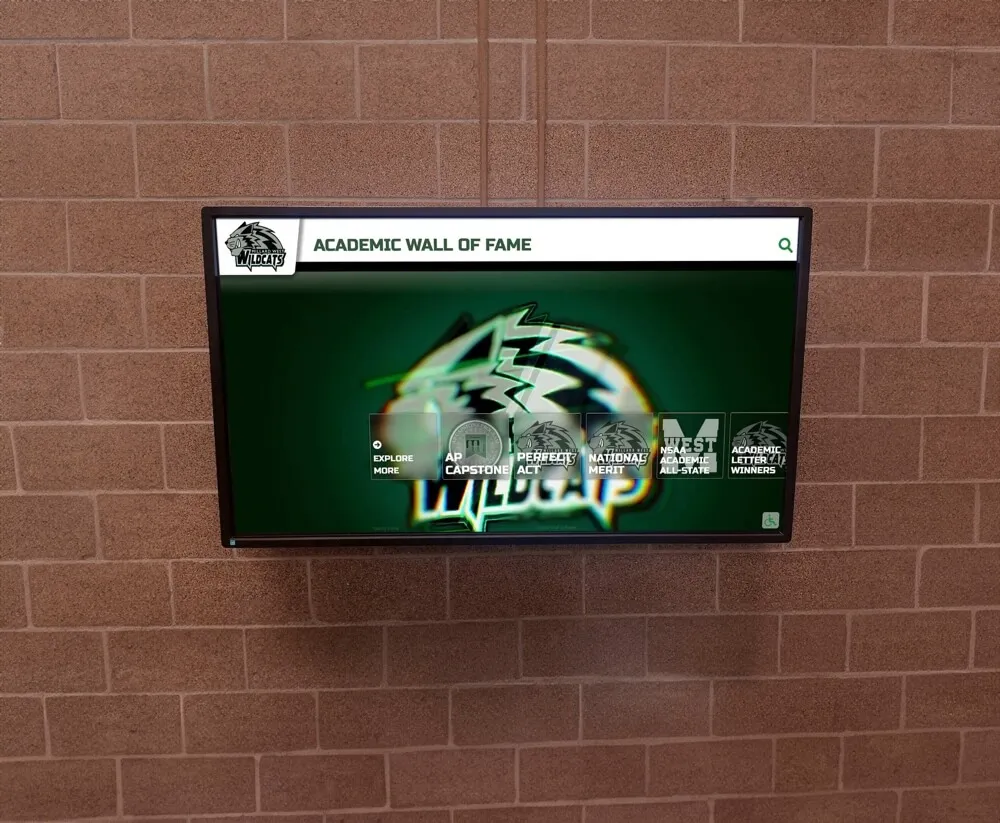
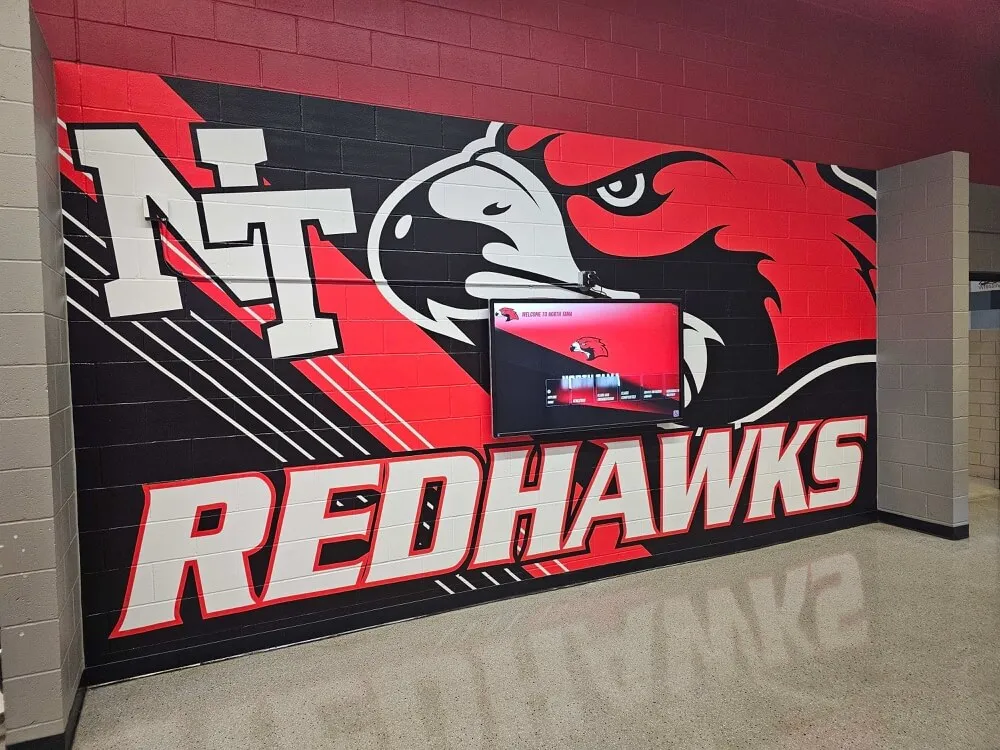
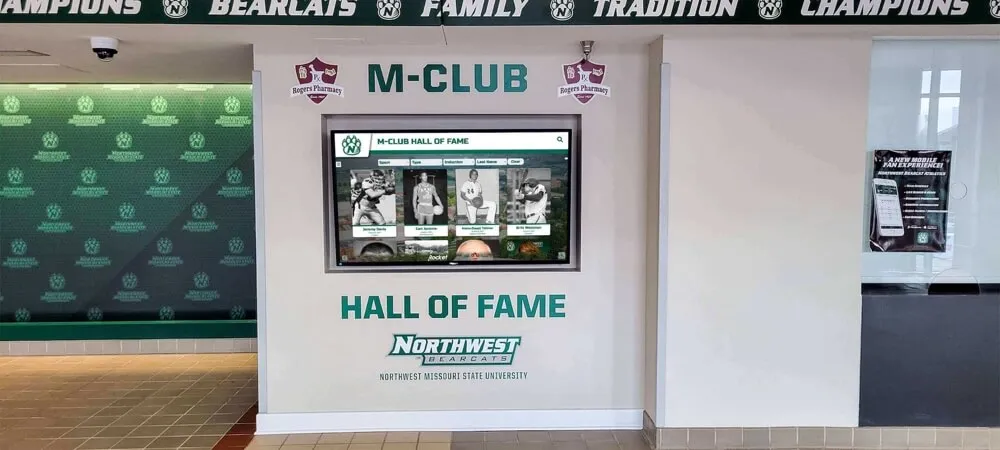
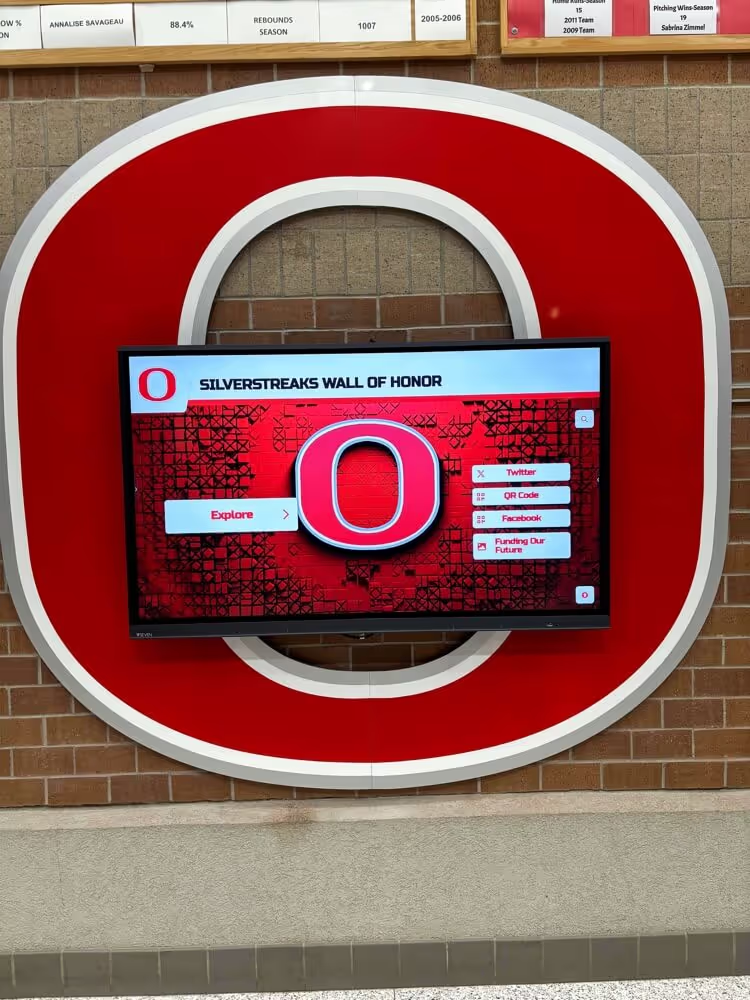
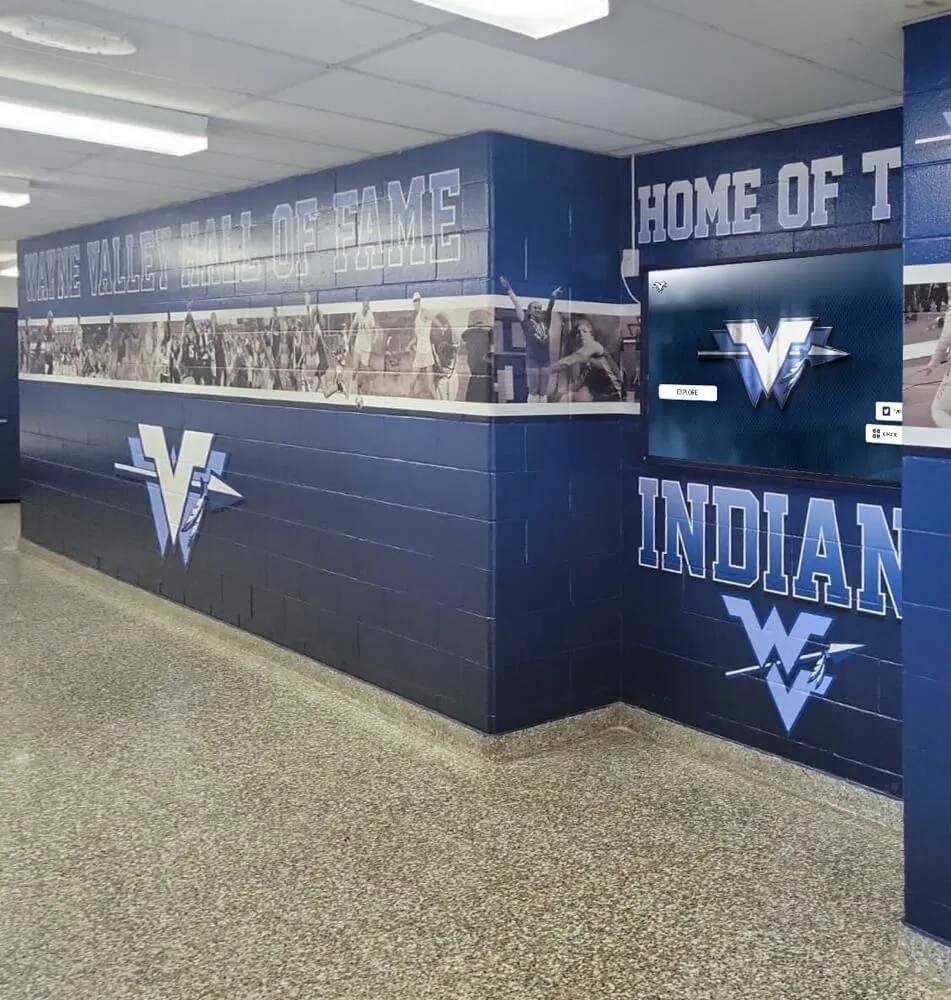
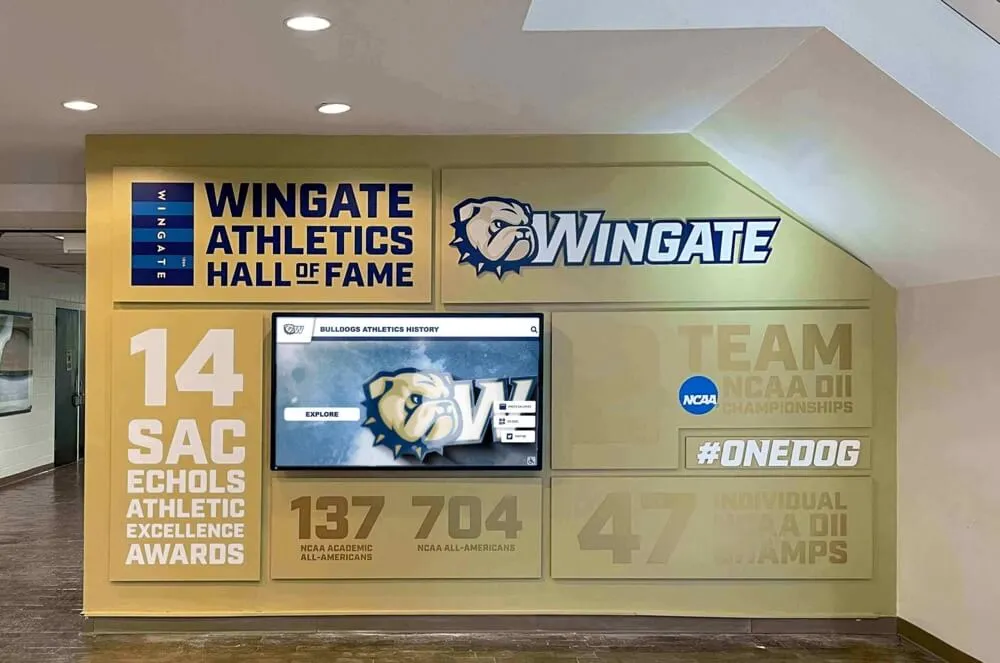
Division III student-athletes face unique challenges in receiving the recognition their achievements deserve. With limited media coverage, smaller alumni bases, and fewer marketing resources than Division I and II counterparts, DIII accomplishments often remain invisible beyond campus boundaries. Digital recognition solutions like Rocket Alumni Solutions enable Division III schools to create comprehensive, professional recognition systems that celebrate student-athletes appropriately while preserving institutional athletic history across all sports. These platforms provide unlimited capacity for honoring achievements, rich multimedia storytelling capabilities, and cost-effective long-term solutions that align with Division III budget realities.
Understanding the Division III Recognition Gap
Before exploring digital solutions, understanding the specific recognition challenges facing Division III athletics helps frame why modern approaches deliver particular value for DIII programs.
The Visibility Challenge for DIII Student-Athletes
Division III student-athletes compete at remarkably high levels, often facing opponents who could compete at higher divisions but chose DIII for its academic-athletic balance. Yet the average person downgrades Division III athletics due to scarce media coverage, small alumni bases, and lack of national branding that characterizes Division I programs.
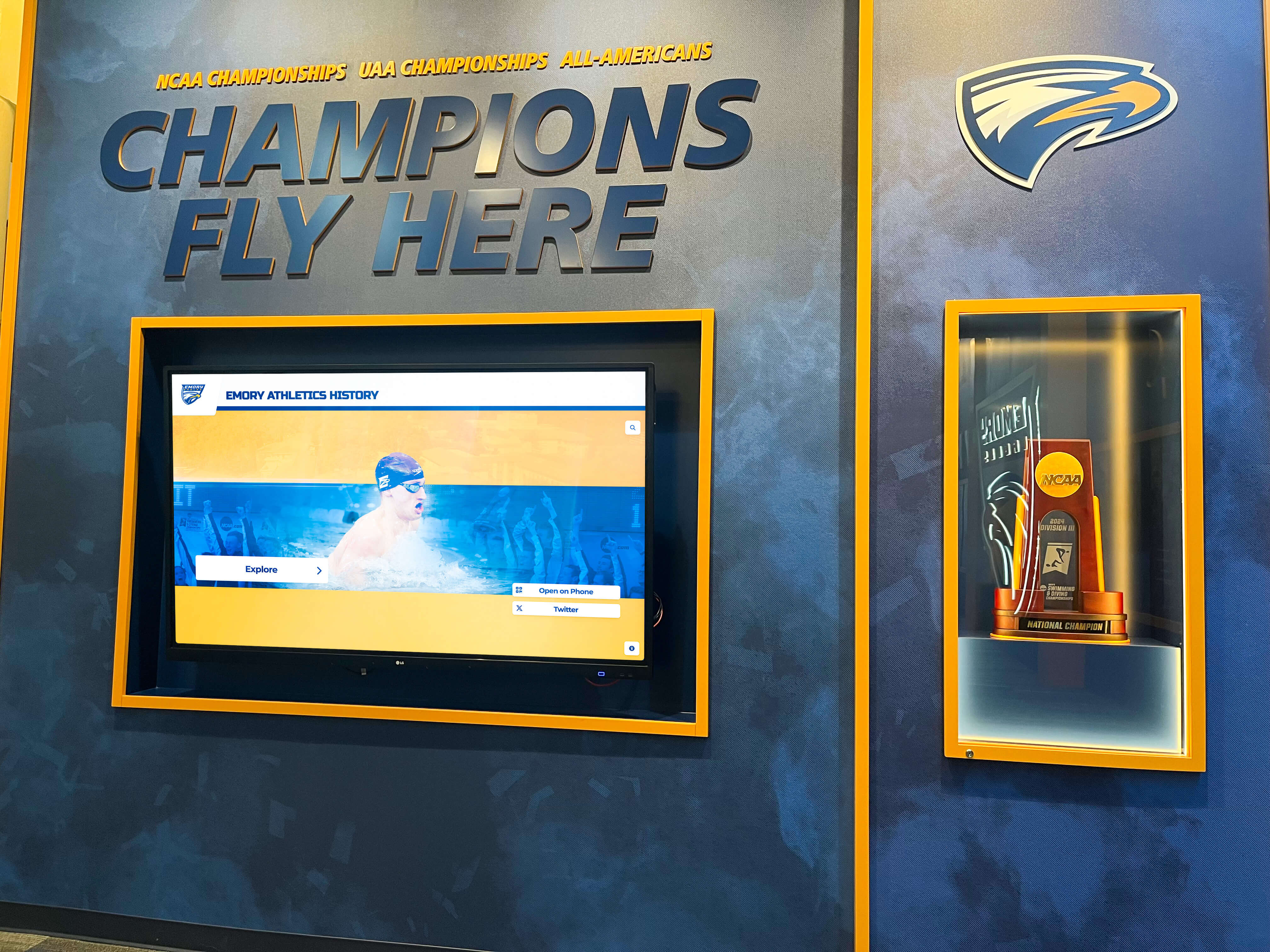
Media Coverage Disparities: While Division I football and basketball games receive national television coverage, conference championship games, and extensive sports journalism, Division III competitions rarely attract media attention beyond local newspapers. Even national championships in Olympic sports receive minimal coverage compared to regular season Division I contests. This visibility gap means remarkable DIII achievements—conference records, national championships, All-American performances—often go unnoticed by anyone beyond immediate campus communities.
Scholarship Stigmas: A persistent Division III stigma suggests that since athletes don’t receive athletic scholarships, they’re not “real” college athletes or that their competition lacks significance. This misconception dismisses the reality that DIII athletes balance full course loads with demanding practice schedules, travel commitments, and competitive pressures without financial incentive beyond the intrinsic rewards of competition and team membership.
Resource Limitations: Division III athletic departments typically operate with significantly smaller budgets than Division I and II programs. Marketing staffs may be minimal or non-existent, making it challenging for athletes to promote their achievements or build personal brands. Sports information departments often consist of one or two staff members managing publicity for all sports, limiting ability to generate comprehensive coverage that celebrates achievements appropriately.
Resources on athletic recognition displays demonstrate how comprehensive recognition systems help overcome visibility challenges by creating permanent, accessible records of achievement.
Limited Recognition Infrastructure at Small Colleges
Physical recognition infrastructure at Division III schools often reflects resource constraints that limit recognition capacity and professionalism:
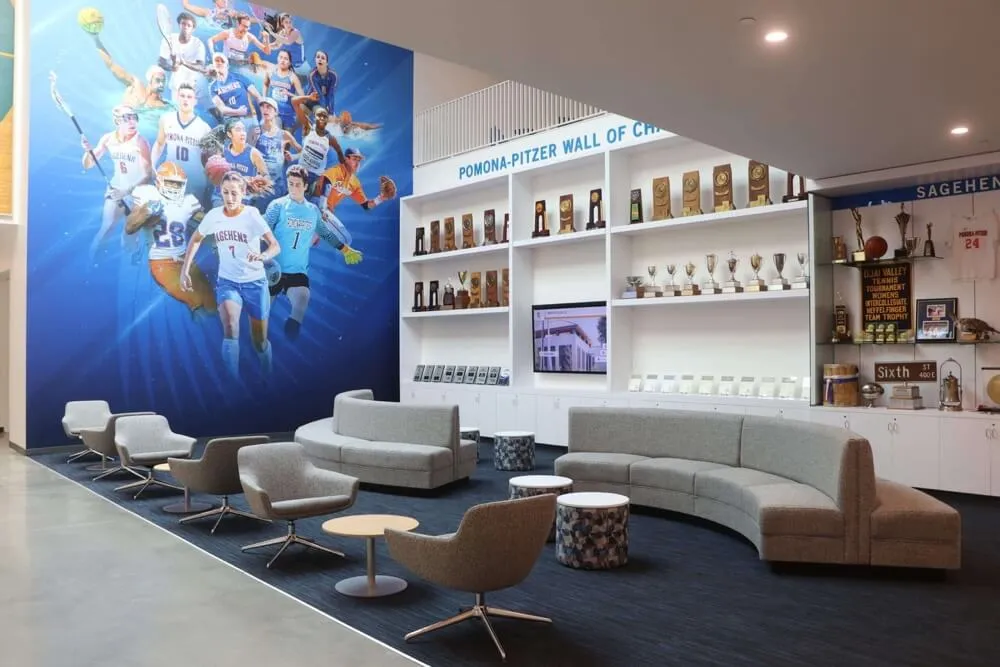
Space Limitations: Smaller athletic facilities mean less available space for recognition displays. Trophy cases fill quickly with championship hardware. Wall space for plaques becomes exhausted within years. Gymnasiums lack the expansive halls of fame areas common in Division I facilities. These space constraints force difficult decisions about which achievements warrant recognition and which must be stored away where they provide no inspirational value.
Budget Constraints for Traditional Recognition: Physical plaques, engraved nameplates, trophy case expansions, and professional installations carry significant per-athlete costs. When athletic departments work with limited budgets focused primarily on equipment, travel, and facility maintenance, funding comprehensive recognition for all deserving student-athletes becomes challenging. Budget realities often mean recognition remains limited to highest-profile achievements while worthy accomplishments in Olympic sports or by individual record-setters go uncelebrated.
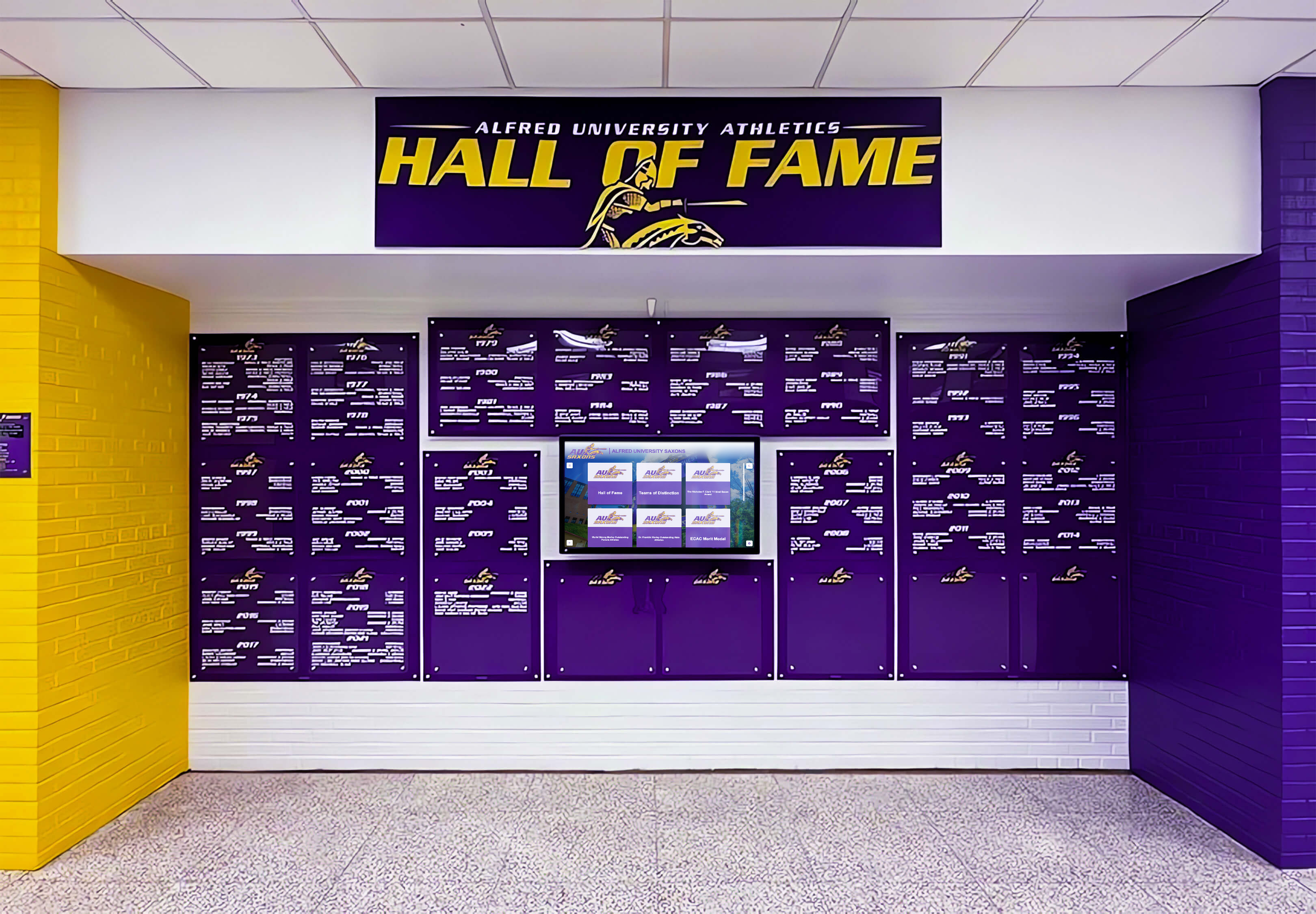
Maintenance and Update Challenges: Traditional physical displays require ongoing maintenance, periodic updates, and eventual replacement. For schools with limited facilities staff, keeping recognition current becomes burdensome. Outdated displays communicating neglect rather than honor undermine recognition purposes, yet resource constraints make maintaining pristine physical recognition challenging.
Limited Multimedia Capabilities: Traditional plaques and trophy cases provide minimal information—names, dates, basic achievements. The rich stories behind DIII student-athlete achievements—the sacrifices made, obstacles overcome, leadership demonstrated, academic excellence achieved alongside athletic success—remain untold in formats that reduce remarkable individuals to single-line text entries.
Understanding how digital trophy case systems solve these infrastructure challenges helps DIII athletic directors envision alternatives to traditional approaches.
The Case for Comprehensive DIII Recognition
Despite visibility and resource challenges, Division III athletics generates achievements deserving permanent recognition and celebration:
Academic-Athletic Excellence: Division III produces the highest graduation rates in college athletics, with student-athletes consistently demonstrating that athletic participation enhances rather than detracts from academic success. This comprehensive excellence—succeeding in classroom and competition simultaneously—deserves recognition highlighting balanced achievement that defines the Division III experience.
Championship Accomplishments: Division III hosts 28 national championship sports with competition as fierce as any division. Conference titles, national tournament appearances, and national championships represent remarkable accomplishments requiring dedication, sacrifice, and sustained excellence. These achievements merit recognition equal to accomplishments at any competitive level.
Record-Breaking Performances: Every Division III season produces record-setting performances, All-American athletes, and statistical achievements representing peaks of human performance within their contexts. A Division III cross country runner setting a program record demonstrates excellence deserving celebration regardless of how their time compares to Division I elites.
Character and Leadership: Division III athletes competing without scholarship incentives demonstrate intrinsic motivation, genuine love of sport, and character that embodies amateur athletic ideals. Leadership, sportsmanship, and community engagement deserve recognition celebrating complete contributions beyond competitive statistics.
Strategies for student athlete recognition provide frameworks for celebrating comprehensive achievements that extend beyond pure athletic performance.
Digital Recognition Solutions for Division III Athletics
Modern technology platforms specifically address the recognition challenges Division III programs face while delivering capabilities that transform how schools celebrate student-athlete achievements.
Unlimited Recognition Capacity
The most significant advantage digital systems provide Division III programs is eliminating the space constraints that plague traditional physical displays.
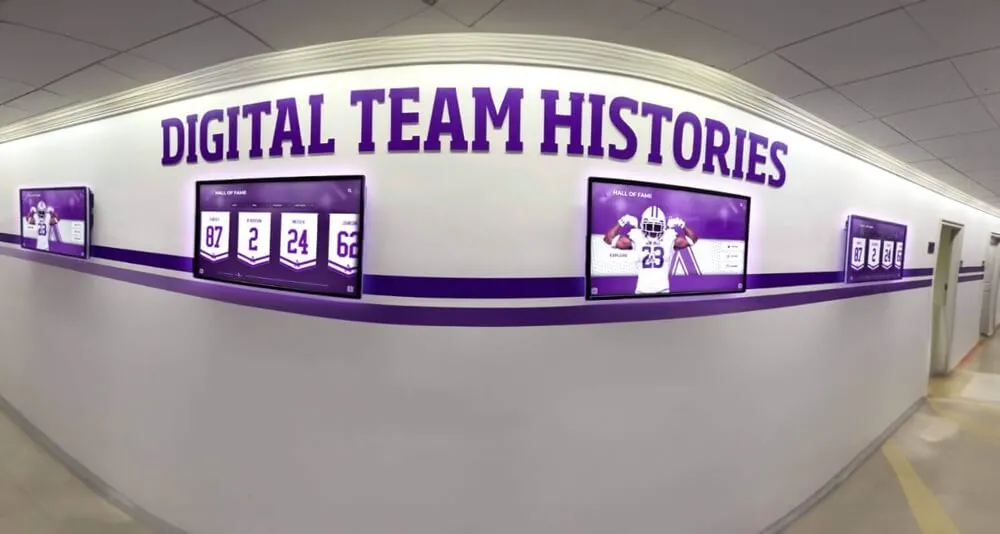
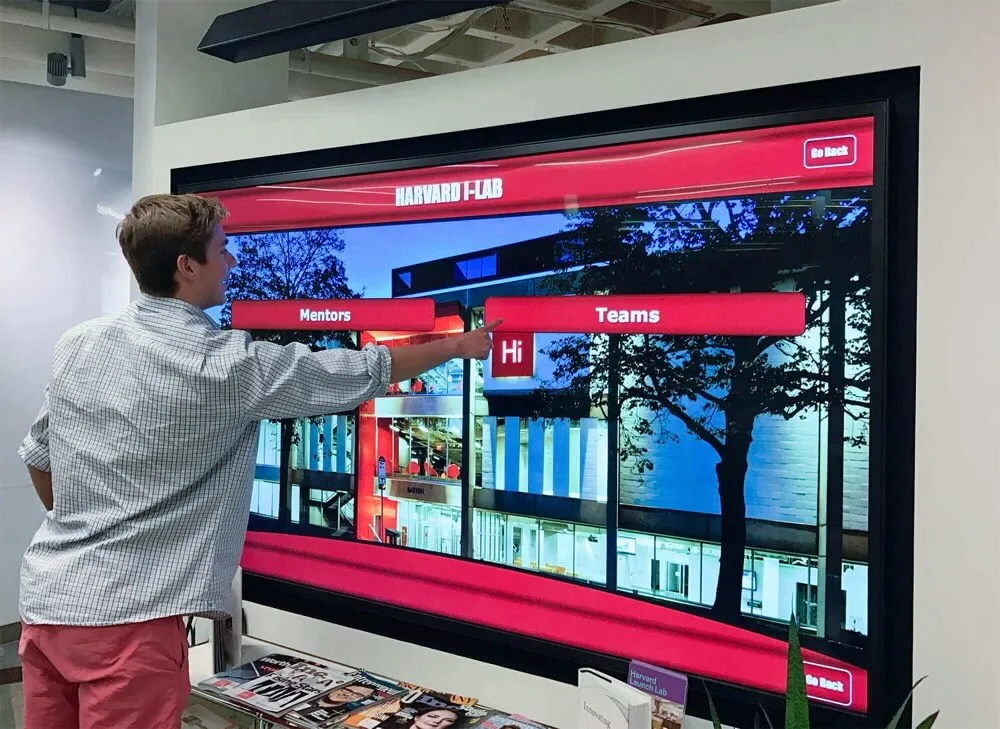
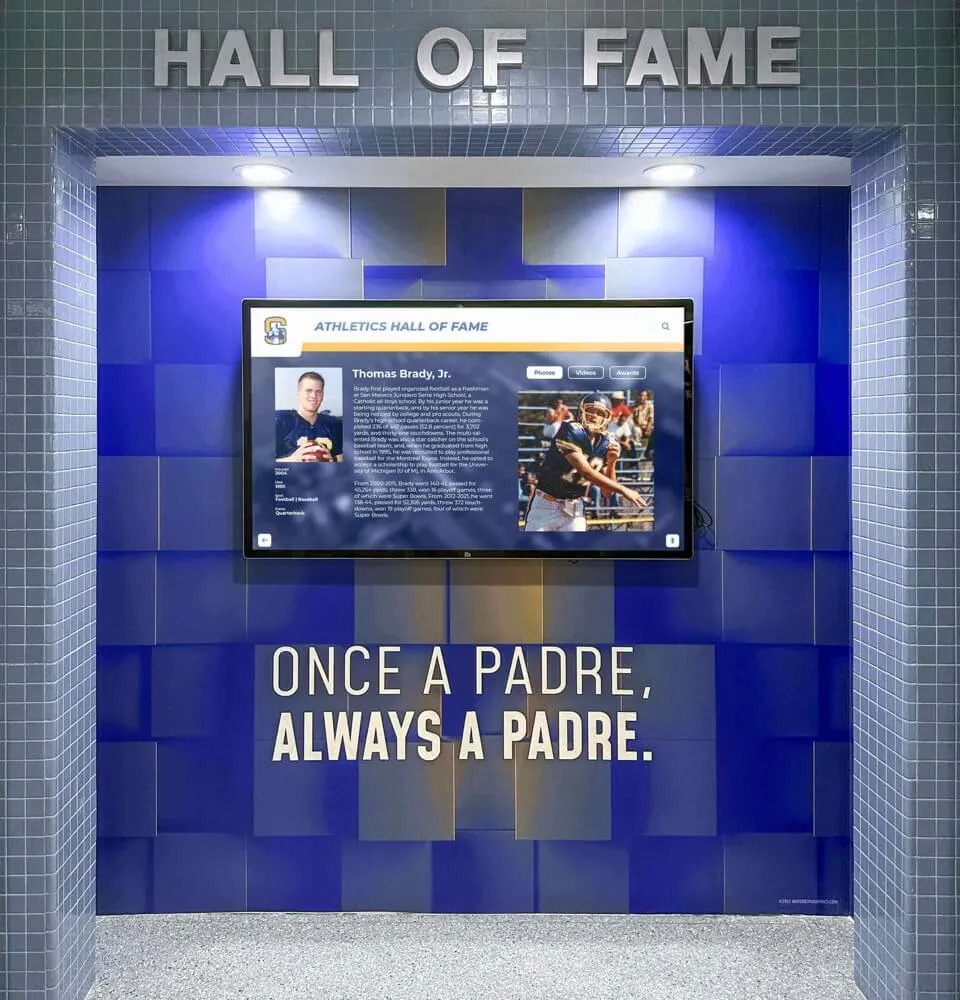
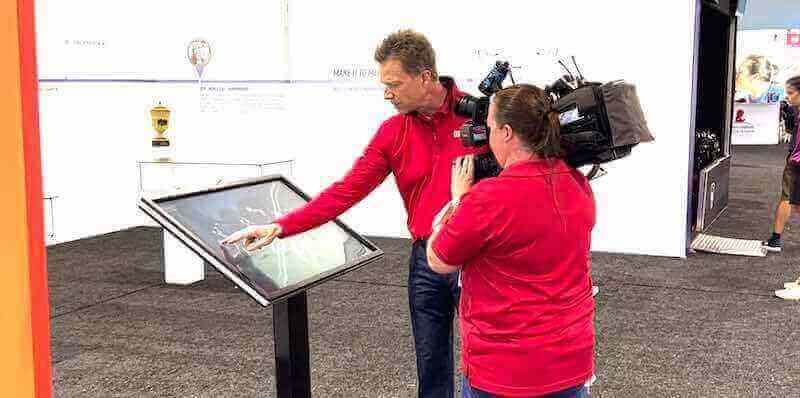
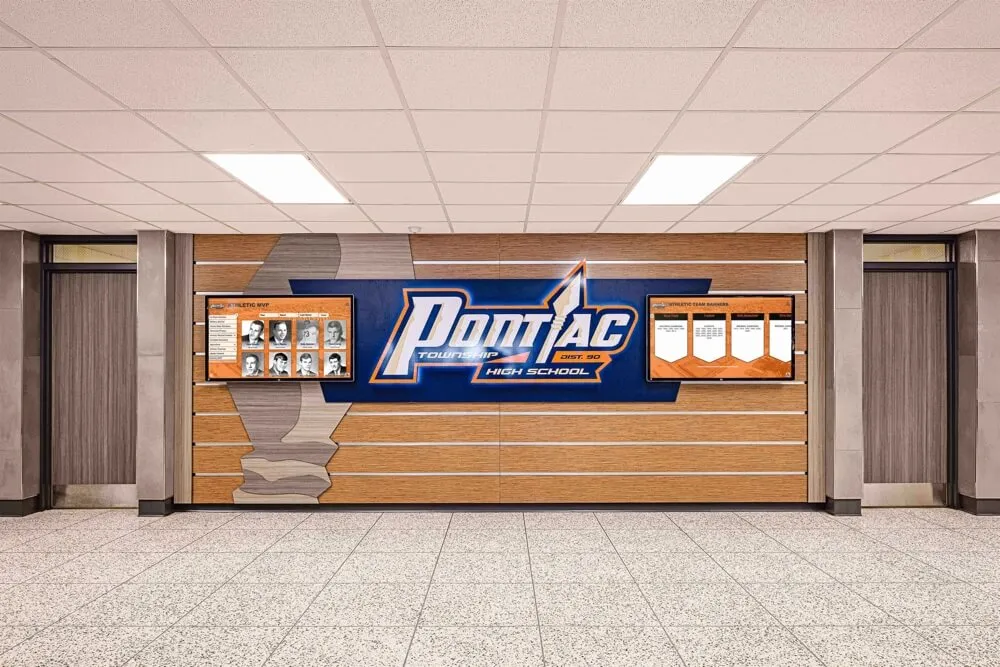
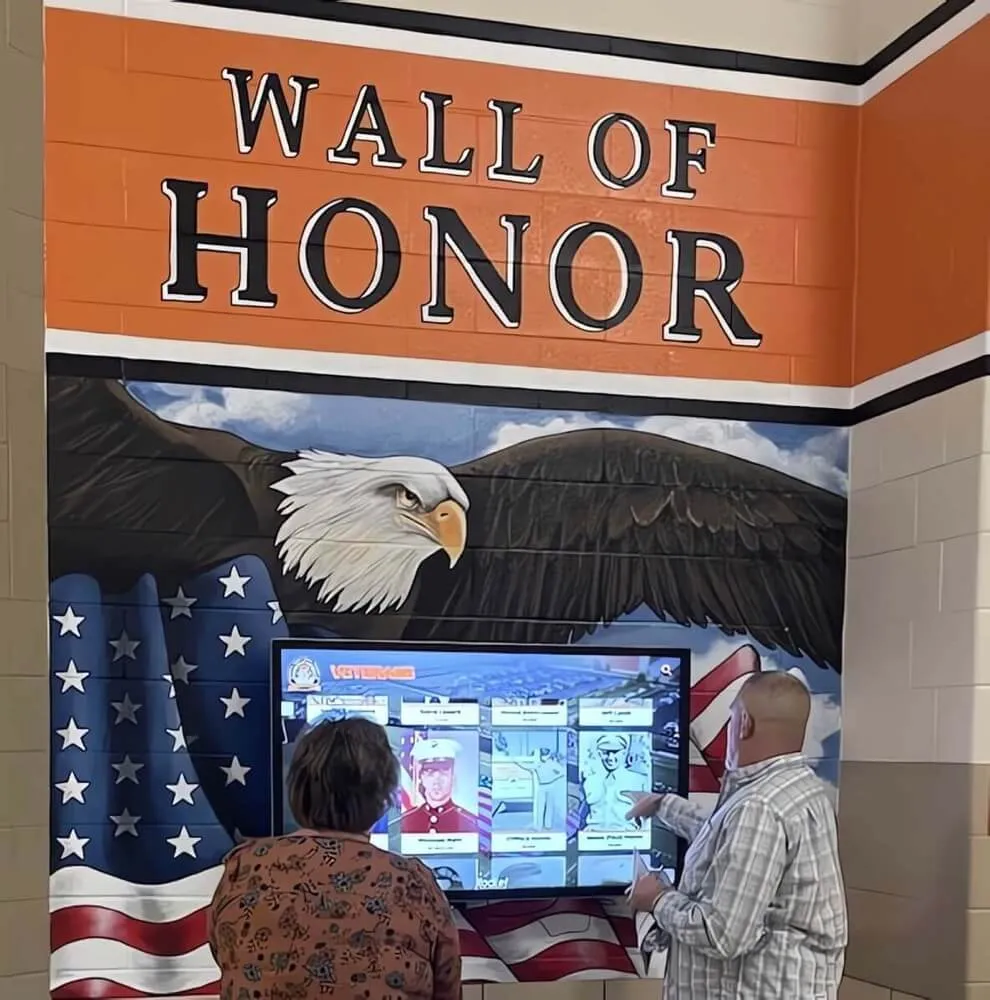
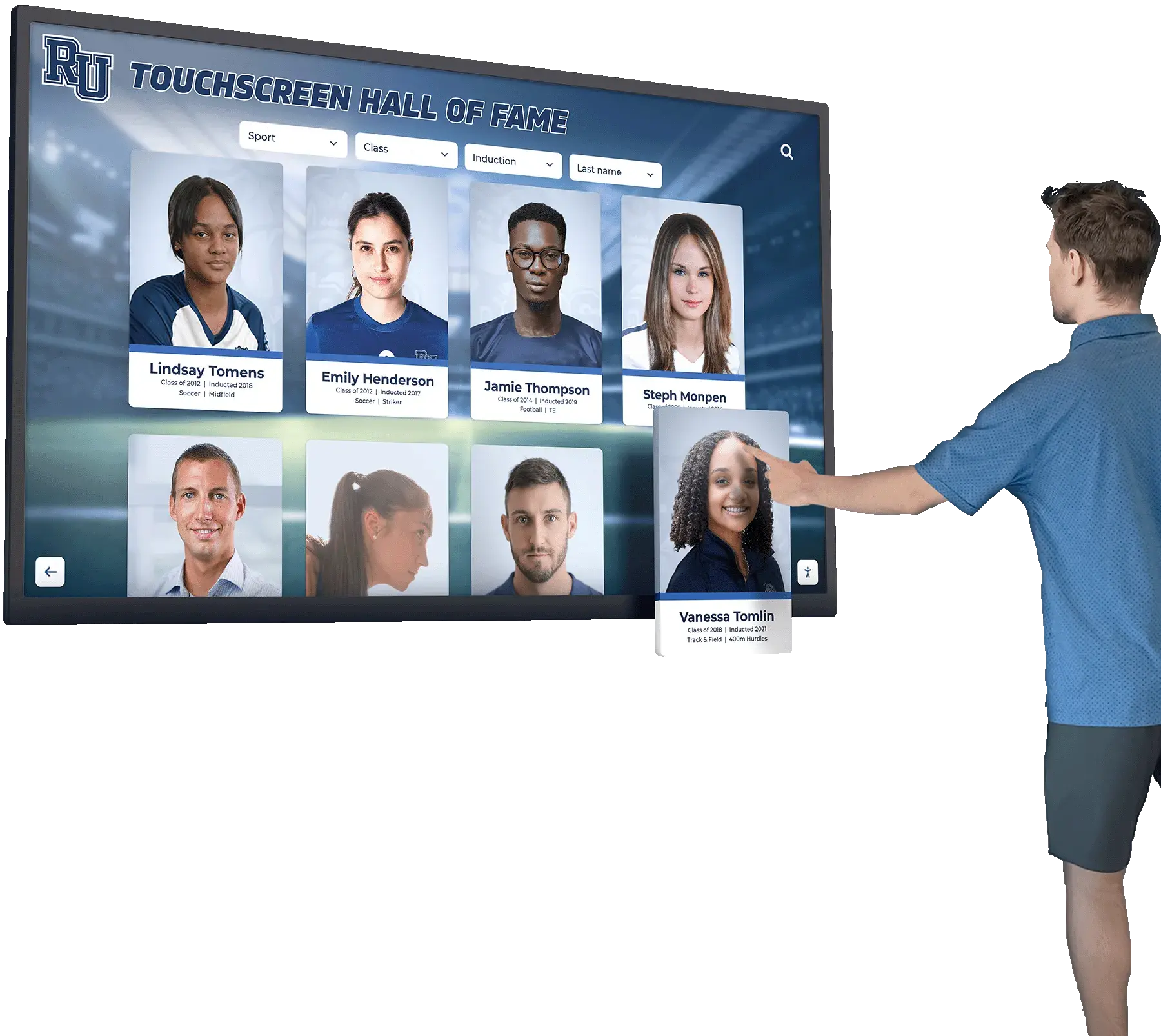
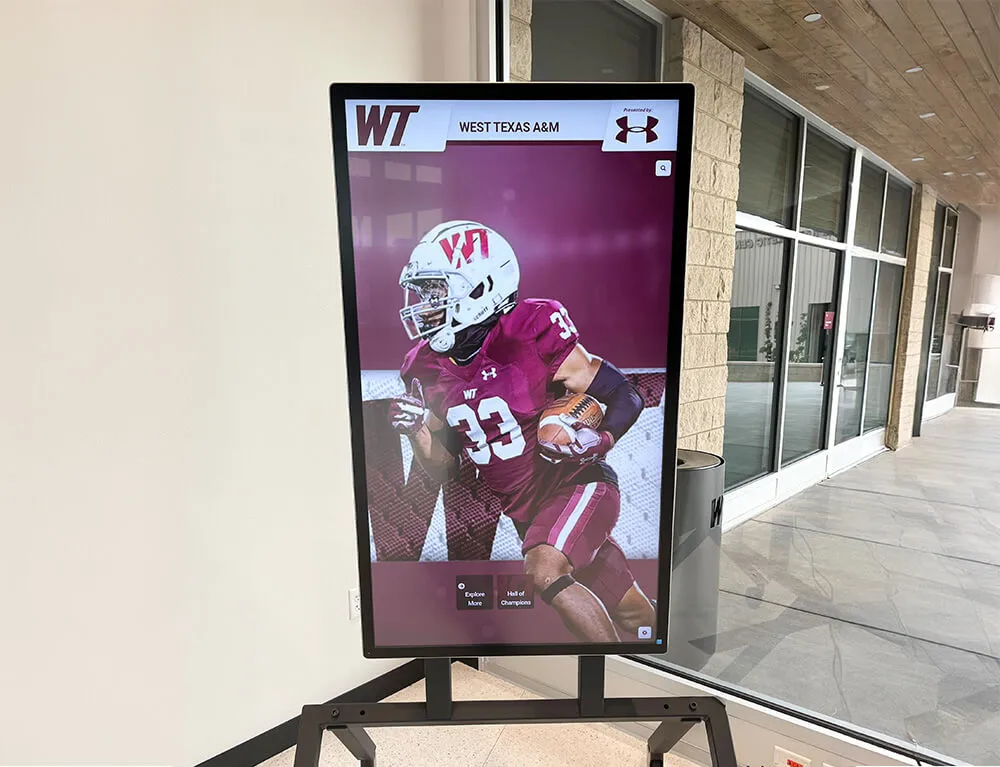
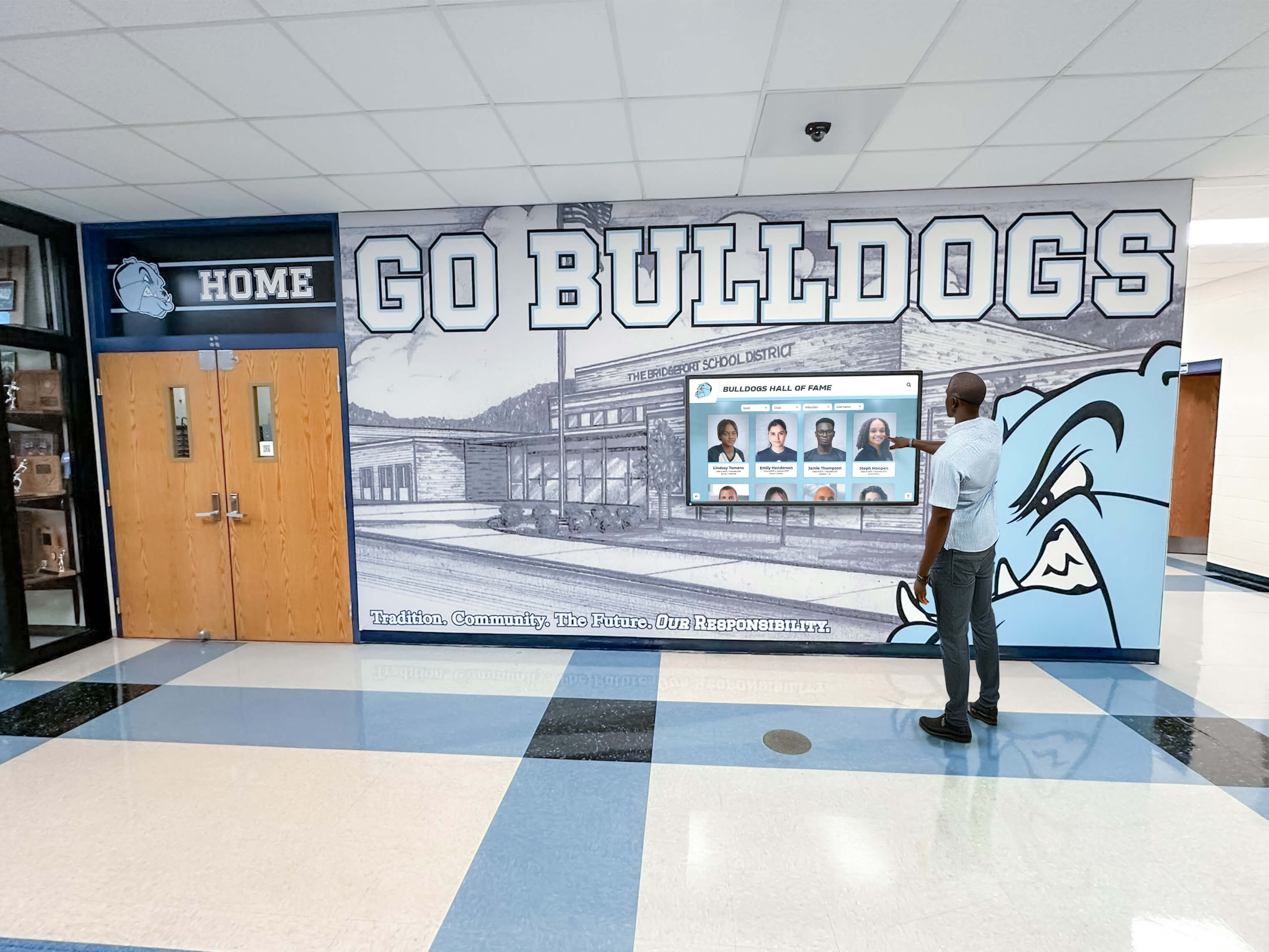
Accommodating Every Deserving Athlete: A single touchscreen display can host comprehensive profiles for thousands of student-athletes across decades of program history. Rather than difficult decisions about which All-Conference athletes receive plaques while others go unrecognized due to space limitations, digital systems accommodate comprehensive recognition of every qualifying achievement across all sports.
Multi-Sport Equity: Division III athletic departments typically sponsor numerous sports—often 20 or more varsity programs ranging from football and basketball to swimming, cross country, volleyball, soccer, and golf. Traditional physical space constraints often result in high-profile sports receiving disproportionate recognition while Olympic sport achievements get marginalized. Digital systems provide equal showcase opportunities ensuring volleyball All-Americans receive recognition identical to football All-Conference performers.
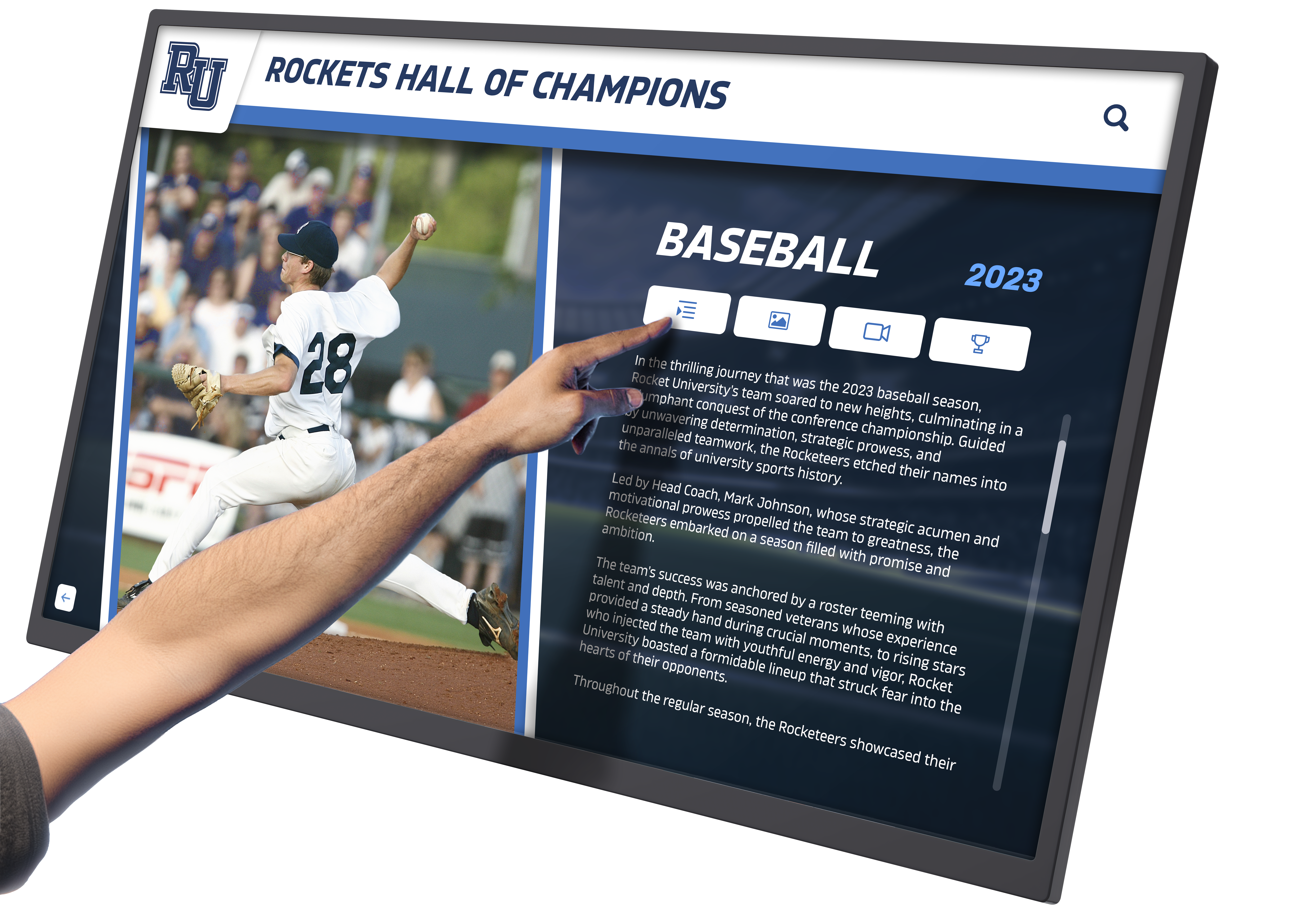
Historical Depth: Division III schools with rich athletic traditions spanning decades face particular space challenges when trying to honor current and historical achievements simultaneously. Digital platforms preserve complete institutional memory from founding athletes through current stars without space trade-offs between eras or generations.
Flexible Growth: As programs continue generating achievements year after year, digital recognition grows seamlessly through content additions rather than requiring physical construction, additional wall space, or difficult decisions about removing older recognition to accommodate recent accomplishments.
Resources on interactive hall of fame systems demonstrate how unlimited digital capacity transforms recognition possibilities for programs of all sizes.
Rich Multimedia Storytelling
Division III student-athletes have remarkable stories that deserve comprehensive telling beyond single-line plaque text. Digital platforms enable multimedia content that brings achievements to life:
Video Highlight Integration: Championship game footage, record-breaking performances, signature athletic moments, and competition highlights create emotional connections that statistics alone cannot achieve. A video clip of a conference championship-winning goal resonates more powerfully than text describing the accomplishment. For Division III programs where games rarely receive broadcast coverage, preservation of video highlights becomes particularly valuable for creating lasting records of remarkable moments.
Photo Galleries: Multiple images documenting athletic careers from freshman seasons through senior achievements, action shots capturing competitive intensity, team photos celebrating championship seasons, and ceremonial images from recognition events create visual narratives that honor complete student-athlete experiences rather than single moments frozen in time.
Comprehensive Career Statistics: Digital profiles accommodate extensive statistical records that physical plaques cannot display. Complete season-by-season statistics, career progression documentation, team and individual records, and contextual information explaining achievement significance within program history provide depth impossible in traditional formats.
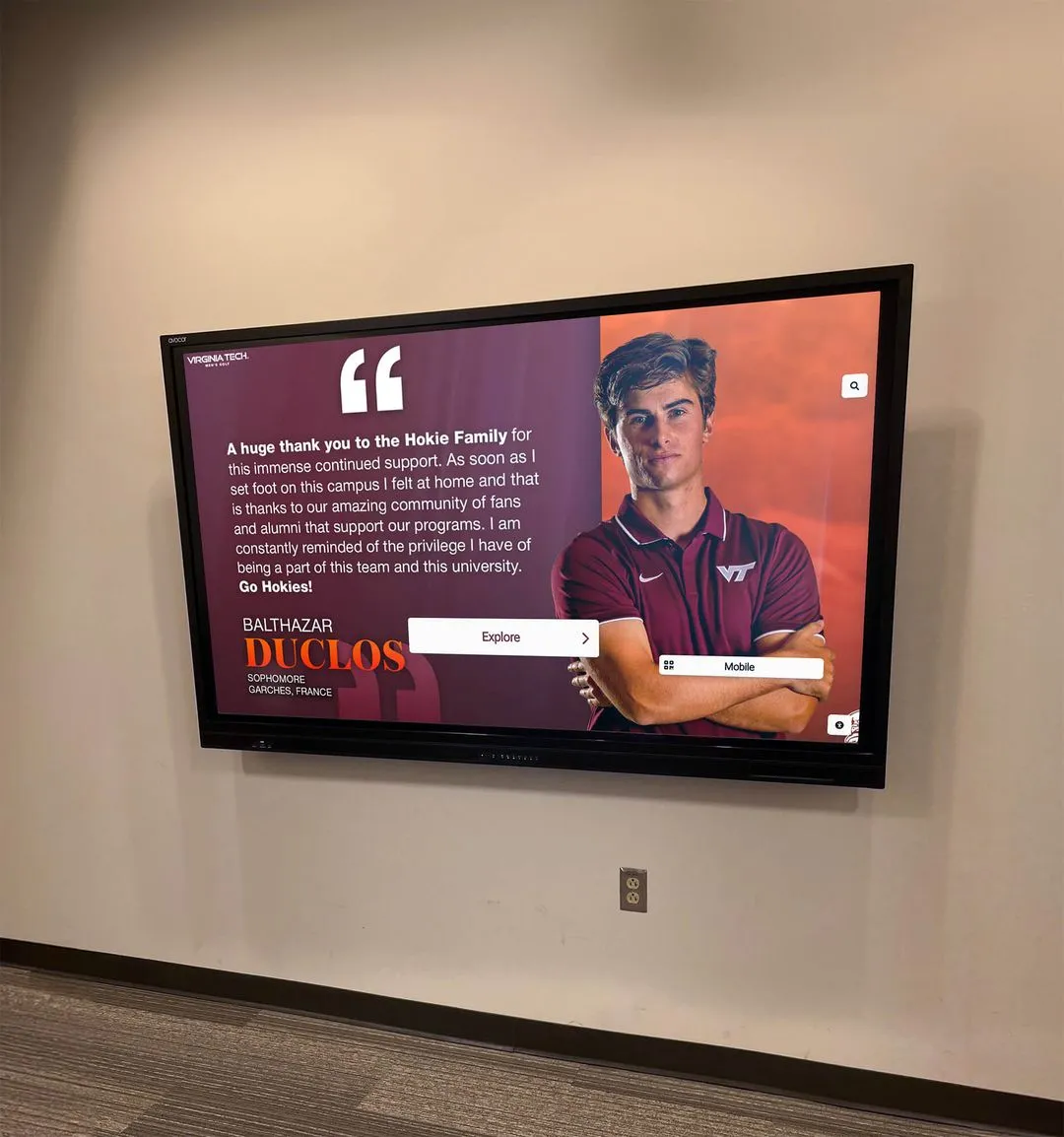
Personal Reflections and Interviews: First-person narratives where student-athletes reflect on experiences, discuss teammates and coaches who influenced them, share lessons learned through athletics, and offer advice for current athletes create personal connections while communicating program values. These authentic voices humanize recognition while demonstrating what makes Division III athletics special beyond competitive statistics.
Academic Achievement Integration: Division III prides itself on genuine student-athlete balance where academic success receives equal emphasis with athletic performance. Digital profiles naturally integrate Academic All-Conference honors, graduation distinctions, major fields of study, and post-graduate academic achievements, celebrating comprehensive excellence that defines Division III ideals.
Guidance on digital storytelling for athletic programs provides frameworks for creating compelling multimedia content that appropriately honors student-athlete achievements.
Cost-Effective Long-Term Solutions
Budget realities significantly impact Division III athletic department decisions. Digital recognition systems offer compelling financial value despite higher initial technology investments:
Lower Per-Athlete Recognition Costs: Traditional plaques cost $100-300 each for materials, engraving, and installation. Recognizing 20 new athletes annually costs $2,000-6,000 in recurring expenses. Digital systems charge no per-profile fees—adding unlimited new athletes requires only content creation time, not ongoing production and installation costs. Over five-year periods, digital platforms typically deliver lower total costs while providing far superior recognition depth.
Elimination of Physical Maintenance: Traditional recognition requires periodic cleaning, damage repair, replacement of deteriorated elements, and eventual complete renovation. Digital displays need minimal maintenance—primarily software updates and occasional screen cleaning. This maintenance reduction represents significant long-term savings for facilities departments with limited staff.
Update Flexibility Without Reconstruction: Correcting information errors, updating career accomplishments, or enhancing existing profiles requires simple content edits rather than ordering replacement plaques, scheduling installation labor, and disposing of obsolete materials. This flexibility prevents the expensive corrections that physical displays require while ensuring accuracy and currency.
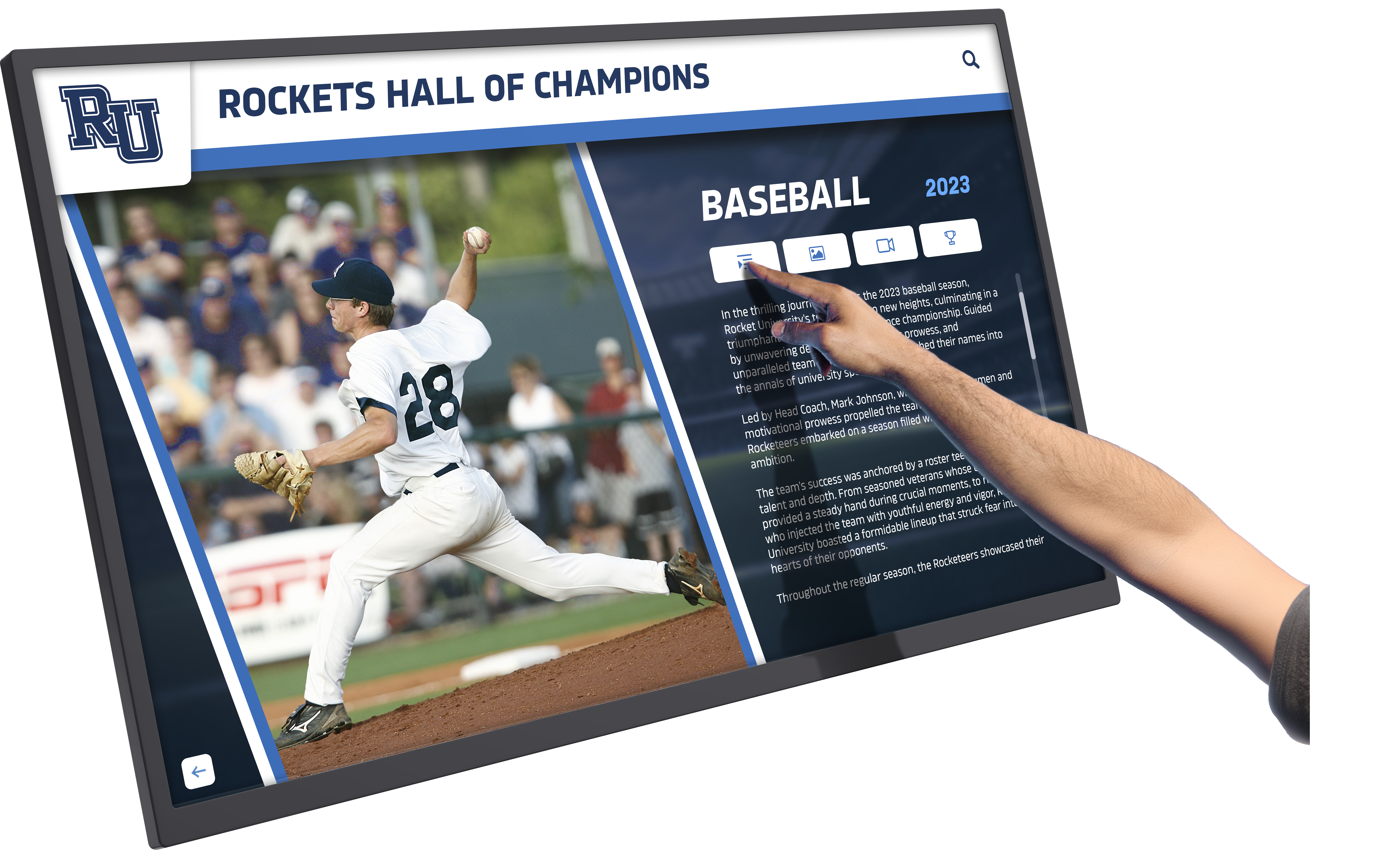
Facility Flexibility: Digital displays can relocate as facilities change—moving from older athletic buildings to new construction, repositioning based on traffic patterns, or rotating between multiple locations. Traditional physical installations become permanent fixtures that cannot adapt to evolving spaces without complete reconstruction.
Scalable Investment: Division III programs can start with single displays in high-traffic locations, then add additional touchscreens as budget permits. The cloud-based content management means all displays access the same comprehensive database, creating consistent experiences across multiple locations without content duplication costs.
Analysis of digital recognition ROI helps athletic directors build financial cases demonstrating long-term value to administrators and budget committees.
Search and Discovery Features
Division III schools often have diverse, distributed constituencies—alumni scattered geographically, prospective students evaluating programs, community members supporting local colleges, and visiting families during competition. Digital recognition systems provide discovery features serving these diverse audiences:
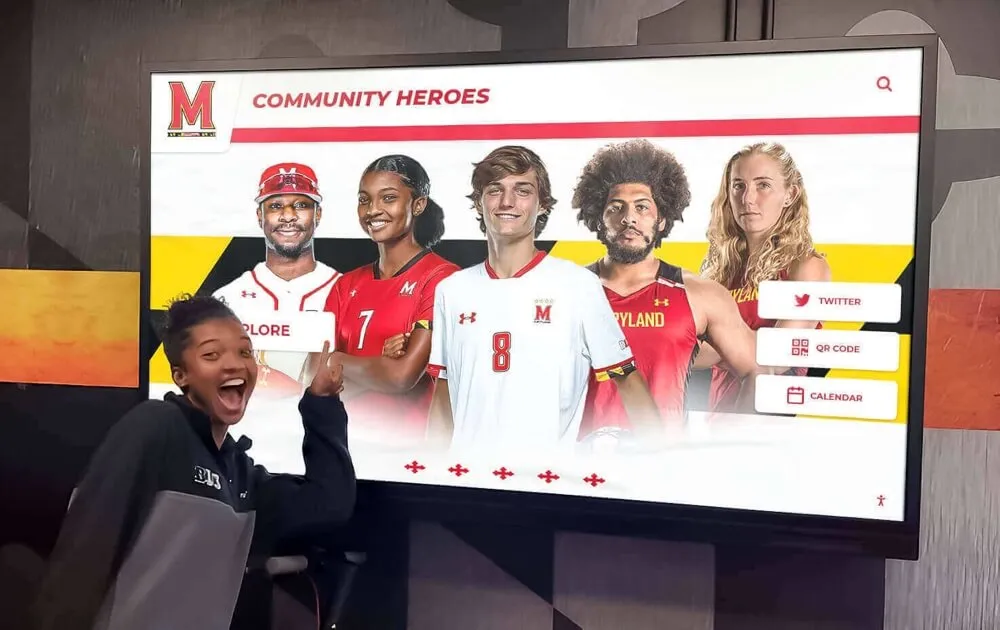
Name and Keyword Search: Visitors can instantly locate specific athletes, search for teammates from particular eras, or discover fellow alumni from their graduation years. This personalized discovery creates relevant experiences for individual users rather than requiring them to scan hundreds of physical plaques hoping to find personal connections.
Sport and Achievement Filtering: Prospective students interested in specific sports can explore all conference champions, All-Americans, or record holders in their sport, understanding program competitive history and tradition. Parents can discover what level of achievement earns recognition, setting expectations and aspirational goals.
Era and Timeline Browsing: Chronological organization enables visitors to explore specific decades, compare eras, or trace program evolution over time. Alumni returning for reunions can focus on their competition years while appreciating how programs have grown since graduation.
Related Content Connections: Advanced systems recommend related profiles—teammates, athletes in same sports from different eras, or individuals with similar achievements—encouraging extended exploration beyond initial queries. These connections help visitors discover inspiring stories they didn’t know to search for initially.
Mobile and Remote Access: Web-based platforms extend recognition beyond physical campus locations. Alumni living across the country can explore recognition from home. Recruits can research program history before campus visits. Media can access information when developing feature stories. This extended reach multiplies recognition impact beyond campus boundaries.
Resources on online athletics recognition platforms demonstrate how digital accessibility extends recognition value for distributed constituencies.
Key Recognition Categories for Division III Programs
Comprehensive Division III recognition systems should celebrate diverse achievement categories that reflect what makes DIII athletics distinctive:
Academic All-Americans and Scholar Athletes
Division III produces the highest academic achievement rates in college athletics. Recognition systems should prominently celebrate students who excelled in classroom and competition simultaneously:
Academic All-Americans: National recognition as Academic All-Americans represents pinnacle achievement in academic-athletic balance. These honors demonstrate that athletic demands enhance rather than compromise academic excellence—core Division III values deserving prominent recognition.
Conference Scholar Athletes: Conference-level academic recognition, Dean’s List achievements while maintaining full athletic participation, and graduation honors earned alongside athletic commitments all represent balanced excellence worthy of permanent celebration.
Post-Graduate Academic Success: Graduate school acceptances, prestigious fellowships, professional degrees earned, and career achievements in demanding fields demonstrate long-term impact of Division III experiences. Celebrating post-collegiate success reinforces that DIII athletics prepares students for life beyond sports.
Strategies for academic recognition programs provide frameworks for celebrating scholarly excellence alongside athletic achievement.
Conference and National Championship Recognition
Competitive success remains central to athletic recognition. Division III championship achievements deserve celebration equal to accomplishments at any level:
National Championships: Division III national championships in 28 sports represent remarkable accomplishments requiring sustained excellence, team chemistry, and competitive performance at highest levels. Championship teams and individual national champions merit comprehensive recognition documenting their achievement journeys.
Conference Championships: Regular season and tournament conference titles represent primary competitive goals for most DIII programs. Conference champions overcome familiar rivals, demonstrate season-long consistency, and achieve goals that required entire teams working toward common purposes. Team championship recognition should include comprehensive rosters, season records, and memorable moments that defined championship campaigns.
National Tournament Appearances: Advancing to NCAA tournament play represents competitive excellence deserving recognition even when teams don’t win championships. Sweet 16 appearances, Elite 8 finishes, and Final Four berths demonstrate program quality and create lasting memories for participants and communities.
Individual National Championships: Track and field events, swimming competitions, wrestling titles, cross country races, and tennis tournaments produce individual national champions whose achievements represent peaks of performance in their sports. Individual champions deserve recognition equal to team championship participants.
Resources on state championships displays provide models applicable to conference and national championship recognition at Division III level.
All-Conference and All-American Athletes
Individual athletic excellence deserves recognition celebrating student-athletes who distinguished themselves through exceptional competitive performance:
All-Americans: Earning All-American status at Division III level requires national-caliber performance and represents career pinnacles for student-athletes competing without scholarship support. All-American recognition should receive prominent showcase highlighting achievement magnitude and rarity.
All-Conference Selections: Conference recognition represents primary individual honor for most DIII athletes. First-team, second-team, and honorable mention selections across all sports deserve recognition celebrating competitive excellence within immediate conference contexts where athletes compete most frequently.
Conference Players of the Year: Top individual honors within conferences—offensive and defensive players of year, pitchers of year, most valuable performers—represent peer and coach recognition of exceptional excellence deserving special acknowledgment.
Freshman and Newcomer Recognition: All-Conference freshman selections and newcomer awards highlight early career promise while celebrating immediate impact contributions that suggest continued excellence throughout college careers.
School Records and Statistical Leaders
Record-setting performances represent achievement peaks that may stand for decades. Comprehensive recognition systems should celebrate statistical excellence:
Career Record Holders: All-time leaders in career statistics—points scored, goals tallied, races won, matches victorious—represent sustained excellence across multiple seasons deserving permanent recognition. Career records demonstrate consistency and longevity that single-season performances cannot match.
Single-Season Records: Record-setting seasons represent peak performance years when everything aligned—health, team chemistry, opponent schedules, personal development—creating remarkable statistical achievements. Single-season records often prove most difficult to surpass as they require near-perfect seasons.
Game and Match Records: Individual game performances that set program standards—most points in a game, fastest race time, most kills in a match—create memorable moments in program history deserving documentation and celebration.
Team Statistical Records: Team records for victories in seasons, consecutive wins, defensive dominance, offensive productivity, or championship achievements represent collective excellence that entire rosters contributed toward.
Approaches to athletic record board displays translate effectively to Division III contexts for documenting and celebrating statistical achievements.
Character, Leadership, and Sportsmanship Recognition
Division III athletics emphasizes character development, ethical competition, and leadership. Recognition systems should celebrate these comprehensive contributions:
Sportsmanship Award Winners: Conference and national sportsmanship recognition honors athletes who competed with integrity, treated opponents with respect, and embodied amateur athletic ideals. Sportsmanship awards represent character excellence deserving permanent recognition.
Team Captains and Leaders: Leadership roles—team captains, elected leaders, mentors who shaped program cultures—represent trust and respect earned from teammates and coaches. Recognizing leadership celebrates contributions beyond competitive statistics.
Community Engagement: Student-athletes who volunteered extensively, engaged with campus and local communities, or used athletic platforms to serve others demonstrate that college athletics develops complete citizens. Community contributions deserve recognition alongside athletic accomplishments.
Overcome Adversity: Student-athletes who overcame injuries, academic challenges, personal hardships, or other obstacles while maintaining athletic participation demonstrate resilience and character. Their stories inspire current athletes facing similar challenges.
Implementing Digital Recognition at Division III Schools
Athletic directors and administrators at Division III institutions considering digital recognition systems should follow systematic approaches ensuring successful implementation:
Needs Assessment and Goal Setting
Begin with clear understanding of current recognition gaps and desired outcomes:
Evaluate Current Recognition: Audit existing recognition systems—what’s working effectively, what’s inadequate, which sports and eras receive disproportionate recognition, and what stakeholder complaints or suggestions have emerged. Understanding limitations guides solution selection.
Define Primary Objectives: Clarify whether primary goals include preserving historical achievements being lost, providing equitable recognition across all sports, creating recruiting tools showcasing program traditions, engaging alumni through visible recognition, or building campus pride through celebration of excellence. Clear objectives guide budget allocation and feature prioritization.
Identify Stakeholder Priorities: Gather input from coaches across all sports, athletic administrators, student-athletes who provide user perspectives, alumni who represent long-term connections, advancement staff who leverage recognition for fundraising, and admissions professionals who use athletics in recruitment. Diverse perspectives ensure solutions serve multiple constituencies.
Establish Success Metrics: Define how success will be measured—satisfaction surveys from recognized athletes, engagement analytics from display interactions, alumni giving correlated with recognition, recruiting impact, or media coverage generated. Clear metrics enable objective evaluation and continuous improvement.
Budget Development and Funding Strategies
Division III budget realities require creative funding approaches and realistic financial planning:
Comprehensive Cost Analysis: Account for all implementation and operational expenses including display hardware and installation, software platform licensing, initial content development, staff training, ongoing content creation, and technical support. Complete cost understanding prevents mid-project funding surprises.
Compare Long-Term Costs: Analyze five-year and ten-year total costs for digital versus traditional approaches. Include recurring physical plaque costs, maintenance expenses, periodic renovations, and flexibility value when comparing alternatives. Long-term analysis typically favors digital solutions.
Explore Funding Sources: Division III programs often combine funding including athletic department operating budgets, fundraising campaigns specific to recognition projects, alumni donations honoring team eras or sports, memorial gifts celebrating deceased athletes or coaches, and institutional funding for projects serving multiple departments.
Phased Implementation: Limited budgets may necessitate phased approaches—initial single display installation proving concept and generating stakeholder buy-in, followed by additional displays as budget permits or fundraising succeeds. Phased approaches spread costs while demonstrating value before major commitments.
Leverage Institutional Technology: Some campuses have digital signage infrastructure, information technology support, or existing display hardware that can be repurposed for athletic recognition. Leveraging existing resources reduces implementation costs while building cross-departmental partnerships.
Content Development Strategies
Comprehensive recognition requires systematic content creation across multiple sports and decades of history:
Prioritize Recent Recognition: Begin with well-documented recent achievements from past 5-10 years where photographs, statistics, and information are readily available. Recent content creation builds momentum while establishing templates and standards for historical content.
Systematic Historical Research: Develop methodologies for recovering historical achievement information through yearbook reviews documenting teams and honors, newspaper archive searches capturing contemporary coverage, coach and administrator interviews preserving institutional memory, athlete and family outreach requesting information and materials, and conference office records when accessible.
Establish Content Standards: Create consistent profile structures ensuring all recognized individuals receive equivalent treatment regardless of sport, era, or achievement type. Standardization ensures equity while streamlining content creation processes for staff and volunteers.
Engage Student Workers: Many Division III schools successfully engage student workers—sports information assistants, student photographers, athletes during off-seasons—in content development. Student involvement provides affordable labor while creating authentic learning experiences and building student investment in recognition systems.
Develop Sustainable Processes: Establish repeatable annual workflows for identifying newly qualified athletes, gathering necessary information and materials, creating profile content, and updating displays. Sustainable processes prevent recognition from becoming outdated while distributing workload across annual cycles rather than intensive periodic efforts.
Resources on alumni engagement through interactive displays provide strategies for involving alumni constituencies in content development and historical recovery.
Technical Implementation Considerations
While Division III schools may have limited technology resources, successful digital recognition requires attention to technical dimensions:
Hardware Selection: Choose commercial-grade displays designed for continuous operation rather than consumer equipment. Select appropriate screen sizes for viewing distances and traffic patterns—typically 55-65 inch displays for hallway installations, potentially larger for lobbies or gymnasiums with greater viewing distances.
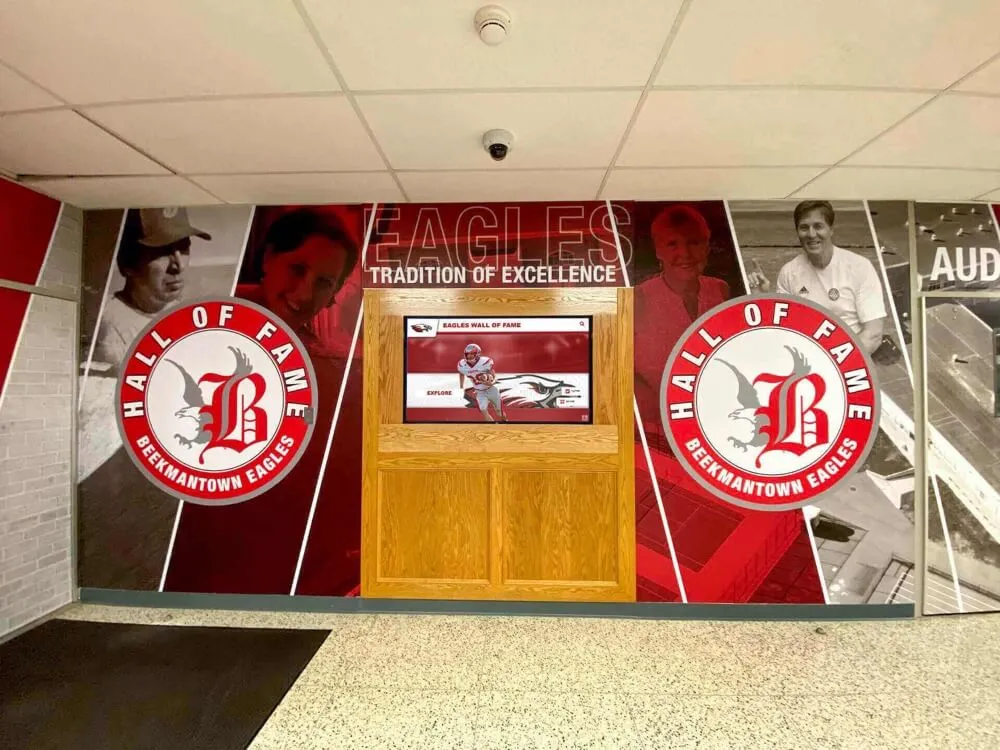
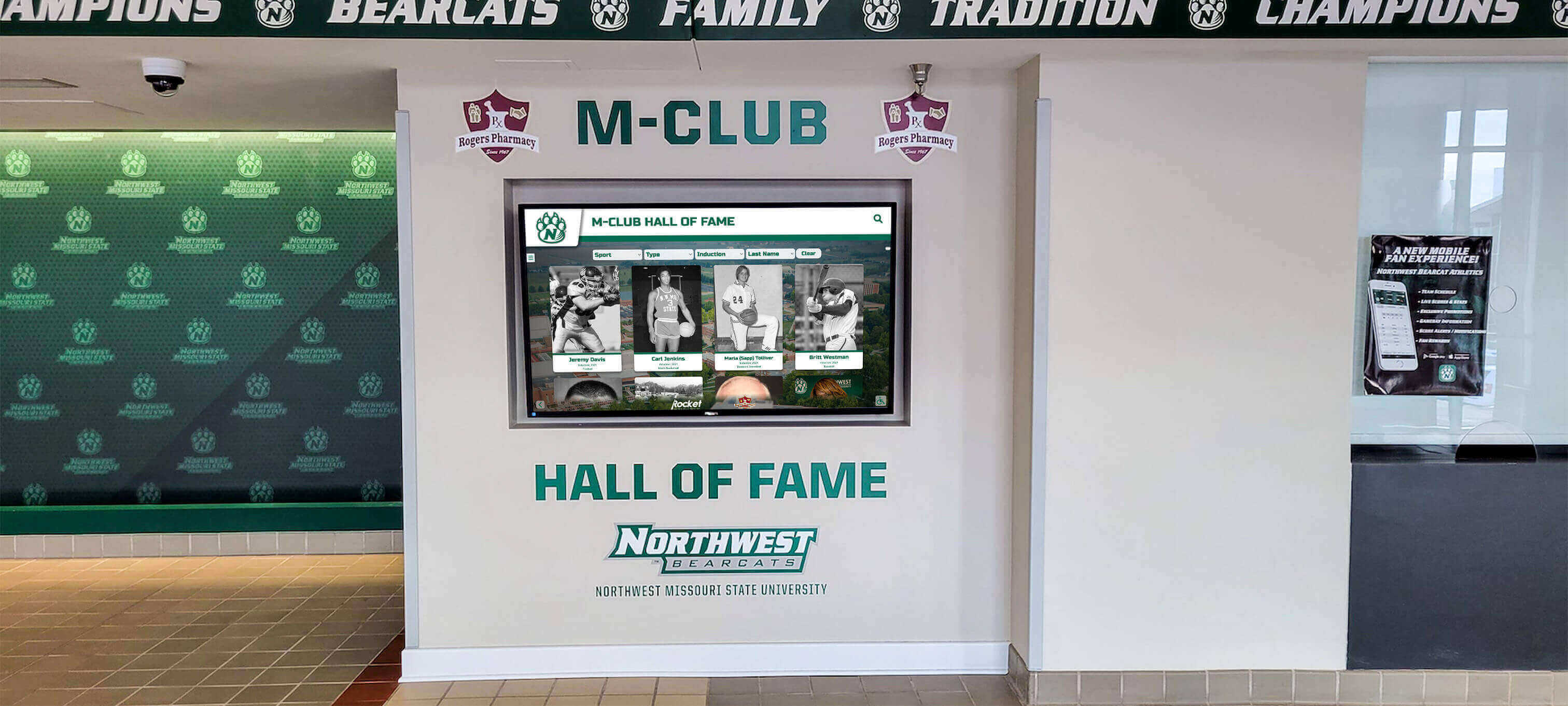
Placement and Mounting: Strategic placement maximizes visibility and engagement. High-traffic areas—main athletic facility entrances, gymnasium lobbies, commons areas, student centers—create natural viewing opportunities. Professional mounting ensures security, appropriate viewing heights, and polished appearance matching institutional standards.
Network Infrastructure: Ensure reliable network connectivity for displays requiring internet access for content updates. Wired Ethernet provides optimal reliability, though robust WiFi may suffice for some locations. Plan for adequate bandwidth if displays will feature video content.
Software Platform Evaluation: Assess platforms for intuitive content management accessible to non-technical athletic staff, comprehensive profile capabilities supporting multimedia integration, search and filtering features serving diverse users, mobile and web access extending recognition beyond physical displays, and vendor stability ensuring long-term support and platform evolution.
Technical Support Planning: Establish support procedures addressing software issues, hardware problems, content questions, and user support. Identify whether internal IT staff can provide support or whether vendor support agreements are necessary. Clear support structures ensure problems get resolved quickly maintaining display availability.
Guidance on touchscreen displays for schools helps navigate technical decisions and select appropriate equipment for institutional contexts.
Engaging Division III Communities Through Recognition
Effective recognition systems extend beyond display installation to active community engagement that maximizes recognition value:
Alumni Engagement Strategies
Division III alumni often maintain strong emotional connections to athletic experiences that shaped college years. Digital recognition systems provide natural engagement opportunities:
Reunion Integration: Coordinate recognition display unveilings or enhancements with reunion weekends. Returning alumni naturally explore displays, share memories with teammates, and introduce current students to program traditions. Recognition provides conversation starters and connection points spanning generations.
Social Media Amplification: Share individual profiles, achievement anniversaries, and throwback content on social media platforms where alumni engage. Digital recognition provides endless content for filling athletic department social channels while celebrating individuals in their networks, encouraging sharing and engagement beyond campus boundaries.
Solicited Contributions: Invite alumni to contribute memories, photographs, and information for expanding historical recognition. Many alumni possess photographs, newspaper clippings, or memorabilia that institutional archives lack. Contribution opportunities engage alumni while enriching content quality.
Mentorship Programs: Connect recognized alumni with current student-athletes for mentorship opportunities. Digital profiles provide starting points for conversations—current athletes can research alumni mentors’ achievements before meetings, while alumni can follow current athletes’ careers through ongoing recognition additions.
Recruiting Applications
For Division III programs where athletic scholarships don’t provide recruiting advantages, recognition systems demonstrate program tradition, commitment to celebrating achievement, and pathways to lasting honor:
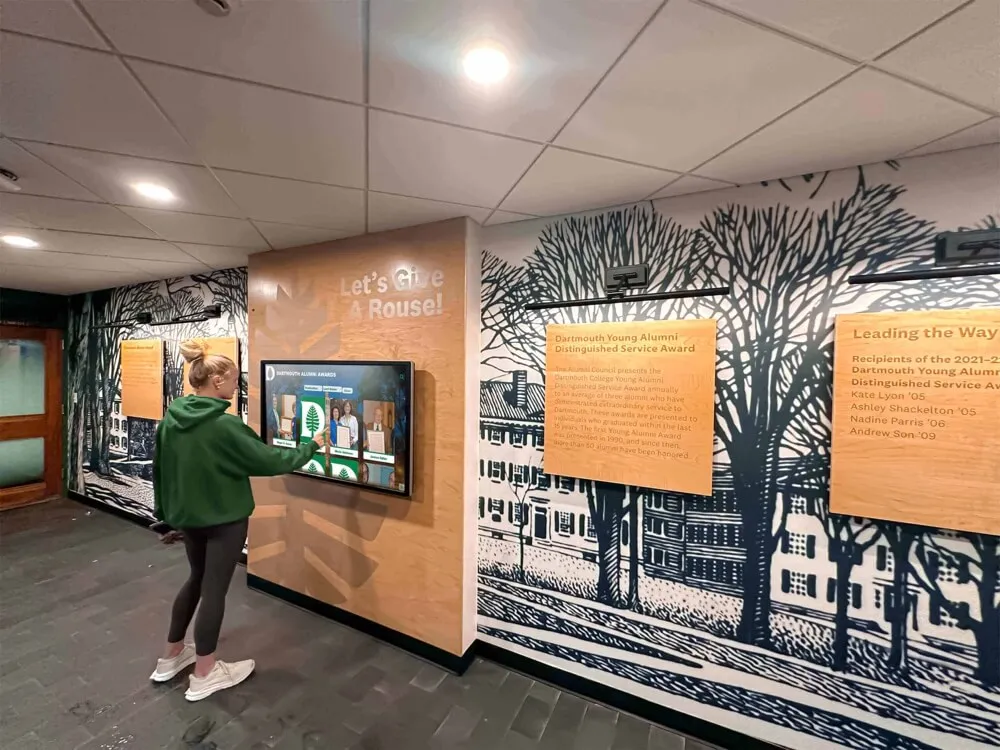
Campus Tour Integration: Position displays along standard campus tour routes or in buildings where prospective students gather. Recruits exploring campuses discover recognition naturally, understanding program traditions and values without requiring coaches to provide complete program histories verbally.
Online Accessibility: Web-based recognition platforms enable recruits researching programs from home to explore comprehensive program histories, understand what achievement levels earn recognition, and envision themselves potentially joining distinguished lineages of program excellence.
Video Tour Integration: Include recognition display footage in virtual campus tours, recruiting videos, and digital marketing materials. Recognition systems communicate program values and traditions through visual storytelling more effectively than text descriptions.
Parent Impression Management: Parents often influence college athletic decisions significantly. Professional recognition displays communicate that institutions value student-athlete contributions, maintain traditions of excellence, and create lasting acknowledgment for achievements—messages resonating with parents evaluating where student-athletes will spend college years.
Current Student-Athlete Motivation
Recognition systems should inspire current athletes by making achievement pathways visible and goals tangible:
Visible Standards: When student-athletes see exactly what achievements earn recognition—All-Conference selections, championship participation, record performances—they understand concrete standards for earning lasting honor. Visible standards transform vague concepts of excellence into specific, achievable goals.
Role Model Access: Comprehensive profiles of program legends provide role models for current athletes. Freshmen can study athletes who excelled in their positions, learn about preparation approaches, and understand what distinguished excellent performers from average contributors.
Team Culture Building: Coaches can leverage recognition content for team meetings, preseason motivational sessions, or tradition education with new team members. Historical context helps athletes understand they’re part of larger stories extending beyond single seasons or individual teams.
Performance Tracking: Some digital systems integrate current season statistics alongside historical records, enabling athletes to see how their performance compares to program standards. This real-time context can motivate sustained excellence while making record chases exciting for teams and fans.
Resources on athletic recruiting recognition displays provide frameworks for leveraging recognition systems to support recruiting objectives.
Overcoming Common Implementation Challenges
Division III athletic departments implementing digital recognition commonly encounter predictable obstacles that experienced approaches address:
Limited Budget Resources
Challenge: Division III athletic budgets often lack discretionary funding for major recognition investments, with resources focused primarily on team operations, equipment, and facility maintenance.
Solutions: Pursue fundraising campaigns specific to recognition projects where alumni and supporters donate toward honoring athletic traditions. Consider phased implementations starting with single displays demonstrating value before expanding. Leverage institutional resources like existing digital signage infrastructure or IT support reducing standalone project costs. Compare long-term costs showing digital solutions often deliver lower lifecycle expenses than continuing traditional approaches.
Inadequate Historical Documentation
Challenge: Smaller athletic departments may lack comprehensive historical records, with achievement information lost due to staff turnover, limited archives, or minimal historical sports information infrastructure.
Solutions: Conduct systematic research through available channels—yearbooks, newspaper archives, conference records. Interview long-serving coaches, retired administrators, and alumni who preserve institutional memory. Accept that some historical eras may have information gaps while committing to comprehensive documentation going forward. Consider recognizing historical “eras” or “cohorts” when individual records prove elusive but general excellence is documented.
Staff Capacity Limitations
Challenge: Division III sports information departments often consist of one or two staff managing all sports, limiting capacity for intensive content development projects beyond daily operational demands.
Solutions: Engage student workers, team managers, or interested student-athletes in content development as learning experiences. Involve volunteer alumni in historical research and content contribution. Implement sustainable annual processes requiring modest effort rather than intensive periodic overhauls. Select software platforms with intuitive content management reducing technical expertise requirements.
Multi-Sport Equity Concerns
Challenge: Ensuring equitable recognition across all sports—from high-profile football and basketball through Olympic sports to emerging programs—requires deliberate attention preventing unconscious bias toward certain sports.
Solutions: Establish clear criteria applicable across all sports recognizing that achievement measures differ legitimately between programs. Regularly audit recognition distribution by sport ensuring proportional representation. Feature rotating spotlight content giving all programs periodic prominence. Consult with coaches from all sports during planning ensuring diverse perspectives inform decisions.

Technology Adoption Resistance
Challenge: Some stakeholders—particularly traditionalist alumni and older constituents—may resist digital recognition preferring traditional physical displays they consider more permanent or prestigious.
Solutions: Implement hybrid approaches combining selective traditional recognition for highest profile achievements with comprehensive digital systems accommodating all qualified individuals. Emphasize that digital platforms preserve recognition permanently while providing richer storytelling than physical plaques permit. Highlight accessibility advantages enabling distributed alumni to engage with recognition from anywhere. Demonstrate that quality digital implementations convey professionalism and prestige equal to traditional approaches.
The Future of Division III Athletic Recognition
Recognition technology continues evolving with emerging capabilities that will further enhance Division III athletic celebration:
Enhanced Accessibility and Inclusion
Future systems will incorporate improved accessibility features ensuring recognition serves all community members effectively—enhanced visual accommodation options, audio description capabilities, alternative navigation methods, and universal design principles creating inclusive experiences.
Artificial Intelligence Integration
AI capabilities will enable sophisticated features including natural language search understanding conversational queries, automated content suggestions streamlining profile creation, personalized recommendations adapting to individual interests, and pattern recognition identifying achievement trends across program history.
Social Integration and User Contributions
Advanced platforms may enable community contributions where alumni can add memories or congratulations to profiles, teammates can share reminiscences, and current athletes can follow profile additions through social media integrations. This community interaction transforms recognition from static archives into living histories enriched by collective memory.
Virtual and Augmented Reality
Emerging technologies may enable virtual tours of recognition displays for remote audiences, augmented reality overlays when viewing physical spaces through mobile devices, or immersive experiences that recreate championship moments allowing future generations to experience historic achievements virtually.
Conclusion: Celebrating Division III Excellence Appropriately
Division III athletics represents college sports at its most authentic—students competing for intrinsic rewards, balancing academics and athletics genuinely, developing as complete individuals, and embodying amateur athletic ideals increasingly rare in scholarship-driven college sports. These student-athletes deserve recognition systems celebrating their achievements appropriately while acknowledging what makes Division III special.
Modern digital recognition platforms provide Division III athletic departments with powerful, cost-effective tools for preserving program history across all sports, honoring student-athlete achievements comprehensively, inspiring current athletes through visible examples of excellence, engaging alumni communities around shared athletic experiences, and demonstrating institutional commitment to comprehensive athletics that extends beyond high-profile revenue sports.
The most successful Division III recognition systems share common characteristics: clear criteria ensuring fair recognition across all sports, comprehensive content celebrating complete student-athlete experiences, equitable representation preventing certain sports from dominating recognition, sustainable operations fitting Division III resource realities, and engaging presentation formats that contemporary audiences find meaningful.
Solutions like those from Rocket Alumni Solutions enable Division III programs to create professional recognition experiences rivaling those at institutions with far larger budgets. Unlimited capacity accommodates all deserving student-athletes across all sports. Rich multimedia storytelling celebrates achievements with depth impossible in traditional formats. Cost-effective long-term operation aligns with Division III financial realities. Easy content management allows small staffs to maintain recognition currency without overwhelming demands.
Division III student-athletes choose their athletic paths knowing they won’t receive scholarships, unlikely to achieve professional careers, and rarely experience media spotlight that accompanies Division I competition. They choose DIII because they love their sports, value academic-athletic balance, and embrace the authentic student-athlete experience. These individuals deserve recognition systems acknowledging their achievements, preserving their contributions to institutional history, and inspiring future generations who will follow in distinguished traditions they establish.
Athletic departments ready to transform Division III recognition can explore additional resources on college athletics halls of fame, digital recognition display benefits, and comprehensive recognition solutions that honor student-athletes appropriately while creating sustainable programs celebrating Division III excellence for generations to come.
When Division III athletics receives recognition worthy of the excellence, character, and dedication student-athletes demonstrate daily, programs communicate powerful messages about institutional values—that achievement matters regardless of media visibility, that comprehensive development extends beyond athletics, and that commitment and excellence deserve lasting acknowledgment. Digital recognition systems enable Division III programs to deliver on these promises, ensuring every deserving student-athlete receives the celebration they’ve earned through years of dedication to teams, sports, and institutions they represent with pride.