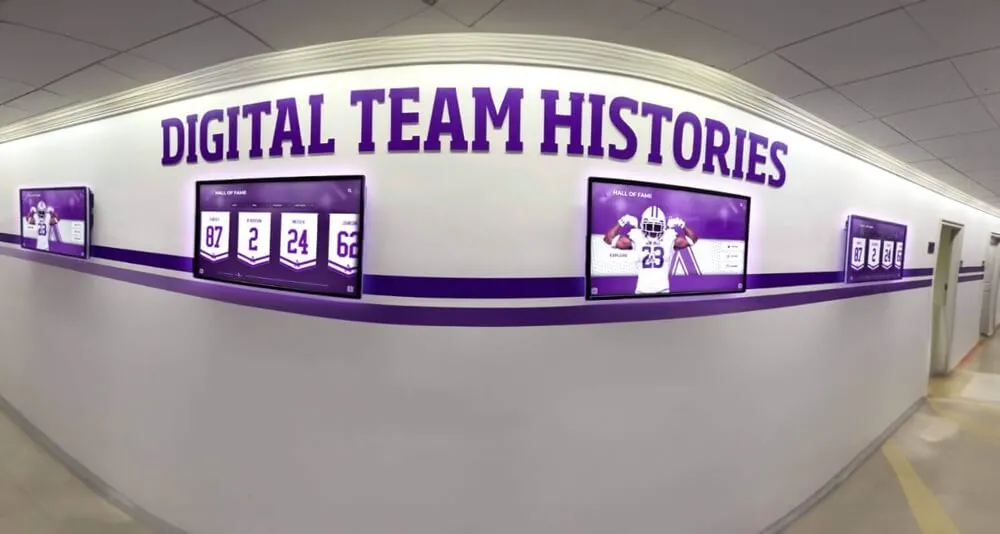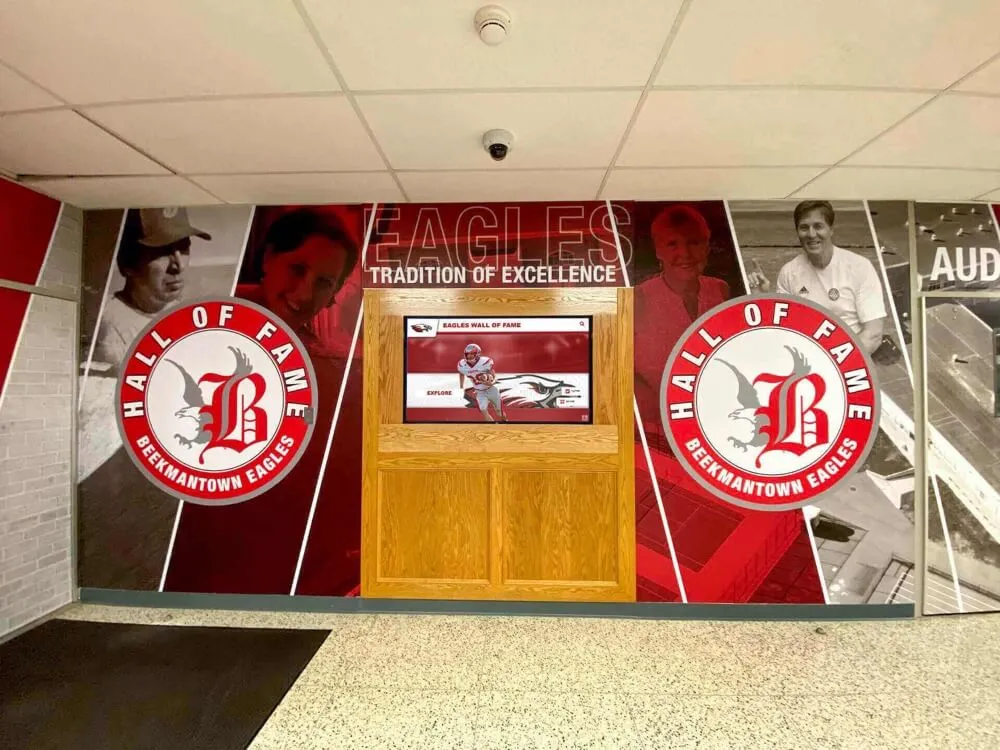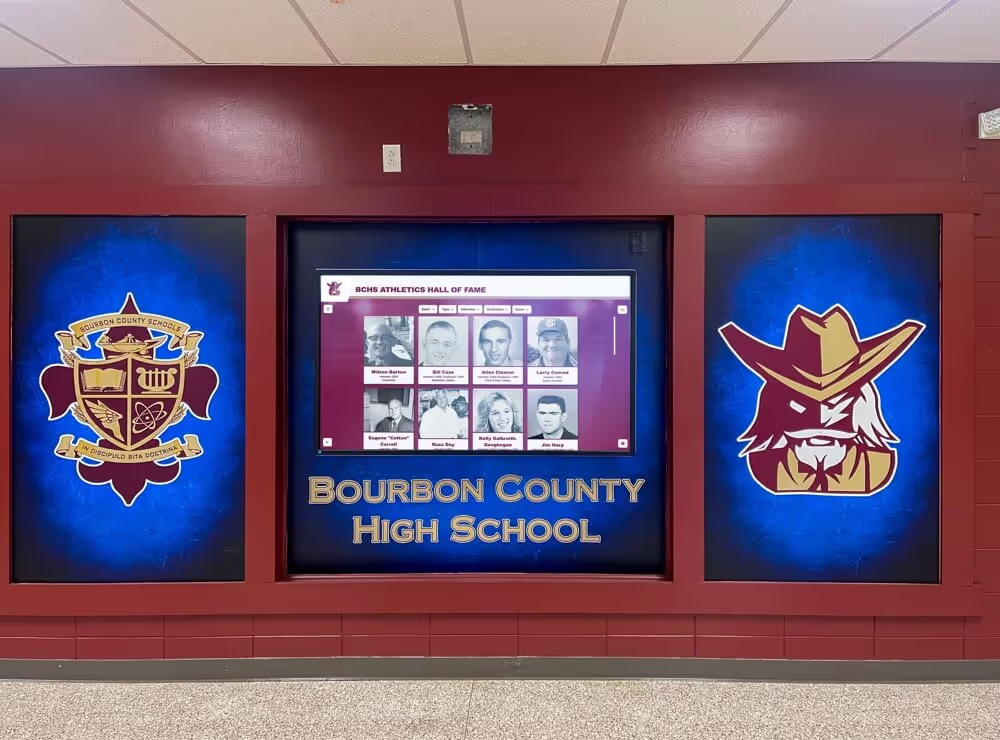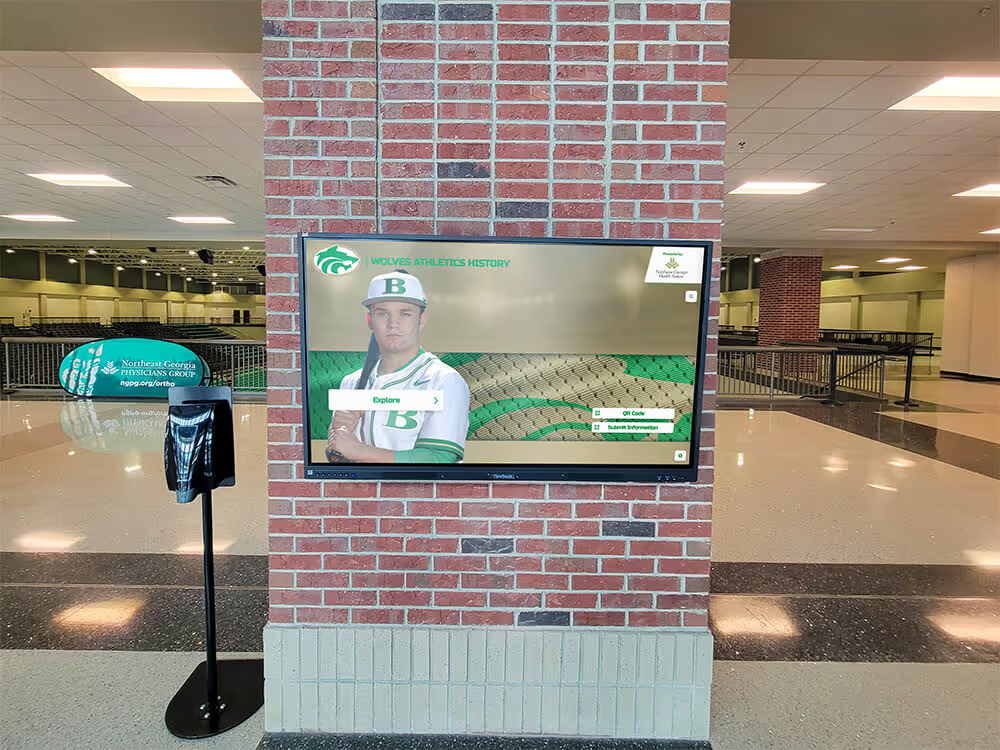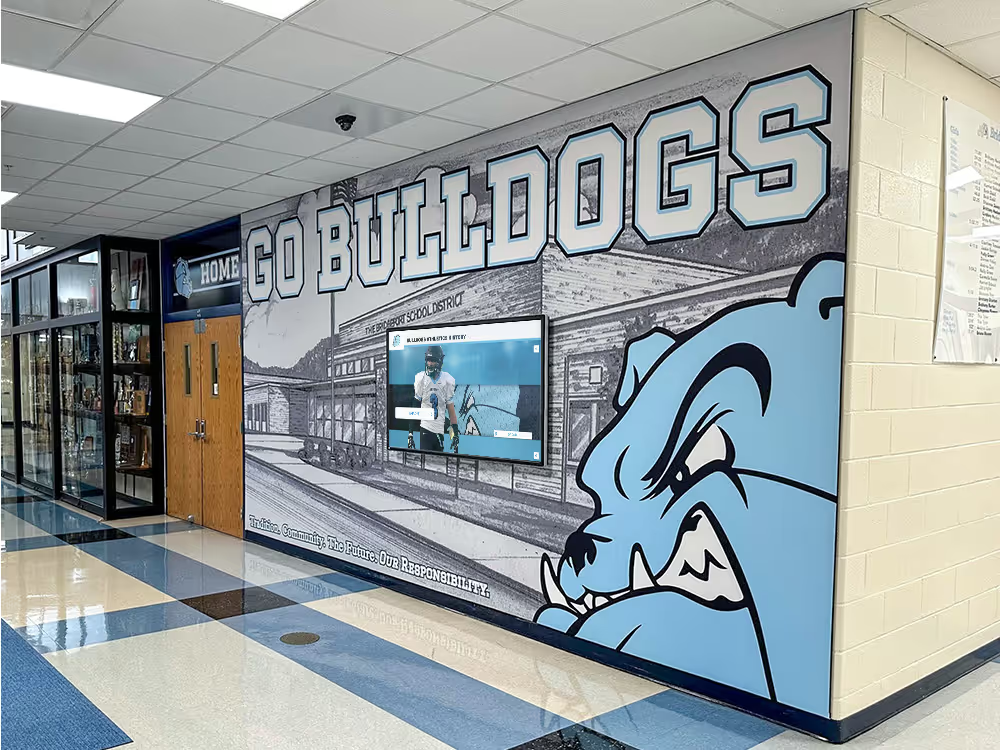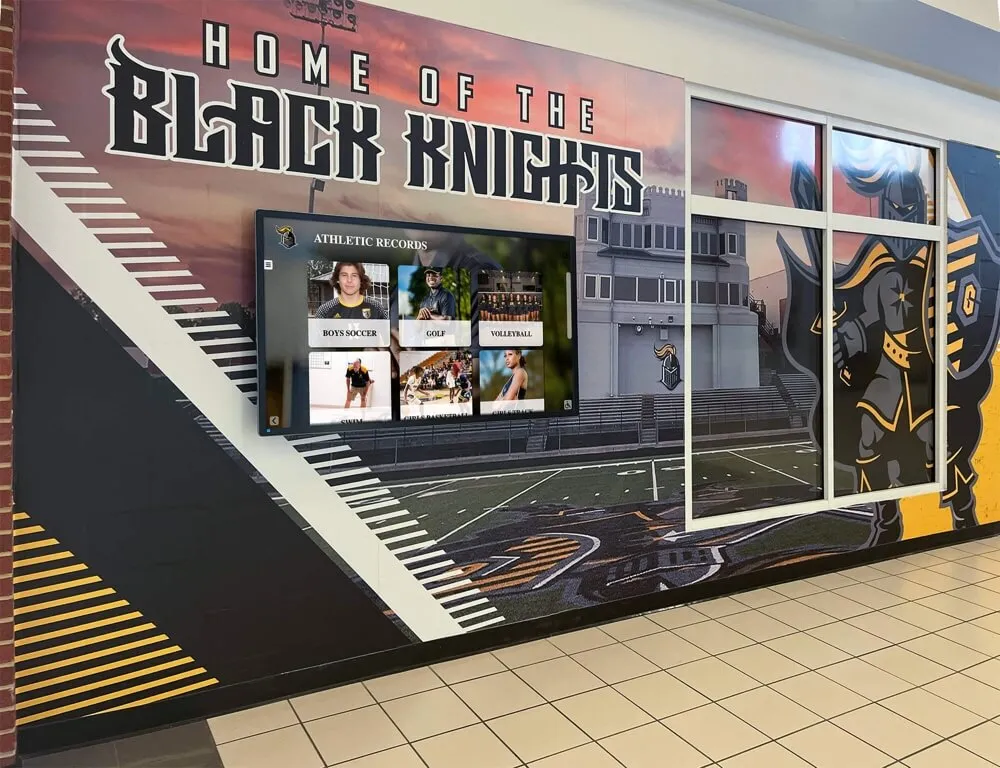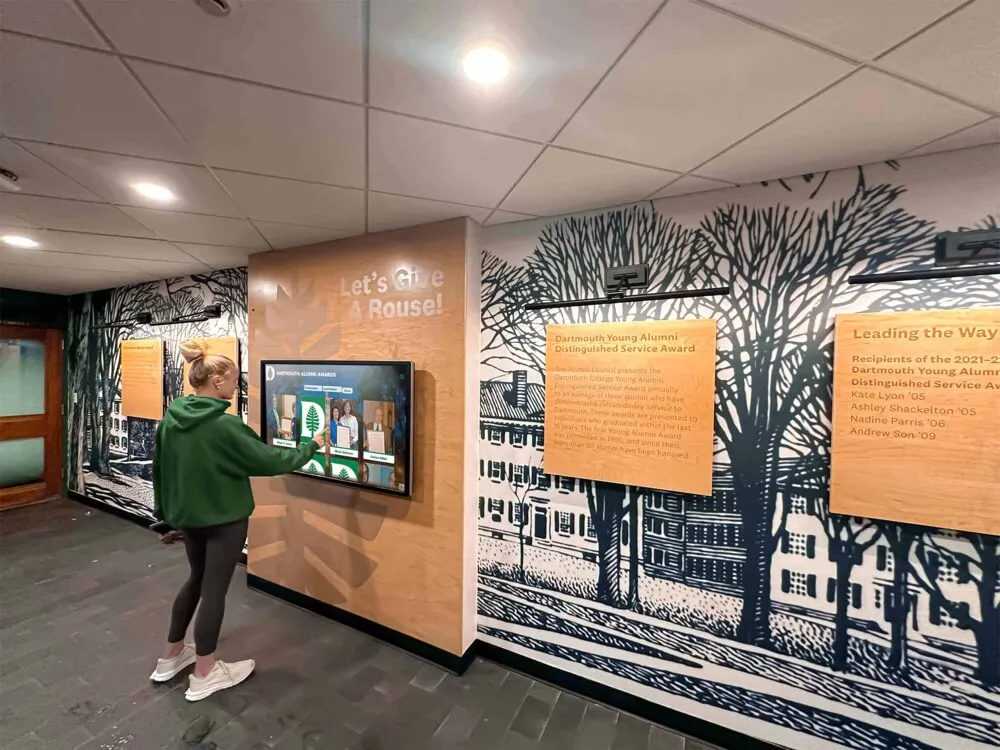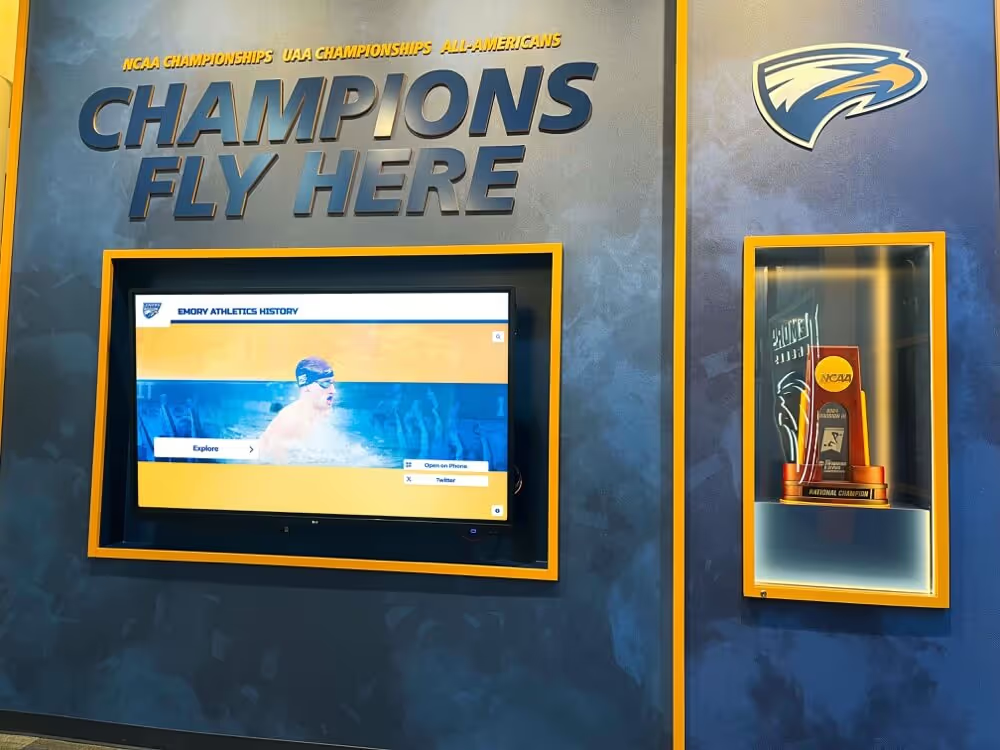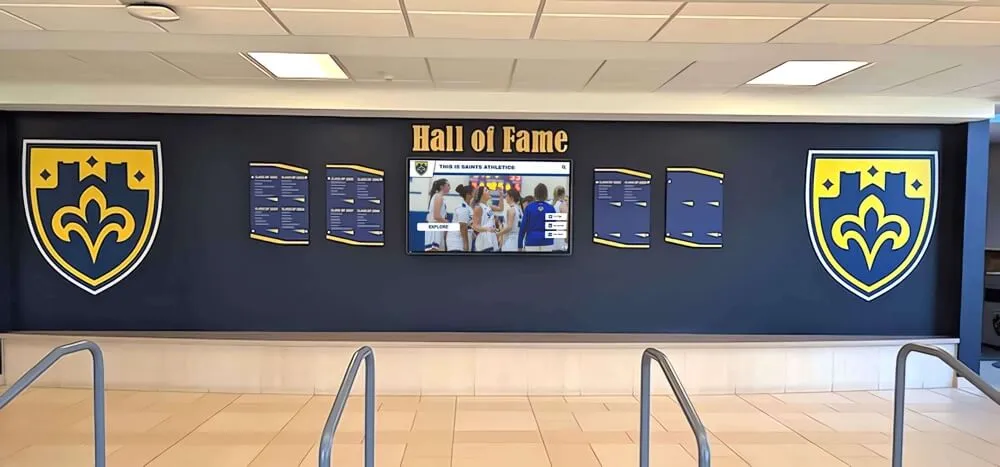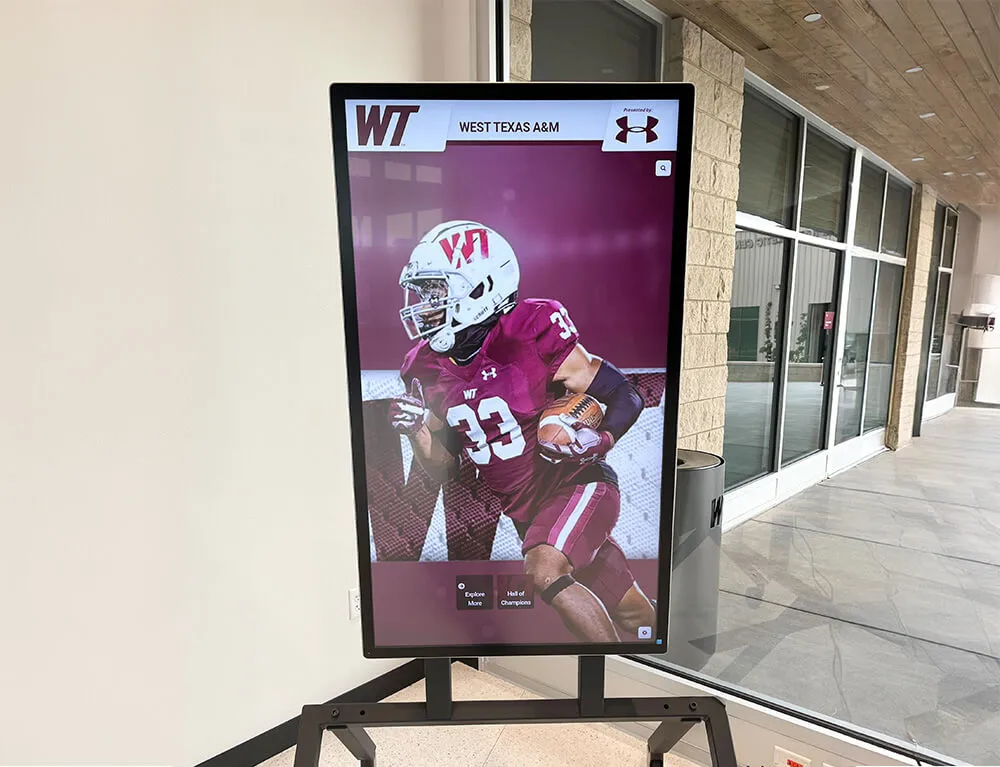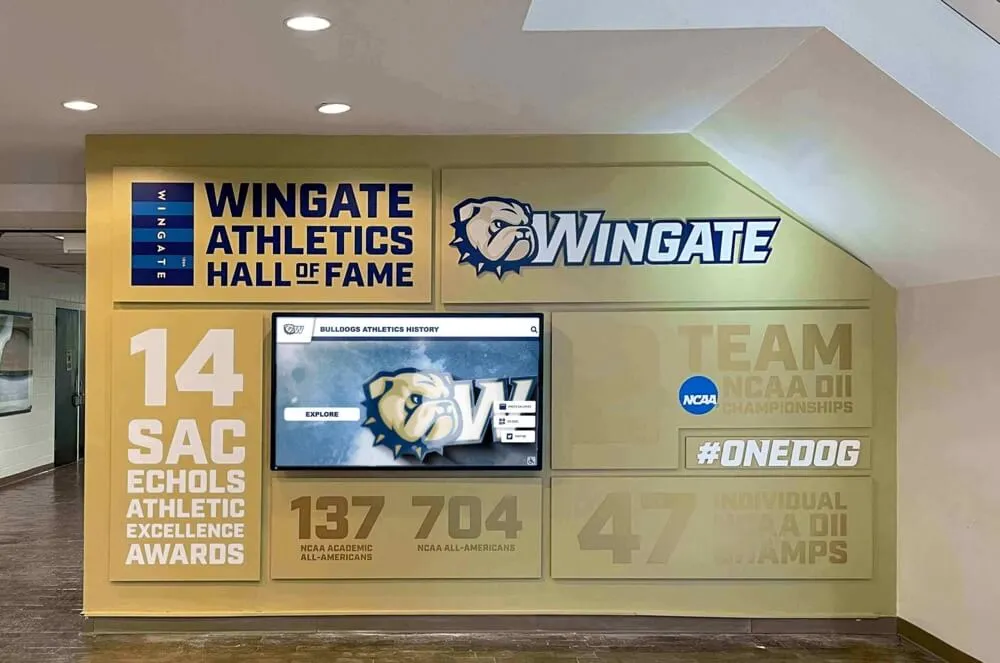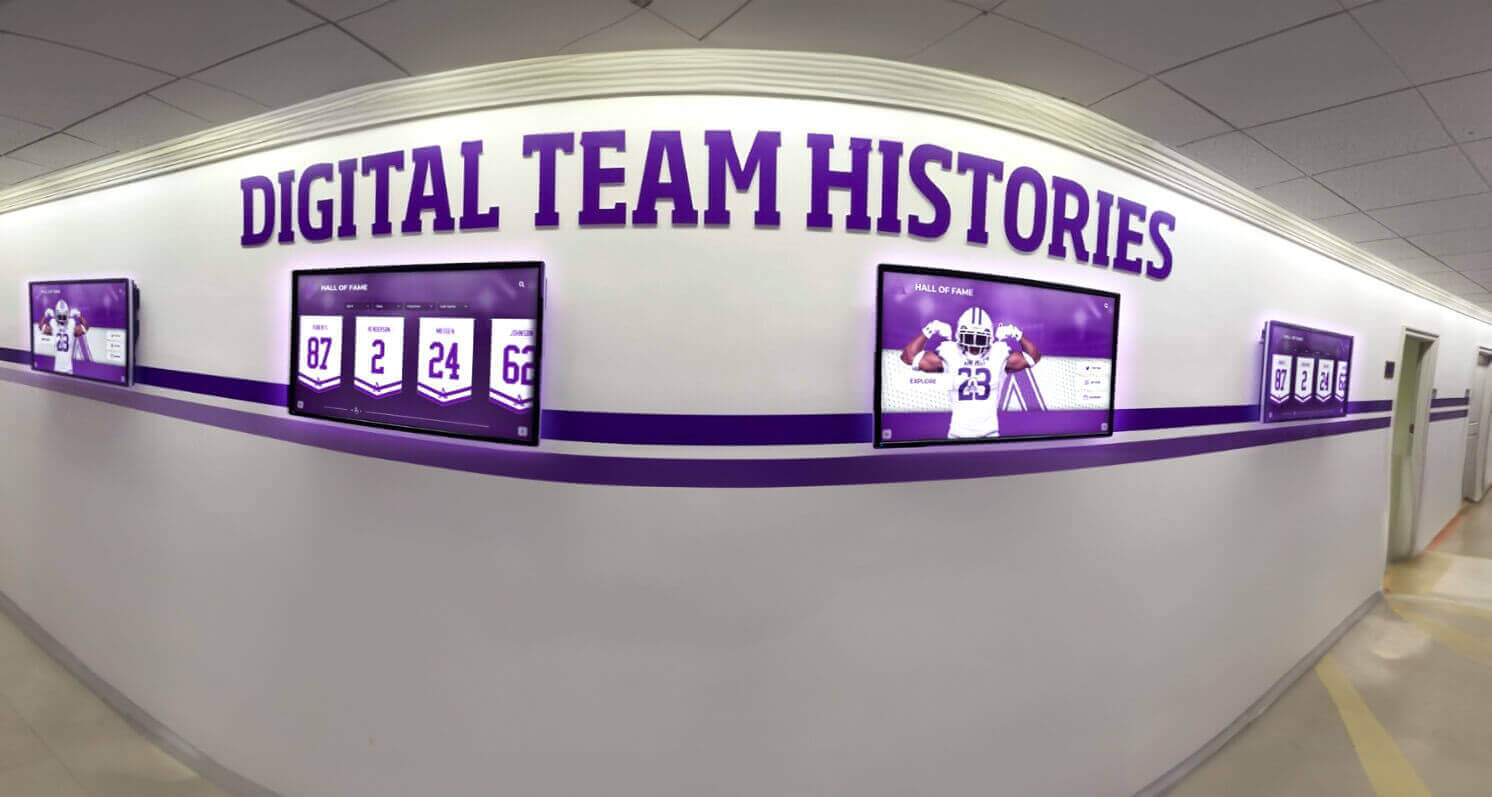




Every season, student-athletes across a school district pour months of dedication into competitions that culminate in district championships — victories that represent entire communities, not just single campuses. Yet these shared triumphs often end up scattered across individual school trophy cases, invisible to families across town and forgotten by the next generation of athletes at neighboring schools. A district championship recognition wall changes that equation by creating a unified monument to collective excellence that every school in the district can point to with pride.
Athletic directors and district administrators increasingly face a challenge that individual schools don’t: how do you honor championship achievements that belong equally to multiple campuses, multiple coaching staffs, and multiple student bodies? The answer requires thinking beyond the single-school display case toward recognition infrastructure scaled to district-wide ambitions.
Digital Recognition Built for Multi-Campus Districts
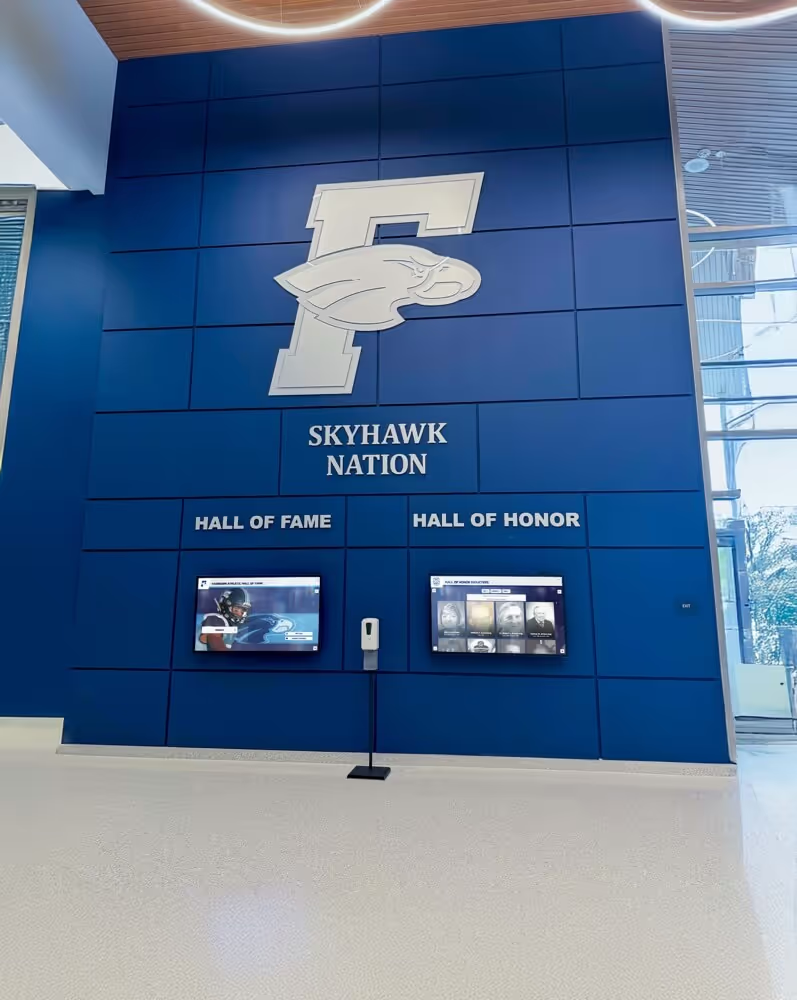
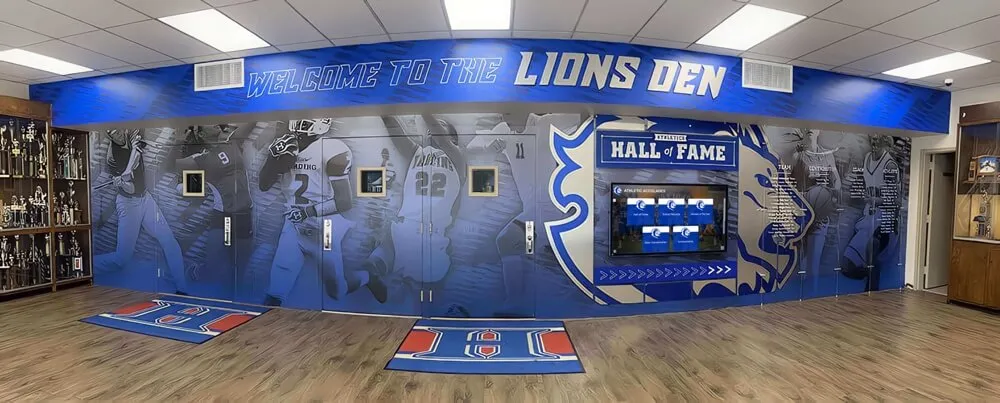
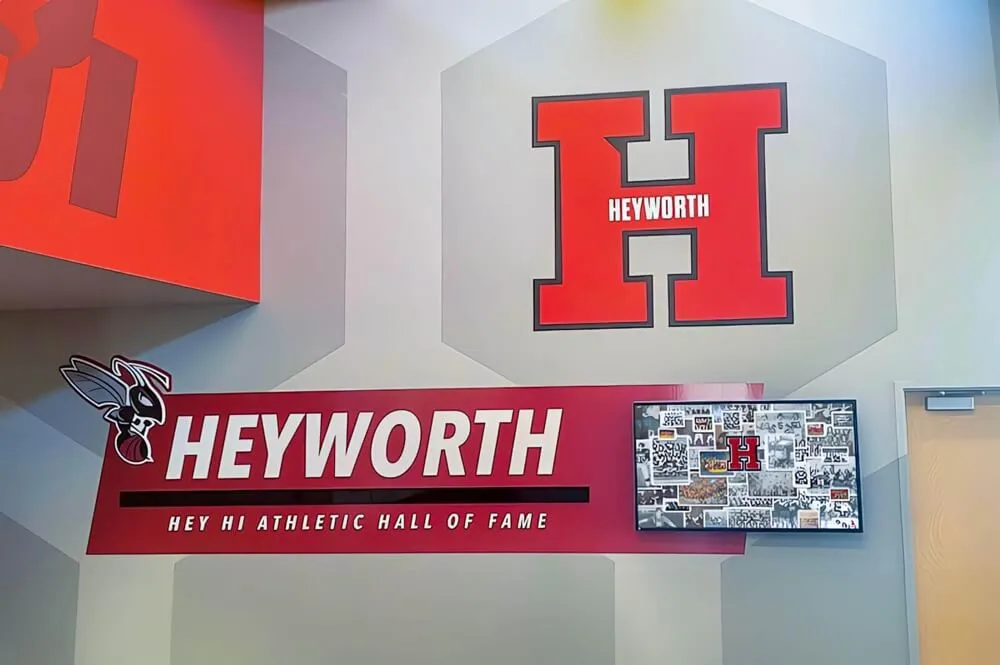
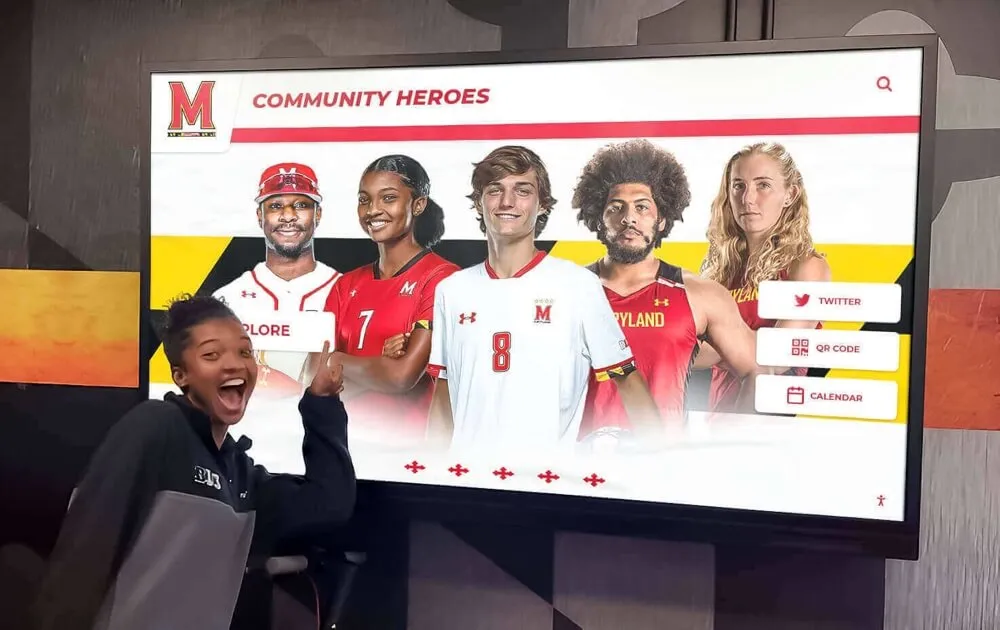
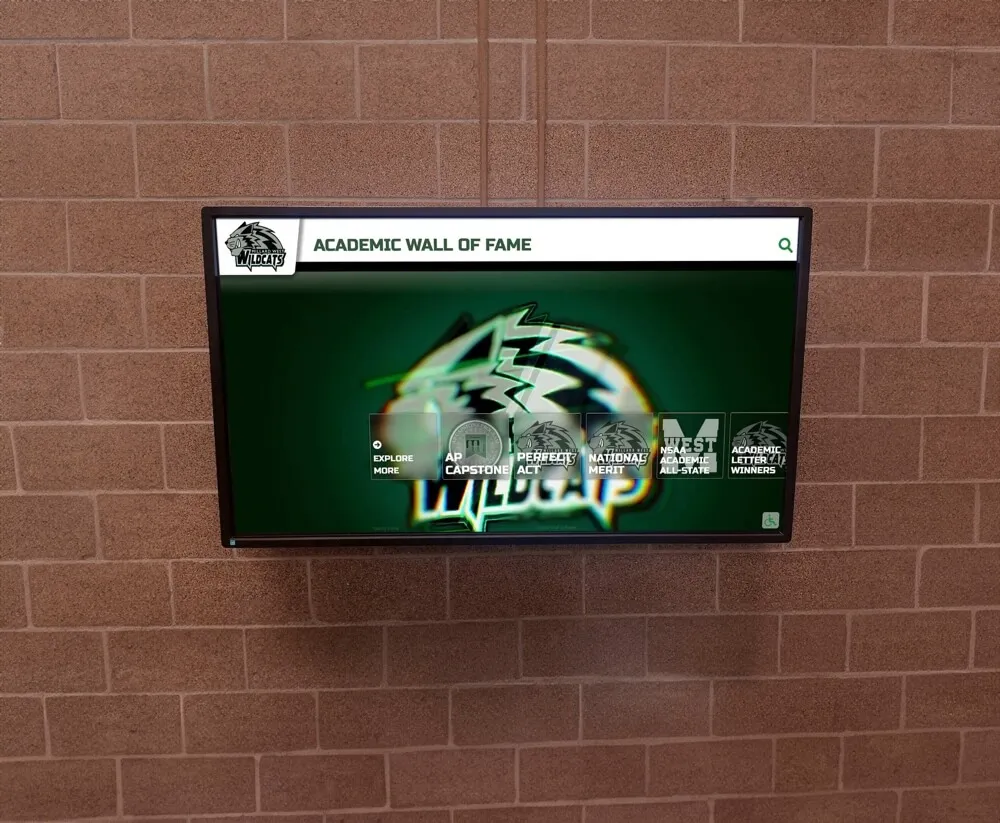
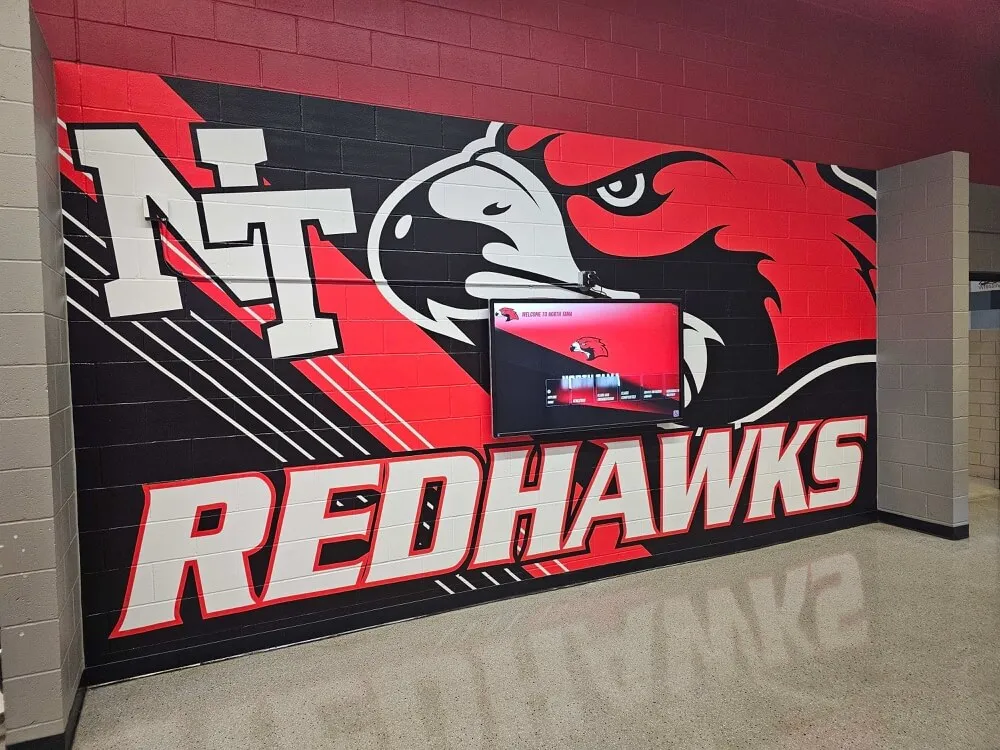
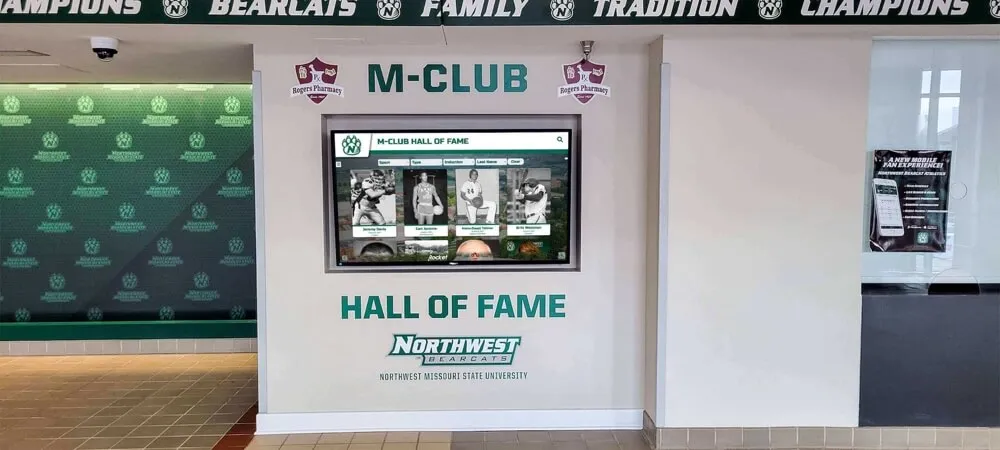
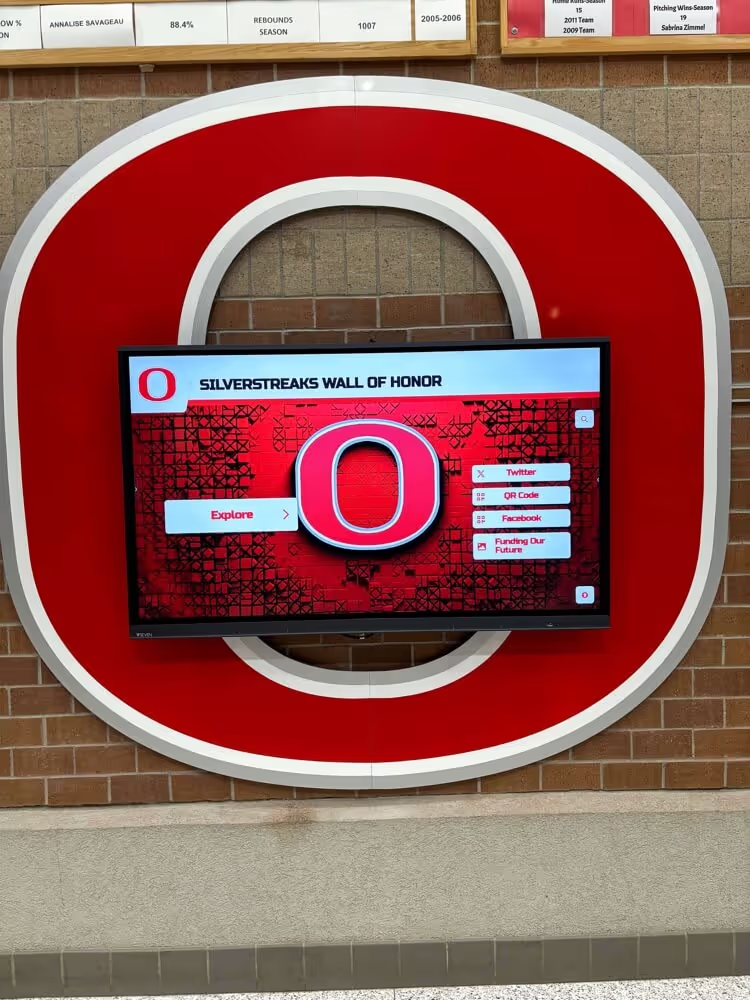
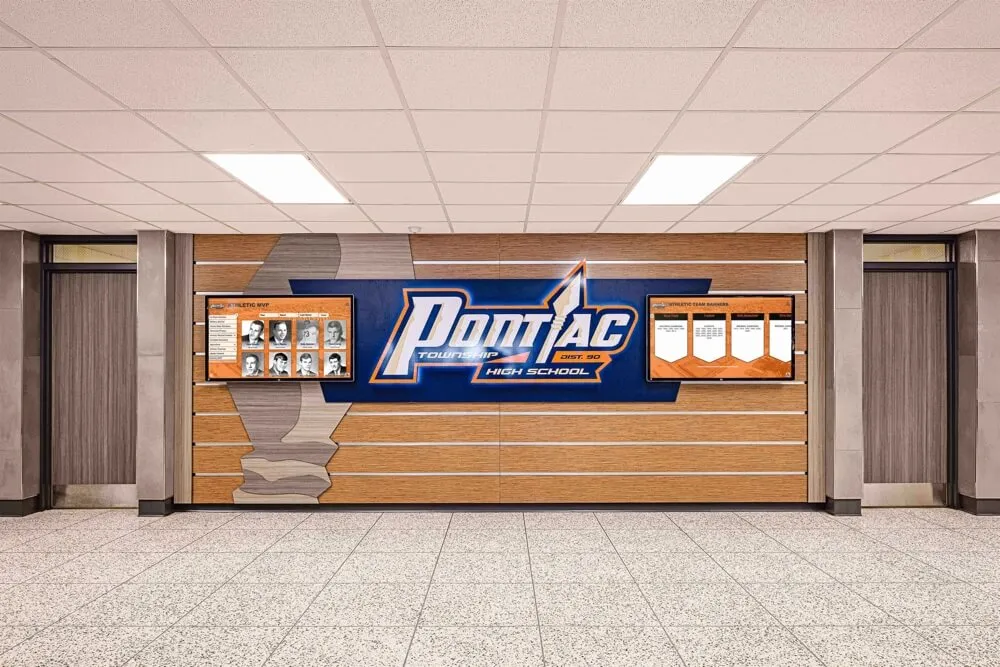
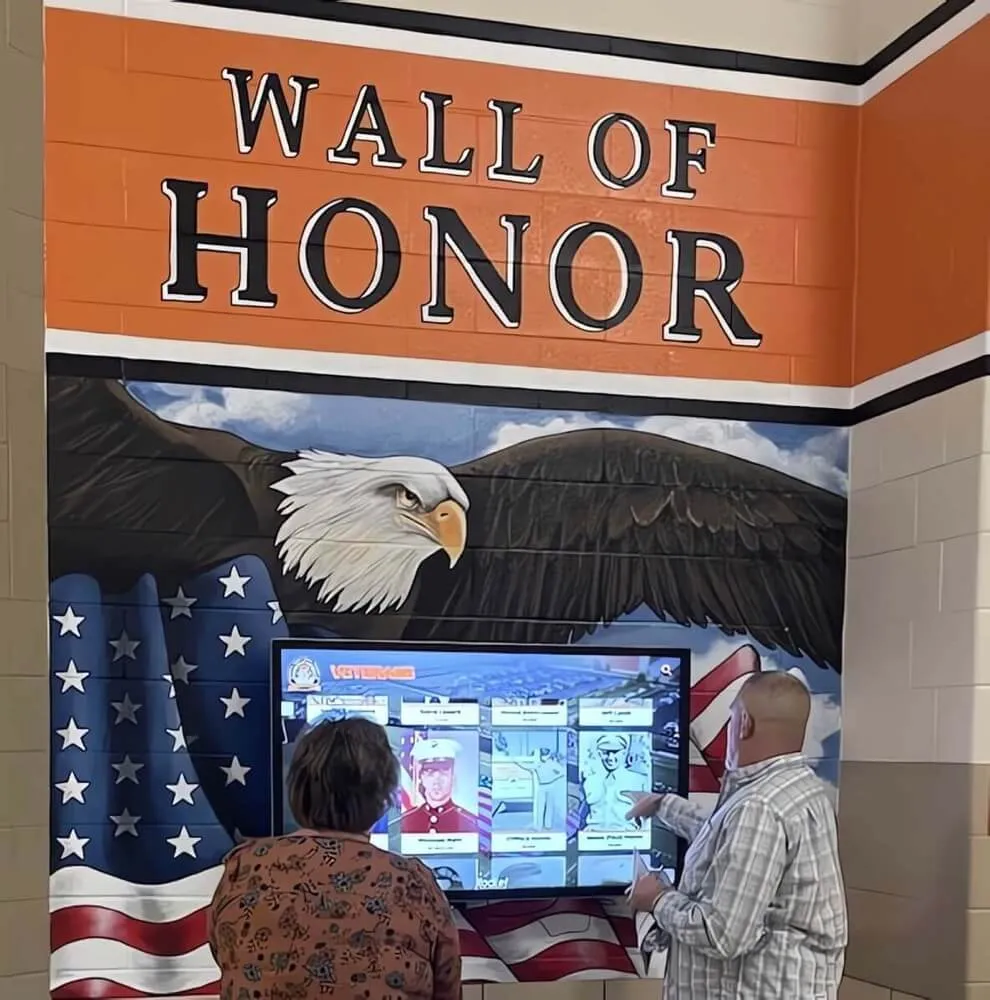
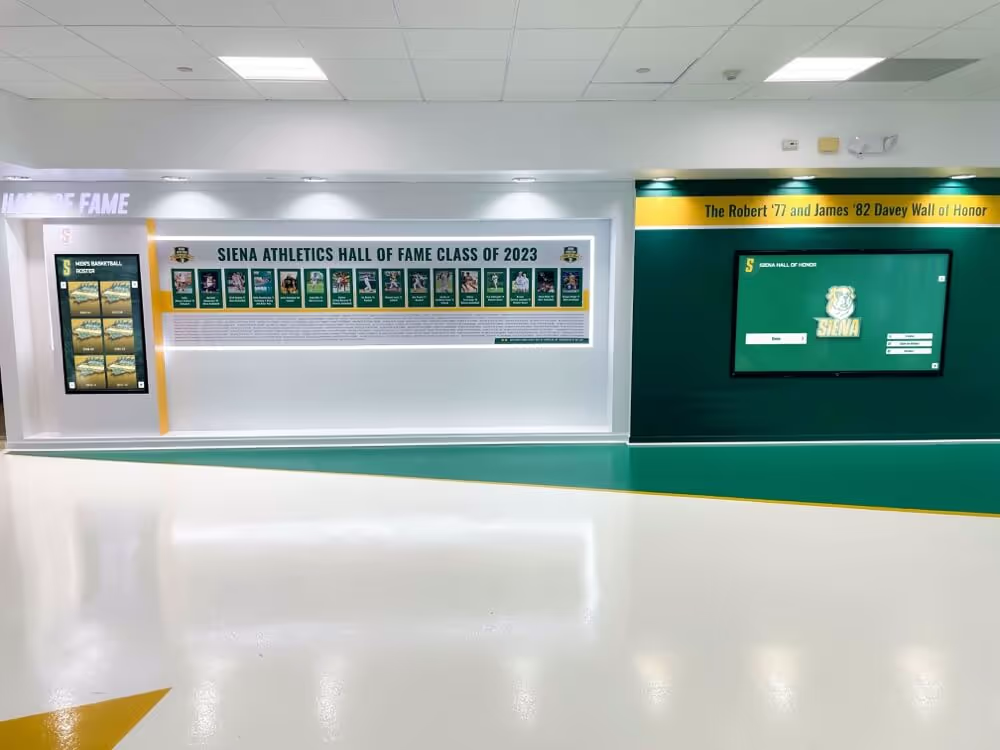
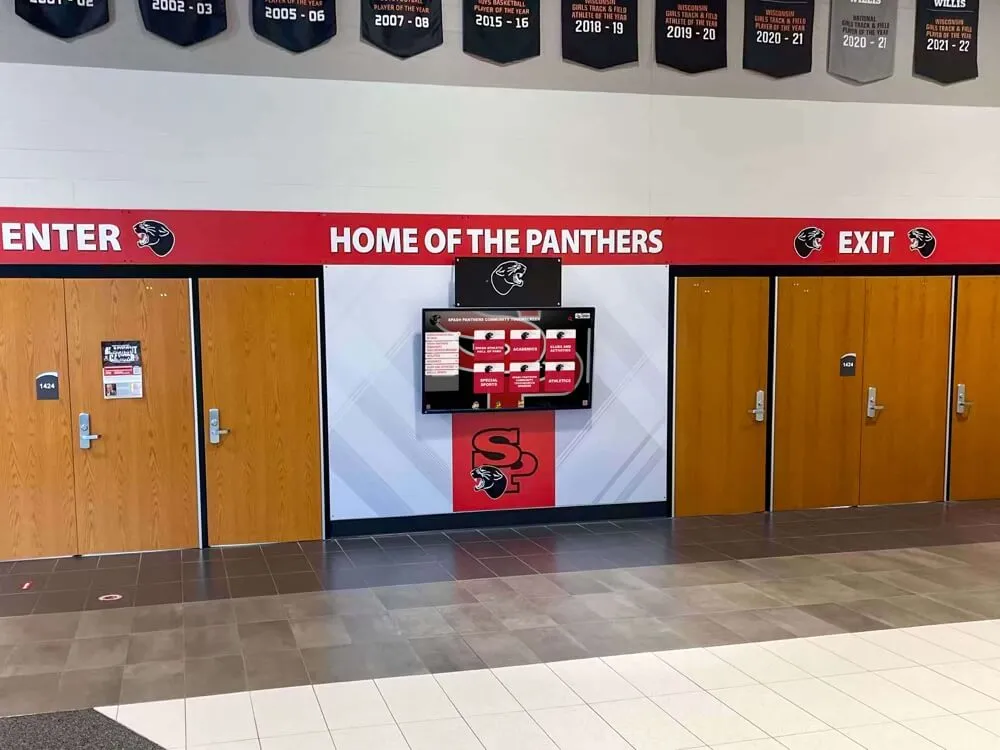
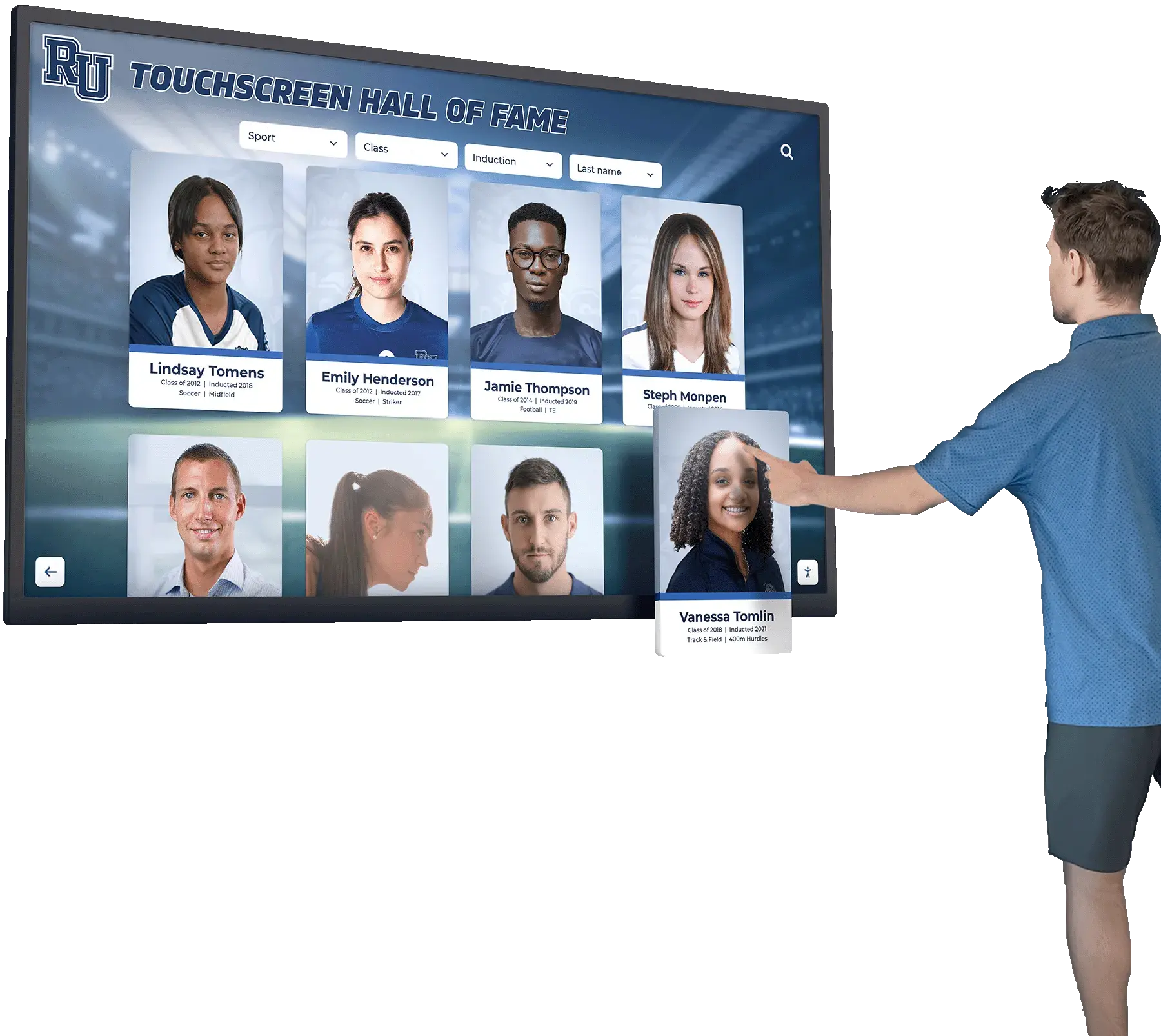
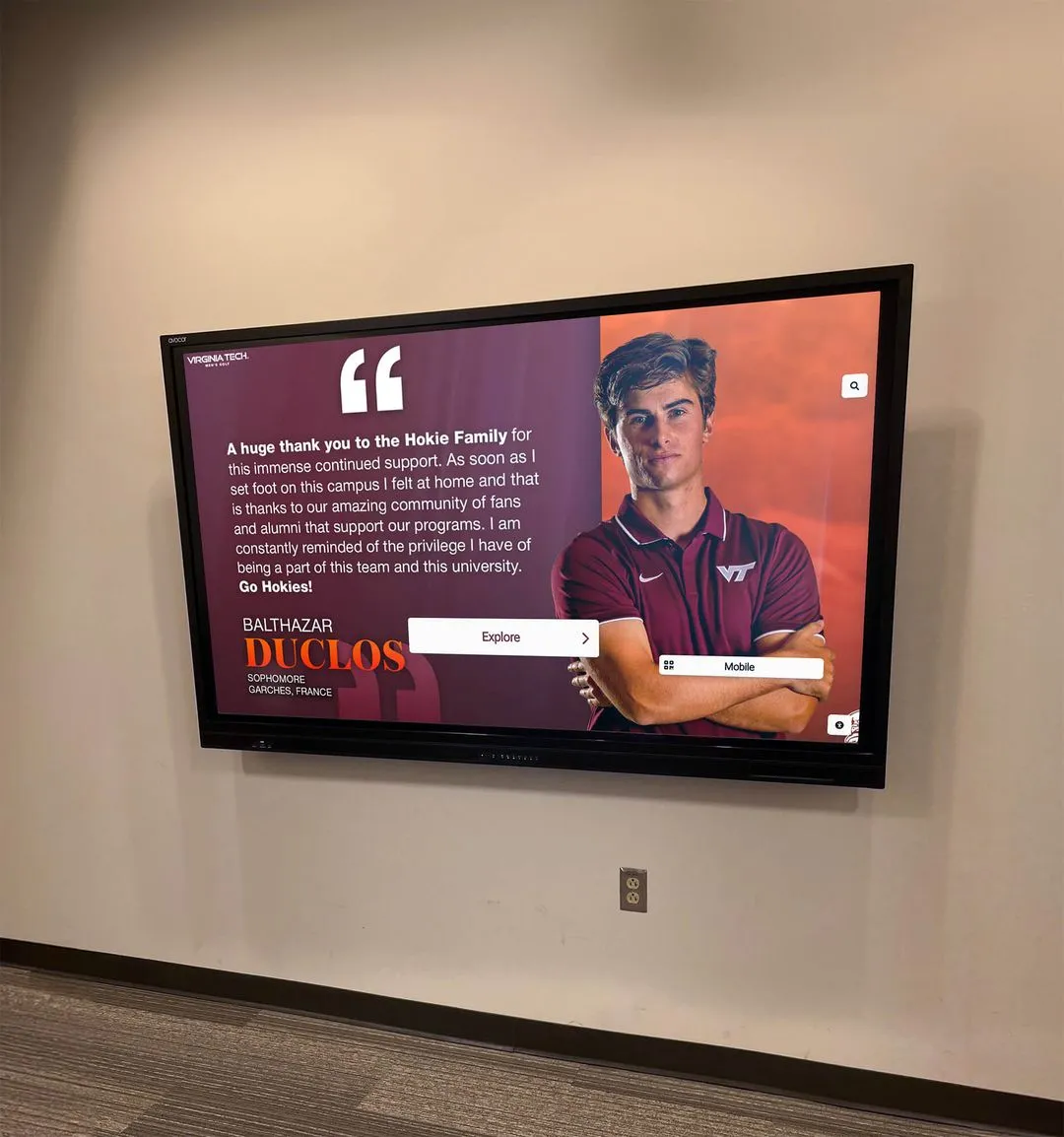
District championships span sports, schools, years, and generations — a volume of achievement that quickly overwhelms physical displays. Modern touchscreen recognition systems let districts host unlimited championship records from every school, every sport, and every era on a single interactive platform accessible across all campuses. Solutions like Rocket Alumni Solutions deploy district-wide digital walls of fame with automatic record updates, school-specific filtering, QR code access, and ADA-compliant touchscreen interfaces — giving every champion a permanent home without consuming floor space or requiring a facilities crew every time a new banner needs to go up.
Why District Championships Deserve Their Own Recognition Wall
Individual school halls of fame serve one campus. District championship recognition walls serve an entire system — and the distinction matters more than most administrators realize when planning athletic recognition infrastructure.
The Unique Scale of District Athletic Achievement
A mid-size school district running 10 schools across football, basketball, soccer, track, swimming, volleyball, wrestling, and baseball can accumulate dozens of district championship titles every decade. Add individual tournament champions, outstanding athlete awards, and coaching milestones and the record grows quickly into something no single trophy case can hold.
More importantly, district championships carry meaning across school boundaries. The football team from one campus represents the district’s colors when it wins a conference title. The girls soccer program from another school earns recognition for every family in the system. A district recognition wall acknowledges this shared ownership explicitly — a gesture that builds cross-school pride rather than reinforcing campus rivalries.

The Problem with Siloed School Recognition
When district championship recognition lives only within individual school buildings, real problems emerge over time:
- Visibility gaps: Families at School A never see the championship banners earned by School B, even though both schools contribute to the same district athletic budget
- History loss during school mergers or closures: When districts consolidate schools, championship records can disappear entirely — a painful loss for alumni whose achievements get erased from institutional memory. Preserving athletic history through school mergers requires proactive documentation well before consolidation occurs
- Inconsistent standards: One school invests heavily in display infrastructure while another school’s championship plaques sit in a storage room
- No cumulative narrative: Individual school displays tell individual stories; only a district-level wall can tell the story of district-wide athletic excellence across generations
What District Administrators and Athletic Directors Need
Understanding the audience matters when designing district championship recognition. Athletic directors at the district level manage competing demands from multiple principals, booster clubs, coaching staffs, and school boards — all with legitimate stakes in how championships get recognized. The ideal recognition wall satisfies all these stakeholders without requiring constant administrative intervention to stay current.
Traditional District Championship Recognition Wall Ideas
Physical recognition displays remain the foundation of most district athletics programs, and several formats translate well to multi-school contexts.
Unified Championship Banner Wall
The classic approach scaled to district proportions: a dedicated banner wall installed in a district athletic facility, central gymnasium, or administrative headquarters displaying championship banners from every school in the system.
Effective unified banner walls use consistent banner dimensions and typography while incorporating school-specific colors, making it immediately clear which campus earned which title. Color-coded border systems let viewers instantly distinguish one school from another while maintaining visual cohesion across the entire display.
Design considerations:
- Use a consistent banner size across all schools (typically 24"×72" or 30"×84" fabric banners)
- Establish a standardized format showing sport, school name, year, and classification
- Leave deliberate expansion space — a district that has 40 banners today will have 80 in a decade
- Consider chronological vs. sport-grouped organization depending on display footprint
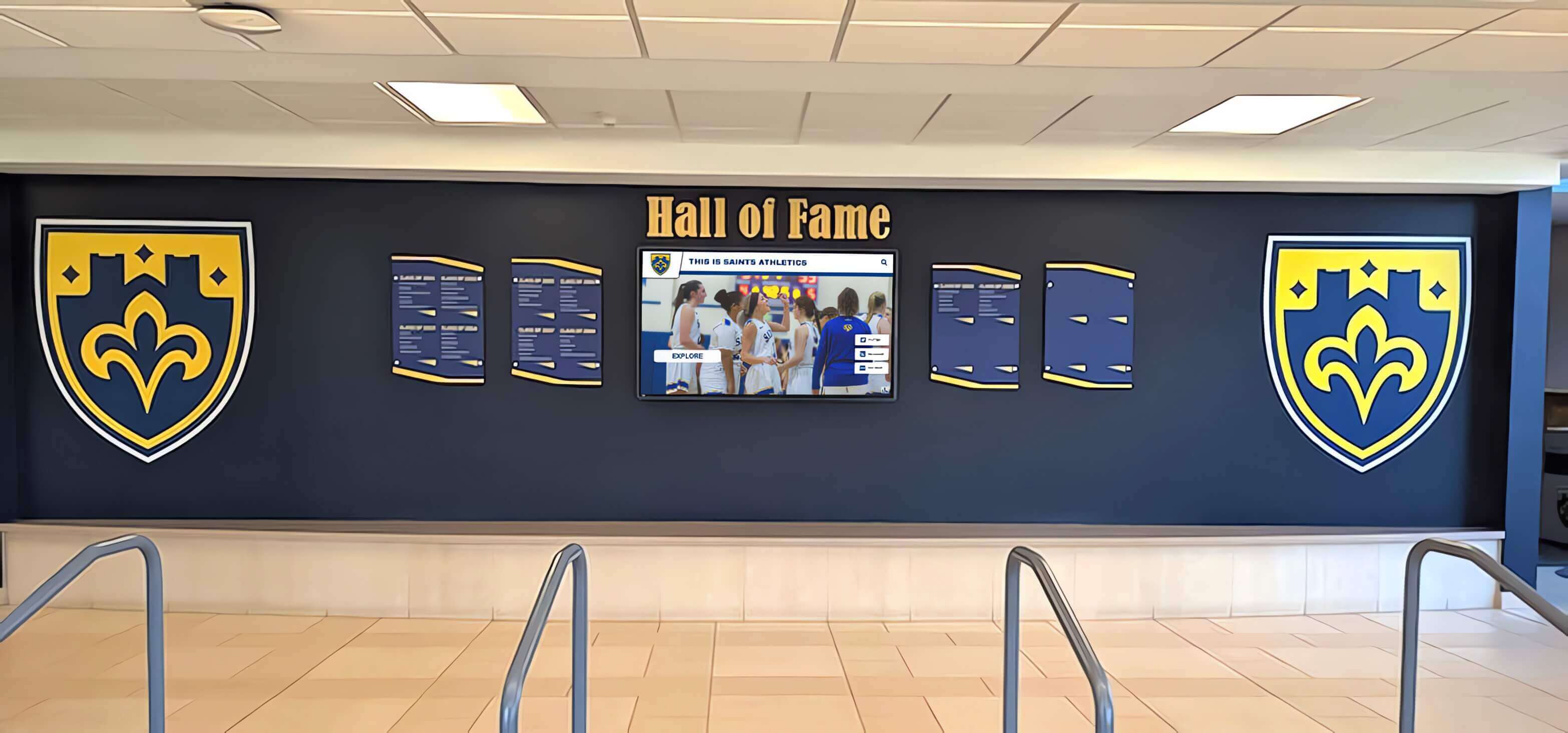
Multi-School Trophy and Plaque Cabinet
A centralized trophy cabinet at district administrative offices or a district athletic complex creates a physical home for championship hardware from all schools. Unlike individual school cases, a district cabinet can display comparative context — showing, for example, which sports have produced the most championships across the system over the past 25 years.
Physical trophy cabinets work best when:
- The district has a central facility with significant foot traffic (athletic complex, district headquarters that hosts community events)
- Trophies are original pieces rather than replicas, and individual schools have agreed to contribute them to a shared space
- A dedicated facilities coordinator handles inventory and periodic reorganization
The limitation is obvious: trophy cabinets are static. They can’t update automatically, can’t display video highlights, and can’t grow beyond their physical footprint without expensive renovation.
School-by-School Contribution Plaques
Another traditional approach installs individual plaques for each school arranged in a consistent grid format. Each school’s section displays its championship history by year and sport, allowing side-by-side comparison of achievement records across the district.
Engraved aluminum or acrylic plaques offer longevity and a professional finish. The challenge is cost and logistics: every new championship requires ordering a new plaque, coordinating installation, and finding space within an assigned section. In active districts with multiple championship-caliber programs, plaque walls fill up faster than anticipated.
Rotating Photo Display Gallery
A rotating gallery of championship photographs — team portraits, action shots, trophy presentations — brings human faces to district achievement in ways plaques and banners cannot. Professionally framed photographs with caption plates identifying the school, sport, year, and key athletes create compelling visual impact in lobbies, hallways, and athletic corridors.
Rotating galleries work particularly well when combined with a permanent foundation display, allowing current-season champions to receive prominent placement while historical champions remain visible in a dedicated historical section.
Digital District Championship Recognition Wall Ideas
Physical displays establish the foundation; digital systems extend district championship recognition beyond what any static display can accomplish.
Multi-Campus Touchscreen Network
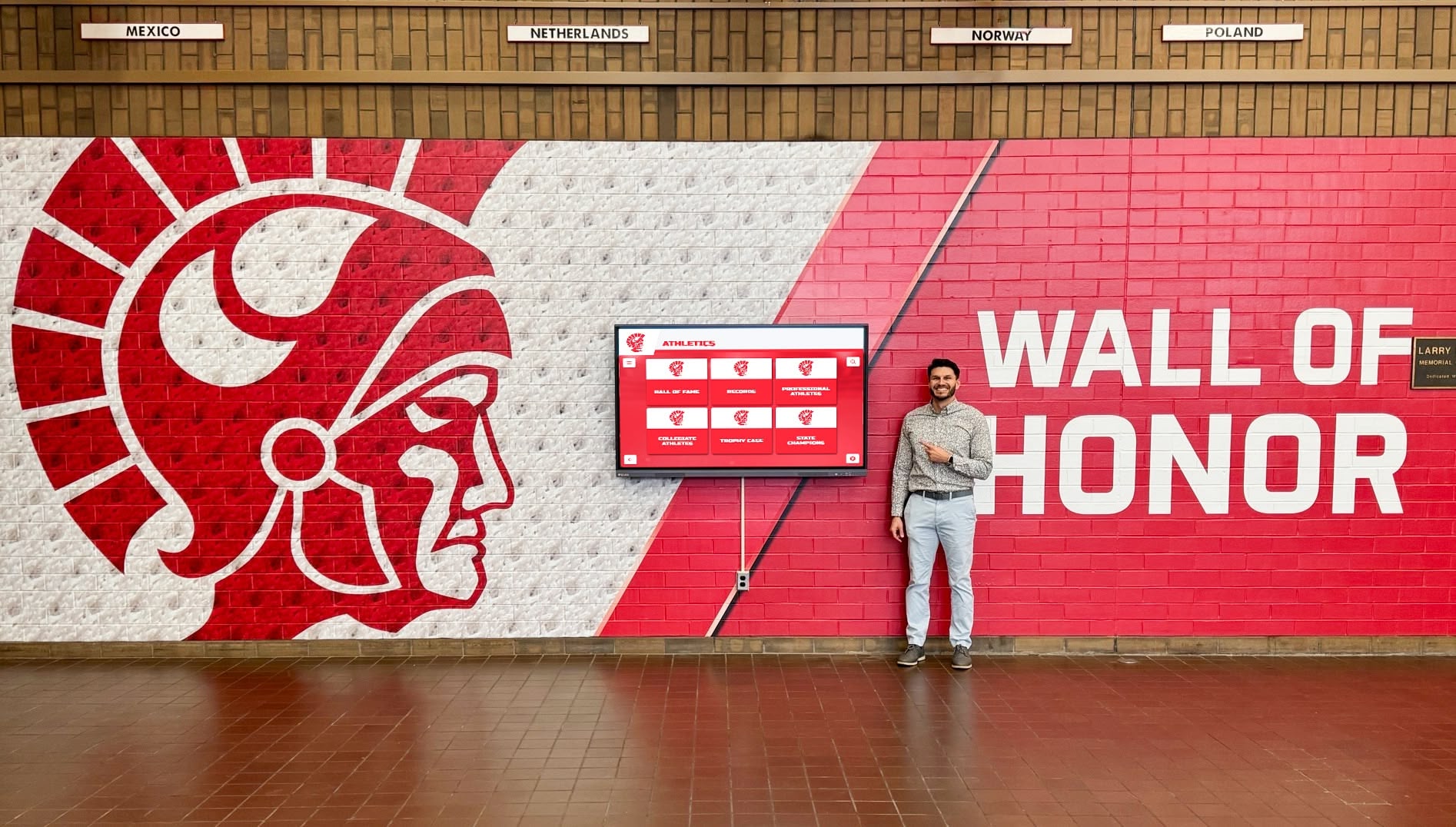
The most scalable district championship recognition solution deploys synchronized touchscreen displays across all campuses simultaneously. Each school hosts a touchscreen that shows district-wide championship data — organized by sport, school, year, or athlete — while also featuring that campus’s individual history prominently.
This approach solves the visibility problem directly: students at School A can explore the championship history of every other school in the district without leaving their building. The shared database creates genuine cross-campus connection while each touchscreen’s local presence makes the display feel relevant to its immediate audience.
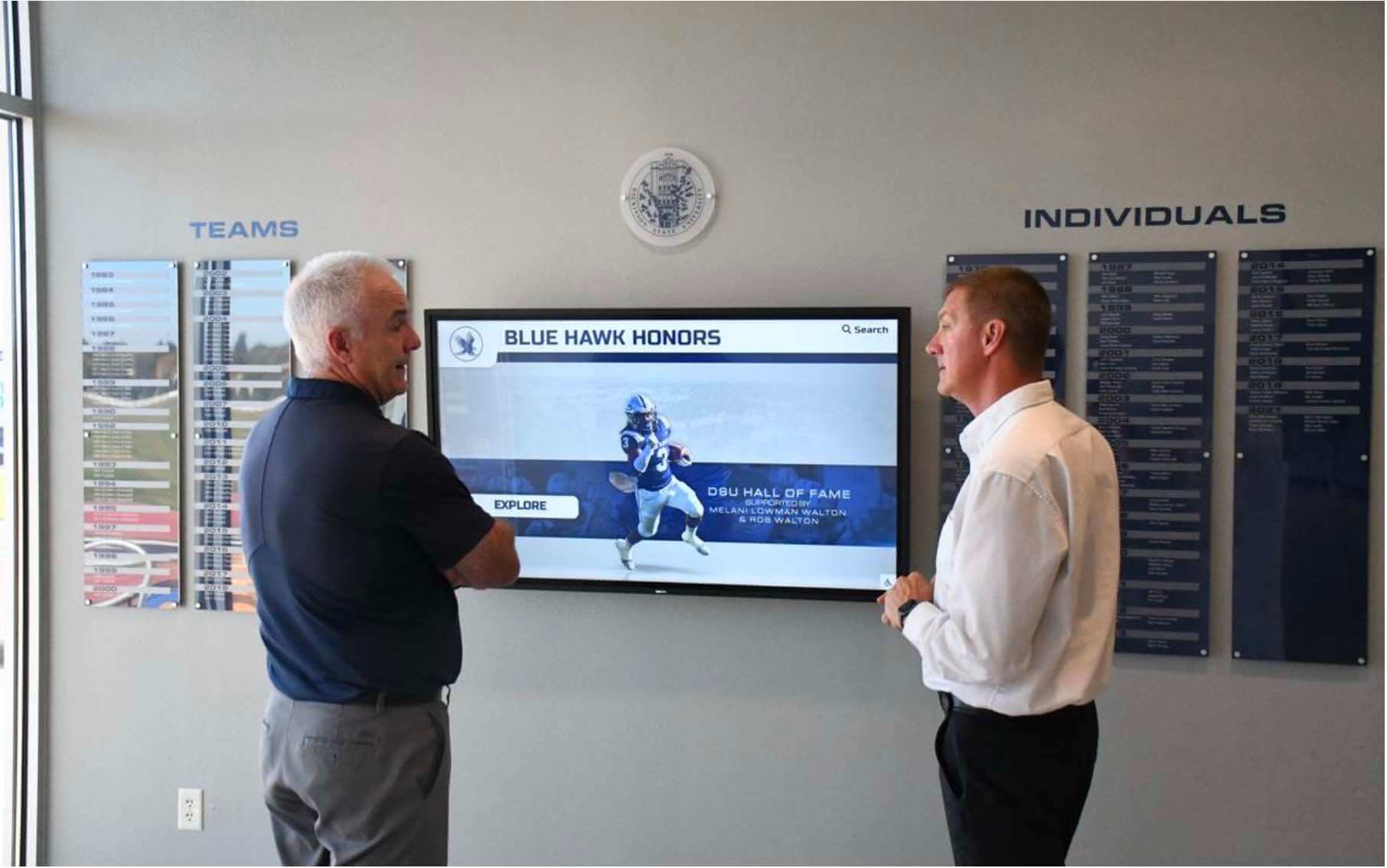
Digital walls of fame deployed at the district level provide capabilities that traditional displays simply cannot match: unlimited record capacity, multimedia integration, and real-time updates across all locations simultaneously.
Central District Display Hub with Campus Kiosks
An alternative architecture installs a flagship display — typically a large-format touchscreen or video wall — at the district’s primary athletic facility or headquarters, then supplements it with smaller kiosk units at individual schools. The flagship display receives the heaviest investment in visual impact and interactivity; the campus kiosks provide local access points connected to the same data.
This hub-and-spoke model concentrates the premium recognition experience where district events occur (playoff games, championship ceremonies, school board meetings) while extending basic access across every campus in the system.
Key features to prioritize:
- School-specific filtering: Allow users to view only one school’s championships or all schools together
- Sport-based navigation: Browse all district swimming championships chronologically, regardless of which school won
- Year-range filtering: Show championships from a particular decade to help alumni explore their era
- Athlete search: Enable visitors to find specific individuals by name rather than browsing school by school
Cloud-Based Championship Database with QR Access
Not every district can immediately fund a multi-campus touchscreen installation. A cloud-based championship database with QR code entry points provides a practical lower-cost alternative that delivers many of the same benefits.
Athletic directors at each school submit championship records to a central database. QR codes posted at each school’s main entrance, gymnasium, and athletics hallway link directly to the school-specific view of the shared database. Students and alumni scan the code with their phones and immediately access the complete district championship record.
This approach works particularly well for districts in the planning phase of a larger capital investment — it establishes the database infrastructure that will later power physical touchscreen installations.
Live-Updating Digital Record Boards
For districts focused specifically on athletic records rather than historical galleries, digital record boards provide real-time rankings that auto-update as athletes break records during the season. Unlike static honor rolls, these systems display current season leaders alongside all-time bests — creating competitive motivation for athletes who can see exactly what record they need to break to earn permanent recognition.
Digital tools that bring athletic history to life can transform a static championship wall into a living record of ongoing district athletic achievement.
What to Include on a District Championship Recognition Wall
The content architecture of a district championship recognition wall requires deliberate decisions about which achievements qualify for inclusion and how they get organized.
Core Championship Content
Every district recognition wall should document these achievement categories as its foundation:
Team Championships
- District and conference team championships by sport and year
- Regional and state tournament appearances and placements
- Playoff records for multi-round championship formats
- Undefeated regular season records
- Classification-specific championships (small school, large school, etc.)
Individual Championships and Awards
- District-level individual athletic championships (track, swimming, wrestling weight classes, cross country, golf, tennis)
- All-district team selections by sport and year
- Outstanding athlete and MVP awards from district competitions
- Academic all-district recognitions combining athletic and academic excellence
Coaching Milestones
- Coaches reaching 100, 200, 300+ career victories
- Coaches earning district, regional, or state coaching awards
- Coaches with sustained championship track records (five or more district titles)
Program Records
- All-time records by sport and statistical category from each school
- District-wide records showing the best individual performance across all schools in each event
Organizing Multi-School Data Effectively
The organizational challenge is real: a district with eight schools competing across 15 sports over 30 years can generate thousands of individual recognition entries. Effective organization prevents this volume from becoming overwhelming.
Recommended organizational hierarchy:
- Sport first: Group all basketball championships together regardless of school, then all soccer, etc. — makes it easy for a basketball family to quickly find the full history of that sport in the district
- School within sport: Within each sport, display each school’s championship record, with the option to view a composite district view
- Chronological within school: Within each school’s history, display championship years in reverse chronological order (most recent first)
- Individual records as a separate section: Separate team championships from individual records to avoid visual confusion
Comparing digital hall of fame displays to traditional trophy cases reveals that digital systems significantly outperform physical displays on organizational flexibility — a major advantage when managing district-scale data volumes.
What Not to Include
Equally important is knowing what to leave off a district championship recognition wall:
- Regular season awards that don’t represent championship achievement — district-level recognition should focus on championships, not participation
- Records that can’t be independently verified — if documentation doesn’t exist, acknowledge the gap honestly rather than publishing unverified figures
- Junior varsity or freshman-level achievements on a wall designed for varsity championship recognition (though JV championships can be tracked in a separate section)
Design and Placement Considerations for District Displays
Where a district championship recognition wall lives determines how many people see it and how much cultural impact it delivers.
Location Strategy
District athletic complex or stadium: If the district maintains a shared athletic facility — a common situation in districts that consolidate playoff events — this is typically the highest-value location for a flagship recognition wall. Championship events draw large crowds; a recognition wall in this space gets maximum exposure during moments of peak athletic attention.
District administrative headquarters: School board meetings, parent forums, and community events at district offices provide regular audiences of influential stakeholders. A recognition wall in this space signals to decision-makers that athletic achievement is central to the district’s identity.
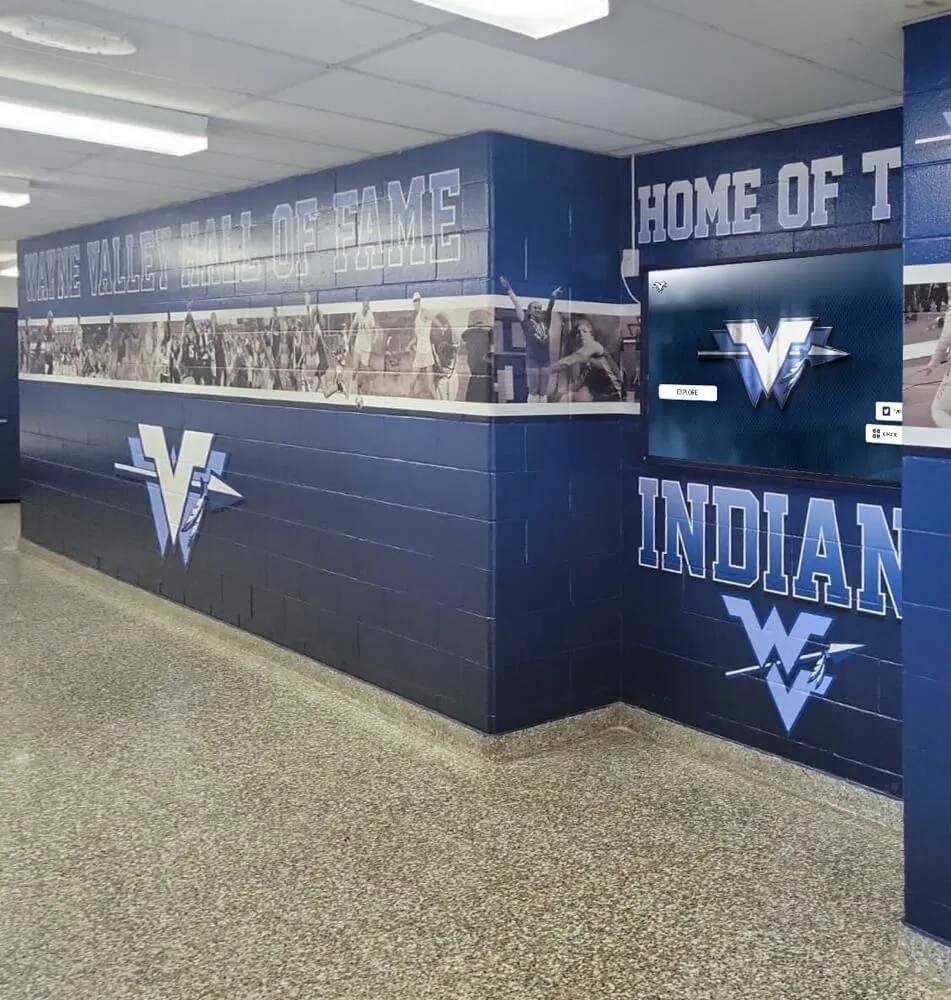
Individual school athletics hallways: Secondary displays at each school provide local access to the district-wide record while celebrating that campus’s specific contribution. Transforming school hallways into celebration spaces with district championship recognition creates daily motivation for current athletes who walk past their predecessors’ achievements every school day.
Multiple locations simultaneously: Digital systems networked across locations solve the placement dilemma entirely — the same content displays at the stadium, the district office, and every school’s athletics hallway at once.
Branding a Multi-School Display
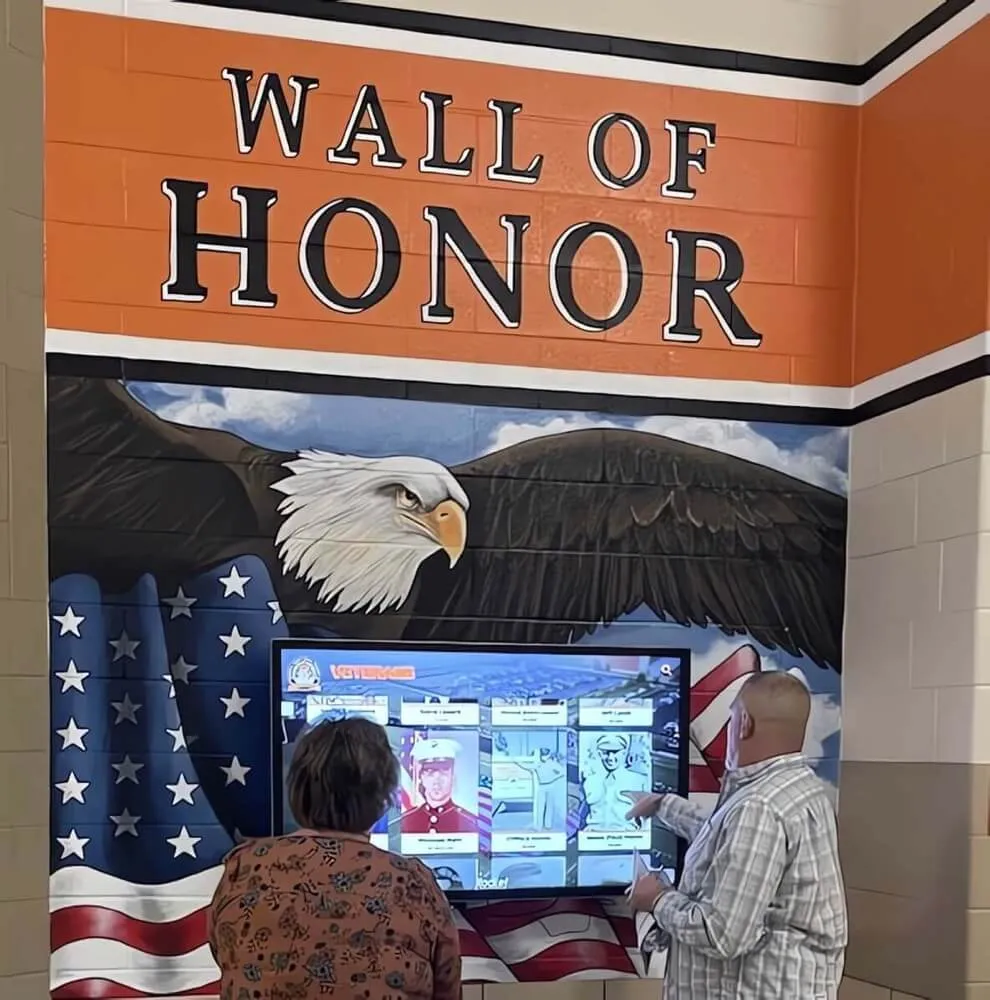
Single-school recognition walls can use that school’s colors and mascot throughout. Multi-school district walls require a different approach: neutral district branding as the visual framework, with school-specific branding used to identify individual school entries.
Effective multi-school branding strategies:
- Use the district logo and a neutral color palette for the overall display frame
- Color-code each school’s entries using that school’s official colors
- Display each school’s mascot or shield alongside its championship entries
- Use consistent typography district-wide while allowing school-specific accent elements
The goal is visual unity that doesn’t favor any one school’s aesthetic over others — a display that every campus in the district can point to as representing its community fairly.
Physical vs. Digital: Cost and Maintenance Comparison
Traditional vs. modern recognition displays differ significantly on total cost of ownership when the full maintenance picture is considered:
| Factor | Traditional Physical Display | Digital Recognition System |
|---|---|---|
| Initial installation | Lower hardware cost | Higher upfront investment |
| Adding new championships | Requires plaque/banner ordering, installation, vendor coordination | Remote update in minutes |
| Capacity limit | Hard physical ceiling | Unlimited entries |
| Multimedia content | None (photos only if framed) | Photos, video, statistics |
| Cross-campus access | None | All campuses simultaneously |
| Maintenance over 10 years | Cumulative plaque/banner costs plus facilities labor | Software subscription; no physical installation |
For districts managing active championship programs across multiple schools, the cumulative cost of updating physical displays typically exceeds the cost of a digital system within five to seven years — while the digital system provides dramatically superior capabilities throughout.
Digital wall of fame vs. physical display cost analysis provides detailed frameworks for making this calculation specific to a district’s scale and championship volume.
Implementing a District Championship Recognition System
Moving from concept to installation requires managing stakeholders across multiple schools, collecting legacy data, and selecting the right platform.
Building Stakeholder Alignment
District-level recognition projects involve more decision-makers than single-school initiatives. A successful implementation typically requires buy-in from:
- District athletic director: Champions the project, coordinates across school athletic departments
- Individual school principals and ADs: Provide historical records, approve school-specific branding
- School board: Approves budget, often the most visible audience for the finished display
- Booster clubs: May contribute funding; have strong opinions about recognition criteria
- Coaches: Primary source of historical championship data for their sports
Start the alignment process with a clear proposal that addresses each stakeholder’s primary interest: principals care about their school’s visibility, ADs care about accuracy and maintainability, the board cares about community impact and budget, boosters care about their program’s prominence.
Collecting Multi-School Historical Data
The data collection phase is typically the most labor-intensive part of implementing a district championship recognition wall. Schools with decades of records often have inconsistent documentation — some years captured in detail, others lost to time or staff turnover.
Practical data collection approaches:
- Designate a data coordinator at each school responsible for compiling championship records in a standardized format
- Start with available digital records, then work backward to fill gaps using yearbooks, local newspaper archives, and state athletic association databases
- Acknowledge gaps honestly rather than publishing incomplete records — a display that shows “Championship records available from 1985 forward” is more credible than one with suspicious holes
- Use alumni networks to fill historical gaps — former athletes and coaches often remember championship years in detail when contacted directly
Digital wall of fame analytics can help districts prioritize which data to collect first based on audience engagement patterns — ensuring the most-viewed sections receive the most complete records.
Choosing the Right Recognition Platform
Not every digital recognition platform is designed for multi-school district deployments. When evaluating options, district administrators should prioritize:
Multi-location management: Can the system push updates to all campus displays simultaneously from a single administrative dashboard?
School-level permissions: Can individual school athletic directors update their own school’s records without accessing other schools’ data?
Scalability: Does the system accommodate an unlimited number of championship records as the district’s history grows?
Display hardware options: Does the vendor offer both large-format flagship displays and smaller campus kiosks at different price points?
ADA compliance: Does the touchscreen interface meet accessibility requirements for public-facing displays in educational settings?
Remote update capability: Can the district AD update the display from a phone or laptop, or does every change require on-site access?
Ready to Build Your District Championship Recognition Wall?
Rocket Alumni Solutions specializes in touchscreen recognition systems designed for multi-campus school districts. From flagship stadium displays to synchronized campus kiosks, our platforms honor every championship across every school with automatic updates, unlimited records, and ADA-compliant touchscreen access.
Schedule a Demo with Rocket Alumni SolutionsPhased Implementation Strategy
Districts with tight initial budgets can implement recognition walls in phases rather than attempting a full-scale deployment at once:
Phase 1 — Data and design foundation (Year 1): Establish the central championship database with records from all schools, develop the visual identity for the district recognition system, and deploy a single flagship display at the district’s primary athletic facility. Use this phase to establish data entry workflows and train school-level coordinators.
Phase 2 — Campus expansion (Year 2): Deploy secondary touchscreen kiosks or digital displays at individual school athletics hallways, connecting to the central database established in Phase 1. The incremental cost is lower than Phase 1 because the database and content infrastructure already exist.
Phase 3 — Enhancement and enrichment (Year 3+): Add multimedia content — championship photographs, video highlights, coach interviews — to the existing record database. Introduce QR-based mobile access for off-site alumni engagement. Launch annual unveiling ceremonies for new championship entries to maintain community attention.
Recognition Ceremony Ideas for District Championship Walls
A recognition wall becomes more than a display when it’s integrated into regular district athletic events and ceremonies.
Annual Championship Induction Events
Schedule an annual district championship induction ceremony — ideally tied to an existing high-profile event like a district all-sports banquet or opening-of-season celebration. Each year’s newly inducted championships receive formal recognition before a district-wide audience, with coaches, athletes, and family members invited to share in the acknowledgment.
Induction ceremonies reinforce the cultural message that district championships matter at a level above individual school recognition — they belong to the entire community.
Season-Opening and Season-Closing Displays
At the start of each athletic season, update the district championship wall to display the current-season records that new athletes can potentially join. At season’s end, add that year’s championships immediately — making the wall feel like a living record rather than a static archive.
Booster club donor recognition programs often complement district championship recognition by funding display upgrades and annual recognition events — a natural partnership that connects financial supporters with visible acknowledgment of the athletic excellence their contributions enable.
Alumni Engagement Through Championship Recognition
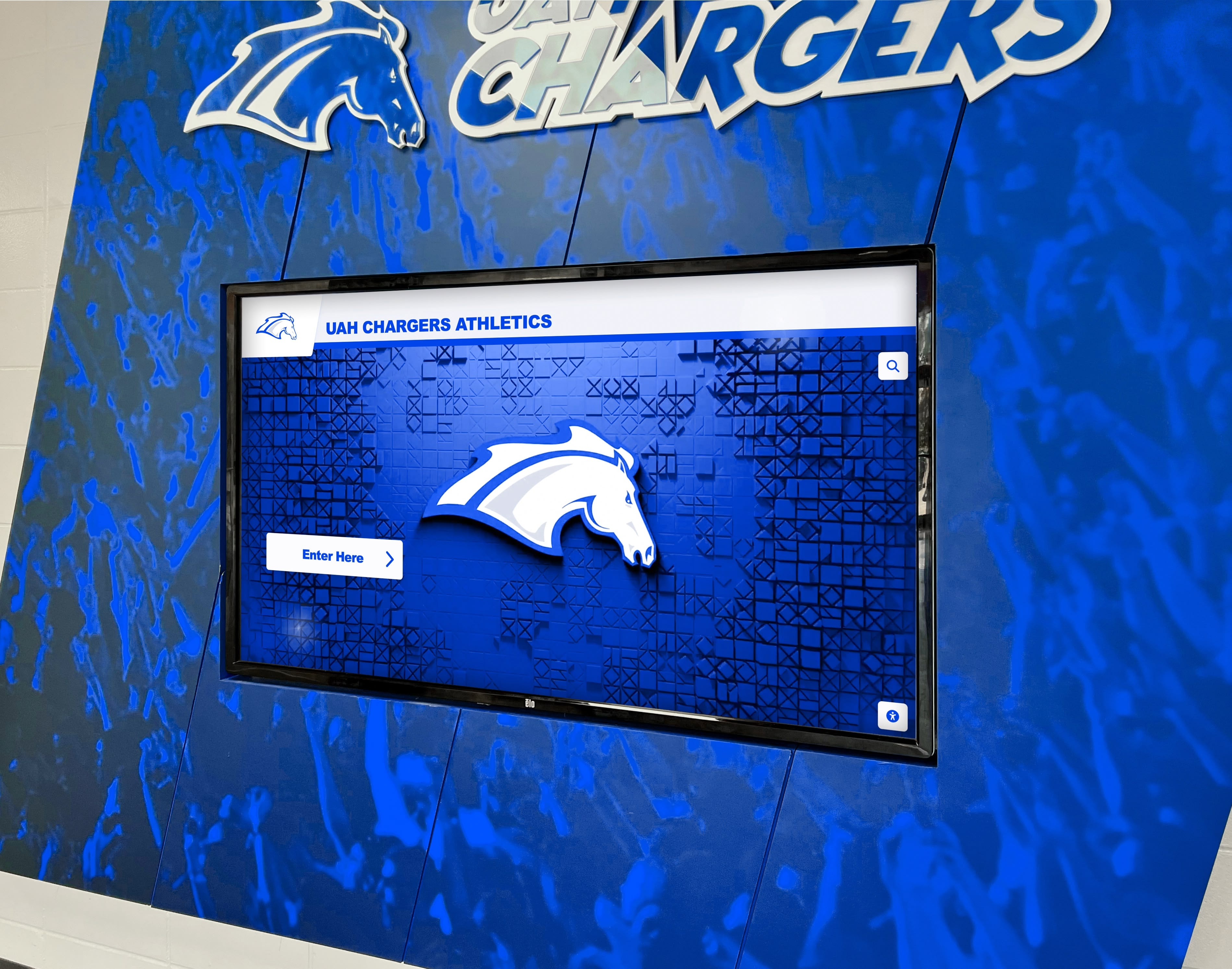
A district championship recognition wall serves alumni differently from current students. For former athletes, the wall provides validation — confirmation that their achievements are remembered and honored by the institution they represented. For alumni who want to reconnect with their athletic history, a searchable digital display provides something a static banner wall cannot: the ability to find themselves and explore the context of their era.
Reconnecting alumni with their athletic heritage through searchable digital displays creates powerful emotional connections that support alumni giving, mentorship programs, and ongoing community engagement with district athletics.
Common Mistakes Districts Make with Championship Recognition
Understanding what goes wrong helps districts avoid preventable problems.
Mistake 1: School Favoritism in Display Design
Districts that allow one school’s championship record to visually dominate the display — through larger physical space, more prominent placement, or more elaborate presentation — create resentment among the other schools’ communities. Even if that school genuinely has more championships, the display design should create parity in visual treatment while accurately representing the record.
Mistake 2: Building Without a Maintenance Plan
A championship recognition wall installed without a defined process for adding new champions quickly becomes outdated and loses credibility. Before installation, districts should establish who is responsible for updates, what the update timeline is (ideally within 30 days of a championship win), and who approves entries before they’re added.
Mistake 3: Starting Without Comprehensive Historical Records
Installing a display that shows championships from only the past few years — because older records weren’t collected before installation — creates an incomplete picture that disappoints alumni and provides unfair context for comparing programs across eras. Invest in historical data collection before any public launch.
Mistake 4: Limiting Access to a Single Location
A recognition wall that only exists at district headquarters, visited by few students or families on a regular basis, misses most of its potential audience. Distributed access — through campus displays, digital kiosks, or QR-linked mobile views — extends the wall’s reach to the communities it’s meant to serve.
Conclusion: Building District-Wide Championship Culture
A district championship recognition wall is more than a display. It’s a statement about what the district values: that athletic excellence is honored comprehensively, that every school’s champions deserve equal acknowledgment, and that the history of competitive achievement belongs to the entire community across generations.
The most effective district championship recognition walls combine clear organization, thoughtful design, comprehensive historical records, and platform infrastructure that makes maintenance sustainable over decades. Physical displays establish presence; digital systems provide the scalability and accessibility that multi-school recognition genuinely requires.
Districts that invest in comprehensive championship recognition infrastructure see consistent returns: stronger alumni engagement, more motivated current athletes who understand the tradition they’re joining, more supportive communities who follow athletic programs with pride, and more credible recruiting narratives built on demonstrated championship culture rather than assertion alone.
Every championship your district’s schools have earned deserves a permanent, visible home — one that honors the athletes, coaches, and communities who made those victories possible and inspires the next generation to add their own names to the record.
See What a District Championship Recognition Wall Can Look Like
Rocket Alumni Solutions has deployed touchscreen recognition systems for school districts across the country, from small rural districts to large multi-campus urban systems. Our platforms are purpose-built for athletic recognition at every scale — with multi-location management, unlimited record capacity, and ADA-compliant touchscreen access that keeps your district's championship history current and accessible.
Schedule a Demo with Rocket Alumni SolutionsFrequently Asked Questions
What is a district championship recognition wall? A district championship recognition wall is a unified display — physical, digital, or both — that documents and honors championship athletic achievements from all schools within a school district. Unlike individual school displays, it creates a cross-campus record of collective excellence accessible to families, athletes, and alumni from every school in the system.
Where should a district championship recognition wall be located? The most effective placement for a flagship display is at the district’s primary athletic facility or administrative headquarters, where district-wide events draw the largest cross-campus audiences. Secondary displays at individual school athletics hallways extend daily visibility across all campuses. Digital systems can serve all locations simultaneously from a single database.
How do you organize championship records from multiple schools on one display? The most user-friendly organization groups records by sport first, then by school within each sport, then chronologically within each school’s record. Digital systems can also offer search and filter functions allowing visitors to view records by school, sport, year range, or individual athlete name.
What’s the difference between a physical and digital district championship recognition wall? Physical displays — banners, plaques, trophy cases — provide tangible presence but face capacity limits and require physical installation for every update. Digital touchscreen systems provide unlimited record capacity, multimedia content, remote update capability, and simultaneous multi-campus access, but require a higher initial investment. Most districts benefit from combining both: a physical foundation with digital systems providing the scalability and interactivity that physical displays cannot match.
How do you fund a district championship recognition wall? Common funding sources include district capital improvement budgets, athletic department operating budgets, booster club contributions, naming rights arrangements with local sponsors, and alumni fundraising campaigns. Many districts implement phased approaches — establishing the data infrastructure and one flagship display in Year 1, then expanding to campus kiosks in subsequent years as budget allows.