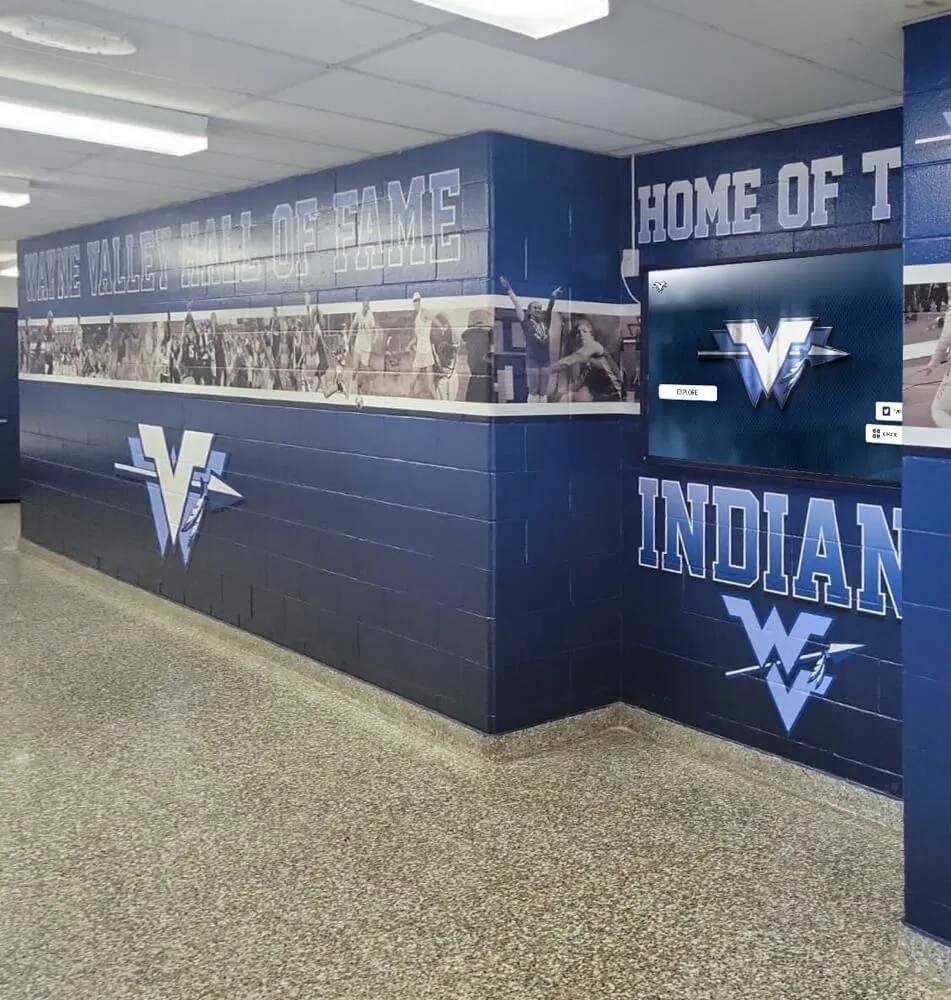
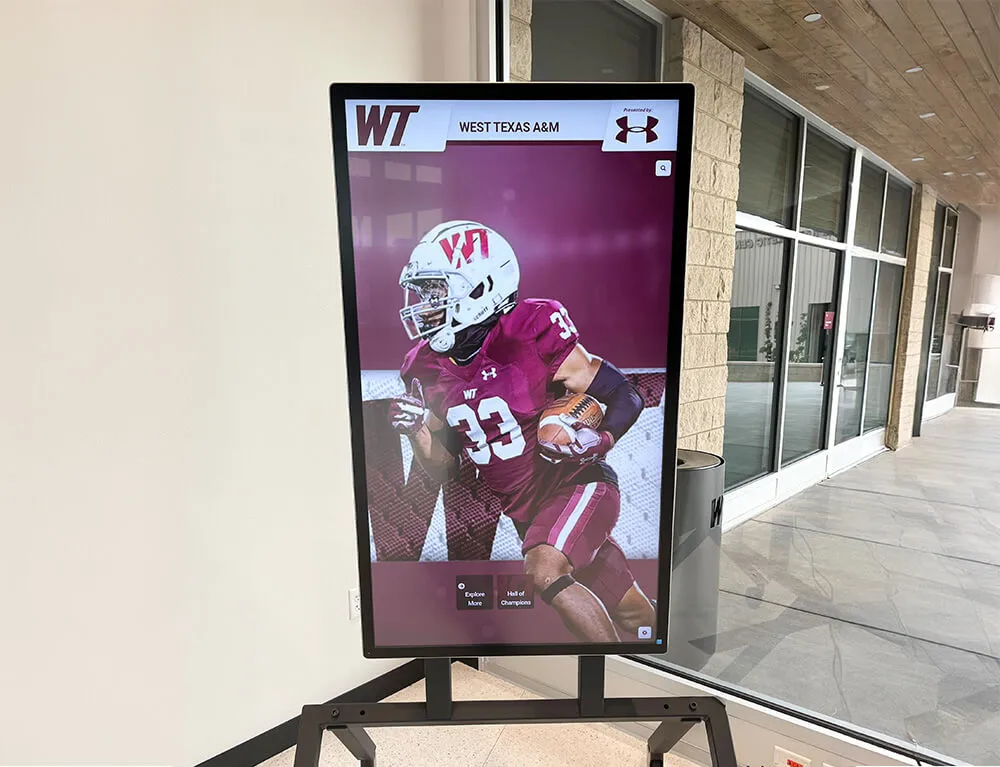
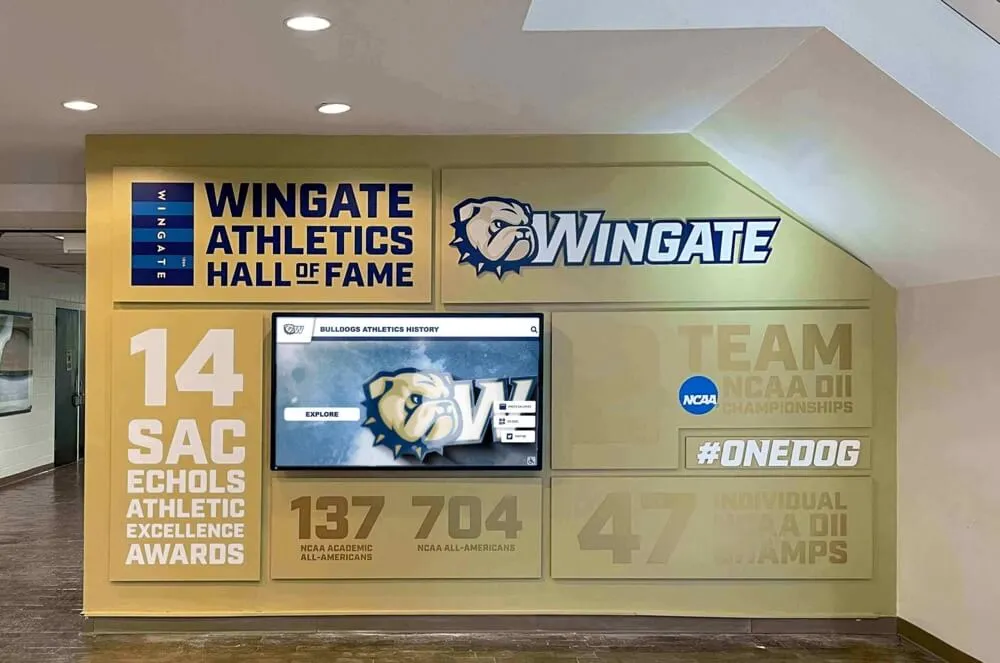
Traditional trophy cases face an unavoidable problem: space runs out. Schools accumulate decades of achievements across expanding sports programs, academic competitions, and extracurricular activities, yet physical display space remains fixed. Athletic directors make difficult choices about which trophies to showcase and which to store in closets. Championship teams from years past disappear to make room for recent accomplishments. Individual athletes’ records vanish when new names replace old vinyl lettering. The result is a recognition system that erases history instead of preserving it.
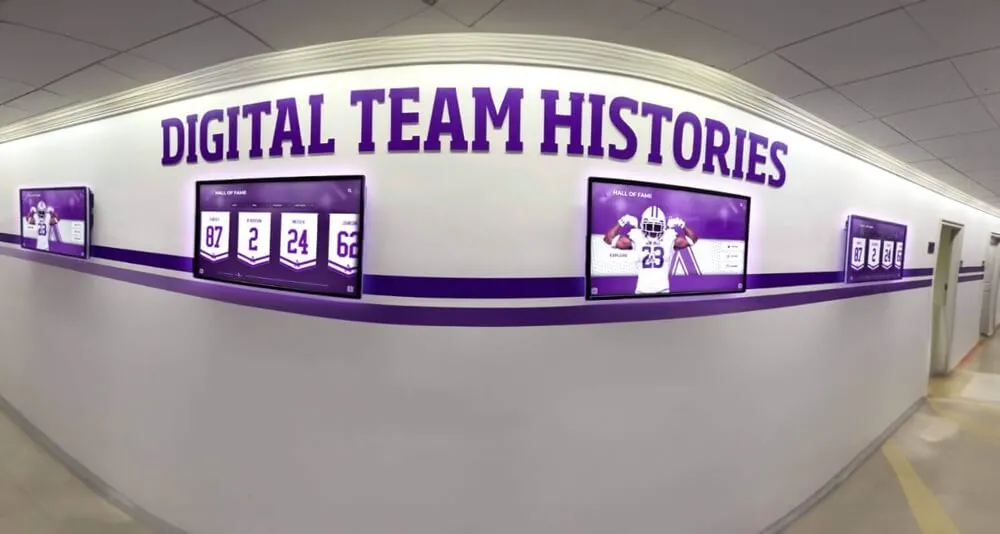
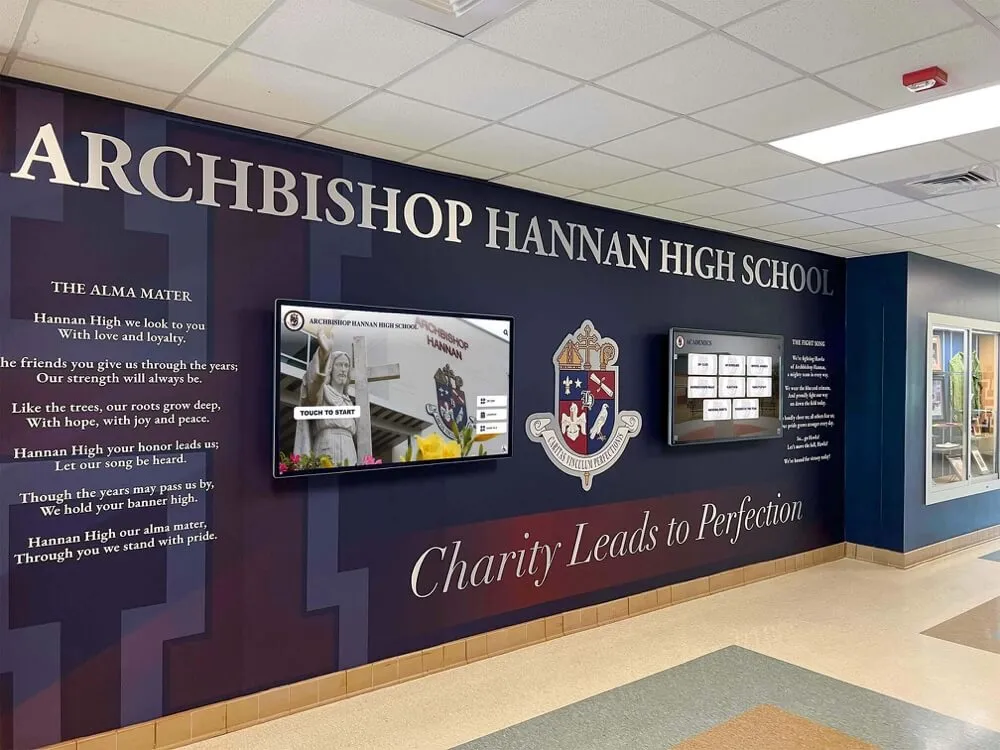
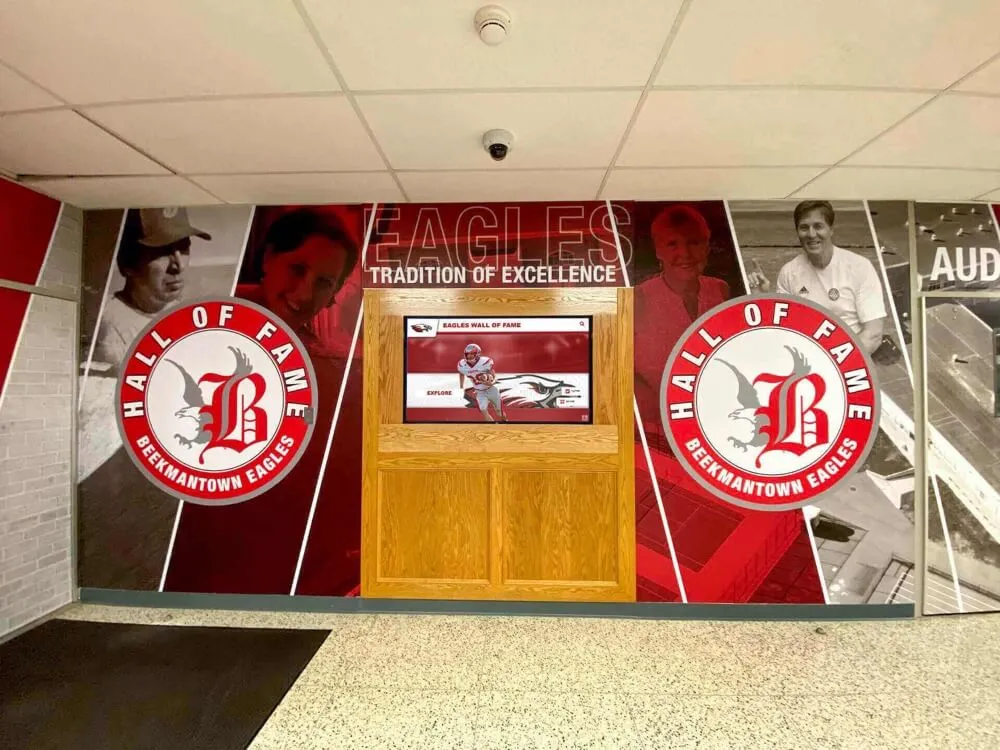
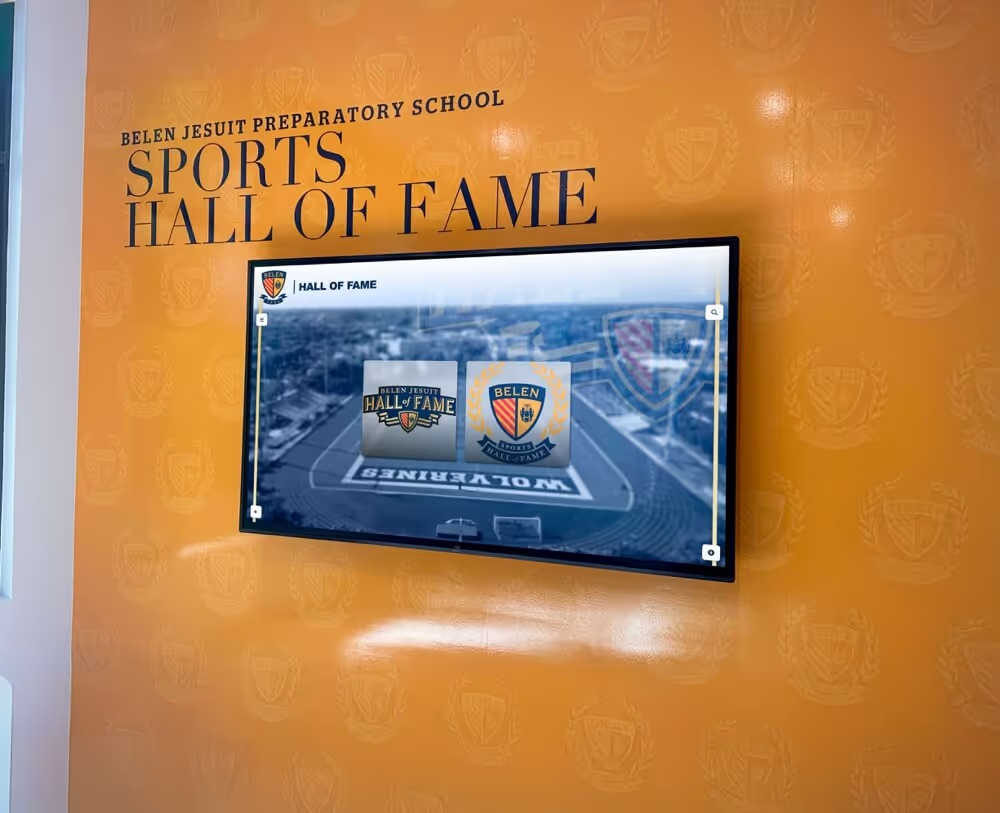
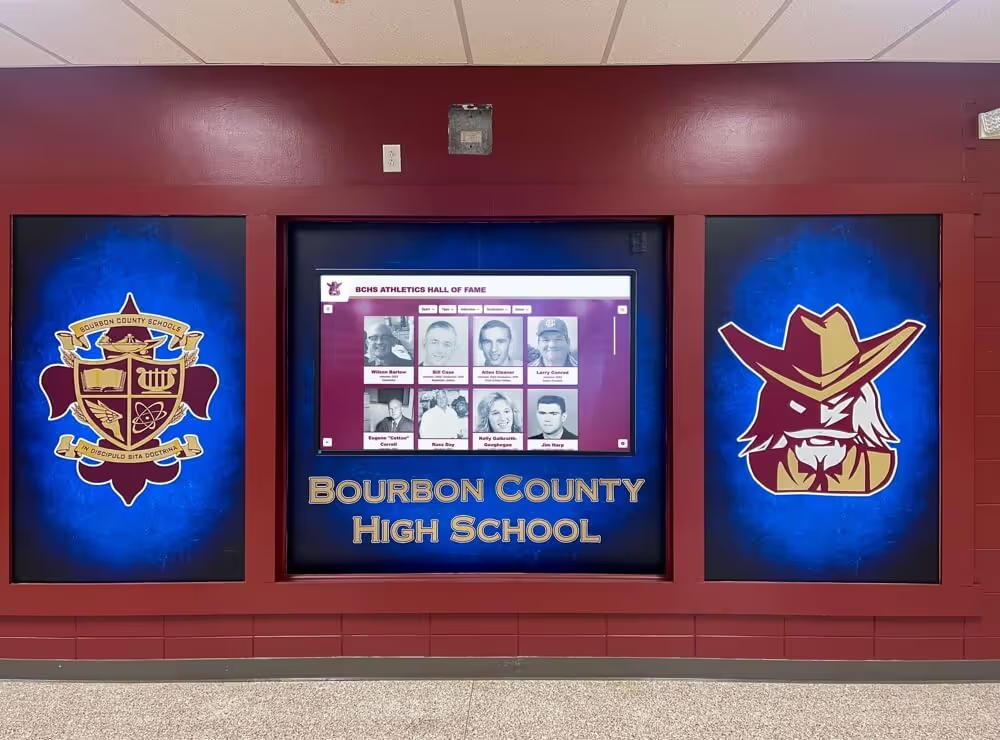
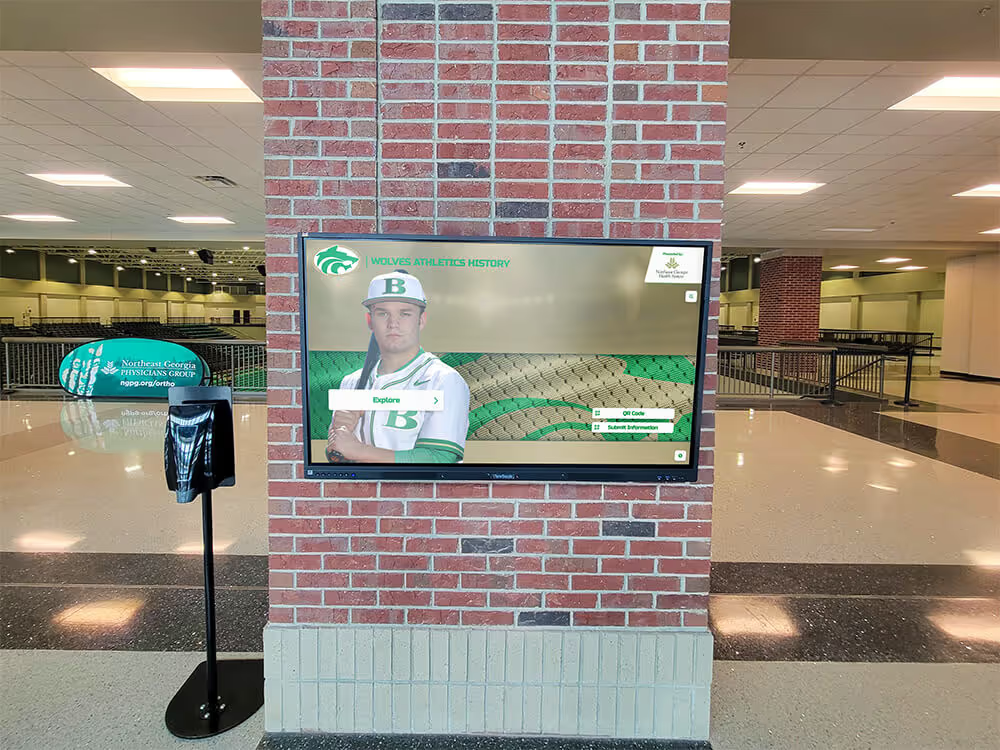
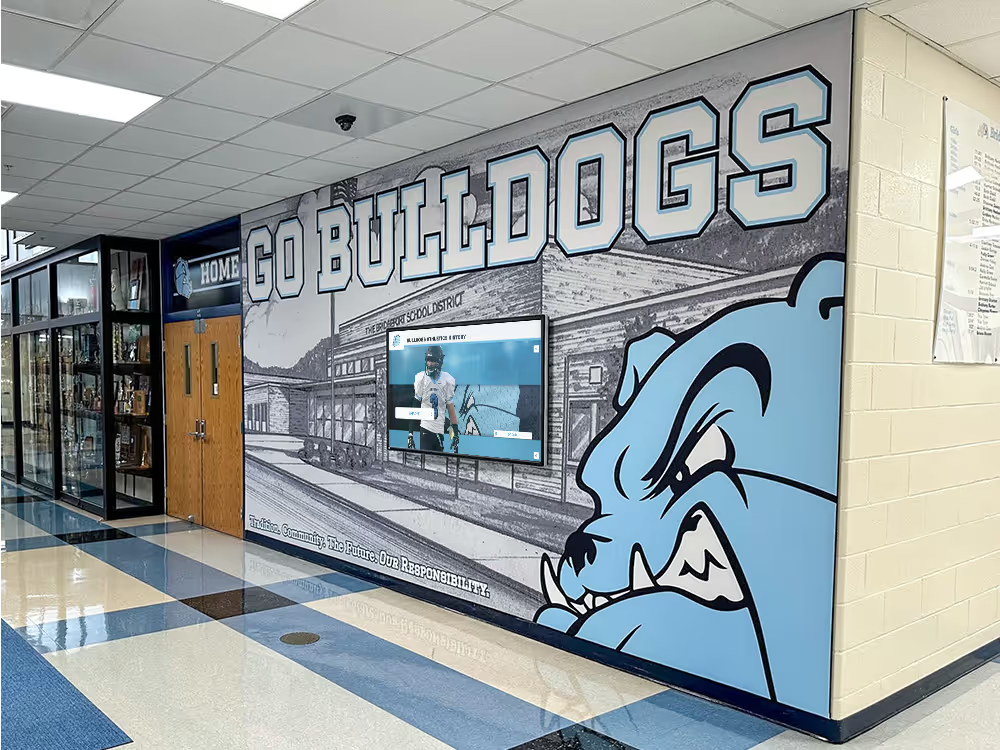
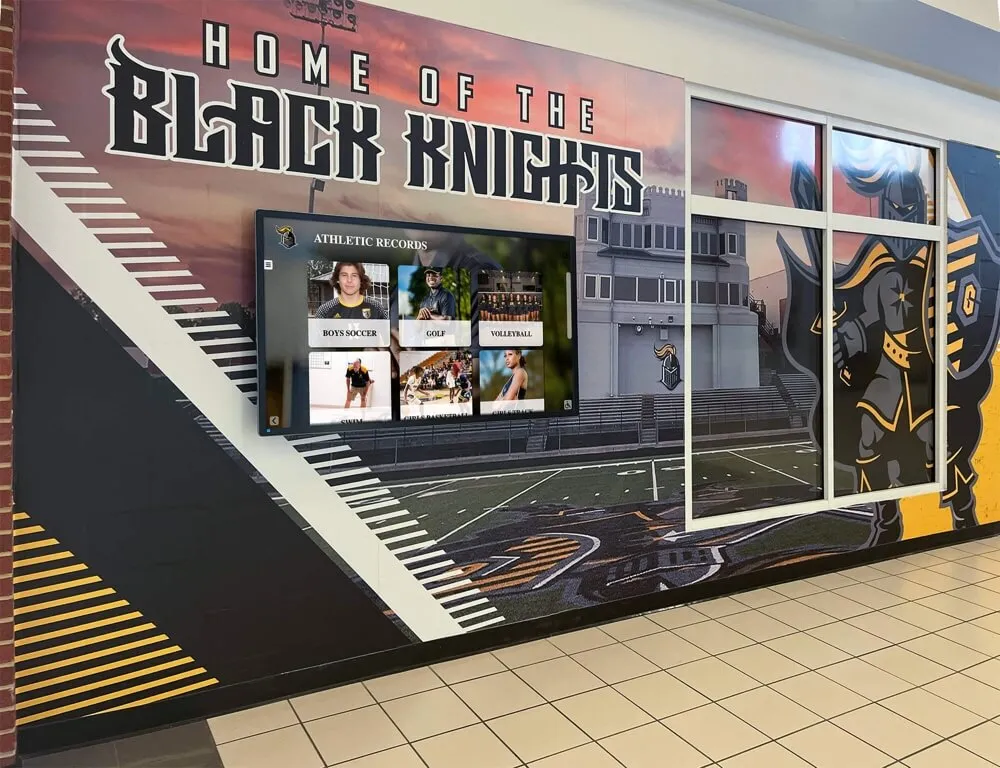
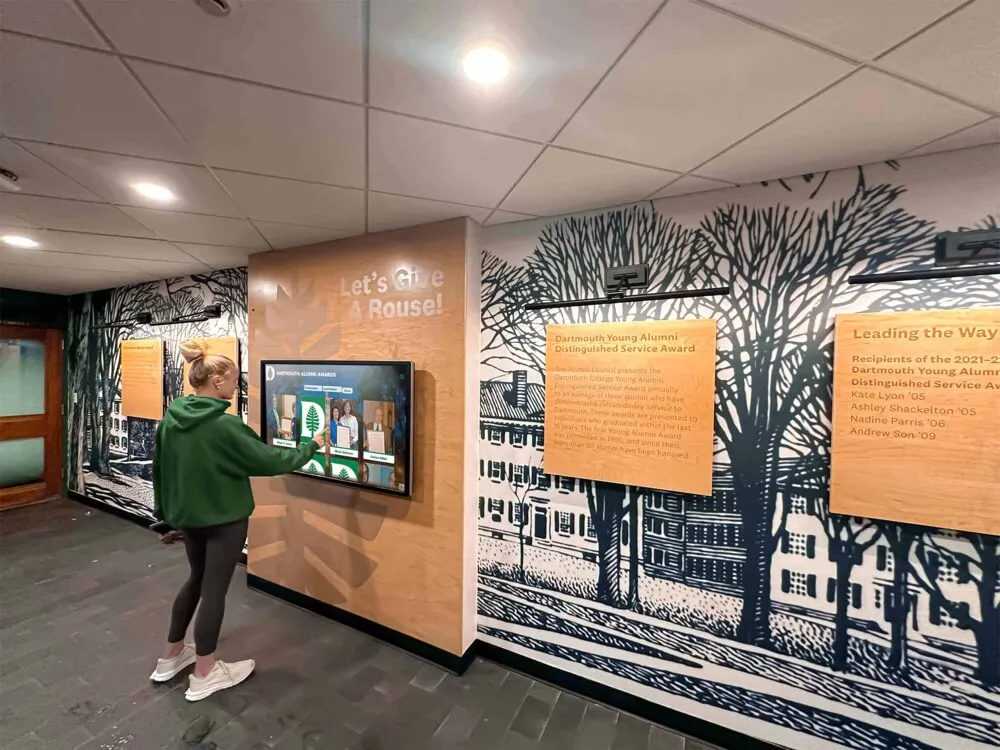
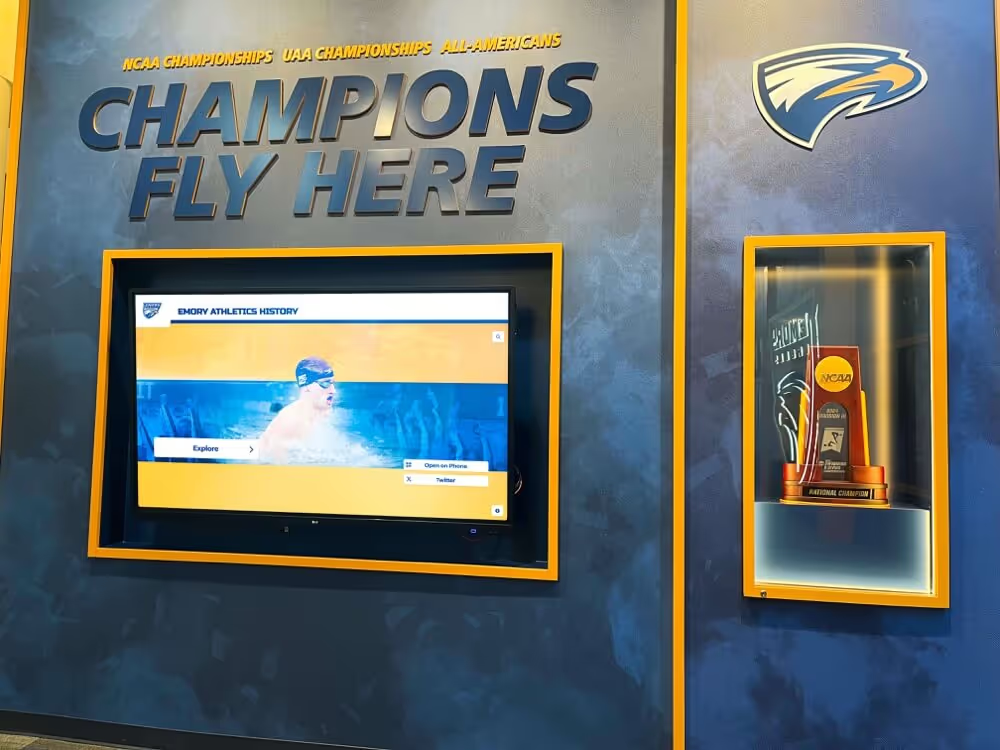
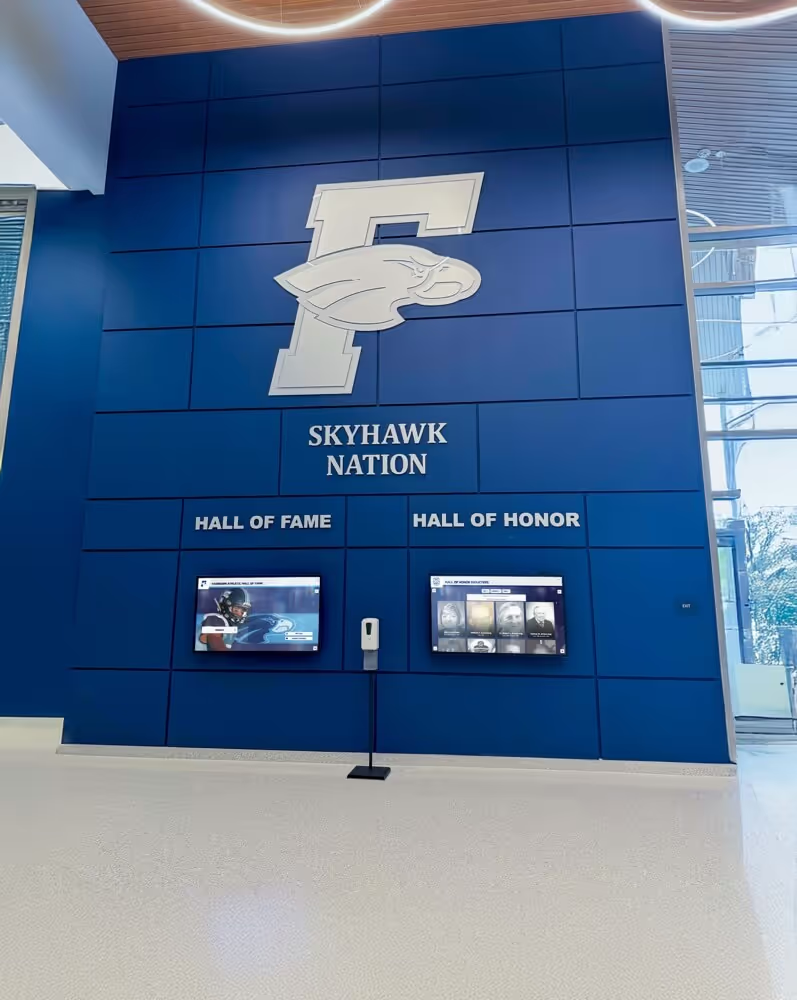
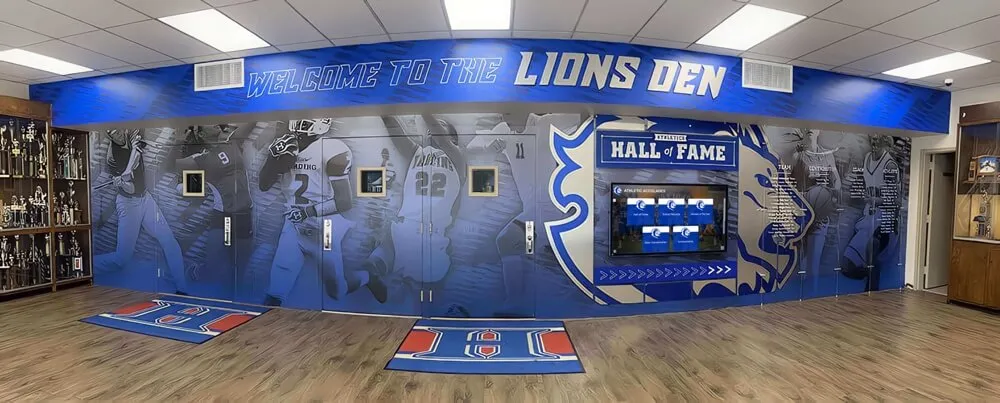
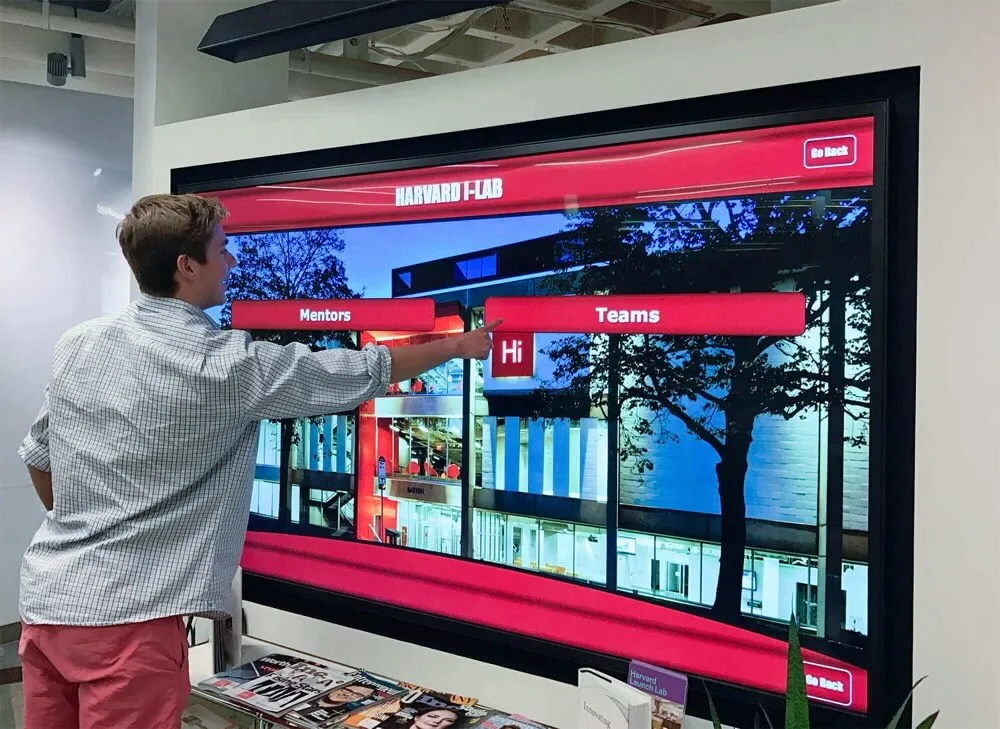
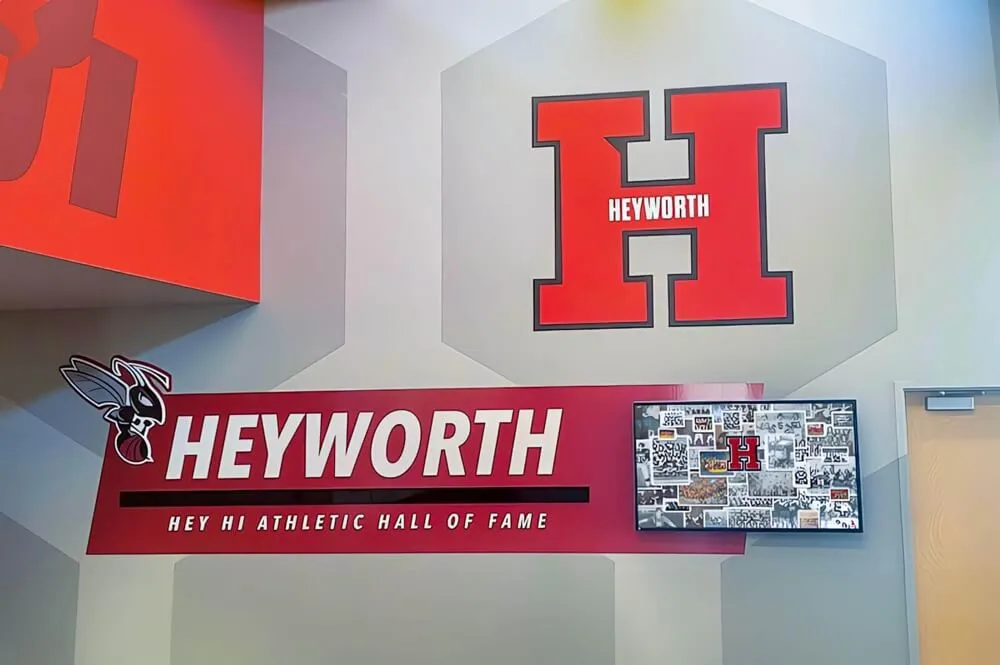
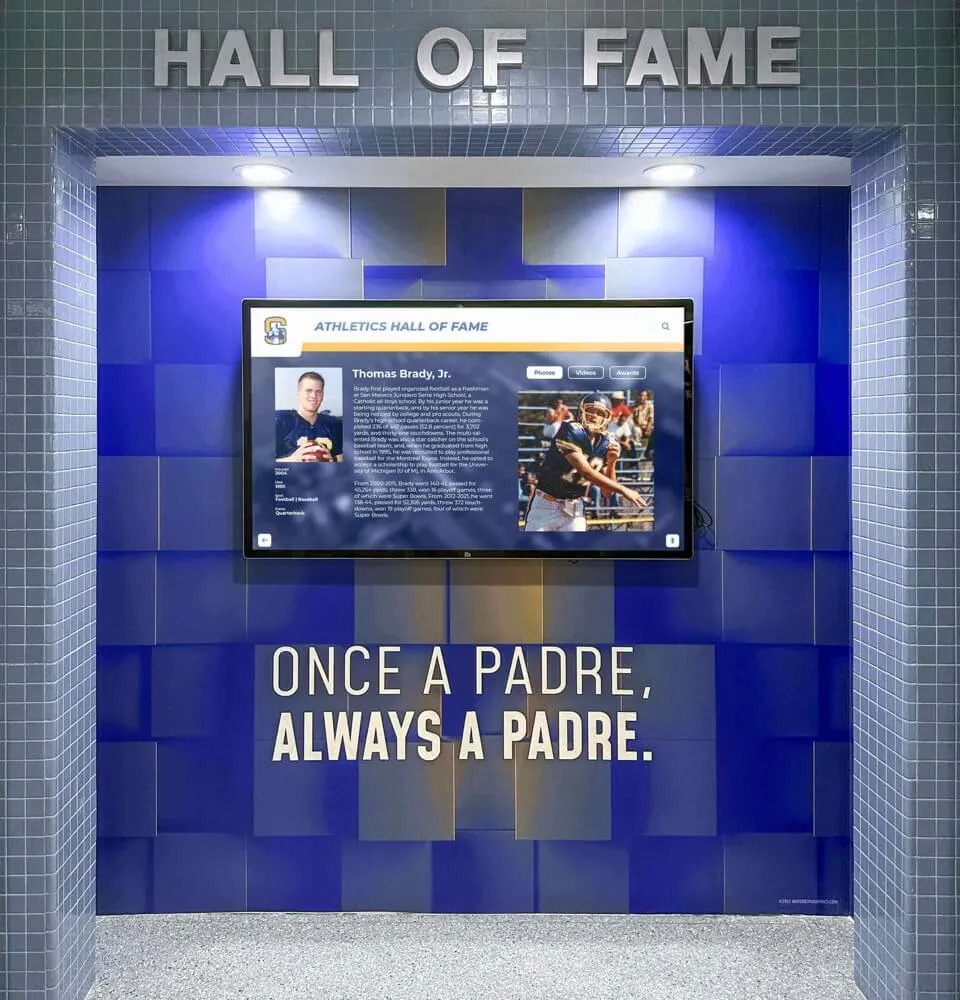
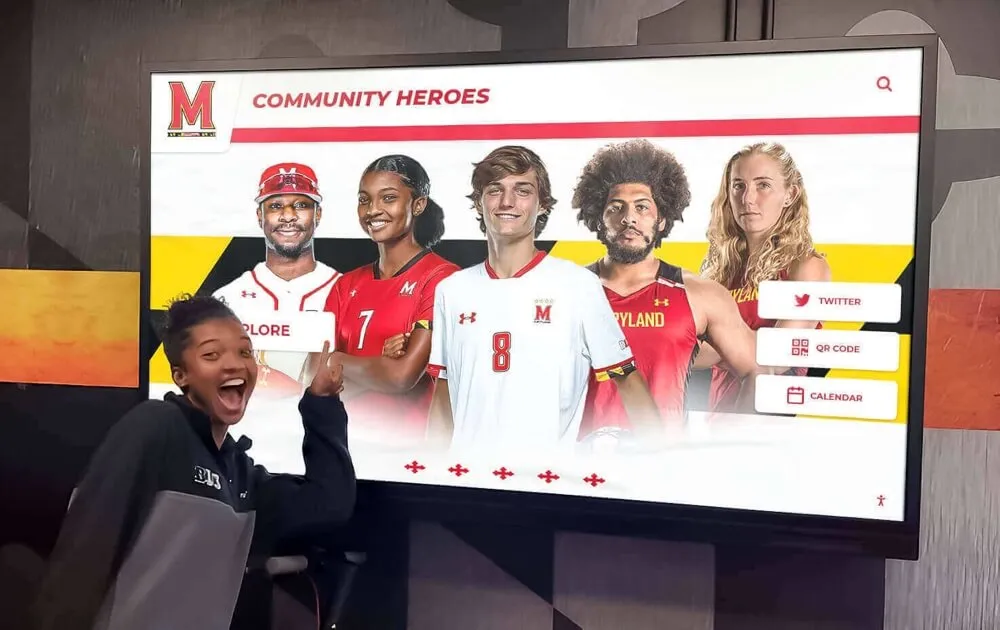
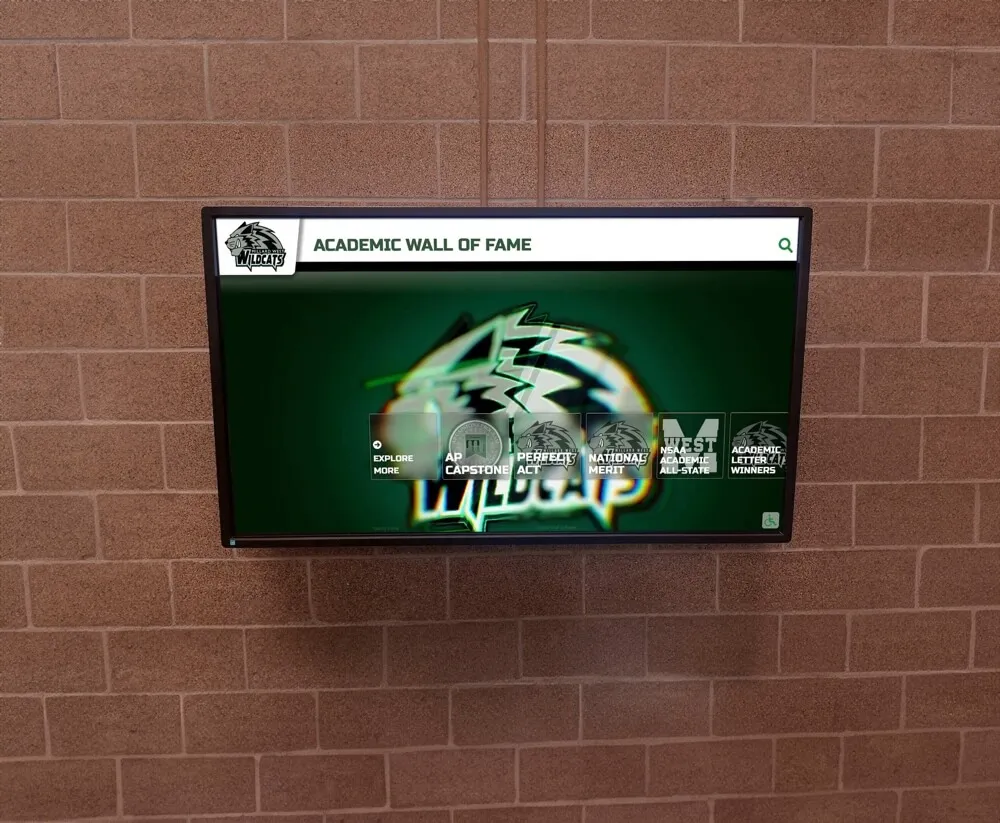
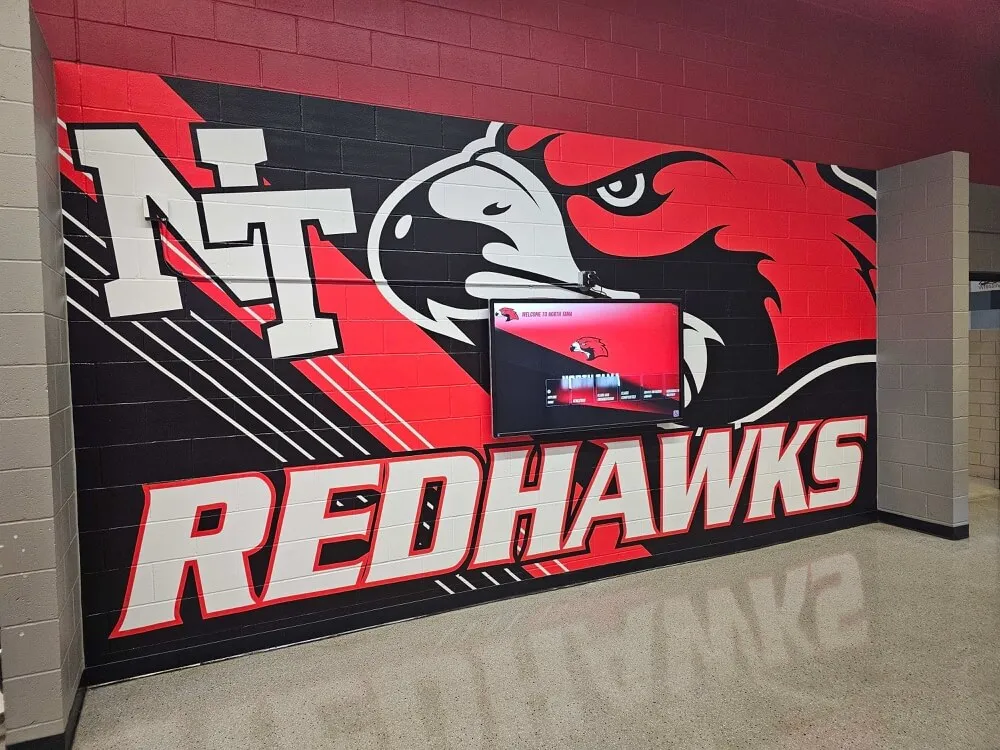
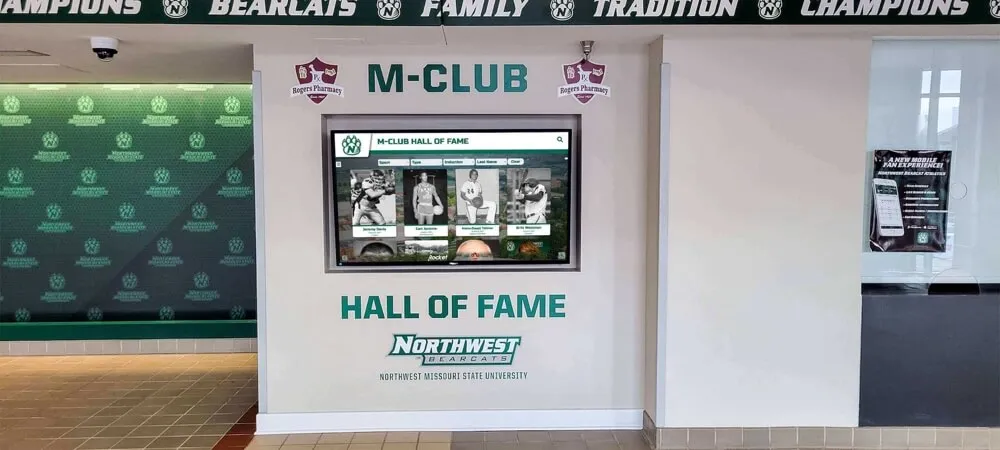
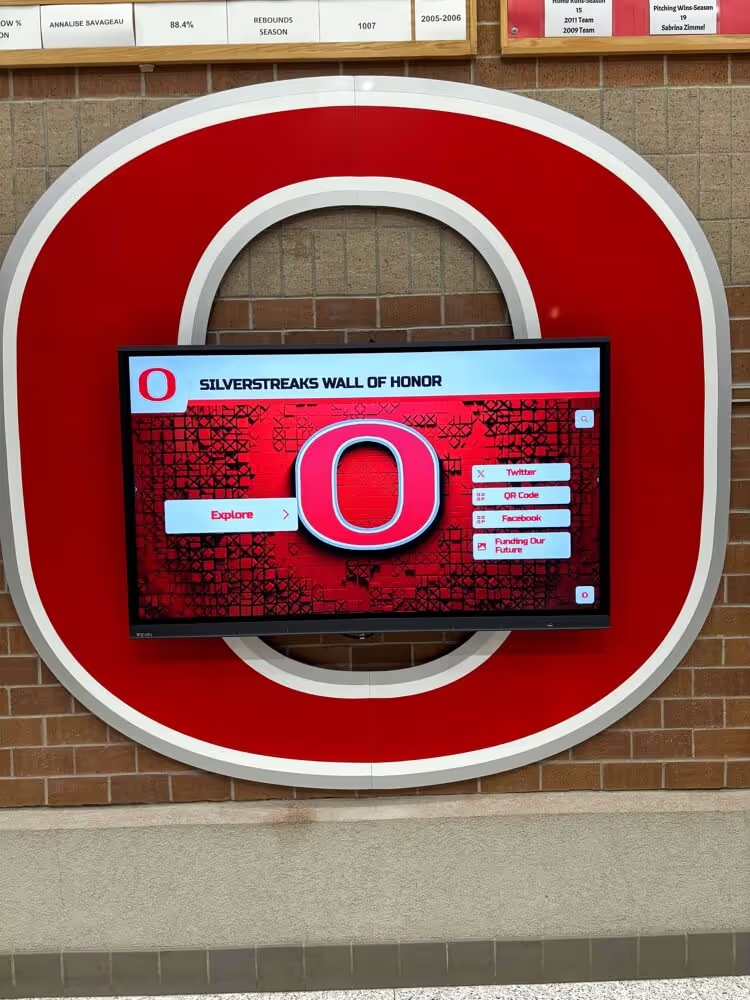
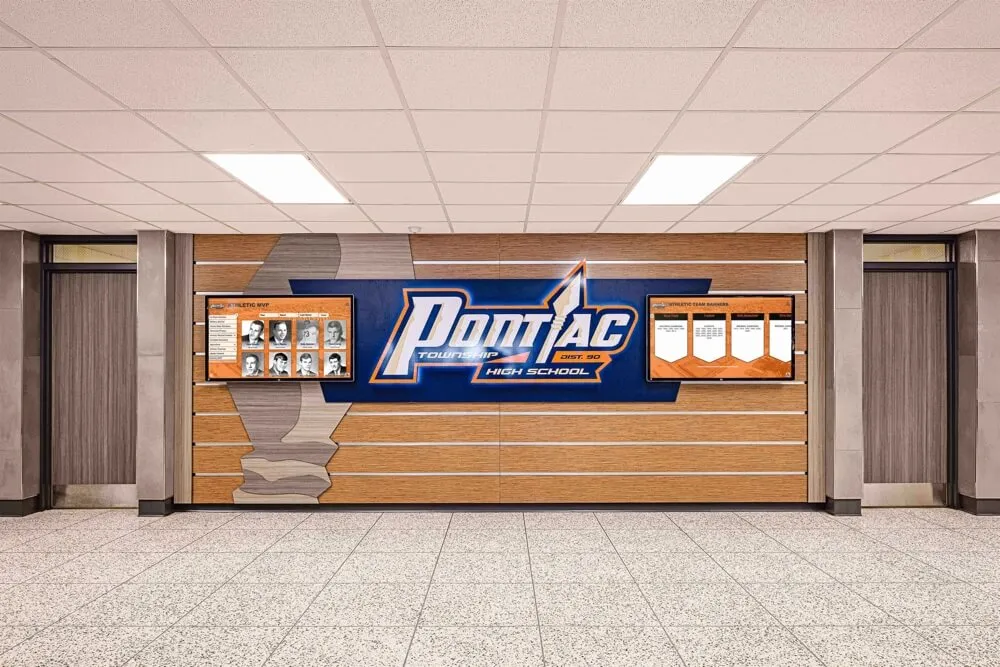
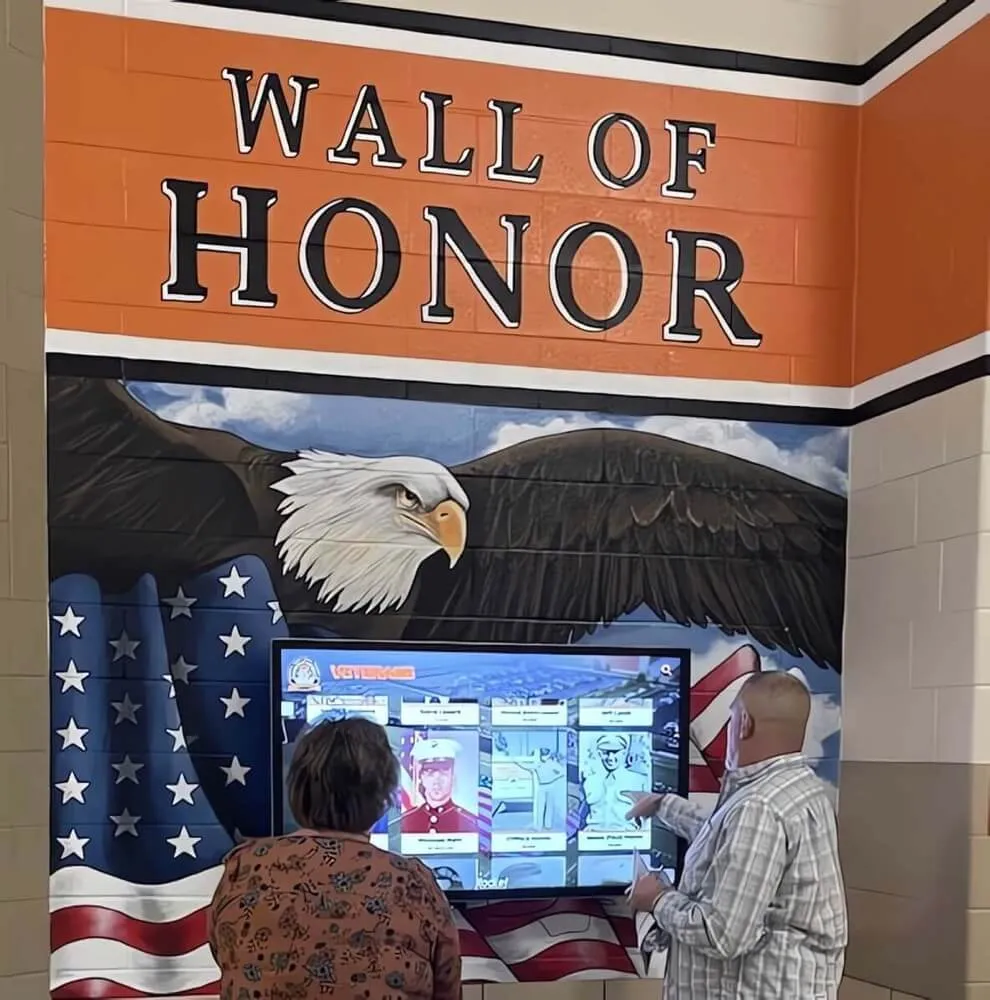
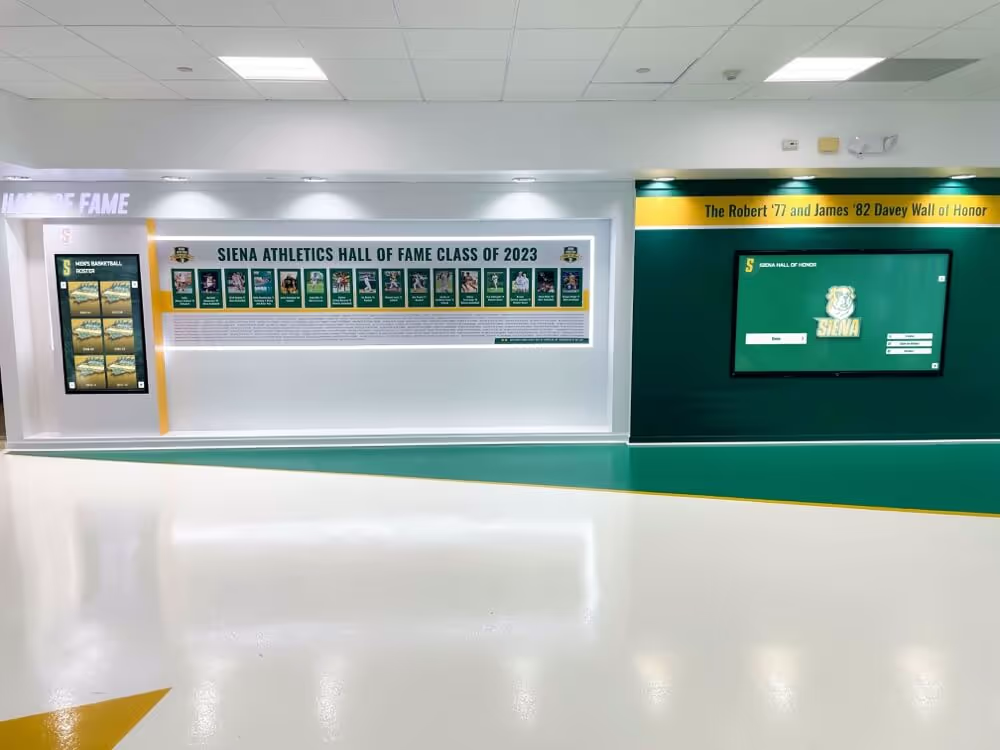
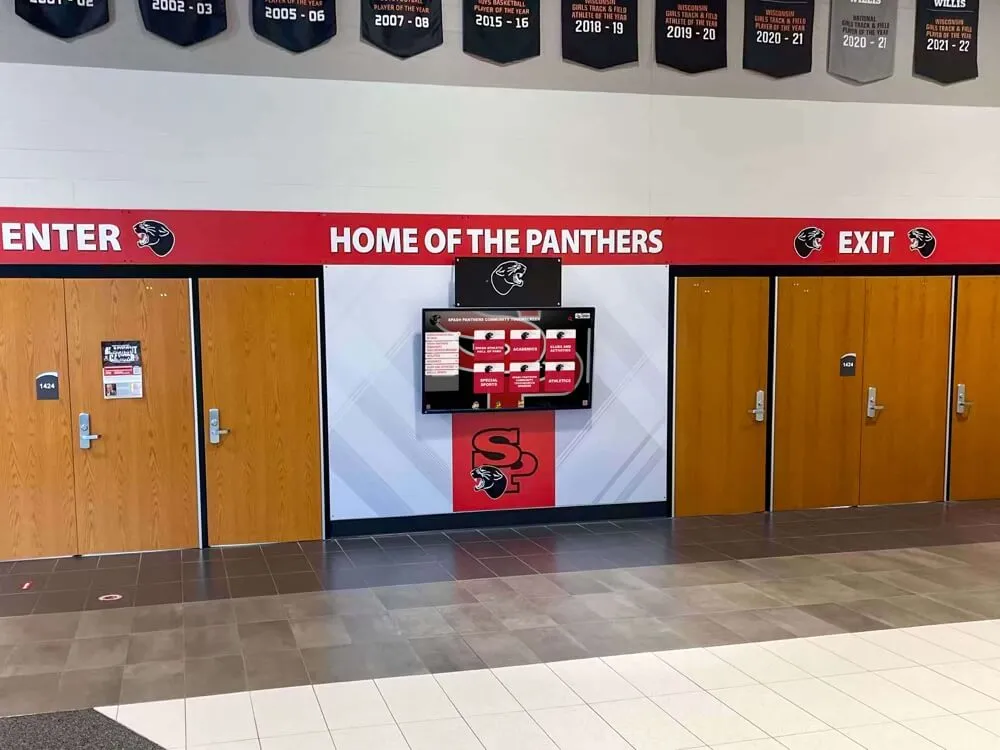
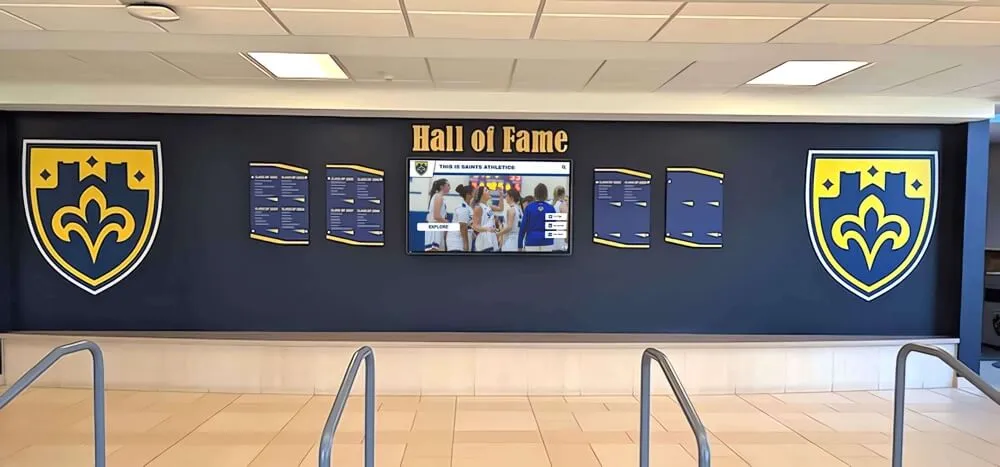
Digital trophy cases solve this capacity problem while creating engagement opportunities impossible with static displays. Through interactive touchscreens, schools can showcase unlimited achievements across all sports and activities, automatically update records when new marks are set, enable students to explore decades of athletic history at their own pace, and create ADA-compliant recognition accessible to all community members. These systems transform trophy cases from passive display furniture into active recognition platforms that strengthen institutional pride and athlete motivation.
Why Schools Are Adopting Digital Trophy Cases
Athletic departments implementing digital trophy cases eliminate storage constraints while creating more meaningful recognition experiences. Digital displays showcase every achievement rather than forcing selective recognition due to physical space limitations. Solutions like Rocket Alumni Solutions provide comprehensive platforms where schools can display unlimited trophies, automatically update athletic records, enable searchable achievement databases, and create interactive experiences that traditional trophy cases simply cannot match.
The Traditional Trophy Case Dilemma
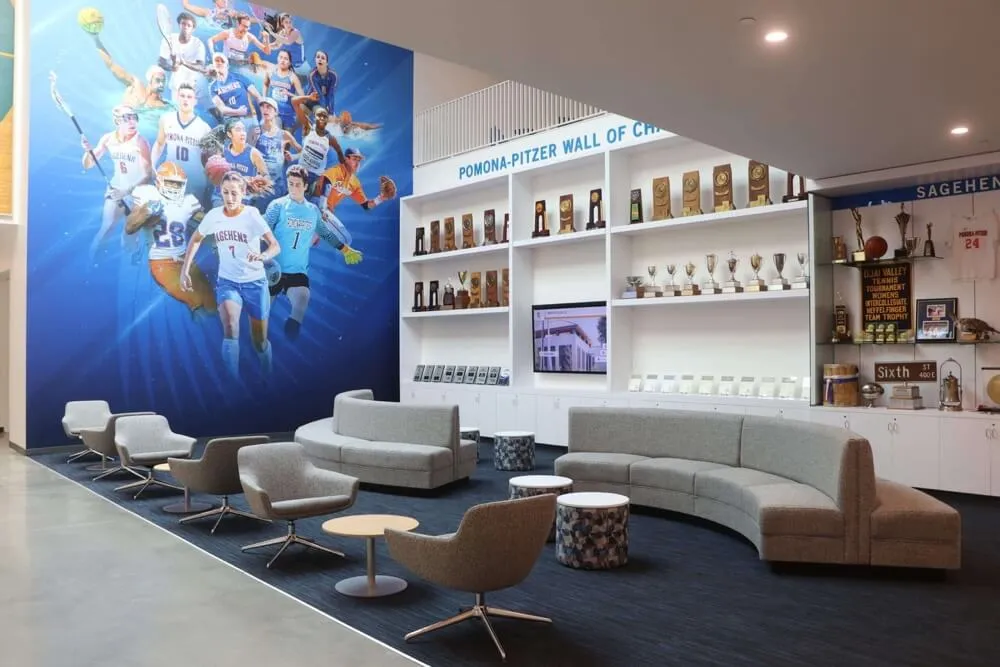
Walk through any established school’s athletic hallways and you’ll encounter trophy cases packed to capacity. Shelves overflow with hardware from decades of competition. Plaques overlap on walls. Championship banners compete for limited ceiling space. Behind this visible recognition sits even more hidden achievement—boxes of trophies stored in closets, record boards taken down to accommodate new sports, individual honors relegated to team storage rooms.
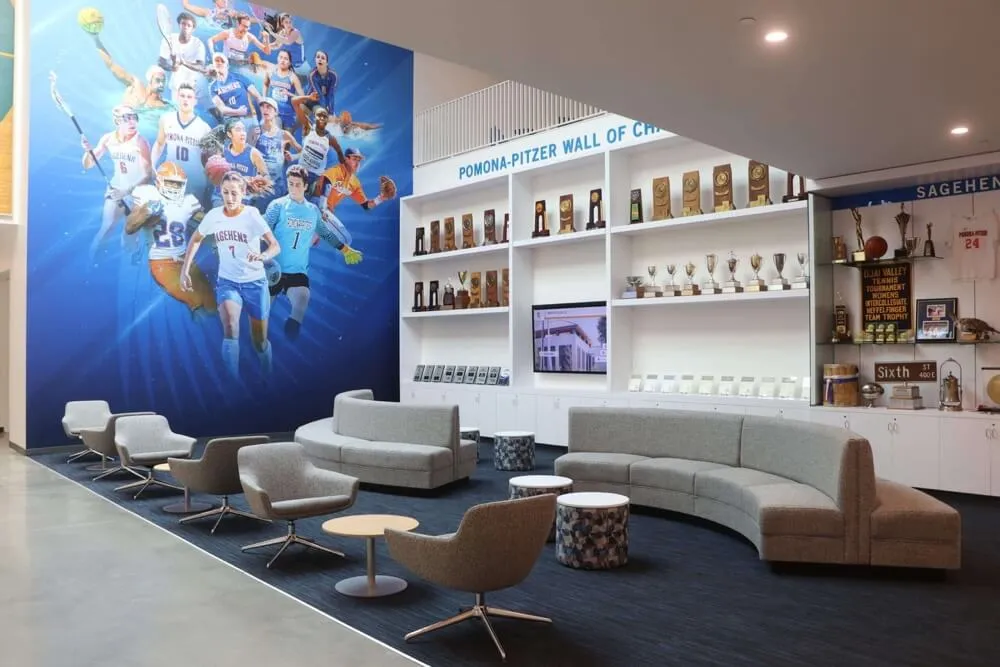
Space Constraints Create Recognition Problems
Forced Selectivity: When display space runs out, schools must choose which achievements deserve visibility. Do conference championships merit the same space as state titles? Should team trophies take precedence over individual honors? Does recency outweigh historical significance? These uncomfortable decisions pit achievement categories against each other rather than celebrating comprehensive athletic excellence.
Historical Erasure: As programs add new accomplishments, older achievements disappear from view. Championship teams from the 1980s move to storage. Record holders from previous decades lose wall space. Founding program milestones vanish to accommodate current rosters. This historical erasure breaks the narrative continuity that creates strong program identity and tradition.
Multi-Sport Fairness Challenges: Schools with balanced athletic programs face particular challenges distributing limited recognition space fairly. Football programs generate significant trophies and plaques. Basketball teams accumulate championship hardware. But tennis, swimming, track, golf, and other sports also deserve recognition. Physical constraints force unintentional hierarchies that undermine the “all sports matter” culture directors work to establish.
Maintenance and Update Difficulties: Traditional trophy cases require physical access for updates. Adding new trophies means unlocking cases, rearranging shelves, and finding space where none exists. Updating record boards requires vinyl replacement or plaque ordering. Correcting errors means physical repairs. These maintenance barriers lead to delayed recognition and outdated displays that no longer reflect current achievement.
The Visibility and Engagement Gap
Beyond capacity issues, traditional trophy cases struggle with fundamental engagement limitations that reduce their recognition impact:
Static Presentation in Dynamic Environments: Students move through hallways focused on reaching classes, socializing with friends, or checking phones. Trophy cases compete unsuccessfully for attention against these immediate priorities. Without interactive elements prompting engagement, most students never examine case contents despite passing them daily throughout their enrollment.
Limited Information Depth: Physical trophies and plaques communicate minimal information due to space constraints. A state championship trophy might display the year and sport, but nothing about season records, individual performers, opponent scores, or championship game details. This shallow information fails to create the rich narratives that generate emotional connection with past achievements.
Inaccessibility for Many Viewers: Traditional trophy cases present accessibility challenges for wheelchair users, visually impaired students, and community members with mobility limitations. Cases mounted high on walls or in locked display furniture prevent equal access to recognition information—creating unnecessary barriers to inclusive achievement celebration.
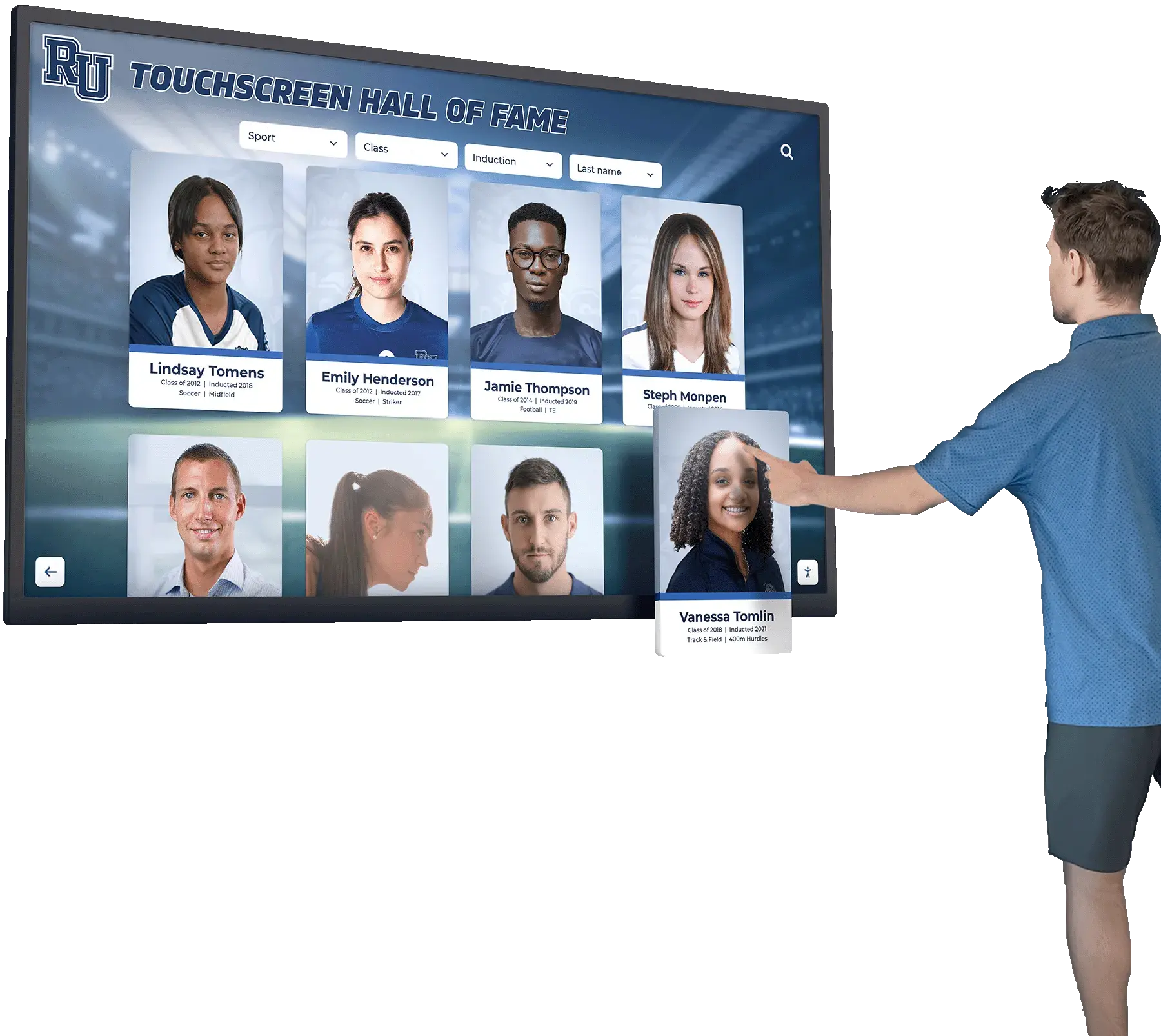
No Exploration or Discovery: Physical displays show the same content to every viewer regardless of individual interests. Athletes cannot filter to their sport. Alumni cannot search for their graduation year. Parents cannot easily find their children’s accomplishments. Without searchability and navigation, recognition information remains inflexible even when physically visible.
Research on high school trophy displays demonstrates that traditional cases function primarily as storage rather than effective recognition tools—preserving trophies but failing to create meaningful engagement with achievement history.
What Makes Digital Trophy Cases Different
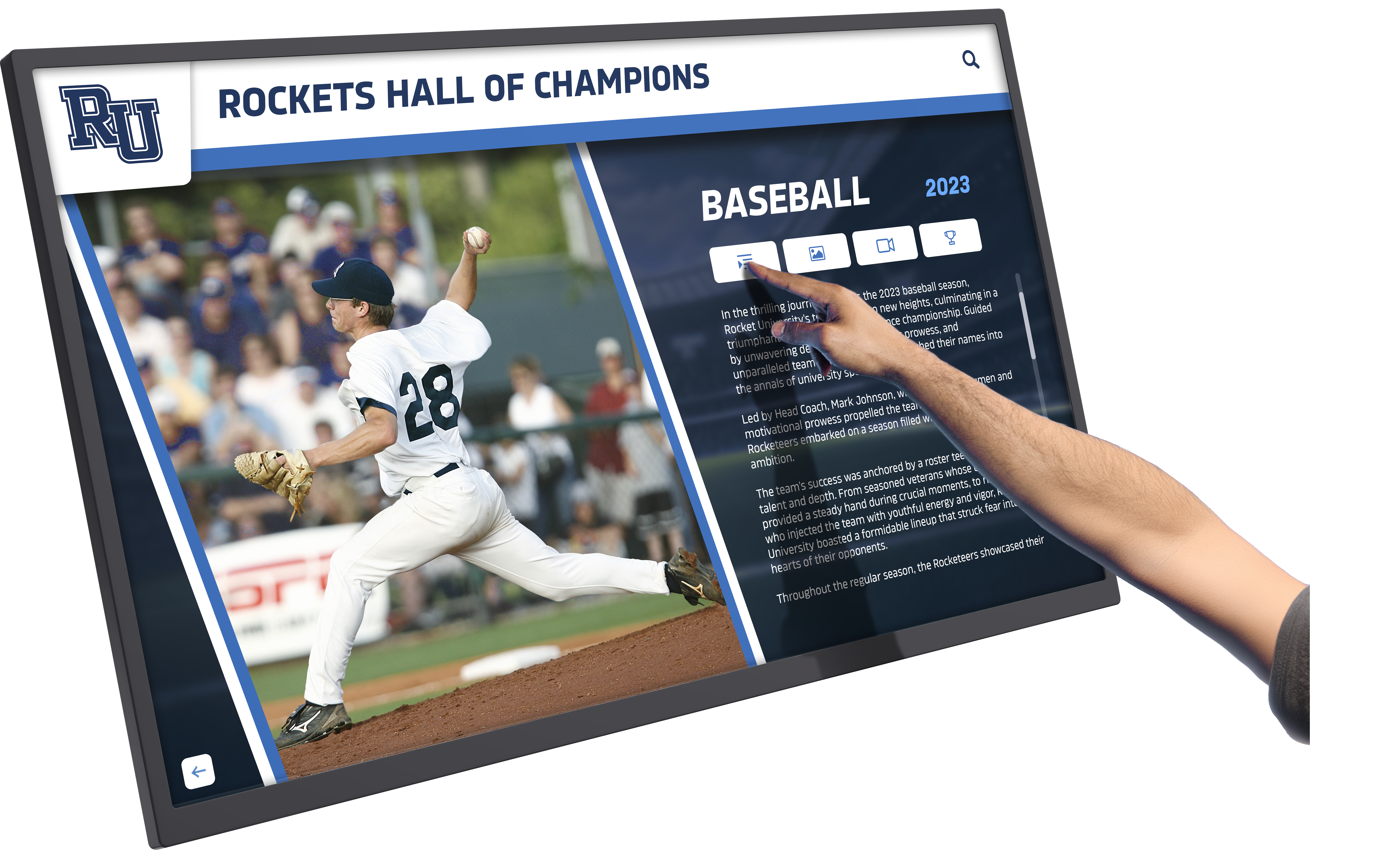
Digital trophy cases represent fundamental reimagining of athletic recognition, leveraging interactive technology to solve capacity limitations while creating engagement opportunities impossible with physical displays.
Core Digital Trophy Case Features
Unlimited Achievement Storage: Digital platforms eliminate physical space constraints entirely. Schools can showcase unlimited trophies across all sports and activities, display every championship team from program history, recognize all record holders rather than selecting recent ones, include individual honors alongside team achievements, and preserve freshman through varsity accomplishments. Storage becomes a non-issue as databases expand infinitely without requiring additional physical space.
Automatic Record Updates: Advanced digital trophy cases integrate with athletic record tracking systems to update automatically when new records are set. Real-time integration eliminates manual update delays, auto-ranking ensures current leaders always appear correctly, historical context shows how new records compare to all-time marks, and notification systems alert athletic directors when displays require content review. This automation reduces administrative burden while ensuring recognition stays current.
Interactive Exploration: Rather than presenting fixed content, digital trophy cases enable personalized navigation. Students can filter achievements by sport to see their program history, search by year to explore specific seasons or eras, look up individual names to find personal or family connections, browse by achievement type to compare championships across programs, and discover connections between current teams and historical accomplishments. This interactivity transforms passive viewing into active discovery.
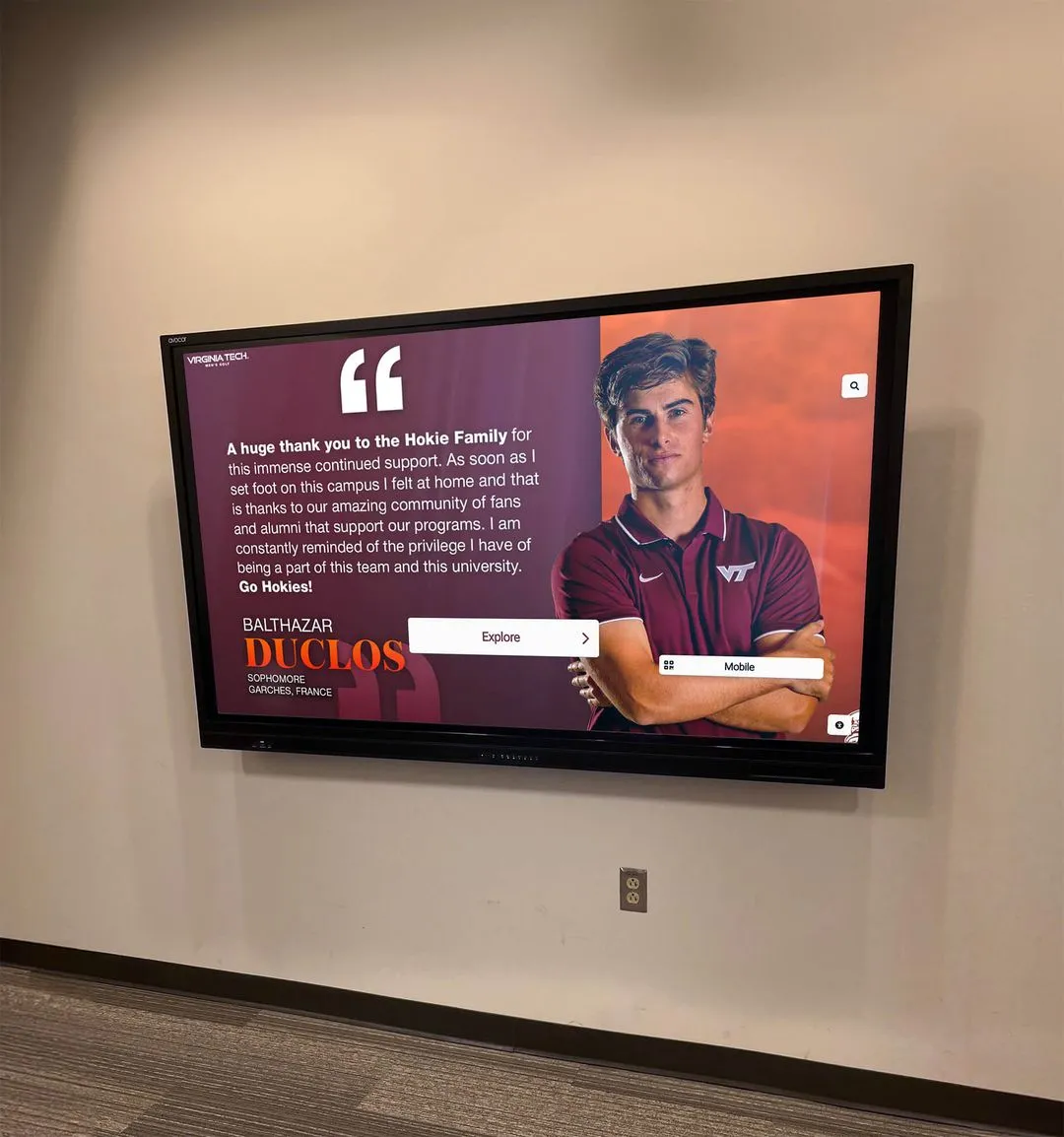
Multimedia Storytelling: Digital platforms integrate diverse content types creating rich narratives impossible with physical trophies. High-resolution photographs document championship moments, video clips preserve game highlights and celebration reactions, statistics provide performance context for achievements, newspaper clippings offer contemporary coverage of historic wins, and oral histories capture athlete and coach perspectives. This multimedia approach engages multiple senses while accommodating different learning preferences.
Accessibility Compliance: Digital trophy cases inherently address accessibility challenges physical displays create. Touchscreen placement at wheelchair-accessible heights ensures equal physical access, audio descriptions support visually impaired users, adjustable text sizes accommodate varying vision needs, and mobile access enables remote exploration from any device. These features create inclusive recognition meeting ADA requirements while expanding audience reach beyond physical location.
Technology Components
Commercial Touchscreen Hardware: Professional digital trophy cases deploy on commercial-grade touchscreens designed for continuous operation. Typical specifications include screen sizes ranging from 43 to 75 inches depending on viewing distance and traffic patterns, 4K resolution ensuring crisp text and imagery, capacitive multi-touch technology supporting intuitive gesture navigation, anti-glare coatings maintaining visibility under various lighting conditions, and commercial durability ratings (50,000+ operating hours) ensuring long-term reliability.
Cloud-Based Content Management: Modern digital trophy case platforms utilize cloud infrastructure enabling authorized administrators to add achievements from any internet-connected device, update information instantly without requiring IT department assistance, organize content through intuitive interfaces requiring no technical expertise, publish changes that appear immediately on all connected displays, and access analytics revealing which achievements generate highest engagement.
Responsive Interface Design: Professional trophy case software balances visual appeal with functional effectiveness. Clear navigation structures guide exploration, consistent design language reduces learning curve for first-time users, responsive feedback confirms interactions, accessibility features support diverse visitor needs, and performance optimization ensures smooth operation even with extensive content libraries spanning decades.
Integration Architecture: Enterprise digital trophy case systems connect with complementary school platforms including athletic record databases enabling automatic updates when new records are set, digital yearbook archives linking individual profiles to comprehensive biographical information, student recognition programs showcasing academic alongside athletic excellence, and website integrations extending trophy case access to remote audiences.
Planning Your Digital Trophy Case Implementation
Successful digital trophy case projects require systematic planning addressing content strategy, technical requirements, and organizational processes.
Content Strategy and Organization
Comprehensive Achievement Inventory: Begin by documenting all achievements your digital trophy case should include across relevant categories:
- Team Championships: Conference titles, regional championships, state titles, national competitions, tournament victories, perfect seasons, and playoff runs
- Individual Athletic Records: School records by sport, all-time statistical leaders, single-season marks, single-game performances, consecutive achievement streaks, and all-state selections
- Coach Milestones: Career wins, championship counts, tenure lengths, coaching awards, and hall of fame inductees
- Academic Honors: Academic all-state athletes, scholar-athlete awards, team GPA achievements, and graduation rates
- Special Recognition: Sportsmanship awards, community service honors, leadership recognition, and character awards
This comprehensive inventory ensures your digital trophy case preserves all achievement categories rather than inadvertently omitting recognition types due to historical physical display limitations.
Historical Timeline Development: Organize achievement content chronologically to create program narratives extending across decades. Document founding dates and early program development, identify championship eras and dominant periods, note coaching transitions and leadership changes, recognize facility improvements supporting program growth, and mark significant milestones like anniversary years. This timeline structure helps visitors understand program evolution rather than viewing achievements as disconnected events.
Sport-Specific Organization: While chronological timelines provide one navigation path, sport-specific organization enables focused exploration. Create dedicated sections for each varsity sport including program history and founding information, season-by-season records and champions, individual record holders and statistical leaders, coach histories and career achievements, and facility information and home venue details. Athletes often engage most deeply with their own sport content before exploring broader athletic department achievements.
Multimedia Content Integration: Beyond basic achievement documentation, gather multimedia materials that create emotional connection with past accomplishments. Identify championship photographs documenting title celebrations, locate game action photos showing athletes competing, collect newspaper clippings preserving contemporary coverage, find video highlights of championship games or record-breaking performances, and record oral histories with coaches and athletes reflecting on significant achievements. This multimedia approach transforms dry achievement lists into compelling narratives that engage viewers emotionally.
Technical Requirements and Installation
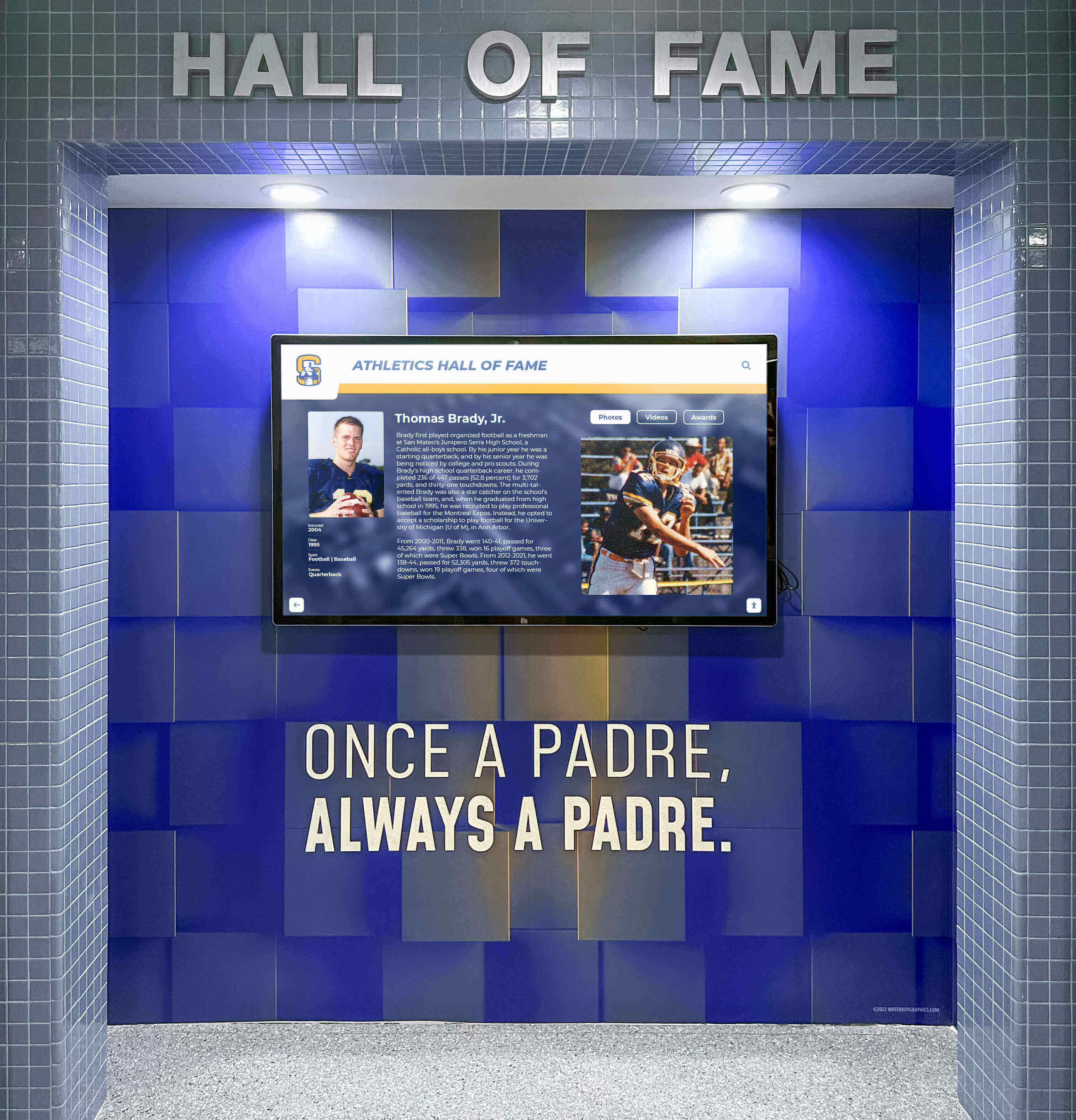
Display Location Selection: Choose trophy case locations maximizing visibility and engagement opportunity. High-traffic areas like main lobbies or gymnasium entrances ensure regular student and visitor exposure. Adequate viewing distance (typically 6-12 feet for 55-65 inch displays) prevents crowding while maintaining detail visibility. Appropriate ambient lighting avoids screen glare compromising readability. Electrical access and network connectivity support required infrastructure. Sufficient wall space and mounting structure accommodate chosen screen sizes safely.
Hardware Specifications: Select display hardware matching your specific use case and environment:
- Screen Size: 43-55 inches for individual viewing stations, 65-75 inches for group viewing in large spaces, 86+ inches for auditorium or gymnasium installations with distant viewing
- Mounting Options: Wall-mounted installations for permanent placements, mobile stands enabling flexible location changes, kiosk enclosures providing secure outdoor or high-traffic installations
- Connectivity: Wired ethernet for reliable continuous operation, WiFi capability for flexible placement where wiring proves difficult, cellular backup maintaining operation during network outages
- Peripherals: Optional printers enabling visitors to take achievement printouts home, QR code capability linking physical spaces to mobile content
Content Management Platform: Evaluate digital trophy case software platforms against functional requirements including unlimited content storage supporting comprehensive historical achievement, intuitive administrative interfaces enabling staff updates without technical training, automatic backup and recovery protecting achievement data, multi-user permissions allowing distributed content management, template libraries accelerating new content creation, and comprehensive support documentation with training resources.
Installation and Setup: Professional installations typically follow systematic deployment processes including site preparation verifying electrical and network requirements, secure mounting ensuring displays remain safely attached, software configuration establishing administrative accounts and permissions, content migration transferring initial achievement inventory, user training enabling staff to manage ongoing updates, and testing protocols confirming all features operate correctly before launch.
Detailed frameworks for athletic recognition displays outline installation best practices ensuring successful digital trophy case deployments.
Essential Content for Your Digital Trophy Case
While technical capabilities enable unlimited content, strategic content selection creates the most effective recognition experiences.
Foundational Achievement Categories
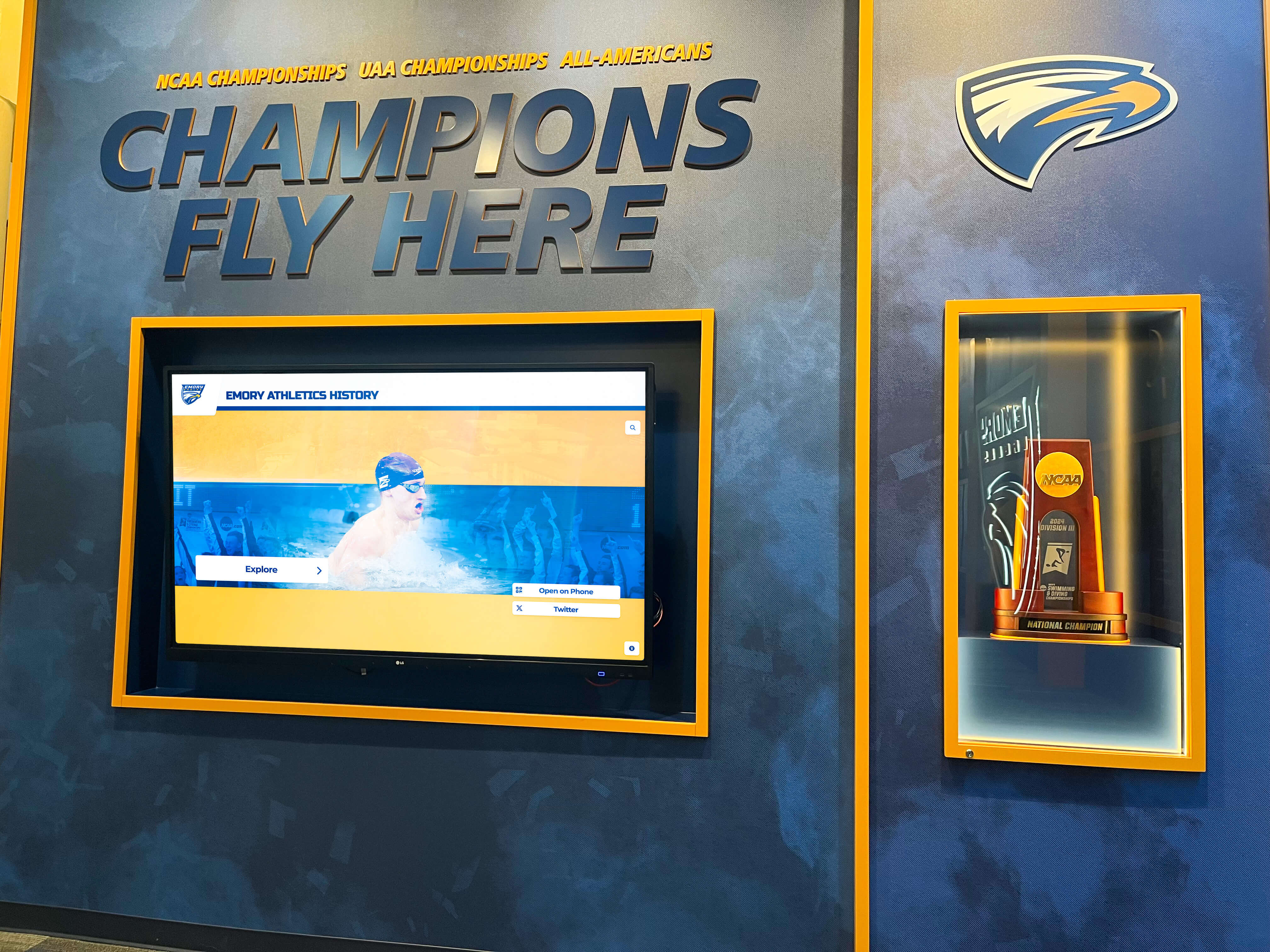
Championship Recognition: Document team achievements at every competitive level. Include conference championships showing consistent program excellence, sectional or regional titles demonstrating advancement toward state competition, state championships representing pinnacle team success, and national tournament participation or titles for programs competing at highest levels. For each championship, include roster information, coaching staff, season record, playoff results, and championship game details. These comprehensive team pages create permanent digital recognition equivalent to championship banners without consuming physical space.
Individual Record Holders: Showcase athletic records across all program sports. Career records document sustained excellence over multiple seasons. Single-season records capture exceptional individual years. Single-game records preserve remarkable individual performances. Recognize records across statistical categories relevant to each sport—points scored in basketball, yards gained in football, times in swimming and track, batting averages in baseball, serving aces in volleyball, and sport-specific achievements. For each record holder, include performance statistics, year achieved, previous record information, and biographical details connecting achievements to individual athletes.
All-Conference and All-State Recognition: Highlight individual athletes earning conference and state selection across all sports. These honors represent peer and coach recognition beyond mere statistics. Include selection year, specific honor level (first team, second team, honorable mention), selecting organization, position or event category, and season statistics supporting selection. Comprehensive documentation of these honors ensures visibility for achieved recognition that physical trophy cases often cannot accommodate due to volume constraints.
Team and Individual Season Highlights: Beyond championships and records, recognize exceptional seasonal achievements including tournament victories and playoff runs, rivalry game victories maintaining tradition, perfect seasons or extended winning streaks, dramatic come-from-behind victories, and team awards like sportsmanship recognition. These narrative elements create compelling content that engages viewers beyond pure statistical achievement.
Academic Athletic Excellence: Balance athletic achievement recognition with academic accomplishment celebration. Showcase academic all-state athletes, scholar-athlete award recipients, team GPA achievements and academic awards, individual academic records among athletes, and athletes achieving National Merit recognition. This balanced approach demonstrates that athletic programs value complete student-athlete development.
Supporting Content That Enhances Recognition
Coach Profiles and Career Milestones: Document coaching contributions through comprehensive profiles including career records and win totals, championships and tournament appearances, coaching tenure and program building, awards and recognition received, coaching philosophy and program culture, and transition to subsequent coaching roles or retirement. Coaches shape program identity significantly—their recognition deserves equal prominence alongside team and athlete achievements.
Program Histories and Evolution: Provide context for current achievements by documenting program development over time. Include sport founding dates and early program history, facility construction and improvement timelines, program growth in participation and competition levels, significant rule or classification changes affecting competition, and connections between past program foundations and current success. This historical context helps current athletes understand how their achievements continue traditions established by previous generations.
Athlete Profiles and Post-Graduation Success: When possible, connect high school achievements to subsequent accomplishments including college athletic participation and achievements, professional sports careers, coaching careers returning to give back to programs, and career success in fields outside athletics. These “where are they now” connections demonstrate long-term value of athletic participation while inspiring current athletes with examples of successful graduates.
Special Recognition and Tradition: Document the unique traditions and special recognitions specific to your athletic program including senior night traditions, rivalry trophy traditions and game histories, captaincy selection and leadership recognition, sportsmanship awards and character honors, and community service achievements by teams or individuals. These tradition elements strengthen program culture while creating recognition content beyond competitive achievements.
Maintaining and Updating Your Digital Trophy Case
Unlike physical trophy cases requiring only occasional dusting, digital recognition platforms require systematic content management ensuring displays remain current and accurate.
Establishing Update Workflows
Seasonal Achievement Updates: Develop systematic processes for adding achievements at season conclusion including championship results and tournament finishes, final team records and statistical leaders, conference and state award recipients, new school records and ranking changes, and season highlight photos and videos. Assign specific staff members responsibility for each sport to ensure comprehensive coverage without overwhelming single administrators.
Record Verification Protocols: When athletes claim new records or achievement displays generate questions, implement verification processes including official record book consultation, statistics database cross-referencing, historical newspaper or yearbook confirmation, retired coach or administrator consultation, and documentation of sources for future reference. Accurate records matter—establishing verification protocols prevents embarrassing errors that diminish credibility.
Content Quality Standards: Maintain consistent quality across all trophy case content through standardized processes including photography requirements ensuring adequate resolution and composition, biography length guidelines creating similar depth across profiles, statistical category consistency applying same metrics across all athletes, writing style guides maintaining appropriate tone, and accessibility standards ensuring all content meets compliance requirements.
Community Contribution Management: Many schools solicit achievement information and historical content from community members. Establish processes for evaluating and incorporating submitted content including submission forms capturing required information fields, review workflows ensuring accuracy before publication, acknowledgment systems thanking contributors, and ongoing solicitation encouraging continued participation. Community contributions fill historical gaps while building stakeholder investment in recognition platforms.
Technical Maintenance and Support
Software Updates and Security: Cloud-based platforms typically handle software updates automatically, but administrators should verify regular processes including security patch application protecting against vulnerabilities, feature enhancements adding improved functionality, performance optimizations maintaining smooth operation, backup verification ensuring content protection, and support communication staying informed about platform improvements.
Hardware Maintenance: Physical displays require ongoing attention ensuring reliable operation including screen cleaning maintaining visibility and appearance, connection verification ensuring network and power reliability, temperature monitoring preventing overheating in enclosed installations, touch calibration maintaining accurate interaction response, and replacement planning for aging displays approaching end of useful life.
Content Backup and Disaster Recovery: Protect accumulated achievement content through systematic backup processes including automated cloud backup for content changes, local backup copies providing redundancy, periodic backup verification confirming restoration capability, documentation of content sources enabling reconstruction if needed, and disaster recovery planning addressing total system loss scenarios.
Analytics and Engagement Monitoring: Many advanced digital trophy case platforms provide analytics revealing engagement patterns that inform content strategy including most-viewed achievements indicating high-interest content, search terms showing what visitors look for, navigation paths revealing how users explore content, dwell time indicating engagement depth, and demographic information when available from login or profile systems. Review analytics periodically to identify opportunities for content expansion or reorganization improving user experience.
Comprehensive approaches to digital recognition platform management ensure long-term success of digital trophy case implementations through systematic maintenance and content management.
Digital Trophy Cases vs. Traditional Displays
Schools considering digital trophy case adoption often compare capabilities against traditional physical displays they replace.
Capacity and Flexibility
Achievement Volume: Traditional trophy cases accommodate limited achievements constrained by physical space. A typical trophy case holds 50-100 trophies depending on size before becoming overcrowded and visually overwhelming. Digital platforms showcase unlimited achievements—thousands of trophies, hundreds of record holders, decades of championship teams—all accessible through intuitive navigation without space limitations.
Update Frequency: Physical trophy cases require manual access for updates. Adding new trophies means unlocking cases, rearranging contents, and finding space. Updating vinyl record boards requires professional replacement services. Digital updates occur remotely from any device in minutes without physical access, enabling same-day recognition when achievements occur.
Content Flexibility: Once engraved, physical trophies and plaques present fixed information. Corrections require replacement. Additional context cannot be added. Digital content remains infinitely editable—correcting errors, adding context, incorporating new media, and reorganizing information as needs evolve without replacement costs.
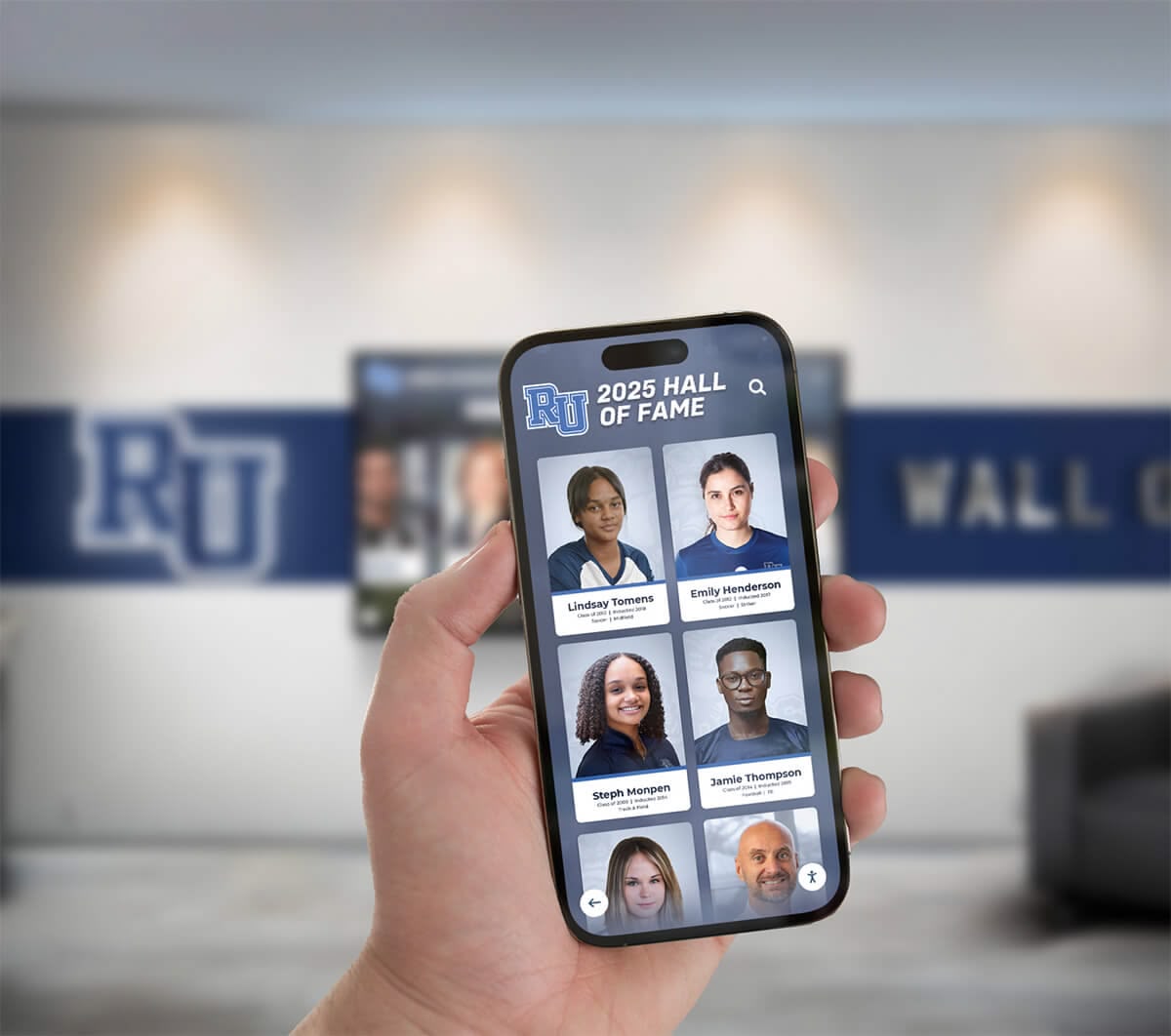
Multi-Location Access: Physical trophy cases exist in single locations visible only to people physically present. Digital trophy cases extend beyond physical displays through mobile apps, website integrations, and remote access enabling alumni worldwide to explore achievements, families to find student recognitions from home, and prospective families to learn about program traditions during virtual tours.
Engagement and Accessibility
Interactivity: Traditional displays present identical content to all viewers regardless of interests or information needs. Digital platforms enable personalized exploration—athletes filtering to their sport, alumni searching graduation years, parents finding their children, and researchers comparing eras—creating relevance that passive viewing cannot match.
Information Depth: Physical constraints limit trophy and plaque information to basic details—typically just achievement type, year, and names. Digital platforms integrate unlimited contextual information including comprehensive statistics, season narratives, opponent information, coach perspectives, and contemporary media coverage. This depth creates emotional connection beyond mere achievement acknowledgment.
Accessibility Compliance: Traditional trophy cases often present accessibility barriers. Wall-mounted displays sit above wheelchair-accessible sight lines. Locked cases prevent close examination. Small text challenges visually impaired visitors. Digital touchscreens mounted at accessible heights with adjustable text sizes and audio description capabilities create inclusive recognition meeting ADA standards.
Maintenance Requirements: Physical cases require dusting, hardware maintenance, and physical access for updates. Digital platforms require occasional screen cleaning and network connectivity but eliminate shelf adjustments, hardware rearrangement, and physical content management. Administrative maintenance occurs remotely through intuitive interfaces rather than requiring physical building access.
Cost Considerations
Initial Investment: High-quality trophy cases cost $2,000-$8,000 depending on size and construction. Professional digital trophy case systems range from $5,000-$15,000 for single displays including hardware, software licensing, and installation. While digital systems carry higher upfront costs, this comparison doesn’t account for capacity limitations requiring multiple trophy cases to hold equivalent achievement volume.
Ongoing Costs: Traditional trophy cases incur ongoing expenses for new trophies ($25-$500 each), engraving services, vinyl record board updates ($300-$800 per update), and eventually replacement when deterioration or damage occurs. Digital systems involve software licensing (often $1,200-$3,000 annually) but eliminate per-achievement costs. Adding trophies costs nothing beyond staff time for content entry.
Replacement and Obsolescence: Quality trophy cases last 20-30 years before requiring replacement due to wear, style obsolescence, or damage. Digital displays require hardware replacement every 7-10 years as screens reach end of useful life. However, content transfers to new hardware preserving all achievement data, while trophy case replacement often prompts difficult decisions about which old trophies to retain.
Total Cost of Ownership: Over 10-year periods, comprehensive analysis often shows similar total costs between traditional and digital approaches when accounting for capacity. Traditional cases require multiple units to hold equivalent achievement volume, plus ongoing trophy purchases and engraving. Digital systems require higher initial investment and software licensing but eliminate per-achievement costs while providing unlimited capacity.
Detailed cost comparisons in guides about digital versus traditional recognition help schools make informed investment decisions based on specific circumstances rather than initial sticker shock.
Advanced Digital Trophy Case Applications
Beyond basic achievement display, advanced digital trophy case implementations integrate additional functionality creating comprehensive athletic recognition ecosystems.
Real-Time Record Tracking
Some schools integrate digital trophy cases with athletic performance databases enabling automatic record comparisons during competitions. When athletes approach school records during meets or games, displays update automatically showing current record, athlete attempting to break it, and historical context. This real-time integration creates immediate recognition visibility while reducing administrative update burden.
Alumni Connectivity Features
Advanced platforms incorporate alumni engagement tools connecting current programs with graduated athletes. Alumni can update profile information with college athletics participation, professional achievements, or career information. Schools can solicit reunion attendance, fundraising support, or mentorship participation through integrated communication tools. These features transform trophy cases from historical archives into active alumni engagement platforms strengthening program support networks.
Multi-Campus Integration
Districts with multiple schools can implement unified digital trophy case networks showcasing achievements across all district schools. Central administration can compare program development across campuses, identify successful coaching practices worthy of district-wide adoption, celebrate inter-school cooperation in combined programs, and demonstrate comprehensive district athletic excellence to communities. This district-level perspective creates recognition for system-wide athletic program strength beyond individual school achievements.
Recruiting and Admissions Support
Athletic programs can leverage digital trophy cases during recruiting visits by customizing content displays for visiting prospects. Show sport-specific achievements relevant to recruit interests, highlight similar athletes who succeeded in programs, demonstrate facility quality and program investment, and present academic athletic balance through scholar-athlete recognition. For private schools and universities, admissions tours can incorporate trophy case exploration demonstrating institutional commitment to athletic excellence.
Integration with Fundraising and Development
Some advanced implementations connect digital trophy cases with development programs by showcasing donor-funded improvements and their resulting achievements, recognizing major donors through integrated donor walls, demonstrating tangible results from booster club fundraising efforts, and providing donation call-to-action for visitors inspired by program excellence. These connections help development teams demonstrate how financial support translates directly into student-athlete success.
Getting Started with Digital Trophy Case Implementation
Schools ready to implement digital trophy cases should follow systematic approaches ensuring successful deployments that meet organizational needs while maximizing recognition impact.
Assessment and Planning
Stakeholder Engagement: Include diverse perspectives in planning processes by involving athletic directors defining recognition needs and priorities, coaches providing sport-specific input and historical knowledge, technology staff addressing technical requirements and infrastructure, facilities personnel identifying location options and installation considerations, and development staff connecting recognition to fundraising strategies. Broad stakeholder participation ensures comprehensive needs assessment and builds organizational buy-in.
Needs Definition: Clearly articulate specific problems digital trophy cases should solve for your school including space constraints limiting recognition capacity, update delays causing recognition lag, accessibility compliance addressing inclusion requirements, engagement improvements creating more meaningful recognition, and alumni connection supporting fundraising and program advocacy. Clear problem definition guides platform selection and implementation priorities.
Content Inventory: Before selecting platforms or creating budgets, inventory available content and identify acquisition needs. Catalog existing trophies, plaques, and physical awards documenting current recognition. Assess record books and statistical databases for accuracy and completeness. Identify historical photographs, videos, and media for digitization. Plan for missing content through research, community outreach, or professional archiving services. Comprehensive content understanding prevents project delays when platforms are ready but content isn’t available.
Budget Development: Create realistic budgets accounting for all implementation costs including hardware expenses for displays and mounting equipment, software licensing for content management platforms, installation costs for professional mounting and configuration, content development for digitization and profile creation, training investment for staff and community contributors, and ongoing support including software licensing renewals and eventual hardware replacement. Comprehensive budgets prevent surprise expenses derailing projects.
Implementation Best Practices
Phased Deployment: Rather than attempting comprehensive implementations immediately, consider phased approaches reducing risk and enabling learning. Initial phases might include single sport or single achievement category demonstrating platform capabilities, recent achievements (5-10 years) establishing current content baseline, or high-traffic location proving engagement value before broader rollout. Successful initial phases build organizational confidence while enabling process refinement before larger investments.
Professional Support: While DIY approaches tempt budget-conscious schools, professional implementation services typically ensure better outcomes through faster deployment reducing time-to-recognition, expertise avoiding common pitfalls and technical challenges, training accelerating staff proficiency with new systems, and support providing ongoing assistance when questions or issues arise. Evaluate total project cost including internal staff time when comparing professional versus DIY approaches.
Community Involvement: Successful digital trophy case projects often incorporate community participation through historical content solicitation asking alumni for photographs and memorabilia, recognition validation requesting verification of achievements and records, volunteer digitization organizing parent or booster groups for content creation, and celebration events marking launches and milestones. Community involvement builds stakeholder investment while distributing work beyond limited school staff resources.
Measurement and Iteration: Establish success metrics enabling ongoing improvement including engagement analytics measuring interaction frequency and depth, stakeholder feedback gathering user experience perspectives, recognition timeliness tracking update speed after achievements, content growth monitoring ongoing archive development, and community impact assessing effects on school pride and program support. Regular measurement reveals opportunities for enhancement while demonstrating return on investment.
Transform Your Athletic Recognition Today
Digital trophy cases represent more than technological upgrades to traditional displays. They embody fundamental shifts in recognition philosophy—from selective celebration constrained by physical space to comprehensive acknowledgment of all achievements, from passive viewing to active exploration, from isolated trophies to connected narratives, and from erasure over time to permanent preservation.
Schools implementing digital trophy cases solve immediate practical problems like space constraints and update delays while creating strategic advantages in athlete engagement, program pride, alumni connection, and inclusive recognition. These platforms preserve institutional athletic history comprehensively while making it accessible and relevant to current students who will become tomorrow’s contributing alumni.
The athletic achievements your students earn deserve recognition that lasts beyond their enrollment years. Digital trophy cases ensure every championship, every record, and every honor receives permanent acknowledgment rather than storage room relegation when space runs out.
Book a demo to see how Rocket Alumni Solutions creates comprehensive digital trophy cases that showcase unlimited achievements while strengthening athlete recognition and school pride.