



Athletic directors and coaches know the scene too well: clipboard in hand, frantically recording stats between plays while trying to keep the scoreboard operator updated, then spending hours after games manually entering data into spreadsheets. One missed notation means lost statistics. One communication gap leaves the scoreboard displaying incorrect information. One forgotten score sheet means permanent gaps in your program’s historical records.
The traditional paper-based scorekeeping system that served school athletics for generations creates friction at every step—difficult real-time data capture, manual scoreboard updates requiring verbal communication or hand signals, disconnected statistics that never feed into permanent record systems, lost or damaged paper records, and impossible cross-season analysis requiring reconstruction from incomplete sources.
Modern sports scorekeeping software eliminates these obstacles by creating integrated digital systems that capture statistics in real time, automatically update scoreboards, feed data directly into permanent record boards, preserve complete game histories, and enable instant analysis across seasons and programs. For athletic departments modernizing their operations, digital scorekeeping represents the foundation enabling everything from improved student-athlete recognition to comprehensive historical tracking.
Why Athletic Programs Are Abandoning Paper Scorekeeping
The clipboard worked acceptably when statistics served only immediate game needs and historical records remained nice-to-have luxuries. But modern athletic programs require more sophisticated data infrastructure.
Real-Time Information Demands
Contemporary sports culture expects instant statistics accessibility:
- Parents and fans want live stats during games via mobile devices
- Coaches need in-game performance data for tactical adjustments
- Media representatives require immediate statistics for game coverage
- College scouts expect verified performance metrics for recruitment evaluation
- Athletic directors need current data for conference reporting and compliance
Paper-based systems fundamentally cannot deliver real-time digital access. The information exists only on physical score sheets in one person’s possession until someone manually transfers it hours or days later.
Scoreboard Integration Complexity
Manual scoreboard operation creates preventable errors and inefficiencies:
Traditional workflows require the scorekeeper to record statistics on paper, then verbally communicate or signal score and time updates to a separate scoreboard operator, who manually inputs changes. This two-person process introduces communication delays, transcription errors, and operational complexity.
Digital scorekeeping software directly controls scoreboards automatically—when the scorekeeper records a basket, the scoreboard instantly updates without separate operator intervention. Single-person operation reduces staffing requirements while eliminating communication-based errors.
Historical Record Preservation Failures
Paper score sheets create preservation vulnerabilities:
- Physical documents get lost, damaged, or discarded during storage transitions
- Filing systems prove inconsistent across different coaches or administrators
- Water damage, fire, or simple misplacement destroys irreplaceable records
- Aging paper deteriorates making historical documents illegible
- Staff transitions frequently result in lost institutional knowledge about record locations
Schools discover these losses years later when researching program history for athletic halls of fame or milestone recognition, finding that entire seasons’ statistics disappeared because someone discarded boxes during facility renovations.
Digital systems eliminate physical vulnerability through cloud storage, automated backups, and permanent preservation independent of individual staff members.
Multi-Sport Program Complexity
Athletic directors managing 15-25 sports discover that paper scorekeeping doesn’t scale:
Each sport uses different stat categories requiring unique forms. Basketball tracks points, rebounds, assists; volleyball needs kills, blocks, digs; baseball requires hits, RBIs, earned runs. Creating and maintaining sport-specific paper forms demands continuous effort.
Digital platforms include pre-built stat templates for every sport with customization options adapting to program-specific needs. Implementation across an entire athletic department happens in hours rather than weeks of form design and printing.
Core Features of Effective Sports Scorekeeping Software
Not all digital scorekeeping solutions deliver equal value. Effective systems designed specifically for educational athletic programs include critical capabilities that generic scoring apps lack.
Intuitive Real-Time Stat Entry
The primary function—recording statistics during live competition—must be absolutely seamless:
Touch-Optimized Interfaces: Tablet and smartphone interfaces with large buttons enable accurate stat entry while watching action, eliminating the need to look down at keyboards or navigate complex menus during critical moments.
Sport-Specific Workflows: Software understands the logical flow of each sport. Basketball scorekeeping progresses through possession sequences; volleyball tracks rotation and libero substitutions automatically; soccer manages periods and penalty shootouts appropriately.
Quick Player Selection: Roster interfaces enable rapid player identification via jersey numbers, photos, or customizable layouts matching how coaches and statisticians think during games.
Undo and Correction Tools: Mistakes happen during fast-paced action. Effective software allows instant correction of recent entries without disrupting ongoing recording or requiring complex navigation.
Automatic Scoreboard Control
Direct scoreboard integration transforms operational efficiency:
Modern sports scorekeeping software connects to digital scoreboards via wired or wireless networks. When statisticians record scores, fouls, time-outs, or other events, the scoreboard updates instantly without separate operator action.
This integration serves multiple purposes beyond convenience. Single-person operation reduces event staffing costs. Automatic updates eliminate verbal communication errors in noisy gymnasium environments. Synchronized systems ensure displayed information matches official statistics perfectly. Reduced operational complexity enables schools to run professional-quality operations with parent volunteers rather than requiring specialized scoreboard operators.
Comprehensive Statistical Tracking
Beyond basic scoring, complete systems track detailed performance metrics:
Individual Player Statistics: Points, rebounds, assists, steals, blocks for basketball; kills, digs, blocks, service aces for volleyball; goals, assists, saves for soccer—comprehensive tracking across all relevant categories.
Team Performance Metrics: Shooting percentages, possession time, time of possession, penalties, substitution patterns, and other team-level analytics.
Game Context Data: Quarter-by-quarter or period-by-period breakdowns showing performance trends throughout competitions.
Opponent Statistics: Complete tracking for both teams enabling head-to-head analysis and scouting preparation.
This depth supports multiple purposes simultaneously. Coaches analyze performance for tactical improvement. Athletic directors compile data for conference reporting. Programs build statistical foundations for recognizing all-time record holders and milestone achievers.
Cloud-Based Data Management
Permanent cloud storage solves the historical preservation problem plaguing paper systems:
Automatic Backups: Every game saves automatically to cloud servers independent of local device storage. Device loss, damage, or replacement never risks data loss.
Multi-Device Access: Coaches, athletic directors, and authorized staff access complete statistics from any internet-connected device—desktops, tablets, or smartphones.
Unlimited Historical Storage: Schools accumulate decades of complete game data without physical storage constraints or deterioration concerns.
Searchable Archives: Digital databases enable instant lookup of historical performances, career statistics, or season comparisons impossible with paper filing systems.
Live Statistics Publishing
Modern expectations demand public data accessibility during and after games:
Mobile-Friendly Live Stats Pages: Automatically generated web pages display current game statistics accessible to spectators via smartphones during competitions.
Embedded Stats Widgets: Athletic department websites embed live scoreboards and statistics without requiring technical implementation work.
Social Media Integration: Automated stat sharing to Twitter, Facebook, or Instagram during games engages broader audiences.
Post-Game Box Scores: Complete statistical summaries publish automatically after final whistles for media distribution and archival purposes.
Flexible Report Generation
Coaches and administrators need statistical information in various formats:
- Season Statistics Reports: Cumulative individual and team statistics across entire seasons
- Career Statistics: Multi-year tracking showing athlete development and milestone progression
- Comparison Reports: Side-by-side analysis of multiple players, teams, or seasons
- Conference Submissions: Pre-formatted reports matching conference or state association requirements
- Media Game Notes: Professional-quality stat sheets for press distribution
Report templates eliminate hours of manual spreadsheet work while ensuring consistent professional presentation.
Integration with Digital Record Board Systems
The most powerful benefit of digital scorekeeping emerges from integration with permanent athletic recognition platforms rather than treating game statistics as isolated data.
Automatic Record Detection and Updates
Advanced systems connect scorekeeping software directly to digital record boards, automatically identifying when athletes achieve new school records:
When a basketball player scores 35 points in a game, integrated software compares the performance against existing school records. If it represents a new single-game scoring record, the system automatically updates the school’s digital record board without manual intervention.
This automation eliminates the common problem where athletic departments maintain separate systems for game statistics and historical records, requiring someone to manually notice milestone achievements and separately update static record displays—a process that frequently fails during busy seasons.
Comprehensive Career Tracking
Season-by-season data accumulation builds complete career statistical profiles:
Rather than viewing each season independently, integrated systems aggregate multi-year performance enabling automatic tracking of:
- Career Point Totals: Identifying 1,000-point scorers in basketball as they approach milestones
- Cumulative Statistics Leaders: All-time career leaders in assists, rebounds, goals, or any tracked category
- Season-to-Season Progress: Visual representation of athlete development across high school or college careers
- Multi-Sport Athletes: Combined achievement tracking for students competing in multiple programs
This comprehensive tracking supports milestone recognition programs celebrating achievement breadth beyond single-season excellence.
Dynamic Leaderboard Displays
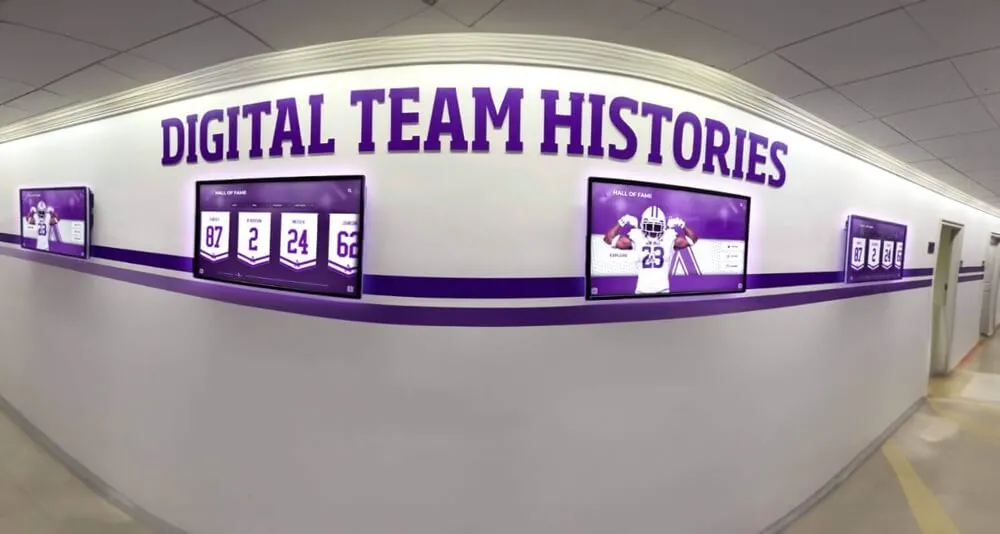
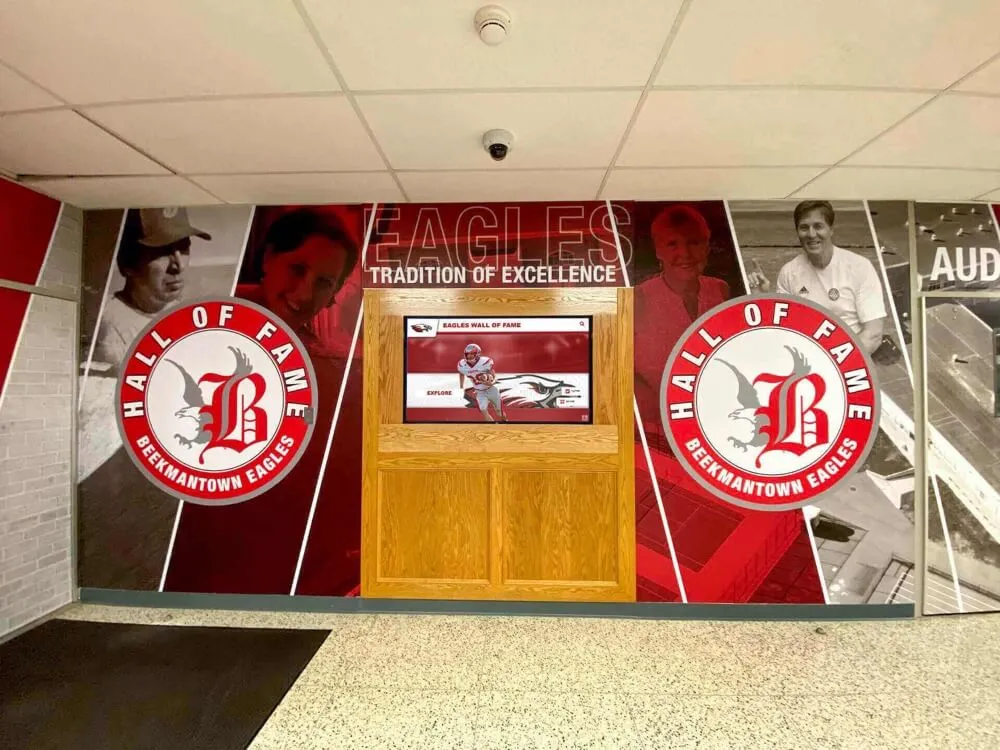
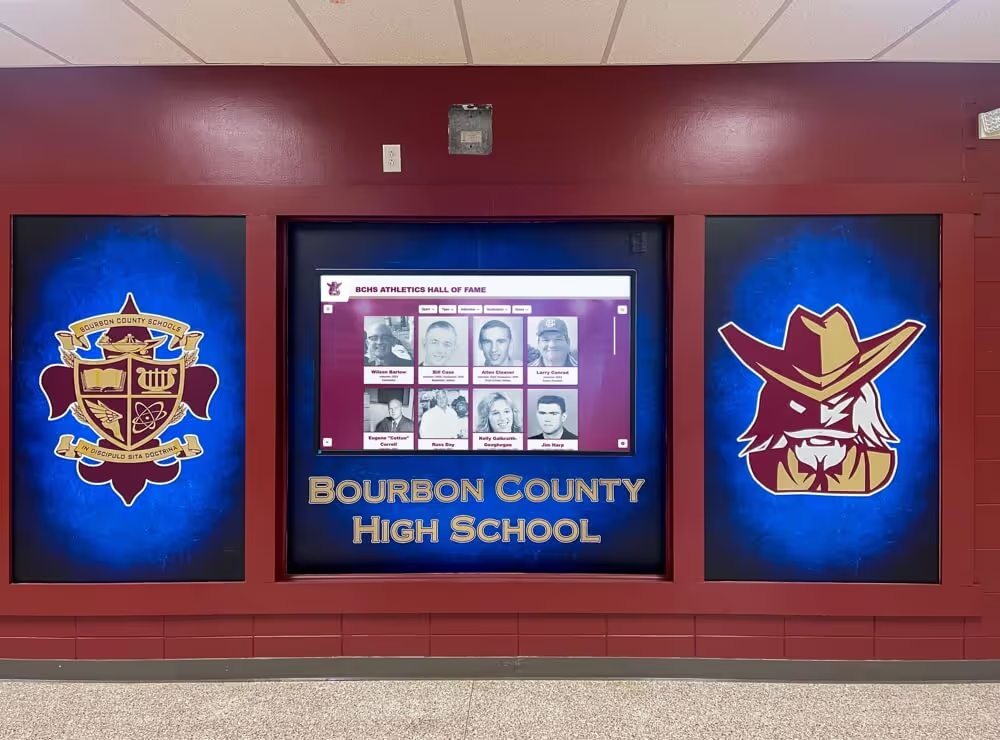
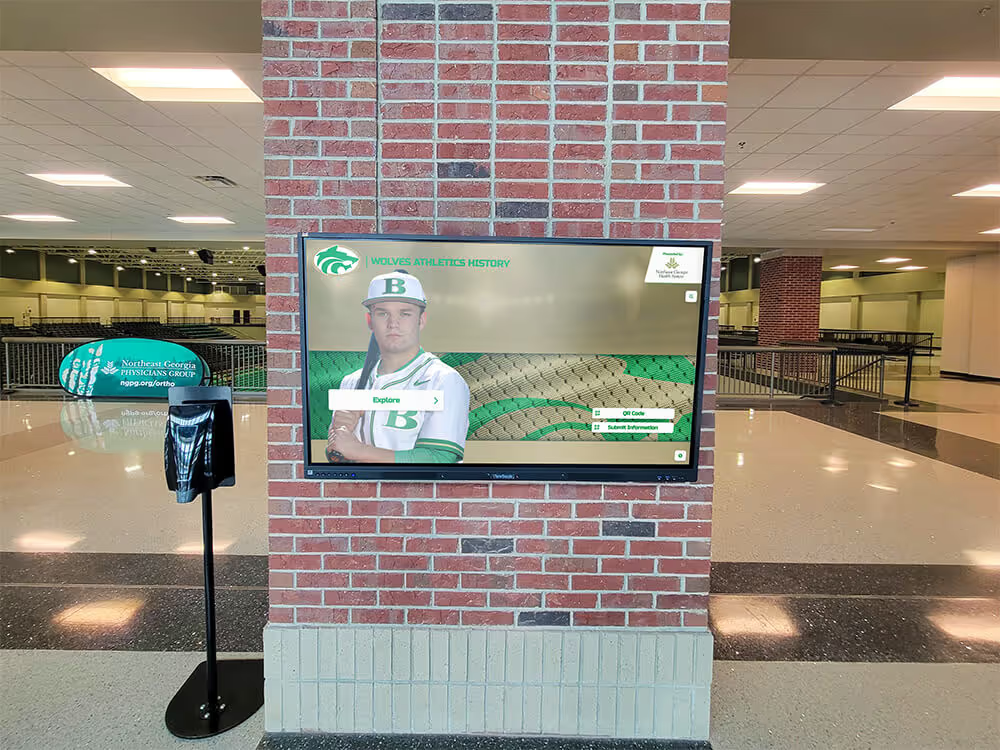
Digital record boards displaying real-time statistical leaders create engaging facility enhancements:
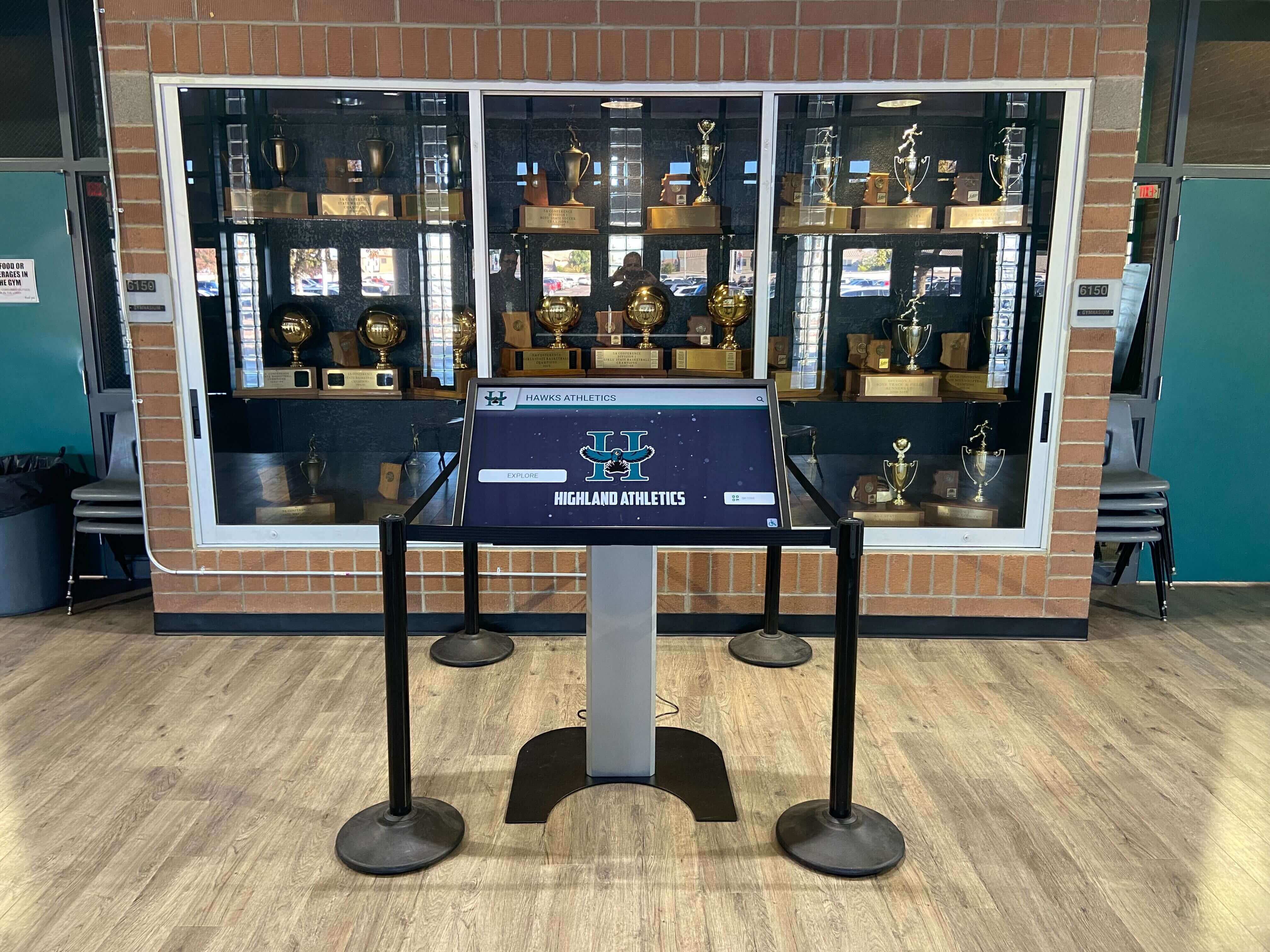
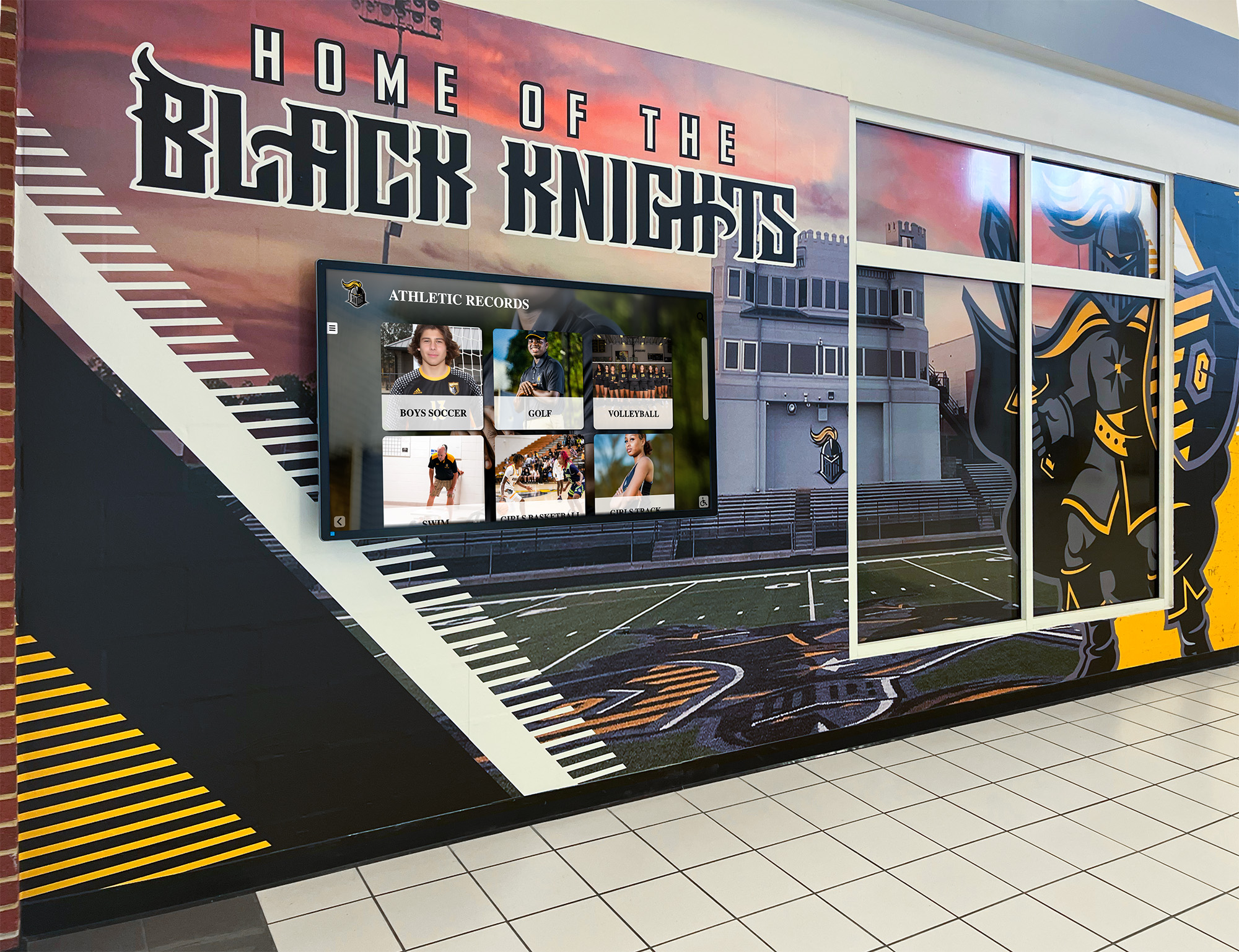
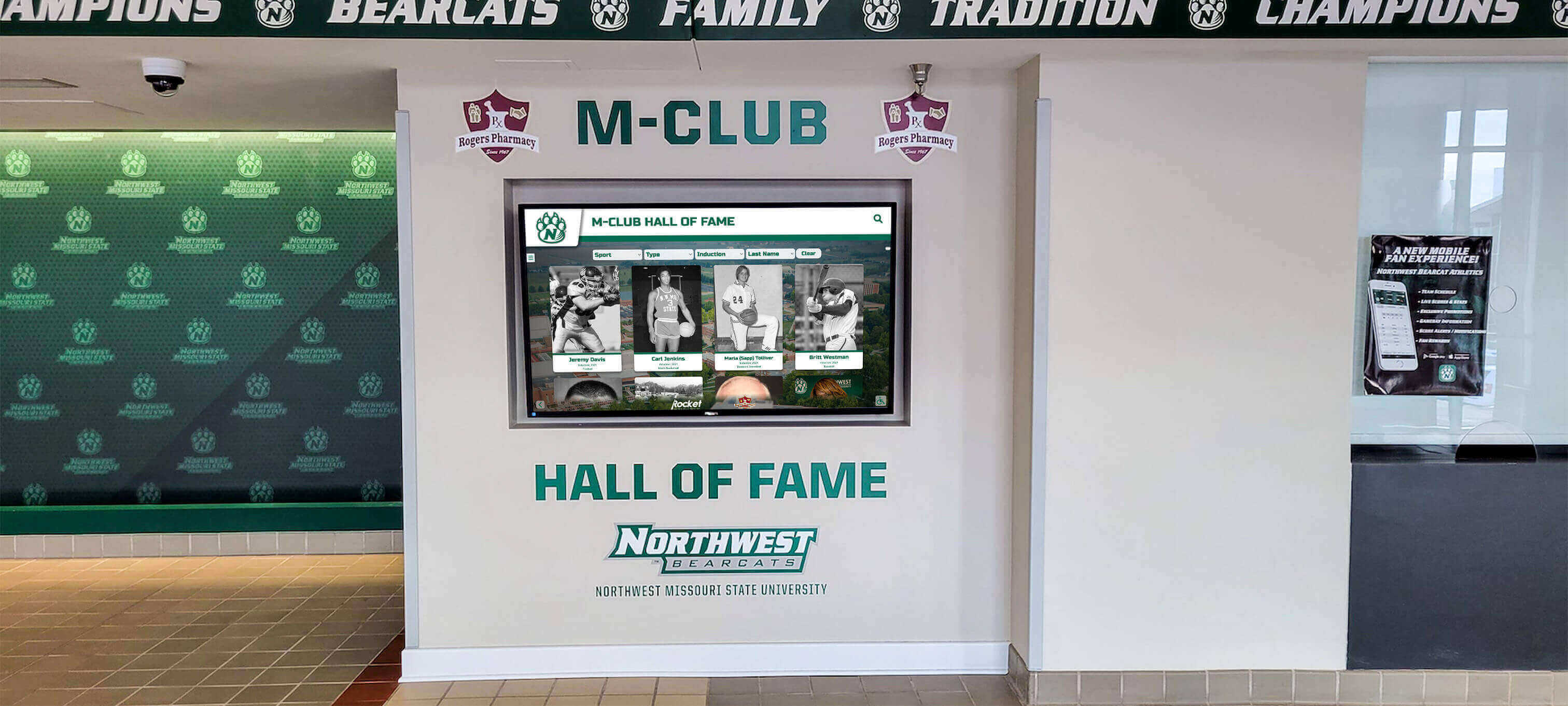
Lobby displays or gymnasium-mounted screens show continuously updated leaderboards for current season leaders in various statistical categories. As games conclude and new statistics enter the system, displays automatically refresh showing updated rankings.
This dynamic presentation contrasts dramatically with static vinyl record boards requiring manual updates. Athletes witness their names appearing on leaderboards within hours of achieving qualifying performances rather than waiting weeks or months for physical updates—if updates happen at all.
Historical Context and Legacy Building
Complete statistical archives enable rich storytelling about program history:
Digital platforms can present current athletes’ achievements within historical context—showing how a current player’s scoring average compares to great players from previous decades, visualizing program evolution through statistical trends across eras, or celebrating athletes who held records for extended periods before recent performances surpassed them.
This contextual presentation builds stronger program culture and tradition than simple lists of names and numbers. Athletes understand they’re contributing to continuing legacies rather than isolated individual achievements.
Implementation Considerations for Athletic Departments
Successful digital scorekeeping adoption requires planning beyond software selection.
Hardware and Network Infrastructure
Digital systems require appropriate technical foundations:
Tablet or Laptop Devices: Dedicated devices for scorekeeping avoid relying on personal phones with small screens, limited battery life, or notification distractions. Tablets with large screens work effectively for most sports; basketball and volleyball programs handling rapid stat entry often prefer laptops with physical keyboards.
Reliable Internet Connectivity: Cloud-based systems require stable internet for real-time functionality. Gymnasiums with weak WiFi create frustrating operational problems. Wired ethernet connections provide reliability, or dedicated cellular hotspots serve as WiFi alternatives or backups.
Scoreboard Compatibility: Older scoreboards may lack digital control capabilities requiring expensive upgrades or replacements. Newer installations typically include network connectivity enabling direct software control. Departments should verify compatibility before committing to software requiring scoreboard integration.
Staff Training and Change Management
Technology transitions succeed or fail based on user adoption:
Coach and Staff Buy-In: Veteran coaches comfortable with traditional methods may resist changes. Successful implementations demonstrate concrete benefits—automatic record board updates, instant stat availability, reduced post-game work—building enthusiasm rather than forcing compliance.
Comprehensive Training: Software vendors should provide thorough onboarding for athletic directors, coaches, and parent volunteers operating systems during games. Effective training addresses sport-specific workflows rather than generic software tutorials.
Gradual Rollout Options: Some departments implement new systems initially for a few sports, verify successful operation, then expand across programs. Others prefer comprehensive launches affecting all sports simultaneously. Phased approaches reduce risk while all-at-once transitions create operational consistency faster.
Parent Volunteer Management: Many schools rely on parent volunteers for game-day scorekeeping. Digital systems require ensuring adequate trained volunteers for all competitions rather than assuming anyone can operate the software without preparation.
Budget and Cost Structures
Digital scorekeeping costs typically follow subscription models:
Software Subscriptions: Monthly or annual fees generally range from $500-$2,000 annually depending on school size, number of sports, and feature sets. Multi-year commitments often provide discounted rates.
Hardware Investment: Quality tablets cost $300-$500 each. Programs need enough devices for simultaneous competitions (multiple games on the same day).
Network Infrastructure: Upgrading gymnasium WiFi or installing ethernet connections may require $1,000-$5,000 depending on facility layouts and existing infrastructure.
Scoreboard Integration: Modern scoreboards with network connectivity cost $5,000-$20,000+ depending on size and capabilities. Schools with recent installations often have compatible equipment; others face upgrade decisions.
Budget planning should consider total cost of ownership across multiple years rather than focusing only on initial subscriptions. Well-implemented systems generate sufficient value through operational efficiency, enhanced recognition programs, and reduced staff time that costs prove justified even for programs with tight budgets.
Sport-Specific Scorekeeping Considerations
Different sports present unique statistical tracking requirements and operational workflows.
Basketball Scorekeeping Software
Basketball generates high statistical volumes requiring extremely efficient input:
Effective basketball scorekeeping software provides rapid player selection (often via jersey number entry), one-touch recording for common events (made field goals, free throws), and automatic calculations for derived statistics (shooting percentages, plus-minus ratings). The fast pace demands interfaces minimizing required touches while maintaining accuracy.
Integration with shot clocks adds another layer—software may control or monitor shot clocks synchronized with game clocks, providing complete timing management through single interfaces.
Volleyball Stat Tracking Systems
Volleyball statistics prove more complex than many sports due to rotation tracking and specialized positions:
Good volleyball software automatically manages rotation positions, tracks libero substitutions within complex rule limitations, records rally-by-rally scoring sequences, and maintains server order across sets. Manual tracking of these elements creates frequent errors; digital systems enforce rule compliance while recording statistics.
Football Statistics Management
Football’s complexity with multiple position groups and extensive rosters creates unique challenges:
Comprehensive football scorekeeping requires tracking offense, defense, and special teams statistics separately; managing large rosters with position-specific stat categories; recording play-by-play sequences for later analysis; and coordinating with chain crews and down markers. Some programs use multiple tablets simultaneously—one for offense, one for defense—aggregating into unified game statistics.
Soccer, Baseball, and Multi-Sport Coverage
Other sports have specific requirements:
Soccer needs tracking across goalkeeper-specific statistics, time tracking including stoppage time, and card management (yellow/red card recording and accumulation monitoring).
Baseball and Softball require pitch-by-pitch tracking, detailed defensive positioning, and complex statistical calculations (batting averages, on-base percentages, ERAs) that benefit from automatic computation.
Track and Field manages individual event results across multiple simultaneous competitions requiring unique data structures compared to team sports.
Quality athletic department software platforms support multiple sports through sport-specific modules rather than forcing generic approaches onto specialized requirements.
Security, Privacy, and Compliance Considerations
Student data protection requires appropriate safeguards:
Student Privacy Protections
Athletic statistics constitute educational records subject to privacy regulations:
FERPA Compliance: Software must protect personally identifiable student information appropriately, restricting access to authorized personnel and providing audit trails documenting data access.
Configurable Publicity Settings: Schools should control what information publishes publicly. Some programs publicly display all statistics; others limit public access to basic scores while restricting detailed player statistics to authenticated users.
Parent Consent Management: Systems should track which athletes have parent/guardian permission for public statistics display, automatically filtering displays accordingly.
Data Security Standards
Cloud-based systems require enterprise-grade security:
- Encrypted Data Transmission: All communication between devices and servers should use SSL/TLS encryption
- Secure Authentication: Strong password requirements and optional two-factor authentication protect against unauthorized access
- Regular Security Updates: Vendors should actively maintain software addressing newly discovered vulnerabilities
- Data Backup Redundancy: Multiple geographically distributed backup locations prevent data loss from server failures or disasters
Athletic directors selecting software should verify vendors demonstrate appropriate security postures rather than assuming all cloud services provide adequate protection.
Measuring Return on Investment
Digital scorekeeping requires budget investment. Quantifying value helps justify expenditure:
Time Savings Quantification
Calculate hours eliminated from traditional workflows:
Statistical Entry Elimination: How many hours weekly did staff spend manually entering paper stats into spreadsheets? At 2-3 hours per sport weekly across 20 sports, that’s 40-60 hours weekly or 2,000+ hours annually—a full-time position equivalent.
Record Board Update Time: Traditional vinyl record boards required athletic department staff or contracted sign companies to design and install updates. Digital systems complete updates in minutes versus hours or days.
Historical Research Efficiency: Searchable digital archives enable instant statistical lookups that previously required hunting through file cabinets, yearbooks, or newspaper archives—reducing research from hours to seconds.
Enhanced Program Capabilities
Beyond time savings, digital systems enable previously impossible capabilities:
- Real-time statistics for parents and fans create enhanced engagement without additional work
- Comprehensive historical tracking supports athletic recognition programs that strengthen program culture
- Automated record detection ensures milestone achievements receive timely recognition
- Professional statistics presentation improves media coverage and program marketing
- Detailed performance data supports coaching development and tactical improvement
These qualitative benefits prove difficult to quantify precisely but contribute substantially to overall program excellence.
Risk Mitigation Value
Preventing historical data loss provides insurance value:
What would it cost to reconstruct lost statistical records through newspaper archives, yearbook research, and alumni interviews? Many schools discover reconstruction proves impossible because source materials no longer exist. Cloud preservation prevents catastrophic loss scenarios with no remediation options.
Future Trends in Athletic Statistics and Scorekeeping
Understanding emerging developments helps inform long-term platform decisions:
Advanced Analytics Integration
Sports analytics continue evolving beyond traditional statistics:
Player Tracking Data: Video analysis systems automatically track player movements, speeds, and positioning generating spatial analytics previously available only to professional programs.
Biometric Integration: Wearable devices tracking heart rate, acceleration, and fatigue indicators may integrate with scorekeeping platforms providing comprehensive performance context.
Predictive Analytics: Machine learning analyzing historical patterns could project milestone achievement timelines or identify statistical anomalies warranting attention.
Enhanced Fan Engagement Features
Spectator experience innovations create new opportunities:
Augmented Reality Statistics: Mobile apps overlaying real-time player statistics on live video feeds viewed through smartphones during games.
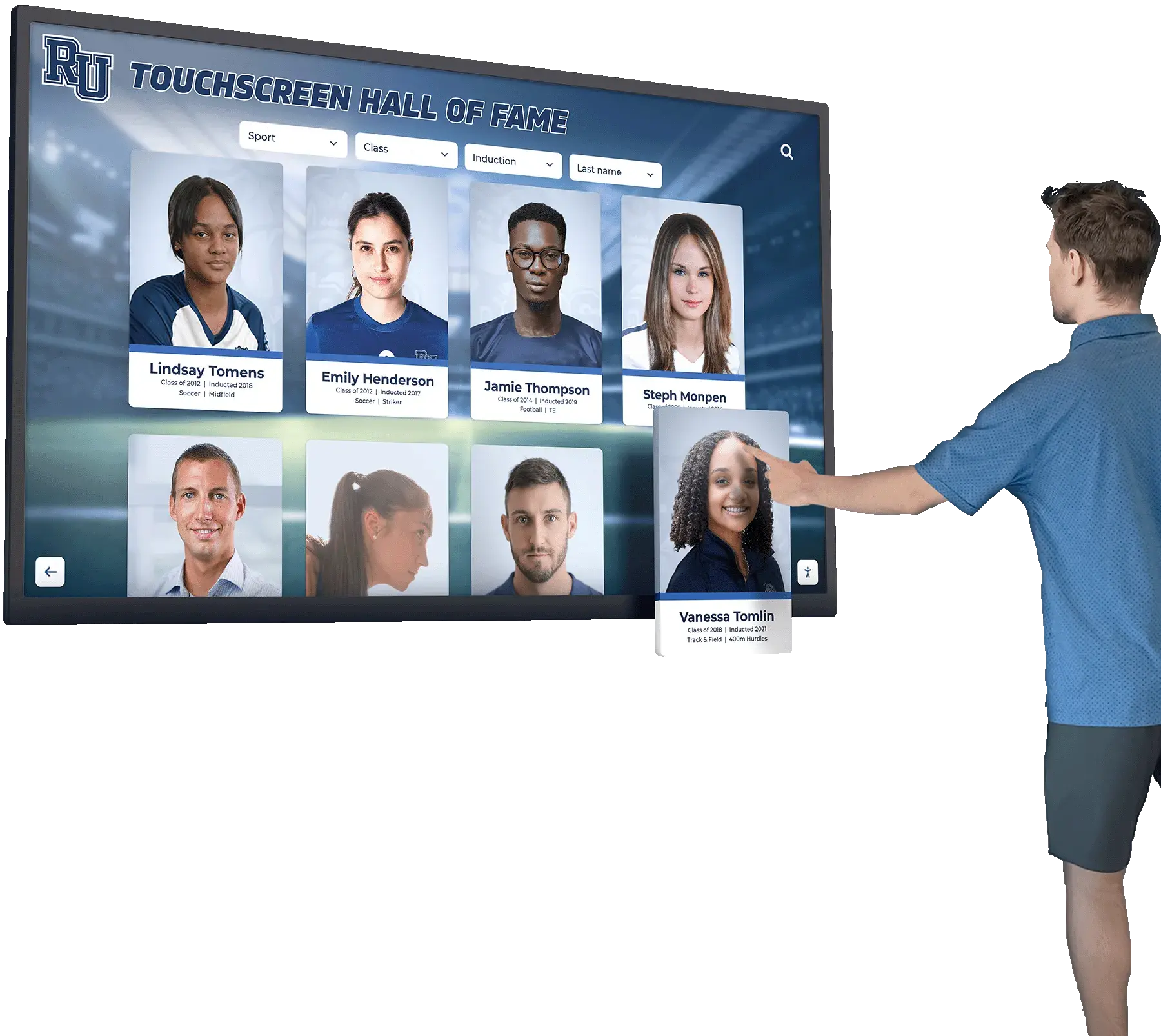
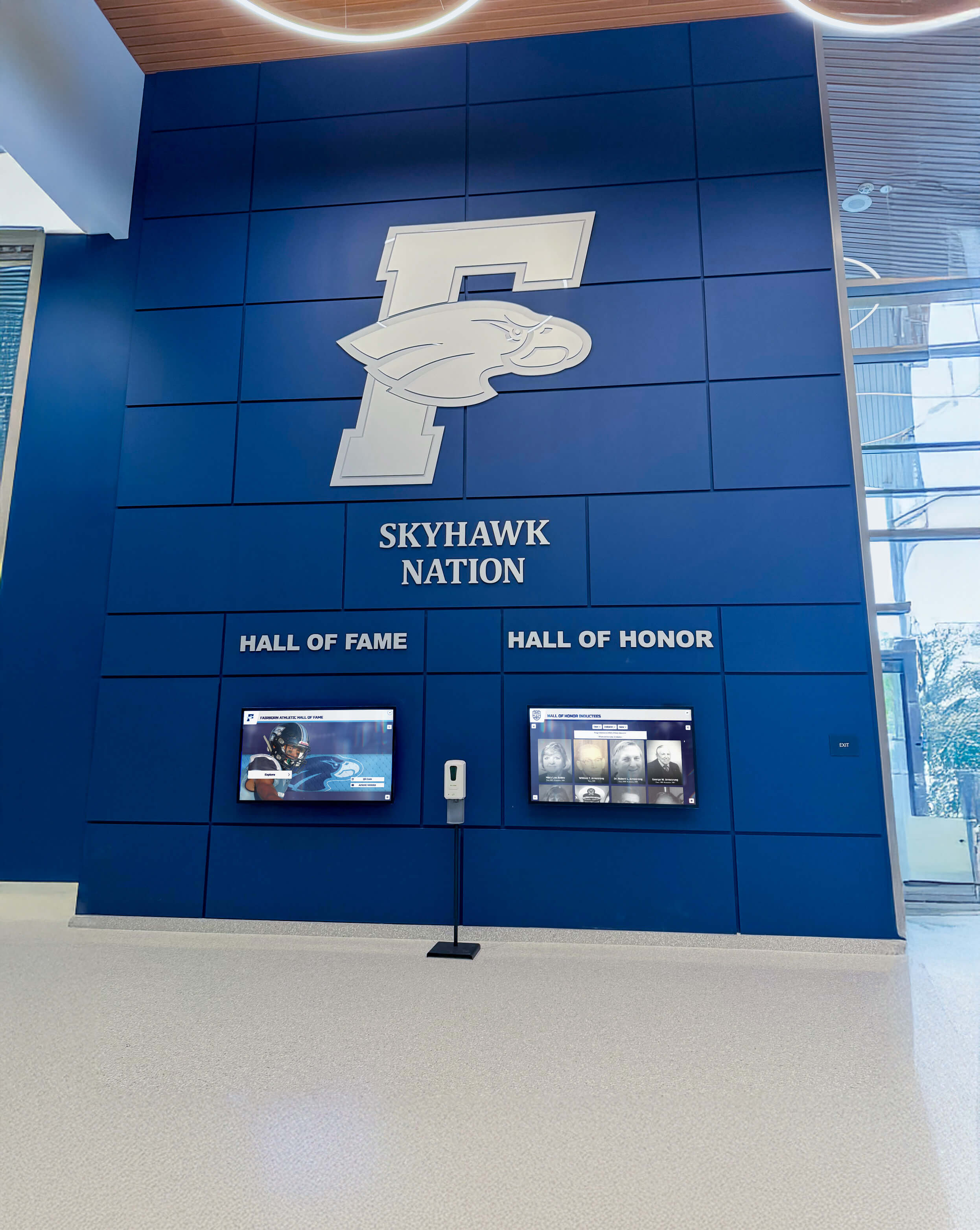
Interactive Displays: In-facility touchscreens enabling fans to explore historical statistics, player profiles, and program records during games—extending concepts from interactive recognition displays to live competition contexts.
Social Media Automation: AI-generated social media posts celebrating milestone achievements automatically based on scorekeeping data.
Recruitment and Scouting Platforms
College recruiting increasingly relies on verified statistical data:
Standardized Statistical Databases: Systems where high school statistics automatically feed into recruiting databases accessible to college coaches, reducing reliance on self-reported data of questionable accuracy.
Video-Stat Synchronization: Integration connecting statistical events to corresponding video clips, enabling coaches to review all of an athlete’s assists or goals across seasons instantly.
Performance Verification: Third-party statistical verification providing credibility addressing concerns about inflated self-reported achievements.

Selecting the Right Scorekeeping Platform for Your Program
No single solution fits all athletic departments perfectly. Selection should consider specific program characteristics and priorities:
Key Evaluation Criteria
Sport Coverage: Does the platform support all sports your program offers with appropriate stat categories and workflows?
Ease of Use: Can parent volunteers operate the system effectively with reasonable training, or does complexity require athletic department staff operation?
Scoreboard Compatibility: Does your existing scoreboard equipment integrate with the software, or would implementation require expensive upgrades?
Mobile Accessibility: Can coaches and athletes access statistics from smartphones, or is functionality limited to desktop computers?
Historical Data Migration: Can you import existing statistical records from previous systems, or does implementation start from scratch losing historical context?
Customer Support Quality: Does the vendor provide responsive technical support when problems arise during games, or do support limitations create operational risks?
Integration Capabilities: Does the platform connect with your digital record boards, athletic department website, and other systems requiring statistical data?
Scalability: Will the system accommodate program growth in team numbers, athlete rosters, and historical data volume without performance degradation?
Pilot Testing Recommendations
Request trial periods or pilot implementations before full commitments:
- Test the software with actual games for 2-3 sports across several weeks
- Train both staff and parent volunteers evaluating learning curve reality
- Verify scoreboard integration functions reliably in your facility environment
- Evaluate mobile statistics pages and parent/fan experience quality
- Test customer support responsiveness during implementation period
- Compare actual costs against initial estimates checking for hidden fees
Pilot testing reveals operational reality that sales demonstrations and marketing materials may not accurately represent.
Building Comprehensive Athletic Data Infrastructure
Sports scorekeeping software functions most powerfully as one component within integrated athletic program technology ecosystems:
Connected Systems Architecture
Modern athletic departments operate multiple platforms that should communicate rather than functioning as isolated silos:
Scorekeeping Software captures real-time game statistics
↓
Digital Record Boards automatically update with new records and milestones
↓
Athletic Department Website publishes current statistics and historical archives
↓
Recognition Displays throughout facilities showcase statistical leaders and achievements
↓
Social Media Channels automatically share milestone celebrations and statistical highlights
This integration creates comprehensive data flow from initial capture through permanent preservation and multi-channel publication—all automated without manual transfer steps where data gets lost or delayed.
Vendor Integration Partnerships
Leading scorekeeping software providers often partner with digital recognition platforms:
Schools should ask scorekeeping vendors about integration partnerships with record board providers. Similarly, when evaluating digital athletic recognition systems, ask whether they integrate with scorekeeping platforms or require manual data entry for record updates.
Integrated ecosystems deliver substantially more value than best-of-breed point solutions requiring manual coordination.
Overcoming Common Implementation Challenges
Athletic departments frequently encounter predictable obstacles during digital scorekeeping adoption.
Challenge: Inconsistent Volunteer Training
Situation: Parent volunteers operate scorekeeping for many games but receive inconsistent training, leading to operational errors and incomplete statistics.
Solutions: Create standardized training videos accessible online that volunteers can review before assignments. Schedule mandatory pre-season training sessions for all scorekeepers. Develop quick-reference guides for common situations. Assign experienced parent volunteers as mentors for newcomers. Consider requiring successful test game operation before independent assignments.
Challenge: Unreliable Facility Internet
Situation: Gymnasium WiFi connections drop frequently during games disrupting cloud-based scorekeeping.
Solutions: Install wired ethernet connections for reliability. Deploy dedicated cellular hotspots as backup connectivity. Choose software supporting offline operation with automatic cloud synchronization when connections restore. Upgrade facility network infrastructure treating it as essential athletic equipment rather than optional technology.
Challenge: Resistance from Traditional Coaches
Situation: Veteran coaches prefer familiar paper methods and resist digital system adoption.
Solutions: Emphasize benefits to coaches specifically—instant statistical access for in-game adjustments, automatic season reports eliminating manual compilation, enhanced player recognition through automatic record detection. Allow coaches to continue personal paper notes while statisticians use digital systems. Showcase success stories from peer programs. Provide exceptional training and support reducing frustration during learning curves.
Challenge: Incomplete Historical Records
Situation: Schools want to include historical statistics in digital systems but paper records prove incomplete with missing seasons or sports.
Solutions: Accept that gaps will exist and document known versus unknown periods honestly. Conduct oral history projects with retired coaches and alumni reconstructing what records allow. Search newspaper archives and yearbooks for missing data. Consider phased migration starting with complete recent records while separately working on historical reconstruction. Establish current comprehensive recording ensuring future completeness even if past remains partial.
Case Study: Comprehensive Digital Transition Results
While specific customer case studies require permissions beyond this article’s scope, athletic departments implementing comprehensive digital scorekeeping consistently report similar outcomes:
Operational Efficiency: Post-game statistical work reducing from 2-3 hours to 15-20 minutes as cloud systems eliminate manual data entry.
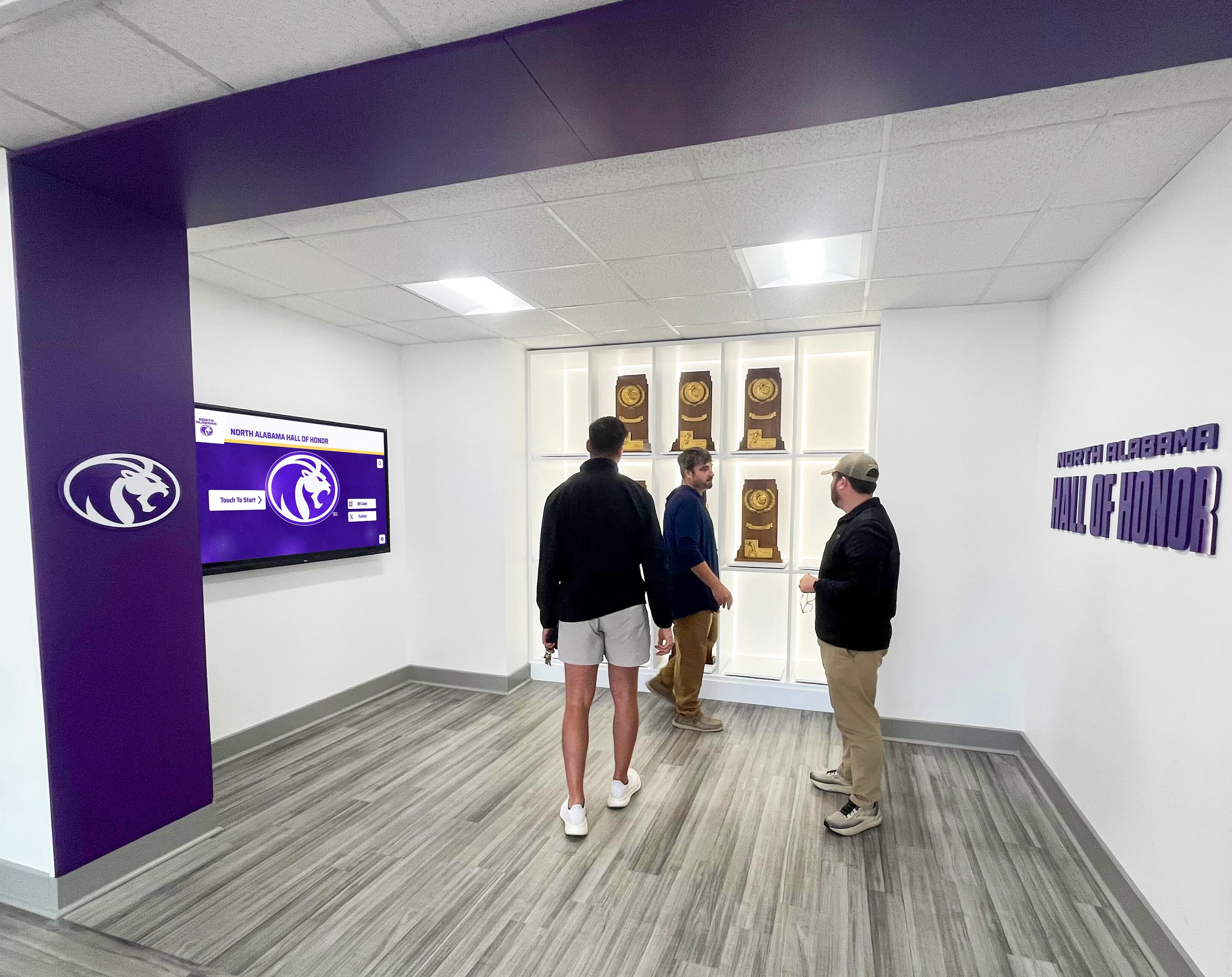
Recognition Enhancements: Record-breaking performances receiving same-day recognition through automatic record board updates versus weeks or months with manual vinyl updates—when updates happened at all.
Historical Preservation: Complete statistical archives enabling milestone celebration programs identifying 1,000-point scorers, career statistical leaders, and multi-year achievement tracking impossible with paper records.
Engagement Growth: Parent and fan satisfaction increasing with real-time mobile statistics access during games.
Staff Time Savings: Athletic directors recovering 5-10 hours weekly previously spent on statistical compilation, record research, and record board update coordination.
Program Culture: Visible statistical tracking and automated recognition strengthening athletic culture around achievement celebration and tradition building.
These benefits compound over years as complete statistical databases accumulate creating increasingly valuable institutional assets.
Connecting Scorekeeping to Comprehensive Athletic Recognition
The ultimate value of digital scorekeeping extends beyond operational efficiency to fundamental improvements in how athletic programs celebrate achievement and preserve tradition.
Traditional separation between game statistics (managed by coaches using clipboards and spreadsheets) and historical recognition (controlled by athletic directors through static displays) created systemic gaps. Records got broken without timely acknowledgment. Career milestones passed unnoticed. Historical achievements disappeared when paper records were lost or discarded.
Integrated systems connecting scorekeeping directly to permanent digital record boards solve these problems comprehensively. Every game automatically feeds the permanent historical archive. Record-breaking performances trigger immediate recognition. Career statistics accumulate systematically enabling milestone celebration. Complete data preservation ensures program history never gets lost to time.
This integration transforms recognition from periodic manual updates to continuous automatic celebration woven into program operations. Athletes see their achievements acknowledged immediately rather than wondering whether anyone noticed. Programs build stronger traditions around comprehensive statistical preservation and celebration. Communities engage more deeply with athletic programs through rich accessible historical data.
Building Modern Athletic Programs Through Technology
The transition from clipboard scorekeeping to integrated digital systems represents more than simple technological modernization—it reflects fundamental evolution in how schools approach athletic program management, historical preservation, and athlete recognition.
Traditional approaches treated game statistics as ephemeral operational data serving immediate needs then filing away in boxes eventually discarded or lost. Modern perspectives recognize statistical data as permanent institutional assets deserving systematic preservation, organization, and presentation creating lasting program value.
When athletic departments invest in comprehensive digital infrastructure—starting with sports scorekeeping software that captures game data accurately and efficiently, connecting to automated scoreboard systems reducing operational complexity, feeding into permanent digital record boards preserving history and celebrating achievement, and publishing through web platforms providing broad accessibility—they build foundations supporting program excellence across multiple dimensions simultaneously.
Operational efficiency improves as automation eliminates manual work. Recognition quality increases through systematic milestone detection and timely celebration. Historical preservation strengthens preventing irreplaceable record loss. Athlete engagement deepens when achievements receive comprehensive documentation and visibility. Program culture builds around visible tradition and achievement celebration. Community connections strengthen through accessible historical exploration.
Ready to transform your athletic program through integrated digital scorekeeping and recognition? Modern platforms purpose-built for educational athletics enable seamless transitions from paper-based operations to comprehensive digital systems that capture every game, preserve every record, and celebrate every achievement automatically.
Your athletes deserve recognition that matches their dedication and excellence. Your program deserves historical preservation protecting decades of achievement. Your staff deserves operational efficiency eliminating unnecessary manual work. Sports scorekeeping software integrated with digital record boards delivers all three simultaneously—creating athletic program infrastructure that serves current needs while building lasting institutional value.
The clipboard served well for generations, but modern athletic programs require modern tools. Digital scorekeeping doesn’t just replace paper—it transforms how schools track performance, preserve history, celebrate achievement, and build tradition. When technology eliminates obstacles, excellence flourishes and every athlete’s contribution receives the permanent recognition it genuinely deserves.
Book a demo to discover how integrated athletic recognition platforms can connect your scorekeeping operations to permanent digital record boards, creating comprehensive systems that capture statistics, preserve history, and celebrate achievement automatically across your entire athletic program.