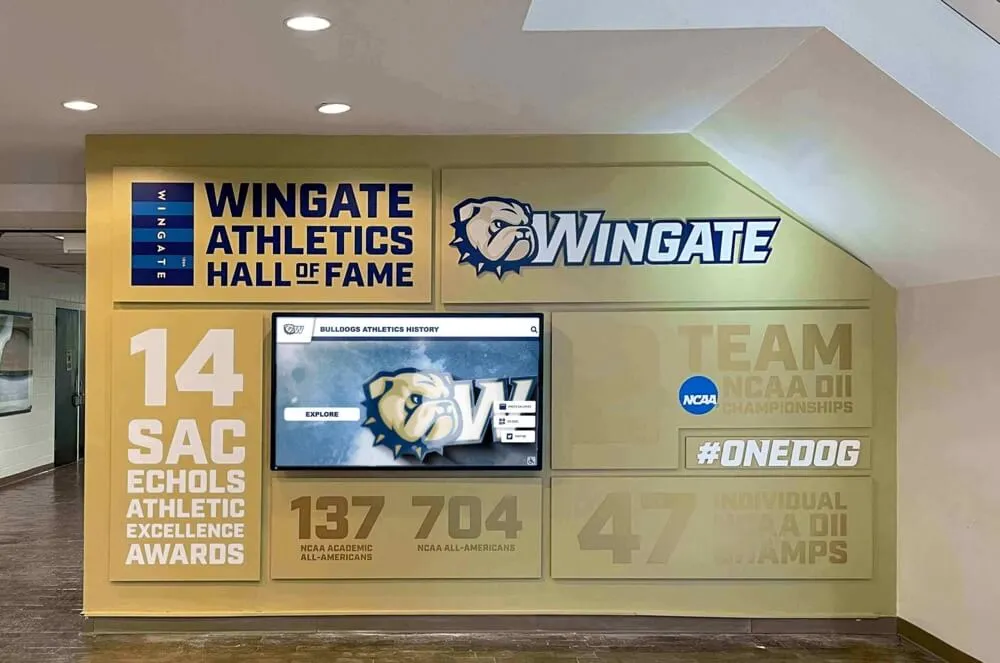
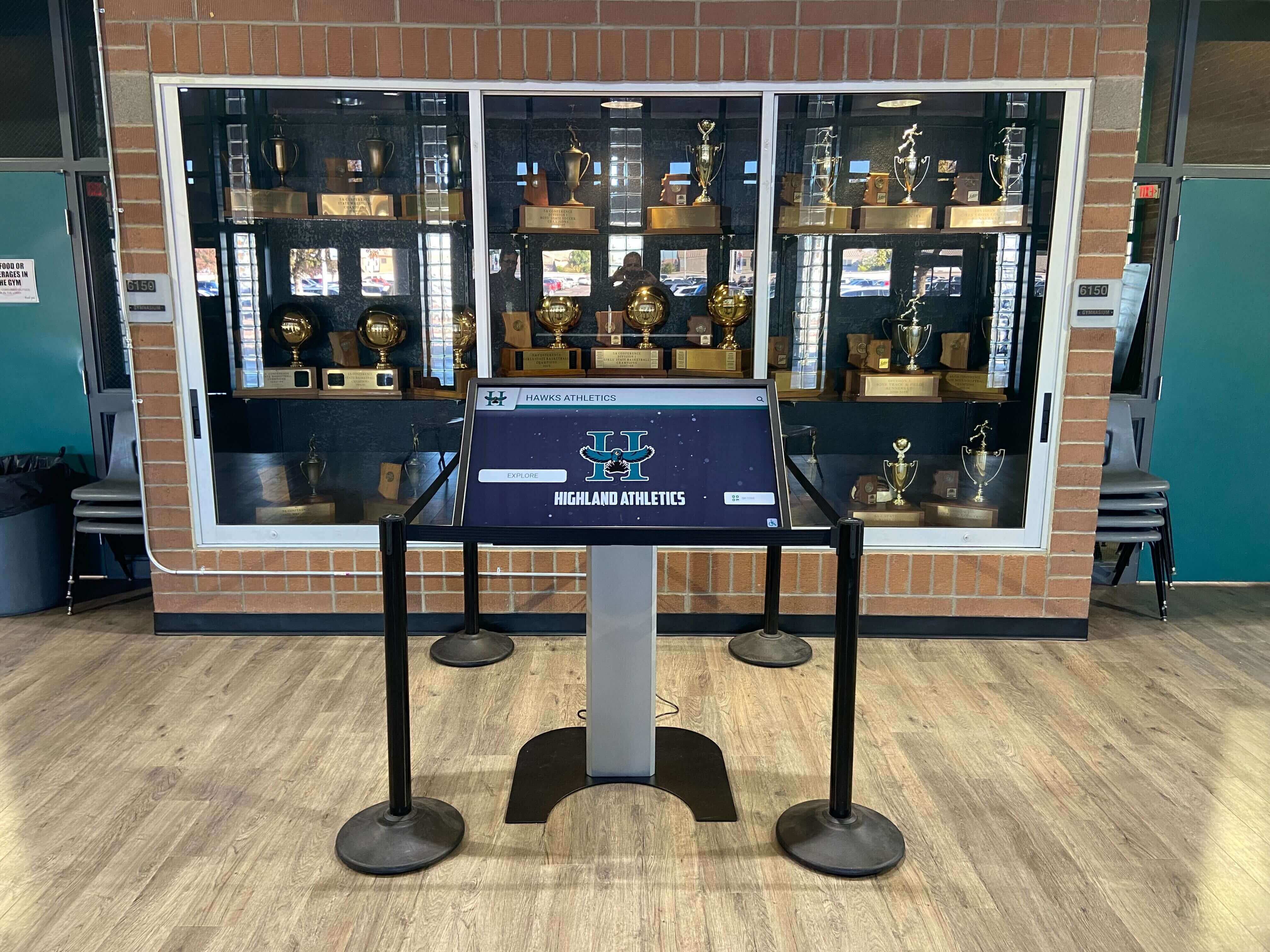




Every school principal or athletic director eventually faces the same problem: your trophy case is full, championship banners crowd the gym ceiling, and you have another graduating class of high achievers who deserve recognition. You need more space, but construction budgets don’t include building new display areas every few years. Meanwhile, decades of student accomplishments sit in storage boxes because there’s simply nowhere to show them.
Traditional trophy cases served schools well for generations. Glass-enclosed cabinets filled with trophies, plaques, and team photos created focal points in main hallways, celebrated athletic and academic success, and built school pride. But these physical displays now create constraints that many administrators struggle to manage: finite capacity forces difficult decisions about what stays and what goes, manual updates consume staff time and budget, information remains limited to what fits on small plaques, and only visitors to your physical building ever see the recognition.
Modern Recognition Without Physical Limits
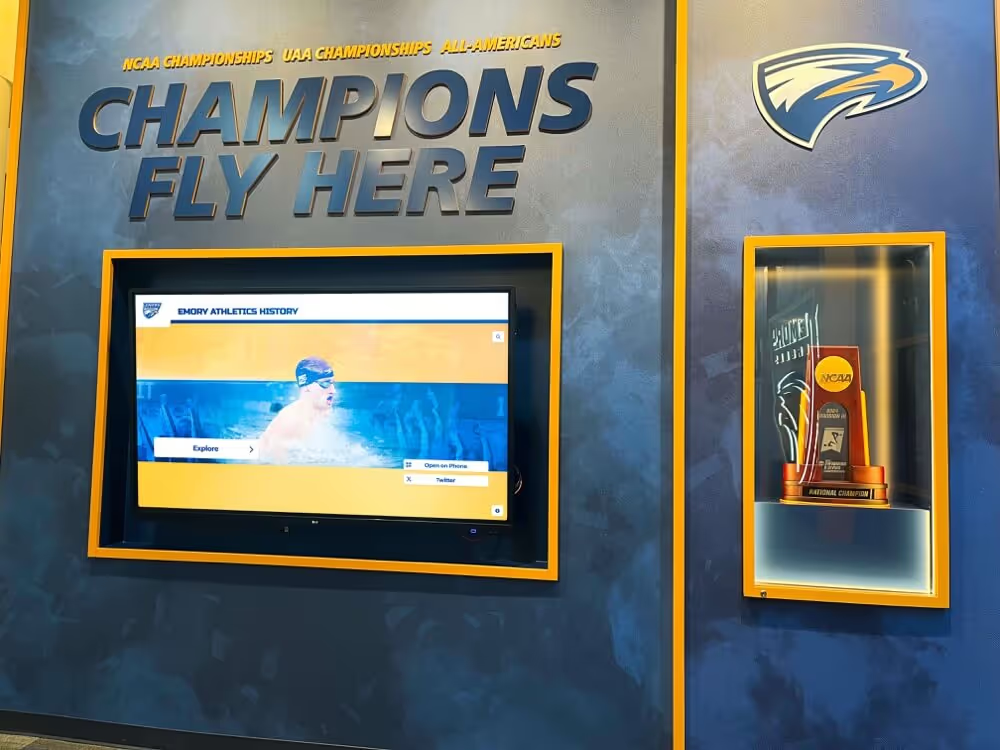
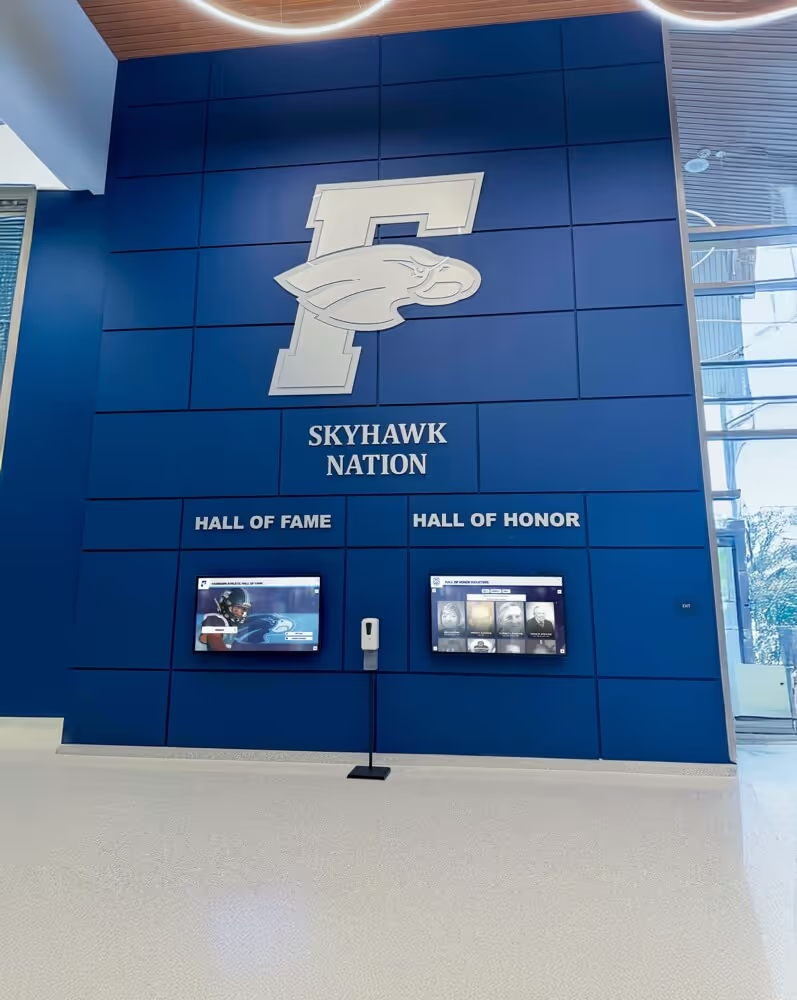
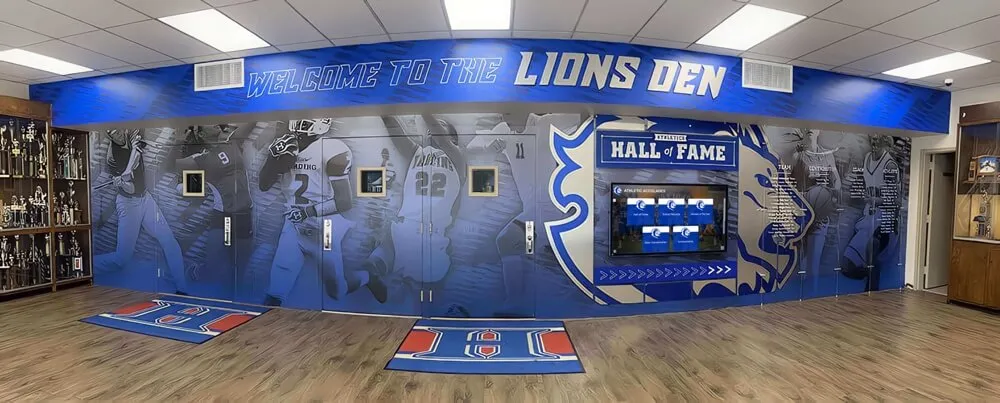
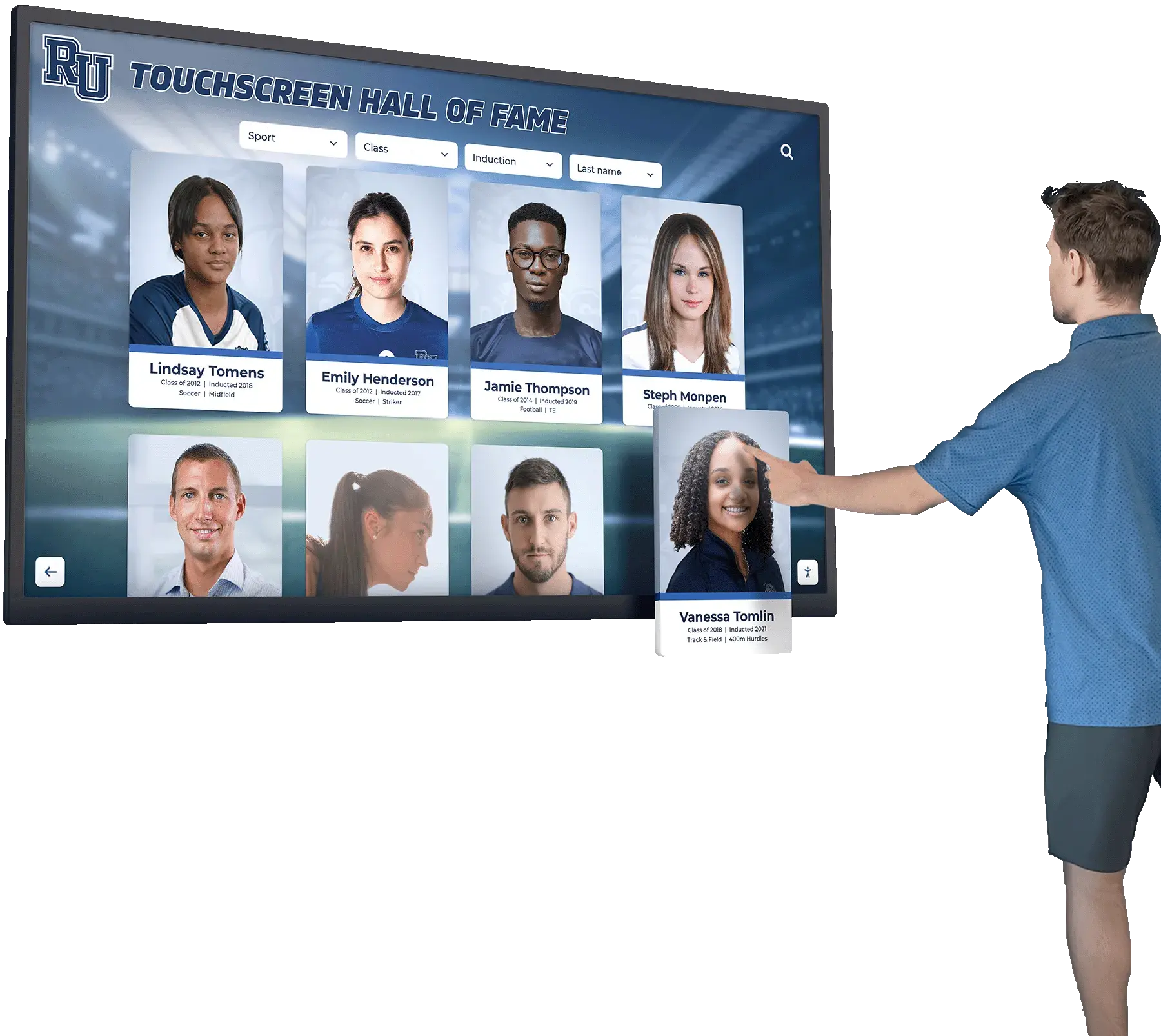
Digital hall of fame displays eliminate the space constraints and update challenges that plague traditional trophy cases. These interactive recognition systems accommodate unlimited inductees, records, and achievements without requiring additional square footage. Content updates happen remotely in minutes rather than requiring vendor installations. Rich multimedia profiles replace text-only plaques, and web accessibility extends recognition beyond your hallway to alumni worldwide. Solutions like Rocket Alumni Solutions provide purpose-built platforms designed specifically for schools, delivering intuitive management tools that preserve your recognition traditions while solving the practical limitations that make physical trophy cases increasingly difficult to maintain.
Understanding Traditional Trophy Cases
Trophy cases remain fixtures in school hallways because they work well for specific recognition needs, particularly when budgets are tight and technical infrastructure is limited.
What Traditional Trophy Cases Do Well
Physical trophy displays offer tangible benefits that explain their decades-long popularity in educational settings:
Immediate Visual Impact
Walking past a well-maintained trophy case creates instant impressions. Trophies catch light, championship plaques command attention, and physical recognition radiates permanence. Students passing between classes see evidence of their school’s achievements daily. Visitors entering the building form immediate judgments about institutional excellence based on visible recognition.
No Technology Requirements
Trophy cases function without power, internet connectivity, or device compatibility concerns. Schools in rural areas with limited broadband, facilities with unreliable electrical systems, or administrations uncomfortable with technology adoption can implement physical recognition without technical barriers. Once installed, cases require no software updates, no cloud service subscriptions, and no technical support contracts.
Tangible Awards and Artifacts
Actual championship trophies, game-worn jerseys, signed equipment, and historic artifacts create authentic connections to school history. These physical objects carry weight that digital representations struggle to match. Alumni return decades later and point to specific trophies from their playing days, creating emotional moments impossible with screen-based displays.
Established Recognition Traditions
Trophy cases align with long-standing educational traditions. Generations of students understand what trophy case placement means, creating institutional continuity. Schools with decades of trophy case history maintain recognition patterns that alumni expect and appreciate.
Lower Perceived Initial Investment
Basic trophy cases start at moderate price points that fit tight capital budgets. Simple glass cases mounted to hallway walls appear financially accessible compared to technology purchases that administrators perceive as expensive and complicated.
Where Traditional Trophy Cases Fall Short
The same physical characteristics that create trophy case benefits also generate significant limitations that many schools discover too late:
Finite Physical Capacity
Every trophy case eventually fills completely. New achievements force difficult decisions: which earlier recognition gets removed? Some schools rotate displays seasonally, storing most recognition in boxes where it provides zero inspirational value. Others simply stop adding new achievements once space runs out. Either approach fails to honor student accomplishment appropriately.
Physical capacity constraints affect different recognition types unequally. Championship team trophies consume substantial space, while individual athletic records or academic honors might receive minimal acknowledgment. Schools end up recognizing what fits rather than what matters most.
Manual Update Requirements
Adding new recognition to trophy cases requires physical work. Someone must design new plaques, submit orders to engraving vendors, schedule installation once products arrive, and arrange facility access for installation. This process takes weeks minimum and often months, particularly in schools where maintenance budgets are tight and facility staff handle numerous competing priorities.
Manual processes create recognition delays that diminish impact. Athletes graduating in May may not see their accomplishments displayed until the following school year—if ever. Time-consuming update requirements often result in recognition simply not happening despite best intentions.
Limited Information Display
Small plaques permit minimal text. Most trophy case recognition includes just names, years, and abbreviated accomplishment descriptions. Detailed statistics, career highlights, post-graduation achievements, and rich biographical context that would inspire current students don’t fit physical space constraints.
Visitors wanting more information about inductees face dead ends. No mechanism exists for exploring details, viewing additional photos, or understanding context behind brief plaque text. Recognition remains superficial rather than meaningful.
Geographic Access Limitations
Trophy cases exist in single physical locations. Alumni living elsewhere, prospective families researching schools remotely, college coaches evaluating recruits, and community members who don’t regularly visit campuses never see recognition. Physical displays provide zero digital presence extending reach beyond building walls.
This geographic limitation particularly affects alumni engagement. Graduates who relocate for careers or military service lose connection to school recognition programs. They can’t show children or grandchildren their accomplishments, share recognition with distant friends, or stay connected to institutional athletic or academic traditions.
Ongoing Maintenance Burdens
Physical displays require continuous upkeep. Glass needs cleaning. Lighting requires bulb replacement. Items fade from sun exposure. Plaques tarnish. Trophies collect dust. Awards fall or shift requiring rearrangement. Locks malfunction. Someone must perform these maintenance tasks perpetually, or displays deteriorate appearing neglected rather than honored.
Maintenance costs compound over time. Minor repair needs accumulate into major refurbishment projects requiring capital investment every 10-15 years to maintain presentable appearances.
Security and Theft Concerns
Valuable trophies and artifacts attract theft. Schools install locks, but locked cases prevent closer inspection reducing engagement value. Some schools avoid displaying most valuable items, defeating trophy case purposes. Insurance becomes concern for historically significant artifacts. Security monitoring adds expense and complexity.
Comprehensive donor recognition programs face similar space and update challenges that modern recognition systems address systematically.
What Digital Hall of Fame Displays Offer
Digital recognition platforms fundamentally change how schools acknowledge achievement by removing physical limitations while adding capabilities impossible with traditional trophy cases.
Core Digital Display Capabilities
Modern digital hall of fame systems deliver functionality that converts recognition from static physical displays into interactive, accessible, and engaging experiences:
Unlimited Recognition Capacity
Digital platforms accommodate unlimited inductees, records, and achievements without physical space constraints. Schools can recognize every deserving student across all sports, academic programs, arts achievements, and community service categories without selective limitation forced by wall space availability.
New inductees receive equal visual prominence regardless of when they join the system. A student inducted in 2026 occupies identical space as 1975 inductees rather than receiving diminished visibility because prime trophy case real estate already filled decades ago. This equity ensures fair recognition across generations.
Instant Remote Content Updates
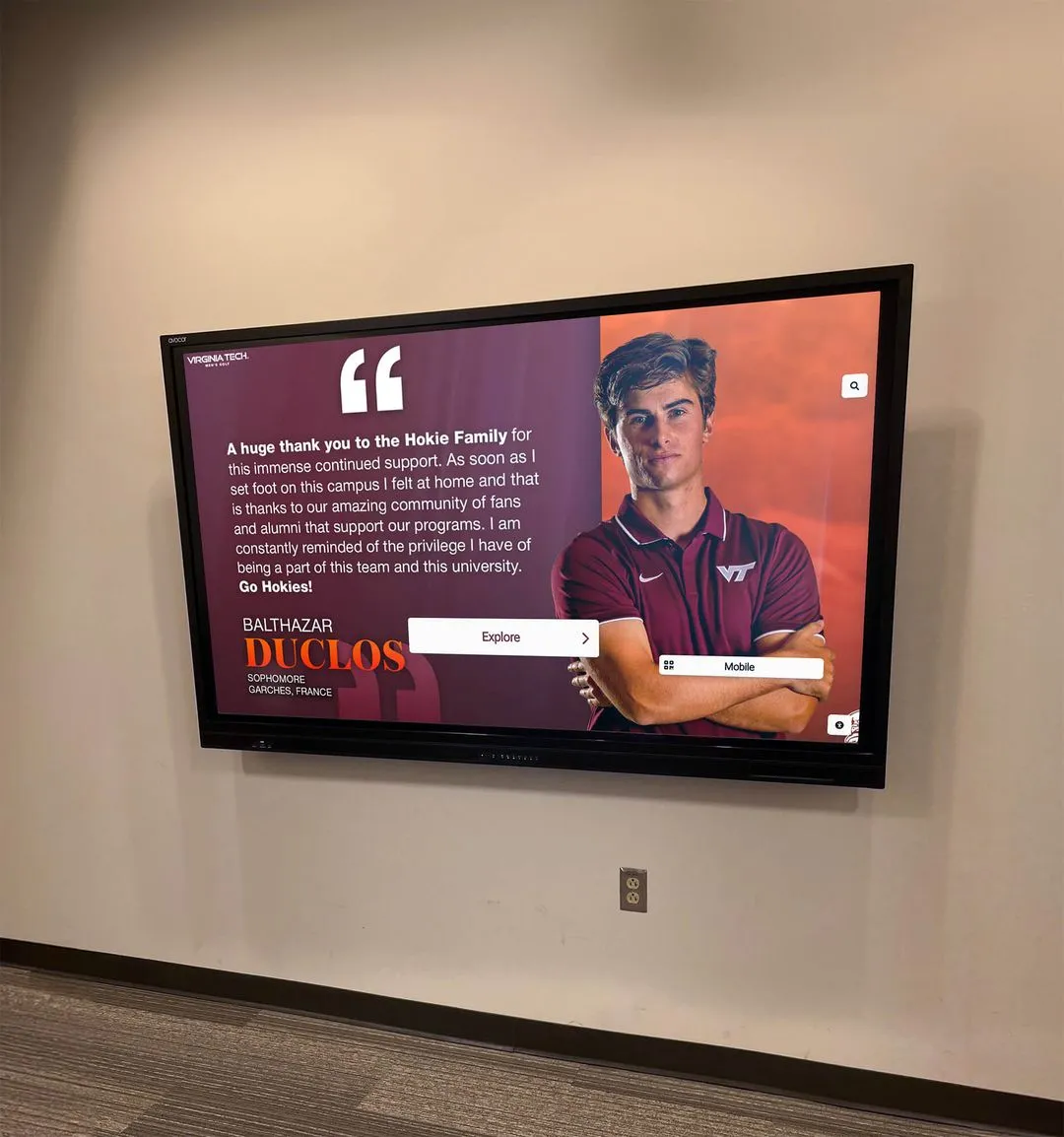
Administrators update digital displays from any location using web-based content management systems. Adding new inductees, correcting information, uploading photos, or modifying content happens in minutes from office computers, home laptops, or mobile devices. No vendor scheduling, physical installation, or facility access requirements delay recognition.
This update speed enables timely recognition. Graduate a senior class on Saturday and have their achievements displayed Monday morning. Correct errors immediately when discovered rather than waiting months for plaque replacements. Update biographical information as alumni achieve post-graduation accomplishments keeping recognition current and relevant.
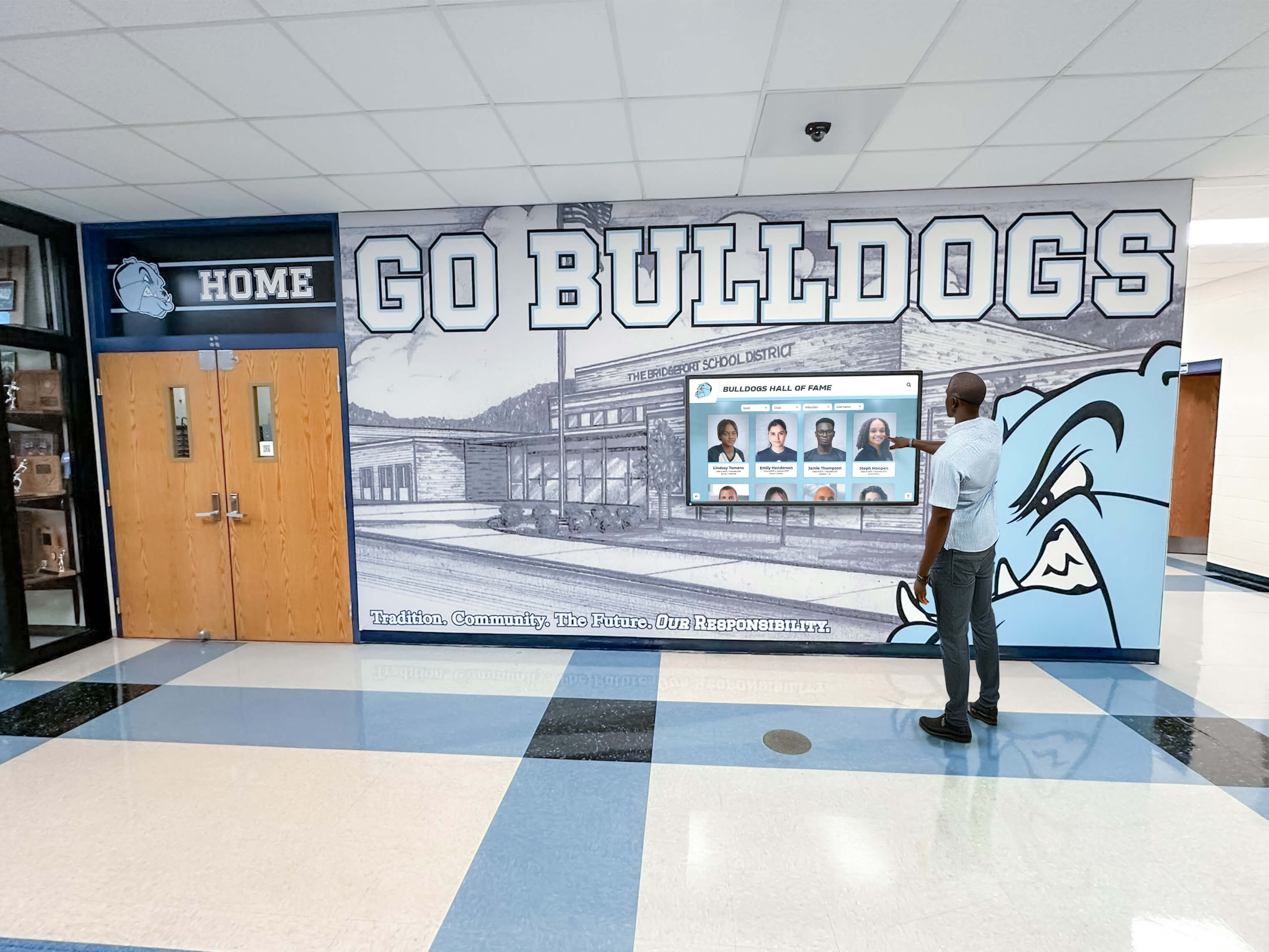
Rich Multimedia Content Display
Digital systems showcase comprehensive achievement documentation that physical plaques can’t accommodate:
- High-resolution photo galleries: Multiple images from athletic careers, academic achievements, performing arts, and current life
- Video integration: Game highlights, performance clips, ceremony speeches, interview content
- Detailed statistics: Complete career records, achievement timelines, comparative rankings
- Biographical narratives: Comprehensive stories about challenges overcome, leadership demonstrated, character exemplified
- Interactive timelines: Visual representations showing achievement progressions and historical context
This content depth transforms recognition from names-and-dates listings into meaningful profiles that inspire current students and engage alumni emotionally.
Global Web Accessibility
Web-based platforms extend recognition beyond physical hallways to worldwide audiences:
- Alumni residing anywhere explore complete halls of fame from personal devices
- Prospective families research school traditions remotely during selection processes
- College recruiters review athlete backgrounds without campus visits
- Media representatives access information for feature stories instantly
- Current students explore achievement history building program understanding and pride
This accessibility multiplies recognition impact exponentially compared to geographic limitations of physical trophy cases.
Searchable Databases
Digital displays include search and filter functionality enabling targeted exploration. Users find specific inductees by name, filter by sport or achievement type, sort by year or category, explore graduation class cohorts, or discover record holders in particular events. This discoverability creates engagement impossible with linear physical displays where information discovery depends on systematic browsing.
Engagement Analytics
Digital platforms provide data showing how communities interact with recognition:
- Track which inductees receive most profile views revealing community interests
- Monitor access patterns showing peak engagement times and geographic distribution
- Measure search terms helping improve content organization
- Document cumulative engagement demonstrating program value to administrators and board members
- Identify referral sources showing how visitors discover content
These insights inform recognition strategy improvements and demonstrate return on investment to stakeholders.
Detailed athletic hall of fame implementation guidance explores systematic approaches to digital recognition program development.
Physical Display Integration Options
Digital recognition doesn’t require abandoning physical presence in school hallways. Multiple implementation approaches combine technology benefits with tangible visibility:
Wall-Mounted Touchscreen Kiosks
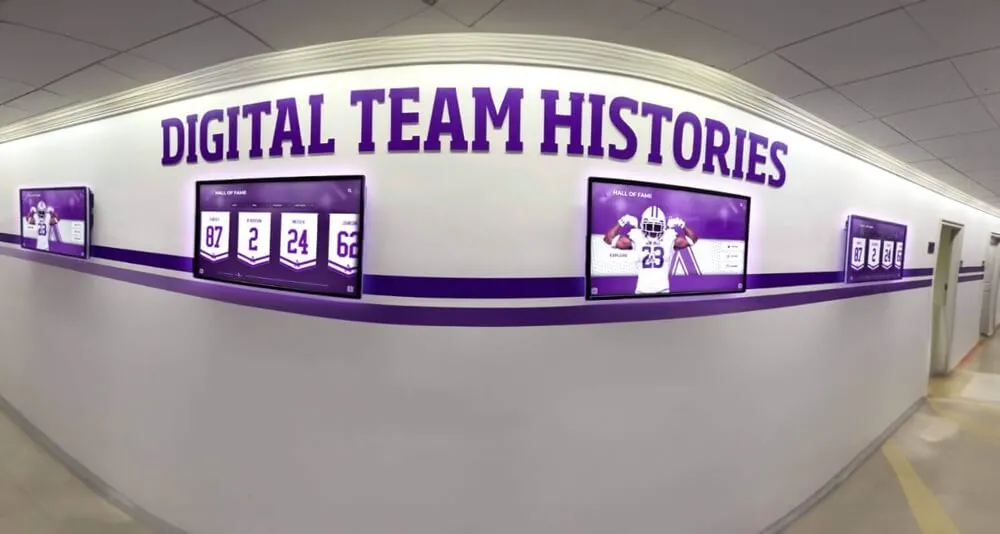
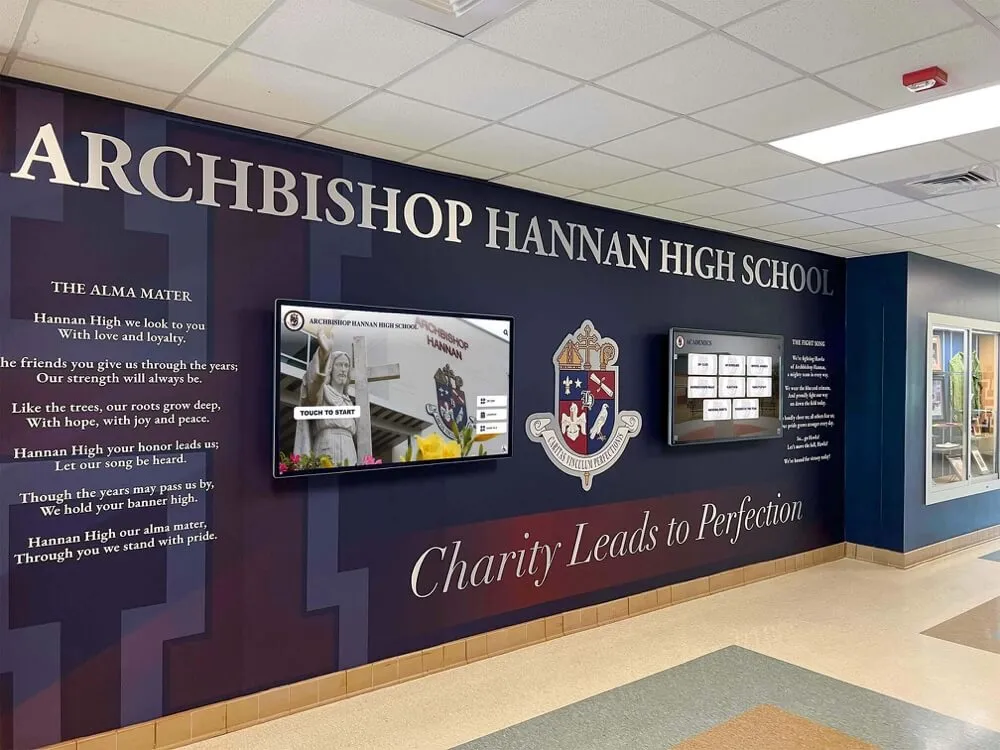
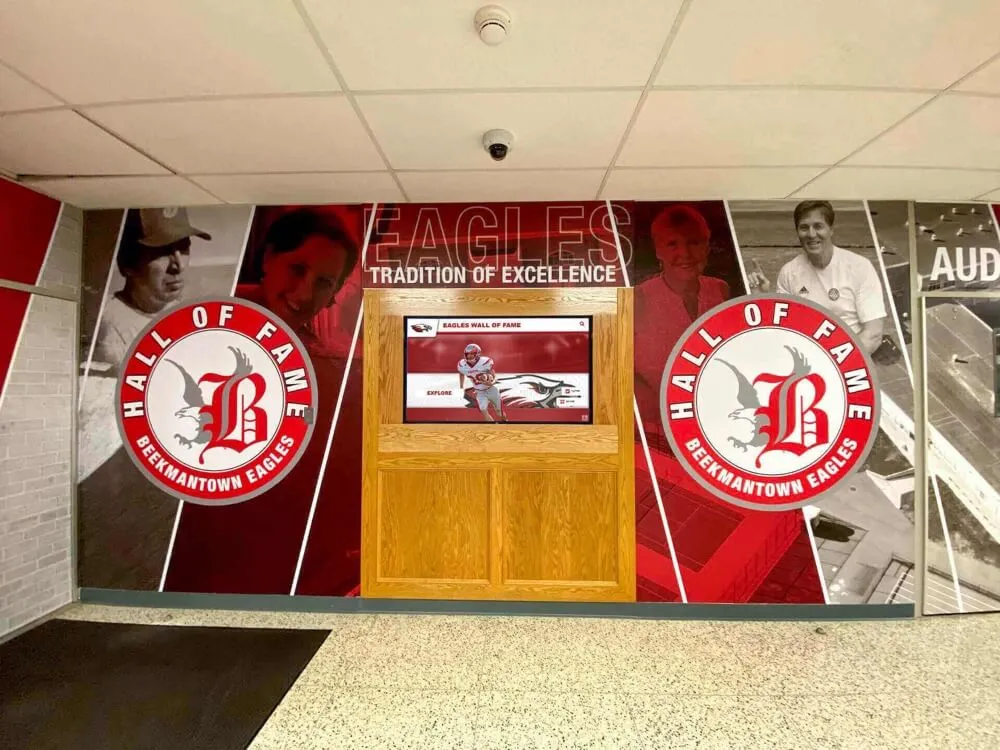
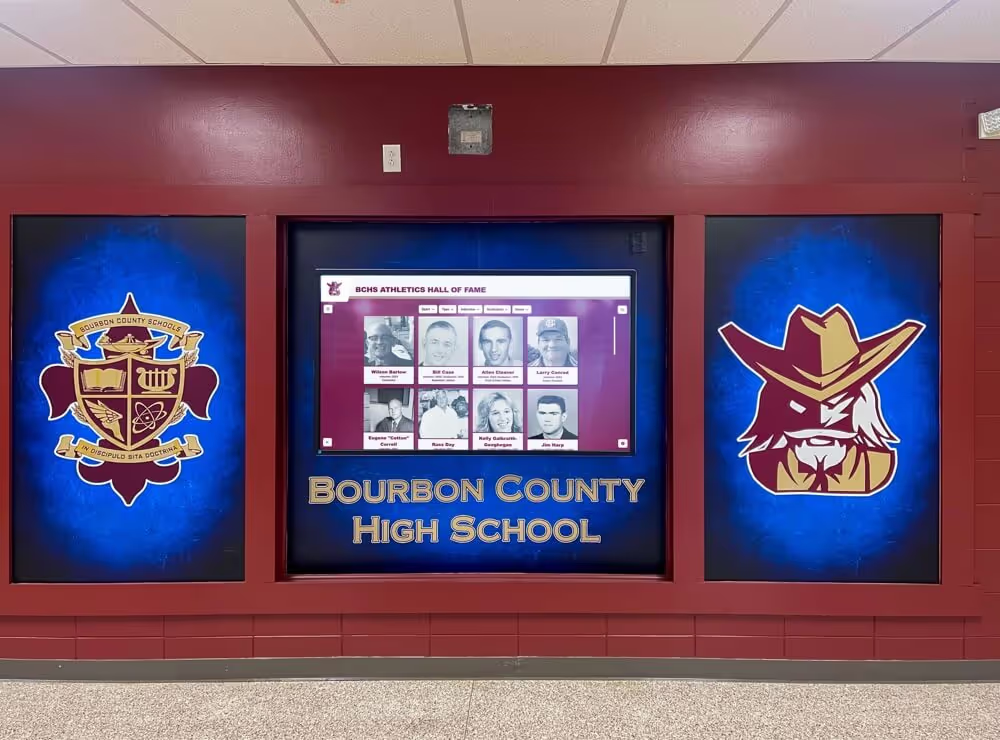
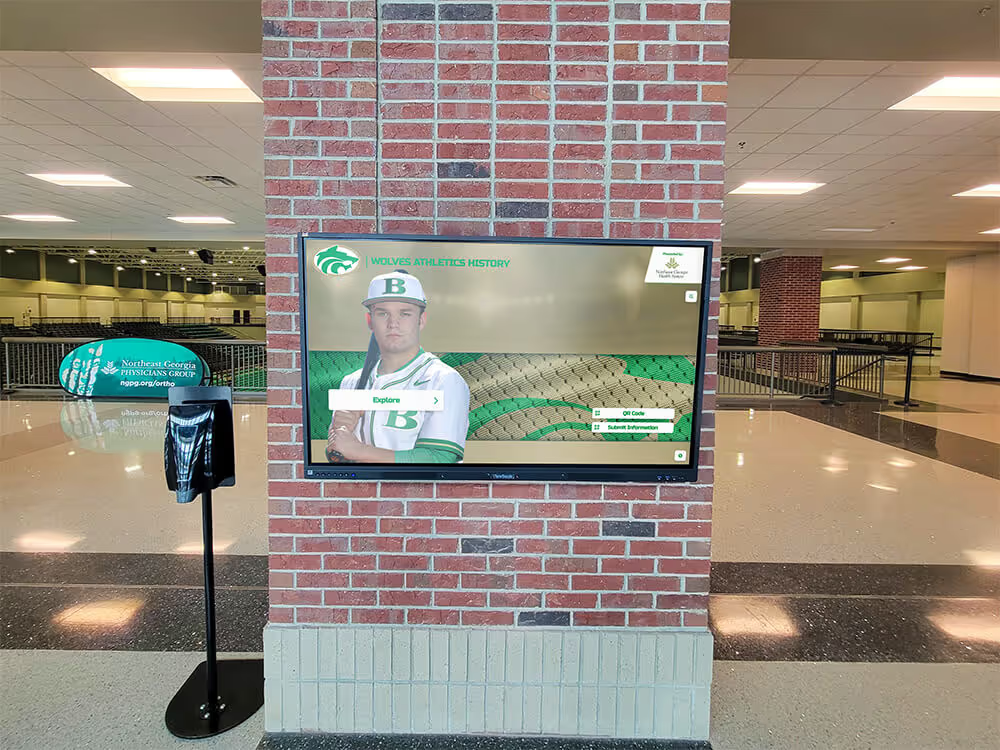
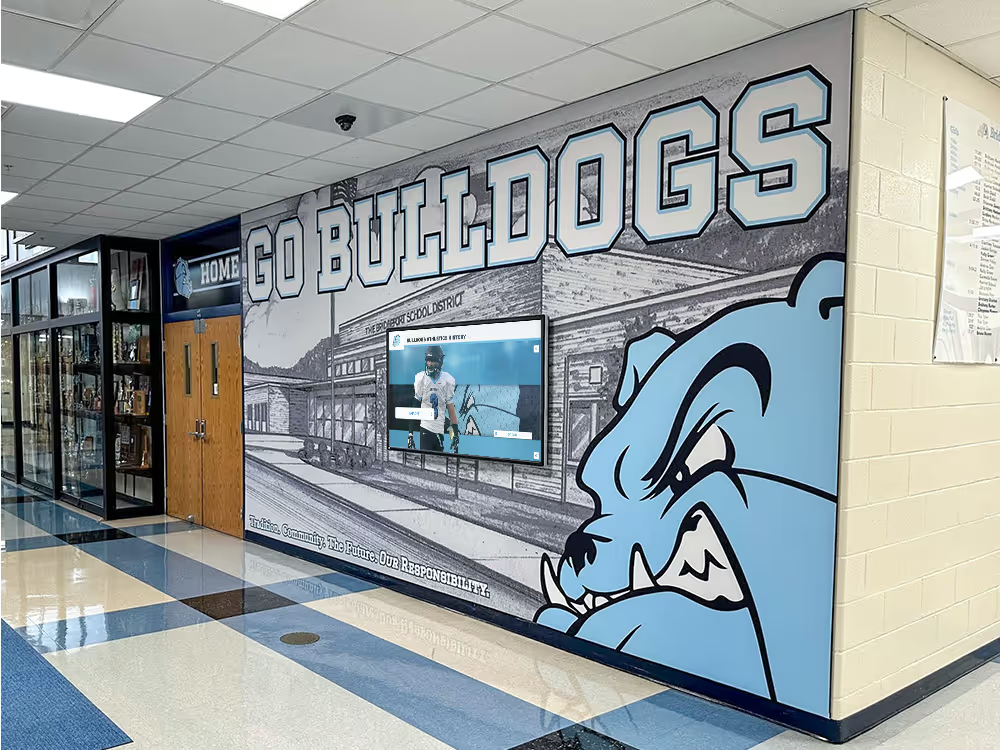
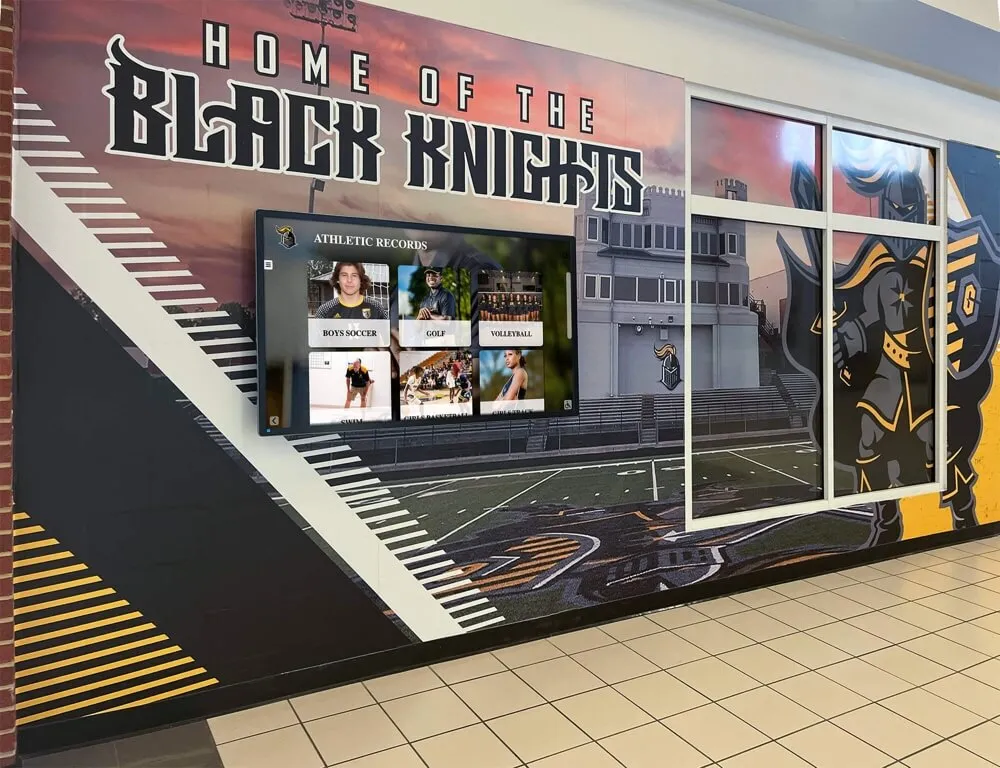
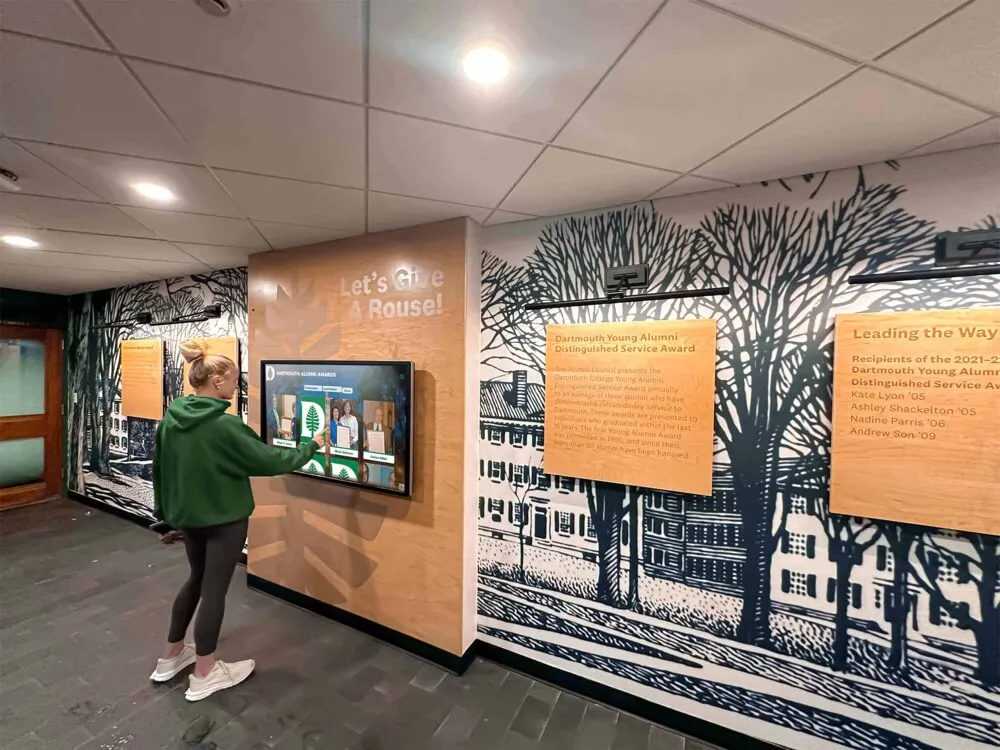
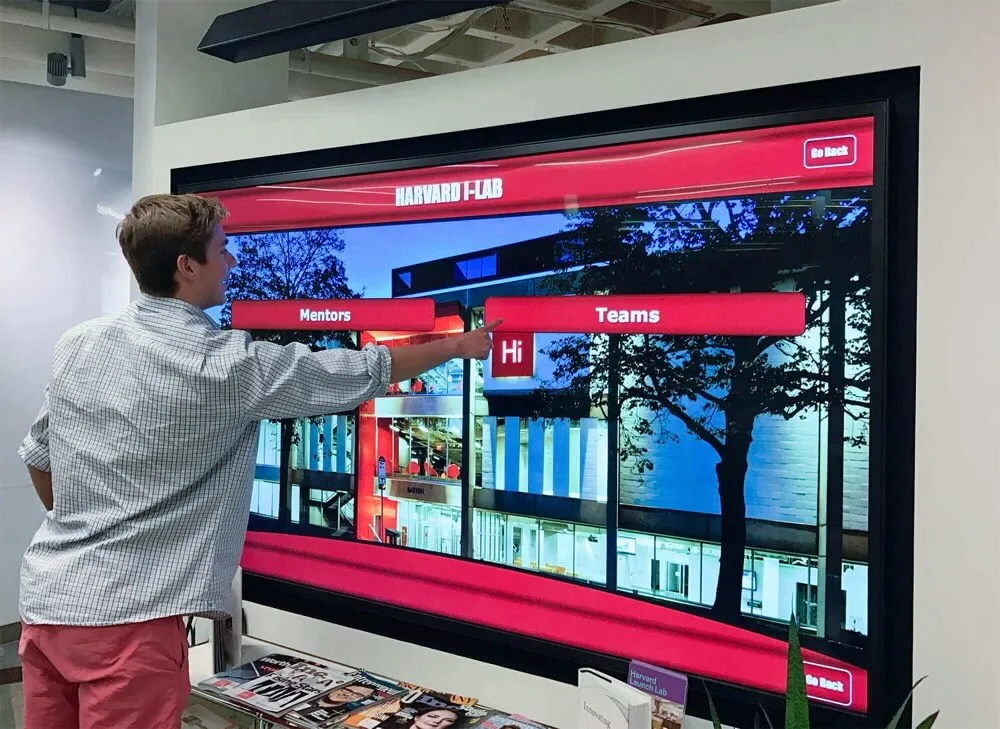
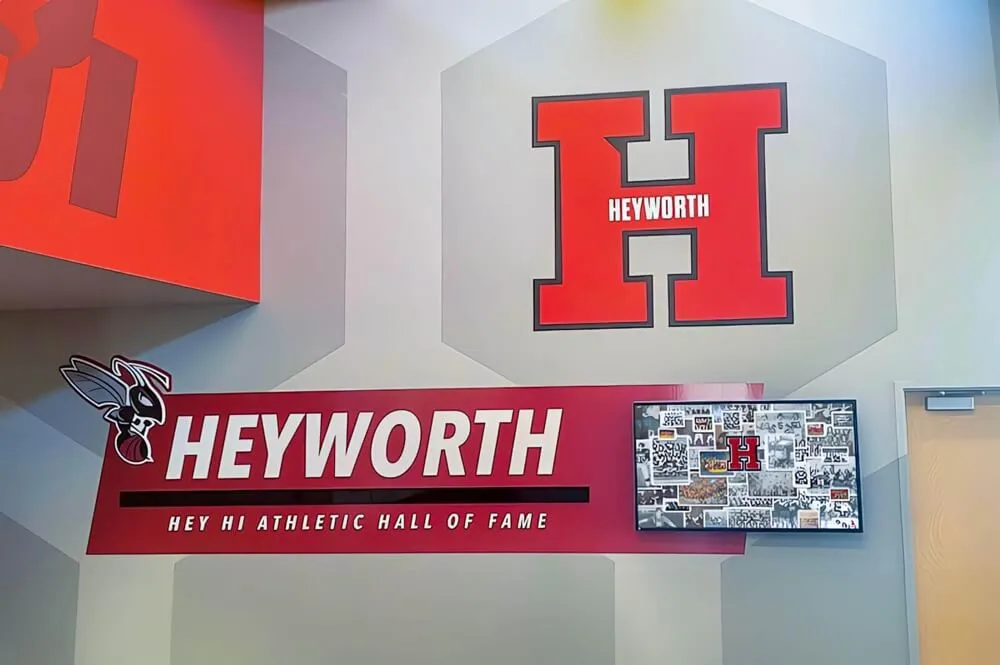
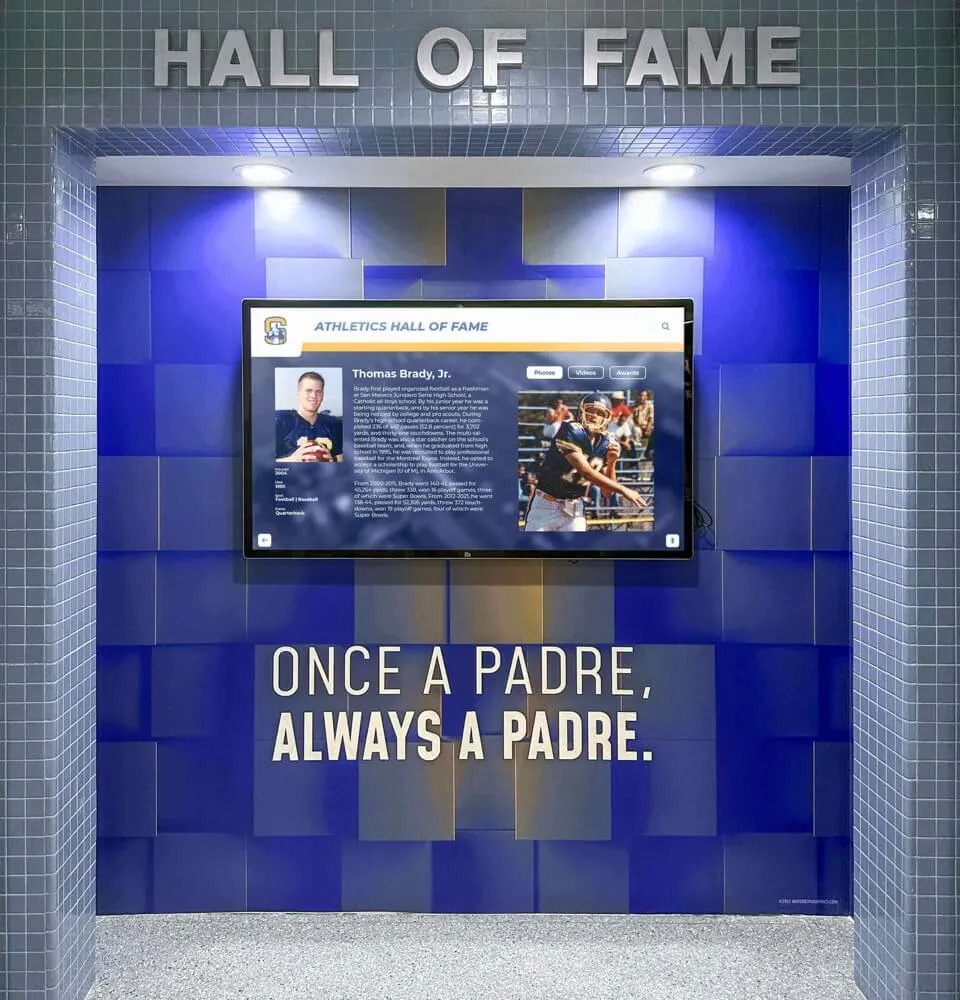
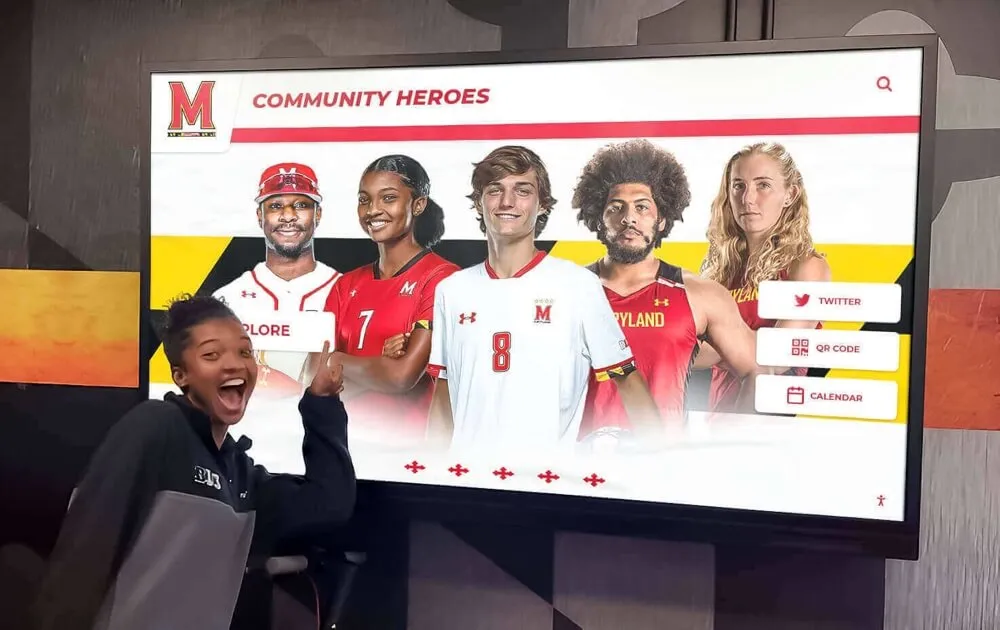
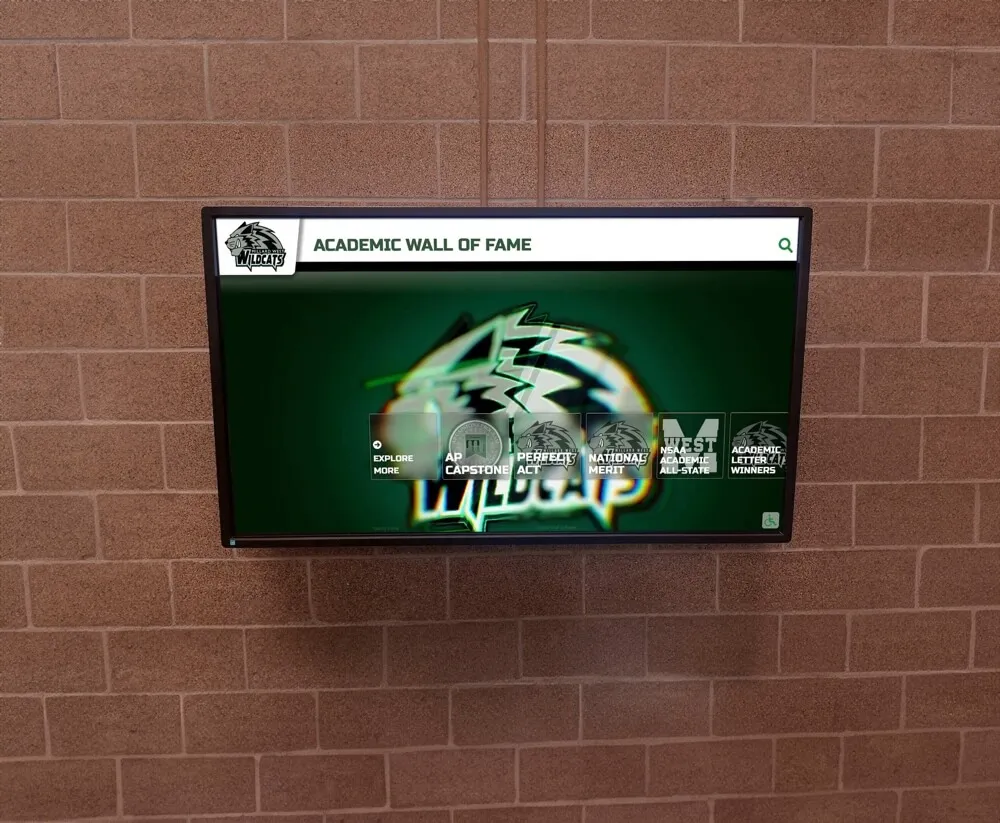
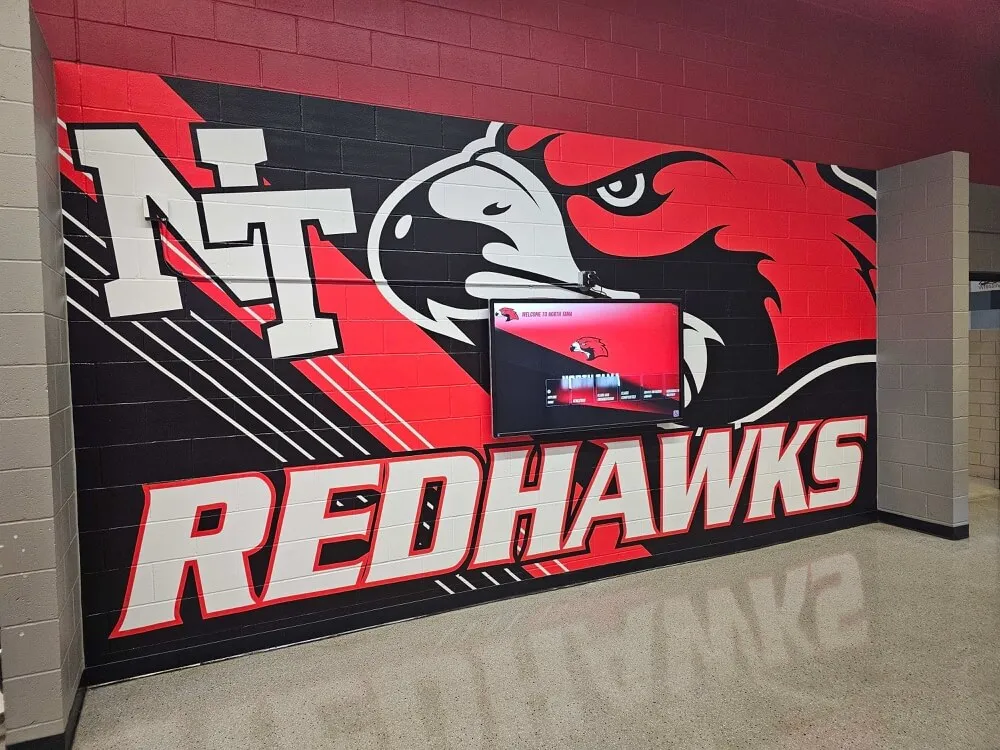
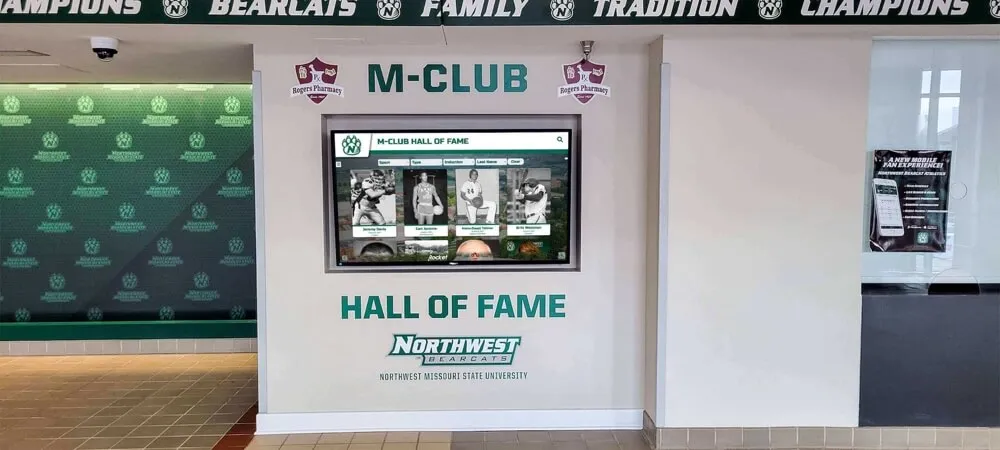
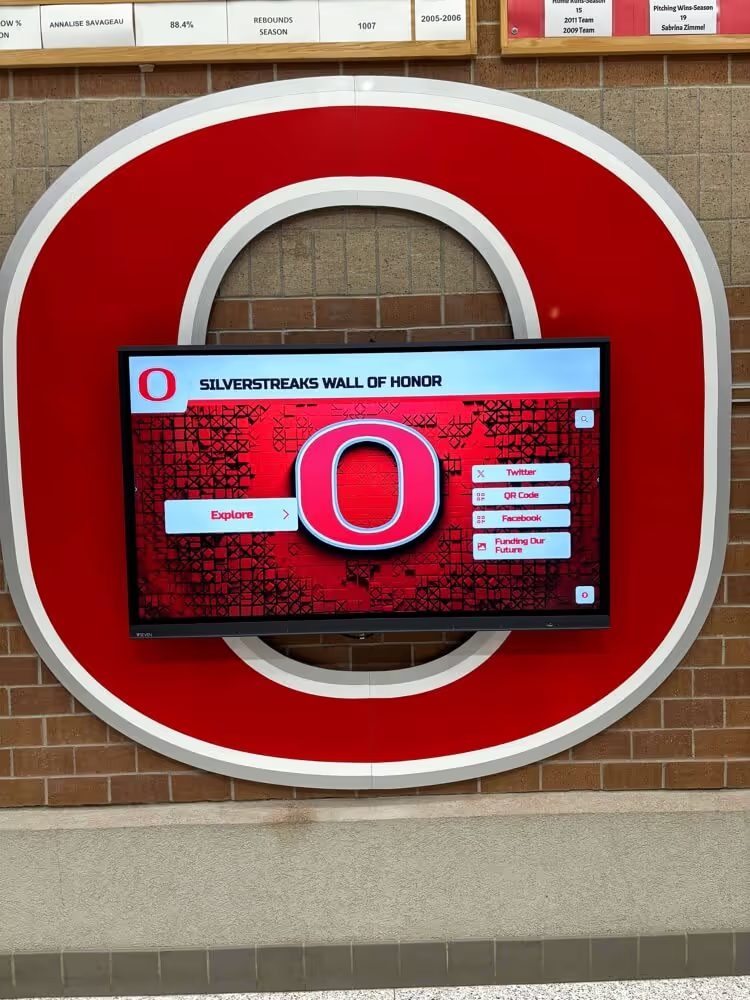
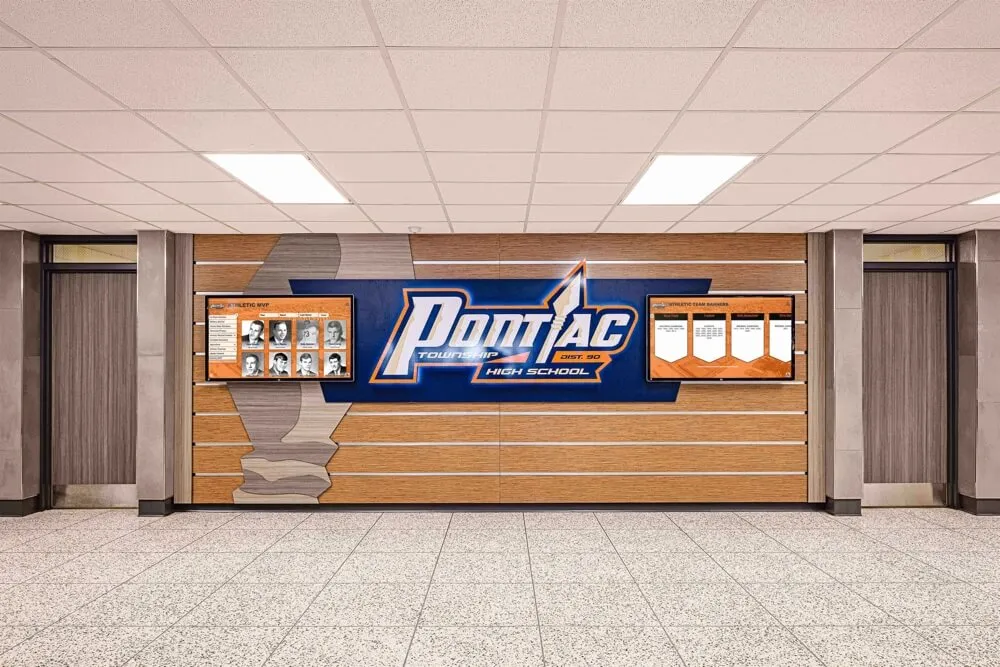
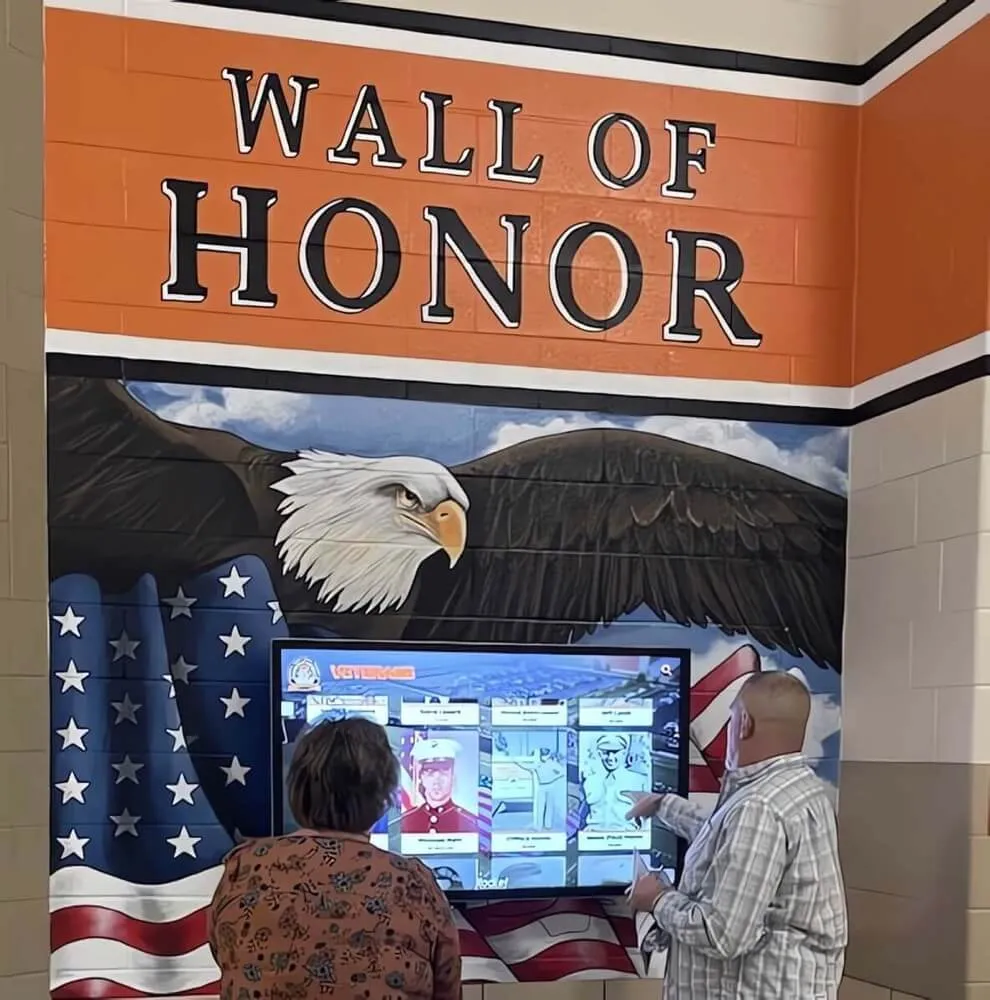
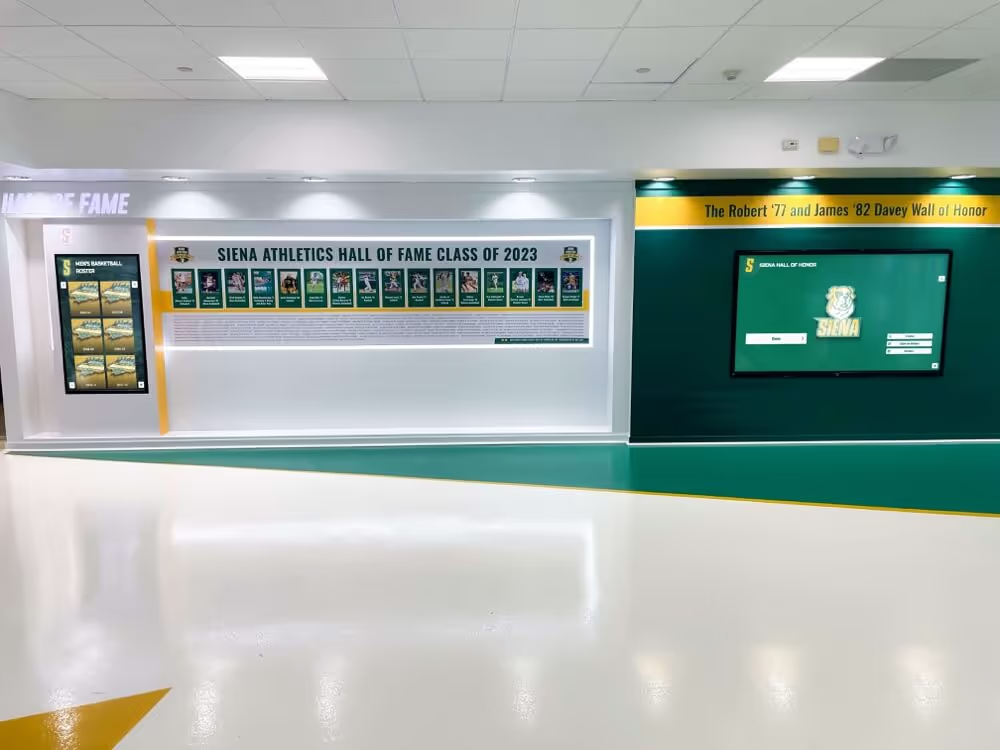
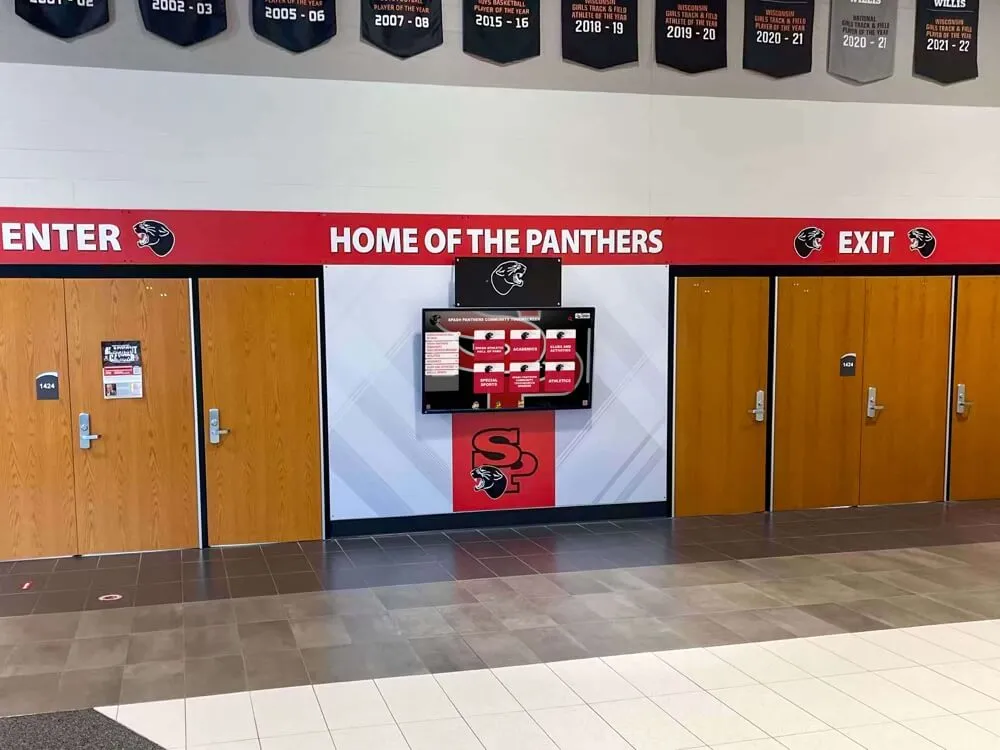
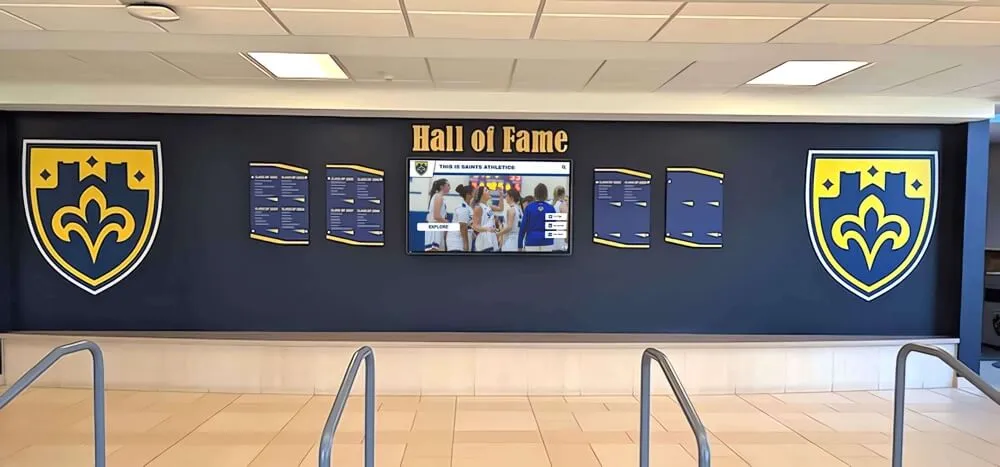
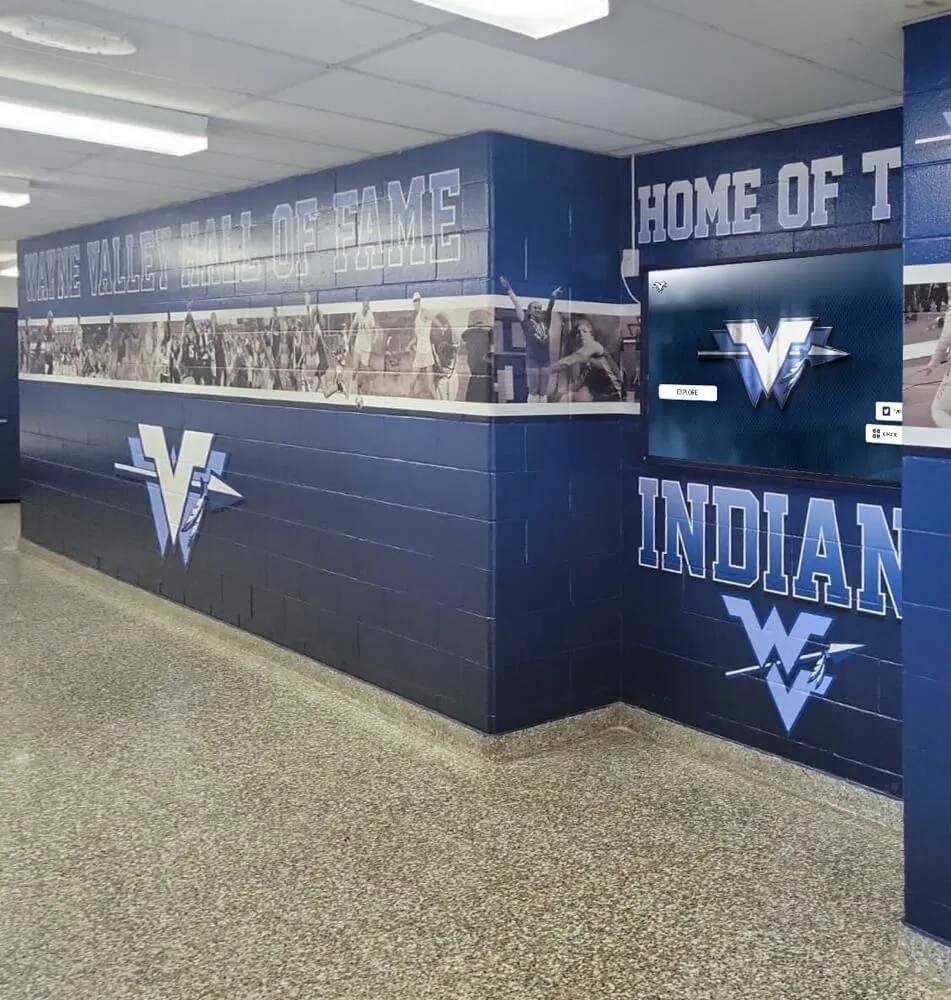
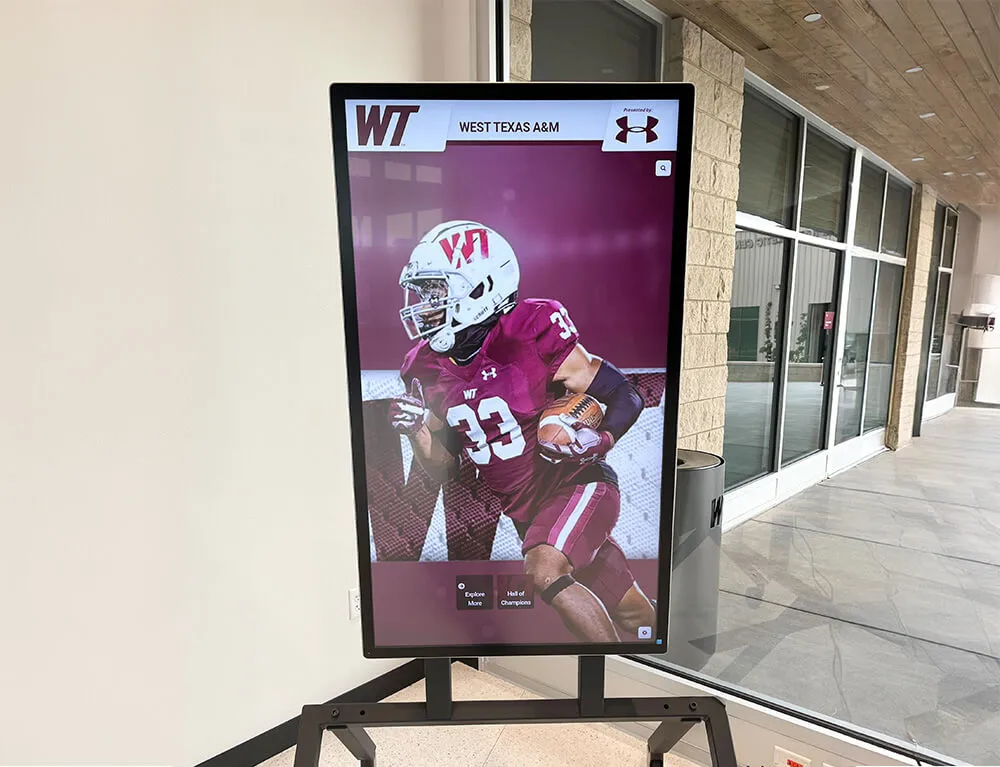
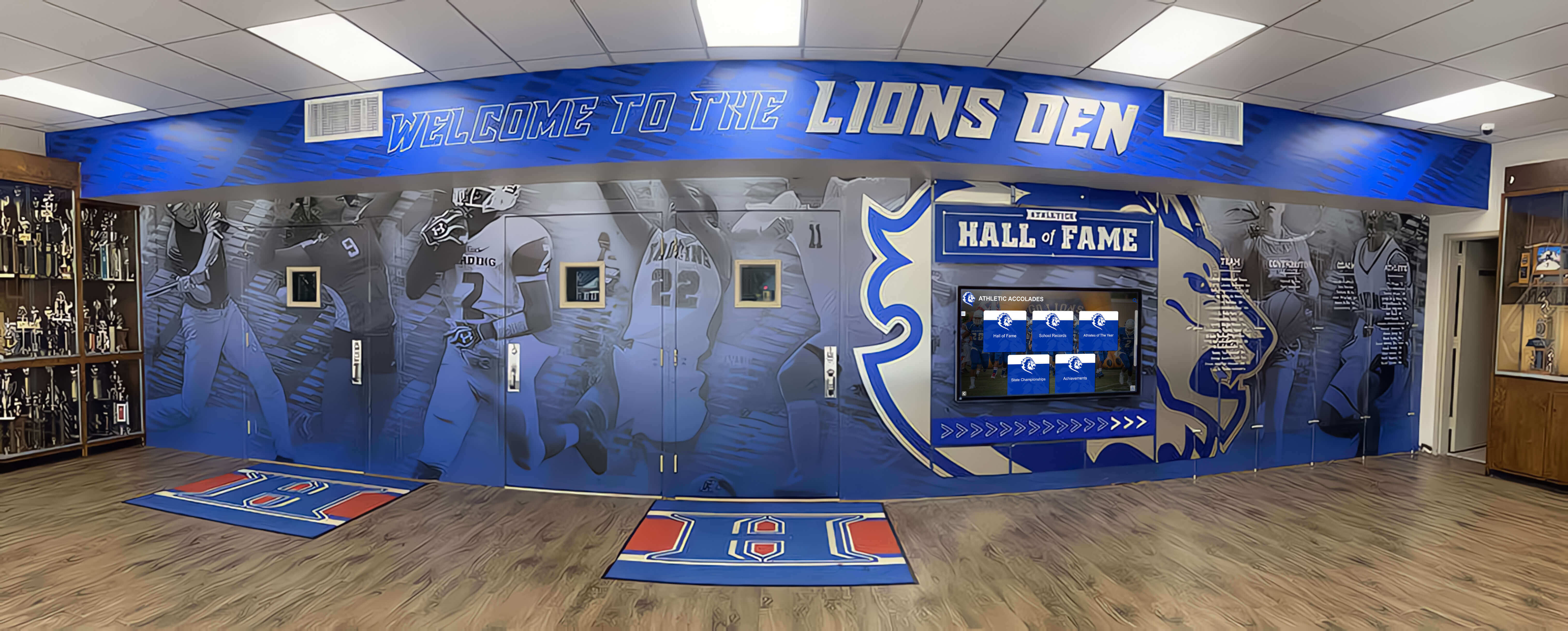
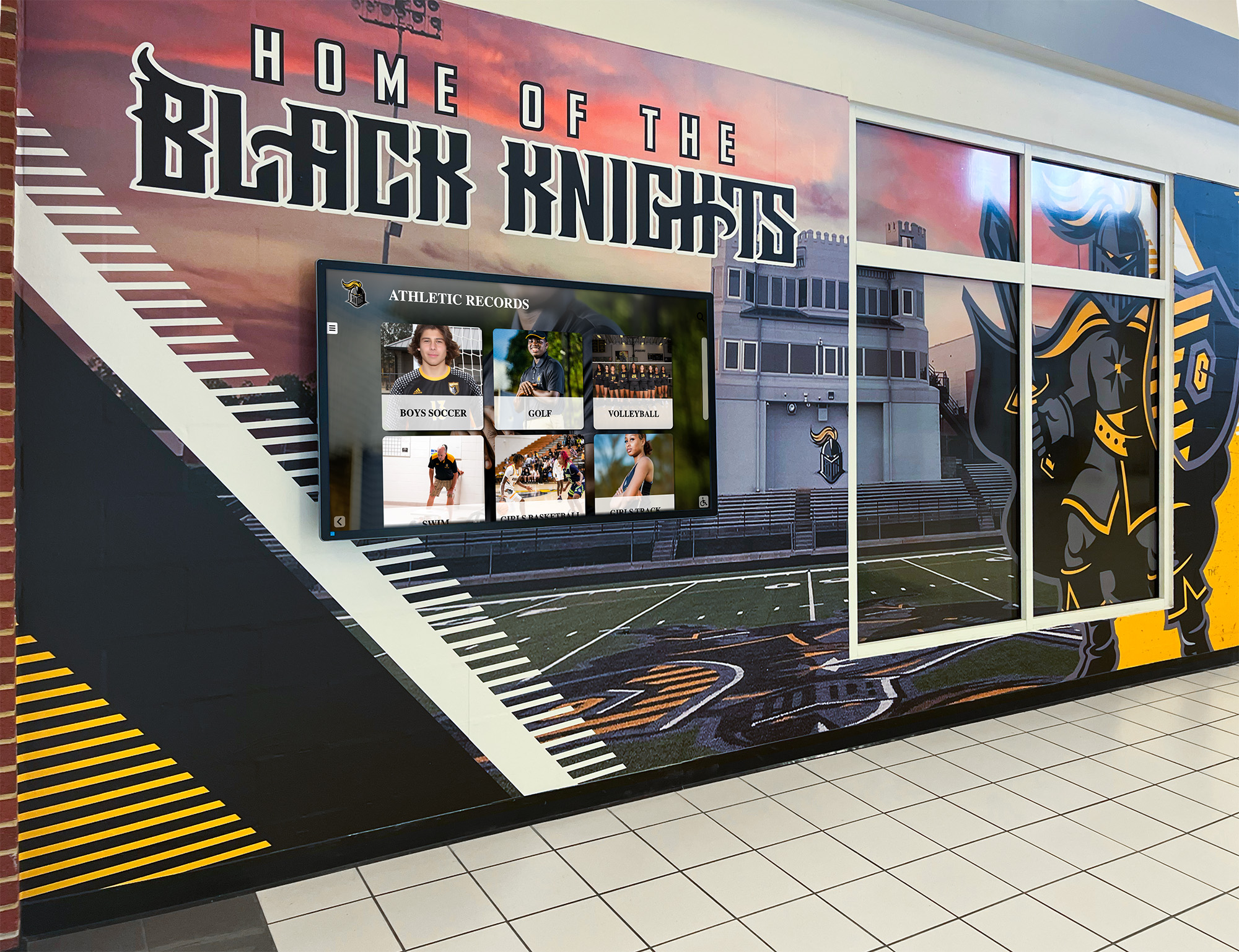
Large touchscreen displays mounted in main hallways, athletic facilities, or commons areas provide interactive exploration while maintaining physical presence in high-traffic locations. Students tap screens to browse inductees, watch highlight videos, explore achievement details, and share discoveries with friends walking past. These installations create gathering points where students naturally congregate and engage with recognition content.
Touchscreen kiosks deliver trophy case visual impact while enabling unlimited content access. Visitors see current display content on screens but can interact to explore decades of additional recognition that physical cases couldn’t accommodate.
Complementary Physical Markers
Many schools implement hybrid approaches combining physical elements with digital access:
- Hallway plaques listing inductee names with QR codes linking to detailed digital profiles
- Traditional trophy case displays featuring “tap to learn more” touchscreen integration
- Wall-mounted name plaques directing visitors to nearby digital kiosks for full information
- Physical championship banners including QR codes enabling mobile access to team rosters, statistics, and season highlights
These hybrid systems honor physical recognition traditions while delivering comprehensive information access that traditional displays can’t provide.
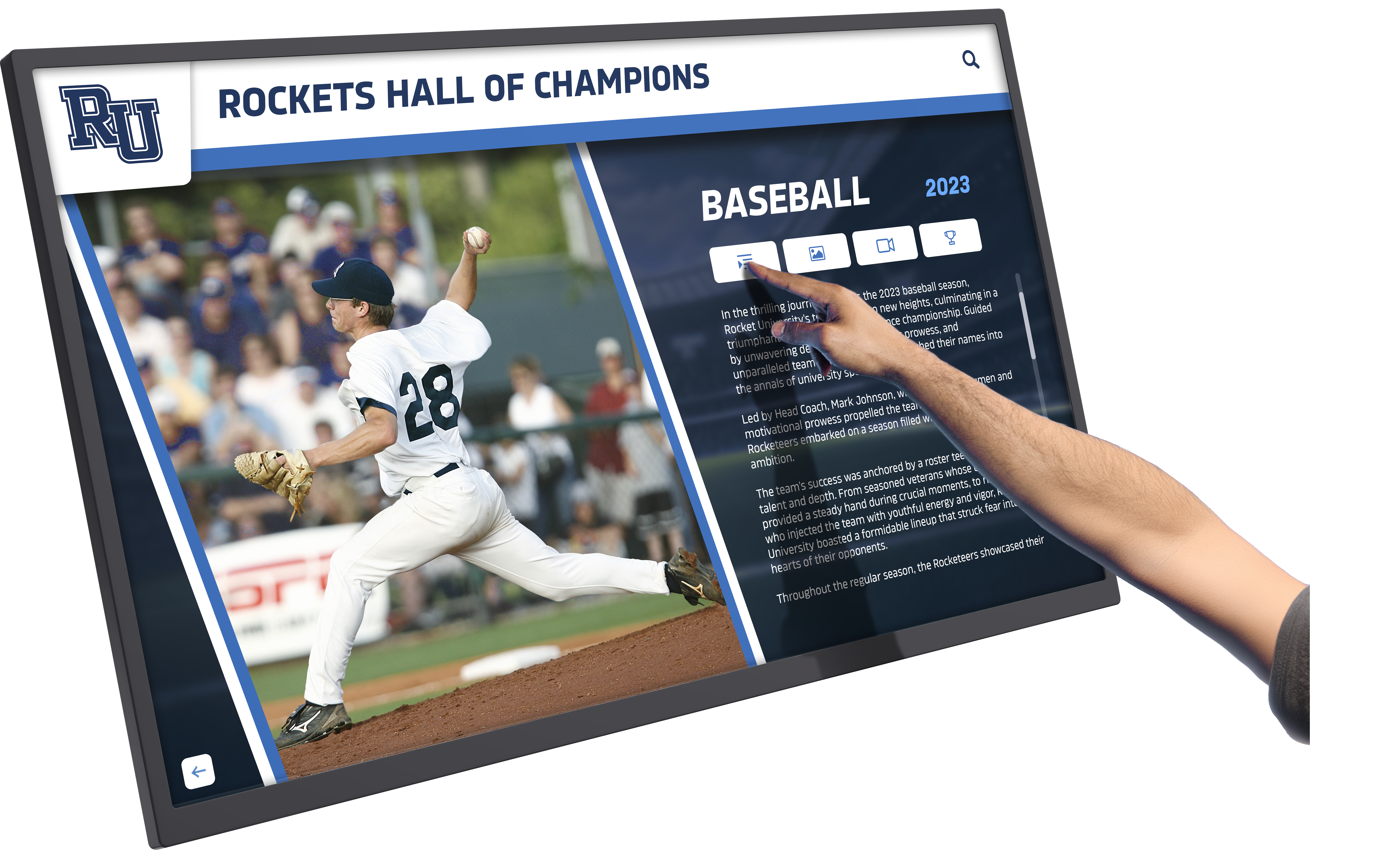
Existing Display Enhancement
Schools with significant trophy case investments can enhance rather than replace existing displays. Mount tablets or small screens within or adjacent to existing trophy cases. Display rotating content about items in cases. Enable visitors to scan QR codes accessing deeper information about trophies, awards, and artifacts. This approach extends trophy case value while addressing information limitations.
Comparing Digital and Traditional Recognition Systems
Understanding specific comparison dimensions helps schools make informed decisions about recognition approaches fitting their unique circumstances:
Space Requirements and Scalability
Traditional Trophy Cases: Consume fixed physical space that eventually fills completely. Recognizing more achievements requires additional cases consuming more hallway square footage or forcing selective display decisions. Schools with limited facility space face hard capacity ceilings restricting long-term recognition growth.
Digital Displays: Single touchscreen kiosk or web platform accommodates unlimited recognition without additional space requirements. Recognizing thousands of inductees consumes identical physical footprint as recognizing dozens. Schools can honor comprehensive achievement across all programs, eras, and categories without physical expansion.
Practical Implication: Growing recognition programs inevitably exceed trophy case capacity. Digital systems scale infinitely without space constraints.
Update Speed and Flexibility
Traditional Trophy Cases: Require physical installation processes involving design, vendor orders, production time, delivery, and installation scheduling. Typical update timelines span 4-12 weeks from decision to display. Corrections require repeating entire processes. Rush updates remain expensive and limited.
Digital Displays: Enable instant updates from any internet-connected device. Add content, correct errors, or modify information in minutes. No vendor dependencies, production delays, or installation scheduling constraints. Changes go live immediately upon publishing.
Practical Implication: Schools needing frequent recognition updates—senior classes, seasonal championships, weekly records—require update speed that manual processes can’t provide efficiently.
Content Depth and Engagement
Traditional Trophy Cases: Limited to brief text on small plaques plus physical trophy or award display. Minimal context, no multimedia content, no detailed statistics or biographical narratives. Engagement remains passive observation through glass.
Digital Displays: Showcase comprehensive profiles including unlimited text, photo galleries, video content, detailed statistics, career timelines, and interactive exploration tools. Visitors actively engage, explore connections, search interests, and spend minutes rather than seconds with recognition content.
Practical Implication: Recognition intended to inspire current students, engage alumni emotionally, or provide meaningful achievement context requires content depth that physical plaques can’t accommodate.

Accessibility and Reach
Traditional Trophy Cases: Accessible only to visitors physically present in school buildings during open hours. Alumni relocating elsewhere, prospective families researching remotely, or community members unable to visit campuses never access recognition.
Digital Displays: Provide 24/7 worldwide access via web platforms. Alumni explore recognition from anywhere globally. Prospective families research school traditions remotely. College recruiters review athlete backgrounds without campus visits. Recognition reach extends from hundreds of annual building visitors to unlimited global access.
Practical Implication: Schools prioritizing alumni engagement, recruitment visibility, or community awareness benefit substantially from digital accessibility beyond physical location limitations.
Initial Investment and Operating Costs
Traditional Trophy Cases: Basic glass cases range from $1,500-$5,000 depending on size and quality. Custom installations with built-in lighting and architectural integration cost $10,000-$30,000. Ongoing costs include plaque production ($50-$200 per plaque), installation labor, maintenance, and periodic refurbishment.
Digital Displays: Touchscreen kiosk hardware ranges from $3,000-$8,000 for commercial-grade interactive displays. Software platforms typically cost $1,200-$3,600 annually for comprehensive recognition systems. Web-only solutions without physical kiosks start at software platform costs alone. Operating costs include minimal electricity and internet connectivity.
Practical Implication: Traditional cases appear cheaper initially but generate recurring plaque and installation costs. Digital systems involve higher initial investment but reduce ongoing operational expenses. Total cost of ownership over 10+ years often favors digital approaches, particularly for active recognition programs adding substantial content regularly.
Maintenance and Long-term Sustainability
Traditional Trophy Cases: Require continuous physical maintenance—glass cleaning, lighting replacement, rearrangement, lock repair, refinishing. Items deteriorate requiring replacement. Major refurbishment projects every 10-15 years cost thousands. Staff time compounds maintenance expense.
Digital Displays: Software platforms receive automatic updates maintaining functionality and security. Hardware maintenance limited to occasional screen cleaning and power supply verification. Commercial-grade touchscreens typically operate 50,000+ hours before replacement. Technical support includes remote troubleshooting minimizing service calls.
Practical Implication: Schools with limited facilities staff bandwidth or tight operating budgets benefit from reduced physical maintenance requirements of digital systems.
Comprehensive recognition program comparison frameworks help administrators evaluate options systematically against institutional priorities.
Situational Fit: When Each Approach Makes Sense
Different school circumstances favor different recognition approaches. Understanding situational factors helps match solutions to needs:
When Traditional Trophy Cases Work Best
Specific school contexts make physical trophy cases practical primary recognition systems:
Very Small Programs with Minimal Recognition Volume
Small private schools or specialized programs inducting 1-2 individuals annually maintain manageable trophy case systems indefinitely. Limited recognition volume prevents capacity problems. Infrequent updates make manual installation processes tolerable. If your school will recognize fewer than 50 total inductees over 20 years, physical displays may suffice.
Significant Existing Trophy Case Investment
Schools with recently installed high-quality trophy case systems paid for through capital campaigns or major donations face difficult decisions about replacement. Honoring donor intentions and maximizing existing investments may justify continuing physical recognition while exploring eventual digital migration or hybrid enhancement approaches.
Very Limited Technology Infrastructure
Schools in areas with unreliable internet connectivity, facilities with inadequate electrical capacity for additional devices, or communities with minimal technology adoption face barriers to digital implementation. Physical recognition functions regardless of infrastructure limitations.
Strong Preference for Physical Artifacts
Some athletic programs or communities place high value on displaying actual championship trophies, game-worn jerseys, or historic artifacts. These tangible objects carry meaning that digital representations can’t replicate. Trophy cases serve artifact display purposes that digital systems don’t address.
When Digital Hall of Fame Displays Become Necessary
Specific circumstances make digital recognition not just beneficial but practically necessary:
Growing Recognition Programs Exceeding Physical Capacity
Schools recognizing dozens or hundreds of inductees across multiple programs inevitably exceed trophy case capacity. When you’re removing earlier recognition to add new inductees, rotating displays seasonally, or maintaining storage boxes of unrecognized achievements, physical space constraints demand digital solutions.
Active Recognition with Frequent Updates
Programs adding recognition monthly or quarterly—senior classes, seasonal championships, academic honor rolls, monthly record updates—require update speed that manual physical processes can’t deliver efficiently. When update frequency makes vendor installations prohibitively expensive or logistically impossible, digital systems become necessary.
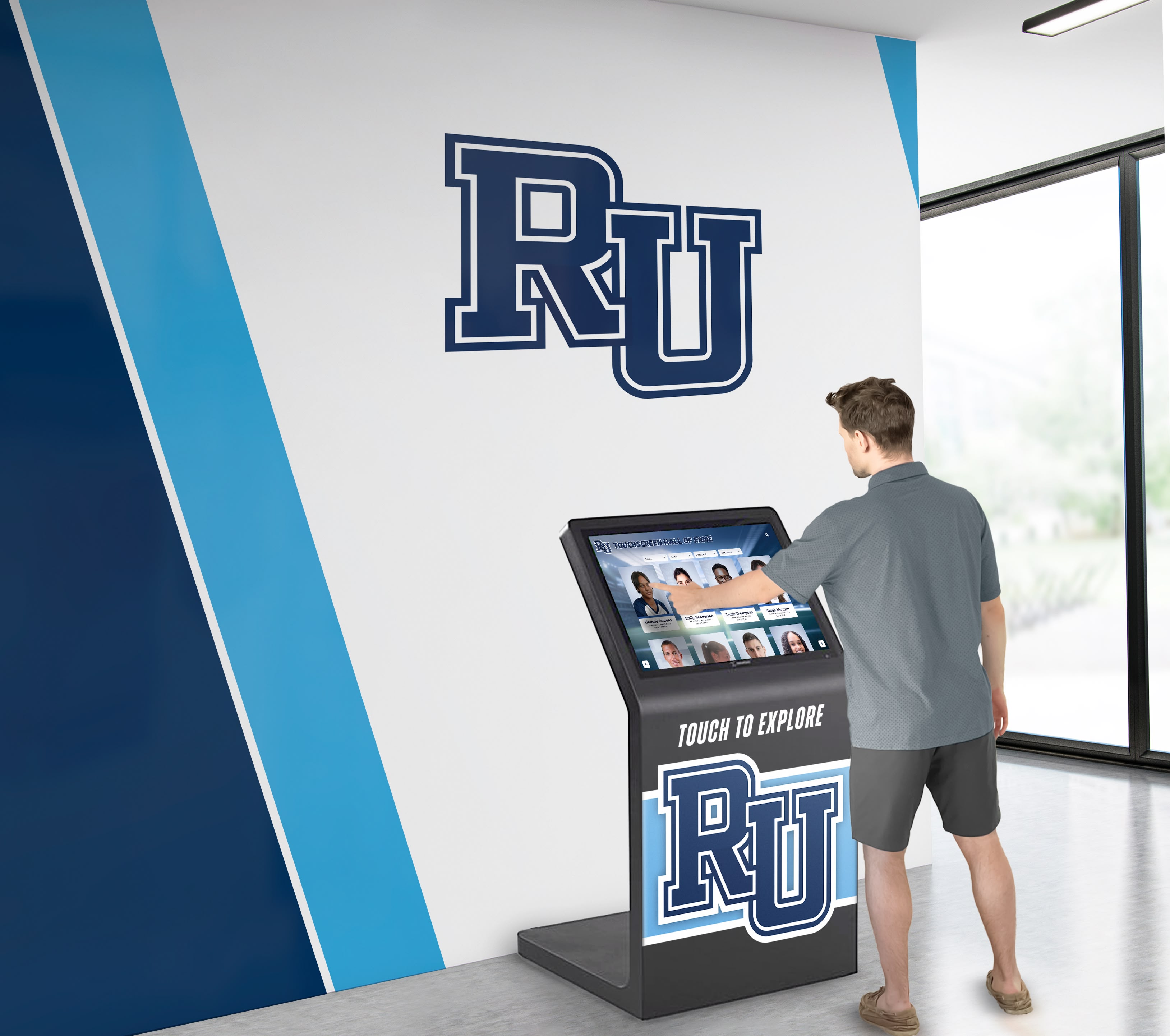
Priority on Alumni Engagement and Global Access
Schools prioritizing alumni connection, particularly institutions with geographically dispersed graduate populations, need recognition systems accessible beyond physical campuses. Digital platforms enable worldwide alumni engagement impossible with hallway trophy cases.
Desire for Rich Content and Storytelling
Recognition programs emphasizing comprehensive profiles, multimedia content, detailed statistics, or biographical narratives require display capabilities exceeding physical plaque limitations. Digital systems enable storytelling depth inspiring current students and engaging communities meaningfully.
Multiple Recognition Categories Across Programs
Comprehensive recognition across athletics, academics, arts, service, and other achievement domains generates volume and diversity that physical displays manage poorly. Digital systems handle multiple category types within unified platforms maintaining organizational coherence.
Limited Facilities Staff or Maintenance Resources
Schools with small facilities teams, tight operating budgets, or competing maintenance priorities benefit from digital systems’ reduced physical upkeep requirements compared to trophy case maintenance demands.
Detailed guidance on athletic record board implementation explores digital recognition deployment in athletic facilities specifically.
Hybrid Approaches: Combining Physical and Digital Recognition
Many schools discover that combining traditional and digital elements creates optimal recognition systems balancing institutional traditions with modern capabilities:
Physical Foundation with Digital Enhancement
Maintain existing trophy cases for championship trophies and signature awards providing physical presence and artifact display. Add wall-mounted touchscreen kiosks or QR codes near physical displays enabling visitors to access comprehensive digital content about displayed items, explore broader recognition beyond physical case capacity, and engage with multimedia profiles impossible on physical plaques.
This approach honors trophy case traditions and existing investments while solving capacity, update, and information limitations through complementary digital systems.
Digital Primary System with Physical Markers
Implement comprehensive digital recognition as primary system accommodating unlimited inductees through web platforms and interactive kiosks. Add small physical elements creating hallway presence: engraved name plaques listing current-year inductees with QR codes linking to digital profiles, wall-mounted displays showing rotating digital content from main system, or traditional championship banners with digital access points for complete team information.
This approach delivers digital capabilities while maintaining physical recognition visibility in school hallways meeting community expectations for tangible displays.
Phased Transition Strategies
Schools committed to eventual digital migration but facing budget constraints, community resistance, or technical preparation needs can implement phased approaches:
Year 1: Continue existing trophy cases while launching web-based digital recognition accessible via school website. Build complete digital archive including historical inductees and current recognition.
Year 2: Install single touchscreen kiosk in main location providing physical digital access point. Promote heavily ensuring community awareness and adoption.
Year 3+: Expand digital touchscreen installations to additional locations. Transition trophy case contents to storage or display archives while dedicating physical space to digital interactive displays.
Phased approaches allow communities to experience digital recognition benefits gradually, reducing resistance to change while providing time for technical preparation and budget accumulation.
Resources on building school pride through recognition explore how comprehensive programs combine multiple recognition elements creating cohesive school culture.
Making the Decision for Your School
Administrative teams evaluating recognition systems should consider several key decision factors aligning solutions with institutional needs and priorities:
Assessment Questions to Guide Selection
Recognition Volume and Growth Trajectory
How many individuals does your school expect to recognize annually? Over the next decade? Consider current programs plus potential expansion into additional recognition categories. Calculate cumulative totals over realistic timeframes.
If you’ll recognize fewer than 100 people total over 20 years with minimal expansion plans, physical displays may suffice. If growth projections exceed several hundred inductees or include regular record updates and seasonal recognition, digital systems become necessary.
Update Frequency Requirements
How often will recognition content change? Monthly honor rolls and weekly record updates require update speed that manual processes can’t deliver efficiently. Annual or biennial hall of fame inductions accommodate physical update timelines more readily.
Content Depth Expectations
Does your community expect brief name-and-year recognition or comprehensive profiles with statistics, photos, and biographical narratives? Will recognition inspire current students more effectively with multimedia content showing achievement paths? Physical plaques limit information depth substantially.
Alumni Engagement Priorities
How important is maintaining alumni connection to institutional traditions and recognition? If significant portions of your graduate population relocate away from local areas, physical displays provide zero engagement value. Digital accessibility enables worldwide alumni participation.
Budget Capacity and Constraints
What funding exists for initial investment versus ongoing operational expenses? Can you allocate capital budget for hardware plus annual software subscriptions? Or do operating budget constraints favor lower annual expenses even if initial investment is higher? Calculate total cost of ownership over 10-year periods including all recurring expenses.
Technical Infrastructure and Support
Does your facility have reliable electrical capacity and internet connectivity supporting digital displays? Do you have technology staff available for initial setup and occasional troubleshooting? Or do technology limitations favor systems requiring minimal infrastructure?
Community Expectations and Culture
What recognition traditions exist at your school? How will different stakeholder groups—coaches, alumni, athletic boosters, parents—respond to recognition approaches? Does your community value physical artifacts strongly or embrace technology adoption readily?
Honest assessment of these factors reveals which recognition approaches align with your school’s specific circumstances rather than generic “best practice” recommendations disconnected from context.
Implementation Planning Considerations
Once you’ve selected an approach, systematic implementation planning ensures successful deployment:
Content Development Requirements
Digital systems require initial content creation—gathering photos, writing biographies, compiling statistics, organizing information. Plan staff time or volunteer coordination for systematic content development. Many schools underestimate content creation workload discovering implementation delays when profile development lags behind platform readiness.
Staff Training Needs
Whether implementing physical or digital systems, someone must learn content management, understand update processes, and develop organizational workflows. Allocate time for training and expect learning curves during initial deployment periods.
Community Communication Strategy
Any recognition system change affects stakeholders directly. Communicate early and often about selection rationale, implementation timelines, how existing recognition transfers to new systems, and how communities can engage with new recognition formats. Proactive communication prevents resistance and builds excitement.
Phased Rollout Approaches
Consider launching recognition systems with single programs—athletics only initially, for example—before expanding to comprehensive categories. Phased approaches allow iterative learning, demonstrate success building support for expansion, and distribute workload across extended timeframes.
Comprehensive student achievement recognition strategies provide frameworks for systematic recognition program development.
Modern Solutions for Comprehensive Recognition
Digital recognition platforms specifically designed for educational institutions deliver capabilities that generic digital signage or custom development projects can’t match:
Purpose-built school recognition systems include intuitive content management requiring no technical expertise, pre-designed templates optimized for athletic and academic recognition, automatic ranking and sorting functionality maintaining current records, mobile-responsive designs enabling access from any device, privacy controls appropriate for educational settings, and unlimited capacity accommodating comprehensive recognition across all programs.
Solutions like Rocket Alumni Solutions provide complete recognition ecosystems including touchscreen hardware, cloud-based content management, unlimited display screens, ongoing software updates and support, and migration assistance transferring historical recognition into digital formats. These integrated approaches eliminate technology research, vendor coordination, and technical troubleshooting that schools implementing generic technology solutions discover unexpectedly.
The most effective digital recognition platforms offer:
Auto-Ranking Capabilities: Automatically maintain sorted leaderboards as new records are achieved, eliminating manual reordering work that consumes administrative time with static displays.
Template-Driven Design: Pre-built layouts for common recognition types—halls of fame, record boards, academic honor rolls, donor recognition—accelerating deployment while ensuring professional presentation quality.
Unlimited Scalability: Accommodate dozens or thousands of inductees, records, or achievements without capacity constraints or performance degradation.
ADA Compliance: Meet accessibility standards ensuring recognition reaches all community members regardless of physical abilities.
QR Code Integration: Enable mobile access directly from smartphones, bridging physical hallway displays to comprehensive digital content.
Multi-Device Access: Deliver consistent experiences across touchscreen kiosks, tablets, laptops, and smartphones without requiring separate implementations for each platform type.
Guidance on digital signage implementation for schools explores broader institutional communication applications of recognition technology.
Building Recognition Systems That Scale With Your School
Schools selecting recognition systems make decisions affecting institutional culture for decades. Traditional trophy cases served generations of students well when physical space seemed adequate and manual updates occurred infrequently. But growing recognition programs, expanding achievement categories, increasing update frequency, and expectations for digital accessibility create circumstances where physical limitations become barriers to appropriate acknowledgment.
The decision between digital hall of fame displays and traditional trophy cases isn’t binary choice between technology and tradition. Hybrid approaches combining physical presence with digital capabilities deliver benefits of both systems. Phased transitions enable gradual community adoption. Strategic combinations match different recognition types to appropriate display methods.
Most schools discover that comprehensive recognition eventually requires digital systems providing unlimited capacity, instant updates, rich content, global accessibility, and sustainable management. The question becomes not whether to implement digital recognition but when and how to make transitions honoring existing traditions while embracing capabilities that physical displays simply cannot provide.
Your students, athletes, scholars, and achievers deserve recognition that inspires current programs, engages alumni communities, preserves institutional heritage, and scales appropriately as your school celebrates generations of excellence. Whether that recognition combines carefully curated physical artifacts with comprehensive digital archives, transitions established trophy cases to modern interactive systems, or implements hybrid approaches balancing tradition with technology depends on your unique institutional circumstances, priorities, and vision.
Ready to explore how digital recognition can honor your school’s traditions while solving the practical limitations of physical trophy cases? Modern platforms purpose-built for educational recognition provide the unlimited capacity, instant updates, rich multimedia content, global accessibility, and sustainable management that transform recognition from space-constrained physical displays into comprehensive celebrations of excellence that serve your entire school community.
Book a demo to see how digital recognition systems can preserve your school’s heritage, celebrate current achievements, and scale recognition programs meeting future needs without physical space limitations or manual update burdens that make traditional trophy cases increasingly difficult to maintain.