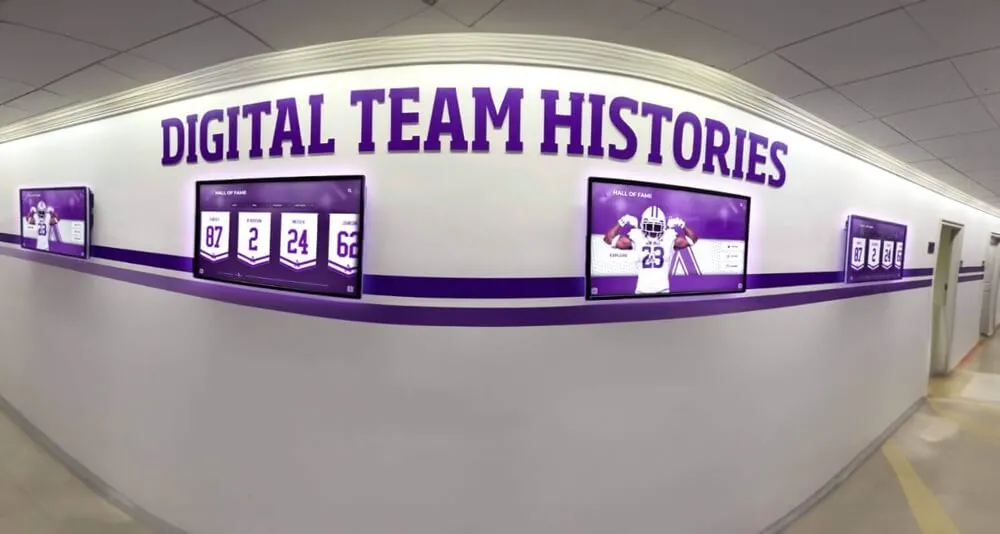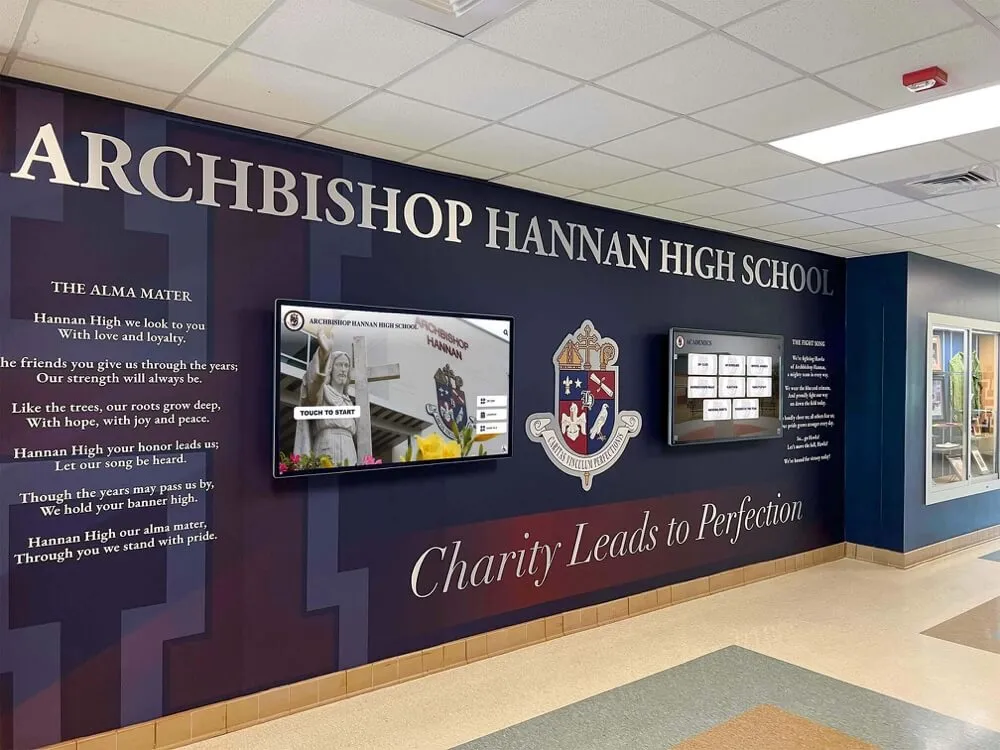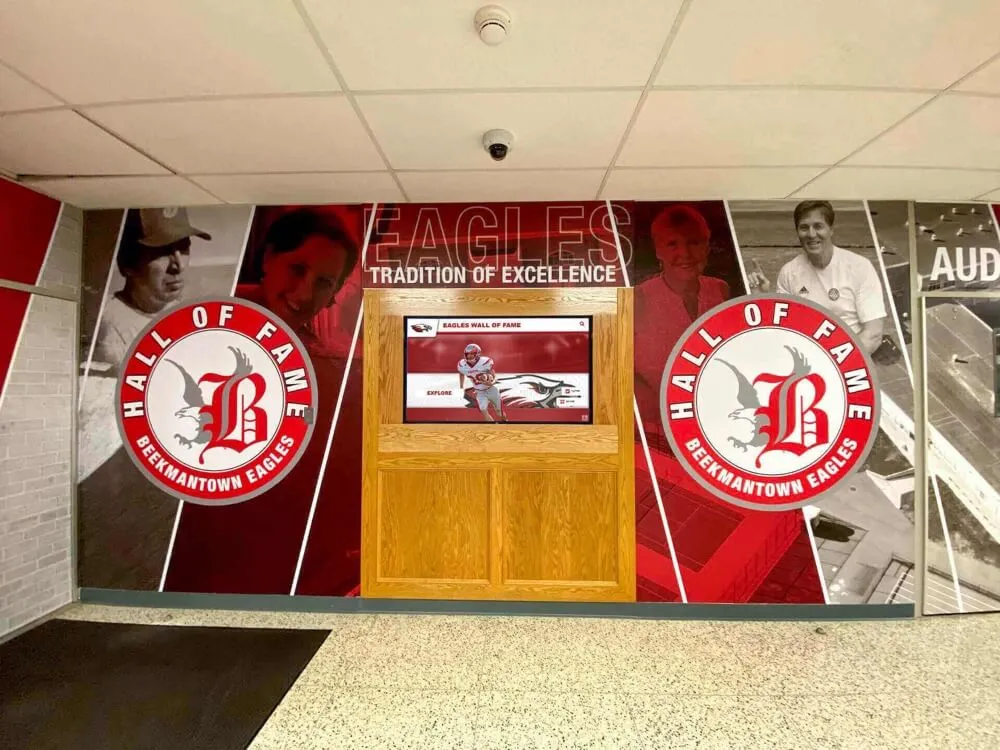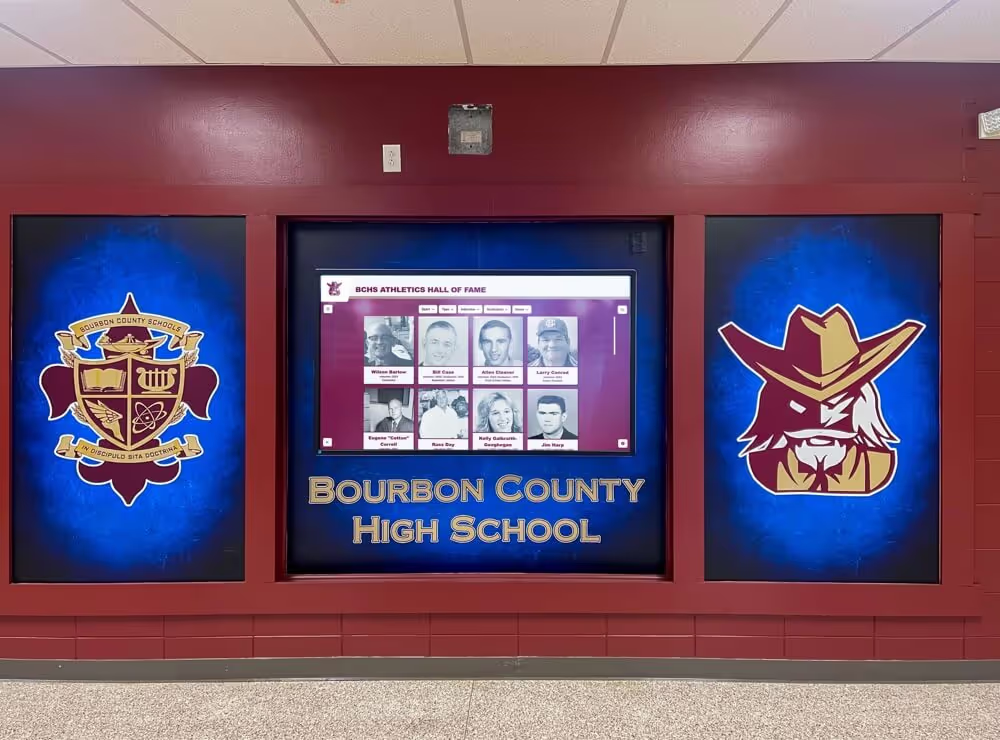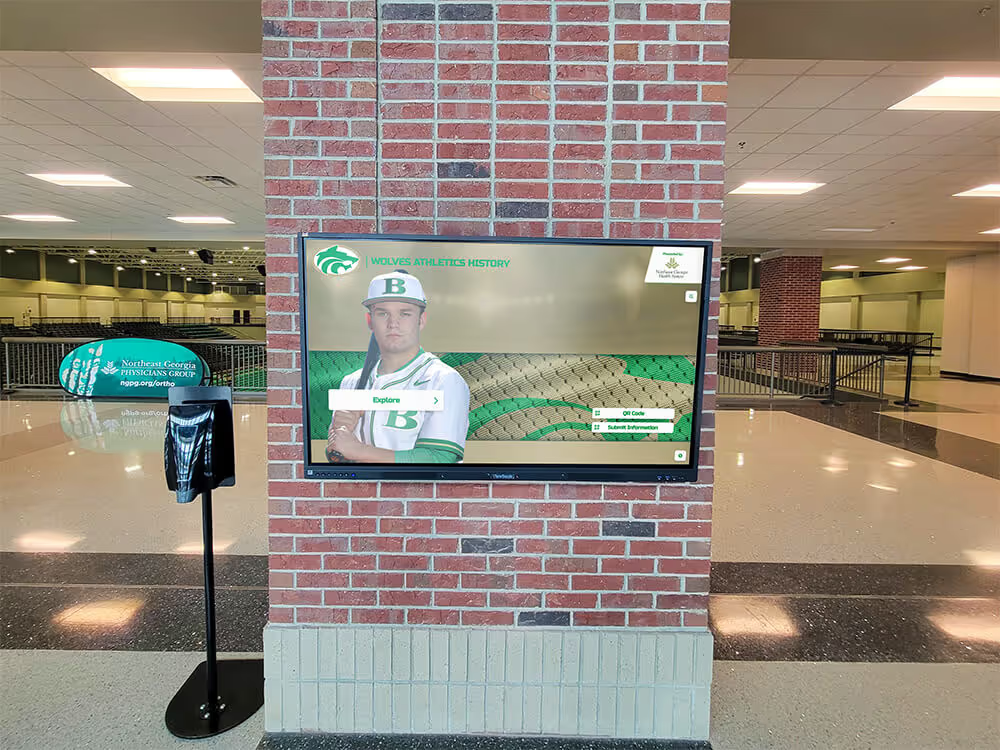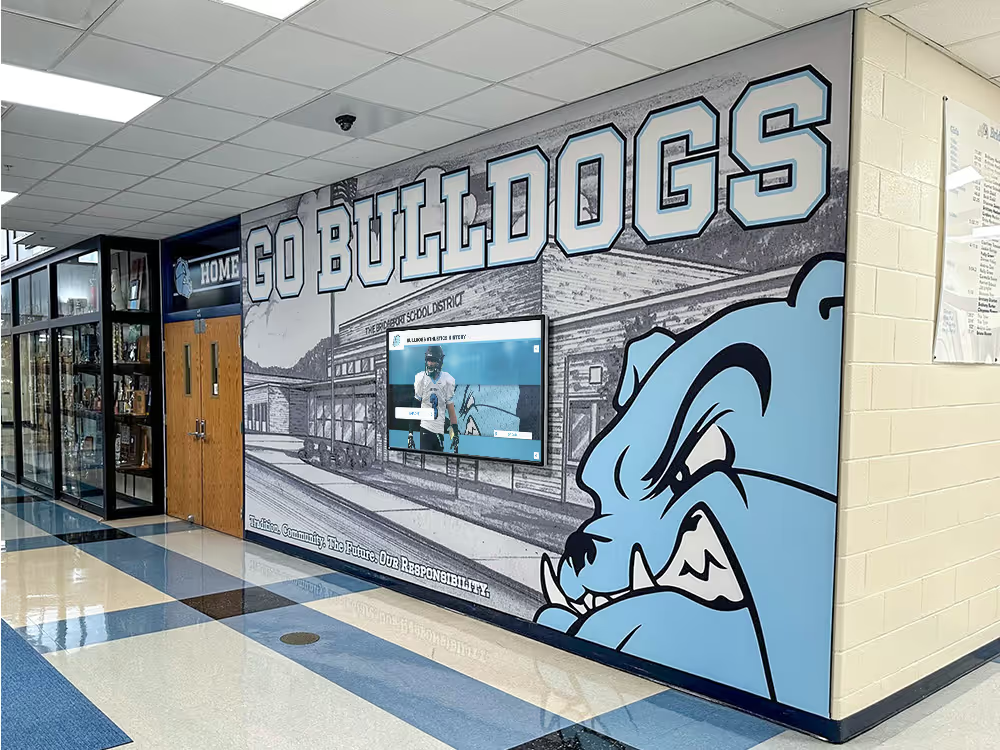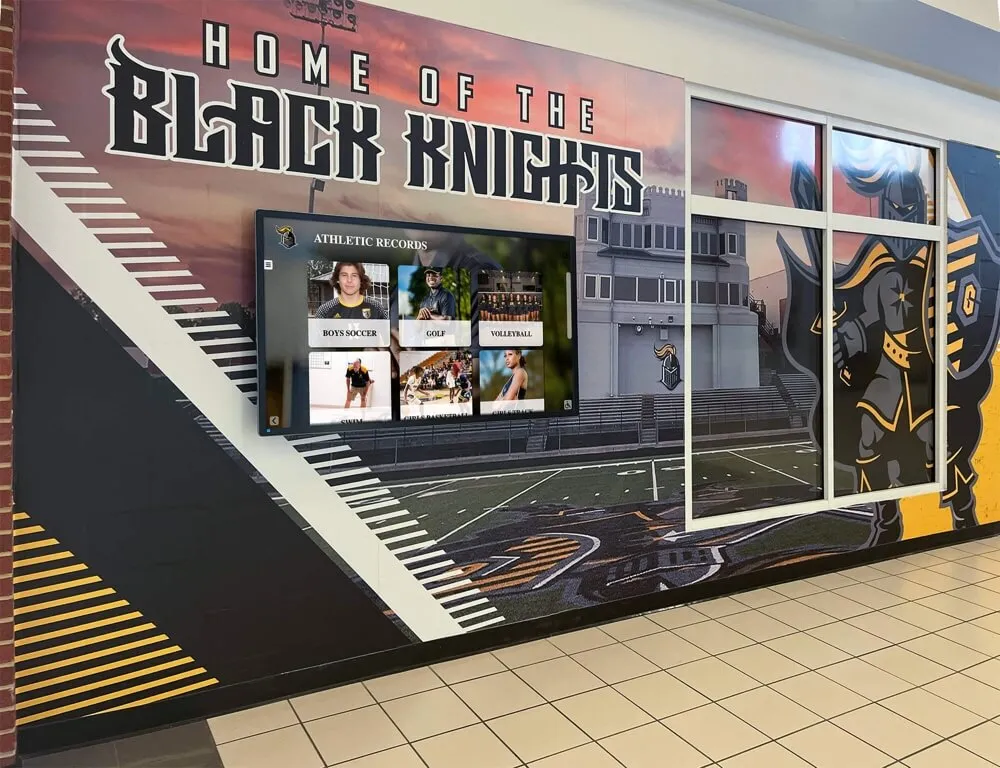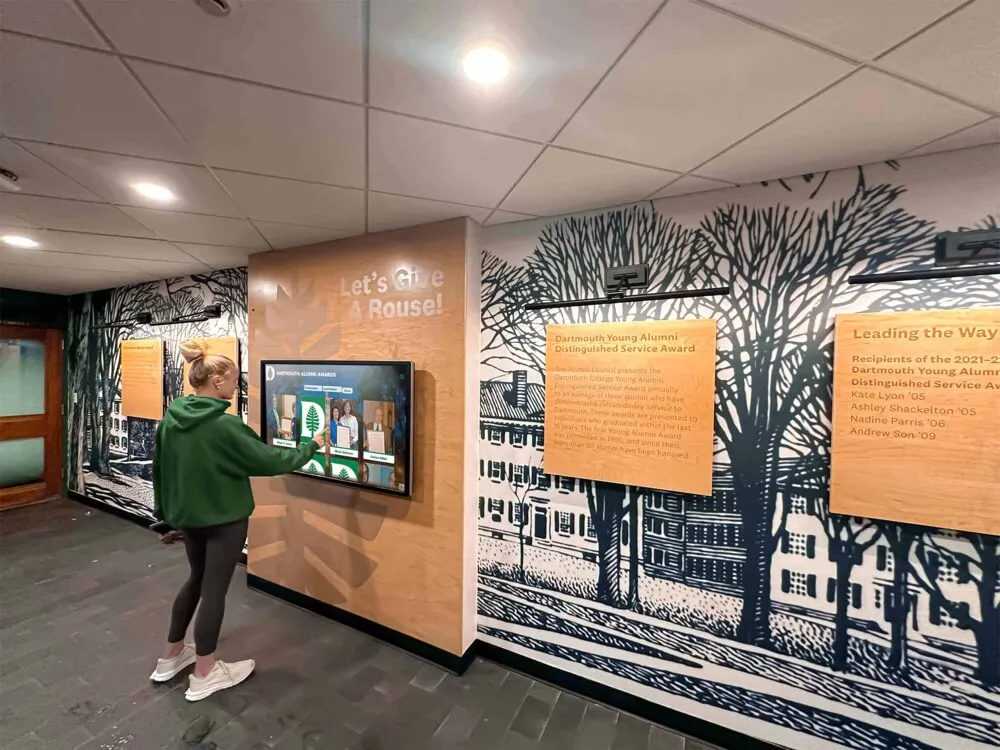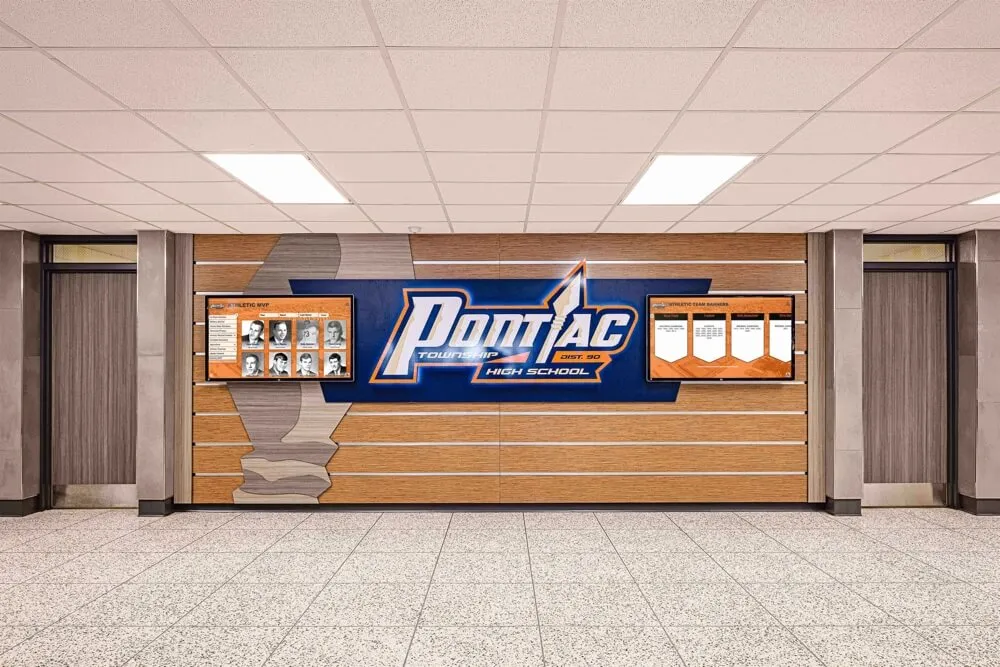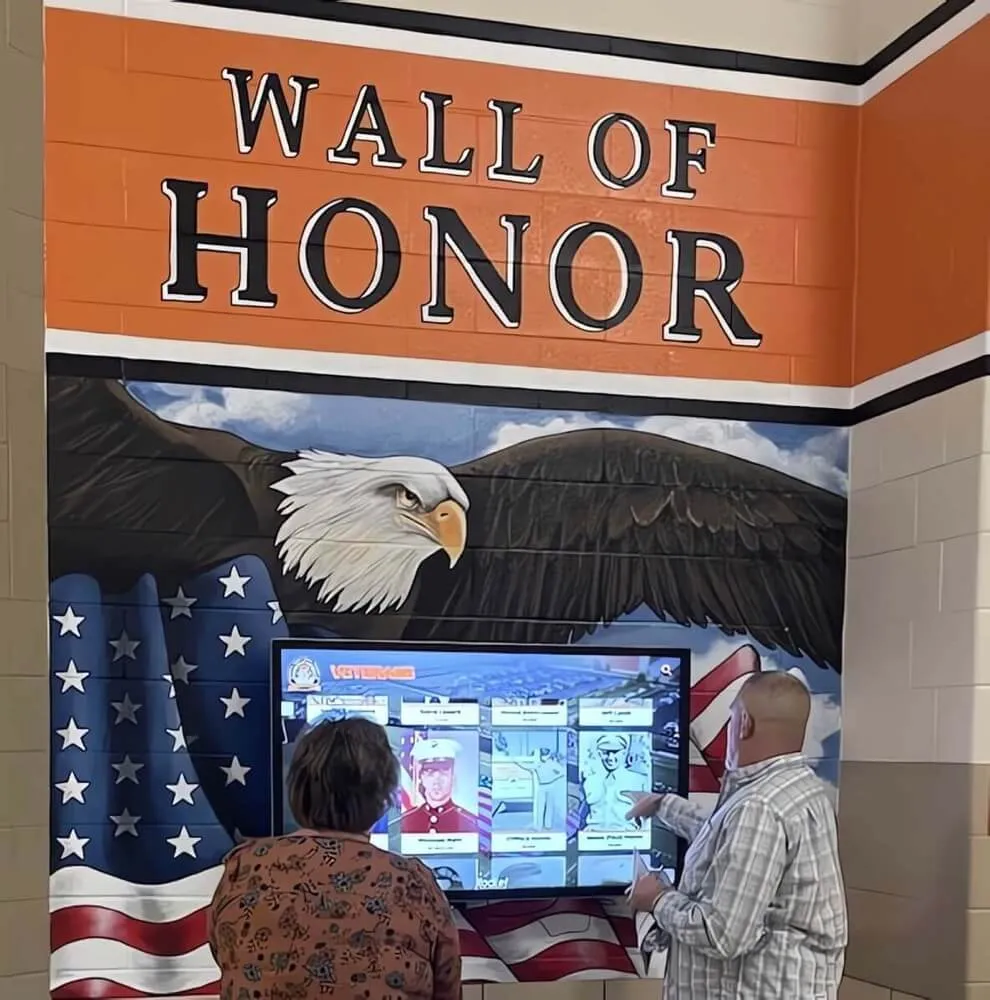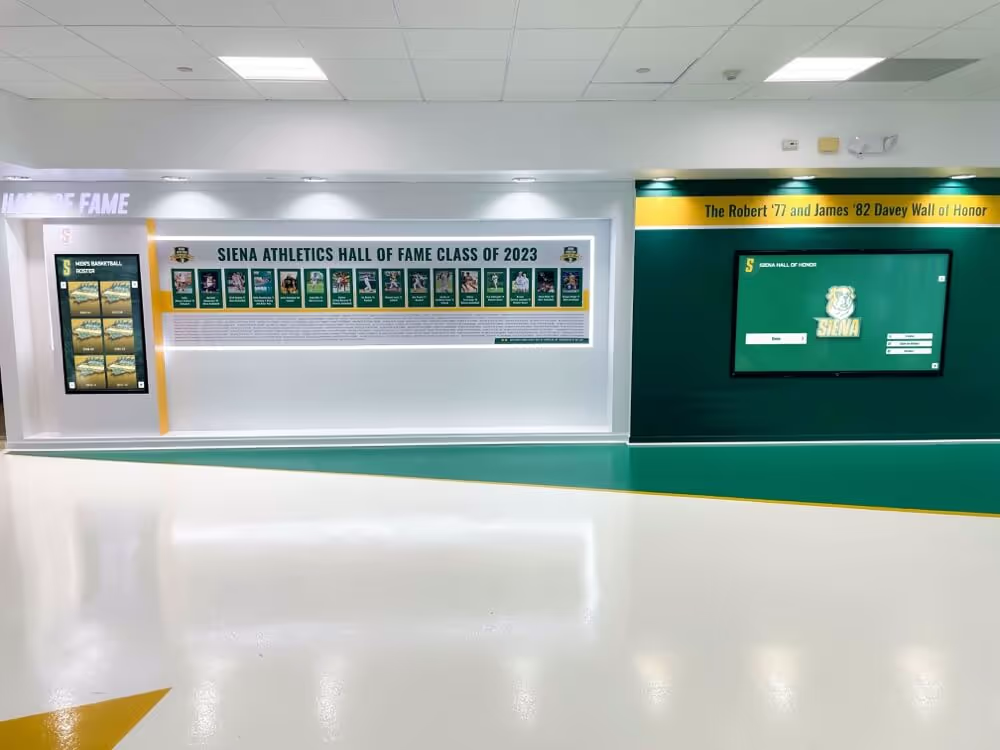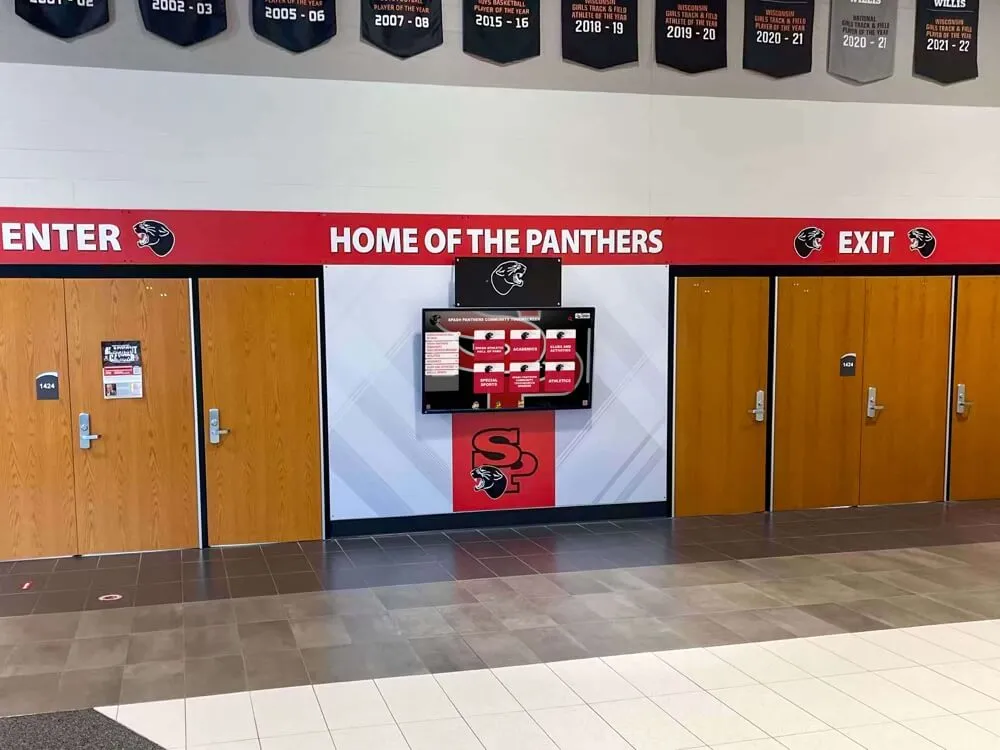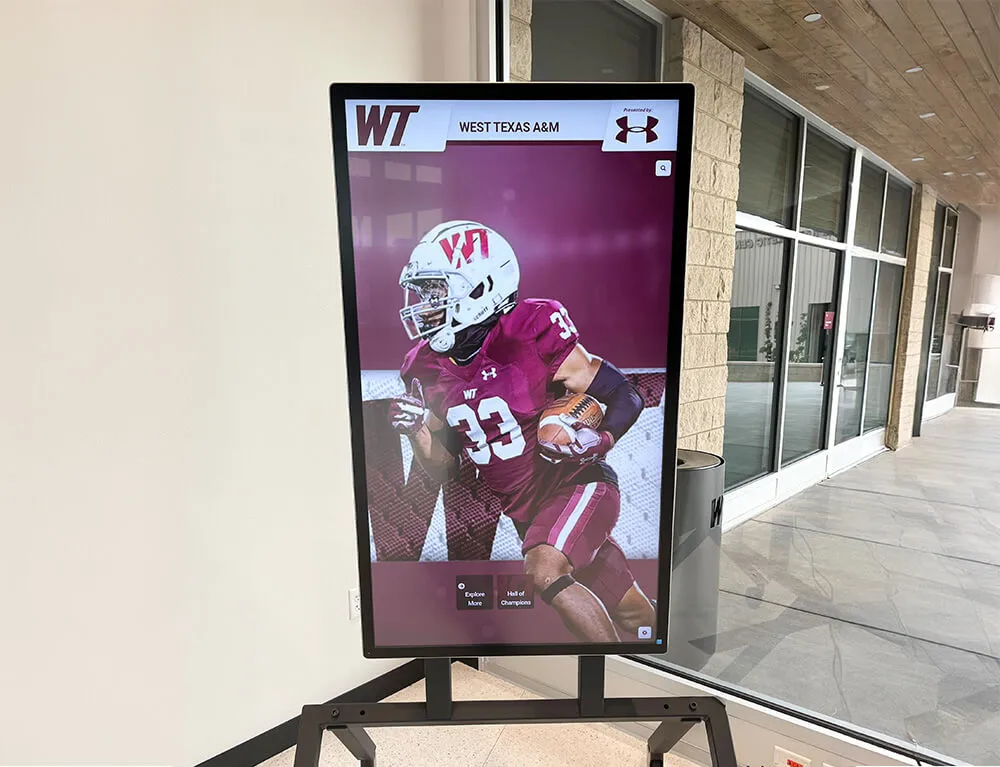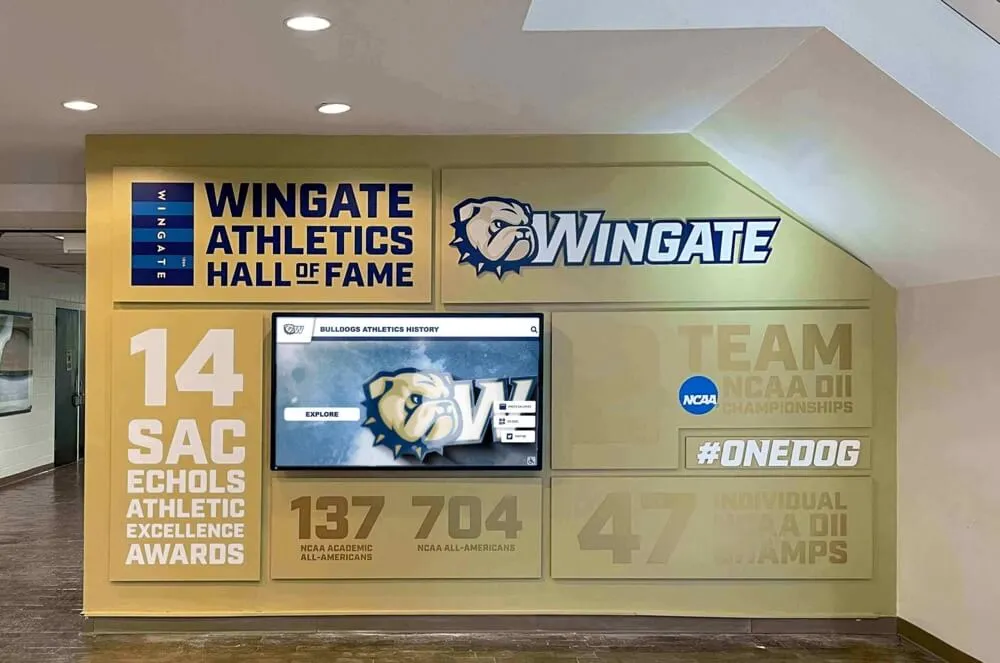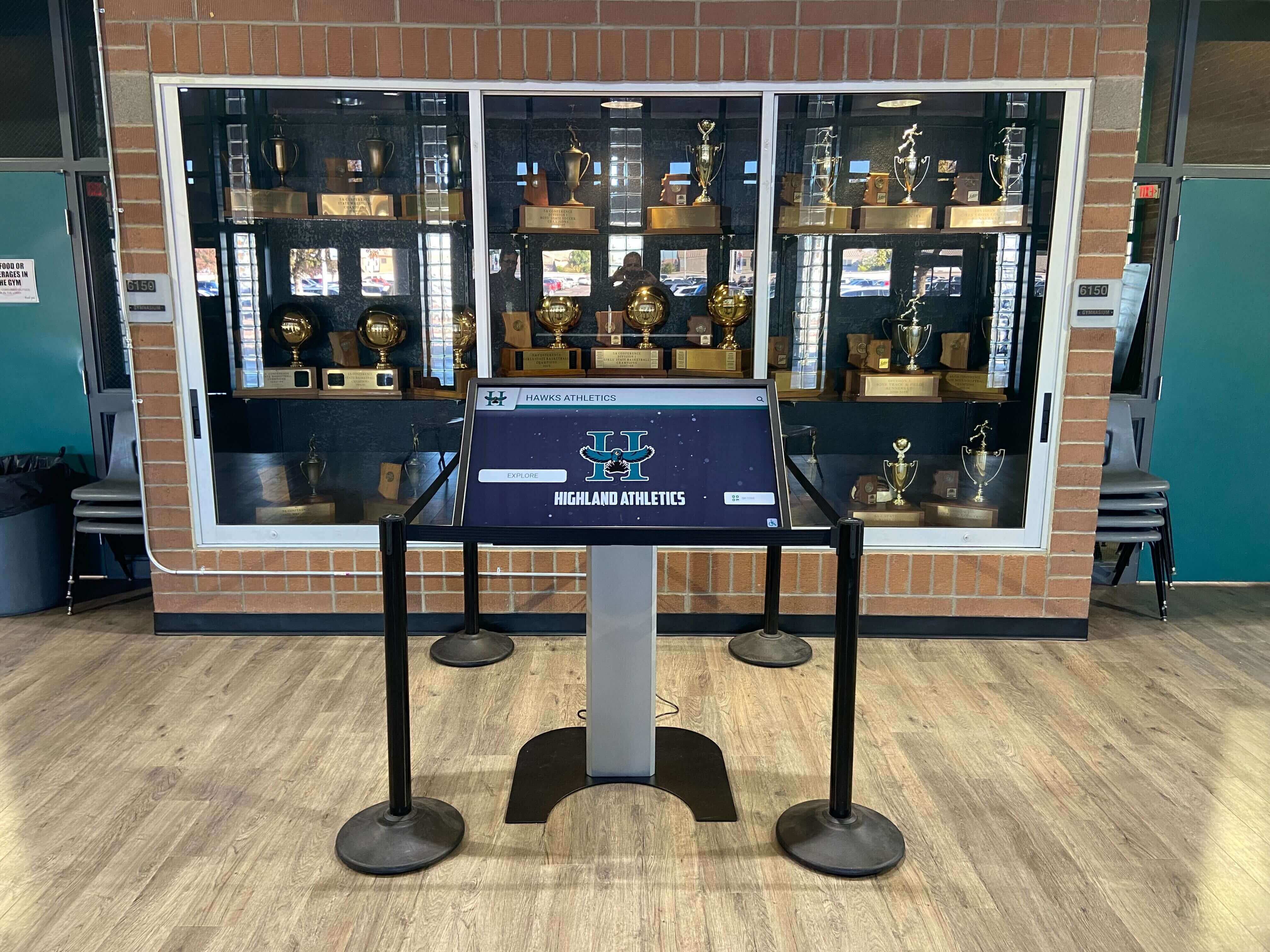




Selecting a digital hall of fame system represents one of the most significant technology investments an athletic director will make—often $15,000 to $40,000 or more for comprehensive installations. Unlike routine equipment purchases, this decision affects how your school celebrates athletic excellence for the next 10-15 years, influencing alumni engagement, student motivation, and program reputation long after your tenure ends.
The stakes are substantial. Choose the right provider and you create an institutional asset that automatically updates records, preserves every achievement, engages visitors for 10+ minutes per session, and reduces recognition administrative time by 85%. Select the wrong vendor and you inherit a frustrating system requiring constant manual updates, displaying outdated information that embarrasses your program, or sitting dark and unused because no one can figure out how to manage it effectively.
This comprehensive buying guide provides athletic directors with the tactical framework needed to evaluate digital hall of fame providers systematically, understand total cost of ownership beyond initial quotes, avoid common purchasing mistakes that undermine recognition programs, and make confident decisions that serve your athletic department for decades.
Intent: Decide - Your Digital Hall of Fame Buying Framework
This guide focuses specifically on the decision-making process athletic directors face when selecting digital hall of fame providers. You'll learn the critical evaluation criteria distinguishing excellent systems from disappointing installations, the questions revealing vendor capabilities beyond sales presentations, and the structured approach ensuring your investment delivers lasting value. By the end, you'll understand exactly how to compare providers, negotiate favorable terms, and implement recognition systems that honor athletic achievement comprehensively while inspiring future generations.
Understanding What You’re Really Buying
Before comparing specific vendors or pricing models, establish clear understanding of what comprehensive digital hall of fame systems actually include and what ongoing commitments you’re making.
Hardware Components and Infrastructure
Digital hall of fame installations require substantial physical equipment beyond simple displays.
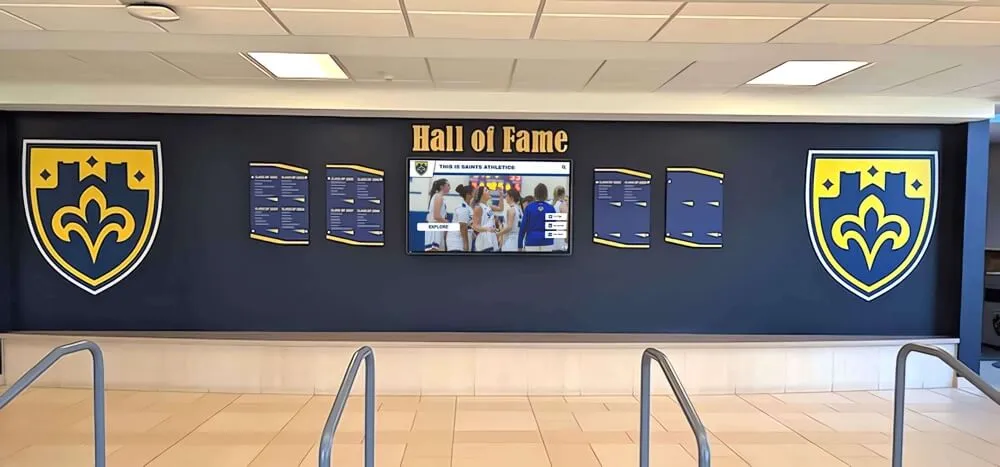
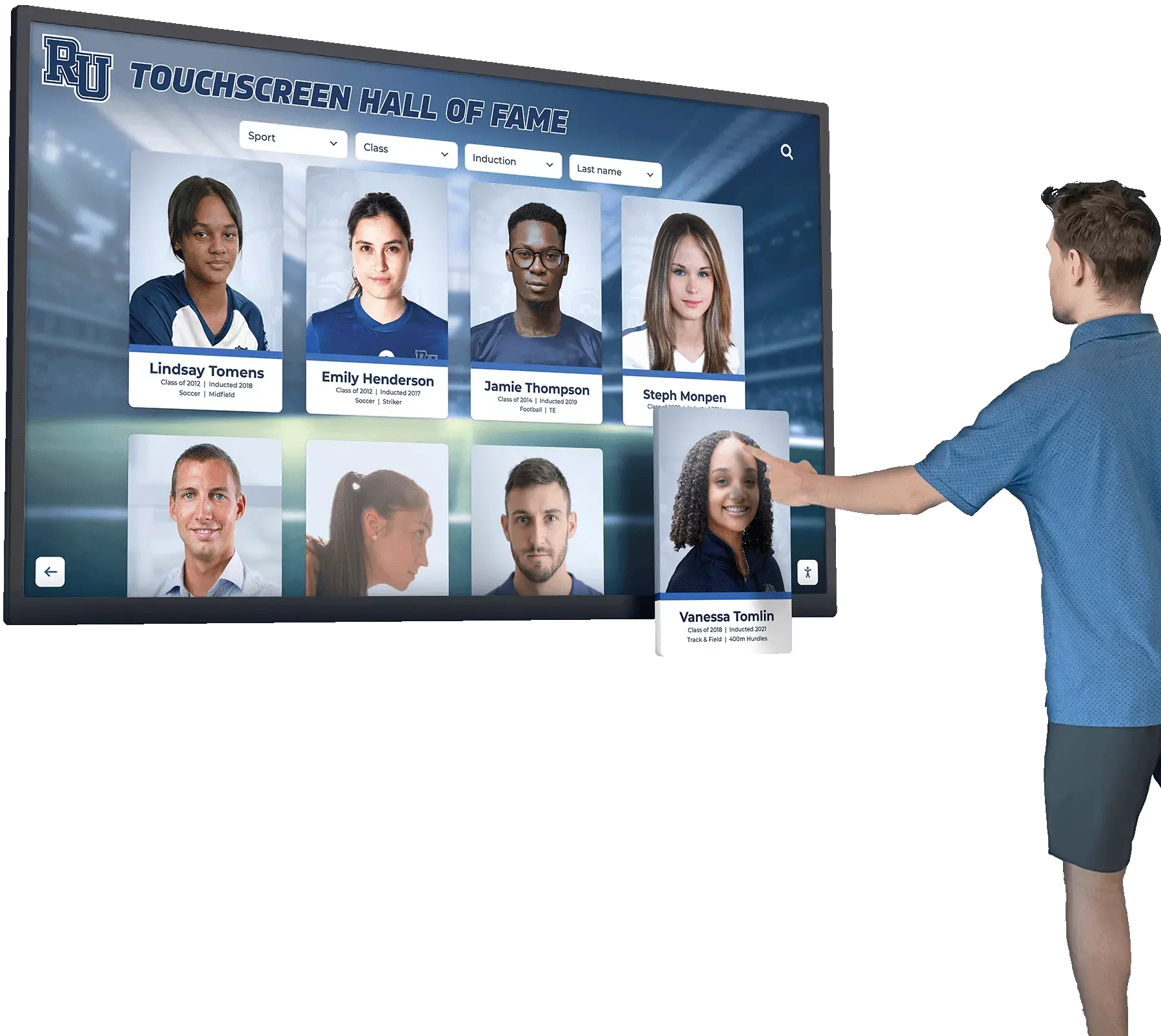
Commercial-Grade Touchscreen Displays: Quality systems use commercial displays engineered for continuous operation in public spaces—fundamentally different from consumer televisions. Commercial displays provide 16-18 hour daily operation ratings versus 4-6 hours for consumer units, three-to-five year warranties covering commercial use, ambient light sensors maintaining visibility in bright environments, and anti-glare coatings optimized for public spaces. Expect $2,000-$6,000 per display depending on size (55" to 86") and touch capabilities.
Integrated Computing Hardware: Touchscreen displays require computing devices running recognition software. Purpose-built systems often integrate computers directly into display assemblies, simplifying installation and reducing visible equipment. Standalone media players cost $300-$1,000 depending on required performance for interactive features and video playback.
Mounting and Installation Infrastructure: Professional installations include wall-mounting systems meeting safety standards, cable management hiding unsightly wiring, protective enclosures if needed for high-traffic areas, and ADA-compliant positioning ensuring accessibility. Budget $400-$1,500 per display for complete installation beyond hardware costs.
Network Connectivity Requirements: Cloud-based systems require reliable network access. Most installations use hardwired ethernet connections providing stable bandwidth for content synchronization and updates. WiFi works acceptably if networks provide strong signals at display locations. Verify network infrastructure meets vendor requirements before committing to installation locations.
Software Platform and Content Management
The software platform determines daily usability, feature availability, and long-term satisfaction far more than hardware specifications.
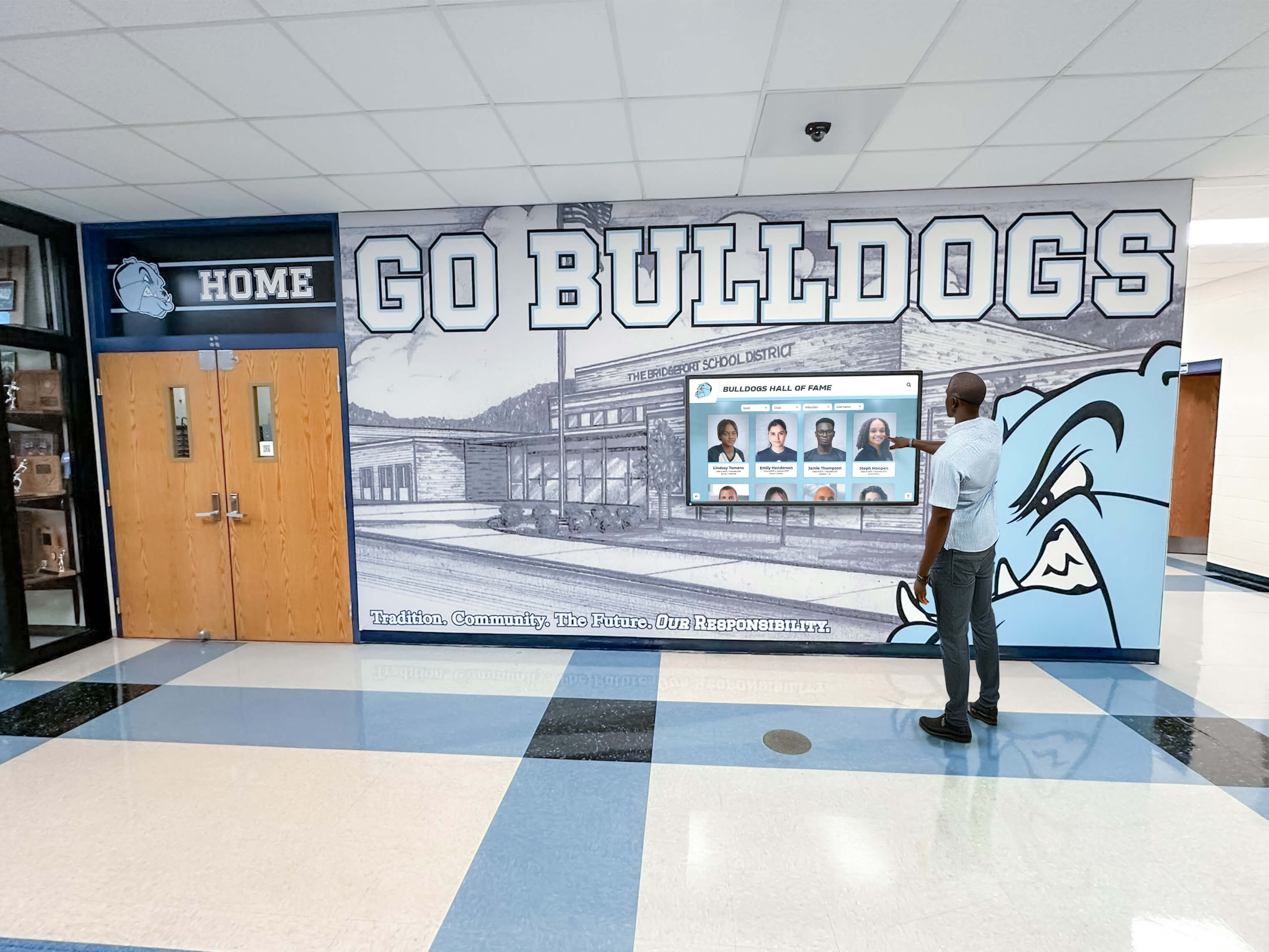
Recognition-Specific vs. Generic Digital Signage: Purpose-built recognition platforms like Rocket Alumni Solutions differ fundamentally from generic digital signage adapted for hall of fame use. Recognition-specific platforms provide pre-built athlete profile templates, sport-specific organizational structures, statistics tracking frameworks, searchable databases enabling visitor discovery, and multimedia integration designed for achievement storytelling. Generic signage platforms require building recognition capabilities from slideshow foundations—substantially more work for inferior results.
Content Management Interface Quality: You’ll interact with content management platforms for hours monthly throughout system lifespan. Intuitive interfaces enabling non-technical administrators to add athlete profiles, upload photos and videos, correct errors, and reorganize content in 5-10 minutes prove invaluable. Complex platforms requiring 30-45 minutes for routine updates and constant vendor support become burdensome quickly, leading to outdated displays that undermine investment value.
Cloud Access and Multi-User Collaboration: Modern platforms enable content management from any internet-connected device—smartphones, tablets, or computers—anywhere, anytime. Multi-user capabilities let assistant ADs, administrative staff, or coaches manage content simultaneously with appropriate permission controls. On-premise systems requiring physical access to specific computers create unnecessary constraints particularly problematic during school closures or remote work situations.
Scalability and Growth Accommodation: Initial installations often expand as recognition needs grow. Platforms should accommodate unlimited athlete profiles without performance degradation, support additional displays connecting to existing content databases, enable new recognition categories beyond initial scope, and maintain intuitive navigation as content volumes increase from hundreds to thousands of profiles. Systems performing adequately with limited initial content sometimes become unwieldy as recognition programs expand comprehensively. Understanding best practices for digital record boards helps ensure your system scales effectively as your program grows.
Implementation Services and Ongoing Support
Vendor support quality dramatically affects both implementation success and long-term satisfaction.
Professional Installation and Configuration: Quality vendors provide complete turnkey installation including hardware mounting meeting safety and accessibility standards, network configuration and connectivity testing, software installation and system setup, and initial administrator training ensuring confident content management from day one. DIY installation saves upfront costs but often creates problems requiring expensive corrections later.
Initial Content Development Assistance: Comprehensive recognition programs include decades of historical achievements representing hundreds or thousands of hours of data entry work. Premium vendors offer content migration services importing existing databases, bulk photo processing and optimization, template development accelerating profile creation, and quality assurance ensuring consistent presentation. Schools handling content development independently often discover overwhelming workload that never reaches completion, leaving expensive displays sitting largely empty.
Administrator Training and Documentation: Successful implementations include comprehensive training sessions covering all management functions, recorded video tutorials for future reference, written step-by-step documentation with screenshots, practice exercises building competence before managing live systems, and follow-up check-ins ensuring administrator success weeks after initial training. Minimal training—brief orientation calls or access credentials without guidance—predicts future content management frustration and abandoned recognition programs. Schools implementing touchscreen software solutions benefit from comprehensive training programs that ensure confident long-term content management.
Ongoing Technical Support Availability: Technology inevitably encounters issues requiring vendor assistance. Premium support provides dedicated account representatives familiar with your installation, phone support with documented response time commitments, email and live chat options for varied communication preferences, comprehensive online knowledge bases and FAQ resources, and regular platform updates delivering new features and improvements. Budget vendors offering only generic contact forms with slow response times leave schools struggling independently when technical problems arise.
Critical Evaluation Criteria for Provider Selection
Systematic evaluation across these critical dimensions separates excellent providers from disappointing alternatives that undermine recognition program success.
Total Cost of Ownership Analysis
Initial purchase prices tell incomplete cost stories. Calculate five-to-seven year total ownership costs including all expense categories.
Initial Capital Investment Breakdown: Request itemized quotes separating display hardware costs, integrated computing or media players, mounting equipment and installation labor, software platform licensing or development, initial content migration or development services, administrator training and documentation, and project management and coordination. Itemized pricing enables accurate comparison across vendors using different bundling approaches and identifies potential cost escalation points.
Annual Recurring Costs: Beyond initial investments, budget for software licensing or subscription fees (typically $1,200-$3,600 annually per display for recognition-specific platforms), cloud hosting and data storage, technical support contracts beyond basic included service, content updates if outsourcing ongoing management, and electricity consumption for display operation (approximately $35-$65 annually). Five-year software licensing costs often equal or exceed initial hardware investments—comparing only upfront prices severely distorts actual cost differences.
Hidden Costs and Potential Extras: Clarify exactly what’s included and what costs extra. Common hidden expenses include charges for exceeding athlete profile limits or storage quotas, fees for additional content managers beyond single administrators, costs for advanced features not included in base pricing, technical support incidents beyond included allowances, annual price escalators built into multi-year contracts, and content management time if platforms require excessive administrative effort. Understanding complete cost structure prevents unpleasant budget surprises as recognition programs operate and grow.
Budget Allocation Strategy: For typical quality installations, expect hardware and installation representing 55-65% of initial investment, software platform and implementation services comprising 25-35%, and initial content development consuming 10-15% of budgets. Annual operational costs typically run 8-12% of initial capital investment. A $30,000 initial installation typically requires $2,400-$3,600 annually for ongoing operation—factor these recurring costs into long-term budget planning.
Platform Usability and Administrator Experience
Long-term recognition program success depends fundamentally on whether content management remains easy enough that you actually update displays consistently.
Content Management Workflow Assessment: During vendor evaluations, request demonstration of common administrative tasks performed by you personally rather than simply watching sales presentations. Time how long adding complete athlete profiles requires once information and photos are gathered—quality platforms enable profile creation in 3-5 minutes, while cumbersome systems require 15-25 minutes for equivalent work. Multiply time differences across hundreds of profiles representing your recognition scope to understand administrative burden differences.
Bulk Operations and Efficiency Features: For comprehensive recognition honoring decades of achievements, bulk capabilities dramatically affect content development workload. Evaluate whether platforms support spreadsheet data imports for athlete information, batch photo uploads processing multiple files simultaneously, duplicate detection preventing redundant entries, bulk editing updating multiple profiles at once, and content cloning using existing profiles as templates for similar additions. These efficiency features distinguish platforms built for institutional scale from tools designed for limited use cases.
Error Correction and Content Revision: Mistakes happen—typos, incorrect statistics, outdated photos. How easily can administrators find and correct errors? Do platforms provide search and filtering enabling quick location of specific profiles needing updates? Can you preview changes before publication? Is revision history available showing what changed and when? Easy error correction encourages maintaining accurate recognition, while cumbersome revision processes lead to lingering mistakes that embarrass programs.
Mobile Content Management Capabilities: Can you update displays from smartphones and tablets, or does management require desktop computers? Mobile accessibility enables immediate updates when achievements occur—adding championship recognition Friday evening after games conclude, updating profiles during travel, or making quick corrections when notified of errors. Mobile-responsive management provides flexibility valuable for busy athletic directors juggling countless responsibilities.
Display User Experience and Engagement Quality
Recognition value depends not merely on content volume but on whether visitors actually engage with displays finding and exploring achievements relevant to their interests.
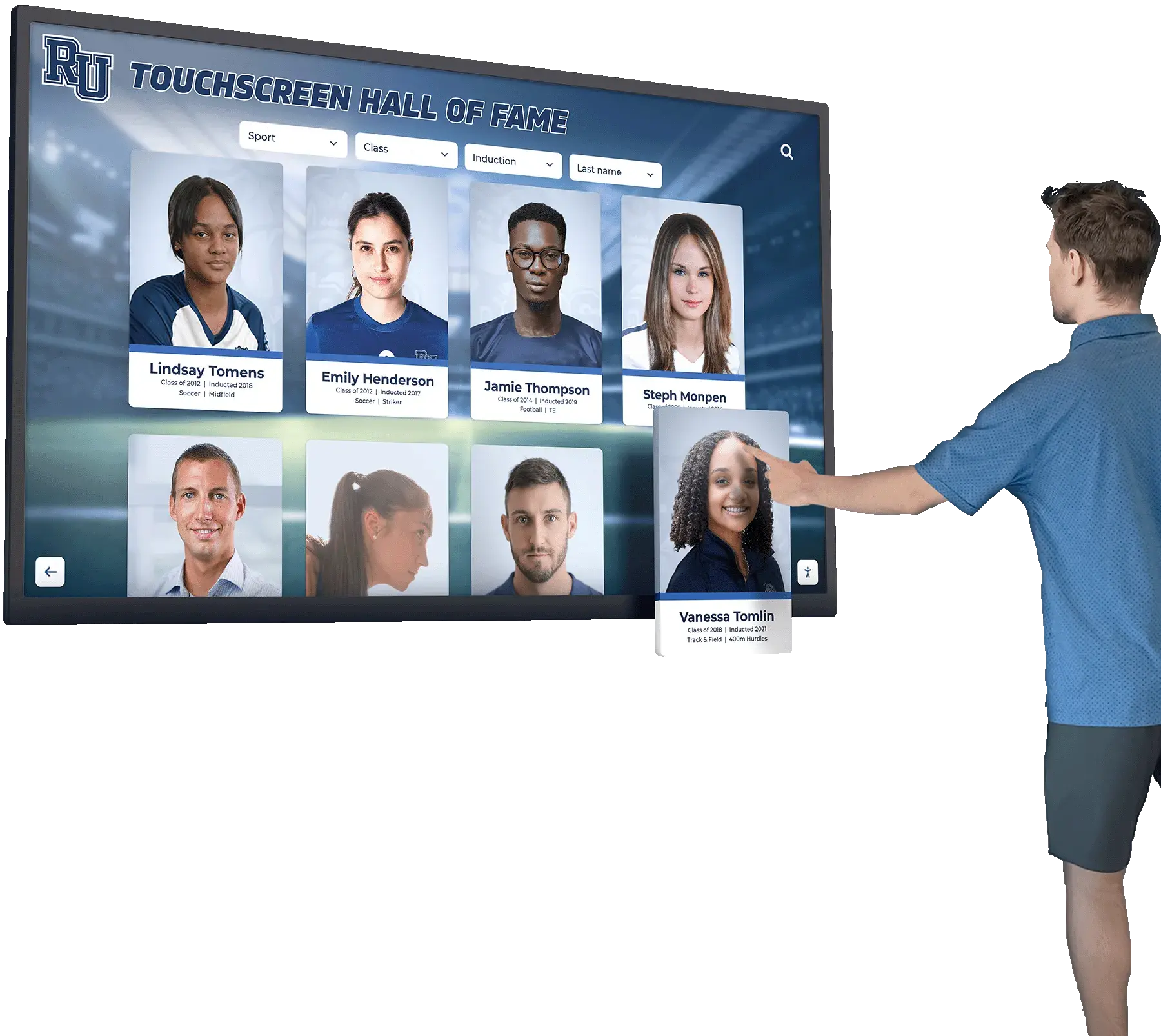

Intuitive Navigation and Discoverability: First-time visitors should understand intuitively how to explore recognition without instruction. Common effective navigation patterns include sport-specific sections organizing all recognition by athletic program, year-based browsing showing athletes by graduation or competition season, achievement-type filtering displaying championships, records, and honors separately, and alphabetical athlete directories enabling direct name lookup. During vendor demonstrations, observe whether navigation feels obvious or requires explanation—if sales representatives must explain extensively, typical visitors will struggle similarly.
Search Functionality and Performance: Comprehensive search capabilities enable visitors to find specific athletes, teams, or achievements instantly. Quality systems support athlete name searches with partial matching and autocomplete, sport and position filtering, year or date range selection, achievement type specification, and keyword searches spanning profile content. Test search performance personally—does it respond instantly, or do searches require 3-5 seconds creating frustration? Are search results well-organized showing most relevant matches first? Schools can review strategies for displaying school history to understand effective content organization approaches.
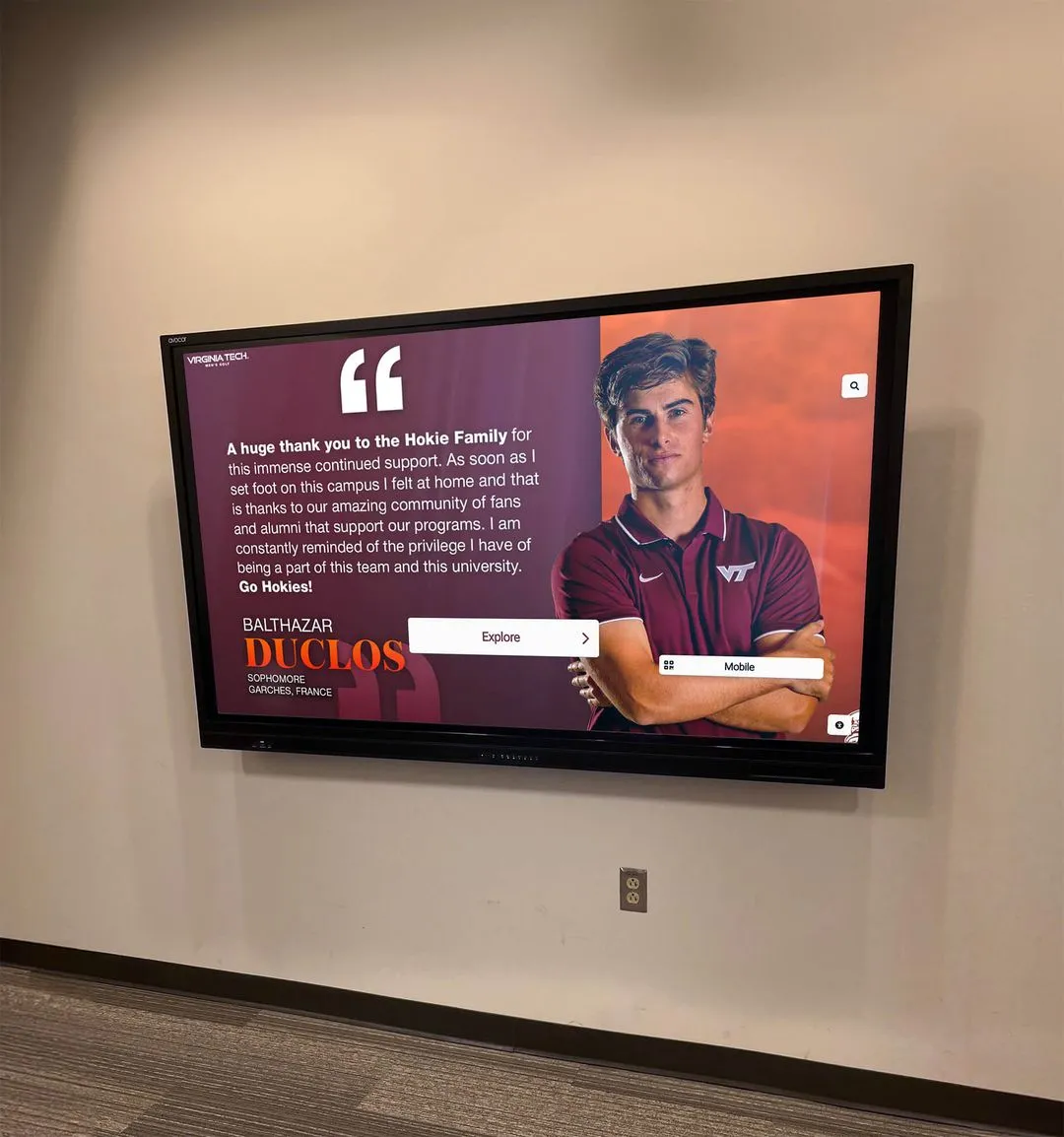
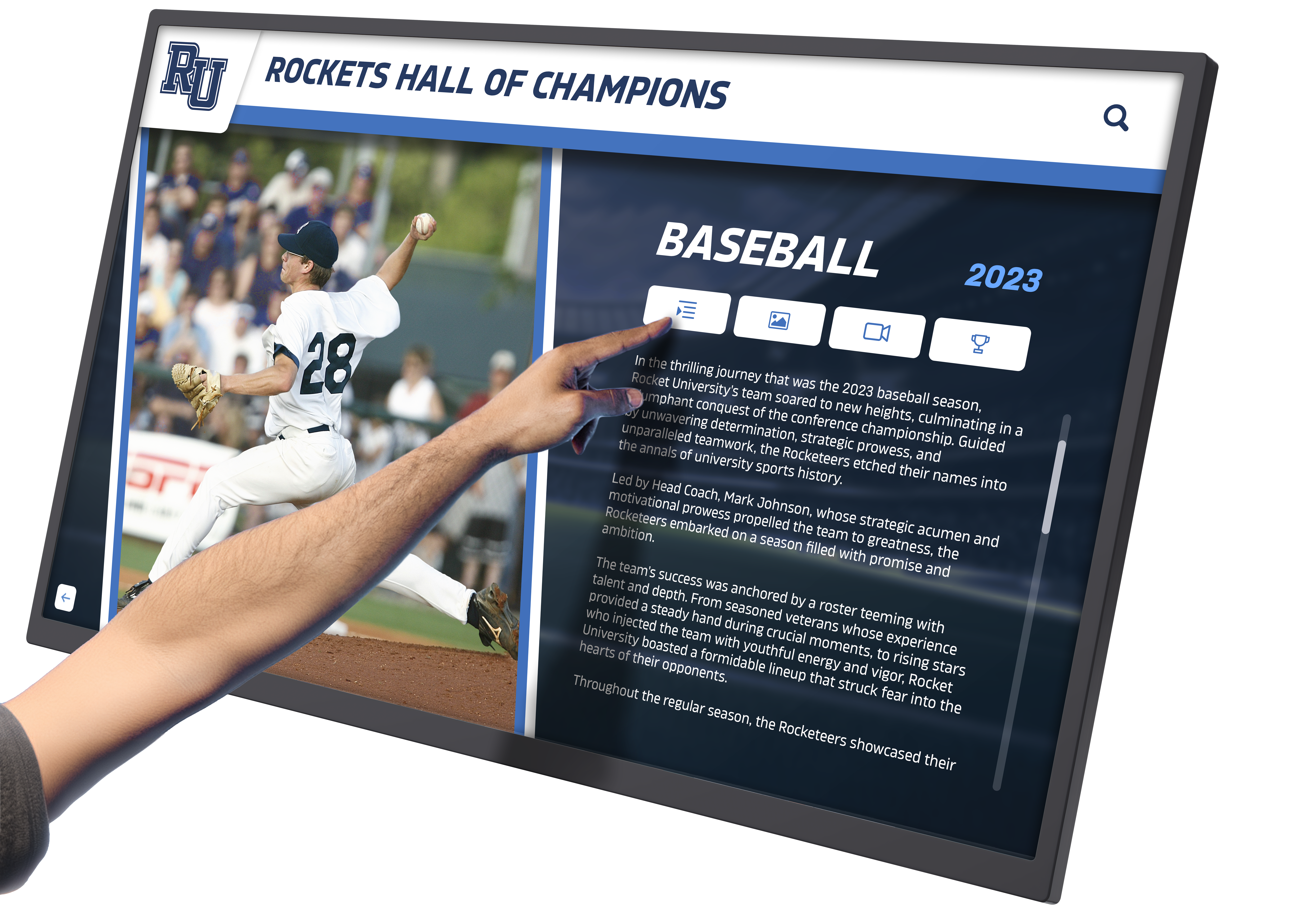
Multimedia Integration and Presentation Quality: Rich recognition experiences incorporate high-resolution athlete photos, video highlights from memorable performances, historical team photos and documents, audio recordings or interviews, and dynamic statistics displays. Evaluate multimedia presentation quality—do videos play smoothly without buffering? Do photos display in true high resolution or appear pixelated? Can visitors enlarge photos for detailed viewing? Quality multimedia handling separates professional experiences from amateur implementations that disappoint audiences.
Touch Responsiveness and Interface Polish: Modern displays should respond to touch input within 10 milliseconds creating immediate feedback. Noticeable lag creates frustrating experiences undermining confidence in technology. Test touchscreen responsiveness personally across various display areas—does every touch register accurately, or do some zones require repeated attempts? Commercial-grade capacitive touchscreens used in quality installations perform vastly better than resistive alternatives common in budget systems. Understanding touchscreen software requirements helps ensure optimal hardware and software integration.
Vendor Stability and Long-Term Partnership Quality
Digital hall of fame providers represent decade-plus partnerships, not one-time purchases. Vendor stability and commitment significantly affect long-term satisfaction.
Company Longevity and Market Position: Established vendors serving hundreds or thousands of institutional customers demonstrate proven market viability and accumulated expertise. Startups or new market entrants may offer innovative features or aggressive pricing but carry higher risk of discontinuing products or exiting markets entirely—leaving customers with unsupported orphaned systems. Evaluate how long vendors have operated in recognition markets specifically, current customer counts and growth trajectories, and financial stability indicators suggesting sustainable long-term operations. When evaluating providers, consider comprehensive guides on choosing touchscreen display hardware to ensure quality commercial-grade components.
Customer References and Satisfaction Evidence: Request references from schools with installations similar to your planned scope, programs that have used systems extensively for multiple years, and recent implementations still in early deployment phases. Contact references directly asking about implementation experiences and support quality, content management ease and administrator satisfaction, technical reliability and problem resolution responsiveness, overall satisfaction and whether they would select the same vendor again, and significant limitations or frustrations encountered. Honest reference conversations reveal insights unavailable through vendor demonstrations or marketing materials.
Platform Evolution and Enhancement Commitment: Digital technology evolves rapidly. Will your provider’s platform incorporate emerging capabilities like improved mobile features, enhanced multimedia support, social media integration, or artificial intelligence applications? Review vendor product roadmaps and recent feature release histories indicating active development. Platforms receiving regular enhancements remain current across years of operation, while stagnant systems become increasingly outdated regardless of initial quality. Vendors committed to continuous improvement ensure your investment retains value long-term. Explore how alumni engagement strategies can integrate with evolving digital recognition platforms.
Support Philosophy and Customer Success Focus: Some vendors treat support as cost centers minimized to preserve margins, while others view customer success as central value propositions deserving substantial investment. During evaluation, assess whether vendors emphasize ongoing relationships or focus primarily on sales transactions, whether they proactively offer guidance and best practices or reactively respond only when customers request help, and whether support representatives demonstrate deep product knowledge and genuine interest in your success. Support philosophy becomes apparent through evaluation interactions—vendors demonstrating partnership orientation during sales typically maintain that commitment post-implementation.
Understanding Pricing Models and Contract Structures
Digital hall of fame providers employ varied pricing approaches, each with distinct advantages, limitations, and total cost implications.
One-Time Purchase vs. Subscription Models
One-Time Purchase Approach: Some vendors charge upfront fees covering hardware, software licensing, and implementation without recurring annual costs beyond optional extended support contracts. This model appeals to budget-constrained schools seeking to avoid ongoing operational expenses and programs wanting budget certainty without recurring fees.
However, one-time pricing creates misaligned incentives. Without recurring revenue, vendors have limited financial motivation to enhance platforms, provide robust support, or maintain long-term customer relationships. Schools often discover that what seemed like cost savings become expensive when platforms stagnate, support quality diminishes, or system migrations become necessary after 4-5 years as technology advances beyond static platforms.
Annual Subscription Model: Purpose-built recognition platforms typically charge annual licensing fees—$1,200-$3,600 per display depending on feature scope and support levels. While creating ongoing operational expenses, subscription models align vendor incentives with customer success. Recurring revenue funds continuous platform enhancement, robust technical support, and long-term customer relationships ensuring satisfaction.
Subscription pricing feels more expensive initially but often delivers superior long-term value through platforms that evolve continuously, comprehensive support preventing costly downtime, and vendor partnerships focused on customer success rather than one-time transactions. Calculate total cost over expected 7-10 year system lifespans when comparing models—subscription platforms often prove comparable or less expensive total cost while delivering substantially better experiences and outcomes.
Hybrid and Financing Options: Some vendors offer flexible arrangements combining elements of both approaches—moderate upfront payments with lower annual fees, lease-to-own structures spreading initial costs across multiple years, or municipal financing arrangements accommodating district procurement requirements. Explore flexible payment terms if budget constraints make traditional purchasing challenging.
What’s Included vs. Optional Add-Ons
Vendors bundle features and services differently, making direct pricing comparisons challenging without understanding exactly what’s included versus costing extra.
Standard Feature Sets: Clarify base pricing coverage including how many athlete profiles or content items are included without additional charges, number of administrator accounts and content managers supported, cloud storage capacity for photos, videos, and documents, mobile companion app or web portal access, and technical support scope including response time commitments. Some vendors impose artificial limits requiring premium tier upgrades as recognition programs grow—others provide truly unlimited capacity within base pricing.
Premium Features and Upgrades: Common optional enhancements include advanced analytics and reporting dashboards, custom branding and design services beyond standard templates, API access for integrations with existing systems, white-label mobile applications featuring institutional branding, premium support contracts with faster response times, and development of custom features for unique requirements. Understand upgrade costs before committing if your roadmap includes advanced capabilities beyond initial implementation.
Content Development Services: Professional content migration and development services dramatically reduce institutional workload but typically cost $2,000-$10,000+ depending on scope. Services may include digitizing existing records and historical content, professional photography of trophies and artifacts, athlete profile creation from provided information, video production and editing services, and quality assurance ensuring consistent presentation. Schools with limited staff time often find content services worth investment despite added cost, while programs with willing volunteers may handle development internally saving expenses.
Contract Terms and Flexibility
Commitment Duration and Renewal Terms: Standard contracts typically span 1-3 years with automatic renewal provisions unless cancelled within specified notice periods. Evaluate whether contract lengths align with institutional procurement cycles and budget processes, renewal provisions include price protection or allow unilateral vendor increases, and cancellation requirements provide reasonable flexibility if circumstances change. Favorable contracts balance vendor revenue stability needs with institutional flexibility managing long-term technology commitments.
Expansion and Scaling Provisions: Initial single-display installations often expand as recognition programs prove successful. Understand whether contracts include volume discounts for additional displays, whether adding displays requires new contracts or simple amendments to existing agreements, how pricing scales for multi-display deployments, and whether expanded implementations receive preferential terms. Vendors confident in long-term value creation typically offer attractive expansion pricing retaining satisfied customers rather than treating each addition as isolated sales opportunities.
Data Portability and Exit Rights: Switching providers becomes nearly impossible if vendors refuse data export or provide data only in formats incompatible with alternative platforms. Ensure contracts guarantee content export rights in standard formats enabling reasonable portability, commit vendors to providing comprehensive data exports upon request, and clarify any costs or restrictions for accessing your content if relationships end. This protection prevents vendor lock-in where switching becomes so painful that you remain with unsatisfactory providers by default rather than choice.
Essential Questions to Ask Every Vendor
Effective evaluation requires asking probing questions revealing critical information that polished sales presentations might obscure or minimize.
Implementation and Deployment Questions
“What is your typical implementation timeline from contract signing to operational launch, and what could cause delays?” This question reveals whether vendors maintain realistic expectations or promise unrealistically rapid deployments likely encountering delays and frustration. Quality implementations typically require 6-12 weeks for planning, installation, training, and initial content development. Vendors promising 2-3 week turnarounds likely underestimate complexity or plan to deliver minimally functional systems requiring extensive additional work.
“What specific tasks are included in your standard implementation, and what remains our responsibility?” Explicitly understand division of labor. Do vendors handle complete hardware installation including mounting and configuration, or do they ship equipment expecting institutional facilities to manage mounting? Does implementation include initial content creation assistance, or do vendors deliver empty systems expecting schools to populate all content independently? Clear responsibility definition prevents unpleasant surprises mid-implementation when each party assumes the other handles critical tasks.
“How many hours of administrator training do you provide, and what training formats are available?” Comprehensive training ensures comfortable, confident content management. Quality vendors provide 2-4 hours of live training covering all management functions, recorded video tutorials for future reference and new staff onboarding, written documentation with step-by-step instructions and screenshots, hands-on practice exercises building competence before managing live systems, and follow-up check-ins 2-4 weeks post-launch ensuring administrator success. Minimal training—brief orientation calls without substantial hands-on practice—predicts future management frustration.
Platform Capability and Limitation Questions
“What are the practical limits on athlete profiles, content items, or storage capacity, and what happens if we exceed them?” Some vendors advertise “unlimited” capacity while imposing soft limits requiring premium upgrades when reached. Clarify realistic capacity boundaries and associated costs if any. For comprehensive recognition programs documenting 50-75 years of athletic history across 20+ sports, you might eventually need capacity for 2,000-5,000+ athlete profiles, 15,000-25,000+ photos, and 500-1,000+ videos. Ensure platforms accommodate your full recognition scope without requiring expensive upgrades.
“How does platform performance change as content volume increases from hundreds to thousands of profiles?” Systems performing adequately with limited initial content sometimes become sluggish as recognition programs expand comprehensively. Search response times increase from instant to 3-5 seconds. Navigation becomes cumbersome scrolling through extensive lists. Content management interfaces slow making updates tedious. Request references from schools with comprehensive installations similar to your ultimate scope validating performance at scale.
“What multimedia formats and file sizes do you support, and are there any restrictions or requirements for photos and videos?” Understand specific technical requirements for content. Can platforms accept high-resolution photos and automatically optimize them, or must you manually resize all images before upload? What video formats work—standard MP4, or do you need specialized encoding? Are there file size limits restricting high-quality multimedia? Restrictive format requirements create ongoing content preparation burden consuming administrative time.
“Can we control what content appears on physical displays versus web portals, and how granular are permission settings?” Some content might be appropriate for campus displays but warrant restriction from public web access—for example, detailed contact information about minors. Flexible platforms enable content visibility controls determining what appears where, user permission systems controlling who can view, edit, approve, and publish different content types, and privacy settings managing personally identifiable information appropriately.
Support and Reliability Questions
“What technical support is included in base pricing, and what costs extra?” Get specific details about ongoing support including support availability hours and time zones, expected response times for various issue severity levels, whether support includes phone, email, live chat, or only contact forms, whether support is unlimited or capped at certain incident counts, and whether extended or premium support options exist with faster response commitments. Premium support distinguishes vendors committed to customer success from those focused primarily on sales with minimal post-sale support investment.
“What is your average display uptime percentage, and how quickly do you typically resolve technical issues?” Reliability matters enormously for prominent installations in high-traffic locations. Quality systems maintain 99%+ uptime with resolution of most technical issues within 24-48 hours maximum. Vendors struggling with frequent outages or slow problem resolution create embarrassing situations when displays malfunction prominently during key events or visitor periods.
“How are software updates delivered, and do they ever require display downtime or disruptive changes to content management interfaces?” Cloud-based platforms typically deploy updates automatically without institutional action ensuring all customers benefit from improvements and security patches. Understand update frequency, whether updates ever require display downtime, how vendors communicate changes affecting administrator workflows, and whether you can defer updates if timing proves inconvenient. Transparent update processes prevent unexpected disruptions.
“Can you describe your disaster recovery and business continuity plans if your services experience outages?” Cloud platforms carry risk of service outages affecting all customers simultaneously. Quality vendors maintain robust redundancy, automated backups, and disaster recovery protocols minimizing outage durations and preventing data loss. Understanding vendor reliability infrastructure provides confidence that technical problems won’t leave your displays dark for extended periods.
Avoiding Common Buying Mistakes
Athletic directors navigating digital hall of fame purchases for the first time often encounter predictable pitfalls undermining recognition program success.
Prioritizing Lowest Initial Cost Over Total Value
The most common mistake involves selecting providers primarily based on lowest initial cost without adequately considering total cost of ownership, long-term support quality, feature completeness, or ease of use affecting ongoing operational burden.
A $12,000 system requiring 10 hours monthly for frustrating content updates costs far more in athletic director time than a $28,000 system enabling equivalent updates in 2 hours monthly. Calculate hourly value of your time—if you earn $40/hour (loaded), the budget system costs $400 monthly in your time versus $80 monthly for the premium alternative. Over five years, the “cheaper” system costs $19,200 in opportunity cost plus initial investment versus $4,800 plus higher initial investment for the premium system—the premium option delivers better experience while potentially costing less total.
Total value assessment considers not only purchase prices but also implementation ease and quality, ongoing operational time requirements, support availability and responsiveness, feature completeness eliminating need for add-ons, hardware reliability affecting replacement frequency, and administrator satisfaction affecting content update consistency. Systems delivering comprehensive value at moderate initial prices typically prove less expensive long-term than bargain alternatives requiring constant workarounds and consuming excessive time.
Underestimating Content Development Requirements
Beautiful, powerful recognition systems deliver zero value while sitting empty of content. Many athletic departments underestimate the substantial work required for initial content development and ongoing updates, leading to impressive installations displaying minimal content that fails to justify investment.
Comprehensive athlete recognition requires gathering biographical information, achievement details, and statistics for hundreds or thousands of athletes, collecting high-quality photos for every profile plus team photos and historical images, writing compelling profile narratives highlighting achievements and contributions, organizing content into intuitive categories and navigation structures, verifying accuracy before publication to avoid embarrassing errors, and maintaining consistent formatting and presentation quality across all content. For programs documenting 50+ years of athletic history, initial content development can require 200-500+ hours of work.
Successful implementations include realistic content development planning acknowledging substantial workload, phased approaches launching with manageable content scope and expanding gradually over 12-24 months, distributed responsibility engaging coaches, boosters, and administrative staff beyond athletic directors alone, template development accelerating creation of additional profiles once initial examples succeed, and realistic assessment of ongoing maintenance requirements ensuring displays remain current as new achievements occur.
Consider professional content development services—$3,000-$8,000 additional investment might feel expensive but proves worthwhile if it ensures comprehensive recognition reaches completion rather than stalling with partially populated systems that never achieve full value.
Neglecting Display Placement and Infrastructure Planning
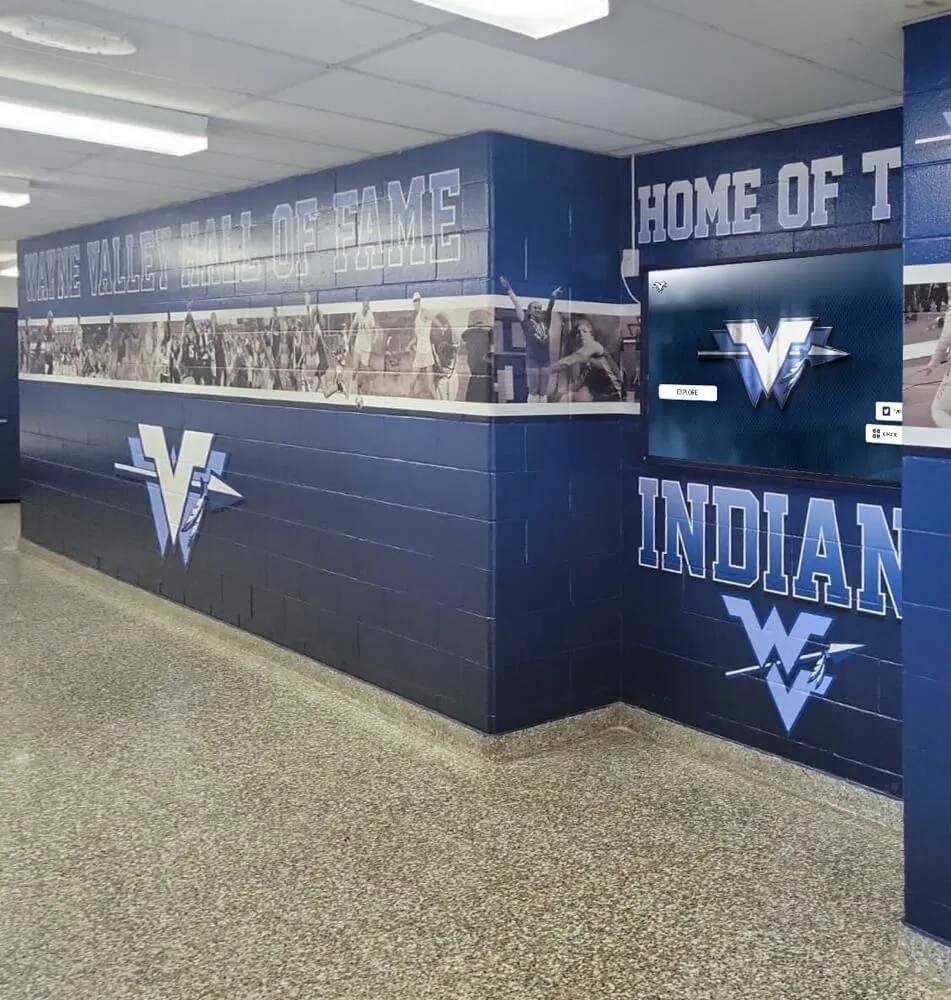
Recognition systems require physical space with appropriate electrical power, network connectivity, security, visibility, and environmental conditions. Athletic directors sometimes commit to providers before confirming installation feasibility at intended locations, discovering after purchase that planned locations lack necessary infrastructure or displays don’t fit spaces as expected.
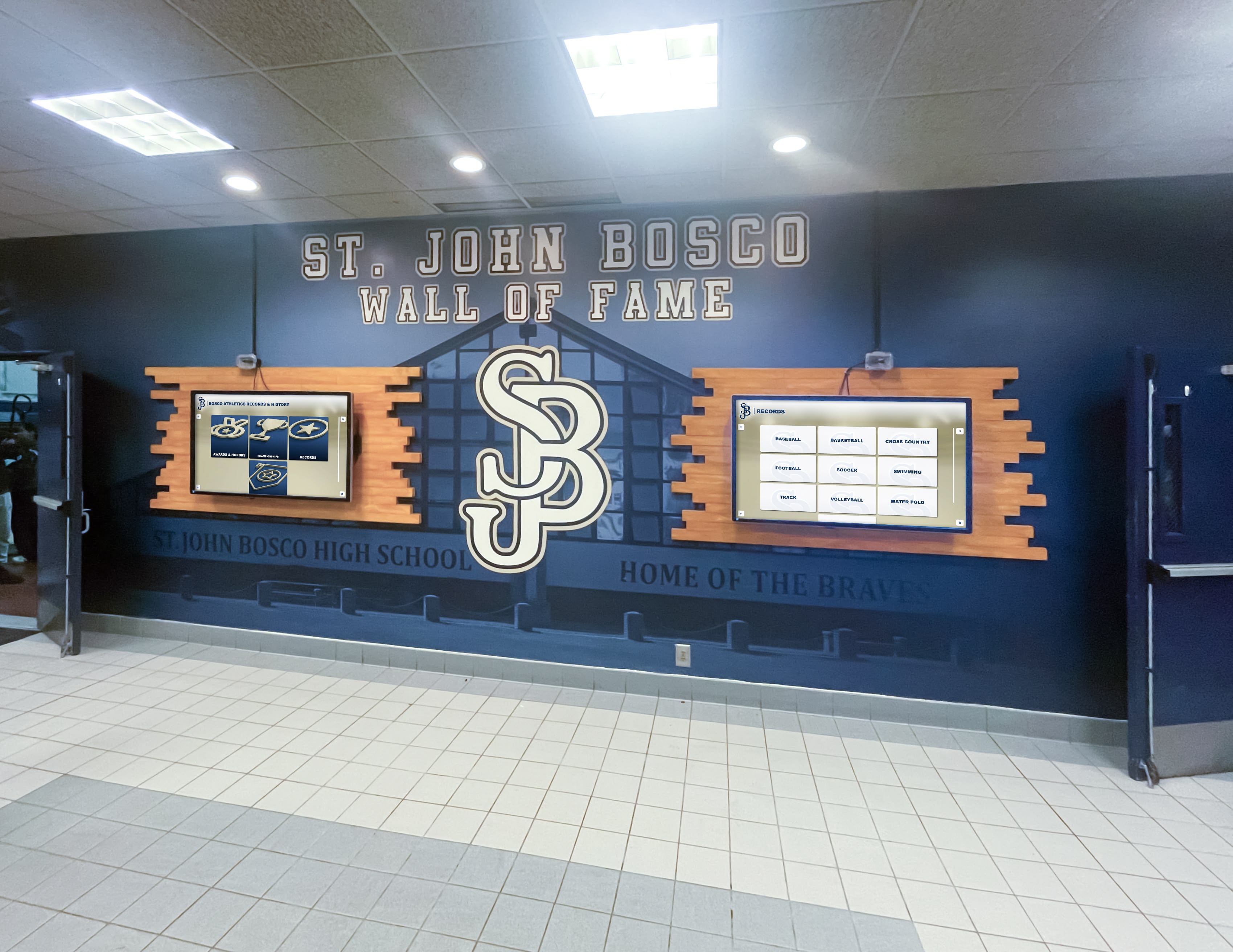
Successful planning includes confirming adequate electrical power availability near mounting locations, verifying network connectivity quality with sufficient bandwidth at display locations, assessing lighting conditions affecting display visibility and required brightness specifications, evaluating mounting surface suitability for secure installation meeting safety standards, considering security measures protecting against theft or vandalism in public spaces, ensuring ADA compliance for mounting heights and accessibility requirements, and coordinating with facilities staff to confirm installation feasibility and infrastructure requirements before vendor commitment.
Reputable providers conduct site surveys assessing installation locations before finalizing proposals, identifying infrastructure limitations requiring attention, confirming their recommended solutions match your specific environments, and providing accurate comprehensive quotes reflecting actual installation requirements. Providers offering installations without site surveys or careful location discussion demonstrate concerning lack of implementation diligence.
Selecting Providers Based Primarily on Sales Relationships
Persuasive sales representatives skillfully present their platforms’ strengths while minimizing limitations. Athletic directors sometimes select providers based substantially on sales relationship comfort rather than objective platform evaluation, comprehensive reference checking, or hands-on testing revealing actual usability.
Effective evaluation requires requesting extended trial access or demo accounts enabling hands-on platform exploration without sales pressure, conducting comprehensive reference checks with multiple current customers rather than only vendor-provided references, asking probing questions revealing limitations alongside strengths rather than accepting sales narratives unchallenged, testing content management workflows personally rather than only watching demonstrations performed by experts, and involving multiple stakeholders in evaluation rather than relying solely on one person’s impressions.
Sales relationship quality matters—responsive, knowledgeable representatives often indicate quality organizations delivering excellent customer service. However, sales relationships should supplement rather than replace rigorous platform and vendor evaluation ensuring your decision reflects actual capability assessment rather than presentation polish.
Evaluating Specific Recognition Platform Providers
While comprehensive vendor comparisons exceed this guide’s scope, understanding the provider landscape helps athletic directors identify appropriate options for evaluation.
Purpose-Built Recognition Platform Providers
Specialized vendors focusing exclusively on institutional recognition and hall of fame systems offer platforms designed specifically for schools, colleges, and athletic organizations.
Rocket Alumni Solutions represents the leading purpose-built recognition platform serving over 1,000 schools, universities, and organizations with comprehensive systems specifically designed for educational recognition applications. The platform provides intuitive content management requiring no technical expertise, pre-built athlete profile templates and sport-specific organizational structures, searchable interactive databases enabling visitor discovery, multimedia integration with photos, videos, and documents, mobile companion apps and responsive web portals extending access globally, cloud-based management accessible from any device anywhere, comprehensive implementation support including content migration assistance, white-glove customer service with dedicated account representatives, and continuous platform enhancement with regular feature releases.
Rocket Alumni Solutions typically represents premium pricing—$18,000-$35,000+ for initial single-display installations with annual licensing of $1,500-$3,000 per display. However, the platform delivers purpose-built excellence impossible with generic alternatives. Athletic directors prioritizing recognition quality, comprehensive support, and long-term partnership value find purpose-built platforms justify incremental costs through superior experiences and outcomes. Schedule a Zoom demo to explore how Rocket’s Digital Record Board automatically updates, reranks, and preserves athletic achievements.
TouchPros and Similar Niche Providers offer additional purpose-built recognition options. These vendors typically serve smaller customer bases than market leaders but may provide attractive capabilities or pricing for certain applications. Evaluate these alternatives using the same rigorous criteria applied to larger providers—customer references, hands-on platform testing, implementation support assessment, and total cost analysis.
Generic Digital Signage Platforms
Broad digital signage platforms supporting diverse applications from corporate communications to restaurant menus to recognition displays offer flexibility but require more self-direction.
Rise Vision, ScreenCloud, and Similar Platforms provide cloud-based digital signage supporting varied content types beyond athletics recognition. These platforms offer lower annual costs—$120-$480 per display—and maximum customization flexibility. However, they lack recognition-specific features like athlete profile templates, sport statistics tracking, or purpose-built search capabilities. Schools must essentially build recognition systems on generic signage foundations rather than receiving purpose-built solutions.
Generic platforms suit institutions with strong technical resources capable of extensive customization, schools wanting flexible platforms supporting multiple campus applications beyond athletics recognition, and organizations with unique requirements poorly served by standard recognition platforms. However, athletic directors should honestly assess whether technical resources and time availability match the substantial additional implementation and management burden these flexible but less specialized tools require.
Custom Development Solutions
Some institutions with substantial technical resources or highly unique requirements pursue custom-developed recognition systems built specifically for their particular needs. Custom development provides unlimited flexibility but typically costs $40,000-$120,000+ with 6-12 month implementation timelines and requires ongoing technical resources for maintenance and evolution.
Most high school athletic departments find custom development represents poor value compared to commercial solutions offering superior features, comprehensive support, and continuous improvement at significantly lower total cost. Custom development merits serious consideration primarily when very specific unique requirements truly cannot accommodate within commercial platform flexibility—a rare circumstance given modern platforms’ extensive customization capabilities.
Making Your Final Provider Decision
With comprehensive provider evaluation complete, synthesize information into structured decision-making processes ensuring final selections reflect institutional priorities and stakeholder input.
Creating a Weighted Scorecard
Develop evaluation scorecards assessing providers across critical dimensions including content management usability, hardware quality and warranty coverage, search and navigation functionality, analytics and engagement features, vendor support quality and availability, total cost of ownership across 5-7 years, implementation support and training comprehensiveness, platform scalability and expansion accommodation, vendor stability and platform evolution commitment, and customer references and satisfaction evidence.
Assign importance weights reflecting your specific priorities—schools emphasizing ease of use might heavily weight content management usability, while budget-focused programs might weight cost more substantially. Score each provider objectively across dimensions based on demonstrations, reference checks, and hands-on testing. Multiply scores by weights and compare total weighted scores providing quantitative comparison across qualitative evaluation factors.
Scorecard approaches prevent overweighting single factors while forcing consideration of comprehensive provider capabilities across all important dimensions. No provider scores perfectly across all categories—scorecards help identify which strengths and limitations matter most for your specific circumstances.
Conducting Thorough Reference Checks
Contact multiple current customers—ideally including at least one similar high school athletic program, one program that’s used the system extensively for multiple years, and one recently implemented installation still in early deployment. Ask references about implementation experience and support quality during setup, content management ease and administrator satisfaction with daily use, technical reliability and any significant outages or problems, vendor responsiveness when issues arise requiring support, overall satisfaction and whether they would select the same provider again, and any significant limitations or frustrations encountered that weren’t apparent during evaluation.
Honest reference conversations often reveal insights unavailable through vendor demonstrations or marketing materials. Pay particular attention to references’ descriptions of support experiences—responsive, helpful support proves invaluable when technical issues inevitably arise. References who struggle getting timely assistance or feel abandoned post-implementation provide strong warning signals regardless of impressive platform capabilities.
Negotiating Favorable Contract Terms
With provider selected, carefully negotiate final contracts ensuring clear expectations and protecting institutional interests. Key negotiation points include detailed implementation timelines with specific milestones and deliverables, explicit division of responsibilities for all implementation tasks, comprehensive training scope including live sessions, recordings, and documentation, clearly defined ongoing support coverage and response time commitments, data ownership and export rights protecting future flexibility, contract duration and renewal terms including price protection provisions, termination provisions if vendor performance proves inadequate, and warranty coverage for hardware and software including repair/replacement processes.
Quality vendors welcome contract clarity protecting both parties through explicit expectations. Providers resistant to clear contractual commitments raise concerning questions about their confidence delivering promised capabilities and support. Thoughtful negotiation creates foundations for successful long-term partnerships rather than problematic relationships marked by unmet expectations and disputes over responsibilities.
Implementation Best Practices for Recognition Success
Selecting the right provider represents only the first step toward successful deployment. Implementation quality determines whether technology delivers promised benefits or becomes expensive installations generating initial excitement before falling into disuse.
Pre-Implementation Planning
Define Clear Recognition Scope: Document exactly what achievements and individuals your hall of fame will recognize initially and over time. Will you focus exclusively on varsity athletics or include junior varsity, club sports, and intramurals? How far back will historical documentation extend—10 years, 25 years, 50+ years? Will recognition include only student-athletes or also coaches, administrators, and contributors? Clear scope definition prevents endless debates and ensures implementation planning reflects realistic workload.
Establish Content Governance: Determine who manages ongoing content updates—athletic director exclusively, distributed among assistant ADs and coaches, or combination approaches. Define approval workflows for new content publication ensuring quality and accuracy. Create content standards documents specifying photo requirements, profile formatting expectations, and information completeness guidelines. Governance structures ensure consistent recognition quality while preventing content management from becoming overwhelming burden for single individuals.
Plan Phased Content Development: Don’t attempt comprehensive historical recognition simultaneously with system launch. Identify priority content for initial launch—perhaps most recent 3-5 years plus hall of fame inductees—creating immediate value while keeping initial workload manageable. Plan systematic expansion phases adding additional historical content quarterly over 18-24 months. Phased approaches maintain momentum and prevent burnout from overwhelming initial workload.
Professional Installation Execution
Work closely with vendors and facilities staff ensuring proper installation meeting all requirements. Confirm mounting meets safety standards supporting display weight properly, electrical work complies with codes and provides adequate power, network connectivity delivers reliable performance with sufficient bandwidth, positioning provides optimal viewing angles and accessibility, and protective measures prevent damage in high-traffic public spaces.
Professional installation costs $400-$1,200+ per display but proves worthwhile ensuring proper mounting, code compliance, warranty protection often voided by self-installation, and optimal positioning avoiding costly relocations. Budget-conscious programs tempted by DIY installation should honestly assess facilities capabilities and code compliance knowledge before proceeding.
Comprehensive Administrator Training
Invest time in thorough training ensuring confident content management from day one. Attend all vendor training sessions prepared with questions and specific scenarios. Practice common tasks repeatedly during training until workflows feel natural. Create internal quick-reference guides supplementing vendor documentation with school-specific context. Schedule follow-up training sessions 2-4 weeks post-launch addressing questions arising during initial management experience.
Well-trained administrators update content consistently maintaining current recognition, while undertrained staff avoid displays feeling overwhelmed by management complexity—allowing installations to sit outdated despite substantial investment.
Launch Promotion and Community Engagement
Announce new recognition systems prominently through multiple channels—email newsletters, social media, website features, parent communications, and in-person events. Highlight how visitors can explore personal connections and search for themselves, family members, or memorable teams. Create launch events inviting alumni, boosters, and community members to explore displays celebrating program heritage.
Strong launch promotion drives initial engagement establishing displays as valued community assets, while quiet launches without fanfare often result in displays visitors ignore despite impressive capabilities and comprehensive content.
Conclusion: Building Recognition Excellence Through Thoughtful Provider Selection
Selecting the right digital hall of fame provider represents one of the most significant technology decisions athletic directors make, affecting how your school celebrates athletic excellence for the next 10-15 years and influencing alumni engagement, student motivation, and program reputation long after your tenure ends.
The difference between excellent implementations and disappointing installations rarely reflects hardware quality or initial cost differences—it stems from provider selection emphasizing total value over lowest initial price, platform usability enabling consistent content updates rather than frustrating abandonment, comprehensive support ensuring technical issues resolve quickly, and long-term partnership commitment ensuring systems evolve continuously rather than stagnating as technology advances.
Systematic evaluation following the framework outlined in this guide—understanding what you’re actually buying, assessing providers across critical capability dimensions, analyzing total cost of ownership beyond initial quotes, asking probing questions revealing vendor capabilities beyond sales presentations, conducting thorough reference checks validating customer satisfaction, and negotiating contracts protecting institutional interests—enables confident decisions delivering lasting recognition value.
Purpose-built recognition platforms like Rocket Alumni Solutions exemplify providers specifically designed for educational athletic recognition, offering intuitive content management, comprehensive implementation support, reliable commercial-grade hardware, responsive customer service, and ongoing platform evolution ensuring recognition systems remain current and valuable across years of operation. Purpose-built specialists understand institutional needs intimately, having implemented solutions across hundreds of athletic programs, and design platforms addressing specific challenges generic alternatives adapted from other primary purposes cannot match.
Whether you ultimately partner with specialized recognition providers or select alternative approaches better matching your specific circumstances, the essential elements remain consistent: prioritize total value over initial cost alone, ensure content management remains practical enough that updates occur consistently, verify support quality through comprehensive reference checking, plan implementation realistically including substantial content development requirements, and maintain focus on ultimate recognition objectives—honoring athletic achievement comprehensively, inspiring current students through visible aspirational pathways, demonstrating program excellence to key stakeholders, and building recognition traditions strengthening athletic department culture across generations.
Ready to explore how purpose-built digital recognition systems can transform your athletic program’s approach to celebrating excellence? Book a Digital Record Board demo to see how automated ranking, unlimited athlete capacity, and ADA-compliant displays create recognition experiences that inspire excellence while honoring every championship, record, and achievement your program produces across decades of competition.
For additional insights on modernizing athletic recognition, explore comprehensive resources on choosing the right digital hall of fame provider and implementing digital recognition systems that maximize engagement while celebrating athletic achievement comprehensively.