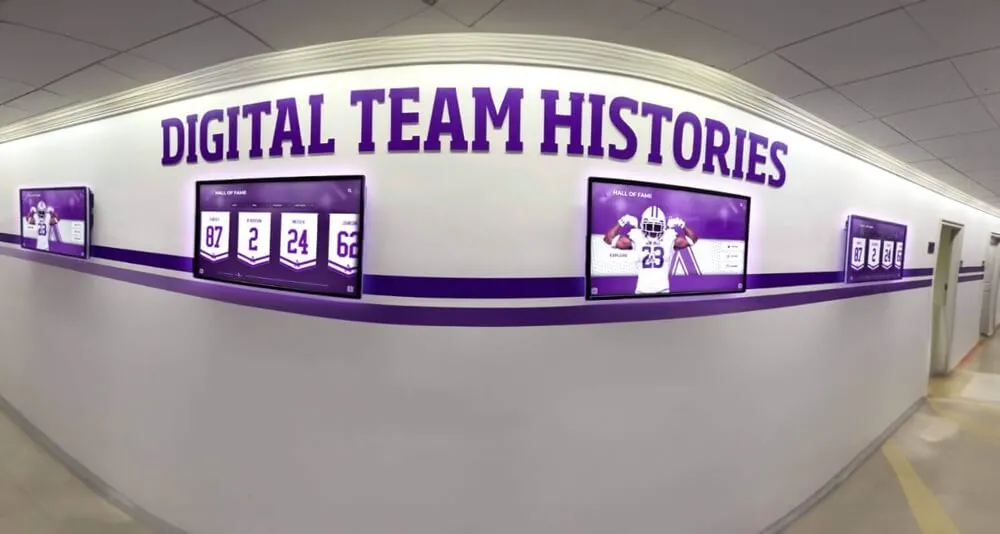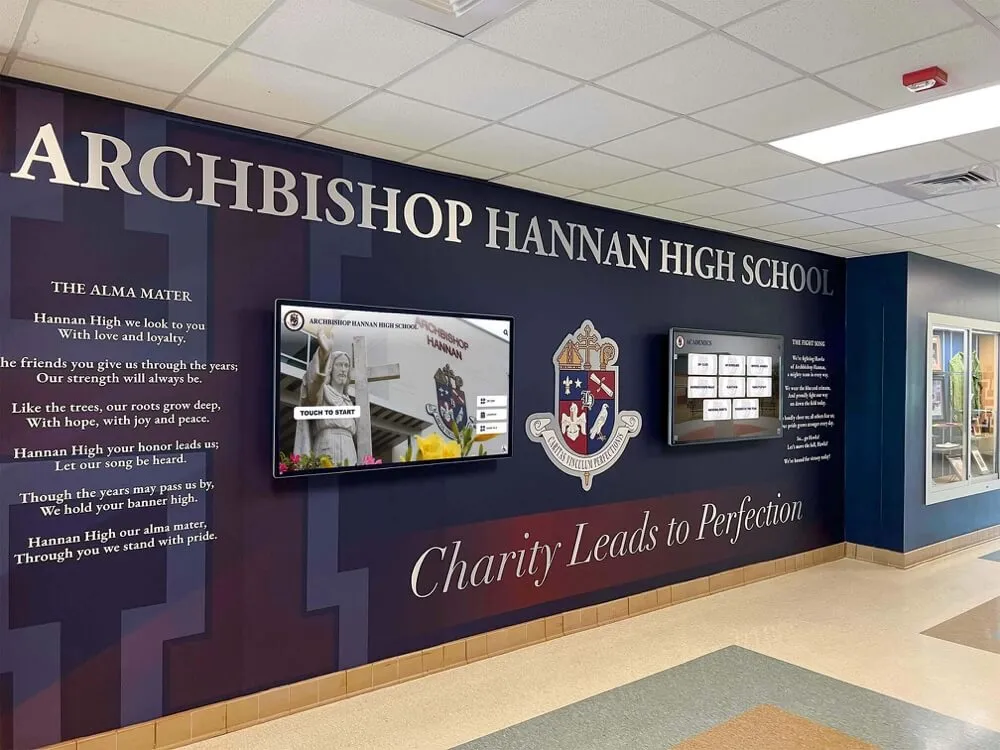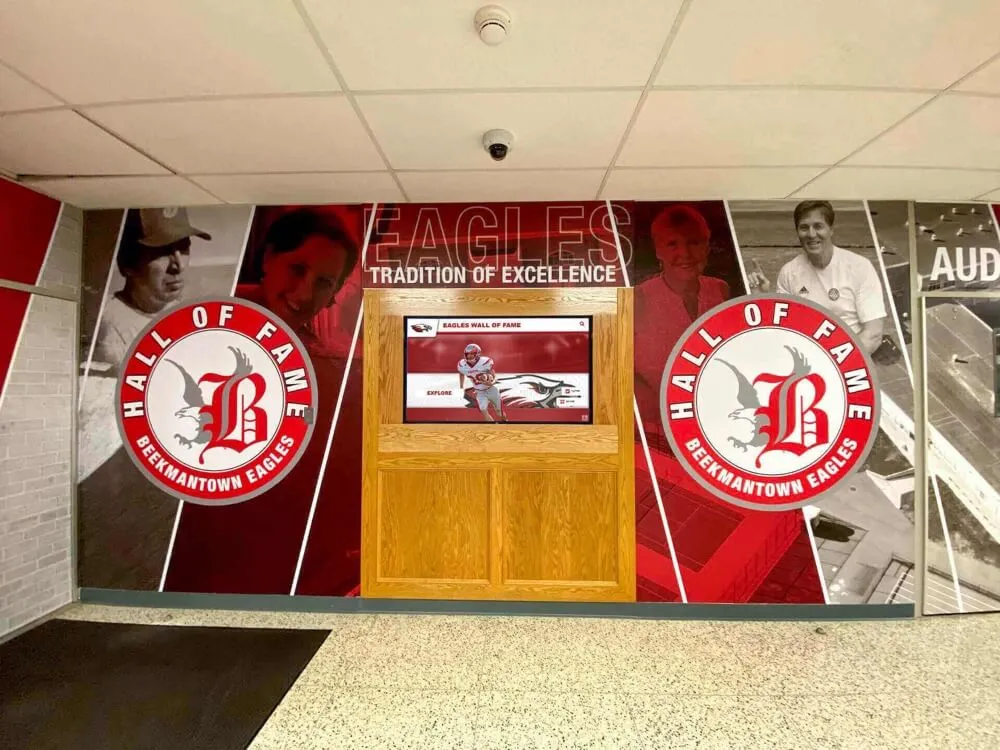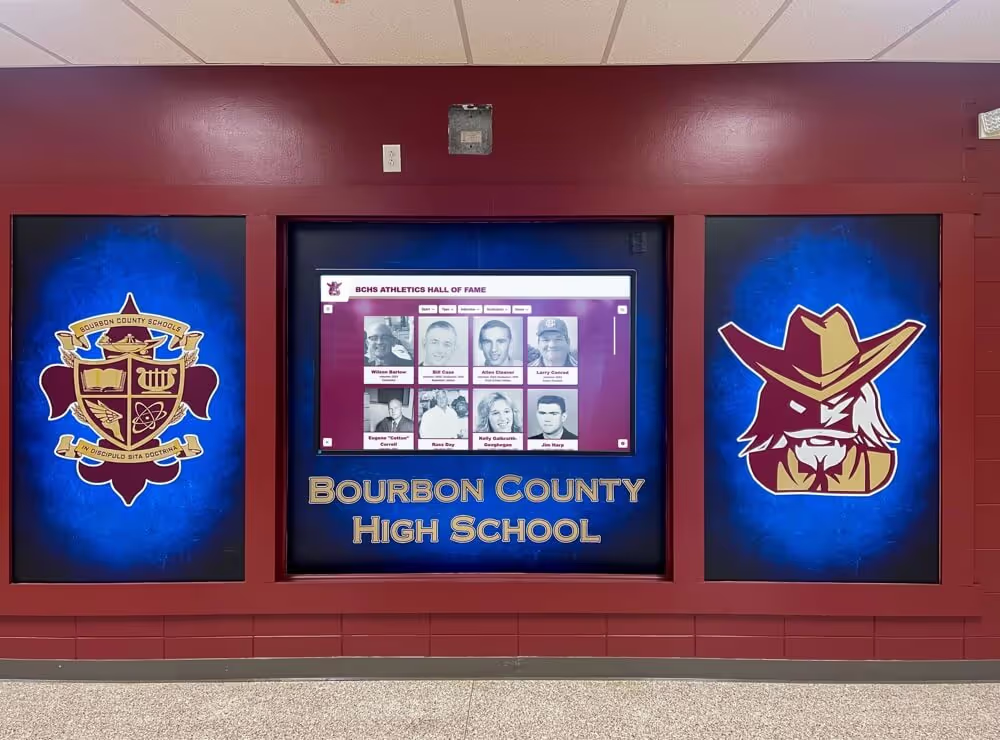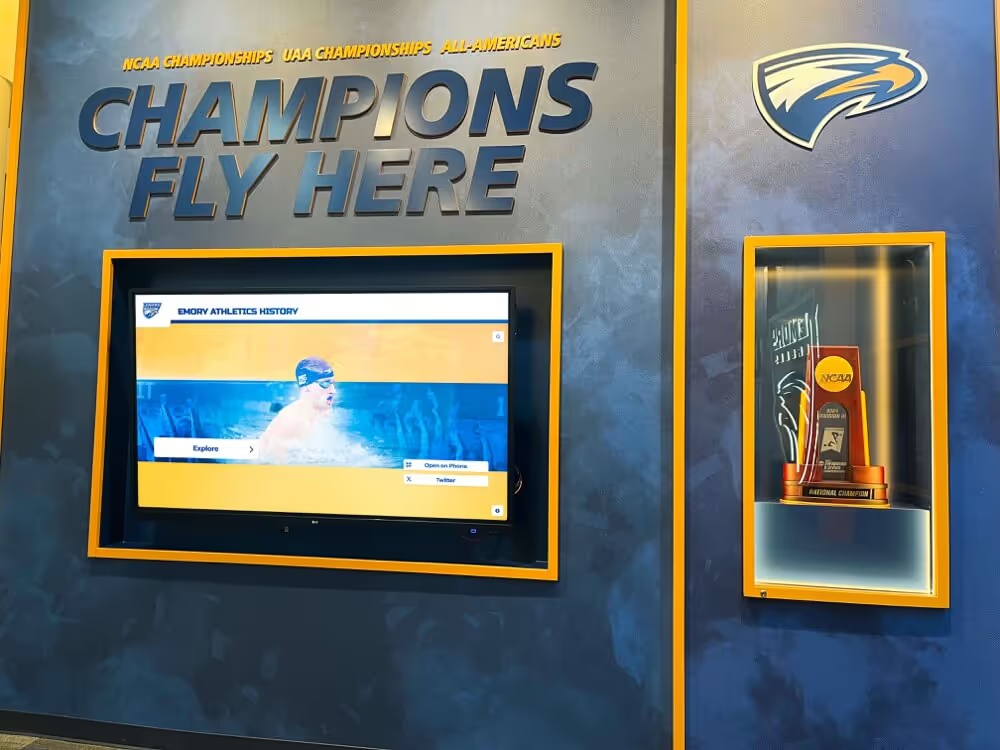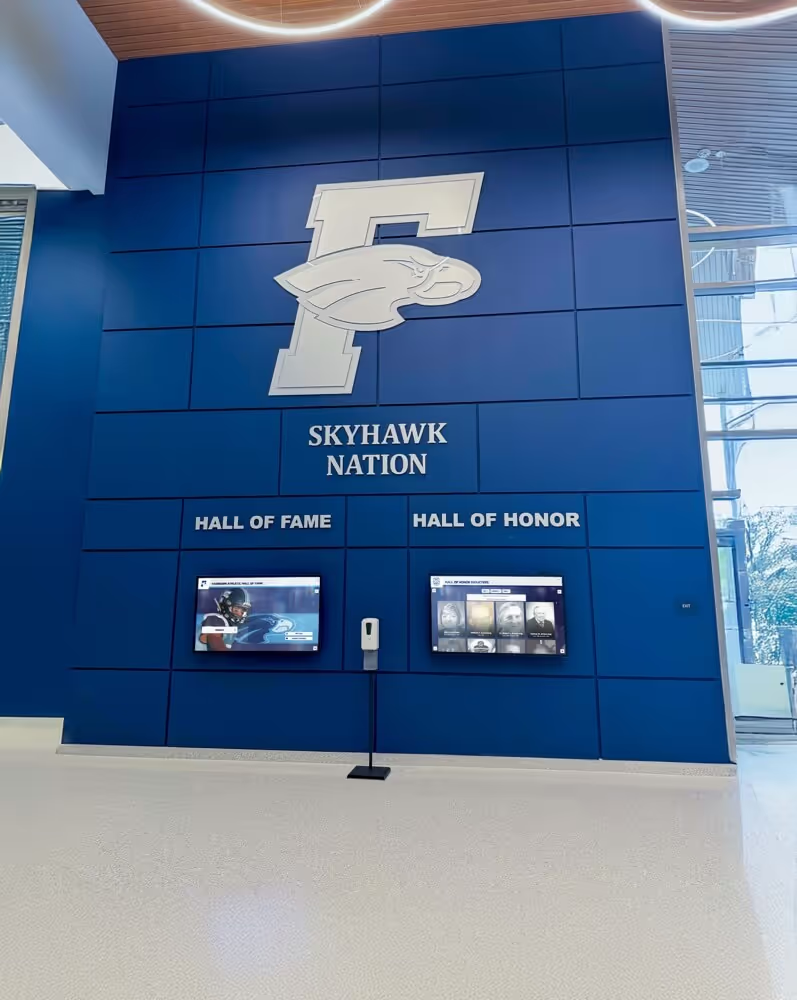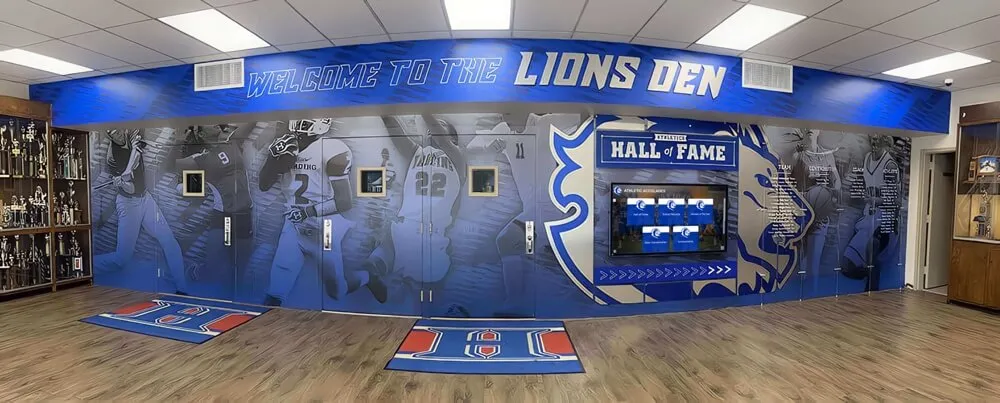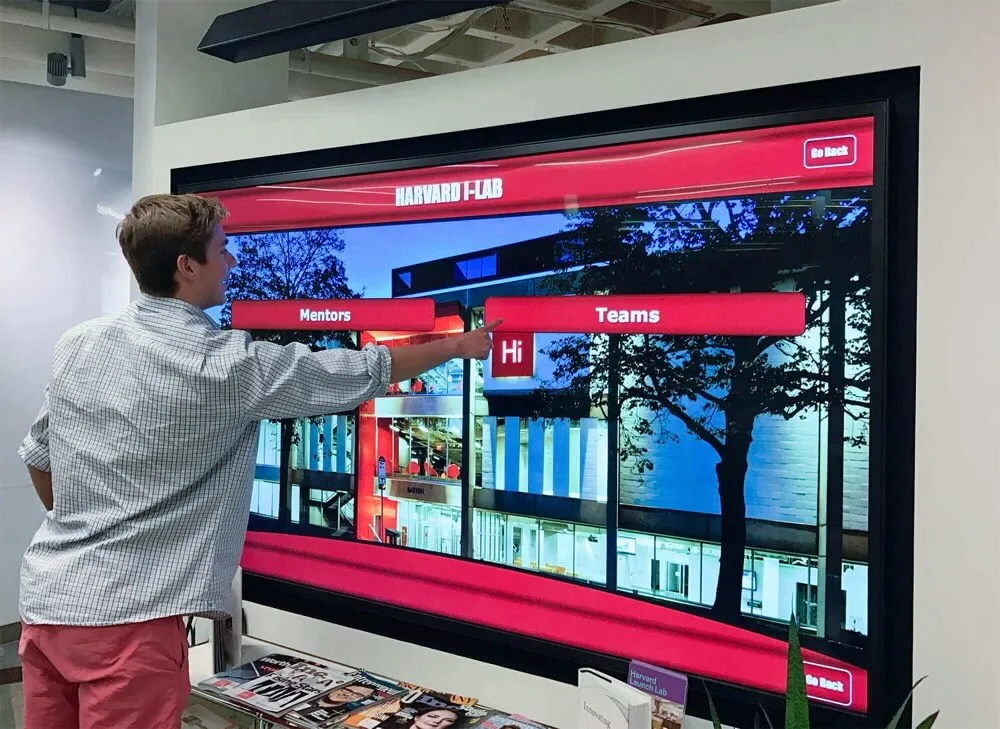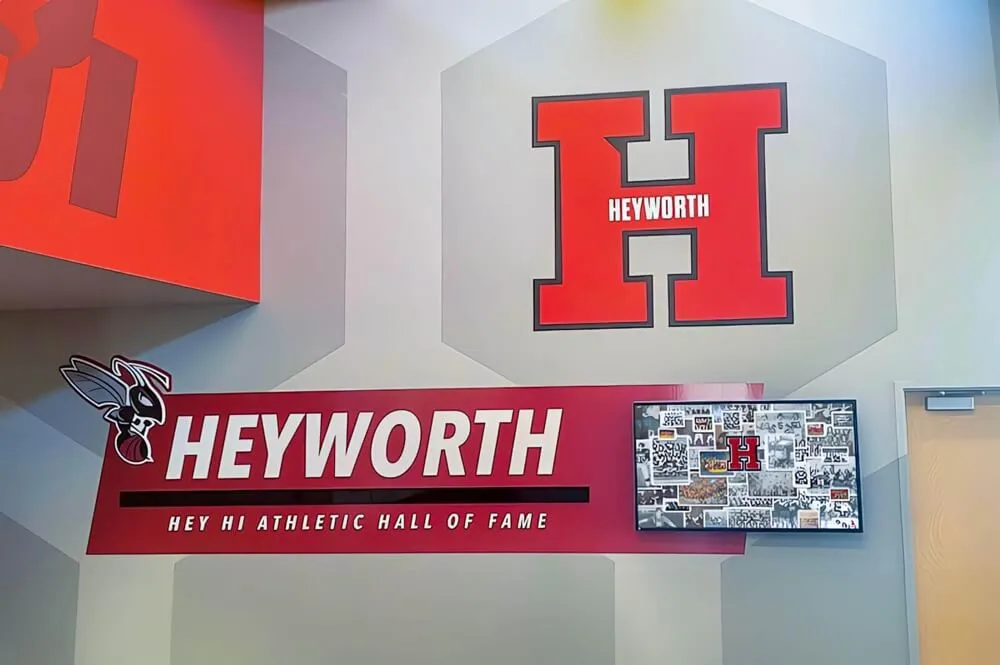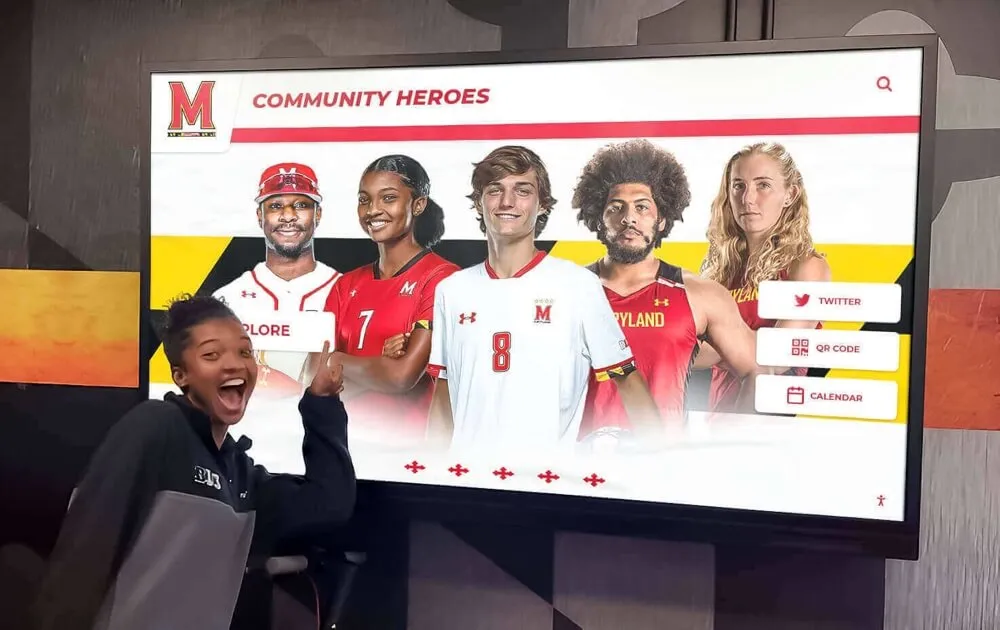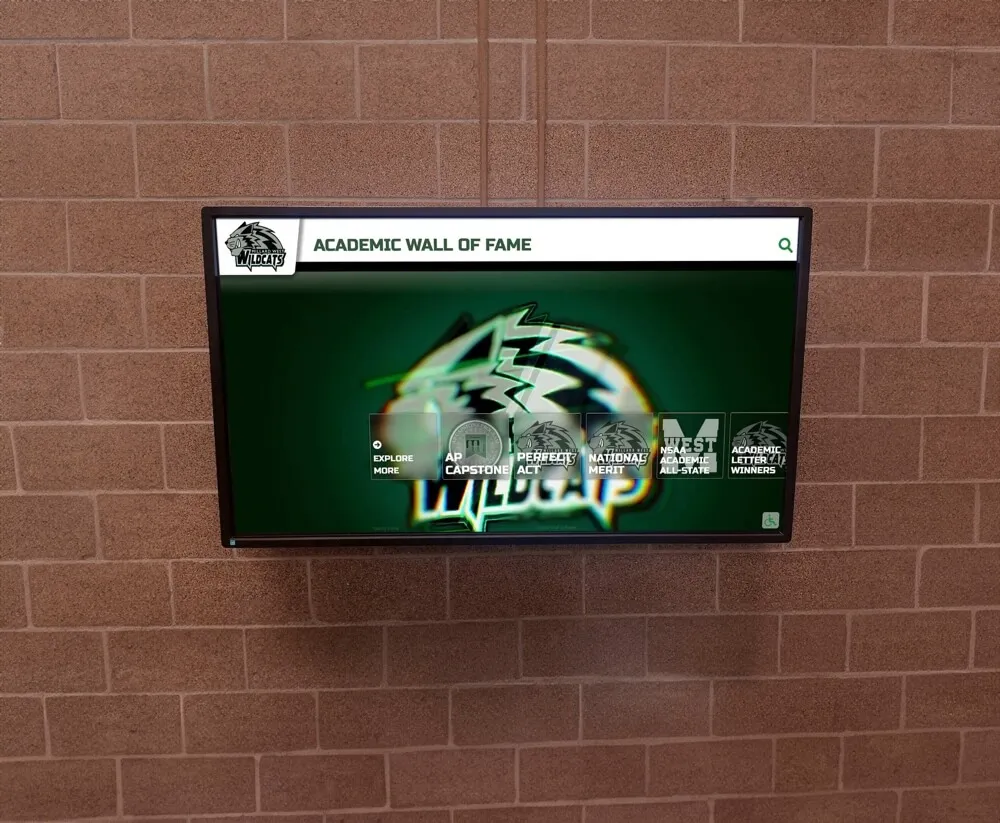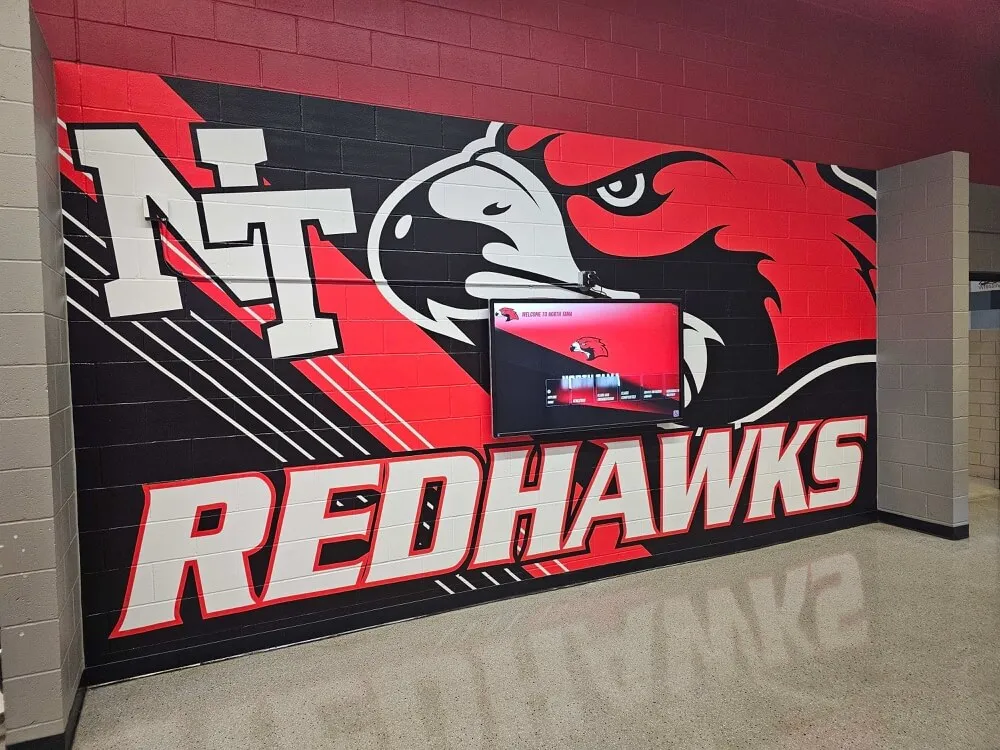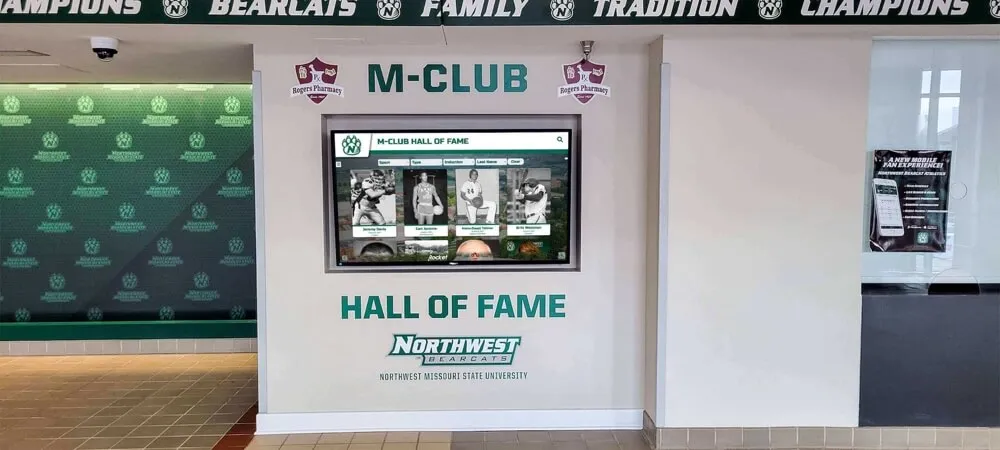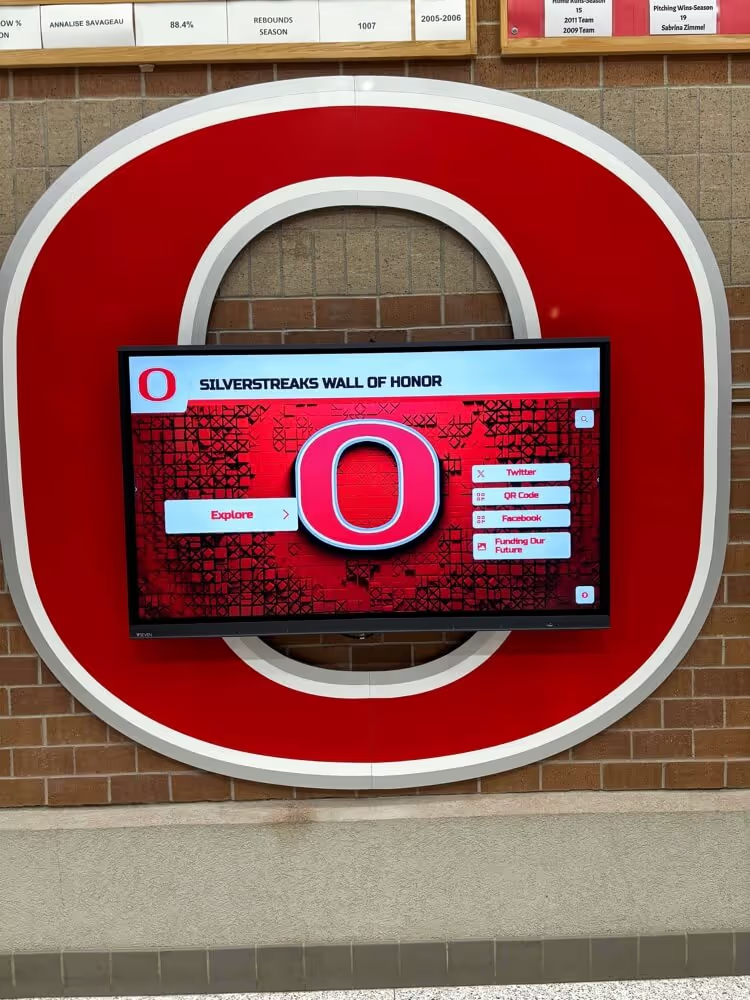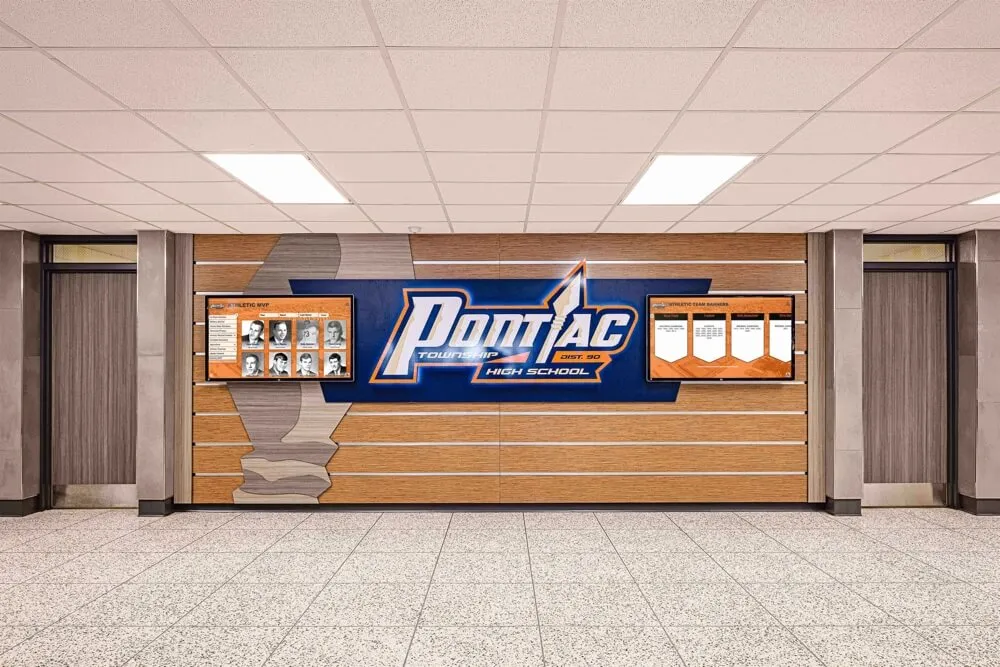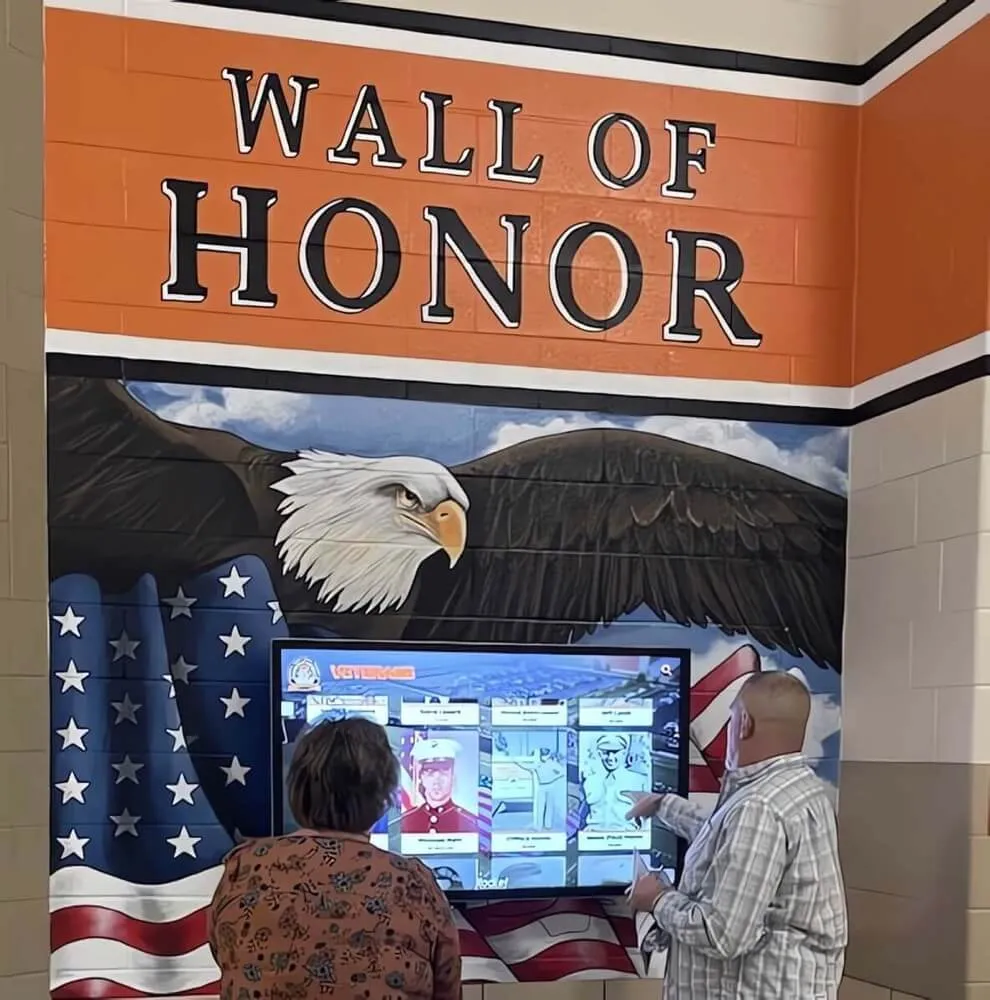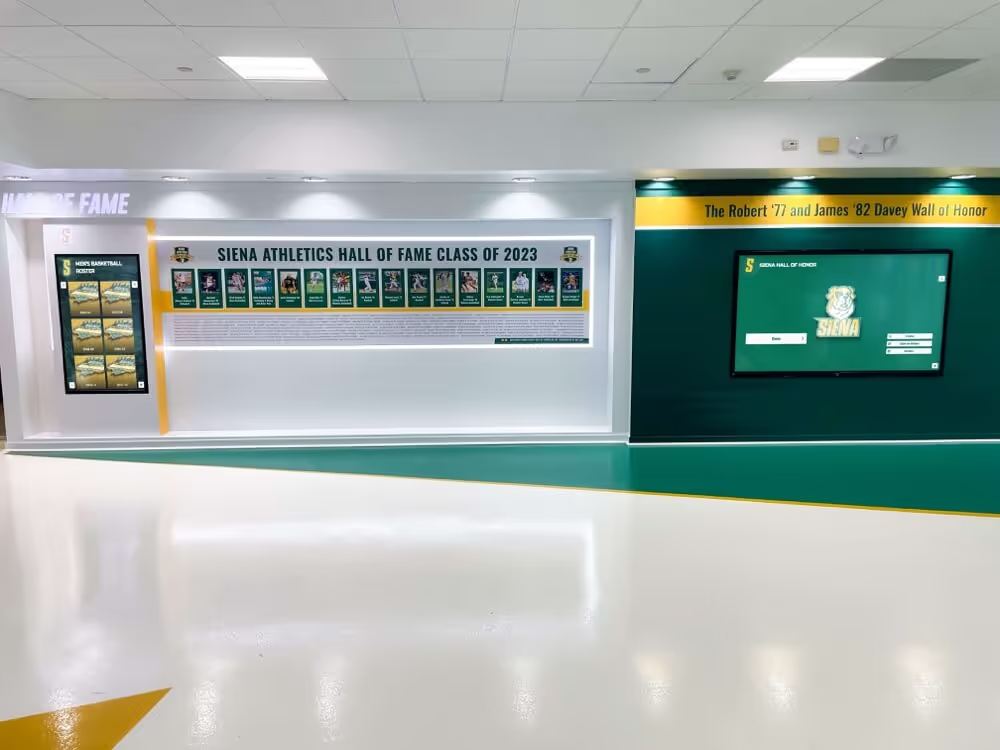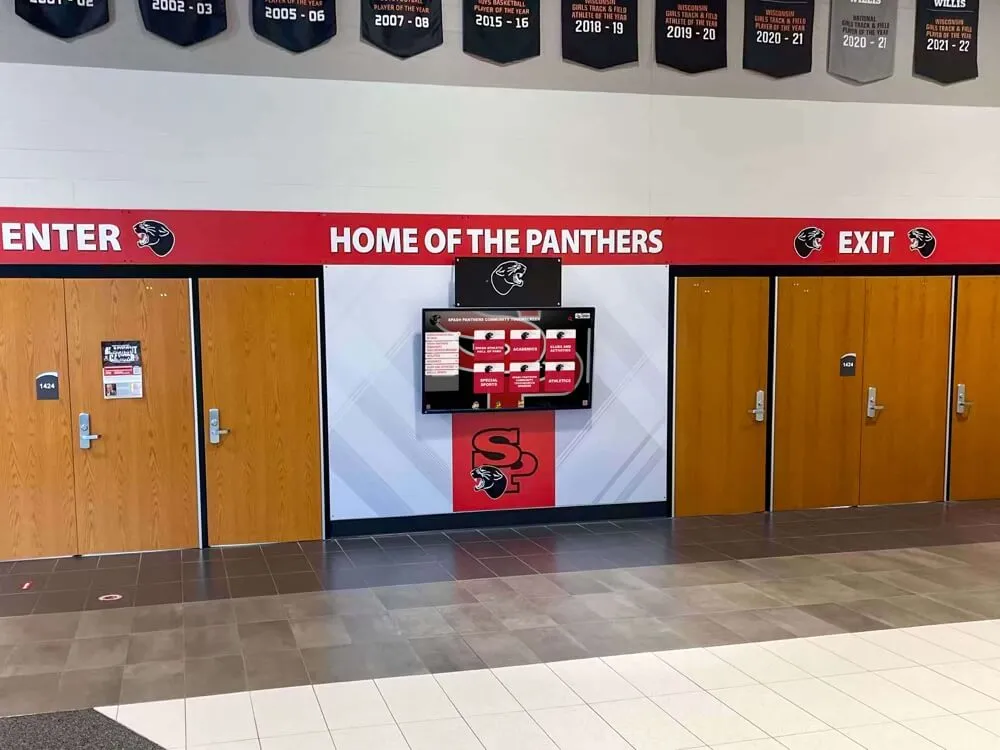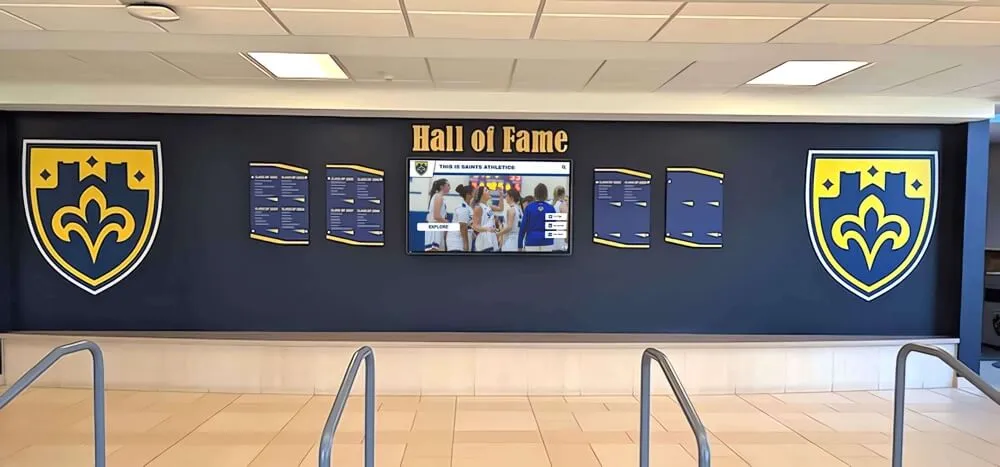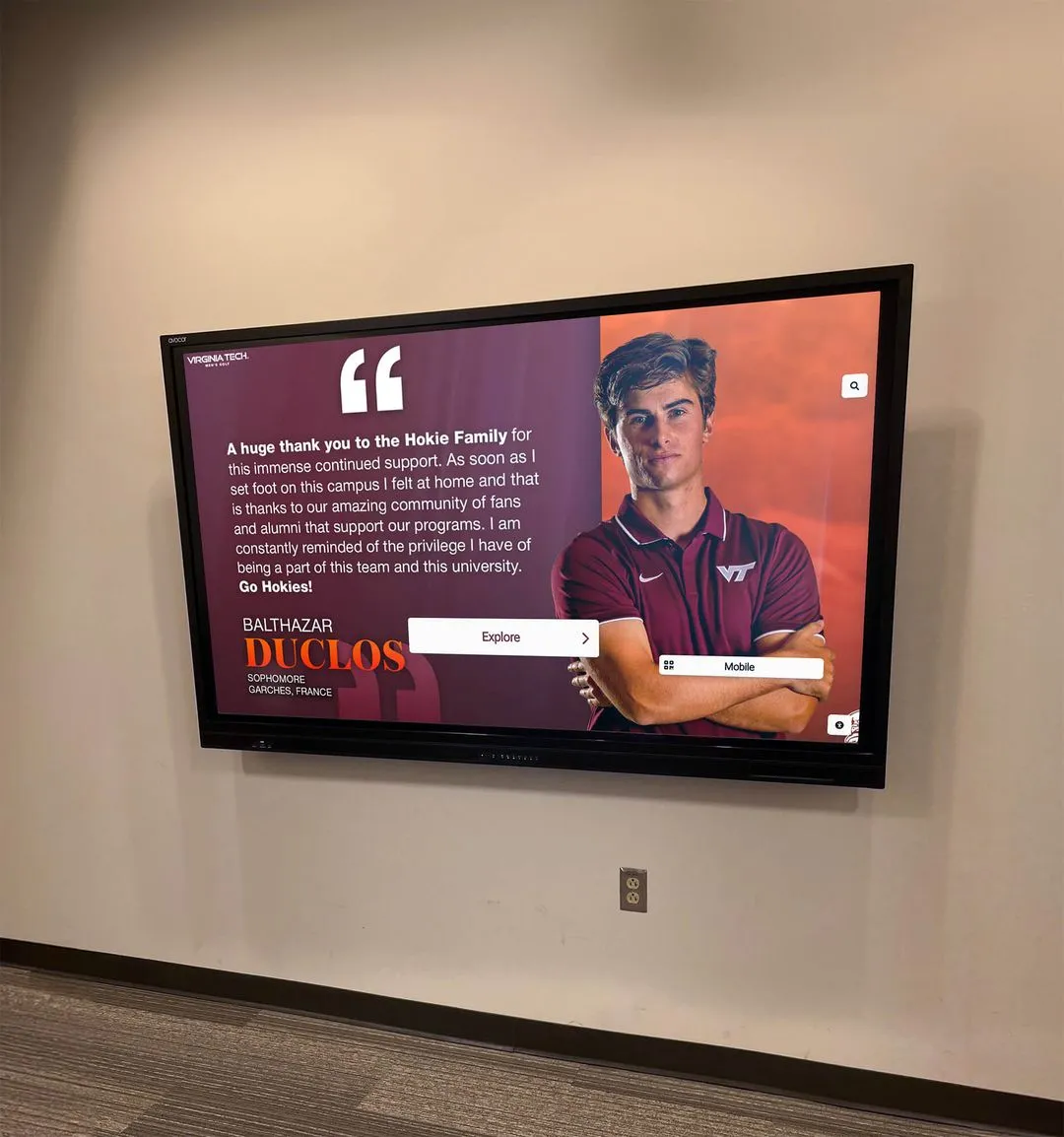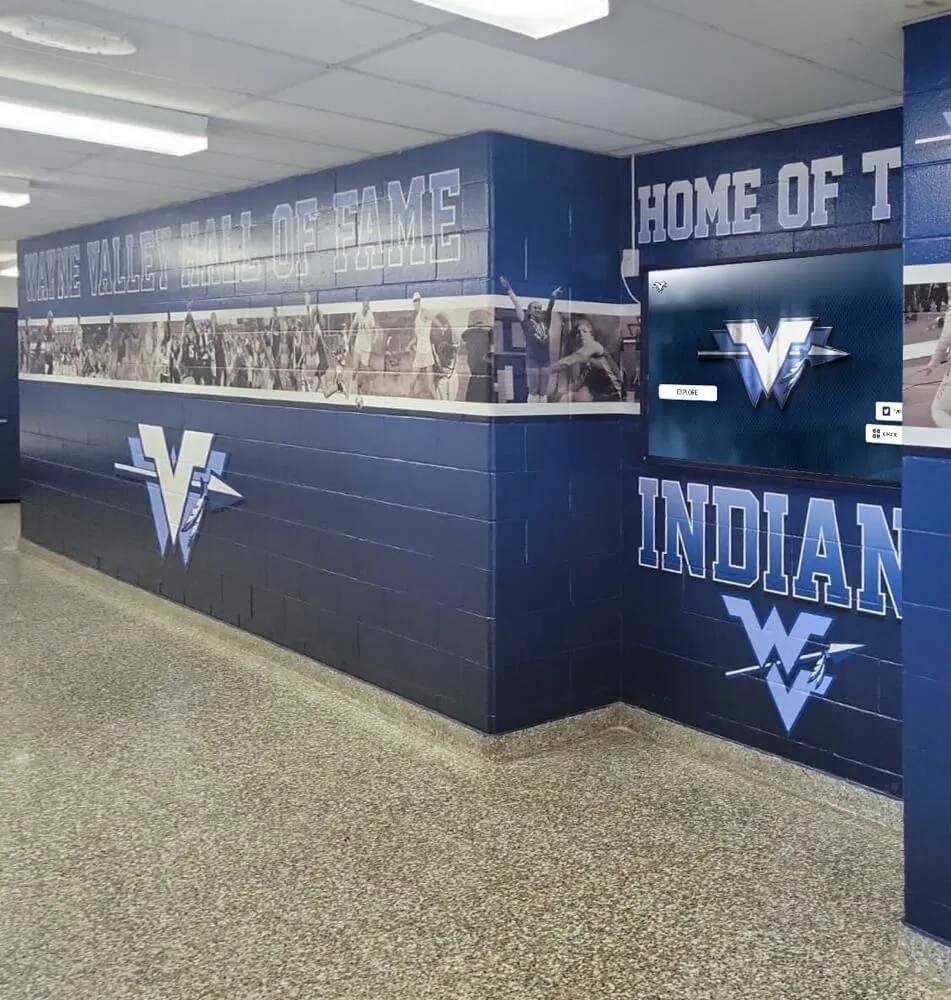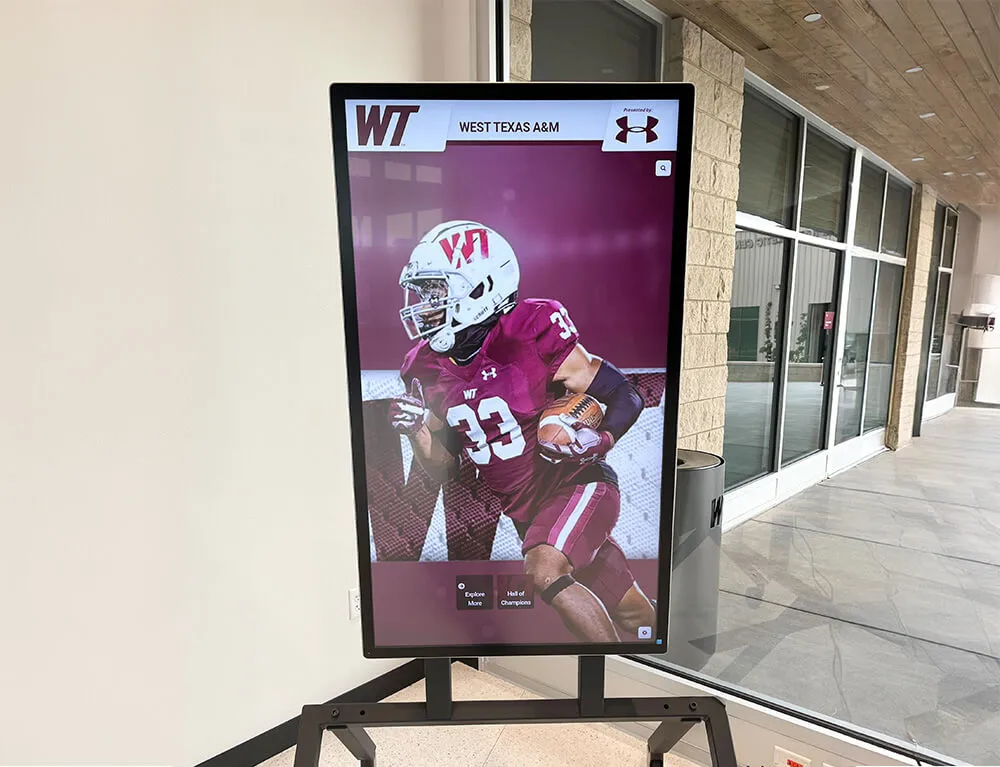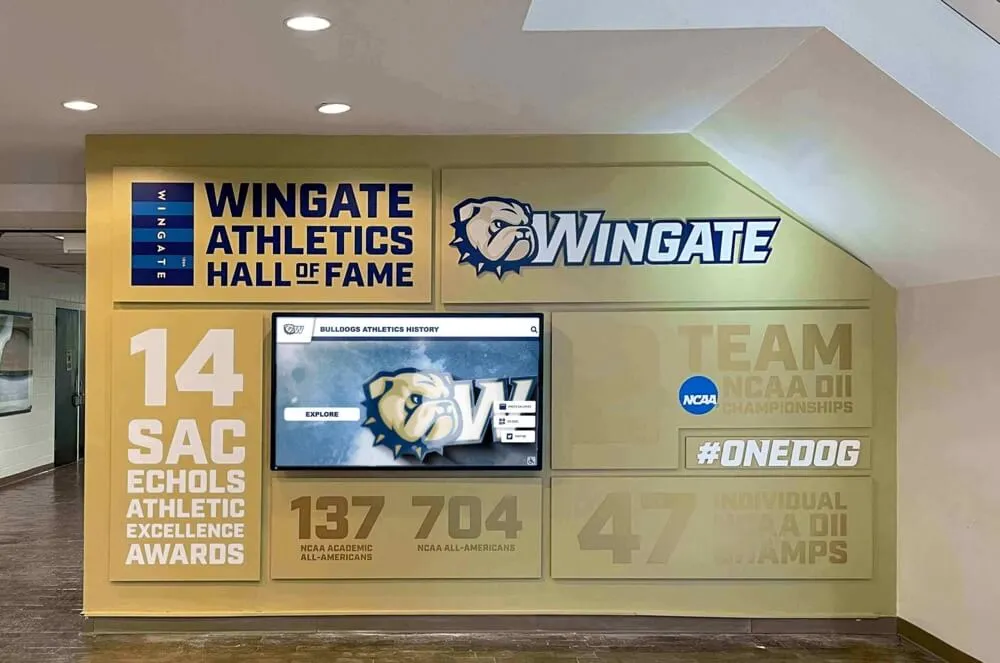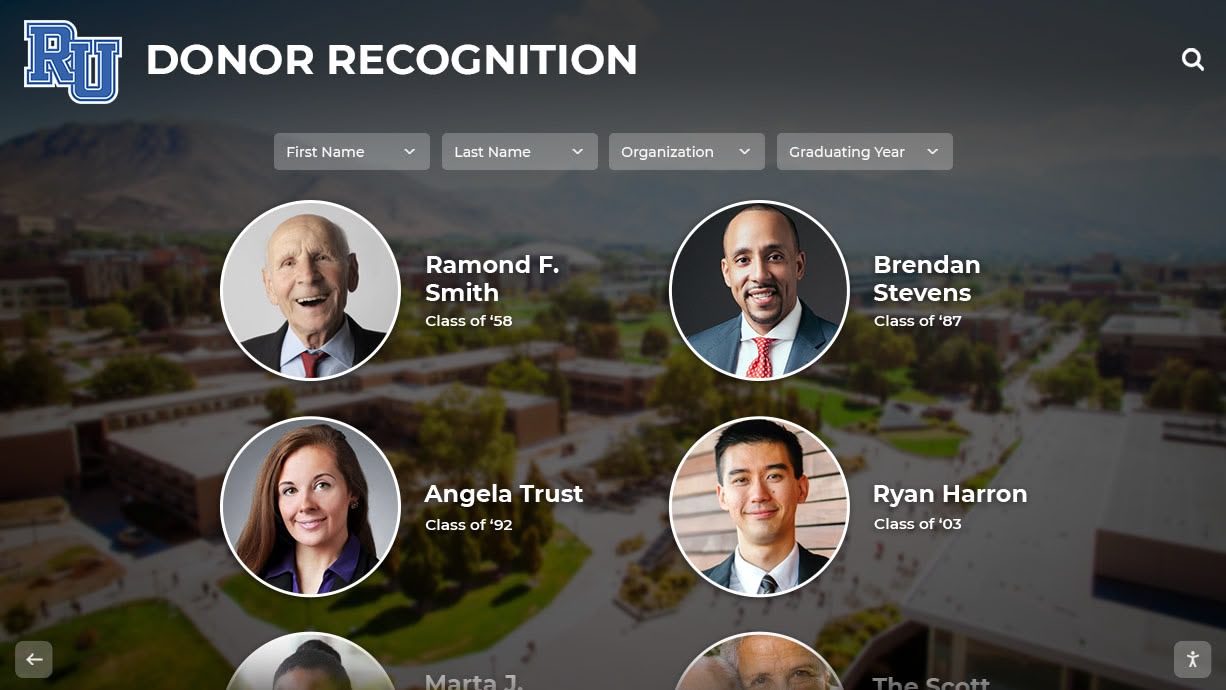




Schools, universities, and organizations face mounting recognition demands as both athletic achievement tracking and fundraising campaigns require visible acknowledgment systems. Athletic departments need comprehensive platforms displaying record holders, championship teams, and hall of fame inductees. Development offices simultaneously require donor recognition displays celebrating philanthropic support across giving levels. Traditional approaches force institutions to choose between dedicating limited wall space to athletic history or donor appreciation—or attempting to maintain separate recognition systems consuming twice the budget, installation effort, and ongoing management resources.
This forced choice creates unnecessary limitations when modern digital recognition platforms enable comprehensive dual-purpose displays serving both athletic excellence documentation and donor acknowledgment through unified systems. Single touchscreen installations accommodate unlimited content across multiple recognition categories while sophisticated content organization ensures each audience finds relevant information efficiently without interference between different recognition purposes.
Intent: Demonstrate
This guide demonstrates how digital hall of fame displays function effectively as combined donor recognition systems, examining content organization strategies, sponsor recognition capabilities, implementation approaches, and management frameworks enabling institutions to honor both competitive excellence and philanthropic generosity through unified platforms maximizing recognition value while minimizing administrative complexity.
Unified Recognition Platforms for Athletic and Donor Acknowledgment
Modern digital recognition systems eliminate the false choice between athletic hall of fame displays and donor walls by providing unlimited content capacity accommodating both recognition types within single installations. Platforms like Rocket Alumni Solutions deliver purpose-built dual-recognition capabilities designed specifically for educational institutions and nonprofit organizations, combining straightforward content management enabling non-technical staff to update both athletic records and donor profiles, sophisticated categorization systems organizing diverse recognition content clearly, powerful search functionality helping visitors discover relevant information across thousands of entries, and consistent professional presentation maintaining institutional brand standards across all recognition types.
Understanding Dual-Purpose Digital Recognition Systems
Digital recognition platforms fundamentally differ from traditional physical displays by separating content capacity from physical space constraints. This architectural distinction enables comprehensive multi-purpose applications impossible with conventional plaques or static wall installations.
How Single Platforms Accommodate Multiple Recognition Types
Traditional recognition approaches require dedicated physical space for each distinct purpose—separate walls for athletic records, donor plaques, academic honors, and community contributors. Each additional recognition category consumes more hallway real estate, increases installation costs, and creates fragmented displays scattered across facilities making comprehensive exploration difficult for visitors.
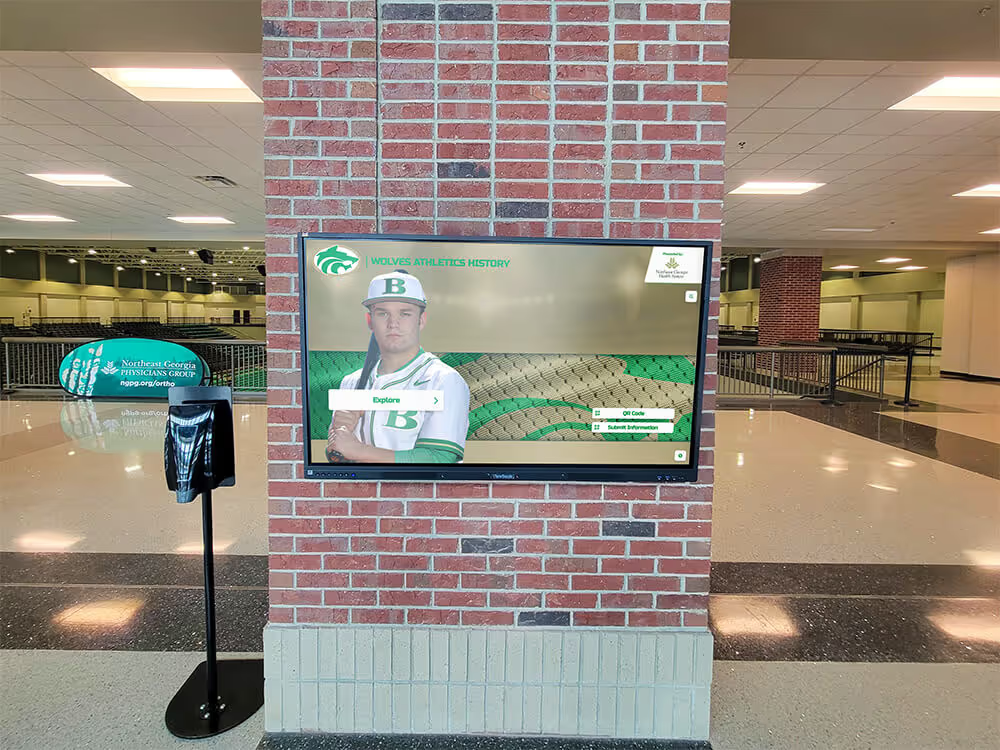
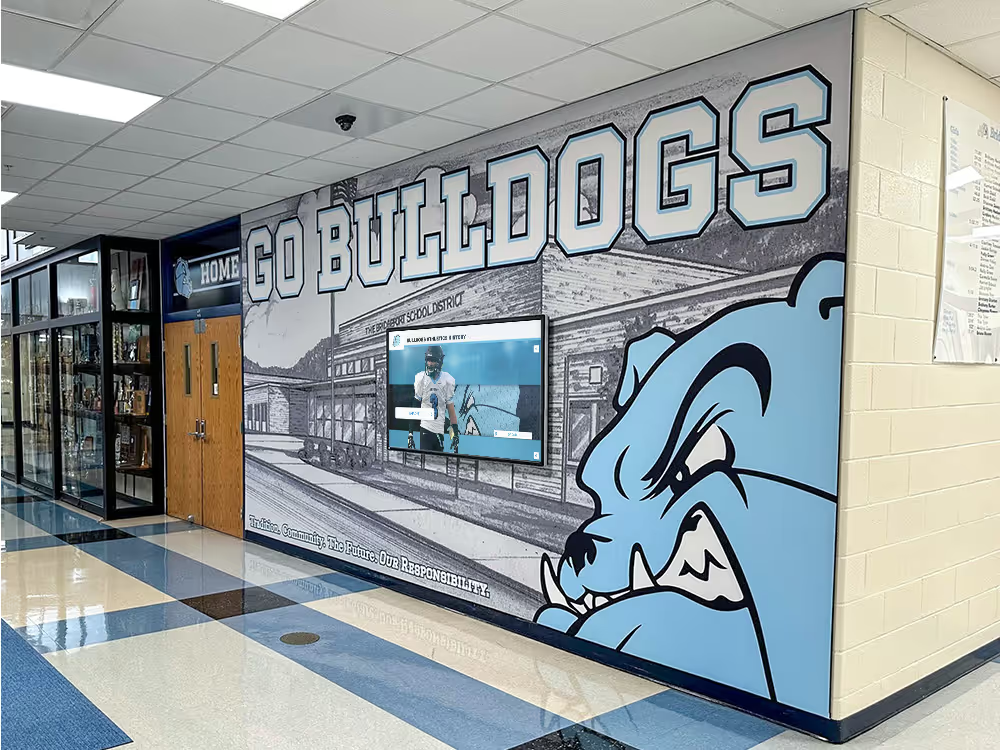
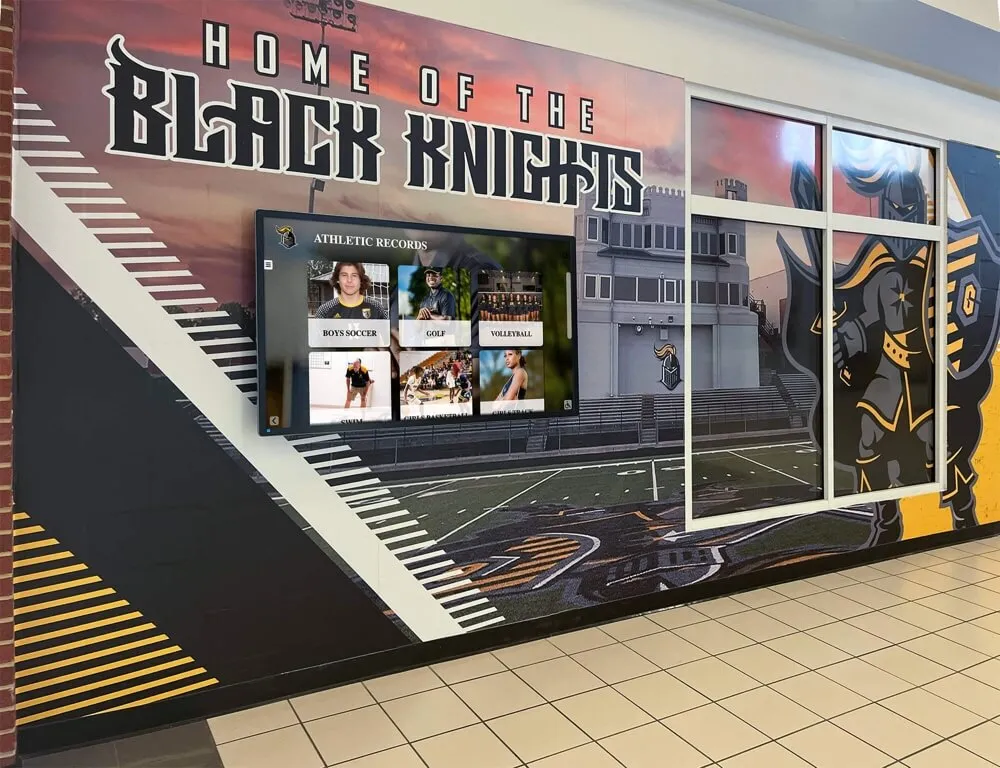
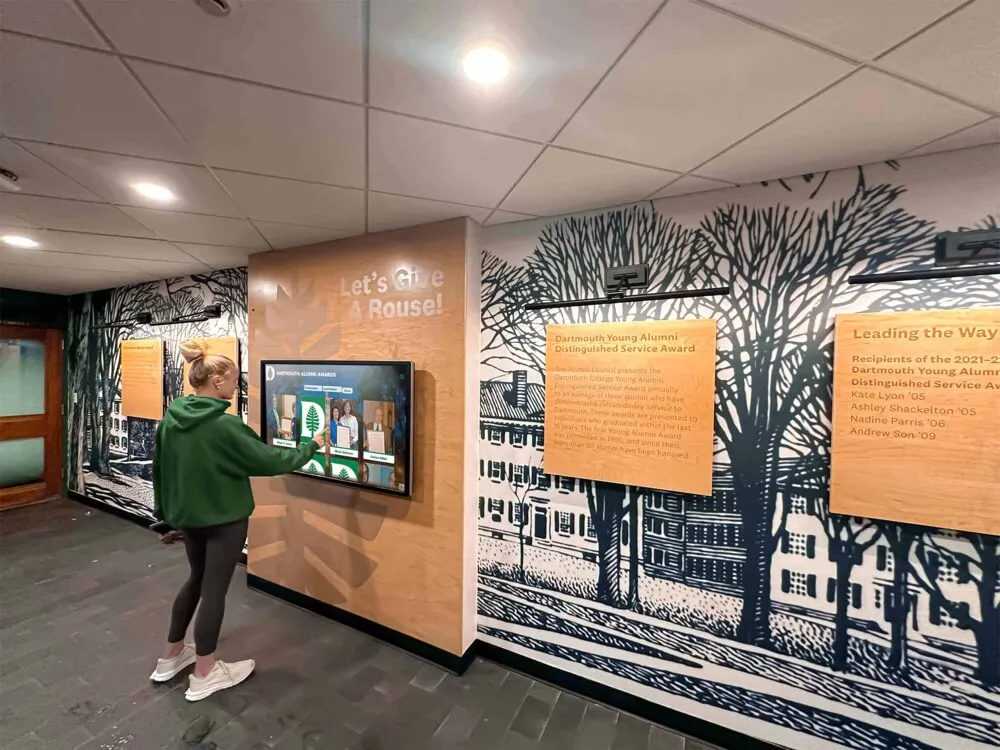
Digital platforms consolidate unlimited recognition content within single touchscreen installations or web-accessible systems. A 55-inch touchscreen mounted in a school lobby accommodates complete athletic hall of fame archives documenting every varsity letter winner since 1950, comprehensive donor recognition celebrating contributors at all giving levels, academic achievement records tracking honor roll students and scholarship recipients, and community service acknowledgment recognizing volunteer leaders and program supporters.
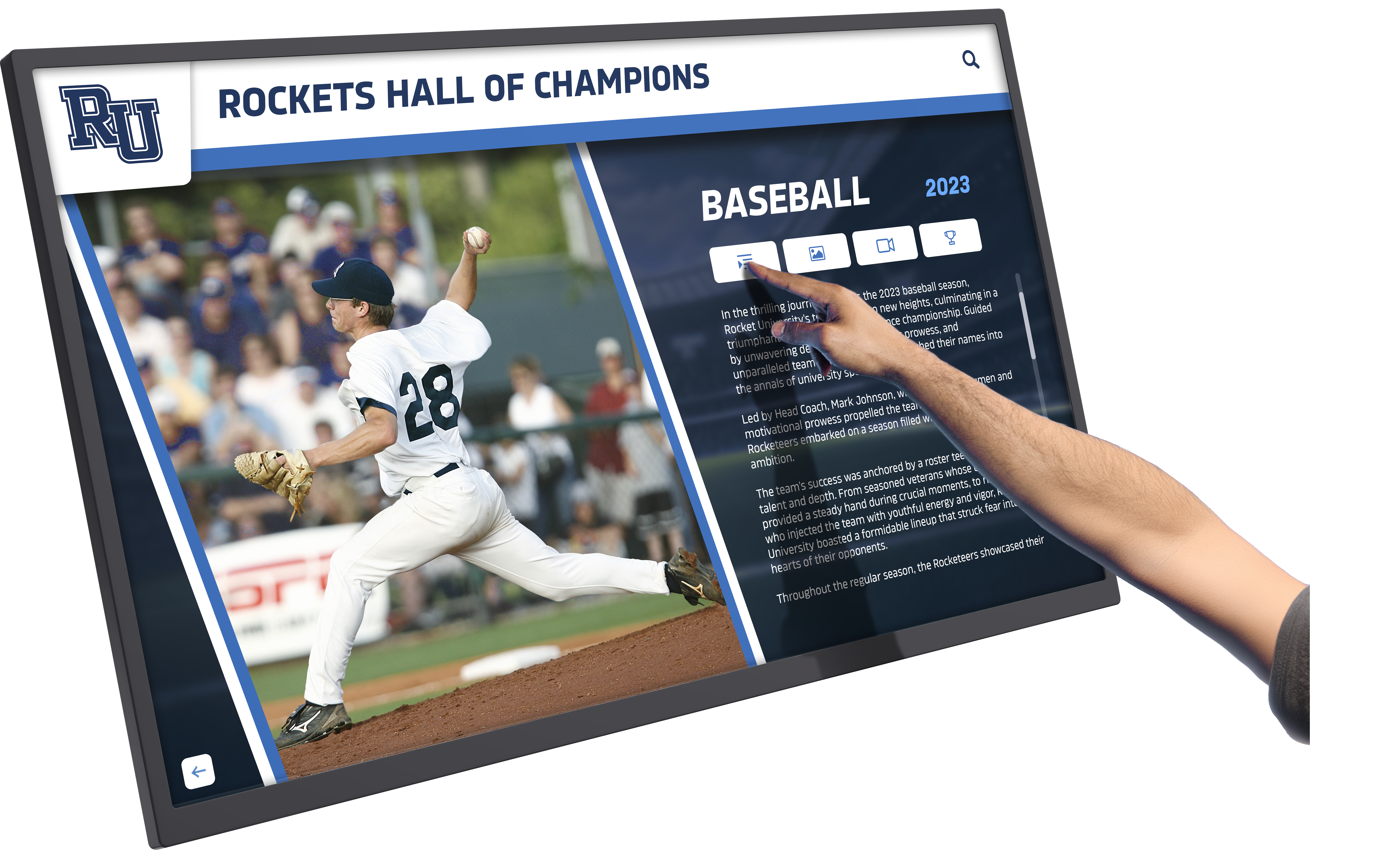
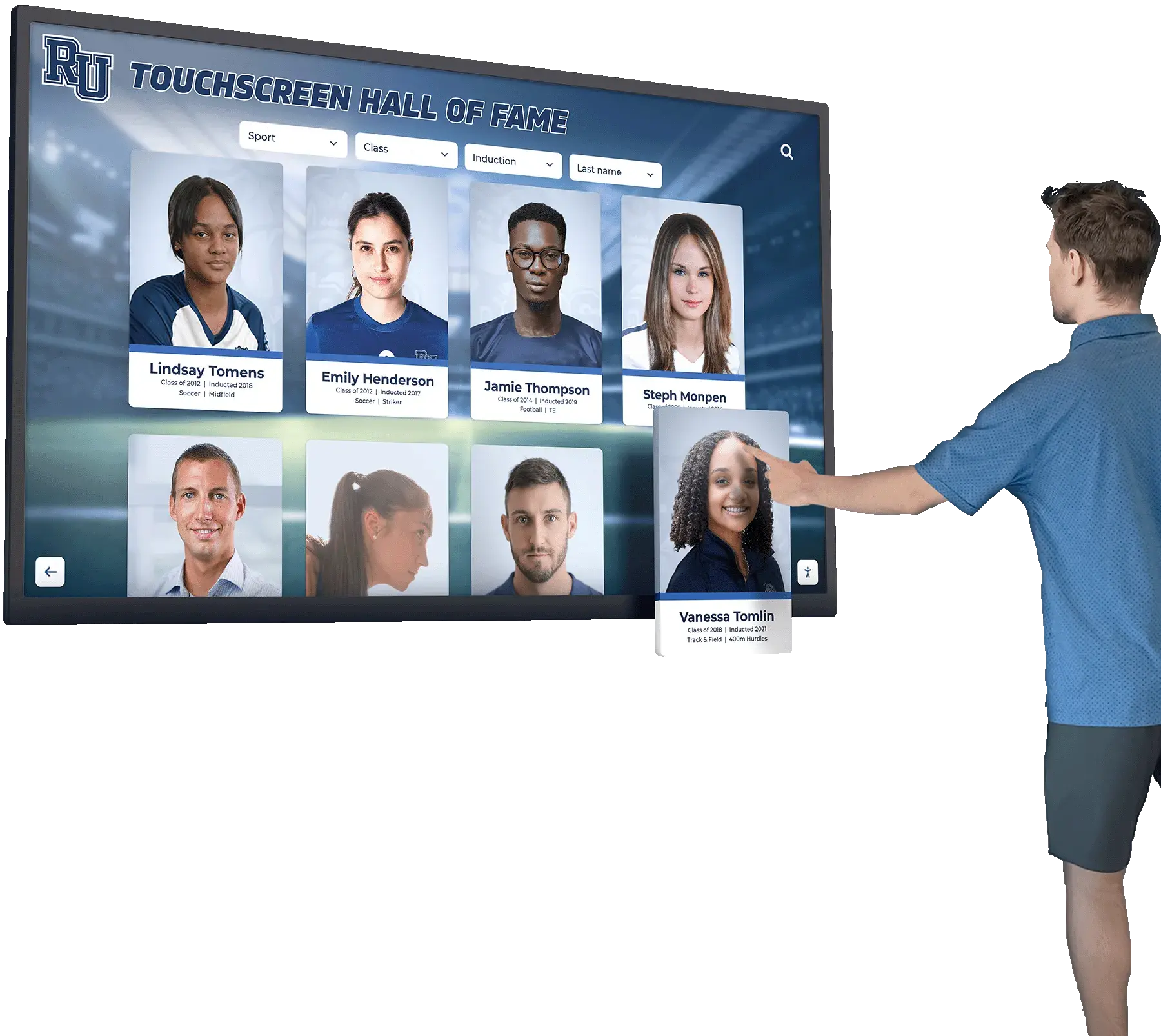
Content organization determines whether multi-purpose systems create straightforward user experiences or confusing jumbled interfaces. Well-designed platforms implement clear categorical navigation through prominent homepage menu tiles directing users to specific recognition types, breadcrumb trails maintaining orientation as users navigate between categories, consistent content templates ensuring predictable information presentation, and unified search spanning all content while filtering results by recognition type.
Technical Architecture Enabling Content Flexibility
Digital recognition systems achieve dual-purpose functionality through flexible content management architectures treating recognition profiles as structured data rather than fixed layouts. This database-driven approach enables each inductee profile—whether athletic hall of fame member or major donor—to store comprehensive information including biographical details, achievement documentation, multimedia assets, relationship connections, and categorical tags.
Template-based rendering dynamically generates appropriate presentation formats from underlying data structures. Athletic profiles emphasize competitive statistics, championship participation, and record-breaking performances. Donor profiles highlight giving levels, supported programs, philanthropic motivations, and impact outcomes. Despite different emphasis, both leverage identical technical infrastructure reducing platform complexity and ongoing maintenance requirements.
Content updates happen through unified administrative interfaces requiring single login credentials and consistent workflows regardless of recognition type being managed. Athletic directors adding new hall of fame inductees use the same content management system advancement officers employ for donor profile creation—reducing training requirements and enabling cross-departmental collaboration when needed.
Athletic Recognition Capabilities Within Dual-Purpose Systems
Comprehensive digital platforms provide full-featured athletic hall of fame functionality within broader multi-purpose recognition frameworks.
Hall of Fame Inductee Documentation
Athletic recognition requires specific content types documenting competitive excellence. Digital systems accommodate complete athlete profiles including graduation year and sport participation details, career statistics and performance records, championship team membership and tournament results, individual honors such as all-conference or all-state selection, school records held in specific events or statistical categories, post-athletic achievements including college competition or professional careers, and induction ceremony photos and video highlights.
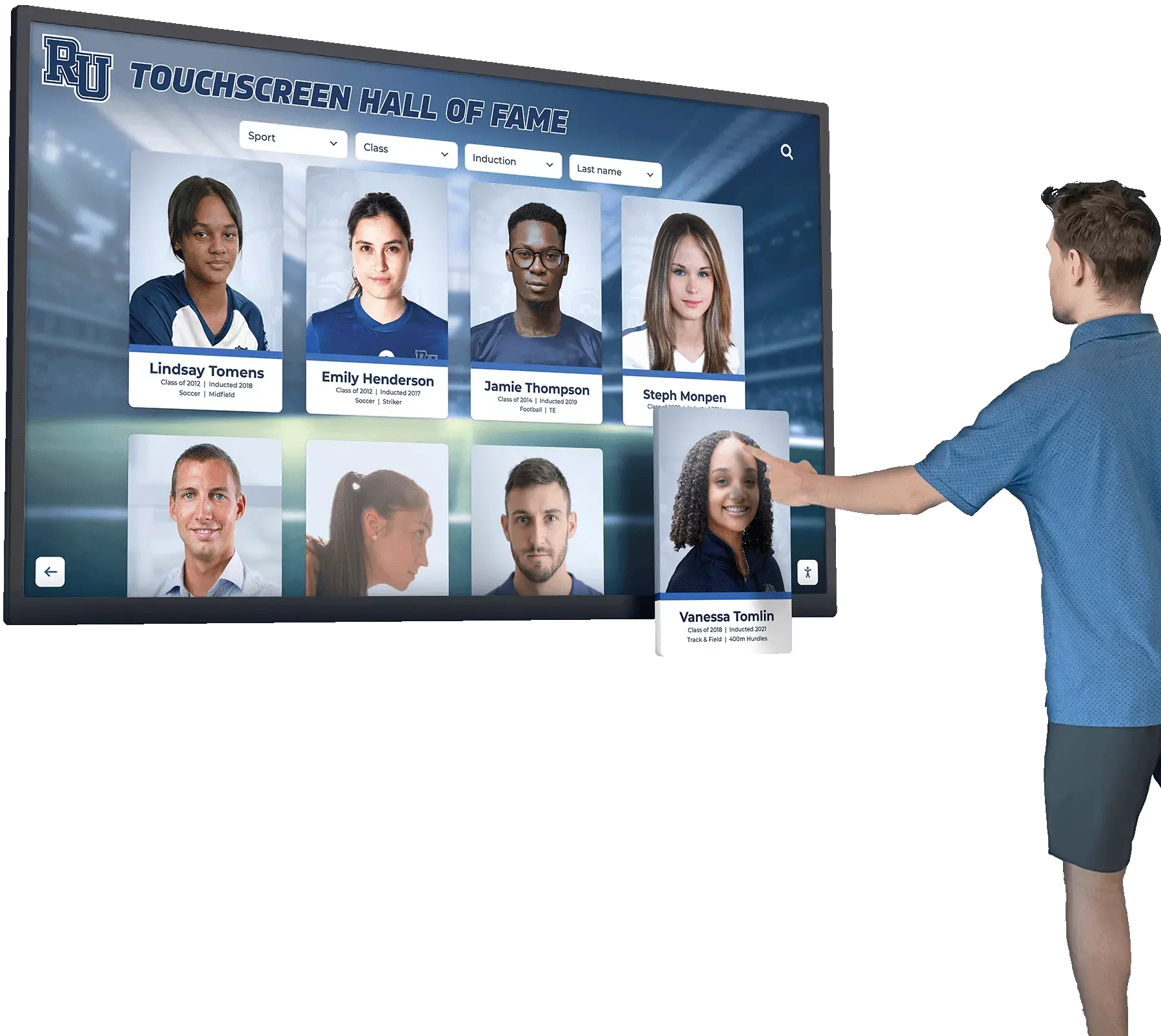
Sophisticated platforms organize athletic content through multiple navigation pathways enabling discovery by sport, graduation decade, championship team rosters, record holder categories, and alphabetical inductee directories. This multi-dimensional organization helps different audiences find personally relevant content efficiently—alumni searching for former teammates, current athletes researching school record holders, or community members exploring specific sports programs.
Digital systems particularly excel at team recognition documenting championship squads through roster listings linking to individual athlete profiles, season statistics and tournament results, coach and staff acknowledgment, and multimedia galleries featuring team photos and game footage. Traditional plaques struggle to represent team achievements comprehensively given space constraints limiting information to basic championship year and sport—digital platforms provide complete documentation bringing historic team success to life for audiences decades later.
Resources on athletic hall of fame implementation demonstrate how comprehensive recognition programs celebrate diverse competitive achievements effectively.
Real-Time Record Board Integration
Many dual-purpose systems integrate active record boards tracking current athletic performance alongside historical hall of fame archives. This integration creates living displays automatically updating as athletes break existing records rather than static retrospective-only installations.
Auto-ranking functionality monitors new performance data comparing current results against historical benchmarks, automatically reorders record holder rankings when performances exceed previous marks, preserves complete historical progressions showing all-time ranking evolution, and maintains separate all-time and current-season record categories when appropriate.
This real-time capability proves impossible with traditional vinyl record boards requiring manual updates after every record-breaking performance. Digital platforms eliminate update delays ensuring recognition remains current while reducing administrative burden on athletic department staff who previously spent hours each season researching statistics and coordinating physical display modifications.
Record board integration particularly benefits athletic programs using recognition displays as motivation tools. When current athletes see their performances immediately reflected in updated rankings positioned alongside hall of fame legends, the connection between daily training commitment and lasting legacy recognition becomes tangible—creating powerful inspiration toward continued excellence.
Donor Recognition and Fundraising Campaign Support
Institutions implementing dual-purpose systems gain comprehensive donor acknowledgment capabilities rivaling dedicated donor wall installations while maintaining complete athletic recognition functionality.
Donor Profile Organization and Presentation
Effective donor recognition requires thoughtful content organization addressing diverse giving scenarios. Digital platforms accommodate individual donors across all contribution levels, family foundation giving recognizing collective philanthropic partnerships, corporate sponsors acknowledging business community support, planned giving and legacy society members honoring future commitments, memorial gifts celebrating contributions made in honor of loved ones, and matching gift recognition documenting employer contribution programs.
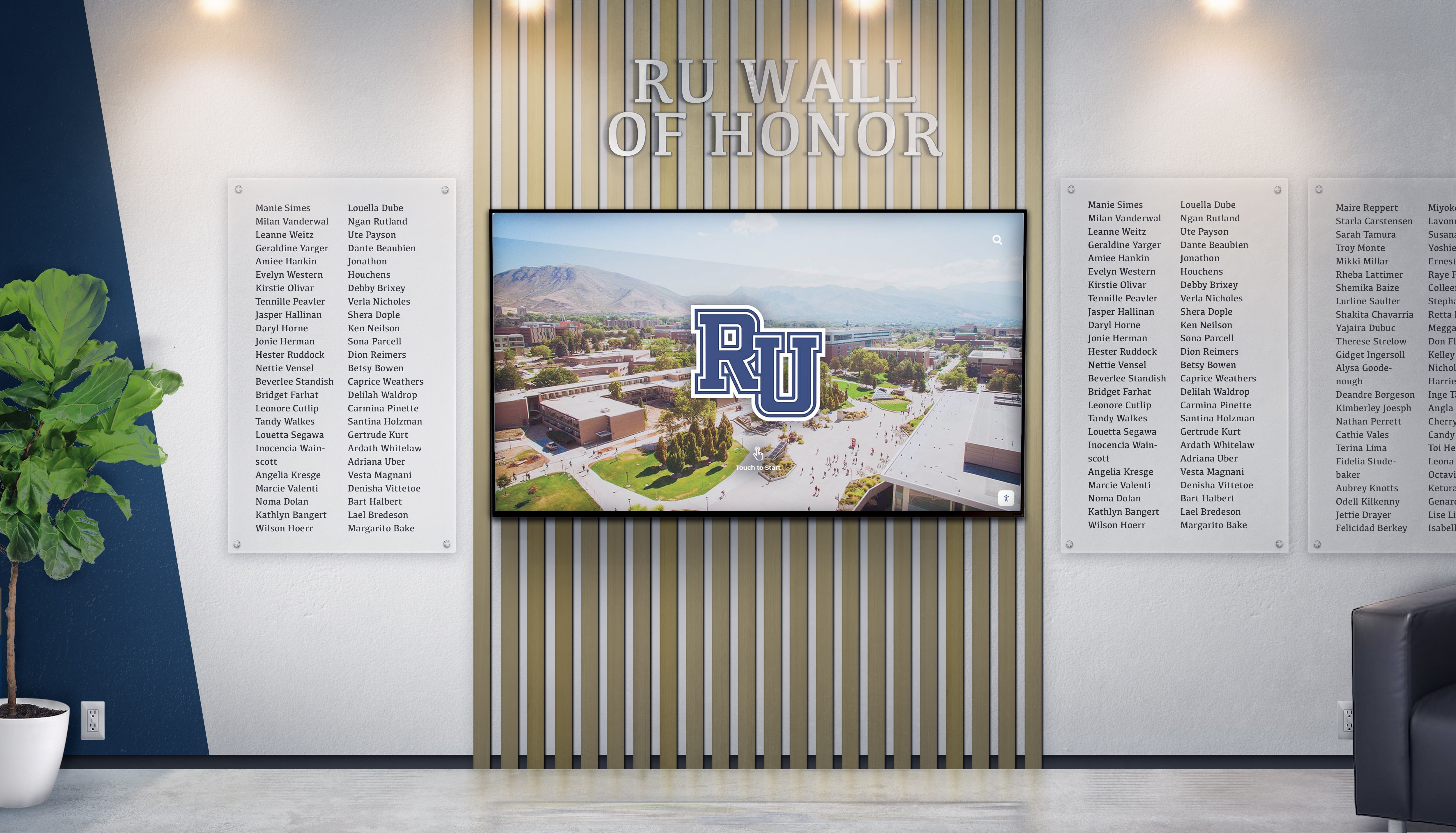
Tiered recognition structures organize donors by contribution levels through clearly defined giving societies with descriptive names, visual distinction between tiers using color coding or design elements, prominence adjustments providing enhanced visibility for major gift donors, and comprehensive inclusion ensuring recognition for contributors at all levels rather than exclusive focus on largest gifts.
Common recognition tier structures include transformational giving circles for contributions above $1,000,000, leadership societies recognizing gifts of $250,000-$999,999, benefactor levels acknowledging $100,000-$249,999 commitments, patron recognition for $25,000-$99,999 donors, supporter acknowledgment celebrating $1,000-$24,999 giving, and friends of the institution honoring all contributors regardless of amount.
Digital systems enable cumulative lifetime giving calculations aggregating multiple contributions over years or decades into appropriate recognition tiers. Traditional donor walls struggle with multi-year giving requiring physical plaque replacement as donors progress through recognition levels—digital platforms automatically update donor tier placement based on total contribution calculations without manual intervention.
Guidance on donor wall implementation provides frameworks for establishing recognition programs that strengthen advancement efforts while honoring philanthropic support appropriately.
Campaign Progress Tracking and Goal Visualization
Beyond individual donor acknowledgment, comprehensive platforms support active fundraising campaigns through real-time progress visualization. Campaign dashboards display current fundraising totals automatically updating as new gifts arrive, goal completion percentages showing progress toward targets, milestone celebrations acknowledging achievement of interim objectives, and priority-specific tracking separating progress across multiple campaign initiatives.
Interactive campaign displays serve dual purposes honoring current contributors while inspiring additional giving. When prospective donors see campaign momentum through visual progress indicators and growing contributor rosters, social proof encourages participation. Campaign thermometers and goal trackers create urgency particularly as campaigns approach completion targets—prompting fence-sitting prospects to commit before missing participation opportunities.
Digital platforms enable campaign-specific recognition pages separate from permanent donor acknowledgment. Time-limited capital campaigns receive dedicated content areas highlighting campaign-specific donors, describing funded projects in detail, and demonstrating tangible outcomes philanthropic support enabled. When campaigns conclude, content transitions to permanent archives documenting historic fundraising initiatives while active campaign features shift to new priorities.
Impact Storytelling and Transparency
Modern donors increasingly expect transparency demonstrating how contributions create measurable outcomes. Dual-purpose recognition systems address this expectation by linking donor recognition to program impact documentation through scholarship recipient profiles funded by specific donor gifts, facility improvement galleries showing construction enabled by capital campaigns, program outcome metrics demonstrating results philanthropic support achieved, and student testimonials thanking donors whose generosity made educational experiences possible.
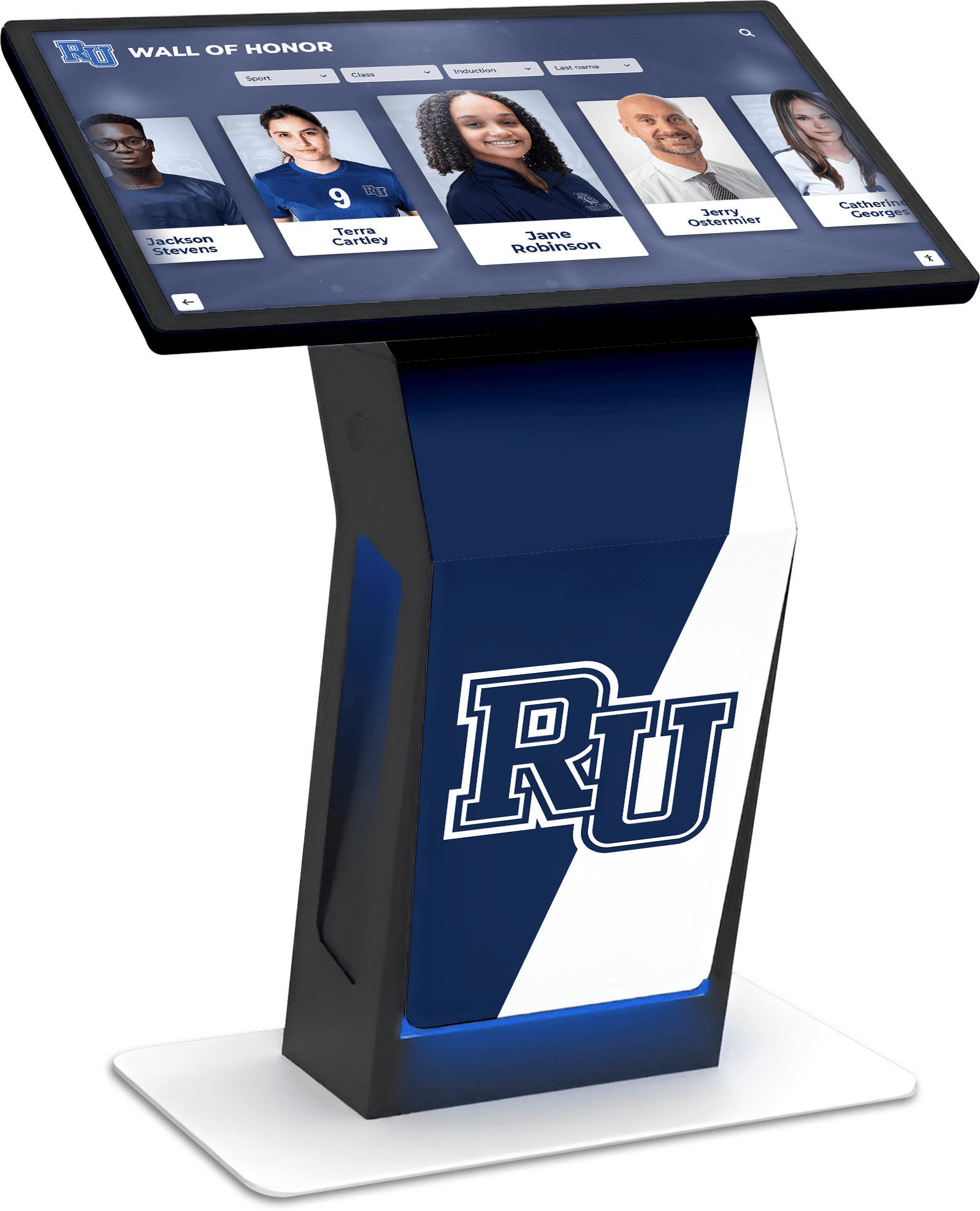
Impact storytelling transforms recognition from transactional name listing into meaningful stewardship demonstrating institutional values around donor appreciation and accountability. When donors see explicit connections between their contributions and student success, facility improvements, or program expansions, abstract philanthropy becomes concrete impact justifying continued investment.
Research indicates recognized donors demonstrate 43% higher retention rates and contribute 23% larger subsequent gifts compared to unrecognized peers. This dramatic impact improvement results from meaningful recognition addressing psychological needs around appreciation, impact visibility, and legacy building—all capabilities digital platforms deliver comprehensively through rich multimedia content impossible with traditional plaques.
Sponsor Recognition and Corporate Partnership Management
Organizations partnering with corporate sponsors or business community supporters require specific recognition capabilities acknowledging commercial relationships appropriately while maintaining institutional integrity.
Corporate Sponsor Display Formats
Business sponsors expect professional recognition reflecting investment value while respecting institutional brand standards. Digital platforms accommodate sponsor acknowledgment through logo placement with sizing proportional to sponsorship level, company profile pages describing business offerings and community involvement, contact information and website links enabling business development, and rotation scheduling ensuring fair visibility across multiple sponsors when screen real estate limitations exist.
Sponsor recognition differs from individual donor acknowledgment by emphasizing commercial brand visibility rather than personal philanthropy. Corporate sponsors typically provide specific logo files and brand guidelines ensuring accurate representation. Digital platforms accept diverse image formats and maintain consistent presentation quality across sponsors regardless of varying logo dimensions or color schemes.
Tiered sponsorship structures commonly include presenting sponsors receiving premier visibility and largest logo placement, platinum sponsors gaining enhanced recognition with prominent positioning, gold and silver levels providing proportional acknowledgment, and program sponsors supporting specific initiatives receiving category-specific recognition.
Time-based sponsorship management proves particularly valuable for annual sponsors whose commitments expire after defined periods. Digital platforms enable automated expiration scheduling removing sponsor recognition when agreements conclude without ongoing manual monitoring required with permanent physical plaques inappropriately acknowledging expired partnerships.
Athletic Program and Facility Naming Rights
Major corporate sponsorships often include naming rights for athletic facilities, programs, or events. Digital recognition systems document these significant partnerships through facility naming acknowledgment incorporated into wayfinding and directory content, program naming recognition appearing throughout related athletic content, event sponsorship highlighted during seasonal competitions or tournaments, and historical documentation preserving naming rights evolution as partnerships change over time.
When naming rights agreements change—either through new corporate partners or naming rights reverting to institutional control—digital systems enable instant updates across all references. Traditional signage requires expensive replacement of physical markers throughout facilities; digital content updates happen in minutes through administrative interfaces without installation costs.
Resources on sponsor recognition best practices demonstrate how organizations balance commercial partnerships with donor appreciation effectively.
Balancing Commercial and Philanthropic Recognition
Institutions implementing dual-purpose systems must thoughtfully balance commercial sponsor visibility with individual donor recognition and athletic achievement documentation. Poor balance creates perceptions that commercial interests dominate institutional recognition diminishing authentic appreciation for donors or athletes.
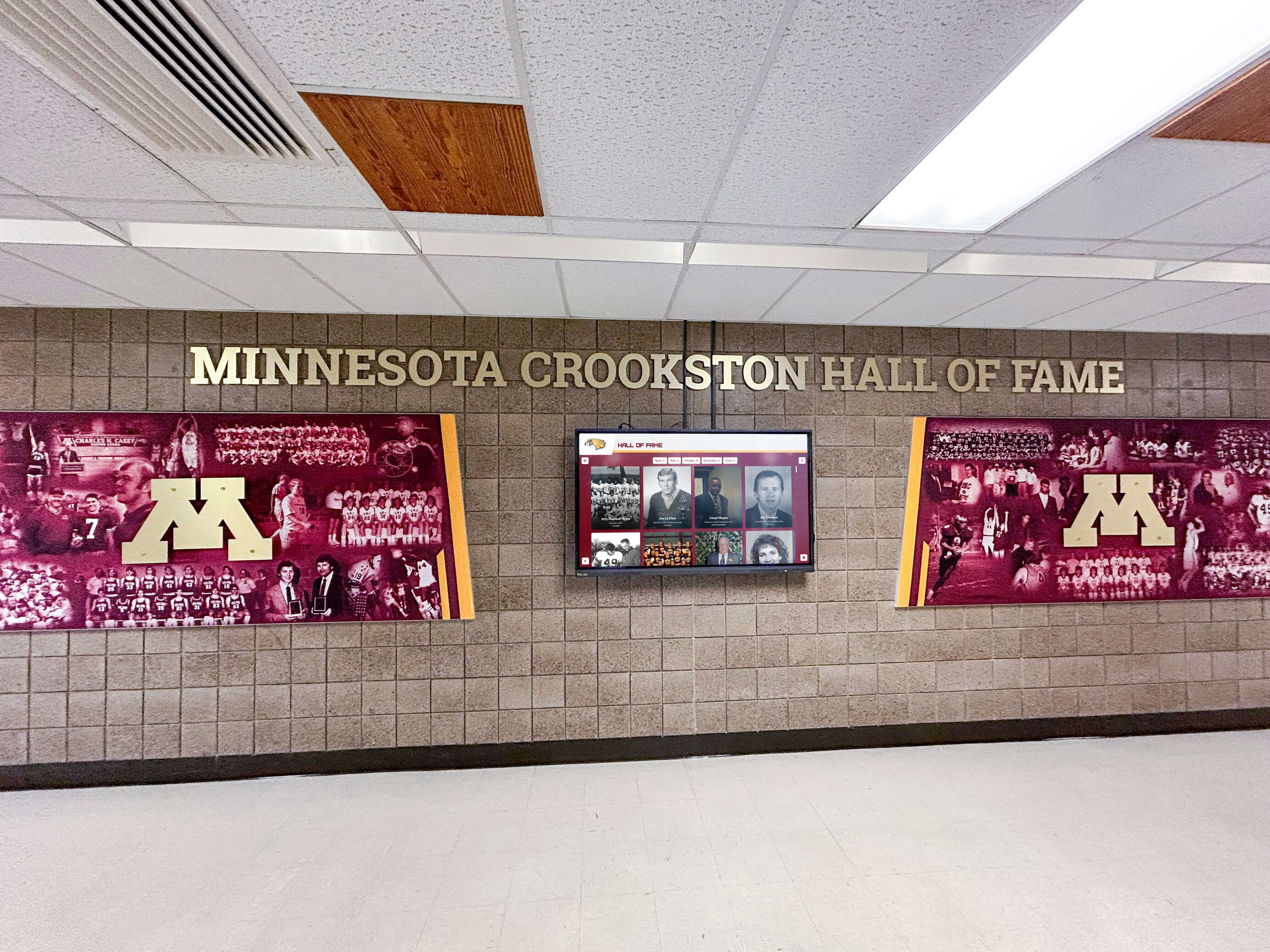
Effective approaches maintain clear content hierarchy through dedicated navigation pathways separating sponsor content from donor and athletic recognition, proportional visibility ensuring commercial sponsors don’t overwhelm primary recognition purposes, contextual sponsor placement appearing where relevant rather than forcing visibility throughout unrelated content, and periodic rotation among equal-tier sponsors preventing perception of preferential treatment.
Many programs limit sponsor content to specific screens or sections within broader recognition systems. Homepage tiles might include “Community Partners” or “Corporate Sponsors” alongside “Hall of Fame,” “Donor Recognition,” and “Athletic Records”—providing sponsor visibility while maintaining clear categorical separation. This organizational approach respects commercial partnerships without allowing business promotion to dominate platforms primarily intended for honoring individual achievement and philanthropic support.
Content Management Strategies for Dual-Purpose Systems
Successful dual-purpose recognition requires systematic content development and maintenance processes ensuring both athletic and donor acknowledgment receive appropriate ongoing attention.
Cross-Departmental Collaboration Frameworks
Dual-purpose systems necessitate collaboration between athletic departments and advancement offices—organizational units that often operate independently with separate reporting structures and distinct priorities. Effective management establishes clear responsibility divisions through athletic department ownership of competitive achievement content including hall of fame inductees, record holders, team championships, and coaching recognition, advancement office control of donor recognition encompassing individual contributors, corporate sponsors, campaign tracking, and impact storytelling, and coordinated governance addressing platform-wide decisions about design standards, homepage organization, and cross-category content.
Regular coordination meetings between athletic and advancement stakeholders prevent conflicts and ensure platform-wide consistency. Quarterly reviews examine content balance verifying neither athletic nor donor recognition dominates inappropriately, identify update needs ensuring current information across all categories, assess user engagement analytics revealing which content generates strongest interest, and plan special features or campaigns leveraging recognition platform capabilities.
Shared content standards documented in style guides ensure professional consistency regardless of which department creates content. Standards address photo quality requirements and preferred image types, biographical content length and tone expectations, multimedia specifications for video integration, and accessibility compliance ensuring recognition serves all visitors effectively.
Update Workflows and Content Scheduling
Systematic processes ensure timely content additions across both recognition types. Athletic content follows seasonal patterns aligned with competition schedules and annual induction ceremonies through pre-season record board updates preparing for new athletic years, in-season record monitoring tracking performance changes requiring ranking updates, post-season championship documentation celebrating tournament success, and annual hall of fame additions following selection processes and induction events.
Donor recognition updates align with fundraising cycles and campaign milestones through quarterly campaign progress updates reflecting new contribution totals, annual recognition tier adjustments based on cumulative giving calculations, major gift announcements celebrating transformational donations promptly, and legacy society updates acknowledging new planned giving commitments.
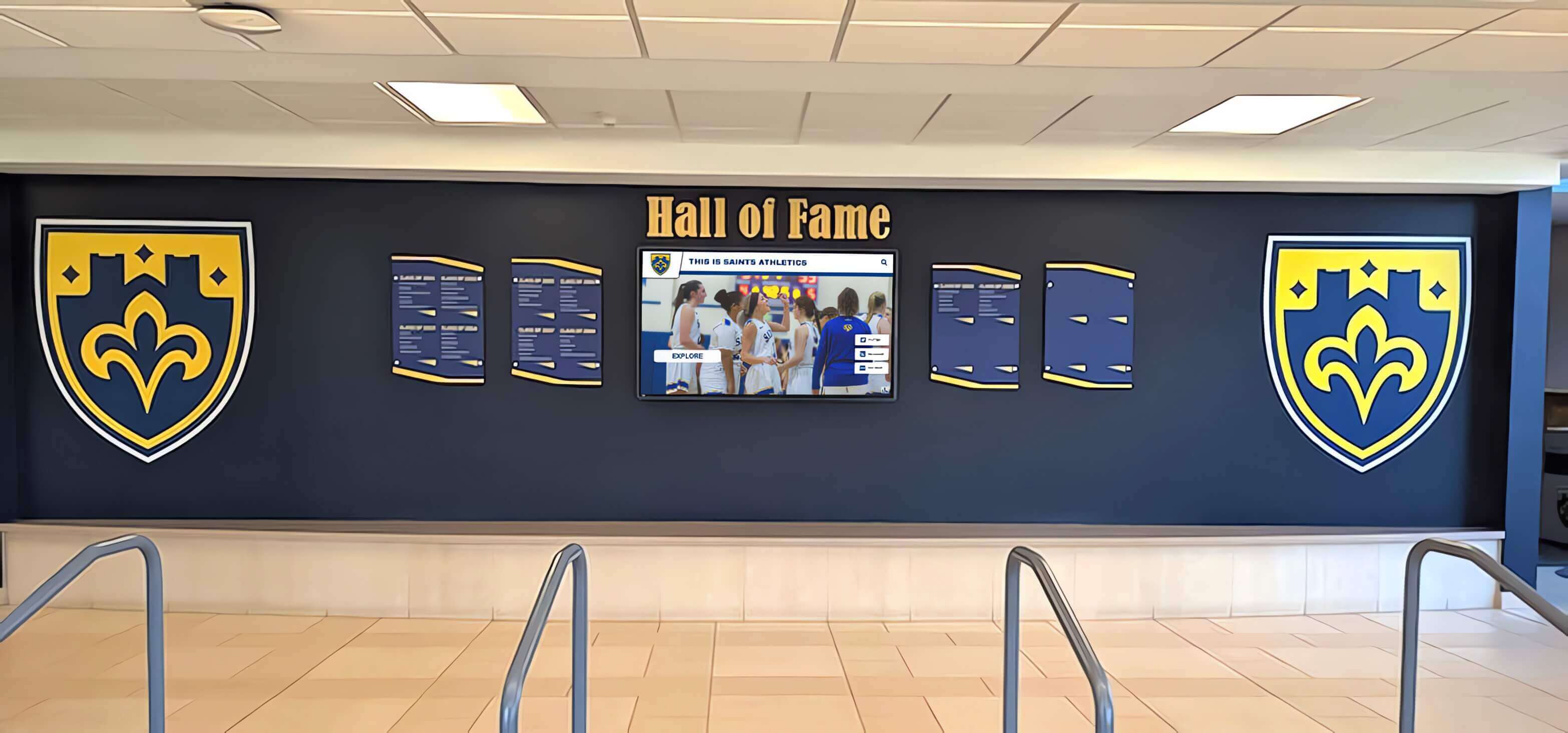
Content calendar coordination prevents update clustering overwhelming administrative capacity while avoiding extended periods without fresh content that reduces visitor engagement. Balancing athletic and donor updates throughout annual cycles maintains recognition platform relevance across diverse audiences rather than creating perception that systems prioritize one recognition type over another.
Privacy and Disclosure Considerations
Dual-purpose recognition systems must respect privacy preferences varying across different recognition contexts. Athletic hall of fame inductees typically expect public acknowledgment and appreciate visibility—competitive achievement recognition represents intended program purpose. Donor recognition involves more complex privacy considerations where some contributors welcome public acknowledgment while others prefer anonymity for personal, security, or philosophical reasons.
Best practices include explicit permission requests before adding donor profiles asking about recognition preferences and desired visibility levels, flexible anonymity options enabling “Anonymous Donor” acknowledgment without identity disclosure, graduated privacy choices offering public recognition, internal-only acknowledgment, or complete confidentiality, and periodic preference verification confirming donors’ ongoing comfort with recognition approaches.
Athletic recognition also involves privacy considerations particularly regarding contact information, family details, and post-athletic career updates. Clear policies establish what information appears publicly versus remaining in administrative records accessible only to authorized staff. Many programs include athlete graduation years and sports participation while omitting current addresses, phone numbers, or detailed family information protecting privacy while enabling sufficient recognition.
Implementation Planning for Dual-Purpose Recognition Systems
Institutions planning combined athletic and donor recognition displays benefit from systematic implementation approaches addressing both technical deployment and organizational change management.
Needs Assessment and Objective Definition
Begin by understanding current recognition approaches and limitations across both athletic and advancement contexts. Comprehensive assessment documents existing athletic recognition systems and content completeness, current donor acknowledgment approaches and stakeholder satisfaction, physical space constraints affecting recognition visibility, budget parameters for implementation and ongoing operation, and stakeholder expectations across athletic programs, advancement offices, and institutional leadership.
Objective definition establishes clear success criteria guiding system selection and implementation including primary recognition purposes and priority audiences, content scope decisions about which recognition types receive inclusion, integration requirements with existing databases or advancement systems, accessibility standards ensuring compliance with ADA and web content guidelines, and timeline expectations for launch and phased content development.
Clear objectives prevent scope creep where implementation planning expands continuously incorporating every possible recognition category creating overwhelming launch complexity. Phased approaches enable core functionality launch with planned expansion adding capabilities systematically based on initial experience and evolving needs.
Platform Selection and Vendor Evaluation
Choose recognition systems designed specifically for dual-purpose educational applications rather than adapting generic digital signage platforms never intended for comprehensive content management. Purpose-built solutions provide user-friendly administrative interfaces enabling non-technical staff to manage content independently, professional templates ensuring consistent quality across thousands of entries, powerful search and navigation supporting effective content discovery, proven security protecting sensitive donor and athlete information, and helpful vendor support addressing questions and assisting with ongoing work.
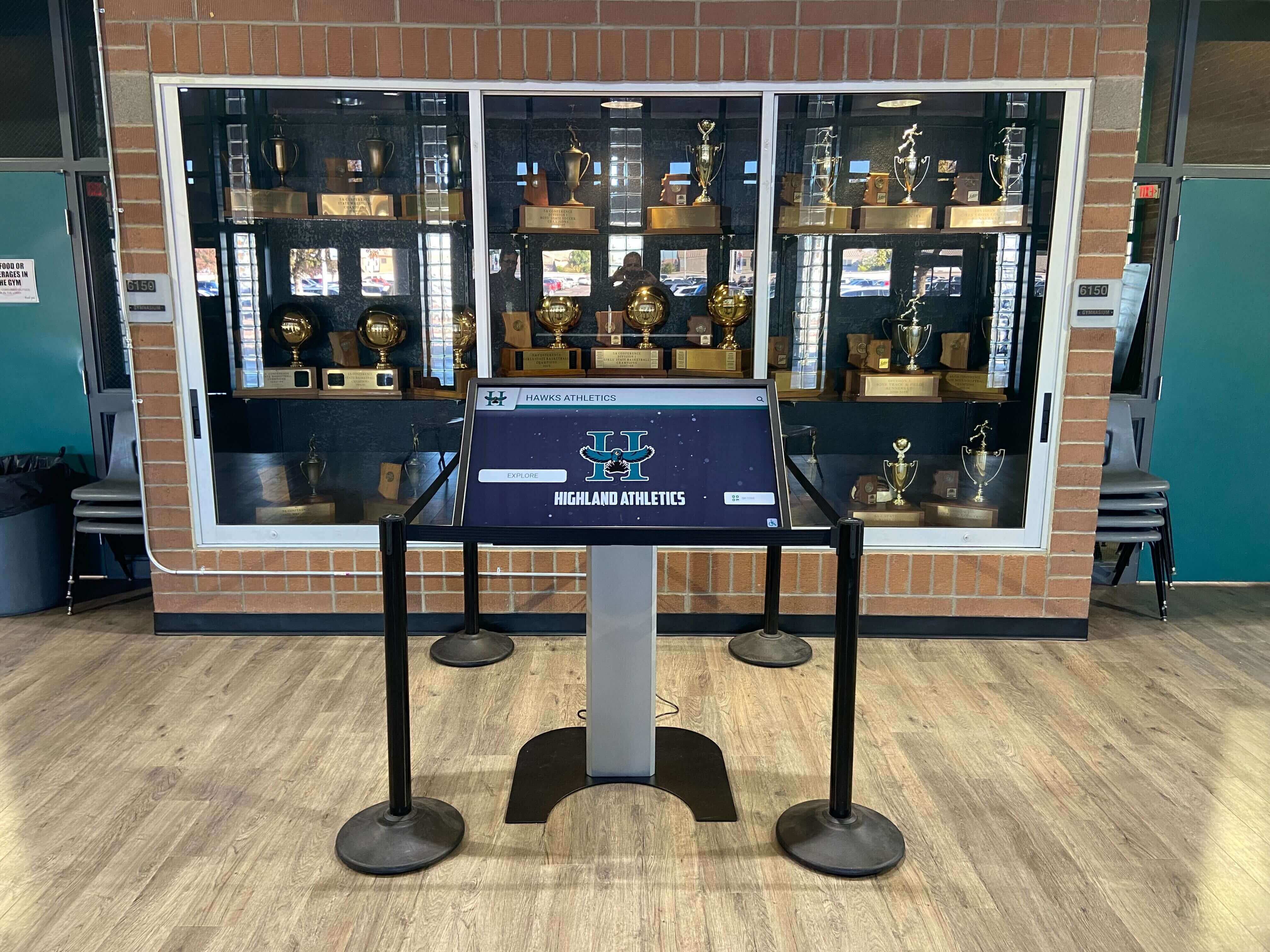
Evaluation criteria should weight total ownership costs including software licensing, hardware procurement, installation expenses, and ongoing support fees against long-term value considering content capacity accommodating institutional growth over decades, administrative efficiency reducing staff time managing recognition systems, engagement impact measured through analytics and stakeholder feedback, and scalability supporting expansion across additional recognition categories or physical locations.
Many institutions discover that platforms like Rocket Alumni Solutions deliver purpose-built capabilities specifically designed for combined athletic and donor recognition, offering unlimited content capacity eliminating forced choices about which achievements or contributors receive acknowledgment, user-friendly content management requiring no technical expertise from athletic or advancement staff, professional presentation maintaining institutional brand standards automatically, and comprehensive support ensuring successful implementation and ongoing work.
Physical Installation and Placement Strategy
Optimal placement decisions affect recognition visibility and audience engagement significantly. High-traffic locations maximize exposure to diverse audiences including main building lobbies serving as institutional entry points, athletic facility entrances where visiting recruits and event attendees naturally congregate, development office reception areas where major donors visit for meetings and cultivation conversations, and student centers or cafeterias where current students regularly gather.
Environmental considerations include appropriate lighting preventing screen glare that impairs visibility, reliable electrical power supporting continuous operation, network connectivity enabling remote content updates and analytics collection, comfortable viewing distances and sightlines ensuring accessibility, and secure mounting with professional cable management maintaining clean appearance.
Many institutions implement multiple displays in different locations showing identical content accessible through unified management platforms. Athletic facility installations emphasize athletic recognition while providing donor acknowledgment; advancement office displays highlight philanthropic support while offering hall of fame access. Unified systems ensure content consistency across installations without requiring duplicate administrative effort managing separate systems.
Measuring Success and Demonstrating Recognition Value
Data-informed management ensures dual-purpose recognition systems achieve intended objectives while identifying optimization opportunities.
Engagement Analytics and Usage Patterns
Digital platforms generate valuable data revealing how audiences interact with recognition content. Key metrics include total visitor sessions and unique users documenting overall engagement levels, category-specific traffic showing relative interest in athletic versus donor content, popular search terms revealing how visitors discover information, average session duration indicating engagement depth, and geographic reach demonstrating recognition extending beyond local communities to distant alumni and supporters.
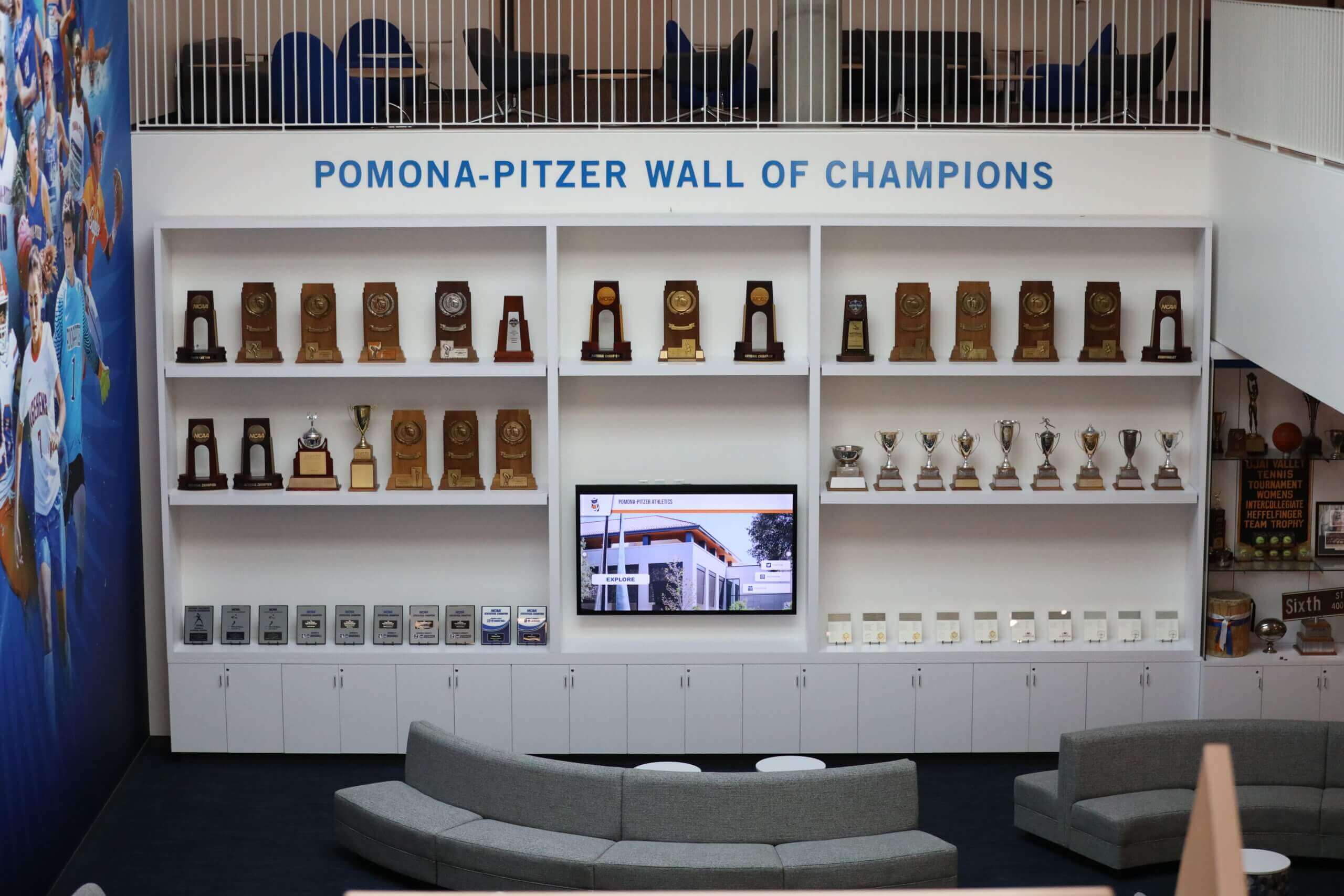
Usage analytics inform content development priorities by identifying high-interest recognition categories deserving expanded coverage, revealing underutilized content requiring enhanced promotion or improved presentation, and documenting peak engagement periods optimizing content scheduling and special feature launches.
Comparative analysis between athletic and donor content engagement helps calibrate appropriate balance. If analytics reveal overwhelming athletic content interest with minimal donor engagement, this suggests opportunities to enhance donor storytelling, improve donor content discoverability, or increase advancement office promotion encouraging donor exploration. Conversely, disproportionate donor traffic might indicate athletic content requiring enhancement to maintain competitive balance.
Advancement Impact Documentation
Donor recognition systems should demonstrate measurable advancement benefits justifying investment. Track metrics including donor retention rates comparing recognized versus unrecognized contributors, average gift size progression following initial recognition, planned giving commitments attributed to legacy society visibility, and major gift cultivation success leveraging recognition demonstrations during prospect meetings.
Advancement research indicates institutions with comprehensive donor recognition experience 30% higher engagement rates and retain 25% more donors year-over-year compared to organizations with minimal acknowledgment systems. These improvements translate directly to enhanced fundraising outcomes with every dollar invested in recognition typically generating $4-$8 in incremental giving over five-year periods.
Athletic program benefits manifest through recruitment advantages where prospective student-athletes cite tradition and recognition as program selection factors, current athlete motivation inspired by visible pathways to lasting legacy, and alumni engagement strengthened through emotional connections to preserved athletic heritage.
Resources on recognition program effectiveness demonstrate how organizations measure and optimize recognition impact systematically.
Common Questions About Dual-Purpose Recognition Systems
Can digital displays really handle both athletic records and donor recognition effectively?
Modern digital recognition platforms provide unlimited content capacity and sophisticated organizational structures enabling comprehensive athletic documentation and donor acknowledgment within unified systems. Well-designed navigation ensures each audience finds relevant information effectively without interference between different recognition types. Thousands of institutions successfully operate combined systems proving dual-purpose functionality when platforms include purpose-built capabilities designed specifically for educational recognition rather than generic digital signage adapted beyond intended applications.
How do update responsibilities work when both athletic and advancement staff need access?
Dual-purpose platforms support role-based access control enabling athletic department staff to manage competitive achievement content while advancement offices control donor recognition—all within unified administrative interfaces. Permissions systems prevent unauthorized modification while enabling appropriate departmental autonomy. Coordinated governance addresses platform-wide decisions about homepage organization and design standards ensuring institutional consistency while respecting departmental operational control within their recognition domains.
Do sponsor recognition requirements conflict with donor and athletic acknowledgment?
Thoughtful content organization balances commercial sponsor visibility with donor appreciation and athletic achievement documentation through dedicated navigation pathways separating sponsor content from primary recognition purposes, proportional visibility preventing commercial interests from overwhelming intended recognition functions, and contextual placement showing sponsors where relevant rather than forcing visibility throughout unrelated content. Clear hierarchies maintain institutional integrity while respecting commercial partnership agreements appropriately.
What happens when donors are also former athletes eligible for hall of fame inclusion?
Digital systems elegantly handle individuals meriting recognition across multiple categories by creating comprehensive profiles linking athletic achievement and philanthropic contributions, establishing clear primary categorization with cross-references to secondary recognition, and enabling discovery through multiple navigation pathways allowing users to find multi-faceted contributors regardless of entry approach. This unified representation proves impossible with separate physical displays requiring duplicate plaques and fragmented recognition.
How much does dual-purpose recognition cost compared to separate athletic and donor systems?
Comprehensive dual-purpose platforms typically cost $15,000-$40,000 for complete implementation including hardware, software, installation, and initial content development—substantially less than implementing separate specialized systems for athletic recognition and donor acknowledgment. Beyond lower initial investment, unified platforms dramatically reduce ongoing operational costs by eliminating duplicate administrative effort managing separate systems, providing single vendor relationship simplifying support and reducing licensing fees, and enabling cross-functional content sharing maximizing recognition value across organizational boundaries.
Building Recognition Excellence Through Unified Systems
Dual-purpose digital recognition platforms transform how institutions honor athletic excellence and philanthropic generosity by eliminating false choices forced by traditional space-constrained physical displays. Modern systems provide unlimited capacity accommodating comprehensive recognition across all categories, sophisticated organization ensuring clear navigation despite content diversity, professional presentation maintaining institutional brand standards automatically, and practical management requiring minimal administrative burden from already stretched staff.
The most successful implementations share common characteristics including clear content hierarchies balancing athletic and donor recognition appropriately, systematic collaboration between athletic departments and advancement offices, thoughtful sponsor acknowledgment respecting commercial partnerships without commercial dominance, rich multimedia storytelling bringing achievements and contributions to life, and sustained management ensuring recognition remains current and accurate across years and decades.
For institutions beginning recognition program development or modernizing existing systems, purpose-built platforms deliver capabilities generic solutions cannot match. Specialized systems understand educational recognition requirements, provide user-friendly interfaces designed for non-technical administrators, include professional templates ensuring consistent quality, and offer comprehensive support from vendors serving similar institutions successfully.
Beyond immediate recognition functions, effective dual-purpose systems create lasting institutional benefits including strengthened donor retention through meaningful acknowledgment inspiring continued giving, enhanced athletic recruitment through visible tradition and legacy pathways, improved alumni engagement maintained through emotional institutional connections, and preserved organizational memory preventing competitive and philanthropic history from disappearing as years pass.
Every athletic achievement deserves recognition inspiring current athletes toward excellence. Every generous donor merits acknowledgment honoring contributions while encouraging continued support. Modern dual-purpose digital displays make comprehensive recognition achievable for educational institutions and nonprofit organizations committed to celebrating excellence across all community contributions while operating within realistic budgetary and administrative constraints.
Ready to create a unified recognition system honoring both athletic excellence and philanthropic generosity without choosing between forced limitations? Discover how comprehensive digital platforms enable unlimited dual-purpose recognition celebrating every achievement and contribution your institution values. Book a demo to explore purpose-built solutions designed specifically for schools and organizations seeking professional recognition systems requiring no technical expertise while delivering engagement that traditional approaches simply cannot match.