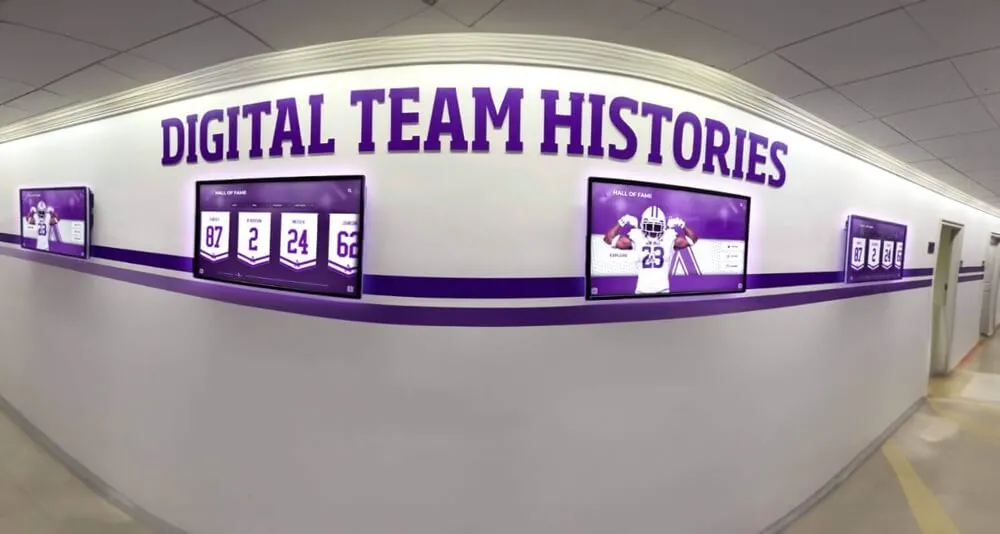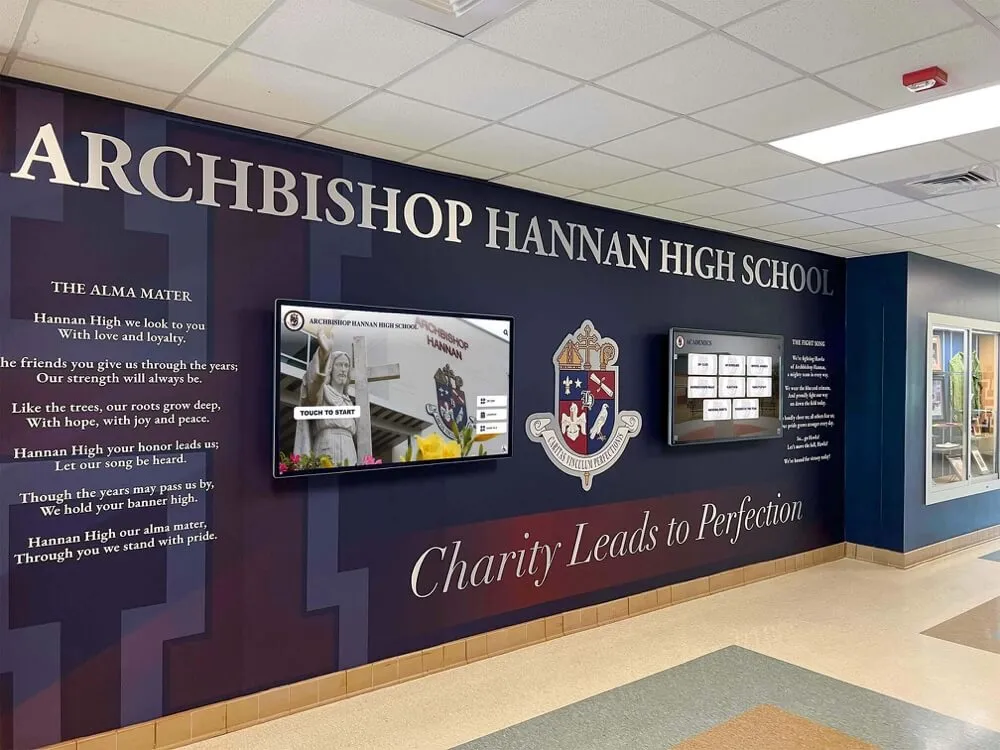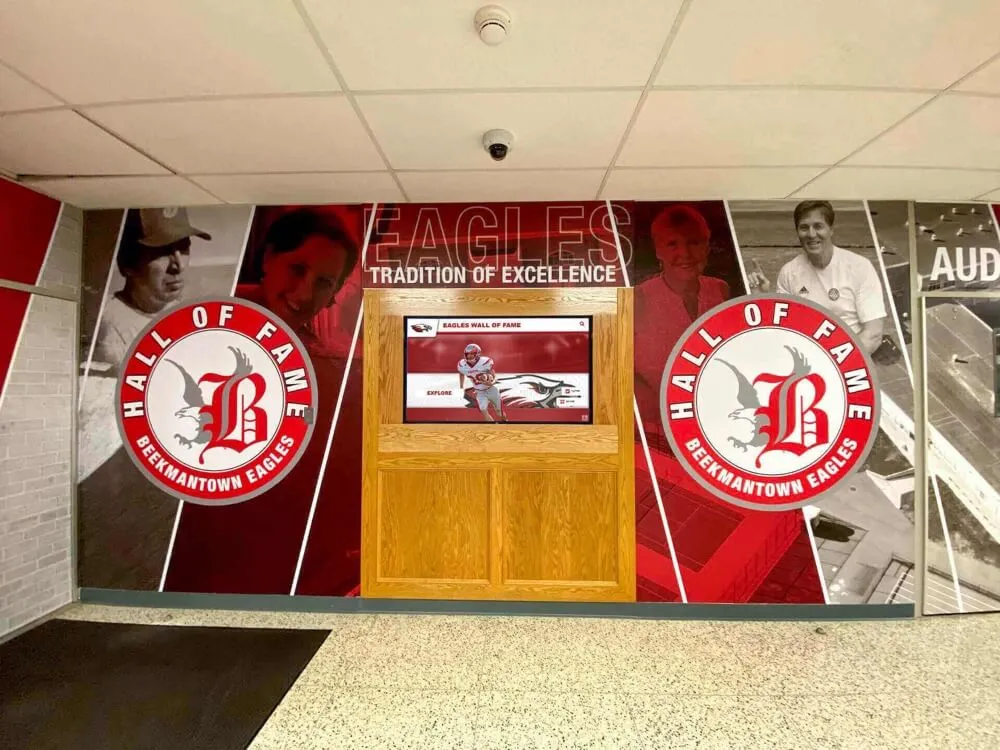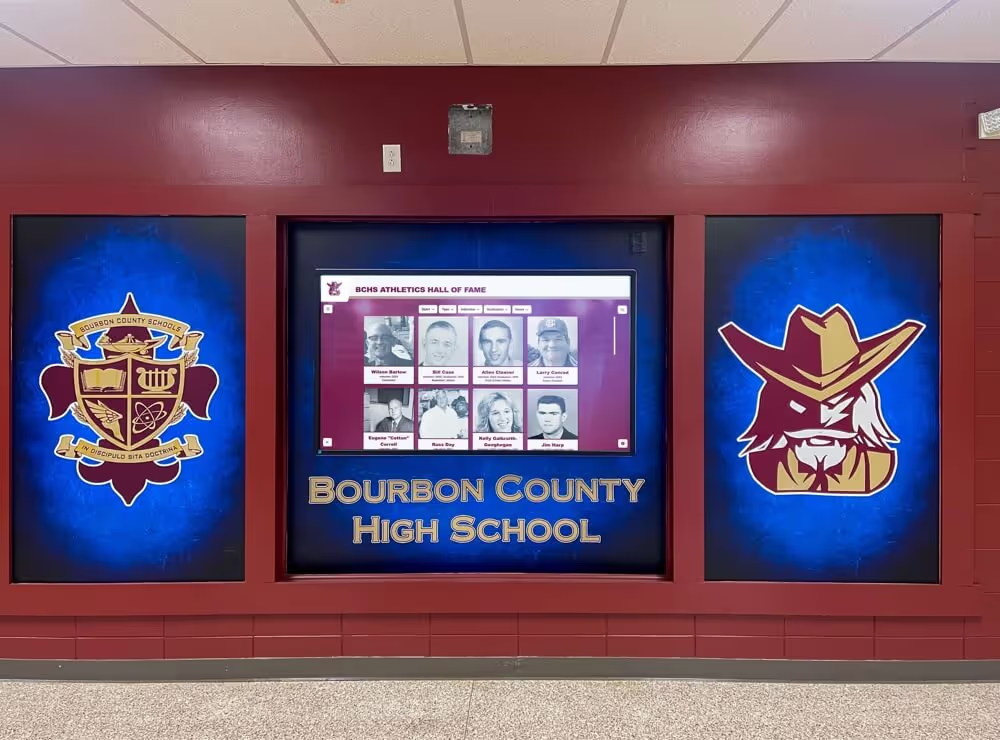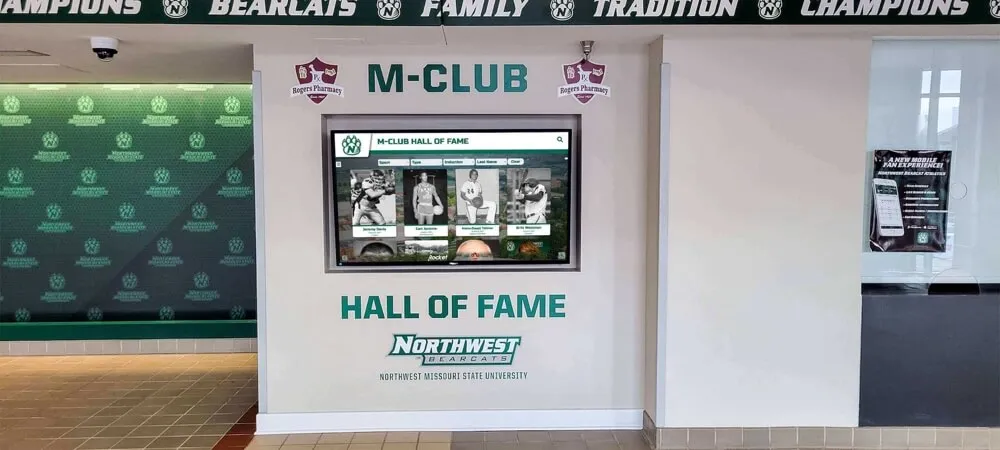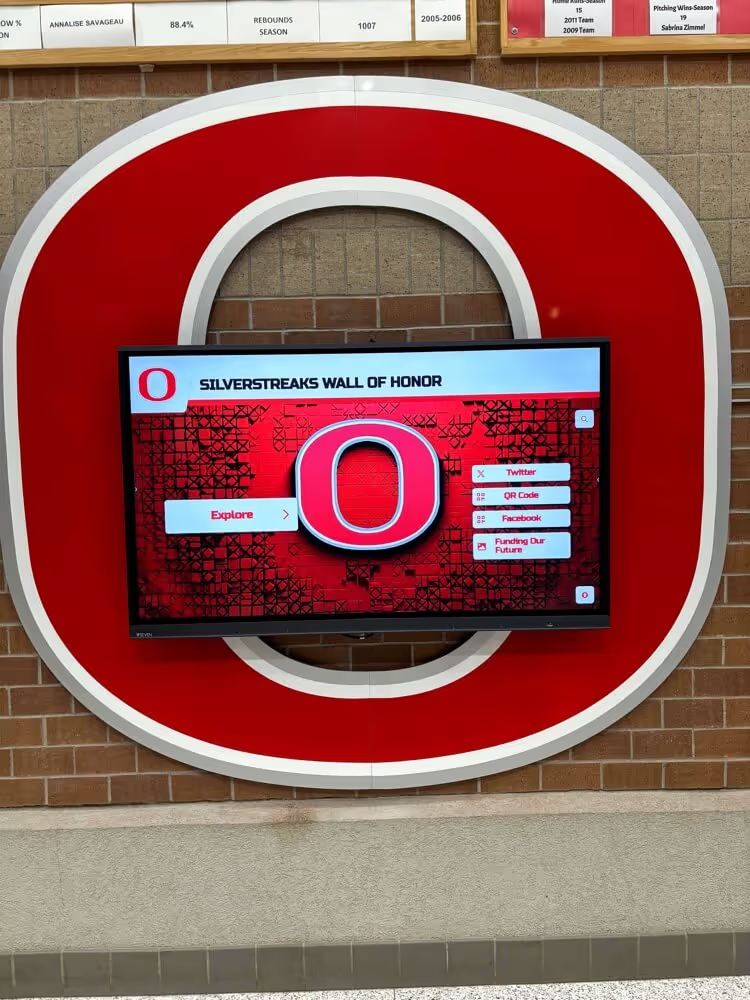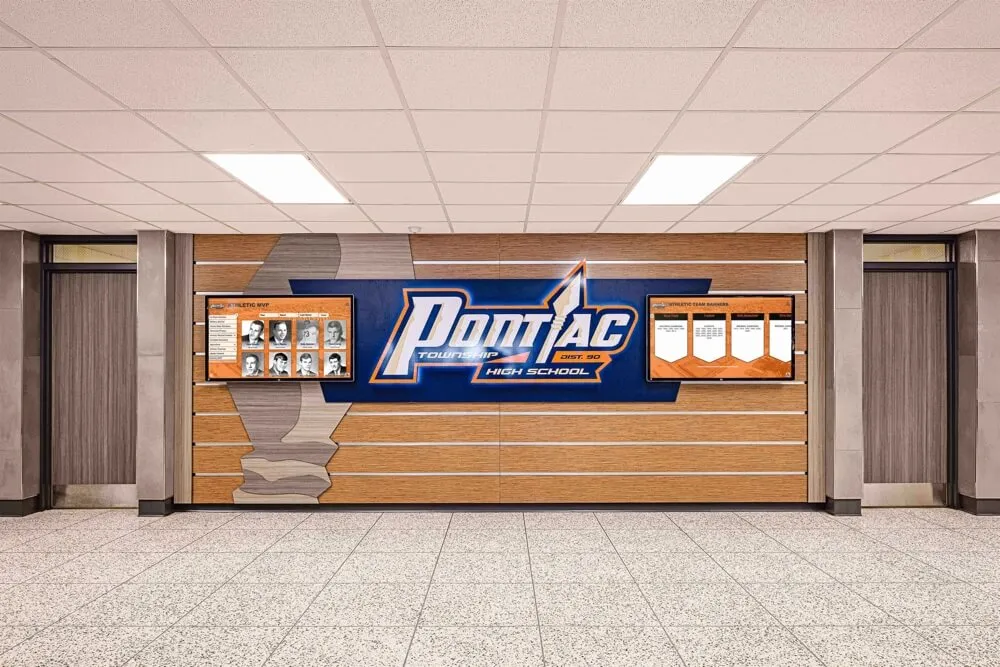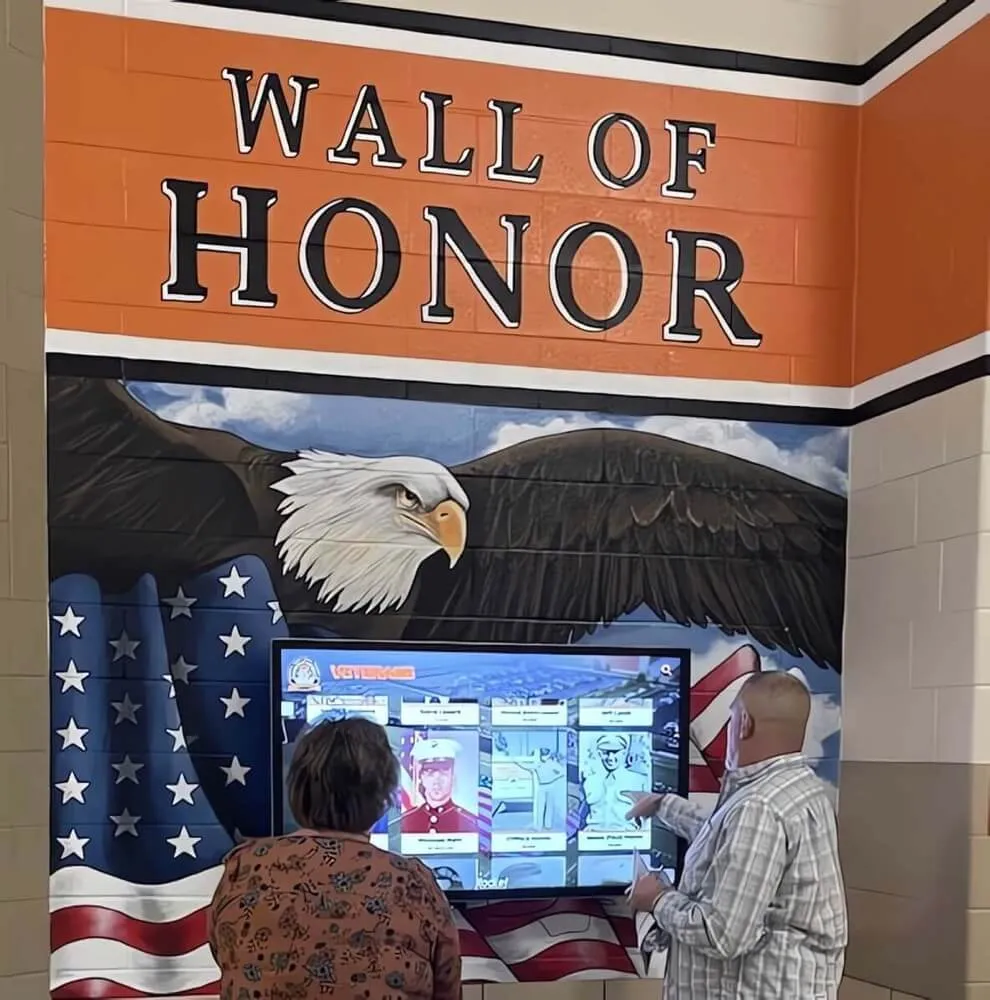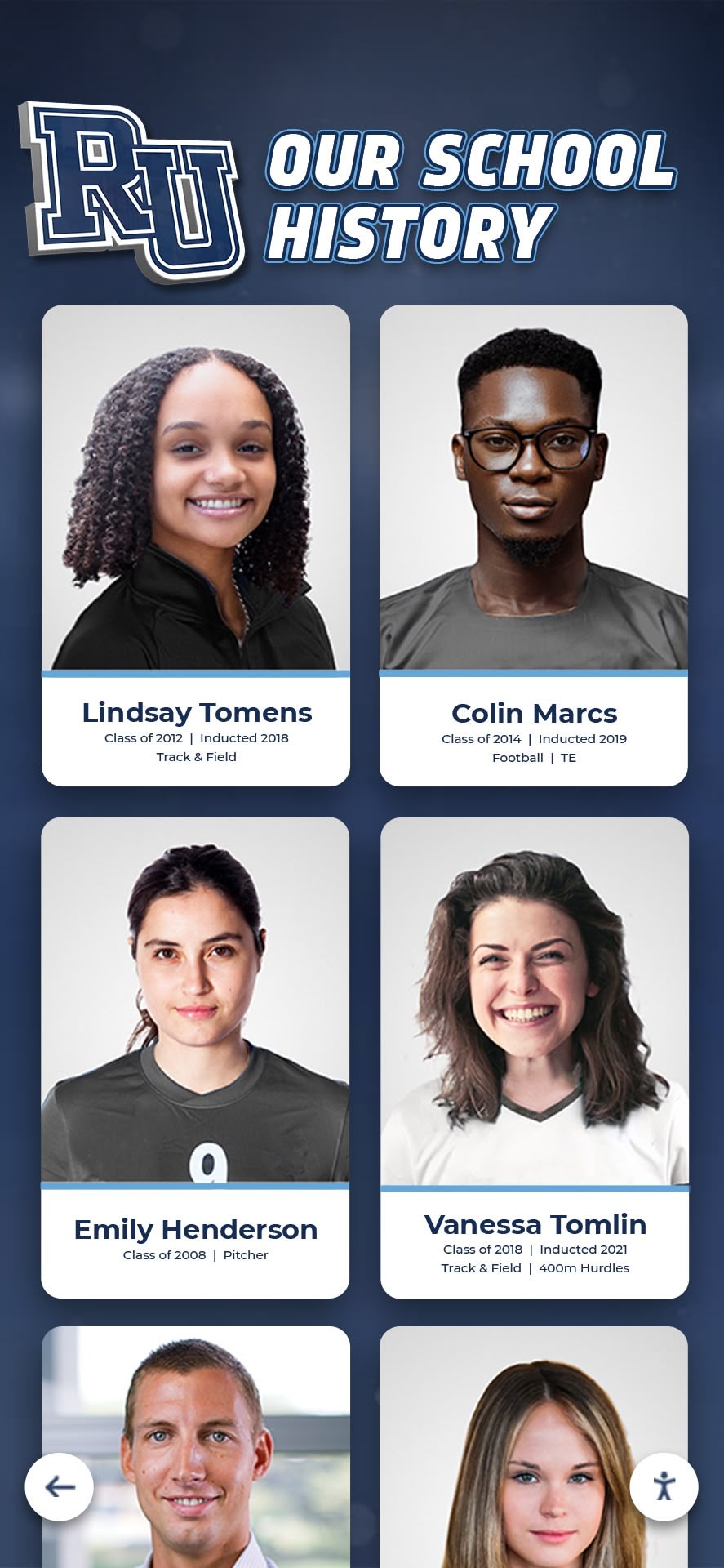




Schools accumulate thousands of digital assets annually—student photos, athletic records, yearbook spreads, event documentation, achievement rosters, historical archives, and multimedia content capturing institutional memory. Yet most educational institutions lack systematic approaches for managing these valuable assets, resulting in scattered files across personal computers, lost historical content, difficulty locating specific materials when needed, and missed opportunities to showcase achievements that inspire communities. Athletic directors search through folders trying to find last year’s championship photos. Alumni offices cannot locate historical materials for anniversary celebrations. Communications teams recreate content that exists somewhere but remains undiscoverable in disorganized storage systems.
Digital Asset Management (DAM) for schools solves these persistent challenges through centralized platforms that organize, preserve, search, and display institutional content systematically. Modern educational DAM systems go beyond simple file storage, providing sophisticated metadata frameworks, powerful search capabilities, automated organization, preservation protocols protecting irreplaceable history, and interactive display systems that transform static archives into engaging recognition platforms inspiring current students while honoring past achievements.
Schools implementing comprehensive DAM solutions discover substantial benefits including immediate asset discoverability replacing hours of searching, permanent preservation preventing content loss, professional organization replacing scattered storage, enhanced recognition visibility displaying achievements prominently, efficient workflows saving administrative time, and centralized access enabling authorized users across departments to use institutional content effectively. The transition from chaotic file management to systematic digital asset management represents fundamental operational improvement that touches every aspect of school communications, recognition, and institutional memory preservation.
Why Schools Need Digital Asset Management Now
Educational institutions generate digital content at unprecedented rates—thousands of photos annually, video content from events and athletics, scanned historical documents, achievement data requiring display, and multimedia celebrating student accomplishments. Without systematic management, this valuable content becomes effectively lost despite technical storage, creating operational inefficiencies and missed recognition opportunities. Modern DAM platforms designed specifically for schools provide comprehensive solutions managing the complete content lifecycle from initial capture through long-term preservation and public display. Solutions like Rocket Alumni Solutions deliver full-featured Digital Asset Management capabilities combined with auto-ranking record boards and interactive recognition displays, creating unified systems where asset organization directly powers visible celebration of athletic excellence, academic achievement, and institutional heritage throughout school communities.
Understanding Digital Asset Management for Educational Institutions
Digital Asset Management encompasses far more than cloud storage or shared network drives. True DAM systems provide sophisticated infrastructure specifically designed for organizing, preserving, searching, controlling access to, and leveraging digital content at institutional scale.
What Qualifies as Digital Asset Management?
DAM systems distinguish themselves from basic file storage through comprehensive capabilities addressing the entire asset lifecycle. Enterprise-grade educational DAM platforms integrate centralized repositories consolidating content from scattered sources into unified searchable libraries, structured metadata frameworks enabling detailed tagging with searchable fields describing content comprehensively, advanced search and discovery tools allowing instant location of specific assets among thousands, version control tracking asset evolution and modifications over time, permission management controlling who accesses specific content, automated workflows streamlining repetitive tasks like resizing or format conversion, integration capabilities connecting with existing school systems and platforms, and preservation protocols ensuring long-term accessibility as technology evolves.
These sophisticated capabilities distinguish professional DAM from consumer-grade solutions like Google Drive or Dropbox, which provide storage but lack the organizational depth, search sophistication, and specialized features educational institutions require for managing diverse asset types across decades of institutional history.
The Specific Digital Assets Schools Must Manage
Educational institutions generate remarkably diverse content types, each requiring appropriate management approaches ensuring discoverability and preservation. Understanding the breadth of assets requiring organization helps schools appreciate why comprehensive DAM solutions deliver value across multiple departments and use cases.
Athletic Content and Records
Sports programs generate substantial digital content including team photographs capturing rosters across decades, individual athlete portraits for recognition displays, action photography from competitions and practices, championship celebration images, record performance data requiring tracking and display, season statistics and achievement rosters, video highlights and game footage, and scanned historical materials documenting program heritage. Athletic directors managing content across 15-30 sport programs quickly accumulate tens of thousands of assets requiring organization allowing coaches, communications teams, and recognition displays to locate specific content efficiently.
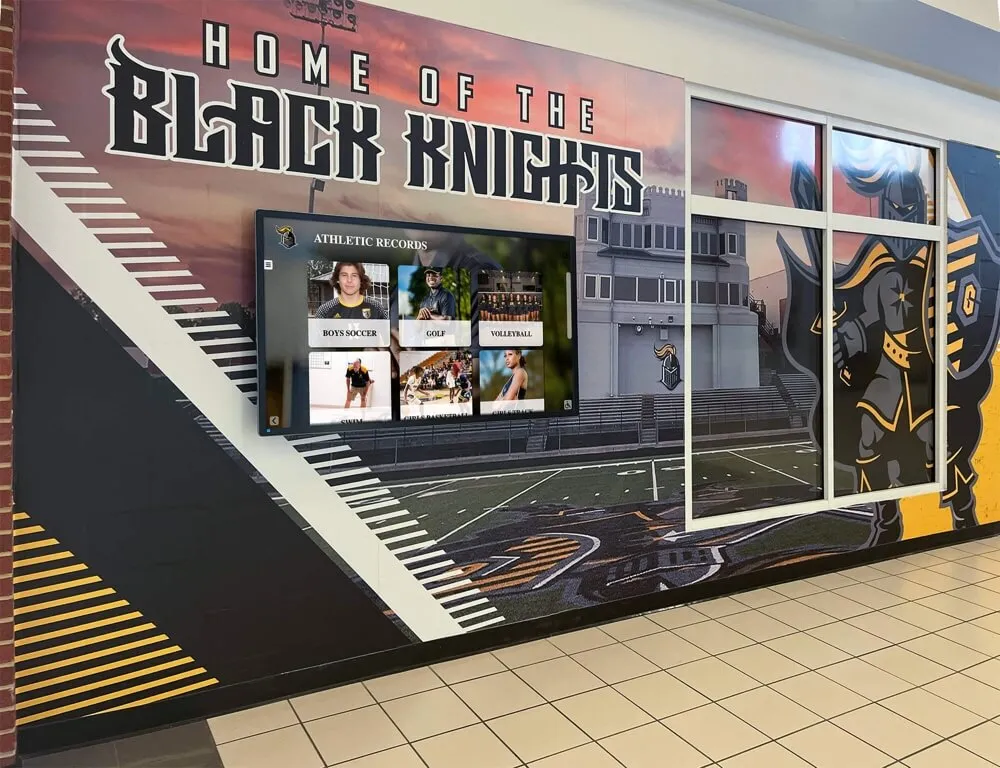
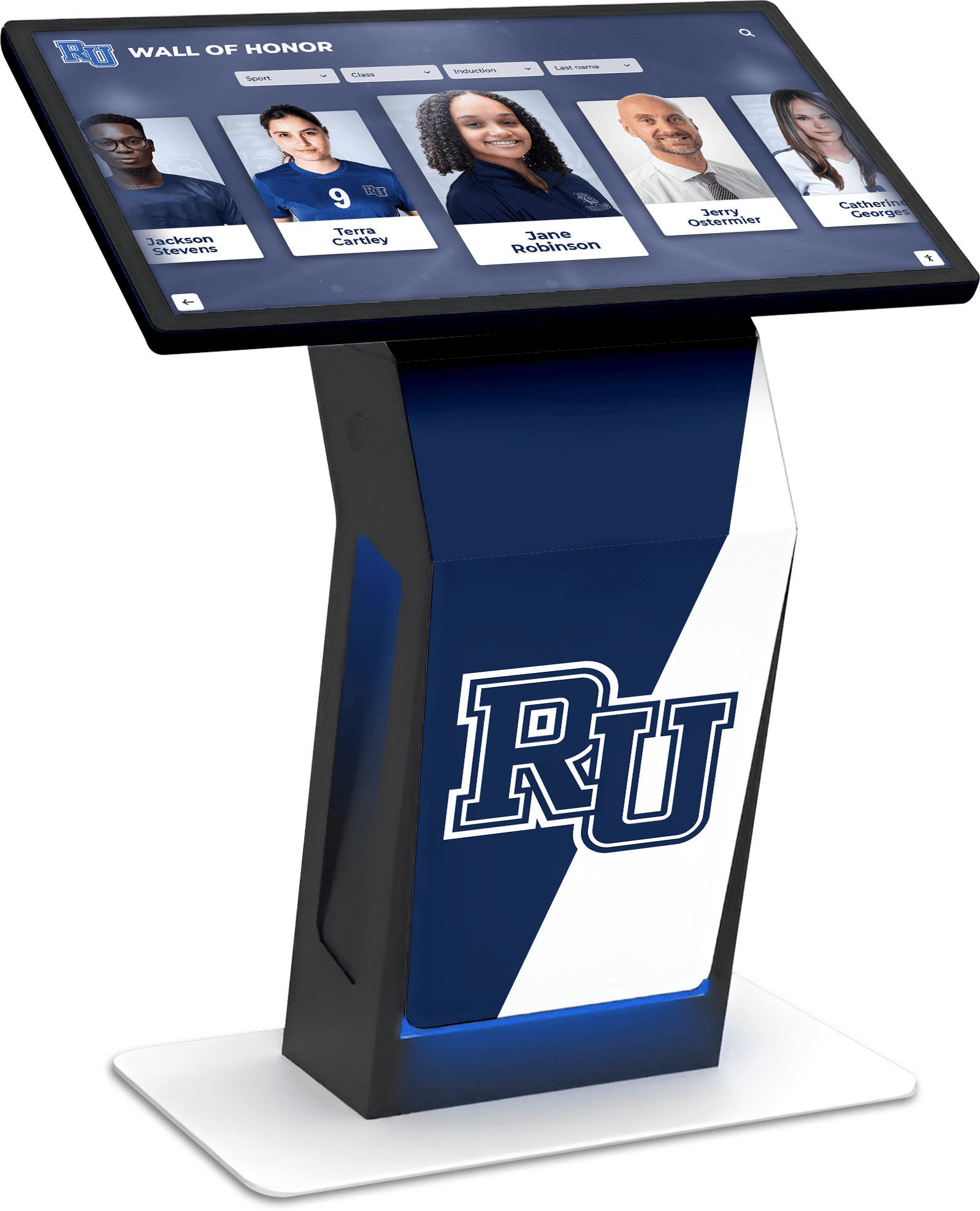
Digital record boards exemplify how specialized DAM systems transform raw athletic data into engaging displays. Rather than maintaining spreadsheets tracking records across sports, seasons, and event categories, purpose-built platforms automatically organize performance data, rank achievements, display top performers, and preserve complete historical context showing record progression over decades. This specialized athletic content management directly powers digital record board displays that celebrate excellence while maintaining institutional memory.
Academic Achievement Documentation
Academic excellence generates recognition content including honor roll rosters across marking periods, scholarship recipient lists and biographical details, academic competition results and participant photographs, graduation honor designations like valedictorian and salutatorian, National Honor Society membership records, AP Scholar and academic distinction awards, standardized test excellence recognition, and subject-specific achievement awards. Schools committed to balanced recognition giving academic accomplishments visibility matching athletic celebration require systematic management of this scholarly achievement content enabling prominent display through academic recognition programs that inspire intellectual excellence.
Historical Archives and Institutional Memory
Long-established schools possess irreplaceable historical assets including digitized yearbooks spanning decades, historical photographs documenting facility evolution, scanned newspaper clippings celebrating significant achievements, archived administrative documents and correspondence, historical event programs and publications, recorded oral histories from distinguished alumni and long-serving faculty, and multimedia content capturing institutional traditions and ceremonies. This heritage content requires preservation protocols preventing deterioration while enabling discovery supporting anniversary celebrations, historical research, and alumni engagement initiatives.
Event Documentation and Communications Content
Ongoing school operations generate substantial content including ceremony photography from graduations and assemblies, athletic event documentation and championship coverage, performing arts production images and video, community event photographs, administrative announcement graphics, social media content and communications materials, and promotional photography featuring facilities and programs. Communications teams managing institutional social channels, websites, and publications require immediate access to relevant high-quality content, making searchable organization essential for operational efficiency.
The Crisis: Why Traditional Asset Management Fails Schools
Most educational institutions employ inadequate approaches for managing digital content, creating persistent operational challenges and missed opportunities despite possessing valuable assets technically stored somewhere in disorganized systems.
The Scattered Storage Problem
Walk into typical school administrative offices and ask where specific content resides, and you’ll discover the fundamental challenge: nobody knows. Championship photographs might exist on the athletic director’s personal computer, unless that staff member left three years ago and the files disappeared with them. Historical yearbook scans could be on an external hard drive in the library, assuming the drive still works and someone remembers its location. Last year’s honor roll photos might be in someone’s email attachments, a shared Google Drive folder, the yearbook advisor’s personal laptop, or simply lost entirely.
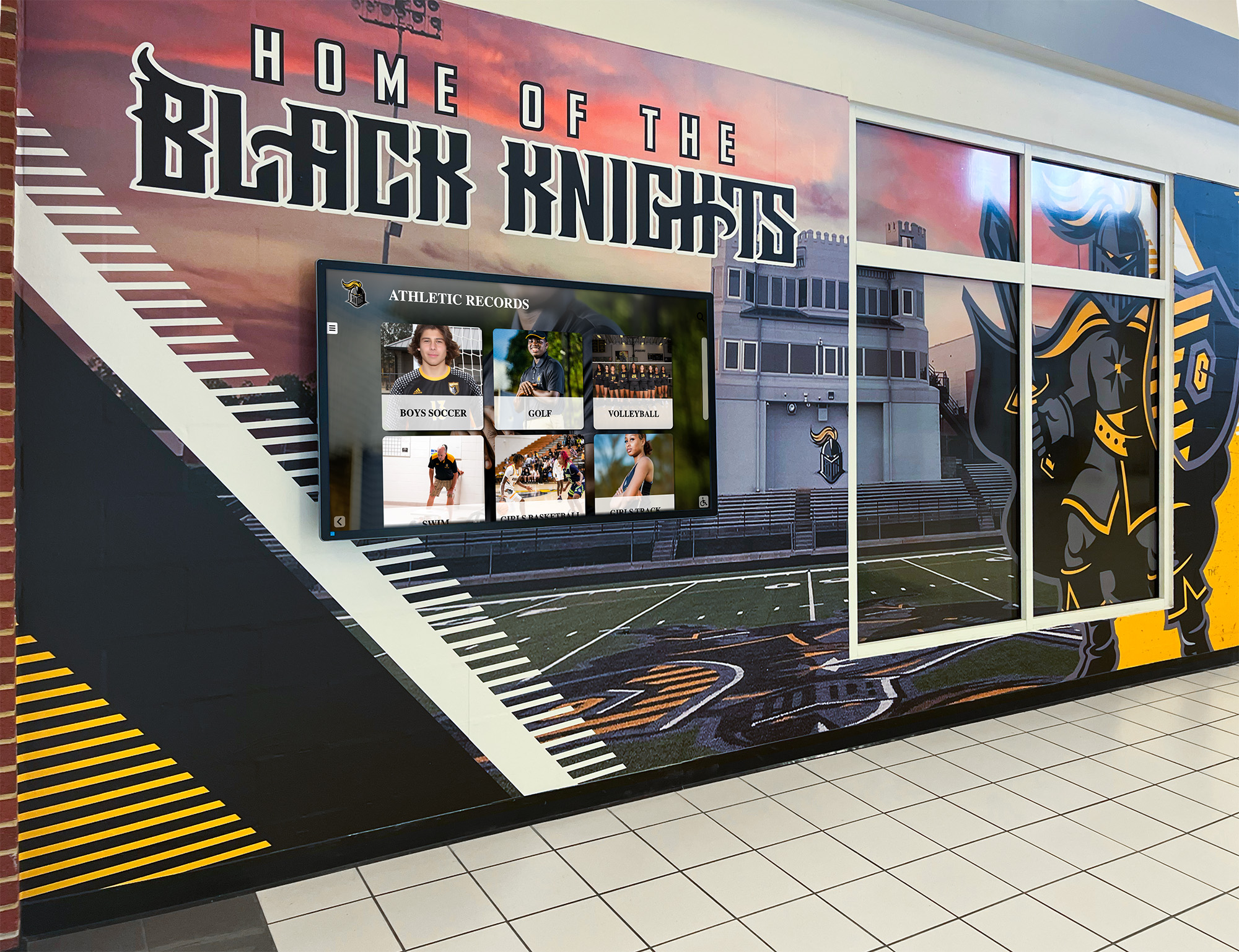
This scattered storage creates impossible situations when teams need specific content. Communications directors preparing anniversary materials cannot locate historical photographs documenting facility construction despite knowing images were taken. Alumni directors planning reunion events lack access to yearbook photos from relevant graduation years. Athletic boosters creating fundraising presentations cannot find championship celebration images supporting their messaging. Development offices require distinguished alumni photographs for donor recognition but discover content exists only in outdated printed formats requiring rescanning.
The labor cost of this disorganization proves substantial. Staff members spend hours searching for content, frequently give up and recreate materials that exist somewhere undiscoverable, or simply abandon projects requiring specific assets they cannot locate. One comprehensive study of organizational efficiency found that employees spend an average of 2.5 hours daily searching for information—nearly one-third of the workday lost to poor information management.
The Lost History Challenge
Beyond operational inefficiency, scattered asset management creates existential threats to institutional memory. Digital content stored on individual computers disappears when those devices fail, get replaced, or leave with departing employees. External hard drives containing irreplaceable historical scans fail after several years, taking unique content with them. Cloud storage accounts maintained by individual staff members become inaccessible when those people retire and institutional access gets lost with their personal credentials.
This content loss occurs silently and incrementally. Nobody realizes that the only digital copies of 1970s yearbook scans existed on a hard drive that failed two years ago until someone specifically needs that content and discovers it simply no longer exists anywhere. The athletic director who maintained comprehensive records of championship seasons in personal folders left for another position, and successor staff cannot access those files documenting program heritage.
Schools implementing systematic DAM solutions frequently discover sobering realities during asset consolidation projects: substantial percentages of institutional content created over previous decades no longer exist in accessible form despite original creation and storage efforts. This preventable content loss represents institutional memory erosion that comprehensive digital preservation systems specifically prevent through redundant storage, format migration, and centralized management ensuring content survives beyond any individual staff member’s tenure.
Recognition Opportunity Gaps
Perhaps most critically for student engagement and motivation, inadequate asset management prevents schools from displaying achievements prominently despite possessing relevant content. Athletic programs maintain extensive performance records in spreadsheet formats but lack systems displaying this data as inspiring recognition that current students see daily. Academic offices track honor roll recipients across years but have no mechanism displaying this intellectual excellence with visibility matching athletic trophy displays.
The content exists. The achievements deserve celebration. But organizational barriers prevent effective recognition because locating specific assets, compiling comprehensive displays, and maintaining currency requires manual effort beyond what busy staff can sustain. Interactive digital displays showcasing student excellence require organized content feeds, but scattered asset storage makes comprehensive recognition displays operationally impractical.
This recognition gap affects school culture profoundly. Students perceive which achievements receive prominent visibility versus minimal acknowledgment, drawing conclusions about institutional values from recognition patterns they observe. When athletic accomplishments receive permanent display while academic excellence gets brief bulletin board mentions quickly replaced, students naturally conclude which achievements truly matter—regardless of what mission statements claim institutions value. Systematic asset management enables balanced recognition giving diverse achievements appropriate visibility.
Essential Features of School DAM Systems
Effective Digital Asset Management platforms for educational institutions must provide capabilities specifically addressing the unique content types, workflows, and use cases schools require beyond generic enterprise DAM systems designed for corporate environments.
Unlimited Storage and Scalability
Physical space constraints forced impossible recognition choices in traditional systems displaying achievements on limited wall space. Digital platforms should eliminate storage restrictions entirely through unlimited asset capacity accommodating comprehensive institutional content without artificial limits, unrestricted upload capabilities allowing addition of new content continuously, expandable archives growing seamlessly as digitization projects proceed, no per-asset pricing creating financial barriers limiting what institutions can preserve, and infrastructure automatically scaling as collections expand preventing technical bottlenecks requiring system upgrades.
Truly unlimited capacity fundamentally transforms institutional thinking. Rather than asking “What can we afford to store?” or “Which assets should we prioritize?” schools can comprehensively preserve everything worth capturing—complete yearbook digitization across institutional history, comprehensive athletic photography across all sports and seasons, complete event documentation, and exhaustive historical preservation without forced selective decisions eliminating valuable content due to capacity constraints.
Sophisticated Metadata and Tagging Architecture
Search effectiveness depends entirely on metadata quality. The most powerful school DAM systems provide structured metadata frameworks with standardized fields ensuring consistency including date fields capturing when content was created, people tagging identifying individuals appearing in images, location fields specifying where content was captured, event categorization linking assets to specific occasions, sport and activity classifications for athletic and extracurricular content, achievement type designations distinguishing championships from records from participation, grade level and class year associations, and custom institutional fields addressing unique organizational needs.
Rich metadata enables powerful search scenarios impossible with filename-based organization. Find all photographs featuring specific individuals across decades of archives. Locate every asset related to specific sports seasons or championships. Identify content suitable for particular audiences or purposes. Discover historical content from specific facility locations. These sophisticated searches require comprehensive metadata that quality DAM systems facilitate through intuitive tagging interfaces, batch metadata application for efficiently processing multiple similar assets, AI-assisted tagging suggesting appropriate classifications based on image content analysis, and user-contributed metadata allowing community members to enhance asset descriptions collaboratively.
Advanced Search and Discovery Capabilities
Comprehensive metadata only delivers value when paired with powerful search enabling instant discovery among thousands of assets. Educational DAM platforms must provide full-text search across all metadata fields and file contents, advanced filtering combining multiple criteria simultaneously, saved searches for frequently needed queries, auto-suggest helping users discover related content, visual similarity search finding images resembling reference examples, date range filtering for temporal discovery, people-based search locating all assets featuring specific individuals, and intuitive browsing by category, year, or custom organizational structures.
Search sophistication determines whether digital archives become actively used resources or simply digitized versions of inaccessible storage closets. When staff members can locate any specific asset within seconds through intuitive search, DAM platforms become mission-critical tools supporting daily operations. When search proves frustrating or ineffective, users revert to maintaining personal file collections outside the centralized system, recreating the scattered storage problems DAM should solve.
Automated Organization and Smart Collections
Manual content organization requires sustained effort that busy staff cannot maintain, causing even well-intentioned DAM implementations to gradually become disorganized. The most valuable platforms provide automation reducing ongoing maintenance burden through rules-based organization automatically categorizing content based on metadata, smart collections that dynamically update based on specified criteria, auto-tagging using AI to suggest appropriate classifications, duplicate detection preventing redundant asset storage, automated archival workflows moving older content to appropriate long-term storage tiers, and scheduled tasks performing routine organization operations without manual intervention.
Smart collections prove particularly valuable for recognition displays. Create dynamic collections showing current season’s team photographs, automatically updating as new content gets uploaded. Establish auto-updating collections of record holders across all sports, pulling directly from performance databases. Configure collections showing recent honor roll recipients, automatically incorporating newly added academic achievement content. This automation ensures recognition displays remain current without requiring manual updates each time content changes.
Direct Integration with Recognition Display Systems
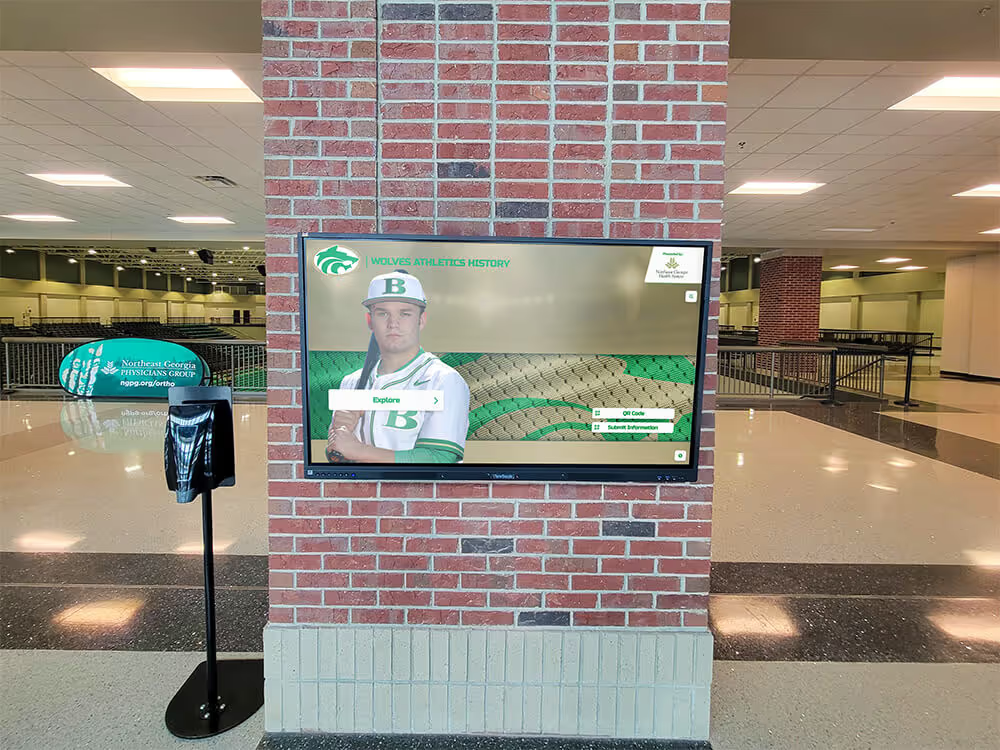
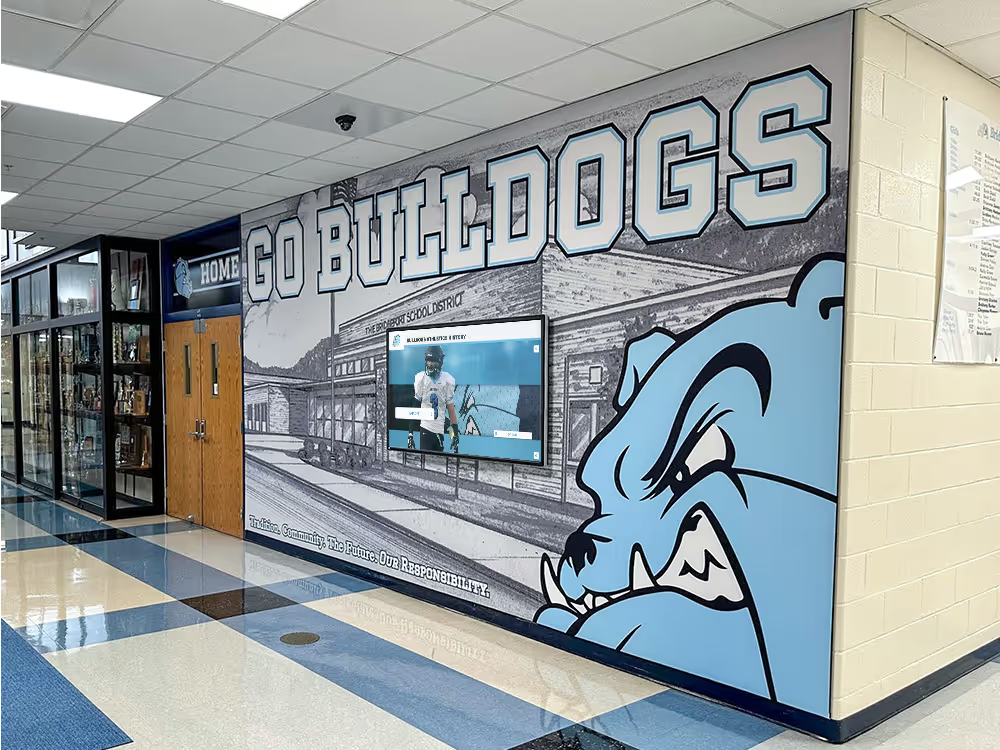
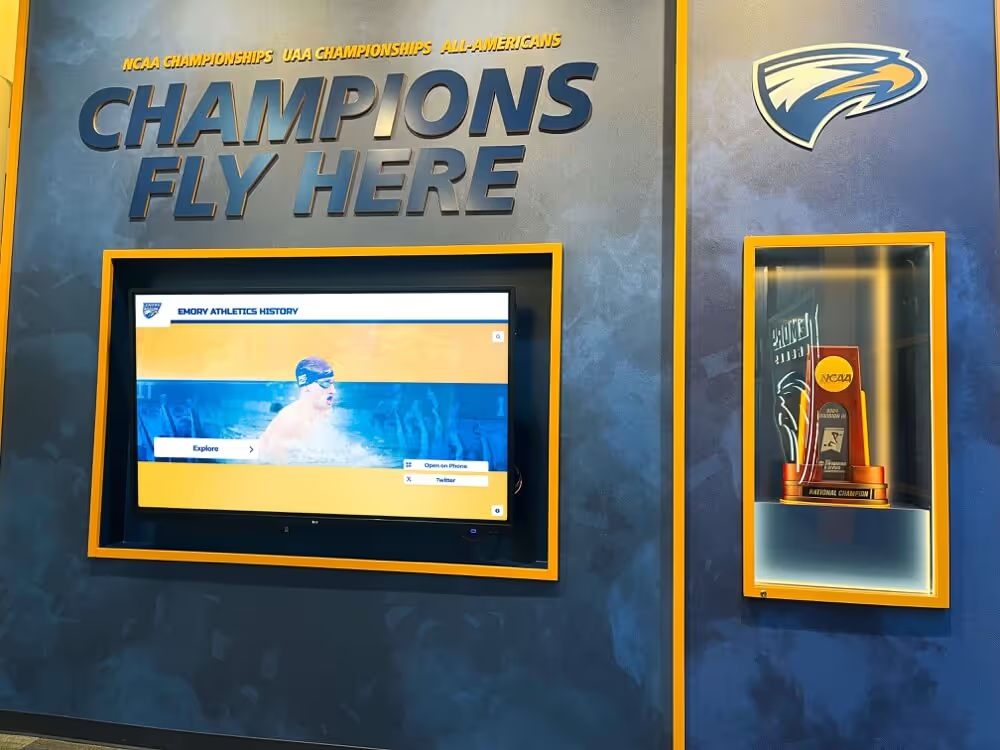
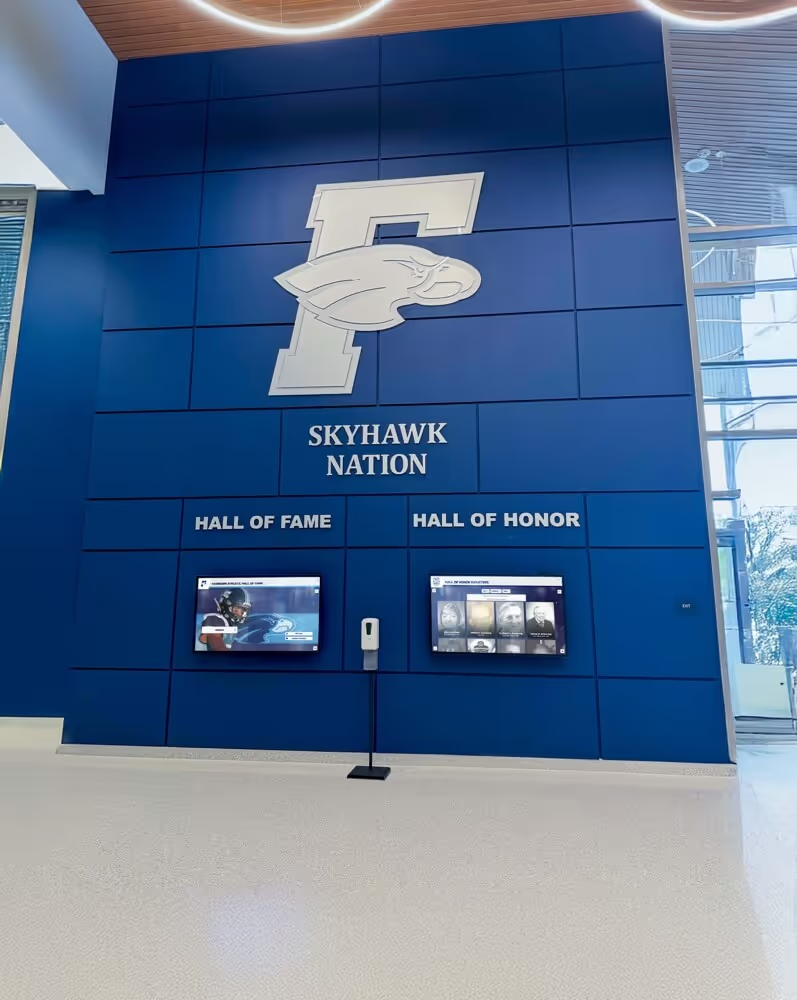
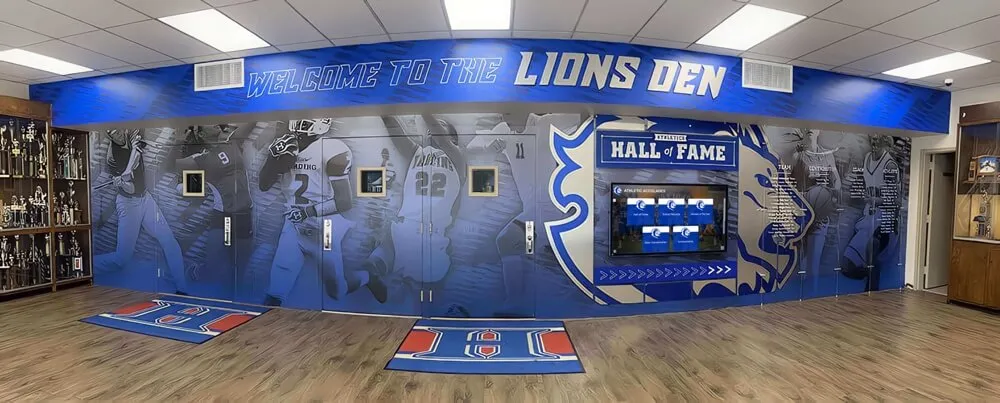
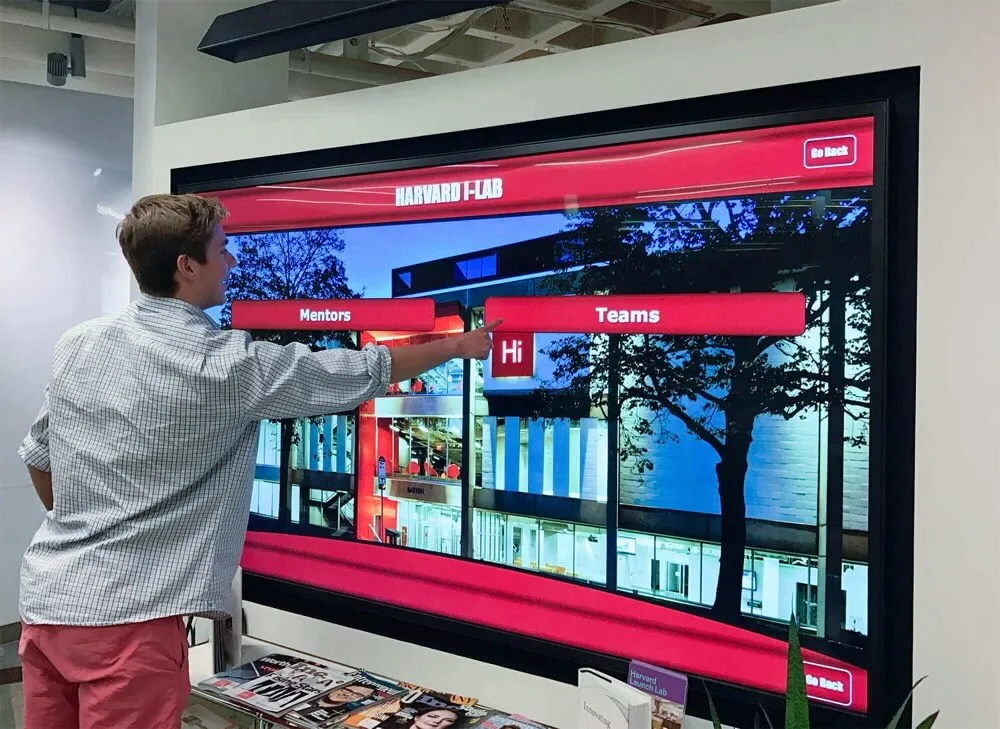
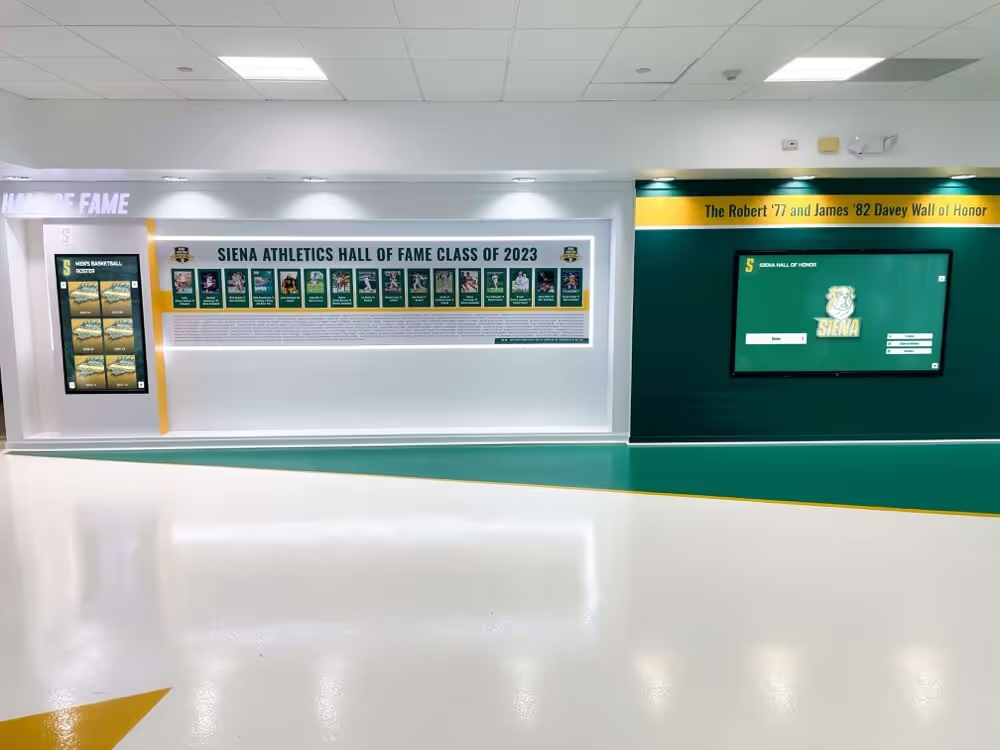
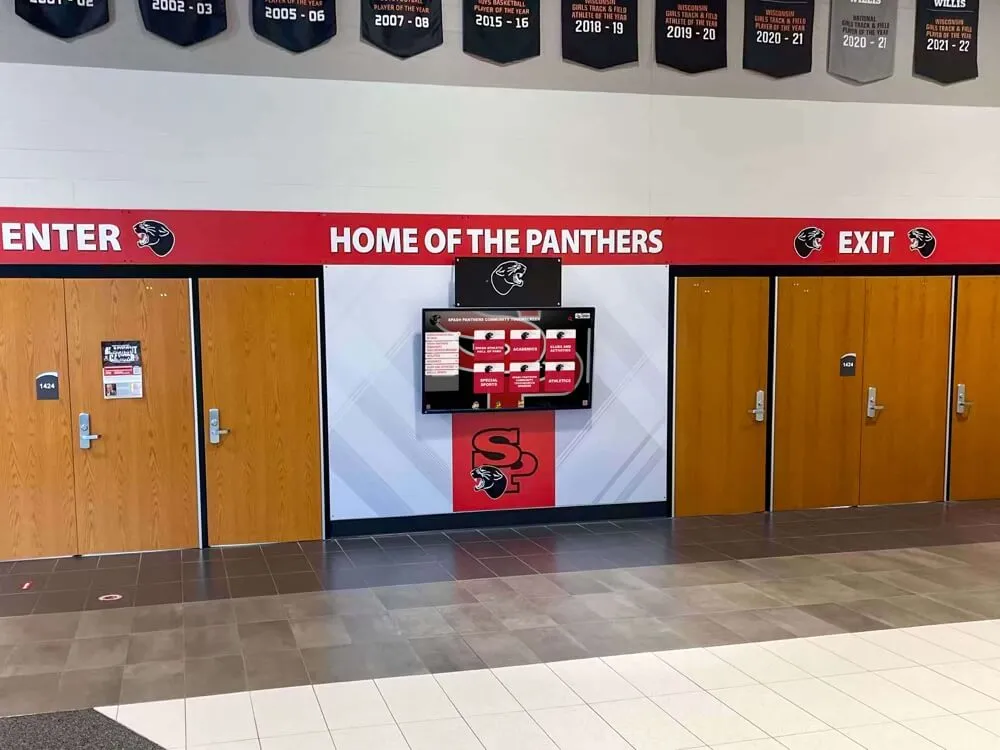
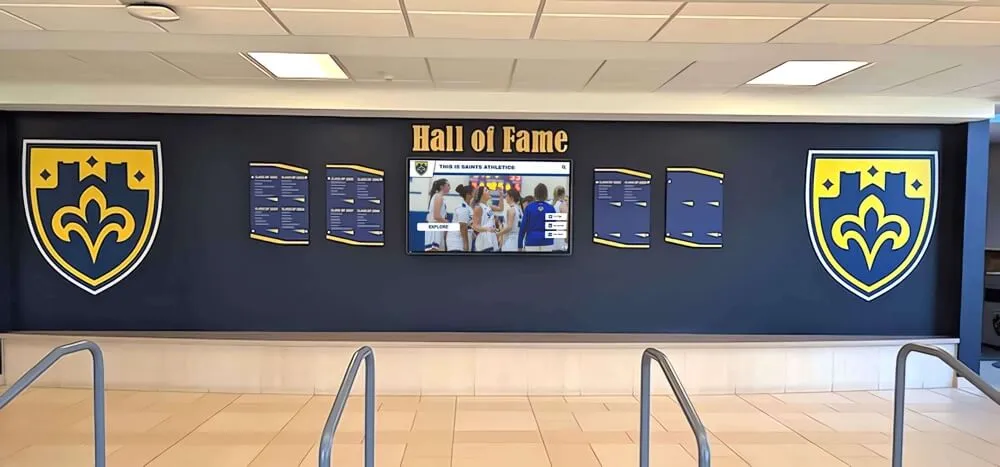
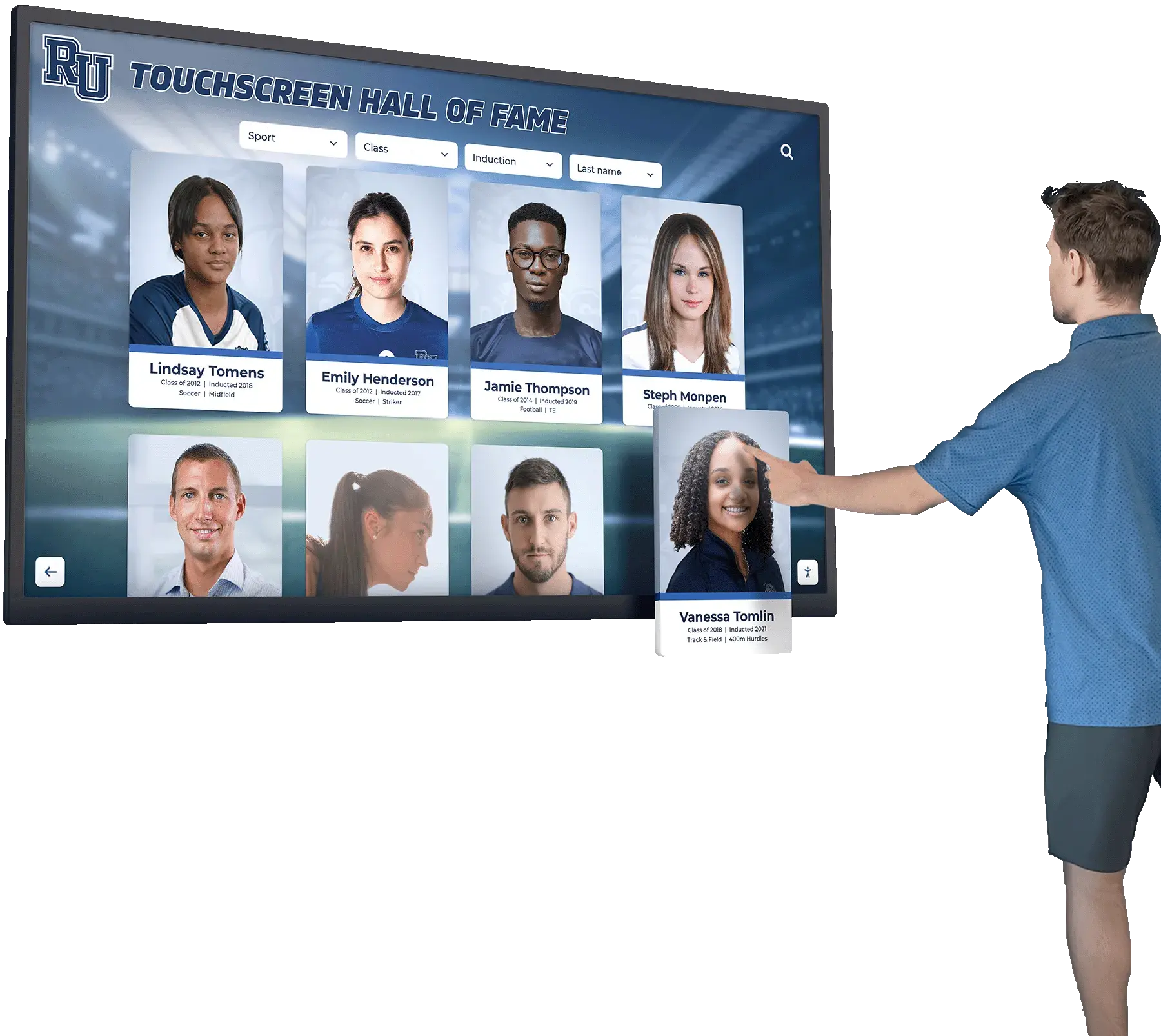
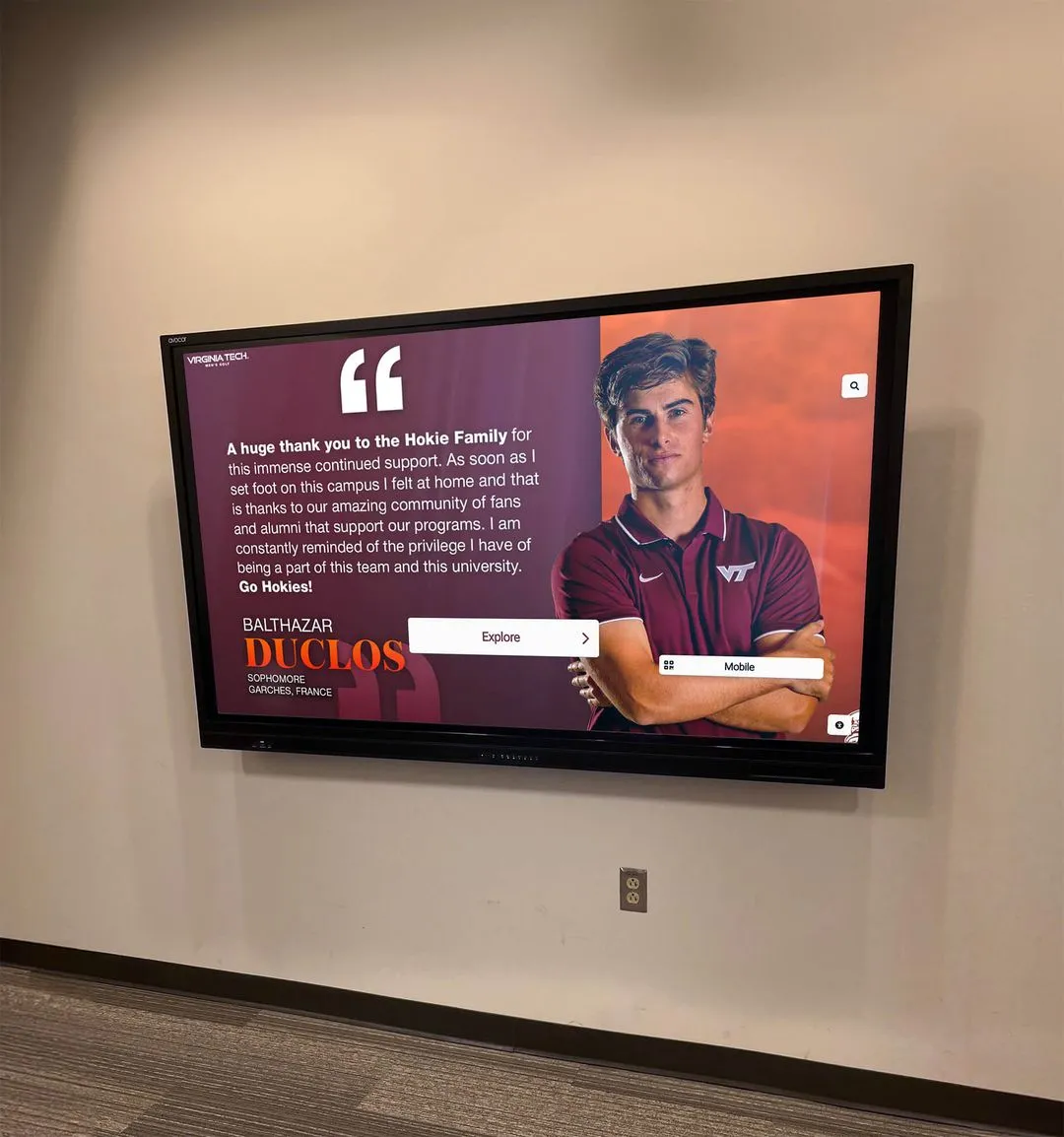
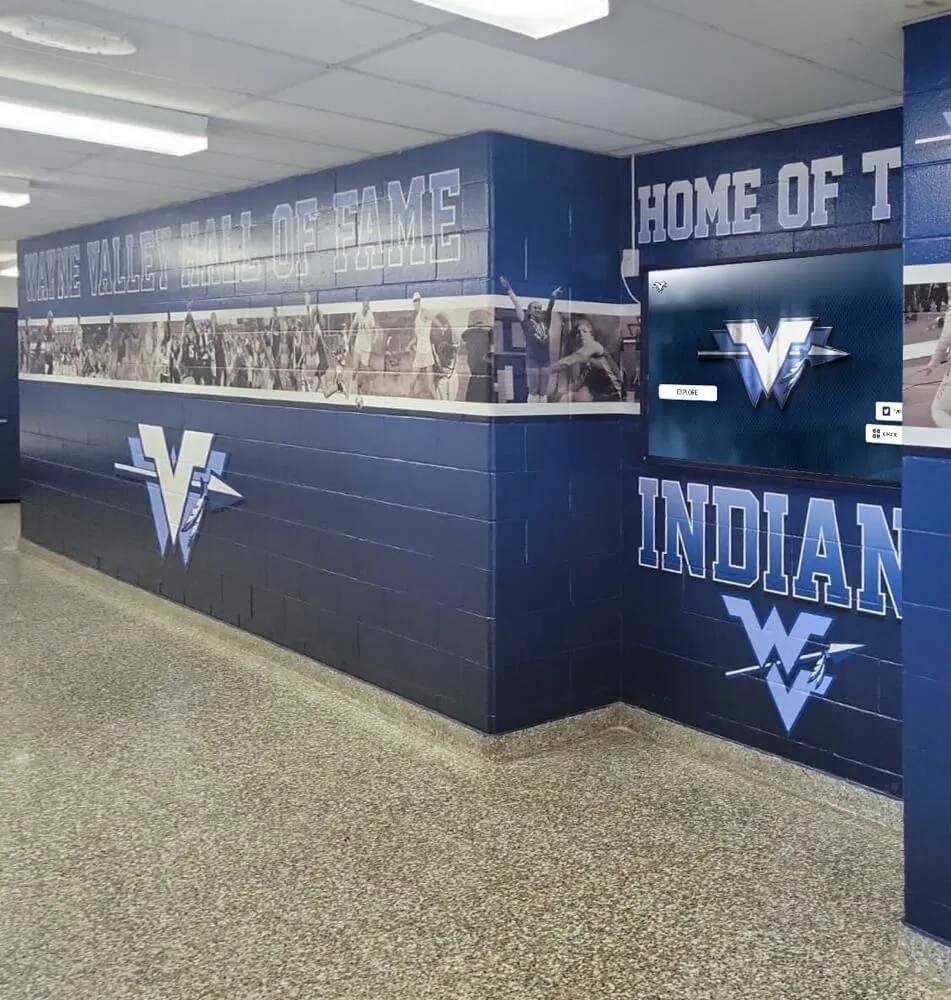
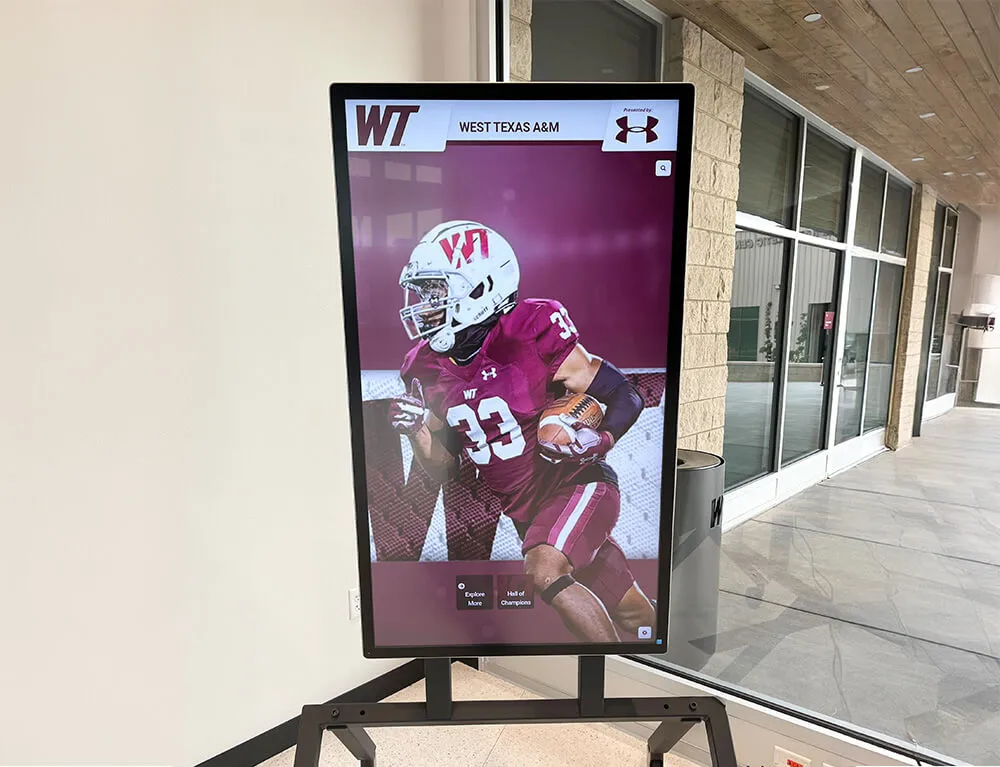
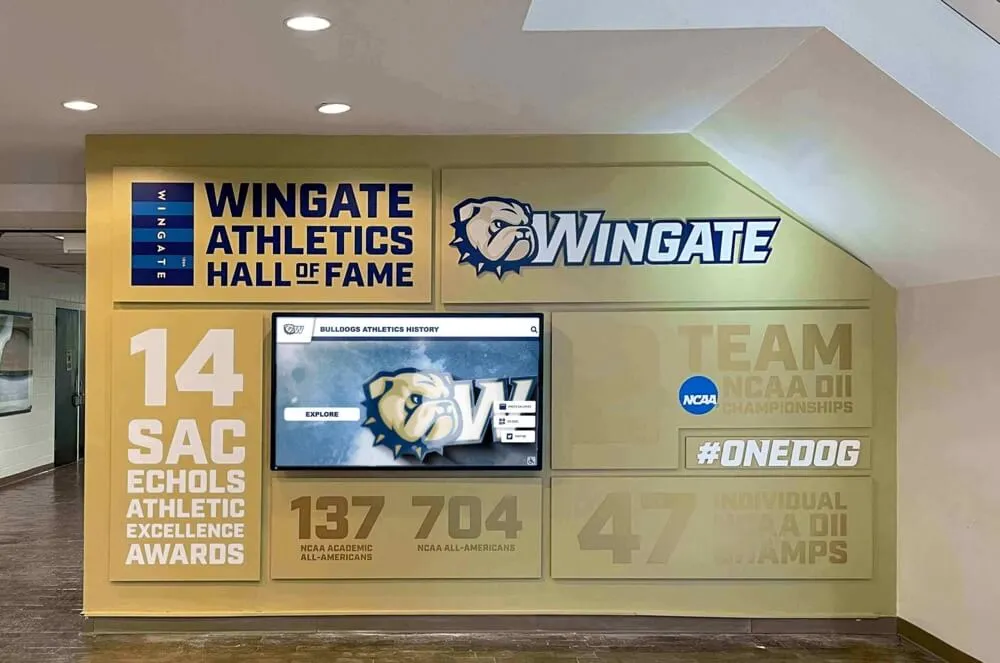
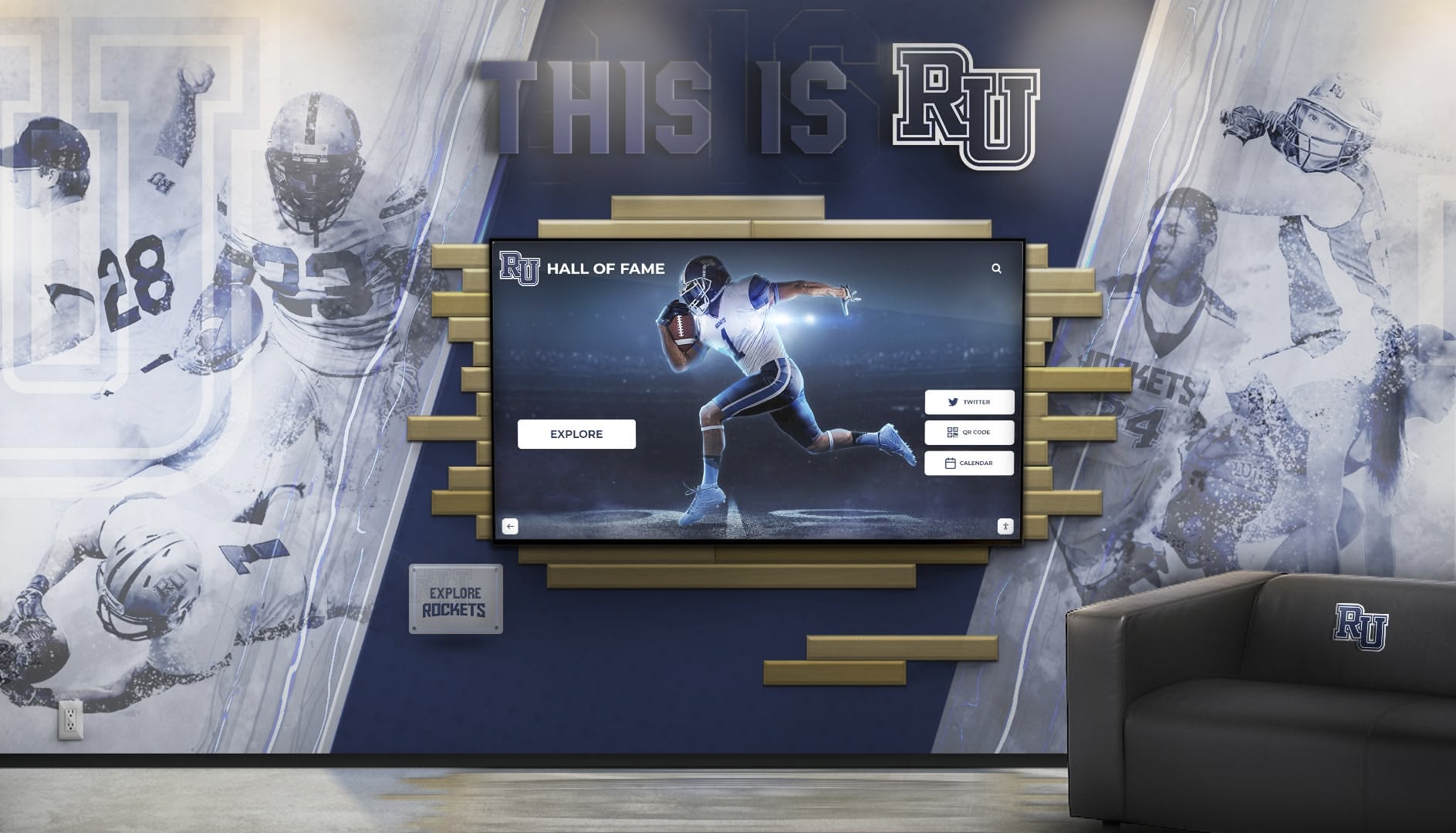
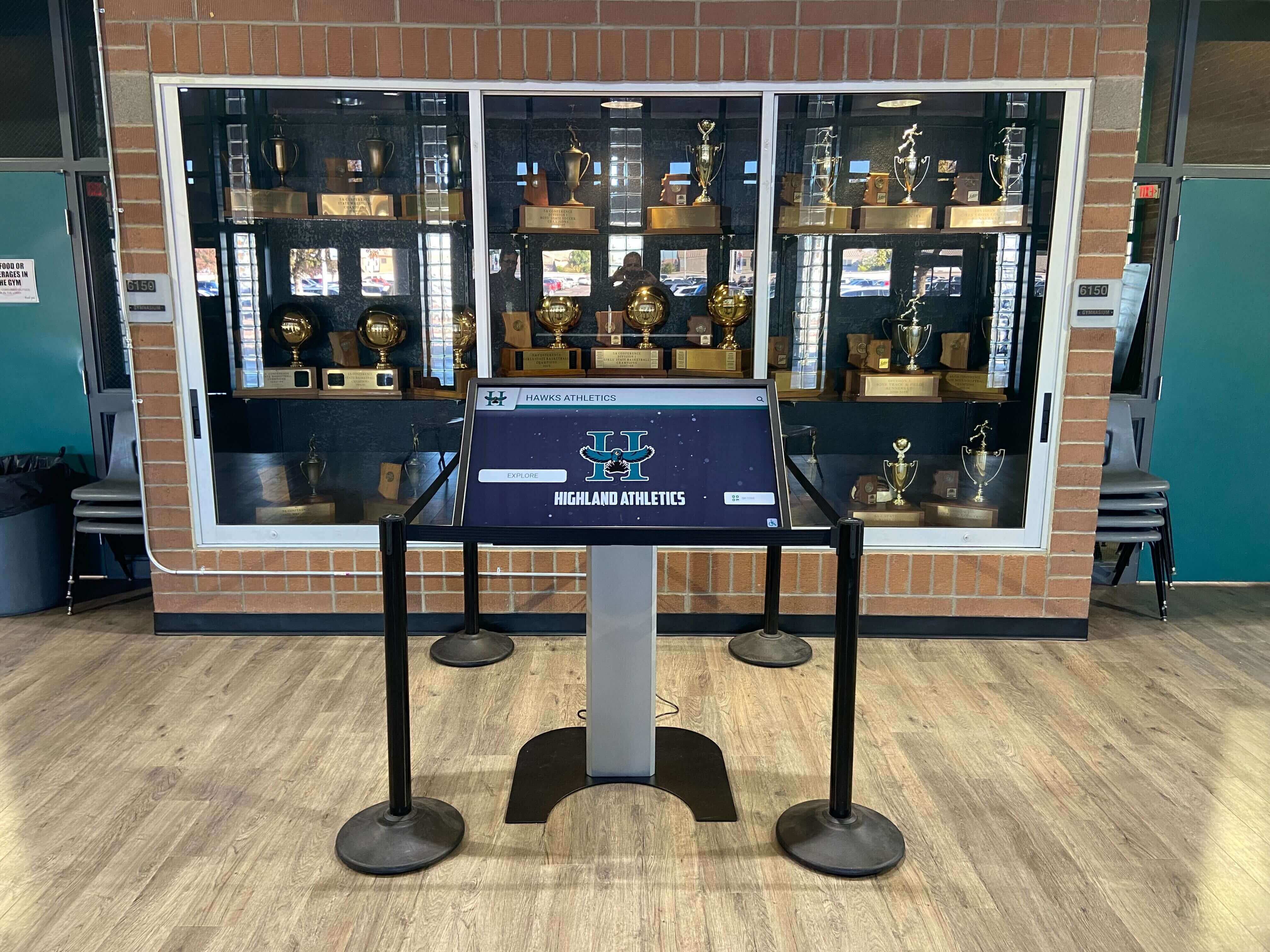
The most powerful educational DAM platforms don’t simply store and organize content—they directly power public-facing recognition systems displaying achievements throughout school communities. This integration creates unified ecosystems where asset management connects to visible celebration through auto-ranking digital record boards pulling directly from performance databases, interactive hall of fame displays featuring comprehensive athlete and scholar profiles, lobby kiosks presenting historical timelines and institutional heritage, achievement galleries showing current and historical excellence, and mobile-responsive web platforms extending recognition beyond physical campus to global alumni communities.
This direct integration eliminates redundant data entry and ensures consistency. Rather than maintaining separate databases for DAM storage and recognition display, unified platforms manage content once and use it across multiple presentation contexts. When athletic directors add new championship rosters, that content simultaneously updates archive systems and public displays. When communications teams upload event photography, those assets become immediately available for recognition kiosks and social media. This operational efficiency represents significant advantage over disconnected systems requiring duplicate effort.
Intuitive Content Management Requiring Minimal Training
Complex systems requiring extensive technical expertise create bottlenecks where few staff possess capabilities for adding content, updating metadata, or maintaining organization. The most valuable educational DAM platforms provide exceptionally intuitive interfaces enabling designated staff across departments to contribute and manage content without specialized training through visual drag-and-drop interfaces for uploading and organizing, clear metadata entry forms with helpful guidance, batch operations for efficiently processing multiple assets, preview capabilities showing how content appears in public displays before publishing, straightforward error correction for fixing mistakes, and role-based permissions ensuring appropriate access without overwhelming users with irrelevant capabilities.
When content management feels quick and straightforward, staff actually maintain systems effectively. When platforms require technical expertise or present confusing interfaces, maintenance responsibility falls to IT departments lacking subject matter knowledge about content, or systems gradually become outdated as busy subject experts cannot spare time for complicated update processes. Prioritizing usability directly correlates with long-term DAM success and sustained organizational benefit.
Mobile Access and Cross-Device Functionality
Contemporary users access digital content across diverse devices from desktop workstations to tablets to smartphones. Effective DAM platforms provide consistent optimized experiences across all device types through responsive interfaces adapting to different screen sizes, touch-optimized navigation for tablets and mobile devices, appropriate image resolution and bandwidth optimization based on device capabilities, offline access for downloaded content requiring use without connectivity, and native mobile applications where appropriate for enhanced functionality beyond web access.
Mobile optimization proves particularly important for alumni engagement, as graduated community members most frequently access institutional content through smartphones during casual browsing rather than dedicated computer sessions. Schools implementing mobile-responsive heritage platforms report 60-70% of alumni access occurring through mobile devices, making smartphone optimization essential for effective community engagement extending institutional visibility beyond current students and campus visitors to global alumni populations maintaining lifelong connections.
Rocket Alumni Solutions: Comprehensive DAM for Educational Recognition
While generic DAM platforms provide content management capabilities, Rocket Alumni Solutions delivers purpose-built Digital Asset Management specifically designed for educational institutions, combining comprehensive asset organization with specialized recognition and display systems creating unified platforms where systematic content management directly powers visible celebration of achievement.
Unified Platform Architecture
Rocket Alumni Solutions integrates complete DAM functionality with interactive recognition displays, auto-ranking record boards, and searchable archives in unified platforms eliminating disconnected systems requiring duplicate effort. This integrated architecture enables centralized asset repositories consolidating all institutional content, automated metadata extraction reducing manual tagging burden, direct content feeding from DAM to recognition displays, real-time updates ensuring displays reflect current information immediately, comprehensive search across all content types from yearbooks to athletic records, and unlimited capacity accommodating complete institutional history without storage restrictions or per-asset pricing creating financial barriers.
The unified approach transforms workflows fundamentally. Athletic directors managing championship rosters enter information once, and that content simultaneously updates permanent archive records, powers auto-ranking record board displays throughout facilities, feeds interactive hall of fame kiosks, populates mobile-responsive web platforms, and creates searchable databases enabling instant discovery. This operational efficiency represents substantial time savings compared to maintaining separate systems requiring redundant data entry.
Auto-Ranking Digital Record Boards
Athletic achievement tracking exemplifies how specialized DAM capabilities deliver value beyond generic content management. Rocket’s auto-ranking record board systems combine asset management with intelligent display logic through performance databases tracking unlimited record holders across decades, automatic ranking algorithms instantly updating displays when new records occur, sport-specific templates for track and field, swimming, cross country, wrestling, and all competitive athletics, customizable categories accommodating unique institutional record definitions, historical preservation showing record progression over time, and elimination of manual vinyl board maintenance saving hours monthly while ensuring accuracy. Schools can create digital halls of fame that automatically pull from their DAM systems to keep recognition current.

The founder of Rocket Alumni Solutions experienced the record board challenge personally when his high school removed his name from the pull-up record board to make space for a new record holder. That moment of lost recognition inspired creation of systems ensuring no achievement ever disappears—unlimited capacity preserves every record holder throughout history while auto-ranking automatically updates displays reflecting current leaders. This commitment to comprehensive recognition drives platform design ensuring all deserving athletes receive permanent acknowledgment regardless of whether records eventually improve.
Athletic directors implementing these systems typically report 90%+ time savings on record board maintenance while achieving substantially higher accuracy, more comprehensive historical preservation, and enhanced student engagement compared to traditional vinyl boards requiring manual updates consuming hours quarterly while creating frequent errors and forcing removal of deserving previous record holders.
Interactive Heritage and History Displays
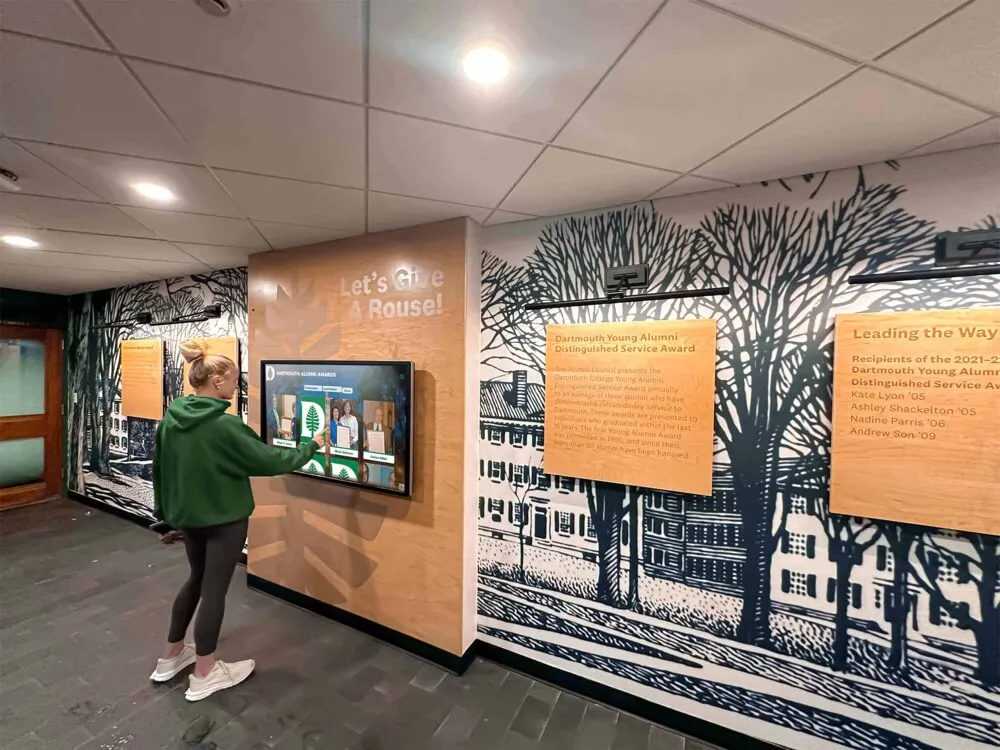

Beyond athletic records, comprehensive DAM platforms should showcase institutional history through engaging interactive experiences. Rocket’s heritage display capabilities include searchable digital yearbook archives spanning complete institutional history, historical timeline interfaces presenting institutional evolution chronologically, biographical hall of fame profiles for distinguished alumni and award recipients, multimedia galleries incorporating photographs and video content, location-based organization showing facility development over decades, and mobile-responsive web access extending heritage exploration beyond campus to global alumni communities.
These interactive presentations transform static archives into engaging exploration platforms. According to engagement analytics from deployed systems, visitors exploring digital heritage displays typically spend 3-5 minutes actively engaging with content compared to brief glances at static displays—this deeper engagement creates stronger emotional connections with institutional history translating to enhanced pride, support, and community belonging. Schools leveraging heritage content effectively through interactive platforms report increased alumni engagement, enhanced fundraising outcomes as development offices showcase impact of previous donor generations, and stronger institutional identity among current students discovering rich traditions they inherit. Digital donor recognition walls can integrate with DAM systems to automatically display donor information and historical giving patterns.
Academic Excellence Recognition
Balancing athletic recognition with equivalent academic visibility requires systematic management of scholarly achievement content. Rocket platforms provide specialized capabilities for academic recognition including honor roll tracking and display across marking periods, scholarship recipient galleries with biographical profiles, academic competition success showcases, standardized test excellence recognition, National Honor Society and academic honor organization rosters, subject-specific achievement awards, and academic letter programs paralleling athletic letter traditions.
Schools implementing balanced recognition report measurable cultural benefits including increased academic achievement as students observe intellectual excellence receiving prominent visibility, improved perception that institutions value scholarship equally with athletics, enhanced student motivation toward academic goals now visibly celebrated, and more comprehensive student development as recognition systems honor diverse excellence forms. These outcomes align directly with educational missions emphasizing well-rounded student growth across intellectual, athletic, artistic, and character domains. Many schools also use DAM systems to power digital trophy case displays that celebrate achievements across all student activities.
Comprehensive approaches to celebrating academic achievement require systematic content management ensuring scholarly accomplishments receive organization and visibility matching athletic celebration, making specialized educational DAM capabilities essential for institutions committed to balanced recognition cultures.
Implementation Strategy: Deploying DAM Systems Successfully
Technology alone cannot solve organizational challenges—successful Digital Asset Management requires thoughtful implementation addressing content migration, workflow integration, staff training, and ongoing governance ensuring sustained value.
Phase 1: Current State Assessment and Goal Definition
Begin DAM initiatives with thorough assessment establishing clear understanding of existing content, current management approaches, organizational challenges, and desired outcomes. Essential assessment activities include content inventory documenting what digital assets currently exist across all departments and storage locations, storage audit identifying where content resides and assessing accessibility, workflow analysis understanding how different teams currently manage and use assets, stakeholder interviews gathering perspectives from athletic directors, communications staff, librarians, IT personnel, and administrative leadership, and gap analysis comparing current capabilities against institutional needs.
Strategic planning should establish specific measurable goals providing direction and success criteria. Objectives might include consolidating all institutional digital content into centralized searchable repository within 6 months, implementing comprehensive athletic record boards for all varsity sports by start of next academic year, creating interactive historical timeline displays in main lobby and alumni center, reducing time staff spend searching for content by 75% through improved organization and search, achieving 1000+ alumni engagements with digital heritage platforms within first year, or establishing sustainable governance ensuring content remains organized as collections grow.
Engage diverse stakeholders throughout planning processes including athletic directors managing sports content and record tracking, communications directors requiring event photography and promotional content, librarians or archivists contributing preservation expertise, academic counselors representing student achievement recognition, IT staff addressing technical infrastructure requirements, alumni relations professionals focused on community engagement implications, development officers considering fundraising and donor recognition applications, and students providing user perspective ensuring platforms resonate with primary audiences.
Phase 2: Platform Selection and Vendor Evaluation
Schools exploring DAM platforms should evaluate options systematically comparing features, implementation approaches, total costs, long-term vendor viability, and cultural fit with institutional needs. Critical evaluation criteria include purpose-built educational focus versus generic enterprise systems designed for corporate environments, comprehensive integration of DAM with recognition display systems, content management ease for non-technical staff across departments, genuinely unlimited capacity without hidden storage restrictions or escalating per-asset costs, powerful metadata and search capabilities supporting sophisticated discovery, automated organization reducing ongoing maintenance burden, multi-device accessibility including touchscreens and mobile platforms, analytics revealing engagement patterns and system utilization, vendor reputation and references from similar institutions, and implementation support including content migration assistance.
Request hands-on demonstrations allowing direct experience with platforms before committing resources. Test search functionality with sample content representing realistic use cases. Evaluate user interfaces from perspective of various audiences including tech-savvy students and less technically comfortable staff members. Verify platforms genuinely deliver advertised capabilities rather than relying solely on marketing materials potentially overstating actual functionality. Contact reference institutions implementing the platforms you’re considering and inquire specifically about challenges encountered, vendor responsiveness, ongoing support quality, and whether they would make the same selection again knowing what they’ve learned through implementation experience.
Assess total cost of ownership beyond initial purchase prices including platform licensing or subscription fees, digitization services if outsourcing scanning work for historical content migration, implementation and configuration services, staff training and ongoing support, annual hosting and maintenance fees, content migration assistance for transferring existing digital assets, hardware costs for touchscreen displays or kiosks if implementing physical recognition installations, and future scalability costs as collections grow over time. Some vendors offer all-inclusive pricing covering comprehensive services while others separate cost components requiring careful comparison ensuring accurate evaluation of long-term financial commitments.
Phase 3: Content Migration and Initial Population
Successful DAM implementations require systematic approaches for migrating existing content from scattered storage locations into centralized organized repositories. Effective migration processes include comprehensive asset discovery locating all existing content across personal computers, shared drives, external storage, cloud accounts, and physical materials requiring digitization, prioritization planning determining which content provides highest value requiring immediate migration versus lower-priority materials addressed later, quality assessment and cleanup removing duplicate assets and low-quality content not worth preserving, metadata strategy establishing consistent tagging conventions and determining what information gets captured for different asset types, batch processing for efficiently handling large content volumes, quality control verification ensuring migration accuracy and metadata completeness, and phased rollout addressing manageable content segments rather than attempting comprehensive migration simultaneously.
Historical content digitization often represents substantial effort requiring specialized equipment and expertise. Schools may choose to handle yearbook scanning and photograph digitization internally using capable document scanners and establishing student or volunteer scanning teams, or engage professional digitization services offering higher throughput, specialized equipment for delicate historical materials, and expertise in preservation-quality digital capture. Yearbook digitization projects specifically require careful handling preventing damage to aging materials while creating high-resolution scans suitable for detailed viewing and long-term preservation.
Content migration provides valuable opportunity to establish organizational standards and metadata conventions that prevent recreating scattered disorganization within new systems. Develop clear naming conventions, establish consistent tagging practices, create documented procedures for different content types, and train staff on standards before beginning large-scale migration ensuring new systems maintain organization from inception rather than requiring eventual cleanup of inconsistent early adoption practices.
Phase 4: Workflow Integration and Staff Training
Technology adoption succeeds only when platforms integrate smoothly into existing workflows and staff develop comfortable proficiency with new systems. Effective integration approaches include mapping current workflows and identifying where DAM fits naturally into established processes, developing department-specific procedures showing how different teams leverage platforms for their unique needs, establishing governance clarifying who manages different content types and makes organizational decisions, creating training programs tailored to different user groups from content contributors to casual searchers, providing role-based access ensuring users see relevant capabilities without overwhelming interfaces, and establishing ongoing support mechanisms helping staff troubleshoot issues and ask questions as they arise.
Training should address diverse user needs recognizing that different roles require different expertise levels. Content managers need comprehensive training on uploading assets, creating metadata, organizing collections, and maintaining system health. Casual users requiring only content discovery need orientation focused on search capabilities and basic browsing. Recognition display administrators need specialized training on updating record boards and managing public-facing content. Tailor training delivery to these different audiences rather than providing identical generic sessions failing to address specific needs effectively.
Plan for ongoing training and knowledge reinforcement beyond initial implementation. New staff joining institutions need onboarding covering DAM systems. System updates adding capabilities require communication and training. Periodic refresher sessions help combat gradual reversion to old habits. Schools achieving highest DAM value typically designate department champions who develop deep platform expertise and provide peer support to colleagues in their areas, creating distributed knowledge networks more sustainable than centralized reliance on single IT personnel.
Phase 5: Recognition Display Deployment
For schools implementing DAM platforms featuring integrated recognition displays, thoughtful deployment planning ensures maximum visibility and community engagement. Strategic considerations include location selection choosing high-traffic areas where students, staff, and visitors naturally gather, hardware selection balancing screen size against space constraints and budget, content curation establishing initial recognition content showcasing platform capabilities, launch timing coordinating installation with events that attract community attention, publicity planning ensuring stakeholders know about new systems and how to explore them, and feedback mechanisms gathering user input informing continuous improvement.
Prime locations for recognition displays include main lobbies and entrance areas where visitors form first impressions, athletic facilities and gymnasiums where teams gather and competitions occur, academic commons and library spaces where students spend discretionary time, cafeterias and student centers with concentrated foot traffic, and outdoor kiosks at significant landmarks for weather-resistant installations. Some institutions implement multiple displays in different locations showing customized content relevant to each area—academic recognition in library commons, athletic displays in gymnasium lobbies, comprehensive heritage timelines in main administrative building entrances.
Launch events create opportunities to generate excitement and awareness. Consider coordinating display installations with homecoming celebrations, athletic recognition banquets, academic awards ceremonies, alumni reunion weekends, or back-to-school events that attract crowds naturally interested in achievement recognition and institutional heritage. Demonstrate capabilities publicly, encourage interactive exploration, celebrate specific individuals whose profiles appear in systems, and capture social media content documenting community engagement that further extends awareness.
Measuring DAM Success and Demonstrating Value
Comprehensive Digital Asset Management delivers substantial value across multiple dimensions. Documenting and communicating these benefits ensures continued institutional support and justifies ongoing investment.
Quantitative Metrics Demonstrating Operational Impact
Track objective measurements revealing operational improvements including time savings from improved content discovery, reduced duplicated effort recreating existing content, decreased maintenance burden for recognition displays, increased content utilization as improved discoverability enables more frequent asset reuse, expanded recognition capacity showing more achievements than previous systems accommodated, and growth in digital archive size documenting preservation progress.
Schools implementing DAM platforms typically report dramatic time savings. One comprehensive case study tracking implementation outcomes found that staff time spent searching for content decreased 73% after DAM deployment, translating to approximately 4 hours weekly per communications staff member—over 200 hours annually of reclaimed productive time previously lost to inefficient content discovery. Athletic directors report similar improvements, with digital record board automation reducing maintenance time from approximately 40 hours annually updating vinyl boards manually to under 5 hours managing automated systems—87% reduction in administrative burden while achieving higher accuracy and more comprehensive historical preservation.
Qualitative Indicators Revealing Cultural Benefits
Beyond operational metrics, observe cultural and community impacts including enhanced school pride as comprehensive recognition increases visibility of achievements, improved alumni engagement through accessible heritage platforms, stronger institutional identity as students connect with traditions and history, increased student motivation as visible recognition inspires excellence, balanced achievement culture as academic accomplishments receive visibility matching athletic celebration, and positive community feedback from families, alumni, and visitors discovering recognition systems.
Gather stakeholder testimonials documenting perceived value. Interview staff members about workflow improvements and time savings. Survey students about awareness of institutional achievements and whether recognition systems inspire their own goal-setting. Collect alumni feedback about engaging with digital heritage platforms and discovering personal connections to institutional history. These qualitative perspectives complement quantitative metrics by revealing human impacts that justify investment beyond pure operational efficiency arguments.
Analytics Revealing Engagement Patterns
Modern DAM platforms include analytics tracking how communities interact with content and recognition displays. Monitor engagement metrics including session duration showing how long users actively explore content, popular content revealing what achievements resonate most strongly, search patterns indicating what information communities seek, device types showing access patterns across desktop, mobile, and touchscreen interfaces, geographic distribution of remote access revealing alumni engagement from different locations, and peak usage times informing content update scheduling for maximum visibility.
These analytics inform continuous improvement. Content categories receiving high engagement deserve expansion and enhanced visibility. Search queries yielding poor results indicate metadata gaps requiring improvement. Device usage patterns inform optimization priorities. Engagement spikes around specific events reveal programming opportunities. Use data systematically rather than anecdotally to guide platform evolution ensuring systems continue meeting community needs as those needs evolve.
Overcoming Common DAM Implementation Challenges
Schools encounter predictable obstacles when deploying Digital Asset Management systems. Anticipating these challenges enables proactive mitigation reducing implementation friction and accelerating value realization.
Limited Staff Capacity for Content Migration
Comprehensive content migration from scattered storage into organized DAM systems requires substantial effort beyond regular job responsibilities. Schools frequently underestimate this labor requirement, creating implementation delays when busy staff cannot dedicate necessary time. Mitigation approaches include phased migration focusing initially on highest-value content rather than attempting comprehensive immediate consolidation, student involvement creating supervised digitization projects providing authentic learning experiences while accomplishing institutional objectives, volunteer engagement enlisting alumni and community members for scanning and metadata entry, professional service utilization outsourcing initial migration creating organized foundation enabling internal maintenance, and realistic timeline setting acknowledging that complete migration may require 12-24 months rather than unrealistic expectations for completion within weeks.
Content migration creates valuable opportunities for student engagement when structured appropriately. Digitization projects provide authentic work-based learning where students develop skills in digital preservation, metadata management, historical research, and project coordination while directly benefiting their institutions. Archive development projects align naturally with library science curricula, local history courses, senior capstone experiences, and service-learning requirements. Frame these opportunities attractively and students become valuable contributors to institutional asset management initiatives.
Privacy and Permission Concerns
Educational content frequently features students, raising legitimate privacy considerations requiring thoughtful approaches balancing recognition benefits against individual privacy rights. Address these concerns through clear privacy policies establishing institutional standards for student image use and public display, explicit permission systems obtaining appropriate consents for recognition content, role-based access controlling who can view different content categories, content flagging allowing individuals to request removal from public displays, graduated visibility creating different access tiers for campus community versus public audiences, and age-appropriate protocols applying additional protections for younger students.
Most institutions already obtain media release permissions during enrollment processes. Ensure these existing permissions explicitly cover recognition display contexts and review policies periodically as technology capabilities evolve. When questions arise about specific content, default to conservative approaches respecting privacy over maximum recognition visibility. Transparent policies clearly communicated to families prevent confusion and build trust supporting recognition programs.
Technology Adoption Resistance
Some staff members resist new technology adoption, preferring familiar processes despite inefficiencies. Overcome resistance through early involvement including resisters in planning processes giving them voice in decisions, targeted training addressing specific concerns and use cases relevant to skeptical users, quick wins demonstrating immediate value for early adopters creating positive examples, optional participation allowing gradual adoption rather than forcing immediate comprehensive adoption, patience recognizing that comfort develops through experience over time, and peer champions identifying enthusiastic early adopters who provide colleague support more credible than directives from administration.
Adoption resistance often stems from previous negative experiences with poorly implemented technology or fear of change rather than fundamental opposition to improvement. Listen carefully to concerns—they frequently reveal legitimate usability issues or workflow mismatches requiring attention. Address root causes rather than dismissing resistance as obstinacy, and skeptics often become strong supporters once their specific concerns receive appropriate responses.
Budget Constraints and Competing Priorities
Educational institutions face perpetual resource constraints with numerous worthy initiatives competing for limited funding. Position DAM investments effectively through total cost of ownership analysis showing long-term savings from reduced maintenance burden, time value calculations quantifying staff hours saved through improved efficiency, opportunity cost framing highlighting recognition and engagement benefits currently foregone, phased implementation spreading costs across multiple budget cycles, grant opportunities exploring funding sources specifically supporting heritage preservation or technology adoption, and value demonstration using pilots or limited deployments that prove concept before requesting comprehensive investment.
Connect DAM benefits to strategic institutional priorities. If leadership emphasizes alumni engagement, highlight how digital heritage platforms extend institutional reach to graduated communities. If strategic plans prioritize academic excellence, emphasize how systematic recognition showcases scholarly achievements with visibility matching athletic celebration. When enrollment remains a concern, demonstrate how recognition systems enhance school pride and community identity that influence family enrollment decisions. Frame investments in language resonating with decision-makers’ existing priorities rather than expecting new priority creation.
The Future of Digital Asset Management in Education
Technology evolution continues creating new opportunities for schools to leverage digital content more effectively. Understanding emerging trends helps institutions make forward-looking investments remaining relevant as capabilities advance.
Artificial Intelligence and Automated Metadata
AI capabilities increasingly enable automated content analysis reducing manual metadata burden through facial recognition identifying individuals appearing in photographs automatically, object detection recognizing sports equipment, uniforms, facilities, and other contextual elements, text extraction from scanned documents creating searchable content, scene classification categorizing images by location and activity type, and quality assessment flagging low-resolution or poorly composed content requiring replacement. These automated capabilities will substantially reduce the human effort currently required for comprehensive asset tagging while improving metadata consistency and completeness.
Schools implementing DAM platforms should prioritize vendors demonstrating commitment to incorporating emerging AI capabilities that enhance platform value over time without requiring platform replacement. Ask vendors directly about their AI roadmaps and how automated metadata capabilities will evolve within their systems over the next 2-5 years.
Enhanced Interactivity and Immersive Experiences
Recognition displays continue evolving beyond simple touchscreens toward more immersive engaging experiences through augmented reality overlays providing additional context when viewing physical locations through mobile devices, voice interaction enabling hands-free exploration of content, gesture control for touchless interfaces particularly relevant for high-traffic public installations, virtual reality experiences recreating historical moments or enabling virtual facility tours, and social integration allowing direct sharing from recognition platforms to personal social media increasing organic reach.
These enhanced interaction modalities create memorable experiences that deepen emotional connections between community members and institutional heritage. As technology matures and costs decrease, schools will increasingly incorporate immersive elements that transform recognition from passive viewing to active exploration and discovery creating stronger engagement and impact.
Community-Contributed Content and Crowdsourced Archives
Future DAM platforms will increasingly enable community contributions allowing alumni, families, and fans to submit content and enhance existing archives through photo uploads from personal collections documenting institutional history from community perspectives, biographical information and personal recollections enriching factual records with human stories, error corrections identifying and fixing inaccuracies in institutional records, relationship identification tagging individuals appearing in historical photographs, and event context providing details about circumstances surrounding significant moments.
This collaborative approach creates substantially richer archives than institutions can develop relying solely on official records and staff-managed content. Alumni possess thousands of photographs capturing student perspectives different from institutional documentation. Community members remember contextual details that bring historical facts to life. Enabling and curating these contributions creates dynamic growing archives rather than static collections fixed at initial digitization.
Taking Action: Implementing DAM for Your School
Digital Asset Management transforms institutional content from scattered liability into organized asset driving recognition, engagement, and operational efficiency. Schools serious about systematic content organization, comprehensive achievement celebration, and institutional memory preservation should begin implementation planning addressing current state assessment, stakeholder engagement, platform evaluation, and phased deployment.
Start by documenting existing content and current management challenges. Inventory what digital assets your institution possesses, where they currently reside, who manages different content types, and what problems current approaches create. Engage stakeholders across departments understanding their specific content needs and workflow requirements. Establish clear goals defining what success looks like—specific operational improvements, recognition outcomes, or engagement objectives that justify investment and guide implementation decisions.
Explore purpose-built educational platforms combining comprehensive DAM capabilities with specialized recognition and display systems. Generic enterprise systems designed for corporate asset management lack the educational focus, auto-ranking record boards, academic recognition features, and heritage display capabilities schools specifically require. Prioritize vendors demonstrating deep understanding of educational content management needs and proven track records implementing successful systems at similar institutions.
The transition from chaotic scattered content storage to systematic Digital Asset Management represents fundamental operational transformation touching every aspect of institutional communications, recognition, preservation, and community engagement. Schools implementing comprehensive DAM solutions consistently report substantial time savings, enhanced recognition visibility, stronger institutional identity, improved alumni engagement, and permanent preservation preventing irreplaceable history loss. These outcomes justify investment while delivering measurable value across operational, cultural, and community dimensions that strengthen educational institutions fundamentally.
Book a demo to discover how Rocket Alumni Solutions delivers comprehensive Digital Asset Management specifically designed for schools, combining unlimited content organization with auto-ranking record boards, interactive recognition displays, and searchable heritage platforms that transform scattered files into systematic celebration of excellence inspiring current students while honoring institutional heritage permanently.