



Every year, schools and universities across the country continue a cherished tradition that dates back over a century—creating class composite presentations featuring professional portraits of every graduating senior arranged in organized grid layouts. These formal displays document each graduating class for posterity, creating visible institutional memory that connects current students with decades of alumni who walked the same hallways before them. For generations, beautifully framed composite prints have adorned school corridors, representing permanence, tradition, and institutional pride while ensuring every graduate receives equal recognition regardless of achievement level or participation in activities.
Yet this beloved tradition faces mounting challenges that threaten its sustainability. Physical wall space fills completely after decades of annual additions, leaving no room for new graduating classes without removing older composites. Annual printing, framing, and mounting costs strain already-tight educational budgets, with schools investing thousands of dollars yearly for essentially identical products. Physical prints inevitably deteriorate despite protective glazing, causing older composites to fade and discolor while newer prints remain vibrant. Static physical displays fail to engage contemporary students who expect interactive digital experiences throughout daily life. These limitations force many schools to make difficult choices between continuing expensive traditions, compromising quality, or abandoning cherished customs entirely.
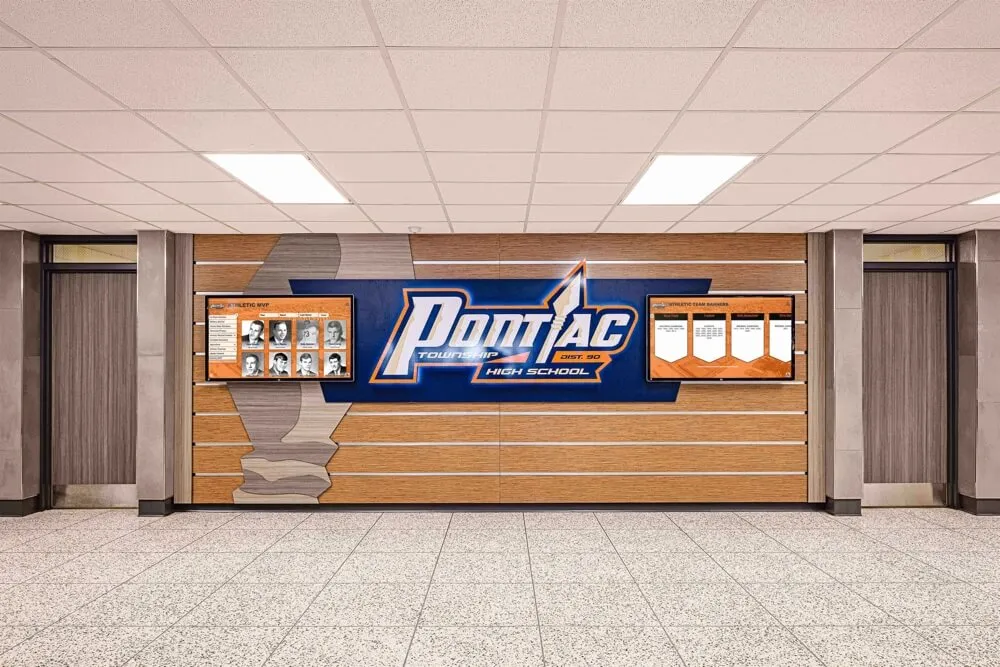
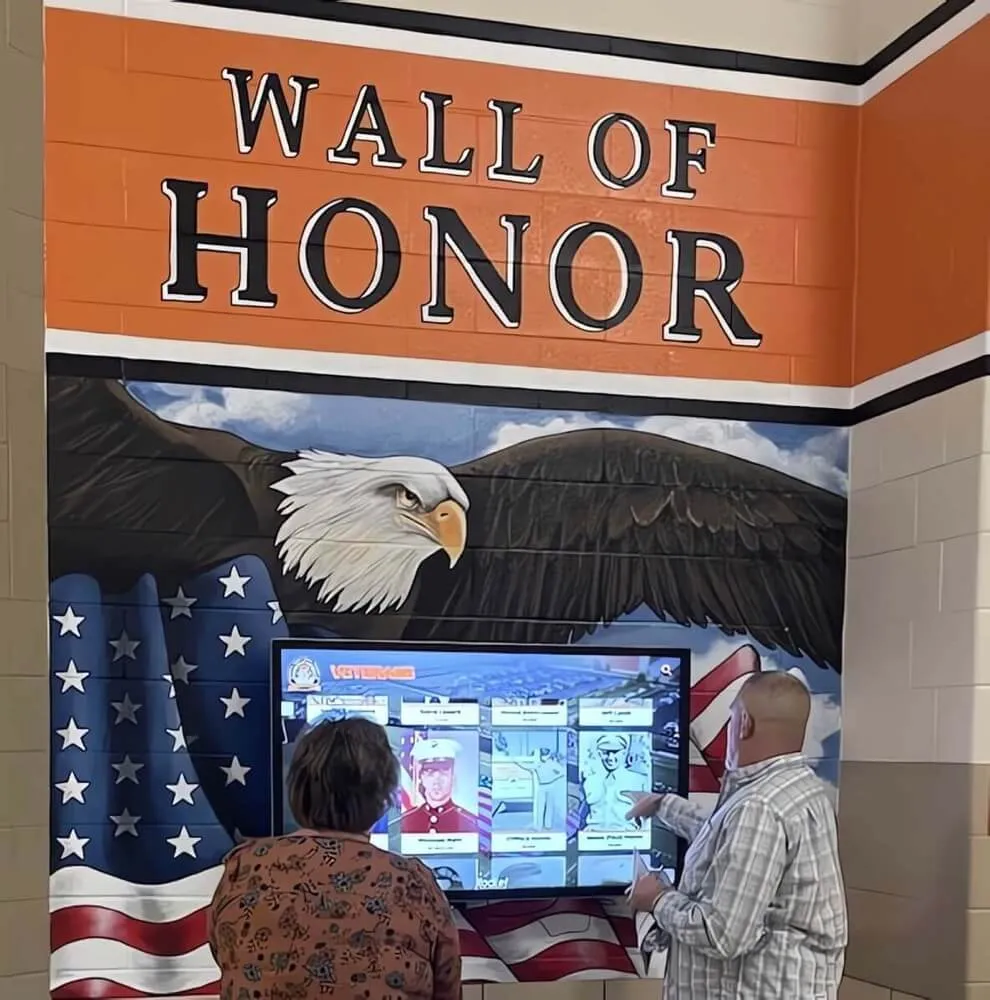
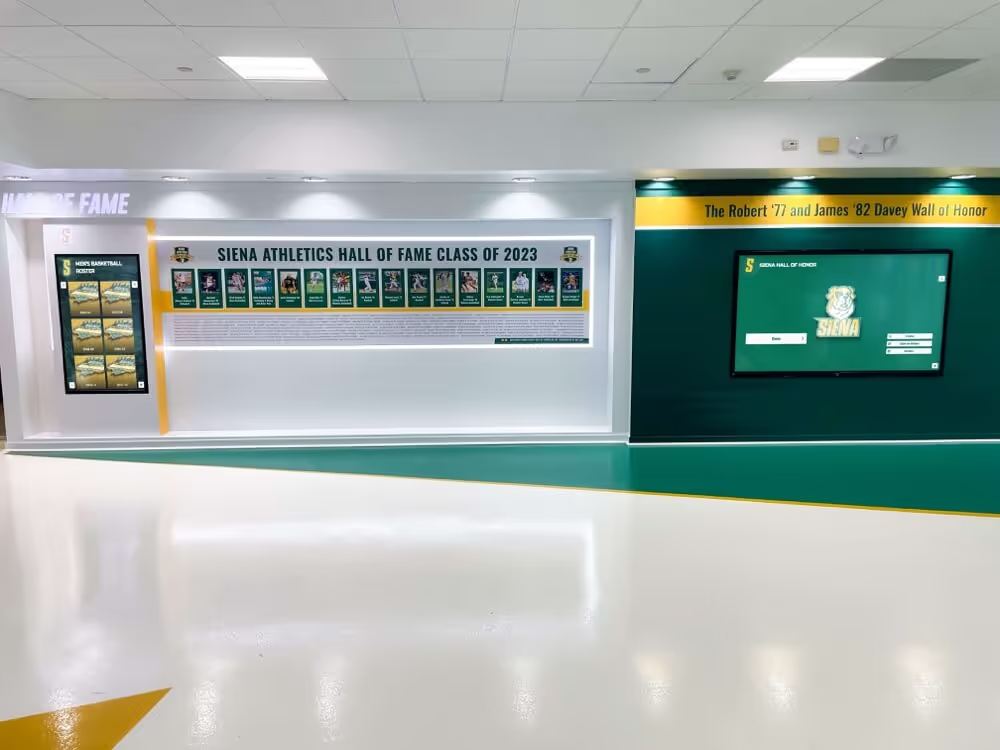
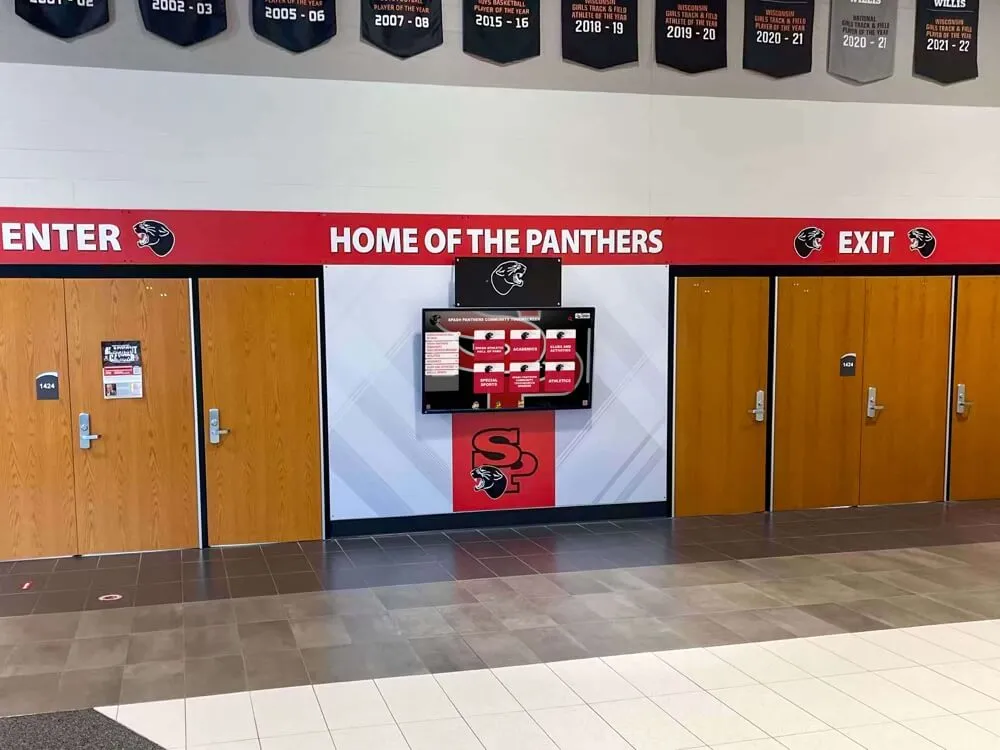
Modern class composite presentation solutions preserve everything valuable about this treasured tradition while addressing practical limitations that have frustrated schools for decades. Digital platforms combine professional-quality photography with interactive touchscreen technology, unlimited exhibition capacity, powerful search capabilities, and remote accessibility that transform how educational institutions celebrate graduating classes. These solutions eliminate physical space constraints, dramatically reduce long-term costs, enable instant content updates, and create engaging experiences that connect students across generations while maintaining the dignity and permanence graduating classes deserve.
Why Class Composite Presentations Remain Essential
Class composite presentations serve functions far beyond simple documentation. They build graduating class identity and institutional tradition, provide visual records supporting alumni connections and reunions, create tangible representations of school community across decades, and honor every student’s place in institutional history regardless of academic standing or extracurricular participation. Modern challenges threaten these essential functions, but digital recognition solutions like those from Rocket Alumni Solutions preserve the tradition’s value while addressing practical limitations that have frustrated schools for generations. Purpose-built platforms combine unlimited capacity with professional presentation quality, ensuring every graduating class receives permanent, accessible, and engaging recognition worthy of their educational achievement.
Understanding Traditional Class Composite Presentations
Before exploring modern solutions, understanding traditional class composite presentations provides essential context about what makes this tradition valuable and why schools seek alternatives that preserve those values while addressing significant practical challenges.
The History and Cultural Significance of Class Composites
Class composite presentations emerged in the late 19th and early 20th centuries as schools began systematically documenting graduating classes beyond simple written records. Early composites were often hand-painted or drawn before photography became accessible and affordable for educational institutions. By the 1920s and 1930s, photographic class composites became standard practice at high schools, prep schools, and universities across North America.
The tradition served multiple purposes in educational communities. For graduating seniors, composite inclusion represented formal recognition of their educational journey and permanent place in institutional history. Unlike yearbooks that became personal possessions often stored at home, composites remained at schools as public records accessible to all community members throughout time.
For alumni, composites served as tangible connections to graduating class communities. Alumni returning for reunions sought out their composites, gathered for photos beside them, and used them to locate classmates whose names they’d forgotten over decades. The physical presence in familiar school locations triggered powerful nostalgia and emotional connections to formative educational experiences.
For current students, composites visible throughout campuses created awareness of institutional continuity and tradition. Walking past decades of graduating class displays built understanding that schools existed long before current students arrived and would continue after they graduated. This temporal context created humility and connection to broader communities extending across generations.
For prospective students and families, composites visible during campus tours demonstrated institutional stability, longevity, and commitment to honoring every student. The visible presence of decades of graduating classes communicated permanence and tradition that newer schools could not replicate, creating competitive advantages during recruitment processes.
Traditional Class Composite Production Workflow
Traditional class composite presentations follow established workflows involving multiple vendors, careful coordination, and significant time investment from administrative staff responsible for ensuring accurate representation of every graduating senior.
Photography Phase: Professional school photographers capture individual senior portraits during scheduled photo days typically occurring in fall semester. Students select poses and expressions from multiple shots during proof selection sessions. Schools contract photographers who understand educational needs including appropriate backgrounds, consistent lighting, and reliable delivery timelines. Photography sessions typically cost $2,000-$5,000 annually depending on school size and contracted services.
Design and Layout Phase: After receiving final portrait selections, design professionals create composite layouts arranging all seniors in organized grids. This phase includes correcting name spellings, confirming placement accuracy, and ensuring visual consistency across all portraits. Design services typically add $300-$800 to annual costs depending on class size and complexity.
Production Phase: Approved designs get printed on professional-grade photographic paper or archival materials designed to resist fading. Large-format printing capable of producing composites measuring 24x36 inches or larger requires specialized equipment and expertise. Printing costs typically range $400-$1,200 per composite depending on size and material quality specifications.
Framing and Display Phase: Completed prints receive professional frames, protective glazing, and custom matting reflecting school colors or branding. Framing costs add $200-$600 per composite. Professional mounting ensures secure installation preventing accidents. Mounting and installation typically costs $150-$400 depending on wall construction and location accessibility.
This complete workflow means schools investing $3,000-$5,000 annually spend $30,000-$50,000 over just ten years producing essentially identical products serving the same recognition function without building cumulative value the way digital investments do.
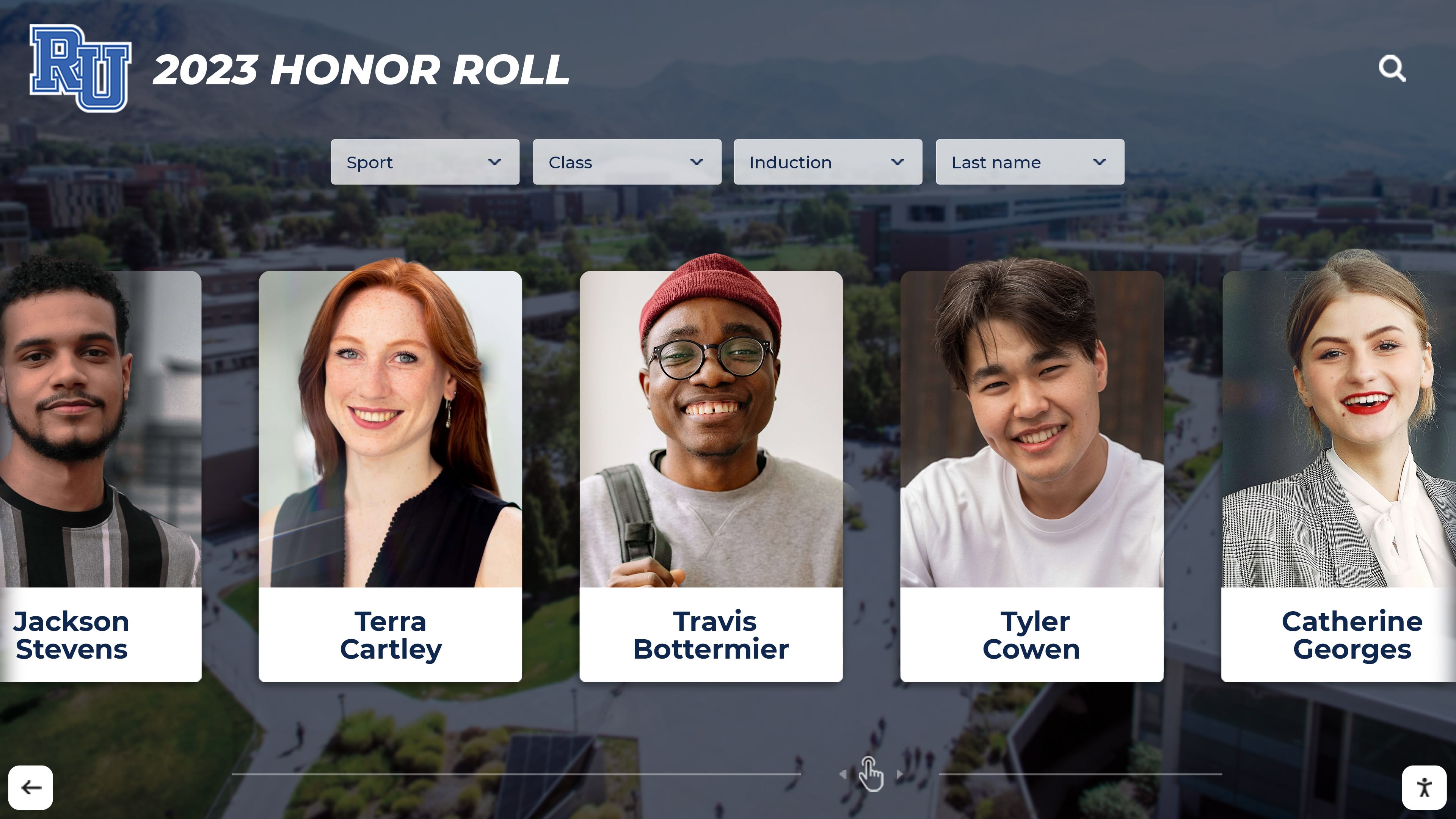
Common Class Composite Presentation Formats
Schools implement class composite presentations in several standard formats, each with particular advantages and limitations:
Single Large Composite: The most traditional format features all graduating seniors on one large framed print measuring 30x40 inches or larger. This unified presentation emphasizes class cohesion and creates impressive visual impact. However, large composites become unwieldy for schools with graduating classes exceeding 200-300 students, requiring enormous frames difficult to mount securely.
Multi-Panel Composites: Schools with larger graduating classes often divide composites into multiple panels displayed adjacent to each other. This modular approach enables manageable frame sizes while maintaining complete class representation. However, multi-panel installations consume even more precious wall space than single composites.
Hallway Progression Displays: Many schools dedicate specific hallway sections to composite presentations, displaying decades of graduating classes in chronological progression. This approach creates powerful visual timelines showing institutional history and demographic evolution. Unfortunately, even long hallways eventually fill completely, forcing difficult decisions about which classes remain visible.
Dedicated Composite Rooms: Some institutions with sufficient space create dedicated rooms housing complete composite collections spanning entire institutional histories. While this approach preserves all composites, relegating them to separate rooms reduces visibility and accessibility compared to high-traffic hallway locations.
Critical Challenges Confronting Traditional Class Composite Presentations
While culturally significant, traditional approaches face increasingly serious practical challenges that compromise their effectiveness and threaten their sustainability in modern educational environments.
The Space Crisis: When Wall Space Runs Out
The most visible challenge confronting schools maintaining traditional composite programs is simple mathematics: every graduating class adds another large composite requiring 4-8 linear feet of premium hallway wall space, but available space remains finite.
A typical school hallway accommodates perhaps 15-20 large composite frames before reaching absolute physical capacity. For schools founded in the 1950s-1970s, that space filled years or even decades ago. What happens when no additional wall space exists for new graduating classes?
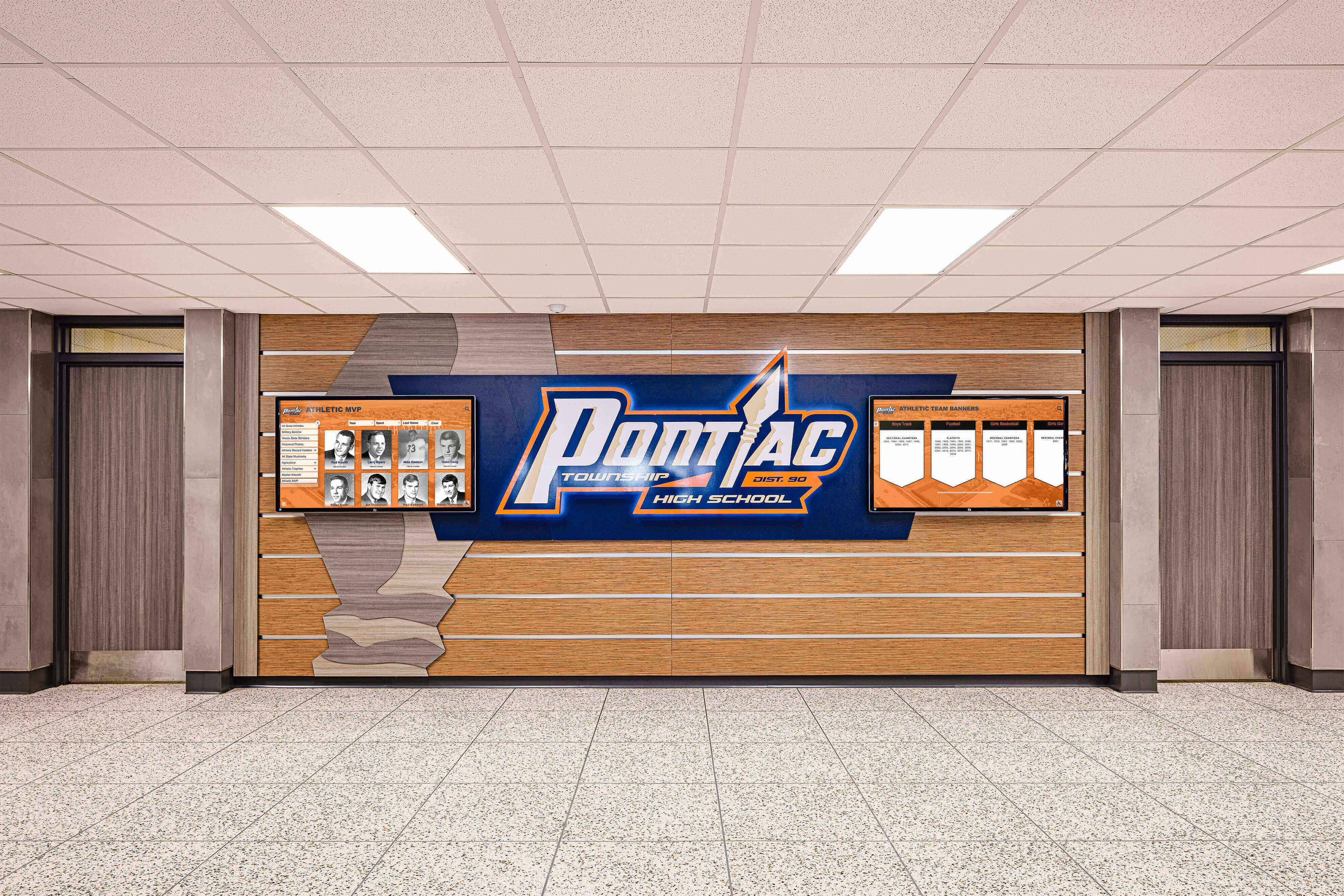
Schools face impossible choices with no satisfactory solutions:
Remove older composites to make room for new ones, relegating historical classes to storage rooms, administrative offices, or even basements where alumni cannot access them. This approach dishonors past graduating classes who invested in their composites expecting permanent display, creating alumni resentment when they discover their class relegated to invisibility.
Crowd composites together creating cluttered, unprofessional displays where individual composites become difficult to view properly. This approach diminishes recognition value for all classes while creating institutional environments appearing disorganized and poorly maintained.
Find additional hallway space already allocated to other institutional purposes, creating competition between different departments for limited resources. Athletics wants trophy case space, fine arts needs display areas for student work, academics requires bulletin boards for recognition programs, and student organizations seek visibility for activities.
Store composites in rotation, displaying only recent decades while archiving older classes, then periodically rotating what gets displayed. While more equitable than permanent removal, this approach still denies continuous visibility to all classes while requiring ongoing labor relocating heavy framed composites repeatedly.
The space crisis grows particularly acute for long-established institutions. A school celebrating its 75th or 100th anniversary faces mathematics requiring hundreds of linear feet of wall space that simply doesn’t exist in facilities designed without anticipating cumulative recognition needs spanning entire institutional histories. Solutions like digital recognition displays provide unlimited capacity addressing this fundamental space limitation.
Escalating Costs Strain Educational Budgets
Annual class composite production requires substantial investment across multiple expense categories that compound dramatically over institutional lifespans without delivering additional value beyond single physical prints.
Annual Cost Breakdown for Medium-Sized High Schools (200-400 students):
Professional photography sessions capturing 80-150 senior portraits: $2,500-$4,500. This cost includes photographer time, equipment, studio setup, proofing services, and digital file delivery.
Composite design and layout services: $300-$800. Professional designers arrange portraits in organized grids, verify name spellings, ensure visual consistency, and produce final layouts meeting printing specifications.
Large-format printing on archival-quality materials: $400-$1,200 per composite. Professional-grade printing equipment capable of producing 24x36 inch or larger composites with appropriate resolution and color accuracy requires significant capital investment that commercial printers pass through to customers.
Custom framing, matting, and protective glazing: $200-$600 per composite. Quality frames appropriate for public display in institutional settings cost considerably more than consumer-grade products. Custom matting in school colors, protective UV-filtering glass or acrylic, and professional assembly add significant expenses.
Professional mounting and installation: $150-$400. Secure installation preventing accidents requires proper hardware selection, stud location, level mounting, and liability insurance that professional installers carry.
Total annual investment: $3,500-$7,500 for typical comprehensive class composite programs. Over just ten years, this represents $35,000-$75,000. Over twenty years—a realistic timeframe for long-term budgeting—costs reach $70,000-$150,000.
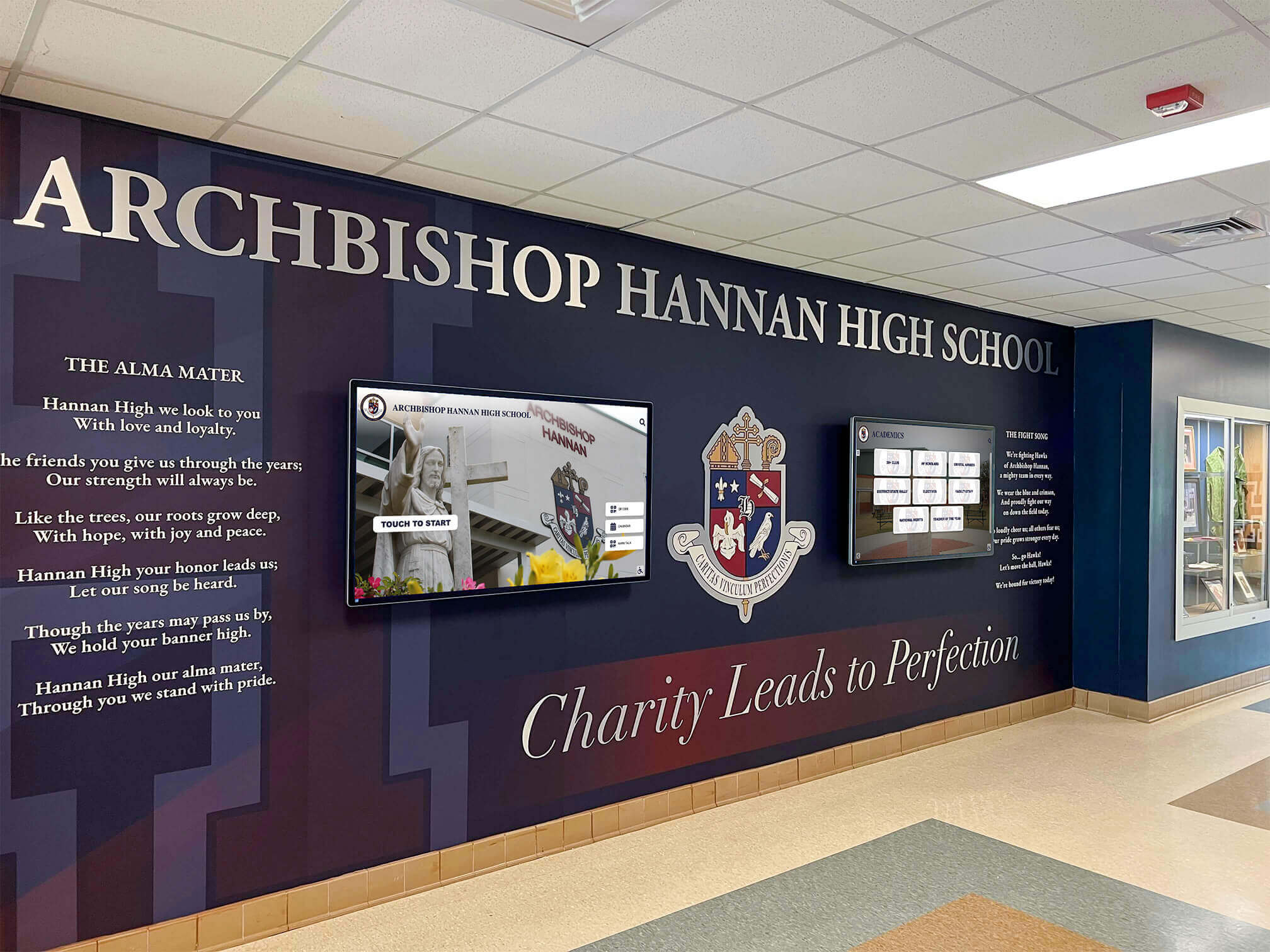
These figures don’t include additional costs schools incur over time: glass replacement when protective glazing cracks, frame repairs when mounting hardware fails, remounting when walls get repainted or renovated, or complete reprinting when environmental exposure causes irreversible fading.
For budget-conscious administrators balancing competing demands from athletics, arts, academics, special education, technology infrastructure, facilities maintenance, and safety programs, annual composite expenses become increasingly difficult to justify when stakeholders question whether alternative approaches could serve the same recognition purpose more efficiently.
Physical Deterioration Undermines Long-Term Recognition
Physical materials inevitably deteriorate over time regardless of protection quality or maintenance care. The very nature of photographs, frames, and glazing exposed to environmental conditions for decades means visible degradation becomes unavoidable.
Common Deterioration Patterns:
UV light exposure gradually fades photographs despite protective glass or acrylic glazing. Composites displayed in hallways with windows or skylights show visible color shifting within 5-10 years even with UV-filtering glazing. Fluorescent and LED lighting, while less damaging than sunlight, still cause cumulative photochemical reactions degrading dyes and pigments over decades of continuous exposure.
Environmental humidity affects print substrates causing warping, discoloration, and adhesive failure between photographic emulsion layers and backing materials. Even climate-controlled school environments experience seasonal humidity fluctuations affecting materials over extended timeframes.
Temperature fluctuations stress materials through expansion and contraction cycles. Daily heating and cooling, seasonal changes, and variations between occupied and unoccupied periods create mechanical stresses accelerating aging.
Frame degradation occurs independent of photograph condition. Wood frames warp with humidity cycles, joints separate with age, finishes deteriorate requiring refinishing, and metal frames corrode especially in humid climates or areas using road salt in winter.
Schools discover that composites from 20-30 years ago often appear significantly degraded compared to recent prints despite identical original production quality. This creates visual inconsistency where older graduating classes appear less important simply because their composites have aged poorly through no one’s intentional neglect.
Limited Engagement with Static Physical Displays
Traditional composites offer only passive viewing experiences that fail to engage contemporary students who grew up with smartphones, interactive technology, and digital media throughout their lives.
Students walk past composites daily during passing periods, perhaps glancing briefly to locate themselves or friends before moving on to classes. Interaction time with traditional composites averages 15-30 seconds—just enough to locate specific faces then depart. No opportunity exists for deeper exploration, contextual learning, or meaningful engagement beyond simple visual identification.

Fundamental Limitations of Static Displays:
Traditional composites provide no contextual information beyond names, faces, and graduation years. Students cannot learn about classmates’ activities, achievements, post-graduation paths, or career accomplishments. The displays document who graduated but not what they accomplished or who they became.
No search capability exists in large displays spanning decades. Finding specific individuals requires knowing approximate graduation years and manually browsing appropriate composites—prohibitively time-consuming when searching across multiple decades or when graduation years are uncertain.
Geographic limitations confine composite access to those who can physically visit schools. Alumni living across countries or internationally cannot share composites with spouses, children, or grandchildren who never attended these institutions.
No integration exists between composites and other school recognition programs. Connections between senior portraits and athletic achievements, academic honors, arts accomplishments, or leadership positions remain invisible. Schools implementing comprehensive recognition programs discover powerful synergies with class composite presentations.
Modern Class Composite Presentation Solutions
Digital technology addresses every major limitation confronting traditional approaches while preserving everything schools value about class composite traditions. Modern solutions combine professional-quality photography with interactive capabilities creating recognition programs simultaneously honoring tradition and embracing innovation.
What Are Digital Class Composite Presentations?
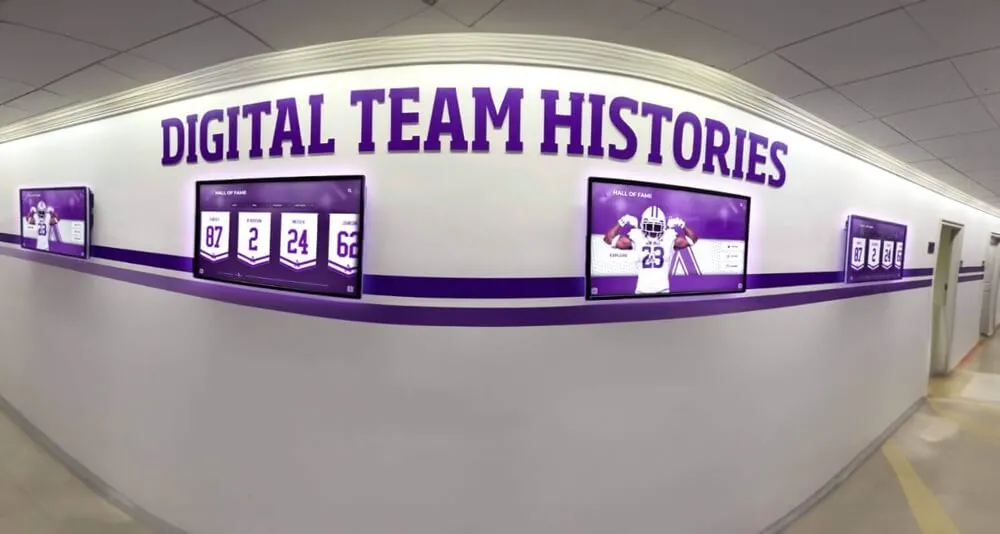
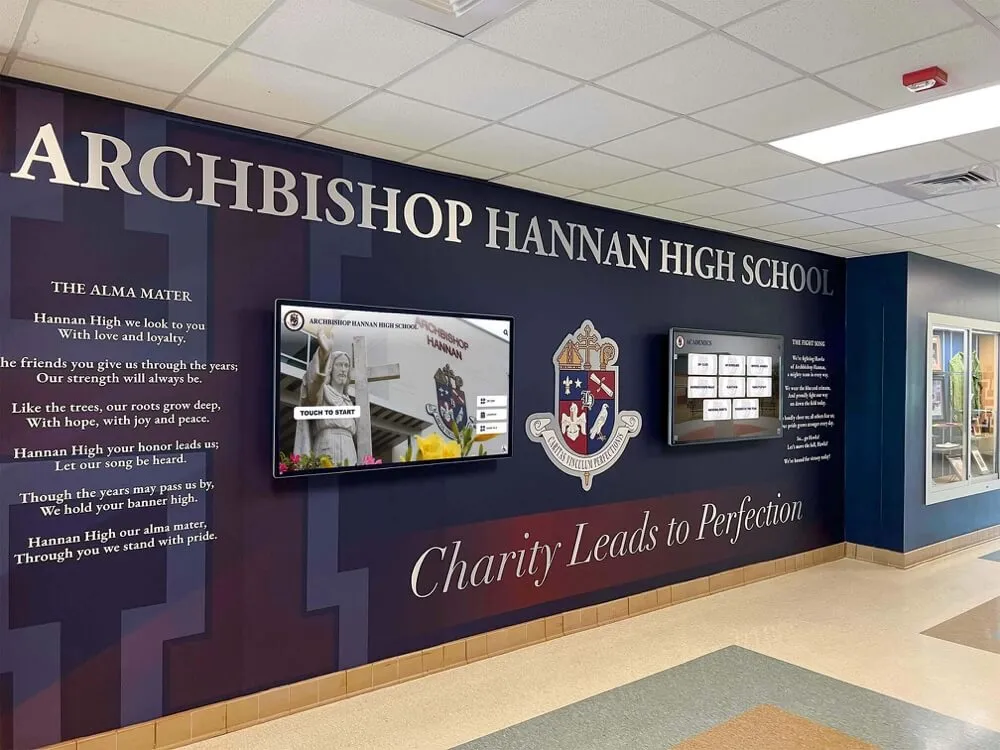
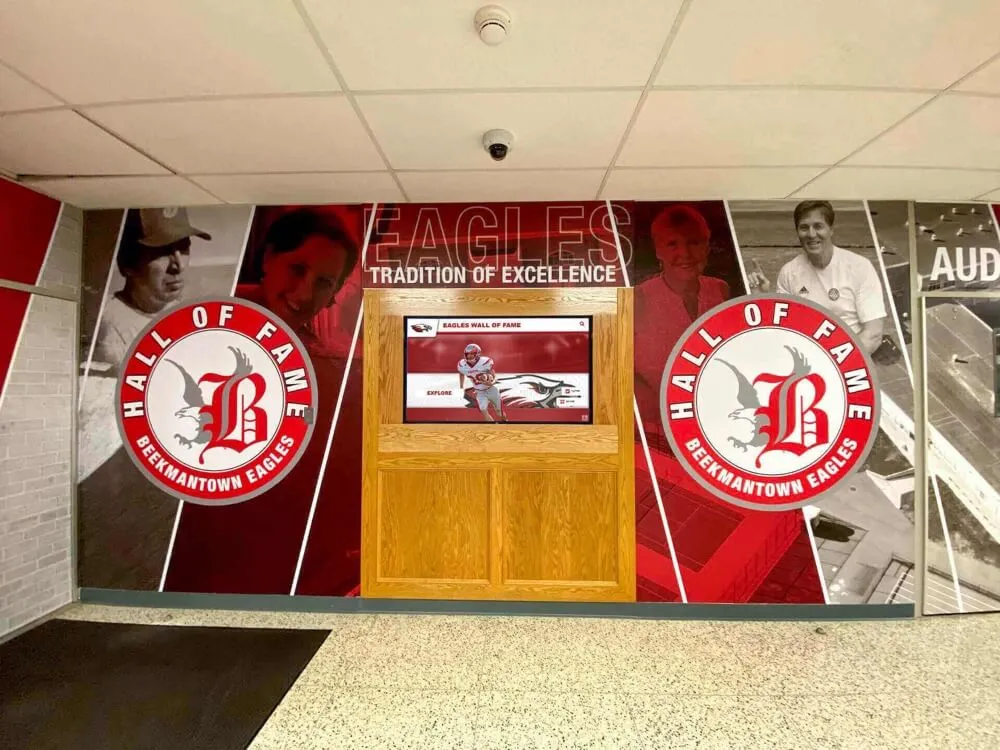
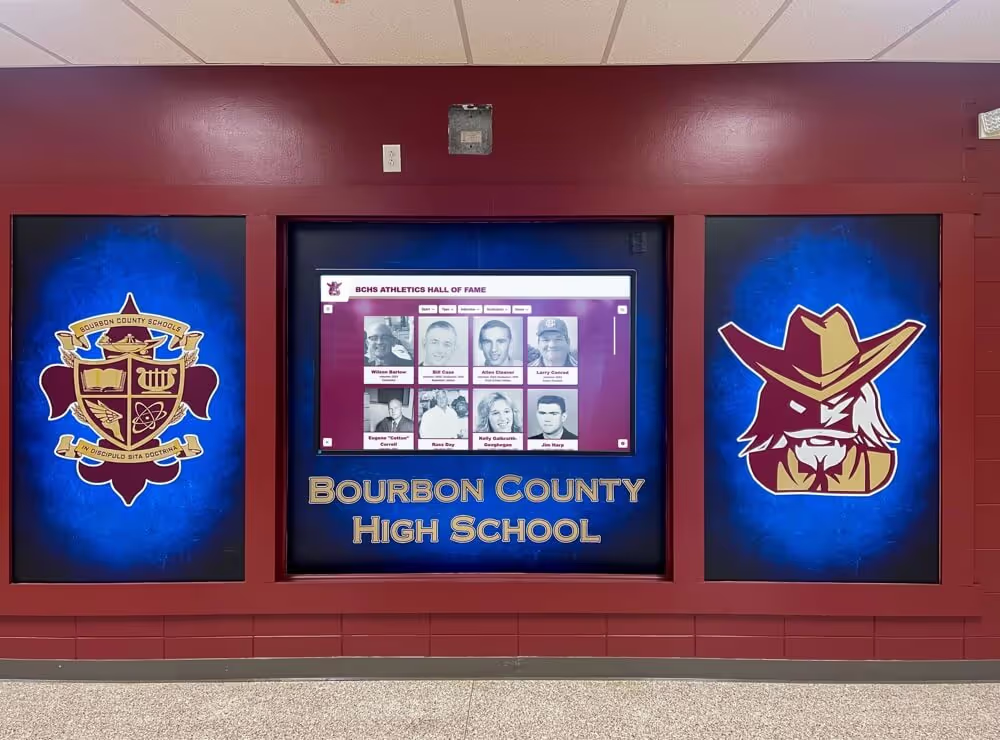
Digital class composite presentations replace or supplement physical printed composites with interactive systems showcasing class photography through touchscreen displays, web interfaces, or hybrid approaches combining digital and physical elements in coordinated recognition programs.
Core System Components:
Professional Digital Photography: High-resolution senior portraits captured during traditional photo days maintain studio quality while existing in digital format enabling unlimited applications. These images display on screens, print on demand, or integrate into searchable databases without quality degradation regardless of reproduction frequency or reformatting.
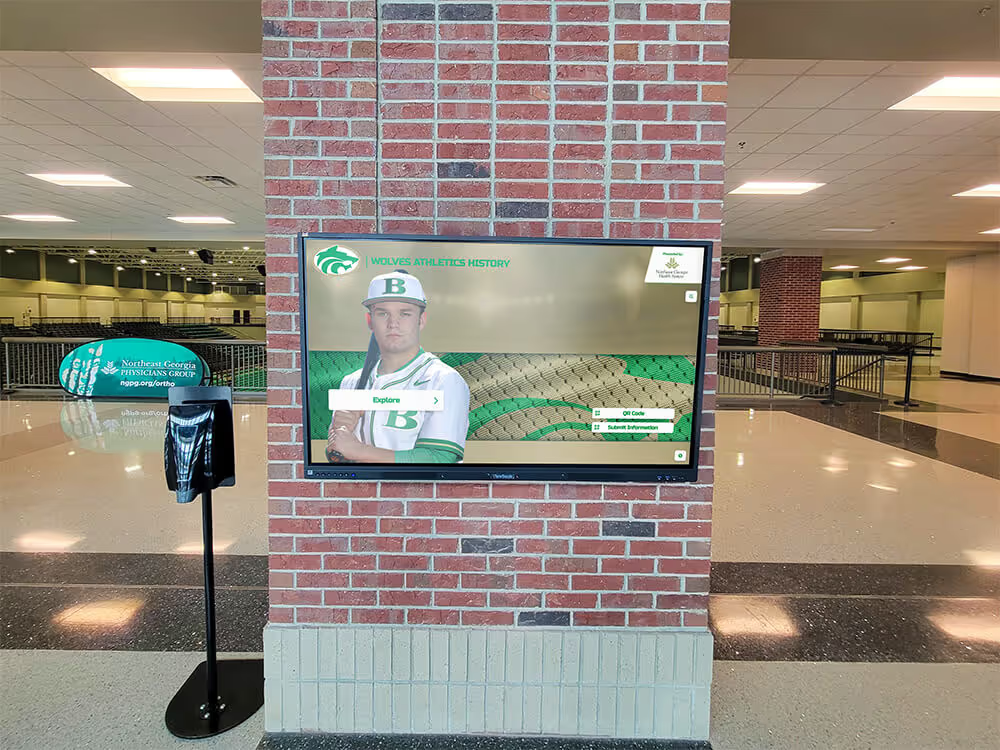
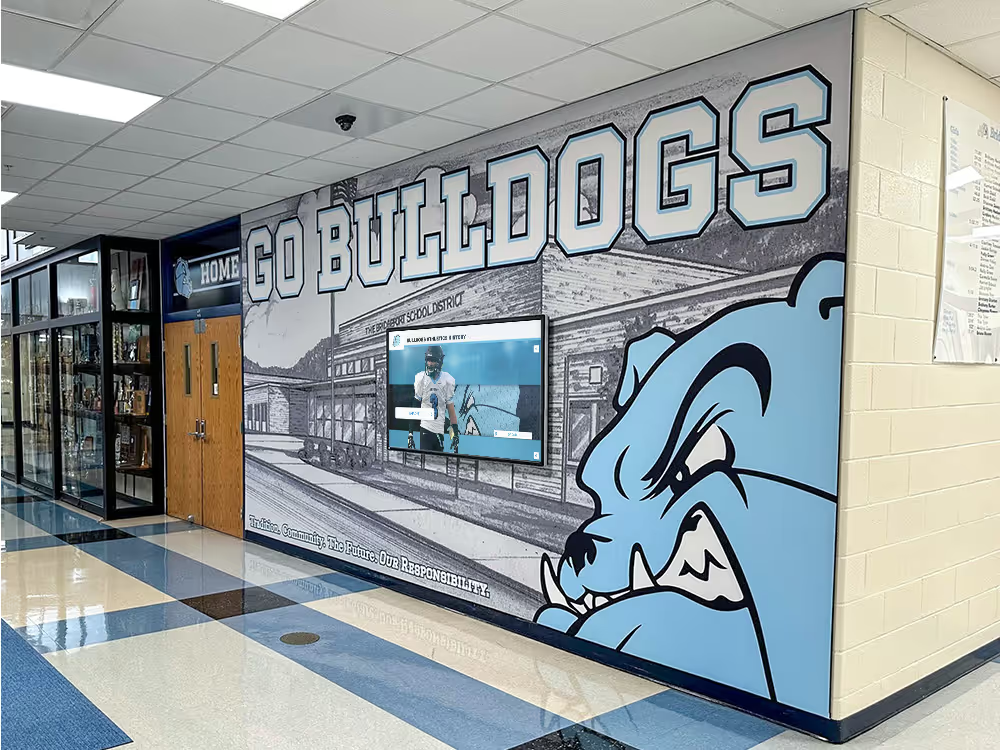
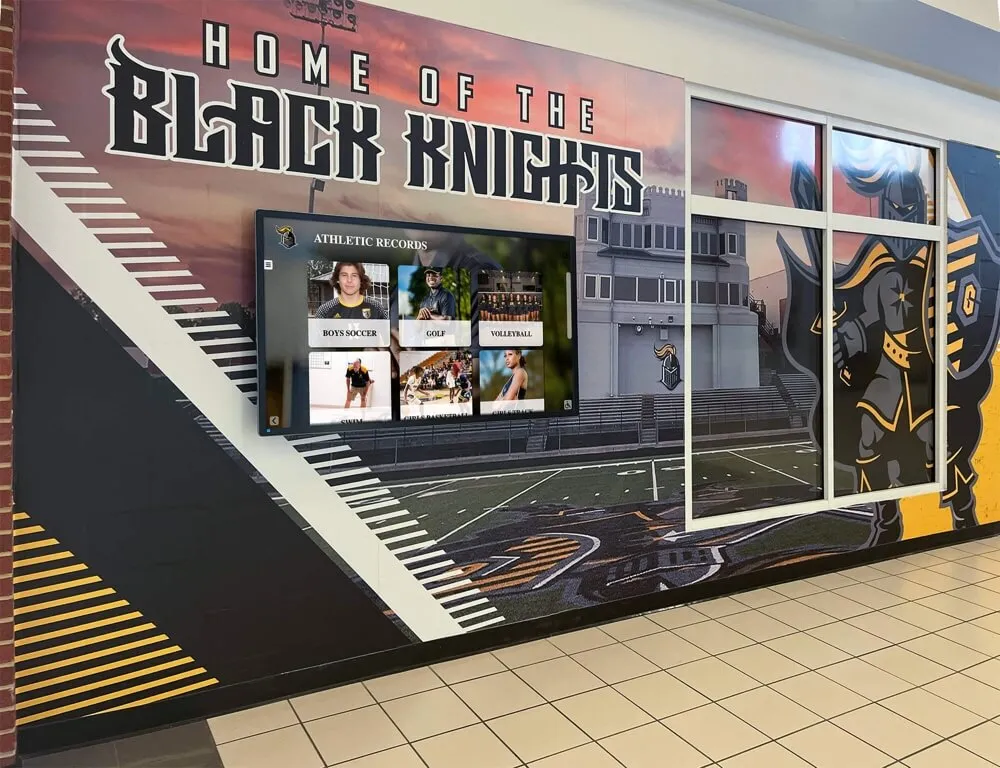
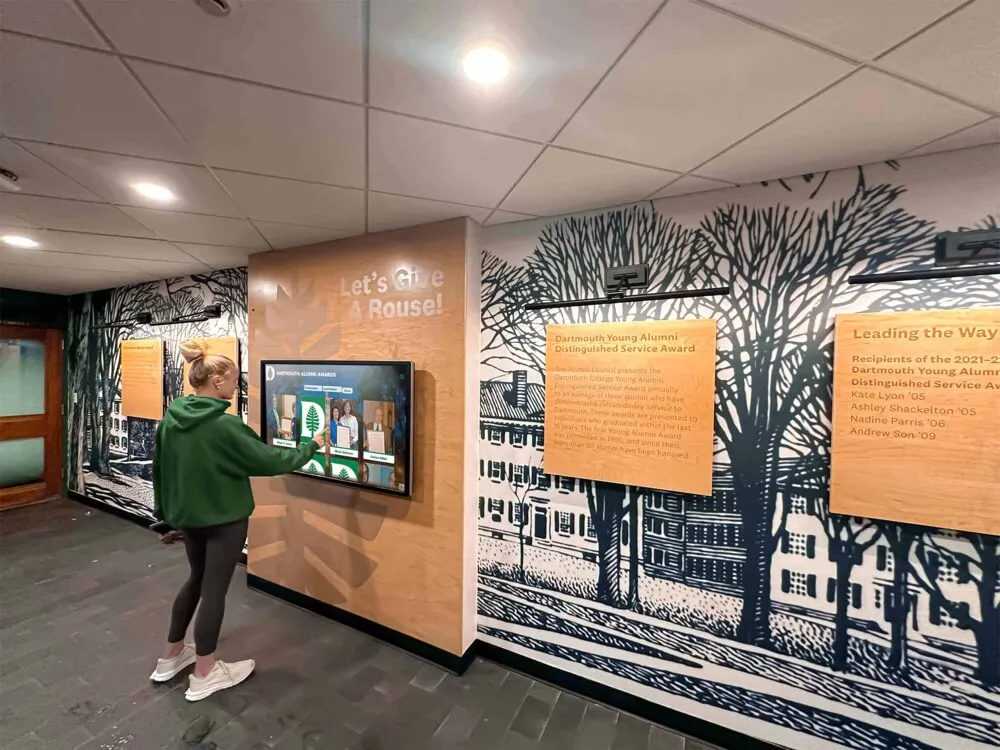
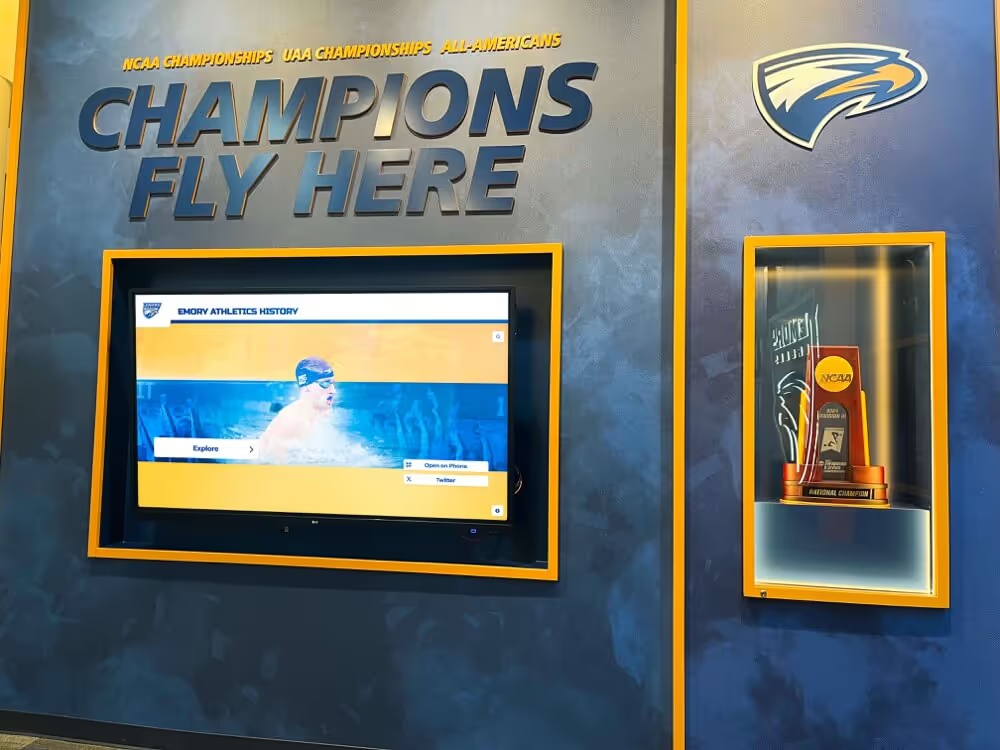
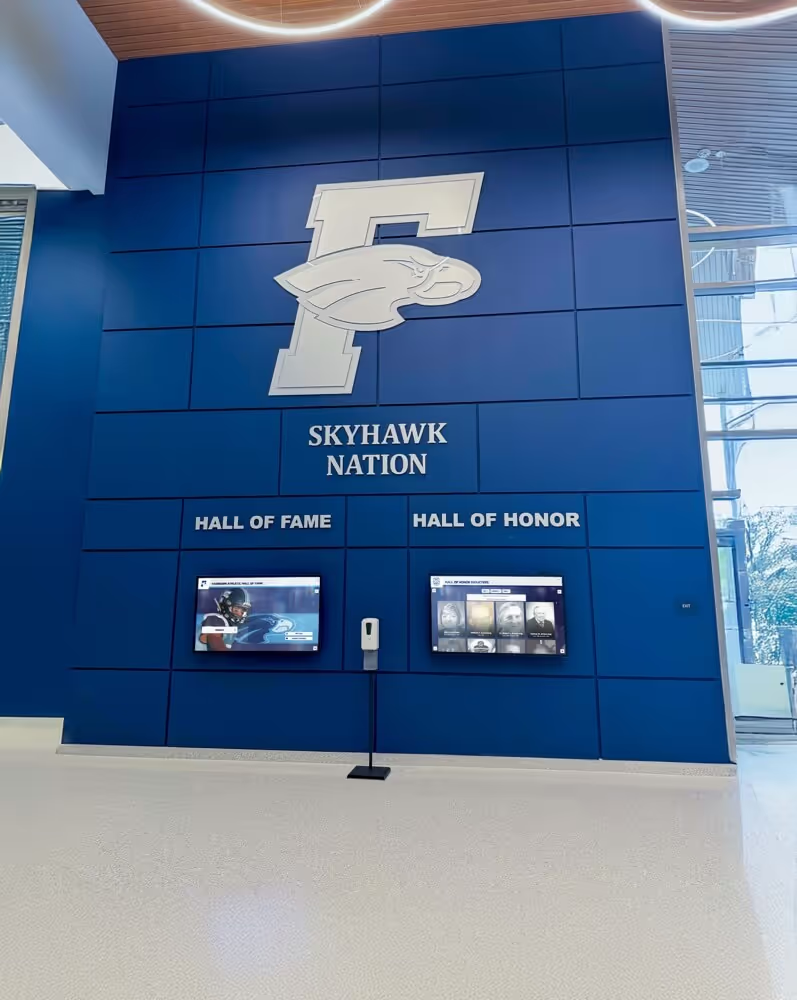
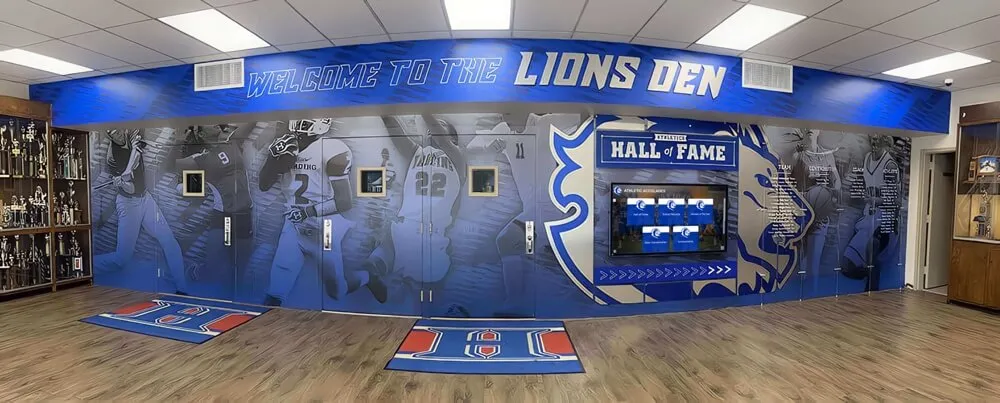
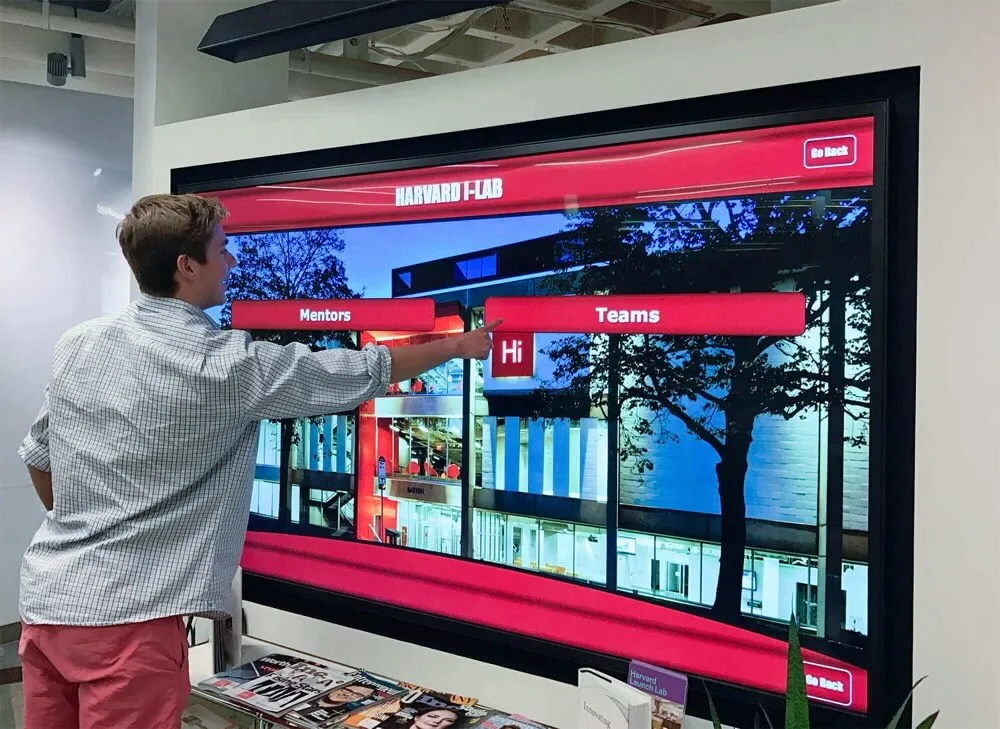
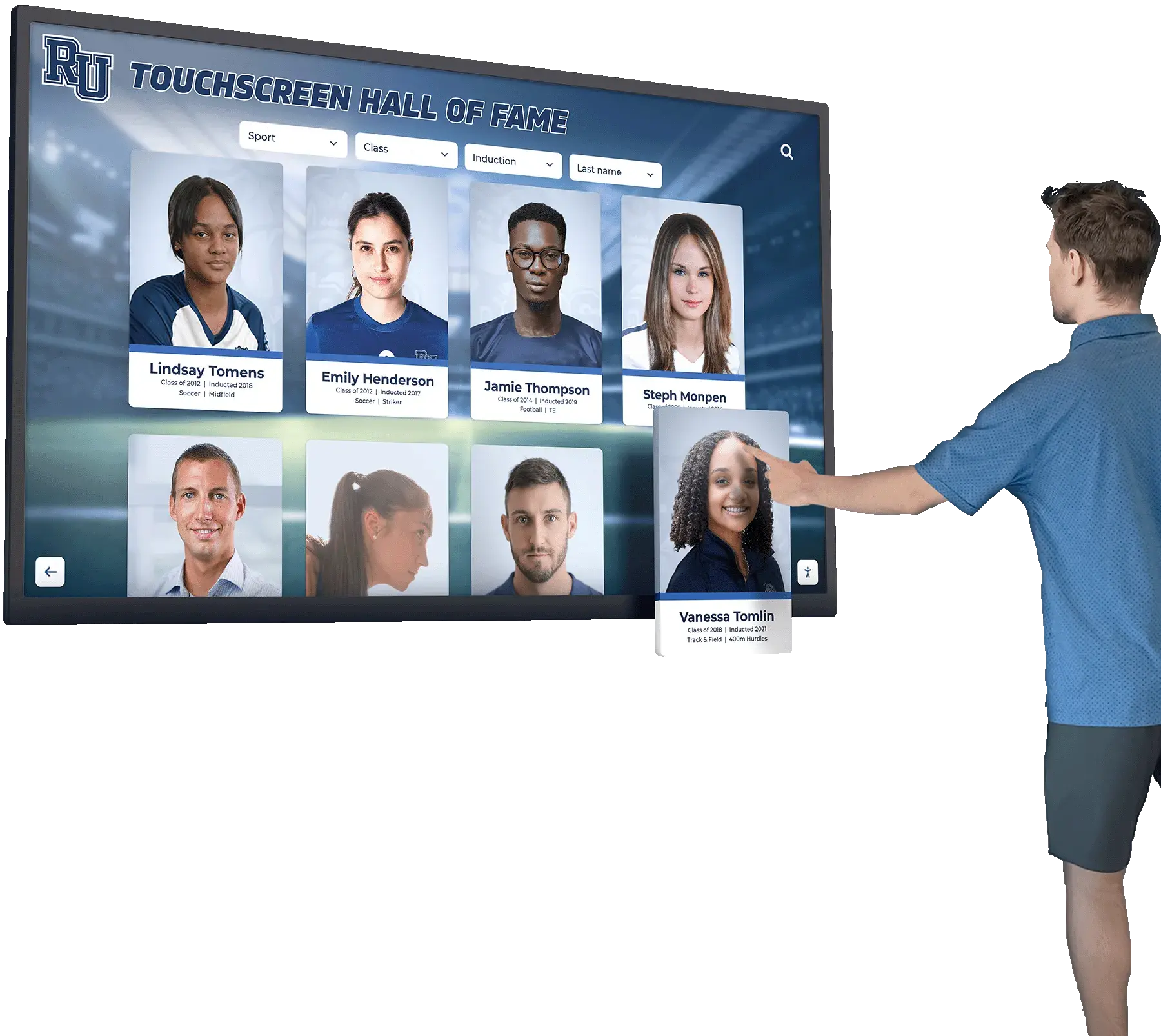
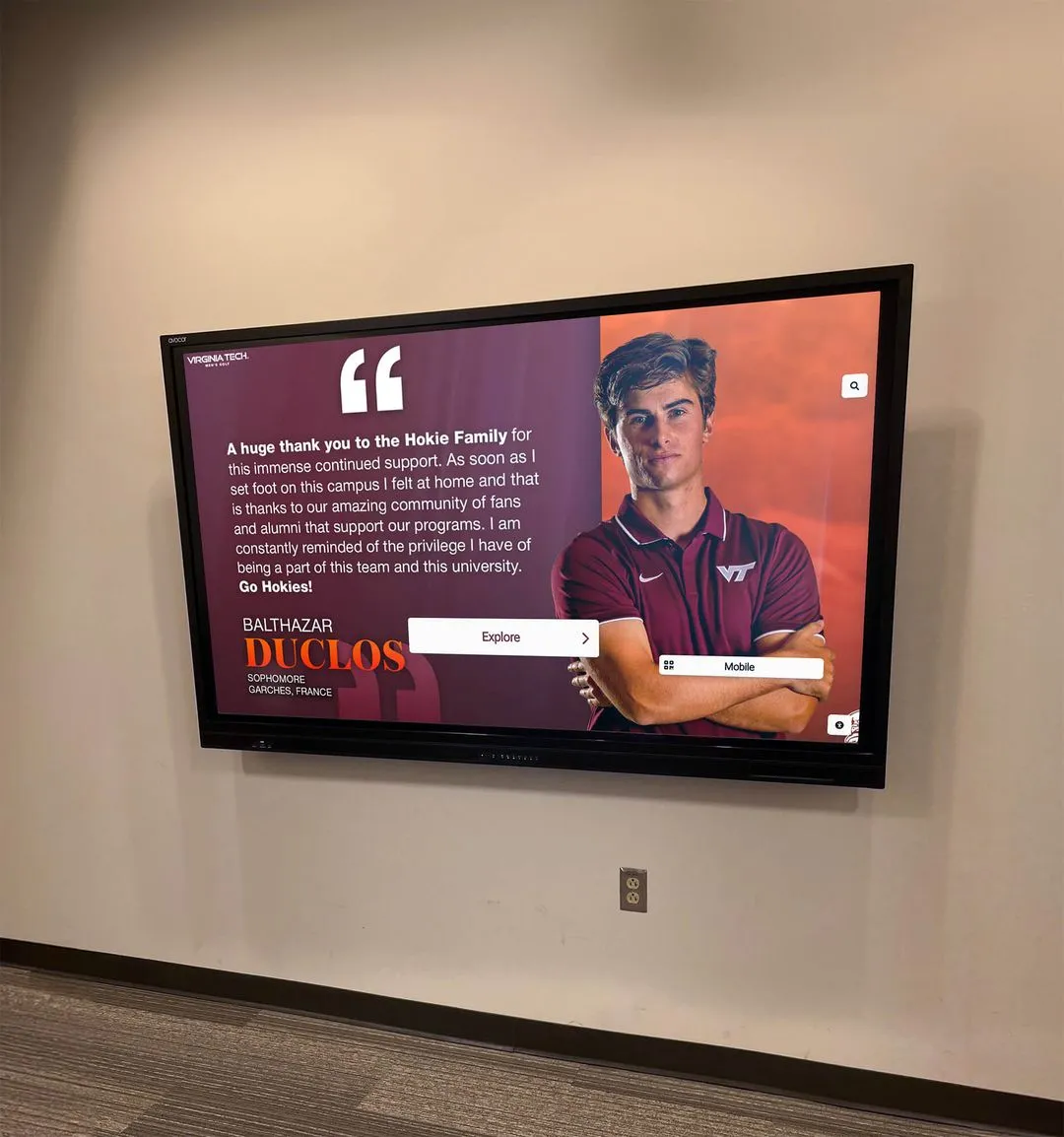
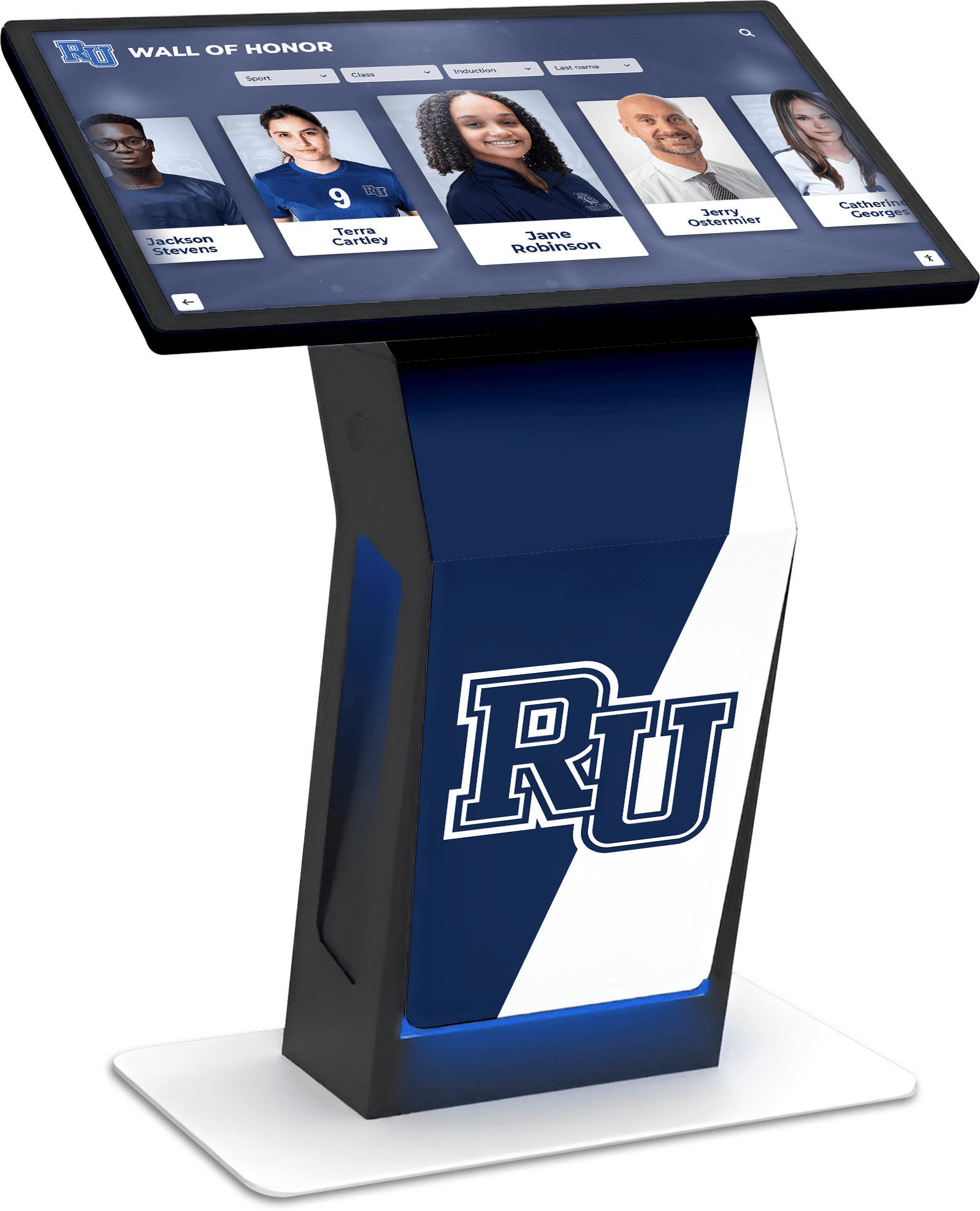
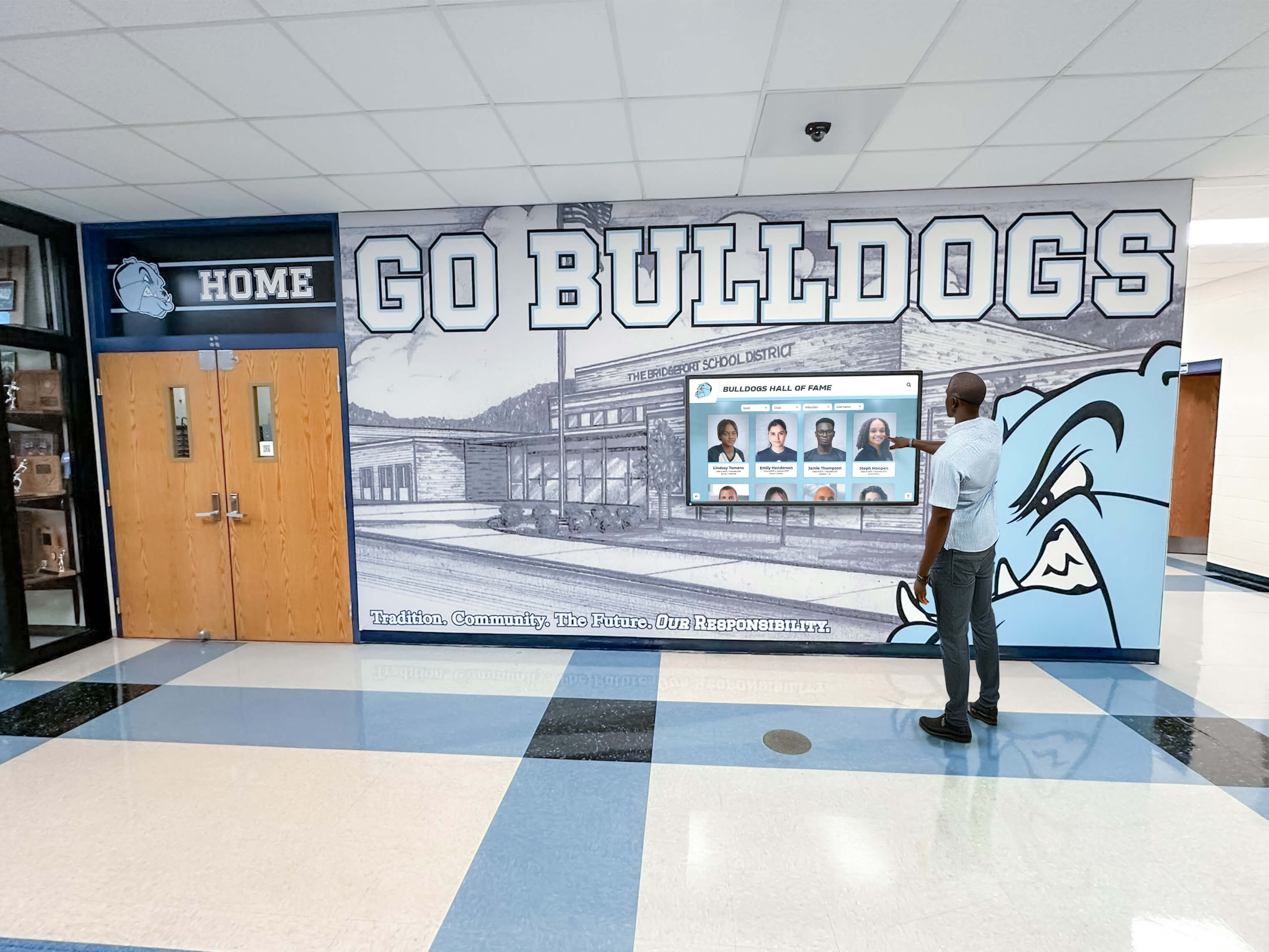
Interactive Touchscreen Hardware: Commercial-grade displays installed in high-traffic locations enable active exploration through search, filtering, zooming, and multimedia enhancement. Students and visitors engage directly with content rather than passively viewing unchanging prints from fixed distances.
Cloud-Based Content Management: Web platforms organize all class photographs, manage composite designs, enable administrative updates, and support simultaneous display across multiple locations. Staff members update content easily through intuitive interfaces without requiring technical expertise or IT department intervention for routine maintenance.
Comprehensive Database Architecture: Powerful systems preserve all student images with searchable metadata enabling instant location of specific individuals, classes, or timeframes. Finding any graduate from any year becomes instantaneous rather than requiring physical searches through storage or manual hallway browsing.
Multi-Platform Accessibility: Content displays on physical touchscreens, web browsers on any device, and mobile phones, extending recognition beyond those who physically visit facilities. This accessibility ensures all alumni, families, and community members can explore class composites regardless of geographic location.
Digital vs. Traditional: Enhancement Rather Than Replacement
Digital class composite presentations maintain every valuable aspect of traditional photography while eliminating limitations constraining physical approaches. Both methods capture professional-quality portraits during scheduled photo days. Both create complete class records documenting every graduate. Both support traditional grid-style layouts familiar to alumni expecting conventional presentation formats. Both enable printed versions when physical copies serve ceremonial purposes.
However, digital systems add capabilities impossible with physical prints alone:
Unlimited display capacity shows entire institutional history simultaneously without physical space constraints. Every graduating class throughout complete school history receives equal dignity and accessibility regardless of when students attended.
Instant updates incorporate new graduating classes immediately after photography completion without physical reproduction delays. Content changes, corrections, or enhancements occur instantly rather than requiring reprinting and remounting physical composites.
Powerful search functionality finds any graduate from any year within seconds across comprehensive databases. Alumni don’t need to remember graduation years or physically browse decades of displays locating specific individuals.
Multimedia enhancement adds biographical information, post-graduation updates, achievement documentation, and contextual details bringing senior portraits to life beyond simple photographs and names.
Remote accessibility serves alumni and families anywhere worldwide through web and mobile access. Recognition extends far beyond those who can physically visit campuses.
Comprehensive integration connects senior portraits to athletic recognition, academic honors, arts achievements, and alumni profiles creating cohesive institutional storytelling impossible with isolated standalone composite displays.
The comparison isn’t traditional versus digital as competing alternatives—it’s traditional alone versus traditional enhanced with digital capabilities providing additional value without sacrificing anything schools appreciate about class composite traditions.
Comprehensive Benefits of Digital Class Composite Presentations
Schools implementing digital solutions discover advantages spanning administrative efficiency, substantial cost savings, dramatically enhanced engagement, and entirely new recognition capabilities impossible with traditional methods.
Unlimited Capacity Eliminates Space Constraints
The most immediate benefit addresses the fundamental problem driving many schools toward digital solutions: unlimited display capacity without physical space limitations.
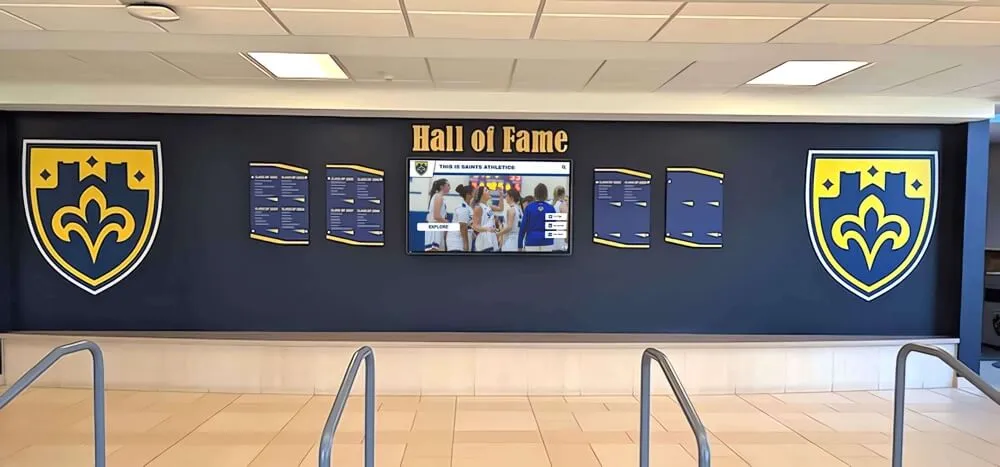
A single 55-inch touchscreen display showcases detailed professional-quality views of hundreds of class composites—content requiring 100+ linear feet of premium hallway wall space using traditional framed prints. Schools finally display complete graduating class collections spanning entire institutional histories rather than making impossible choices about which classes deserve limited wall space while others get relegated to storage.
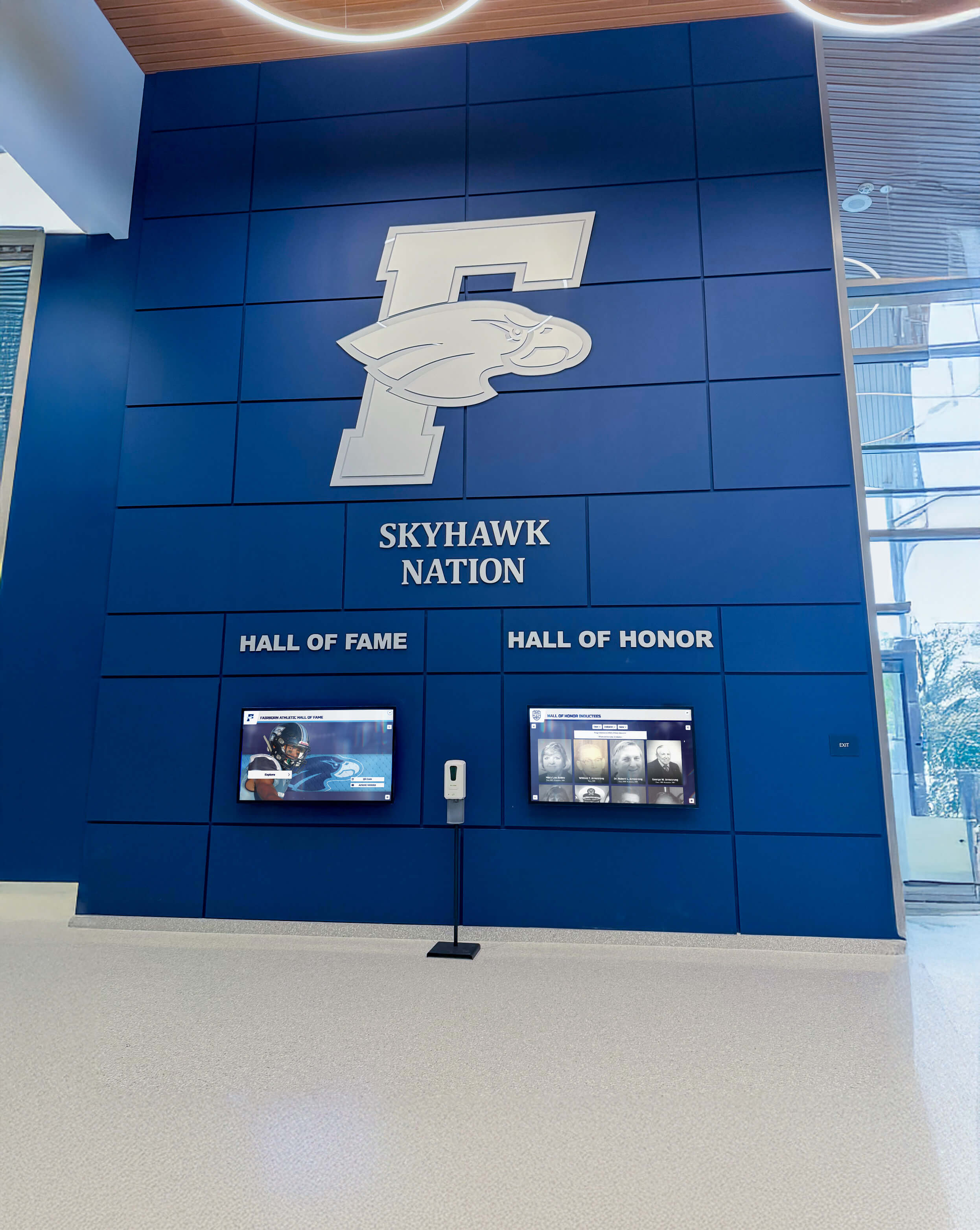
This unlimited capacity fundamentally transforms recognition strategy and institutional equity. Every graduating class throughout entire school history receives equal treatment regardless of when students attended. The Class of 1965 appears as prominently and accessibly as the Class of 2026, creating equitable recognition honoring all alumni equally rather than privileging recent classes simply because they fit available physical space.
Comprehensive capacity also enables powerful browsing functionality across complete institutional timelines. Users view every graduating class chronologically, compare class sizes and demographics across decades, identify family connections where multiple generations attended the same school, and explore institutional evolution through visual documentation spanning entire organizational lifespans.
Space efficiency extends beyond class composites themselves. Schools reclaim premium hallway space previously consumed by composites, repurposing it for other recognition programs, artwork displays, wayfinding information, or architectural features improving facility aesthetics. Learn about effective strategies for showcasing school history through digital displays.
Dramatic Long-Term Cost Savings
While digital systems require meaningful upfront investment, total cost of ownership over realistic 10-20 year evaluation periods proves substantially lower than traditional approaches once you calculate cumulative recurring expenses physical composites demand.
Digital System Investment Analysis:
Initial one-time costs: $8,500-$18,500 including commercial-grade 55-inch touchscreen display with mounting, recognition software platform licensing, professional installation including electrical and network infrastructure, and initial content digitization and system setup.
Annual operating costs: $700-$1,900 including software subscription or maintenance fees, display maintenance and updates, and minimal content management staff time once efficient workflows get established.
15-year total cost of ownership: $19,000-$47,000 for comprehensive digital class composite systems serving schools of 200-600 students with graduating classes of 50-150 seniors annually.
Compare this to traditional composite costs of $3,500-$5,000 annually multiplied by 15 years = $52,500-$75,000, not including frame repairs, remounting expenses, or reprinting faded composites. Digital systems achieve break-even within 3-5 years, then deliver ongoing savings plus dramatically superior capabilities traditional approaches cannot match regardless of investment levels.
Budget predictability improves dramatically with digital systems. Annual costs remain relatively constant rather than fluctuating with material cost inflation, frame damage requiring replacement, or unexpected restoration needs when composites deteriorate faster than anticipated.
Dramatically Enhanced Engagement Through Interactivity
Interactive digital displays create engagement opportunities fundamentally impossible with static physical prints, transforming how students, alumni, and families interact with class composite content.
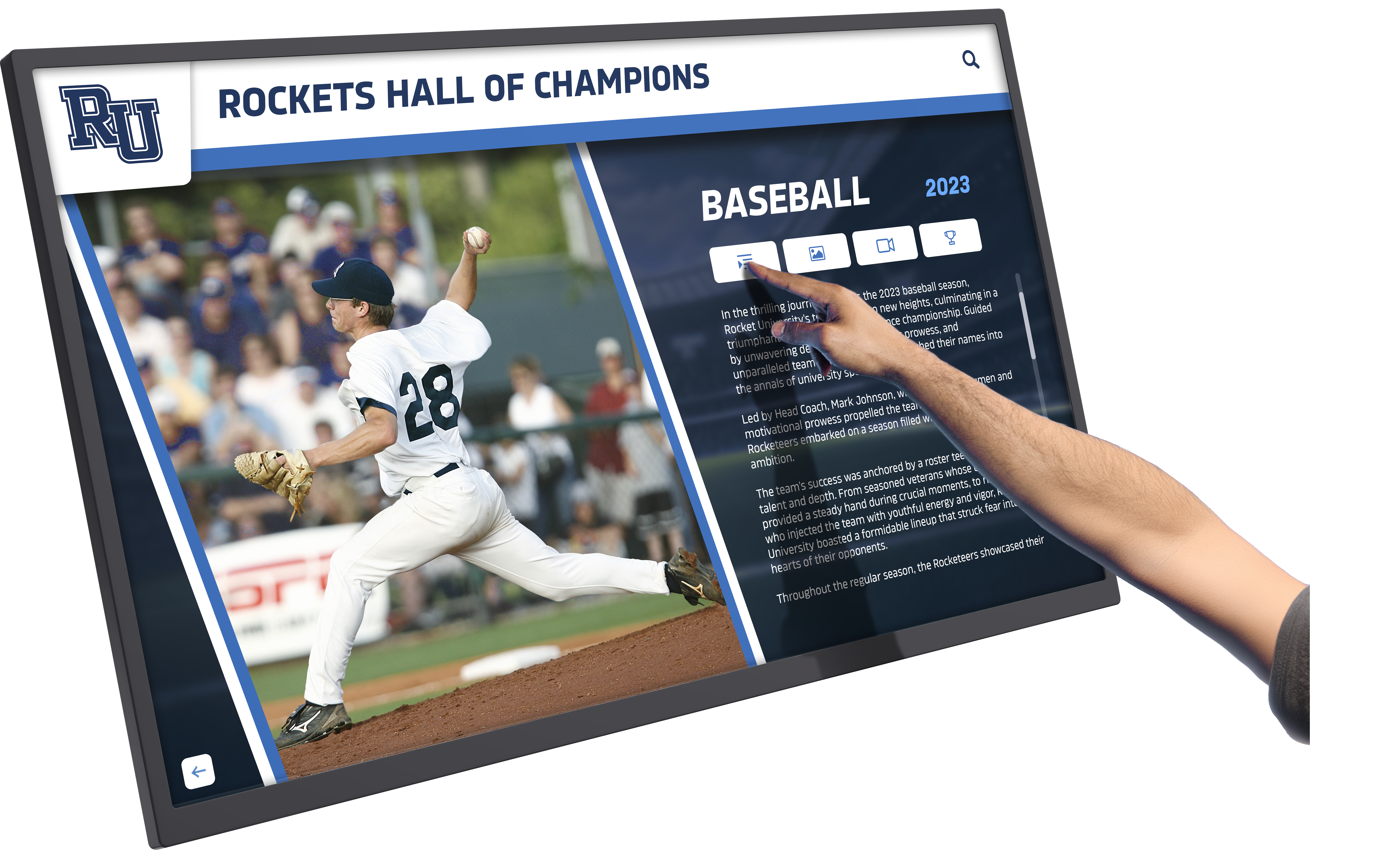
Average interaction time with digital composites runs 4-7 minutes compared to 15-30 seconds for traditional physical displays—a 10-20x increase in engagement duration. This dramatic improvement creates far stronger emotional connections to graduating class communities, institutional history, and school identity.
Observed Engagement Patterns:
Current students search for older siblings, parents, cousins, or family friends who attended the same schools, discovering personal connections to institutional history. This relevance builds stronger school identity and community feeling compared to viewing anonymous faces in grid layouts without any personal significance.
Alumni visiting during reunions don’t just locate their own classes—they explore adjacent years finding friends from other grades, teachers who also appeared in yearbooks, and siblings separated by multiple years. The interactive format encourages extended browsing rather than quick glances at single predetermined targets.
Prospective families touring schools during admission processes explore composite history understanding community demographics, institutional longevity, and cultural evolution across decades. This extended historical context helps families evaluate whether schools align with their values and expectations.
Search functionality enables instant location of any individual from any graduating class—capability particularly valuable for large schools where manually browsing decades of composites would be prohibitively time-consuming.
Powerful Alumni Connection and Engagement Tools
Digital class composite presentations excel at facilitating alumni connections extending far beyond occasional reunion weekend interactions, creating ongoing engagement opportunities maintaining relationships between institutions and graduates throughout entire lifespans.
Alumni use web-accessible composite databases to locate former classmates when planning reunions, preparing memorial tributes, or simply reconnecting with people who shared formative educational experiences. The systems enable searches by name, year, activity participation, or geographic location when “where are they now” data gets collected and added to profiles.
Social media integration allows easy sharing of discovered composites, generating organic school promotion when alumni post throwback photos to Facebook, Instagram, or other platforms. This social amplification extends recognition visibility far beyond direct system users.
Many schools report that interactive composite displays become primary attractions during alumni events and reunions, with groups gathering around touchscreens reminiscing while exploring graduation years. This engagement strengthens emotional connections to institutions, often correlating with increased volunteer participation, mentorship program involvement, and philanthropic support. Discover additional strategies for effective alumni engagement through digital recognition.
Remote accessibility proves particularly valuable for alumni unable to attend reunion events due to distance, health, family obligations, or schedule conflicts. Web and mobile access ensures every graduate can explore composites and reconnect with class communities regardless of geographic location or physical circumstances.
Seamless Integration with Comprehensive Recognition Programs
Digital class composite systems work most powerfully when integrated within broader student recognition strategies rather than existing as isolated standalone solutions serving only graduation photo documentation purposes.
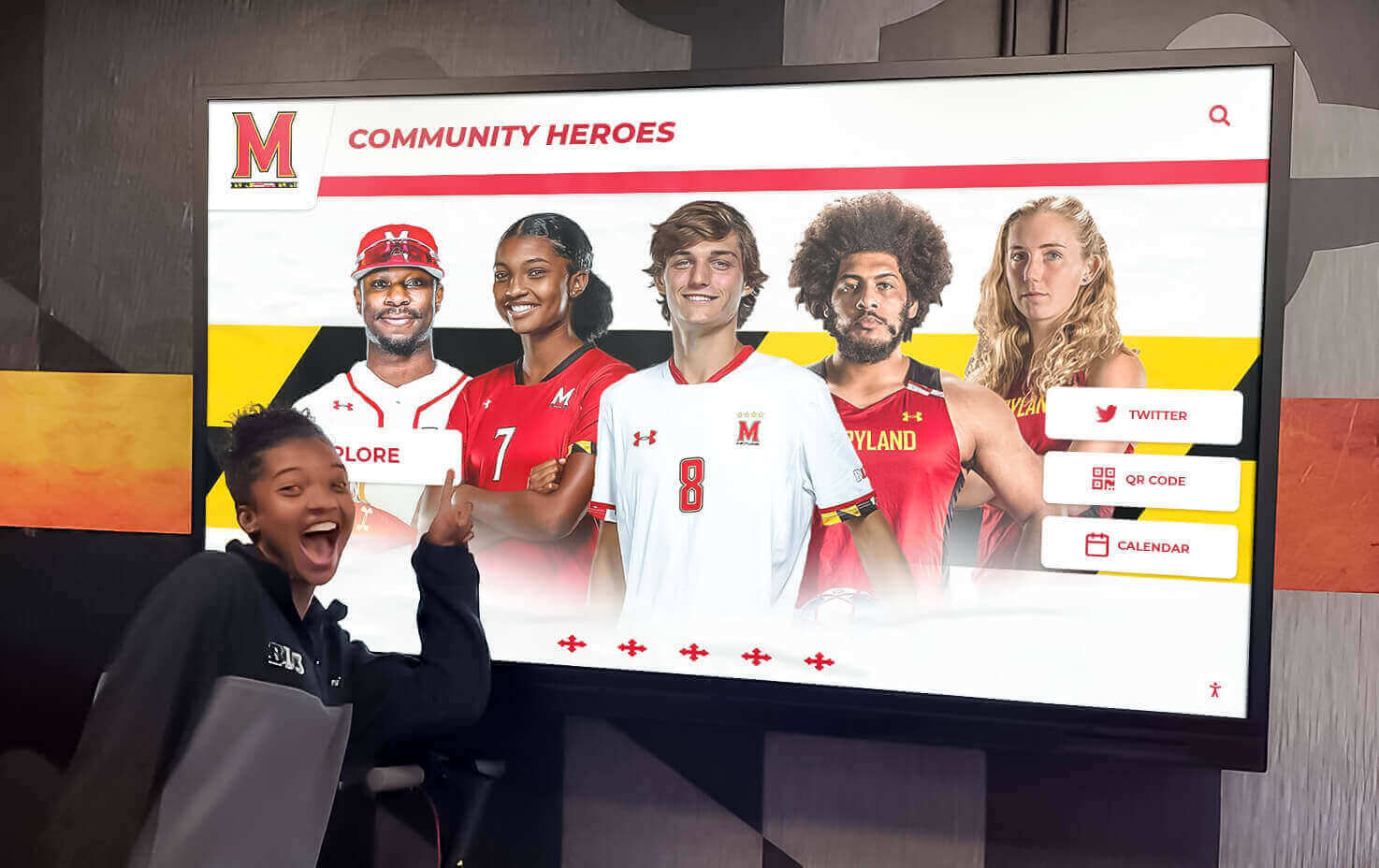
Student photographs captured for class composites connect directly to athlete profiles in digital trophy cases and halls of fame, creating comprehensive individual records showing both academic identity through composites and athletic achievement through sports recognition. The same professional portrait appears across multiple contexts, maximizing return on photography investment.
Links to honor roll and academic achievement displays add context about graduates’ educational accomplishments beyond simple class membership. Digital systems show which composite members earned valedictorian honors, received scholarships, achieved perfect attendance, participated in honor societies, or enrolled in advanced programs.
Alumni profiles naturally incorporate senior portraits from graduation years, showing distinguished individuals as they appeared during school years while contemporary information documents post-graduation accomplishments. This temporal connection helps current students understand that today’s distinguished alumni were once students just like them.
Implementation Strategies: Finding Your Best Path Forward
Schools implement digital class composite presentations through various approaches depending on budget constraints, timeline pressures, existing resources, strategic objectives, and stakeholder preferences requiring accommodation during change management processes.
Complete Digital Transformation
Some schools fully transition from physical to digital composites, eliminating traditional printing entirely except for special requests or ceremonial purposes. Annual photo day continues identically with professional photographers capturing high-quality senior portraits, but images feed directly into digital systems for immediate display and long-term archival rather than going to printers for physical reproduction.
This approach maximizes cost savings by eliminating all recurring printing and framing expenses annually. After initial digital infrastructure investment, per-class marginal costs drop to essentially zero beyond photographer fees schools already paid with traditional approaches.
Schools maintain flexibility to print physical copies on demand for special requests—perhaps smaller versions for current year prominent display or commemorative copies for special occasions—while defaulting to digital display for standard recognition purposes.
Complete digital transformation works particularly well for:
- Schools with severe space constraints where no additional wall space exists
- Budget-conscious institutions seeking maximum cost efficiency and return on investment
- New schools establishing traditions from scratch without legacy physical expectations
- Institutions embracing comprehensive digital transformation across multiple operational domains
- Schools with strong technology-savvy leadership championing innovation
Hybrid Physical-Digital Approaches
Many schools prefer hybrid models maintaining some physical composites while supplementing with digital capabilities solving space, accessibility, and engagement limitations traditional methods alone cannot address.
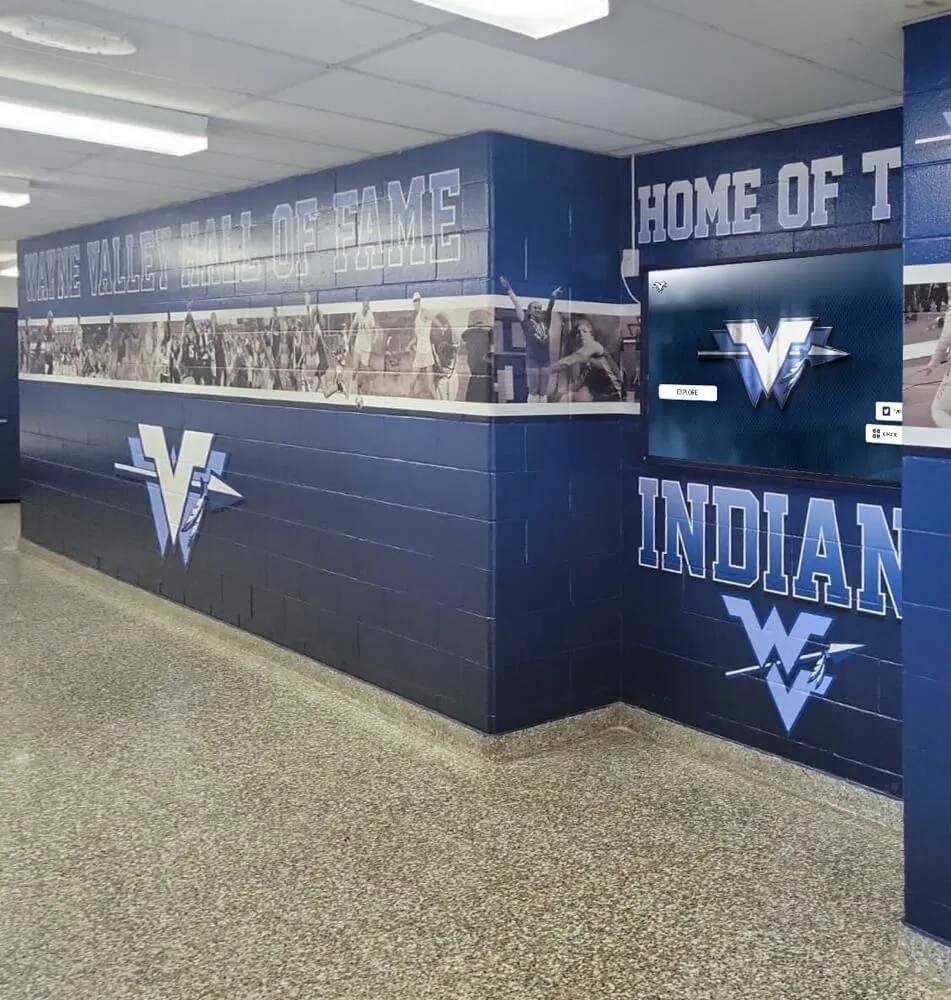
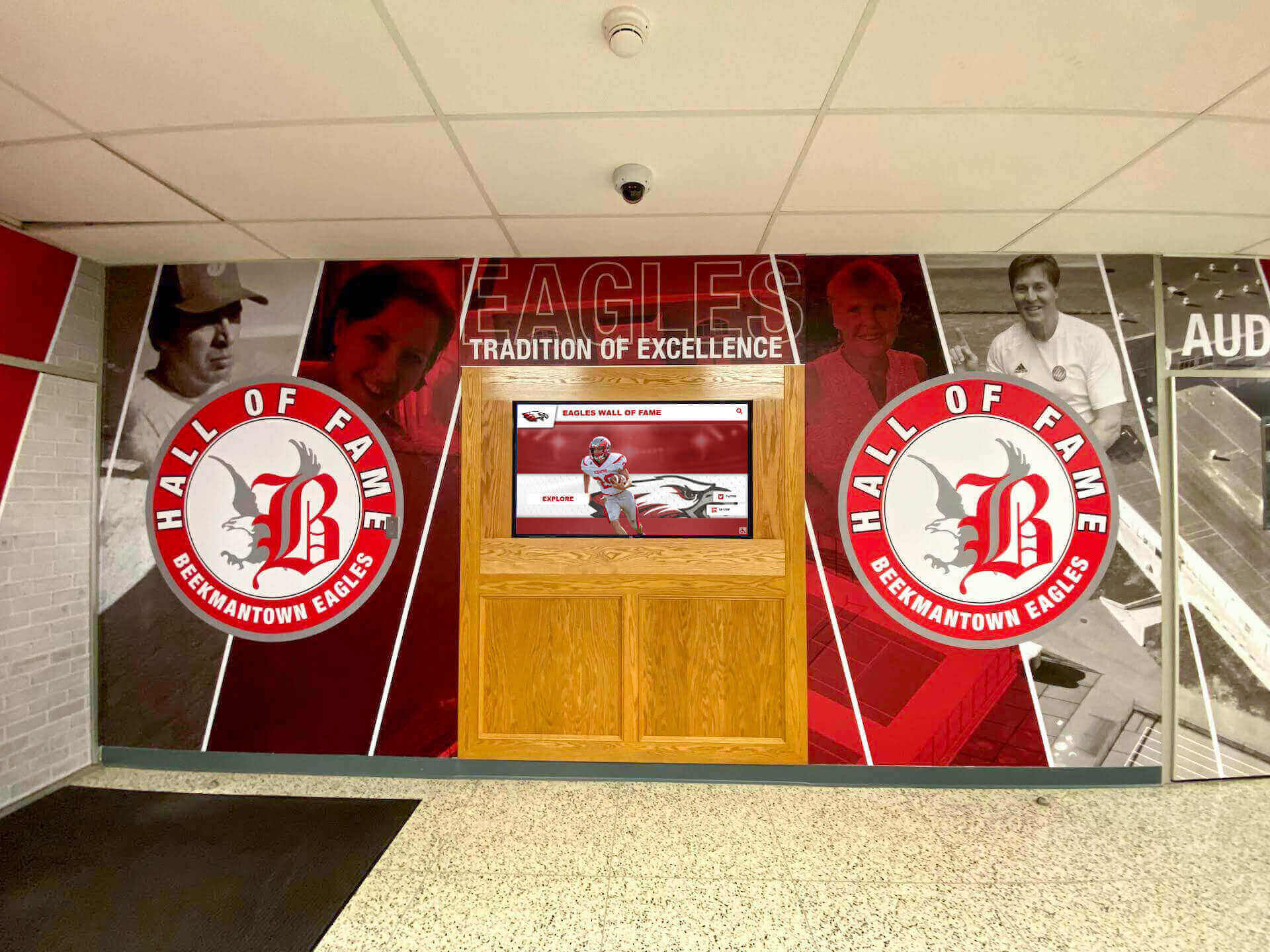
In typical hybrid implementations, current graduating class composites get printed and framed traditionally, maintaining familiar physical presence in prominent locations satisfying stakeholders valuing tangible recognition. However, adjacent interactive touchscreen displays provide complete access to all historical composites plus enhanced features physical prints cannot offer—search capabilities, biographical information, alumni updates, and connections to other recognition programs.
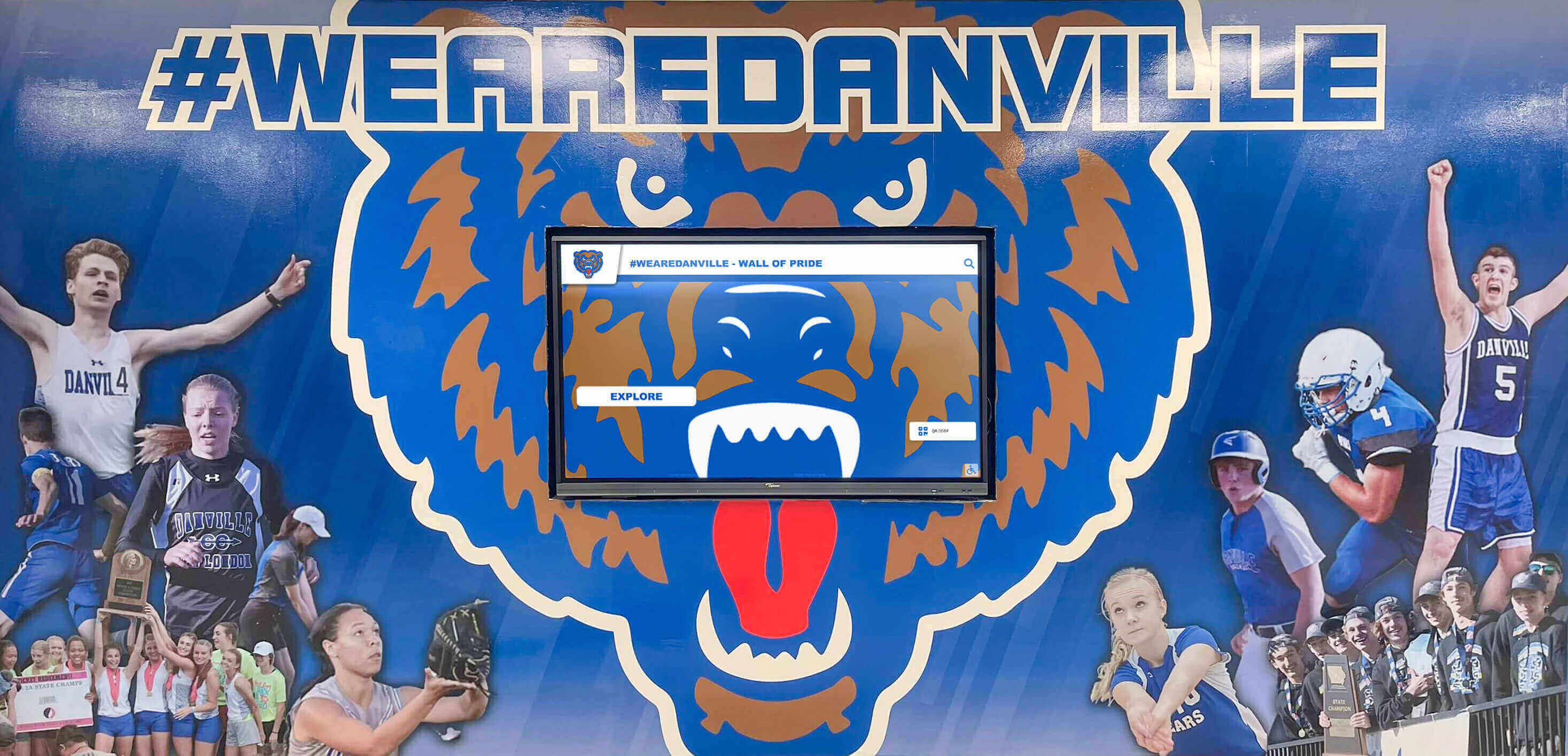
This model satisfies diverse stakeholder preferences during transition periods. Traditionalists valuing physical composites see preferences honored through continued printing for recent classes. Technology advocates appreciate modern capabilities addressing historical limitations. Over time, many schools gradually shift emphasis toward digital systems as community members experience enhanced capabilities.
Physical composites become entry points to richer digital content rather than sole representations of graduating classes. Alumni might first locate physical composites on hallway walls, then move to adjacent touchscreens for extended exploration with biographical details, “where are they now” updates, and connections to institutional history.
Hybrid approaches work particularly well for:
- Schools with strong attachment to traditional physical composites
- Institutions managing stakeholder change resistance through gradual transition
- Communities where some physical recognition maintains ceremonial or symbolic importance
- Schools wanting maximum flexibility serving diverse preferences simultaneously
- Situations where current senior class families purchased individual composites expecting physical display
Phased Implementation Over Multiple Years
Budget-constrained schools often implement digital composites through phased approaches spreading costs across multiple fiscal years while building capabilities systematically toward comprehensive eventual systems.
Example Phased Timeline:
Year 1 ($3,000-$6,000): Focus on digitizing existing historical composites through high-quality scanning, establishing cloud-based digital archives with proper organization and metadata, and implementing web-based remote viewing accessible to alumni and families anywhere.
Year 2 ($8,000-$12,000): Install first physical touchscreen display in highest-traffic location like main entrance or cafeteria, integrate recent graduating classes with enhanced biographical content beyond basic photography, and establish efficient annual workflows for adding new classes digitally.
Year 3 ($5,000-$10,000): Expand to additional display locations in library, athletics facilities, or administrative areas; integrate composites with other recognition programs like athletics and academics; implement advanced features like alumni directories and reunion planning tools.
This phased approach enables schools to start experiencing benefits immediately with manageable initial investments while spreading total costs across multiple budget cycles as resources permit. Early success with initial phases often generates enthusiasm facilitating approval for subsequent expansion.
Phased implementation also allows organizational learning and adaptation. Schools refine content strategies, optimize workflows, gather user feedback, and understand actual usage patterns before committing to complete large-scale deployments.
Creating Compelling Class Composite Content
Technology platforms provide infrastructure, but compelling content creates meaningful experiences honoring students while engaging diverse audiences effectively. Thoughtful content development transforms digital class composite presentations from simple photo galleries into powerful recognition and community-building tools.
Enhanced Individual Student Profiles
Digital platforms enable far richer information than name-and-photograph alone, creating meaningful context bringing class members to life beyond simple visual documentation.
Foundational Profile Elements:
- Full name including any nicknames or preferred names students want displayed
- High-quality professional portrait photograph meeting consistent quality standards
- Graduation year and specific graduation date
- Academic program or diploma type if schools offer multiple tracks or academies
Enhanced Profile Content:
- Activities, sports, and clubs participated in during school years
- Academic honors including honor roll, National Honor Society, valedictorian recognition, or special awards
- Leadership roles such as student government, team captain positions, or club officer responsibilities
- Memorable quotes, personal statements, or senior yearbook messages students want preserved
- Post-graduation plans including college commitments, military service intentions, or immediate career paths

Advanced Alumni Information:
- Current city and state of residence enabling geographic alumni networking
- Professional occupation and career field
- Notable professional accomplishments or recognition received post-graduation
- Family information including children who become legacy students attending the same schools
- Alumni association involvement and reunion attendance history
- Contact preferences for alumni relationship maintenance and reunion planning
This progressive information richness transforms static graduation snapshots into evolving narratives documenting complete life journeys. While basic profiles provide essential identification, enhanced content creates engagement building emotional connections and institutional pride.
Class-Level Historical Context
Beyond individual profiles, digital class composite presentations can showcase class-specific content providing historical and cultural context making each graduating class unique and interesting.
Graduating Class Statistics:
- Total class size and gender distribution
- Racial and ethnic diversity representation
- Academic achievement statistics like average GPA, test scores, or honors percentages
- Post-graduation destination breakdowns showing percentages pursuing college, military, workforce, or other paths
- Special program participation like International Baccalaureate, STEM academies, or career technical education
Historical and Cultural Context:
- Major school events and milestones from the academic year—facility improvements, championship victories, significant anniversaries
- Faculty and staff who served that particular graduating class
- School traditions and customs from that era that may have evolved or discontinued
- Broader community, national, or world events providing historical framework and perspective
- Athletic championships, arts performances, academic team achievements, or service projects from that graduation year
This contextual information helps current students understand institutional evolution while giving alumni opportunities to reminisce about their specific shared experiences. Class composites become time capsules documenting not just faces but complete educational experiences within specific historical moments.
Professional Implementation for Long-Term Success
Successful digital class composite presentation implementations follow systematic planning processes ensuring smooth deployment, strong stakeholder buy-in, efficient execution, and sustained long-term utilization delivering ongoing value.
Assessment and Vision Development
Begin by thoroughly understanding current composite situations and defining clear objectives guiding all implementation decisions:
- Inventory all existing physical composites documenting years, conditions, locations, and storage situations
- Calculate current annual costs for photography, printing, framing, mounting, and maintenance
- Identify space limitations and future capacity constraints as new classes graduate
- Document stakeholder concerns from administrators, faculty, students, and alumni
- Define primary implementation objectives—cost savings, space efficiency, enhanced engagement, alumni relations
- Establish success criteria enabling objective evaluation of implementation effectiveness
Clear assessment and vision provide essential foundation for all subsequent planning. Schools with undefined objectives often make technology choices misaligned with actual needs, leading to underutilization and disappointment.
Stakeholder Engagement and Buy-In
Form planning committees meeting regularly throughout preparation periods to review options, provide input, address concerns, and build shared ownership of implementation decisions. Include representatives from:
- School administration providing budget approval and policy decisions
- Technology coordinators ensuring network readiness and ongoing technical support
- Alumni association understanding alumni connection priorities
- Current students providing contemporary perspective on engaging presentation
- Parent representatives reflecting family communication preferences
- Faculty and staff who will manage content and field questions
- Facilities management handling installation and physical maintenance
Inclusive approaches create stakeholder investment in success while identifying potential resistance early enough for proactive mitigation. People support what they help create.
Content Preparation and Quality Standards
Preparing comprehensive digital content requires systematic approaches ensuring professional quality:
Historical Composite Digitization:
- Professional scanning of existing physical composites at 300+ DPI resolution maintaining quality
- Careful handling of fragile older composites preventing damage during digitization
- Systematic file organization with consistent naming conventions enabling efficient management
- Metadata extraction identifying graduation years, class sizes, and notable information
- Image enhancement correcting fading and color degradation where appropriate
- Quality control verifying all composites digitized accurately and completely
Individual Student Data:
- Extracting student names through OCR technology or manual data entry depending on source materials
- Adding biographical information from yearbooks, records, or alumni databases when available
- Establishing data quality standards ensuring consistent professional presentation
- Maintaining appropriate privacy standards protecting sensitive student information
Thorough content preparation dramatically affects perceived implementation quality and long-term system value.
Professional Installation and Launch
Professional installation ensures reliable long-term operation:
- Verify adequate electrical power and network connectivity at installation locations
- Ensure proper wall mounting appropriate to construction types and load-bearing capacity
- Complete professional installation preventing amateur mistakes causing ongoing problems
- Configure software including branding customization and initial content loading
- Test all functionality thoroughly before public launch
- Train relevant staff on content management and basic troubleshooting
Plan strategic launch timing during high-visibility events like homecoming, alumni weekend, or graduation ceremonies. Create formal unveiling ceremonies generating excitement and awareness. Develop promotional campaigns through newsletters, social media, and school communications.
Measuring Success and Demonstrating Value
Understanding how communities engage with digital class composite presentations enables continuous improvement while providing compelling data demonstrating program value to administrators and stakeholders.
Quantitative Engagement Metrics
Modern digital platforms provide comprehensive analytics revealing detailed usage patterns:
- Total interactions and unique visitors over time periods
- Average session duration revealing depth of engagement
- Most-viewed graduating classes revealing particular interest patterns
- Popular search terms showing what users seek most frequently
- Device type breakdown between physical displays, web browsers, and mobile access
- Geographic data showing whether remote alumni actually use web accessibility
These metrics inform content strategy, hardware placement decisions, and ongoing investment priorities ensuring continuous optimization toward maximum community value.
Qualitative Value Assessment
Beyond quantitative metrics, qualitative feedback reveals perceived value and emotional impact:
- Student focus groups discussing how composites affect school connection and pride
- Alumni surveys assessing whether systems enhance institutional relationships
- Staff interviews revealing content management experiences and suggestions
- Parent feedback understanding family engagement value
- Visitor observations during campus tours and recruitment events
- Social media mentions indicating community conversation and awareness
Combining quantitative analytics with qualitative feedback creates comprehensive understanding of program effectiveness informing strategic decisions about ongoing investment, expansion, and enhancement priorities.
Special Considerations for Different Educational Levels
Class composite presentation needs and approaches vary across educational levels, requiring thoughtful customization matching institutional contexts and community expectations.
Elementary and Middle School Composite Presentations
Elementary and middle schools occasionally create class composites for entire grade levels or graduating eighth grade classes moving to high school. These presentations typically emphasize inclusivity and celebration over formality.
Digital systems work particularly well for younger grades because they enable creative presentation formats beyond rigid formal grids. Schools can organize composites by homeroom, include teacher photos alongside students, incorporate class artwork or projects, and add playful elements appropriate to younger audiences.
Budget considerations matter significantly at elementary and middle school levels where per-student funding often runs lower than secondary schools. Phased implementations spreading costs across multiple years enable composite programs without straining limited budgets.
High School Senior Composite Presentations
High schools maintain the strongest class composite traditions with deep historical roots and strong alumni expectations. Senior composites represent culmination of four-year journeys and create tangible senior class identity important to adolescent development and institutional culture.
High school implementations must balance innovation with tradition carefully. Alumni expect familiar presentation formats, so radical departures from traditional grid layouts may face resistance. Hybrid approaches maintaining some physical presence while adding digital enhancement often work best for high schools with long-established composite traditions.
Integration with other high school recognition programs—athletics, academics, arts, clubs—creates powerful synergies. National Honor Society recognition naturally connects to class composites showing which seniors earned this distinction. Student athlete recognition links senior portraits to athletic achievements creating comprehensive profiles.
University and College Class Composite Presentations
Higher education institutions implement composites at multiple levels—entire graduating classes, individual academic programs, professional schools, or specific cohorts like medical school classes or MBA programs.
University composites often include more detailed biographical information reflecting higher education contexts: undergraduate majors, graduate programs, thesis topics, faculty advisors, academic honors, research projects, and post-graduation career destinations. The enhanced information appropriate for adult learners creates richer content leveraging digital platforms’ expanded capacity.
Professional programs particularly value composites as networking tools. Medical school classes use composites to maintain connections as classmates disperse to residencies nationwide. MBA programs leverage composites for ongoing professional networking among graduates pursuing business careers.
Universities implementing comprehensive alumni hall of fame programs discover natural synergies with class composite presentations, creating unified systems celebrating both graduating class membership and distinguished individual accomplishments.
Conclusion: Preserving Tradition Through Innovation
Digital class composite presentations represent strategic investments in institutional memory, student recognition, alumni engagement, and community connection delivering measurable returns across multiple dimensions while solving practical challenges that have frustrated schools for decades.
Class composite traditions need not disappear in the digital age—rather, modern technology enhances them by addressing space limitations, reducing long-term costs, enabling unprecedented accessibility, creating engaging interactive experiences, and connecting graduating class recognition to broader institutional storytelling impossible with physical prints alone.
Every graduating class deserves recognition honoring their contribution to institutional history. Every graduate should be able to reconnect with class communities regardless of geographic distance or physical mobility limitations. Every family deserves opportunities to celebrate students’ educational journeys and maintain connections to schools that shaped their lives.
Digital class composite presentations make comprehensive, engaging, accessible, and sustainable class recognition possible for schools committed to honoring graduating classes as visibly and permanently as those classes deserve. When tradition combines with innovation, recognition becomes more powerful rather than diminished—preserving everything valuable about cherished customs while adding capabilities serving contemporary needs and expectations.
Ready to transform how your school celebrates graduating classes? Explore how solutions like Rocket Alumni Solutions deliver comprehensive digital class composite presentation platforms designed specifically for educational institutions seeking meaningful improvements in alumni engagement, institutional memory preservation, and community connection through purpose-built solutions honoring every graduating class equally across entire school history.