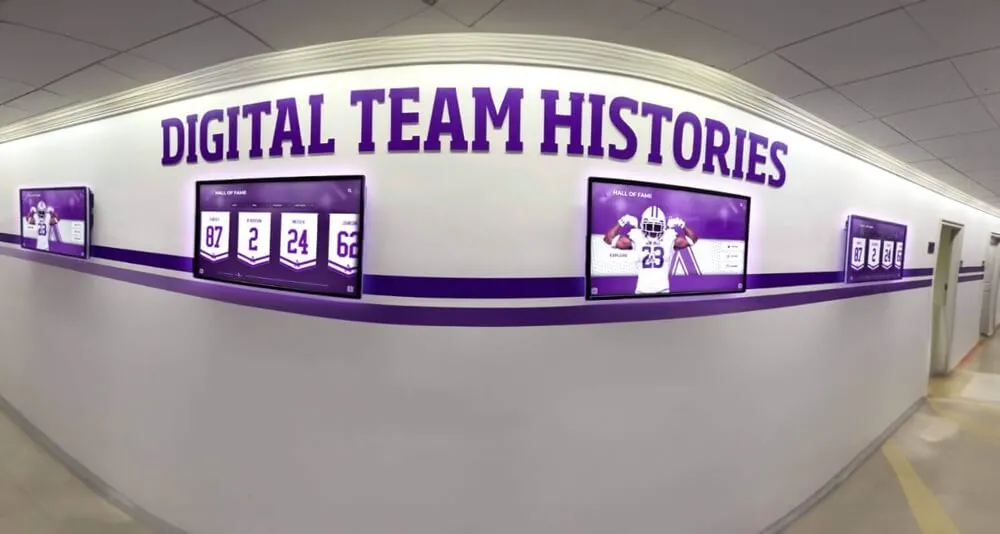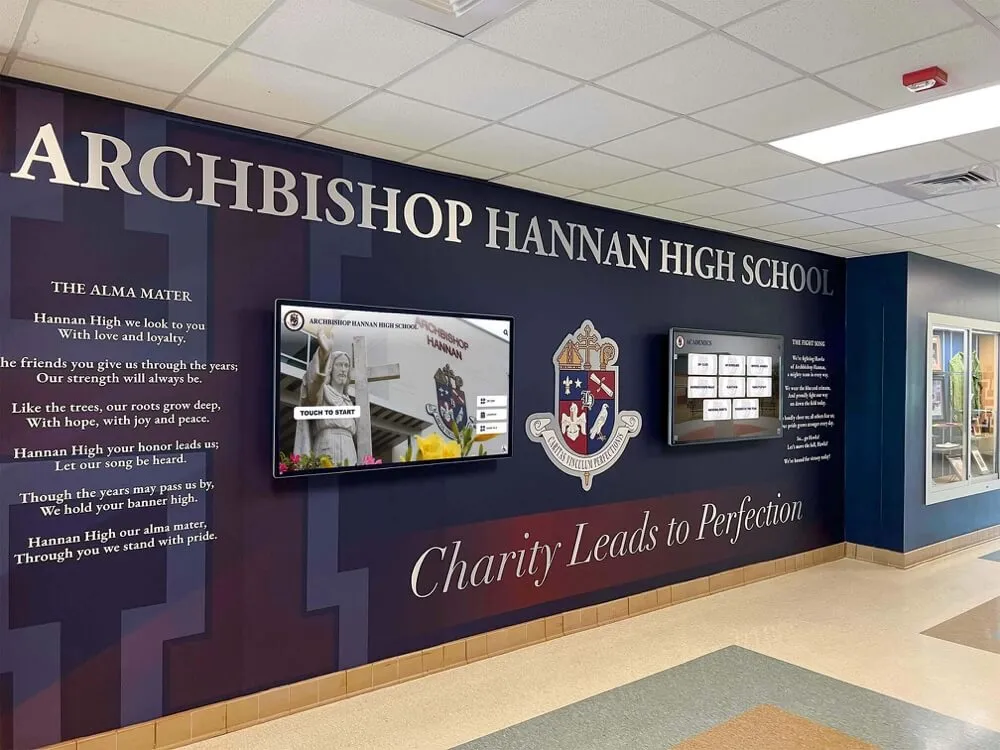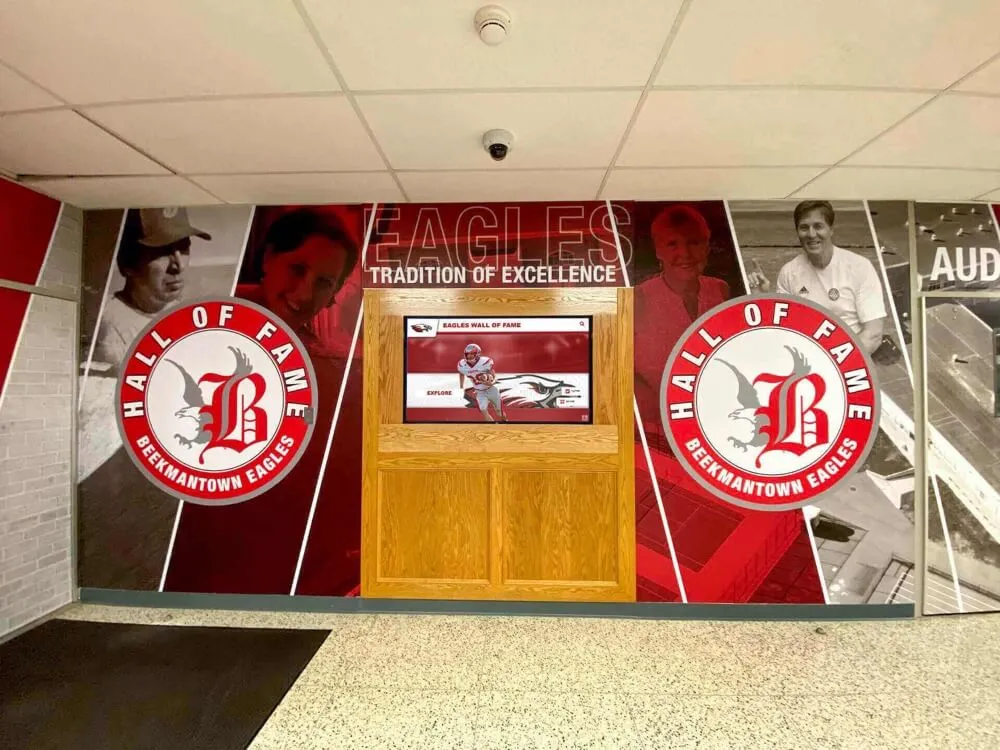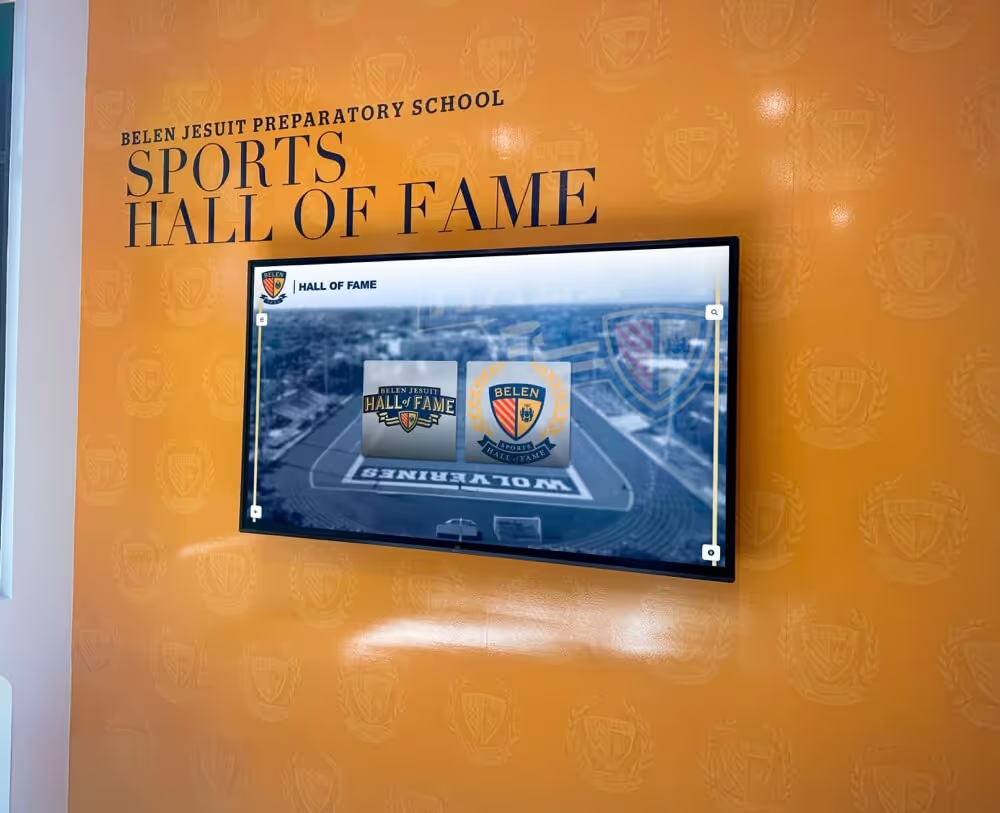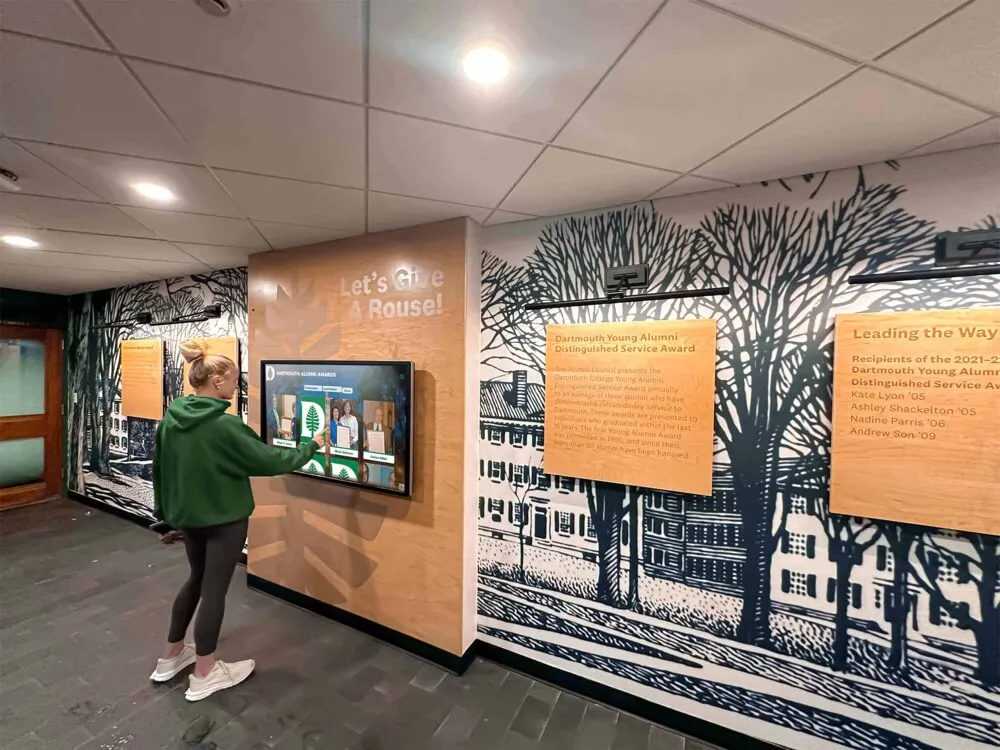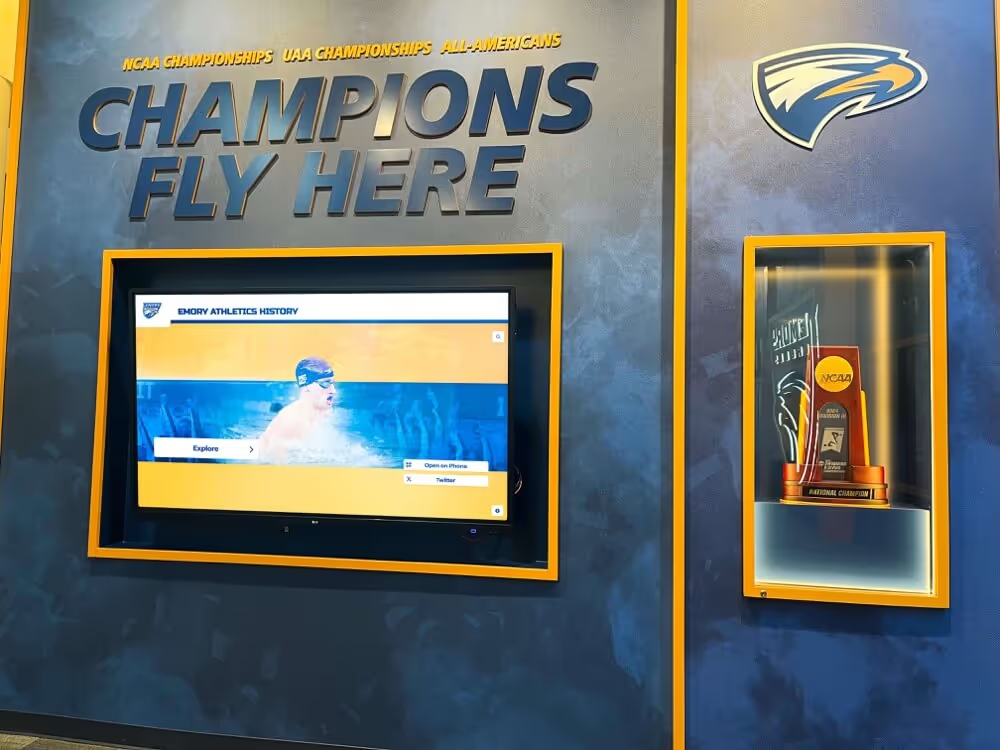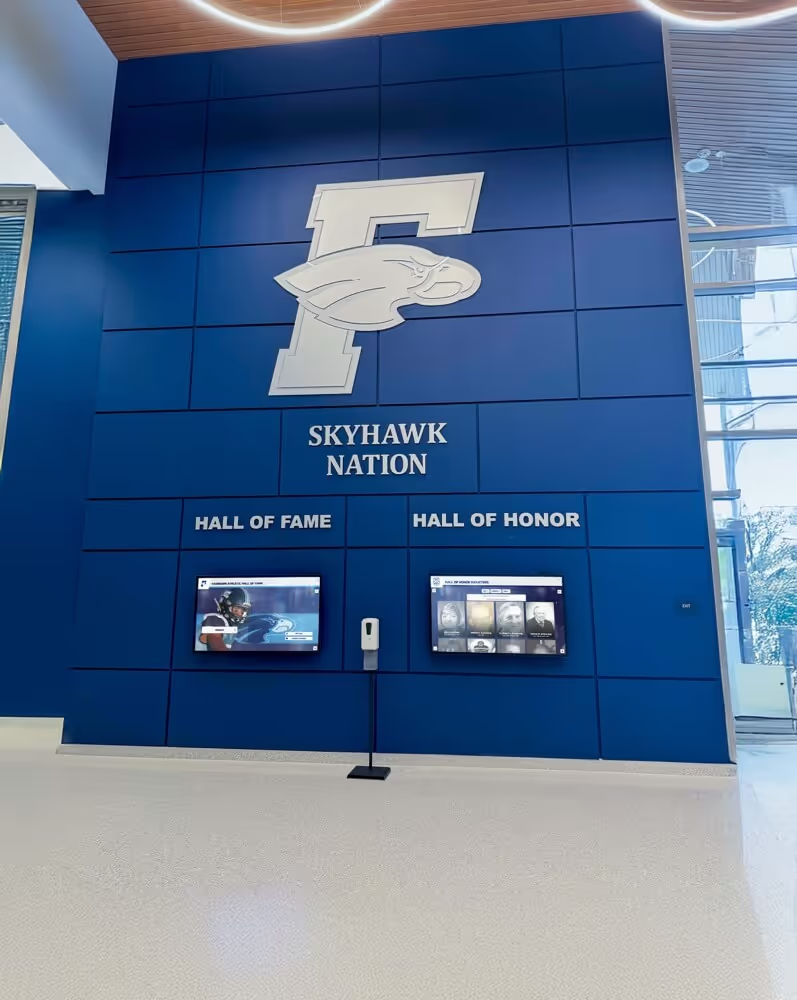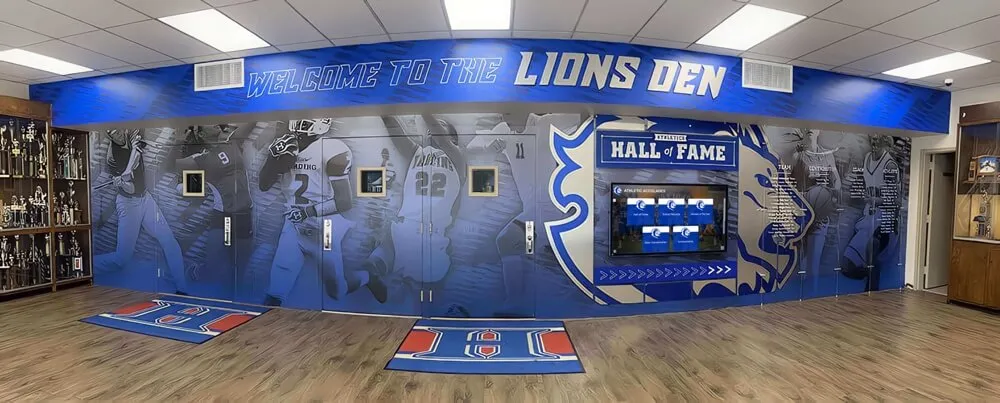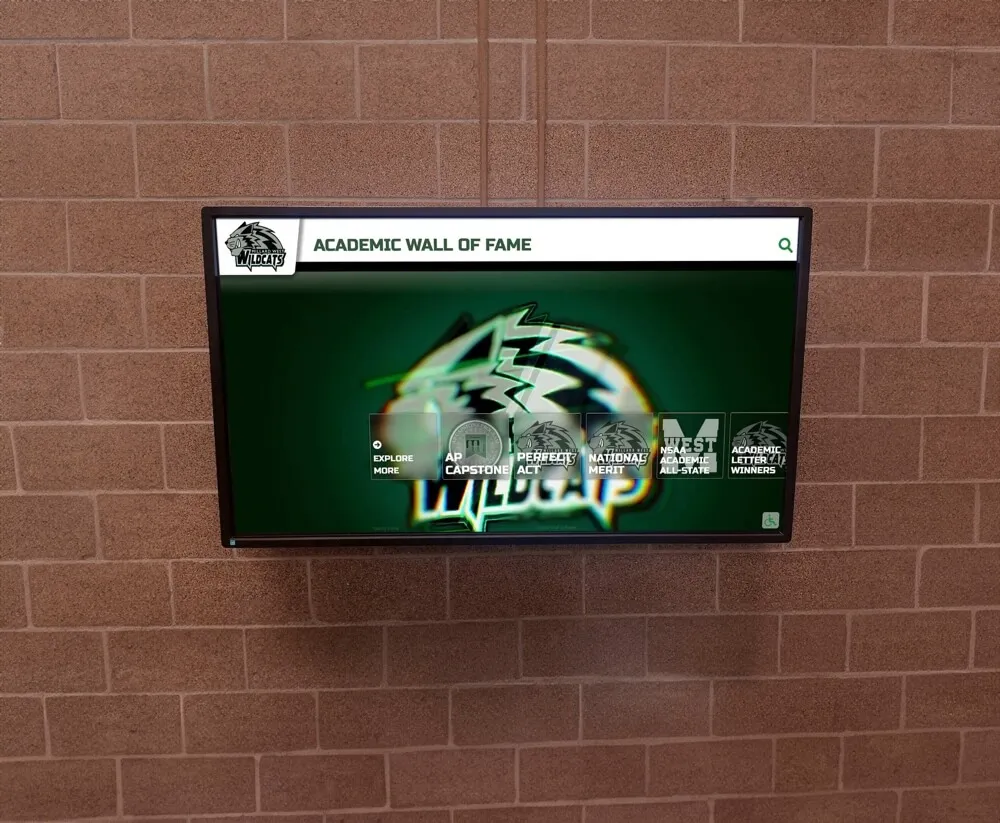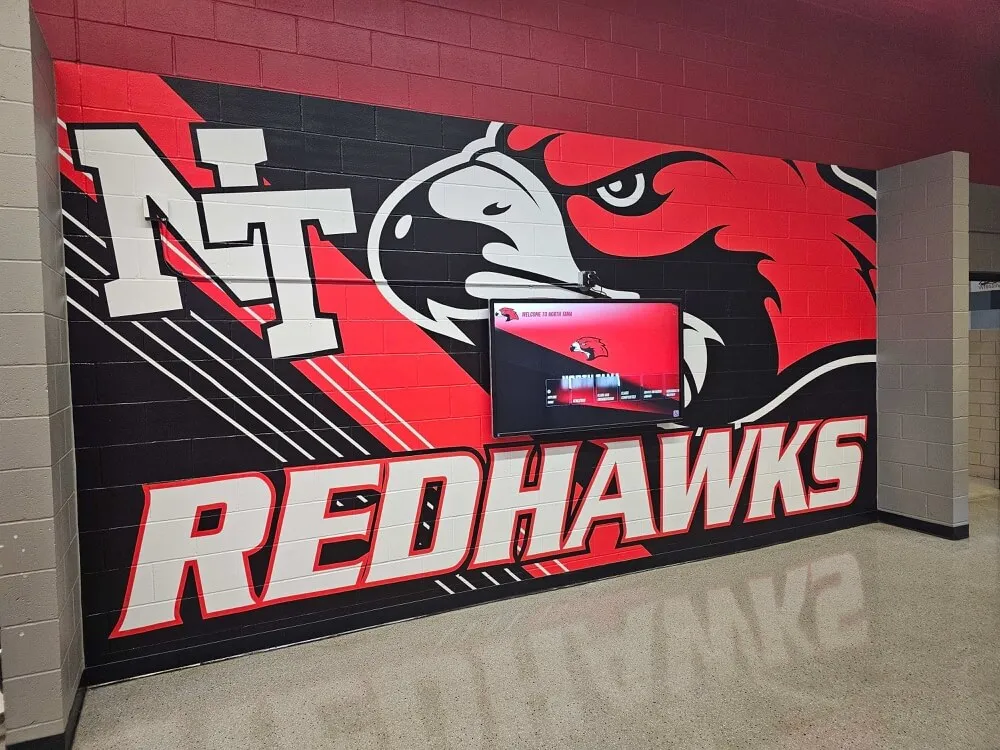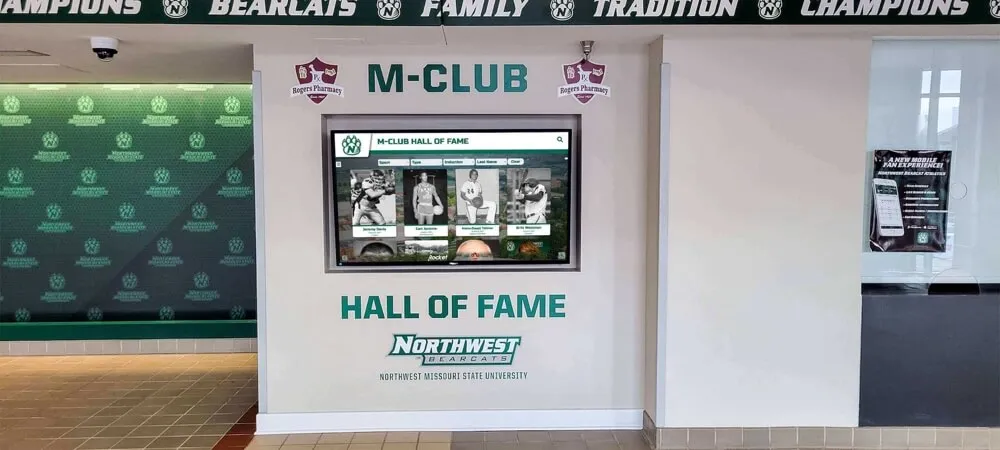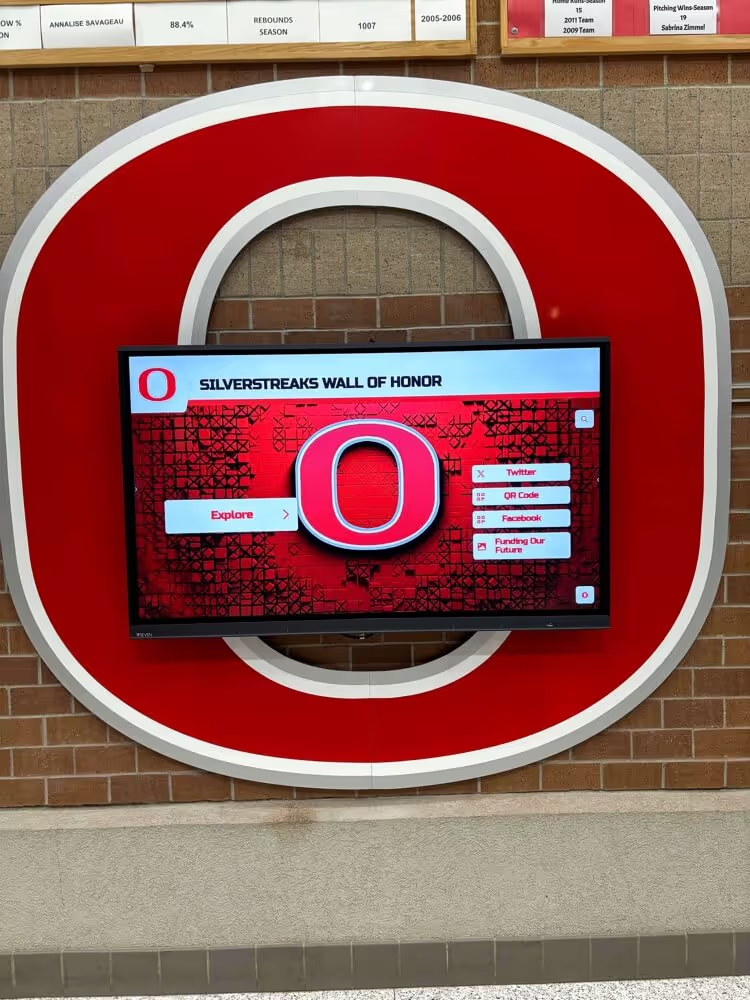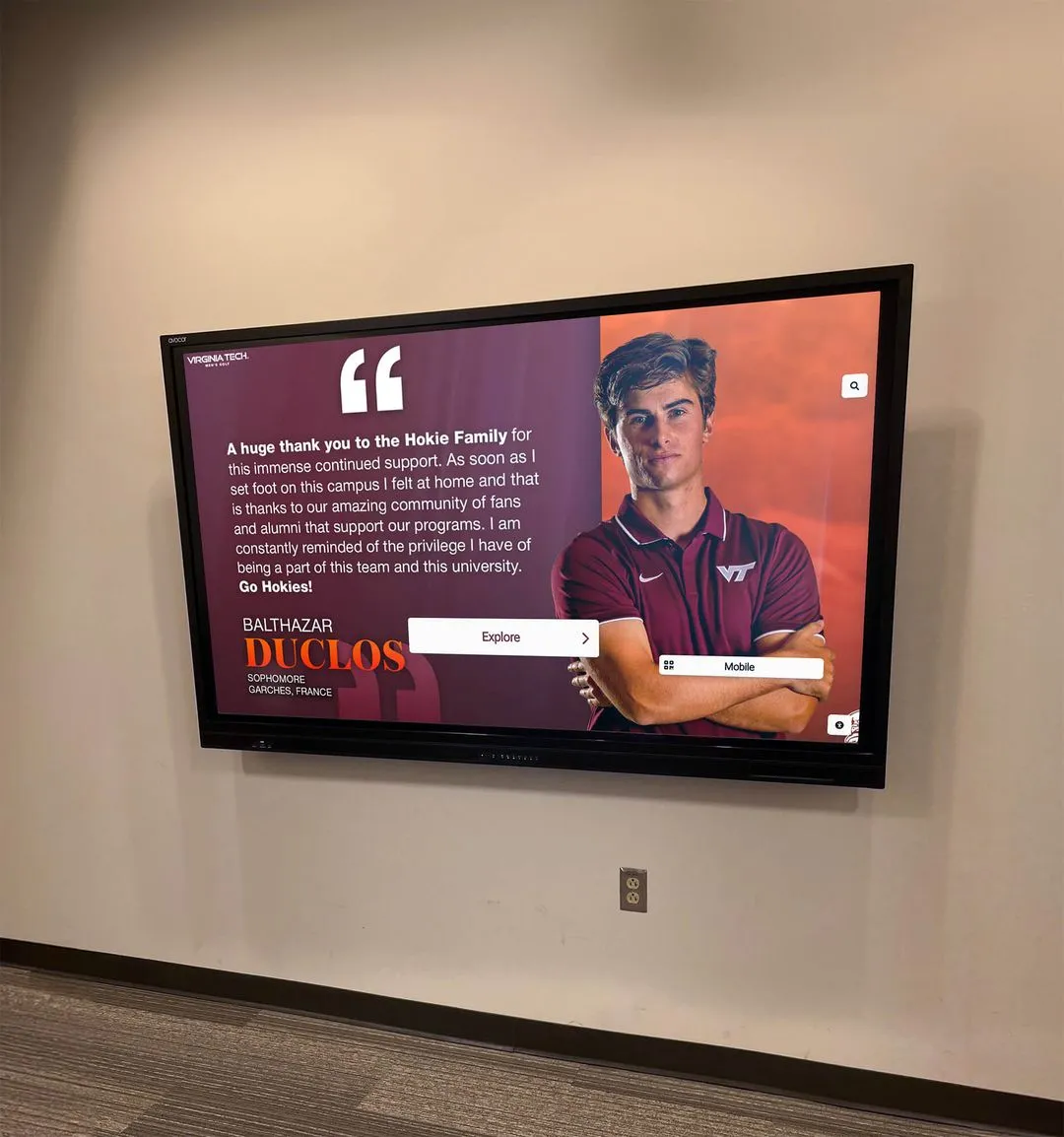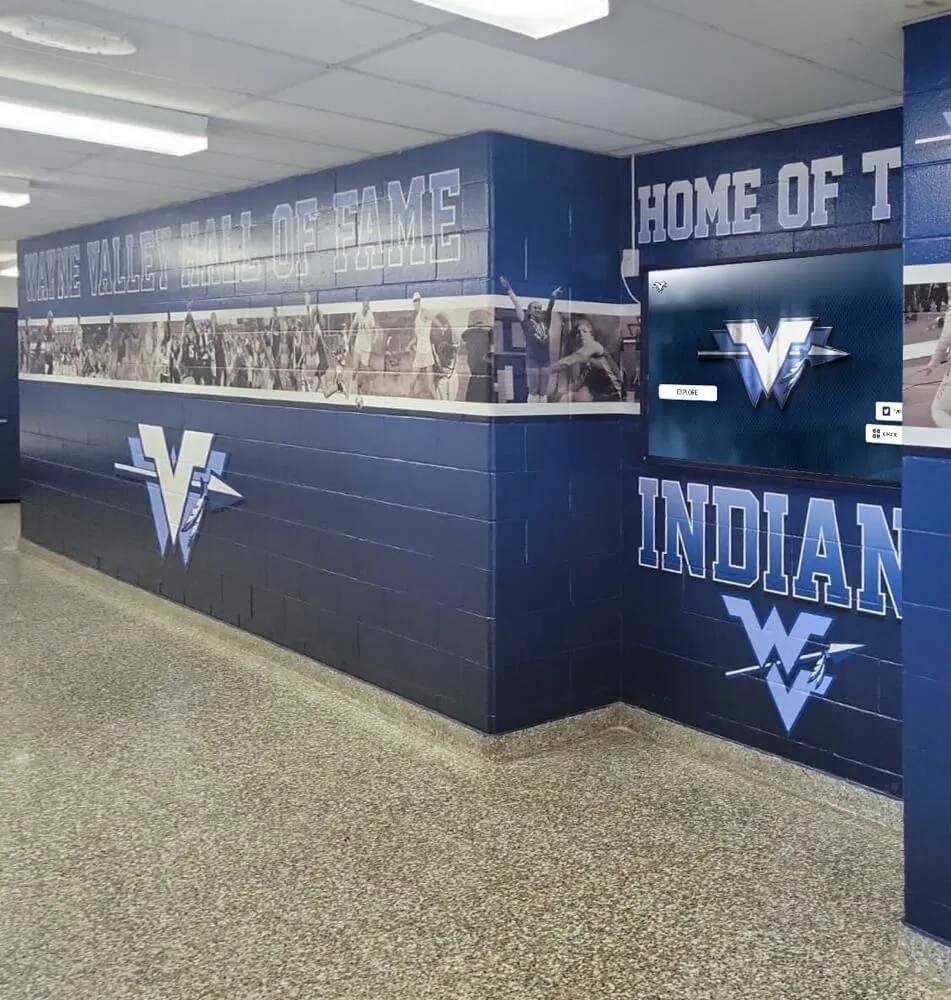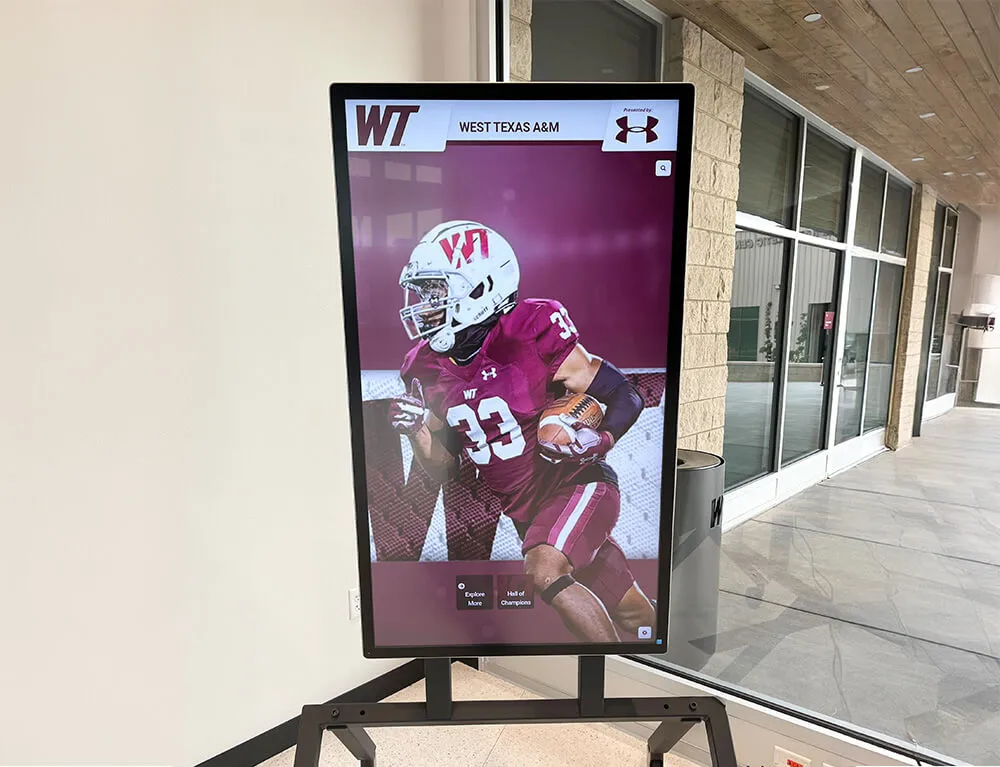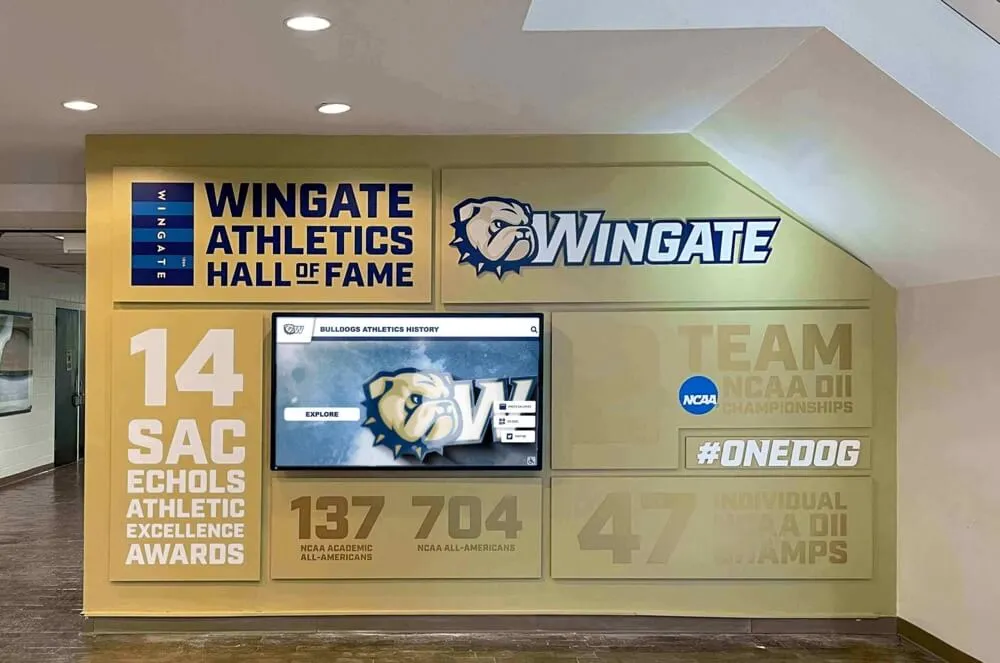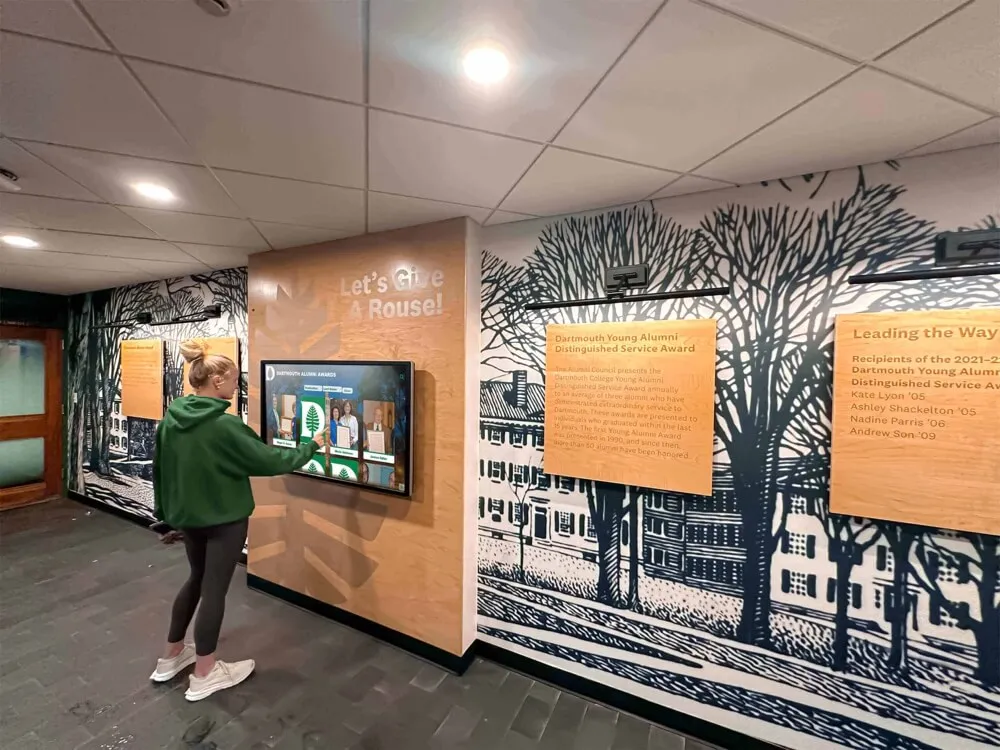




Campus tours represent one of the most critical touchpoints in the college admissions journey. Prospective students form lasting impressions during these visits—impressions that directly influence enrollment decisions worth tens of thousands of dollars in tuition revenue. Yet many institutions rely on passive tour formats featuring tour guides reciting prepared scripts while pointing at buildings, leaving prospective students as spectators rather than active participants in discovering what makes a campus unique.
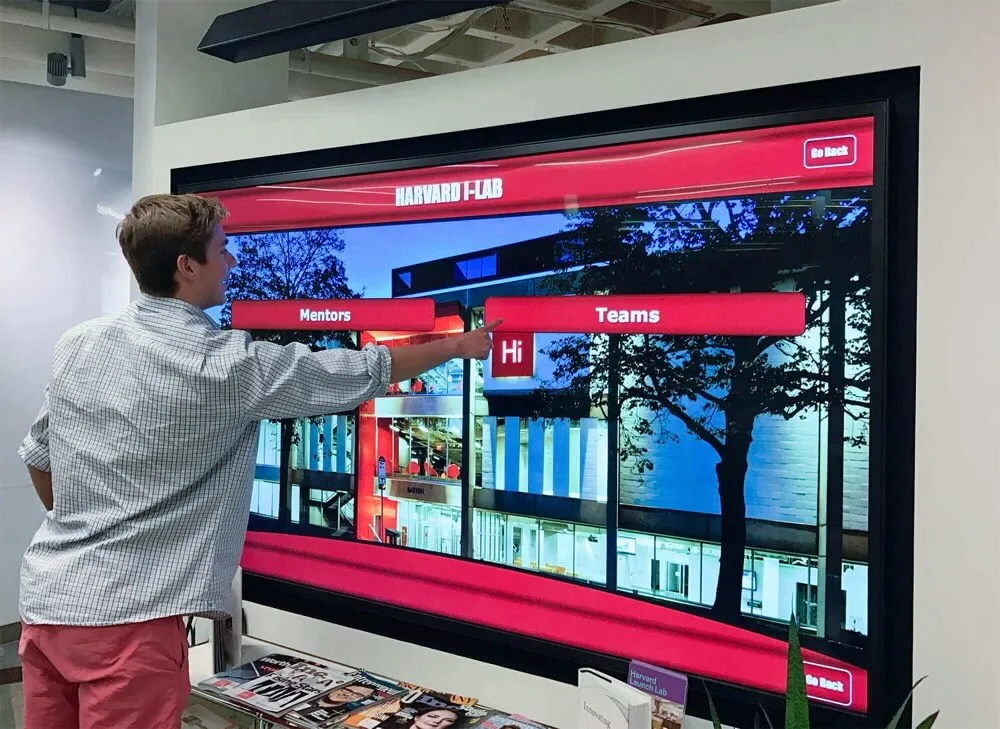
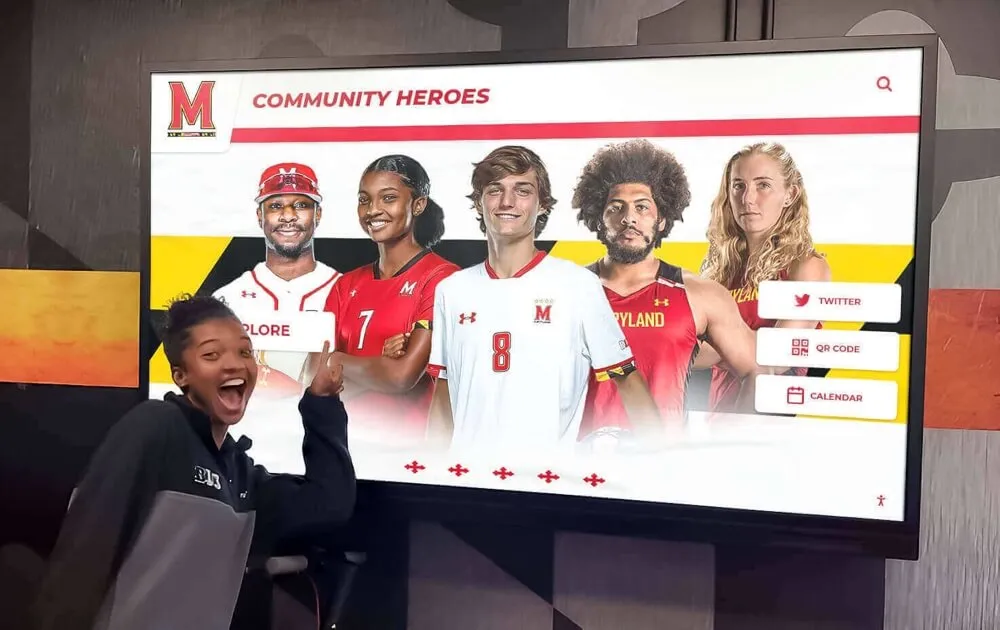
Interactive campus storytelling transforms this passive experience into engaging exploration. When admissions teams integrate interactive digital displays into campus tours, prospective students don’t just hear about athletic achievements, academic excellence, and campus traditions—they actively explore these stories through touchscreen technology that makes history tangible, accomplishments searchable, and campus culture immediately accessible.
Why Interactive Storytelling Matters for Admissions
Prospective students visit campuses seeking answers to one fundamental question: “Can I see myself here?” Interactive storytelling answers this question more effectively than traditional tours by enabling prospective students to explore achievements of students who came before them, discover alumni career paths in their intended major, engage with campus history on their own terms, and visualize their potential place in ongoing campus traditions. Solutions like Rocket Alumni Solutions provide purpose-built platforms transforming static recognition into dynamic experiences that prospective students remember long after tours conclude—often becoming deciding factors when choosing between competing institutions.
The Admissions Tour Challenge: Competing for Attention in a Digital Age
Modern prospective students arrive on campus with different expectations than previous generations. Having grown up with smartphones, streaming content, and interactive experiences at their fingertips, today’s high school seniors expect engagement rather than passive consumption across all aspects of their lives—including college selection.
Traditional Campus Tours Fall Short
Walk through a typical campus tour and a predictable pattern emerges. Tour guides lead groups of 15-20 prospective students and families along predetermined routes, pausing at designated spots to share prepared information about buildings, programs, and campus history. Prospective students listen politely while checking phones, parents ask questions about parking and meal plans, and everyone moves to the next stop after a few minutes.
This format treats prospective students as passive recipients of information rather than active explorers discovering whether a campus fits their aspirations. The tour guide shares the same stories to every group, regardless of individual interests. A prospective engineering student hears the same information as someone interested in theater. An athlete receives identical content as someone who has never played organized sports.
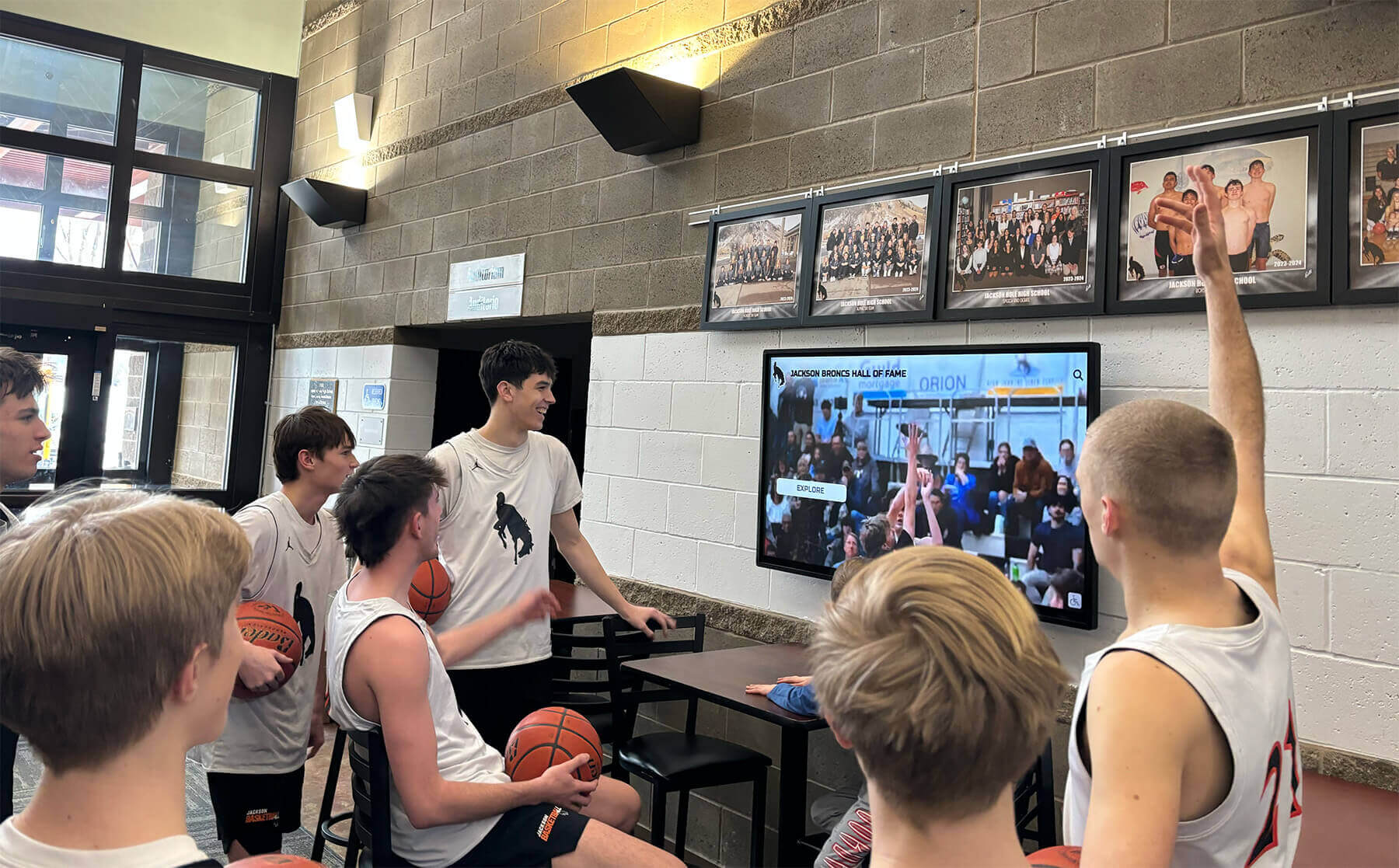
Generic tours create missed opportunities for meaningful connection. When prospective students cannot explore aspects of campus life relevant to their specific interests, they leave tours knowing facts about buildings but lacking emotional connection to campus culture. Research from the National Association for College Admission Counseling indicates that emotional connection during campus visits ranks among the top three factors influencing enrollment decisions, yet traditional tours rarely create these connections systematically.
The Information Overload Problem
Tour guides face an impossible task: communicating decades of campus history, hundreds of academic programs, thousands of student achievements, and countless unique traditions in 90-minute tours. The result inevitably involves information overload where prospective students hear more than they can process or remember.
After visiting multiple campuses in short periods, prospective students struggle to distinguish what makes each institution unique. Campus tours blur together into a sequence of similar experiences—tour guides walking backwards, academic buildings that look alike, cafeterias serving comparable food, and residence halls with standard amenities. Without distinctive elements creating memorable differentiation, even excellent institutions fail to stand out in prospective students’ minds when making final enrollment decisions weeks or months later.
Interactive Storytelling: A New Approach to Campus Tours
Interactive storytelling addresses traditional tour limitations by enabling prospective students to actively explore campus narratives that resonate with their individual interests, aspirations, and curiosities. Rather than passively listening to predetermined information, prospective students become active participants discovering what makes campus culture distinctive through self-directed exploration.
What Interactive Campus Storytelling Looks Like in Practice
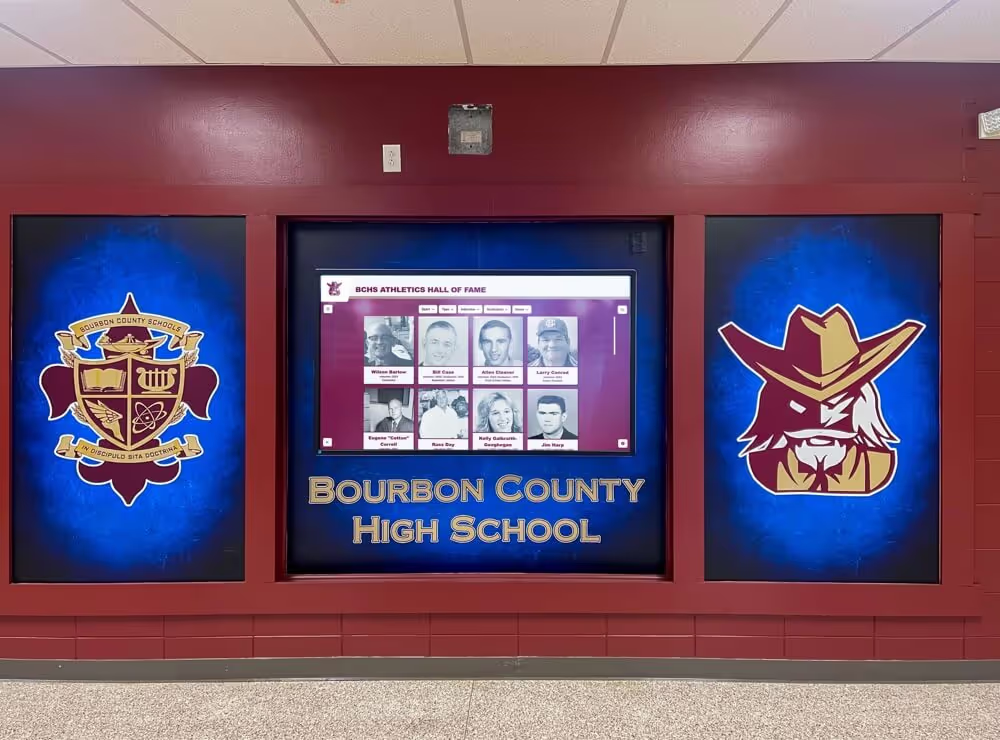
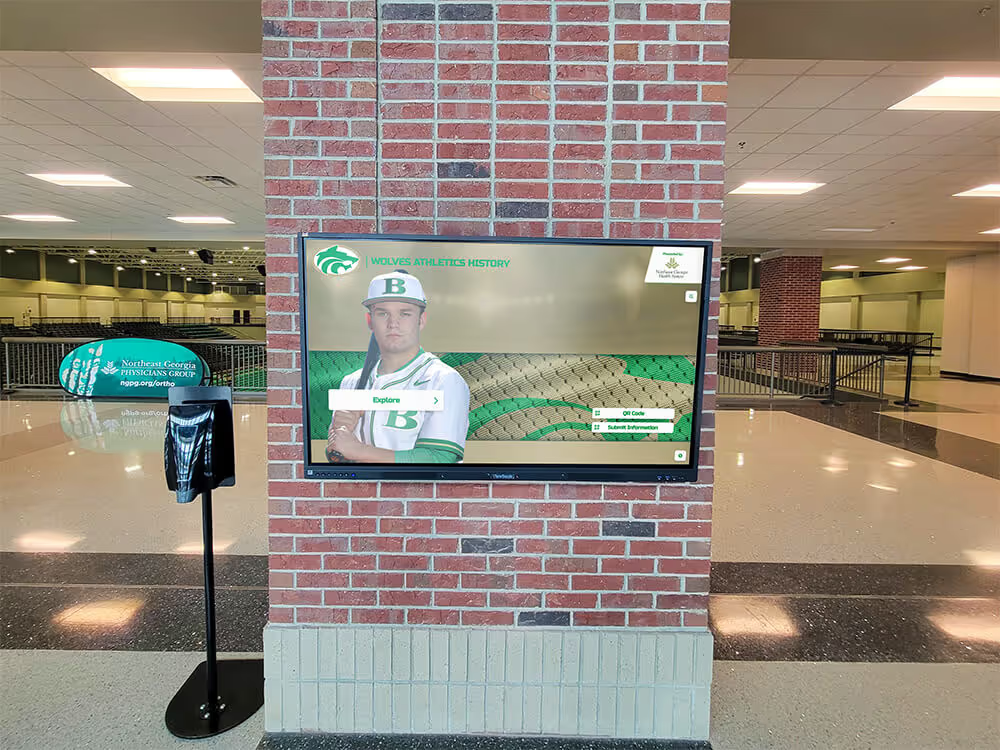
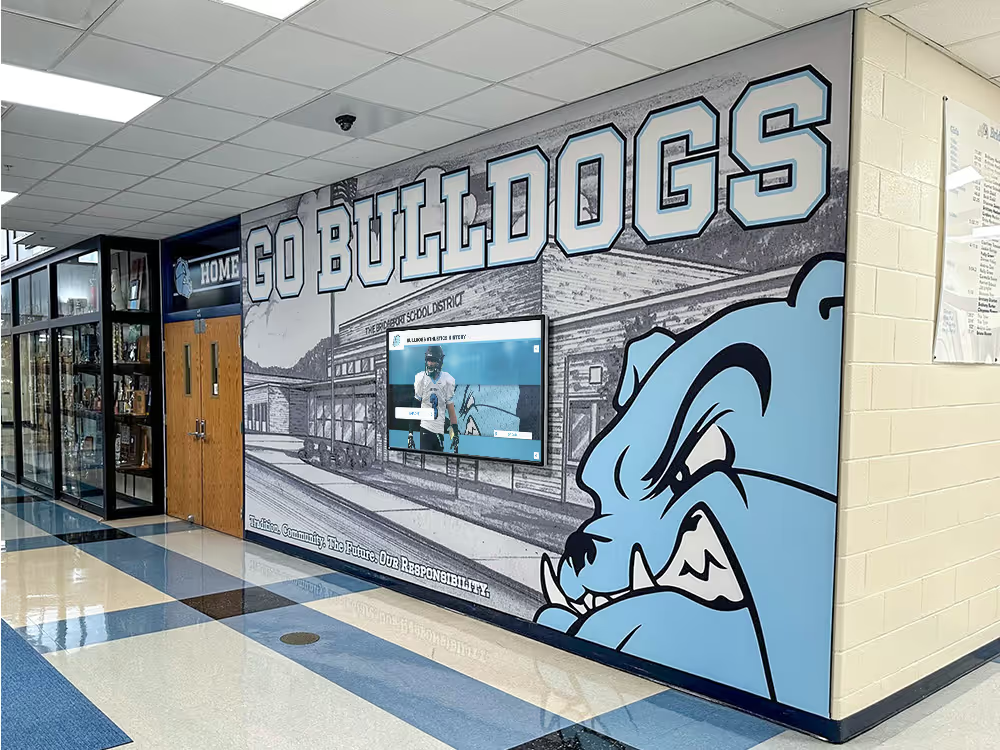
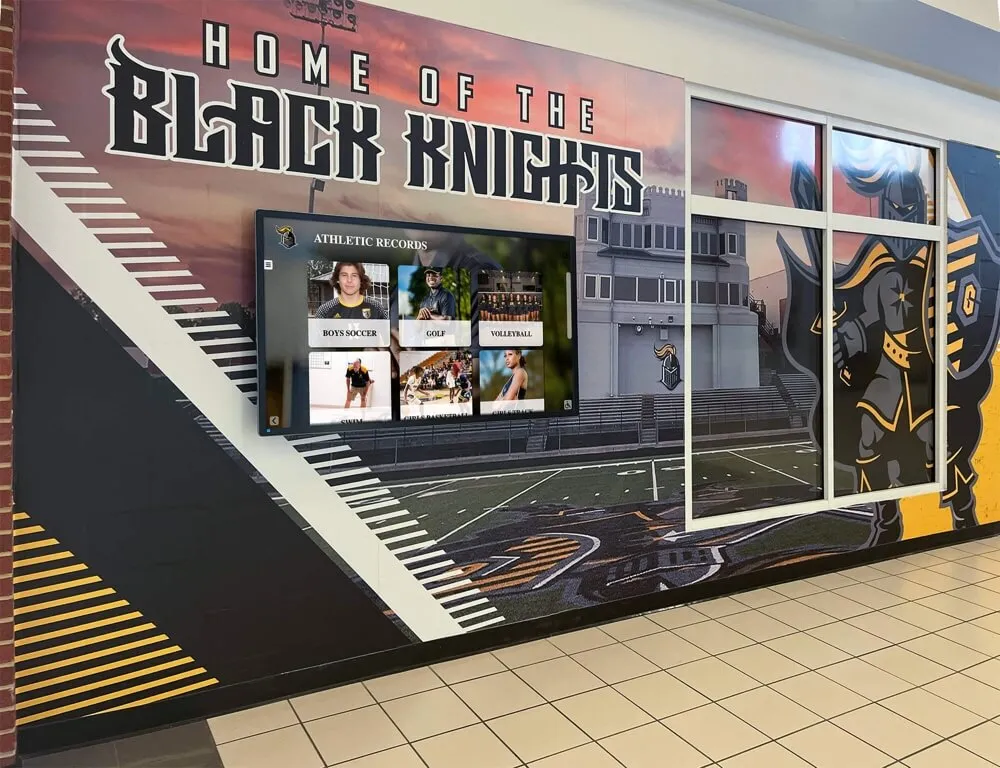
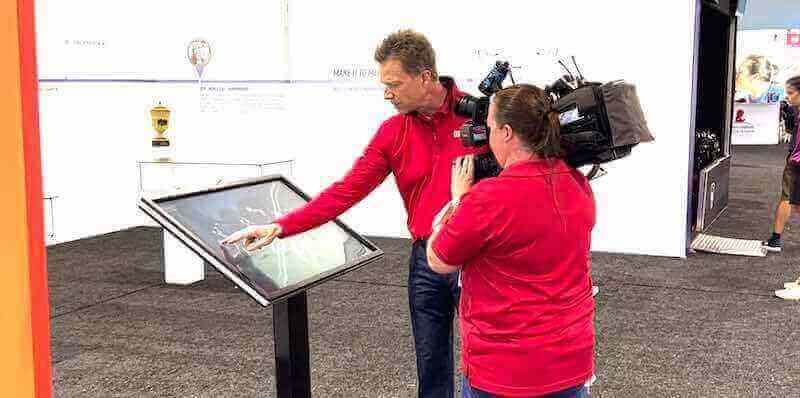
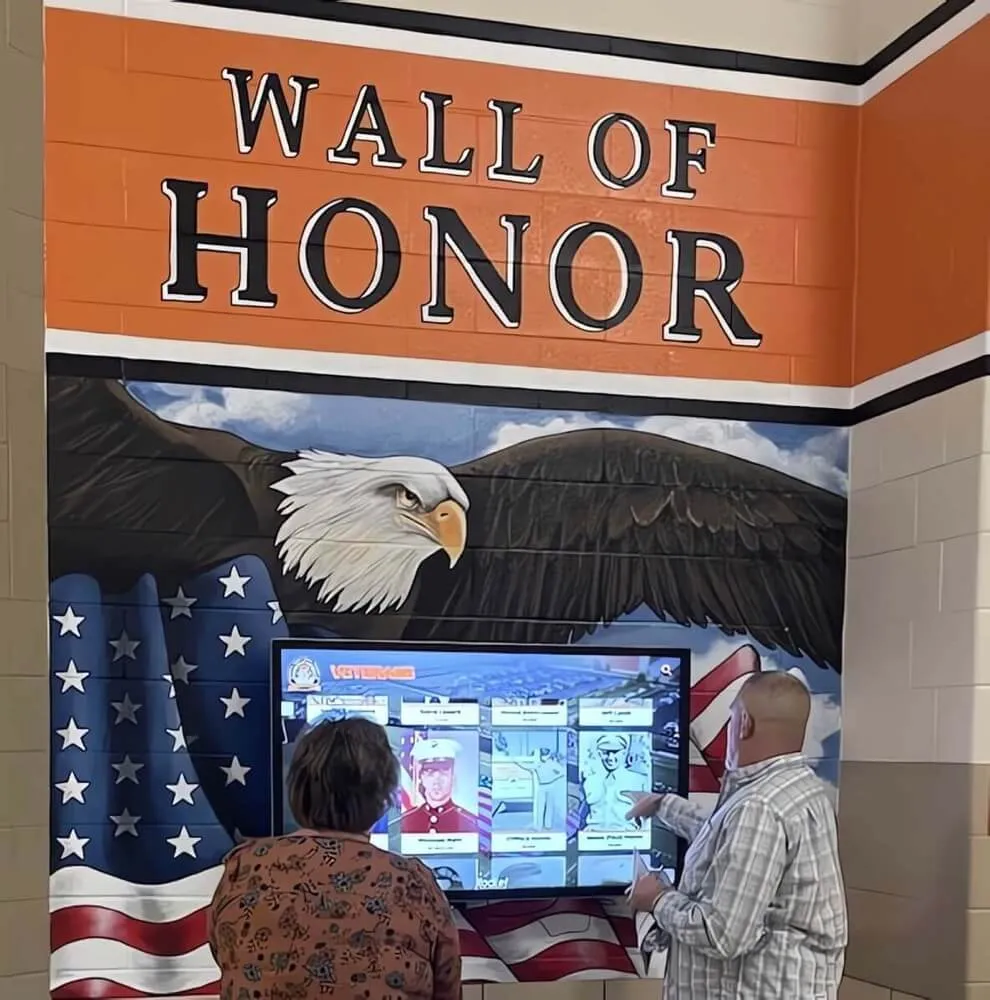
Imagine a prospective student athlete visiting campus. The tour reaches the athletic facility, where instead of simply walking past trophy cases, the tour guide introduces an interactive touchscreen display featuring comprehensive athletic achievement records. The prospective student approaches the display and begins exploring on their own terms.
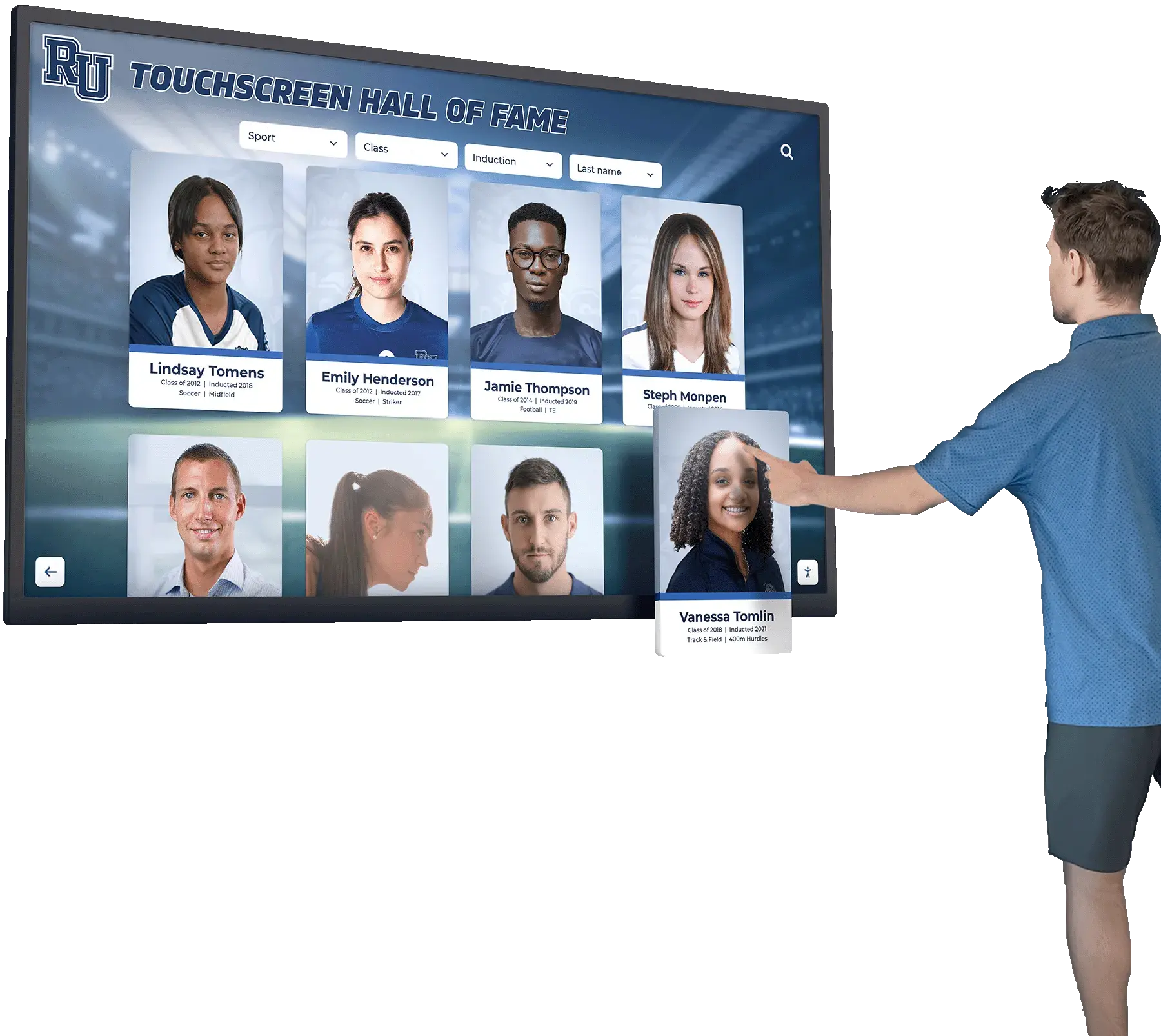
She searches for her sport—soccer—and immediately discovers profiles of every soccer player who competed for the institution over the past decade. Each profile includes not just athletic statistics but also academic majors, post-graduation career information, and reflections about their experience balancing athletics and academics. She finds several players who majored in biology like she plans to, reads about their paths to medical school and physical therapy programs, and watches brief video messages they recorded about time management strategies that enabled athletic and academic success simultaneously.
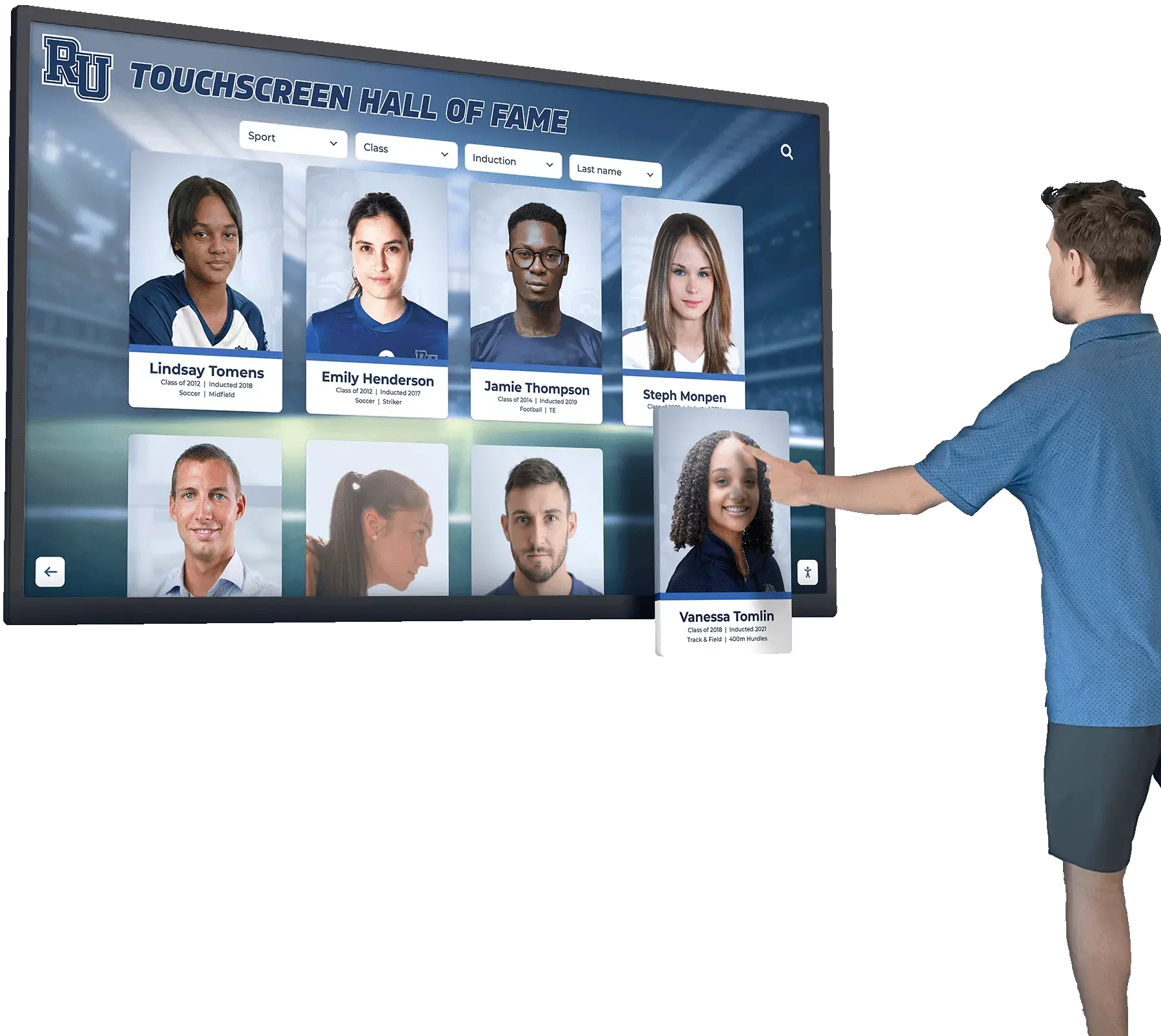
Her parents, standing nearby, explore different content on the same display. They search for academic honors recipients and discover comprehensive profiles of students who earned Academic All-American recognition—validation that the institution values classroom performance as much as athletic achievement. Meanwhile, another prospective student in the tour group explores championship teams from his graduation year, discovering where those athletes attended school and what they accomplished.
This single five-minute interaction accomplishes what hours of traditional tour guide narration cannot: personalized exploration creating emotional connections between prospective students and the campus community they might join. When the tour continues, that prospective athlete carries a tangible sense that the institution develops well-rounded student-athletes who succeed after graduation—exactly the message admissions teams want to convey but struggle to communicate through passive storytelling.
Key Components of Effective Interactive Storytelling
Successful interactive storytelling for admissions tours requires several essential elements working together to create engaging, memorable experiences.
Self-Directed Exploration: Interactive displays must allow prospective students to explore content matching their interests rather than forcing everyone through identical information. Intuitive search and filtering capabilities enable users to find relevant content quickly, whether searching by academic major, sport, graduation year, achievement type, or student hometown.
Rich Multimedia Content: Static text alone fails to create emotional connection. Effective interactive storytelling combines high-resolution photographs showing students in authentic campus settings, brief video messages from current students and alumni sharing genuine experiences, detailed achievement profiles going beyond surface-level information, and visual timelines contextualizing individual achievements within broader institutional history.
Current and Historical Depth: Prospective students want to understand both current campus culture and institutional traditions spanning decades. Interactive displays should showcase recent graduates providing relatable role models, historical achievements demonstrating sustained excellence over time, multi-generational family legacies at the institution, and evolution of programs, facilities, and opportunities across eras.
Resources on building effective digital recognition systems provide additional guidance on creating content that resonates with prospective students while advancing admissions objectives.
Strategic Placement: Where Interactive Storytelling Creates Maximum Admissions Impact
The location of interactive displays significantly affects their impact on prospective students. Strategic placement ensures every tour group encounters compelling storytelling at moments when receptiveness peaks and decision-making factors crystallize.
Athletic Facilities: Showcasing Student-Athlete Development
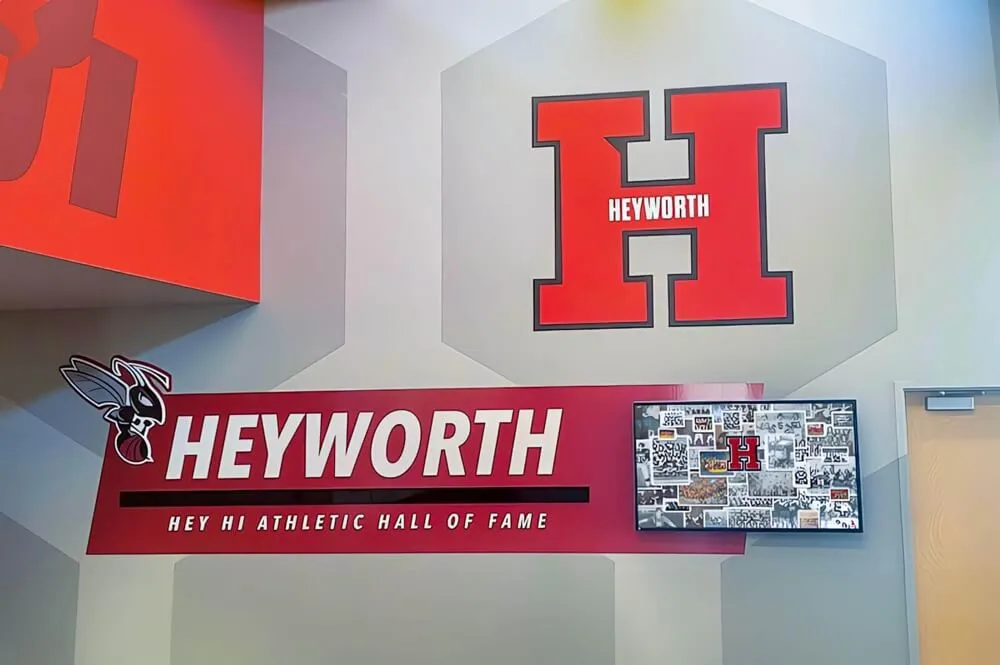
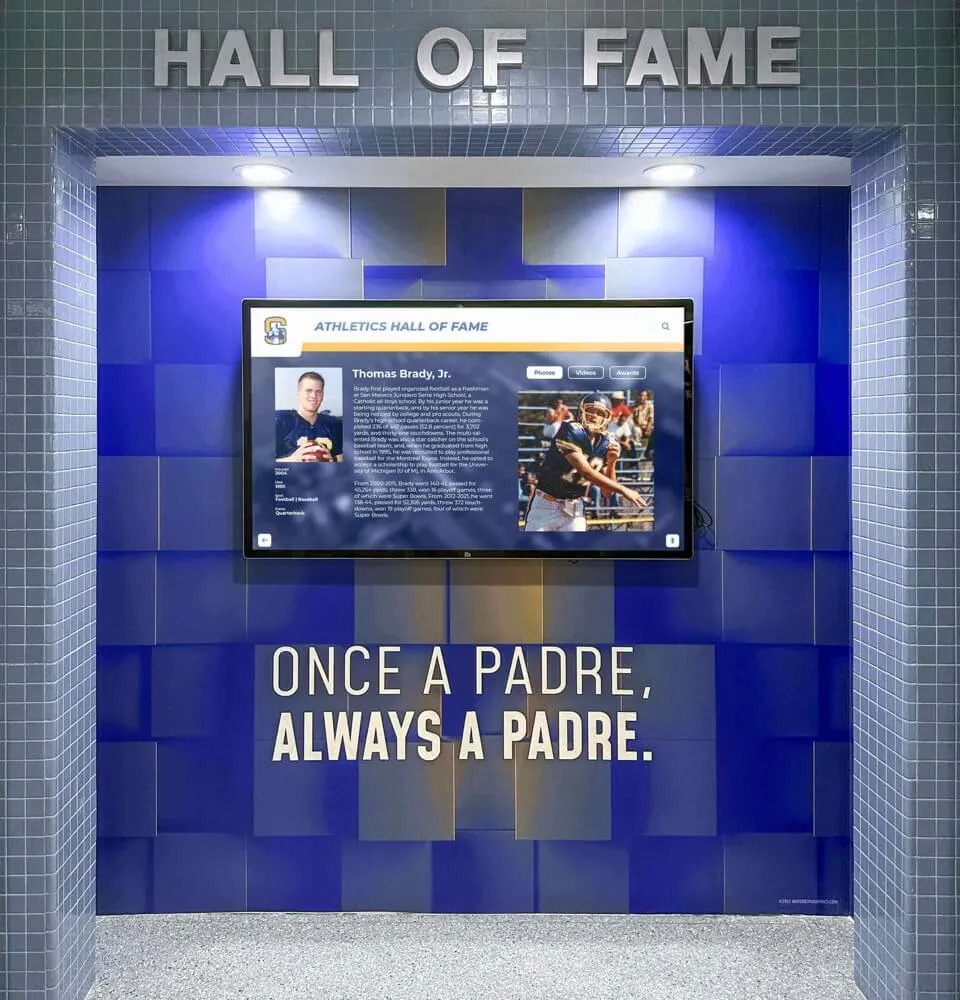
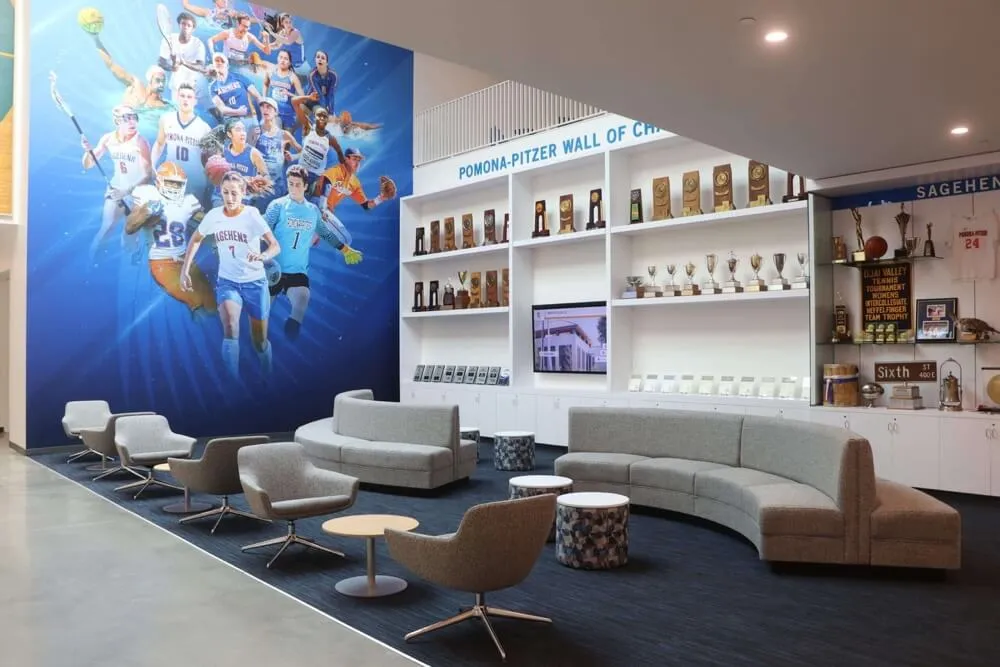
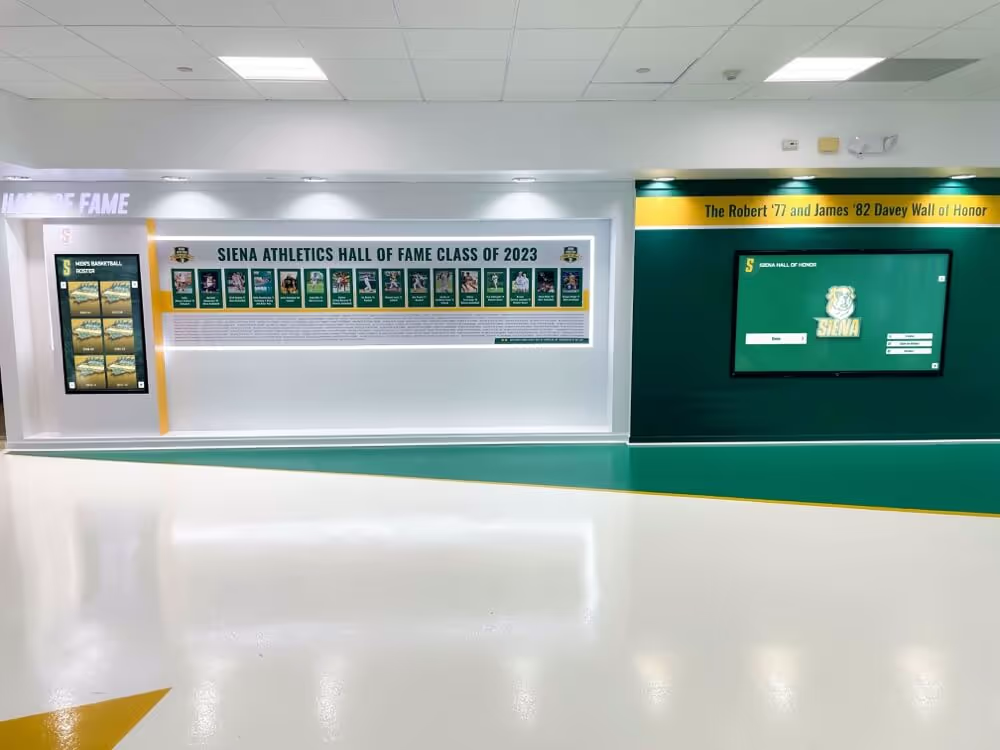
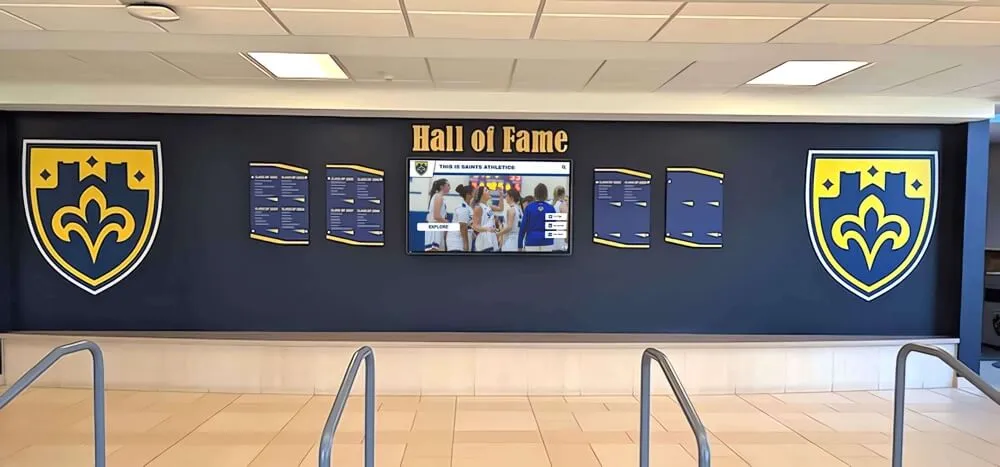
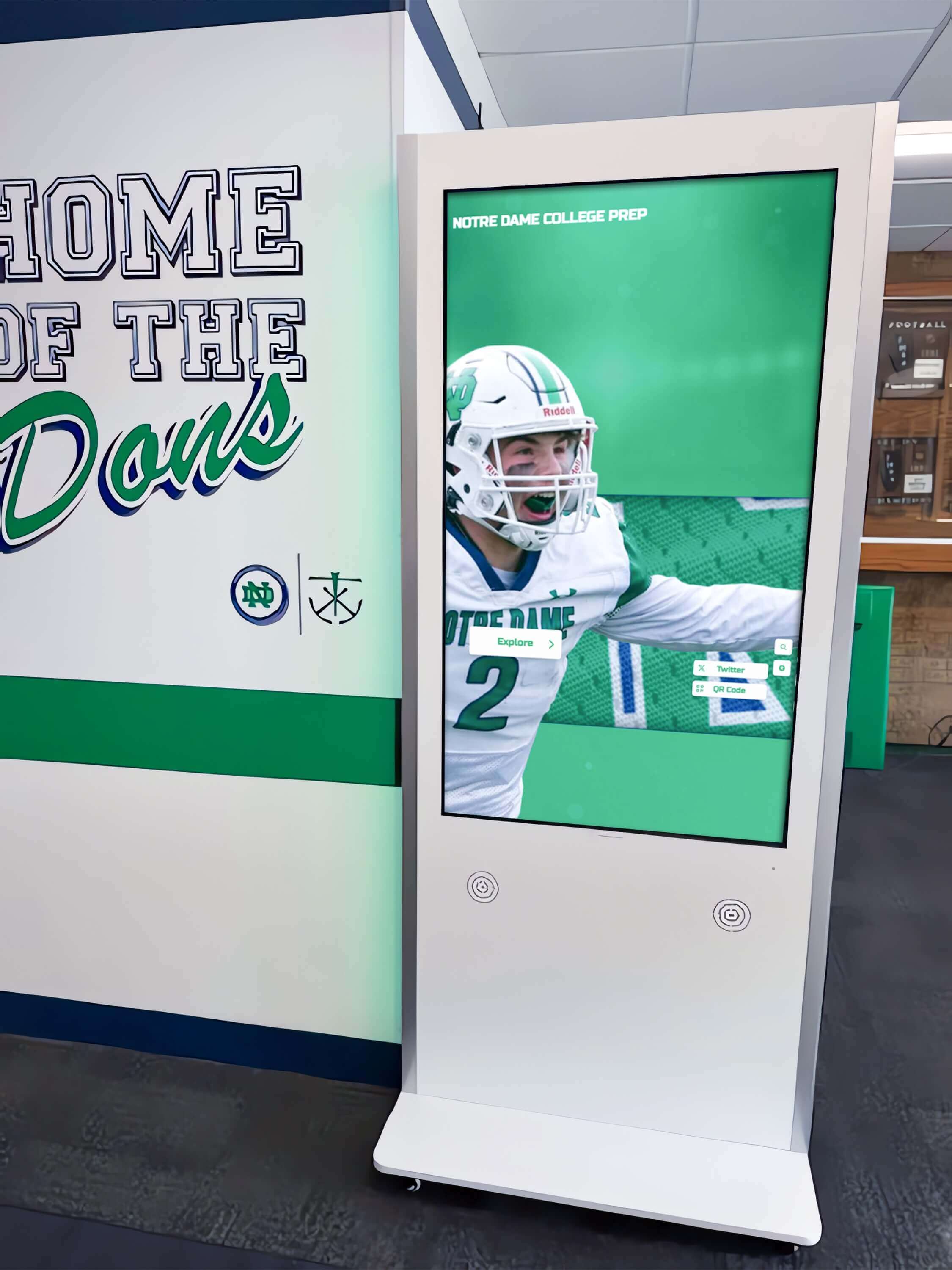
Athletic facilities represent prime locations for interactive storytelling, particularly when recruiting prospective student-athletes who comprise significant percentages of incoming classes at many institutions. Positioning interactive displays in facility lobbies, weight rooms, locker room areas, or halls of fame enables prospective athletes to explore detailed achievement records demonstrating program excellence.
Effective athletic facility displays should feature comprehensive individual athlete profiles including statistics, honors, and career information, team championship records with rosters and season highlights, academic achievement recognition proving commitment to student development, coaching staff tenure and accomplishments building trust in program stability, and alumni success stories showing post-graduation opportunities athletics create.
When prospective student-athletes discover interactive displays showcasing not just wins and championships but also Academic All-Americans, graduate school attendance rates, and professional career paths, they perceive institutions as invested in complete student development rather than viewing athletes as purely athletic assets. This comprehensive storytelling addresses parent concerns about academic support while exciting prospective athletes about competitive opportunities.
Academic Buildings: Connecting Achievements to Majors
Prospective students spend significant tour time visiting academic buildings housing departments related to their intended majors. Interactive displays positioned in these locations enable major-specific storytelling that traditional tours rarely provide.
Academic building displays might feature alumni career outcomes organized by major and graduation year, undergraduate research achievements and publication records, academic honors and scholarship recipients, internship placements and employer partnerships, and graduate school admission statistics and destinations.
When prospective engineering students explore an interactive display in the engineering building and discover that recent graduates work at companies they aspire to join, attend graduate programs they hope to pursue, or founded startups based on undergraduate research, this targeted storytelling creates belief that the institution provides pathways to their specific career goals. Generic tour guide statements about “excellent placement rates” lack the credibility and emotional impact of discovering detailed information about real students who achieved relevant outcomes.
Main Campus Entrances: Creating First Impression Impact
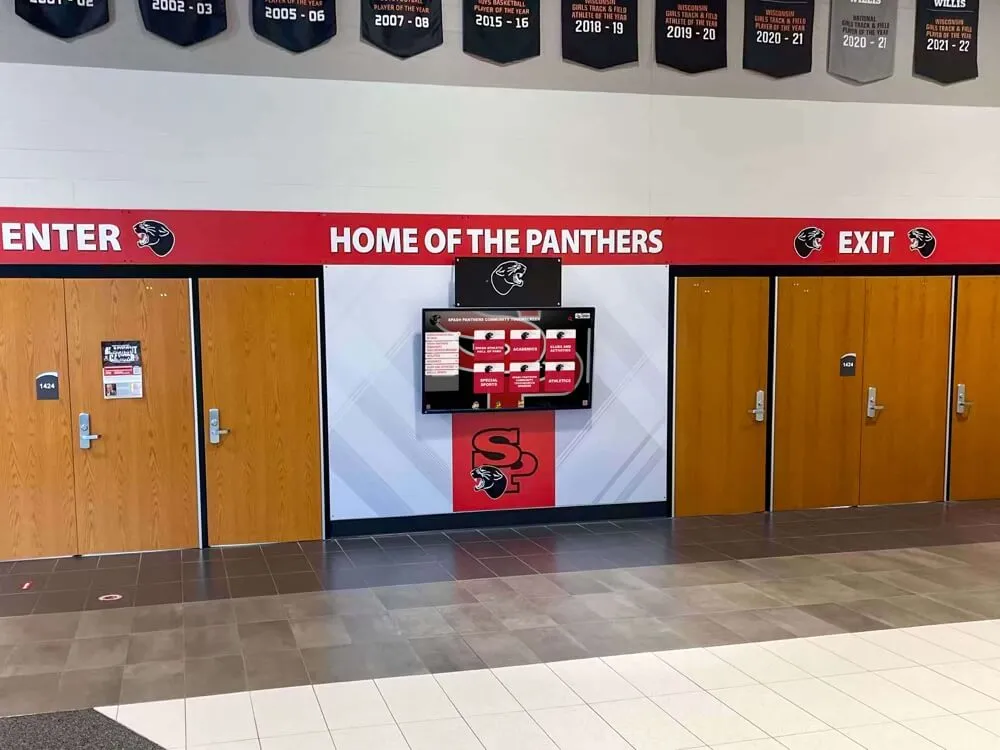
First impressions matter disproportionately in admissions decisions. Interactive displays positioned near main campus entrances or in admissions office reception areas ensure every prospective student encounters compelling storytelling before formal tours even begin.
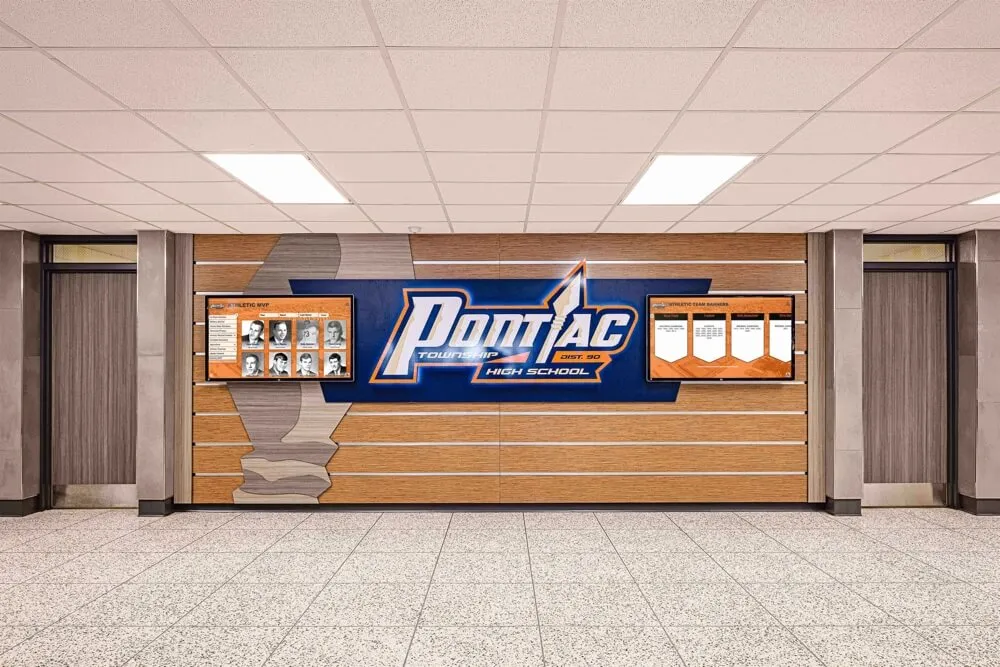
Entrance displays should offer broad institutional overviews accessible to diverse audiences including campus history timelines from founding through present day, distinguished alumni across fields and generations, institutional achievements and recognitions, student demographics and community characteristics, and navigation assistance directing visitors to specific points of interest.
These high-visibility displays serve dual purposes: showcasing institutional excellence while providing practical wayfinding assistance that reduces prospective student anxiety about navigating unfamiliar campus environments. When prospective students feel oriented and informed from the moment they arrive, receptiveness to subsequent tour content increases significantly.
Student Centers: Demonstrating Campus Life Vibrancy
Student centers, unions, and common areas where students naturally congregate provide authentic glimpses into daily campus life prospective students hope to experience. Interactive displays in these high-traffic locations enable prospective tour groups to observe current students actually using recognition systems to explore campus achievements—validation that displays represent genuine campus culture rather than admissions theater.
Student center displays might highlight student organization leadership and achievements, campus event histories and traditions, service learning and community engagement initiatives, performing arts and creative accomplishments, and student of the month or week recognition programs.
Watching current students stop to explore displays, search for friends’ achievements, or show visiting family members their own recognition creates powerful social proof convincing prospective students that campus community actively celebrates and values diverse forms of student excellence. Resources on campus directory systems demonstrate how interactive displays serve multiple campus purposes beyond recognition alone.
Content Strategy: What Stories Resonate with Prospective Students
Interactive displays offer unlimited content capacity, but effective admissions storytelling requires strategic curation focusing on content categories that address prospective student questions, concerns, and decision-making factors most directly.
Athletic Excellence and School Spirit
Athletic achievement recognition serves admissions purposes extending well beyond recruiting prospective student-athletes. Visible athletic excellence communicates institutional competitiveness, provides tangible evidence of school spirit and community pride, creates memorable distinctions between similar institutions, and offers safe conversation starters for tour groups exploring unfamiliar environments together.
Prospective students visiting campuses often struggle to distinguish institutions with similar academic programs and facilities. Athletic achievements—conference championships, individual records, dynasty periods, legendary coaches, professional athlete alumni—create memorable institutional identities that prospective students recall when making enrollment decisions weeks later.
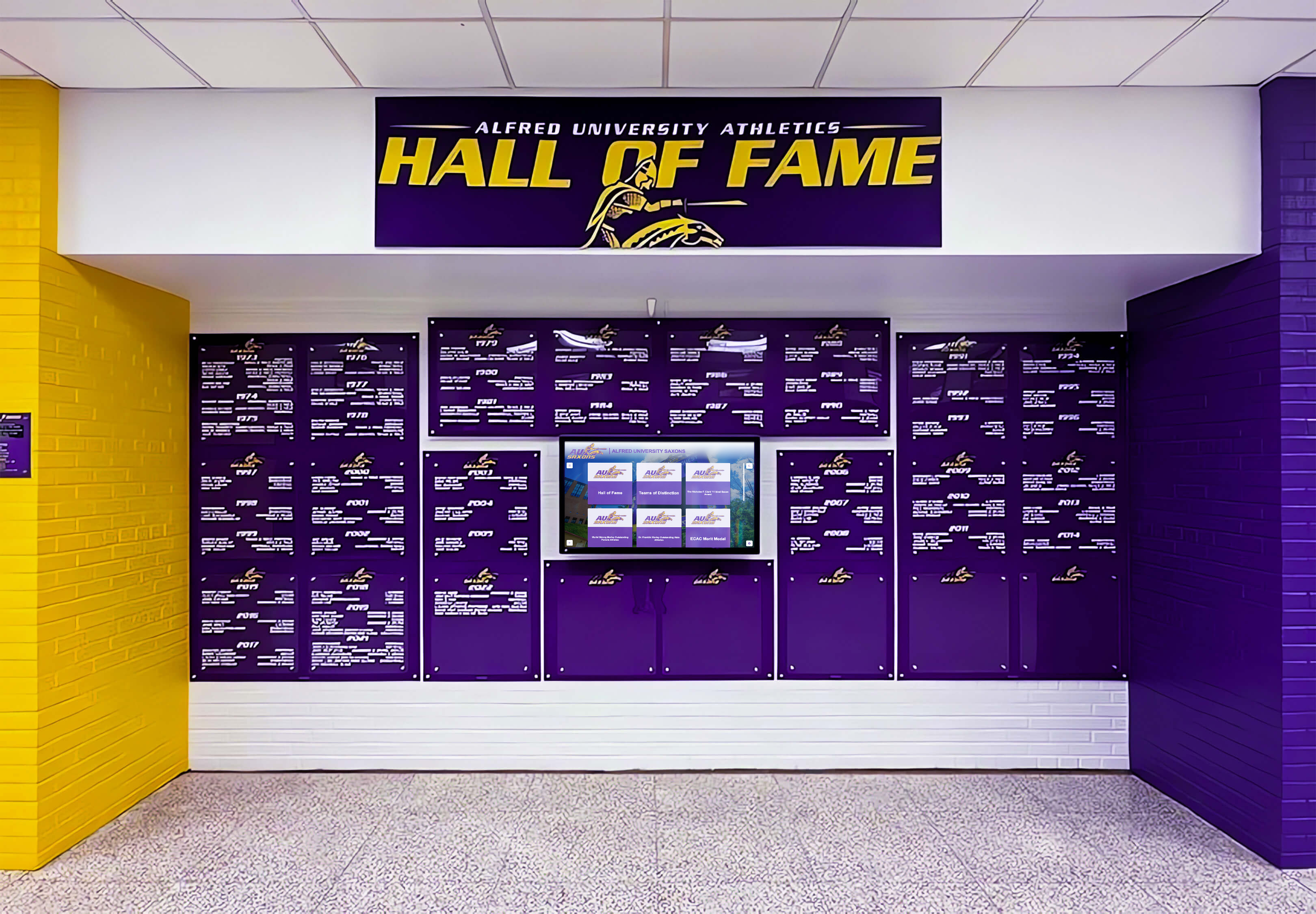
Interactive displays showcasing comprehensive athletic records and achievements enable prospective students to explore decades of competitive excellence, seasonal team records, individual athlete accomplishments, and program traditions that contribute to distinctive campus cultures they evaluate when choosing where to enroll.
Academic Achievement and Scholar Recognition
While athletic excellence attracts attention, academic achievement recognition addresses prospective student and parent priorities about educational quality and outcomes. Interactive displays featuring academic honors provide tangible evidence that institutions prioritize classroom performance alongside extracurricular involvement.
Academic recognition content should include Academic All-American recipients demonstrating student-athlete success, dean’s list and president’s list honor roll recipients, department honors and disciplinary awards, undergraduate research symposium participants, and competitive scholarship and fellowship winners.
According to data from the Higher Education Research Institute, 85% of prospective students and their families cite “academic reputation” as very important in college selection, yet campus tours often fail to provide concrete evidence supporting academic quality claims. Interactive displays showcasing hundreds of academic honor recipients with detailed profiles create this evidence while enabling prospective students to discover achievers in their intended majors.
Resources on academic recognition program design offer guidance on creating academic achievement displays that resonate with prospective students and their families while supporting admissions messaging about institutional academic excellence.
Alumni Success Stories and Career Pathways
Prospective students ultimately attend college to prepare for careers and lives after graduation. Alumni success stories demonstrating that institutions deliver on this promise create powerful admissions tools, yet traditional tours rarely showcase alumni outcomes beyond generic placement rate statistics.
Interactive displays enable comprehensive alumni storytelling including current career information and professional achievements, graduate school attendance and advanced degree attainment, entrepreneurial ventures and company founding, leadership positions in business, education, healthcare, and nonprofits, and alumni reflections on how their institution prepared them for success.
When prospective students discover that alumni working in careers they aspire to pursued the same major, participated in similar activities, and navigated comparable experiences decades earlier, this creates tangible connection between current enrollment decisions and future career outcomes. The abstract concept of “excellent education” becomes concrete stories about real people who achieved relevant goals after attending the institution. Insights on building alumni engagement systems provide additional context for creating meaningful connections between current students and institutional alumni networks.
Campus History and Institutional Traditions
Prospective students evaluating multiple similar institutions often make final enrollment decisions based on intangible factors like campus culture, community feel, and sense of belonging. Campus history and traditions create institutional identity differentiating otherwise comparable schools while offering prospective students glimpses into unique cultures they might join.
Interactive displays can showcase institutional founding stories and historical milestones, evolution of campus architecture and facilities, notable historical figures and institutional leaders, traditional events and annual celebrations, and multi-generational family attendance patterns.
Historical content serves particularly important functions when recruiting students from families with institutional connections—legacy students, faculty children, or families with multiple generations of attendance. Interactive displays enable these prospective students to explore their family members’ experiences and achievements, strengthening existing emotional connections while demonstrating institutional appreciation for multi-generational relationships. Schools implementing comprehensive school history preservation find that historical storytelling particularly resonates with legacy families during campus visits.
Training Admissions Staff: Integrating Interactive Storytelling into Tour Protocols
Interactive displays create admissions value only when tour guides skillfully integrate them into tour experiences. Even the most sophisticated technology fails to impact enrollment when tour guides walk past displays without pausing or acknowledge them with brief mentions that don’t encourage prospective student exploration.
Building Interactive Pauses into Tour Scripts
Effective integration requires intentionally building 3-5 minute interactive exploration pauses into tour scripts at locations with displays. Rather than viewing these pauses as time lost to technology, admissions teams should recognize them as high-value moments enabling personalized storytelling that generic tour guide narration cannot match.
Tour guides should practice structured introduction statements directing prospective student attention to displays while encouraging self-directed exploration. For example: “Before we continue, I want to give everyone a few minutes to explore our interactive achievement display. You can search by sport, academic major, graduation year, or hometown to discover students whose experiences might relate to your own. Parents, you might be particularly interested in the Academic All-American section showing student-athletes who excelled both competitively and in the classroom.”
This structured introduction accomplishes several objectives: explicitly grants permission for self-directed exploration, suggests specific search strategies reducing intimidation, addresses different audience members’ likely interests, and frames the pause as valuable rather than awkward silence.
Facilitating Discovery Rather Than Narrating Content
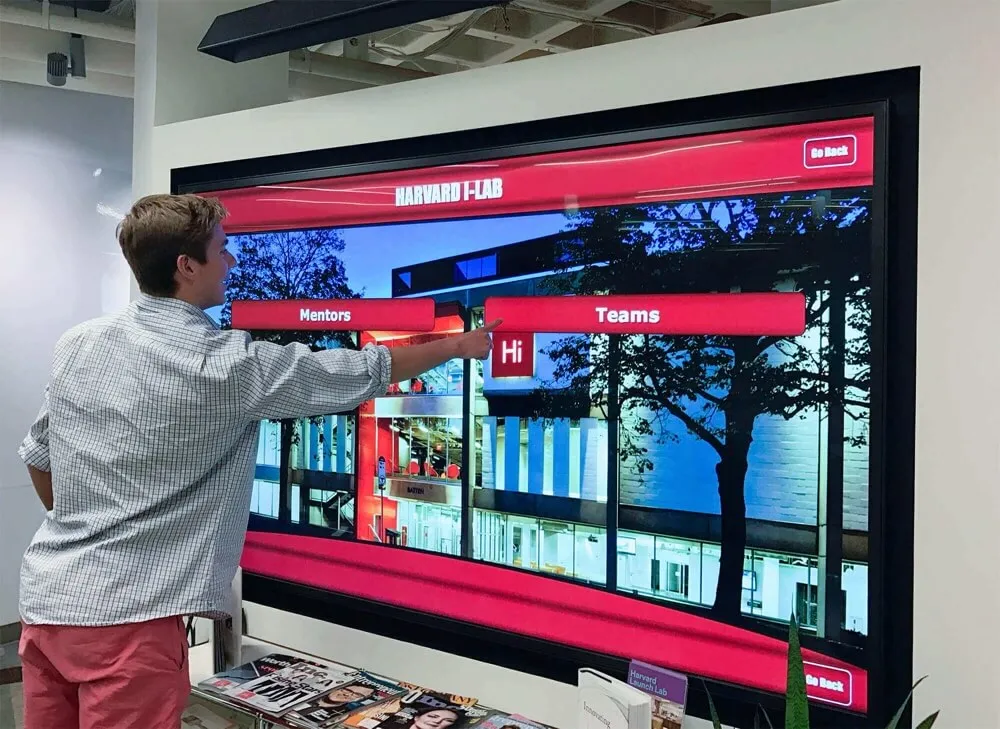
During interactive exploration pauses, tour guides should circulate among prospective students and families, observing what content individuals explore and offering relevant commentary that enhances rather than interrupts self-directed discovery. This facilitation role differs fundamentally from traditional tour guide narration.
Effective facilitation includes noticing what prospective students search for and sharing relevant context, answering questions about specific achievements or individuals, connecting displayed information to other campus features or programs, and sharing personal experiences related to content being explored.
When a tour guide notices a prospective student exploring athlete profiles from their home state, commenting “I see you found our Connecticut athletes—we actually have a great pipeline from your area, and several current students I could introduce you to” creates personalized connection impossible in traditional tour formats where guides don’t know what information resonates with each individual.
Using Interactive Displays to Extend Conversations Beyond Tours
Tour guides should encourage prospective students to photograph or note specific content they found interesting during interactive exploration, creating natural follow-up conversation starters for subsequent admissions office meetings, email communications, or enrollment confirmation discussions.
When prospective students return to admissions offices saying “During my tour, I explored the interactive display and found a graduate from my high school who majored in what I’m interested in—can you help me connect with them?”, this represents exactly the kind of engaged prospective student behavior that correlates with higher enrollment likelihood. Interactive displays create these conversation opportunities that traditional passive tours rarely generate.
Measuring Impact: How Interactive Storytelling Affects Admissions Outcomes
Admissions teams implementing interactive storytelling should establish measurement systems tracking both display engagement and enrollment outcomes, demonstrating return on investment while identifying optimization opportunities.
Engagement Metrics and Usage Patterns
Purpose-built digital recognition platforms provide analytics revealing how prospective students engage with interactive content during tours. Useful metrics include total unique users during tour time windows, average session duration indicating depth of exploration, most-searched terms revealing prospective student priorities, content categories generating greatest interest, and peak usage times correlating with scheduled tours.
These engagement metrics demonstrate whether interactive displays actually create the active exploration they promise or whether prospective students largely ignore them. Low engagement numbers suggest problems with tour guide integration, display positioning, interface design, or content relevance requiring attention.
Tour Satisfaction and Prospective Student Feedback
Post-visit surveys should include specific questions about interactive display experiences, gathering qualitative feedback about whether displays enhanced tours, what content prospective students found most interesting or valuable, suggestions for additional content or features, and overall impression of institutional investment in storytelling technology.
Analyzing this feedback reveals whether interactive storytelling achieves intended goals of creating memorable experiences, enabling personalized exploration, demonstrating institutional excellence, and differentiating the campus from competitors. Consistently positive feedback validates investment while identifying specific elements prospective students value most.
Enrollment Conversion and Yield Analysis
The ultimate measure of admissions program effectiveness involves enrollment outcomes. While establishing direct causation between interactive displays and enrollment decisions proves challenging given multiple influencing factors, admissions teams should track enrollment yield rates before and after implementing interactive storytelling, compare yield rates for students who visited campus versus those who did not, analyze enrollment patterns among prospective student segments with different usage patterns, and gather enrolled student feedback about factors influencing their enrollment decisions.
According to research from Ruffalo Noel Levitz, prospective students who visit campus enroll at rates 50-70% higher than those who never visit. Interactive storytelling that makes visits more memorable and personally relevant should further amplify this advantage, though proving attribution requires careful analysis accounting for confounding variables.
Technical Considerations: Choosing Systems Built for Admissions Environments
Not all interactive display systems serve admissions purposes equally well. Institutional investment in storytelling technology should prioritize systems designed specifically for educational recognition environments rather than generic digital signage platforms lacking features critical for compelling storytelling.
User Interface Design for Non-Technical Audiences
Prospective students encounter interactive displays with no prior training and limited time during fast-paced tours. Interface design must enable immediate engagement without frustrating learning curves or confusing navigation patterns.
Essential interface characteristics include intuitive search functionality requiring no instruction, visual organization making content categories immediately apparent, responsive performance without delays that discourage exploration, mobile-friendly design accommodating smartphone-native users, and accessibility features supporting diverse physical abilities.

Generic digital signage systems designed for advertising or wayfinding rarely provide the sophisticated search, filtering, and profile capabilities required for effective achievement storytelling. Purpose-built platforms like Rocket Alumni Solutions specifically address educational recognition requirements including student-athlete profiles, academic achievement tracking, alumni career information, and historical records presented through interfaces prospective students can navigate successfully in 3-5 minute tour pauses.
Content Management Systems for Admissions Staff
Interactive displays require regular content updates reflecting new achievements, graduating seniors, and updated alumni information. Content management systems must enable admissions staff to maintain current, accurate content without requiring technical expertise or constant vendor support.
Effective content management platforms provide cloud-based access enabling updates from any location, template-driven content creation ensuring consistent formatting, simple photo upload and management, bulk import capabilities for efficient historical data addition, and approval workflows preventing unauthorized changes.
When content management requires complex technical skills or vendor involvement for every update, content becomes outdated quickly—undermining credibility and reducing storytelling impact. Admissions teams should prioritize systems they can manage independently with minimal training.
Reliability and Upkeep in High-Traffic Environments
Campus tours occur daily regardless of weather, technical issues, or other complications. Interactive displays must deliver reliable performance in high-traffic public areas where hardware faces constant use and occasional misuse.
Commercial-grade touchscreen hardware designed for continuous operation, protective enclosures preventing accidental damage, reliable network connectivity supporting content updates, and responsive technical support for rapid issue resolution all contribute to systems that consistently deliver value rather than becoming maintenance headaches admissions staff grow to regret.
Resources on selecting appropriate display hardware and software provide guidance on technical specifications and vendor evaluation criteria ensuring reliable performance in demanding campus environments.
Beyond Tours: Extended Interactive Storytelling Opportunities
While campus tours represent the primary admissions use case for interactive storytelling, the same systems create value across additional recruitment and enrollment touchpoints throughout admission cycles.
Admissions Office Reception Areas
Prospective students and families often wait 10-30 minutes in admissions office reception areas before tours, interviews, or meetings begin. Interactive displays in these spaces transform idle waiting time into productive exploration opportunities, addressing parent questions about academic rigor through scholar recognition, showcasing campus culture through diverse achievement categories, and demonstrating technological sophistication suggesting innovative institution.
Reception area displays should offer intentionally broad content accessible to diverse audiences at different stages of college search processes, from casual explorers gathering initial impressions to serious prospects researching specific program details before enrollment decisions.
Virtual Tour Integration and Online Recruitment
Physical campus visits remain important but represent only one component of comprehensive recruitment strategies increasingly incorporating virtual experiences for prospective students unable to visit in person. Interactive storytelling extends into virtual contexts through web-based access to the same content featured on physical displays, virtual tour integrations showing physical display locations with content examples, and video demonstrations of displays in action during actual tours.
When prospective students can explore achievement databases from home before visiting campus, they arrive with more informed questions and clearer understanding of institutional culture. Web access also enables prospective students to revisit content after tours conclude, maintaining engagement during weeks or months between campus visits and enrollment decisions.
Open House and Recruitment Events
Large group recruitment events like open houses or accepted student days create challenges for personalized interaction as admissions staff face dozens or hundreds of prospective students simultaneously. Interactive displays positioned throughout event spaces enable self-directed exploration that continues even when admissions staff are engaged with other visitors.
Event-specific customization might include highlighting current students attending events who appear in displays, featuring alumni from represented geographic regions or high schools, or showcasing achievements related to event themes or academic focuses.
Return on Investment: Justifying Interactive Storytelling Investment
Implementing comprehensive interactive storytelling systems requires significant financial investment—typically $10,000-$30,000 per display location including hardware, software licensing, installation, and initial content development. Admissions leaders must justify this investment to institutional leadership while competing with other budget priorities.
Direct Enrollment Revenue Impact
The most straightforward ROI calculation examines enrollment revenue effects. If interactive storytelling helps convert even a small number of additional prospective students from tour participants to enrolled students, the resulting tuition revenue quickly justifies initial investment.
Consider an institution with $40,000 annual tuition. If interactive storytelling contributes to enrolling just one additional student per year—an extremely conservative estimate given typical campus tour group sizes of 15-20 students and hundreds of tours annually—the four-year tuition revenue from that single student ($160,000) exceeds the entire system investment multiple times over.
More realistic scenarios where interactive storytelling influences multiple enrollment decisions annually generate even more compelling returns. If improved tour experiences contribute to 2-3% enrollment yield improvements among students who visit campus, many institutions would see six-figure annual revenue impacts from relatively modest technology investments.
Operational Efficiency and Staff Time Savings
Beyond enrollment impacts, interactive storytelling creates operational efficiencies for admissions teams. Tour guides spend less time memorizing and reciting detailed achievement information, reducing training time and improving consistency. Staff can focus on relationship building and question answering rather than one-way information delivery. Interactive displays handle individualized information requests that previously required staff research and follow-up.
When calculating comprehensive ROI, these efficiency gains—measured in staff hours saved annually—contribute additional value beyond direct enrollment revenue considerations.
Competitive Positioning and Institutional Reputation
Finally, interactive storytelling creates difficult-to-quantify but genuinely valuable competitive differentiation and reputation benefits. In markets where multiple institutions compete for similar prospective student populations, memorable tour experiences create advantages in environments where many campus offerings otherwise appear similar.
Institutions investing visibly in innovative recruitment experiences signal broader institutional characteristics—technological sophistication, student-centered culture, commitment to comprehensive development—that resonate with prospective students and families evaluating where to invest significant financial and personal resources for four transformative years.
Getting Started: Implementation Roadmap for Admissions Teams
Admissions teams ready to implement interactive storytelling should follow systematic implementation processes ensuring successful deployment while managing change effectively across multiple stakeholder groups.
Assessment and Planning Phase
Begin with comprehensive needs assessment examining current tour formats and pain points, prospective student feedback about existing tours, competitive analysis of other institutions’ recruitment innovations, and stakeholder input from tour guides, admissions counselors, and recently enrolled students.
This assessment informs strategic planning defining objectives interactive storytelling should achieve, identifying optimal display locations for maximum impact, determining content categories to feature initially, establishing realistic budgets and timelines, and building stakeholder buy-in across campus departments.
Content Development and System Configuration
Content development represents the most time-intensive implementation phase, requiring research to identify achievements and individuals to feature, gathering accurate information and high-quality photos, structuring content in accessible, engaging formats, and establishing ongoing maintenance processes ensuring sustained accuracy.
Many institutions benefit from phased content development approaches starting with recent years and gradually adding historical depth rather than attempting comprehensive historical documentation before launch. This phased approach enables earlier deployment delivering value sooner while distributing content development effort across extended periods.
Training and Launch
Successful implementation requires comprehensive training preparing admissions staff to integrate displays effectively into tours. Training should cover system navigation and content discovery techniques, tour script modifications incorporating interactive pauses, facilitation strategies supporting prospective student exploration, troubleshooting common technical issues, and gathering feedback for continuous improvement.
Soft launches with internal tours for current students, faculty, and staff provide low-stakes testing environments identifying issues before prospective student tours begin. This testing phase enables refinement based on real usage patterns rather than theoretical assumptions about how displays will function in practice.
Continuous Improvement and Expansion
Following initial deployment, establish regular review cycles examining engagement analytics and identifying popular content, gathering prospective student and tour guide feedback, updating content with new achievements and information, and identifying additional display locations or content categories for future expansion.
Interactive storytelling represents ongoing programs requiring sustained attention rather than one-time projects. Institutions treating displays as static installations rather than dynamic storytelling platforms fail to realize full value from their investments.
Conclusion: Storytelling That Converts Tours into Enrollments
Campus tours will continue serving as critical admissions touchpoints for the foreseeable future—irreplaceable opportunities for prospective students to experience campus environments firsthand before making enrollment decisions. However, the format of these tours must evolve to meet expectations of digital-native prospective students seeking engagement rather than passive reception of information.
Interactive campus storytelling through purpose-built recognition displays transforms traditional tours from one-way information delivery into personalized exploration experiences. When prospective students can discover achievements of students who came before them, explore career paths of alumni in their intended fields, and engage with campus history and traditions on their own terms, they develop emotional connections to institutions that generic tour narratives rarely create.
These connections directly influence enrollment decisions. Prospective students who remember specific athlete profiles they explored, alumni success stories they discovered, or historical traditions they learned about through interactive investigation feel more connected to campuses than those who passively listened to identical information delivered to every tour group. This enhanced connection translates to improved enrollment yield—the ultimate measure of admissions program effectiveness.
For admissions teams ready to transform how prospective students experience campus tours, solutions like Rocket Alumni Solutions provide comprehensive platforms purpose-built for educational recognition and storytelling. These systems combine intuitive interfaces enabling immediate prospective student engagement, rich content management supporting diverse achievement categories, reliable performance in demanding campus environments, and comprehensive analytics demonstrating measurable recruitment impact.
The question facing admissions teams isn’t whether interactive storytelling creates value—evidence from institutions implementing these systems demonstrates clear engagement and enrollment benefits. The relevant question is whether your institution can afford to continue offering passive tour experiences while competitors invest in interactive approaches that prospective students increasingly expect and prefer.
Campus tours represent too important a recruitment touchpoint to deliver through outdated formats designed for previous generations. Modern prospective students deserve tour experiences matching their expectations for engagement, interactivity, and personalization. Interactive campus storytelling delivers these experiences while creating measurable admissions advantages for institutions willing to invest in recruitment innovation.
Ready to transform your campus tours through interactive storytelling? Book a demo to explore how purpose-built recognition platforms create engaging prospective student experiences that convert campus visits into enrollment commitments.