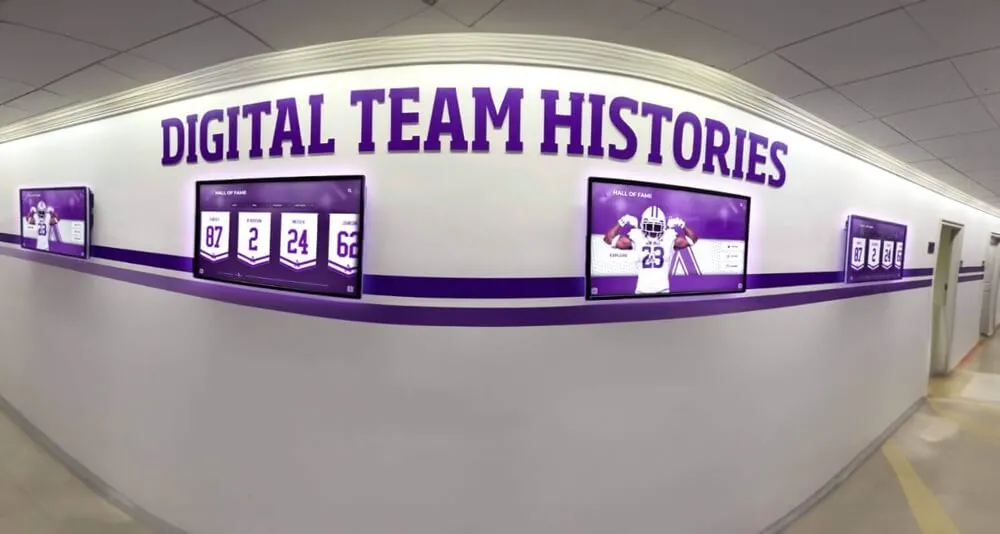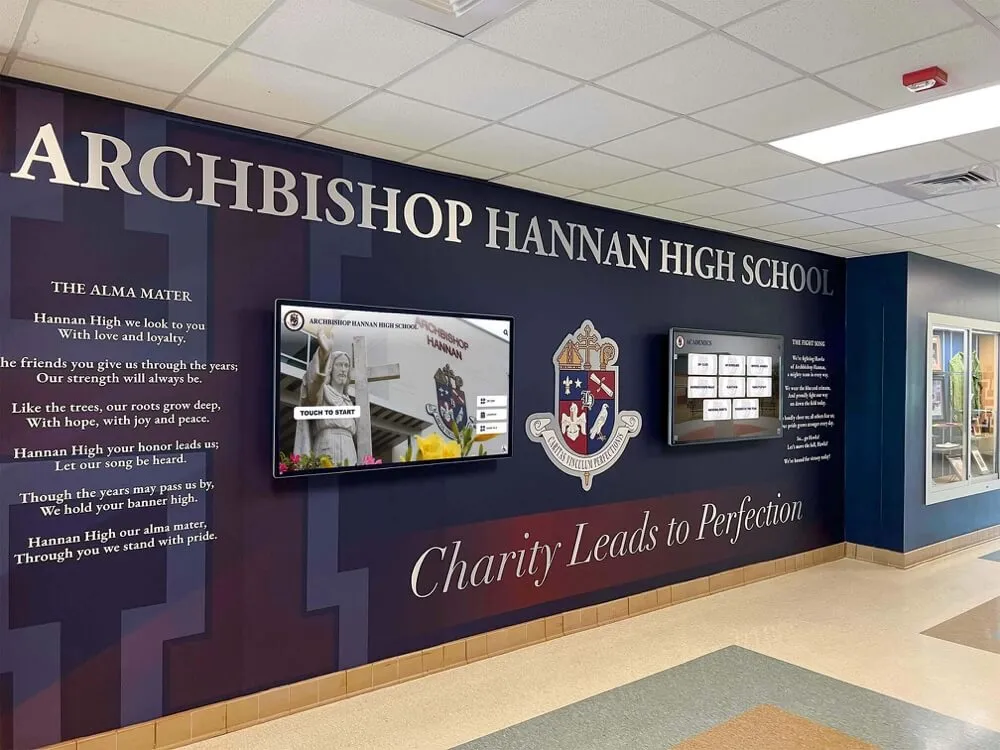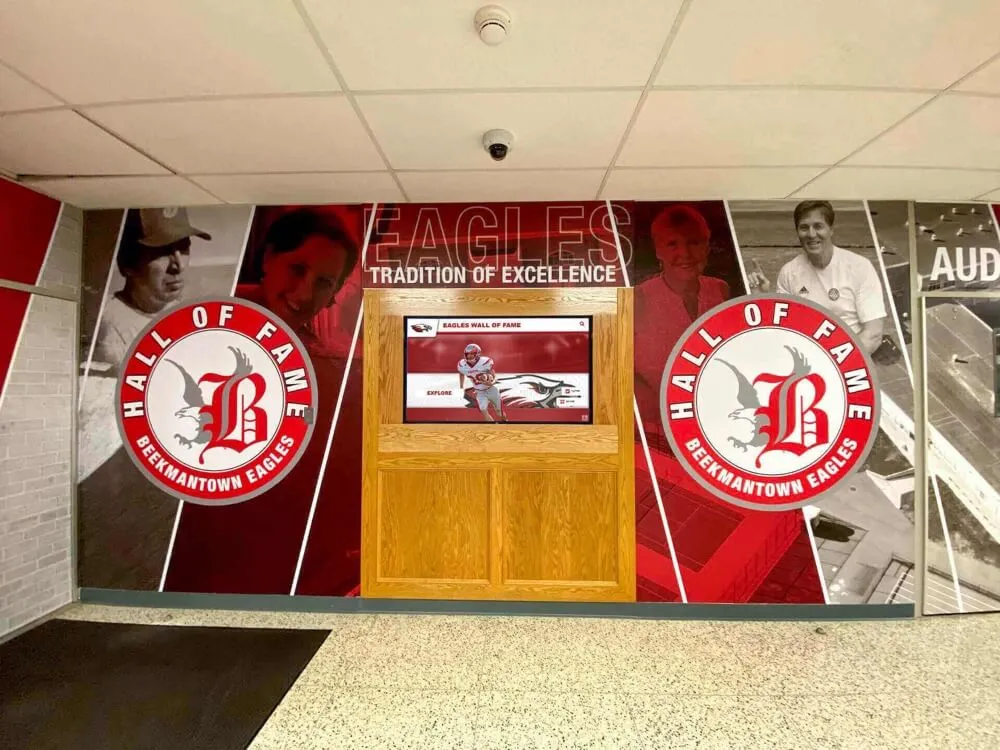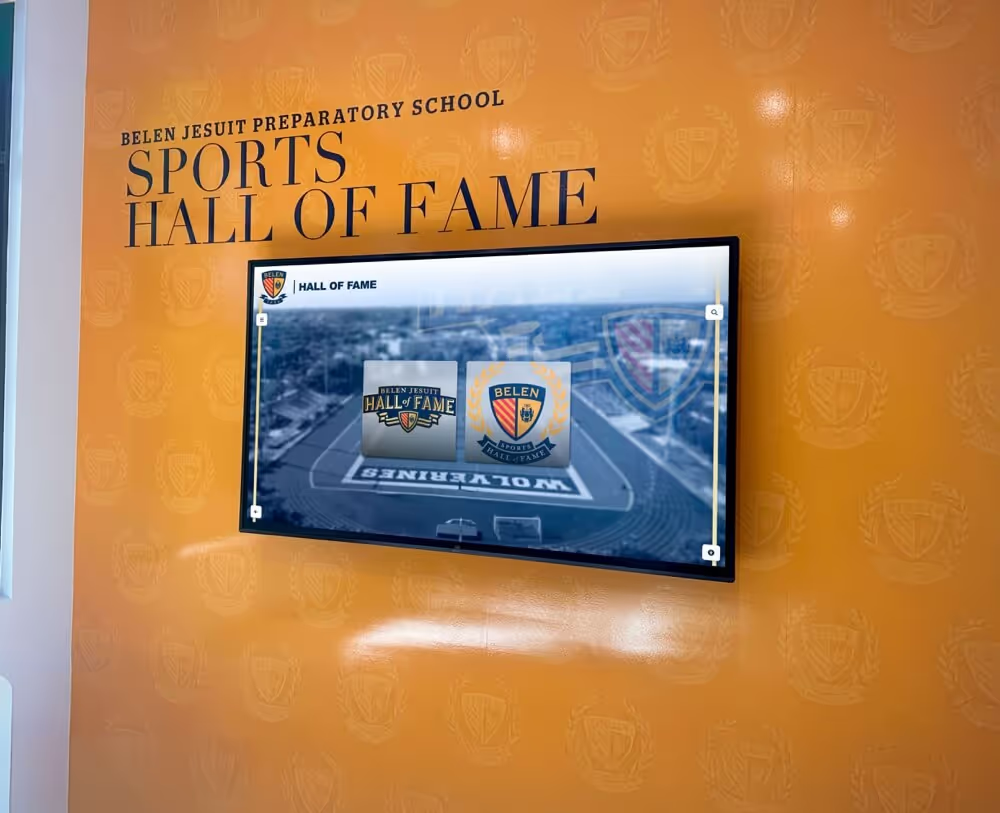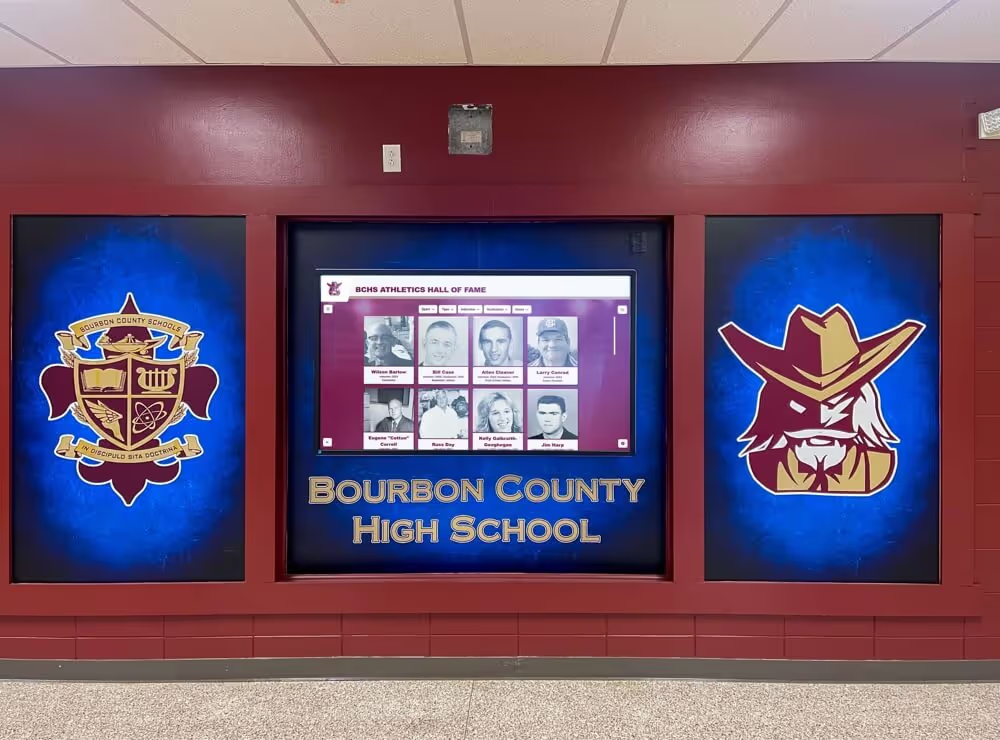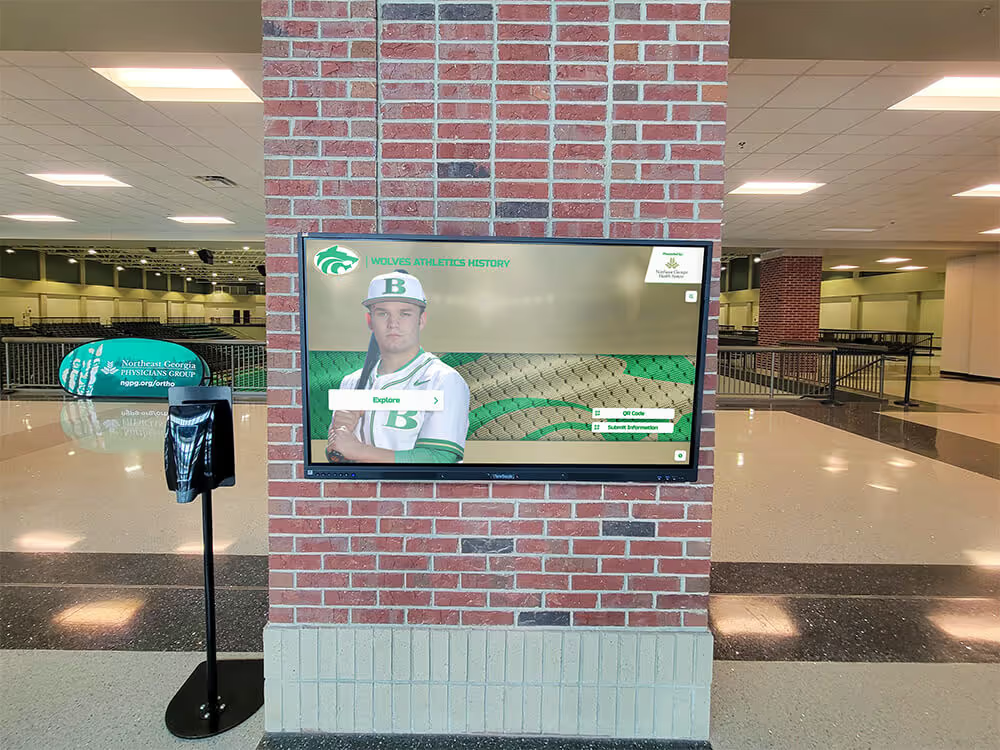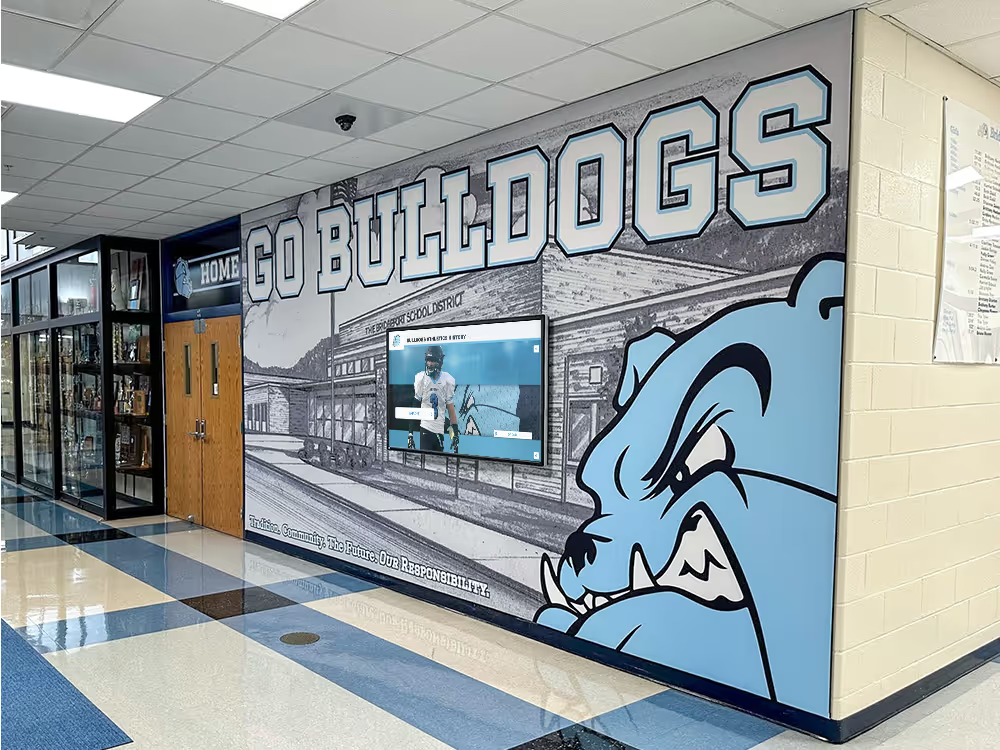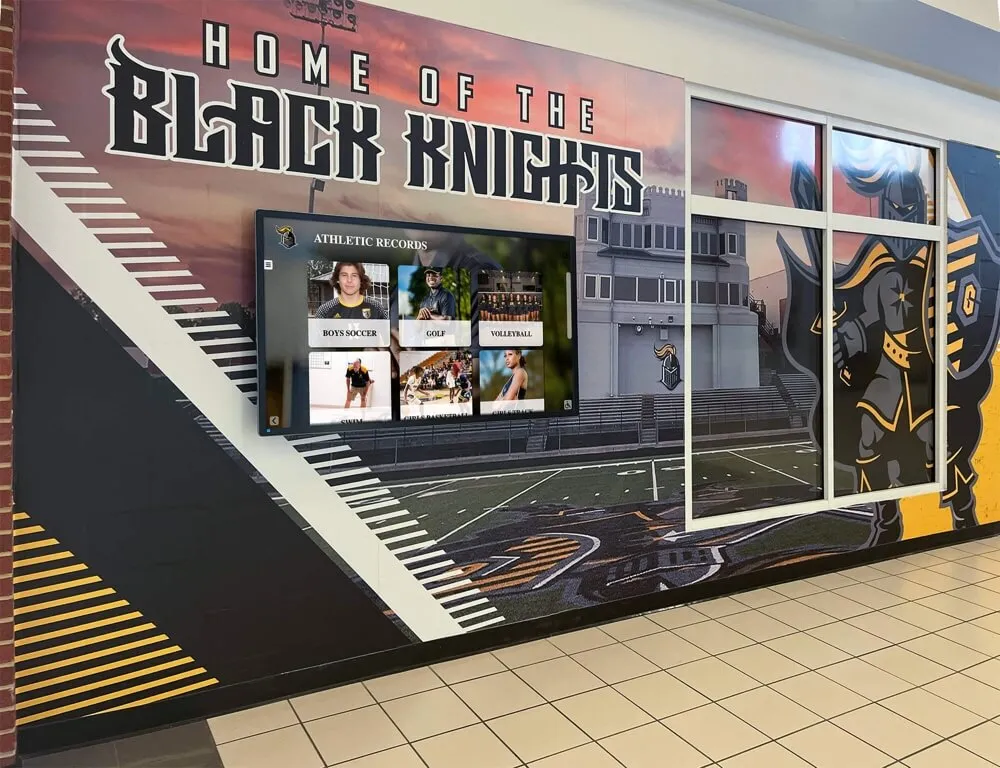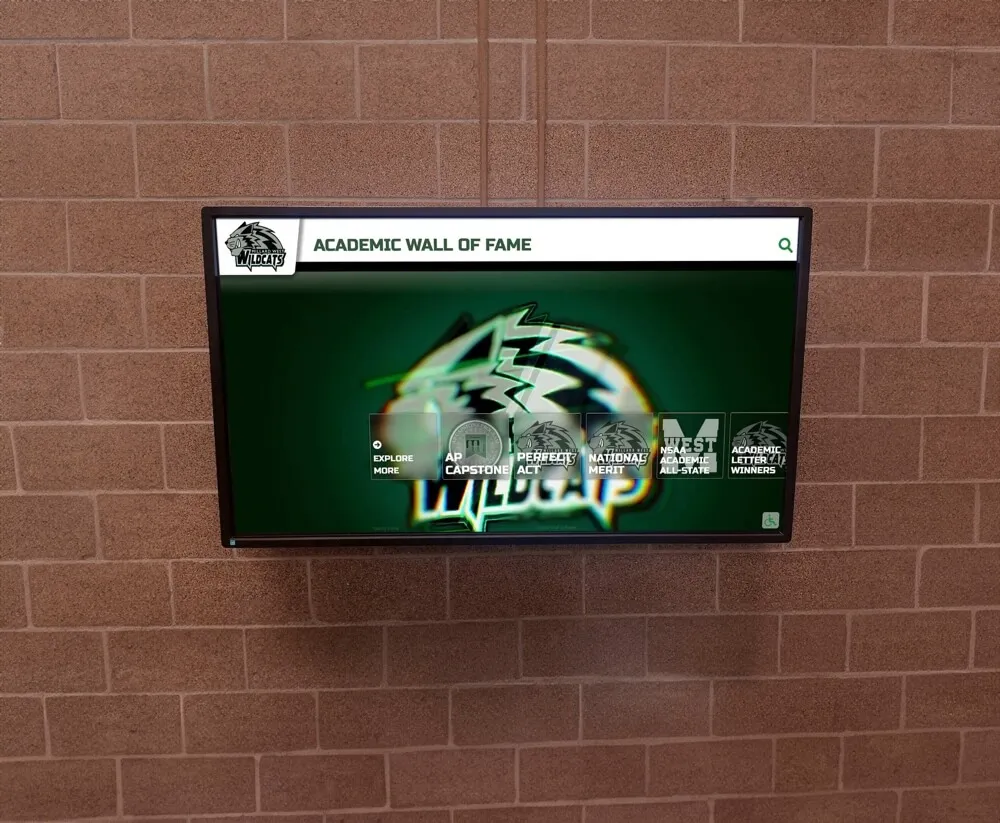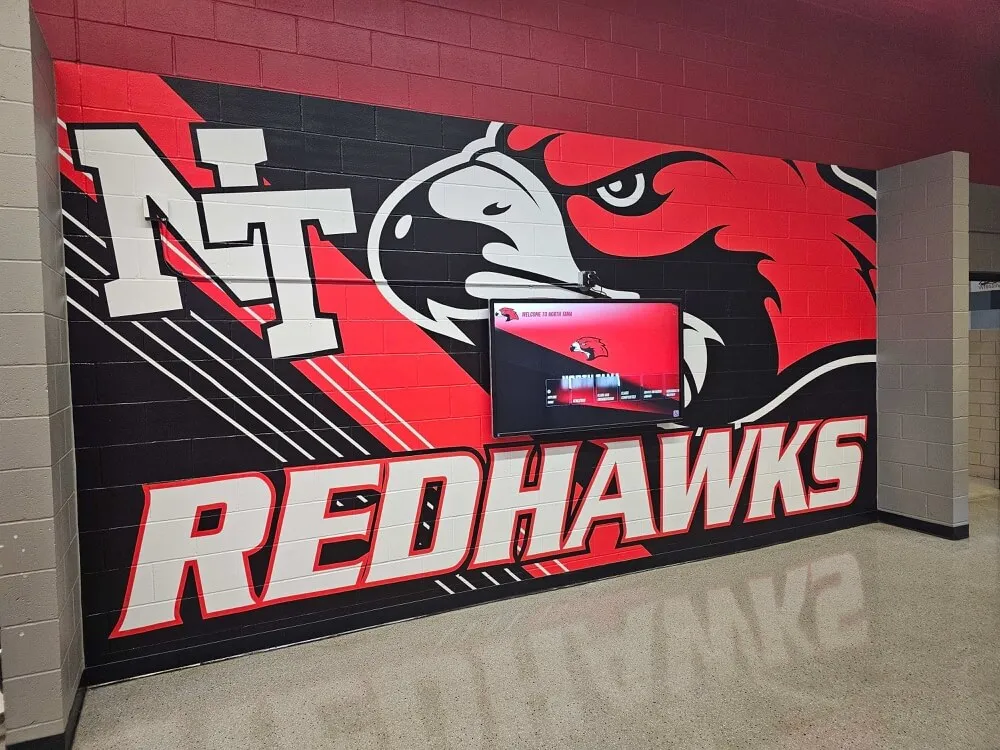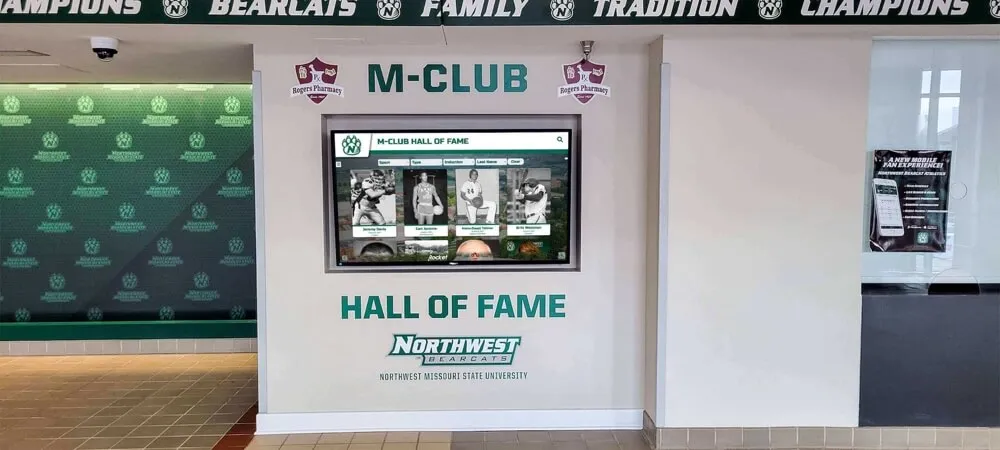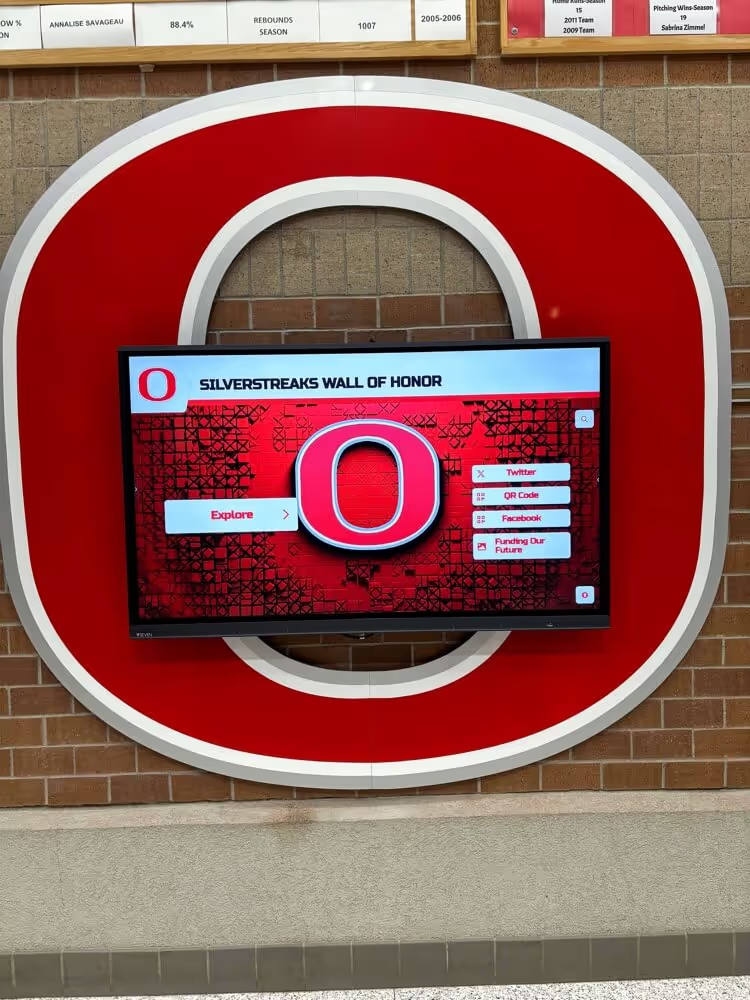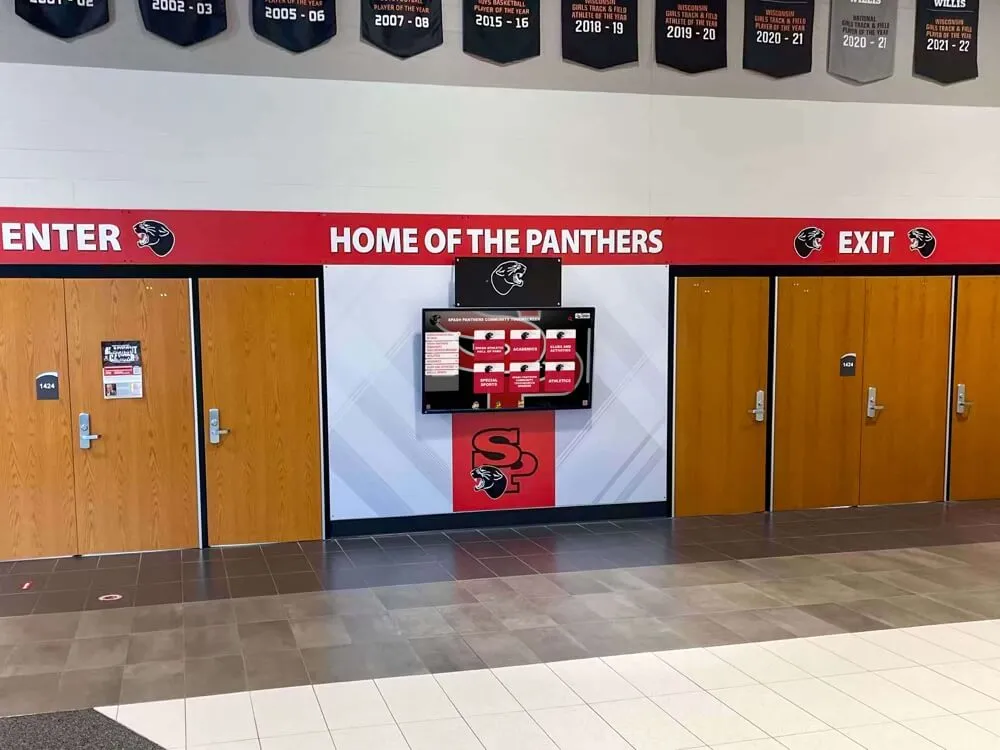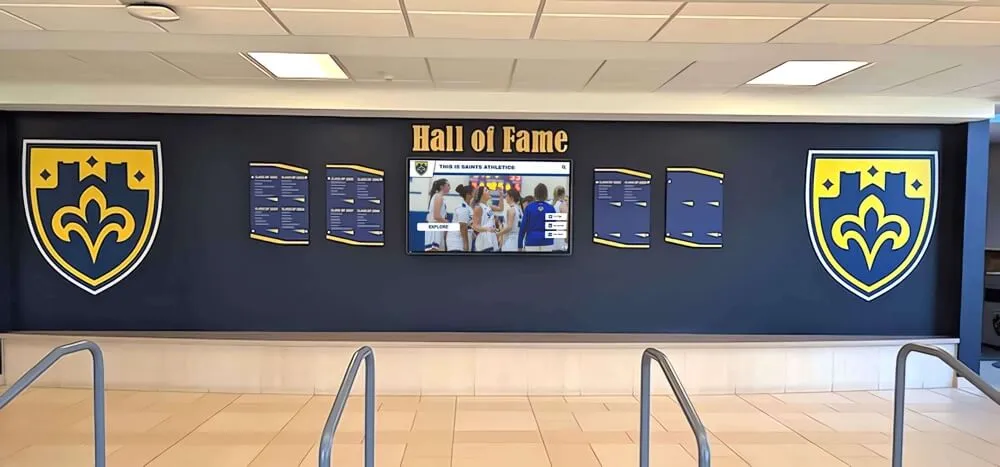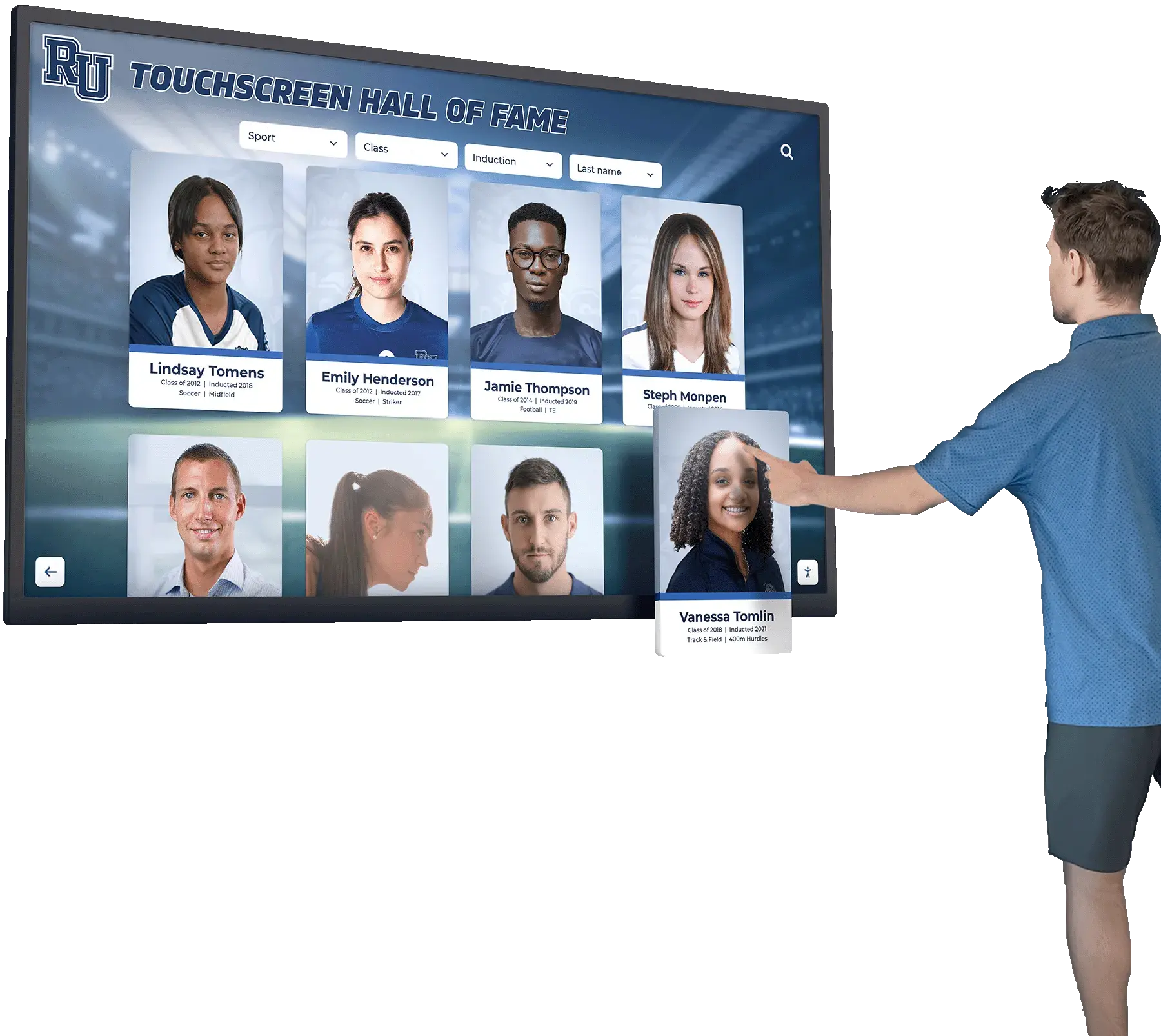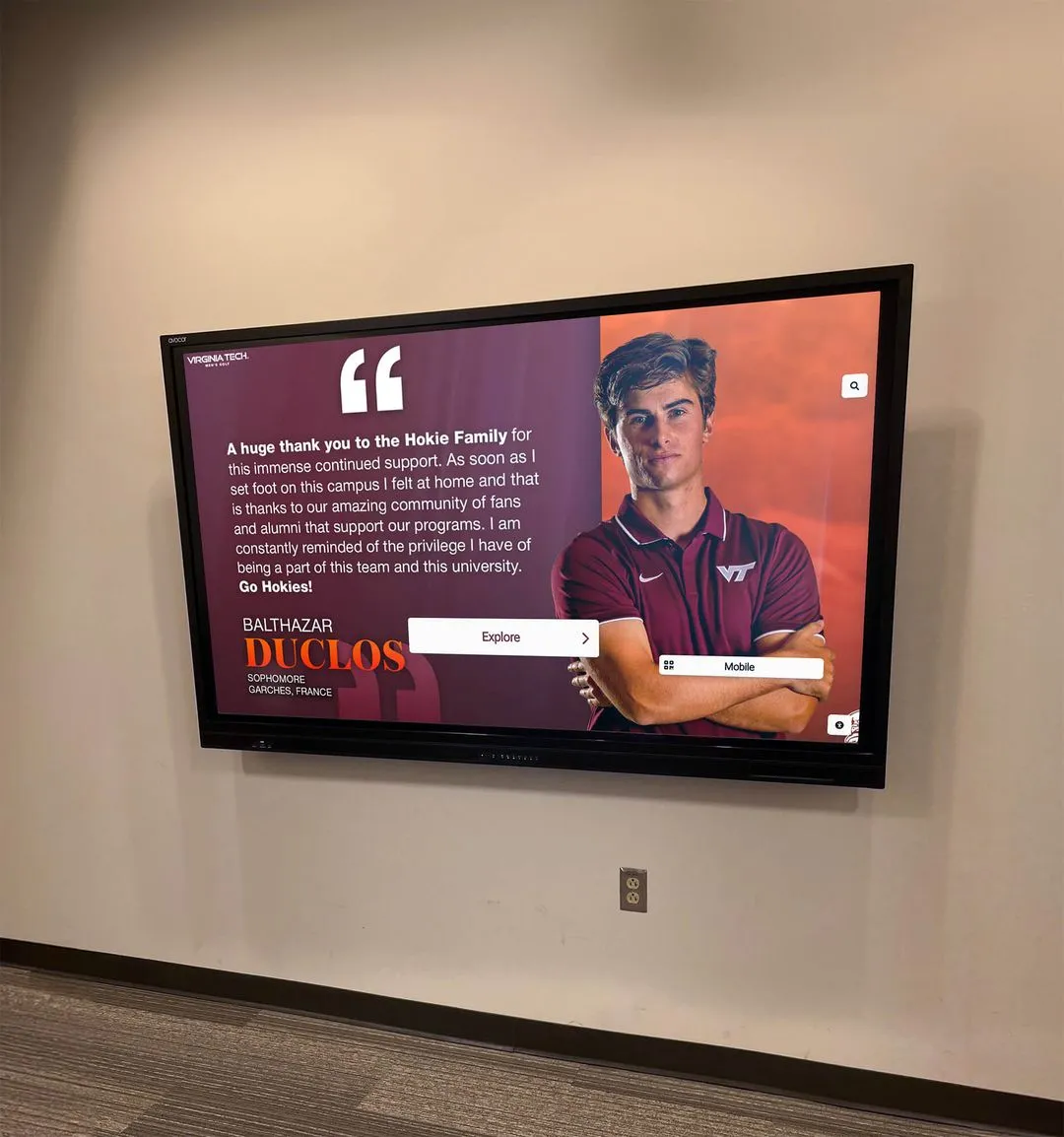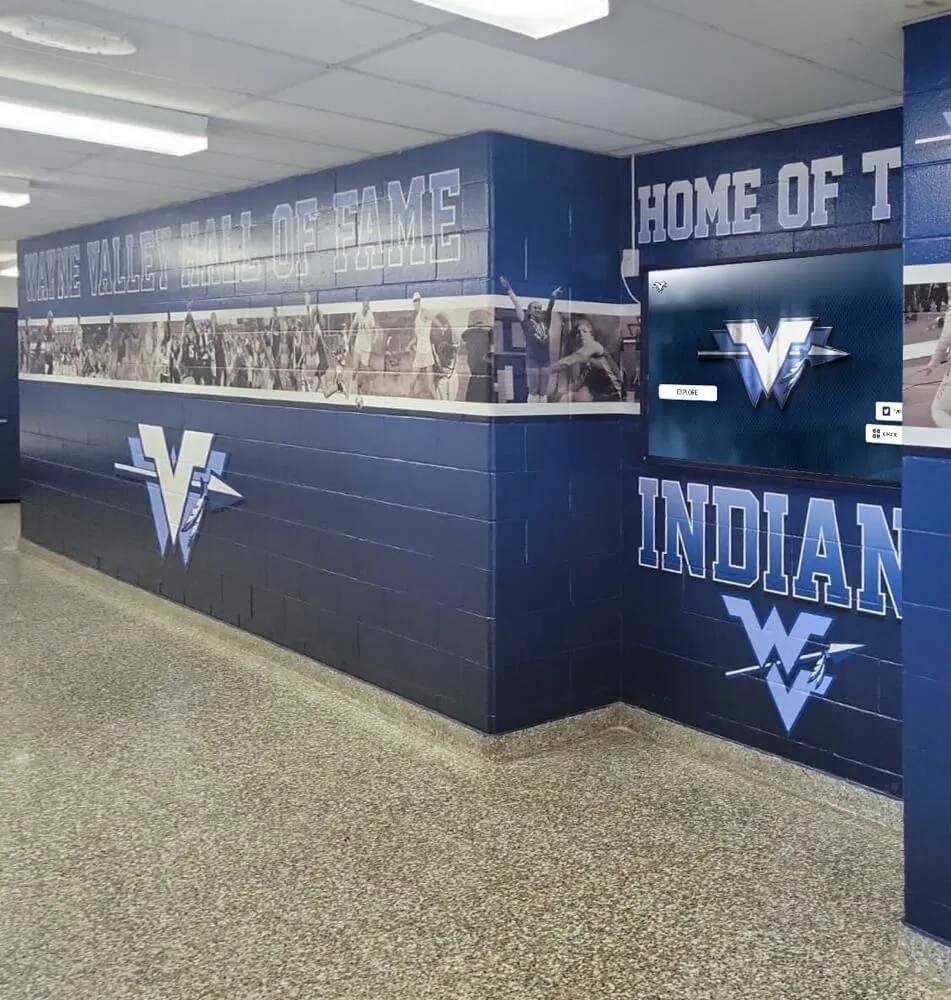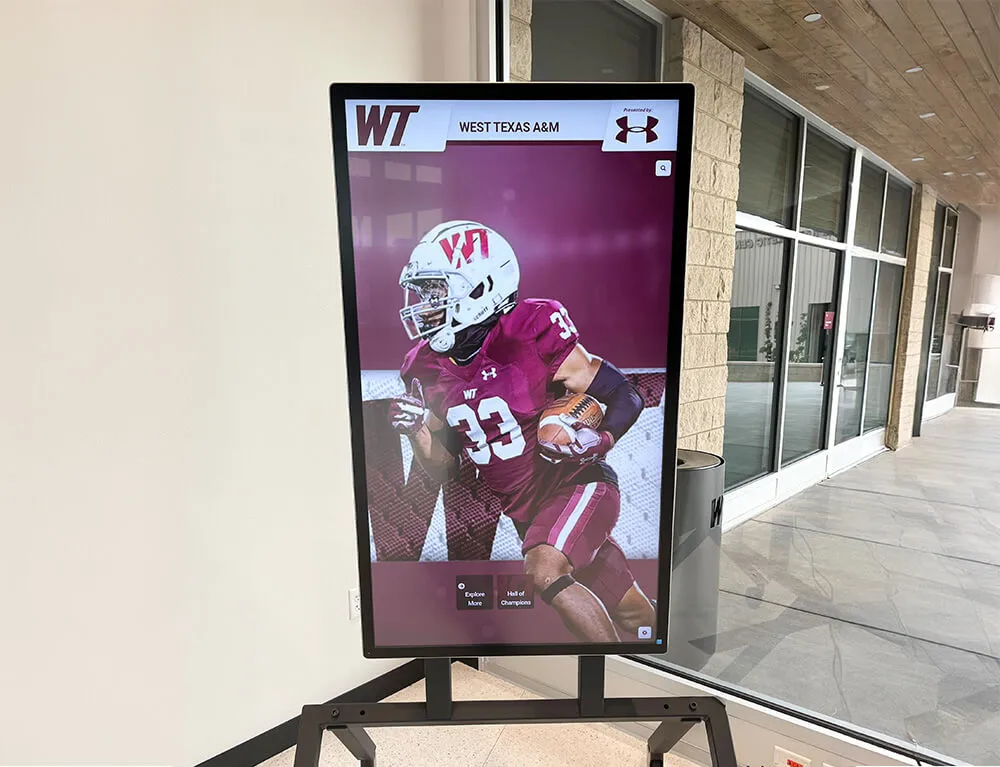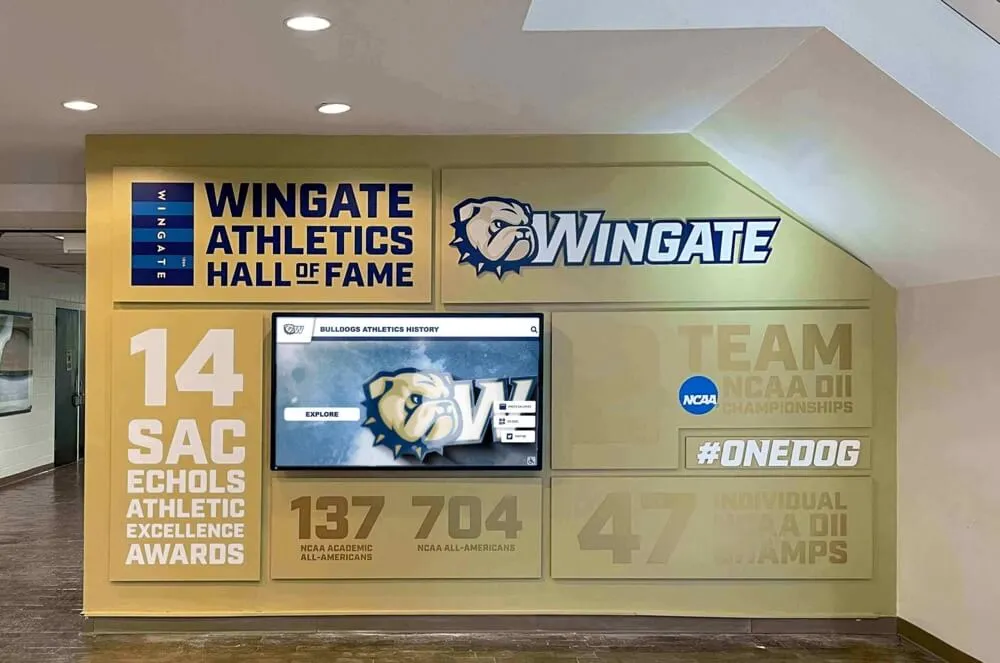
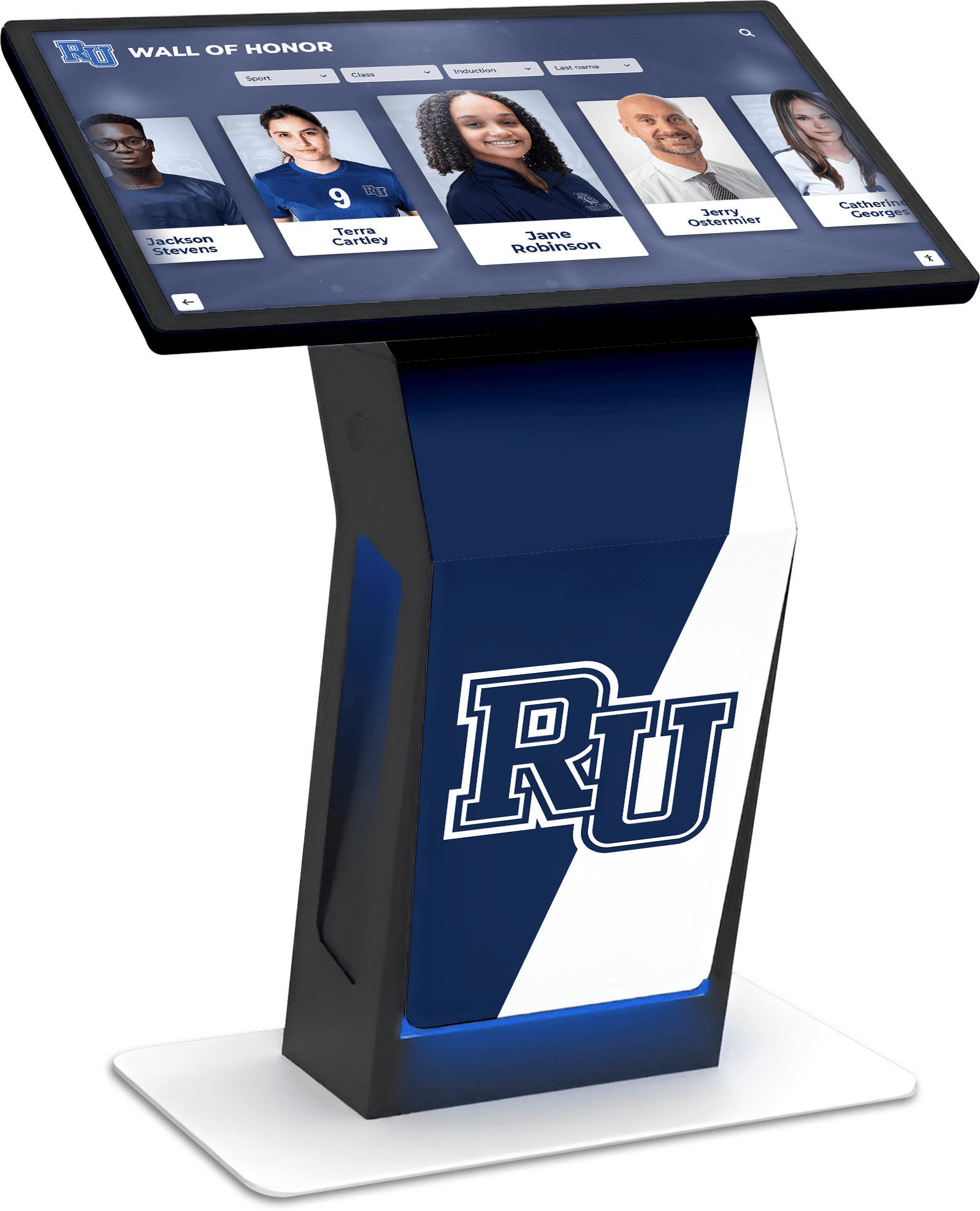




Building a virtual hall of fame has become essential for modern organizations seeking to honor achievements beyond the limitations of physical space. Unlike traditional trophy cases that overflow with plaques or championship banners that crowd gymnasiums, virtual halls of fame provide unlimited recognition capacity, global accessibility, rich multimedia storytelling, and instant content updates—capabilities that static physical displays simply cannot match.
In 2026, schools, universities, athletic programs, corporate environments, religious institutions, and community organizations have more sophisticated platform options than ever before. This comprehensive guide examines the best platforms available, helping you select the solution that delivers maximum impact for your specific recognition needs while fitting within your budget and technical capabilities.
Intent: Compare
This guide helps you compare the best virtual hall of fame platforms available in 2026, examining features, pricing, implementation approaches, and long-term value to inform your recognition technology investment decision.
Why Virtual Halls of Fame Transform Recognition Programs
Virtual halls of fame solve fundamental challenges that physical displays cannot address. They provide unlimited recognition capacity without space constraints, enable global accessibility for geographically dispersed communities, support dynamic multimedia storytelling with photos and videos, deliver real-time updates honoring achievements while excitement remains high, and create engagement opportunities through interactive search and discovery that static plaques simply cannot match.
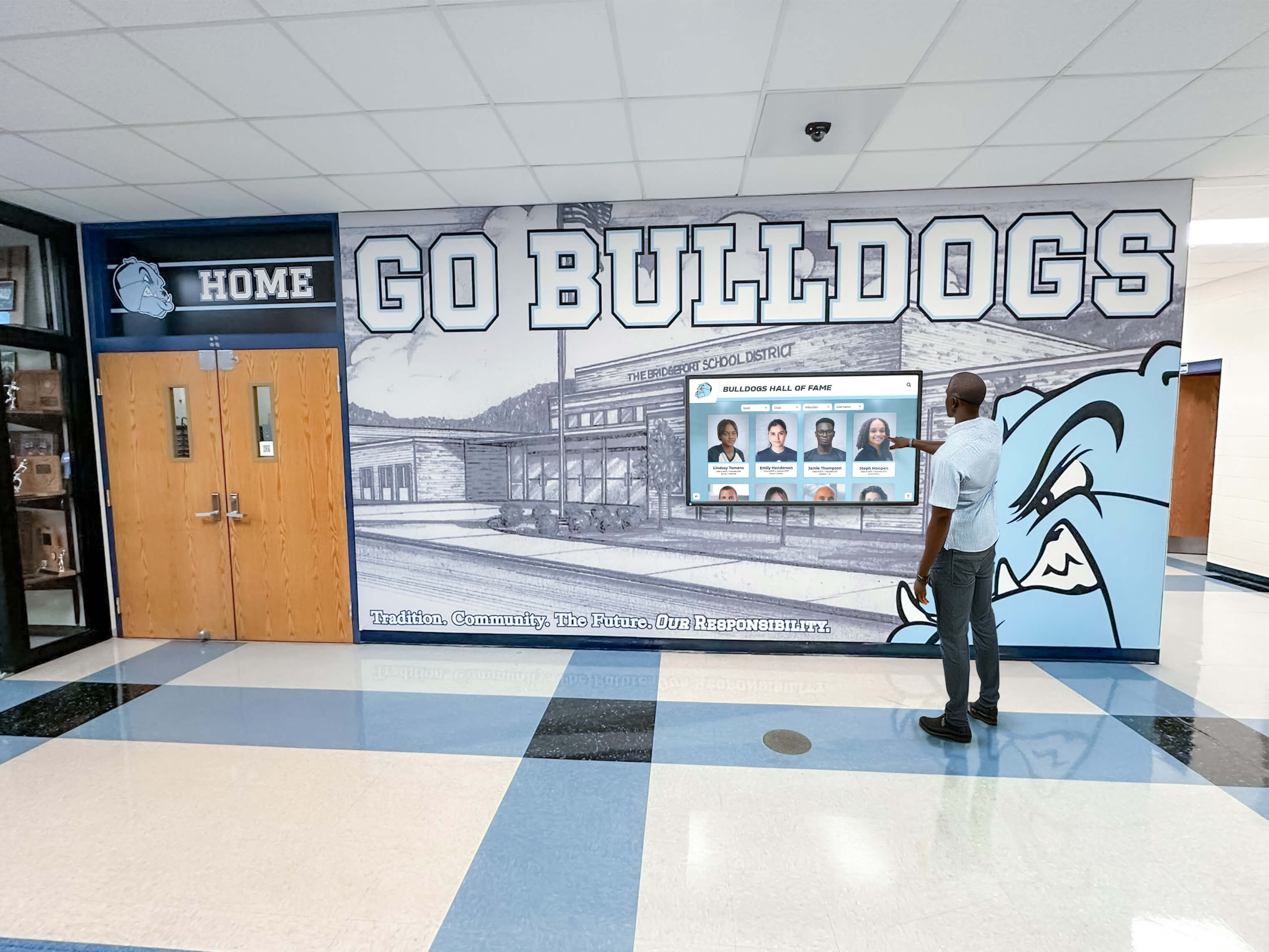
The Evolution from Physical to Virtual Recognition
Traditional recognition methods face inherent limitations that frustrate organizations committed to honoring excellence comprehensively:
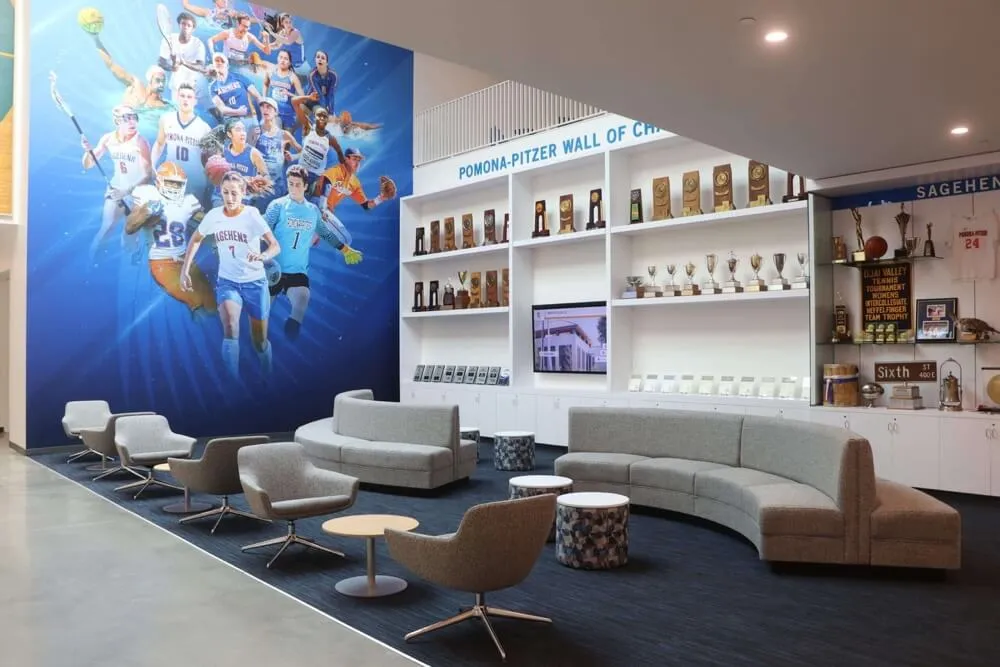
Physical Space Constraints: Trophy cases and plaques can only accommodate a fraction of deserving honorees before requiring expensive expansions or forcing difficult decisions about whose recognition gets removed to make room for new achievements.
Geographic Limitations: Only on-site visitors can view physical displays, excluding alumni who have moved away, distant family members, recruits considering your program, or community members unable to visit your facility regularly.
Update Complexity: Adding new honorees to physical displays requires ordering materials, scheduling engravers, coordinating installation, and managing logistics that often delay recognition by weeks or months after achievements occur.
Limited Storytelling Capacity: Engraved names and dates provide minimal context about achievements and impact. Visitors learn little about why someone deserves recognition or how they contributed to organizational excellence.
Static Presentation: Physical displays offer no interaction, multimedia content, or dynamic updates. Once installed, they remain frozen in time, disconnected from evolving institutional narratives.
Accessibility Challenges: Physical trophy cases create accessibility barriers for visitors with mobility limitations, visual impairments, or other disabilities that make viewing difficult or impossible.
Virtual hall of fame platforms transcend these limitations, creating recognition experiences that are:
- Infinitely Scalable: Accommodate unlimited honorees without physical constraints or capacity planning
- Globally Accessible: Reach alumni, supporters, and community members worldwide through web interfaces
- Instantly Updatable: Add new content in minutes through cloud-based management systems without physical access
- Rich with Multimedia: Incorporate photos, videos, documents, and interactive timelines that bring achievements to life
- Highly Engaging: Enable search, filtering, social sharing, and exploration that keeps visitors engaged for minutes rather than seconds
- Fully Accessible: Support screen readers, keyboard navigation, and accessibility features ensuring inclusive recognition
Organizations implementing digital recognition strategies consistently report that virtual halls of fame generate dramatically higher engagement than physical displays while honoring more achievements at lower long-term cost.
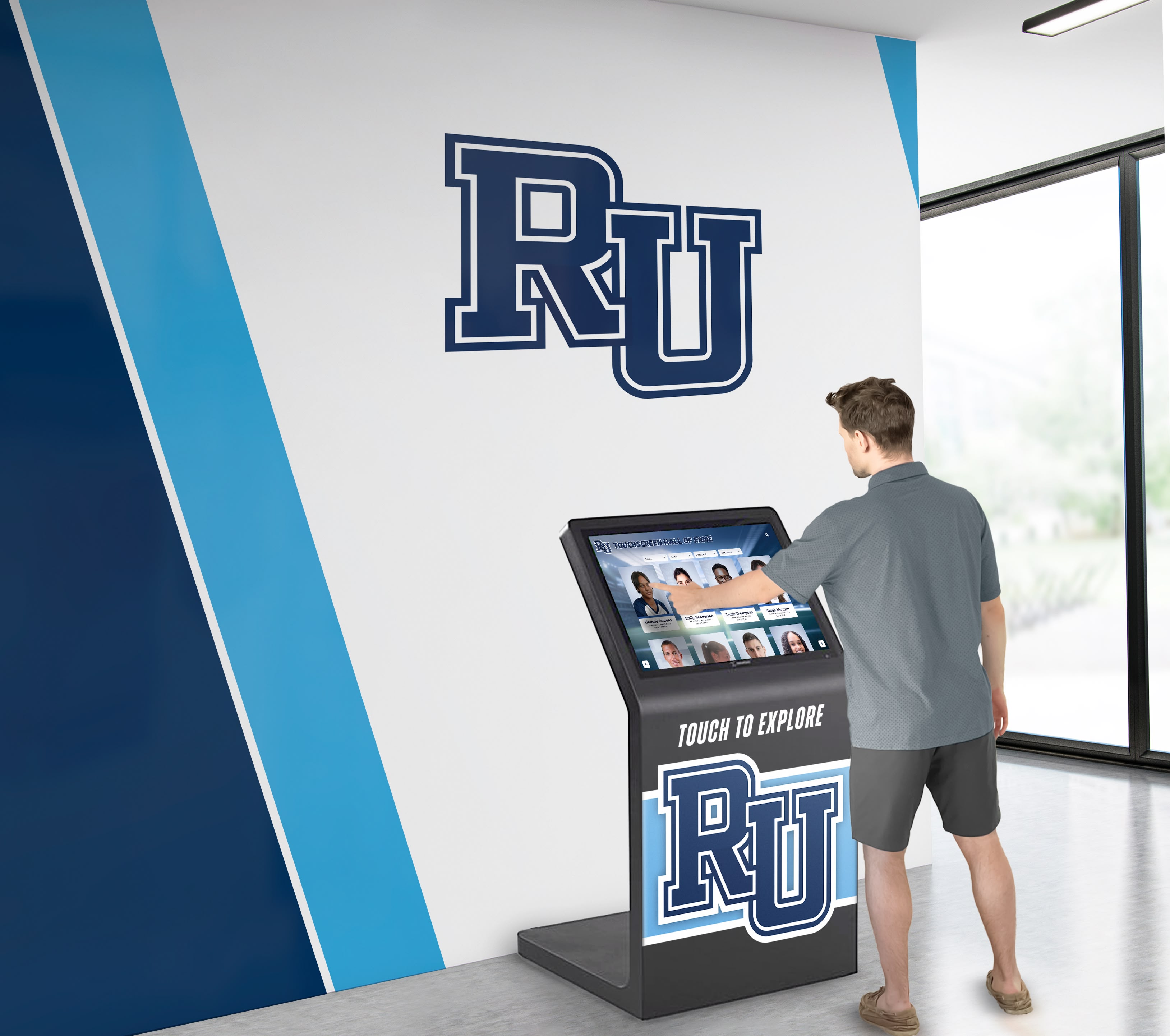
Essential Features Every Quality Virtual Hall of Fame Platform Must Provide
When evaluating platforms for your virtual hall of fame, prioritize these critical capabilities that distinguish exceptional solutions from disappointing alternatives:
1. Intuitive Content Management System
The backbone of any effective virtual hall of fame is a robust content management system that allows non-technical staff to:
- Update profiles and add new honorees easily without programming knowledge
- Upload and manage multimedia content including photos, videos, and documents
- Organize content by categories, years, achievements, departments, or custom taxonomies
- Schedule content publication for specific dates or events
- Access the system remotely from any internet-connected device
- Preview changes before publishing to ensure accuracy
- Manage role-based permissions for distributed content administration
Solutions like Rocket Alumni Solutions excel in this area with cloud-based platforms designed specifically for recognition programs. Their intuitive dashboards enable athletic directors, alumni coordinators, and administrative staff to manage content confidently without technical support or developer assistance.
2. Comprehensive Multimedia Integration
Modern virtual halls of fame must support rich media storytelling that brings achievements to life:
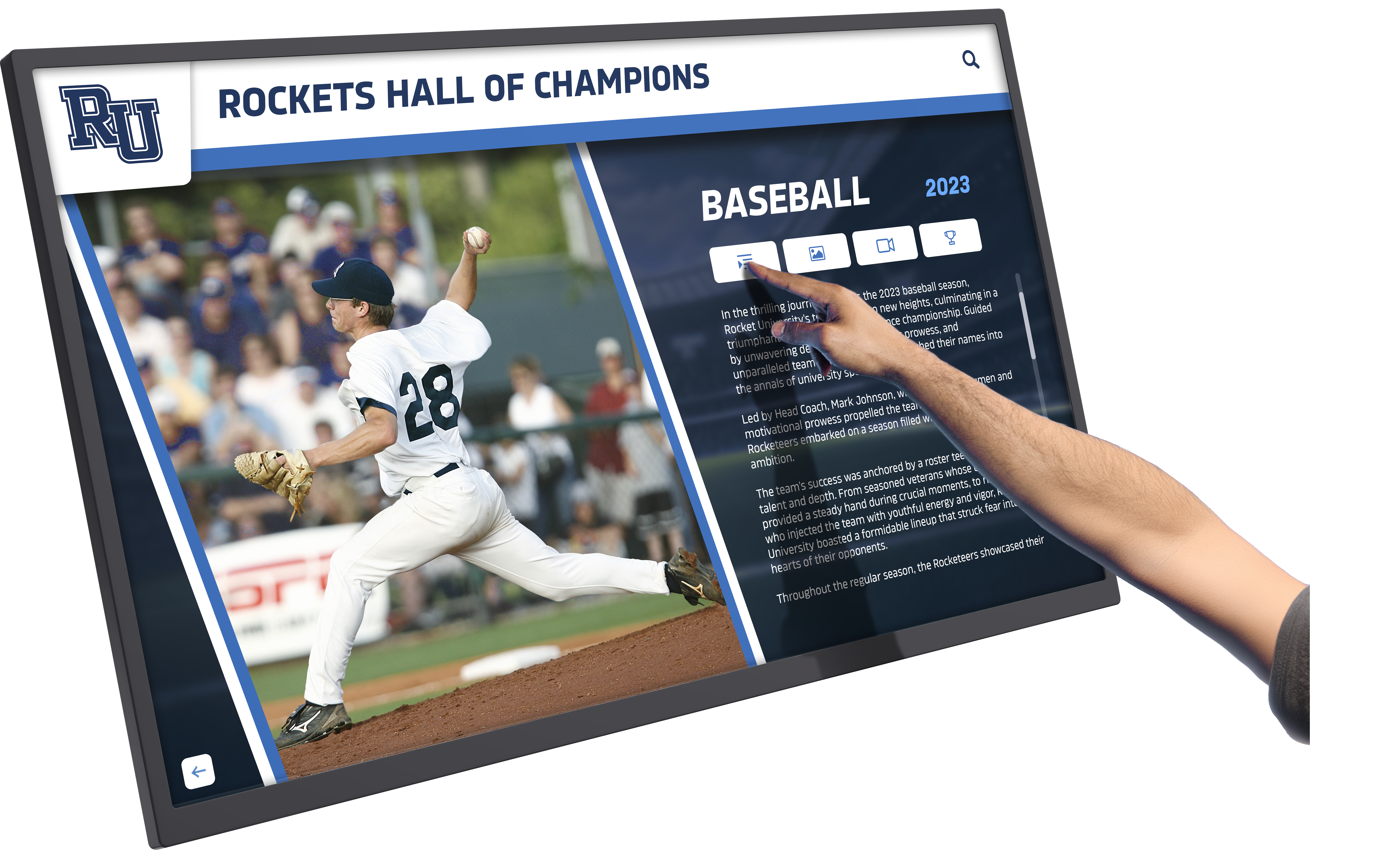
High-Resolution Photography: Professional portraits, action shots, historical images, and team photos that visually celebrate excellence
Video Content: Interview clips, achievement highlights, championship moments, documentary footage, and career retrospectives
Interactive Timelines: Chronological visualization of careers, program evolution, and achievement progressions
Document Archives: Certificates, newspaper clippings, programs, historical records, and achievement documentation
Audio Integration: Oral histories, interview recordings, play-by-play calls, and audio narratives
Social Media Connections: Links to professional networks, social profiles, and ongoing updates about honoree accomplishments
Platforms supporting diverse media types create immersive experiences that engage visitors far more effectively than text-only profiles. Digital archives combining multiple media formats preserve institutional history comprehensively while creating compelling narratives.
3. Powerful Search and Discovery Tools
Recognition value depends entirely on discoverability. Quality virtual hall of fame platforms must enable visitors to find specific achievements quickly through multiple pathways:
- Full-Text Search: Comprehensive search across names, teams, years, achievements, and biographical information
- Smart Filtering: Category filters by sport, decade, achievement type, department, or custom attributes
- Autocomplete Suggestions: Intelligent recommendations helping users find content as they type
- Related Content: Recommendations showing connections between achievements, teammates, or eras
- Featured Content: Highlighting specific honorees, anniversaries, or timely recognition
- Popular Profiles: Showing most-viewed content and trending recognition
- Alphabetical Directories: Browsable lists organized alphabetically for systematic exploration
- QR Code Generation: Enabling smartphone access to specific profiles from physical locations
Interactive search transforms casual viewers into active explorers. Students spend 5-10 minutes discovering connections between family achievements, coaches’ legacies, and school history—engagement impossible with static displays.
4. Responsive Design and Accessibility
Your virtual hall of fame must work flawlessly across all devices and accommodate all users:
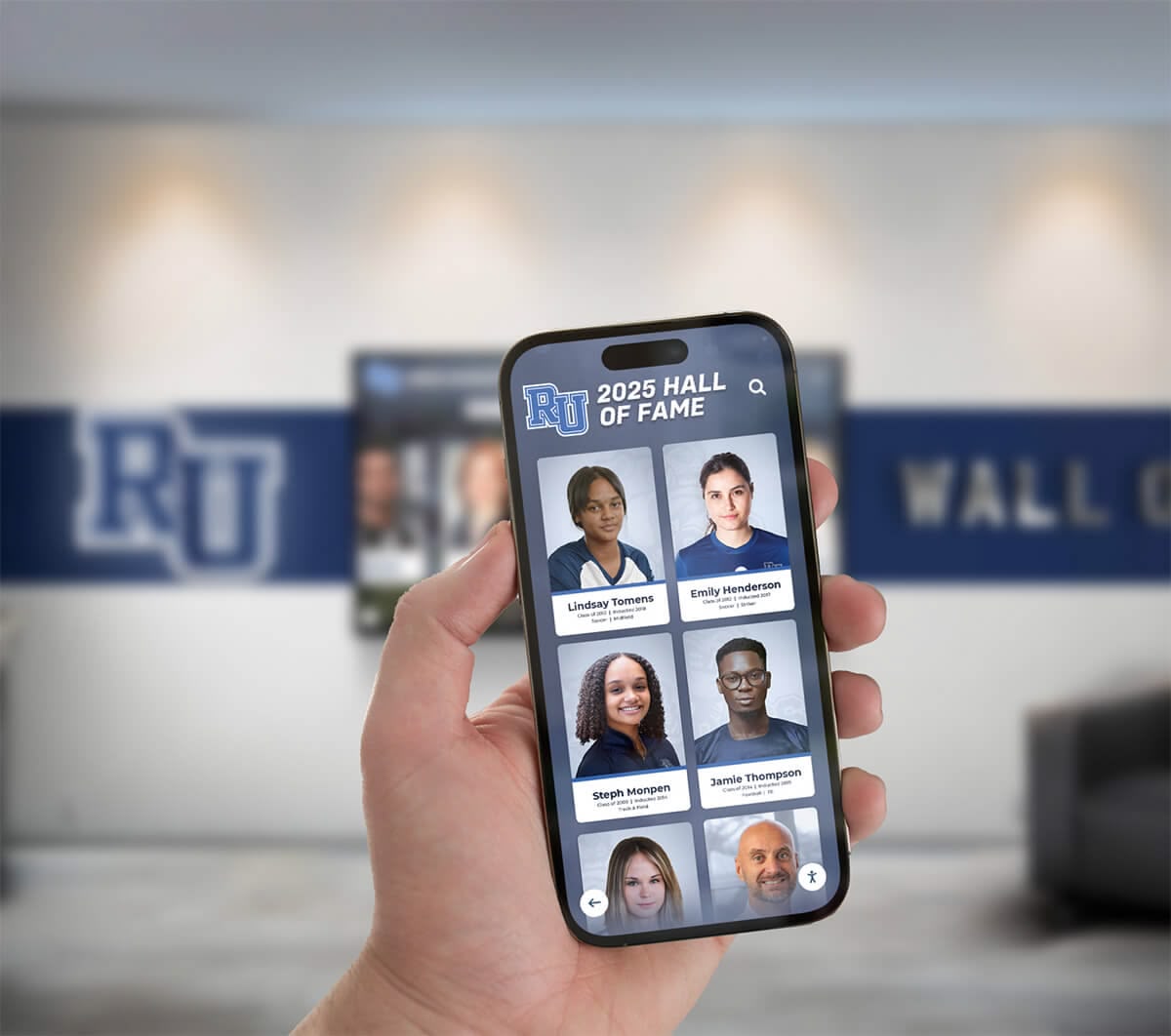
Mobile-Responsive Layouts: Interfaces that adapt seamlessly to smartphones, tablets, and desktop computers
ADA Compliance: Screen reader support, keyboard navigation, adjustable text sizes, and high-contrast viewing modes
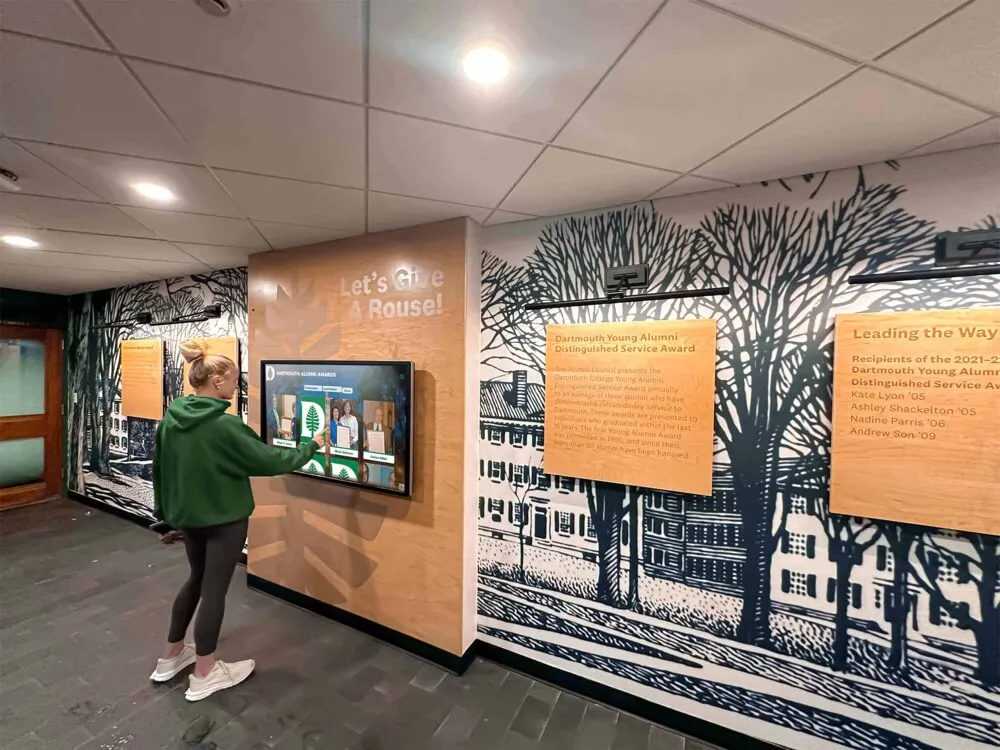
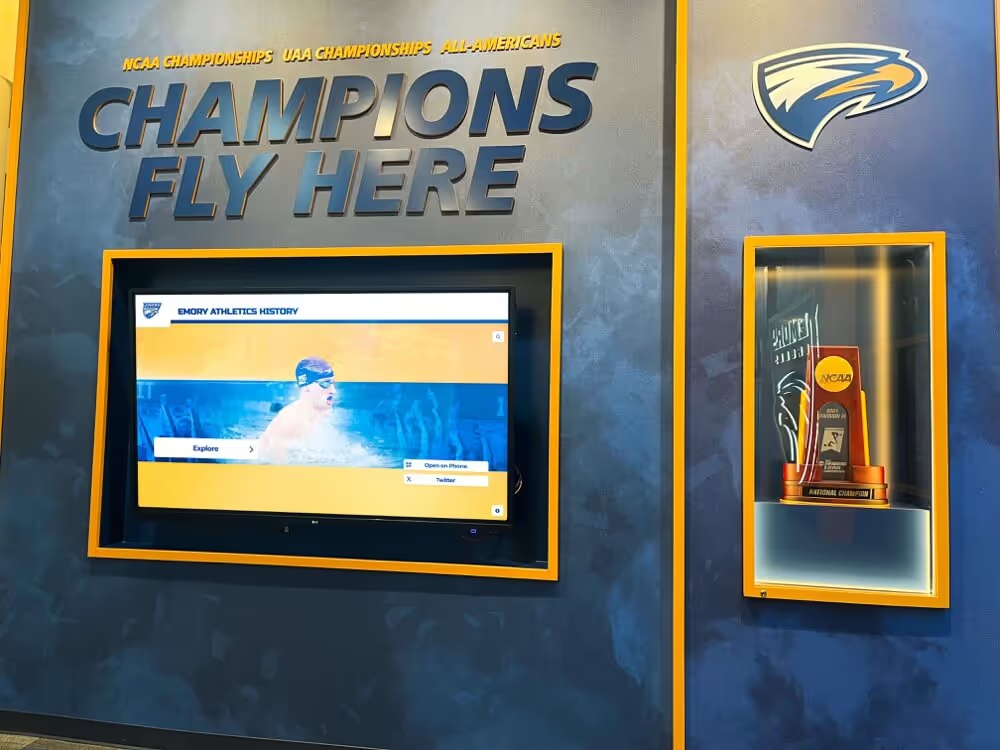
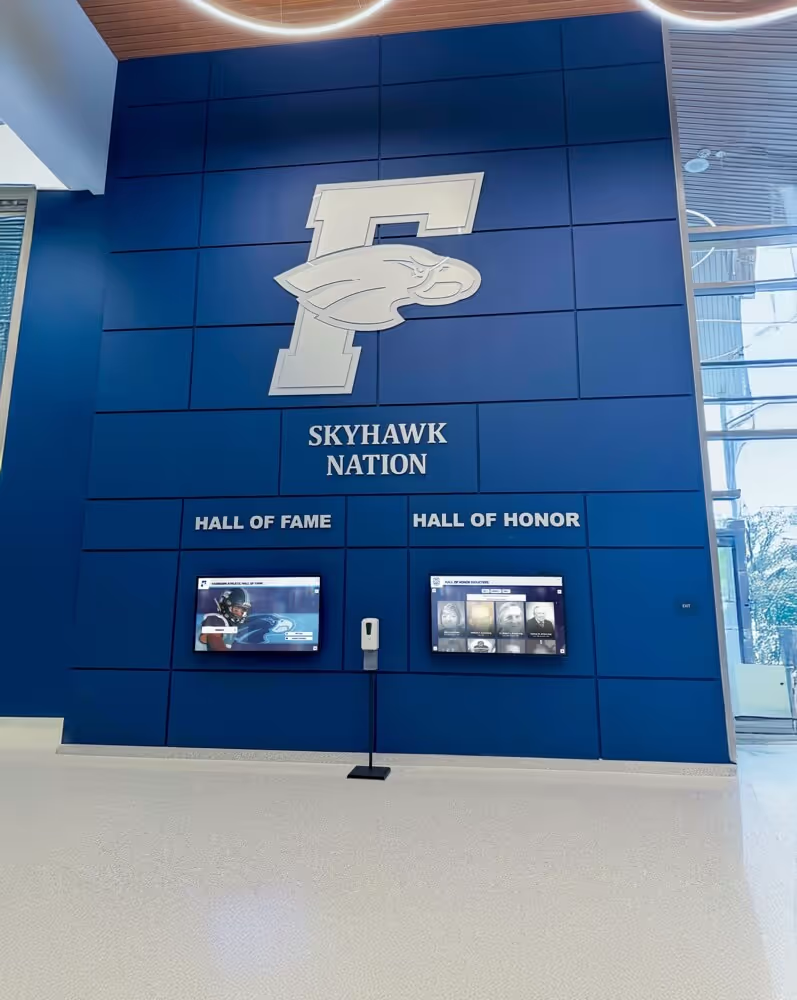
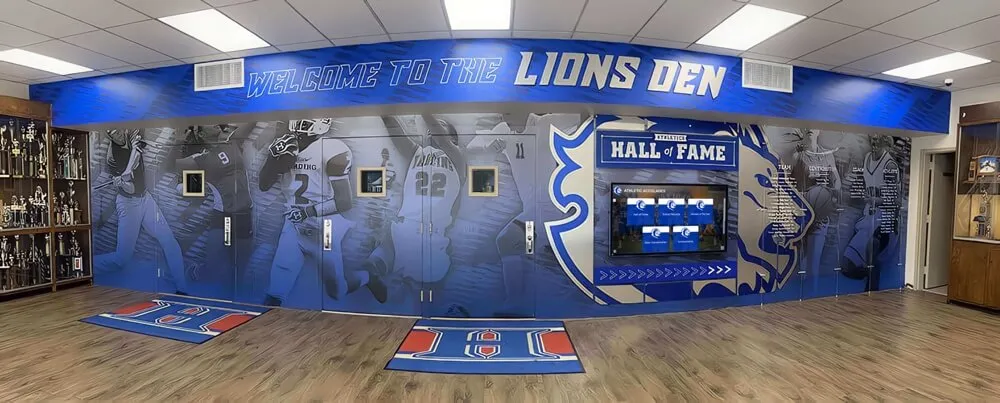
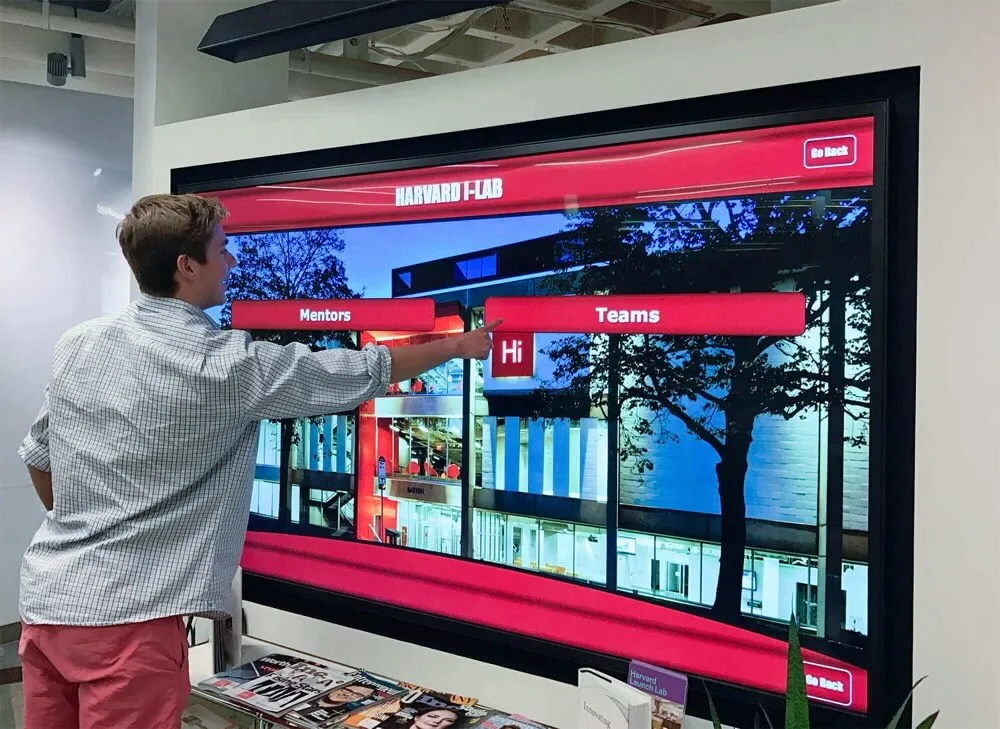
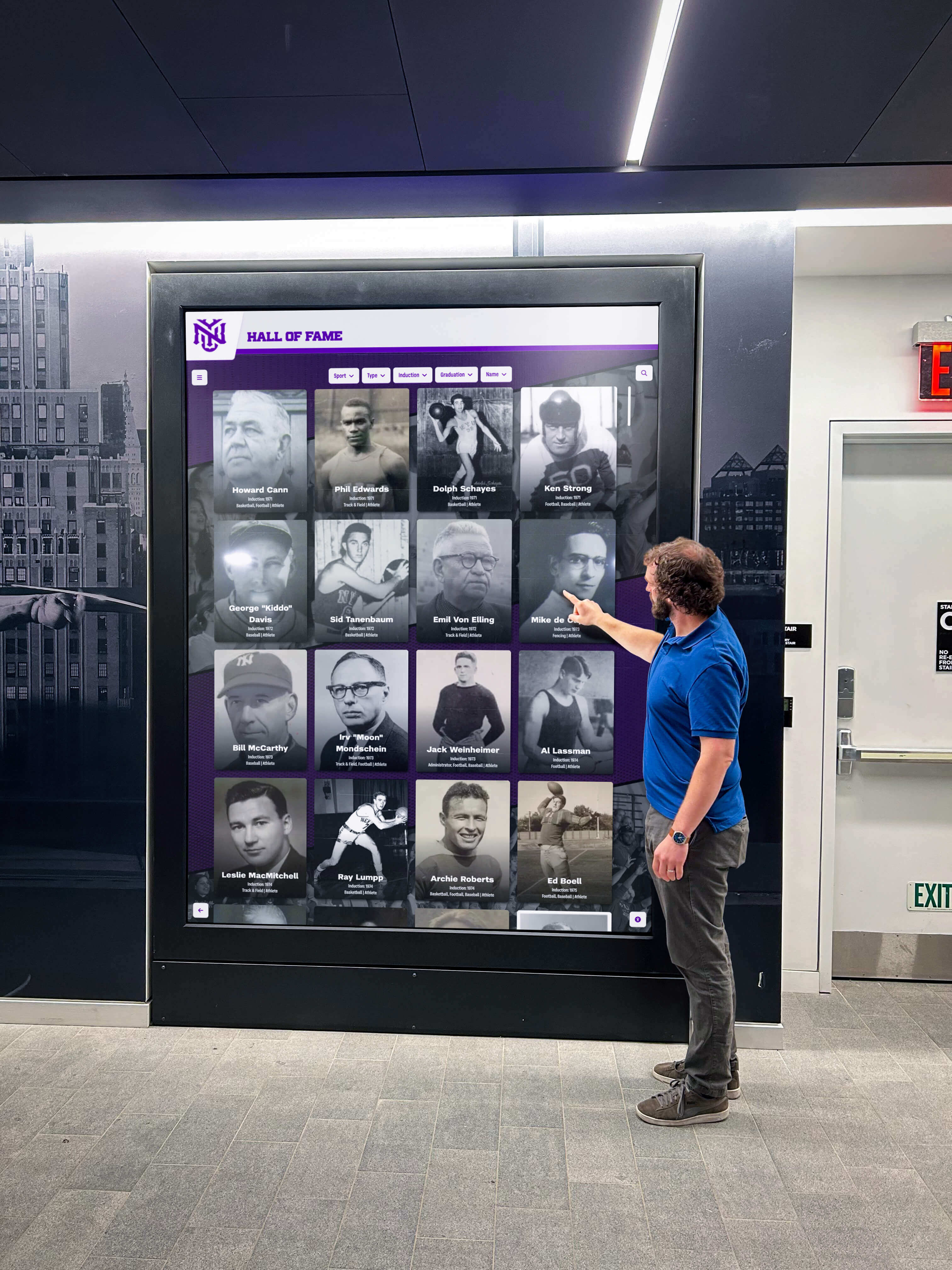
Touch Optimization: Intuitive touch interfaces for physical interactive touchscreen displays
Fast Performance: Quick loading times even with extensive multimedia content and large databases
Cross-Browser Compatibility: Consistent functionality across all major web browsers
Offline Capability: Functionality during connectivity interruptions for physical installations
Organizations prioritizing accessibility in digital recognition ensure that everyone can engage with achievement celebration regardless of physical abilities or device preferences.
5. Integration with Physical Displays
The most effective recognition programs bridge digital and physical experiences. Look for platforms that:
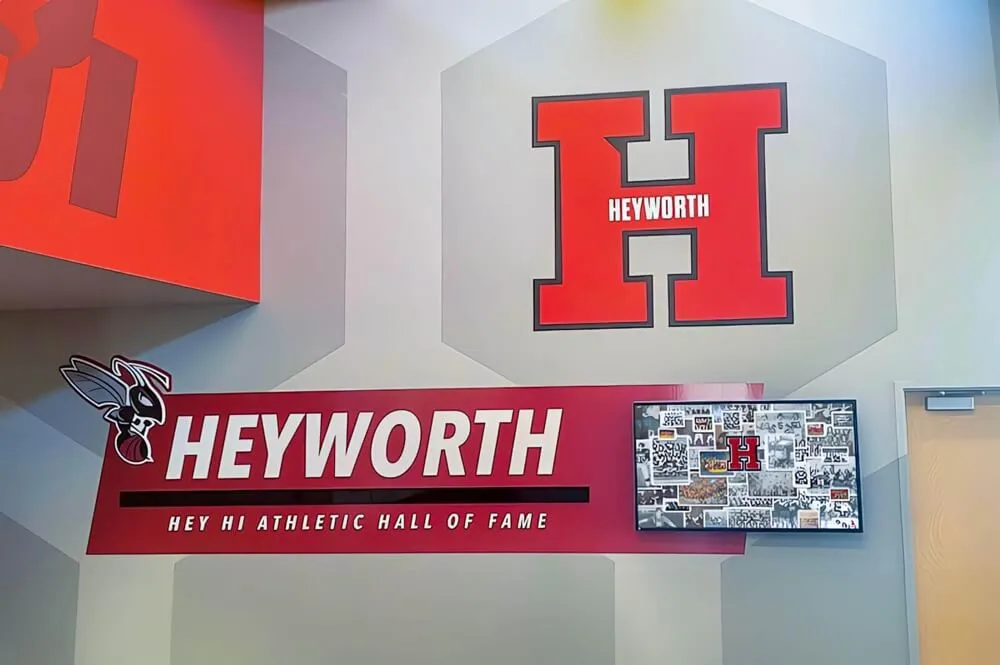
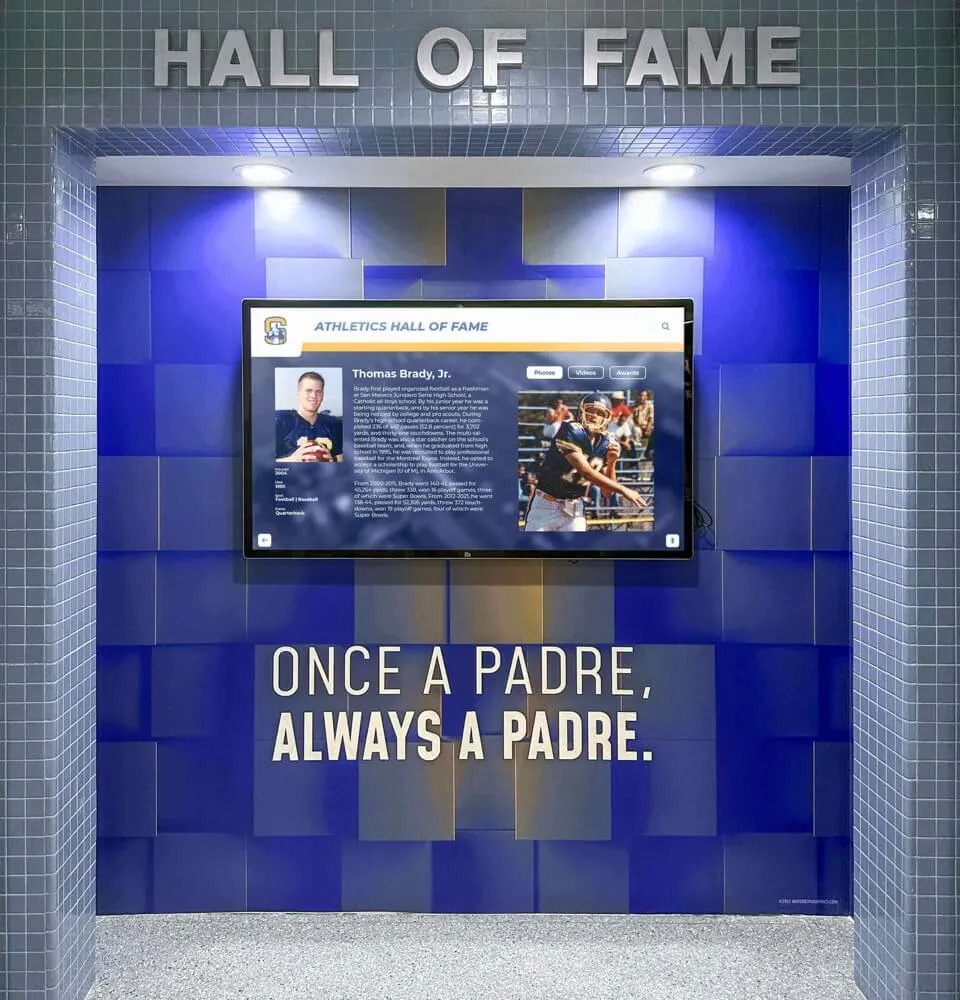
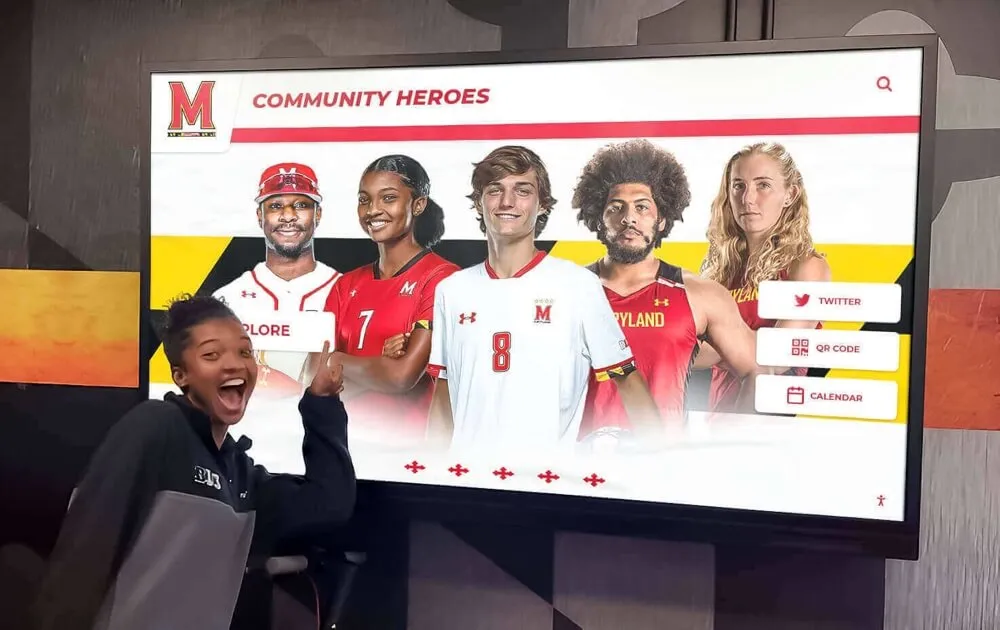
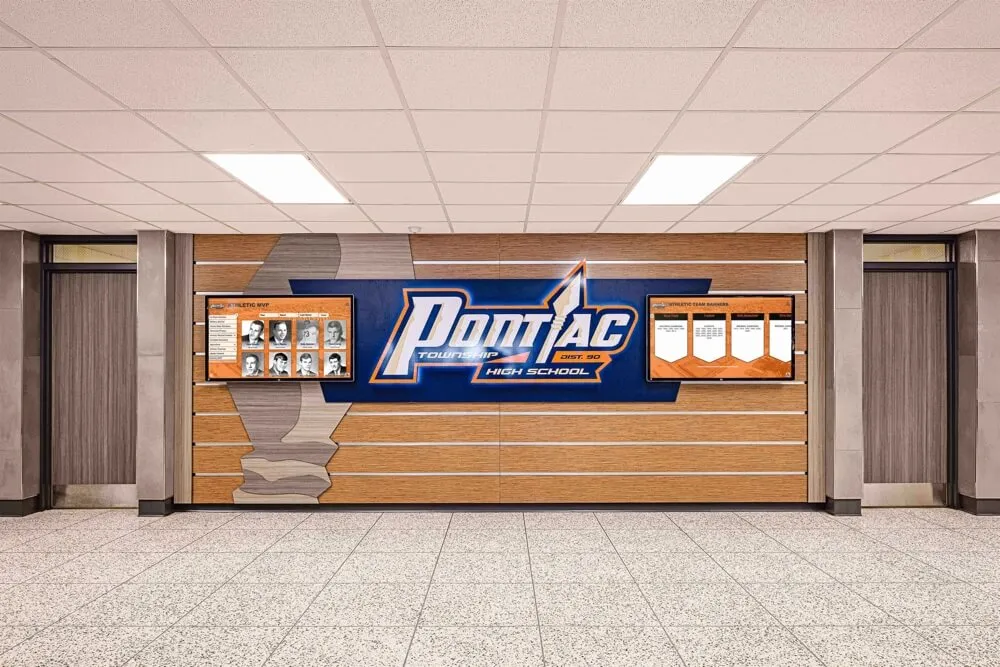
- Power both online and on-site interactive touchscreen displays from single content source
- Generate QR codes linking physical plaques to detailed digital profiles
- Maintain consistent branding across all touchpoints
- Synchronize content automatically between online and on-site installations
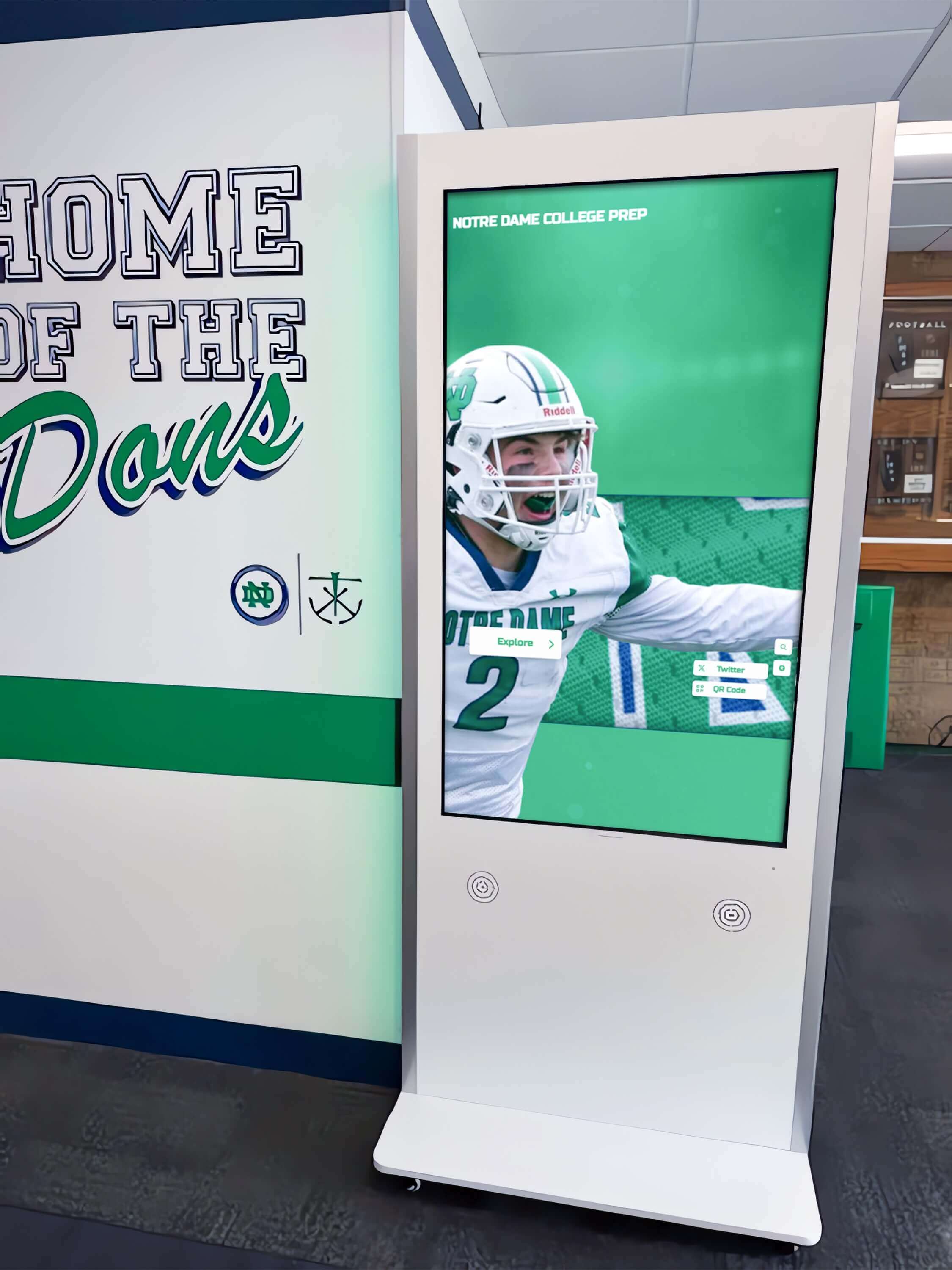
- Support physical kiosk deployments in high-traffic locations
- Enable seamless transitions between physical and digital engagement
Rocket Alumni Solutions seamlessly powers both web-accessible virtual halls of fame and physical touchscreen recognition displays from unified content management systems, ensuring consistency while maximizing accessibility.
6. Cloud-Based Updates and Remote Management
Recognition relevance requires currency. The best platforms enable instant updates when achievements occur:
- Cloud-Based Architecture: Update content from anywhere with internet access
- Immediate Publishing: Changes appear instantly without display restarts or physical access
- Scheduled Publication: Automate future updates for specific dates or events
- Batch Editing: Efficiently modify multiple profiles simultaneously
- Content Staging: Test changes before making them live
- Automatic Synchronization: Update multiple displays from single content source
- Mobile Management: Update content from smartphones at events or competitions
Schools using robust cloud-based platforms add championship recognition within hours of tournament victories rather than waiting weeks for physical trophy case updates. This immediacy honors excellence while excitement remains high and community attention focuses on achievement.
The Top Virtual Hall of Fame Platforms in 2026
After extensive research, testing, and evaluation of dozens of platforms, these solutions represent the best options available for building comprehensive virtual halls of fame in 2026.
1. Rocket Alumni Solutions – Best Overall Platform
Best For: K-12 schools, colleges, universities, athletic programs, corporate recognition, religious institutions, community organizations, all comprehensive recognition needs
Rating: ⭐⭐⭐⭐⭐ 5.0/5.0
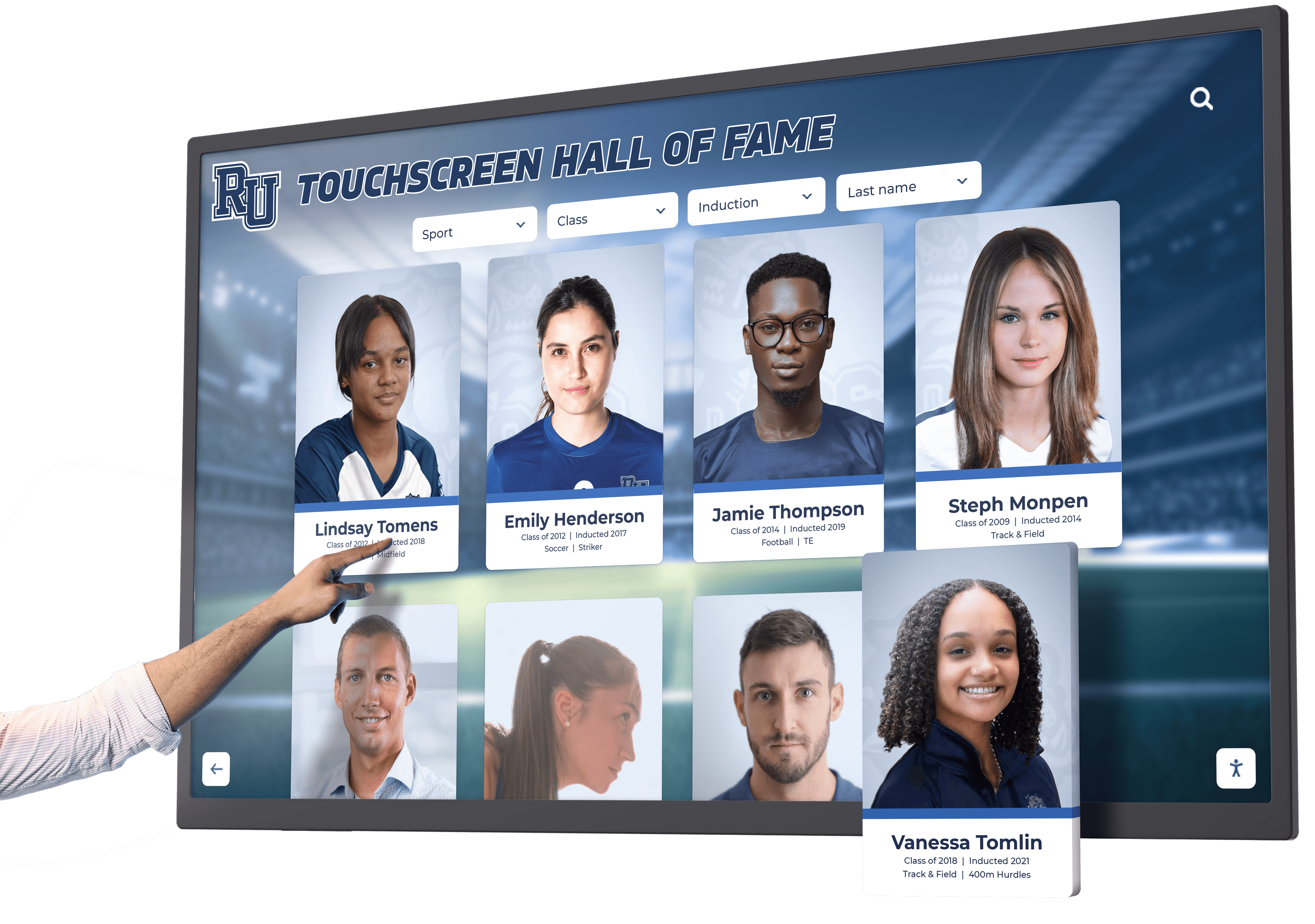
Rocket Alumni Solutions dominates the virtual hall of fame market in 2026 with purpose-built technology specifically designed for recognition programs. Unlike generic website builders or basic digital signage adapted for recognition purposes, Rocket provides comprehensive solutions powering both physical interactive touchscreen displays and web-accessible virtual halls of fame from a single unified platform.
Key Strengths:
- Purpose-Built for Recognition: Every feature designed specifically for halls of fame rather than adapted from generic tools
- Dual-Mode Operation: Single platform powers both physical touchscreen kiosks and online web access seamlessly
- Unlimited Recognition Capacity: No artificial limits on profiles, photos, videos, or multimedia content
- Intuitive Content Management: Non-technical staff manage updates confidently through cloud-based web dashboard
- Advanced Search and Discovery: Sophisticated filtering, autocomplete, and related content recommendations
- Rich Multimedia Support: Seamlessly integrate videos, photo galleries, documents, timelines, and audio
- Industry-Leading Templates: Pre-built designs for athletics, academics, donors, alumni, arts, service, and more
- Mobile-Responsive Design: Perfect display on devices from smartphones to 75-inch touchscreens
- Built-In ADA Compliance: Accessibility features including screen reader support and adjustable text
- Proven Track Record: 1,000+ installations across all 50 states demonstrating reliability and satisfaction
- Comprehensive Support: End-to-end assistance from planning through launch and ongoing operations
- Cloud-Based Architecture: Update content instantly from anywhere with automatic synchronization
Implementation Approach:
Rocket provides white-glove service from initial planning through launch and beyond. Their team assists with content strategy development, historical research guidance, profile creation, hardware selection (if including physical displays), staff training, and launch event planning. The platform’s template-based approach accelerates implementation while allowing extensive customization matching institutional branding perfectly.
Organizations benefit from proven workflows specifically designed for recognition programs. Whether building high school walls of fame, college athletic recognition, donor walls, or comprehensive institutional archives, Rocket’s platform adapts to specific organizational needs while maintaining exceptional user experiences.
Pricing:
Custom quotes based on organization size and requirements. Typical investment includes software platform licensing, optional hardware for physical displays, implementation support, staff training, and ongoing maintenance. Organizations report complete systems starting around $12,000-$35,000 for comprehensive single-display installations including quality commercial-grade hardware. Web-only virtual halls of fame without physical displays typically cost significantly less.
Why Rocket Ranks #1:
Rocket Alumni Solutions combines the ease of pre-built recognition-specific templates with the flexibility of fully customized programs. Organizations benefit from proven technology specifically designed for their exact use case rather than trying to adapt generic platforms never intended for recognition purposes. The ability to seamlessly integrate physical touchscreen displays with web accessibility creates comprehensive recognition ecosystems maximizing community engagement while honoring every achievement appropriately.
For most organizations seeking virtual hall of fame platforms in 2026, Rocket Alumni Solutions represents the clear optimal choice delivering superior functionality, implementation support, and long-term value compared to any alternative.
Bottom Line: If you’re serious about building a professional, comprehensive virtual hall of fame that will serve your organization for decades, Rocket Alumni Solutions delivers the best combination of specialized features, ease of use, implementation support, and proven reliability available in 2026.
2. Custom WordPress Development – Best for Complete Control
Best For: Organizations with web development resources, unique design requirements, complex integration needs, desire for platform ownership
Rating: ⭐⭐⭐⭐ 4.0/5.0
WordPress, as the world’s most popular content management system, offers unlimited customization potential for organizations willing to invest in custom development and ongoing technical management.
Key Strengths:
- Complete Design Freedom: No template limitations—build exactly what you envision
- Extensive Plugin Ecosystem: Thousands of plugins providing diverse functionality
- Ownership and Control: Full control over hosting, data, and platform evolution
- Excellent SEO Capabilities: Strong search engine optimization tools and plugins
- Content Flexibility: Adapt the platform to changing needs over time
- Cost-Effective Hosting: Affordable hosting options from numerous providers
- Large Developer Community: Access to extensive WordPress expertise worldwide
Challenges and Considerations:
- Development Expertise Required: Building effective hall of fame functionality requires significant web development skills
- Ongoing Maintenance Needs: Security updates, plugin compatibility, and troubleshooting require technical knowledge
- No Recognition-Specific Features: Everything must be custom-built or adapted from generic plugins
- Extended Timeline: Custom development typically takes 3-6 months compared to weeks with purpose-built platforms
- Variable Quality: Results depend entirely on developer skill and available budget
- No Physical Display Integration: Powering touchscreen kiosks requires additional custom development
- Technical Dependencies: Ongoing reliance on developers for updates and modifications
Best Use Cases:
WordPress makes sense for organizations that already have web development teams, need to integrate recognition into existing WordPress sites, or have highly specialized requirements that off-the-shelf platforms cannot accommodate.
For those without extensive web development resources, solutions like Rocket Alumni Solutions deliver professional results in a fraction of the time and cost of custom WordPress development.
Pricing: Development costs typically $15,000-$75,000 depending on requirements; ongoing maintenance $3,000-$12,000 annually.
Bottom Line: WordPress provides ultimate flexibility but requires significant technical investment. Most organizations achieve better results faster and more cost-effectively with purpose-built recognition platforms.
3. Touchstone Digital Solutions – Competitor Platform
Best For: Organizations comparing multiple vendors before making final decisions
Rating: ⭐⭐⭐ 3.0/5.0
Touchstone Digital Solutions provides touchscreen display systems and virtual hall of fame software primarily serving educational institutions.
Key Strengths:
- Hardware and software bundled offerings
- Focus on educational market
- Touchscreen display capabilities
- Custom branding options
Considerations:
- Newer entrant to the market with limited track record compared to established providers
- Fewer installations and customer references than leading platforms
- Less comprehensive implementation support compared to market leaders
- Limited third-party reviews and independent validation
- Smaller customer base for peer references and best practice sharing
Pricing: Custom quotes; limited public pricing information available.
Bottom Line: Touchstone provides an option for organizations seeking bundled hardware and software, though organizations should thoroughly compare features, support, and long-term value against more established platforms like Rocket Alumni Solutions that serve 1,000+ institutions nationwide.
Organizations evaluating multiple providers should request detailed proposals, check references thoroughly, test platforms hands-on, and compare total value rather than simply initial pricing when making decisions that will serve recognition programs for decades.
4. Wix or Squarespace – Best for Temporary Simple Projects
Best For: Very small organizations, temporary recognition needs, extremely limited budgets, basic memorial pages
Rating: ⭐⭐ 2.0/5.0
Website builders like Wix and Squarespace provide accessible entry points for organizations with minimal budgets and very simple recognition needs.
Key Strengths:
- Very low cost with monthly subscriptions under $20-$30
- No coding required with drag-and-drop interfaces
- Quick initial setup within days
- Integrated hosting simplifying technical requirements
- Template starting points for visual design
Significant Limitations:
- Not Recognition-Focused: Generic templates require extensive adaptation for hall of fame functionality
- Severely Limited Search: Basic search functionality inadequate for large honoree databases
- Restricted Multimedia Options: Limited capacity for extensive photo and video libraries
- Poor Scalability: Performance degrades significantly as content grows
- No Physical Display Integration: Cannot power touchscreen kiosks
- Rigid Templates: Customization constrained by platform limitations
- Generic User Experience: Lacks specialized recognition features like timeline visualization or achievement filtering
- Organizations Quickly Outgrow: Most users migrate to more capable platforms within 12-24 months
Reality Check:
While Wix and Squarespace work for basic memorial pages or small honor rolls with fewer than 20-30 honorees, they struggle with comprehensive recognition programs. Organizations quickly outgrow these platforms as their halls of fame expand, ultimately facing costly migration projects to more capable systems.
For only slightly higher investment, purpose-built solutions like Rocket Alumni Solutions provide dramatically better functionality, user experience, scalability, and long-term value.
Pricing: $200-$800 annually including platform subscription and domain. However, hidden costs include time investment, functionality limitations, and eventual platform migration expenses.
Bottom Line: Website builders work only for the simplest, most basic recognition needs. Organizations planning comprehensive halls of fame should invest in purpose-built platforms from the beginning rather than facing costly migrations later.
5. Social Media-Based Recognition – Best for Supplementary Engagement
Best For: Complementing primary hall of fame platforms, ongoing engagement campaigns, reaching younger audiences, promotional activities
Rating: ⭐⭐ 2.0/5.0
Social media platforms (Facebook, Instagram, LinkedIn, TikTok) offer supplementary recognition channels rather than standalone hall of fame solutions.
Appropriate Uses:
- Campaign Promotion: Announcing new inductees and driving traffic to primary hall of fame
- Ongoing Engagement: Regular spotlights maintaining awareness between formal inductions
- Community Building: Creating conversations and connections among honorees
- Content Distribution: Sharing stories from primary hall of fame to broader audiences
- Event Marketing: Promoting induction ceremonies and recognition events
- Recruitment Outreach: Showcasing excellence to prospective students or employees
Why Social Media Cannot Replace Dedicated Platforms:
- No Central Repository: Content scattered across posts without organized access or permanent structure
- Limited Longevity: Posts quickly buried in feeds, becoming difficult or impossible to find later
- Platform Dependency: Subject to algorithm changes, policy shifts, and platform viability
- Lack of Professionalism: Insufficient gravitas for formal recognition programs requiring institutional authority
- No Search Functionality: Cannot efficiently find specific honorees or filter by achievement type
- Ephemeral Nature: Content designed for temporary engagement, not permanent recognition
- No Control: Organizations don’t own platforms or control long-term content accessibility
Effective Strategy: Use social media to promote and amplify your primary virtual hall of fame platform rather than attempting to build recognition programs entirely within social media. Post highlights and teasers that drive traffic to comprehensive recognition on platforms you control.
Organizations implementing social media recognition strategies effectively use these channels to increase awareness of their primary virtual halls of fame rather than replacing dedicated recognition platforms.
Bottom Line: Social media plays important supplementary roles but cannot serve as primary hall of fame platforms due to fundamental limitations in organization, search, permanence, and professionalism.
6. Database-Driven Custom Solutions – Best for Unique Enterprise Requirements
Best For: Large corporations, professional associations, government agencies with complex requirements and substantial budgets, highly specialized needs
Rating: ⭐⭐⭐ 3.5/5.0
Organizations with highly specialized needs and substantial budgets sometimes develop entirely custom database-driven recognition platforms from scratch.
When Custom Development Makes Sense:
- Massive Scale: Tens of thousands of profiles requiring specialized database architecture
- Complex Integration: Deep connections with existing enterprise systems and proprietary databases
- Unique Security Requirements: Specialized compliance or security needs beyond standard platforms
- Proprietary Functionality: Features that genuinely cannot be accomplished with existing platforms
- Long-Term Strategic Importance: Recognition platform central to organizational mission with multi-decade planning horizon
Investment Realities:
Custom enterprise development typically requires:
- Initial Development: $50,000 to $250,000+ depending on complexity and requirements
- Ongoing Maintenance: $10,000 to $50,000+ annually for updates, security, hosting, and support
- Extended Timeline: 6-18 months from conception to launch
- Dedicated Resources: Project management, development oversight, content migration, and testing
Strategic Consideration: Before committing to custom development, thoroughly evaluate whether purpose-built platforms like Rocket Alumni Solutions can meet requirements. Most organizations discover that specialized recognition platforms provide 90% of desired functionality at 20% of the cost and time of custom development.
Pricing: $50,000-$250,000+ initial development; $10,000-$50,000+ annual maintenance.
Bottom Line: Custom development makes sense only for organizations with truly unique requirements that existing platforms cannot address. Most organizations achieve better results faster and more cost-effectively with purpose-built recognition software.
Hybrid Approaches: Combining Physical and Virtual Recognition
The most effective recognition strategies combine physical displays with virtual accessibility, creating comprehensive ecosystems that maximize engagement across all touchpoints.
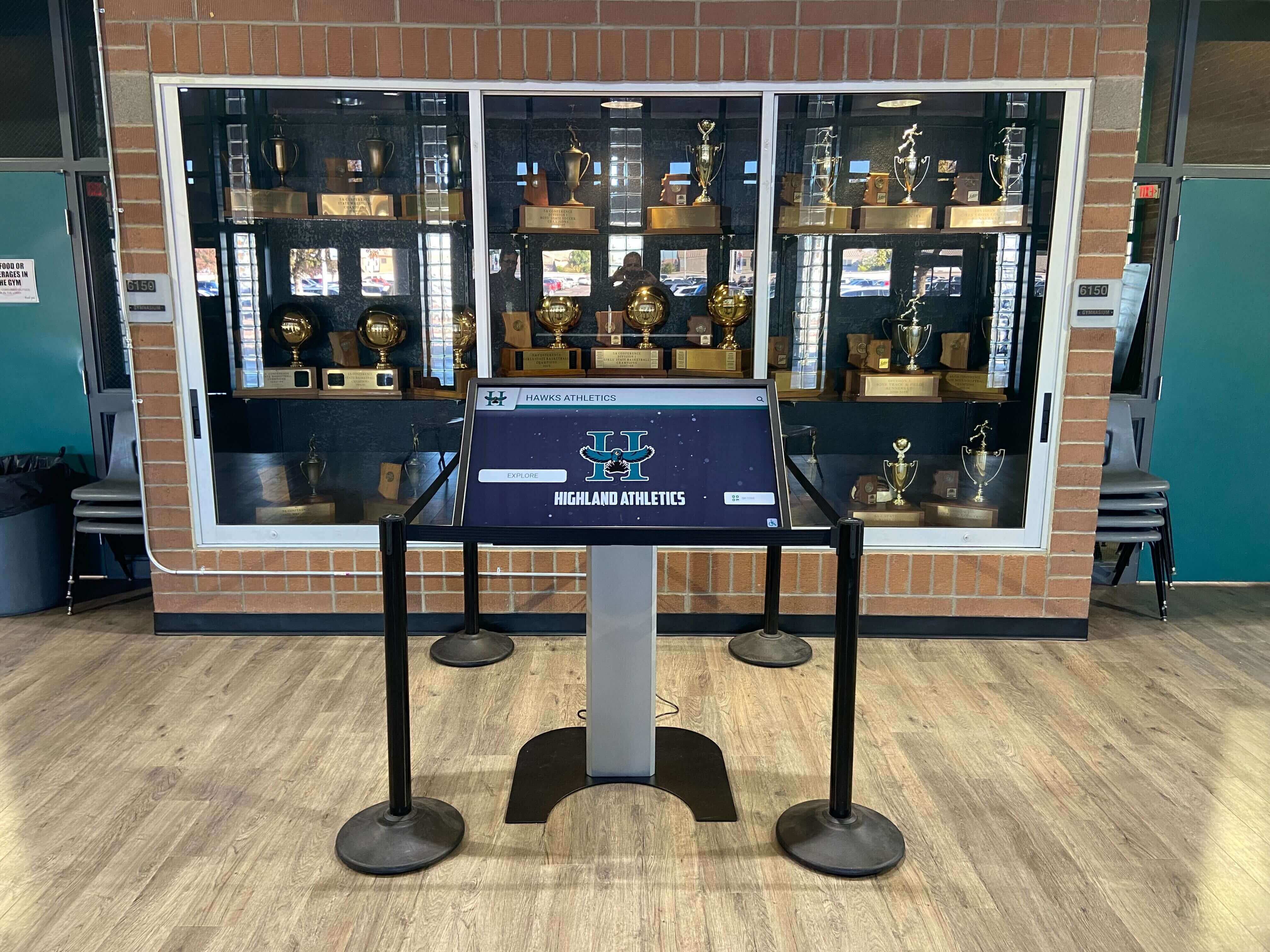
Physical Touchscreen Displays
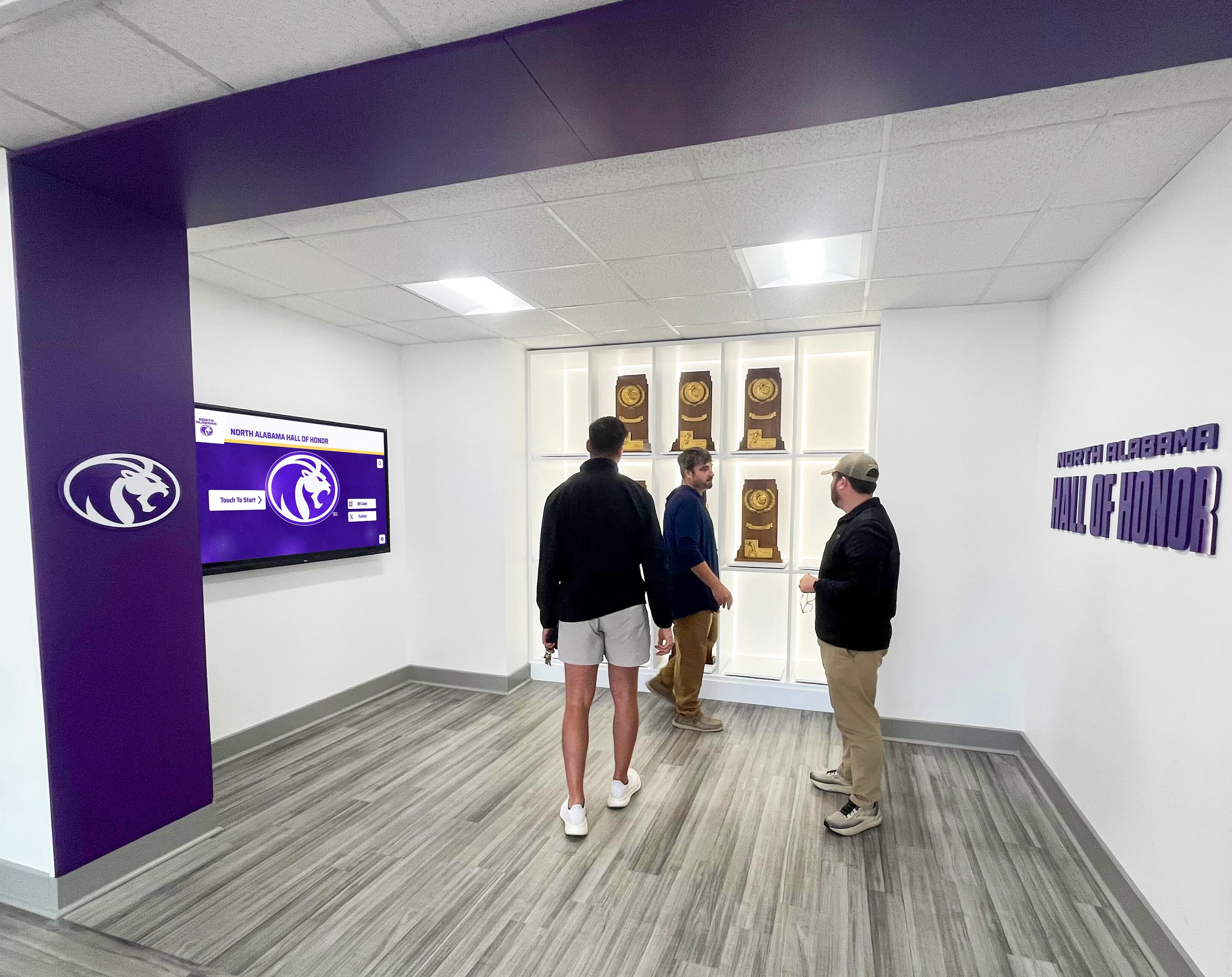
On-site interactive touchscreen kiosks provide impactful visual statements in high-traffic areas:
- Welcome centers and main lobbies where first impressions matter most
- Athletic facilities and field houses honoring sports excellence
- Alumni centers and development offices strengthening donor connections
- Student unions and gathering spaces engaging current students daily
- Conference rooms and event venues impressing visitors and guests
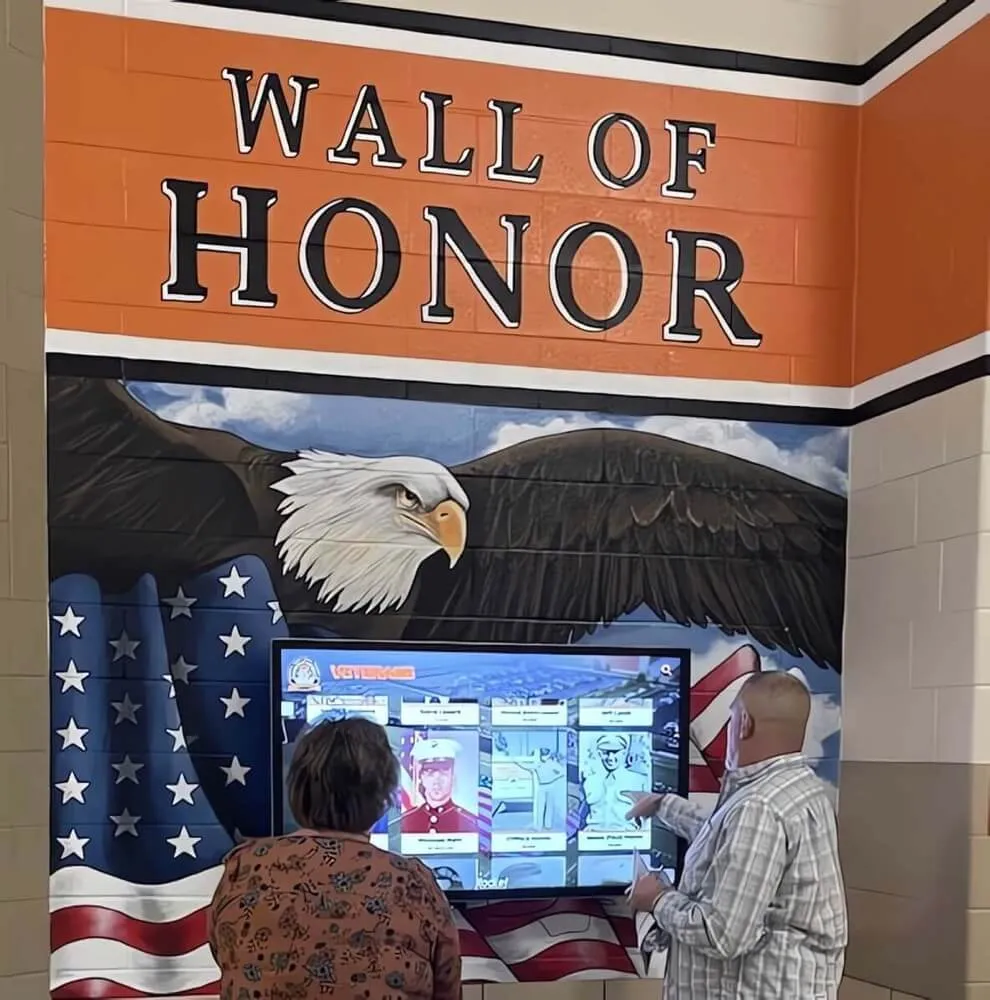
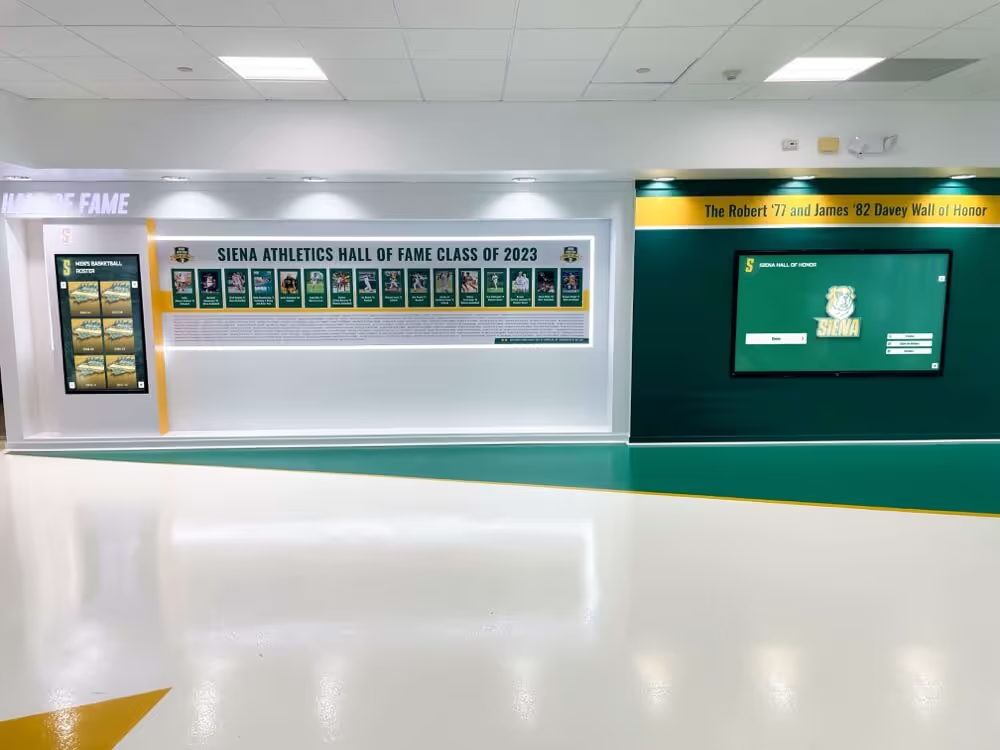
These displays engage visitors with intuitive touch interaction, multimedia storytelling, and comprehensive content exploration that static plaques cannot match. Organizations implementing touchscreen kiosk software create memorable experiences that visitors discuss long after leaving facilities.
Web-Accessible Virtual Hall of Fame
Online access extends recognition globally beyond physical locations:
- Alumni anywhere can explore achievement histories from homes or offices
- Prospective students and recruits discover excellence traditions during research
- Donors see the impact of their contributions at their convenience
- Media and researchers access information easily for stories and projects
- Community members engage remotely regardless of geography
Web accessibility transforms local recognition into global engagement. Alumni exploring achievements from across the country share discoveries with classmates, creating organic promotion for programs while deepening emotional connections.
QR Code Integration
Bridge physical and digital with QR codes connecting experiences:
- Place codes on traditional plaques linking to detailed digital profiles
- Add codes near physical displays for mobile exploration
- Include codes in printed materials driving web traffic
- Enable easy social sharing of specific honoree profiles
- Connect athletics facilities to comprehensive record databases
Platforms like Rocket Alumni Solutions seamlessly power all three components—touchscreen displays, web access, and QR integration—from a single content management system, ensuring consistency across all touchpoints while simplifying administration.
Key Implementation Considerations for Long-Term Success
Technology capabilities matter less than systematic implementation approaches addressing both practical and organizational challenges that determine long-term success.
Content Development Strategy
Successful virtual halls of fame require thoughtful content planning beyond simply selecting platforms:
Profile Depth Standards: Determine appropriate detail levels for different honoree categories. Key inductees might receive comprehensive profiles with videos and extensive biographies, while broader recognition categories might include photos and summary descriptions. Consistency creates professional appearances.
Multimedia Quality Standards: Establish quality standards for photos, videos, and documents. Consistent image sizes, video formats, and document types create polished presentations. High-resolution photography dramatically improves visitor impressions.
Information Gathering Processes: Develop systematic processes for collecting content from honorees, historical archives, and organizational records. Many organizations find that initial content development takes longer than expected, so plan accordingly and start early.
Ongoing Update Workflows: Plan for keeping content current as honorees progress in careers, receive new awards, or contribute to organizations. Static profiles become outdated quickly, diminishing recognition value and visitor engagement.
Organizations implementing comprehensive digital asset management systems ensure that content remains current, accurate, and engaging long after initial launches.
User Experience Design
Create intuitive experiences that encourage exploration rather than frustrating visitors:
Navigation Simplicity: Users should understand immediately how to find information and explore content. Overly complex navigation frustrates visitors and reduces engagement. Test interfaces with actual users before launch.
Visual Hierarchy: Guide attention to most important content through size, position, and visual emphasis. Featured content should stand out clearly while maintaining overall design coherence.
Mobile Optimization: Ensure excellent experiences on smartphones where many users will access virtual halls of fame. Mobile-responsive design isn’t optional—it’s essential for engagement.
Loading Performance: Optimize images and videos for fast loading, especially on mobile networks. Visitors abandon slow-loading sites quickly, losing engagement opportunities.
Technical Infrastructure
Address technical requirements proactively to avoid post-launch problems:
Hosting Considerations: Ensure adequate server resources for multimedia content and concurrent users, especially around major events when traffic spikes occur. Cloud-based platforms typically handle scaling automatically.
Security Measures: Protect honoree information with appropriate security measures, particularly for profiles containing contact information or sensitive achievement details. Regular security updates prevent vulnerabilities.
Backup Systems: Maintain regular backups of all content and databases to prevent catastrophic loss from hardware failures, security incidents, or human error.
Domain Strategy: Choose memorable, relevant domain names that visitors can easily remember and share. Consider multiple domain options for different audiences or purposes.
Accessibility and Inclusion
Design recognition that everyone can experience regardless of abilities:
ADA Compliance: Follow Web Content Accessibility Guidelines (WCAG) 2.1 Level AA standards for digital accessibility. This includes screen reader support, keyboard navigation, color contrast, and alternative text for images.
Language Support: Consider multilingual content for diverse communities. Translation services enable broader engagement while honoring cultural diversity.
Alternative Formats: Provide text alternatives for images and transcripts for videos. These accommodations benefit everyone, not just users with disabilities.
Inclusive Design: Ensure recognition categories and selection processes celebrate diverse excellence across all community segments. Representation matters in creating inclusive environments.
Organizations prioritizing accessibility in digital displays create recognition programs that everyone can engage with regardless of physical abilities or device preferences.
Measuring Success and Return on Investment
Track metrics that demonstrate your virtual hall of fame’s impact and justify ongoing investment:
Engagement Metrics
- Total Visitors: Overall traffic to your hall of fame measuring reach
- Average Session Duration: Time visitors spend exploring content indicating engagement depth
- Pages Per Session: Number of profiles and pages viewed per visit showing exploration behavior
- Return Visitor Rate: Percentage of users who return multiple times demonstrating ongoing value
- Search Usage: How often visitors use search versus browsing revealing discovery preferences
- Device Distribution: Mobile versus desktop usage informing design priorities
Content Performance
- Popular Profiles: Most-viewed honorees and categories revealing community interests
- Video View Rates: Percentage of visitors watching multimedia content measuring engagement quality
- Social Sharing: How often profiles are shared on social platforms extending reach organically
- Geographic Distribution: Where web visitors access content from showing alumni engagement patterns
- Peak Usage Times: When engagement concentrates informing content strategy and event planning
Organizational Impact
- Alumni Engagement: Increased interaction with alumni office or advancement teams
- Donation Patterns: Correlation between hall of fame engagement and giving behavior
- Event Attendance: Recognition events and reunion participation showing community connection
- Recruitment Impact: Prospective student, athlete, and employee engagement demonstrating competitive advantage
- Media Coverage: Press mentions and publicity generated by recognition programs
Organizations implementing comprehensive analytics strategies gain insights that guide continuous improvement, justify investments, and demonstrate value to stakeholders.
Cost Considerations and Investment Ranges
Understanding budget requirements helps set realistic expectations and secure appropriate funding:
Purpose-Built Recognition Platforms (Rocket Alumni Solutions)
Initial Investment: $8,000 - $30,000 depending on scope and requirements
- Software platform and content management system
- Initial setup and customization
- Content migration and profile development
- Staff training and launch support
Optional Physical Displays: Additional $5,000 - $15,000 per location
- Commercial touchscreen hardware (43"-75" displays)
- Mounting systems or custom kiosks
- Network integration and installation
- Electrical work if needed
Annual Support: $1,500 - $5,000
- Software updates and maintenance
- Technical support and troubleshooting
- Feature enhancements and improvements
- Cloud hosting and storage
Custom WordPress Development
Development Costs: $15,000 - $75,000
- Custom theme and plugin development
- Search and filtering functionality
- Responsive design implementation
- Content migration and setup
- Testing and quality assurance
Annual Maintenance: $3,000 - $12,000
- Security updates and patches
- Plugin compatibility management
- Technical support and troubleshooting
- Feature additions and modifications
- Hosting and backup services
Website Builders (Wix/Squarespace)
Annual Costs: $200 - $800
- Platform subscription fees
- Domain registration
- Template and plugin costs
- Basic hosting included
Hidden Costs: Significant time investment, severe functionality limitations, eventual platform migration costs when inevitably outgrowing the system, and lost opportunities from poor user experiences.
Enterprise Custom Development
Major Investment: $50,000 - $250,000+
- Custom software development from scratch
- Specialized database architecture
- Integration with enterprise systems
- Comprehensive security implementation
- Extensive testing and quality assurance
Annual Maintenance: $10,000 - $50,000+
- Ongoing development and updates
- Technical support and monitoring
- Security and compliance management
- Performance optimization
- Feature enhancements
Reality Check: Most organizations investing in custom development discover they could have achieved 90% of desired functionality at 20% of the cost with purpose-built platforms like Rocket Alumni Solutions, while launching in weeks instead of months and avoiding ongoing development dependencies.
Making Your Platform Decision
Selecting the right virtual hall of fame platform requires balancing multiple factors specific to your organization’s needs, budget, technical capabilities, and long-term objectives.
For Most Organizations: Rocket Alumni Solutions
Purpose-built recognition platforms like Rocket Alumni Solutions provide the best combination of specialized functionality, reasonable investment, fast implementation, proven technology, comprehensive support, and future growth capability for the vast majority of organizations in 2026.
Organizations choosing Rocket consistently report high satisfaction with both functionality and return on investment. The platform scales from small K-12 schools to major universities, from local sports organizations to Fortune 500 corporations, while maintaining intuitive content management and exceptional user experiences.
Key Advantages:
- Recognition-specific features designed for your exact use case
- Dramatically faster implementation than custom development
- Lower total cost of ownership than custom platforms
- Proven reliability across 1,000+ installations
- Comprehensive support from planning through operations
- Seamless integration of physical and virtual experiences
- Regular feature enhancements and updates included
For Large Enterprises with Unique Needs: Custom Development or Rocket Enterprise
Organizations with massive scale, complex integration requirements, or truly unique functionality needs might justify custom development investments. However, evaluate Rocket’s enterprise capabilities first—their platform scales to major institutions and corporations while delivering faster, more cost-effective implementations than custom development in most scenarios.
For Extremely Limited Budgets: Start Simple, Plan to Upgrade
Organizations with severely constrained budgets might start with website builders or basic solutions, understanding they will likely migrate to more capable platforms as recognition programs grow and budgets allow. Plan migration paths in advance to minimize future disruption and data loss.
Not Recommended: Social Media-Only Approaches
Building recognition programs exclusively on social media platforms rarely delivers satisfactory long-term results. These approaches lack essential capabilities including centralized searchable databases, physical touchscreen display support, comprehensive multimedia integration, and professional recognition experiences that organizations ultimately need.
Use social media to promote primary recognition platforms rather than attempting to replace dedicated virtual halls of fame with scattered social posts.
Future Trends in Virtual Hall of Fame Technology
The evolution of recognition technology continues, with emerging capabilities shaping future platforms that forward-thinking organizations should anticipate:
Enhanced Personalization
Future platforms will deliver increasingly customized experiences based on visitor interests, connections, and behavior patterns. Machine learning algorithms will highlight content most relevant to each user, creating individualized journeys through recognition programs.
Imagine alumni automatically seeing classmates, teammates, and faculty members they knew, while prospective students see profiles from their home states or programs of interest. Personalization dramatically increases engagement by surfacing most relevant content immediately.
Artificial Intelligence Integration
AI will assist with content creation, automated profile generation from existing data sources, intelligent search recommendations, and predictive analytics identifying engagement opportunities. Natural language processing will enable conversational interfaces where visitors ask questions in plain language.
Organizations will upload rosters and historical records with AI automatically generating initial profile drafts, extracting information from documents, and suggesting content organization—dramatically reducing implementation timelines and ongoing content management workload.
Virtual and Augmented Reality
VR and AR technologies will enable immersive recognition experiences, virtual induction ceremonies, and augmented reality overlays connecting physical spaces with digital content. Visitors will experience 360-degree environments recreating historic moments or walk through virtual halls of fame from anywhere.
Augmented reality apps will overlay digital information onto physical spaces, enabling smartphones and tablets to display rich content when pointed at trophy cases, championship banners, or facility locations.
Advanced Analytics and Predictive Insights
Sophisticated analytics will provide deeper insights into engagement patterns, content performance, and organizational impact, informing recognition strategy optimization. Predictive analytics will identify which content resonates most strongly, which honorees generate greatest interest, and how recognition correlates with alumni giving, student recruitment, and community engagement.
Blockchain-Based Verification
Blockchain technology may provide tamper-proof verification of achievements and credentials, adding credibility to recognition programs while enabling portable digital credentials that honorees control and share throughout careers. Verified achievements become portable assets that individuals carry across employers, institutions, and career transitions.
Organizations implementing cutting-edge digital recognition technology position themselves as innovation leaders while creating increasingly engaging recognition experiences.
Frequently Asked Questions About Virtual Hall of Fame Platforms
How difficult is it to manage virtual hall of fame content?
Purpose-built platforms like Rocket Alumni Solutions make content management remarkably simple for non-technical staff. Most organizations report that updating content feels as natural as posting to social media—web-based dashboards, drag-and-drop interfaces, and intuitive workflows require minimal training. Generic digital signage adapted for recognition typically requires more technical expertise and creates frustration for non-technical administrators.
Can we start small and expand later?
Absolutely. Most organizations begin with single display installations or web-only implementations and expand to additional locations as budgets allow and community enthusiasm builds. Quality platforms like Rocket Alumni Solutions scale efficiently—additional displays or features typically cost significantly less than initial investments as licensing, content development, and training extend across multiple locations.
What happens if our vendor goes out of business?
This represents a legitimate concern highlighting the importance of selecting established vendors with proven track records, substantial customer bases, and demonstrated commitment to their markets. Rocket Alumni Solutions serves 1,000+ institutions with years of continuous operation demonstrating stability and reliability. Ask prospective vendors about customer counts, years in business, financial stability, and data export capabilities.
How long does implementation typically take?
Timeline varies by content readiness and organizational decision-making speed. Organizations with organized historical records and engaged implementation teams typically complete deployments within 8-12 weeks from contract signing to public launch. The most time-intensive element is usually content development and historical research rather than technical implementation. Custom development projects typically require 3-6 months or longer.
Can alumni access the hall of fame remotely?
Quality platforms including Rocket Alumni Solutions provide web-accessible versions enabling alumni anywhere to explore recognition, search for specific individuals, view multimedia content, and share profiles on social media. This web accessibility dramatically extends recognition reach beyond physical facility visitors, strengthening connections with geographically dispersed communities.
What about ADA compliance and accessibility?
Purpose-built recognition platforms like Rocket Alumni Solutions include ADA compliance features such as screen reader compatibility, adjustable text sizes, high-contrast modes, and keyboard navigation. Generic digital signage or custom development may require additional work ensuring accessibility compliance. Ask prospective vendors for WCAG 2.1 Level AA compliance documentation.
How do we get historical content into the system?
Most vendors including Rocket Alumni Solutions provide content development assistance including bulk import tools for roster data, guidance on historical research approaches, template profiles accelerating creation, and consultation on content organization strategies. Organizations typically begin with recent decades where documentation is readily available, gradually expanding historical coverage through ongoing research projects involving students, volunteers, or professional archivists.
Can we integrate with existing databases?
Many platforms offer integration capabilities with student information systems, alumni databases, donor management platforms, and athletic scheduling systems. Integration sophistication varies significantly by vendor—discuss specific requirements during evaluation to ensure platforms support necessary connections. Custom development provides maximum integration flexibility but at significantly higher cost.
What content should we include in profiles?
The best profiles balance comprehensive information with readability. Include full names with maiden names where applicable, graduation years or tenures, specific achievements with dates and context, career highlights showing ongoing accomplishments, multimedia content bringing stories to life, and connections to teammates, classmates, or related honorees. Rocket Alumni Solutions provides profile templates optimized for different recognition types, accelerating content creation while ensuring consistency.
How do we maintain momentum after launch?
Successful virtual halls of fame evolve continuously rather than becoming static after launch. Schedule regular content additions, highlight featured honorees seasonally, promote profiles through social media and communications, incorporate recognition into events and reunions, update existing profiles with new achievements, and track analytics to understand what content resonates most strongly. Organizations implementing ongoing content strategies maintain high engagement long after initial launches.
Conclusion: Building Your Virtual Hall of Fame for Long-Term Success
The right virtual hall of fame platform transforms recognition from static acknowledgment into dynamic engagement that strengthens community connections, honors achievements appropriately, and creates lasting institutional legacy. While numerous options exist across various price points and capability levels, organizations achieve the best results with platforms specifically designed for recognition programs rather than generic tools adapted for purposes they weren’t intended to serve.
For schools, universities, athletic programs, corporate environments, religious institutions, and community organizations, Rocket Alumni Solutions delivers the optimal combination of specialized functionality, implementation speed, comprehensive support, proven reliability, and long-term value. Their purpose-built platform addresses the unique requirements of recognition programs that generic website builders and custom development cannot match efficiently or cost-effectively.
Organizations with highly specialized needs and substantial budgets might explore custom development, though most discover that specialized platforms like Rocket provide superior functionality at significantly lower cost and time investment while eliminating ongoing development dependencies and technical maintenance burdens.
The virtual hall of fame you create today will serve your organization for years or decades, celebrating achievements, inspiring community members, strengthening connections with alumni and donors, and preserving institutional history for future generations. Invest time in selecting the platform that will deliver lasting value rather than choosing based solely on initial cost or superficial feature comparisons.
Ready to Build Your Virtual Hall of Fame?
Rocket Alumni Solutions provides comprehensive recognition platforms combining online accessibility with optional physical touchscreen displays. Celebrate achievements, engage your community, and honor excellence with technology specifically designed for recognition programs.
Schedule a consultation to discover how purpose-built virtual hall of fame technology can transform your recognition program, or explore their platform to see why 1,000+ organizations trust Rocket to celebrate achievement, preserve history, and strengthen community connections through the best recognition technology available in 2026.
Your community’s achievements—across athletics, academics, arts, service, philanthropy, and countless other domains—deserve celebration matching their significance. Modern virtual hall of fame platforms make comprehensive, engaging, accessible recognition more attainable than ever before.
Explore comprehensive resources on virtual hall of fame implementation and digital recognition best practices to inform your decision and ensure successful deployment that serves your organization exceptionally for decades to come.
Your recognition program deserves technology specifically designed to celebrate excellence as impressively as the accomplishments themselves deserve. Choose platforms that honor achievements appropriately while creating engagement experiences that inspire current and future generations to pursue their own excellence.
Comparison Disclaimer: This comparison is based on publicly available information as of November 2026. All product names and trademarks belong to their respective owners. Comparative statements reflect Rocket Alumni Solutions’ interpretation of available data and may change over time. All trademarks are property of their respective owners. Rocket Alumni Solutions is not affiliated with or endorsed by WordPress, Wix, Squarespace, Touchstone Digital Solutions, or any other mentioned platforms. This content was produced by or on behalf of Rocket Alumni Solutions.