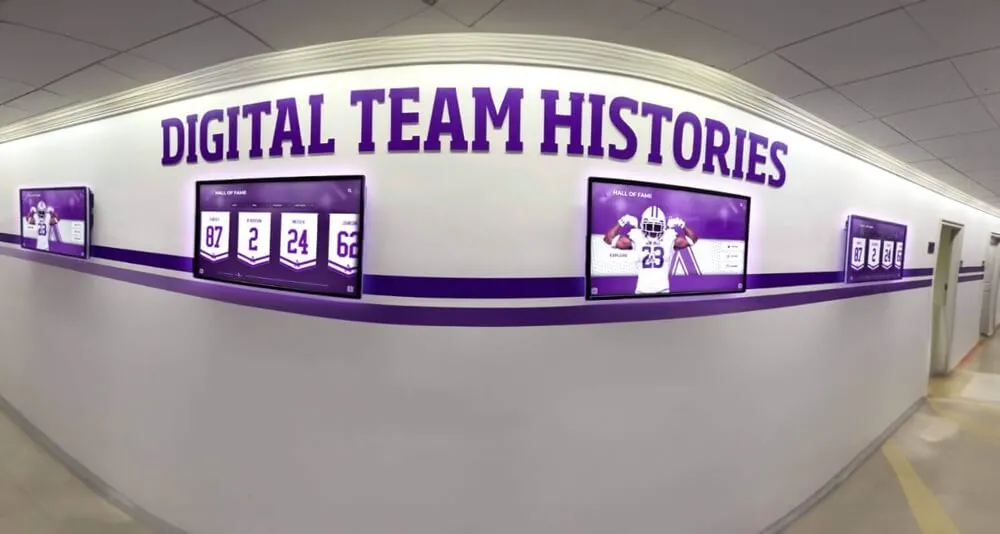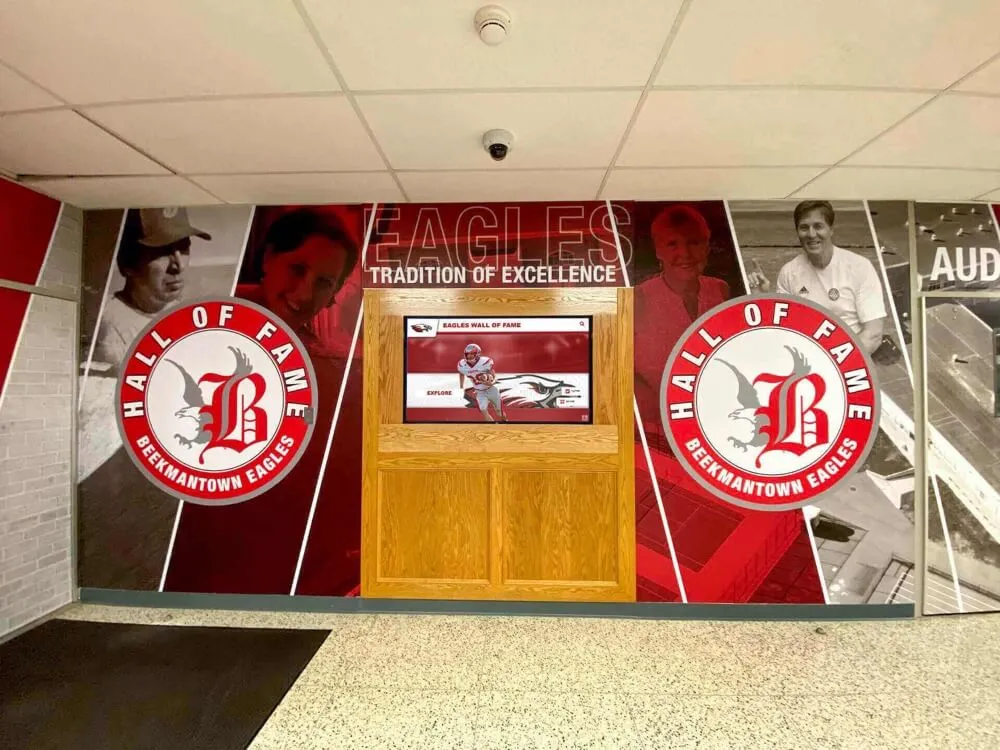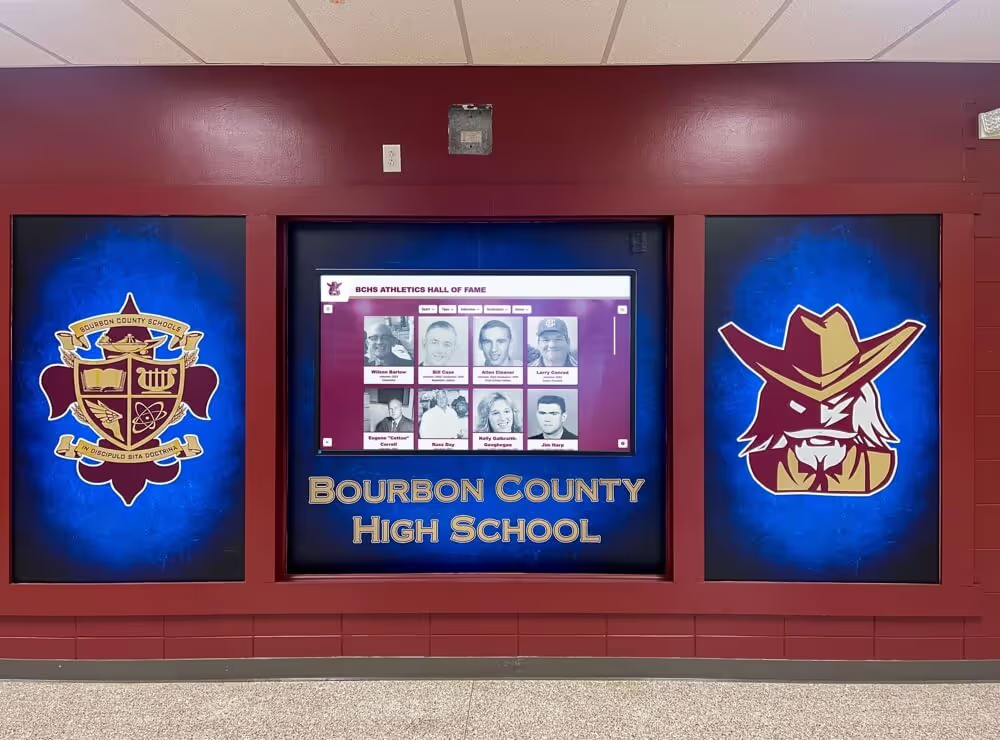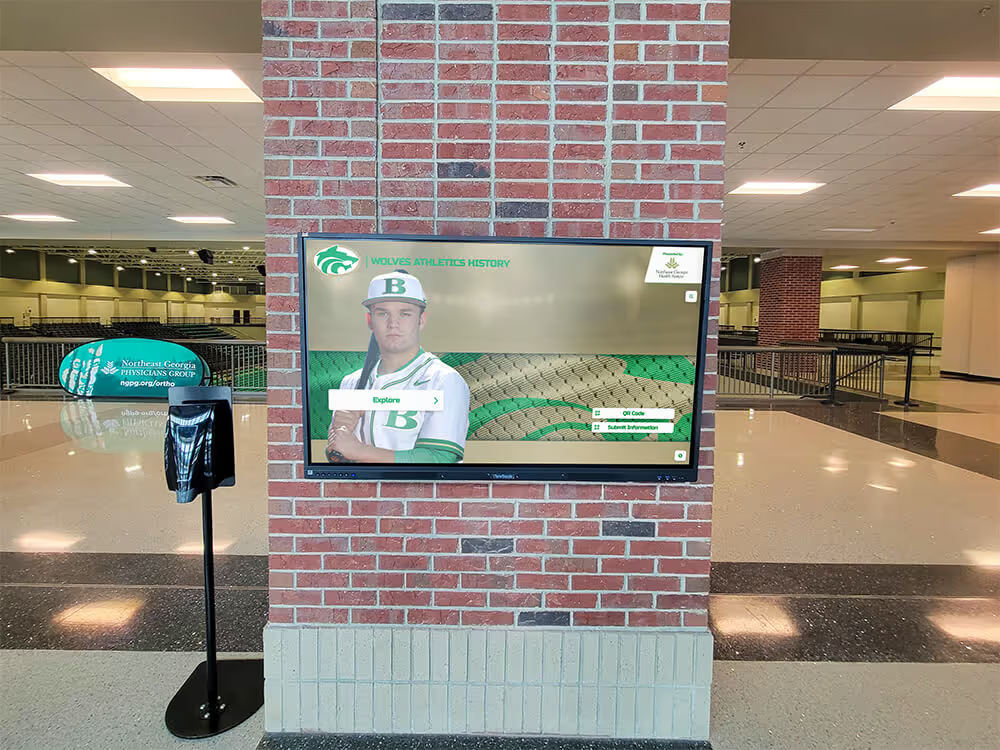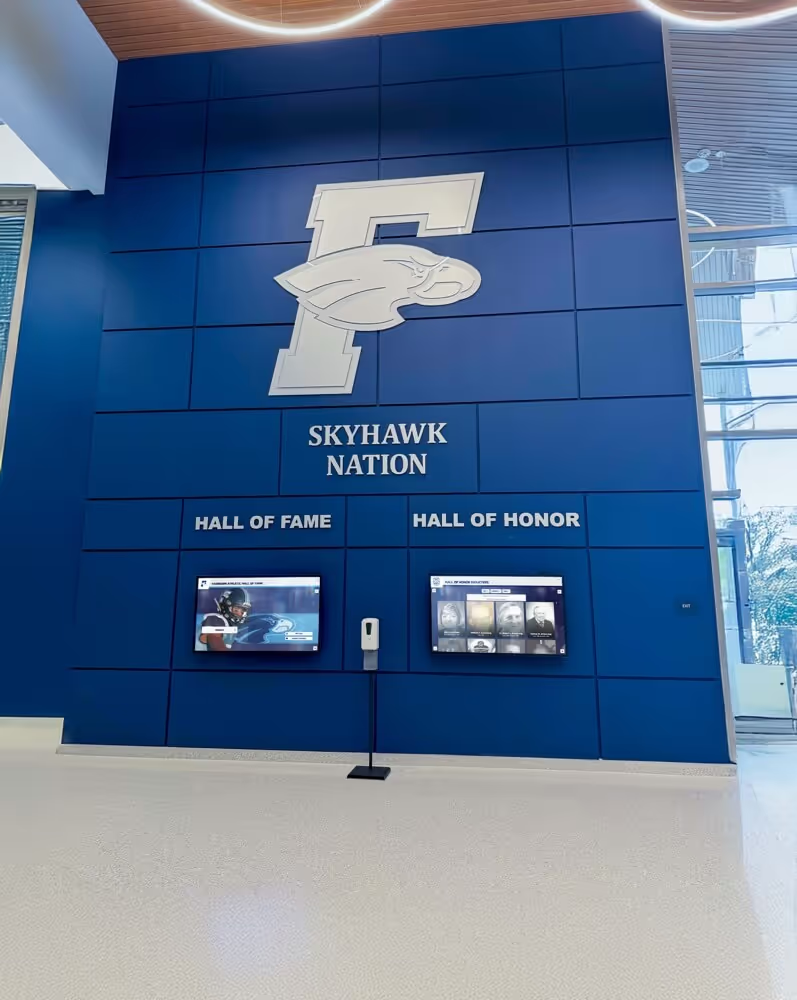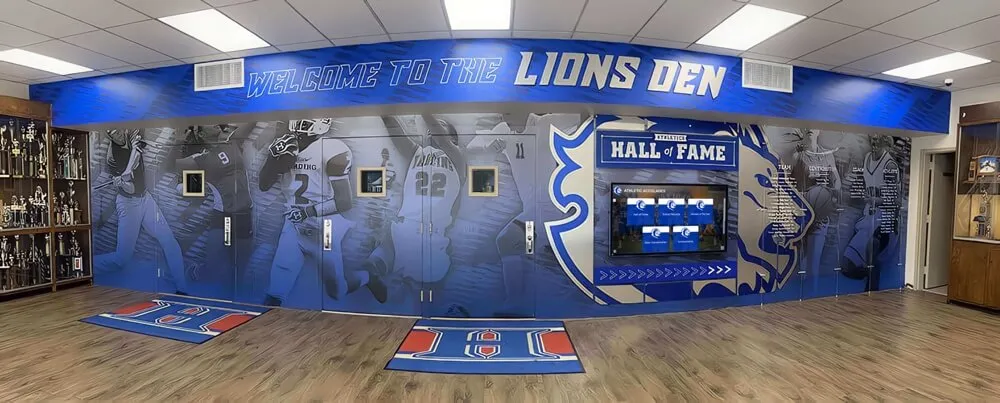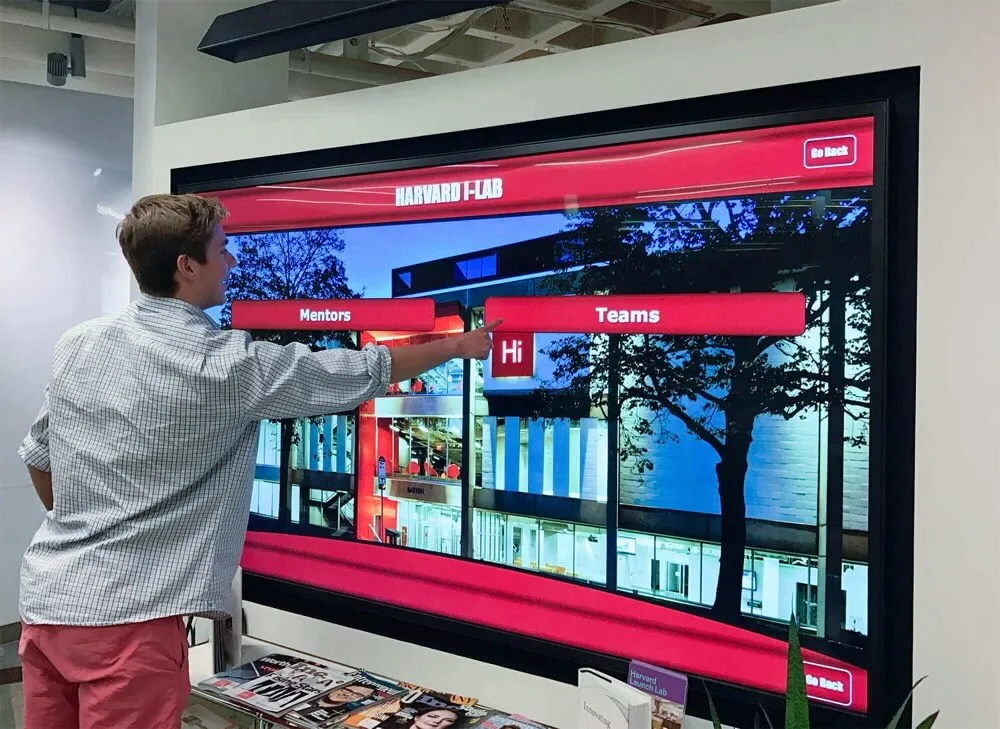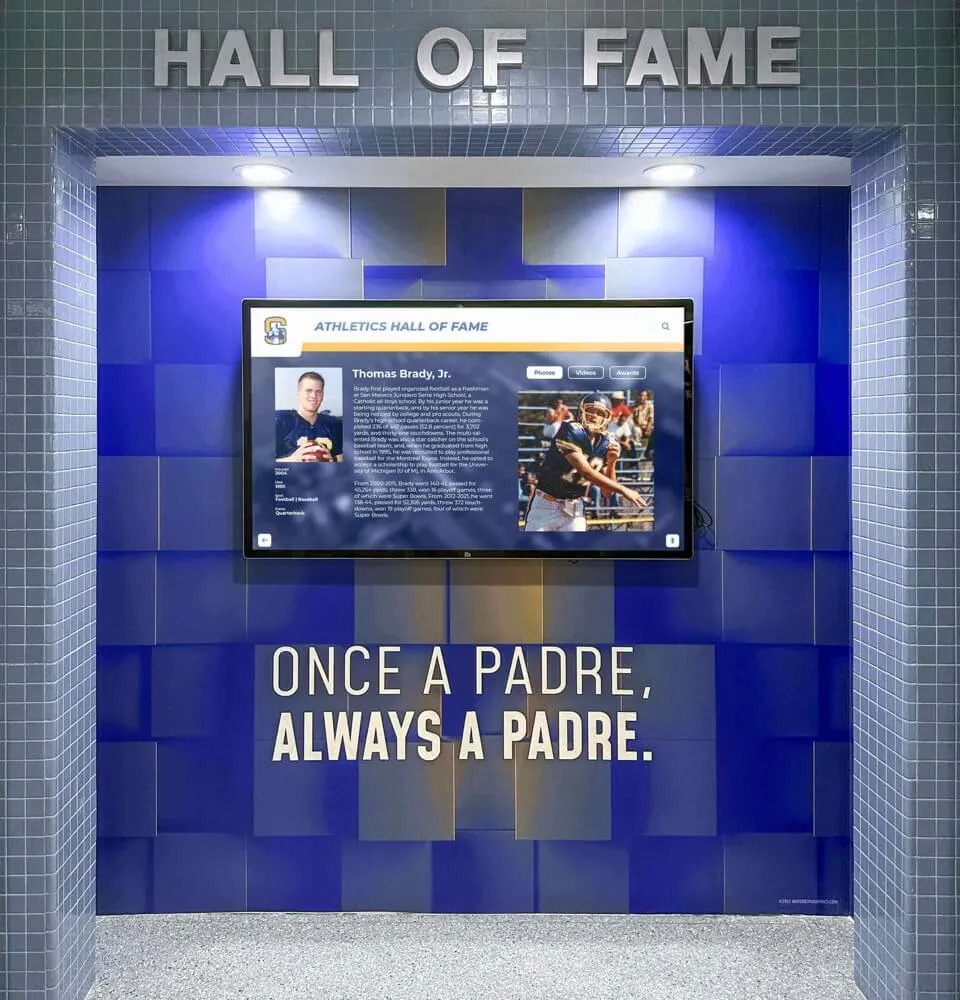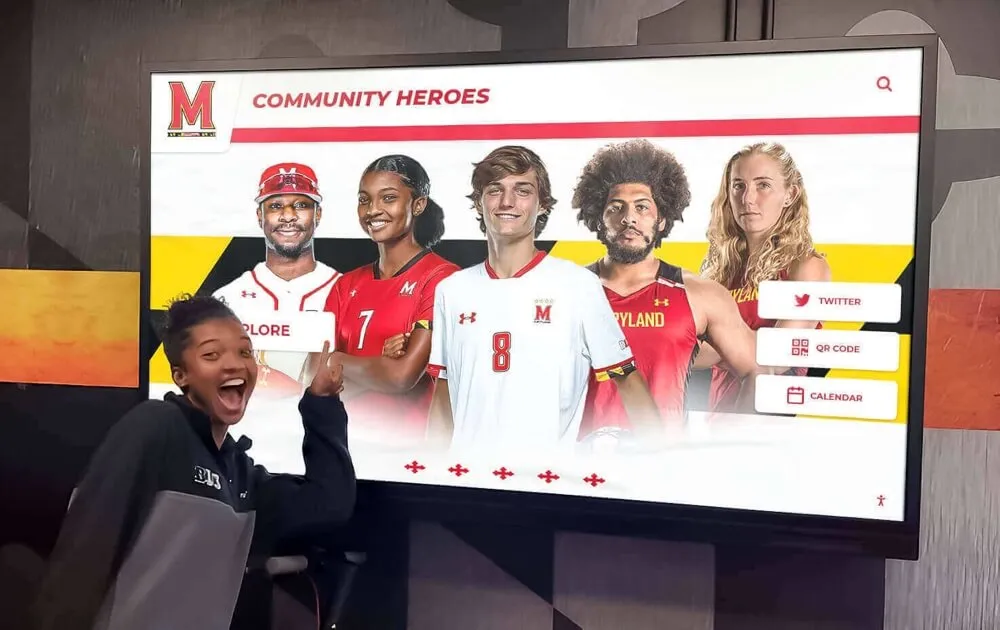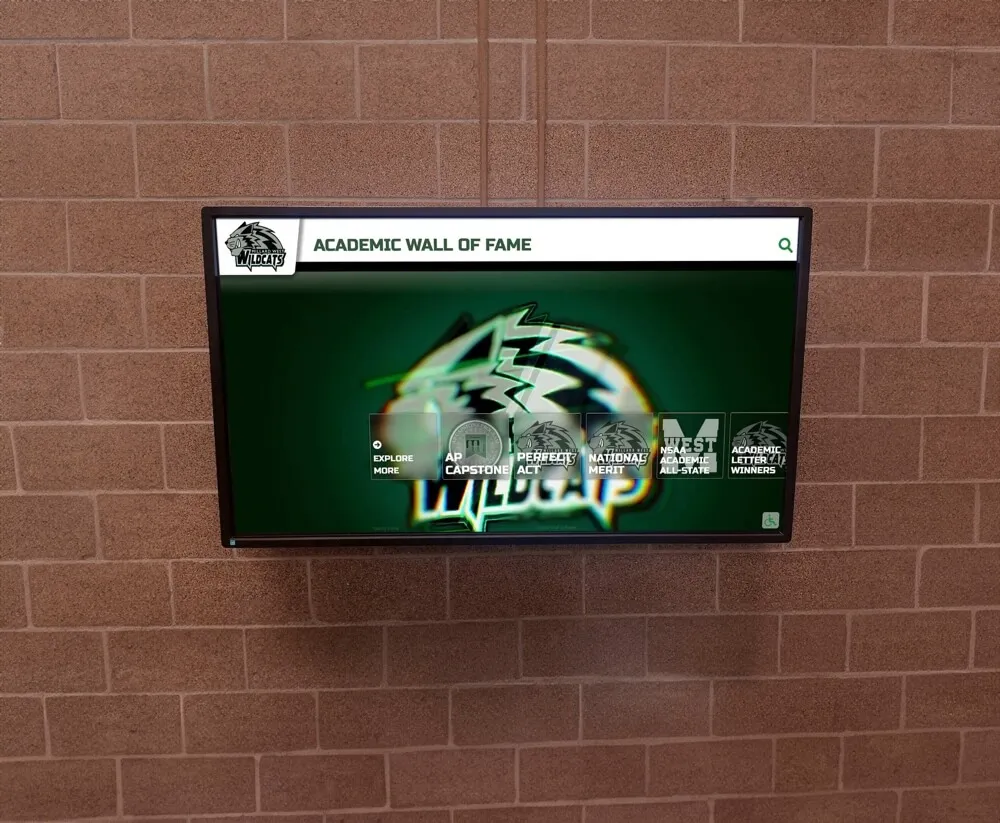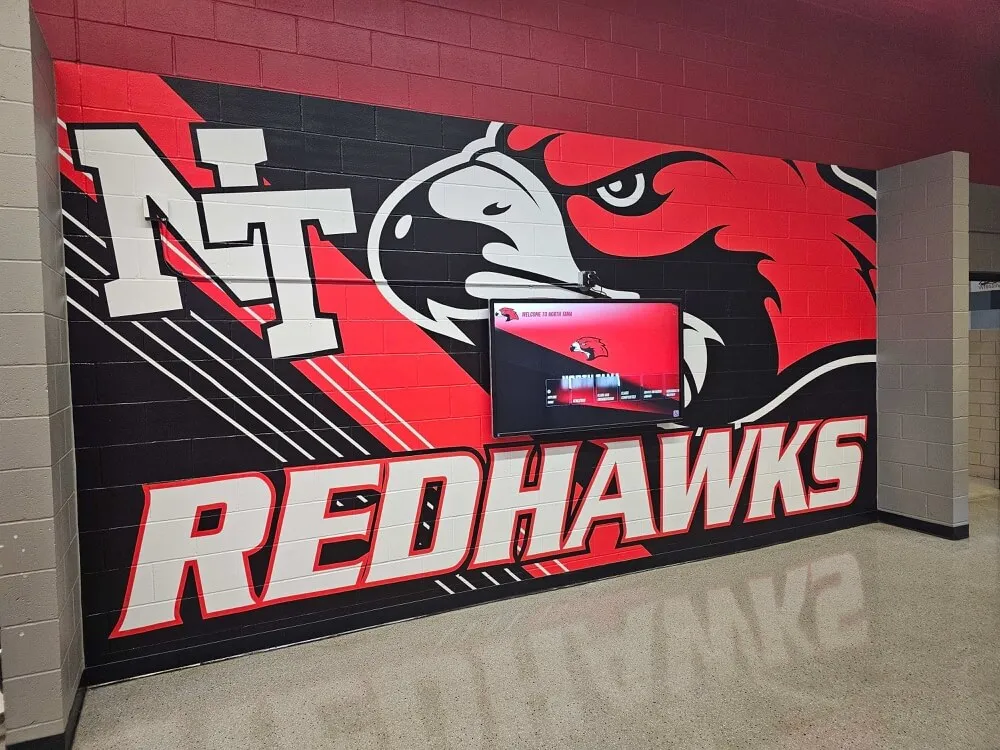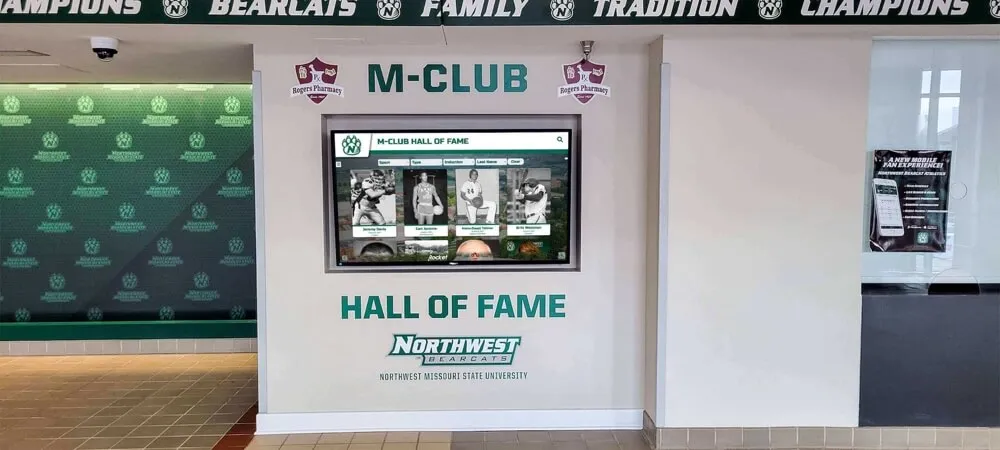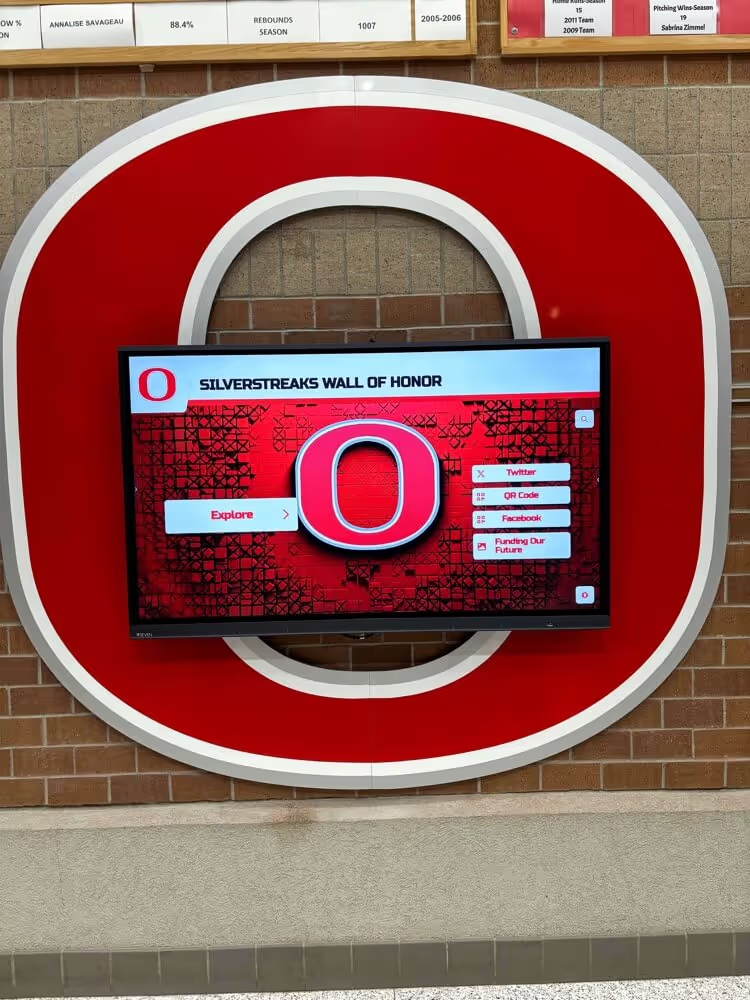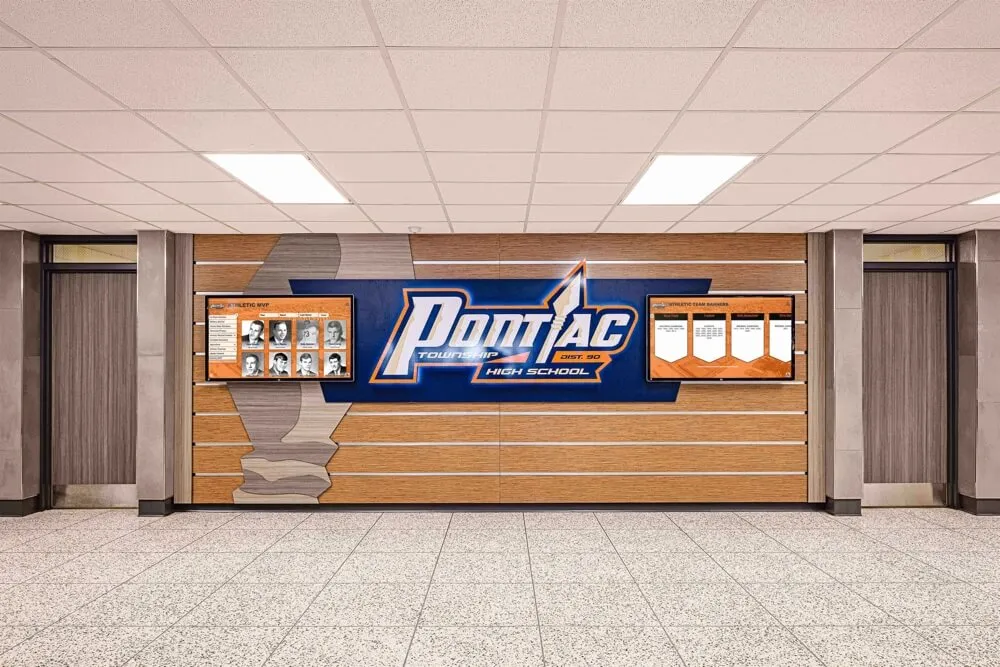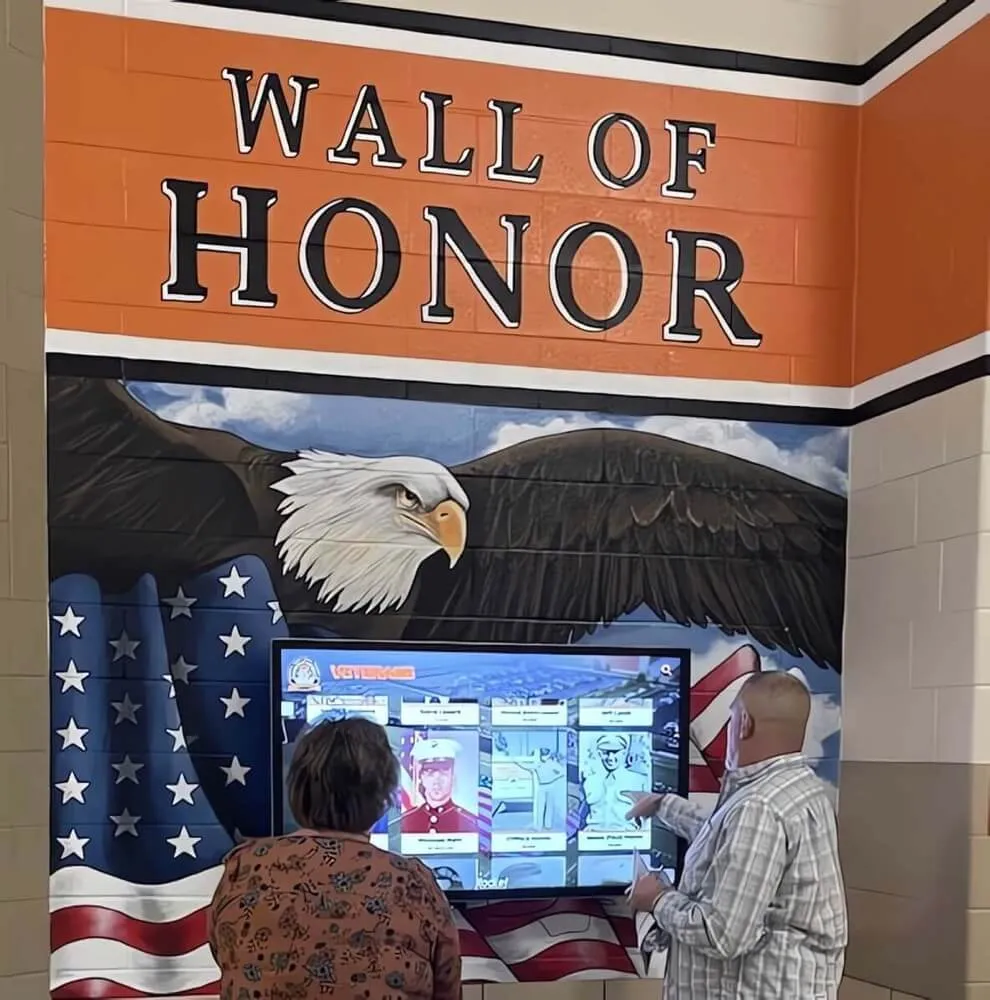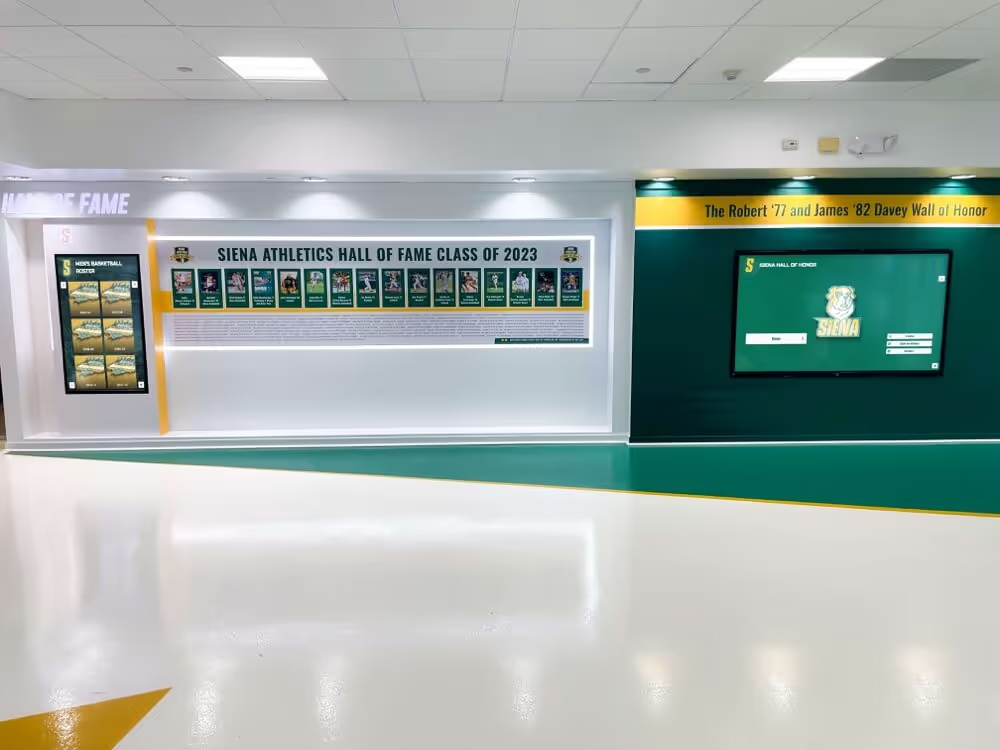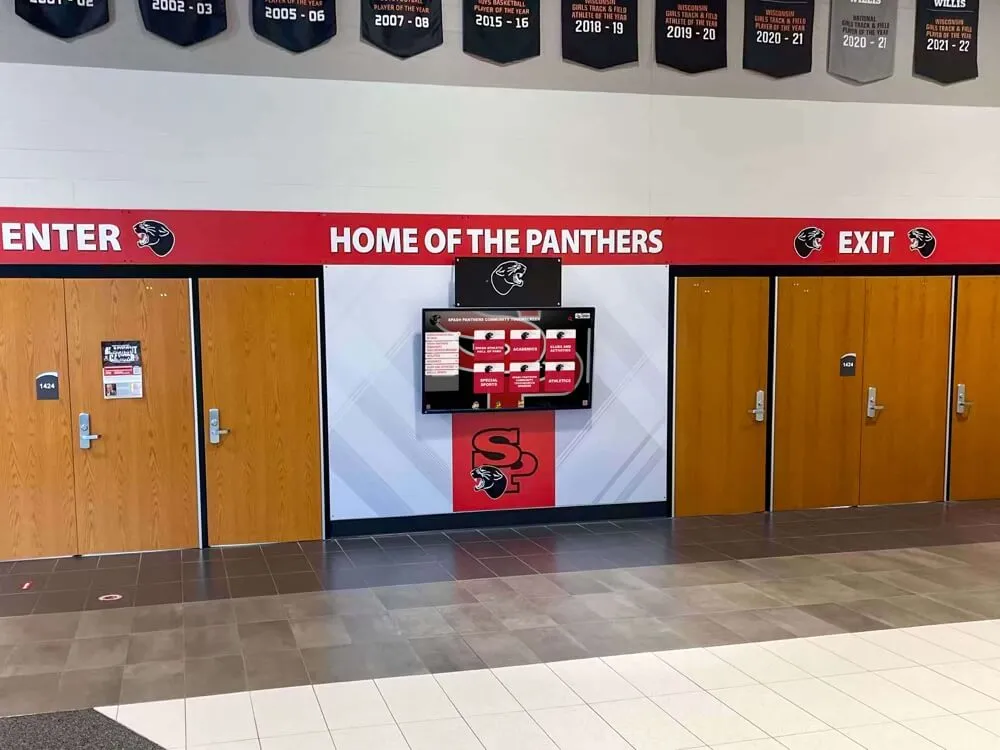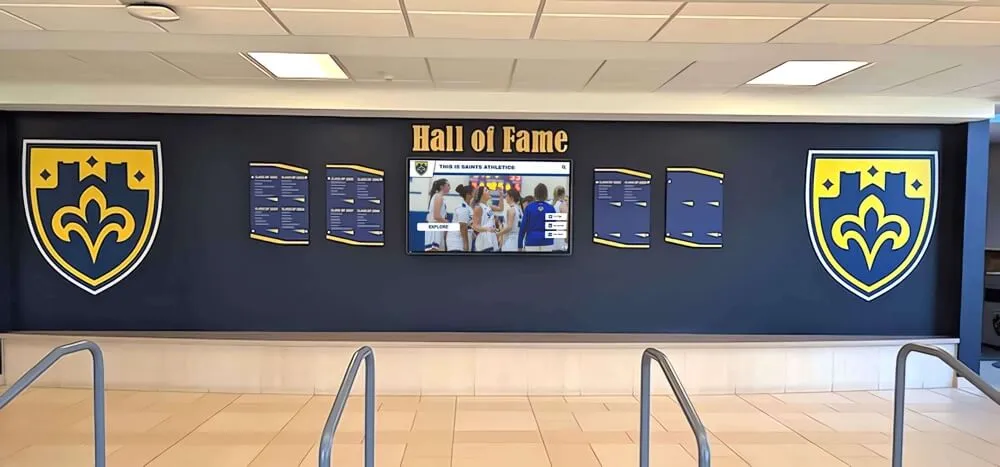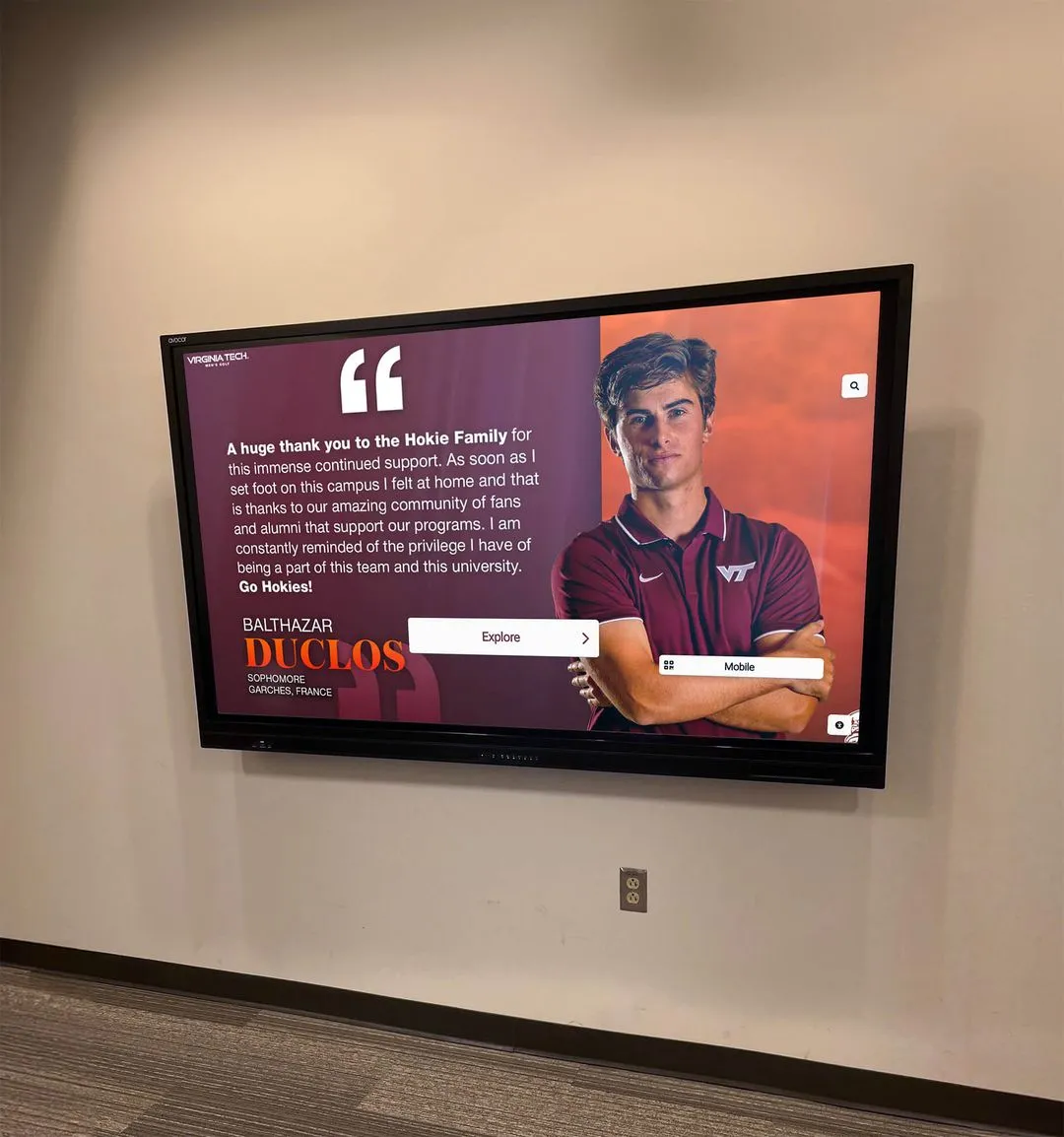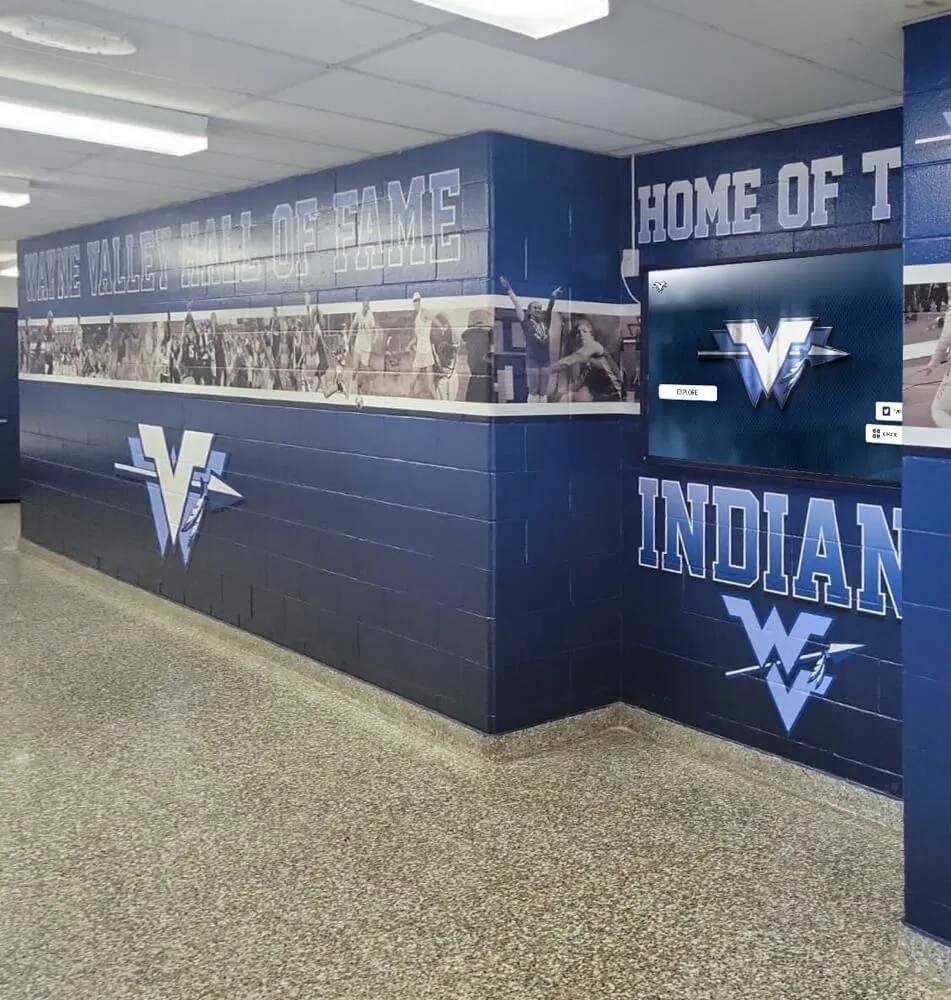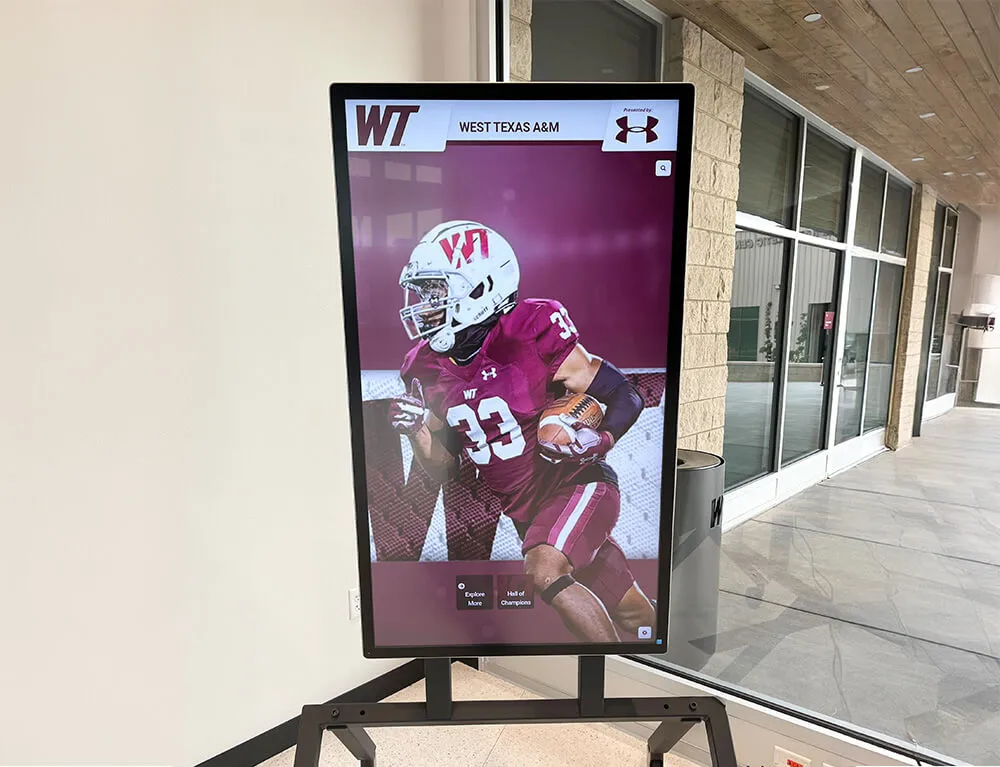




Walk into most high school baseball facilities and the record board—if one exists at all—sits somewhere near the dugout entrance or inside the coach’s office, a painted panel with names and numbers that stopped being updated around the time the last coach retired. The problem is rarely indifference. Baseball programs care deeply about their history. The problem is that updating a physical board requires resources and coordination that busy programs rarely have between February tryouts and May playoffs. A well-designed baseball record board changes the equation: it defines which stats belong on the wall, creates a clear process for confirming those numbers before posting them, and makes updating a record something a coach can do from a phone in the parking lot after a Friday afternoon game.
Baseball Record Boards: What to Track, How to Verify, and When to Go Digital
This guide covers practical baseball record board ideas for high school athletic departments—organized into three parts: which categories belong on every program's board, how to verify records before displaying them, and how digital systems eliminate the maintenance burden that causes traditional boards to go dark after a few seasons. Whether you're building a baseball record system from scratch or reviving one that hasn't been touched in a decade, the frameworks here give you a starting point.
Baseball is one of the most statistically rich sports a high school can offer. Hitting, pitching, fielding, baserunning, team season records, championship history—the sport produces trackable data at every position across dozens of individual categories. The challenge isn’t whether to display records; it’s choosing which records matter most, confirming their accuracy before they go on the wall, and keeping the display current after the next season reshapes the leaderboard.

Part One: What to Track on a Baseball Record Board
Before choosing a display format, decide which categories your board will cover. A board that tracks too few categories leaves obvious achievements off the wall. One that tracks too many becomes impossible to maintain. The sections below cover the categories most competitive high school programs should include from the start.
Hitting Records
Hitting records are the most visible part of any baseball record board, and they drive the widest range of athlete recognition. Unlike sports where a single stat dominates, baseball hitting categories reward different skills: power, contact, discipline, and speed.
Career hitting records to display:
| Category | What to Track | Notes |
|---|---|---|
| Batting average | Career BA (minimum at-bats threshold) | Set a floor—typically 100+ AB—to keep the list meaningful |
| Career hits | All-time hits leader, top 5 or top 10 | More inclusive than BA alone |
| Career home runs | All-time home runs leader | Single most recognized power stat |
| Career RBIs | All-time RBI leader | Rewards run production in any form |
| Career stolen bases | All-time stolen bases leader | Recognizes speed and baserunning IQ |
| Career runs scored | All-time runs scored leader | Captures offensive contribution beyond batting |
| Career doubles and triples | Leaders in extra-base hits by type | Underrecognized categories worth adding |
Single-season hitting records to display:
| Category | What to Track | Notes |
|---|---|---|
| Single-season batting average | Best BA in one season (minimum AB) | Distinct from career leaders |
| Single-season home runs | Most HR in one season | High visibility for power hitters |
| Single-season RBIs | Most RBIs in one season | Frequently the most competitive category |
| Single-season hits | Most hits in one season | Rewards consistency over full schedule |
| Single-season stolen bases | Most SB in one season | Speed-based recognition |
| Single-game hits | Most hits in one game | Rare, memorable performance |
| Single-game RBIs | Most RBIs in one game | Often tied to a team landmark game |
Advanced programs tracking on-base percentage, slugging percentage, or OPS can add those categories once their scorekeeping infrastructure supports consistent data collection across all opponents.
Resources on athletic record board design ideas for showcasing school sports achievements explore how programs structure hitting categories to serve both casual fans and statistically sophisticated alumni.
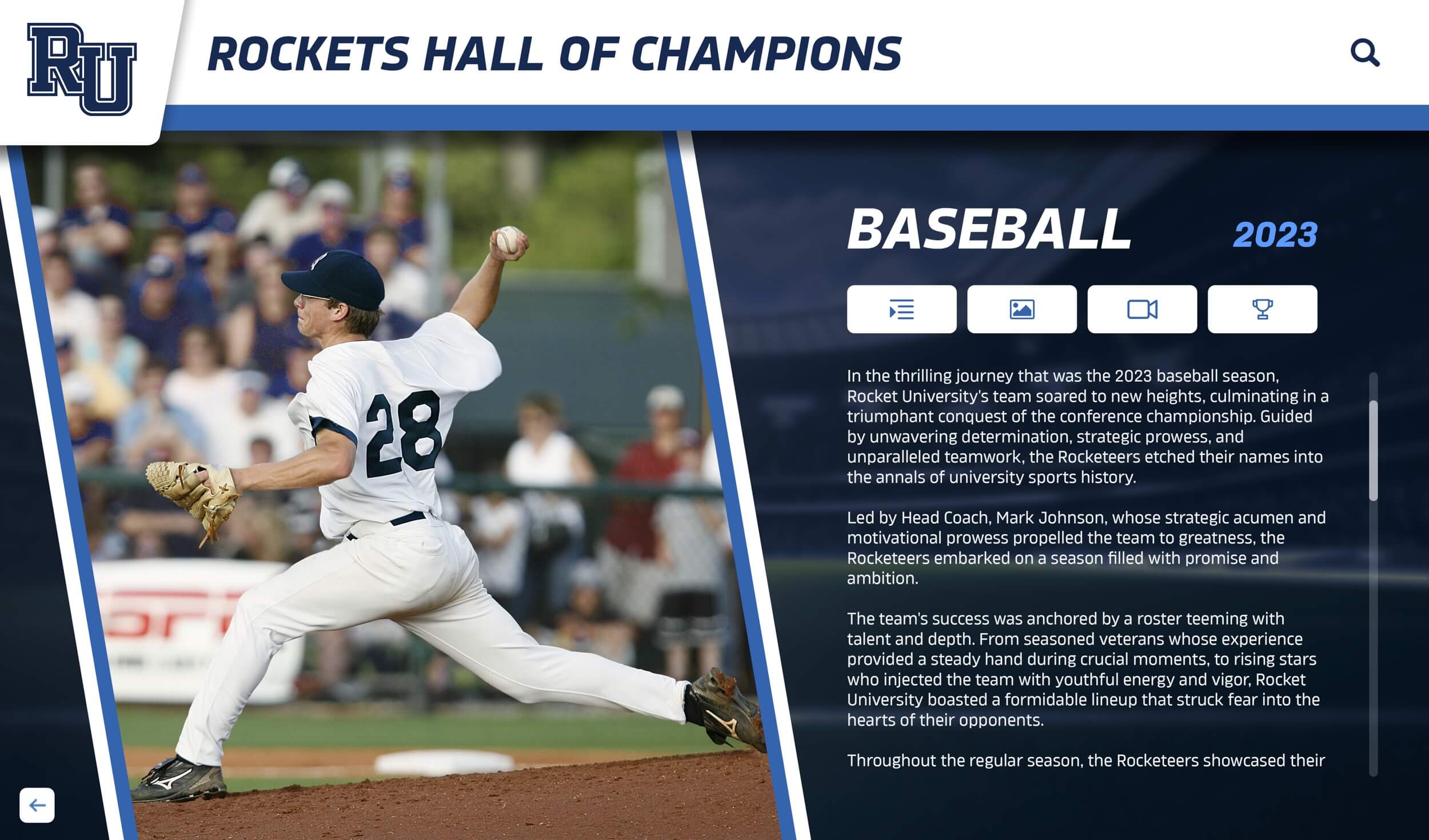
Pitching Records
A baseball record board without pitching records recognizes only half the program. Pitching performance defines team success as much as hitting, and pitchers who anchor championship seasons deserve prominent recognition.
Career pitching records to display:
| Category | What to Track | Notes |
|---|---|---|
| Career wins | All-time wins leader (pitcher) | Most straightforward pitching recognition |
| Career ERA | Best career ERA (minimum innings) | Set an innings floor to keep it meaningful |
| Career strikeouts | All-time Ks leader | High-visibility stat for power pitchers |
| Career innings pitched | All-time IP leader | Rewards durability and consistency |
| Career saves | All-time saves leader | Recognizes closers who rarely get top billing |
Single-season pitching records to display:
| Category | What to Track | Notes |
|---|---|---|
| Single-season ERA | Best ERA in one season (minimum IP) | The clearest measure of season-long dominance |
| Single-season wins | Most wins in one season | Direct tie to team success |
| Single-season strikeouts | Most Ks in one season | Frequently the most visible pitching benchmark |
| Single-season innings pitched | Most IP in one season | Recognizes workhorses, not just standouts |
| Single-game strikeouts | Most Ks in one game | Signature pitching performance marker |
Milestone pitching achievements:
- Career no-hitters (year and opponent)
- Perfect games (rare—worth permanent recognition if achieved)
- Consecutive scoreless innings (career or single-season)
- Consecutive wins streak
Ideas for creative ways to showcase school sports achievements on athletic record boards show how pitching milestones like no-hitters and strikeout records can anchor a section of the board that tells the story of a program’s pitching tradition rather than just ranking statistics.
Fielding Records
Fielding records are the most commonly omitted category on high school baseball record boards—which means fielding excellence goes unrecognized for entire generations of athletes. That’s a missed opportunity. A shortstop with a .987 career fielding percentage or a catcher who threw out 60 percent of attempted base stealers shaped team outcomes as decisively as the cleanup hitter.
Fielding records worth tracking:
| Category | What to Track | Notes |
|---|---|---|
| Career fielding percentage | Best career FP by position (min games) | Separate leaders by position for fairness |
| Season fielding percentage | Best FP in one season | Recognizes peak defensive performance |
| Career assists | Most career assists (by position) | Rewards active fielders at key positions |
| Career putouts | Most career putouts (by position) | Catchers and first basemen tend to lead |
| Consecutive errorless games | Career or single-season streak | Recognizes sustained defensive consistency |
The school record board ideas guide covering creative display approaches addresses how fielding statistics can be displayed alongside hitting and pitching records without overwhelming the board—separating positions or creating a dedicated fielding section maintains clarity while expanding recognition.
Team Season Records
Team records give a baseball record board its historical weight. Individual stats capture individual excellence; team records capture the seasons that shaped the program’s identity.
Team season records worth tracking:
- Most wins in a season
- Best season winning percentage
- Best team batting average in a season
- Best team ERA in a season
- Most runs scored in a season
- Fewest runs allowed in a season
- Longest winning streak
- Best conference or league record in a single season
- Most consecutive seasons above .500
Championship and Milestone Records
Championship history anchors every baseball record board. These entries transform a statistical display into a program narrative.
Championship records to include:
- Conference or league championship years
- Sectional, regional, or district championship years
- State tournament appearances
- State championship years
- Coaching milestone records (career wins, championships coached)
Milestone achievements to feature:
- Batting average milestones (a player finishing a career at .400+ deserves permanent recognition)
- Multiple-sport athletes who set records in more than one program
- Academic recognition for athletes who also earned scholastic honors
Ideas drawn from school sports bulletin board displays that celebrate athletic achievements show how milestone recognitions—career leaders, season standouts, and championship banners—can be woven into a coherent visual narrative rather than displayed as disconnected lists.
Part Two: Verification Before You Post
An incorrect record on a permanent display is worse than no record at all. Before any name goes on the board, every statistic needs confirmation.
Setting a Verification Standard
Decide how many independent sources are required before a record becomes official. Two sources is a reasonable baseline for current records—the official scorebook plus a game report filed with the state athletic association, for example. Historical records from before electronic score-keeping may require newspaper archives, annual program records, or a combination of yearbook data and coach testimony.
Document the verification standard before a dispute arises. Programs with clear written criteria avoid the uncomfortable situation of having to explain why one record required more documentation than another.
Primary Sources for Baseball Records
| Source | What It Confirms | Availability |
|---|---|---|
| Official game scorebooks | Individual stats, game-by-game | Often stored in coach’s office or athletic archive |
| State athletic association records | Tournament results, official season totals | Available through NFHS member associations |
| Local newspaper archives | Game reports, season reviews, individual milestones | Public library microfilm or online newspaper databases |
| School yearbooks | Season statistical leaders, team records | School library or athletic department archive |
| MaxPreps game records (2010s–present) | Modern game-by-game stats | Free online lookup by school and season |
| Former coaches and scorekeepers | Pre-digital era records | Direct outreach, alumni contact lists |
The booster club support guide for high school athletic programs notes how booster organizations often maintain informal program histories—scrapbooks, banquet programs, and photo archives—that contain statistical information no official document preserved. Treating booster club records as a supplementary source can fill gaps that official scorebooks miss.
Handling Disputed Records
When two sources disagree on a statistic, or when a former player disputes a posted record, the program needs a clear process.
A workable dispute process:
- Accept the challenge in writing from the person disputing the record.
- Identify all available primary sources related to the specific game or season.
- Designate one decision maker—athletic director or a record board committee—with authority to issue a final ruling.
- Document the decision and the evidence it was based on.
- Update the display and notify the parties involved.
Transparency matters. A dispute handled poorly damages trust in the entire record system. A dispute handled with documented sources and a clear final ruling reinforces the board’s credibility for everyone who relies on it.
Labeling Partially Verified Records
Some historical records—especially those from the 1970s or 1980s—cannot be confirmed with certainty. Omitting them entirely erases program history. Posting them without qualification risks presenting unverified data as fact.
A practical solution: label partially verified records with a notation. “Career ERA record: approximately 1.08 (1979–1981, sources incomplete)” is honest, preserves institutional memory, and invites alumni who may have documentation to come forward. Digital systems make this kind of notation easy to add, adjust, or remove as evidence surfaces.
Update Cadence by Record Type
Knowing when to update is as important as knowing what to update.
| Record Type | Recommended Update Cadence | Notes |
|---|---|---|
| Season leaderboards (current) | Within 48 hours of each game | Coaches enter stats from official scorebook |
| All-time records (individual) | Immediately when broken | Flag record-breaking performances same day |
| Career totals for active players | End of each season | After final stats are verified against official records |
| Historical records (pre-digital) | Once per year, off-season | Research and verification during the off-season |
| Championship history | After each postseason | Include runner-up finishes and final records |
Part Three: Digitizing Your Baseball Record Board
Physical boards—wood panels, engraved plaques, vinyl lettering—accomplish the basic job of displaying records. They fail at keeping records current and accessible.
Why Traditional Boards Fall Behind
Every time a record falls on a traditional baseball record board, a chain of tasks must happen: someone identifies the record was broken, someone initiates a work order, a sign shop or engraver produces new hardware, and someone schedules the installation. Each step requires a specific person to act. When that person is busy—coaching a regional playoff run, for example—the update waits. Records go stale. Athletes graduate before their names appear on the wall.
| Feature | Traditional Record Board | Digital Record Board |
|---|---|---|
| Update time after record falls | Days to weeks (fabrication required) | Under 5 minutes from any browser |
| Update cost | Per-change fabrication fee | Included in platform subscription |
| Record capacity | Limited by physical panel space | Unlimited entries per sport |
| Multimedia (photos, video) | Not supported | Native support |
| Season vs. career leaderboards | Typically one or the other | Both, side by side |
| Auto-ranking when records change | Manual reorder required | Automatic |
| Remote update (mobile/browser) | Not possible | Standard feature |
| Alumni access (web/QR) | None | Web portal and QR unlock |
| Long-term cost over 10 years | Cumulative fabrication and labor | Predictable annual subscription |
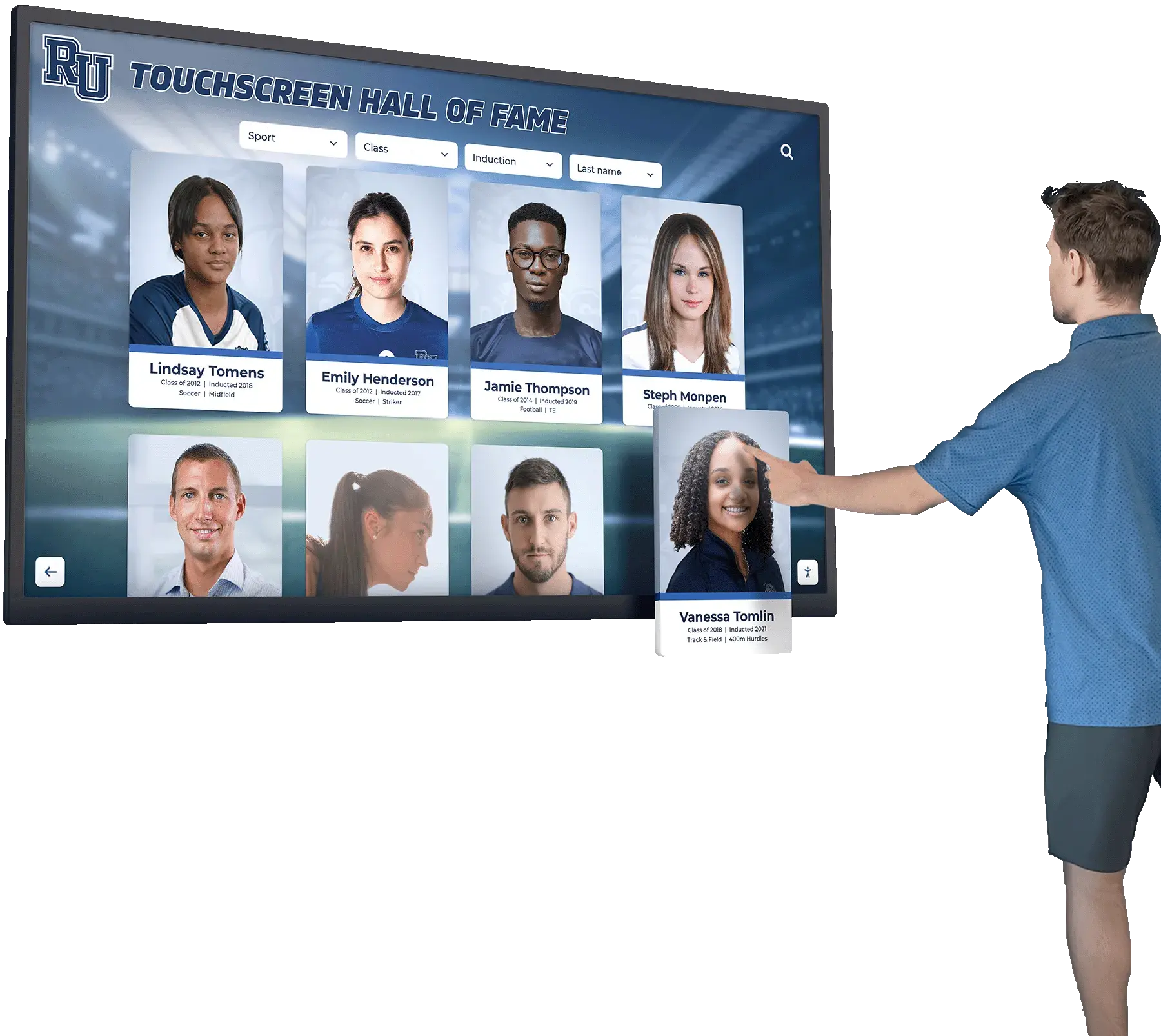
The touchscreen comparison guide for athletic record boards breaks down how different display hardware options perform across common school athletic environments—lobbies, gyms, trophy corridors—and what features matter most for baseball programs tracking multiple statistical categories.
What Digital Systems Add
The case for digitizing a baseball record board isn’t only about avoiding maintenance headaches. Digital systems make the record board do things a static board structurally cannot.
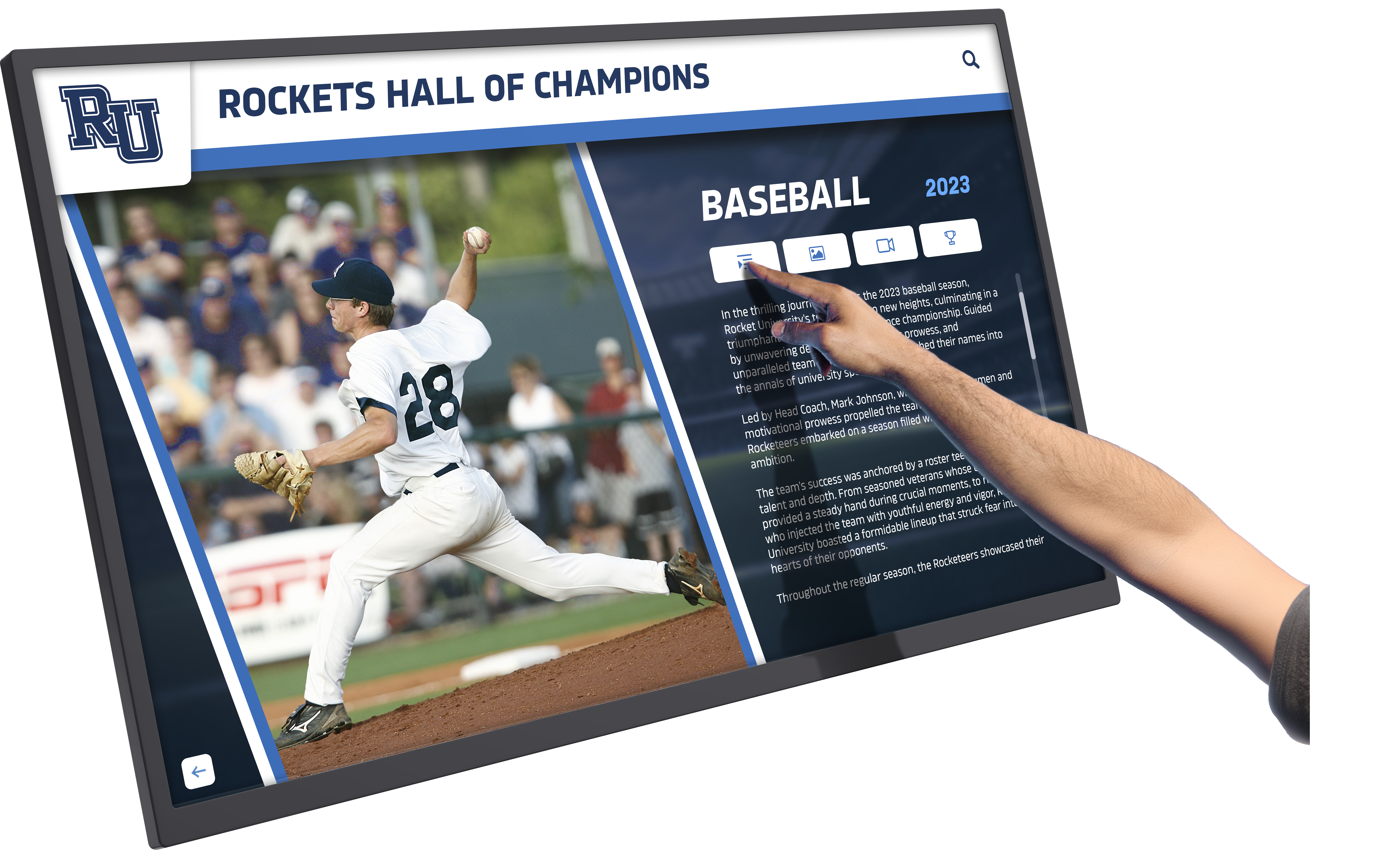
Auto-ranking: When a player’s career home run total surpasses the current record, the system reorders the leaderboard automatically. No one has to remember to update it.
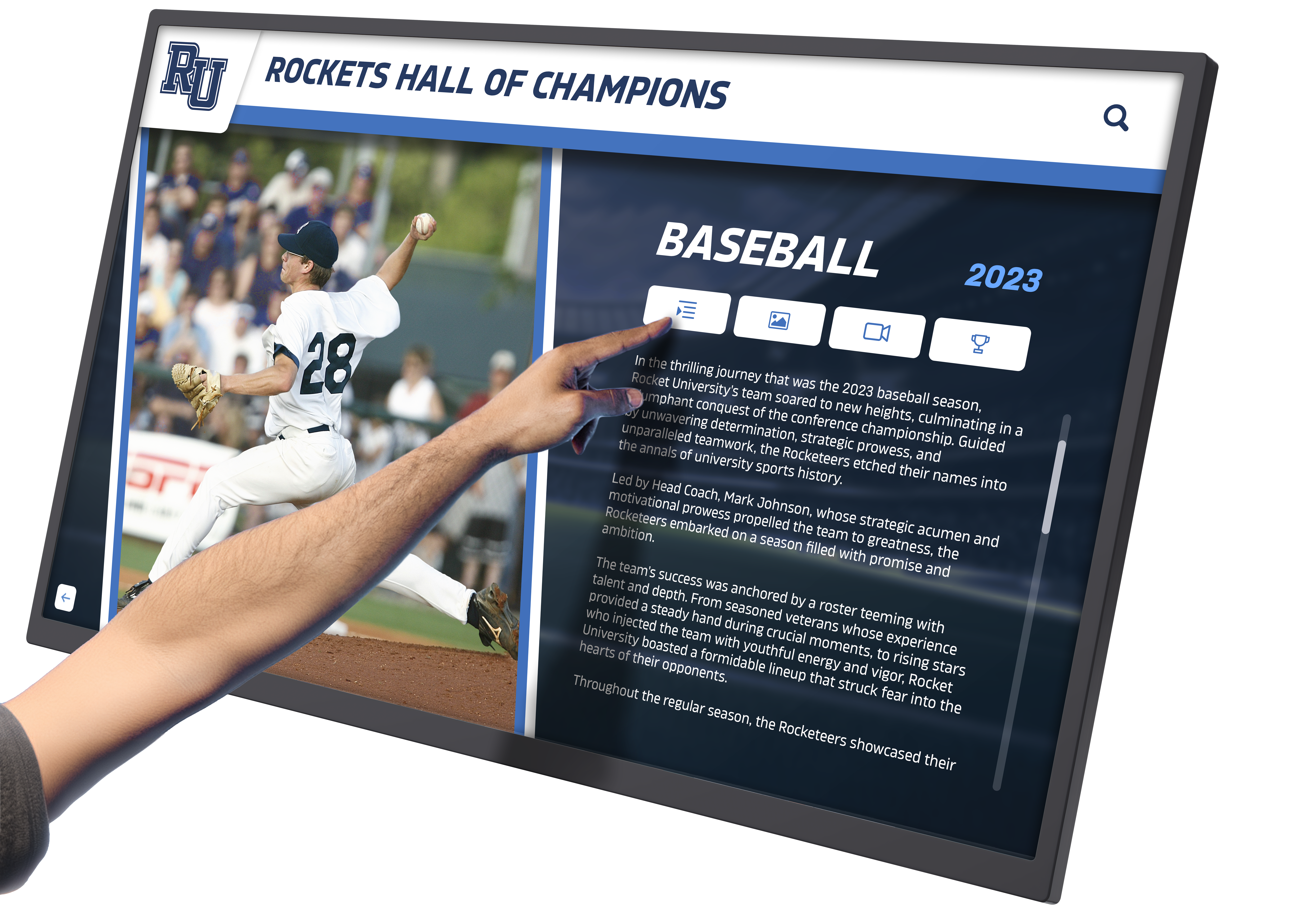
Depth of history: A physical board might show the top three career batting average leaders. A digital board shows every player who ever hit .350+ in a season, with their graduation year and career context.
Photo profiles: Every record entry on a digital board can include a photo of the athlete, their jersey number, the team they played on, and a brief narrative about the season or game where the record was set.
Milestone tracking: Digital systems can alert staff when a current player is approaching a record threshold—ten home runs from the career record, for example—enabling advance planning for recognition ceremonies.
Pitching history depth: Career strikeout totals, season ERA lists, no-hitter logs, and consecutive wins streaks can all coexist without competing for panel space.
Implementation Steps for Athletic Directors
Step 1: Inventory existing records. Pull everything currently documented—scorebooks, printed rosters, handwritten logs, old banquet programs. Know your starting point before choosing a platform.
Step 2: Identify gaps in the historical record. Which seasons lack documentation? Which records on the current board cannot be sourced? Flag those for research or add a verification notation before the digital display goes live.
Step 3: Choose a platform with category flexibility. Not every vendor supports the same record categories. Baseball programs need individual and team records, career and single-season splits, and the ability to add custom categories—pitching milestones, fielding leaders by position, consecutive-streak records. Confirm the platform handles this before signing.
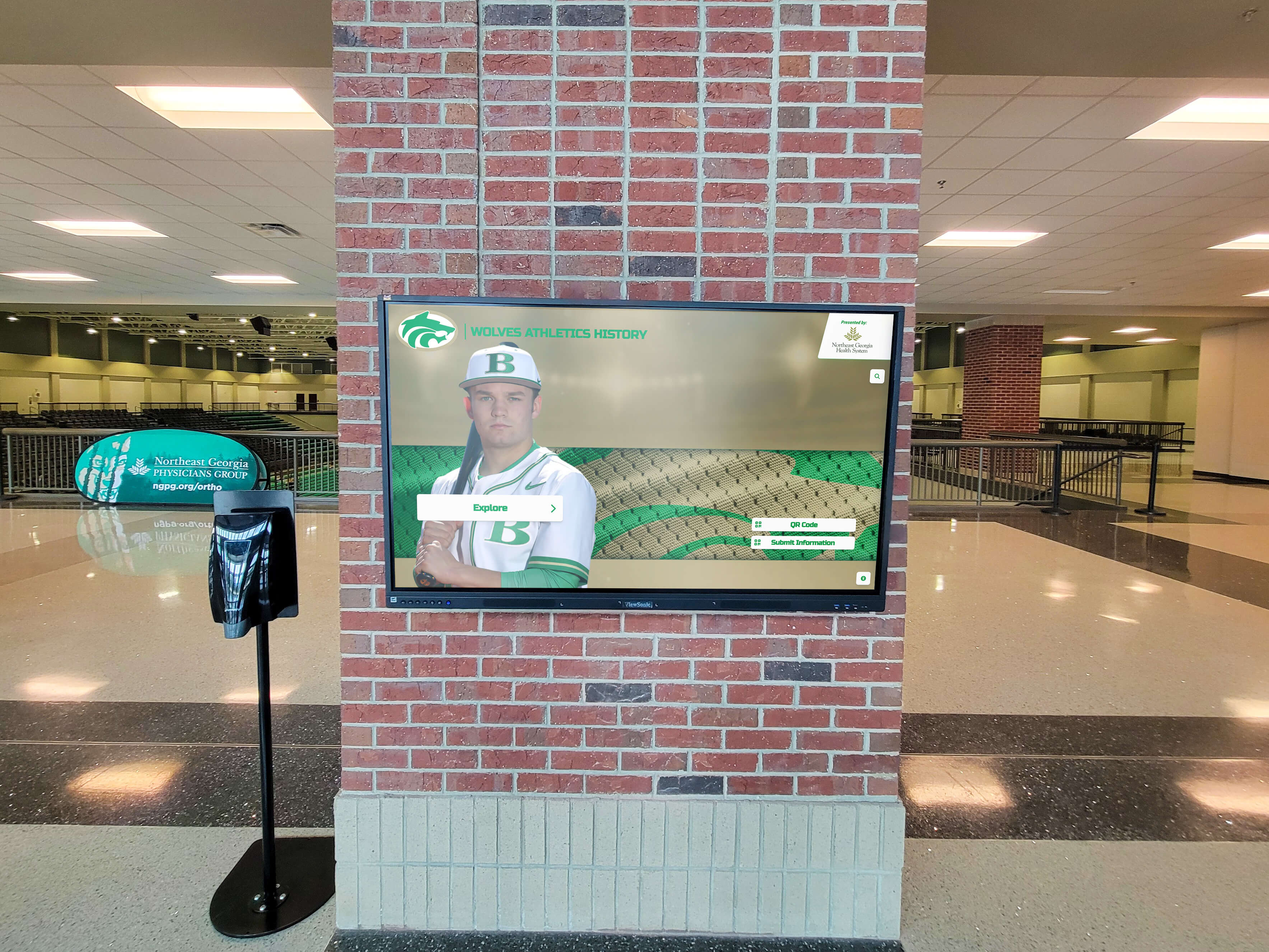
Step 4: Plan the display location. Record boards in high-traffic hallways reach every student daily. Displays in the baseball locker room or near the dugout entrance reach the baseball community at practice and on game days. Many programs install both—a hallway touchscreen for broad visibility and a dedicated display near the field for game-night recognition.
Step 5: Define the update workflow. Who enters new records? What approval does an update require before it goes live? How quickly should an update appear after a record is broken? Clear workflow documentation prevents the same neglect pattern that kills traditional boards.
Step 6: Connect the board to active recognition. Announce new record holders at games and on social media. Acknowledge milestones at the end-of-season banquet. A record board tied to living events builds program culture. One sitting quietly in a hallway is furniture.
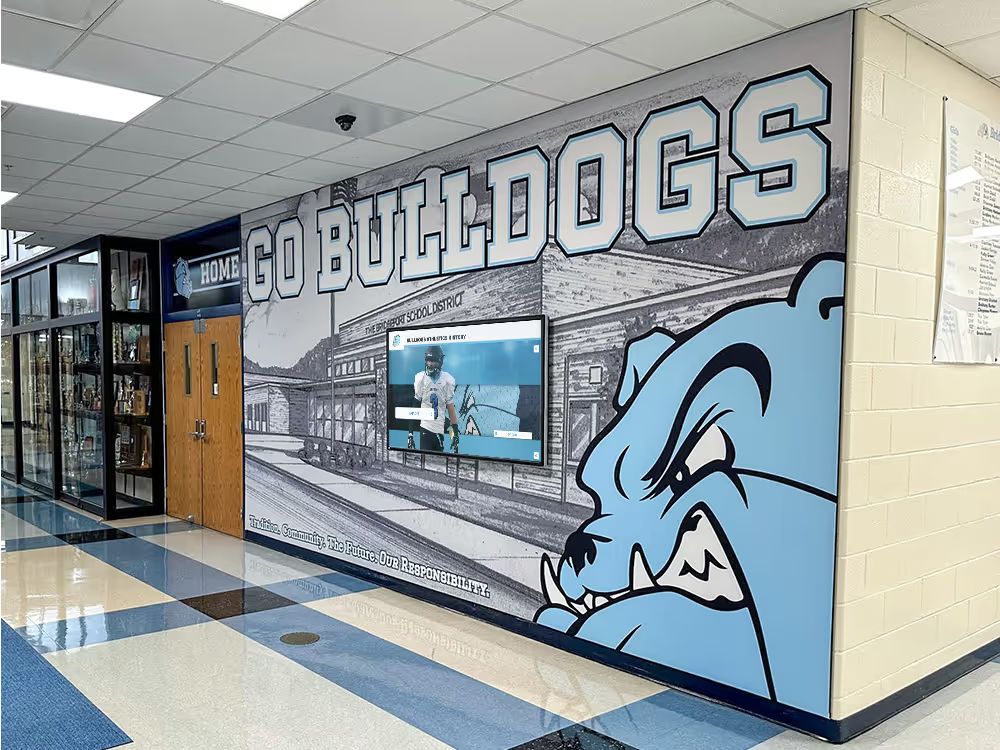
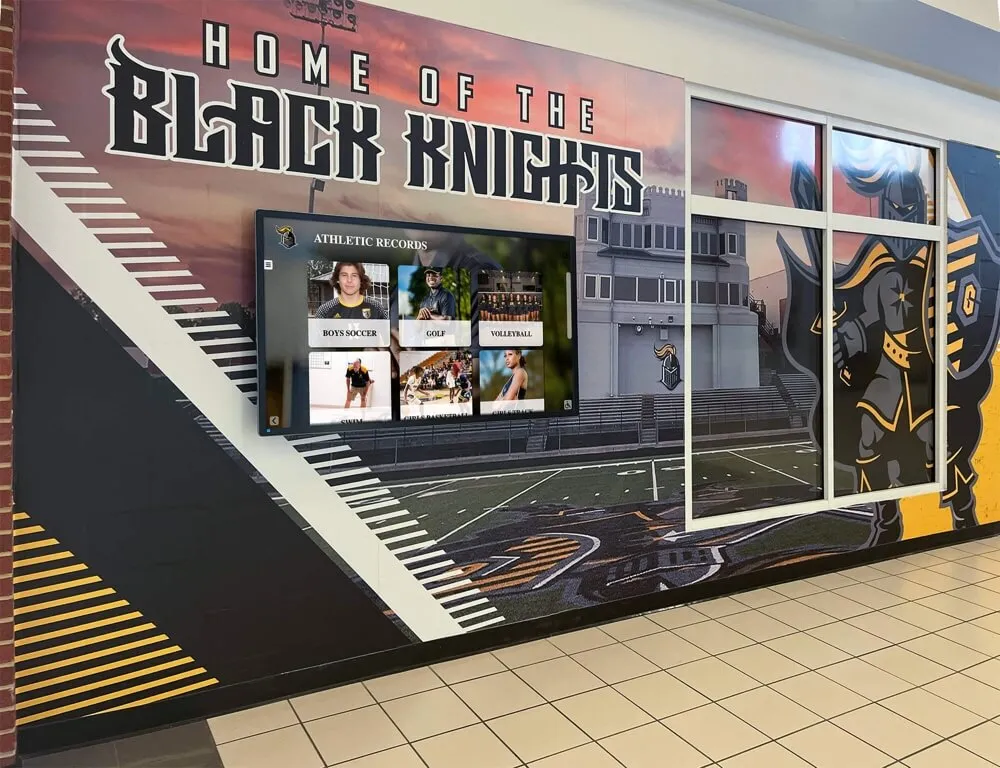
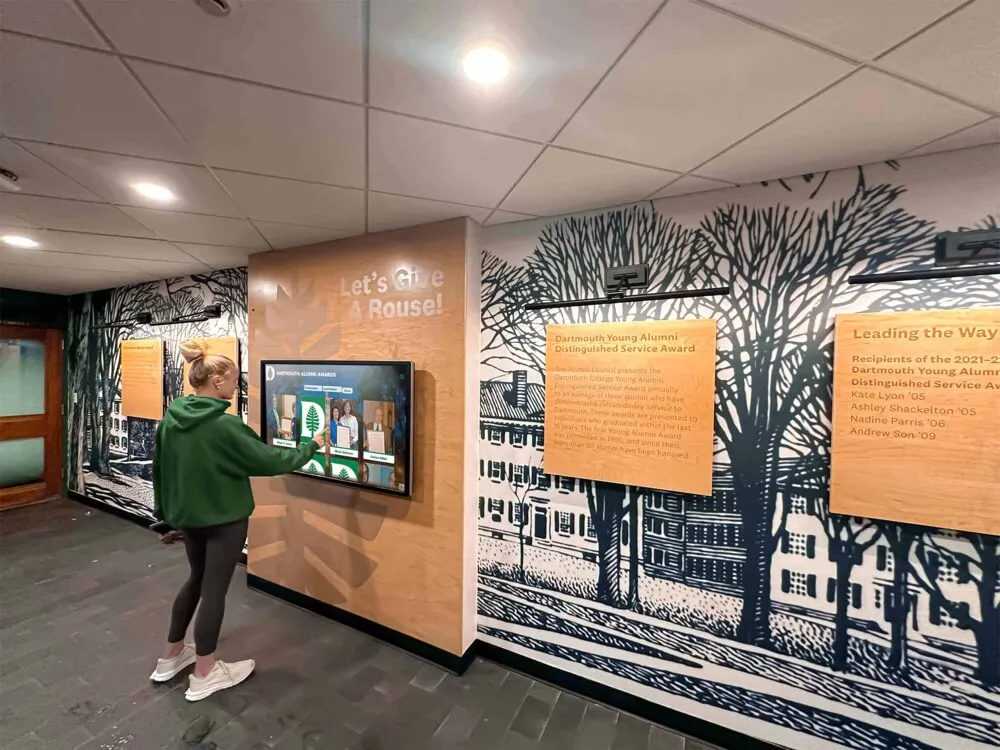
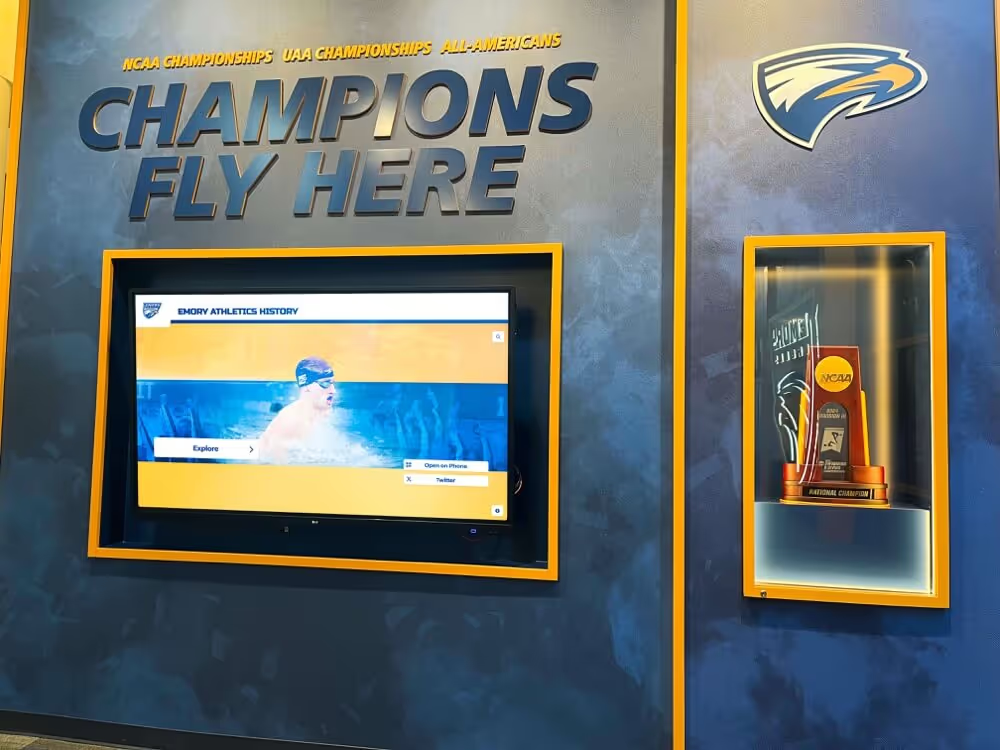
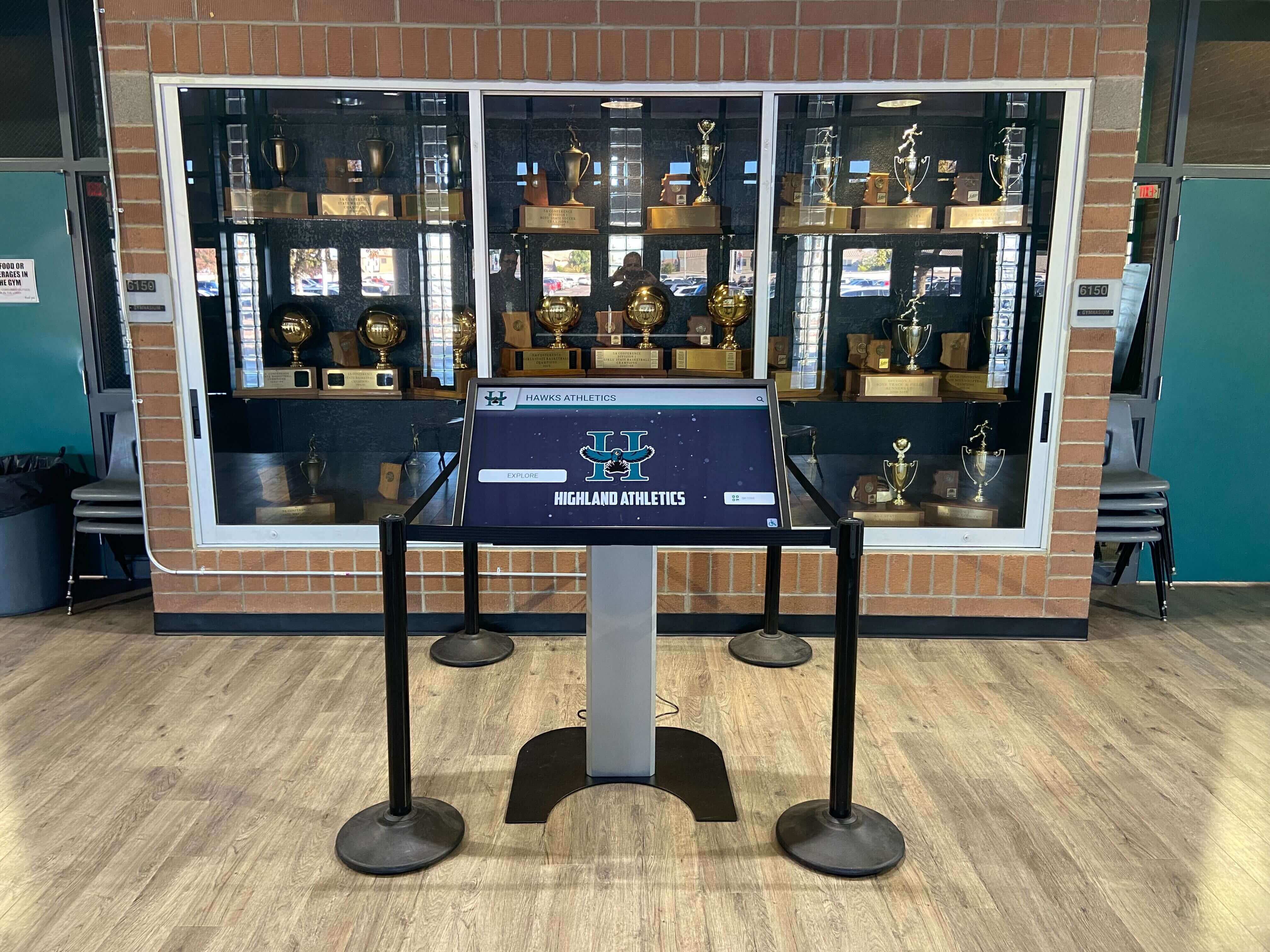
Ideas for displaying sports memorabilia alongside athletic records in school environments show how digital record systems integrate with physical memorabilia—game balls, retired jerseys, championship trophies—to create a comprehensive recognition environment rather than a standalone data display.
Connecting Records to Broader Program Recognition
Baseball record boards become more valuable when they connect to the program’s broader recognition infrastructure. Guidance on shadow box displays for school sports memorabilia and athletic history documents how programs combine digital record boards with physical display cases—shadow boxes holding game balls, plaques recognizing milestone performances, framed championship photos—to create a complete athletic recognition environment rather than an isolated statistics panel.
Baseball Record Board Ideas: Quick Reference Checklist
Use this as a starting inventory when building or auditing your baseball record board.
Individual hitting records:
- Career batting average (with minimum AB threshold)
- Career hits (top 5 or top 10)
- Career home runs
- Career RBIs
- Career stolen bases
- Single-season batting average
- Single-season home runs
- Single-season RBIs
- Single-season stolen bases
- Single-game hits
Individual pitching records:
- Career wins
- Career ERA (with minimum IP threshold)
- Career strikeouts
- Career saves
- Single-season ERA
- Single-season wins
- Single-season strikeouts
- Single-game strikeouts
- Career no-hitters
Fielding records:
- Career fielding percentage (by position)
- Season fielding percentage (by position)
- Career assists (by position)
- Consecutive errorless games
Team season records:
- Best single-season record (wins and losses)
- Most wins in program history (single season)
- Longest winning streak
- Best team batting average in a season
- Best team ERA in a season
Championship and milestone records:
- Conference/league championship years
- State tournament appearances
- State championship years
- Coaching career wins record
- Notable individual milestones (batting average, no-hitters)
Conclusion: Build the Board That Actually Gets Updated
A baseball record board earns its place on the facility wall by staying current. The hitting, pitching, and fielding checklists above give you the categories. The verification framework gives you confidence that what you post is accurate. The digitization pathway eliminates the friction that causes well-intentioned boards to go years without a meaningful update.
Programs using interactive digital systems consistently find that the biggest change isn’t the technology—it’s the culture shift. When updating a record takes five minutes instead of a budget line and a production order, records actually get updated. A pitcher who threw a no-hitter in April sees it documented before the season ends. Alumni returning for homecoming can find their career batting average without asking the current coach to dig through boxes. The board becomes a living part of the program rather than a monument to whoever last had time to maintain it.
Ready to Build a Baseball Record Board That Updates Automatically?
Rocket Alumni Solutions builds interactive digital record boards designed for high school baseball programs—tracking hitting leaders, pitching milestones, fielding records, and championship history with automatic reranking and zero per-update costs.
Schedule a Demo