




Back-to-school season represents one of the most significant opportunities schools have each year to set positive tones, build community connections, and demonstrate institutional values to students and families returning from summer break. Yet many schools approach these crucial early days with recycled templates and outdated playbooks that fail to engage modern families or establish the welcoming, inspiring environments that launch successful academic years.
The most effective back-to-school events in 2026 go far beyond distributing supply lists and reviewing handbook policies. These strategic gatherings create genuine excitement about the upcoming year, showcase school culture and achievements authentically, introduce families to resources and support systems available to them, and establish communication patterns that strengthen home-school partnerships throughout the year ahead.
This comprehensive guide explores practical back-to-school event planning strategies that create memorable experiences while efficiently managing limited administrative time and budgets. Whether your school serves elementary students experiencing their first days of formal education or high school seniors preparing for college transitions, you’ll discover scalable approaches appropriate for your specific circumstances and capable of transforming routine orientation activities into community-building opportunities that benefit students, families, and staff throughout the academic year.
Why Back-to-School Events Matter More Than Ever
Modern families face overwhelming schedules, competing priorities, and limited discretionary time for school involvement. When back-to-school events feel like obligations rather than opportunities—lengthy presentations covering information available online, administrative procedures divorced from genuine connection—families disengage and schools lose critical early chances to build partnerships that support student success.
Conversely, schools that design events around family experience create positive first impressions that establish strong foundations for ongoing engagement. Research consistently demonstrates that family involvement in education correlates with improved student outcomes across academic achievement, behavior, and social-emotional development. Back-to-school events serve as gateway experiences either inviting families into partnership or signaling that participation means enduring tedious requirements rather than experiencing meaningful connection.
Strategic Planning for Back-to-School Events
Before exploring specific event components and activities, understanding fundamental planning principles ensures efficient resource use while maximizing impact.
Defining Clear Event Purposes and Outcomes
Effective back-to-school events serve multiple purposes that should be explicitly identified during planning:
Community Building: Creating connections among students, families, and staff that establish supportive school culture. This proves particularly critical for families new to schools or communities.
Information Distribution: Ensuring families understand academic expectations, school procedures, available resources, and communication systems. Balance comprehensive information sharing against information overload that overwhelms rather than informs.
Culture Communication: Demonstrating school values, traditions, and identity through authentic experiences rather than only verbal descriptions. What families experience at events communicates powerfully about what schools actually prioritize versus what they claim to value.
Relationship Establishment: Enabling families to meet teachers, counselors, administrators, and support staff in low-stakes settings before concerns or problems arise. Preexisting positive relationships facilitate difficult conversations when challenges emerge later.
Excitement Generation: Building anticipation and enthusiasm for the academic year ahead through celebrations of student achievement, previews of upcoming opportunities, and welcoming environments that make students eager to return.
Strategic schools explicitly identify which purposes each event serves and design accordingly rather than attempting to accomplish everything simultaneously—a common mistake that results in unfocused events satisfying no purpose particularly well.
Timing Considerations and Event Scheduling
When schools hold back-to-school events significantly impacts who can attend and how effectively events serve intended purposes:
Pre-School Year Events held in the week or two before classes begin enable students to visit campuses, locate classrooms, meet teachers, and reduce first-day anxiety. However, families traveling during late summer may be unable to attend, and information shared weeks before school starts gets forgotten by opening day.
First Week Events scheduled during the initial days of school capitalize on maximum family engagement while information remains immediately relevant. Challenges include competing demands on student and family time during hectic transitional periods and limited time for relationship building before academic pressures begin.
Staggered Approaches implementing multiple small events spread across pre-school and early school weeks accommodate diverse family schedules while preventing any single massive event that overwhelms both organizers and attendees. Examples include grade-level orientations on different evenings, subject-specific open houses scheduled sequentially, or rolling facility tours available across multiple days.
School Day vs. Evening vs. Weekend timing each offers trade-offs. School day events enable student participation without requiring separate family trips but exclude working parents. Evening events accommodate working families but create childcare challenges and extend already long days. Weekend events maximize family availability but require staff weekend work and may conflict with family personal time.
Understanding local family demographics, employment patterns, commute realities, and cultural considerations ensures scheduling optimizes accessibility for your specific community rather than following generic templates developed for different contexts.
Budget Planning and Resource Allocation
Effective back-to-school events require intentional resource planning balancing impact against realistic budget constraints:
Many administrators overestimate budgets needed for successful events while underestimating volunteer capacity and creative alternatives to purchased solutions. Strategic resource allocation focuses spending on elements creating disproportionate impact while leveraging free or low-cost approaches for components where spending delivers diminishing returns.
High-Impact Investment Priorities:
Professional Welcome Materials: Quality printed programs, campus maps, resource directories, and schedule information communicate organizational competence while providing lasting reference resources families use throughout the year. Poor-quality photocopied handouts undermine professionalism while professional materials cost modestly when planned sufficiently in advance.
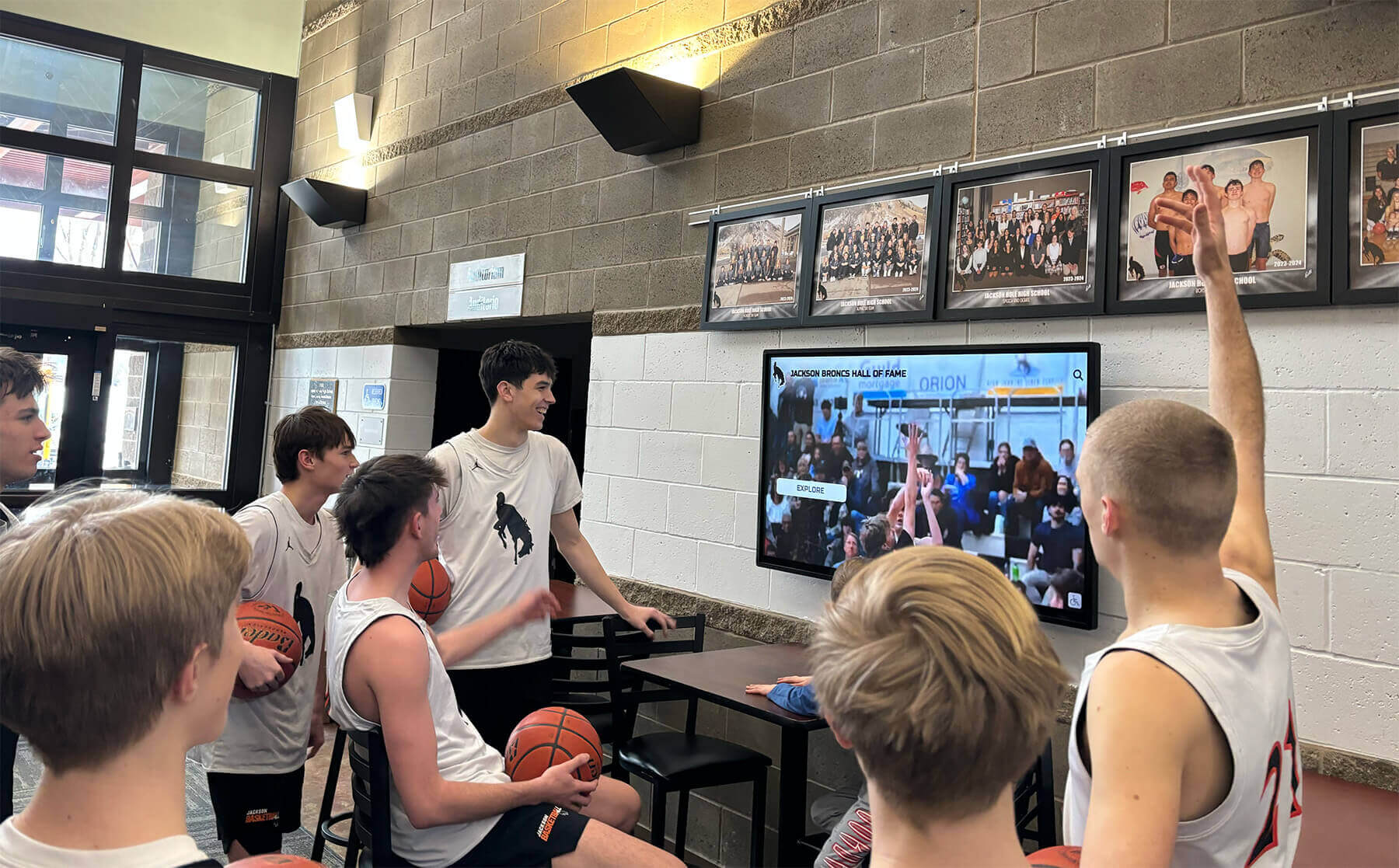
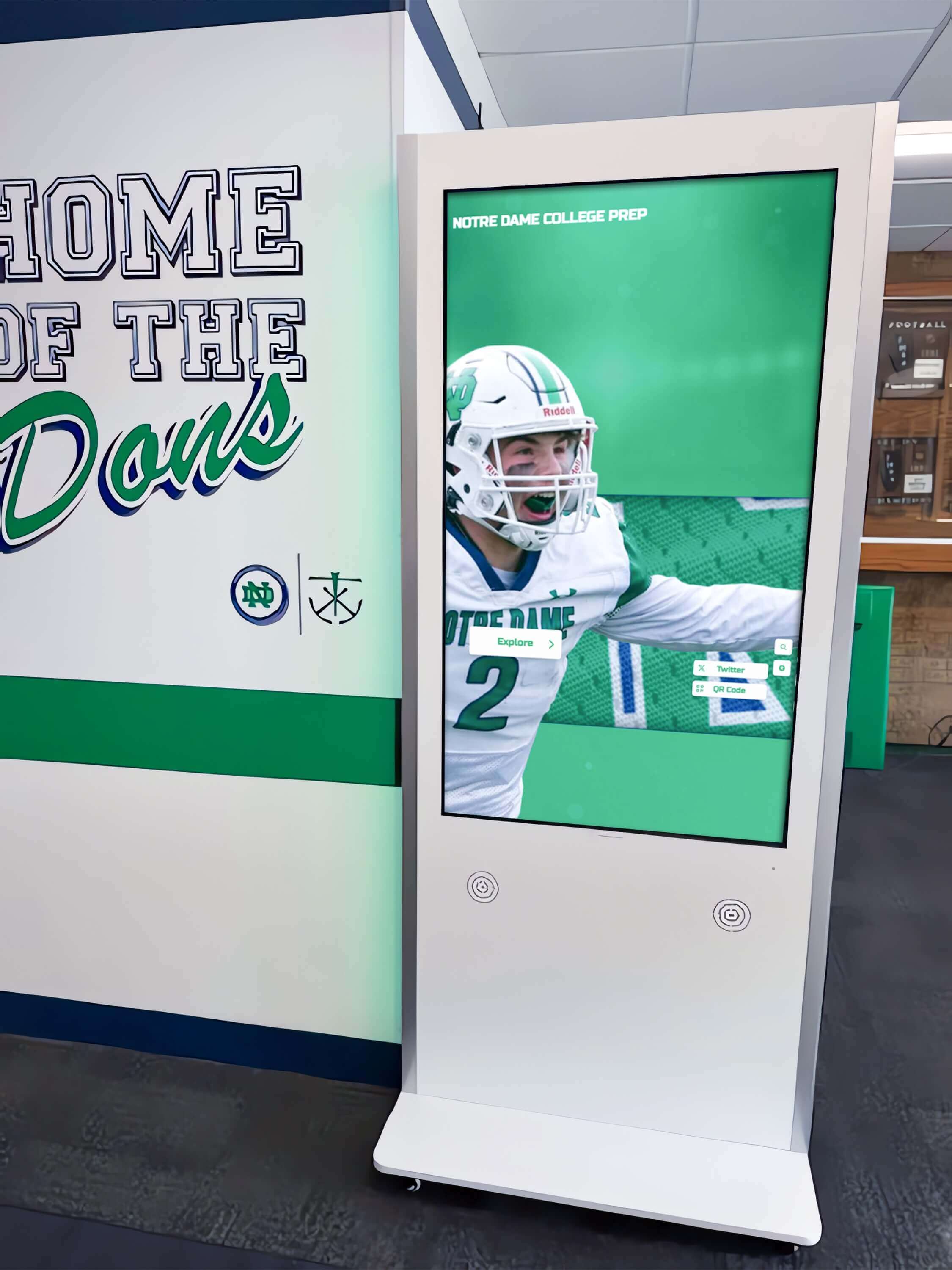
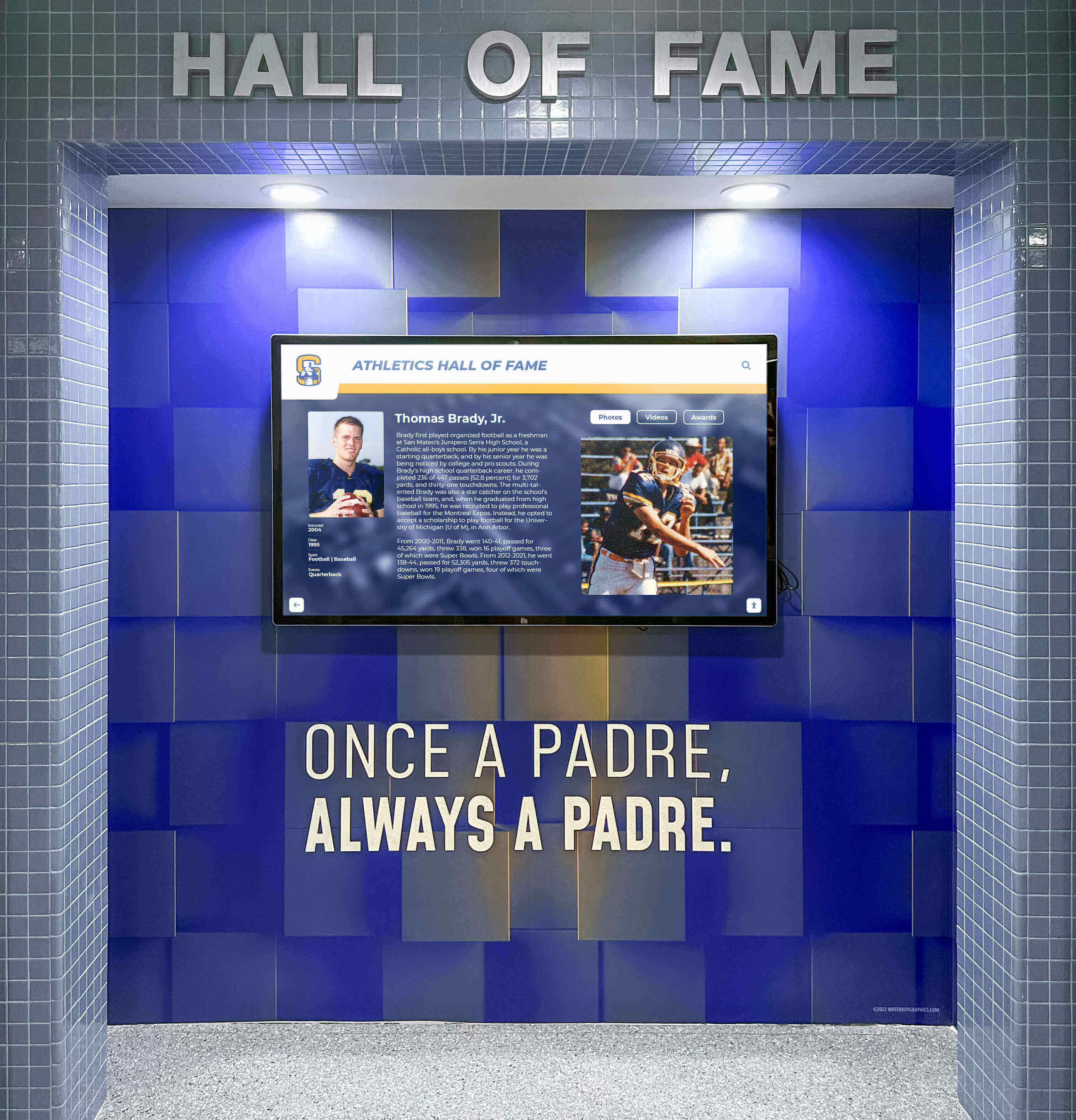
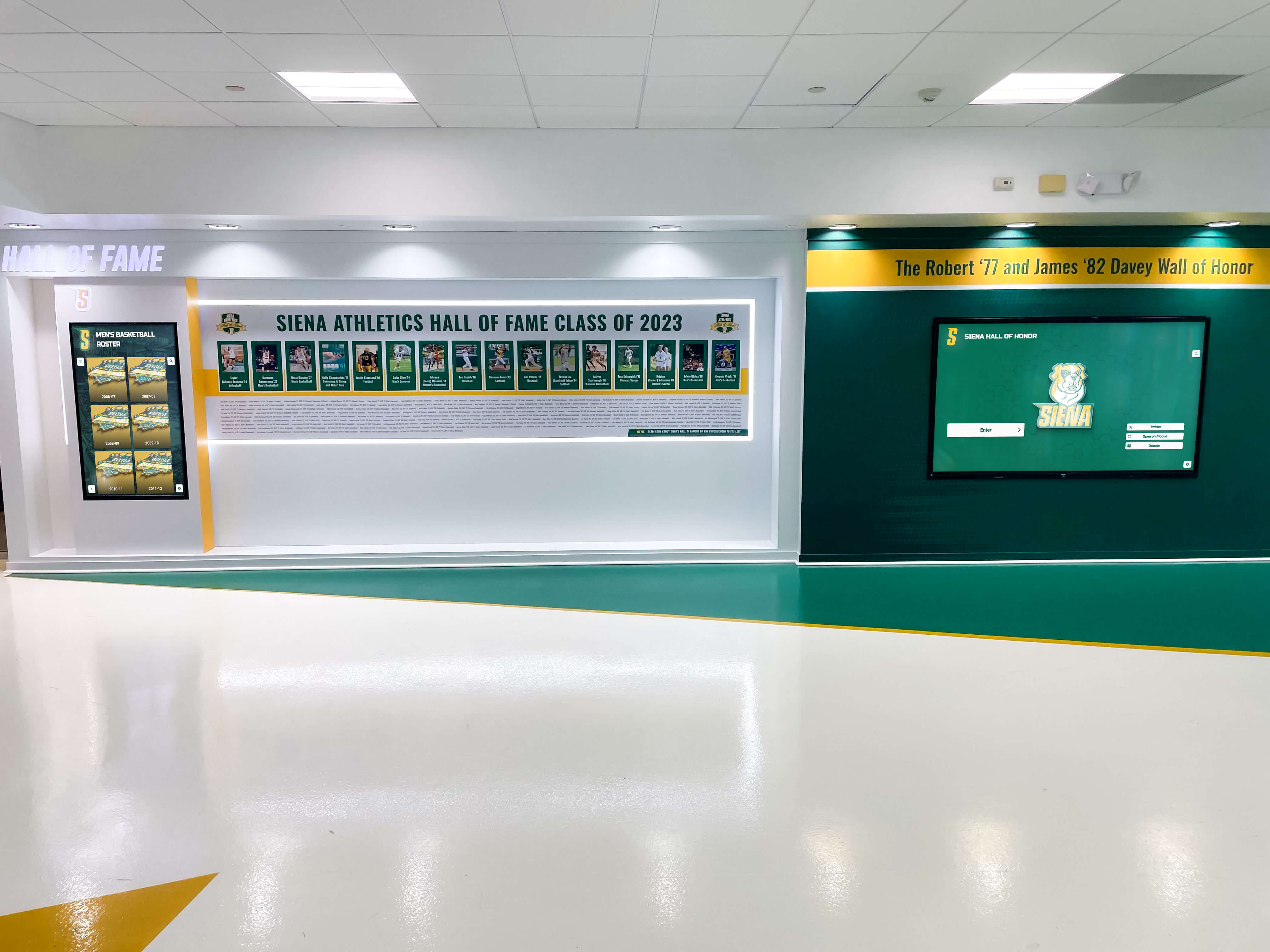
Digital Recognition Displays: Interactive displays showcasing student achievements, school history, athletic accomplishments, and academic excellence create impressive focal points generating authentic excitement about institutional traditions. Solutions like Rocket Alumni Solutions provide permanent infrastructure supporting not only back-to-school events but year-round community engagement while demonstrating institutional investment in celebrating student success.
Food and Refreshments: Simple refreshments create welcoming atmospheres while providing natural conversation starters during informal networking. Elaborate catering proves unnecessary—cookies, lemonade, and coffee suffice for creating hospitable environments.
Wayfinding and Signage: Temporary directional signage helping families navigate unfamiliar campuses reduces frustration and anxiety particularly for new families. Well-marked pathways, room labels, and information stations communicate thoughtful preparation.
Low-Cost Effective Alternatives:
Student-Created Materials: Art students can design programs, banners, and decorations developing practical skills while reducing costs. Music students can provide entertainment. Technology students can manage audio-visual needs. These approaches build student ownership while controlling expenses.
Parent Volunteer Coordination: Parent organizations often enthusiastically support back-to-school events through refreshment donations, activity staffing, and logistical support when asked with specific requests rather than vague calls for help.
Digital Distribution: Email, school websites, and communication apps distribute much information previously requiring expensive printing. Reserve printing for materials families reference repeatedly or information needing visibility when devices aren’t accessible.
Community Partnerships: Local businesses often donate refreshments, materials, or services for school events in exchange for visible recognition at events and social media acknowledgment reaching school community audiences.
Understanding back-to-school event planning frameworks like those discussed in school event management resources helps administrators develop comprehensive approaches balancing all necessary components.
Creating Engaging Event Formats
Moving beyond traditional presentations and static information sessions, successful schools design events around engagement and experience.
Interactive Station-Based Open Houses
Station-based formats replace passive attendance at lengthy presentations with active exploration across multiple interactive stations:
Rather than corralling families into auditoriums for hour-long presentations covering every possible topic, station-based open houses create spaces throughout facilities where families circulate at their own pace, engaging with topics relevant to their specific interests and needs.
Academic Department Stations: Subject-area teachers staff stations showcasing curriculum highlights, demonstrating teaching approaches, displaying student work examples, and answering questions about specific courses. Families interested in STEM programs spend time at science and math stations while families focused on arts explore music, theater, and visual arts displays without everyone attending every station.
Student Services Stations: Counselors, librarians, technology coordinators, special education staff, English learner specialists, and health services personnel create accessible touchpoints where families learn about support resources available. These low-pressure introductions establish relationships before crisis situations force initial contact.
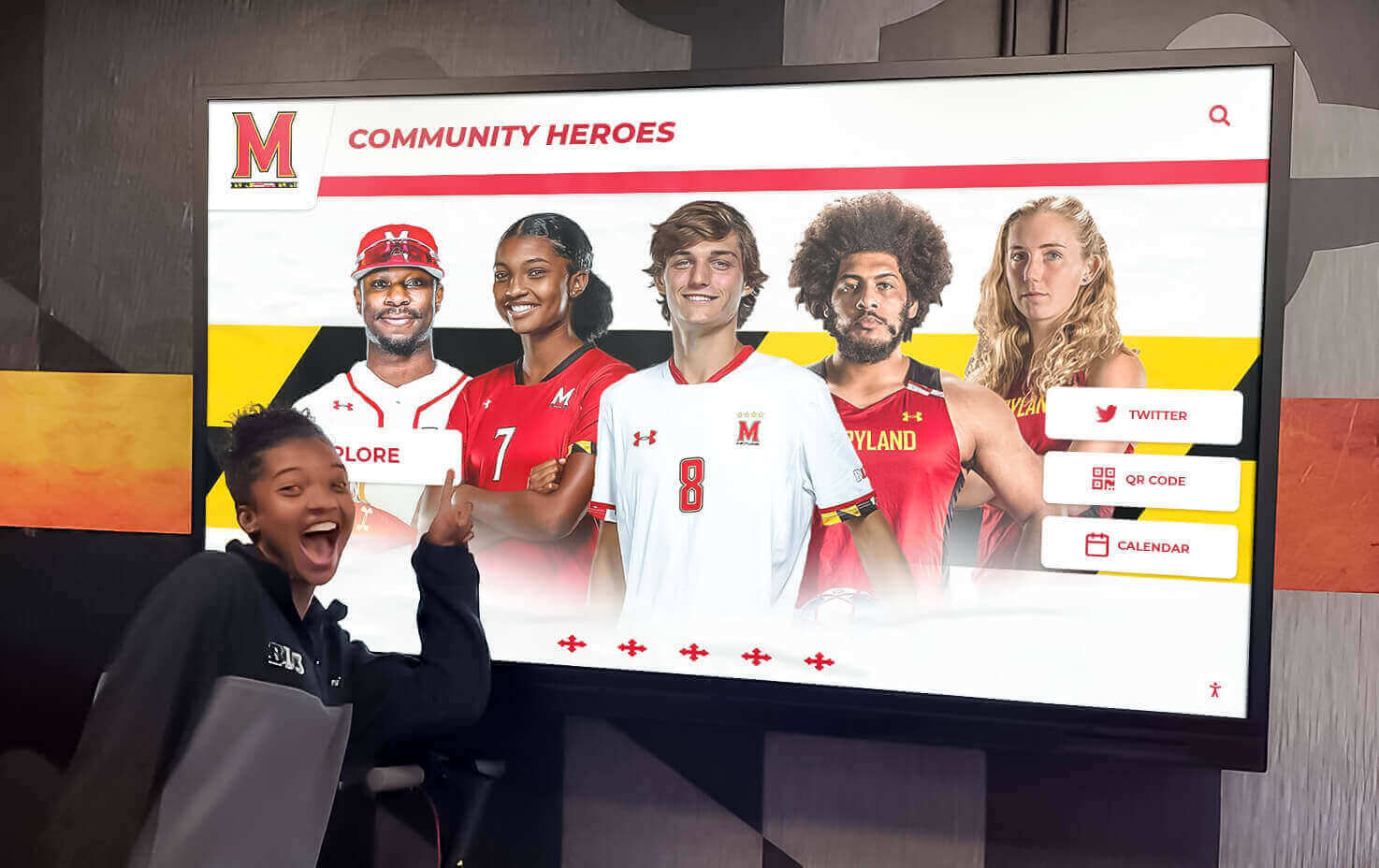
Co-Curricular Activity Stations: Athletic programs, clubs, arts ensembles, and student organizations showcase opportunities for student involvement beyond academics. Current student participants serve as authentic ambassadors describing experiences and answering questions from prospective participants.
Administrative and Operations Stations: Transportation, food services, attendance procedures, technology support, and volunteer opportunities receive dedicated stations where families get practical questions answered by staff actually managing these functions rather than administrators reading second-hand information from notes.
Student Achievement Recognition: Dedicated spaces featuring school record boards, hall of fame displays, honor roll recognition, and academic excellence documentation demonstrate institutional commitment to celebrating student accomplishment. Digital recognition platforms enable comprehensive achievement showcasing that inspires returning and new students while demonstrating school culture to families. Understanding how schools implement digital signage content strategies provides ideas for maximizing recognition display impact.
Station-based formats accommodate diverse family needs—some families need extensive information and support requiring longer visits while others primarily seek quick campus familiarization. Flexible formats respect different needs rather than forcing identical experiences on everyone.
Classroom Meet-and-Greet Sessions
Personal teacher connections rank among families’ highest priorities, particularly at elementary levels where children spend entire days with single teachers:
Structured Introduction Times: Designate 15-20 minute windows when teachers remain in classrooms for informal meet-and-greets rather than extended formal presentations. This creates opportunities for brief personal introductions, quick questions, and emotional reassurance for anxious students without consuming entire evenings.
Physical Classroom Exploration: Enabling students to see their actual classroom, locate cubbies or desks, and explore learning spaces reduces first-day anxiety significantly. Familiar physical environments create comfort supporting smoother transitions when school begins.
Visual Documentation: Encourage families to photograph classrooms, write down room numbers, and note teacher names. These simple references help anxious students visualize where they’ll be and provide conversation starters for family discussions about upcoming school years.
Brief Activity Engagement: Simple activities—coloring name tags, completing interest inventories, exploring classroom libraries, trying out new supplies—create positive associations with classroom environments while giving teachers preliminary insights into student interests and temperaments.
Schools serving older students where students rotate among multiple teachers can adapt these approaches through academic team meet-and-greets, advisory group introductions, or subject-specific classroom tours rather than attempting meetings with every single teacher.
School Tours and Facility Showcases
Physical navigation confidence particularly matters for students new to buildings or transitioning between school levels:
Many discipline issues and tardy problems during early school weeks stem not from defiance but from students unable to locate classrooms within time constraints. Comprehensive facility orientation reduces these preventable problems.
Student-Led Tour Programs: Upper-grade students serving as tour guides create authentic peer perspectives while developing student leadership. Well-trained student ambassadors answer questions from student viewpoints that adult guides cannot provide.
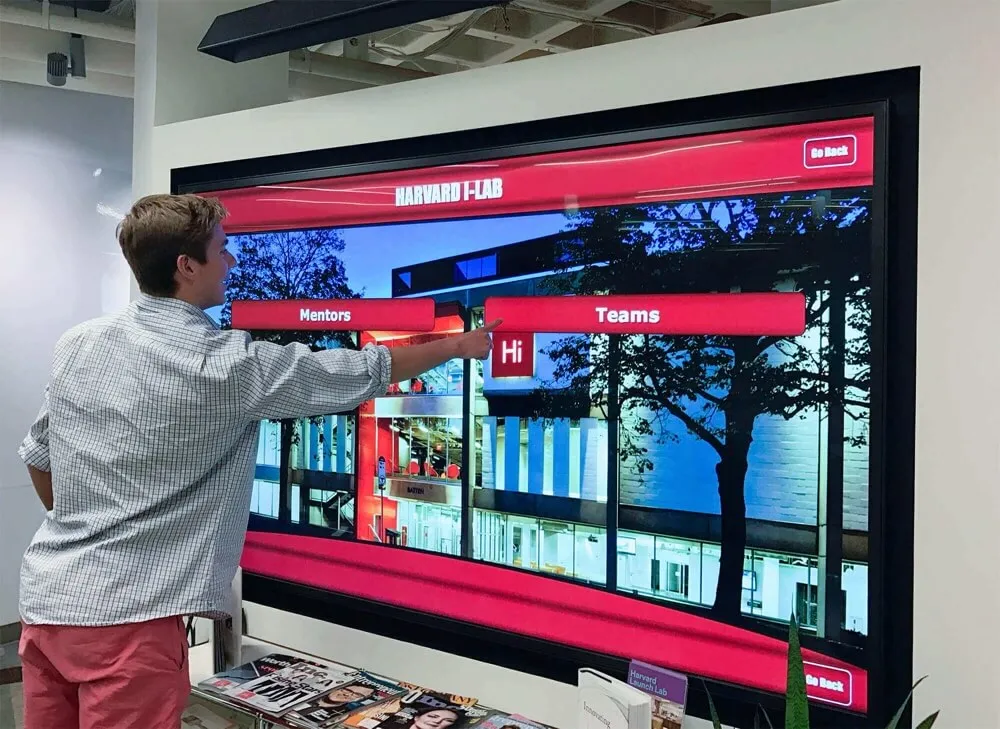
Self-Guided Tour Options: Families who prefer independent exploration appreciate clearly marked self-guided tour routes with strategic information stations at key locations. QR codes linking to video content, digital maps accessible via smartphones, and printed guide materials support self-directed learning.
Scavenger Hunt Approaches: Gamified facility exploration—locating specific rooms, finding answer clues, or collecting stamps from various locations—makes navigation learning engaging particularly for younger students while ensuring families visit important spaces.
Key Location Emphasis: Prioritize showing critical locations students must find immediately—homerooms, lockers, cafeterias, main offices, restrooms, libraries. Secondary spaces can wait for ongoing discovery rather than overwhelming families with comprehensive building tours.
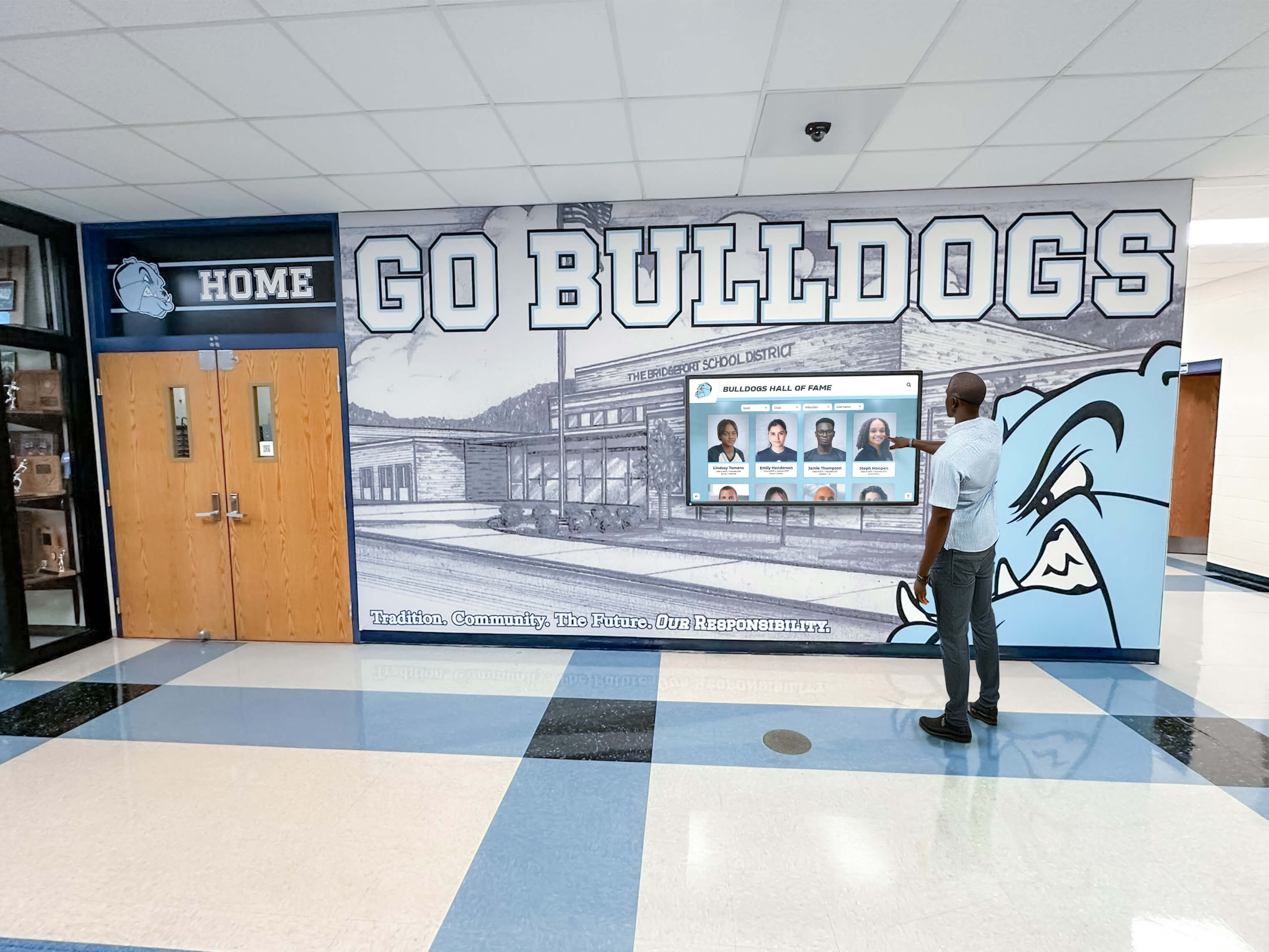
Digital Recognition Integration: Facilities tours naturally incorporate recognition displays positioned in lobbies, athletic facilities, or common areas. These displays serve as tour stops demonstrating school pride while showcasing achievement traditions. Interactive touchscreen systems enable families to explore athletic records, academic honors, and alumni achievements in self-directed ways that traditional static plaques cannot facilitate.
Building School Community Through Event Programming
Strategic programming transforms routine information distribution into genuine community building.
Student Performance and Talent Showcases
Authentic student work displays and performances create engaging content while celebrating student accomplishment:
Rather than relying on administrative presentations to communicate about music programs, let student musicians perform. Instead of describing athletic traditions verbally, show brief video highlights. Rather than explaining art curriculum, display student artwork throughout event spaces.
Music Ensemble Performances: Short 10-15 minute performances by bands, choirs, or orchestras demonstrate program quality while entertaining audiences. Families appreciate authentic examples of what student participation produces rather than program descriptions alone.
Athletic Demonstrations: Brief team introductions, highlight videos from championship seasons, or skill demonstrations from returning athletes communicate program culture and achievement more powerfully than coach presentations listing accomplishments.
Visual Arts Displays: Gallery-style exhibitions of student artwork, photography, or design projects transform hallways and common spaces into celebration of creative accomplishment. This provides meaningful context for arts program discussions while beautifying event environments.
Academic Competition Showcases: Robotics demonstrations, debate exhibitions, science experiment displays, or math challenge problems engage families while highlighting academic programs extending beyond standard coursework. Resources on academic recognition frameworks demonstrate how showcasing excellence builds community pride.
Student performances serve dual purposes—they engage event attendees while giving performing students meaningful roles contributing to school community rather than passive attendance at adult-organized events.
New Family Welcome Programs
Targeted support for new families ensures smooth integration into school communities:
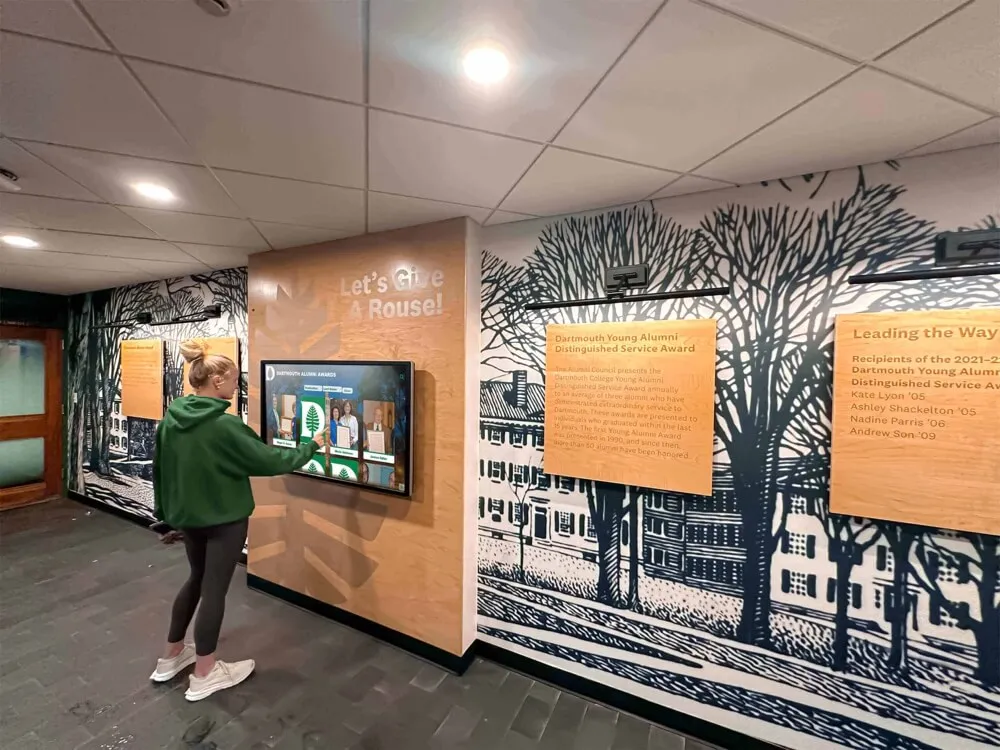
New families face steeper learning curves than returning families familiar with staff, procedures, and culture. Dedicated new family programming acknowledges different information needs while creating connections among families sharing similar newcomer experiences.
New Family Orientation Sessions: Brief dedicated sessions explaining what experienced families already know—pickup/dropoff procedures, lunch payment systems, absence reporting, volunteer sign-ups, communication norms—prevent new families from feeling lost or excluded when school begins.
Buddy Family Matching: Pairing new families with experienced family volunteers creates direct support relationships. Buddy families answer questions, provide insider tips, and make introductions facilitating social integration that isolated new families struggle achieving independently.
New Student Peer Ambassadors: Experienced students serving as peer mentors or lunch buddies during early school weeks help new students navigate social landscapes and practical logistics that adults cannot fully address. Formal ambassador programs structure naturally supportive relationships.
Community Resource Orientation: For families new to communities entirely—not just schools—information about local services, recreation opportunities, health resources, and civic organizations helps families establish broader community connections beyond school relationships.
Celebration of Previous Year Accomplishments
Recognition of achievement from previous academic years builds pride while setting excellence expectations:
Back-to-school events provide natural opportunities to celebrate accomplishments from completed years, acknowledging student achievement while demonstrating institutional values around recognizing excellence.
Academic Honors Recognition: Displaying honor roll lists, acknowledging academic competition successes, highlighting scholarship recipients, or recognizing valedictorians and academic award winners from previous years communicates that academic achievement receives valued recognition.
Athletic Championship Celebration: Championship teams, record-breaking individual performances, all-conference or all-state athletes, and college athletic recruits deserve visible recognition demonstrating sports program excellence. Digital athletic recognition displays enable comprehensive celebration of accomplishments across all sports and seasons. Understanding how schools showcase athletic achievement provides frameworks for effective recognition.
Fine Arts Achievements: Concert performances at state level, theater competition awards, art competition recognition, or individual music honors receive equal visibility demonstrating that school culture values diverse forms of excellence beyond athletics and academics alone.
Service and Leadership Recognition: Student government officers, community service award recipients, club leadership, and volunteer achievement acknowledgment reinforces that schools value character development and community contribution alongside competitive achievement.
Digital recognition platforms serving these celebration functions during back-to-school events continue providing year-round value—new content updates throughout school years, searchable achievement databases accessible to families and alumni, and engagement analytics demonstrating community interest in student accomplishment.
Practical Event Logistics and Operations
Successful events require systematic attention to operational details that families may not notice when executed well but certainly notice when mishandled.
Registration and Check-In Systems
Efficient registration processes create positive first impressions while gathering information schools need:
Chaotic check-in experiences where families wait in lengthy unorganized lines immediately create negative impressions undermining subsequent programming regardless of quality. Conversely, smooth streamlined registration communicates organizational competence while respecting family time.
Online Pre-Registration: Enabling families to complete registration forms, provide emergency contacts, submit permissions, and confirm attendance before arriving eliminates time-consuming on-site paperwork while reducing event-day congestion. Systems should accommodate families without internet access through alternative registration options avoiding digital access assumptions.
Alphabetical Check-In Stations: Multiple stations divided alphabetically distribute crowds preventing single bottleneck lines. Clear visible signage directing families to appropriate stations based on student last names maintains traffic flow.
Digital Check-In Systems: Tablet-based systems or QR code scanning accelerate check-in while providing real-time attendance data. However, technology backups—printed lists, manual backup procedures—remain essential when systems fail or internet connectivity proves unreliable.
Welcome Materials Distribution: Organize campus maps, schedules, resource directories, and event programs for easy distribution during check-in rather than requiring families to collect materials at multiple locations. Organized materials communicate preparation while ensuring families don’t miss critical information.
Name Tag Systems: Simple name tags identifying students, families, grade levels, and new family status facilitate introductions and help staff provide appropriate assistance. Color-coded systems enable quick visual identification of different groups or grades.
Wayfinding and Campus Navigation
Clear directional signage throughout facilities prevents frustrated families wandering lost through unfamiliar buildings:
Even returning families may be unfamiliar with specific new spaces—renovated areas, relocated programs, or sections they’ve never needed to access. Comprehensive wayfinding treats everyone as potentially needing guidance.
Entrance Signage: Large visible signs at facility entrances directing families to registration, main gathering areas, restrooms, and elevators establish positive experiences from arrival moments.
Color-Coded Pathways: Simple color-coding—blue route for elementary programs, green for middle school, gold for athletics—enables families to follow clear visual guides without reading detailed directions at every turn.
Student and Staff Way-Stations: Volunteer students and staff positioned at key intersections provide friendly assistance, answer questions, and direct families reducing frustration when printed signage proves insufficient.
Digital Mapping Integration: QR codes linking to interactive digital facility maps enable smartphone navigation while accommodating different technological comfort levels through printed backup maps.
Strategic Recognition Display Placement: Digital recognition displays positioned at natural gathering points or traffic convergence areas serve triple purposes—showcasing achievement, providing attractive stopping points during navigation, and creating conversation starters when families gather near displays. Modern touchscreen systems enable exploration of athletic records, academic honors, and distinguished alumni stories in engaging formats that static displays cannot match.
Food Service and Refreshment Planning
Thoughtful hospitality creates welcoming atmospheres while managing practical challenges:
Refreshments need not be elaborate to achieve welcoming effects. Simple offerings provided in organized accessible ways communicate hospitality more effectively than ambitious spreads executed poorly due to inadequate planning.
Simple Effective Options: Cookies, bottled water, lemonade, and coffee provide welcoming refreshments without elaborate catering expenses or complicated serving requirements. Pre-packaged individually wrapped items simplify service while addressing food safety and allergy concerns.
Allergy Awareness: Clear labeling identifying common allergens, gluten-free options prominently marked, and nut-free zones respect diverse dietary needs while protecting student health and safety.
Multiple Distribution Points: Refreshment stations throughout facilities rather than single centralized locations prevent crowding while ensuring accessibility. This also draws families toward various building areas rather than clustering everyone in single spaces.
Student and Parent Volunteer Staffing: Parent organizations often enthusiastically manage refreshment logistics when asked with specific requests. This reduces administrative burden while creating leadership opportunities for parent volunteers.
Dietary Inclusion Considerations: Options accommodating vegetarian, vegan, kosher, halal, and other dietary preferences demonstrate cultural responsiveness and inclusive planning thinking beyond default mainstream assumptions.
Technology Integration and Digital Communication
Modern back-to-school events leverage technology for enhanced engagement and communication efficiency.
Digital Information Distribution
Electronic communication platforms supplement physical event experiences while accommodating families unable to attend:
Not every family can attend every event regardless of scheduling attempts. Digital distribution ensures information reaches all families while reducing environmental impact and printing costs.
Comprehensive Event Websites: Dedicated web pages compiling all event information—schedules, campus maps, staff directories, key policies, supply lists—create permanent reference resources families access before, during, and after events. Information architecture should prioritize mobile accessibility given high smartphone usage.
Live Streaming Options: Broadcasting event presentations, performances, or principal addresses enables family participation when physical attendance proves impossible due to work conflicts, childcare challenges, illness, or distance. Archived videos provide ongoing access for families wanting information later.
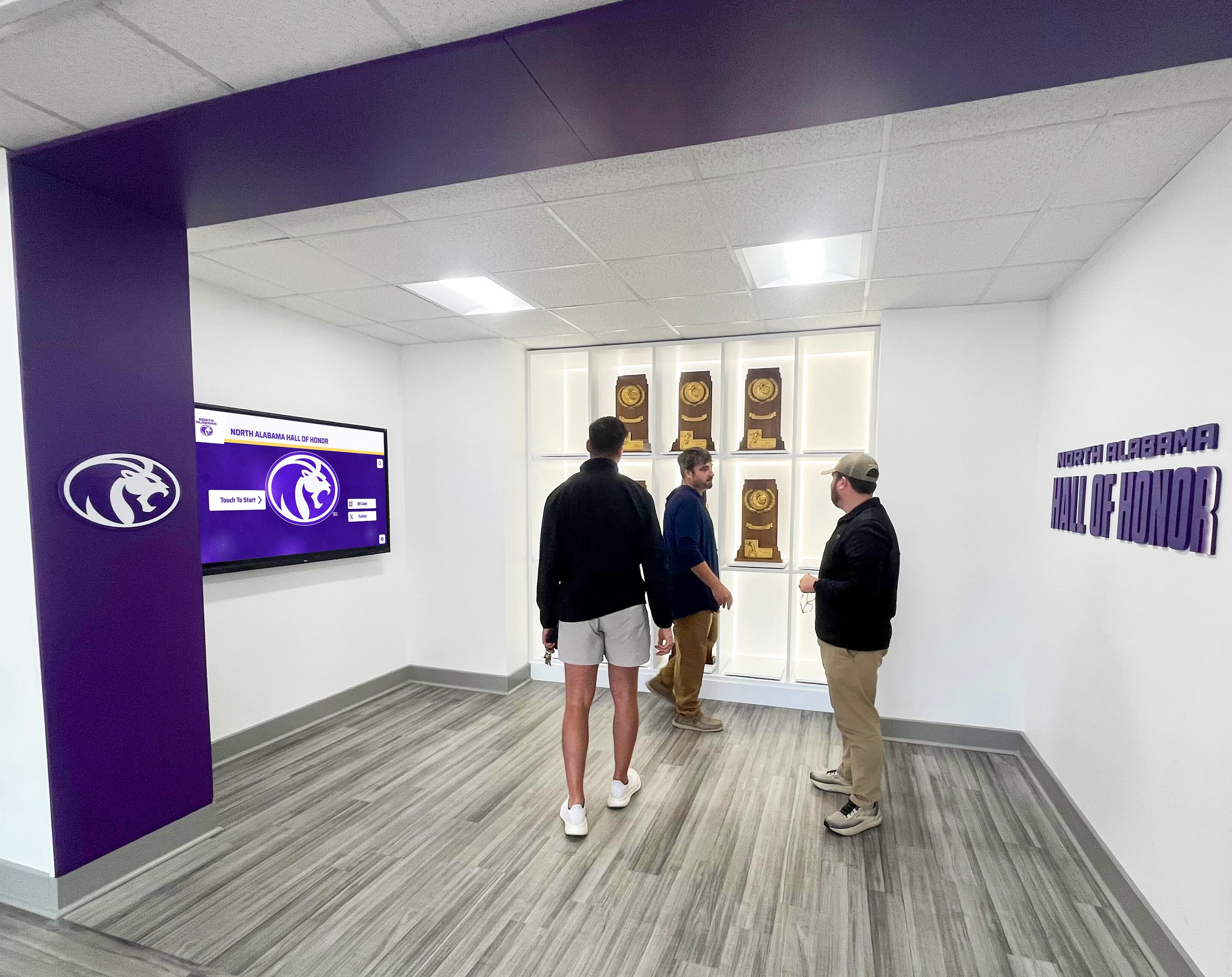
Interactive Digital Displays: Modern interactive kiosk solutions positioned throughout facilities enable self-service information access—staff directories, building maps, program information, student recognition, and school history. These displays support event activities while providing permanent information infrastructure used daily throughout school years.
Mobile Communication Apps: School communication platforms send real-time event updates, last-minute schedule changes, or helpful reminders ensuring families receive timely information through devices they check regularly.
Social Media Coverage: Live event coverage through school social media accounts extends reach beyond physical attendees, creates shareable content families post to personal networks, and documents events for future reference and promotional purposes.
Virtual Attendance Options
Hybrid event models combining physical and virtual participation expand accessibility:
Some families face legitimate barriers preventing physical attendance—transportation challenges, disabilities affecting facility access, work schedules allowing only brief participation, or health concerns. Virtual options demonstrate inclusive planning while extending event reach.
Synchronous Virtual Sessions: Video conferencing sessions allowing remote families to participate in presentations, ask questions via chat or audio, and experience community connection despite physical absence create meaningful inclusion.
Asynchronous Content Access: Recorded presentations, video campus tours, and digital resource compilations enable participation on family schedules rather than requiring attendance at specific times. This particularly benefits families juggling multiple children at different schools with conflicting event schedules.
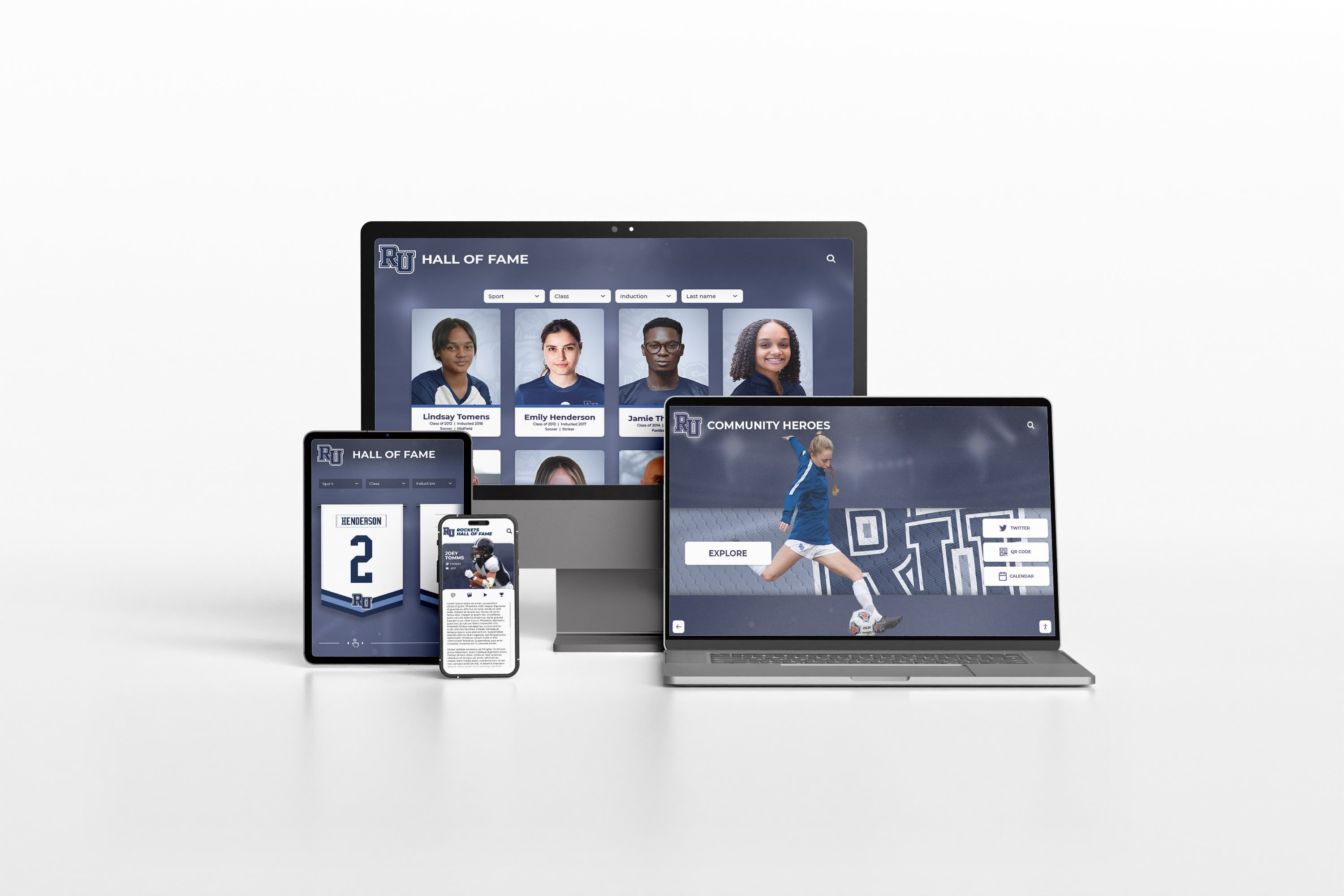
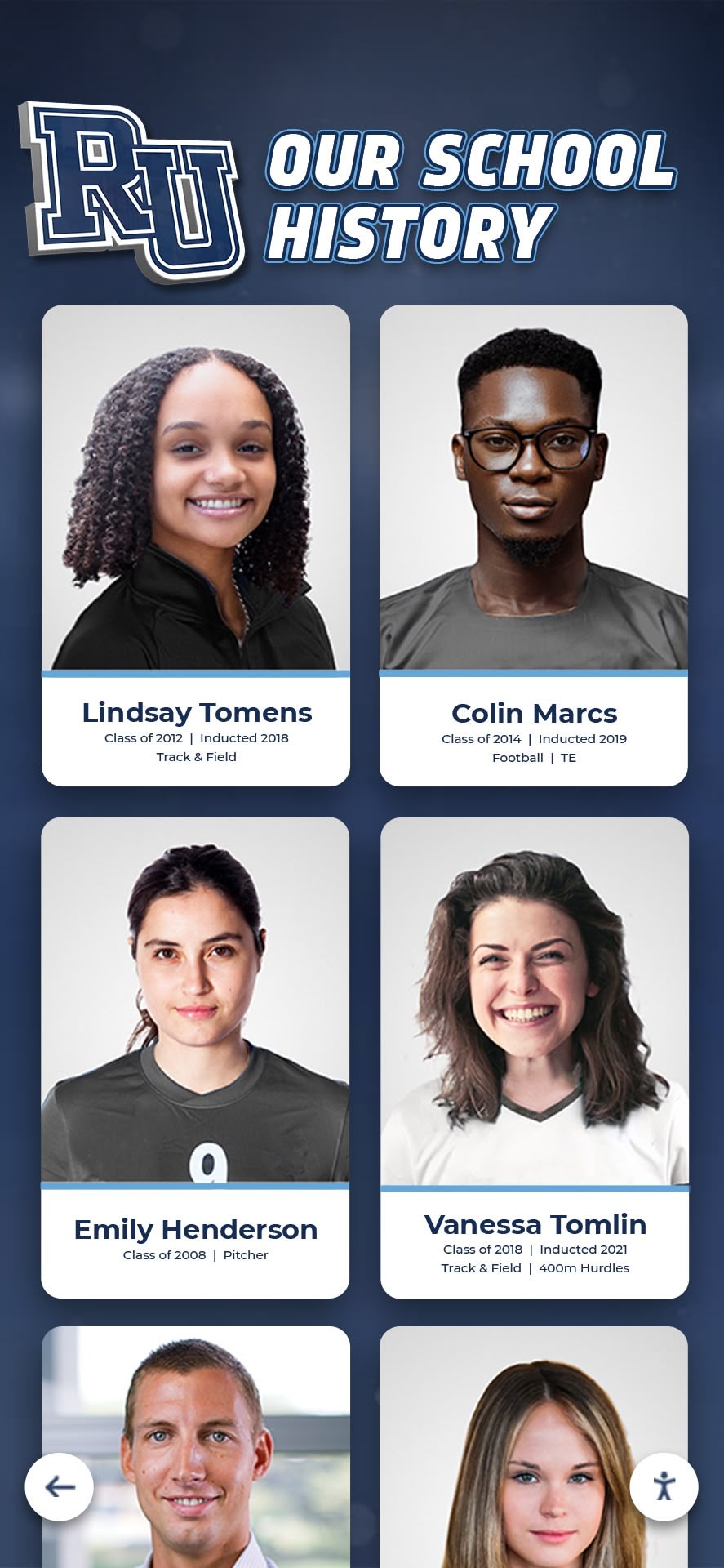
Interactive Digital Recognition: Web-based recognition platforms extending beyond physical display installations enable families to explore student achievement, school history, athletic records, and academic excellence from home. Solutions providing both in-facility touchscreen displays and companion web access maximize recognition impact while accommodating families unable to visit campuses. Digital record board capabilities demonstrate how modern systems serve multiple access needs simultaneously.
Multilingual Accessibility: Critical information translated into languages reflecting community demographics ensures non-English speaking families receive equal access to information. Professional translation services prove worthwhile investments for communications reaching significant language minority populations.
Measuring Event Success and Continuous Improvement
Systematic evaluation enables ongoing improvement transforming good events into excellent traditions.
Gathering Family Feedback
Structured feedback collection provides actionable insights for future planning:
Many schools skip formal evaluation assuming anecdotal comments represent overall family experience. Systematic feedback reveals patterns and priorities informal observation misses.
Post-Event Surveys: Brief online surveys sent shortly after events gather feedback while experiences remain fresh. Key questions focus on: What worked well? What could improve? Did families find needed information? Did they feel welcomed? Would they recommend events to new families? Keep surveys brief—10 questions maximum—respecting family time while gathering essential feedback.
Exit Conversations: Brief informal conversations during event conclusions provide immediate impressions. Station volunteers or ambassadors asking departing families simple questions—“Did you find what you needed?” “How can we improve for next year?"—gather feedback requiring no technology or follow-up response burden.
New Family Focus Groups: Small group conversations with new families several weeks into school years reveal whether back-to-school events adequately prepared them for school transitions or left gaps requiring alternative information gathering.
Staff Debrief Sessions: Event volunteer staff and administrators hold structured debrief meetings evaluating logistics, identifying operational problems, and discussing improvement opportunities while experiences remain fresh. Document discussions creating institutional memory surviving staff transitions.
Analyzing Participation Data
Attendance metrics and participation patterns inform future planning:
Attendance Tracking: Monitor which families attend versus skip events. Low attendance from specific populations—language minorities, families from certain neighborhoods, specific grade levels—may indicate accessibility barriers requiring targeted outreach or alternative event models.
Station Popularity Analysis: For station-based formats, observe which stations attract crowds versus receive little traffic. Popular stations may need expansion while neglected stations require evaluation—are topics irrelevant or poorly marketed?
Time Distribution Patterns: Track when families arrive and depart. Early departure might indicate events run too long. Late arrivals might suggest scheduling conflicts with work or other obligations.
Digital Engagement Metrics: For virtual components and digital displays, analytics reveal content that engages families versus information they ignore. High engagement areas merit expansion while low-engagement content needs improvement or elimination.
Understanding comprehensive student engagement strategies helps schools connect event programming to broader community building goals.
Iterative Improvement Processes
Continuous enhancement based on feedback and data transforms events year-over-year:
Priority Improvement Identification: Focus each year on 2-3 major enhancements rather than attempting to fix everything simultaneously. Target highest-impact improvements addressing widespread concerns or significant gaps.
Pilot Testing New Approaches: Test new event formats or components at small scale before implementing school-wide. Grade-level or department pilots reveal problems and enable refinement before broader rollout.
Best Practice Documentation: Record what works well creating institutional knowledge that survives staff turnover. Detailed planning checklists, timeline templates, vendor contacts, and logistics documentation enable smooth execution even when leadership changes.
Longitudinal Tracking: Monitor trends across multiple years revealing whether events improve, stagnate, or decline. Multi-year perspective reveals whether single-year problems reflect anomalies or systemic issues requiring attention.
Addressing Common Back-to-School Event Challenges
Proactive planning addresses predictable obstacles that undermine event success.
Challenge: Low Family Attendance
Many schools struggle with disappointing attendance despite significant planning investment:
Solutions: Survey families about preferred timing, days, and formats rather than assuming traditional evening events work for everyone. Implement multiple smaller events at varied times accommodating diverse schedules. Ensure personal invitations from teachers or administrators rather than relying solely on mass communications. Provide specific reasons to attend—“Meet your child’s teacher” or “See new facility improvements”—rather than vague “Open House” announcements. For families with transportation barriers, arrange shuttle services from central community locations or partner with parent organizations providing ride coordination.
Challenge: Information Overload
Well-intentioned attempts to communicate everything overwhelm families leaving events confused rather than informed:
Solutions: Prioritize must-know information—emergency procedures, key contacts, immediate scheduling details—while distributing nice-to-know content through post-event follow-up communications. Use visual communication and infographics simplifying complex information. Chunk presentations into brief focused segments rather than lengthy comprehensive presentations. Create detailed reference guides families can consult later rather than expecting retention of information presented once during busy events. Recognize that some information repetition across multiple channels—verbal presentations, printed materials, digital resources, follow-up emails—proves necessary for full family comprehension.
Challenge: Language and Cultural Barriers
Families with limited English proficiency or cultural differences often feel excluded from mainstream school events:
Solutions: Provide professional interpretation services for languages representing significant community populations. Translate written materials into prevalent languages beyond English. Recruit bilingual staff and family volunteers serving as cultural liaisons and translators. Design visual communications and signage minimizing text dependence. Schedule cultural liaison meetings with language minority communities separately from large general events when appropriate. Train all staff in cultural competency ensuring welcoming interactions across difference. Partner with community organizations serving immigrant and refugee families to promote events and address participation barriers.
Challenge: Engaging Secondary Students
Older students often resist attending family-focused school events viewing them as unnecessary or socially awkward:
Solutions: Design programming specifically appealing to adolescents rather than elementary-focused activities poorly adapted for older students. Give secondary students meaningful leadership roles—tour guides, performance showcases, station presenters—creating ownership rather than passive attendance. Offer student-only campus access times separate from family programming. Integrate social opportunities allowing students to reconnect with friends before school begins. Leverage digital recognition displays featuring recent graduates and accomplished alumni to inspire students by showing pathways from high school to college and career success. Understanding school spirit building strategies helps engage older students in school community.
Sustainable Event Planning and Institutional Memory
Building systematic approaches ensures consistent quality and reduces planning burden across years.
Creating Planning Templates and Checklists
Reusable planning frameworks improve efficiency while preserving institutional knowledge:
Develop comprehensive planning timelines working backward from event dates—6 months prior, 3 months prior, 1 month prior, 1 week prior, day-of, and day-after checklists. Document all tasks, responsible parties, deadlines, and completion status creating clear accountability.
Master vendor lists compile contact information for all service providers—rental companies, catering services, audio-visual technicians, printing services, cleaning contractors. Include pricing, contract terms, past performance notes, and recommendations.
Budget templates with actual expenses from previous years provide realistic planning baselines. Document all cost categories enabling accurate projections and appropriate contingency funds for unexpected expenses.
Communication templates for various audiences—new families, returning families, staff, volunteers, community partners—establish consistent messaging while reducing drafting time. Customize templates for specific circumstances rather than creating entirely new communications from scratch annually.
Building Staff and Volunteer Teams
Sustainable staffing models distribute workload preventing administrator burnout:
Planning Committee Structure: Establish event planning committees with clearly defined roles—logistics coordinator, communications lead, volunteer coordinator, budget manager, family engagement specialist. Distribute responsibilities preventing single individuals from bearing entire planning burden.
Parent Organization Partnership: Parent groups often enthusiastically support back-to-school events when engaged early with specific requests. Clear expectations about parent roles versus staff responsibilities prevent confusion while maximizing volunteer contributions.
Student Leadership Integration: Secondary students can assume substantial event responsibilities—tour guide training and coordination, performance planning, technology support, photography and social media documentation. Student involvement builds leadership skills while reducing adult workload.
Cross-Training and Documentation: Ensure multiple people understand critical event functions preventing knowledge loss when key individuals leave or become unavailable. Written procedures, video training, and shadowing opportunities transfer knowledge efficiently.
Leveraging Permanent Infrastructure Investments
Digital recognition systems installed for back-to-school events provide year-round value justifying initial investment:
Interactive displays showcasing student achievement, school history, athletic records, and academic excellence create impressive focal points during welcome events while serving daily functions throughout school years—celebrating ongoing student accomplishments, inspiring current students through visible excellence examples, engaging alumni during return visits, and demonstrating school culture to prospective families during tours.
Modern touchscreen platforms enable instant content updates without requiring physical plaque production or installation. Schools can add new achievements immediately—championship victories, academic competition successes, scholarship recipients—maintaining current recognition that engages community attention.
Web-based companion sites extend recognition visibility beyond physical displays, enabling alumni, prospective families, and broader communities to explore achievement histories from anywhere. This multiplies recognition impact while demonstrating technology-forward institutional culture.
Analytics capabilities reveal which students, achievements, and content attract greatest engagement, providing insights about community interests and values informing broader communication and programming decisions.
Solutions like Rocket Alumni Solutions provide turnkey platforms purpose-built for educational recognition needs, delivering intuitive management requiring no technical expertise while creating engaging displays that transform routine recognition into community celebration. These systems justify investment through ongoing utility extending far beyond single annual events to become permanent infrastructure supporting community engagement year-round.
Conclusion: Building Welcoming School Communities
Effective back-to-school events require moving beyond administrative obligation thinking toward strategic community building that establishes positive foundations for successful academic years. The most impactful events balance practical information distribution with genuine relationship building, incorporate engaging programming that celebrates student achievement and institutional tradition, leverage technology for enhanced accessibility and efficiency, accommodate diverse family needs through flexible formats and timing, and create memorable experiences that build anticipation and excitement for upcoming school years.
No single event formula works perfectly for every school. Institutional size, community demographics, facility configurations, budget realities, and local culture all influence optimal event design. However, fundamental principles prove universally applicable: put family experience first rather than administrative convenience, communicate clearly without overwhelming, celebrate student achievement prominently, welcome new families intentionally, distribute information through multiple channels accommodating learning preferences, gather feedback systematically for continuous improvement, and invest in permanent infrastructure supporting ongoing community engagement.
When schools approach back-to-school planning strategically—viewing early-year events as gateway experiences shaping family engagement throughout academic years rather than isolated administrative requirements—they create welcoming communities where students thrive, families partner authentically with educators, and institutional culture reflects genuine commitment to supporting student success through strong home-school collaboration.
Your back-to-school events can become anticipated community traditions that students and families genuinely look forward to rather than obligatory orientations they endure. By implementing thoughtful programming, leveraging modern technology including digital recognition displays that celebrate achievement, gathering feedback for continuous improvement, and focusing relentlessly on creating welcoming experiences, you’ll establish the positive community foundations that benefit students, families, and staff throughout entire academic years ahead.
Ready to transform your back-to-school events while creating permanent recognition infrastructure that engages families year-round? Explore how Rocket Alumni Solutions provides comprehensive digital recognition platforms perfect for showcasing student achievement during welcome events while delivering ongoing value through interactive displays that celebrate excellence, preserve institutional history, and inspire current students toward their own remarkable accomplishments.































