



When two athletes post identical marks for the same school record, most athletic departments improvise — one year the display shows both names, the next year staff forgets why. An athletic record tie handling policy eliminates that guesswork by establishing written rules for when a tie is valid, how to display co-holders, how to credit relay squads that match an existing time, and how to keep the physical board, the digital display, and the record book synchronized. The policy covers three situations: individual performance ties, relay team ties, and retroactive ties discovered through historical research.

What This Policy Covers
Intent: demonstrate
This policy applies to any school that tracks and publicly displays all-time athletic records — on a physical board, a digital record board platform, a school website, or a printed record book. It answers four operational questions that every athletic department eventually faces:
- At what precision must two marks match to be called a tie?
- How many co-holders can a single record entry carry?
- How are co-holders credited on displays, certificates, and award programs?
- What happens when a new performance ties but does not break an existing shared record?
Without written answers to these questions, each new tie gets resolved by whoever is available — resulting in inconsistent displays and disputes that surface years later when the staff who made the original decision have moved on.
Step 1: Define the Tie Threshold by Sport and Event Type
A tie requires an exact match at the precision level used for official results in that event. Different sports and event types use different measurement precision, and the tie threshold must match the precision of the official result — not a rounded or displayed version of it.
| Event Category | Official Precision | Tie Threshold |
|---|---|---|
| Track sprints and hurdles (FAT) | 0.01 seconds | Marks must match to 0.01 s |
| Track distance events (FAT) | 0.01 seconds | Marks must match to 0.01 s |
| Track distance events (hand-timed) | 0.1 seconds | Marks must match to 0.1 s |
| Swimming (touchpad) | 0.01 seconds | Marks must match to 0.01 s |
| Field events (jumps, throws) | 0.01 meters or 0.25 inches | Marks must match at the unit used by the official result sheet |
| Basketball, volleyball, soccer (counting stats) | Whole number | Marks must be equal integers |
| Powerlifting and weight room (total weight) | Nearest pound or kilogram as official | Marks must match at the reported unit |
Policy rule: A tie is declared only when official result documents — timing printouts, electronic scoresheets, or signed official results — show values that are identical at the event’s defined precision level. Rounding a slower mark to manufacture a tie is not permitted.
Programs that use sports poster and graphic templates for school recognition need this threshold defined before design work begins: a co-holder credit on a display graphic requires the same evidentiary standard as any other record entry.
Step 2: Set a Maximum Co-Holder Limit and a Tiebreaker Protocol
Every record entry must have a declared maximum number of co-holders. Unlimited co-holders create a display problem — the entry becomes unreadable — and they dilute the significance of the record itself.
Recommended limits:
| Record Type | Maximum Co-Holders | Tiebreaker When Limit Is Reached |
|---|---|---|
| Individual event record | 3 | Earliest date of performance holds the record; newest co-holder is listed in the archive but not on the active display |
| Relay event record | 2 squads (8 individual athletes maximum in 4×relay) | Earliest date of performance holds the active record |
| Counting-stat record (career or season) | 3 | Earliest date of attainment holds the active display entry |
Tiebreaker logic: When a new tie would exceed the co-holder limit, the incoming performance is documented in the record archive with a note that it matched the school record and the date it was achieved. It appears on the display only if an existing co-holder’s entry is removed — which happens when evidence of the co-holder’s performance is later found to be insufficient, or when a policy revision updates the display limit.
This is analogous to how championship banner programs handle multiple title years — the design and display rules need to account for multiple holders without becoming unreadable.
Step 3: Standardize Display Formatting for Co-Holders
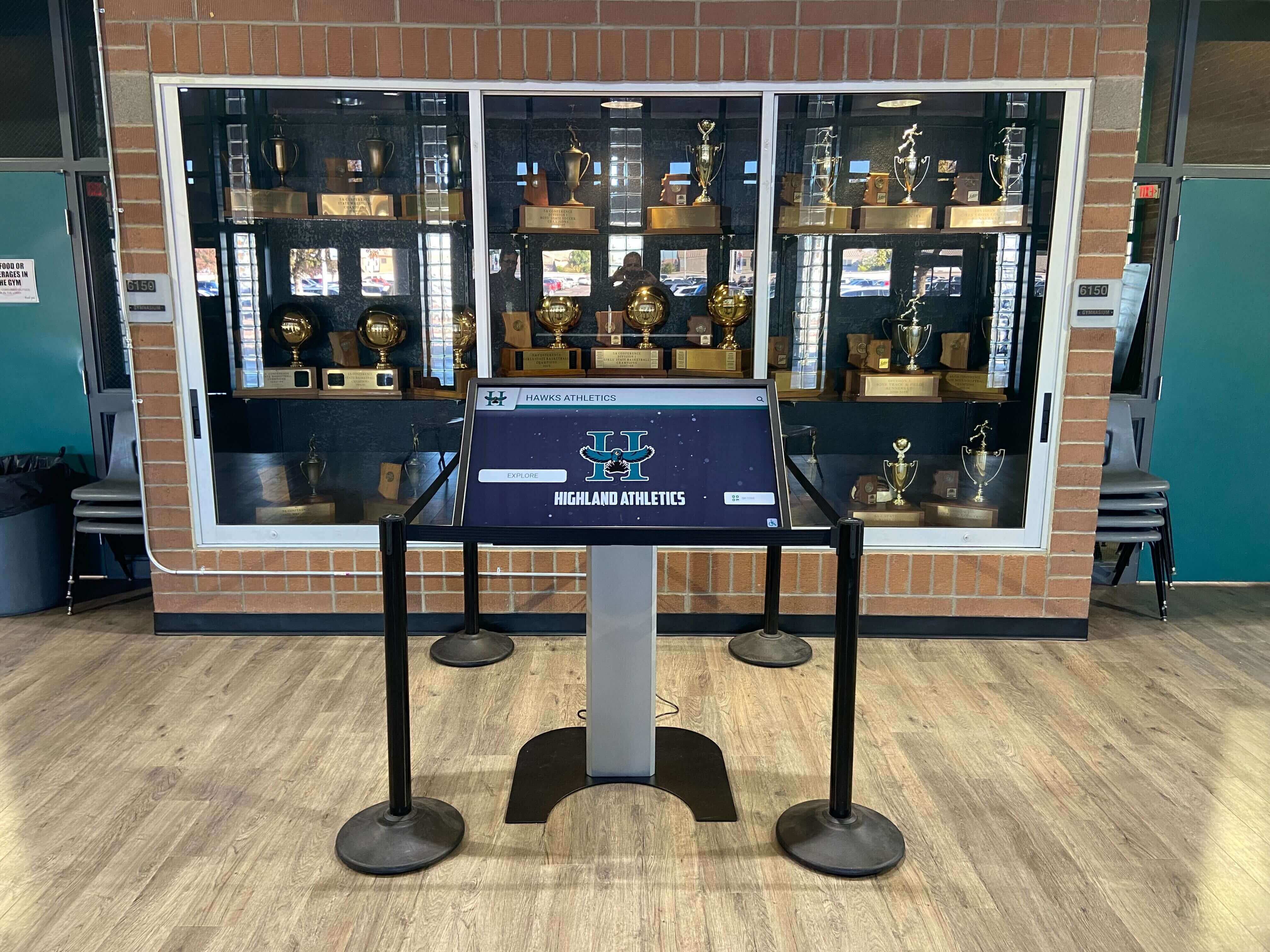
Every format that shows athletic records — the physical board, the digital display, the school website, and the printed record book — must represent tied records the same way. Inconsistency across formats is the most common failure mode in tie handling.
Individual Record Display Format
When two or three athletes share a school record, display each co-holder on its own line under the same event heading, with the shared mark shown once above all co-holder lines:
Example — Physical Board or Digital Entry:
100m Dash (Girls) — 11.84
  Reyes, Maria — 2019
  Okafor, Blessing — 2023
Do not list the mark on each co-holder line independently. Repeating the mark for each co-holder implies they are separate entries rather than a shared record, which creates confusion when either athlete’s name is later removed through a correction.
Relay Record Display Format
Relay record co-holders require an additional field: the full squad lineup. Display the relay record entry as follows:
4×400m Relay (Boys) — 3:14.22
  2018: Johnson, Williams, Carter, Osei
  2024: Huang, Diaz, Freeman, Nakamura
Each squad’s year and athlete list occupy one display row. If the relay record is held by only one squad, the year and names follow the same format. When a relay ties an existing record, the new squad’s year and names are added as a second display row — they do not replace the original squad.
Counting-Stat Records
For career or season counting stats (points, rebounds, goals, assists), display:
Career Points (Boys Basketball) — 1,847
  Thornton, James — Class of 2011
  Martinez, Elias — Class of 2024
Include graduation class rather than season year for multi-year career records, since the stat accumulates across seasons.
Step 4: Credit Co-Holders Consistently on Certificates and Award Materials
Tied records create a certificate and award material challenge: standard templates assume one holder per event. The tie handling policy must specify how co-holders appear on every recognition format that the program produces.
Certificate standards for tied records:
| Format | Co-Holder Treatment |
|---|---|
| Individual record certificate | Issue one certificate per co-holder; each certificate names all co-holders in the same order (alphabetical by last name) and states the shared mark |
| Relay record certificate | Issue one certificate set per squad; each set names the four relay members and acknowledges the co-holder squad by year |
| Banquet program or award listing | List all co-holders under the same event, with the shared mark shown once |
| Hall of fame nomination materials | Note shared record status in the record achievement section; link to co-holder’s entry if both are in the archive |
Schools that use scholarship award certificates and formal recognition documents for multiple achievement categories apply the same multi-holder crediting logic — each recipient gets their own document, but all documents reference the shared achievement consistently.
The same standard applies to graduation cord and honors recognition programs that acknowledge athletic achievement alongside academic distinction: co-holder status should appear in any printed materials that reference the record.
Step 5: Handle Retroactive Ties Through the Standard Evidence Workflow
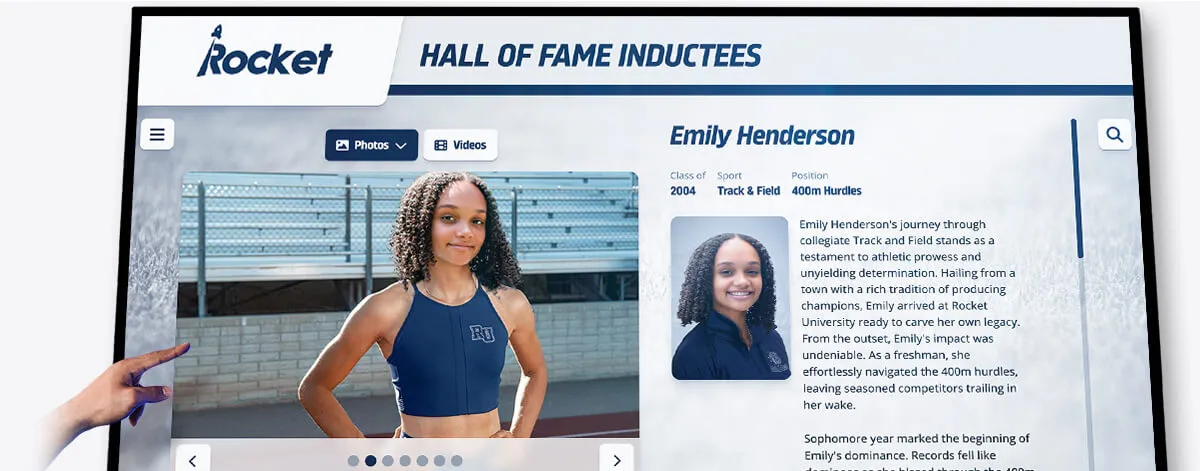
A retroactive tie occurs when historical research surfaces a performance that matches a current record — a mark posted before the current recordkeeping system was in place, found in an old meet result file, newspaper archive, or yearbook.
Retroactive tie verification requirements:
- The historical performance must be supported by at least a Tier 2 source — a contemporaneous newspaper report, official school publication, or meet result from the period.
- The athletic director reviews the source and confirms the mark matches the current record at the event’s defined precision level.
- If the source documents a hand-timed result and the current record is a FAT result, the athletic director determines whether the precision levels are comparable. If they are not directly comparable, the historical performance is archived with a notation rather than elevated to co-holder status.
- An approved retroactive tie generates a change log entry and follows the same display update workflow as any other record correction.
Historical research for programs with long traditions — including institutions that preserve campus customs and heritage through digital archives — regularly surfaces performances that predate formal recordkeeping. The retroactive tie protocol gives staff a defined path for handling these discoveries without either ignoring legitimate performances or adding unverified claims to the active record.
For programs working to digitize older materials, such as converting old video footage to find historical performances on film, the same evidentiary tier applies: a video recording of a performance constitutes a Tier 2 source and is sufficient to trigger a retroactive tie review.
Step 6: Synchronize All Display Formats After a Tie Is Confirmed
A confirmed tie must update every format within the program’s publication window. The display synchronization requirements for a tie are identical to those for a new record:
| Format | Update Required | Maximum Lag |
|---|---|---|
| Digital record board platform | Co-holder added to existing entry | Same business day |
| School athletic website | Entry updated to show all co-holders | 72 hours |
| Printed record book or PDF | Updated at next scheduled print cycle | Quarterly or annual |
| Physical display board | Co-holder name/names added | Next maintenance cycle |
| Social media announcement (optional) | Acknowledge the tied record if the program posts new records | Same day as platform update |

The physical board presents the most common synchronization failure: a digital entry gets updated immediately while the physical board continues to show only the original holder’s name for weeks. The policy should assign a named role responsible for initiating the physical board update and a deadline for completion.
Programs managing digital donor recognition walls alongside athletic records recognize this discipline: any time a recognition display changes, every format showing that information must be updated within a defined window or the display loses credibility.
Tie Handling Policy Quick Reference
The table below summarizes the complete policy in a format suitable for posting in the athletic records administration area or including in the program’s records management manual.
| Policy Decision | Rule |
|---|---|
| Tie threshold | Exact match at official result precision for the event type |
| Maximum individual co-holders | 3 |
| Maximum relay co-holder squads | 2 |
| Tiebreaker when limit reached | Earliest date of performance holds the active display entry |
| Display format — individual | Shared mark shown once; each co-holder on separate line |
| Display format — relay | Each squad’s year and lineup on a separate row |
| Certificates | One certificate per co-holder/squad; all reference the same mark |
| Retroactive ties | Tier 2 source minimum; AD approval required |
| Display synchronization lag | Same business day for digital; 72 hours for website; next cycle for physical |
Frequently Asked Questions
What is an athletic record tie handling policy?
An athletic record tie handling policy is a written document that defines when two performances are officially tied, how many co-holders a single record entry can carry, how co-holders are displayed across every format (physical board, digital display, website, certificates), and how the display is updated when a tie is confirmed. It prevents inconsistent treatment of shared records across staff transitions and between different display formats.
How many athletes can share a school record?
The recommended maximum is three co-holders for an individual event record and two squads (up to eight athletes) for a relay event. Programs may set a lower limit, but should not allow unlimited co-holders — an entry with six co-holders spanning different decades becomes unmanageable on a physical display and misleading about the historical weight of the mark.
Does a relay tie mean both squads get certificates?
Yes. Each relay squad that holds the record receives its own certificate set recognizing the four athletes who ran the tied time. Each certificate acknowledges the co-holder squad by year so both are clearly documented. The certificate format is identical; only the athlete names and year change.
What happens when a new tie would exceed the co-holder limit?
The new performance is documented in the record archive with a note that it matched the school record on the date it was achieved. It does not appear on the active display. It is available in the historical archive and can be surfaced if an existing co-holder’s entry is later removed through a correction or evidence review.
Can a hand-timed result tie a FAT-timed result?
Only if the athletic director determines the precision levels are comparable and the source documentation is sufficient. In most cases, a hand-timed result and a FAT-timed result cannot be directly compared for tie purposes because their precision levels differ (0.1 s versus 0.01 s). The hand-timed result is archived and noted, but does not typically qualify as a co-holder with a FAT result.
How are tied records handled on digital record board platforms?
Purpose-built digital record board platforms support multiple co-holders per entry natively — the platform stores each co-holder as a linked record under the same event and mark, displays them in the configured format, and maintains the complete co-holder history even when an entry is updated. When a new tie is confirmed, the records administrator adds the new co-holder through the approval workflow and the display updates automatically. The audit log preserves the date each co-holder was added and who authorized the addition.
Do tied records need to appear on the school’s hall of fame display?
If the record is the basis for a hall of fame nomination, the nominee’s hall of fame entry should note the shared record status and reference the co-holder’s year of performance. Programs managing academic and athletic recognition together on digital displays apply the same principle: a shared achievement should be accurately represented in any recognition context where it appears, not silently collapsed to a single name.
What if a co-holder’s name was misspelled at original entry?
A name correction on a co-holder entry follows the standard change log workflow — it is treated as a data entry error, requires a Tier 1 or Tier 2 source confirming the correct name, and updates across all display formats within the standard publication window. The correction does not affect the other co-holder’s entry.

An athletic record tie handling policy converts what would otherwise be an improvised, case-by-case decision into a predictable, documented workflow. The six steps above — defining the tie threshold, setting co-holder limits, standardizing display formats, crediting co-holders on certificates, handling retroactive ties, and synchronizing all formats — cover every scenario an athletic department encounters. Written once and reviewed annually, the policy protects both the athletes who hold the records and the department’s credibility with the community that views them.
See how a purpose-built digital record board handles tied records, co-holder display, and multi-format synchronization in one connected system.
Book a Live Demo with Rocket Alumni Solutions