



A school record is only as credible as the documentation behind it. When a coach challenges a posted mark or an athlete asks how a thirty-year-old record was set, the program’s answer depends entirely on whether a source was captured at the time of performance. Athletic record source citation guidelines solve this problem by defining what sources count, what information to record at entry, and where to store it — so every mark on the board can be traced, reviewed, and defended indefinitely.
These seven steps cover the full citation workflow: from classifying the source at submission through auditing citations on a repeating annual schedule.

What These Guidelines Cover
Intent: demonstrate
These guidelines apply to any school managing records on a physical board, a spreadsheet, or a digital record board platform. The citation requirements below define a minimum standard for most high school athletic programs and collegiate club programs; state associations or individual programs may impose stricter requirements for specific events or competition levels. The goal is a uniform citation record for every entry — not just records set this season, but historical records being carried forward from earlier systems.
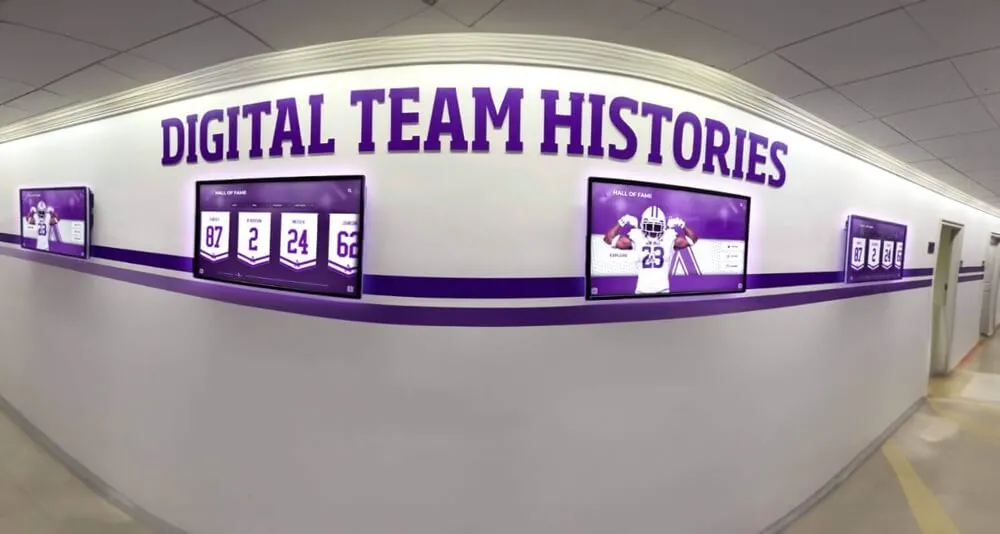
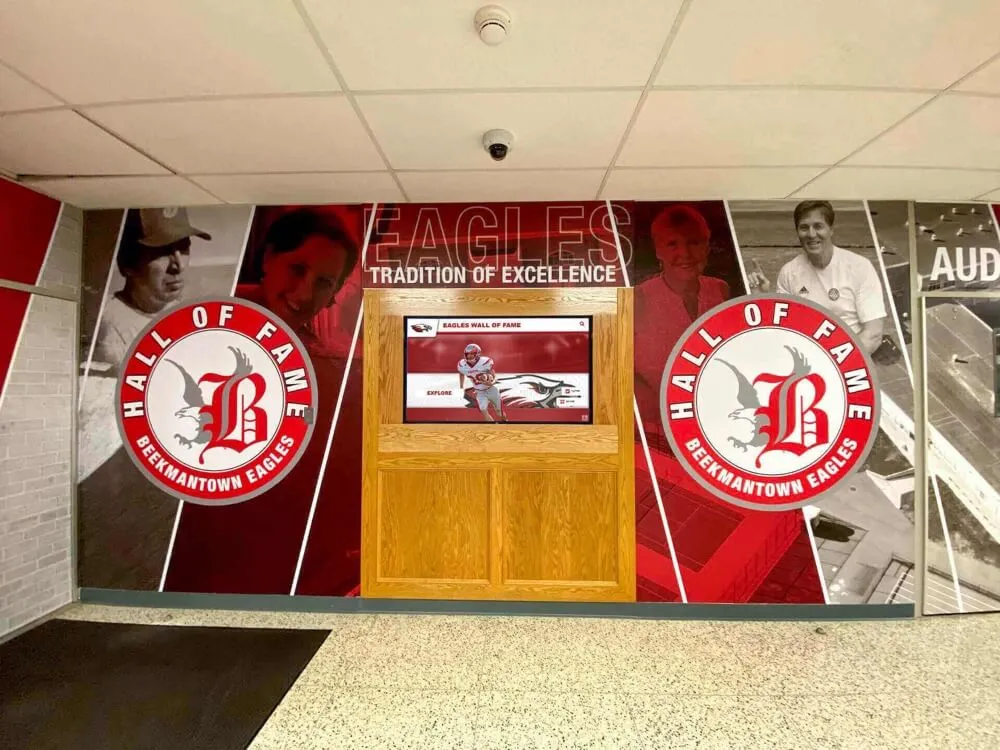
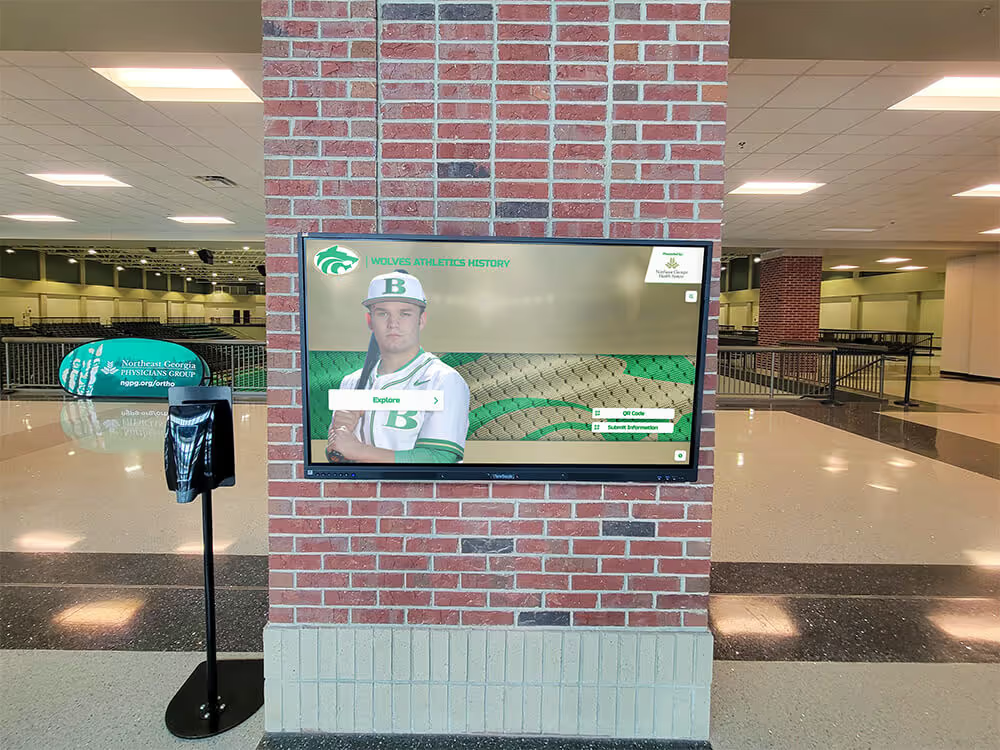
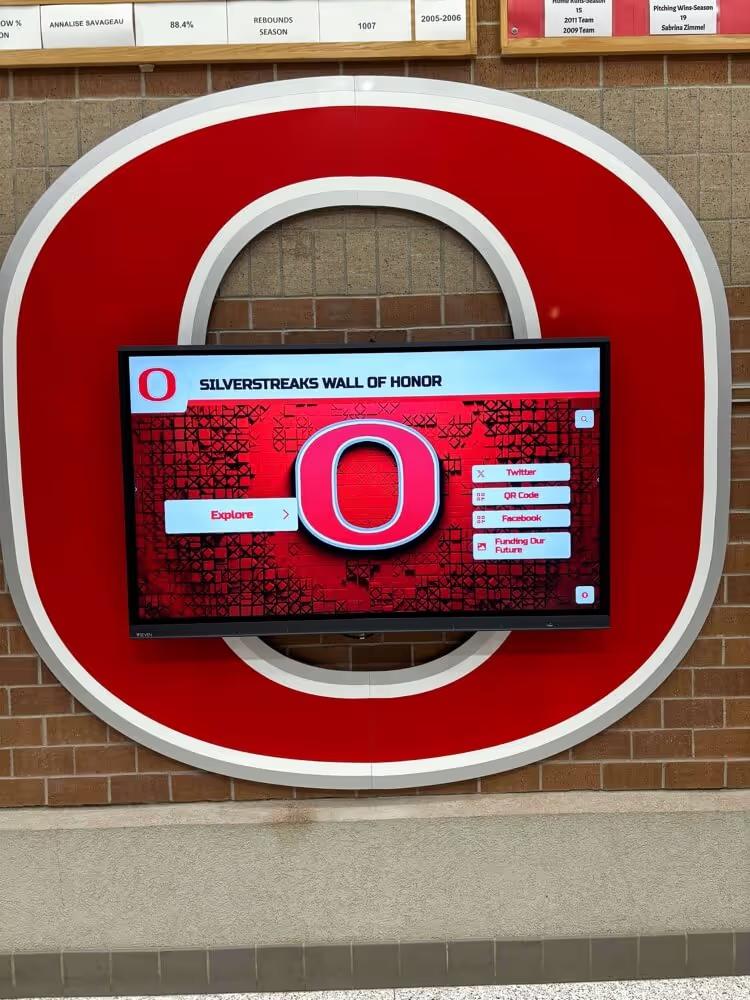
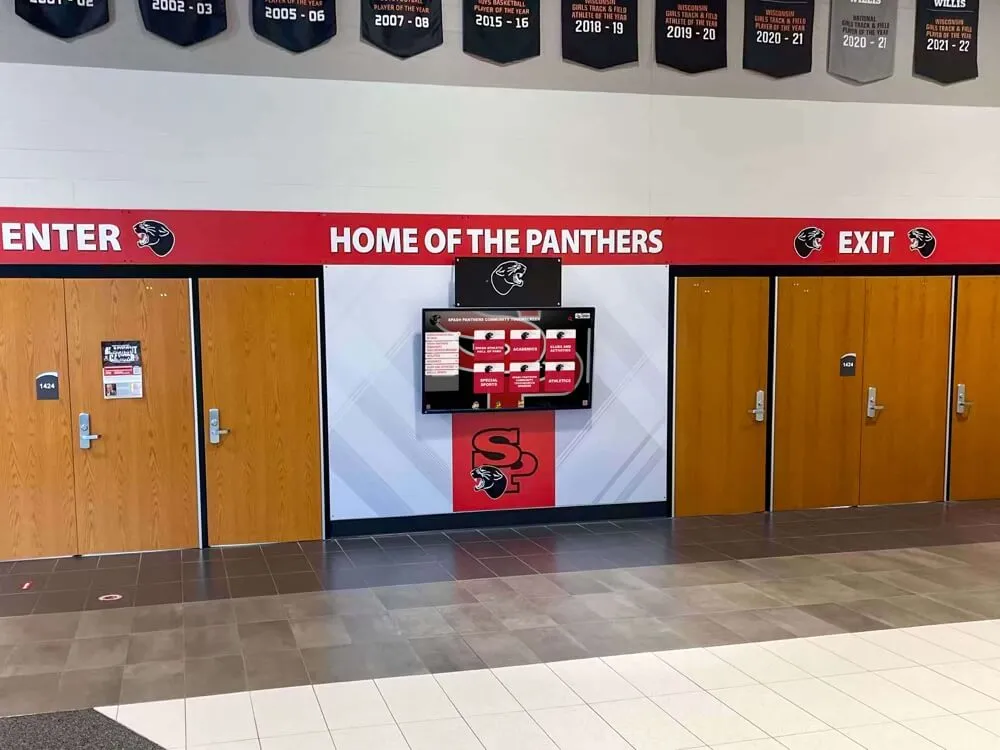
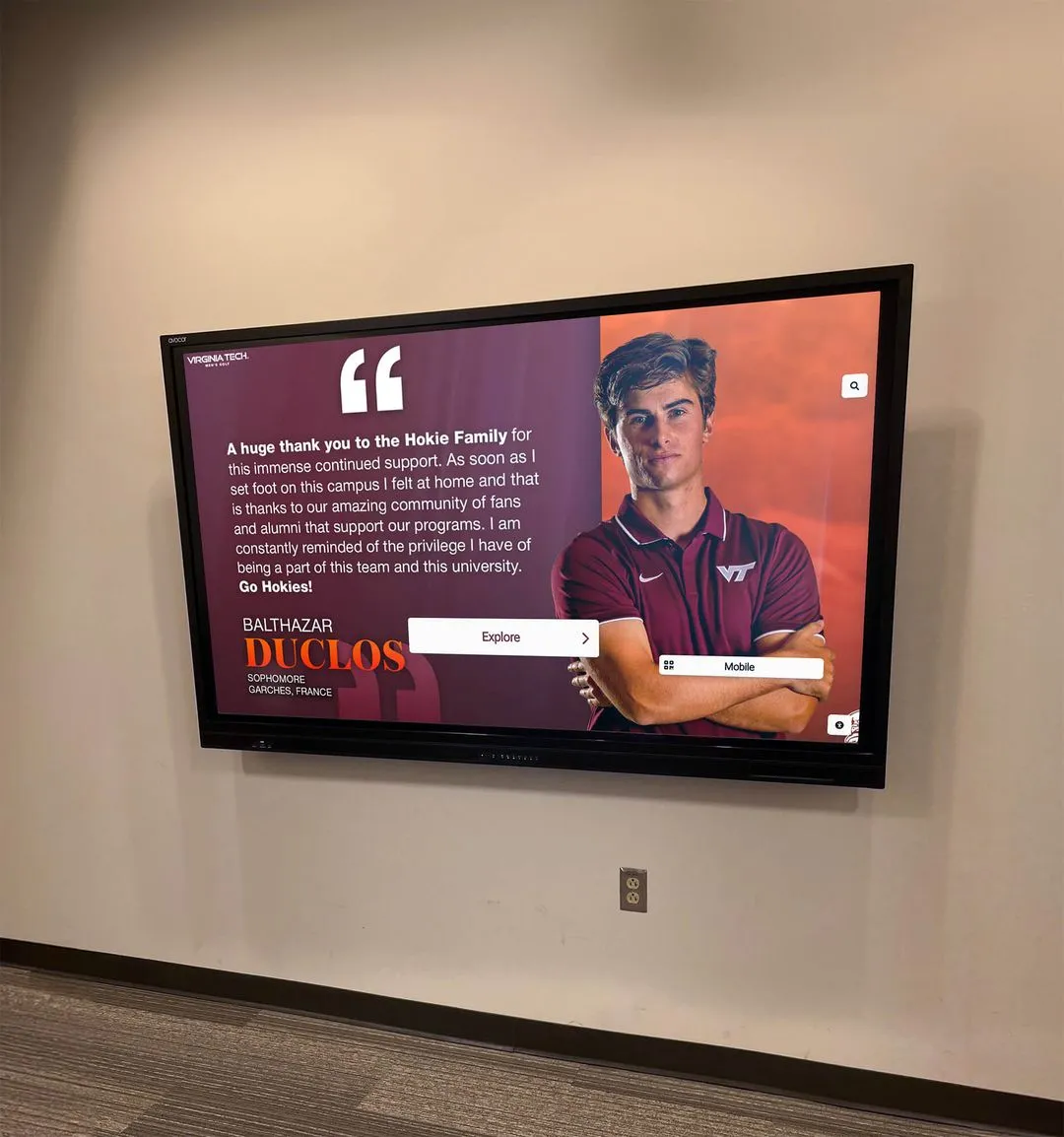
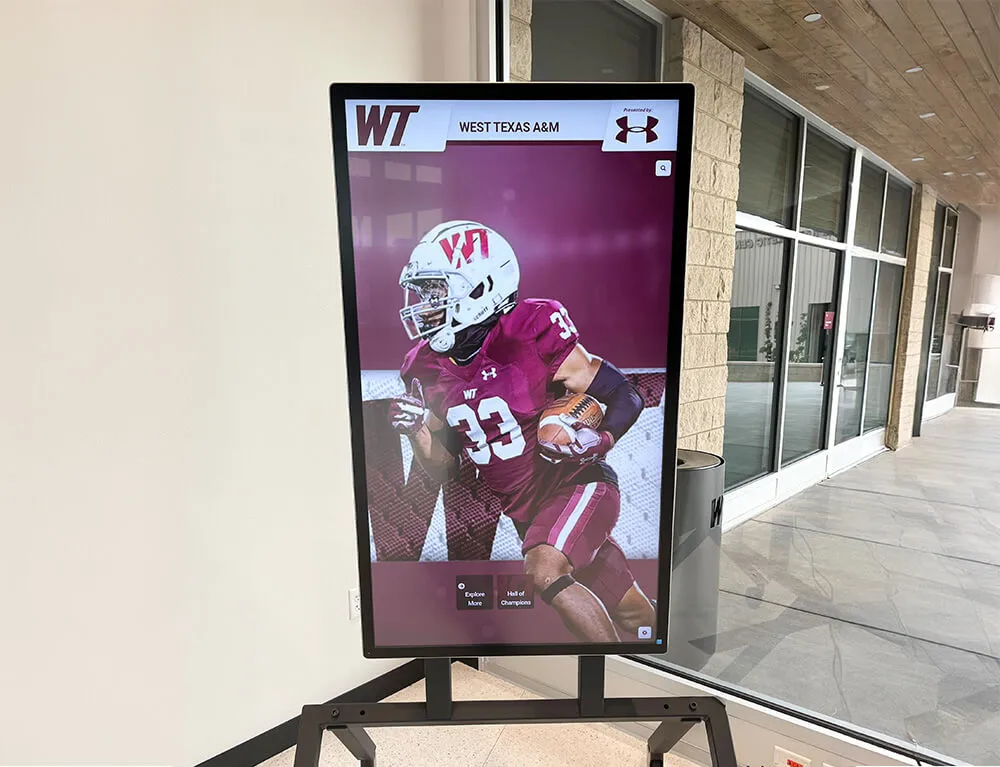
Programs that display athletic history across digital recognition walls and interactive displays face a specific challenge: the display is visible to everyone, but the underlying source evidence is invisible. Strong citation guidelines close that gap by creating an evidence layer beneath every mark that appears on screen.
Step 1: Classify the Source Tier Before Entry
Every piece of evidence used to support a record claim falls into one of three tiers. Tier classification determines whether a record can be published immediately, requires supplemental evidence, or needs a special review before appearing on the public display.
| Source Tier | Definition | Examples | Publication Threshold |
|---|---|---|---|
| Tier 1 — Primary | Contemporaneous official record from the event | FAT timing printout, electronic touchpad result, official meet results with director signature or stamp, official scorebook signed by officials | Publish after AD approval |
| Tier 2 — Secondary | Contemporaneous unofficial documentation | Newspaper game report, school sports information release, team scorebook, video recording of performance, conference statistical report | Publish with Tier 1 or with two independent Tier 2 sources |
| Tier 3 — Contextual | Post-event corroboration | Alumni attestation, yearbook reference, coaching-staff recollection, physical trophy or plaque that predates current records policy | Requires supplemental review; publication at AD discretion |
New record submissions should always aim for Tier 1 documentation. Historical records being migrated from legacy systems will often carry only Tier 2 or Tier 3 evidence — that is normal, and it should be noted in the citation record rather than left blank.
Step 2: Record Citation Fields at the Time of Submission
Citation information is easiest to capture within 48 hours of the performance. After that window, official result sheets cycle off meet websites, scorebooks move to the archive, and memories diverge. The submission form — whether paper or digital — should include these citation fields for every record claim:
| Field | Format | Example |
|---|---|---|
| Source Tier | Tier 1 / Tier 2 / Tier 3 | Tier 1 |
| Source Type | Official descriptor | FAT timing printout |
| Source Name | Name of document or publication | 2024 Regional Championship Meet Results |
| Source Date | YYYY-MM-DD | 2024-05-11 |
| Issued By | Issuing organization or official | IHSAA District 4 |
| File Reference | Filename or archive path | /records/track/2024/regional-results-may2024.pdf |
| Secondary Source | Same fields if applicable | Newspaper report — Riverside Courier, 2024-05-12 |
| Submitted By | Name and title | J. Torres, Head Track Coach |
Schools that have already built a verification form for record submissions should treat the citation fields as a required subsection of the documentation section. If building a form from scratch, these fields belong in the same section as the evidence checklist — not on a separate form that can be skipped.
Step 3: Apply Sport-Specific Source Requirements
Different sports generate different evidence trails. The minimum source requirement for a record to qualify as Tier 1 varies by sport category:
| Sport / Category | Tier 1 Minimum Requirement | Notes |
|---|---|---|
| Track & Field (timed events) | FAT timing printout or official meet results with official stamp | Hand-timed results qualify only with three stopwatches and independent backup |
| Swimming | Electronic touchpad printout and official meet results | Video of finish qualifies as Tier 2 |
| Cross Country | Chip timing export and official results sheet | Course certification must be on file |
| Field Events (throws, jumps) | Official measurement in meet results with official signature | Automatic measurement systems are Tier 1; video is Tier 2 |
| Weight Room (powerlifting) | Certified judge attestation and equipment calibration log | Off-season lifts without supervision do not qualify |
| Team Sport Stats (points, assists, rebounds) | Official scorebook signed by official scorer | Conference statistical database qualifies as Tier 2 |
| Wrestling (wins, falls) | Official bout sheet and dual meet results | State association database qualifies as Tier 2 |
| Baseball / Softball | Official scorebook and umpire-signed game sheet | Unofficial scorekeeping does not qualify |
| Golf | Signed scorecard with marker signature and tournament results | Personal scorecards without an official marker do not qualify |

The sport-specific table above represents a working floor for most high school programs. Programs with state association requirements that are stricter — for example, associations that require results to come from a specific certified meet management platform — should add that requirement as a program-level note to the relevant row.
Step 4: Attach Documentation to the Record Entry
A citation record is worthless if the referenced source cannot be located. Every citation should have an attached file or a direct pointer to an external source:
Scan or photograph physical documents at the time of submission. Do not accept forms that reference a physical document without attaching a digital copy. Physical-only documentation gets lost during facilities moves, staff transitions, and building renovations.
Upload electronic timing exports directly to the record entry. Most modern meet management systems export results as PDFs or CSV files. Attach these to the record — do not store them separately in an unlinked folder.
Record external URLs with retrieval dates for sources that live online. State association websites, conference statistical portals, and news archives are accessible now but may not be permanent. If the source document later disappears, the retrieval date establishes that the content existed at the time of entry.
Assign a consistent filename convention to all attached files:
[sport]-[event]-[athlete-last-name]-[YYYY-MM-DD].[ext]. This convention makes source documents searchable and sortable without opening them. Example:track-100m-johnson-2024-05-11.pdf.
Schools building out a broader digital history archive for athletic and institutional records should apply the same naming convention and folder structure across all documentation types — not just records, but awards, team photos, and season summaries. Consistent structure across the archive compounds in value as the collection grows over decades.
Step 5: Store Source Documents in a Named Archive Location
Attached files need to live somewhere findable by more than one person. Storing source documents on a head coach’s personal drive or on the athletic director’s local hard drive introduces a single point of failure that will eventually produce a gap.
Define and document a specific archive location in writing. It should meet three requirements:
- Accessible to at least two authorized staff members at all times — the athletic director and at least one designated backup position, by role rather than by name.
- Organized by sport, season, and record category — not a flat folder of hundreds of unorganized files.
- Backed up automatically — a cloud-based shared folder or institutional server with nightly backup, rather than a local directory.
The archive location should be named in the school’s athletic records policy so that every incoming athletic director, records administrator, and head coach knows where the primary source documents live. A reference that exists only in one person’s memory is not a citation standard — it is a dependency.
Step 6: Link Citations to the Verification Workflow
Source citations and verification approval are related but distinct processes. A citation records what evidence exists. Verification is the decision that the evidence is sufficient to publish. Both should be tracked in the same system to prevent records from appearing on the display with citations but no formal approval, or with approvals but no traceable source.
In practice, the citation check should be a required step in the verification workflow — not a parallel track. The athletic director’s approval at the verification stage should explicitly confirm that the cited source meets the program’s tier requirement for the sport in question. If it does not, the form returns to the submitter with a request for additional documentation before it can advance.
Programs that use a digital record board platform gain a structural advantage here: the platform can enforce citation fields at the data-entry level, preventing a record from advancing to the approval queue without source information attached. This makes the citation step mandatory rather than recommended — and it eliminates the most common cause of citation gaps, which is a coach who submits a record claim without documentation because the form did not require it.
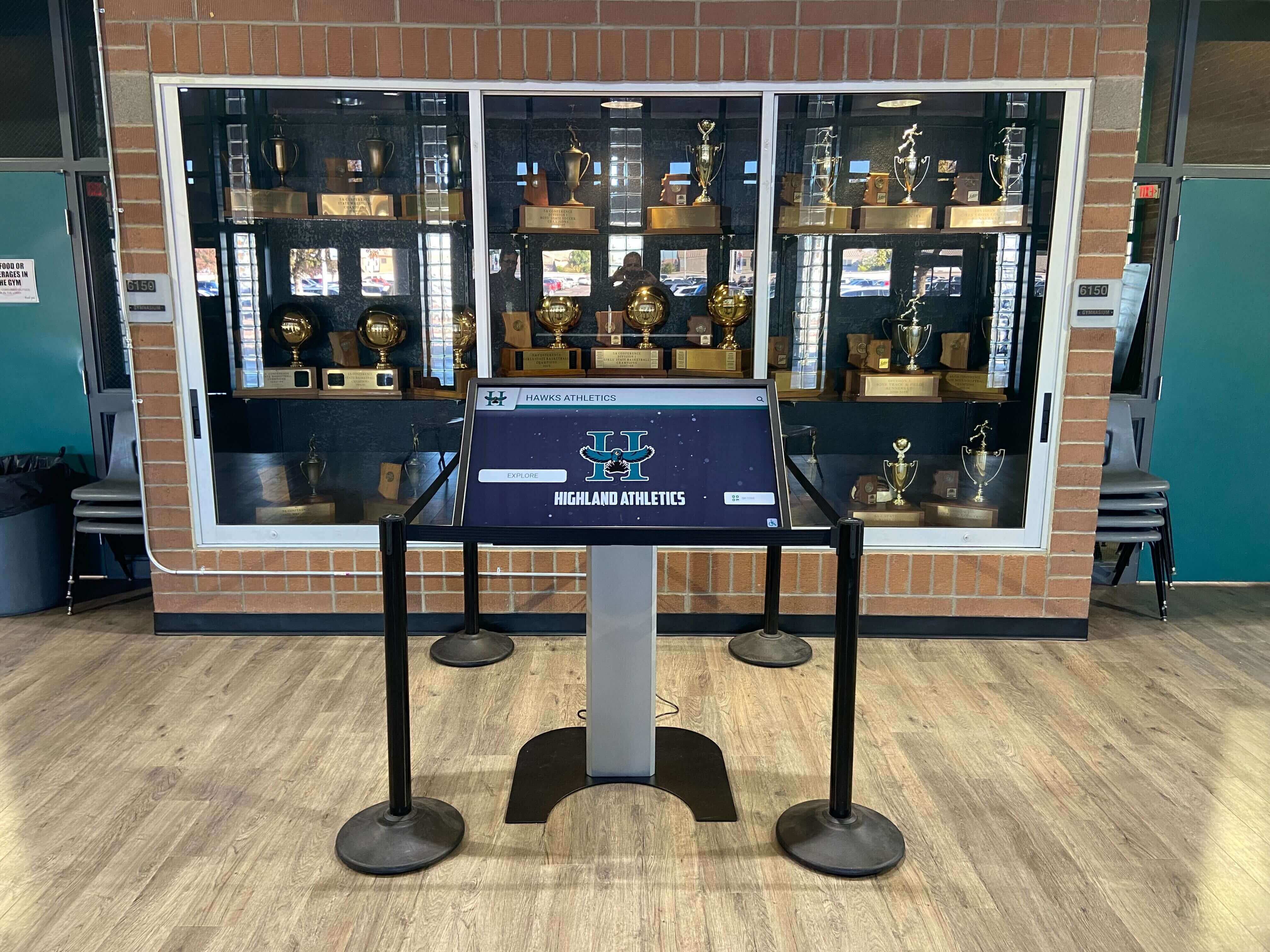
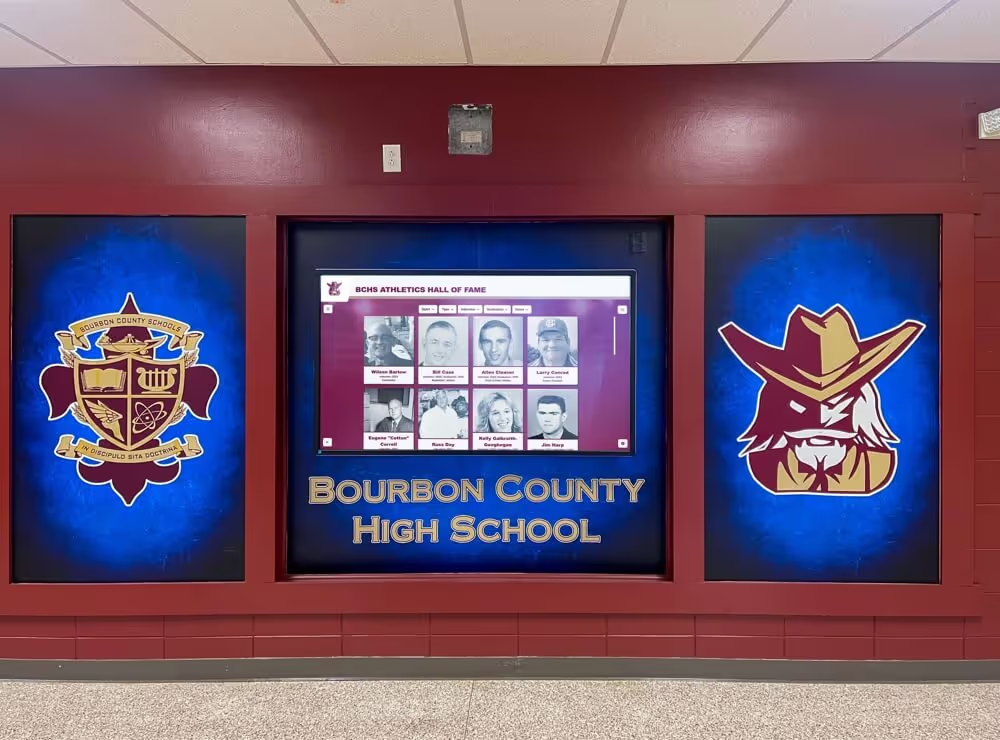
Schools that display records through an interactive kiosk or recognition wall benefit from this chain of evidence in a visible way. When a community member navigates to an all-time record and taps through to the record detail, seeing a citation — “Source: 2017 State Championship Meet Results, IHSAA” — adds a layer of authority that a bare mark and name cannot. Consistent visual presentation of athletic data and recognition content is part of that credibility, but the source citation is what gives the display its factual grounding.
Step 7: Schedule Periodic Citation Audits
Citation standards degrade without maintenance. Staff members who entered records in compliance with the guidelines retire or change roles. New coaches learn submission habits from their predecessor rather than from the written policy. Records entered during a busy season receive a placeholder citation that never gets completed.
A citation audit — a systematic check of citation completeness across all records in the database — should happen on a defined schedule. Most programs run an annual audit before the start of the academic year. Programs with large record databases or recent migrations may want a mid-year check as well.
Annual citation audit checklist:
- Every record entry has a Source Tier value assigned (no blank fields).
- Every entry has at least one source document attached or linked.
- Every attached file follows the naming convention and is retrievable from the named archive location.
- Records with only Tier 3 sources are flagged for supplemental review.
- Citation fields for records added in the last 12 months are complete — no placeholder values.
- External URL sources have been checked to confirm the referenced content still exists.
Records that fail the audit should be moved to “Provisional — citation incomplete” status rather than left as “Verified” with missing evidence. A provisional flag puts the citation gap on record and signals to the reviewing staff member that action is required before the next public display update.
Citation Standards for Historical Records
Older records require a different approach. Marks set before the current citation policy was established will not have a Tier 1 source document in the file — and in many cases, no source document at all. The right response is not to delete those records but to document the situation honestly and assign the appropriate tier.
For records from the pre-digital era (before approximately 2000):
- Accept newspaper archives, yearbook references, and alumni attestation as Tier 2 or Tier 3 evidence.
- Note the source tier in the citation record: “Historical record — source documentation: 1983 district results, newspaper clipping on file.”
- If no source document is recoverable, mark the record as “Historical — source not available” and flag for community confirmation.
Schools building a college-level history timeline — or connecting high school records to a broader institutional archive — find that the same citation framework applies across eras. Developing structured athletic history timelines involves exactly this kind of retroactive documentation: working forward from the oldest available sources to build a citation chain that is honest about what can and cannot be verified.
Reaching alumni from the relevant era is often the most productive step for recovering historical citations. A request through alumni communication channels — asking if anyone has documentation from a specific season — regularly produces newspaper clippings, personal scorebooks, and photographs of old boards that coaches and athletes retained. Digital display platforms that give alumni a searchable, public-facing record archive create a natural feedback loop: alumni who see their era’s records displayed will often surface documentation proactively when they notice gaps.
How Citation Records Support Alumni and Donor Programs
The citation trail behind a record is not only an administrative safeguard — it becomes a recognition asset when alumni and donors engage with the program’s history.
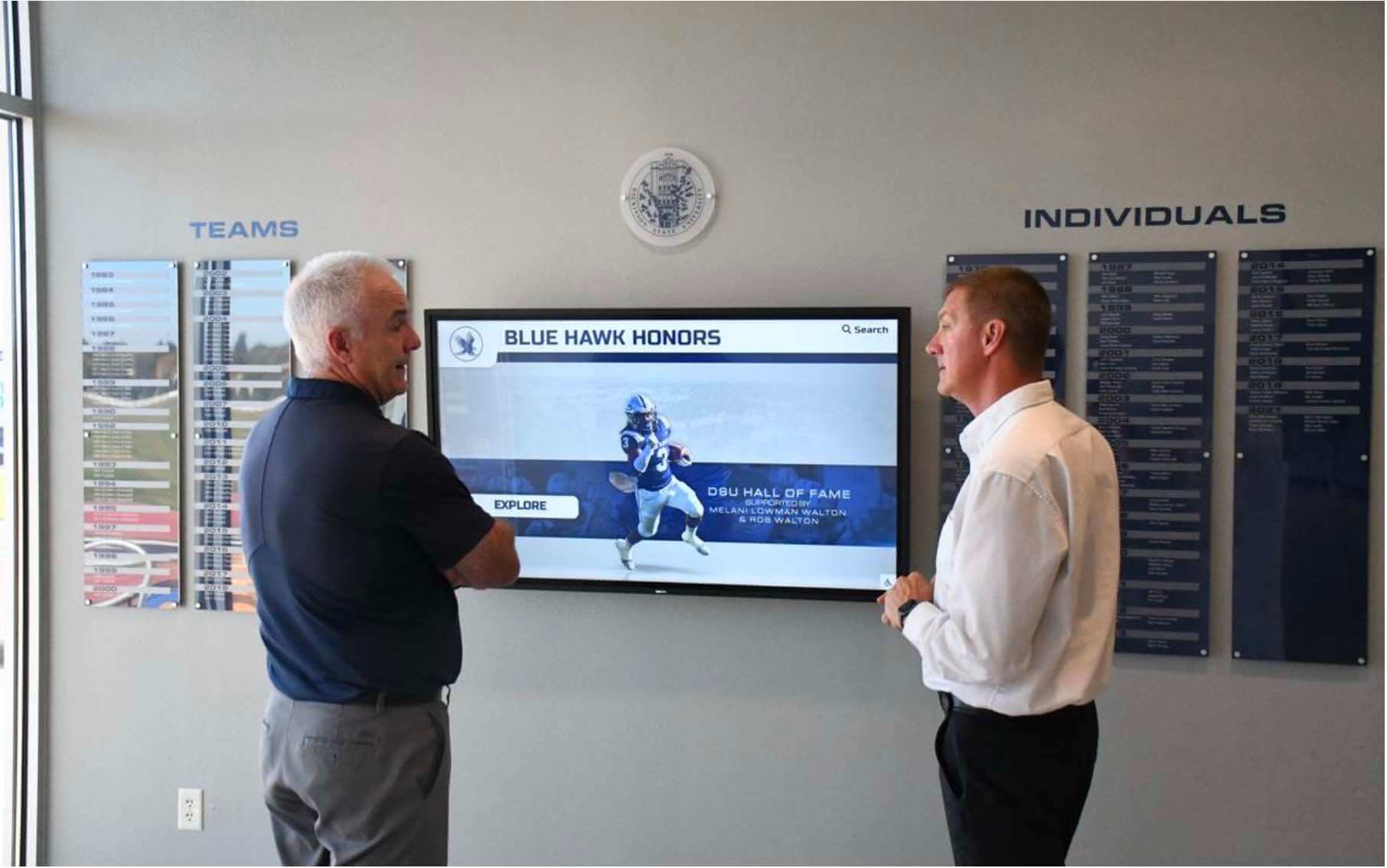
Alumni who see their performance on a record board and can trace it to a documented source — a meet result, a newspaper report from the year they competed — experience a different level of institutional validation than a bare name and number provides. That validation translates directly into engagement. Programs developing individual alumni recognition and donor stewardship frameworks find that specific, documented achievement records are among the most powerful reference points for maintaining donor relationships over time.
Community members who participate in alumni showcases or program events also engage more deeply when displayed records have visible provenance. Community showcase projects that tie athletic recognition to school history rely on exactly the kind of structured documentation that source citation guidelines create — without it, displays can show impressive numbers but cannot tell the story behind them.
For programs using digital award displays to communicate athlete recognition to wider audiences, digital award presentation platforms for schools depend on the same underlying data quality that source citations provide. A school record that can be traced and verified is a record that can be amplified confidently across every channel the program uses.
Frequently Asked Questions
What is the minimum acceptable source for a new school record to be published?
A Tier 1 source — an official contemporaneous document from the event — is the standard for new records. For timed events, this means a FAT timing printout or official meet results issued by the meet director. For team sport statistics, this means an official scorebook or game log signed by the official scorer. Records backed only by Tier 2 or Tier 3 sources should be held as Provisional until supplemental documentation is obtained or the record receives explicit provisional approval from the athletic director.
What happens when a coach submits a record with no documentation?
The submission should be returned to the coach with a clear explanation of what documentation is required and by when. It should not be entered in the record database — even as Provisional — without at least a Tier 3 notation explaining the evidentiary situation. Entering a record without any citation, even temporarily, creates a gap that is harder to fill after the fact than preventing it at submission.
How long should source documents be retained?
Indefinitely. School athletic records do not expire, and the documentation behind them should not either. This is especially important for records that may later be challenged or referenced in alumni recognition programs, hall of fame nominations, or donor stewardship efforts. Retention duration should be addressed explicitly in the school’s written records policy.
Can video recordings serve as primary source documentation?
For most sports, video is classified as Tier 2 — supplemental rather than primary. The exception is cases where no other documentation exists for a historical record, or where a sport’s governing body explicitly accepts video as official documentation. Programs should define this in their sport-specific source requirements rather than deciding case by case, which leads to inconsistent outcomes over time.
How do citation records connect to a digital record board platform?
Most purpose-built digital record board platforms include fields for attaching source documentation at the point of record entry. When citation fields are built into the platform’s submission form, the system enforces the standard structurally — a coach cannot complete a submission without filling in the source fields. For schools evaluating platforms before committing to a system, digital hall of fame buying guides for high schools outline what documentation and citation capabilities to assess during the selection process.
Who is responsible for maintaining the citation archive when staff changes?
The archive location, access credentials, and naming conventions should all be documented in the school’s athletic records policy by role — not by the name of the current staff member holding that role. When an athletic director or records administrator transitions out, their replacement should be able to locate every source document without needing a handoff from the departing staff member. Building this into the policy rather than relying on institutional memory is the single most effective way to prevent citation gaps after a staff change.
Athletic record source citation guidelines are the mechanism that turns a record board from a list of impressive numbers into an institutional record — one that coaches can defend, alumni can trust, and administrators can maintain across decades of staff transitions and platform changes. The seven-step framework above gives any athletic program a structured starting point, regardless of whether records currently live on a painted wall, a spreadsheet, or a modern interactive display.
Book a live demo with Rocket Alumni Solutions to see how the platform handles source documentation, verification workflows, and record display in one system — from the first submission through the live display update.