



A handshake agreement between coaches, a binder no one updates, a set of unwritten rules passed down through word of mouth—these approaches to athletic administration might survive a few quiet seasons, but they collapse the moment a contested eligibility decision, a coaching dispute, or a missing record creates a problem no one prepared for. An athletic department handbook is the single document that converts institutional memory into institutional policy. Done well, it protects every stakeholder, preserves every tradition, and gives every season a consistent foundation regardless of who holds the whistle or the clipboard.
For high school athletic directors, building and maintaining that handbook is one of the highest-leverage administrative tasks on the calendar. It is not a one-time project. It is a living framework that should grow alongside the program it governs.
What Makes an Athletic Department Handbook Effective?
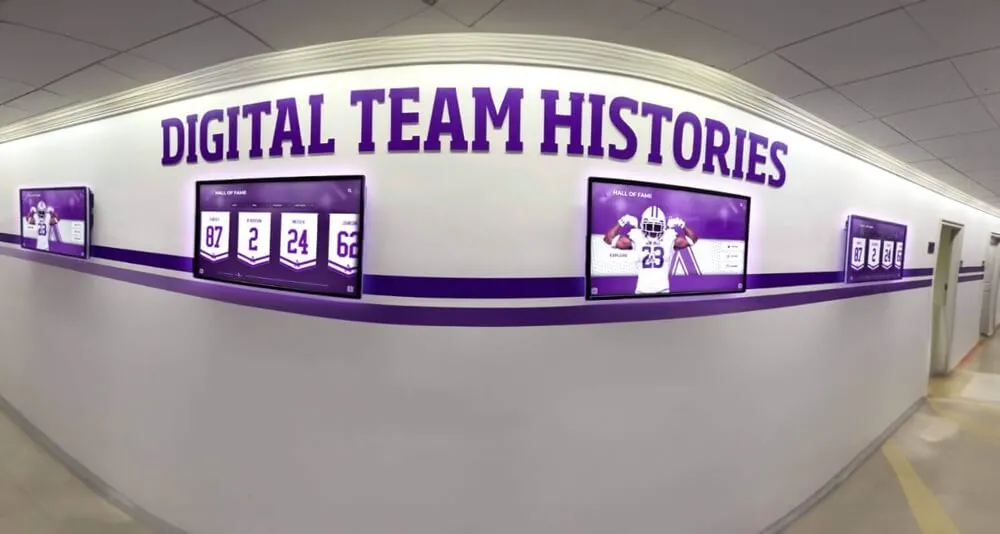
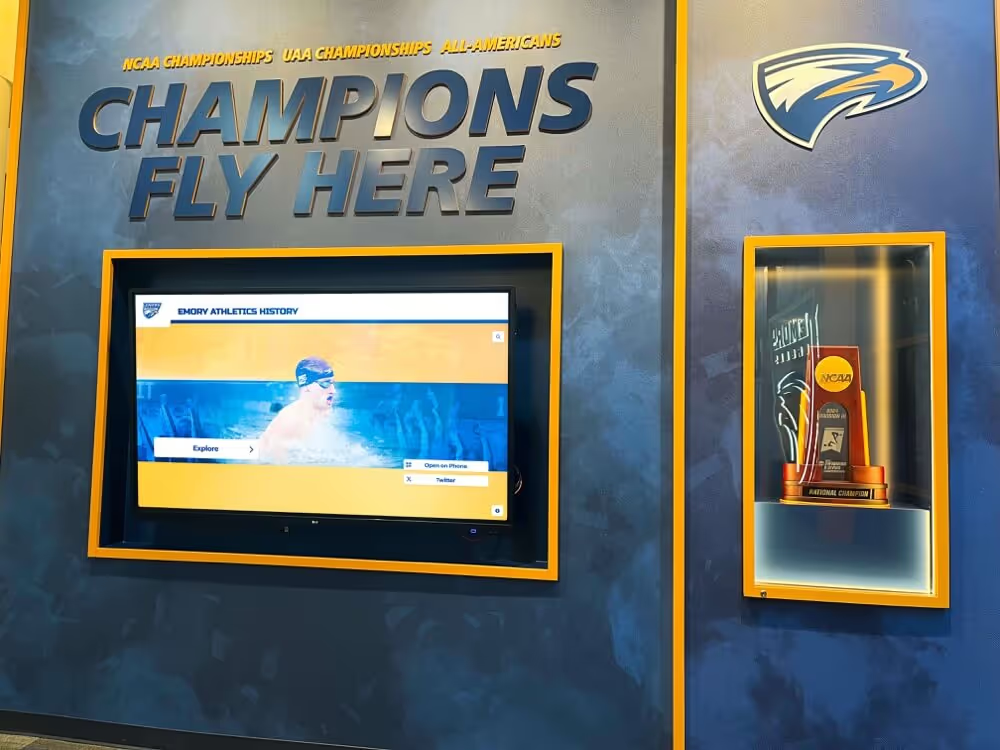
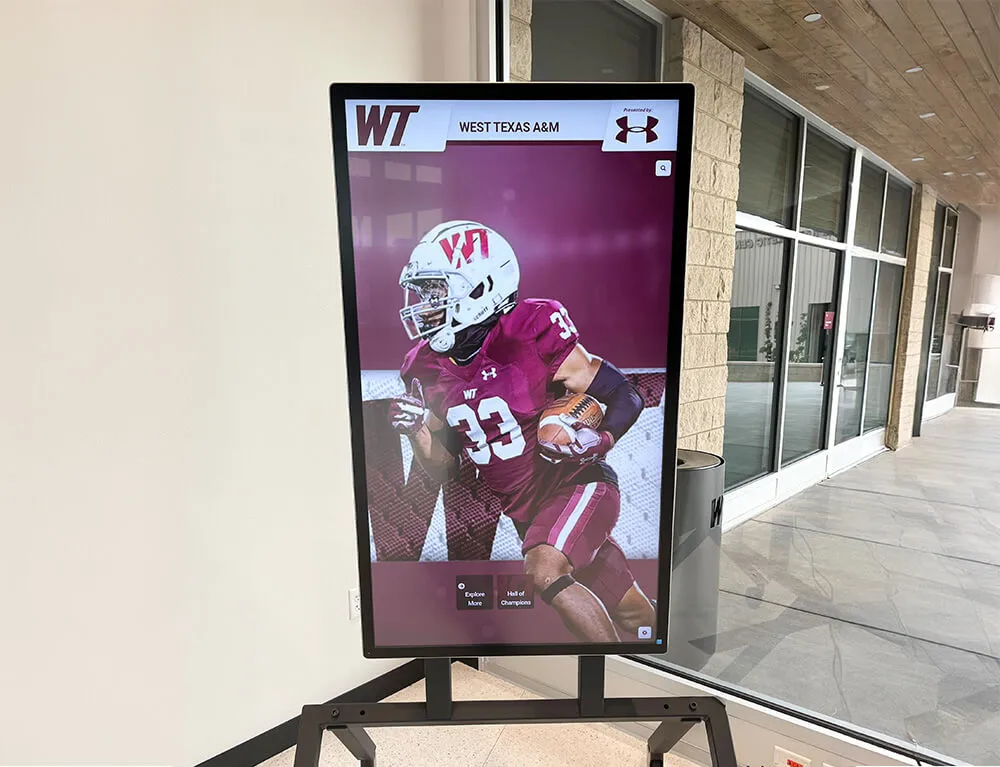
An effective handbook does three things simultaneously: it clarifies expectations for coaches, athletes, and families before conflicts arise; it documents the program’s history, traditions, and recognition criteria so institutional knowledge survives staff turnover; and it aligns daily decisions with the department’s stated mission. Departments that maintain detailed handbooks—updated annually—report fewer eligibility disputes, faster onboarding for new coaches, and stronger community buy-in for recognition programs. Solutions like Rocket Alumni Solutions help athletic departments extend that documentation into permanent, interactive digital displays that keep records, traditions, and hall of fame inductees visible year-round.
Why High School Athletic Departments Need a Formal Handbook
Athletic directors who inherit a department without a handbook quickly discover the cost of that gap. When policies live only in memory, eligibility decisions become arguments rather than applications of documented criteria. When recognition standards are informal, families question why one athlete received an award and another did not. When hall of fame criteria are undefined, every induction cycle turns into a political negotiation.
A formal athletic department handbook solves these problems systematically. It establishes documented authority—every policy decision references a written standard rather than personal judgment. It creates operational continuity—when a head coach leaves mid-season or a new athletic director takes over, the handbook carries institutional knowledge forward. And it demonstrates professionalism to the broader community, reinforcing that the department operates with the same rigor it expects from its student-athletes.
State athletic associations typically require member schools to maintain certain documented policies around eligibility, safety, and gender equity. A comprehensive handbook exceeds those minimums by building a complete governance framework that covers every dimension of the department’s operation.

Core Components of an Athletic Department Handbook
1. Mission Statement and Program Philosophy
Every section of the handbook should trace back to a clearly articulated mission. A mission statement for a high school athletic department typically addresses three things: the educational purpose of interscholastic athletics, the values the program models for student-athletes, and the role athletics plays in the broader school community.
A strong mission statement is specific enough to guide decisions. “We develop the whole student through competitive athletic experiences” is more useful than “we believe in excellence.” When the department faces a resource allocation question—should budget go toward new uniforms or expanded recognition infrastructure—the mission statement provides a decision framework.
The philosophy section should also address the department’s position on competitive success relative to participation, the relationship between athletic eligibility and academic standards, and the department’s commitment to equity across sports and gender.
2. Eligibility and Academic Standards
Academic eligibility represents one of the most frequently contested areas in high school athletics. A comprehensive handbook section on eligibility should address:
Grade and GPA requirements. Most states establish minimum academic standards, but departments may set higher internal thresholds. Document exactly what GPA is required, whether weighted or unweighted, and over what grading period.
Attendance policies. Spell out how many missed class days or periods disqualify an athlete from participation and who has authority to grant exceptions.
Transfer rules. Document the department’s interpretation and application of state association transfer regulations, including the process for submitting transfer paperwork and the timeline for eligibility decisions.
Reinstatement procedures. When an athlete becomes academically ineligible, the pathway back to eligibility should be documented: minimum grade thresholds, monitoring periods, and required academic check-ins with coaches.
Clarity here protects coaches from being put in the position of making eligibility calls that belong to the athletic director’s office.
3. Athletic Code of Conduct
The code of conduct establishes behavioral expectations and disciplinary consequences for student-athletes, coaches, and parents or spectators at athletic events. Effective codes of conduct are specific rather than aspirational.
For student-athletes: Define prohibited behaviors (substance use, social media conduct, unsportsmanlike behavior, academic dishonesty) and the corresponding consequences (suspension, dismissal, probation). Include the appeals process and the role of coaches versus athletic directors in enforcing consequences.
For coaches: Address professional conduct expectations, social media policies, mandatory reporting obligations, and the prohibition of any physical or verbal conduct that would constitute abuse or harassment. Include expectations around background check compliance and first aid certification.
For spectators: Document expectations around behavior at events, the process for removing disruptive individuals, and the role of school security and event management staff.
A code of conduct that athletic directors, athletes, and families sign at the start of each season creates documented acknowledgment—essential if disputes escalate.

4. Coaching Staff Policies
The handbook should define clearly what the department expects from every coach on staff, from head varsity coaches to volunteer assistants. This section typically covers:
- Hiring and appointment processes: Who posts positions, conducts interviews, and makes recommendations. How interim or emergency appointments work.
- Evaluation criteria: What metrics and observation processes the athletic director uses to evaluate coaching performance annually.
- Professional development requirements: Which certifications coaches must hold (CPR, first aid, concussion training) and how the department supports ongoing education.
- Communication standards: How coaches are expected to communicate with athletes, families, and the athletic director’s office, including response time expectations and documentation requirements for significant incidents.
- Compensation and contracts: Where coaches access their contract documents, how stipends are calculated, and what additional compensation applies to playoff extensions.
Documenting these standards protects the department when coaching performance becomes an issue and gives new hires a clear picture of what the role requires before they accept an appointment.
5. Sport-Specific Program Guidelines
For each sport offered by the department, the handbook should include a brief program summary covering: season dates, roster management policies (cuts versus open enrollment), practice and competition limits per state association rules, equipment responsibilities, and any sport-specific safety protocols.
This section also serves as the location for documenting program records—the all-time marks that define the sport’s history within the school. Maintaining accurate program records in the handbook ensures that when a vinyl board is damaged, a coaching staff turns over, or a school building is renovated, those achievements are preserved.
A digital extension of this section—deploying an interactive record board that auto-ranks all-time leaders and updates when records fall—closes the gap between documented policy and active display. The contrast with traditional methods is stark:
| Legacy Record Board | Digital Record Board |
|---|---|
| Manual vinyl updates (hours of labor) | Auto-ranking updates when new marks are entered |
| Fixed number of listed records (space limits) | Unlimited entries per event/sport |
| Lost when board is damaged or removed | Permanently preserved in cloud-backed system |
| Single location, no remote access | Accessible from any device with QR unlock |
| No media (photos, videos) | Full multimedia support |
6. Facilities and Equipment Management
The handbook should document who has authority to schedule facility use, the process for approving external organizations’ access to athletic facilities, and the maintenance schedule and responsibility matrix for each venue.
Equipment sections typically cover:
- Inventory management: Who maintains equipment records and how inventory is audited annually.
- Athlete responsibilities: What equipment athletes are responsible for returning, and the replacement cost schedule when gear is lost or damaged.
- Procurement procedures: How coaches request new or replacement equipment, what approval authority the athletic director holds versus what requires administrative sign-off, and how the department handles emergency purchases.
- Uniform policies: Assignment, laundering responsibilities, end-of-season return procedures, and senior gift allowances if applicable.
7. Recognition and Awards Policies
This section is among the most important in any athletic department handbook—and among the most frequently underdeveloped. Recognition policies determine who receives awards, through what process, on what criteria, and how those honors are documented and displayed.
A comprehensive recognition section addresses:
Seasonal awards: List every award given at end-of-season banquets (MVP, most improved, coaches’ award, academic athlete) with written criteria for each. Avoid awards defined solely as “coach’s discretion”—add at least two documented criteria per award to ensure consistency across sports.
All-conference and all-state recognition: Document the nomination and selection process, who submits nominations, and how the school communicates and displays these external honors.
School records: Define what constitutes a school record, the documentation required to verify a new mark (certified timing, official scorebooks, state association verification), and the process for updating records in the official handbook and display systems.
Senior recognition: Define senior night procedures consistently across sports. Alumni recognition event ideas can help athletic directors build celebration formats that feel meaningful rather than perfunctory.
8. Hall of Fame Criteria and Induction Process
Nothing generates more community controversy than an athletic hall of fame with undefined criteria. When the standards for induction are informal, every cycle produces complaints that a deserving athlete was overlooked or a less-deserving one was admitted. A documented hall of fame section prevents this.
Eligibility requirements. Most high school athletic halls of fame require a minimum number of years post-graduation before eligibility (typically five to ten years). The handbook should state whether any active coaches, staff members, or current school employees are eligible and under what conditions.
Nomination process. Document who may submit nominations, what supporting materials are required (statistics, honors, letters of support), and submission deadlines.
Selection committee. Define committee composition (number of members, role of current staff, community representation), voting procedures, and whether recusals apply when committee members have personal relationships with nominees.
Selection criteria. Published criteria typically include some combination of: athletic achievement (records held, championship contributions, all-state honors), character and sportsmanship, contribution to the school and community, and years of service (for coaching inductees). Weight each criterion explicitly.
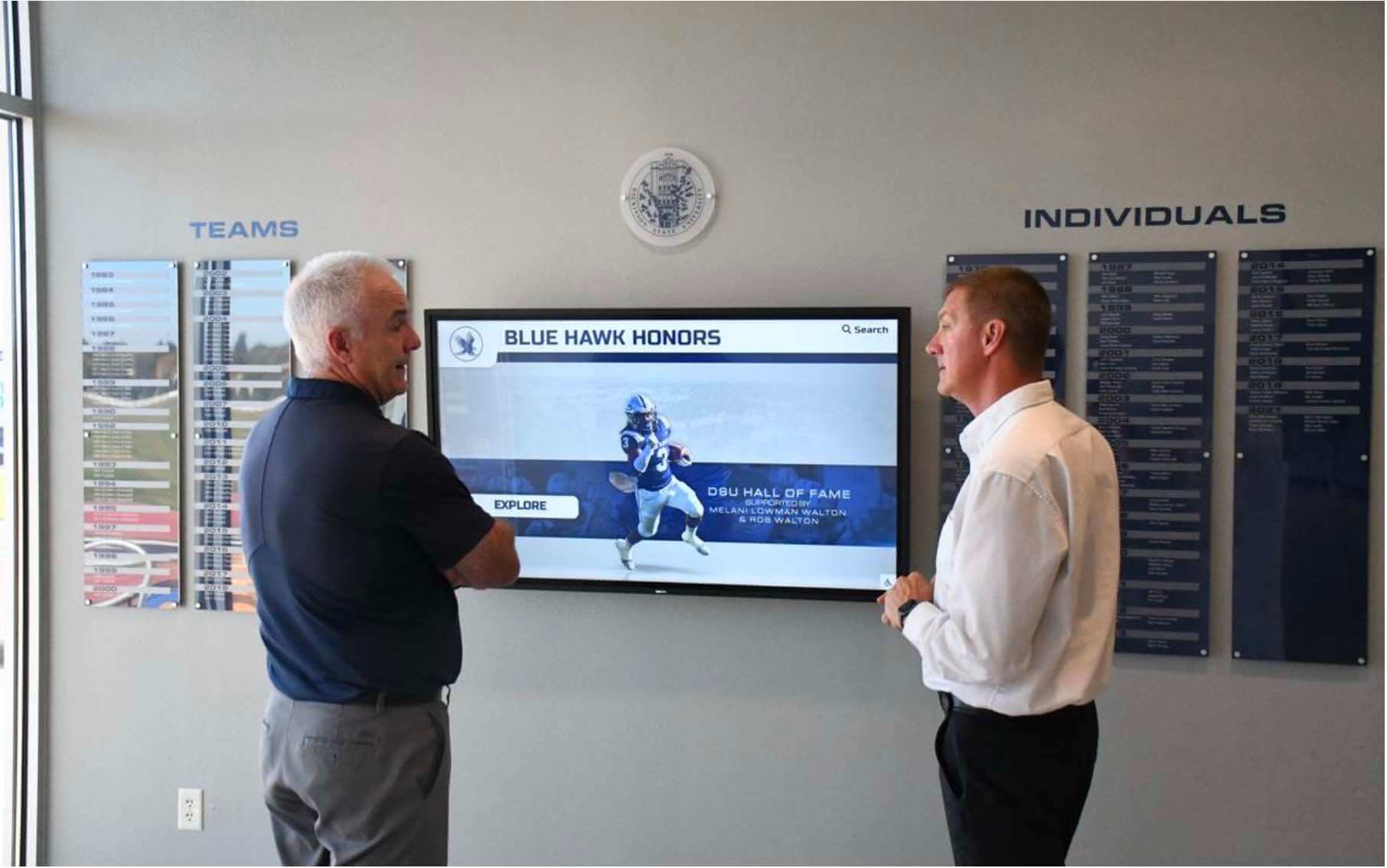
Induction ceremony. Document the timing, format, and recognition materials provided to inductees. Specify where inductees are permanently recognized—whether in a physical display, a digital system, or both.
Understanding what a digital hall of fame is and how it works helps athletic directors make informed decisions about permanent induction displays that outlast any physical board or display case.
9. Traditions, History, and Program Identity
Handbooks that document only current policy miss an opportunity to anchor the department to its own history. A section on program traditions and historical milestones serves as the institutional memory that survives every coaching change and building renovation.
This section should capture:
- Program founding dates and the names of founding coaches
- Conference affiliations history and notable championship seasons
- Significant records and milestones (first state championship, longest winning streaks, notable alumni who advanced to collegiate or professional athletics)
- Annual traditions (rivalry games, senior traditions, community events) and who is responsible for maintaining them
- School rivalry documentation, including the history and format of rivalry trophy competitions that define your program’s competitive identity
Preserving and celebrating school athletic history is one of the most effective levers an athletic director has for building the kind of school pride that drives participation and community support.
10. Safety and Emergency Protocols
Every athletic department handbook requires a comprehensive safety section covering:
Emergency Action Plans (EAPs). Document venue-specific EAPs for every athletic facility, including the location of AED devices, emergency contact sequences, and the designated staff member responsible for each venue. State athletic associations often have EAP templates; the handbook should reference and incorporate these.
Concussion protocols. Define the return-to-play protocol consistent with state law and medical best practices. Document who has authority to clear an athlete to return and what documentation is required.
Weather policies. Specify lightning protocols (who makes the call, evacuation routes, minimum wait time after last lightning strike), heat index thresholds for practice modification, and cold weather guidelines.
Transportation safety. Document approved transportation vendors, the prohibition on athlete transport in personal vehicles without documented exception, and driver responsibility standards.
Abuse reporting. Define mandatory reporting obligations, the chain of reporting within the school, and external agency contact information. This section should be reviewed with legal counsel.

Developing Your Athletic Department Handbook: A Practical Process
Start With an Audit of Existing Policies
Before writing a new handbook or overhauling an existing one, catalog every policy document currently in use: the student-athlete code of conduct, the booster club bylaws, the facility use agreements, the coaching contracts, and whatever passes for a records system. Identify what’s written, what’s implied, and what’s genuinely missing.
This audit also reveals inconsistencies—places where the written policy doesn’t match actual practice. Those gaps are where disputes originate.
Involve Stakeholders in the Draft Phase
An athletic department handbook that coaches have never read provides no operational benefit. Involving coaches, athletes, and parent representatives in at least a review phase creates buy-in and surfaces practical objections before the document is finalized.
Athletic directors at schools with active booster programs benefit from coordinating with booster club leadership during development—particularly on sections covering fundraising, recognition, and facility improvements. Booster clubs often fund the physical and digital infrastructure that recognition policies describe, including trophy cases, record boards, and high school booster club fundraising for larger capital projects.
Review With Legal and Administrative Leadership
Before finalizing any handbook, the athletic director should route the document to the school’s legal counsel and principal. At minimum, the eligibility standards, code of conduct, and safety sections should receive administrative sign-off. This protects the department if policies are later challenged.
Establish an Annual Review Cycle
A handbook that isn’t reviewed annually becomes a liability. State association rules change. Staff turns over. New sports are added. Technology changes what’s possible in record-keeping and recognition. An annual review—typically in the spring before the next school year’s planning cycle—ensures the document stays current.
Build the review into the athletic director’s annual calendar, not as an optional task but as a required process with a deadline. Notify coaching staff of substantive changes before the season begins.
Digital Tools That Support Handbook Implementation
A handbook is a governance document. But governance only functions when it’s operationally supported. Several sections of the handbook—records, recognition, hall of fame, and traditions—require infrastructure to implement consistently.
Athletic photo archives. The handbook may document that team photos are preserved annually, but documentation requires a system. Digitizing athletic team photos into a searchable archive ensures that records referenced in the handbook are actually retrievable when someone needs them.
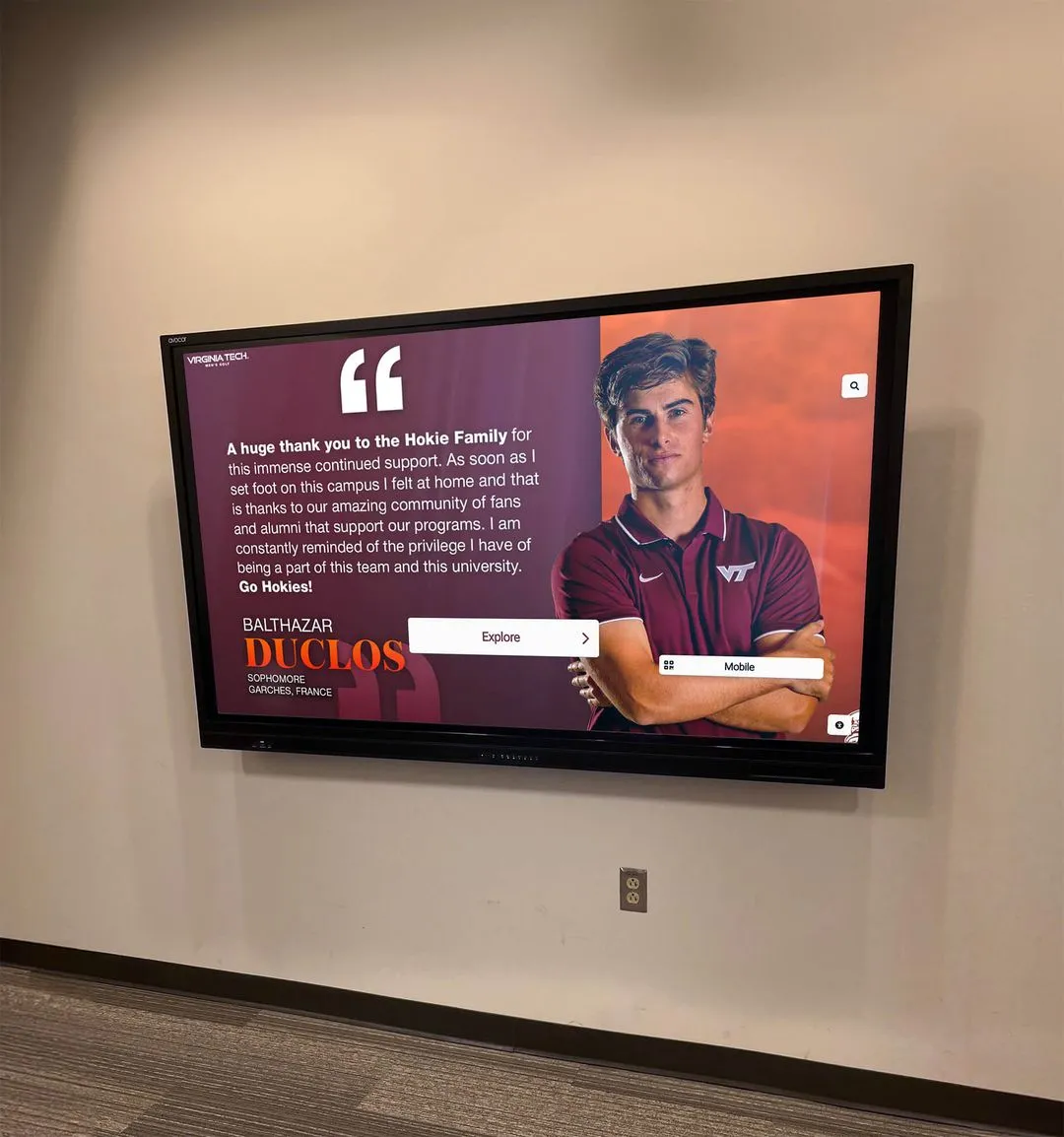
Digital record boards. Program records documented in the handbook need to be displayed somewhere current athletes can see them. Static vinyl boards require manual updates and have finite space. A digital record board auto-ranks all-time leaders across every sport, updates when new marks are entered, and preserves unlimited historical entries. The handbook should specify which system the department uses and who has update authority.
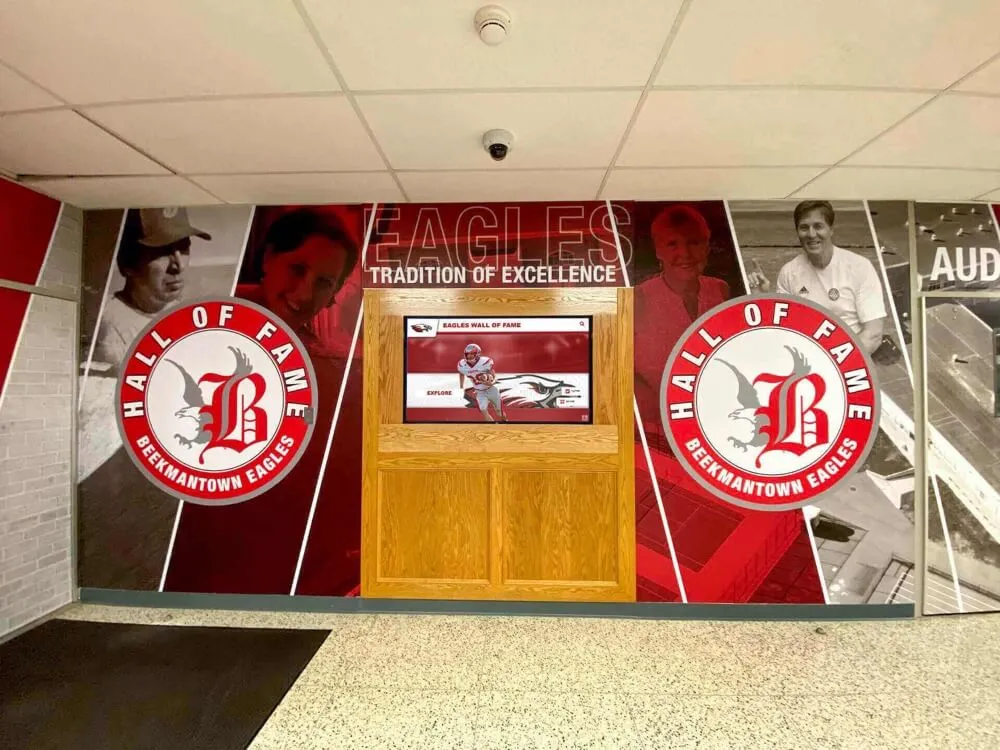
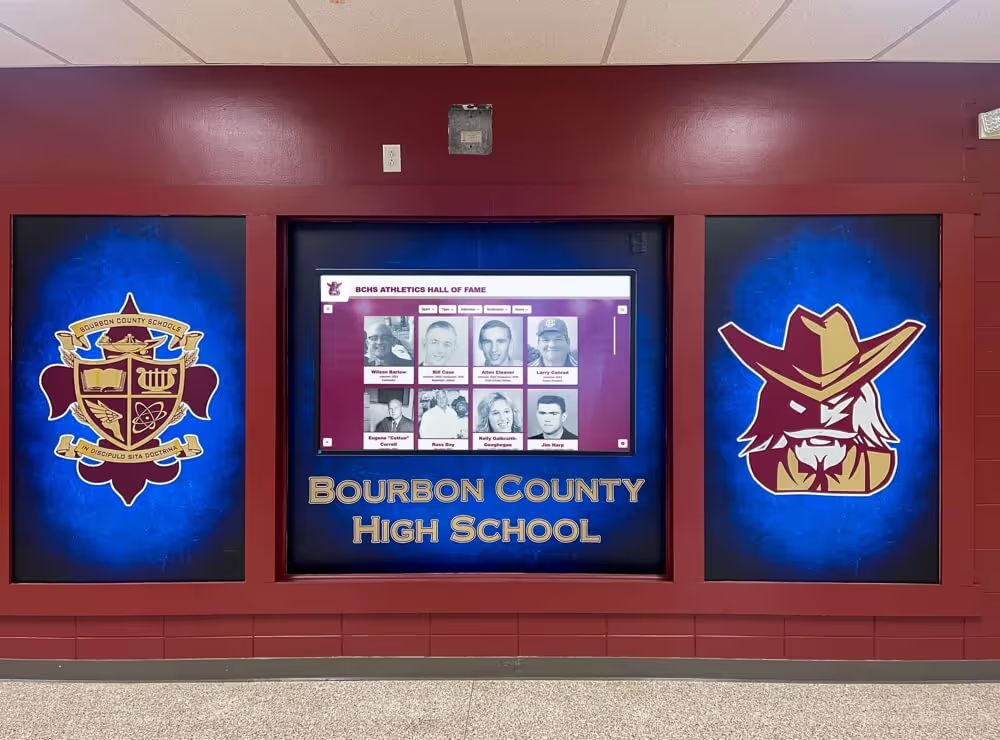
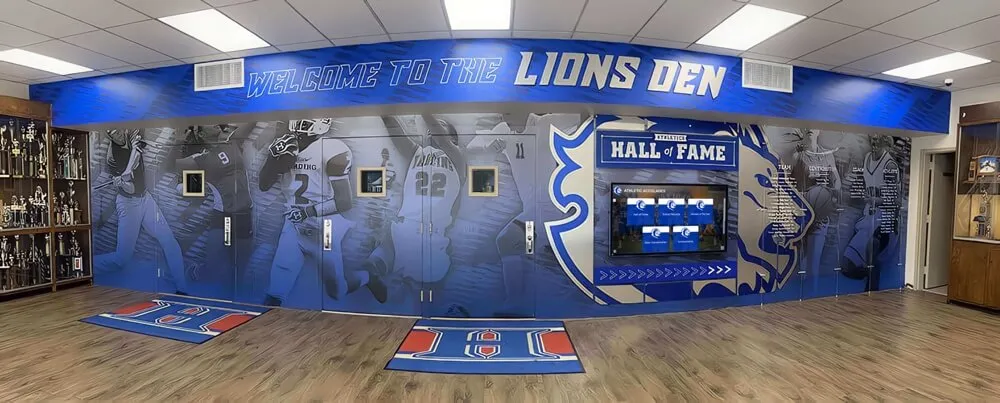
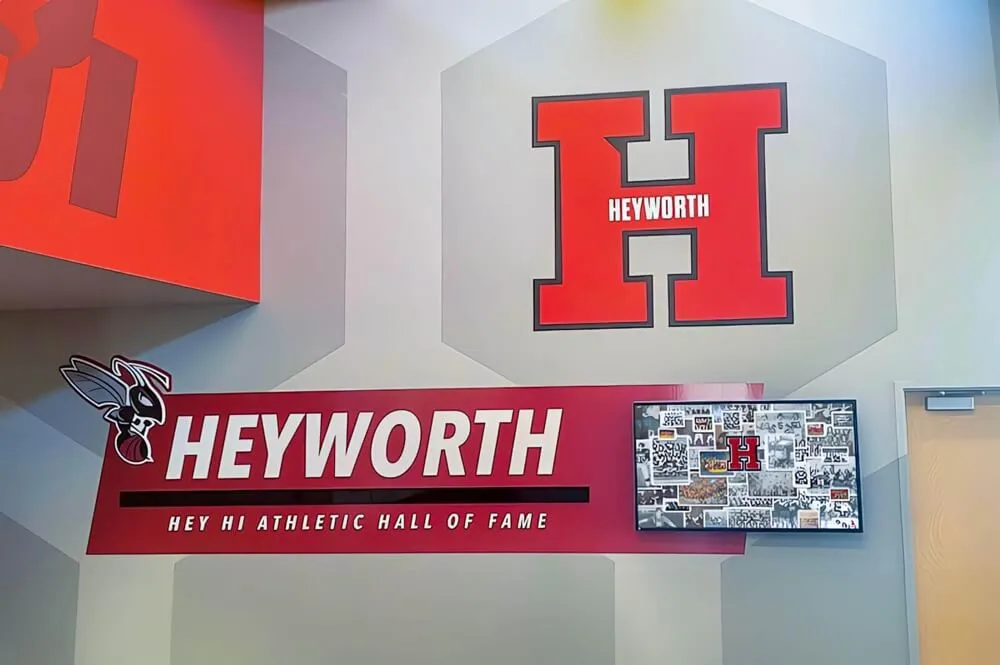
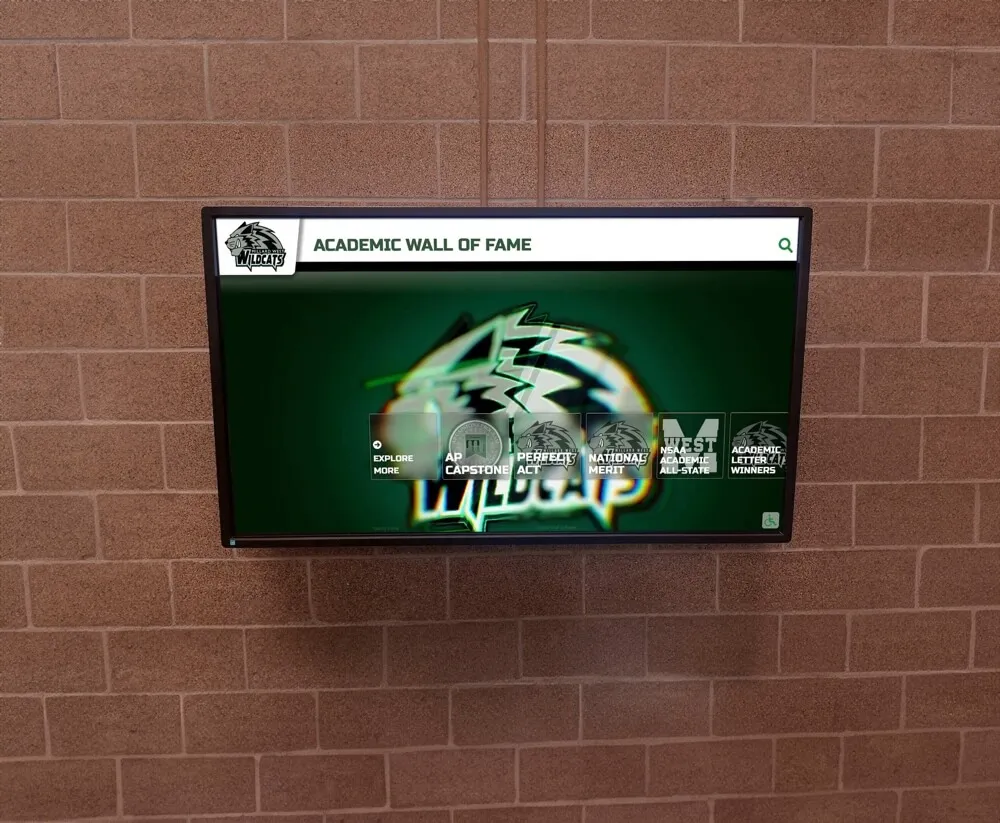
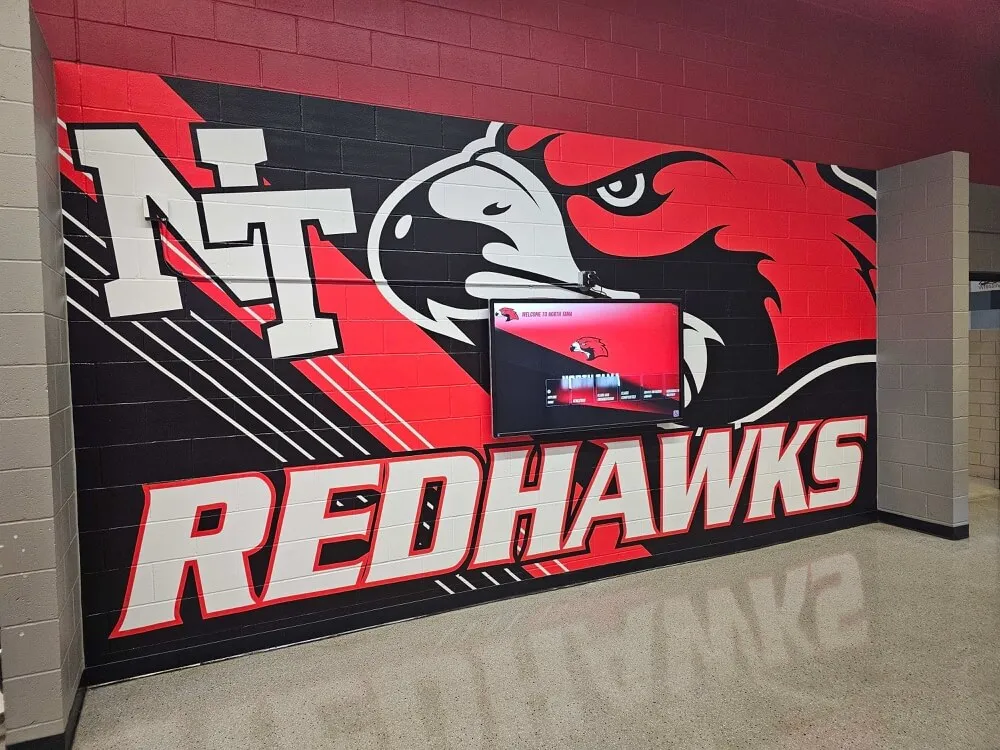
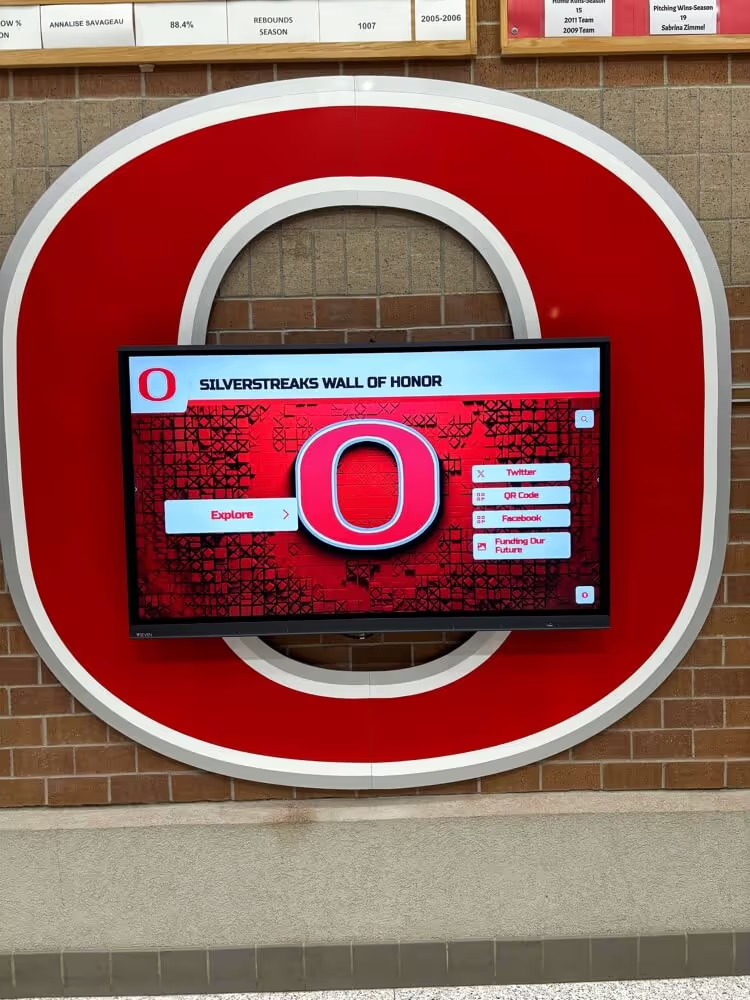
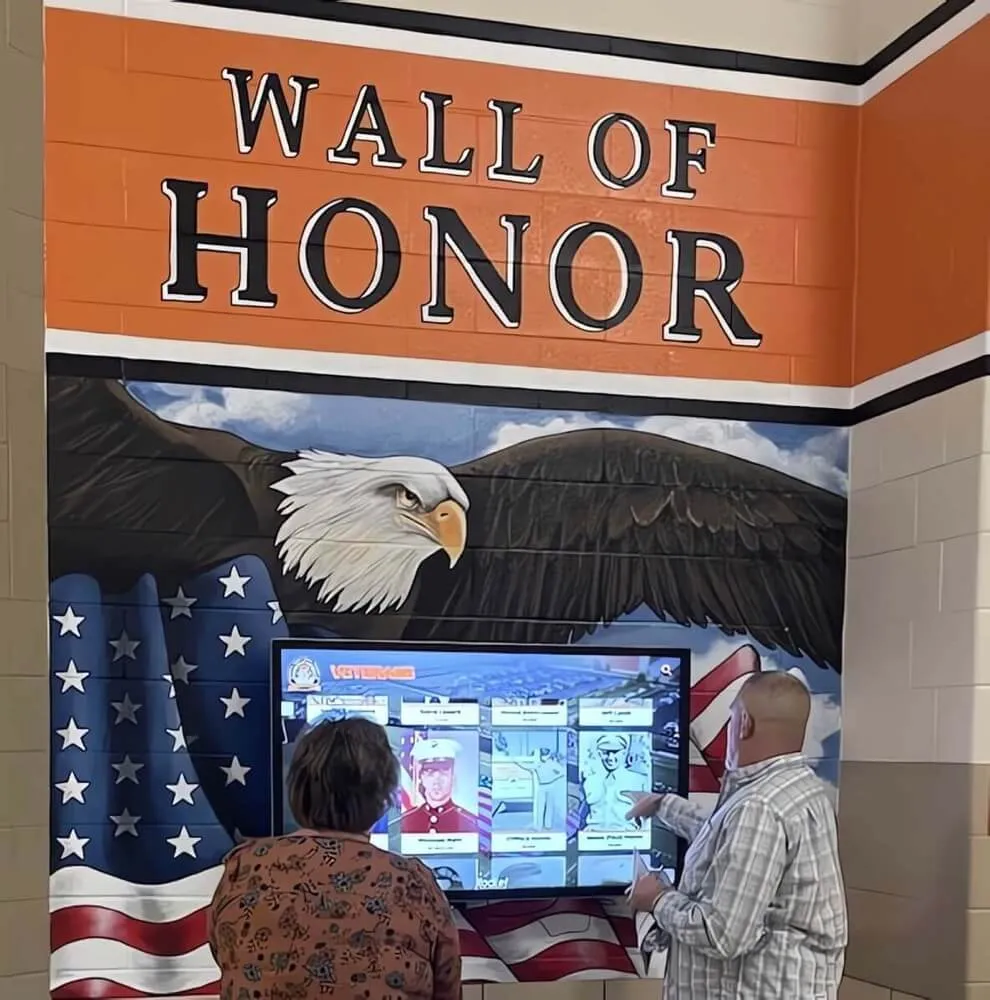
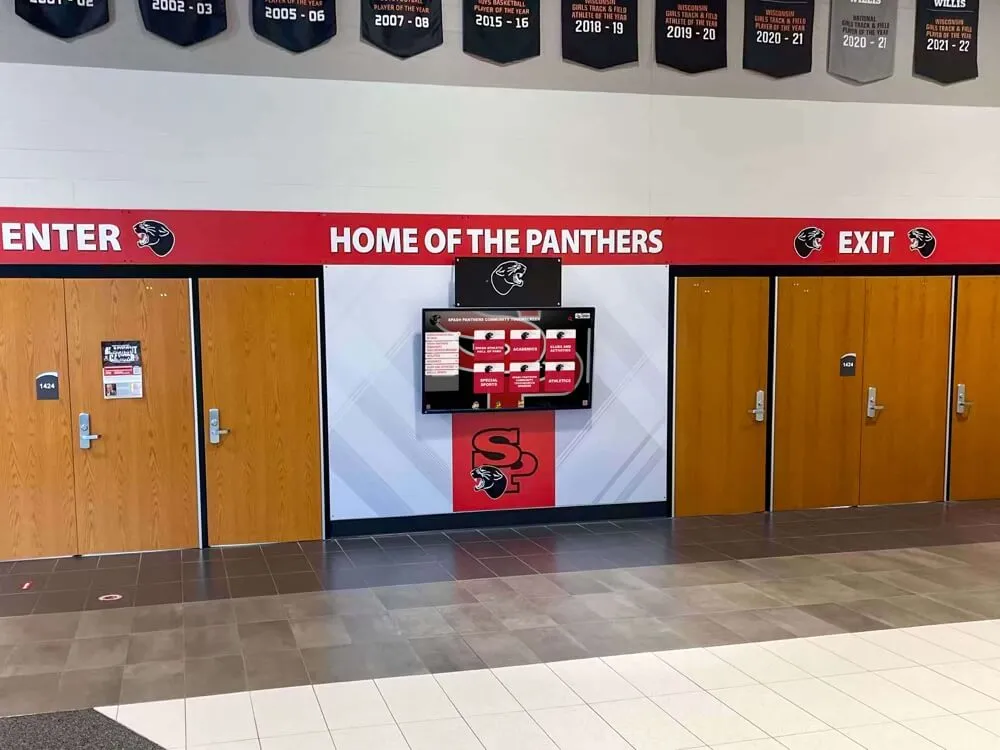
Interactive hall of fame displays. The handbook’s hall of fame criteria need a display system that can grow without physical constraints. Implementing a digital wall of fame gives inductees permanent, searchable profiles with photos, statistics, and career summaries—a recognition experience that serves current students, returning alumni, and prospective athletes simultaneously.
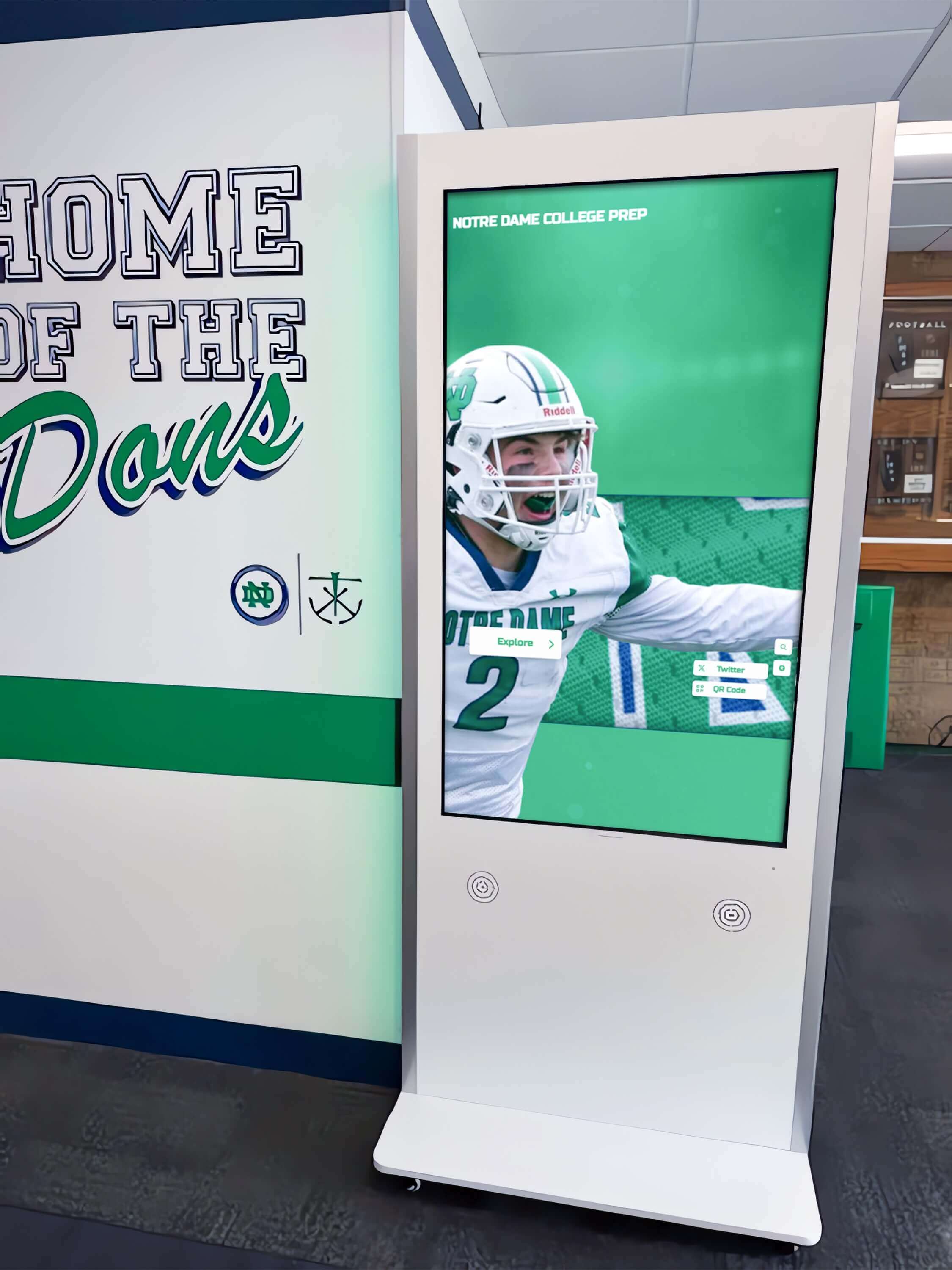
A touchscreen wall of fame in the school’s main hallway or athletic lobby becomes a living artifact of the program’s history, connecting the written policies in the handbook to visible, daily recognition.
Keeping the Handbook Current: Operational Best Practices
The most common handbook failure mode is currency. A document written in 2019 and never updated becomes worse than no handbook—it creates false confidence that policies exist while those policies no longer reflect actual practice.
Several operational habits prevent this:
Date every revision. Each section of the handbook should carry a “last updated” notation, not just the document as a whole. This allows targeted updates without full rewrites.
Assign section ownership. The athletic director owns the handbook overall, but specific sections can have designated reviewers. The head athletic trainer reviews safety sections. The business manager reviews budget and procurement sections. Distributed ownership distributes the update workload.
Track state association changes. Each year, state athletic associations issue rules updates. Build into the annual review process a comparison between current association rules and the handbook’s stated policies to catch any compliance gaps.
Solicit coach feedback annually. At the end of each season, ask coaching staff to flag any sections of the handbook that created confusion or didn’t match operational reality. This feedback loop surfaces practical problems before they become disputes.
What a Well-Maintained Handbook Signals to the Community
An athletic department with a current, comprehensive handbook signals something important: this program takes governance as seriously as it takes competition. When a parent questions an eligibility decision, the athletic director can point to written criteria applied consistently. When a new coach joins mid-year, onboarding takes days rather than weeks. When a journalist or community member asks about hall of fame criteria, the athletic director shares a documented policy rather than improvising an answer.
That credibility compounds over time. Parents who trust that the department operates by documented rules are more willing to volunteer, fundraise, and advocate. Coaches who understand expectations clearly deliver better programs. Student-athletes who see their records preserved and their recognition honored through consistent documented criteria understand that the program values what they achieve—not just while they’re enrolled, but permanently.
The handbook is where that permanence begins.
Ready to give your athletic department’s records, traditions, and hall of fame the permanent digital home your handbook calls for? Rocket Alumni Solutions builds interactive digital record boards and walls of fame for high school athletic departments—auto-ranking, ADA-compliant displays that update automatically and preserve every achievement your program has earned. Schedule a demo to see how Rocket helps athletic directors turn policy into practice.