



Keeping alumni engaged after graduation presents one of the most significant challenges—and opportunities—facing educational institutions today. Strong graduate connections drive everything from fundraising success to student recruitment, yet many schools struggle to maintain meaningful relationships once students leave campus.
The landscape of alumni engagement has shifted dramatically. Today’s graduates expect the same level of personalization and convenience they experience with commercial platforms. Generic newsletters and annual fundraising appeals no longer suffice when competing for attention in crowded digital spaces. Schools that master contemporary engagement strategies build vibrant communities delivering measurable benefits for decades, while those relying on outdated approaches watch participation rates steadily decline.
This comprehensive guide explores practical alumni engagement strategies that work—from digital recognition systems that celebrate achievement to event programming that brings graduates together, communication approaches that resonate with diverse populations, and measurement frameworks demonstrating program value. Whether you’re launching your first structured engagement initiative or revitalizing existing programs producing lackluster results, these proven approaches provide actionable frameworks for building connections that last.
Why Alumni Engagement Matters More Than Ever
Before diving into specific tactics, understanding the strategic value of alumni engagement provides essential context for securing institutional support and prioritizing relationship-building initiatives.
Measurable Impact Across Institutional Priorities
Well-executed alumni engagement delivers quantifiable returns across multiple organizational objectives that extend far beyond simple participation metrics.
Fundraising and Philanthropic Support: Engaged alumni give more frequently, at higher levels, and with greater consistency than disconnected graduates. Research from the Council for Advancement and Support of Education shows institutions with robust engagement programs report alumni participation rates 40-60% higher than those with limited relationship-building efforts. More significantly, engaged alumni maintain giving patterns less dependent on economic conditions—sustaining support during challenging periods when transactionally-connected donors reduce contributions.
The relationship between engagement and giving extends beyond annual fund participation. Major gift prospects almost exclusively emerge from engaged alumni populations demonstrating strong institutional connections through event attendance, volunteer participation, or regular communication consumption. Development officers consistently report that cultivation efforts with engaged alumni require substantially less time and generate higher success rates compared to prospects lacking established relationships.
Student Recruitment and Institutional Reputation: Alumni serve as powerful advocates during student recruitment, providing authentic perspectives that influence prospective students and families more effectively than institutional marketing messages alone. Engaged graduates voluntarily share positive institutional narratives, participate in recruitment events, interview prospective students, and provide professional guidance that enhances recruitment outcomes while requiring minimal institutional resources.
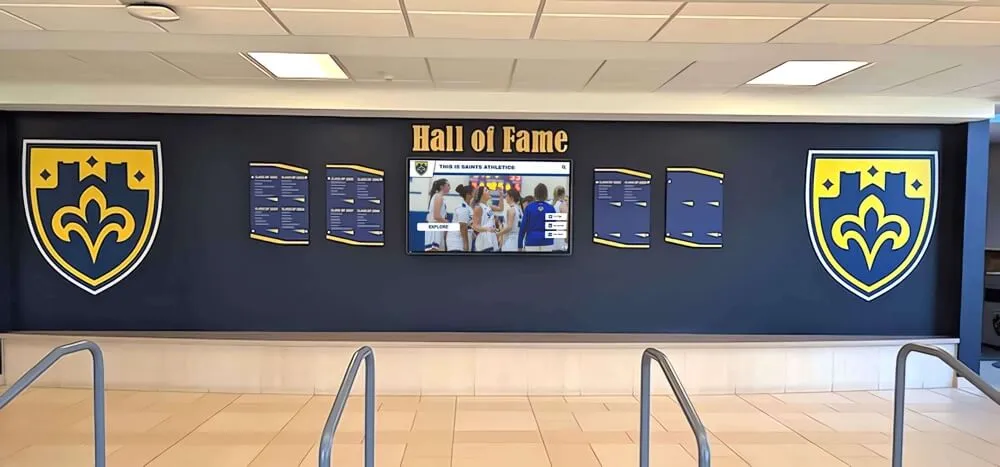
Beyond direct recruitment support, alumni accomplishments fundamentally shape institutional reputation. When graduates succeed professionally, contribute to communities, or achieve notable recognition, their institutions benefit from association with those achievements. Strategic digital recognition displays that celebrate accomplishments while facilitating alumni-to-alumni connections multiply these reputational benefits exponentially.
Career Services and Student Success: Engaged alumni provide mentorship opportunities, internship placements, career guidance, job referrals, and professional networking access that significantly enhance student outcomes and post-graduation success rates. According to National Association of Colleges and Employers research, students with alumni mentor connections report 35% higher job placement rates and starting salaries averaging 15% above peers without such relationships.
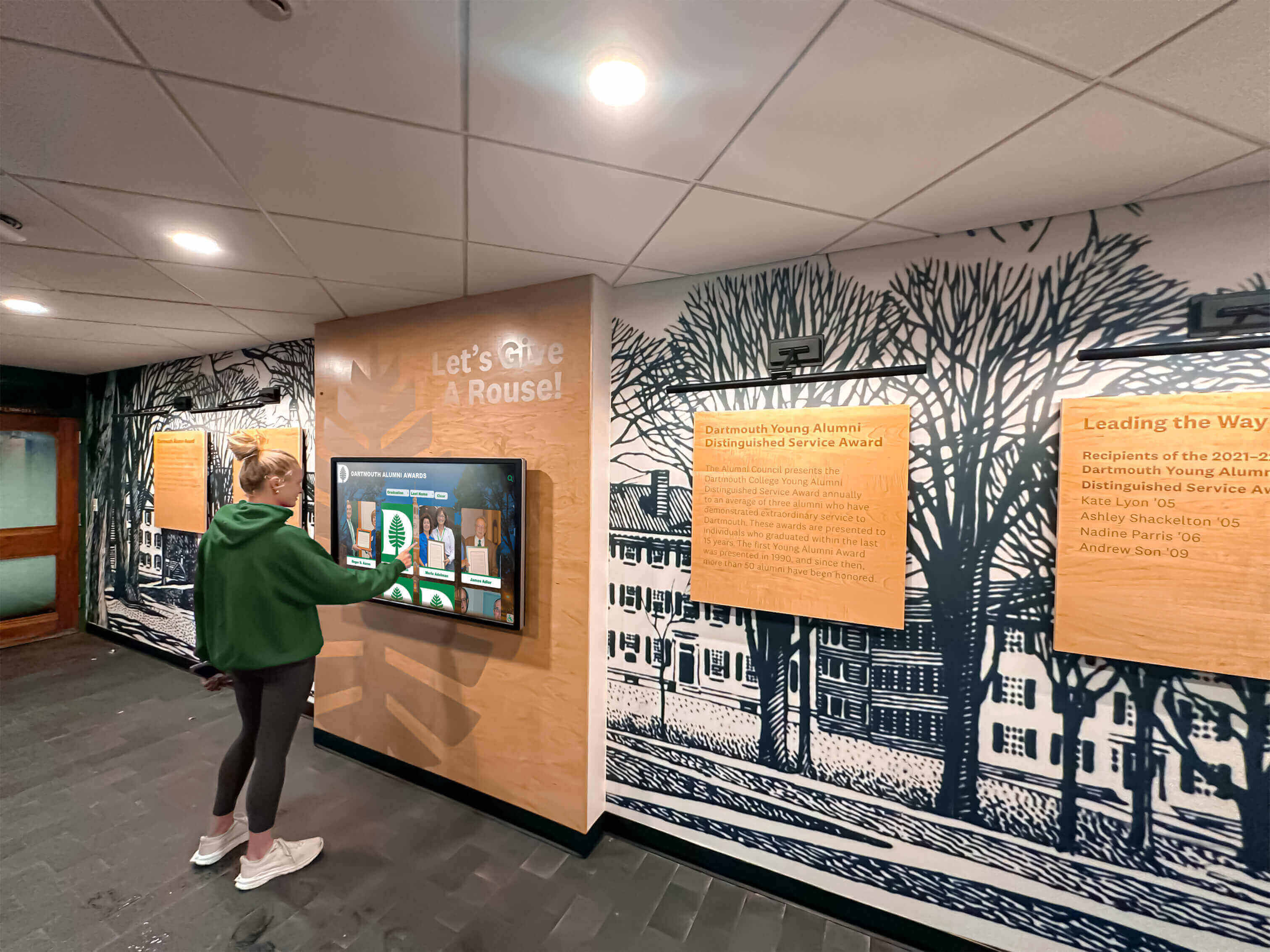
Career-focused engagement creates mutually beneficial relationships—students receive valuable guidance while alumni experience meaningful ways to contribute expertise without financial commitments. Many graduates who cannot make philanthropic gifts enthusiastically provide career support, creating inclusive engagement opportunities across socioeconomic circumstances.
Building a Multi-Channel Communication Strategy
Effective alumni communication requires strategic sophistication beyond simple mass messaging, delivering targeted content through channels that match graduate preferences while maintaining appropriate frequency and relevant personalization.
Email Marketing Excellence
Email remains the primary digital communication channel for most institutions, requiring approaches that respect recipient attention while delivering genuine value:
Segmented Campaigns: Generic mass emails consistently underperform compared to targeted messages addressing specific alumni characteristics. Segment communications based on graduation decade, academic program, geographic location, engagement history, professional industry, giving patterns, and other meaningful variables ensuring recipients receive content matching their specific circumstances rather than one-size-fits-all messaging.
Recent graduates might receive career-focused content about networking opportunities and professional development resources, while established professionals see information about mentorship programs and leadership giving opportunities. Alumni celebrating milestone reunions receive class-specific programming details, and geographically-based segments learn about regional events in their areas.
Mobile Optimization: Over 60% of emails open on mobile devices, making responsive design non-negotiable for effective communication. Ensure subject lines display completely on smartphone screens (under 40 characters typically), use scannable content with clear hierarchy and sufficient white space, incorporate prominent calls-to-action that work on touchscreens, and test messages across multiple devices before sending to avoid formatting disasters that damage engagement.
Testing and Analytics: Systematic testing reveals what resonates with specific segments, enabling data-informed optimization. A/B test subject lines, content formats, sending times, and calls-to-action—then analyze open rates, click-through rates, and conversion metrics guiding continuous improvement. Many institutions discover that question-based subject lines outperform announcements, weekday mornings generate better engagement than evenings, and personal stories create more interaction than institutional updates.
Social Media Strategy That Builds Community
Strategic platform utilization creates ongoing presence in alumni daily digital experiences while fostering interactive community rather than broadcast-only communication:
Platform-Specific Approaches: Different social platforms serve distinct purposes and audience demographics. LinkedIn excels for professional networking and career-focused content, Facebook serves broader demographic ranges and event coordination, Instagram engages younger alumni through visual storytelling, and emerging platforms like TikTok reach newest graduates with authentic, informal content.
Tailor content format and messaging style to each platform’s norms rather than cross-posting identical material everywhere. LinkedIn posts might highlight career achievements and industry insights, Instagram stories showcase behind-the-scenes campus moments and student successes, and Facebook facilitates event planning and community conversations.
Content Diversity: Varied content maintains interest across different alumni segments and prevents feeds from feeling repetitive or single-note. Mix campus updates, student achievements, faculty research highlights, alumni spotlights, historical photos evoking nostalgia, event promotions, behind-the-scenes content, and user-generated submissions from graduates themselves.
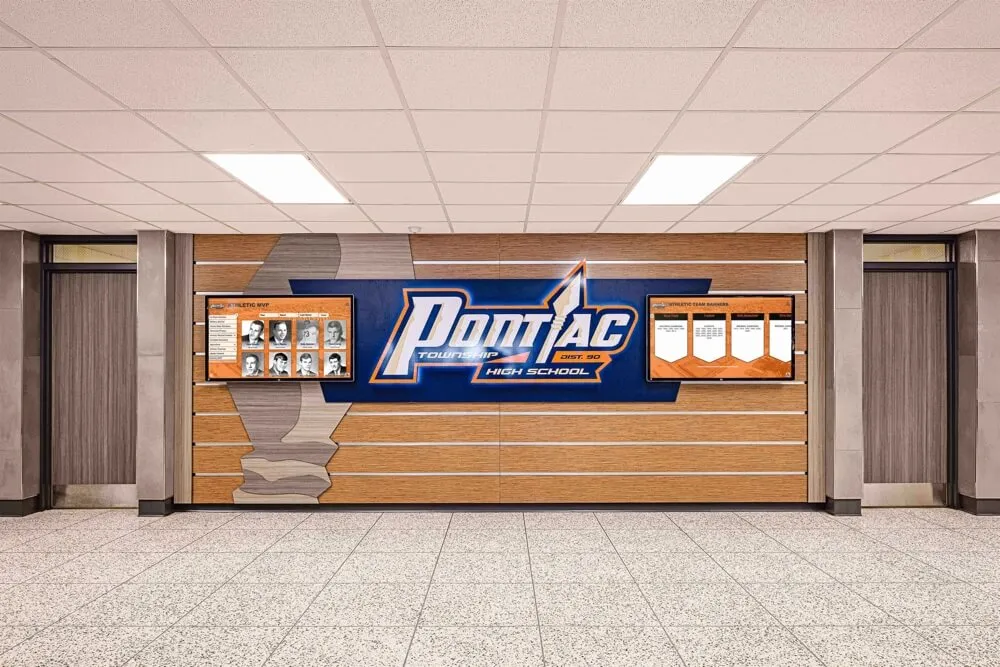
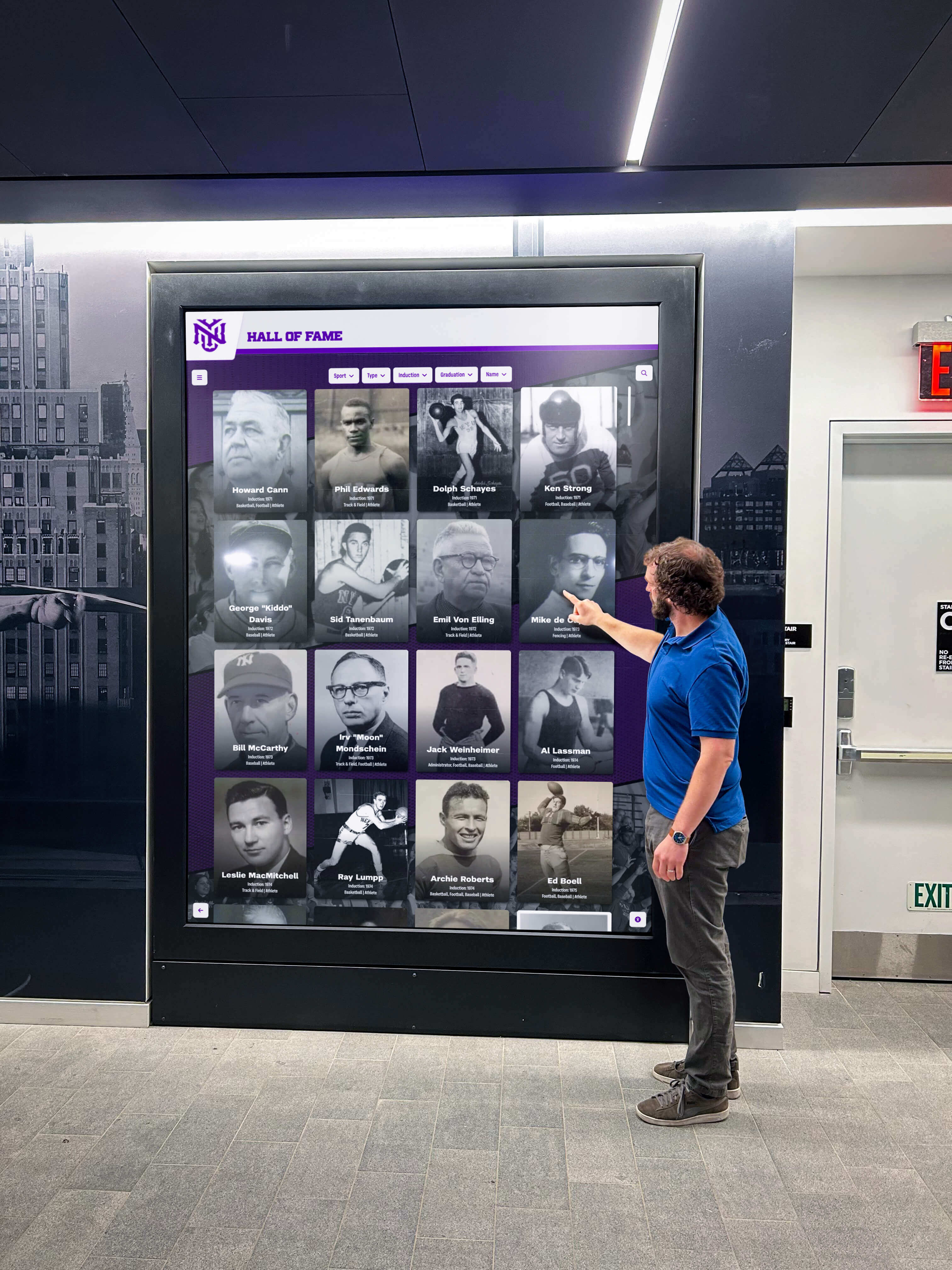
Interactive digital recognition systems provide endless content opportunities—feature different honored alumni weekly, share career milestone updates, celebrate achievement anniversaries, or highlight historical inductees creating ongoing engagement extending far beyond initial recognition ceremonies.
Authentic Engagement: Social media enables genuine two-way dialogue when institutions commit to active community management rather than broadcast-only approaches. Respond thoughtfully to comments, acknowledge tags and mentions, participate in conversations, and demonstrate institutional attention to alumni voices. This responsiveness builds trust and loyalty impossible through one-way communication alone.
Website and Digital Content Hub Development
Alumni-focused website sections provide always-available resources accessible on flexible schedules accommodating busy graduate lives:
Create intuitive navigation enabling quick access to relevant information—event calendars with registration, volunteer opportunities with clear descriptions, career resources including job boards and mentorship programs, giving portals with one-click donation options, recognition displays showcasing honored graduates, and alumni directories facilitating peer connections.
Regular content updates establish websites as living resources rather than static archives. Fresh stories, updated event information, new recognition profiles, and current campus news provide reasons for repeat visits while improving search visibility driving organic traffic from alumni seeking institutional information.
Mobile responsiveness proves essential as many alumni primarily access digital content from smartphones. Ensure seamless mobile experiences accommodate device preferences without forcing pinch-zoom navigation or horizontal scrolling that frustrates users and drives abandonment.
Creating Recognition Programs That Drive Engagement
Recognition serves dual purposes—honoring alumni achievements while creating powerful engagement drivers demonstrating institutional appreciation and maintaining visible connections between graduates and their alma maters.
Expanding Beyond Traditional Categories
Moving beyond athletic-only or giving-focused recognition to honor diverse accomplishments engages broader alumni populations while demonstrating that institutions value multiple forms of success:
Professional Achievement Recognition: Celebrate career success, industry leadership, entrepreneurial ventures, or distinguished service across varied fields. Recognize executives alongside educators, doctors alongside artists, engineers alongside nonprofit leaders—demonstrating that excellence takes many forms and all career paths merit celebration.
Community Service Acknowledgment: Honor civic engagement, volunteer leadership, philanthropic generosity beyond institutional giving, or advocacy work benefiting others. Service-focused recognition communicates institutional values emphasizing contribution and collective advancement over individual wealth or professional status alone.
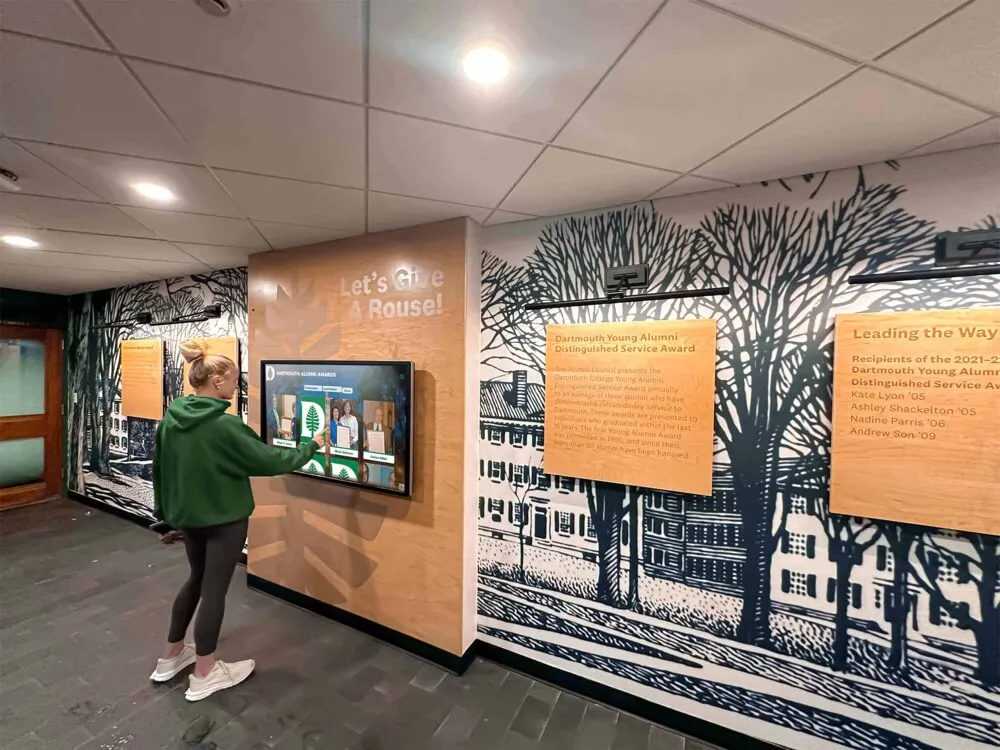
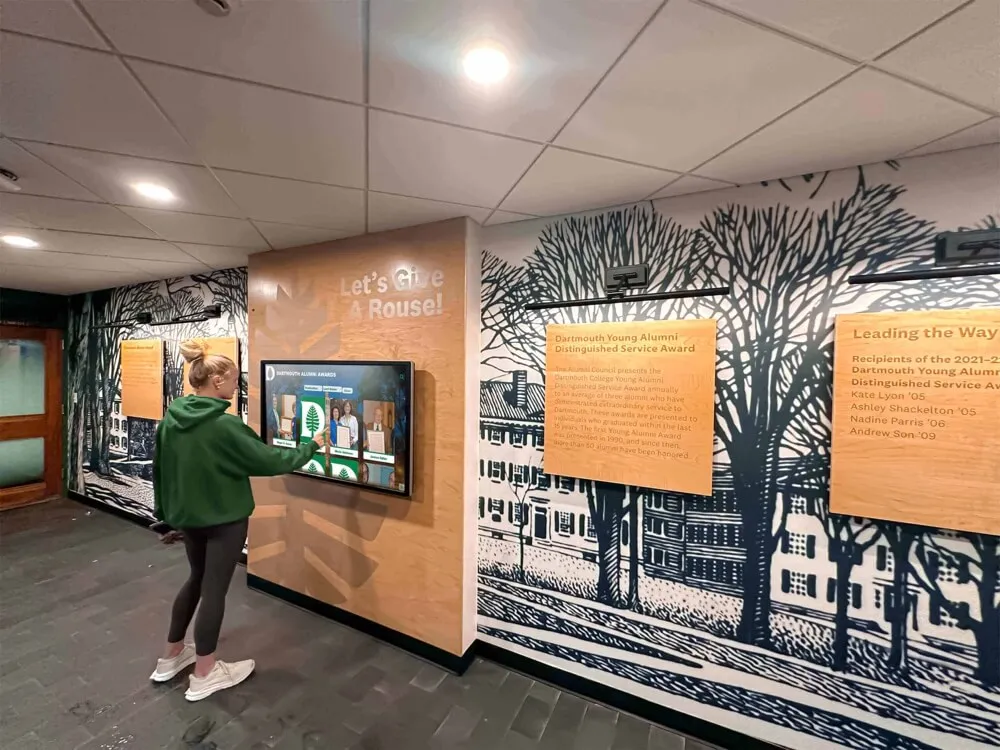
Young Alumni Recognition: Create categories honoring early career accomplishments appropriate to recent graduates’ career stages. Young alumni awards provide role models relatable to current students while engaging newer graduates during critical years when institutional connections often weaken without deliberate cultivation.
Academic Excellence: Celebrate scholarly contributions, research accomplishments, educational leadership, publications, or intellectual impact. These achievements deserve recognition equal to professional success, particularly at institutions defining themselves through knowledge creation and dissemination.
Comprehensive programs implementing inclusive digital recognition acknowledge multiple paths to distinction while ensuring various alumni segments see themselves reflected in celebrated achievements.
Leveraging Digital Recognition Technology
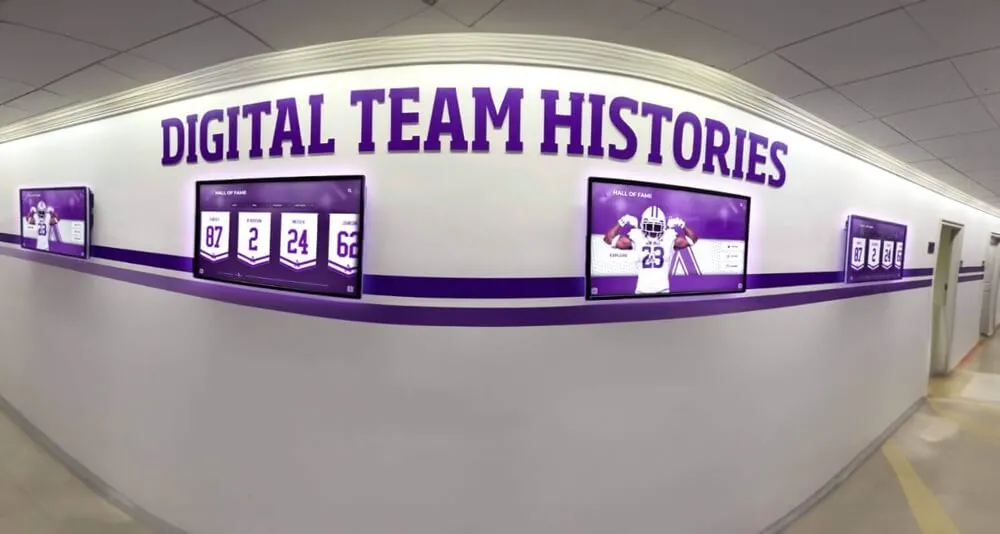
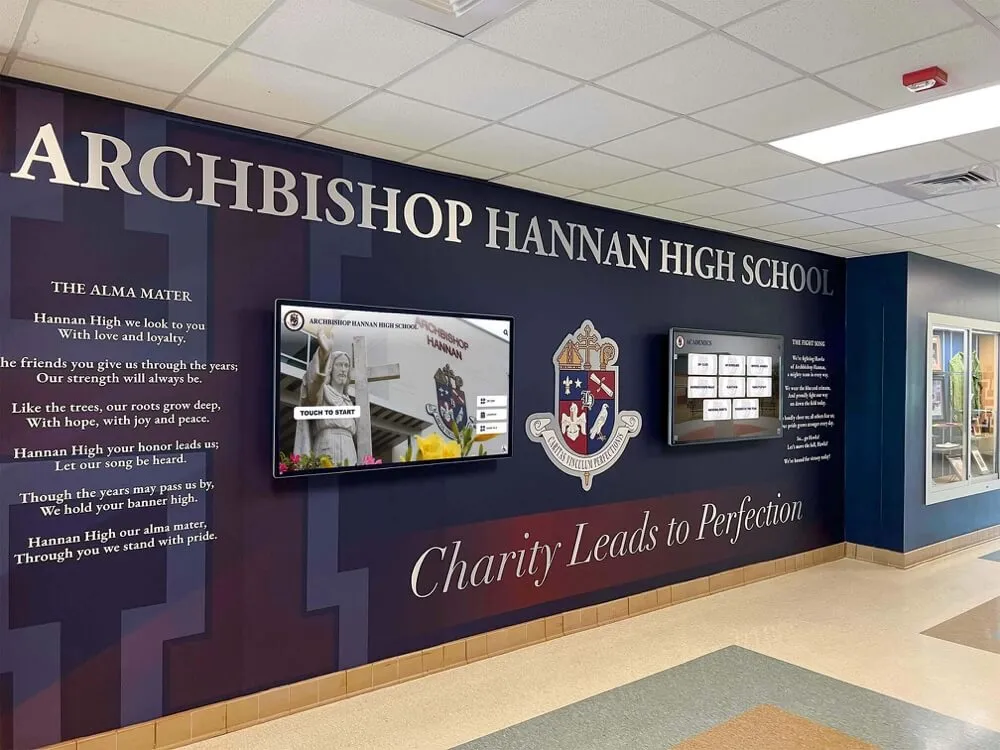
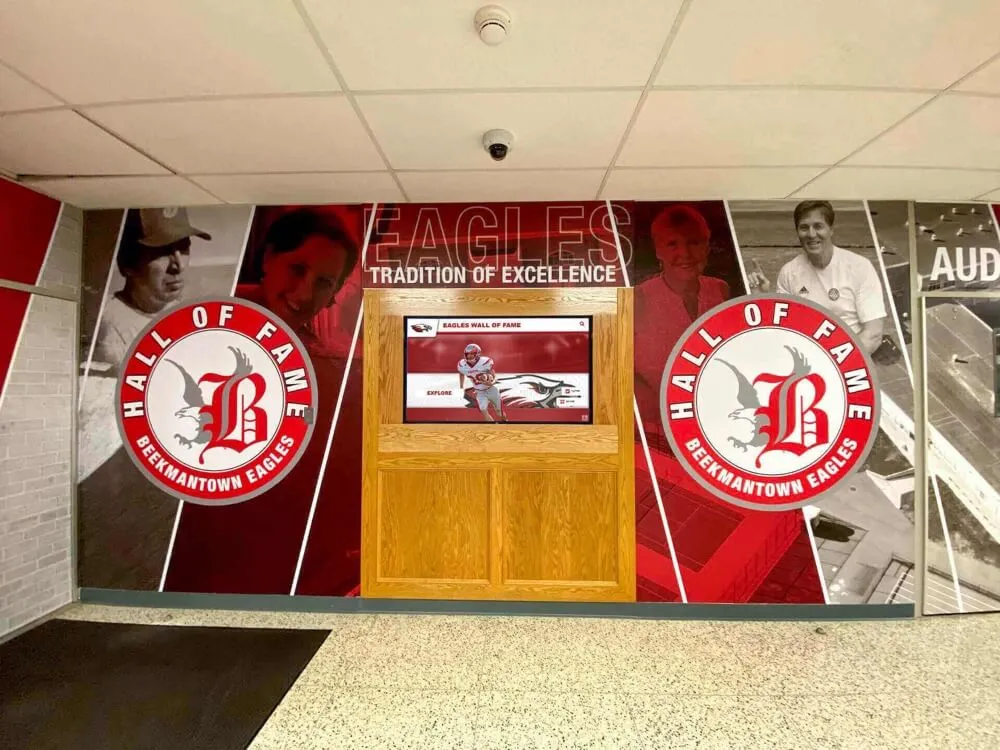
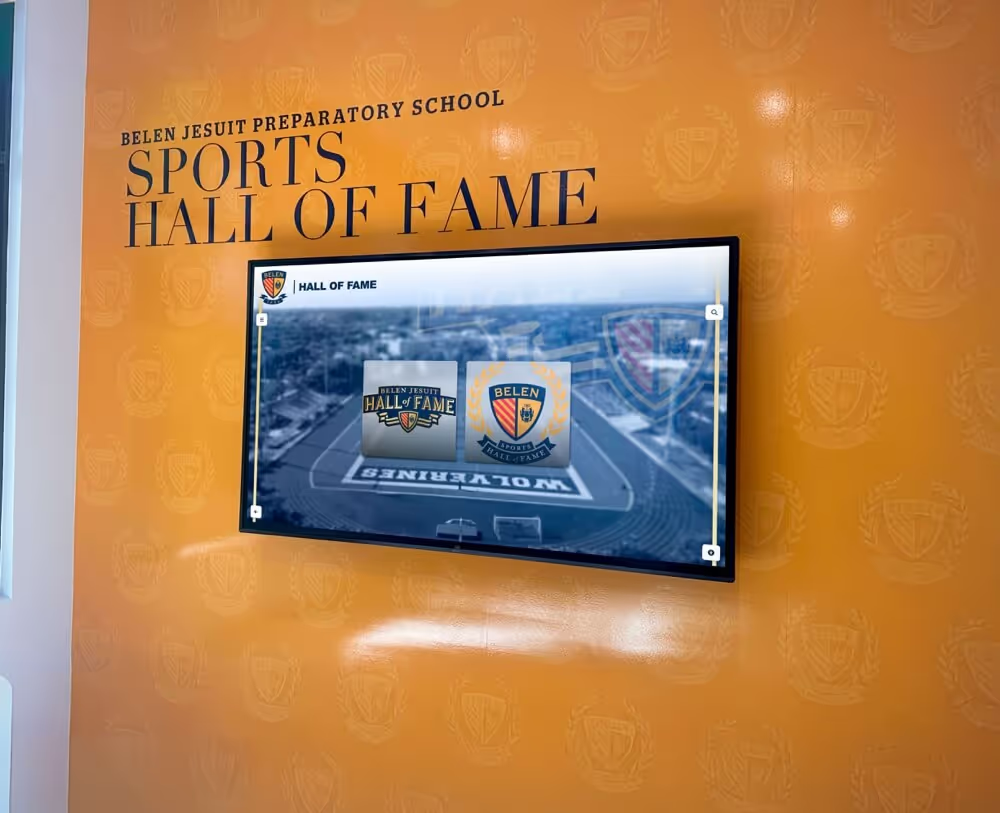
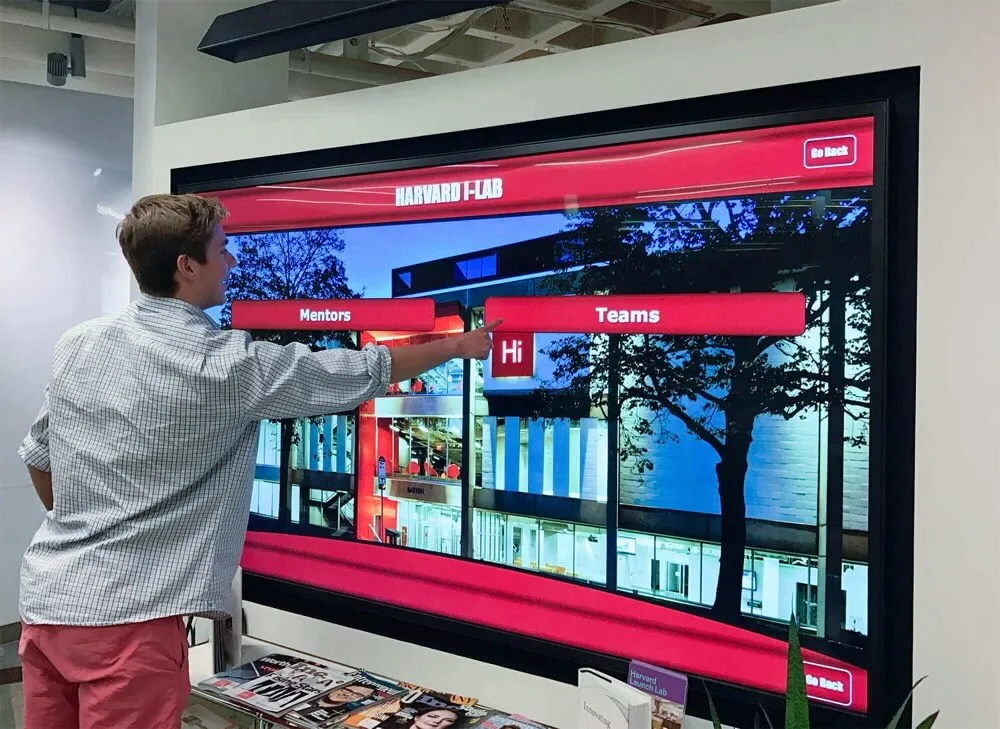
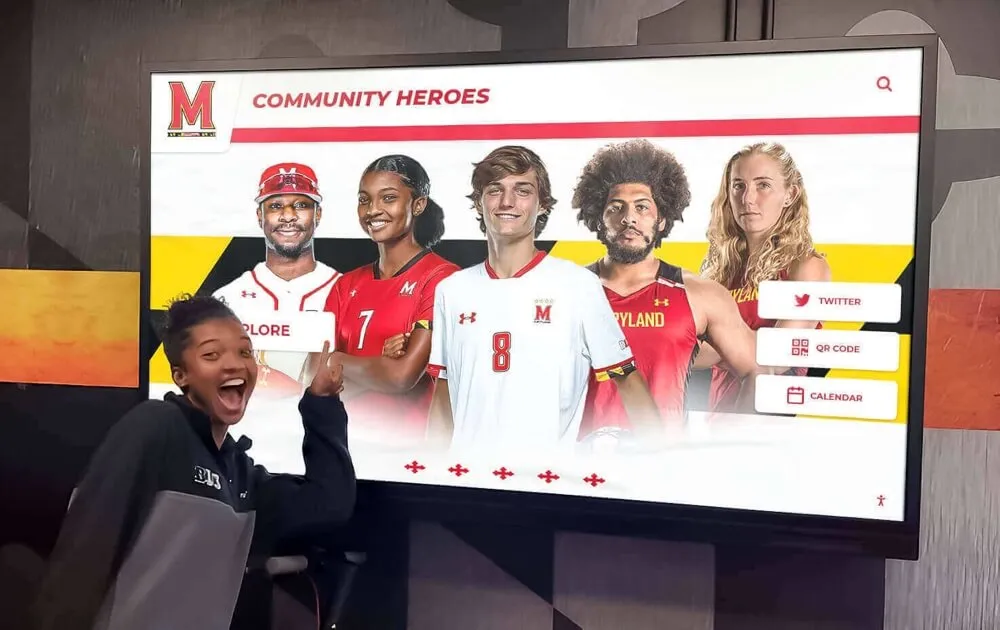
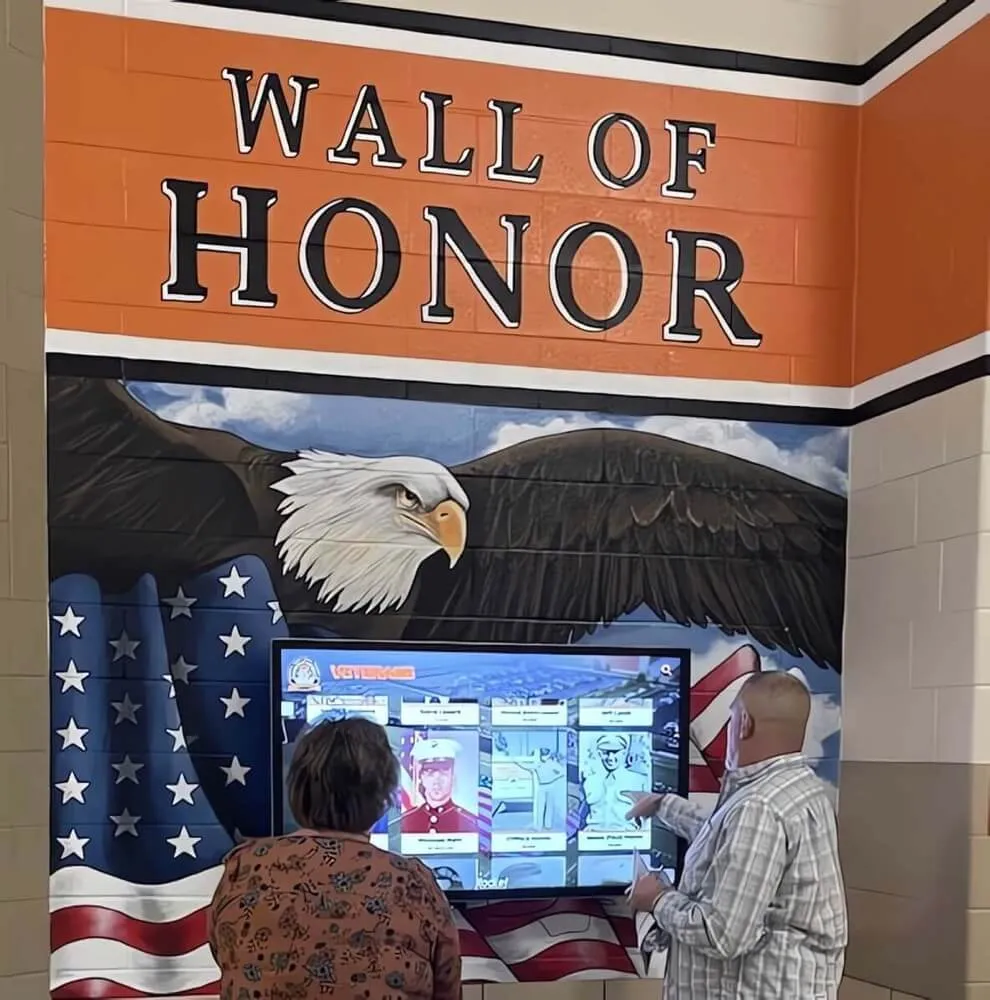
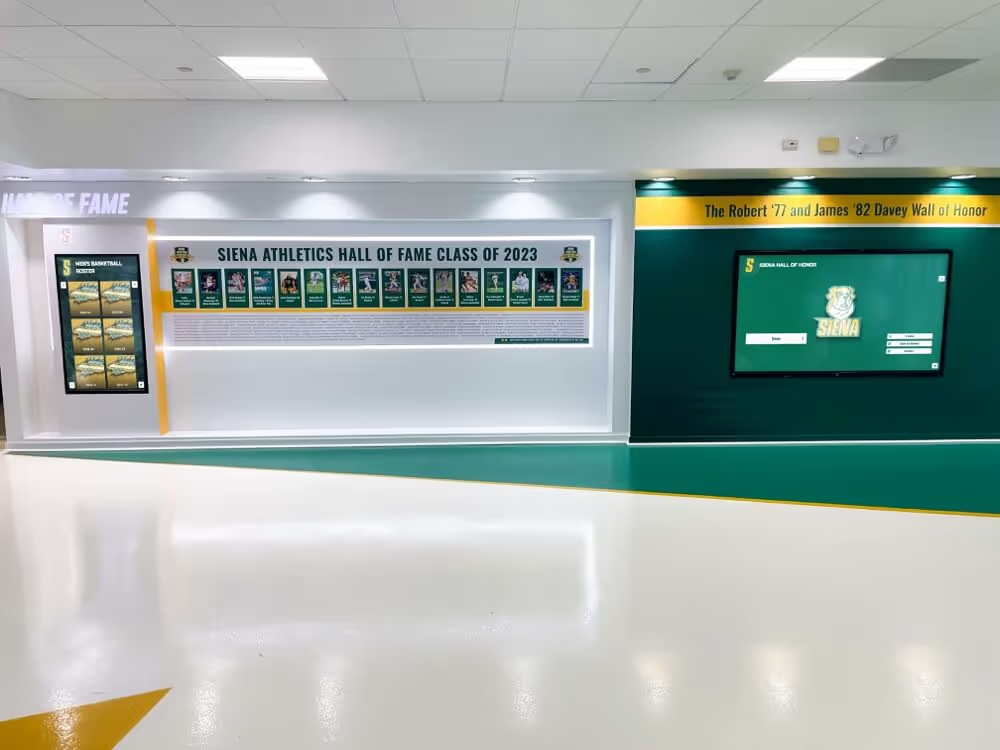
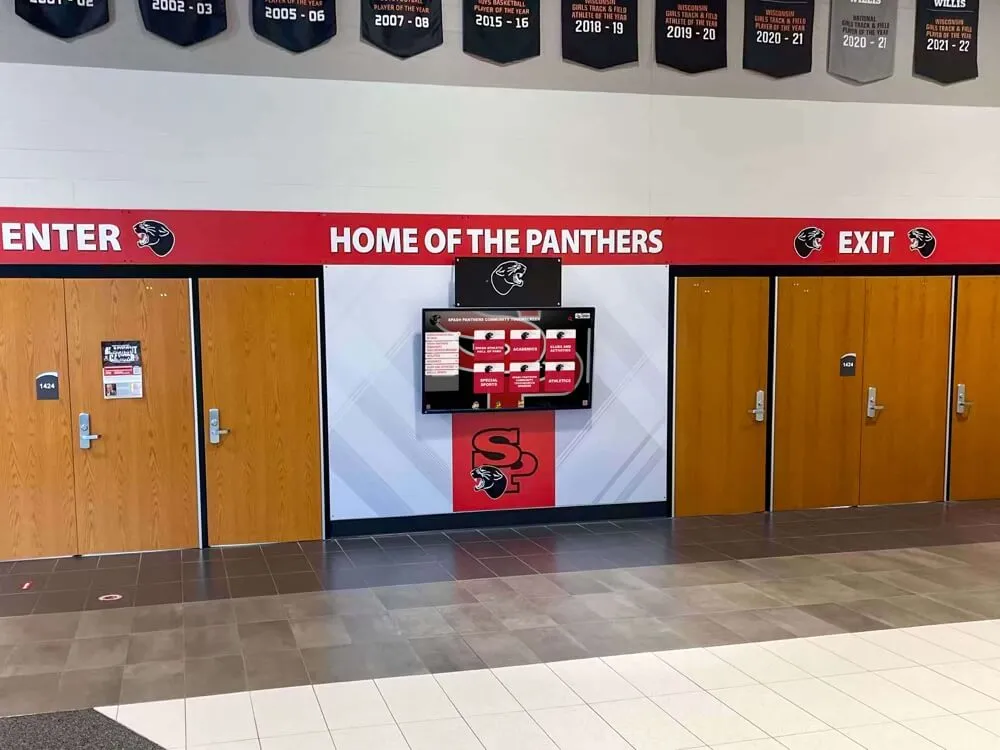
Interactive displays transform passive acknowledgment into active engagement opportunities that extend recognition reach while creating memorable experiences strengthening institutional bonds:
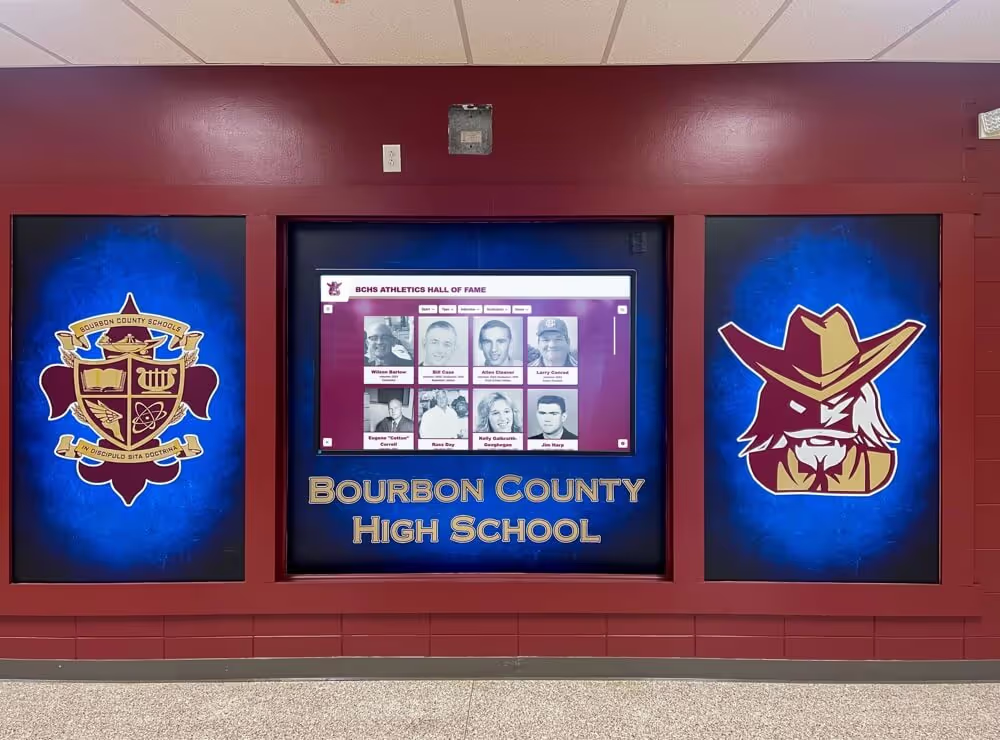
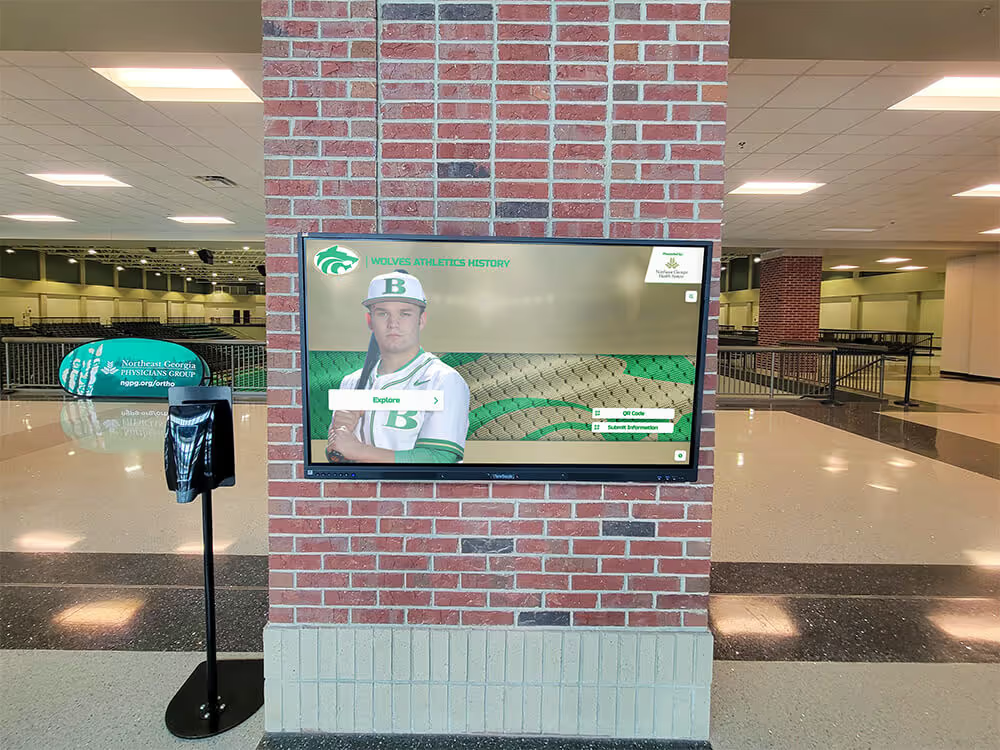
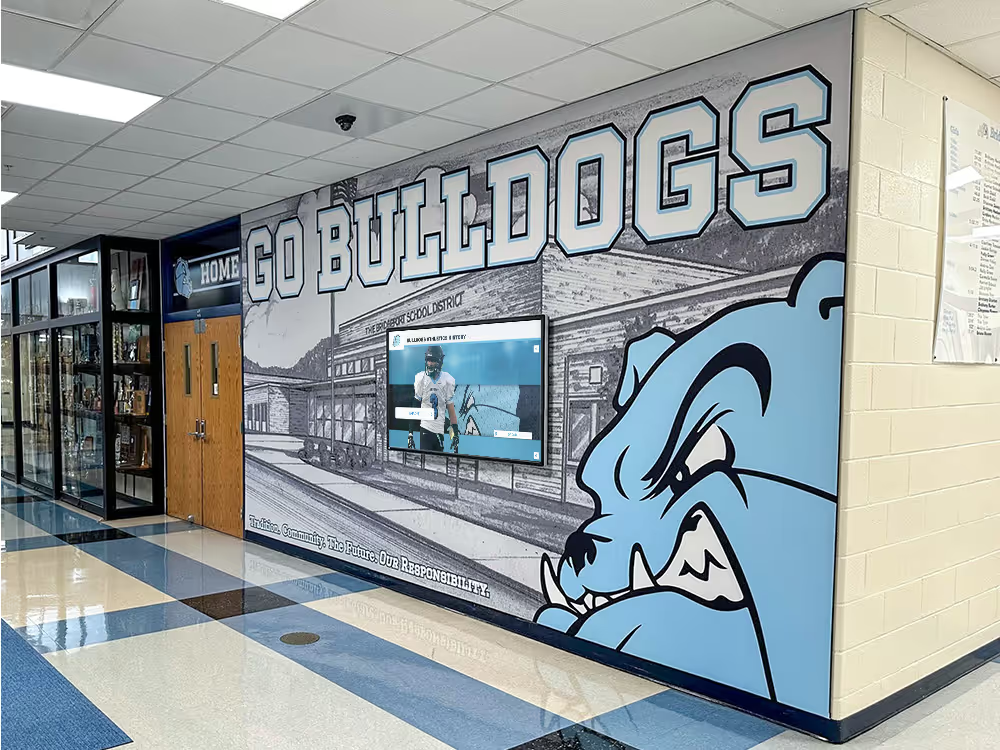
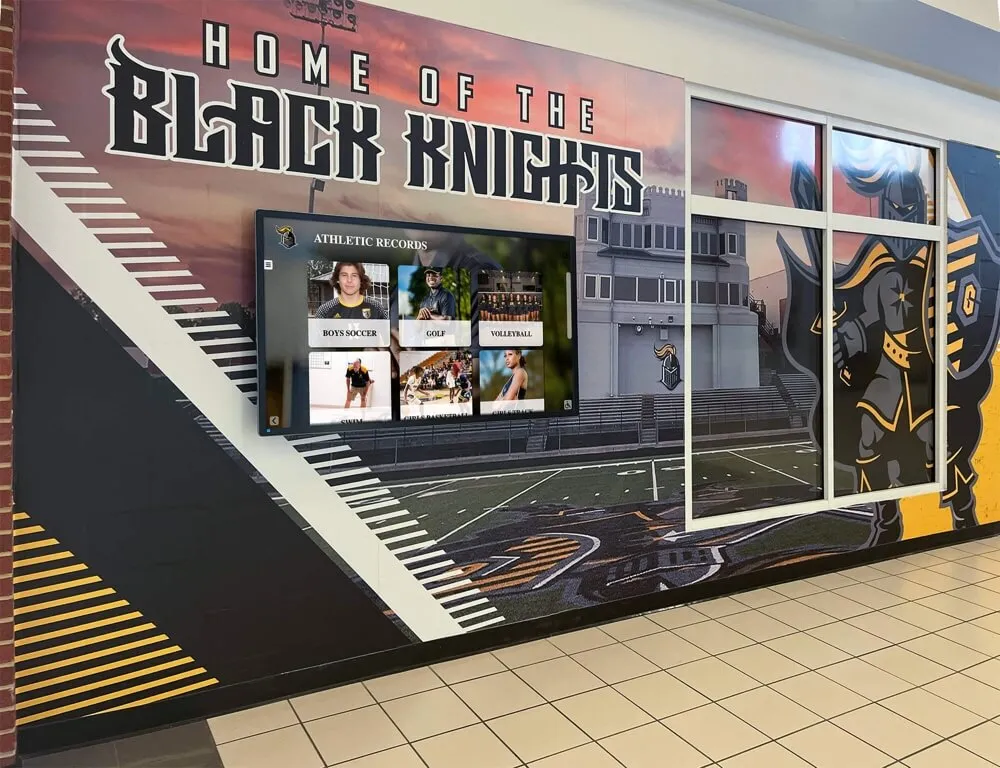
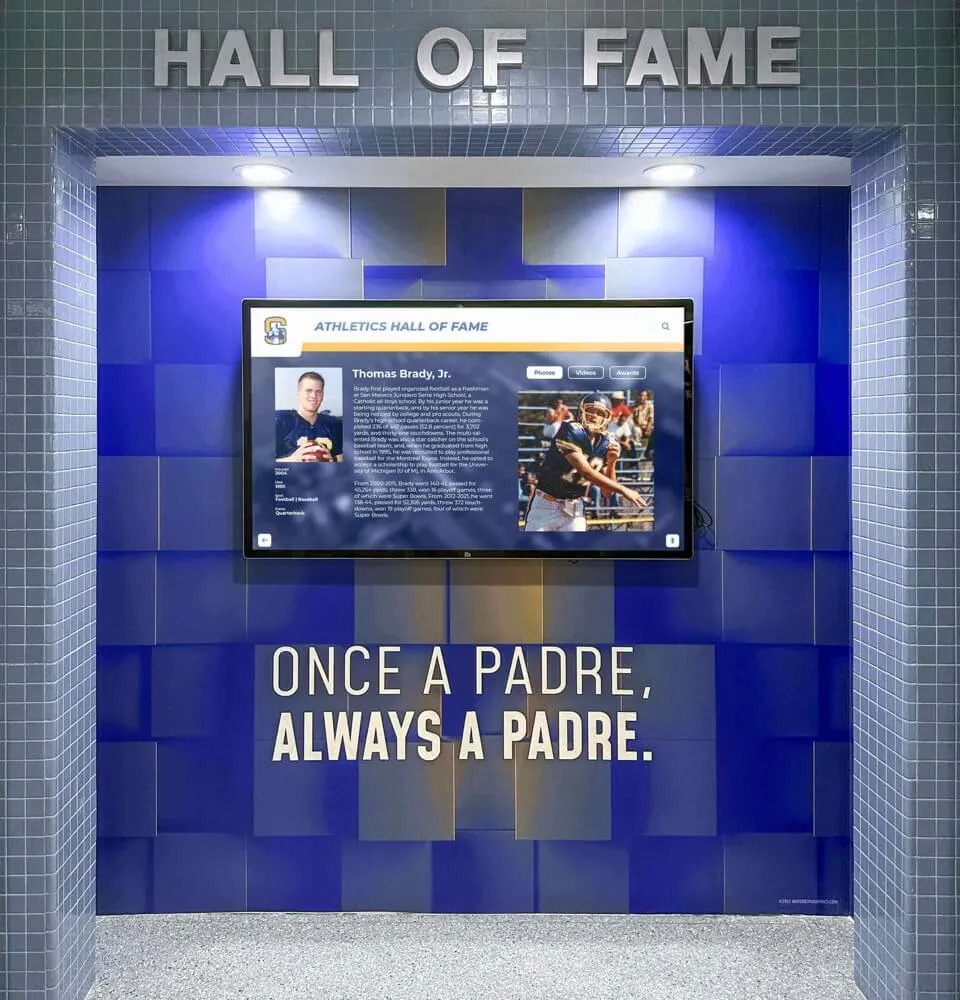
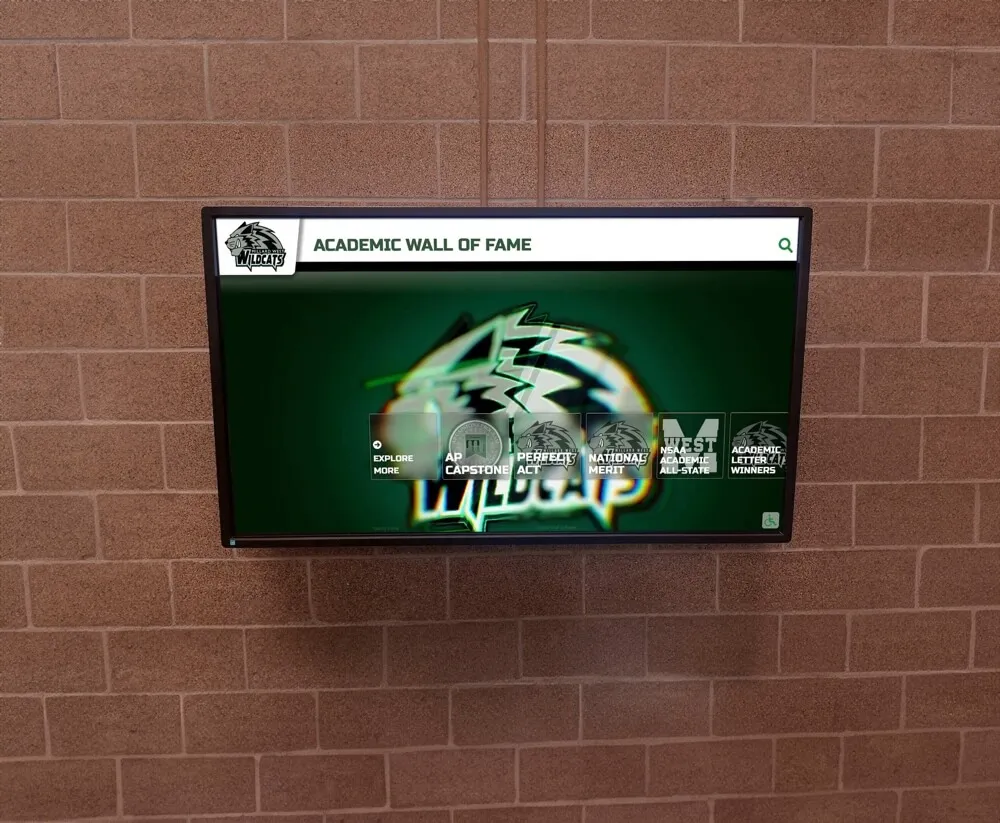
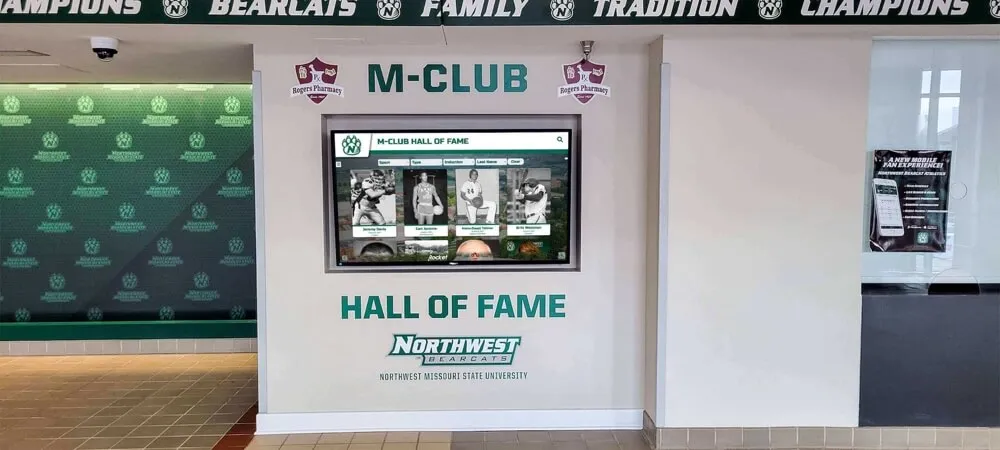
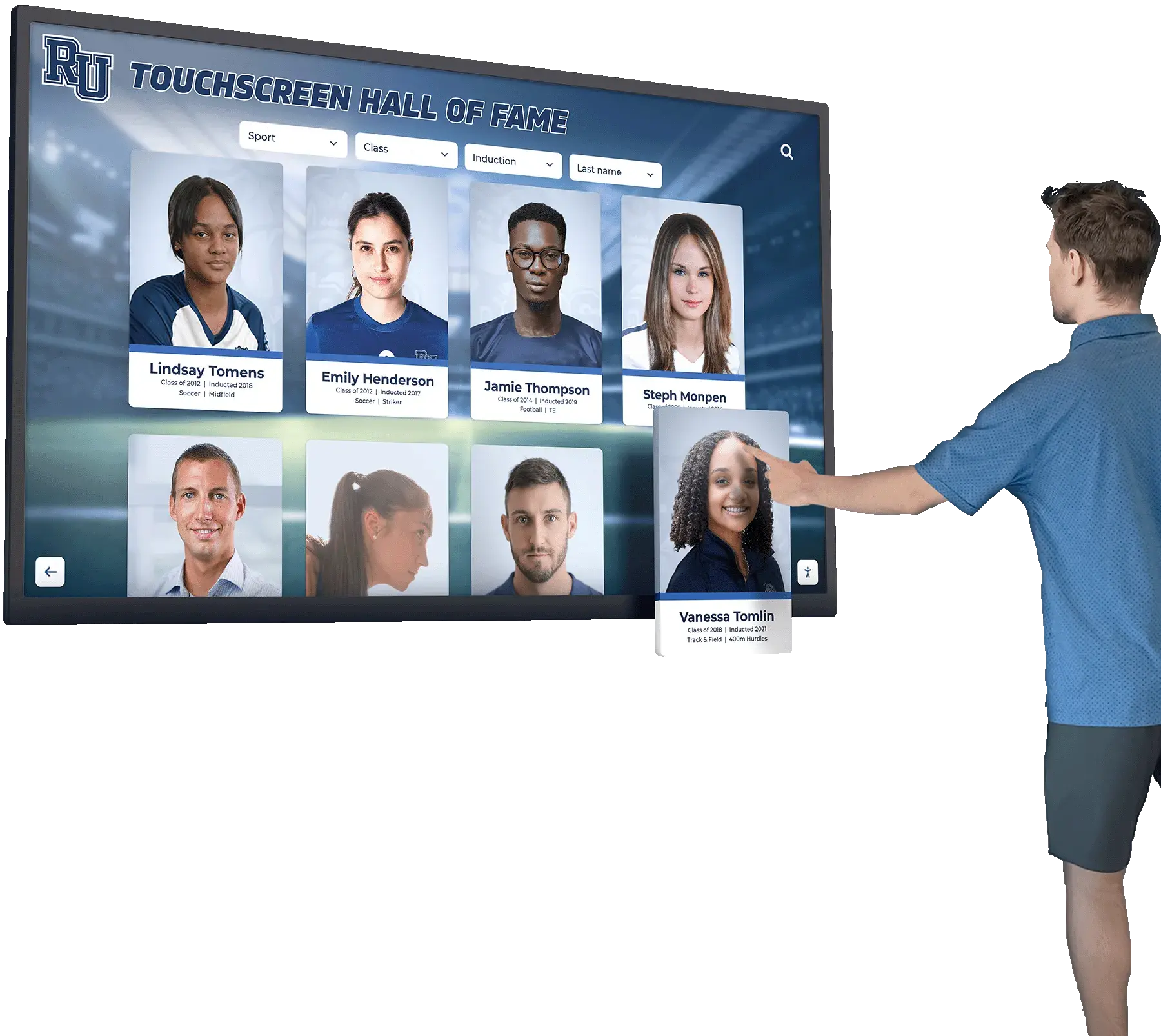
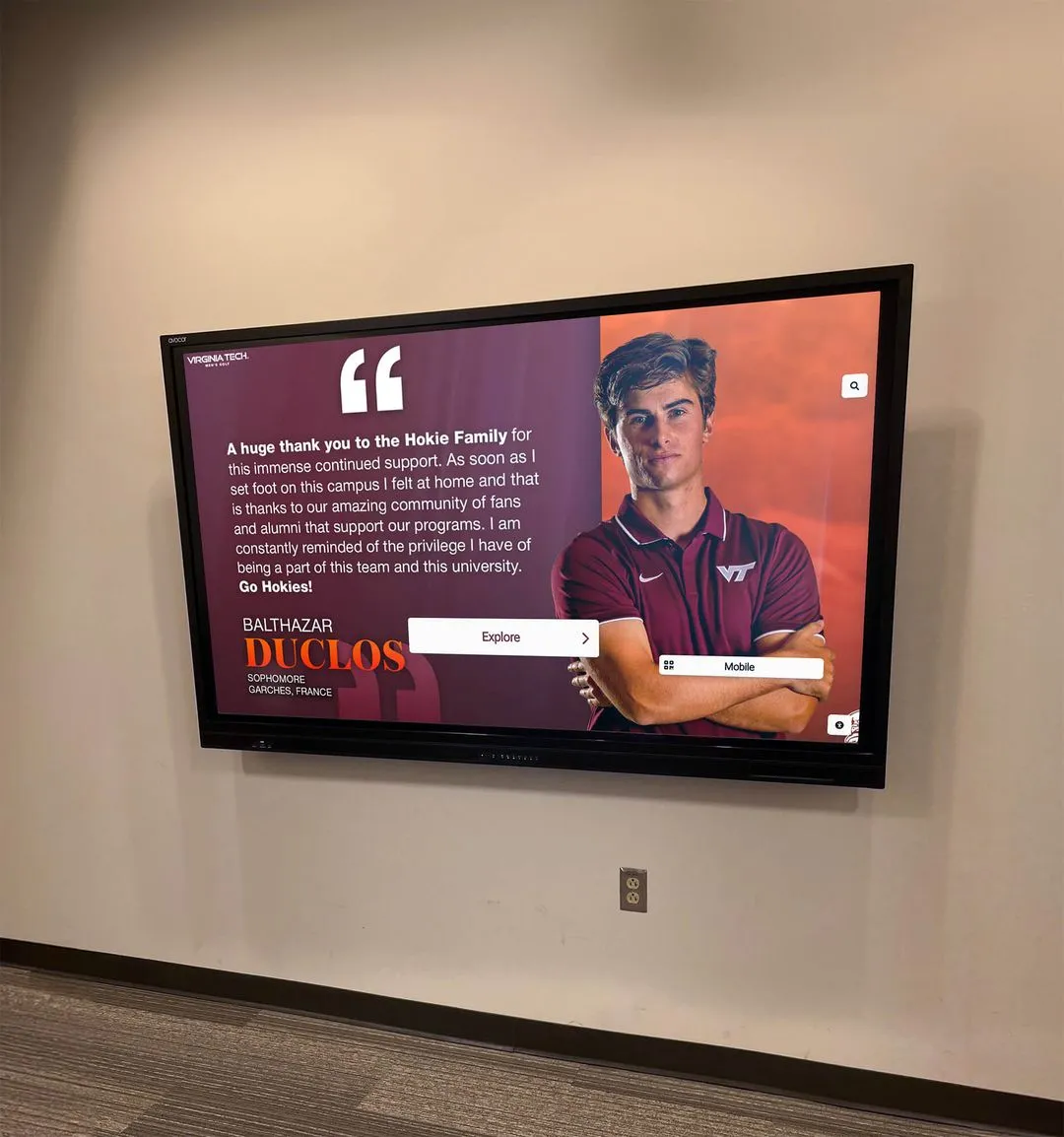
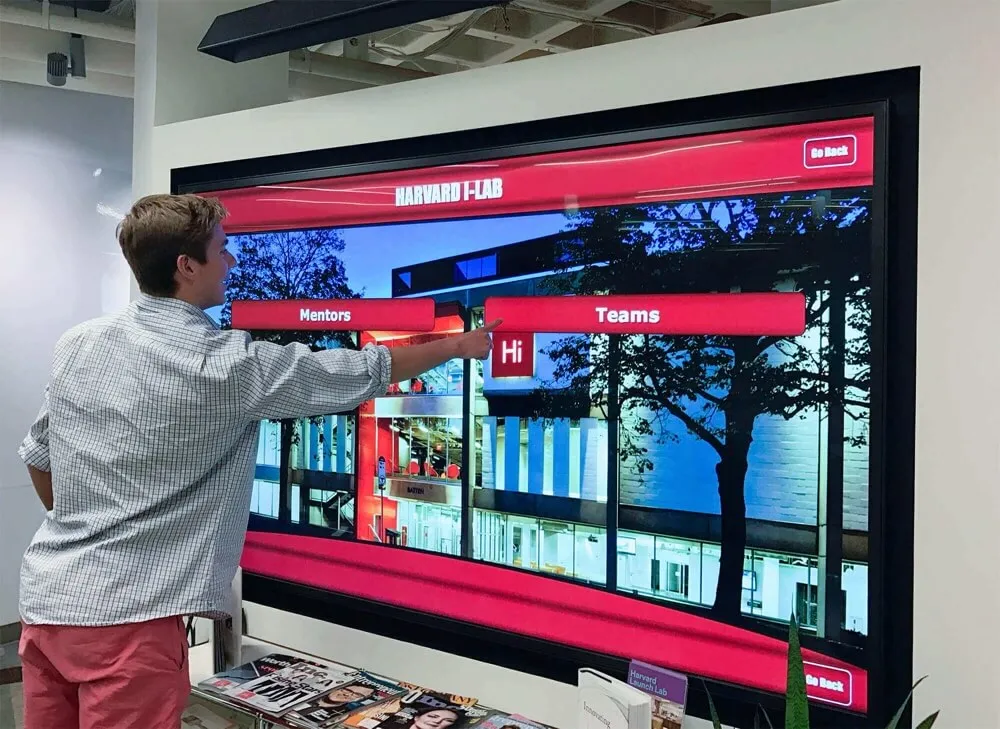
Comprehensive Multimedia Profiles: Combine professional photography, video interviews, career timeline visualizations, achievement documentation, and personal reflections—creating rich narratives that inspire and connect far more effectively than name-and-date listings on static plaques. Alumni honored through detailed multimedia profiles report significantly higher satisfaction with recognition compared to traditional plaque-only approaches.
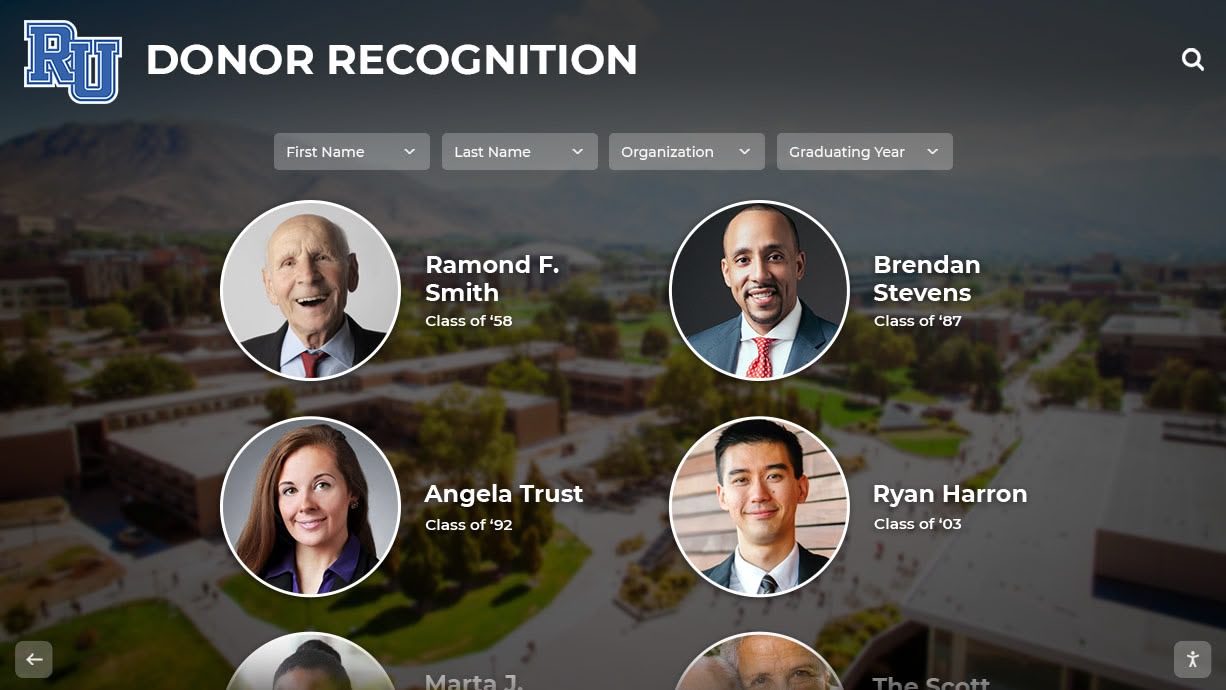
Search and Discovery Features: Enable visitors to quickly locate themselves, classmates, mentors, or competitors within recognition databases through intuitive search functionality. Instant personal gratification creates immediate engagement impossible with traditional displays requiring extensive scanning through alphabetical or chronological listings.
Social Sharing Capabilities: Multiply recognition visibility exponentially when alumni post profiles to social networks, extending acknowledgment to friend networks totaling millions of impressions beyond immediate display viewers. Many institutions report recognition content generating more social media engagement than any other institutional communication category.
Analytics and Insights: Track engagement patterns, popular content, search behaviors, and usage trends informing continuous improvement while demonstrating program value through measurable metrics. Analytics reveal which profiles attract greatest interest, peak usage times, common search terms, and content types resonating most strongly—enabling data-informed optimization impossible with traditional physical displays.
Solutions like Rocket Alumni Solutions provide purpose-built platforms designed specifically for educational recognition rather than generic digital signage requiring extensive customization. These specialized systems deliver intuitive content management, professional templates, ongoing support, and continuous platform evolution responding to changing institutional needs.
Integrating Recognition Across Channels
Maximize recognition impact through multi-platform distribution that extends visibility far beyond single display locations:
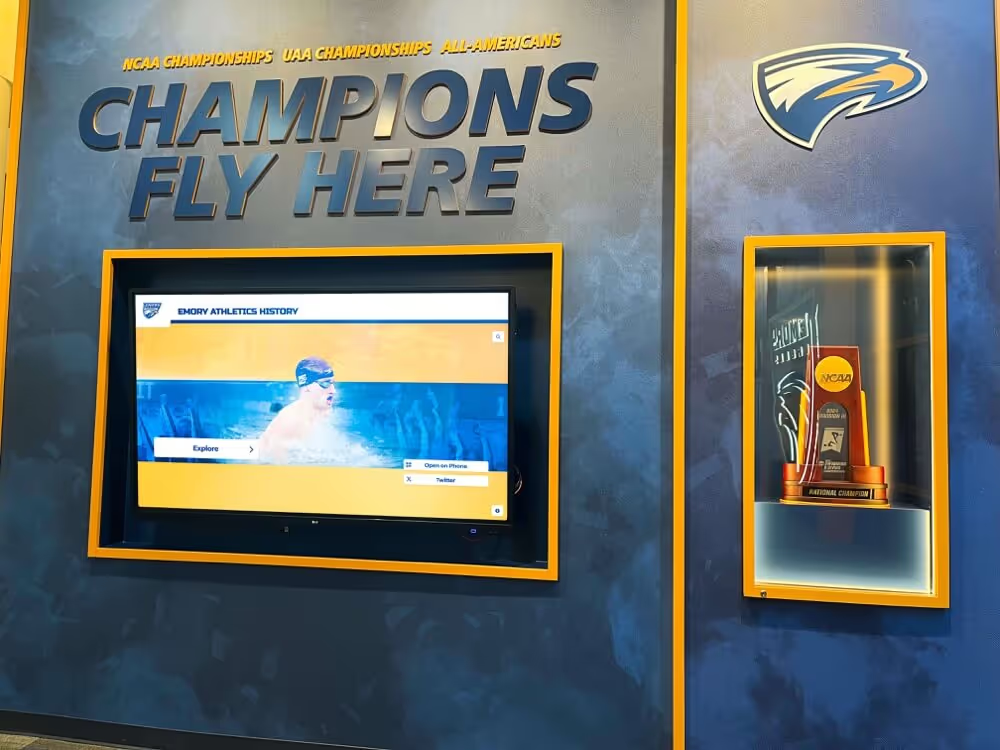
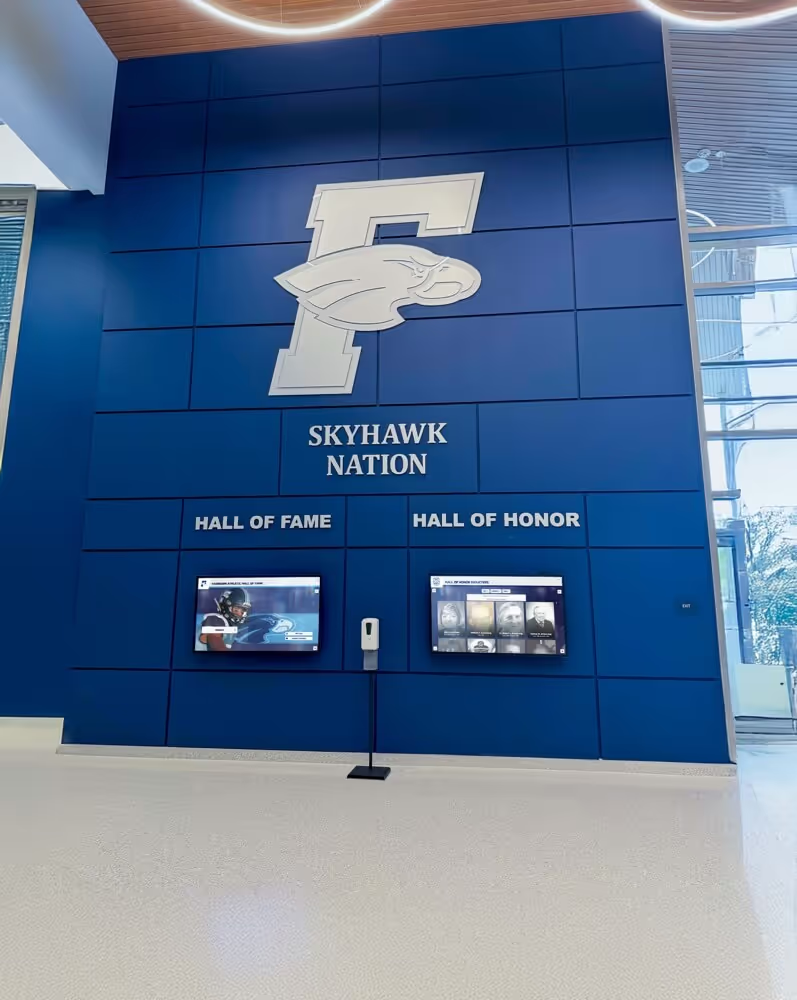
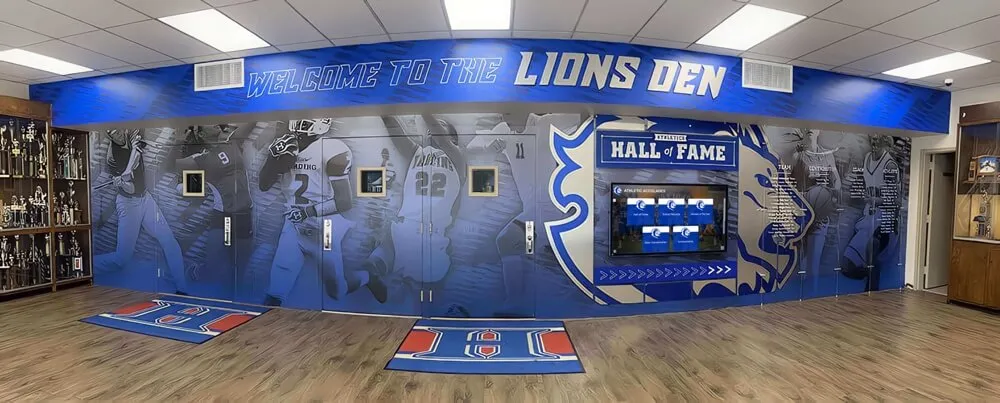
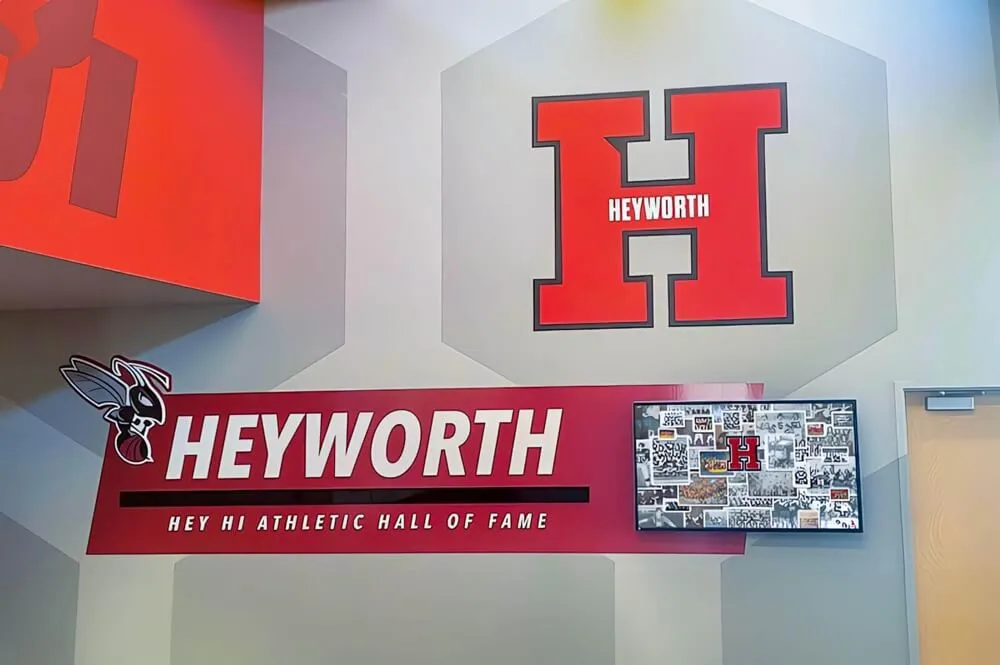
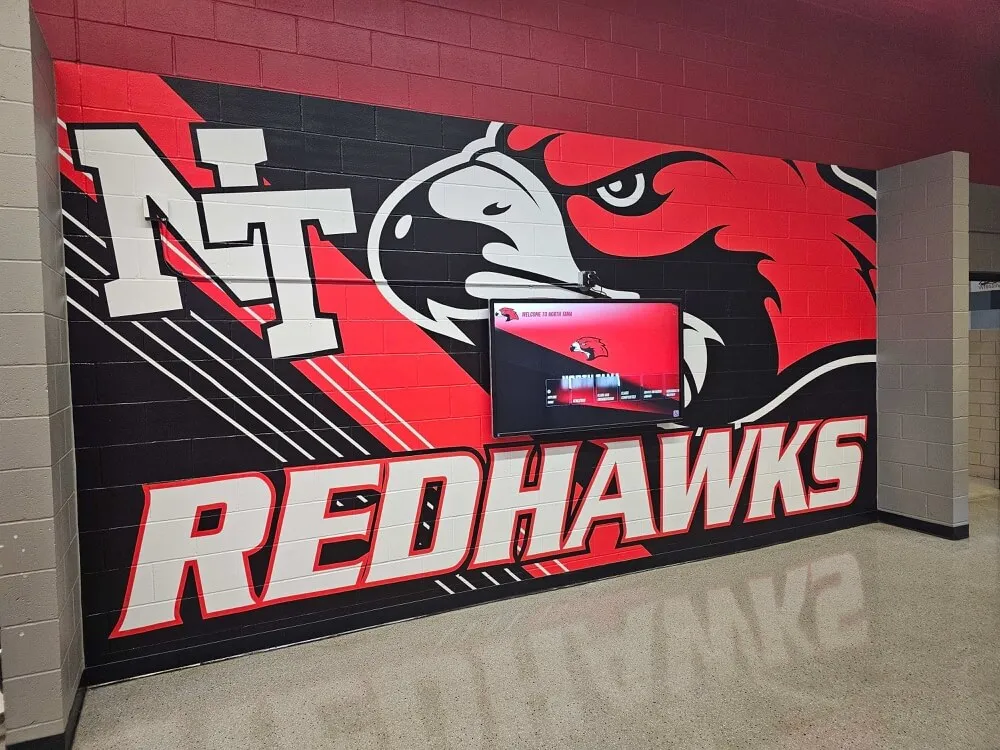
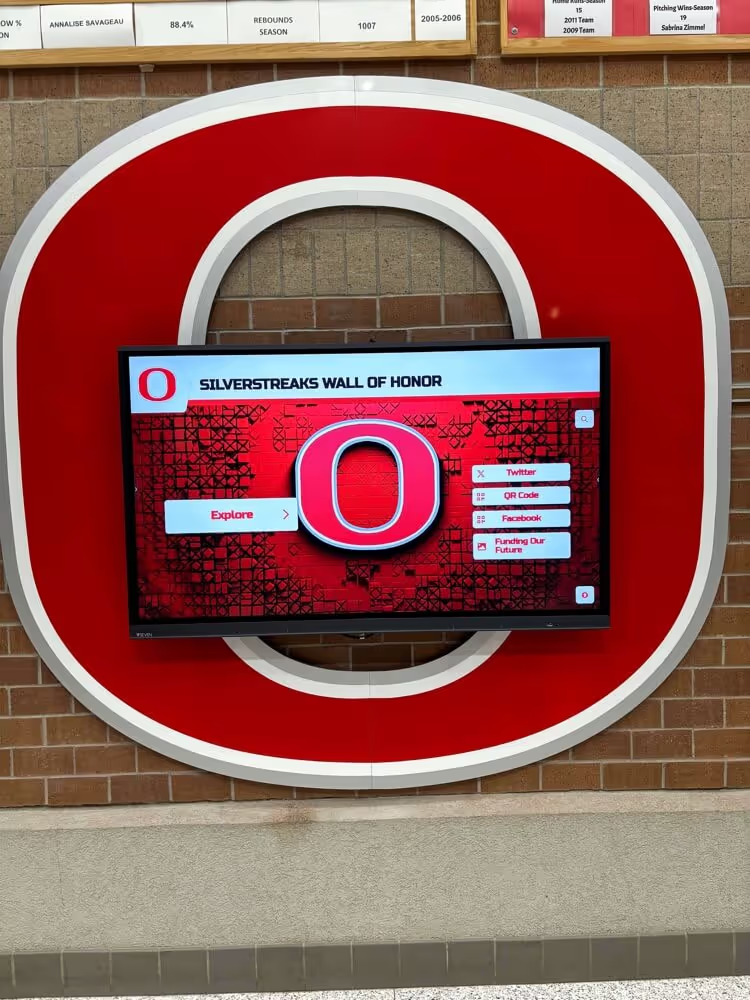
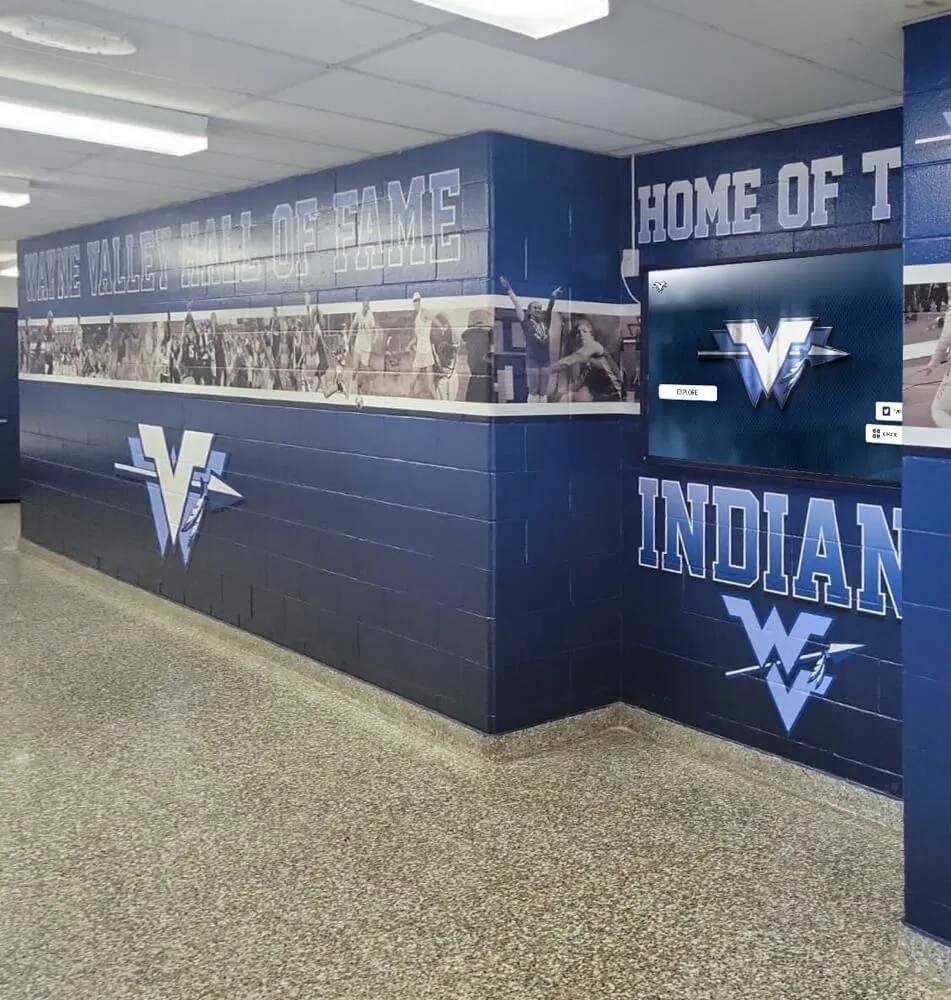
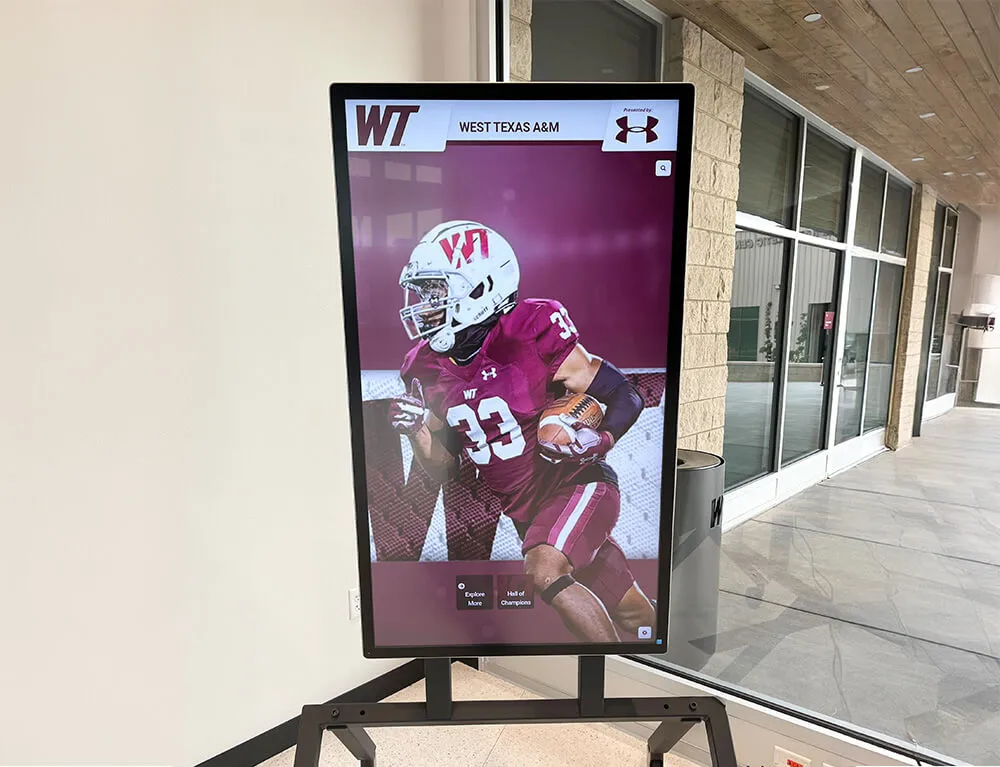
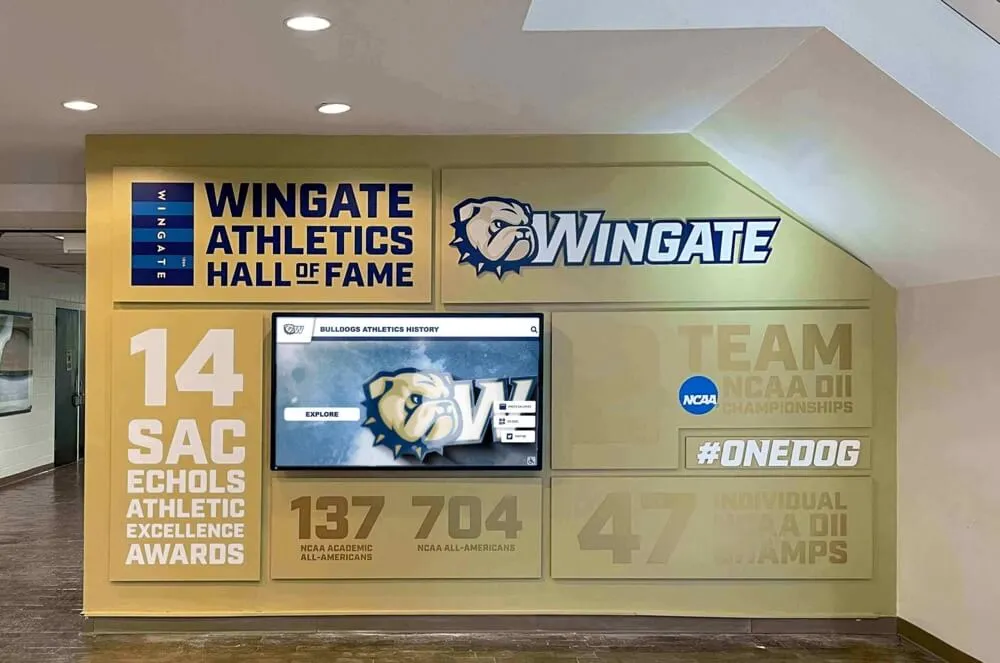
Physical Displays: Position interactive screens strategically in high-traffic locations—alumni centers, athletic facilities, admissions lobbies, or campus entrances—creating visible institutional commitment to honoring excellence while providing exploration opportunities for campus visitors including prospective students, families, and community members.
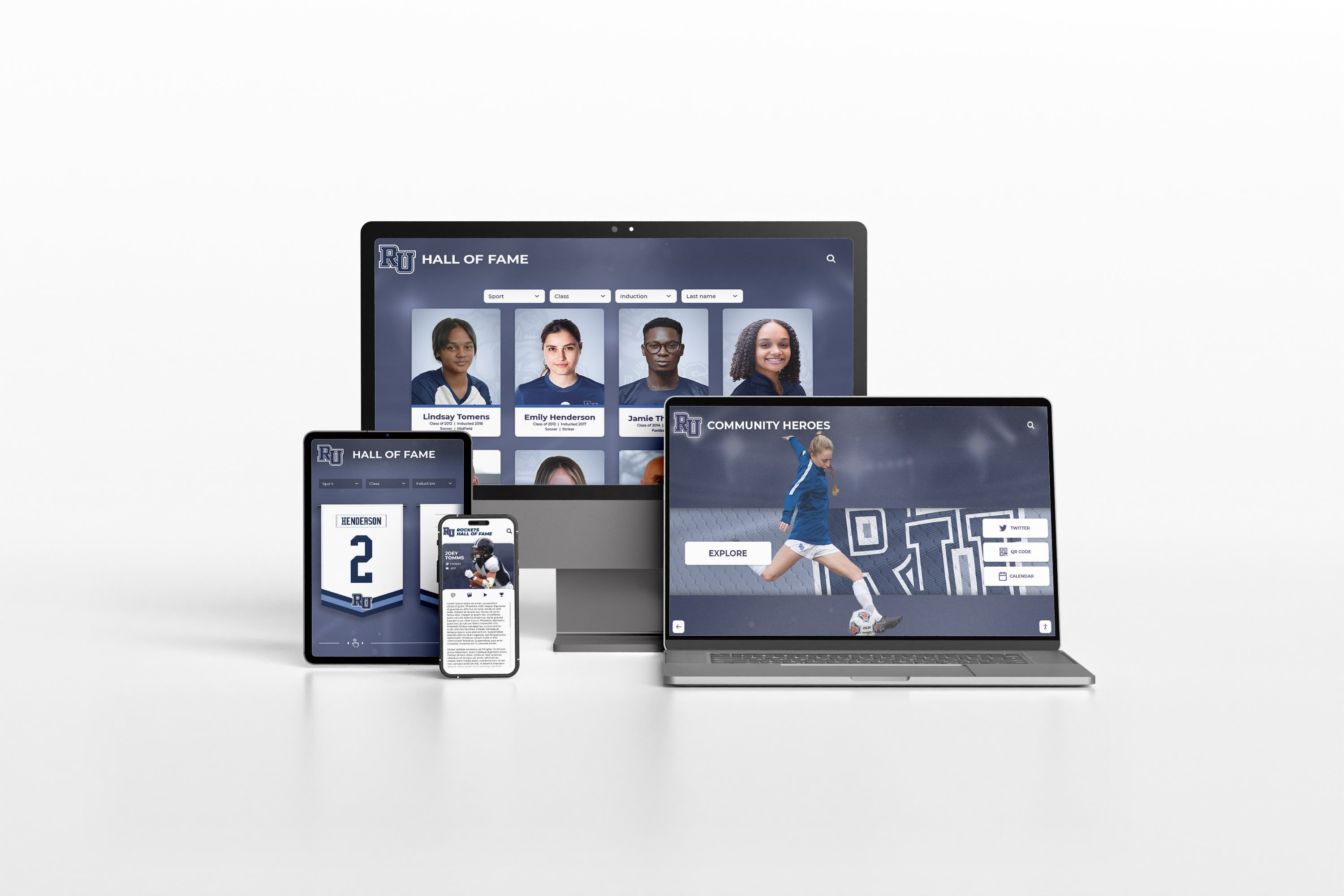
Web-Based Components: Extend recognition to alumni worldwide unable to visit campus regularly through web-accessible versions of recognition displays. Online accessibility multiplies effective audience size by factors of 10-100x compared to physical-only displays, ensuring all graduates can explore honored peers regardless of geographic location.
Social Media Features: Highlight inducted alumni monthly, celebrate recognition anniversaries, or showcase thematic collections maintaining regular recognition presence across digital channels. Strategic promotion drives traffic to comprehensive recognition platforms while creating ongoing engagement opportunities throughout the year rather than limiting visibility to annual induction ceremonies.
Event Integration: Feature recognition prominently during reunions, homecoming, or alumni gatherings—generating awareness while creating opportune moments when alumni feel strong institutional connections and prove most receptive to recognition engagement.
Understanding donor recognition best practices provides frameworks for developing recognition strategies that honor achievements while driving measurable engagement improvements across multiple institutional priorities.
Designing Events That Build Lasting Connections
In-person and virtual gatherings create irreplaceable opportunities for relationship building, community strengthening, and memorable experiences that sustain connections between events.
In-Person Event Excellence
Face-to-face gatherings remain powerful engagement drivers despite digital communication proliferation:
Class Reunions: Milestone reunions (5, 10, 25, 50 years) bring classmates together for celebration and reconnection. Strong reunion programs require early planning beginning 12-18 months before events, class agent recruitment identifying volunteer coordinators who communicate regularly and drive participation, multi-format offerings combining formal programs with casual social time, and family-inclusive options recognizing that multi-generational attendance strengthens institutional connections while introducing prospective students to campus.
Affinity Group Gatherings: Events organized around shared interests engage alumni who might not attend general programming. Academic department reunions connect graduates from specific programs creating natural conversation foundations and professional networking opportunities. Athletic team gatherings celebrate shared competitive experiences while maintaining team bonds. Cultural organization reunions honor identity-based communities that provided support and belonging during student years.
Regional Chapter Events: Programming in cities with significant alumni populations brings institutional presence to graduates unable to visit campus regularly. Social gatherings at restaurants, sports venues, or cultural institutions provide low-barrier entry points for reconnection. Professional networking receptions facilitate career connections while showcasing successful alumni in various fields. Service projects create meaningful volunteer opportunities demonstrating community impact.
Signature Campus Events: Invite alumni back for institutional traditions leveraging nostalgia and loyalty. Homecoming weekends combining athletics, social events, campus tours, and digital recognition ceremonies create comprehensive return experiences. Commencement attendance allows alumni to celebrate current students while reflecting on their own graduation memories.
Virtual Programming That Transcends Geography
Digital events enable participation regardless of location, dramatically expanding potential audience reach while accommodating alumni unable to travel:
Professional Development Webinars: Career-focused programming delivers tangible value justifying time investment. Industry panel discussions featuring successful alumni discussing trends, challenges, and opportunities provide insider perspectives valuable for career advancement. Skill-building workshops on leadership, communication, project management, or emerging technologies offer practical professional development. Executive coaching sessions or career transition guidance support alumni navigating professional changes.
Intellectual Engagement Programming: Content-rich offerings appeal to alumni seeking ongoing learning. Faculty research presentations showcase institutional expertise while satisfying intellectual curiosity. Author talks featuring alumni or faculty with recent publications create literary connections. Current events discussions facilitate informed dialogue on issues affecting society. Scientific or technological innovation showcases demonstrate institutional contributions to human knowledge.
Social Connection Opportunities: Casual virtual gatherings maintain relationships without formal programming requirements. Virtual happy hours or coffee meetups provide informal conversation opportunities. Book clubs reading and discussing selected works create intellectual communities. Fitness classes or wellness programming support health while creating shared experiences. Cooking demonstrations or wine tastings offer entertaining social options.
Hybrid Event Models: Combined in-person and virtual participation maximizes inclusive access. Livestream major events enabling remote attendance while maintaining valuable face-to-face interactions for nearby alumni. Integrate Q&A ensuring virtual participants can engage actively rather than simply watching passively. Provide recording availability for on-demand viewing accommodating time zone differences and scheduling conflicts.
Measuring Engagement Success and Optimizing Performance
Meaningful metrics reveal program effectiveness and trend directions, enabling continuous improvement while demonstrating value justifying continued institutional investment.
Establishing Key Performance Indicators
Track percentages of alumni engaging with various initiatives—event attendance rates, email open and click-through rates, social media engagement rates, volunteer participation percentages, website traffic patterns, and recognition display usage. These participation metrics provide baseline measurements revealing program momentum and enabling year-over-year comparisons.
Relationship Depth Indicators: Measure engagement quality beyond simple participation counts. Repeat engagement rates show percentages of alumni participating multiple times, indicating sustained relationships versus one-time interactions. Multi-channel engagement tracks alumni active across several platforms—attending events AND engaging digitally AND volunteering—demonstrating strong institutional connections. Volunteer retention rates reveal whether volunteer experiences prove sufficiently meaningful to encourage continued participation.
Segmentation Analysis: Compare metrics across different alumni cohorts revealing which strategies work for which populations. Generational performance comparisons identify whether programming effectively reaches different age groups. Geographic engagement analysis reveals whether regional strategies serve distant alumni as effectively as local populations. Academic program comparisons assess whether engagement varies significantly by field of study, suggesting potential affinity programming opportunities.
Communication Effectiveness: Monitor channel performance informing optimization. Email metrics including open rates, click-through rates, conversion rates, and unsubscribe rates reveal message resonance and frequency appropriateness. Social media analytics tracking reach, engagement rates, follower growth, and audience demographics inform content strategies. Website analytics monitoring traffic sources, popular content, user behavior, and conversion rates reveal how alumni discover and consume institutional content.
Using Data to Inform Strategy
Analytics insights should drive continuous improvement and strategic refinement rather than simply producing reports that collect dust in filing cabinets.
Identify High-Performing Content: Analysis revealing which stories, topics, or formats generate strongest engagement informs future content development priorities. Consistently high-performing content types warrant increased investment while underperforming formats may require refinement or discontinuation.
Optimize Communication Timing: Testing and analysis revealing optimal sending times, days of week, or seasonal patterns maximize communication effectiveness. Alumni engagement patterns often vary by industry, geography, and demographic factors—data reveals these nuances enabling targeted optimization.
Refine Segmentation Strategies: Performance comparisons across segments identify where generic approaches underperform and where specialized strategies deliver superior results. Continuous segmentation refinement creates increasingly precise targeting over time, improving relevance while reducing communication waste.
Allocate Resources Strategically: Return on investment analysis comparing costs against outcomes for different initiatives guides budget allocation toward highest-impact programs. Data demonstrates which expensive initiatives justify costs and which economical efforts deliver impressive returns relative to investment.
Overcoming Common Alumni Engagement Challenges
Proactive strategies address predictable obstacles that prevent consistent, meaningful alumni connection across diverse graduate populations and constrained institutional resources.
Addressing Limited Resources
Resource constraints require strategic approaches maximizing impact within realistic capacity:
Technology Leverage: Implement platforms automating routine communications, enabling alumni self-service functions, and multiplying staff capacity through efficient tools. Digital recognition systems like Rocket Alumni Solutions provide turnkey engagement capabilities requiring minimal ongoing resource investment while delivering sophisticated results impossible through manual processes alone.
Volunteer Utilization: Build structured volunteer programs distributing workload while creating meaningful participation opportunities. Class agents coordinating graduation year communications, regional chapter leaders organizing local events, and committee members supporting specific initiatives multiply capacity when properly recruited, trained, and supported. Successful volunteer programs require clarity about expectations, adequate training, ongoing support, and appropriate recognition for contributions.
Prioritized Programming: Focus limited resources on highest-impact initiatives serving largest populations or generating greatest strategic value. Concentrated excellence in fewer programs consistently outperforms mediocrity across excessive offerings. Regular evaluation should ruthlessly assess which programs justify continued investment versus those consuming resources without commensurate returns.
Strategic Partnerships: Collaborate with other departments, external vendors, or peer institutions sharing costs and expertise. Co-hosted events with academic departments, athletic programs, or advancement offices distribute expenses while expanding programming breadth. Vendor partnerships providing technology platforms, event services, or communication tools often offer educational institution pricing and specialized support reducing total cost of ownership.
Engaging Diverse Alumni Populations
Multi-generational, geographically dispersed populations require varied approaches acknowledging different preferences and circumstances:
Multiple Engagement Pathways: Offer diverse participation options accommodating different preferences—virtual and in-person events, formal and casual gatherings, individual and group activities, time-intensive and low-commitment opportunities. Options enable alumni to engage in personally appealing ways rather than forcing single approaches that inevitably exclude significant populations.
Inclusive Recognition: Honor achievements across diverse categories demonstrating multiple paths to distinction. Broad recognition criteria ensure various alumni segments see themselves reflected in celebrated accomplishments. Comprehensive digital displays acknowledge professional success alongside community service, creative contributions, athletic achievement, and academic excellence.
Geographic Equity: Balance campus-centered programming with regional events, virtual opportunities, and digital tools serving distant alumni. Geographic distribution demonstrates commitment to maintaining relationships regardless of proximity while acknowledging that most alumni live far from campus and cannot regularly attend on-site events.
Generational Customization: Segment strategies by graduation era, recognizing substantially different communication preferences, technology comfort levels, life stages, and engagement expectations across generations. What works for recent graduates often differs dramatically from effective approaches for alumni celebrating 50th reunions.
Emerging Trends Shaping Alumni Engagement
Understanding evolving practices helps institutions make forward-looking decisions positioning programs for long-term effectiveness as technology capabilities expand and graduate expectations continue shifting.
Personalization at Scale
Advanced analytics and automation enable customized experiences matching individual interests and behaviors without requiring manual segmentation for every communication:
Content recommendation engines suggest relevant articles, events, volunteer opportunities, or alumni connections based on individual engagement history and stated preferences—creating Netflix-style personalized experiences that feel individually curated despite automated delivery. Predictive analytics identify alumni most likely to respond positively to specific initiatives, enabling efficient resource allocation toward highest-probability opportunities.
Mobile-First Experiences
Smartphone optimization proves essential as mobile devices become primary digital access points for most alumni:
Mobile applications consolidate multiple engagement opportunities in convenient smartphone access—event calendars and registration, giving portals with one-touch donations, alumni directories with click-to-connect features, campus news feeds, interactive recognition displays, job boards, and messaging capabilities. Native apps deliver superior mobile experiences compared to mobile-optimized websites while enabling push notifications maintaining top-of-mind awareness.
Video and Visual Storytelling
Multimedia content proves increasingly essential for capturing attention and conveying emotion in crowded digital environments:
Short-form video content optimized for social media platforms captures attention effectively—30-60 second alumni spotlights, behind-the-scenes campus glimpses, student testimonials thanking alumni support, quick event highlights, or faculty research explanations. Brevity accommodates shrinking attention spans while platform optimization ensures content displays properly where alumni consume media.
Longer-form documentary storytelling creates deeper emotional connections—10-15 minute profiles exploring alumni journeys in depth, institutional history documentaries, or comprehensive research explanations. Quality longform content serves alumni seeking substantive engagement while providing evergreen resources driving ongoing value long after initial publication.
Conclusion: Building Alumni Engagement That Lasts
Alumni engagement represents strategic institutional investment delivering measurable returns across fundraising, recruitment, reputation, career services, and community vitality dimensions. The most successful programs recognize that meaningful engagement creates genuine value for alumni first—professional development, recognition, networking, intellectual enrichment, community connection—generating reciprocal support as natural byproducts rather than primary objectives.
Effective engagement requires moving beyond transactional mindsets focused exclusively on what institutions need from alumni, instead prioritizing what institutions can provide to alumni. This value-first approach creates reciprocity where engaged graduates naturally want to support institutions investing meaningfully in ongoing relationships beyond graduation.
Success demands multi-faceted approaches combining recognition, communication, events, volunteer opportunities, and career support—delivered through traditional and digital channels serving diverse preferences across multi-generational populations. No single tactic suffices. Comprehensive strategies touching alumni through multiple relevant channels create compound relationship strengthening over time that survives individual program changes or leadership transitions.
Technology multiplies engagement possibilities—enabling personalization at scale, interactive recognition, sophisticated analytics, and geographic reach impossible through traditional approaches alone. Yet technology complements rather than replaces human relationship building. Integrated strategies leveraging both technological efficiency and personal connection deliver optimal results that satisfy both data-driven administrators and relationship-focused alumni relations professionals.
The institutions achieving greatest engagement success share common characteristics: clear strategic frameworks guiding decisions, alumni-centered value propositions, multi-channel communication strategies, inclusive recognition programs, compelling events and programming, robust volunteer opportunities, sophisticated data analytics, continuous improvement cultures, and visible executive support demonstrating organizational commitment.
Alumni represent extraordinarily valuable institutional stakeholders—providing financial support, professional expertise, student mentorship, recruitment advocacy, and reputational enhancement over relationships spanning 50+ years. The question isn’t whether alumni engagement matters but whether institutions will invest systematically in cultivating relationships delivering measurable benefits for decades.
Ready to transform alumni engagement through comprehensive digital recognition that honors achievements while facilitating meaningful connections? Explore how Rocket Alumni Solutions provides purpose-built platforms enabling schools and universities to strengthen alumni relationships through engaging, accessible recognition systems—without requiring technical expertise or massive budgets.