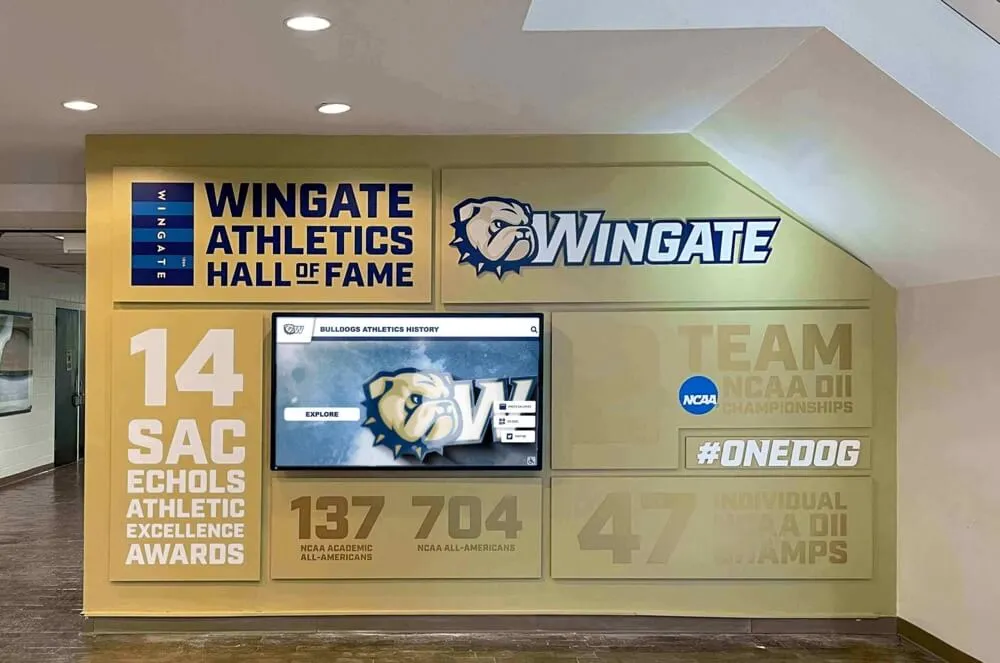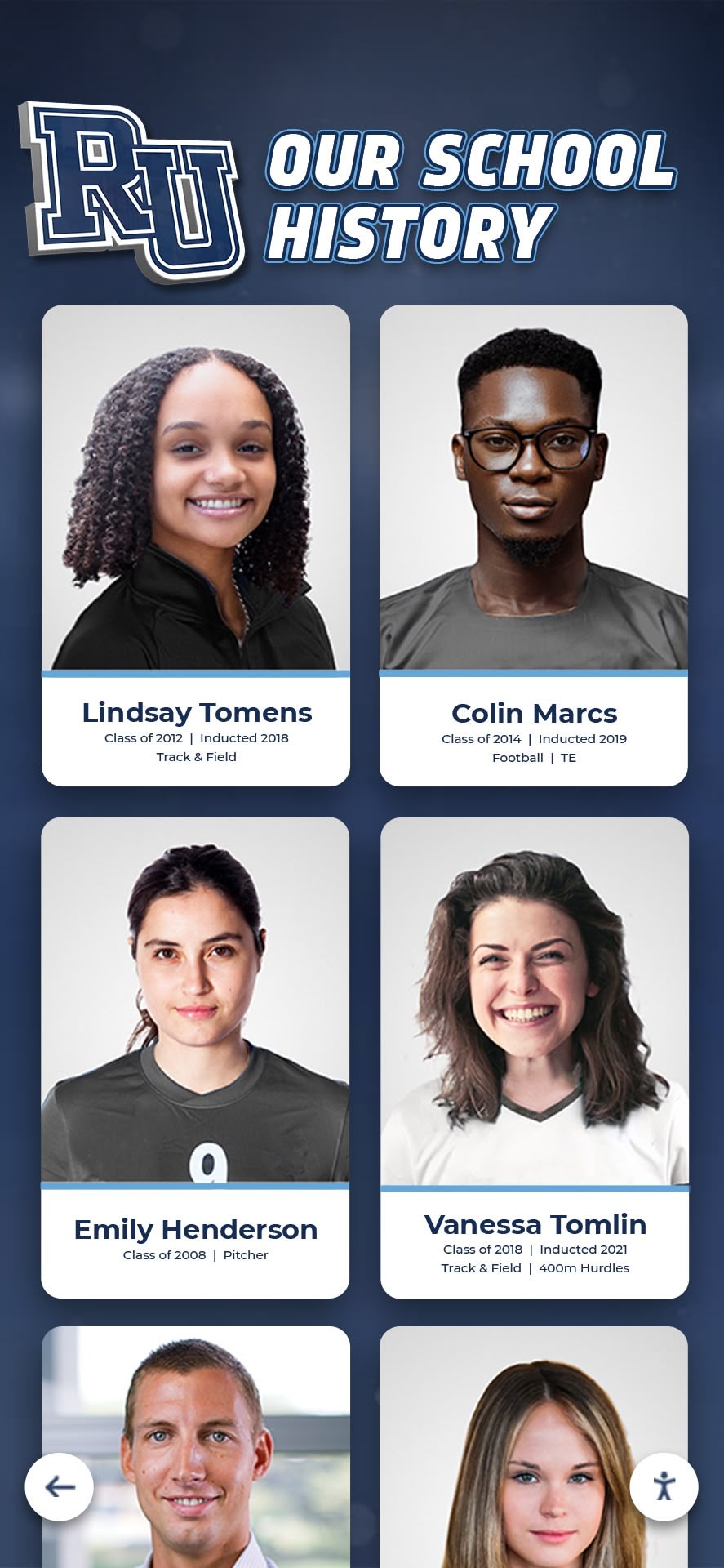




Every school possesses irreplaceable history—decades of championship seasons, academic milestones, distinguished alumni, and defining moments that shaped institutional identity. Yet in most schools, this invaluable heritage sits trapped in deteriorating yearbooks, fading photographs, crumbling newspaper clippings, and overflowing storage closets where nobody can access it. Athletic records handwritten on vinyl boards peel and crack. Historic plaques gather dust in forgotten corners. Paper archives yellow and disintegrate despite careful storage. Most critically, institutional memory disappears as materials deteriorate and the people who remember institutional stories retire or pass away.
Academic and history archiving for schools transforms this vulnerable heritage into organized, searchable, and continuously accessible digital systems that preserve institutional memory permanently while making history instantly discoverable to current students, alumni, families, and future generations. Modern archival systems combine powerful digitization capabilities, intuitive archive management, auto-ranking record boards, and engaging interactive displays that honor past achievement while inspiring present excellence.
Schools implementing comprehensive archiving discover transformative benefits including permanent preservation preventing material loss, searchable access to previously hidden history, enhanced alumni engagement through accessible memories, enriched educational experiences connecting students with heritage, measurable increases in school pride and institutional identity, and professional organization replacing scattered filing cabinets. The transition from vulnerable physical storage to dynamic digital archives represents more than technology adoption—it fundamentally transforms how institutions preserve, celebrate, and leverage their unique stories while ensuring no achievement ever disappears from institutional memory.
Why Academic & History Archiving Matters Now
Physical materials face existential threats from deterioration, disaster, loss, and accessibility barriers. According to preservation specialists, most printed photographs begin deteriorating after approximately 75 years, while newspapers last closer to 50 years before becoming brittle and unusable. Every day without proper archiving means more history lost forever. Digital academic and history archiving solves preservation challenges while creating engaging platforms that transform institutional heritage from archived artifacts into living resources that inspire communities. Solutions like Rocket Alumni Solutions provide comprehensive platforms combining professional archive capabilities with auto-ranking digital record boards and interactive recognition displays, ensuring athletic achievements, academic excellence, and institutional history receive the permanent celebration they deserve while driving communities to book live demos and experience the difference firsthand.
The Crisis of Disappearing School Heritage
Walk through storage areas in most educational institutions and you’ll discover the same troubling reality: irreplaceable history slowly disappearing through deterioration, misplacement, and simple inaccessibility. Yearbooks dating back decades show visible degradation with brittle pages, fading photographs, and broken bindings. Athletic achievement records handwritten on vinyl boards crack and peel, with names literally falling off the walls. Newspaper clippings celebrating championship seasons yellow and crumble. Photographs capturing defining institutional moments fade despite archival storage attempts.
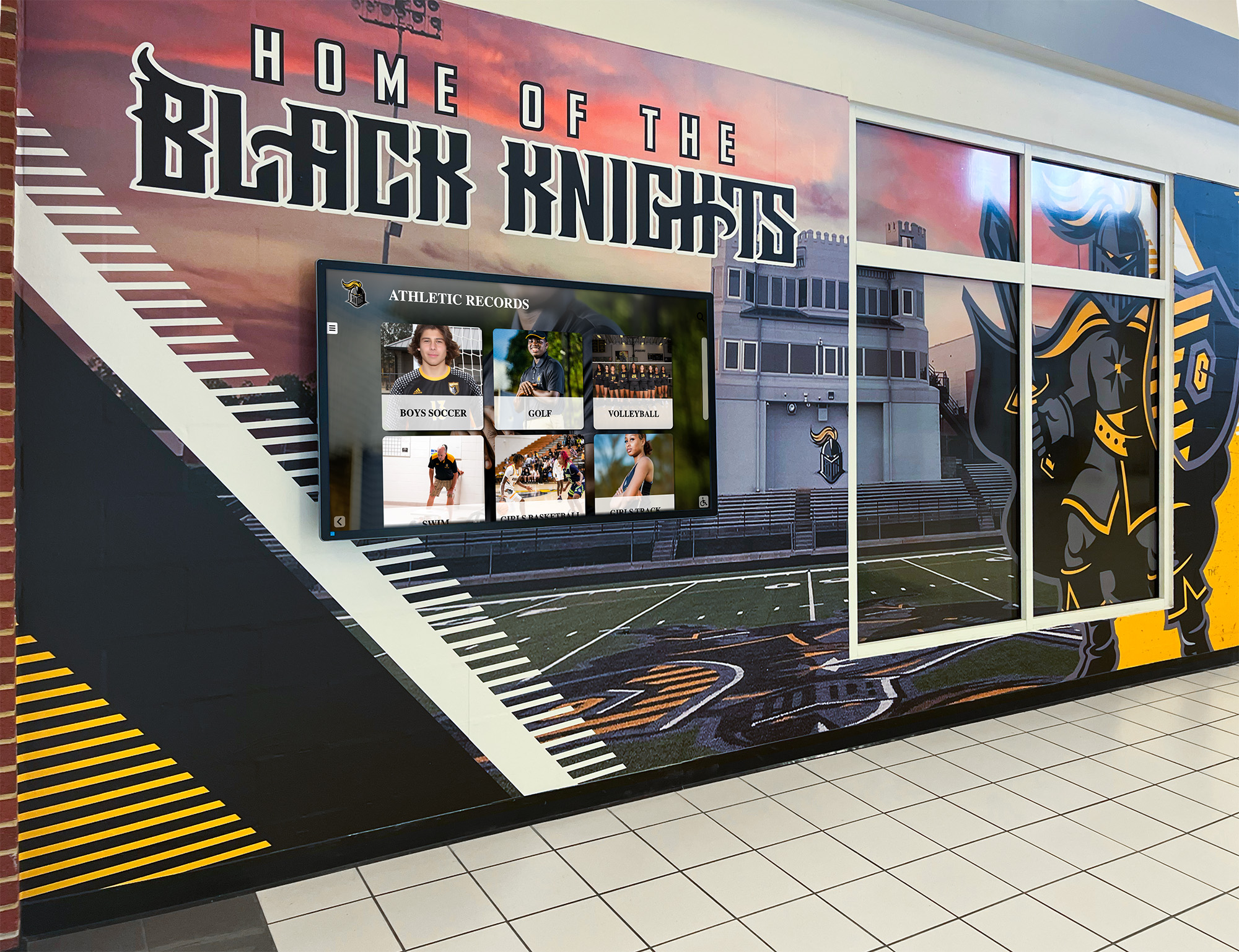
Beyond physical deterioration, accessibility represents an equally critical challenge. Materials stored in boxes, filing cabinets, or storage rooms provide zero value to communities who cannot access them. Alumni seeking memories from their school years find yearbooks unavailable, checked out indefinitely, or stored inaccessibly in climate-controlled archives. Current students remain completely disconnected from institutional heritage they’ve never seen. Researchers investigating local history discover schools possess relevant materials but lack organized systems enabling discovery and access.
Athletic Achievement Records Face Immediate Vulnerability
Athletic record boards present particularly urgent archiving challenges. Traditional vinyl boards displaying championship rosters, season records, and individual achievements face constant deterioration as names literally peel off walls, erasing history permanently. When records improve, coaches often remove previous record holders to make room for new achievements—an understandable space management decision that nonetheless erases deserving recognition from institutional visibility.
The founder of Rocket Alumni Solutions experienced this problem personally when his high school removed his name from the pull-up record board to make space for a new record holder. That moment of recognition lost forever inspired creation of systems ensuring no achievement ever disappears—digital record boards with unlimited capacity preserve every record holder throughout history, automatically reranking as new achievements occur while maintaining complete historical context.
Traditional record board limitations create impossible choices: recognize current achievements or preserve historical context? Limited physical space forces removal of deserving names. Manual updates consume hours updating vinyl letters. Static displays become instantly outdated requiring constant maintenance. These practical barriers mean athletic achievement recognition often becomes inconsistent, incomplete, or simply abandoned as maintenance burden becomes overwhelming.
Academic Excellence Recognition Receives Inadequate Visibility
While athletic trophy cases overflow with decades of visible recognition, academic achievement often receives minimal permanent acknowledgment. Honor roll lists appear briefly on bulletin boards before removal. Scholarship winners receive certificates filed away and forgotten. Academic competition success gets brief assembly mentions then disappears from institutional memory. National Merit Scholars, AP Scholars, valedictorians, and distinguished graduates who brought academic honor to institutions receive recognition that rarely matches the permanent visibility given athletic accomplishments.
This recognition imbalance sends unintended but powerful messages about institutional values. Students observing prominent athletic celebration alongside minimal academic visibility naturally draw conclusions about which achievements truly matter. Schools emphasizing academic excellence in mission statements but providing minimal academic recognition visibility create perception gaps undermining stated priorities.
Comprehensive archiving addresses these challenges by providing unlimited recognition capacity across all achievement types. Academic recognition programs benefit enormously from digital systems that celebrate honor roll achievement, scholarship recipients, competition success, and scholarly excellence with the same prominent visibility traditionally reserved for athletic accomplishments, creating balanced recognition cultures that inspire achievement across all domains.
Understanding Modern Academic & History Archiving Solutions
Contemporary archival systems for schools encompass far more than simple document scanning. Comprehensive platforms integrate multiple capabilities serving diverse preservation and recognition needs.
Digital Archive Management Systems
Professional archive management provides foundational infrastructure for organizing, storing, and managing digitized historical materials at institutional scale. These systems handle diverse content types including scanned yearbooks and publications, historical photographs and negatives, administrative documents and records, athletic programs and event materials, student newspapers and literary magazines, correspondence archives, and multimedia content capturing institutional events and celebrations.
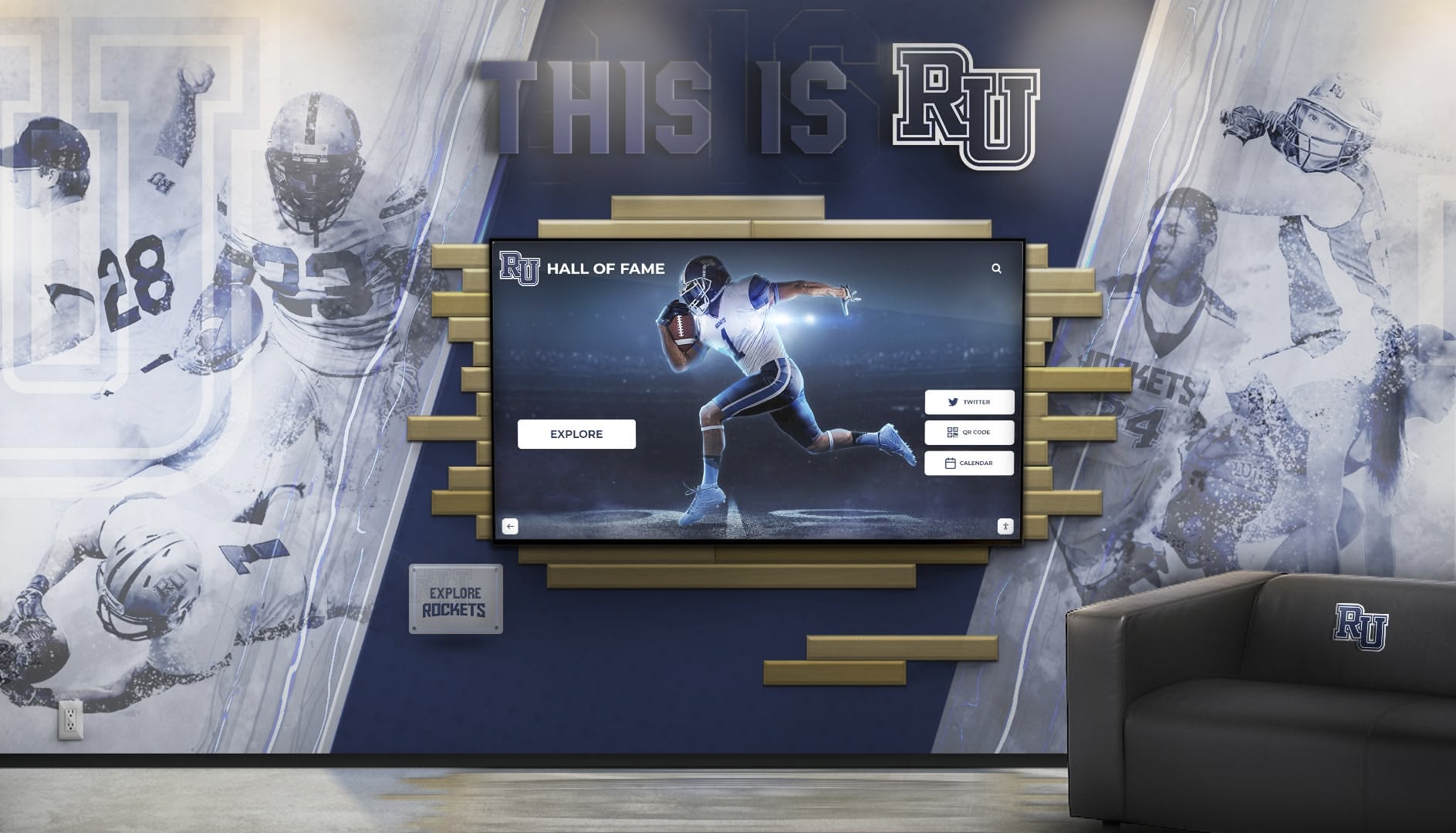
Enterprise archival platforms implement standardized metadata frameworks enabling detailed cataloging with searchable fields for dates, people, locations, events, subjects, and custom institutional categories. They ensure long-term digital preservation through format migration updating files to current standards, redundant storage preventing data loss, comprehensive audit trails tracking all changes, and adherence to archival best practices established by professional organizations.
These comprehensive systems serve institutions with extensive archival requirements including regulatory compliance for record retention, multiple user access requiring permission controls, and integration needs with existing institutional databases. While powerful, enterprise archive management typically requires significant investment and technical expertise to implement and maintain effectively.
Auto-Ranking Digital Record Boards
Modern digital record boards represent revolutionary advancement over traditional vinyl displays, combining unlimited recognition capacity with automatic ranking algorithms that update displays instantly when new achievements occur. These specialized systems track unlimited record holders across decades of institutional history, automatically rerank top performances when new records set, preserve complete historical context showing record progression, display records across unlimited categories and subdivisions, and update remotely without requiring on-site vinyl letter changes.
The auto-ranking capability eliminates manual maintenance burden while ensuring displays always reflect current records accurately. When a student breaks the school 100-meter dash record, the system automatically updates rankings, moves previous record holders down the list, and preserves their achievements in accessible historical archives rather than erasing names to make physical space.
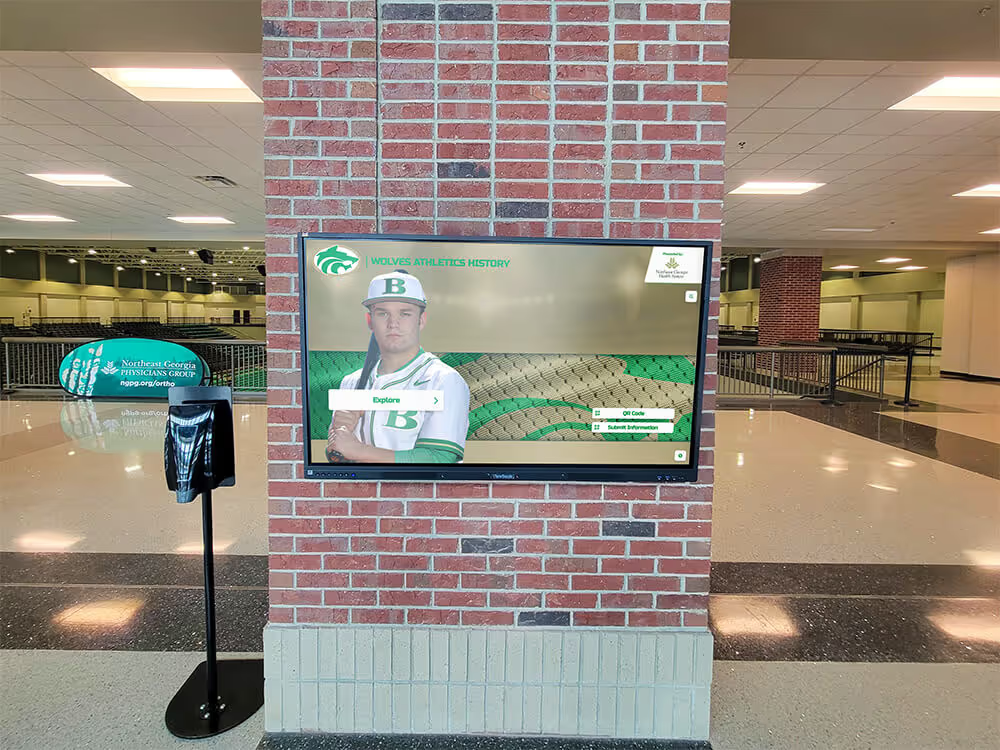
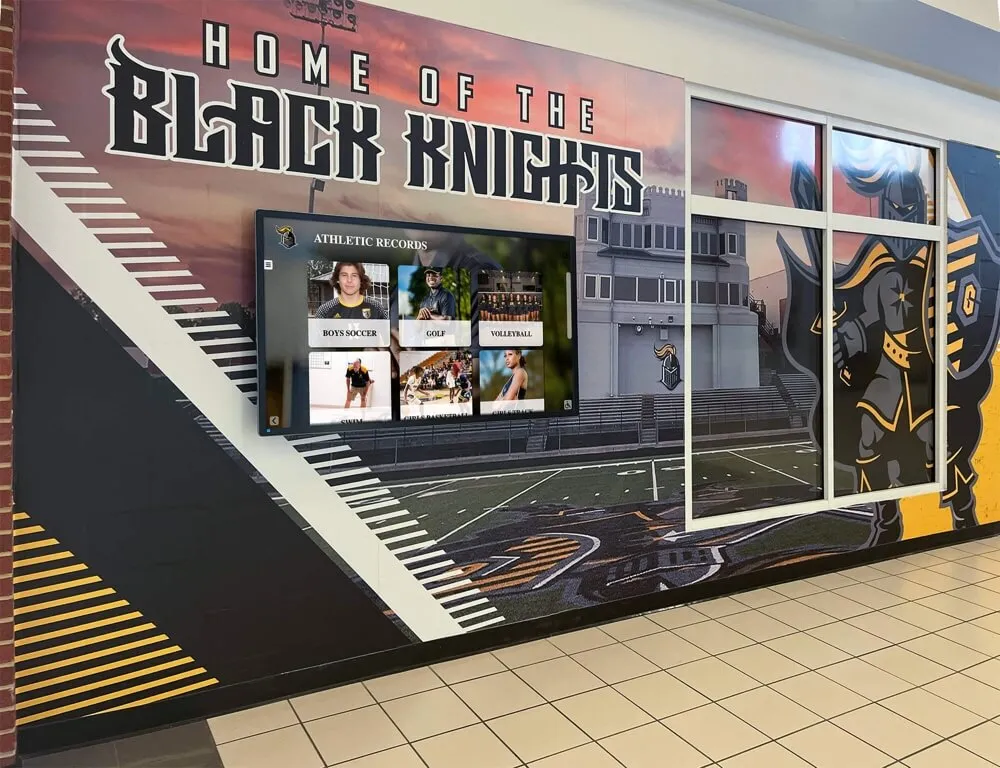
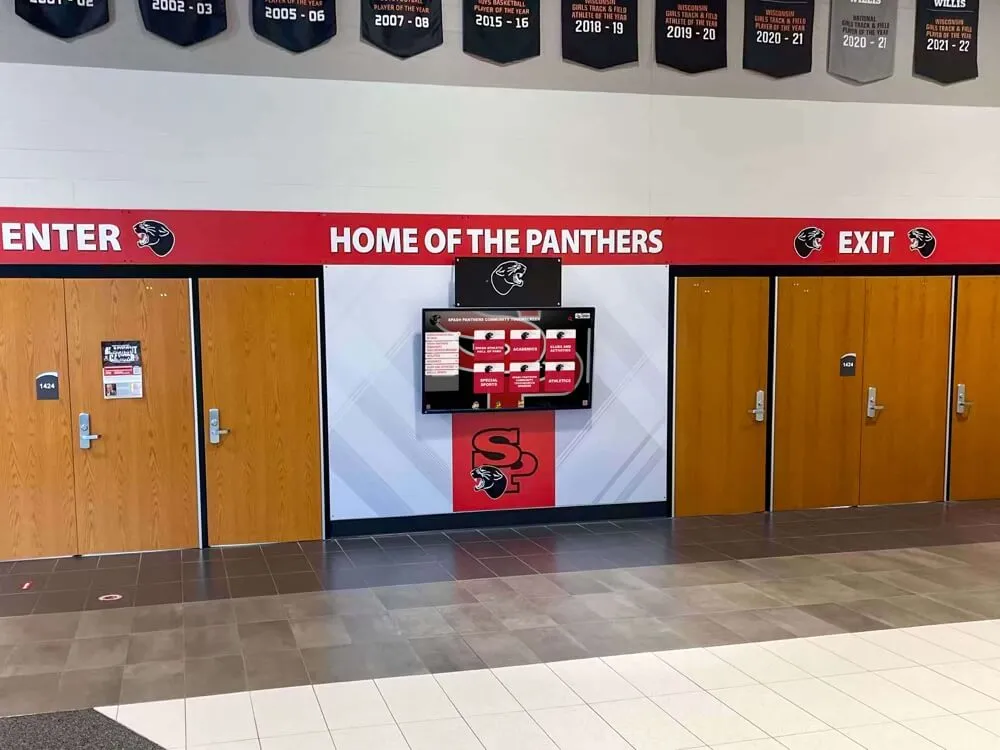
Digital record board solutions provide particularly powerful value for athletic directors managing multiple sports across boys and girls programs, each with numerous event categories requiring individual record tracking. A single 55-inch touchscreen can display comprehensive records requiring dozens of traditional vinyl boards—records that update automatically, preserve complete history, and require zero ongoing vinyl maintenance.
Interactive Historical Timeline Displays
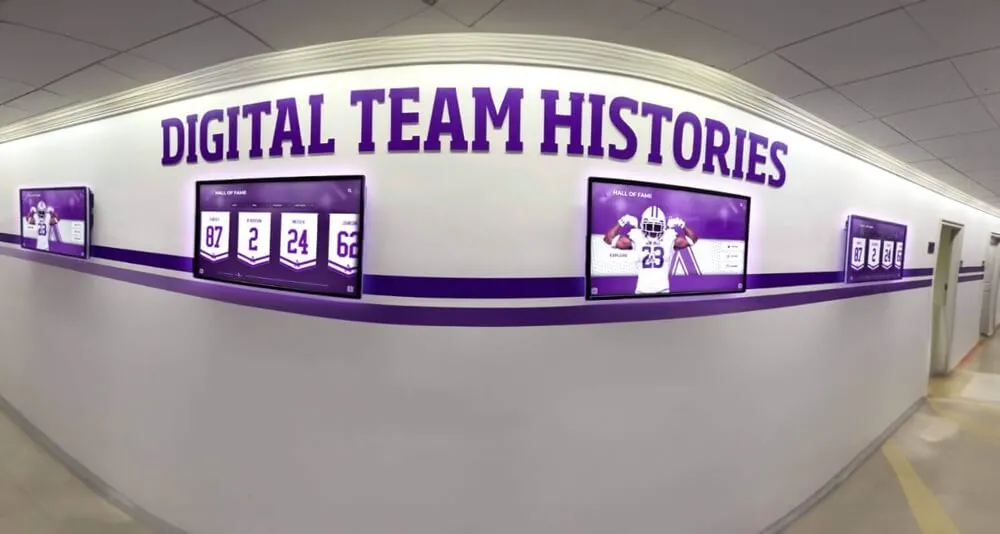
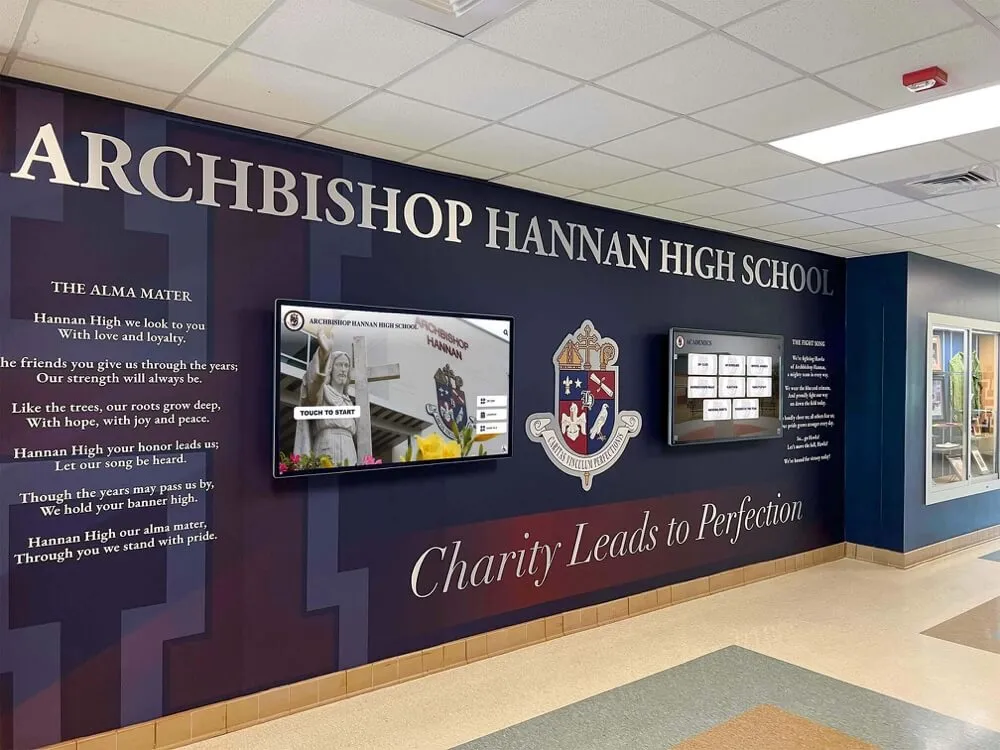
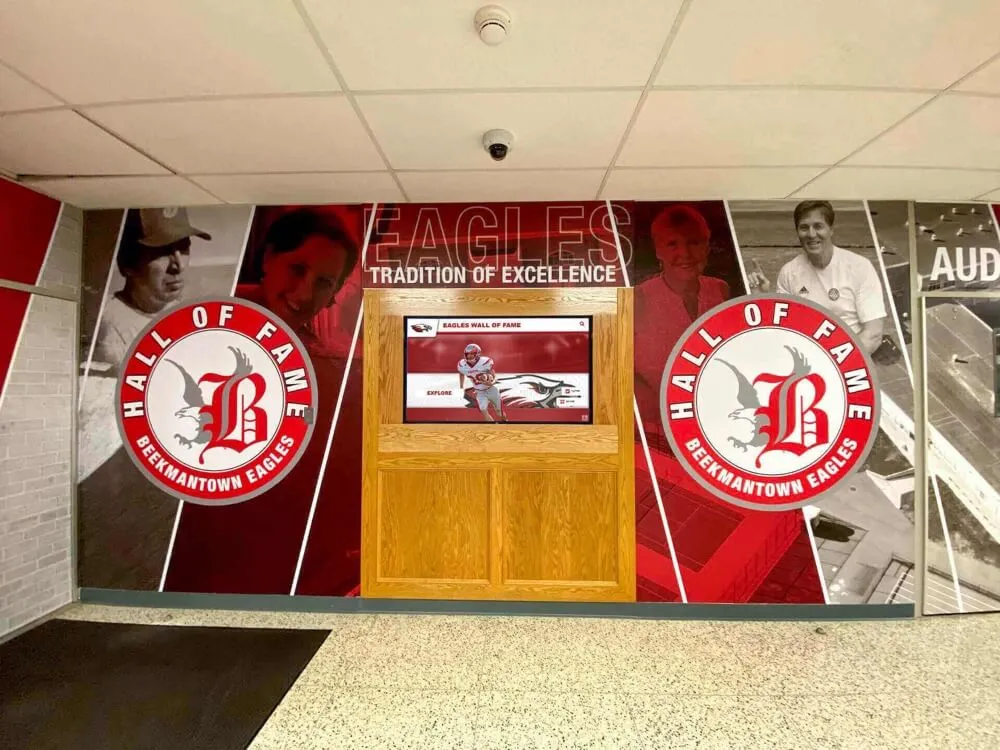
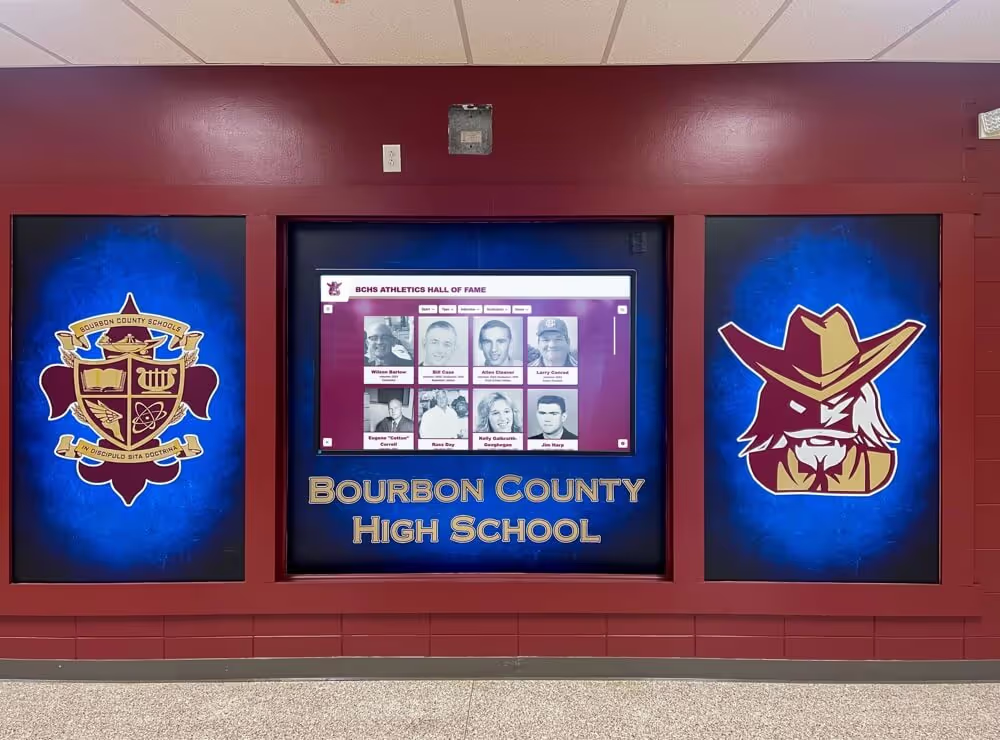
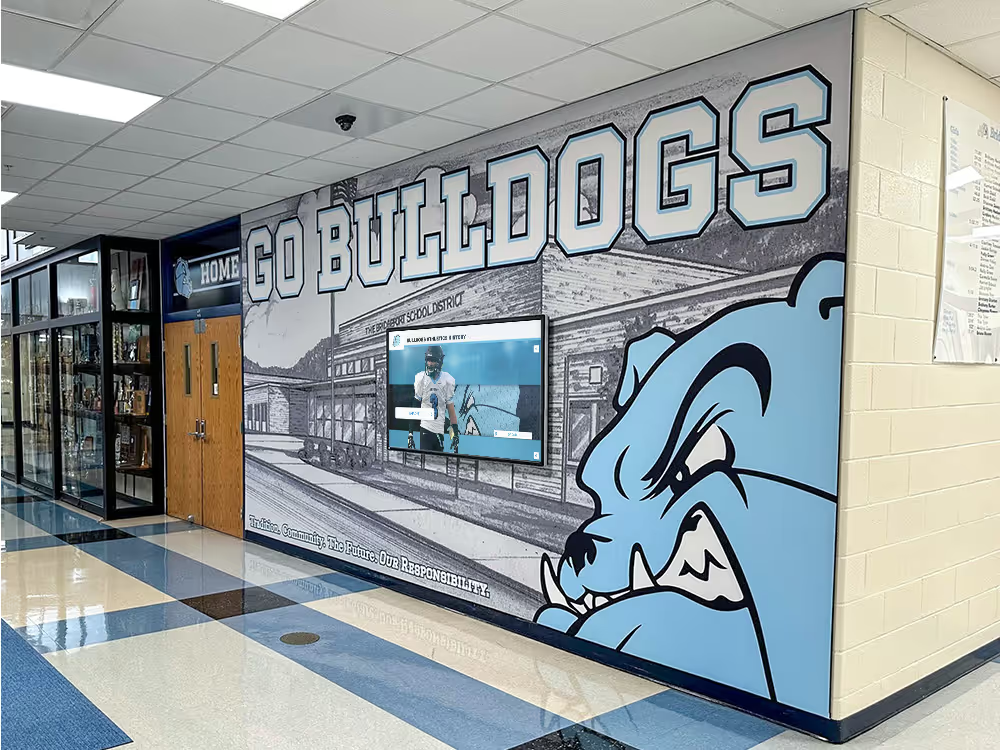
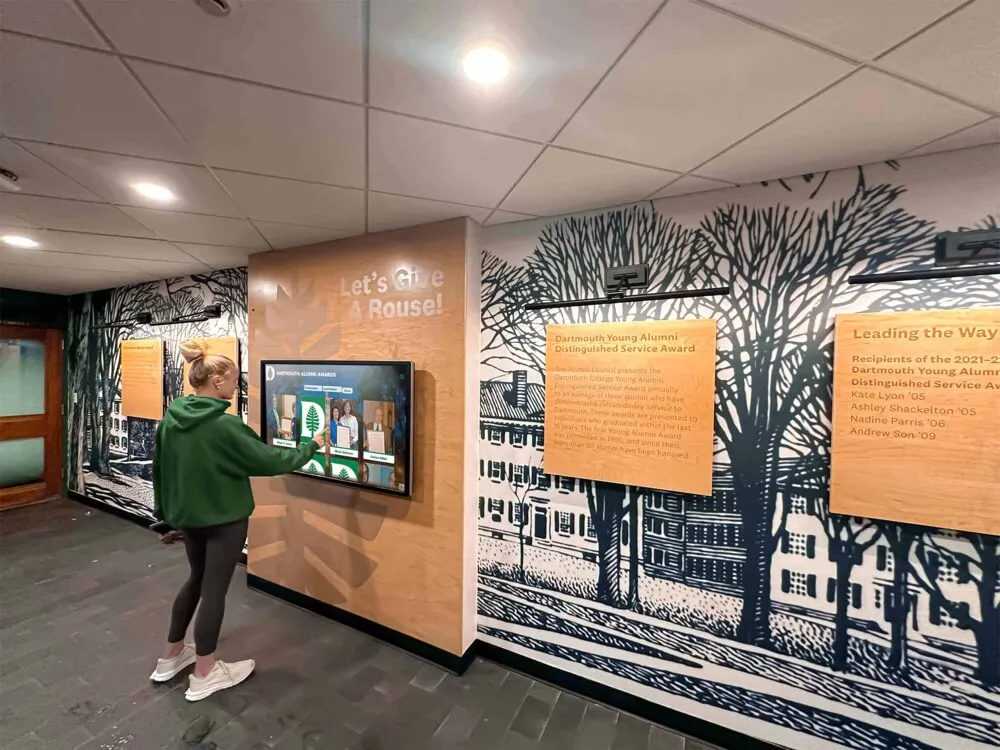
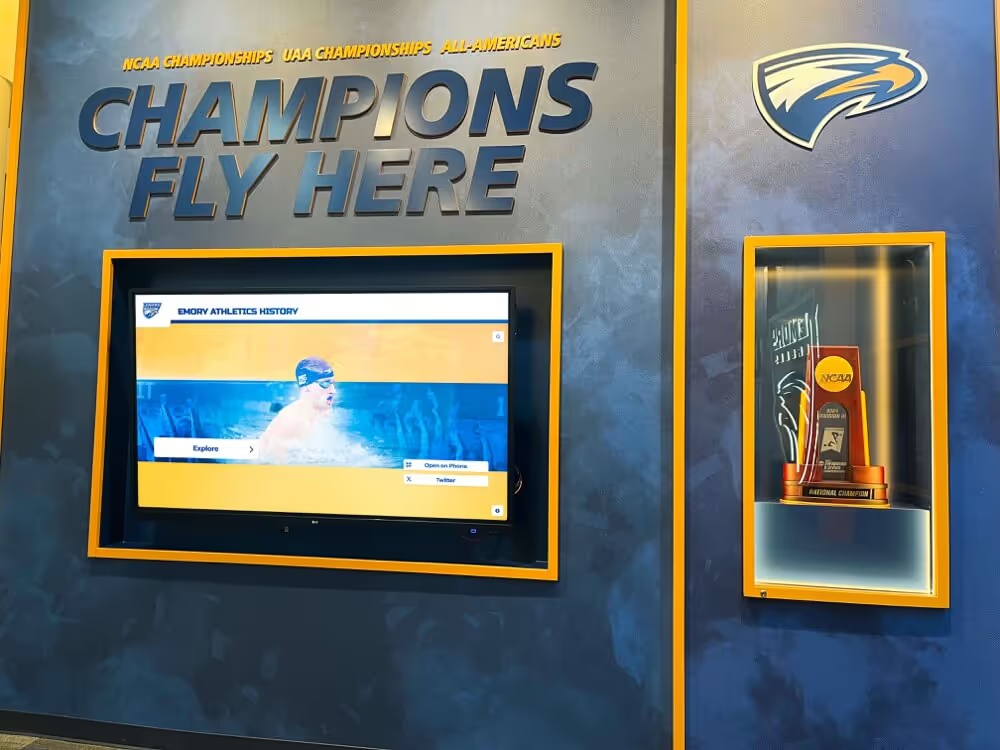
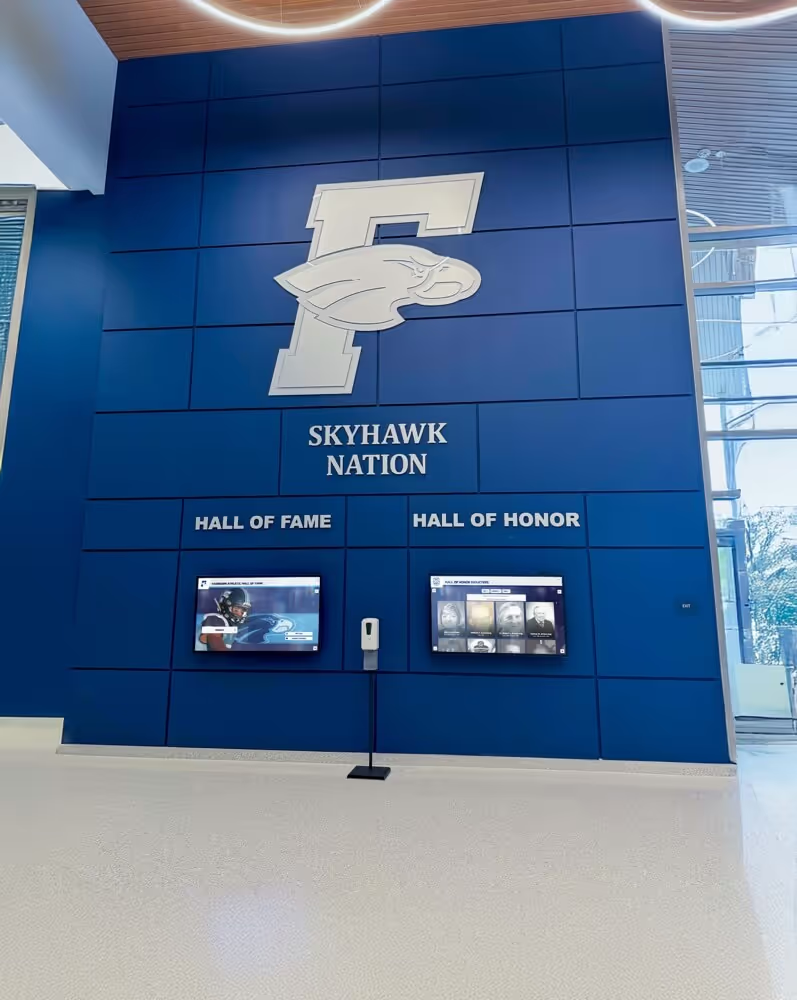
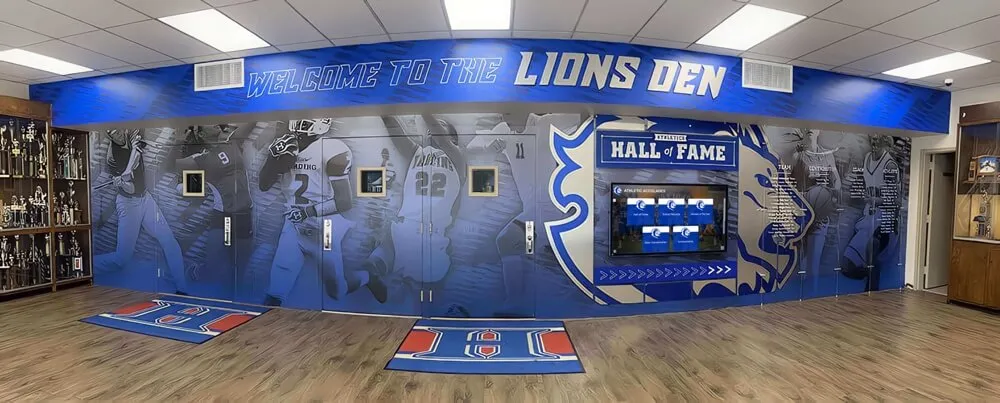
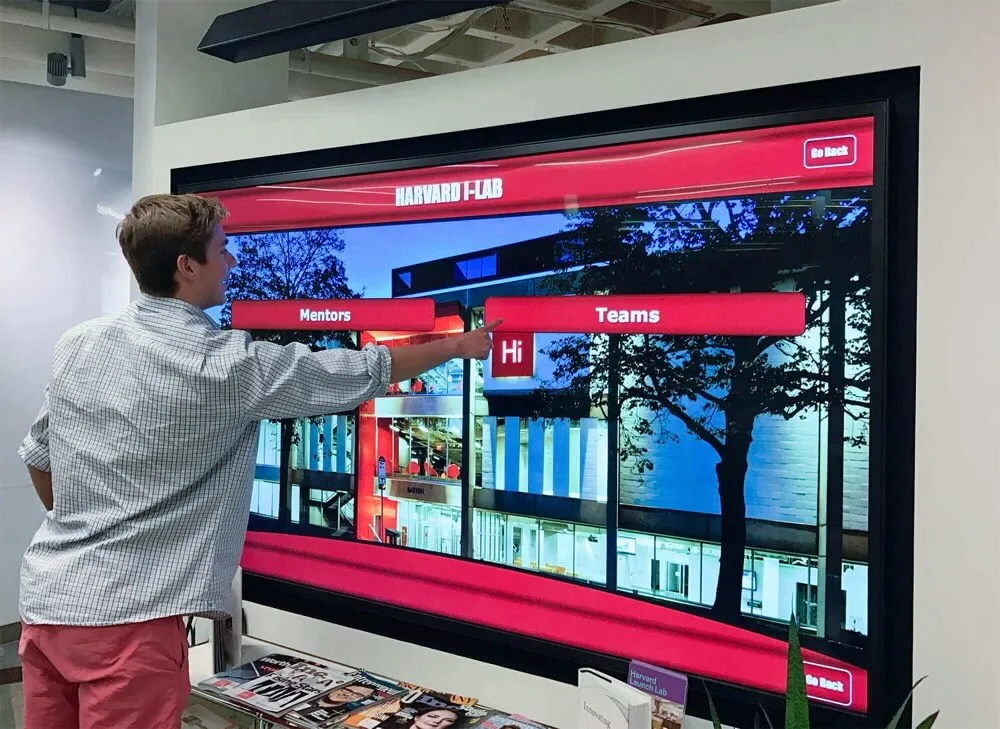
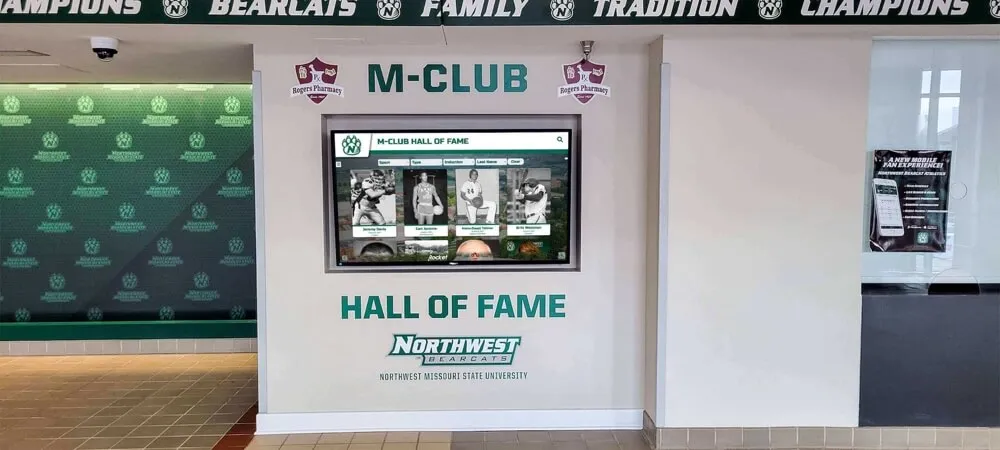
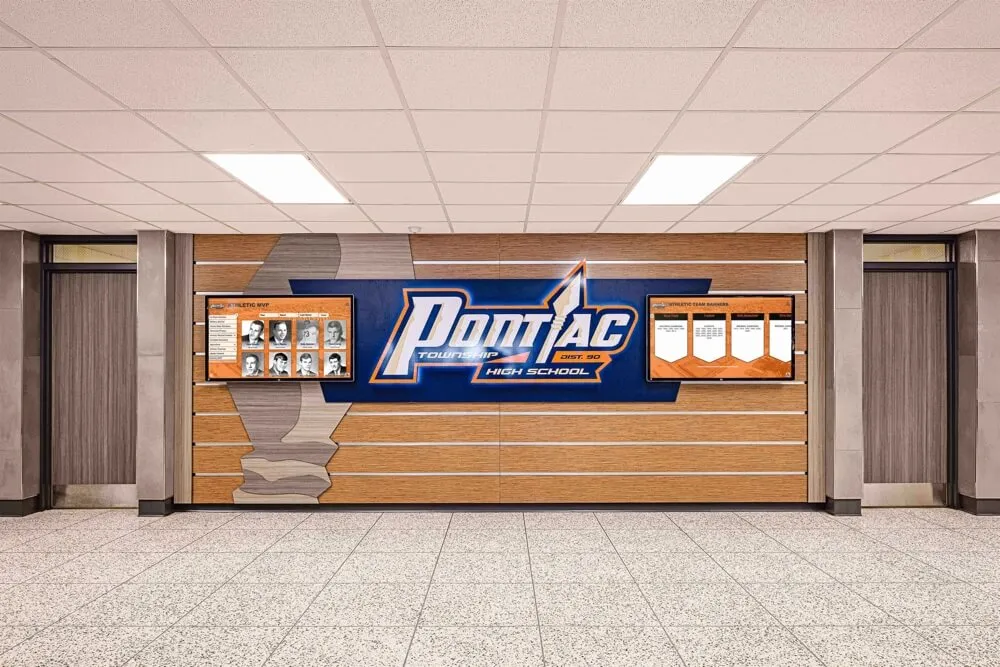
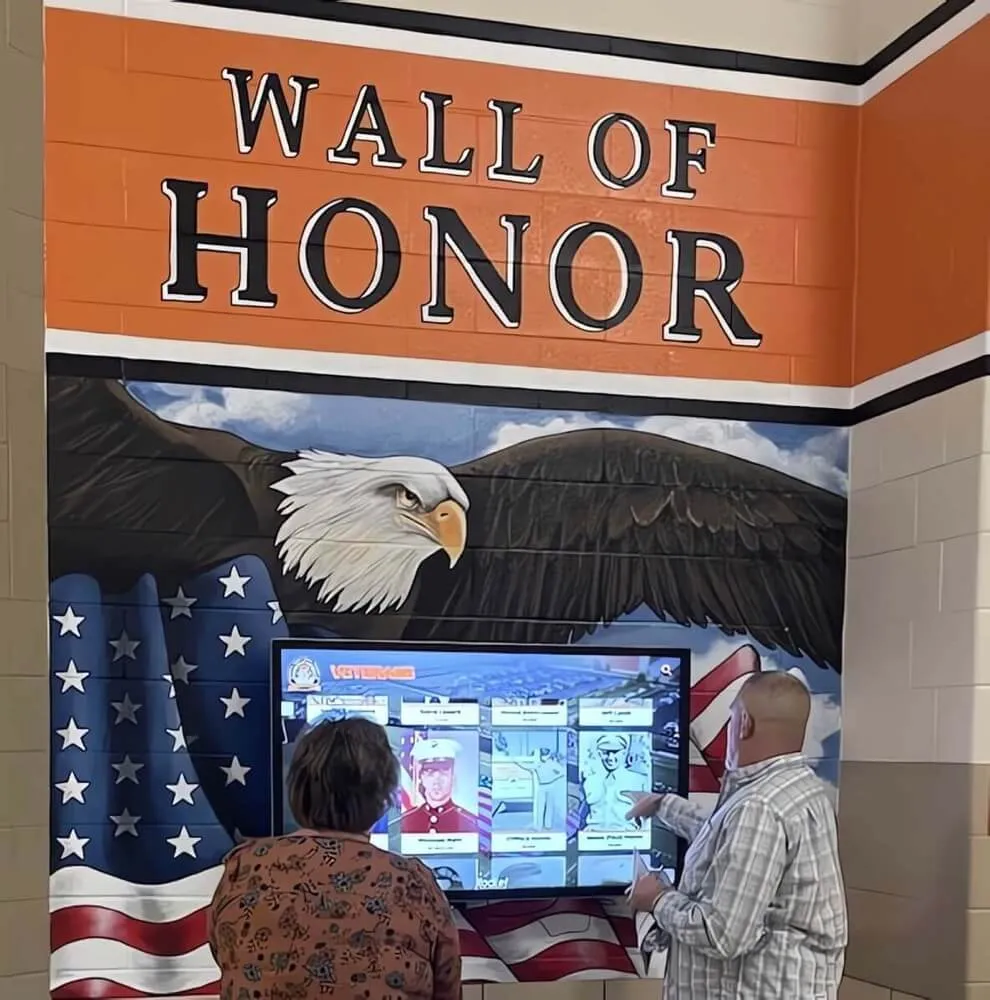
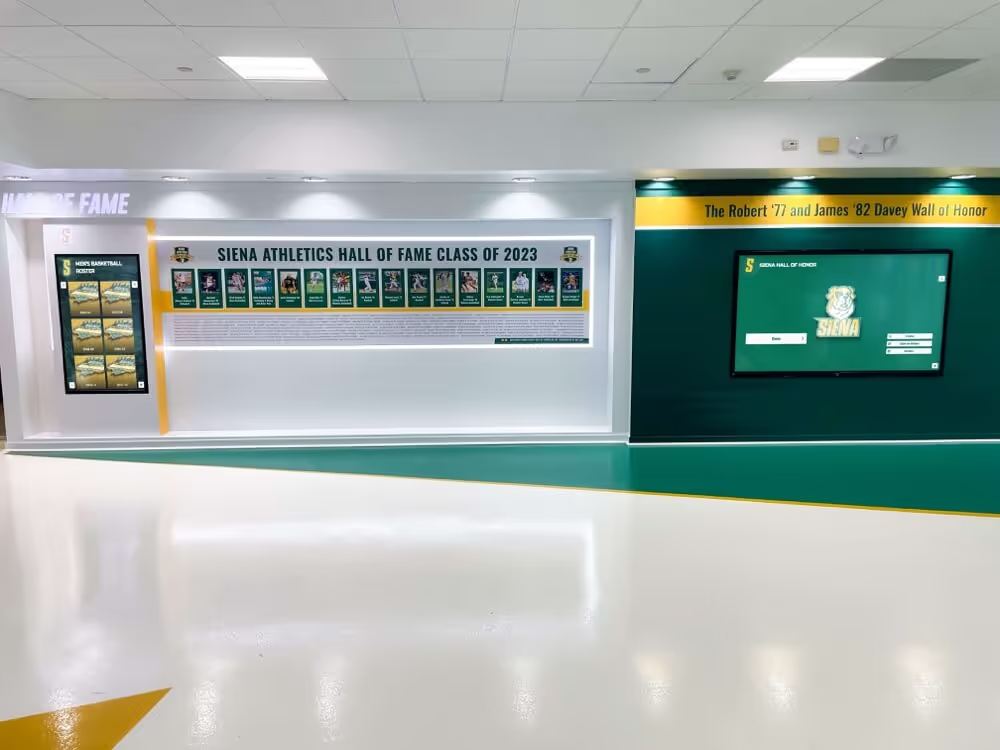
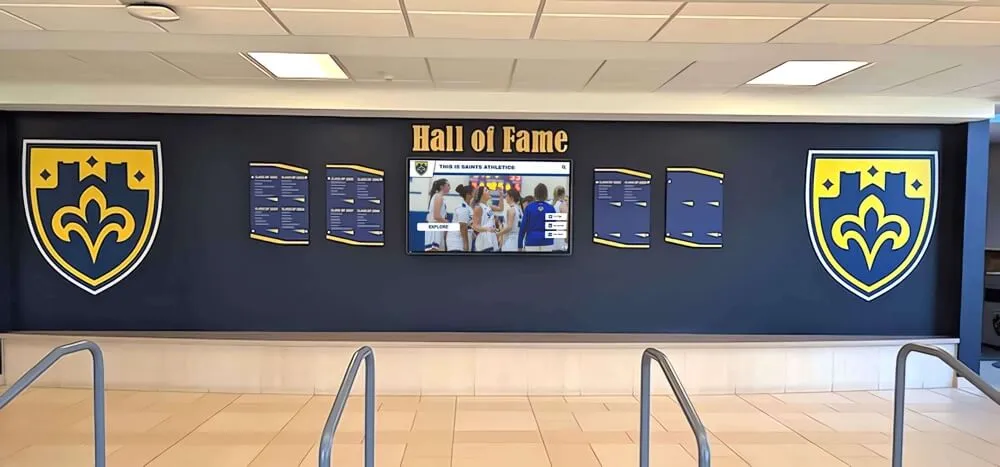
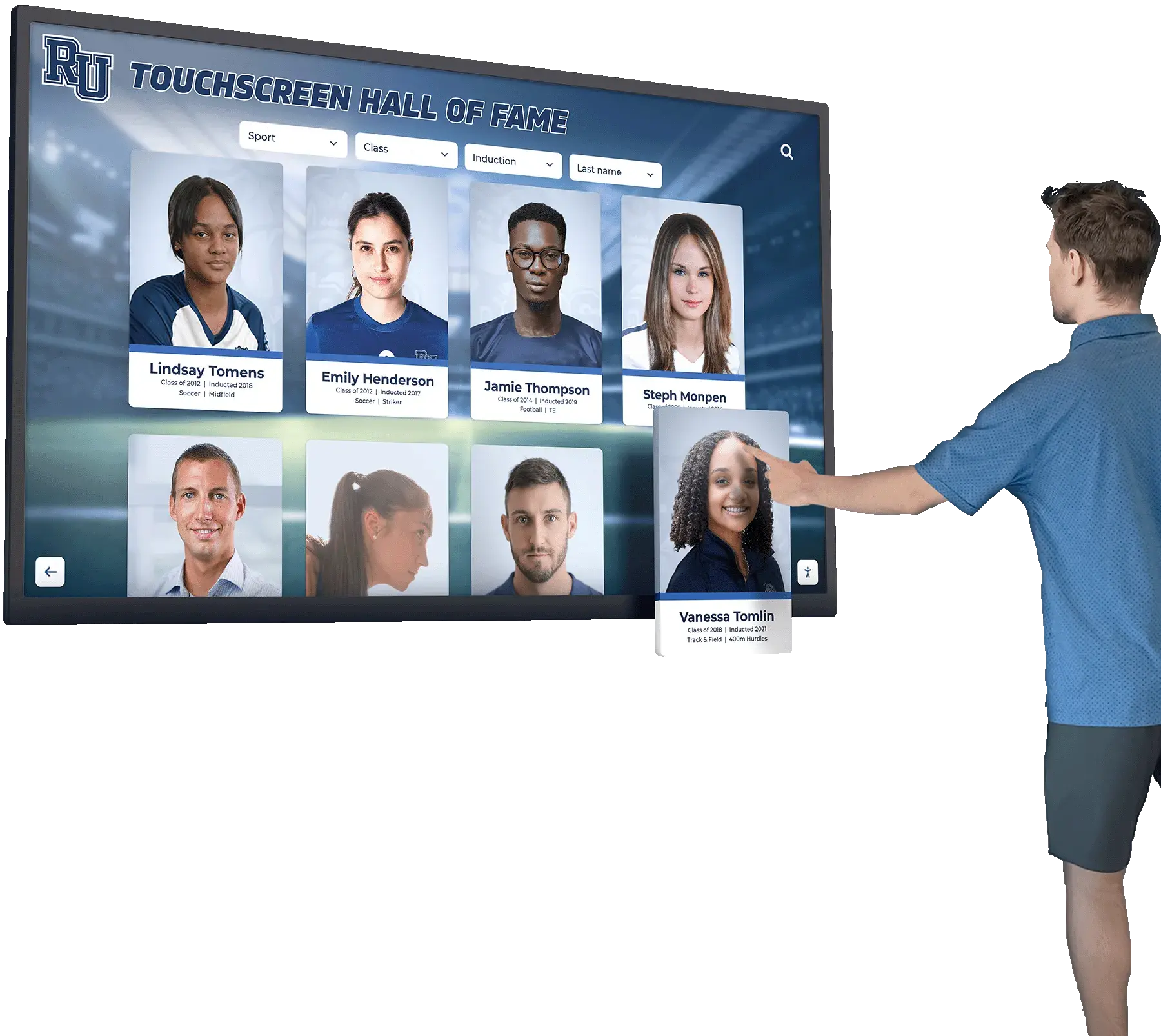
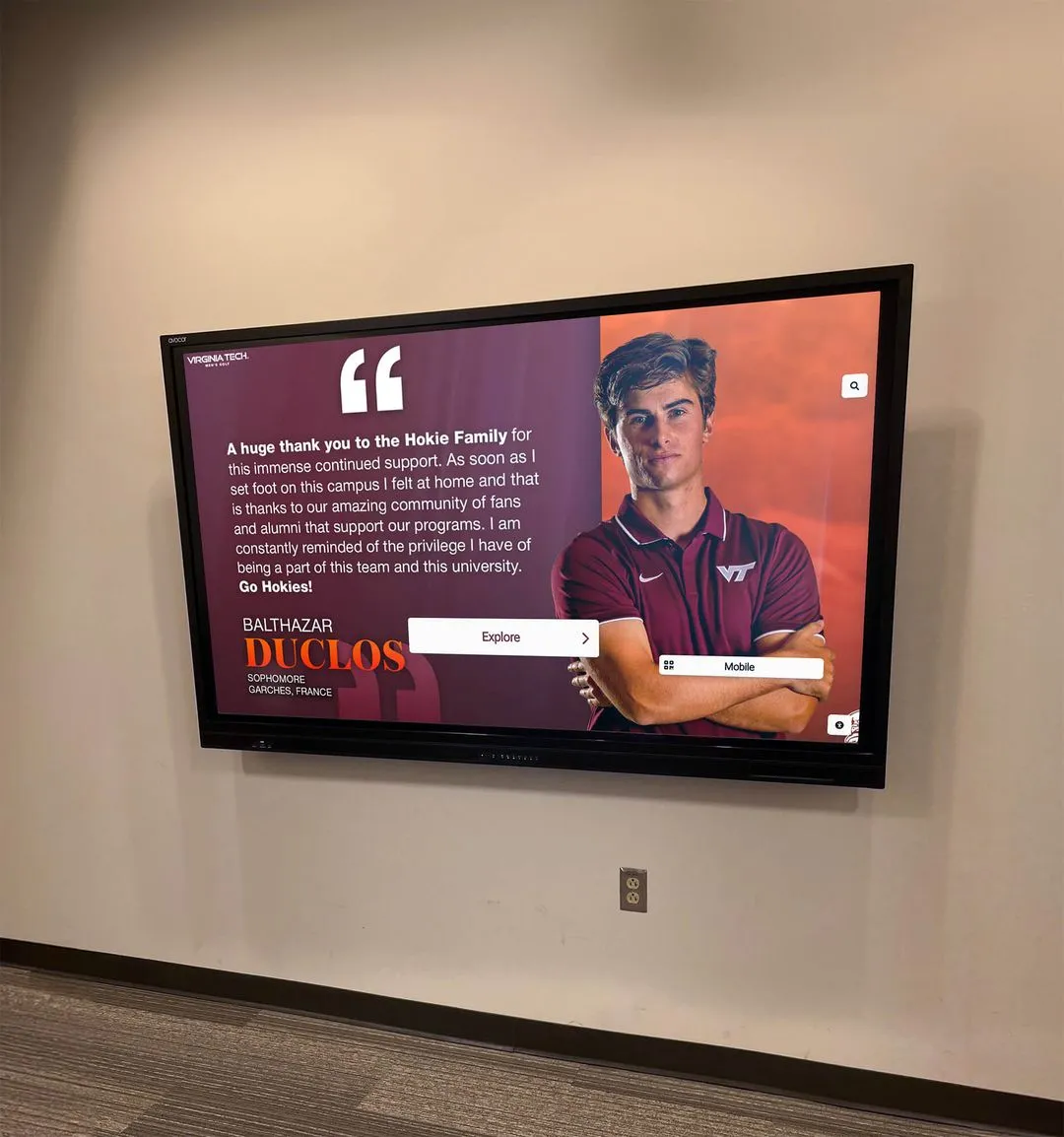
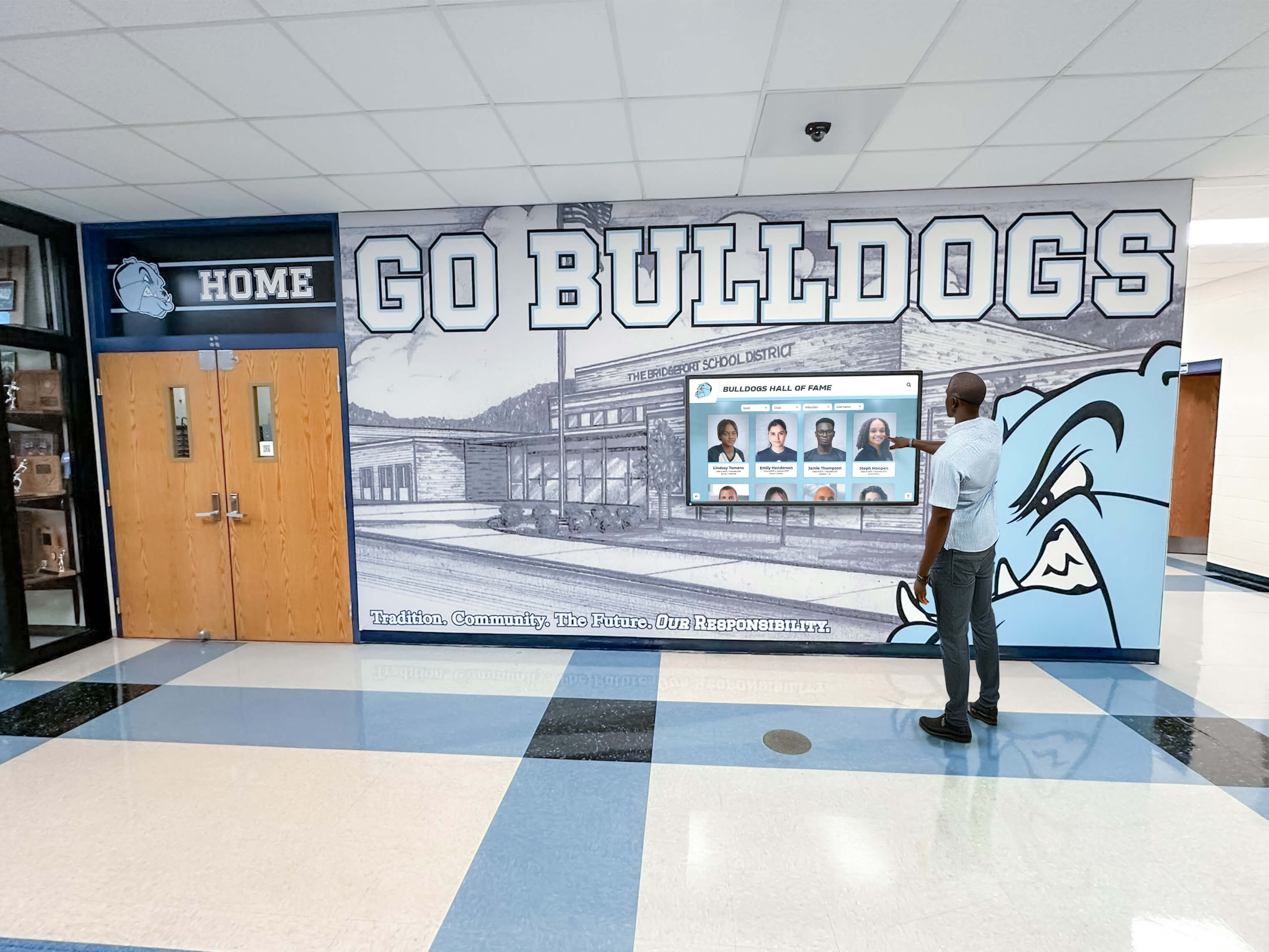
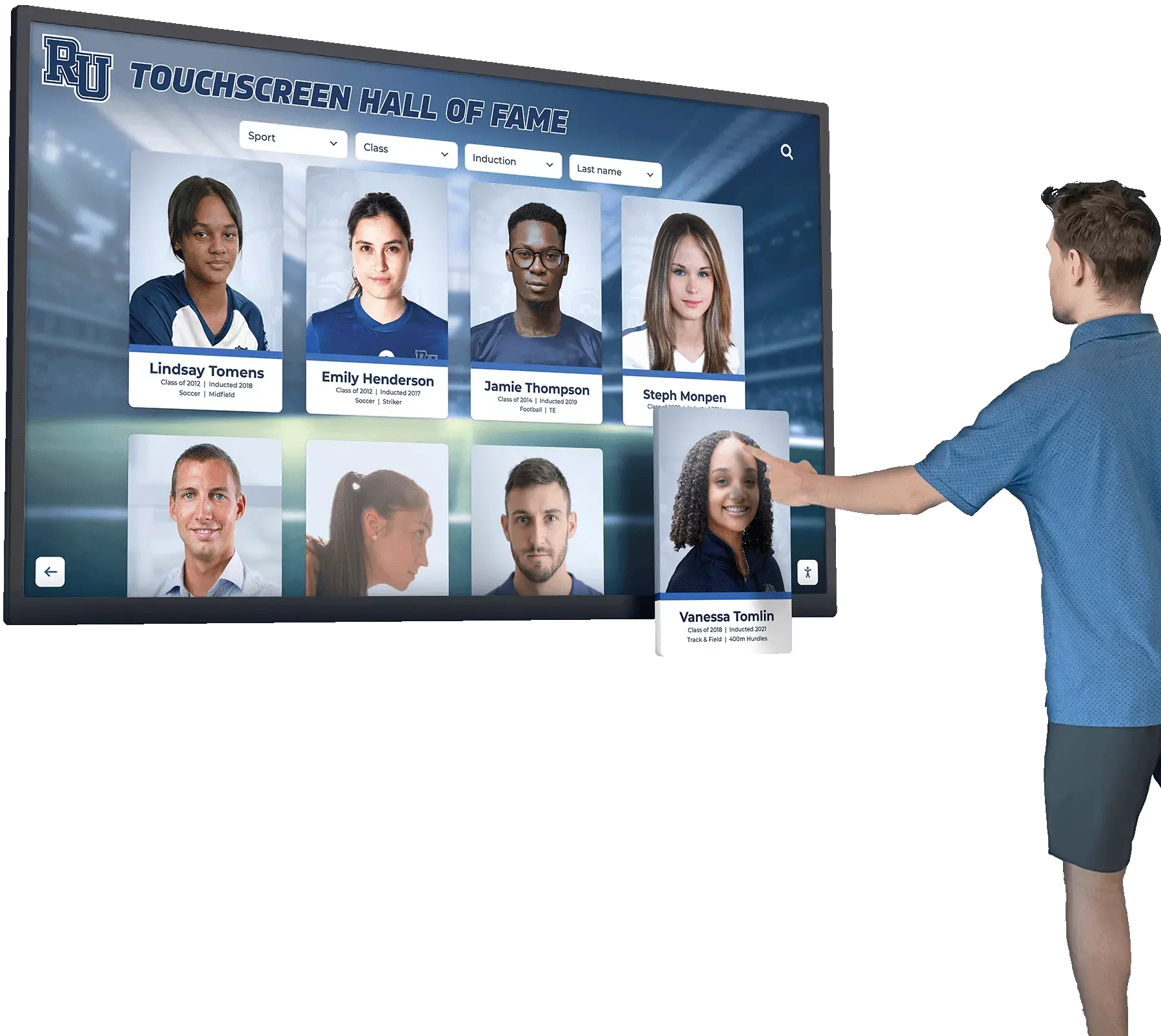
Interactive timeline systems create engaging visual presentations of institutional history through touchscreen kiosks, digital walls, or web-based platforms. These presentation-focused systems organize heritage chronologically through interactive timelines, thematically through achievement galleries and halls of fame, geographically through facility evolution and campus development, or through biographical profiles highlighting distinguished alumni, faculty, and community members.
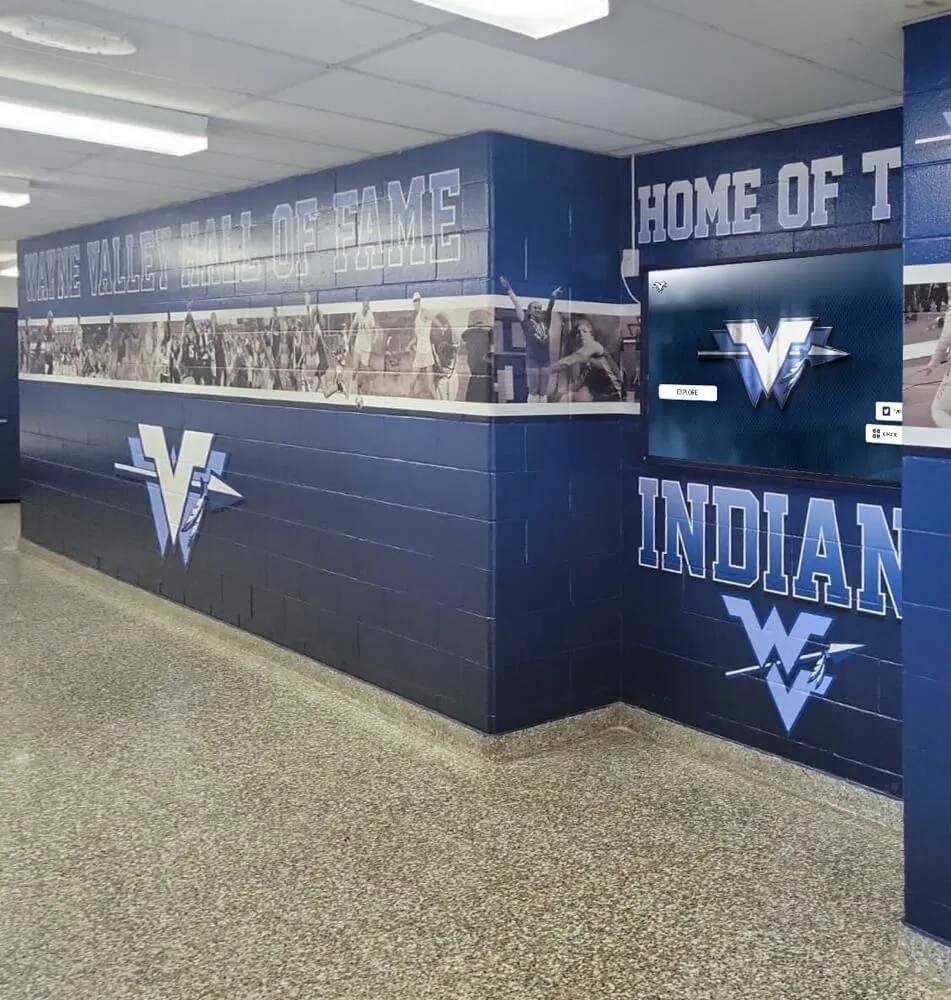
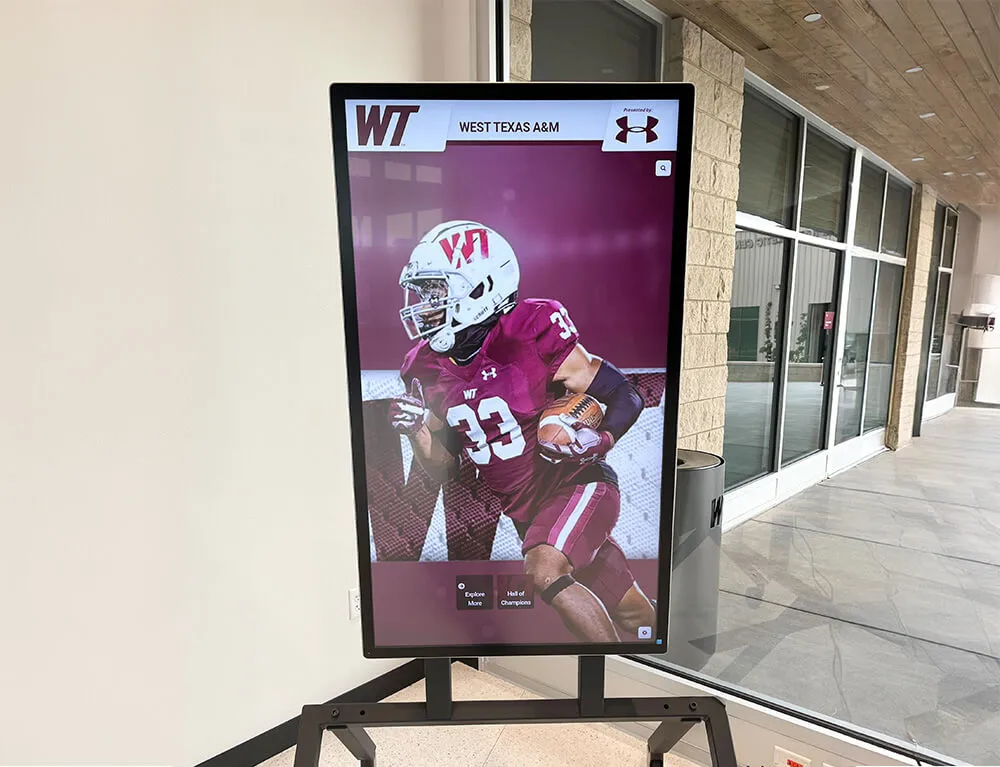
The interactive nature allows users to explore history at their own pace through intuitive touch interfaces, discover connections between people and events, access multimedia content including photographs and videos, and share discoveries through social media integration. Schools implement these displays in high-traffic areas where students, visitors, and alumni naturally gather including main lobbies and entrance areas, athletic facilities and gymnasiums, alumni centers and gathering spaces, library reading rooms and academic commons, and outdoor digital kiosks at significant campus landmarks.
Interactive displays excel at creating memorable experiences that engage communities with institutional heritage. According to engagement analytics from deployed systems, visitors exploring digital timelines typically spend 3-5 minutes actively engaging with content compared to brief glances at static displays—this deeper engagement creates stronger emotional connections with institutional history that translate to enhanced pride, support, and community belonging.
Essential Features of Effective School Archiving Systems
Regardless of specific implementation approach, the most effective academic and history archiving platforms share critical capabilities determining long-term value and sustained adoption.
Unlimited Capacity and Scalability
Physical space limitations force impossible recognition choices in traditional systems. Digital platforms eliminate these constraints entirely through unlimited content capacity accommodating comprehensive institutional history without storage restrictions, infinite record holder preservation ensuring no achievement disappears, unrestricted photograph and document archives, expandable multimedia libraries supporting growing collections, and scalable infrastructure growing seamlessly as digitization projects expand.

Unlimited capacity fundamentally transforms recognition philosophy. Rather than asking “Who should we recognize?” with inherent limitations forcing selective visibility, institutions can ask “How can we recognize everyone who deserves acknowledgment?” This philosophical shift creates inclusive recognition cultures where diverse achievements across athletics, academics, arts, service, and leadership all receive appropriate permanent celebration.
Systems like Rocket Alumni Solutions provide genuinely unlimited capacity with no per-profile charges, artificial storage limits, or escalating costs as archives grow. This economic model encourages comprehensive recognition rather than creating financial barriers that limit how many achievements institutions can celebrate.
Powerful Search and Discovery Capabilities
Search functionality determines whether digital archives become actively used resources or simply digitized versions of inaccessible storage. Effective search capabilities enable full-text search across all digitized documents, advanced filtering by date ranges, people, locations, events, and custom fields, saved searches for frequently referenced queries, intuitive browsing by category, theme, or timeline, auto-suggest helping users discover related content, and AI-enhanced search understanding natural language queries.
The goal remains making any piece of historical information discoverable within seconds. Alumni searching their names should instantly find every yearbook appearance, team photograph, award recognition, and document mention across decades of archives. Researchers exploring specific events should quickly locate all relevant materials regardless of original format or storage location. Current students investigating school traditions should easily discover origin stories, evolution over decades, and connections to present-day celebrations.
School historical timeline displays benefit particularly from sophisticated search capabilities that allow exploring institutional evolution across multiple decades, discovering how facilities developed over time, and understanding how traditions emerged and evolved through different eras.
Intuitive Content Management Requiring No Technical Expertise
Digital archives require ongoing maintenance including adding newly digitized materials, correcting discovered errors in metadata, enhancing entries with additional context, responding to user submissions and corrections, and organizing content as collections grow. The most valuable systems provide intuitive content management enabling designated staff to perform these tasks without requiring technical expertise through visual interfaces for metadata editing, batch operations for efficient mass updates, preview functions showing public-facing appearance before publishing, version control tracking content changes over time, and granular permissions management controlling editing access.
Complex content management systems requiring specialized training create bottlenecks where archives become outdated because the few people capable of updates lack sufficient time. The best platforms empower multiple staff members to contribute and maintain content collaboratively, distributing work sustainably across teams and preventing single-person dependency that disrupts programs when individuals leave positions or take extended absences.
Athletic directors particularly benefit from intuitive record management that allows updating season achievements immediately after competitions conclude, adding championship rosters while memories remain fresh, and correcting discovered errors without IT department dependency. When content updates feel quick and straightforward, staff actually maintain currency rather than allowing displays to become outdated undermining credibility.
Mobile Responsiveness and Multi-Device Accessibility
Contemporary users access digital content across diverse devices from desktop computers to smartphones and tablets. Effective archiving platforms provide consistent, optimized experiences across all device types through responsive design adapting to different screen sizes, touch-optimized navigation for mobile interfaces, appropriate image resolution based on device capabilities, offline access for downloaded content, and accessibility compliance supporting users with disabilities following WCAG standards.
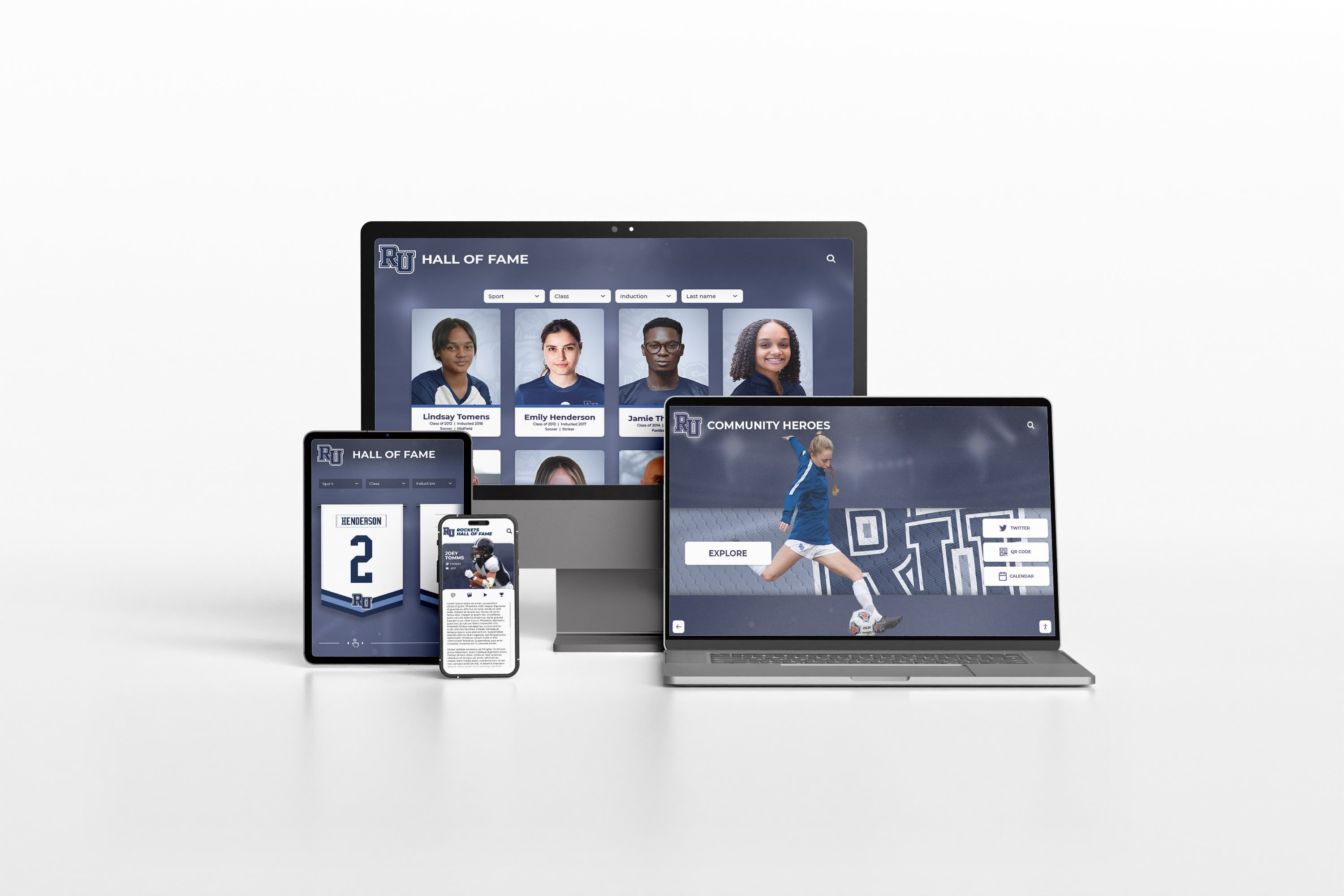
Mobile optimization matters particularly for alumni engagement, as graduated community members most frequently access institutional archives through smartphones during casual browsing rather than dedicated computer sessions. Schools implementing mobile-responsive heritage platforms report 60-70% of alumni access occurring through mobile devices, making smartphone optimization essential rather than optional for effective engagement and reach.
Web-based accessibility extends recognition beyond campus visitors to global alumni communities. Alumni where are they now spotlights and historical recognition displays accessible online create engagement opportunities for alumni who may never physically return to campus but maintain strong emotional connections to institutional heritage they can explore remotely.
Automatic Updates and Real-Time Record Management
Manual record board maintenance consumes substantial time while creating opportunities for errors, delays, and inconsistency. The most advanced archiving systems include automatic record tracking that instantly updates displays when new achievements occur, auto-ranking algorithms that reorder record lists without manual intervention, scheduled content rotation showcasing different achievements periodically, remote update capabilities allowing changes from any location, and audit trails documenting all modifications for accountability and error correction.
Automatic updates prove particularly valuable for athletic records where improvements occur throughout competitive seasons. Rather than waiting until season end to update vinyl boards—a process consuming hours of manual work—digital systems allow immediate recognition when students break records, with displays automatically reflecting new rankings institution-wide across all connected screens and web platforms.
This immediacy enhances motivational impact. Recognition delivered within days of achievement generates substantially stronger student response than identical acknowledgment delayed by weeks or months until someone finds time for manual vinyl board updates. Immediate recognition signals that institutions actively notice and value accomplishments, creating positive reinforcement encouraging continued excellence.
Comprehensive Implementation Approach for School Archives
Successful academic and history archiving requires systematic implementation addressing content development, technology deployment, and ongoing maintenance sustainability.
Phase 1: Assessment and Strategic Planning
Begin archiving initiatives with thorough assessment establishing clear understanding of current state, institutional needs, and desired outcomes. Essential assessment questions include: What historical materials currently exist requiring preservation? What physical condition are materials in, and what deterioration risk requires urgent action? What current recognition methods exist for athletics, academics, and other achievements? How do various stakeholders—students, alumni, faculty, administration—perceive current recognition adequacy? What physical space constraints limit traditional recognition expansion? What budget resources exist for initial investment and ongoing maintenance?
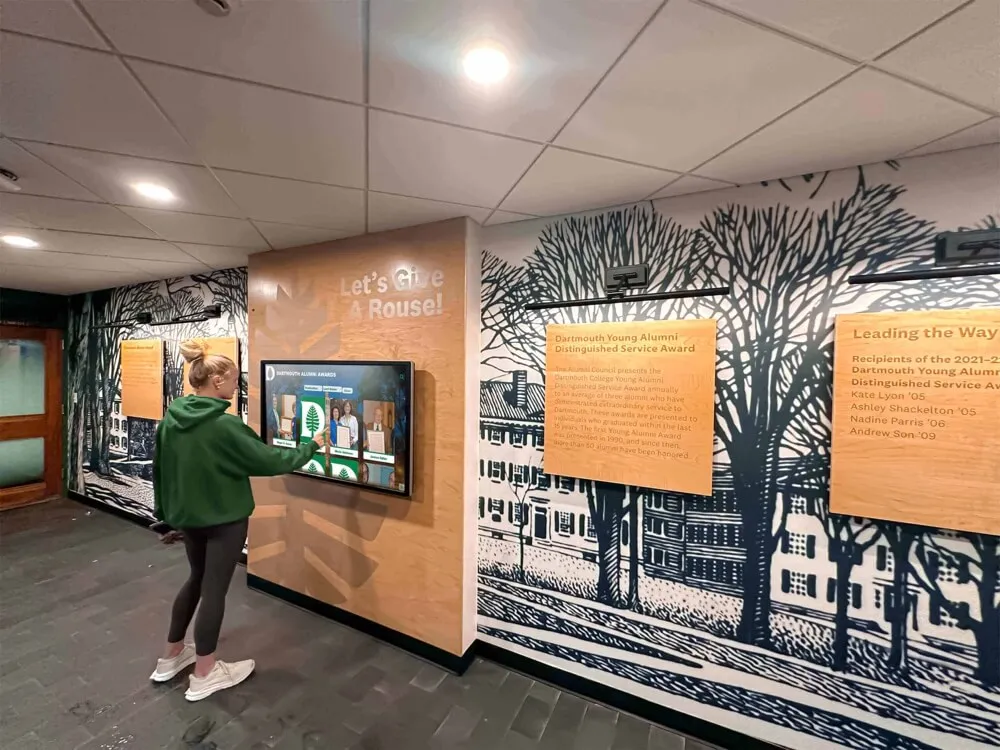
Strategic planning should establish specific measurable goals providing direction and success metrics. Goals might include digitizing complete yearbook collection spanning institutional history by specific timeline, implementing comprehensive digital record boards for all varsity sports within athletic facilities, creating interactive historical timeline displays in main lobby and alumni center, achieving 500+ alumni engagements with digital archives within first year, or reducing record board maintenance time from current 40 hours annually to under 5 hours through digital automation.
Engage diverse stakeholders bringing varied perspectives through planning committees including athletic directors managing sport record recognition, librarians or archivists contributing preservation expertise, academic counselors representing student achievement recognition, IT staff addressing technical infrastructure requirements, alumni representatives offering community perspective, advancement professionals focused on engagement and fundraising implications, and students providing user perspective ensuring systems resonate with primary audiences.
Phase 2: Technology Selection and Vendor Evaluation
Schools exploring digital archiving platforms should evaluate multiple options systematically comparing features, implementation approaches, total costs, and long-term vendor viability. Critical evaluation criteria include purpose-built educational focus versus generic digital signage, content management ease for non-technical staff, unlimited versus restricted content capacity, multi-device accessibility including touchscreens and mobile, search sophistication and discovery capabilities, multimedia support beyond simple text, analytics revealing engagement patterns, integration capabilities with existing systems, and vendor reputation including references from similar institutions.
Request hands-on demonstrations allowing direct experience with platforms before committing significant resources. Test search functionality with sample content representing realistic use cases. Evaluate user interfaces from perspective of various audiences including tech-savvy students and less technically comfortable alumni or community members. Confirm platforms genuinely deliver advertised capabilities rather than relying solely on marketing materials that may overstate actual functionality.
Assess total cost of ownership beyond initial purchase prices including platform licensing or subscription fees, digitization services or equipment if outsourcing scanning work, implementation and configuration services, staff training and ongoing support, annual hosting and maintenance costs, content migration if transitioning from existing systems, and future scalability costs as collections inevitably grow over time. Some vendors offer all-inclusive pricing covering comprehensive services while others separate cost components requiring careful comparison ensuring accurate evaluation.
Consider vendor stability and long-term viability since archiving represents multi-decade institutional commitment. Evaluate company longevity and financial stability, ongoing platform development and improvement roadmap, responsive customer support quality and availability, user community size and engagement level, migration options if changing vendors becomes necessary, and data ownership guarantees ensuring schools can export complete archives if future platform changes occur.
Purpose-built solutions like Rocket Alumni Solutions specialize exclusively in educational recognition and heritage preservation, offering intuitive interfaces designed for coaches and staff rather than IT specialists, unlimited content capacity without hidden per-profile charges, proven auto-ranking record board technology, and established track record across educational institutions nationwide. Schedule a Zoom demo to experience the platform firsthand and understand how comprehensive digital archiving creates measurable value while solving persistent recognition and preservation challenges.
Phase 3: Content Development and Digitization
Content development represents the most labor-intensive implementation phase requiring systematic approaches ensuring quality and efficiency. Organized approaches include comprehensive inventory of physical materials requiring digitization, prioritized scanning beginning with most valuable or vulnerable items facing immediate deterioration risk, consistent photography and scanning standards ensuring professional quality across collections, thorough metadata entry making content searchable and discoverable, comprehensive quality review catching errors before public publication, and enhanced content addition including contextual descriptions and multimedia elements enriching basic archival records.
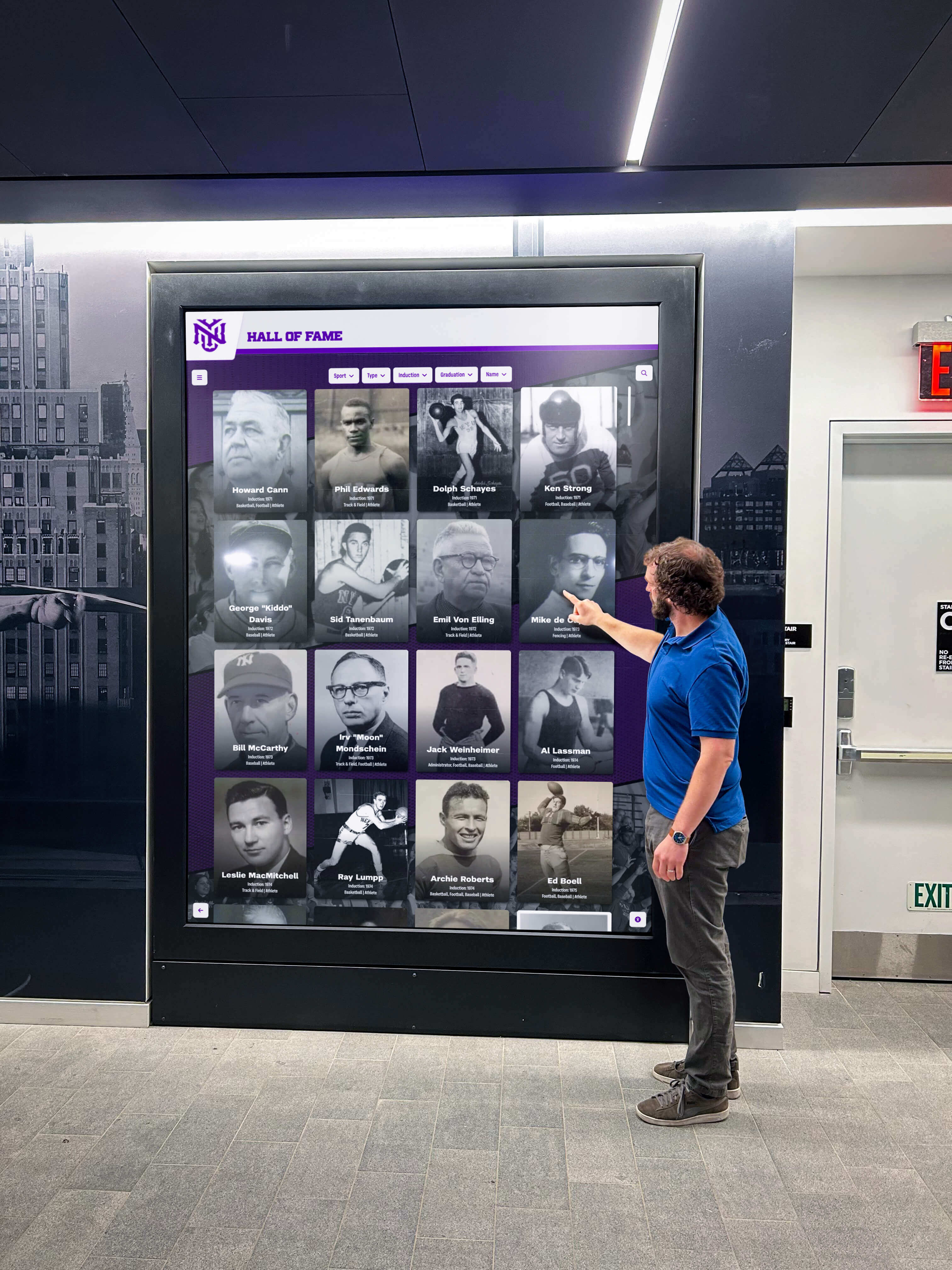
Content development timelines vary dramatically based on archive size and enhancement level desired. Schools might digitize 50 yearbooks in 2-3 months with dedicated resources and efficient workflows, while comprehensive archives including photographs, documents, athletic records, and multimedia content might require 6-18 months for thorough development creating rich, engaging content rather than simple scans.
Phased approaches allow launching with priority content delivering immediate value while systematically expanding archives over time. Begin with recent decades where community interest runs highest, then progressively work backward through institutional history. This approach creates early wins demonstrating value while building momentum and stakeholder support for continued investment in comprehensive preservation.
Many schools discover approaches to creating online digital archives that provide frameworks for systematic digitization projects, including volunteer engagement strategies, student involvement opportunities through internships or class projects, and grant funding sources supporting heritage preservation initiatives.
Phase 4: Launch Strategy and Community Engagement
Successful launches require strategic promotion ensuring communities know digital archives exist, understand how to access them, and appreciate the value comprehensive heritage preservation provides. Effective launch strategies include official announcement events generating awareness and excitement, social media campaigns showcasing archive highlights and discovery opportunities, direct outreach to alumni through email communications and publications, integration with existing school communications including newsletters and websites, printed materials with QR codes linking directly to specific archive sections, and demonstrations during campus events, athletic contests, and reunion gatherings.
Treat heritage platform launches as significant institutional milestones deserving substantial promotional investment establishing archives as valued community resources rather than niche reference tools. The most carefully developed archives provide minimal value if communities remain unaware they exist or don’t understand how comprehensive archival access benefits their connection to institutional heritage.
Consider celebratory launch events where community members can explore archives through guided demonstrations, share memories prompted by rediscovered photographs and records, and understand the comprehensive scope of preserved heritage now accessible permanently. These gatherings create emotional connections to archival initiatives while generating word-of-mouth promotion extending well beyond formal communications.
Phase 5: Ongoing Maintenance and Continuous Growth
Digital archives require continuous maintenance remaining current, accurate, and growing as new history unfolds daily through ongoing school activities. Establish sustainable processes for adding new content regularly including current season athletic achievements, quarterly honor roll recognition, scholarship announcements, competition results, and significant institutional events deserving historical documentation.
Create systematic approaches for correcting errors discovered through use, enhancing existing entries with additional context and media as information becomes available, responding promptly to user submissions and memory contributions, conducting periodic comprehensive reviews ensuring data accuracy and completeness, and regularly assessing which content generates greatest engagement to inform future development priorities.
Assign clear responsibility for archive maintenance whether to specific staff positions with explicit job descriptions including archival duties, rotating committees distributing work across multiple individuals, or supervised student workers providing cost-effective labor with appropriate oversight ensuring quality. The key remains establishing explicit responsibility rather than treating maintenance as additional duty for already overwhelmed educators, which inevitably leads to neglect as competing priorities consume limited time and attention.
Archives receiving consistent attention remain valuable community resources generating sustained engagement and appreciation. Those becoming outdated lose user trust and engagement as community members discover information gaps, inaccuracies, or missing recent achievements undermining confidence in archival completeness and quality.
Maximizing Value from Archival Investments
Comprehensive archiving represents significant investment of financial resources, staff time, and institutional attention. Strategic institutions maximize return on these investments through creative applications serving diverse organizational goals beyond basic preservation.
Enhanced Alumni Engagement and Advancement Support
Digital historical archives create powerful alumni engagement tools generating measurable results in participation, giving, and community connection. Alumni accessing institutional archives rediscover memories from their school years, reconnect emotionally with classmates through shared history, see their personal contributions recognized and permanently preserved, develop strengthened institutional connections translating to tangible support, and share discoveries through social networks extending institutional reach to broader audiences.
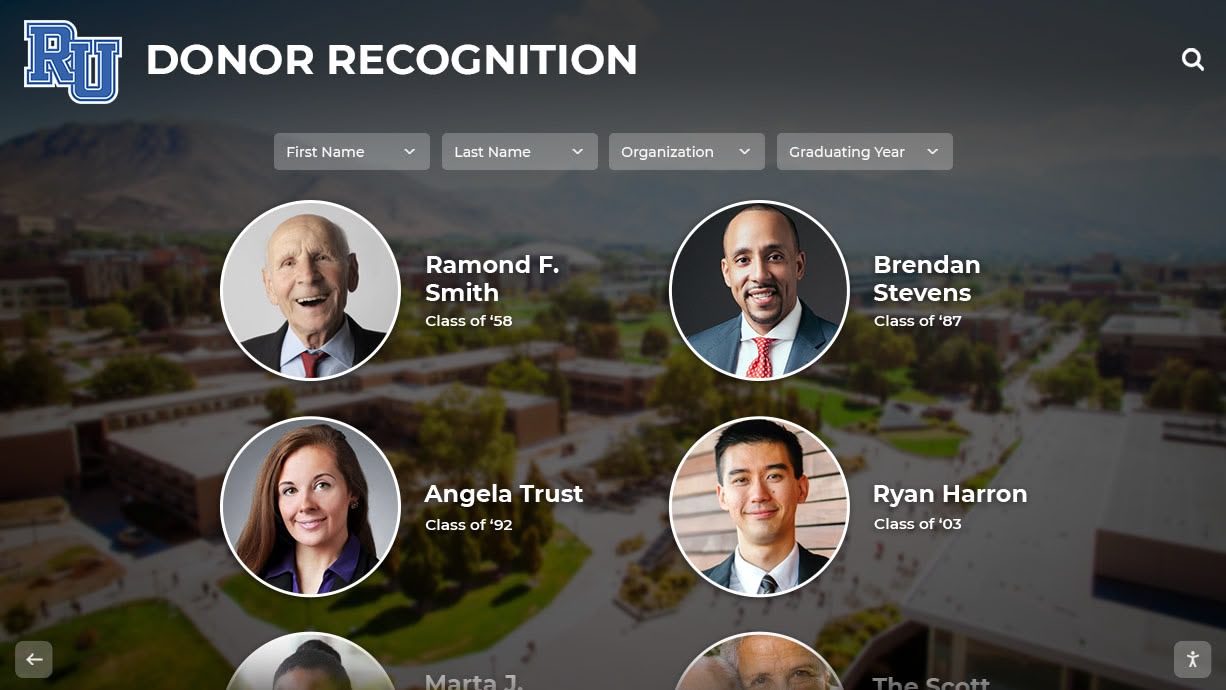
Strategic advancement offices leverage historical archives by featuring distinguished alumni profiles in fundraising campaigns, sharing nostalgic historical content during reunion solicitations, demonstrating institutional commitment to heritage preservation deserving support, connecting prospective donors with beneficiaries and achievements from their own eras creating personal relevance, and creating targeted giving opportunities specifically funding archive expansion, heritage preservation, or recognition display enhancements.
The emotional connections historical content creates significantly enhance fundraising effectiveness compared to generic solicitation approaches. Alumni engagement through interactive recognition displays demonstrates measurably stronger results when outreach connects prospects with meaningful institutional memories rather than simply requesting financial support without emotional context.
Schools implementing comprehensive alumni recognition programs discover engagement metrics improve substantially including event attendance increases, volunteer participation expansion, social media interaction growth, website traffic improvements, and philanthropic giving enhancements across both participation rates and average gift sizes.
Student Education and Institutional Identity Building
Current students benefit substantially from accessible institutional history integrated into daily school experience rather than hidden in inaccessible storage. Teachers integrate historical archives into curriculum by researching institutional responses to historical events providing local context for national movements, analyzing social and cultural change through yearbook fashion, activities, and traditions, studying community history through institutional records documenting neighborhood evolution, connecting current learning to institutional heritage showing how past generations approached similar challenges, and developing research skills through primary source analysis using authentic historical materials.
Students regularly exposed to institutional history through prominent lobby displays, classroom integration, and accessible online archives develop stronger school identity and institutional connection. History becomes personally relevant when students discover their teachers in old yearbooks, explore facilities as they appeared decades ago, understand traditions connecting current experiences with multiple generations, and recognize their own achievements joining permanent institutional record alongside distinguished predecessors.
This accessible heritage builds institutional pride transcending athletics alone. Students see themselves as part of continuing story rather than isolated individuals passing briefly through facilities without connection to those who came before or those who will follow. Academic recognition alongside heritage preservation creates comprehensive cultures celebrating diverse excellence forms while connecting achievement across generations.
Marketing, Admissions, and Institutional Storytelling
Institutional history provides compelling authentic content for marketing and admissions efforts that generic promotional language cannot match. Prospective families exploring schools appreciate historical materials demonstrating institutional stability and enduring traditions, distinguished alumni proving educational quality and successful outcomes, achievement breadth across academic, athletic, artistic, and community domains, generational community strength spanning decades, and facilities evolution showing ongoing investment and continuous improvement.
Admissions materials incorporating historical content communicate institutional character more effectively than promotional descriptions. Authentic stories about founding, evolution through challenges, adaptation to changing educational needs, and consistent commitment to core values resonate more powerfully than marketing copy making generic excellence claims every institution repeats.
Digital heritage platforms provide constantly updating content streams for school websites requiring fresh material, social media accounts benefiting from nostalgic throwback content, printed publications needing visual interest and authentic stories, campus tour integration providing compelling narratives, and video production incorporating historical footage and photographs. This authentic historical content enhances institutional storytelling while requiring minimal marginal investment beyond heritage preservation work already justified for archival purposes alone.
Community Connections and Public Relations Value
School history belongs to entire communities rather than exclusively enrolled students and alumni. Digital archives accessible publicly strengthen community relationships by documenting neighborhood history and evolution, recognizing community members’ contributions across generations, demonstrating institutional community commitment and stewardship, providing research resources for local historians and genealogists, and creating shared pride in community institutions serving educational needs across decades or centuries.
Community members researching local history frequently contact schools seeking historical information about neighborhoods, prominent community figures, significant events, or family genealogy. Comprehensive digital archives empower communities to conduct independent research while positioning schools as community heritage stewards preserving history benefiting everyone, not just institutional insiders.
Recognition solutions building community belonging discover heritage preservation strengthens institutional reputation and community support, particularly when archives explicitly acknowledge community partnerships, local business support, volunteer contributions, and civic connections demonstrating schools’ integral role in broader community fabric.
Overcoming Implementation Challenges
Heritage preservation and comprehensive archiving initiatives frequently encounter predictable challenges requiring proactive management for successful outcomes and sustained programs.
Limited Resources and Competing Priorities
School leaders face constant pressure balancing numerous priorities with finite resources. Heritage preservation competes with curriculum needs, facility maintenance, technology infrastructure, athletics programs, and countless other institutional demands all justified as essential. Successful archiving projects address resource constraints through phased implementation spreading work and costs across multiple budget years rather than requiring large upfront investment, volunteer engagement leveraging community members and alumni eager to contribute, student involvement through service learning, internships, or class projects providing labor while building skills, grant funding specifically targeting heritage preservation and institutional history projects, and strategic partnerships sharing costs and expertise with local historical societies, libraries, or universities.
Start with manageable initial phases demonstrating tangible value justifying expanded investment. The most ambitious comprehensive archives typically evolve from successful smaller projects proving heritage preservation merits continued resources rather than beginning with fully-funded complete implementations that may prove difficult to justify before demonstrating value.
Technical Complexity and Staff Capability Concerns
Staff members tasked with heritage preservation often lack technical expertise for digital projects, creating anxiety about implementation success and long-term maintenance capability. Successful implementations address technical challenges through comprehensive vendor training and ongoing support, intuitive platforms specifically designed for educators rather than IT specialists, detailed documentation and reference guides supporting independent problem-solving, peer learning opportunities from similar institutions with comparable implementations, and external consultants providing specialized expertise when internal capabilities prove insufficient.
Select platforms explicitly matching available institutional technical capabilities rather than aspirational systems requiring substantial new expertise development unlikely to occur given competing demands on staff time and attention. Schools lacking dedicated IT staff should strongly prioritize cloud-based solutions with vendor-managed hosting over self-hosted platforms requiring ongoing technical maintenance that will inevitably become neglected as other priorities emerge.
The slightly higher costs for managed solutions typically prove worthwhile eliminating technical barriers to successful implementation and sustained operation. Failed implementations using less expensive but technically demanding platforms ultimately cost more through wasted investment, staff frustration, and lost opportunities than successful implementations using appropriately capable systems matching institutional realities.
Maintaining Momentum Through Extended Projects
Comprehensive heritage preservation spans months or years, during which initial enthusiasm often wanes as daily operations and immediate crises consume attention. Sustaining momentum requires celebrating milestones and visible progress rather than waiting until final completion, sharing preview content building community anticipation for full launches, rotating responsibilities preventing individual burnout from sustained focus on single large project, setting regular deadlines maintaining steady progress rather than allowing work to drift without urgency, communicating progress updates to stakeholders maintaining leadership awareness and support, and focusing on quick wins demonstrating tangible value justifying continued investment.
Long projects without visible progress often stall completely as teams lose motivation and leadership support fades when archiving becomes abstraction rather than visible achievement. Regular communication about project progress maintains leadership awareness supporting continued resource allocation while building community anticipation for launches creating accountability ensuring completion rather than indefinite delay.
Future of Academic & History Archiving in Education
Heritage preservation technology continues evolving rapidly. Understanding emerging trends helps institutions select platforms positioned for future capabilities rather than only addressing current features potentially becoming obsolete as technology advances.
Artificial Intelligence and Machine Learning Applications
AI technologies promise dramatic enhancements to heritage preservation reducing manual labor while improving functionality including automated photo tagging identifying people, objects, and context, handwriting recognition accurately transcribing historical documents previously requiring manual typing, natural language search understanding complex conversational queries, personalized content recommendation adapting user experiences based on interests and behavior patterns, and automated metadata generation substantially reducing manual cataloging effort.
Early AI implementations already demonstrate substantial labor savings for digitization projects while simultaneously improving search accuracy and user experience quality. Schools implementing heritage platforms should evaluate vendor AI development roadmaps understanding how platforms will incorporate these transformative capabilities as they mature beyond experimental stage into production reliability.
Augmented and Virtual Reality Historical Experiences
Immersive technologies enable compelling historical presentations impossible with traditional displays creating emotional connections through experiential engagement. AR and VR applications allow virtual campus tours showing historical facilities no longer standing, period-accurate environmental recreation placing users experientially in historical moments, interactive artifact examination exploring objects virtually with detail impossible in physical displays, and comparative visualization showing campus evolution across decades or centuries through side-by-side temporal comparisons.
While currently requiring specialized hardware limiting broad accessibility, AR and VR technologies rapidly become more mainstream through smartphone capabilities and affordable headsets. Schools planning heritage platforms should consider vendor capabilities for supporting immersive experiences as these technologies transition from cutting-edge novelty to standard expectations.
Enhanced Social and Collaborative Features
Future heritage platforms will likely emphasize social features enabling community-generated content enriching institutional archives through user submissions and shared memories, collaborative annotation allowing community members to add context and stories to institutional content, connection facilitation helping alumni find former classmates and maintain relationships, discussion forums supporting conversation around historical content and shared experiences, and social sharing capabilities spreading institutional content through personal networks exponentially increasing reach.
These social capabilities transform archives from institutional publications into living community resources continuously enriched through ongoing participation rather than static collections requiring institutional effort for all content development. Early collaborative heritage platforms demonstrate substantially higher sustained engagement than traditional archives as community members return regularly to contribute memories and explore others’ additions creating ongoing interest rather than initial launch excitement gradually fading.
Making the Right Archiving Decision for Your Institution
Every educational institution possesses unique irreplaceable history deserving permanent preservation and appropriate celebration. Physical materials capturing that history—yearbooks, photographs, athletic records, documents, trophies, memorabilia—face existential threats from deterioration, disaster, and accessibility barriers gradually eroding institutional memory. Academic and history archiving for schools transforms vulnerable physical materials into permanent digital systems while creating engaging platforms making heritage accessible to communities benefiting from connection with institutional stories spanning generations.
Core Principles for Archiving Success:
- Begin with clear objectives defining what heritage preservation should accomplish
- Establish comprehensive inventory understanding materials requiring digitization
- Select appropriate technology matching institutional capabilities and needs
- Implement phased approaches allowing systematic expansion demonstrating value
- Engage diverse stakeholders building broad ownership and support
- Promote archives effectively ensuring communities know they exist
- Maintain archives continuously keeping content current and accurate
- Leverage preserved heritage across multiple institutional functions
- Focus on authentic storytelling rather than merely digitizing materials
- Celebrate achievement comprehensively across athletics, academics, and activities
Purpose-built educational platforms like Rocket Alumni Solutions provide comprehensive capabilities specifically designed for institutional needs combining unlimited content capacity as archives grow, intuitive management enabling staff without technical expertise to maintain content independently, auto-ranking digital record boards ensuring athletic achievements never disappear, engaging interactive presentations bringing history to life through touchscreen displays and web platforms, and proven implementation support ensuring long-term success. Book a digital record board demo to experience firsthand how comprehensive archiving creates lasting value while preserving irreplaceable institutional memory permanently.
Institutional history represents irreplaceable assets deserving protection and celebration. Every yearbook documents unique community moments. Every record reflects dedication and excellence. Every achievement deserves permanent recognition. When materials remain hidden in storage or vulnerable to deterioration, schools lose opportunities to engage communities, inspire current students, strengthen alumni connections, and honor those who built institutional foundations through their contributions and achievements.
The best academic and history archiving systems preserve irreplaceable materials permanently while transforming static storage into dynamic community resources. They make decades of institutional memory instantly accessible through powerful search. They create emotional connections between current community members and heritage. They ensure no achievement remains forgotten, no moment unremembered, and no contribution unrecognized regardless of years passing.
Digital heritage preservation represents commitment to honoring past comprehensively, celebrating present authentically, and ensuring future generations can explore and learn from institutional stories that shaped countless lives. This work profoundly matters—it preserves memory, builds connection, inspires excellence, and ensures decades of achievement, dedication, and community remain visible and valued across generations.
Ready to transform your institutional heritage into engaging digital archives accessible to your entire community while ensuring athletic records receive automatic recognition that inspires current students? Schedule a Zoom demo with Rocket Alumni Solutions to discover how comprehensive digital record boards and heritage preservation platforms create measurable engagement while protecting irreplaceable history permanently.